The first week of September brought a variety of photographic opportunities and emotions. I’ll let the week’s activities play out in the photos and captions.
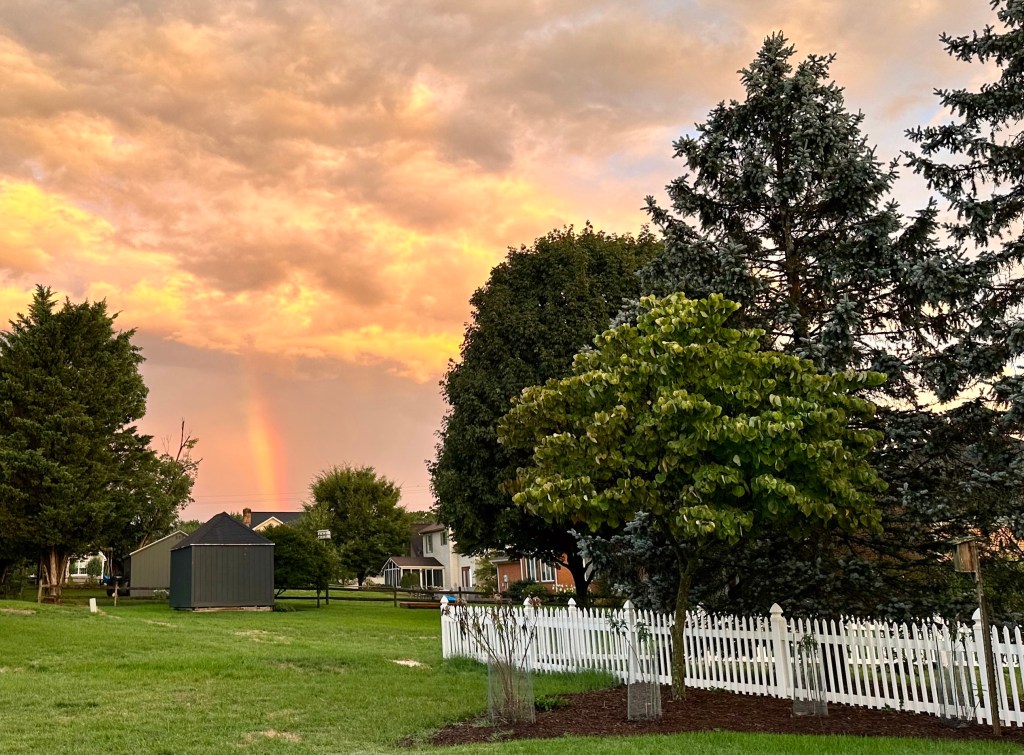
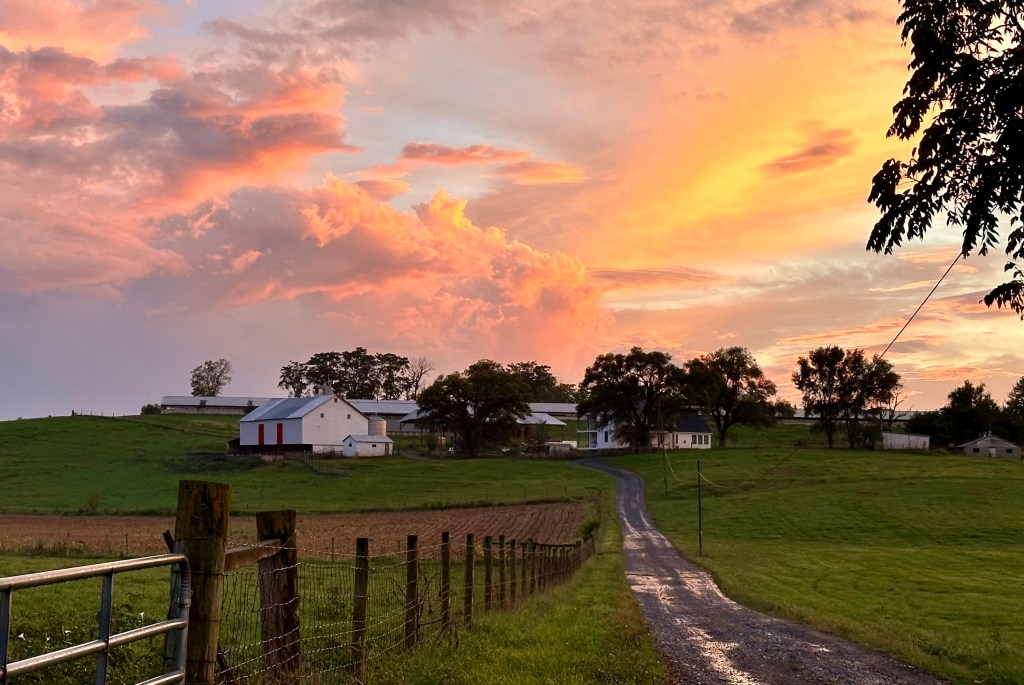
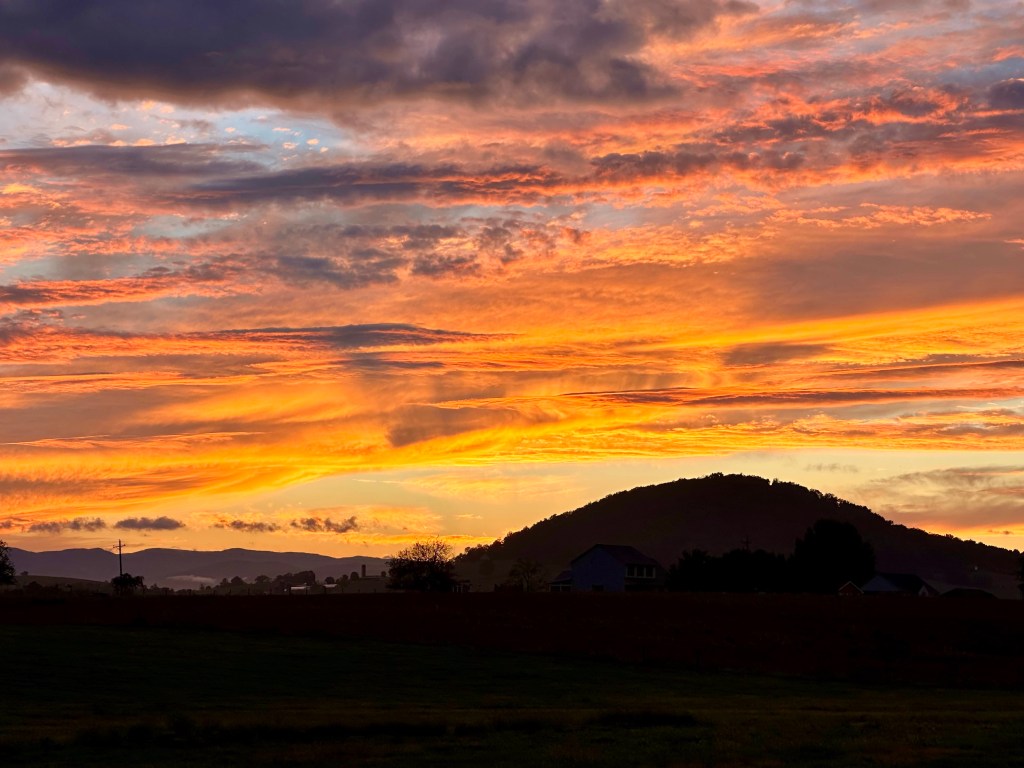
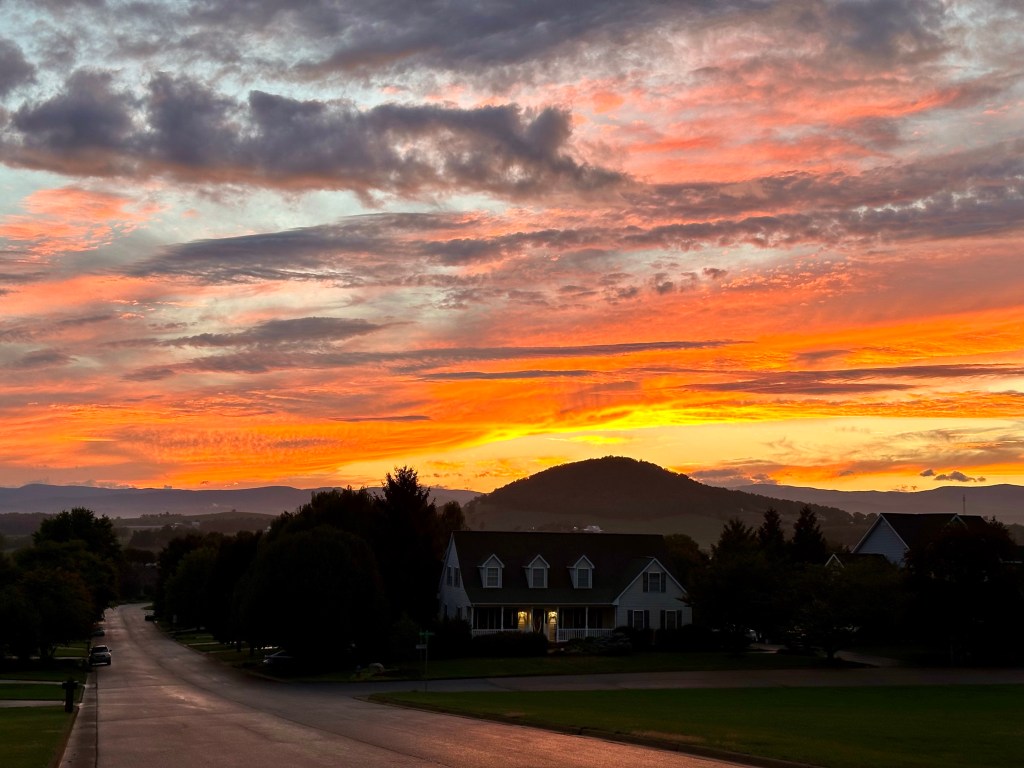
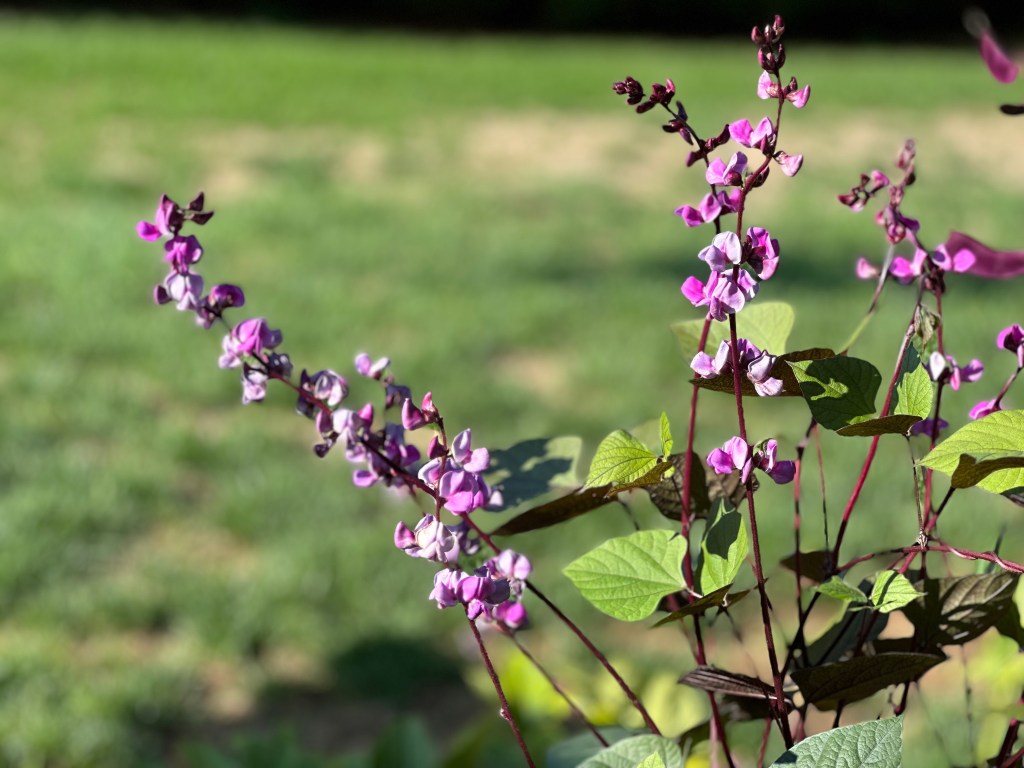
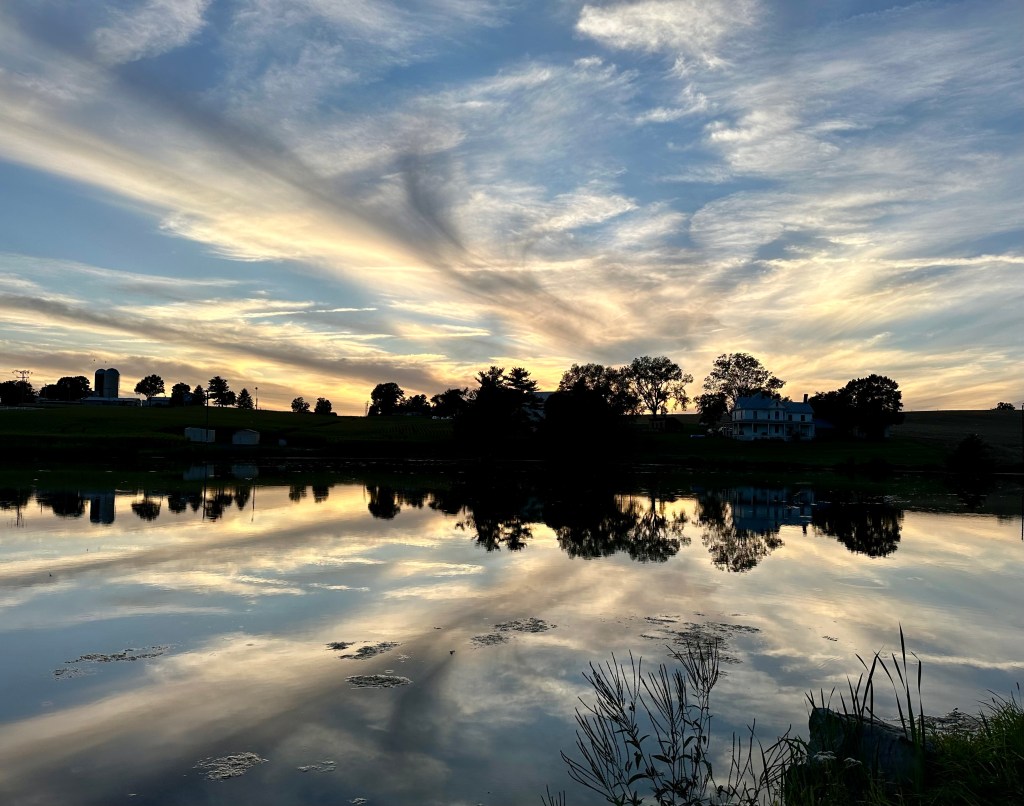
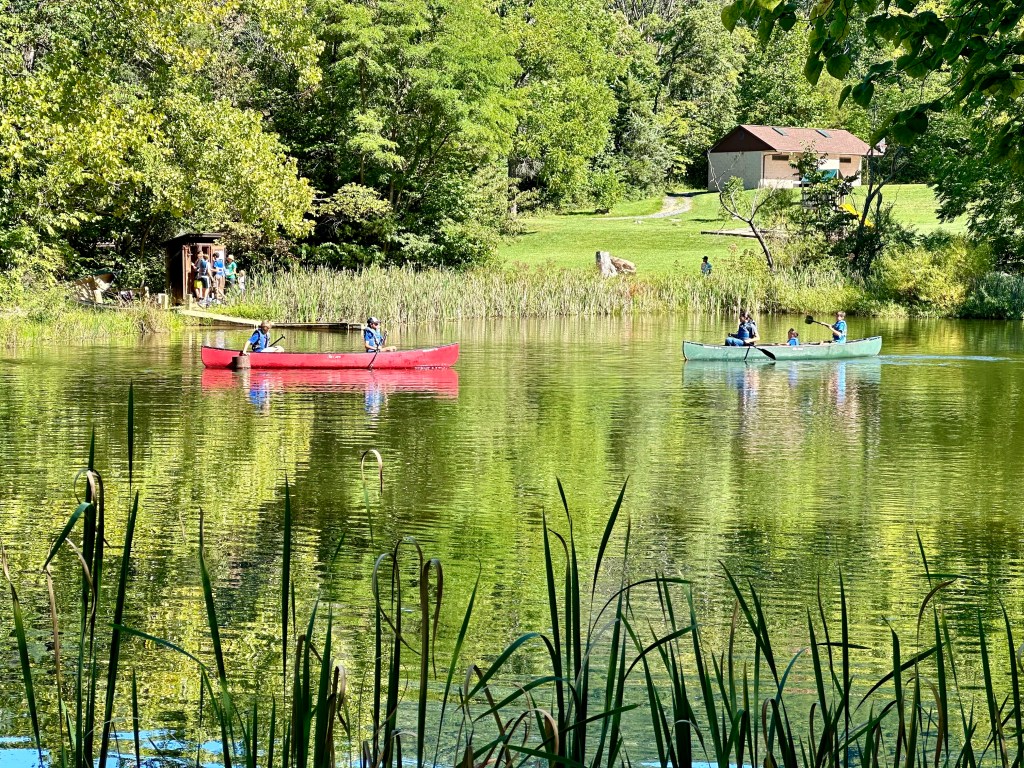
My wife and I spotted this hot air balloon sailing over our neighborhood on our regular morning walk. Photo by Bruce StambaughWe celebrated communion at church. Photo by Bruce StambaughA storm front brought much-needed rain Sunday evening, leaving a rainbow spawned by the setting sun’s rays. Photo by Bruce StambaughSunday’s sunset exploded with a multitude of texts and colors. This photo was taken on Sunny Slope Farm. Photo by Bruce StambaughMole Hill, an extinct volcanic core, always makes an excellent foreground for the sunset over the Allegheny Mountains. Photo by Bruce StambaughFog rose from the Dry River in western Rockingham County that Sunday evening while grays and mauves dominated the southwestern sky. Photo by Bruce StambaughThe sky’s drama continued as I drove home on September 1. Photo by Bruce StambaughThe backyard Hyacinth bean plant was in full bloom in the morning sunshine on September 3. Photo by Bruce StambaughEvening clouds splayed over Silver Lake near Dayton, Virginia, on September 3. Photo by Bruce StambaughThe evening’s thin cirrus clouds made it seem like old Mole Hill was erupting. Photo by Bruce StambaughOn the west side of Mole Hill, the soft sunset seemed to emmite striated clouds. Photo by Bruce StambaughAs I watered our thirsty flowers, shrubs, and trees the following evening, I spotted a Black Swallowtail caterpillar. Photo by Bruce StambaughI attended an excellent lecture and gallery preview by photojournalist and filmmaker Morgan Heim at Eastern Mennonite University on Friday morning. Photo by Bruce StambaughWe ended the week by attending our church’s annual retreat at a camp at the base of Massanutten Mountain northeast of Harrisonburg. Photo by Bruce Stambaugh
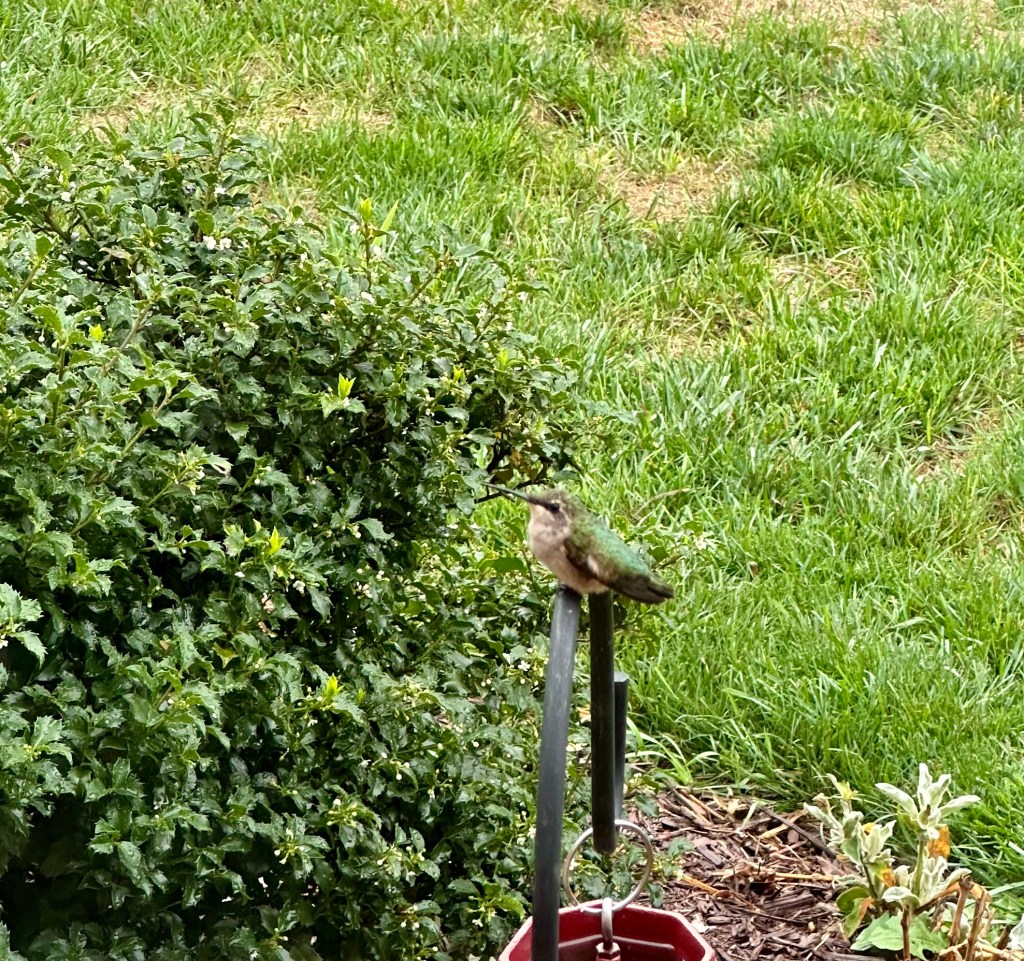
A female Ruby-throated Hummingbird. Photo by Bruce Stambaugh
We had a lovely and much-needed inch of rain yesterday and overnight. Much of the lawn greened up right away.
This morning, I was fortunate to catch this female Ruby-throated Hummingbird resting on a shepherd’s hook. The hook holds the hummingbird feeder below the ant mote at the center bottom of the photo.
As I cropped the photo, I realized all the various greens helped hide the little hummingbird. It was like the bird was hiding in plain sight. That’s the way nature works!
A summer evening clouds over Massanutten Mountain, Harrisonburg, Virginia. Photo by Bruce Stambaugh
It’s been a long, hot, dry summer in Virginia’s Shenandoah Valley. Even after Tropical Storm Debby dropped over five inches of rain, the National Oceanic and Atmospheric Administration kept the valley in the extreme drought category.
Each summer has become hotter and dryer in the seven years we have lived in Virginia. This summer has been the worst. We haven’t mowed our yard for nine weeks. Brown is the new green.
Watering our plants, shrubs, and trees became a daily necessity as the dry days morphed into drier weeks. The trees we planted when we moved look particularly dire.
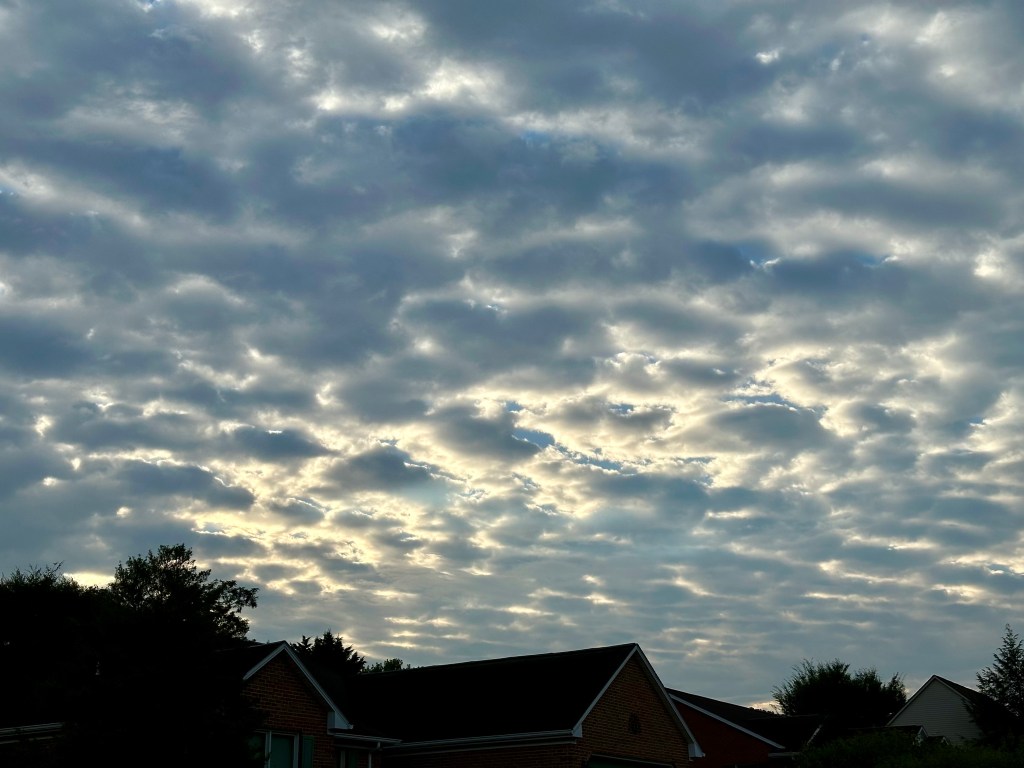
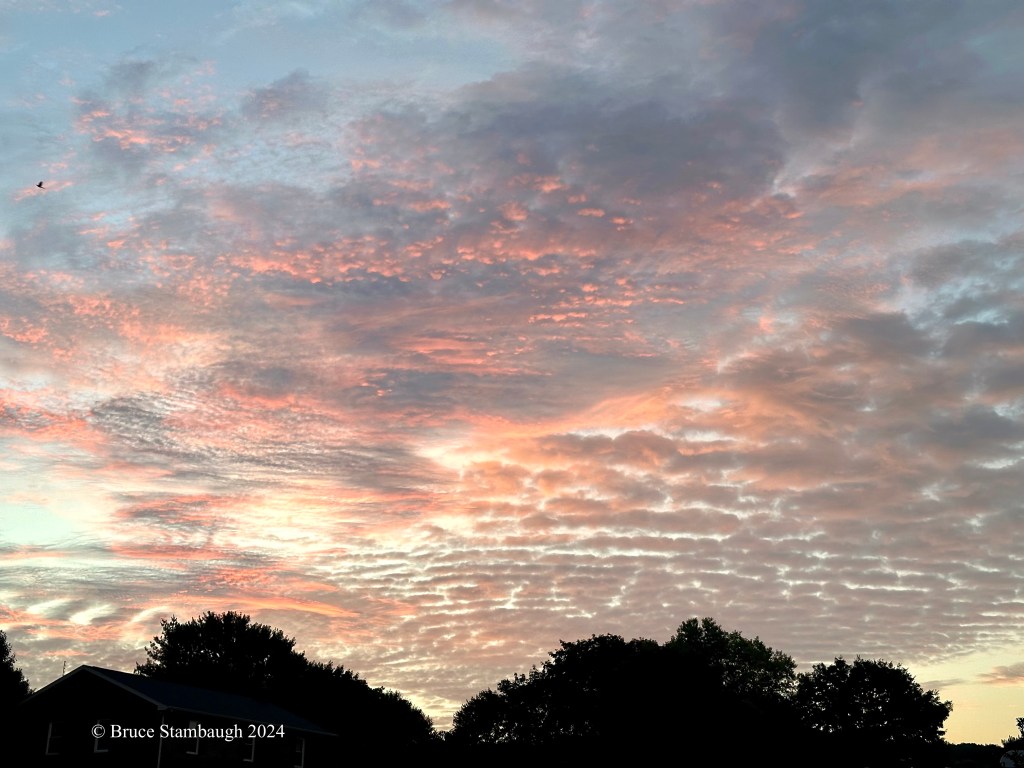
Our regular morning walks happened just around sunrise when the temperature was tolerable, or they didn’t happen at all. During those early morning strolls, I couldn’t help but notice the beauty above me. Each day, the sky provided an ever-changing array of patterns and colors, heat or no heat.
Morning mackerel clouds.
Cirrus clouds.
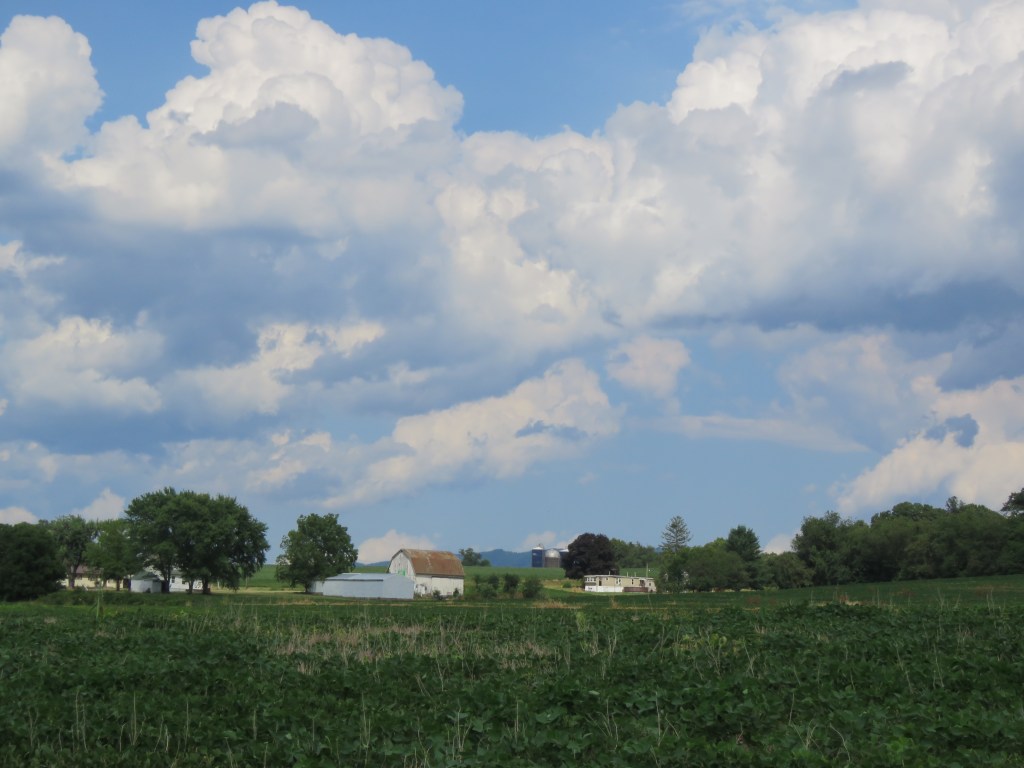
Cumulus clouds.
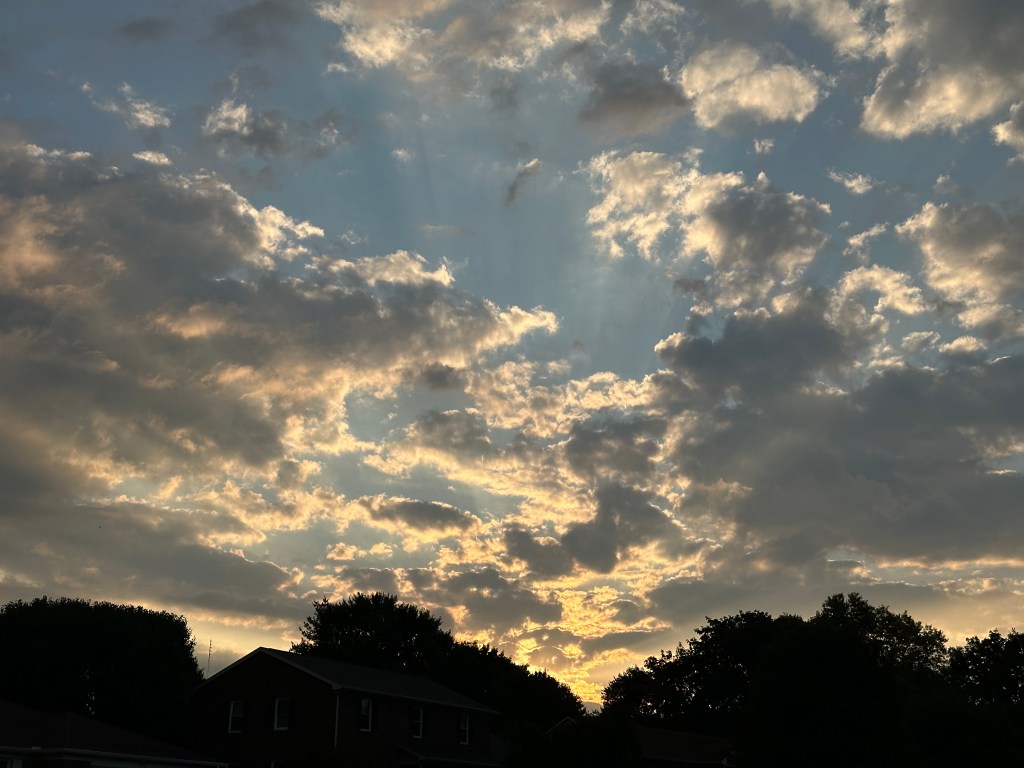
Crepuscular rays.
Clouds at sunrise.
The sky is easy to take for granted. Too often, we focus on our personal or professional busyness and fail to notice what’s overhead. Our frequent walks helped me appreciate the sky, cloudy or clear, more and more. The heat and humidity often created hazy, overcast days, but even cloudy days brought no rain except for a few teasing five-minute showers.
Then there were the days when white, puffy cumulus clouds floated across the pale blue sky like towering cotton sculptures. They took my mind off the extreme temperatures that brought heat advisories and extreme heat warnings.
I didn’t have to leave my house to enjoy the remarkable sky. A peek out the windows sufficed. I even found the overcast days bearable. Occasional breaks in the clouds brought momentary flashes of bright sunshine.
A five-minute shower. Photo by Bruce Stambaugh
At sunsets, crepuscular rays streamed down from the heavens. My late father would tell his children that the sun was drawing water. I now smirk at the unfounded folklore but not at my gregarious father.
Living in one of the top agricultural areas in Virginia, I felt for the farmers. They labored under both the heat and the anxiety of no rain. In their prayers for moisture, I wondered if the farmers saw the beauty above them as they chopped fields of corn for silage to feed their livestock. Stressed by the drought, the stunted cornstalks curled, their floppy leaves singed brown, and many bore no ears at all.
Field corn struggled to grow in the drought. Photo by Bruce Stambaugh
The farmers who lived along the valley’s many streams and rivers irrigated their crops before the waterways dried up. Then, along came Debby with her drenching rains and ensuing flood warnings. A day later, the streams’ water levels diminished rapidly, and they returned to being braided again, their tumbled-smoothed rocks sending what water remained every which way.
Because of the summer’s heat, we kept our vehicular trips to a minimum. But when we were out, I admired the sky’s variety of moodiness. From clear to cloudy, partly cloudy to mostly cloudy, the heavens revealed all their emotions and, except for Debby, kept the rain for other geographic regions.
From dawn to dusk, nature’s color palette was on full display despite the persistent heat. To view the artistry, we just needed to look up.
Scalloped clouds at sunrise. Photo by Bruce Stambaugh
On our morning walk, my wife and I spotted an unusual cloud formation, as seen in the photo above. We first noticed the large hole in the formation of altocumulus clouds. Then, my wife spotted a second one while I focused on the knife blade-looking break to the right of the holes.
Airliners caused all three of these anomalies. You can see the remnants of the contrails left by the speeding planes. Notice how they are spread out in the mid-level atmosphere where altocumulus clouds form. These jets simply punched holes in these vertically climbing clouds. The instability aloft caused the holes and contrails to widen.
The National Weather Service said this about altocumulus clouds: “Altocumulus clouds with some vertical extent may denote the presence of elevated instability, especially in the morning, which could become boundary-layer based and be released into deep convection during the afternoon or evening.”
We are still waiting for the deep convection to produce some much-needed rain here in Virginia.
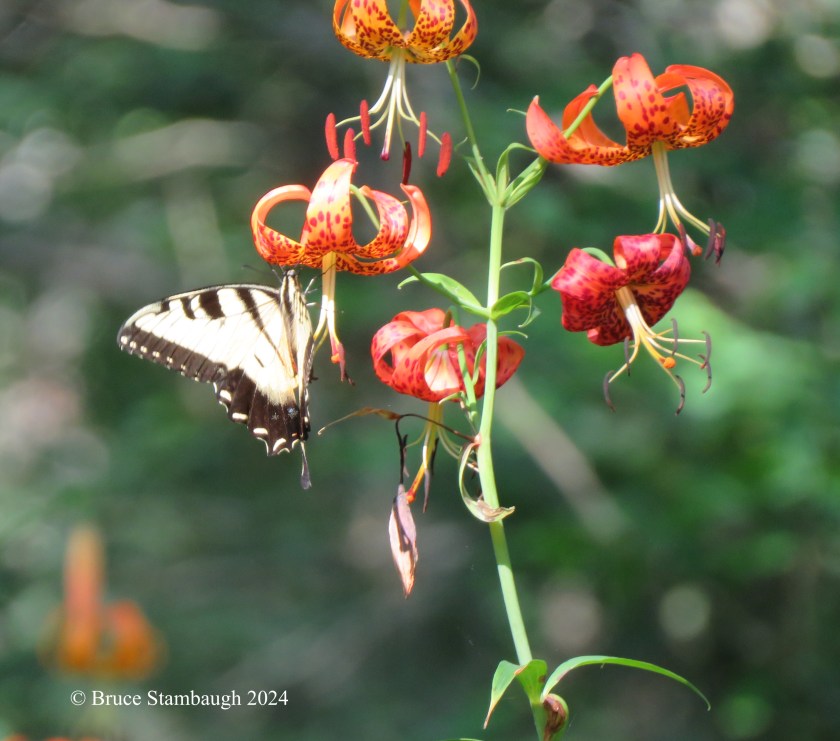
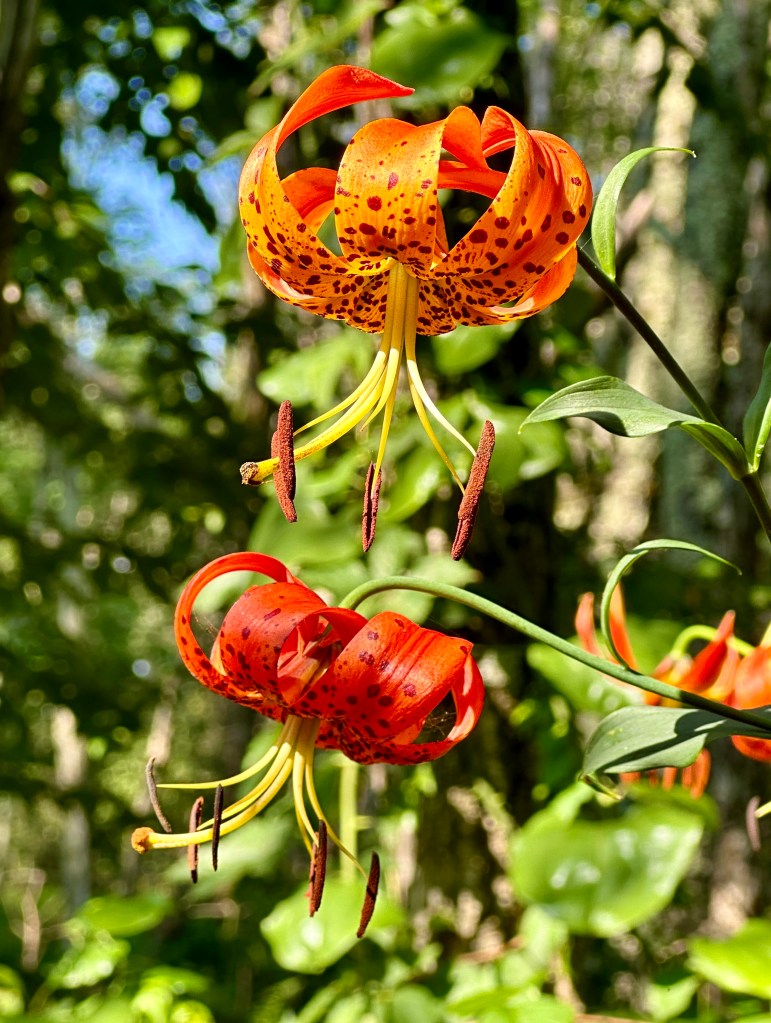
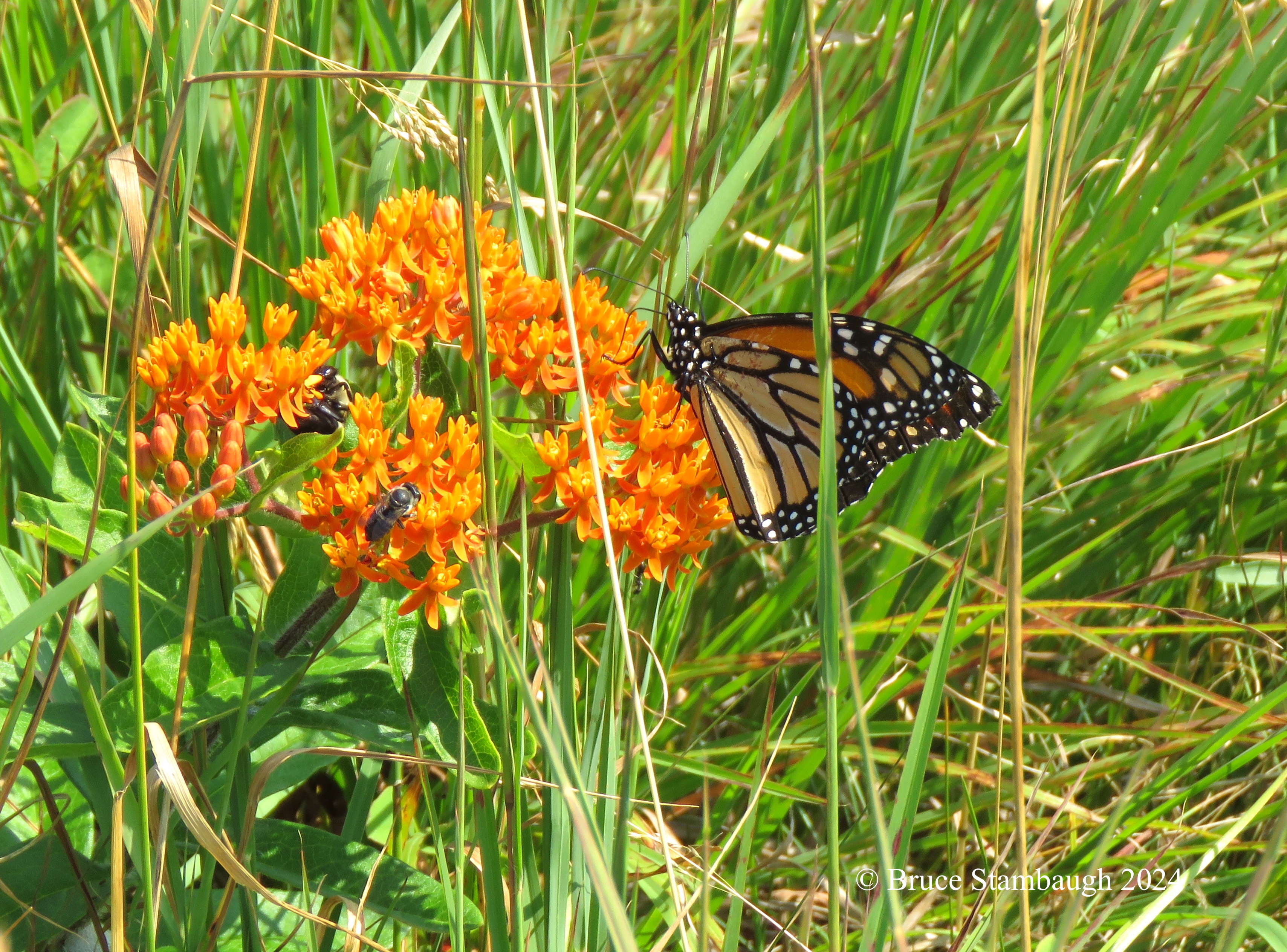
Like this Tiger Swallowtail, butterflies are drawn to Turk’s Cap lilies. Photo by Bruce Stambaugh
I visit Shenandoah National Park whenever I can. Being retired has its advantages. I usually go to the park with a purpose in mind.
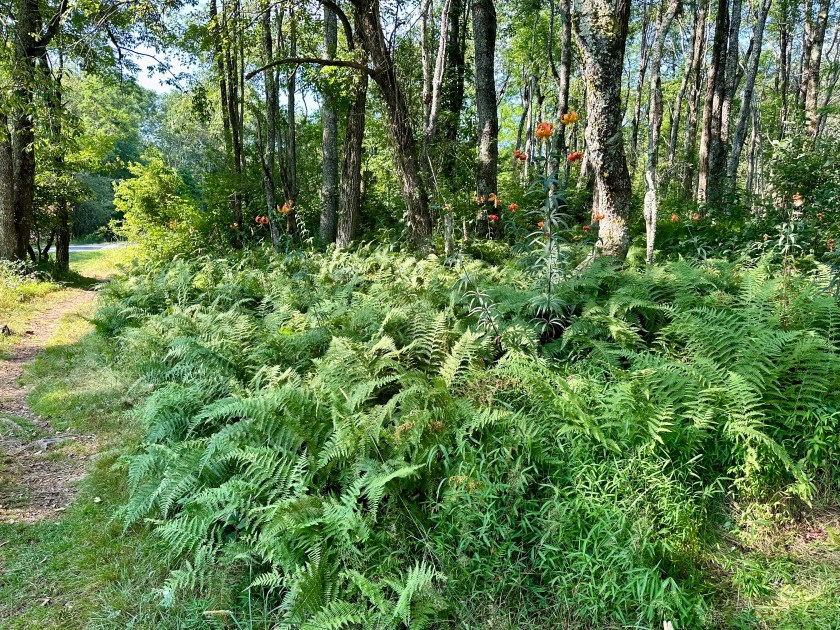
Recently, I drove the 45 miles from my home in Virginia’s Shenandoah Valley to the Big Meadows area of the popular national park for several reasons. I like to capture butterflies on the impressive Turk’s Cap lilies. Secondly, the temperature in the Blue Ridge Mountains, where the park is located, is usually cooler than the oppressive heat the valley has experienced lately.
July is when the impressive summer flowers are in full bloom. Butterflies, bees, and other flying insects can’t resist their lure, and alert humans can’t miss the spotted, bright reddish-orange blossoms either.
These photos were all taken along Skyline Drive south of Big Meadows.
It didn’t take me long to spot a few butterflies flitting around. I usually find a group of flowers and wait for the butterflies to arrive. There was a problem with being a stationary human, however. I forgot to take my bug spray along, and between the gnats and the mosquitoes, I spent as much time swatting as I did taking photos. It was a minor sacrifice just to observe nature’s glorious beauty.
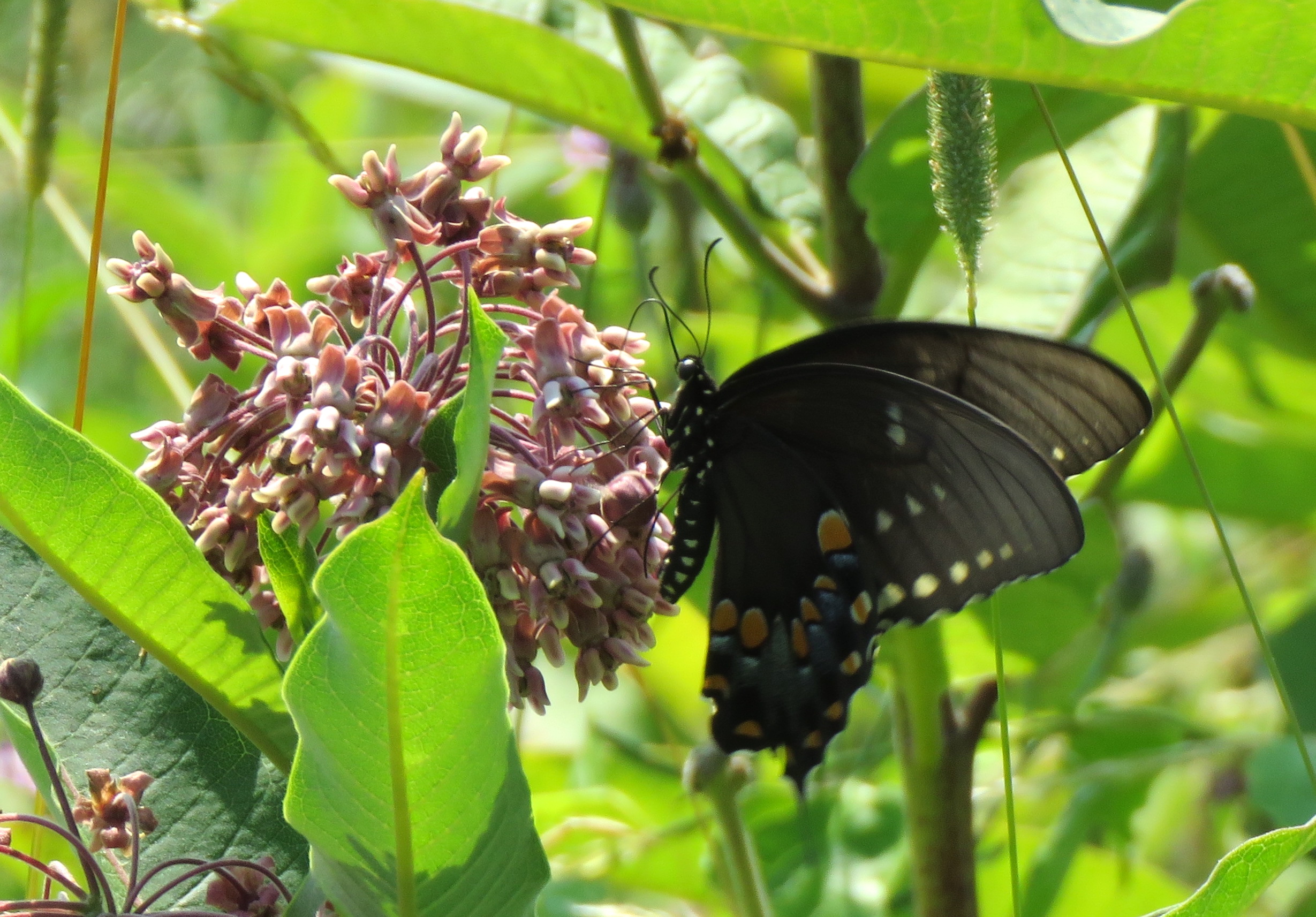
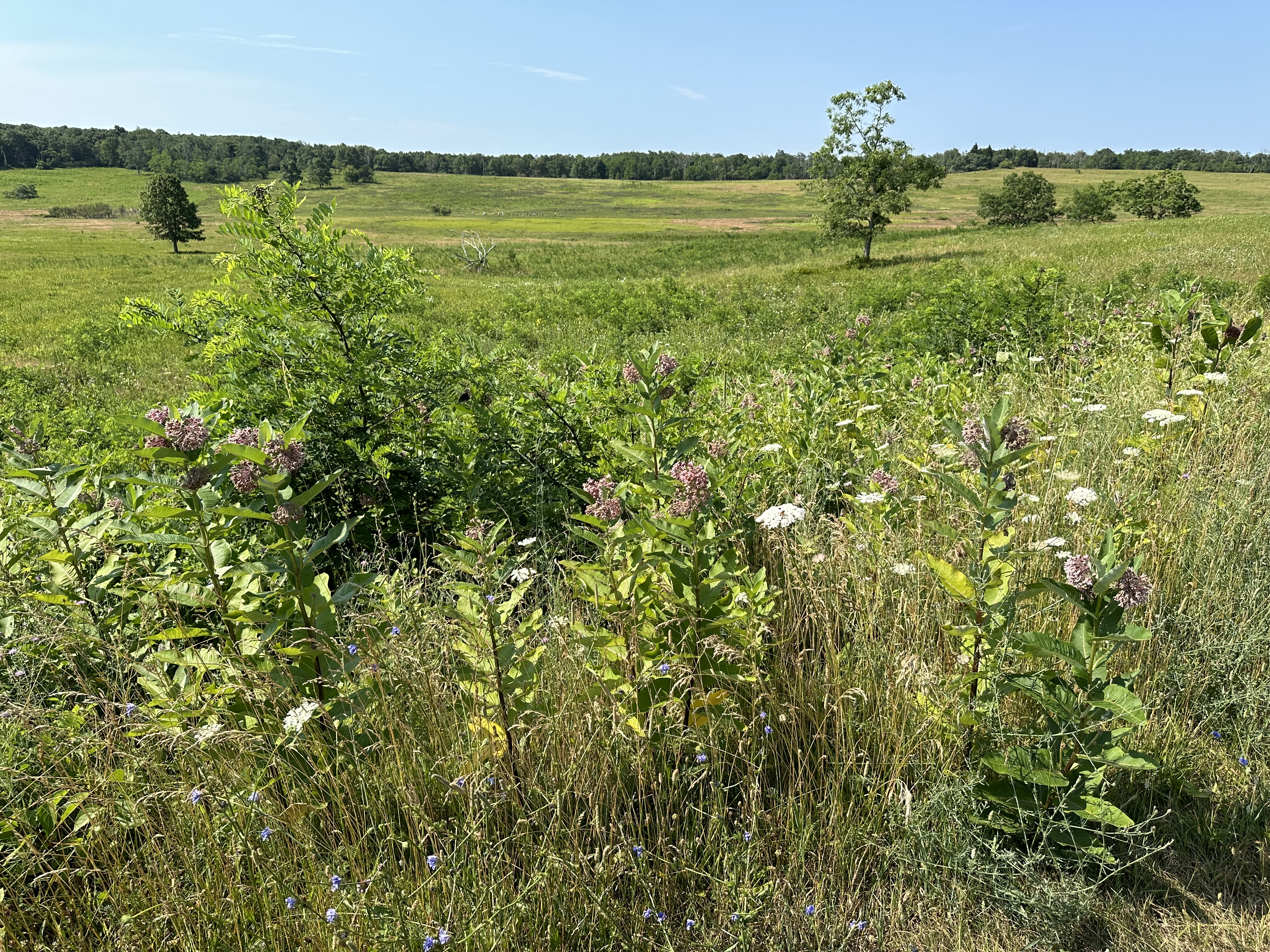
At Big Meadows, a ranger guided a small group of tourists on a nature walk. I moved around the sweeping, prairie-type basin. Due to the ongoing severe drought that Virginia is experiencing, the usual array of wildflowers is not as abundant as in previous years. However, as did the Monarchs and other butterflies, I found a few bright Orange Butterfly Weeds and the aromatic Common Milkweed blooming.
Please click on the photos to enlarge them.
I was also impressed with the thousands of honey bees and bumblebees that buzzed and hummed around the area. The Sweet White Clover got most of their attention.
Of course, I can’t go to Shenandoah National Park without taking my binoculars. Songbirds were everywhere, but the dense foliage of the trees made them hard to spot. Did I mention that mosquitoes and gnats were ubiquitous?
By noontime, the heat and humidity sent me back into the valley to the comfort of my air-conditioned home. Still, I felt mentally refreshed and renewed, ready for the rest of the day.
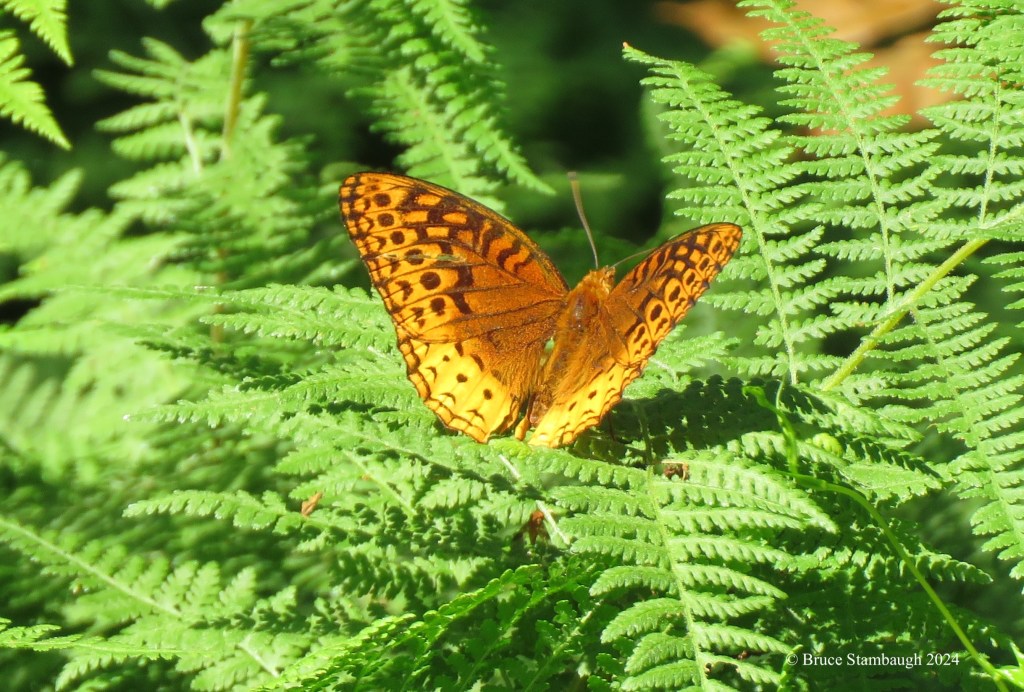
A Great Spangled Fritillary basked in the morning sunlight on a Rattlesnake Fern.
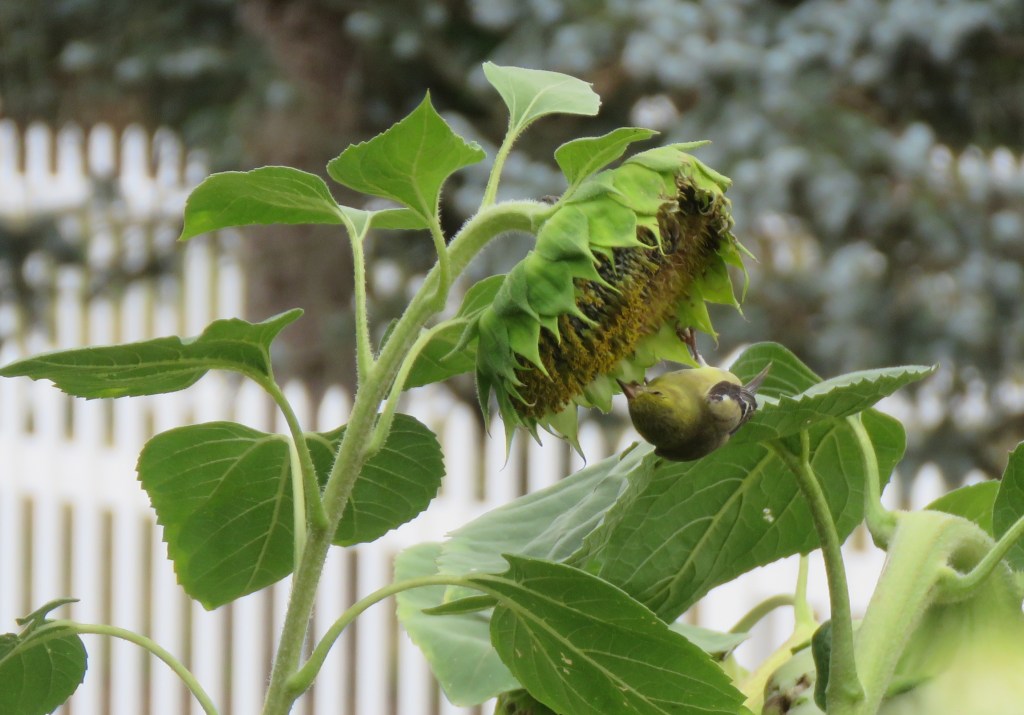
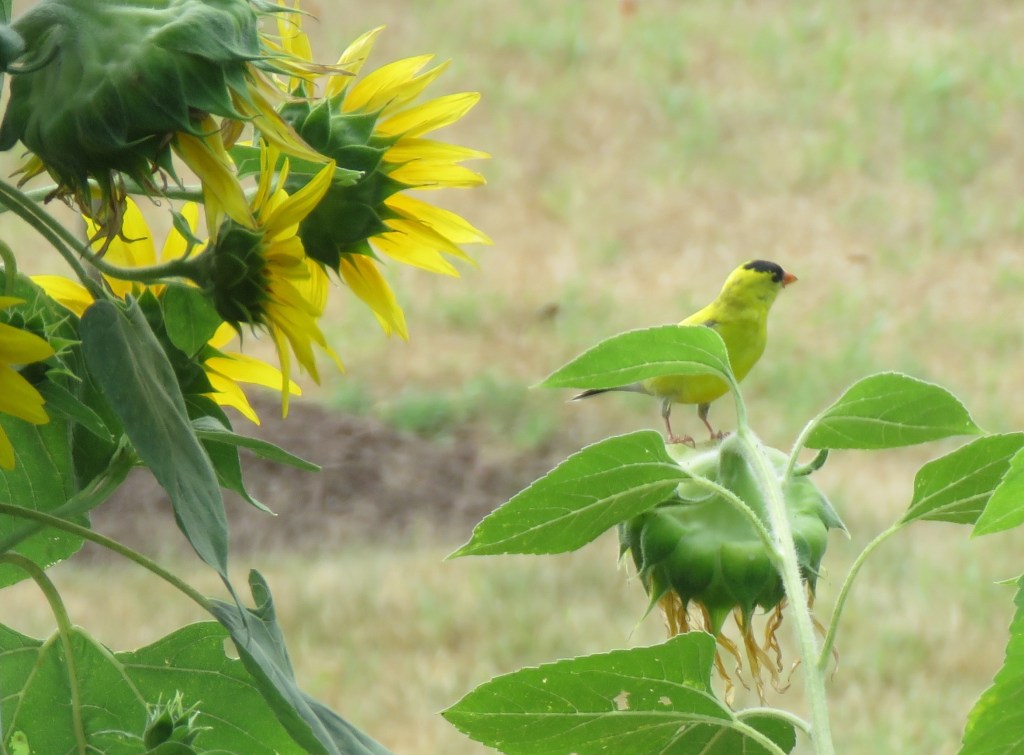
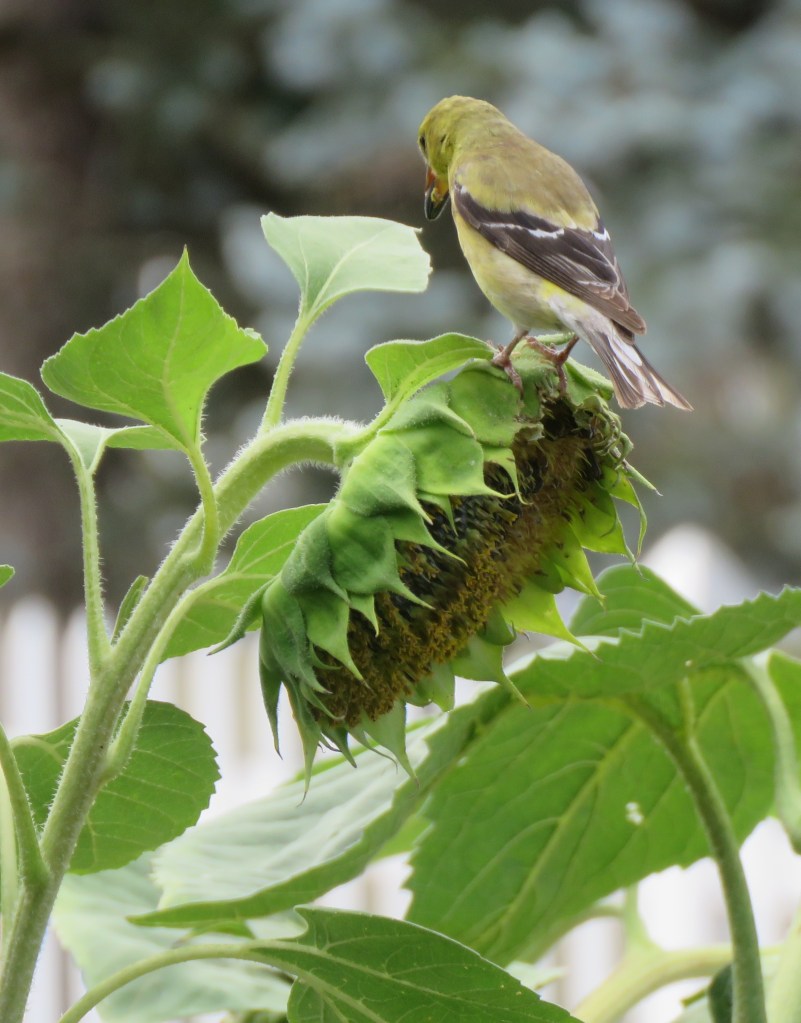
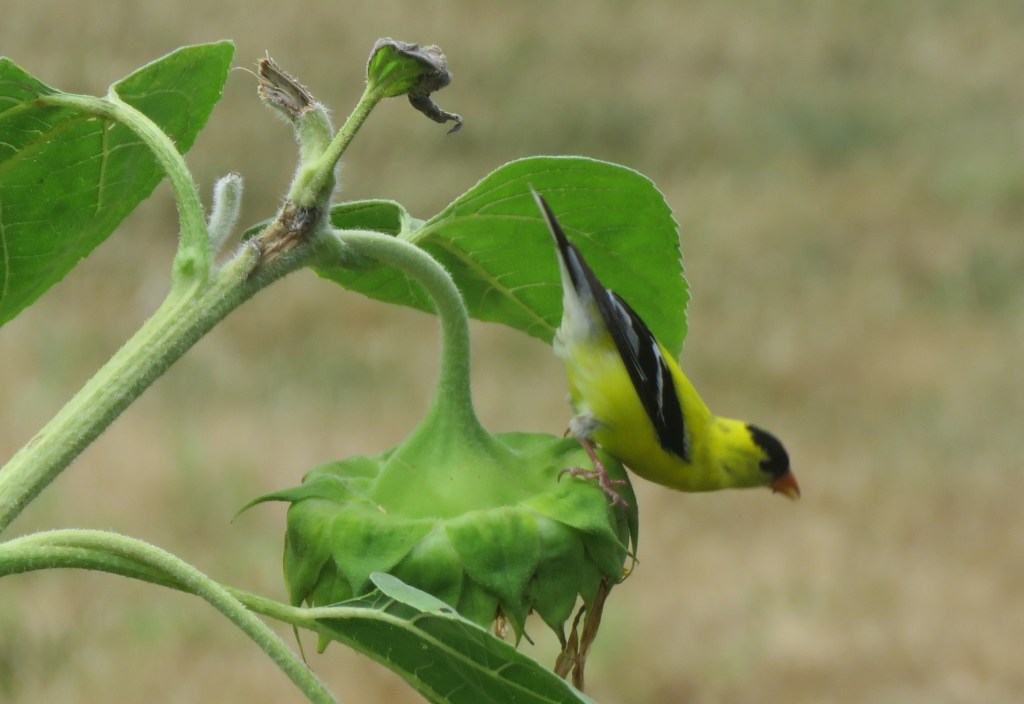
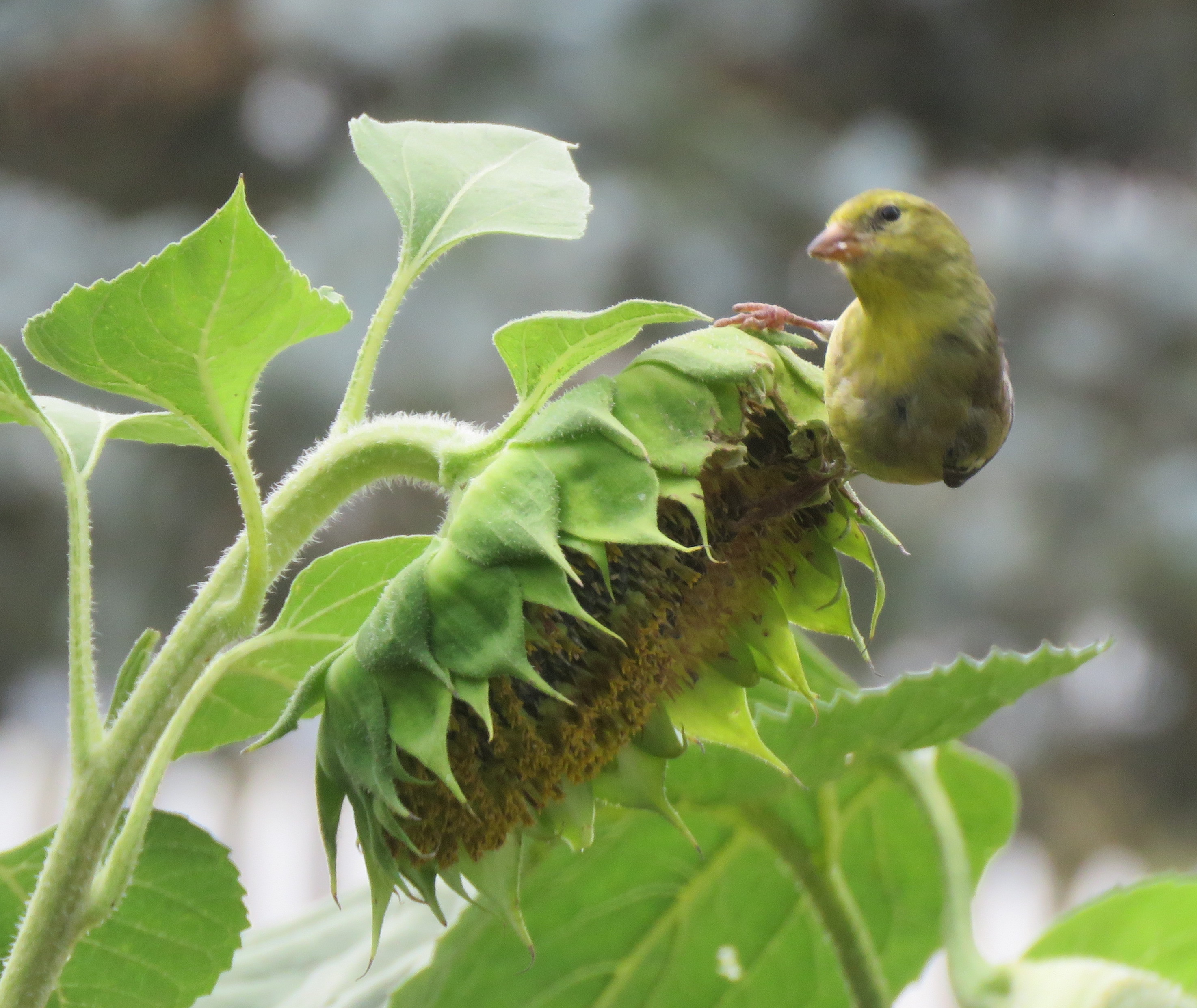
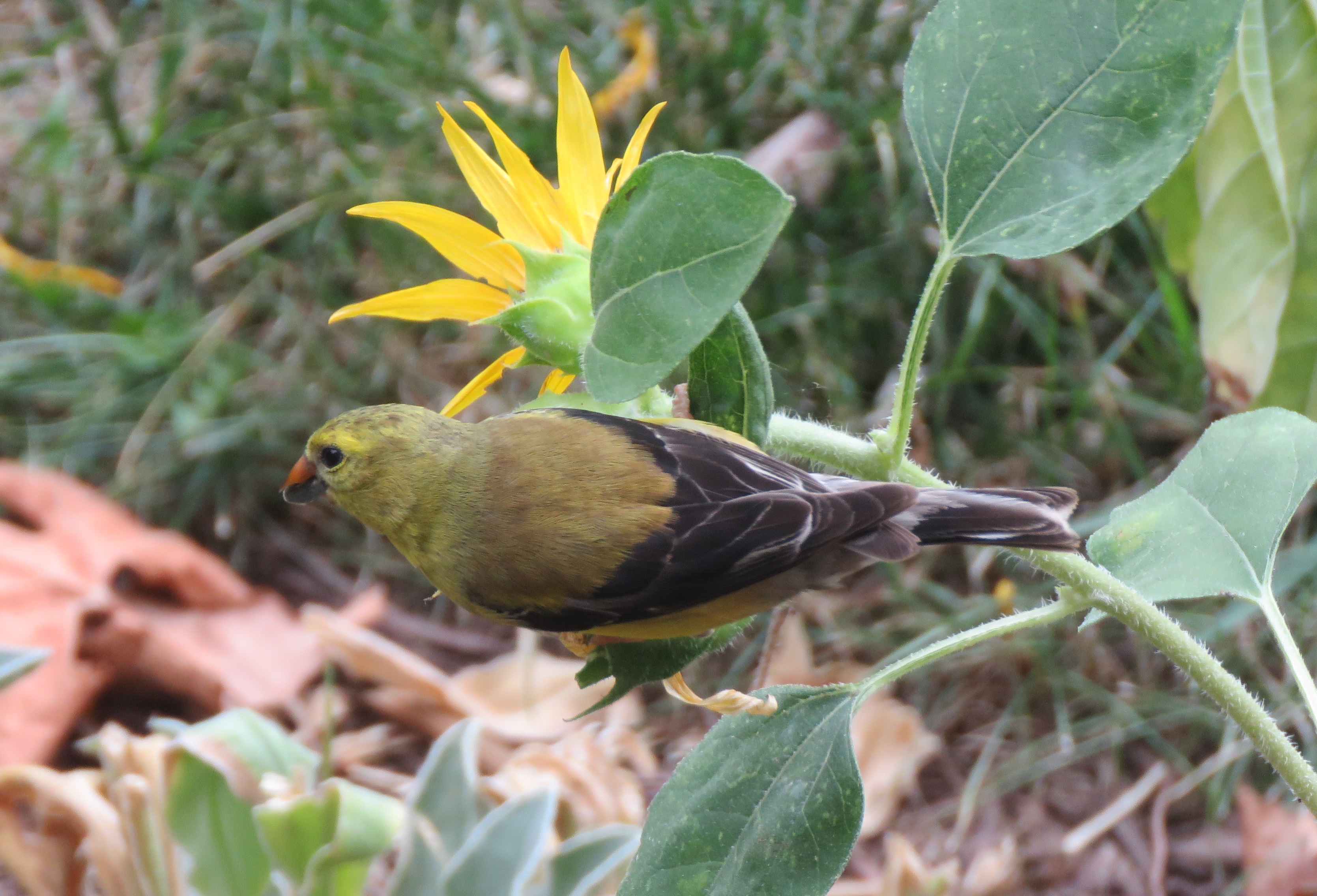
A female American Goldfinch plucks a seed from a sunflower head. Photo by Bruce Stambaugh
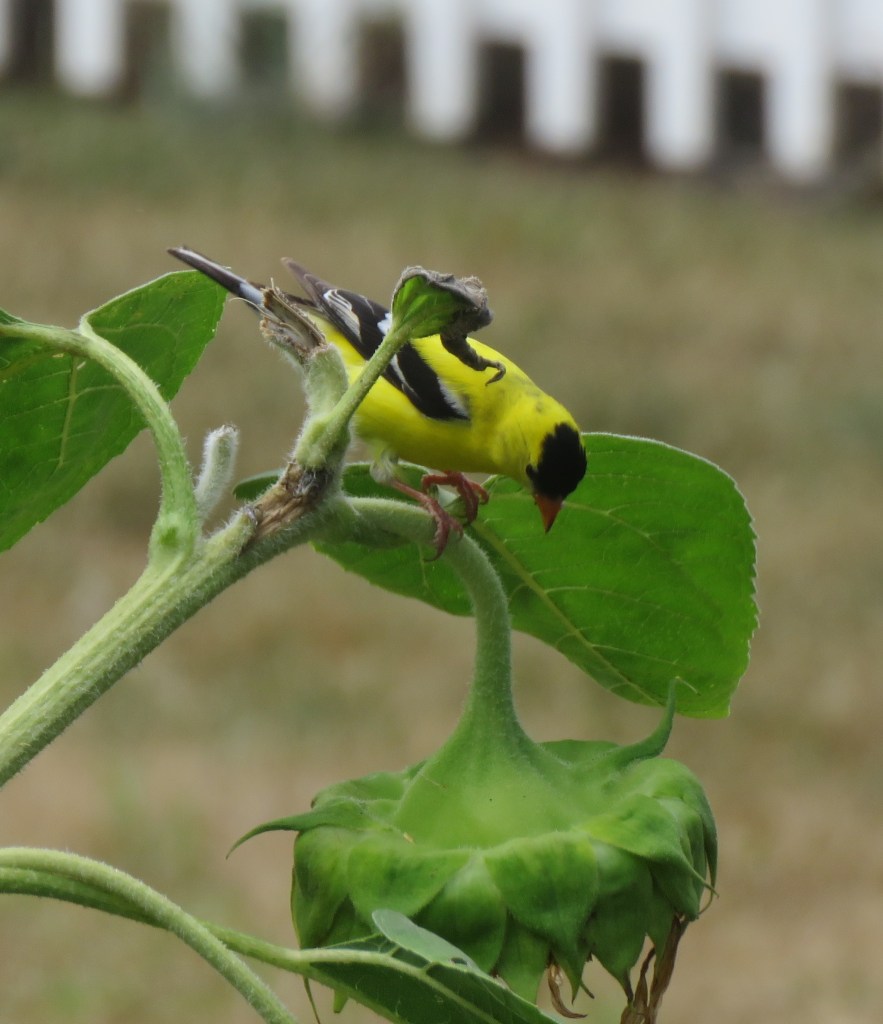
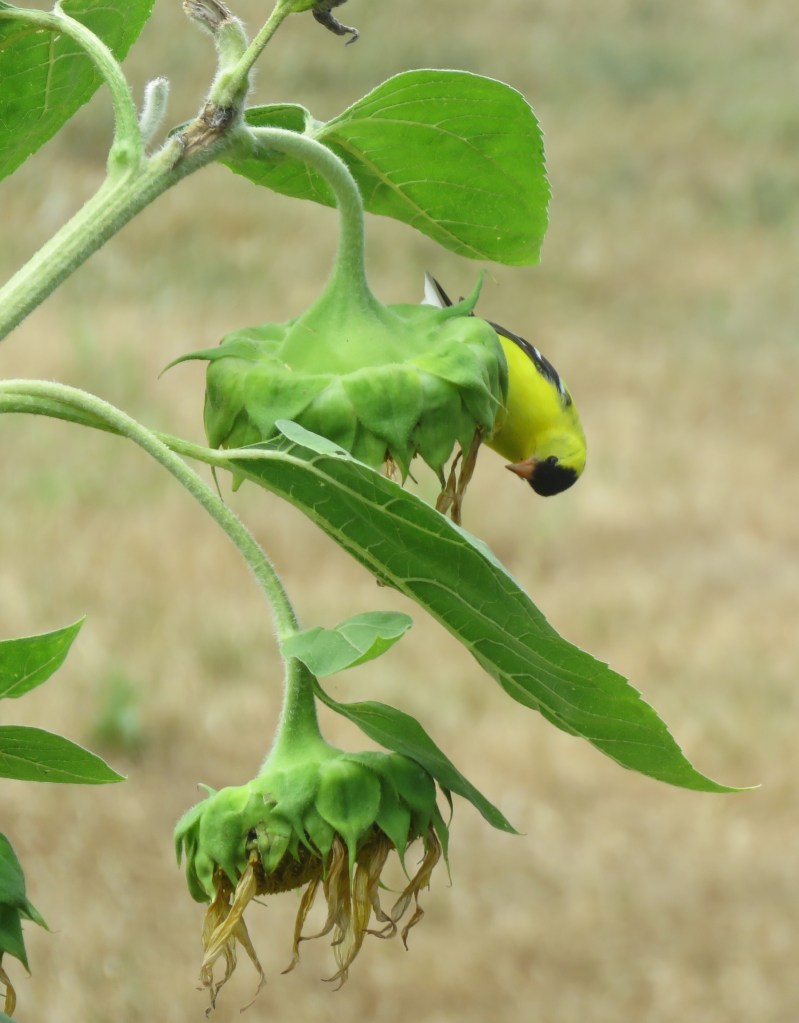
Can you eat upside down? American Goldfinches sure can!
In the summertime, the acrobatic little birds put on a show around sunflowers. Often, they hint at their arrival at a sunflower patch with a distinctive, cheery call. Soon, they land atop a flower and begin their feeding.
The lively and colorful birds use their short, sharp beaks to pry the juicy new seeds from the flower head. Their sturdy pinkish bill effortlessly cracks open the seed, and the birds devour their reward.
The American Goldfinches seem able to eat in any position: upside down, sideways, or at any angle. Since the laden flower heads bend toward the ground as their seeds mature, the birds have no choice but to attack their target in any way they can. The birds gain needed nutrition and moisture from the fresh seeds.
The male looks regal in its summer mating plumage of bright yellow with jet-black wings, tail, and forehead. A white wing-bar adorns each wing. The female is duller in color year-round. She is feathered more for camouflage than fashion. Her pale yellow-green is much duller to help blend in with the greenery she inhabits. The female’s coloration helps conceal the eggs during incubation and the young when they hatch.
In the winter, both sexes turn dull to protect themselves by blending in with their weedy surroundings. Black oil sunflower seeds draw them to feeders, though the pulp center has to be much drier than the fresh-off-the-flower summer offerings.
Of course, goldfinches aren’t the only species with this feeding trait. Nevertheless, it’s a joy to watch their antics in any season.
Birds aren’t the only animals that prefer fresh sunflower seeds. Photo by Bruce Stambaugh
Thistle blossoms ready to flower. Photo by Bruce Stambaugh
When I awoke, I noticed the ripples of the morning’s mackerel clouds glowed pink. I headed for a location with an open view to the east. Arriving a few minutes later, the colors had dimmed but were still lovely.
I hustled to a high point on a paved trail that separates a golf course and an overgrown field. I snapped several shots of the sunrise but quickly became distracted by all the bird calls.
When I turned to find the Indigo Bunting, this stand of ready-to-bloom thistles caught my focus. I was struck by the faint kiss of the day’s sunrise on the thistle’s buds. The embrace was subtle but evident nonetheless.
I never did find the Indigo Bunting, however.
My initial view of the morning’s beauty. Photo by Bruce Stambaugh
A Sweat Bee on a sunflower. Photo by Bruce Stambaugh
The volunteer sunflowers in our backyard appear to be at their peak bloom. In the photo of the prettiest one, I spotted a Sweat Bee on one of the flower’s pedals. I decided to feature the sole insect on the lovely blossoms.
According to Kenn Kaufman in Field Guide to Insects of North America, more than 500 species of the tiny bee inhabit the North American continent north of Mexico. It’s a female-dominated society, too. The daughters help their mothers maintain their expanding nests in the soil. Males aren’t born until later in the summer, so my subject is likely a female.
The gang of volunteer sunflowers. Photo by Bruce Stambaugh
What better way to celebrate the Summer Solstice than to feature sunflowers?
We were fortunate to have volunteer sunflowers sprout up in our backyard flower garden this year. Seeds dropped by birds or buried by squirrels from one of my birdfeeders created these wonders.
At first, the gang of neighborhood rabbits nibbled the tender leaves. But apparently, there were so many sunflower shoots that the bunnies couldn’t keep up. Consequently, for the first time in the seven years we have lived in Virginia’s Shenandoah Valley, we have a helter-skelter stand of sunflowers.
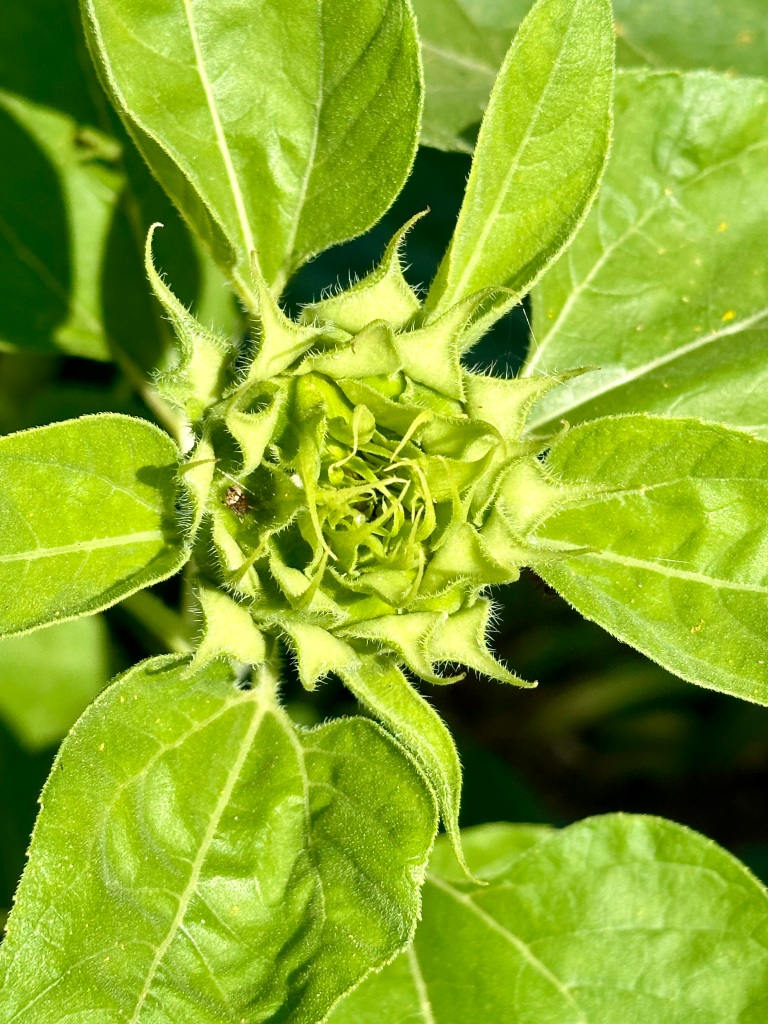
I have enjoyed watching them grow so quickly in the string of warm days and nights we have experienced. As the flowerheads began to form, their various shapes, textures, and swirling patterns intrigued me. At the corner of our back porch, pure art in nature flourishes.
Ants, bees, butterflies, flies, wasps, and other insects depend on sunflowers for nourishment. See how many different creatures you can spot in this series of photos.
Please click on the photos to enlarge them.
How long will it be before the American Goldfinches and other seed-eating birds begin to dismantle these living sculptures in the quest for fresh, tasty seeds?


























 Roadkill Crossing
You must be logged in to post a comment.