Dreams come true at Lakeside Chautauqua

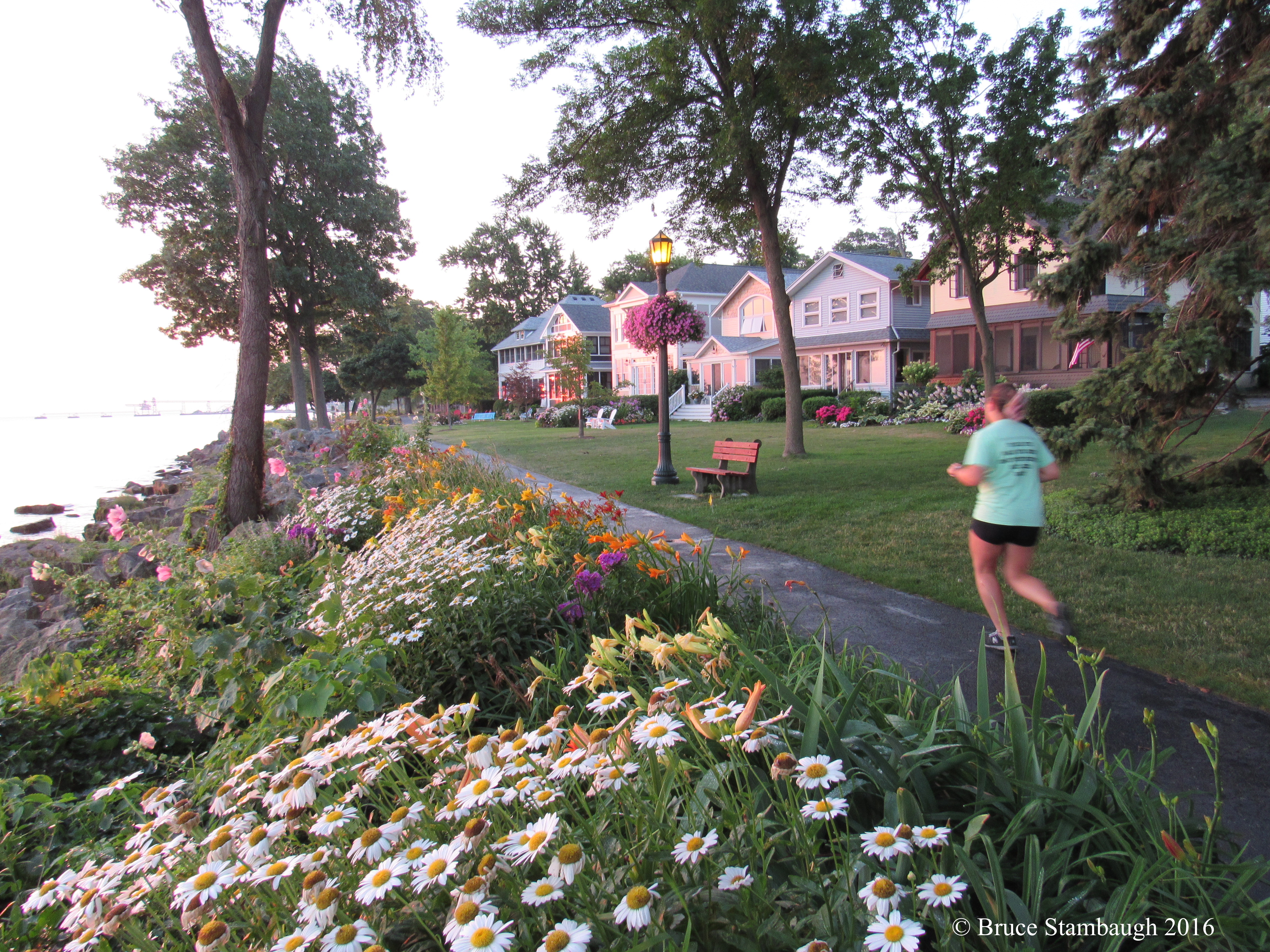
Lakeside OH, jogging
Early run.

By Bruce Stambaugh

As I walked along the lakeshore on my morning stroll, the clock tower chimed “All is well with my soul.” I smiled at the apt anthem.

Indeed, that’s just how I felt. After all, I was at my favorite vacation spot, Lakeside, Ohio, the Chautauqua on Lake Erie.

My wife and I have spent a mid-summer week here every year since 1987. The last three years our daughter’s family has joined us.

Why do we keep going back to the same place when there are so many other marvelous destinations in the world to explore? The answer is simple. We love Lakeside.

It’s a dreamy place, a step back in time, a sanctuary of sorts, a retreat to escape from the hustle, bustle, and negativity of the other world to this dreamland. I could dream this dream every day.

I’m not alone in that sentiment. The usually sleepy town of hundreds morphs into a gated resort for 10 weeks each summer. Weekly visitors number in the thousands.

Why? Lakeside is a beautiful place. It’s a safe place where people don’t lock their doors, where children run free, where strangers smile and say hello, where families like ours gather for a respite generation after generation, year after year.

A quick check of car license plates reveals Lakeside’s universal appeal. Lakeside’s tranquility, setting, familiarity, and planned nurturing draw folks from Texas, Illinois, Michigan, Virginia, and Ontario, Canada and places beyond.

What lures them? The Chautauqua community’s four pillars of purpose ensure a variety of stimulating activities for every age. Religion, education, arts and entertainment, and recreation soothe the soul of each participant.

That’s true even if you decide to sit on a bench and read a book or quilt. The dreamy world that is Lakeside envelops you.

Ferries shuttle vacationers and delivery trucks back and forth on the waters from Marblehead to Kelley’s Island. Freighters wait their turn to take on their payload at the limestone quarry dock.

Joggers and walkers and parents with baby strollers amble along the shore, the busyness of home and work overwhelmed by the vestiges of this remarkable space.

Immaculate lakefront homes and cottages line Plum, Poplar, Maple, Walnut, and 2nd and 3rd Streets, and all the other gridded streets. The variety of their architectural styles and colors inspire passersby and artists alike.

This slideshow requires JavaScript.

A stunning assortment of flowers and landscaping accentuates the historic homes and buildings. It’s like a different calendar photo on every block.

Folks gather in parks for sports, picnics, and introspection. Birds of all kinds cohabit with the humans among the tall trees and ornamental shrubs.

Children enjoy the kiddy pool and splash park while admiring grandparents smile and supervise from the parameters. Older siblings and parents play shuffleboard or listen to a noted lecturer. Kayakers and sailboats zip in and out of the little harbor near the dock, the magnet for all the Lakeside dreamers.

While teens and seniors sunbathe on the dock, three generations of fishermen angle for perch, smallmouth bass, and walleye. In reality, it’s sheep head, channel catfish, and white bass they reel in the most.

After the evening’s family entertainment at historic Hoover Auditorium, the little business district is abuzz with lovers of ice cream, caramel corn, and yummy pizza. All are satisfied.

In 1873, the founders of Lakeside dreamed of a place where people could gather to recreate, learn, create, and worship in a sacred setting. Because those dreams have come true in Lakeside Chautauqua, all is truly well for those who care to partake.

sunrise, Lakeside OH
Silhouettes at sunrise.

© Bruce Stambaugh 2016

The bridges of Ashtabula County, Ohio

covered bridge
Benetka Road Bridge.

By Bruce Stambaugh

I’ve been curious about covered bridges for a long time. I wondered about their purpose other than the obvious one of crossing from one side of a stream to another.

My curiosity got the best of me recently. Accompanied by my wife and another couple, we went exploring all 18 of Ashtabula County’s covered bridges. We discovered that the unique architectural wonders were so much more than a conveyance from one bank to another.

If you’re not familiar with Ashtabula County, it’s Ohio’s northeastern most county. It bumps against both Lake Erie on the north and Pennsylvania to the east.

It’s a big county with varied topography and land usage. Its trail of covered bridges is one of its most distinctive features. Most of the bridges are still in use today.

Covered bridge hobbyists admire the intricate architectural details of the wooden tunnels. I focused my admiration on their individual aesthetic characteristics.

This slideshow requires JavaScript.

Covered bridges were once common across the United States. I wondered why 19th-century builders labored so to simply cover a bridge? I always had heard two main answers to that question.

The bridge had sides and roof so the horses pulling buggies and wagons wouldn’t spook from the sound of rushing water below the bridge or the sudden open space. The other was that the bridge was a respite from foul weather.

Never having driven a horse and buggy, I didn’t question the first reasoning. The second one seemed a bit questionable. I mean you could only get so many horse-drawn vehicles onto a covered bridge during a storm.

Like members of the same family, the bridges had many similar characteristics. Each bridge had its own history and personality.

Some were erected just after the Civil War, with others built more recently. I suspect county leaders recognized the economic value of having a covered bridge trail.

The bridges of Ashtabula County served as living monuments to a bygone era. Hand-hewn timbers joined by wooden pegs spoke of the intensive effort that went into building these nostalgic icons.

The bridges historically contributed to social, political, religious, and economic values of the county. In a way, history was repeating itself.

vandalism, graffiti
Calling card.
Besides the obvious purpose of crossing a stream, covered bridges were quite utilitarian. They indeed quieted horses and became a respite during a storm. Since the bridges were constructed entirely of wood, the covered sides and roof also protected the timbers and flooring from the elements and weathering. They minimized repairs.

The bridges had other callings as well. They served as gathering places for community meetings, political rallies, and religious services. Given the inspiring settings of some of the bridges, I could see why folks would like to linger there.

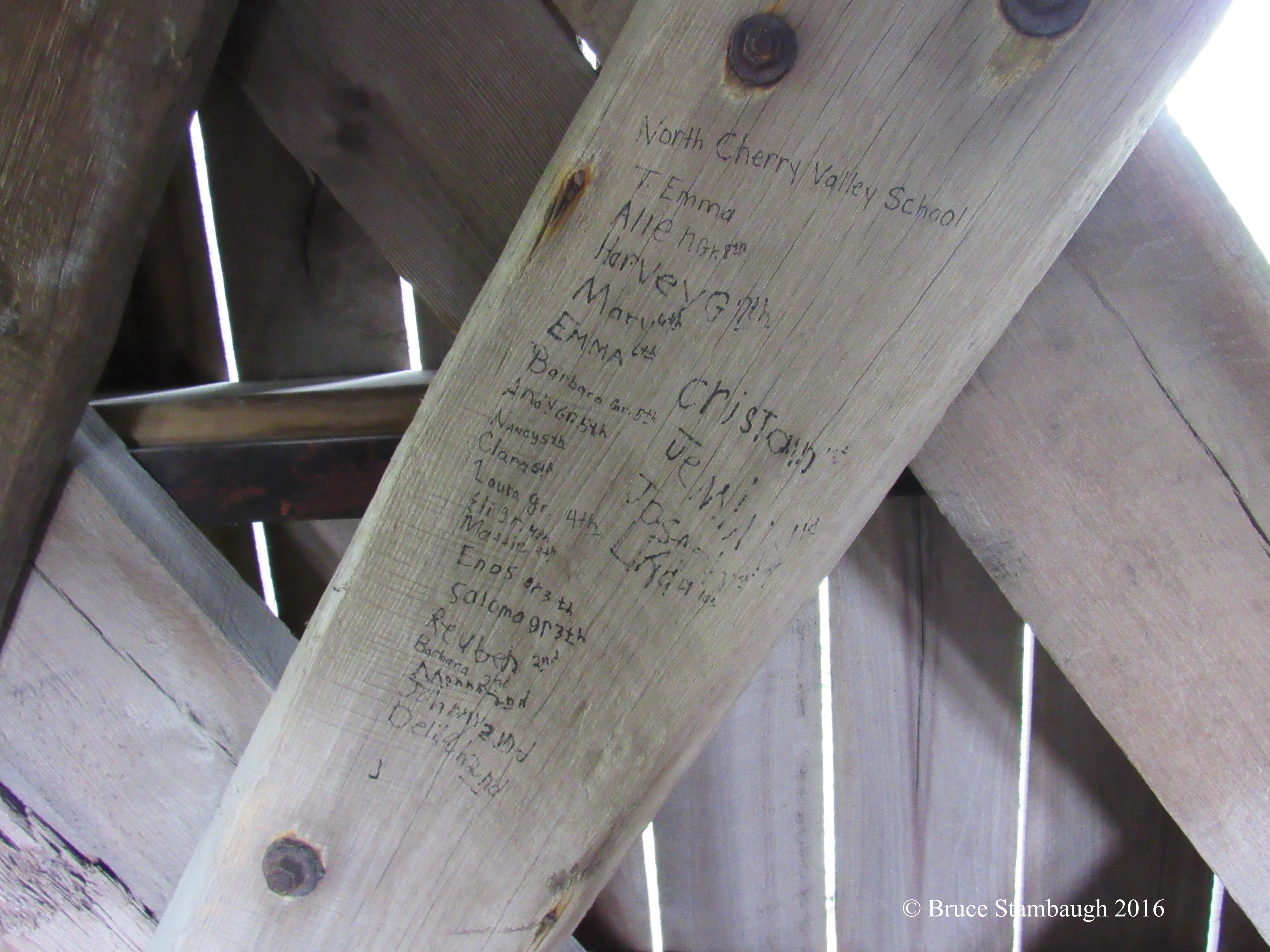
Unfortunately, other folks had little appreciation for either history or public property. Skid marks on the wood decking of some of the bridges evidenced raucous drivers thrilled with the sound of squealing tires. Others painted graffiti or left personal signatures, including an entire school class on an outing. Perhaps that’s why many of the bridges were outfitted with security lights and fire alarms.

After traversing fairly flat countryside for miles, the rural roads suddenly dipped and curved into steep, wooded ravines. The roads often rounded into and out of bridges, creating limited visibility. Passing motorists chased us to a bridge’s side more than once.

Most were courteous and slowed to a crawl. Likely we weren’t the first curious tourists they had encountered on their daily path across history.

root road covered bridge
Root Road.

© Bruce Stambaugh 2016

The end of Cleveland sports fatalism?

Amish boys, celebration
A local pizza shop in Fredericksburg, Ohio stayed open late so young Amish boys could watch the deciding game seven of the NBA playoffs. This photo posted on social media shows the boys cheering as the Cavs beat the Warriors.

By Bruce Stambaugh

Maybe this is the end of the strangling fatalism that sports fans of Cleveland’s three professional teams have endured for far too long.

“This” references the recent, glorious victory by the Cleveland Cavaliers over the Golden State Warriors that made the Cavs the National Basketball Association (NBA) Champions for 2016.

I know. In today’s fast-paced era of instant information, this fact is old news. But without that introduction, the rest of what I have to say wouldn’t make much sense.

First of all, I couldn’t bear to watch the game. I don’t follow the NBA much anyhow. I wasn’t about to jinx the Cavs by watching the deciding game.

However, when the alert on my wife’s smartphone reported that the Cavs had won, we bolted out of bed and turned on the TV to watch the post-game celebration. It was worth the missed minutes of sleep.

I was impressed with the genuine tears of joy and relief shed by all the players and the head coach. They clearly understood what that precious moment meant to all Cleveland sports fans everywhere. I teared up, too.

miracles
MiraCLEs do happen.

It meant the world to us. It said that after 52 years of hope, frustration, disappointment, and despair that Cleveland had finally broken the infamous, self-induced curse of losing. Of course, such a thing never existed. It just seemed so.

The Cleveland Browns were the last of the three professional sports teams to win a world championship. That was in January 1964. I remember it well because I was at that game as an excited 16-year-old, having had my name drawn in a lottery to purchase tickets.

The Browns won the National Football League Championship with a 27 – 0 win over the Baltimore Colts. They played the game in old, cavernous Municipal Stadium in sub-zero conditions. It was pro football’s super bowl before pro football officially had a Super Bowl.

I couldn’t have imagined then that that victory would be the last championship for a Cleveland sports team until the Cavs’ Father’s Day win. Since 1964, followers of Cleveland’s pro sports have had to endure a lot of disappointments to the point of being fatalistic.

No matter how good any of the three teams were, something silly, even unimaginable, was sure to happen as if the sports Gods had it in for the poor city whose river once caught on fire. I was there for that, too.

During that depressing stretch, fans of the Cavs, the Browns, and the Indians had seen it all. For the Cavs, it was Michael Jordan on far too many occasions.

For the Browns, it was The Drive, The Fumble, and The Move, when Art Model secretly transported the team to Baltimore. The Colts had previously shuffled off to Indianapolis.

For the Indians, it was Jose Mesa in the ninth inning of game seven of the 1997 World Series. They haven’t been close to a championship since.

But the Cavs have permanently corked that bottle of bad luck. Since I froze my nose in 1964, Cleveland finally has another world champion. Thanks to fatalism’s firm grip, I still can’t believe it.

Has this great victory killed the Cleveland sports jinx? Will folks simply get on with life without this fatalistic outlook about never being able to win? I sure hope so.

I do know this. When the Cleveland Indians defeat the Chicago Cubs for the World Series win this fall, I’ll be entirely, positively, wonderfully convinced.

fireworks, baseball, Progressive Field, Cleveland Indians
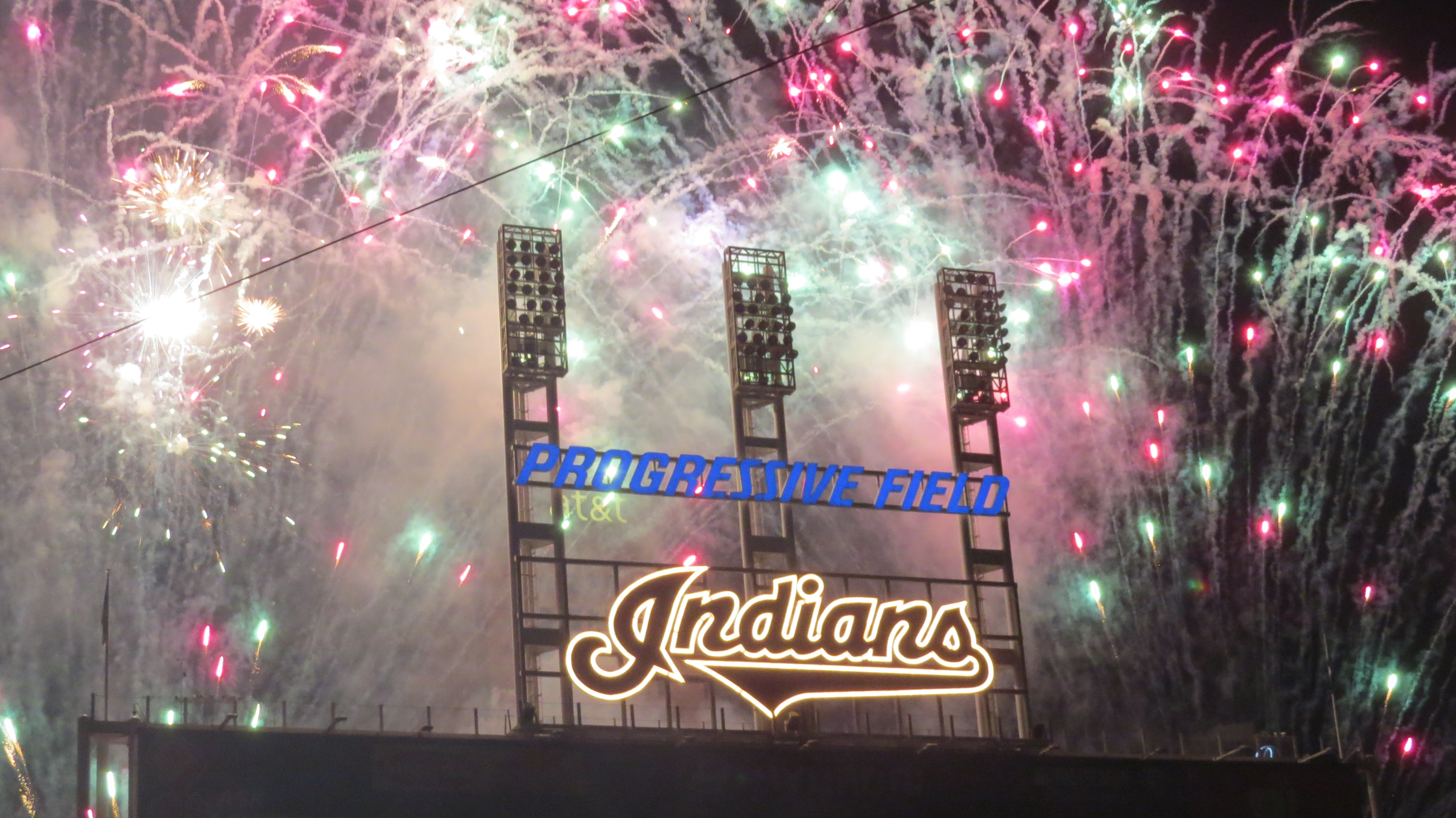
Someday fireworks will explode in celebration of an Indians World Series championship. Someday, maybe this year. © Bruce Stambaugh 2014.

© Bruce Stambaugh 2016

The idiosyncrasies of Daylight Saving Time

pink sunrise
Sunrise in pink.

By Bruce Stambaugh

As a kid, I loved when Daylight Saving Time (DST) arrived, mostly. At first, school days began in the dark. The upside was that we had more daylight time in the evening to play and do chores.

That seemed like a fair trade to me. Excuse the pun, but times have changed since the origin of DST. I’m not sure humanity has, however.

Believe it or not, DST originated in ancient times before clocks existed. Various civilizations adjusted their schedules, not their clocks, to the natural lengthening of warmer months.

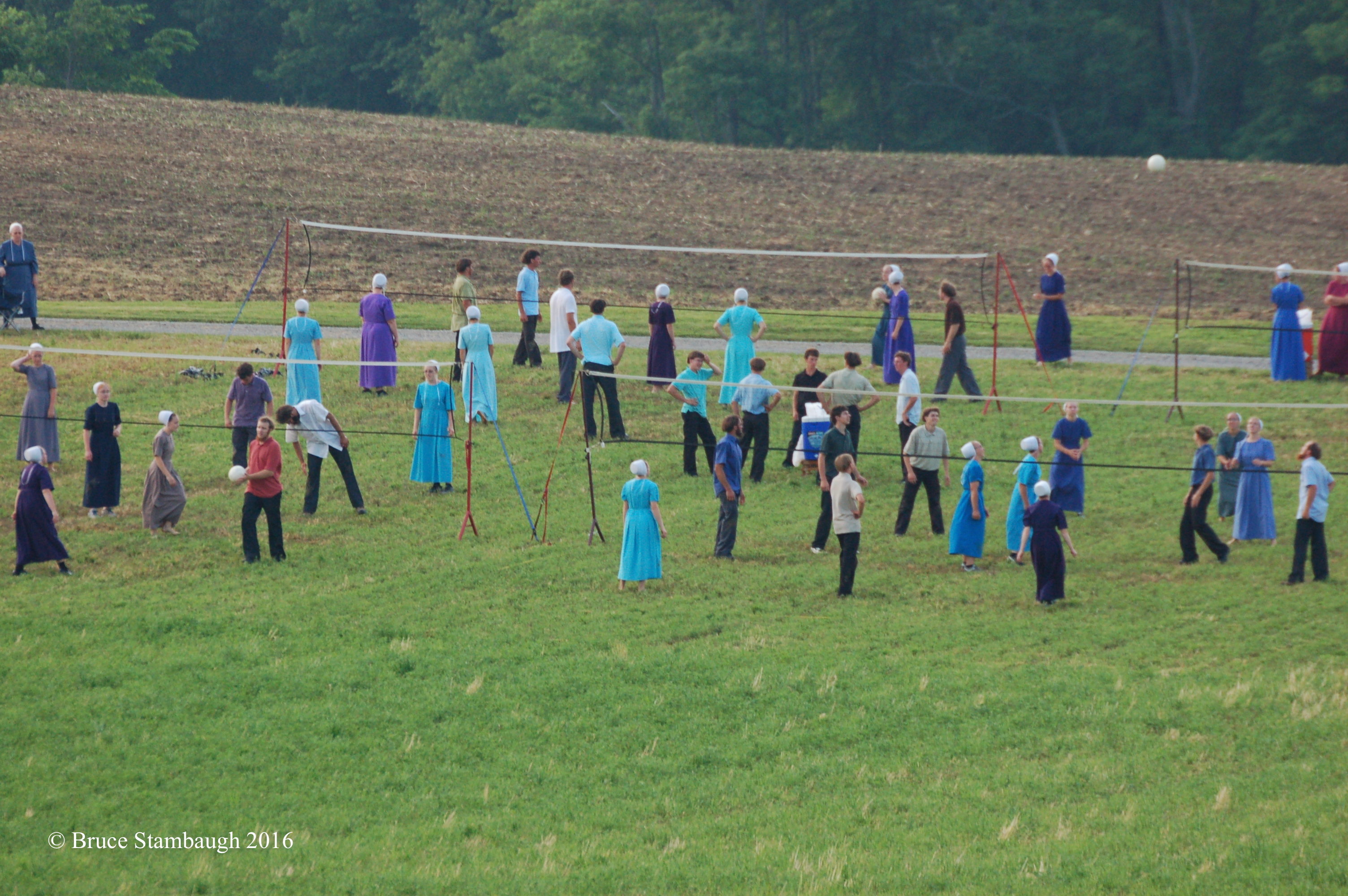
Amish volleyball
Evening recreation.
Ben Franklin’s humor accidentally credited him with the suggestion of DST. When awakened by the sun at 6 a.m. in France in 1784, Franklin jokingly suggested in an essay that the French could save a lot of money by getting up earlier in the morning. That would result in fewer candles burned in the evening.

Folks in Thunder Bay, Ontario, Canada were the first to use DST in 1908. The idea didn’t catch on until the onslaught of World War I when Germany resorted to using DST to save fuel for the war effort. Great Britain soon followed suit.

The same thing happened when the United States entered World War II. To save fuel, DST ran from April 30 to Oct. 31. In one form or another, DST has been around ever since.

Today’s use of DST in the U.S. dates to the 1973 oil crisis in the Middle East. DST now runs from the second Sunday in March and ends the first Sunday in November. Altogether, 70 countries use some form of DST.

Despite its semi-annual adjustments, folks still get confused by the change of time. A simple rule is spring forward an hour in March and fall back an hour in November. Note the cheeky references to “spring” and “fall.”

Farmers often get the blame for initiating DST. In fact, the farmers I talk to hate it, especially if they milk cows.

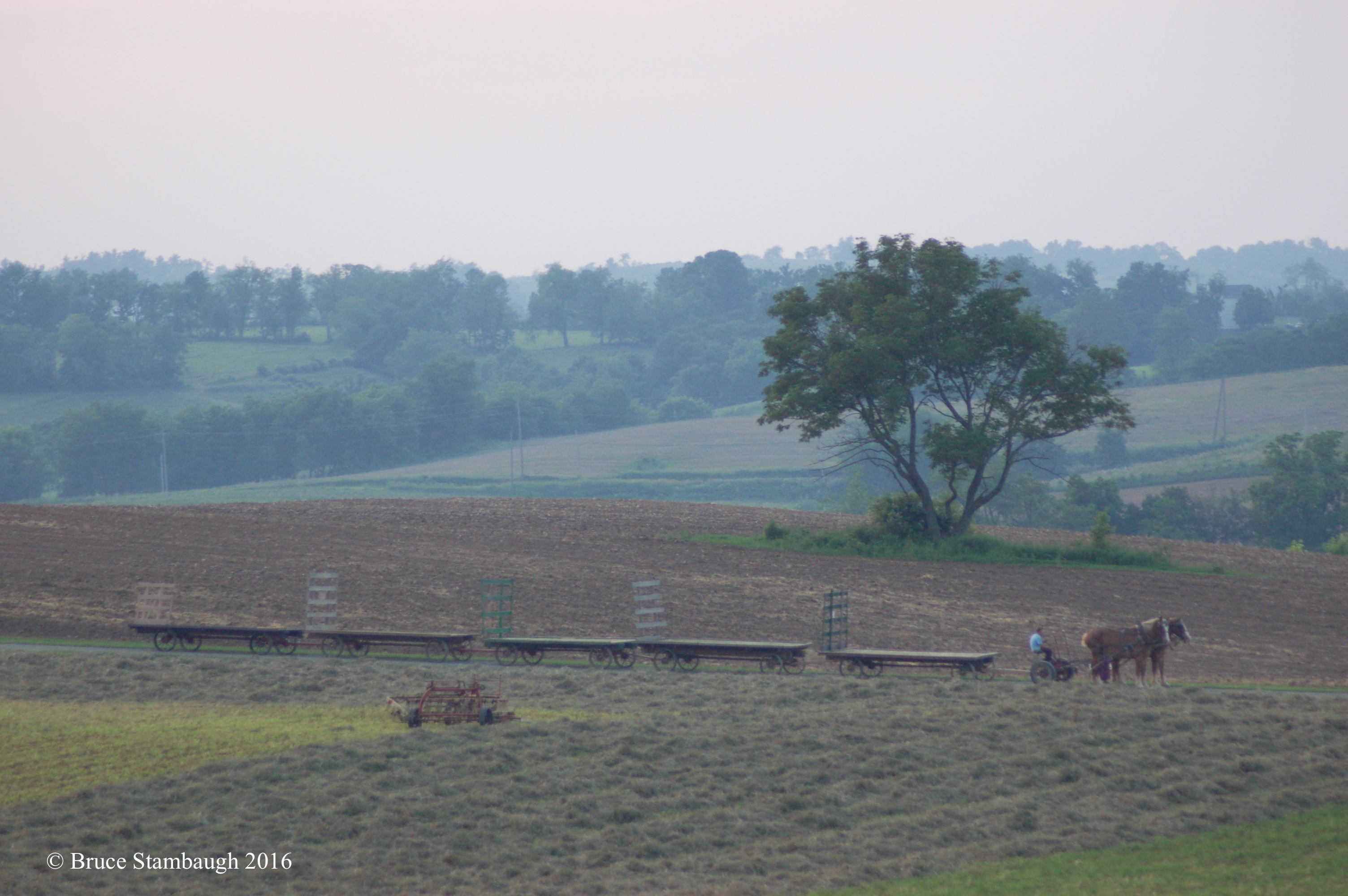
Amish farmer, hay wagons
Late evening wagon train.
When I was an elementary school principal, I often made home visits. In some Amish homes, I noticed that the household clocks remained on standard time.

Others apparently used the art of compromise. Clocks were set back a half an hour. Perhaps these methods were mild forms of protest. Whatever the reasons, people always seemed to know what time it was regardless of what the clocks said.

That’s more than others could say. This simple idea led to some chaotic timekeeping. In 1965, the state of Iowa had 23 different start and end dates for DST. Even the Twin Cities of Minneapolis and St. Paul, Min. didn’t change time equally.

To bring order to all of the chaotic clocks, Congress passed the Energy Policy Act of 2005 making DST uniform. Well, mostly. Arizona and Hawaii still don’t use DST, along with several U.S. territories.

For good or for ill, the intent of this checkered history of playing with time was to save energy. Research has shown that concept is flawed.

I can see both sides. Earlier risers would just as soon avoid manipulating the clocks twice a year. Those who desire extra playtime after work or school are happy for the extended daylight.

That remains the justification for DST. It doesn’t save time. The tactic merely adjusts the clock to accommodate more daylight for more citizens.

My less than nimble fingers protest resetting the many digital devices that don’t self-correct. The child in my heart, however, still enjoys the adjusted daylight.

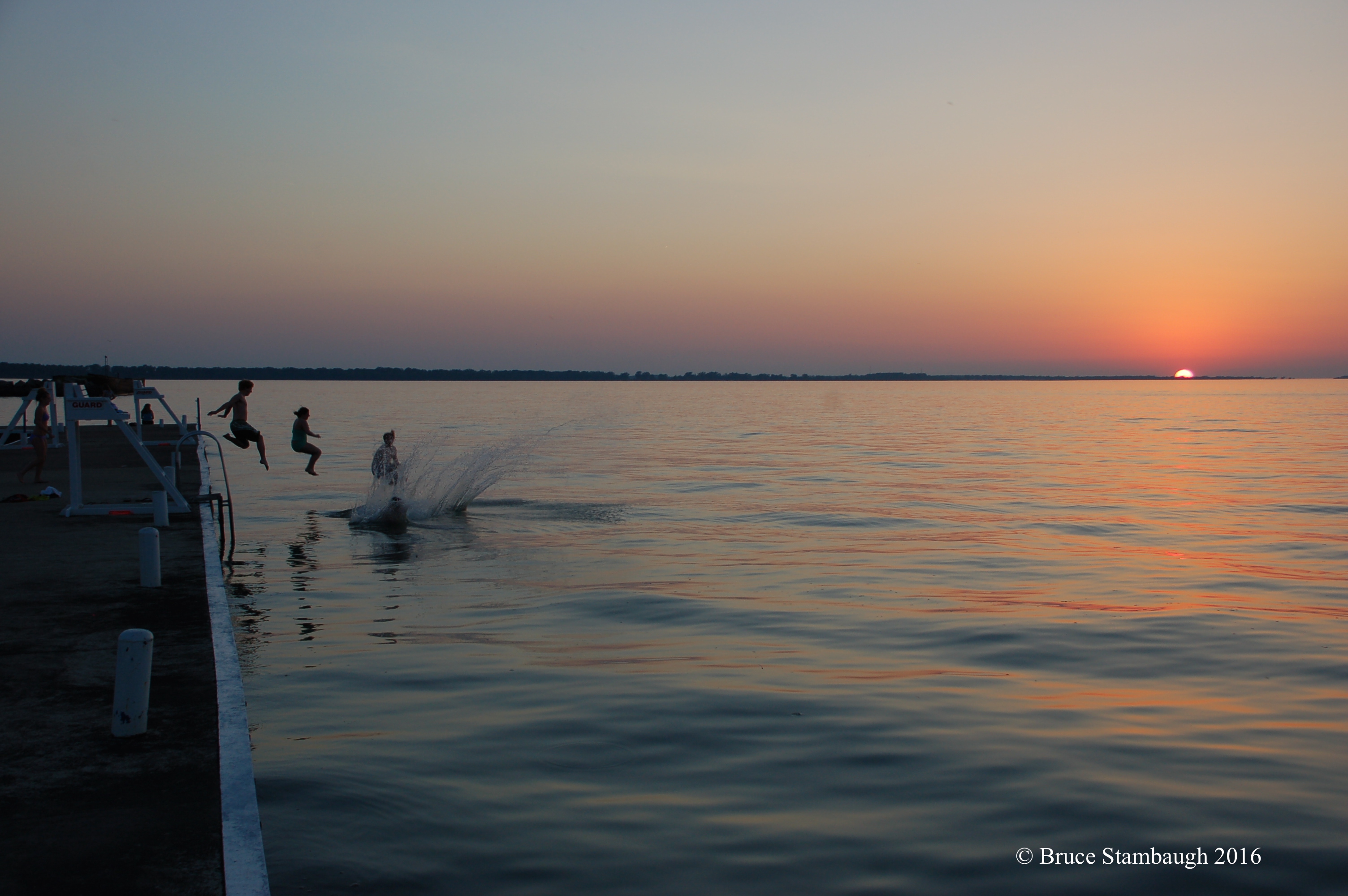
kids swimming, summertime
Summertime fun.

© Bruce Stambaugh 2016
Baseball’s playoffs have begun, minus Cleveland of course

former Cleveland Indians
The glory days.

By Bruce Stambaugh

Another Major League Baseball regular season is over. The playoffs have begun.

My favorite team won’t be playing in the postseason again this year, despite the extended playoff schedule. The Cleveland Indians have packed it in once again. Even the most casual baseball fan knows it’s not the first time.

The Indians have been in this position for most of their existence. The Cleveland club has only won the World Series twice. They came close in 1997. But 18 years later, it’s still too painful to recall.

Yes, I am a diehard Cleveland Indians fan, though I do wish they would change their mascot. We have the Cincinnati Reds. How about the Cleveland Blues? That name would appropriately represent the feelings of Cleveland’s fans this time every year.

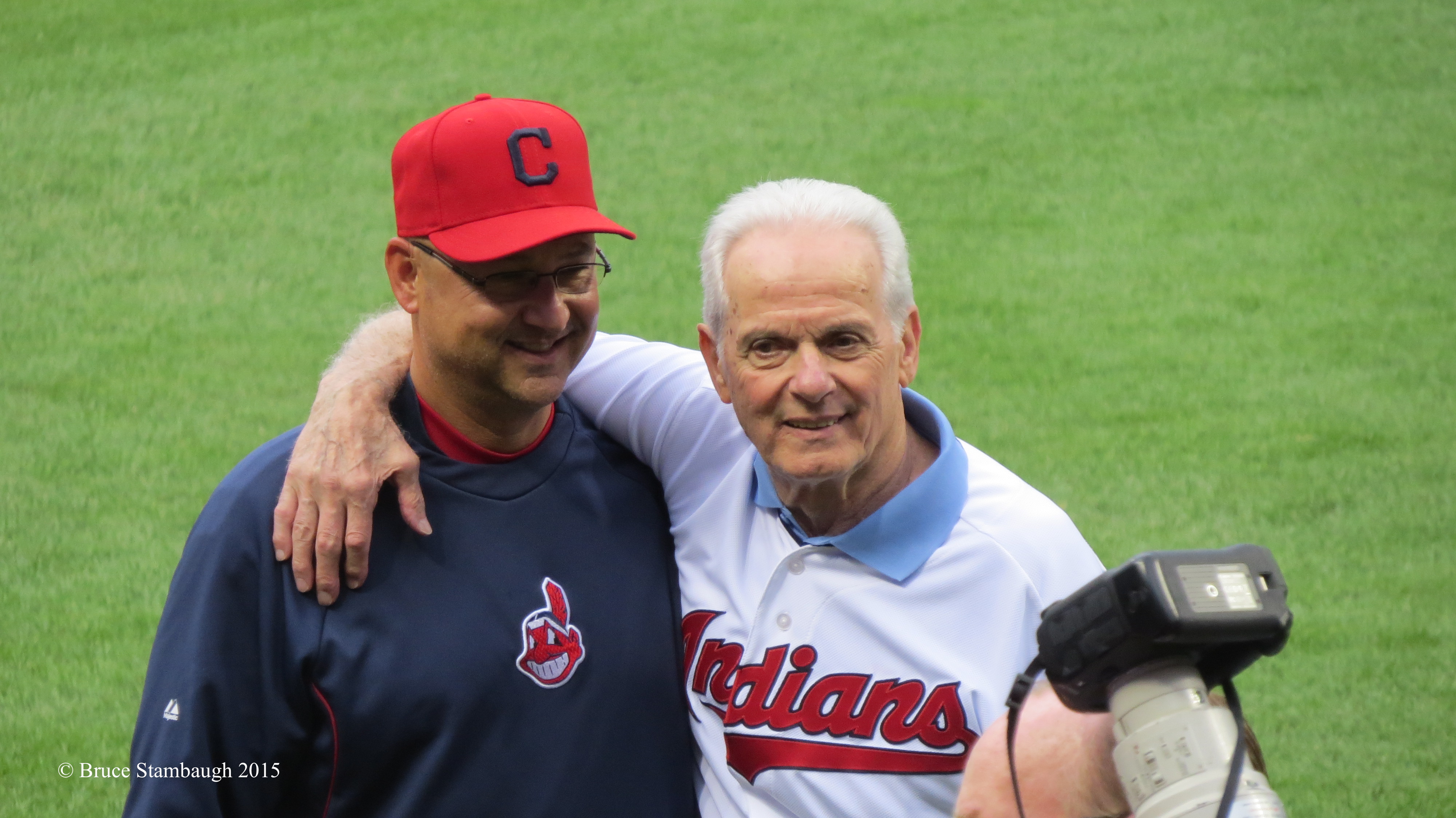
Terry Francona, Rocky Colavito
Terry Francona and Rocky Colavito.

I would love to see the Indians win the World Series just once. To be fair, I was alive the last time the Indians won it all. Not that I remember it. I was a year old.

Like most other kids, I collected baseball cards growing up. In those days, we had to buy them one pack at a time and hope the flattened stick of bubblegum wasn’t too stale. I spent a lot of nickels saving those cards.

I wish I still had them. The cards accidentally got pitched while I attended college.

My favorite Cleveland Indians were Rocky Colavito, Minnie Minoso, Herb Score, Bubba Phillips, and of course Lou Klimchock. He led the Indians in hitting in 1969 with a whopping .287 average.

I’d stay up late at night listening to Jimmy Dudley call the games on the radio. For some strange reason, he always seemed more excited at the beginning of the season than at the end. I think I know why.

I remember going to a doubleheader game on Father’s Day against the dreaded and perennial powerhouse New York Yankees. The Indians had won the first two games of the series. We sat out in the left field stands in old Municipal Stadium. A standing room only crowd packed the cavernous place.

Hall of Famers like Whitey Ford, Mickey Mantle, Roger Maris and the late Yogi Berra filled the Yankee roster. Cleveland won both games and swept the series. Our spirits were high.

baseball fan, Cleveland Indians
Typical fan?

It seemed like every year the Tribe played their hearts out and built hope against hope that this might finally be the year. But once the Fourth of July rolled around, the Tribe did their annual swan song. By season’s end, the Yankees were the American League champions. The Indians? Well, take a guess.

Keep in mind those were the days when the team that won the pennant in each league went to the World Series. It was all or nothing. It’s been zip for Cleveland for too long.

Hopes rose again when Cleveland built a new stadium, affectionately called The Jake, now corporately named Progressive Field. Unfortunately, the Tribe still hasn’t made much progress toward winning it all.

The Indians have gone to the playoffs a few times in the last two decades. But some of those winning teams were filled with shining stars bloated with egos and steroids. No names mentioned, however.

Since that era, the season has usually ended right on schedule for the Tribe. When that happens, just like this year, all faithful Cleveland Indians fans know what to say.

“Wait until next year!” We always do.

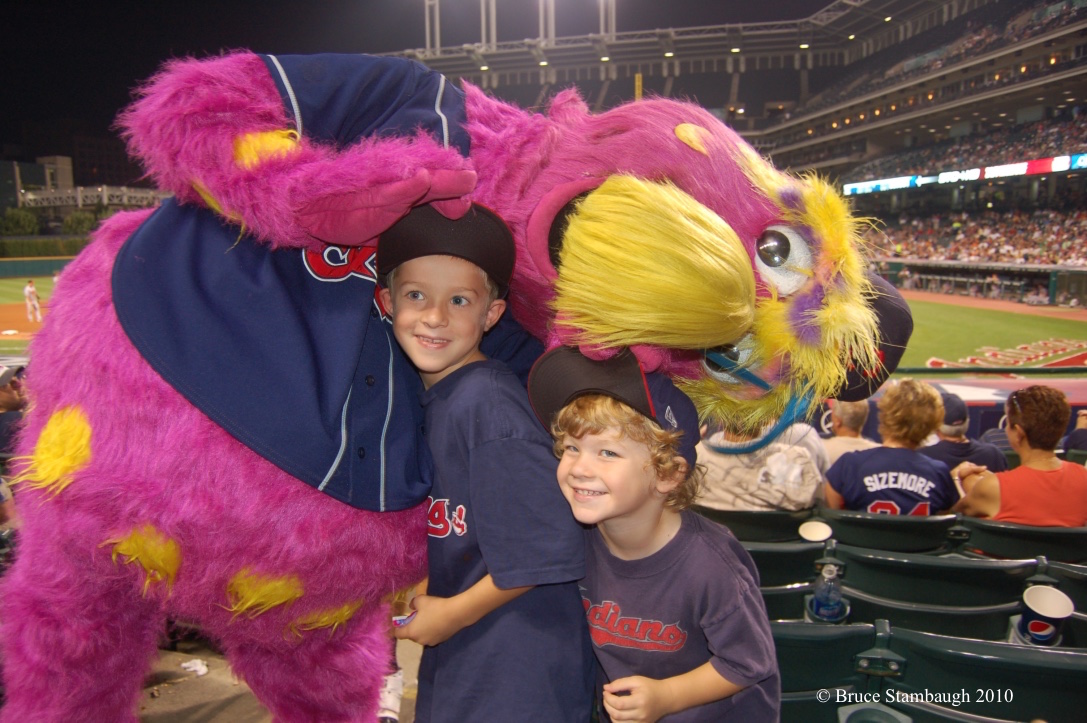
Slider, grandsons
Better than a World Series win.

© Bruce Stambaugh 2015

Summer weather in Ohio is as variable as life’s events

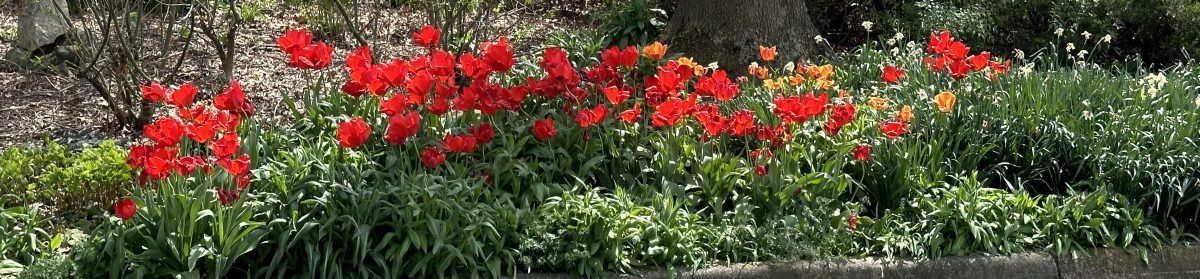
flower garden
Summer bouquet. © Bruce Stambaugh 2015

By Bruce Stambaugh

After another wonderful summer day with partly sunny skies, pleasant temperatures, light breezes and little humidity, I’m watching the rain pour down.

It’s July. It’s Ohio. It’s the way weather happens here.

After the harsh winter and cool, damp spring, we were ready for an old-fashioned summertime. To be clear, that meant nothing but clear skies and warm sunny weather through September.

Of course, that never really has happened, never will. But we can dream can’t we?

The truth is we need to be honest with ourselves about summer weather in Ohio. We can have good days, better days, and then there’s the rest. Some of Ohio’s summer weather can be downright nasty, if not hazardous.

The consequential weather can be fearsome, and put a kink into your best-laid plans. A picture perfect day can morph into our worst nightmares. Tornadoes, hail storms, damaging thunderstorm winds are among the wicked weather menu options.

This slideshow requires JavaScript.

The July 1969 flood comes to mind. I didn’t live in Holmes County then. Still, the storm was widespread, and I saw damage and destruction. I was an intern reporter for The Plain Dealer in Cleveland. I headed to the Chautauqua Institution near Jamestown, New York for the holiday weekend.

I didn’t stay long. All the activities got rained out. On the way back to my apartment in a western Cleveland suburb, I passed several ConEdison power company trucks in New York heading west on the interstate.

I stopped at the newspaper on the way back and saw photos of boats being bashed against the rocky lakeshore. Power was out in much of the Cleveland area, including my neighborhood. In fact, one of those ConEdison trucks that I had passed was parked in front of my apartment.

Powerful winds drove the pouring rain right through the old, thick brick walls of our building. Huge trees snapped in a nearby park, and teenagers directed traffic at busy intersections.

Six weeks later I saw the damage done in Killbuck, my new home. Folks were still trying to recover from the devastating flood that touched nearly every building in the creekside town.

Weather is to be both appreciated and respected when it interrupts our human plans. When we hear thunder, we need to take cover. Avoid those treacherous floodwaters and find another way around.

Click on the photos to enlarge.

As a weather buff, I cringe when I hear of people being struck by lightning playing golf or baseball, and when I learn of youngsters being swept away playing in swollen streams. Those are sad stories that need not have happened.

Weather is a lot like life, isn’t it? A wise Amish farmer once told me, “We just have to take whatever weather comes our way.” I think that philosophy applies to other aspects of our lives as well.

How do we respond when one of life’s happenings strikes us like a lightning bolt?

A surprise medical diagnosis by the doctor, an unexpected budget-breaking bill, a broken relationship, the death of a loved one can all wash over our emotions like a flash flood.

It’s summer in Ohio. Not every day will be sunny, nor will everything that happens to us be fair. We can’t change the weather, and sometimes can’t even alter our personal circumstances.

What we can do is keep on hoping for sunny summer days. It won’t be all cloudy and miserable forever.

It’s July. It’s Ohio. It’s the way weather and life happen here.

Summer sunset
Summer sunset. © Bruce Stambaugh 2015

© Bruce Stambaugh 2015

In honor of two very friendly fathers

By Bruce Stambaugh

My late father and late father-in-law were clearly different men. But they had a lot in common, too.

Both my father and my father-in-law, Wayne, were genuinely friendly to everyone they met. They each set an example on how to interact and connect with others.

Stambaughs, Millers
Marian and Dick Stambaugh (L) and Wayne and Esther Miller. © Bruce Stambaugh 2015
Dad was lanky and gregarious. Though skinny as well, Wayne was of average height. Dad was a Type A talker. Wayne was more laid back, but could easily carry his own in any conversation.

That was especially true when it came to sports. Both men were like little kids if baseball, football or basketball were the topics of conversation. They had a love-hate relationship with all teams Cleveland.

They didn’t just talk athletics either. Dad played three sports in high school and perused his enthusiasm for games well into adulthood. Wayne bowled and played church league softball.

Both found those activities as a means to an end. They got to play, and they thrived on the conversational interplay before, during and after the games.

Of all their commonalities, friendliness was at the top of the list for both Dad and Wayne. In fact, they became good friends, in part because they knew many of the same people.

farm tractor
Where my late father-in-law felt most comfortable. © Bruce Stambaugh 2015
Wayne was a farmer, and Dad loved farms, but for different reasons. Farming was Wayne’s livelihood. Dad made friends with farmers near and far because he liked to hunt and fish. He also found their various stories fascinating.

Wayne and Dad got along famously. In fact, once Neva and I set our wedding date, both men started to invite folks to the ceremony that knew both families. Unfortunately, some of those people weren’t on our invitation list. Is it any wonder we had 400 guests?

I learned early on that Dad liked to meet new people. He’d take us kids along on his excursions exploring farms all over eastern Ohio.

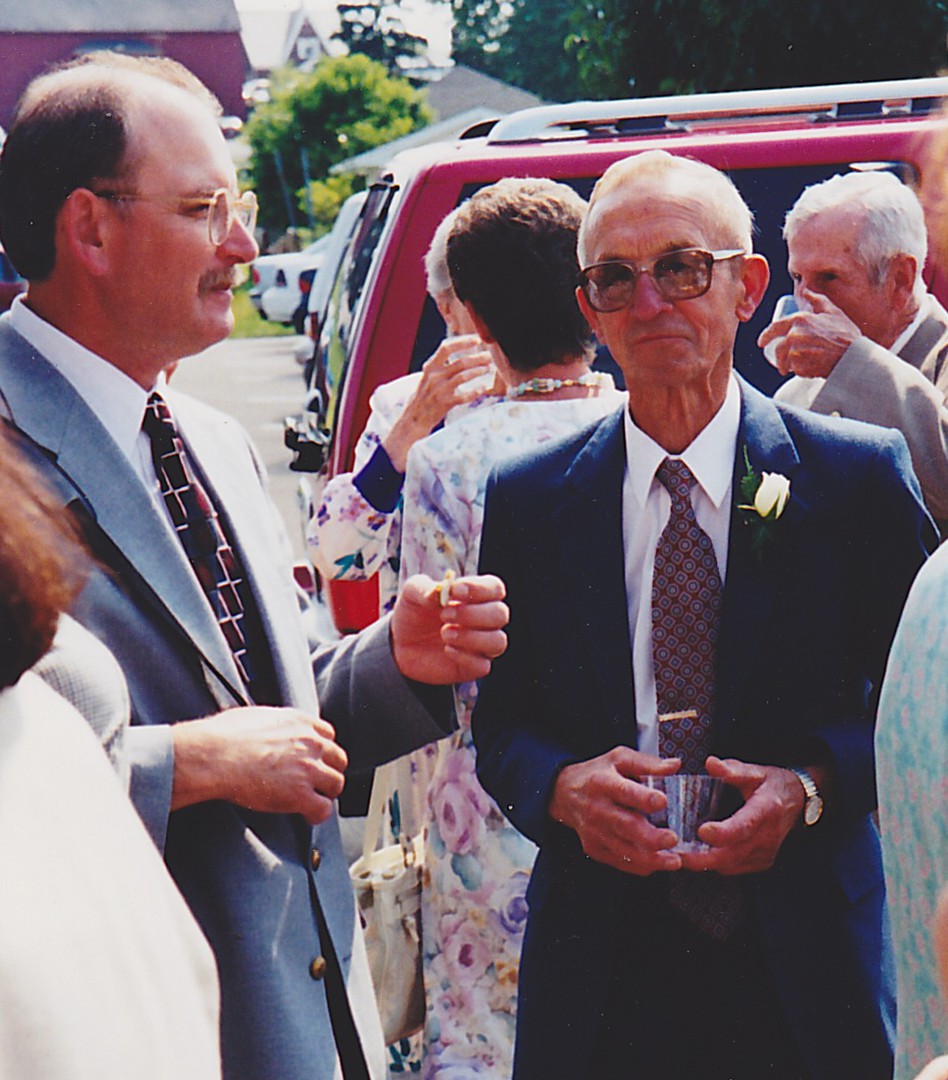
Wayne Miller
Wayne Miller at our daughters wedding in 1998. © Bruce Stambaugh 2015
After he retired and stumbled onto the hobby of Indian artifact collecting, Dad’s interests in farms had a new twist. Again, Dad’s high-spirited enthusiasm carried over to his children and grandchildren, who he coaxed into accompanying him on his relic gleaning excursions. It was his version of hands on lessons in history, geography, and conversation.

I knew Wayne liked me right away. On my first visit to the Miller farm, he took me straight to the barn to see the pigs. My wife said it normally took other guys two or three visits. I was honored, and our relationship blossomed from there. He treated his other son-in-law with equal love and respect.

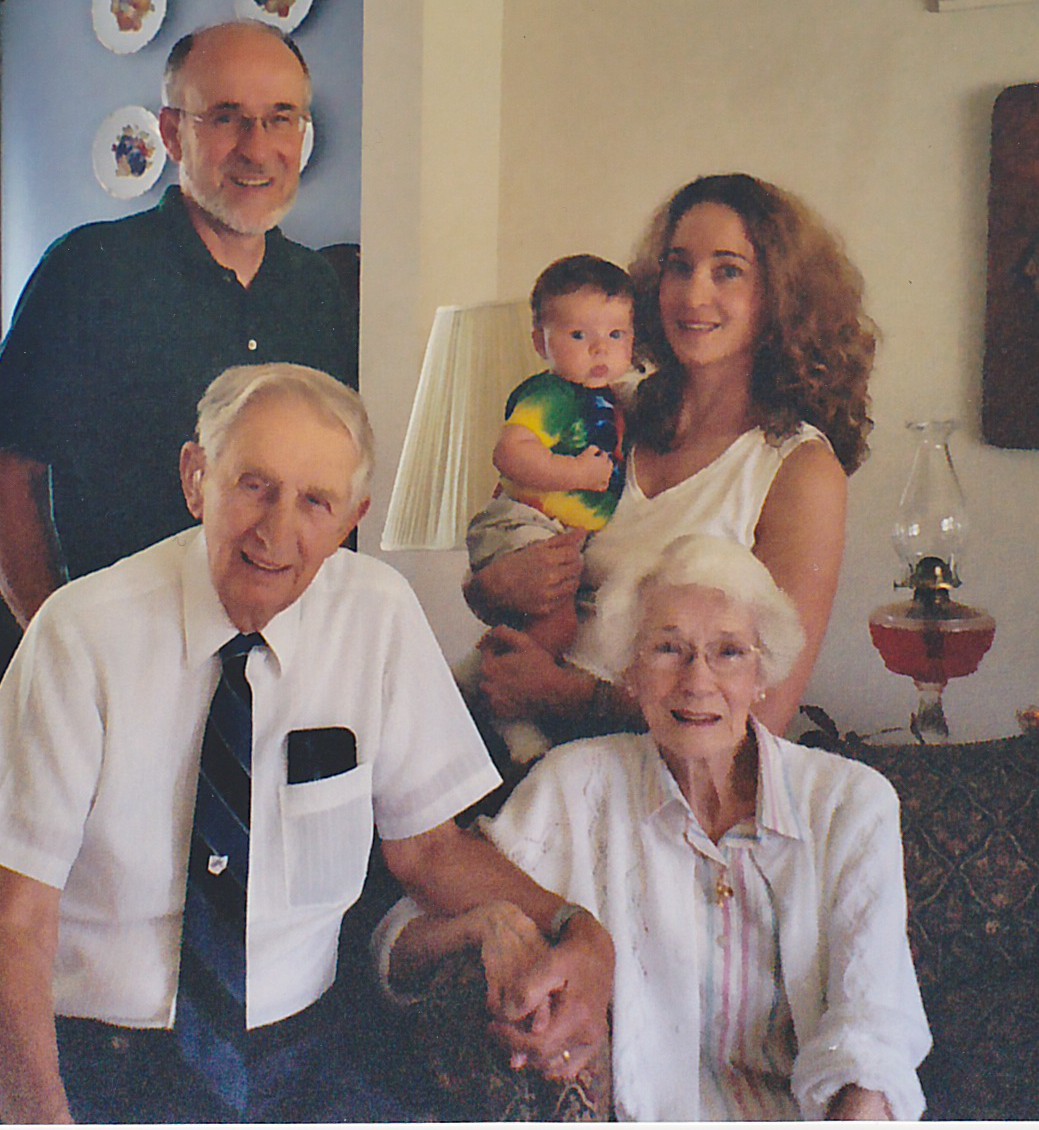
family
Dad and Mom with our daughter, her son, and me. © Bruce Stambaugh 2015
Dad would use the arrowhead hunting excuse to visit Wayne and Esther’s farm, along with neighboring fields. Their real friendship was just part of the formula that successfully melded our two families together.

Even in death, Wayne and Dad connected. Wayne died on Dec. 22, 2001. Dad died on Dec. 21 eight years later.

It is no wonder that even today people that knew Dad and Wayne describe them both with the same fondness. They use similar complimentary terms to reflect on each man. Both were sociable people, easy to like and admire, they say.

Of course, both Wayne and Dad were human. They each expressed themselves in less than articulate ways at times. But to those who knew them, or maybe only once met either of them, the conclusion was the same.

People remember the genuine congeniality of both Dad and Wayne. That’s a legacy we’d all like to leave.

© Bruce Stambaugh 2015

In words and deeds, a President humbly true to his faith

Jimmy Carter, Rosalynn Carter
With Jimmy and Rosalynn Carter. © Bruce Stambaugh 2015

By Bruce Stambaugh

Humility, service, love, family and faith are vital pillars of any stable community. My wife and I enthusiastically witnessed these highest of human qualities at a little Baptist church in Plains, Georgia.

We knew we wouldn’t be the only ones who would want to hear Jimmy Carter teach Sunday school. When the former president is scheduled to teach, the tiny congregation of 30 swells to 10 times that amount, sometimes more.

The good folks at Maranatha Baptist Church know what to do. They are ready for the ensuing onslaught. So are the authorities.

When we arrived at 8:30 a.m. at the modest church that damp, gray Sunday morning, a police dog checked every vehicle entering the property for bombs. Though we were plenty early, a line of people already stretched from the front door, down the cement sidewalk to the parking lot.

By now, former President Carter has developed quite the reputation as a teacher, humanitarian, and world-renowned peacemaker. At age 90, he and his equally gracious wife, Rosalynn, are still putting their faith into action.

Noble Peace Prize, Jimmy Carter
Jimmy Carter’s Nobel Peace Prize medal. © Bruce Stambaugh 2015

My wife and I joined the queue to enter the red brick building. A stern looking woman popped onto the church’s front porch to announce the procedures for entering. She spoke loudly and resolutely so everyone could plainly hear the specific instructions to make everything go as smoothly as possible.

Secret Service agents greeted us inside the door. We emptied our pockets onto a table and removed our coats. Another officer checked everyone with a wand for any suspicious objects.

We sat in a pew about two-thirds of the way back from the pulpit. Promptly at 9 a.m., the same drill sergeant like lady walked to the front of the church and introduced herself as “Miss Jan.”

Miss Jan spent the next 45 minutes kindly but firmly going over all the rules of conduct. Included were not standing or clapping for the president and no photography during the class or worship. We could take pictures during Jimmy’s brief introduction.

Miss Jan continued, “If you want your picture taken with the President and First Lady you must stay for both the Sunday school and the worship.”

After a brief break, Miss Jan, who had taught the Carter’s daughter, Amy, in elementary school, had us all bow our heads for a prayer. When she said, “Amen,” Jimmy Carter surprised the congregation when he rose and began addressing the crowd. He and his Secret Service guards had quietly sneaked in during the prayer. We hung on his every word.

Miss Jan kept watch over the assembled. She occasionally hugged or bent down to shake the hand of a Secret Service agent, as if she were welcoming them back to a family gathering. The affection they shared was for more than themselves. Their common assignment of protecting the president they loved and admired expressed their uniform devotion.

Jimmy Carter, Sunday school
Jimmy Carter was making a point during the introduction section of the class. © Bruce Stambaugh 2015

The topic was loving God and your neighbor. Jimmy humbly shared how organizations he supports, like the Lions Club, Habitat for Humanity, and The Carter Center in Atlanta, help him put this charitable concept into global deeds for peace and human rights.

Jimmy used the word “humble” several times, pronouncing it the old-fashioned way, without the beginning “H” sound. It modeled his southern, gentlemanly hospitable manner.

After the service, Miss Jan resumed command, dismissing us by rows to have our pictures taken with Jimmy and Rosalynn. When she came to our row, I told her she must have been an excellent teacher. Miss Jan winked, smiled, and quietly thanked me.

Miss Jan had instructed us not to either shake hands with the Carters or to talk to them so that everyone could get through the process as quickly and efficiently as possible. When the lady taking the photo with my camera clicked the shutter, Rosalynn whispered to Neva that the flash hadn’t gone off.

That was so thoughtful of her. The picture was fine, just like Jimmy and Rosalyn Carter, and Miss Jan, too.

The communion cup of love, faith, family, humility, and service generously overflowed in Plains, Georgia. We were grateful to have been partaken.

Jimmy Carter quote, Bruce Stambaugh
A quote from Jimmy Carter’s inauguration. © Bruce Stambaugh 2015

© Bruce Stambaugh 2015

Light upon light

oil lamp, sunlight, sunrays,
Light upon light. © Bruce Stambaugh 2015

My wife and I and some friends of ours from Ohio were visiting Ft. Clinch in Ft. Clinch State Park in Fernandina, FL during a “Living History Day.” A volunteer in era-appropriate Civil War attire was eloquently sharing about the old fort’s infirmary when this oil lamp caught my attention. The morning sunlight warmly played upon the lamp and the table on which it sat. The white-washed brick wall, with some original mortar showing through, served as an appropriate backdrop. The setting made for an impromptu capture without me being too rude to our guide.

“Light upon light” is my Photo of the Week.

© Bruce Stambaugh 2015

What’s all the fuss about Groundhog Day?

Punxsutawney Phil
The 2014 version of Punxsutawney Phil. (Photo courtesy of the Pittsburgh Post-Gazette.)

By Bruce Stambaugh

Another Groundhog Day is upon us. What’s all this silliness about anyhow?

I’ve never entirely understood the ubiquitous clamor over this unofficial holiday. Even as a youngster, I remember watching the Today Show on television on Feb. 2. Willard Scott, the show’s weather guy, got so excited if the groundhog didn’t see its shadow. Folklore says that means spring will arrive sooner than the official date.

That’s just nonsense, of course. Wild animals have some sense of impending doom. I heard stories about deer fleeing the lowlands along the Killbuck Creek in Holmes Co., Ohio well ahead of the devastating flooding in 1969.

But a groundhog, or if you prefer woodchuck, whistle pig or land beaver, predicting when spring will really arrive? I don’t think so.

The town of Punxsutawney, Pennsylvania garners the most attention on Groundhog Day. The good folks of the hard-to-spell town have been hosting the official celebration of this hoax of a holiday ever since 1886.

I was surprised to learn the event had been going on that long. It’s gained in popularity since the release of the Hollywood movie of the same name in 1993. Since then, folks swamp the little west central Pennsylvania burg wanting to get a look at the four-legged weather prognosticator from Gobbler’s Knob.

groundhog, Bruce Stambaugh
Having dug a hole under our back porch, this groundhog seemed to ponder whether it should enter the baited trap set for it. It didn’t. © Bruce Stambaugh 2015
Townspeople couldn’t be happier to host the throngs of curious visitors for their festival. They gladly take their money for food, lodging and trinkets. I guess in the dead of winter, people will do about anything to break cabin fever.

I was also intrigued to learn that Groundhog Day was a carryover from traditions in Europe. Most of them were borne around a religious holiday called Candlemas, where clergy blessed candles that were distributed to parishioners.

The candles were lighted on February 2. If the candlelight was needed due to dreary weather, the populous took that as a sign that winter was waning.

Who were these kind but superstitious folks? Why Germans, of course. And what nationality predominated in swarming through Penn’s Woods in the pioneer days of our great country? Why Germans, of course.

In clearing the land for farming, they found groundhogs rather numerous. The four-legged varmint also happened to resemble an animal from their homeland, the hedgehog.

In fact, pioneer farmers in New England had a very practical saying. “Groundhog Day, half your hay.” In other words, if a farmer had used up more than half of the hay stored for the winter, lean times could be ahead for the livestock if winter lingered.

So it seems that I might have to ease up on the good folks in Punxsutawney. Why not have a little fun and make a little money in the process?

Having something to celebrate at winter’s midpoint may not be such a bad idea, after all. Given the day’s history, it does have a purposeful origin. As time and traditions both transformed, a case can be made that Candlemas morphed into Groundhog Day.

I don’t see either the day or the fuss going away anytime soon. We can thank the Germans for creating the tradition. We can thank the hyperventilating media for extending it.

I guess this just goes to show that even when you think something is a bit unusual, you can still learn from it if you keep an open mind. I won’t demean Groundhog Day again. Neither am I planning on celebrating it.

I will light a candle in the day’s honor. While I’m at it, I better check my supply of hay, too.

shadows, winter
Long winter shadows. © Bruce Stambaugh 2015

© Bruce Stambaugh 2015

Bay Photos by Donna

Wildlife Photos From The Chesapeake Bay Region

ROAD TO NARA

Culture and Communities at the Heart Of India

K Hertzler Art

Artist and nature journalist in the Shenandoah Valley of Virginia.

Maria Vincent Robinson

Photographer Of Life and moments

Gabriele Romano

Personal Blog

Jennifer Murch

Art is the only way to run away without leaving home. -Twyla Tharp

Roadkill Crossing

Writing generated from the rural life

ANJOLI ROY

writer. teacher. podcast cohost.

Casa Alterna

El amor cruza fronteras / Love crosses borders