Noteworthy news that didn’t make the headlines in 2019


Well, we made it. You and I have traveled yet one more year around the sun. True to form, 2019 was full of wonder, mistakes, successes, and a smorgasbord of conundrums and craziness.

As usual, I kept track of a few of the lesser but still extraordinary events and findings during the year.

January 20 – A meteorite was recorded striking the surface of the moon during the Super Full Blood Wolf Moon total lunar eclipse.
January 22 – According to a report from nonprofit Oxfam, the world’s 26 wealthiest people are worth the same amount of money as the world’s poorest 3.8 billion.
January 30 – The temperature dropped to -48 degrees with a wind chill of -65 in Norris Camp, Minnesota, making it the coldest place in the lower 48 states.

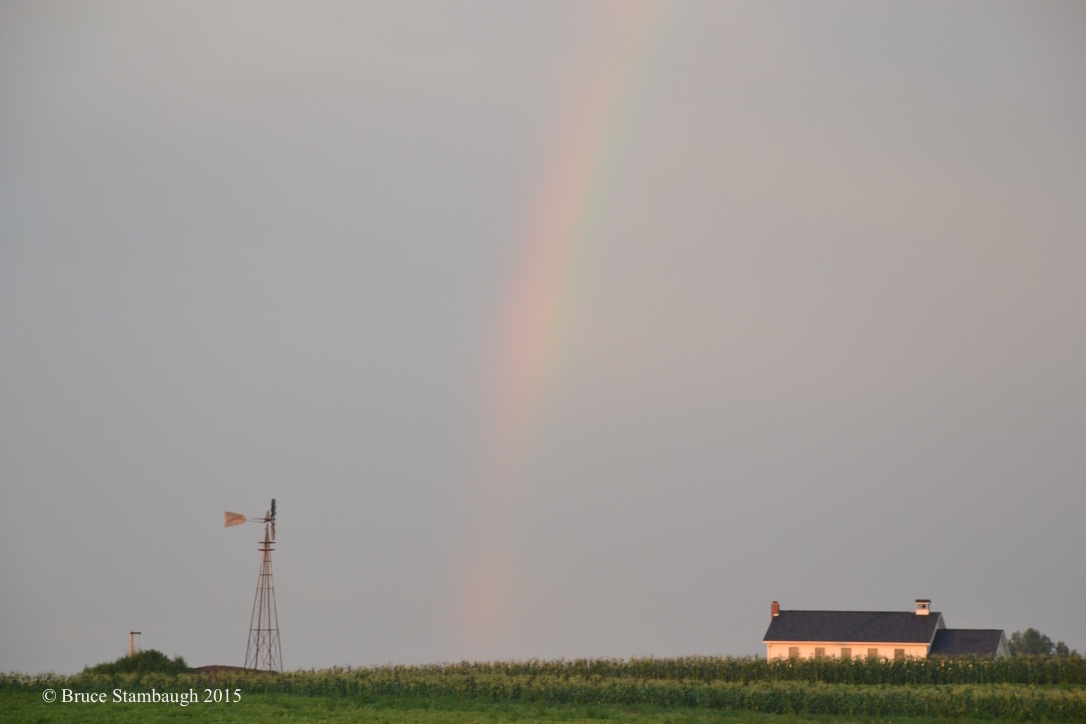
Early morning sky, January 31.

February 1 – The BBC reported that January was the hottest month on record in Australia and that five days were among the top 10 on record for the warmest.
February 7 – NASA reported that the last five years have been the hottest since records began being kept in 1880, with 2018 the fourth warmest year.
February 13 – NASA announced that it had declared the Mars rover dead after being unable to communicate with it following a massive dust storm on the red planet.
March 25 – A British Airways flight bound for Dusseldorf, Germany, instead accidentally landed in Edinburgh, Scotland, because the company filed the wrong flight papers.
March 26 – UPS began an experimental delivery system using drones in North Carolina.
March 27 – Airbnb, the online home-sharing site, surpassed Hilton Hotels in annual sales.
April 11 – A standup comedian in England died halfway through his comedy routine, only the audience thought it was part of his act.
April 19 – A 10-year-old Fredrick, Maryland girl born without hands won a national handwriting contest.
April 22 – The BBC reported that 23 million people use 123456 as their password for private online accounts, with 123456789 as the second most popular password.
May 22 – The last known ship to bring slaves to the U.S., the schooner Clotilda, was discovered in a remote branch of Alabama’s Mobile River.
May 23 – Longtime Marietta, Georgia, mail carrier Floyd Martin retired, and on his last route, residents decorated their mailboxes and held a block party after he finished his deliveries.
May 31 – After 20 rounds and running out of hard words, the National Spelling Bee in Washington, D.C., crowned an unprecedented eight co-champions.
June 5 – Tom Rice, 97, of Coronado, California, reenacted his pre-D-Day 1944 jump into Carentan, France, as part of the 75th anniversary of the Allied invasion at Normandy.
June 11 – Kraft announced that it was selling salad frosting, which was French dressing disguised in a colorful bottle to get kids to like it.
June 19 – A survey by YouGov reported that 39 percent of Americans between the ages of 18 and 24 hadn’t used deodorant in the last 30 days.
July 3 – The American Automobile Association estimated that a record 49 million people would be traveling the U.S. highways on the Fourth of July holiday.
July 12 – A report on British roadkill showed that badgers were the mammals most likely to meet their end on the highway, although pheasants led the animal roadway mortality rate.
July 22 – Officials near Sandpoint, Idaho removed turtle crossing signs because thieves kept stealing them as soon as the unique warning signs were replaced.
August 14 – A 12-year-old boy attending a family reunion found a rare Ice Age wooly mammoth tooth by a creek near the Inn at Honey Run near Millersburg, Ohio.
August 15 – A new study released by the U.S. Geological Survey showed that 90 percent of rainwater samples in Colorado included microplastic shards, beads, and fibers.
September 6 – A new international study showed that 90 percent of the time eyewitnesses would assist someone assaulted in public.
September 7 – Miami Marlins pitcher Brian Moran struck out his young brother, Colin, pinch-hitting for the Pittsburgh Pirates.
September 21 – When a car fell on his neighbor pinning him, Zac Clark, a 16-year-old high school football player from Butler, Ohio, rushed over and lifted the 3,000-pound auto, saving the neighbor’s life.
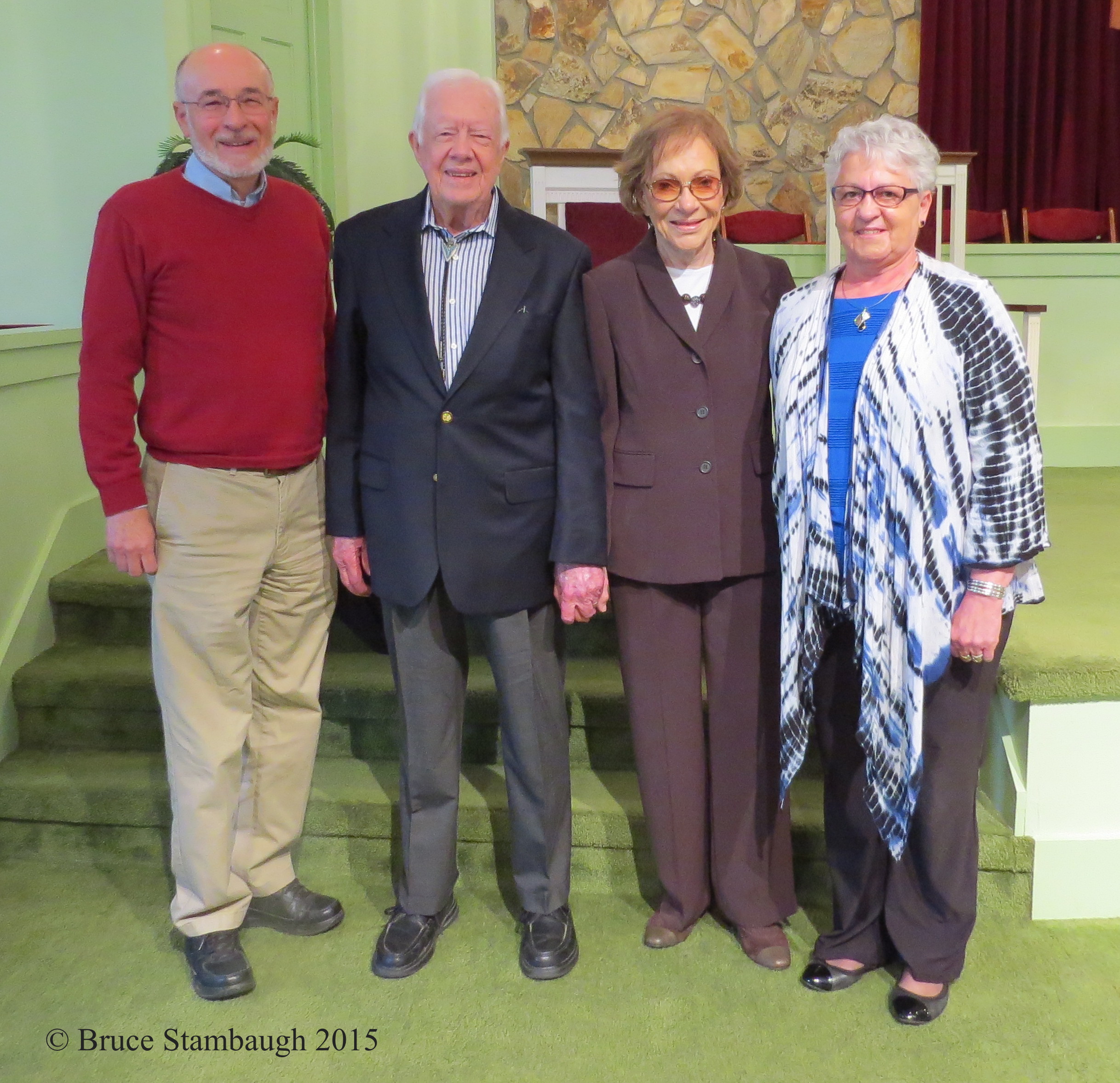
One of my proudest moments.

October 7 – After falling at his home in Plains, Georgia the previous day, former President Jimmy Carter, 95, with a bandage above his left eye and a visible welt below, still helped build a Habitat for Humanity home in Nashville, Tennessee.
October 18 – NASA astronauts Christina Koch and Jessica Meir performed the first all-female spacewalk when they ventured outside the International Space Station for five and a half hours to replace a faulty battery charger.
October 30 – Firefighters in Simi Valley, California successfully saved the Ronald Reagan Presidential Library from a wildfire with assistance from a herd of goats brought in earlier in the year to eat away the brush surrounding the library.
November 3 – When midnight shift workers didn’t show up at a Birmingham Waffle House restaurant, several customers jumped behind the counter to help the lone employee serve 30 other customers.
November 8 – The last survivor of the Hindenburg Disaster, Werner Gustav Doehner, died in Laconia, New Hampshire, at age 90.
November 18 – Police in Goddard, Kansas, discovered a camel, cow, and donkey wandering along a rural road.
December 9 – A New York City man removed and ate a banana from a Miami, Florida art exhibit that had sold for $120,000.
December 10 – A 43-year-old Monroe County, Louisiana man, was arrested for fixing the bingo game he was calling so his relatives could win.
December 20 – Emily Williams, a wildlife ecologist in Alaska, was late for work because a moose was licking the salt off of her car.

Here’s hoping 2020 will give us both a better year and better eyesight in all that is happening around us.

Happy New Year!

© Bruce Stambaugh 2019

Putting mystery back in the holidays of miracles and light


December’s mainstay holidays are cloaked in mystery and miracles. Darkness to light summarizes the current holiday season theme regardless of which ones you observe.

Hanukkah, Christmas, and even the winter solstice share those common qualities. They each come with their own history, a bit of mystery, and a requisite for reverence. The three even overlap in time, traditions, and symbols.

Hanukkah and Christmas each have deep, overlapping religious roots, while the winter solstice has pagan origins. All three, however, connect winter’s darkness with some concept of light. In fact, the triumvirate celebrates light in authentic, yet distinctive practices.

Besides illuminating light in the year’s darkest time, this triune of holidays has another commonality. The celebration of all three can last for days in keeping their specific purposes.

The winter solstice occurs when the sun reaches its farthest southward point for the year. That is precisely 9:19 p.m. EST on December 21. In Universal Time, the winter solstice is December 22 at 4:49 a.m.

The winter solstice marks the latest dawn and the earliest sunset. It is the longest night and shortest day for those of us who live in the Northern Hemisphere. Of course, it’s just the opposite for those south of the equator.

History and archeology show us that earth’s early peoples recognized this critical point in whatever way they marked time. They understood that the sun’s path could be predicted on a regular route across the sky.

Archeological wonders like England’s Stonehenge and Peru’s Machu Picchu stand as evidence of this. Indigenous peoples in America’s southwest also marked the end of darkness in similar light-filled ceremonies.

Historians are still unraveling the mysteries of these cultural rituals. Fire and light were essential symbols in most of these ancient celebrations. I marvel at how those two entities connect to Hanukkah and Christmas.

This year Hanukkah is celebrated by the Jewish faith from December 22 to 30. Hanukkah is the commemoration of a historic miracle involving light.

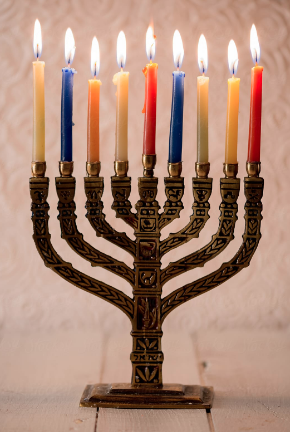
The Jewish holiday arose after the temple in Jerusalem was recaptured from cruel ruler Antiochus. Wanting to rededicate the holy temple, the Judah victors found only enough olive oil to burn sacred candles for one night. Mysteriously, the menorah candle burned for eight consecutive nights, establishing the miracle of Hanukkah.

Christmas, of course, is December 25, most likely assigned that date to coincide with the winter solstice and Hanukkah celebrations, according to some historians. They reasoned that if the shepherds were guarding the grazing sheep, the season would have been one other than winter.

Regardless, Christmastime is a celebration of another kind of light. It, too, is rooted in a miracle, that of Mary’s virgin birth of Jesus, meaning, “God with us.”

Christians begin the Yuletide season with the Advent preparation four weeks ahead of Christmas Day. Some sects of Christianity then extend the celebration to January 6 or Epiphany or Old Christmas, which the Amish humbly celebrate.

For me, in this blend of holidays, the light brings anticipation of better things to come: lighter, longer days, a hope for a better, sunnier new year, the joy of personal peace by walking with the light, and the love of all Creation.

The vibrant spirits of the season, miracle and mystery, gently weave the interconnected holiday celebrations together with the threads of hope, joy, peace, and love. Will we allow ourselves to be wrapped lovingly in this warm garment more radiant than the brightest star?

I pray that the mystery of miracle envelops you and yours in joy and light this holiday season.

Winter solstice sunset.

© Bruce Stambaugh 2019

Gratitude for Thanksgiving

Thanksgiving is a time set aside to recognize, remember, and celebrate our blessings. It is an official civil holiday with spiritual implications.

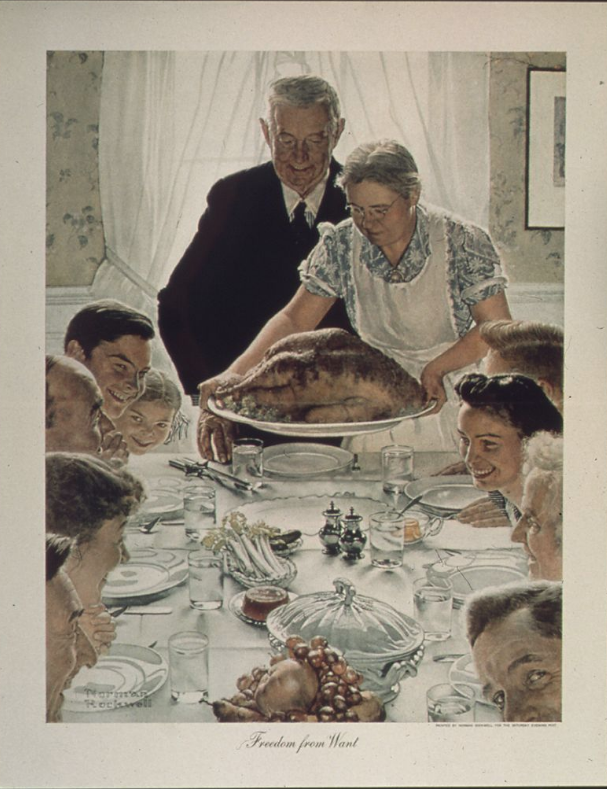
Many Americans will gather with family and friends around a table laden with roasted turkey, mashed potatoes and gravy, grandma’s stuffing, cranberry sauce, and homemade pumpkin pies. Think Norman Rockwell’s famous “Freedom from Want” painting. Only replace those famous, happy faces with those who will grace your own banquet.

Gathering for this glorious day is a blessing unto itself. We shouldn’t take that privilege for granted. Many don’t have that esteemed opportunity for a variety of reasons. Still, they celebrate, each in their own ways and traditions.

Some will fill their plates with the traditional carved turkey and all the trimmings, or perhaps a succulent ham. Others will choose a different course. Chinese carryout, homemade lasagna, or pork and sauerkraut are all viable options. It’s not the menu, but the meaning, the moment, and the memories we make that matters.

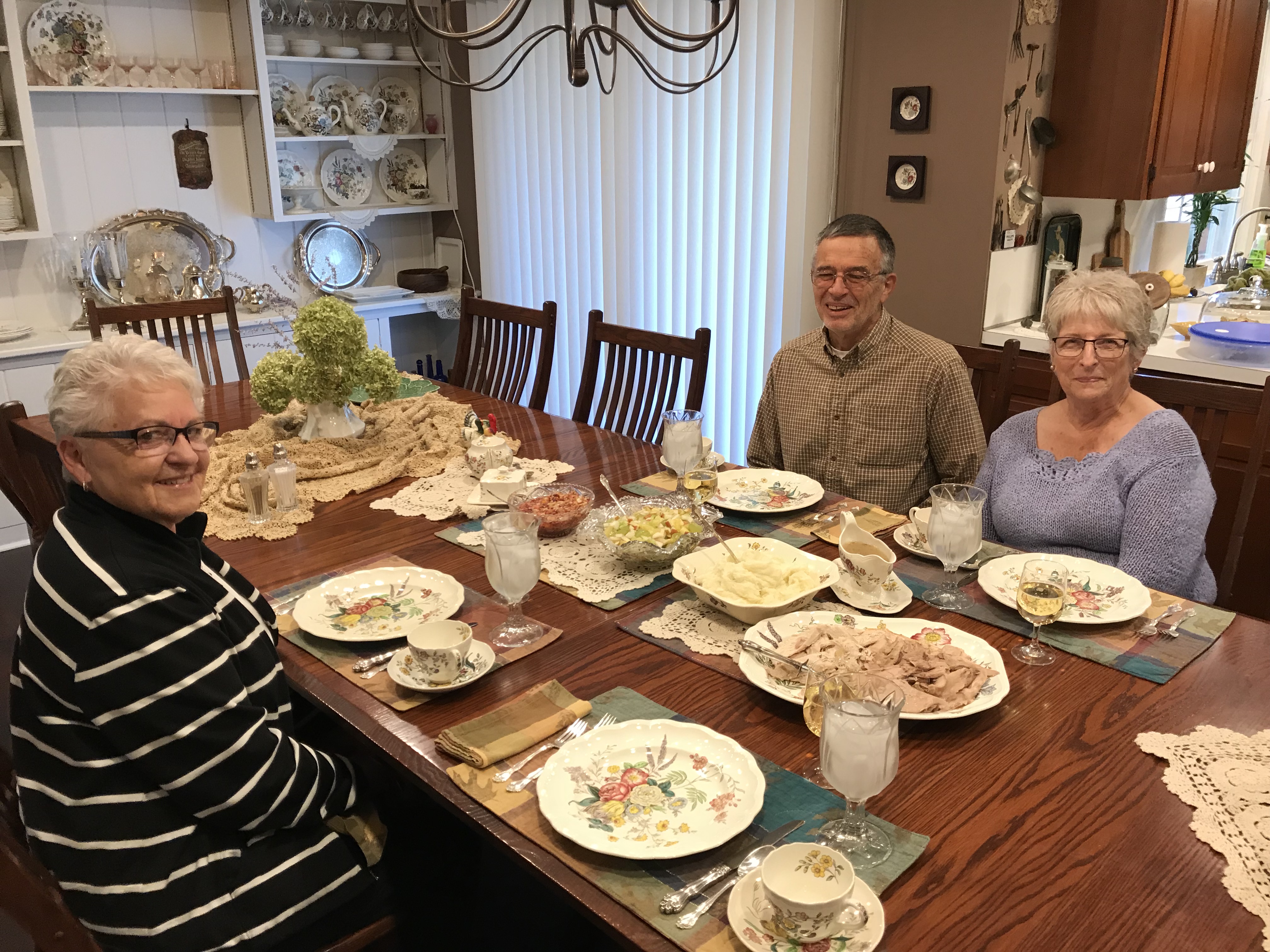
Thanksgiving meal with friends.

My heart swells when I recall all those long-ago Thanksgivings with our mother’s mother. Grandma’s three daughters, their spouses, and 17 grandchildren elbowed around a food-filled table to scrumptiously dine and enthusiastically express our appreciation for life itself.

At that point in our lives, none of the three families could claim to be wealthy. But clamoring around that long table with people we loved, and with those mouth-watering aromas wafting in the air, we were rich indeed.

With children in diapers to pimple-faced teens, it was a calamitous scene to be sure. The biggest fuss, if I recall correctly, was over who got to break the wishbone. We probably were all too young to comprehend the real reason and blessings being bestowed on us in those treasured moments.

As youngsters will do, we were too anxious to taste the turkey, enjoy the stuffing, and devour the pies. After that, it was a game of touch football, or we played hide and seek. Grass stains on blue jeans put a temporary damper on the festivities.

What sticks in my mind after all those years gone by is the joy of just being together. We were truly blessed but too young and excitable to know it. Now, I am sincerely grateful for those gatherings and those heart-warming memories.

We were only a decade or two removed from World War II. The Cold War was just heating up. We practiced air raid drills at school as often as fire drills. Thanksgiving Day was precious, and we gathered and played in honor of the day and despite the day’s disturbing news.

Though today’s headlines are just as conflicted and disconcerting, we seem to be living in a different world. Families are often too geographically scattered to celebrate together. They rely on technology to connect them, even if it is only for a few minutes of video conversation.

Others celebrate Thanksgiving in multiple gatherings, visiting one side of the family, and then going to the other. If that happens on the same day, please don’t bring out the scales.

I don’t mean to overstate the obvious. Given the frenzy of commercial clamor this time of year, let’s make sure gratitude is the centerpiece of each and every thanksgiving table regardless of what food is served.

It’s been my experience that when gratefulness prevails, more blessings will flow all around. If we all express our profound gratitude, Thanksgiving will be pretty tasty, no matter what’s on the menu.

Food, family, friends, gratitude. That’s a recipe that will guarantee a memorable Thanksgiving.

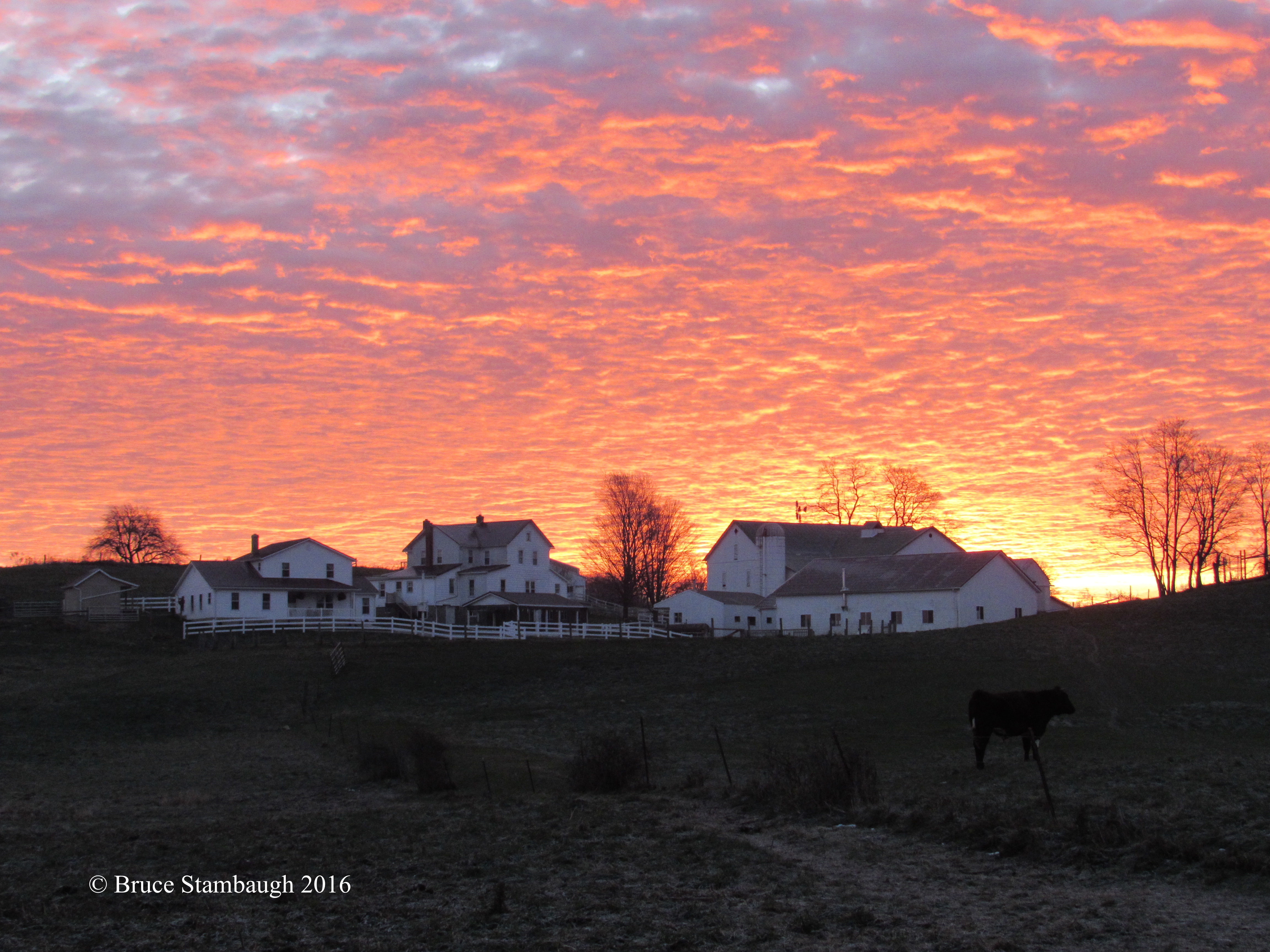
Thanksgiving sunrise.

© Bruce Stambaugh 2019

November: The contemplative month

2017-11-20 14.19.03

The fall election is over. Daylight Savings Time has come and gone, and so have most of this fall’s colorful leaves. It must be November.

We can thank the pelting rains and wicked winds of a raucous cold front for dislodging most of the leaves. We can thank Congress for the time change.

I never adjust well to this convoluted toying of time. I wake up early and am ready for bed before dark that Sunday afternoon.

When we lived in the heart of Ohio’s Amish Country, I always chuckled at the various reactions to this contrived notion of messing with clocks to supposedly save energy. The Amish had that down to a science.

Some Amish complied with the change to stay connected with the rest of society. Others compromised and moved the time back a half an hour. Some never changed time in the first place.

2016-11-05 16.28.16

I miss that kind of contrariness. I haven’t checked with local buggy-driving Old Order Mennonite farmers here in Virginia to know if they mess with time in the same manner.

With the time changed and the leaves disappearing, our attention turns to Thanksgiving preparations. At least it should if we aren’t too distracted by all the Christmas gift-giving commercials already on television.

It can be for that very reason alone that I become contemplative in November. I think it’s the colder weather though. I do appreciate the cleaner, clearer air. Thanks to a couple of killing frosts, I can breathe again.

Then, too, the early darkness readies me for bed way before bedtime. These are the days of the earliest sunsets of the year until we get to the winter solstice.

I do appreciate the clear evening skies, too. I love to watch the moon creep across the darkened sky surrounded by sparkling jewels and winking planets.

The month of November ushers in the dormant season. By month’s end, the deciduous trees will be bare. We’ll see things in the landscape we had totally forgotten about, like houses we didn’t remember were there.

cropped-dsc_0555.jpgThe longer evenings give me time to reflect on the activities of the day. I do miss my fireplace, though. There is truly nothing like warming your backside sitting on the hearth in front of a roaring, crackling fire.
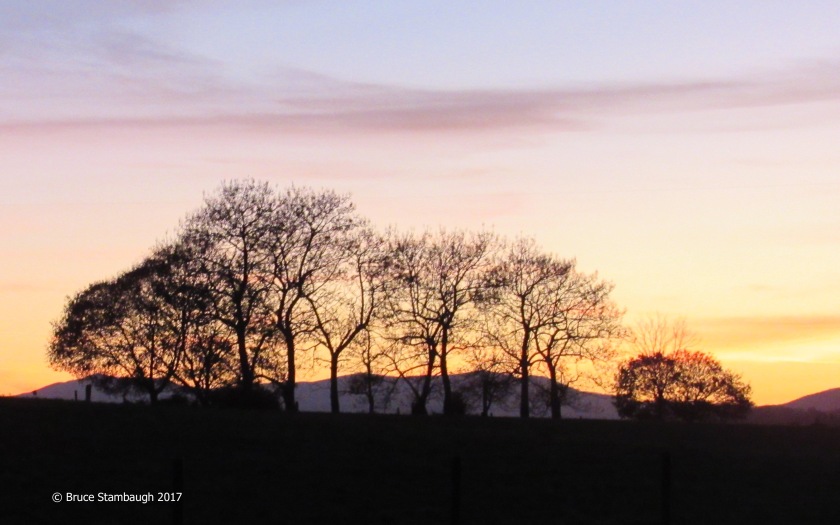
I used those evenings to think and reflect on our past, present, and future. With that, we recognize November’s other holiday, Veterans Day.

November is like recess at school. It’s the needed break between all of the action of October and December.

Soon Black Friday advertisements will blitz our mailboxes, newspapers, TV commercials, and annoying social media ads. Thanksgiving will be no more than a prelude to that glorious commercial day. Too bad there’s not an app to eliminate that.

As you might have surmised by now, I’m well into my contemplative shtick. I have a brain. I try to use it every now and then. November’s dark days seem like a good time to do that.

Come to think of it, whatever happened to Indian summer? With nine of the last 10 years the warmest on record globally, maybe the weather gods decided we don’t need it anymore. It’s just a thought.

Everything seems to slow down in November. From my point of view, that’s one of the eleventh month’s purposes. Let’s all take a little time to sit back, relax, talk with your spouse, listen to your children, play with your grandchildren, and be kind to one another.

Christmas is only a few weeks away.

2017-11-27 18.26.53

© Bruce Stambaugh 2019

Enjoy each moment as it occurs

I didn’t realize how much I charged through life until I couldn’t. Getting a new knee will do that to you.

Much like my late father, I wanted to get as much out of life as I could. Dad would come home from work, eat supper, and off he would go to his next adventure. His chosen activities ran the gamut of his interests: softball, arrowhead hunting, fishing, hunting, or attending one of his many organizational meetings.

With all this time on my hands in recuperation mode, I have come to an insightful realization. I mirrored my father for too long in my life. I had and still have many interests. Besides my career in public education, community service consumed much of my time.

Volunteer firefighting, township trustee, hospital trustee meetings, and church leadership all demanded my time. Those days are over. I still enjoy the out-of-doors just as Dad did. In my open-air times, I shoot birds, too, only I use a camera.

The inspection.
This time of year, the leaves are usually my main focus. Given my current limited mobility status, however, that has mostly changed. Unless I go for a drive with my chauffeur wife, I enjoy the colors that I can see from home.

What better time than October to change gears, relax, and just embrace each moment as it arrives. The air has cooled. The front and back doors are propped open, inviting a refreshing and gentle breeze to flow through the house.

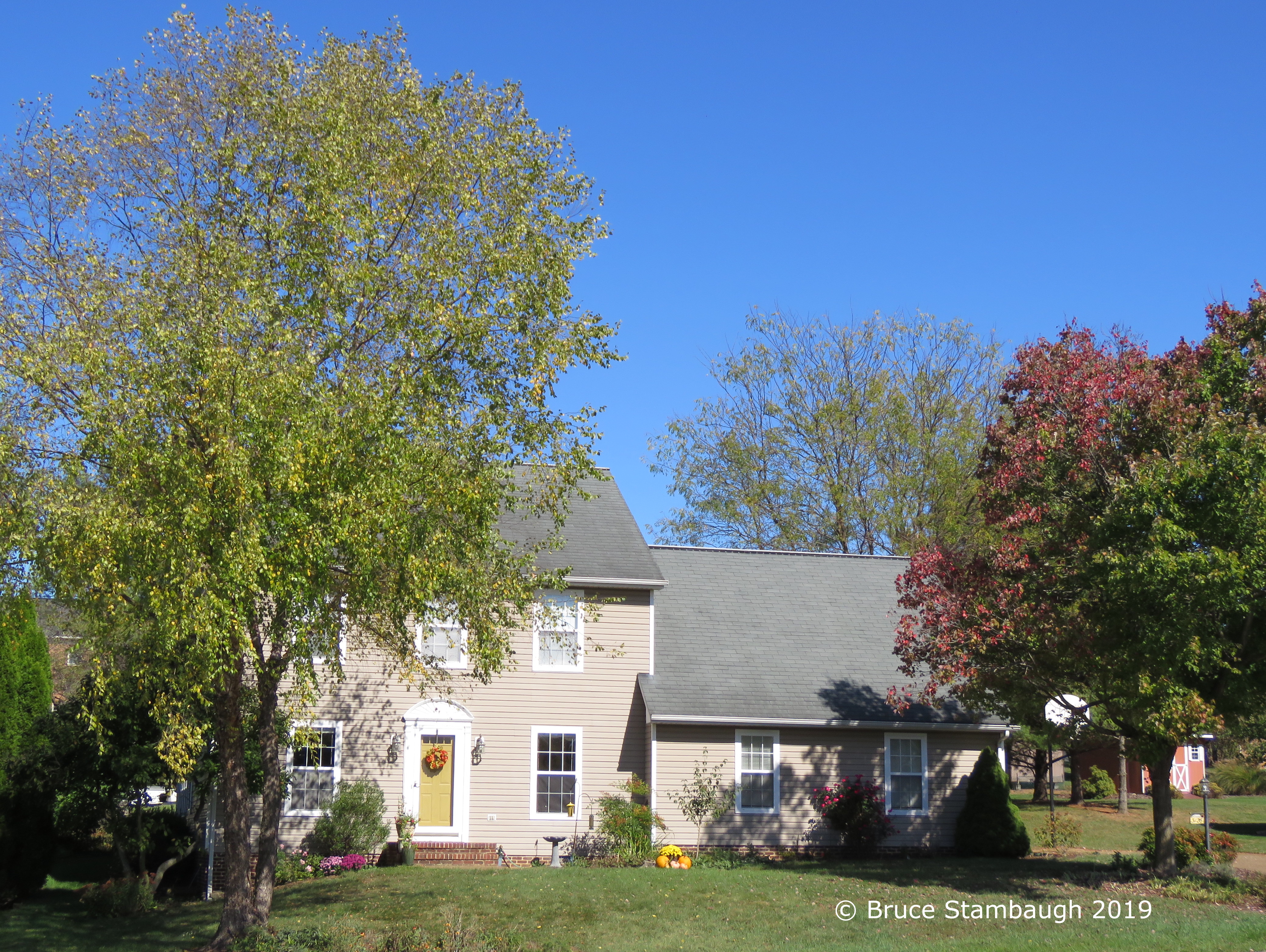
The morning sun illuminates our neighbor’s home across the street. A glorious blue sky serves as the backdrop, and a handsome birch tree and a tinting red maple stand as bookend accents. Their fall decorations of yellow mums and cluster of orange pumpkins give a warm welcome.

To the south, the sun bathes the backyard, too, highlighting the pale green, elongated leaves of the shingle oak we transplanted from our Ohio home. Those leaves, also, are slowly transforming to a gilded brown and will rustle in the winter winds until springtime buds displace them.

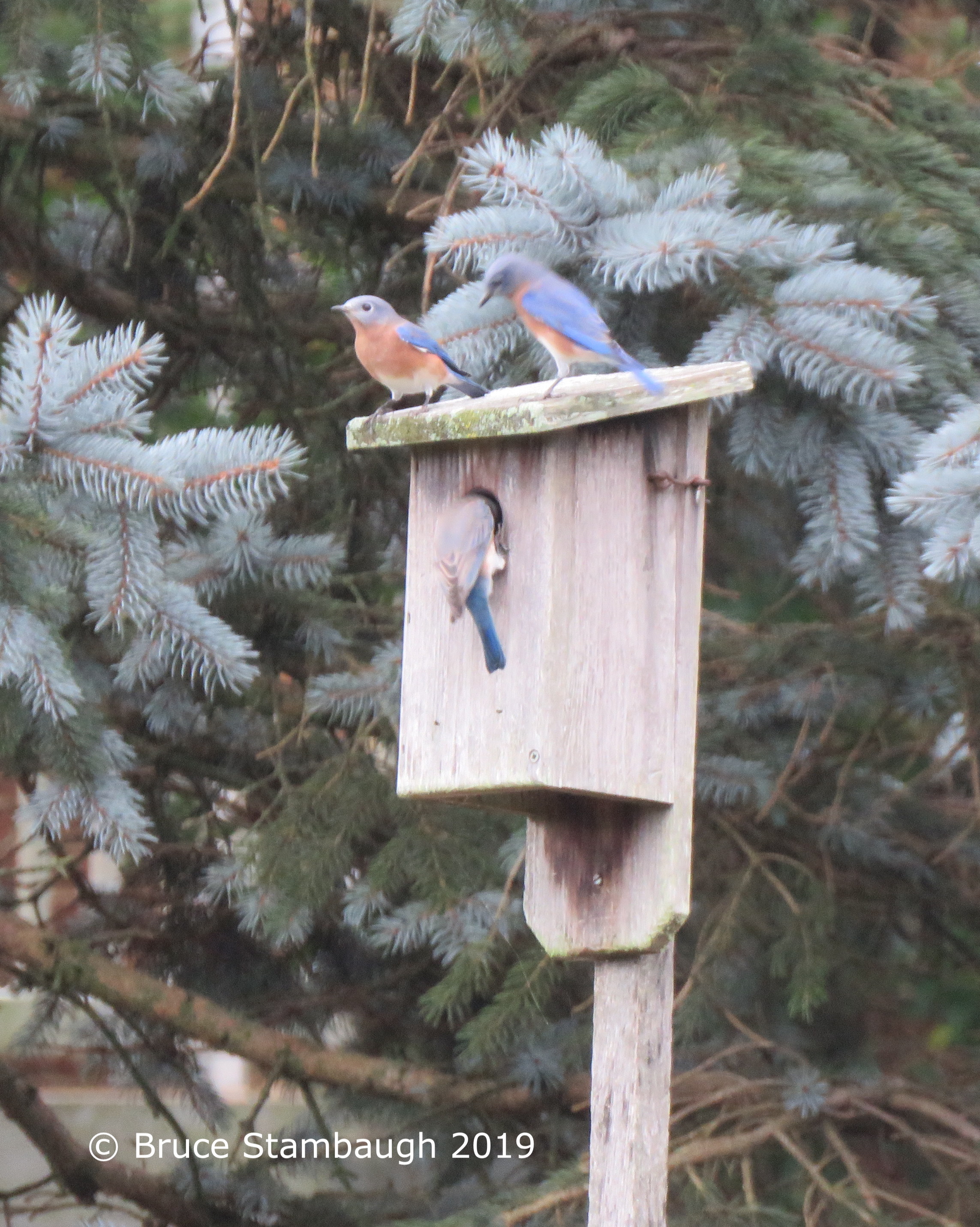
A family of house finches chatters softly in the blue spruces above the white picket fence of another neighbor. Northern cardinals chip in adjacent pines before taking turns at the black oil sunflower feeder. A family of eastern bluebirds checks out a birdhouse for possible winter habitation.

With the afternoon sun beaming, I return to my reading on the patio. The natural warmth seems to enhance the book’s enlightening content. To keep my leg limber, I shift positions as often as I turn pages.


Towards evening, it’s rush hour at the birdbaths. American Robins, unseen and unheard for days, suddenly swamp the three aquatic venues available. The hand-honed sandstone bath proves the most popular. Others settle for the water dish and the old cast iron pedestal basin.

Living life at my modified and sometimes stationary pace is inspirational. In my reposed state, I marvel at the rosebuds outside my office window, closed tight in the morning, and fully opened by mid-afternoon.

Both the Harvest Moon and the Hunter’s Moon have come and gone. The first frost has ended the growing season in many locales while others have experienced their first snowfall. Winter is knocking on the door. October’s showiness will soon be over.

It is with great gratitude that I embrace each moment as it arrives, glad that my previous busyness is history. My sincere hope is that I’ll still apply this moment-by-moment attitude when I no longer have to sit icing my elevated knee.

© Bruce Stambaugh 2019

Framing History


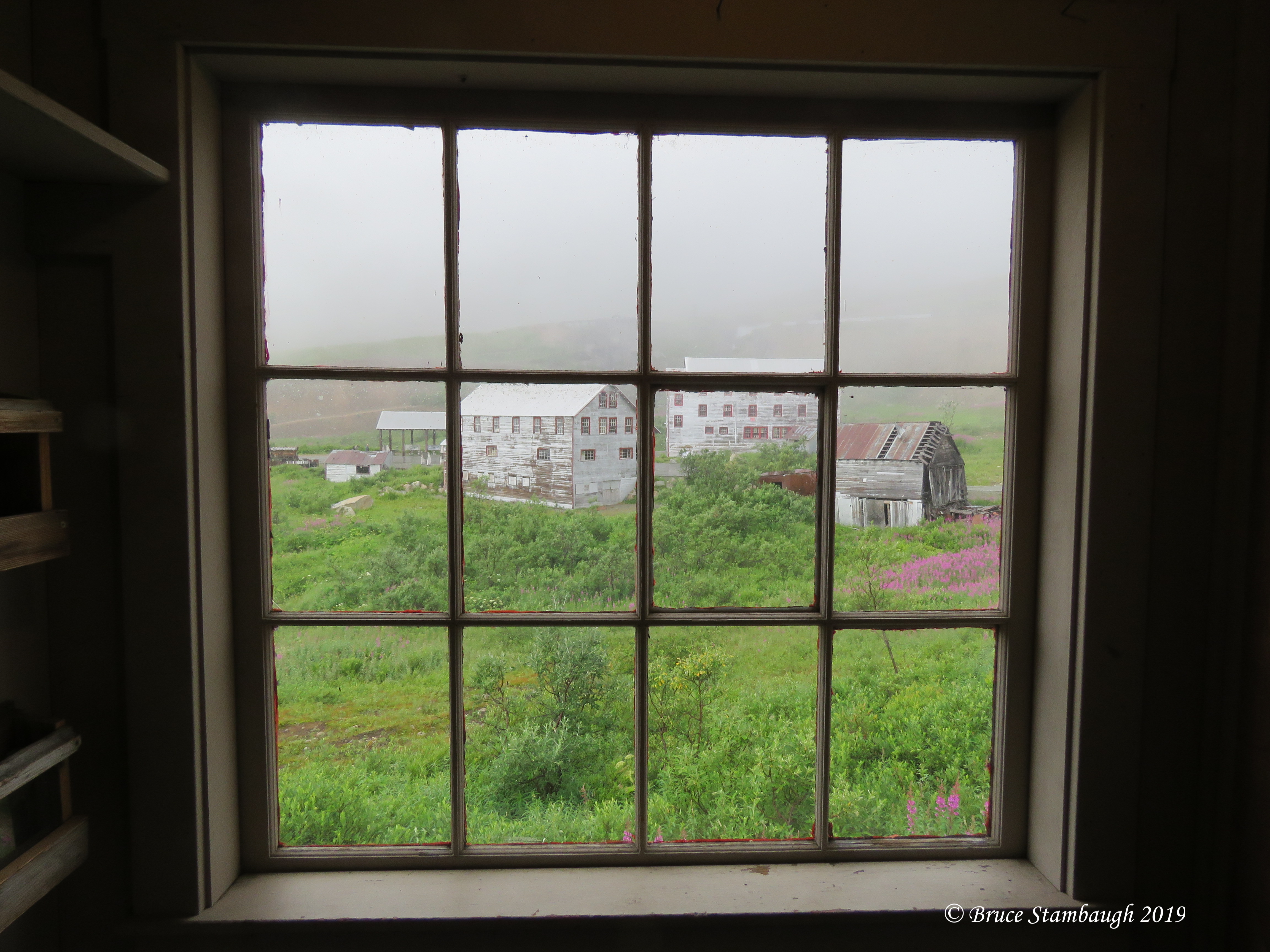
While visiting the Anchorage, Alaska area, friends took us to the Independence Mine State Historical Park. Many of the original buildings are in disrepair. A few still exist, while others are reconstructed.

In Anchorage, the weather was warm and sunny. At the old gold mine site high in Hatcher Pass, rain and fog prevailed. As we toured the buildings, I spied this view of the grounds. Taking a photograph through the old bunkhouse window was both symbolic and representative of the past and present. It perfectly framed the scene. The pink fireweed in full bloom added a subtle color that accented the foggy setting.

“Framing History” is my Photo of the Week.

© Bruce Stambaugh 2019

Reflections on 30 years in public education

A one-room Amish private school in eastern Holmes Co., OH.

It’s been 20 years since I retired as a public school educator in Holmes County, Ohio. I began teaching fourth grade at Killbuck Elementary School only weeks after the historic and devastating July 4th flood of 1969.

It’s fair to say that neither Killbuck nor I have been the same since. I can’t speak for the town, but for me, that’s a good thing.

I have many fond memories of my time in both West Holmes and East Holmes Local School Districts. I was hired just 10 days before school started. A significant teacher shortage had hit rural areas then. West Holmes still needed 10 more teachers before school started.

I had the two most important requirements needed to teach back then. I had a college degree and a heartbeat. The only education course I was certified to teach was driver education.

I was assigned to a tiny third-floor room in the old high school part of the school complex. I had 28 fourth graders packed into that small space.

I can still name every one of those 28 students. That’s the kind of lasting impression that experience made on me.

A retirement gift from the staff.
Students in the other eight years that I taught at Killbuck were equally enjoyable. I especially appreciated the support of the parents, as well as the camaraderie of the school staff members.

To keep teaching each year, I had to complete at least two college education courses. That meant many night classes and summer school for this teacher. It didn’t take me long to realize that this was what I wanted to do for a living. I loved children, and despite some of the silly state and local requirements, I enjoyed teaching.

I liked it so much in fact that I got my Master of Education degree and became an elementary principal in East Holmes. I also worked out of the central office coordinating the expanding federal programs. But it was the kids I enjoyed the most, plus the opportunity to help teachers teach.

I served as principal of Mt. Hope and Winesburg Elementary Schools for 21 years. I also supervised Wise Elementary for three years at the same time. To complete the triangle of visiting each school each day required driving 21 miles.

For me, the best day of each school year was the first. The students were always excited, scared, and ready to learn. Once they settled into the new routines that soon changed.

I marvel at those precious years, those shinny tiled hallways that bustled with the cheerful sounds of children laughing and learning and quietly chatting. I recall trying to chase teachers out of the buildings long after the school day had ended. Sometimes teachers were still there in the evenings grading papers, displaying student work, or planning for future lessons.

I recall marvelous, heartwarming stories involving children, their parents, teachers, and administrators. There were darker times, too, but far and away, the better memories rule.

It is hard to believe that two decades have evaporated since I retired from the profession I loved with all my heart. I know I wasn’t perfect in executing my responsibilities. I simply tried my best to be an educational leader for the community that I served. After all, the schools belonged to the community, not me.

I can say without hesitation that the 30 years that I spent in the hallowed halls of public instruction in Holmes County were some of the best of my life. But for me, now and forever, school is dismissed.

My last class as an elementary teacher.

© Bruce Stambaugh 2019

Portland Head Lighthouse and Ascension Day


Today is Ascension Day. It is the day marked by Christians that Jesus ascended into Heaven 40 days after His resurrection, which is celebrated annually as Easter. For 40 days thereafter, Jesus walked and talked with his disciples until he was taken into the clouds.

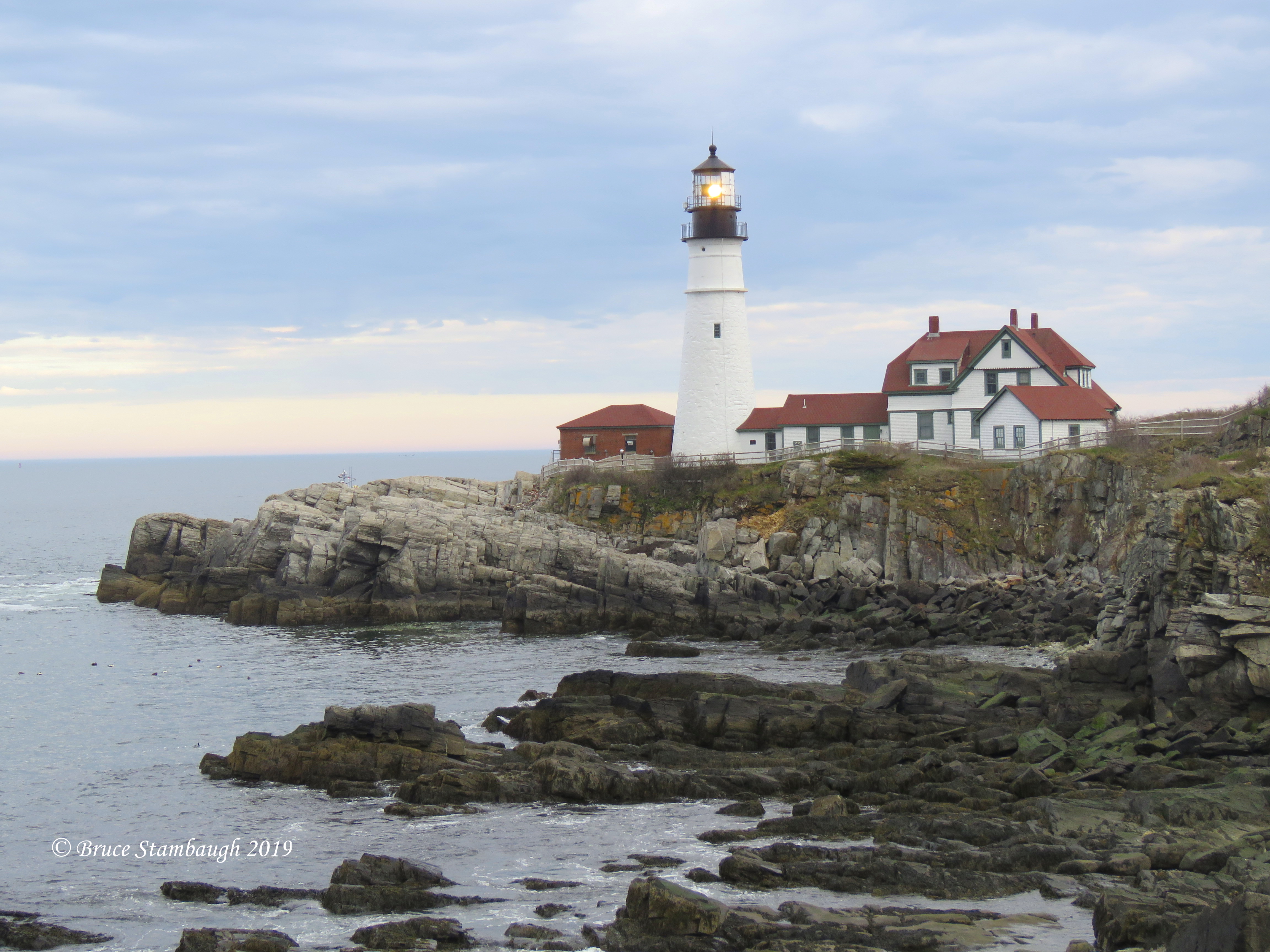
There are plenty of clouds in this iconic setting, the Portland Head Lighthouse on Cape Elizabeth near Portland, Maine. It’s hard not to take a beautiful shot at this historic site, a scene often portrayed on many calendars over the years.

Ships at sea in part depend on lighthouses to keep their bearings. I envisioned the lighthouse’s beacon flashing in the overcast evening as a symbol to all of this sacred event.

“Portland Head Lighthouse and Ascension Day” is my Photo of the Week.

© Bruce Stambaugh 2019

Sensing a bit of home wherever we go

Catskill farmstead.

My wife and I enjoy traveling.

Planning for travel sometimes takes longer than the trips themselves. We prioritize the places we want to see, activities we want to do, and connect with any friends we can visit along the way.

We leave plenty of room for flexibility. Spontaneity spices up every trip. We also try to include some downtime, opportunity to recharge and reflect. As much as we travel, I never know when and how that time will arrive.

For me, travel is a multi-task opportunity. I bird, photograph, explore, meet the locals, and record the highlights. Occasionally, like on this trip, bad weather interferes with the plans we have made. We adjust accordingly.

Steady rain and low-hanging clouds obscured the mountains around us, which kept me inside. We were in New York’s Catskill Mountains, where we caught up to spring’s emergence. Coltsfoot and lady slippers bloomed.

I birded by window watching. Five deer emerged from the newly leafing trees to graze in the grassy meadow that served as a yard around the house that we had rented. A pair of common yellow-throated warblers fed and frolicked in the dampened branches of a nearby bush.

This was so much like home, both our former Ohio home and our newer home in Virginia’s Shenandoah Valley. Together the mountains, forests, rushing streams from too much spring rain, and the wildlife made it feel like home.

This slideshow requires JavaScript.

Yet, it wasn’t home, either Ohio or Virginia. We were transients, merely passing through, seeing the sights, and taking in the grandeur of the fabled Catskills.

That afternoon, my wife and I drove around the countryside despite the dreariness and the constant rain. No cell signal rendered our GPS useless. The perpetually winding roads hugged the bases of the mountains like a child clinging to his mother’s apron. Steep wooded hillsides on one side, roiling waters raced over boulders on the other. In the summer, these would be braided streams, more rocks than water.

With the low clouds, the mountains all scrunched in around us, a myriad of curves on the rural roads. Road signs, either numbered or named, were few and far between. Priding myself on knowing directions, I had lost my bearings.

We stopped at the local post office for directions to our desired destination. Just then, a customer arrived and told us to go to the stop sign and turn right. The way he pointed and his casualness about turning at the stop sign renewed my hope. Reality set in. The stop sign was five miles away. I made the right-hand turn, and I regained my orientation.

In Holmes County, Ohio, we had rolling hills, and expansive woodlots, abundant agriculture, valleys carved by old-aged streams, and helpful people. The same was valid for Virginia, only mountains east and west dwarfed the valley hills and farmlands. In the Catskills, farmland is confined to hillside and floodplain pastures. Gardeners erect six-foot high messed wire fences in small truck patches to abate the deer.

One particular quirk became obvious. Everywhere we went scores of roadside, no trespassing signs warned people to stay away. Apparently, property owners and hunting and fishing clubs control access not only to the land but also the water flowing through. Places for public access to the alluring trout streams were far and few between.

The legalistic signs unsettled me and softened my comparison to the mores of our former and current home. However, they in no way spoiled our appreciation for all the natural beauty and genuine human kindness we encountered along the way.

Despite the dreary, wet weather, we felt right at home with scenes like this.

© Bruce Stambaugh 2019

Old glory at Ft. Ticonderoga


Located on a small peninsula at the southern end of Lake Champlain, Fort Ticonderoga played a significant role in the formation of both countries of North America. With that in mind, I chose the American Flag flying over the old fort in honor of Memorial Day and as my Photo of the Week.

© Bruce Stambaugh 2019

Bay Photos by Donna

Wildlife Photos From The Chesapeake Bay Region

ROAD TO NARA

Culture and Communities at the Heart Of India

K Hertzler Art

Artist and nature journalist in the Shenandoah Valley of Virginia.

Maria Vincent Robinson

Photographer Of Life and moments

Gabriele Romano

Personal Blog

Jennifer Murch

Art is the only way to run away without leaving home. -Twyla Tharp

Roadkill Crossing

Writing generated from the rural life

ANJOLI ROY

writer. teacher. podcast cohost.

Casa Alterna

El amor cruza fronteras / Love crosses borders