My wife and I enjoy visiting her cousin and spouse in the Piedmont of North Carolina. They return the favor by visiting us in Virginia’s Shenandoah Valley.
We all enjoy many of the same types of retirement excursions, including the local history of areas we visit. We like antiques and thrift stores. And we all enjoy watching birds.
We ventured out to a state park a few miles from their home. While looking for early songbird migrants, we walked a short loop through a woods with moslty second growth trees.
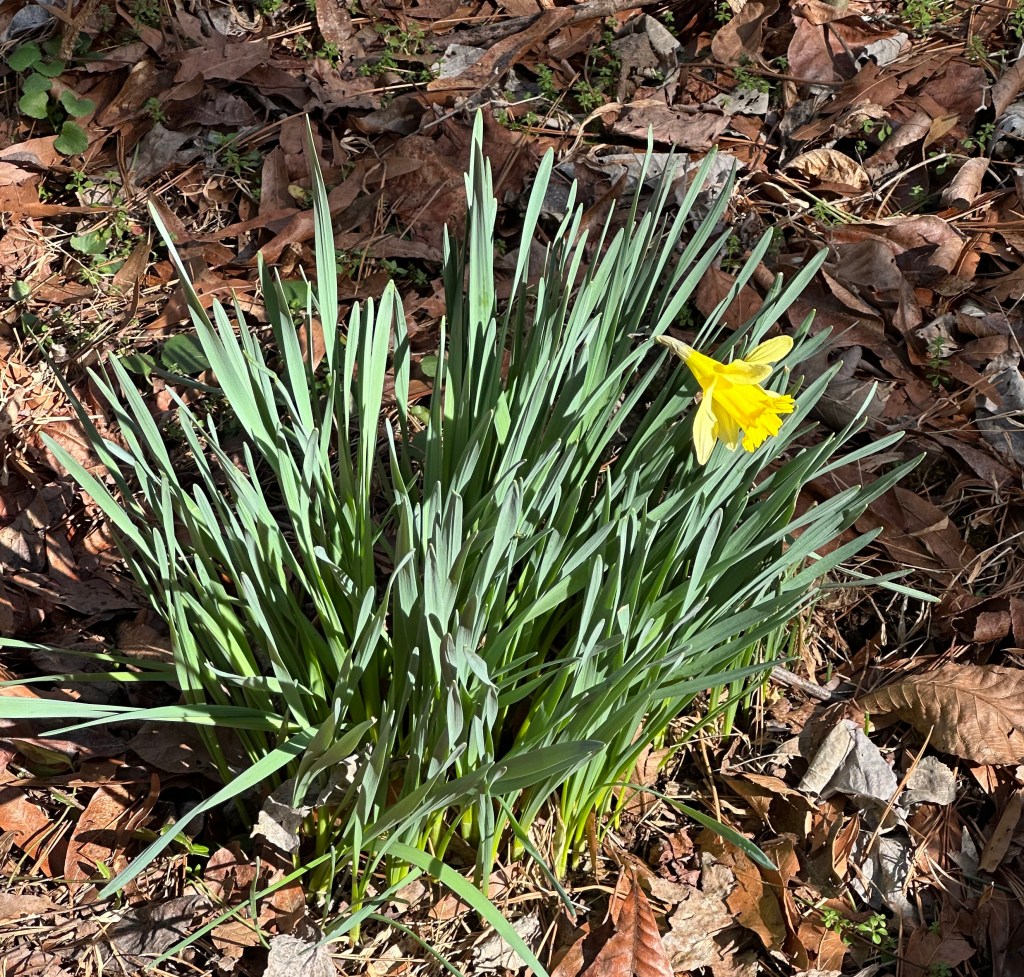
Sprinkled in among the woods were remnants of former residences and farm buildings. Near them, this clump of daffodils had sprouted up, a spontaneous memorial to the people who planted them.
After all the snow we had, it was a pleasure to find a single blossom in full bloom.
My wife and I planned to meet some friends for dinner at a restaurant in the town where they live, 30 minutes south of our home. On the way there, I wanted to check a birding hotspot where several nice bird species had been seen and photographed.
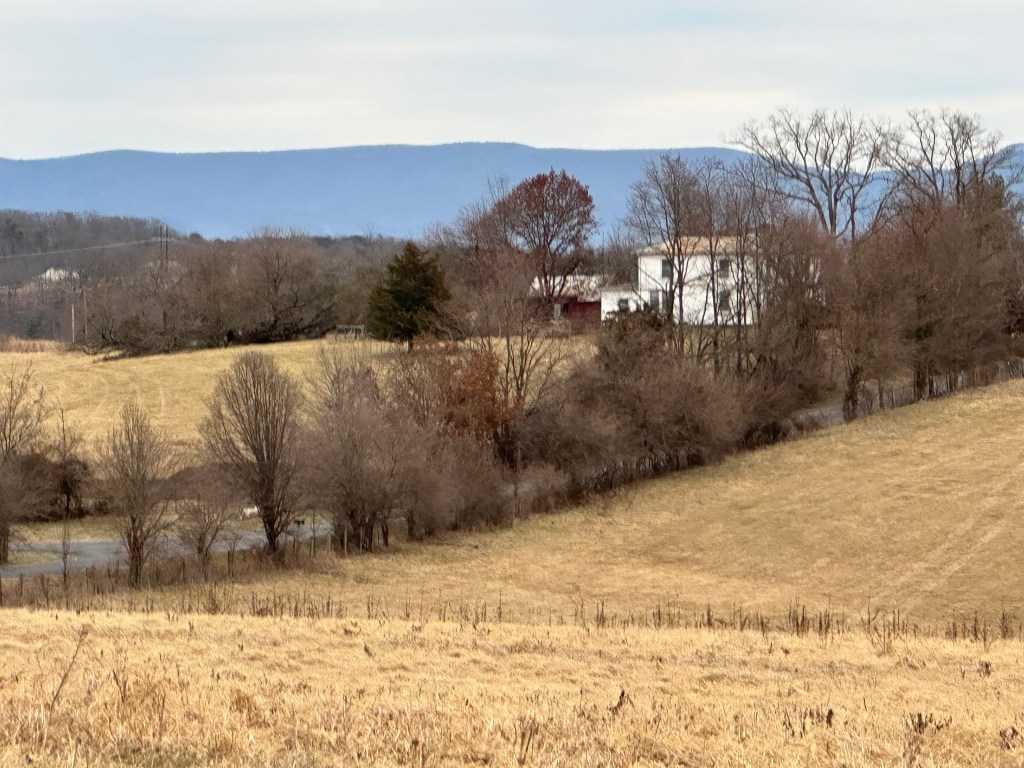
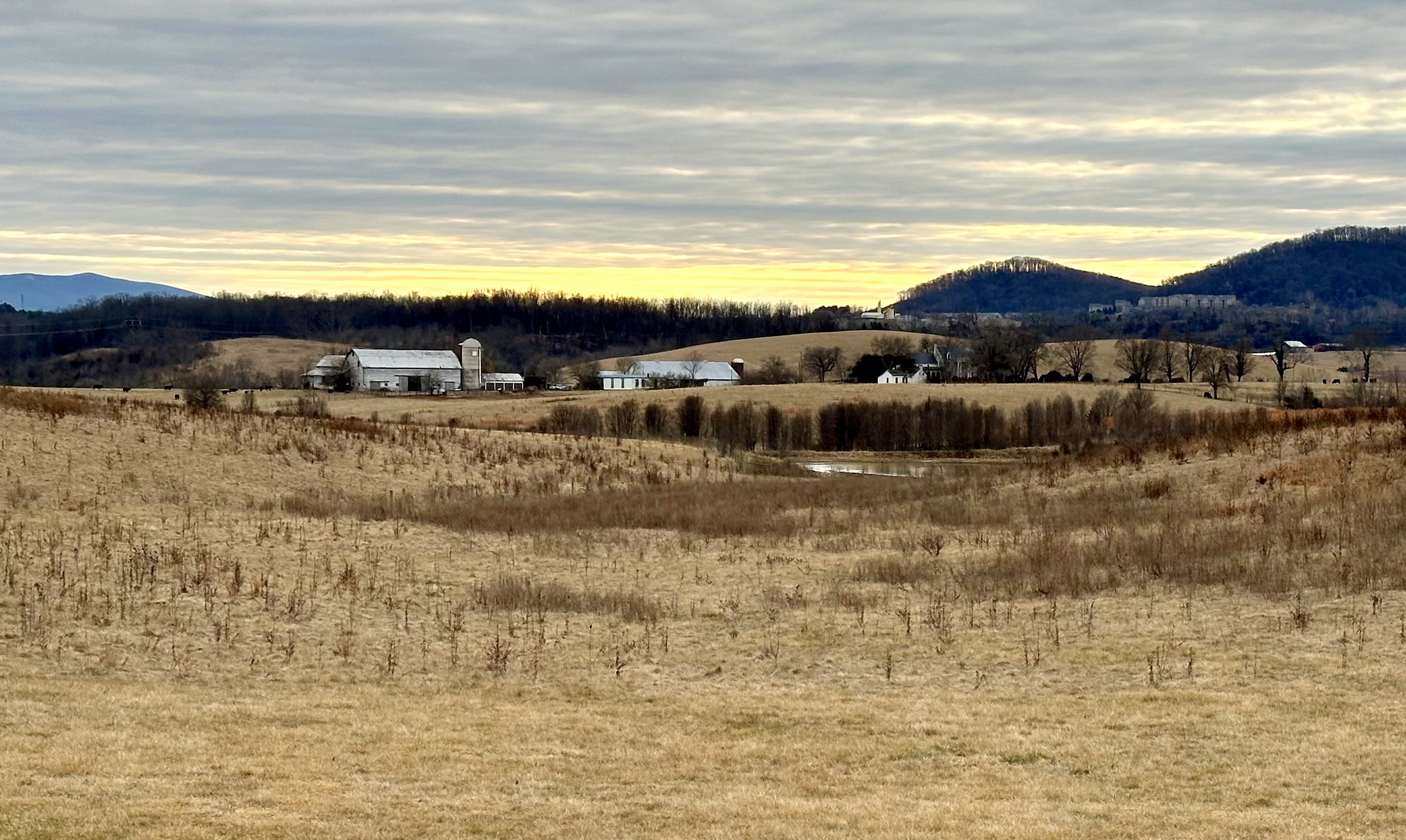
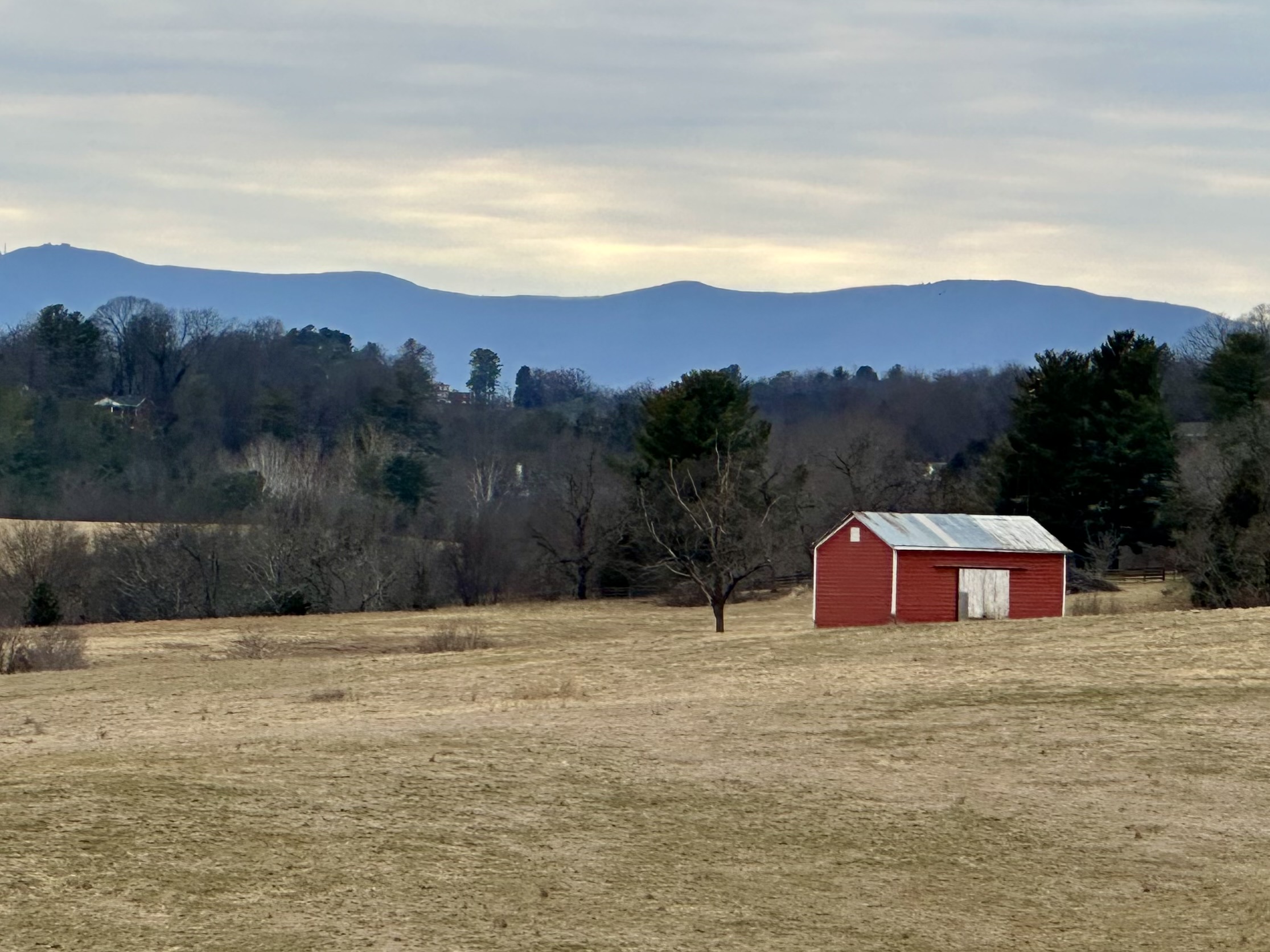
We veered off our route a mile and a half to drive the narrow, hilly, winding Bells Lane. The road wound up, down, and around for less than two miles. Yet, the habitat varied greatly in that short distance.
The Blue Ridge Mountains serve as the backdrop for Bells Lane. Photo by Bruce Stambaugh
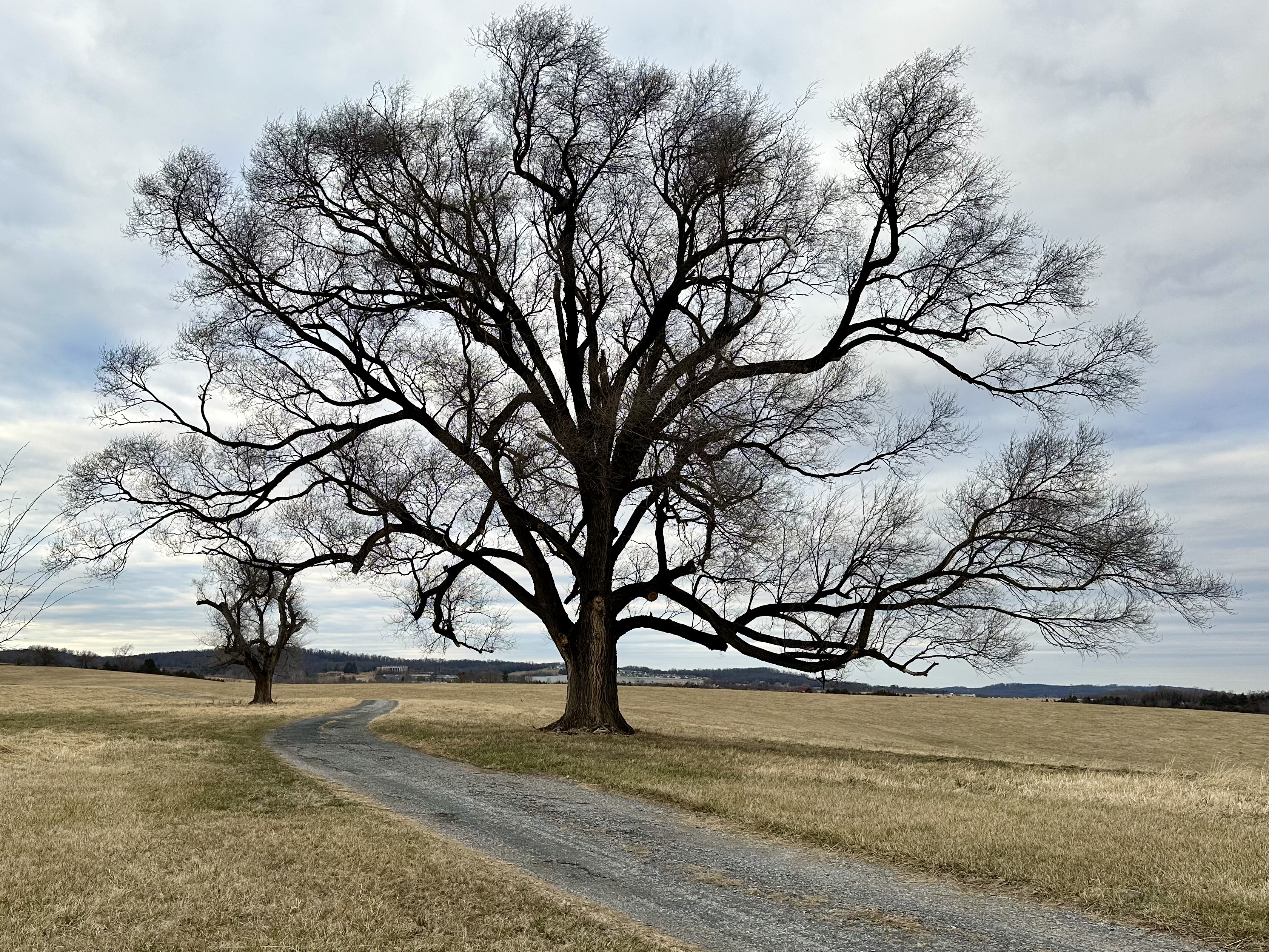
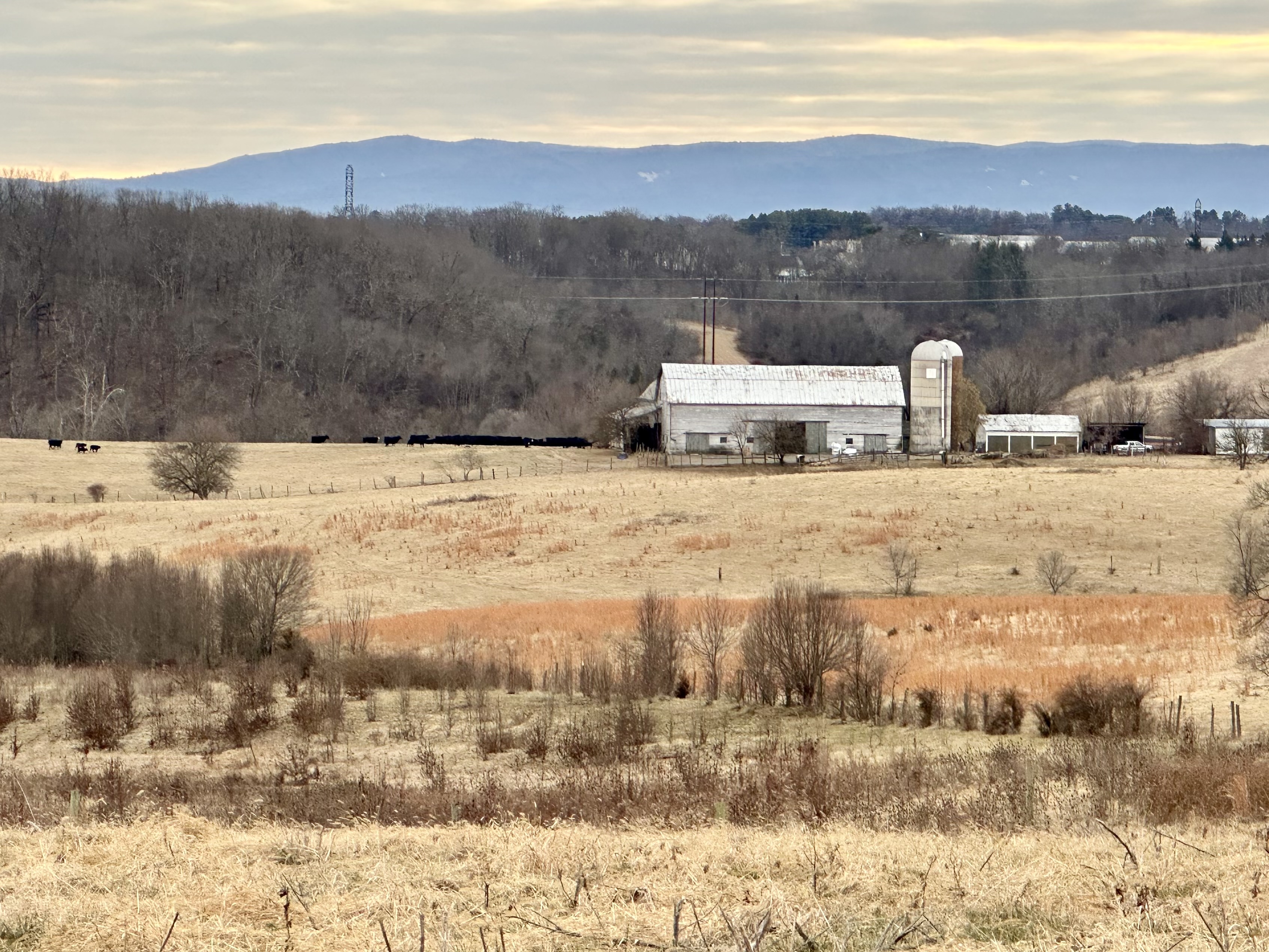
As we climbed the first hill lined by brushy fence rows and trees, I spotted a small flock of Canada Geese foraging on the hilltop. Pastured hillsides with tuffs of tall grasses, dotted with a few large trees, roll away on either side of the roadway.
I didn’t dare drive too fast. There was too much to see. Tucked away in the swale of two hills, cattails ringed a small pond, perfect for shorebirds and waterfowl.
Since the day had been mostly cloudy and dusk was nearly upon us, I merely wanted to check out this popular birding spot. Still, I saw a Northern Harrier coursing over a rolling field heading away from us.
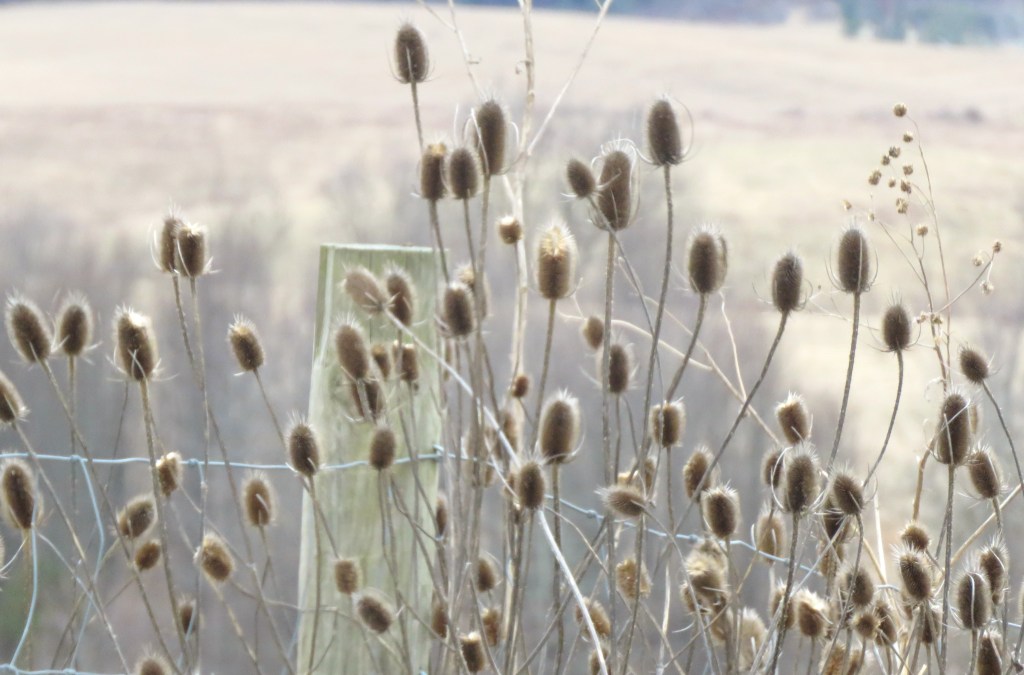
Of course, I stopped a few times to take photos of this stunning landscape, even in winter’s dormancy. Amber stocks of spent weeds infiltrated the rolling tan pasture fields. Dead thistle plants painted their own fencerow portraits.
Spent thistle. Photo by Bruce Stambaugh
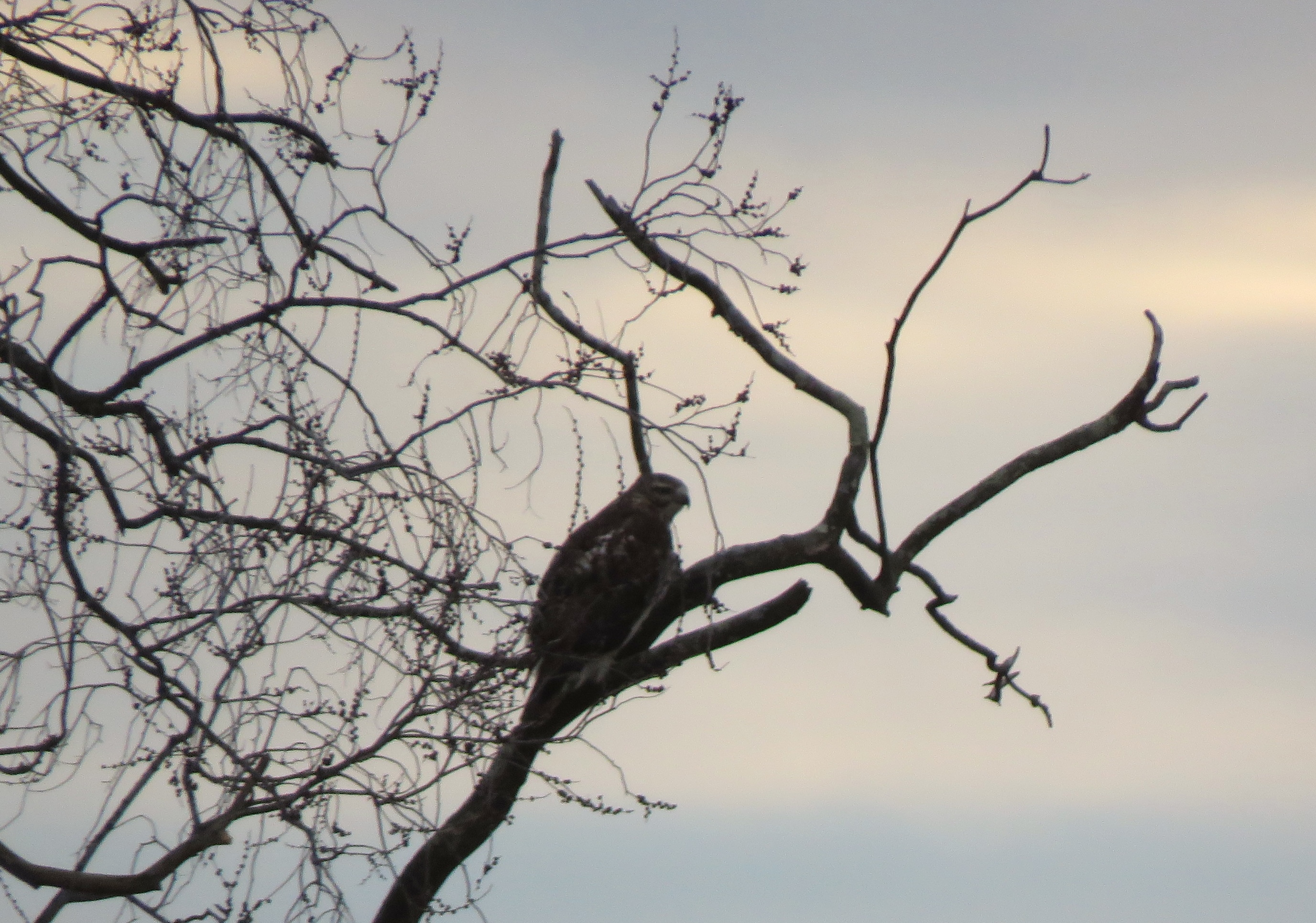
White-crowned Sparrows and White-throated Sparrows flushed from the roadside into the safety of nearby bushes. A Red-tailed Hawk perched on a precarious limb over another fallow field.
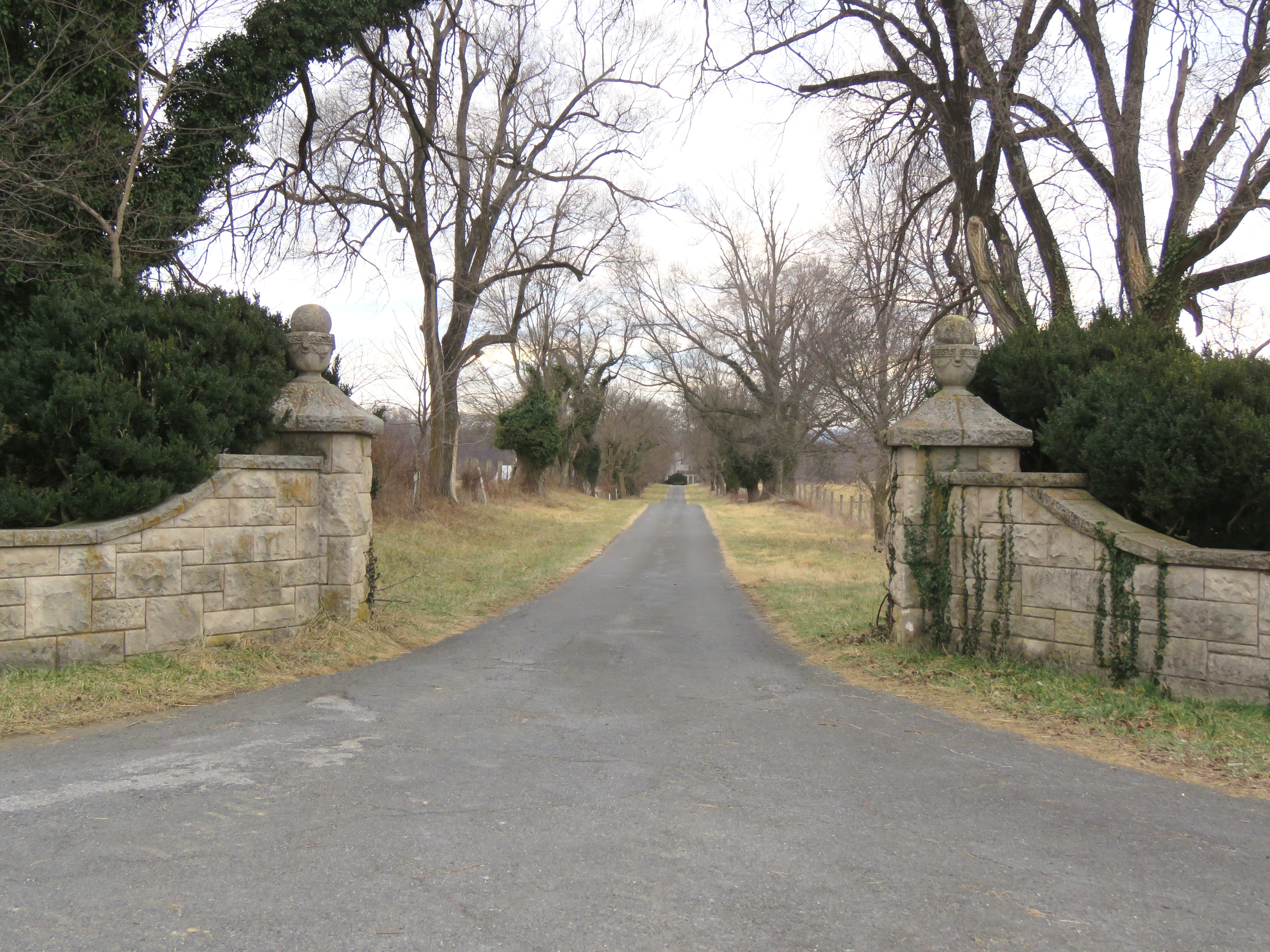
What surprised us most were the old, plantation-like farms we found along Bell Lane. The farm lanes were so long and lined with unkempt trees and vegetation that we could hardly see the homes and outbuildings. The settings literally oozed history.
Rounding a curve, we passed a gray-haired lady walking her black lab. On the left, a small pond stood, nearly hidden by the vines threading their way through the saplings and the wire fence.
Please click on the photos to enlarge them.
We crossed a small stream and were soon at the intersection back at the main highway. I was mightily impressed with the opportunity this country lane provides for bird watchers.
Without question, I will be back to Bells Lane. I’ll search for the Sandhill Cranes, Short-earred Owls, and any other birds, big or small. I’ll see what stories this curious road reveals as well.
We live in a crazy world that seems to grow crazier by the day. But we must not let the chaos get to us. We need to carry on as best we can. For me, photography is one outlet that shuts out the din of the world’s madness against itself.
I enjoy photographing the wonder all around me, the serendipitous joy that springs upon me. By capturing those affectionate moments, I can share them with others, including you.
Staying in the present moment allows me to see things that others might just pass by. Consequently, I took thousands of photos this year. My photos feature people, insects, birds, trees, mountains, flowers, sunsets, sunrises, boats, planes, and a sundry of other subjects.
I have chosen to select one image for each month to review 2025. I hope each photo speaks to you the way they all did to me. Here then is 2025 in photos. Enjoy.
January
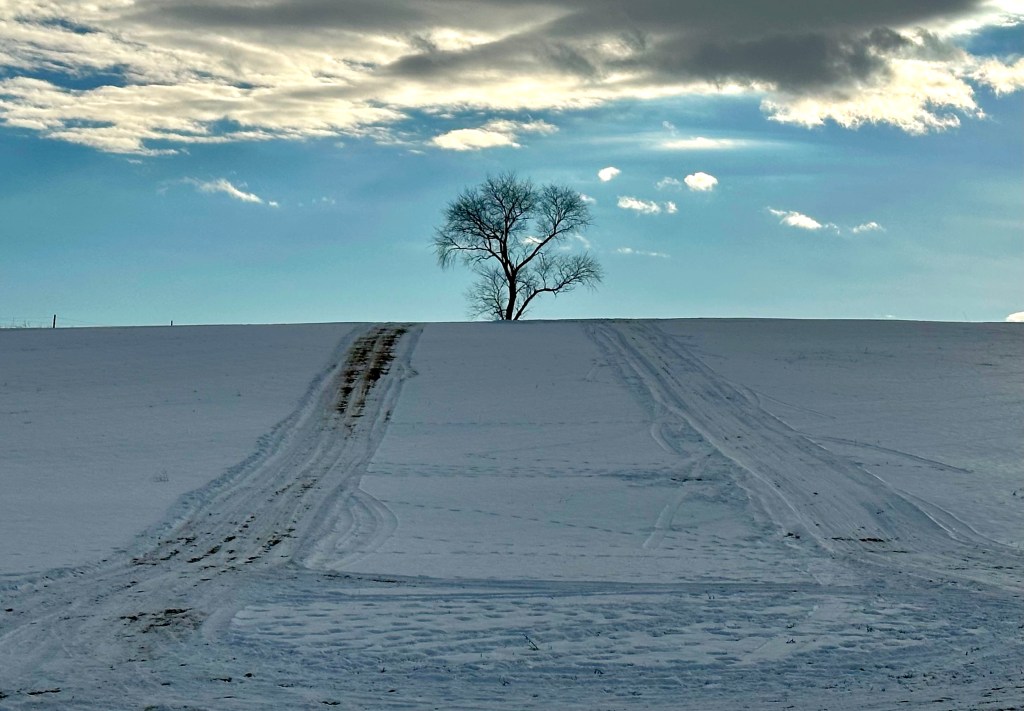
It’s only appropriate to begin this photo series with a snowy scene in January. This lone tree stood beneath the hovering clouds and was perfectly centered by the farm equipment tracks in the snow. The cerulean sky provided an excellent backdrop, like blue ice in a glacier.
The tree, January 15, Rockingham County, Virginia. Photo by Bruce Stambaugh
February
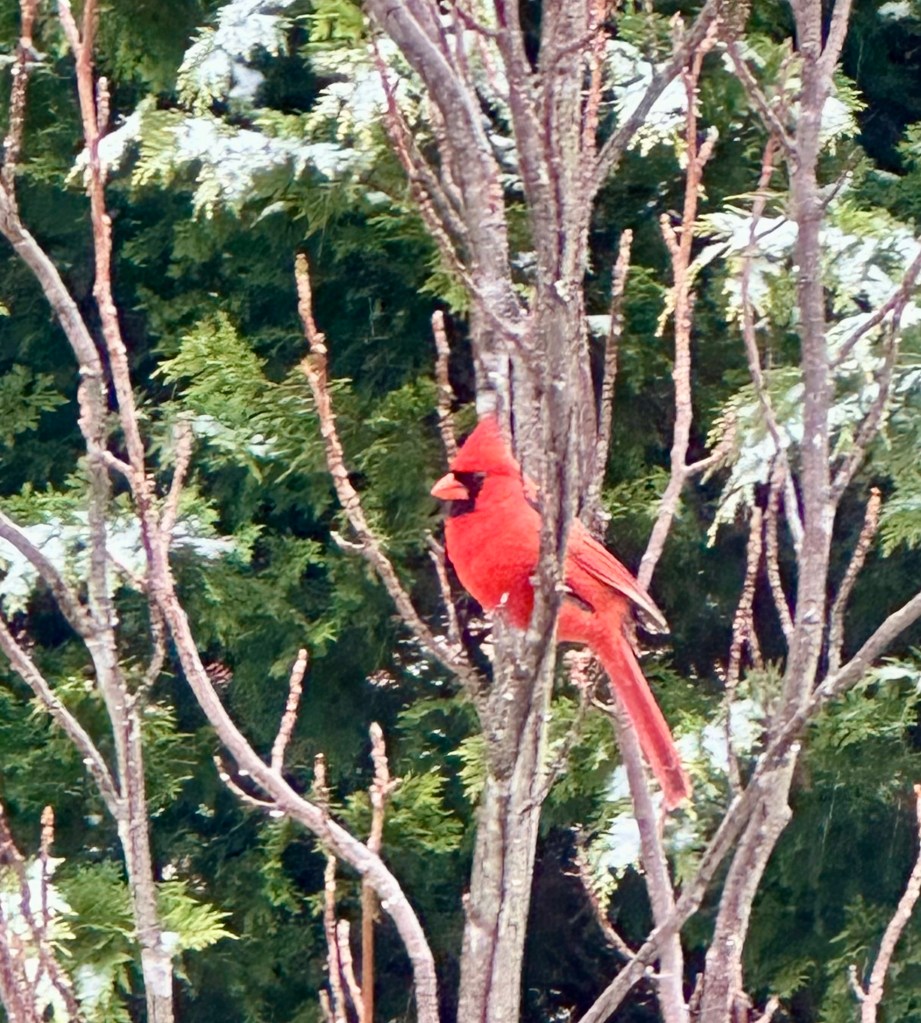
Is there anything more stunning than a bright red male Northern Cardinal in the midst of winter? Against evergreens laden with a skiff of snow, the bird shows even more colorfully. It’s just one of the reasons I love watching, feeding, and photographing birds.
That’s especially true when they grace your backyard with such natural beauty.
Male Northern Cardinal, Harrisonburg, Virginia. February 8. Photo by Bruce Stambaugh
March
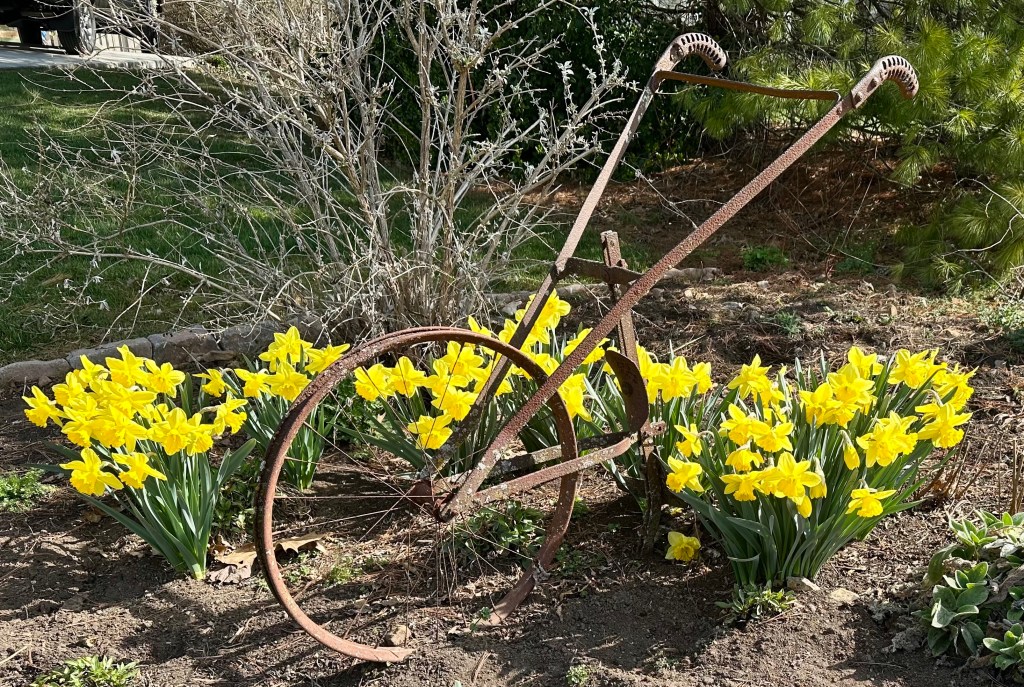
I enjoy walking in our suburban neighborhood of nearly 500 homes any time of year. Besides the required exercise, I encounter many photographic moments. This neighbor had the foresight to plant daffodil bulbs around an old hand cultivator, once used to till garden soil, which helped control the weeds.
Emerging from winter, the buttery yellow of the blooms added a splash of color that complemented the old, rusting implement.
Daffodils as accents, March 21, Harrisonburg, Virginia. Photo by Bruce Stambaugh
April
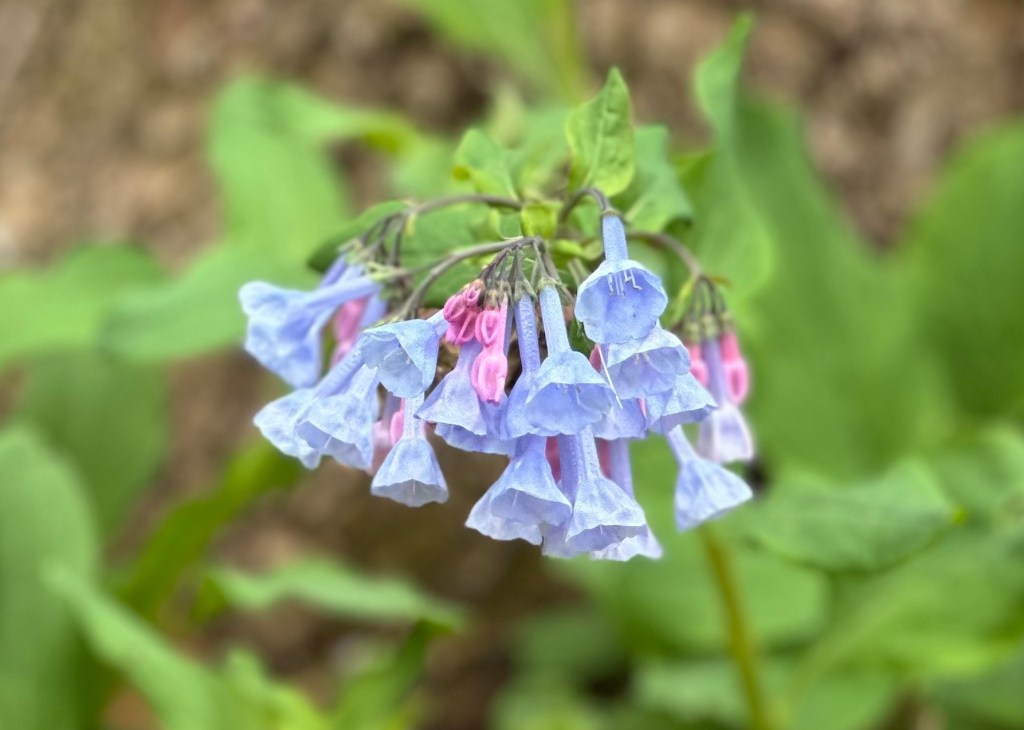
Though not the state flower, Virginia Bluebells should be. They are native to the state and are its namesake. Besides that, the flowers are simply beautiful. Their pink buds turn to azure blue blossoms, and they are a welcome sight wherever they bloom in spring.
Virginia Blue Bells, April 8, Edith J. Carrier Arboretum, Harrisonburg. Photo by Bruce Stambaugh
May
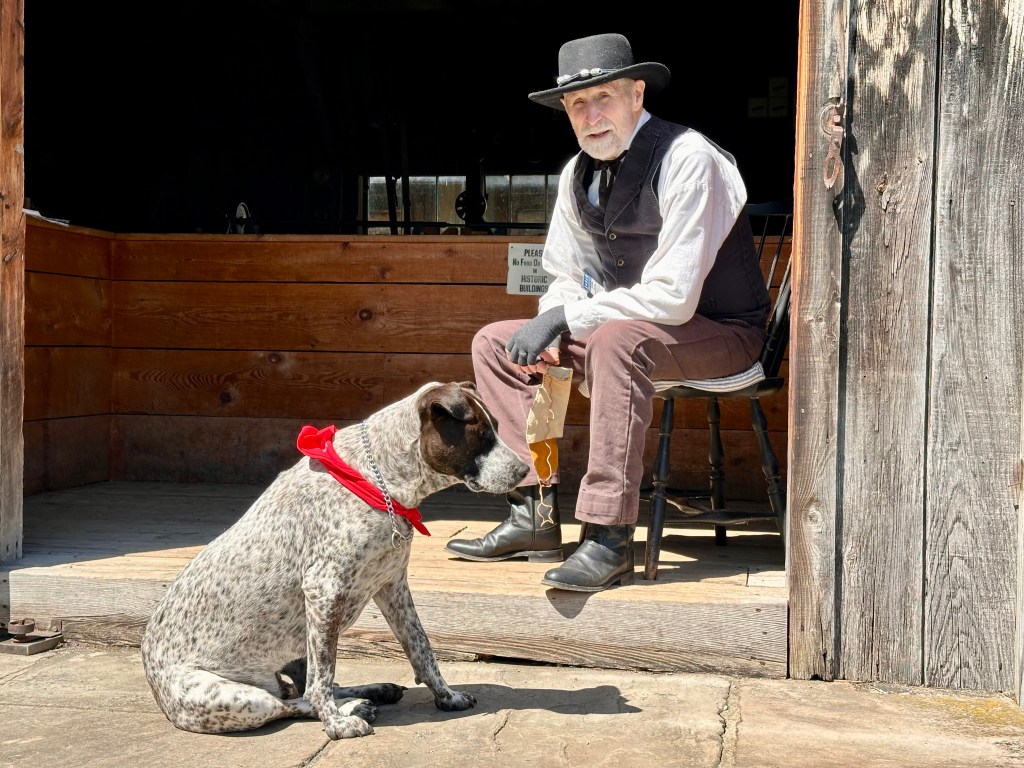
I captured this photo at a historic village in Mumford, New York. Since it was Mother’s Day, the Genese Country Village and Museum had people in period clothing doing demonstrations and providing information about their particular station.
While walking by a barn, I caught this man and his dog sitting in the morning sunshine. The darkness of the barn’s interior made them stand out all the more.
A man and his dog, Mumford, New York, May 11. Photo by Bruce Stambaugh
June
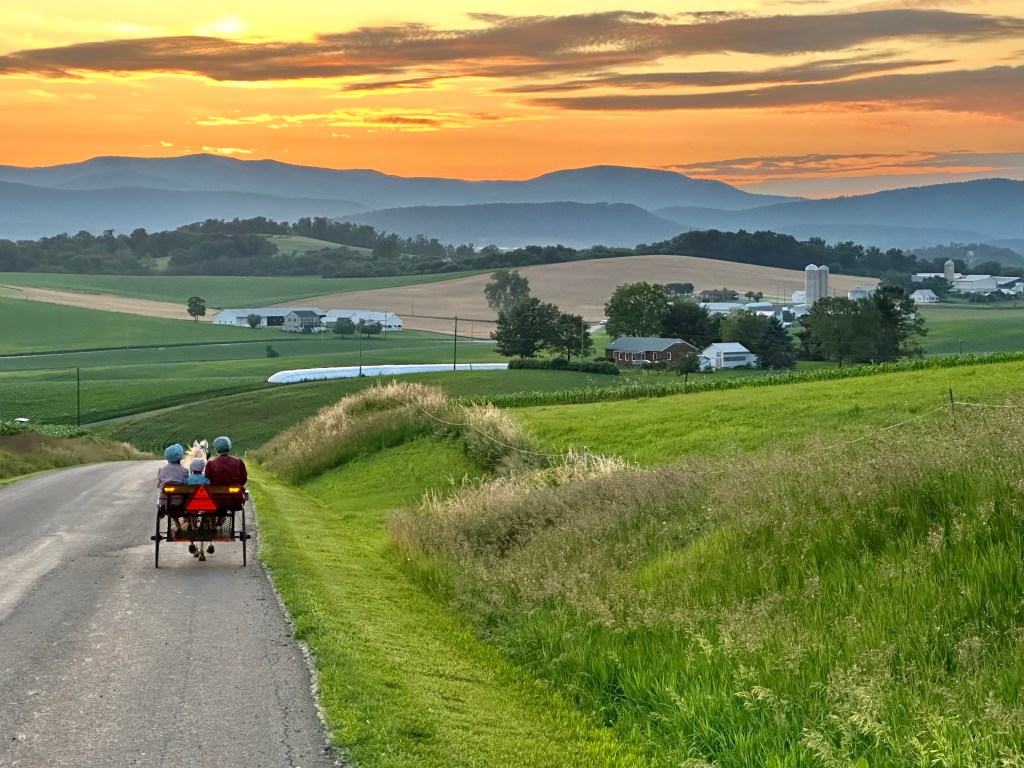
I’m a sucker for sunsets. With its fluffy-cloud days, June is often a good time to watch for glowing evening skies. June 20th was one such day. It just happened to be the summer solstice, when the sun would be at its northwestern-most point in the evening sky.
I headed to my favorite photo spot, the western slope of a local landmark, Mole Hill. Mole Hill is a prominent mound in Shenandoah Valley’s Rockingham County. You can see miles south, west, and northwest from the extinct volcanic core.
On the way there, I saw a pony cart tied to the trunk of a walnut tree at the peak of Mole Hill Road. I didn’t think much of it until I heard the distinct sound of hoves hitting the pavement. I turned and saw an Old Order Mennonite young woman and two girls in an open cart behind a blond-maned pony heading my way.
Knowing they would not want their photo taken, I waited until the cart was well past my location before I snapped the shutter. The setting sun illuminated the pony’s mane and the seeded heads of the tall grass north of the roadway.
With the evening quickly cooling, a light fog began lifting out of the river valley below the Allegheny Mountains that mark the boundary between Virginia and West Virginia.
The combination of the golden sky, the glowing clouds, the darkened mountains, the mist, the farmsteads, and the rolling valley floor created a once-in-a-lifetime scene. It felt like a holy moment, and I was thrilled to capture it for others to see.
Heading into the sunset, June 20, Dayton, Virginia. Photo by Bruce Stambaugh
July
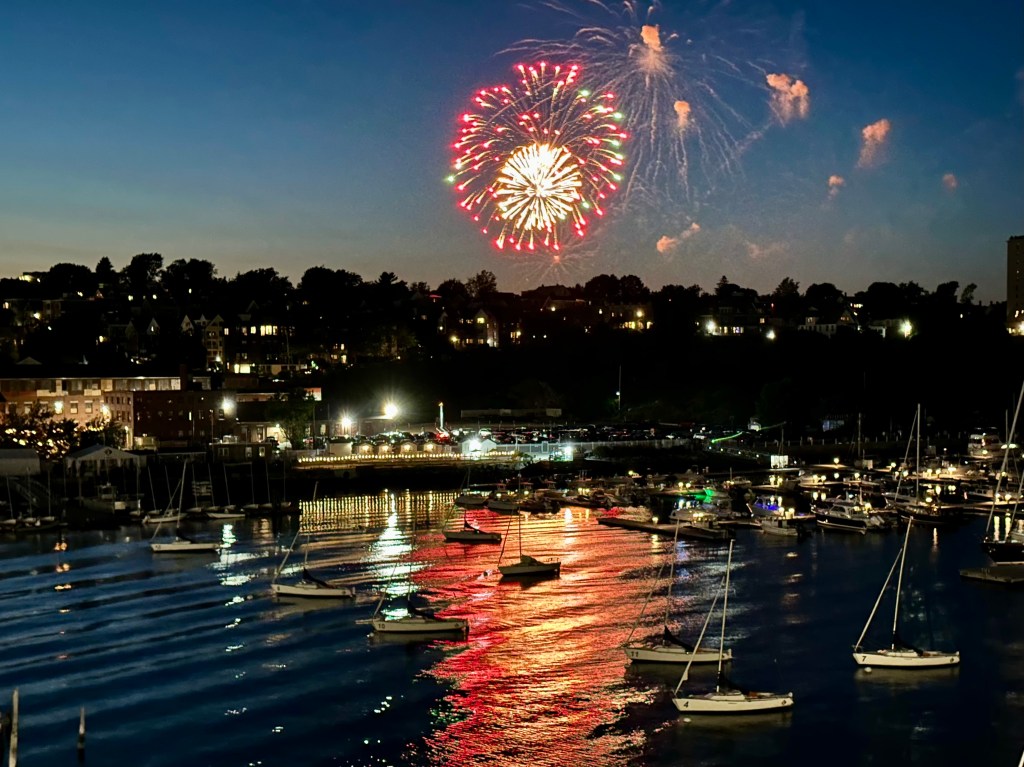
In the United States, July literally always starts out with a bang. July 4th is Independence Day, and it just so happened that the cruise ship my wife and I were on docked in Portland, Maine, on that hallowed day.
Fortunately, the ship’s starboard side, where our cabin was, faced the city’s harbor. We had a front-row seat to all the explosive colors reflected in the water. It was a fun way to close out our trip.
July 4th, Portland, Maine. Photo by Bruce Stambaugh
August
Like many other locales in the nation, August was a hot, humid, and all too dry month. Still, people ventured out, keeping their routines and schedules despite the withering temperatures.
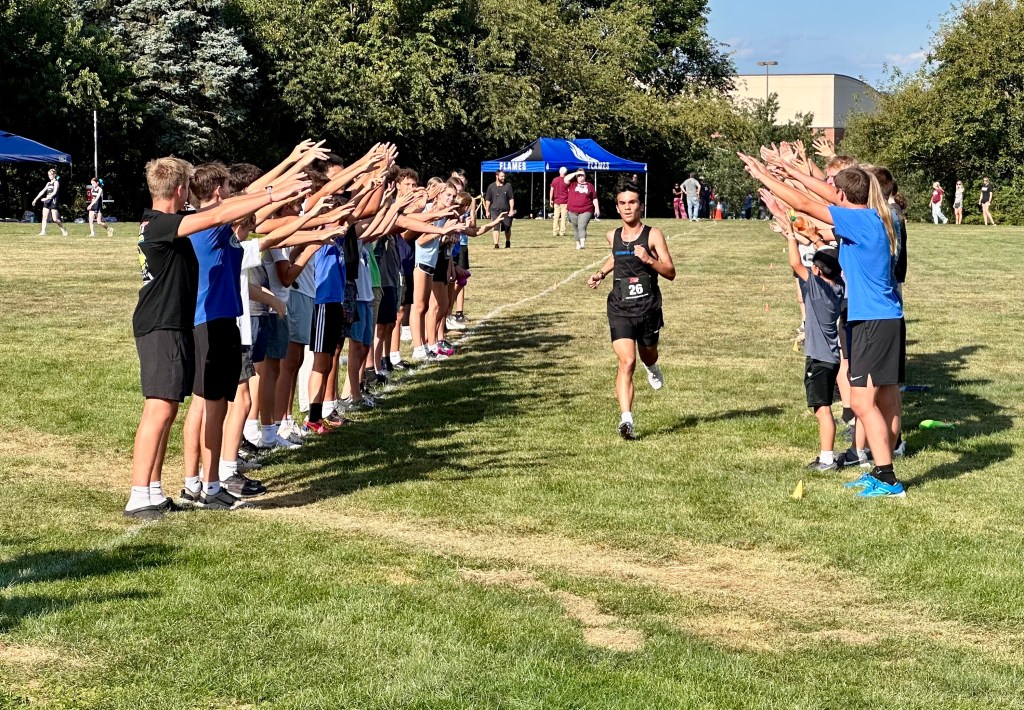
That was true for all kinds of outdoor sports. This photo shows the proud moment of the young man I mentor, far outpacing all the other high school runners in a cross-country meet. I wasn’t the only one who was pleased. Daniel’s classmates created a human gauntlet to welcome him as he approached the finish line.
Winning the race, August 29, Harrisonburg, Virginia. Photo by Bruce Stambaugh
September
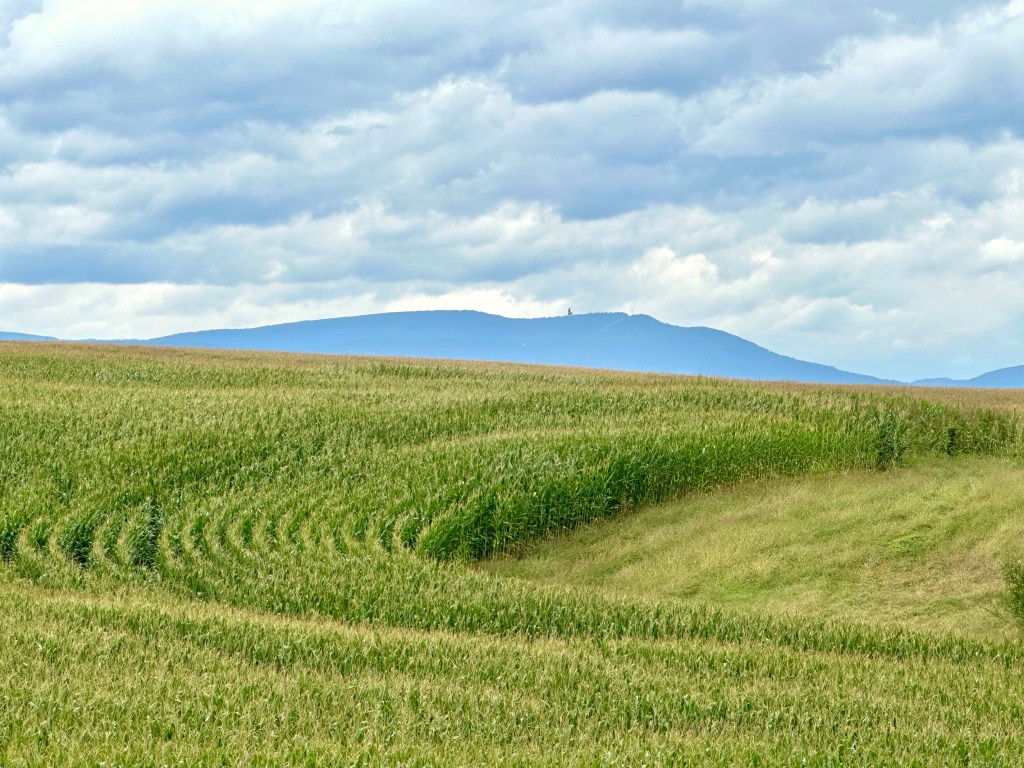
This September in Virginia’s lovely Shenandoah Valley was fabulous. After a hot, humid summer, September ushered in cooler temperatures and revealed the magnificent colors of her topography and vegetation, both natural and cultivated.
This was the view I saw as I exited my vehicle at a country store near the quaint town of Dayton. How could I not take this shot?
From the area’s fertile soil, curving rows of field corn and rolling contours led the eye to the Allegheny Mountains to the northwest and the cruising cumulus clouds above. Come harvest, it was a bumper crop of corn.
Though I didn’t see it at the time, an American Crow is near dead center in the pastoral photo.
Early September in the valley, September 4, Dayton, Virginia. Photo by Bruce Stambaugh
October
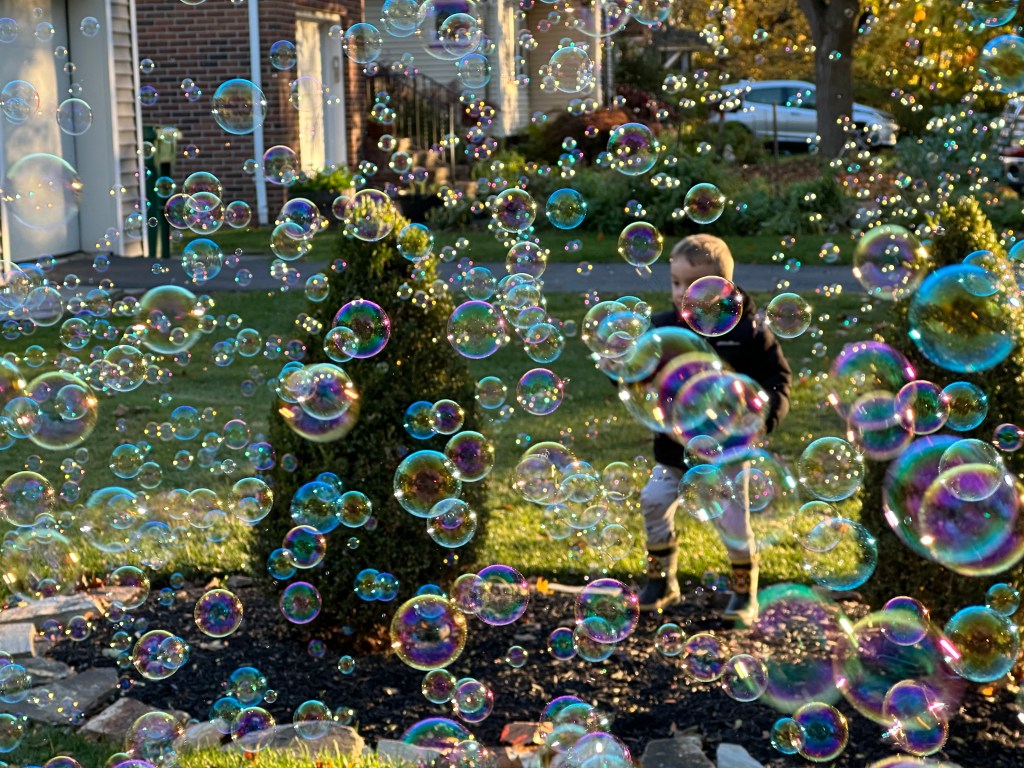
Our three-year-old grandson loves Halloween. He also loves bubbles, so his folks bought him a bubble machine. Teddy wanted to show off how the bubble maker worked when we visited him and his parents the week of Halloween.
When Teddy ran behind the bubbles, the sharply slanting sun highlighted the multi-colored, windblown bubbles. The various-sized bubbles and their proximity to my camera created a moment I can’t forget. It was one of my favorites of the year.
Teddy and his bubbles, Rochester, New York, October 26. Photo by Bruce Stambaugh
November
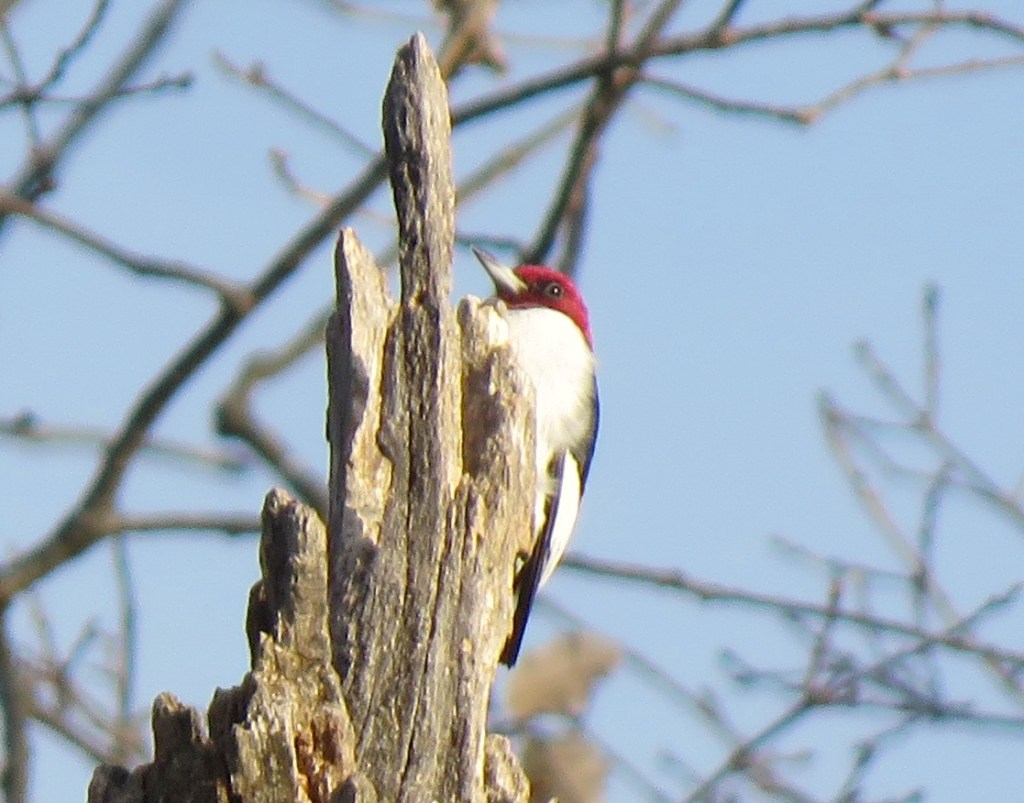
When a Red-headed Woodpecker poses for you, you have to take the shot. Of course, I am always ready with the camera when the moment arrives.
Red-headed Woodpecker, November 7, Linville, Virginia. Photo by Bruce Stambaugh
December
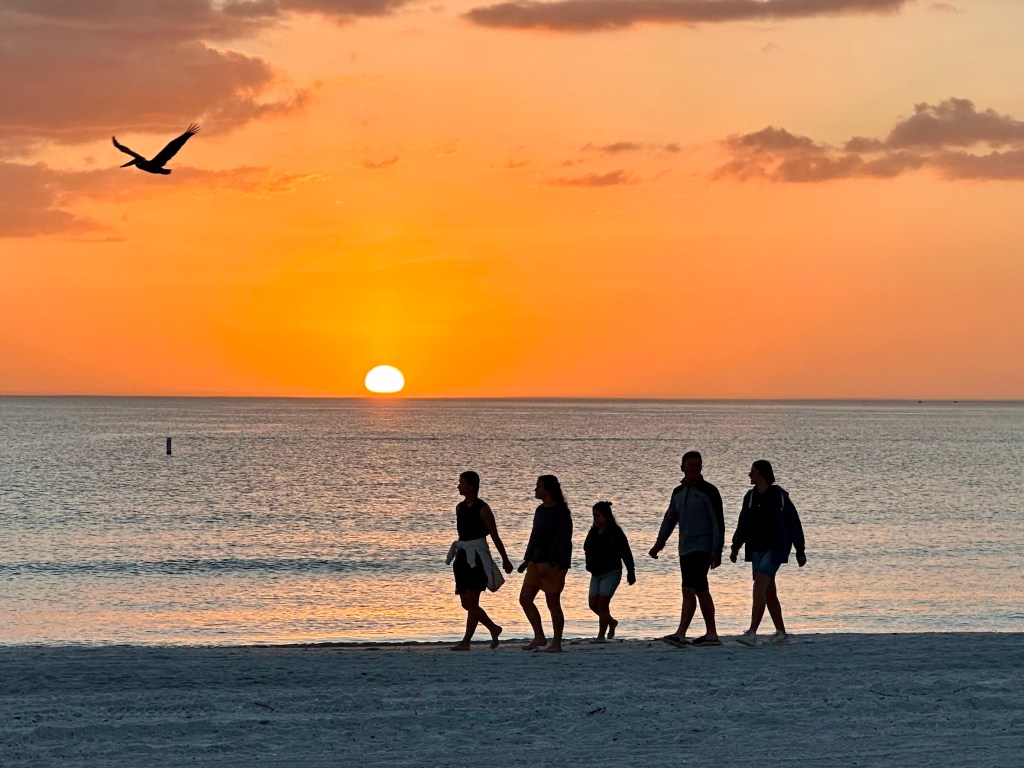
My wife and I spent Christmas week in Sarasota, Florida, with our daughter and her family. We wanted to devote holiday family time together somewhere warm. I’m happy to say the weather was perfect. With two college-aged grandsons and a teenage granddaughter, we hit the beach a few times.
After basking in the warm sunshine during the day, we returned a couple of times for the sunset. When the clouds didn’t cooperate, we settled for golden sundowns.
In this photo, a Brown Pelican appears to be leading the way home for this family walking along North Lido Beach. Sometimes the photo paints the picture for you. Plus, it’s only appropriate that we let the sun set on 2025.
Leading the way, December 23, Sarasota, Florida. Photo by Bruce Stambaugh
I hope you and yours have a joyous and safe New Year.
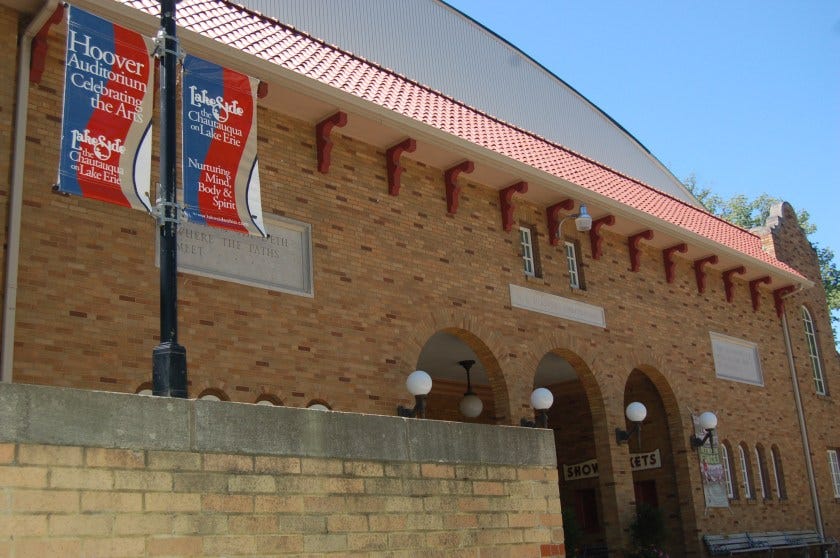
Hoover Auditorium, Lakeside, Ohio. Photo by Bruce Stambaugh
I didn’t believe in ghosts until I saw one.
It was July 3, 2010. My wife and I were enjoying our annual laidback week at Lakeside, Ohio, a Chautaqua community on the shores of Lake Erie.
Lakeside provided a respite away from the daily grind of life for thousands of families during its Memorial Day to Labor Day season. Founded in 1873 as a Methodist summer camp, the village has grown into a thriving community that promotes education, recreation, religion, and arts and entertainment.
My wife and I participated in selected activities from all four pillars of opportunity during our week-long stay. But we mostly relaxed with friends on the wrap-around front porch of the hospitality house where we stayed a week each year. We played dominoes for hours.
Across the street in the 100-year-old Hoover Auditorium, Lakeside offered a variety of entertainment and lectures each evening, Monday through Saturday. That’s where I saw the ghost.
A lively and loud Celtic group of singers and dancers nearly filled the 2,000-seat venue. We arrived early to secure seats where the breeze would provide relief from the hot and humid Ohio summer days. The old auditorium remained essentially unchanged from its construction in the late 1920s, including the absence of air conditioning.
The band busted out lively tune after tune. The music wasn’t my cup of tea, but experiencing new cultures was part of the Lakeside design. I was glad we had chosen front row seats in the second section of Hoover, where I could stretch my feet into the east-west aisleway.
About halfway through the program, the excessive noise emanating from the stage made me restless. Apparently, it bothered the ghost, too. For some reason, I looked up at the suspended triangular metal beam that held the speakers and the spotlights that illuminated the stage.
From stage left, a glowing, blueish-white figure appeared. A man walked casually across the beam, not built to hold any significant weight, to stage right.
As the music boomed out, I sat transfixed on this man from another era. He had the appearance of a maintenance man. The man looked to be in his 50s, clean-shaven, and I can never forget his ruddy face with that square jaw. His hair was slicked back, a style of the time, and parted on the left side.
He wore a work shirt with no label, thick denim work pants cinched with a thick leather belt, and heavy leather boots that laced up in the front. The apparition was dressed in the attire of an early 20th-century construction worker, the same era as when the storied auditorium was erected.
I followed the man as he casually stepped across the beam until its end. He knelt and appeared to be adjusting something. I wondered if he was attempting to turn down the sound.
Had the clanging and drumming of the uproarious music awakened this ghost? Was he annoyed at all the ruckus?
At that point, I briefly looked around at the audience. All eyes were fixed on the musicians and dancers on the stage. I glanced back up to the man, and he wasn’t there. In his place was a softball-sized glowing orb, the same blueish-white color as the man. The orb quickly arched back to where the man first appeared and then disappeared.
I looked at my wife beside me, but like the rest, she was focused on the performers. I had always wondered what I would do if I ever saw a ghost. I had my answer. I just sat there in disbelief.
Questions ran through my brain like a runaway train. What had I just seen? Had anyone else seen the same thing? Why did I see it? What did it mean? Was I crazy?
At the show’s end, we retreated to the porch across the street. I sat quietly as other guests discussed the show, waiting for someone to mention the ghostly maintenance man. No one did.
The next day, my curiosity got the best of me. I visited the village’s archive center housed in an old, white-clabbered church building. Besides the archivist, I was the only one there, which allowed me to speak candidly with the young woman about my existential experience.
She listened attentively to my story, nodding her head, seemingly believing every word I said. The young woman merely replied that she had never heard of a ghost in Hoover Auditorium.
“But,” she continued, “I’ve heard strange sounds while working alone here. And I have caught glimpses of what I thought were visitors, but no one had come in.” I felt heard and accepted.
The woman went on to tell of several sightings of ghosts in the old Lakeside Hotel. Guests had even reported them sitting on their bedsides. She sent me next door to where all of Lakeside’s records were kept.
I asked the village historian, an older woman, to review the architect’s plans for Hoover Auditorium. The employee led me to an architect’s metal cabinet, where the narrow, flat drawers pull straight out. I soon was reviewing the blueprints for the interior of the auditorium.
I found no structural beam that would have run across and above the stage where I saw the ghost. However, I did discover that the scaffolding used to build the inside of the auditorium reached approximately the same height as the metal frame where I saw the ghost. The woman, who also kindly listened to my story, said she had no record of anyone being injured or killed during the construction of Hoover.
So, I was back to where I started. Full of unanswered questions, and wondering why, out of an audience of 2,000 people, I was the only one to see this phantom. After fifteen years, the entire scene is still etched in my mind so keenly that I could still pick this guy out of a lineup.
I’m still baffled as to why I saw this ghost. But what it did do is open my eyes and my own spirit to a fuller understanding of life. Much to the contrary of today’s thinking and behaving, life isn’t simple black or white, or right or wrong.
This experience showed me that life is full of gray areas, questions without answers. Most of my life is now behind me. I strive to stay in each moment and embrace whatever comes my way, even if it is a ghost.
At the very least, I now know how I would respond if I saw a ghost. I just watched, wondered, and marveled at what I saw.
Our intrepid guide, John Bourgeois. Photo by Bruce Stambaugh
We arrived at 7 a.m. at the Port of Sydney, Nova Scotia, located on the eastern end of Cape Breton Island. From our veranda, the old town still seemed to be asleep.
Before we left the ship, we couldn’t help but notice a giant fiddle on the dock, welcoming visitors to this intriguing town. At 60 feet tall, the largest fiddle in the world stands as a tribute to the island’s Celtic heritage and in reverence to its decades of fiddling.
We opted for a walking tour around the town over another long bus ride into the country. We were glad we did. We hardly lost sight of the Zuiderdam, which was fine with us.
Our morning stroll around Sydney was just that, very leisurely. Our guide was a character, dressed in period clothes, and unafraid to express his opinion. He was a hoot. With a name like John Bourgeois, did he have any other option? His surname gave away his personality.
John clearly loved his native town. His folklore stories of mysterious intrigue easily kept our attention. John knew the town’s history like the back of his hand. He should have. His family name went back generations, enabling him to interject personal ancestral history into his tantalizing tales. Perhaps some of them were true.
As we walked up hill from the dock, John took his time with his steps and his words. He knew himself and his town well.
John pointed out the Royal Bank Lion Monument, a symbol of power at the start of the prosperous steel mill days, now long defunct. He drew our attention to the now-abandoned church with an upside-down ship’s hull for a roof, the house where the ladies summoned the beleaguered sailors returning from a long voyage, and the community’s old firehouse, now a mustard-yellow painted two-story home with a bright blue door.
We enjoyed the flower gardens of lovely old two-story homes still occupied by long-term residents, and toured an old building that served as a residence and general store. It’s an impressive museum in its third life. We spied a Paul Bunyan-style mural of a hockey player that honored the beloved Canadian sport.
After giving John a generous tip for his honesty and folksy stories, I asked him for directions to a restaurant he recommended. He said it was just a little way straight ahead. A half-mile later, I found it, and the restaurant was closed. Apparently, I was as magnanimous as I thought.
We walked back to the Joan Harriss Cruise Pavilion, where we found a restaurant with lobster rolls. It was a relaxing way to end our walk around Sydney.
As our ship left the dock and headed out of the inlet, I realized that Sydney was much more than what we saw on our walking tour. The roofs of houses and church spires stretched far inland.
We passed the old coal tipple where ships loaded the once major export. Like the steel mills, the mines are now shuttered. Farther out along the peninsula, a forested backdrop highlighted impressive homes, rural stone churches, and a lighthouse where the harbor pilot boarded his boat for the ride home.
We enjoyed another musical performance after a nice dinner and called it a day. Halifax was our next highly anticipated destination.
The House of Green Gables. Photo by Bruce Stambaugh
I wasn’t sure what to expect from Prince Edward Island. Consequently, what the island offered surprised me.
We rose as the sun peeked over the eastern horizon into a cloudless sky. That correctly portended a fair weather day for our afternoon excursion to the Green Gables House and Museum.
Based on the comments of others who had been to PEI, I expected Charlottetown to be dotted with quaint, lovely houses. If they were there, we didn’t see them.
Our bus trip to the Green Gables Heritage Place included a sightseeing tour of the island. However, because the house is located on the other side of the island from the port, it was basically an hour’s drive out and another one back on the same roads.
We saw the fertile red soil that produces a variety of crops grown in many other locations. Prince Edward Island is the potato capital of Canada. I thought that, impressive as big as Canada is, and given that PEI is Canada’s smallest province, with 2,185 square miles.
On the way to our destination, we passed Lucy Maud Montgomery’s gravesite, located not far from the beloved homestead that inspired her writing. Here, too, I wished the bus would have stopped for photo opportunities. But we were on a three-hour tour, and I wanted to make sure we arrived back at the ship before the 4:30 p.m. departure.
We enjoyed the self-guided trek through the old house, all decked out with appropriate period furniture. However, the only piece of furniture that was original to the home was the halltree.
Those familiar with “Anne of Green Gables” likely could imagine reading about Anne’s escapades as we ventured from room to room, upstairs and down. I was particularly impressed with the meticulously manicured grounds.
Lovely flowers were in full bloom. Not a weed could be found in the modest vegetable garden. A variety of songbirds sang among the trees and flower gardens around the sloping property.
I spied a path that led to the woods where Anne frolicked, and I took it more for birding purposes than curiosity. I crossed the footbridge over the creek and up into the woods, only to stop short.
The woods soon gave way to a different kind of green. The Green Gables Gold Course surrounded the historic homestead. I sucked the breath right out of me. I pondered what L. M. Montgery might think about that.
Returning to the museum to meet my wife, I asked our step-on guide about the irony of a golf course encapsulating this historic site. The kindly lady merely informed me that PEI was the golf capital of Canada.
I was taken aback by that, since we had only seen rolling agricultural fields with occasional crossroad towns since we left Charlottetown. My wife and I found a shady spot and enjoyed our snack lunch before boarding the bus for our next stop.
A short drive brought us to Prince Edward Island National Park. The park was a narrow but expansive area that included long stretches of red rock cliffs with white sand beaches below. The Gulf of St. Lawrence stretched out deep and wide before us.
Too soon, we were back on the bus retracing our tracks to Port Charlottetown. We made it back to the Zuiderdam with little time to spare.
The aft of the ship was moored to a cement platform in the harbor. A local longshoreman and his female crew piloted out to untie the giant rope that steadied the docked cruiseliner. On the way, two young females entertained us by pretending to be those human-like wind socks that many car dealerships use to get your attention. Their imitation was a fun send-off for us.
As our ship pulled out into the Hillsborough River, we could see more of Charlottetown. With its church spires, busy harbor, shoreline parks, and colorful cottages and homes, it was indeed a charming town.
Sailboats, pleasure boats, and fishing boats escorted us back to the Gulf of St. Lawrence. A pair of red-roofed, white lighthouses accented by lush evergreens and patches of PEI’s famous red soil bid us farewell.
The seas turned a deep, stunning blue as nighttime approached. That meant dinnertime and more cruise ship entertainment. The day of surprises had tired me out, and sleep came easily.
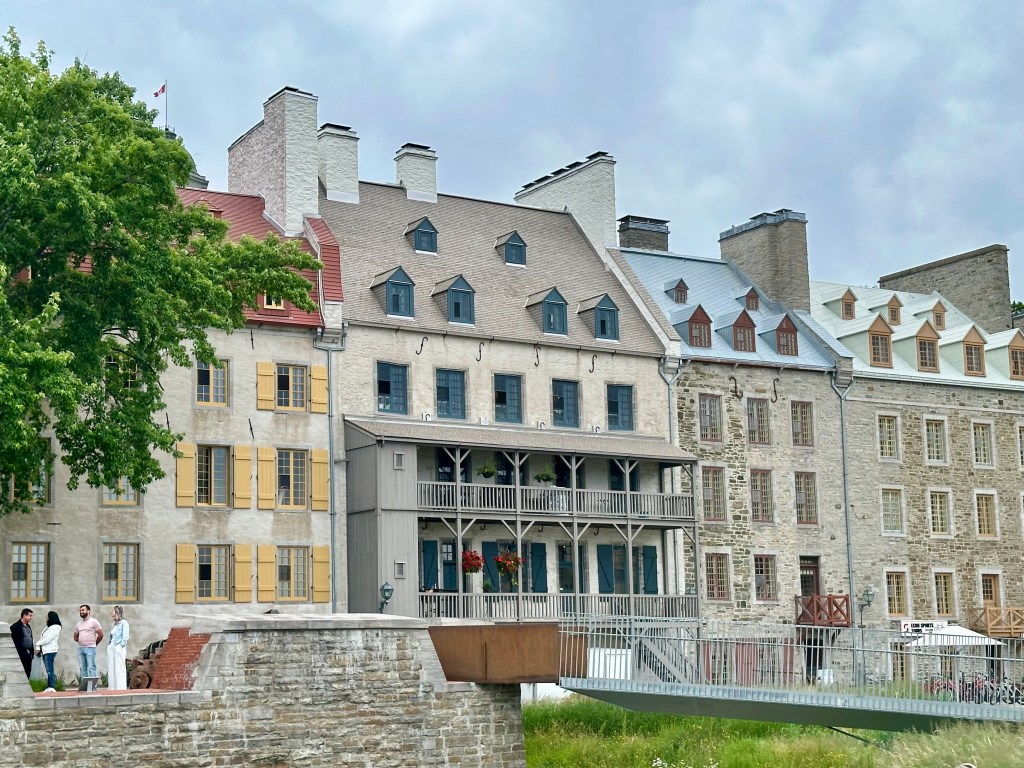
Part of the Royal Battery and rowhouses along the St. Lawrence River. Photo by Bruce Stambaugh
Our stay in Quebec City was much too short. Shortly after we checked into our hotel just outside the wall around Old Quebec, it began to rain. Still, our guide gave us a brief walk around a few blocks before guiding us back to the hotel.
We opted to have dinner at the hotel due to the combination of the rain and our long bus trip. We were tired.
Fortunately, we arrived via a narrow road that took us by the Citadel of Quebec, and an old neighborhood of lovely houses and quaint restaurants. To our right was the St. Lawrence River, where we would cruise for two days before reaching the Canadian Maritime provinces.
The most impressive building we saw was the famous Chateau Frontenac, now a Fairmont Hotel, which looms over the old city and must look rather impressive from the river. We weren’t fortunate enough to stay there.
So, we enjoyed a dinner with fellow travelers and got to know some of them better. We were all ready to board our cruise ship in the morning.
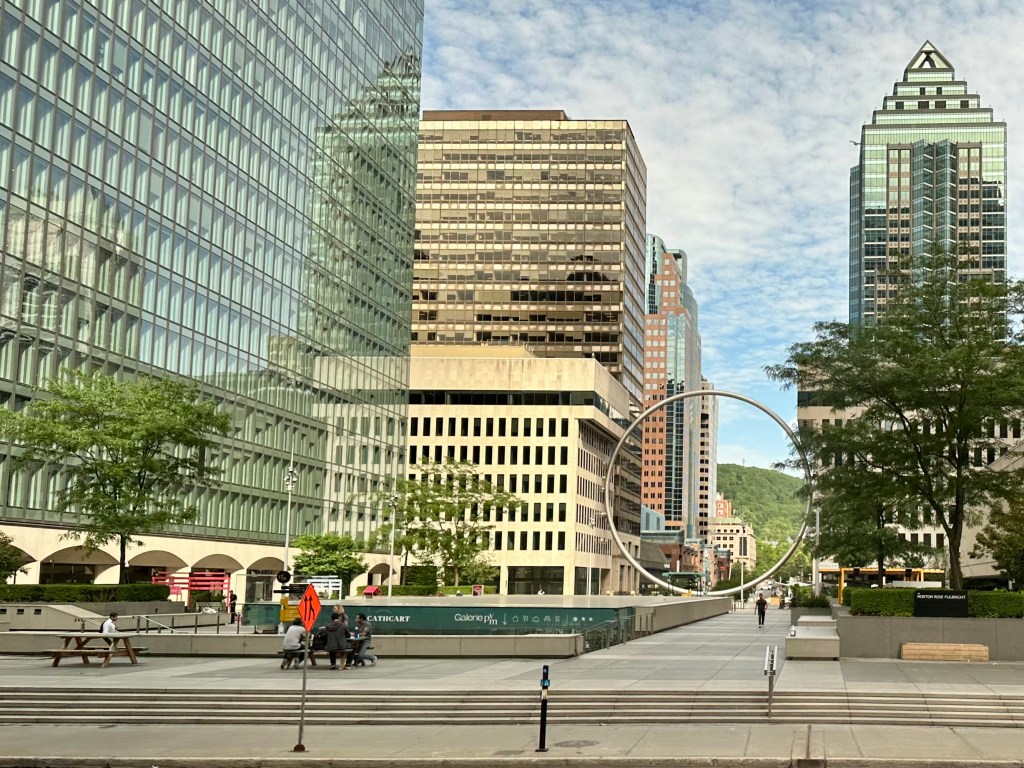
Victoria Square, Montreal, Quebec, Canada. Photo by Bruce Stambaugh
I had never been to Montreal, Canada, before. I was pleasantly surprised.
Montreal is a beautiful, clean, vibrant, progressive city. Montreal is proud of its heritage, which it works hard to preserve. It also embraces the arts, with brightly colored murals, statues, sculptures, and well-preserved historic buildings.
The photo above represents all of those qualities and more. The artistic ring set in Victoria Square has a significant purpose for the people of Montreal. Amid the gleaming buildings, the ring points to the distant hill in the background.
To residents of Montreal, it’s not a hill. The island city worships its Mount Royal as a mountain, though it is only 764 feet high. It provides excellent views of the city, including the sports venue for Expo 67. Mount Royal is part park, part cemetery. It’s a green paradise surrounded by a bustling city.
To get there, we passed city parks with modern art and sculptures adorning towering, modern buildings, a respected university, bohemian rowhouses, and an impressive, giant portrait of native Leonard Cohen covering the entire side of a building.
We also saw Montreal’s apartment icon, Habitat 67, built for Expo 67. The complex looks like cardboard boxes stacked on top of one another. We visited Old Montreal, where we saw the Notre Dame Basilica and the Bank of Montreal’s legal headquarters opposite the church. It’s an architectural beauty, built to disguise it from looking like a bank.
Anchoring the Place d’Armes square is the Maisonneuve Monument erected for the founder of Montreal, Paul de Chomedey. The base of the impressive monument honors other significant contributors to Montreal’s history, including the Iroquois Native Americans.
We had lunch in the Old Montreal section, which could have been a setting in any European city. People filled the streets, restaurants, and cafes.
We said goodbye to Montreal and headed to Quebec City.
The Vermont State House, Montpelier, Vermont. Photo by Bruce Stambaugh
The third day, we traveled from our ski lodge in New Hampshire to the Vermont state capital in Montpelier. We passed Mt. Washington on the west side and then into the Green Mountain State. In French, “les monts vert” means Green Mountains.
Our first stop was at a sugar maple syrup farm, where we viewed the process of making syrup. We also got to sample “sugar snow.” Crushed ice was used in place of snow since we were there in late June.
We poured hot maple syrup over crushed ice in a hot dog container, then twirled a fork around the cooling syrup so we could taste this treat. It was absolutely amazing. To me, it tasted better than candy.
The proprietors provided a glass of water, a dinner roll, and a dill pickle to help with digestion after eating all that sweetness. I had a sip of water and then ate the pickle just to see the resulting consequences. I liked it. The pickle indeed neutralized the intense sweetness of the cooled syrup. I couldn’t eat the roll since I am gluten-free.
From there, it was on to the Vermont state capital in Montpelier. We had time to tour the unique capital building and find lunch. Since it was drizzling, we decided to eat in the building’s small cafe.
I was impressed with the building’s modesty, compared to other, more gaudy state capitals. We entered through a side door that a police guard had opened, and we were also free to roam around. There were no metal detectors.
A giant painting of a Civil War scene caught my attention. Benjamin Franklin Mason painted the Battle of Cedar Creek, which happened only 40 miles north of where we live in Virginia’s Shenandoah Valley. A Vermont military leader led a Union charge against a formidable Confederate defense. Col. Newton Stone was later killed in the Civil War Battle of the Wilderness.
We found a small office that had photos of all 50 U.S. state capital buildings. It covered an entire end wall.
High school students from around Vermont were holding a mock session of the state legislature. So, we had to be quiet as we peeked into the modestly appointed meeting room with a dangling chandelier in the center.
Too soon, we boarded the bus and headed to Montreal, Quebec, Canada. Crossing the border in a remote rural area like northeast Vermont went so smoothly that I don’t even remember it.
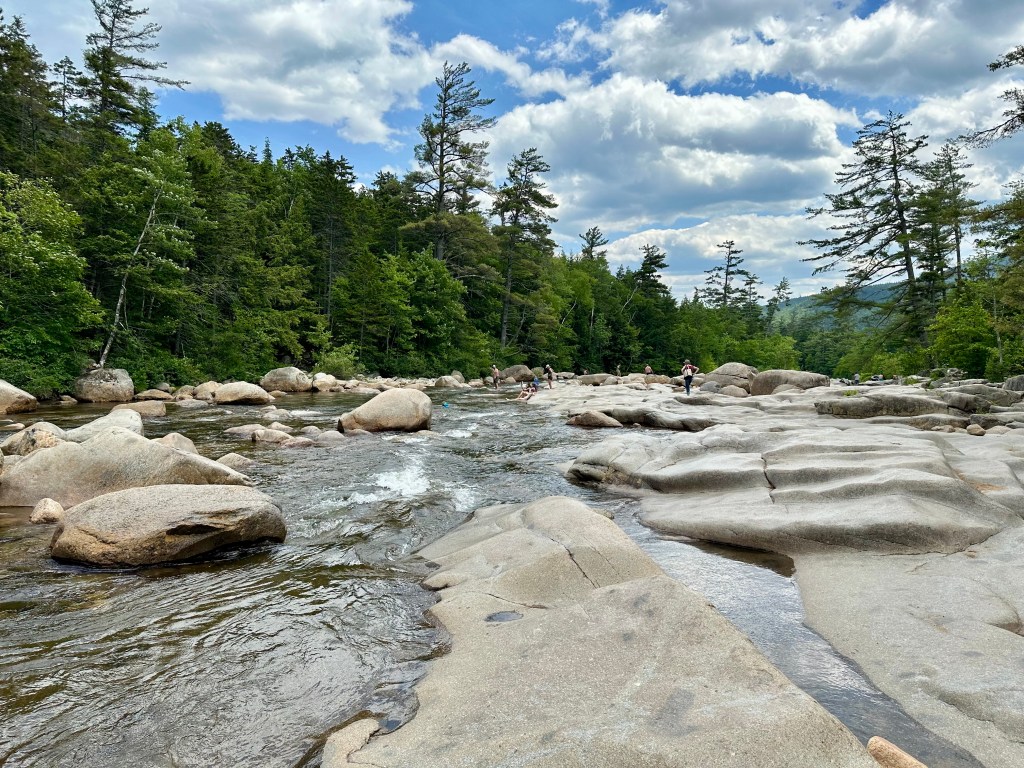
The Swift River along the Kancamagus Highway. Photo by Bruce Stambaugh
Our little tour group headed north out of Boston on the first full day of our land/cruise trip through parts of New England and into eastern Canada.
Looking at the itinerary, my wife and I realized that we would be seeing much of the same scenery that we had when we visited New Hampshire and Vermont six years ago. That didn’t deter our anticipation, however. We loved visiting both states and looked forward to new adventures.
We briefly visited Franconia State Park, and then drove eastward along the Kancamagus Highway that runs from Lincoln to Conway, New Hampshire. My wife and I drove it westbound in 2019.
It was much easier driving a personal vehicle than being a passenger in a large bus. I wanted to shout “stop” multiple times as we passed scenic overlooks and lovely White Mountain vistas. Of course, I didn’t do that.
The bus made two stops, both near the terminus of the famous scenic highway. Our first stop was at the Lower Falls on the Swift River that winds its way east toward Conway.
Because of the hot and humid weather, we weren’t alone at the falls. Families and couples, young and old, cooled off in the rushing waters of the aptly named river.
A boardwalk parallel to the river made it easy to observe the fun in the water. As a photographer, I sought a better angle near the refreshing waters, though I had no intention of joining the swimmers.
The above photo shows the majesty of Swift River and its gorgeous surroundings of lush evergreens and deciduous trees that climb the mountainsides. We were fortunate to have pleasant though warm weather.
I waited until the splashing went farther downstream before snapping this photo. The wavy boulders show the eons of wear and erosion from constant, fast-running water rushing down the valley.
Closer to Conway, where the terrain flattens out, the waters slow their pace and broaden their banks. Where the rapids and falls are is where the real action is. I was glad to see it again.




 Roadkill Crossing
You must be logged in to post a comment.