Yesterday, we had an ice storm in Virginia’s Shenandoah Valley. Schools and many businesses were closed, but for the most part, little harm was done. The power surged just once in our neighborhood.
The ice coated everything from the ground up with at least a quarter inch of ice. There was more ice in some places, while others received much less. The ice accumulation depended on elevation, air temperature, and the amount and types of precipitation in any given area.
One thing was sure at our location. The layer of ice created a crystal palace appearance to all it embraced. It was joyous to look out and see nature’s beauty enhanced all the more.
I was surprised to see so few birds at our many feeders placed strategically around our front and back yards. But by mid-day, they apparently got hungry enough or felt safe enough to venture out from the security of their perches to come to the feeders.
I was ready for them with my cameras. I captured a brilliant red male Northern Cardinal sitting on a branch of a frosted evergreen. But it was his female companion that stole the show.
The female Northern Cardinal perched on an ice-incrusted limb of a young tulip poplar tree we had planted earlier this year. The photograph embodied the whole of the day.
The encasement of the ice is clearly visible, while the thin ice pellets pepper the background. With its burnished tulip-like blossoms frozen in time, the dormant tree beautifully accented the Cardinal’s lovely muted red and olive coloration.
This female Northern Cardinal earned the title “The Ice Queen.”
While visiting the Marbry Mill on the Blue Ridge Parkway near Meadows of Dan, Virginia, I spotted this creature staring back at me. The knotty apparition in the weathered barn wood sure resembled the face of a real Barn Owl.
For comparison, here’s a photo of a real barn owl.
What do you think? Does it look like a Barn Owl to you or perhaps some other creature?
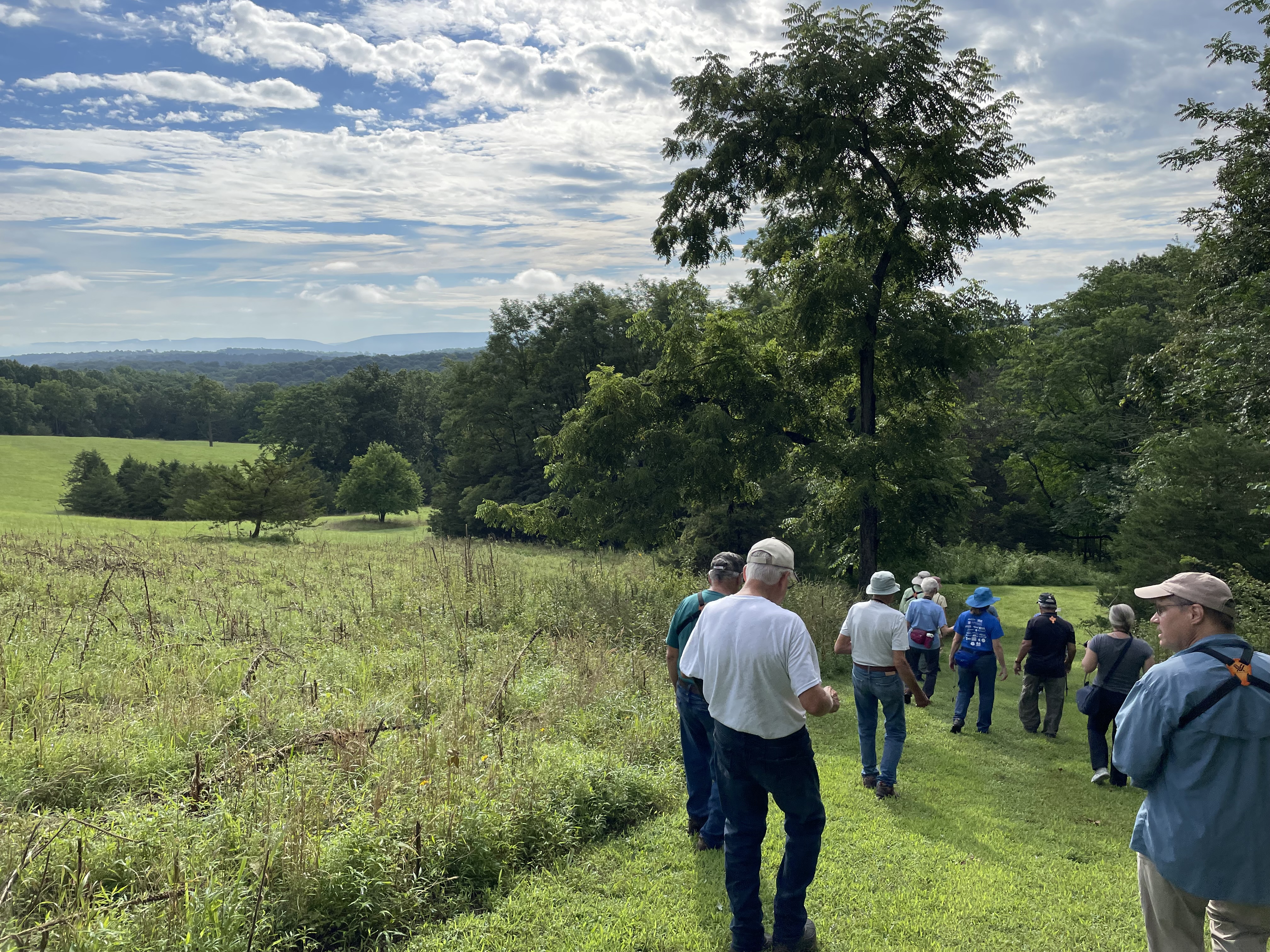
I couldn’t help but feel wide-ranging gratitude as I walked with a dozen other nature lovers. Billed as a bird walk, it was so much more than that. I wasn’t surprised by that realization.
Most in the group who took the tour, including the property owners, were in our third third of life. That is to say, most of us had more days behind us than we had ahead of us. That fact only made the pleasant August morning sweeter.
Indigo Bunting.
The landowners invited a noted local birder who tried his best to keep us corralled and informed. But Baby Boomers being who they are, we often overlooked our leader, and most of the group had moved on. Guilty as charged.
I attribute that to being enraptured with our surroundings. We walked the mown paths amid meadows of wildflowers, stands of woodlots, and the buzz of bees, the distraction of beautiful butterflies and plenty of avian species. There were too many times when I simply wanted to stay in place and absorb all that surrounded me. Believe me, there was lots to take in.
But we didn’t want to overstay our welcome. So, like it or not, this grateful group of nature enthusiasts kept moving. There was so much to see in such a short time.
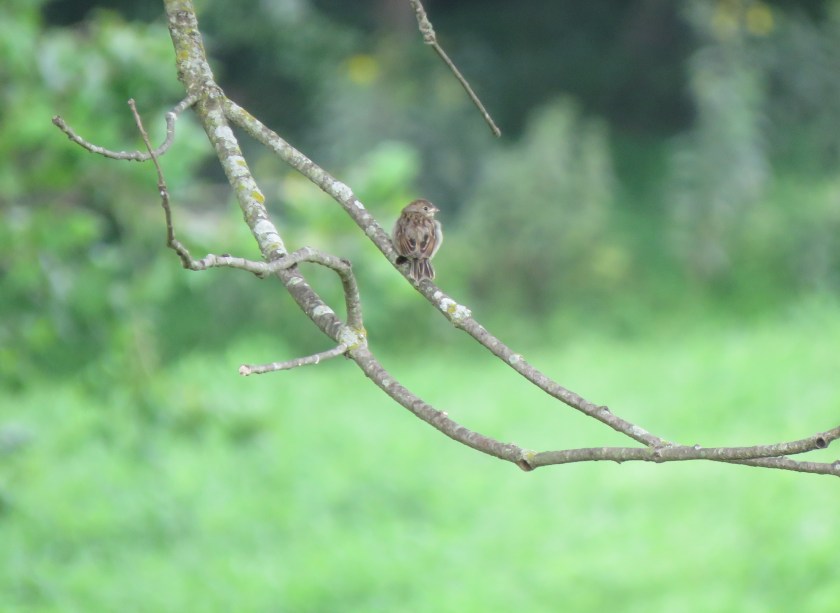
Near the end, I lingered to identify a solitary sparrow that perched in a tree many yards away. My binoculars didn’t help much given the distance. While I waited for the expert birder to verify my find, a Belted Kingfisher zoomed over the rushing creek below me. Just then, an Eastern Meadowlark took flight overhead, and a gang of Barn Swallows abandoned their perches on the big round hale bales in search for breakfast.
The sparrow sat dutifully on the tree limb while the walk’s leader edged closer. Finally, it turned its head, revealing its pinkish bill. Field Sparrow, it was.
We saw 44 species of birds in our limited time. We got some excellent looks at songbirds and others. I was torn between birdwatching, snapping photos of butterflies, and enjoying the many summer wildflowers.
I was grateful for this kind couple to invite us onto their property and allow us to enjoy the fruits of their labor. After all, that’s how gratitude works. Blessings upon blessings create overflowing gratitude that begs to be shared.
The group I was with Saturday morning was nearing the end of our fruitful bird walk. We had seen 44 species in about three hours as we strolled around this lovely acreage of rolling wildflower meadows dotted with woodlots.
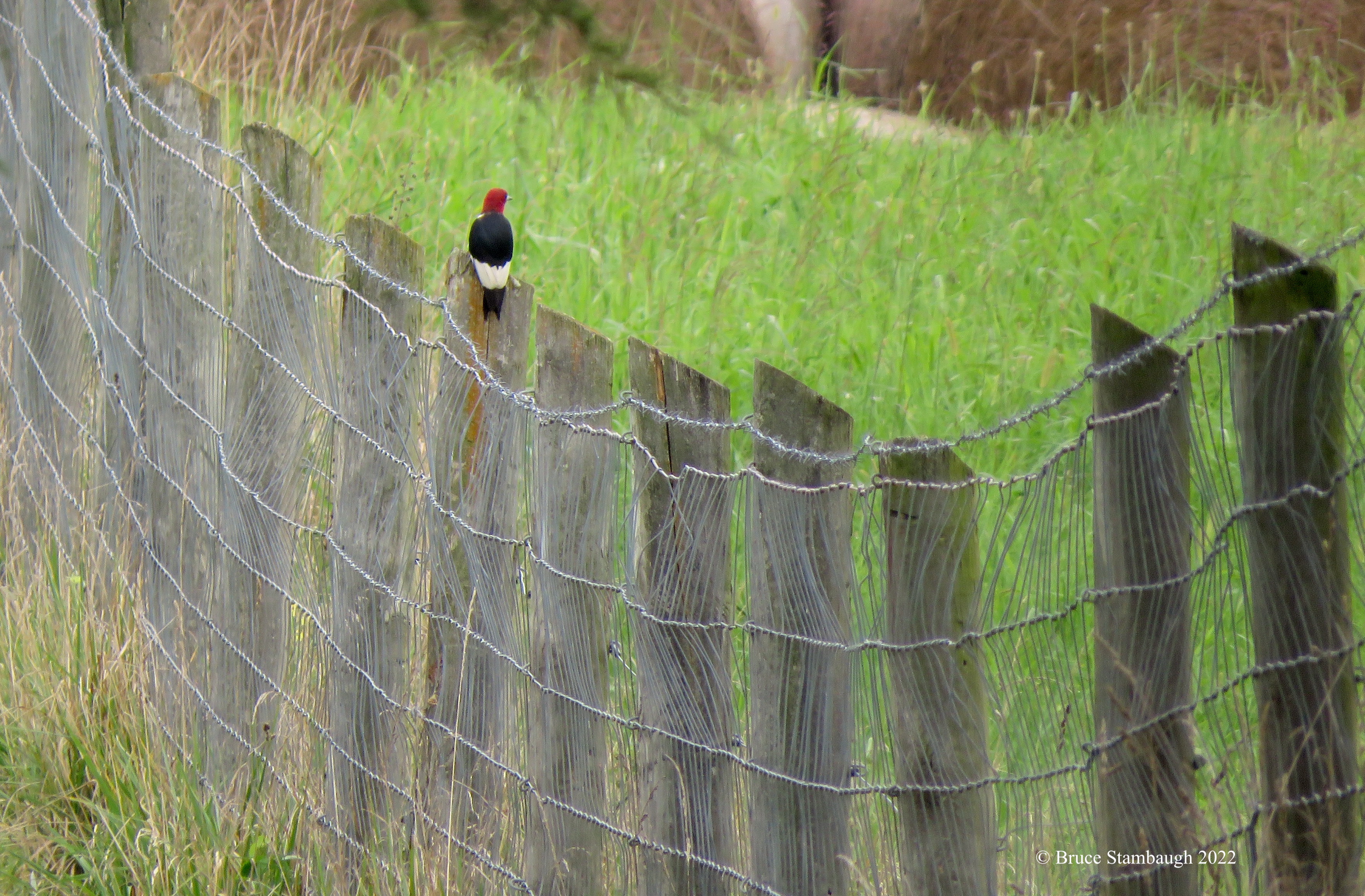
As we neared the end of our bird walk, this regal-looking Red-headed Woodpecker flew in front of us. It landed on this fence post at least 50-yards away. I was game for a shot anyway.
My hand-held camera captured this compressed scene with my 1,200 mm lens fully extended. The fence posts were actually several feet apart. Clearly, this photo was a long shot in more ways than one.
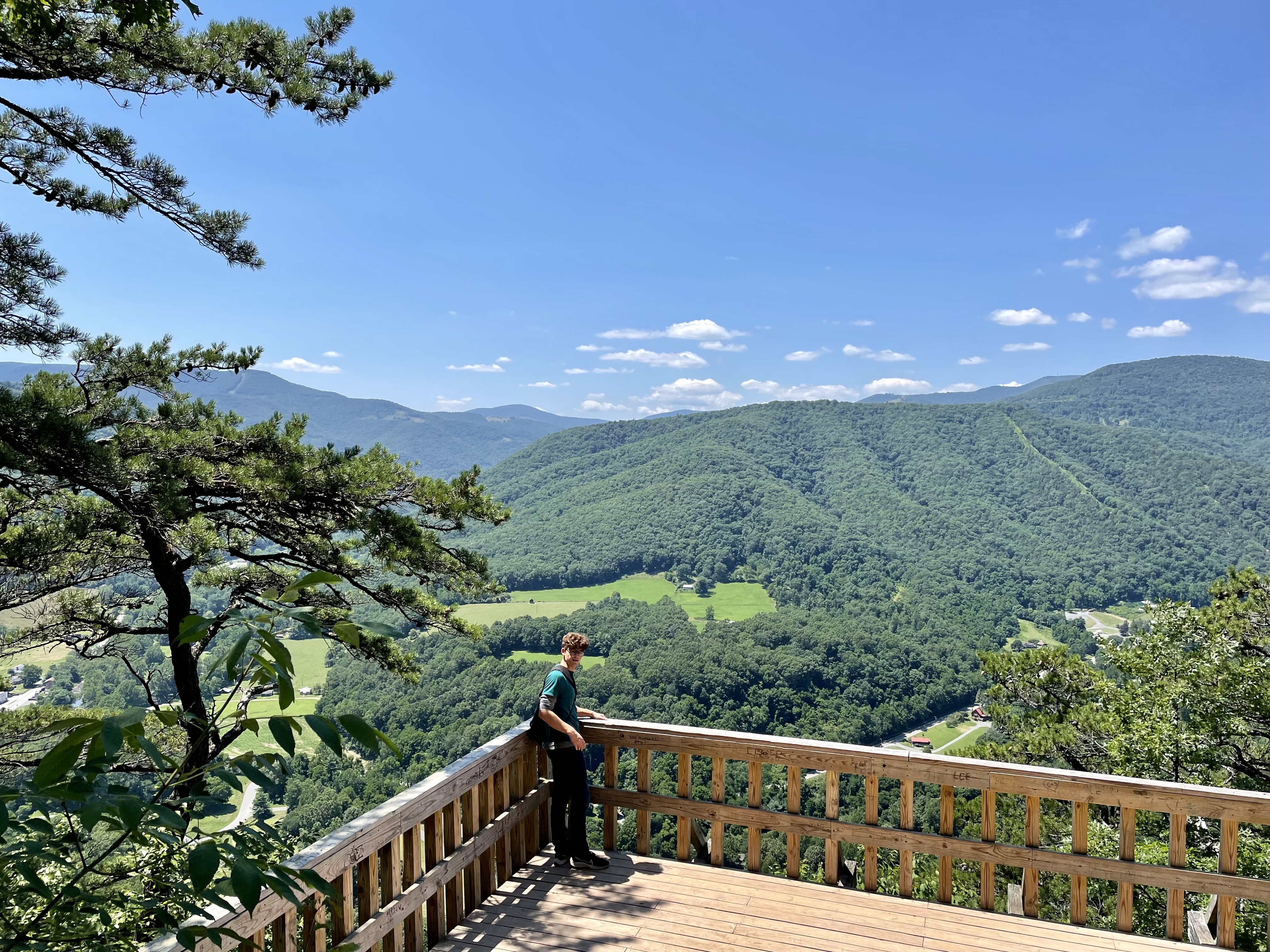
Grandson Davis enjoyed the view from the overlook deck at Seneca Rocks, West Virginia.
Weather nut that I am, I check the forecast regularly. Monday looked to be decent weather for hiking. Cooler temperatures in the higher elevations and no rain. That would work out just fine for several reasons.
Our daughter and her husband had left the previous Sunday to take our oldest grandchild to his college orientation in Richmond, Virginia. Of course, the university had nearly four days of activities for the new students and their parents.
That left the middle grandchild, Davis, and our only granddaughter, Maren, to check on. With them both being responsible teenagers, that didn’t require much.
With school out for the summer, Maren loves to help Nana with puzzles, baking, and other hands-on chores. She also mows our lawn. That left Davis and me to find trouble together.
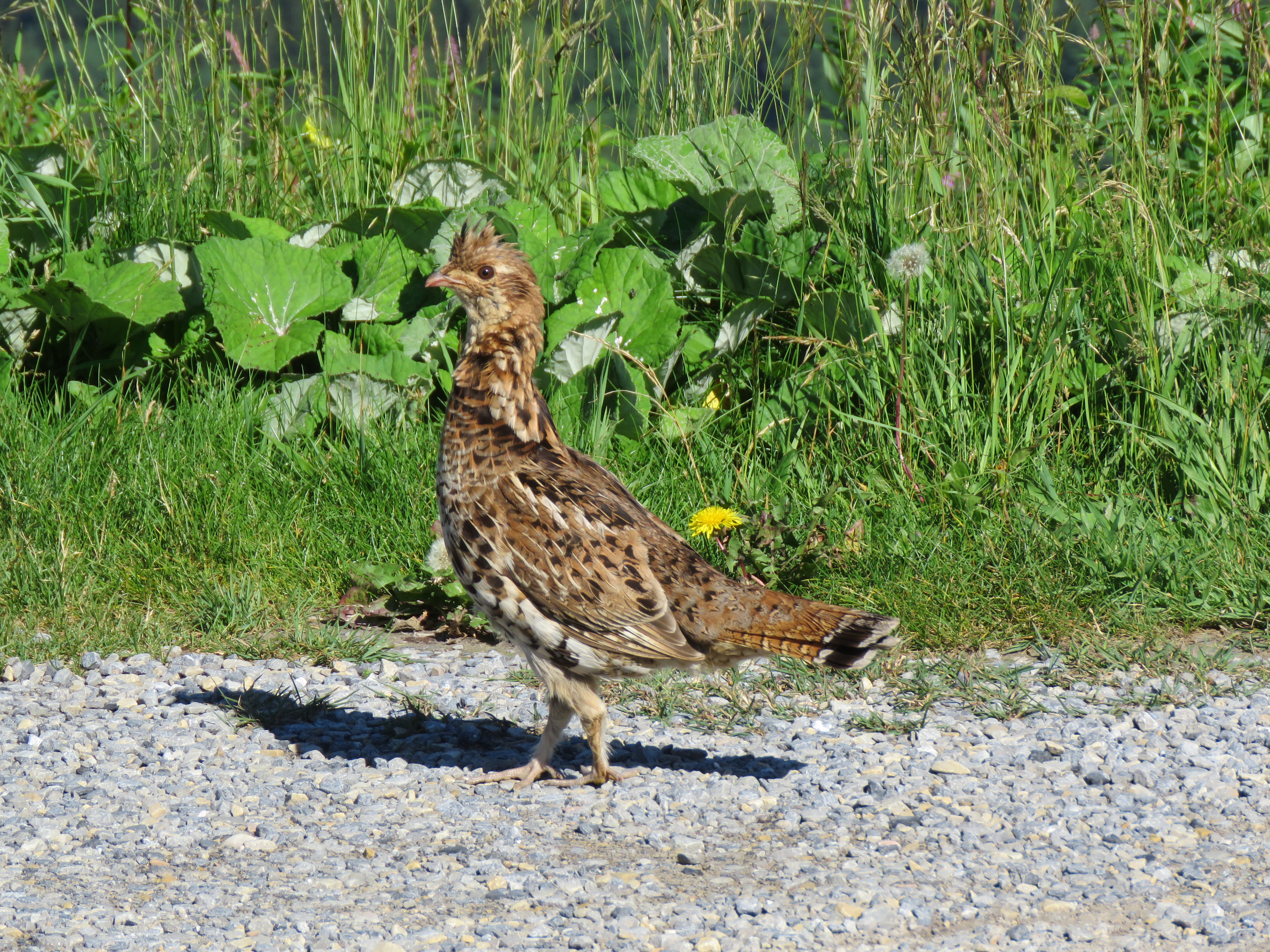
Since we both like to hike, we visited Spruce Knob, the highest point in West Virginia. It’s an hour and a half drive for us. We left mid-morning, but Davis didn’t take long to nod. How he could snooze in all that hilly, twisting driving I was doing, I don’t know. He woke as I slowed to photograph a Ruffed Grouse strutting its stuff on the Forest Service road near the mountain top.
Male Ruffed Grouse.
After taking a few snapshots of this often elusive bird, we were soon in the parking lot. Other than a Forest Service employee, we had the place to ourselves. However, we hadn’t even started on the trail when I realized I had forgotten the insect repellent. Fat flies buzzed nearby, but none landed on us the entire time we were there.
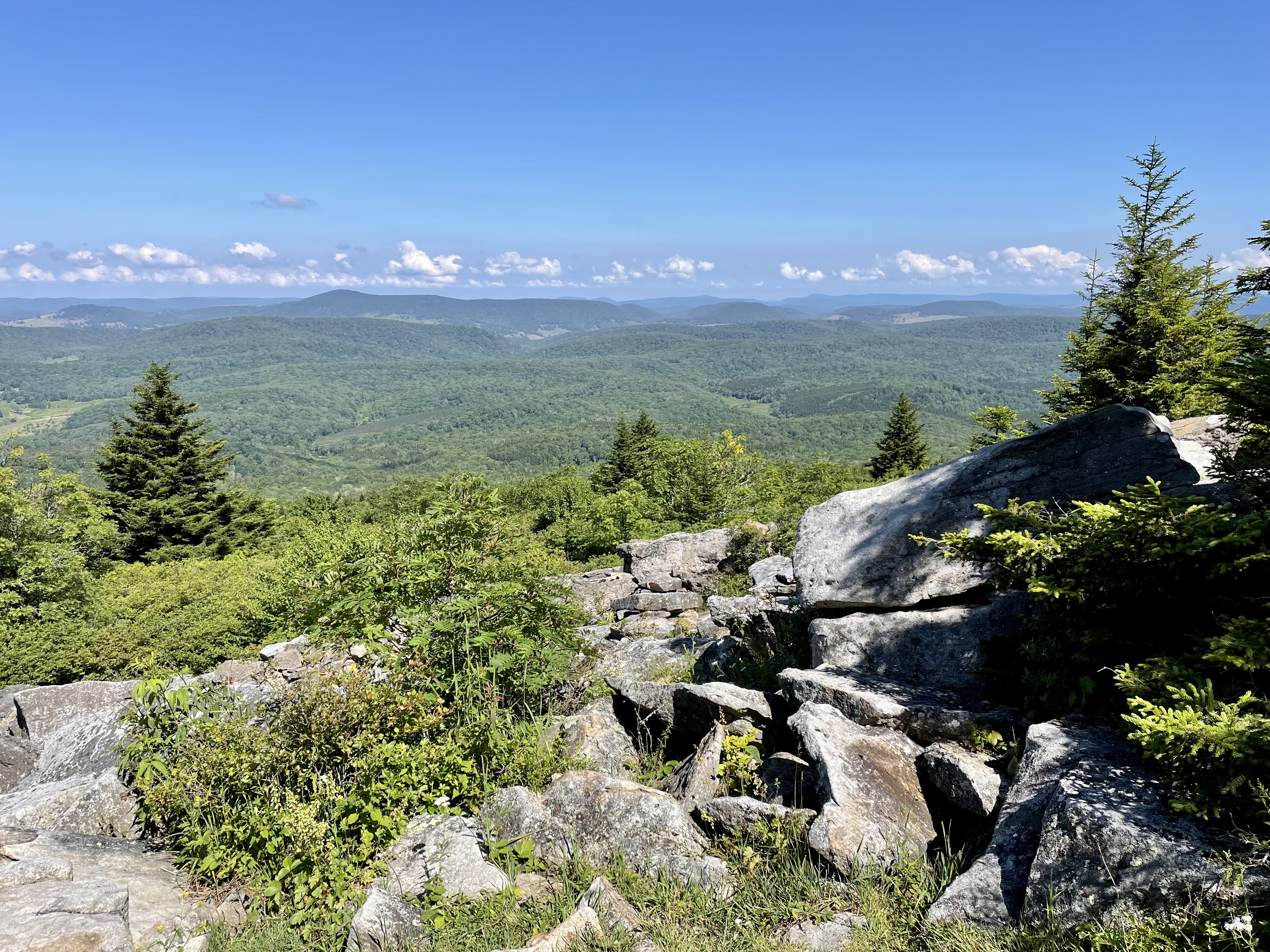
Spruce Knob affords beautiful views on a clear day like today. Only a few puffy clouds formed over distant mountain ranges to the west. The air was a pleasant 66 degrees with little humidity and no haze to obscure our views.
We walked the loop trail that leads from the parking lot and back. The scent of the spruce filled the air. Wildflowers and birdsongs were abundant. We basked in both.
I know I slowed Davis down by constantly pausing to photograph wildflowers, birds, and butterflies. Trooper that he is, Davis didn’t complain.
I wanted Davis to enjoy this trip. It was one he was supposed to do at the end of the school year with several students and six teachers. The trip was canceled at the last minute when three teachers came down with Covid-19. In the end, all six were sick.
They were to camp out and visit Spruce Knob, Seneca Rocks, and Dolly Sods. All were in the same geographic area of the old folded mountains and valleys.
So, while Nana and Maren were enjoying each other’s company, and Davis’s brother and parents were occupied with college orientation, Davis and I explored some of the wilds and wonders of West Virginia.
We studied the large piles of giant rocks along the path and at the slope of the mountain, long ago rounded by millenniums of erosion from wind, water, ice, and snow. The teacher in me quizzed Davis about how the rocks got where they did. He graciously played along with my lame attempts.
We saw migrant birds and birds that should be migrants but reside here year-round. Dark-eyed Juncos commonly nest in Canadian provinces. The exception is the Appalachian Mountains.
Because these beautiful ridges hold the same habitat and provide the necessary nutrients, the birds live here and farther up the Appalachian range into New England. Davis wanted to know why the other Junocs migrated when the birds we saw stayed. I hope he seeks a better answer than I gave him.
We enjoyed the views east and west and headed to Seneca Rocks, where we would eat our brown bag lunches. When we arrived at the valley picnic grounds, it was 82 degrees and humid.
From there, we could clearly see the face of the vertical rocks jutting straight up. Eons ago, they had been parallel until the collision of continents forced them to fracture and face the sky.
Unfortunately, no rock climbers could be seen. The day was likely too hot for such strenuous activity.
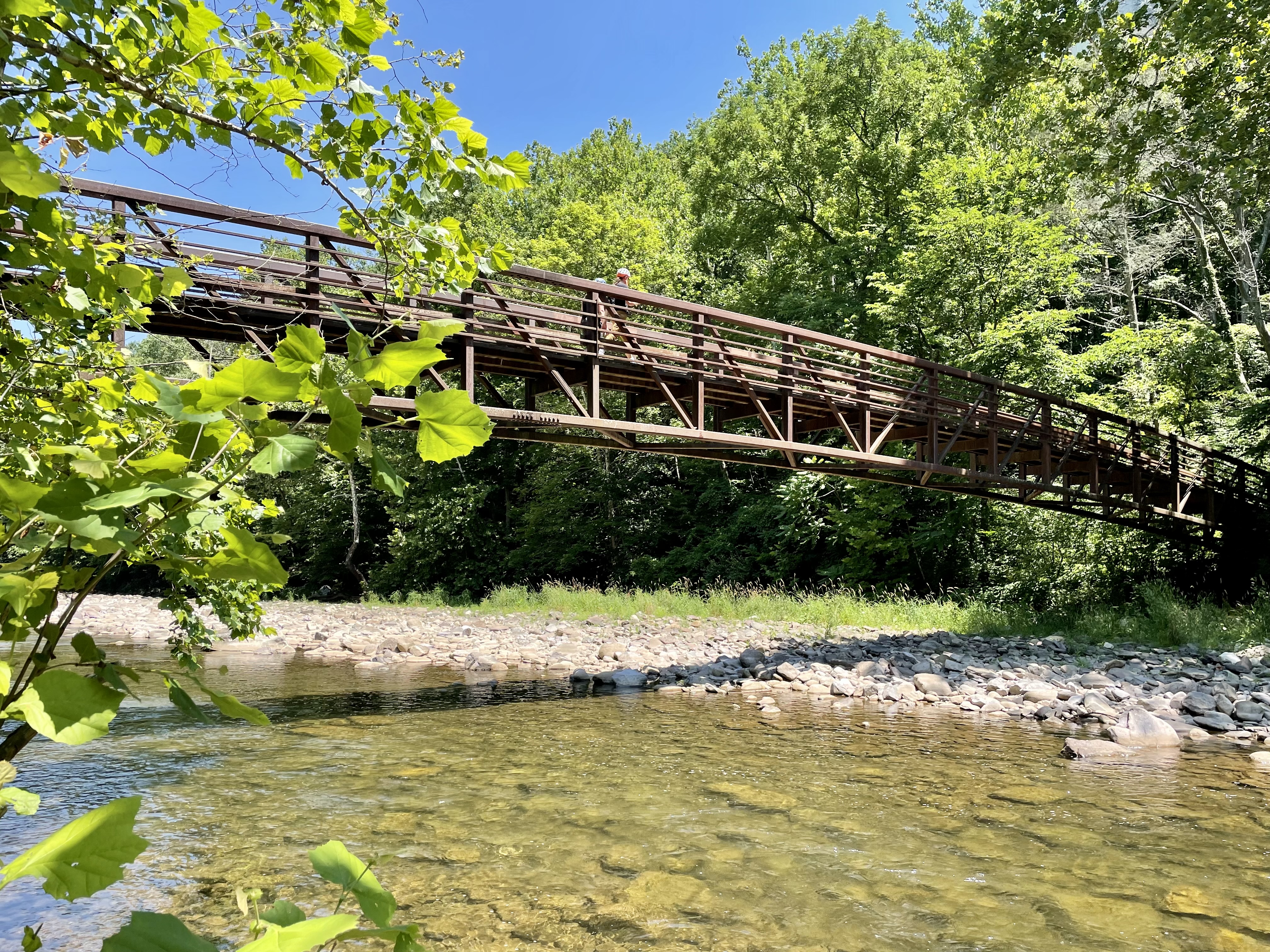
We gathered our things and headed up. The trailhead started at the North Fork of the South Branch of the Potomac River. The bridge that crosses it goes by the same cumbersome name.
Davis was eager to let his long legs glide him up the well-maintained trail. My old weathered ones weren’t so cooperative. The first third of the path is the steepest. We rested according to my needs. Davis never complained or barged ahead.
We passed other hikers on their way down, and other younger hikers passed us on the way up. I noticed some of them didn’t have hiking shoes or water. We later trekked by some of those same hikers, now fatigued. We reached the top more than an hour after we had started.
The trail leads to an overlook platform that provides gorgeous views of the mountain ridge west of German Valley that the river continues to carve out. We rested and talked with other hikers who soon reached the summit.
Going down took half the time. Davis wondered about going on to Dolly Sods up the road a piece. I wisely said we would save that adventure for another outing. We still had that long drive home.
Adventures like these are the reason we moved from Ohio’s Amish country to Virginia. Now, with the birth of our fourth grandchild in Rochester, New York, we have additional opportunities to watch our grandchildren grow.
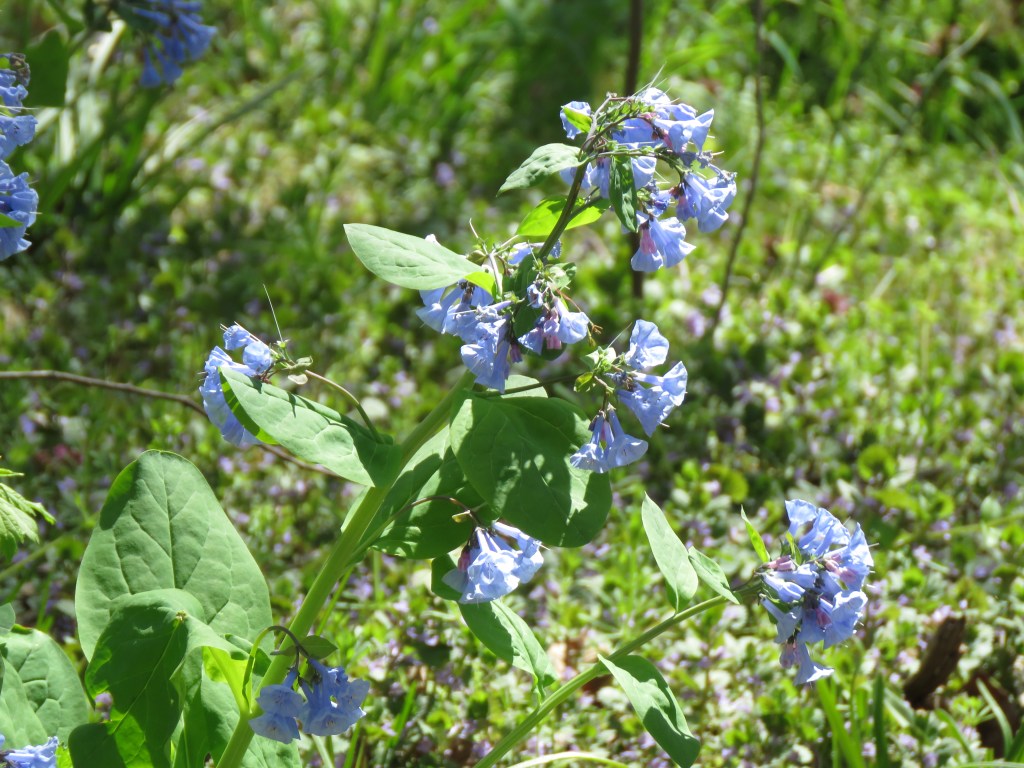
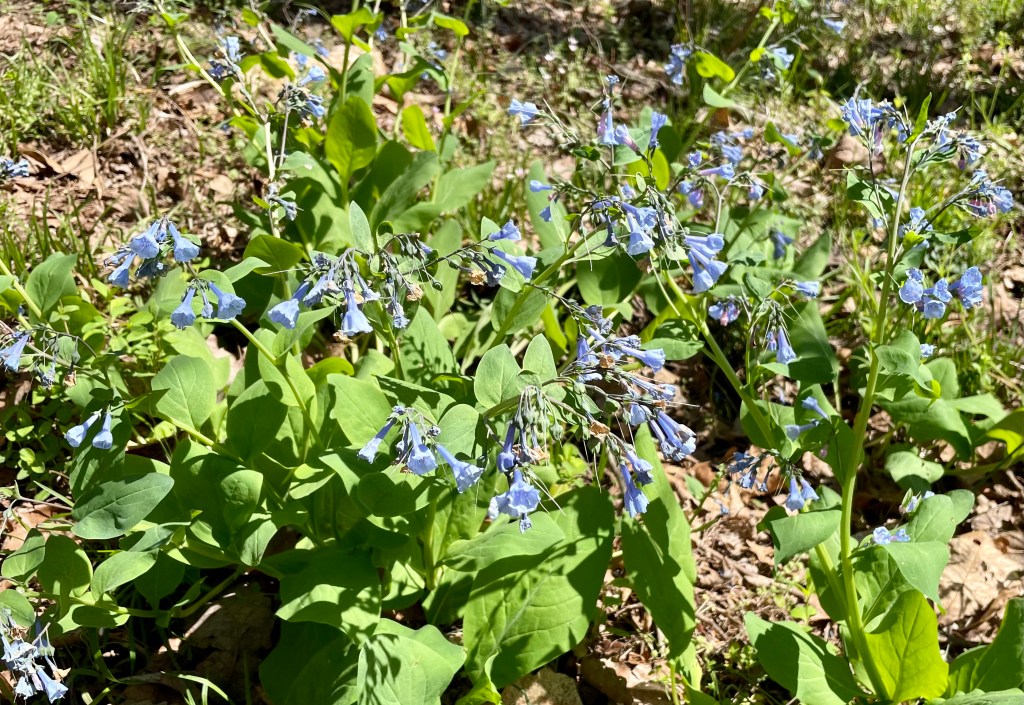
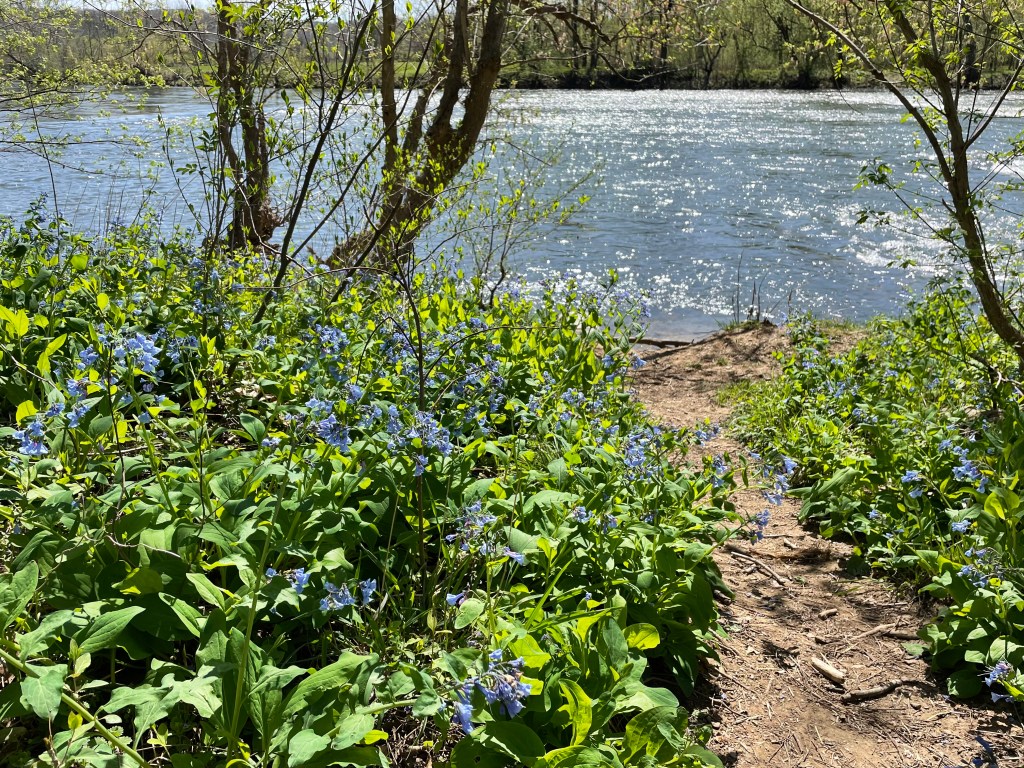
Virginia Bluebells beautified the space between the Bluebell Trail and the South Forth of the Shenandoah River in Shenandoah River State Park.
Friends told me that the Virginia Bluebells were at peak bloom along the Bluebell Trail in Shenandoah River State Park. I had to go see for myself.
The weather was perfect. Sunny skies and warm temperatures dominated the day. Both had been recent rarities in the Shenandoah Valley.
So, off I went, down what the Confederates called the Middle Road, to Timberville. From there, I took U.S. 211 east through New Market, up and across the Massanutten Mountain Range, and around the quaint town of Luray to U.S. 340.
A dozen miles later, I entered the park to find the empty entrance station. Due to staffing shortages, it’s an honor system to enter. You grab an envelope, place $10 in it, and deposit the fee into the slot. Hang the receipt from your rearview mirror, and you’re good to go.
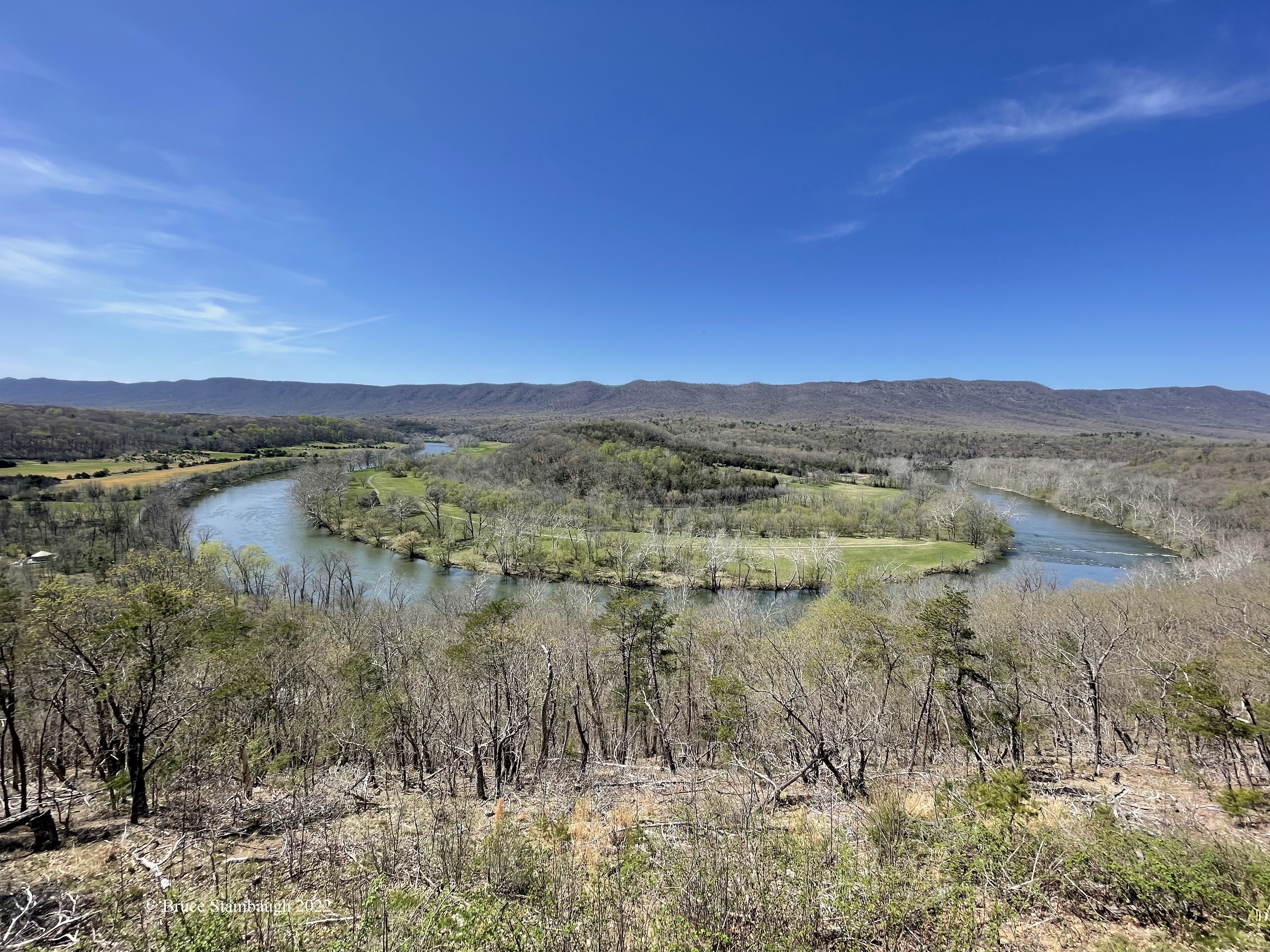
And what a splendid day it was. First, I stopped at Cullers Overlook for a fantastic view of the South Fork of the Shenandoah River, snaking its way north. Only a few more miles, and it converges with its twin, the North Fork of the Shenandoah River, at Front Royal. The majestic and historic Shenandoah River flows north to meet the Potomac River at Harper’s Ferry, West Virginia.
The South Fork of the Shenandoah River from Cullers Overlook, Shenandoah River State Park, Bentonville, Virginia.
As glorious as that view was, I didn’t linger long. I wanted to see the Bluebells. It was all downhill from there to the trailhead a half-mile away.
With camera and binoculars in hand, I eagerly set out on the mile-long trail. A swarm of insects greeted me only a few steps onto the earthen path. I had forgotten to pack the bug spray, so I raised my tolerance level and soldiered on.
Soon I began to pass folks who had a head start on me. They assured me that I couldn’t miss the lovely flowers as they headed to their vehicles. They were right.
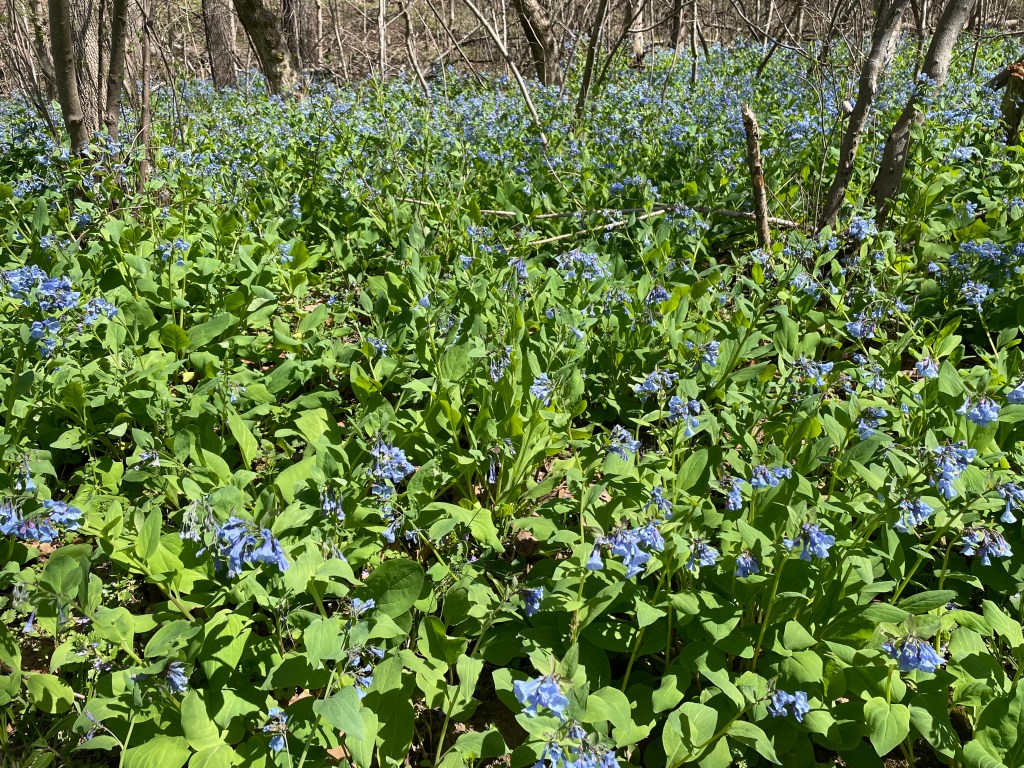
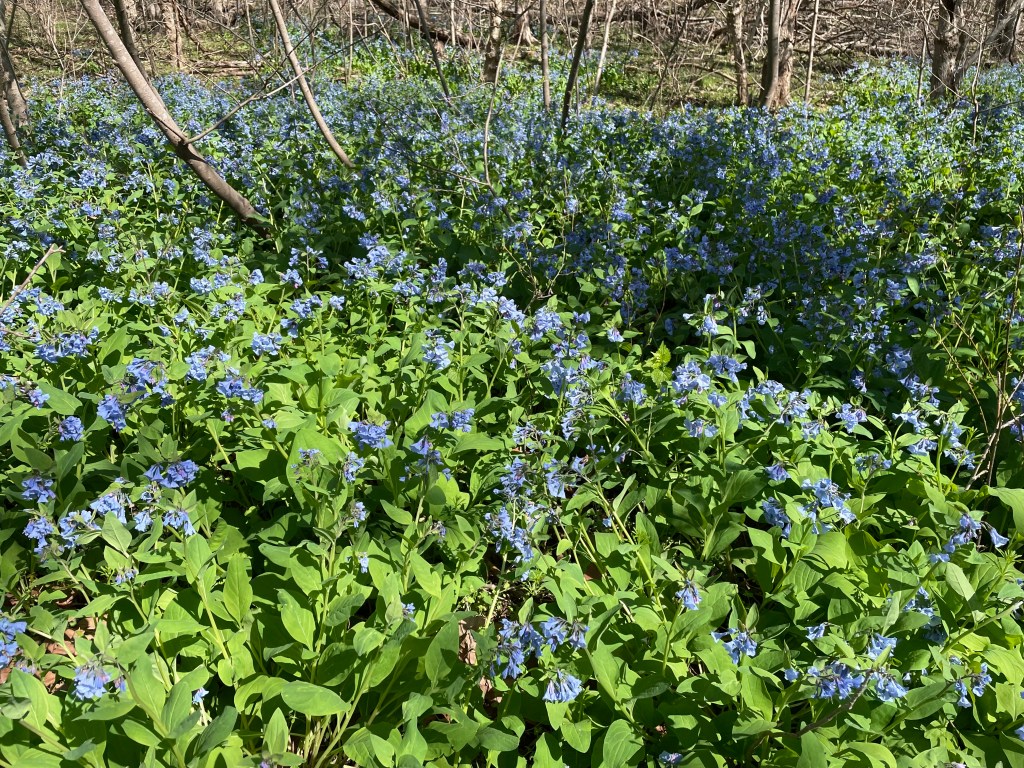
Once the trail straightened out, patches large and small of Virginia Bluebells spread across the forest floor like a blue and green carpet. They even lined the riverbank much of the time.
I had an ample selection of flower photo ops. Since I also enjoy birds, calls from high above told me that warblers and other songbirds were foraging for insects among the emerging leaves.
The hungry little birds moved fast and furious, fueling up for their continued flight north. To my surprise, my attention focused on more obvious winged creatures.
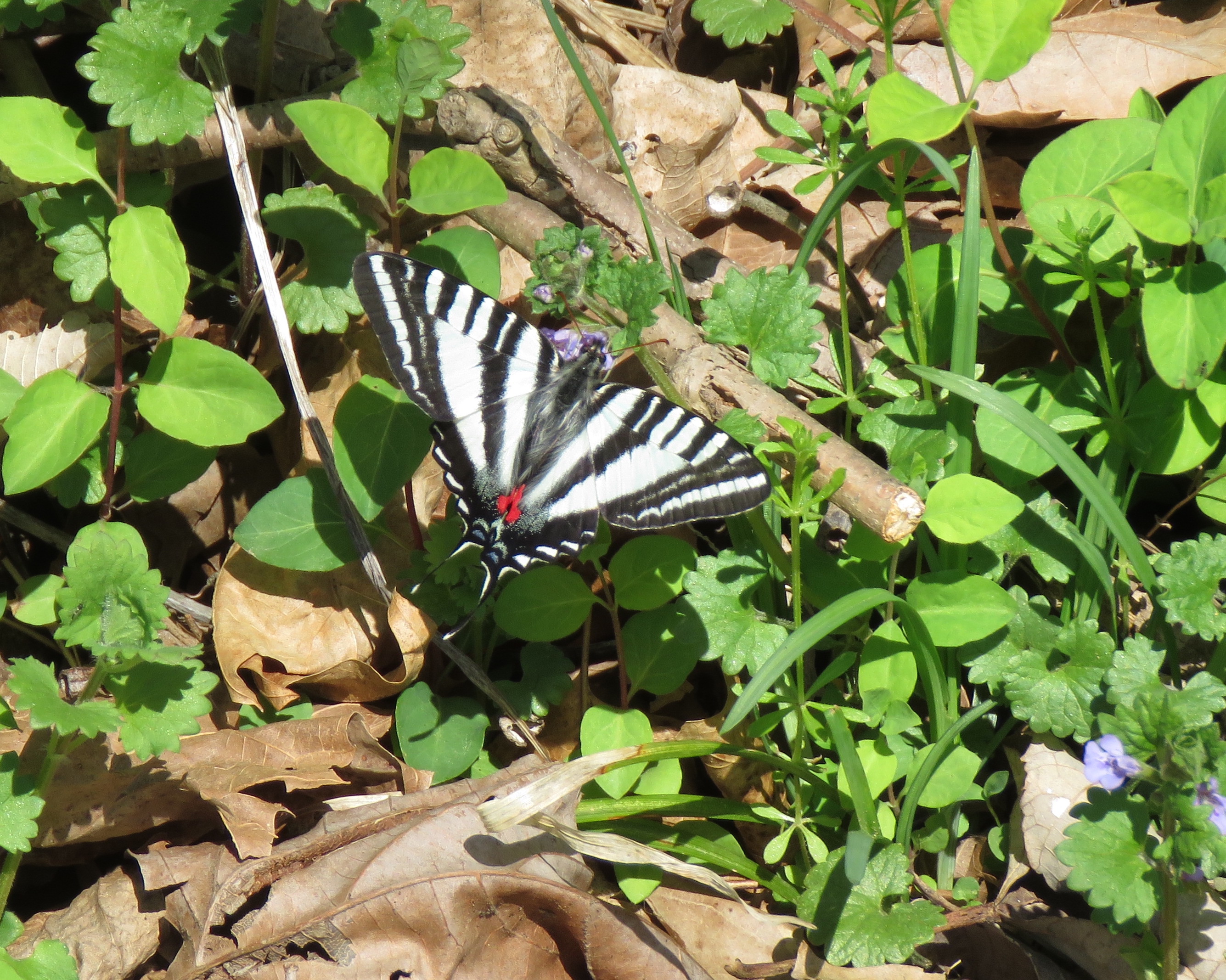
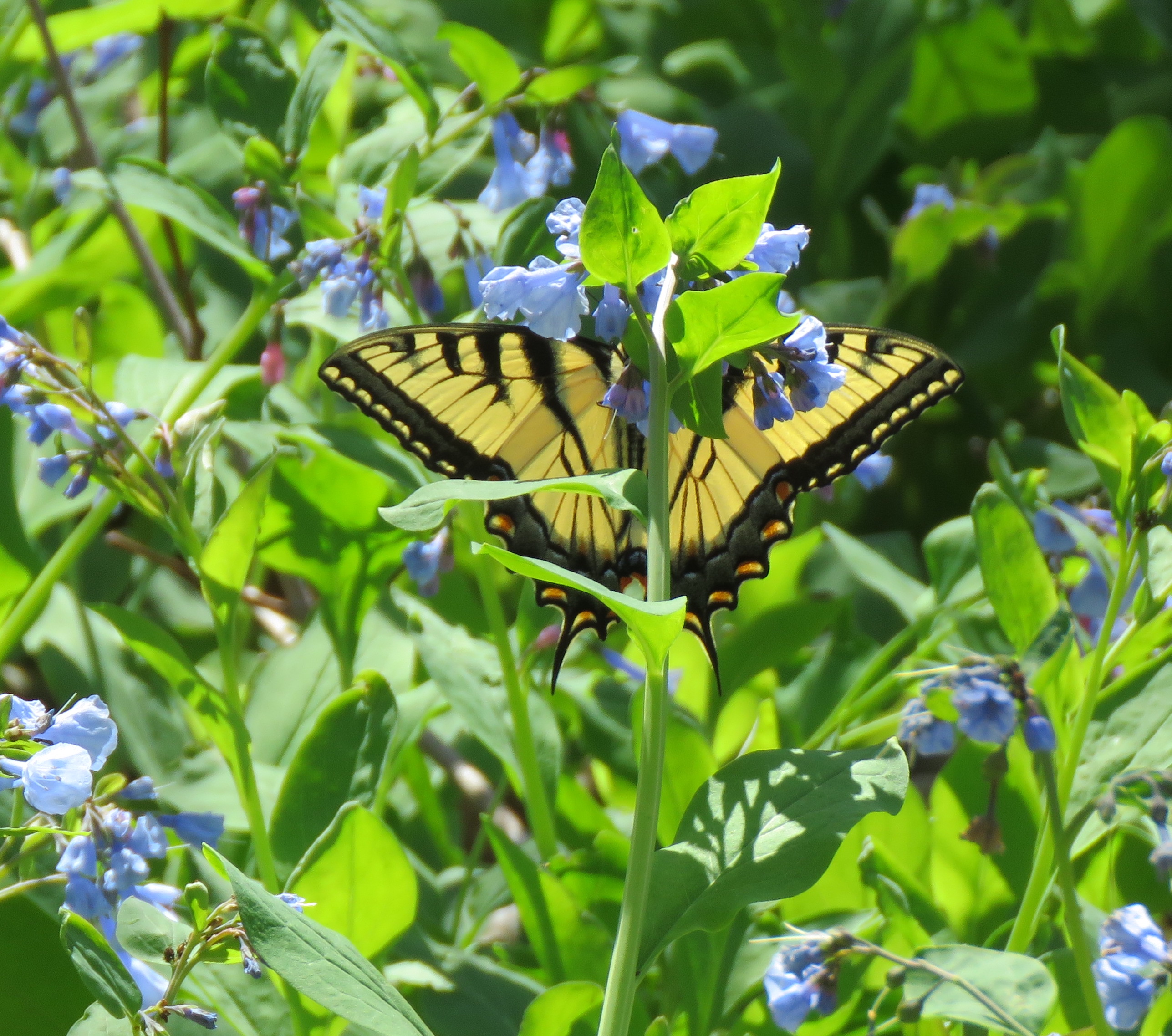
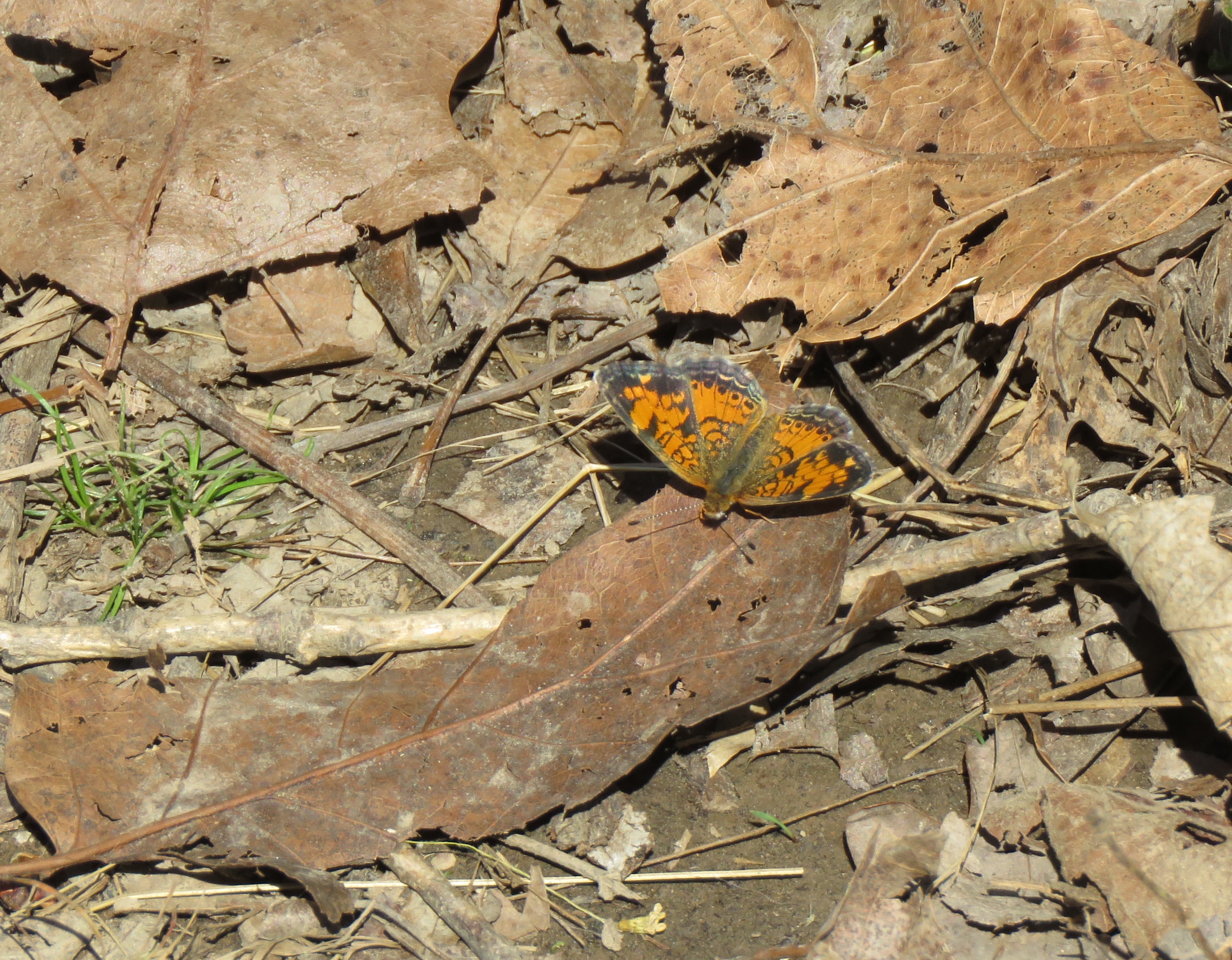
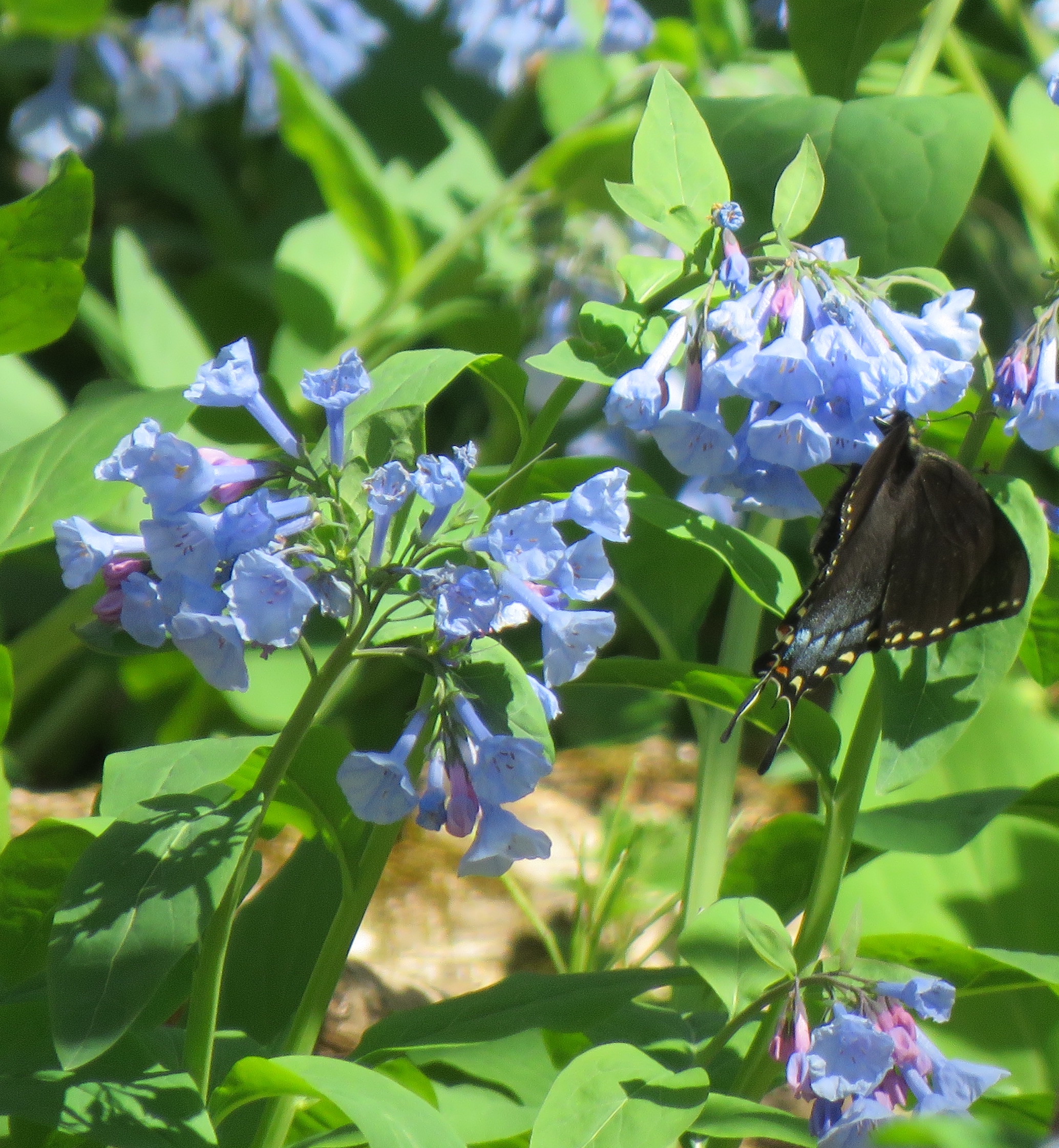
Several butterflies flitted all around the trees and flowers in irregular patterns. I soon learned to stay still and let the beautiful insects come to me. Several were puddling on the path wear they found damp spots. They extracted nutrients from the moistened soil. A few stayed in place long enough for me to get a few decent shots.
Of course, I kept passing other hikers, and a few bikers who surprised me from behind. The butterflies flew but often returned within camera range.
I didn’t see as many birds as I had hoped, but I counted the trip a success. Communing intimately with nature tends to fill you with joy and appreciation. By the time I left, my cup overflowed
The Bald Eagle flew shortly after I arrived on the scene.
At first, I did a double-take.
My wife and I had just turned the corner onto Erickson Ave. just west of Harrisonburg, Virginia in the Shenandoah Valley. As we passed the Word Ministries Christian Church entrance, I noticed two large birds to my left, just south of the church.
Both birds furiously flapped their wings. But there was something extraordinary about what we were seeing. My wife observed that they both appeared to have white heads.
I initially thought we were watching two Bald Eagles interacting. But the eagle was riding the back of the other bird, steadily forcing it to the ground. I tried to keep an eye on the plummeting birds while slowly driving. Fortunately, there was no traffic.
The birds, still locked together, disappeared from view since the roadway was below the level of the sloping land. We were on our way home from church, so I dropped off my wife at the house since dinner was in the oven. I grabbed my camera and binoculars and hurried back to the scene.
The birds had flown northwest over a woods that lines the crest of a hill that separates the city from the county. The hostile interaction began when they got to the clearing south of the church.
My first view of the Bald Eagle.
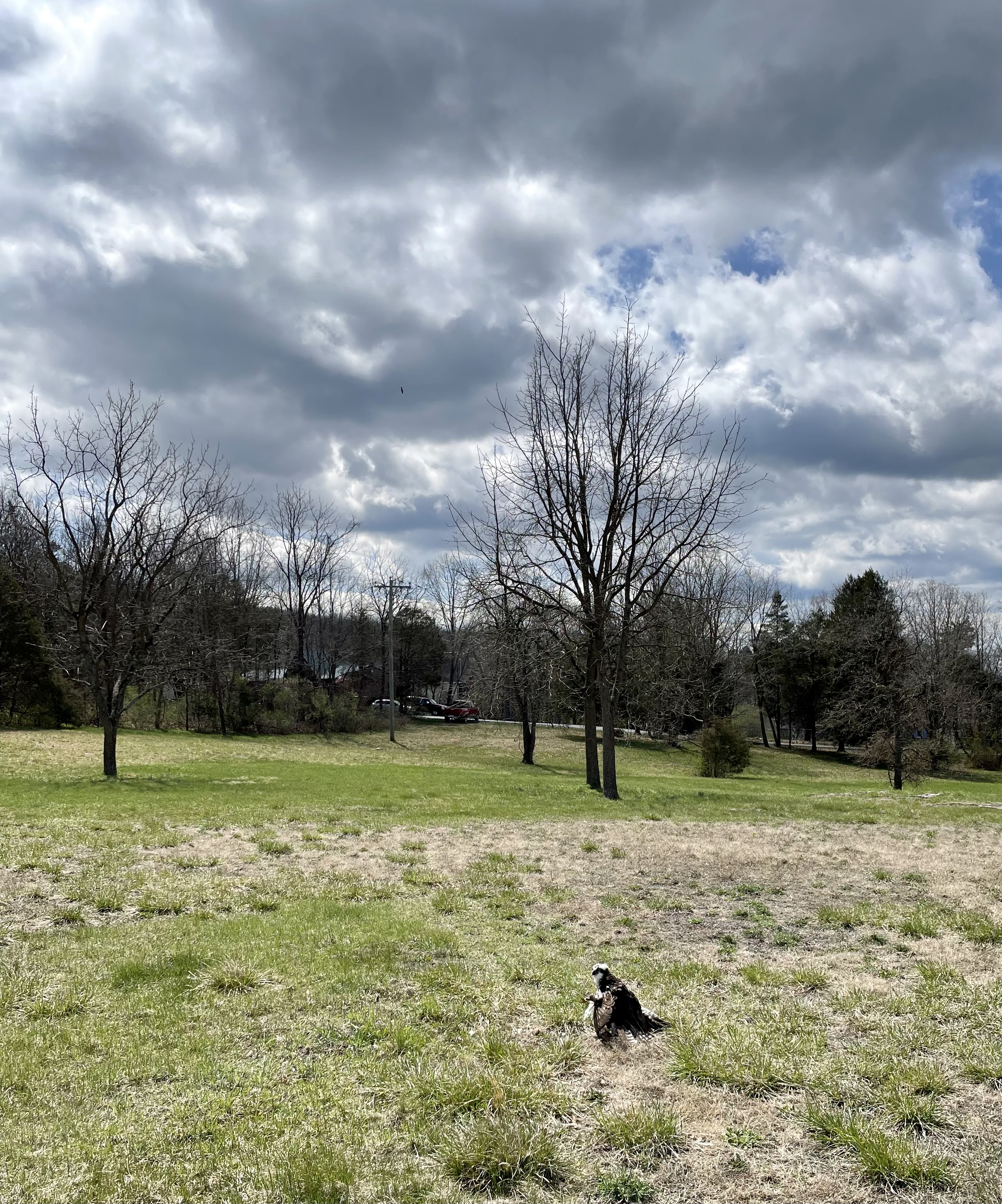
I drove to the southwest corner of the parking lot and, from my vehicle, immediately spotted the Bald Eagle sitting in the open field. Through my binoculars, I saw the other bird. It was an Osprey, looking directly toward the eagle.
Within a minute, the eagle flew up and began circling overhead in vast swaths. I drove up to be closer to the Osprey. It was clear that this beautiful bird of prey was severely injured.
The Osprey and the Bald Eagle.The injured Osprey with the Bald Eagle circling high overhead. (Click on the photo to enlarge it.)
Ospreys and Bald Eagles often use the same habitat since both species are skilled at plucking fish from bodies of water. If one catches a fish, the other will pester the bird with its lunch to get it to drop it. Usually, it’s the eagle that chases the Osprey.
But we were nowhere near a large stream, lake, or pond. I wondered what had happened to cause the eagle to be so aggressive toward the Osprey. I took some photos and then turned my attention to finding help for the poor bird.
I posted on a local bird club Facebook page about my dilemma. Within minutes, birders suggested I contact the Wildlife Center of Virginia in Waynesboro. That’s what I did.
The injured Osprey.
Since it was a Sunday, I expected the call to go to voicemail. But on the second ring, a young woman answered. I explained the situation, and she sent me a text with five names and phone numbers of trained wildlife rescue transporters to contact.
All the while, word quickly spread in the local avian network. Black Vultures, American Crows, and Common Grackles began circling overhead. A Cooper’s Hawk zoomed into a nearby tree. The eagle, however, was gone.
The first transporter I called answered right away. Unfortunately, the woman couldn’t help because she was driving to her daughter’s bridal shower. None of the other people responded.
Then I thought of Clair. I should have called him right away. Clair Mellinger is a retired biology professor emeritus from Eastern Mennonite University, and he lives just a quarter of a mile away.
Fortunately, Clair was home, and he told me that he was a trained transporter and had taken birds to the Wildlife Center before. He and his wife arrived in a few minutes.
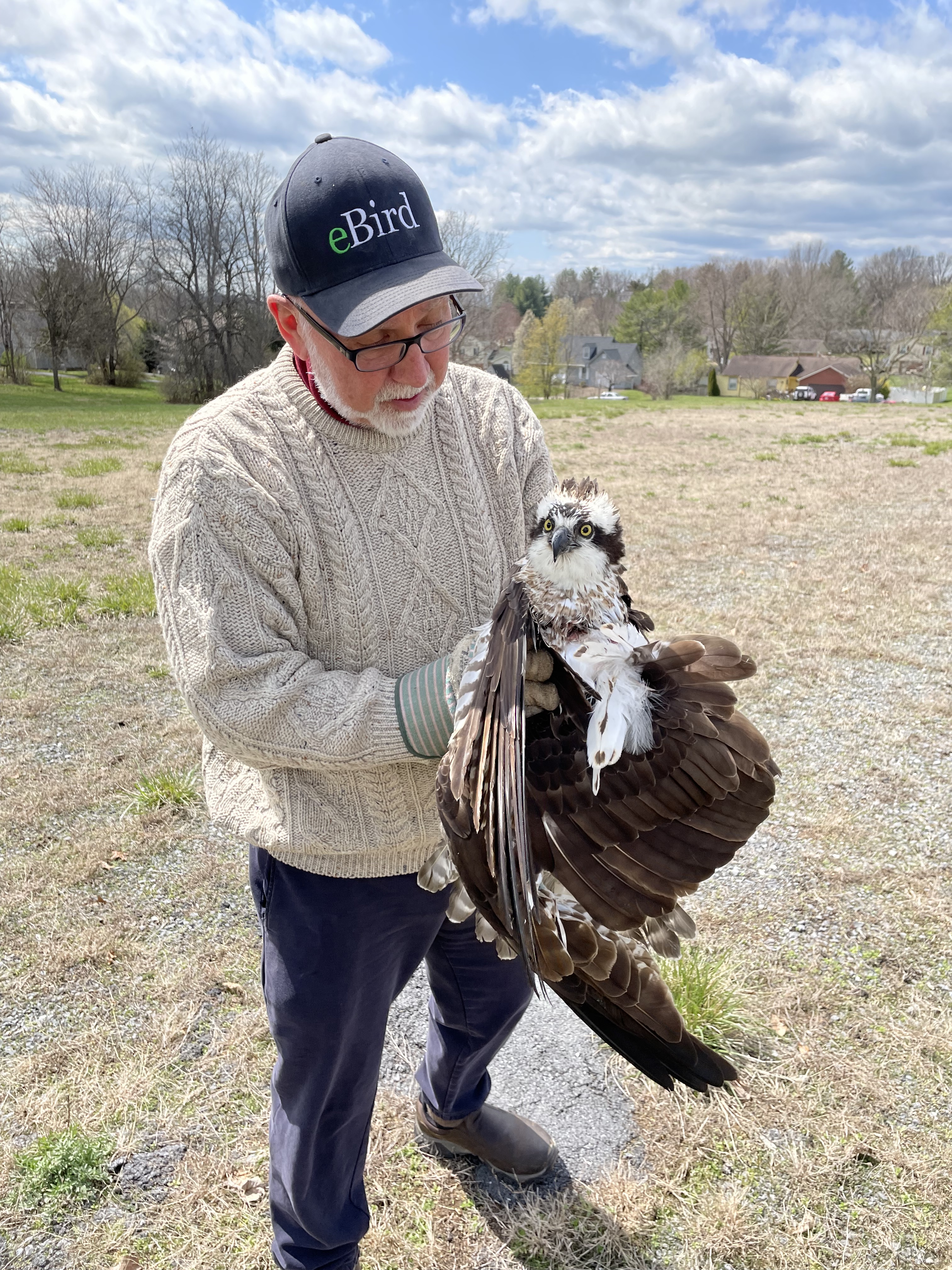
Ospreys have razor-sharp talons and a sharp beak designed to tear apart the flesh of the prey they catch. Clair was ready. His pants were tucked into his hiking boots. He wore a thick jacket and gloves and carried a blanket to throw over the bird.
As Clair approached the Osprey, he could see just how badly injured the bird was. Its left wing was broken, and it wasn’t able to walk. So, picking up the bird was easier than we had expected.
Clair Mellinger with the injured Osprey.
The bird didn’t squawk or even try to move as Clair carefully carried the Osprey to the trunk of his car. He placed it in a plastic milk crate, put another one on top, and bound the two with bungee cords.
Before he left, Clair told me that he had never seen an eagle be so aggressive. The injuries were that bad.
I hoped the Osprey and its human escorts were on their way to a good outcome. The Virginia Wildlife Center is a noted rehab center.
Unfortunately, the eagle severely injured the Osprey; there was nothing the veterinarian at the center could do. An email informed me that the bird died in surgery the next day.
As an avid amateur birder, the news saddened me. I was happy to have an expert and trained birder like Clair to call on in this time of urgent need. And I was grateful to the rehab center for their efforts in trying to save the Osprey.
Clair told me that he figured that the Osprey was on its northern migration and passed through the eagle’s territory. Nesting eagles in the Shenandoah Valley are either currently incubating eggs or feeding young that have hatched.
This fact could have accounted for the once-in-a-lifetime altercation that my wife and I witnessed. We only wished the events would have had a better outcome for the Osprey.
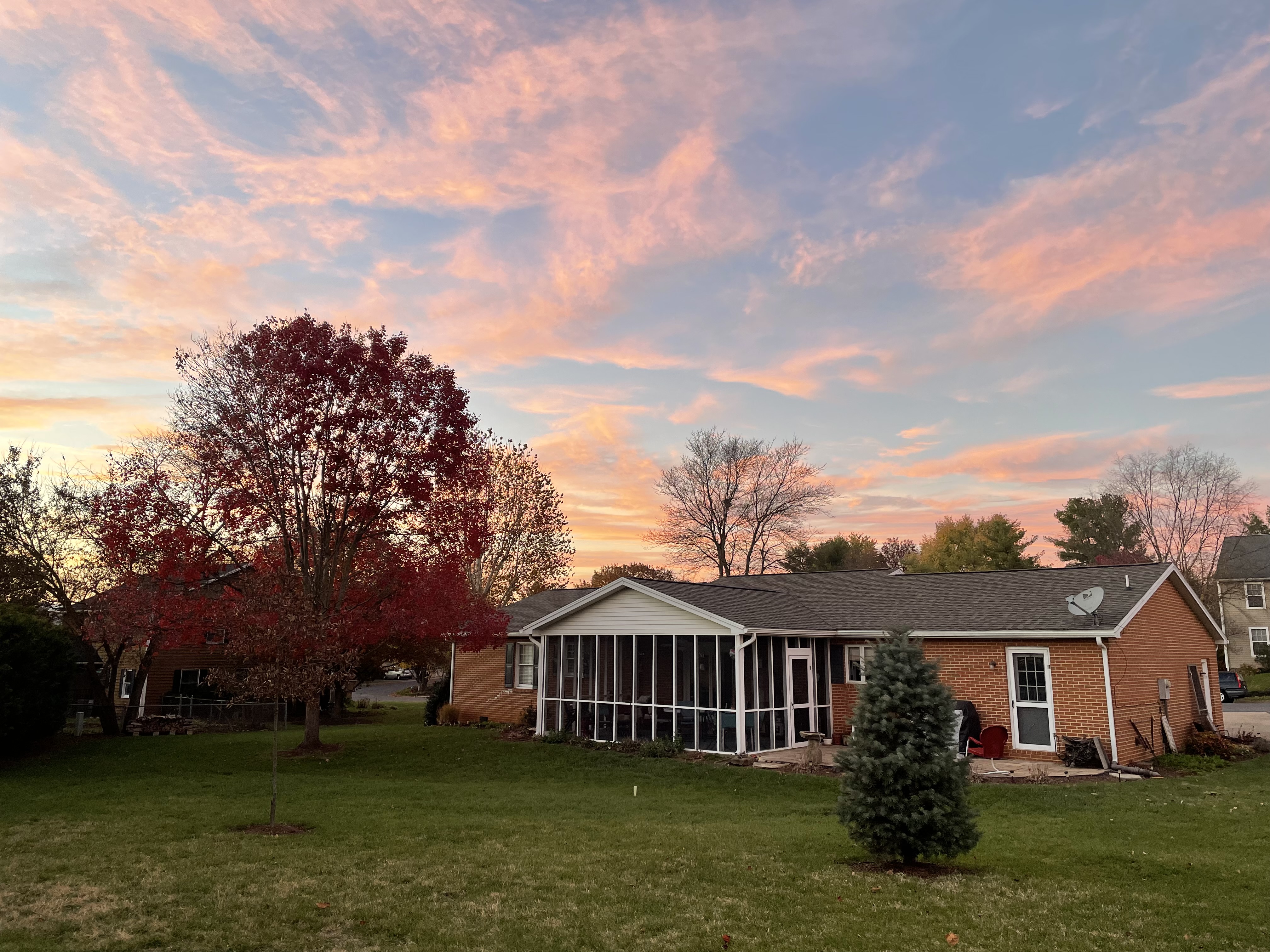
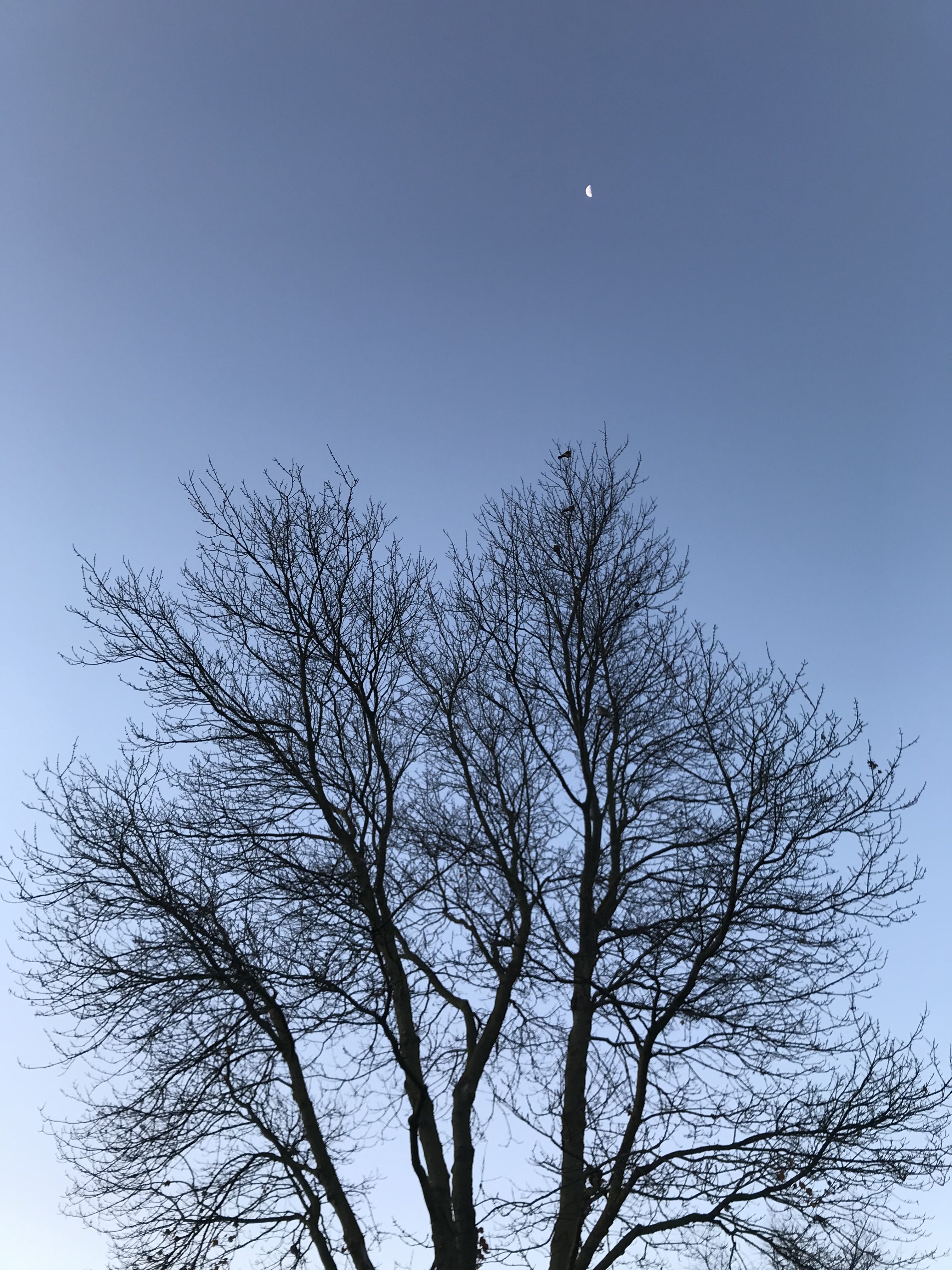
The backyard red maple saw a lot of lovely sunsets.
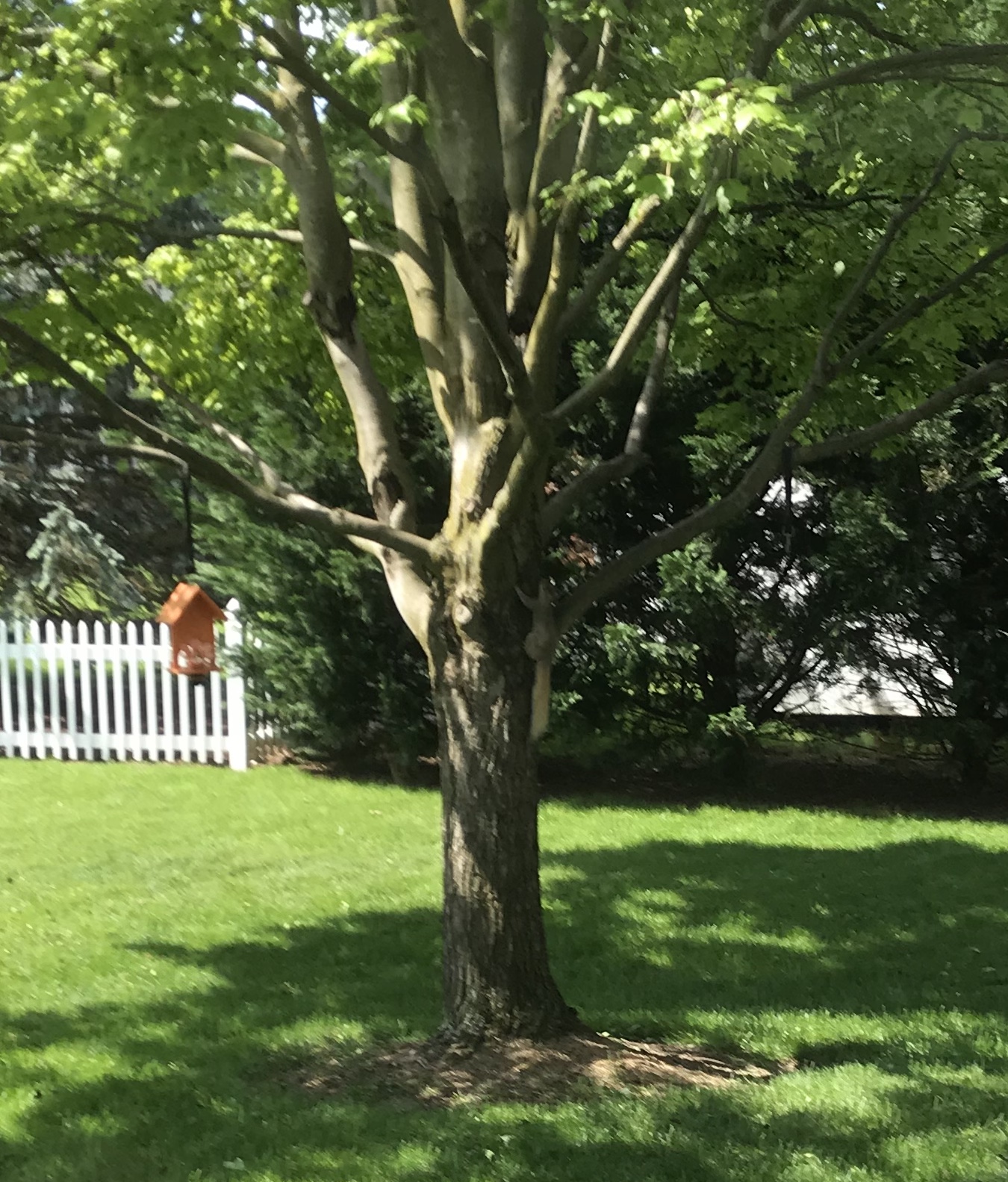
I said goodbye to an old friend recently. I had the utilitarian red maple tree in our backyard cut down. I didn’t really want to, but it was the right thing to do.
The tree has served us well year-round in the short time my wife and I have lived in the Shenandoah Valley. We moved here from Ohio’s Amish country to be near our grandchildren.
In the summer, the backyard tree provided much-needed shade for us and the wildlife. The tree reached far above the peak of our home, helping to block the hot afternoon sun. Birds and squirrels were often seen lounging in the coolness.
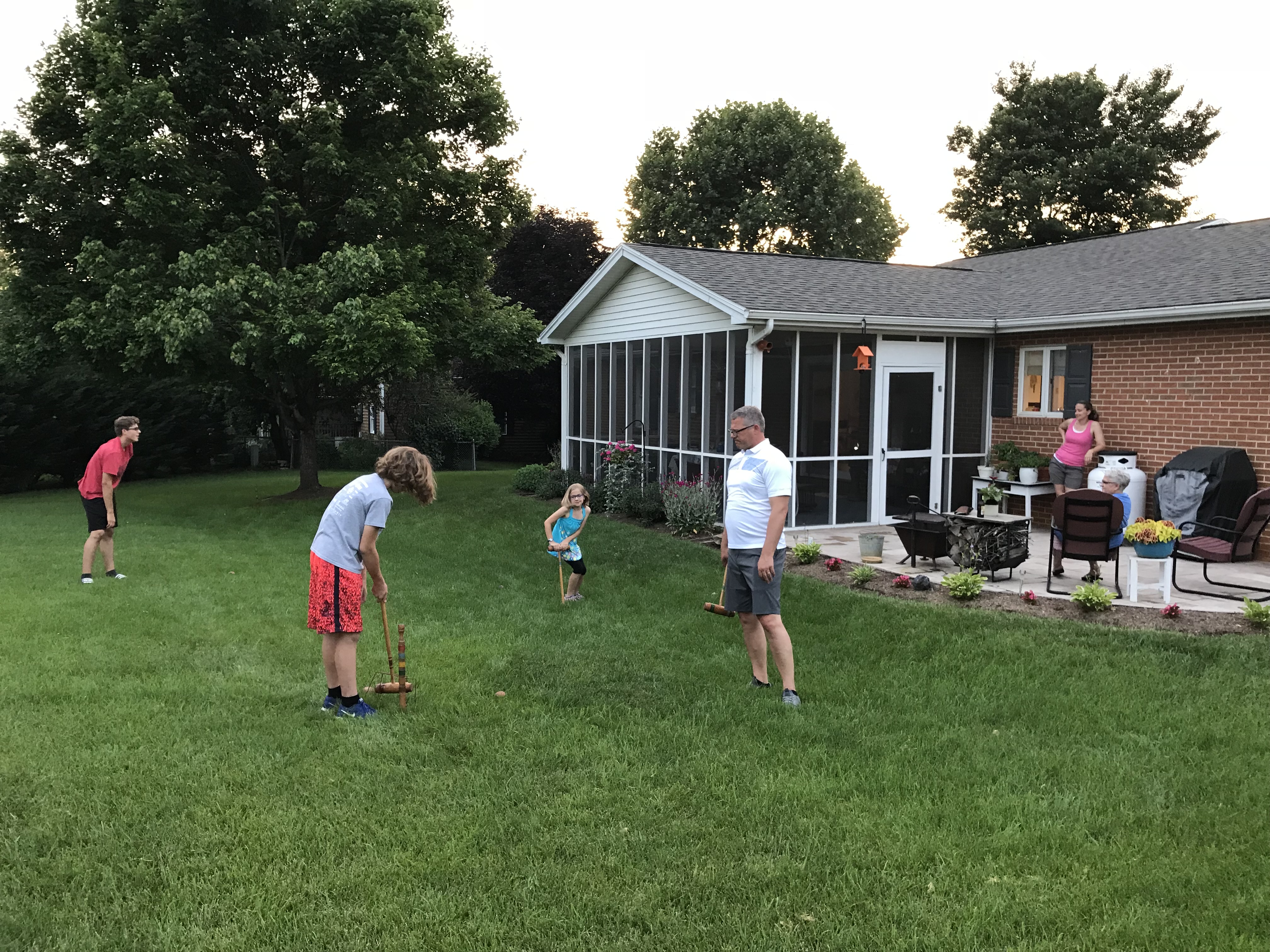
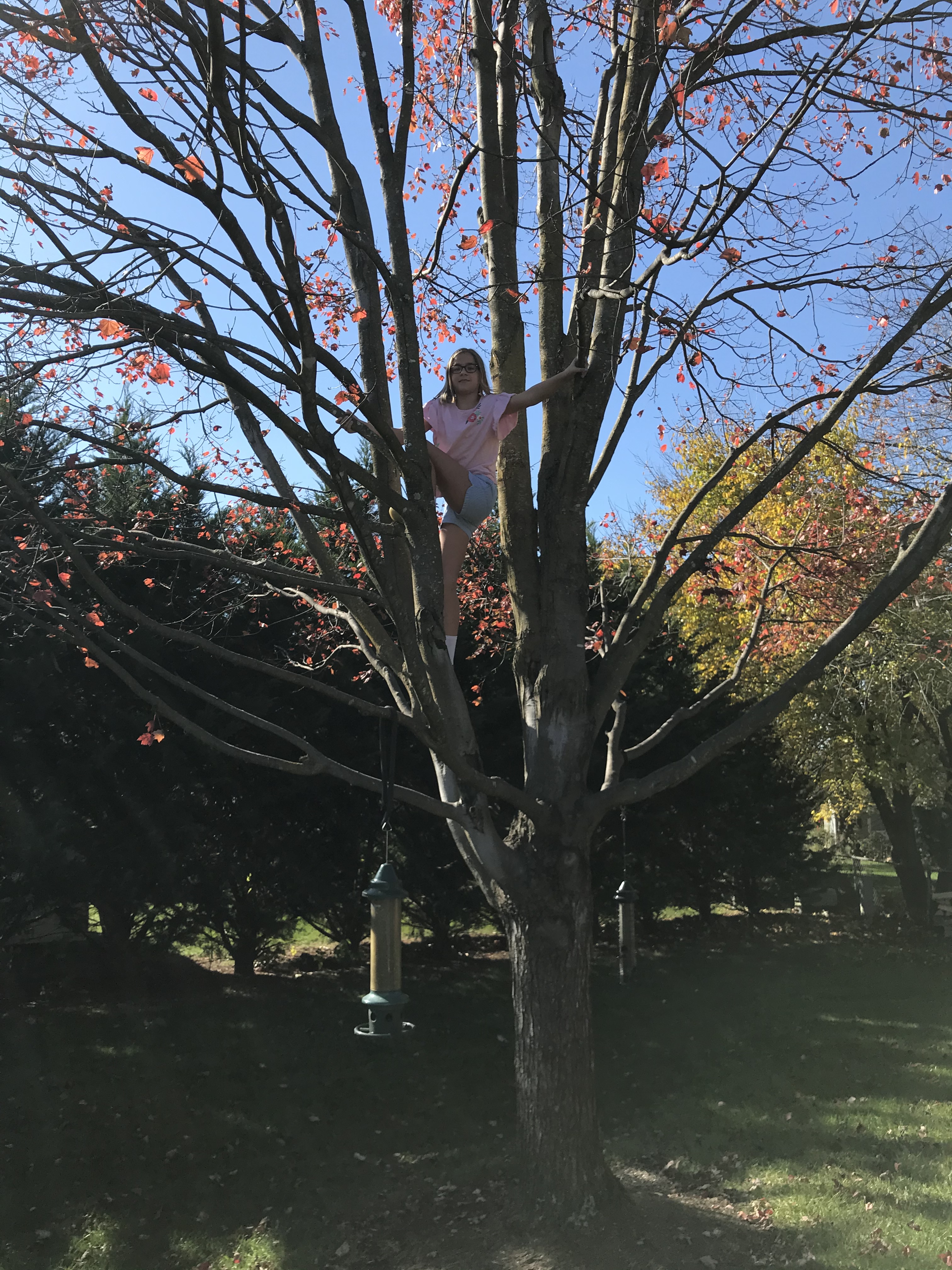
Our grandchildren scaled the alluring tree with her low, sweeping branches. She oversaw their croquet games, soccer kicking, and baseball tossing. American Robins and Blue Jays nested high in her tender branches.
The red maple glowed most gloriously in the fall, of course. Her red leaves brightened chilly, gray autumn days. But the healthier front yard red maple always outshone her sister’s beauty.
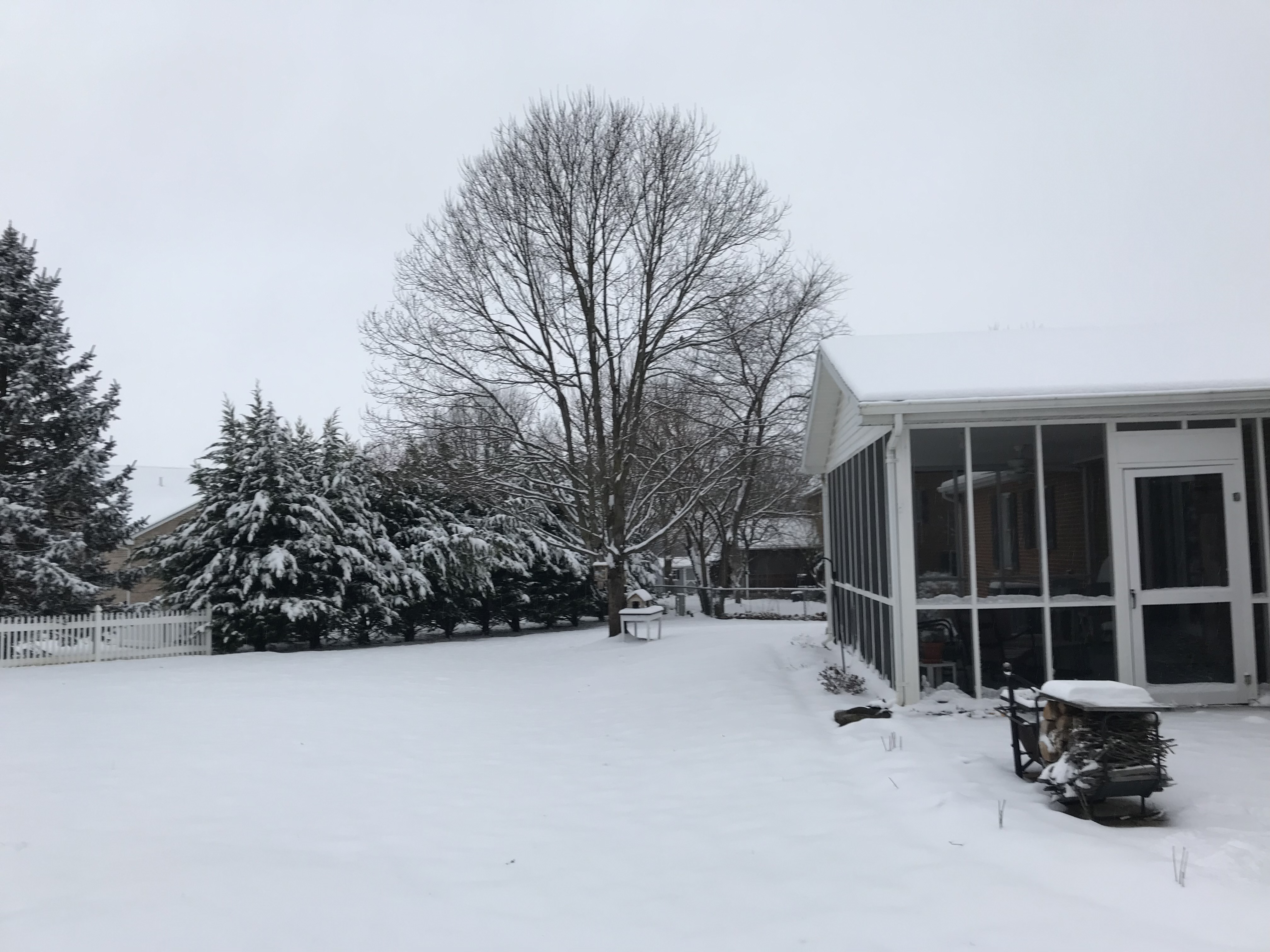
In the winter, she cradled the various backyard bird feeders I hung from her lower limbs and placed beneath her silver trunk. White-throated Sparrows, House Finches, Purple Finches, Carolina Chickadees, Carolina Wrens, and American Goldfinches were just some of the species that rested on her branches.
Woodpeckers especially loved her. Downey, Red-bellied, Northern Flickers, and even a Pileated Woodpecker graced her offerings. American Robins roosted high in her crown as days drew to a close.
In the spring, her dainty, concealed blossoms attracted pollinators before I even realized they were there. In addition to her budding lime leaves, she sprouted her precious, life-giving seeds. Unfortunately, they were so numerous not even the horde of neighborhood squirrels could devour them all. The twirling seeds clogged our spouting and downspouts until we had gutter guards installed. More personally, they activated my allergies. I alone kept Keenex® in business.
Neither of those negativities led to her demise, though. No, I knew the tree was sick from the time we moved in nearly five years ago. Even a casual glance would have told any passerby that the tree had an issue.
The red maple was only one of two mature trees on our third of an acre. A second red maple frames the front yard. Even from the street, you could see that the color of the leaves of the two trees was different. The front yard maple’s leaves shown glossy and vibrant. The leaves of the backyard tree appeared dull, even sickly.
I knew that one large east-facing branch of the backyard red maple struggled to produce leaves. But last summer, when the region was in a moderate drought, the leaves suddenly turned brown and shriveled up.
A certified arborist showed me the reasons for the beloved tree’s demise. Insects had girdled the limb in question near the trunk, and the bark had flacked off. In fact, the bugs had burrowed into the trunk as well. No wonder woodpeckers loved the tree.
The arborist said the tree would live no longer than five years. We made the difficult decision to have the tree taken down, and replace it with another that hopefully will produce a crown that will mirror the qualities of the red maple.
My wife and I won’t likely live long enough to watch the replacement tree grow to maturity. We are resigned to watching the young sweet gum grow the way we have enjoyed watching our grandchildren morph from joyous youngsters into achieving and helpful youth.
I wouldn’t have seen this hidden treasure if it hadn’t been for another photographer. My wife, some friends of ours, and I were driving into Ft. Clinch State Park at the north end of Amelia Island, Florida, when we noticed a woman with a huge lens on a tripod aimed at a tree.
That could mean only one thing: she was photographing a bird. I parked and exited the van, eager to know what her subject was. She had me look through her long lens. This beautiful Great Horned Owl stared back at me.
I quickly pointed my camera at this beautiful bird and carefully snapped away. I quietly thanked the woman for graciously sharing her find with me. Thanks to her, I was also able to view this superb owl resting in the fork of a live oak tree.
I remember the exact time and place I saw my first Bald Eagles. It was years ago in a state park near the shores of Lake Erie in northwest Ohio. Back then, Bald Eagles were far and few between.
I am so glad that they have been able to make a comeback thanks to the banning of pesticides like DDT and proactive conservation efforts. In fact, the Bald Eagle was removed from the endangered and threatened species list in 2007.
Still, I thrill at the sight of seeing Bald Eagles. I never tire of watching and photographing them. This particular Bald Eagle brought extra-special joy. My wife and I explored a park in northeast Florida, searching for shorebirds. A passerby on the trail told us about an eagle sitting on a nest in a tall southern pine overlooking the marsh. Of course, we hustled out and quickly found the huge nest several hundred yards south of a boardwalk that ran over the marsh to a river.
We could easily see the eagle’s head sticking above the nest using binoculars. That familiar thrill returned, just like every other Bald Eagle sighting. However, the eagle’s mate was nowhere to be seen. That changed when we visited again this week.
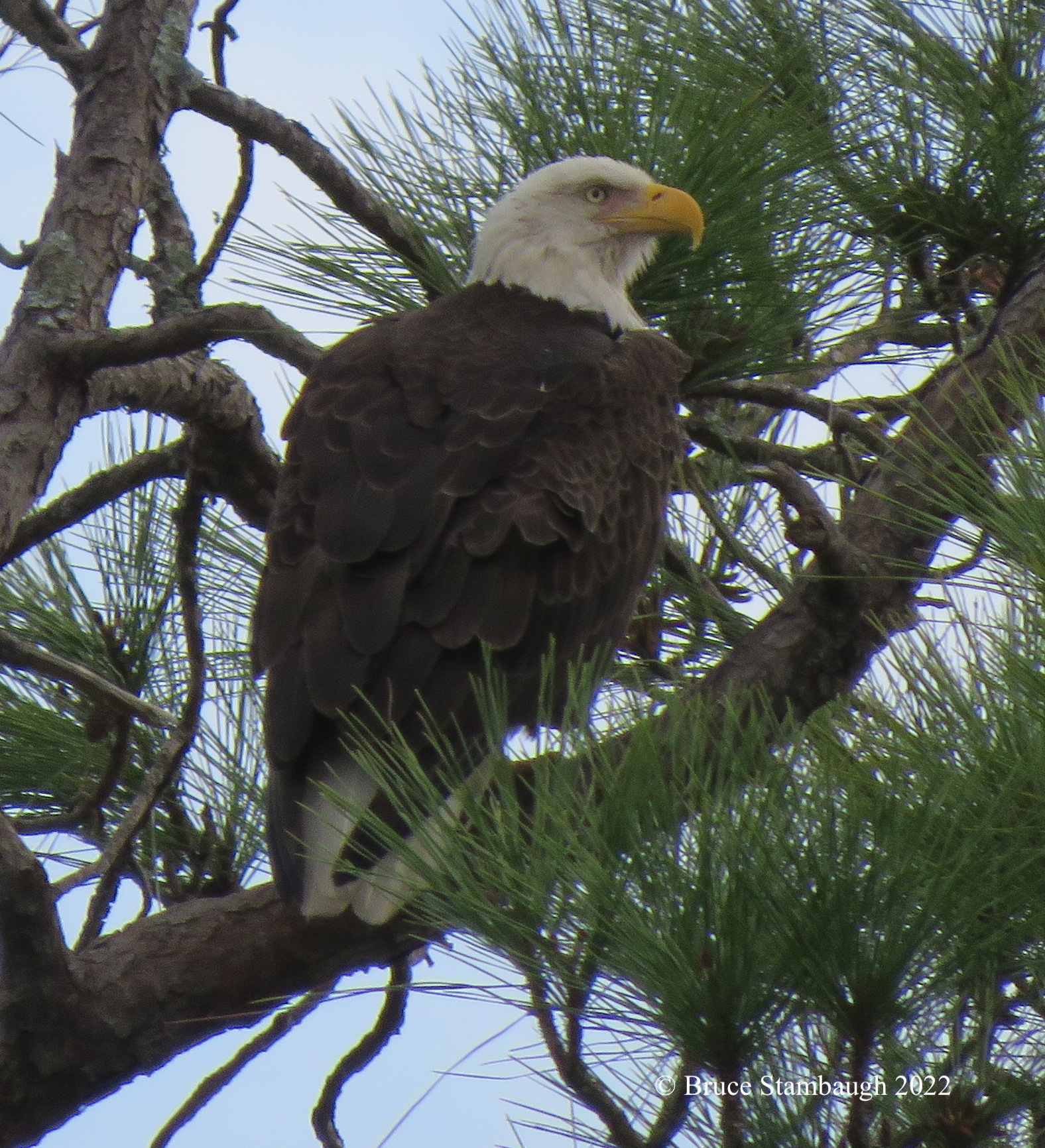
Mother eagle kept her two chicks warm while Dad proudly sat on a limb above the nest. He moved a couple of times, and I was fortunate to get this hand-held shot with my long lens fully extended to 1,365mm. I snapped several pictures, knowing that some of the photos would be blurry.
When I downloaded the shots to my laptop, I was shocked to see this clear photo, even when I cropped it. The beautiful bird was far away and I braced my elbows on the walkway’s railing to capture the shot.
If you are interested, you can watch the eagles via a cam from the American Eagle Foundation at this link.






























 Roadkill Crossing
You must be logged in to post a comment.