A male Canvasback escorts two female Buffleheads on a local lake. Photo by Bruce Stambaugh
With the calendar turning from February to March, bird migration has officially begun. True, several bird species had already started the arduous task of returning north from their southerly winter habits.
To account for that, birders divide the seasonal calendar in the Northern Hemisphere much differently than humans do. Bird spring runs in March, April, and May when most migrating birds return to the nesting homelands in the northern United States and Canada.
Surprisingly, summer is the shortest season for birds. It lasts just two months, June and July. It’s prime mating, nesting, egg laying, and hatching time. Once the young are self-sufficient, the first migrating birds begin their long trips south.
The fall season for birds runs from August through November. Different species have more than one brood and migrate on a different schedule based on habitat, food supplies, and other factors. For birds, December, January, and February comprise the winter months.
So, now that March has arrived, birders scout their favorite ponds, lakes, rivers, streams, wetlands, and fields for any early arrivals on their way north. Birders especially prize waterfowl and songbirds to spot and photograph.
Locations where migrating birds frequent are called hot spots. I checked a few on March 1. Though I didn’t find many bird species, I enjoyed seeing and photographing new migrants.
An American Pipit poked its head above the grass just to the left of the Northern Cardinal.
My first stop was one of my favorite locations for birds and sunsets, Silver Lake in Dayton, Virginia. It’s a 12-acre lake built in 1822 for a mill. The shallow lake is perfect for diving and dabbling ducks. I saw only a trio of female Buffleheads and one muskrat this time.
A few miles away is the Cooks Creek Arboretum, tucked away at the end of a cul-de-sac. I spotted three birders with binoculars aimed at a hillside farm field. Birders tend to be pleasant people, so I didn’t hesitate to ask what they were seeing.
“About 150 American Pipits are flying and landing in the field,” one of them said. “Unfortunately, they seem to land over the crest of the hill.”
We walked together down the path to get a better look, but with a heavy cloud cover in the late afternoon, the birds were only visible during their short, rapid flights. However, I followed the birds to the flatter, more southern part of the field.
I captured a relatively poor photo of a few of the pipits flying. Patience, though, is a venture for birders. I saw a few birds foraging in the green vegetation of the field. I captured one of the small brown pipits as it began to fly. After wintering in the extreme southern U.S. and Mexico, the pipits were on their way to the far north Arctic tundra.
Please click the photos to enlarge them. Photos by Bruce Stambaugh
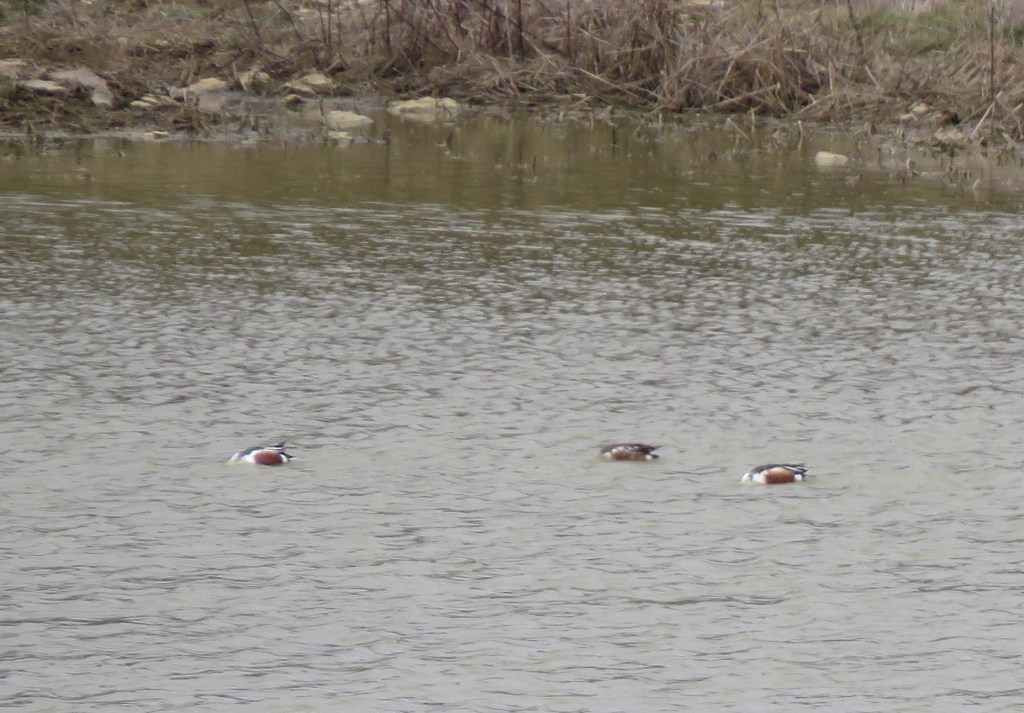
Happy seeing these fascinating visitors, I was pleased at my next stop just a few miles east. A local hot spot farm pond held dozens of Green-winged Teals and a handful of Northern Shovelers. Since the pond is on private property, I stood on a knoll across the road from the pond. With the distance of the pond, the chilly wind, and my inability to hold the camera steady, I felt fortunate to get some shots of these lovely birds.
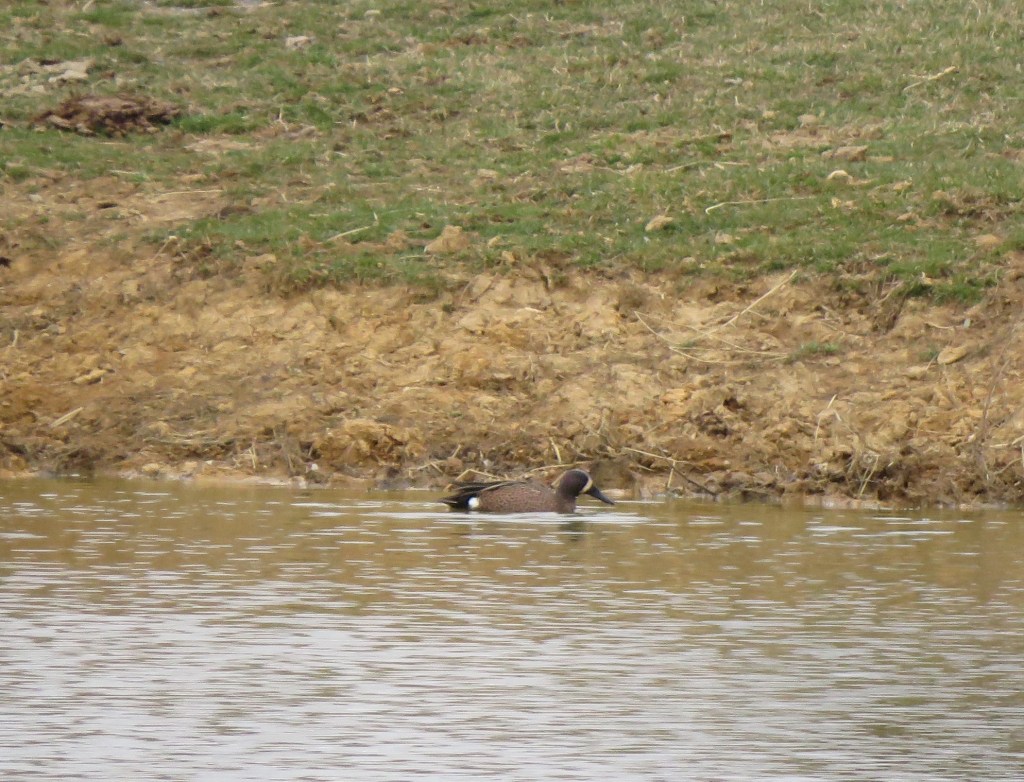
I drove several miles to another farm pond much closer to the road. A lone Blue-winged Teal swam with a pair of Mallards while two Canada Geese watched from the shoreline.
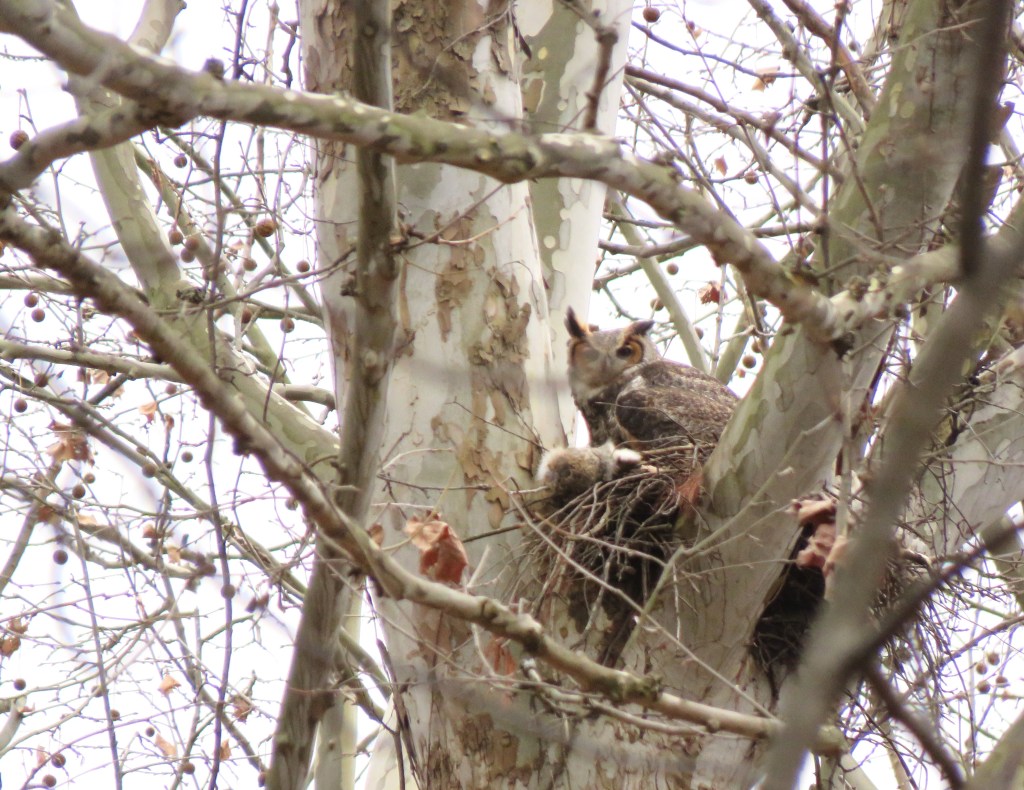
On the way home, I detoured to a local arboretum and quickly found a nesting Great Horned Owl with two owlets in the fork of a sycamore tree. Friends had told me about it the day before.
Though spring doesn’t officially arrive until March 19, the birds are on the wing for spring migration. I intend to catch as much of the birding splendor as I can.
A Great-horned Owl with owlets. Photo by Bruce Stambaugh
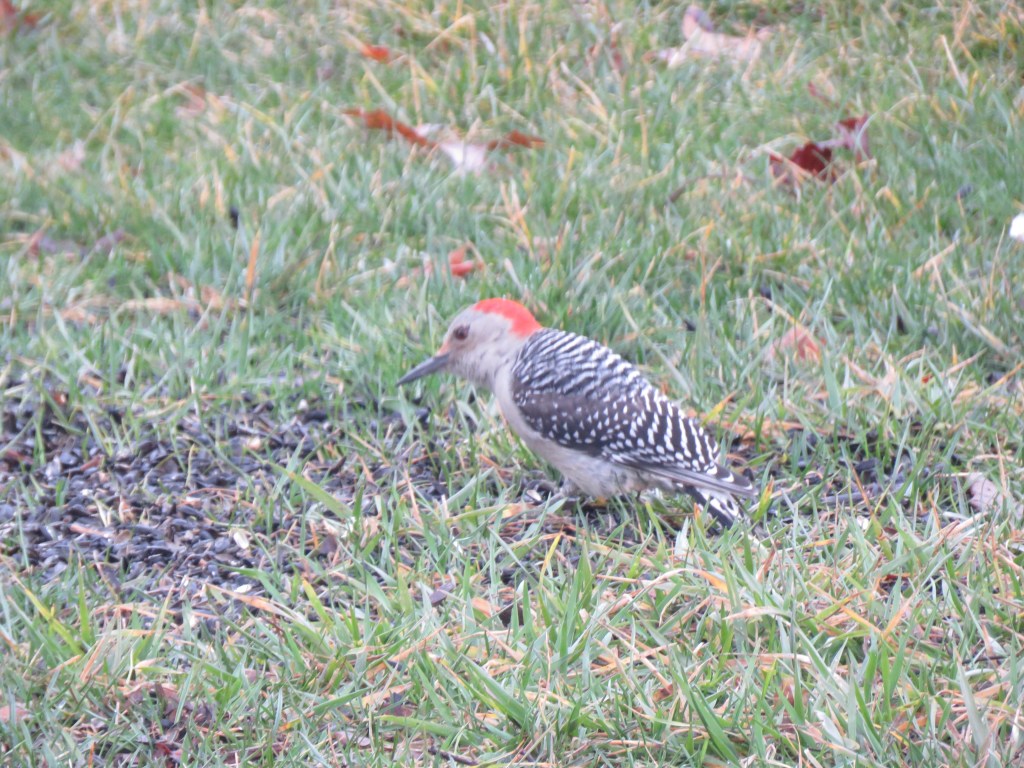
A male Red-bellied Woodpecker at the suet feeder. Photo by Bruce Stambaugh
It’s been a slow winter for feeding birds. Both the number of birds and the kind of species coming to my birdfeeders are down.
I have my suspicions, but I’m not exactly sure why. It could be the two roaming black cats that wait stealthily for lunch. Or, it could be the loss of cover. My neighbor cut down two mature trees on our property line. Or, it could be the inconsistent weather of cold and warming here in the Shenandoah Valley. Or, more likely, there are simply fewer birds. In a recent report, Cornell University estimated three billion birds have been lost in North America since 1970.
However, I am happy with the variety of woodpeckers that have made a regular appearance at our feeders. They have especially frequented the peanut butter suet feeder in the front yard. The feeder hangs from the large red maple, only 30 feet from the street. Others prefer the black oil sunflower seeds, while some peck at the cracked corn I spread on the ground.
All the woodpeckers announce their arrival in one manner or another. The Red-bellies and the Flickers want the bird world to know that they are arriving, so their harsh, loud screeches warn other birds to get out of their way. I have not seen the two species at the feeders together.
The Downy Woodpeckers are the most discrete. Their soft squeak or rapid-fire drumming on a tree limb gets my attention. Other times they just show up.
Here are a few of my favorite shots of the various woodpeckers at my feeders.
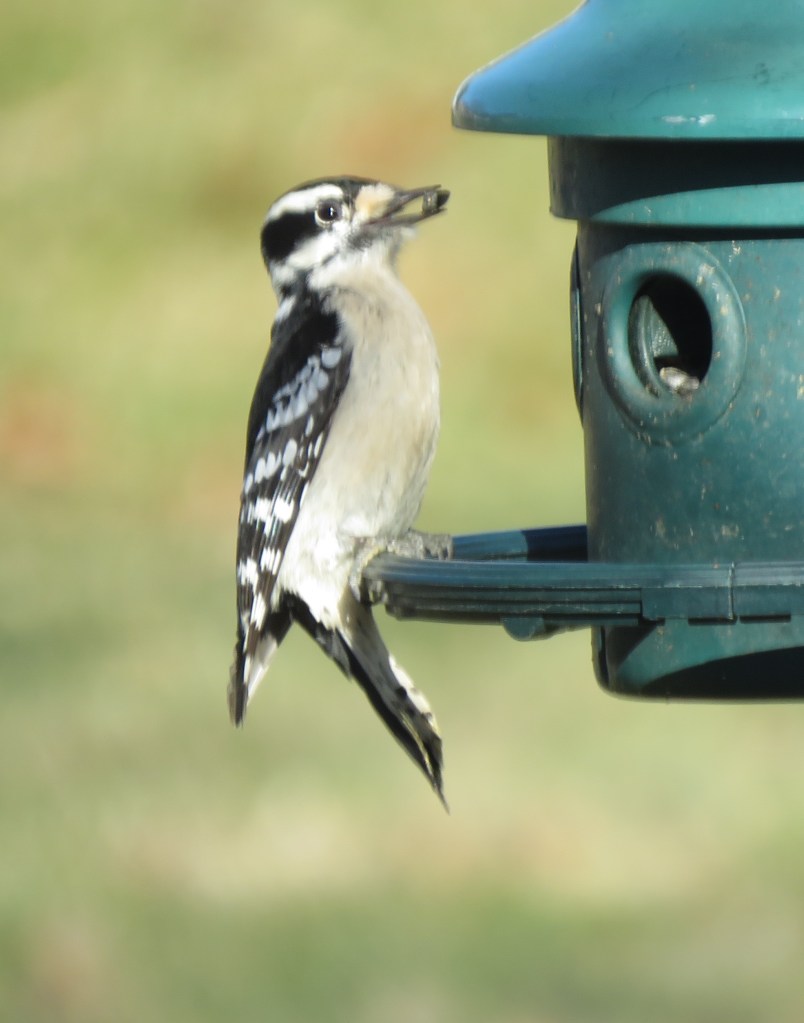
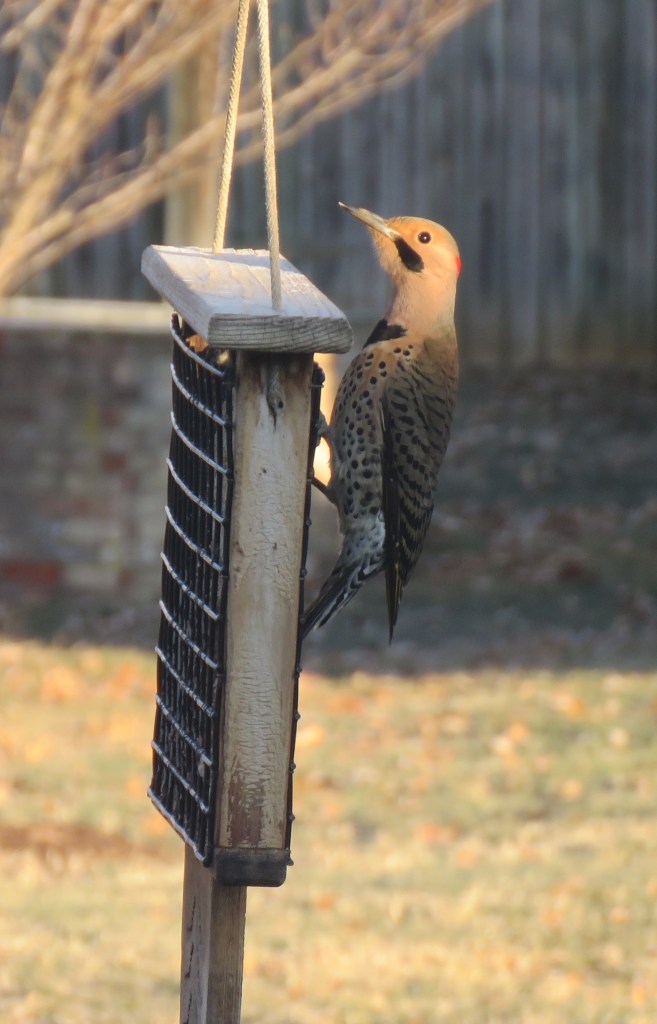
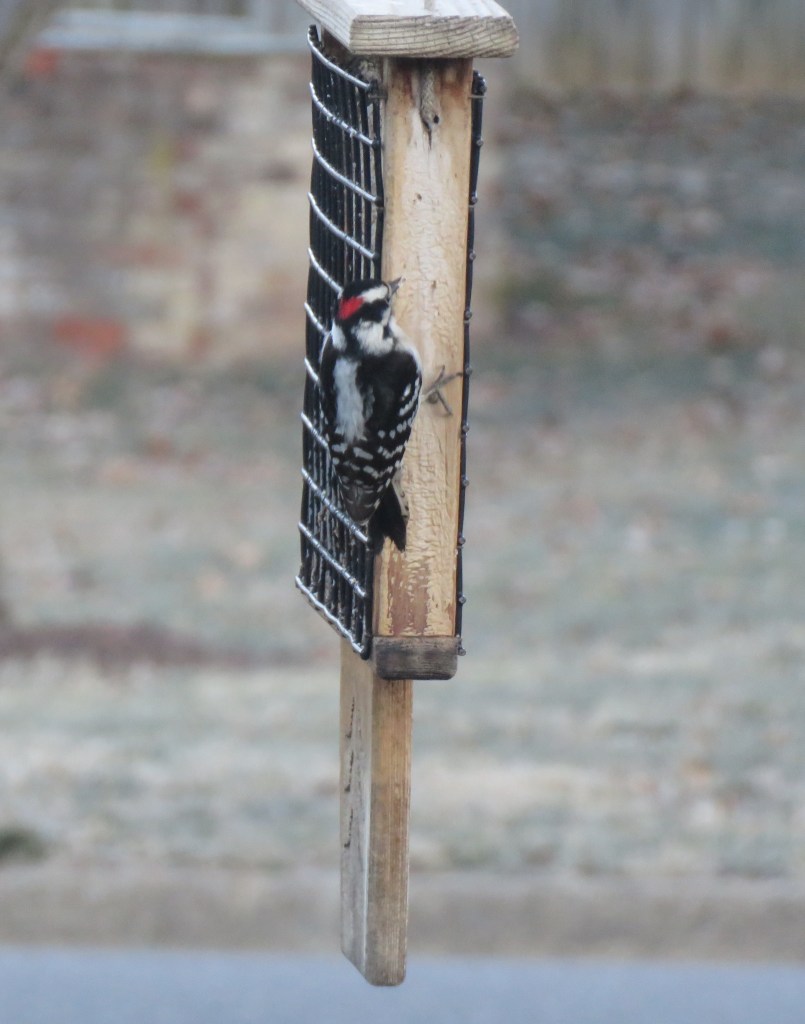
A female Red-bellied Woodpecker searches for black oil sunflower seeds on the ground. Photo by Bruce StambaughA female Downy Woodpecker snatches a sunflower seed. Photo by Bruce StambaughThe morning sunshine highlighted a male Northern Flicker at the suet feeder. Photo by Bruce StambaughA male Downy Woodpecker at the suet feeder. Photo by Bruce Stambaugh
I went birding the other day to a couple of small lakes. I was hoping to find a flotilla of waterfowl. But it was not to be. At Silver Lake, I did see a lone male Canvasback swimming with two female Buffleheads.
A male Canvasback and two female Buffleheads. Photo by Bruce Stambaugh
The offerings at the larger Lake Shenandoah, southeast of Harrisonburg, Virginia, were even less. I scanned the lake with my binoculars and saw nary a bird. I walked the mile-and-a-half path around the lake, hoping to find a few ducks tucked among the cattails out of the wind.
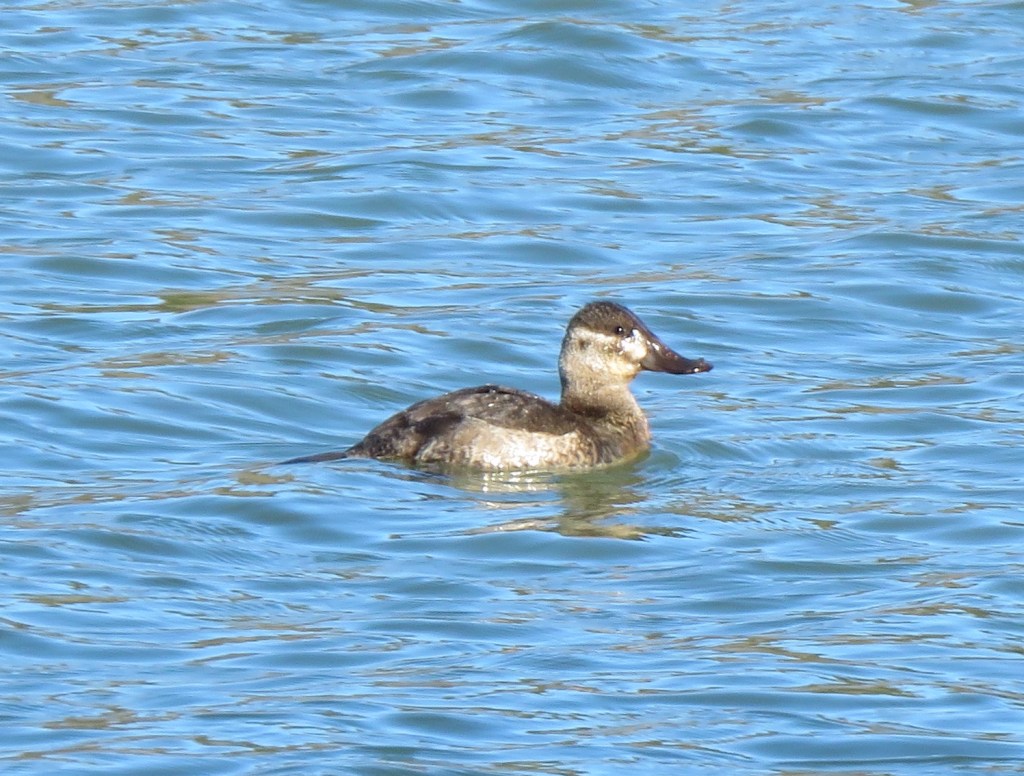
As I reached the midway point, I spotted a diving duck. The little brownish duck didn’t stay long on the surface. After several tries, I finally got a photo of a female Ruddy Duck.
A female Ruddy Duck.
Even though there were few ducks on the ponds, I considered it a successful day of birding.
Of course, baseball buffs know the expression “ducks on the pond” as a euphemism for runners in scoring positions. I like it when my multiple interests overlap.
A Blue Jay scout atop a neighbor’s maple tree. Photo by Bruce Stambaugh
We’ve had several chilly, gray-sky mornings lately in Virginia’s Shenandoah Valley. Consequently, our backyard birdfeeders have been active. The usual suspects frequent the hanging and tray feeders to crack open the tiny black-oil sunflower seeds.
A small flock of American Goldfinches are the most faithful. A small flock of European Starlings are the least wanted. The latter devour nearly any bird food I provide.
Occcasional visitors are Northern Cardinals, Dark-eyed Juncos, a resident Song Sparrow, a pair of Carolina Wrens, and a few White-crowned and White-throated Sparrows. I’m glued to the windows when they all arrive, often simultaneously.
But the bird that usually announces its arrival is the Blue Jay. Of course, they seldom come alone. A group of four to eight brighten my feeders irregularly. They hog down the sunflower seeds, peck at the cracked corn, and sometimes the peanut butter suet.
When I’m out filling the feeders and heated birdbaths, I hear them mimicking other birds in the neighborhood. My favorite imitation is of the Red-shouldered Hawk, which makes occasional low flights over the house in search of a songbird meal.
The intelligent Blue Jays keep a sharp eye out for the Red-shouldered Hawk. They want to keep their feathers intact. Sometimes, I hear the Red-shoulder’s loud, repetitive screeching, meant to scare out hiding songbirds. The call is too close for me not to see the hawk. More often than not, it’s a Blue Jay in an evergreen pretending to be a hawk.
The Blue Jays apparently have observed this mode of attack and use it to their benefit, not to attack other birds, but to frighten them away from the feeders so they have free dibs at the goodies as they dive in like blue and white jet fighters.
Smart as they are, the Blue Jays may keep a sentinel perched high in a neighbor’s tree, listening and watching for any potential predator like a cat, hawk, or human. They take no chances.
I was fortunate to spy a Blue Jay lookout the other morning. It perched quietly for several minutes, turning its head every which way to ensure the coast was clear for breakfast. I turned away and then back again, but the tree was bare.
A trio of mallard ducks floating on Silver Lake, Dayton, Virginia.
I hope you had an enjoyable Thanksgiving. My wife and I had our Thanksgiving celebration spread over several days, from Sunday to Saturday.
We hosted our daughter and her family for a Sunday evening Thanksgiving meal. We enjoyed their company as much as the delicious food.
On Thanksgiving Day, we traveled southeast two hours to Lynchburg, Virginia, to meet up with my wife’s cousin and her husband, who live in North Carolina. Lynchburg was our halfway meeting place.
We rented an Airbnb and enjoyed hiking, sightseeing, playing cards and dominoes. Of course, the four of us downed a wonderful Thanksgiving meal. It was good to be together again as we always cherish their company.
My wife and I arrived home in the Shenandoah Valley just before dark Saturday evening. With wispy clouds in the southwest sky, a colorful sunset looked favorable. I headed to my favorite local spot for sunset reflections, Silver Lake in Dayton, Virginia.
I waited and waited, and finally, a bright orange area radiated over the Allegheny Mountains. As I snapped shot after shot, three mallard ducks landed on the lake.
The ducks swam towards the glowing reflection. I kept praying them onward before the color faded. Sure enough, they glided into the “warm” water, and I clicked away.
The photo above is highly cropped. The water reflects the sky’s beauty without the power lines, poles, and cell towers. It was a satisfying ending to our week of giving thanks.
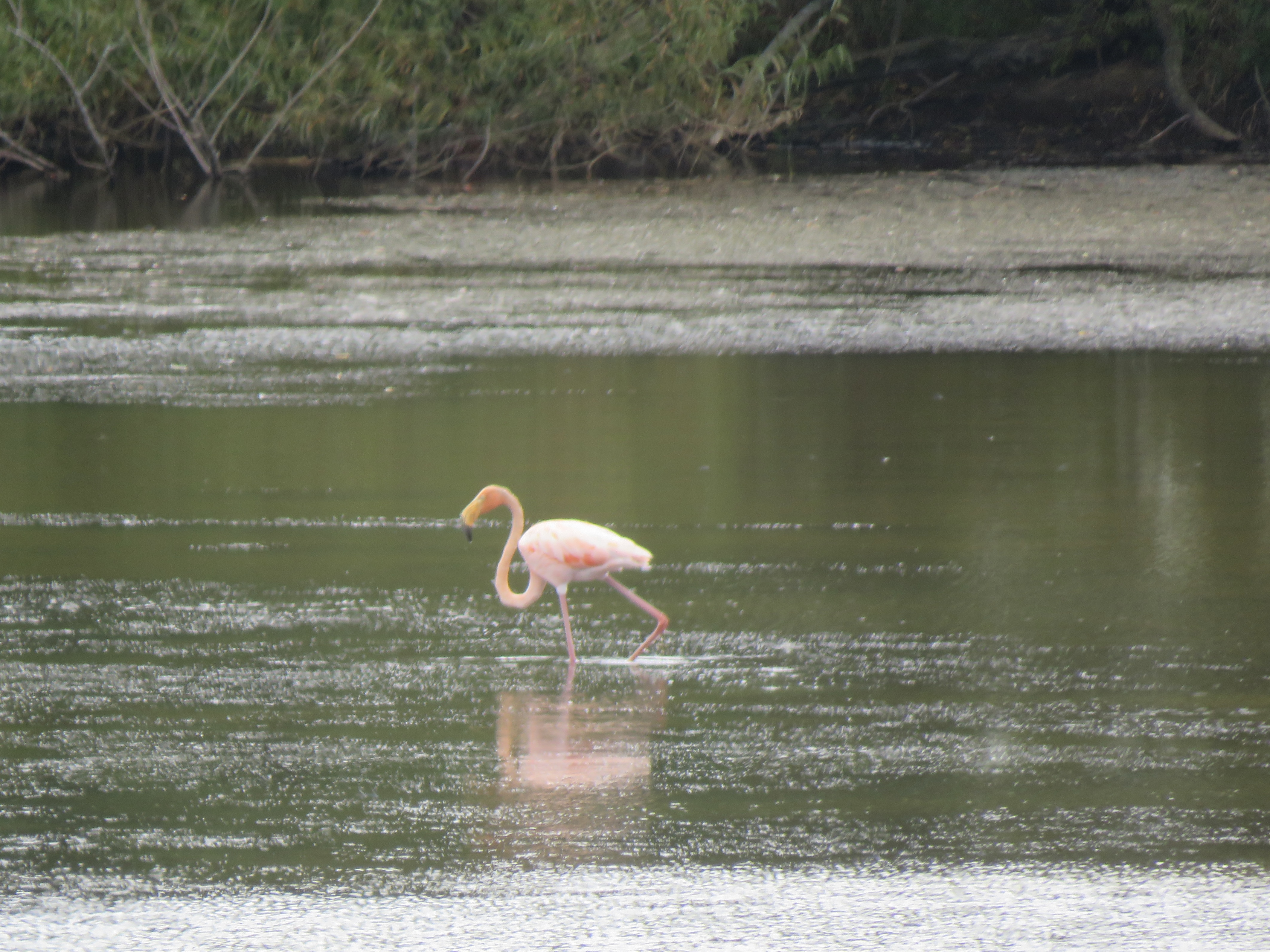
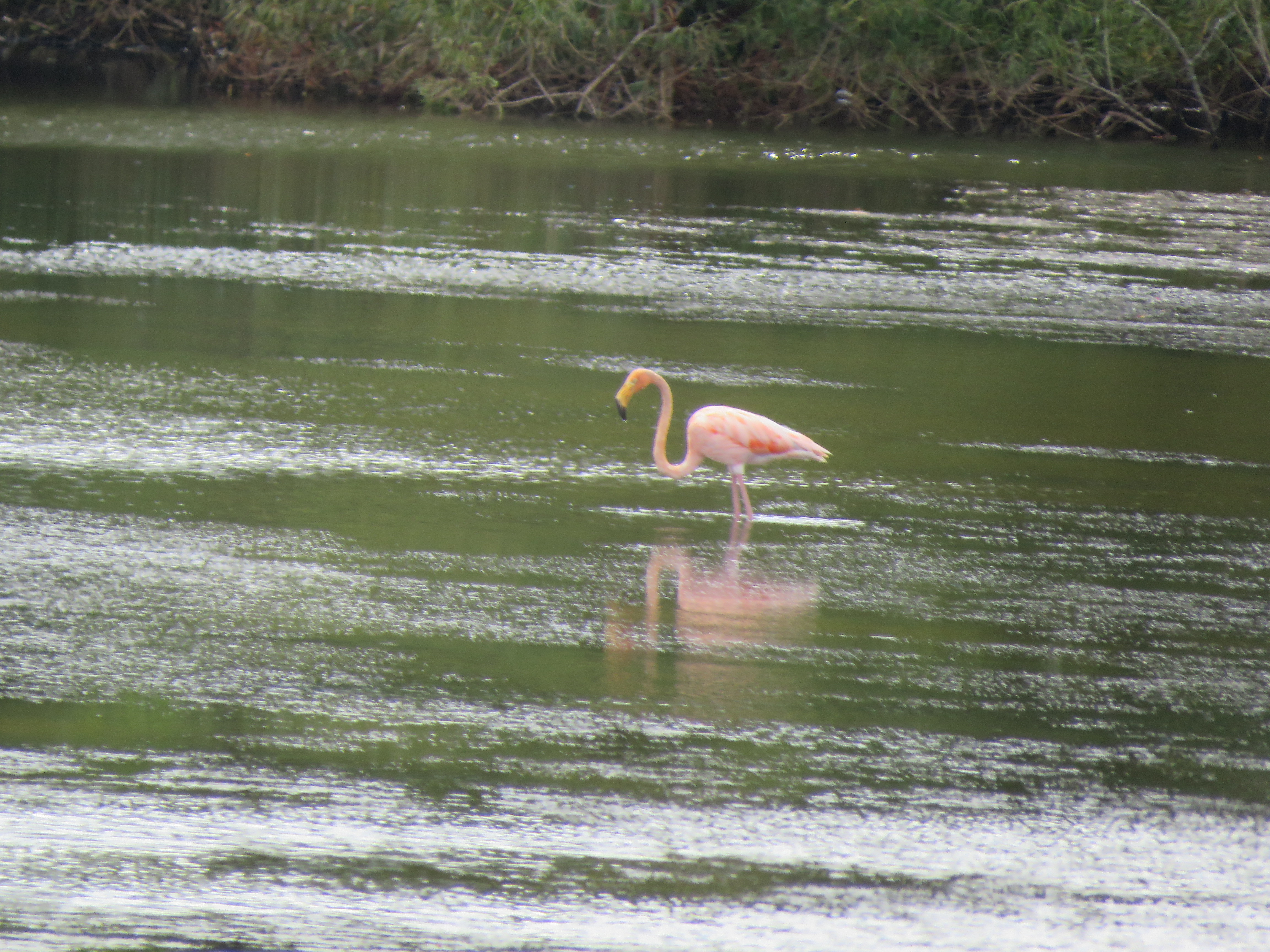
One of two American Flamingos near Chambersburg, Pennsylvania. Photo by Bruce Stambaugh.
This is how birding works. Just before my wife and I left to visit our 16-month-old grandson and his parents in Rochester, NY, a friend in Florida posted on social media about American Flamingos being spotted in a farm pond in south-central Pennsylvania.
I knew we couldn’t stop on the way up, but I hoped beyond hope that the birds would still be there when we left for our home in the Shenandoah Valley on Monday. I checked the American Birding Association’s rare bird alert daily as we enjoyed visiting with our son and his young family.
On Monday morning, the birds were still there and reportedly very easy to see. In all my years of birding, I’ve heard that before, only to arrive five minutes after the birds flew off into the sunset. In the birding world, that’s called “dipping.”
It was a six-hour drive from Rochester to St. Thomas Township, Franklin County, Pennsylvania. When we left Rochester, the day was partly sunny. By the time we reached the state line of the Keystone State, it started to rain. I kept my mind on my driving. I wanted to see those birds, but we had to get there first. So, I drove carefully.
The ABA rare bird alert included the GPS coordinates, so I figured we would drive right to the farm pond, which we almost did. We had Waze plugged into the car’s GPS system while I used my Google Maps for backup. I wasn’t taking any chances.
I am so glad I did because Waze said we had arrived when all we had were fields on the right and a line of houses on the left. My Google Maps saved the day, and we circled around and found Pond Lane.
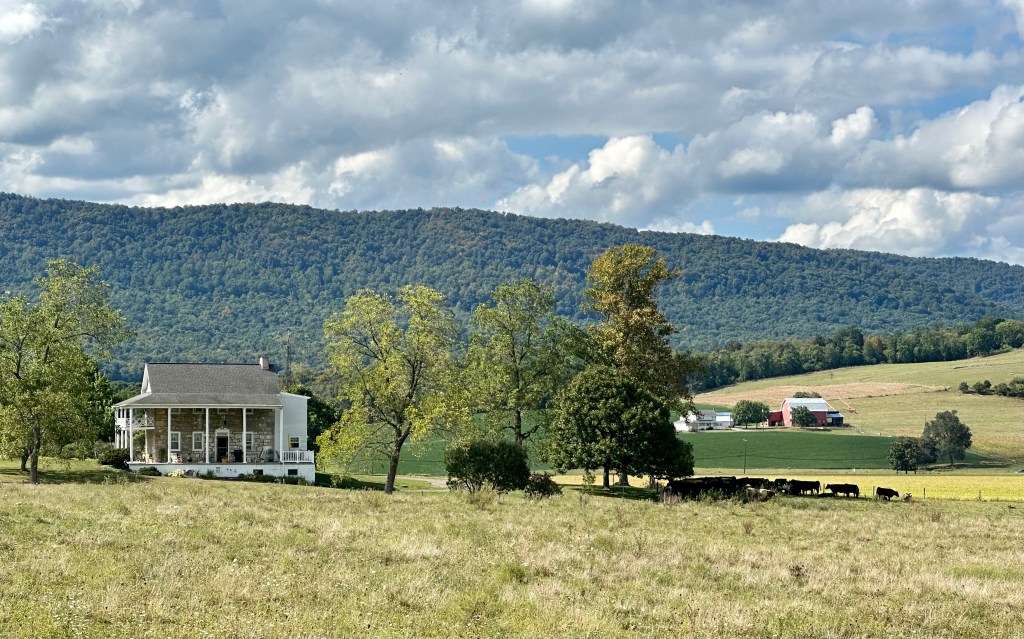
The countryside was gorgeous. Puffy white clouds floated by in a bright blue sky. The large, rolling fields of soybeans served as a two-tone yellow and green carpet below. Fieldstone farmhouses and red barns dotted the landscape.
Soybeans beneath a late summer sky.
Sweeping fertile fields.
The old homestead.
Fields, forests, and mountains.
The old stone house and Black Angus in the shade.
A mountain in the backyard.
As we approached from the west, I smiled because I could see a string of cars parked along the road and birders on the opposite side looking through spotting scopes and binoculars. As I slowly approached the scene, my wife shouted, “I see one!” I parked the car in the first space on the north side of the road and raced to the spot where my wife saw the flamingo.
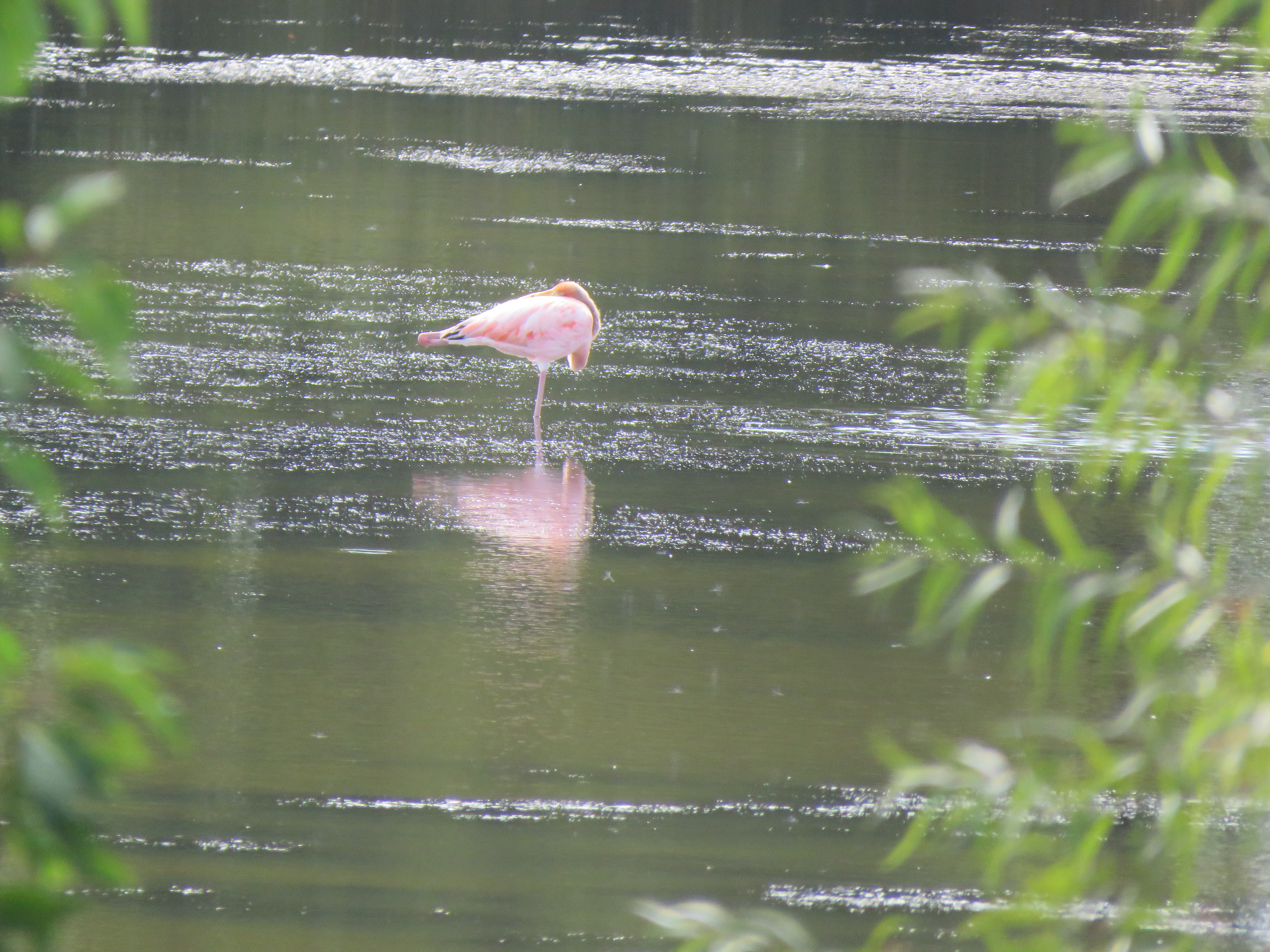
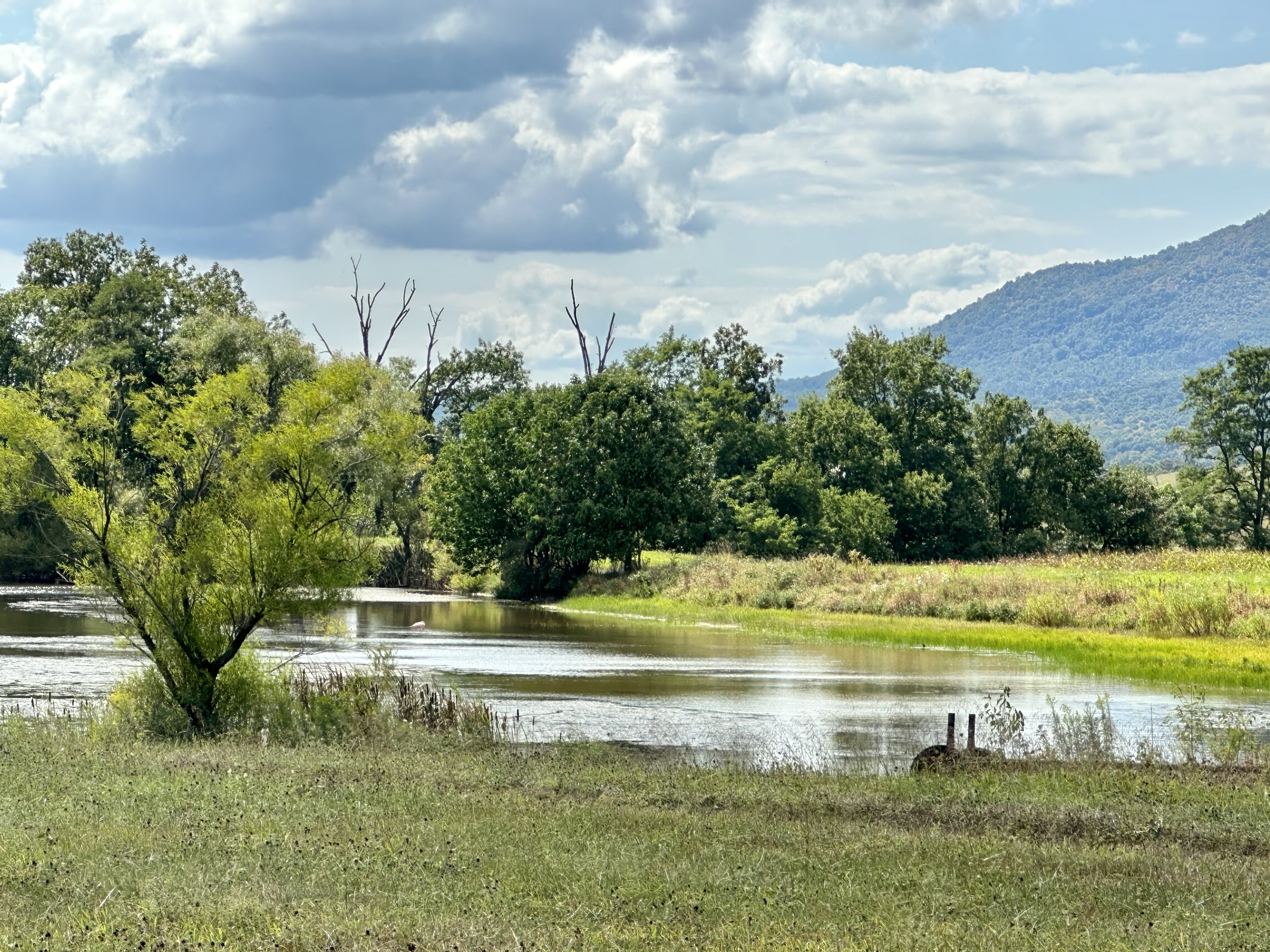
Sure enough, there it was. The beautiful pink bird was standing on one leg in the middle of the shallow pond. It had its head tucked under its left wing, sleeping. I got a quick photo between two trees and then walked up to where most birders stood with an unobstructed view. It was a little farther away, but we could see it clearly through the binoculars and my camera’s viewfinder.
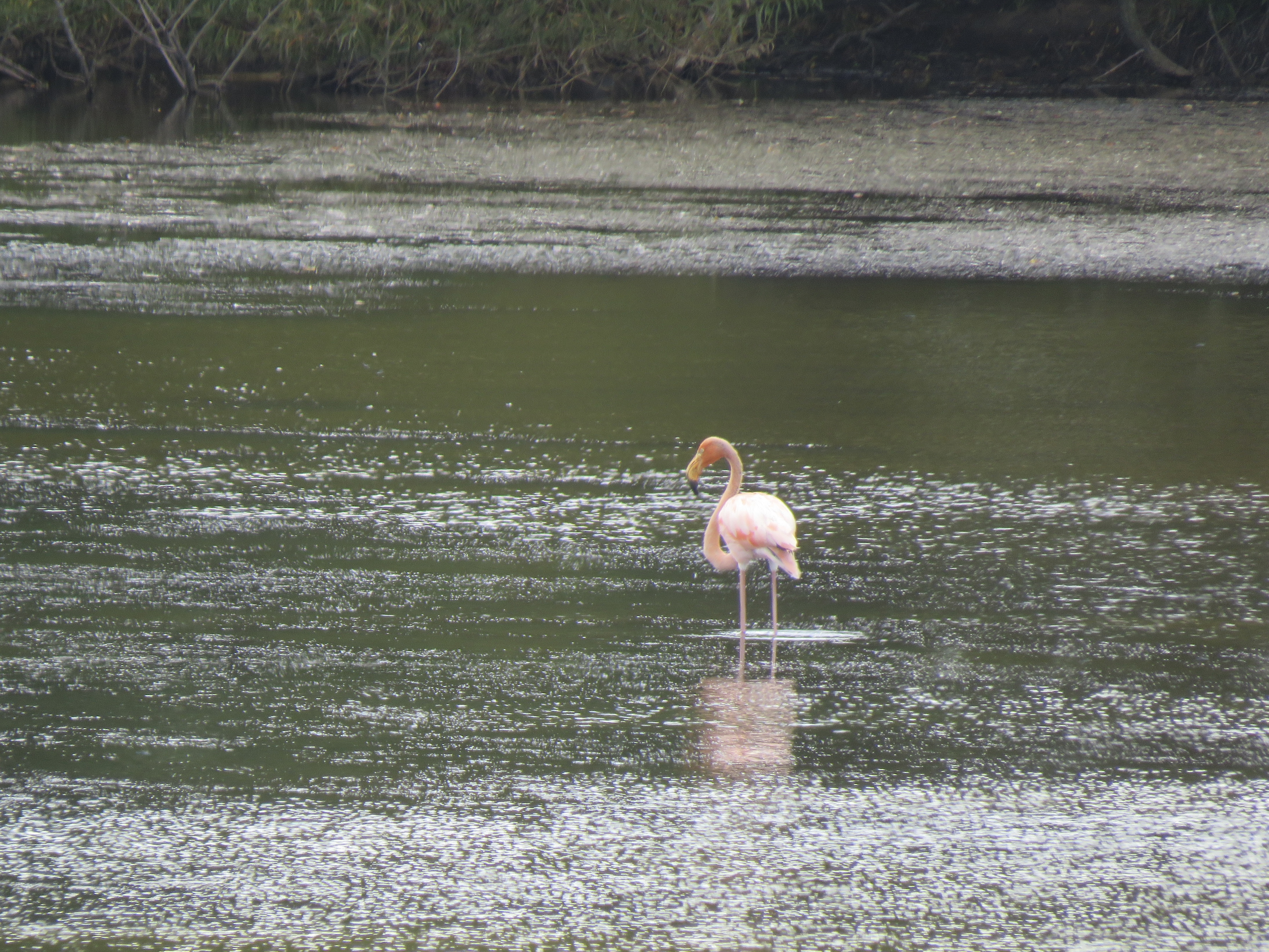
My wife helped steady me in the warm wind rushing over and down the nearby Appalachian Mountains to the west. Once the bird awoke, it waded, fed, and preened in the afternoon sun. I asked another birder where the second flamingo was. I didn’t like the answer.
Please click on the photos to enlarge them.
In the early morning hours after sunrise, a snapping turtle bit the other flamingo in the leg, injuring it. A wildlife rehab center was notified, and personnel arrived and captured the injured bird. Surgery was performed to fix the broken leg. It still remains in their care.
The other flamingo continued to thrill birders who arrived from near and far. How did birds that should be in the Bahama Islands and the Florida Keys get to Pennsylvania? The most plausible answer is that Hurricane Idalia blew them north.
That is the accepted answer because American Flamingos were located in 10 states, some well inland like these birds. Birders from other states were chiming in on the social media conversations, wishing for the flamingos to be found in their states, too.
Why such fuss over the flamingos? Well, in every state except Florida, the sighting of the flamingos was a record first for each of those states. Birders take their hobby seriously. Consequently, they keep many lists and records by recording the bird species, where it was seen, the date(s), and times. The Cornell Laboratory in Ithaca, New York, is the official state and national records compiler.
I had seen flamingos in Florida and Texas before, but seeing this beautiful bird so far inland was extra special. And it was all thanks to a hurricane.
The farm pond in Pennsylvania where the American Flamingo was observed. The bird is just right of the willow tree in the foreground. Photo by Bruce Stambaugh.
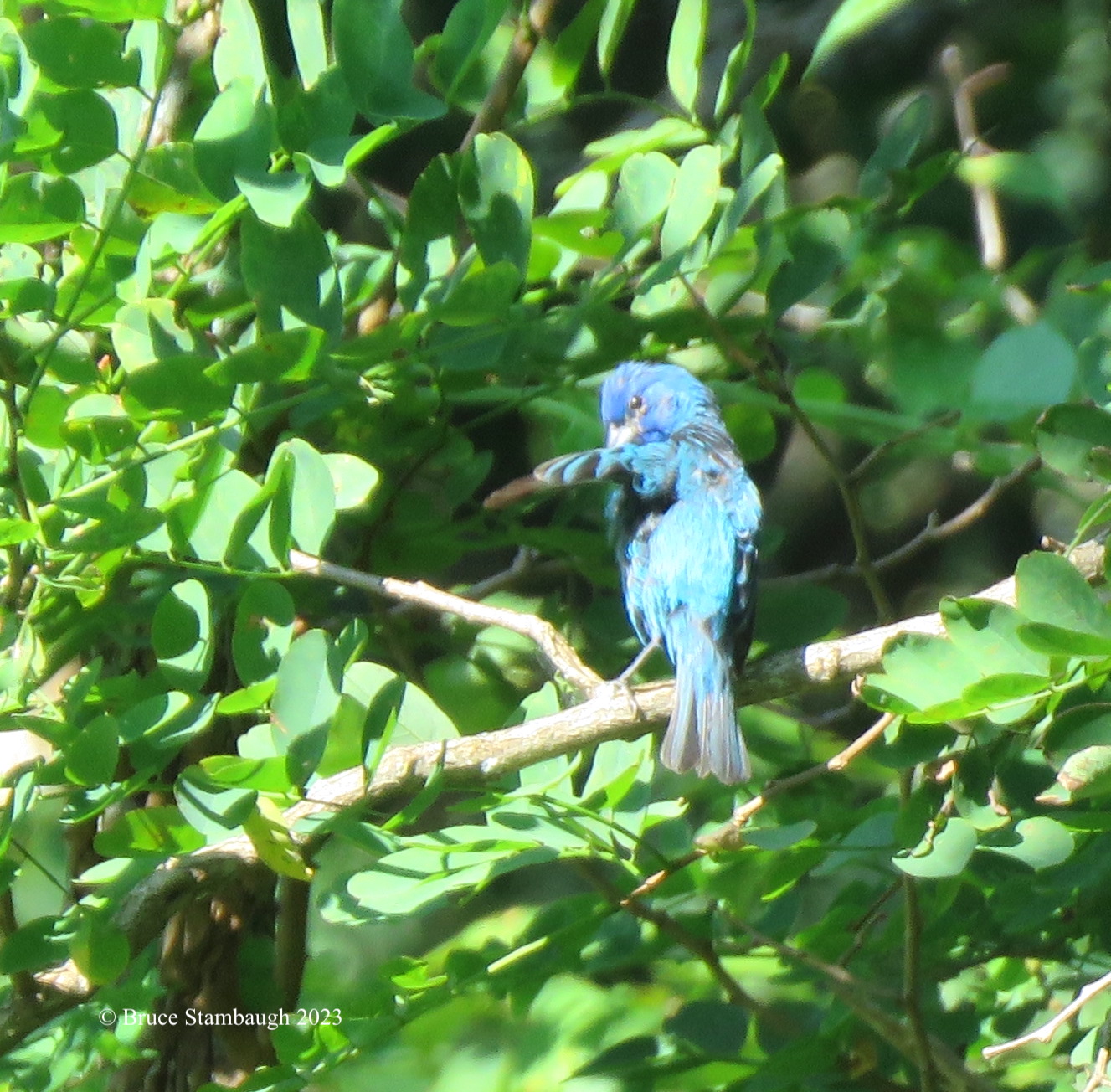
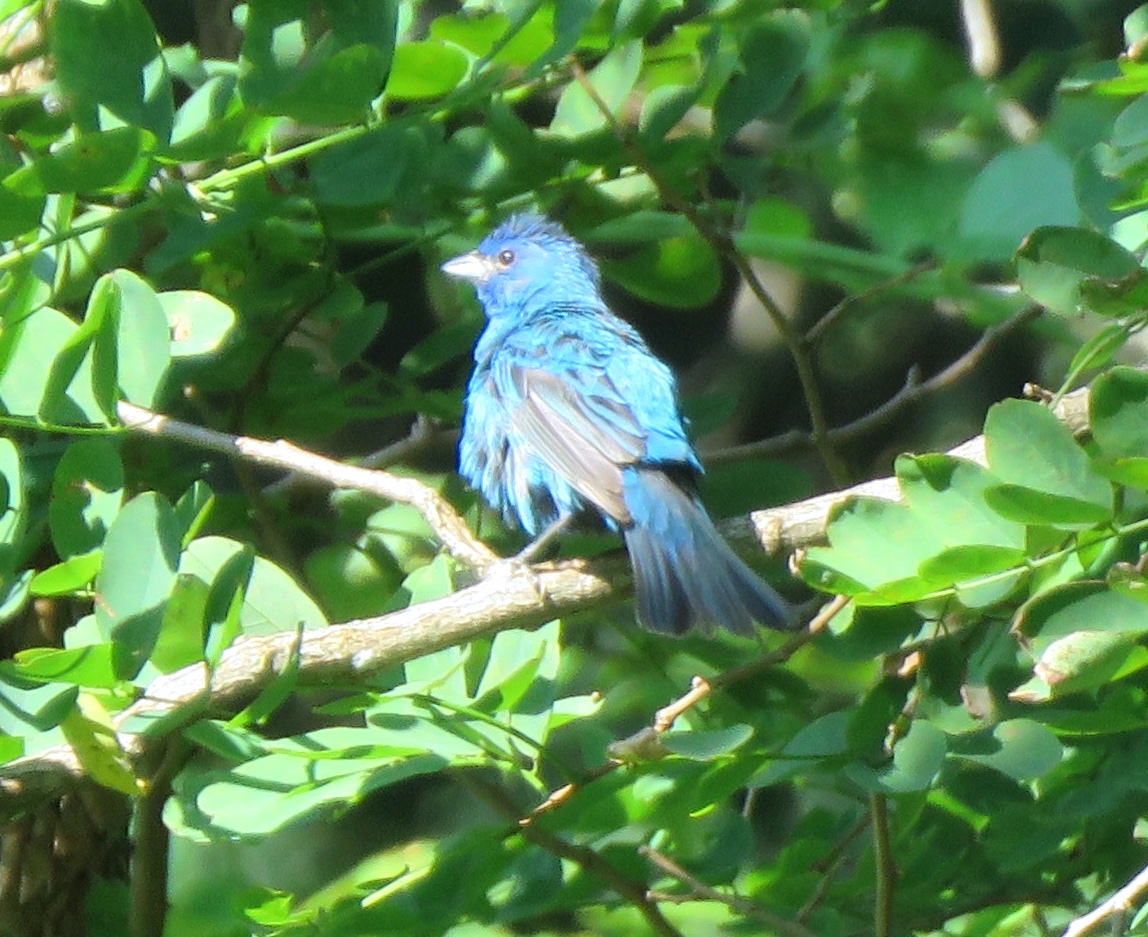
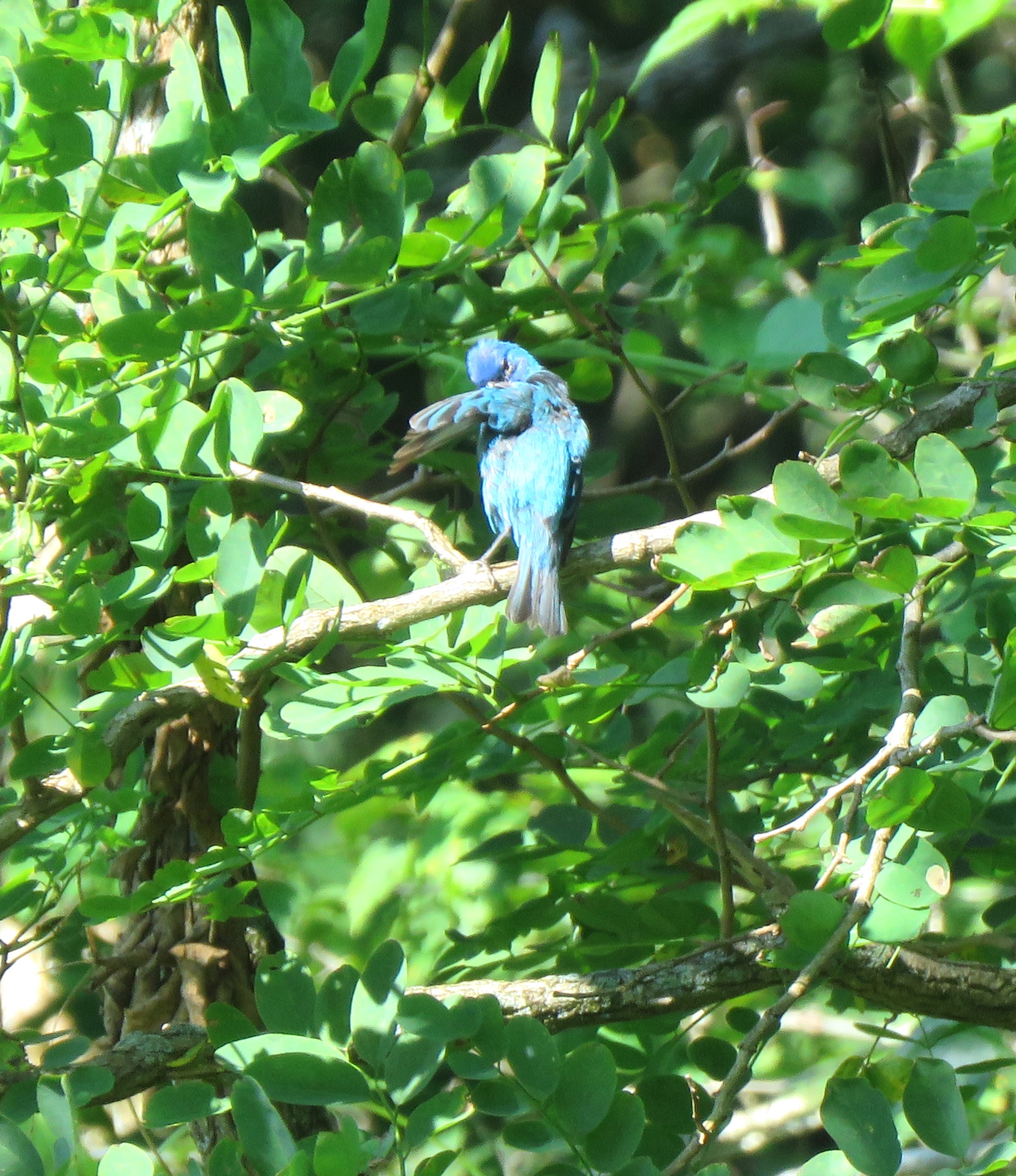
A male Indigo Bunting preening along the Appalachian Trail.
Whenever I go exploring, I can always expect the unexpected. It’s what drives me to get out of doors.
I headed to Shenandoah National Park to mainly photograph butterflies. I had seen photos from the park with Turks Cap Lilies blooming. Those lovely flowers are magnets for butterflies.
I knew a place in the park where I had previously seen butterflies flock to the beautiful lilies. It happened to be where the Appalachian Trail crosses Skyline Drive. The location also had a parking lot designed primarily for day hikers.
I pulled in and was immediately disappointed. No Turks Cap Lilies were to be found. Across the road, other wildflowers were blooming, so I started heading there.
When I go to the park, it should be no surprise that I multitask. My camera is strapped across my left shoulder for easy access, and my binoculars dangle around my neck for wildlife spotting, especially birds.
Just as I reached the crosswalk, a bird flushed out of the undergrowth to a dead tree limb at the forest’s edge. It was a male Indigo Bunting, always a beautiful bird to see.
I stopped, swung my camera around, aimed, focused, and clicked away. As I did so, this beautiful bird began to preen in the morning sunshine. The lighting was perfect, and the bird entertained me for several minutes before a passing car caused it to dive for cover.
Butterflies were few and far between as I checked in at different locations in the park. Nevertheless, watching this enchanting bird for those precious minutes made the trip worthwhile.
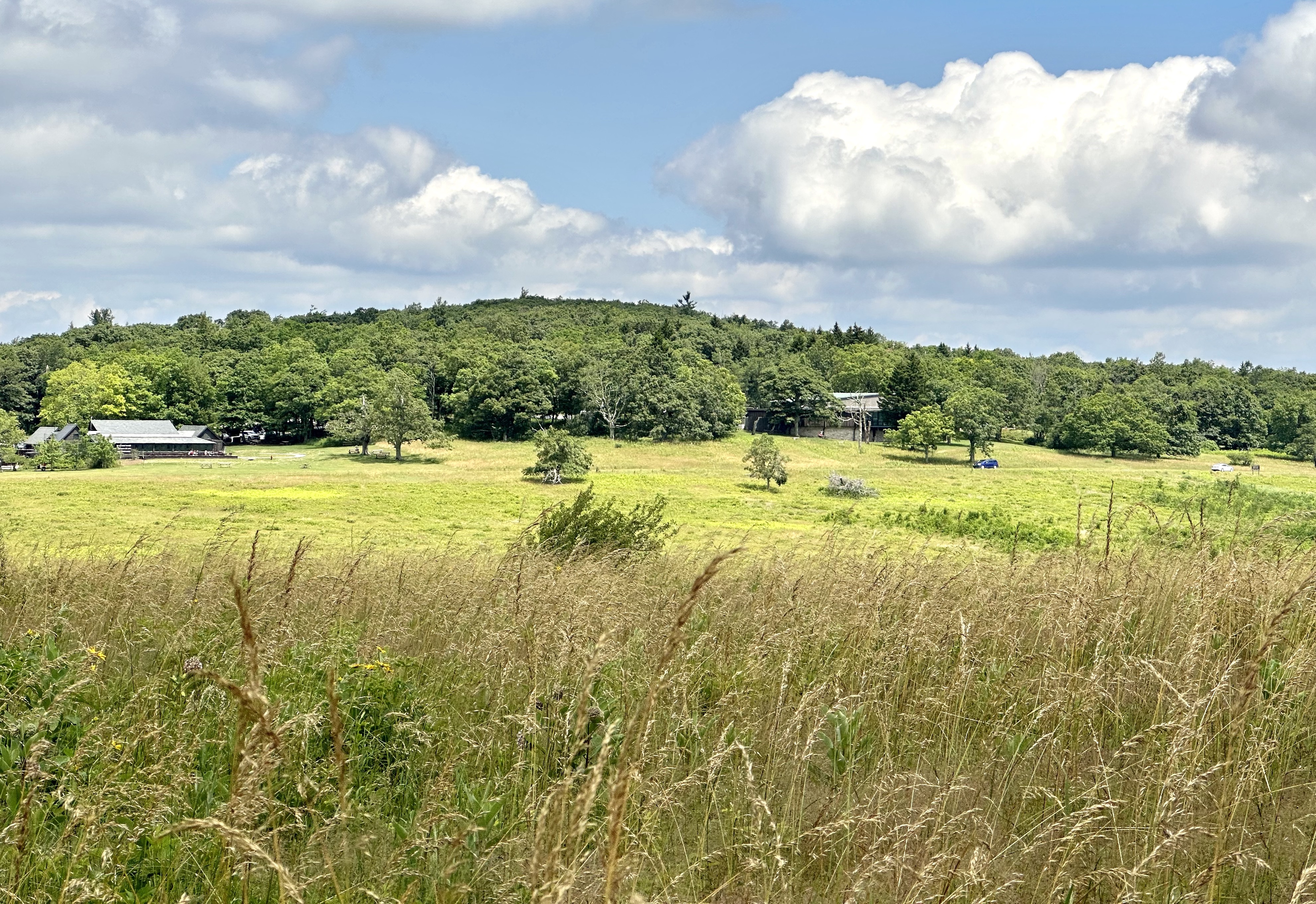
Big Meadows Wayside on the left and the Byrd Visitors Center on the right.
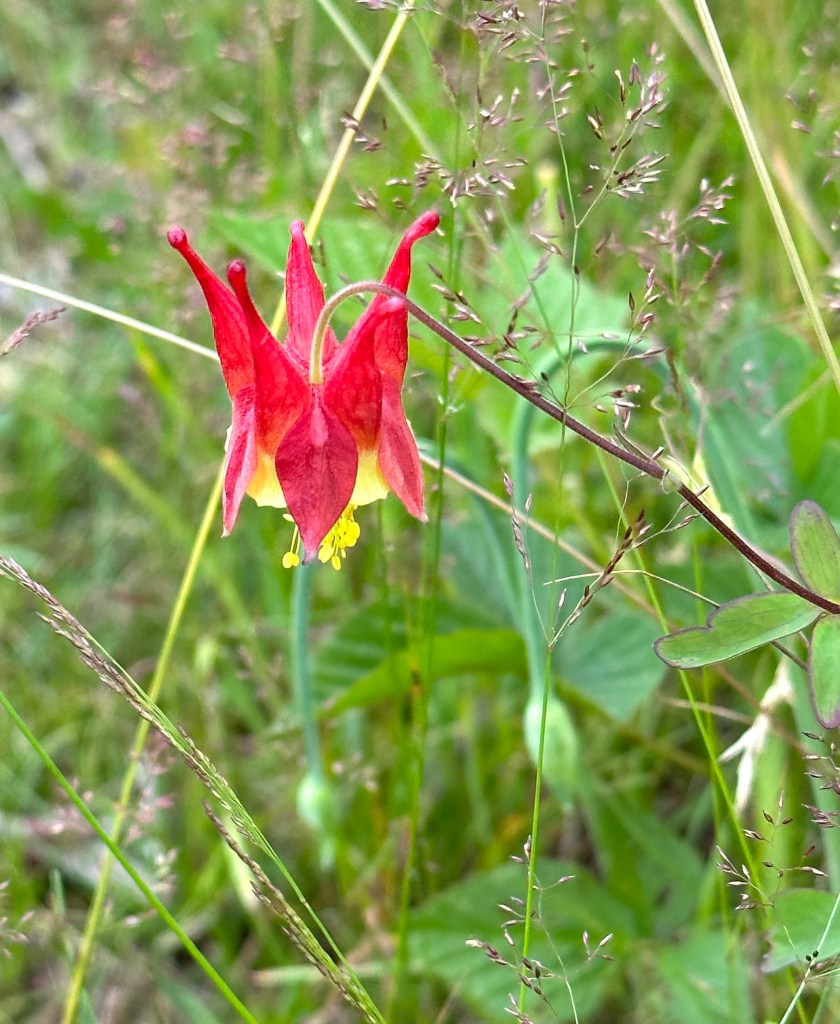
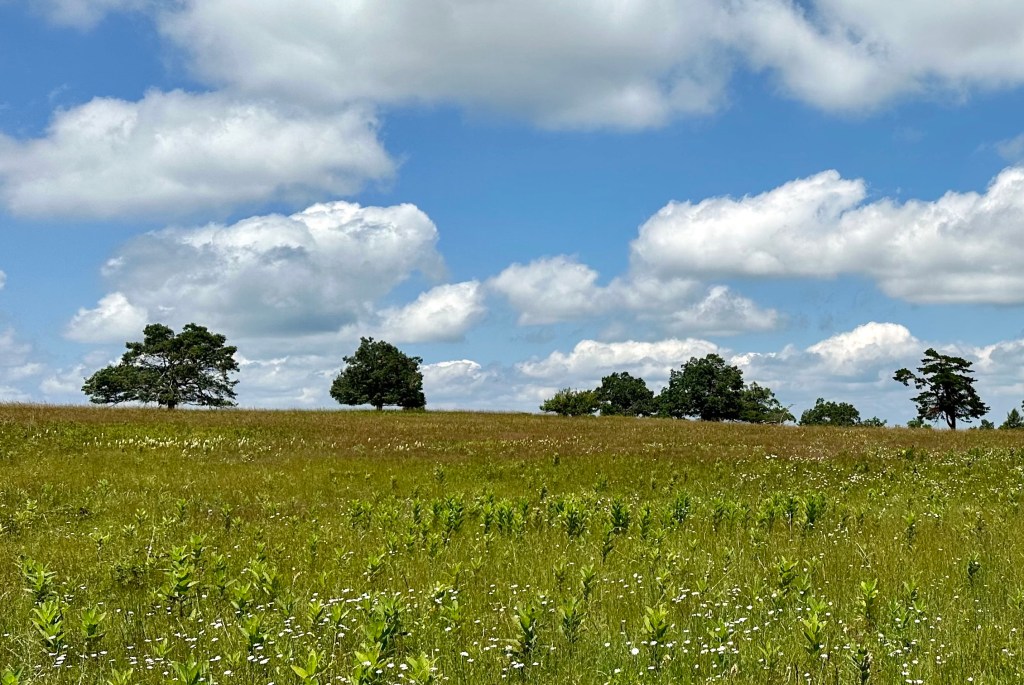
Big Meadows, an open, rolling, bowl-shaped landscape, features diverse plant, tree, and wildlife species. I consider it one of the most beautiful locations in Virginia’s Shenandoah National Park.
As evidence of its wonders, these photos from a recent visit exemplify its natural splendors.
Fawn at the meadow’s edge.Wild Columbine. Male Indigo Bunting.Woodland Sunflower.The land meets the sky.A ladybug on Fly Poison.
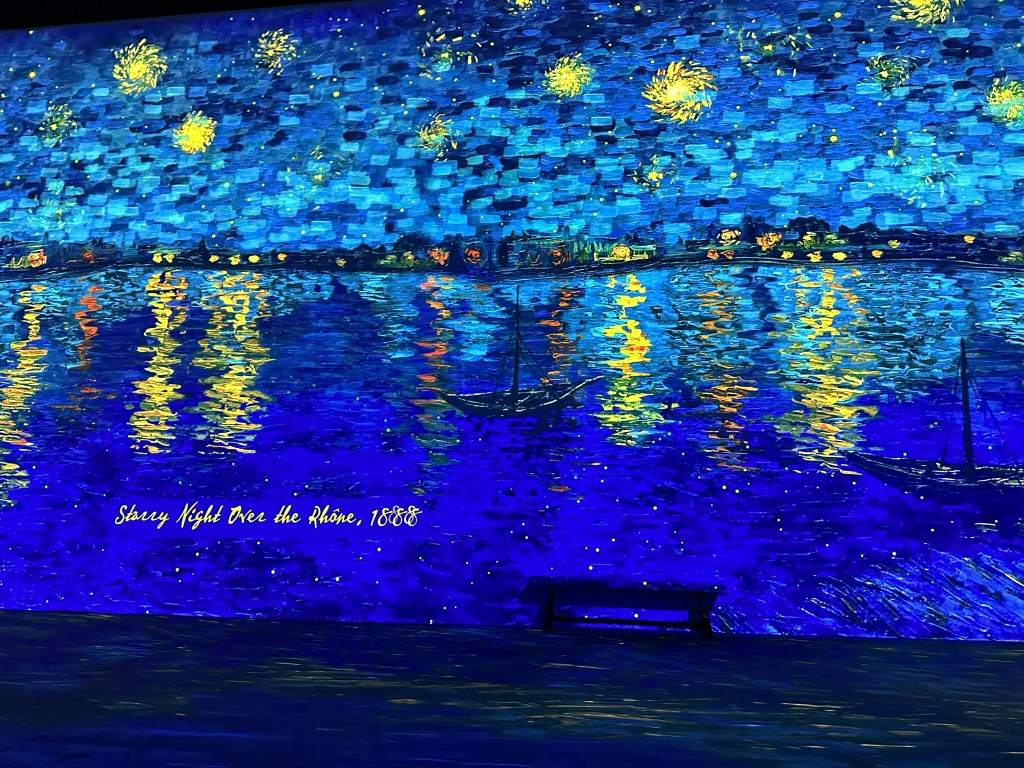
I gladly handed over my iPhone to the ticket-taker at the Van Gogh Immersive Experience in Washington, D.C. We had only just gathered everyone together at the entrance when she had offered to take our family photo, an image I dearly wanted.
It had been four years since the three families had all been together, and in that time, another grandchild had joined our ranks. Our two oldest grandsons had never met the youngest. I wanted this precious moment to be documented for perpetuity. As mobile as today’s societies are, especially the younger generations, I wasn’t taking any chances. I considered the family photograph as my personalized Father’s Day present.
As it turned out, this was the only photo of all of us together at the same place at the same time we got in the three-day gathering in our nation’s capital. The comings and goings of our active crew mirrored the busy lives of our adult children, their spouses, and teenagers. I certainly wasn’t disappointed.
I had my shot and could now relax into the follow-the-crowd mode. The other adults, our daughter, son, son-in-law, and daughter-in-law, would share the responsibility of setting the agenda for the Sunday through Tuesday reunion. I’m usually the one to suggest and plan trips. However, this time I silently relished my grandfatherly role. Though not surprised, I marveled at their skills in managing offspring, arranging transportation, and finding restaurants to suit everyone.
Of course, they consulted Nana and Poppy about places we wanted to go, do, visit, and tour. I was more than happy to go with the flow. Shoot. I would have been pleased if we had stayed in the hotel. A certain familial satisfaction overcame me.
The pandemic played a significant role in keeping us apart all this while. Our son, his wife, and the newest grandson, Teddy, live in upstate New York, a seven-hour drive from the lovely Shenandoah Valley, where my wife and I live. We moved there six years ago from our home of 38 years in Ohio’s Amish country to be close to our daughter and her family.
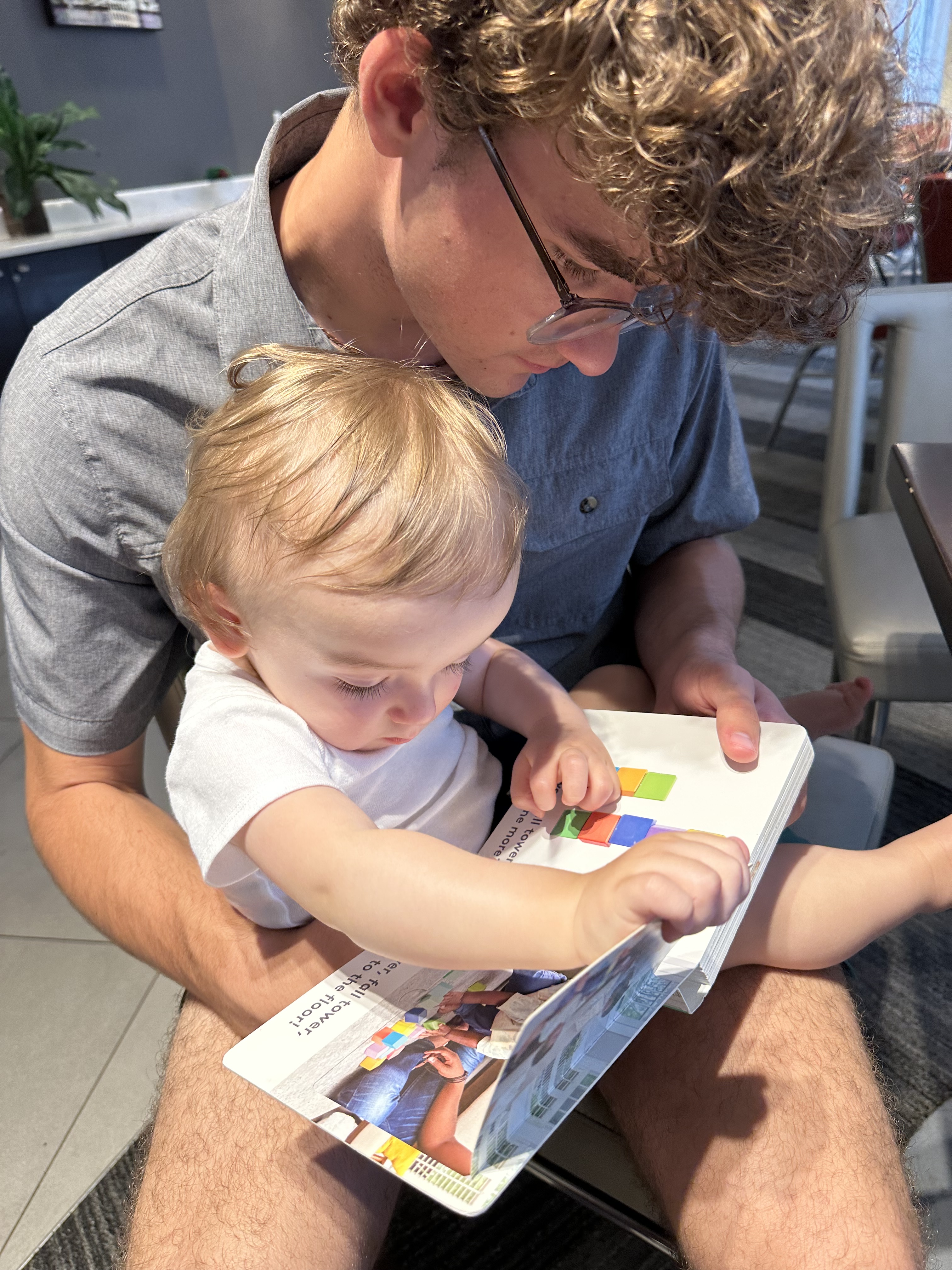
Teddy arrived over a year ago, complicating our Nana and Poppy roles. Our son and his wife have done an exceptional job keeping us informed of Teddy’s progress, and we travel north as we can.
But here we all were, assembled together. Everyone agreed to make the Van Gogh experience our initial group event. The New Yorkers intended to take the Metro from Dulles International Airport to the hotel. Due to track maintenance, that plan got derailed. It took them longer to get from the airport to the hotel than from Rochester to Dulles.
With air temperatures heating up, the Van Gogh Immersion became the perfect place to chill and smother Teddy with plenty of attention. To enhance the experience, lounge chairs, bean bags, small ottomans, and blankets were scattered around the gymnasium-sized, carpeted room. We all found our relaxation niche and enjoyed the show. Teddy loved showing off his newly found walking and running skills. The rest of us merely basked in the moments as they unfolded.
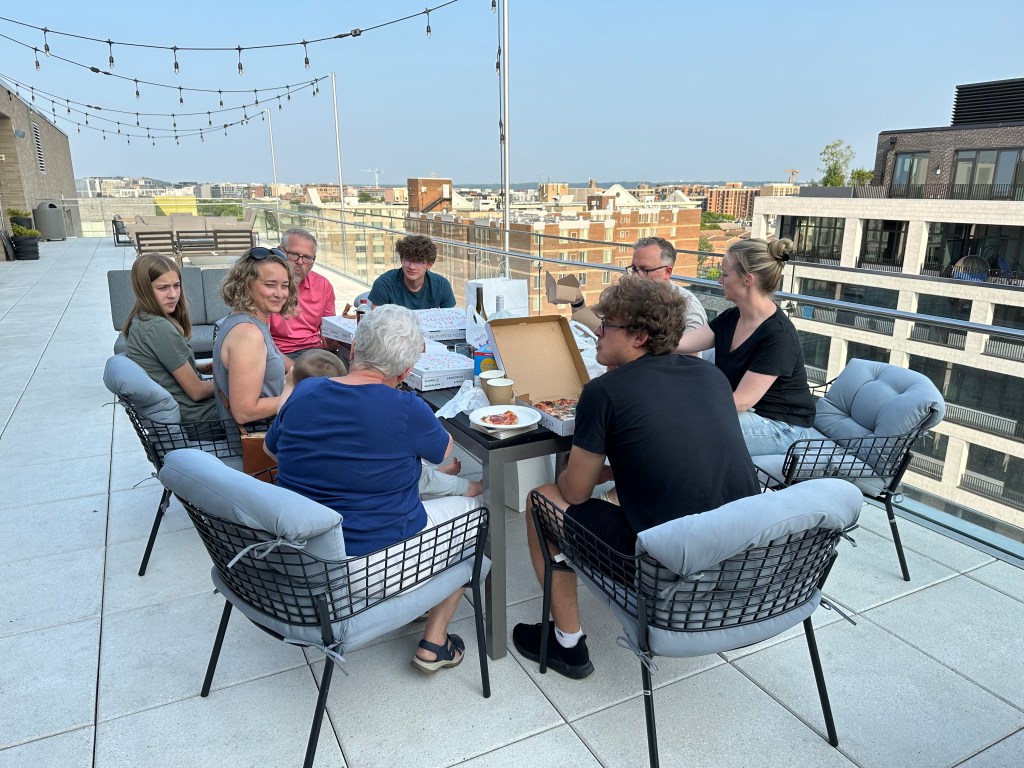
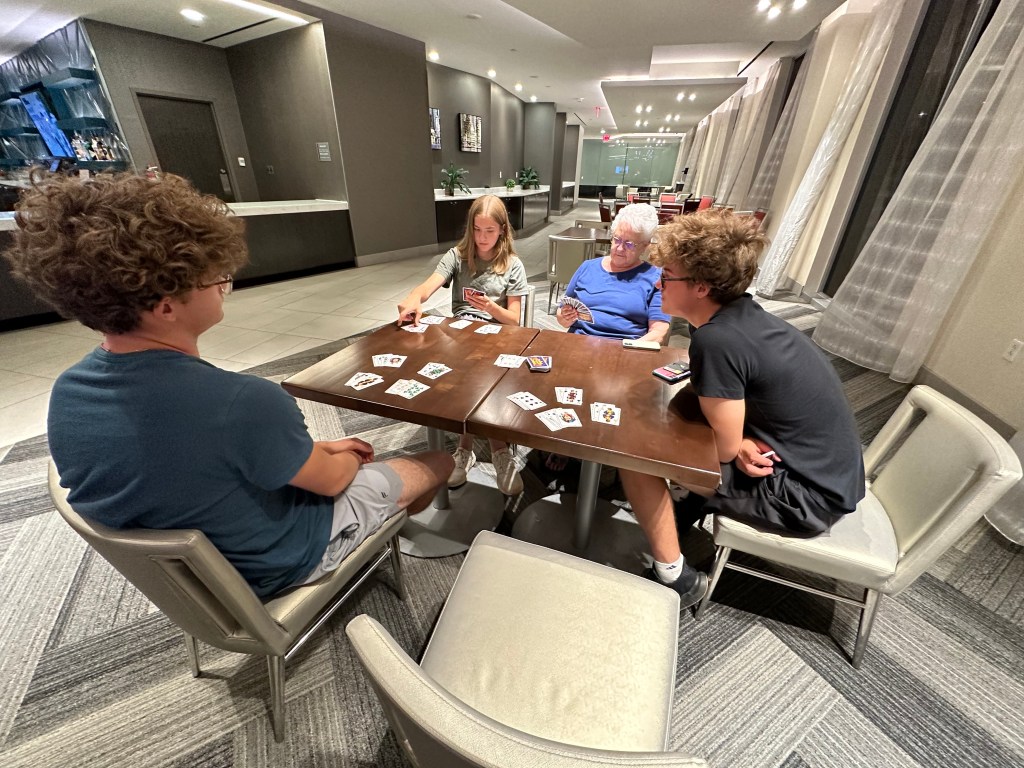
That was plenty for the first day. Returning to the hotel, we ordered dinner from a local pizzeria. We found the perfect place to hold a pizza party and enjoy each other’s company, the building’s rooftop. I relished the lively chatter, the food, and the cityscape views. We finished the day with gelato and a rousing game of cards with the teens. It was a balance we all needed to complete the day.
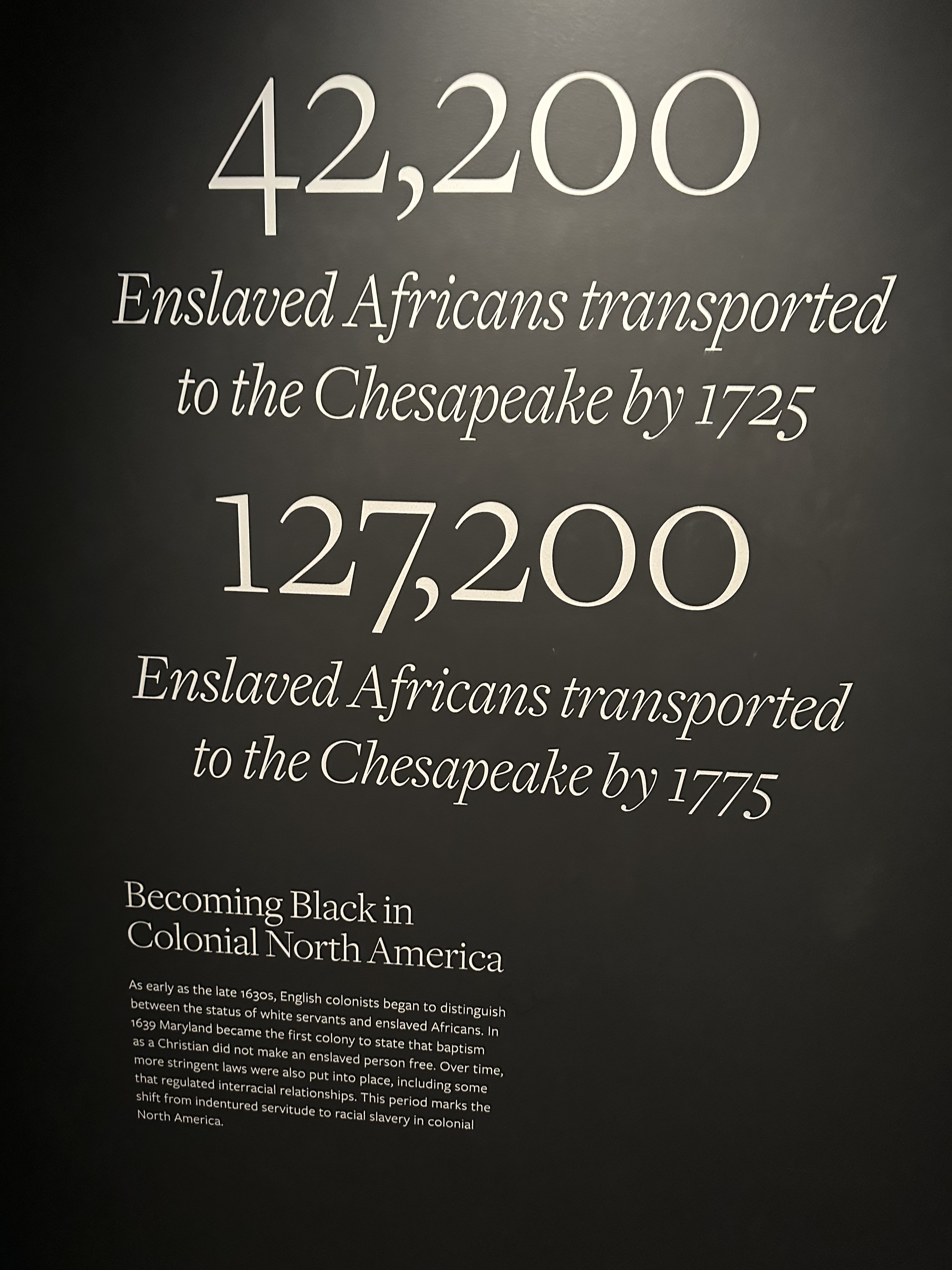
We walked a mile in the morning’s coolness the next day for a delicious breakfast spread. The portions were so large that only the teens cleaned their plates. We stayed so long that the day’s heat had already begun as we worked our way toward the National Mall. It was Juneteenth, and we had tickets for the National Museum of African American History and Culture. We wanted the youngsters to see first-hand the sad history of how African Americans arrived in this country and what they endured in slavery, the Jim Crow era, and the present. The chronology began on the lower floors, and we worked our way up in small groups. Is there another choice when you have a toddler and septuagenarians in the same family? We didn’t have time to do the outstanding museum justice.
We exited into the early afternoon heat and humidity commonplace for D.C. summer days. Teddy’s parents found a refreshment truck parked near some massive shade trees, and the rest of us soon joined them for some shaved ice and smoothies. Nana was in her glory feeding Teddy some of her cool mango drink. Teddy’s eager reaction showed his gratitude.
Colorful murals were abundant.
Mural.
The Washington Monument from the Jefferson Memorial.
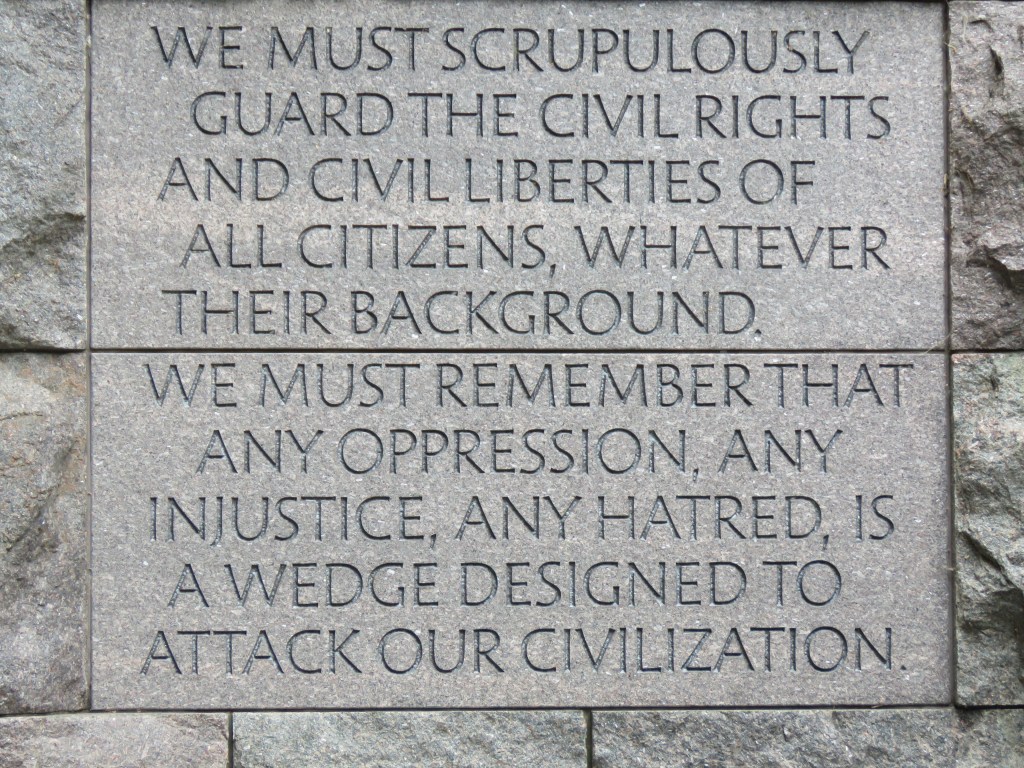
At the FDR Memorial.
Colorful canopy.
A short walk brought us to the World War II Memorial in the shadow of the Washington Monument and at the reflecting pool’s eastern end. I spied a group of Amish circling the memorial’s parameter and recognized the older leader. Unfortunately, I was too far away to say hello.
We continued walking west to the Lincoln Memorial for the older grandkids to experience. Before we left the area, we pointed out the impressive yet solemn Vietnam War Memorial from a distance.
By now, everyone was tired, and we headed back to the hotel via three modes of transportation. Some of us took an Uber, while two adventurous teens followed their father to the Metro. Since Teddy needed a nap, his parents chose to push the stroller three miles.
With the day’s heat and humidity, we were glad for the hotel’s air conditioning in which to rest. However, the teenagers all wanted to play cards, a vacation tradition since they were young. We ordered burgers from a local restaurant and reclaimed the hotel’s rooftop. The banter and passing around Teddy put a punctuation mark on a fulfilling day. The games played on, but we seniors called it a night, our hearts full.
As I settled in for the night, I reflected on the day’s interactions. Everyone we met, hotel, restaurant, museum staff, and Uber drivers, were engaging and courteous. They made this country boy feel right at home in the city.
The adults headed for a lighter breakfast than the previous day while the teens slept in. Afterward, they had to be awakened to say goodbye to Teddy and his parents, who had to leave for their return flight. We hugged and kissed and thanked them for making the trip, and then they were gone.
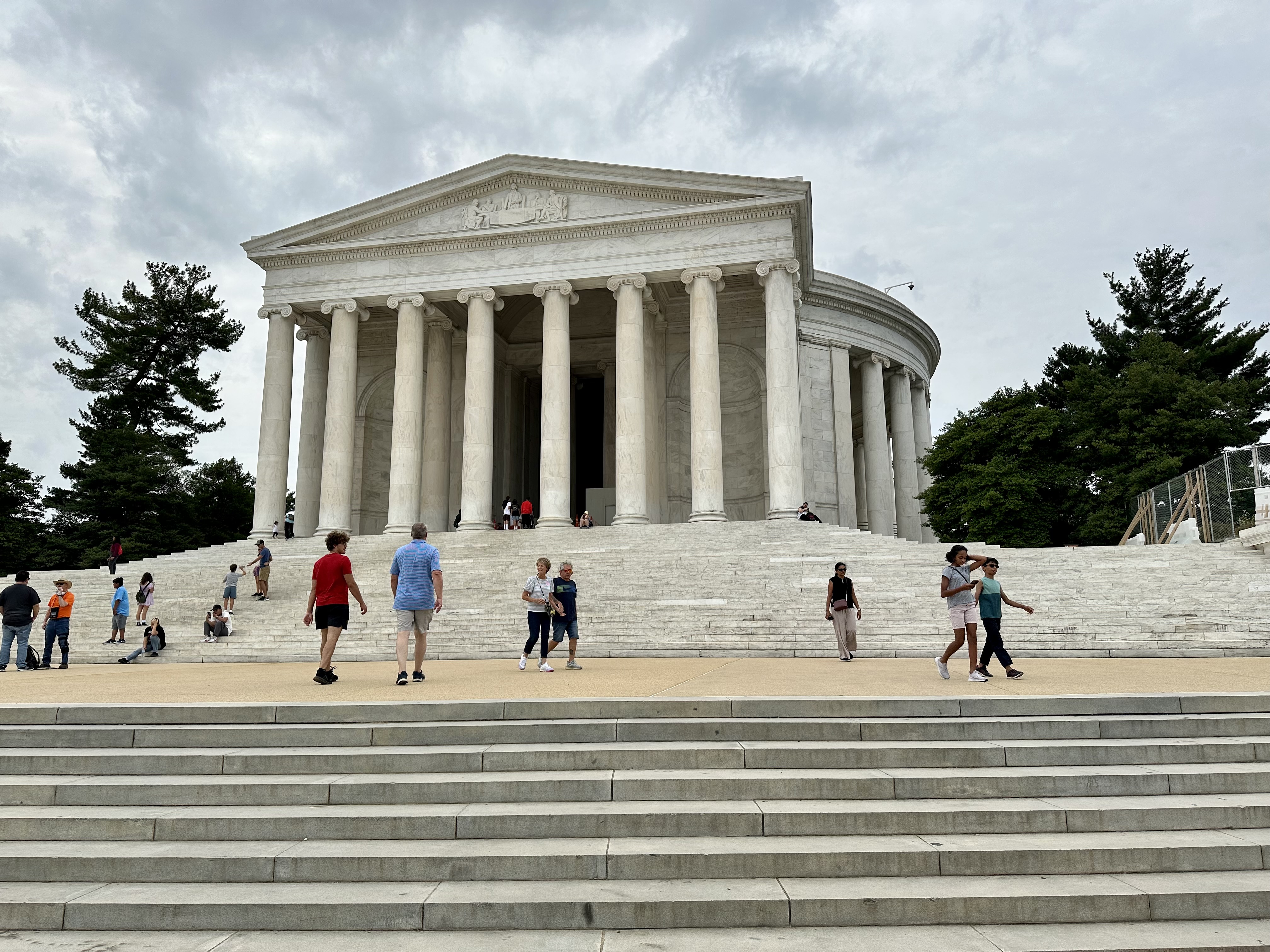
Those that remained returned to the monument area. Our first stop was the Jefferson Memorial. The day was warm again, but a steady east wind made it bearable.
Please click on the photos to enlarge them.
We walked to the Franklin Delano Roosevelt Memorial, which my late father truly enjoyed when I first visited it with him as part of an Honor Flight for World War II veterans. I told the grandkids how their great-grandfather, who used a wheelchair, nearly rose to his feet when he saw the statues of the longest-serving president. Dad even knew the name of Roosevelt’s dog, which also had an oversized bronze.
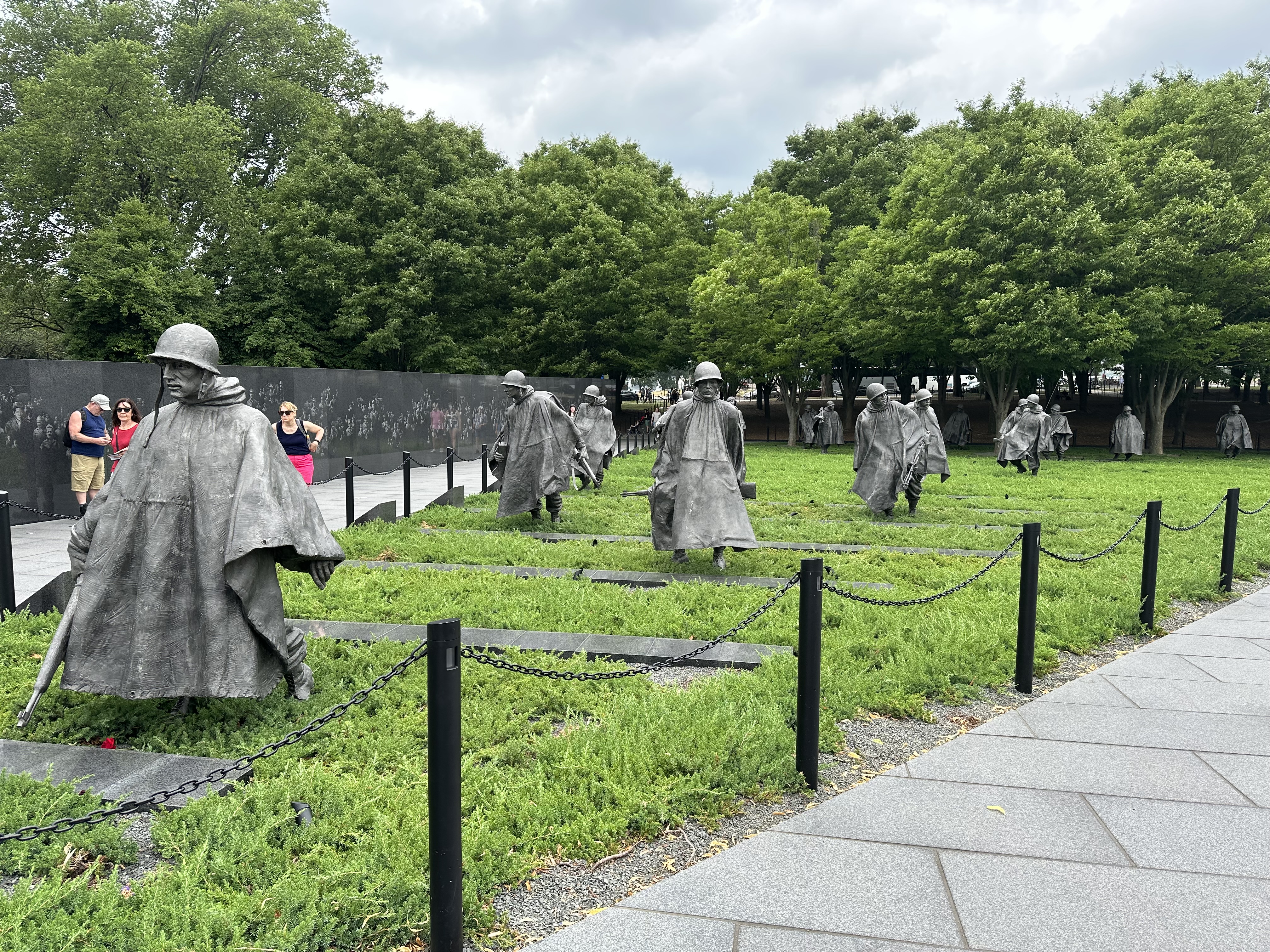
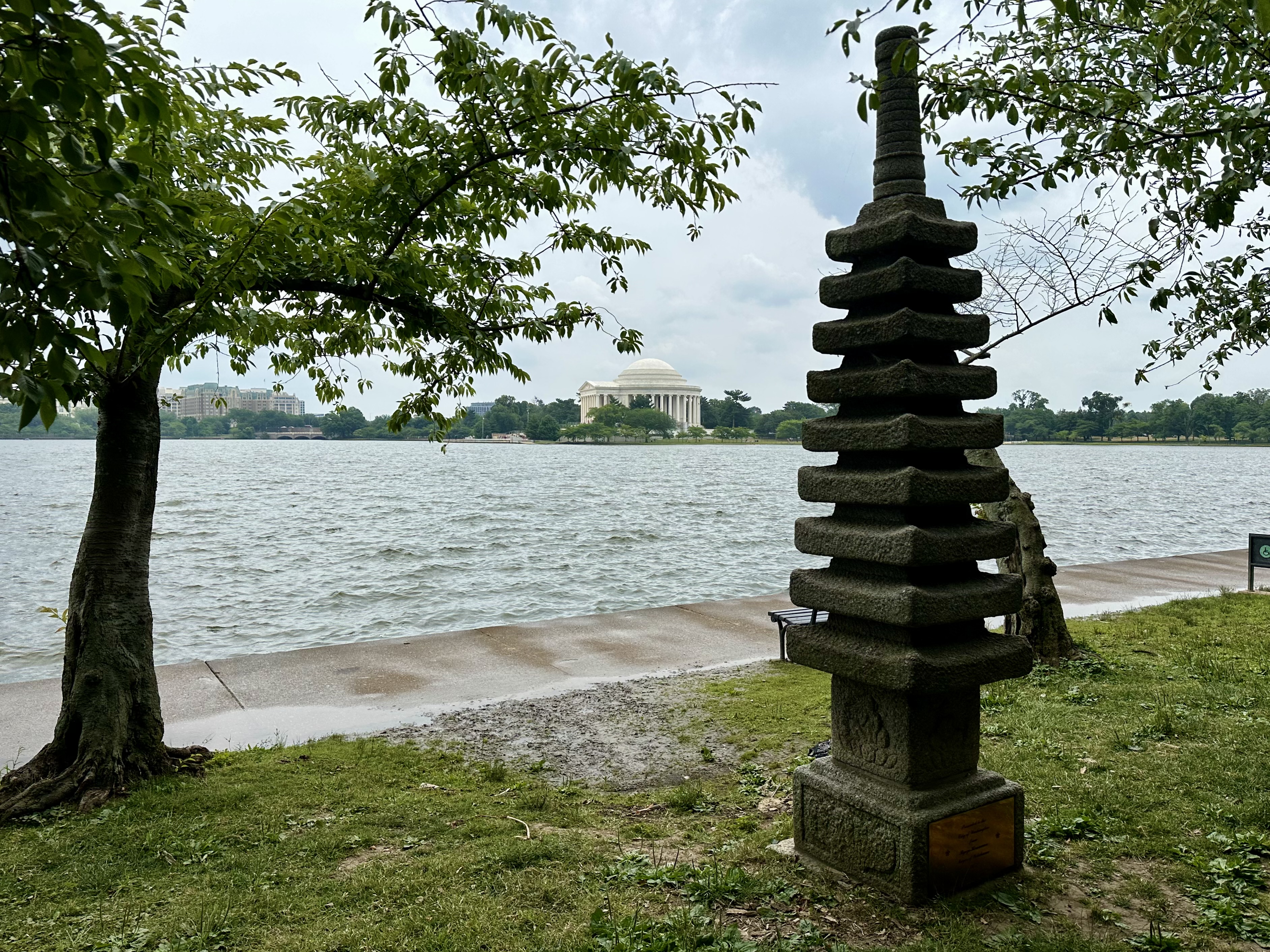
The Martin Luther King, Jr. Memorial stood a short walk away. We were a few months late for the blooming of the famous cherry trees along the path. The impressive King Memorial faced the Jefferson Memorial across the choppy basin. From there, we strolled to the Korean War Memorial. With its platoon of soldier statues, the setting gives you pause about the futility of war.
It was time to head home. We retraced our steps through the FDR Memorial and back to the van. As we rolled south down the interstate, I enjoyed the commotion of the card games with Nana and teenage grandchildren in the back seats. I was happy to have my son-in-law drive and most grateful for our joyous times together.
We had so much fun that we had already made tentative plans for next year’s get-together. In the meantime, I’ll bask in the joyous afterglow of our little family’s reunion.
A surprise beneath the bridge. Photo by Bruce Stambaugh
You never know when you’ll find unexpected color. I was birding on the James River Heritage Rail Trail in Lynchburg, Virginia. After crossing the river, you enter Percival’s Island Nature Area.
Wanting closer to the water, I followed a path that led under the bridge. I stopped short when I saw this vivid street graffiti art painted on one of the bridge’s cement supports. It was the dinosaur that caught my eye.
Though I was searching for bird species, this unexpected splash of color was a pleasant surprise.






























 Roadkill Crossing
You must be logged in to post a comment.