More often than not, Carolina Wrens are heard rather than seen. One recent sunny morning, however, I found this Carolina Wren taking a dip in the backyard birdbath. After its morning bath, the wren flew to the feeder hanging on the back porch. It stayed there for several minutes, satisfied to let the sun dry its earth-tone feathers.
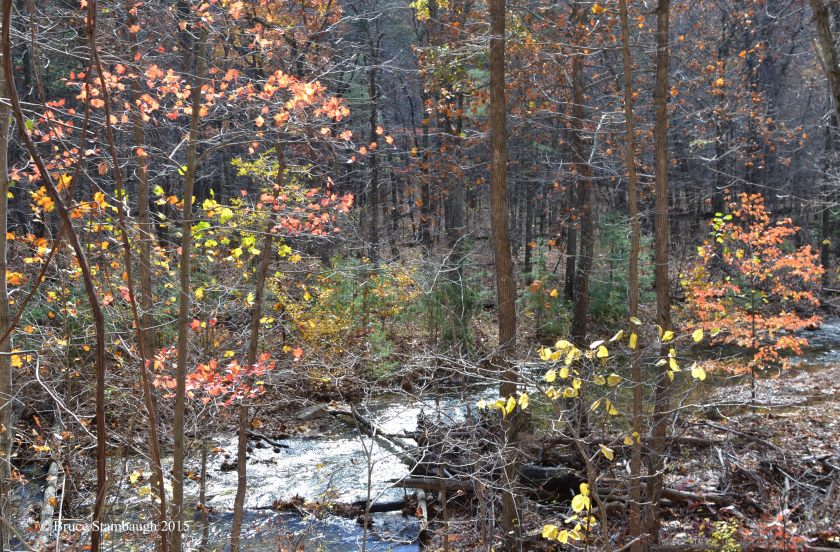
Recent rains made the sparkling mountain stream joyfully sing its way through the sylvan hollow to the broad valley below. The late morning sun’s reflection shimmered as the cold water rushed over and around ancient boulders.
I had driven to this little paradise on the advice of my daughter. She recently had hiked with her family a trail that crossed the creek and scaled one of the precipices of the old, rounded Blue Ridge Mountains. I wasn’t that ambitious.
I was content to drive the 22 miles out of Virginia’s Shenandoah Valley to the end of Port Republic Road to enjoy a morning stroll. I took the much easier firebreak road that shadows the meandering stream.
Stepping stones across the usually placid braided stream broke the trail my daughter took. Today the stream roared rather than lapped its way into the valley.
The native brown trout had to be happy to play in other pools for once. I was happy, too.
This slideshow requires JavaScript.
The temperatures warmed as the sun rose higher above the foothills. The shedding oaks, maples, dogwoods, sycamores and quaking aspens filtered the sun’s splay. Sunrays backlit the remaining colorful leaves. They glowed against the drab earth tones of tree trunks, ferns, and long shadows.
The creek drew me down from the road to its shallow banks. Sapling undergrowth made the way tricky, but not hazardous. I was surprised by both the speed of the stream’s flow and the water’s clearness, especially after recent steady rains. Weeds and reeds normally rustled by the wind swayed submerged.
In the shade, the cooler creekside temperatures chilled me. I didn’t linger there for long.
I returned to the more inviting sunny, well-maintained service road. At times, the stream ran against the narrow berm. In other places, the road curved slightly north while the creek twisted south and out of sight, but never out of earshot.
No car horns, no train rumbles, no jake brakes, no jetliner noise overhead, no boom boxes interfered with the numerous natural sounds. A fox squirrel skittered from the road to the safety of a tree trunk as I approached. It barked at me, and I shot it with my camera.
Click on the photos to enlarge them.
Autumn’s colors.
Talus slope.
Curving creek.
Tree tunnel.
Elder hikers.
Through the trees.
Peaceful pool.
Ripples.
Long view.
Lone hiker.
Up ahead, birds flew across the firebreak. To keep my load light, I had left the binoculars in the vehicle. Fortunately, the birds sat still even as I quietly approached.
I smiled at sighting my first of the year Dark-eyed Juncos, freshly arrived from the Canadian tundra. The flash of their outer white tail feathers against their slate-colored revealed their identity.
The mountain’s granite core stood exposed from time to time. Whitish-gray outcroppings reflected the morning sun both at manmade cuts and in natural talus slopes. I wouldn’t want to be anywhere near the latter if the massive rock pile decided to slide.
Soon hikers a decade older than me approached from the opposite direction. We bid each other adieu, and I asked them how far the road reached.
“Ten miles,” they said, “But it’s an easy walk to the top,” referencing the mountain. The road ended at the Skyline Drive. I took their word for it.
A few trails flared off in either direction. I was content to stay the course for a while before returning to the car for lunch under the noonday sun.
The earthy fragrances, the laughing stream, the vibrant colors pleasantly seasoned my simple fare, which was only right. It had been a sumptuous morning in every aspect.
A Belted Kingfisher flew furiously over the fresh mown hay towards a neighbor’s pond. Breakfast was likely on its mind.
My farmer neighbor hitched his workhorses and teddered the hay to help it dry. The Barn Swallows, Tree Swallows, and Cliff Swallows circled the productive locomotion and devoured every insect the man, the machine and his faithful team dispersed.
A refreshing north wind eased the day’s early humidity. No need for a calendar. All signs pointed to August’s end.
A few trees had already begun to transition from their chlorophyll green to their disguised shades. Even before the berries on the dogwoods blushed bright red, the trees’ leaves curled and revealed hints of crimson and lavender.
The hydrangea bush bloomed full and pure against the garden shed. It demanded daily watering in August’s heat and dryness.
Juvenile birds, Red-headed Woodpeckers, Song Sparrows and Blue Jays among them, found the feeders and the birdbaths on their own. Another aviary generation will forge into fall and winter without knowing what lies ahead as if any of us do.
The big yellow school buses began carting anxious and enthusiastic children alike to and from school. I waved to the drivers as they passed me on my walk.
People often ask me if I miss those days; if I don’t have some innate longing to return to my first career. The short answer is, “No, I don’t.”
I loved the children, whether teaching or being their principal. I greatly enjoyed the interactions of parents and staff members, even when we disagreed. I have no resentments or regrets. Neither do I have any wish to reenlist.
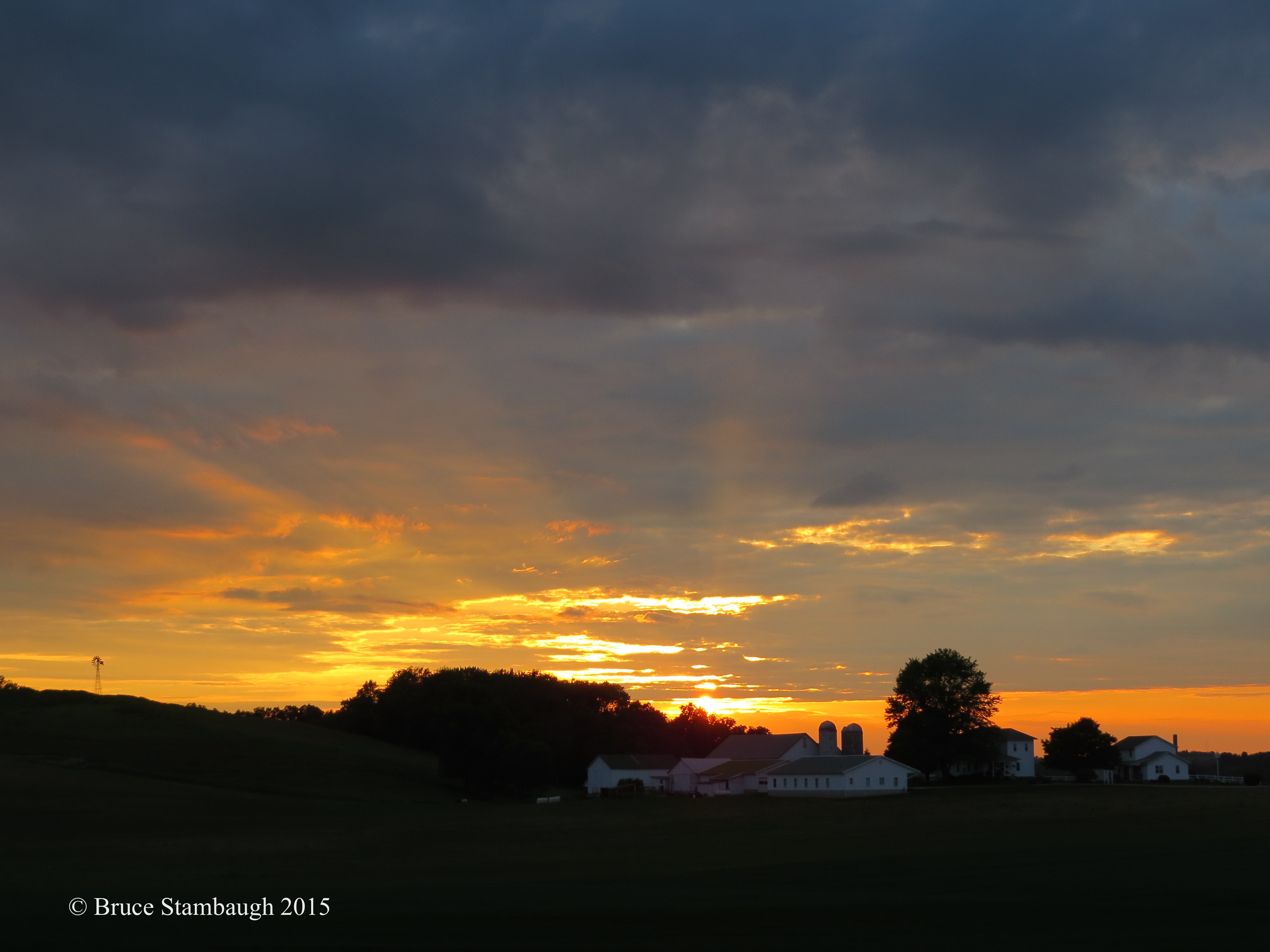
I would rather sit on my back porch, as I am now, taking in the world as each moment flashes by. I don’t want to miss anything. I want to rise each day to enjoy the sunrise and bid farewell to the evening light that dims all too soon.
August has come and gone, always too fast, always too hot and dry. August melds into September.
We can only embrace it, for there are marvelous days ahead. I’ll watch for them whether from my back porch or wherever I might be, knowing that too many in the world will not have the pastoral view or luxuriousness of trusting neighbors that like mine.
It’s my duty to share goodness and joy with others as my life, too, passes from August into September. Isn’t that the real responsibility of all of us at any age?
I sat on the picnic table for nearly two hours admiring the scenery and serenity all around me. I hadn’t planned on staying that long. Life’s events have a way of altering your plans.
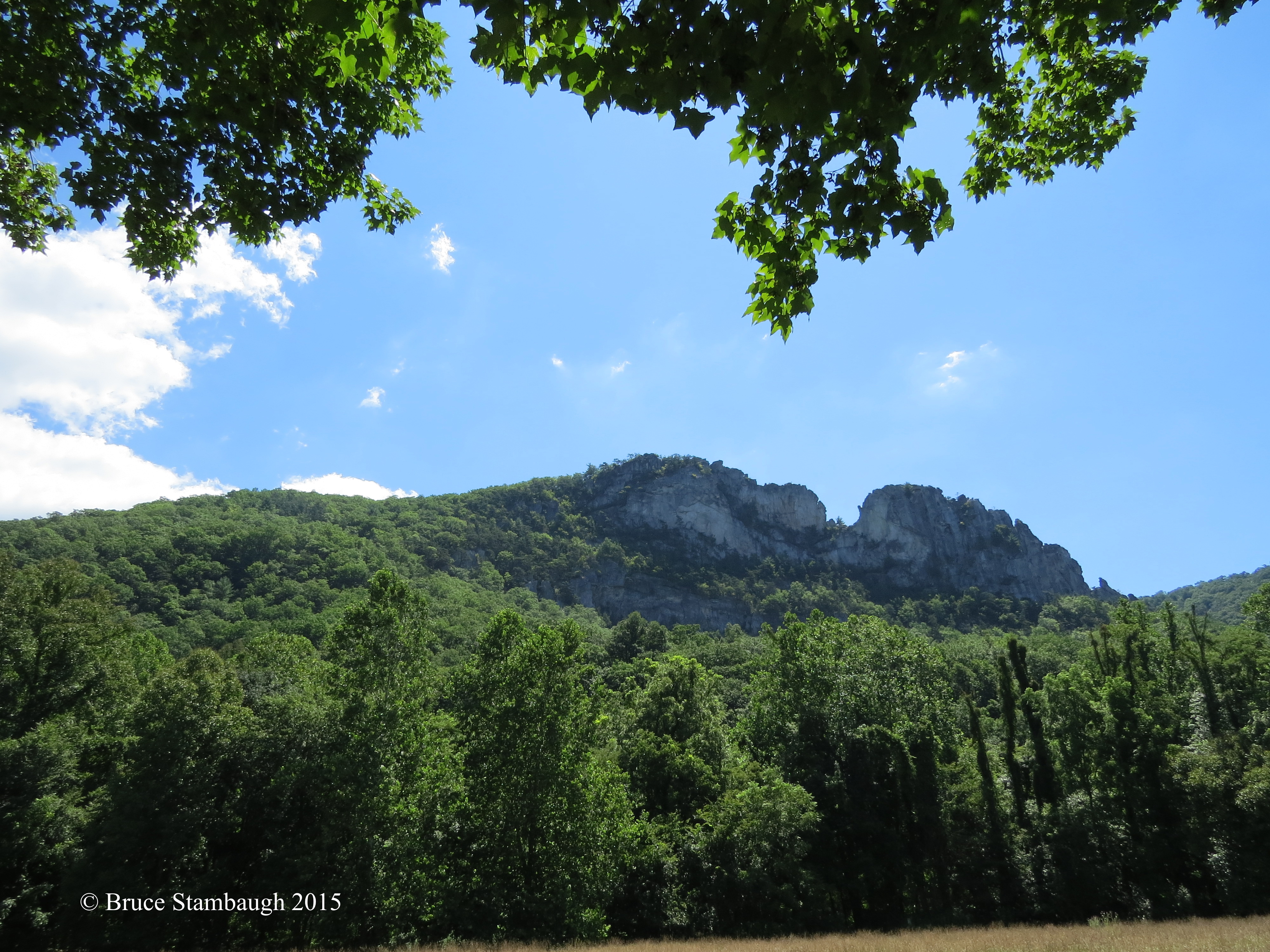
The previous day I had safely delivered our granddaughter back to her parents in Virginia’s Shenandoah Valley. On the way home, I wanted to hike up the enchanting Seneca Rocks, one of the best-known landmarks in West Virginia.
I had previously taken several photos of this fascinating rock formation that juts straight into the sky. But I never had time to climb it. I did this trip.
This slideshow requires JavaScript.
The switchback trail to the viewing platform at the north end of the ancient rock outcropping extends a mile and a half. In that short distance, the trail climbs 1,000 ft.
The cool morning was perfect for my adventure. An overnight cold front had cleared out the heat and humidity.
The trailhead began at the restored home of an early pioneer settler. A tour of the Sites homestead is informative and interesting. I could have been satisfied to watch the dozens of butterflies that flitted around the bee balm. But I had come to hike.
I only walked a few yards when I came to a pedestrian bridge that crossed a delightful river, the South Fork of the North Branch of the Potomac River to be exact. The stream’s lengthy name didn’t do justice to its placid beauty.
Once across the rock-laden river, the switchbacks began. I was more surprised about the excellent condition of the trail than its sudden steepness. A light breeze kept the insects away as I forged ahead beneath the leafy canopy high overhead.
It was comfortable walking in the shade of both the forest and the quartzite cliff, thrust upright from its original horizontal position millennia ago. I had the trail to myself until some early morning hikers passed me on their way down.
I made it to the viewing platform in 40 minutes. The sun’s strengthening light bathed the valley below and the mountains beyond. The businesses, houses and vehicles all looked like toys.
Sighting.
Climbing.
Soaring.
Just as I stepped onto the viewing area that protrudes away from the rock face, a southwest breeze picked up. Soon Turkey Vultures began to soar on the developing vortexes. I glanced back down to the river to discover an adult Bald Eagle had also started to circle in the quickly warming air. In just a few elongated loops, the magnificent bird was high above my head.
I think I smiled all the way back down to the car. I moved to a shaded picnic table to rest and eat the light lunch I had packed. As I ate, I scanned the still shaded western face of the Seneca Rocks with my binoculars.
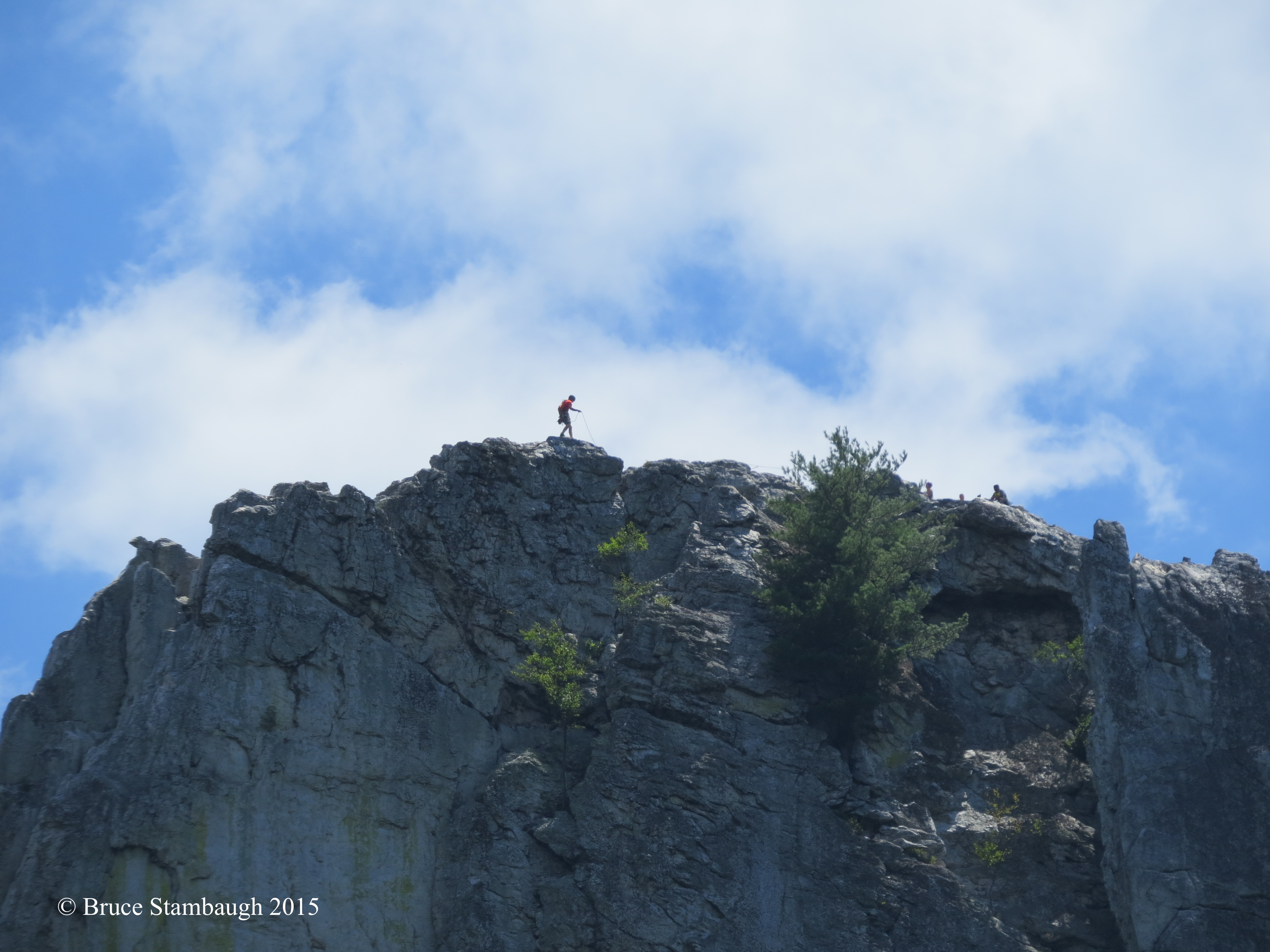
On the summit.
The viewing platform.
Climbing.
Rock wall
Instead of birds, I found first one, then three, then 10 rock climbers scaling the huge, craggy outcropping. I was entranced.
I sat beneath a shade tree observing these men and women pick their way up this sacred place. One brave guy didn’t even use ropes.
I waited to leave until all had made it safely to the summit. I admired their courage, their determination, and their adept skills.
I was pleased to have walked to the top and back. It was even more satisfying seeing these remarkable folks reach their destination. They celebrated their perilous journey with fist pumps and shouts of joy that echoed far across the valley into my soul.
When the farmer called me the other morning, I was away from home. He said he had two juvenile Barn Owls sleeping near his barn. My wife and I finally arrived at the Amish farm two miles from our home. The owls were still in the same place. Both were still sound asleep despite being only a few yards from a busy highway.
The owls had recently fledged from their nest box in the farmer’s barn. Rather than be disturbed by their younger siblings, still too young to fly, each owl found a personal, private spot to snooze. This one chose a silver maple tree in the farmer’s yard. The afternoon sun highlighted its breast feathers and some of the tree’s leaves.
Recently, I had a couple of days that were exactly that. I helped out a friend by leading a few birding field trips to a local farm.
The target birds were young Barn Owls, a couple of fuzzy baby American Kestrels, and bubbly Bobolinks. In a rather rare situation, both Barn Owls and Kestrels had hatched their young in nesting boxes the farmer had erected in his old bank barn. The meadow across the road remained uncut so the tinkling Bobolinks could frolic and flourish.
The farmer and his family went out of their way to accommodate both the birds and us. Their farmstead was neat as a pin. Flower beds and gardens were nearly pristine. The three generations that called this place home welcomed us with open arms and hearts.
Both the farm’s setting and the intentional agricultural techniques employed accounted for the diversity of birds and other wildlife. Surrounded by rounded hills dotted with emerald woodlots, the land rolled away from the farm buildings more like waves than fields.
This slideshow requires JavaScript.
I imagined in a birdseye view a quilted panorama. Broad patches of variegated greens and tans from forested hills, alternating fields of pasture and croplands stitched together by brushy fencerows created a pastoral patterned effect.
Such a landscape also enhanced the desired habitats and food sources needed for the various avian species. It was obvious the farmer, typical of many in our area, understood the balance between conservation and productivity. Sad to say, some deem that approach as inefficient or even old-fashioned.
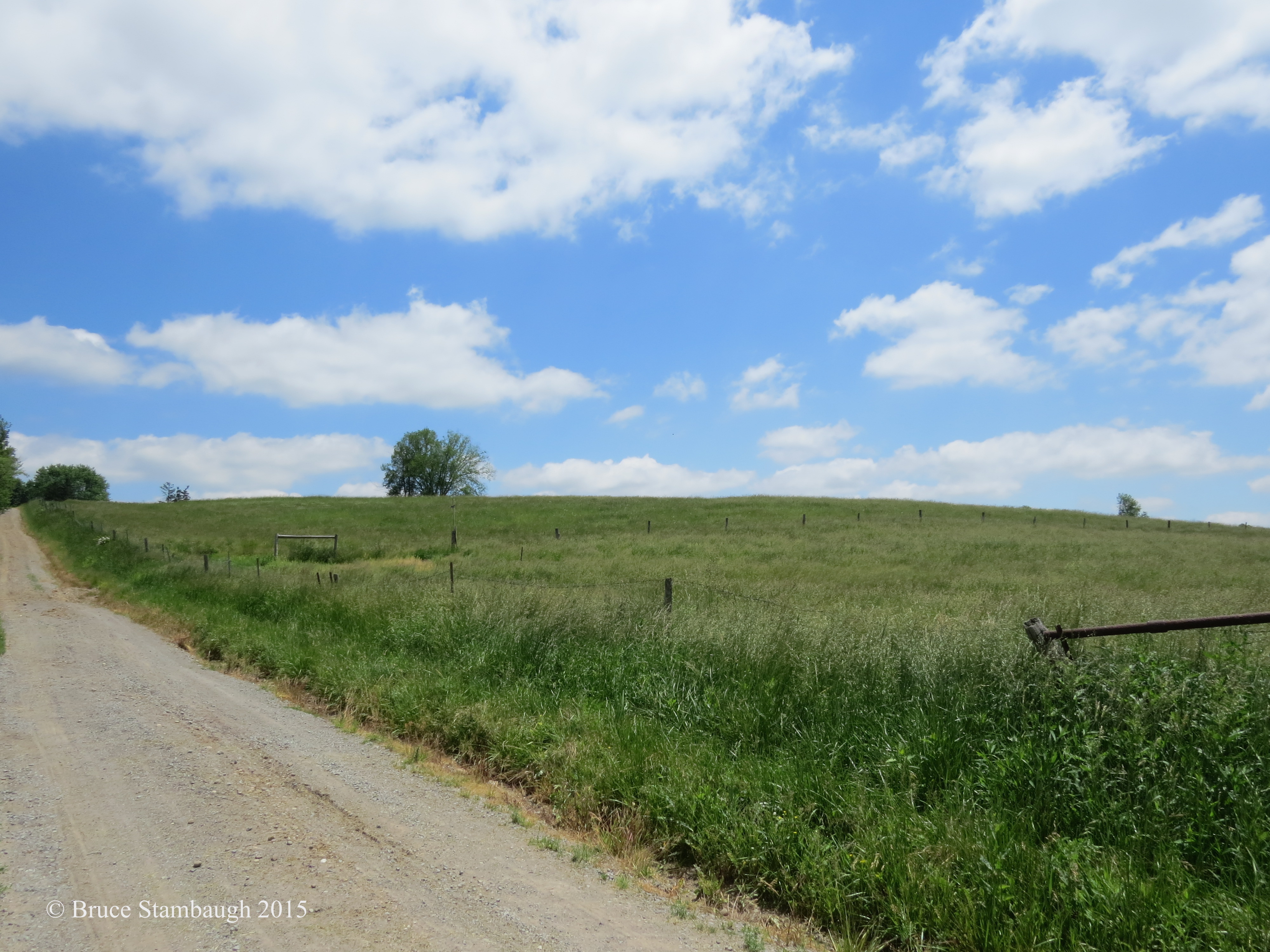
The days were precious in so many ways. Cottony clouds hung in salient skies over windswept grasses nearly as tall as the weathered wooden fence posts that delineated their boundaries.
The meadow’s high grasses mingled with seedy weeds, and wildflowers danced in the wind beneath while the Bobolinks, Eastern Meadowlarks, Song and Savannah Sparrows and Red-winged Blackbirds let loose. The birds’ melodious chorus easily drew the attention and appreciation of each group. All the birders, spanning three generations, thought the birds and their songs beautiful and luxurious.
(Click on the photos to enlarge them.)
Male Bobolink.
American Kestrel.
Eastern Meadowlark.
Killdeer near nest.
Up the ladder.
Baby Barn Owls.
Baby kestrels.
Though he said he wasn’t a birder, the kind farmer had erected nesting boxes in his ancient barn for the owls. That is what attracted folks from near and far for this special chance to view the birds. It was indeed rare to have both owls and falcons nesting in the same barn.
Participants hailed from cities. Others lived nearby. Their ages ranged from preschoolers to octogenarians. A courageous woman on crutches in the midst of cancer treatments even ventured forth. I drew strength from their enthusiasm.
Atop wobbly ladders, we viewed the baby birds one by one through a pencil-sized peephole drilled in the plywood boxes made by students at a local vocational school. A small, square hole cut into the barn siding permitted the adults to enter and exit to feed their young.
Below, hushed conversations ensued in each group. Sunlight streamed through the intentional spaces between the horizontal clapboards. Still the barn was dark and steamy.
No one complained whatsoever. All realized what a privilege it was to view the birds and enjoy the genial hospitality of this marvelous family who welcomed all of God’s creatures.
These glorious days were definitely for the birds, obviously in a juxtaposed sense. The smiles on the faces of all the birders declared each visit a joyous success. None of us could have asked for more.
On my morning walk, my neighbor’s grandsons exited the house well before 9 a.m. They each had their necessary baseball gear in tow, gloves, bat, and ball.
I called out to them, “Baseball for breakfast, boys?”
They just smiled and ran to their imaginary Major League park, the grass groomed immaculately by their grandfather. I walked on, lifted by the sound of bat striking ball.
Because the local greenhouse was having a sale, more traffic than normal traveled the tiny rural road. Believe me, they were busy.
That’s one of the luxuries of living in the country. The sounds of life’s contrasts become all too obvious.
Young Amish girls, all three sisters that I knew, pulled an empty wagon toward the greenhouse.
“Going shopping this morning?” I asked them. A simple “Yes” and a few giggles was their retort. I silently lauded the mother for allowing the girls to pick out the desired plants.
This opportunity gave them responsibility, decision making, and experience in money exchanging, all valuable life skills. It was just one example of raising children in the way they should go.
As I reached Jonas’ farm, his wife walked down the sidewalk to the gravel driveway where her husband waited in the buggy. I waved, and Jonas returned the common greeting.
All the while I strolled and interacted with these good folks, I kept thinking of my friends far away in Syria, Iraq, Honduras, Texas, California, and other foreign countries.
How I wished they could be walking with me to experience this goodness that I take for granted far too often. Instead, some of them were just trying to stay alive, work diligently for peace, help the needy, and recover from massive flooding.
When I reached our property, my heart sang in harmony with the birds. My energetic wife was watering a variety of colorful flowers, some she had purchased at the greenhouse sale earlier that morning.
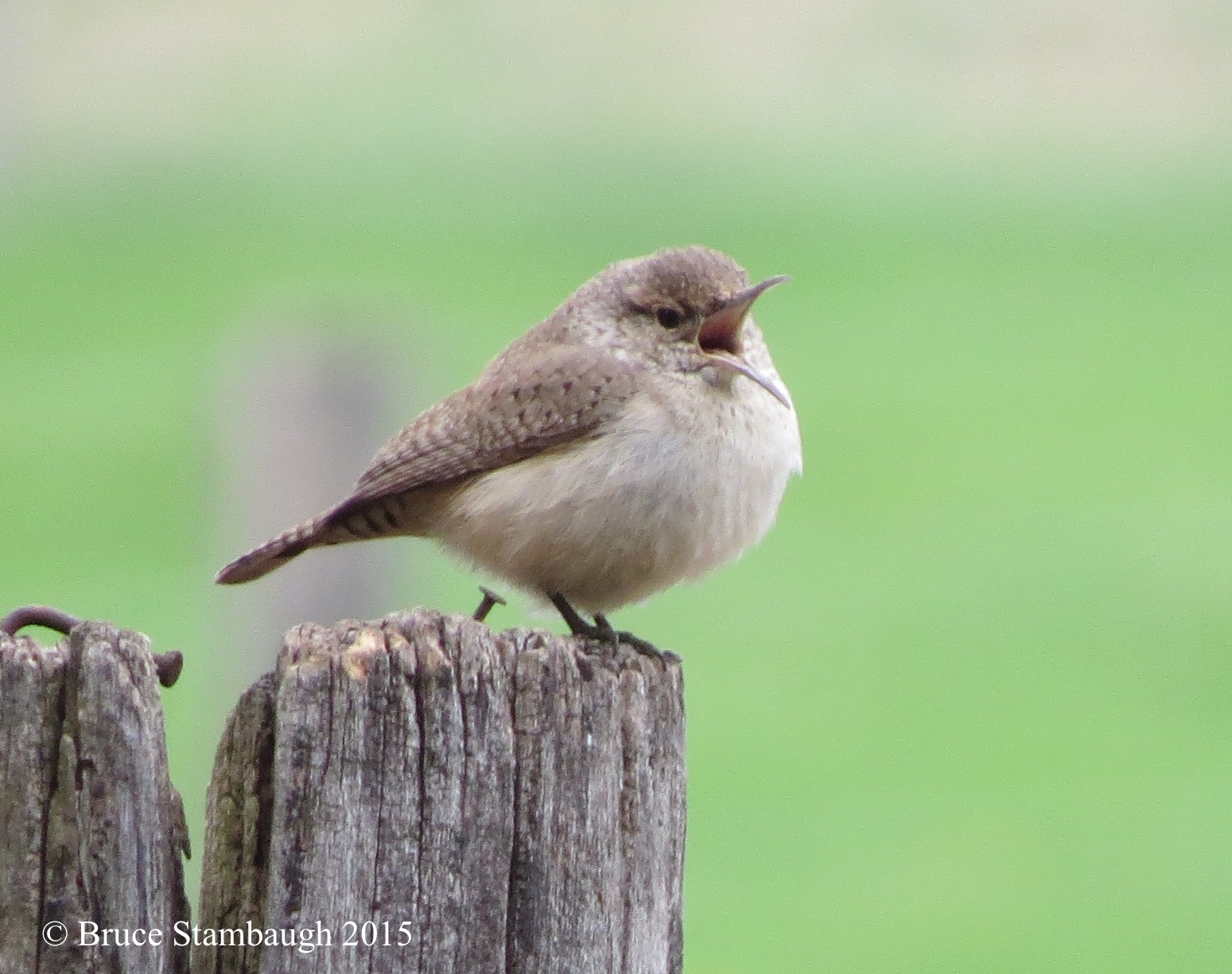
The Eastern Bluebirds flew from the birdhouse I had put up for them. My heart rejoiced all the more. I was glad they had won out over the pesky House Sparrows. A House Wren chattered atop another birdhouse nearby.
I have a lot for which I am grateful. This walk reminded me that each morning I open my eyes I need to say a joy-filled thanks.
Like children dreaming of Old St. Nick on Christmas Eve, this is the time of year birders have yearned for, longed for, relished.
For hardcore birders, spring migration is a Christmas morning that spans several weeks from mid-March to mid-May. Avid birders are especially on the alert now to find the many species they seek, and some they couldn’t even imagine.
Such birds are the exception. The spring migratory norm is to view birds that either return here to nest or to catch a glimpse of those that are just passing through. Depending on the weather, the transients might stay a day or two, or just make a short pit stop to rest and refuel.
The challenge is to be at the right place at the right time to see and hear the birds.
For me, I’m just as happy to note the return of my backyard birds. The Chimney Swifts rattled the fireplace doors as they swooped into our chimney the evening of April 18, the same date as last year.
How do I know? Like most birders, I keep a list of when I see a species for the first time each year. In the birding world, that’s known as the FOY, first of year. For instance, the Red-headed Woodpecker was a day later than last year, arriving April 21.
This slideshow requires JavaScript.
Today’s birders use social networking sources to track the movement and appearance of the various species. That gives the flocks of birders a heads up on finding and photographing particular birds.
We are fortunate in Ohio to have one of the best locations in the country to observe and hear a wide variety of transitory and returning birds, especially warblers. This time of year both birds and birders pack Magee Marsh Wildlife Area.
A conservation group, the Black Swamp Bird Observatory, located at the entrance to Magee Marsh in northwest Ohio, sponsors “America’s Biggest Week in Birding.” In fact, it’s going on right now.
These folks welcome thousands of birders, amateur to professional, in hosting this attractive annual festival. Magee Marsh, a state park, is billed as “the warbler capital of the world.” Having been there on many occasions, I can attest to that.
Birders from around the world converge on Magee Marsh just to watch the warblers and shorebirds come and go. It’s not unusual to observe 20 or more kinds of warblers in just a few hours. Magee Marsh and the surrounding acreage are protected habitat that ensures safe harbor for migrating and nesting birds of all sizes, colors and species.
My first visit to Magee Marsh years ago was indeed like Christmas. A few steps onto the wooden boardwalk and I spotted a variety of colorful warblers decked out in their impressive breeding plumage. The brightly colored little birds looked like Christmas tree ornaments perched on low-hanging tree branches.
Where I live here in Ohio’s Amish country, we don’t necessarily have to drive that far to enjoy the migrating birds. The Killbuck Marsh Wildlife Area, the Holmes County Trail, The Wilderness Center, and the many ponds and lakes in our area provide excellent habitat for a variety of birds.
Or you can just step outside and watch and listen. You just might think it’s Christmas in springtime.
Our backyard looks and sounds a little different than it has in a long time.
We recently bid a fond farewell to our little backyard garden pond. She served us well all these years. It was time to let her go, and allow others to embrace her captivating charm.
I didn’t relish removing the little pond and all its accessories. The artificial pond brought us many genuine joys, far beyond any expectations we could have imagined.
When I retired as elementary principal in 1999, my faithful staff, amiable students and supportive parents presented me with a very special gift. They gave me a hand-hewn birdbath and a gift certificate for a garden pond, something I had wanted for a long time.
I brought the weighty birdbath home and plopped it where the sidewalk curves to the front porch. Surrounded by luscious bubblegum petunias, it enticed many a bird to sip and bathe in the summer sunshine.
I located the pond just steps away from our back porch. It was also easily visible from the windows at the rear of our home.
I’ve had two different ponds over the years. The first was a rubber lining placed in a shallow hole that I had dug out. I added a miniature waterfall constructed out of an assortment of rocks I collected from farm fields and local creeks.
I added goldfish, oxygenating plants, water lilies, snails and non-toxic chemicals to kill the algae and keep the water as clean as possible. Of course, I had to feed the fish and regularly clean the pond pump filters.
Unfortunately, destructive varmints also were drawn to the water feature. Several years ago, I awoke to find that the pond had been nearly drained.
I discovered that some ground moles had created shortcuts to quench their thirst. To prevent a reoccurrence, I switched to a hard plastic pond. In the end, it turned out to be a better option for everybody, pond critters included.
The waterfalls provided practical and esthetic pleasures. The birds loved it, bathing and drinking the refreshing water. The sound of water falling mesmerized anyone who graced our porch.
I enjoyed watching American Goldfinches bringing young to the pond for the first time. I added a heater to keep the falls going in the wintertime. A variety of birds took advantage of the much-needed water when their normal sources froze.
Birds weren’t the only animals attracted to the little pond. Over the years, raccoons, garter snakes, groundhogs, squirrels and even deer came to the pond.
The grandchildren loved the pond, too. They couldn’t wait to feed the fish and count the frogs hiding among the lily pads and their pure white blossoms each time the grandkids visited. My wife and I will always cherish those fine memories.
As much as we loved the pond and its amenities, we needed to give it up. Given our situation, we simply couldn’t maintain the pond properly. A friend’s family is already enjoying its alluring magical sounds. It’s nice to know that another generation will continue the gratification that we received from the little water feature.
To keep a water source for the animals and birds, I relocated the sandstone birdbath from the front to the back and added a couple of others to keep it company. We transplanted hostas and placed several of the rocks leftover from the falls for some natural texture.
The birds have already discovered the water. I only hope the snakes and groundhogs don’t find it as desirable.
The first flowers of the year bloomed in our yard on April 1. No fooling.
My wife found them while picking up sticks after several additional days of steady, biting winds that brought down more tree debris. I had done the same chore a week previous.
Golds, lavenders and purples of spring, assisted by the blossoms’ compatriot green leafy shafts, poked through the tree trash. That’s the one nice thing about crocuses. They replenish themselves without any effort on our part, as long as furry varmints don’t devour them.
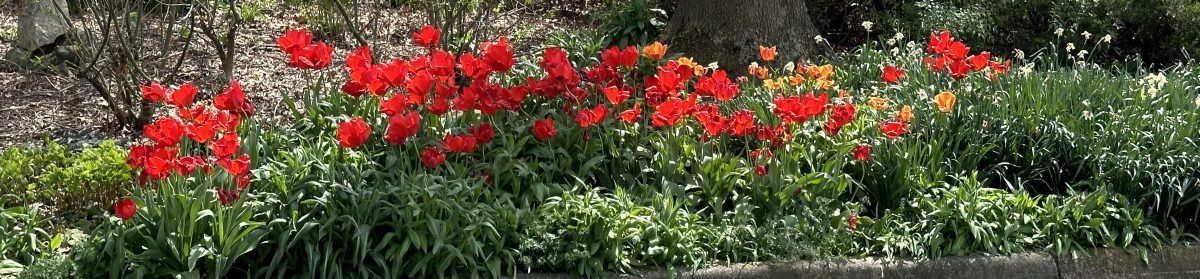
The royal purple, lovely lavender, and buttery yellow crocuses were welcomed splashes of joyous color amid the decaying aftermath of winter’s harshness. Even the honeybees thought so.
Dead limbs and burnished leaves littered the yard thanks to continuous cold winds. It was mostly the shingle oaks and red oaks that finally released last year’s growth.
It could be easy to be remorseful given the depth of winter’s persistent, piercing punches. To be blunt, the last two winters in Ohio have been brutal. The current condition of any highway, rural, suburban, urban or interstate, is proof enough of that.
The fact is that when you live in northern Ohio, awaiting spring requires patience. We shouldn’t allow either the sullenness of winter’s negative effect nor the cloudy, cool spring days to dull our senses to the numerous subtle changes that are occurring beyond the short-lived flowerings.
Those hints are our daily hope. We only need to watch and listen to realize spring’s emergence.
This slideshow requires JavaScript.
Here’s what I’ve witnessed so far. The glint of another promising sunrise flashed off the harness hardware of the draft horses pulling one bottom plows turning topsoil. Chilly mid-morning April showers sent them all to the barn.
A Chipping Sparrow trilled its repetitious song from the safety of the blue spruce at the corner of our home. It was nice to hear its monotonous melody again.
A Red-winged Blackbird sang its luxurious chorus from the top of the tallest pine on our property. It had been doing so for a month already. When our son was a youngster, he always noted when this common bird with its flashy red wing patches first sang its welcoming song atop that tree.
Cardinals and American Robins joined in the musical mayhem, staking out their territories, and trying to attract a mate. The robins regularly asserted themselves, especially against their diminutive but beautiful cousins, the Eastern Bluebirds.
Molting American Goldfinches squabbled at the bird feeder by the kitchen window as if their changing colors irritated their familial demeanor. An Eastern Phoebe popped onto the same limb it claimed last year and naturally bobbed its lobed tail.
An awakened fox squirrel was a sight to see as well. Pelting rains had disheveled its scrubby fur as it munched and munched on sunflower seeds.
Long, hard winters followed by chilly, wet starts to spring can get us behaving badly if we’re not careful. We get antsy for the weather we so desire. Tending to both flower and vegetable gardens beats shoveling snow any day.
With the recent rains and warmer temperatures, it looks as though our steadfast but frayed patience has finally paid off. Let’s hope both fairer weather and pleasant attitudes prevail right on into summer.












 Roadkill Crossing
You must be logged in to post a comment.