Jackie Robinson Wasn’t the First African-American MLB Player

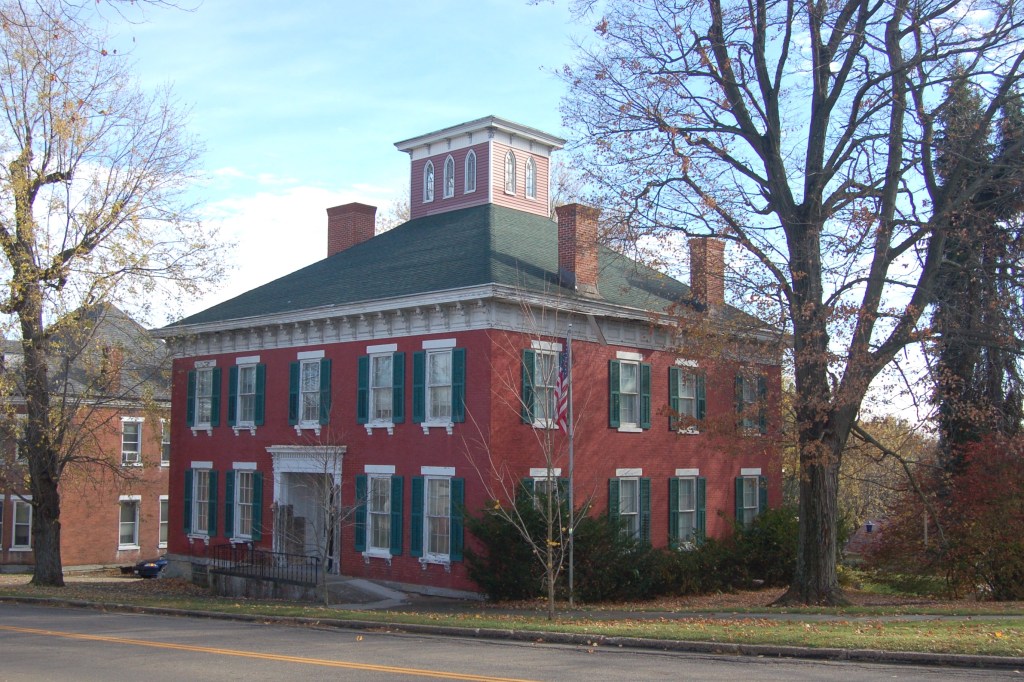
Lanterns lit in the cupula of this home led people on the underground railway to safety. Photo by Bruce Stambaugh

Would you be surprised if I told you that the great Jackie Robinson wasn’t the first African American person to play in Major League Baseball? Would you be even more surprised if I said he wasn’t even the second black player?

Hard to believe as it is, both comments are fact. Moses Fleetwood Walker, better known as Fleet, was the first Black player in the major leagues. He played catcher for the Toledo Blue Stockings in 1884. He signed with the team in 1883 after playing on the baseball teams of Oberlin College and the University of Michigan. Fleet’s brother Welday played a few games that same year, becoming the second Black player. That was 63 years before Jackie Robinson debuted with the Brooklyn Dodgers.

In the post-Civil War era, signing and playing Fleet and his brother was a bold move for the Toledo club, a member of the American Association, now the American League. In the Jim Crow era, it met with great hostility from Whites and, in an odd way, led to Fleet’s short career.

The plaque honoring Fleet Walker in the baseball Hall of Fame. Photo by Bruce Stambaugh

Hall of Famer Cap Anson, the star player and emboldened racist for the Chicago White Stockings, now the Chicago Cubs, refused to play with a Negro on the field. Toledo’s manager called his bluff, however. Knowing he wouldn’t get paid unless his team played, Anson relented. However, Fleet was injured and wasn’t scheduled to play that game. But because of the tense situation, his manager had Fleet play anyhow.

So, why isn’t Fleet recognized as the first Black Major League Baseball player? John Husman, a leading baseball historian, cites two reasons. Records in that era of baseball were not well kept. But more importantly, Jackie Robinson was a star player who played 10 seasons for the Dodgers, plus years in the Negro Leagues before that. The Negro Leagues didn’t exist when Walker and his brother played. Consequently, history forgot them.

Of course, Hall of Famer Jackie Robinson is rightly credited with being the first Black player in baseball. He broke the color barrier with his amazing baseball skills and longevity as a major league player. He earned his Hall of Fame enshrinement in Cooperstown, New York, and the annual recognition of Jackie Robinson Day every April 15th. It was the day he joined the Dodgers in 1947.

Moses Fleetwood Walker has a plaque in the Hall of Fame with a photo of him and his wife, recognizing his pioneer playing days. The plague also includes part of a threatening letter from the Richmond, Virginia, team. It is only one example of what he, his brother, and the teams he played for endured.

Part of one of the threatening letters Fleet Walker’s team received. Photo by Bruce Stambaugh

Despite the progress made by Robinson’s historic breakthrough, injustices to people and athletes of color continue. Only recently, a bronze statue of Jackie Robinson was stolen from a park in Wichita, Kansas. The perpetrators cut off the life-sized statue at the ankles, leaving only his shoes. The statue, valued at $75,000, was later found mutilated and burned at another area park. Clearly, the racist hatred expressed in the Richmond letter toward Fleet Walker so long ago still flares its ugly head too often today.

Ironically, Moses Fleetwood Walker was born in 1856 in the then-Quaker town of Mt. Pleasant, Ohio, a noted station on the underground railroad. Lantern-lite signals from the glass windows of a cupula atop a large brick home on the main street of the small village led travelers on the underground railroad to safety from the nearby Ohio River. Could his parents have been among them? It’s a query likely never to be answered.

At least their oldest son has a touch of recognition with a plague in the National Baseball Hall of Fame. It’s a footnote of baseball history, but at least he isn’t forgotten.
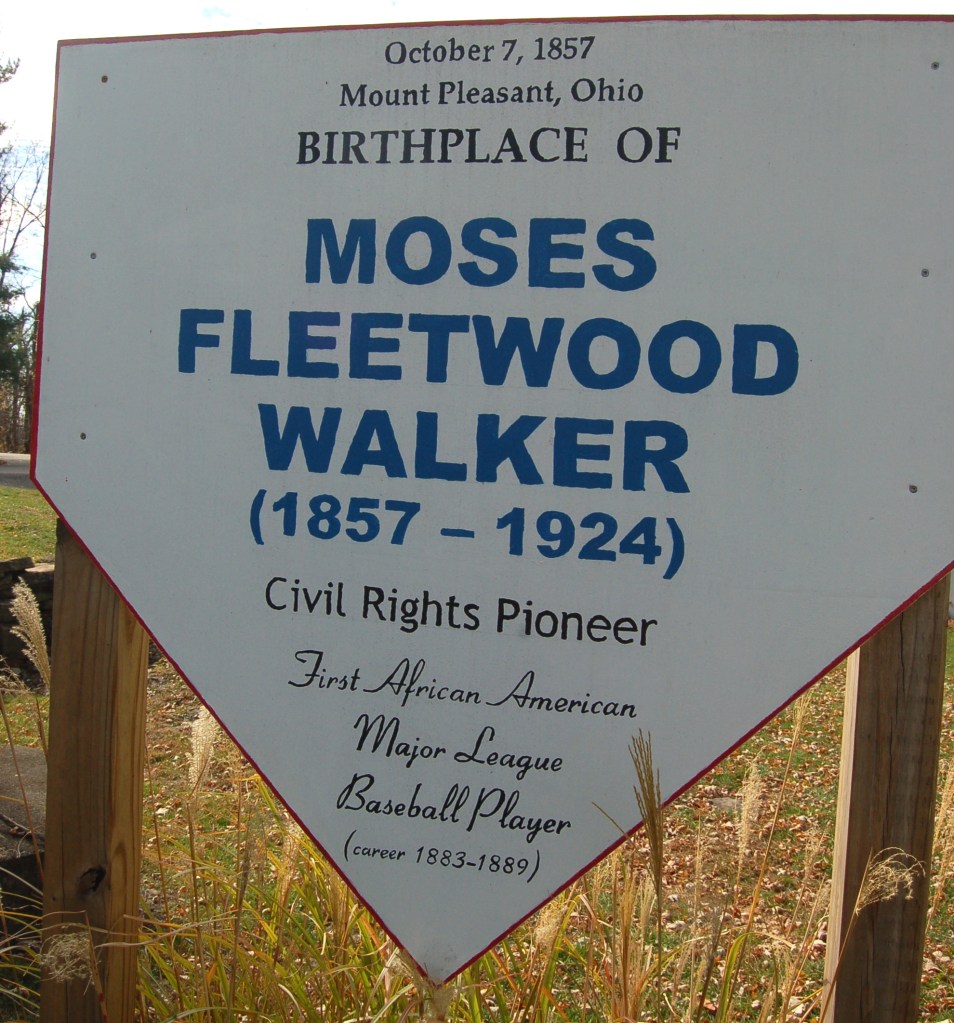
Photo by Bruce Stambaugh

© Bruce Stambaugh 2024

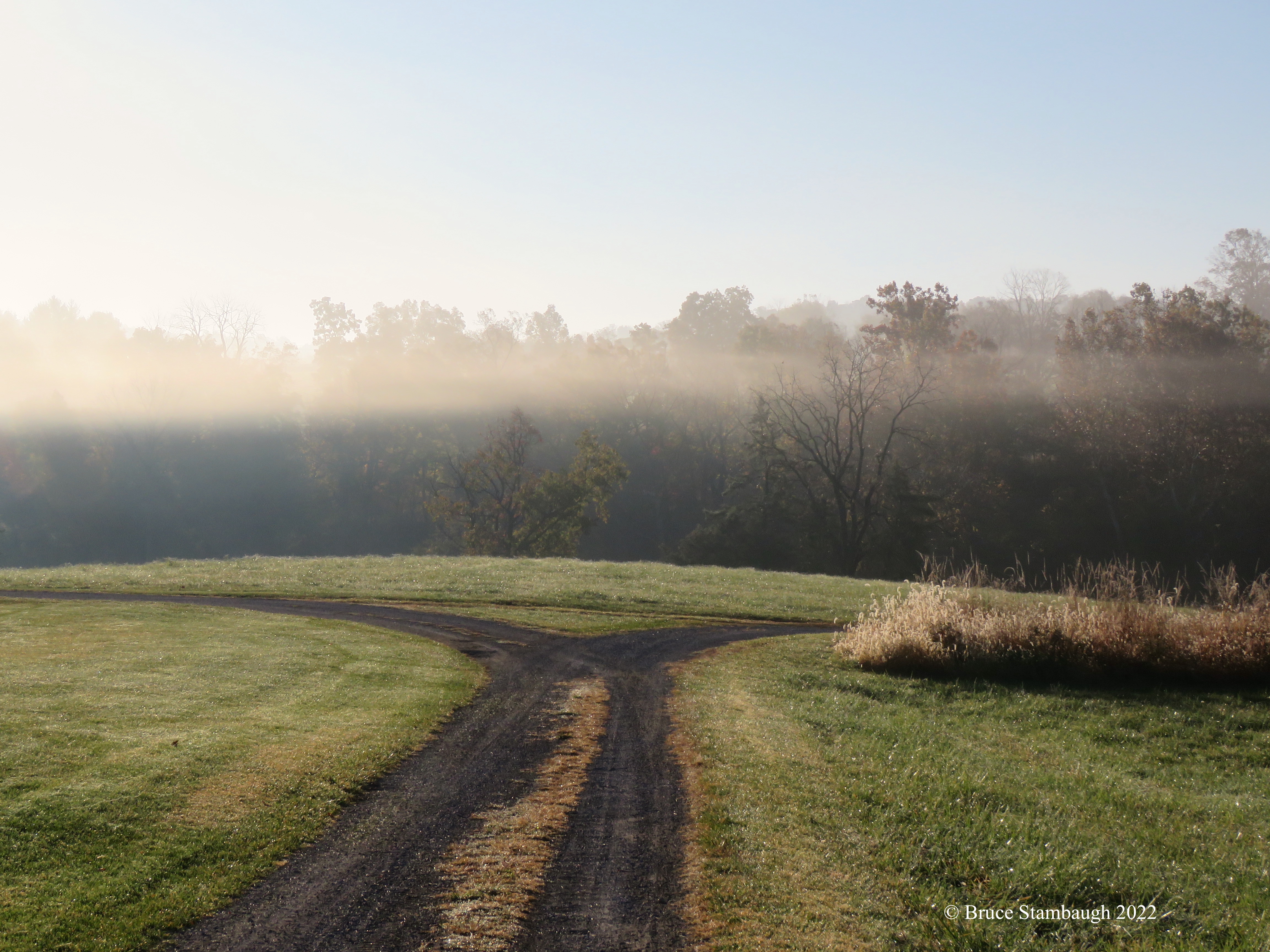
The Fork in the Road

The late Yogi Berra, the Baseball Hall of Fame catcher, famously told Joe Garagiola, another former Major League Baseball catcher, “When you come to a fork in the road, take it.”

Well, here’s a fork in the road. Right or left?

© Bruce Stambaugh 2022

Explaining My Absence

I realize it’s been a while since my last post. I apologize for being absent. I have my reasons. Let’s just say that it’s been a busy spring for our family.

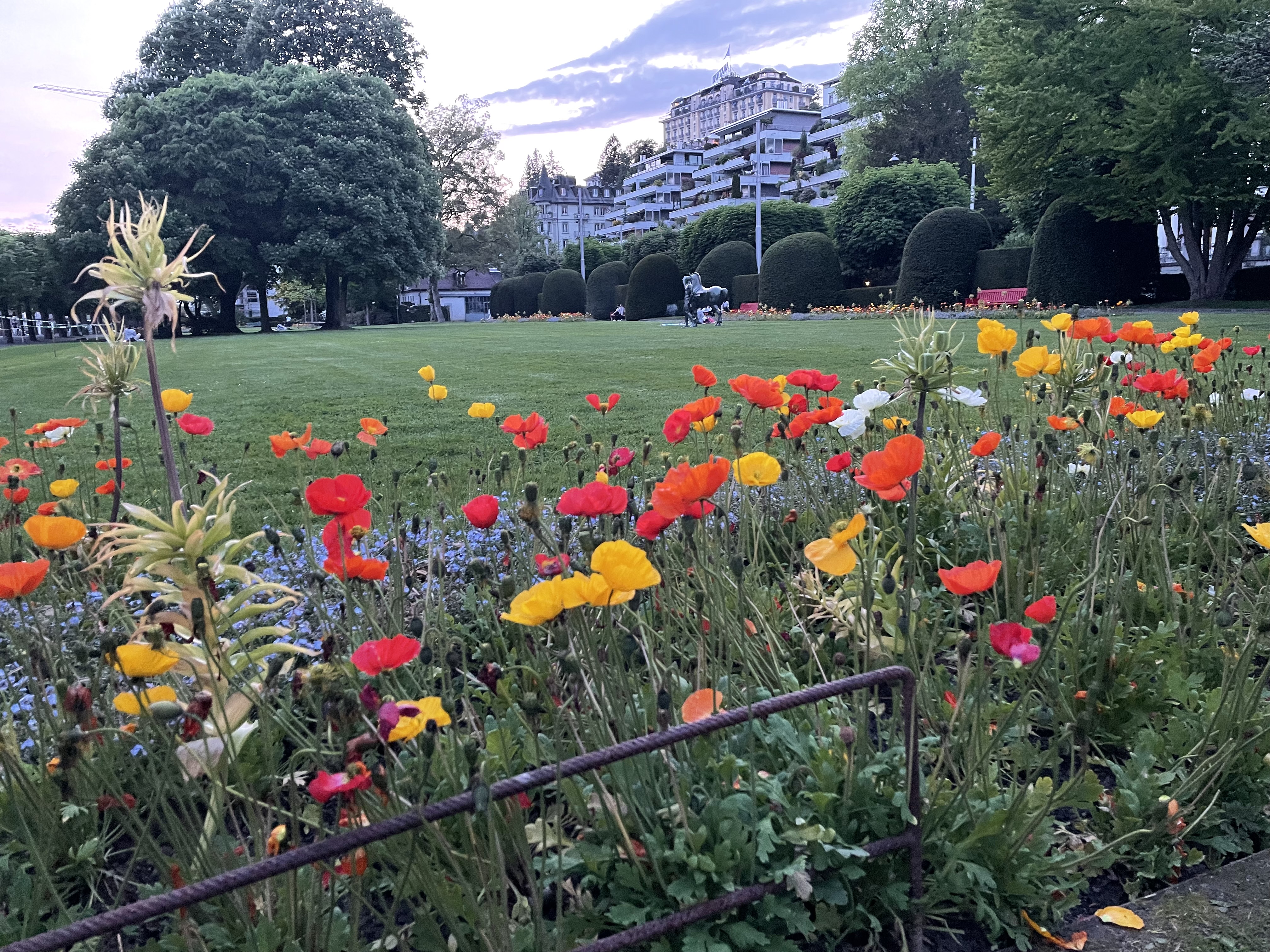
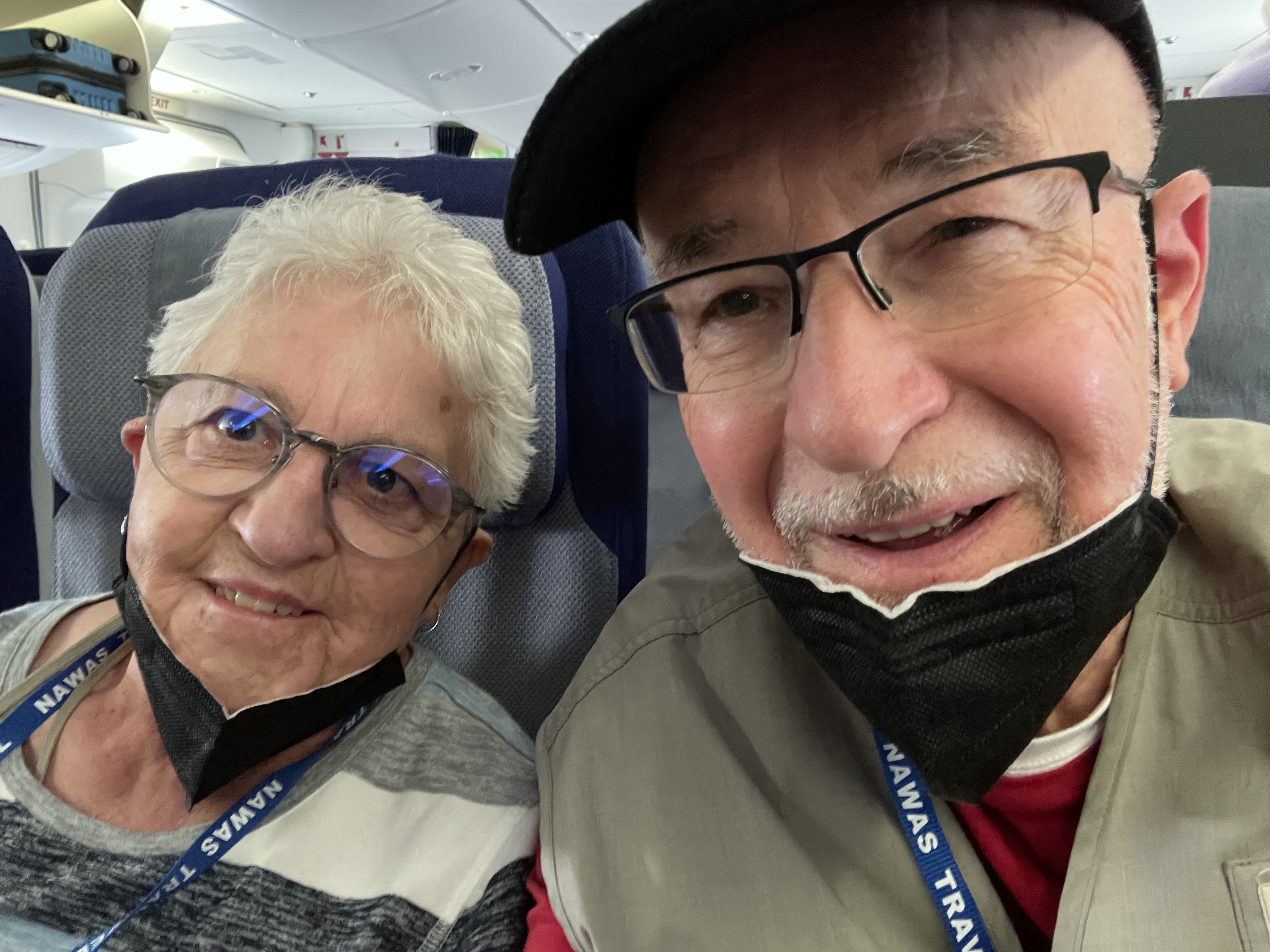
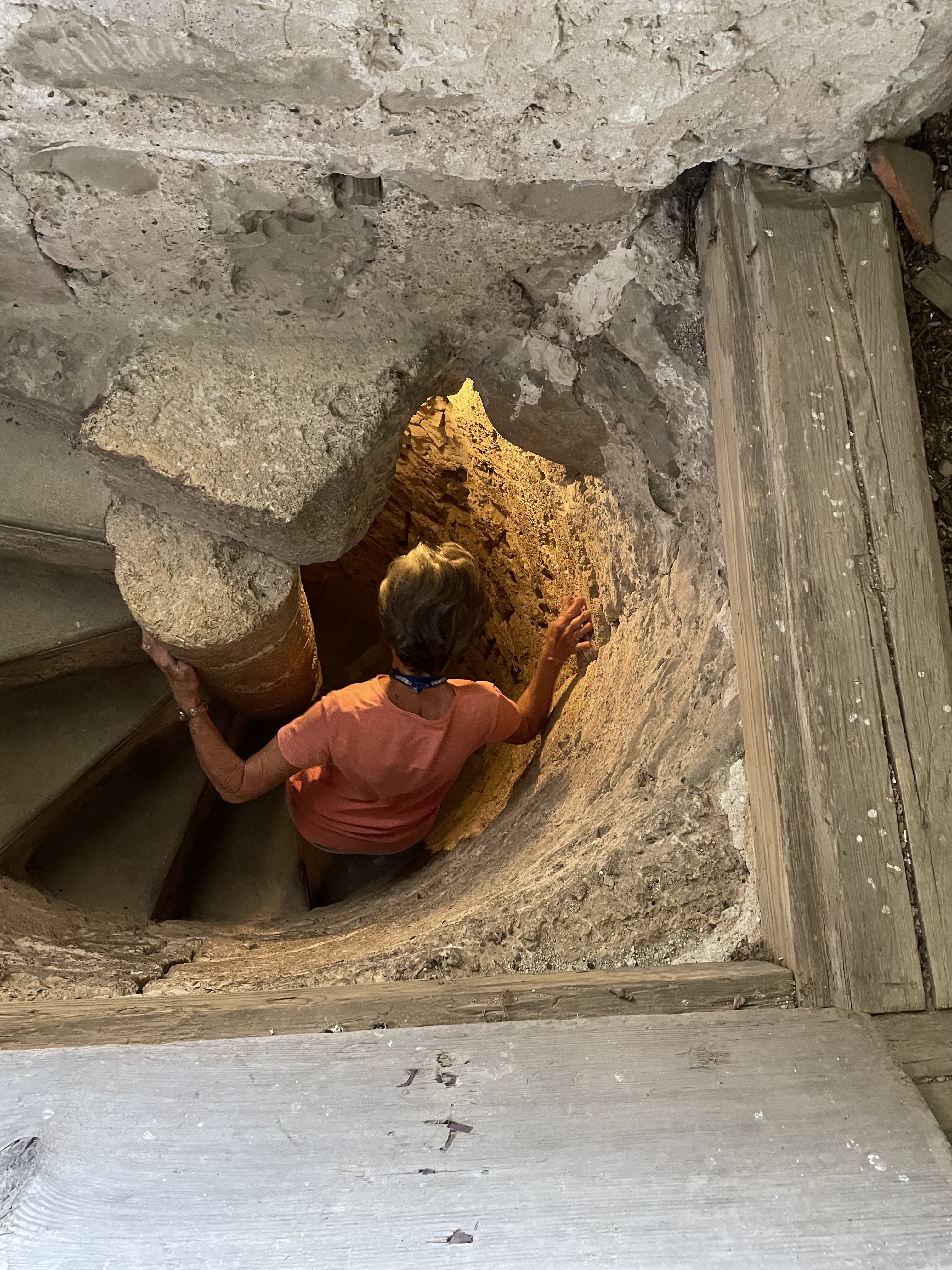
Below are some photographic hints explaining where I have been, and why I haven’t published either stories or photos lately. I am in the process of creating new posts, so these teasers will have to do for now.

Any guesses as to why these photos help identify my lack of posts? I’d love to hear your thoughts. Comment away!

© Bruce Stambaugh 2022

A Natural Combination

My old friend and Halloween

Paul Sauerbrey and Halloween just naturally went together. My late friend was born on October 31, 1915.

Whether he intended to do so or not, Sauerbrey, which was his preference, lived a trick-or-treat lifestyle. Ironically, he never wanted his birthday celebrated, nor did he particularly enjoy all the Halloween commotion.

Sauerbrey taught elementary school for 43 years and claimed never to have missed a day. He loved teaching that much.

Paul Sauerbrey

Sauerbrey also enjoyed both tricking and treating people. He either liked you, or he didn’t. There was no in-between for the Halloween baby.

Sauerbrey loved math, English, and science. He subscribed to magazines that promoted the latest scientific gismos, and he often ordered the ones that caught his fancy and that he could afford.

He would buy dozens of clickers and popup buttons that would react to changing temperatures. Once the metal reached a specific temperature, the seemingly dull device snapped loudly and popped high into the classroom air, startling students.

He also tormented his sixth-grade students with crazy word puzzles that required mathematical equations to solve. He praised the few students who figured out the correct Venn diagram and chastised those clueless as to what a Venn diagram was.

His students mirrored their teacher’s inclinations. They either liked him, or they didn’t.

I especially remember one particular prank Sauerbrey pulled on a warm summer day. Sauerbrey arrived at his favorite hangout, the village gas station.

A father and his two sons, one of whom was legally blind, owned the popular town hangout. Sauerbrey loved to pester the blind man, John, who was no saint himself. I was talking with John when Sauerbrey quietly approached from behind.

John had just poured a cup of water when Sauerbrey let loose with an air horn that he had recently purchased. John immediately turned and threw the water towards the sound and soaked our ornery friend. Sauerbrey’s trick had turned into John’s treat.

Sauerbrey loved to tell stories, especially about his younger years growing up on a farm in rural Coshocton County. Sauerbrey didn’t hesitate when a neighbor offered to take him and others to a Cleveland Indians baseball game. Sauerbrey had never been to a major league game before.

The neighbor had his passengers sit on chairs in the back of his pickup truck. Long before interstate highways, the 100-mile trip took them three hours each way through both country and city settings.

The group sat in old League Park’s leftfield bleachers. When a player hit a home run, Sauerbrey caught the ball. He promptly threw it back onto the field to the surprise and ridicule of those around him. It was a long ride home for my friend.

Sauerbrey had a soft side, though. When my family visited his three-room home in Killbuck, Ohio, he always spoiled us with Cokes and Hershey bars. Of course, we had to help ourselves.

Sauerbrey was generous, far beyond offering candy and soda. After he died in 1993, the former teacher left a majority of his estate to the Holmes County, Ohio, Education Foundation to assist future Killbuck students in attending college.

Some of the students have been the first in their families to attend university. Their majors have run the alphabetical listings of college catalogs: chemistry, education, English literature, diesel mechanics, physical therapy, speech pathology, sports management, and many others.

To date, hundreds of thousands of dollars have been awarded to students to assist with their higher education expenses. That’s quite a philanthropic trick for someone who never graduated college or earned more than $6,000 a year.

© Bruce Stambaugh 2021

It pays to be flexible in retirement

I thought retirement was going to be peaceful and calm. I was dreaming.

Take two recent back-to-back days, for instance. My wife and I could have gotten ulcers from our on-again, off-again schedules. Instead, we merely went with the flow as we have learned to do.

This particular Tuesday was packed. We skipped our morning Zoom yoga session in favor of hosting Neva’s first cousin and his wife for breakfast before they headed back to Ohio. Of course, Neva did her usual over-the-top hospitality thing.

We looked forward to their long-awaited in-person visit, their first in two years. But there was a problem. I host a Zoom writing group on the first Tuesday of every month at 10 a.m. I knew the lively conversation would last well beyond the Zoom meeting’s starting time. I had no choice but to excuse myself from the enjoyable party.

When I started the Zoom writing meeting, a couple of folks were already waiting to get in. Others arrived late. Since we were in three different states, we spent the waiting time catching up until everyone was present.

The meeting went well with lots of excellent readings and constructive comments. Though the two hours flew by, I was exhausted. Zoom tends to do that to me.

After a light lunch on the porch, I decided to mow the yard since the grass was tall and my afternoon was open. I had to finish by 3:30 p.m., though, so that I could go with my wife to pick up our middle grandchild at the middle school at 4 p.m. Nana was to drop me off at our daughter’s house on the way to taking the youngest grandchild to soccer practice.
From there, I was to ride with our daughter and her husband to watch their oldest play baseball in a neighboring town. However, that plan got altered and then totally scrapped when the home team changed the game start time to 7:30, not 6. It was one big “Never Mind.”

The next day wasn’t much better. All the hustle and bustle activities got squeezed into a late afternoon-early evening time frame. The plan was to host our daughter and whatever family members could attend for dinner.

Nana had made beef stew, and they would all eat and go to the high school for the first live band concert in more than a year. The middle grandchild would play the French horn with the high school band.

Because I had a previously scheduled appointment in town, I was to join them for the 6 p.m. concert after rushing home to enjoy the stew. The high school is just a five-minute drive from our home.

Of course, that all changed when we learned that the band concert started a half-hour later than initially scheduled. Consequently, Nana made a stew run to our daughters, and she and I ate a quick supper on the back porch.

We arrived at the football stadium just as the wind began to pick up. Band members, including our grandson, struggled to keep their sheet music from blowing into Pennsylvania.

To comply with school rules for large gatherings, each musician wore a face mask. So did audience members. Those playing wind instruments, like our grandson, tucked the mouthpiece underneath their masks and played on. Somehow, someway, they pulled it off.

My wife and I were duly impressed with the performance. Given the conditions, the students sounded great.

No matter the circumstances, we wouldn’t have missed any of those activities. In retirement, being flexible pays big dividends despite life’s frenzy.

© Bruce Stambaugh 2021

This June is a Gateway for All

We have all been waiting to exhale, especially this year, once June arrived. We had that same perspective a year ago, but we were wrong.

Last year the estimation was that summer’s warmth would lessen the spread of the coronavirus. Just the opposite happened. People gathered, and the virus spread.

This June appears to be different. The fact that nearly two-thirds of American adults have received at least one vaccination makes it so. That has resulted in the waning of the virus here in the U.S. However, other countries continue to struggle as new variants emerge, spread, sicken, and kill.

But in June 2021, a different feeling is in the air. June is that stepping stone into sunshine, smiles, and satisfaction. People in the U.S. are once again getting together, though some are doing so cautiously.

June is the gateway to summer. The summer solstice late on June 20 merely anoints the welcomed season.

June means longer and generally warmer days than previous months. With health restrictions significantly reduced or altogether eliminated, life in June just might help us all feel “normal” again.

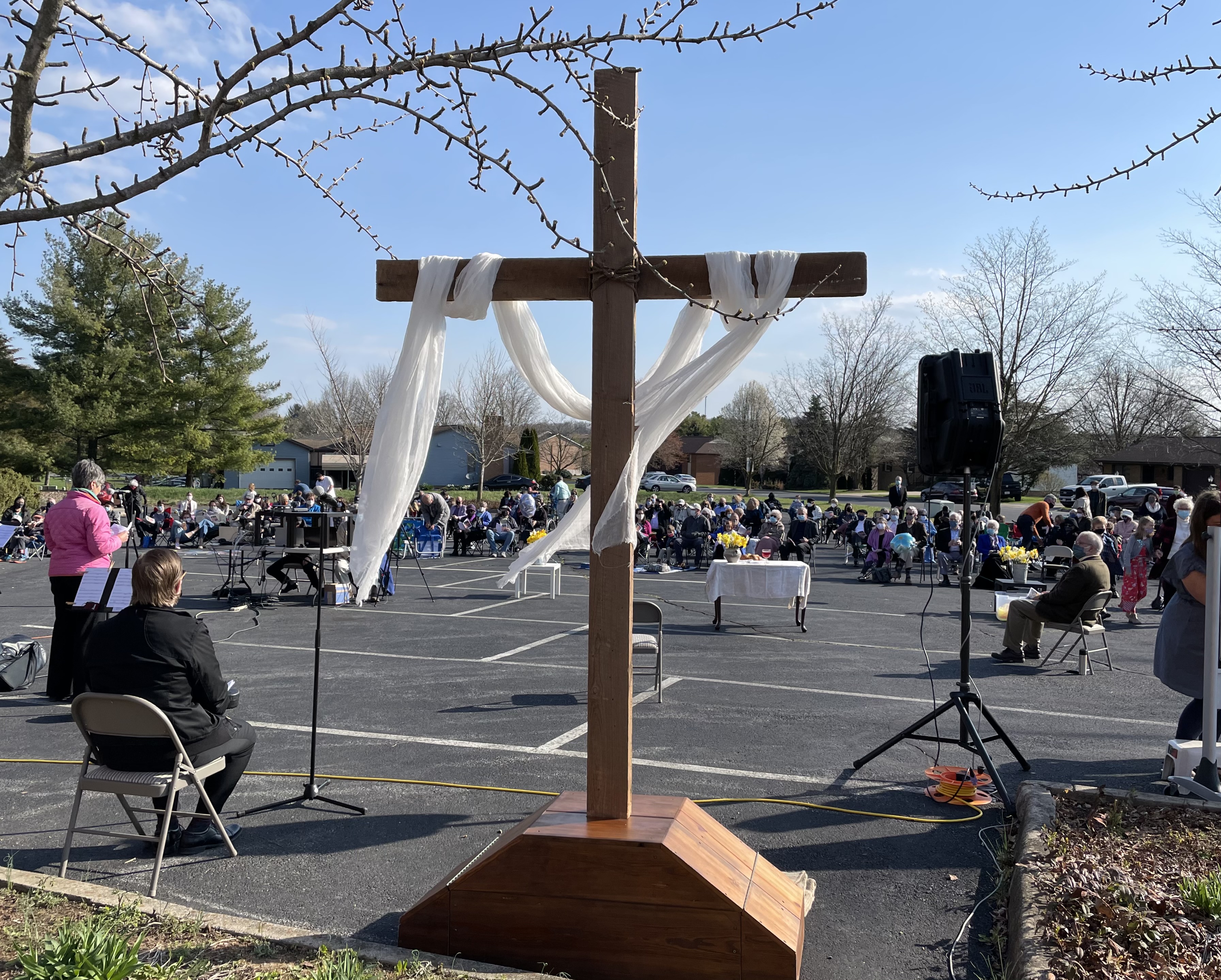
Graduations, vacations, weddings, reunions, picnics, and Little League baseball games are a much better bet to occur with June’s arrival. Church congregations that met remotely are beginning to hold in-person services, some outside, others with controlled numbers assembled indoors.

I’ve always welcomed June from adolescence to this day. School often finished around Memorial Day, which turned us outdoor lovers loose. I still feel that way all those decades later.

But there is something sacred about this particular June. It’s more than just the freedom to move about, go swimming, fishing, hiking, or wearing T-shirts and shorts.

The pandemic isn’t over, but here in the U.S., it seems to be subsiding. Still, we are approaching 600,000 deaths in our great country and 3.5 million globally. Those are sobering figures.

I recall the wise advice of a farmer friend from the weeks-long drought that began in June 1988. Local hay crops had failed, and shipments of baled hay arrived from the Midwest. Many farmers bought the imported bales at exorbitant prices.

When they got it home, they discovered that the hay bales that looked good from the outside had more weeds than nourishment on the inside. I asked my friend if he had purchased any of the high-priced, weedy fodder.

I have never forgotten his reply. “My father once told me that when you see others running for something, you should walk.” So, no, he hadn’t.

Consequently, my wife and I will welcome June without much fanfare. We’ll follow our grandson’s traveling baseball team when we can. We will continue to be cautious about eating inside public places, preferring to dine at establishments that offer outside seating.

We have and will continue to visit vaccinated friends. We’ll use June to ease into renewing our travels, including seeing our son and his wife for the first time in two years.

I’ll continue to hike, but I will be careful to choose the days, watch the weather, and avoid weekends. I’m not a snob or prude. Crowded trails are not my thing.

When we do get out and about in June, we need to be cautious for practical reasons. Reports from many eastern states indicate that ticks are thick this year. Once back inside, check yourself, your children, and your pets. The physical effects of tick bites are devastating.

We can rightfully celebrate June’s arrival. But let’s continue to be alert and careful every step of the way.

© Bruce Stambaugh 2021

Baseball is back!

And I’m not excited.

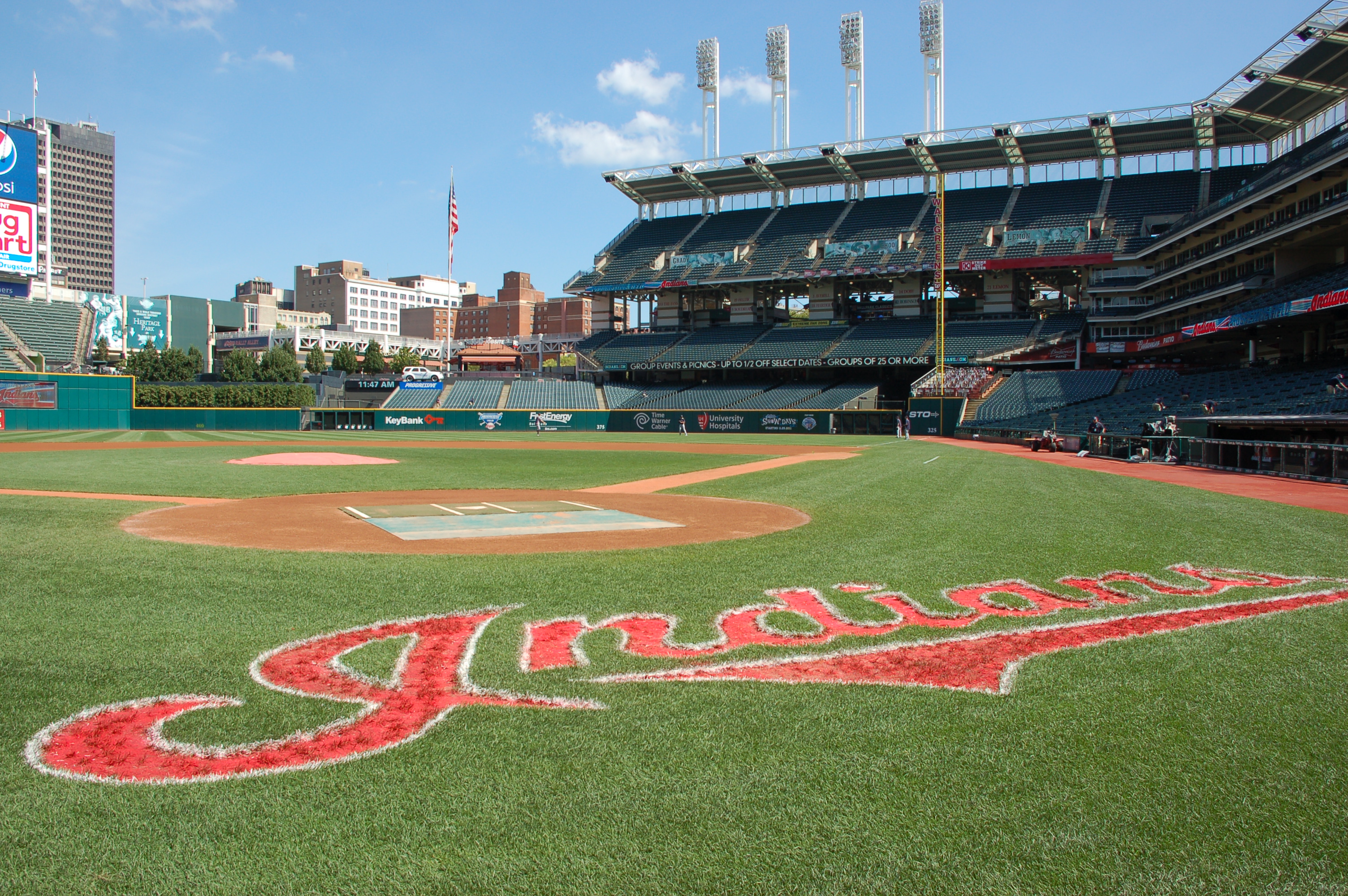
Progressive Field, Cleveland, Ohio.

Major League Baseball is back! I should be excited as that exclamation point, but I’m not.

This year I’m a bit ambivalent about the baseball season beginning. The pandemic heads the hesitancy list, but other dynamics come into play, too.

Baseball has always been my favorite sport. It’s in my DNA, going back to my father’s father.

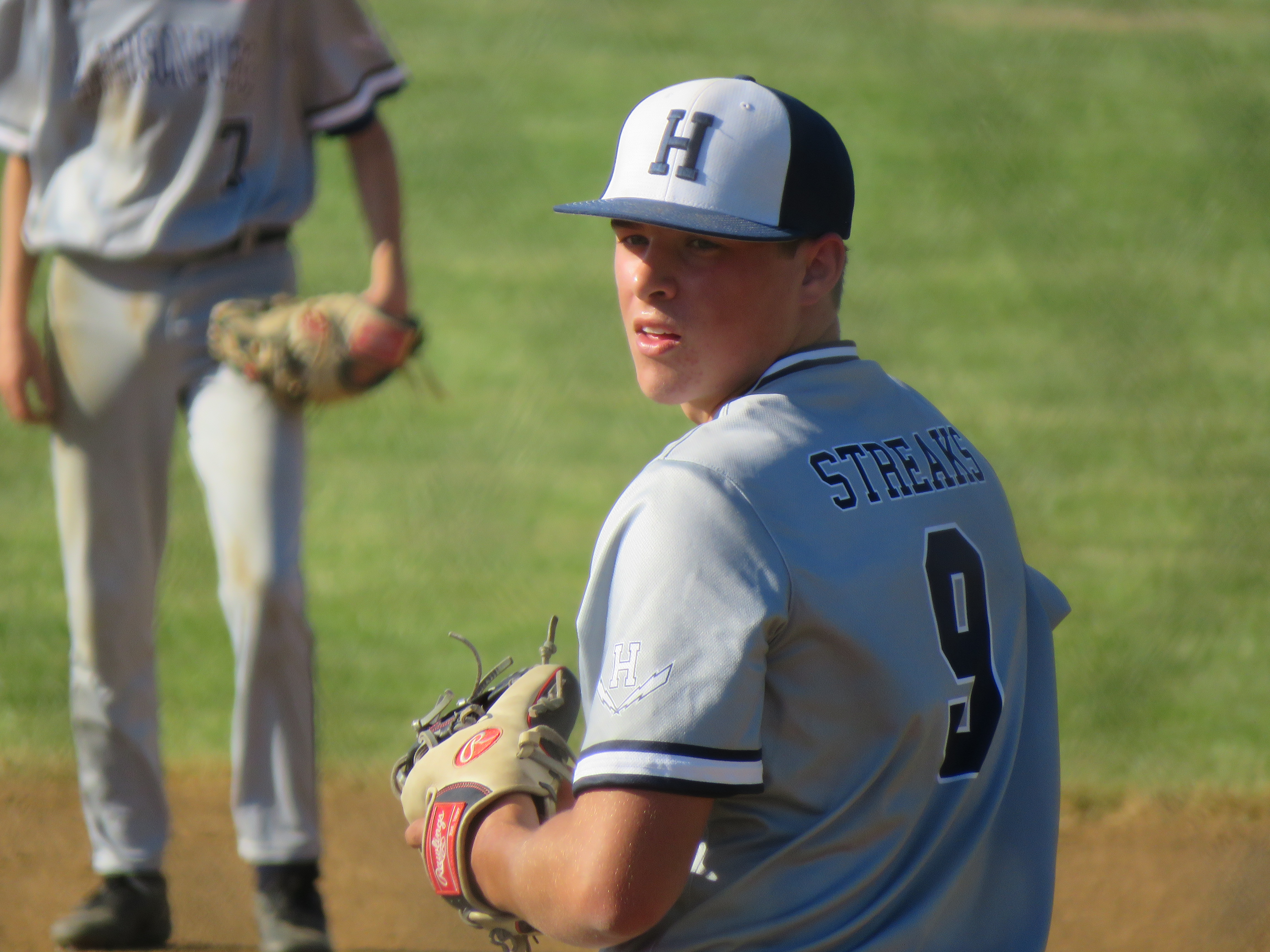
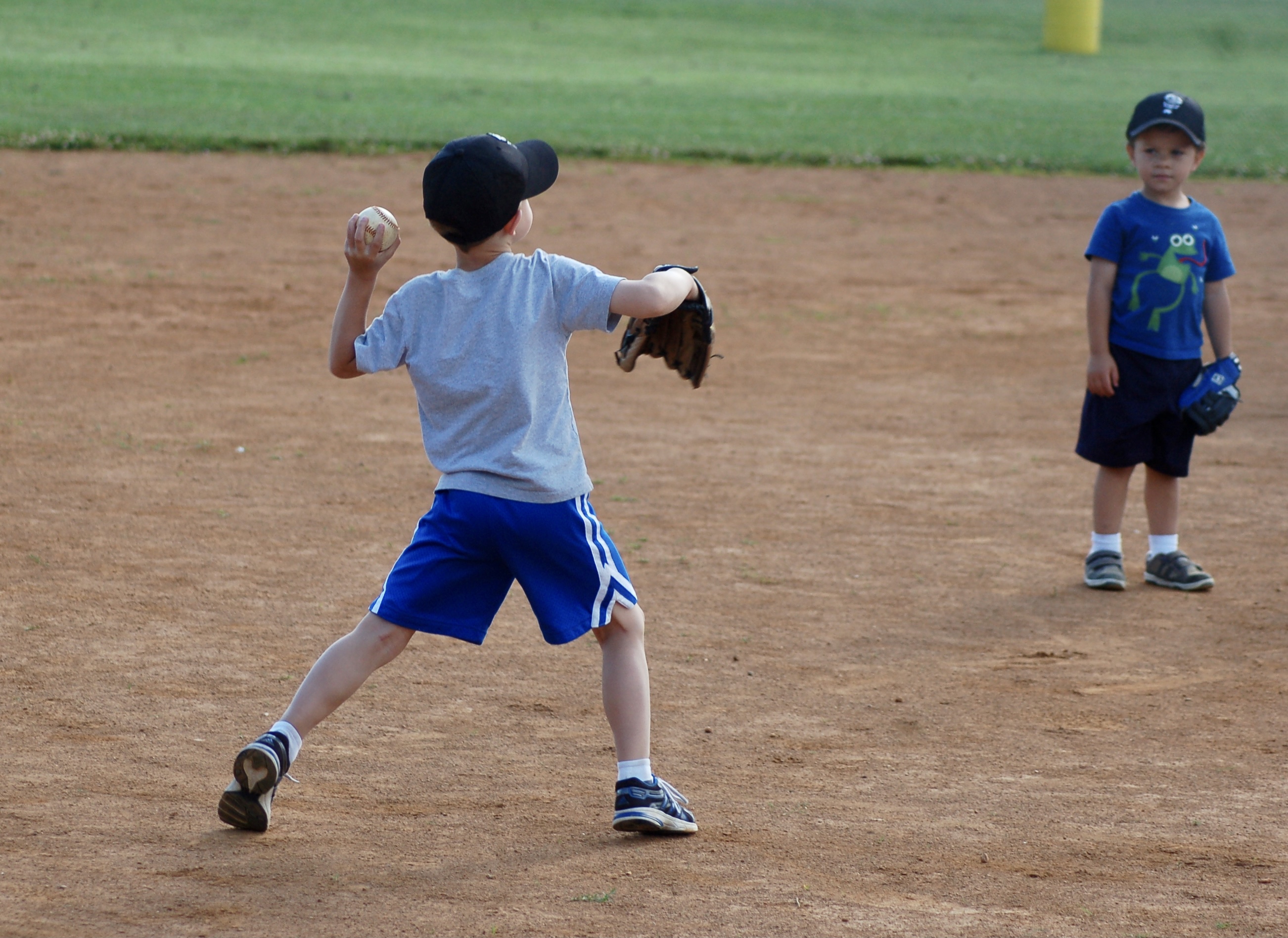
Now, our oldest grandson is headlong into the game, too. I couldn’t be prouder. Nana and I attended as many pre-pandemic games as possible. We’re hopeful that we can watch his high school games this spring. If not, then we’ll aim to follow his summer traveling league team.

Our grandson takes his pitching seriously.

I still love the game, or I wouldn’t have bought the MLB package on my satellite TV subscription. I watched parts of several games on Opening Day, April 1, including the Cleveland Indians’ loss to the Detroit Tigers.

Given all of the goofy stuff that happened, April 1 turned out to be the most appropriate day to start the season. Cleveland’s Shane Bieber struck out 12 Tiger batters and still lost the game. Snow squalls peppered the first few innings of the contest.

In Colorado, the Dodgers’ Cody Bellinger hit a home run with Justin Turner on first. However, he only got credit for a single and was called out when Turner, thinking the outfielder caught the ball, retreated past Bellinger to first base. Bellinger got credit for a single, scoring Turner, but was called out for passing his teammate on the base path.

Rain canceled the Baltimore at Boston game, while the league postponed the entire opening series between the Mets and Nationals due to players testing positive for the coronavirus. I’m fearful that was a pitch high and tight to the rest of the season.

Young superstar Francisco Lindor recently “agreed” to a 10-year contract extension with the New York Mets for $341 million. And people wondered why Cleveland traded him.

I’m exceedingly glad for Frankie, but should any player make that much money for playing a kid’s game? The Mets think so.

Opening Day in baseball is a big deal. Most home openers conditionally “sold out” since most major league clubs limited attendance to allow for proper physical distancing due to the pandemic. The Texas Rangers weren’t one of them. Real fans filled the entire 40,300 seat stadium. Can you say “super-spreader?”

It’s great to have actual human beings in attendance watching and cheering for their favorite teams. It sure beats looking at those life-size cardboard cutouts of people that populated seats in last year’s shortened season. Still, health safeguards should prevail.

Besides the pandemic precautions, even politics has negatively influenced the game. MLB pulled the All-Star Game scheduled for Atlanta this summer and moved it to Denver, Colorado. The baseball commissioner cited the voter suppression laws recently approved in Georgia.

Perhaps my less than enthusiastic response to professional baseball’s return is proof of my evolving senility. I hope that’s not the case.

I remember taking my son to a New York Mets game 11 days after the September 11, 2001, attack on the World Trade Center. It was the start of filing through metal detectors to enter ballgames, but once in, it was back to hot dogs, peanuts, and Cracker Jacks while watching baseball.

Now 20 years later, the world is in another tough spot with the pandemic. Even baseball’s return doesn’t stir me. A balm is needed over Gilead and baseball, too.

Maybe if my favorite team wins the World Series, I’ll perk up. It’s a very long shot, but the world needs a blessed miracle right now.

© Bruce Stambaugh 2021

The pandemic redefined patience

Vigilance is still required

Patience is a virtue. The exact origin of that proverb is hard to determine but about as straightforward in its meaning as can be.

In “Piers Plowman,” William Langland wrote about a man searching for faith in the 14th century. This work marked one of the earliest references to patience. A line in the poem reads, “patience is a fair virtue.”

What does that mean exactly? To me, it says that instead of rushing ahead on our own, we should pay attention to what is actually happening, no matter how weird or repulsive it may seem. The coronavirus fits that description.

In this case, patience requires us to depend on those who deal with such anomalies daily. Scientists, doctors, and researchers all belong in that category.

Throughout the pandemic, vigilance remains required. We continue to need to wear masks when we go out or visit others. We also need to keep our social distance and wash our hands. Those were and continue to be simple instructions that I embraced because they benefited others besides me.

Still, practicing patience is hard to do. The ongoing pandemic is proof positive.

Impatient people bolted ahead, behaving as if everything was as it had been in the world, when in fact, it wasn’t. Refusing to wear a mask, physically distance, or alter daily routines has prolonged the virus’s life.

Consequently, the pandemic is also a teacher, and we all are in the same classroom. Some pupils listen and learn, while others misbehave or fall asleep.

The pandemic has taught us a lot about people and their willingness to accept scientific facts, the reality of a new disease and the unknown, and realize the consequences of an infection run rampant.

It’s important to note that being patient has its benefits. The pandemic forced me to slow down, relax, notice, care, and listen. Since we were together even more than usual, my wife and I gave each other expanded personal space and time than we had previously.

First pitch of the 2016 World Series, Cubs vs. Indians.

It’s not like I didn’t know patience before the pandemic. After all, the Cleveland Indians are my favorite sports team. It’s been 73 years since they last won the World Series. If following that team doesn’t require patience, I don’t know what does. I learned early on the mantra of “wait until next year.”

Well, it’s next year. A new baseball season is upon us. Perhaps this is Cleveland’s year. Only time will tell. Like enduring the pandemic, patience will be an essential virtue with this team and every aspect of life.

Patience requires us to stop, breathe, observe, sense, and move slowly. Patience is and will continue to be essential for mental, physical, and spiritual survival during the pandemic.

Ephesians 4:2 reads: “Be completely humble and gentle; be patient, bearing with one another in love.” I learned that it’s critical to apply that to myself, too. I realized that it was okay to feel down with all that the pandemic brought and about activities that we couldn’t do, especially with those we love.

Patience modeled.

We have waited patiently for an effective vaccine, and now it is here. People are receiving inoculations against this deadly virus. Still, we will continue to follow the crucial guidelines of wearing a mask, physical distancing, and washing our hands for 20 seconds or more. As Yogi Berra famously mumbled, “It ain’t over until it’s over.”

Patience became the watchword of the pandemic. It will continue to persevere until we all work together to conquer this unwanted virus. That will prove patience a valuable and vital virtue, indeed.

© Bruce Stambaugh 2021

What a year it’s been so far!

After the first year’s first sunrise, it has seemed all downhill from there.

Here we are at the end of August. Is it just me, or have these been the longest eight months ever?

With 2020 being a presidential election year, we knew things could be wacky. However, they quickly became excruciating with the arrival of the novel coronavirus pandemic.

The virus has drastically altered all of our lives, some in catastrophic ways. Hundreds of thousands of deaths, millions of cases, and both founded and unfounded fear have permeated our lives together on planet Earth.

We have all made changes in our lives, whether they be out of safety or fear, or perhaps both. Most health and government officials have done their best at providing direction and directives to keep us well against a previously unknown health threat.

Some of us have tried to follow the guidelines as best we can. Others have not.

Technology has helped relieve some of the tension of being faced with shutdowns, physical distancing, and other health guidelines by allowing us to share virtually. We have gathered remotely for school, worship, business, and community meetings rather than in-person.

My wife and I have participated that way with church services, yoga, college classes, doctor appointments, weddings, memorial services, and visiting with friends and family. Though we would prefer meeting in person, face-to-face via technology has had to suffice for now.

How long will it last? Las Vegas hasn’t even placed a bet on that one.

As a career public educator, I always looked forward to the start of school. I pity today’s teachers, administrators, and school support staff who have to make hard decisions that are for the best and safest for all.

Some schools, including colleges and universities, are starting with in-person instruction. Others will open with a hybrid version, alternating between in-person and online education. Still, others have chosen all remote learning.

I wish them all well, and the safest of school years. Likely, backup plans are in place if the COVID-19 numbers spike again as students gather.

Parents, grandparents, and other caregivers try to balance the worlds of work, household chores, and instruction for youngsters if schools are not entirely in-person. They need our sincere support.

Employment is another issue that has so far muddled 2020. Many people who were working have been laid off or furloughed. Ironically, some sections of the economy are going gangbusters, while others flounder.

First-responders, nurses, doctors, and all their helpers must take extreme precautions just to treat the sick. I try to be mindful of them every day.

I am most thankful that technology certainly has helped to keep society operating. This old guy even ordered groceries from an app on his cell phone.

Storm clouds have hung over most of 2020.
Of course, the pandemic isn’t the only life-changing event of the year. Historic wildfires have raged in the United States, Australia, and Siberia. Hurricanes and tropical storms have caused death and destruction in their path. Those storms are both more powerful and more frequent than in the past.

Professional sports aren’t the same, either. The NBA is holdings its playoffs in a Florida bubble, while MLB is playing a 60-game season with seats occupied with human cardboard cutouts instead of real paying fans.

I always welcomed September’s arrival with the hope of fairer weather and the sights and sounds of autumn’s appearance. But with the pandemic still raging and the presidential campaign heating up, a face mask won’t be the only accessory in my wardrobe.

A clothespin, a blindfold, and earplugs might also be warranted to reach 2021.

© Bruce Stambaugh 2020

Ambivalent about August

August in Ohio’s Amish country.

I’ve always been a bit ambivalent about August. I’m especially so this year, given all the ramifications of the ongoing pandemic.

When my wife and I lived in Ohio, August kept us busy as career public school educators. We each geared up for the start of a new academic year. As a principal, I created schedules and rosters and attended too many meetings. The excellent teacher that she was, my wife spent many hours preparing each classroom to be an inviting learning haven.

Canned peaches.
August also ushered in the food preservation season. We froze dozens of containers of sweet corn and apple sauce. We waited for the canning lids to sound the seal of approval with satisfying “pops” for the tomatoes, grape juice, beets, and peaches. Rainbows of goodness adorned our shelves.

Of course, we weren’t alone in these endeavors. After I retired, I savored sale mornings at the local produce auction. I loved the hustle and bustle of men and women unloading their trucks and horse-drawn wagons. The rhythmical cadence of the auctioneers barking out their persuasive banter was sweet music to my ears.

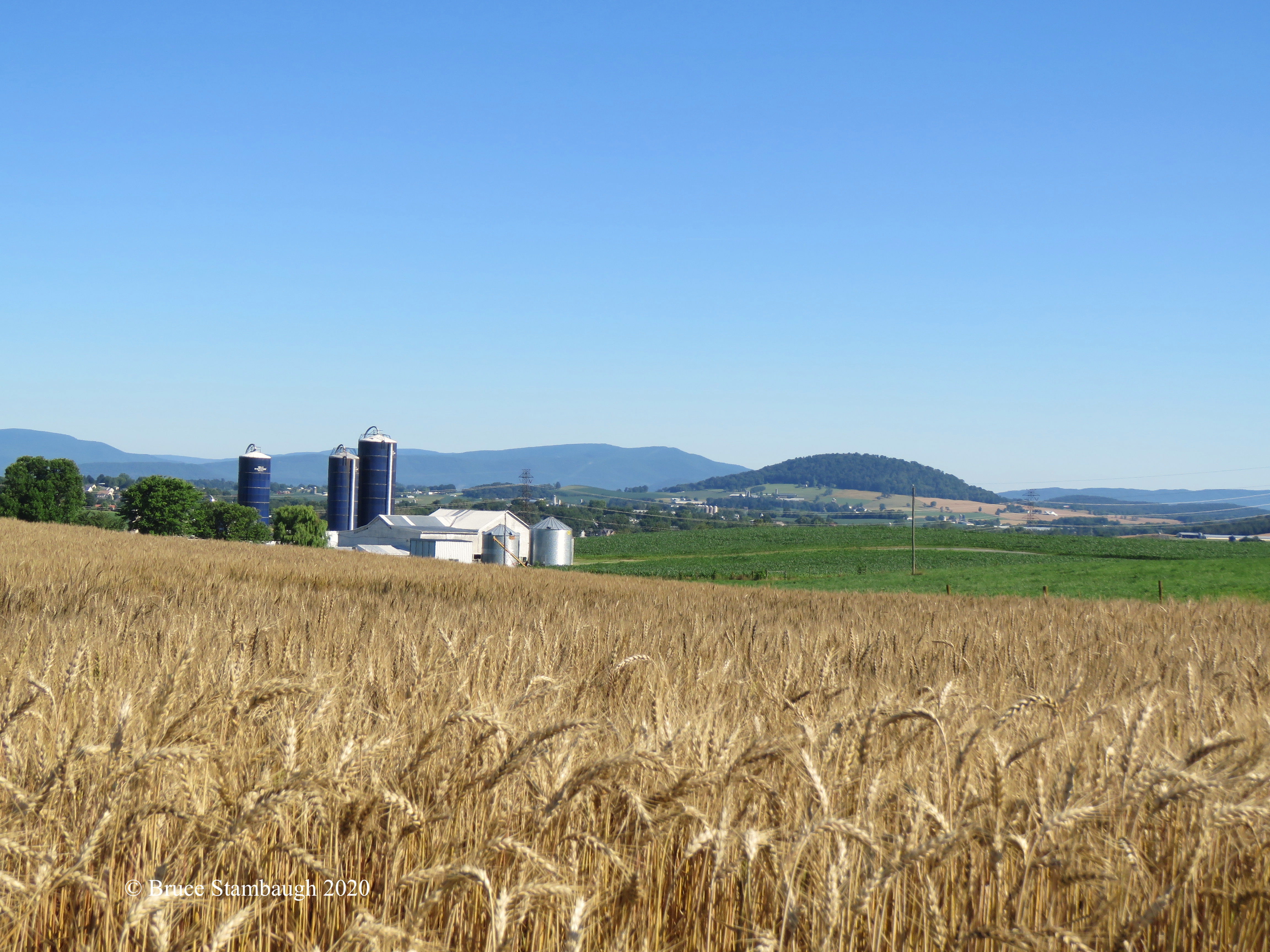
The growing season here in the Shenandoah Valley where we live now is a couple of weeks ahead of Holmes County, Ohio. So, we don’t have to wait as long to enjoy our first taste of locally grown veggies.

Farmers Produce Auction, Mt. Hope OH
Auction in action.

August is more than agriculture, though. The three H’s rule the eighth month: hot, hazy, humid. That’s not the main reason for my ambivalence, however. With the coronavirus continuing to run rampant, uncertainty abounds in everyone’s life.

The city schools where our grandchildren attend here were set to open with a combination of in-person and online instruction. The latest surge in COVID-19 has altered that plan. They’ll start the year learning remotely.

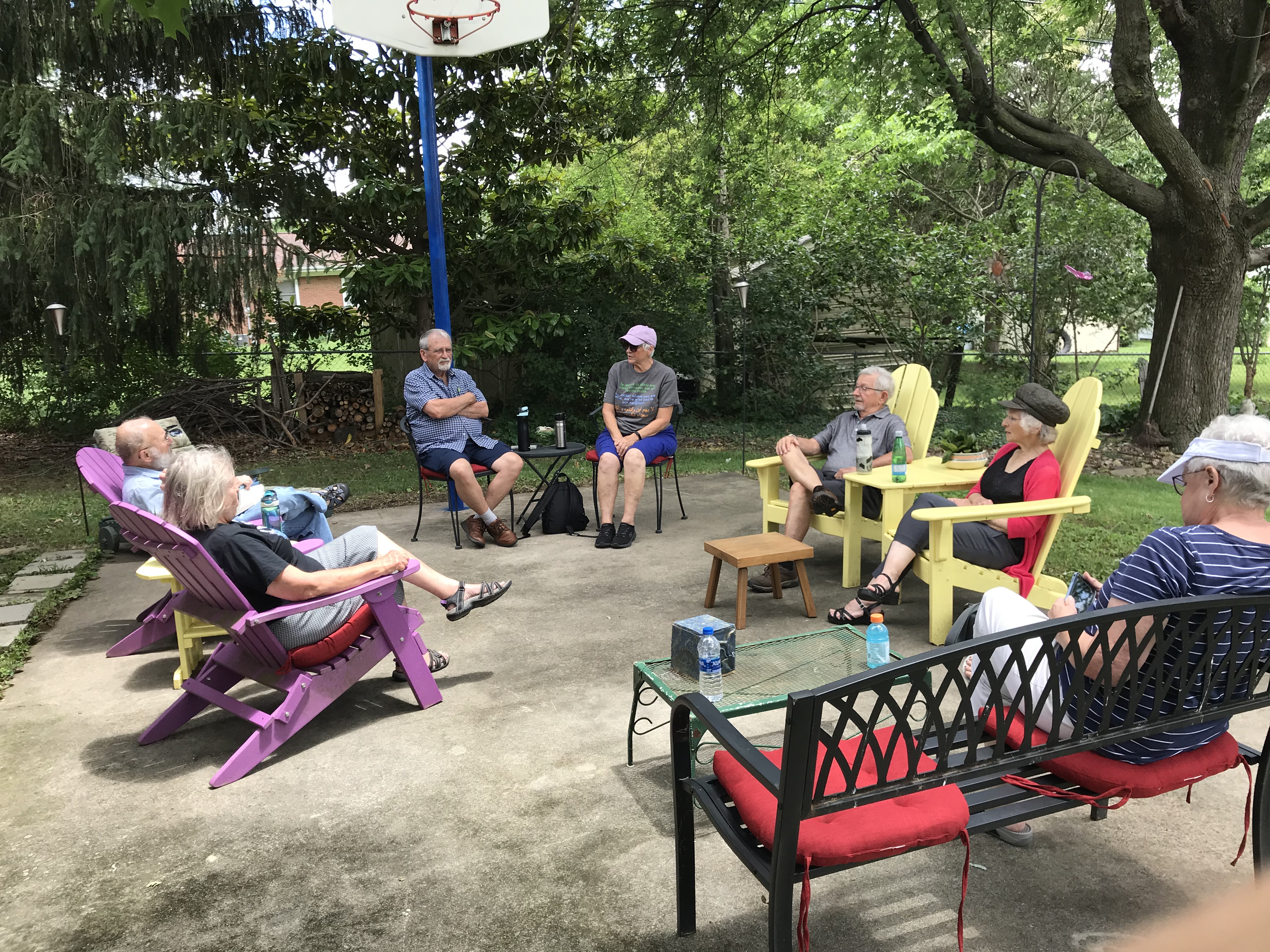
Mask-wearing is the norm, especially when entering stores or buildings. Neva and I have continued to be extra cautious about keeping our physical distancing. We truly miss the close socialization of friends and family.

Some states are doing better than others at slowing the virus. States that reopened with too few restrictions or where few people followed the guidelines are unfortunately paying the price.

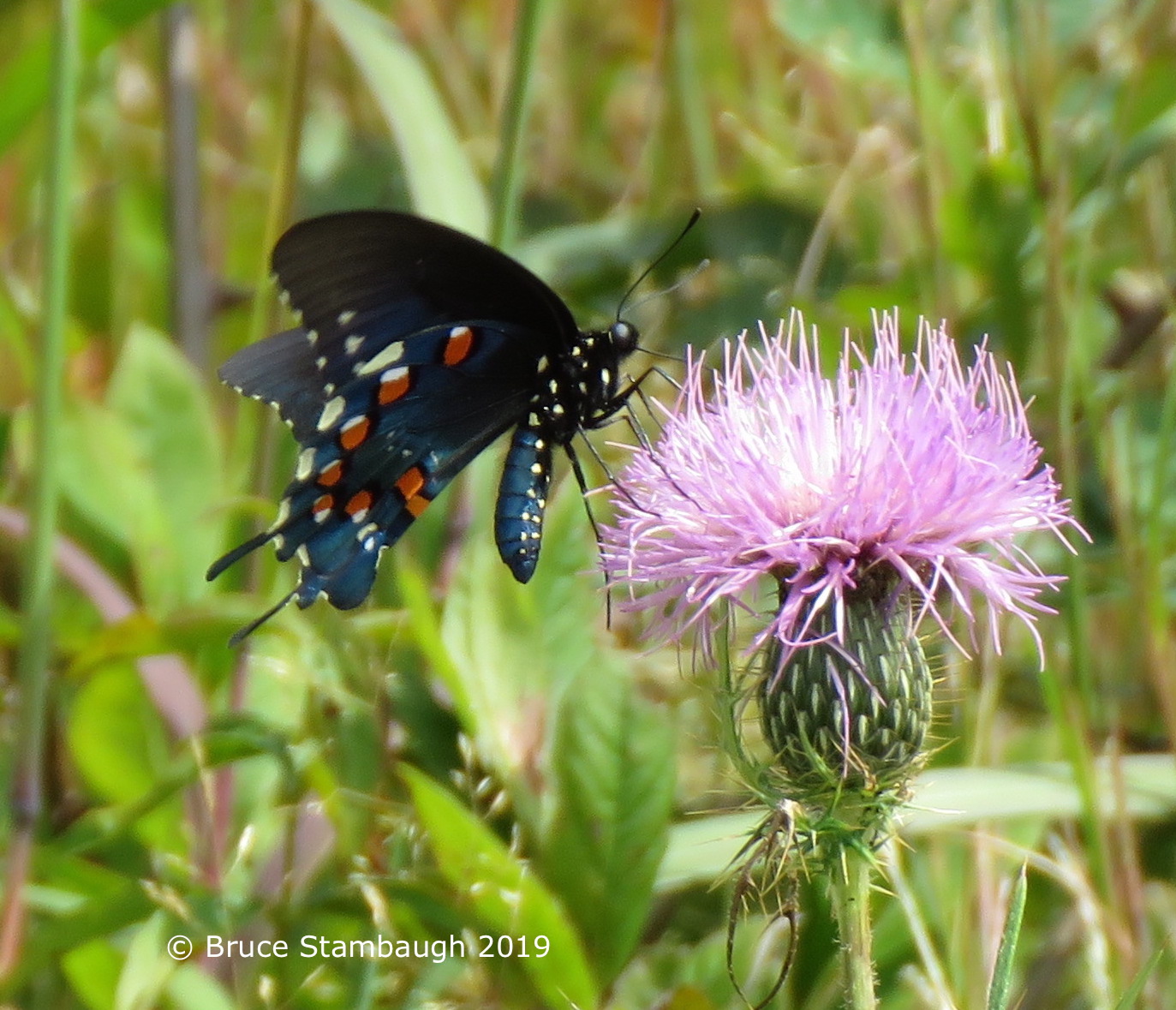
A migrating black tiger swallowtail butterfly.
Since the governors have had to take the lead in issuing orders and health guidelines, rules and suggestions vary significantly from state to state. In part, that’s what has fueled our consternation.

We haven’t seen in person our son and his wife, who live in New York State, in more than a year. We have friends and relatives who have tested positive, but fortunately, they have all recovered so far. Too many others weren’t as fortunate.

County and street fairs, high school football, band shows, concerts, vacations, have all been canceled. Major League Baseball is trying to play a shortened season with no fans in attendance.

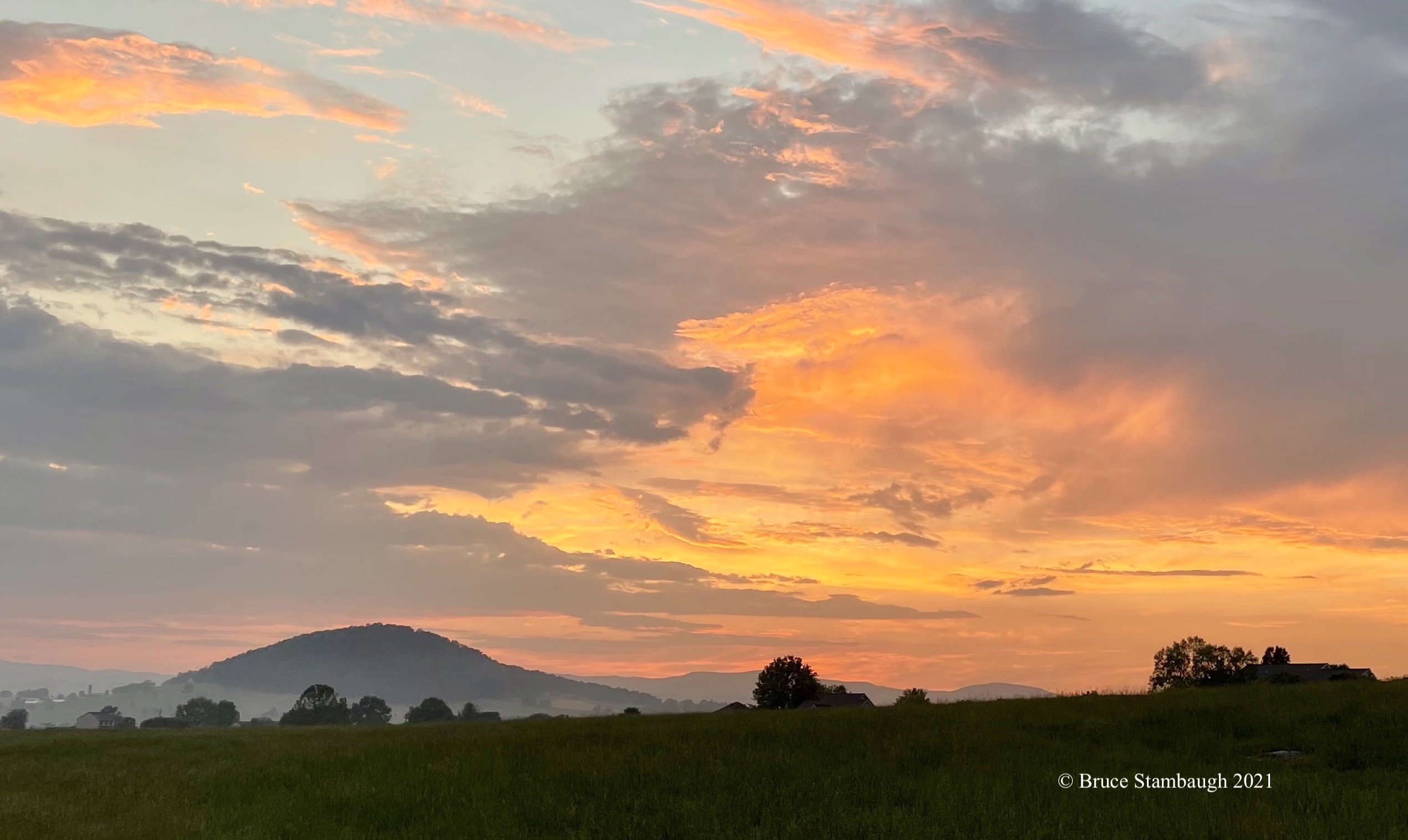
Virus or no virus, August will be August no matter what. Golden sunsets will blaze away in the hazy evening skies. Migrating birds and butterflies will begin to wing their way south.
We’ll continue to meet with friends, relatives, and worship remotely through technology.

Under the current dire circumstances, it’s the best and safest we can do. We’ll continue to do our shopping curbside.

Even given all that, I know that my August ambivalence must yield to patience, and patience to resolve. We have to see this global health crisis through for however long it takes. I’ll continue to be cautious, careful, and diligent. I am not ambivalent about COVID-19.

My challenge is not to let my melancholy deter my joy for living, for sharing, for helping others, even if it is with an altered daily lifestyle.

An August sunset.

© Bruce Stambaugh 2020

Bay Photos by Donna

Wildlife photos from the Chesapeake Bay region

ROAD TO NARA

Culture and Communities at the Heart Of India

K Hertzler Art

Artist and nature journalist in the Shenandoah Valley of Virginia.

Maria Vincent Robinson

Photographer Of Life and moments

Gabriele Romano

Personal Blog

Jennifer Murch

Art is the only way to run away without leaving home. -Twyla Tharp

Roadkill Crossing

Writing generated from the rural life

ANJOLI ROY

writer. teacher. podcast cohost.

Casa Alterna

El amor cruza fronteras / Love crosses borders