Ready for the election to be over

Sunrise by Bruce Stambaugh

By Bruce Stambaugh

I don’t know about you, but I’m more than ready for this election to be over. Even if I were a hermit, I think I would have gotten robo phone calls and unsolicited political mail and email this year.

These elections, especially the ones with national implications, seem to be getting worse each round. The rhetoric, promises and character assassinations get sharper and sharper. As much as I love democracy, I am more than ready for this nonsensical noisiness to end. All the nasty, negative political ads, especially the ones on TV, make you yearn for the days of the Veg-O-Matic commercials.

It didn’t used to be that way. Back in the days of smoke filled rooms and paper ballots politics were politics. Elections were elections. We weren’t blasted at every turn with extreme commentary of distorted and misapplied sound bites or publically aired criticisms that border on slander.

I remember when my father took me along when he voted in the gym of the elementary school where my brothers and sisters and I attended. It was a simple ordeal. Dad signed in, was given a paper ballot, walked to a vacant voting booth draped with red and white striped curtains, and marked his ballot. After doing so, he folded it and placed it in a box or can at the exit.

The precinct workers didn’t blink at allowing me to tag along with Dad. That wouldn’t happen today. They understood his desire to show me first hand how the process worked, how to properly exercise his citizen’s right and duty to vote. His modeling worked. I have voted in every election I could since I registered at age 21, the legal Ohio voting age then.

Mom and Dad by Bruce Stambaugh
My late parents, Marian and Richard Stambaugh, both modeled what it meant to be an active citizen.

My parents also did their civic duty by working as precinct workers. Dad was a precinct committeeman. My wife’s parents also served as poll workers.

Dad actively campaigned for particular people he wanted in office. I even volunteered to post campaign signs for him. In recent years, both my wife and I have served as poll workers. In fact, my wife will be a precinct judge in the Nov. 6 election here in the world’s largest Amish population. And yes, many of the Amish vote, even for president.

As a teenager, a metropolitan newspaper hired me each election to check particular precinct tallies, which were simply posted on the door of the polling place. Long before the computer and Internet age, hand-tabulated results were phoned in from a phone booth to gauge trends and declare winners and losers.

Today, things are so much different and sometimes difficult.

Concerted efforts have been made to insure that voters are who they say they are, despite little evidence of past voter deception or fraud. Fortunately in most cases, those attempts have been overturned by the courts. Professional political pollsters churn out poll after poll, week after week to tell the public what they are thinking. Politicians and their teams of advisors live or die with every revelation. News media lead with the poll results.
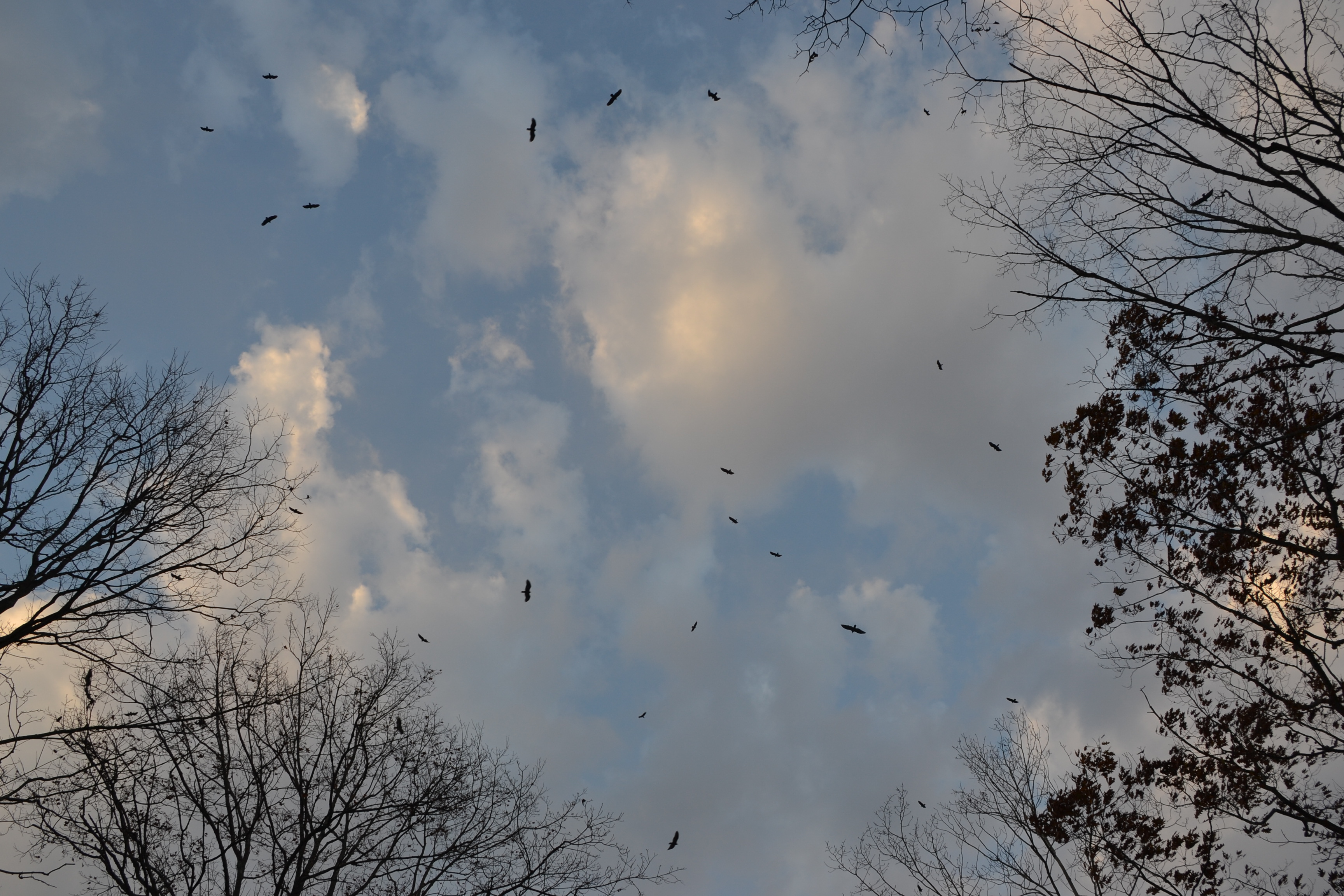
Kettle of vultures by Bruce Stambaugh
I couldn’t help thinking about the negative politics being conducted in the current presidential campaign when I recently saw this kettle of Black and Turkey Vultures circling overhead.

Being inundated with constant slanted political rancor has its ugly consequences. Heated discussions transpire on social media, and the “conversations” can get ugly and are not very social at all.

That said I realize there is no going back in time. Heaven forbid we return to those days of smoke filled room decision-making. Instead of paper ballots and canvas curtains, we now have programed cards and touch screen voting. But still we vote.

I am extremely thankful for the exemplary lessons my folks provided in what it means to be a citizen in this great country. Each of us simply needs to do our part in making this convoluted world a better place. To do that, we must keep moving forward.

I hope that means in part that the mailed partisan circulars will greatly decrease and the annoying phone calls will soon cease.

This column appeared in The Bargain Hunter, Millersburg, OH.

© Bruce Stambaugh 2012
Viewing the leaves in Ohio’s Amish country

Fall from my backyard by Bruce Stambaugh

By Bruce Stambaugh

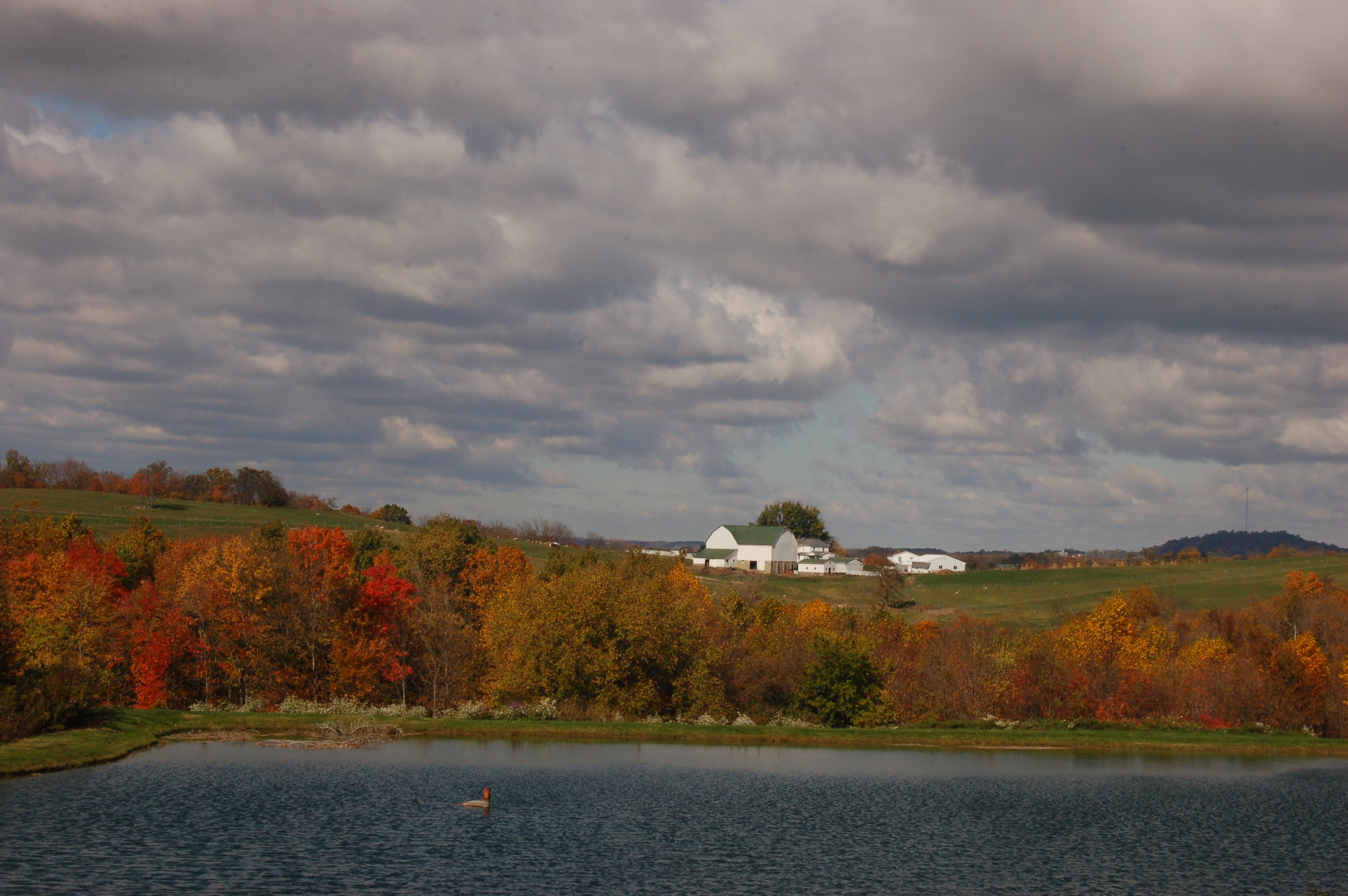
Ohio’s Amish Country, particularly Holmes County, is a great place to be when the autumn leaves are at their finest. With its many stands of mixed hardwoods throughout the area, the colors can be spectacular if all the conditions are right.

The leaves are usually at their colorful peak by mid-October. Though the summer’s drought may have caused some trees to already change, they seem to be on a normal timetable for coloration. Now through the next two weeks will provide marvelous viewing.

Several great routes can be driven to see the rainbow of leaves. Just consider the rolling hills, rows of corn shocks, grazing cows, romping horses, Amish buggies and silvery streams as backdrops to the main event.

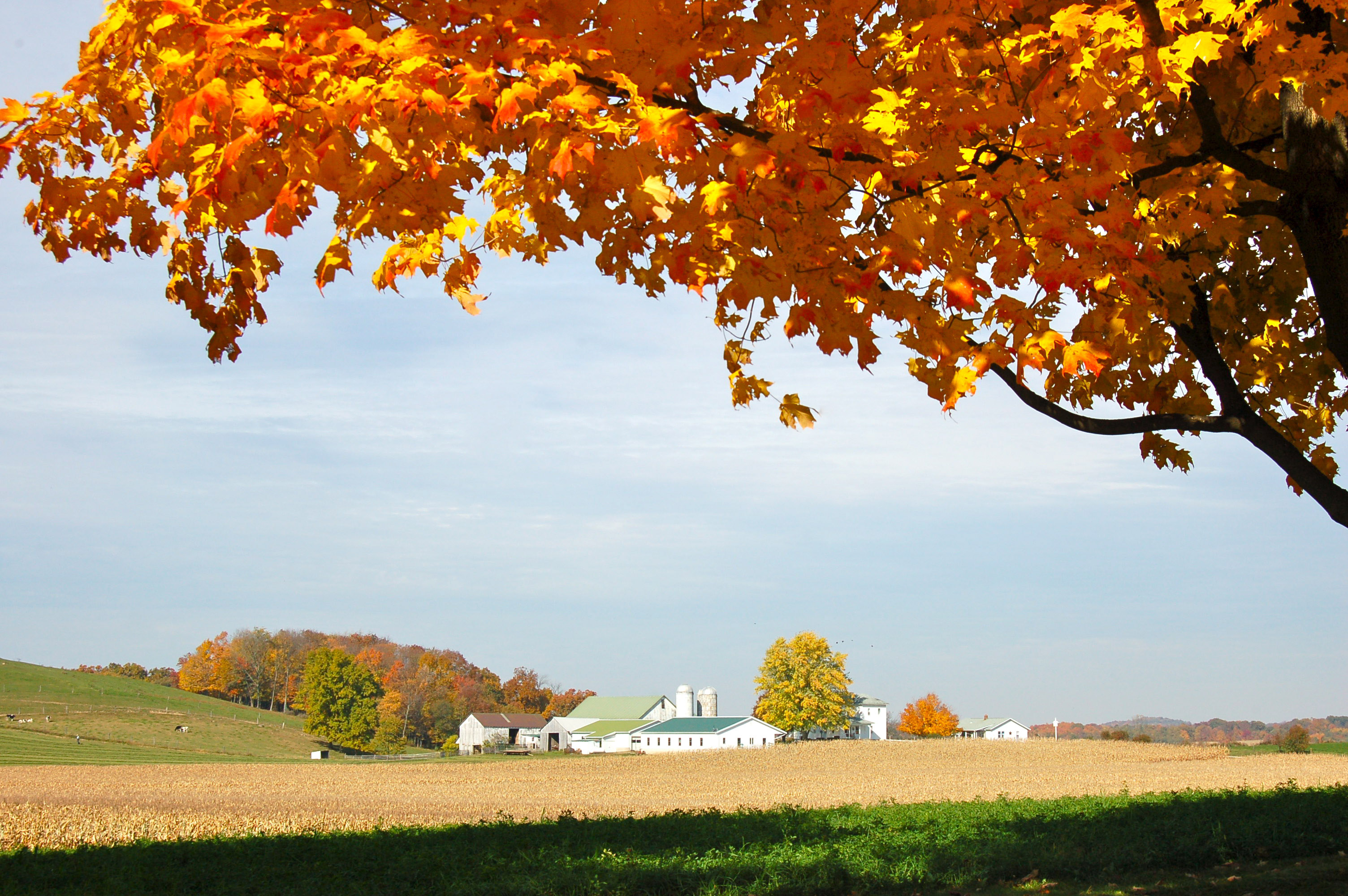
Fall farm by Bruce Stambaugh

Simply traveling the main highways that lead into the Holmes County area and crisscross the county will guarantee beautiful scenery. That’s especially true in the fall.

Trees and shocks by Bruce StambaughState Route 39 cuts Holmes County in half east to west. In many places, the road roughly follows the terminal moraine of the Wisconsin Glacier. To the south, hillsides loaded with maple, oak, walnut, beech and hickory trees are steeper than their counterparts on the opposite side of the road. The glacier filled in the valleys on the north side 10,000 years ago, leaving a gently undulating geography, with rich soil that farmers pamper for excellent crops and lush pasturelands. Stands of woodlots and tree-studded fence lines create magnificent leaf viewing.

Yellow and red by Bruce StambaughState Route 83 bisects Holmes County in half north to south. You will be dazzled by the vistas that change seemingly at every curve. Both north and south of Millersburg, the county seat, the route hugs the eastern edge of the Killbuck Valley. Impressive slopes with ample forests east and west nestle golden marshlands teeming with wildlife in between.

U.S. 62 runs diagonally across the county. From the northeast, pastoral views are aplenty, meandering through Amish farmland on each side. Because the wood industry surpassed agriculture as the number one employer in Holmes County a few years ago, trees are treasured and properly cared for.

Fall scene by Bruce Stambaugh

Follow U.S. 62 from Millersburg southwest toward Killbuck and on to Danville in Knox County and you might think you are in the foothills of the Appalachian Mountains. In truth, you are. The road follows the area’s main waterway, Killbuck Creek, and then climbs the hills into the Mohican River watershed.

Woods and hills by Bruce Stambaugh

The lesser traveled state, county and township roads provide equal opportunity viewing when it comes to autumn leaves. State Route 520 from Killbuck through Glenmont’s seven hills and on to State Route 514 especially provides a pretty show if the timing is right.

In the east, State Routes 241, 515, 557 and 643 all are winding, hilly and gorgeous in the fall. Farmsteads with white houses and coffin red barns are the norm in any direction on these roads.

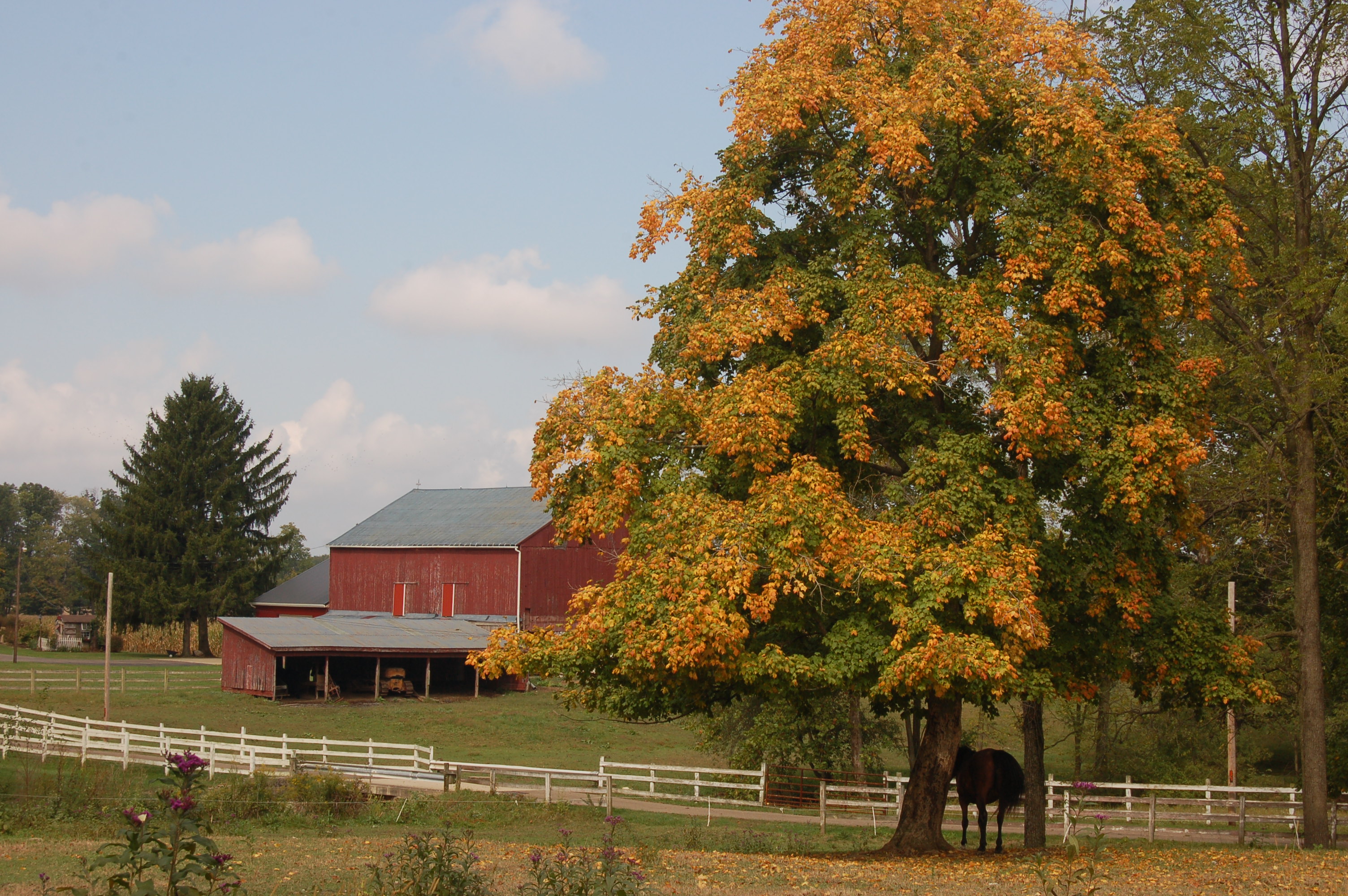
Red barn red tree by Bruce Stamaugh

For those who desire more than just riding and looking, the area has plenty to offer. At the Wilderness Center off of U.S. 250 west of Wilmot, you can hike through prairie grass and virgin forests, and explore an education center, where there is fun for all ages.

Mohican State Park near Loudonville affords numerous trails with incredible overlooks to the steep Mohican River gorge. The greens of the thousands of white pines nicely compliment the colorful mixed hardwood forest.

For bicyclists, the Holmes County Trail offers 16 miles of lovely trials from Fredericksburg to Killbuck. Hikers are welcome, too. The trail runs along the Killbuck through the center of the county until it turns southwest toward Killbuck. The wildlife, birding and leaf viewing can all be consumed simultaneously. A note of caution, however. Horse and buggies also use the trail on one side while bikers and hikers are on the other.

Everyone has their favorite spot to view the changing leaves. You’ll enjoy finding yours.

Fall in Amish country by Bruce Stambaugh

This article appeared in Ohio’s Amish Country magazine.

© Bruce Stambaugh 2012

Inspired at the produce auction

Colorful lineup by Bruce Stambaugh
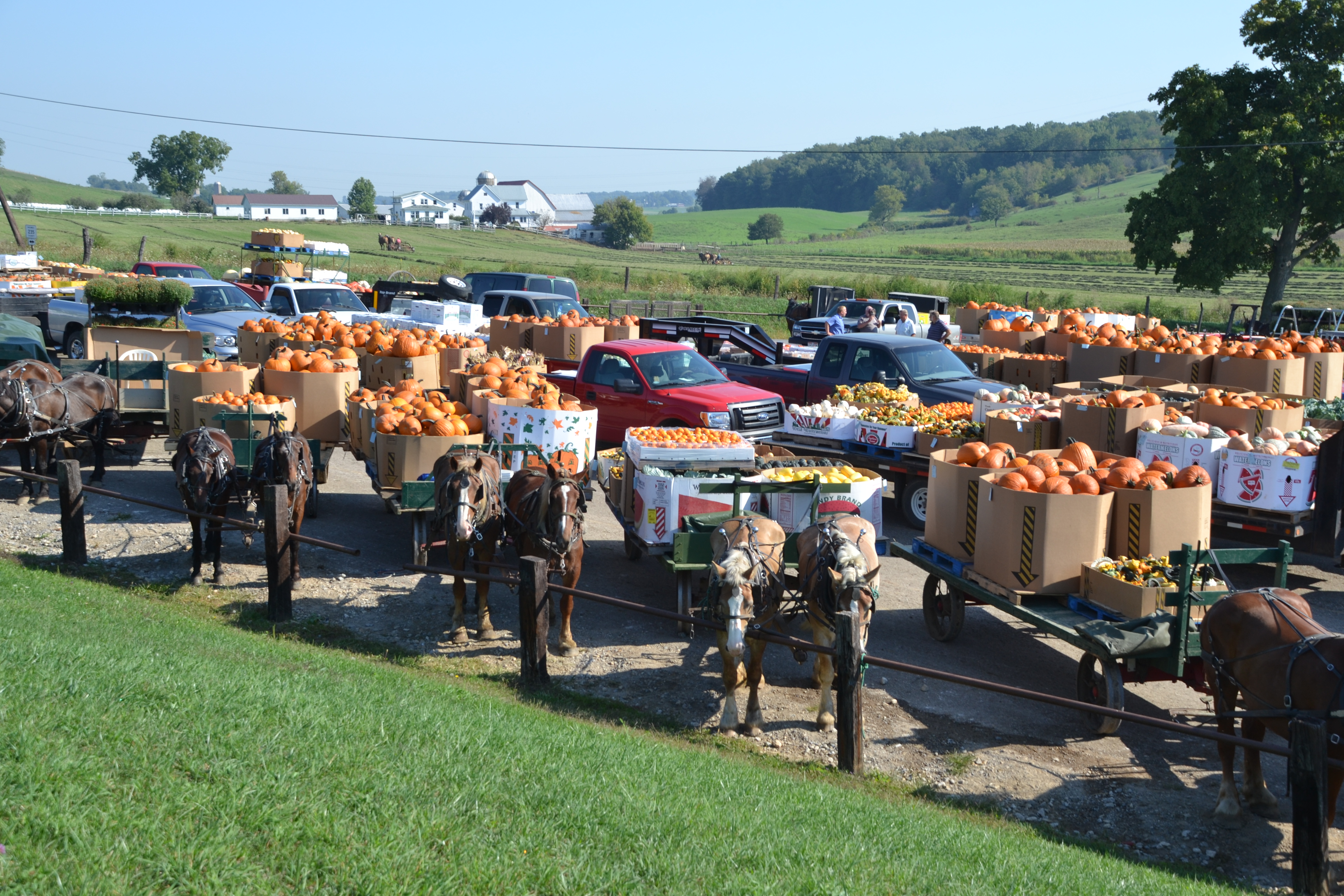
The lineup of produce waiting to be auctioned was colorful in more than one way.

By Bruce Stambaugh

For inspiration this time of year, I love to frequent the local produce auction located just two miles north of my home. It’s a carnival, traffic jam, town hall meeting, commerce hub and art museum all rolled into one.

I like to arrive midmorning just as the auction is about to begin. When it’s peak harvest time, the place is abuzz. Men, women and children seem to have caught the same exciting spirit.

Produce trucks by Bruce Stambaugh
Trucks of all sizes back up to the loading docks to both deliver for the auction and to load produce purchased.

Vehicles of all sorts line up to empty and to load the produce and associated items. Box trucks, pickup trucks, and pickups with flatbed trailers, tractor-trailer trucks, tractors with loaded wagons, horse drawn wagons, vans, cars, carts and bicycles all congregate at the Farmers Produce Auction west of Mt. Hope, Ohio.

Their drivers are there for one of two reasons. They arrive to sell their fruits, vegetables and flowers or to buy them. A few of us, of course, show up to simply admire the proceeding. The exuberant energy and shining beauty are both contagious.

Lining up by Bruce Stambaugh
The drive through auction creates an unusual traffic jam.

Amish men and teenagers steady their team of horses, standing patiently in line under the strengthening sun. Most have traveled miles with their cargos of colorful produce, neatly packaged and ready for the sale.

The assortment of trucks carries interesting payloads, too. The season’s last sweet corn and melon, huge boxes of the season’s first pumpkins, bright red and yellow peppers, and flat after flat of budding burgundy, gold and crimson mums are just some of the offerings.

Produce auctioning by Bruce Stambaugh
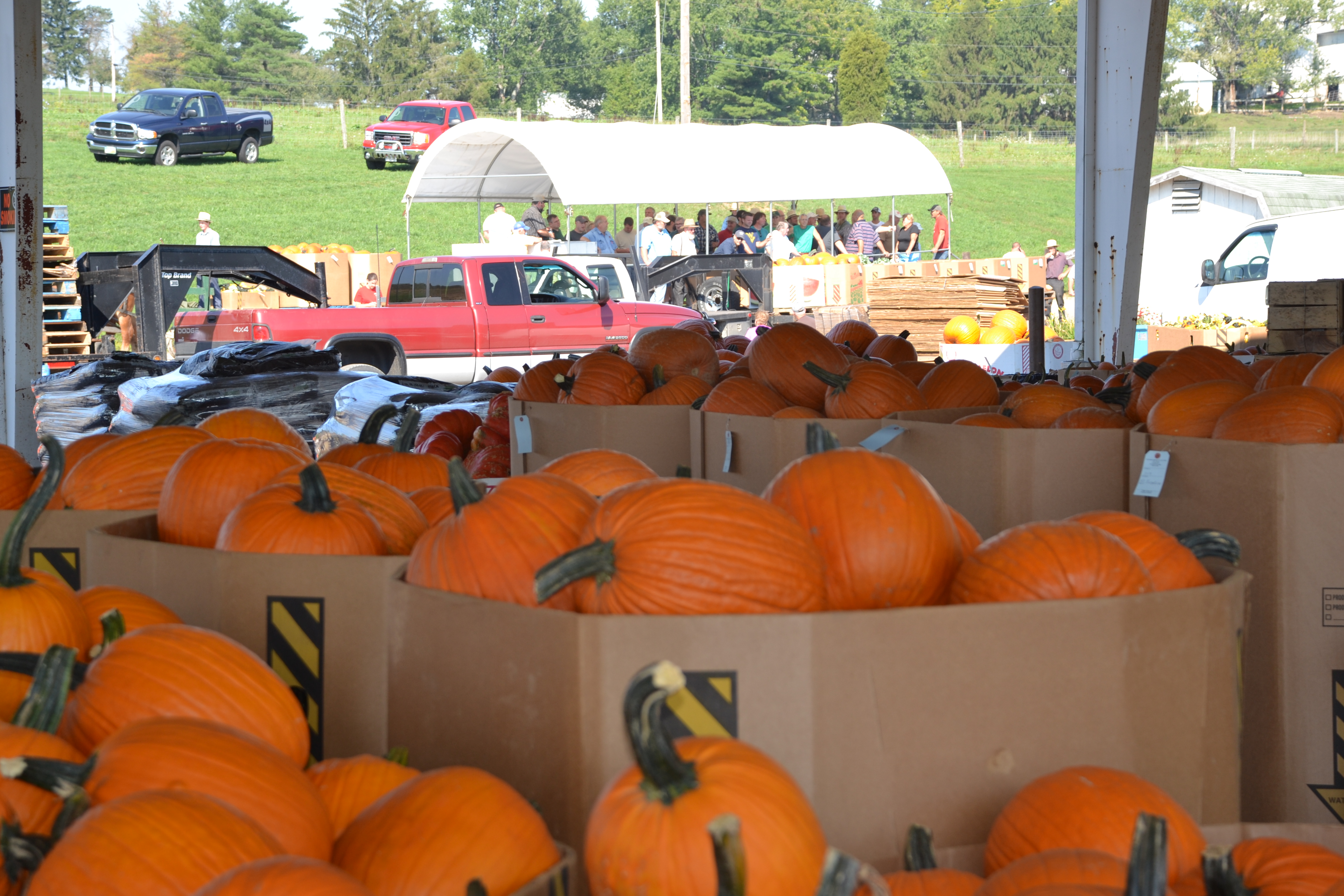
Buyers and sellers alike gathered around the auctioneer as bids were taken.

The syncopated rhythm of the auctioneer echoes from the open-sided building, announcing the sale’s start. Buyers quickly abandon the food stand and squeeze in to catch any bargain they can. The pace is quick, and if you snooze you lose. People pay attention.

The buyers themselves are a joy to watch. Young and old, male and female, they represent their own produce stand, local restaurants or a supermarket chain. This is their livelihood. They are daily regulars, and the astute auctioneer knows them well. A wink, a nod, a twitch and particular hand gestures signal bids and it’s on to the next lot.

Two auctions by Bruce Stambaugh
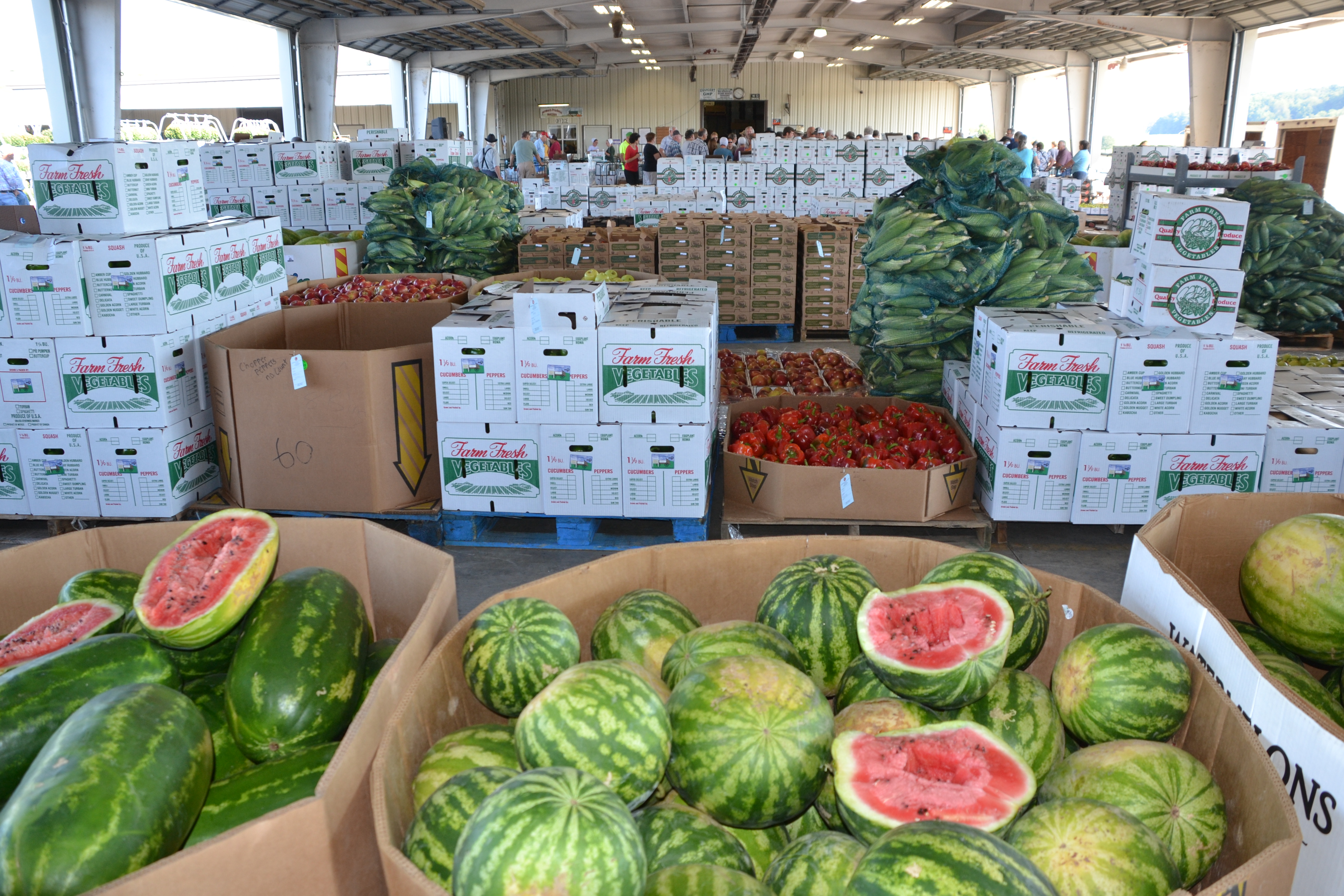
So much produce arrives each day that two auctions, one inside, one outside, are held at the same time.

Soon the drive through auction simultaneously begins outside. Double rows of boxed and packaged produce or flats of hundreds of flowers are sold straight from the wagon or truck on which they arrived. They pass by the canvas-covered auctioneer’s stand two-by-two until the last one is through.

Sellers know they have to be on time. Despite the disjointed configuration of vehicles, the sale runs efficiently, making buyers and producers both happy. To be first in line, one driver arrived at 6:15 a.m. for the 10:15 a.m. sale. That’s the dedication of effective and productive commerce in action.

Sold produce by Bruce Stambaugh
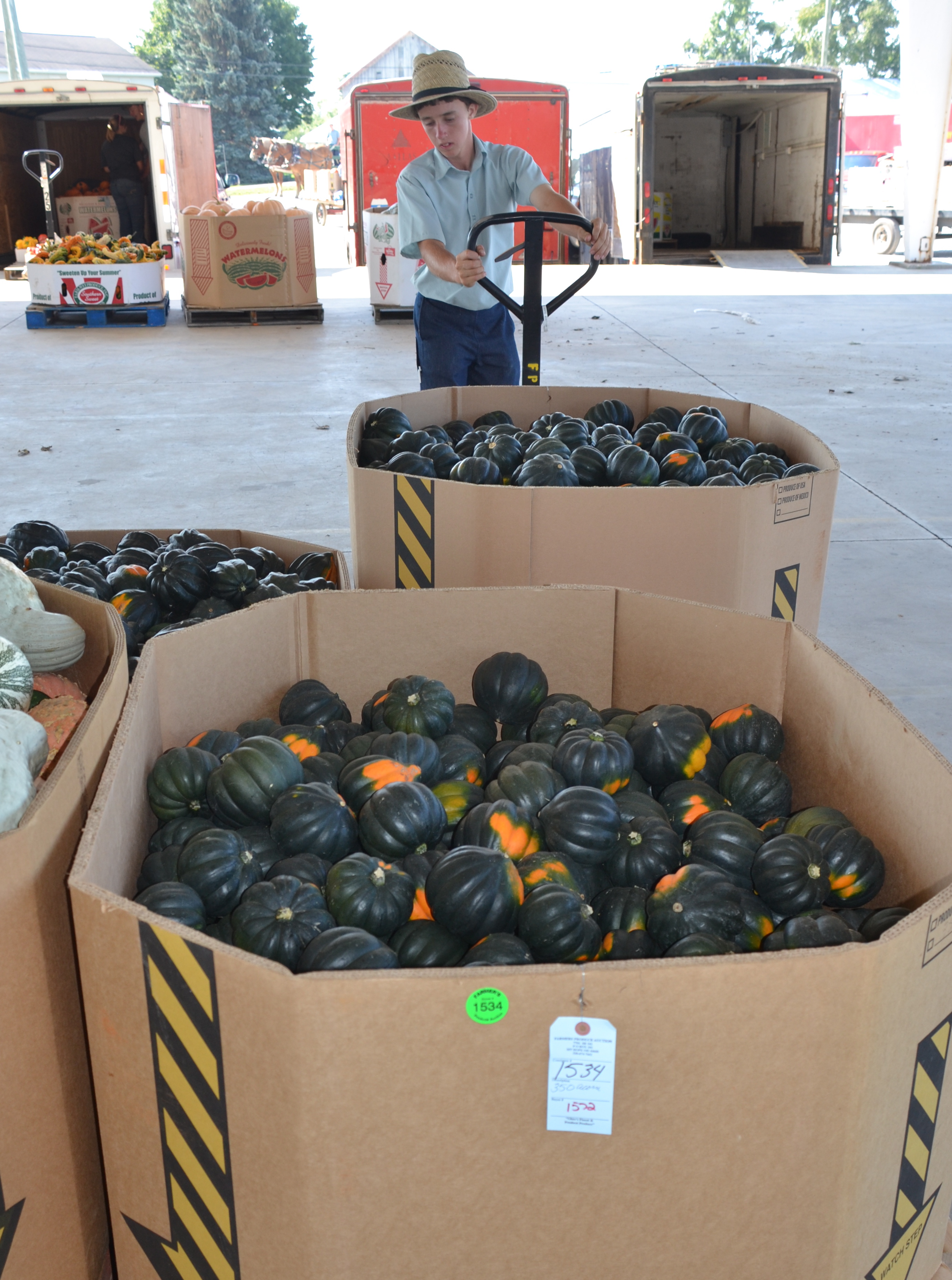
Amish teens help move the sold produce to staging areas until the buyers claim their purchases.
Hand-printed tags on the purchased commodities tell the tale. The number in black indicates the producer. The red number is the buyer. As soon as the lot is sold, young men and boys transport the goods with tow motors to designated stations where the merchandise is parked until claimed. Once the buyer is all in, the purchased containers are loaded into his or her vehicle.

By lunchtime, teamsters mull their successes on the slow, rattling ride home. Truck drivers secure their load, and head to their predetermined destinations where the fresh goodies will be sorted, washed and prepared for consumption.

The fascinating organization, the polished production, the gregarious people and the artsy produce combine to create one rousing show. What an inspiring performance to start the fall.

Loads of produce by Bruce Stambaugh
Growers are taught how to package their produce to ensure both quality and higher prices.
Rows of produce by Bruce Stambaugh
The produce is neatly lined up in rows as it arrives to be sold at the auction.
Double rows by Bruce Stambaugh
The outside auction is done by selling the produce in double rows that slowly pass by the auctioneer’s stand.
Decorative produce by Bruce Stambaugh
Seasonal decorative produce like these gourds and pumpkins add to the auction’s peak season success.
Amish worker by Bruce Stambaugh
Besides the Amish farmers, the auction employs several Amish men and women to help with the sale.

This column appeared in The Bargain Hunter, Millersburg, OH.

© Bruce Stambaugh 2012

A most unusual birthday gift

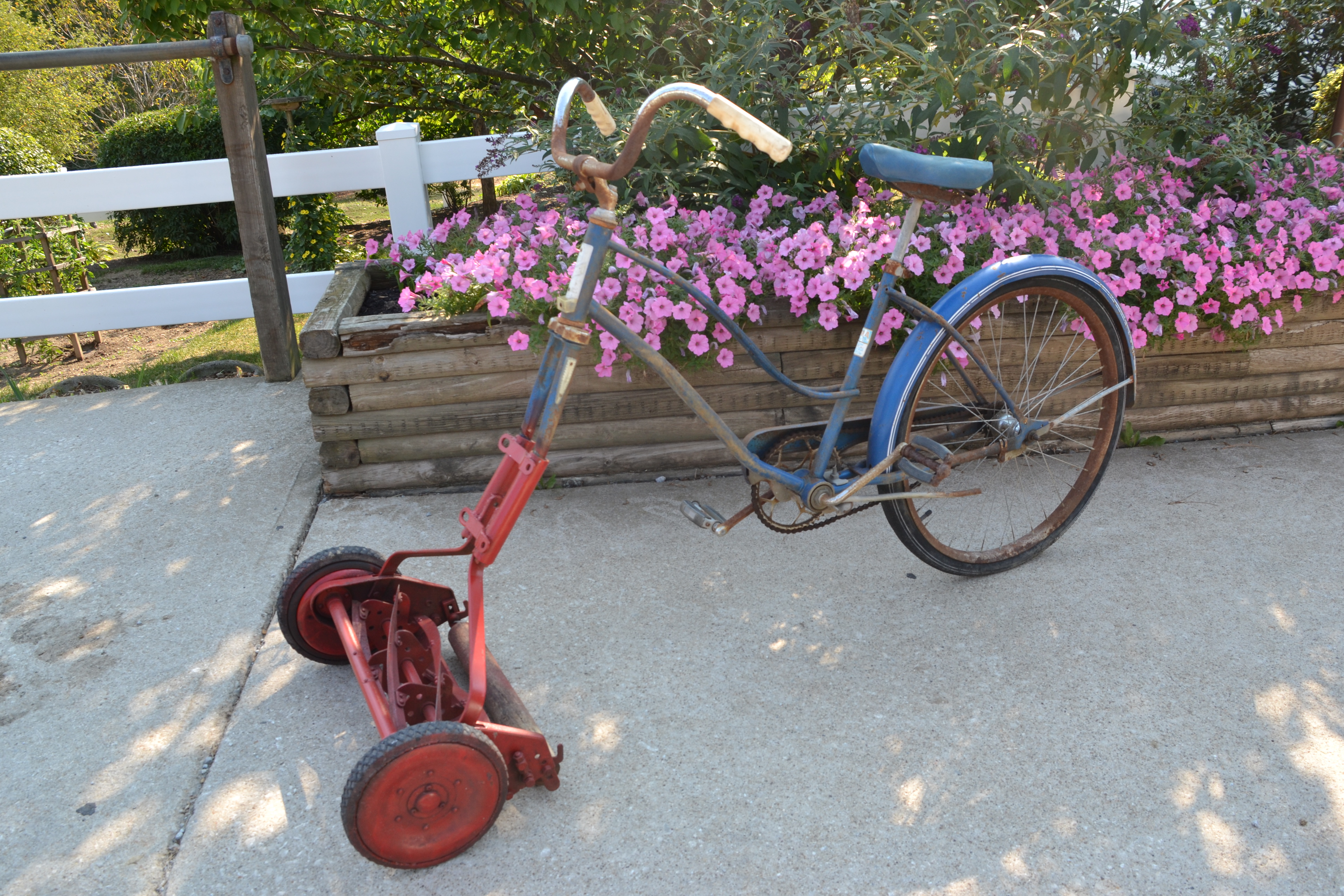
The donkey by Bruce Stambaugh
Robert Troyer, Millersburg, OH, received this unusual birthday gift from friends.

By Bruce Stambaugh

Out of town friends of Robert and Edna Troyer of rural Millersburg, Ohio kept promising him a donkey. When his birthday arrived this summer, he finally got it, sort of.

Around the time of his July 25th birthday, a group of friends from Ottawa, Ohio came to visit. Robert, 67, and Edna, 66, were sitting with about a dozen people in a circle on their concrete driveway when some of the visitors excused themselves to check on the “donkey.”

Robert and Edna are Amish, and their “English” friends thought they could use a donkey even though the couple owns a business, not a farm.

“I was a little suspicious,” Robert said. “I got curious when people started to disappear.” In fact when Robert went to see what was going on, he was politely told to sit back down.

Cement pad by Bruce Stambaugh
The “donkey” was delivered to Robert Troyer on the cement driveway in front of his home.

Soon, the oldest in the group, Leo Schroeder, came riding down the drive on the “donkey.” In truth, the contraption was a jerry-rigged bicycle and hand push lawn mower. To add to the joke, Schroeder wore Robert’s straw hat for effect.

And what an effect it had, too. Everyone burst out laughing.

“You can actually ride the thing,” Robert said, “but it doesn’t turn very well.”

A rotary blade mower head serves as the front wheel with its handle attached to where the front bicycle wheel should be. The rest of the “donkey” is a regular push pedal bike.

About 20 years ago, the group was looking for a harness shop. One of the group members needed harness items for some ponies.

Originally the group consisted of seven couples. In their search, they stopped at a home near Walnut Creek and asked about a harness shop. They were told to keep driving north on state Route 515 to Indian Hill Harness, just north of Trail. They found what they were looking for at Robert’s shop, and they have been friends ever since.

“Robert was a work,” Edna said. “I waited on them and they later told me that they took to us because I was handicapped.”

Edna suffered a spinal cord injury when she was 18.

“I fell through a hole in a barn and onto concrete,” she said. “I was paralyzed at first, but later could walk.” Edna said that as she aged and after an unsuccessful knee surgery, she needed a wheelchair full time.

“They are all members of the Farm Bureau,” Edna said of the group of friends. “They meet here in February, July and August.” Edna said that none of the group farms anymore, but they stay interested in farming.

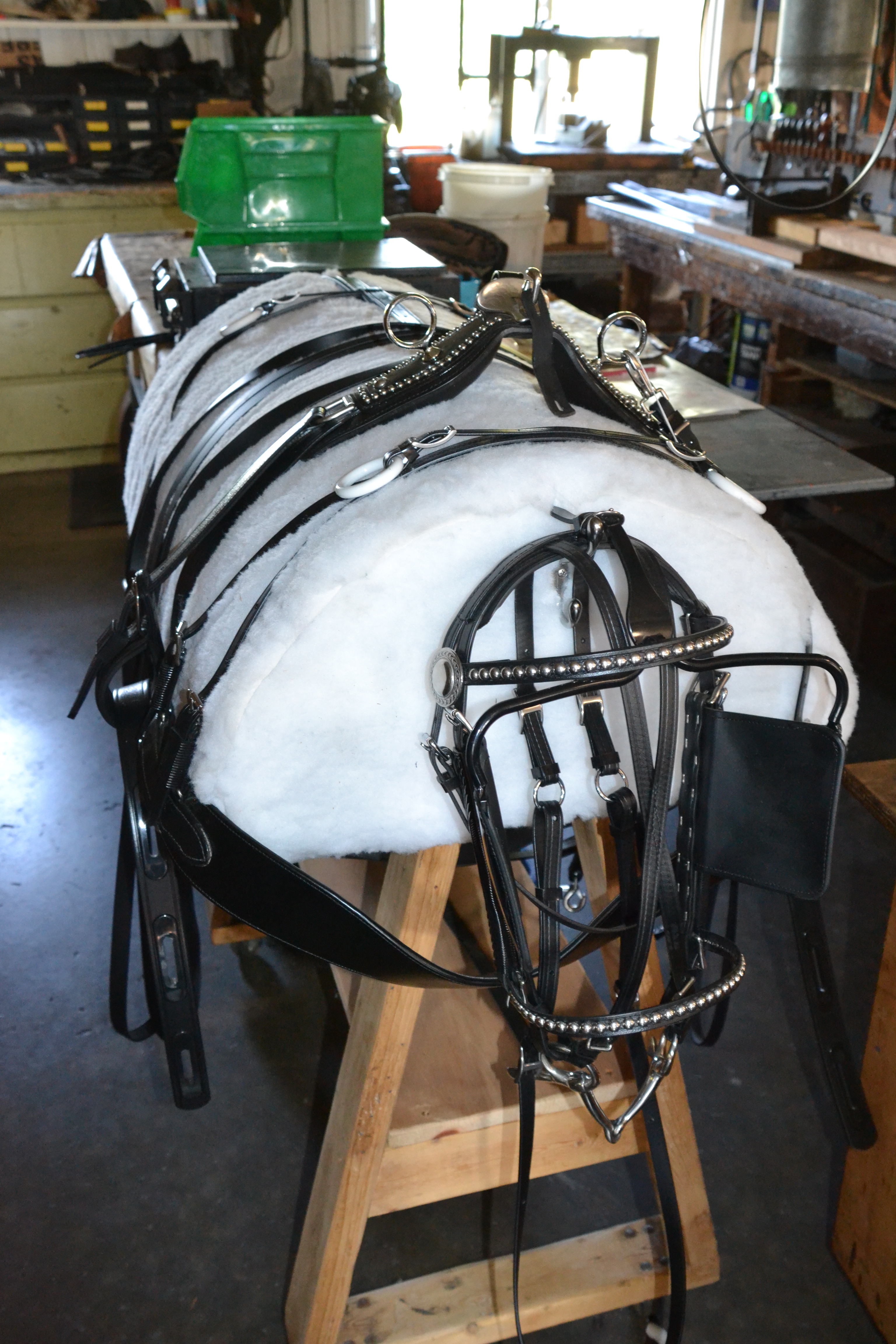
Harnesses by Bruce Stambaugh
The harnesses are just a sample of some of the custom horse harnesses Robert Troyer makes.

Robert and Edna, who have been married for 46 years, have become such close friends with the group that they go on overnight outings with them, including to other states.

“One of the members even bought a big van so I would be able to accompany them,” Edna said. “It is just he and his wife, so he didn’t really need a van.”

With their gregarious and easy-going personalities, it is easy to like both Robert and Edna. They said they enjoy sharing their hospitality with others.

When she learned that one of the group members likes pineapple pie, Edna baked one for him.

“He liked it so much,” she said, “he ate the whole pie in one day.”

Edna said that the group has even hosted them in Ottawa, located in western Ohio. She and one of their friends, Sharon Lammers, even share the same birthday, August 16.

Edna keeps busy painting scenes and decorating cups, glasses and wooden plaques with flowers and birds. She said she taught herself to paint, and her paintings are available to purchase at Behalt!, on County Road 77 near Berlin.

Robert said most of his business is supplying the Walsh Company in Brookfield, Wis. with fine show harnesses. He had worked for Mast Leather in Walnut Creek, Ohio until Walsh bought the business in 1990, the same year he started his harness shop.

Edna appropriately summed up why their friendship with the group has lasted so long.

“Despite your situation,” she said, “you have to keep going. Life is too short.”

Paintings by Bruce Stambaugh
Edna Troyer’s paintings are available at Behalt! near Berlin, OH.

This article appeared in The Bargain Hunter, Millersburg, OH.

© Bruce Stambaugh 2012

Fall is upon us in every way

Pumpkins and buggies by Bruce Stambaugh

By Bruce Stambaugh

Officially it’s still summer for a few more days. Reality says otherwise.

Fall is upon us. The signs are everywhere. They have been for sometime now.

Warm, pleasant days give way to cooler, quiet evenings. Only a few remaining crickets and an occasional Screech Owl break the night’s silence.

The morning wake up call suddenly switched from a chorus of American Robins to cheery Carolina Wrens. The effect is still the same.

Morning fog by Bruce Stambaugh

Dense fog quickly lifts from valleys, giving way to white cottony clouds highlighted pink, peach, gold and gray by the strengthening sun. Morning mists betray the garden spiders’ artsy trap. The miniature droplets soon yield to the day’s brightening warmth.

While most show a slight tinge, some entire trees have already had their leaves turn a dull orange or dirty yellow. No doubt the stress of this summer’s oppressive heat and extreme dryness forced this premature metamorphosis. Some leaves seemed to go green to brown overnight. The deepening blue sky offsets these anomalies, making them almost acceptable.

Tinted tree by Bruce Stambaugh

Fall is not a time to quibble. It’s a time to appreciate, to work and to reorient yourself and the world as we have come to know it.

Dewy web by Bruce StambaughScholars head to school, each in their own way. Young boys, red and white lunch buckets swaying by their sides, walk in groups, tan straw hats bobbing rhythmically. Smart girls wearing pastel dresses glide by on mute bicycles. They left home later than yet arrived simultaneously with the boys.

Bumblebee painted buses inch past the pedestrians until the next stop. Somewhere behind sheer curtains, home-schooled children take it all in.

The hum of school seems to settle society, put it back in sync. Family vacations end. The students, though not likely to admit it, enjoy the familiar routine, save for a handful of frequent flyers who already know the path to the principal’s office.

At the produce market, giant pumpkins now outnumber the red, plump tomatoes and the ubiquitous zucchini. Despite the protests of the regal morning glories, crimson and gilded mums are the flowers of choice and the season.

Field corn by Bruce Stambaugh

Despite the drought, farmers are smiling, assuming they indeed have crops to gather. They live for the harvest. It’s their bread and butter, their paycheck, their livelihood. They relish the work and consider comparing their bushels per acre numbers as an exercise in status. If their neighbor needs help, however, they’ll be the first to respond.

Kitchens fill with the aromas of snappy salsa, and pickles and vinegar. Canning shelves are replenished with jars of winking peaches and cherries, sandwiched by rows of golden corn and tart applesauce.
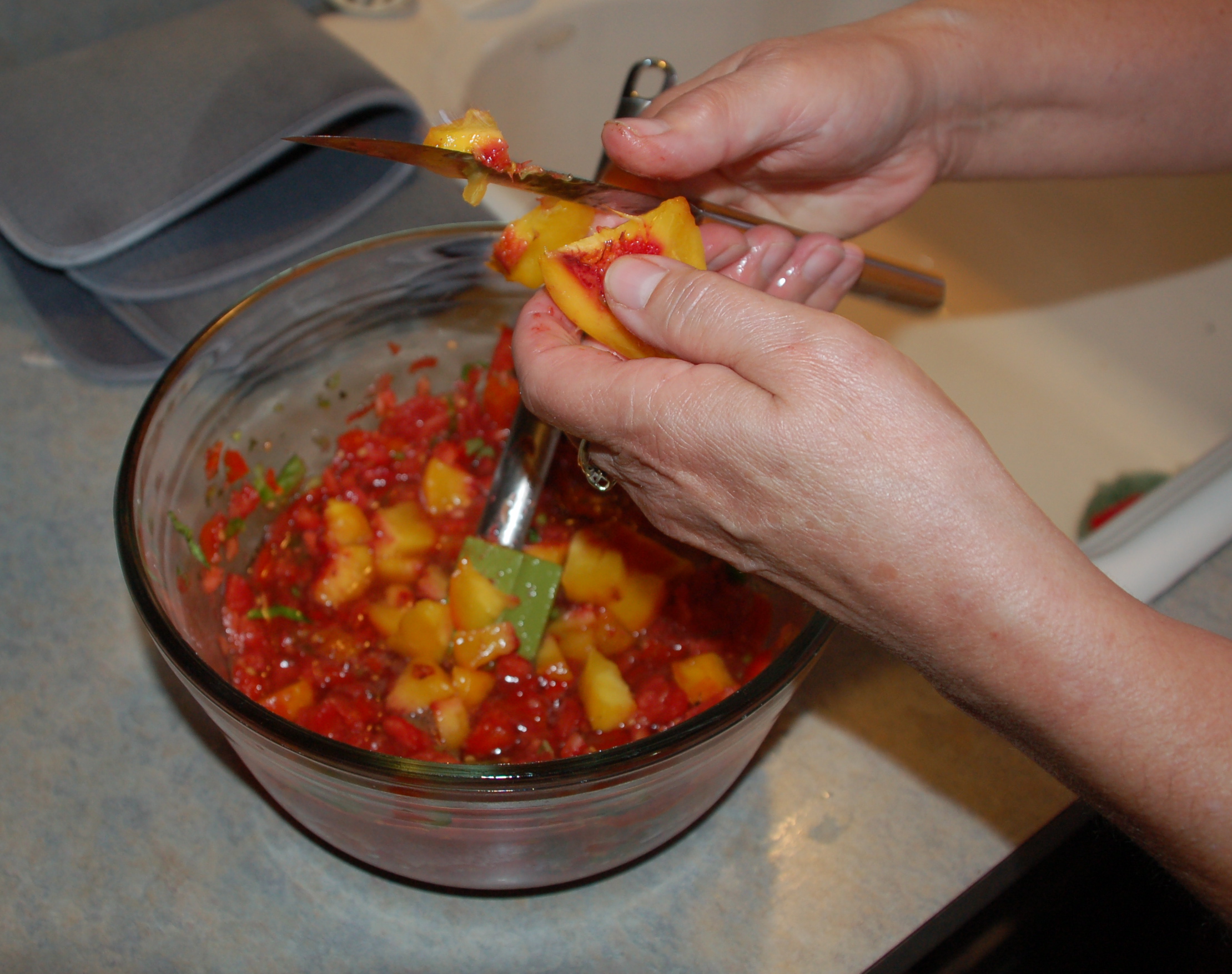
Peach salsa by Bruce Stambaugh
Life in the fall in the rural Midwest in mid-September is as fulfilling as it gets. Pride and gratitude are the human harvest for rural folks. No blue ribbons, even if bestowed, can provide the same satisfaction. Those ancillary awards politely confirm what we already believe.

Where coloring stands of hardwoods mingle with fencerows and cornrows, life is good. We acknowledge our connection to creation and to one another. We also sense the real and urgent necessity to care for mother earth as we prepare for whatever winter brings our way.

Fall is upon us. Stop, look, listen, inhale and enjoy. The rest of life will take care of itself. It is an equal opportunity seasonal transition we all need whether we know it or not. I humbly thank autumn for the abundant and timely cues.

Amish scholars by Bruce Stambaugh

This column appeared in The Bargain Hunter, Millersburg, OH.

© Bruce Stambaugh 2012

More than a benefit bake sale

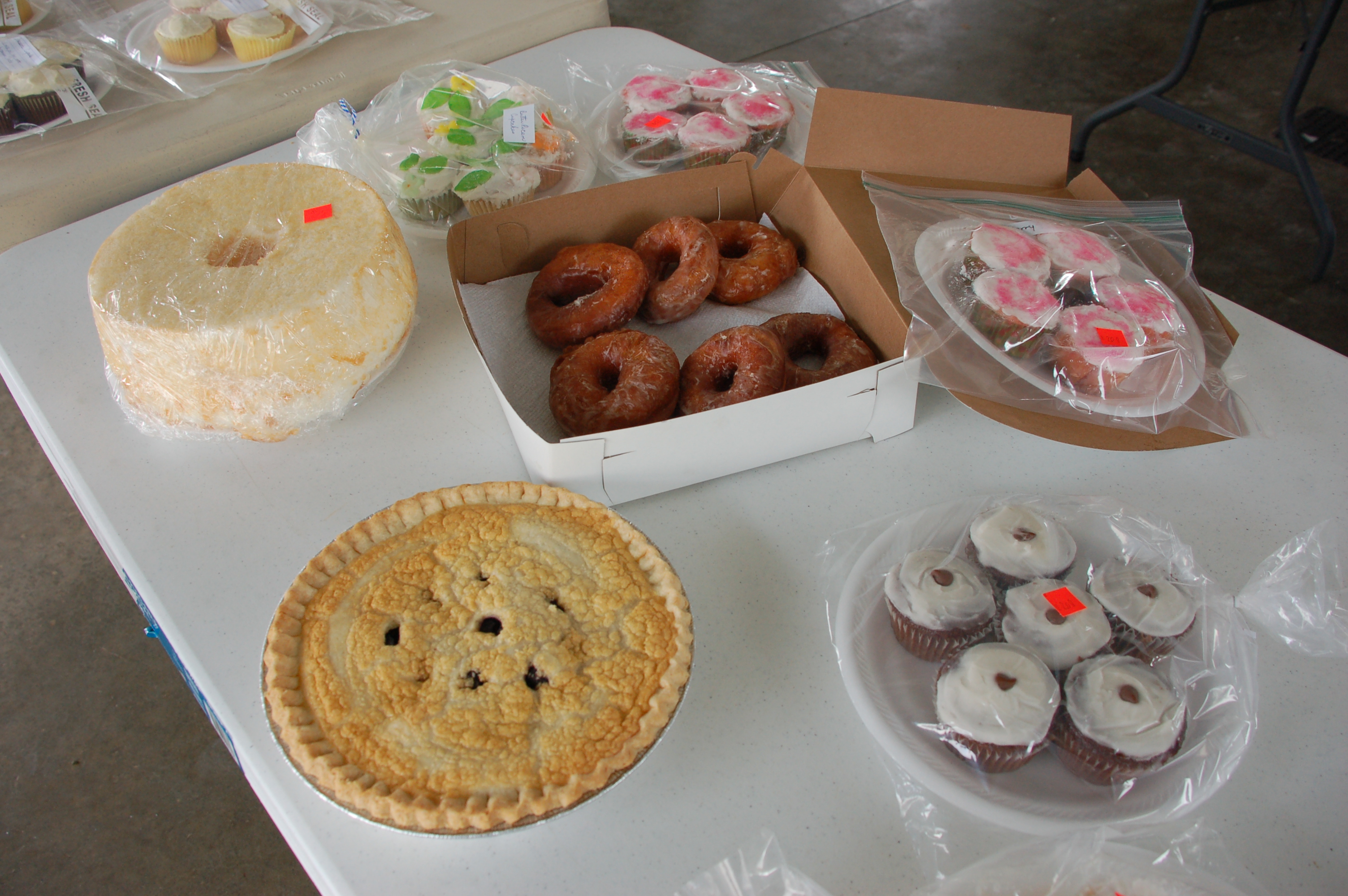
Baked goods by Bruce Stambaugh

By Bruce Stambaugh

This could have been the bake sale of all benefit bake sales. As impressive as they are, the numbers alone don’t tell the entire story.

On June 3, the life of 2-year-old Betty Ann Weaver changed forever. Her left hand was accidentally mangled in a lawn mower. She lost all of her digits, with only a couple of stubs remaining.

Betty Ann returned to her parents’ home four miles west of Holmesville, Ohio on July 4. Her nine brothers and sisters and her parents, Roy and Lovina Weaver, were glad to have her back home.

After a month in the hospital and with rehab visits ongoing, medical bills accumulated. Her maternal grandmother, Ada Yoder, was determined to help. The gregarious woman, who lives with her husband, Wayne, a mile west of Holmesville, had a big idea to raise some funds for her granddaughter. She shared her vision, and soon a bake sale was planned.

“We had lots of help,” Ada said. In fact, four Amish churches donated hundreds of baked items that were sold August 16 and 17.

“There were some good looking items that we sold,” Ada said, “including a square angel food cake.” As delicious looking as all those items were, the homemade donuts were the real draw.

“We used 11 bags of donut mix,” Ada said. “Each bag made 50 dozen donuts. That’s a lot of donuts!

“The first day we started making donuts at 7 a.m. and finished at 9:30 p.m.” Ada explained. The next day the process began all over again.

“We started at 3 a.m. and finished at noon,” she said. “We had people here for donuts at 5:30 a.m. already.” The donut making finished up that evening with another round of frying them in coconut oil that lasted from 4-8 p.m.

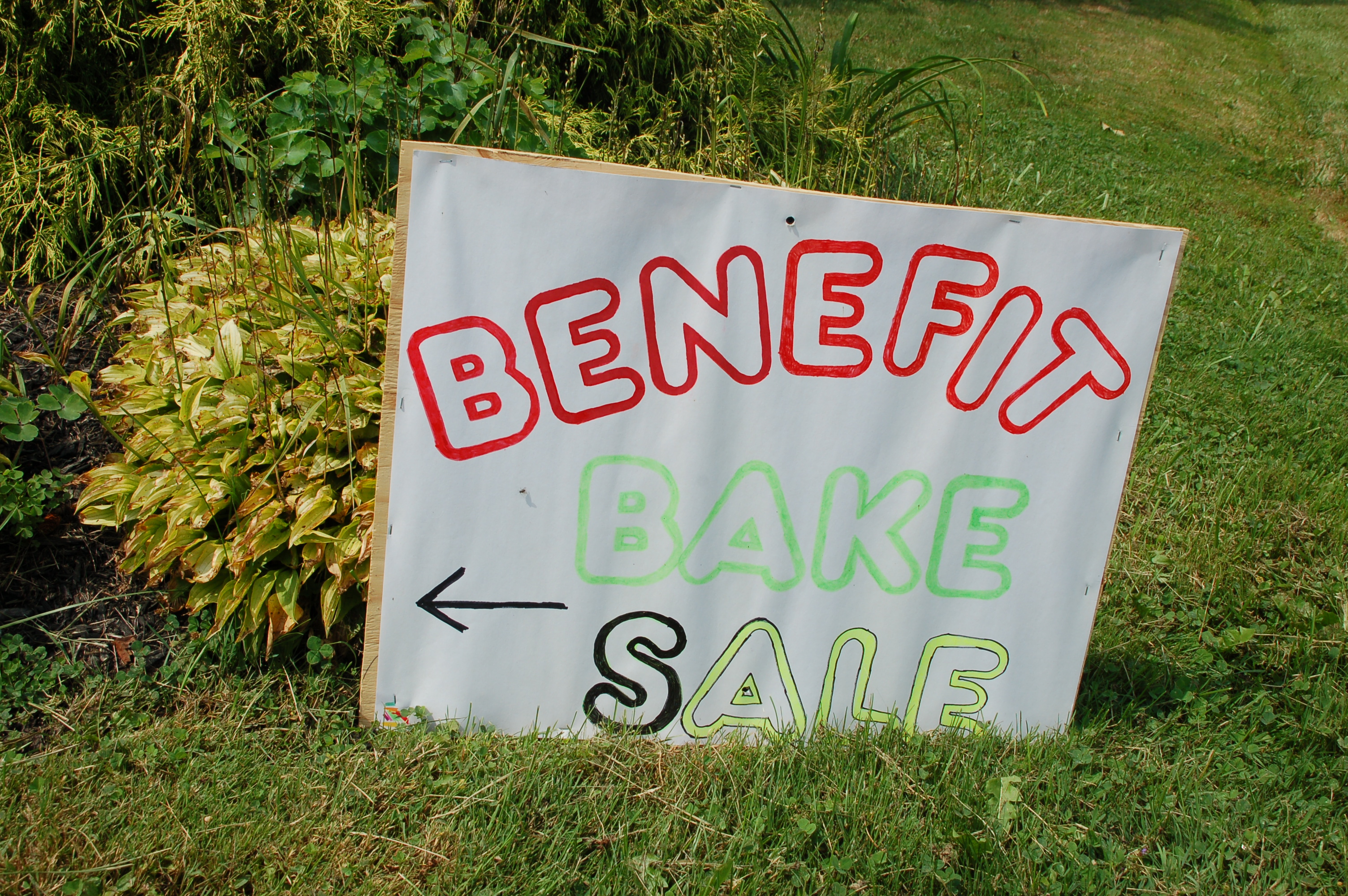
Bake sale sign by Bruce StambaughAda said customers had to wait until the donuts cooled enough for them to be glazed and boxed. To generate orders, she had distributed fliers about the donut and bake sale to several area businesses. Many bought multiple dozens to share with employees.

“We had pre-orders for all the different kinds of donuts we made,” Ada said. “We did raspberry filled, strawberry filled, Bavarian cream and glazed.”

“I made six kettles of raspberry filling,” she said.

Ada said she was overwhelmed with both the amount of help she had and the response. The last baked good item, a regular, round angel food cake, was sold at noon on August 17. The sale was held at the Weaver’s home.

“We were very pleased with the results,” Ada said. “We made in excess of $5,000 the first day alone.”

The money will be used to help defer medical expenses for her granddaughter. Donations may still be sent to Wayne Yoder, 9378 County Road 329, Holmesville 44633.

The article appeared in The Bargain Hunter, Millersburg, OH.

© Bruce Stambaugh 2012
Walking by myself, but never alone

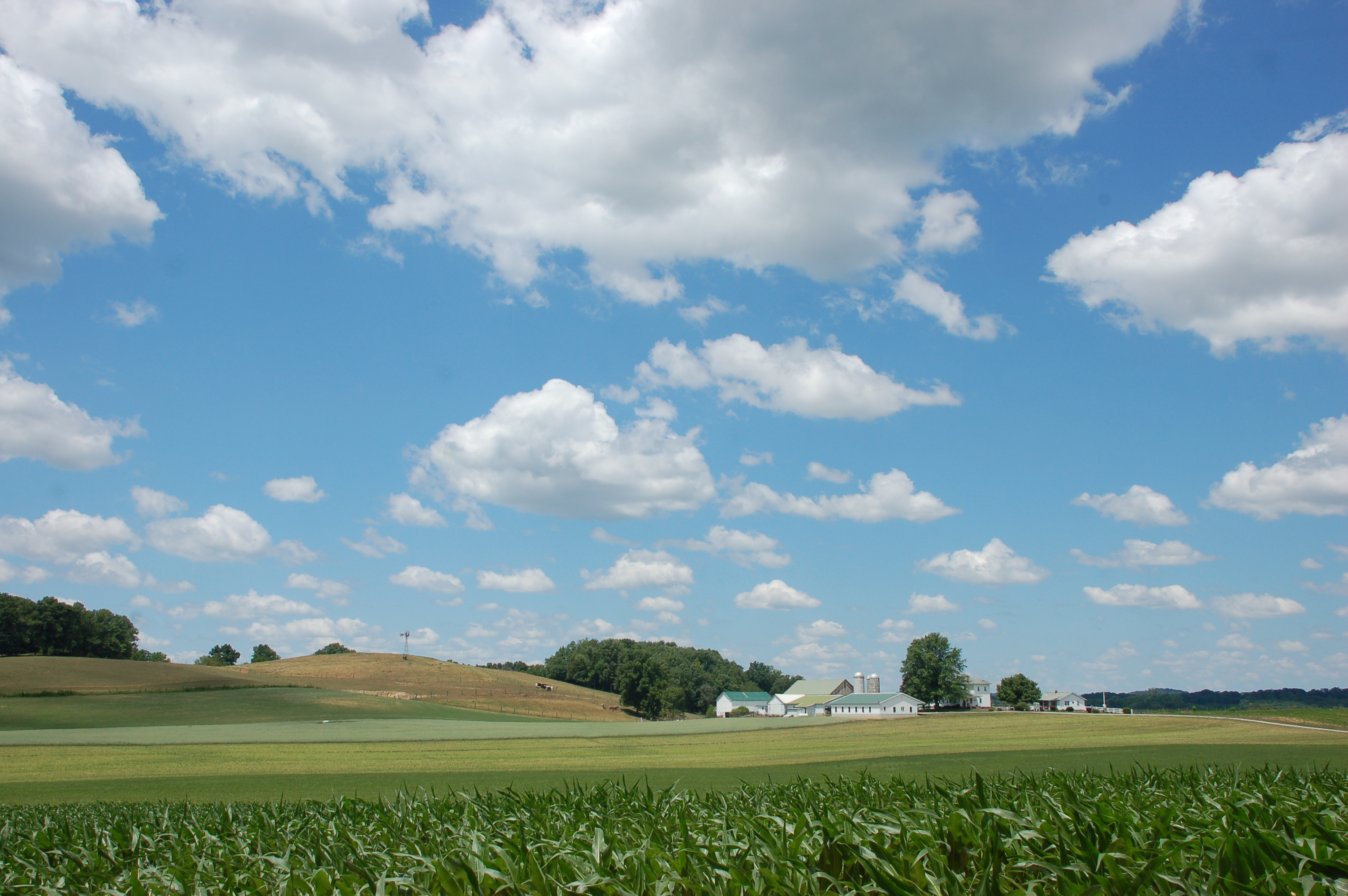
Countryside by Bruce Stambaugh

By Bruce Stambaugh

Even though I am usually alone, I always have plenty of company on my regular morning walk on the township road near our home.

I walk for the exercise of course, but the benefits far exceed staying physically fit. On these hot and humid summer days, I like to get an early start if my schedule permits.

If I can survive the tricky first tenth of a mile on our busy county highway to get to the road less traveled, I can relish the rest of the walk. Common sense tells me to stay alert for oncoming traffic and dodge the fleet of various vehicles by stepping to the side.

Sunny walk by Bruce Stambaugh

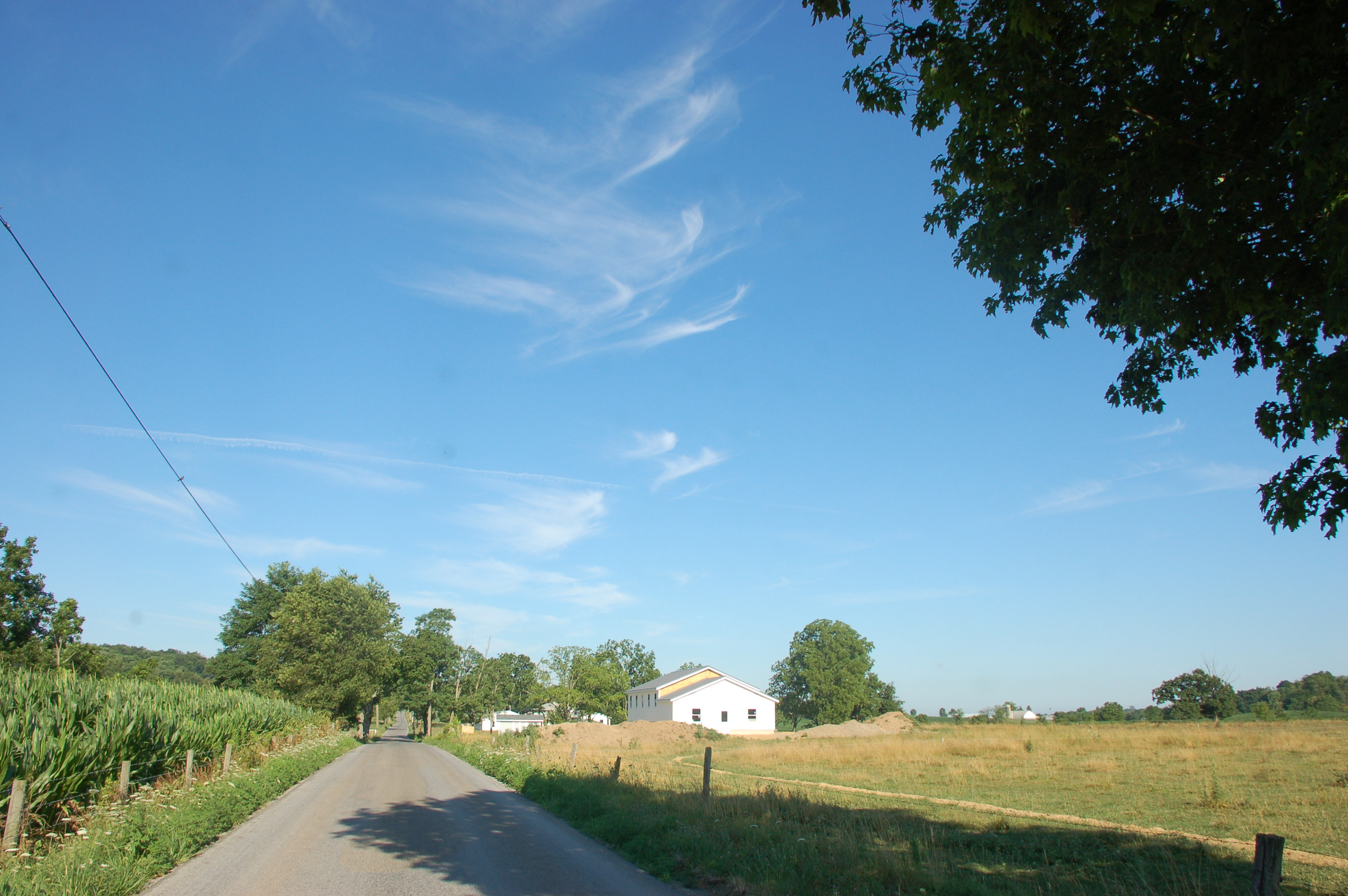
Once I’ve completed the macadam gauntlet to the safety of the township road, I turn east into the morning sun. After a few steps uphill, the road unfolds before me, rolling gradually down into a low, sweeping valley formed by the Wisconsin Glacier 10,000 years ago. Farm fences on both sides squeeze against the chip and seal roadway, making it seem even narrower than it already is.

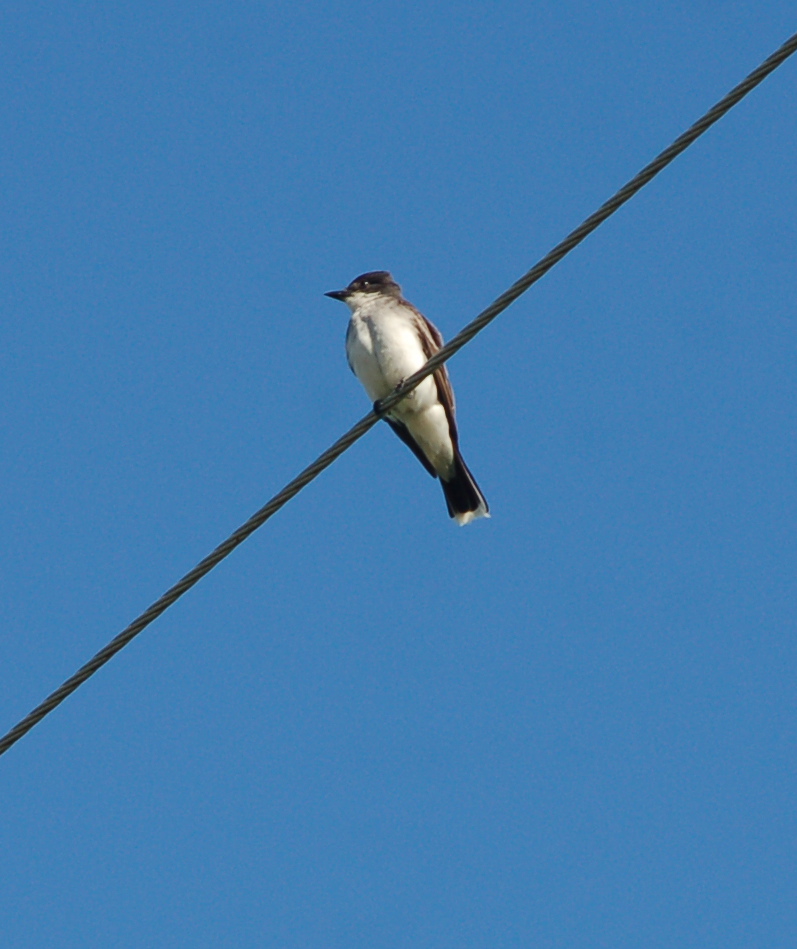
Eastern Kingbird by Bruce Stambaugh
This Eastern Kingbird and it’s mate often greet me as I walk along the township road.
I fondly anticipate these next moments. It’s the same road, but never the same walk. My audience waits, and every crowd is different. It’s not the Olympics by any means. In fact, it more closely resembles a circus.

I especially enjoy the high wire acts. The Eastern Bluebirds, including the juveniles still testing their wings, play their own version of leapfrog with me from the roadside power lines. Greeting me with melodious songs, the furtive birds wait until I nearly reach them before they flutter a few yards down the lines and land again.

I walk some more. They fly some more. The pattern is repeated a quarter-mile until the power lines run out. At that point, the beautiful birds make an arch over the hayfield and light upon the wires behind me to await my return trip.

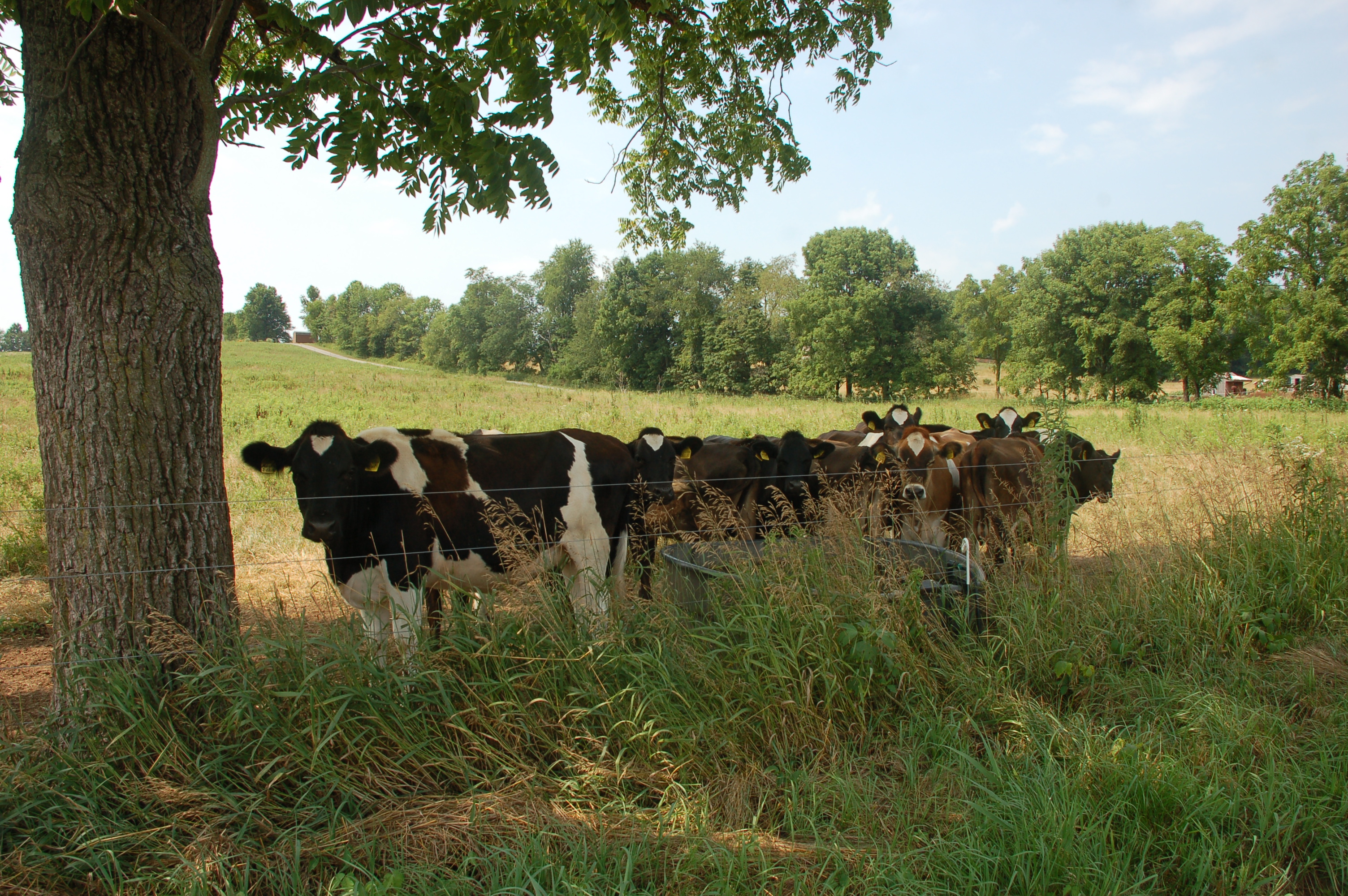
Heifers by Bruce Stambaugh

Once the road flattens out, a congregation of Holstein heifers crowded head to tail beneath a black walnut tree suspiciously eye me. As I stroll, their heads turn as one, ears twitching, tails swatting pesky flies. Sensing a potentially easier prey, a few of the flies follow me.

Thankfully, a flashy yellow ball cap saved my baldhead. Still, I flail away at the persistent insects. I’m glad no other humans are around to witness my comical machinations. By the time I reach the valley’s shallow brook, the flies relent.

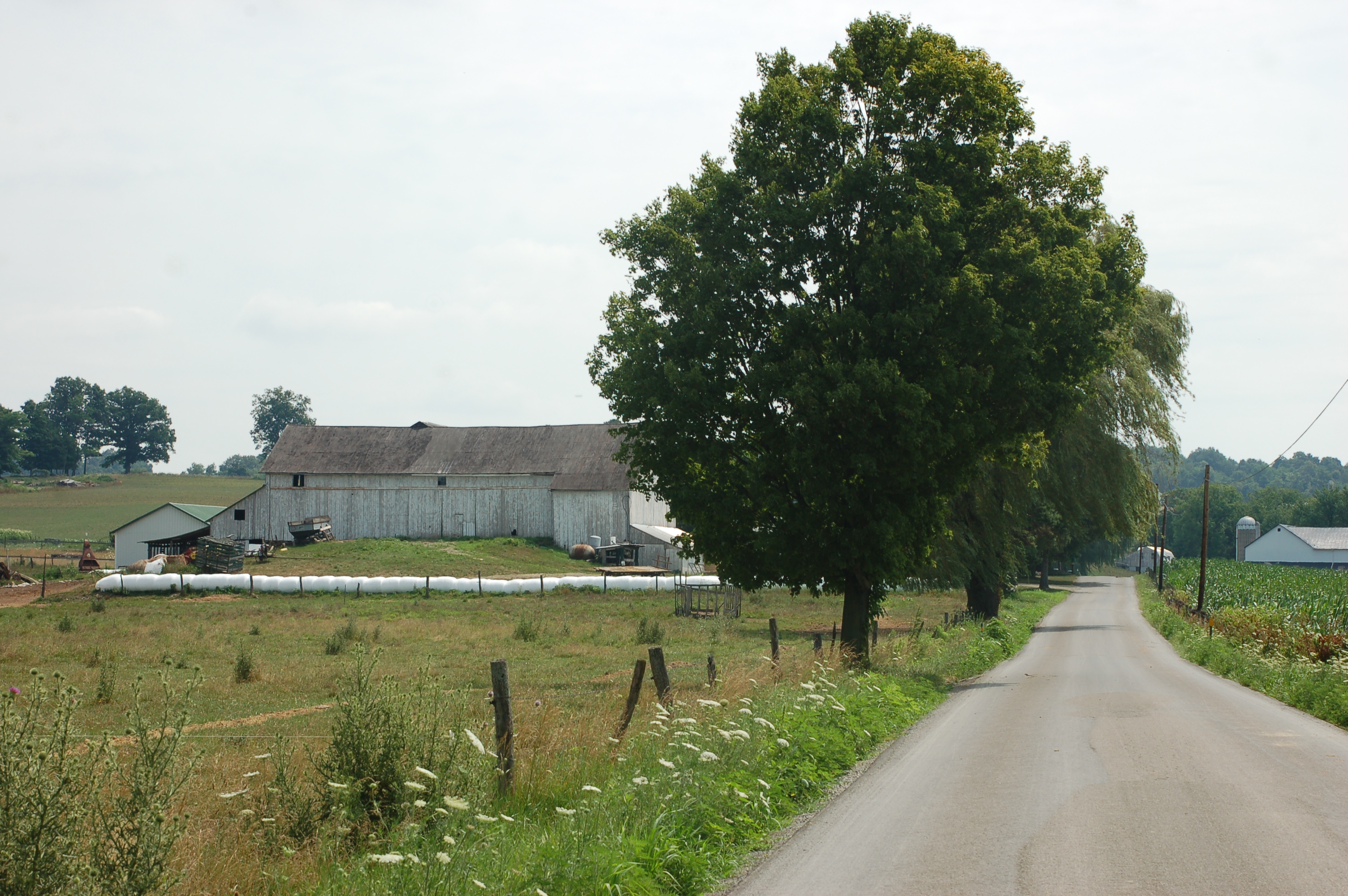
Jonas Yoder farm by Bruce Stambaugh
I usually turn around and head back home at the Jonas Yoder farm a mile east of my home.

Continuing east past the newly built Amish schoolhouse, the Barn Swallows, Tree Swallows and Purple Martins all start chattering to me at once, circling overhead as if they were asking me to follow.

Buggy by Bruce Stambaugh

At Jonas Yoder’s farm, I break the law. A U-turn begins my return trip. I usually walk down the center of the road until I hear a vehicle or buggy. On average, only one or the other passes me on the township road.

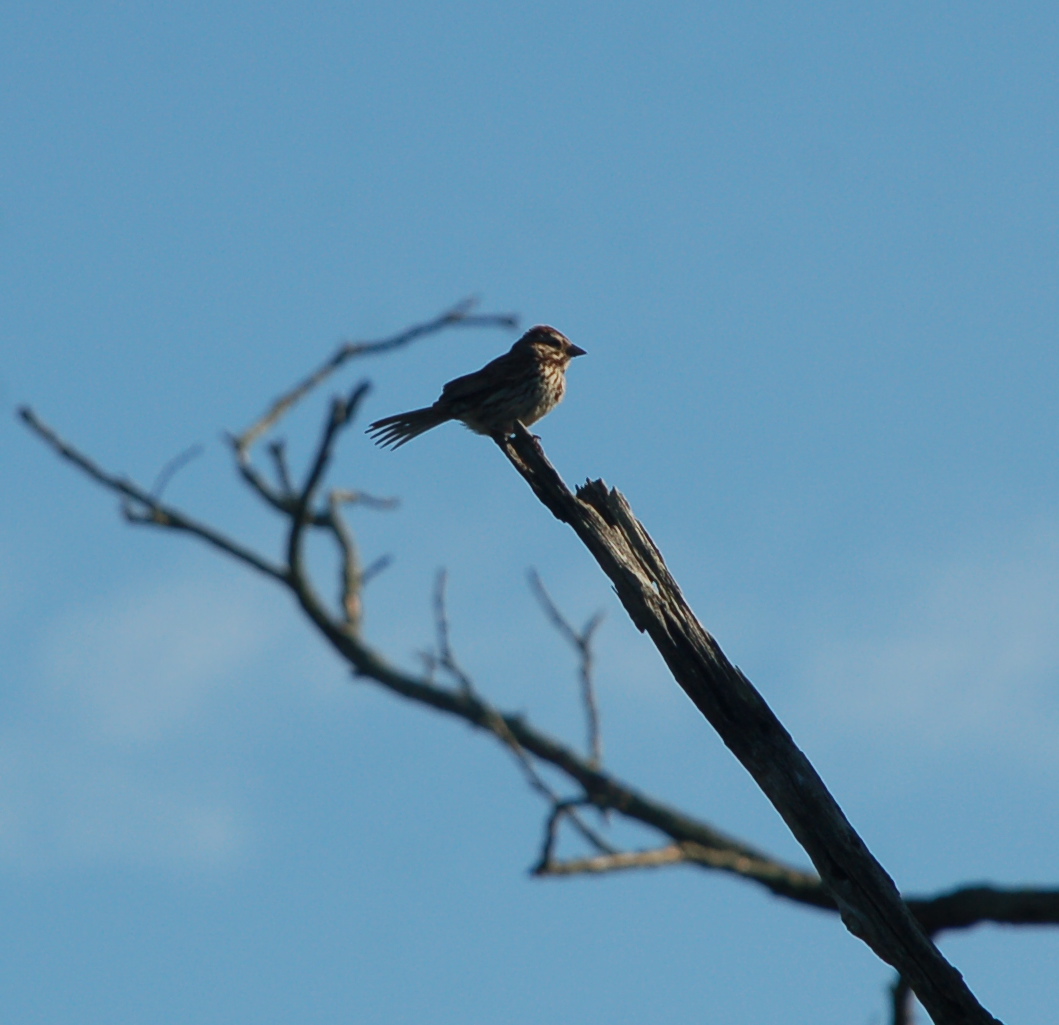
Song Sparrow by Bruce Stambaugh
One of several Song Sparrows that I see on my walk.
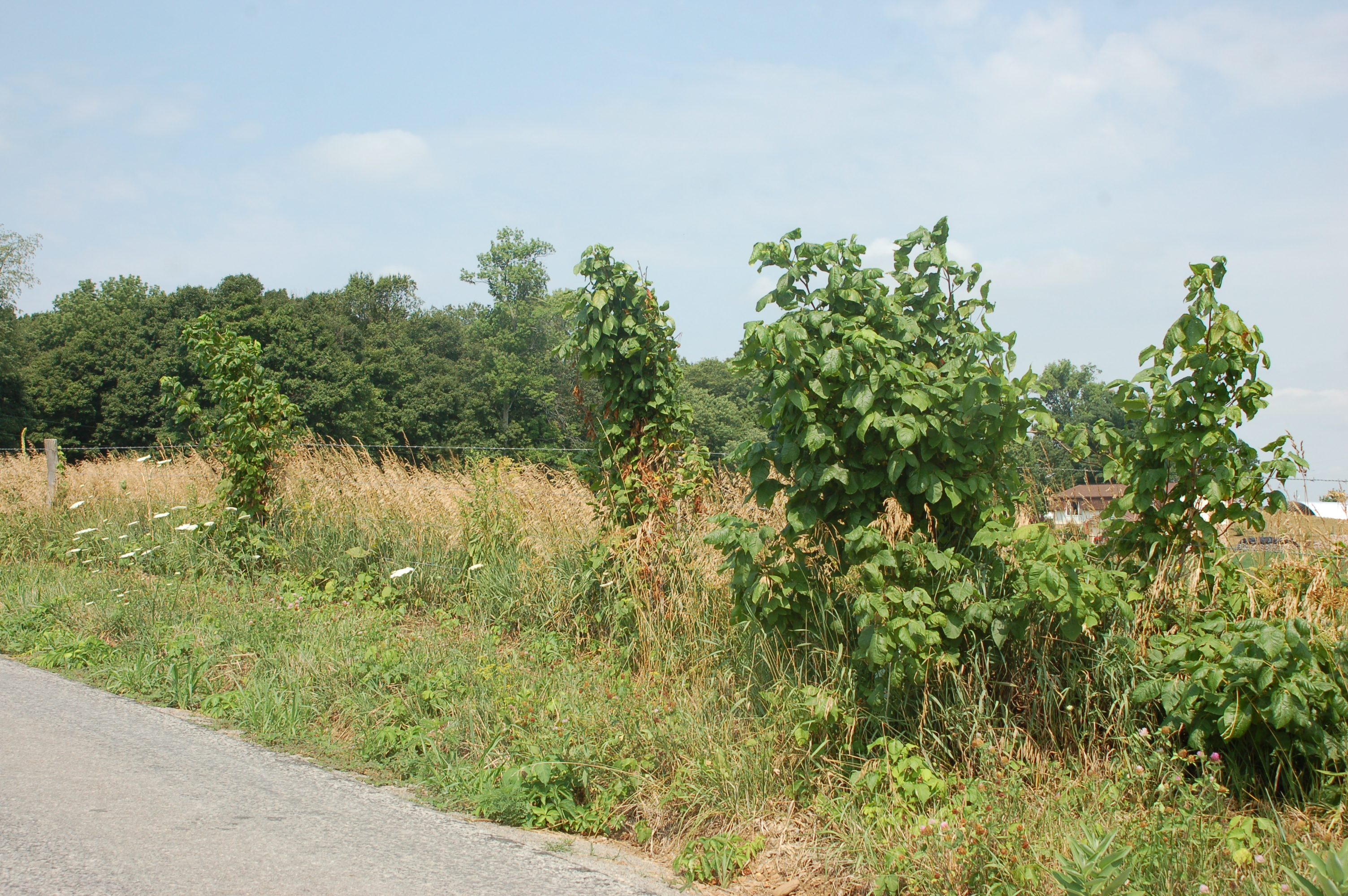
The American Robins and Song Sparrows are all used to me by now, and keep on singing in place. A young flicker, still with no brilliant red on the back of its head, flits from fence post to tree to utility pole. Poison ivy vines, leaves shiny as Christmas holly, have nearly over grown every locust post. A Green Heron escorts me back up the incline until it settles atop the tallest tree in a dense woodlot.

Down the arduous homestretch again, my next-door neighbor’s dogs unceremoniously announce my arrival. I hit the trifecta. I feel welcomed, renewed and refreshed.

Purple Martins by Bruce Stambaugh
Young Purple Martins wait patiently on a dead tree limb while being fed.
Poison ivy by Bruce Stambaugh
Poison ivy vines have over run many of the locust fence posts along the roadway.
Female Mallard by Bruce Stambaugh
This female Mallard, and sometimes its male mate, is often swimming in a pool of the small stream when I walk by.

Amish school by Bruce Stambaugh
An Amish school is being built in the pasture of Jonas Yoder’s farm.

This column appeared in The Bargain Hunter, Millersburg, OH.

© Bruce Stambaugh 2012

Lunch on the porch includes more than just good food

Porch view by Bruce Stambaugh

By Bruce Stambaugh

Everyone needs a sanctuary. For my wife and me, our back porch is our quick retreat from life’s demands. A few short steps and we are in a special place. Over the years our back porch has given us many marvelous memories.

We recognize that we are fortunate to live where we do. Our home, built three decades ago off an Amish farm, is situated between Benton, Berlin and Mt. Hope, all in Holmes County, Ohio. Our back porch provides panoramic, inspiring scenes.
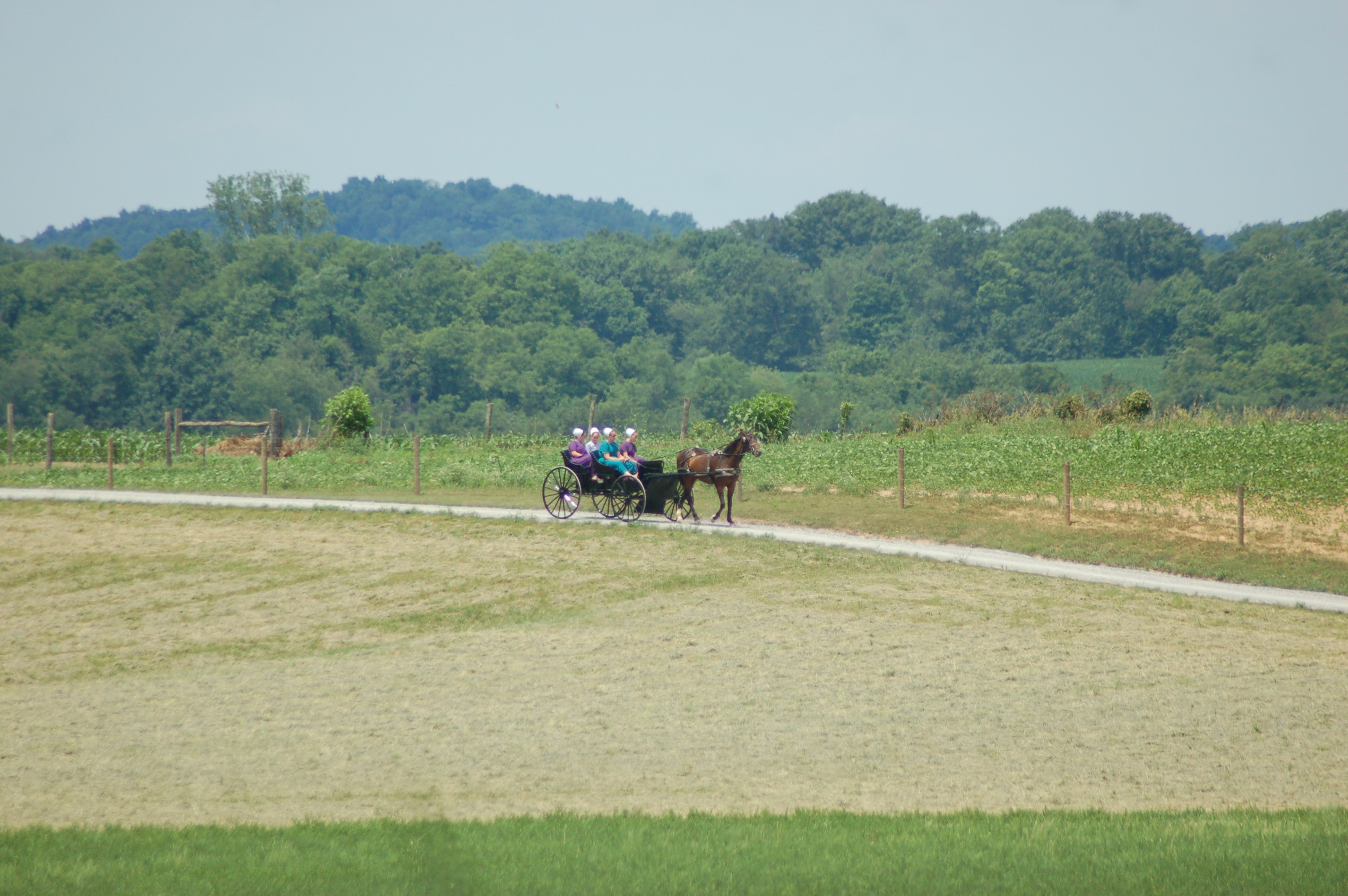
Girls in buggy by Bruce Stambaugh
The open-air porch was added to our modest home several years ago. We wanted a quiet place to relax during Ohio’s warmer climes. When the weather does cooperate, we especially enjoy lunches together there. It helps to have a wife who is a great cook. I’m no chauvinist, but I’m no chef either. Neva rules the kitchen and I reap the rewards and help clean up.

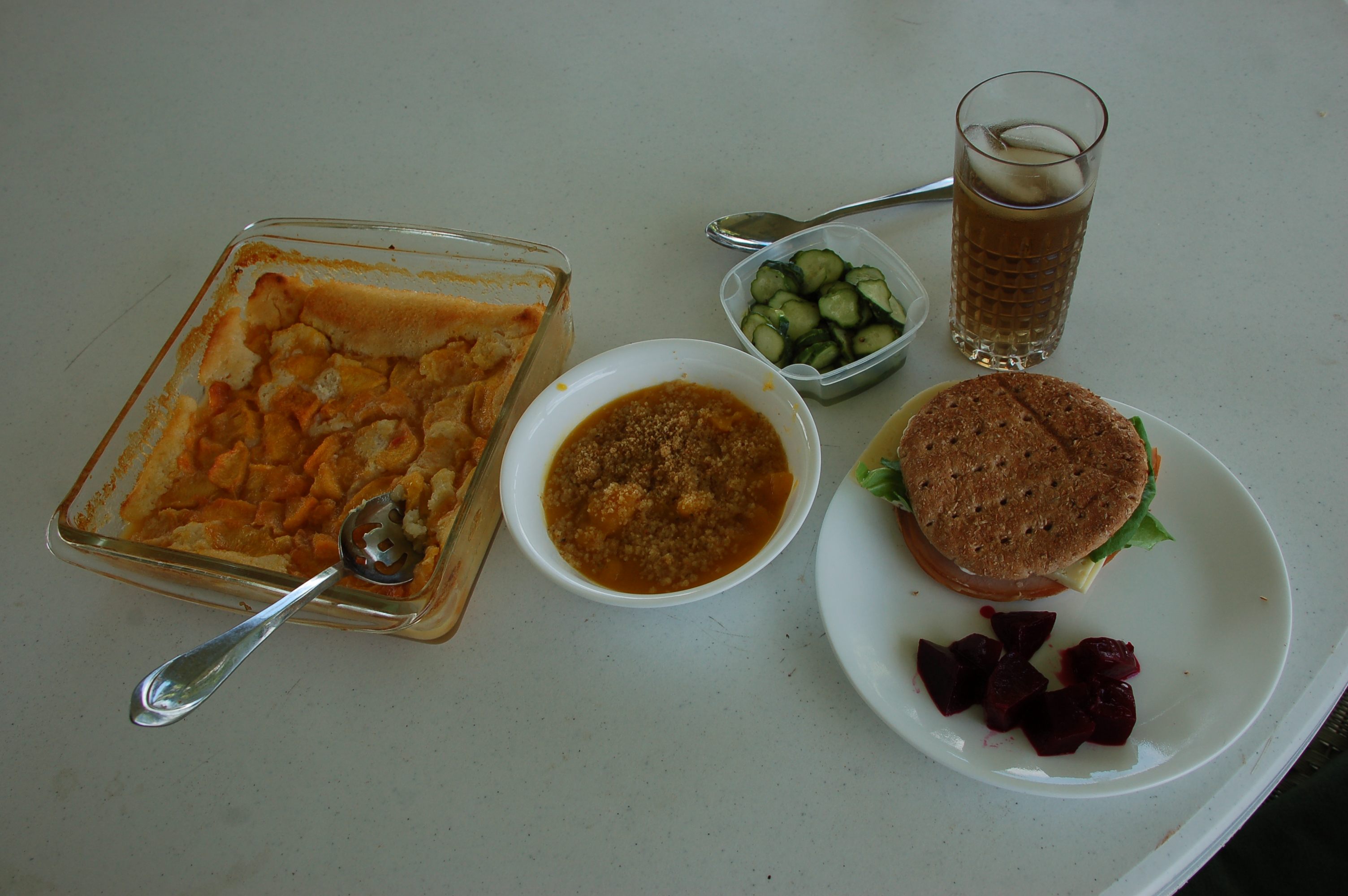
Lunch by Bruce Stambaugh
A recent lunch that we enjoyed on the porch.
Somehow the food tastes even better on the porch. One recent lunch featured her homemade butternut squash soup, sprinkled lightly with toasted bread crumbs. A fresh spinach salad with crasins and vinaigrette nicely complemented the soup.

A simple dessert of sweet cherries was washed down with fresh sweet peppermint tea, spiked with basil, giving the tea a sweet-tart taste. The mint was picked just minutes before being doused in boiling water. Other than the tea, no seconds were needed. A single course of each was plenty.
Mowing hay by Bruce Stambaugh
The house serves as a buffer between our busy highway and the backyard, minimizing the traffic noise. We love the quiet.

Well, perhaps quiet isn’t the proper word. Abundant backyard activity breaks any hint of silence. While we dined, we heard the undulating hum of a mower and the rattle of horse harnesses as our Amish neighbor completed his second cutting of hay before taking his own lunch break.

Downy by Bruce StambaughIn the meantime, the birds and wildlife kept us entertained as they also dined. With the porch open on the sides, it’s not unusual for birds to zip over our heads to the feeders. That is especially true for the acrobatic hummingbirds. Their feeder hangs from the edge of the porch near the kitchen window. It is fun to watch the territorial hummers chatter and chase each other away from their own version of lunch. They wouldn’t have to do that. There are several places to perch.

If we stay immobile, even the woodpeckers light upon the peanut butter suet feeder that dangles next to a hanging basket of flowers. The little downys, however, are the only ones that aren’t spooked off by our presence. Still, they nervously but needlessly chip and jerk their heads warily as they jab at the rich mixture, making sure we keep our distance.

Wildflowers by Bruce StambaughA green frog, one of six that inhabit our little garden pond, waits patiently for lunch to fly by. The green frogs that patrol our little garden pond adjacent to the porch patiently wait in the sun for their own lunch to fly by. When I hear a plop, I know they are as satisfied as we are.

Beyond the pond, monarch, swallowtail and red admiral butterflies partake in their own flowery buffet on the patch of ever-changing wildflowers. Along with volunteer sunflowers, the coneflowers, Black-eyed Susan’s, daisies, gaillardia and bachelor buttons paint a colorful palette in the shade of the canopy of pines and giant sugar maple.

When human guests arrive, their smiles reveal their appreciation for our sanctuary. Added together these pure and pleasurable ingredients always make for enjoyable and hardy gatherings. I’m more than happy to share the recipe.

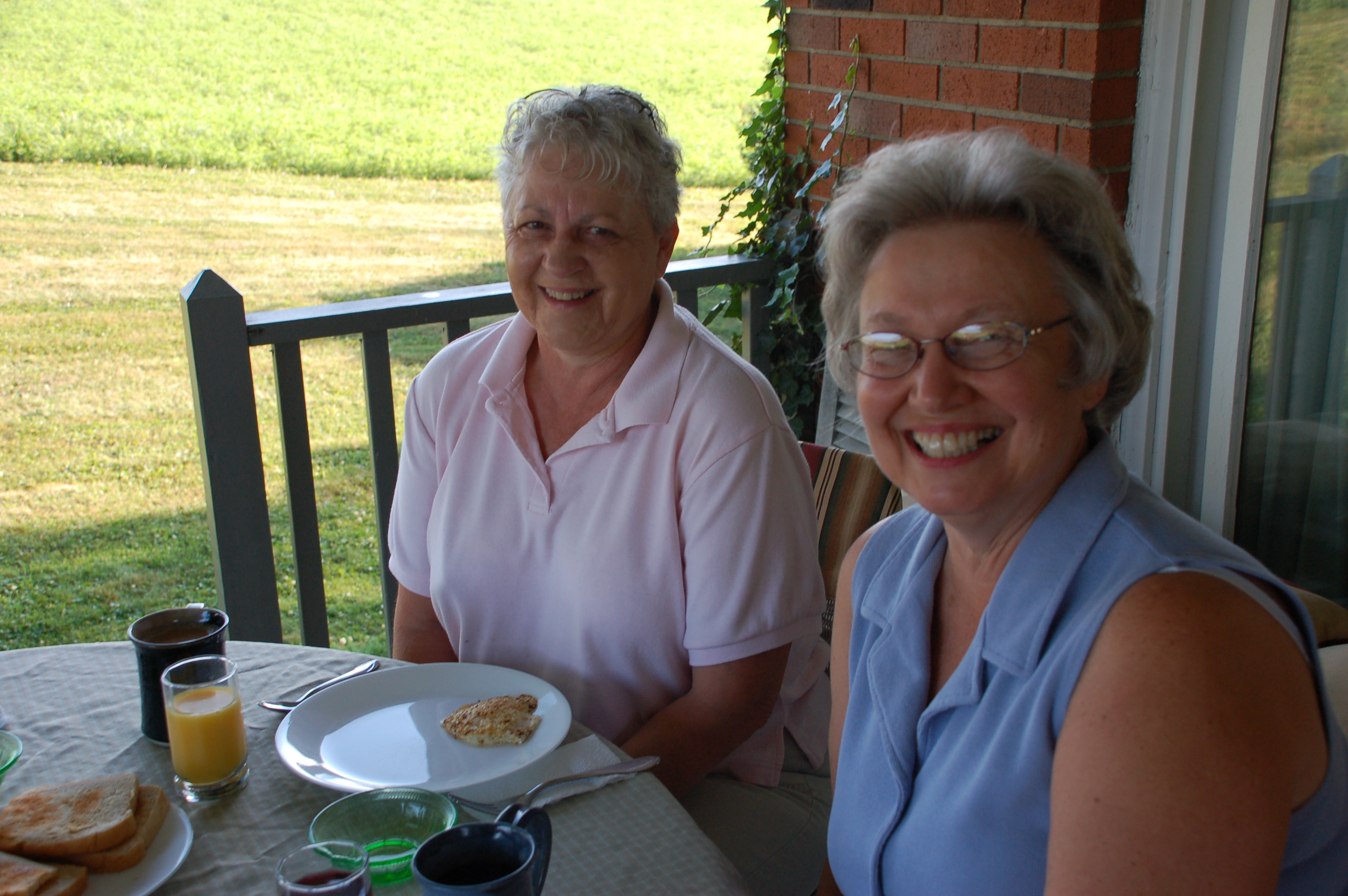
Guests by Bruce Stambaugh

© Bruce Stambaugh 2012

All abuzz about beekeeping

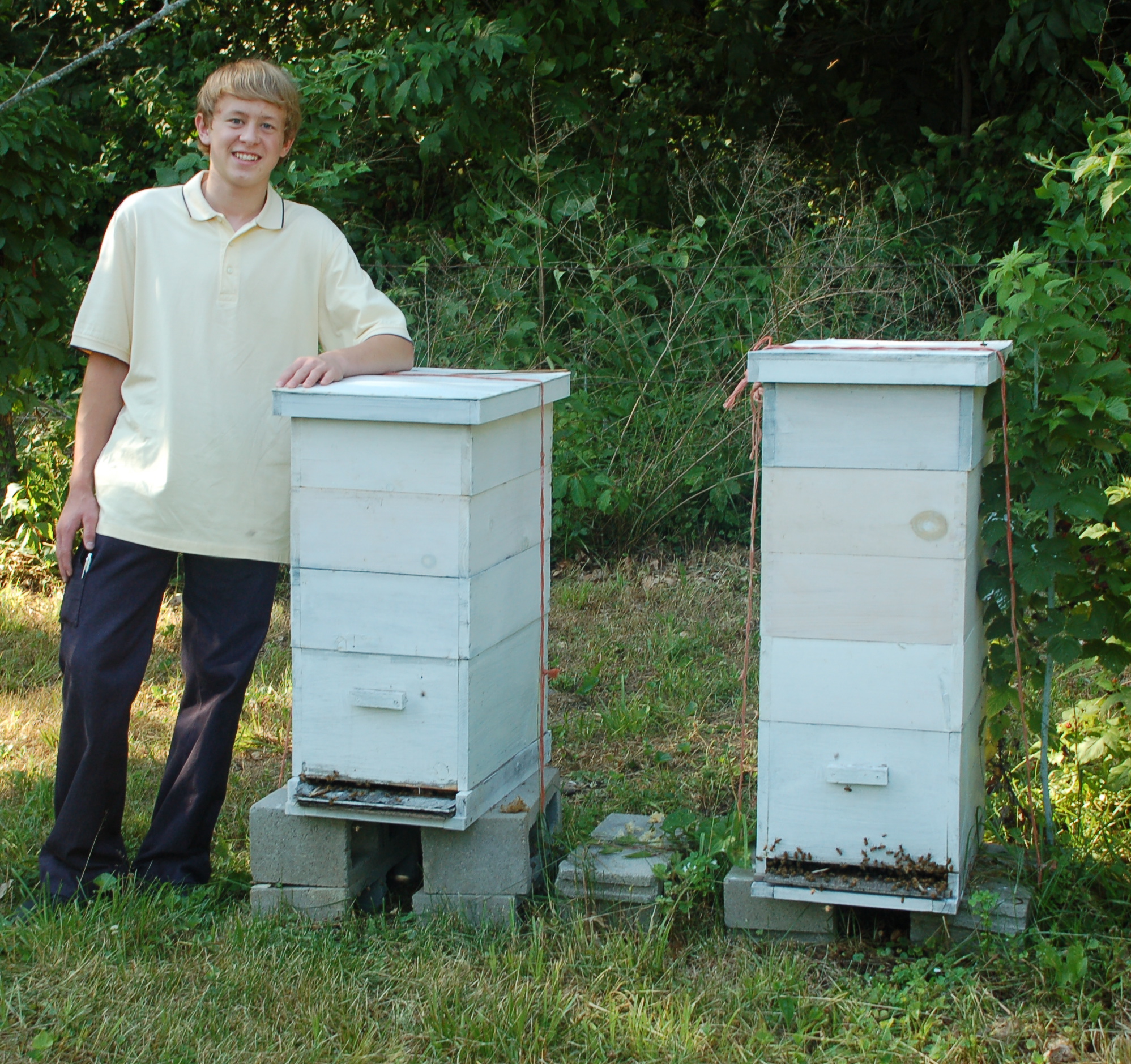
Bee hives by Bruce Stambaugh
Brian Miller, 17, of Apple Creek, OH checked out some bee hives before a recent meeting on beekeeping held near Mt. Hope, OH.

By Bruce Stambaugh

Beekeeping is on the rise, according to Dr. Jim Tew, recently retired bee specialist at The Ohio State University Extension Services in Wooster, Ohio. He just doesn’t know why.

A meeting held recently at the residence of Mark Miller near Mt. Hope, Ohio seemed to be proof of that. Men, women and children, many of them Amish, nearly filled the several rows of church benches set up in Miller’s spacious outbuilding where the beekeeping meeting was held.

Miller said beekeepers’ meetings like this one are held three times per year. He said there are two such groups in Holmes County, Ohio. They are geographically split into northern and southern groups, with U.S. 62 being the dividing line.

The meetings are held to keep area beekeepers informed about the latest information on beehive maintenance and keeping the bees healthy. They also lean on the informal approach to allow for extensive question and answer times.

Bee keepers meeting by Bruce Stambaugh
Dr. Jim Tew shared his expertise on beekeeping to a group of beekeepers in Holmes County, Ohio. Many of those in attendance were Amish.

Tew was asked to share his expertise on beekeeping. The gregarious and modest Tew kept the group relaxed with personal stories of his more than 40 years of beekeeping. He retired from the OSU Extension after 35 years.

The Alabama native told the group that beekeeping is extremely popular right now.

“But I don’t know why,” he said. He suggested one explanation could be that honeybee husbandry fits into the popular universal interest in providing a dependable, wholesome food supply.

Busy bees by Bruce Stambaugh
Honeybees scurried in and out of a hive across from Mark Miller’s residence near Mt. Hope, OH.

Related to that sustainability idea, Miller told the group, “I like the concept of producing our own bees here in Ohio.” Normally, purchasing commercial kits and commercially raised queen bees, which are essential for hives to thrive, starts bee colonies.

“Having meetings like this,” Miller said, “will help us toward that goal.”

Indeed, Tew indicated that when the Varroa destructor mites began to invade honey beehives in 1987, the industry took a huge hit. The killer bee scare followed that, and bee husbandry began to wane.

Mite zapper by Bruce Stambaugh
Dr. Jim Tew showed the group a mite zapper that could help control destructive Varroa mites.

“It’s unnerving,” Tew said of the disease, officially called colony collapse syndrome. “Happily those initial dark days have gone away, and I no longer have any fear of all of my hives dying.”

He shared various ways beekeepers could help deter the mites and how to properly inspect hives for any possible problems. He said the most recent die off of bees made headlines because information spread rapidly on the Internet.

“This die off was not new,” Tew said, “though it may have a different cause.” He explained that there could be many causes for hives not thriving.

“Too many of us want to find one reason for a die off,” he said. “Each of you who keeps bees will have to talk amongst yourselves to determine what system to stop the mites works best.”

Miller said the meeting was not limited to those who live north of U.S. 62. In fact, 17-year-old Brian Miller came from Apple Creek to learn about bees. He just began keeping bees last year, and said his hives are thriving.
Bee on daisy by Bruce Stambaugh
The Tri-County Beekeepers Association in Wooster awarded Brian Miller a $500 scholarship for an essay he wrote on “Why I love beekeeping.” He said the money enabled him to purchase needed beekeeping supplies and equipment to maintain and expand his hives.

Mark Miller, who began beekeeping in 2009, said he also received an award to help him get started.

“I was honored to receive the Don Meyers East Ohio Apiculture Project prize of $75,” he said. That amount helped him buy two hives and equipment to operate them.

Though he retired from his OSU Extension position, Tew continues in the bee business both personally and professionally. Besides keeping bees himself, he also serves as a state beekeeping specialist for his home state of Alabama.

He kidded the crowd by saying that he now has a 900-mile commute to work. In actuality, he travels to Alabama five times a year to complete his beekeeping responsibilities.

© Bruce Stambaugh 2012

The real reason to celebrate July 4th

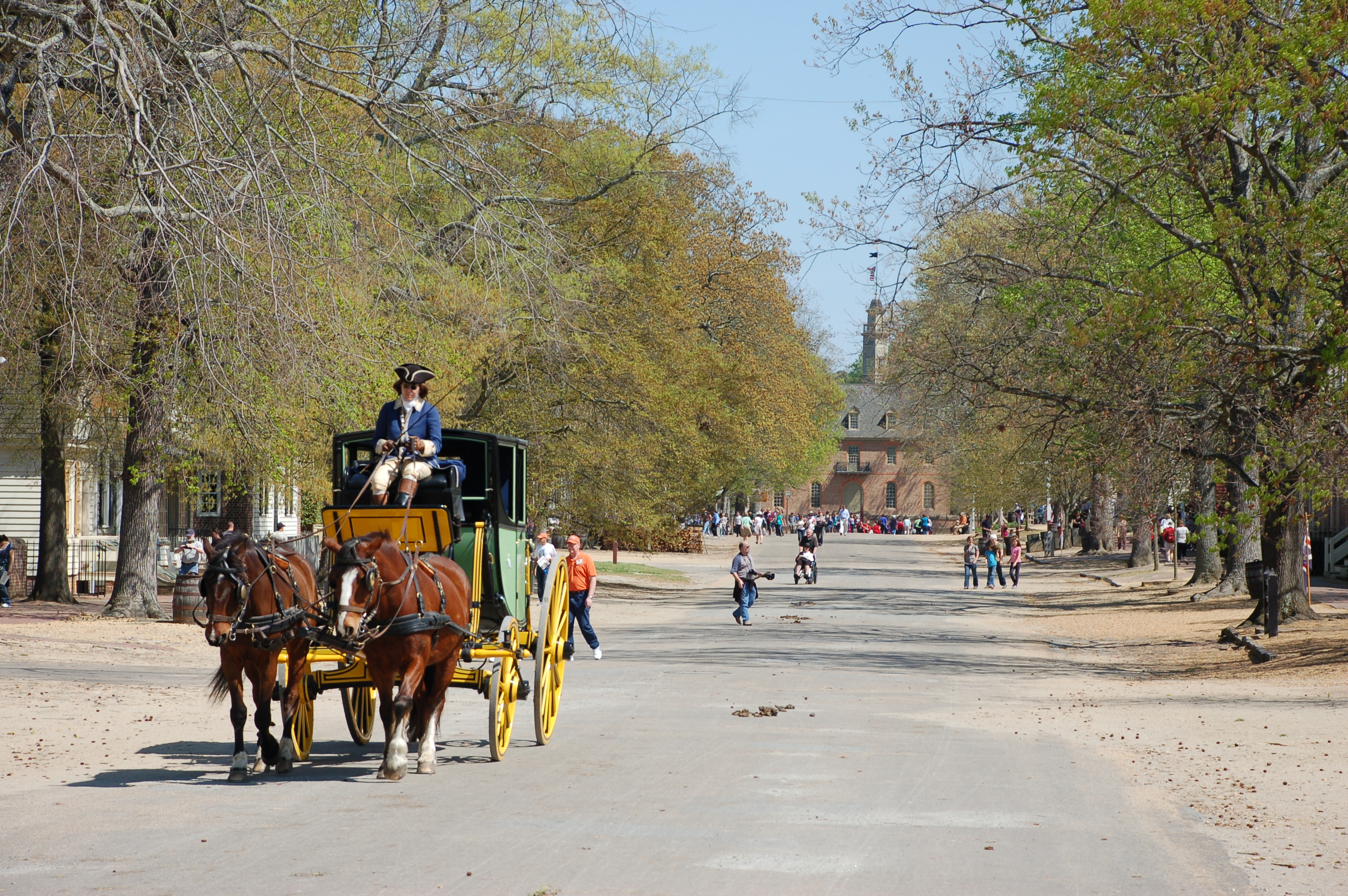
D.O.G. Street by Bruce Stambaugh
Many of the tenets of our democratic republic were formed in Williamsburg, VA along D.O.G. Street.

By Bruce Stambaugh

Watching starbursts of fireworks from five miles above the earth was an unexpected treat.

My family and I were flying back from vacation late on July 3, 1988. Our hour-long flight path took us along the southern shores of Lake Michigan and Lake Erie. Shortly after we were airborne, the sky began to pop with burst after colorful burst of fireworks.

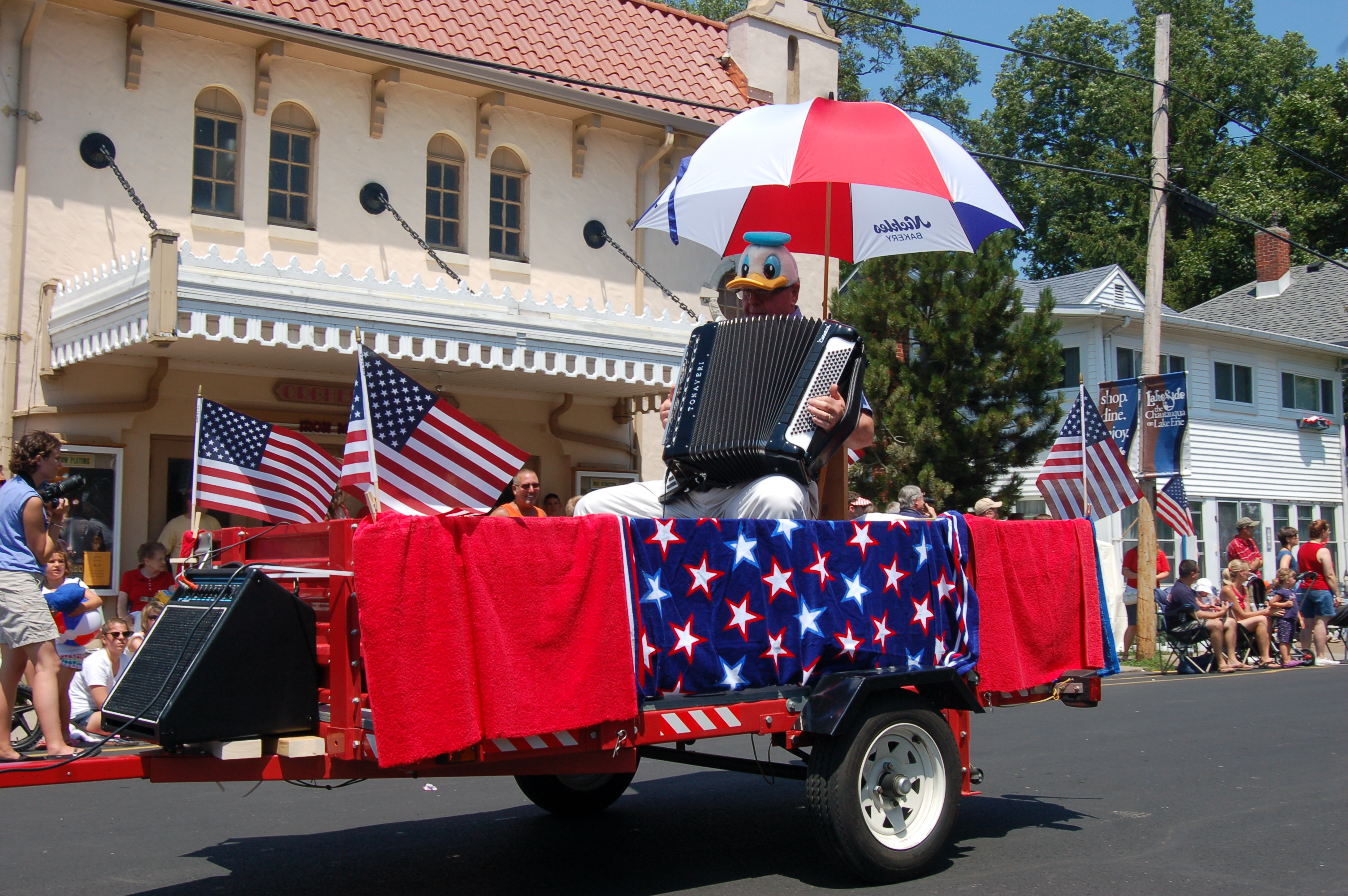
Parade by Bruce Stambaugh
Parades are just part of the annual Fourth of July celebrations in the United States.
All along the route towns large and small expressed their jubilation for America’s Independence Day holiday with pyrotechnic displays. From high above I imagined the various sparkling bursts reflecting the broad diversity of folks that comprise this great country. Necks craned skyward, people from many cultures, races and religions in urban parks, county fairgrounds or on their own back porches had to also be admiring their local kaleidoscope of explosions.

As the last sparks flickered, I had to wonder then, as I wonder now, if the real meaning behind the celebratory fireworks is fully understood. As they picked up their chairs and folded their blankets to return home, what were they thinking? Was it just another fireworks display or did they truly comprehend the meaning of the day?

Those are questions that needed to be asked then just as they need to be asked today. Remembering our historic roots helps us to focus on where we are now and where it is we need to be going tomorrow.

Fourth of July decorations by Bruce Stambaugh
Homes like this one in Lakeside, OH will be decorated for the Fourth of July all across the U.S.

As we celebrate another Independence Day in the United States, here are a few historical facts that cannot be changed, though some have tried to distort the truth. The Continental Congress actually declared its independence from Great Britain on July 2, 1776. The revolutionary document, penned by Thomas Jefferson, was signed July 4, 1776, making the radical pronouncement official.

At great risk to their fame, fortune and reputations, these bold men, and they were all men, set down the groundwork of a new nation. That foundation was based on one essential notion, freedom.

A few years later that central idea wove its way into the heart of the U.S. Constitution in the form of the first 10 amendments commonly called the Bill of Rights. They itemized specific freedoms, including the freedom of religion, the freedom of speech, and the freedom to gather, among others.

British flag by Bruce StambaughThe people of the American colonies wanted to shake the hold of Great Britain’s rule and run their own lives. This great document announced a new form of government for all peoples. Without it, anarchy would have ruled.

Since its initial adoption the Constitution of the United States has been amended to appropriately represent rights and freedoms for all of the country’s peoples, regardless of gender, race or creed as the population and society’s mores have evolved. To be sure, that evolution has had its civil rough spots to say the least.

From our present perspective, it can be easy to think that some things always were. “In God We Trust,” for example, was added to our coins and currency in 1864 at the end of the Civil War. The phrase “under God” in the Pledge of Allegiance was not added until 1954 during the McCarthy communism scare era.

The altitude at which we enjoy the July 4th fireworks isn’t terribly important. The attitude of appreciation and a clear understanding and application of how and why our basic freedoms exist, however, are essential for appropriate social discourse.

As the fireworks explode in honor of this July 4th, what will you revere about Independence Day?

Amber waves of grain by Bruce Stambaugh
Religious freedom was the primary moving force for Amish immigrating to the United States, where their amber waves of grain still roll today.

© Bruce Stambaugh 2012

Bay Photos by Donna

Wildlife Photos From The Chesapeake Bay Region

ROAD TO NARA

Culture and Communities at the Heart Of India

K Hertzler Art

Artist and nature journalist in the Shenandoah Valley of Virginia.

Maria Vincent Robinson

Photographer Of Life and moments

Gabriele Romano

Personal Blog

Jennifer Murch

Art is the only way to run away without leaving home. -Twyla Tharp

Roadkill Crossing

Writing generated from the rural life

ANJOLI ROY

writer. teacher. podcast cohost.

Casa Alterna

El amor cruza fronteras / Love crosses borders