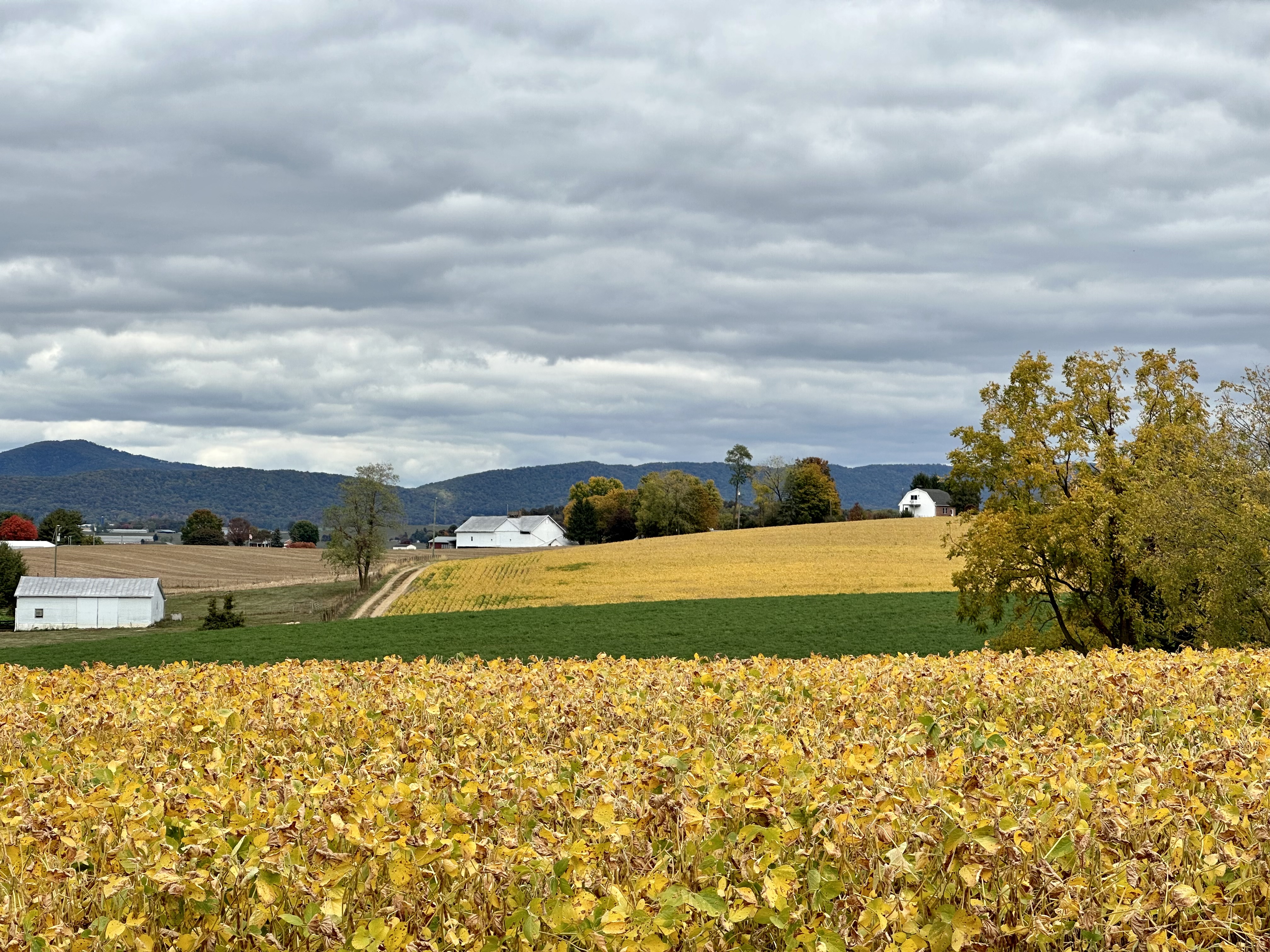
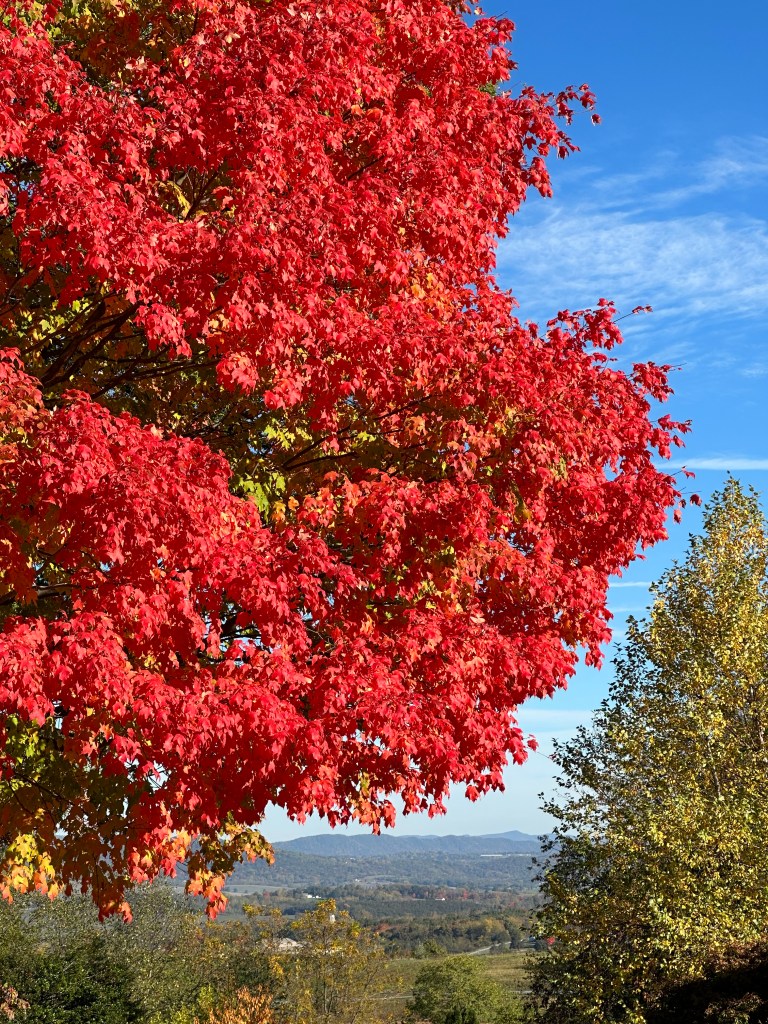
The colors of Massanutten Mountain, Massanutten, Virginia. Photo by Bruce Stambaugh.
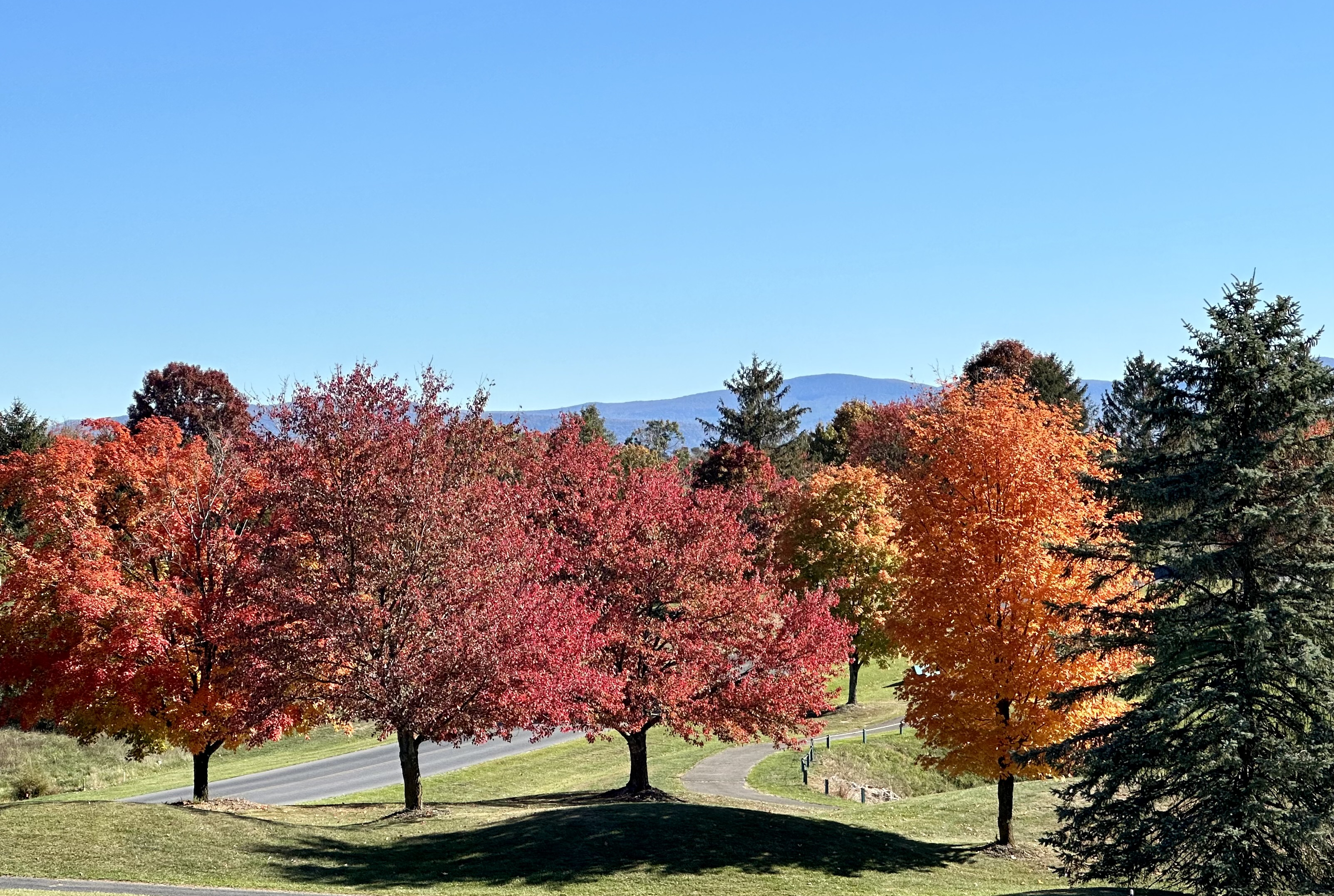
With our travels to Greece and Rome during the first two weeks of October, I thought we might miss autumn’s peak colors. I need not have worried.
My wife and I could readily see on our drive home from Dulles International Airport to our home near Harrisonburg, Virginia, that most trees still held their leaves, which were only now turning their true colors. I was glad we hadn’t missed the peak.
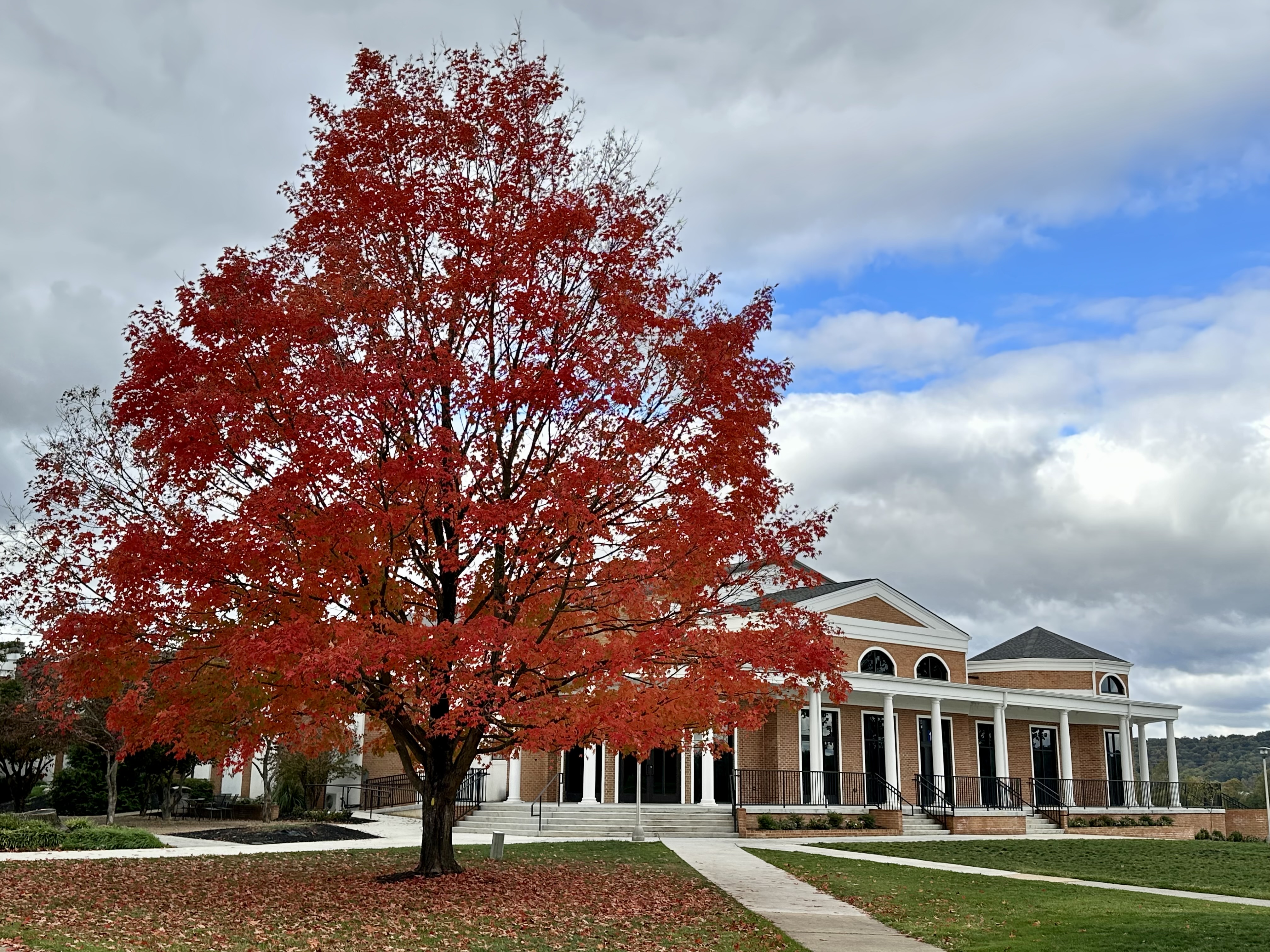
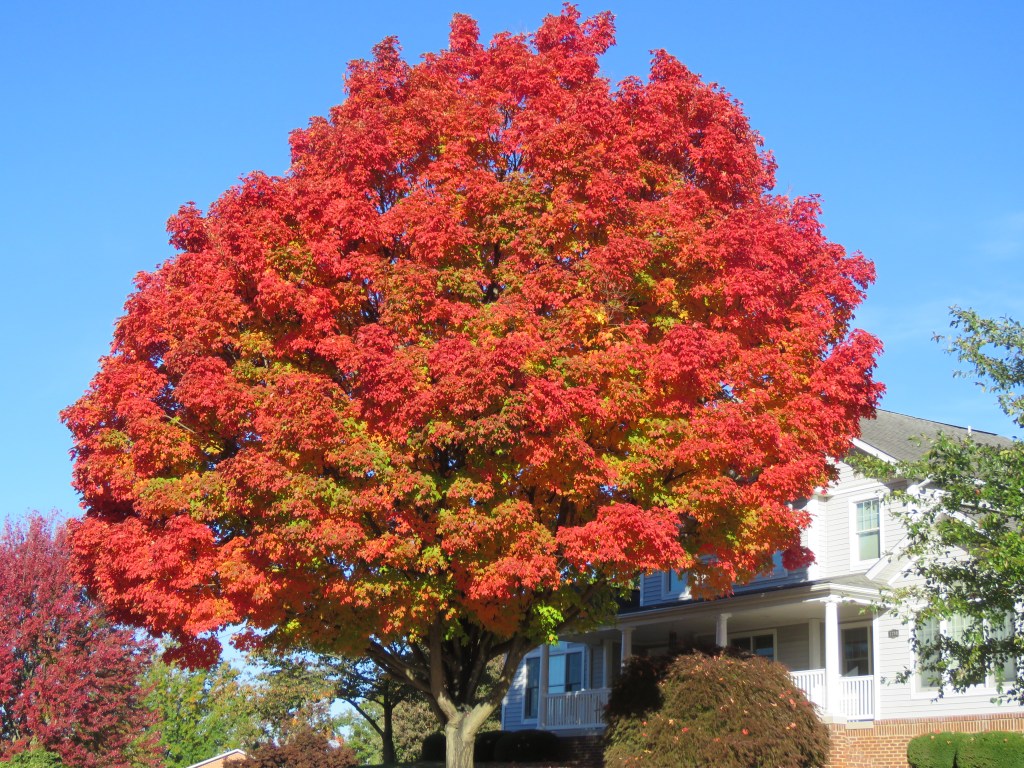
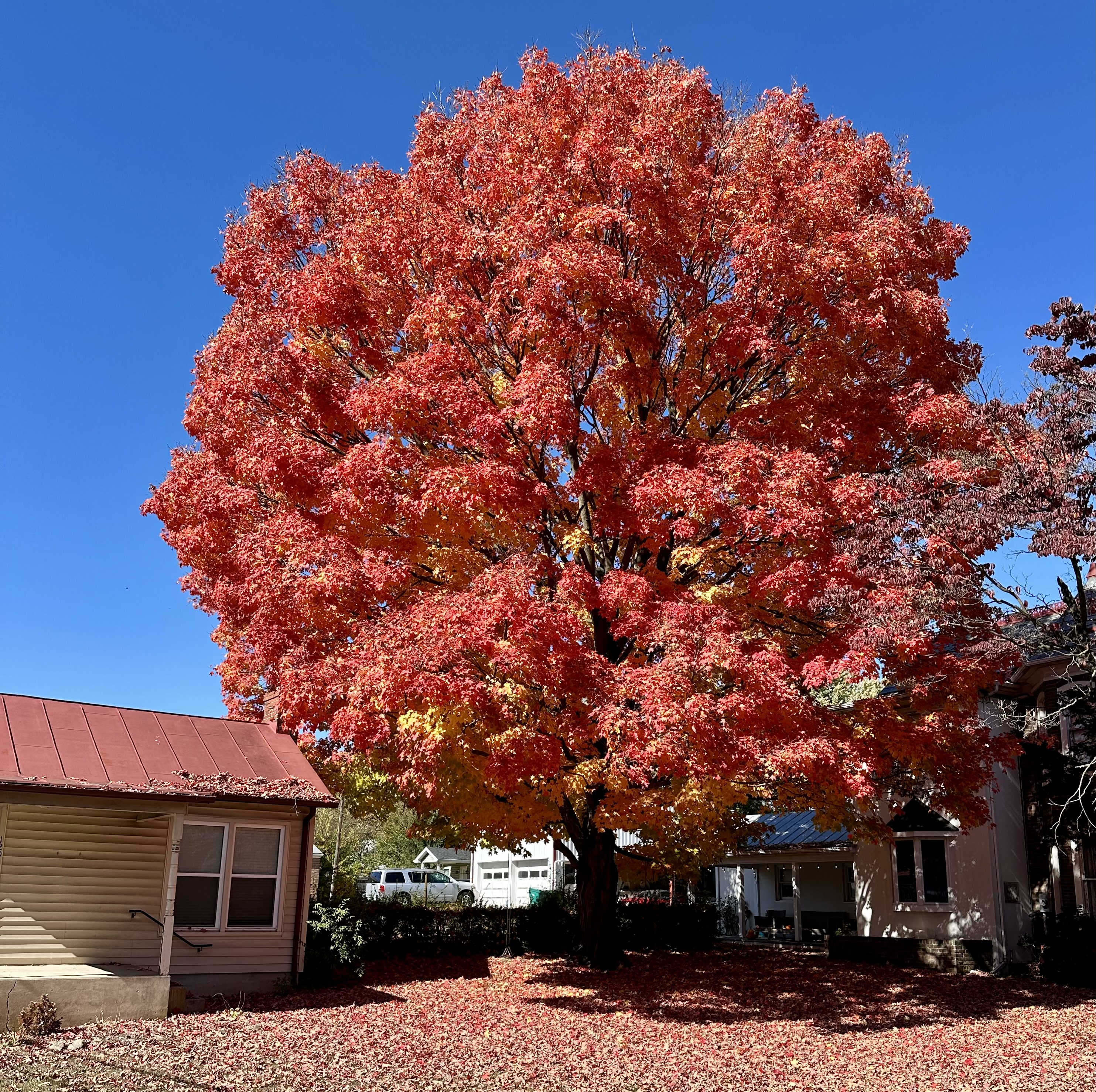
As we exited the Interstate highway at New Market, Virginia, a red maple caught my eye. I stopped to photograph the striking tree that stood center stage on a private school campus. It wouldn’t be my last photograph of the annual changing of the leaves.
A red maple in New Market, Virginia.
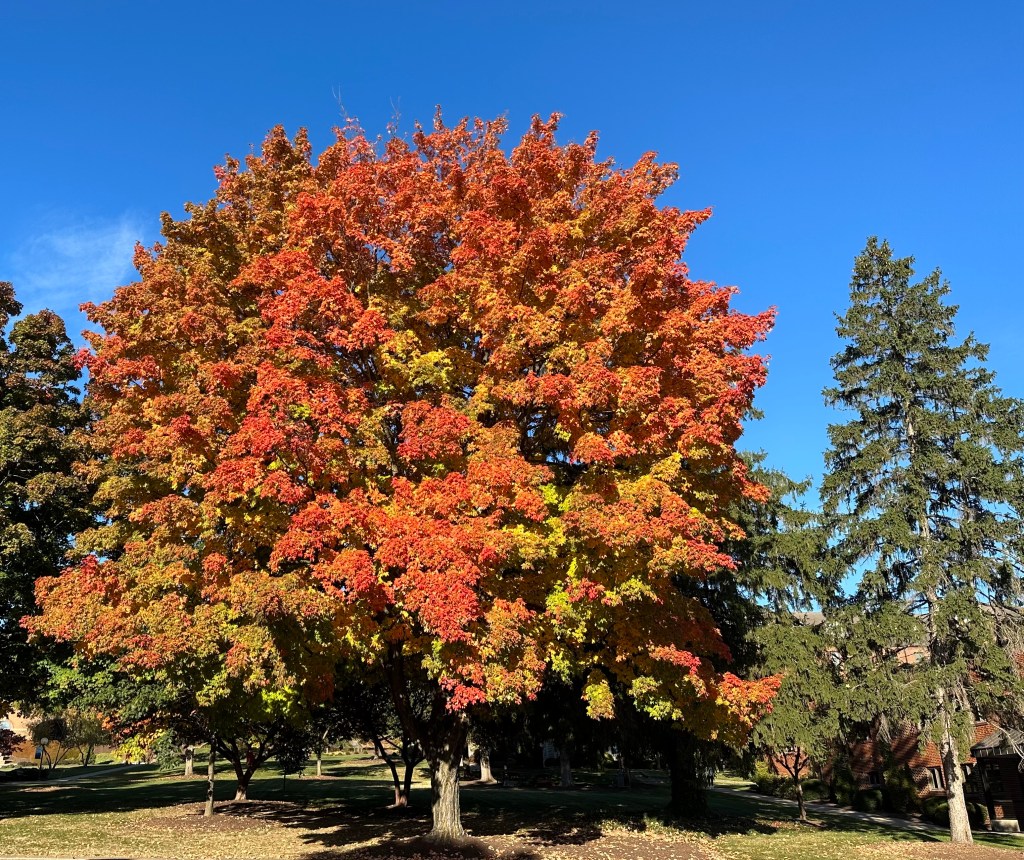
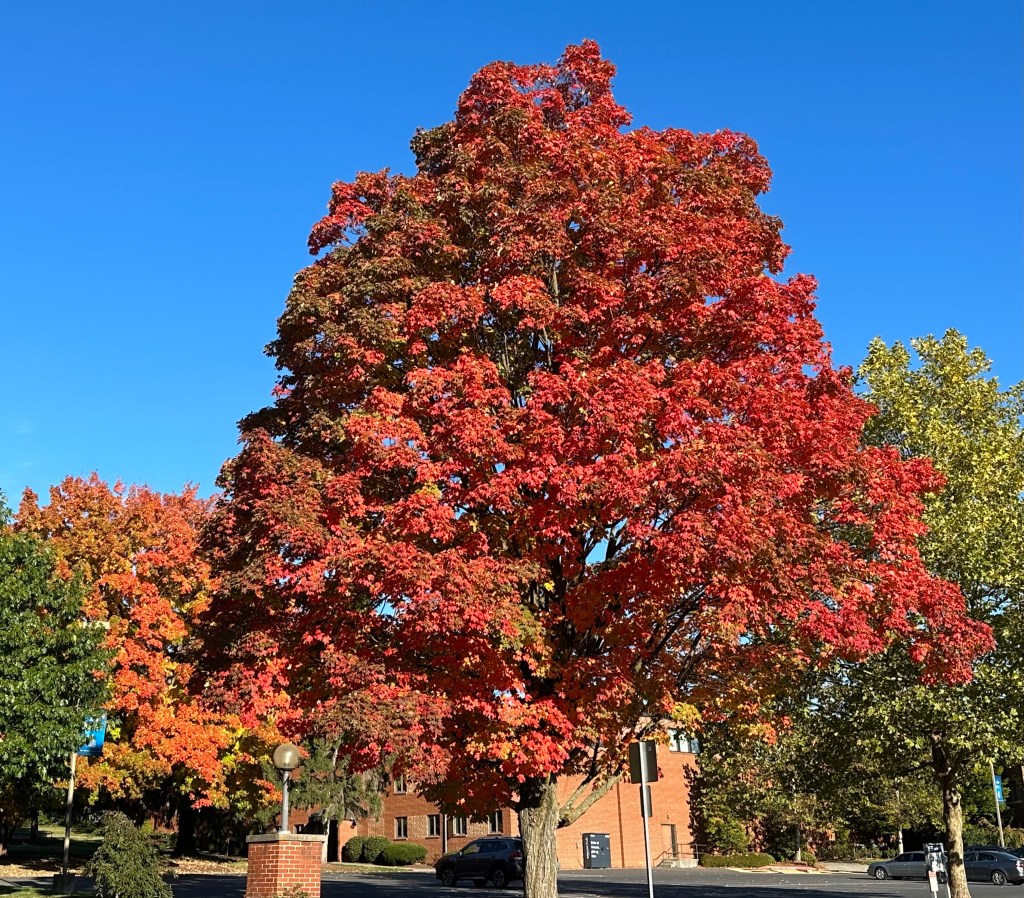
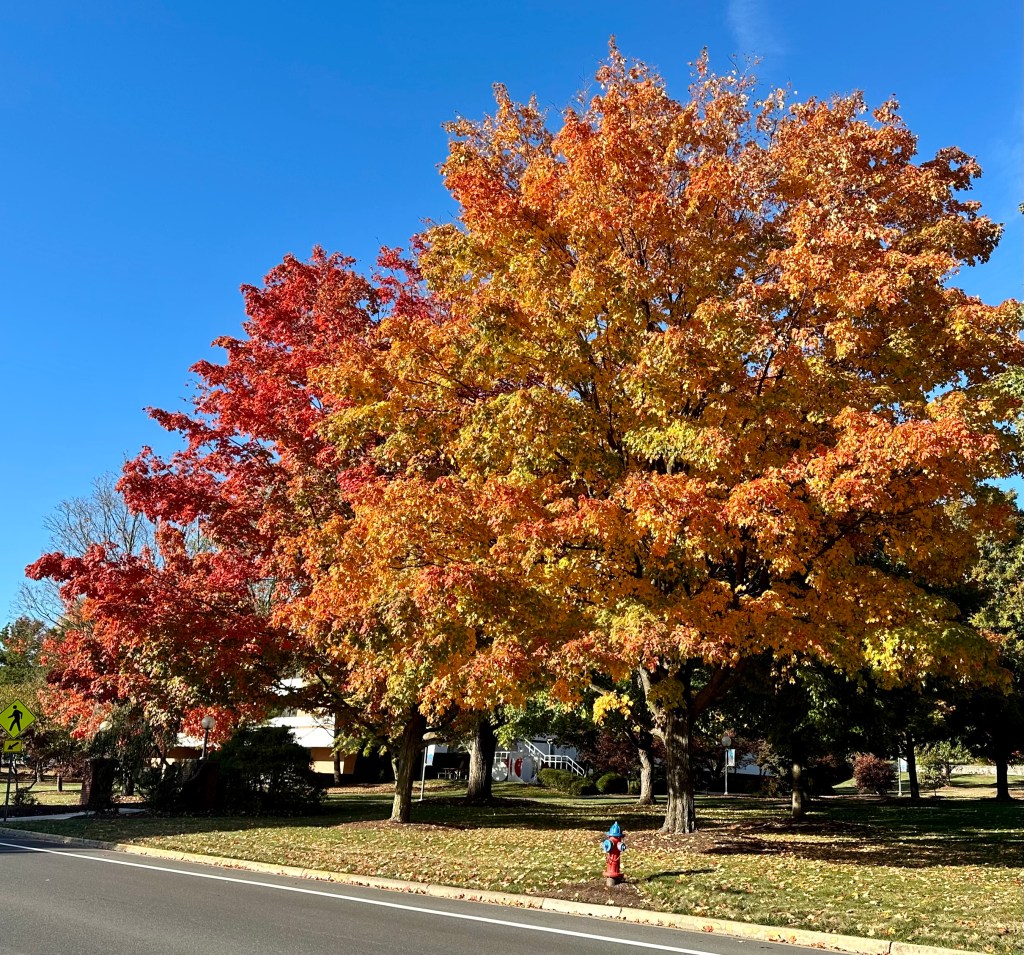
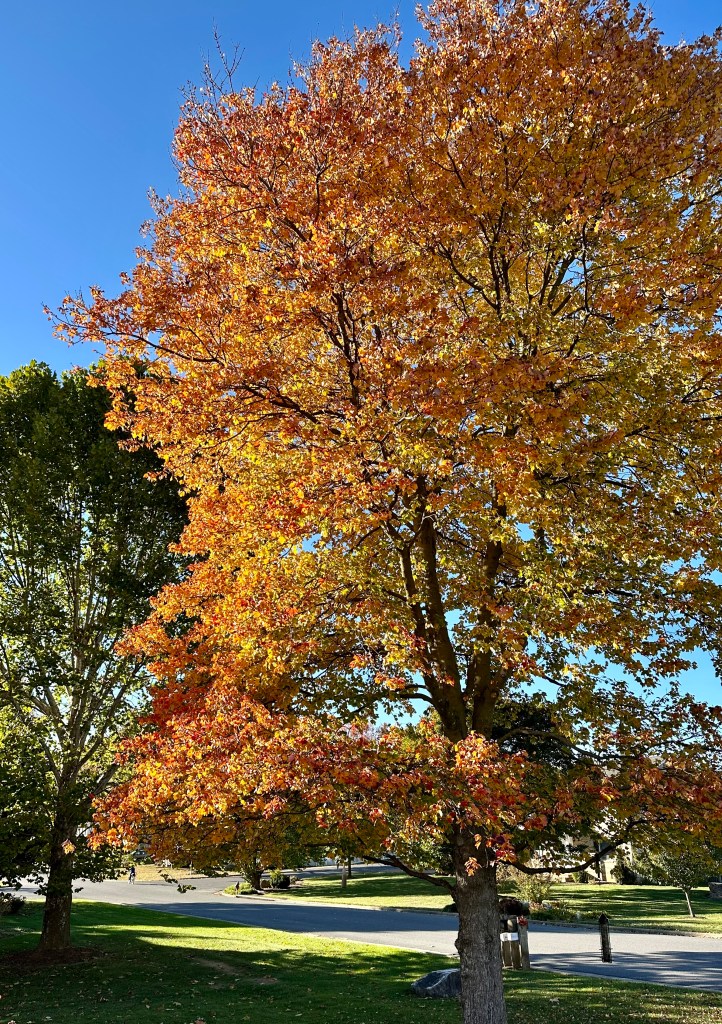
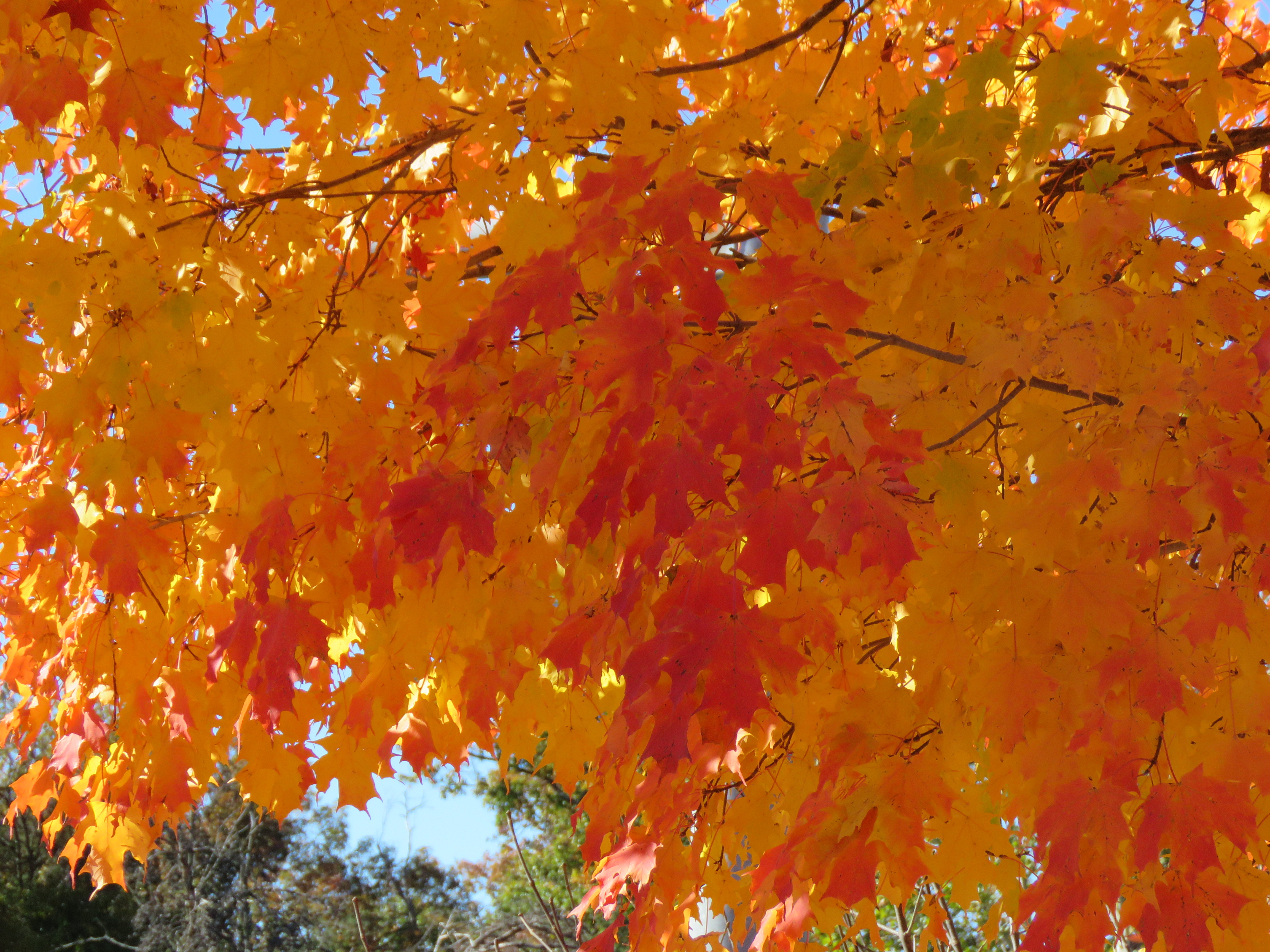
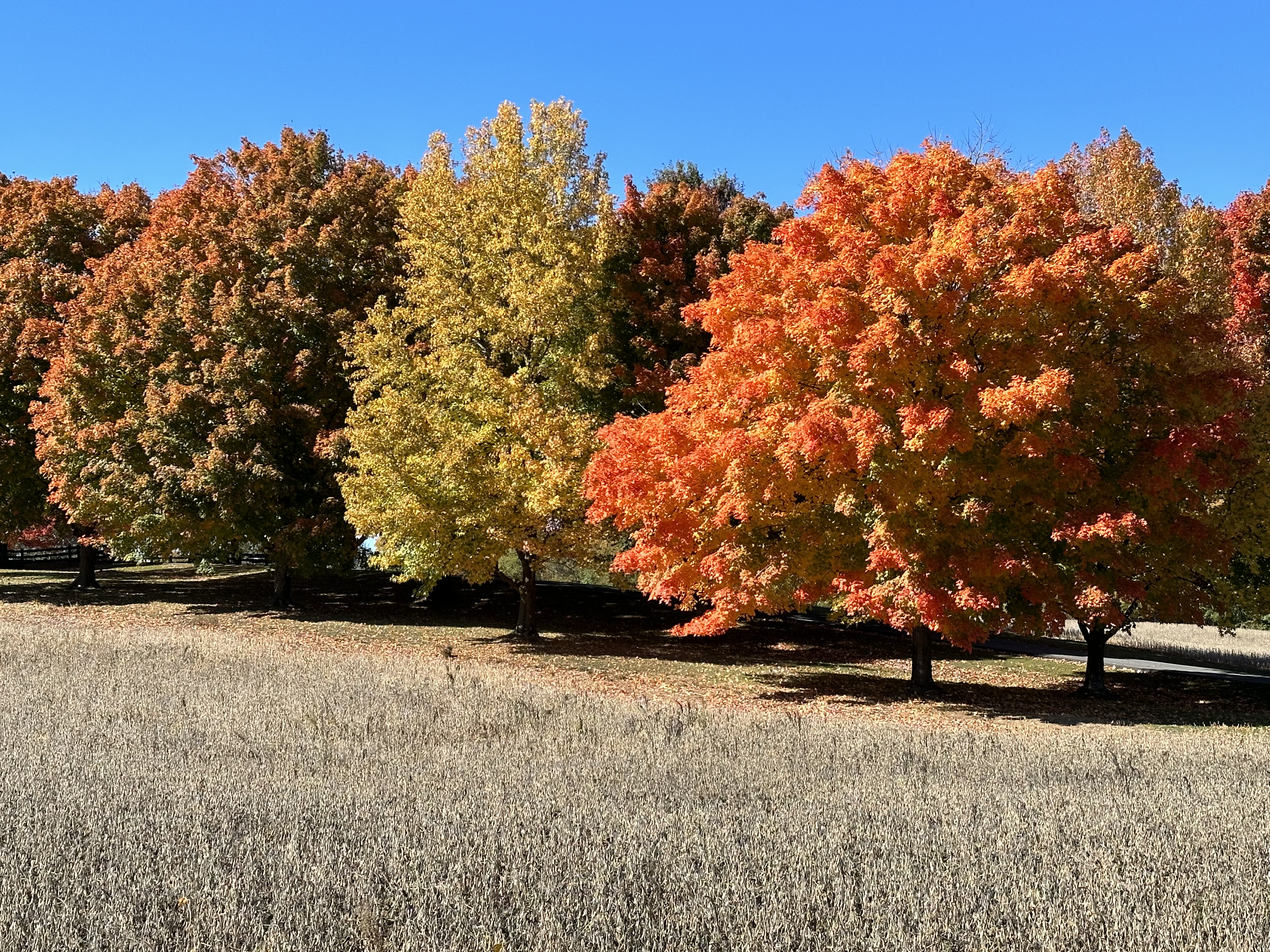
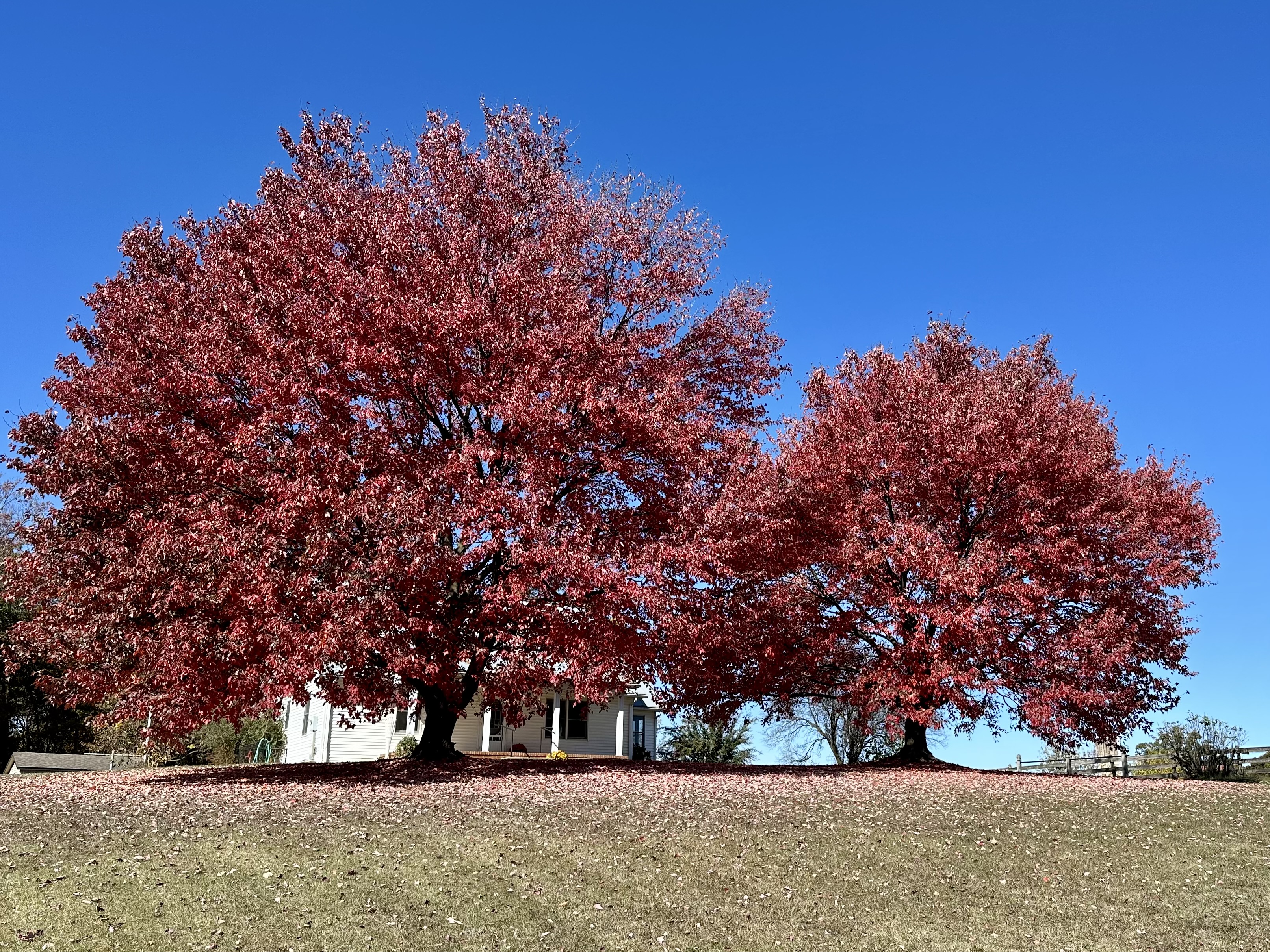
I feared that with the ongoing drought, the leaves would be dull and simply fall off out of sheer fatigue. Strangely enough, this has been the most colorful fall yet of the seven autumns we have resided in Virginia’s lovely Shenandoah Valley. In fact, several valley natives told me that this has been the most colorful fall in years.
I delved into why that was. I discovered that the weather indeed influences the intensity of leaf colors. The combination of sunny, warm days and cool (but not freezing) dark nights help create the brilliant colors we have experienced here in the valley. From photos posted by friends on social media, I know the fall colors have been equally vivid in other locales.
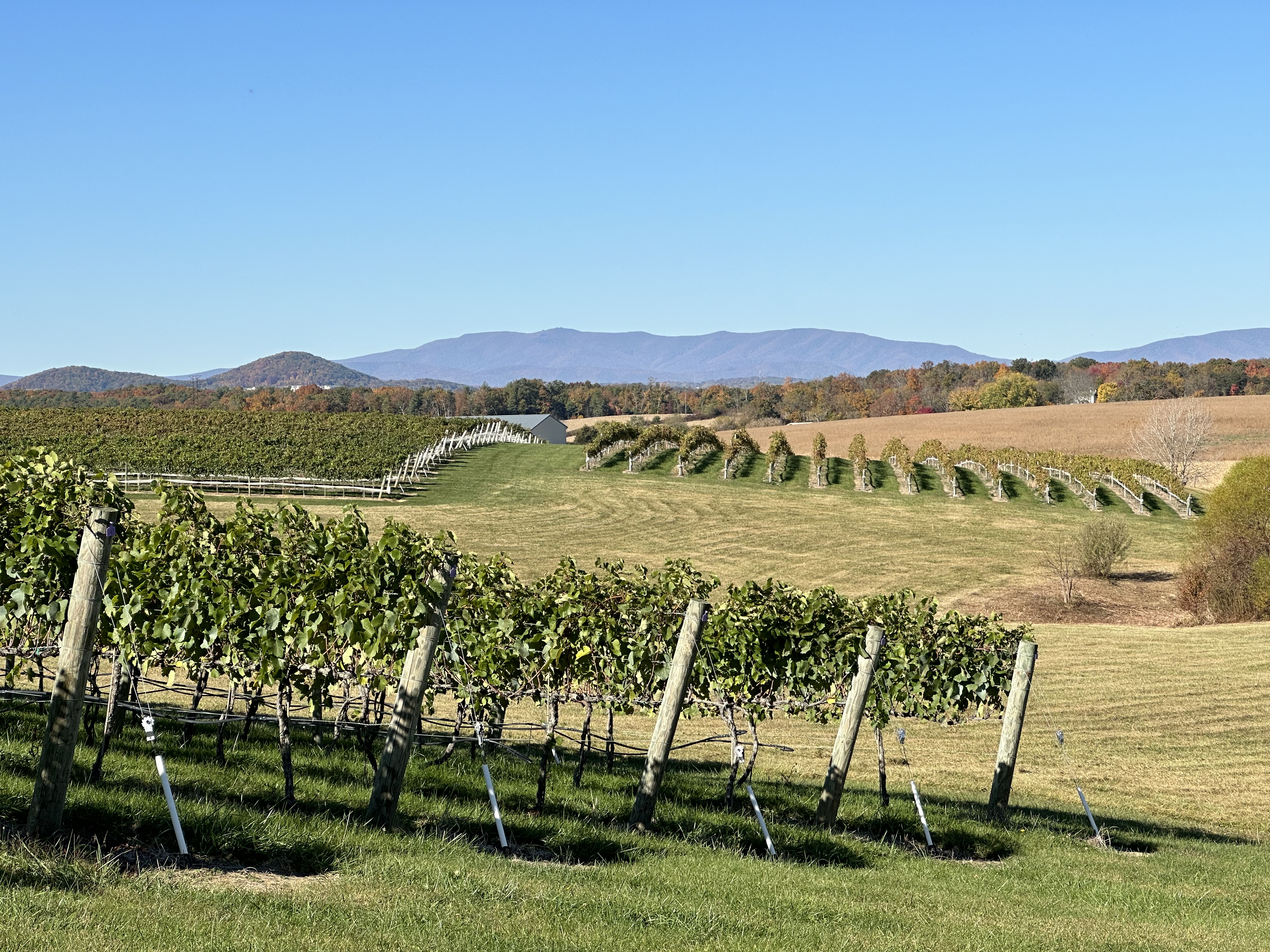
Ironically, I found many of the brightest and most colorful trees in and around the neighborhoods of Harrisonburg. The colors of the trees and shrubs of both the Allegheny and the Blue Ridge Mountains appeared more uniform and consistent in color. Perhaps the lower valley elevations had more extreme temperature differences between the days and nights.
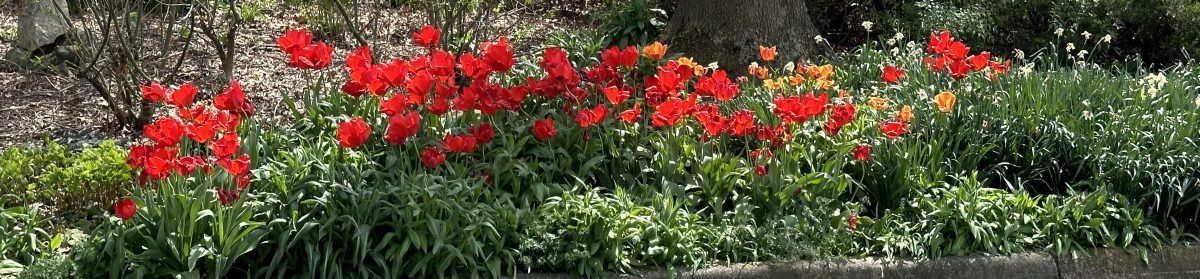
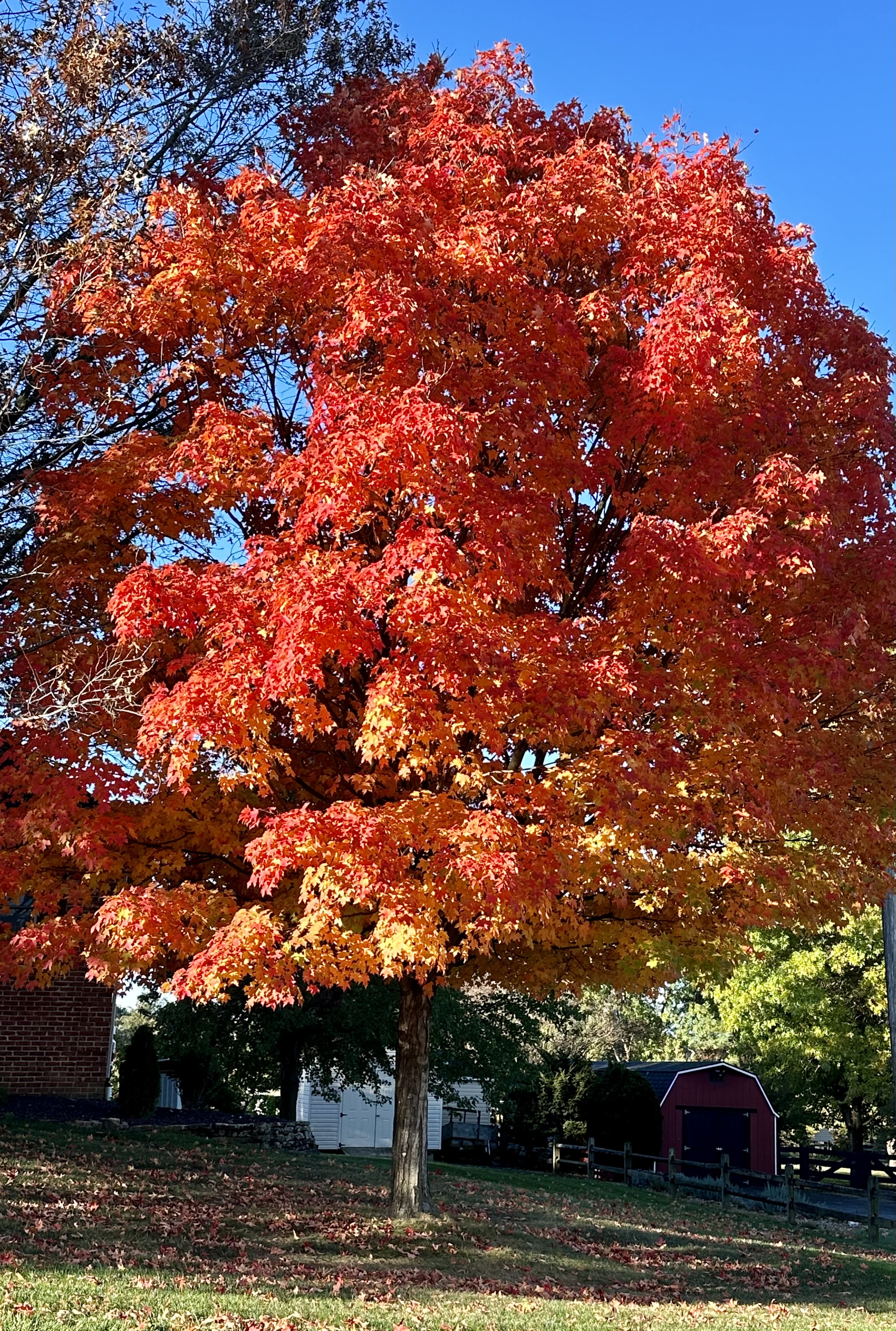
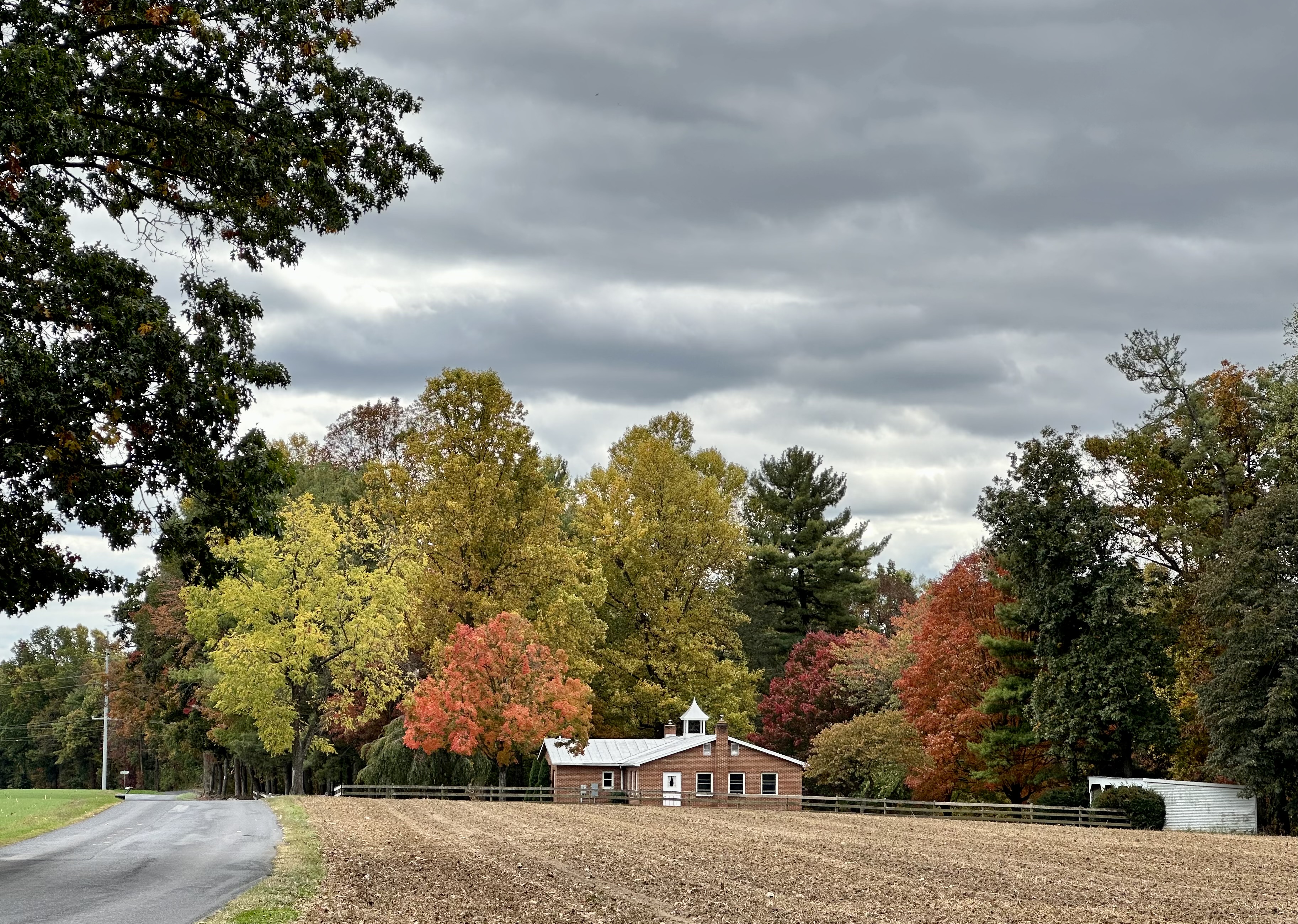
Here, then, are a few of my favorite tree photos I’ve taken between October 17 and October 24. Photos from Shenandoah National Park and Augusta County will follow in a subsequent post.
Our final two days in Rome were rich in architecture, sculpture, art, museums, and churches. At times, it seemed to blend all together. But now, as I reflect on these final days, I can finally appreciate all we experienced in Rome and the rest of the trip.
Our excellent leaders, Linford and Janet, acquired tickets from a local guide for the Museums of the Vatican. Doing so permitted us to skip the long ticket line, which ran around the block.
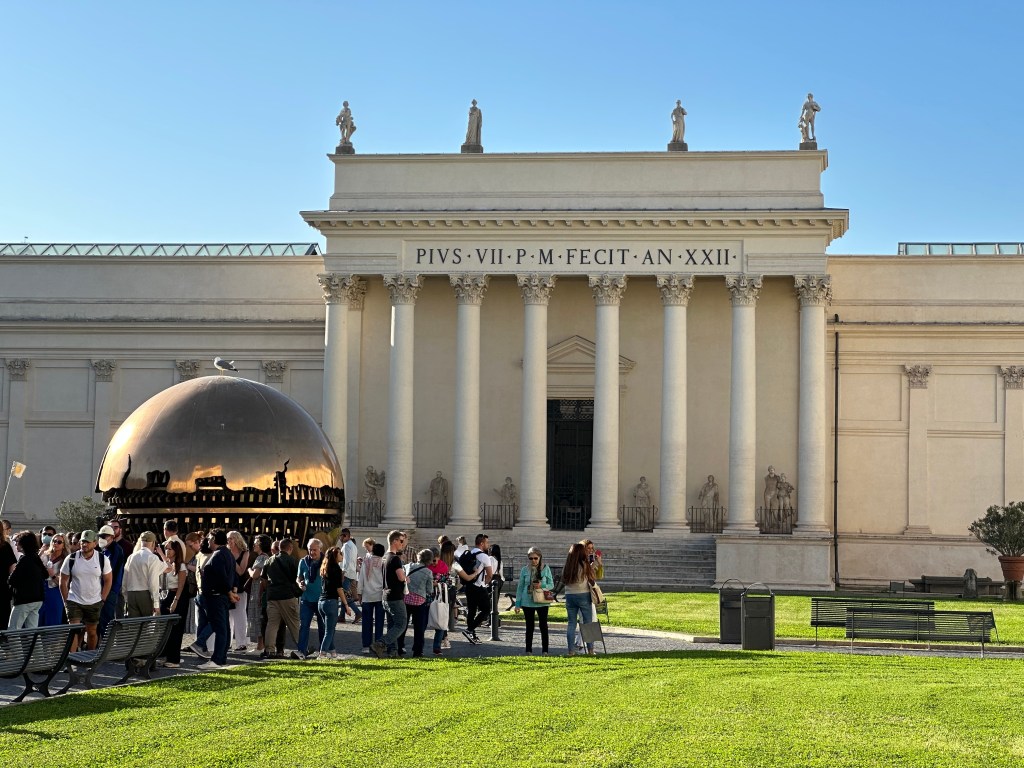
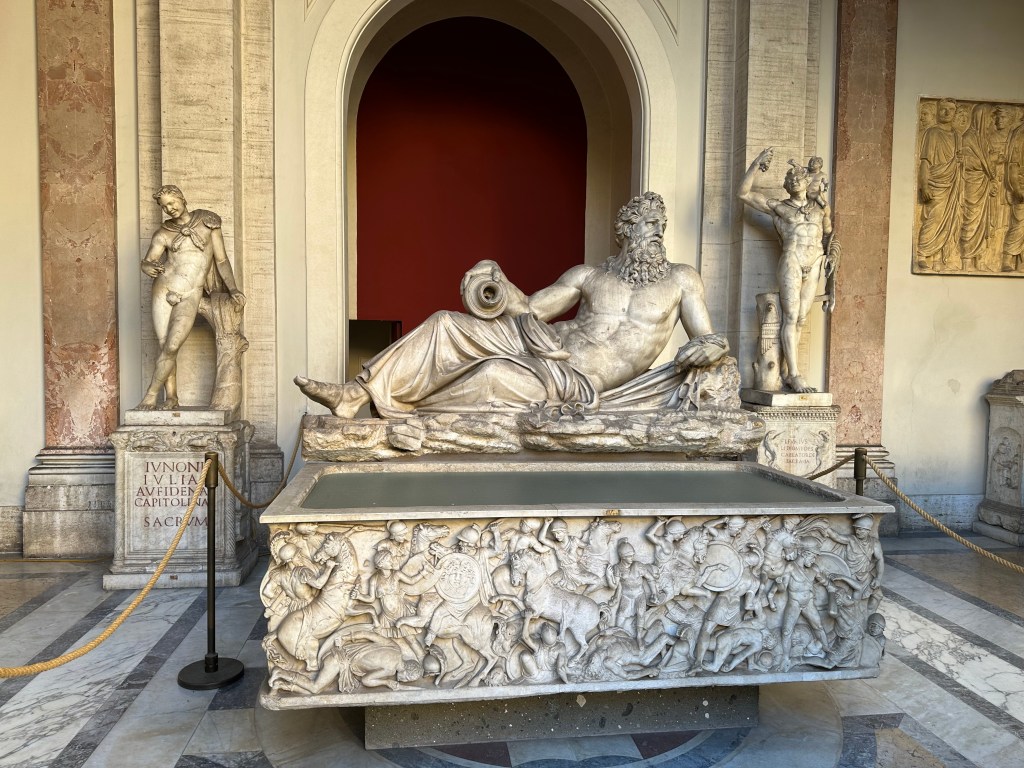
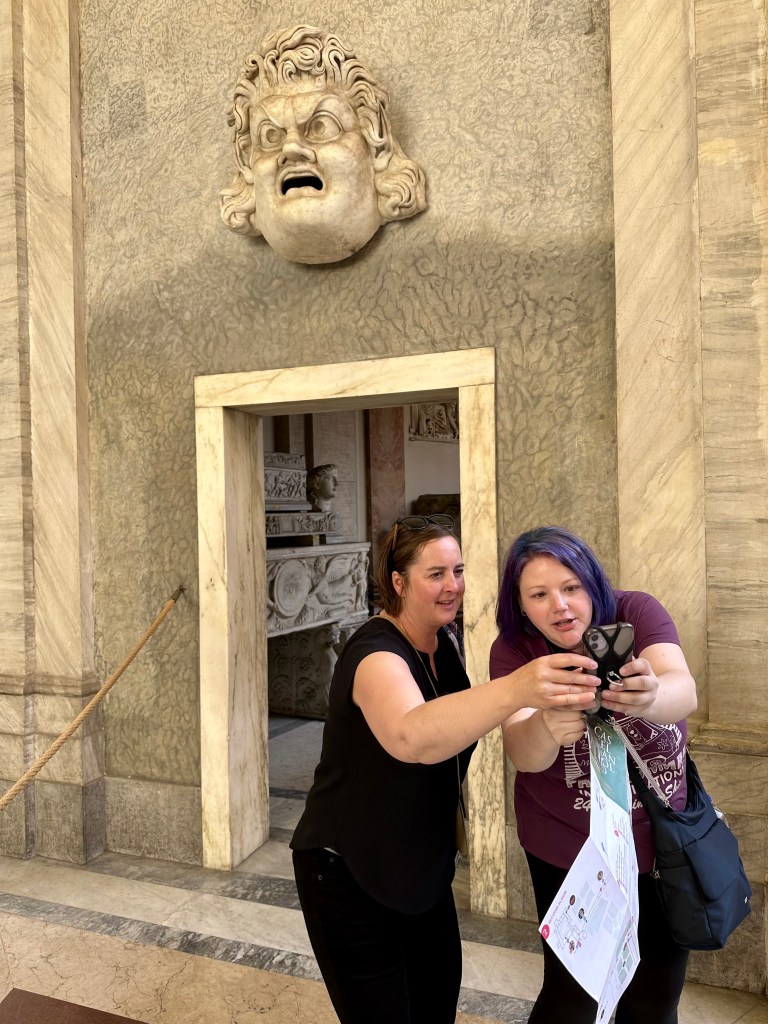
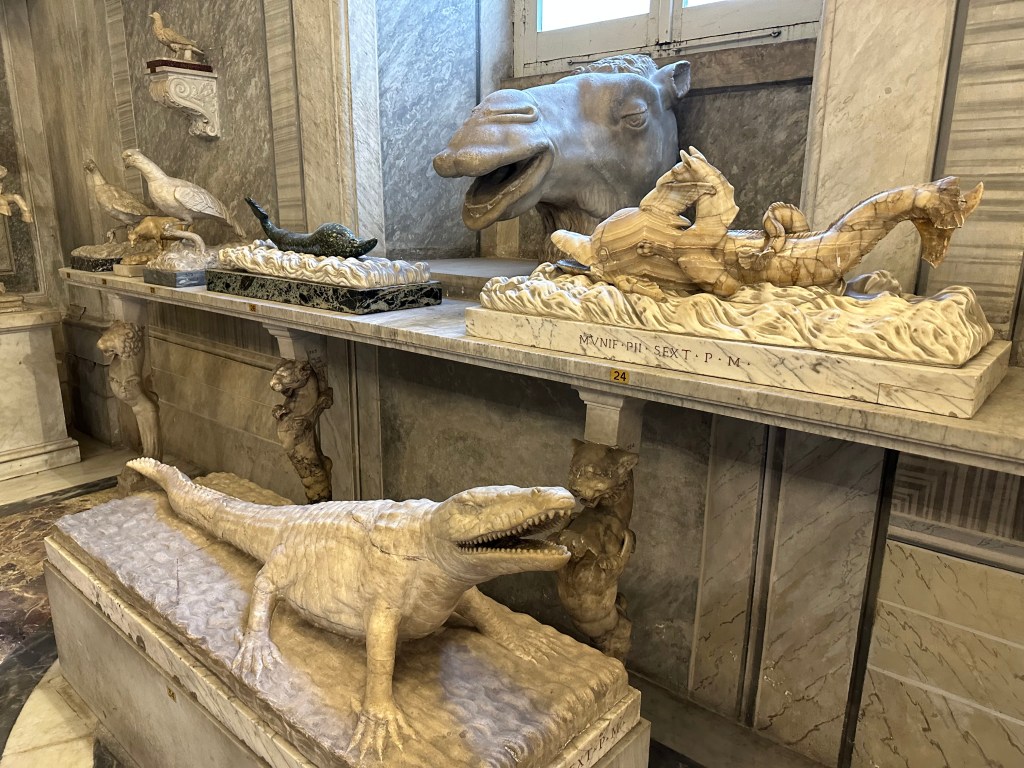
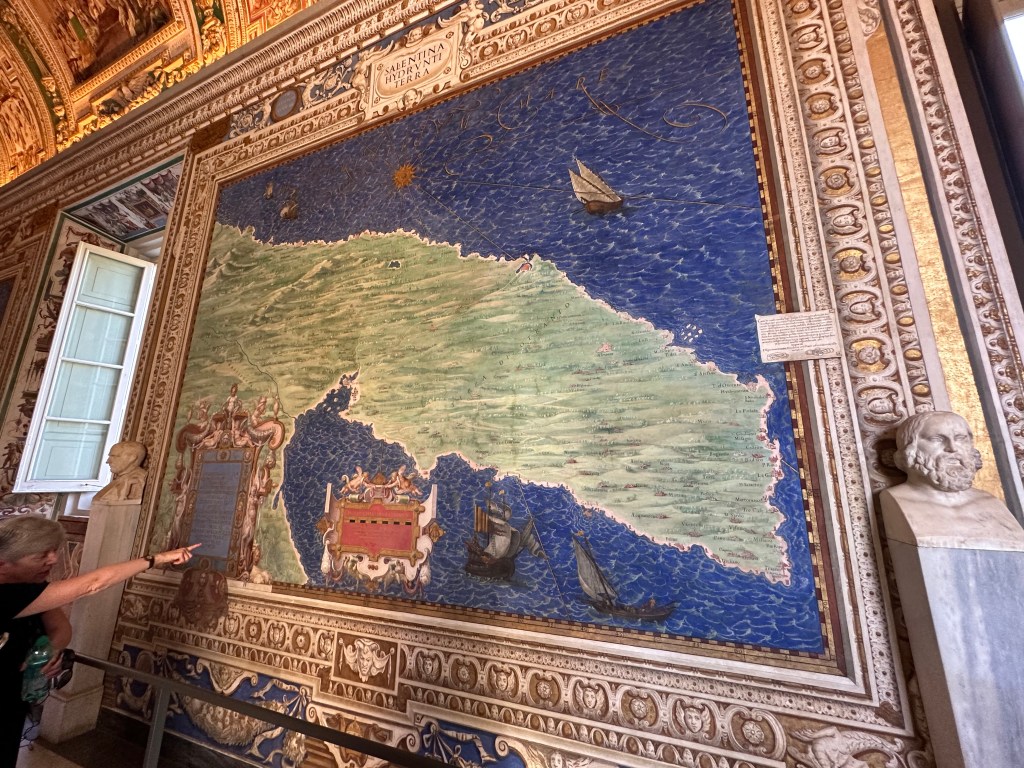
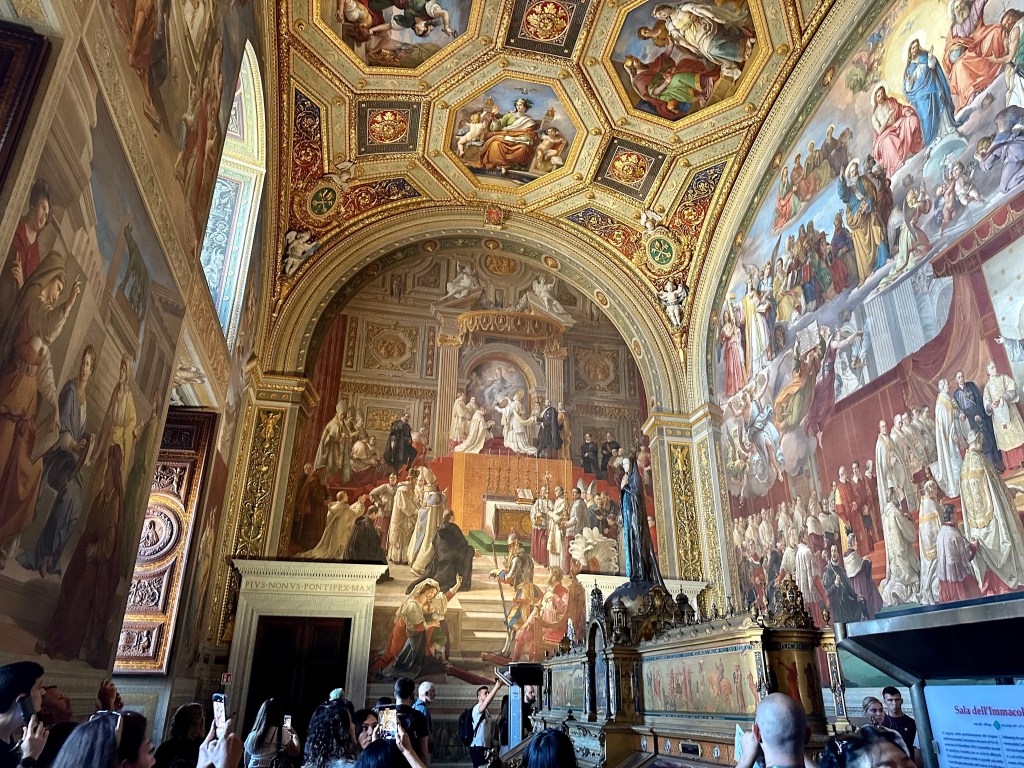
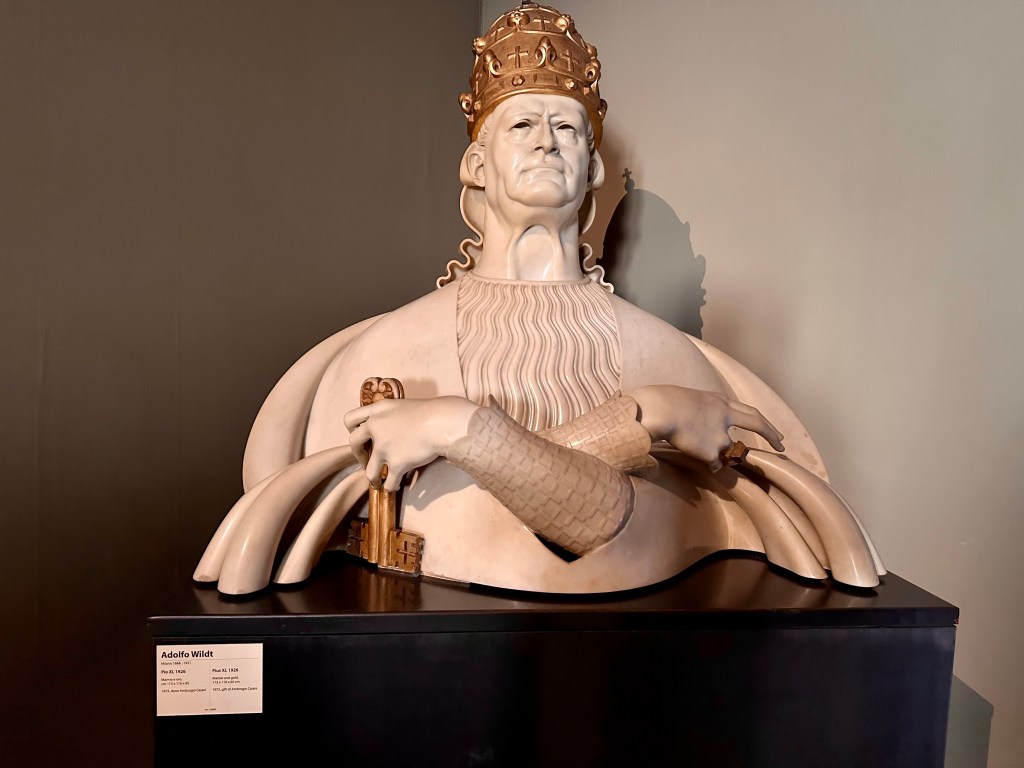
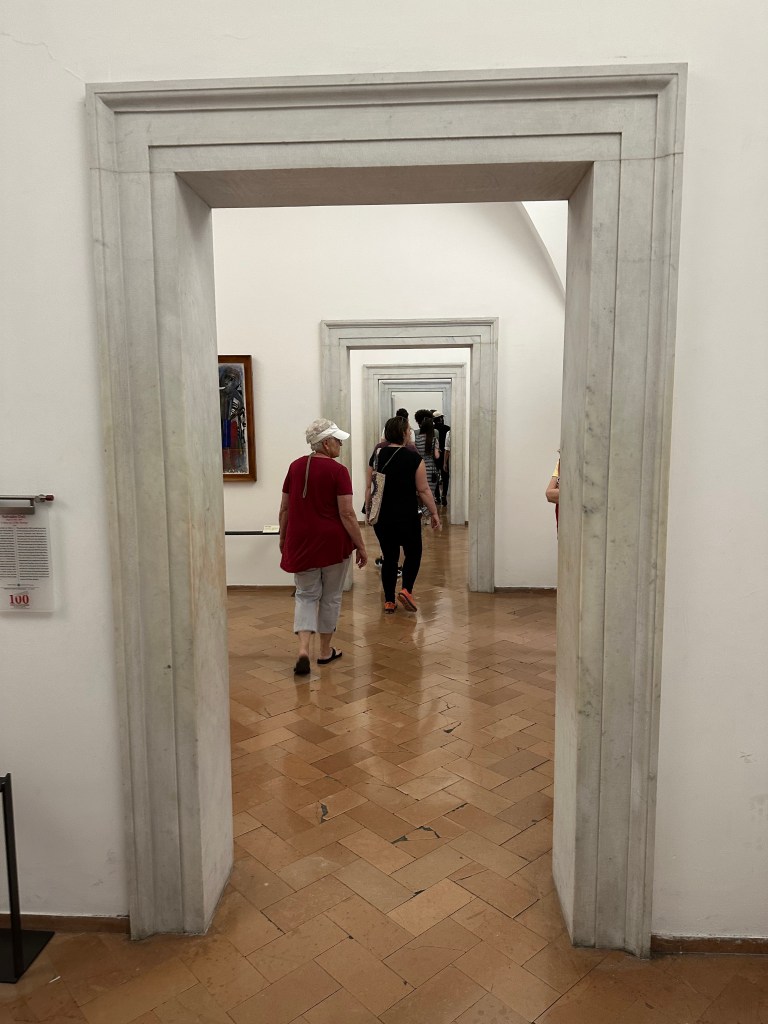
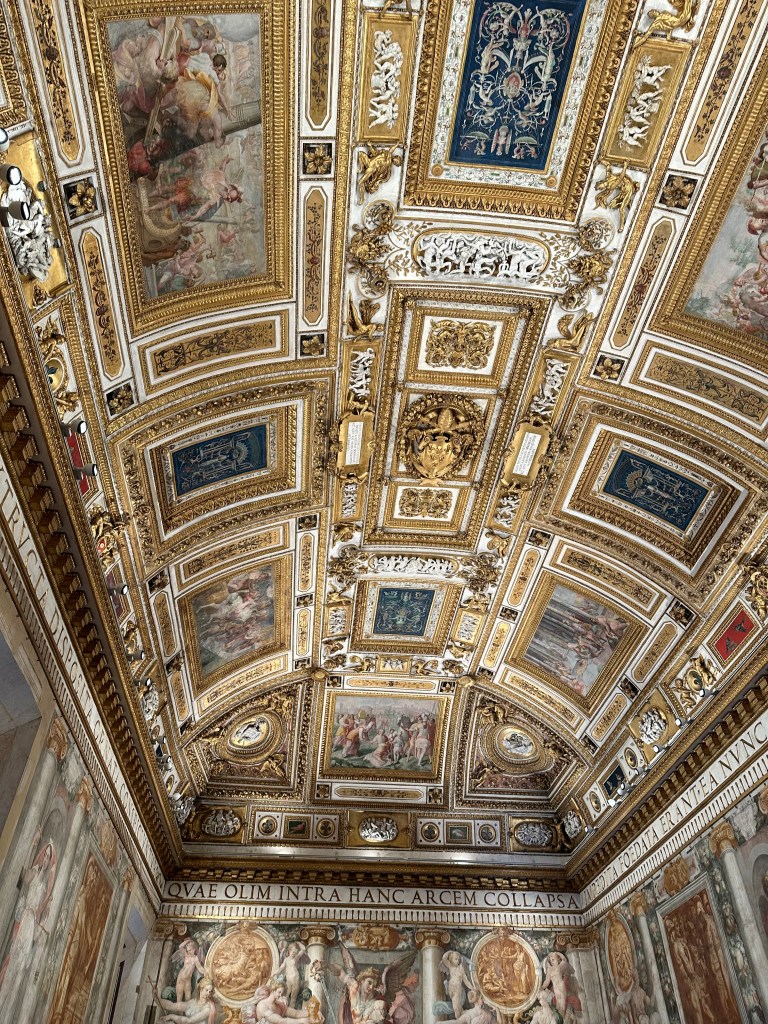
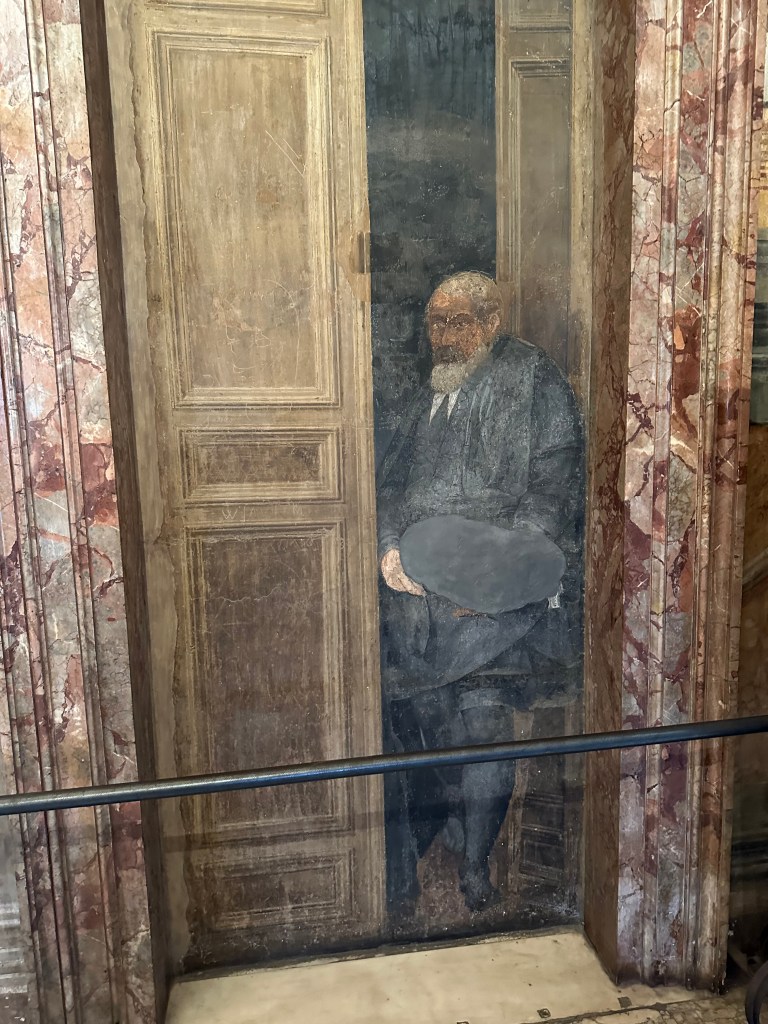
Our time in the interconnected museums transported us through centuries of fantastic artwork, sculptures, maps, murals, and artifacts. The Sphere Within Sphere by Arnoldo Pomodoro was most impressive in the courtyard. As for the rest of the museums, I’ll let the photos speak for themselves.
Exiting the museum was just as exciting. We traversed the famous spiral staircase of the museum. When we stepped outside, the line still stretched around the corner. I felt extremely fortunate to be in our group.
The spiral staircase in the Vatican Museums.
In the afternoon, I got a reprieve for missing the Roman Forum. Three younger members of our tour group agreed to accompany me to the Forum. While Molly and I went to the Forum, cousins Alicia and Brittany snagged tickets to the Colosseum. The plan was to meet at the Arch of Constantine between the Forum and the Colosseum.
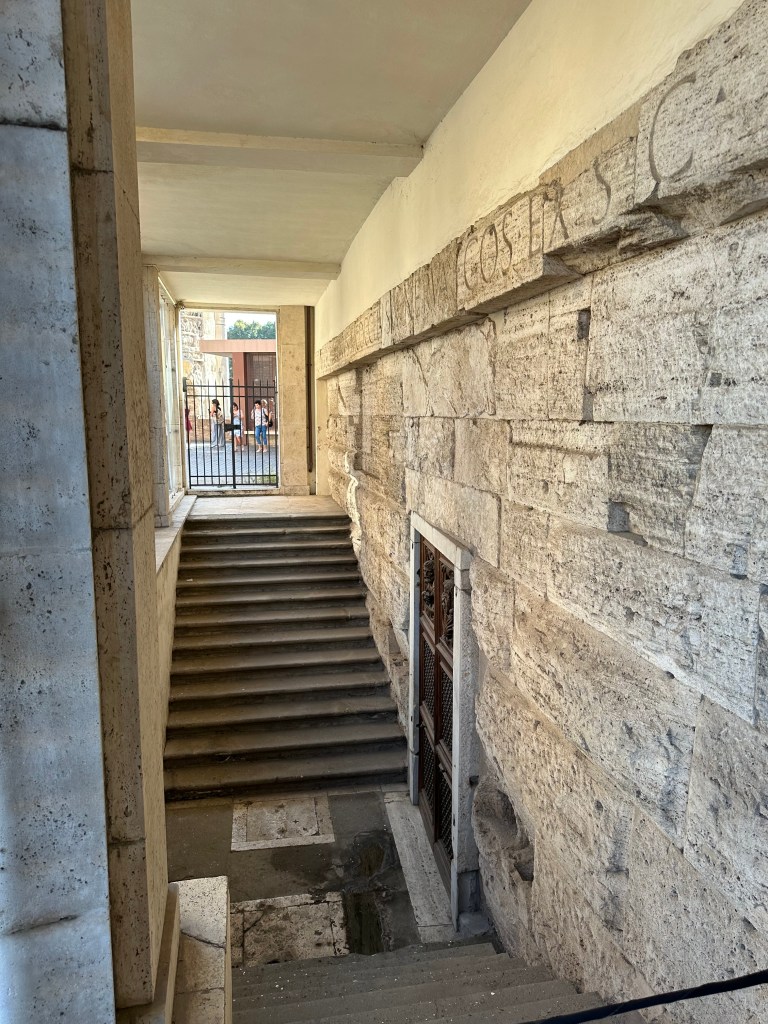
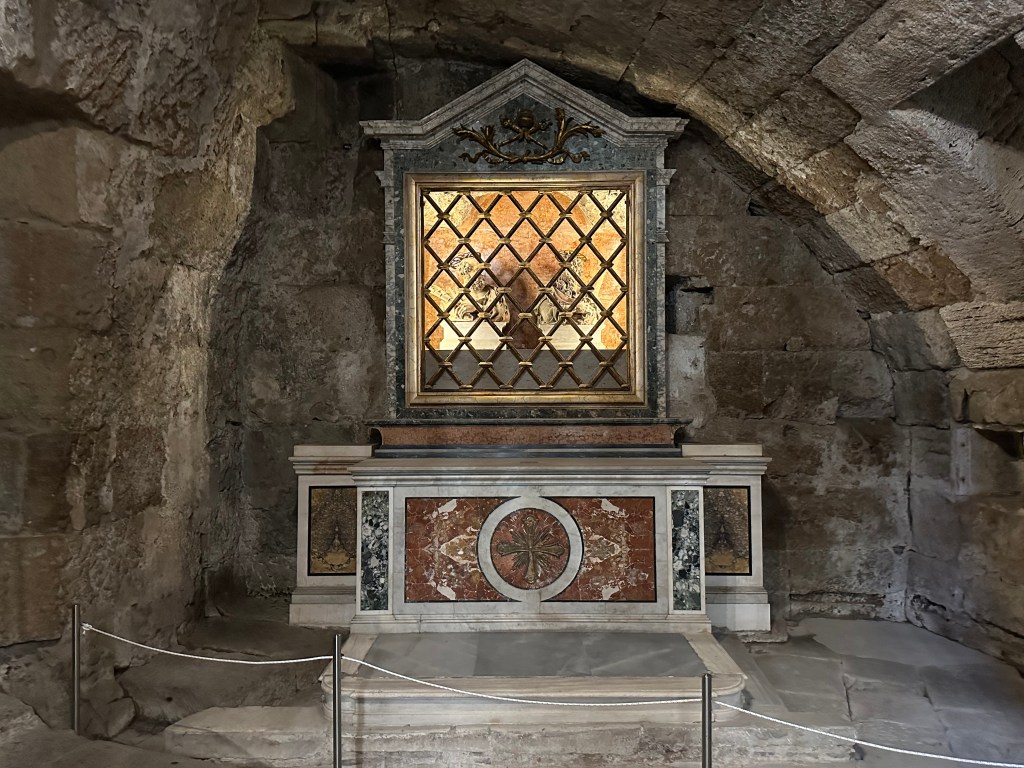
Before exploring the Forum, Molly and I decided to tour the jail cells where the Apostles Peter and Paul were imprisoned. I was moved by the harshness of their dungeon-like confines.
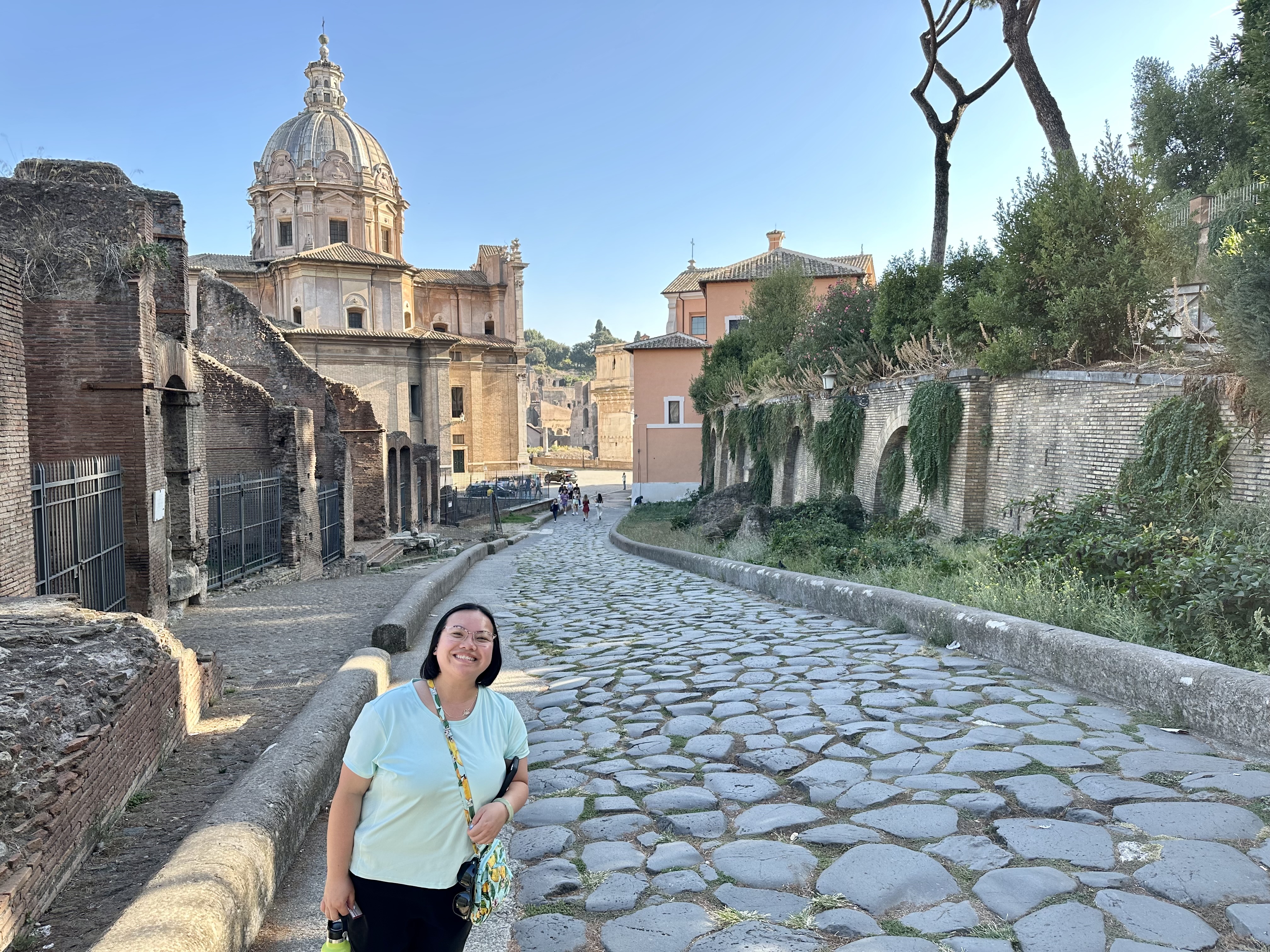
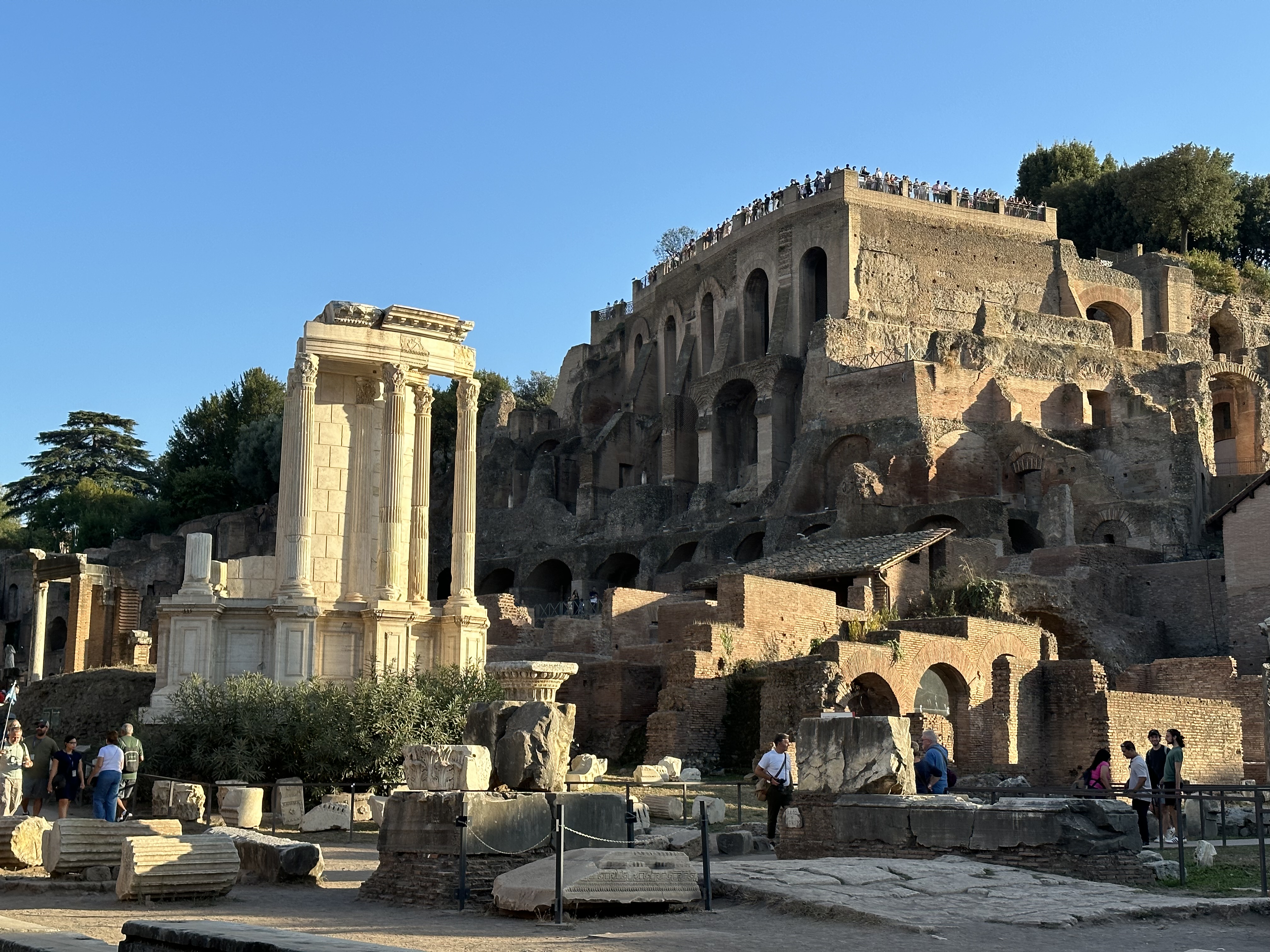
The cells were located in the Forum, where Molly and I ventured next. I marveled at the stone-paved roads preserved after all these centuries. We wandered by old temples and meeting places. A steep section of a cobblestone way was closed to traffic. I guess too many people had fallen on the slippery, well-worn stones.
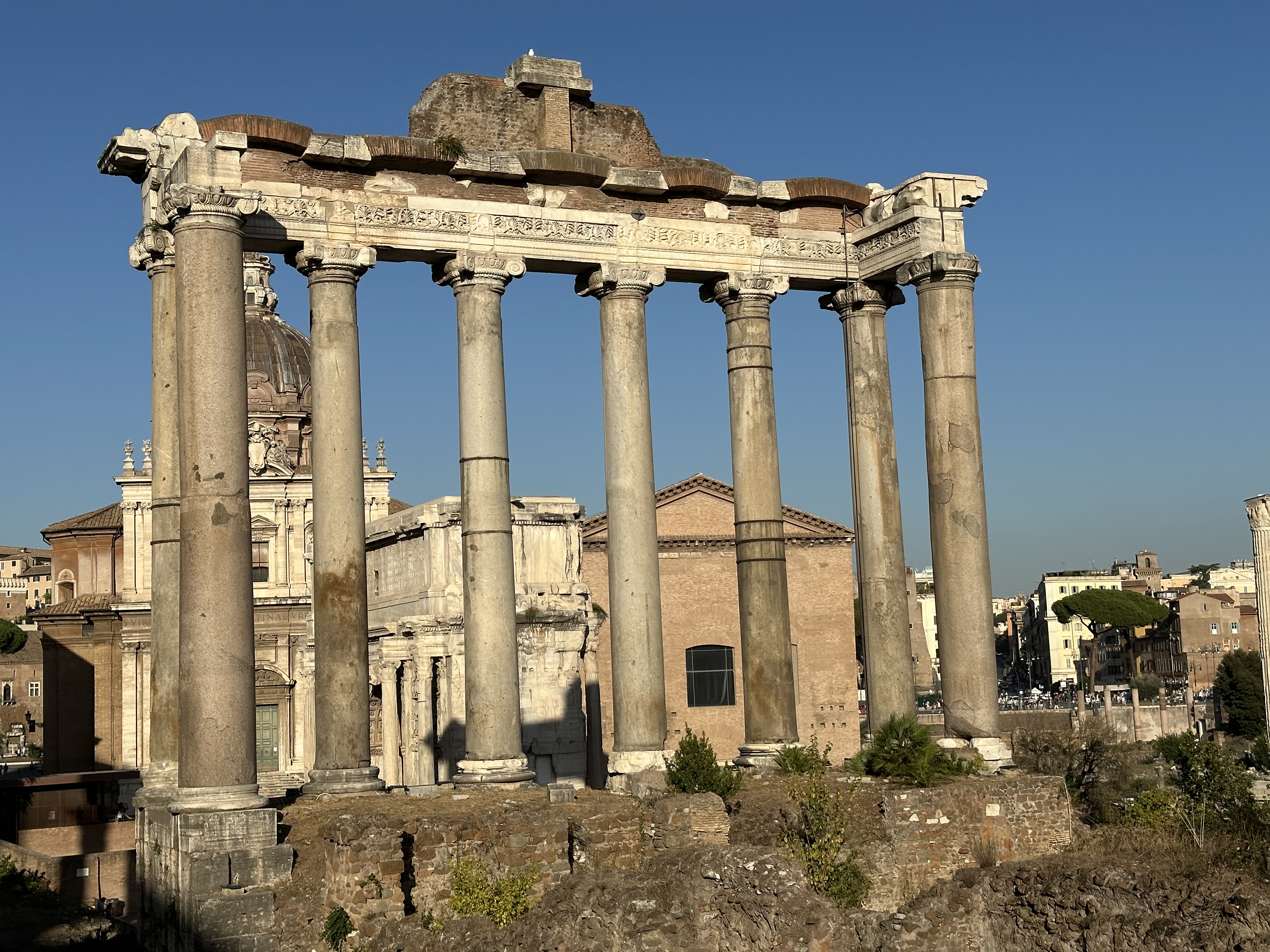
As we entered the main section of the Forum, I stopped in my tracks. My mind flashed back 60 years to a black-and-white photo in my high school Latin book. I had to be standing close to where the old photo was taken. I had chills, and the hair on my arms stood up, realizing I was living that photograph decades later.
The spot where I flashed back to my high school Latin class.
Molly and I continued to meander around the Forum, taking in the sites. For me, I was almost in disbelief that I was there. It was difficult to absorb it all in so few minutes as the shadows of the relics and ruins grew longer. The afternoon sun sank lower in the western sky, a reminder that we needed to keep moving to our rendezvous with Alicia and Brittany.
Please click on the photos to enlarge them.
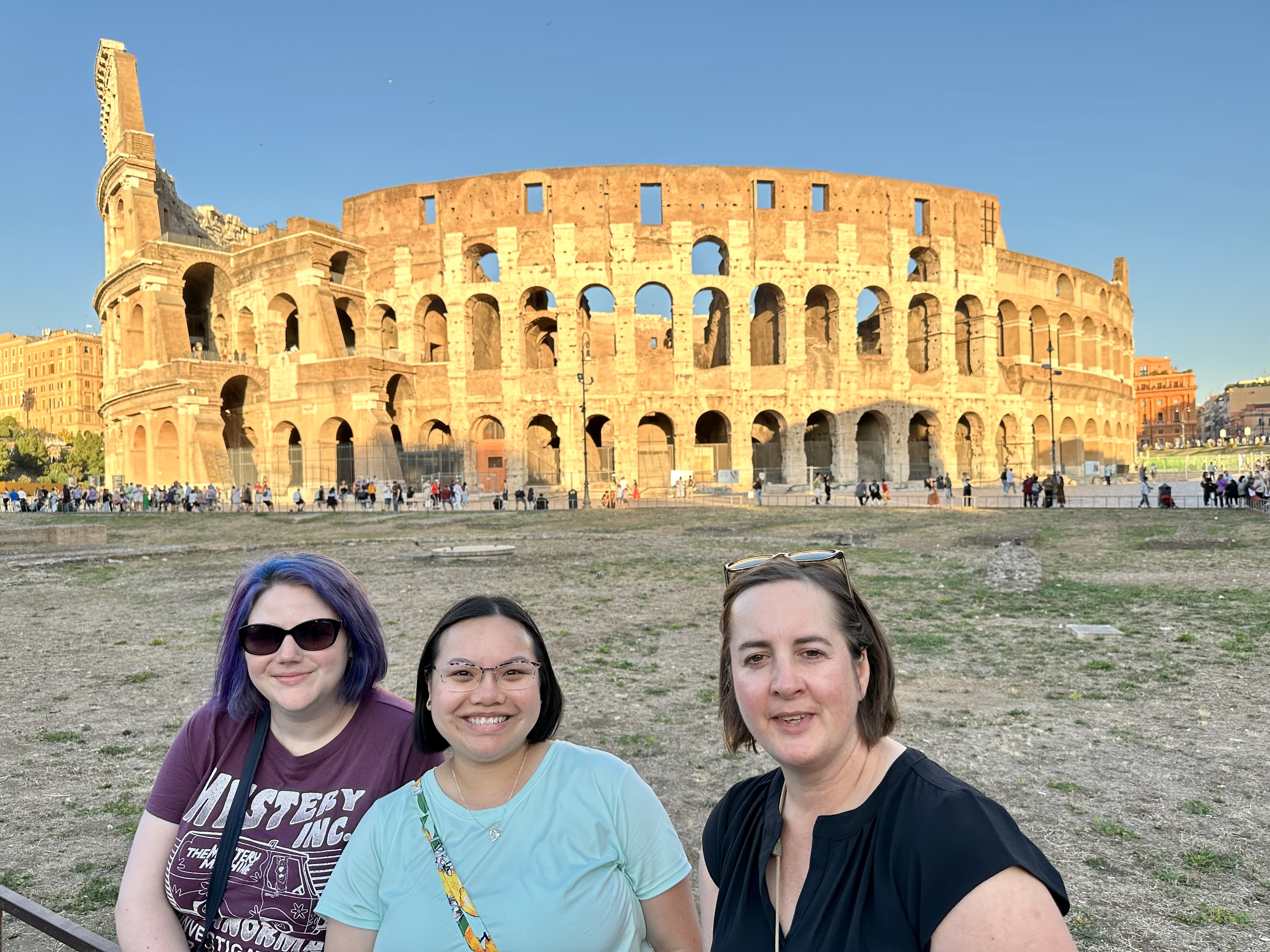
They had texted Molly that they had completed their tour of the Colosseum and were waiting for us at the arch. Molly and I finished our stroll down Via Sacra, the central avenue of the Forum. The Colosseum glowed in the evening’s Golden Hour. It was incredible timing.
The shot of a lifetime, with much thanks to Brittany, Molly, and Alicia.
I greatly appreciated these three young women’s willingness to drag this old guy along on their afternoon adventure. It was one of the benefits of having a diverse age range in our tour group of like-minded folks.
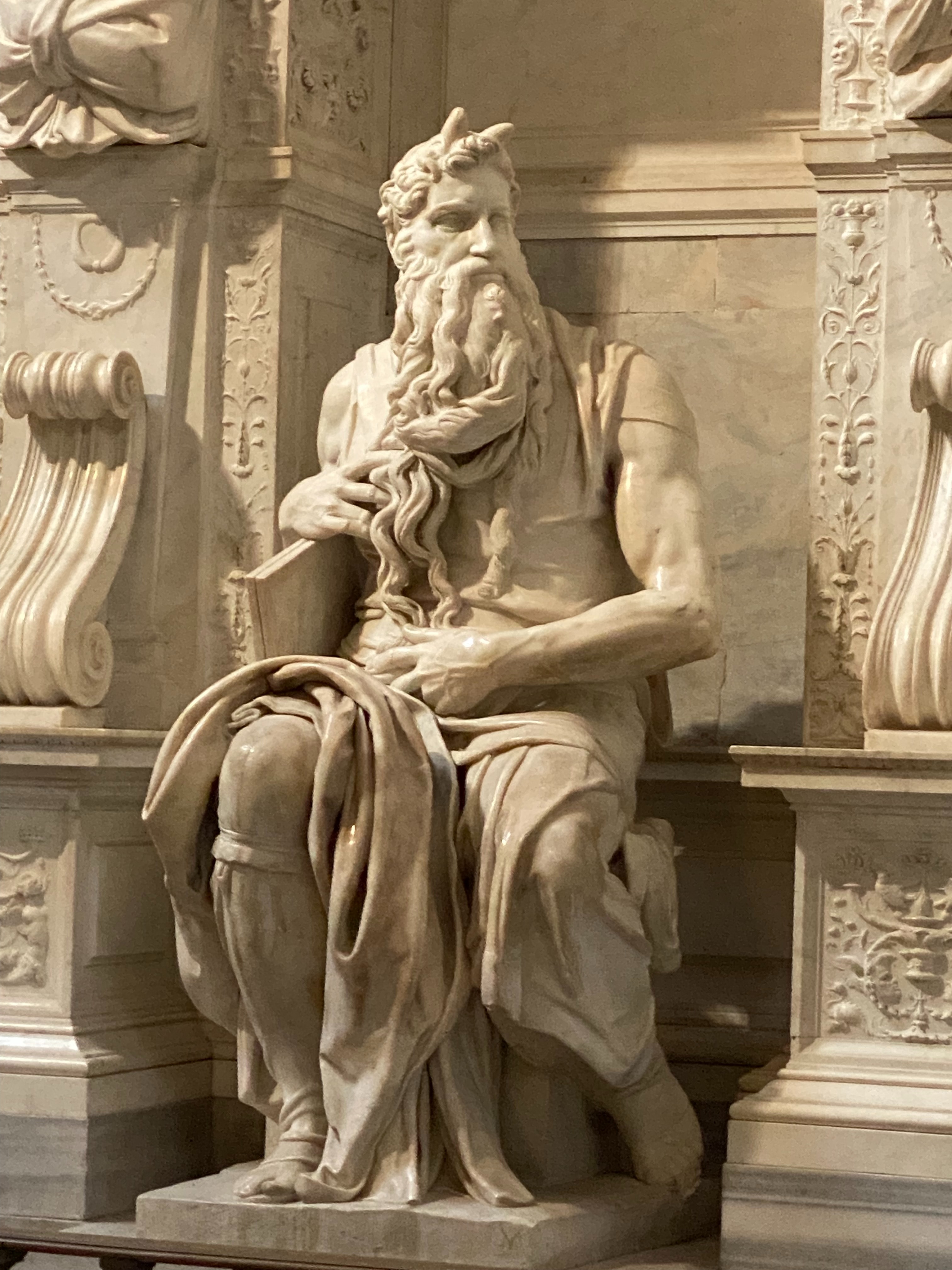
The next day, we visited the Church of St. Peter in Vincoli, Rome. The enormous church has many marble columns and houses a famous sculpture. In 1505, Pope Julius II commissioned Michaelangelo to create the Biblical Moses for his tomb. It took two years for Michaelangelo to complete the marble statue, based on a description of Moses in Chapter 34 of Exodus in the Vulgate, a Latin version of the Bible used during the Renaissance.
Moses by Michaelangelo (1513-1515). Photo by Jason Steele on Unsplash.
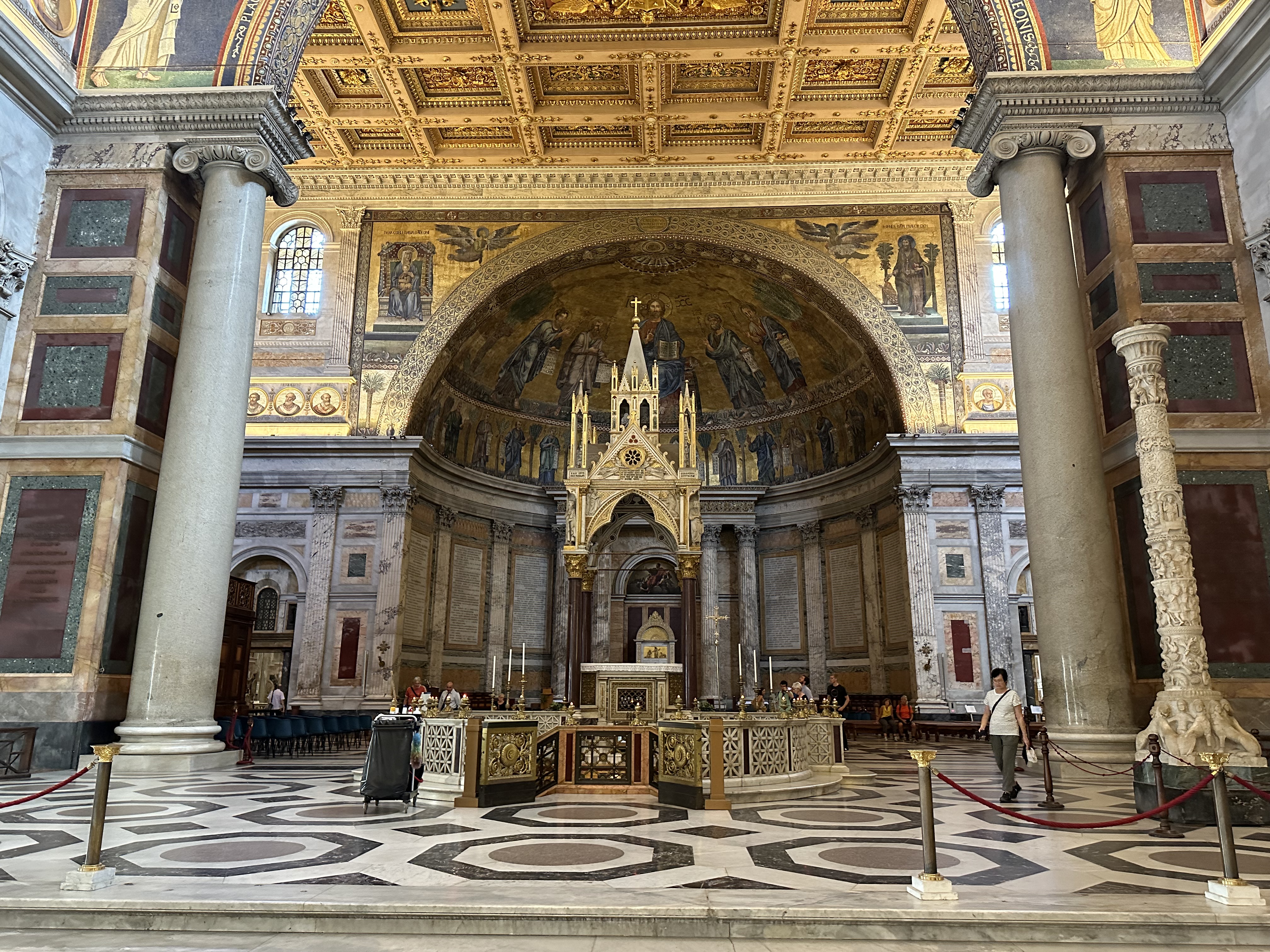
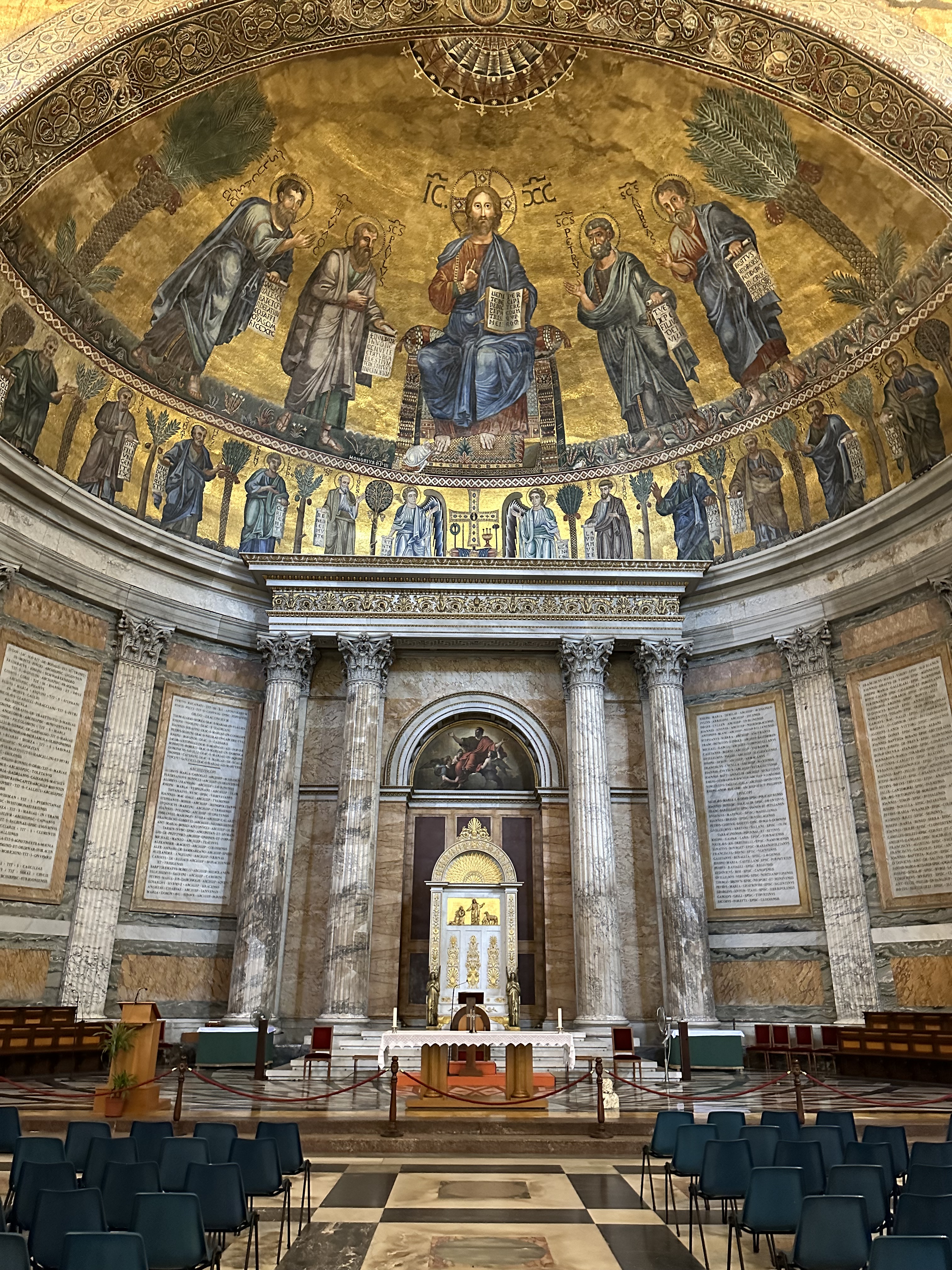
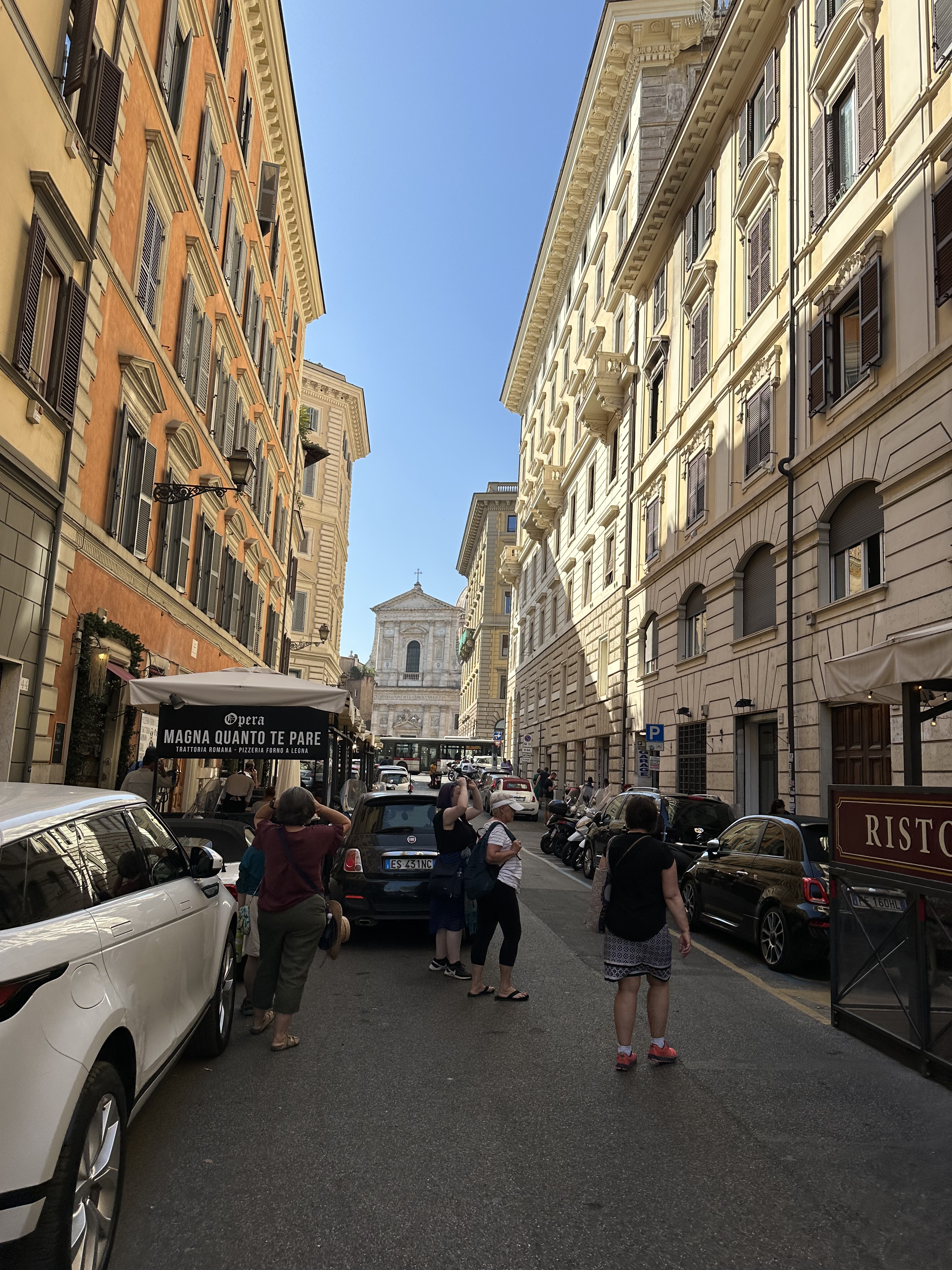
The church was impressive all on its own, with its finely gilded ceilings and scores of massive marble columns. It is built over the tomb of St. Peter. After seeing the church, we returned to our hotel to pack for our flight home early the following day. For once, the Metro wasn’t crowded.
In the evening, our entire group gathered for one final meal together at a restaurant where Janet and Linford knew the owners. We celebrated our travel and time together and the great joy that we all made it through.
Our fantastic travel group.
Yes, some of us got sick with bronchitis and pneumonia; one even had Covid-19 when she arrived home. But we all got along, helped each other, ate great food, and explored new places together. It was a great group with fantastic leaders.
Most of us headed home the next day. Others extended their time in Europe, visiting other locales in different cities and countries. Some even got to spend time with children and grandchildren who live in Europe.
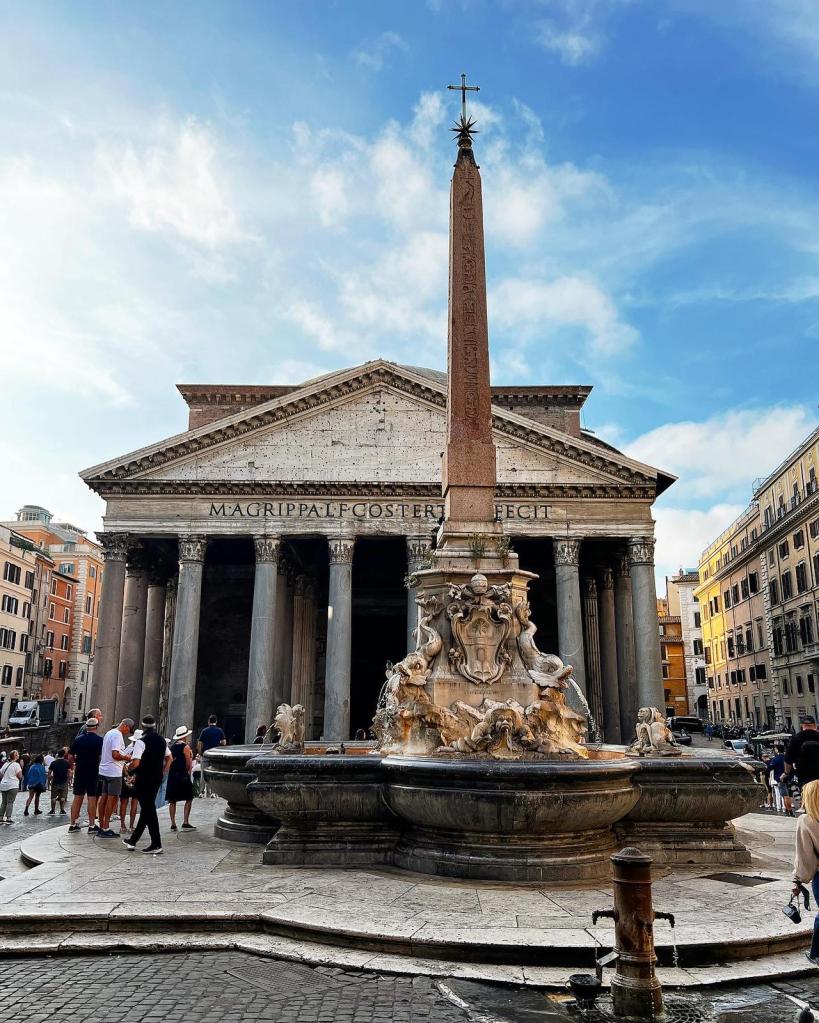
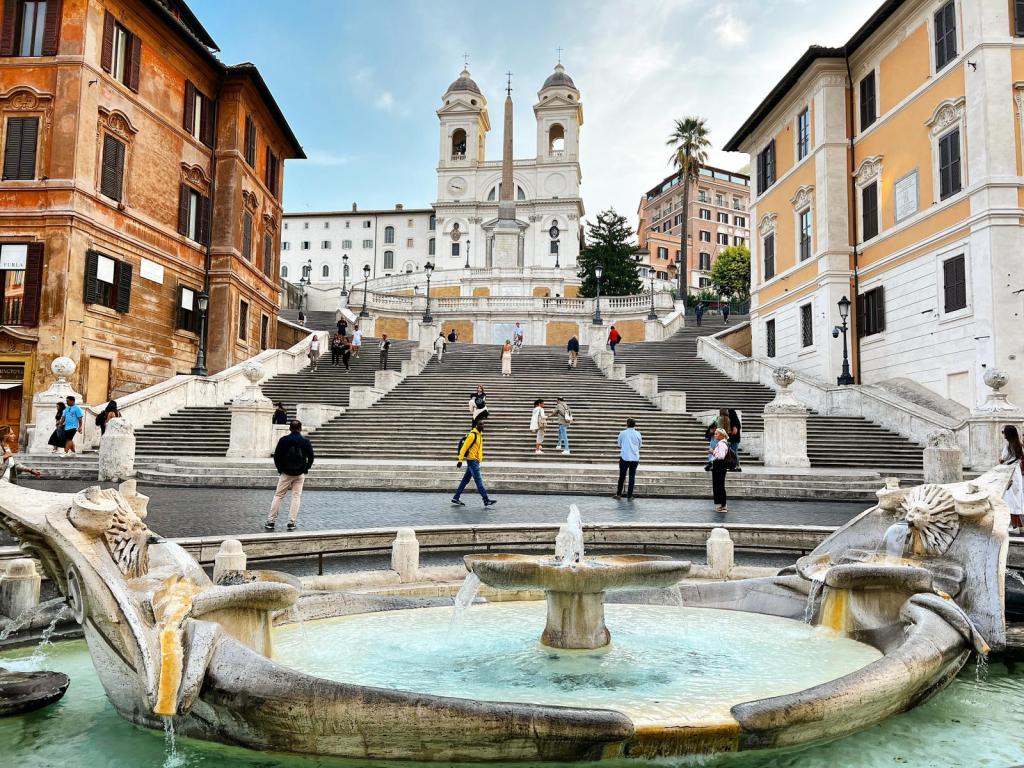
Below are photos group members took at locations I didn’t visit. I appreciated their willingness to share their photos with me so I can share them with you.
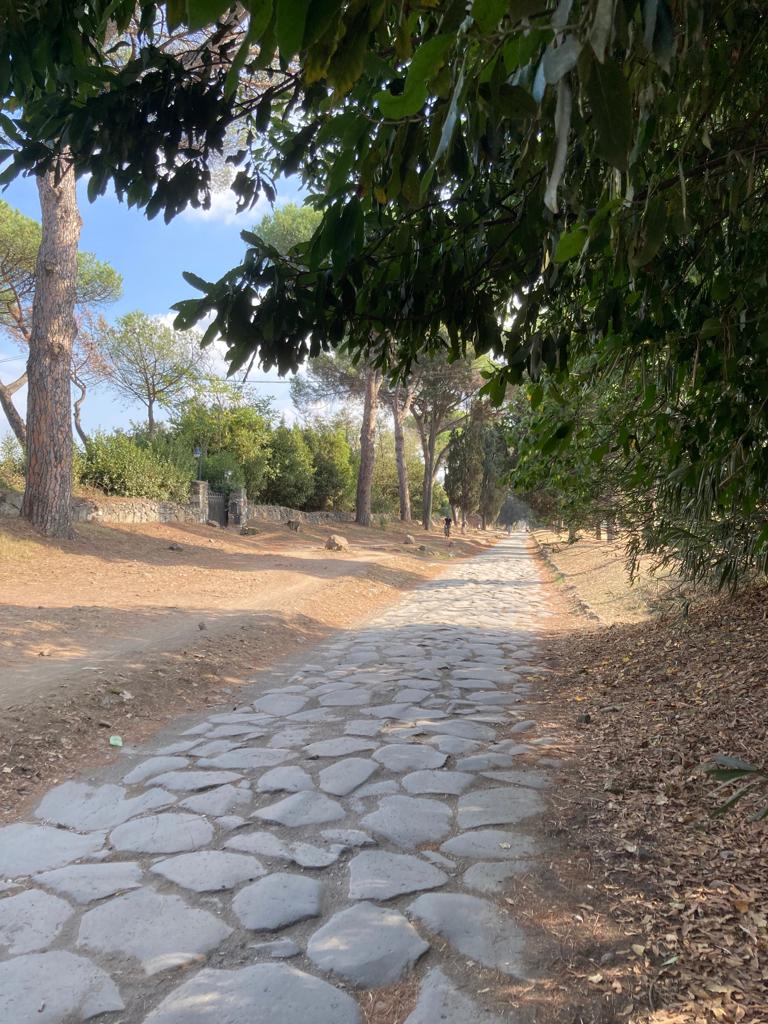
The Appian Way.
The Parthenon.
The Spanish Steps.
Thanks for traveling with me to Athens, some lovely Greek islands, and Rome.
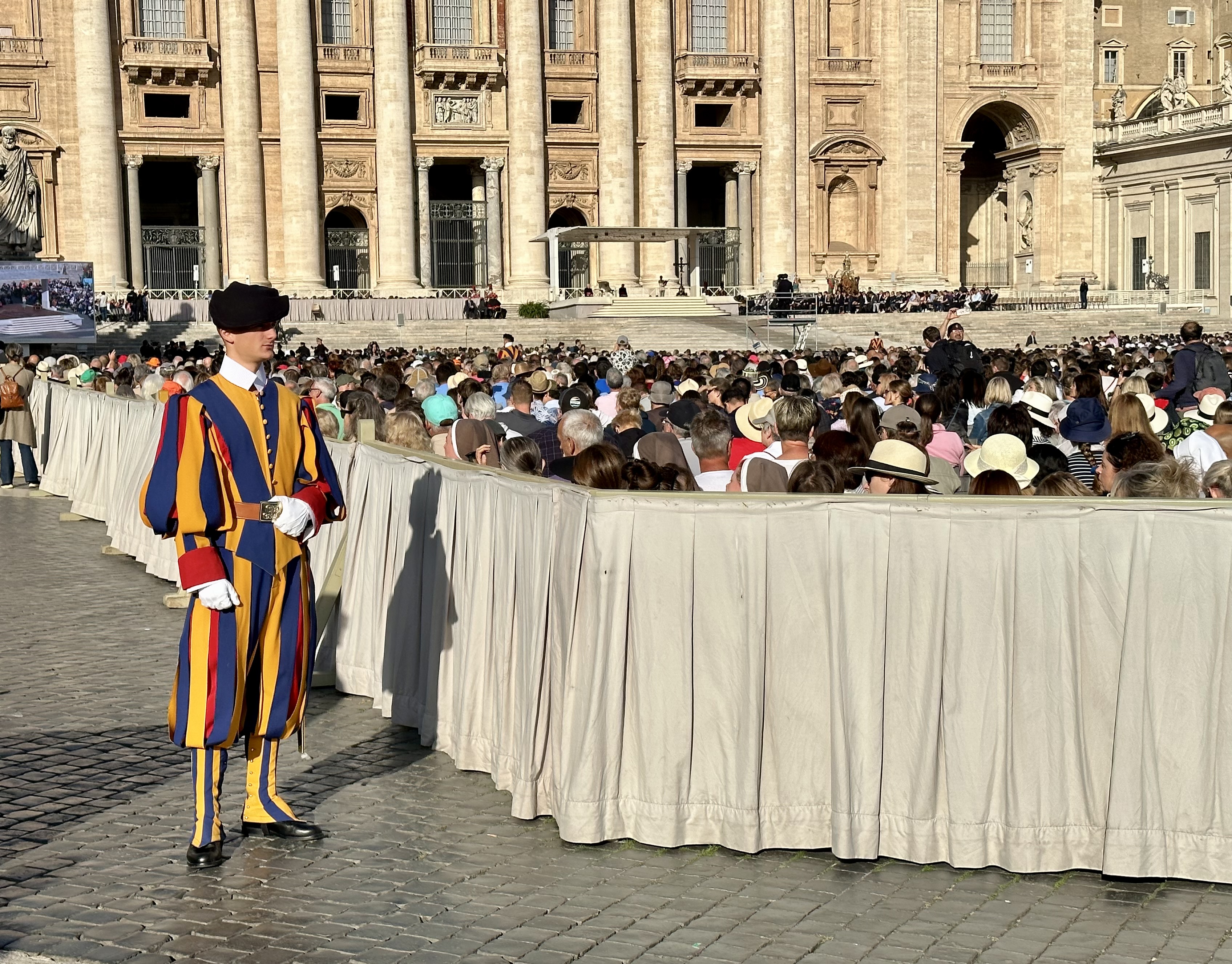
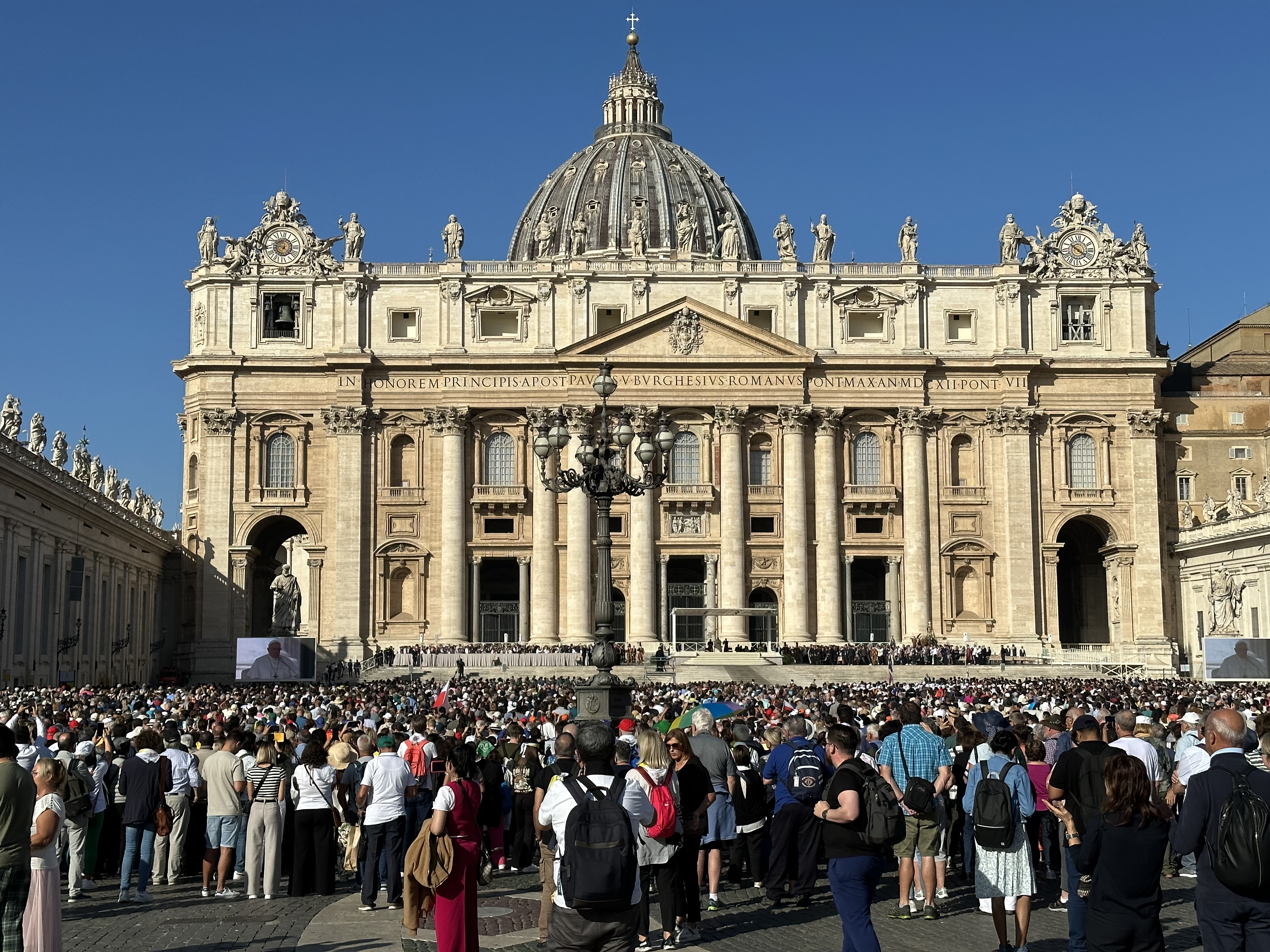
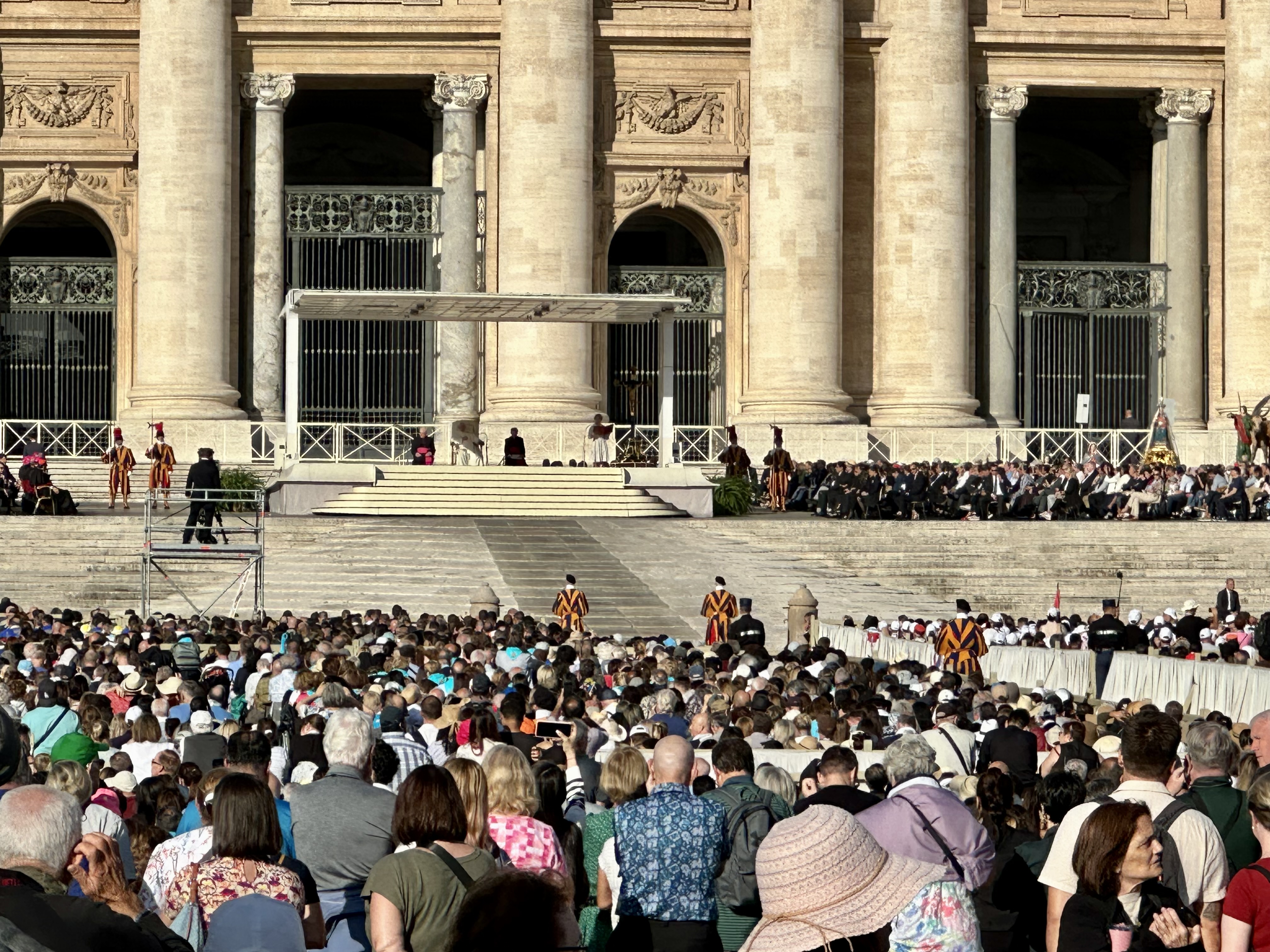
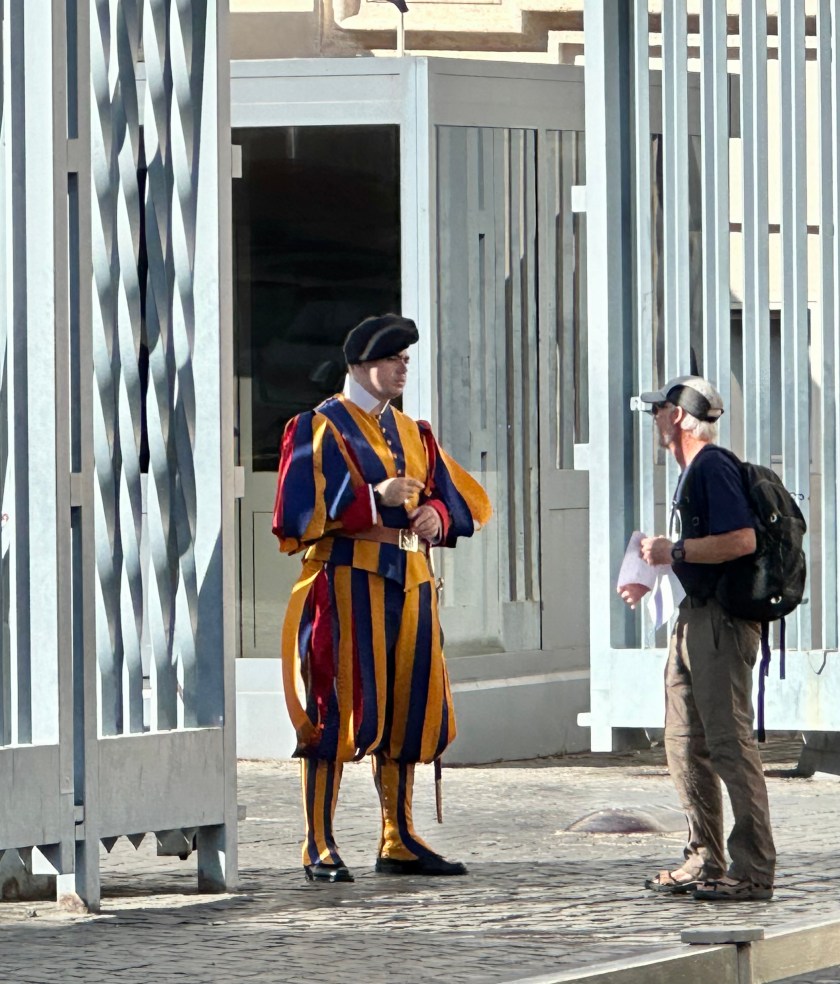
A Swiss Guard stands by as Pope Francis addresses the audience at St. Peter’s Square, the Vatican.
I was excited to see Rome and its many iconic sites. After all, all roads lead to and from Rome.
After landing at Rome’s expansive and bustling airport, we took the bullet train to the Metro terminal. Our hotel was less than a block away, and I was most thankful for that. Whatever bug I had was hitting me hard.
Riding the bullet train from the airport to the terminal.
Our group stored its luggage at the hotel since none of the rooms were ready. Another couple and my wife and I walked back to the terminal, which also serves as a shopping center with multiple restaurants, retail stores, and pharmacies.
I was glad to see the pharmacy because my cough worsened. After getting something to eat, we bought medicine for a dry cough and returned to the hotel. Fortunately, our room was ready. We settled in, and I hit the bed and was out.
Our leaders handed out the Roma Pass, a must for getting around in Rome. It’s a 72-hour pass that gives you access to the Metro, buses, and several museums and places of interest. So, the rest of the group rode the Metro to The Forum while I slept.
I hated to miss Linford’s opening talk that gave an overview of The Forum and told about Rome being the final destination for Apostles Peter and Paul. But I was much better off in bed. Consequently, I missed the initial exploration of this historically famous city that dramatically influenced Western cultures.
I had to be content with getting my strength back to experience the next three days’ events. It was the right decision. By evening, I felt better, but the cough persisted.
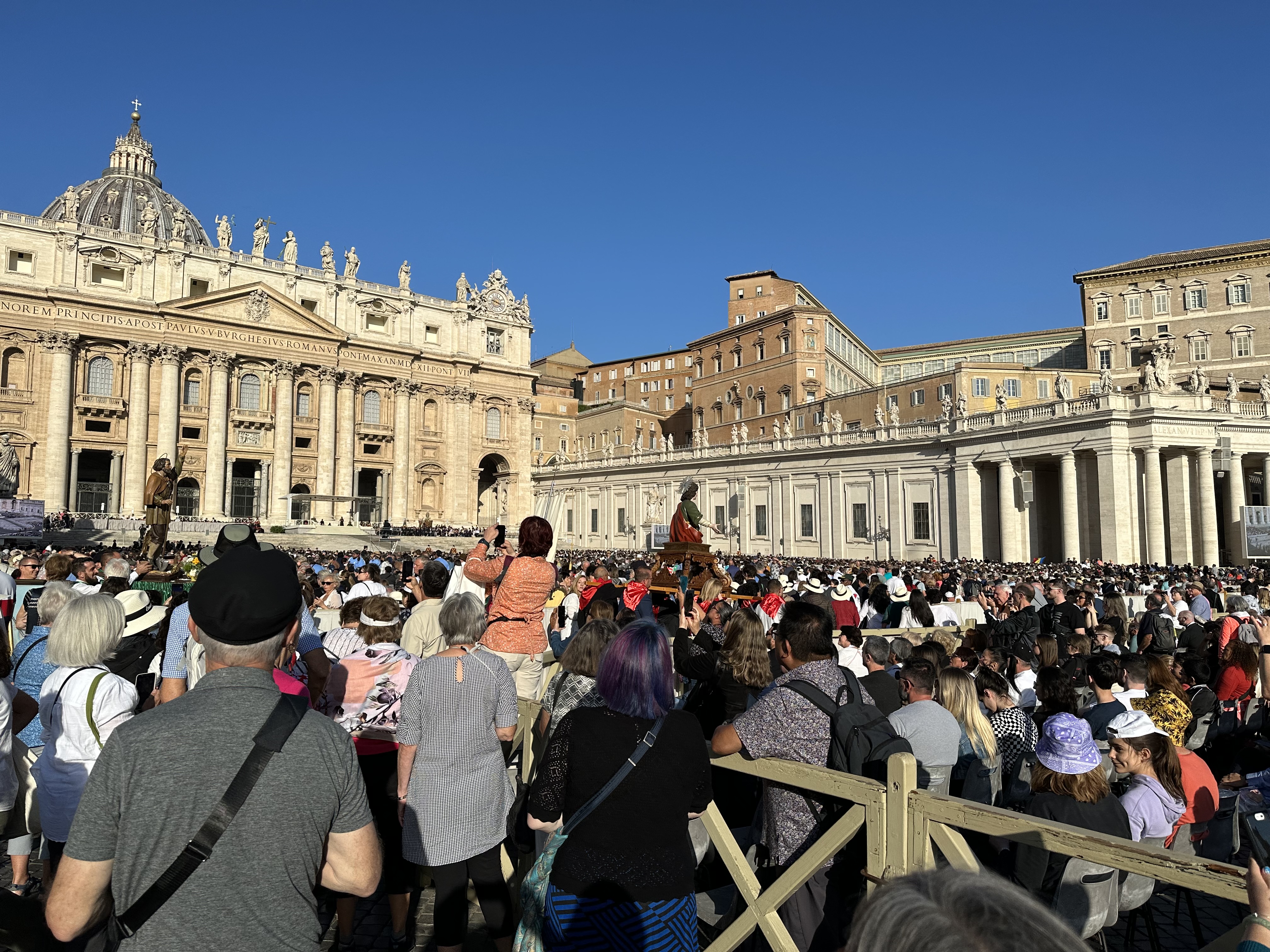
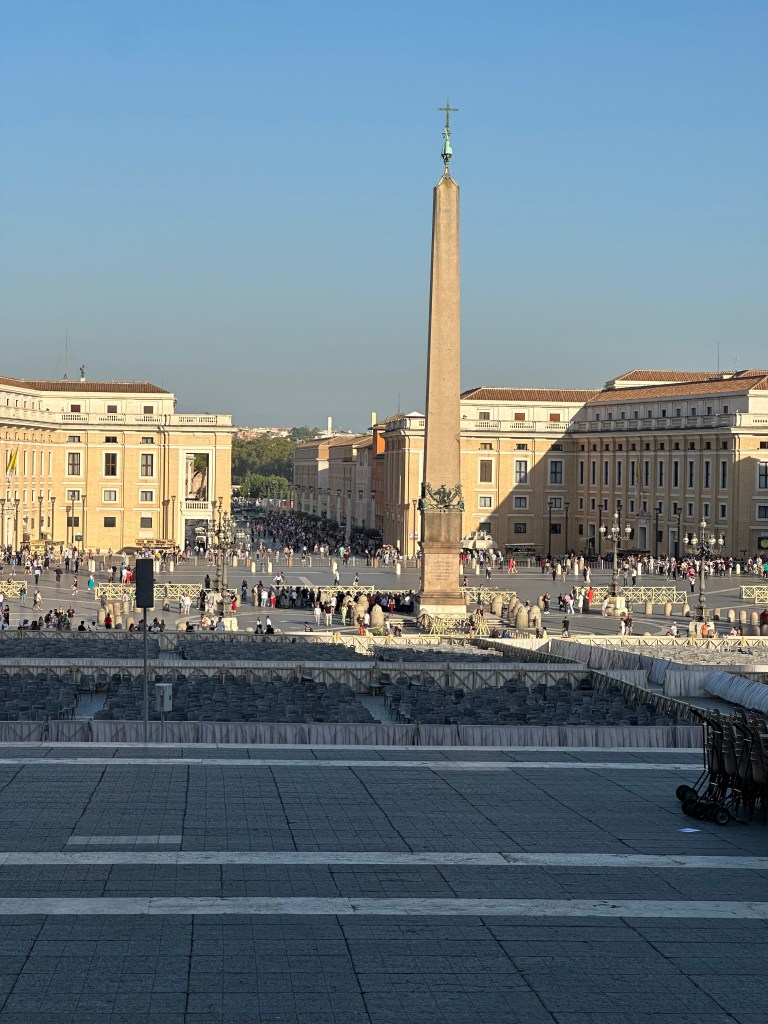
The next day turned out to be a once-in-a-lifetime experience for us. With the Pope’s Synod on Synodality happening all of October, the usual Wednesday appearance and address by the Pope had been canceled, except this day. Our leaders secured tickets to St. Peter’s Square in Vatican City, and I definitely didn’t want to miss seeing and hearing Pope Francis.
Hustle was the word of the day. We hustled to the train station and jammed into the Metro cars. We were squeezed in like sardines, and I don’t like sardines. We were reminded to be careful of pickpockets in such close quarters. Those admonitions turned out to be more than accurate. During our four days in Rome, pickpockets hit a quarter of our group of 24, with five people losing wallets.
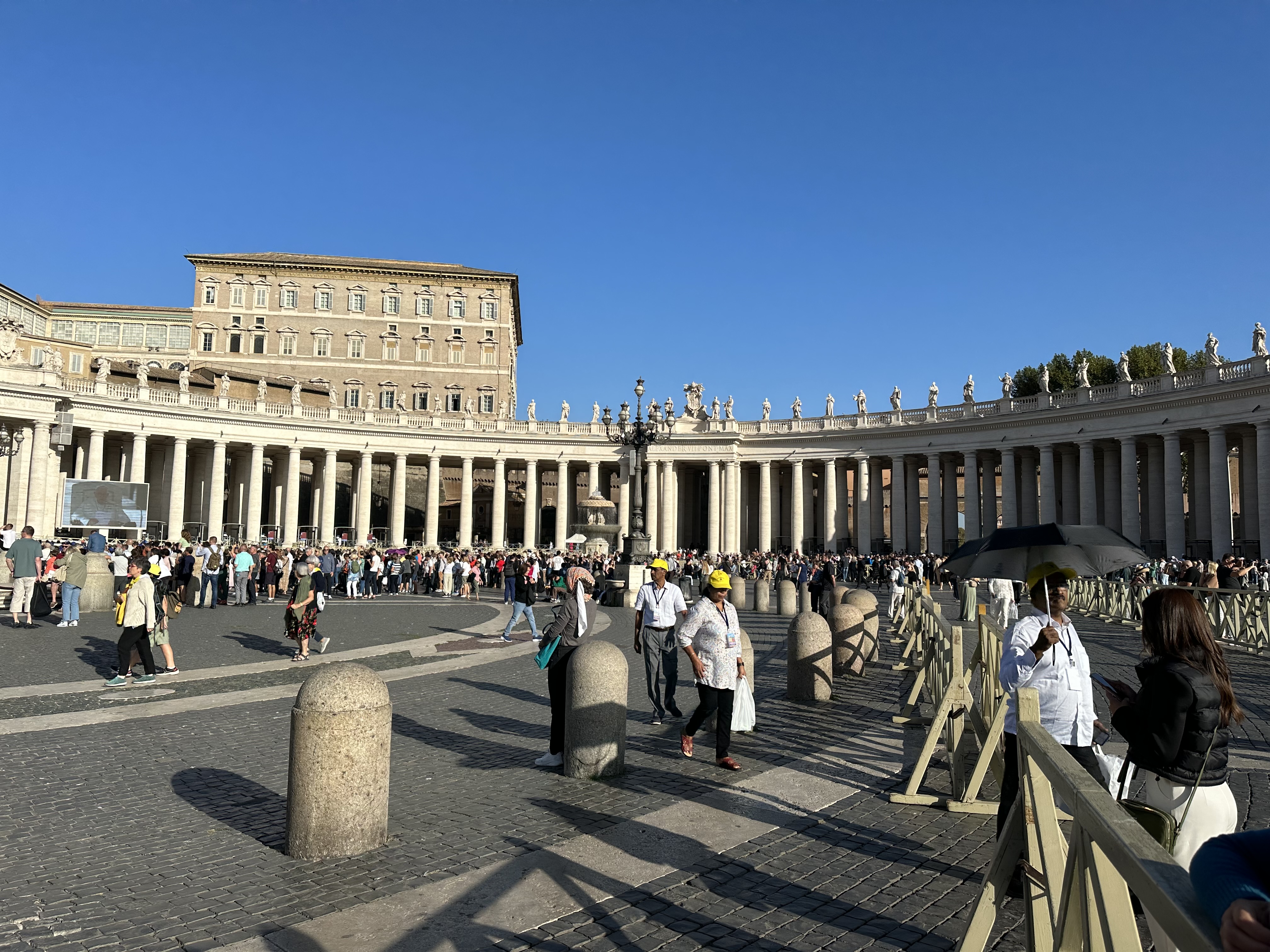
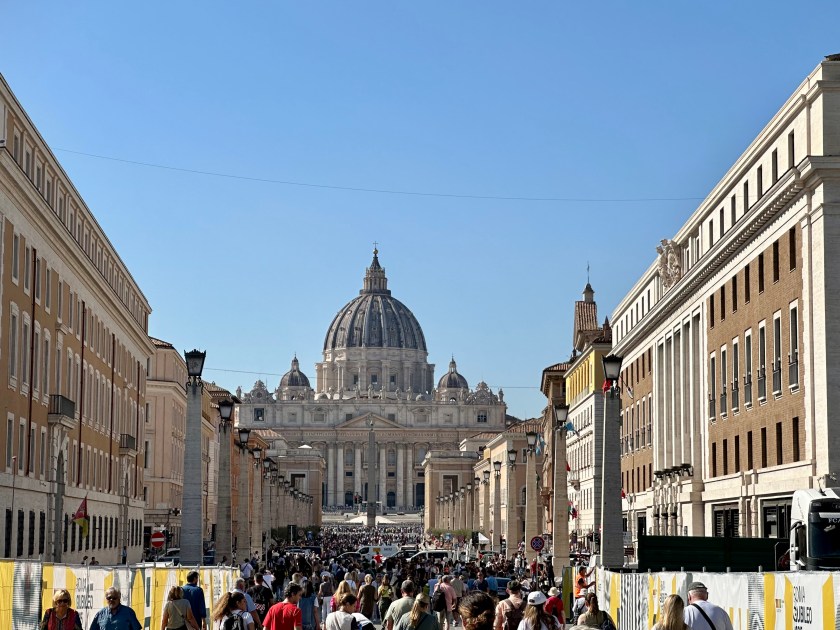
We tumbled out of the Metro and hurried to a particular entrance, hoping to see the Popemobile. We passed long lines of people waiting to enter St. Peter’s Square. However, the Pope’s route was different than our guides had anticipated, so we only saw him ride in via giant screens erected around the famous square.
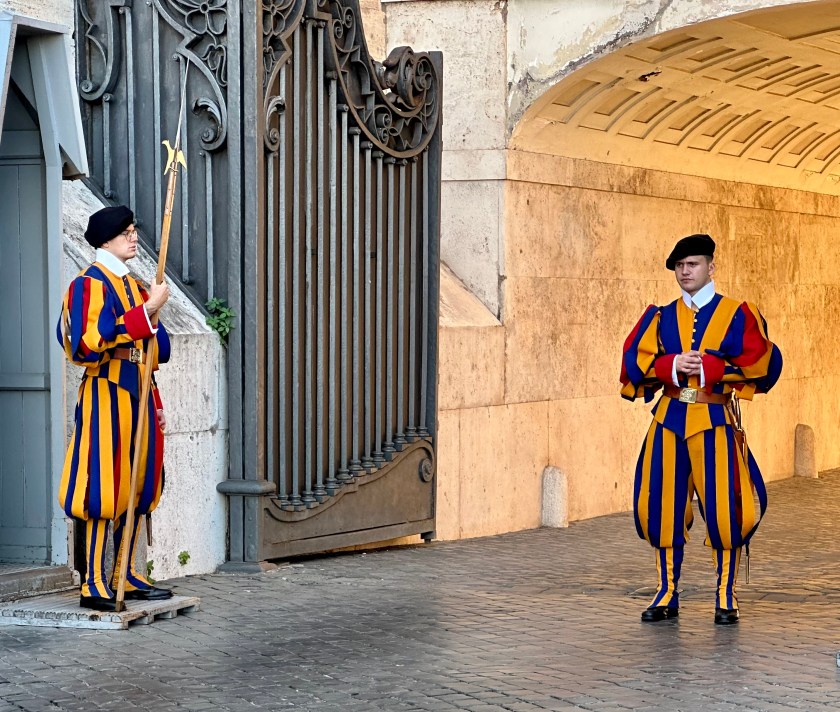
We joined thousands of others in listening to the Pope. He sat beneath a canopy on the steps of St. Peter’s Basilica. I used my binoculars to see him up close. Police and members of the Swiss Guard in their striking uniforms watched over the assembled masses.
Breaks occasionally interrupted the Pope’s Address, as individuals spoke different languages, expressing their best wishes and blessings for other global peoples and countries.
After the Pope’s address ended, various Cardinals brought Pope Francis gifts and blessings. With that finished, the crowd began to disperse in every direction.
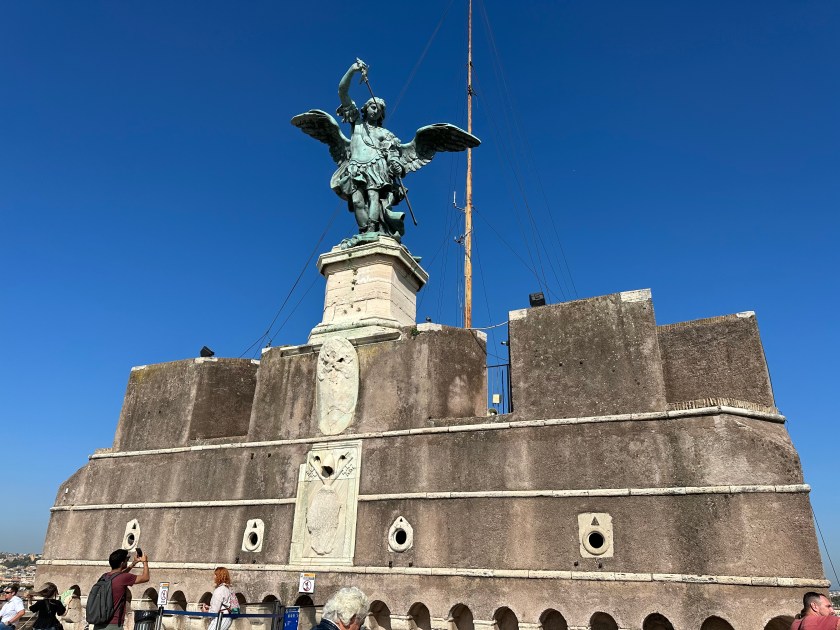
We headed to the Castle of St. Angelo, an easy walk from the Vatican, with a few others from our group.
Here is the castle’s history.
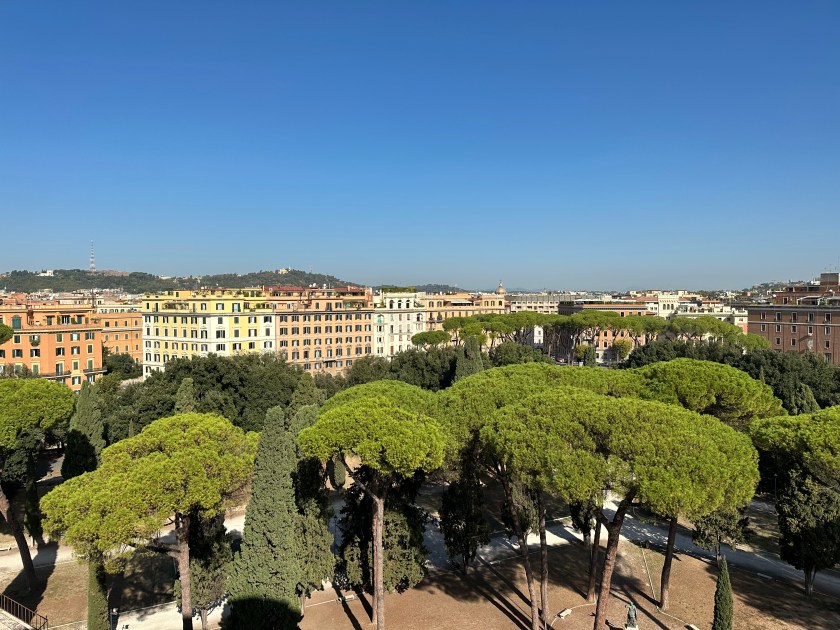
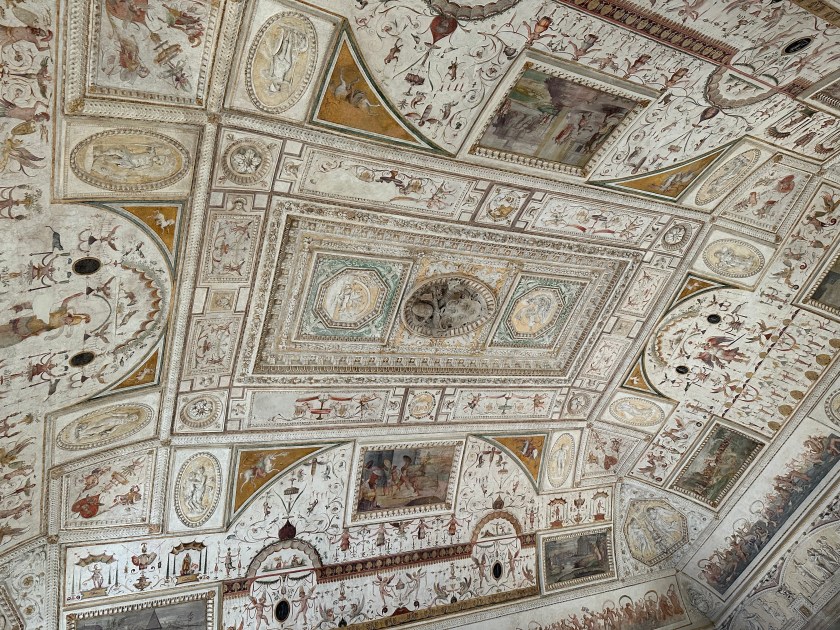
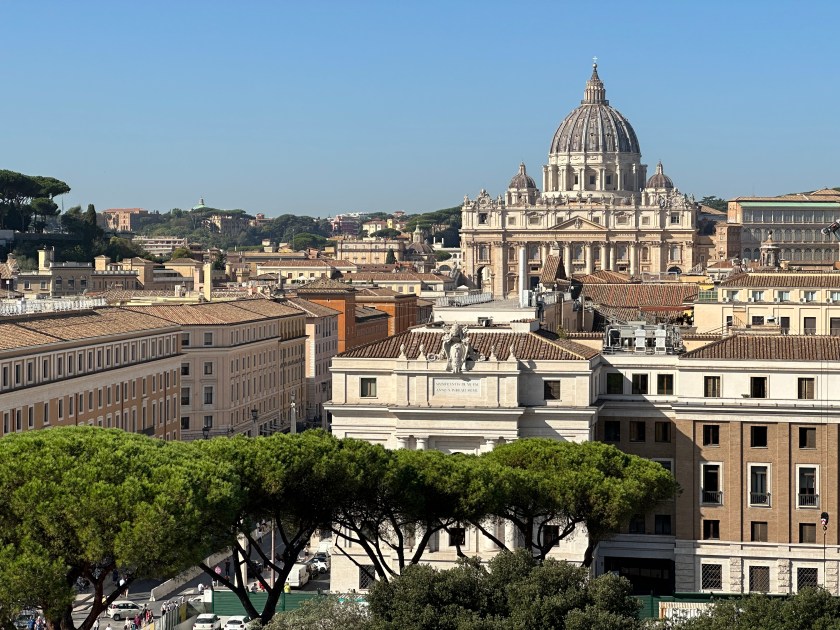
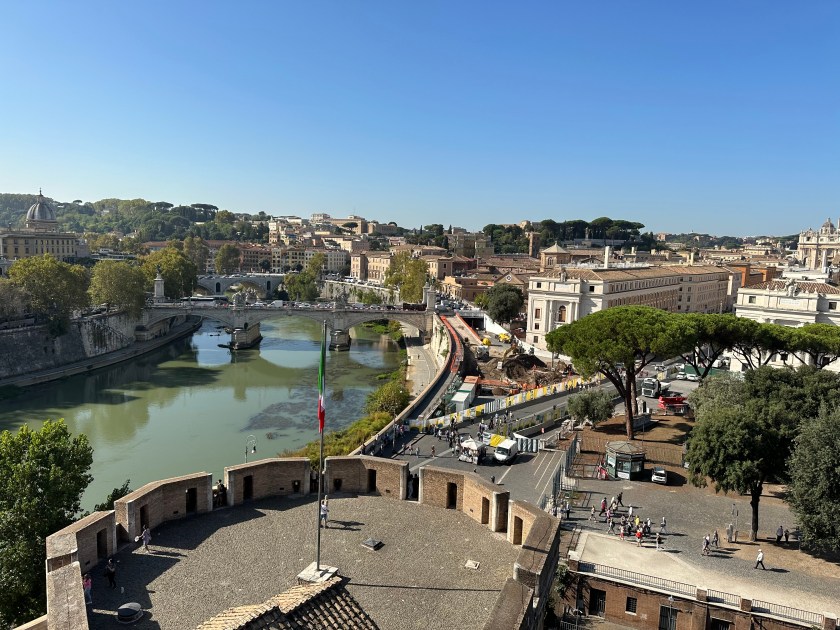
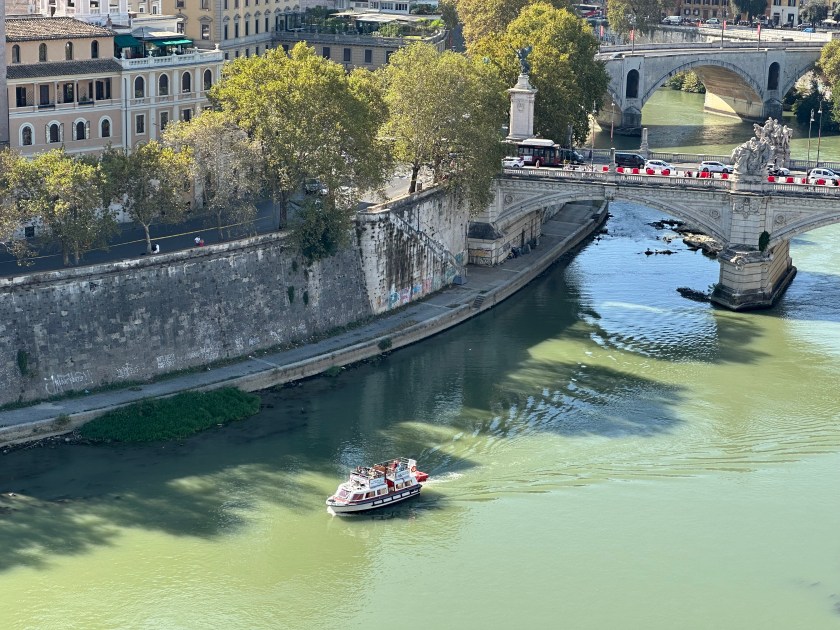
The castle was a great place to explore and provided excellent views of the old city. Boats cruised on the Tiber River, which ran in front of the castle. Vatican City was easy to see.
Tired and hungry, we exited the castle and walked across the ancient St. Angelo Bridge built by Emporer Hadrian. Restauranteers are not shy about recruiting customers, and one soon lured us into his outside seating area right on the street. After lunch, one of the younger members of our group had pinned a gelato place not far away. It was a great choice.
We had lunch on the left.
The gelato place.
We needed to return to The Vatican for the next treat of the day. Our guides had secured tickets for the underground tour of the catacombs. No photos were allowed. It was a fantastic tour, though, with no air movement, the close quarters became humid and hot.
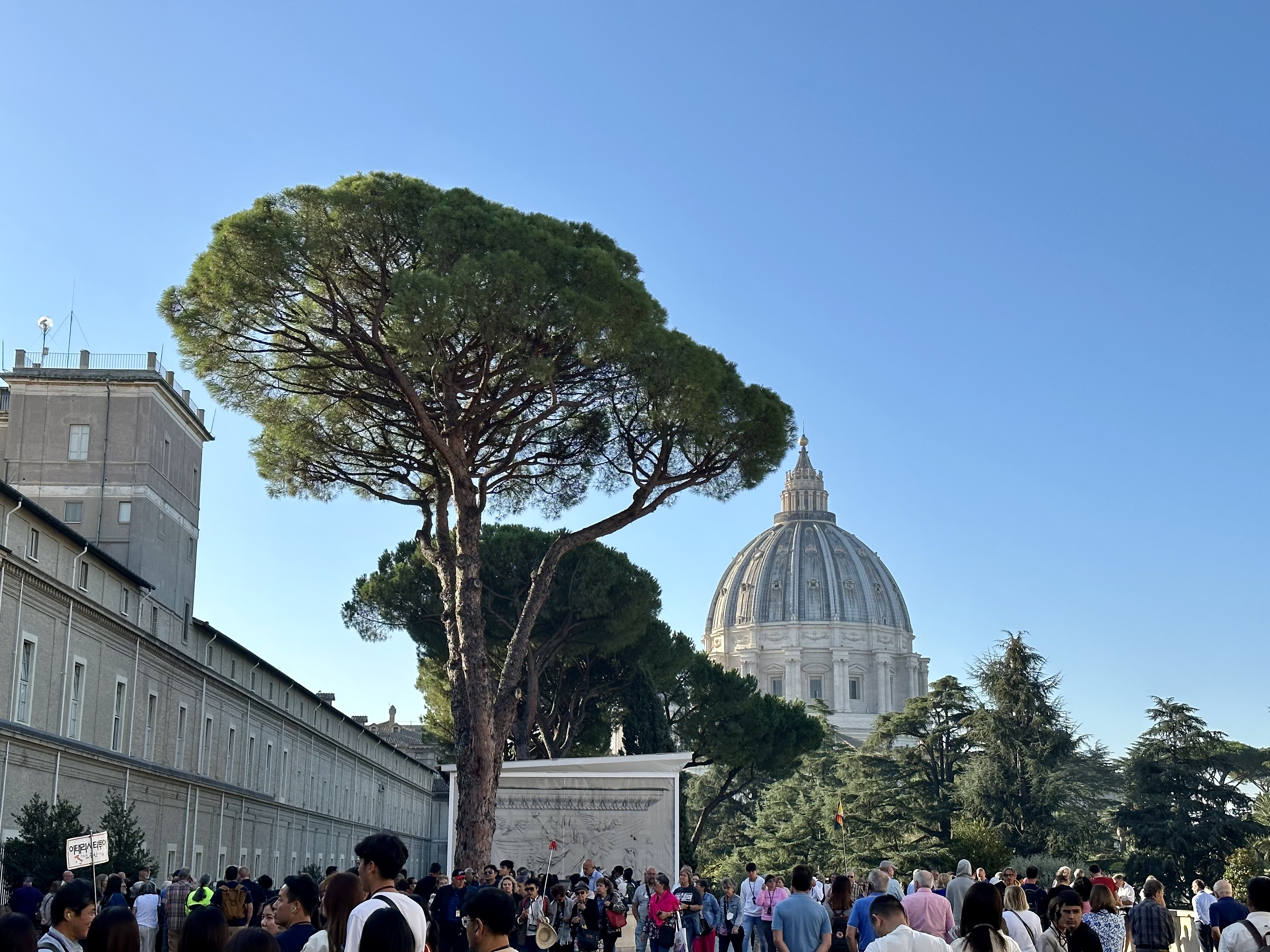
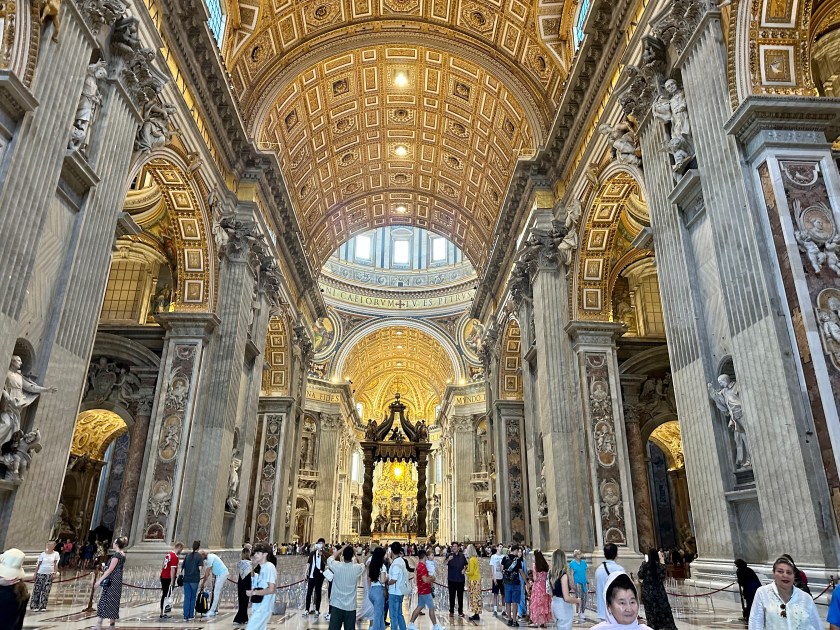
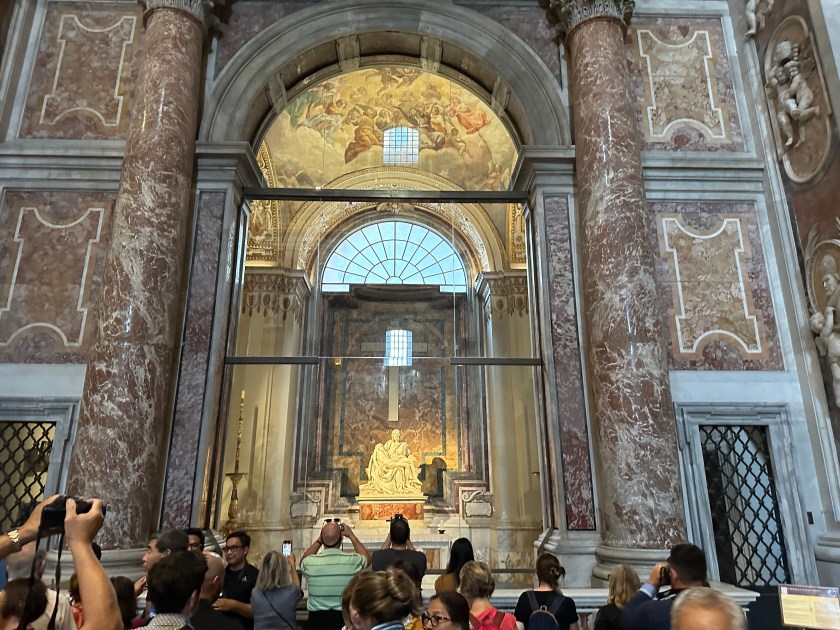
The tour ended in St. Peter’s Basilica, a magnificent cathedral. Its ornate columns, arches, and ceiling dazzled the eye. Michaelangelo’s Pieta was the highlight.
We exited to St. Peter’s Square and were met by more Swiss Guards in the fine regallia. It was time to find the Metro stop and return to the hotel.
I was tired, but this was a day I will remember for a long, long time.
Tomorrow: Our final days in Rome.
Roman Centurians (AKA actors) guard the St. Angelo Bridge.
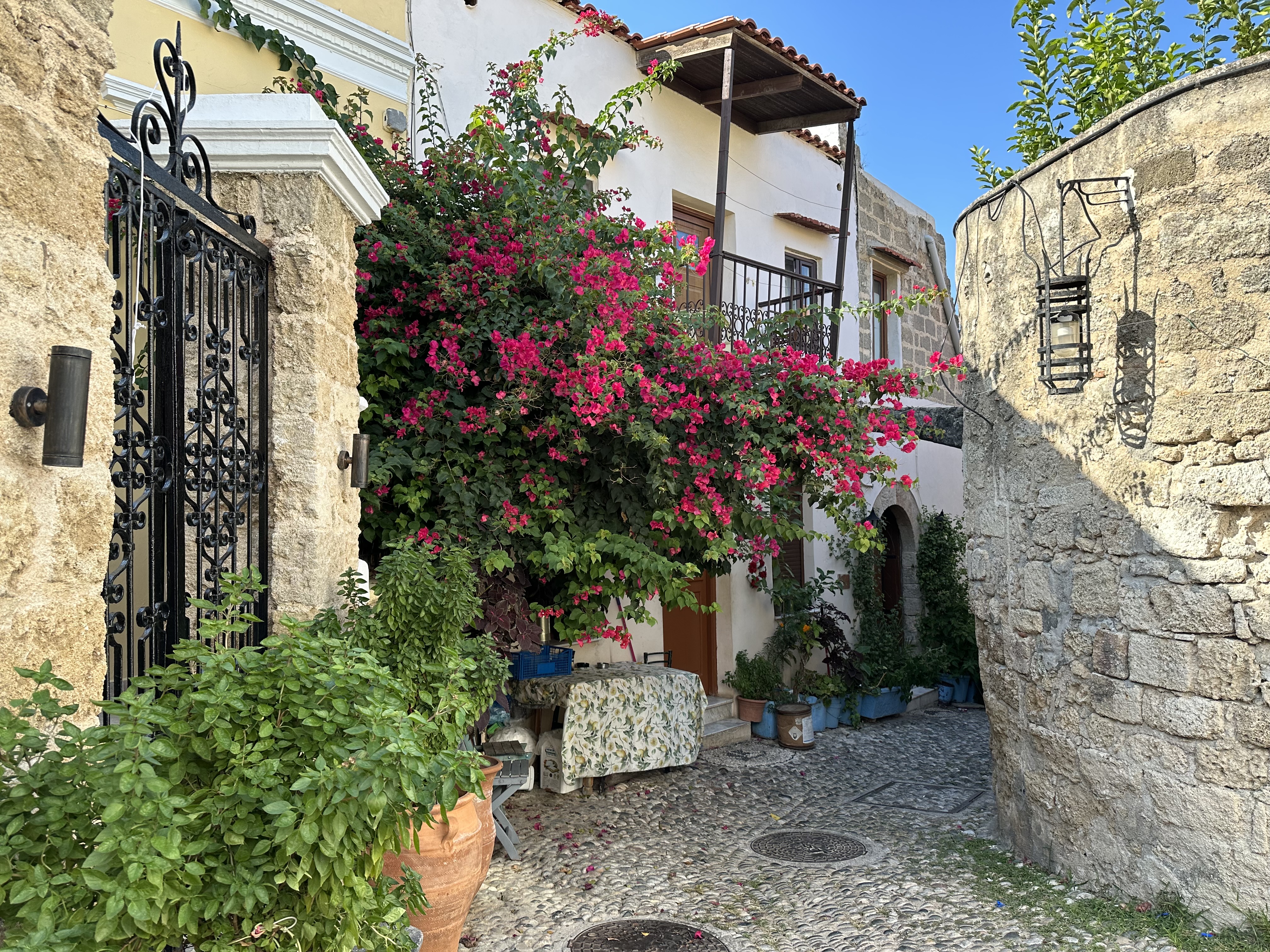
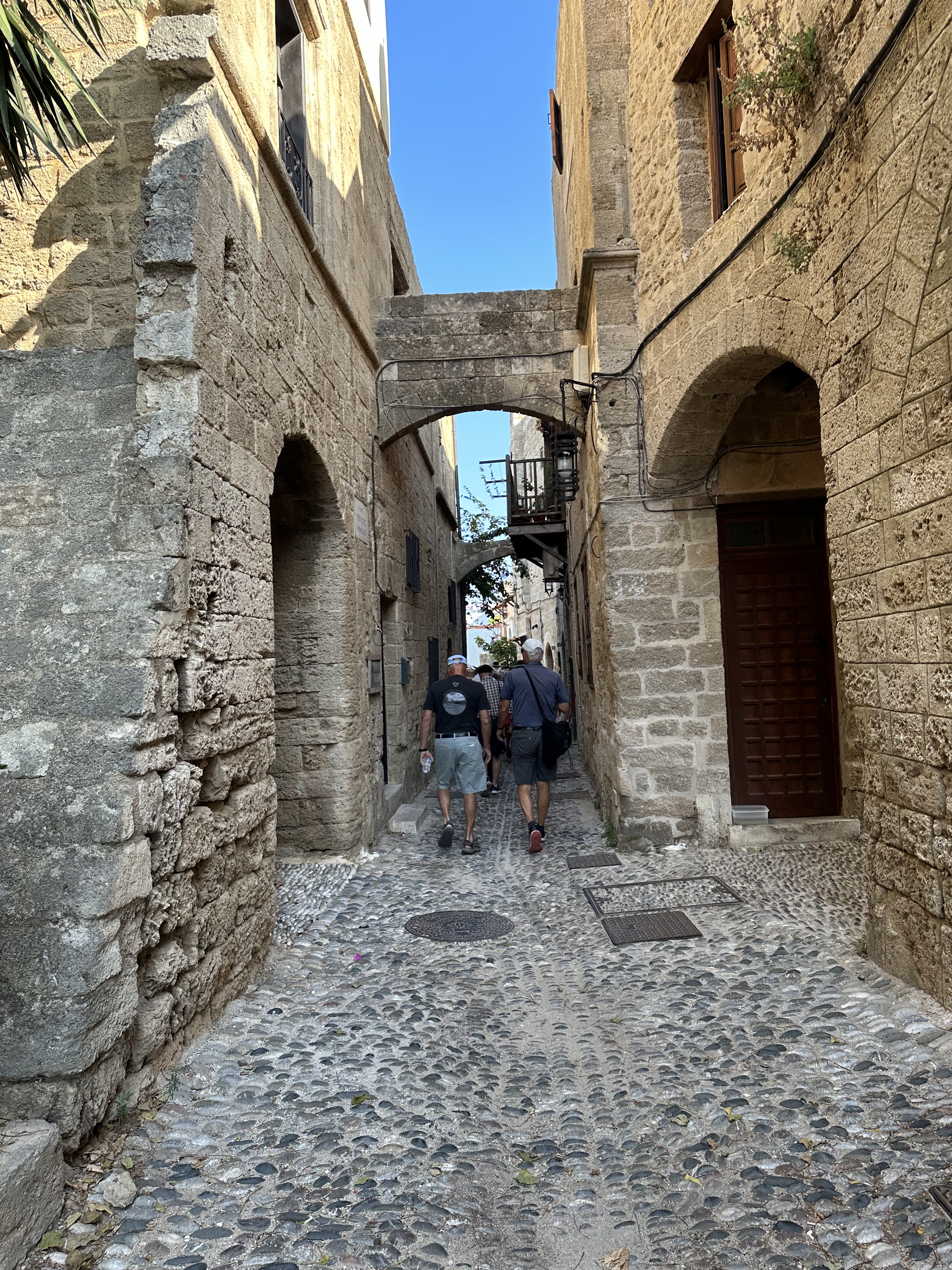
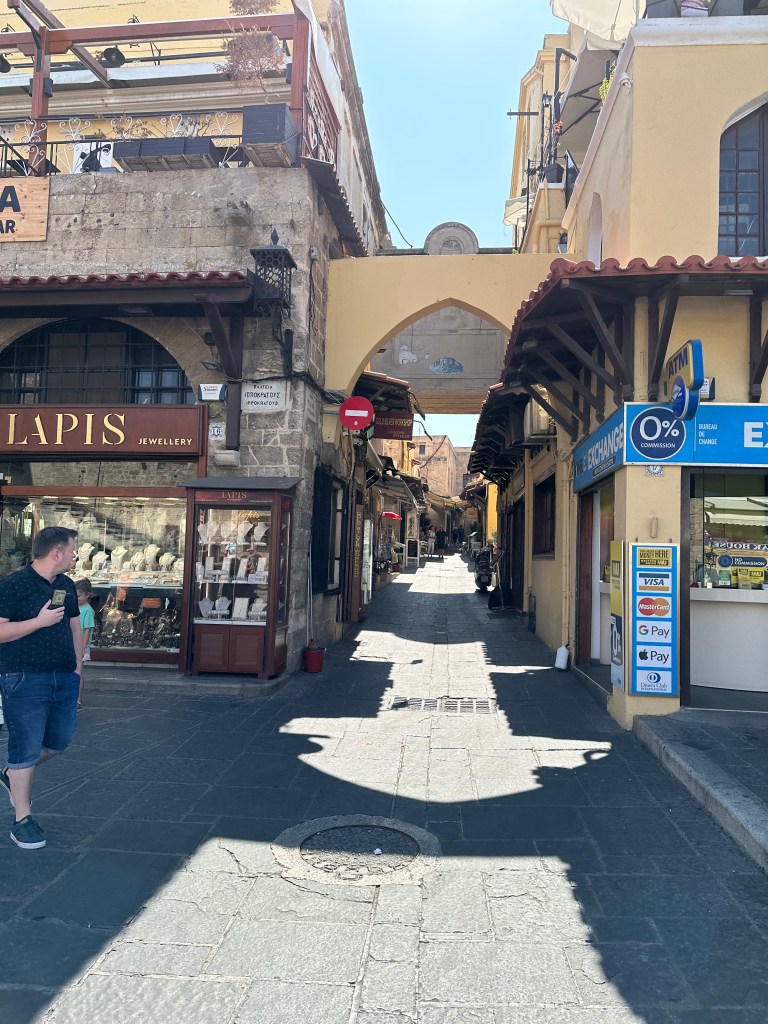
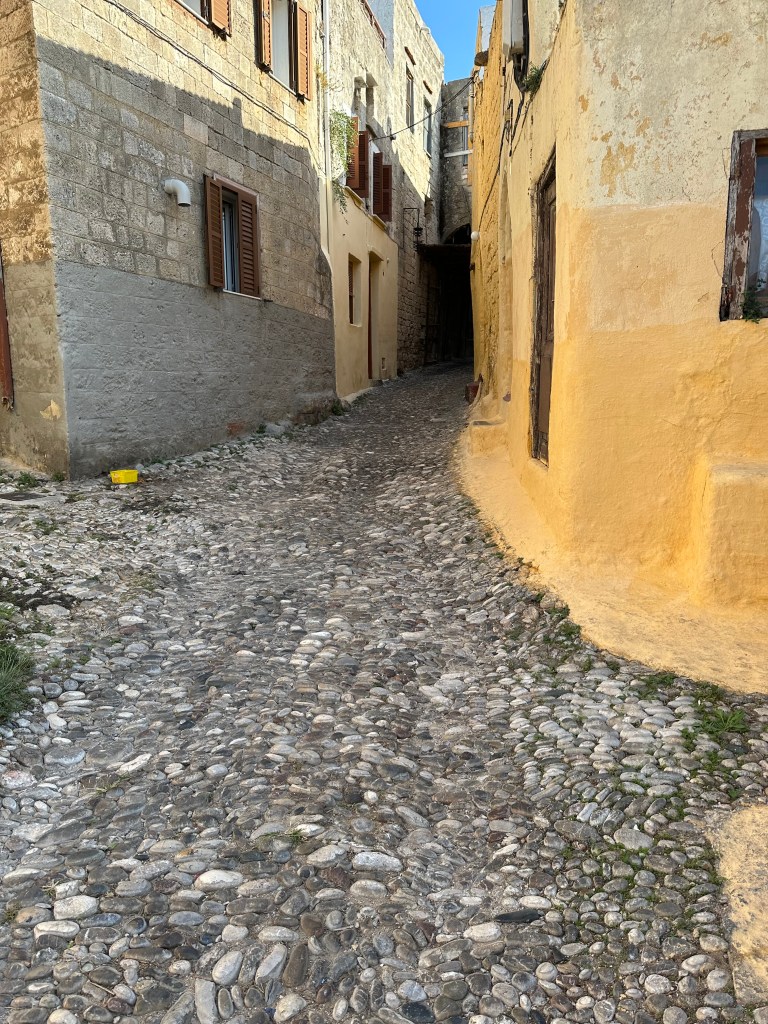
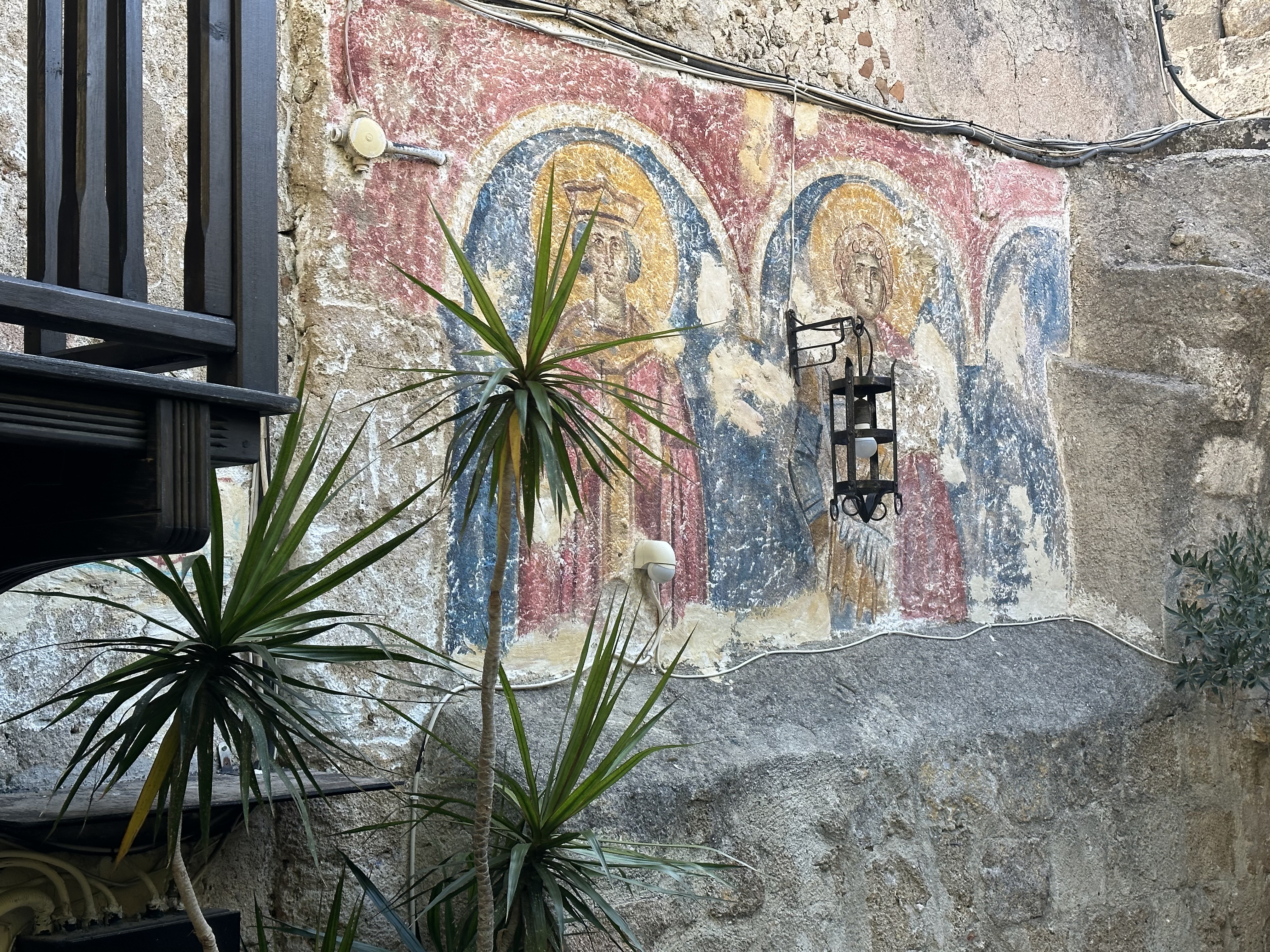
A typical back alley in the Old Medieval city of Rhodes.
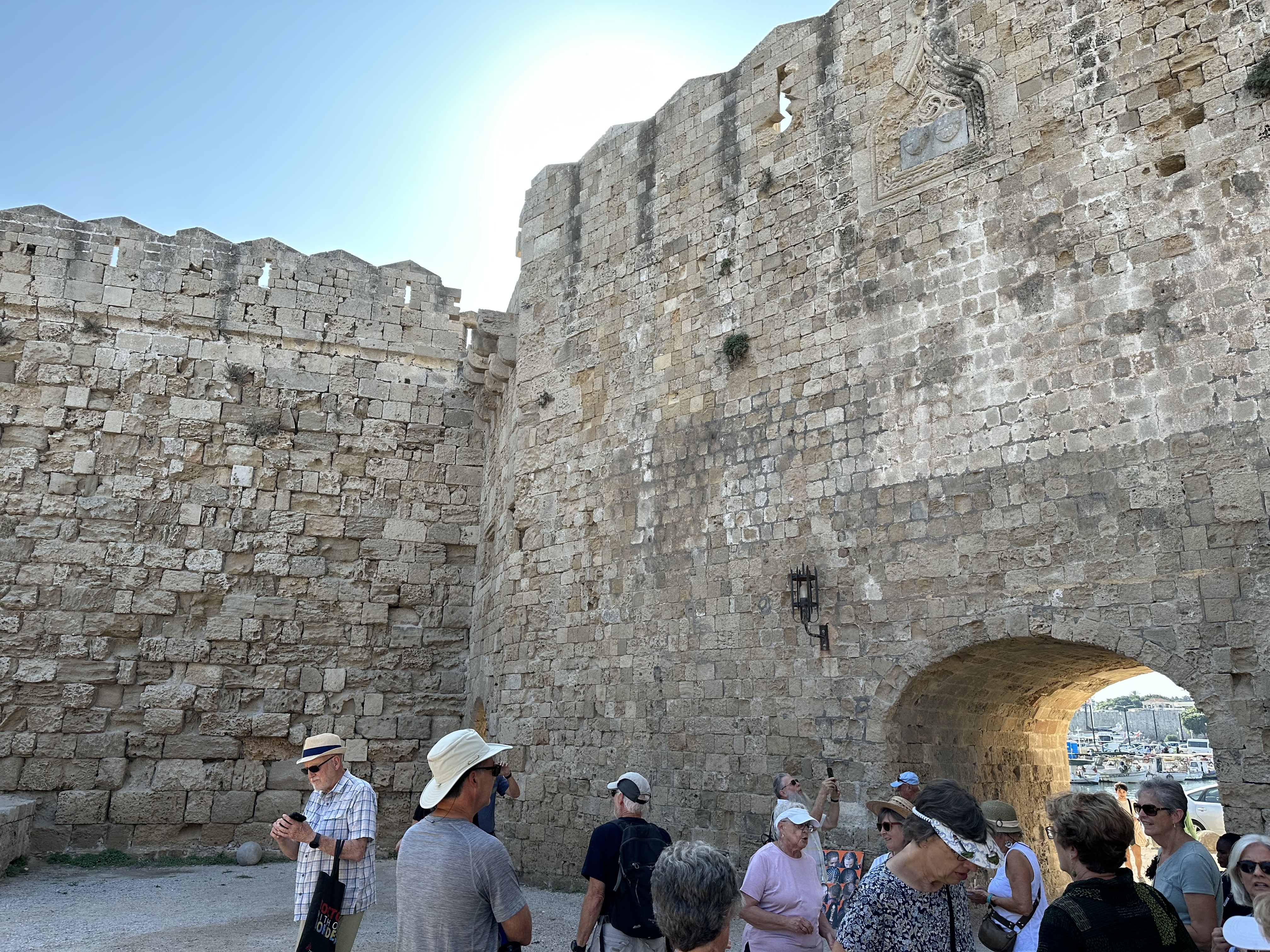
We landed in Rhodes well after dark. We hauled our luggage off the ferry, along the Old City wall, through an ancient gate, and along the inside of the wall to our hotel. The medieval city is a UNESCO World Heritage site.
Because the boutique hotel didn’t have enough rooms for our group of 24, some of us were assigned to other properties farther up the hill and around a corner to our little abode for the next two nights. Ironically, we spent only one full day in this walled paradise, much like the Apostle Paul, according to Acts 21: 1.
On this leg of our journey, we followed the exact path of Paul on his third and final missionary trip and return to Jerusalem. After leaving Kos, his ship stopped in Rhodes and then to Patara.
The memorial to the Rhodes Jews killed in World War II.
After breakfast, our group first headed to Hippocratous Square, where a memorial stood to the 1,604 Jews from Rhodes who were murdered by the Nazis in concentration camps near the end of World War II. To me, it also served as a symbol of the history of persecution of peoples throughout history until our current time.
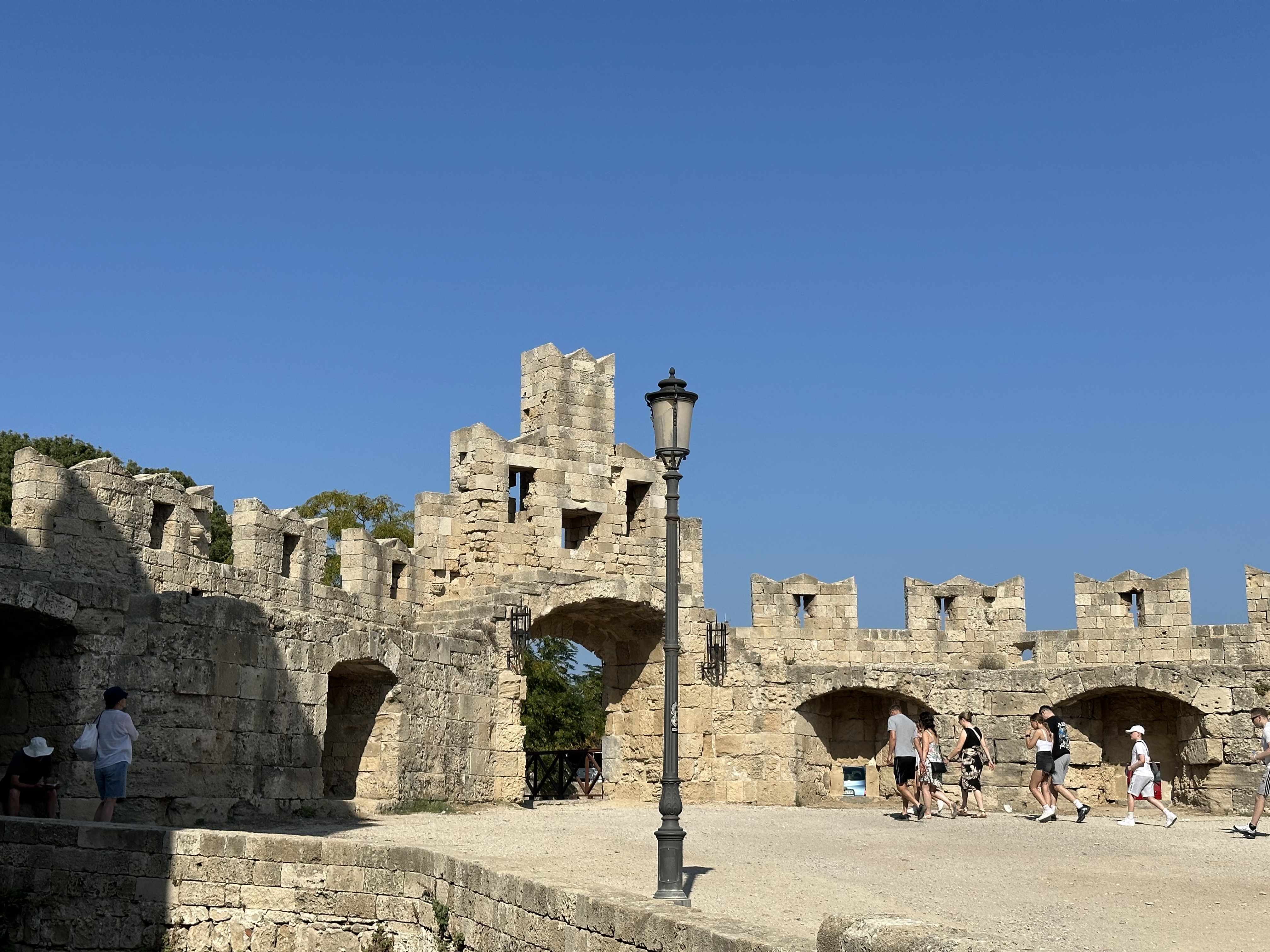
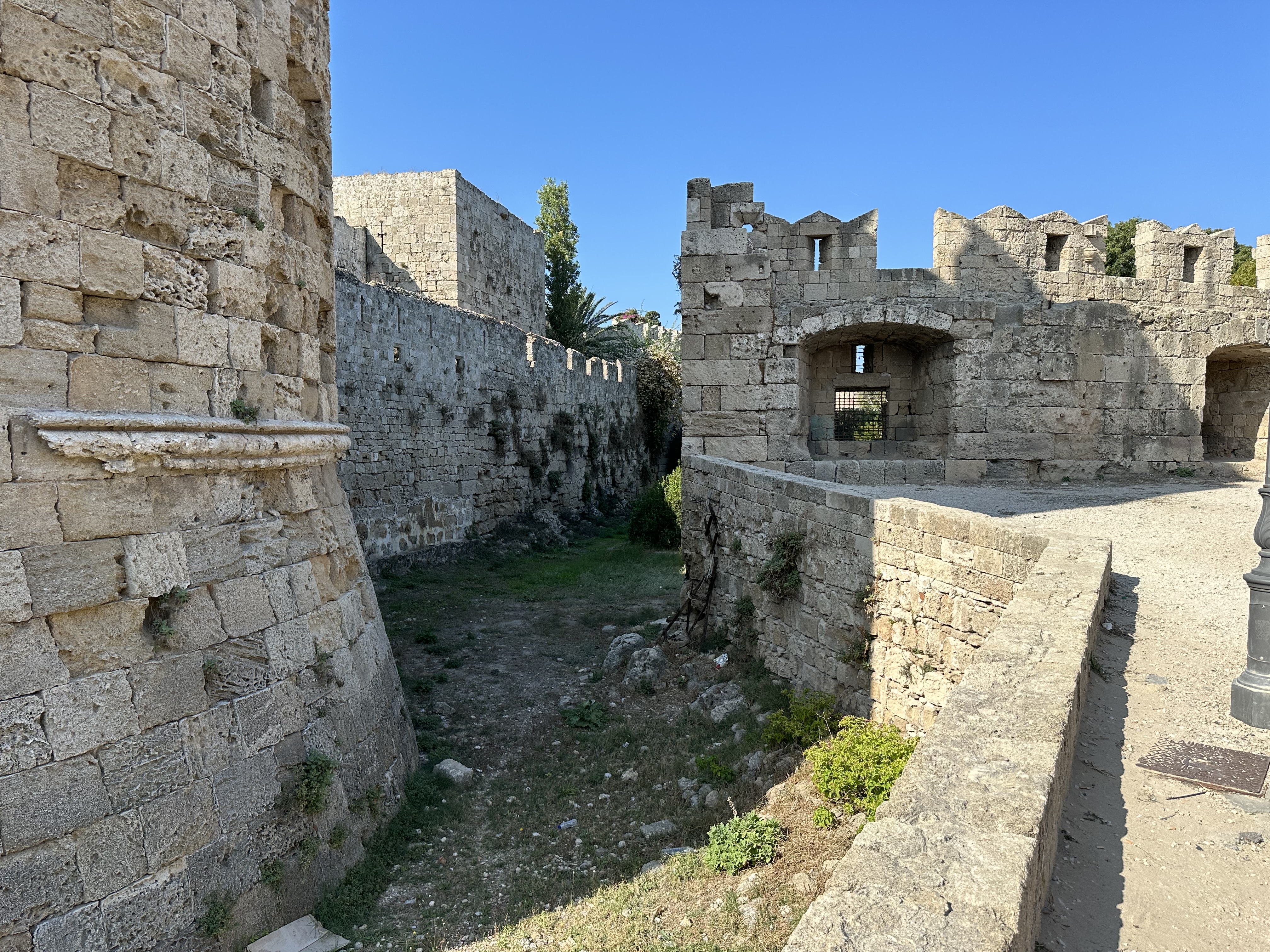
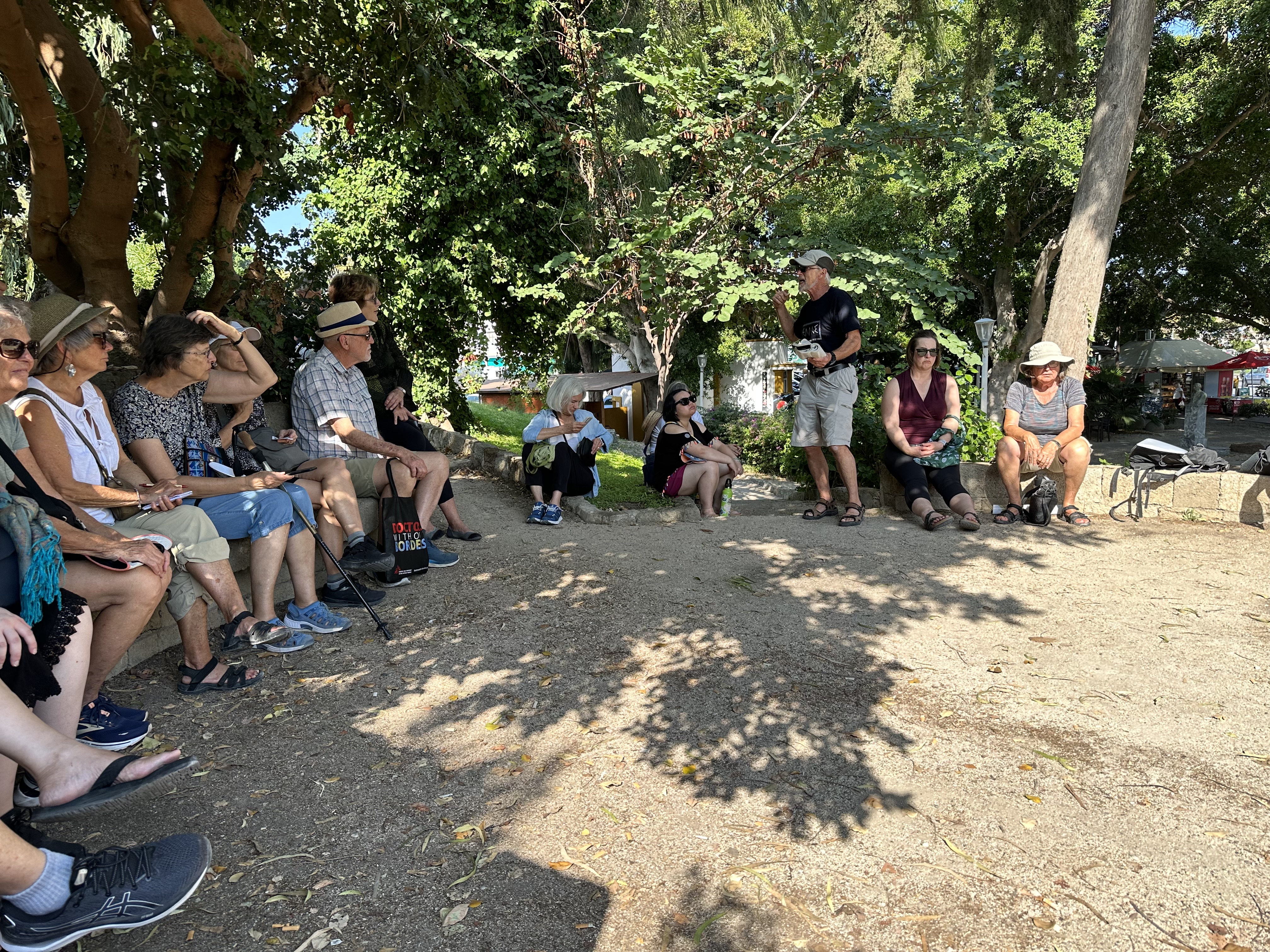
We headed outside the wall along the harbor’s edge to St. Paul’s Gate. On the way, we saw a section of the now-dry moat surrounding the Old City. Beneath the shade of a large tree, Linford focused on the importance of Rhodes during the Crusades. Because of its strategic location in the southern Aegean, Rhodes was an important trading city and a desired military location.
Please click on the photos to enlarge them.
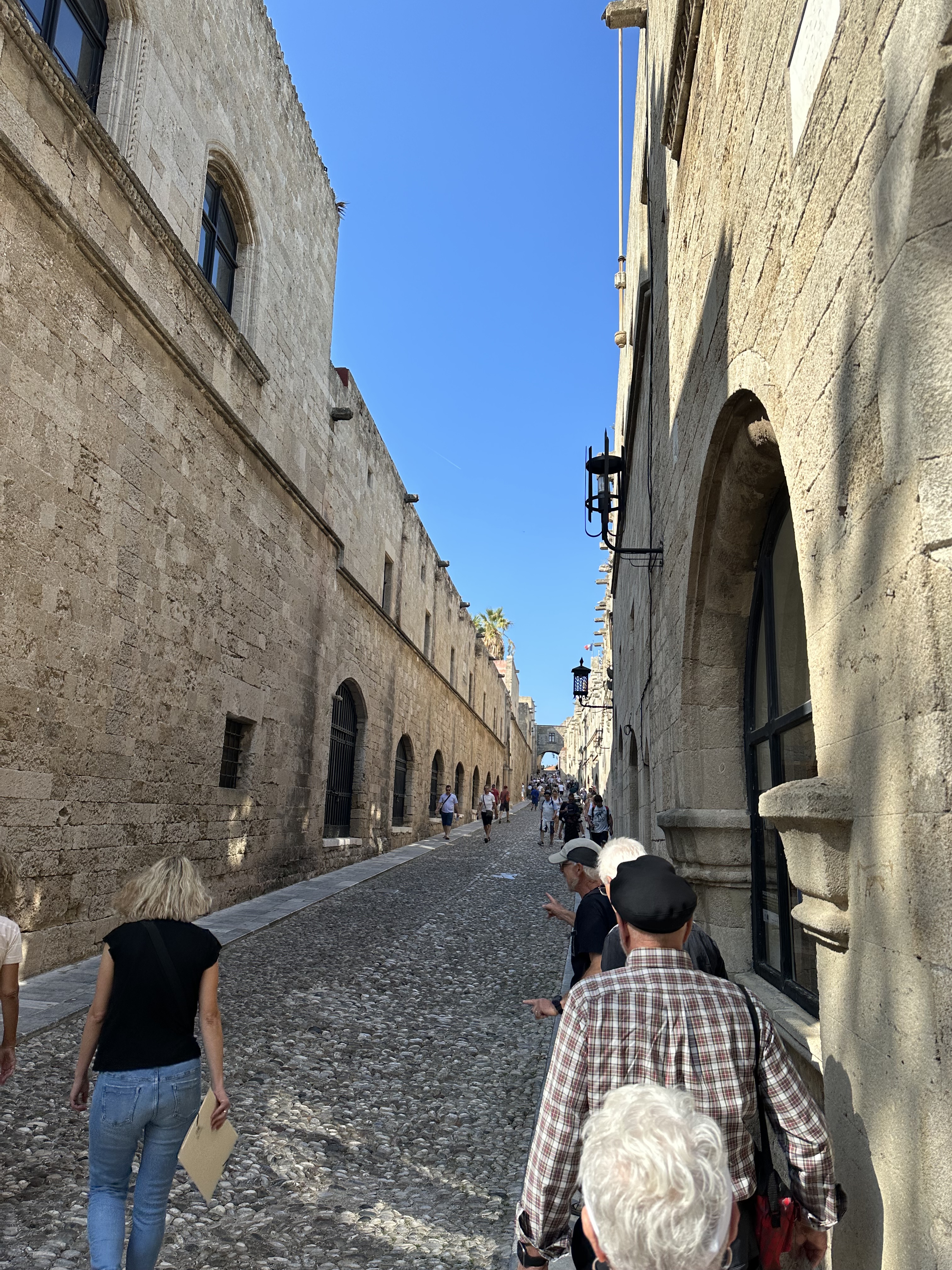
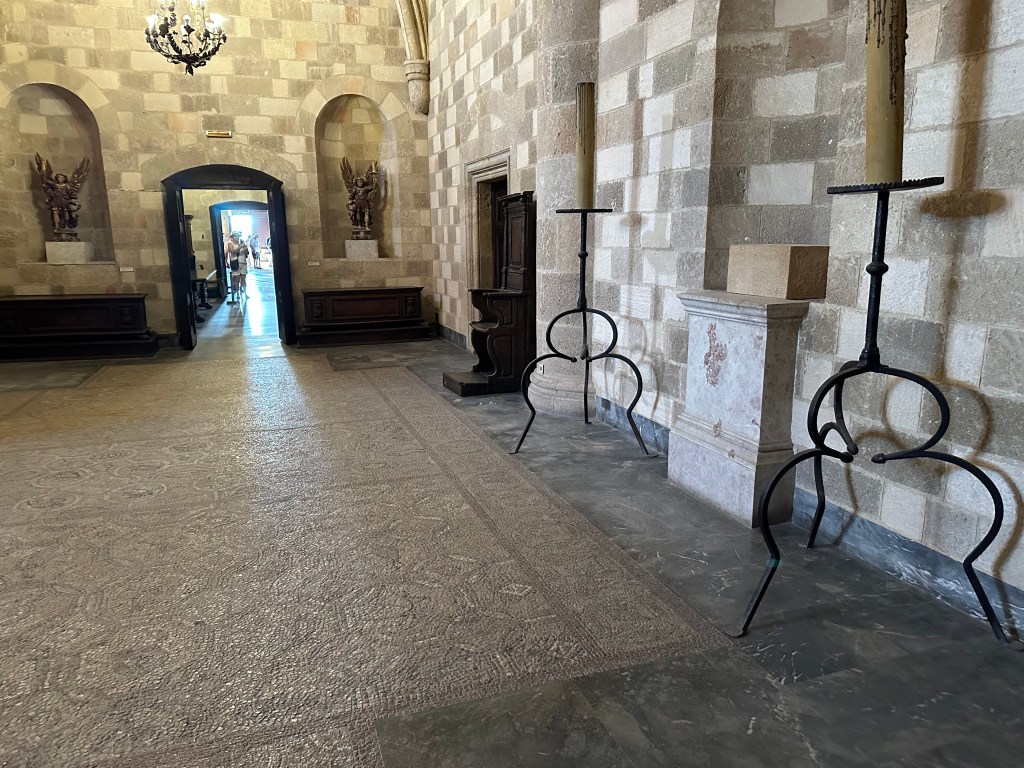
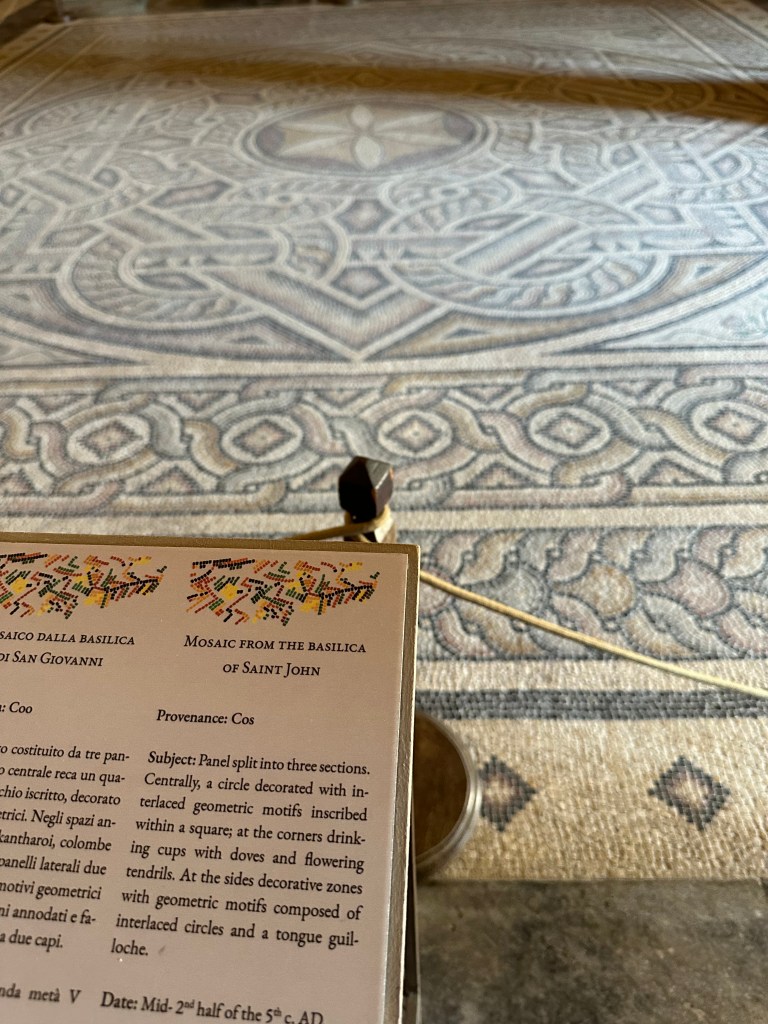
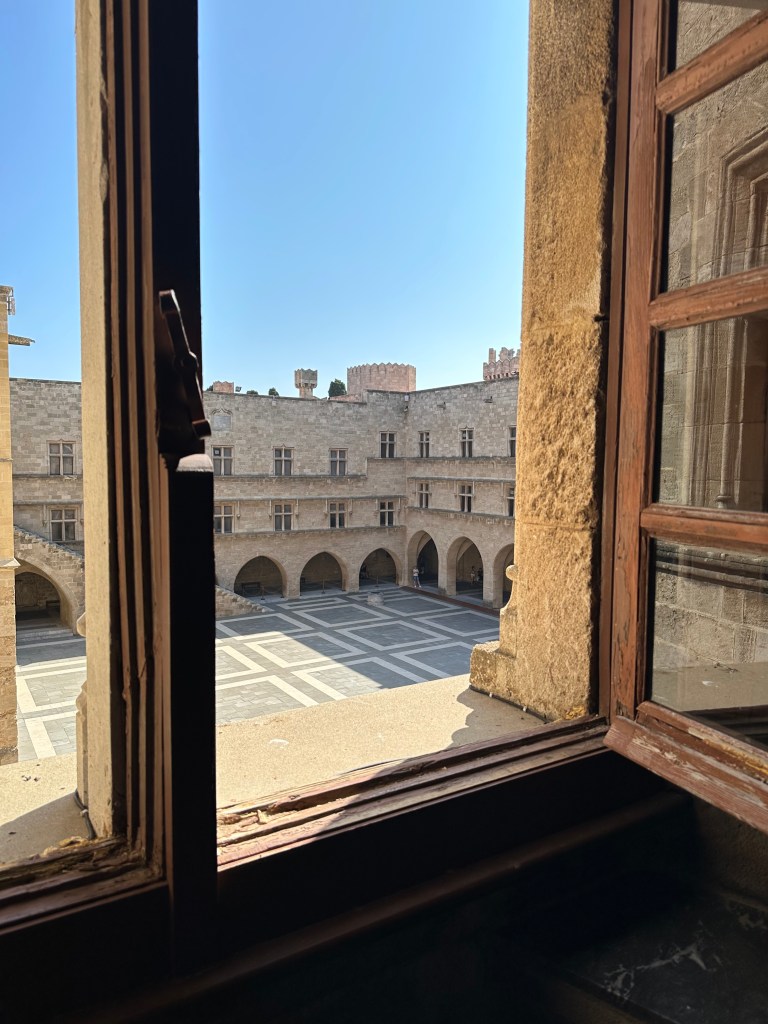
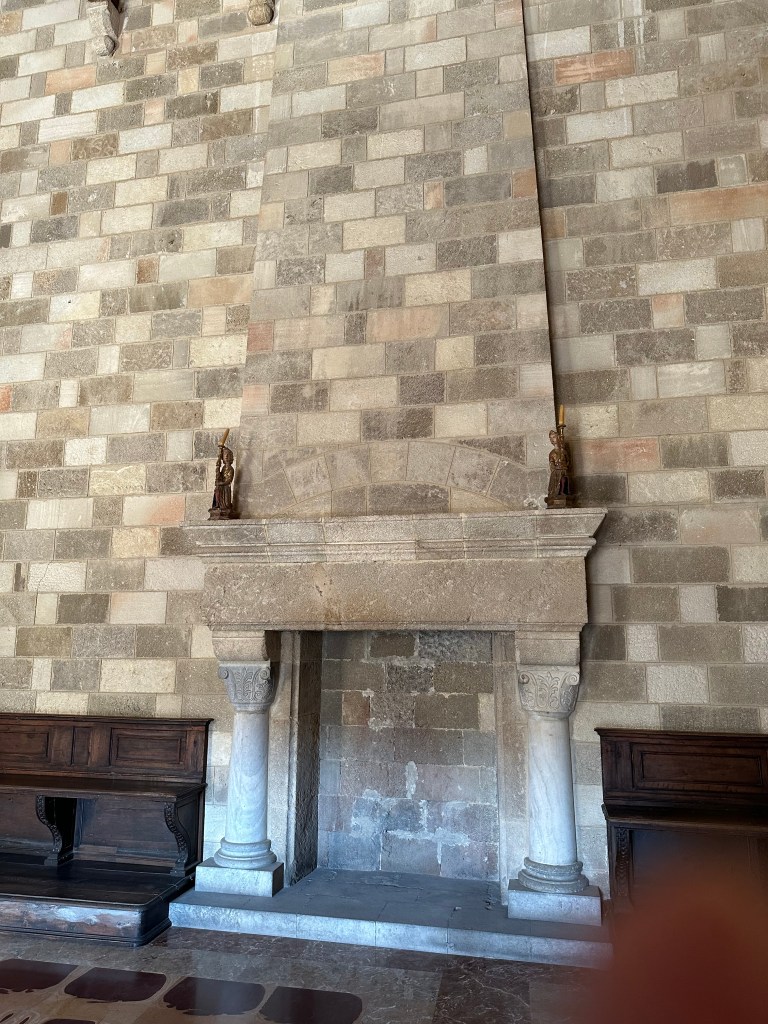
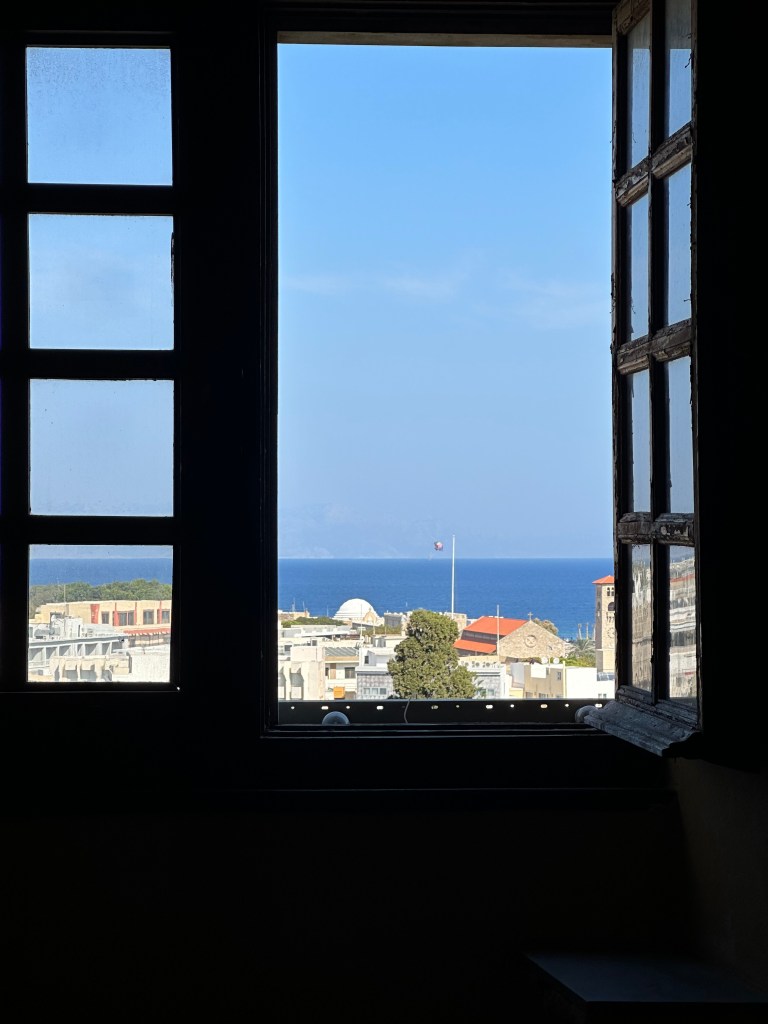
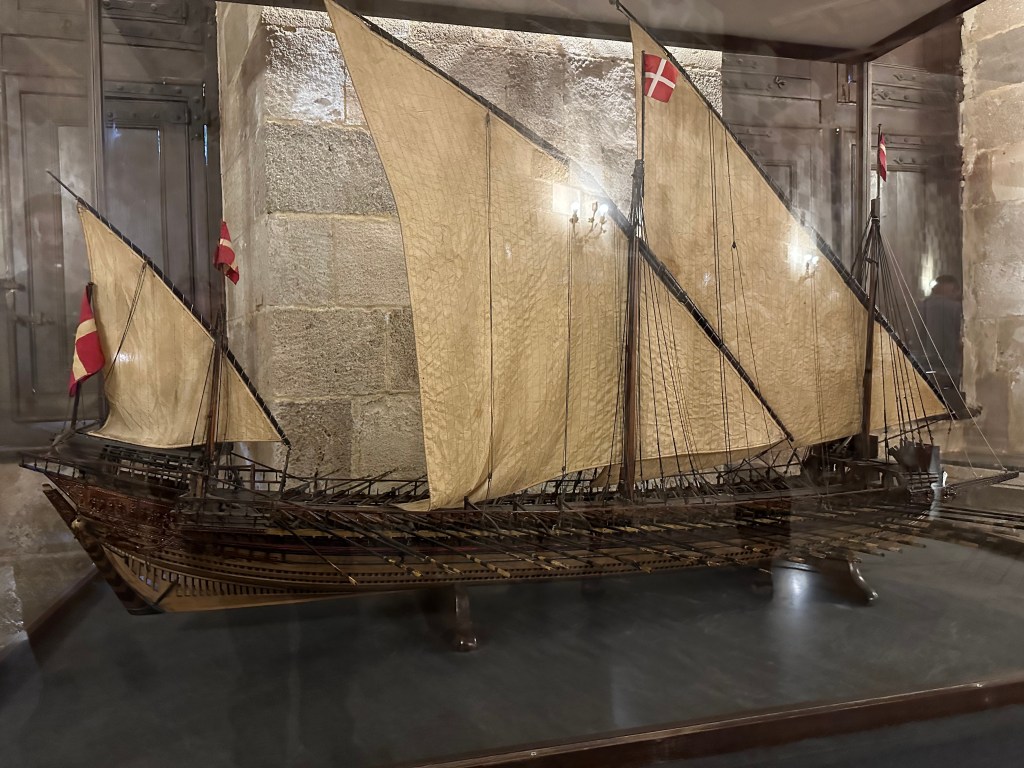
We marched up the steep incline of the Avenue of the Knights, with its pebbled cobblestones, to the Palace of the Grand Master. The Old Town owes its present-day appearance mainly to the Knights of St. John from the 14th and 15th centuries AD. The Knights closely followed the city’s Hippodamean grid plan, and sometimes, some streets follow the exact route of the 5th century BC streets. The main street today, Sokratous Street, was also the main commercial street in the Hellenistic period.
My wife and I toured the castle for an hour, marveling at its many striking mosaics, opulence, and thick stone walls. Unfortunately, by the time we exited, I wasn’t feeling well at all.
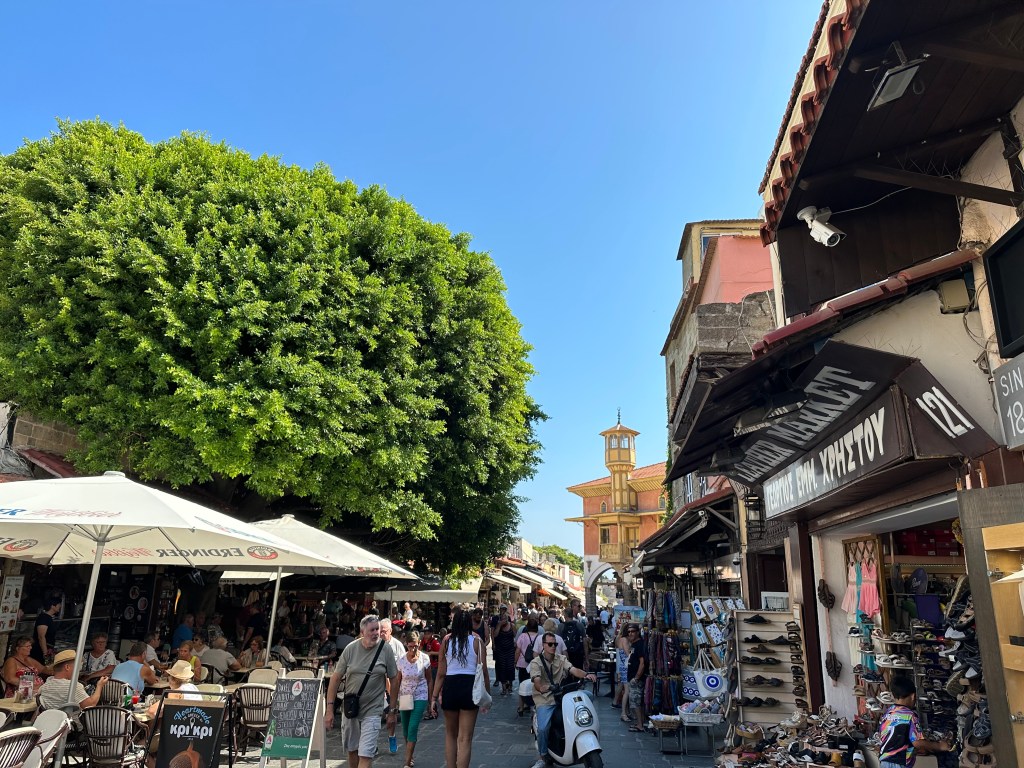
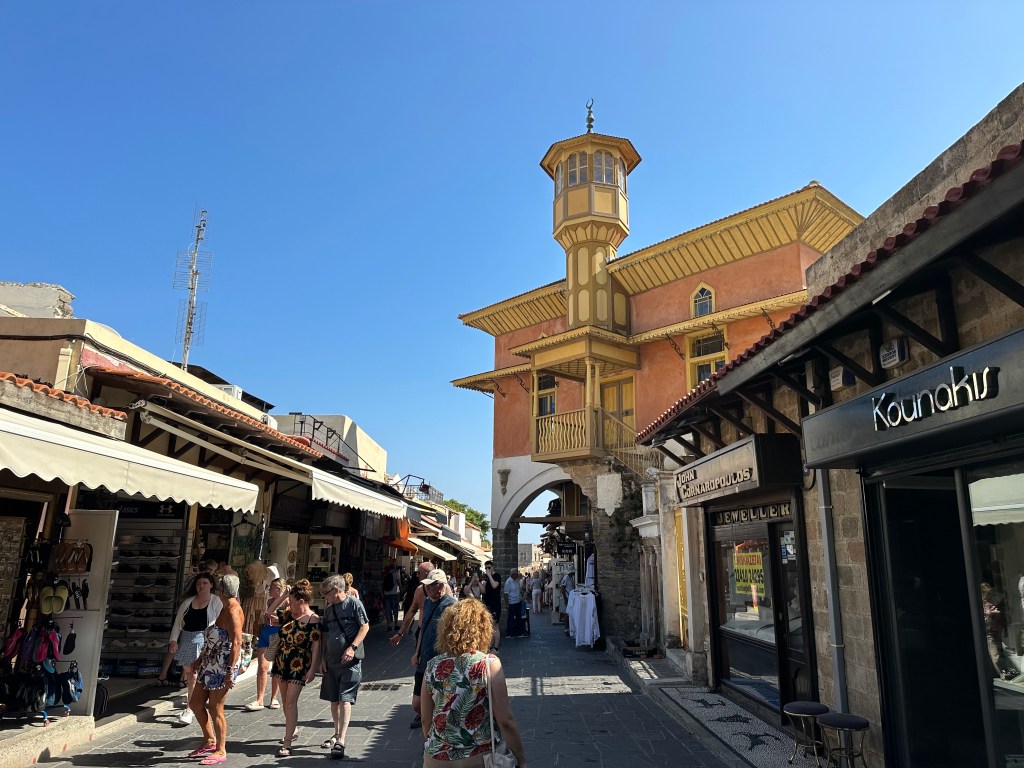
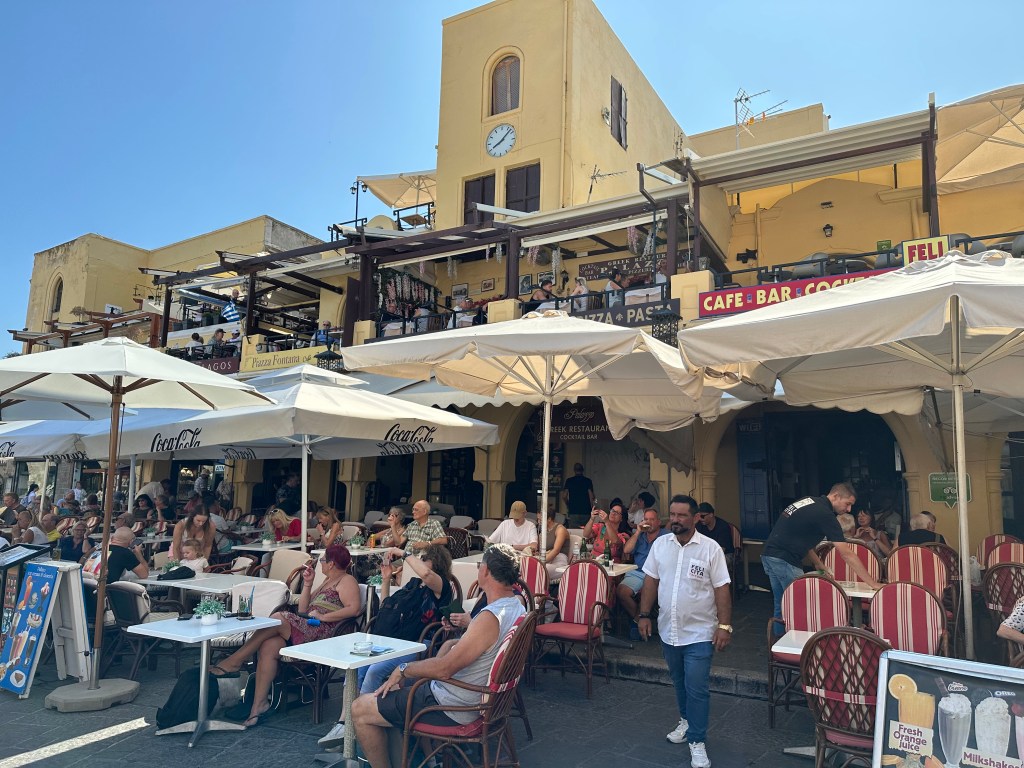
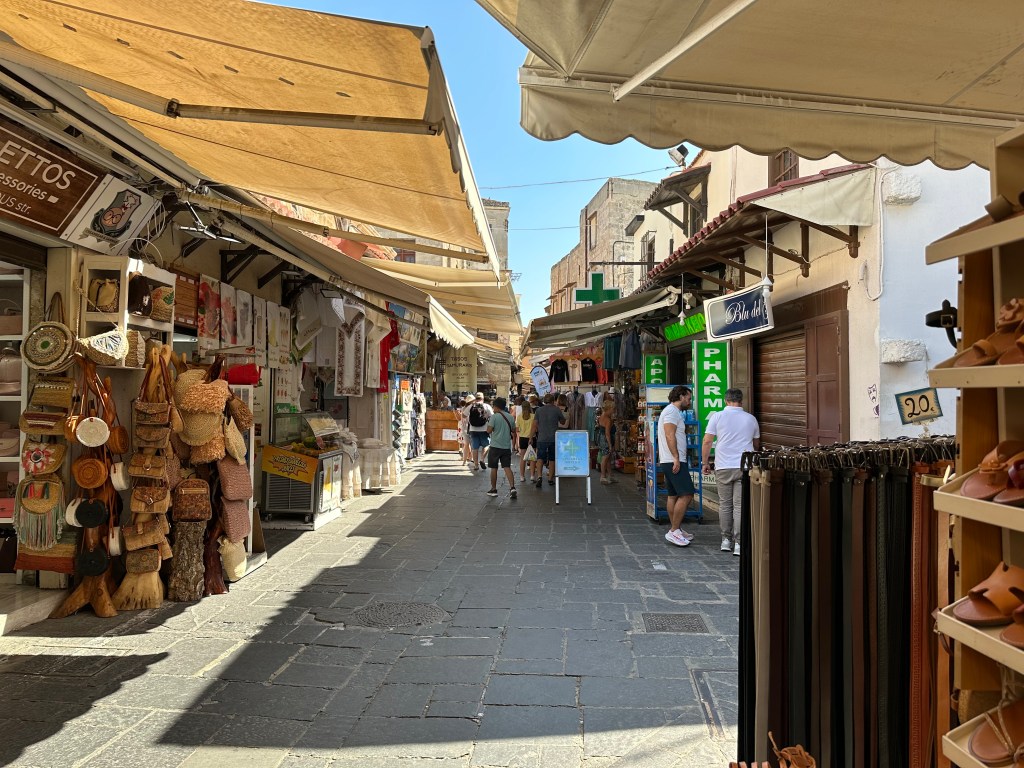
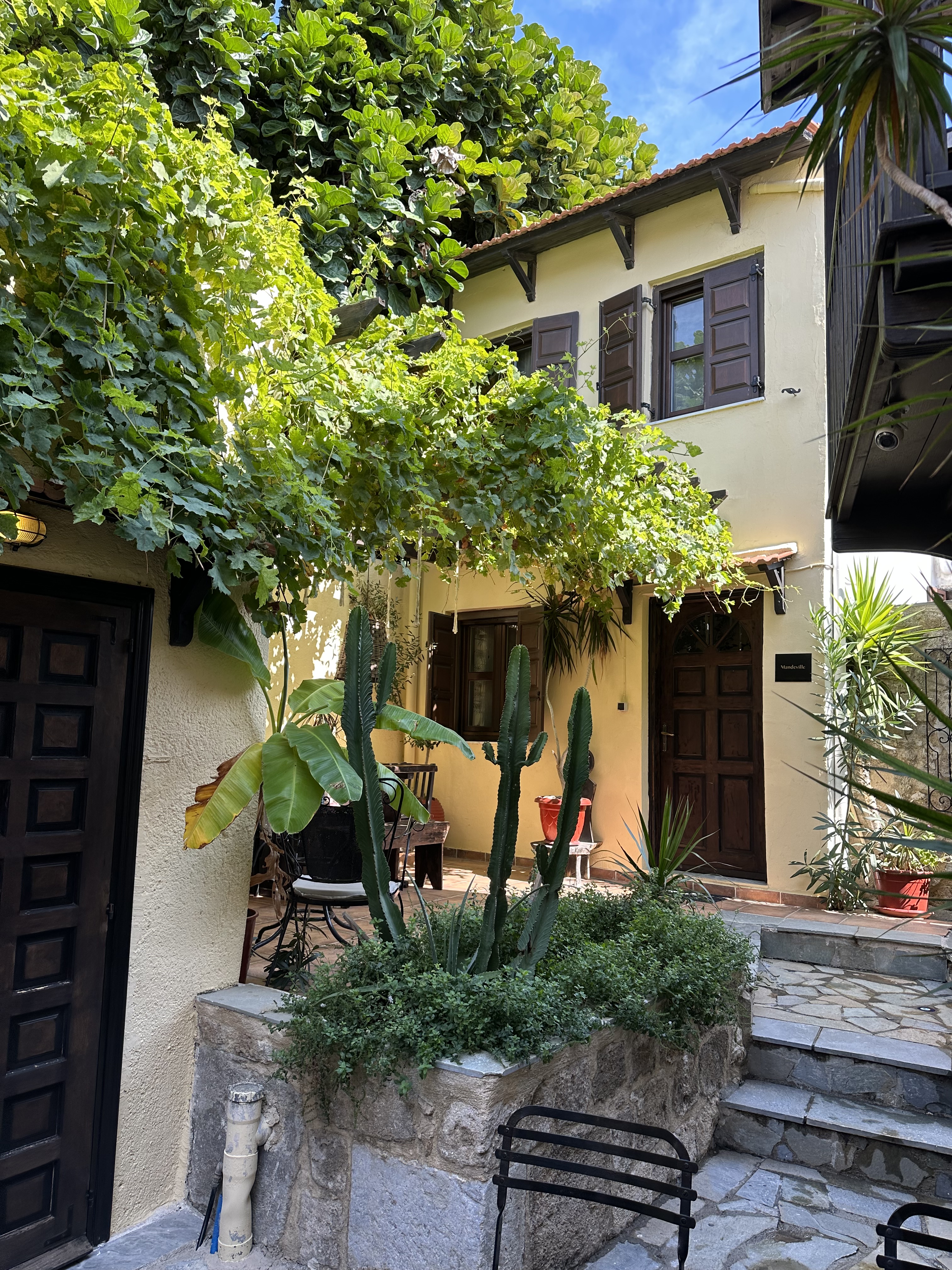
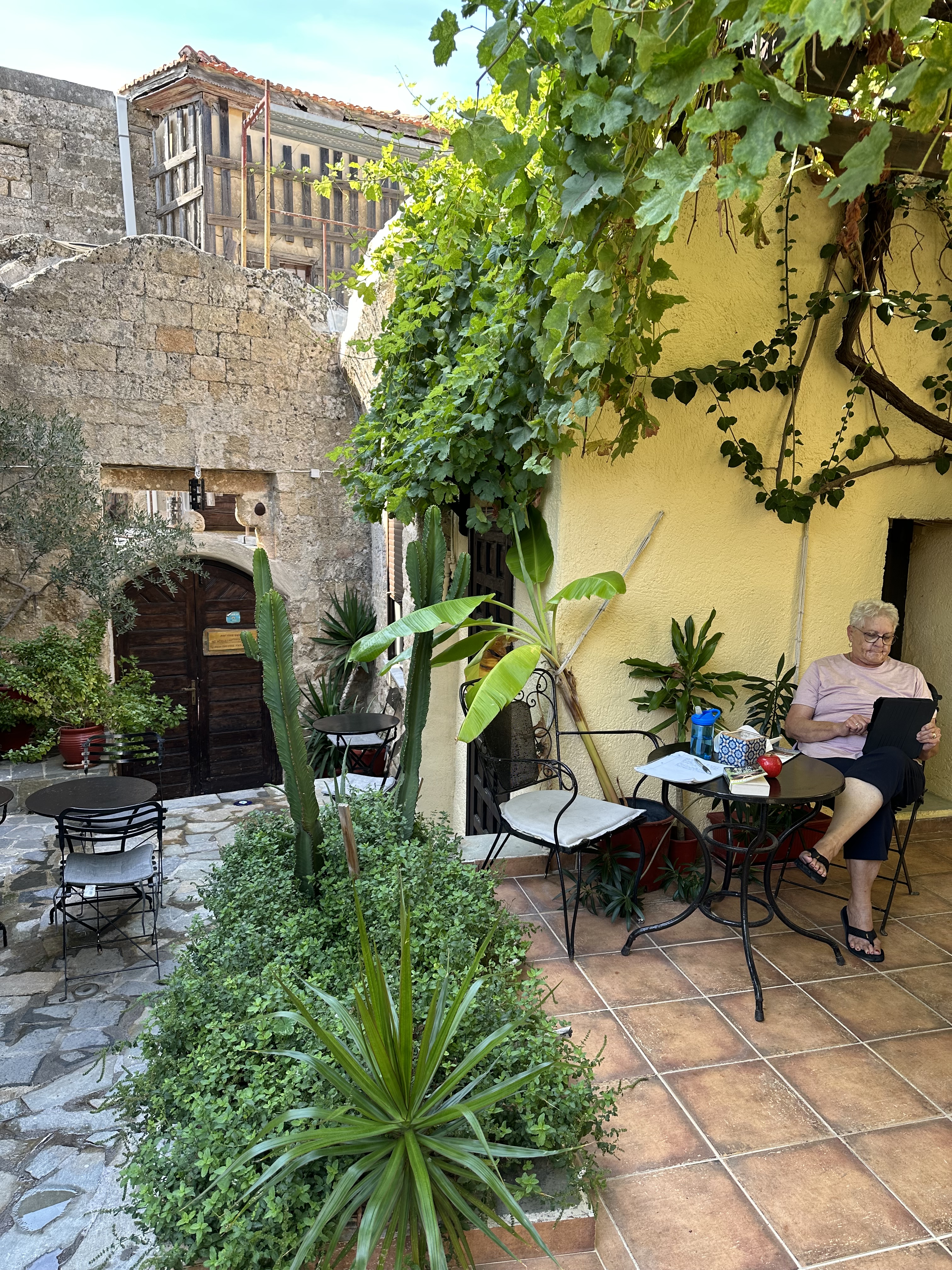
We decided to head back to our apartment. We walked through one marketplace after the other and stopped to rest and have a light lunch and beverage. Returning to our little abode and relaxing in the quiet courtyard was good. We only had to look up to see the old wall surrounding the town.
Please click on the photos to enlarge them.
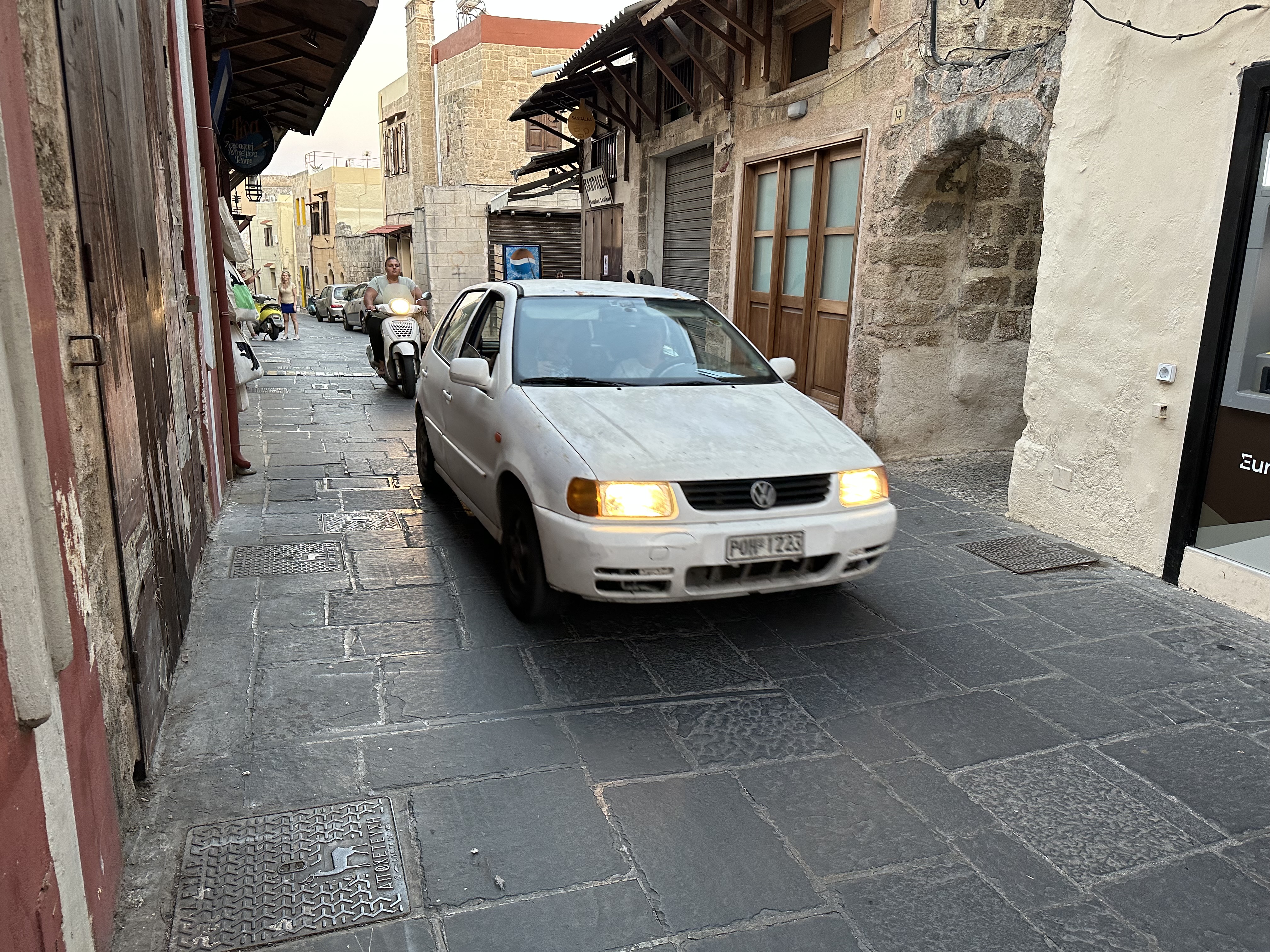
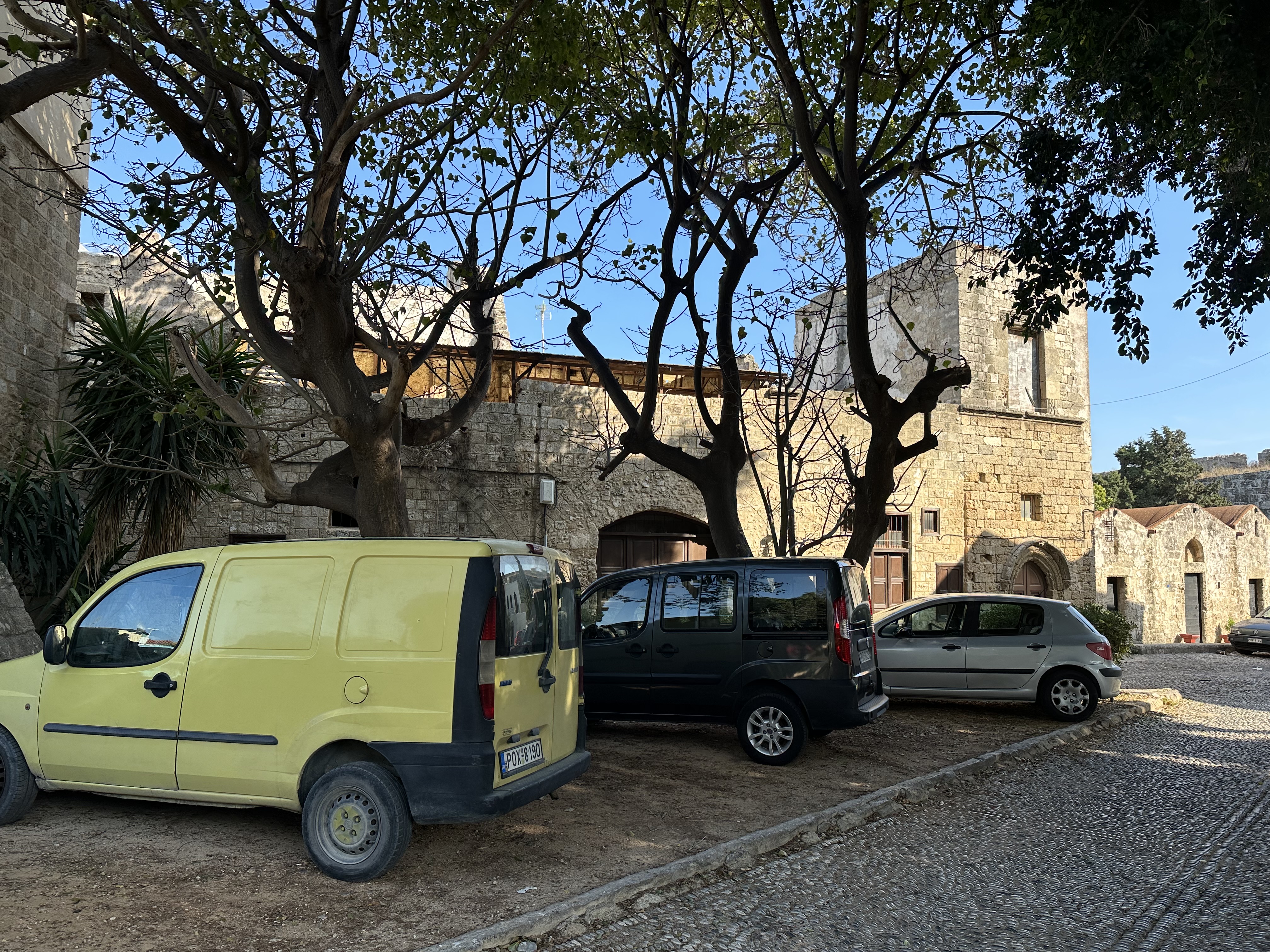
We also had to watch when we exited our little villa. After opening the protective iron gate, we entered a busy, narrow street. We squeezed against the stone walls as motorbikes and cars whizzed by. I was intrigued with where and how the vehicles were parked in a town built long before motor-driven transportation. The answer was they parked where they could and sometimes where they shouldn’t.
We finished our time in Rhodes with a group meal served by the chef at the boutique hotel. We needed to get to bed early since we had an early flight back to Athens and a connecting flight to Rome, our next destination.
Tomorrow: On to Rome.
Trees are greatly appreciated for their cooling shade on a hot afternoon.
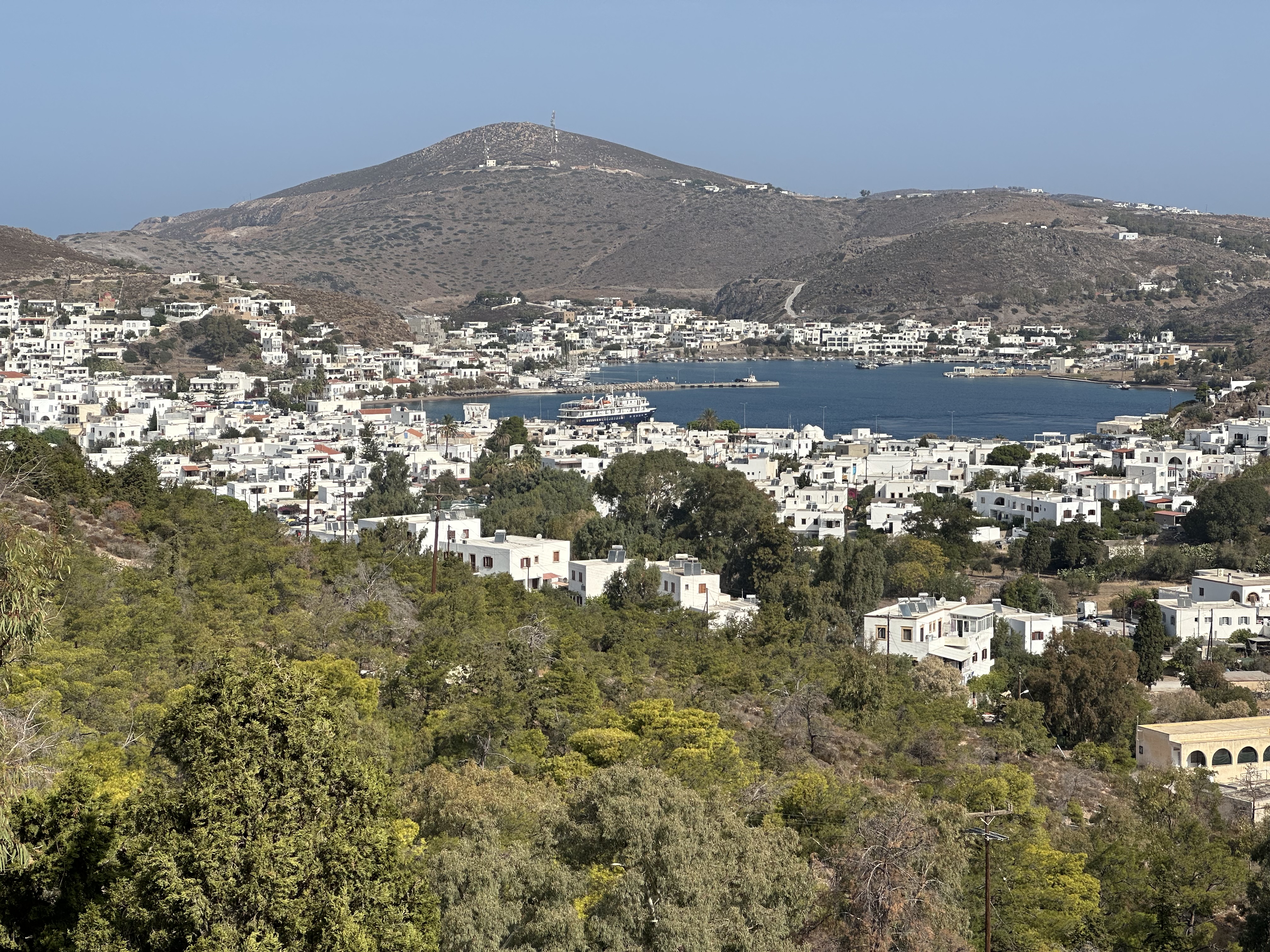
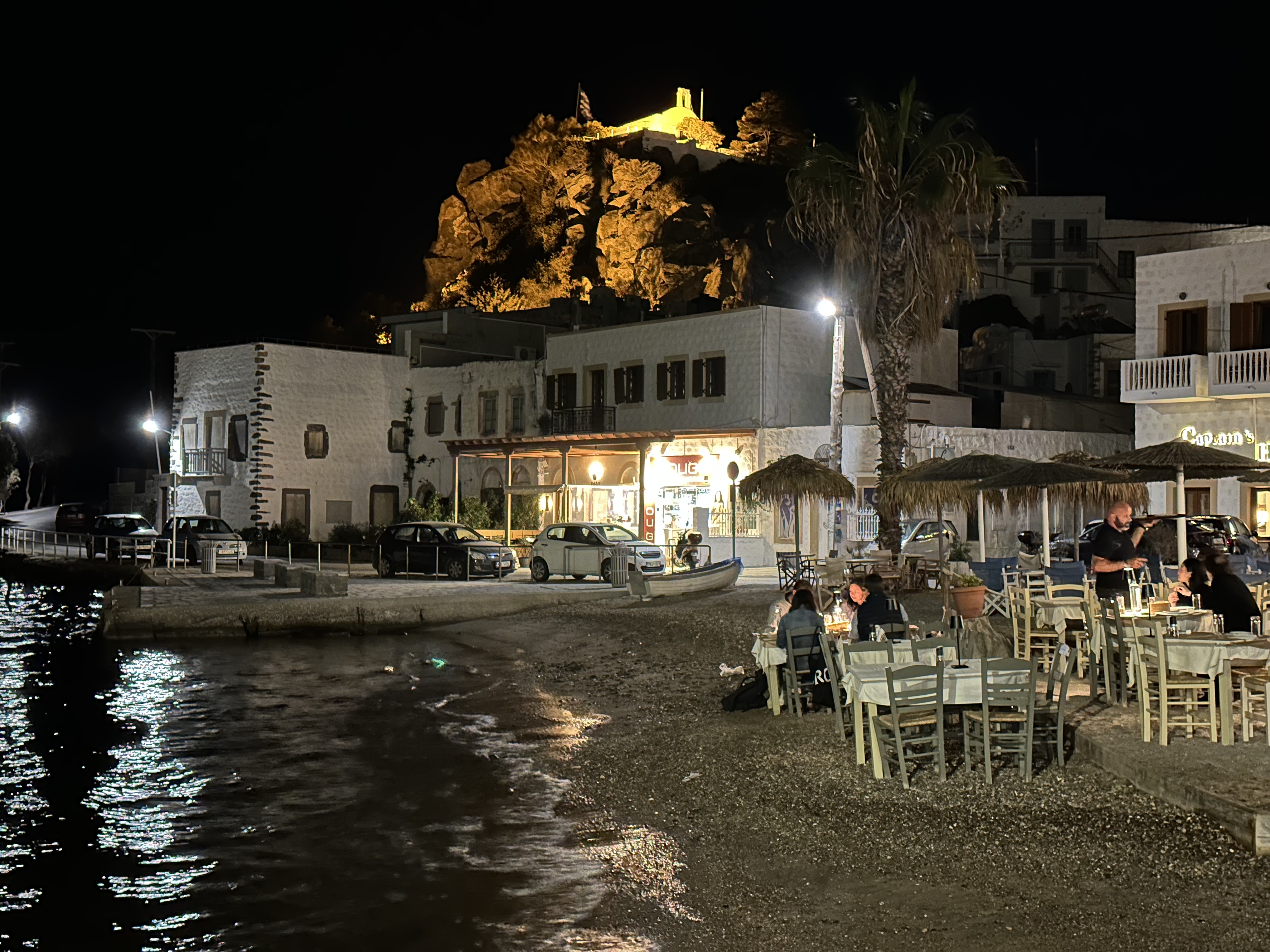
Patmos won over my heart, even though we were only there for a day. I hated leaving its clean, white-washed buildings, friendly residents, and beautiful waterfront.
But our island hopping continued. We boarded the ferry for Kos just after sunrise. I stood on the top deck at the stern of the boat as we bid farewell to Skala and Patmos. The three-hour trip to Kos included several quick stops at quaint village ports to take on new passengers and drop off others.
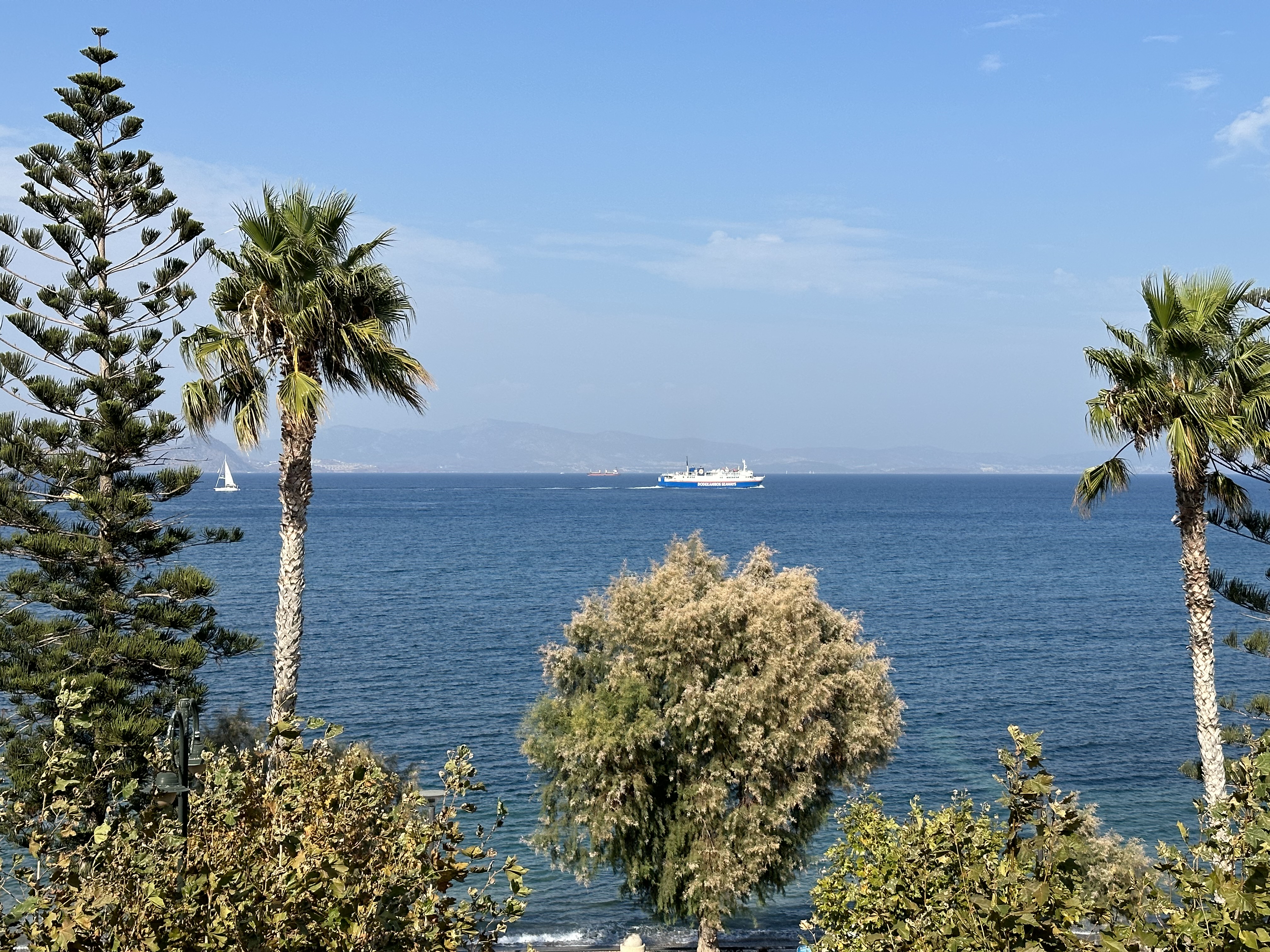
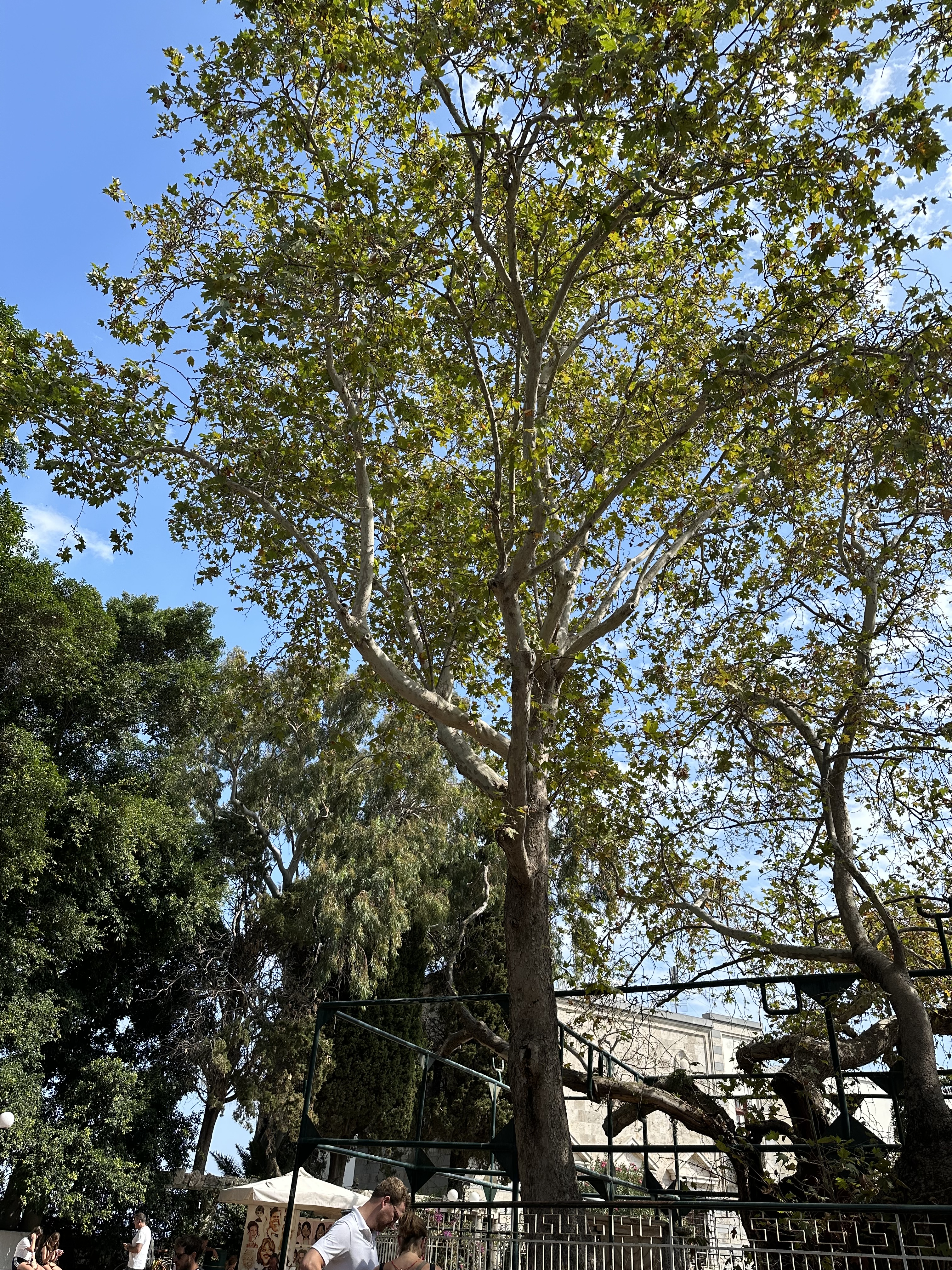
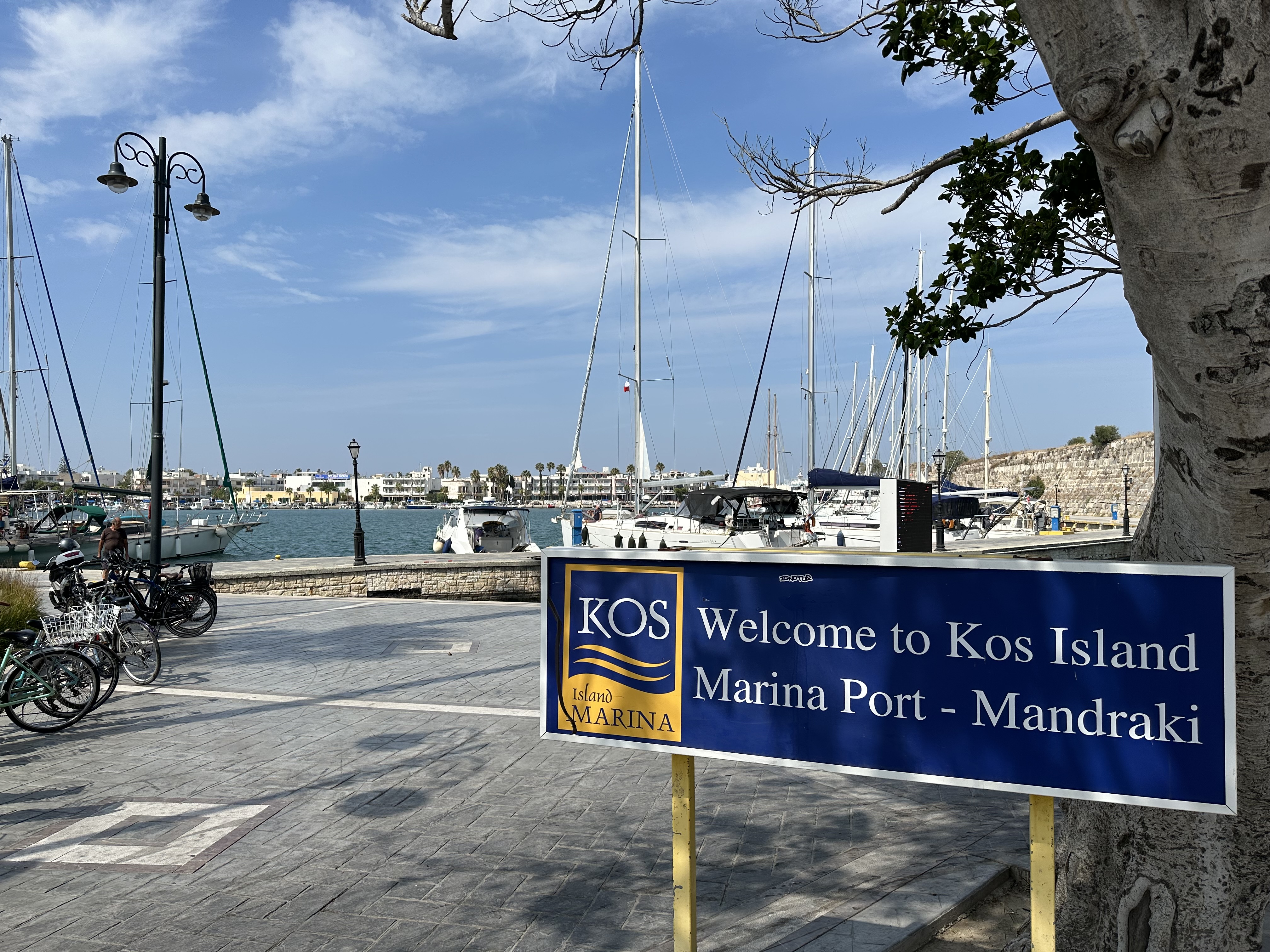
We arrived at Kos’ more modern port, not the ancient one where the Apostle Paul’s ship had moored. We hauled our luggage along cobblestone walkways between the Aegean Sea and an old fortress wall to our hotel. We dropped off our suitcases and gathered in a nearby park at the Plane Tree of Hippocrates.
Legend has it that Hippocrates taught his students about medicine beneath the shade of this old tree. Today, this vernal icon, a close relative of the sycamore, is struggling. The Apostle Paul purportedly taught here as well.
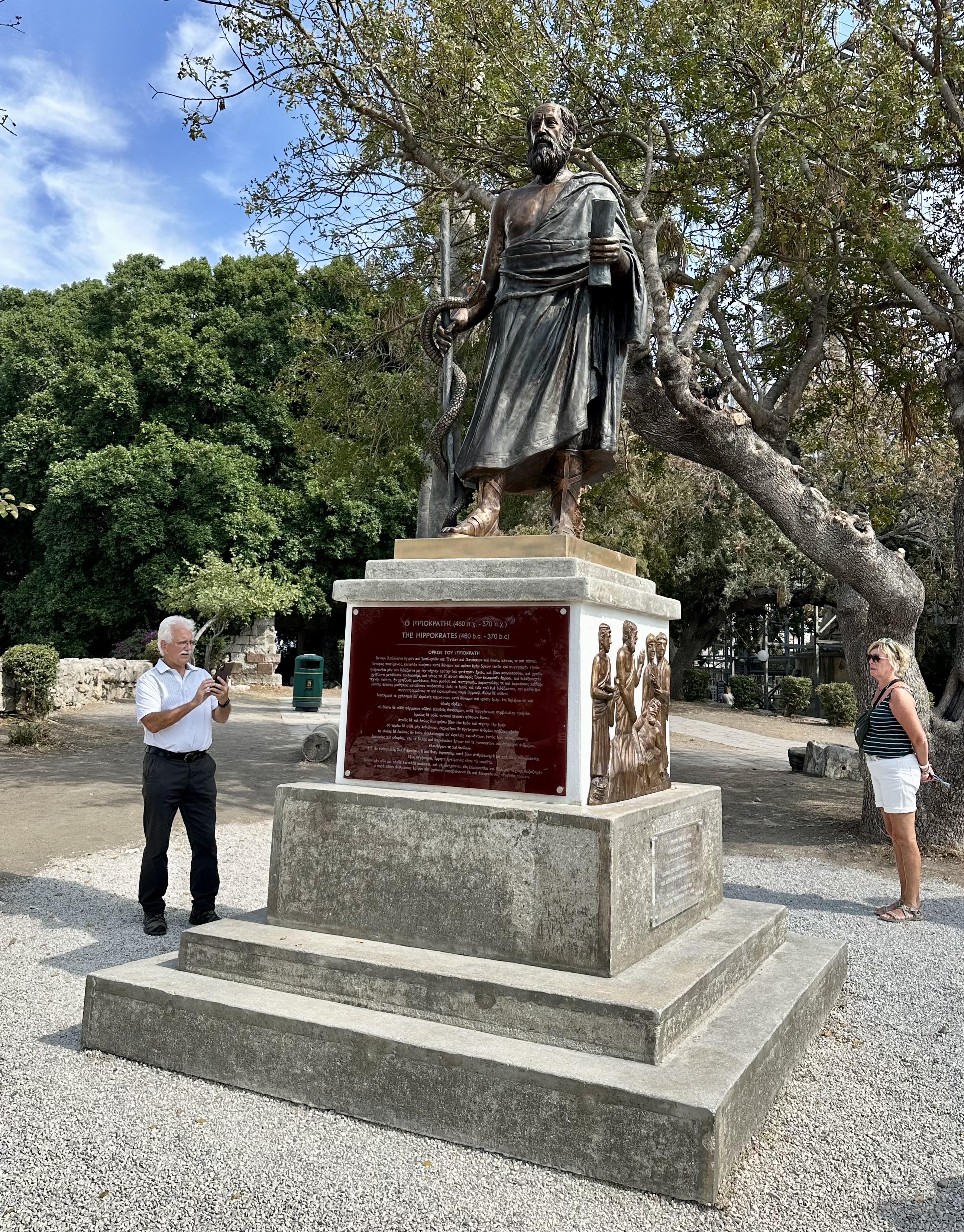
Nearby is the newly unveiled statue of Hippocrates. It stands on a knoll overlooking the old harbor of Kos, where Paul’s ship would have put in. On this, Paul’s third and final trip back to Jerusalem, Luke accompanied Paul.
Please click on the photos to enlarge them.
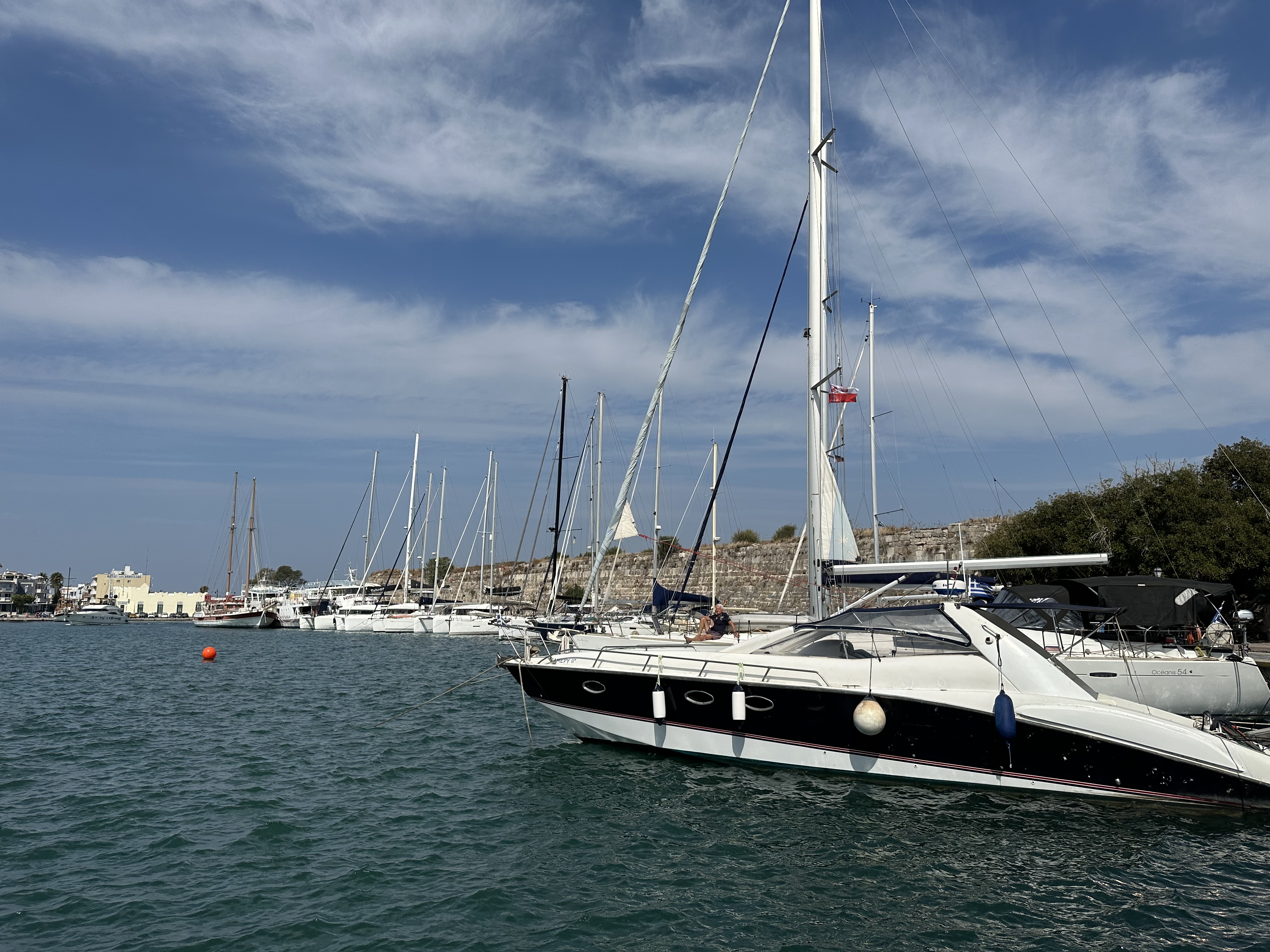
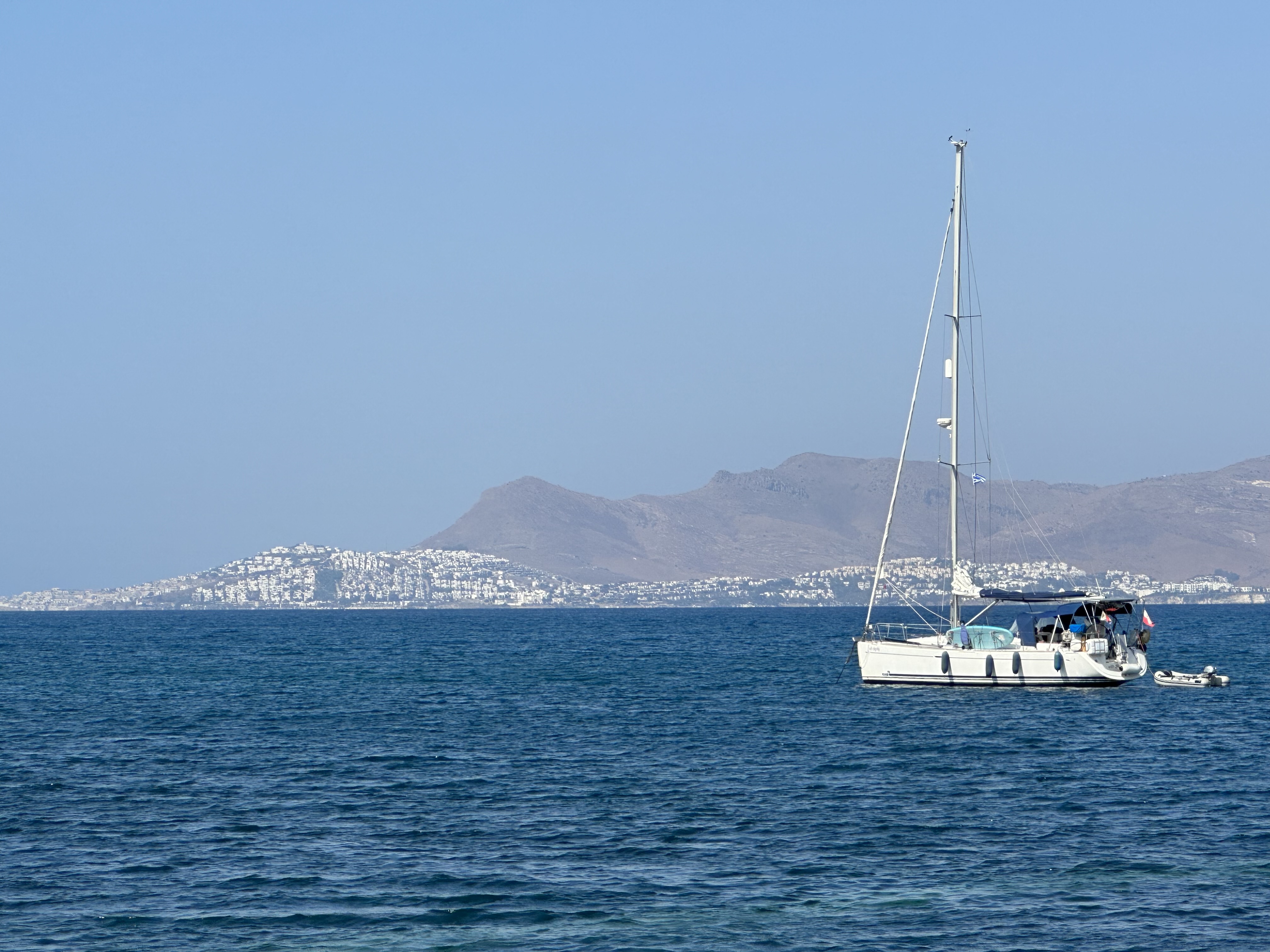
My wife and I found a bench and enjoyed the refreshing ocean breeze across the little harbor filled with sailing and local fishing boats. We watched with interest as a sailing boat carefully backed into an open berth while folks on other ships eyed their maneuvering.
We had a light lunch at one of the many open-air restaurants. I walked the harbor parameters while Neva rested on a bench in the cool breeze.
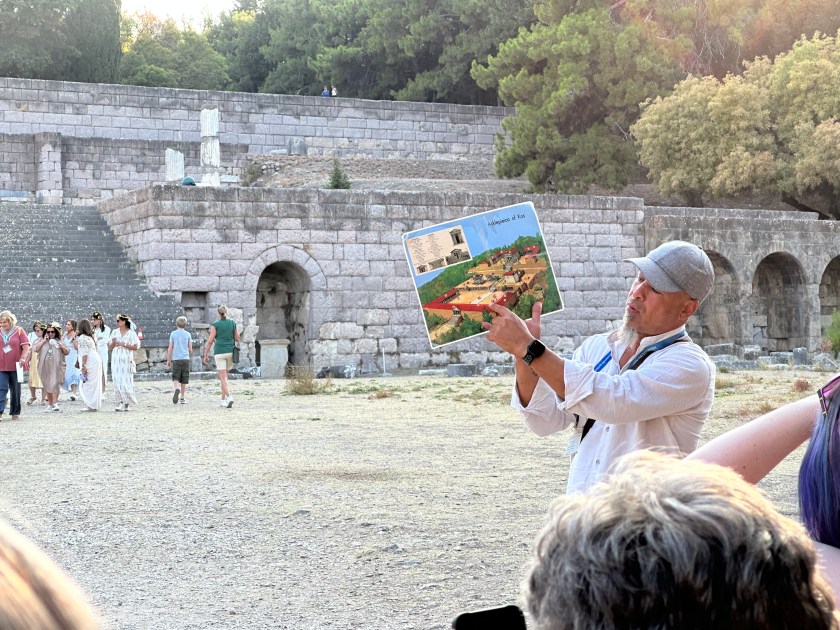
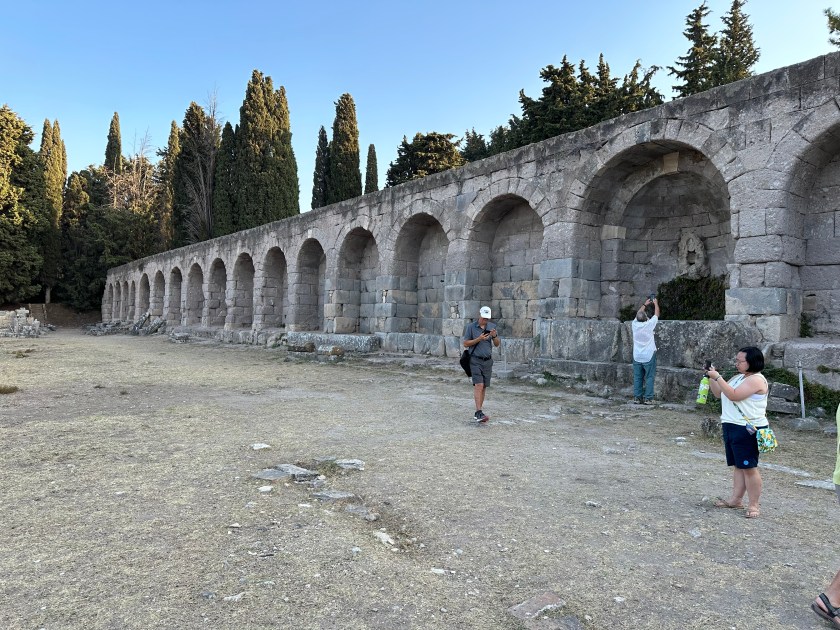
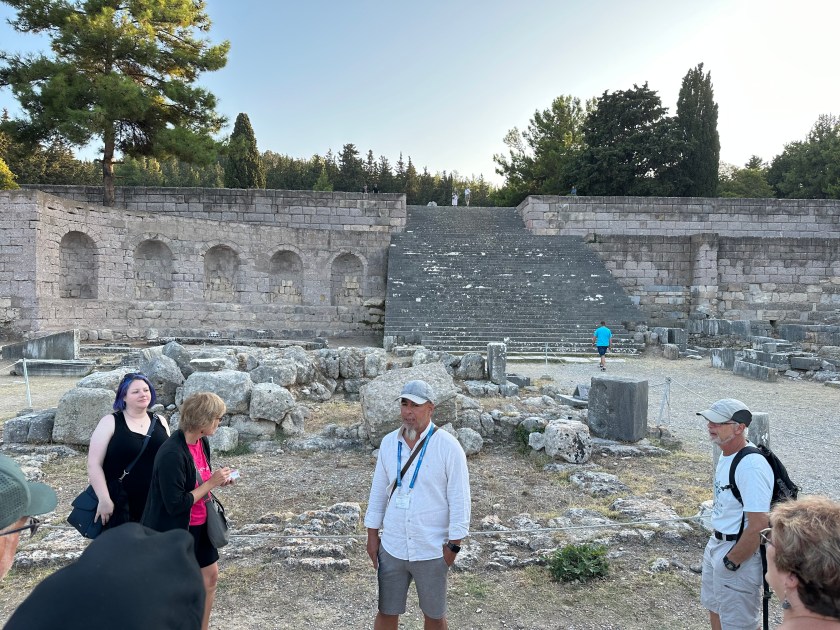
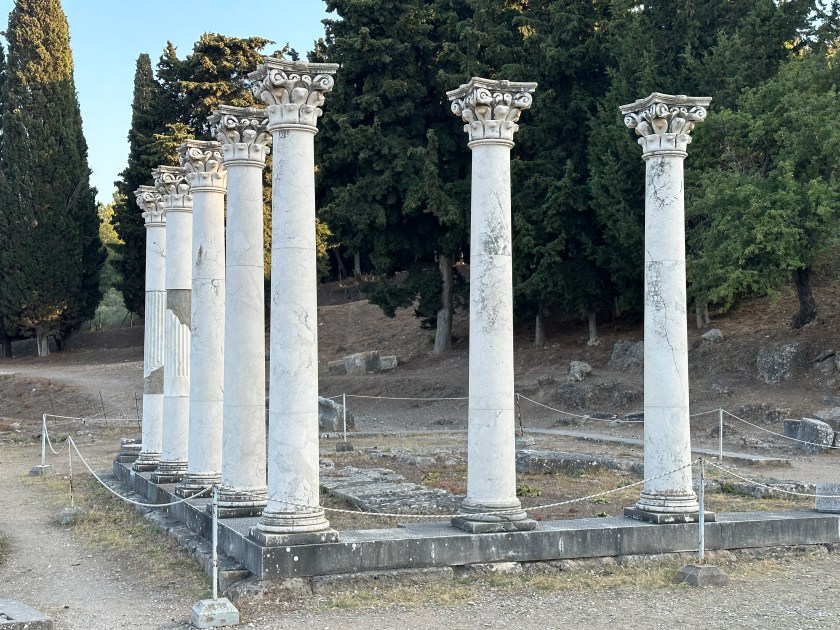
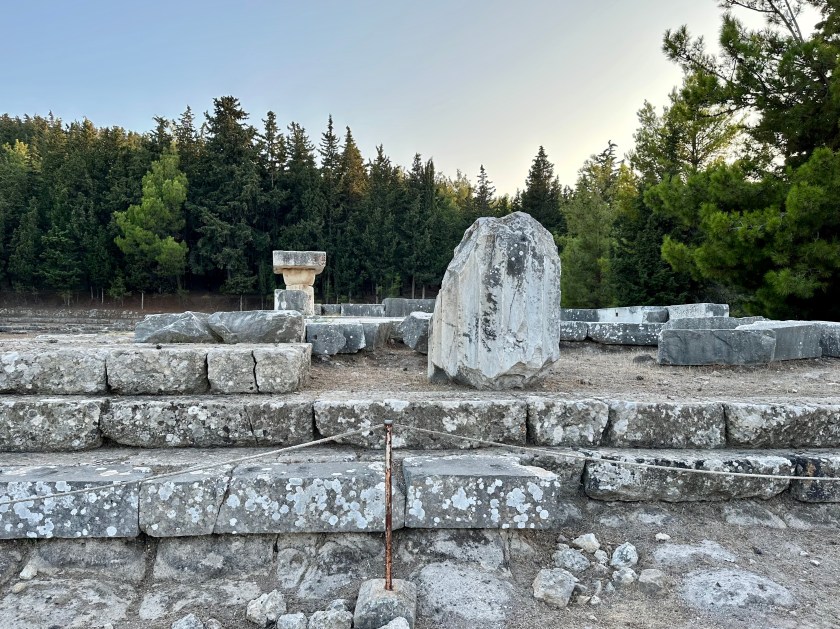
In the late afternoon, our group met a local tour guide at Asclepion, Hippocrates’ healing center of the Hellenistic world. It was a fantastic place with an equally impressive history.
People throughout the Mediterranean region came to Asclepion to be healed of all sorts of ailments. The ancient hospital was built high on a hill sloping away from the Aegean Sea. The three-tiered grounds enabled patients to be evaluated and prioritized by need and ailment.
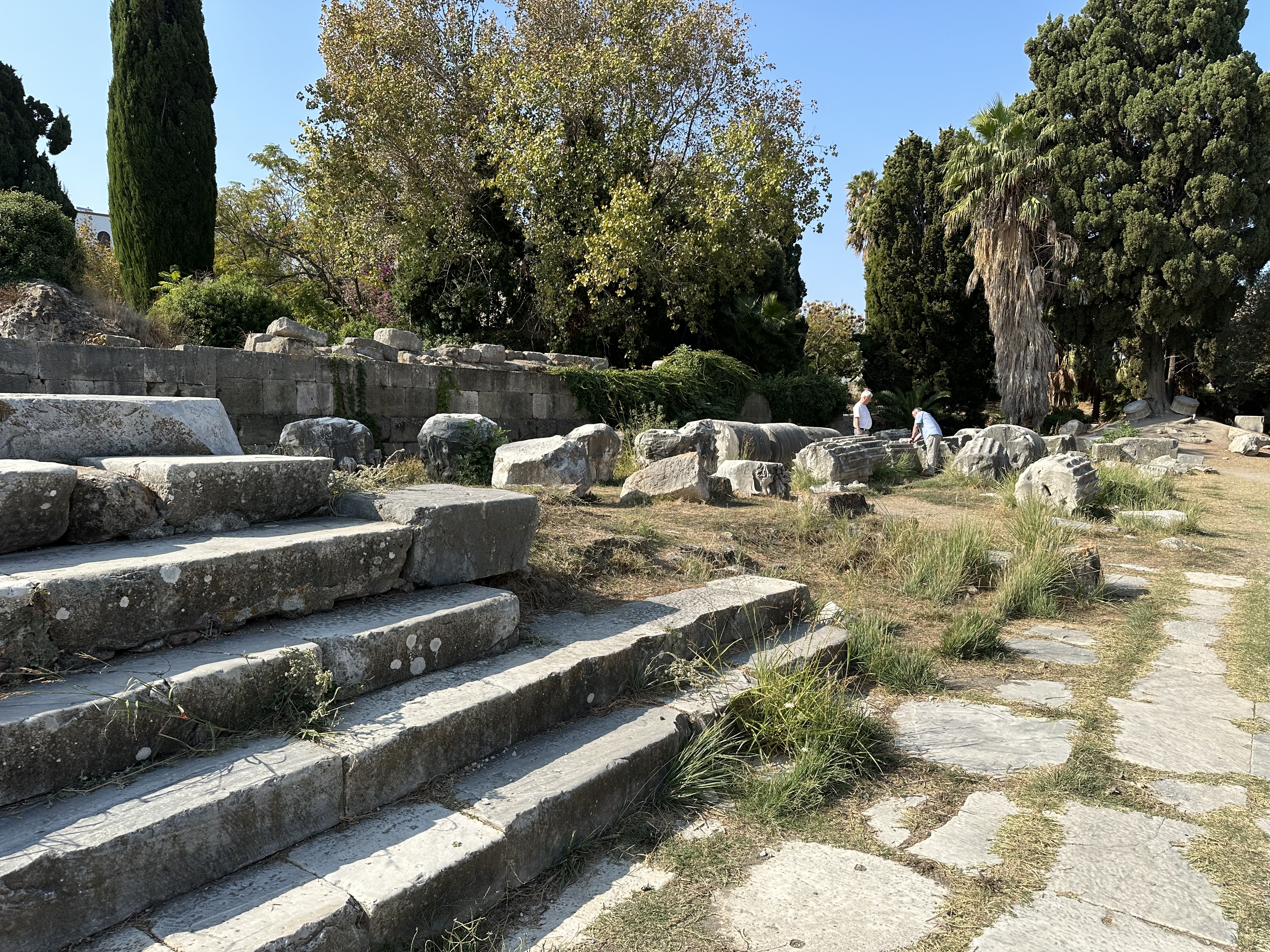
A series of steps connected the terraced levels of Asclepion. Walls once held statues of gods and flowing fountains. There was even an area beyond the terraces for patients who needed quarantined.
A few of the marble steps at each level were original. The view from the top level made it worth the climb.
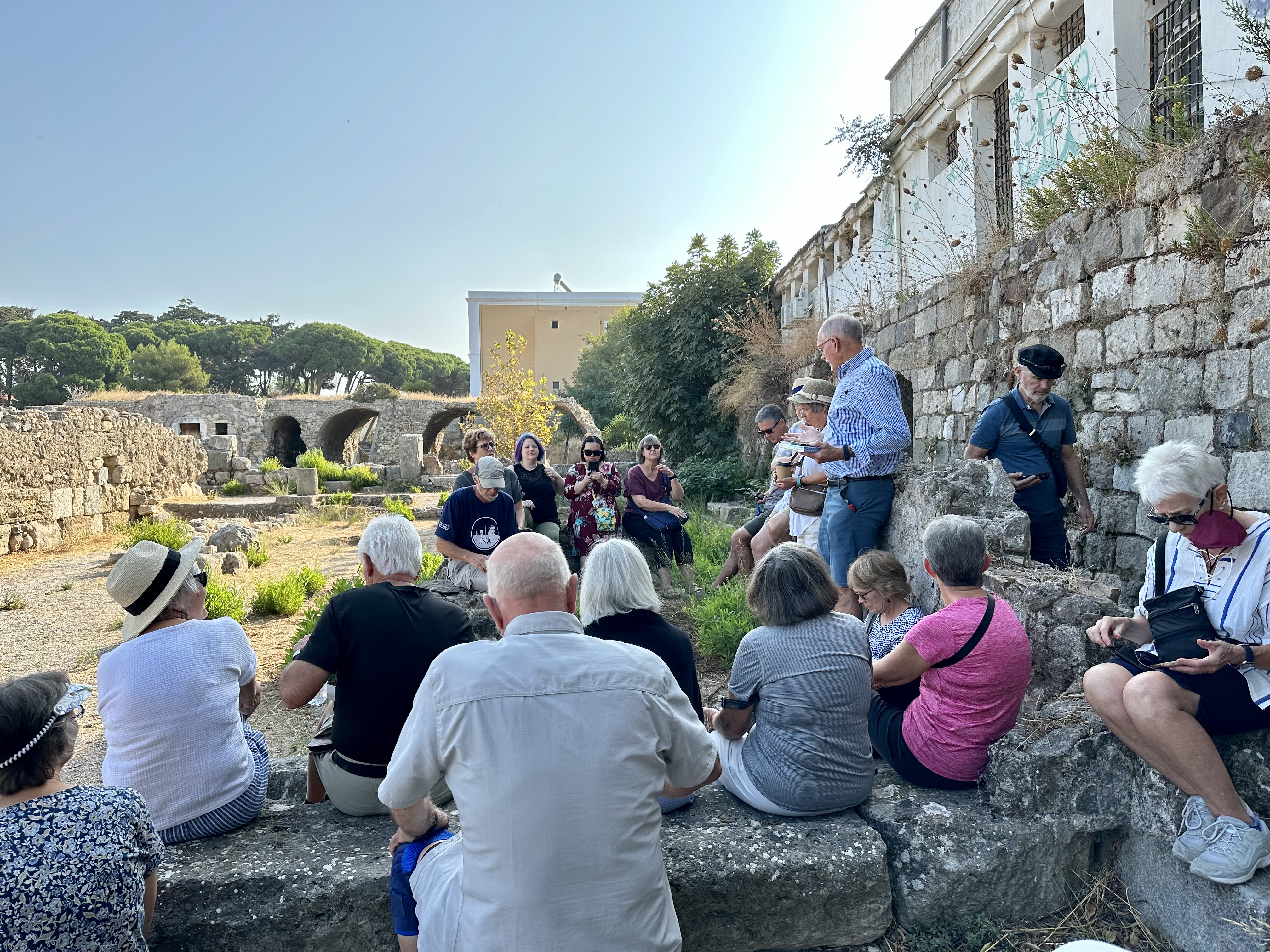
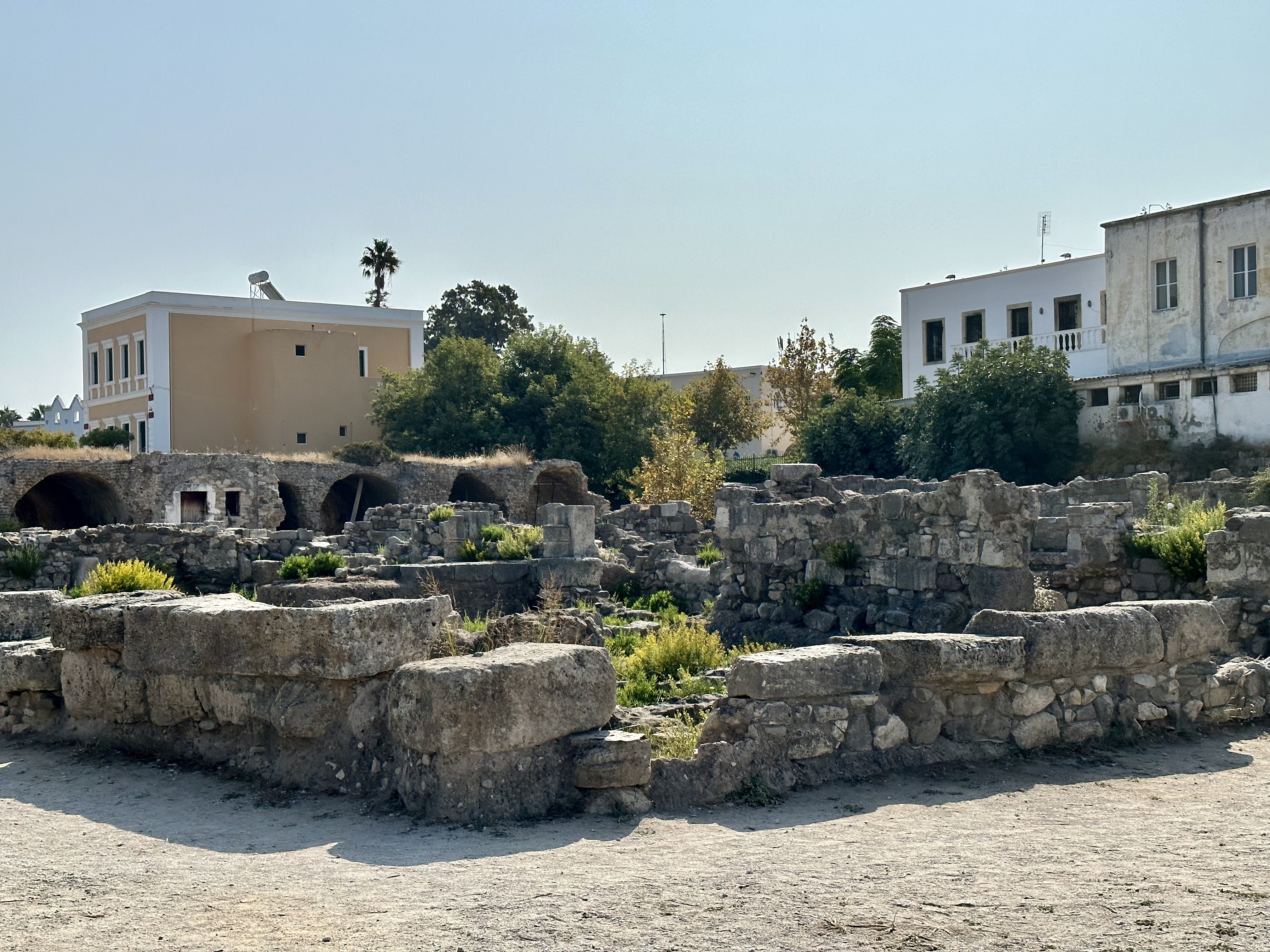
We had a brief worship service in the Roman Agora in Kos in the morning. I pondered the setting and the centuries of history that haunted this place. Massive marble columns lay askew everywhere, like giant pick-up sticks. The remains of old buildings, including apartments, filled the once bustling gathering place. All of these thoughts seasoned the talk by a chaplain in our group.
Please click on the photos to enlarge them.
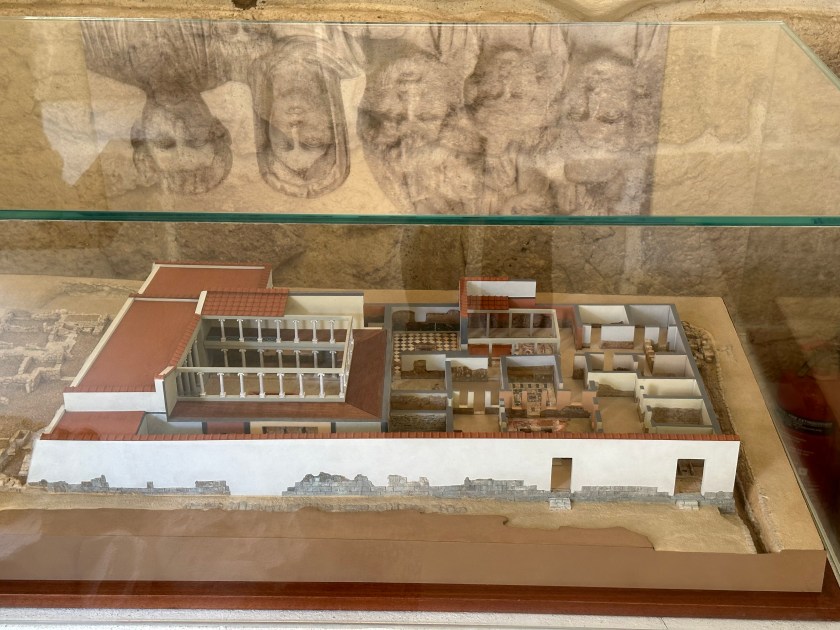
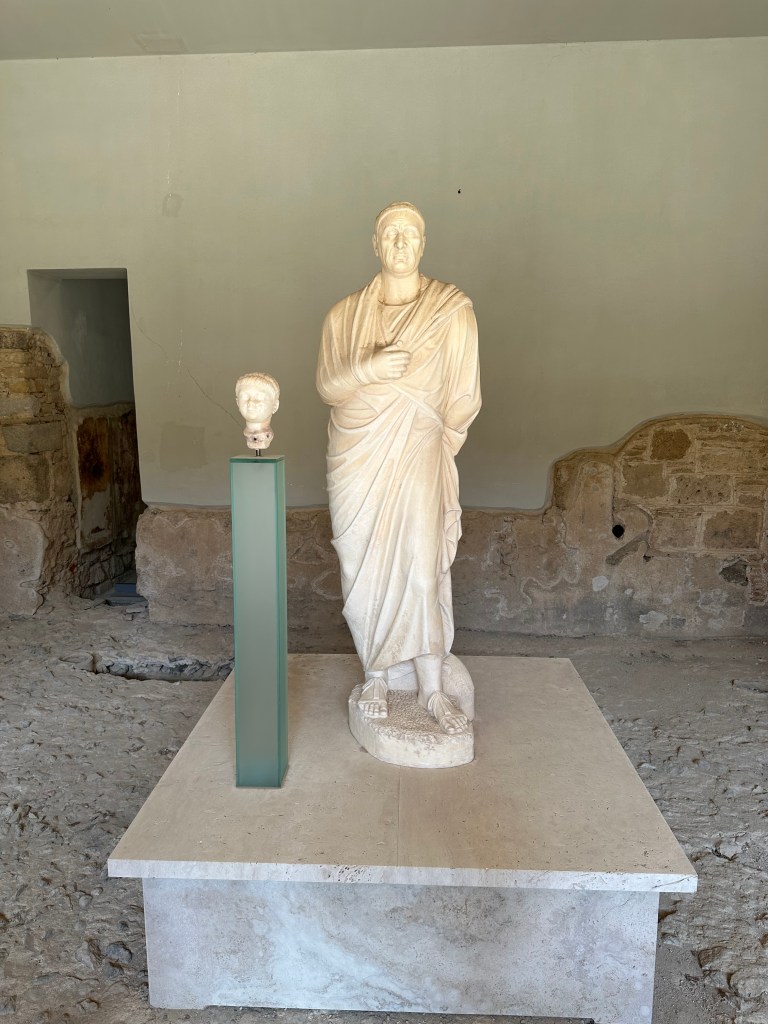
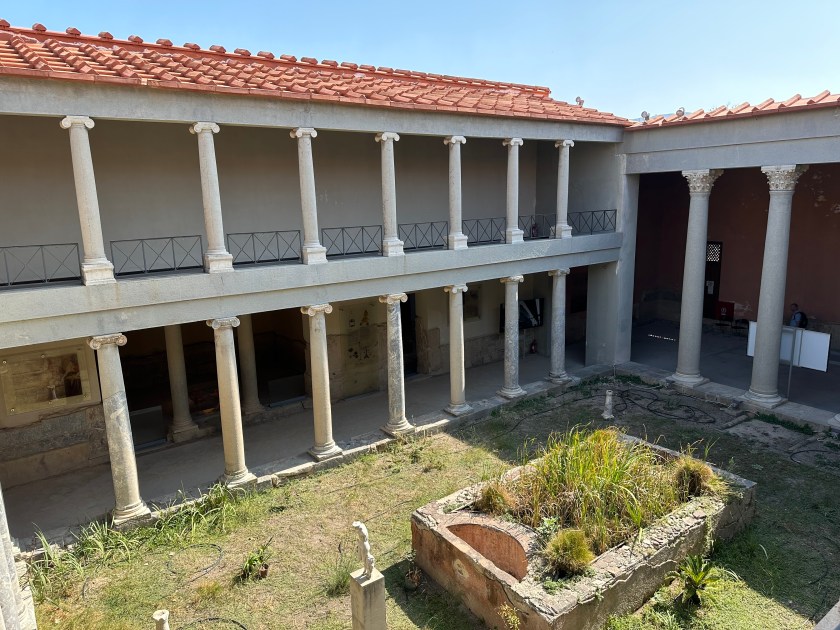
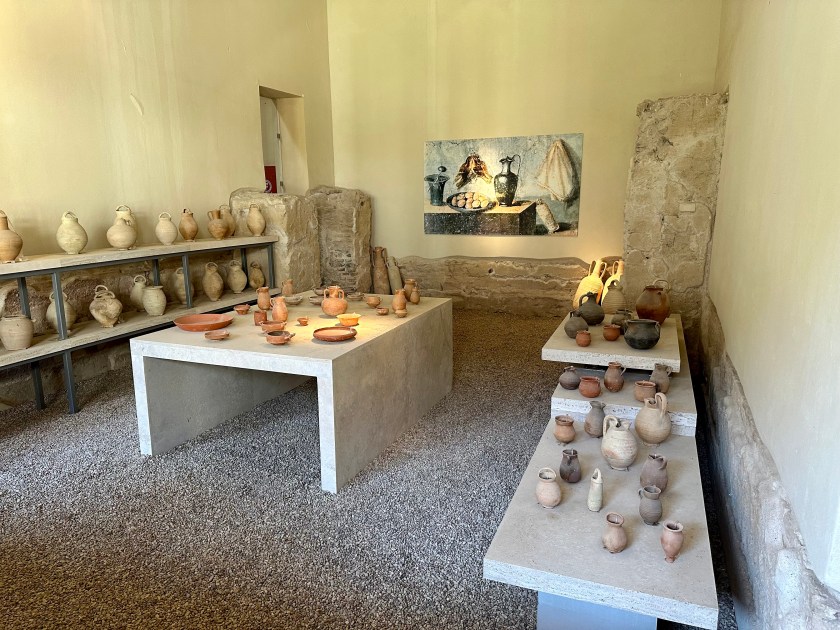
Since the ferry departure time to Rhodes had been changed to early evening, we had the rest of the day to explore Kos on our own. My wife and I chose to tour a reconstructed Roman villa, which was large even by today’s standard for McMansions.
The villa was filled with artifacts from the period it would have been lived in. Mosaics, typical of the Greek and Roman cultures, adorned several rooms.
We walked a short distance from there to view an old Roman road. The stones looked as if you could drive on them today.
With the heat of the afternoon building, we headed back to the hotel to rest and for refreshments before boarding the ferry. Some in our group, including my wife and me, had picked up a bug. With our persistent coughing, we took a cab to the pier.
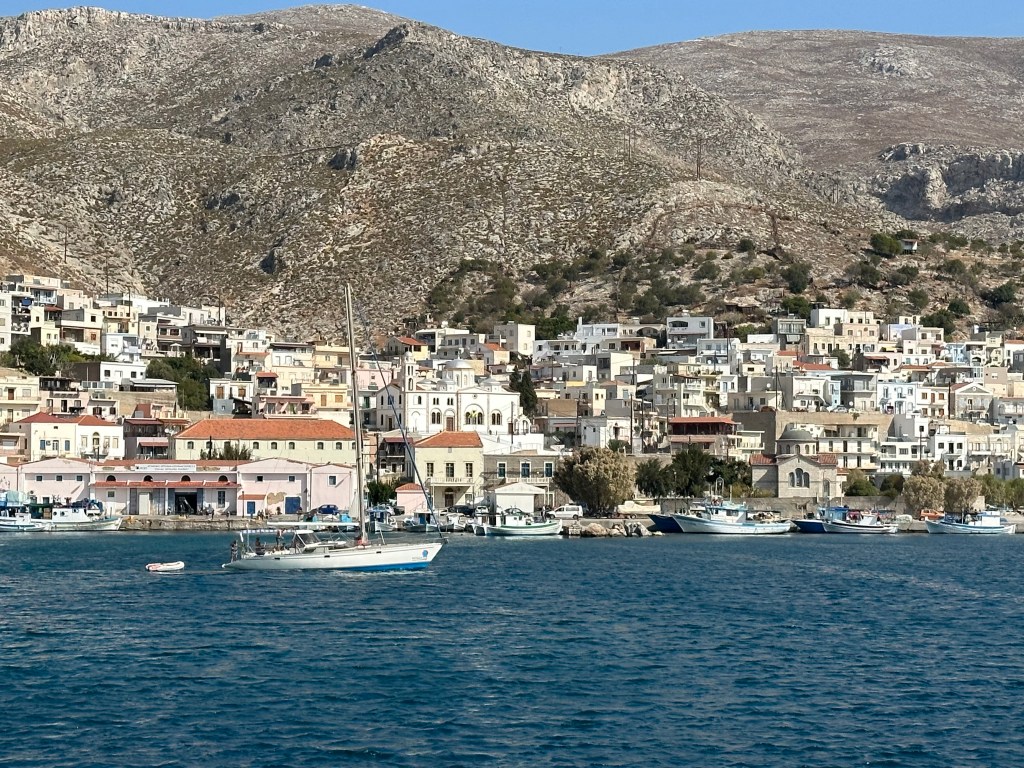
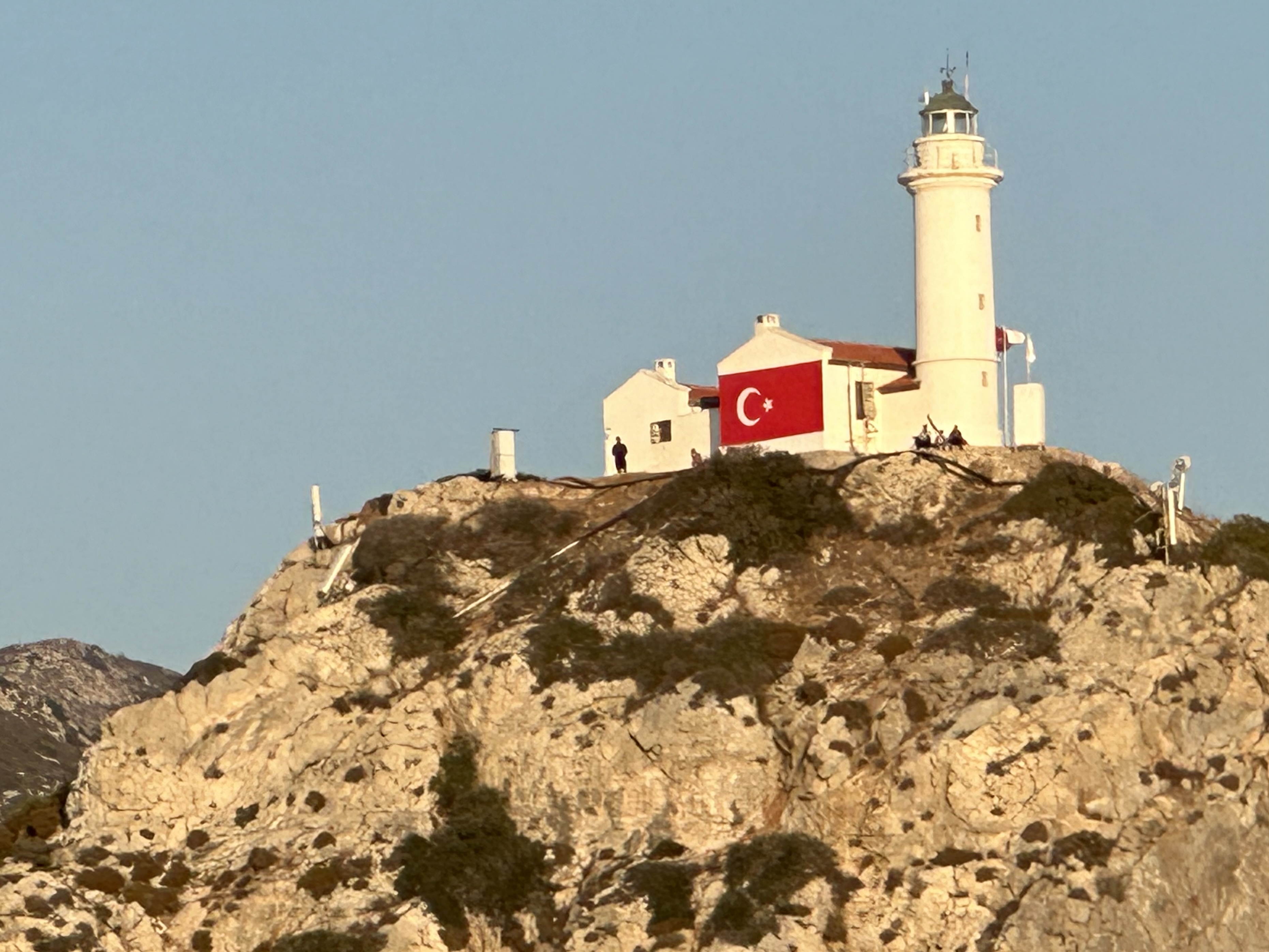
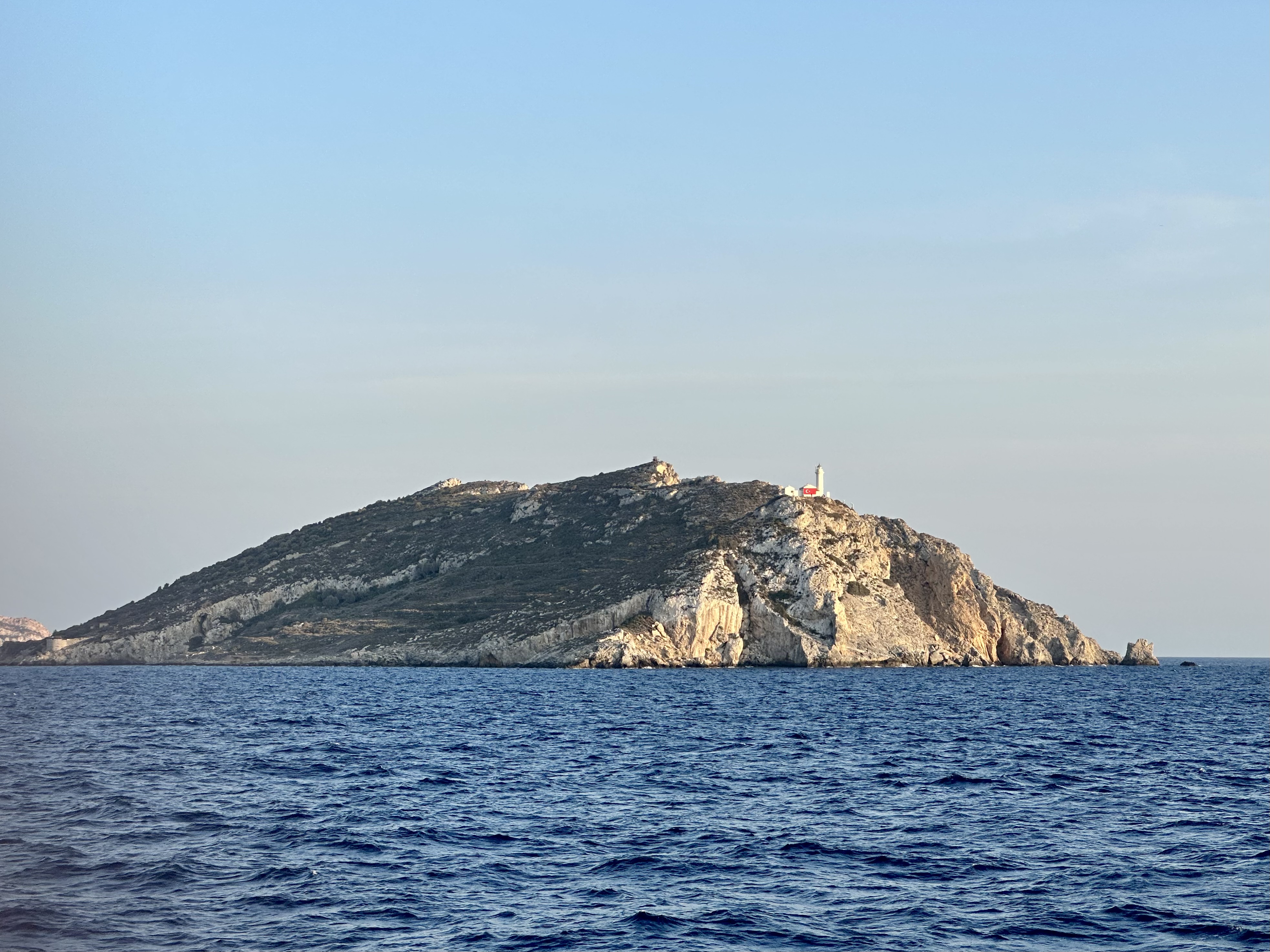
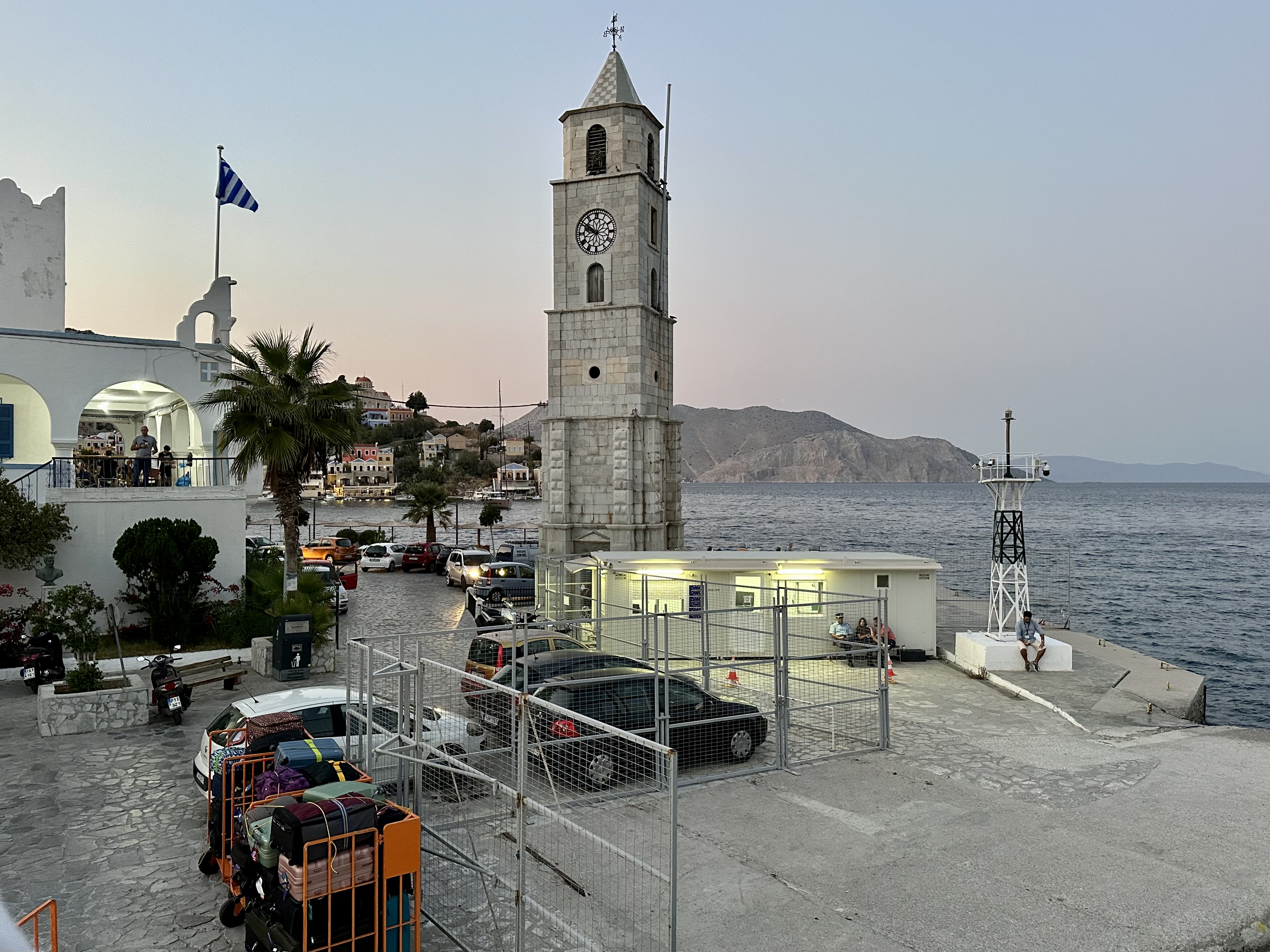
The ferry was on time, and we prepared for an extended cruise to Rhodes. Of course, we had several stops in picturesque seaside towns. On the way to Symi, we passed a lighthouse high on a steep ledge in Turkey. Later, a stunning sunset sunk behind a mountainous island.
Tomorrow: The island of Rhodes.
The sun sank behind a mountainous island on the way to Rhodes.
Nevertheless, we were up early again to catch the ferry to our next adventure, the island of Patmos. The island hopping via ferry began in earnest.
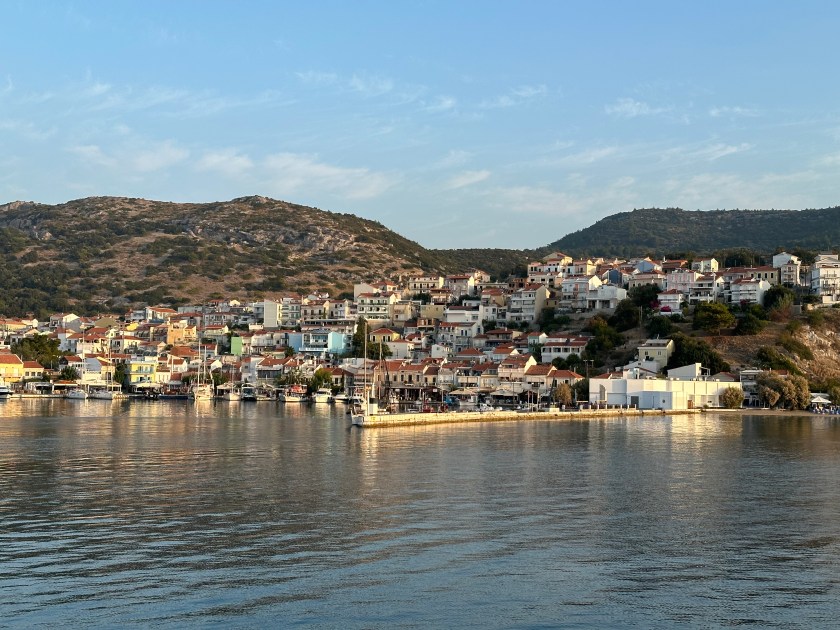
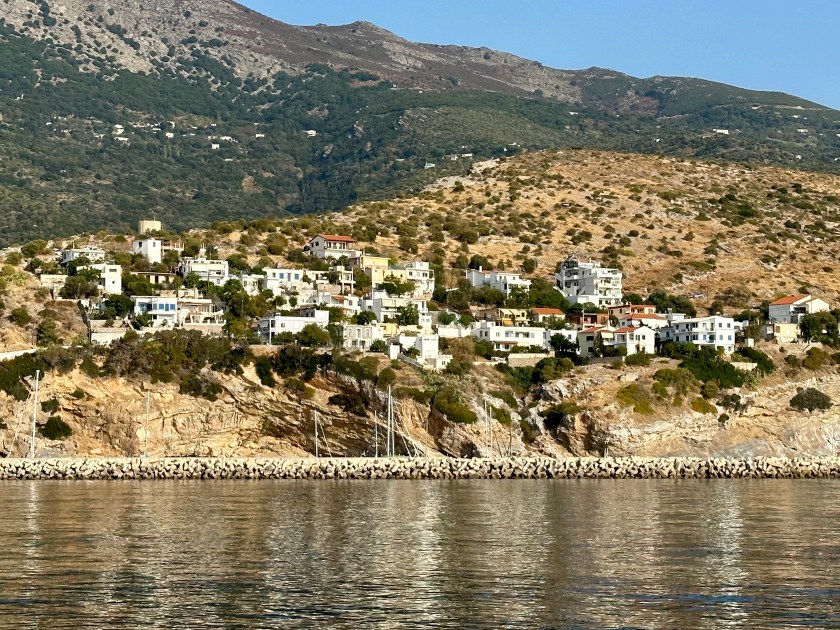
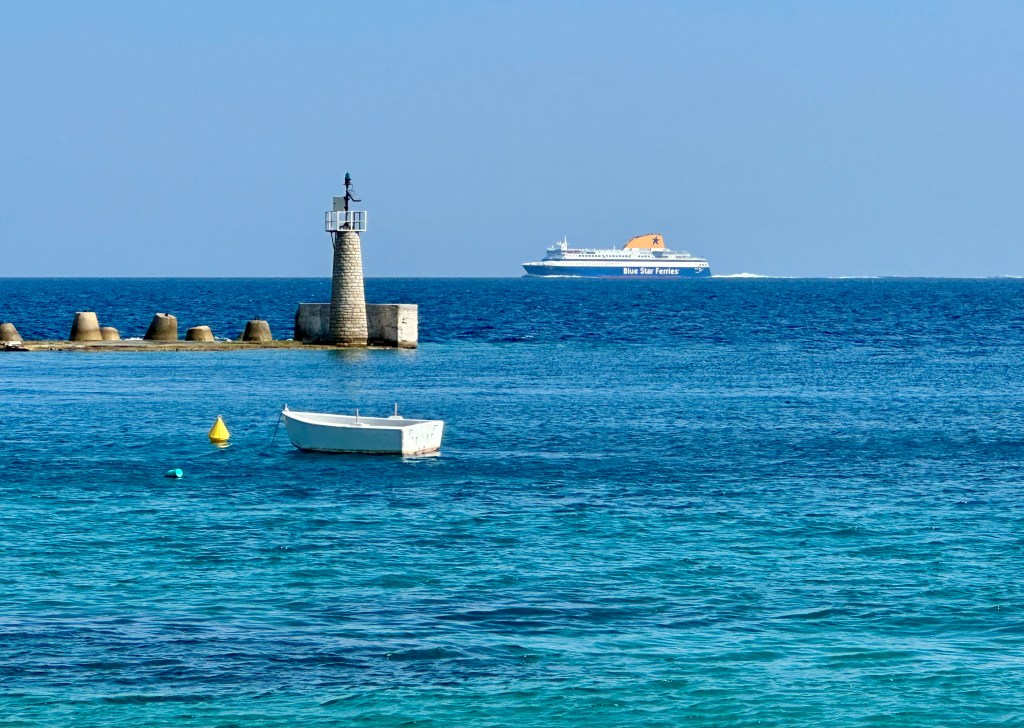
I took a few photos of Pythagereio as the ferry sped away. We stopped at a few small island villages to pick up and drop off passengers. The island ferries have their routine down pat. Some passengers deboarded while we welcomed others on board and were off at one stop in just over a minute. We arrived in Skala harbor, Patmos, Greece, right on time. The ferry operators clearly run a tight ship.
As soon as Skala came into view, Samos became a pleasant memory, and I focused on new, unknown adventures on Patmos. We walked briefly from the port’s pier to our lovely Blue Bay hotel.
The entrance to the cave.
The view John had from the cave.
It wasn’t long before we boarded a bus and rode halfway up the mountain to the Cave of the Apocalypse. Here, the Apostle John saw his vision that became the book of Revelation in the Bible. We entered the room leading to the cave with awe and reverence. No photos of the cave itself were permitted.
John had been banished to Patmos from Ephesus by the Romans. Patmos was considered a barren island, where prisoners were often sent. On a clear day, John could just about see his beloved Ephesus from his cave. Ironically, John later returned to Ephesus, where he died naturally, the only disciple to do so.
We retreated to a shaded area in bleachers above the building built around the sacred cave. Our leader, Linford, had a message for us. He couldn’t speak very loud since another group was holding a mass just below us. Rather than summarize the talk, please watch the informative video below. Please turn your sound up all the way to hear the talk.
After Linford finished his fun sea shanty, we went to the mountain’s top via bus and visited the Greek Orthodox Monastery of St. John the Theologian. Both the monastery and the cave are UNESCO World Heritage Sites. The town of Chora is built around the monastery.
After a light lunch, we rode back down the mountain and checked in at our hotel. We had the rest of the day to tour Skala, a town as beautiful and quaint as Pythagereio on Samos.
Please click on the photos to enlarge them.
Neva and I found a recommended family-owned seafood restaurant away from the harbor area. We were the only customers at 6:30 p.m., but by 7, every table was filled. The restaurant’s owner doubled as our waiter. I ordered sea bass, which he caught in the morning.
Once the sun went down, the little town came alive. A political rally near the harbor may have contributed to that crowd and excitement. It was a very fulfilling day we’ll remember for a long time.
We were up early to catch a short flight to the island of Samos. In fact, the trip to the airport took longer than the flight.
Morning traffic on the way to the Athens airport.
We went to Samos because it was one of the ports where a ship carrying the Apostle Paul stopped. From Acts 20, verse 15, it appears it was simply an overnight stay. The island was the birthplace of two influential men, Pythagoras and Epicurus.
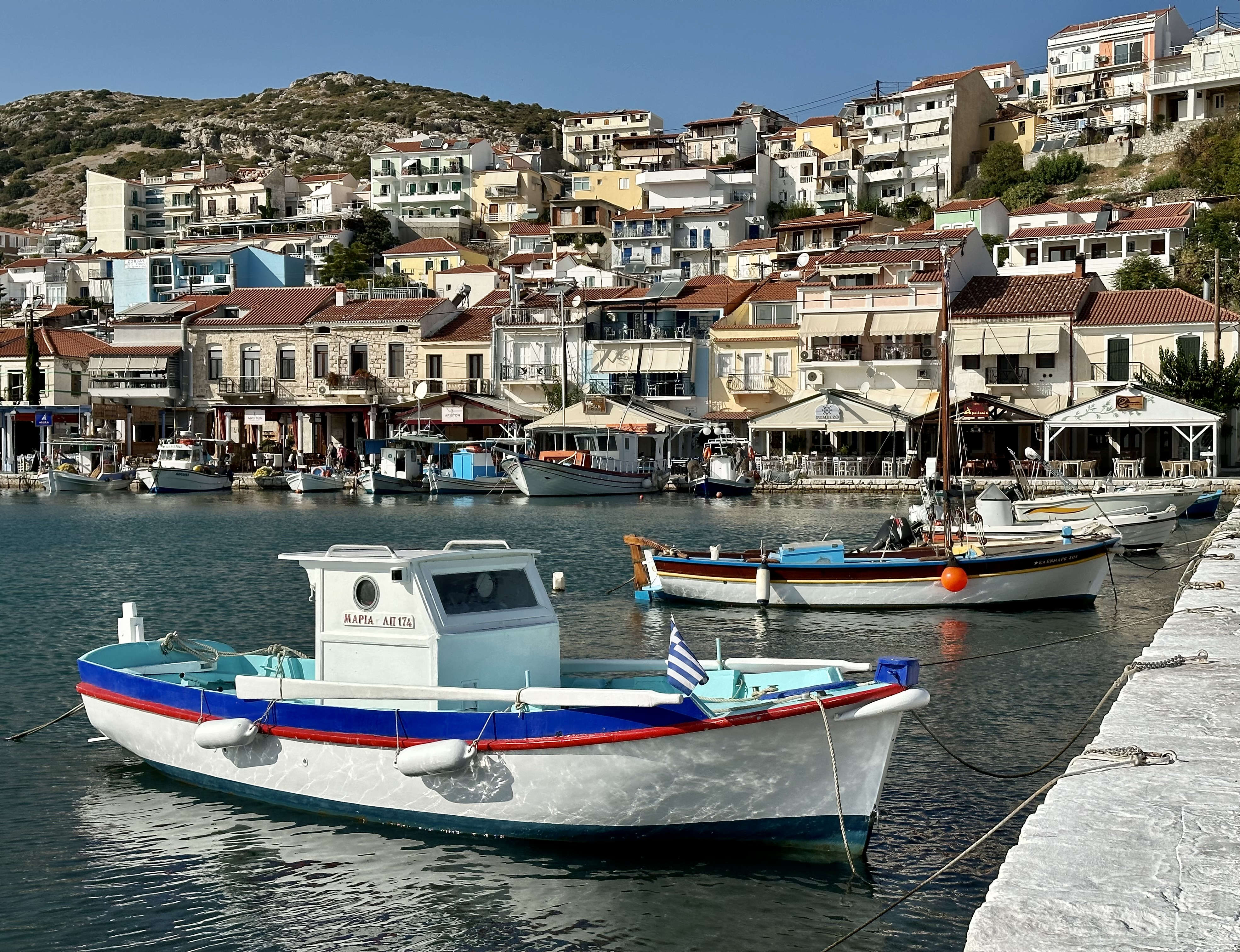
The town where Paul stayed is called Pythagoreio in honor of the famous mathematician. A statue honoring Pythagoras is situated midway on one of the town’s harbor piers.
It wasn’t just his math abilities that garnered great respect for Pythagoras. A giant underground aqueduct was dug through the mountainside in the 6th century B.C. to gain a regular fresh water supply. The Eupalinian Tunnel ran nearly 3,400 feet through Mount Kastro to bring potable water from the island’s west side.
The Cup of Justice.
Conditions for digging the tunnel were horrible, and workers argued about the fairness of their wages, paid in wine and bread. Workers claimed they had slaved harder than others. To solve this dilemma, Pythagoras invented the Cup of Justice, also called the Pythagorean Cup, so that all workers received their fair share.
The cup has a protrusion in its middle and a line around the inside to show how much wine should be poured into it. Should a worker fill the cup beyond the line, the cup would rapidly drain its contents via a siphon system. That ingenious device halted the arguing and greed of some of the workers. Artisans produce the cups and decorate them to be sold to tourists. Of course, we bought one.
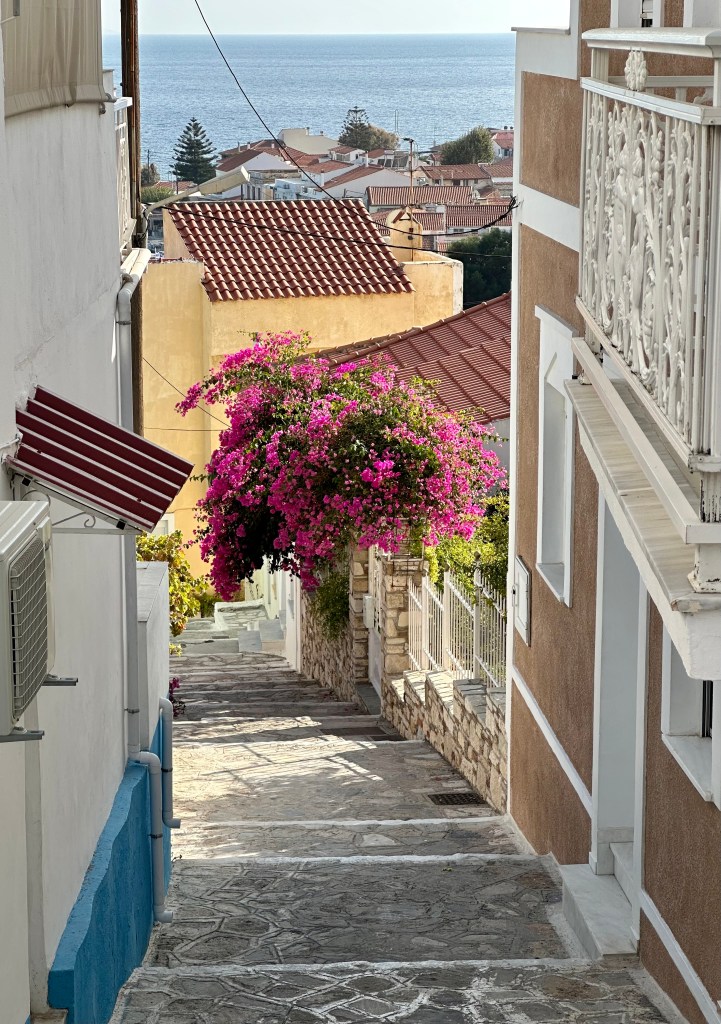
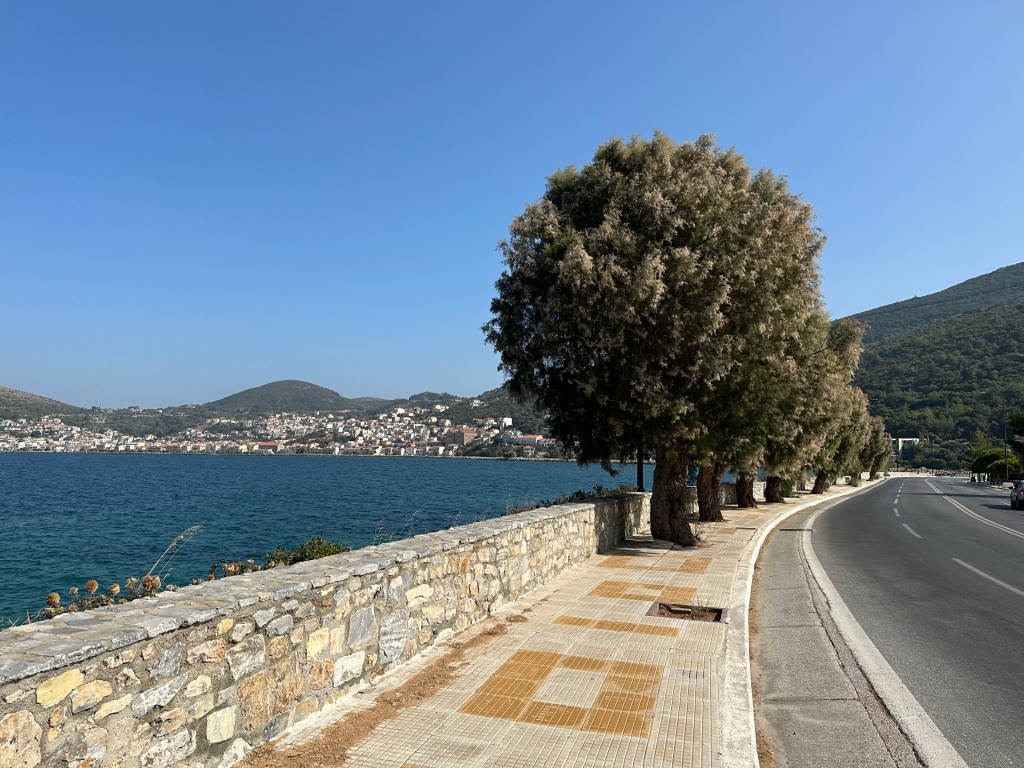
Our time in Samos was joyous and relaxing. We had lots of free time to explore the town with its cobblestone streets and sidewalks, find our own restaurants, and enjoy the quiet and beauty.
As we explored Pythagereio, we discovered many wonderful alleys and buildings. An old castle and the adjacent church were still closed due to damage from an earthquake a few years ago.
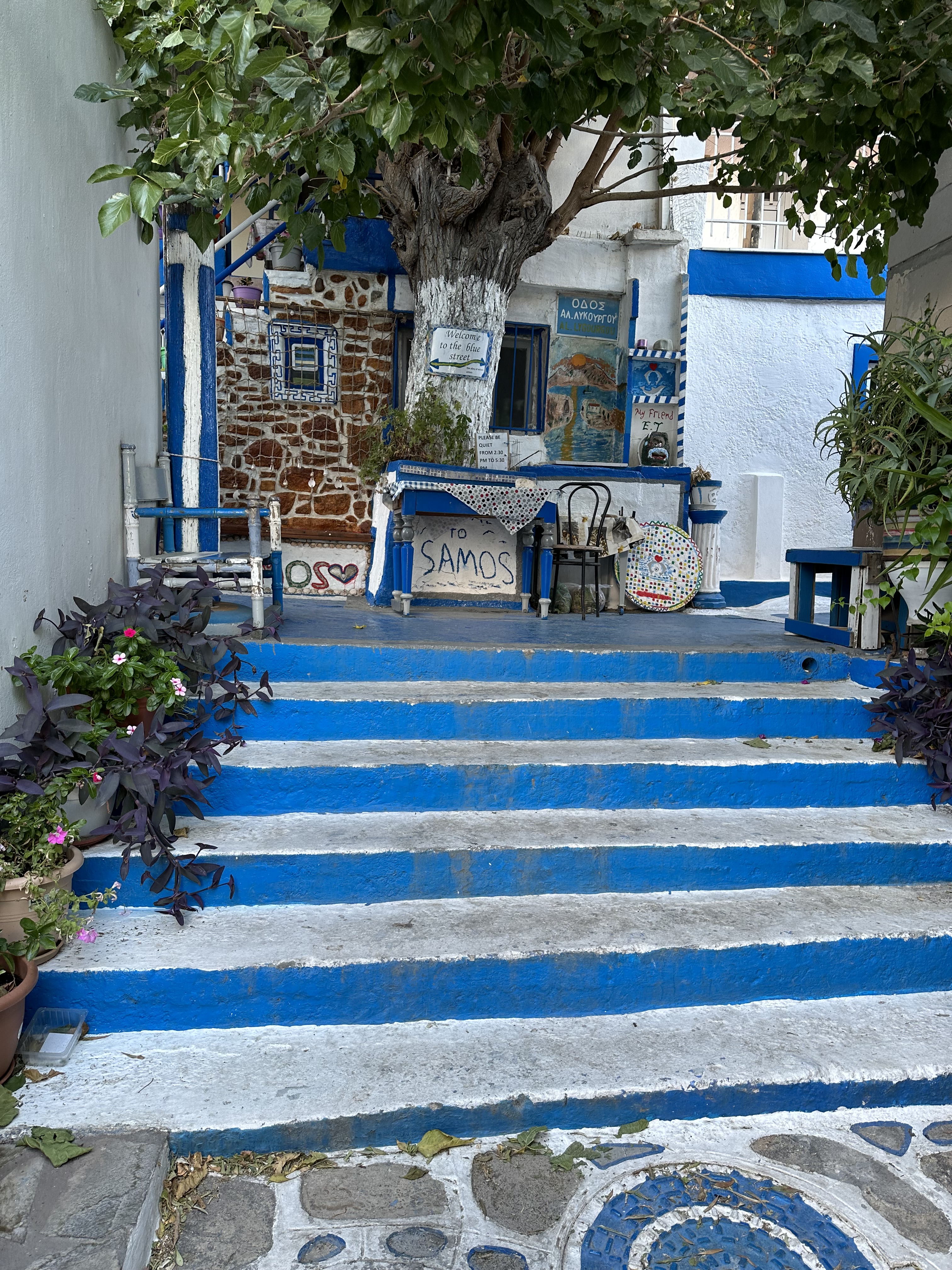
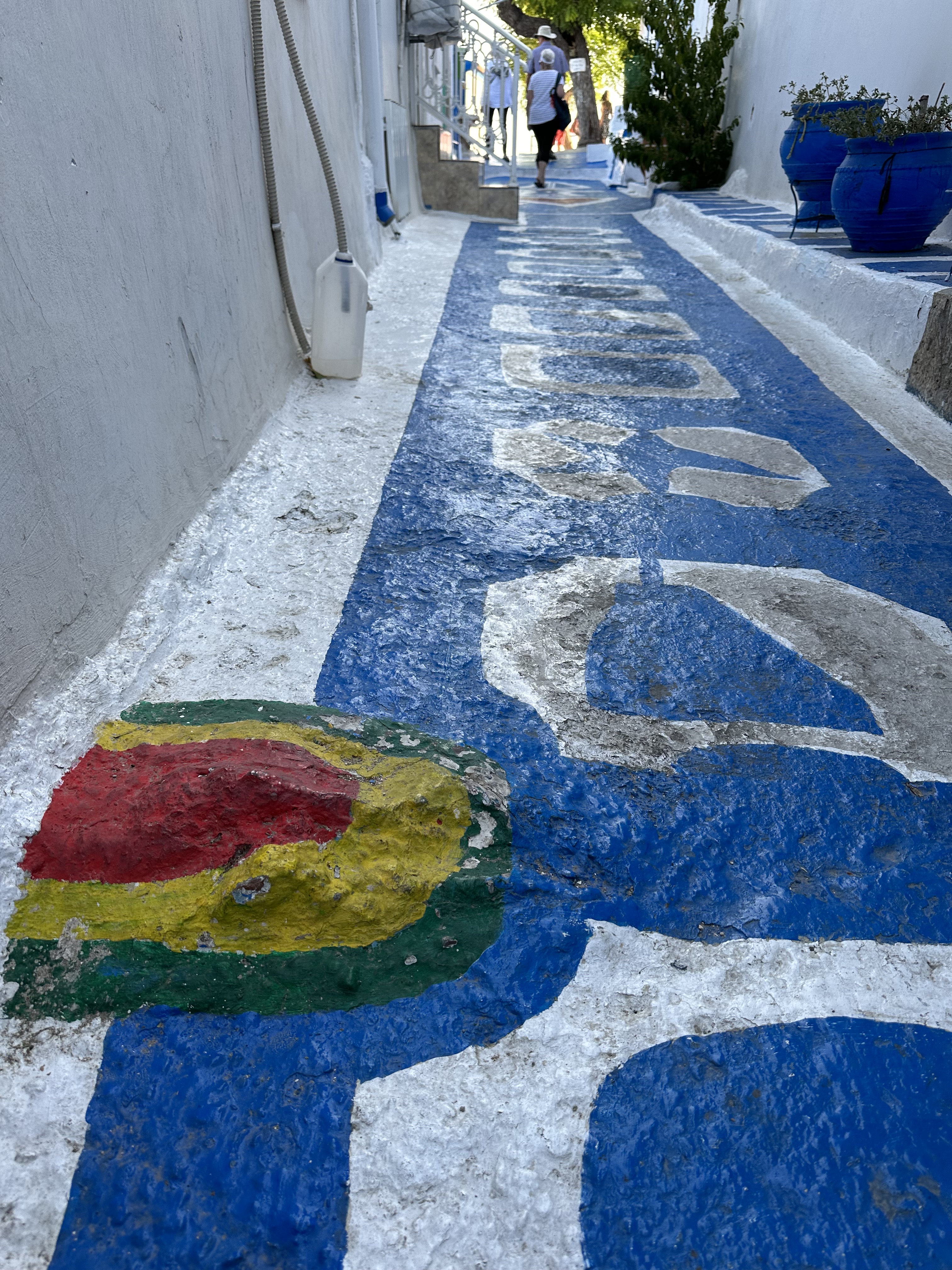
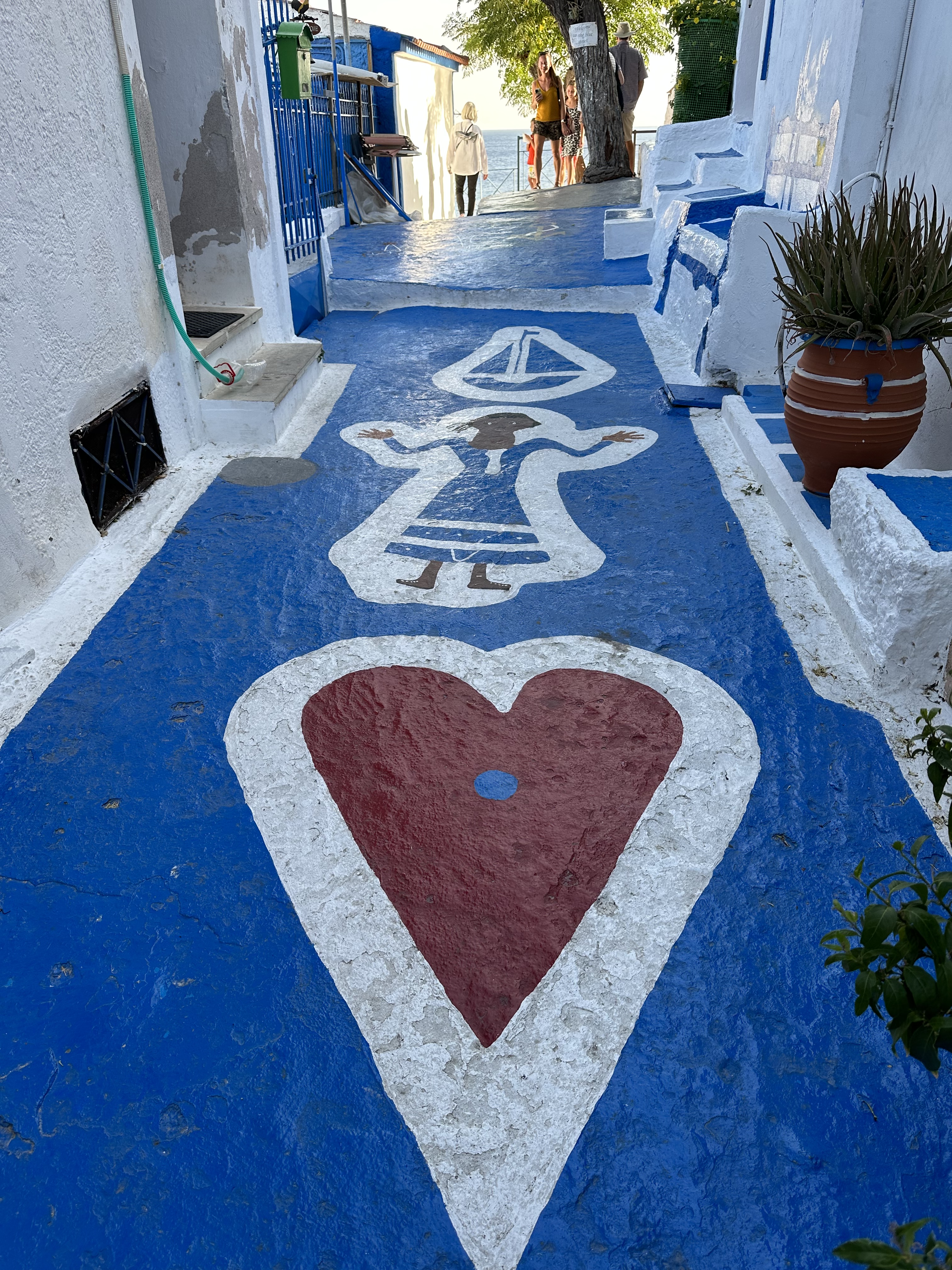
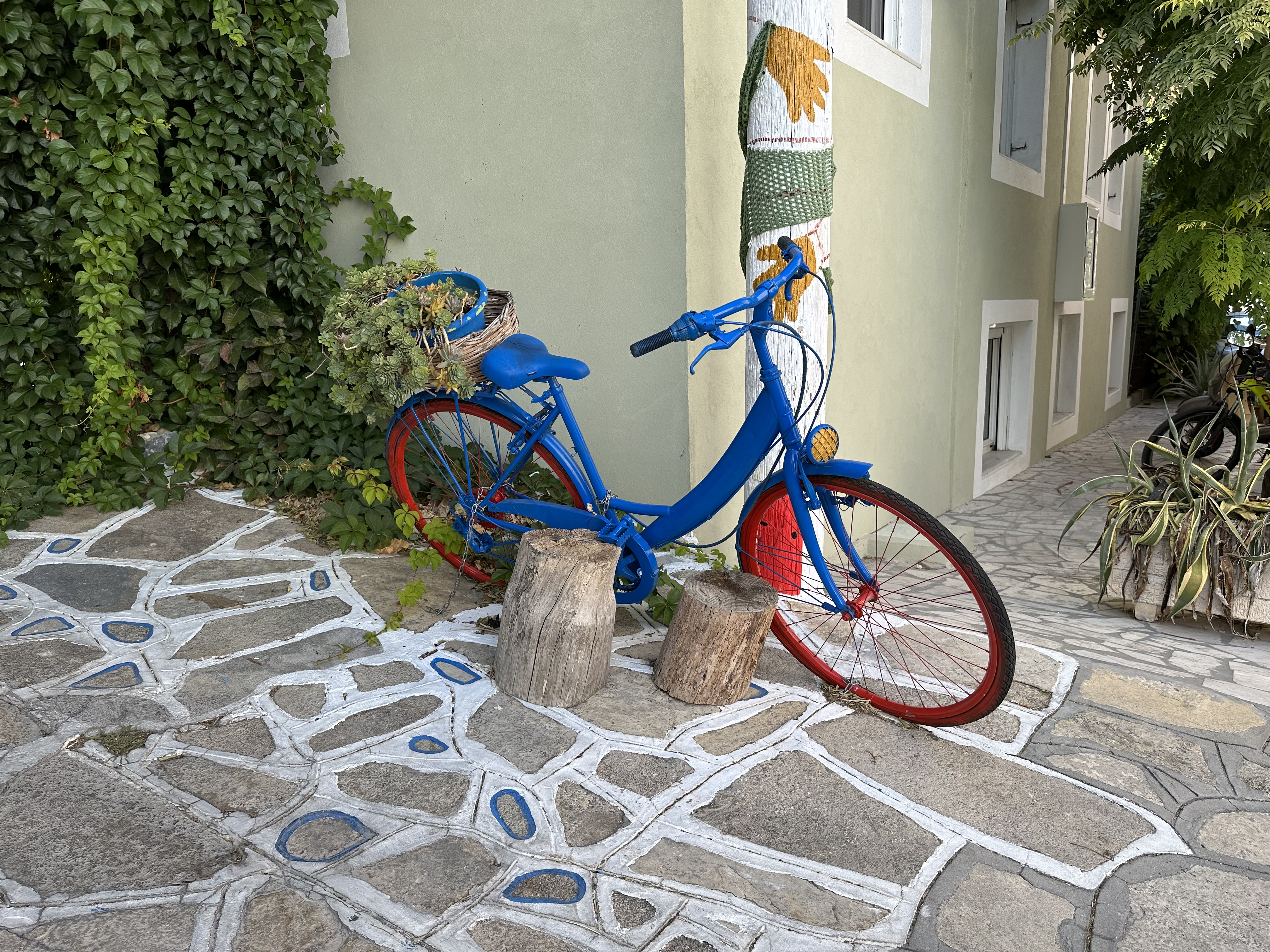
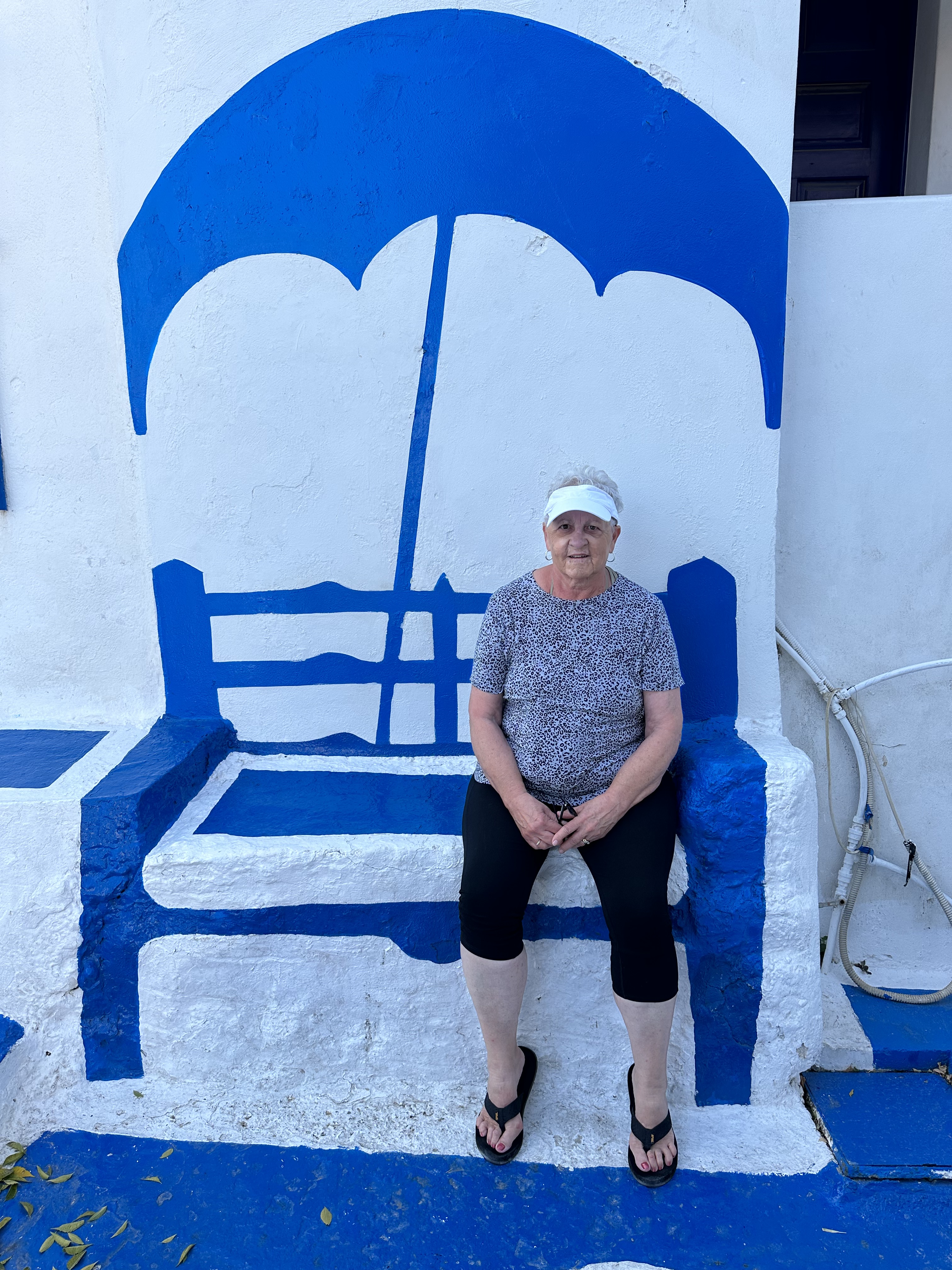
Just down the hill was Blue Street, not much more than a sidewalk with most everything painted blue by the local retired artists who lived there. We found their creations fun and attractive. They painted everything from manhole covers to doorways.
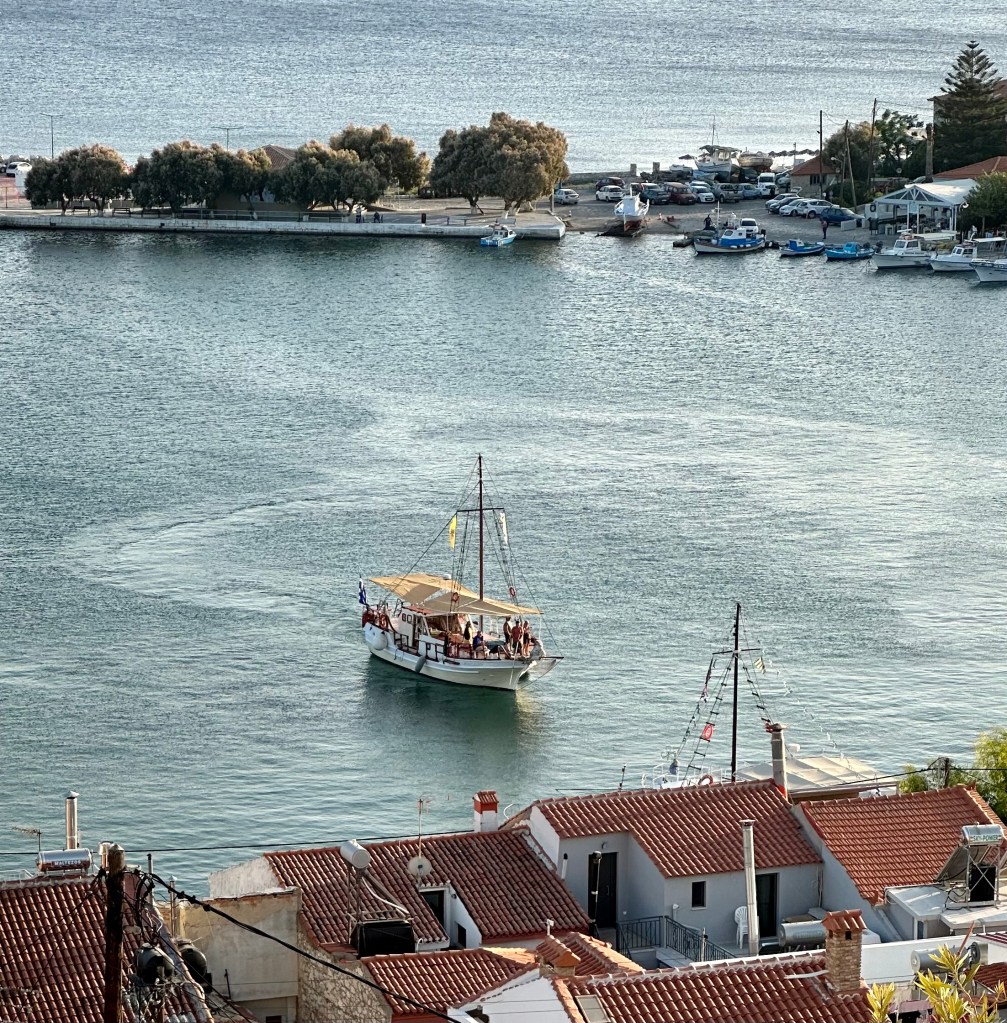
Most of all, though, my wife and I simply enjoyed sitting on a bench near the customs station on the harbor. We viewed the quaint town from our seats and enjoyed watching a few boats come and go.
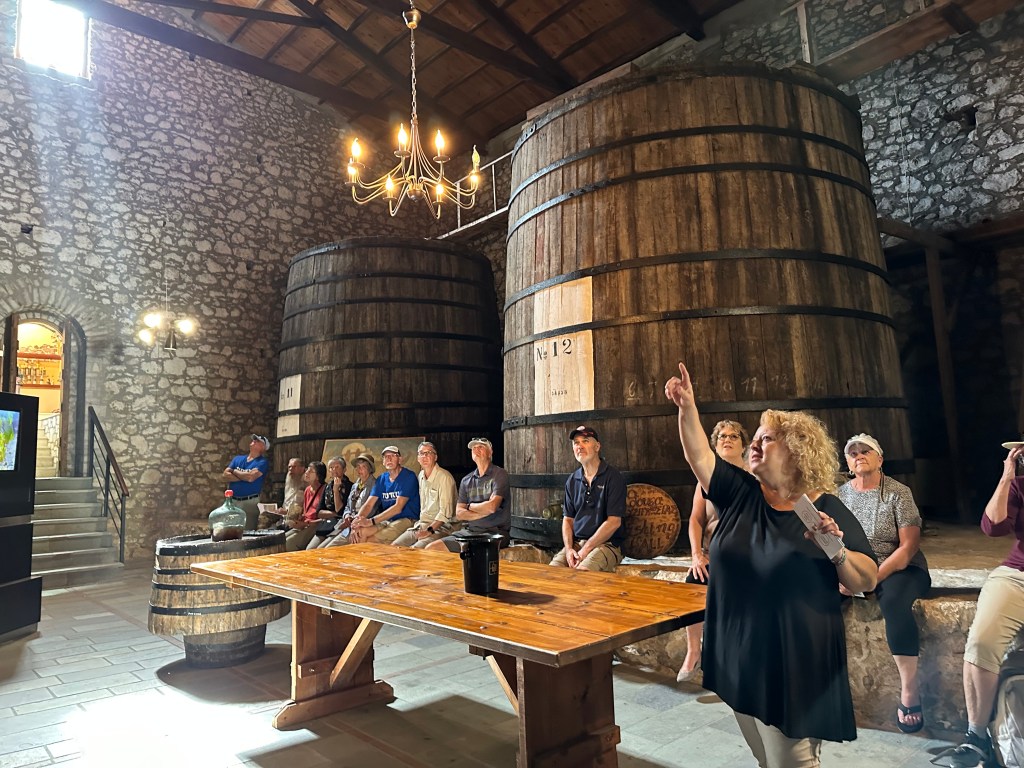
On the second day, we rode a bus to the western part of the island and toured a wine museum. Samos is famous for its sweet Muscot wine. The island’s western side is much more lush than the leeward side since it rains more.
Once we started downhill toward the town of Vathy, the greenery of trees, shrubs, and grasses stood in stark contrast to the arid brushy topography on the eastern side. We also visited a monastery above Pythagereio containing a cave and a chapel. It wasn’t far from the aqueduct tunnel.
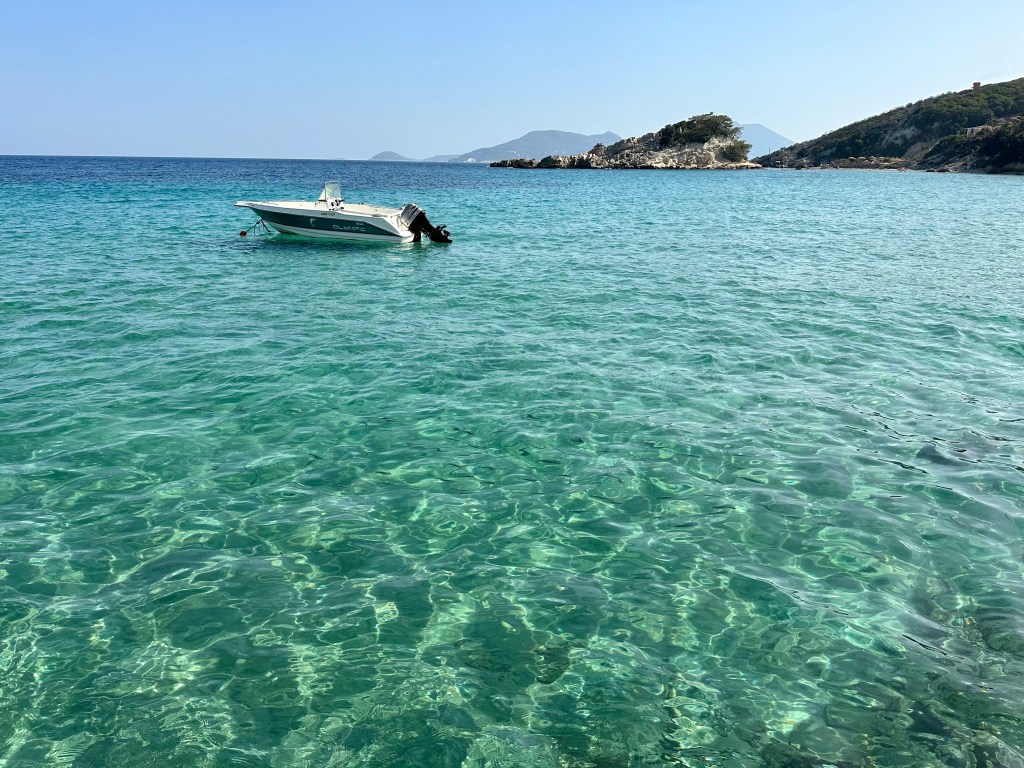
Samos is separated from Turkey by the mile-wide Mycale Strait in the eastern Aegean Sea. The Greek navy maintains a station on Samos with several boats moored in the harbor. We enjoyed the sunrises over the mountains in Turkey.
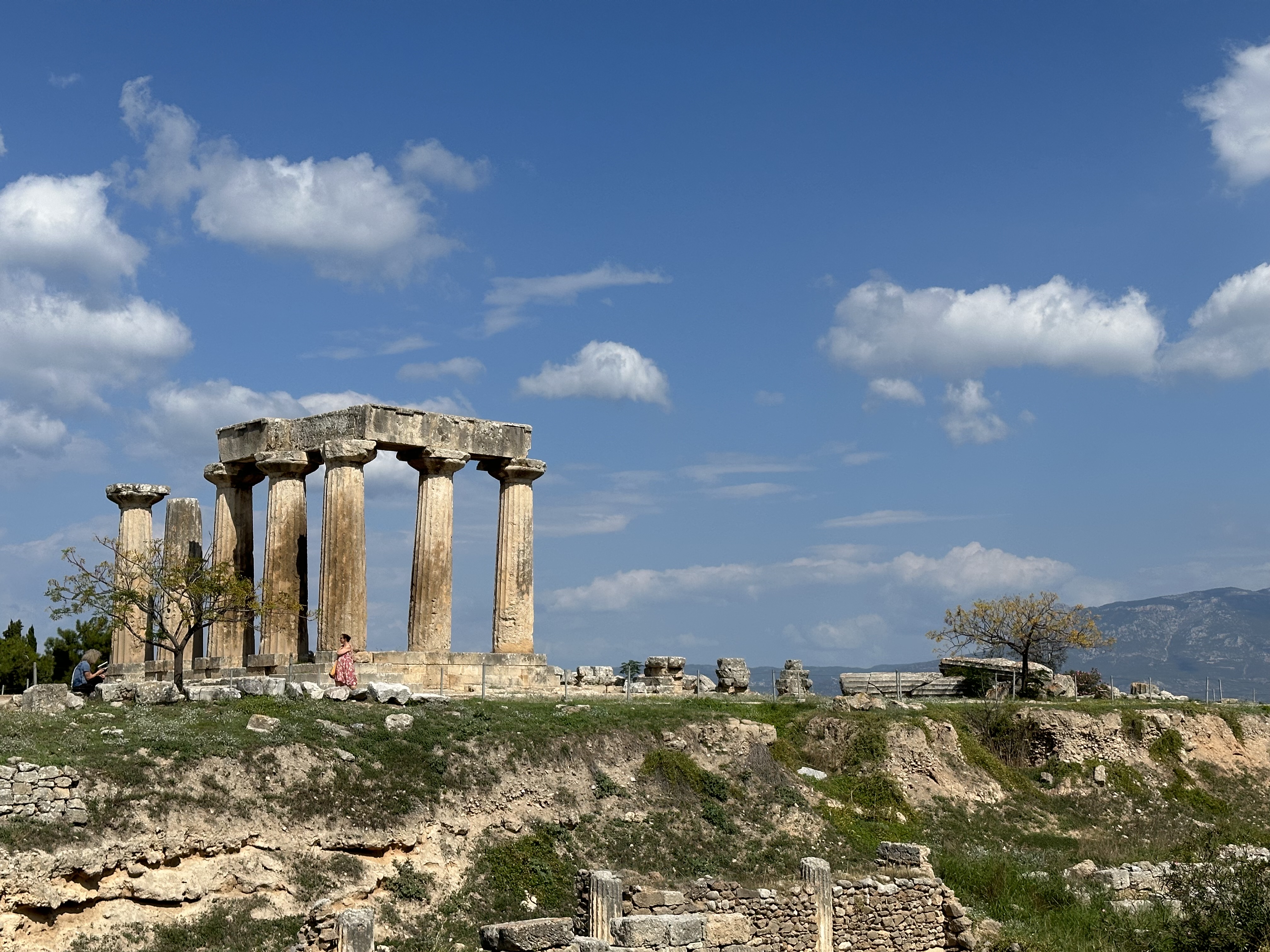
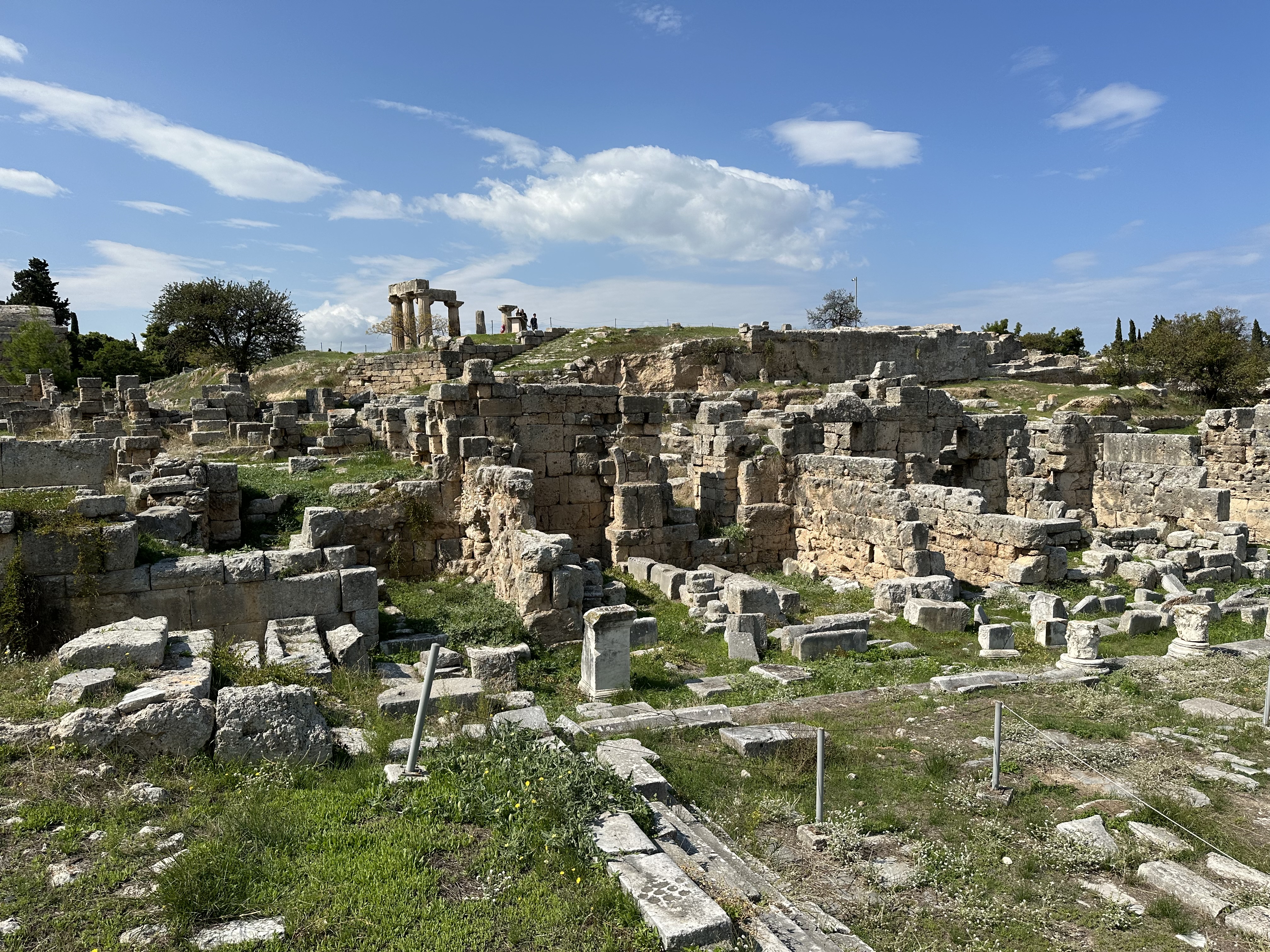
On the third day, we boarded a bus and drove to Ancient Corinth, where the Apostle Paul spent at least a year and a half. He joined Aquila and Priscilla, who were also tentmakers. Emperor Claudius had banned them and all other Jews from Rome, so they fled to Corinth.
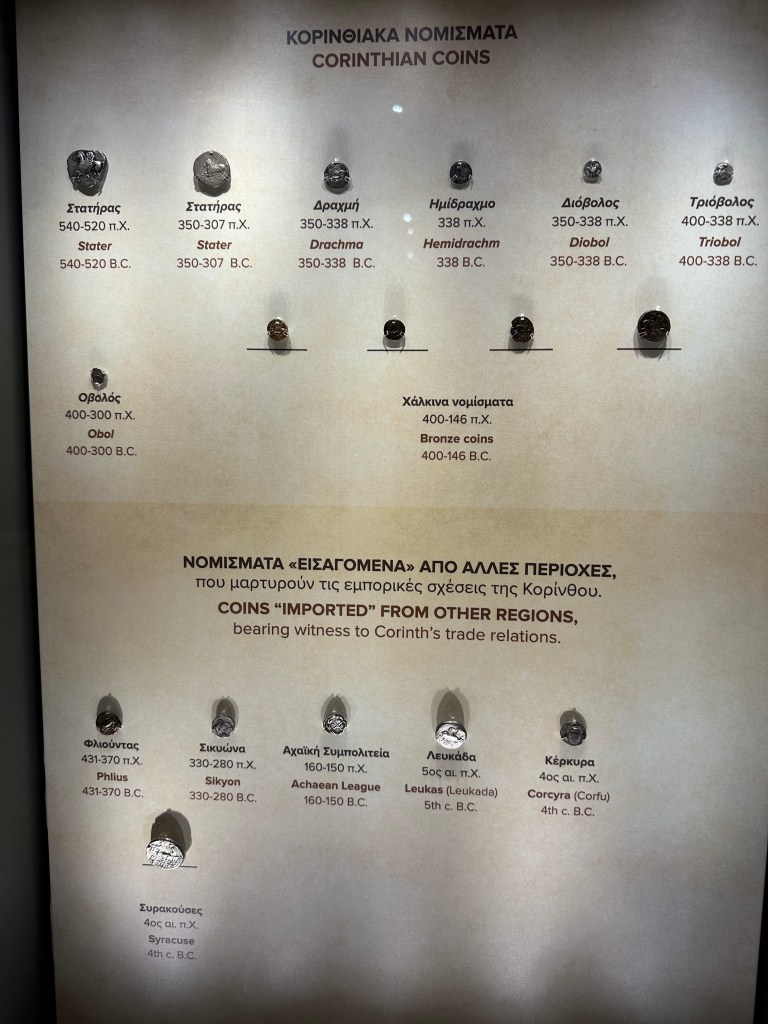
In its time, Corinth was a prominent trading port for goods going east and west. Consequently, Corinth buzzed with the wide assortment of folks, many sailors happy to have their feet back on the ground. Paul took note of the various cultures, ethnic groups, and religions represented in this mass of people coming and going.
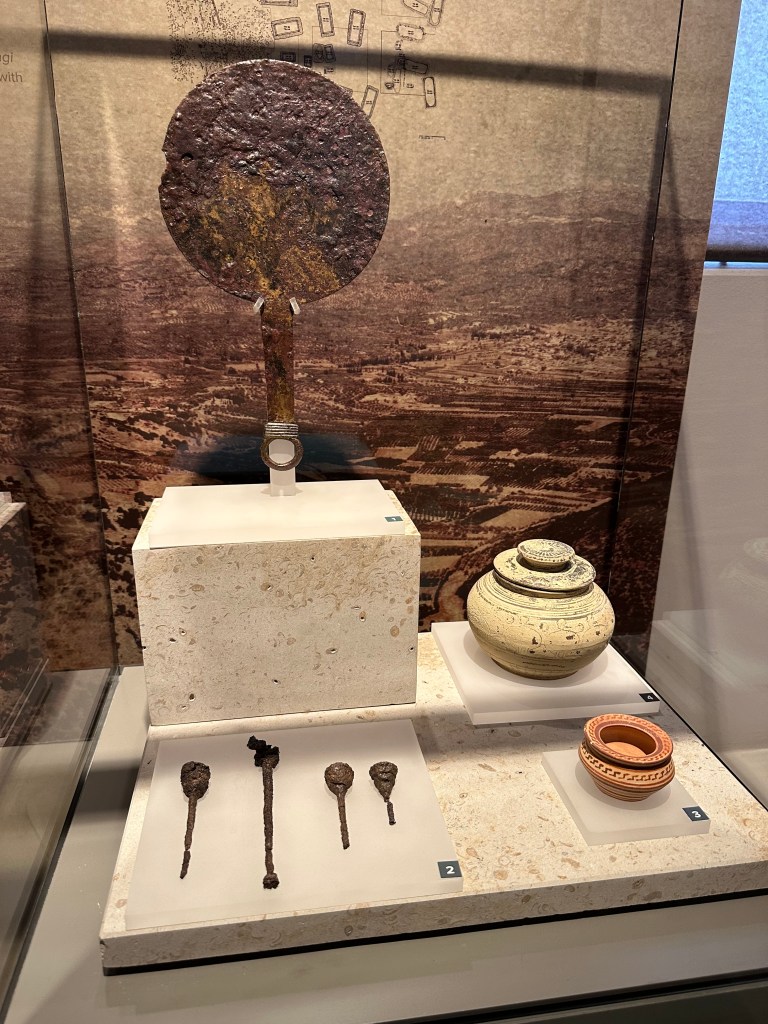
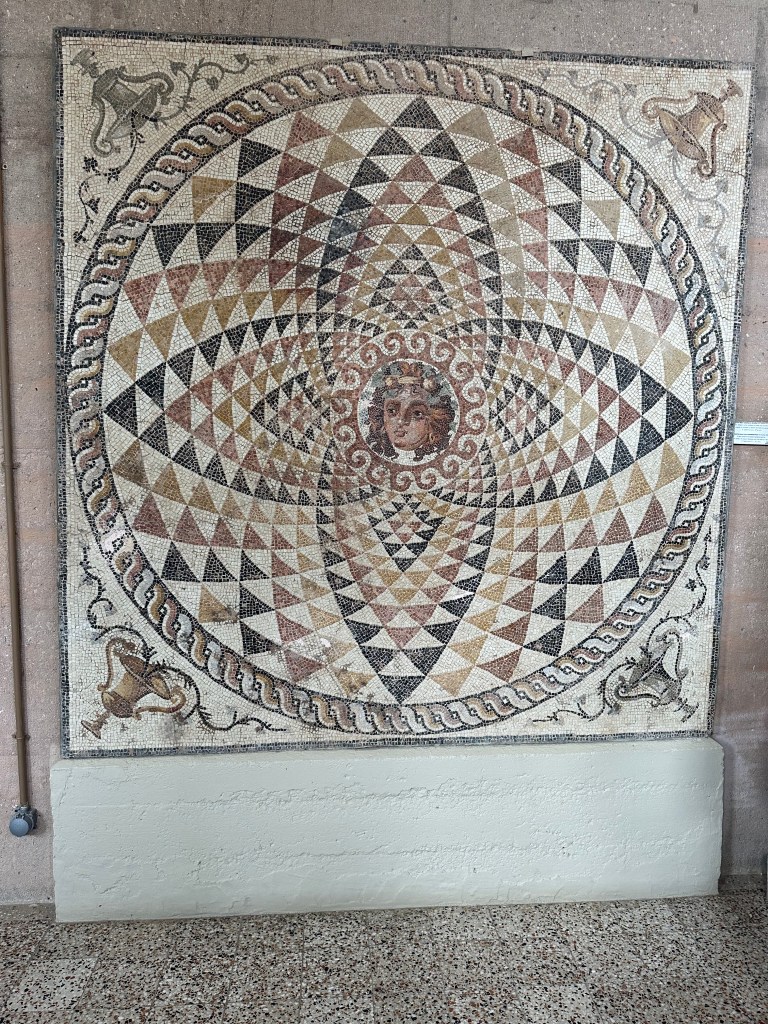
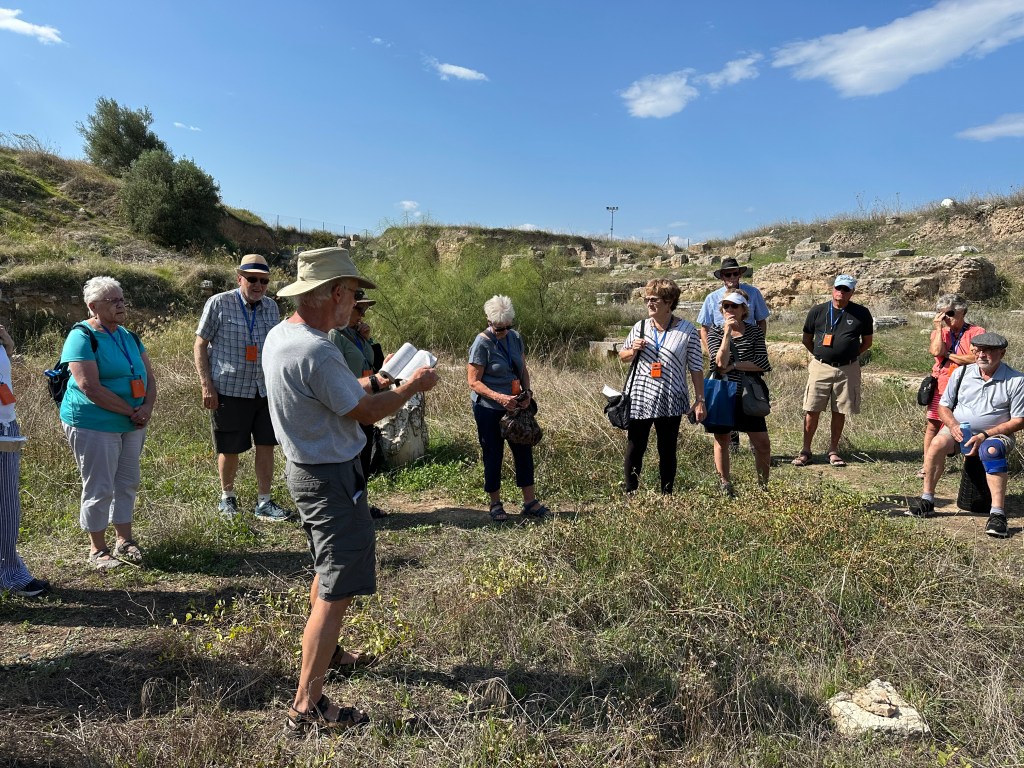
Our local guide gave us a tour of the Corinthian Museum, which displayed many curious artifacts. We sat under the shade of a large tree as our tour guide, Linford, gave us the biblical background and scriptures of Paul’s time in Corinth.
We were then free to roam the ruins under a beautiful blue sky. It was clear that Corinth was booming when Paul lived there in the first century.
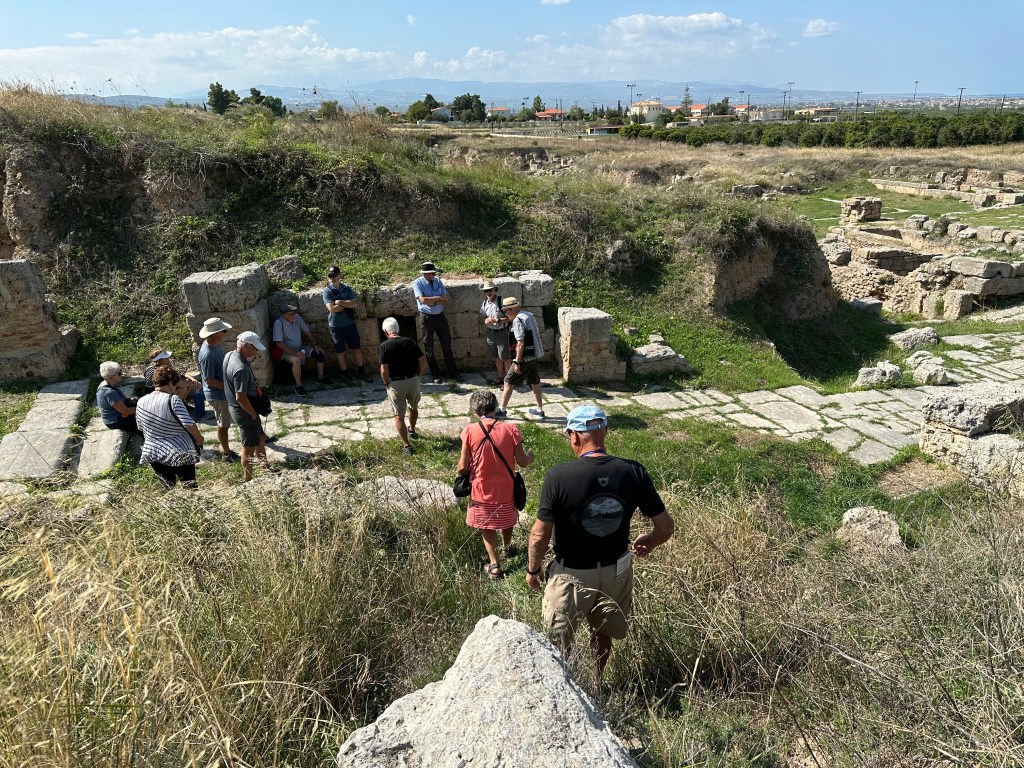
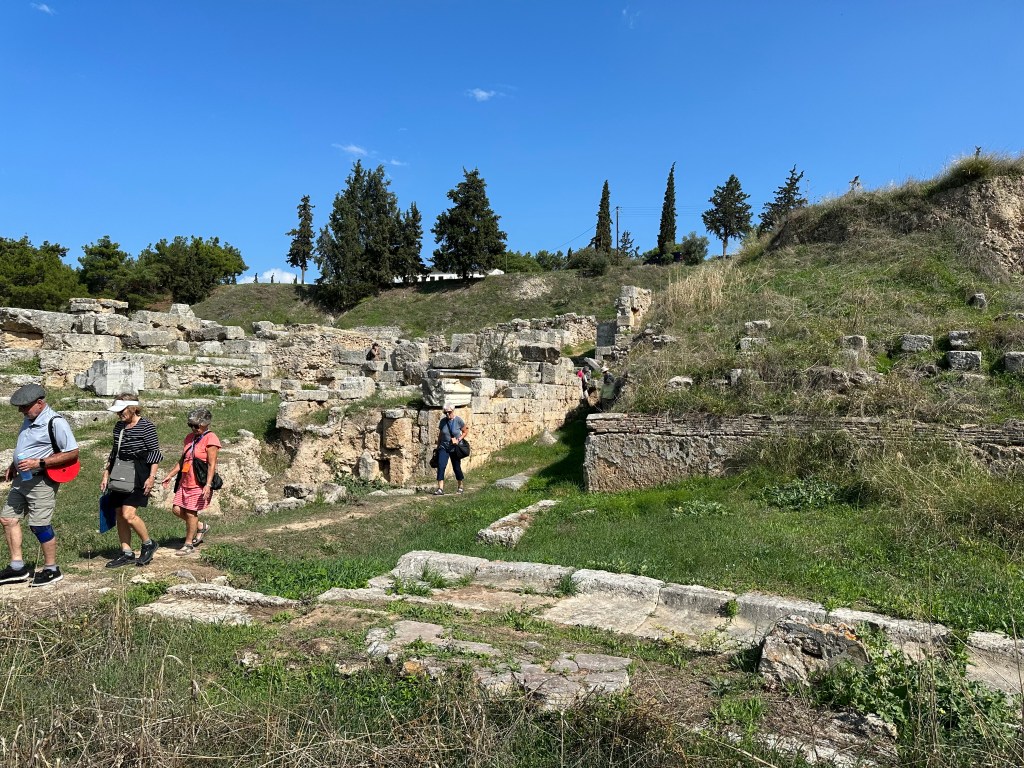
After a light lunch in a family-owned cafe outside the gates of Corinth, Linford led us down a hill towards the Gulf of Corinth. He had a couple surprises for us. We walked across an ancient Roman road into the ruins of an old theater, where the sailors, merchants, and residents were entertained.
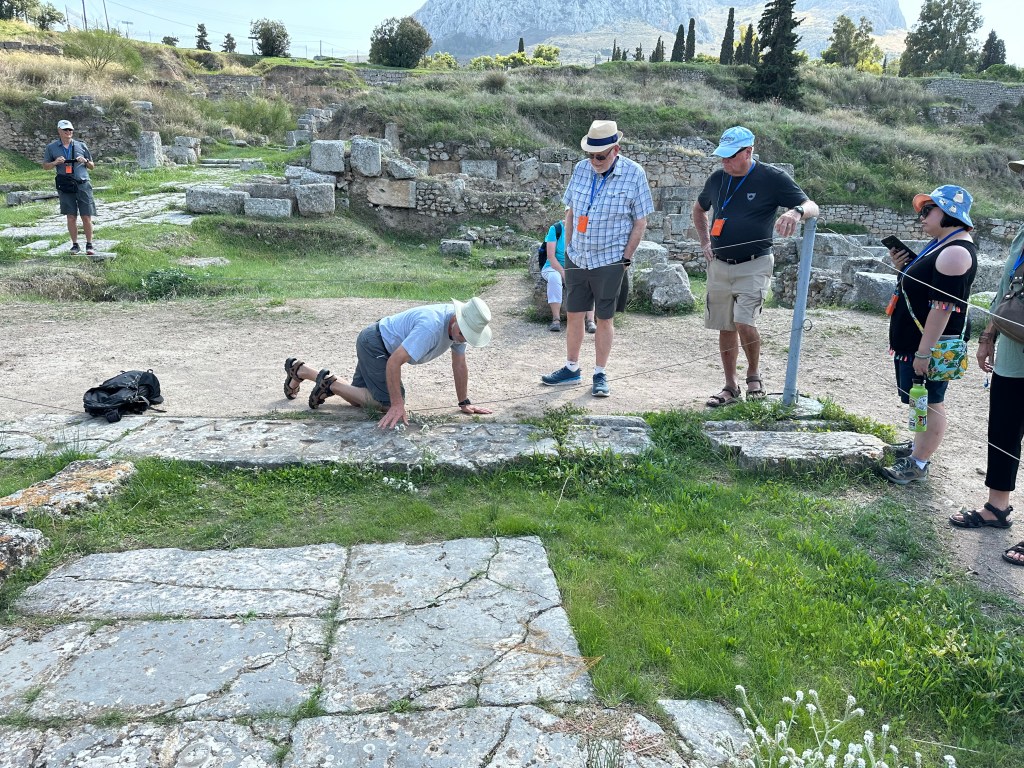
The first surprise was that this theater could be flooded to allow for seafaring-themed performances with which the sailors in the audience could connect. The second surprise was an etching on a large stone that bordered the road just outside the theater.
The engraving honored Erastus, the city’s director of public works. Paul mentioned Erastus in Romans 16:23, giving unequivocal evidence that Paul was indeed in Corinth.
Please click on the photos to enlarge them.
Before leaving the area, the bus took us to the Acrocorinth, a fortification on the mountain beyond Old Corinth. We had a beautiful view of the sea below. On the way to Cornith, we had stopped at the Cornith Canal, a four-mile-long channel cut through solid rock designed to shorten the route for sailing boats.
This was a day I had long anticipated. Neither my wife nor I had ever been to Greece, and I especially looked forward to visiting the Acropolis. Our tour group of two dozen people saw some of the locations the Apostle Paul did on his multiple trips around the Mediterranean Sea. Linford Stutzman, a retired professor from Eastern Mennonite University in Harrisonburg, Virginia, and his wife, Janet, led the trip.
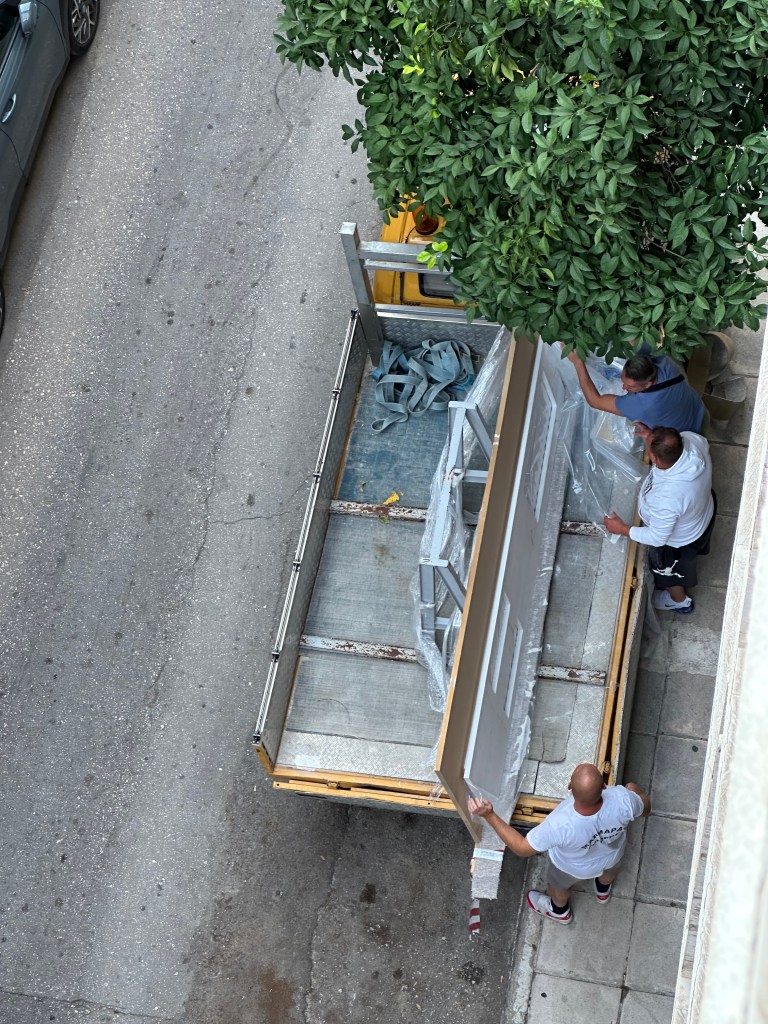
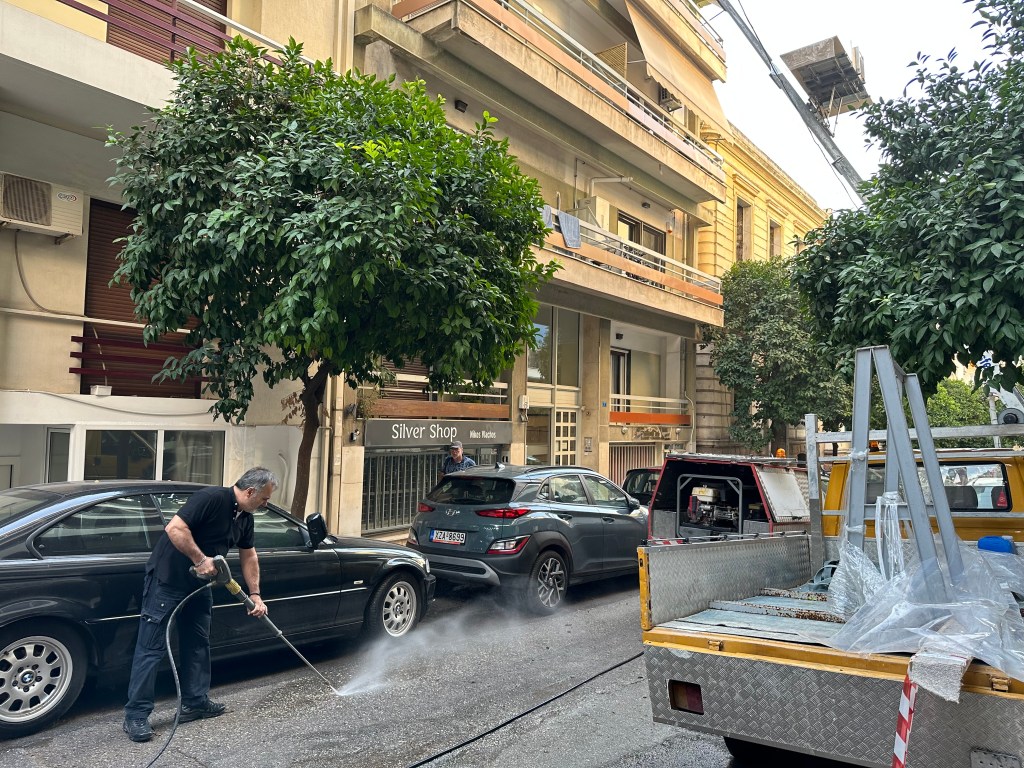
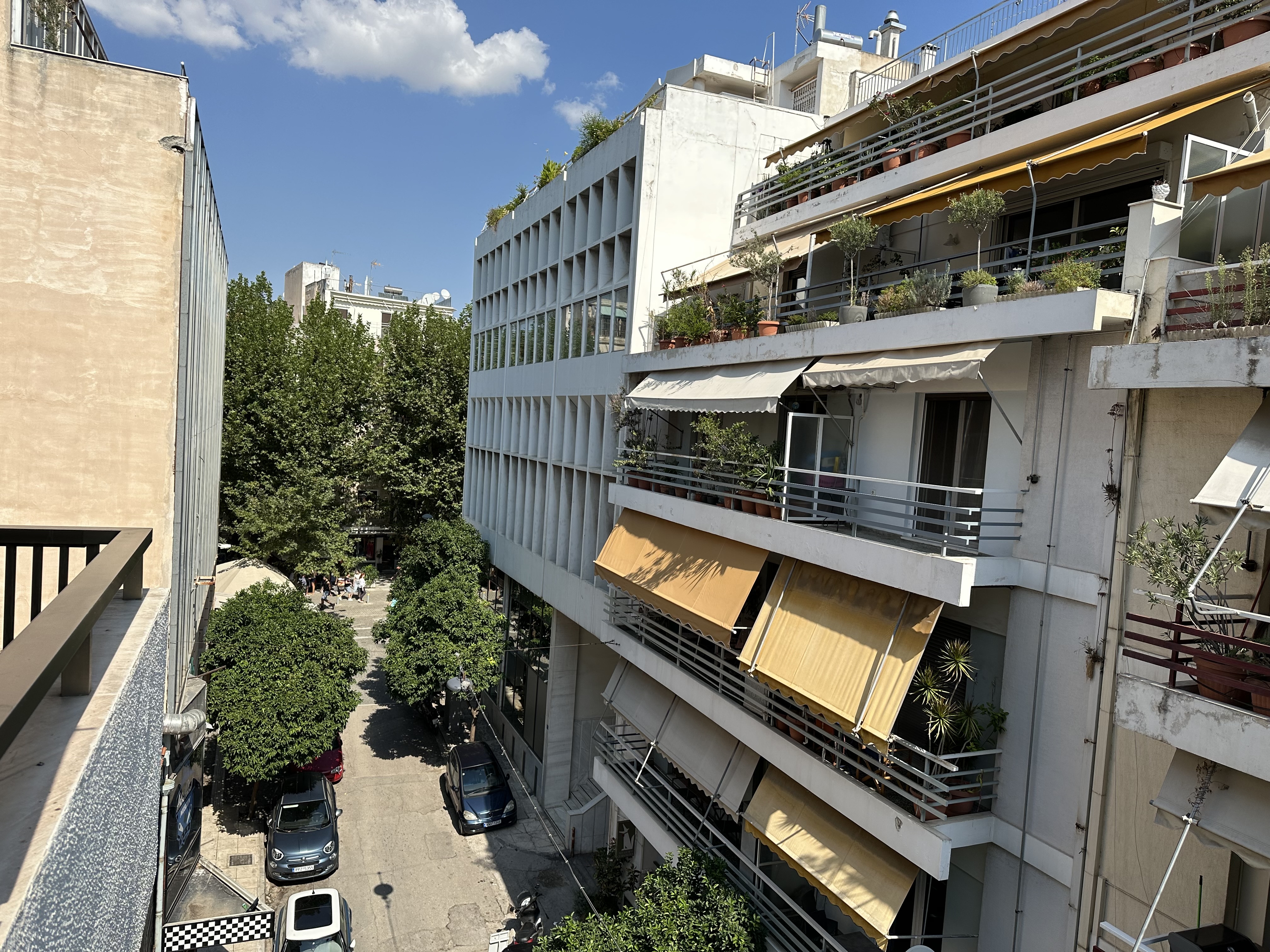
The Acropolis was an easy walk from our hotel in Athens. Before we gathered on the narrow street in front of the hotel, I noticed a large crane extending from our side of the street to the top floor of the apartment building across the way. It was set up to deliver some heavy marble countertops for the kitchen that was being remodeled.
Walking down to street level, I noticed a young woman photographing every step. I asked her if that was her apartment, and she said she was a civil engineer in charge of the project. She was documenting how the crane would get the heavy pieces up to the apartment for another client in London, England, who would do the same thing.
About that time, city workers came down the alley, pressure washing the sidewalks and the street. No construction crew would stop them. They merely worked around them and kept going.
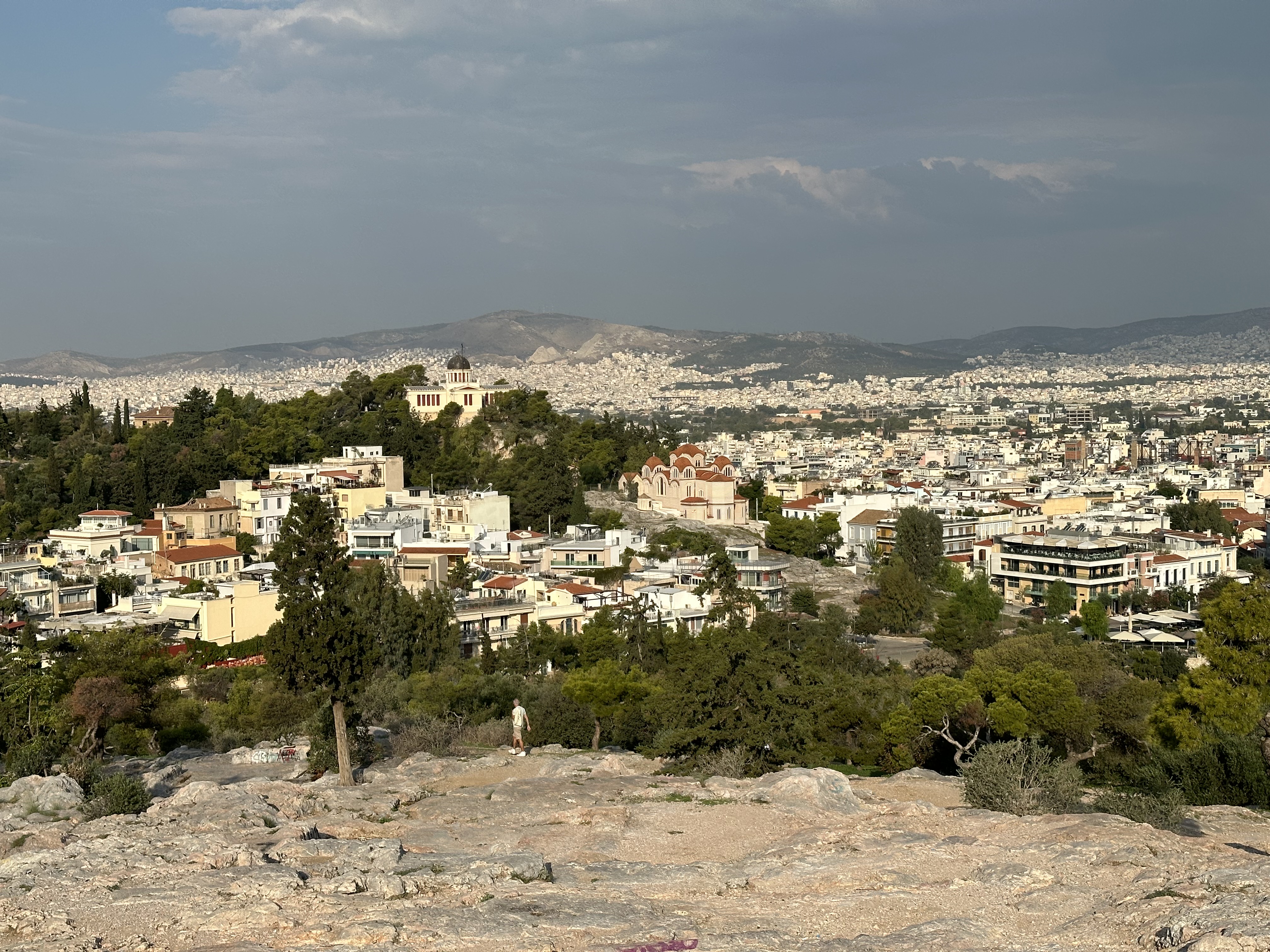
The rest of the group arrived, and we were off for the Acropolis. However, before entering the historic grounds, Linford wanted to give us some background on Paul and the sermon he delivered on Aropagus Hill, sometimes referred to as Mars Hill, as outlined in Acts 17:22–31.
From the hill, we could see the reconstructed Stoa of Attalos next to the Ancient Agora of Athens, where Paul spent time observing and conversing. Beyond was the sprawling city of modern Athens.
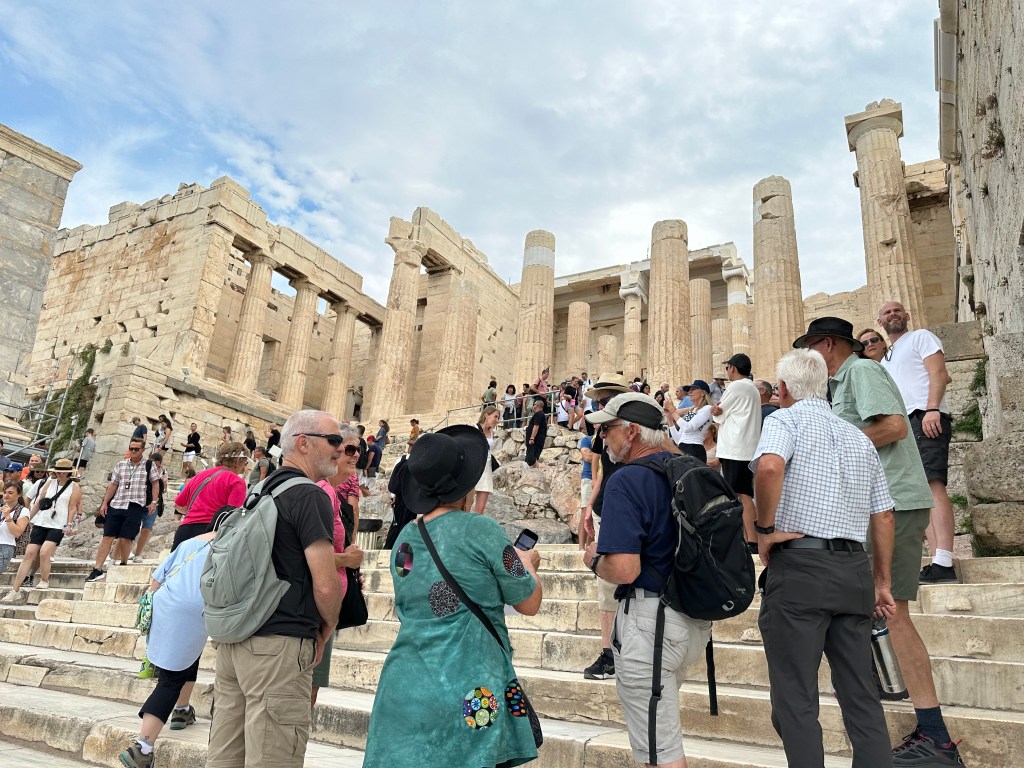
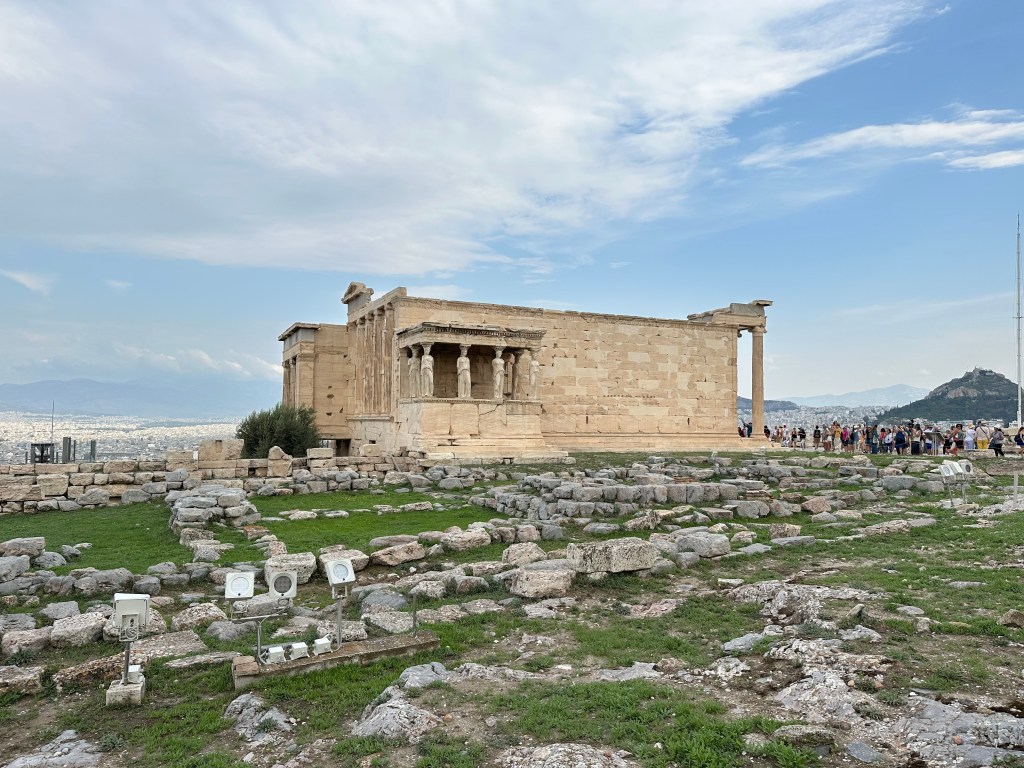
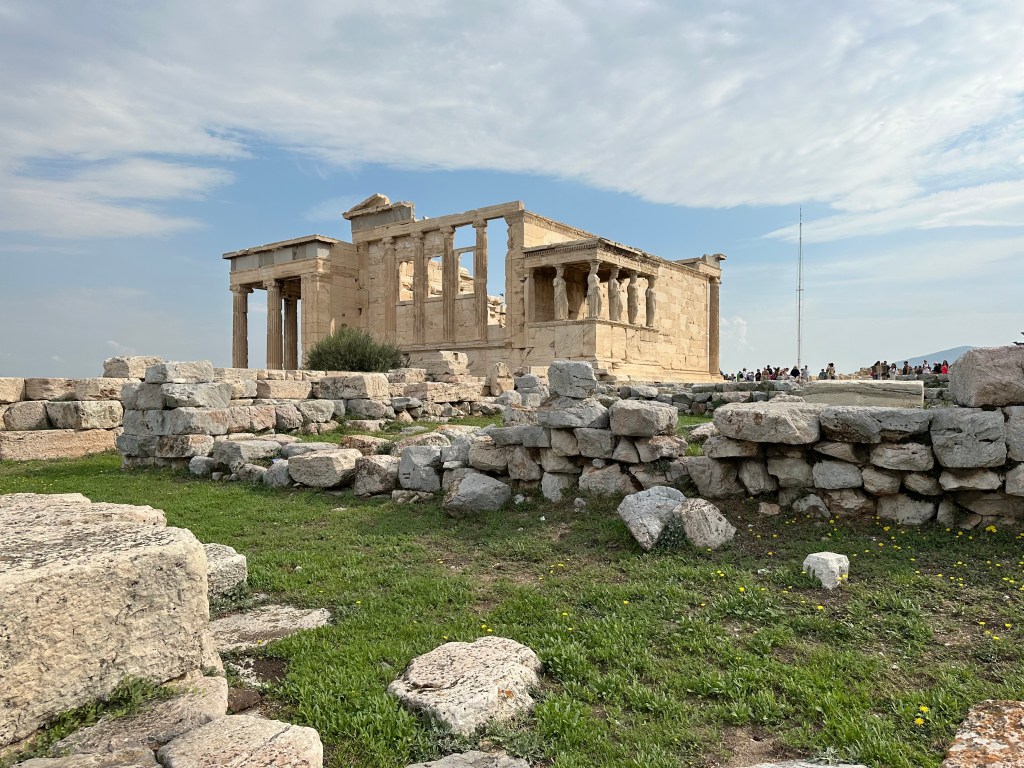
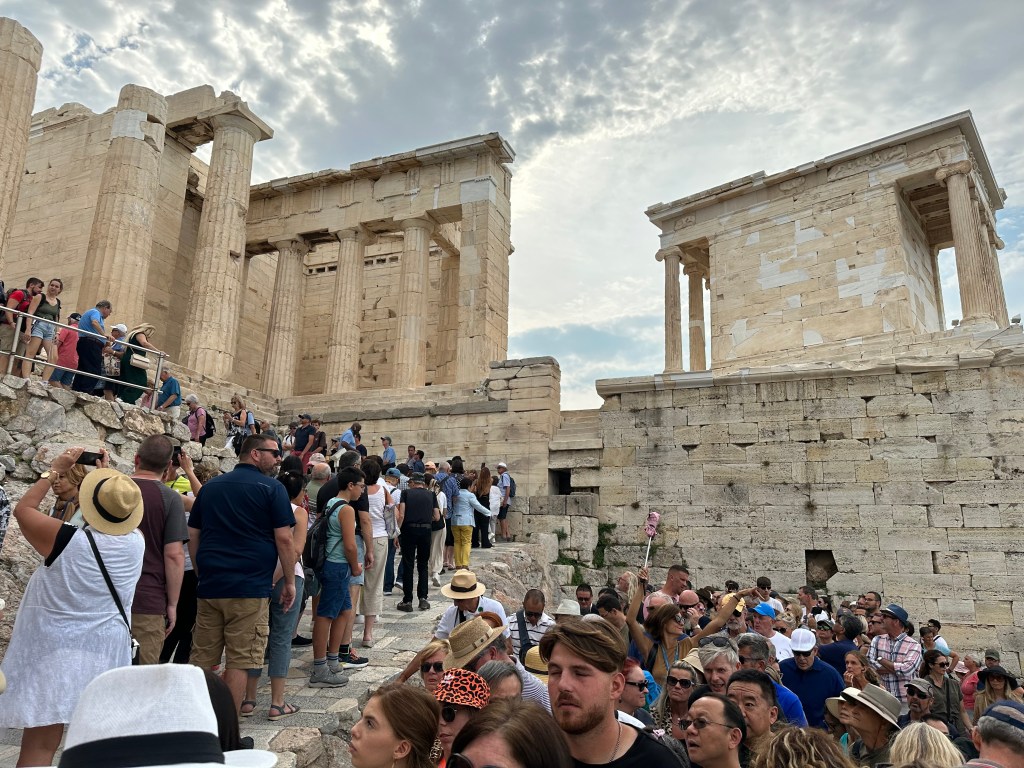
After Linford’s talk, we were free to explore the Acropolis independently. The lines for tickets were long, but since we had tickets for mid-morning, we walked right in. Climbing the steps through and around those ancient columns was thrilling. When we reached the top, the Parthenon dominated the view.
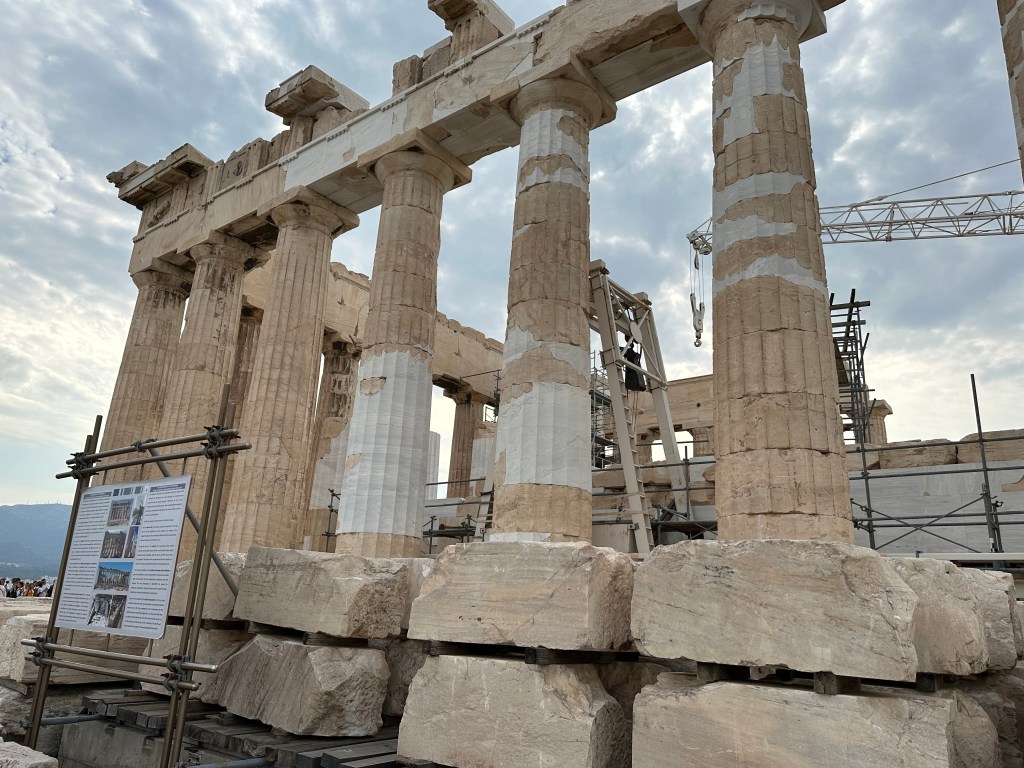
Like many old structures, the Parthenon is being repaired and stabilized for future generations. We had to watch our steps as we went. Old and worn rocks protruded from the walkways or were sunken into them. On the far side of the Parthenon, one elderly lady had fallen because of the uneven footing. Trained emergency personnel were working with her.
I was amazed at all the broken columns and cornices lying around. Most were roped off so visitors wouldn’t bother them. Many were piled up and cataloged in other areas atop the Acropolis.
As the sun rose higher in the sky, the temperature heated up. We decided to head back down the way we came. I was shocked at the number of people working their way up, making our exit difficult.
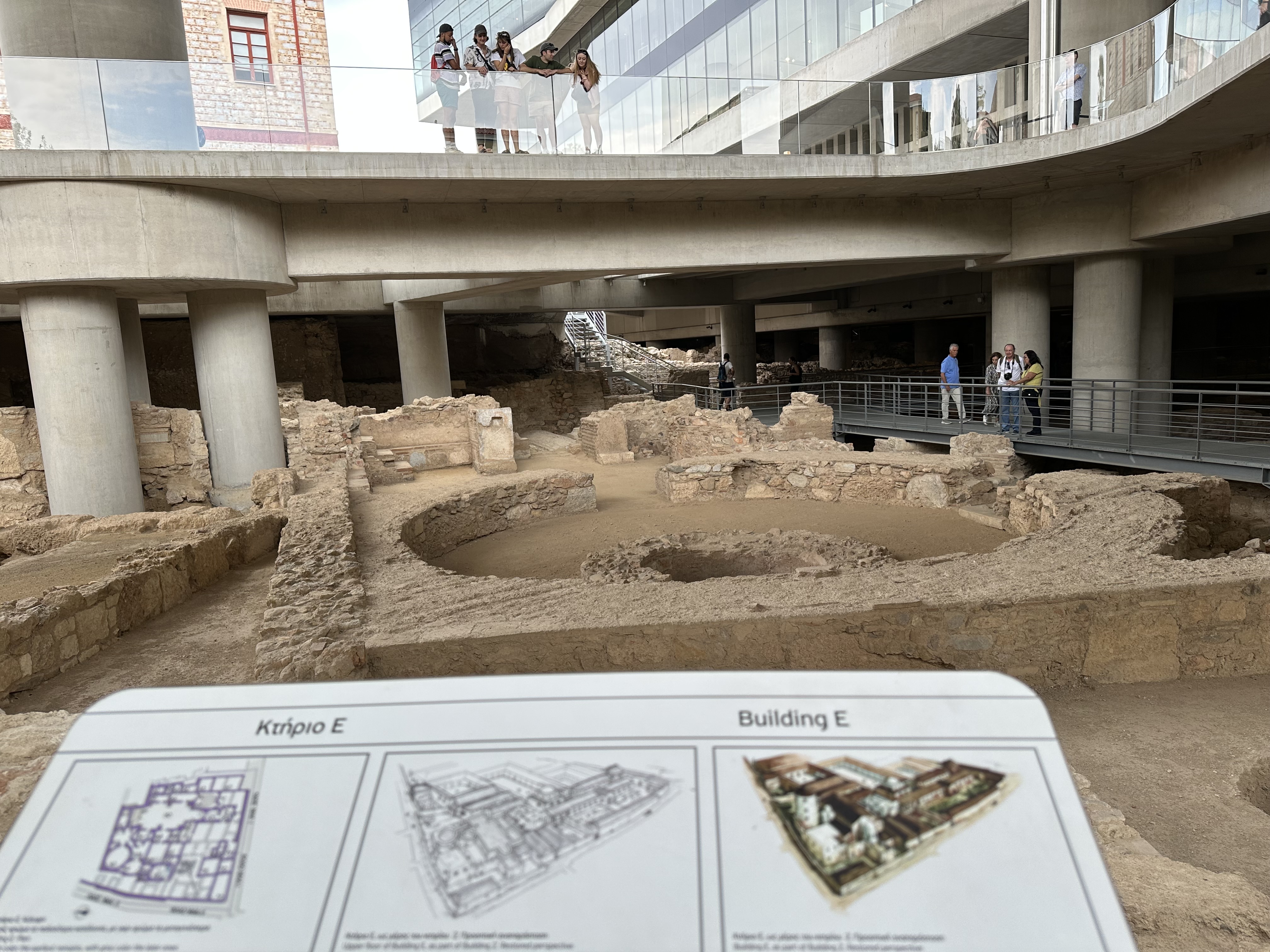
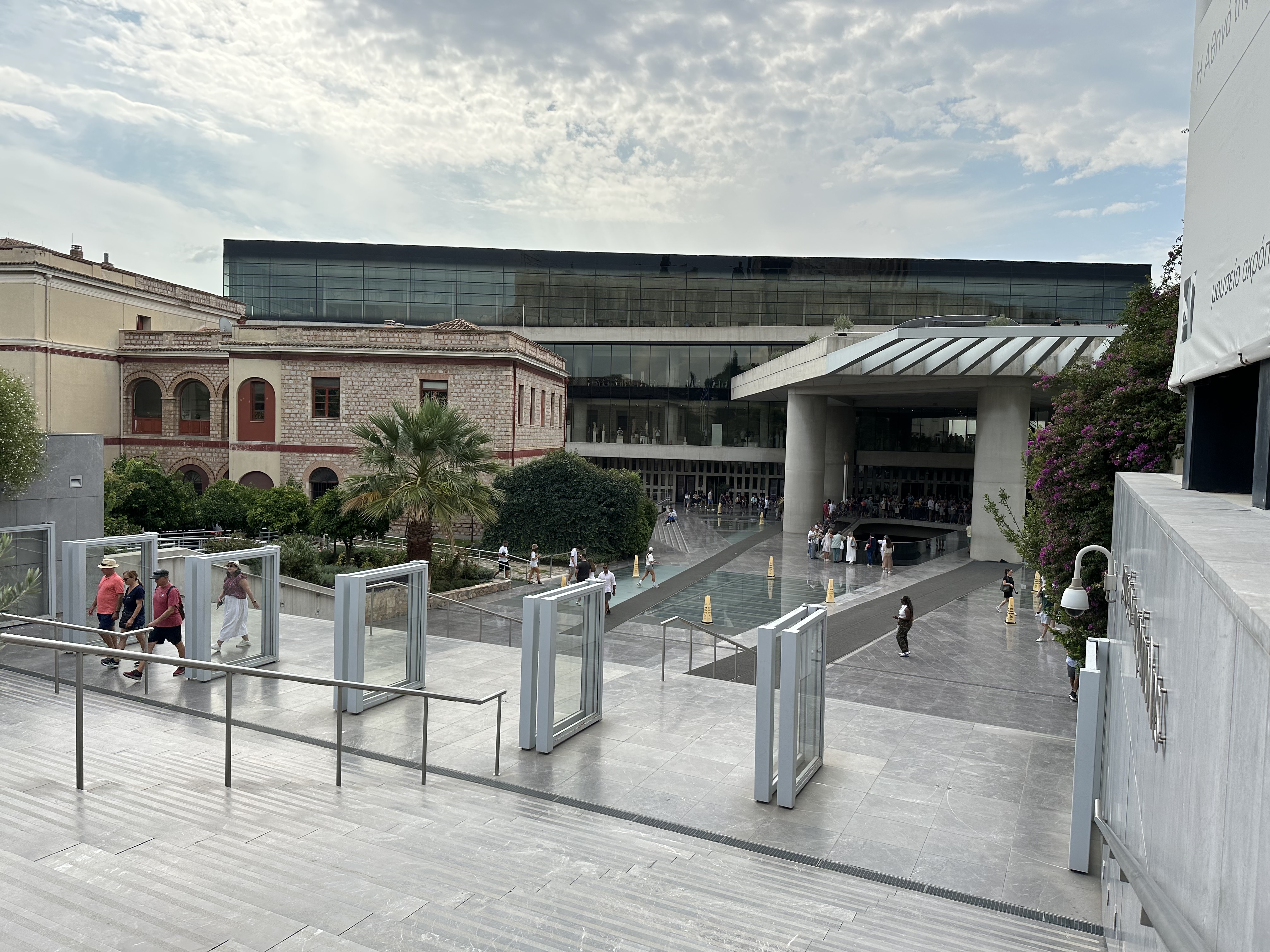
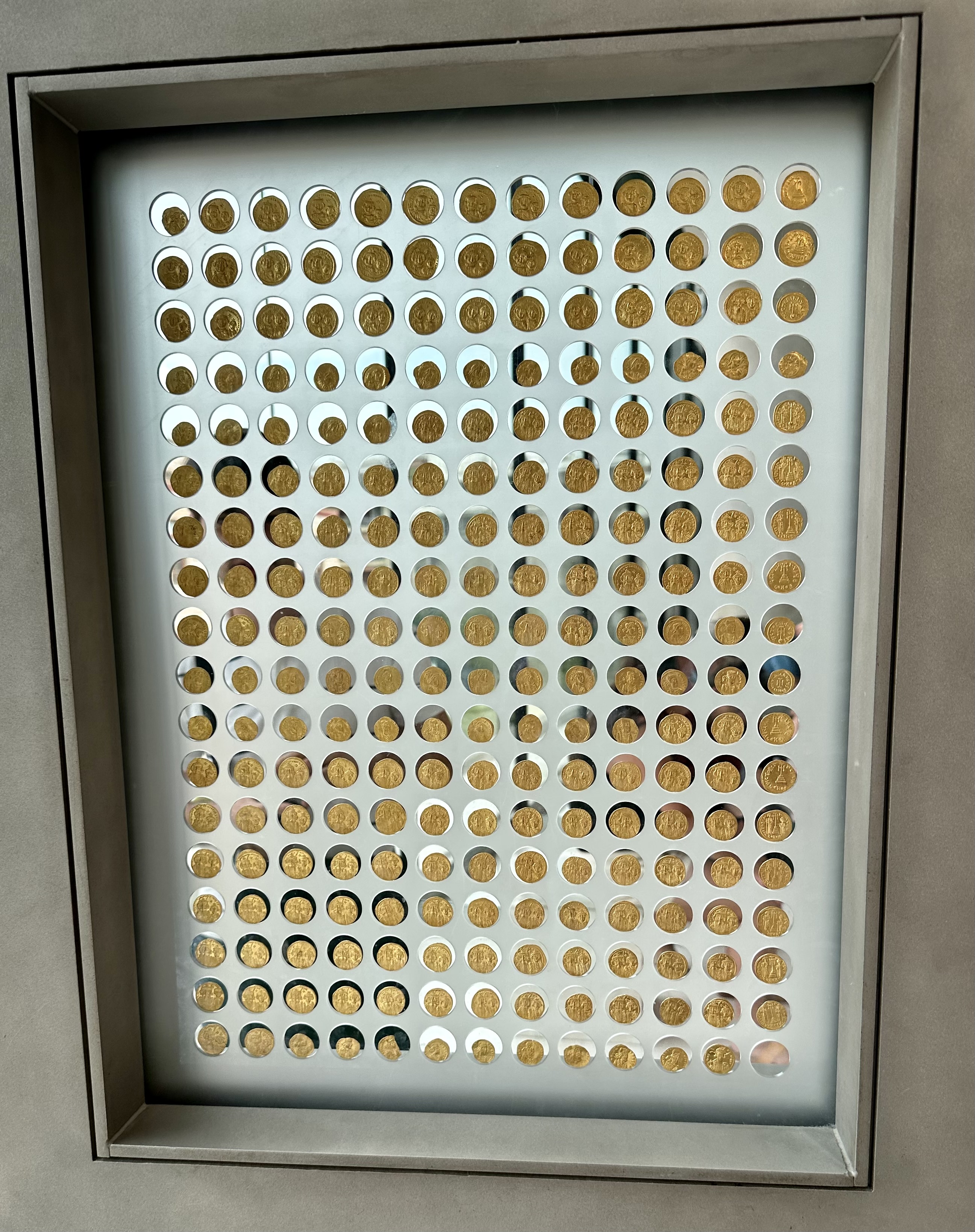
We headed for the Museum of the Acropolis just down the hill. Our first stop was the cafe for a light lunch and to cool off. The museum was huge and had thousands of artifacts from the Acropolis and explanations of their meaning and importance.
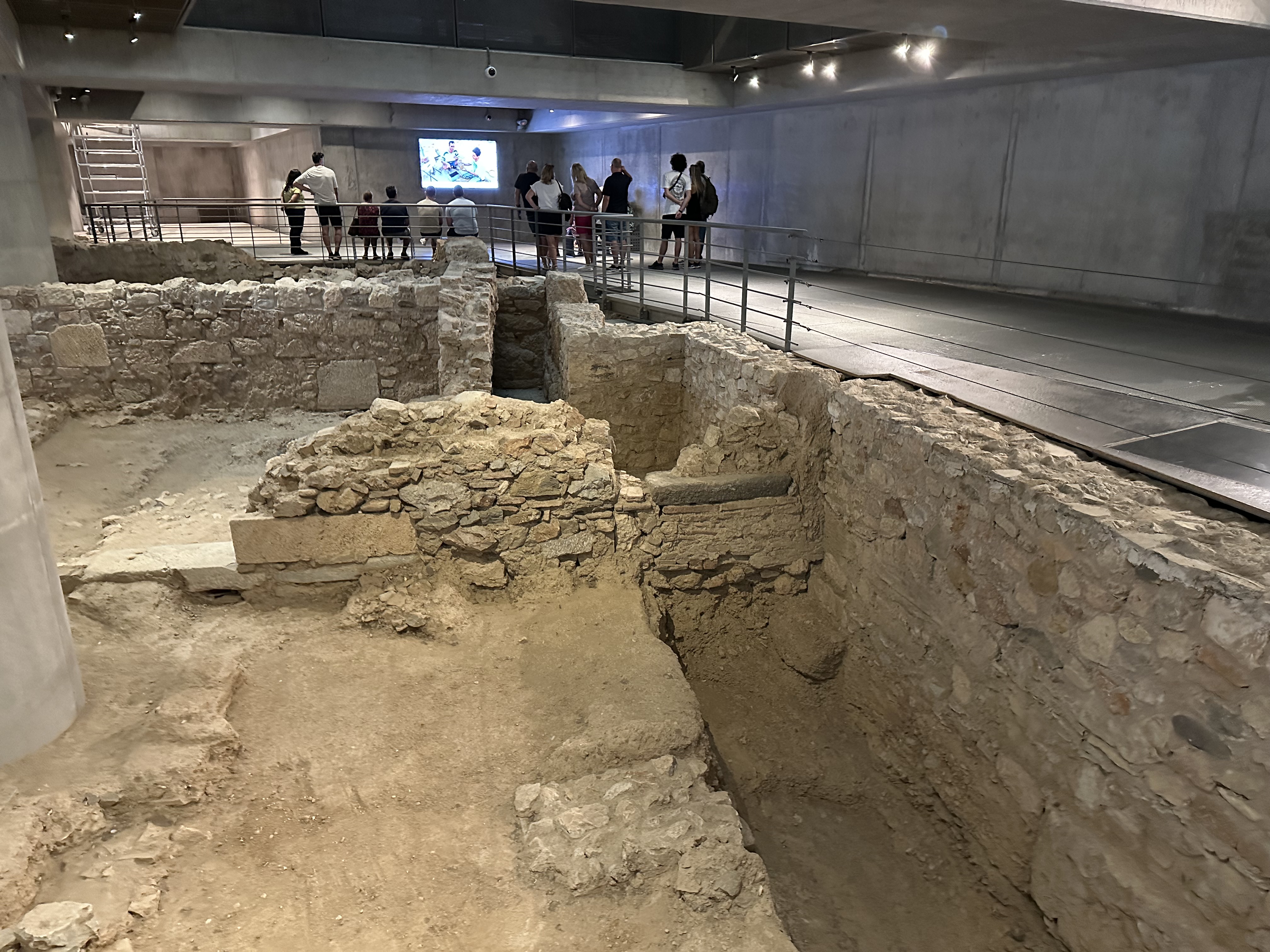
Another interesting feature was that the museum was built over an active archeological dig. I found that fascinating and enjoyed seeing the various rooms of the homes being excavated. The water and sewer systems were equally interesting.
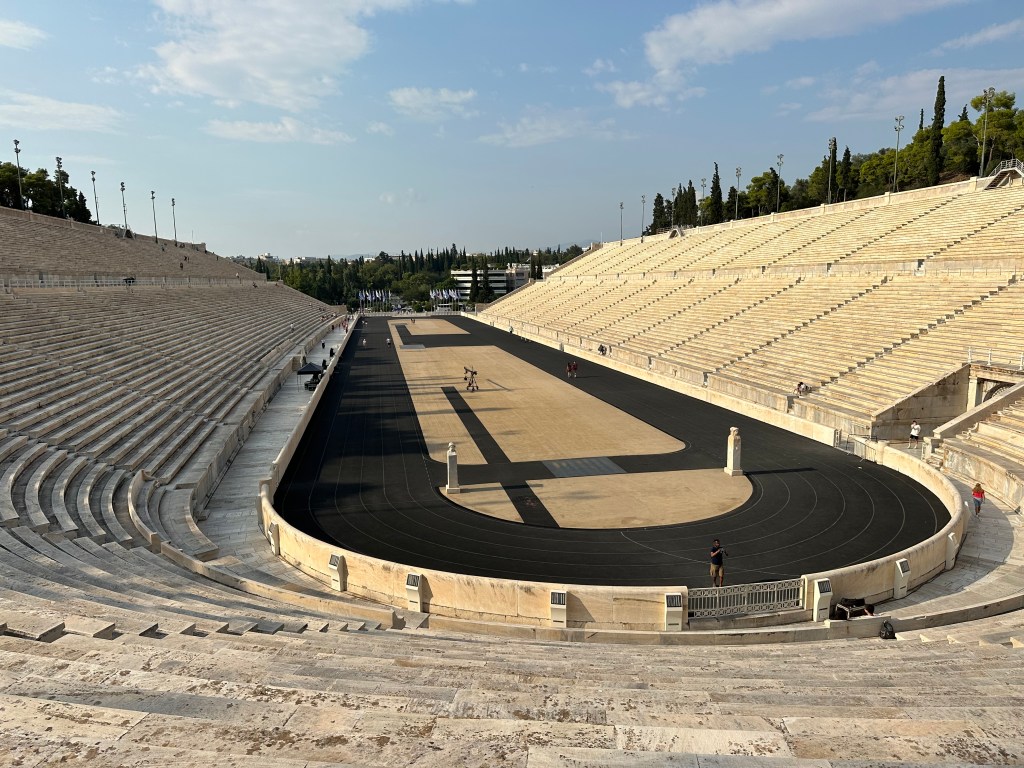
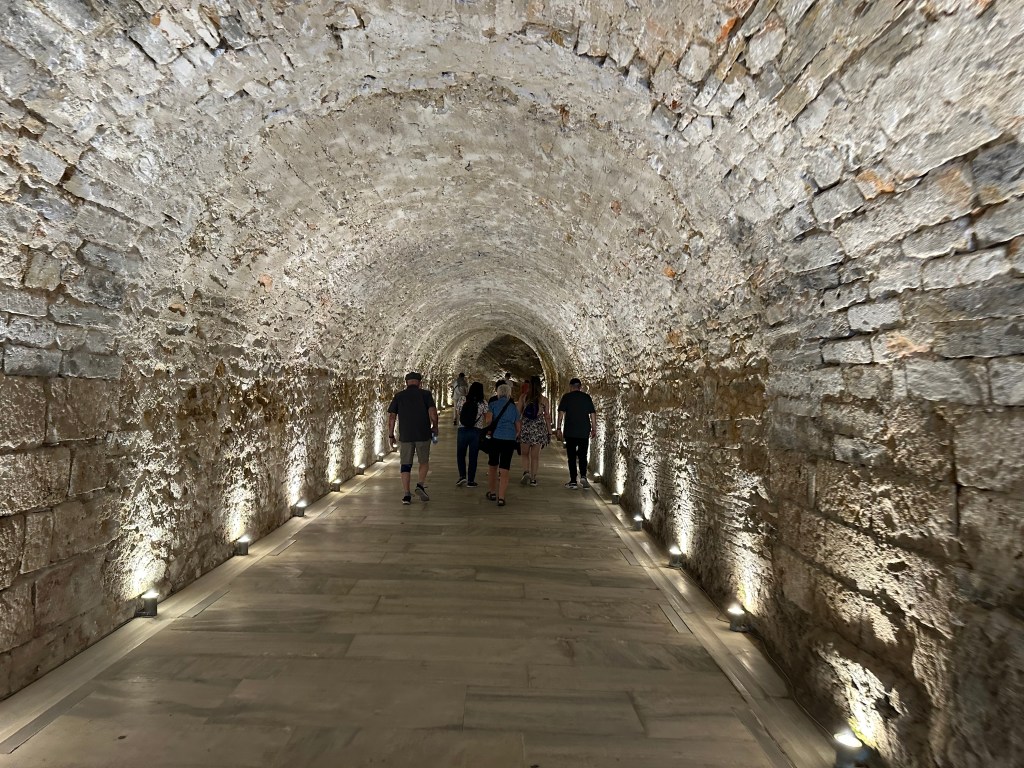
After resting a while, the group hiked to the site of the original modern-day Olympics, which began in 1896. The stadium is now reconstructed but does contain a few pieces of masonry from the original Olympic stadium. Of course, we visited the museum and gift shop. Our group ended the day with a nice meal together.
My wife and I recently returned from a two-week trip to Greece and Rome. I will share our experiences through a series of photo essays beginning today.
The trip’s theme was to follow parts of the Apostle Paul’s three trips between Jerusalem and Rome. Our guides were Linford and Janet Stutzman.
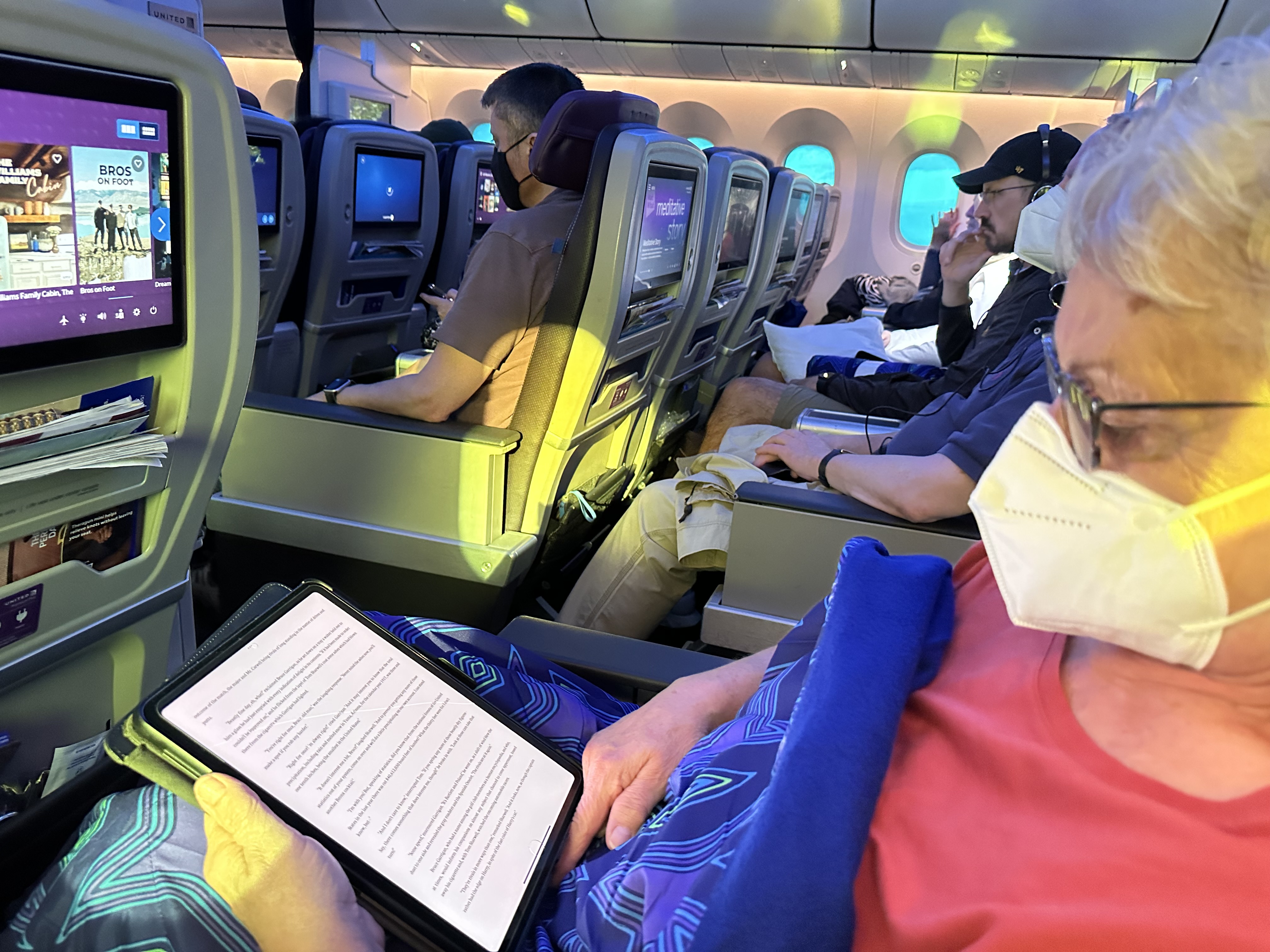
My wife spent part of the nearly 10-hour flight reading.
In 2004, Linford and Janet bought an old sailboat in Greece, fixed it up, and sailed the paths and ports of Paul while on sabbatical from Eastern Mennonite University, where Linford was a professor of religion. Their epic trip led to Linford writing an excellent book about their adventures, SailingActs.
Our itinerary began in Athens, where Paul preached a sermon on Aropagus Hill, just south of the Acropolis and the Parthenon. But first, we had to wait for all 24 group members to arrive, which they did by nightfall.
Consequently, our first day of the trip was spent traveling by air from Washington/Dulles International Airport to Athens. Once on the ground in Greece, our taxi took a circuitous route from the airport to the hotel due to a race for a cancer cure near the Acropolis. Many streets were blocked off for the 40,000 race participants.
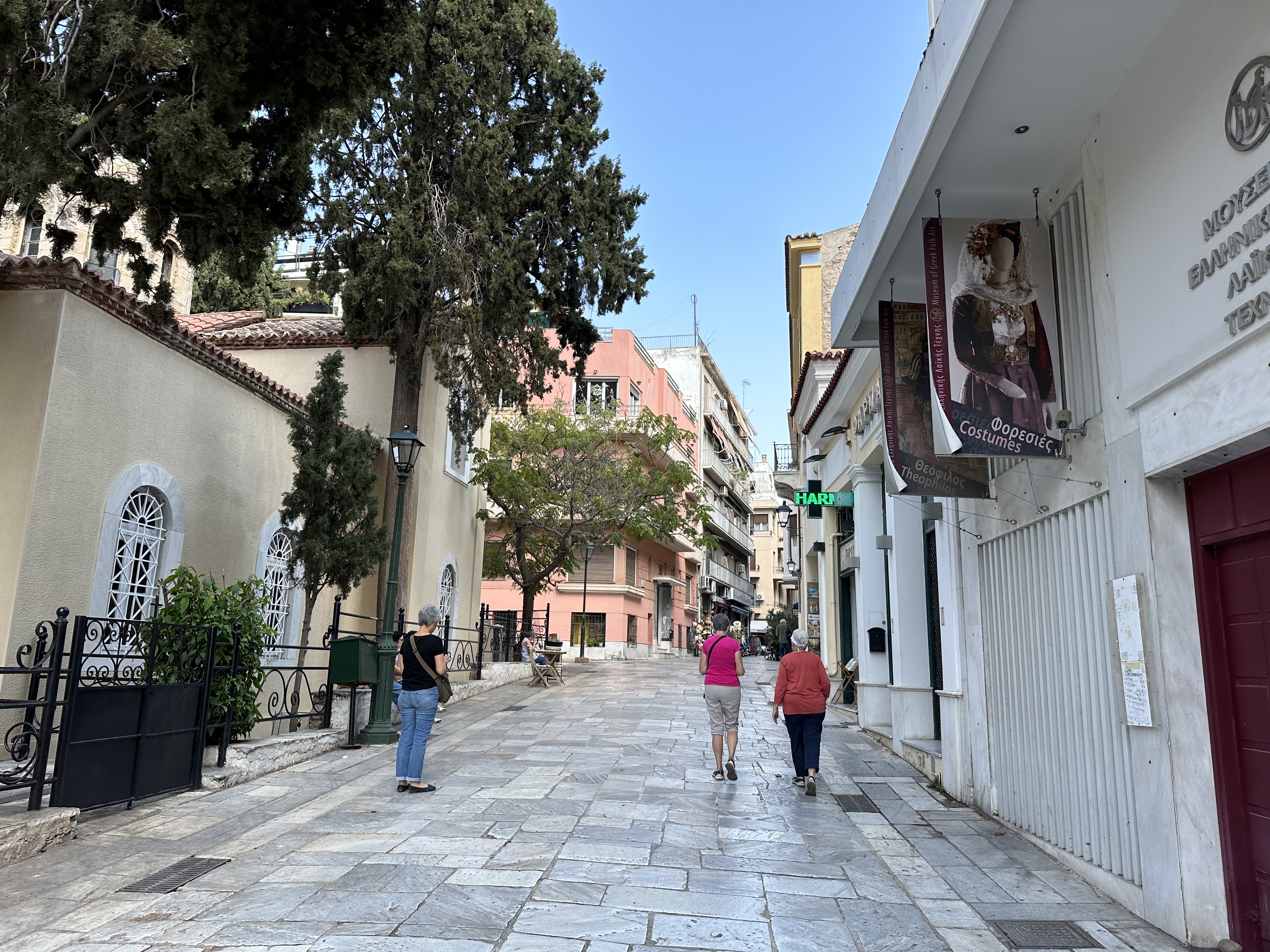
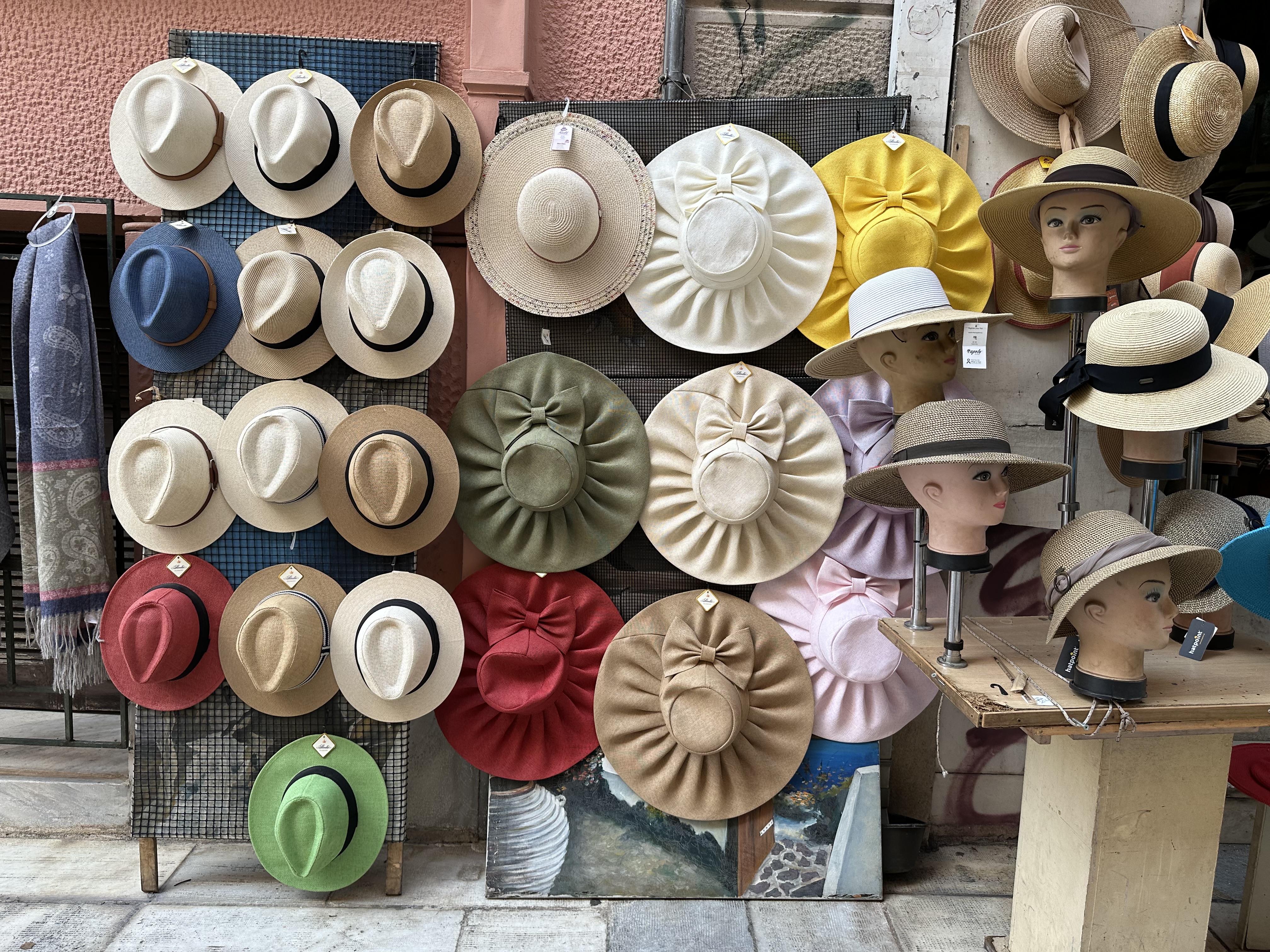
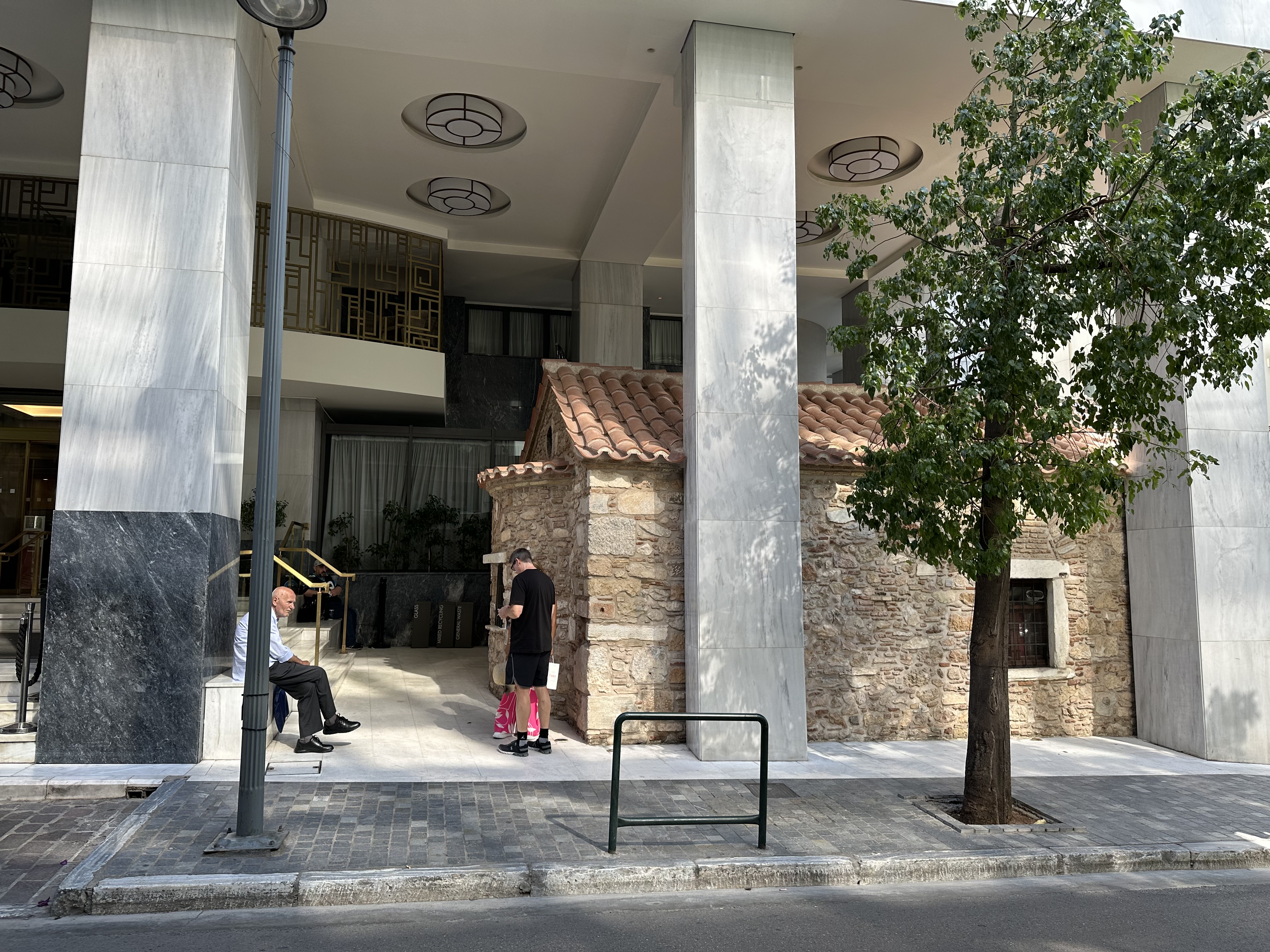
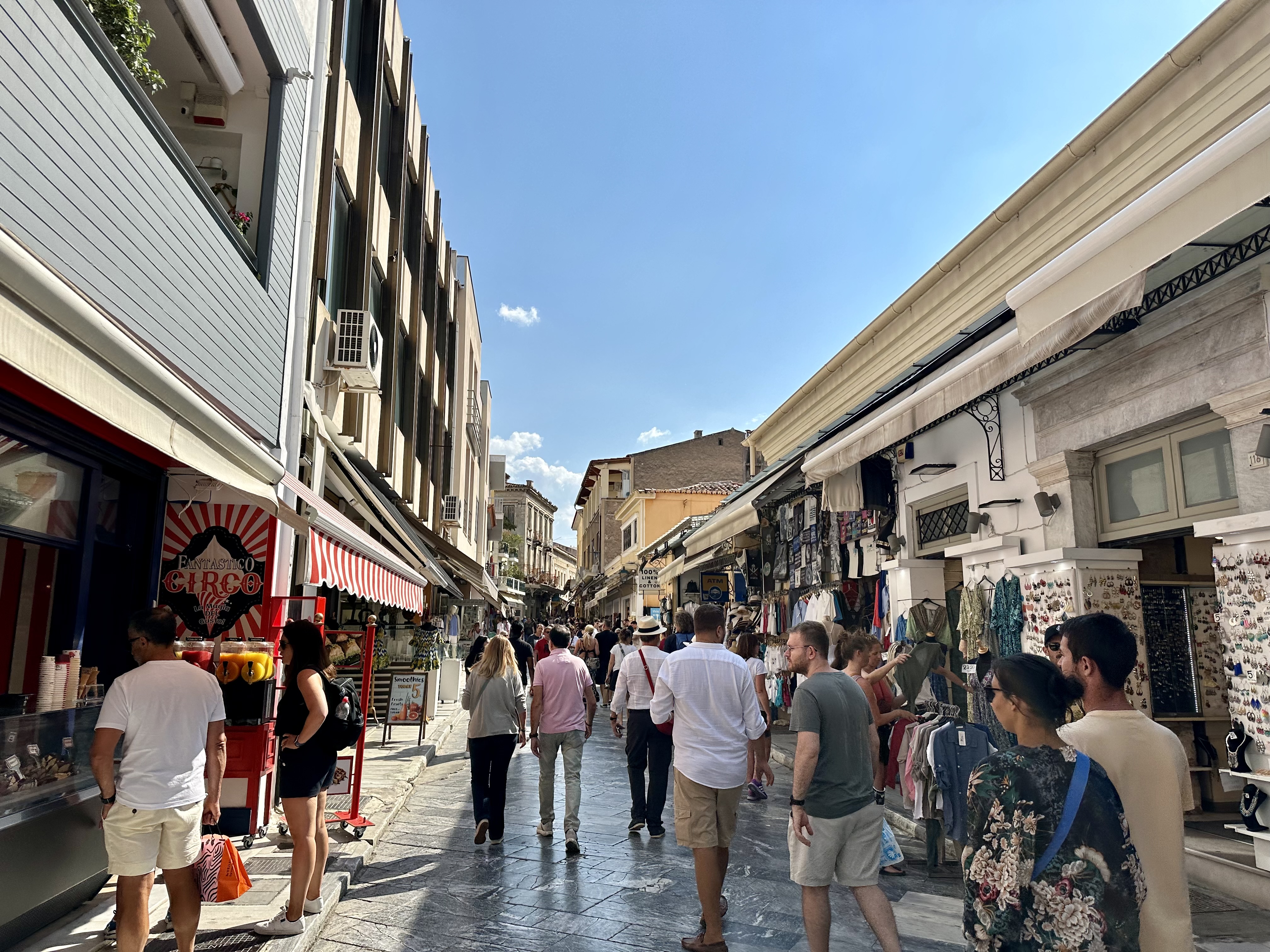
We spent the evening familiarizing ourselves with the area and shopped in the Plaka, a market/restaurant area between the Acropolis and our hotel. On our stroll around the area, we did get our first glimpse of the Acropolis.
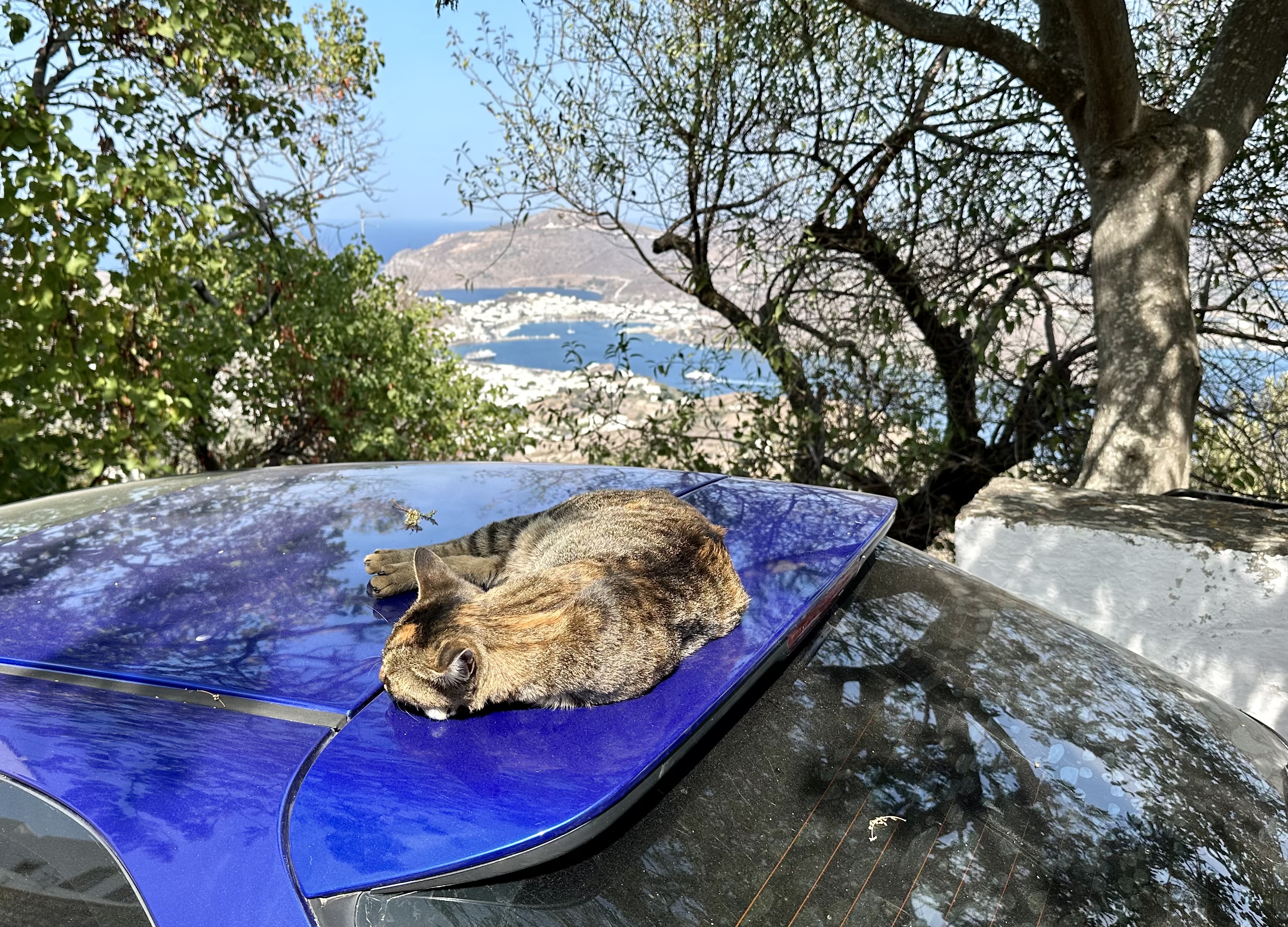
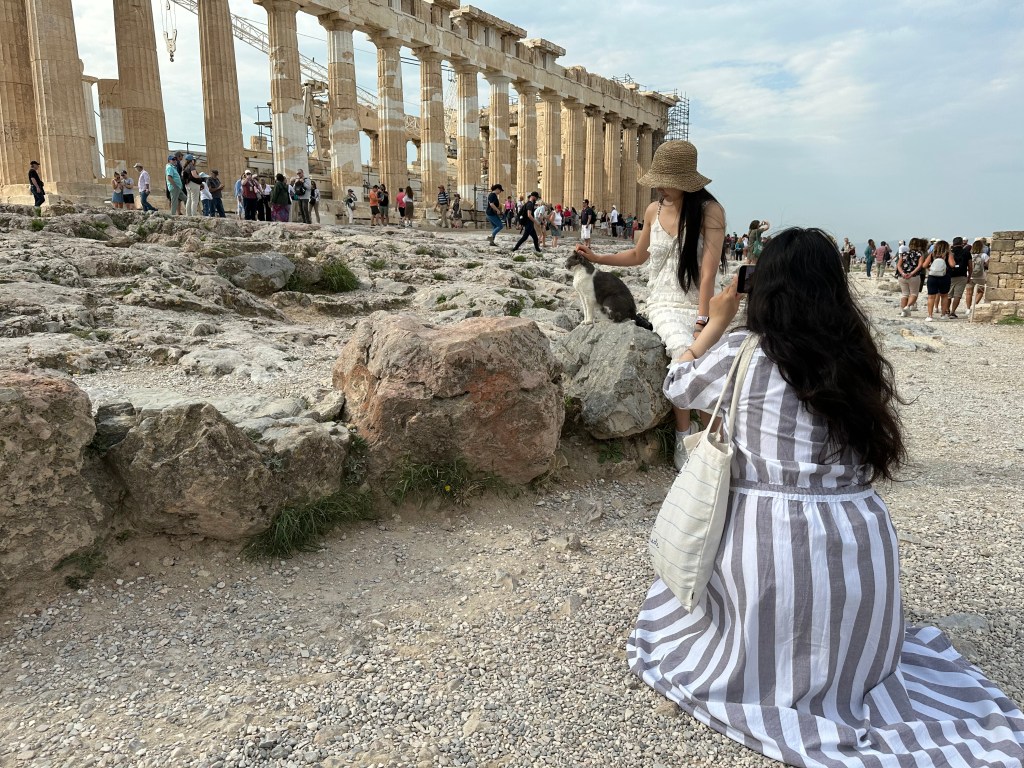
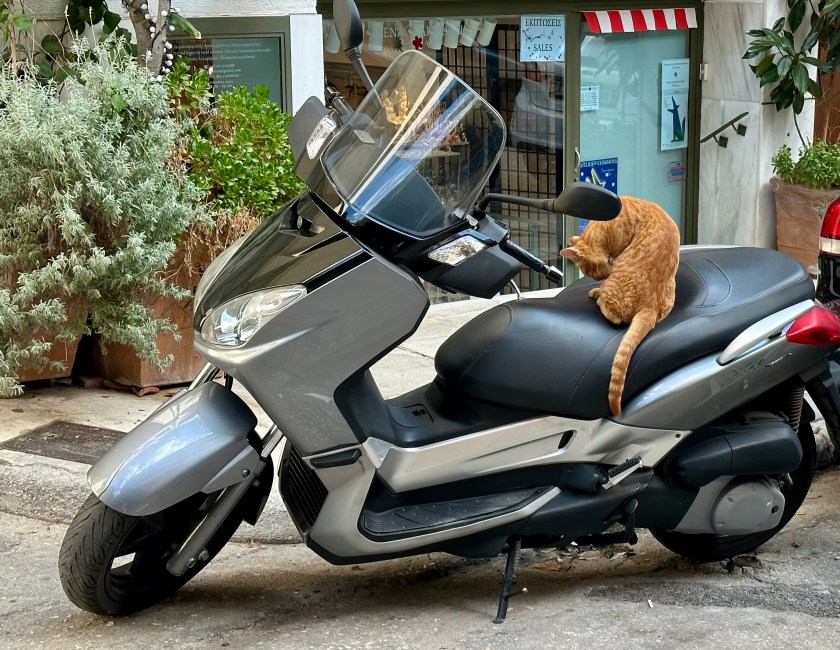
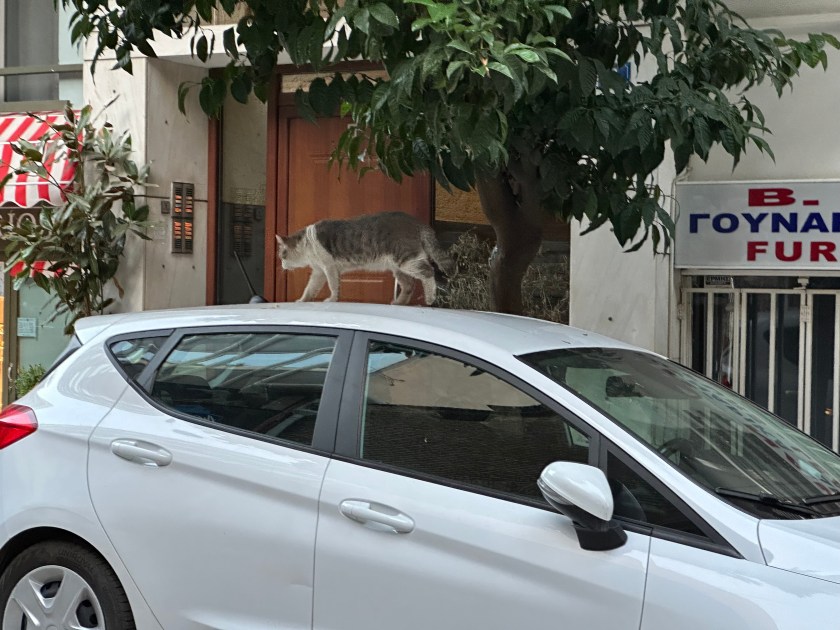
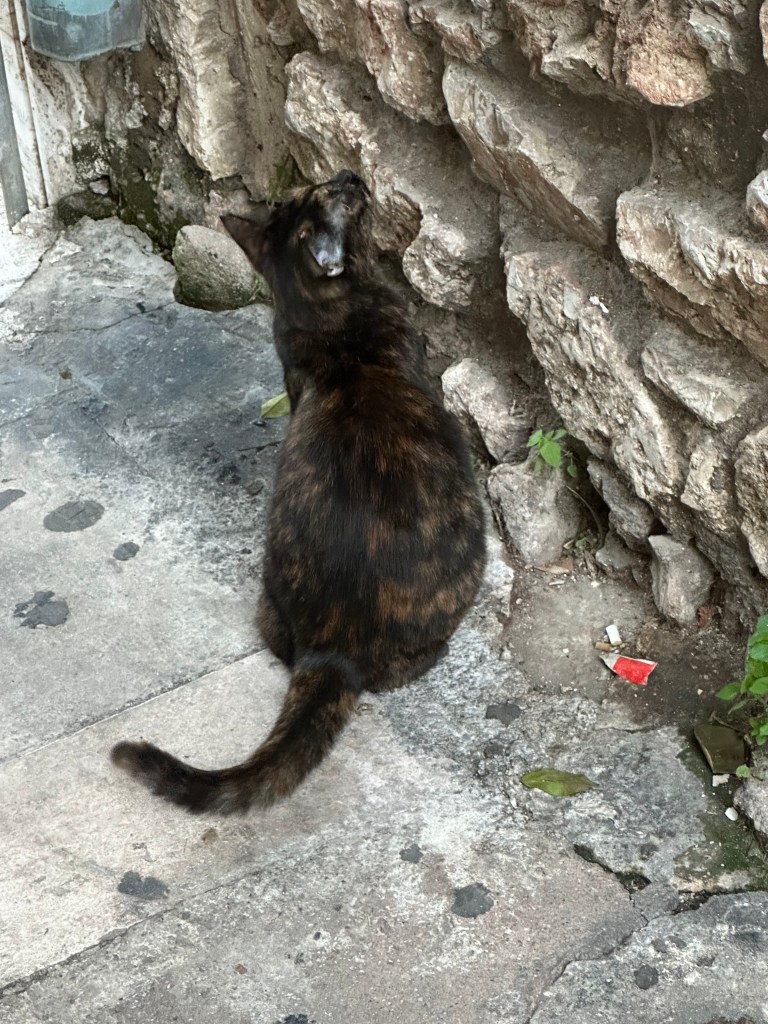
I was surprised to see so many cats running loose in the city. Apparently, felines are revered in Athens and likely help keep the critter population down. Many cats roamed the narrow streets, businesses, apartment buildings, and restaurants.













































































































































 Roadkill Crossing
You must be logged in to post a comment.