Flowers, wild or propagated, flourish this time of year. With warmer temperatures, cooler nights, and well-watered fields and forests, floral colors brighten neighborhoods, countrysides, and forest floors.
Here are a few photos of flowers I spotted wherever I went.
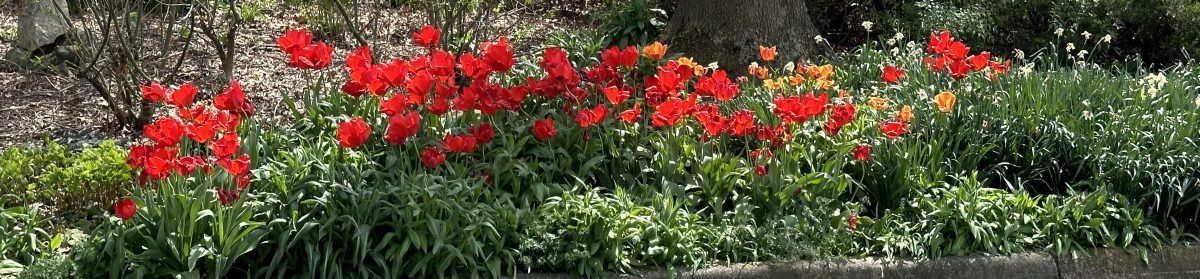
Around our house.
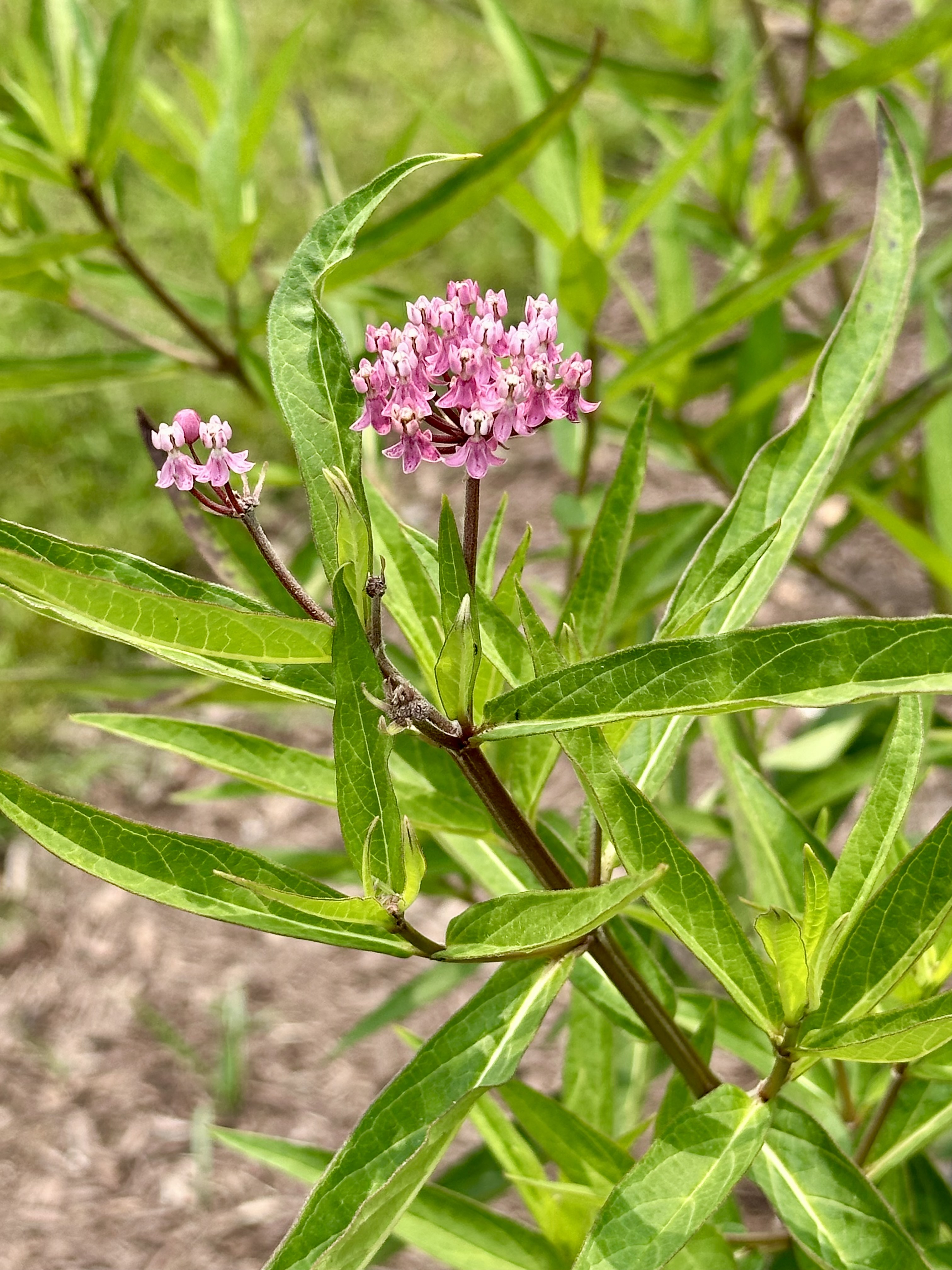
Wildflowers.
Along the path.
Honeysuckle.
Mountain Laurel.
Foxglove Beardtongue
Delphinium.
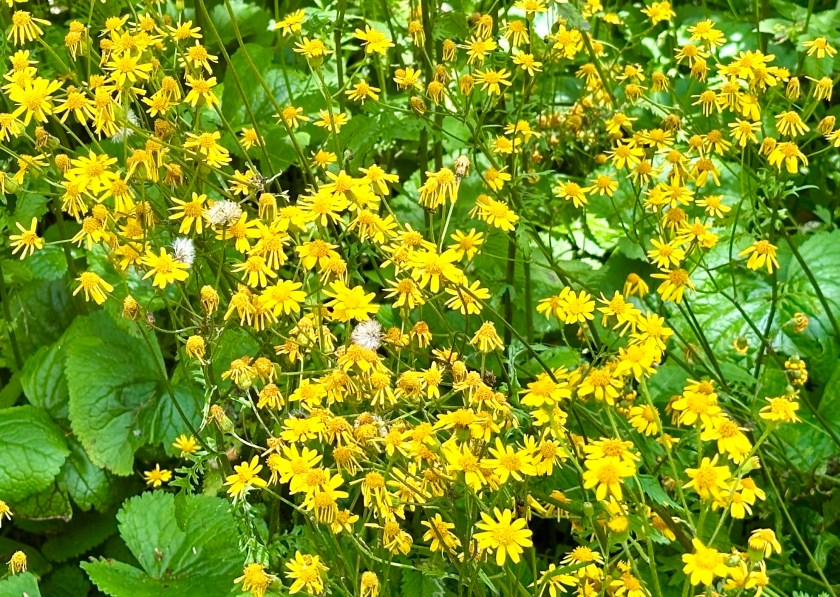
Golden Ragwort.
Cultivated.
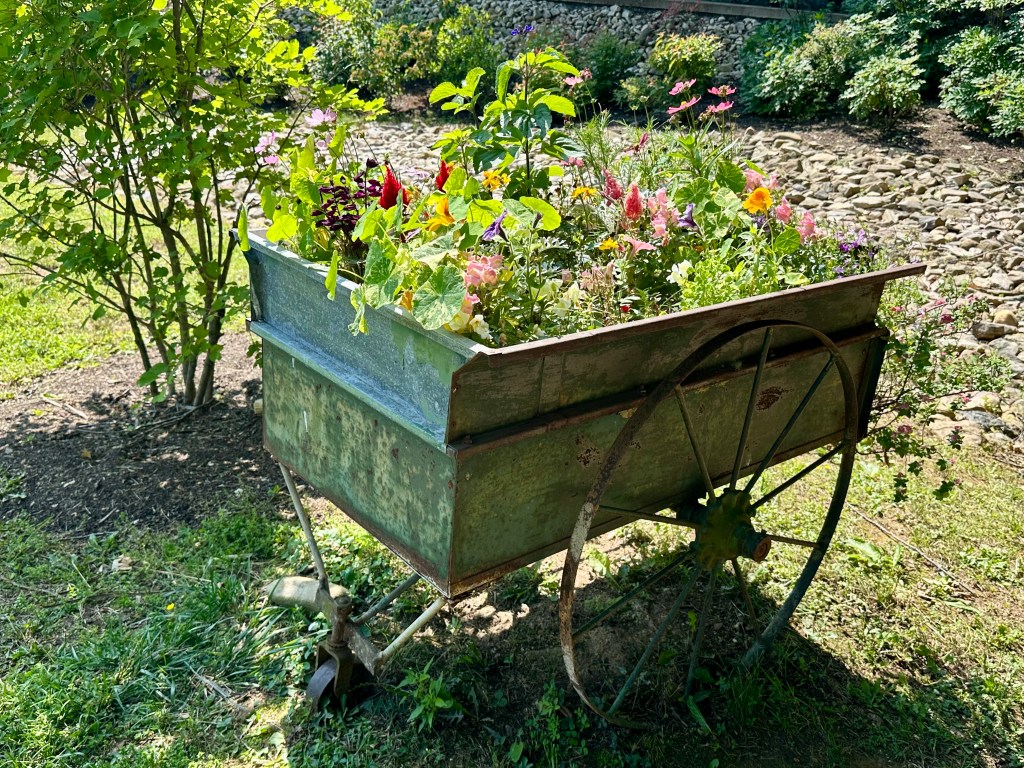
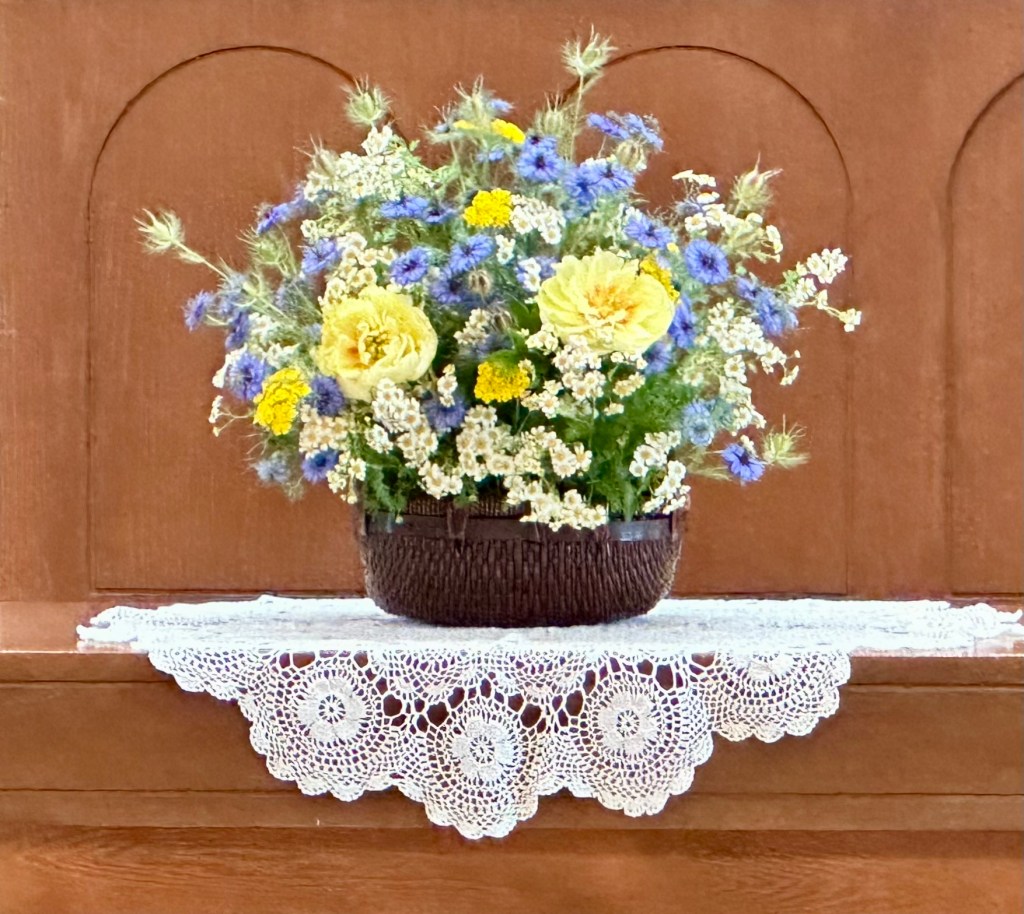
At the arboretum.At the neighbor’s.Calla Lililies. Planter.Climatis.Rose Campion.Church decor.
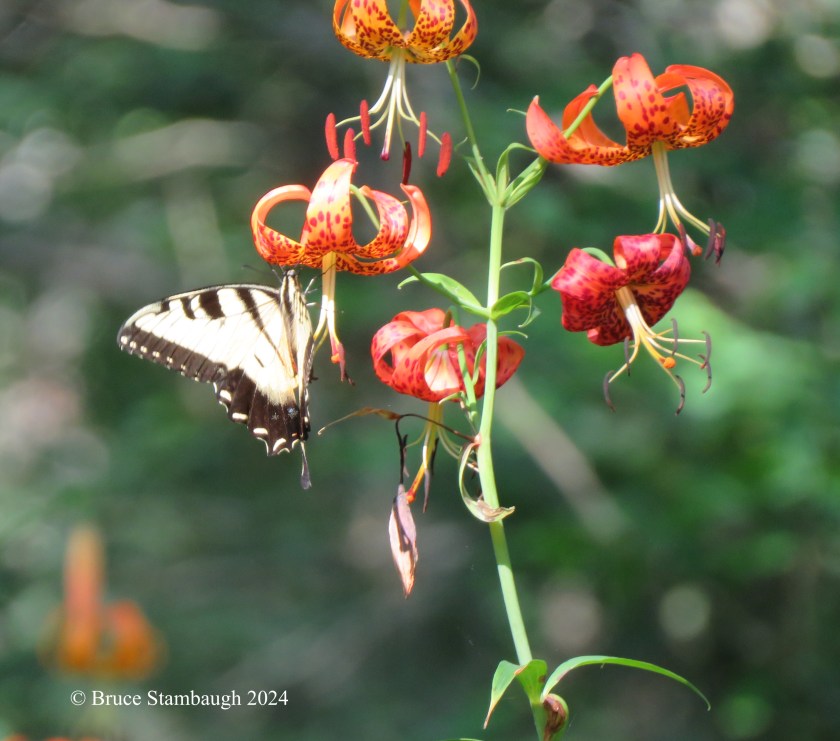
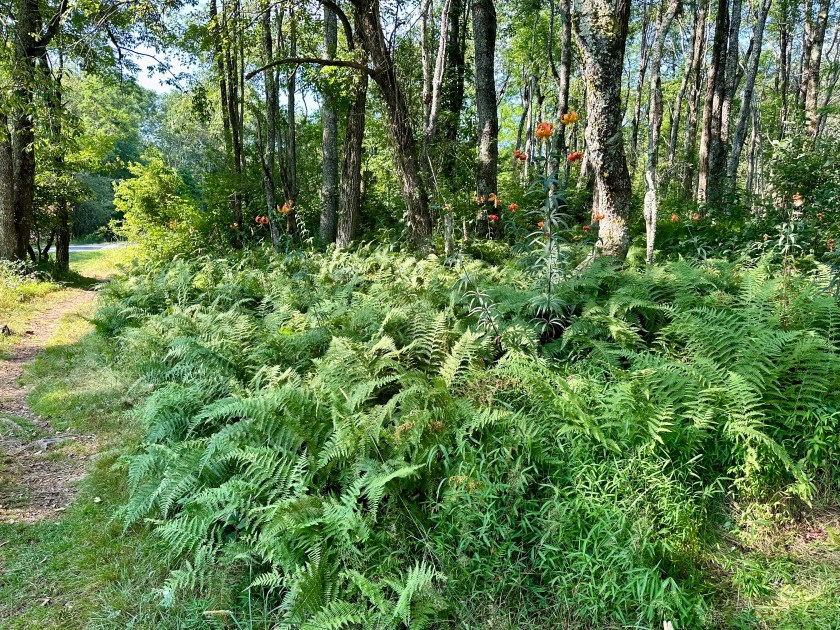
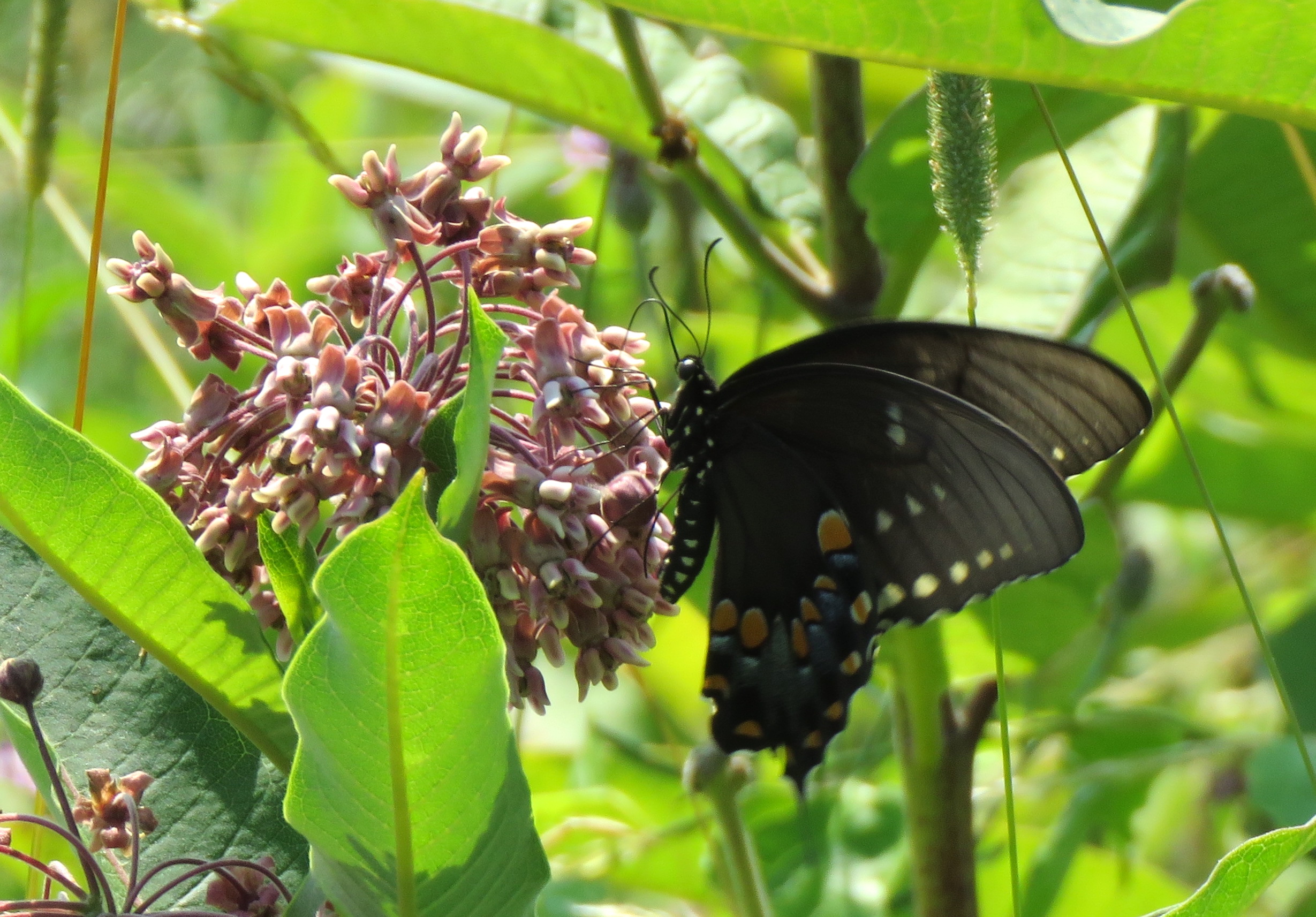
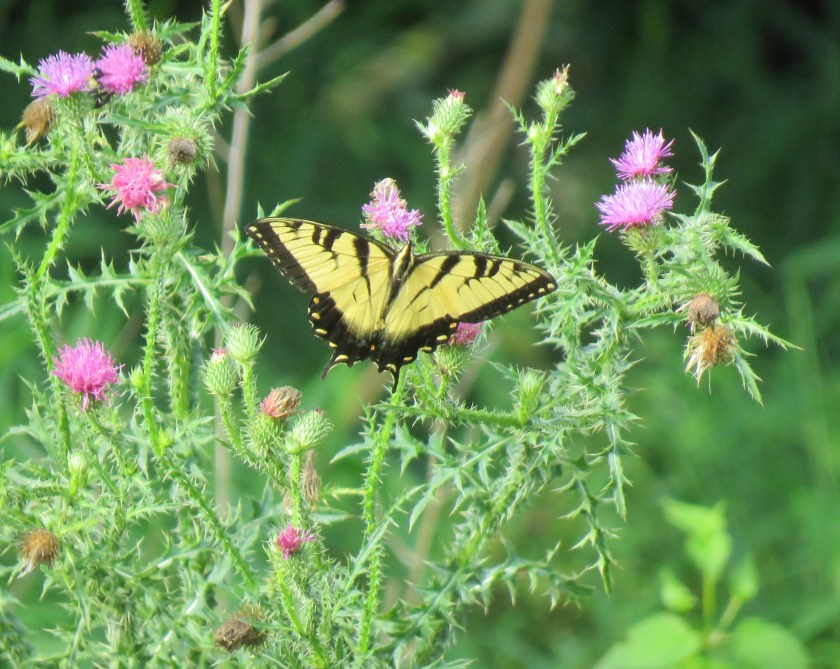
Like this Tiger Swallowtail, butterflies are drawn to Turk’s Cap lilies. Photo by Bruce Stambaugh
I visit Shenandoah National Park whenever I can. Being retired has its advantages. I usually go to the park with a purpose in mind.
Recently, I drove the 45 miles from my home in Virginia’s Shenandoah Valley to the Big Meadows area of the popular national park for several reasons. I like to capture butterflies on the impressive Turk’s Cap lilies. Secondly, the temperature in the Blue Ridge Mountains, where the park is located, is usually cooler than the oppressive heat the valley has experienced lately.
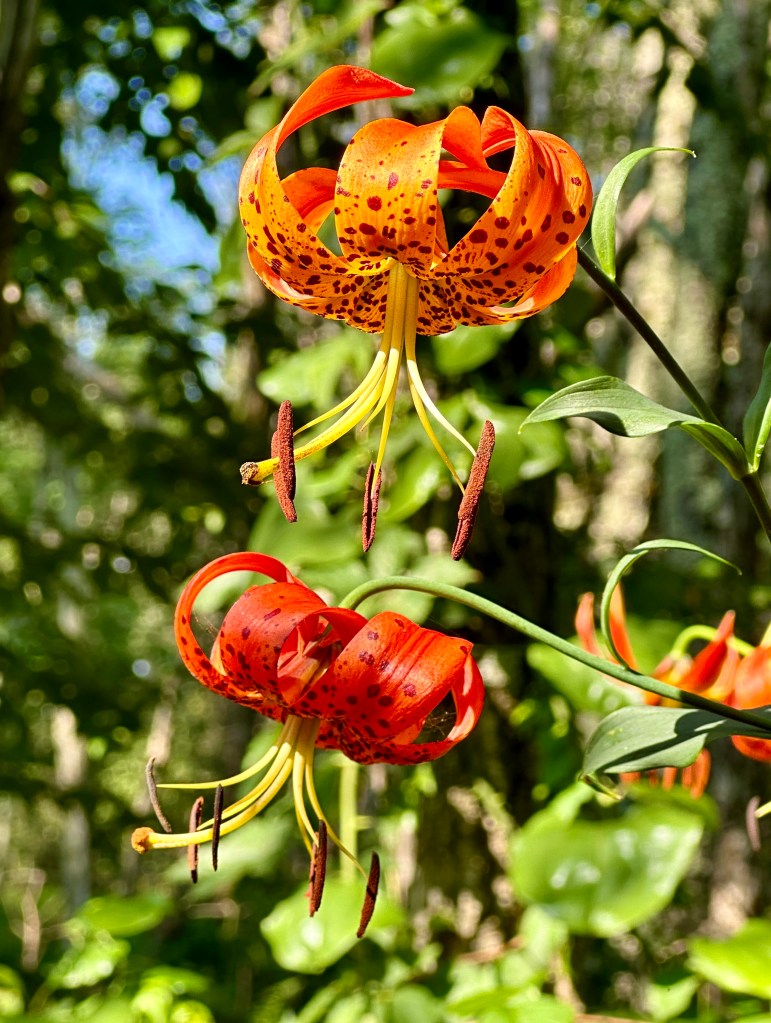
July is when the impressive summer flowers are in full bloom. Butterflies, bees, and other flying insects can’t resist their lure, and alert humans can’t miss the spotted, bright reddish-orange blossoms either.
These photos were all taken along Skyline Drive south of Big Meadows.
It didn’t take me long to spot a few butterflies flitting around. I usually find a group of flowers and wait for the butterflies to arrive. There was a problem with being a stationary human, however. I forgot to take my bug spray along, and between the gnats and the mosquitoes, I spent as much time swatting as I did taking photos. It was a minor sacrifice just to observe nature’s glorious beauty.
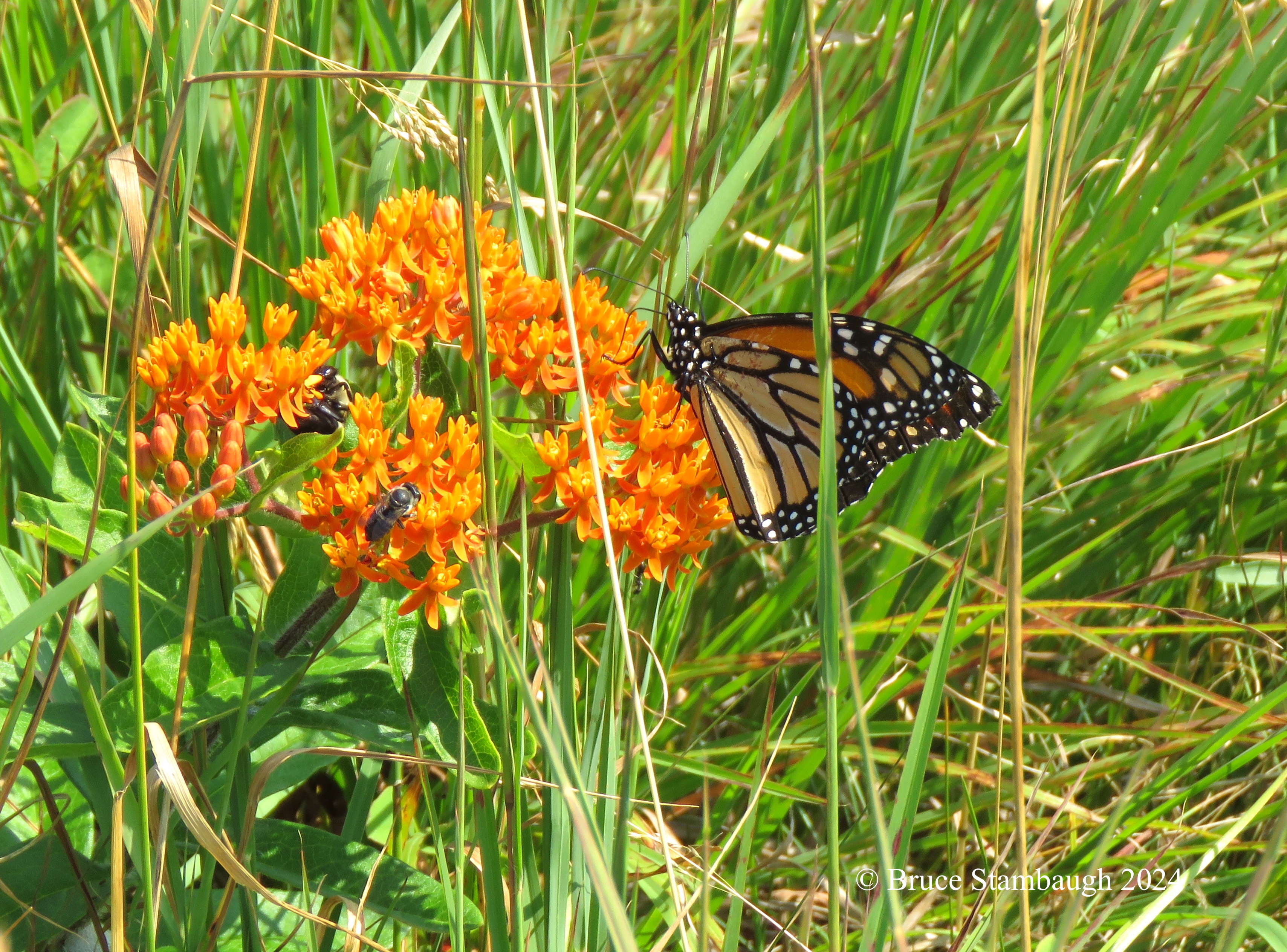
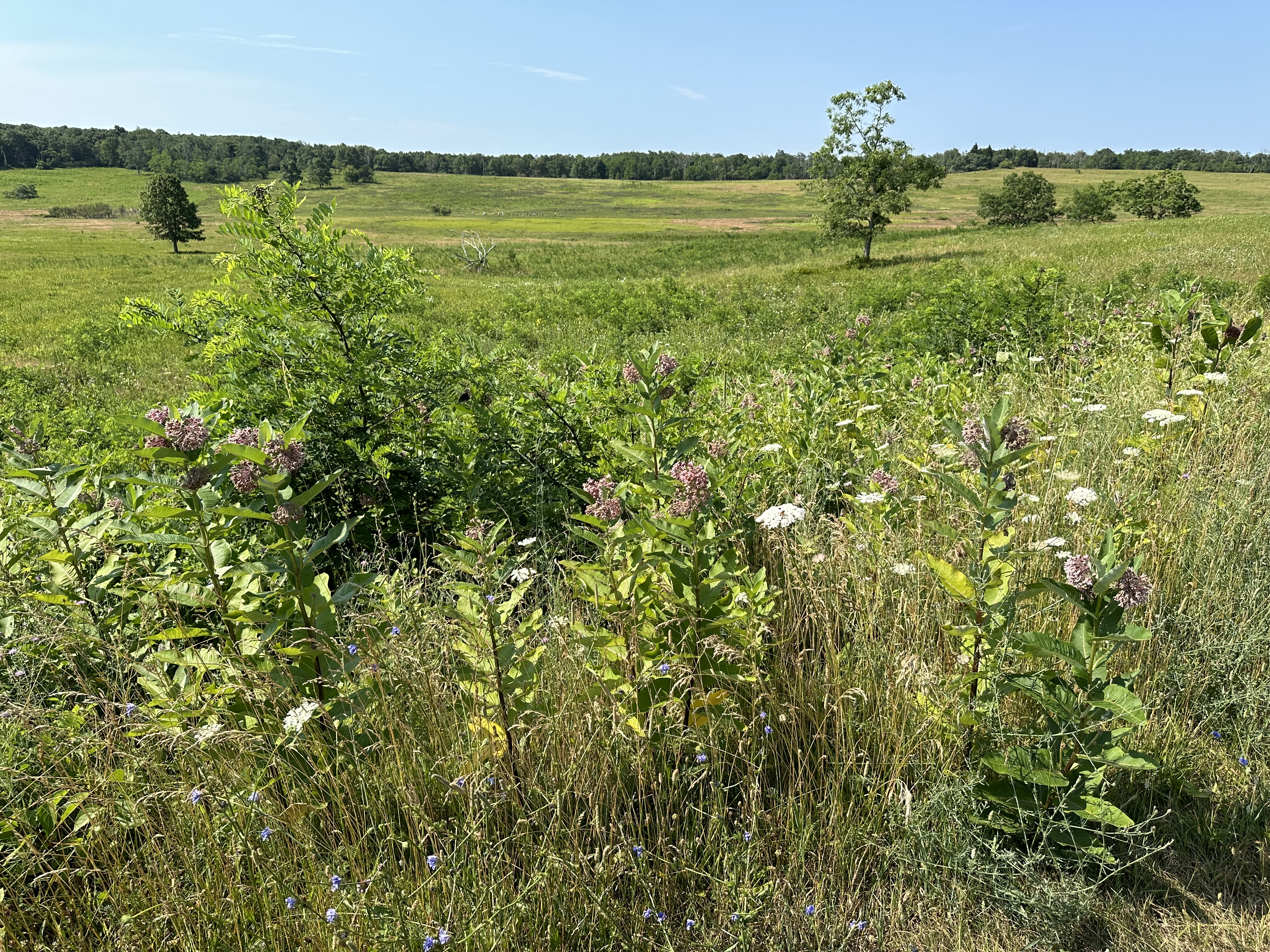
At Big Meadows, a ranger guided a small group of tourists on a nature walk. I moved around the sweeping, prairie-type basin. Due to the ongoing severe drought that Virginia is experiencing, the usual array of wildflowers is not as abundant as in previous years. However, as did the Monarchs and other butterflies, I found a few bright Orange Butterfly Weeds and the aromatic Common Milkweed blooming.
Please click on the photos to enlarge them.
I was also impressed with the thousands of honey bees and bumblebees that buzzed and hummed around the area. The Sweet White Clover got most of their attention.
Of course, I can’t go to Shenandoah National Park without taking my binoculars. Songbirds were everywhere, but the dense foliage of the trees made them hard to spot. Did I mention that mosquitoes and gnats were ubiquitous?
By noontime, the heat and humidity sent me back into the valley to the comfort of my air-conditioned home. Still, I felt mentally refreshed and renewed, ready for the rest of the day.
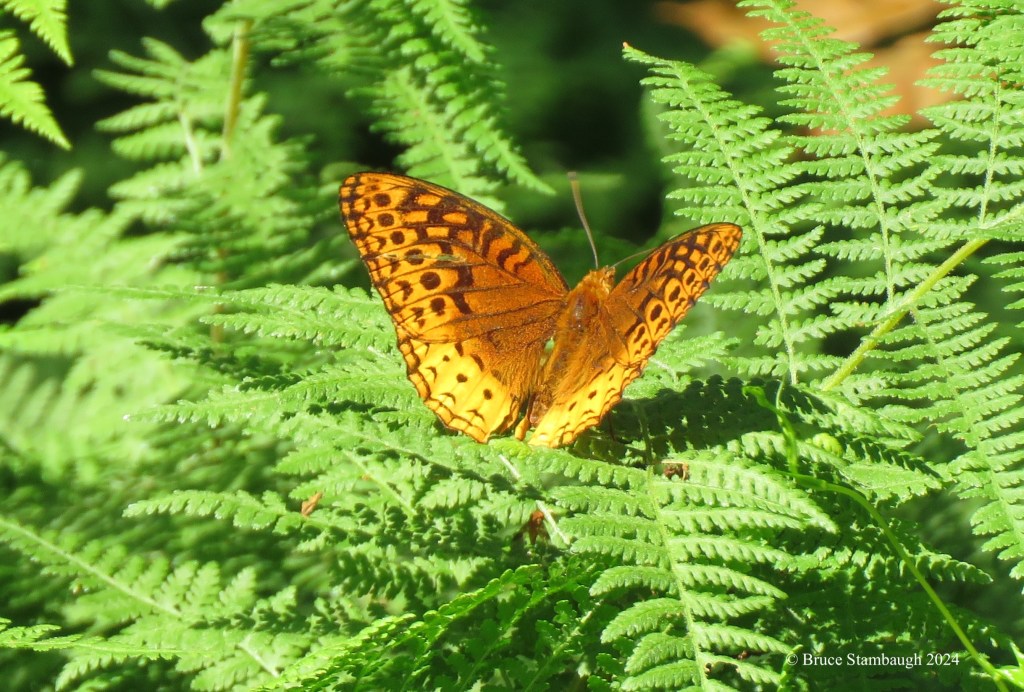
A Great Spangled Fritillary basked in the morning sunlight on a Rattlesnake Fern.
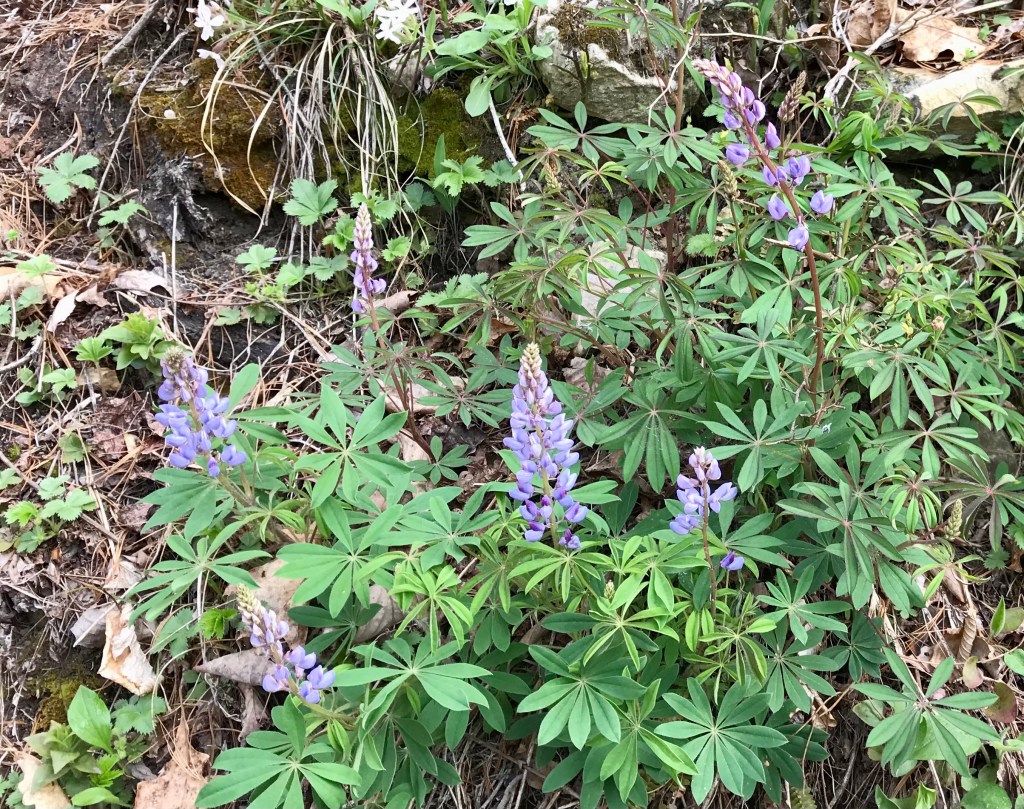
Wild Lupine growing along a fire road in Shenandoah National Park. Photo by Bruce Stambaugh
This is the fifth post in a series celebrating National Park Week.
When you are in a national park, don’t forget to look down. You don’t want to miss the many wildflowers prolific in all but the winter. Even Death Valley is currently having a superbloom. I would love to see that sometime.
In the meantime, spring is the perfect time to look for wildflowers in national parks. I photographed the wild lupines along a fire road in Shenandoah National Park.
Wildflowers bring beauty to the park and attract other beauties, too. When I first visited Shenandoah National Park seven years ago, I was pleasantly surprised at the number and variety of butterflies I found in the park, even in the forests. The colorful blooms also drew bugs, bees, and, of course, Ruby-throated Hummingbirds.
So, when I visit any national park to bird, hike, and photograph birds and wildlife, the wildflowers also are on my agenda. The lovely lupines are the proof.
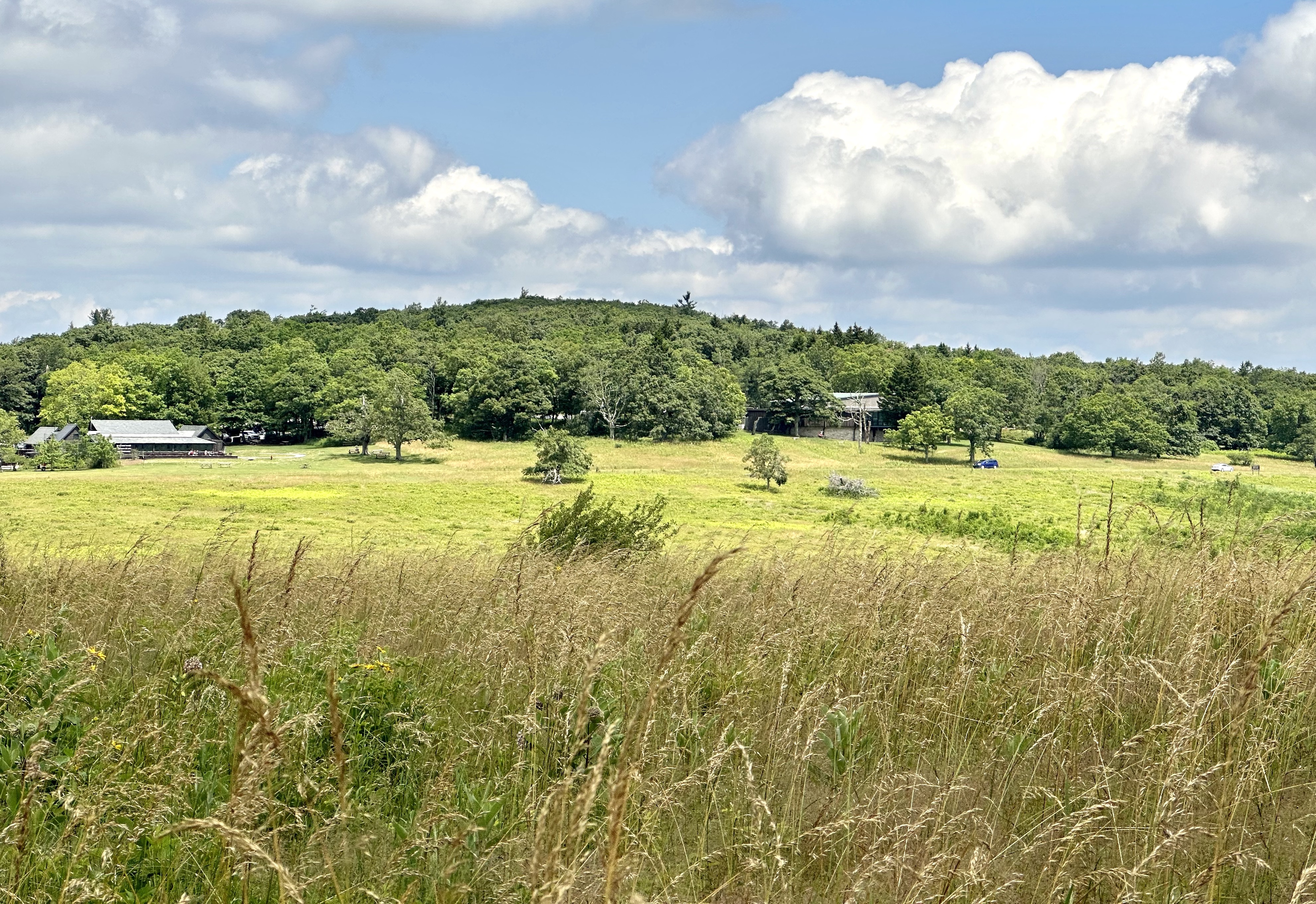
Big Meadows Wayside on the left and the Byrd Visitors Center on the right.
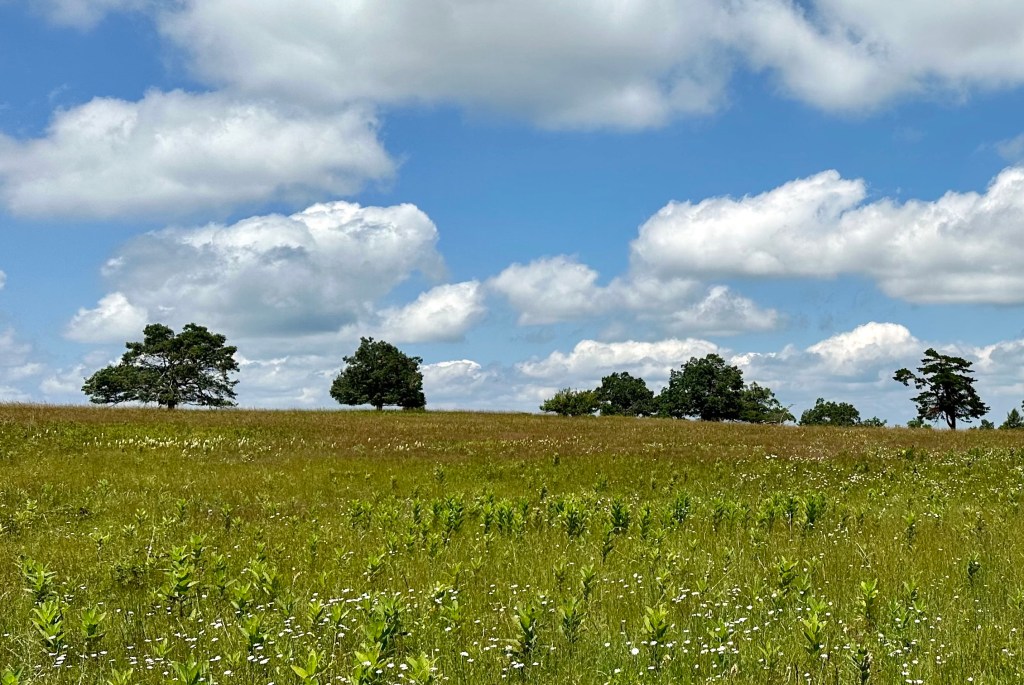
Big Meadows, an open, rolling, bowl-shaped landscape, features diverse plant, tree, and wildlife species. I consider it one of the most beautiful locations in Virginia’s Shenandoah National Park.
As evidence of its wonders, these photos from a recent visit exemplify its natural splendors.
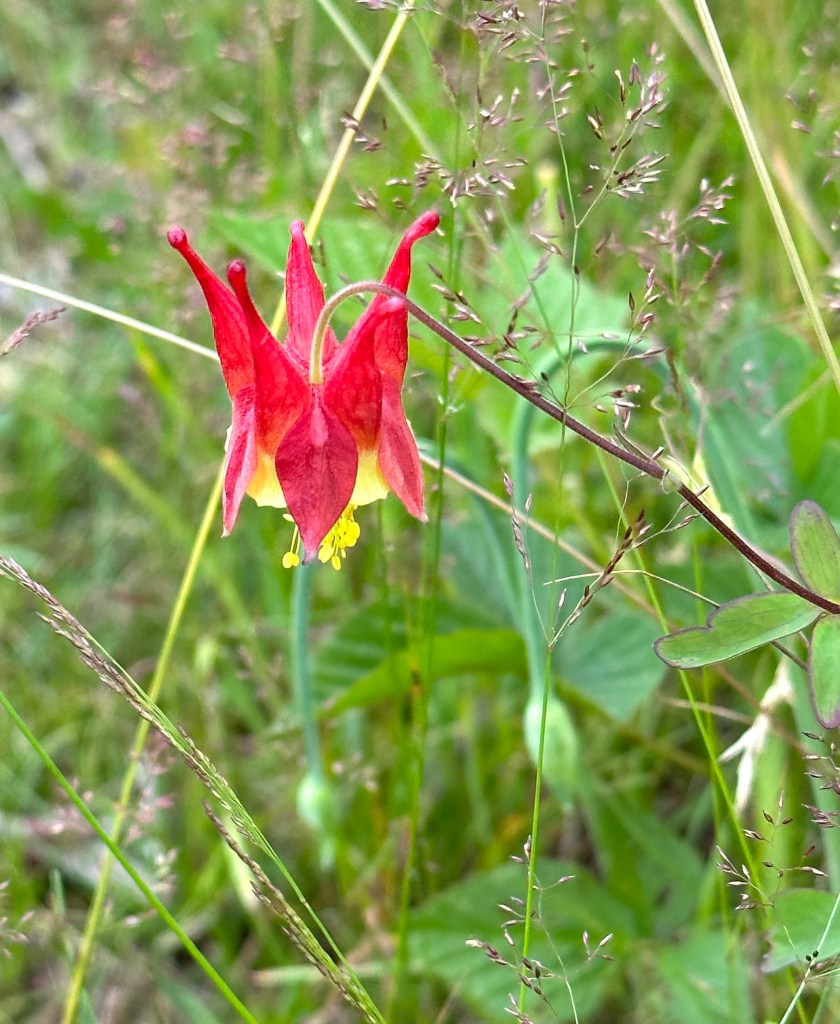
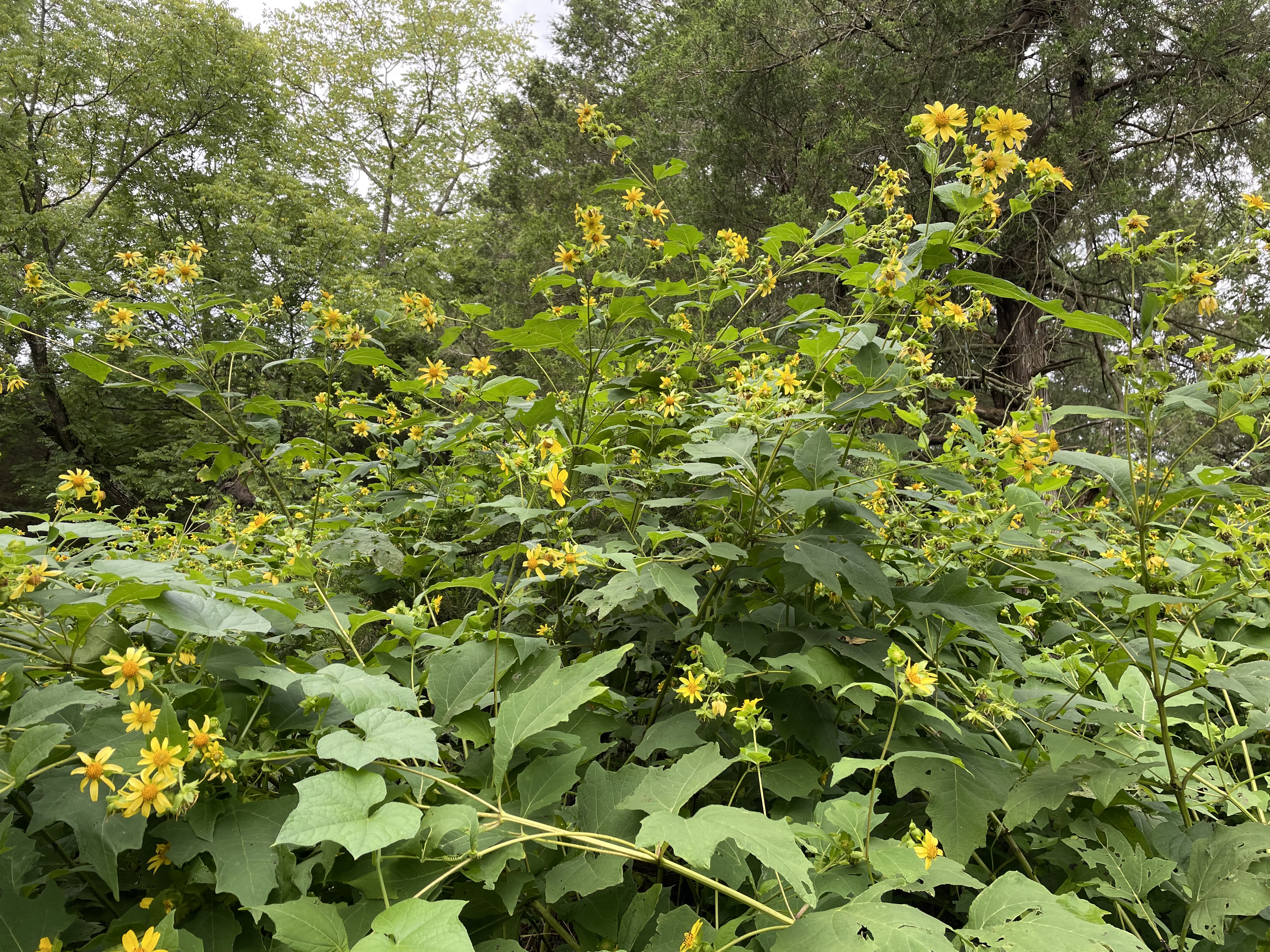
Fawn at the meadow’s edge.Wild Columbine. Male Indigo Bunting.Woodland Sunflower.The land meets the sky.A ladybug on Fly Poison.
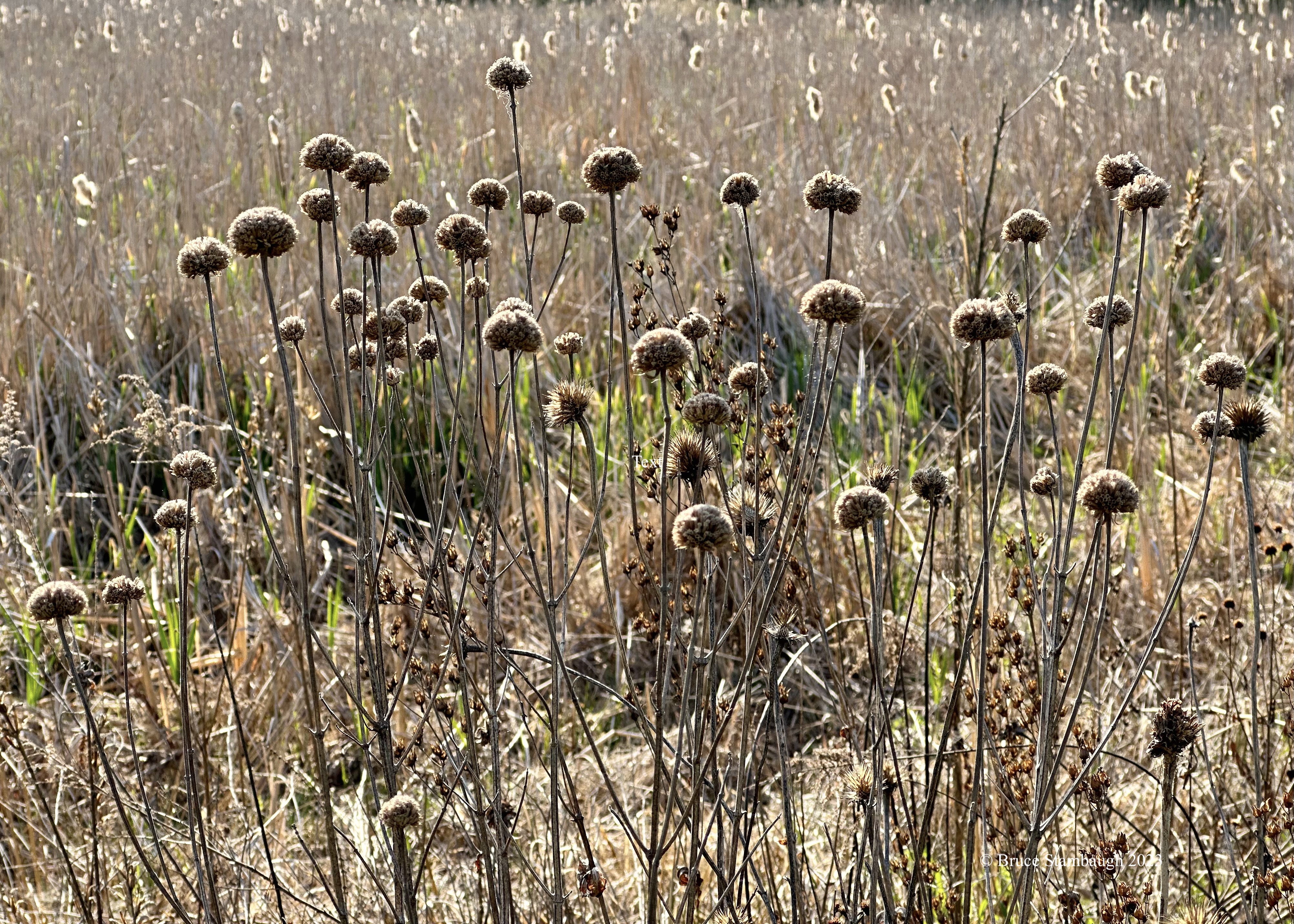
The cones of last summer’s Black-eyed Susans stand naked before fluffy cattails.
On a recent birding expedition to a local lake, I spotted these spent heads of last summer’s crop of Black-eyed Susans. The buttery petals had fallen off or been eaten by birds or insects, and several hungry bird species had devoured the nutritious burnished seeds in the center of the wildflowers.
The morning sun kissed the bulbous cones, creating a two-toned effect. It was a fun find.
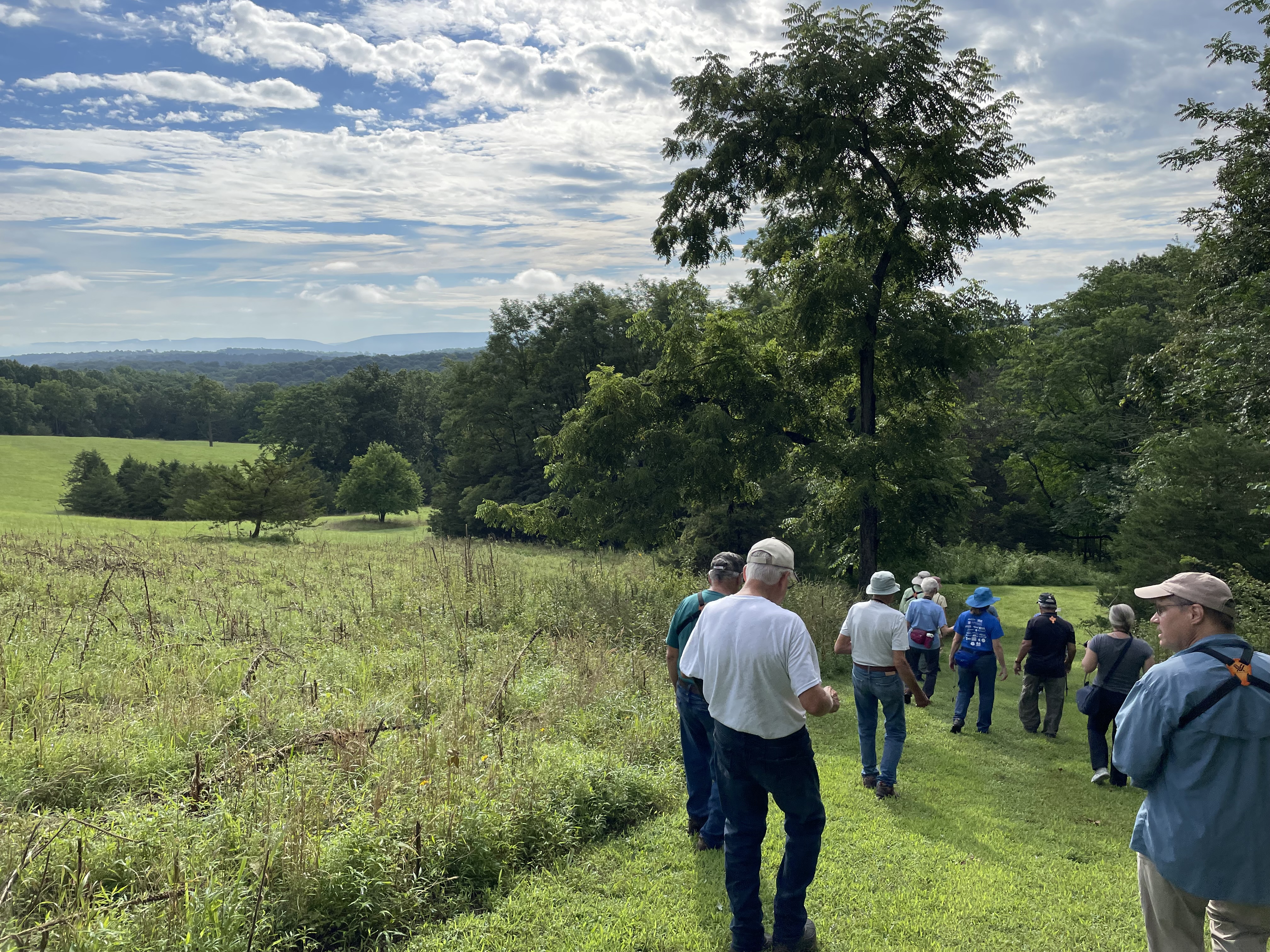
I couldn’t help but feel wide-ranging gratitude as I walked with a dozen other nature lovers. Billed as a bird walk, it was so much more than that. I wasn’t surprised by that realization.
Most in the group who took the tour, including the property owners, were in our third third of life. That is to say, most of us had more days behind us than we had ahead of us. That fact only made the pleasant August morning sweeter.
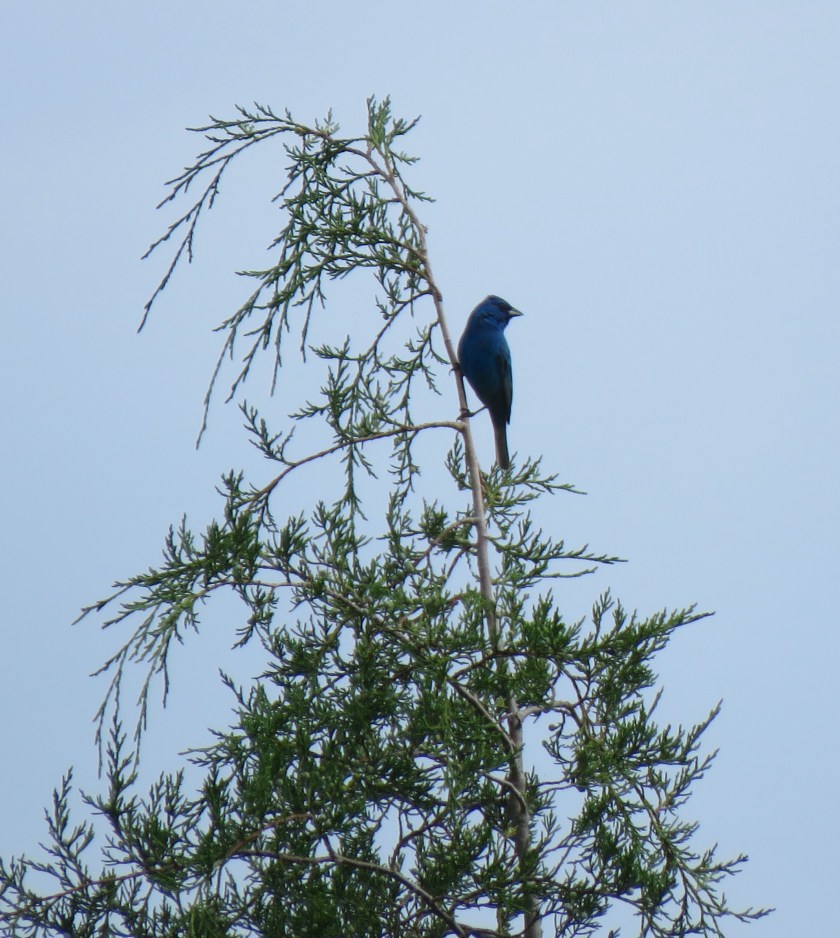
Indigo Bunting.
The landowners invited a noted local birder who tried his best to keep us corralled and informed. But Baby Boomers being who they are, we often overlooked our leader, and most of the group had moved on. Guilty as charged.
I attribute that to being enraptured with our surroundings. We walked the mown paths amid meadows of wildflowers, stands of woodlots, and the buzz of bees, the distraction of beautiful butterflies and plenty of avian species. There were too many times when I simply wanted to stay in place and absorb all that surrounded me. Believe me, there was lots to take in.
But we didn’t want to overstay our welcome. So, like it or not, this grateful group of nature enthusiasts kept moving. There was so much to see in such a short time.
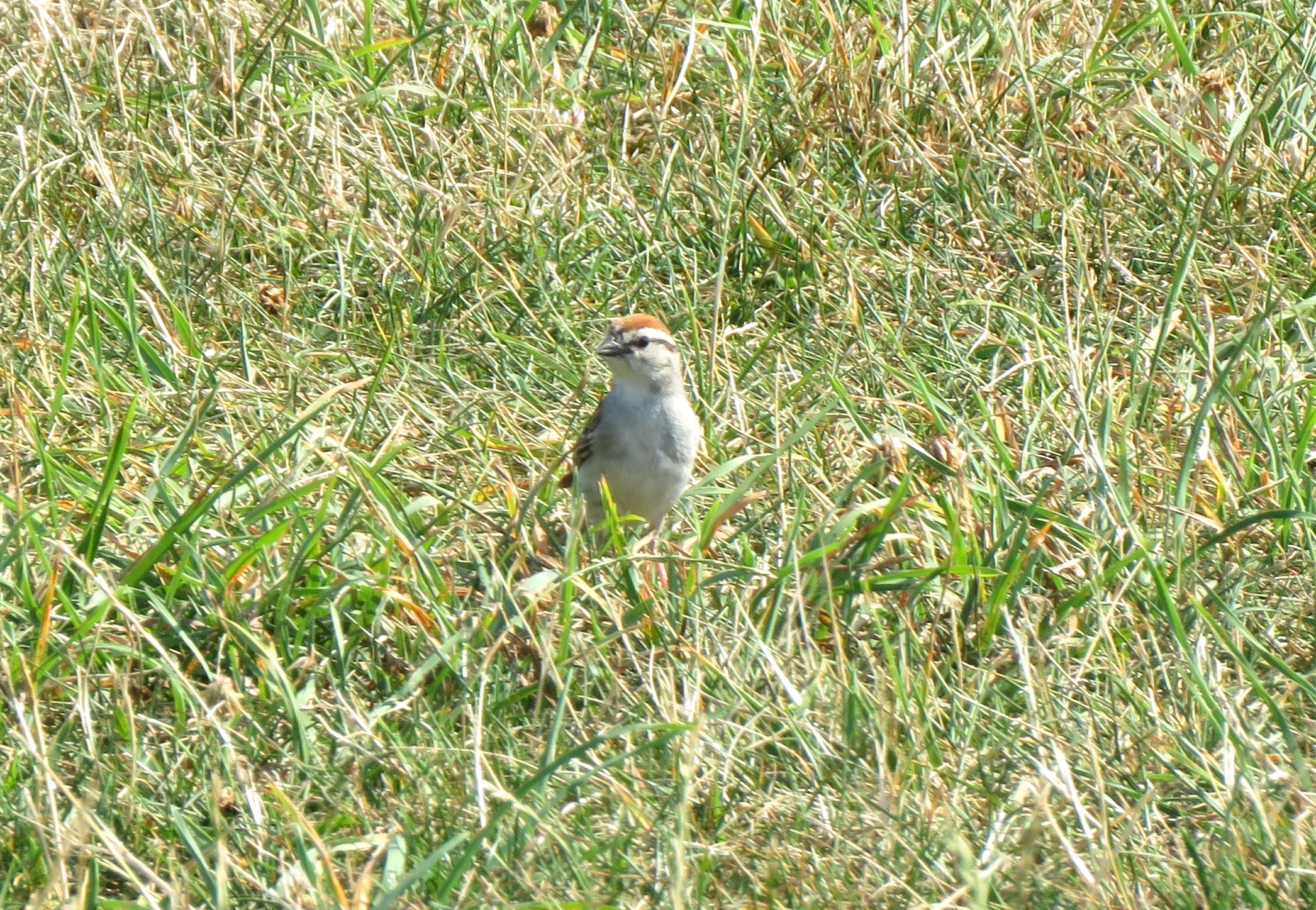
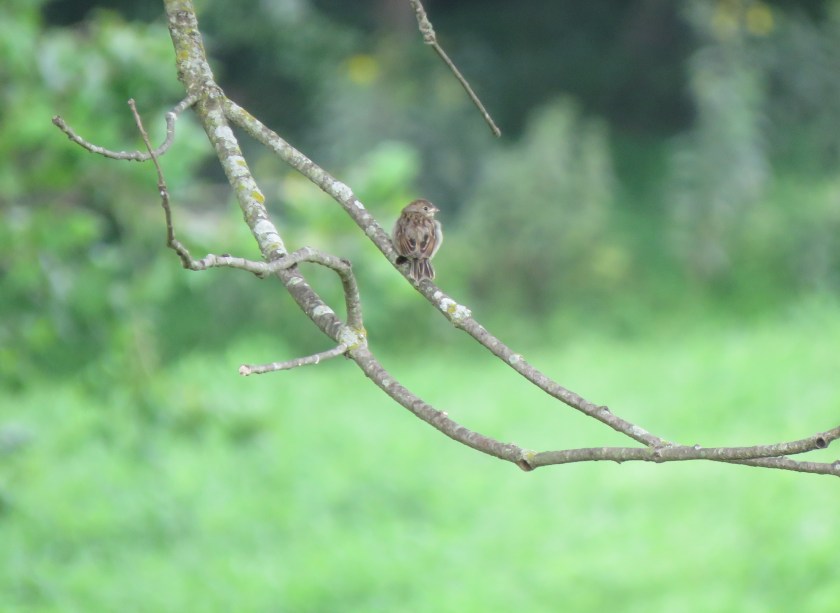
Near the end, I lingered to identify a solitary sparrow that perched in a tree many yards away. My binoculars didn’t help much given the distance. While I waited for the expert birder to verify my find, a Belted Kingfisher zoomed over the rushing creek below me. Just then, an Eastern Meadowlark took flight overhead, and a gang of Barn Swallows abandoned their perches on the big round hale bales in search for breakfast.
The sparrow sat dutifully on the tree limb while the walk’s leader edged closer. Finally, it turned its head, revealing its pinkish bill. Field Sparrow, it was.
We saw 44 species of birds in our limited time. We got some excellent looks at songbirds and others. I was torn between birdwatching, snapping photos of butterflies, and enjoying the many summer wildflowers.
I was grateful for this kind couple to invite us onto their property and allow us to enjoy the fruits of their labor. After all, that’s how gratitude works. Blessings upon blessings create overflowing gratitude that begs to be shared.
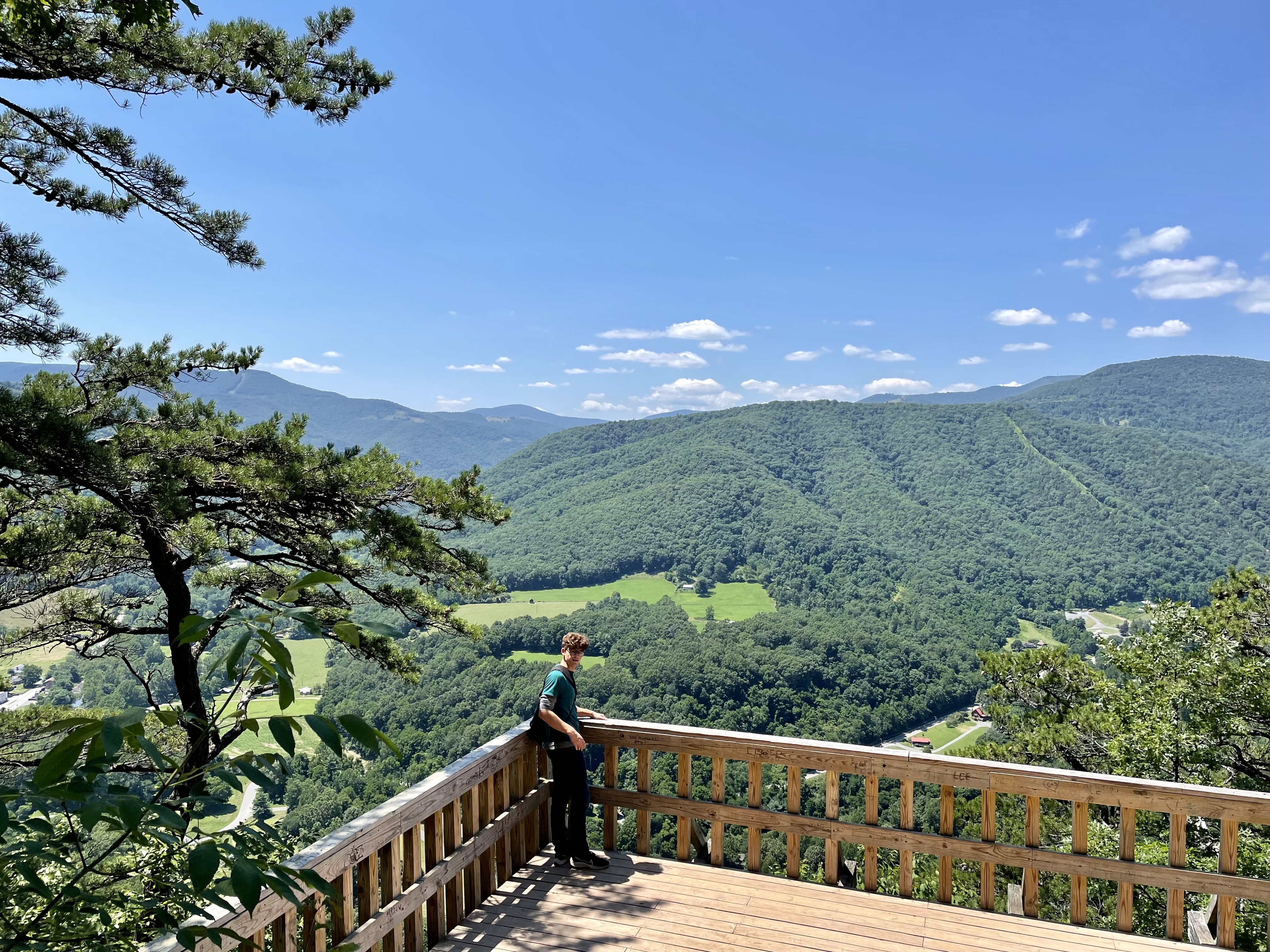
Grandson Davis enjoyed the view from the overlook deck at Seneca Rocks, West Virginia.
Weather nut that I am, I check the forecast regularly. Monday looked to be decent weather for hiking. Cooler temperatures in the higher elevations and no rain. That would work out just fine for several reasons.
Our daughter and her husband had left the previous Sunday to take our oldest grandchild to his college orientation in Richmond, Virginia. Of course, the university had nearly four days of activities for the new students and their parents.
That left the middle grandchild, Davis, and our only granddaughter, Maren, to check on. With them both being responsible teenagers, that didn’t require much.
With school out for the summer, Maren loves to help Nana with puzzles, baking, and other hands-on chores. She also mows our lawn. That left Davis and me to find trouble together.
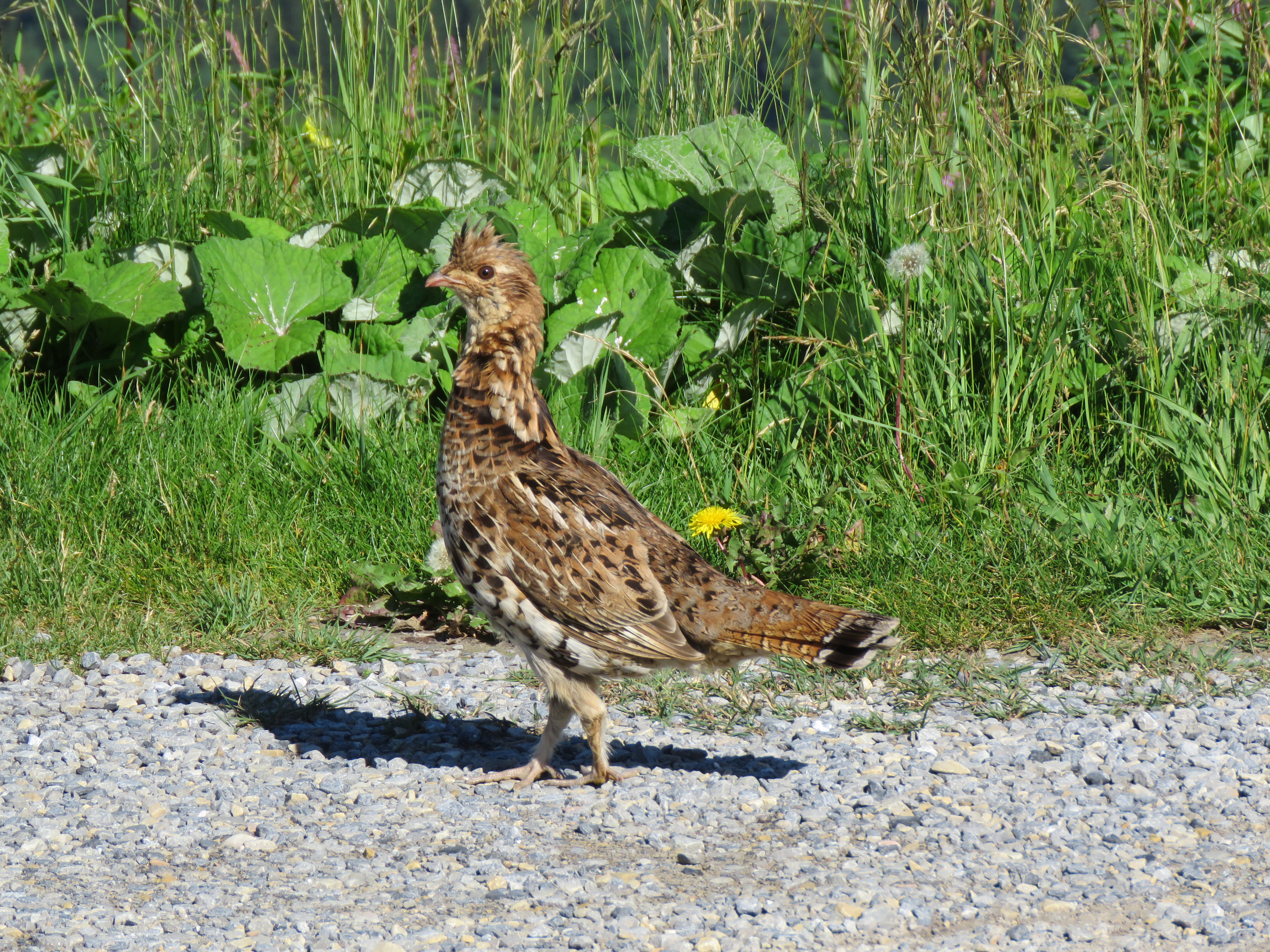
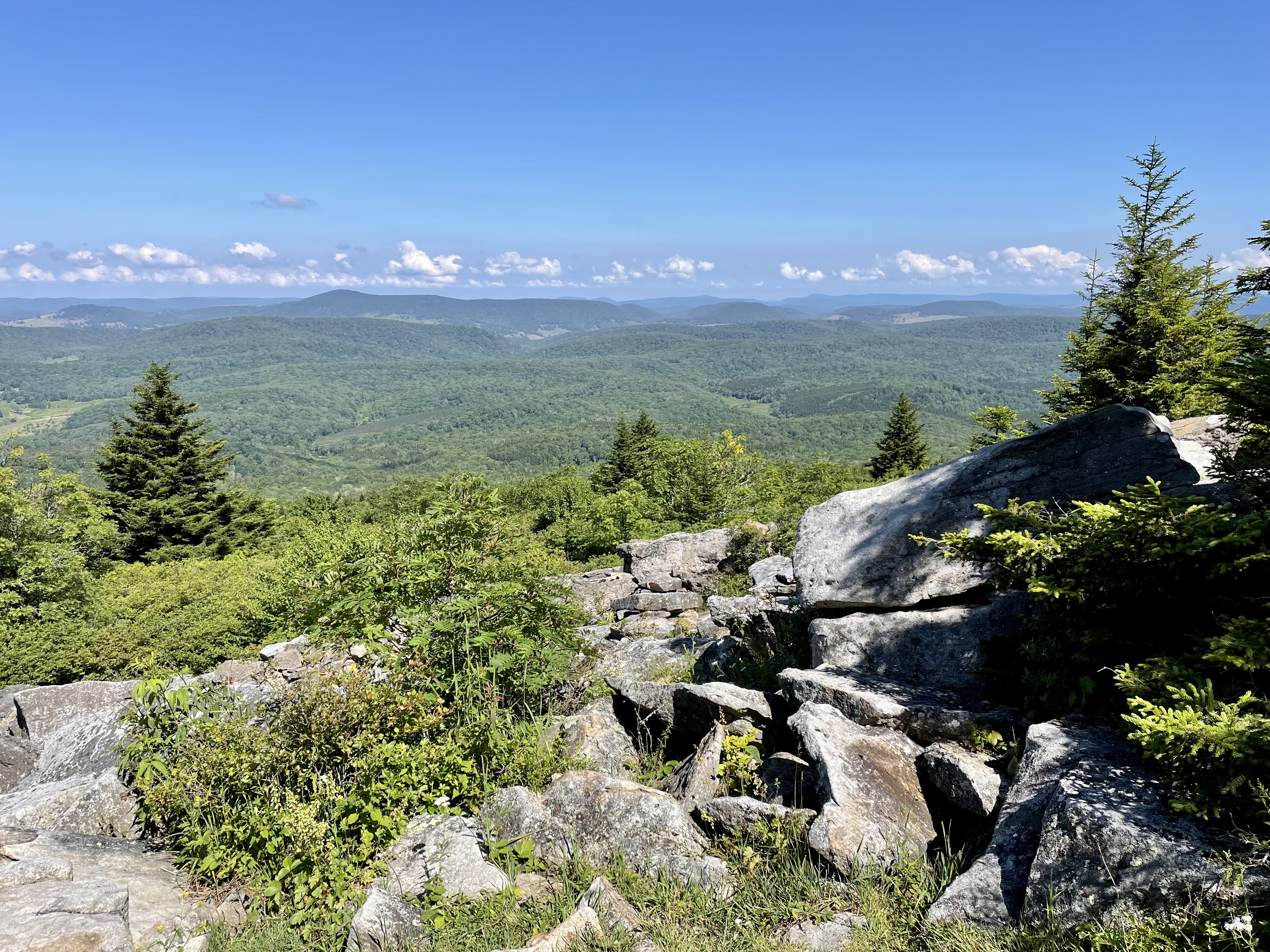
Since we both like to hike, we visited Spruce Knob, the highest point in West Virginia. It’s an hour and a half drive for us. We left mid-morning, but Davis didn’t take long to nod. How he could snooze in all that hilly, twisting driving I was doing, I don’t know. He woke as I slowed to photograph a Ruffed Grouse strutting its stuff on the Forest Service road near the mountain top.
Male Ruffed Grouse.
After taking a few snapshots of this often elusive bird, we were soon in the parking lot. Other than a Forest Service employee, we had the place to ourselves. However, we hadn’t even started on the trail when I realized I had forgotten the insect repellent. Fat flies buzzed nearby, but none landed on us the entire time we were there.
Spruce Knob affords beautiful views on a clear day like today. Only a few puffy clouds formed over distant mountain ranges to the west. The air was a pleasant 66 degrees with little humidity and no haze to obscure our views.
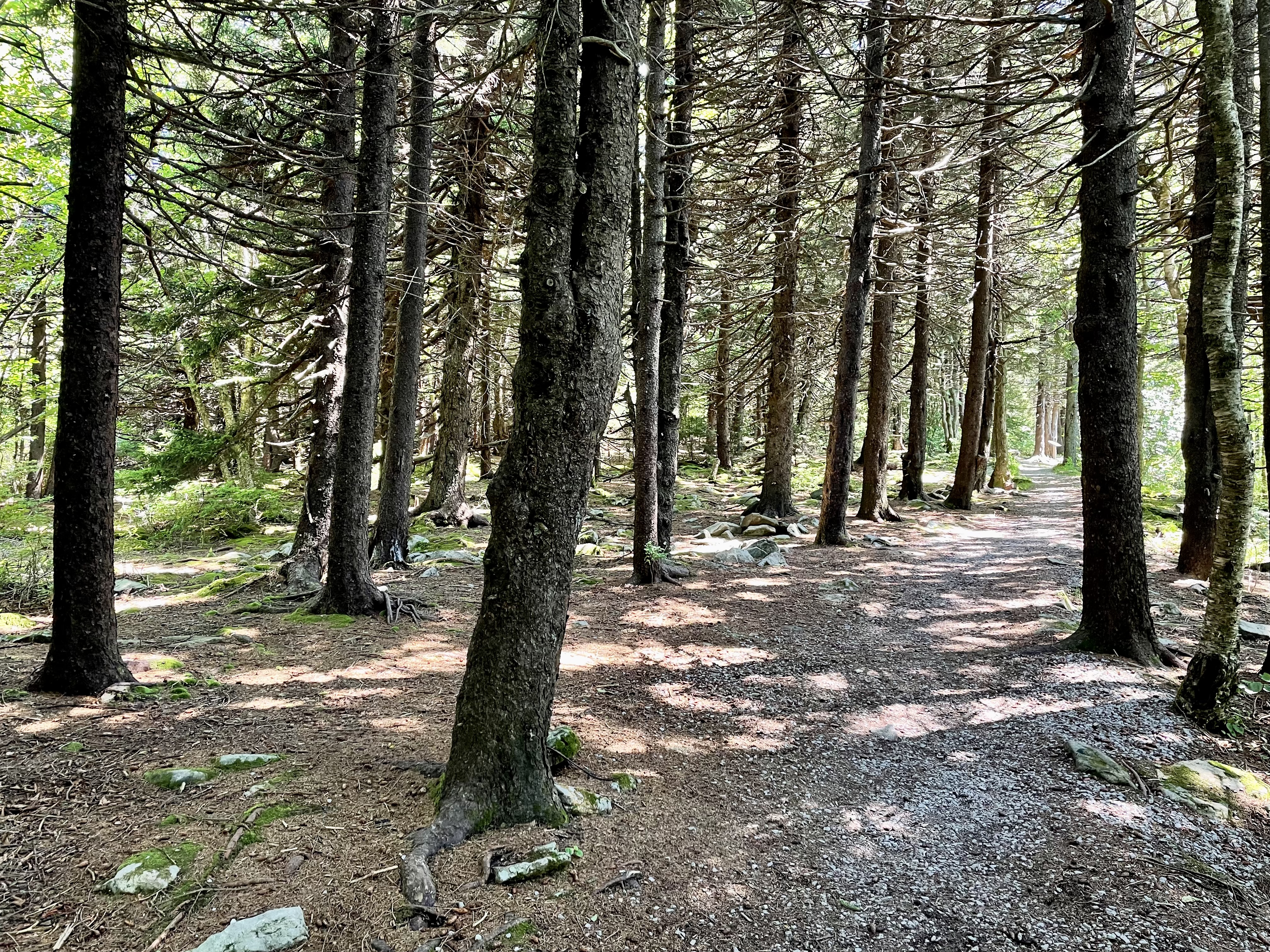
We walked the loop trail that leads from the parking lot and back. The scent of the spruce filled the air. Wildflowers and birdsongs were abundant. We basked in both.
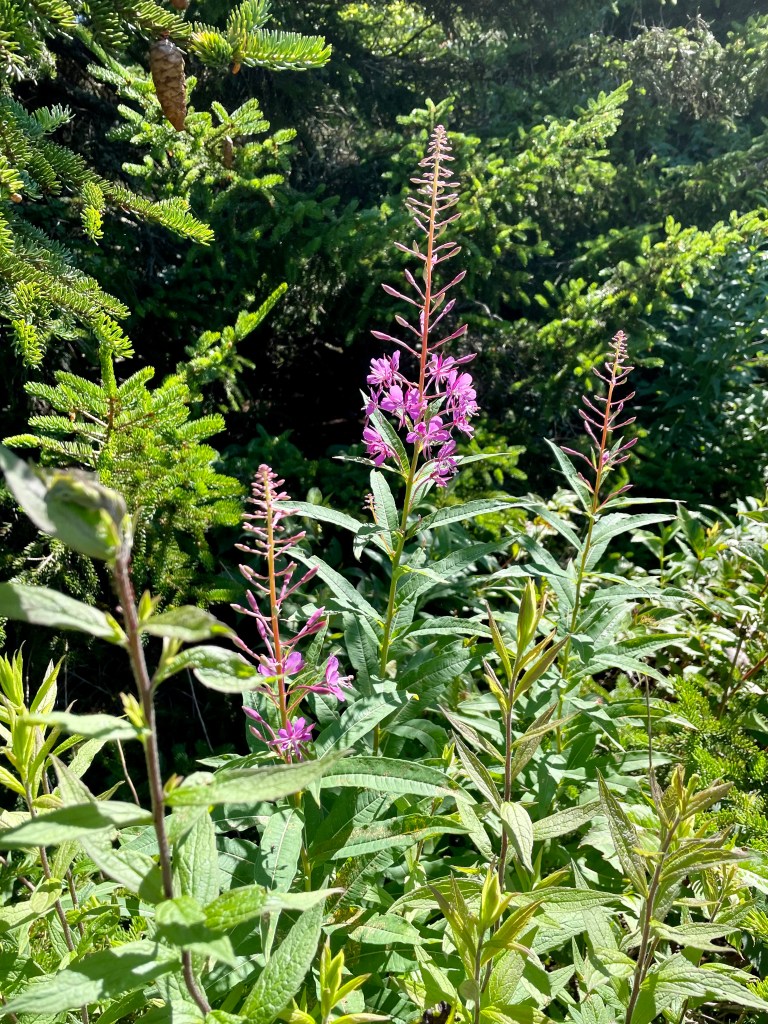
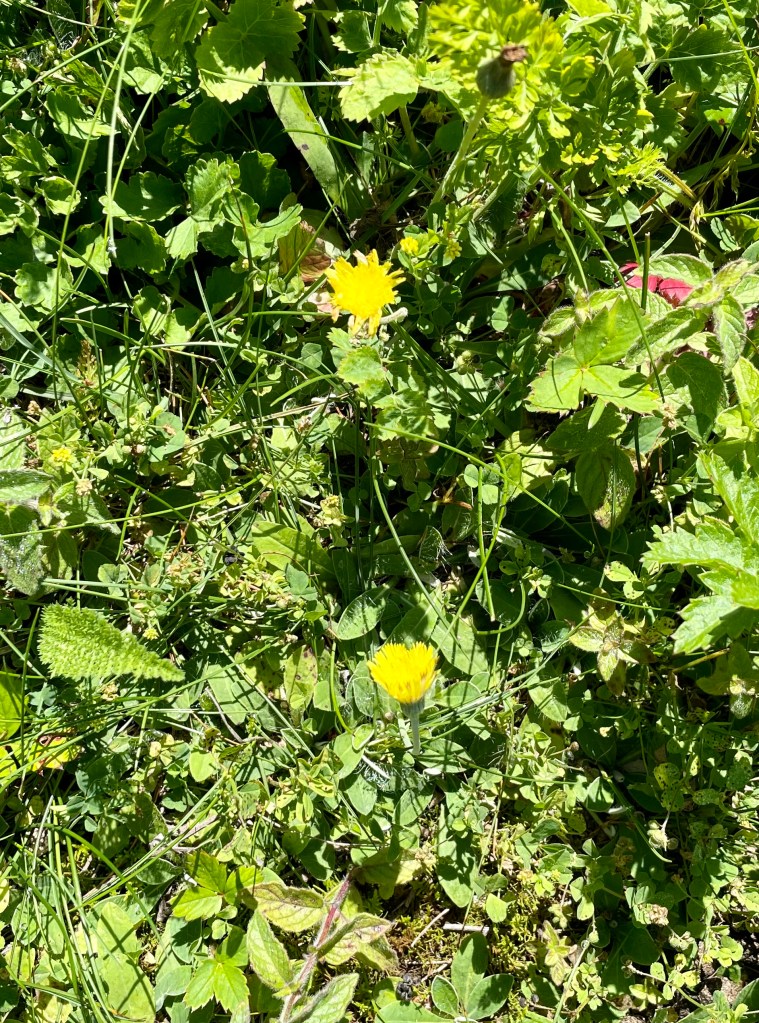
I know I slowed Davis down by constantly pausing to photograph wildflowers, birds, and butterflies. Trooper that he is, Davis didn’t complain.
I wanted Davis to enjoy this trip. It was one he was supposed to do at the end of the school year with several students and six teachers. The trip was canceled at the last minute when three teachers came down with Covid-19. In the end, all six were sick.
They were to camp out and visit Spruce Knob, Seneca Rocks, and Dolly Sods. All were in the same geographic area of the old folded mountains and valleys.
So, while Nana and Maren were enjoying each other’s company, and Davis’s brother and parents were occupied with college orientation, Davis and I explored some of the wilds and wonders of West Virginia.
We studied the large piles of giant rocks along the path and at the slope of the mountain, long ago rounded by millenniums of erosion from wind, water, ice, and snow. The teacher in me quizzed Davis about how the rocks got where they did. He graciously played along with my lame attempts.
We saw migrant birds and birds that should be migrants but reside here year-round. Dark-eyed Juncos commonly nest in Canadian provinces. The exception is the Appalachian Mountains.
Because these beautiful ridges hold the same habitat and provide the necessary nutrients, the birds live here and farther up the Appalachian range into New England. Davis wanted to know why the other Junocs migrated when the birds we saw stayed. I hope he seeks a better answer than I gave him.
We enjoyed the views east and west and headed to Seneca Rocks, where we would eat our brown bag lunches. When we arrived at the valley picnic grounds, it was 82 degrees and humid.
From there, we could clearly see the face of the vertical rocks jutting straight up. Eons ago, they had been parallel until the collision of continents forced them to fracture and face the sky.
Unfortunately, no rock climbers could be seen. The day was likely too hot for such strenuous activity.
We gathered our things and headed up. The trailhead started at the North Fork of the South Branch of the Potomac River. The bridge that crosses it goes by the same cumbersome name.
Davis was eager to let his long legs glide him up the well-maintained trail. My old weathered ones weren’t so cooperative. The first third of the path is the steepest. We rested according to my needs. Davis never complained or barged ahead.
We passed other hikers on their way down, and other younger hikers passed us on the way up. I noticed some of them didn’t have hiking shoes or water. We later trekked by some of those same hikers, now fatigued. We reached the top more than an hour after we had started.
The trail leads to an overlook platform that provides gorgeous views of the mountain ridge west of German Valley that the river continues to carve out. We rested and talked with other hikers who soon reached the summit.
Going down took half the time. Davis wondered about going on to Dolly Sods up the road a piece. I wisely said we would save that adventure for another outing. We still had that long drive home.
Adventures like these are the reason we moved from Ohio’s Amish country to Virginia. Now, with the birth of our fourth grandchild in Rochester, New York, we have additional opportunities to watch our grandchildren grow.
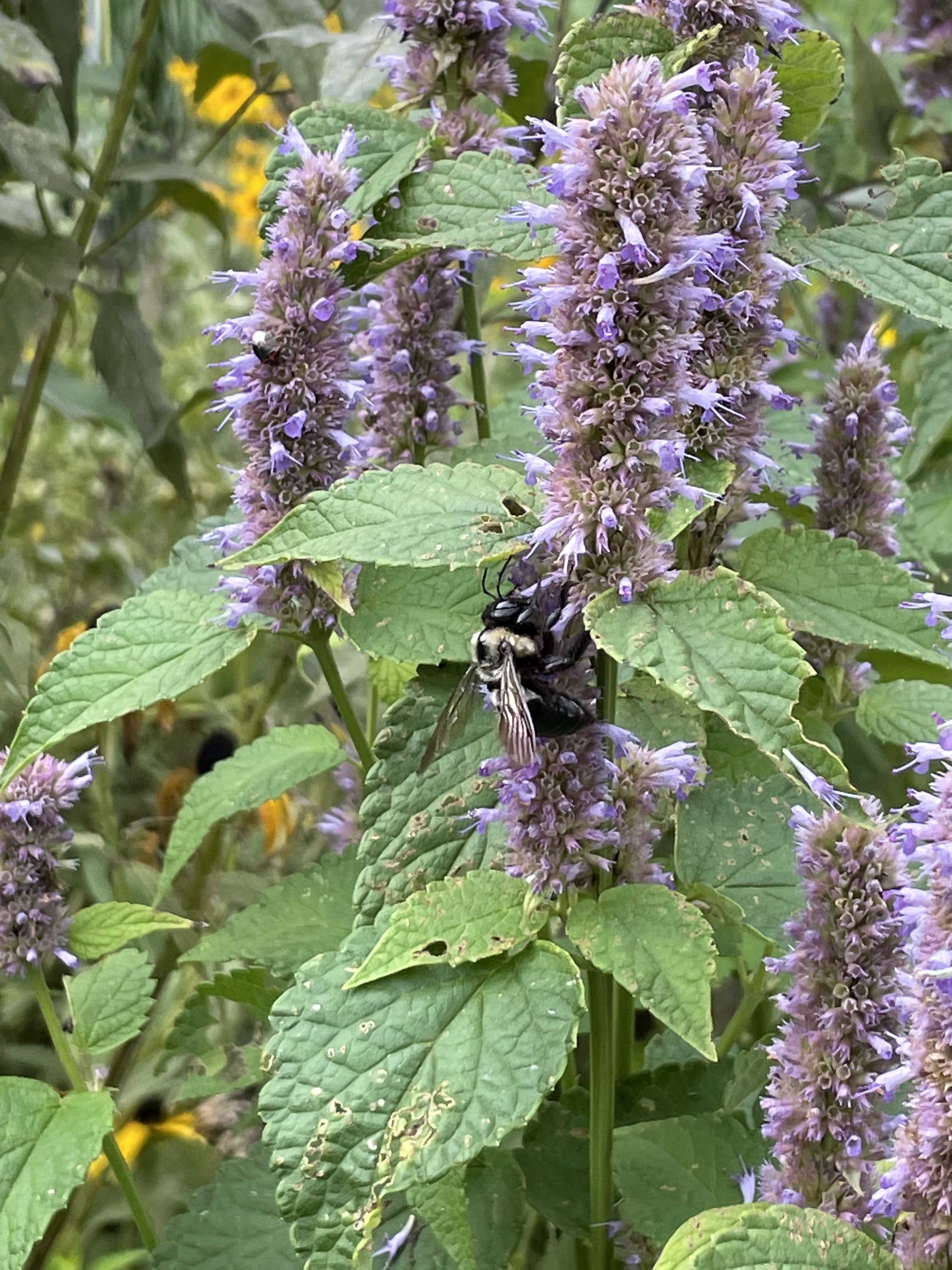
This bumblebee worked these lovely New England Aster blossoms for all they were worth. When I cropped the photo, I realized that the bumblebee had a spectator. On one of the flower’s petals to the right of the pollinator is a small, greenish spider. Perhaps it was the owner of the web behind the blossom.
This female American Goldfinch prepared to join the rest of the flock after feeding on these dried up Black-eyed Susan seedpods. The cluster of still-blooming Black-eyed Susans in the background gave depth to the photo. I was grateful that the bird hung on long enough for me to get this shot. As soon as I clicked the shutter, she flew.
Look quickly, or you might miss this lovely spring wildflower. Bloodroot blooms March to mid-April here in Virginia’s Shenandoah Valley.
There is much to like about this aptly named wildflower. This lovely perennial herb with a simple leaf formation blooms across much of the midwest and eastern United States and into several Canadian provinces. As this photo shows, however, the blooms are short-lived. Some are at their peak, while others are beginning to wither, while still others are beginning to unfurl in the full sun. The flowers close at night.
Look for these beautiful wildflowers in the leaf litter of deciduous forests. Their buttery centers are surrounded by multiple frilly white pedals. Native Americans used the blood-red juices produced by their root stems to dye baskets and clothing. They used the coloration for war paint and insect repellent. The juice, however, is poisonous if ingested. The generic name, from Latin sanguinarius, means bleeding.






























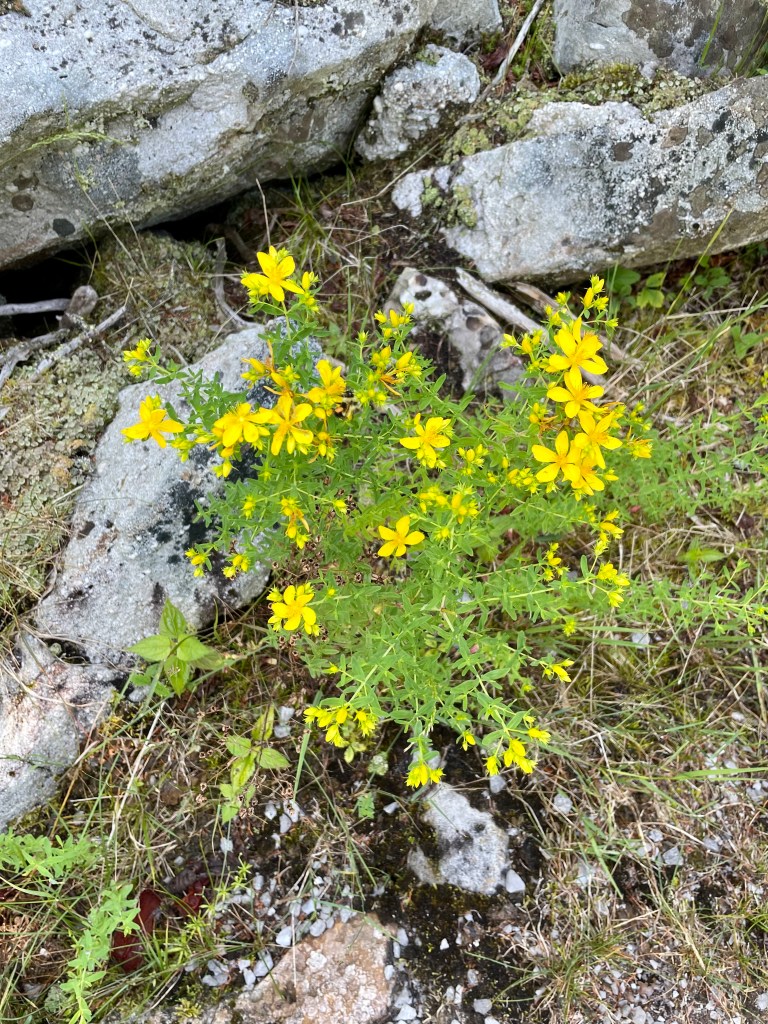


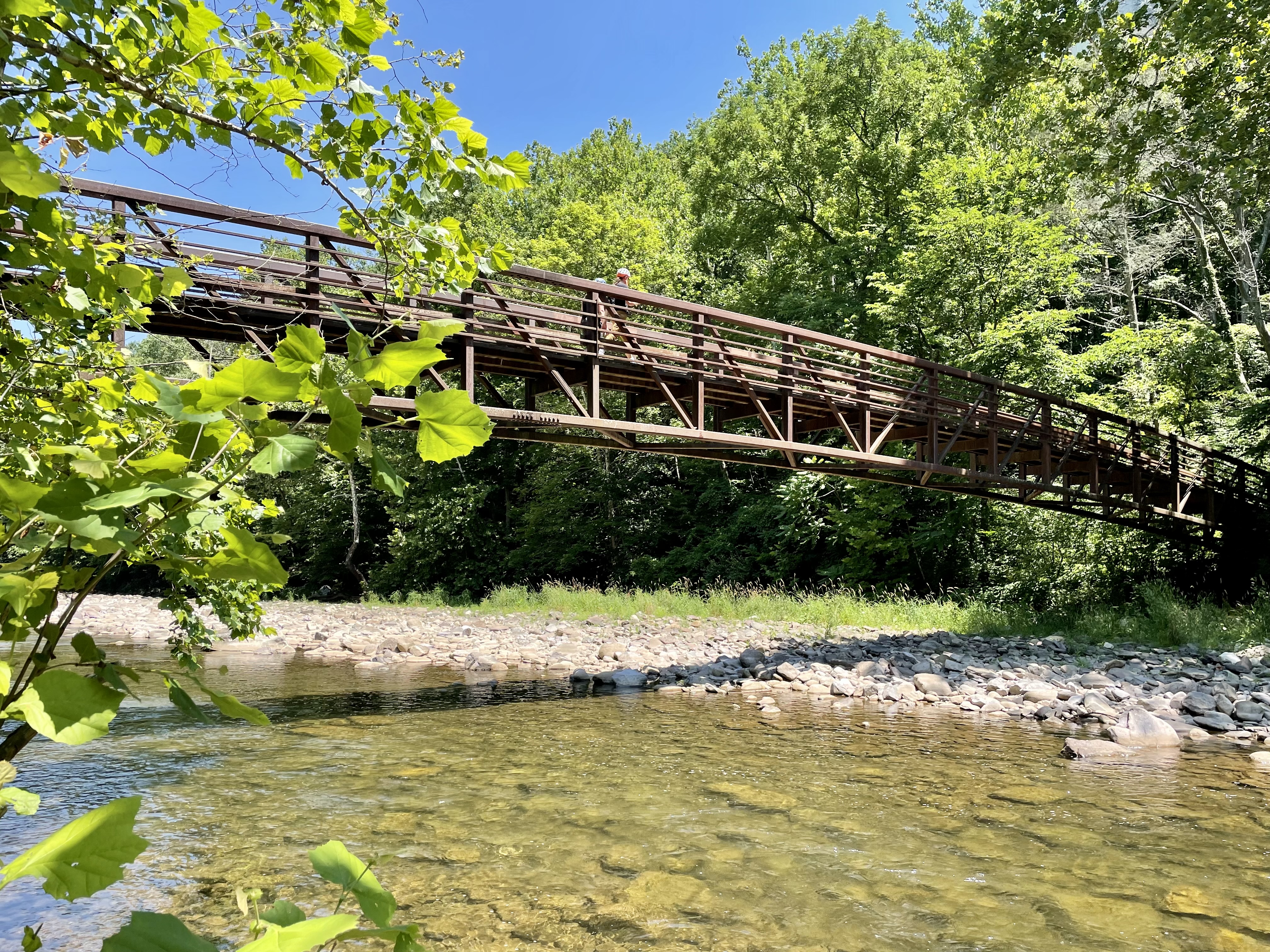


 Roadkill Crossing
You must be logged in to post a comment.