Slow down for the rest of May

Enjoying the outdoors is one way

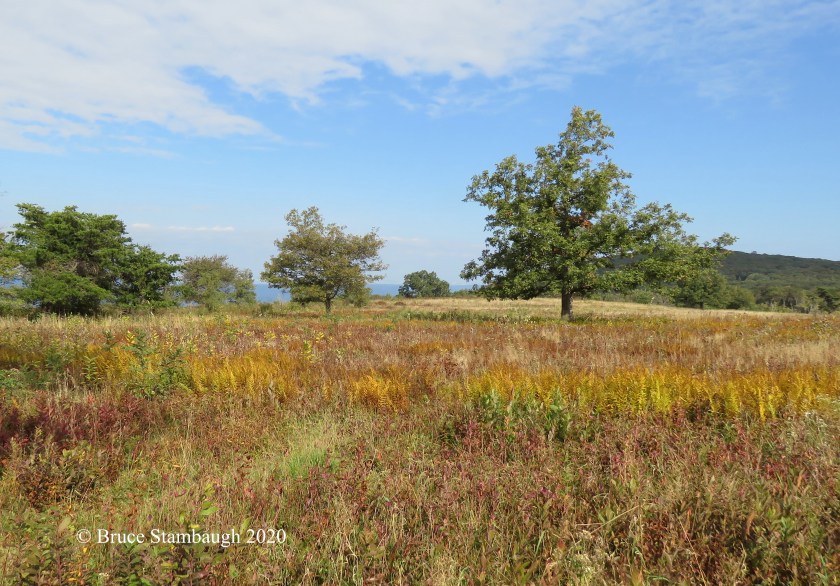
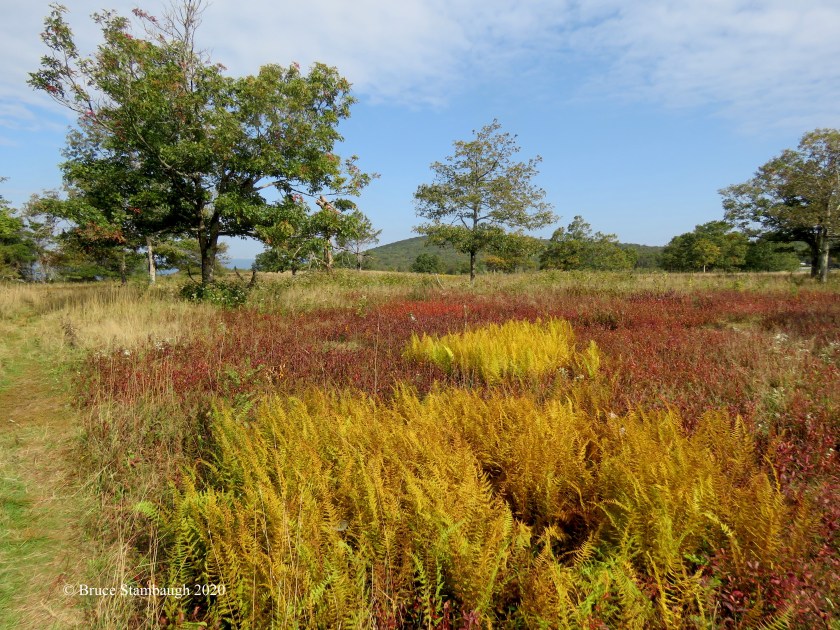
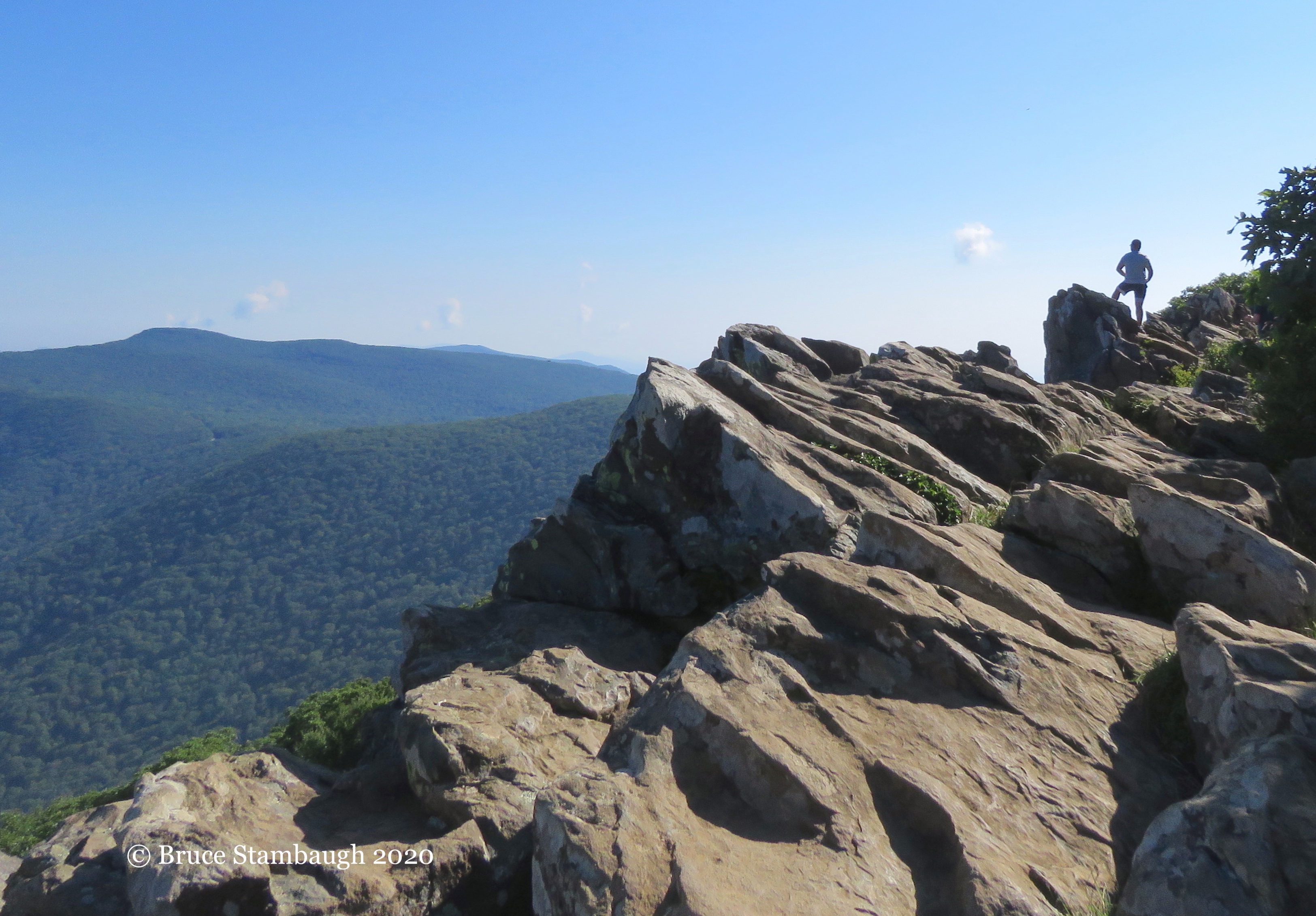
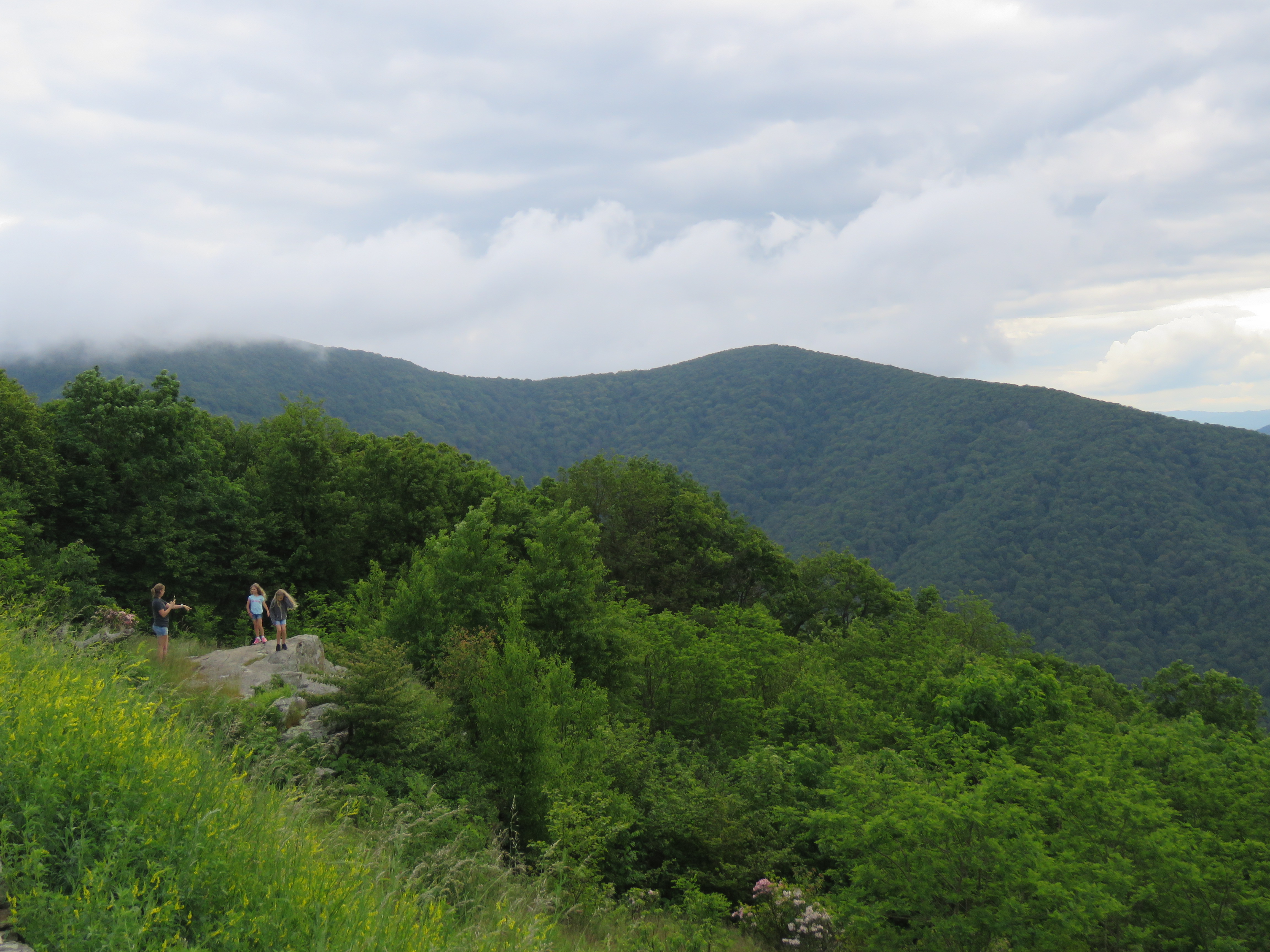
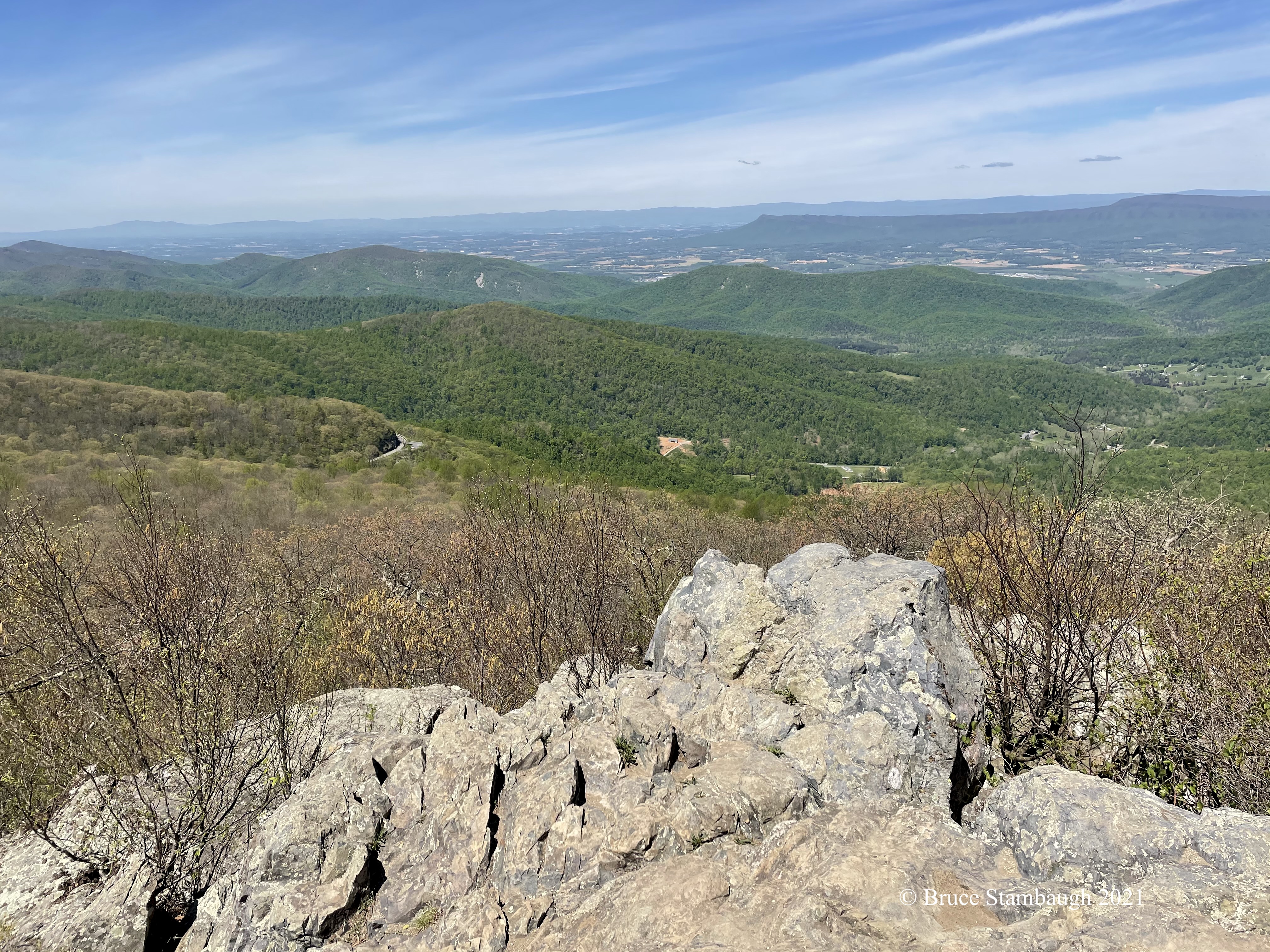
Hightop Mountain, Shenandoah National Park.

Don’t look now, but we are in the middle of May already. May always goes too fast for my liking.

Ideally, it would be nice to put a speed limit on each of May’s 31 days to slow their pace. Of course, that is a romantic pipe dream.

There is an antidote. We can each slow down, take our time, enjoy all that is around us.

Here in the Shenandoah Valley, I am grateful to be part of a hiking group that helps me do just that. It’s a program primarily designed for retirees, so going slow is what we do.

The group generally hikes twice a month and almost always in the gem of the valley, Shenandoah National Park. Each outing is limited to a dozen hikers. The leader is a retired bank president who volunteers in the park by keeping trails open for hikers.

I can’t participate in every hike, but I try to do both hikes in May if I can. The leaves of the mountain forests have yet to unfurl, allowing many wildflowers and trees to bloom. Plus, hikers’ nemeses, heat, humidity, and insects, are scarce.
Our leader plans the hikes and reminds us to come ready for the cool mountain temperatures and bring plenty of water and a lunch. We often trek to a precipice that overlooks the rolling countryside that dominates the Shenandoah Valley.

Mosey might be a better way to describe our hikes. We usually take four or more hours to hike three to four miles roundtrip. Pokey we may be, but we indeed have a glorious time enjoying each other’s company and the beauty we encounter.

It’s not unusual for us to climb 1,000 feet or more in that distance and back down again. Along the way, we frequently stop to enjoy and photograph the floral display spread out for us like a colorful carpet on the forest floor.

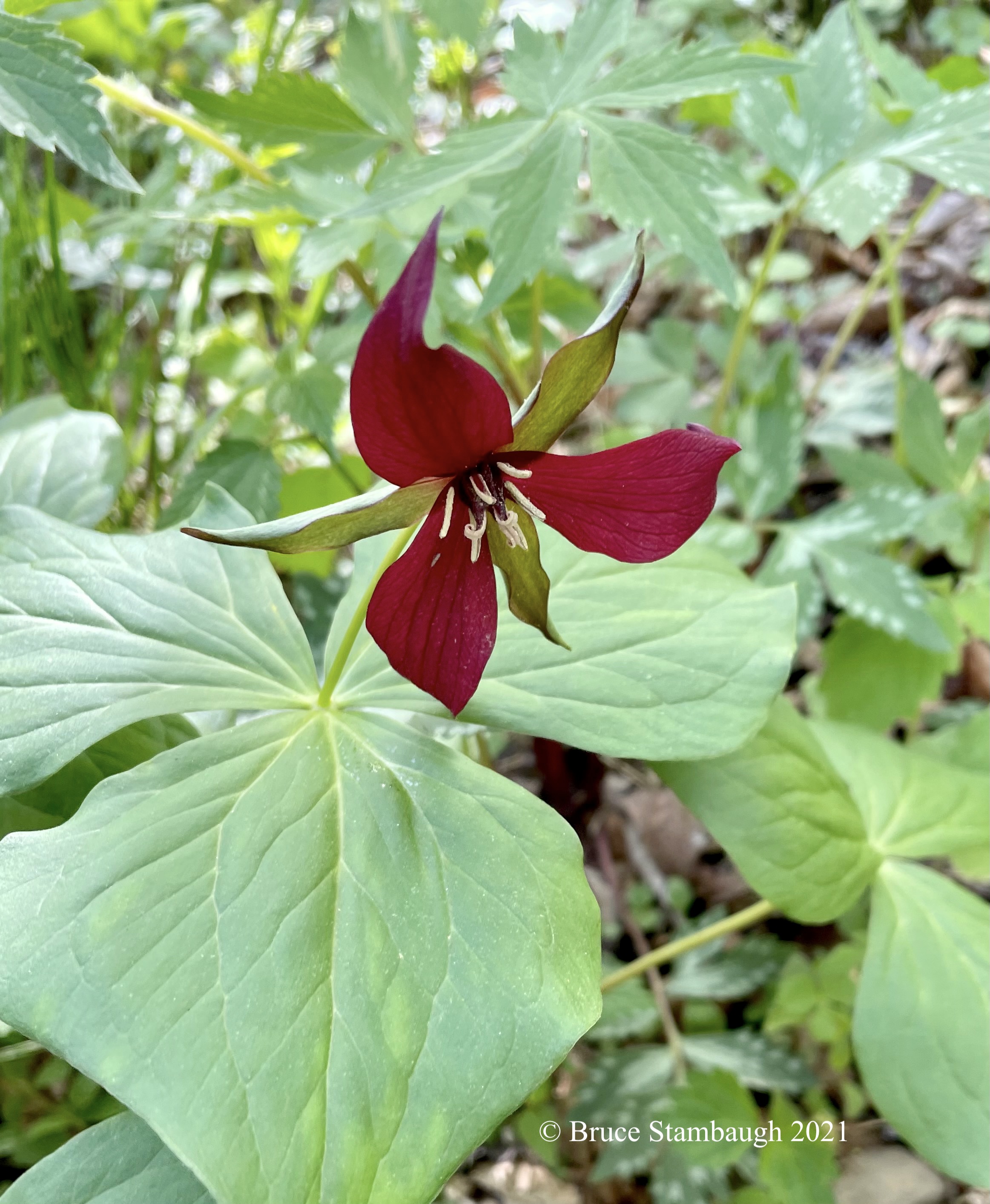
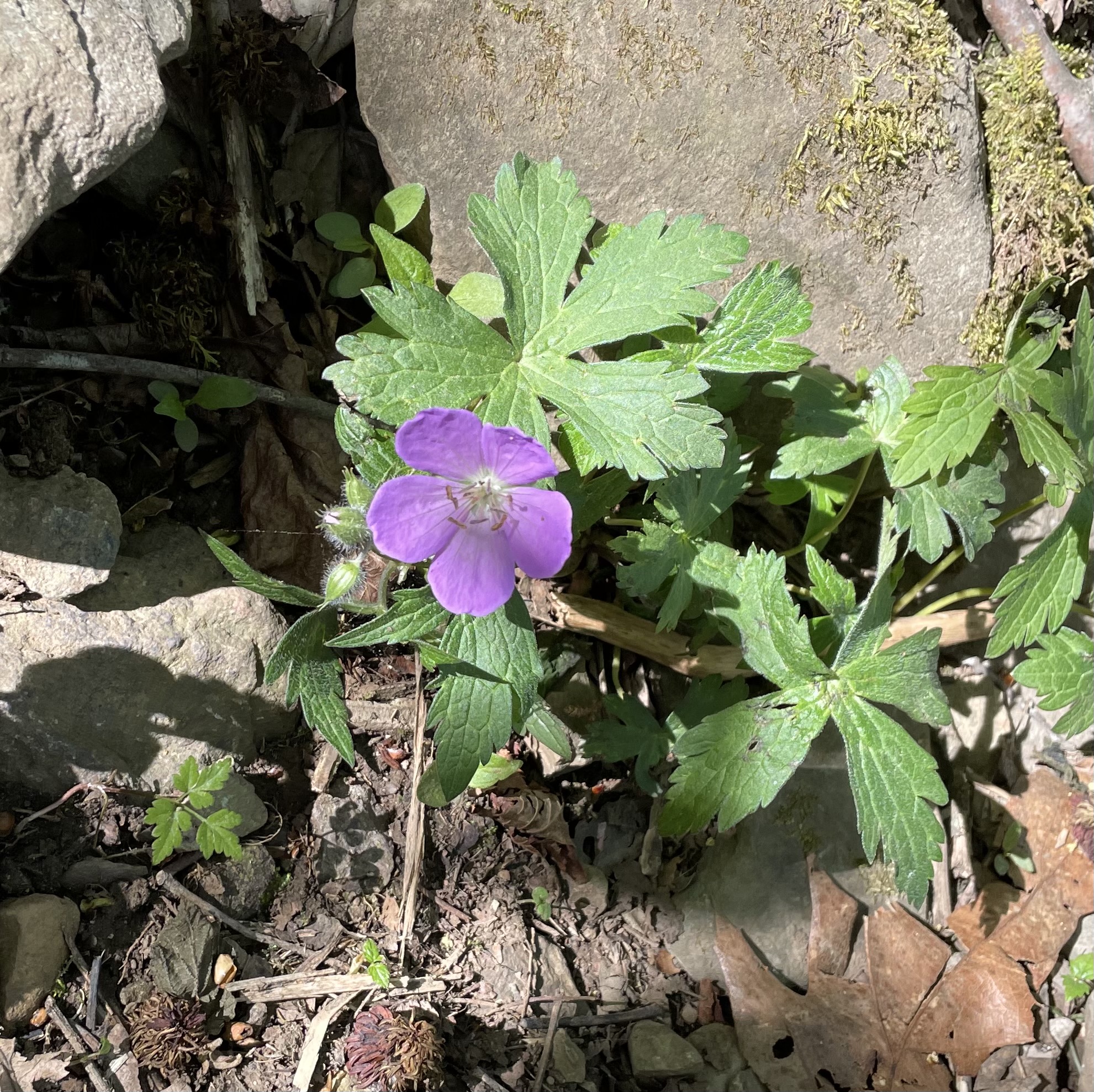
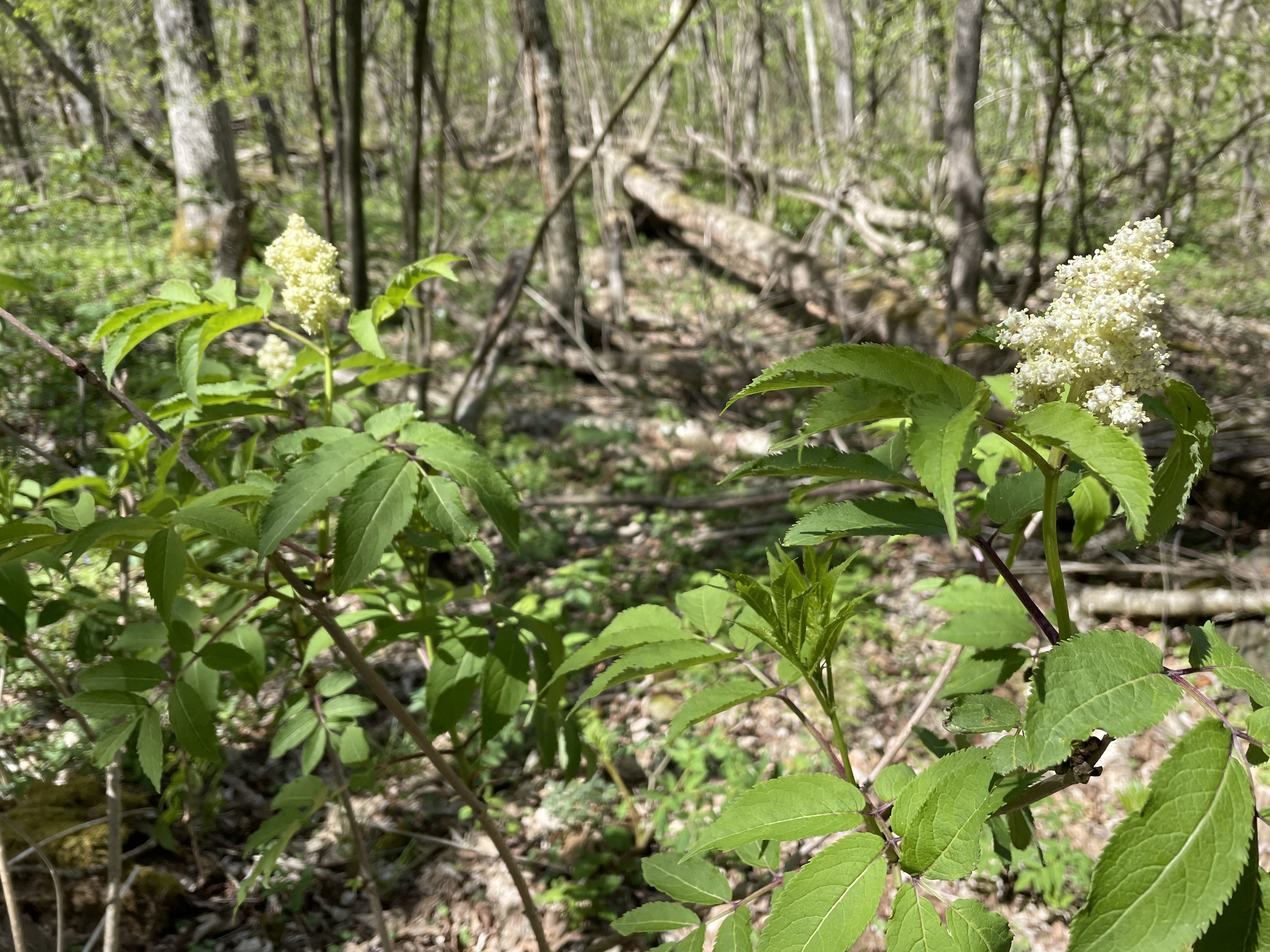
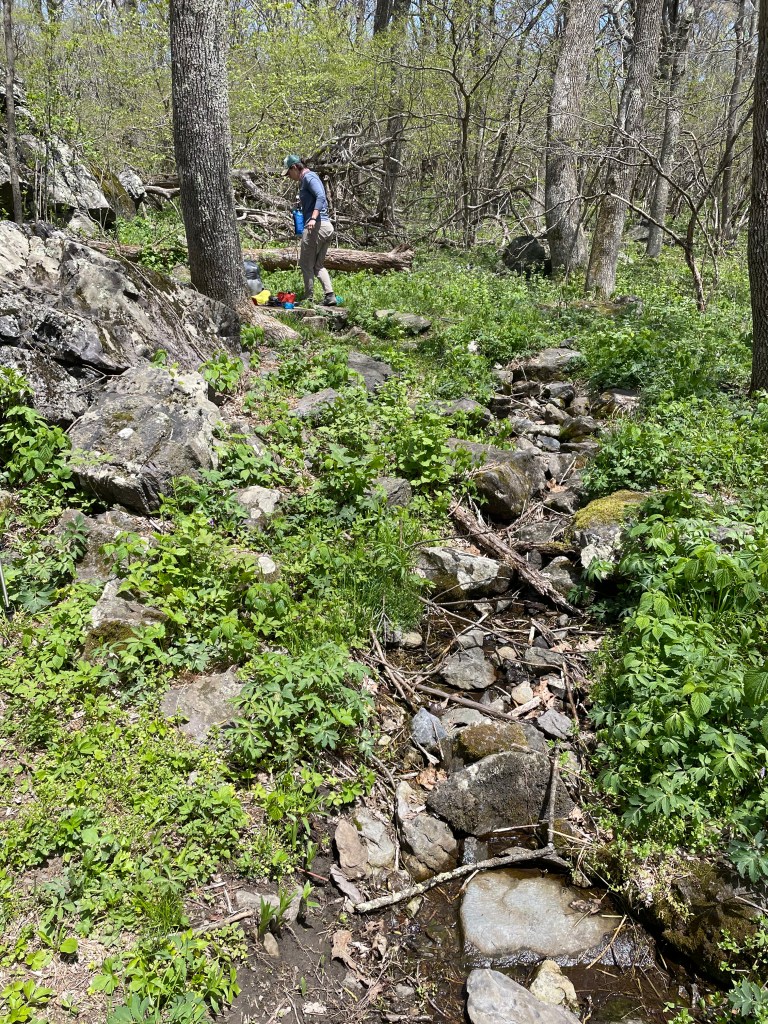
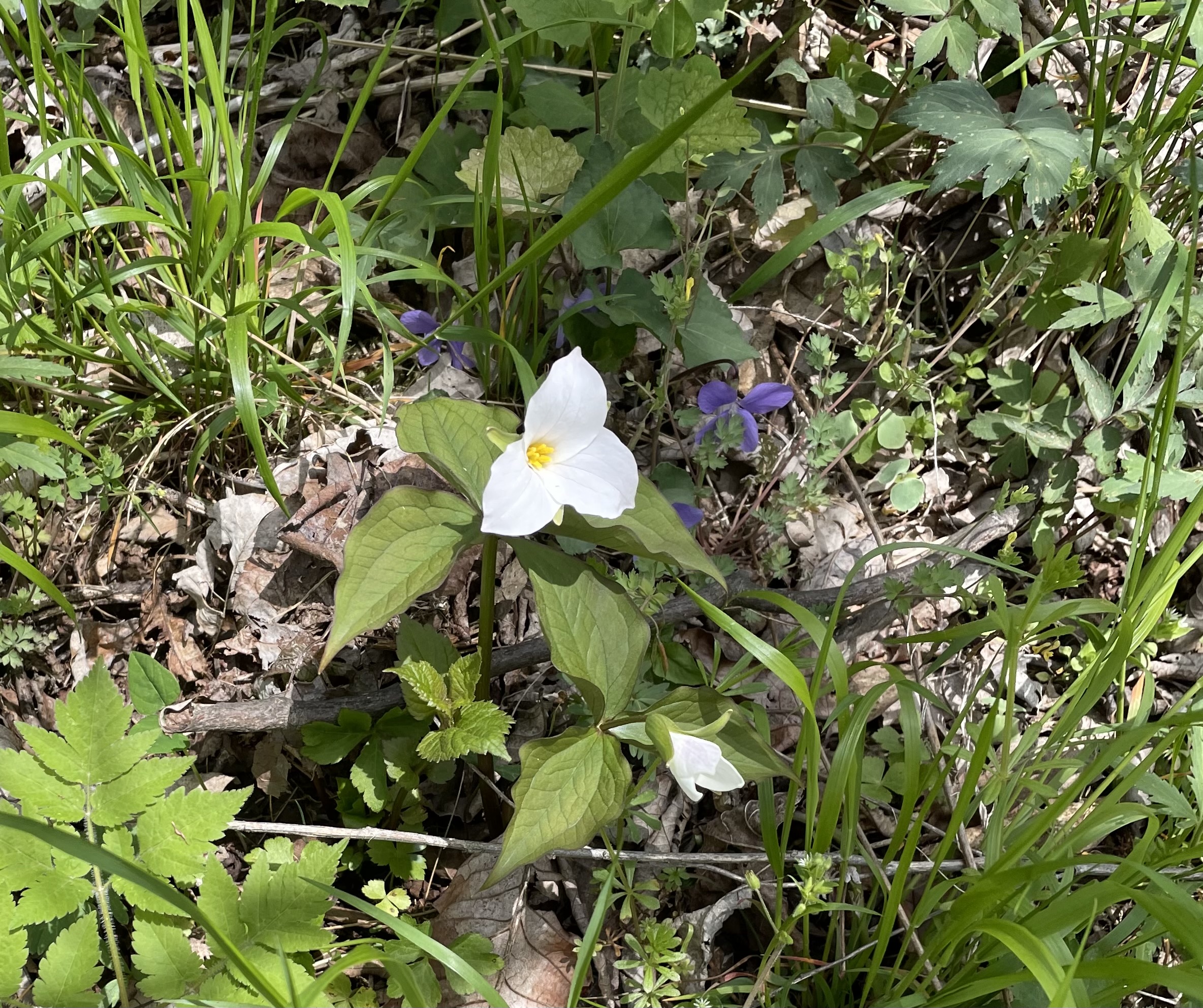
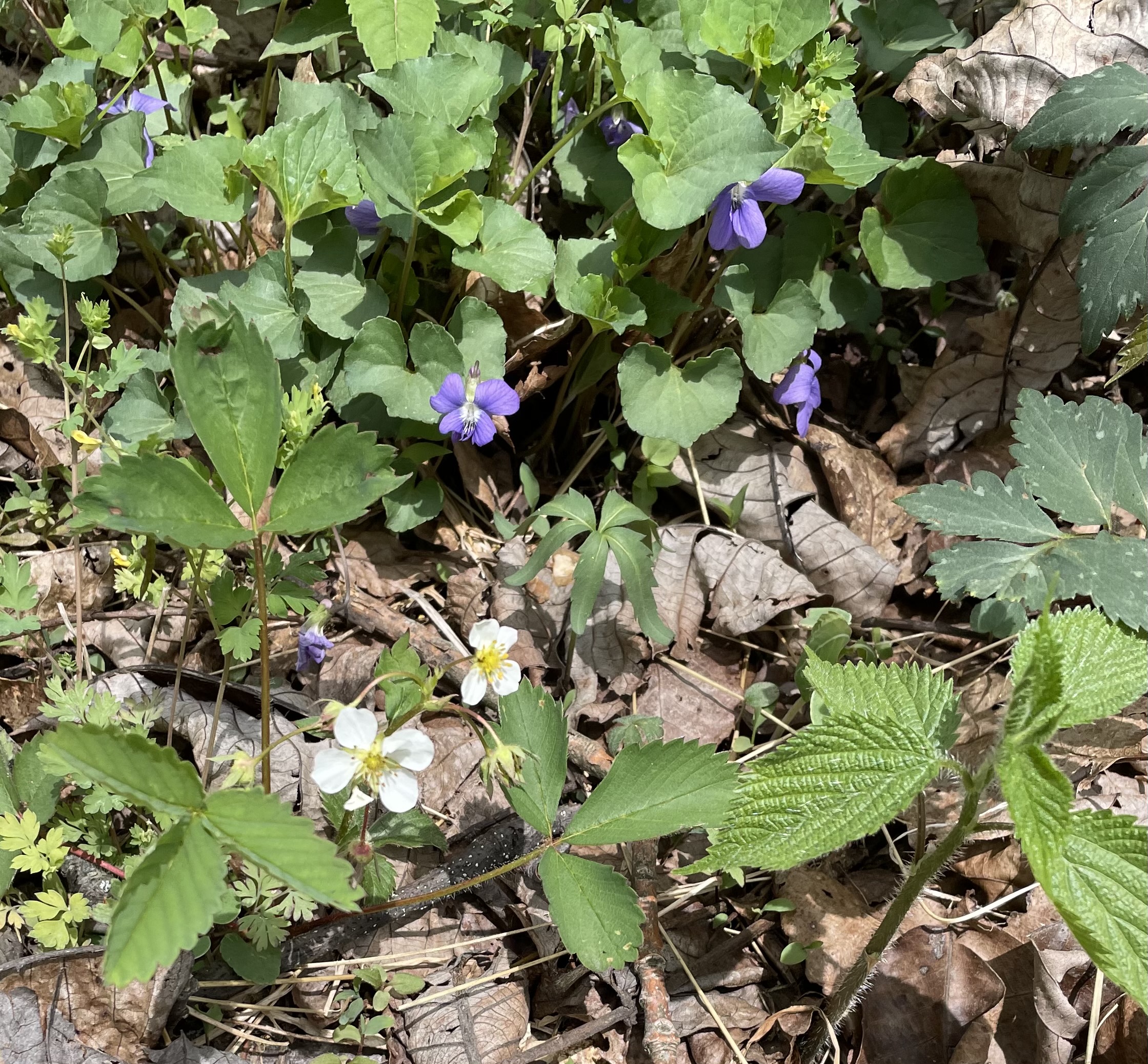
On our latest trip, we enjoyed seeing both large and small-flowered white trilliums, patches of red trilliums, wild geraniums, yellow and blue violets, black haw bushes, and hawthorn trees in bloom. Wild strawberries blossomed low while towering tulip poplar buds opened high above.

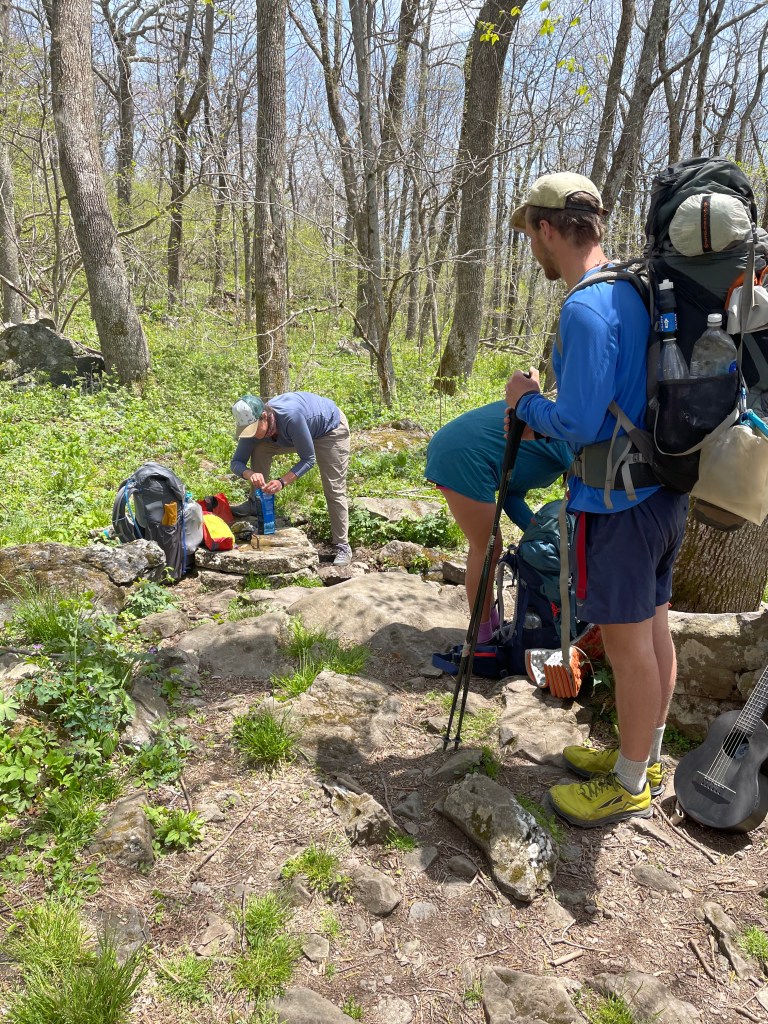
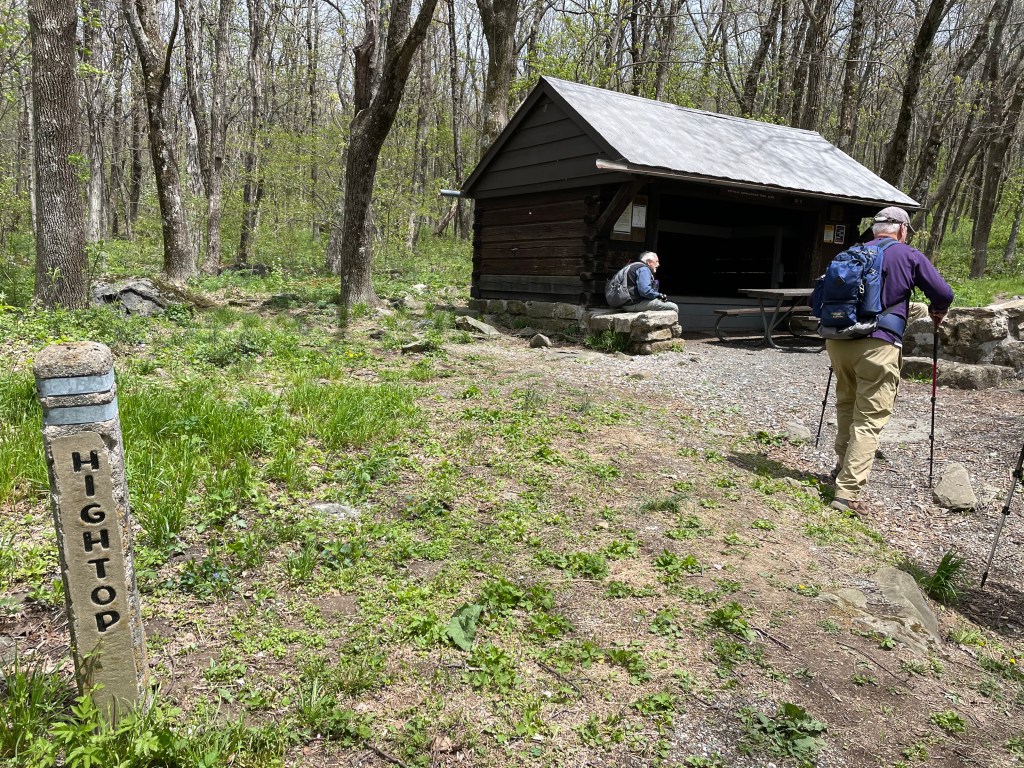
To reach the summit of Hightop Mountain, we walked the Appalachian Trail (AT) that snakes its way the entire length of the national park. We meet other day hikers like us, section hikers, and through-hikers.

Section-hikers walk the AT one section at a time, returning multiple times later to do more hiking. Through hikers are the serious ones. Their goal is to hike the entire 2,500 miles of the AT.
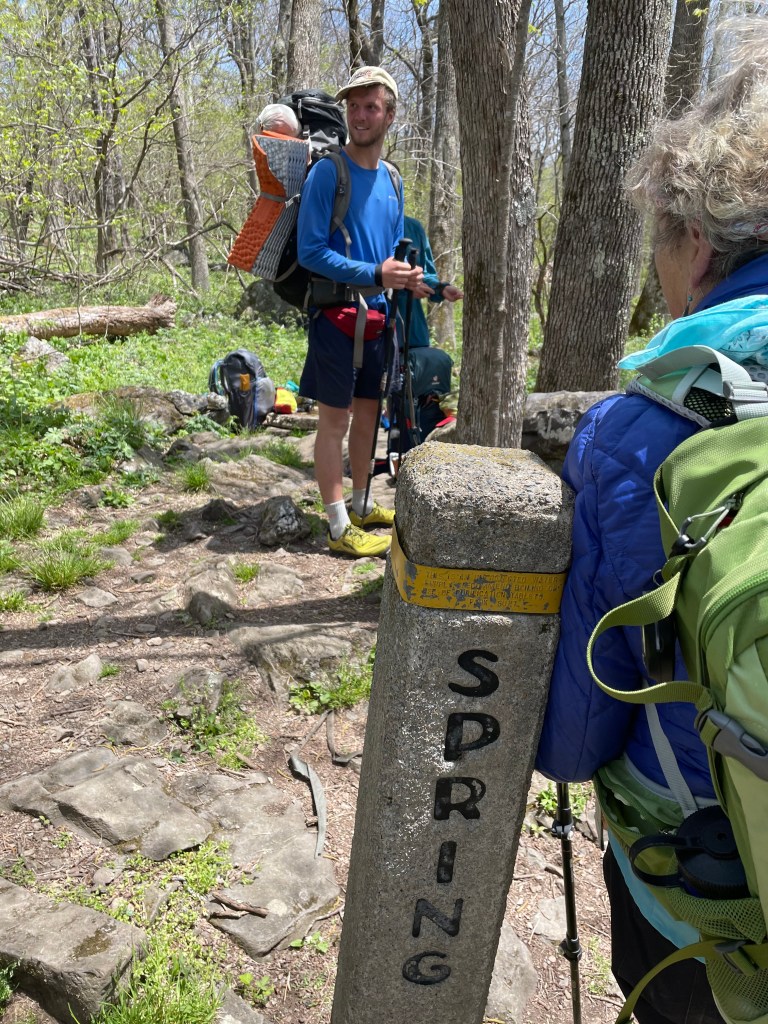
Most start at the trail’s beginning in Georgia and hike north to its terminus in Maine. In doing so, they experience an unfolding of spring over and over from the south to the rugged northeast.

Our group tries to give way to these more experienced hikers, but they are often as curious about us as we are about them. They often share their trail names and hometowns, and off they go.

We then return to observing the songbirds singing and flitting all around us and the many varieties of wildflowers as we meander. At our age, we have no choice to simply take our time to be safe and to inhale both our surroundings and the refreshingly cool mountain air.

Perhaps that is a good lesson for all of us. Slow down. Take your time. Enjoy all you encounter, moment by moment, breath by breath. Maybe then the remainder of May will gladly join you.

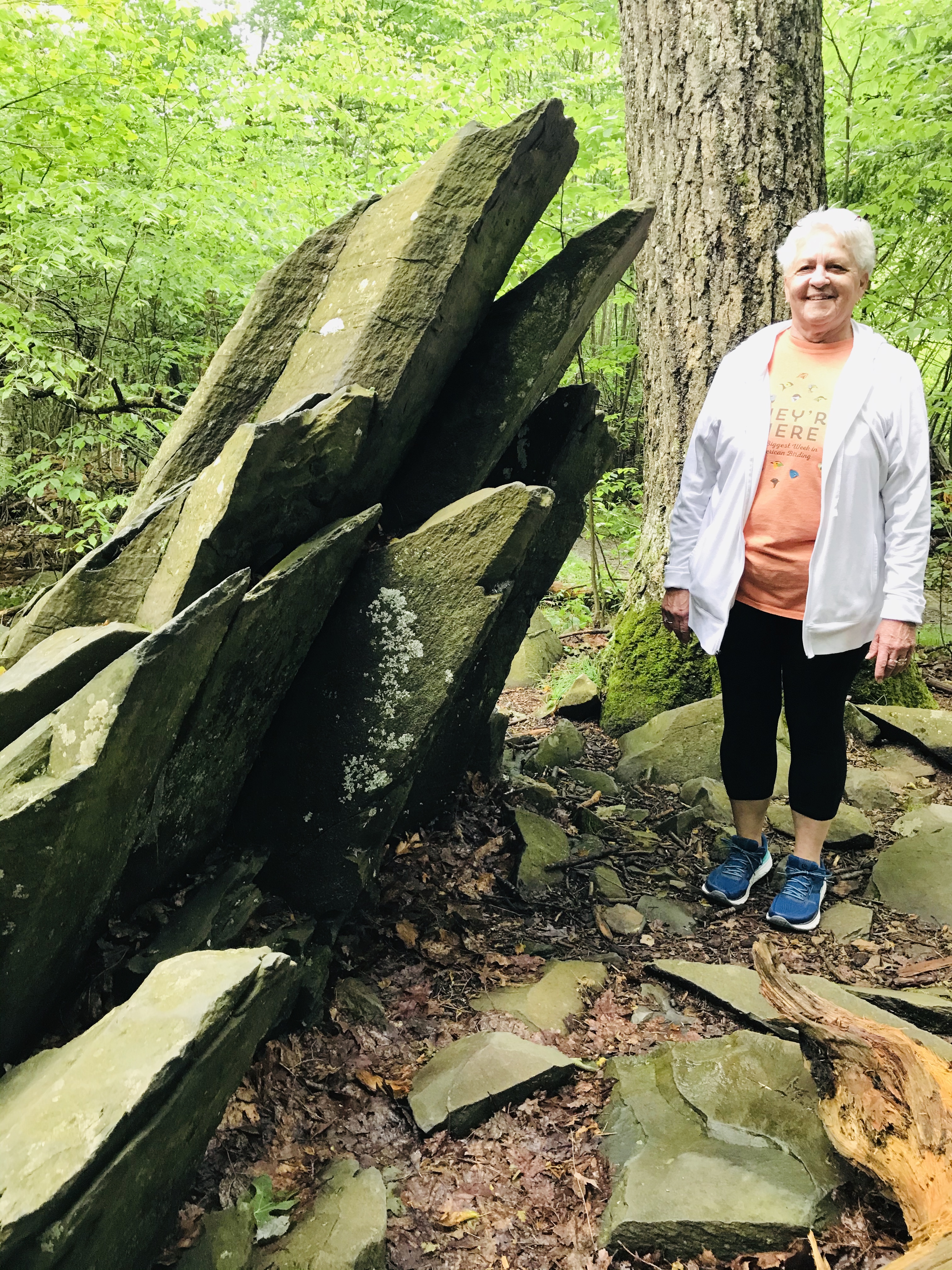
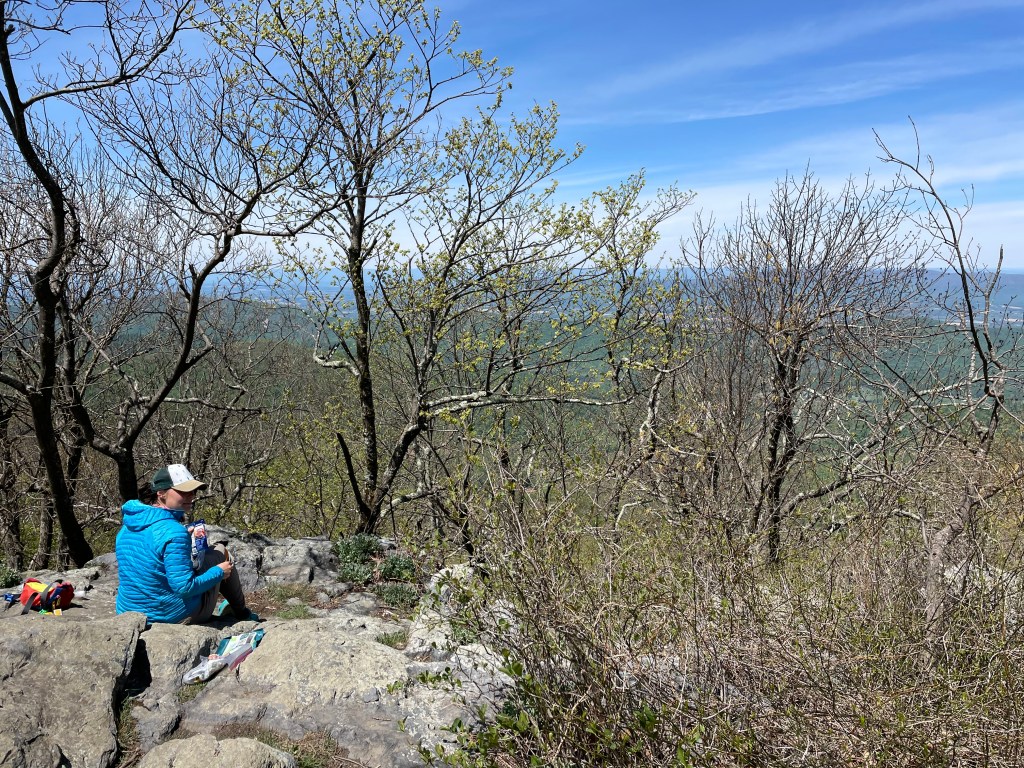
Our lunchtime view with a through hiker.

© Bruce Stambaugh 2021
Mountain to Mountain

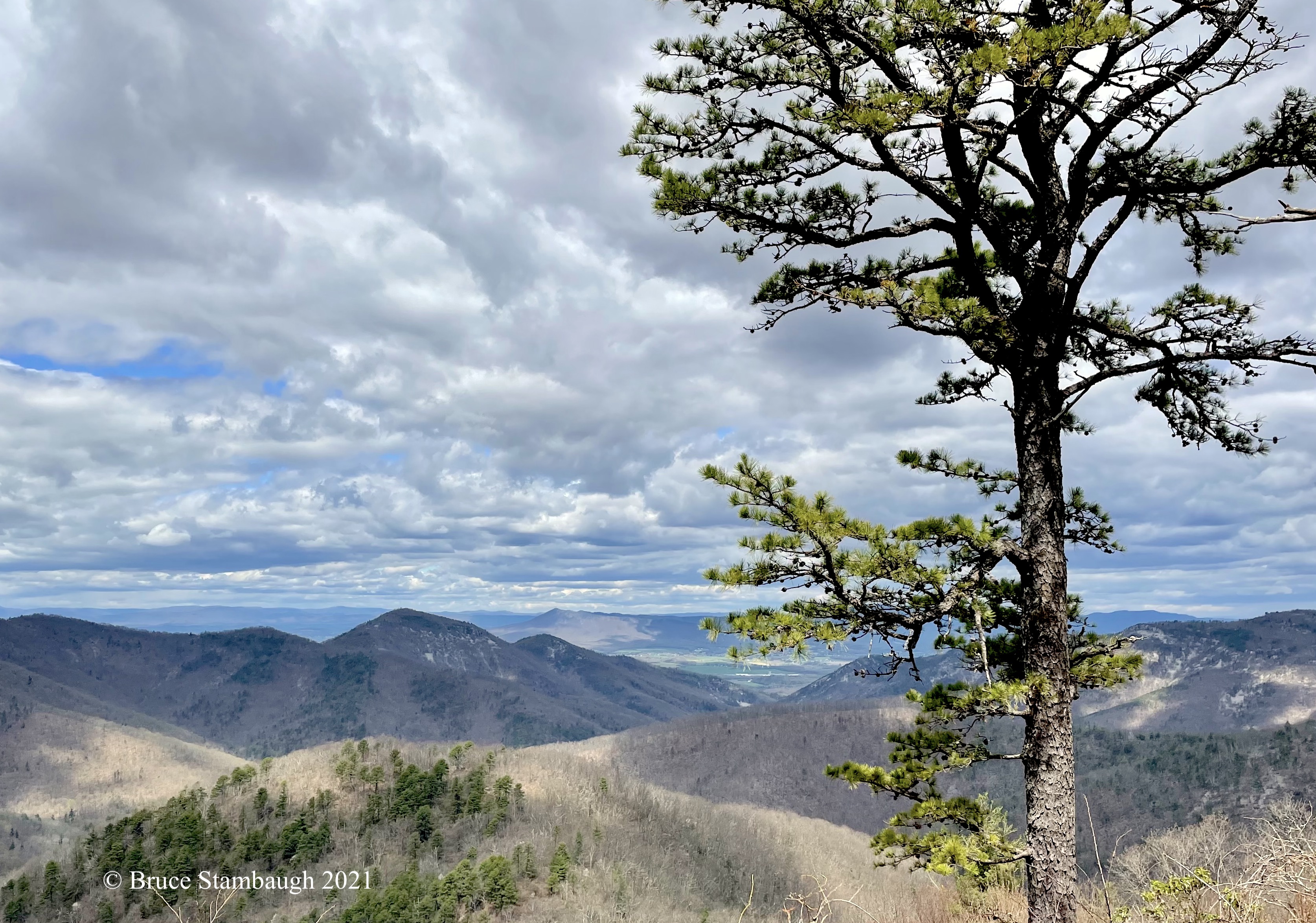
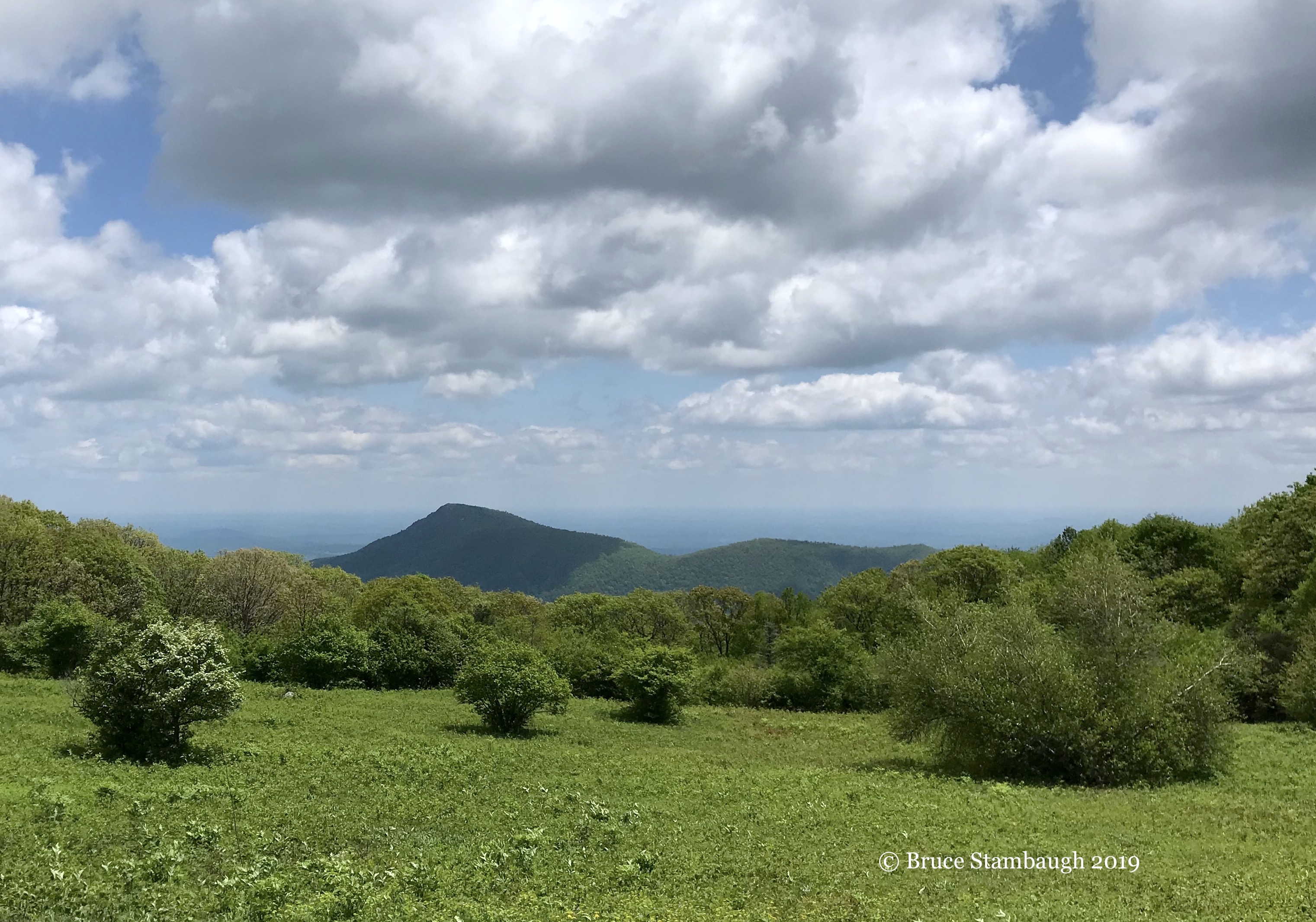
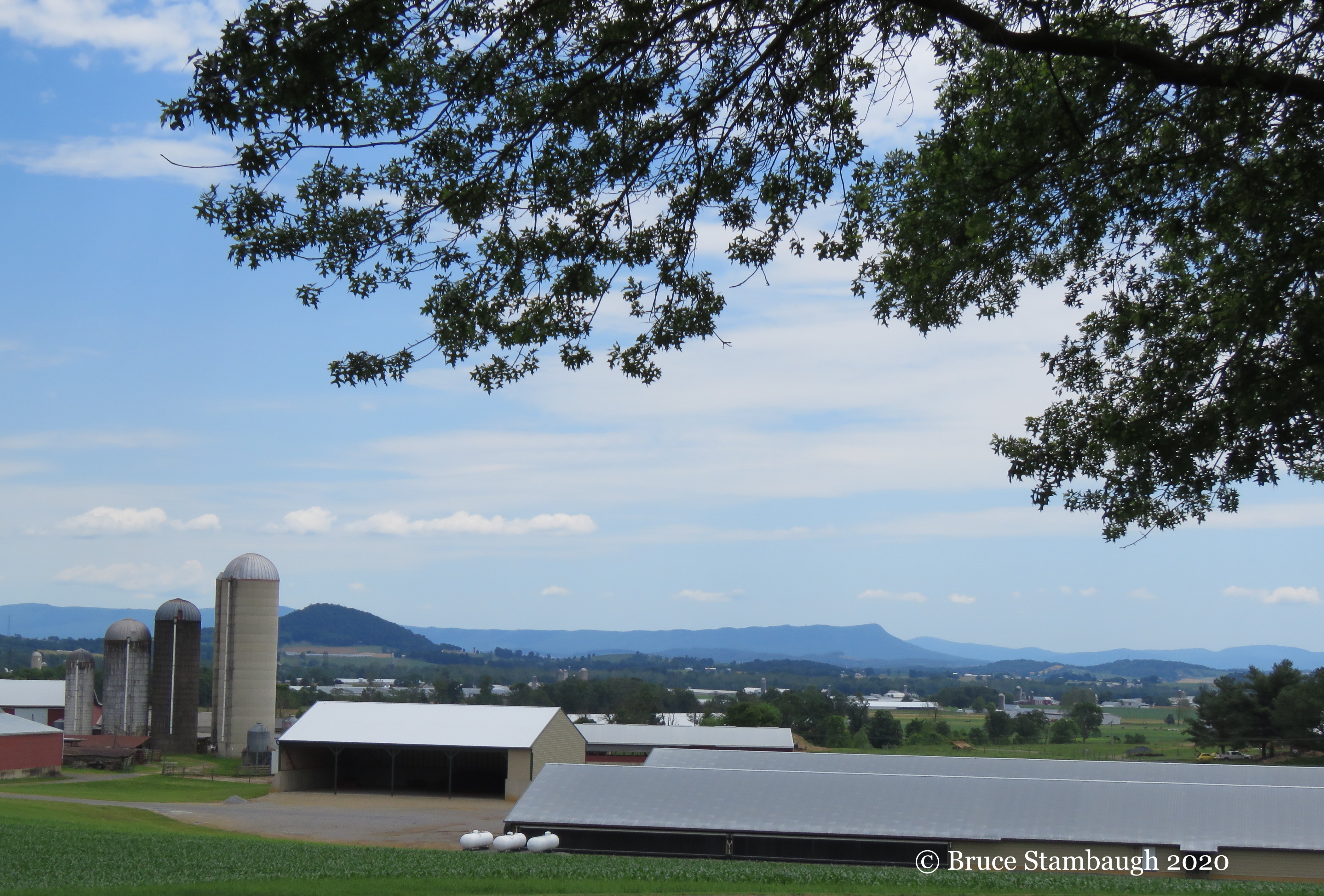
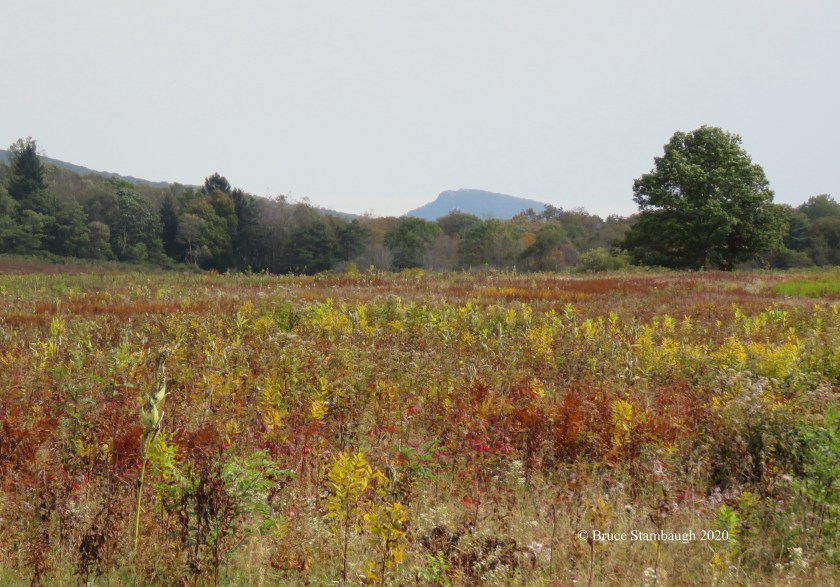
I live in one of the prettiest places in the world. I can be atop the Allegheny Mountains in less than half an hour. They are the mountains in the far distance, center to left in the photo.

In less than an hour, I can be driving on the enchanting Skyline Drive in Shenandoah National Park, which runs 105 miles along the Blue Ridge Mountains. This photo was taken less than a month ago from Rockytop Overlook on Skyline Drive.

The peak in the center of the photo is the southern tip of the Massanutten Mountains east of Harrisonburg, Virginia. These old age mountain ranges can’t compare in beauty to the younger, sharper, snow-covered Rocky Mountains. Nonetheless, I find beauty in the mountains that border and bisect the Shenandoah Valley even on a mostly cloudy day.

© Bruce Stambaugh 2021
Letting Creation find you

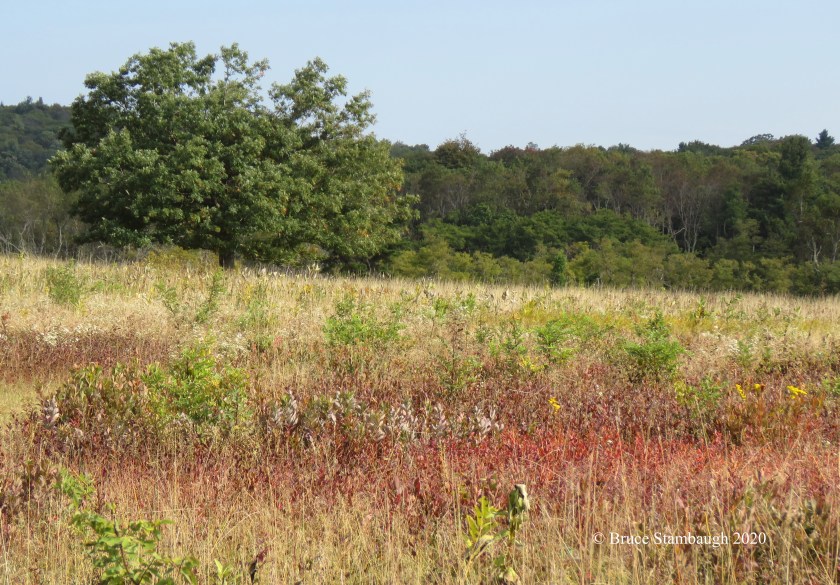
Looking west from a point in Big Meadows in Shenandoah National Park.

Even though the morning’s southeast breeze was gentle, the leaves rained down like ticker-tape parade confetti. I was in my favorite outdoor space, Shenandoah National Park’s Big Meadows.

Big Meadows is an anomaly. No logical or scientific reasons can explain why the expansive meadow sits in the middle of this popular national gem.

Scientists have determined that there is nothing unique about the soil’s geologic makeup or bedrocks below that would create a meadow in the middle of a forest. In a matter of yards, the foliage changes from plants of a kettle-like marsh to wooded hillsides. I imagined Big Meadows as God’s thumb stamp of approval on these ancient mountains.

In the short time we have lived in Virginia, I’ve found fall is my favorite time to visit this gorgeous spot. From our valley home, the weather appeared to be perfect. But when you visit the mountains, conditions can be changeable at any time of year. I packed for the unexpected, and that’s what I got. With every step, creation’s glory unfolded.

You could hardly call my creeping along as hiking. I followed the parameter of the southern part of Big Meadows. In three hours, I covered only a mile and a half. A wooly worm would have made more progress, but likely not shared my joy.

I wasn’t out to break any endurance records. I went to see whatever came to me as I strolled along and through the area’s various topography. In the mountains, just a change in altitude of a few feet makes a big difference in the kinds of vegetation that grow.

This gently sloping mead is home to flowers, grasses, reeds, trees, and assorted creatures great and small. As an invader of their varied habitat, I tried to remain obscure.

With fall’s migration, I knew plenty of bird species might be passing through on their way south. I expected year-round residents, too, along with a few lingering butterflies.

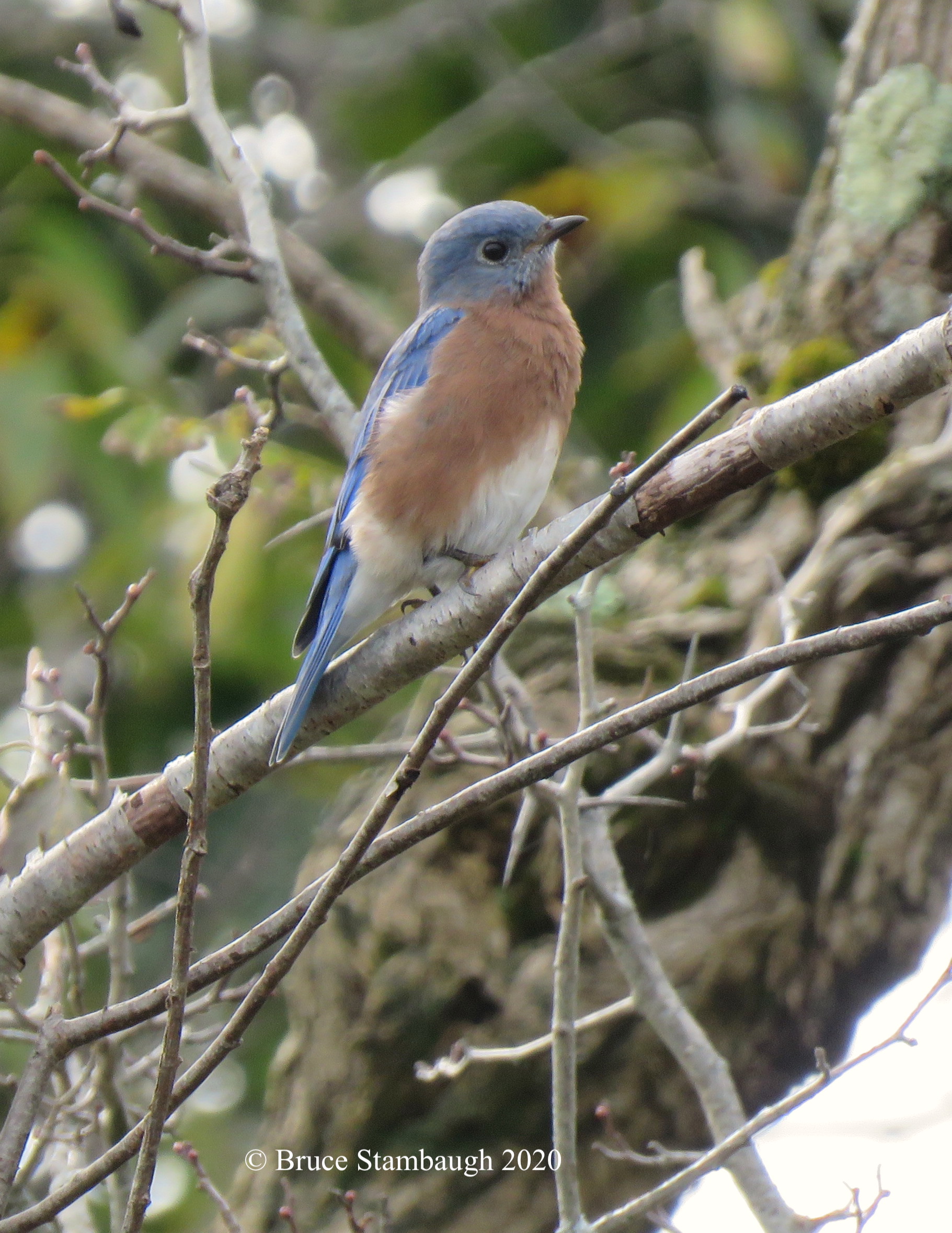
Resident eastern bluebirds and handsome field and song sparrows greeted me. Eastern phoebes, magnolia warblers, blue-headed vireos, Carolina chickadees, and dark-eyed juncos darted about, too.

Dressed in their duller non-breeding feathers, some birds, especially the warblers, went unidentified by this average birder. Chirps near and far came from other species that I couldn’t locate.

I crept along the raggedy edge that separated fields from woods, exhilarated. I lingered in a high place beneath a sweeping white oak at the meadow’s southernmost border, where I could see near and far.

Contentment filled me as I sensed all the life around me. Instead of hiker, birder, or photographer, I was an uninvited but appreciative guest. Every moment bore existential meaning.

The first frosts of the season created a festive carpet of fall’s primary colors that spread across the landscape. The leafy trees and evergreens looked on in envy. Red-tinted green leaves, spent wildflowers, delicate ferns frosted golden, ruby-colored blueberry leaves, and russet grasses decorated the earth like it was Christmas.

Overhead, the sky also joined nature’s artistry. One minute, it was pure cerulean, the next white fluffy clouds.

Suddenly, a fog rolled in from the eastern piedmont. The steady breeze soon carried it to the western slope of the Blue Ridge Mountains.

I breathed an appreciative silent prayer of gratitude for all these sights and sounds. The old withered away, yet the promise of rebirth remained.           

At every step that I took, I was delighted to have observed all that found me.

The fog that hung over Shenandoah National Park even after I left.

© Bruce Stambaugh 2020

Hawksbill Summit


The summit of Hawksbill Mountain is one of the most popular spots in Shenandoah National Park. There are many good reasons for that.

Hawksbill is the highest point in the park at 4,050 ft. above sea level. You have a 270-degree view from the summit. Hikers love it since two trails lead to the peak, and a covered shelter is available. Plus, the view is incredible.

I chose the Upper Hawksbill Trail for several reasons to do my second hike in the park this year. The trail has less elevation, is shorter, and I had never hiked it before. I wasn’t disappointed. Birds and butterflies were abundant, and most hikers donned face masks as we passed on the trail.

As you can see, the rock outcropping of the peak is rugged and angular. The Appalachian Trail is 500 ft. below. The drop into Timber Hollow, however, is 2,500 ft., which is the most significant elevation change in the park. Unlike others, I stayed well away from the edge.

“Hawksbill Summit” is my Photo of the Week.

© Bruce Stambaugh 2020

Feeling stressed, fearful? Head outside!

The misty morning view from the Skyline Drive.

Awash with news and information about COVID-19, it’s easy to feel tense, confused, irritable, fearful, or even bored. Due to the global pandemic, millions of people of all colors, religions, cultures, and languages are experiencing similar trepidations.

A sense of hopelessness can be emotionally overwhelming. There’s a way to help overcome that despair. Head outside!

Studies have shown that connecting with nature calms fears, and uplifts spirits. I embrace those findings as often as I can. I recently headed to my favorite get-away place, Shenandoah National Park.

Mine was a twofold mission. Besides going into the wild, this was my first hiking experience since my knee replacement surgery last September.

I started early to beat the heat and humidity. The sun hadn’t yet risen over the Blue Ridge Mountains as I approached the park on U.S. 33. I exit that road into the park at Swift Run Gap.

This slideshow requires JavaScript.


Rounding a slight curve on a typically hazy summer morning, I noticed a large dark object in the opposite lanes of the divided highway. I slowed and rolled past a massive black bear standing beyond the grassy medium.

The magnificent creature looked both ways and then bolted across the roadway. It promptly disappeared into the steep, wooded hillside before I could even grab my camera.

Buoyed by that encounter, I arrived at the trailhead in high spirits. Surely, anything that I would experience the rest of the day would be anti-climactic, unless I saw another bear on the hike. I didn’t.

I walked a few yards on the Appalachian Trail to where it intersected with the trail I wanted, the Mill Prong. It was all downhill from there until the return trip.

The forest was amazingly still. No birds sang, and no vehicles hummed along the nearby Skyline Drive. I took in every moment, the wildflowers, the ferns, brightly colored fungus conspicuously growing on dead trees. The distant sound of water gurgling its way down the mountainside lured me onward.

I heard or saw no one else. A gray catbird burst from a bush beside the trail. A feisty squirrel angrily scurried away, flapping its tail in disgust of the human disruption.

I rested at the shallow stream. The morning sun filtered through the forest canopy, sparkling the gently rippling water. I felt exalted.

Farther downstream, I sat on a large rock and just enjoyed the sound of water trickling over ancient boulders. On my return trip, I passed a few other hikers. Each one donned face masks as we passed on the trail. More gratitude and thoughtfulness mutually expressed.


Click on the photos to enlarge them.
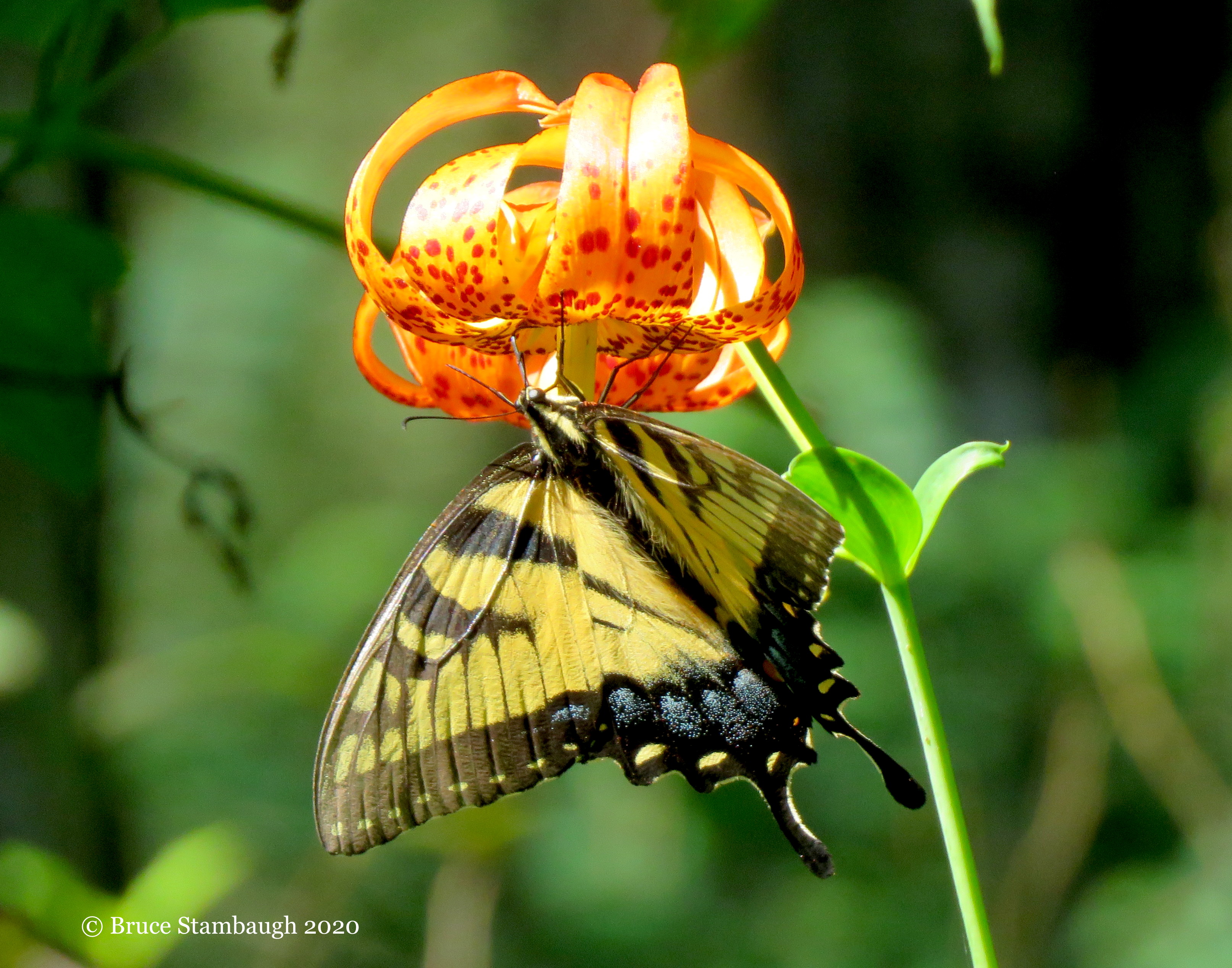
When I reached the parking lot, the strengthening morning sun spotlighted some bright orange Turk’s cap lilies just off the trail. Their beauty drew me like a magnet. I snapped my camera’s shutter over and over, trying to preserve the glory I beheld perfectly.

Suddenly, a female tiger swallowtail butterfly alighted on the same flower that I was photographing. Again, delight and gratitude filled me to the full.

In the rest of the world, the pandemic raged. But in the wild, only the big black bear, the forest’s serenity, the kindness of other hikers, and this tango of floral and fauna mattered.

I was thankful for each magical moment, and for the skillful surgeon who had replaced my knee. Gratitude is appropriate anytime, but especially during this pandemic.

Connecting with nature does indeed do wonders for your soul. You can find peace and gratitude in a local park or even your backyard.

Get outdoors, follow the prescribed safety rules, and enjoy all that comes your way.

The splendor at trail’s end.

© Bruce Stambaugh 2020

The Blues Have It!


I am fortunate that I can incorporate my three favorite hobbies into one outing. Whenever I go hiking, I always take my binoculars and camera. Every now and then, I am rewarded with an opportunity to capture the beauty of birds.

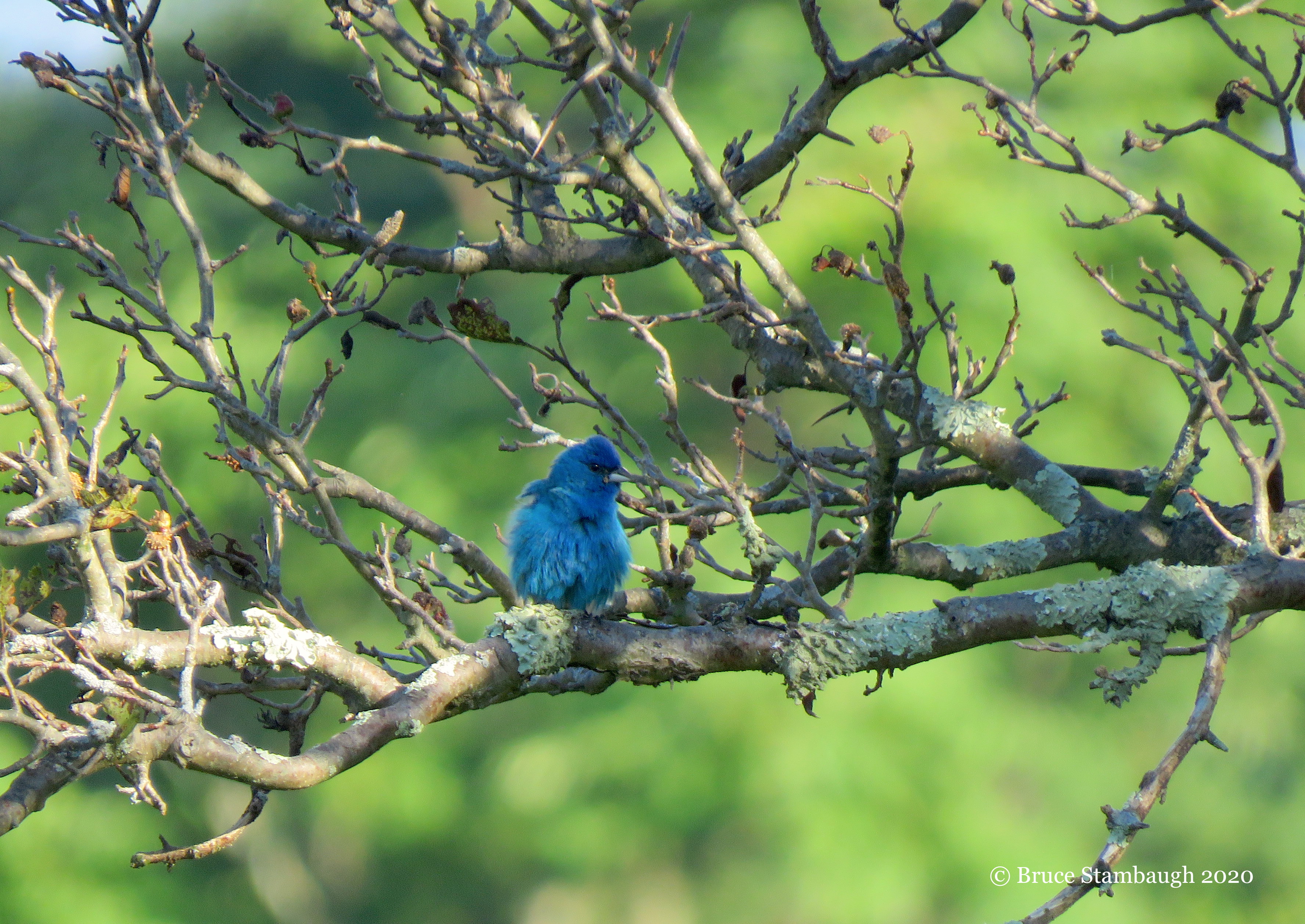
This male Indigo Bunting landed on this jumble of dead branches just out of the morning’s sunlight. Still, the ruffle of the striking bird’s feathers as it turned its head revealed several shades of blue. Indigo is the perfect name for this avian beauty.

I am happy to share my Photo of the Week with you, “The Blues Have it!”

© Bruce Stambaugh 2020

Morning Surprise


I easily spotted the small patch of Turk’s cap lilies as I finished my hike on a trail in Shenandoah National Park. The morning sun perfectly highlighted them against the forest green background. Since they stood high above other plants along the trail, I knew I could get a good shot of these nature wildflowers.

I took a few photos when this female Eastern Tiger Swallowtail butterfly suddenly attacked the flowers, flitting from one to the other. It was a very pleasant surprise. The beautiful butterfly moved around so much that it was difficult to get a good angle. As I snapped the last shot, which was this one, the butterfly fluttered off out of sight.

“Morning Surprise” is my Photo of the Week.

© Bruce Stambaugh 2020

Shining Through


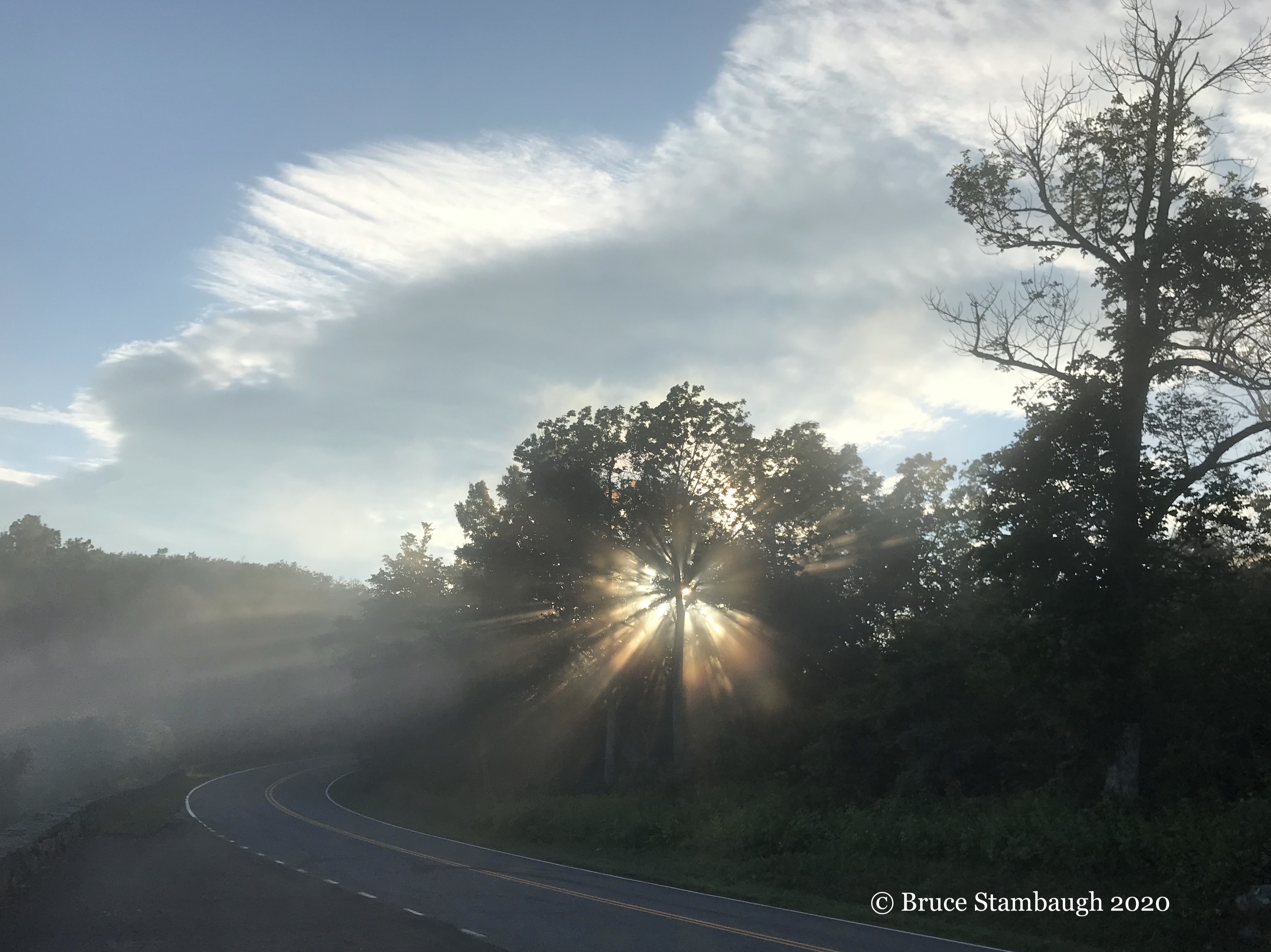
I was driving along the Skyline Drive in Shenandoah National Park early in the morning when I came upon this scene. Fortunately, the fog was rolling up the side of the Blue Ridge Mountains right at an overlook.

Watching the fog rise rapidly out of the Shenandoah Valley and up over the mountains was a treat. The sun was just peeking over the eastern ridge when I turned and caught this scene. The crown of the tree scattered the sun’s rays into the eerie fog, creating this spectacular scene. The high clouds perfectly framed my Photo of the Week, “Shining Through.”

© Bruce Stambaugh 2020

Loving Shenandoah National Park

Old Rag is a popular hike in Shenandoah NP.

My wife and I have enjoyed Shenandoah National Park since we moved to Virginia three years ago. There’s a lot to love about the park, and it’s less than an hour away.

We’re not the only ones who appreciate it, of course. The estimates of annual visitors compare to those of Ohio’s Amish country, our former residence. Each location attracts millions of visitors a year.

Of course, the novel coronavirus pandemic has put a damper on tourist numbers everywhere. With the virus cases flattening out in Virginia, the park has mostly reopened.

When we want to break our stay-close-to-home routines, Neva and I head for the hills. Sometimes I will venture out alone, birding, hiking and shooting photos. It’s an enchanting place, a multi-sensory extravaganza.

This slideshow requires JavaScript.


I hear the beautiful song of an indigo bunting, and I raise my binoculars, scanning the area for the likely source of the melody. Novice that I am at identifying bird calls, I want to make sure I am matching the right species with the song. I’ve learned that, like human accents, bird calls of the same species vary geographically.

Once I find the bird, I switch to my camera to try to get a decent photo. With the trees in full summer canopy, that’s not easy to do. Now and then, I am fortunate to find a bird singing in the open, and I click away.

I catch a slight, silent movement out of the corner of my eye. Is it a doe with a fawn, or perhaps twins? Is it a black bear grazing before nightfall? One never knows. On warm days, keeping a lookout for a lounging timber rattler while scrambling on a rock outcropping is always a good idea.


The park is a great place to take sunset photos, too. But sunsets in the mountains can be problematic.

The expansive, rolling Shenandoah Valley is bordered on the east and west by mountain ranges. Sunsets can be as disappointing as they are stunning. Weather plus geography equals a formula for the unknown.

When we lived in Ohio, all we had to do was look out our windows to know the potential for a spectacular sunrise or sunset. We were spoiled.

Here in the breadbasket of Virginia, the rising and falling topography makes it iffy to predict what the eastern and western skies will do at dawn or dusk, respectively. You hope, pray, and go for it. Sometimes you are disappointed. Other times, you are speechless.

(Mouse over the photos for the captions)

It can be cloudy and raining in the valley. The view from the mountains of the park, however, might be spectacular if you wait long enough. Pick one of the many west-facing overlooks along the majestic Skyline Drive, and prepare yourself for come-what-may.

The elevation of the old, folded mountains ranges up to 2,500 feet higher than that of the valley. From the park, you can see the Allegheny Mountains that mark the boundary between the Commonwealth and West Virginia.

Patience, intuition, and good fortune can be the formula for bathing in a dreamland. Even with a thick cloud cover, the sun can still break through, turning drabness into beautiful in the blink of an eye.

I’ve learned to be ready for the unexpected as the sun slinks below the jagged horizon. Will the clouds refract the sun’s rays into pinks and blues, lavenders and oranges? Or will they merely steal away the sun without fanfare?

You don’t have to have a national park to enjoy heavenly landscapes. Wherever you are, just wait and watch, and let nature do the rest.

Sunset in Ohio’s Amish country.

© Bruce Stambaugh 2020

Spontaneity in a time of pandemic

The Blue Ridge Mountains in the distance mark the eastern boundary of Rockingham Co.

My wife and I have closely followed the stay-at-home coronavirus requirements since they began in mid-March. We hadn’t even been out of our county until just the other day.

Even though Rockingham is the second-largest county in square miles in Virginia, we stayed close to home nevertheless. We have taken the pandemic and the safety recommendations suggested by medical professionals seriously.

While waiting for the predicted rain to arrive, Neva and I went about our regular homebound routines. She sewed and read. I wrote and spent too much time on social media, including sorting my many daily emails. When our church’s weekly newsletter landed in my inbox, I got an idea after reading it.

Friends had recently visited Shenandoah National Park, which stretches 105-miles along the Blue Ridge Mountains. The mountains grace and mark the eastern boundary of Rockingham County. The mountain laurel bushes were in full bloom.

That’s all that I needed to read. With the afternoon half gone and the forecasted rain failing to appear, I suggested we head to the park, too. Neva gladly agreed.

Fog rolled in from the east.
We dressed for the cooler weather that we were sure to encounter in the higher elevations of the park. We were glad we did. Fearsome black clouds hovered over the mountains as we headed east.

We have lived here long enough to know that the mountain weather’s main characteristic is fickleness. The weather changes quickly in those blue mountains.

Sure enough, in the 25 miles we drove on Skyline Drive to Limberlost Trail, we dodged in and out of the sunshine, clouds, fast-moving fog, mist, and even a little rain. We kept going.

We were so glad we had. Only a couple of other cars were in the parking lot of the handicapped accessible trail. Limberlost is a 1.3-mile loop trail that is beautiful in every season.

I had never been on the trail in the spring when the mountain laurel bloomed. Neva had never been there at all. We were both in for an awe-inspiring treat.

This slideshow requires JavaScript.


We only had to walk a short distance before we encountered the beautiful blooming bushes. We were glad that we had dropped what we were doing and followed our friends’ advice.

Individual bushes and thickets of blooming mountain laurel flourished all along the circular path. They overwhelmed other, more subtle wildflowers that I almost missed.

This area of the park had burned several years ago. Many of the old-growth trees were gone, replaced by patches of spindly saplings. The trail ran through them, creating a fairy-like world. Colorful fungus grew out of tree stumps, and fallen timber left lying right where they landed.

Lush Christmas ferns carpeted the forest floor. The fragrant pink and white blossoms of the mountain laurel painted a lovely contrast to the emerald of the tree canopy above and the sea of ferns below.

We noticed no bees or butterflies, however. I later learned that this variety of rhododendron is toxic to both pollinators and humans. Look, but don’t touch.

A chorus of warblers, vireos, and other woodland birds serenaded us on our enchanting stroll. We were clearly in a national park, but it felt like paradise. Our spontaneity had certainly paid off.

The trail even featured an ancient basalt columnar outcropping.
I realize not everyone has a national park to hurry off to in less than an hour. But you likely have a special place that you have meant to visit, someplace you haven’t been since a child.

So, pack up the kids, the snacks, drinks, and don’t forget the hand sanitizer, masks, gloves, and your camera. You just might find paradise, too.

© Bruce Stambaugh 2020

Bay Photos by Donna

Wildlife Photos From The Chesapeake Bay Region

ROAD TO NARA

Culture and Communities at the Heart Of India

K Hertzler Art

Artist and nature journalist in the Shenandoah Valley of Virginia.

Maria Vincent Robinson

Photographer Of Life and moments

Gabriele Romano

Personal Blog

Jennifer Murch

Art is the only way to run away without leaving home. -Twyla Tharp

Roadkill Crossing

Writing generated from the rural life

ANJOLI ROY

writer. teacher. podcast cohost.

Casa Alterna

El amor cruza fronteras / Love crosses borders