It was a foggy morning to go birding. But this wasn’t any bird I sought.
For several weeks, a Crested Caracara, a bird common in Florida and Texas, had been seen off and on in the Broadway, Virginia, area. That was only a dozen miles from my home.
It wasn’t the first time I had tried for the bird. Then, it had flown off shortly before I arrived, where the Caracara had been spotted on more than one occasion.
I waited and waited, thinking the bird would return after the fog lifted. But it wasn’t to be.
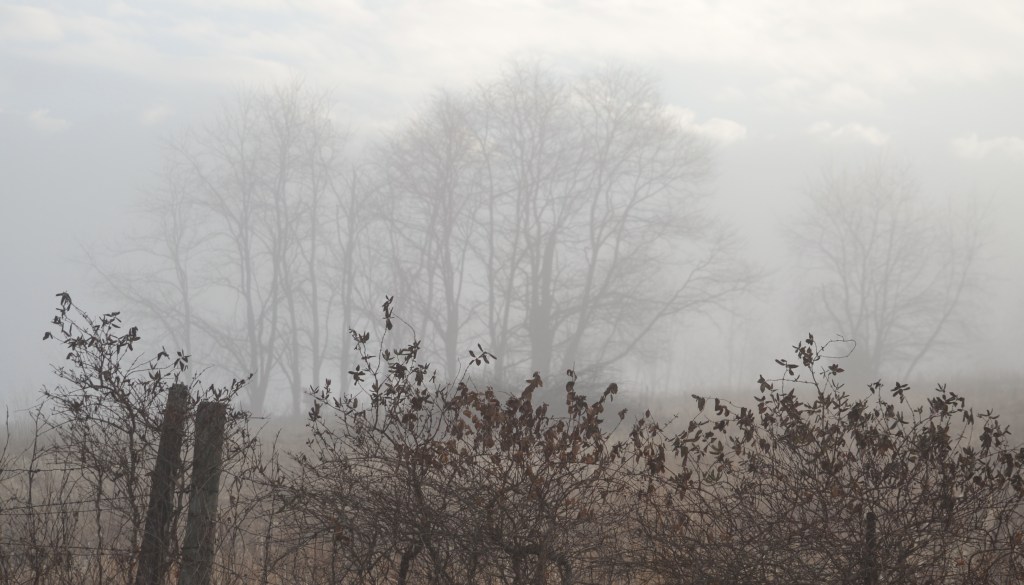
While I had waited, however, I took a few photos of the landscape enveloped by the morning mist. The photo above shows both the fog and where the Caracara liked to perch.
The roadside fencerow in the foreground gave depth to the fog-enshrouded treeline in the background. I was happy with the image, even without my target bird.
Only a skiff of snow dusted the central Shenandoah Valley in Virginia, while the coastal cities and communities got hammered with blizzard-blown feet of snow.
The mountains surrounding the valley, however, received their fair share of snow. The snow highlighted the forest-covered slopes.
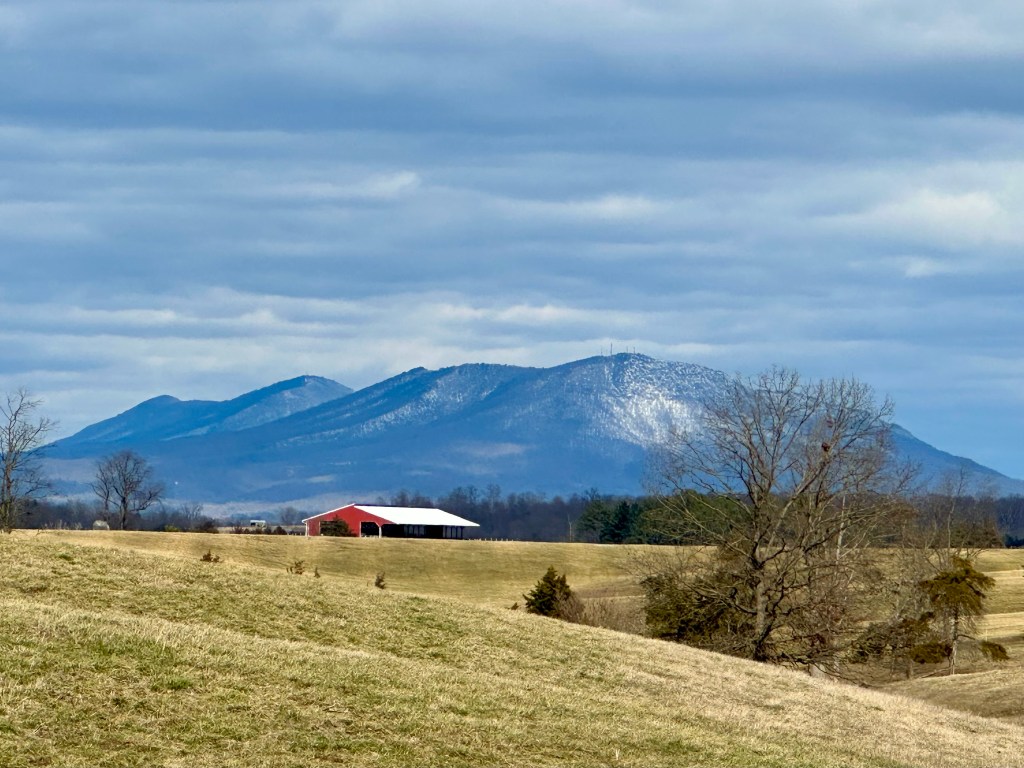
The Massanutten Range, which splits the valley from Front Royal at the north to Harrisonburg at the south terminus, especially stood out with its fresh snowpack.
By the next afternoon, the dusting of snow in the valley had melted. Massanutten Mountain, however, showed its snow. The difference between the valley and the forest-studded mountain was not only obvious but also stunning.
This photo was taken near Weyers Cave, Virginia, looking north to Massanutten.
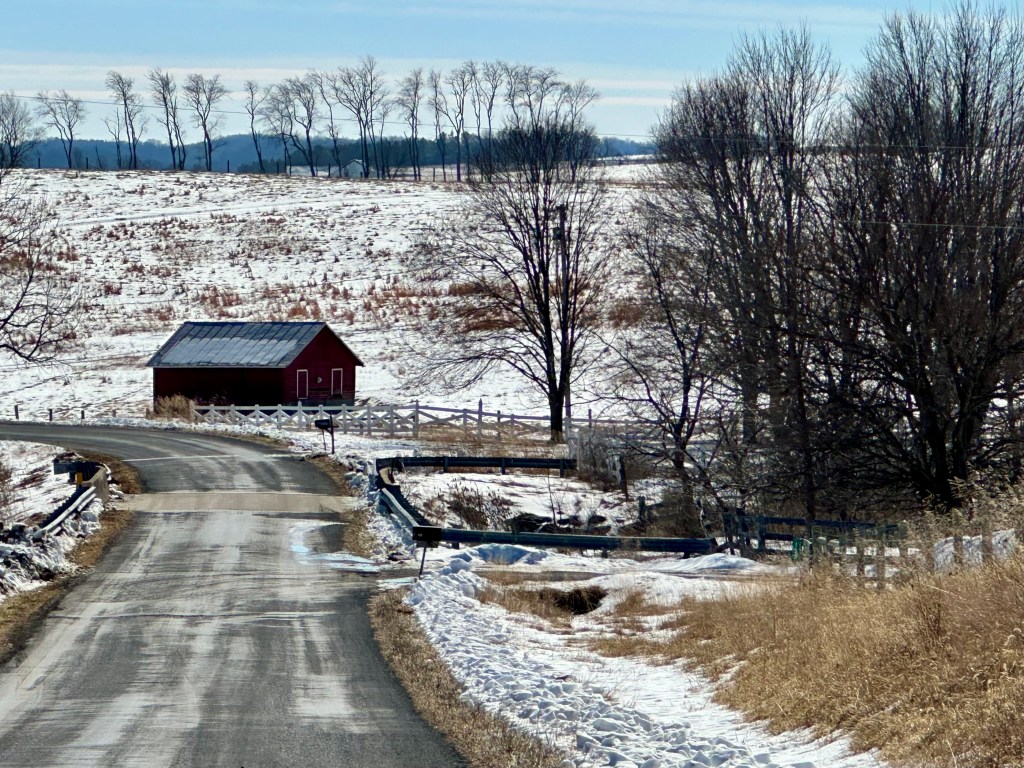
The daytime temperatures in Virginia’s Shenandoah Valley have been above freezing for the last few days. Consequently, the melting of several inches of snow that fell three weeks ago has begun.
I ventured out in the late morning recently to do some birding. However, I ended up taking more landscape photos because the birds weren’t as active as I’d expected.
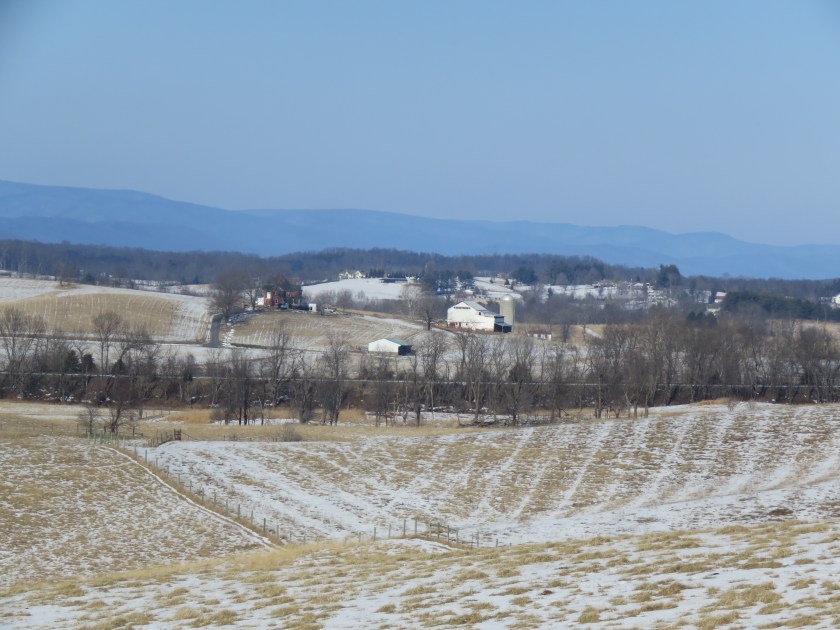
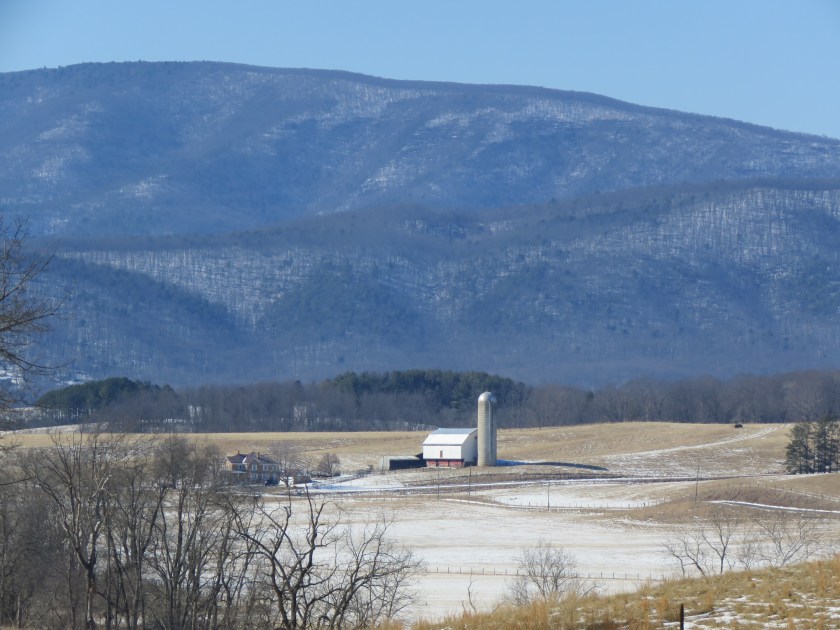
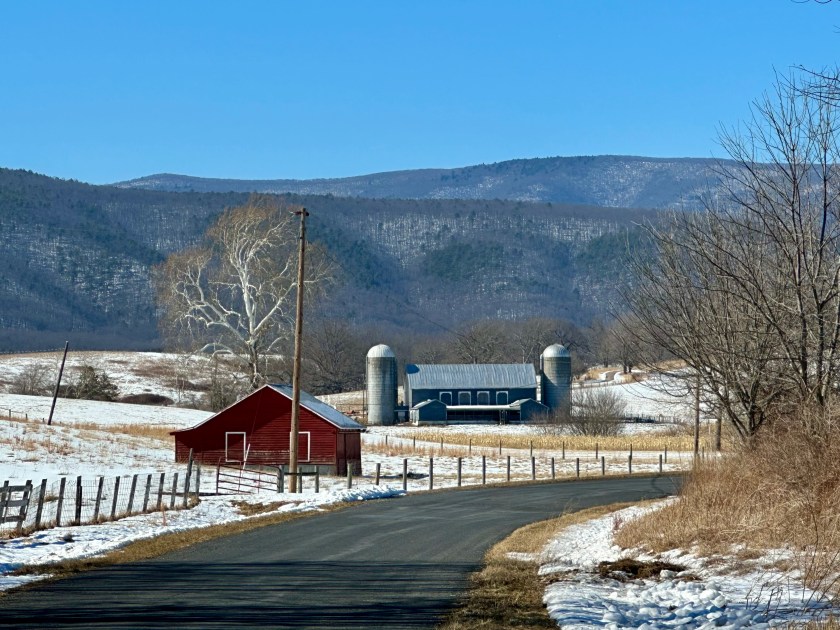
I found the topography southwest of Staunton especially captivating, with its rolling landscape, country estates along winding, narrow roads, and the snow-covered North Mountain range as a backdrop to the west. Beauty surrounded me in every direction.
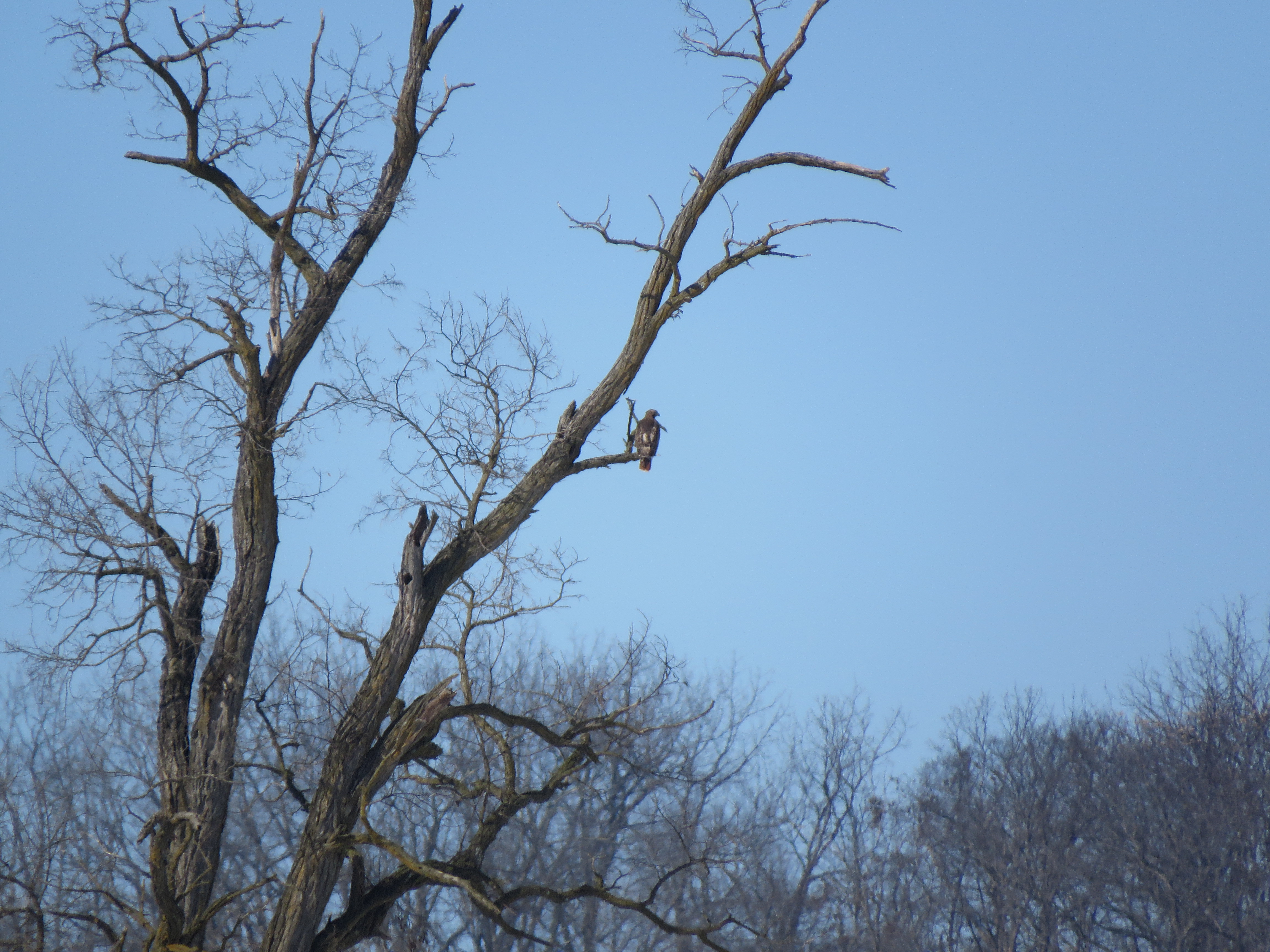
In one location, a Red-tailed Hawk perched on a limb, posture focused downward in hopes of spotting an unsuspecting rabbit, squirrel, or field mouse. In another, a light-phase Red-tailed Hawk soared in the afternoon sunshine, sailing on thermals rising from the warming farm fields below.
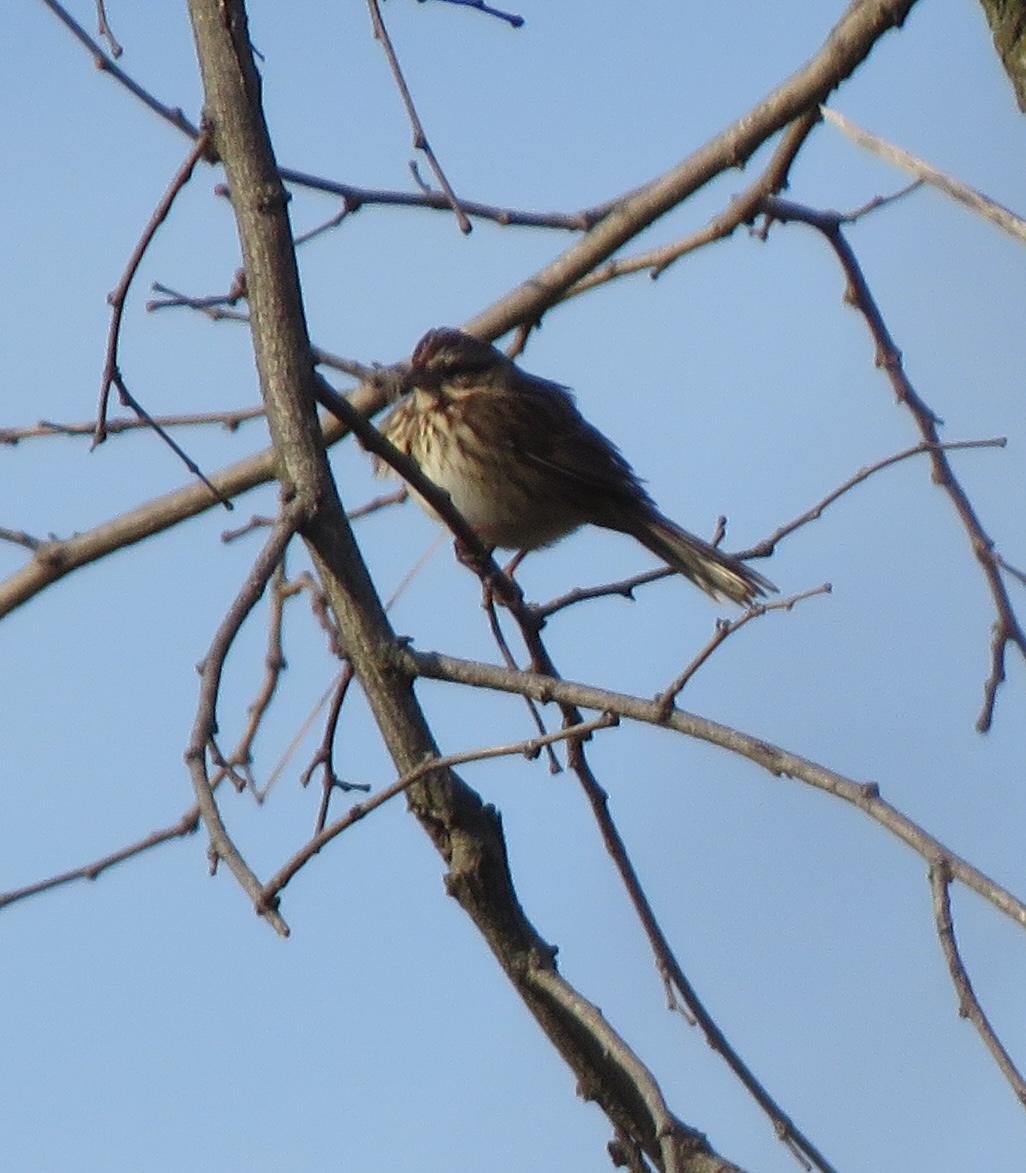
White-throated Sparrows and Song Sparrows fed along the exposed roadside grasses and road grit, but scurried for fencerow brambles as my SUV rolled by at pedestrian speed. In the rural areas, traffic was scarce, allowing me to take my time and enjoy the scenery all around me. I stopped several times in the space of a quarter mile to inhale the fresh air, absorb the warm sunshine, and scout for any birds.
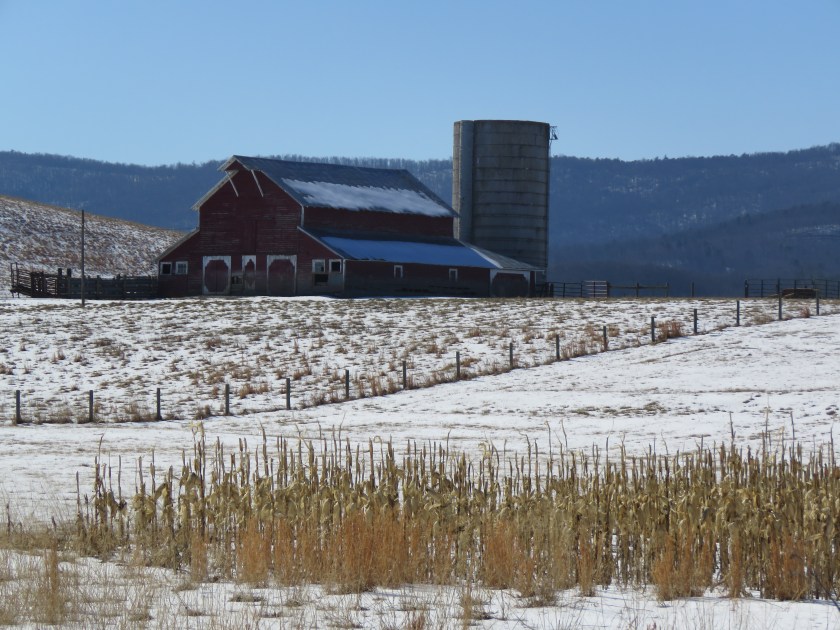
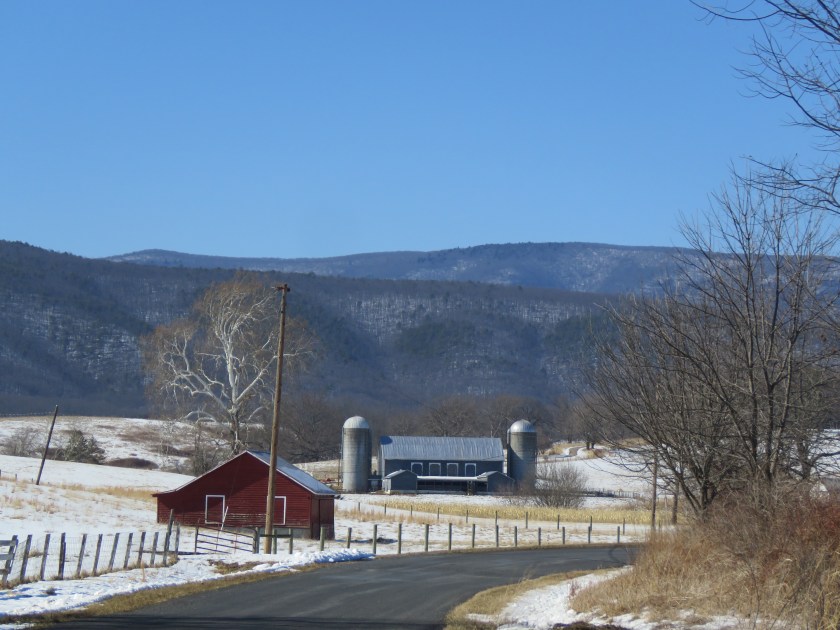
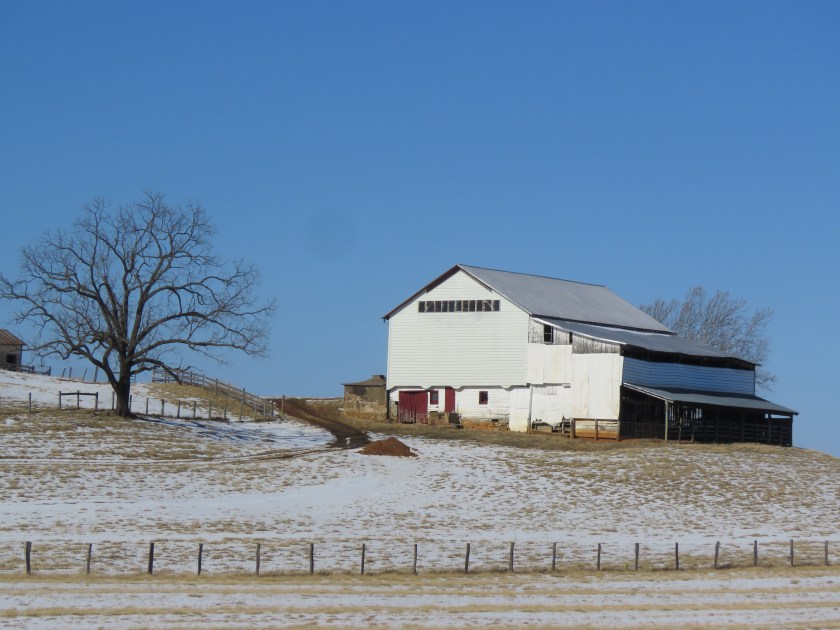
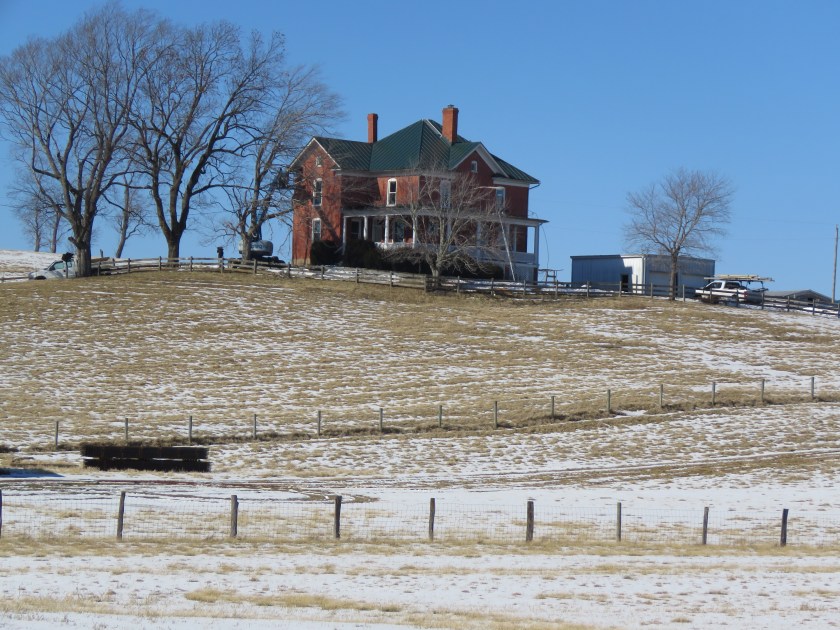
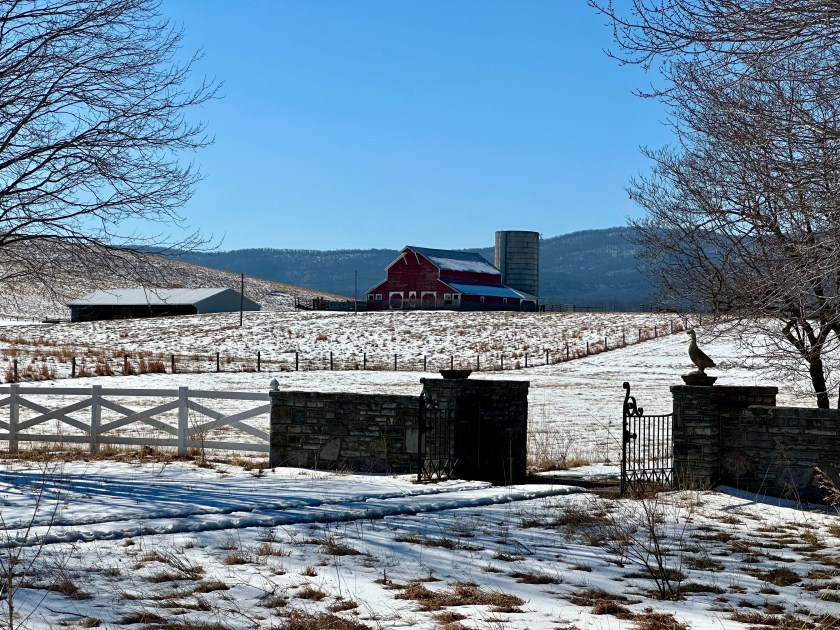
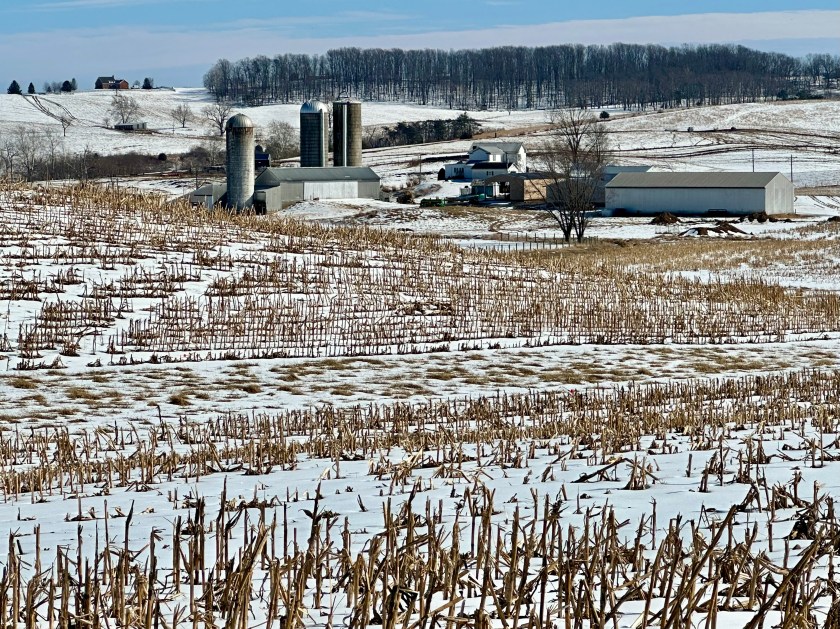
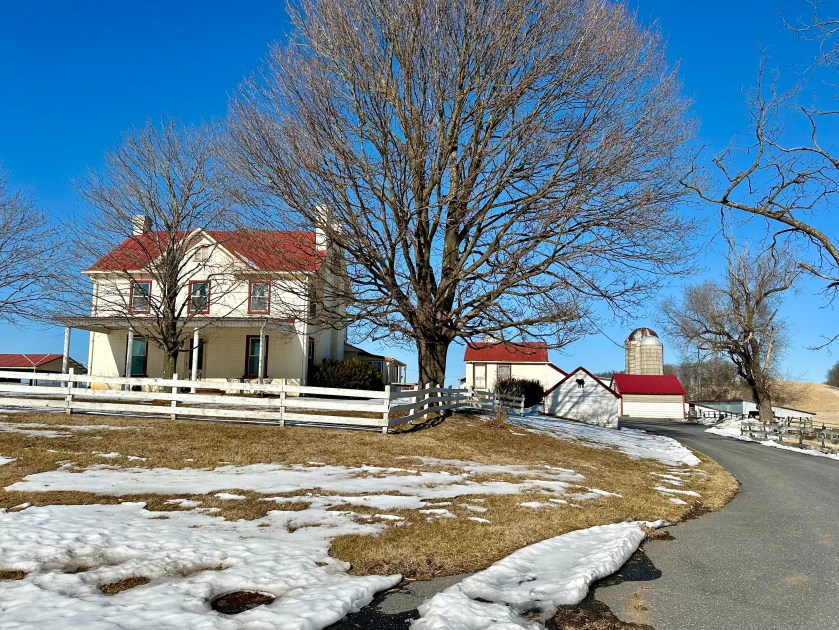
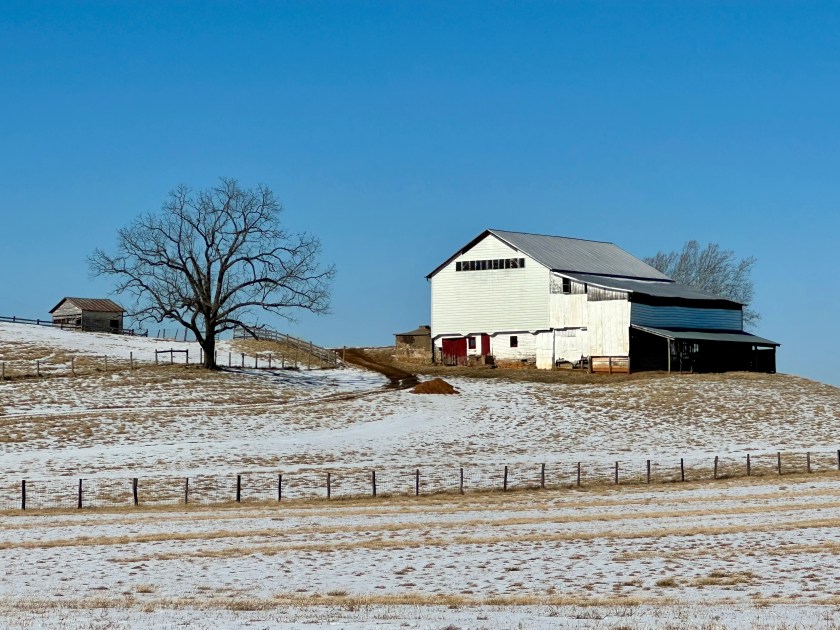
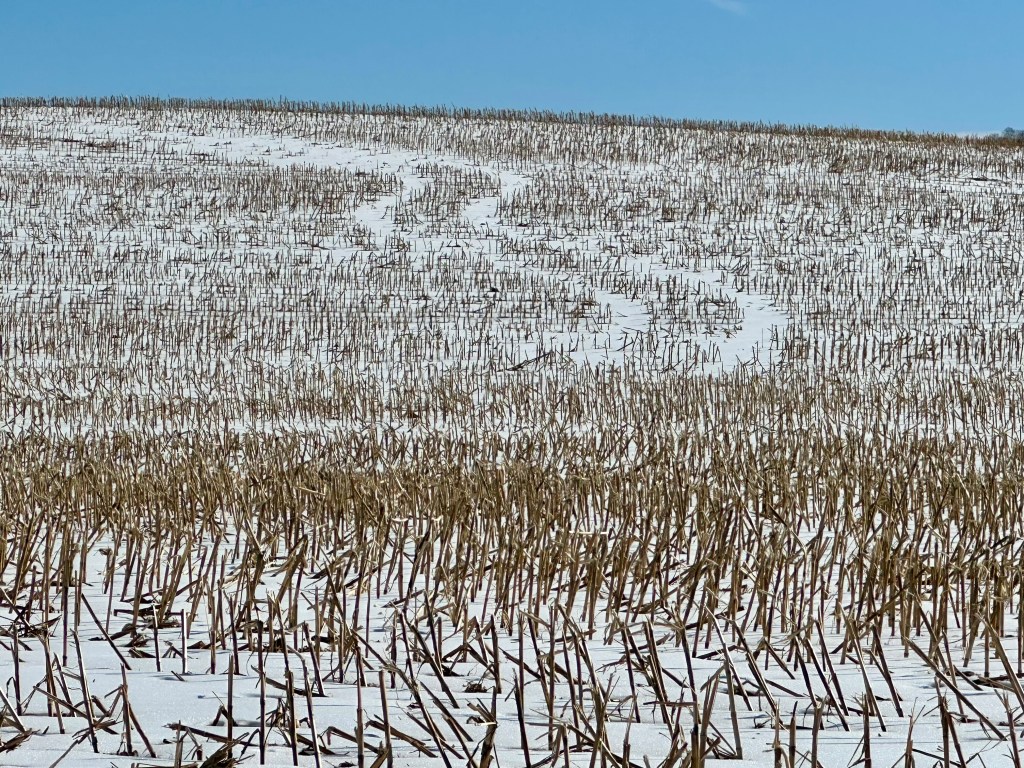
I marveled at the patterns in the diminishing snow. Polka dots of grasses surrounded by inches of snowy white speckled south-facing hillsides. Tractor tracks among corn stubble created abstract paintings. Farmsteads stood silent, as if in awe of the February thaw, painting their own Currier and Ives.
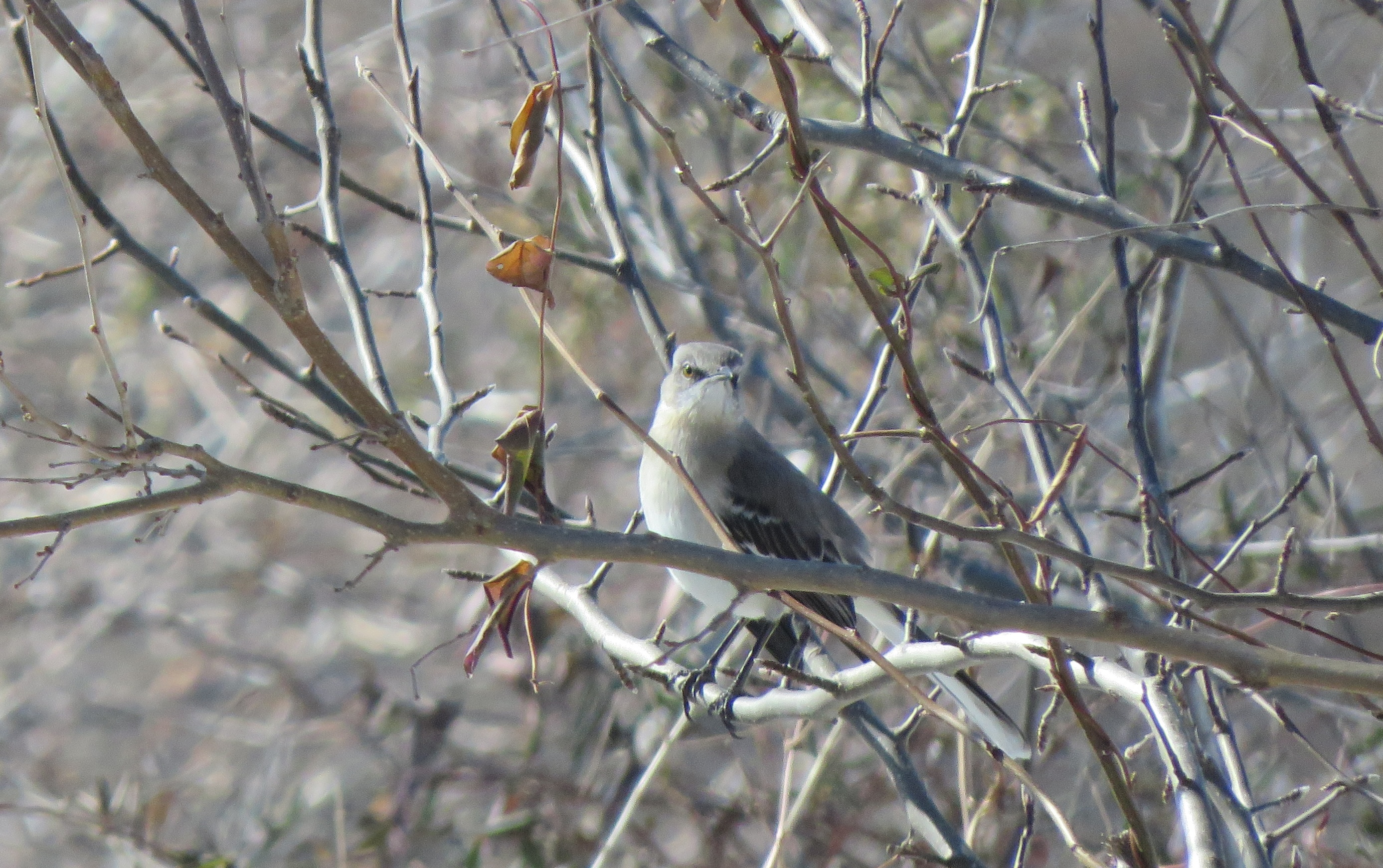
A Northern Mockingbird played hide and seek with me, playing hard to get. Darting in and out of roadside thickets, I managed a few photos of the tricky bird. American Robins launched from treelines to forage in the high grasses of pastures still dotted with snow.
Canada Geese gleaned for food in a wide-open pasture as the ice on a bordering creek gave way to the welcome warmth. I spooked a pair of Mallards enjoying pockets of open water when I stepped out of my vehicle. The geese ignored their quacking.
On the way home, I stopped at a city park along the North River where Long-tailed ducks had been reported. Instead, I found a few humans less interested in patterns in snow or waterfowl than me.
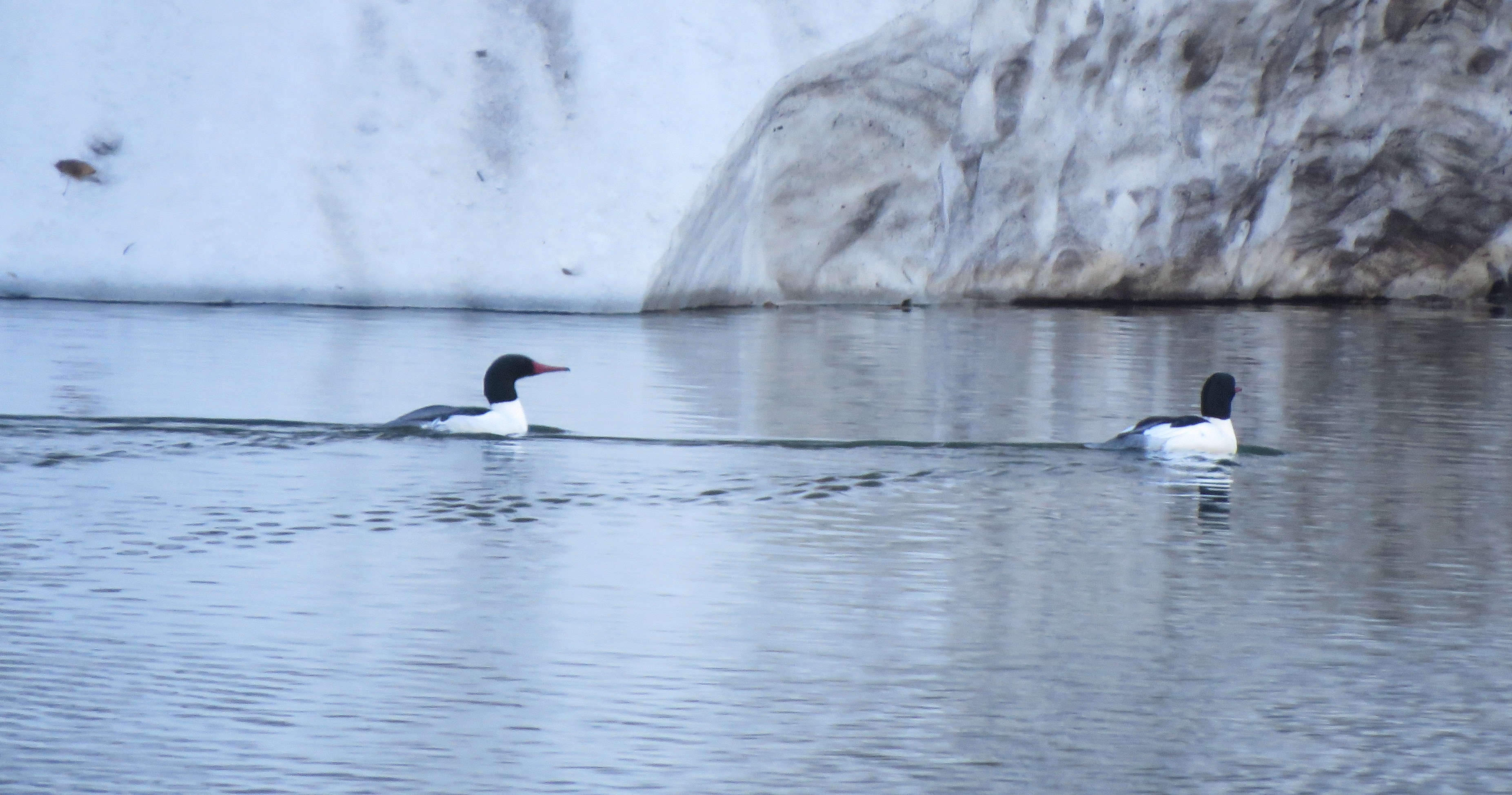
I walked across a footbridge to approach the riverside. At the other end, three seniors my age laughed and shrieked with one another, ignorant of the flock of Common Merganzers floating nearby. The birds quickly took flight.
On the way to my SUV, a trio of young boys threw sticks and pinecones at a small flock of Mallards foraging in the river’s shallows. I advised the youngsters that it’s wrong to disturb wildlife. They hung their heads until I passed by, and then continued their barrage. However, they fled when I turned around and stared at them.
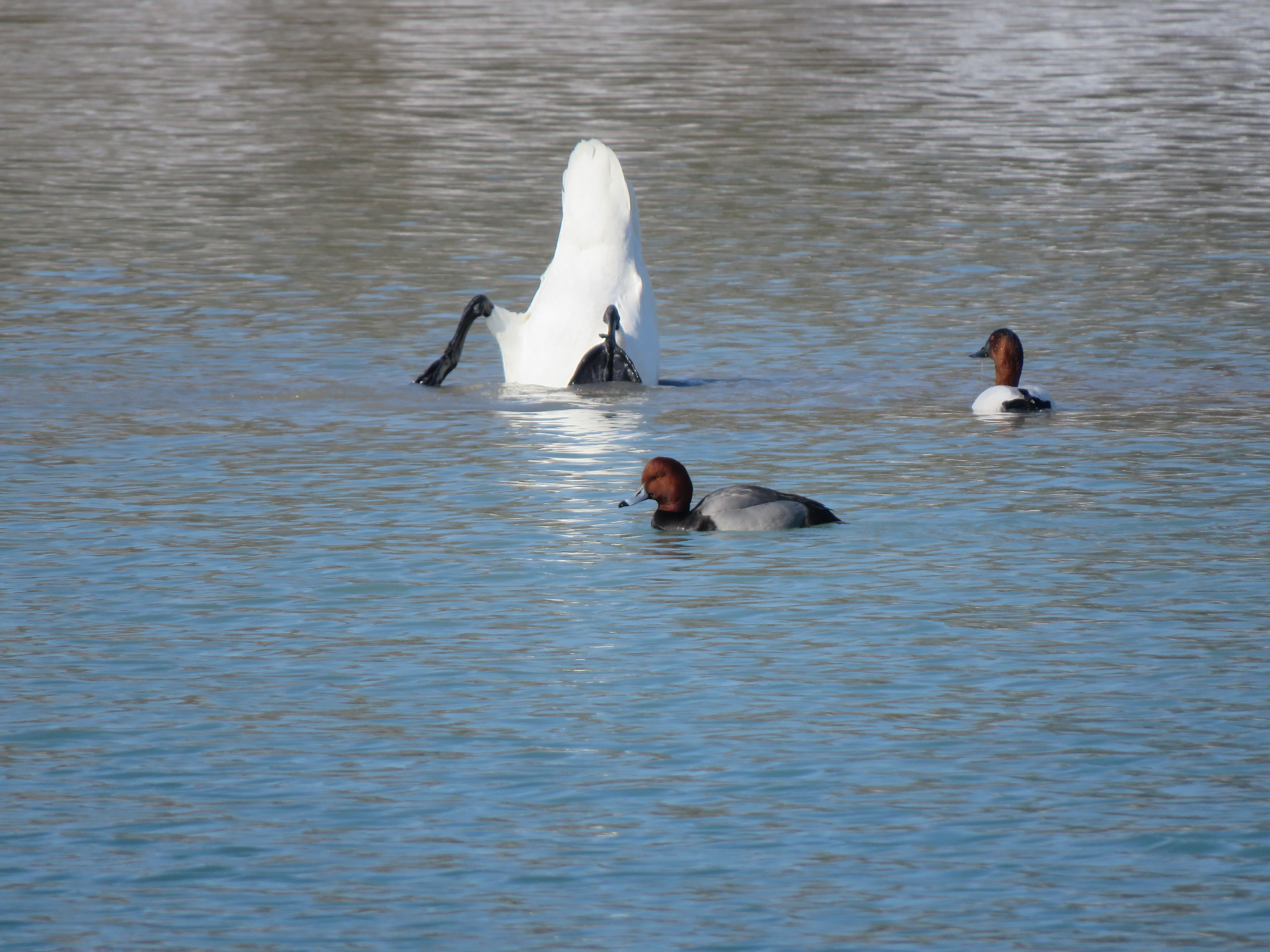
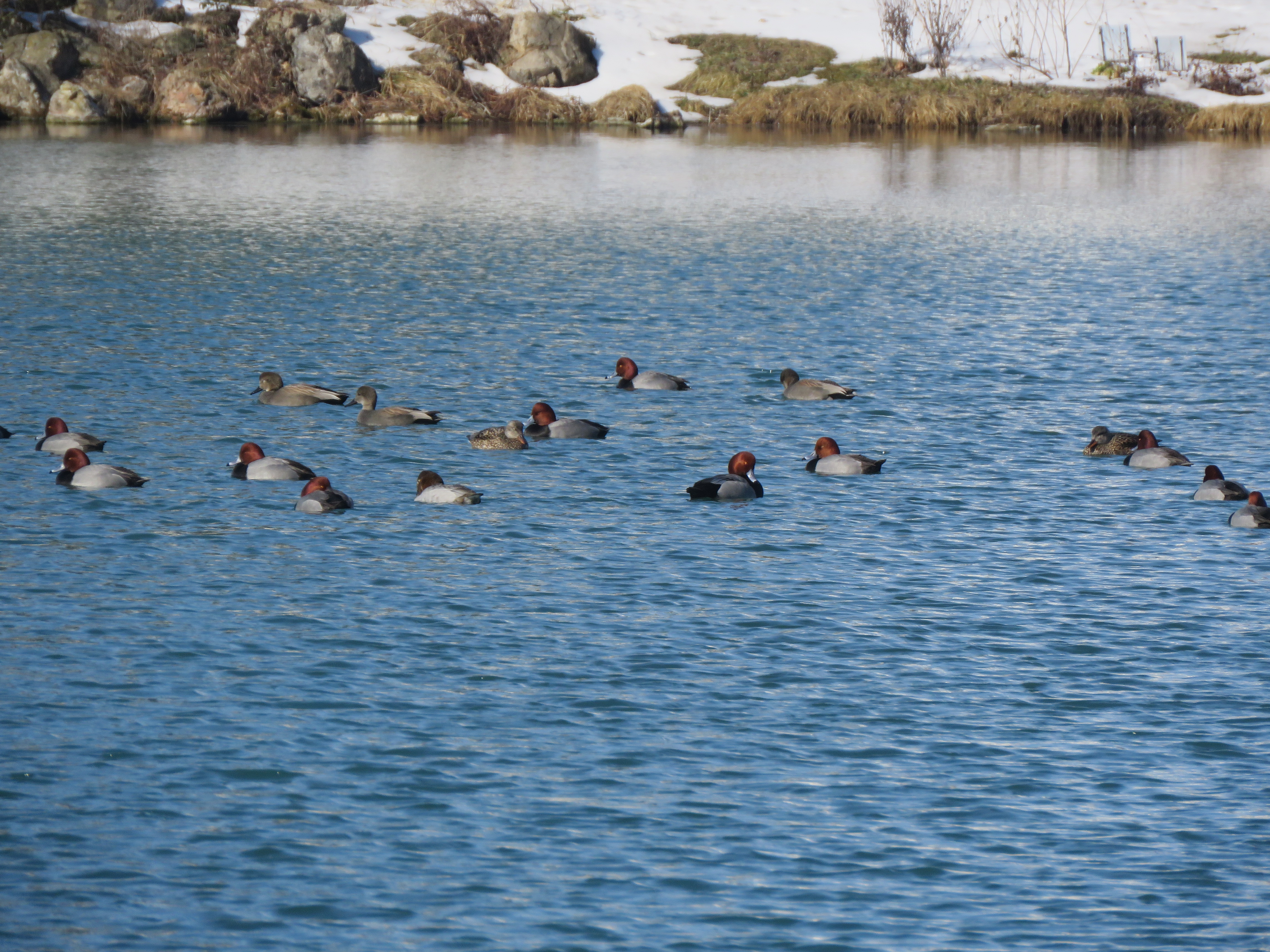
Ironically, the best birds were the closest to home. The thaw substantially diminished the ice on Silver Lake, and the waterfowl basked in the afternoon sunshine. Redheads, Canvasbacks, Buffleheads, and Pied-billed Grebes swam and dove for food.
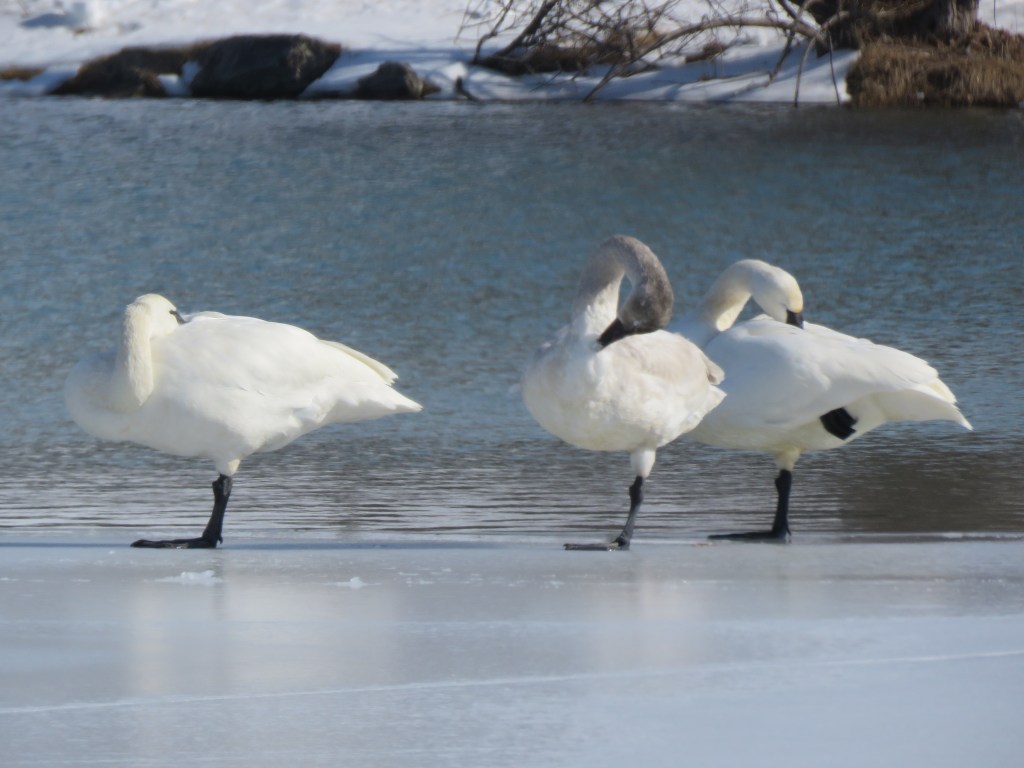
Best of all, six Tundra Swans stood on the thinning ice, preening in the sun’s warmth. It was a glorious six hours spent in communion with Nature and all her blessings.
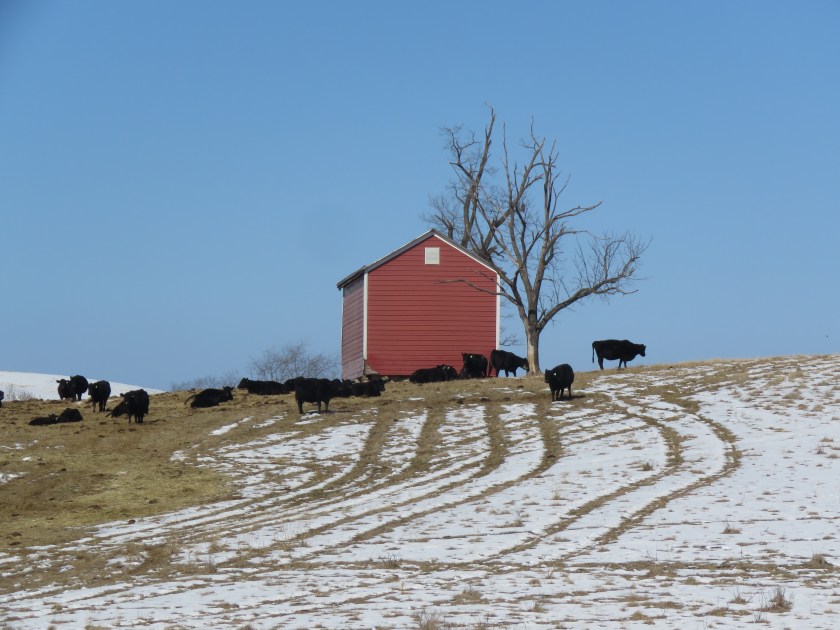
The lingering snow revealed the path of ancient tracks of a farm truck as it climbed through last fall’s corn stubble. The scene reminded me of an abstract painting.
There’s a certain intangible satisfaction in birdwatching. That’s especially true when I venture out into the hills and valleys of Rockingham County, Virginia, the third-largest county in the Commonwealth.
That contentment only escalates when I have the opportunity to bird with others. My experience with birding in small groups has consistently found a friendly camaraderie.
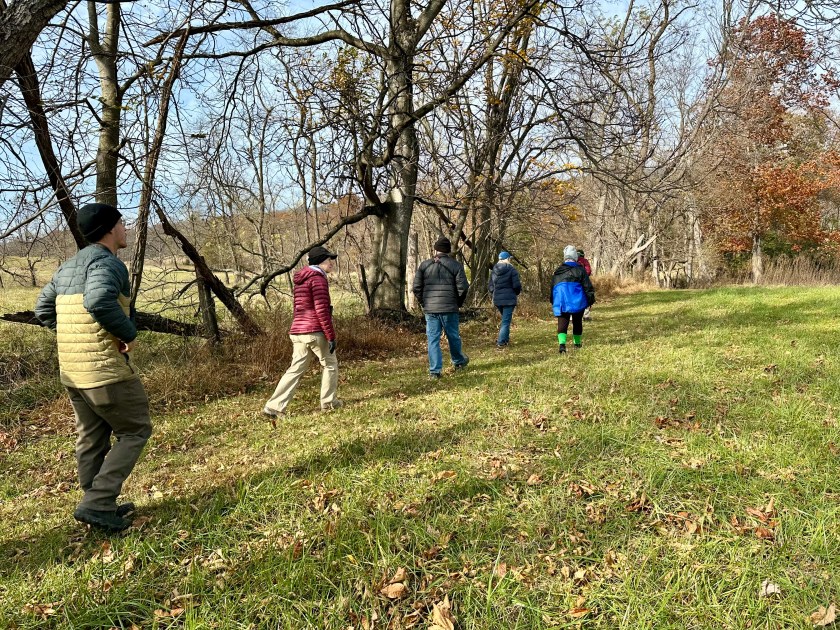
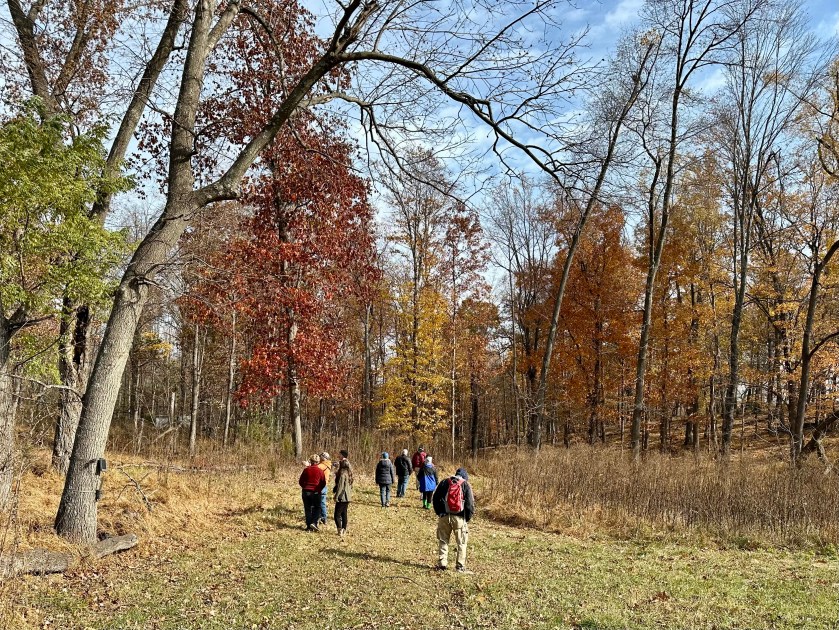
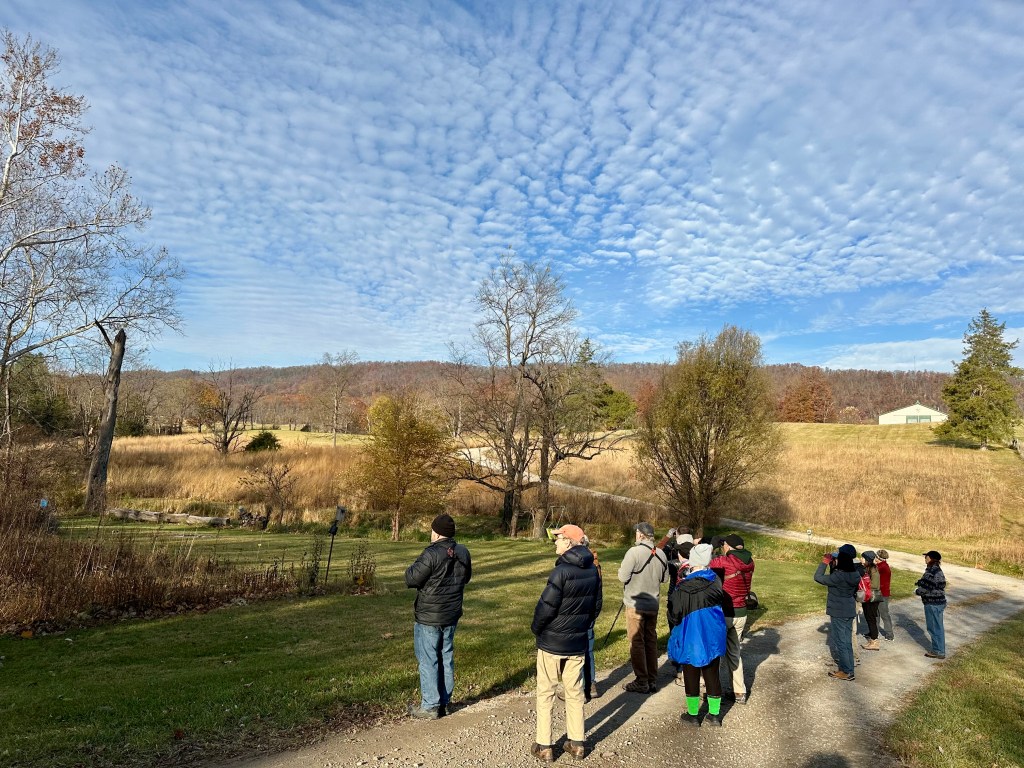
I recently participated in an outing on a certified wildflower farm in the western part of the county. The ages of the 16 members in the bird walk ranged from teenage to octogenarian. Among them were both novice and expert birders, which always enhances the quality of the field trip.
Most birders are patient and obey the unwritten rules of the sport. Conversations, usually about birds, are hushed so the chatting doesn’t interfere with the overall birding experience.
Birders help others find the bird. That is not always easy, so patience and communication are essential.
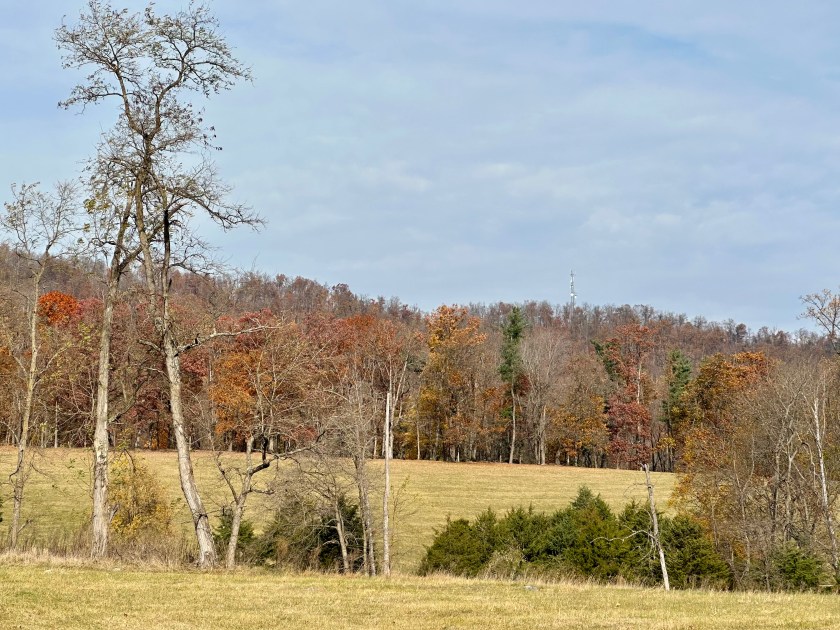
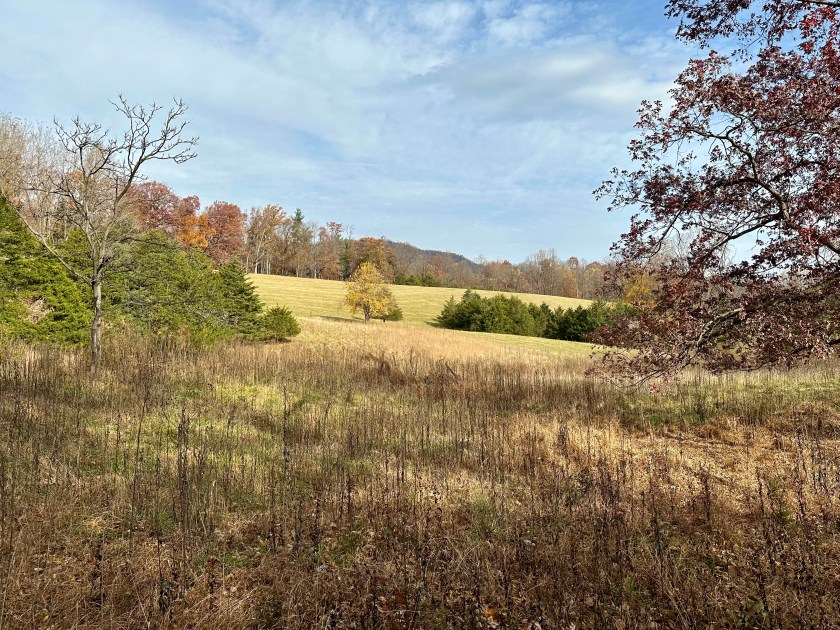
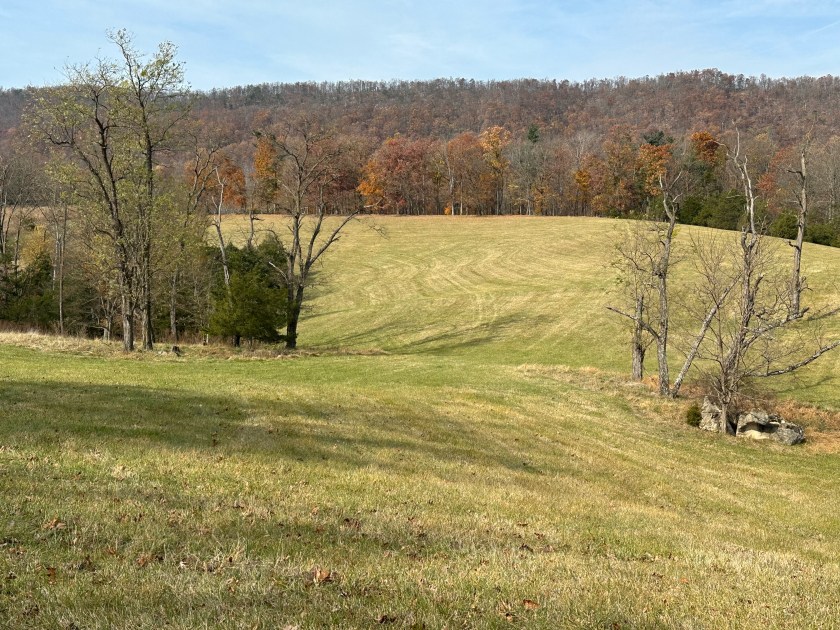
The day started in the 30s as we walked down the farmer’s recently graded half-mile lane towards the creek that splits his acreage. With two consecutive dry seasons, the native Indian grass had overtaken the native seeded wildflowers.
The farm entrance
Birding at the creek
Up the drive we go
Beautiful sky
Through the tree line
Looking to the meadow
The creek
North Mountain
Along the property line
Varied habitat
Atop the ridge
Into the woods
The meadow
However, the grass provided excellent cover for the birds who use the dense grassy clumps for habitat. I was the last one to spot a field sparrow perched high on the six-foot-tall perennial. The birds feed on the rich seeds that form at the top of the grass’s yellow blades.
I only saw the bird that blended in with the tall prairie grass with the help of another birder, who was younger and had better eyes than I did. Using a tree in the far background, he lined me up and told me to follow the trunk down to just below the crest of the grass. Bingo. The bird was still there, posing.
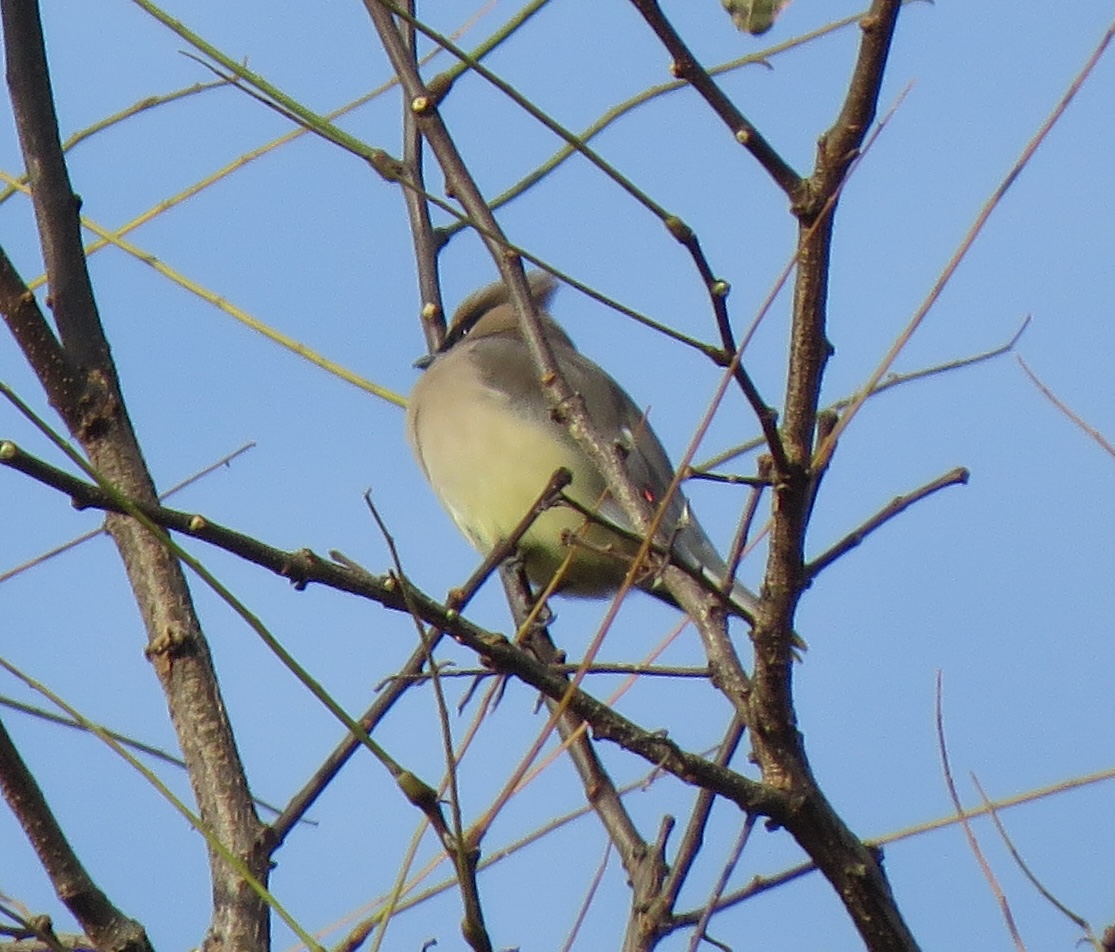
We continued down to the creek, where small flocks of Cedar Waxwings, Eastern Bluebirds, and several sparrow species gathered nervously in the large creek-side sycamore trees. Another birder speculated that the waxwings must be thirsty from devouring all of the cedar tree berries.
Nearby, a Red-headed Woodpecker, one of the birds I had hoped to see, flew to an old standing dead snag punctuated with multiple holes. It was clear that the Red-headed Woodpeckers preferred this tree for nesting.
The bird landed in the morning sun on the east side of the snag and quickly disappeared. Good birders are patient. In a matter of seconds, the regal bird appeared at the very top of the dead tree, and just like the Field Sparrow, posed for a photo op. I couldn’t have been happier.
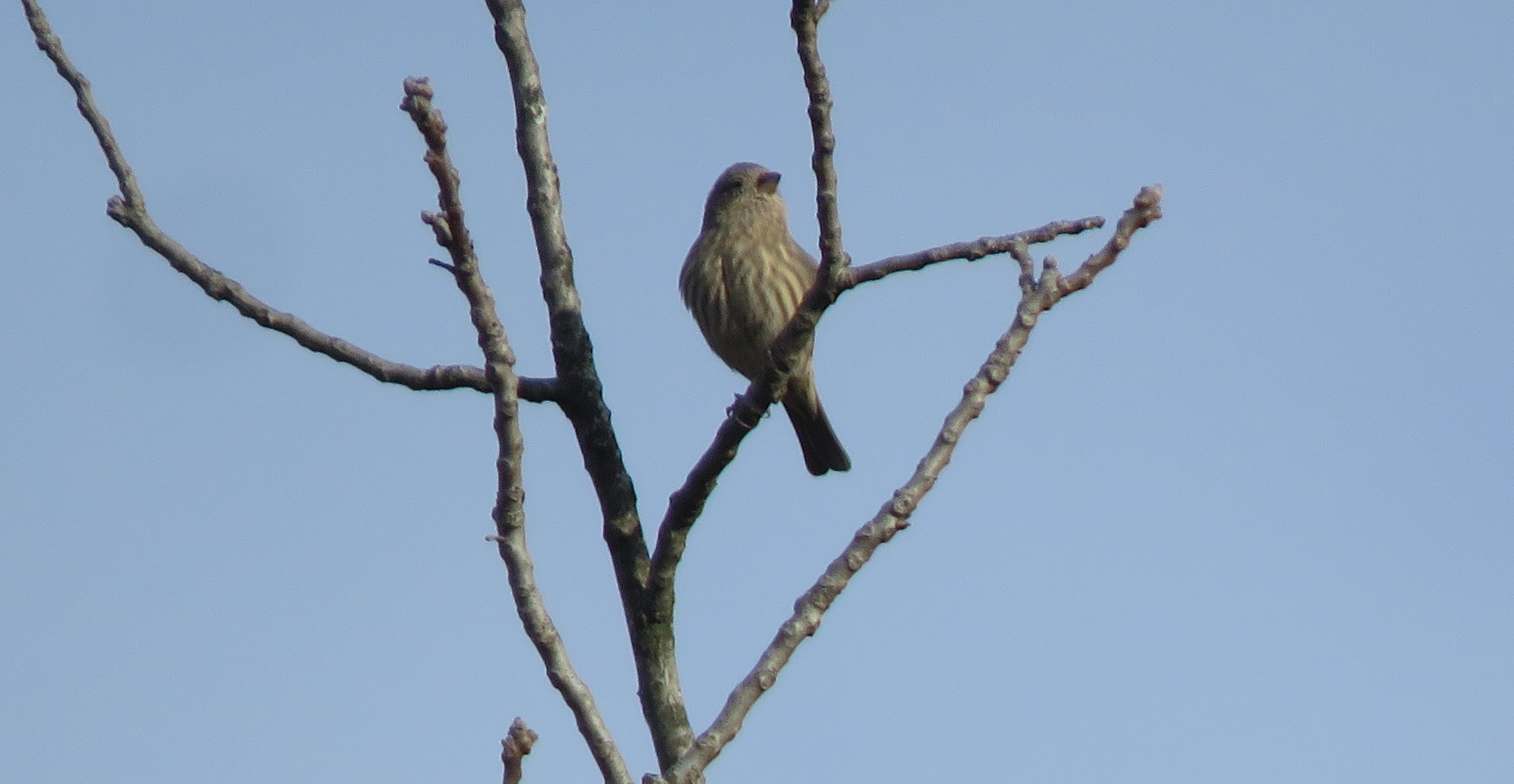
I turned around and a pair of Purple Finches perched on branches of the forested slope west of the Indian grass. They didn’t sit long enough for a photo, however.
Please click on the photographs to view them in full size.
We crossed the footbridge over the creek and trudged up hill and down, along the southern property fenceline. The wind had picked up, and the strong southerly flow kept the birds low and out of sight.
A few vultures, both Black and Turkey, took advantage of the strong winds and sailed overhead. A pair of Red-tailed Hawks joined them in the kettling, the gliding on the thermals around and around like an avian tornado.
At the top of the ridge, some of the birders broke off to return home or head to their workplace. The rest of us walked on, admiring the varying landscape, vegetation, and mix of deciduous and evergreen trees.
In less than a quarter of a mile, we had traversed through prairie grass, a few late-blooming flowers, grassy fields, and then into a second-growth woods. A Pileated Woodpecker’s deep-throated call echoed against the base of North Mountain.
After nearly three hours, we arrived back at the meeting place, tired but thrilled to be in the outdoors with gracious hosts and an excellent guide. In that time, we had seen or heard 33 species.
We were all pleased with that number for a chilly, windy day in Virginia’s Shenandoah Valley. Additionally, it was an excellent way to connect with nature and get some much-needed exercise, especially for those of us who are older.
Our birder group and the landscape we explored. Photo by Bruce Stambaugh
You must stay alert while driving the winding, undulating secondary roads in Rockingham County, Virginia, situated at the geographic center of the Shenandoah Valley.
You wind around through forests, past agricultural fields, hilltop homes, abandoned buildings, in valleys with steep hillsides, and suddenly find yourself cruising along a straight stretch of roadway along a ridgeline. There’s always something to see.
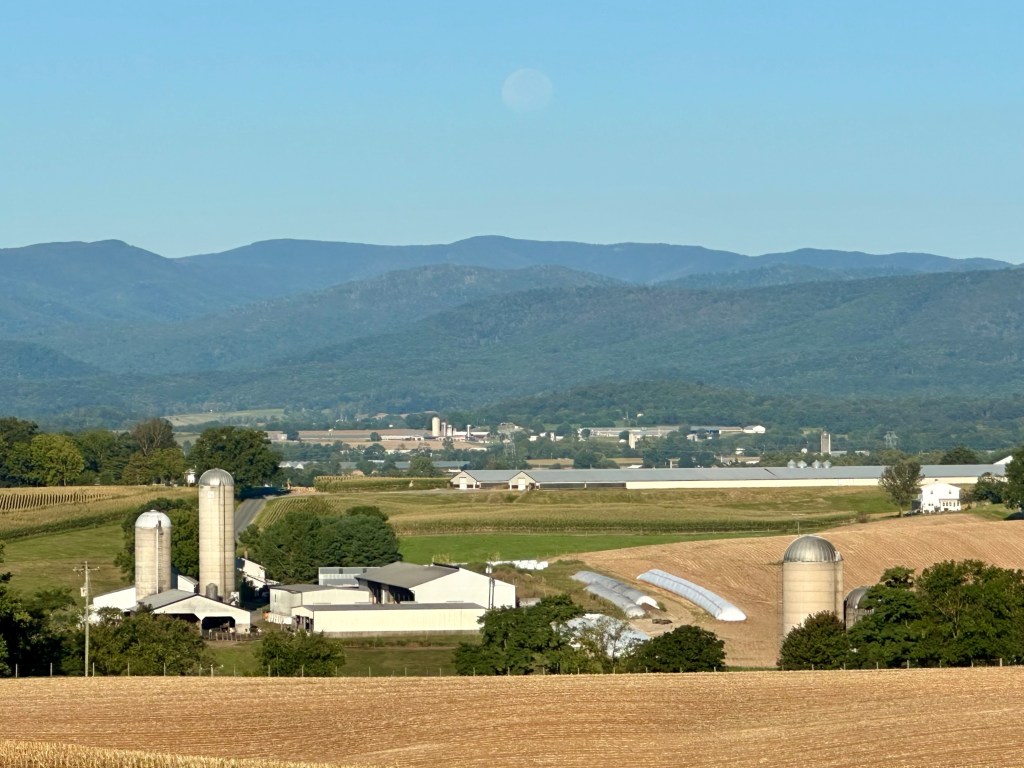
On a recent outing with a friend, we emerged from a small valley onto a ridge with farm fields on either side that quickly sloped away from the road. I slowed when I spotted the orange of the pumpkins waiting to be harvested. Then I noticed the view.
The southern section of the town of Broadway peeked out above the treeline beyond the farmstead. In the distance, the Massenutten Mountain range stood steadfast against the cloud-studded cerulean sky.
The Full Corn Moon over the Allegheny Mountains. Photo by Bruce Stambaugh
I had hoped to capture the Full Corn Moon setting over the Allegheny Mountains on the morning of September 7. However, the early morning’s sunrays blanched out the moon before it reached the western horizon.
Consequently, this is the best I could do. I hope you can find faint moon in the photo’s top center.
Occasional rains and warm temperatures continue to be the norm in Virginia’s Shenandoah Valley. That combination has led to a continuation of summer’s bright colors.
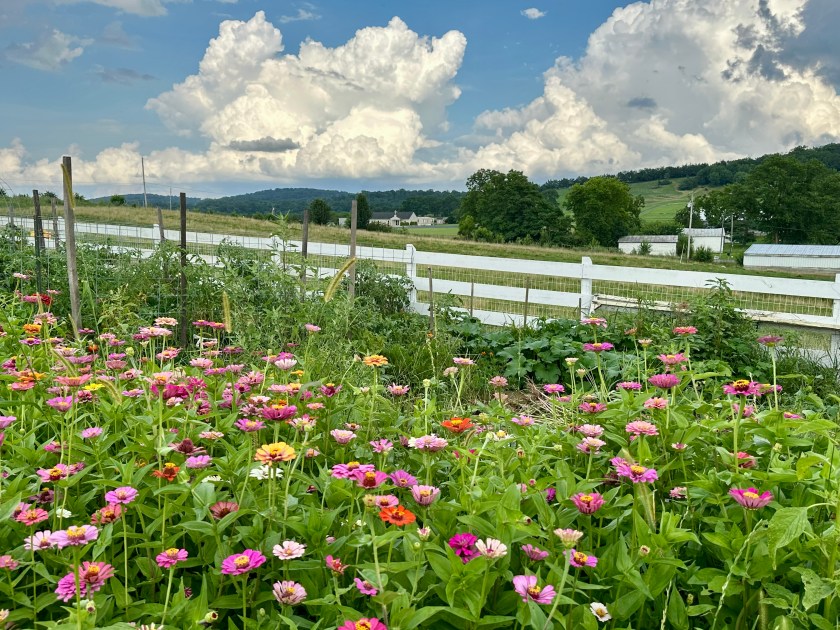
From landscapes to sky to insects, to animals to flowers, wild and cultivated, a rainbow of colors has filled each day.
Summer 2025 colors have not disappointed so far. We are only a month into the summer season in the Northern Hemisphere, and there have been plenty of opportunities to photograph her vibrant palette of hues and tones.
Here are two sets of my favorite representations of this brilliant calidoscope.
Landscapes
Please click on the photos to view them in full size.
When I saw the high, thin clouds 30 minutes before sunset, I thought there might be a chance for spring to say farewell in color. As it turned out, it was more about the setting than spectacular sunset colors.
When I arrived at my favorite location to photograph sunsets, I wasn’t alone. Four other cars were ahead of me. However, they soon left, and I had the space all to myself, save for a passing horse-drawn cart with three young Old Order Mennonite ladies aboard.
We exchanged hellos, and I waited for the oranges that usually come when the sky is mostly clear over the Allegheny Mountains to the west. I wasn’t disappointed.
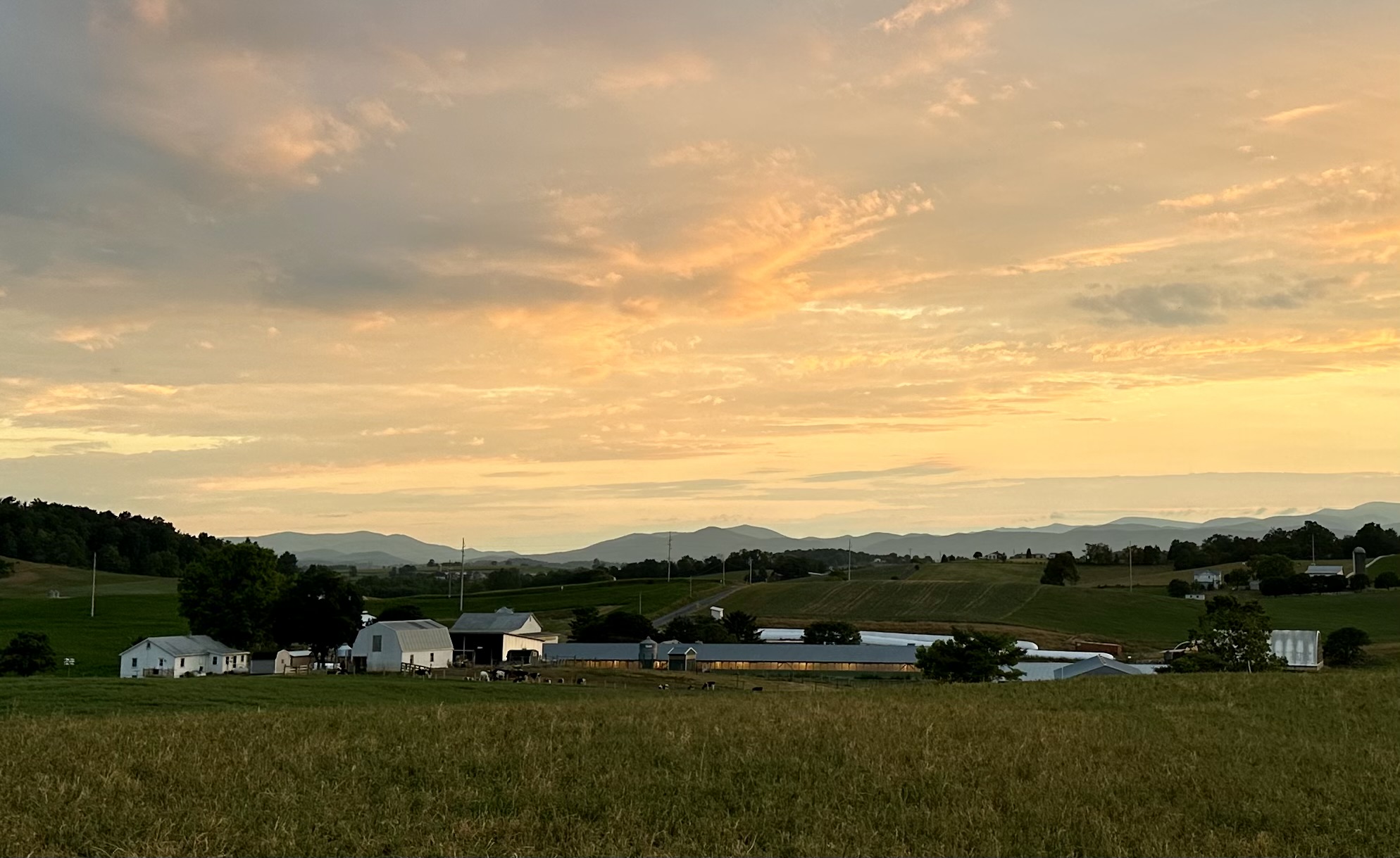
However, it was the big picture of the setting that got my attention. Below the glowing sky, another scene unfolded. The rolling, fertile farmland of western Rockingham County, Virginia, dotted by verdant woodlots, filled the foreground.
Beyond, mist rose from the valleys between forest-covered North Mountain and the higher Shenandoah Mountain. In the twilight, their iconic blue hues created a natural boundary between the golden sky and the farmsteads below.
Spring’s last sunset may have said goodbye, but it also set the stage for the joys of summer.





















 Roadkill Crossing
You must be logged in to post a comment.