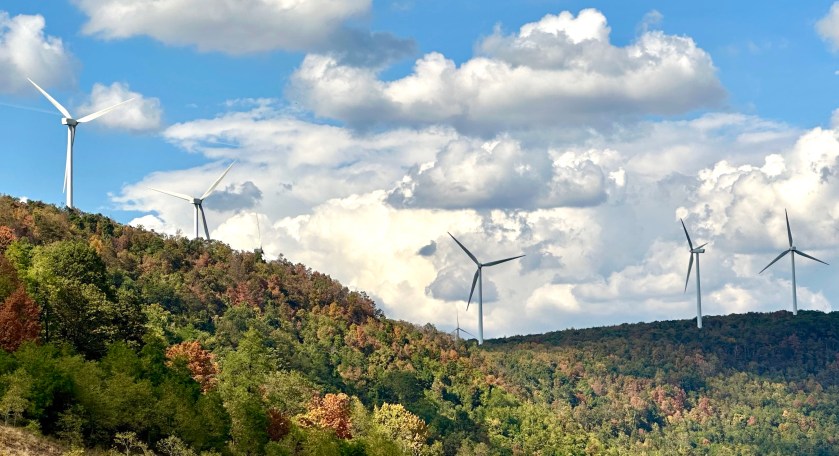
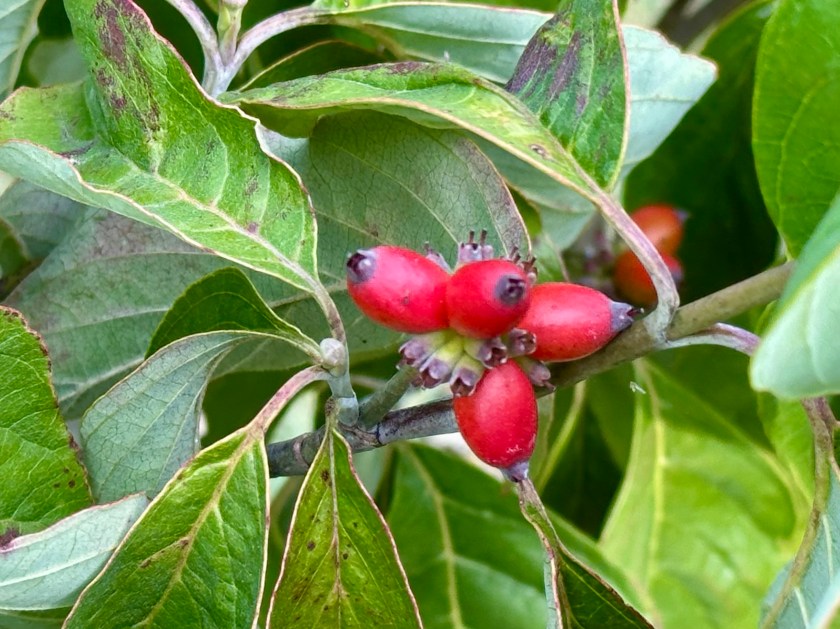
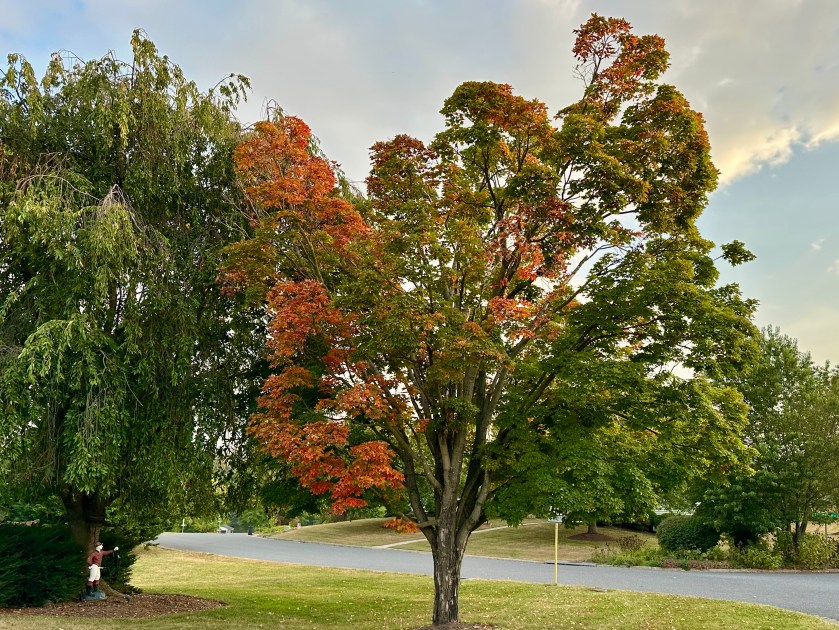
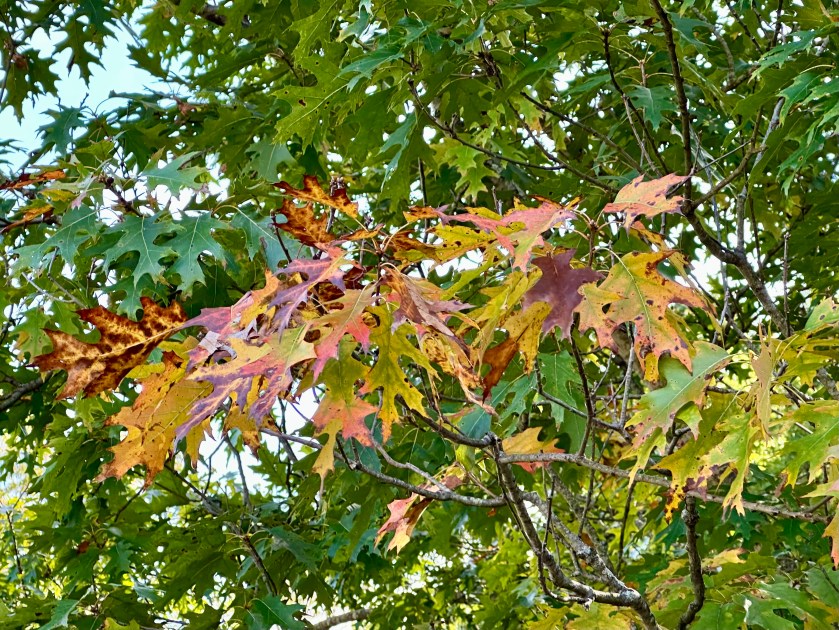
After a wet spring and an unusually damp June and July, the last half of summer was arid here in Virginia’s Shenandoah Valley. Still, the final weeks of summer produced vibrant colors in all things nature.
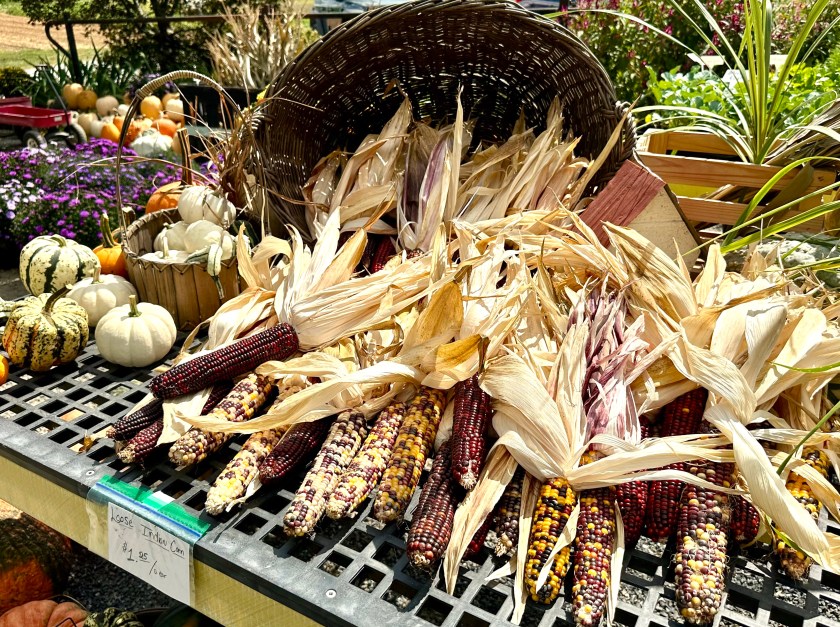
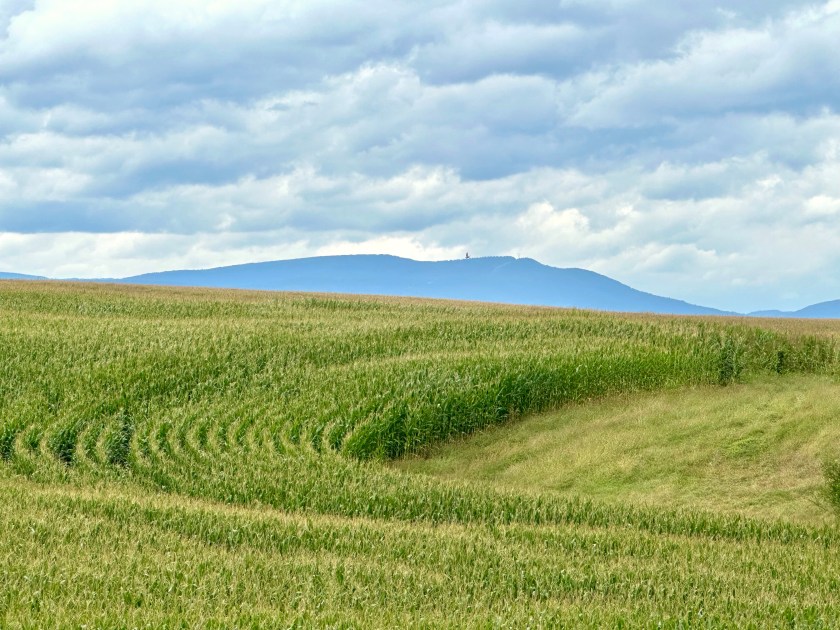
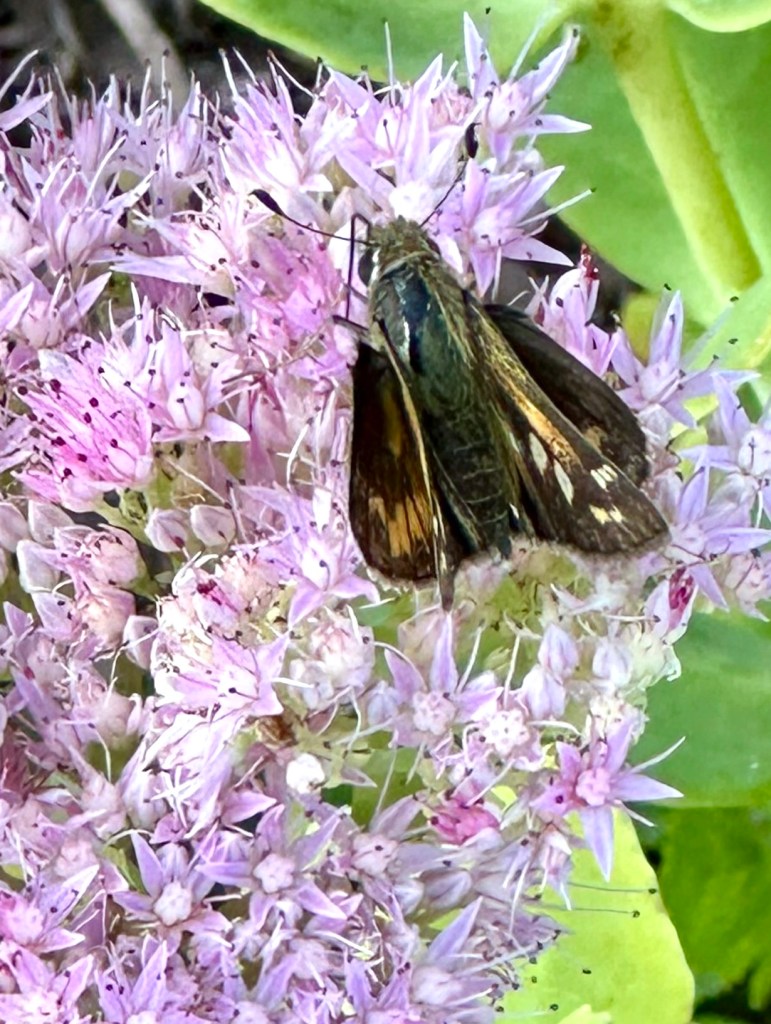
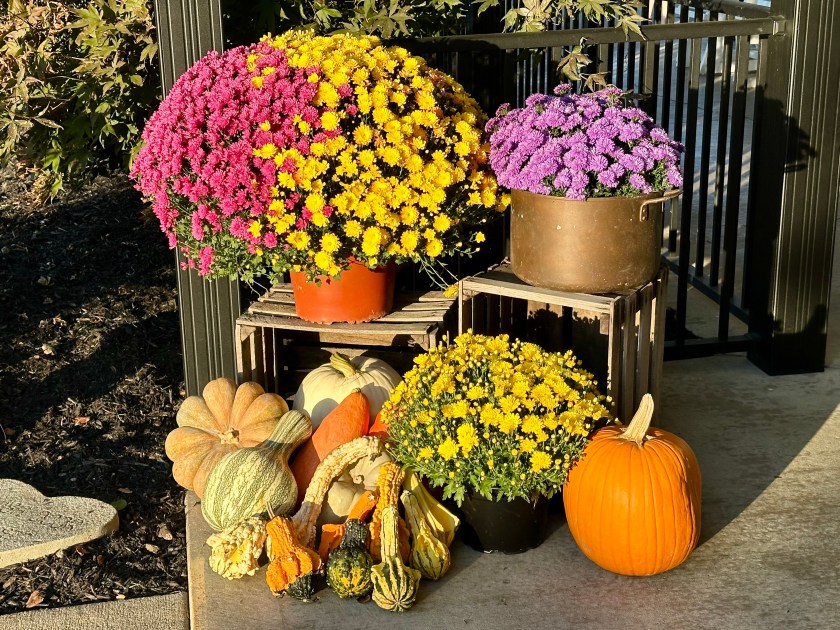
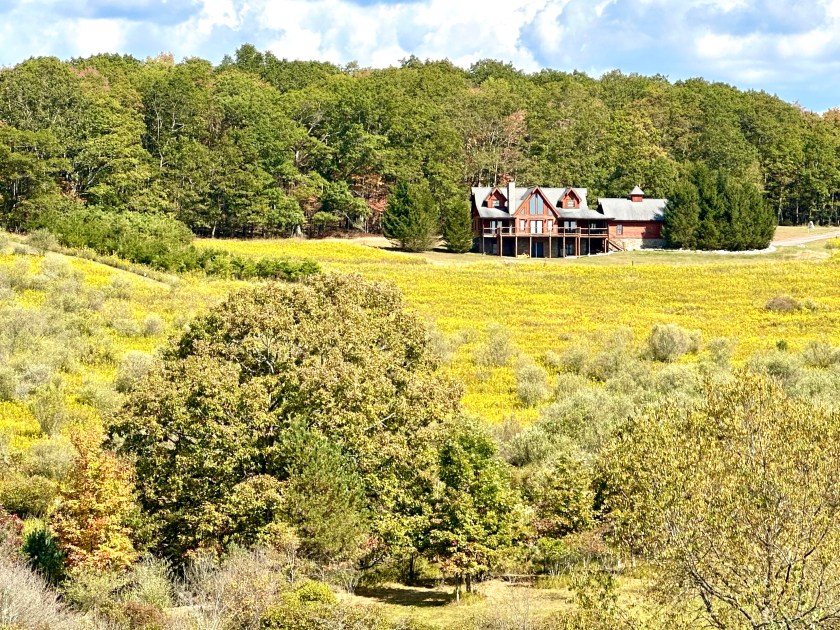
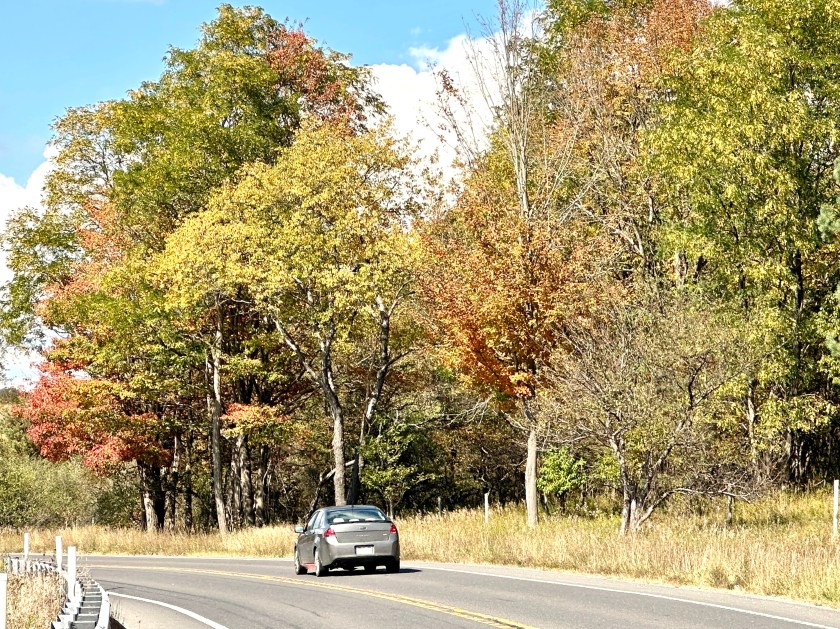
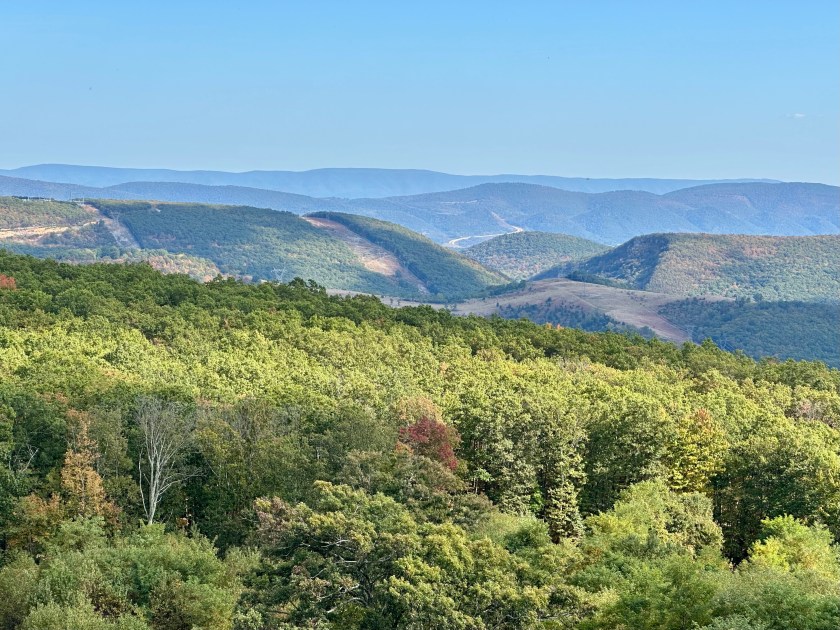
From flowers to butterflies to birds to bugs to early-turning leaves, it was colors galore all around the valley. Farm fields, fall displays, and forests all contributed to the subtle transition from August’s dog days to September’s cooler evening temperatures.
Everywhere one turned, colors caught the eye. Landscapes, mountain views, produce stands, and backyard gardens all had their own versions of summer’s transition to autumn.
All the photos presented were taken between August 15 and September 22, 2025.
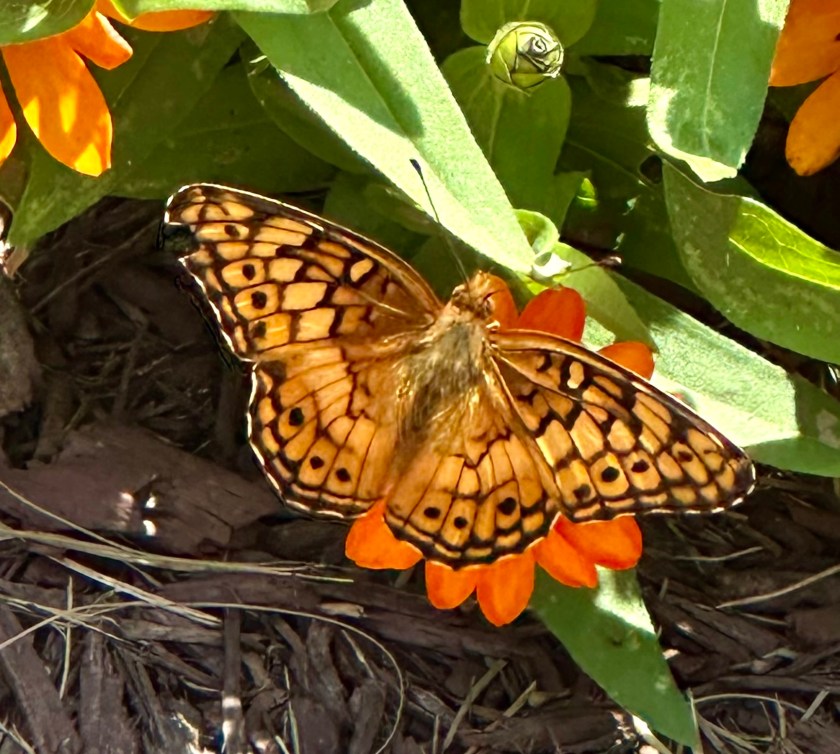
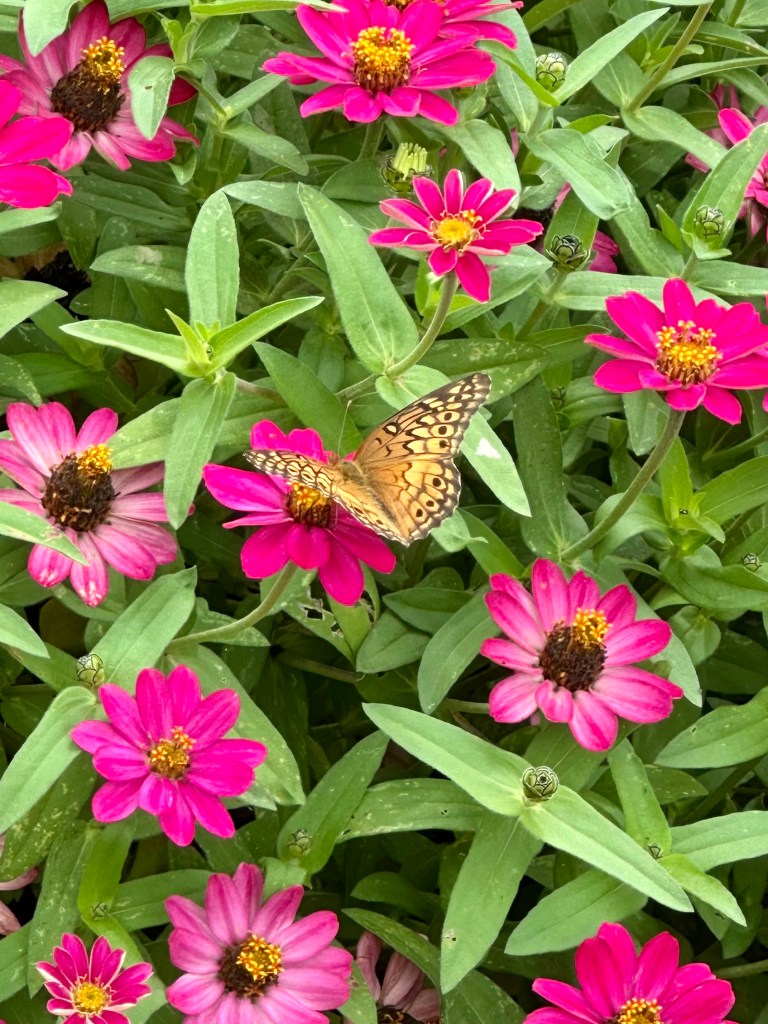
Variegated Fritillary butterfly on Zinnia. Photo by Bruce Stambaugh
I was out taking photos of some flowers my energetic wife has cultivated around our home. This patch of Zinnias caught my attention.
Just as I was ready to take the photo, this pretty Variegated Fritillary butterfly landed on a fuchsia-colored Zinnia in the middle of the patch. The lovely photobomb was a welcome addition to these bright flowers and a new focus to the photo.
Flowers, wild or propagated, flourish this time of year. With warmer temperatures, cooler nights, and well-watered fields and forests, floral colors brighten neighborhoods, countrysides, and forest floors.
Here are a few photos of flowers I spotted wherever I went.
Around our house.
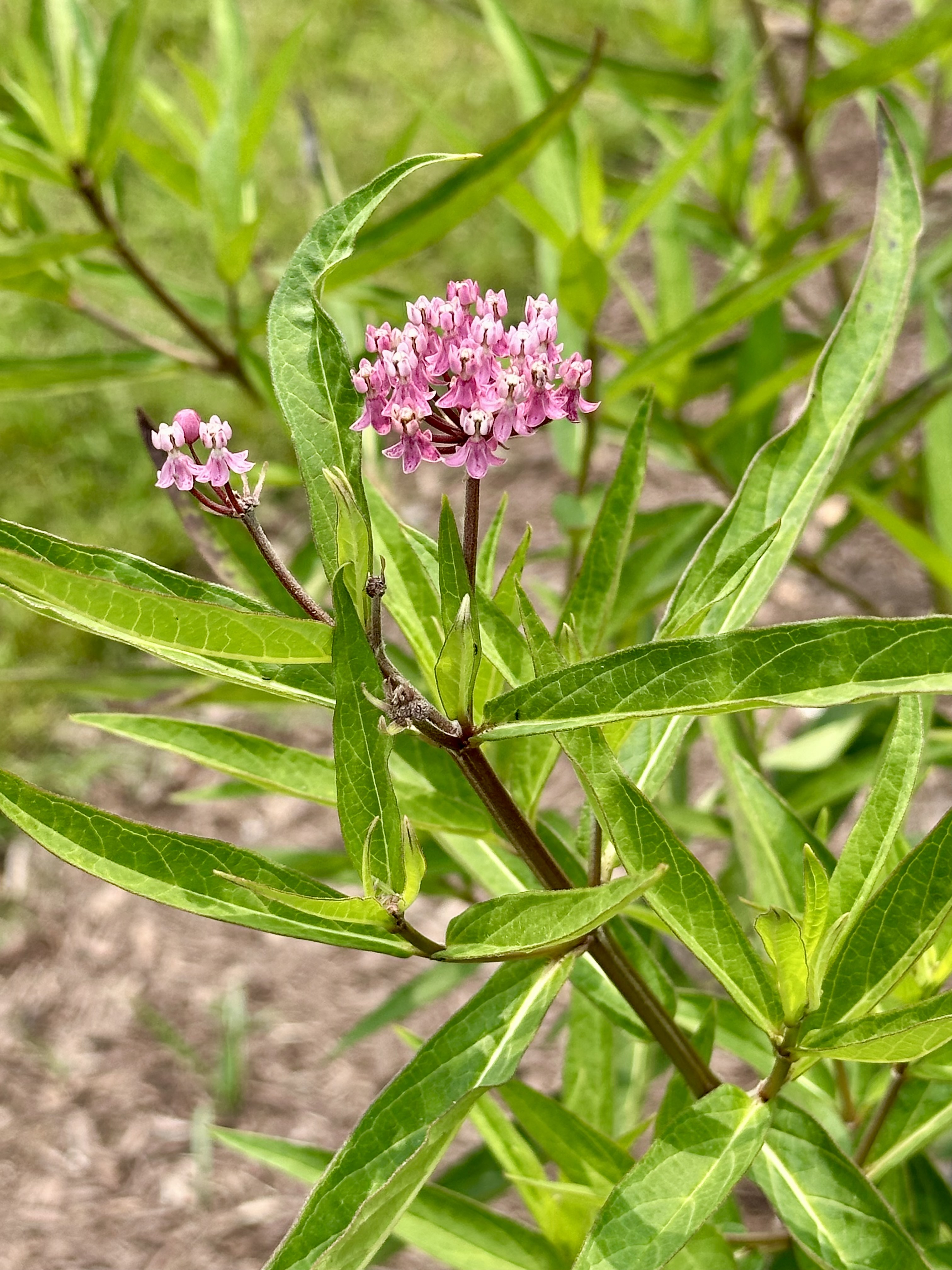
Wildflowers.
Along the path.
Honeysuckle.
Mountain Laurel.
Foxglove Beardtongue
Delphinium.
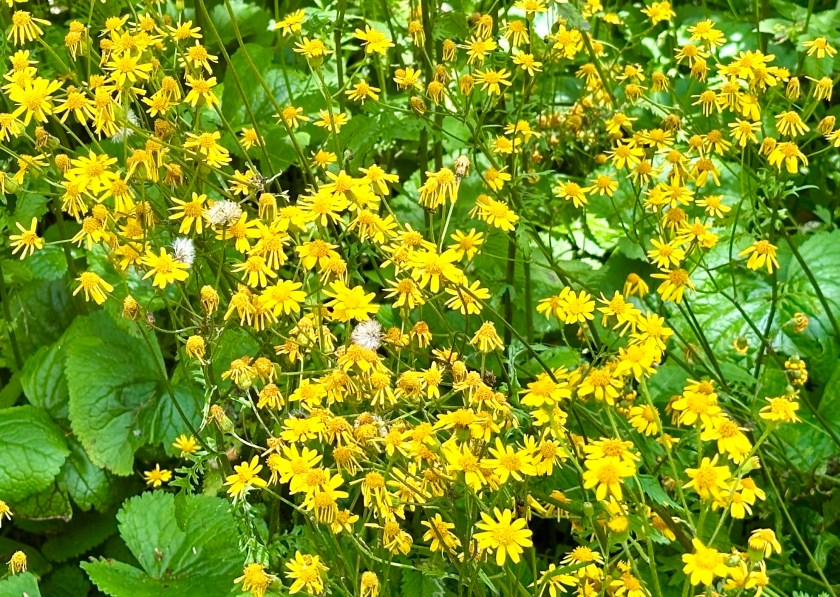
Golden Ragwort.
Cultivated.
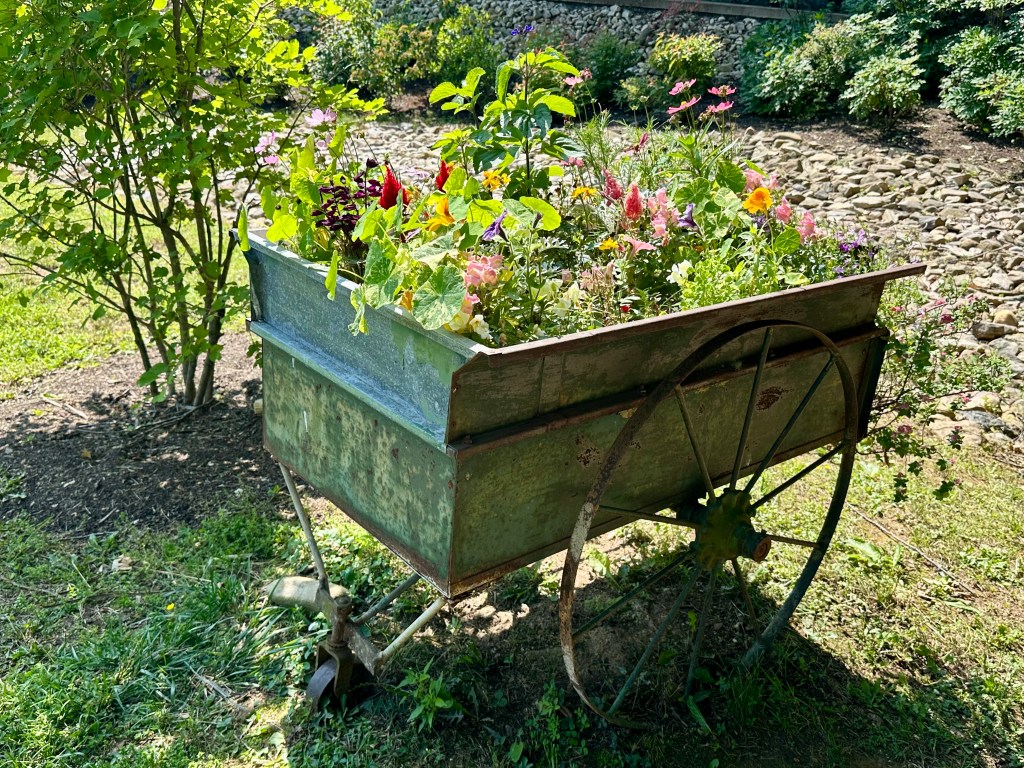
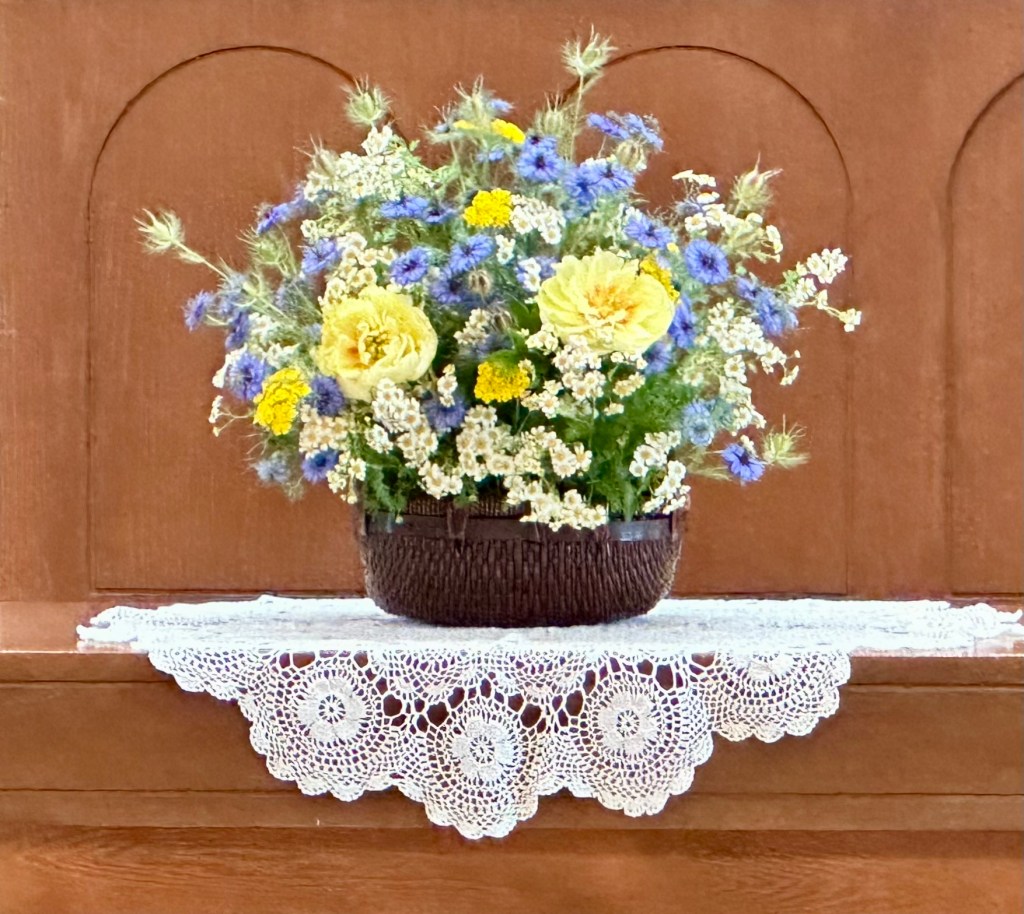
At the arboretum.At the neighbor’s.Calla Lililies. Planter.Climatis.Rose Campion.Church decor.
One of these is not the same as the others. Photo by Bruce Stambaugh
Our across-the-street neighbors have lovely flower gardens for all who pass by to enjoy. Since their house faces south, the winter sun, when it shines, warms the front yard.
This, in turn, encourages flowers to bloom when the days warm into the 50s and 60s, like they have for the last few days. I went over to photograph the Snow Drops and discovered that a lone Hyacinth had joined dainty white flowers in showing off its lavender beauty.
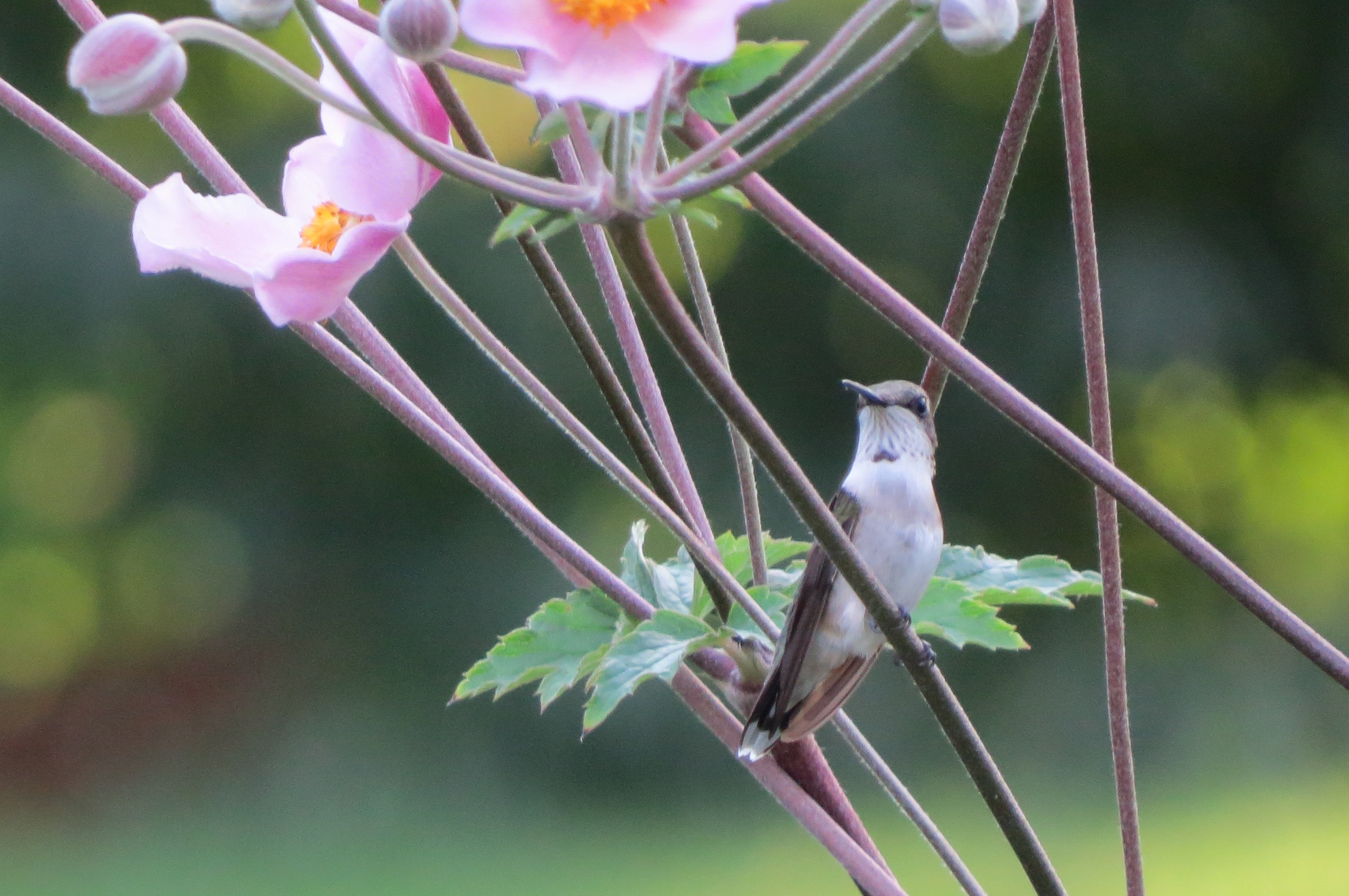
My wife called me to the large flowerbed in the front yard. She wanted me to see a funny looking bird, which turned out to be a fledgling American Goldfinch. As I was trying to capture just the right shot of this youngster, another bird caught my attention. A juvenile Male Ruby-throated Hummingbird was working the flowers directly behind the young Goldfinch. I tried without success to get both birds in the same frame. Instead, I had to settle for different photos of each young bird.
A birder more expert than me helped me to identify this bird as a first year male. The streaks and dark patch on its chin marked it as a young male. He only rested briefly on the Japanese Anemone stalk. But it was just long enough for me to snap his portrait.
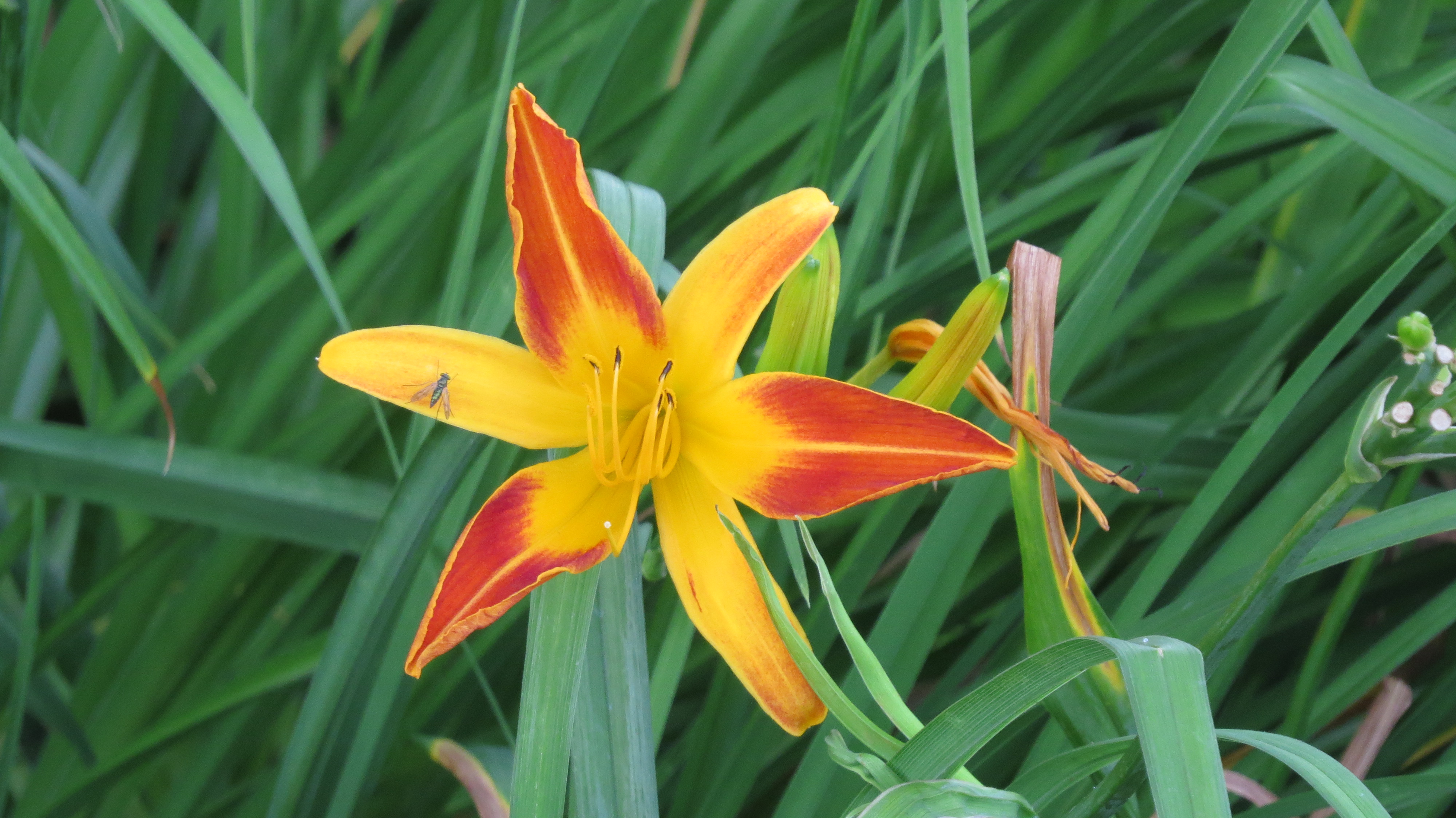
My wife and I were walking along the sidewalks in picturesque Niagara-on-the-Lake, Ontario, Canada last week when I spotted this beautiful day lily. I had to take a picture of the fiery colors of the flower, bursting like a star against the sea. I thought the contrast of the warm colors of the flower and its long, lush leaves and stem stunning.
It wasn’t until I downloaded the photo to my computer that I noticed the iridescent green fly, which is officially called a Long-legged Fly. It’s emerald glossiness perfectly complemented the leafy background of the photo. Despite all the beauty we saw all through the historic town, and at Niagara Falls, too, I chose this still life as my Photo of the Week. I hope you like the photo as well.
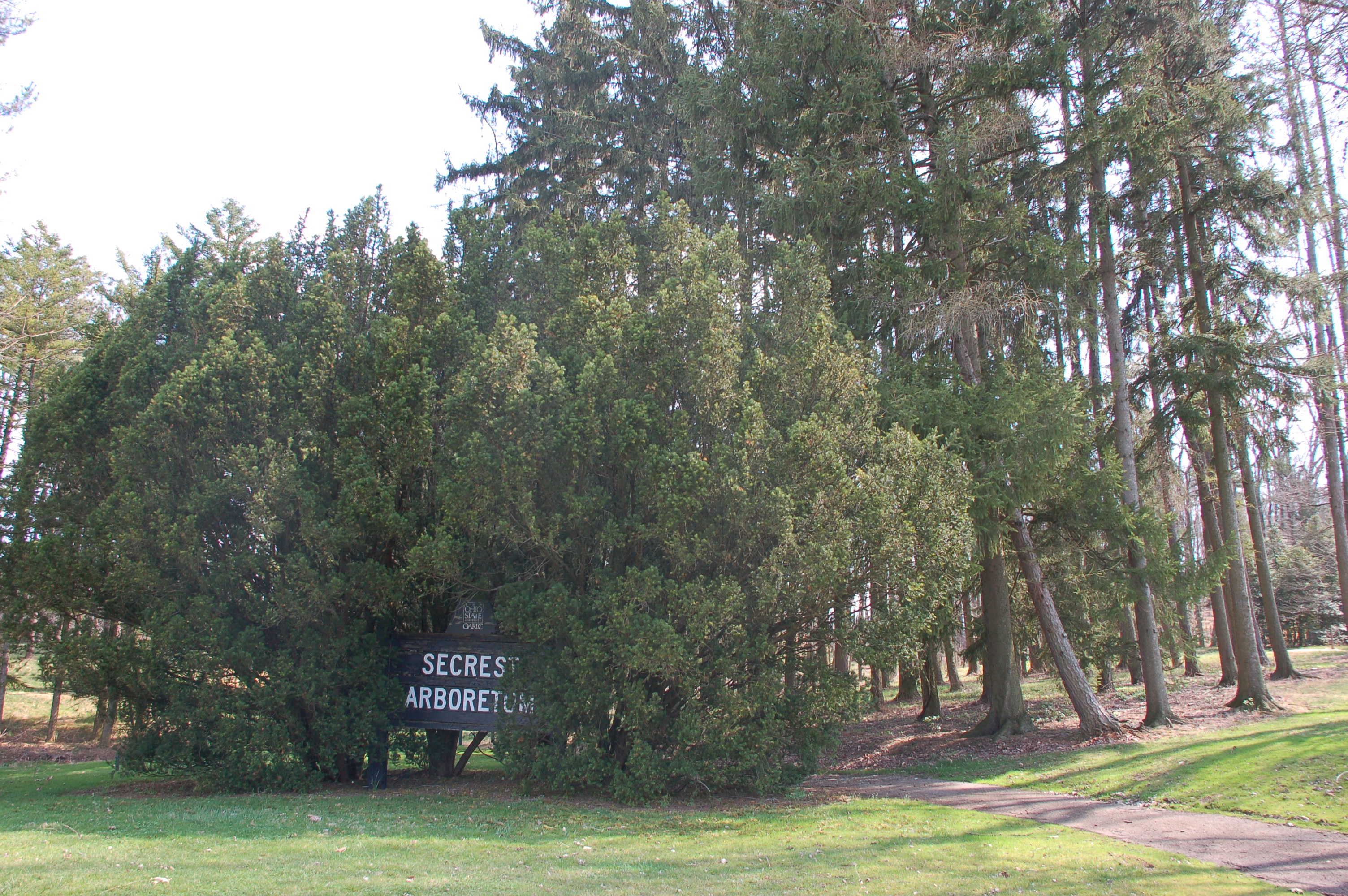
I hadn’t been to Secrest Arboretum in Wooster, Ohio since a tornado literally blew it apart September 16, 2010. In the midst of our recent summer-like weather, I decided it was time to reconnect.
Like so many others, I always had found the arboretum to be a place of blissful escape and rejuvenation. Its lovely woodlots, pristine gardens and peaceful settings have long served as a place of inspiration and retreat for many.
I knew why it had taken me so long to return to this little paradise. I didn’t want to relive those ugly memories, so opposite of what Secrest was meant to be.
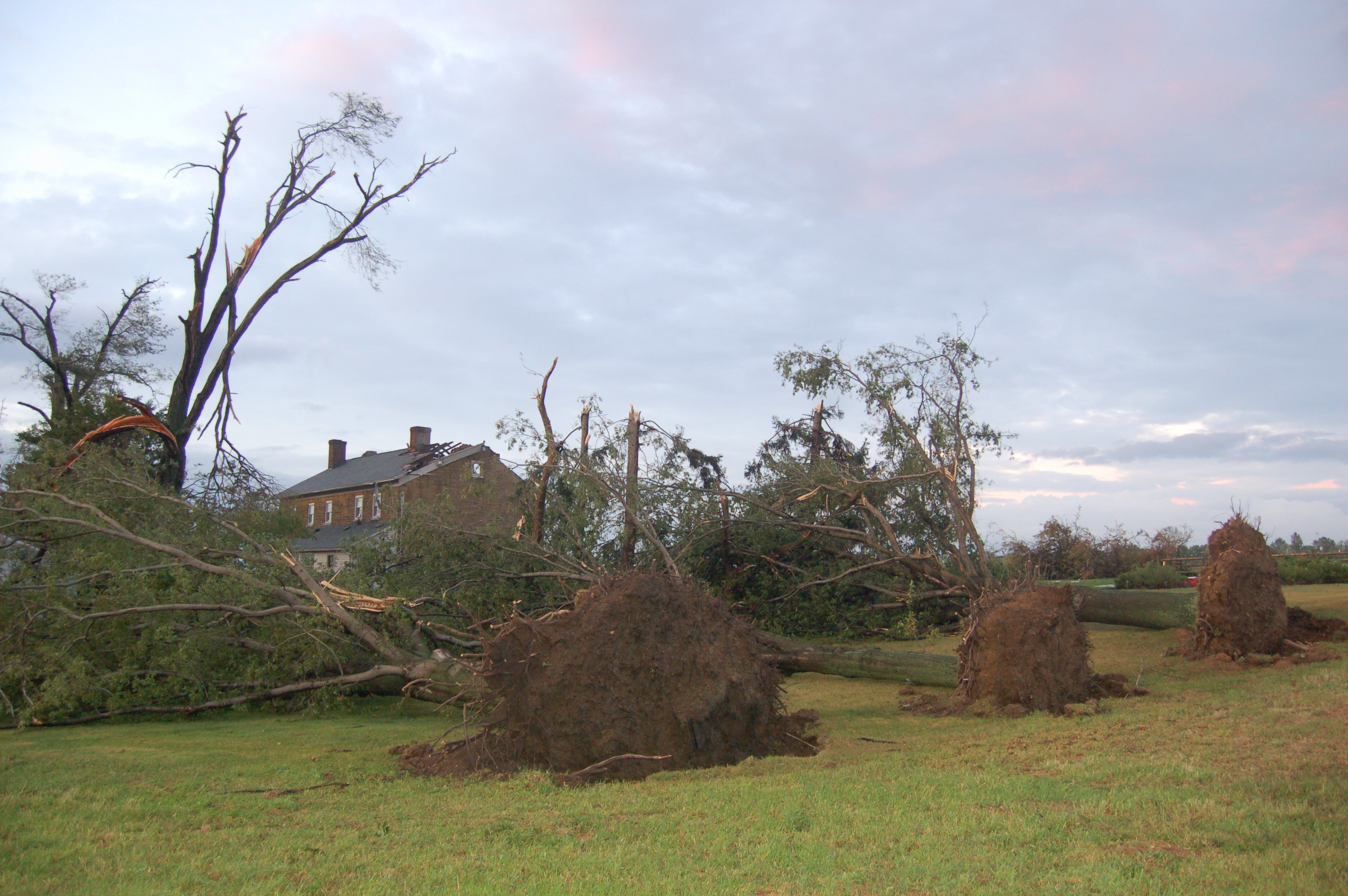
Just an hour after the tornado hit late that summer evening, I had maneuvered in and around the devastation of the Ohio Agriculture and Research Development Center campus, where the arboretum is located. As a volunteer severe weather spotter, the Cleveland office of the National Weather Service had sent me there to photograph the damage as best I could.
I only had about a half an hour before sunset. Rescue crews were still combing buildings for possible victims who may have stayed late for work or study. Sporadic jerky flashes from searchlights sent eerie light beams through holes of broken buildings.
Focusing on my duty, I snapped as many pictures in the dim light as I could. That purposeful concentration was the only thing that stilled my emotions. Tornado damage near the Barnhardt Rice House on the Ohio Agricultural and Research Development Center in Wooster, Ohio on the evening of Sept. 16, 2010.
Historic buildings were ripped apart. Vehicles had been smashed and tossed like toys. Giant, beloved trees were snapped, toppled and twisted. It was overwhelming to see this peaceful place resemble a war zone.
It was nearly dark by the time I had circled back to the famous and popular gardens. Trees that had stood as sentinels over the flora and fauna had been sheared off or completely twisted out of the ground.
I thought of the many good times past when we toured the gardens with family and friends, admiring the marvelous variety of plants, flowers and trees. Those memories made it all so heart wrenching.
Like thousands of others, researchers and visitors alike, I loved the place. The EF2 tornado stole that, too. I knew that restoration had begun almost immediately. But I wondered if Secrest would ever be the same.
Buoyed by the unusually warm weather, I laid aside my fears and drove in. As soon as I exited my vehicle, familiar sights and sounds were instantaneous. Young trees had been planted, some adjacent to the sawed-off stumps, testimonial tombstones to those once towering trees.
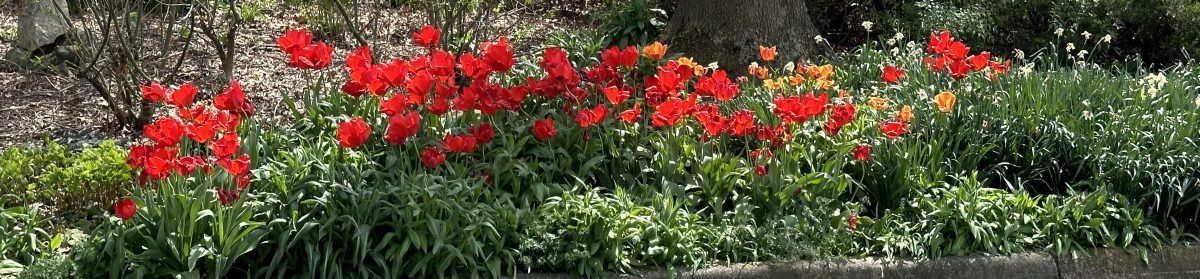
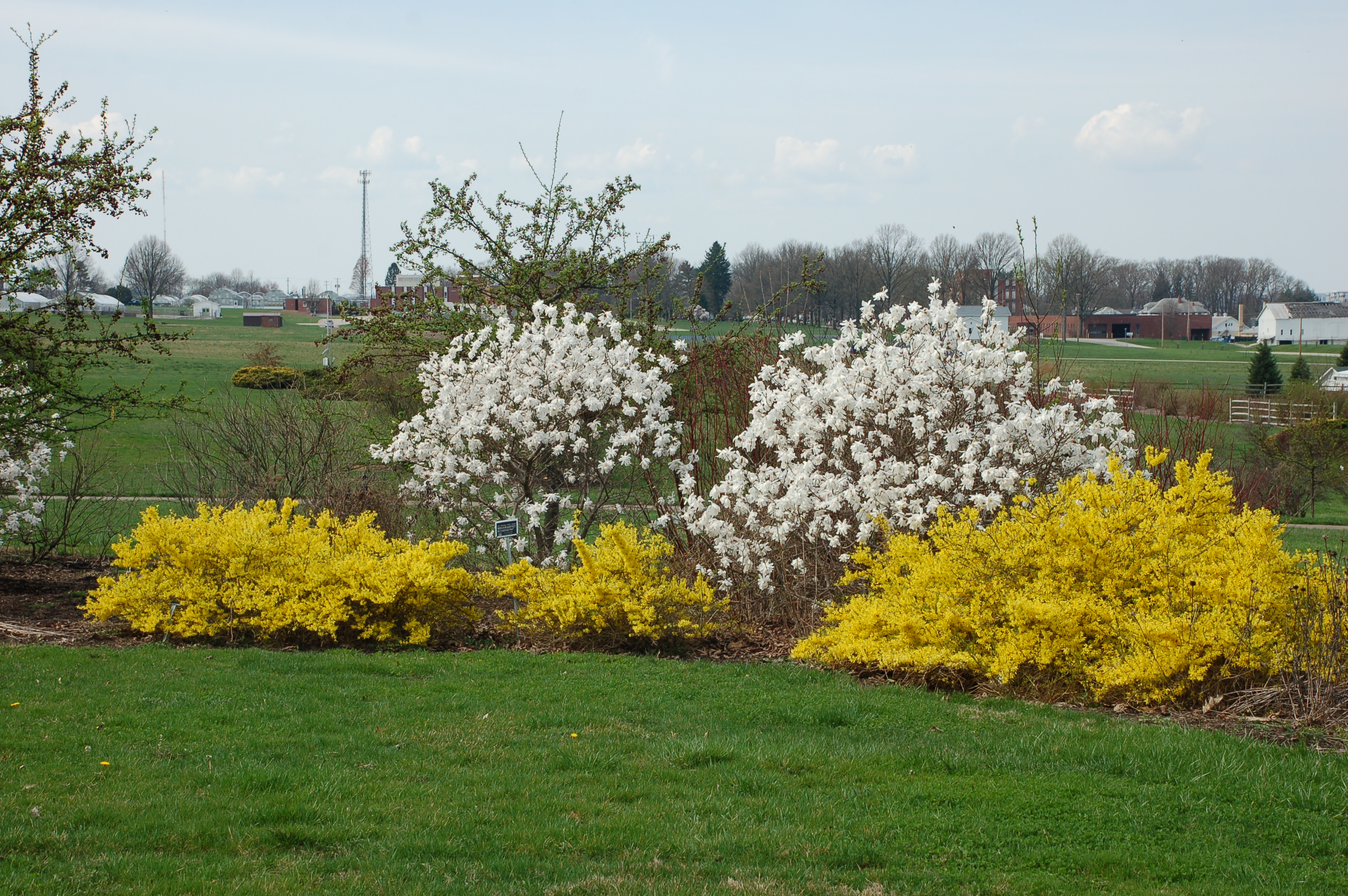
The early onslaught of warm weather had coaxed the blossoming of many flowers and flowering trees. Crocuses, daffodils, hydrangea, forsythia, magnolia and even an exotic tulip were all blooming, some well ahead of schedule. Workers were busy trimming out last year’s dead growth while construction crews continued to repair, replace and expand the lovely gardens.
The Barnhardt Rice House is repaired and back in use.It was a pleasure to walk the paved pathways to explore the remake. I wasn’t the only one to notice the fragrant flowers. Huge bumblebees and honeybees gorged on the nectar of the new blossoms. Mocking birds flushed from one bush to the next, staking out nesting preferences.
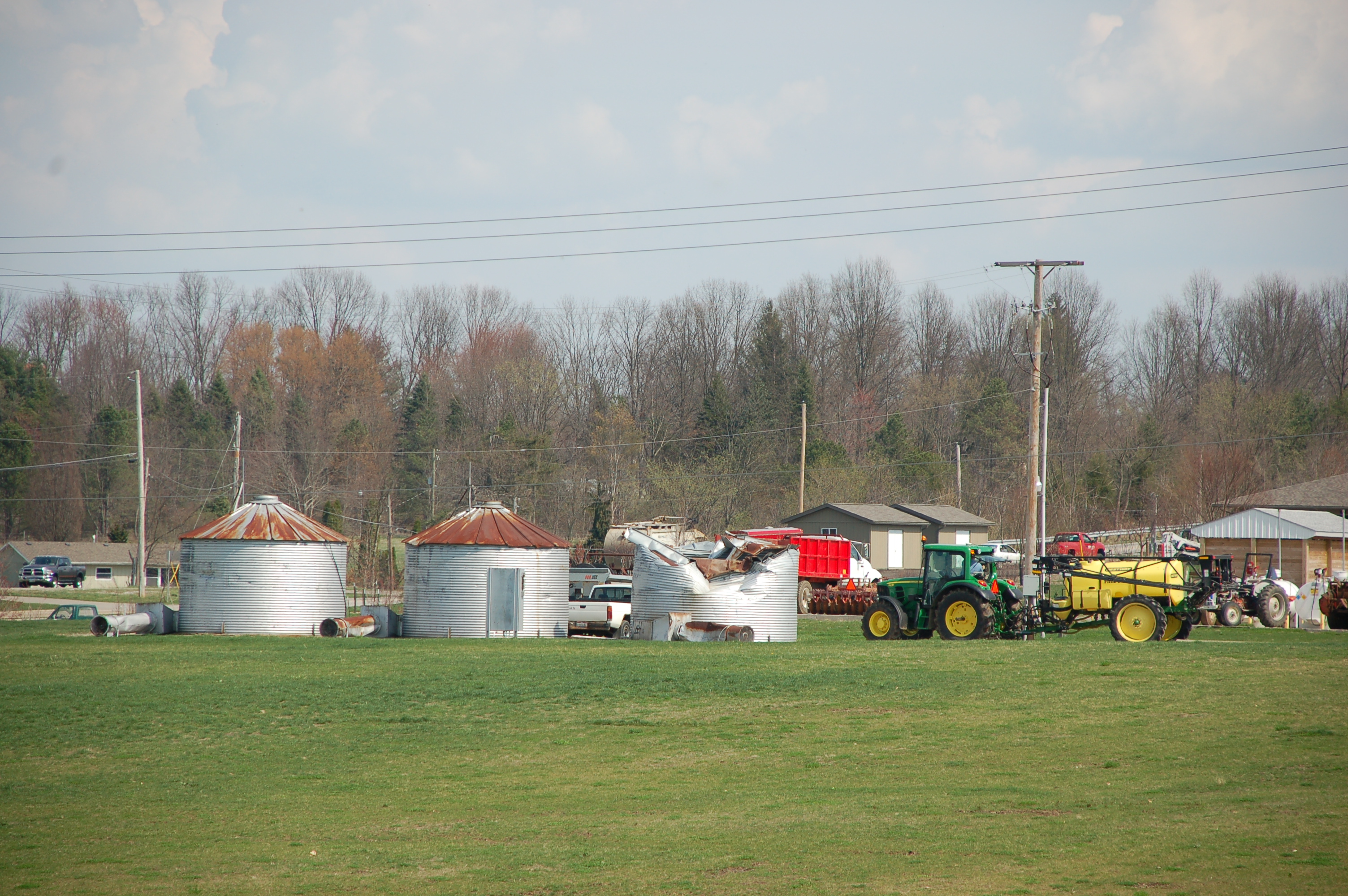
It was also nice to see some of the campus building restored, refurbished and back in use. Others, however, remained much as the tornado had left them. Silos on the OARDC campus stand as they were after being hit by a tornado Sept. 16, 2010.
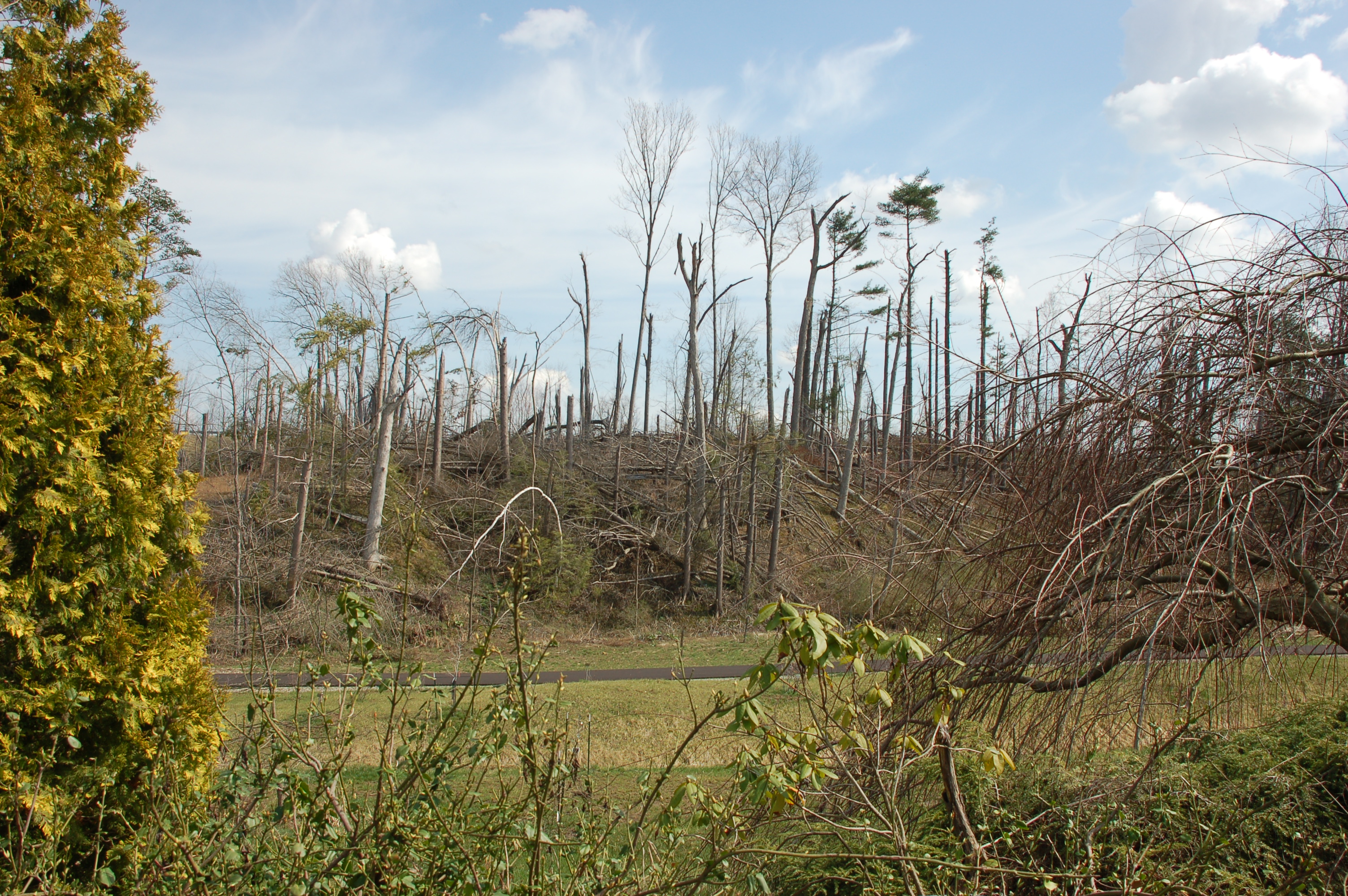
The restoration of Secrest Arboretum is a work in progress to be sure. In some sections, tornado twisted and toppled trees remain within eyeshot of the ongoing transformations.
The contrasts of nature’s stark fury and inspiring revival filled my soul. In the midst of this resurrection season, Secrest and I were both healing. While many areas of the arboretum have been restored, sections of large trees downed by the tornado remain.
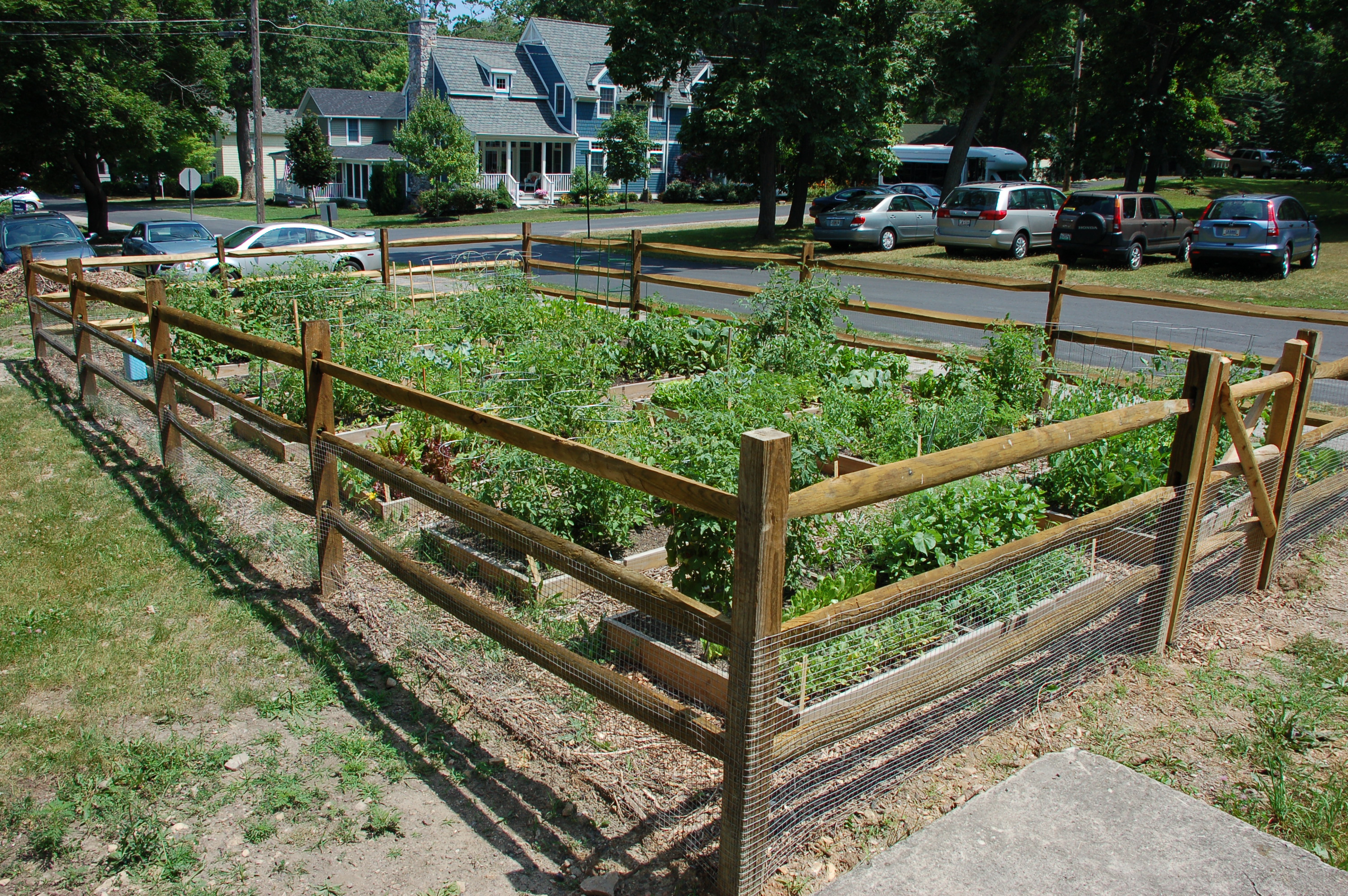
Large vegetable gardens like this one are everpresent in Ohio's Amish country.
By Bruce Stambaugh
Creative rock sculptures mirror the Hollyhocks in a Lakeside, Ohio garden.
I’ll make my confession right up front. I am not the most authoritative person to write about gardening.
Still, I like to think that I am observant enough to recognize a good garden when I see one. Whether vegetable, rock or flower, all gardens require much manual effort to keep them manicured and productive.
Growing up in the suburbs of a northeast Ohio blue-collar city, our father loved to garden. He saw it as a way to be out in the fresh air and to simultaneously save money by growing our own food. With five children, it was the practical thing to do. For efficiency’s sake, he recruited his offspring to help cultivate, plant, nurture and reap the garden harvest.
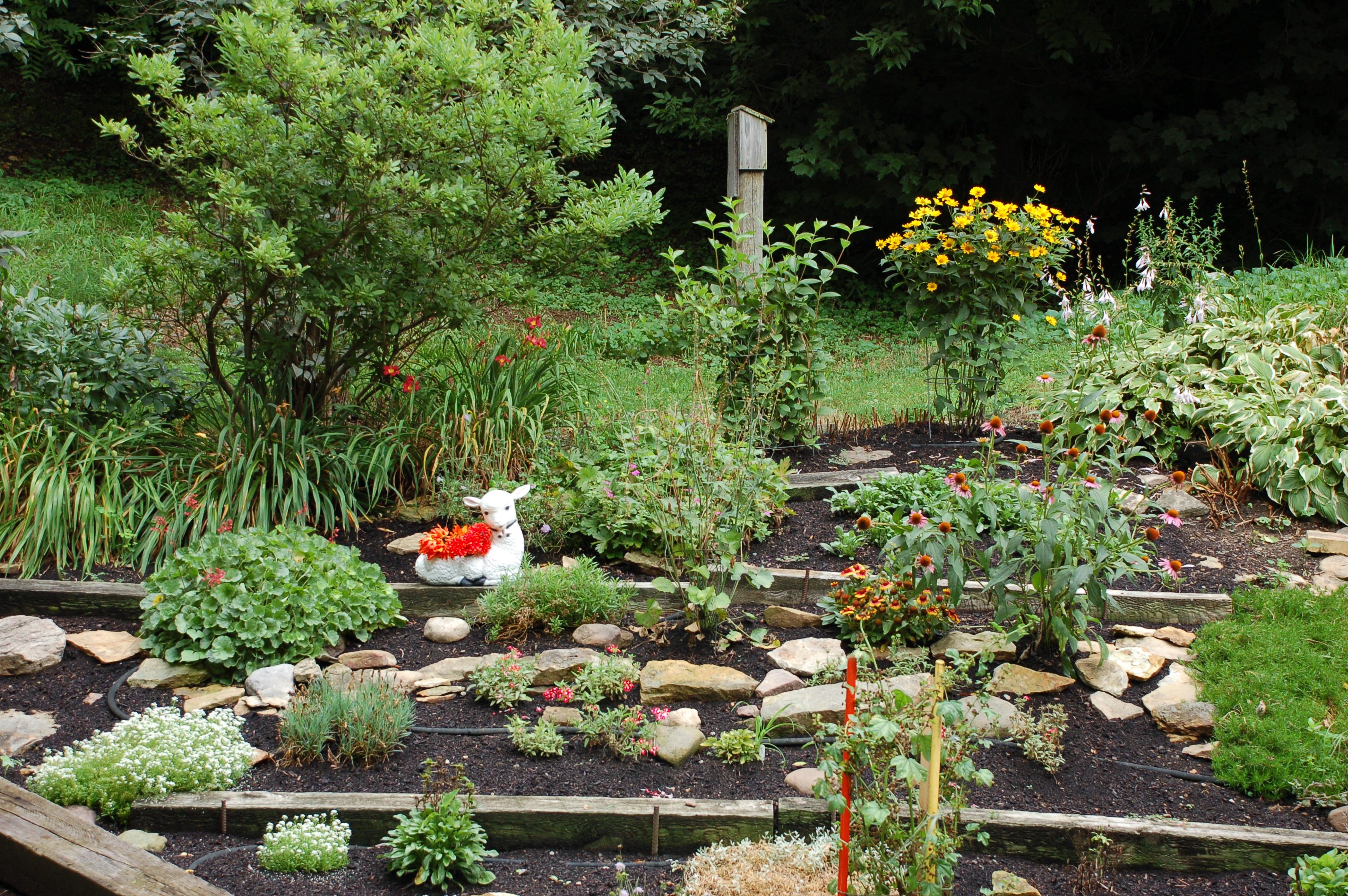
Rock gardens add esthetics to any property.
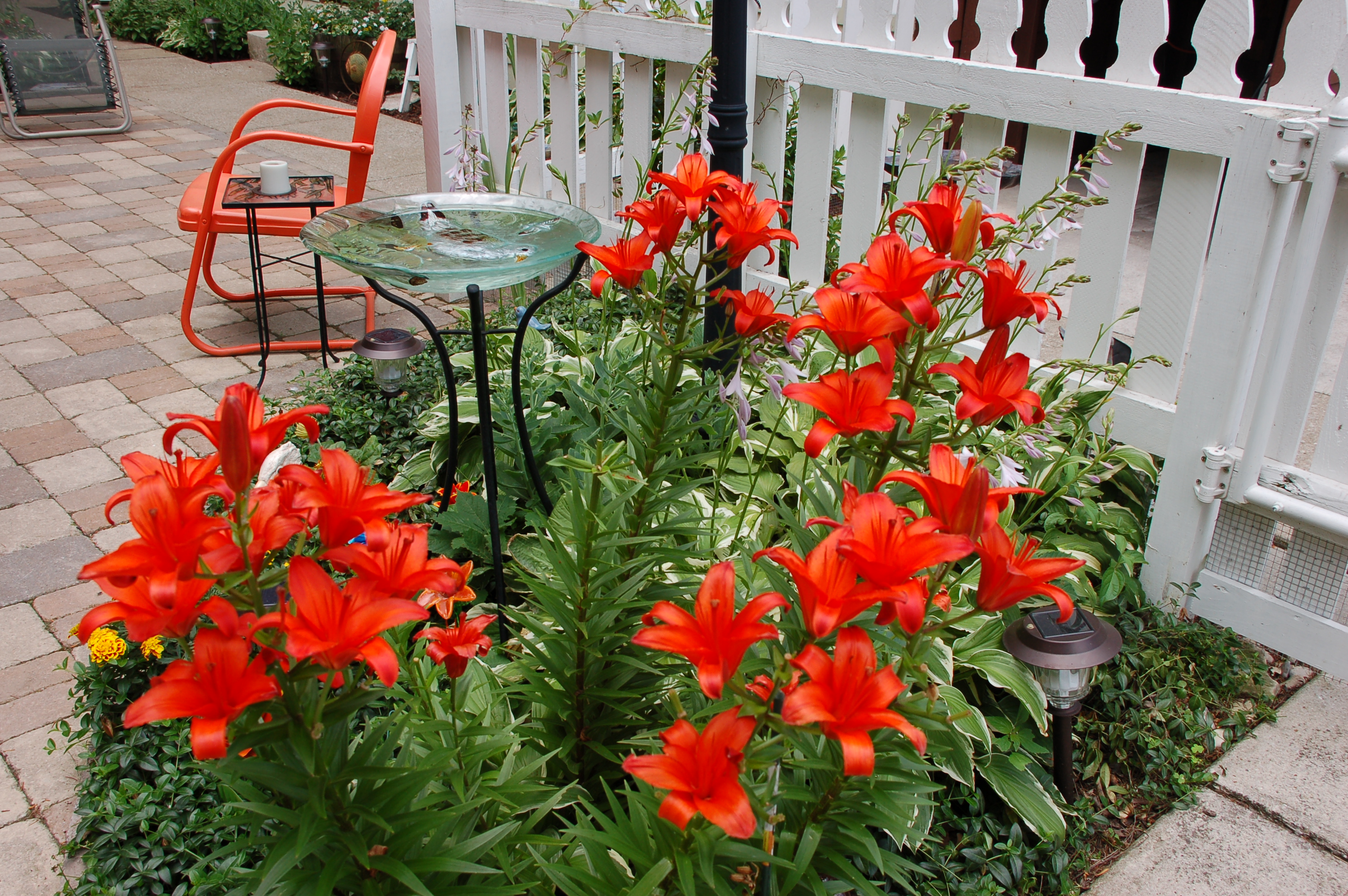
These lilies would brighten any yard.
Our lovely mother would prepare in season feasts that included sweet corn, new potatoes, green beans, cucumbers and beets. She also canned and froze food for the cold winter months ahead. If we had had a bumper crop, we would set up shop in a busy business parking lot and sell sweet corn out of the car’s trunk.
Mom also propagated lovely flower gardens around the parameters of our small piece of suburban property. Mom used her artistic eye with the floral color selection to nicely accent the cherry red brick exterior of our post-war bungalow.
Home canning is back in vogue in rural, suburban and urban settings.
Those pleasant memories returned with the current onslaught of the harvest season in gardens all across the country. Television shows, newspaper stories, Internet blogs and even high-end glossy magazines feature how to properly prepare and preserve your garden gleanings.
Having a plot of garden is almost assumed when you live in one of Ohio’s richest agricultural counties. Don’t be fooled though. Contrary to what some might think, gardening is not confined to rural areas. People garden in suburbs and cities, too.
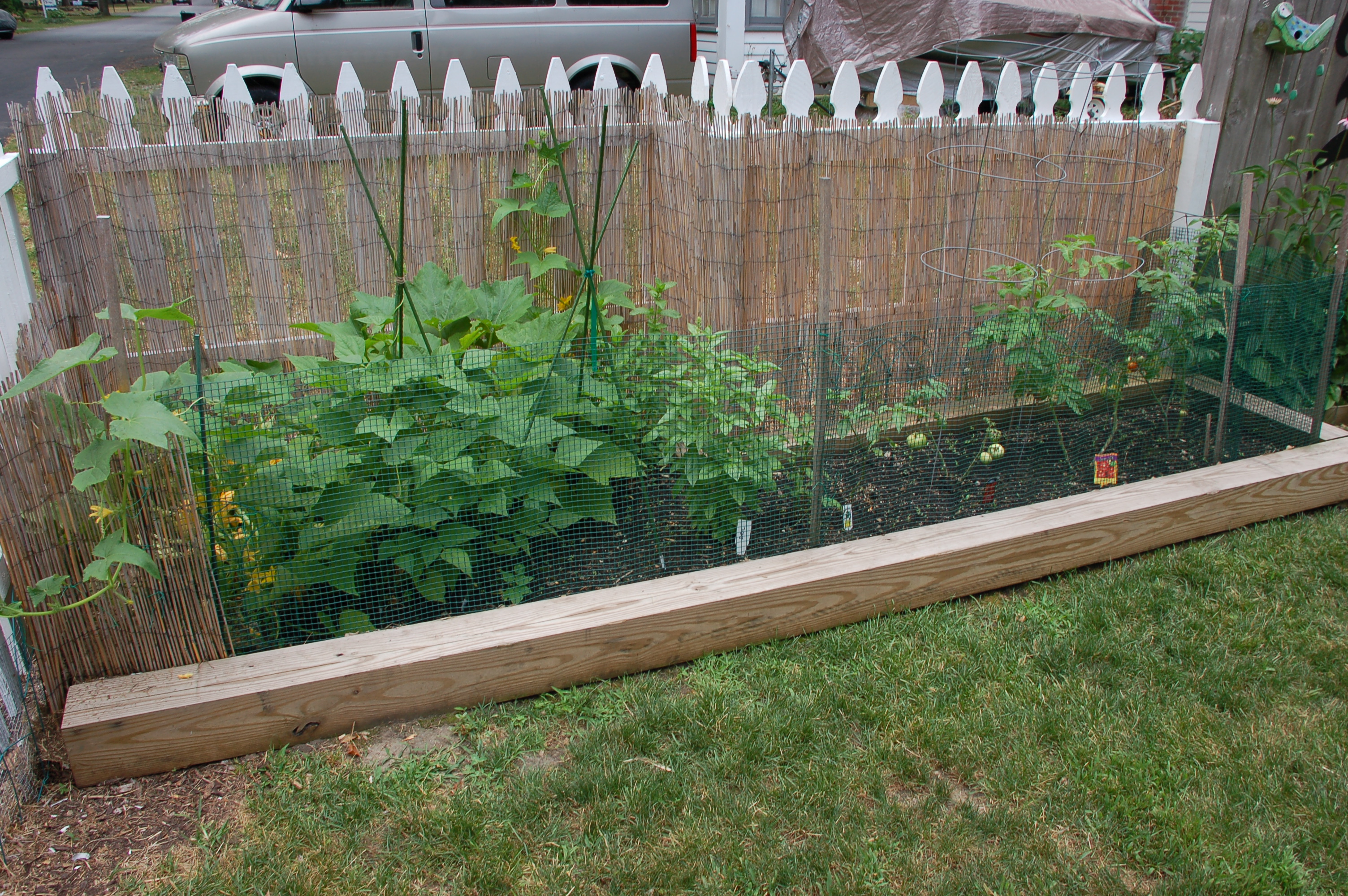
Even small backyard plot provides fresh herbs and vegetables.
With the advent of the organic, all natural craze, and the tough economy, gardening appears to have made a universal comeback. Whether you have an acre or simply a few pots of herbs sitting on an apartment balcony, gardening is good.
Caring for tender plants, watering them, protecting them from weather’s extremes and pesky insects is worthwhile work with tasty rewards. I see it as a way to get us back to our roots, reconnected to the soil from which and on which all life depends.
A community garden in Lakeside, Ohio.
If we are mindful, we will recognize that gardening provides a solid base that can lead to other returns as well. Cooperative gardens, sponsored by both church and civic organizations, have sprung up across the country. Besides those who garden, the abundant produce often helps the less fortunate, the homeless and the needy.
An acquaintance told me how his parents would load up their battered family pickup with the excess of their giant two-acre garden, head into town and end up on the wrong side of the tracks. There they would park the truck and hand out the fresh, healthy produce to whomever needed it.
They repeated the routine throughout the growing season. The thankful recipients were so moved by the family’s generosity that they offered to help plant and maintain the garden the next growing season. Their grateful offer was accepted, and new trust and friendships were born.
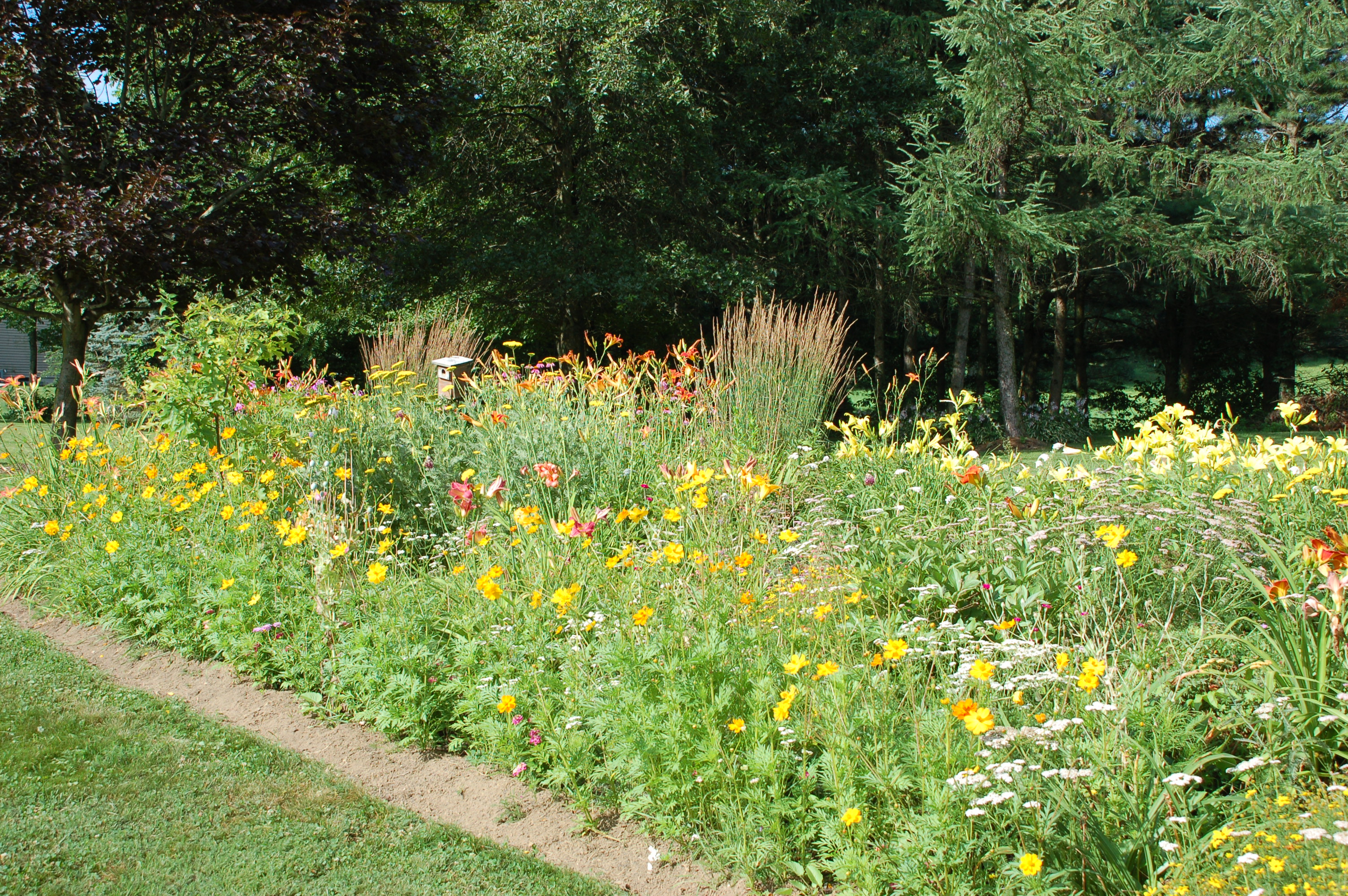
If properly planned and planted, flower gardens can brighten a property throughout the growing season.
Gardens connect us to the soil that yields our sustenance. If we are proactive, they also open our lives to much more than delicious food. Gardening doesn’t get any more satisfying and splendid than gathering two crops from one planting.
As the silvery sunset melted into the horizon, I reflected on the last few days and the people and events that had occurred. In reviewing the various situations, it hit me that like it or not I was entering the October of my own life, and that got my attention.
Days earlier I had met my friend Steve in a Mexican restaurant in the city where I was born and raised. Steve is a long-time buddy connected to my school principal days. Steve and I have a lot in common. First and foremost is that we both like to talk, at least according to our spouses.
If for no other reason than that alone, Steve and I have agreed to meet periodically without the wives. We get more talking done that way.
Steve is the kind of friend every guy should have. He doesn’t let you get away with anything. He is a self-appointed critic of my writing, and is unabashed about finding any mistakes that somehow make it through to publication. Well, at least he thinks they are mistakes, but he usually is mistaken.
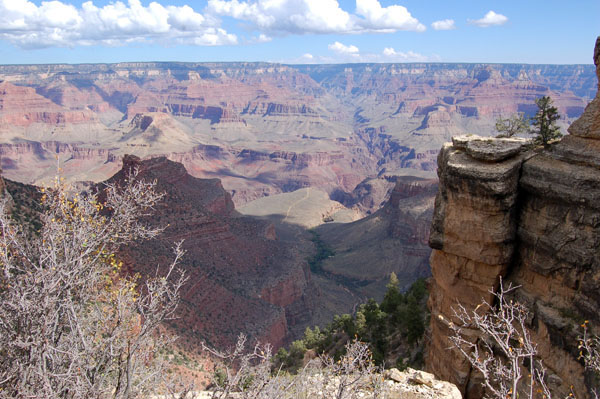
Bright Angel Canyon at the Grand Canyon, AZ is a favorite spot for hikers, painters and photographers alike.
That’s the kind of friends we are. He has the same theology about technology that I do. He loves to frequent the western United States and does so annually, months at a time, mostly hunting for arrowheads. Archeology and travel are other mutual interests.
Baseball is my favorite sport.
Another thing we have in common is baseball. He hates it. I love it. Also, we enjoy discussing politics, until the conversation gets too political, then we switch to a more congenial topic, like baseball.
We talk about our late fathers and how our mothers are doing. And of course, we extol our wives, and try not to roll our eyes too much. Did I mention we laugh a lot?
A few days later, I took my mother on a short drive around the colorful countryside near the retirement home where she lives in Walnut Creek, Ohio. Mom always enjoys getting out when one of us “kids” can take her.
A typical scene in Ohio's Amish country, this one near Walnut Creek, Ohio.
This day was exceptional. The sky was pure blue, allowing the sun to heighten the already vivid colors. Since Mom was an avid and prolific watercolor painter, I always hope these short rides spark a memory of those days gone by when she and her friends would find a spot to paint, set up their easels and spend the day communing with nature and one another, beautifully interpreting what they saw.
Besides the warm hues of the leaves, a stunning red-tailed hawk flew right across our path. Around the curve, Mom spied some flashy marigolds. All in all, it was an invigorating jaunt. Seeing that Mom enjoyed the little excursion, I chose to tell her a comment that Steve had shared with me at the Mexican restaurant.
Marian Stambaugh, 89, taught me to see and share in creative ways.
Knowing my mother was an accomplished landscape artist, Steve said, “You have your mother’s eye.” I non-verbally asked for clarification. “Instead of a brush, you paint with words and through the lens of your camera.” I don’t know if Steve noticed or not, but tears welled in my eyes. I was honored with the keen compliment. When I shared the kind words with Mom, tears welled up in her eyes, too. Despite her advanced dementia, knowing that Mom had understood at least a little of the depth and breadth of Steve’s insight made the compliment all the more meaningful.
The circle of blessing was now complete. It had returned to its rightful owner, the creative and artful woman who had taught me to see and share Creation’s beauty.
Suddenly, this difficult October day didn’t seem so difficult after all.





















 Buoyed by the unusually warm weather, I laid aside my fears and drove in. As soon as I exited my vehicle, familiar sights and sounds were instantaneous. Young trees had been planted, some adjacent to the sawed-off stumps, testimonial tombstones to those once towering trees.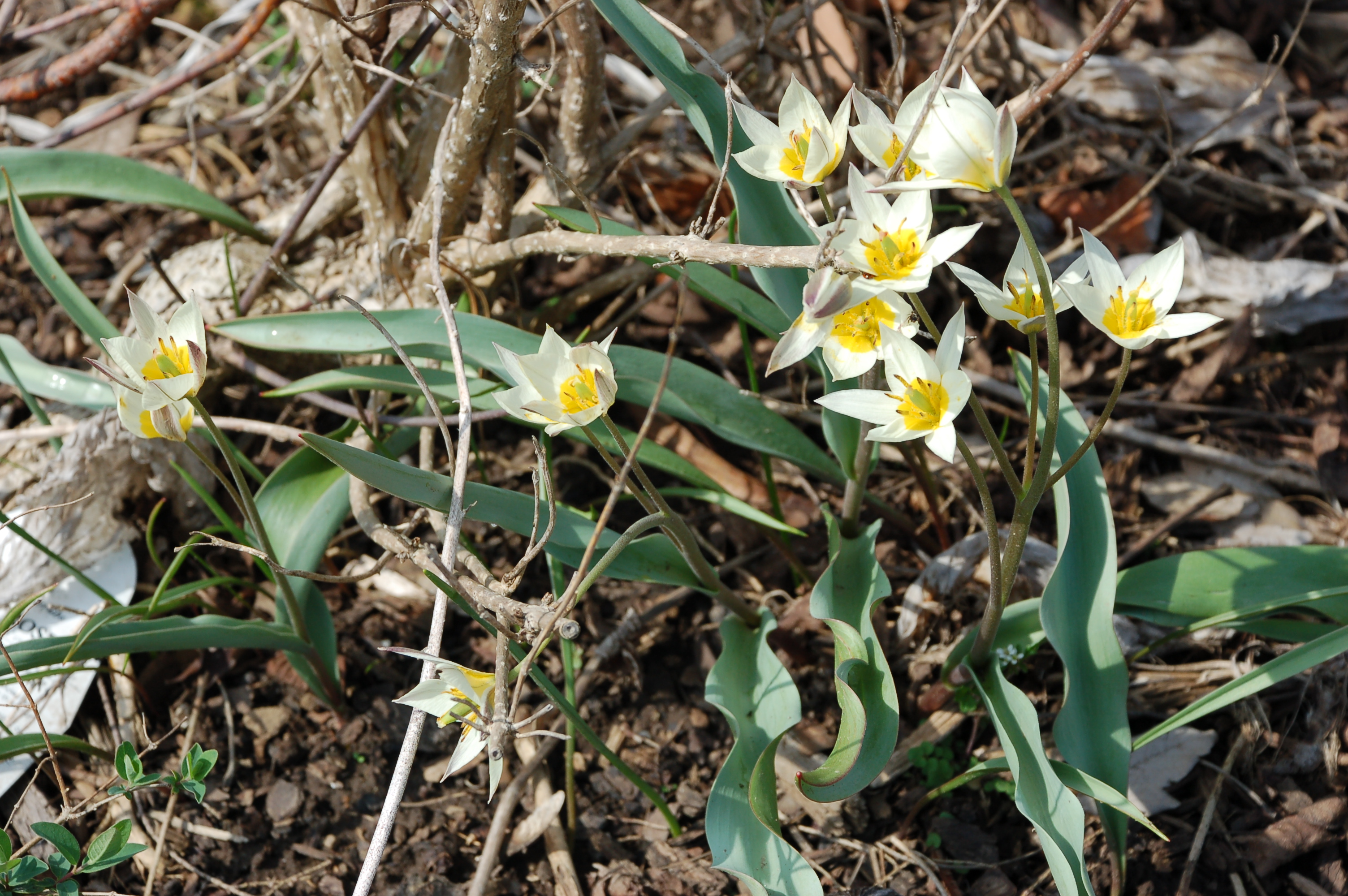








 Roadkill Crossing
You must be logged in to post a comment.