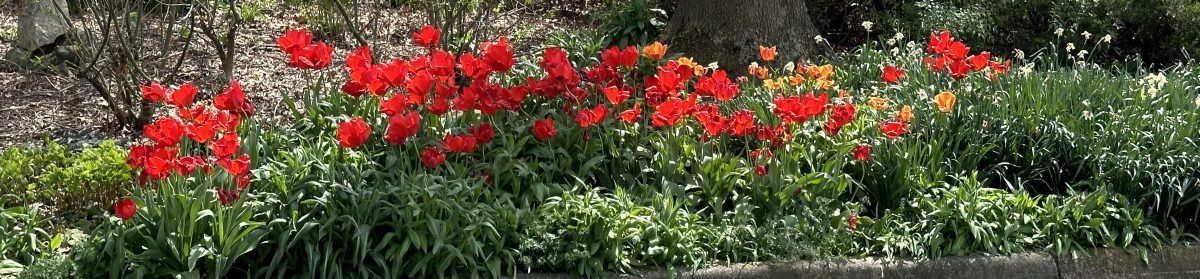
Feeding the Winter Birds

A Northern Flicker at the peanut butter suet feeder. Photo by Bruce Stambaugh

Feeding the birds is one of our favorite winter pastimes. My wife and I enjoy watching college sports, but the colorful birds take precedence over the TV.

Feeding the birds provides us with plenty of entertainment from fall to spring, and we only have to look out our windows. We have done so for all of our nearly 55 years of marriage. We fed birds for the 48 years we lived in Holmes County, Ohio.

Our bird-feeding habit continued when we retired to Virginia’s Shenandoah Valley eight years ago to be close to our daughter’s family. But things were a little different. In Ohio, we lived in the country where natural bird habitats surrounded our property.

Here in Virginia, we live in a suburban setting, just outside the city limits of Harrisonburg. The habitat for birds is much different.

Like many housing developments, homes are close together. Fortunately, our backyard neighbors have mature stands of Colorado Blue Spruce and other evergreens. Plus, we have trees and shrubs around our home that provide cover for the birds.

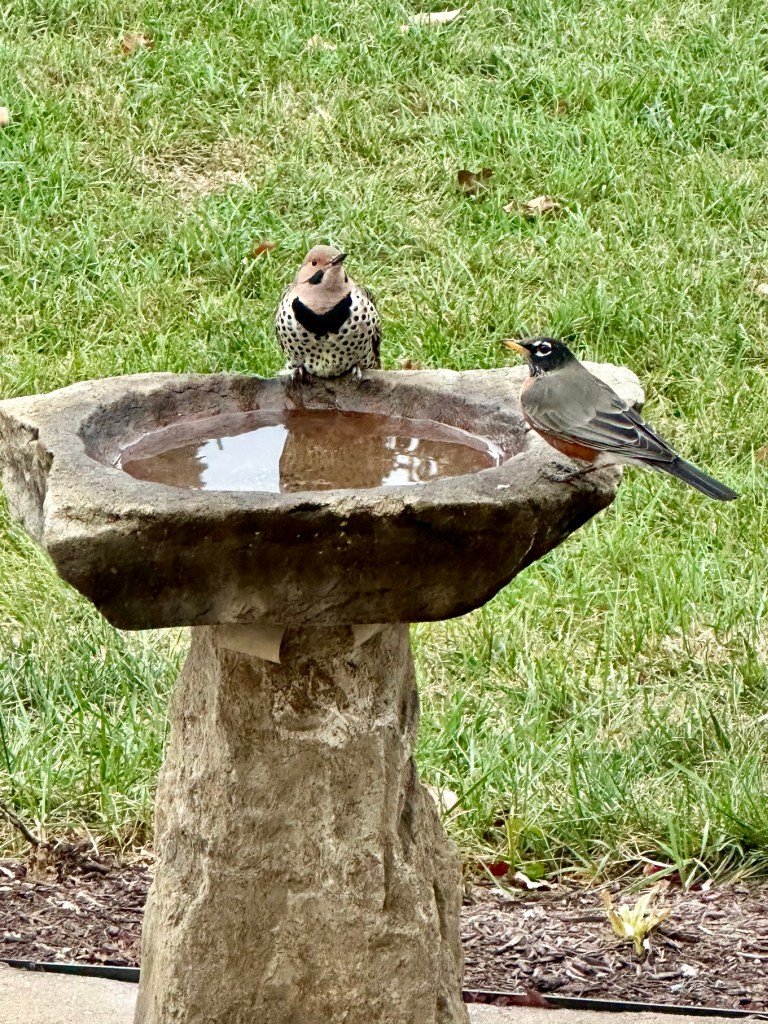
Besides food and shelter, our avian friends need water, too. So, I added three birdbaths to provide drinking and bathing for the birds. Of course, it’s fun to watch them bathe and drink. It’s amazing how the different species drink.
Please click on the photos to enlarge them.

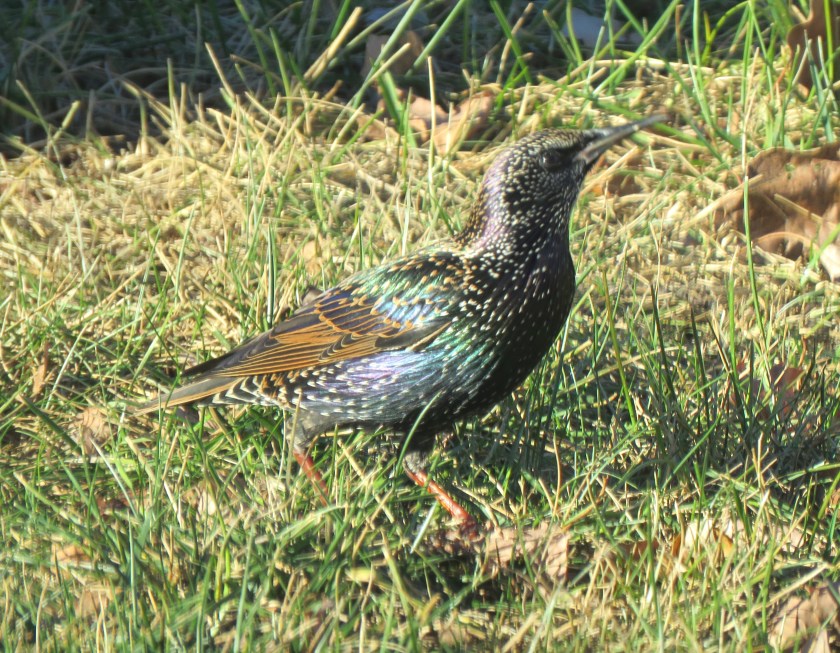
The number of bird species has increased over the eight years that we have lived near Harrisonburg. However, the number of birds has decreased, except for the dreaded European Starlings and the Brown-headed Cowbirds.

Still, I’ve been pleased with the birds that have frequented our feeders. I have four in the front yard, and four in the back. The feed and types of feeders are selected based on the diets and habits of the various species that have frequented our property.

Some bird species are solely ground feeders, so I make sure I spread the feed they eat on the surface near the other feeders. Tube-type feeders allow perching birds to access seeds through holes along the sides. The suet feeder contains cakes of peanut butter suet, encased in a wooden frame with wire-mesh facings on each side.

I place the feeders where the birds feel safe from predators, such as Sharp-shinned and Cooper’s Hawks, which occasionally strafe the neighborhood feeders in hopes of catching a songbird lunch. It’s the way nature works. The feeders and birdbaths are located where we can conveniently view the birds and where they can be easily refilled.

A tube feeder that holds a pound of black-oil sunflower seeds hangs from a limb on the west side of the front yard red maple tree. A suet feeder filled with peanut butter suet dangles from a limb on the east side of the tree. I scatter clean, cracked corn and safflower seeds below them.

The fourth feeder is suctioned to the window in front of my desk. It’s filled with safflower seeds, which only a few birds will eat. Fortunately, safflower seeds are a second-choice food for Northern Cardinals, which seem to have no fear if I’m at my computer on the inside of the window. If I move too quickly, however, they quickly scatter.

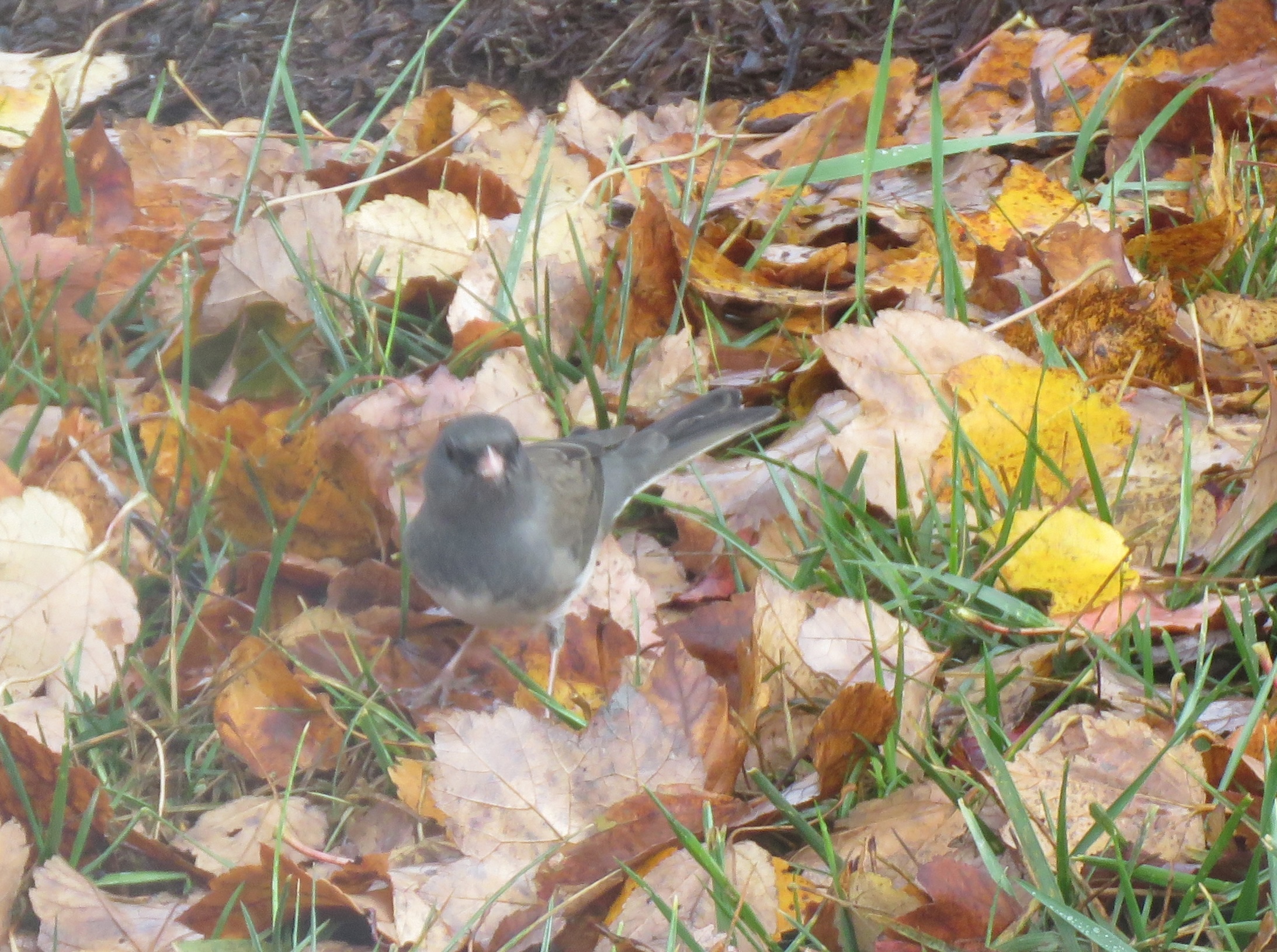
Why do I use these feeds? Black-oil sunflower seeds and hearts attract many species of birds. Northern Cardinals, House Finches, American Goldfinches, Purple Finches, Blue Jays, Dark-eyed Juncos, Downy Woodpeckers, Carolina Wrens, and Carolina Chickadees all choose this seed as a staple to their diet during the winter months.

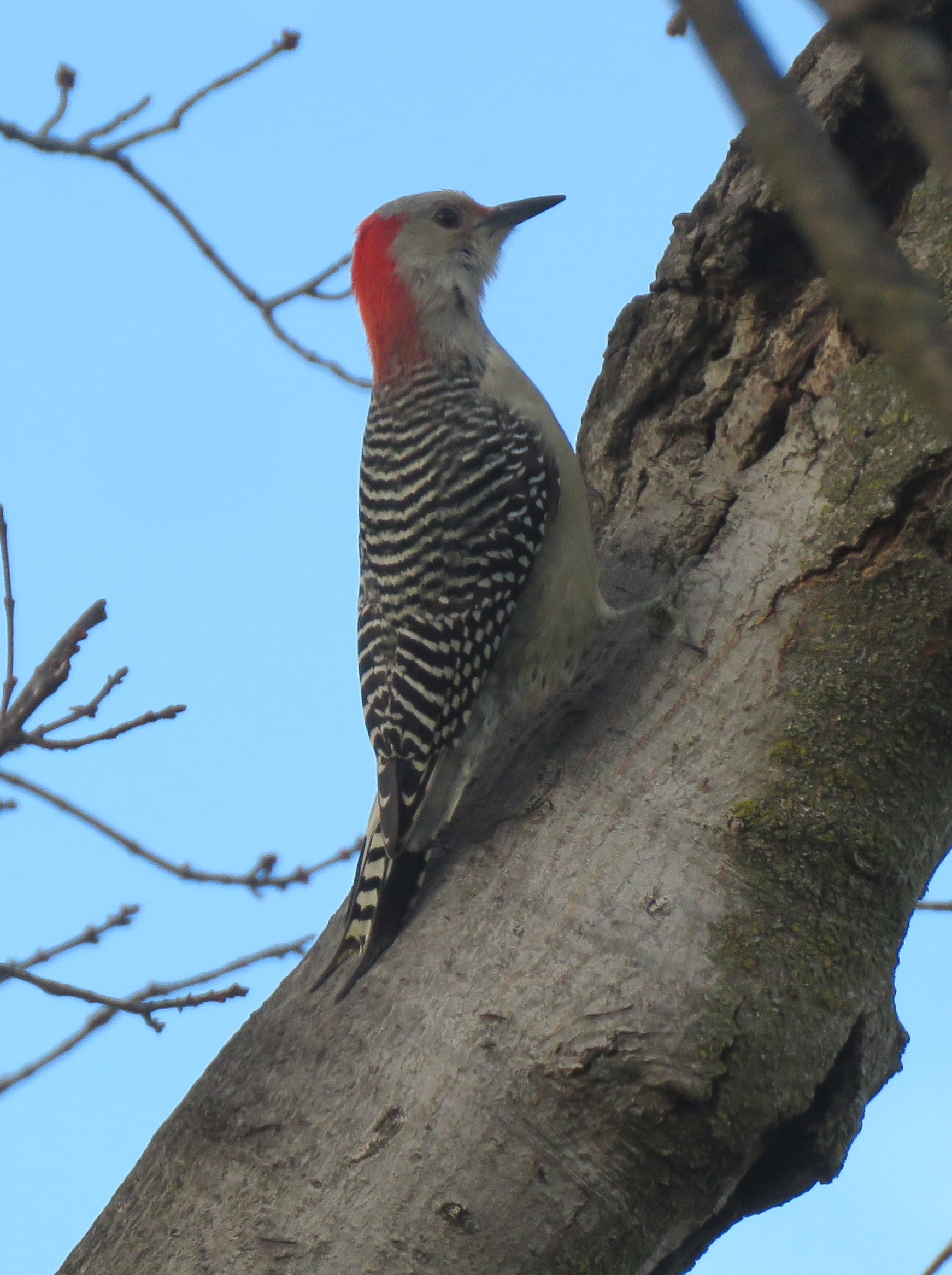
So far this year, Downy, Hairy, and Red-bellied Woodpeckers and Northern Flickers have come to the suet feeder. So have the Carolina Wrens, Carolina Chickadees, and small flocks of European Starlings and Brown-headed Cowbirds.

The star of the show, however, has been a Yellow-bellied Sapsucker. Its feeding pattern has been once in the morning and once in the afternoon. I stop what I’m doing and watch the sapsucker, knowing I’m fortunate to have it appear.
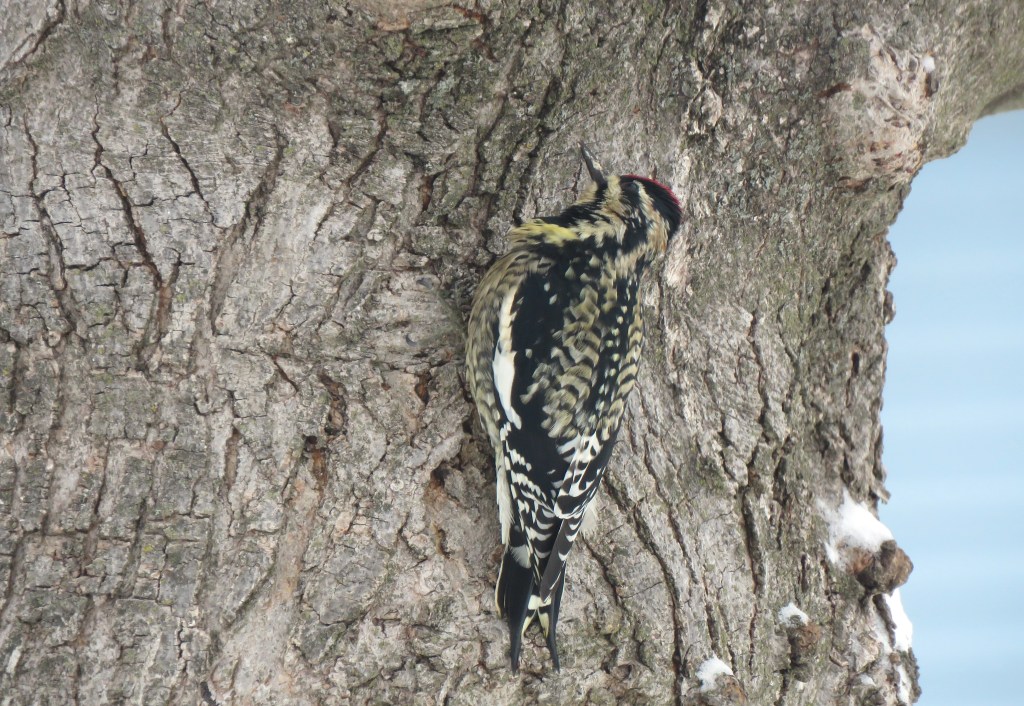
Yellow-bellied Sapsucker. Photo by Bruce Stambaugh

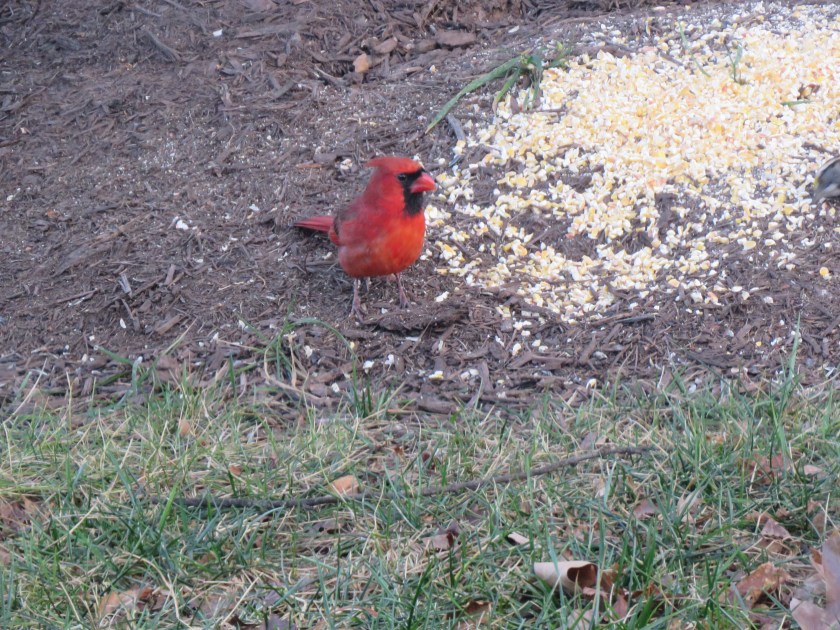
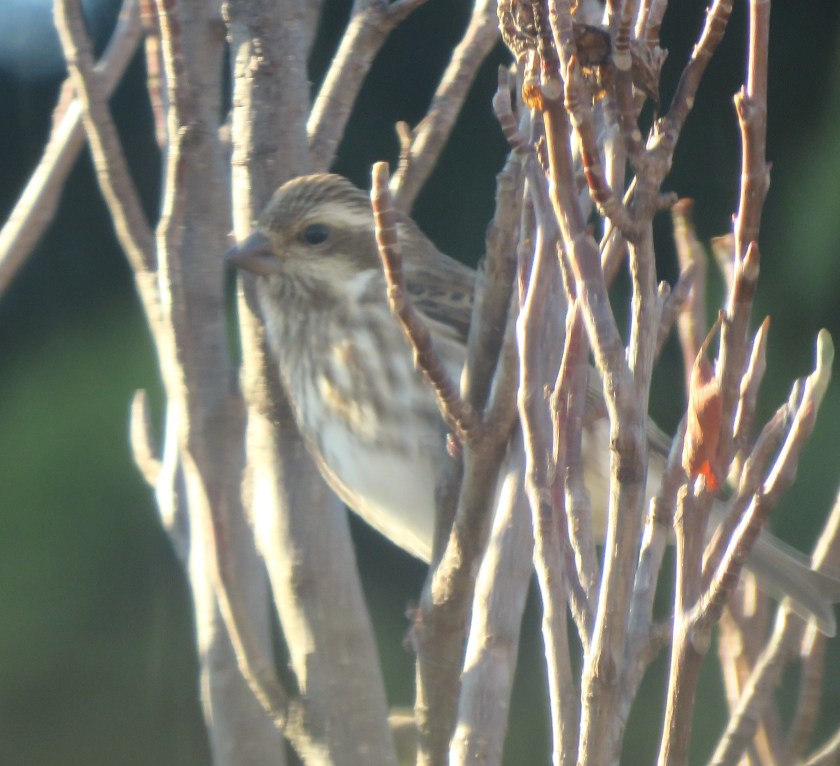
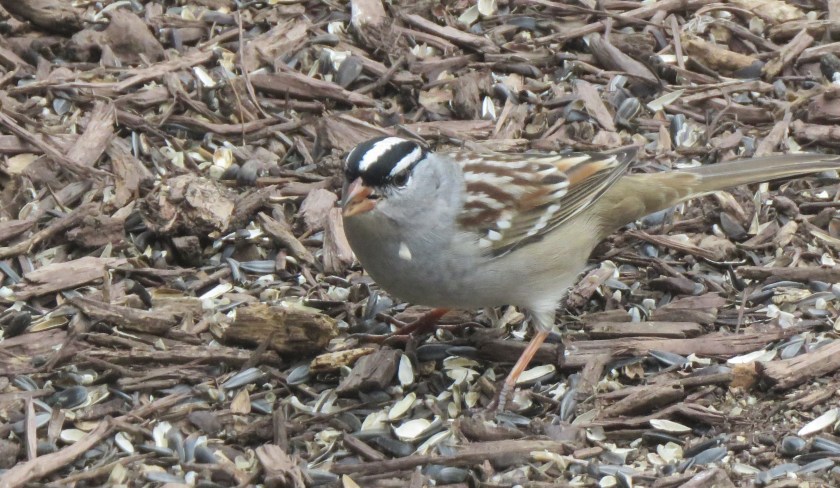
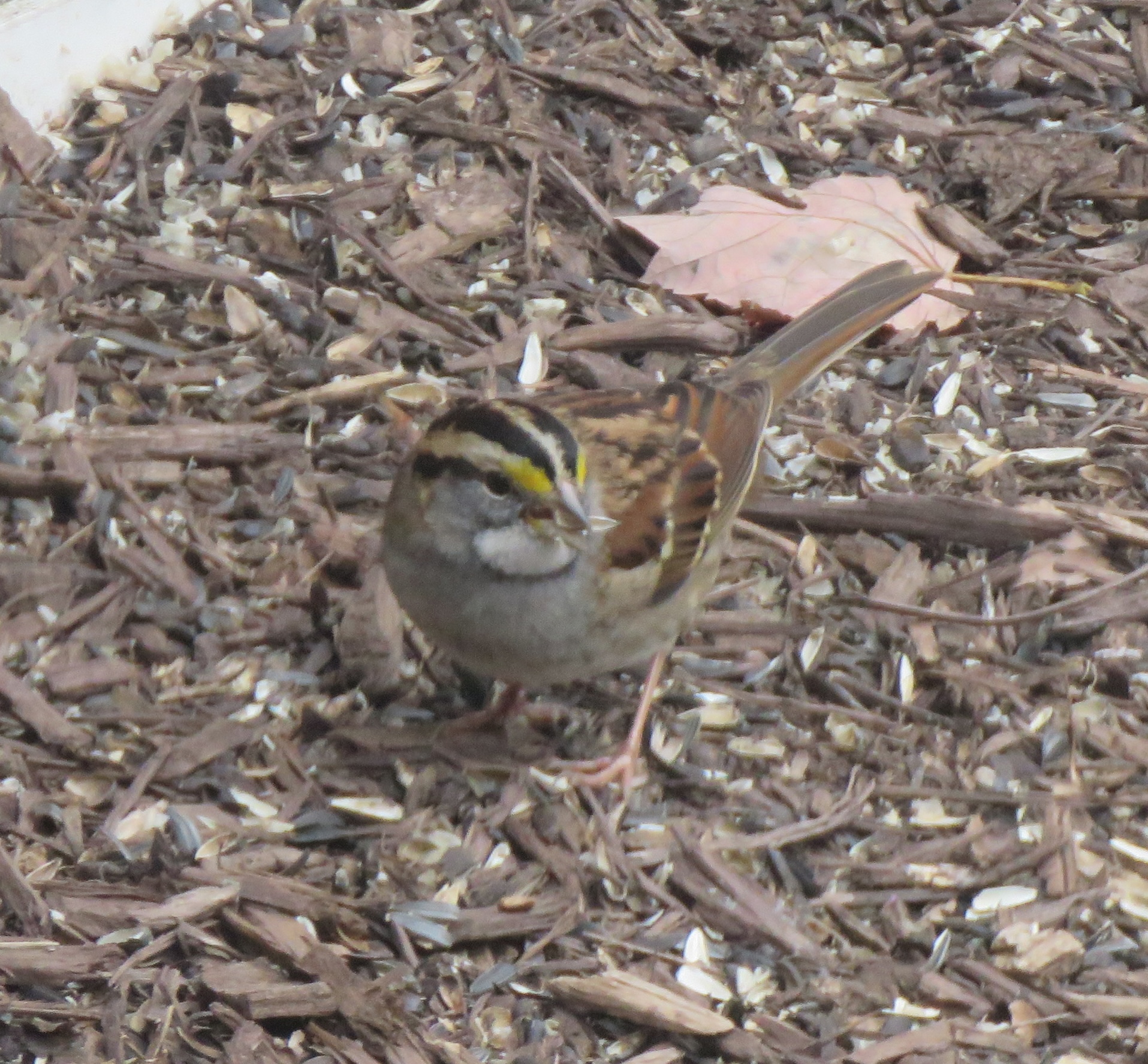
I spread corn to pacify the starlings and cowbirds. Unfortunately, their taste buds prefer the suet. The cardinals, White-throated Sparrows, White-crowned Sparrows, Song Sparrows, House Finches, and Blue Jays ensure the corn doesn’t go to waste.

Our home’s rear windows provide the best view of the feeders and heated birdbaths in the backyard, where most of the cover grows along the property lines. A tubed feeder hangs from the spouting of our screened-in porch, which serves as a shield from strong winds and the strafing hawks.

The hanging feeder holds a mix of black oil sunflower seeds and medium cracked sunflower hearts, which most of the seed-eating songbirds prefer. It’s also the most expensive feed. So, I mix the two seeds to make the precious offerings last longer.

I spread cracked corn on the ground between the feeder and the birdbath. Beyond that, in the yard, I placed a porcelain-topped table and set a homemade wooden feeder on top. More cracked corn goes in that feeder. I also spread some on the ground underneath the table.

Part of the beauty of feeding the birds is the surprises that happen. You never know what will show up at the feeders minute by minute. Like the time I happened to see a Pileated Woodpecker at the nearly empty suet feeder. In a flash, it was gone. But the joy was simply in its appearance, no matter how long it stayed.

In previous years, small flocks of Purple Finches and Pine Siskins have graced the feeders. What a joy it was to see them.

However, I am content with the regular visitors who shelter in the trees, shrubs, and bushes on or near our property. Who wouldn’t love to view a bright red male Northern Cardinal perched in a snow-laden evergreen branch or watch the regal White-crowned Sparrow scratch in the seed only a few feet away?

Of course, I realize that I miss birds when I’m not home or doing other things. I can’t be gazing out of the windows all of the time. Nevertheless, I am thrilled with the ones I do.

Male Northern Cardinal. Photo by Bruce Stambaugh

© Bruce Stambaugh 2025

Beginning anew with feeding the backyard birds

tube feeder
Male Red-breasted Grosbeak and Male House Finch.

By Bruce Stambaugh

I knew when we moved from our home in Ohio’s Amish country to Virginia’s Shenandoah Valley that my backyard birding experiences would change. I just didn’t know how much difference there would be.

Our Virginia ranch home is one of nearly 500 in an established housing development west of Harrisonburg in Rockingham County. Mature trees, shrubs, and well-manicured lawns surround the many-styled houses. However, none of the vegetation is as dense as we had had in Holmes County.

Over the years, I tried to create an inviting habitat around our rural Ohio home for birds of all species, whether they nested or just needed the cover to approach the feeders. Neva complemented my efforts with beautiful flowerbeds all around the house. Birds, bees, butterflies, and other wildlife thrived.

a bird in the bush
Male Northern Cardinal.
The wide variety of cover and available water and food sources for birds near our home enhanced the variety of species seen on or near our Holmes County abode. White-winged crossbills, bald eagles, yellow-bellied sapsuckers, pileated woodpeckers, various warblers, barn owls, long-eared owls, and screech owls were just some of the amazing birds we had seen in the 38 years we lived there.

I wondered what birds would find their way to our Virginia home. I hung birdfeeders and placed birdbaths in the front and backyards not long after moving in. Our one-third acre only had two red maples, one in the front yard and one in the back. Nearby properties held sycamore, white pine, wild cherry, pin oaks, sugar maple, mimosa, and various shrubs and flowerbeds. The closest stream was a half-mile away.

The rolling hills and broad valleys are reminiscent of those in Holmes County. But they are not the same, and I didn’t expect the birds to be the same because of that. They haven’t been.

I was thrilled when red-breasted grosbeaks and northern cardinals showed up at the feeders soon after I erected them last May. I had the ubiquitous house sparrows and house finches, too. But once the common grackles arrived with their new fledglings, the more desirable birds were crowded out. Even the bossy blue jays headed for cover. I took the feeders down for the summer.

I rehung the feeders in early fall, including the suet feeder, in hopes of attracting some woodpeckers and other suet-eating birds. Again, songbirds found the food quickly. The northern cardinals and house finches returned. A small flock of American goldfinches followed, too, along with mourning doves.

As the weather cooled, more birds arrived. A red-bellied woodpecker found the suet and often came early morning and late evening. A male downy woodpecker appeared irregularly. Dark-eyed juncos and white-throated sparrows scratched at offering on the ground below. I was especially ecstatic with the latter. Their melancholy song seems to linger in winter’s frosty air.

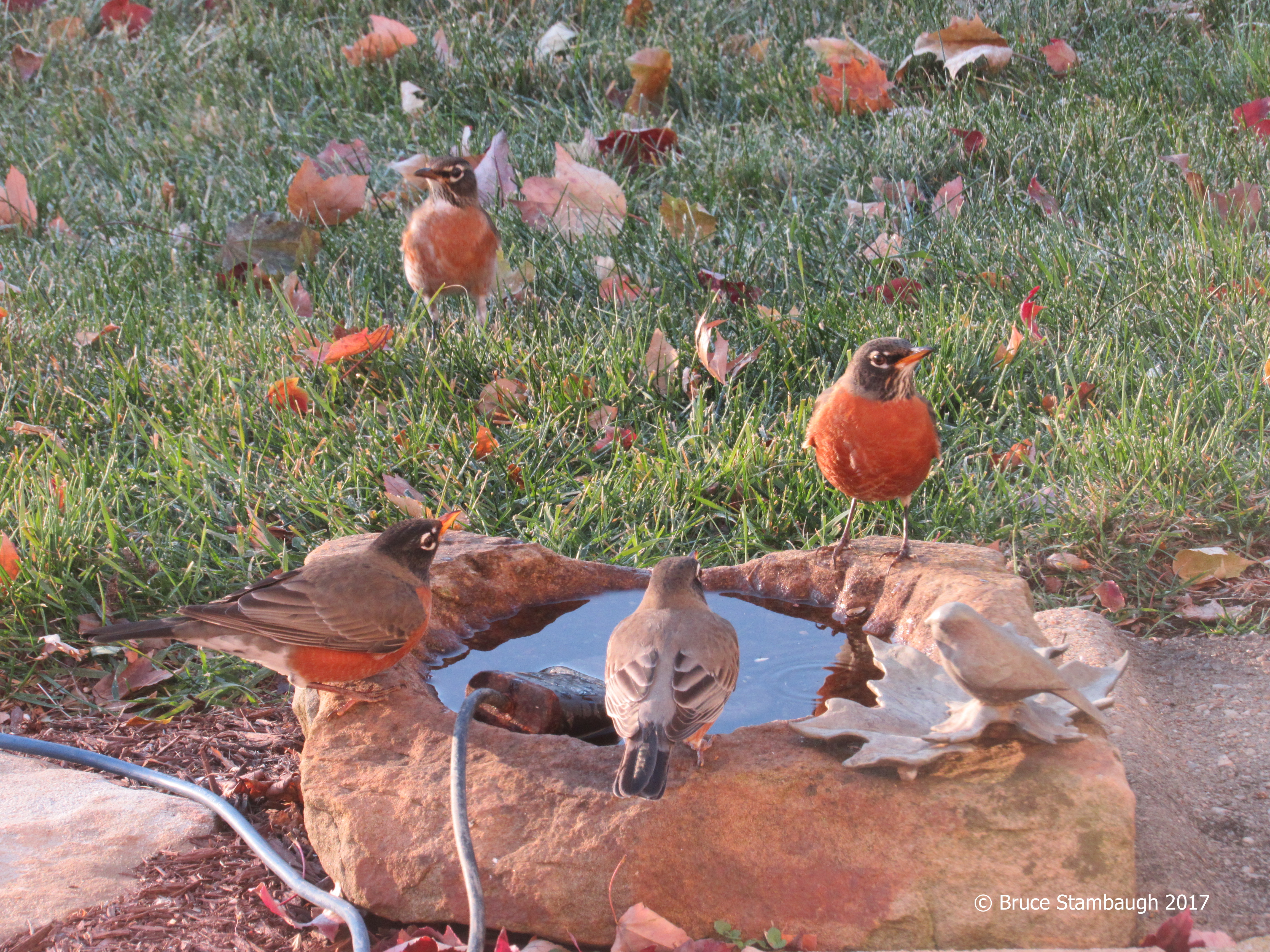
Other yard birds included flocks of American robins. Unlike Holmes County where robins seek shelter in dense woods or migrate altogether, robins in Virginia linger longer. They forage on berries, crabapples, and grubs they find in yards and beneath mulch in flowerbeds. The robins particularly enjoy the birdbath for drinking and bathing.

A troop of European Starlings replaced the grackles as the rascals of the feeders. They’re pretty birds, but they can devour four cakes of peanut butter suet in a day. The woodpeckers shared my disapproval.

My bird feeders may not have attracted the variety of birds we had in Ohio. I keep them up anyhow to enjoy the ones that do appear. It’s a pastime that both my wife and I find more than worthwhile.

robins, birdbath
Gathering around water hole.

© Bruce Stambaugh 2018

Multitasking

female red-bellied woodpecker sunning
Multitasking.

Sunshine in northeast Ohio in November and December tends to be a rare treat. When the sun does shine, all of God’s Creation soaks it in, including this lovely female Red-bellied Woodpecker. She took a break from enjoying lunch at the peanut feeder to warm herself on a chilly late fall day.

“Multitasking” in my Photo of the Week.

© Bruce Stambaugh 2016

Winter is for the birds, big and small

male pileated woodpecker, pileated woodpecker feeding
Male Pileated Woodpecker feeding. © Bruce Stambaugh 2015

By Bruce Stambaugh

At our house, winter is for the birds. Well, so are spring, summer and fall. We feed the birds that frequent our backyard year-round.

My wife and I enjoy watching the various bird species that visit at the assortment of feeders we put out for our feathered friends. Consider it our preferred entertainment.

The birds also take advantage of the little garden pond near the feeders. The water runs down the small waterfalls all year for the birds to bathe and drink. That’s especially important in the winter when most water sources often freeze.

But it’s the feeders that the birds flock to, excuse the pun, especially when the temperatures are extreme and the ground covered with snow. Natural food sources are often limited.

Eastern Bluebird, bluebirds, Bruce Stambaugh
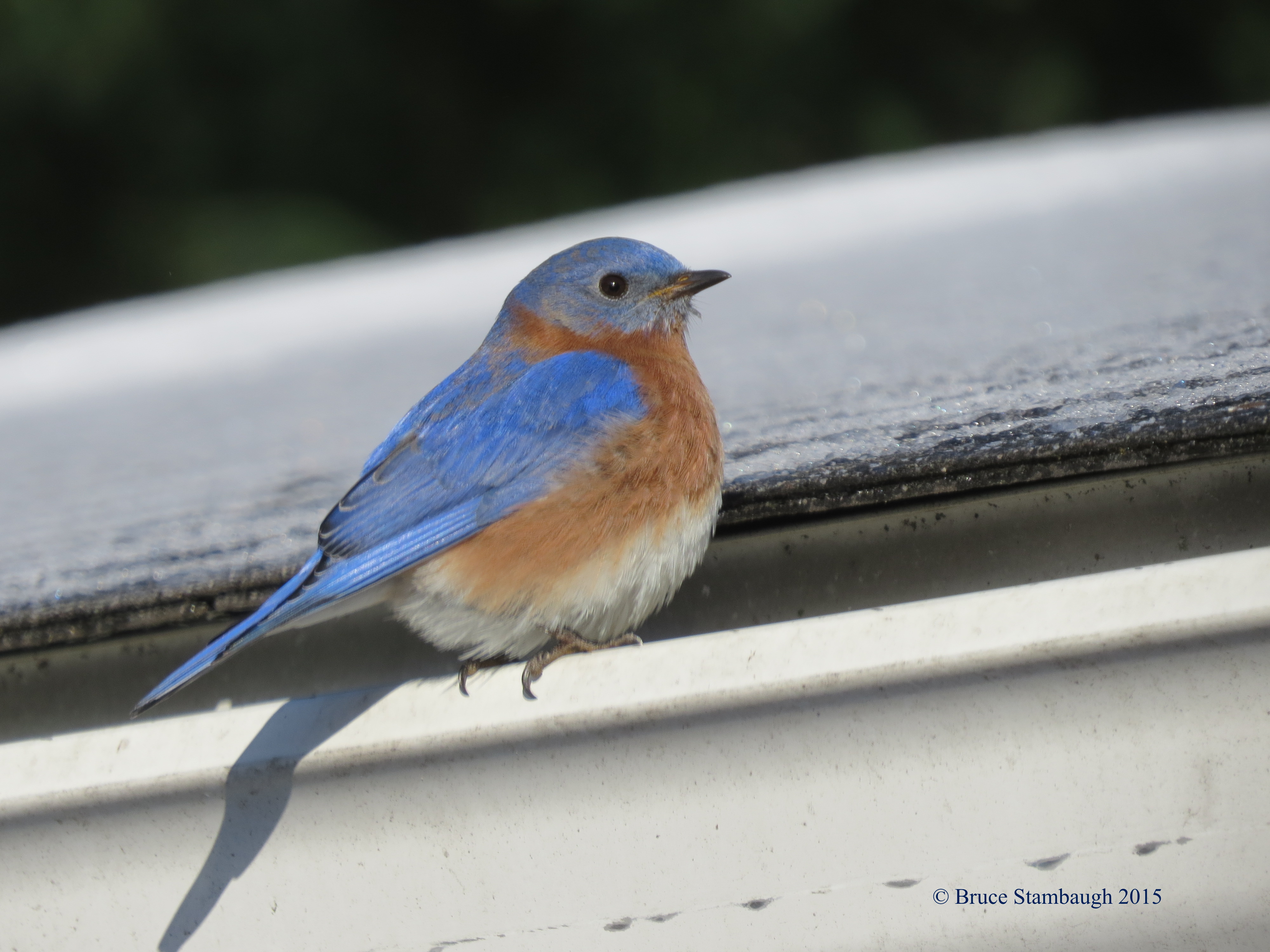
Male Eastern Bluebird. © Bruce Stambaugh 2015
The feeders help out the birds and bring color and fun activity to our backyard. To meet the various needs of species big and small, a variety of feed stocks an assortment of feeders.

Dark-eyed Juncos prefer to scratch at cracked corn on the ground. Northern Cardinals are more versatile, feeding on the ground, from hopper feeders and will even perch on the oil sunflower feeders.

The faithful American Goldfinches prefer the chipped sunflower seeds from the tube feeder by the kitchen window. Eastern Bluebirds will join them.

Several kinds of woodpeckers visit the suet feeder, filled with peanut butter suet cakes. The sturdy wood and wire contraption hangs from a limb of the sugar maple tree that dominates the backyard.


We are fortunate to have nearly all of the kinds of woodpeckers that live in Ohio, Downey, Hairy, Red-bellied, Redheaded, and even Pileated. We’re particularly grateful for the latter.

Pileated Woodpeckers, Ohio’s largest woodpecker, are giant, usually secretive birds that often live and feed deep inside dense woodlots. We’re glad the ones that visit our backyard are an exception.

white-breasted nuthatch, Bruce Stambaugh
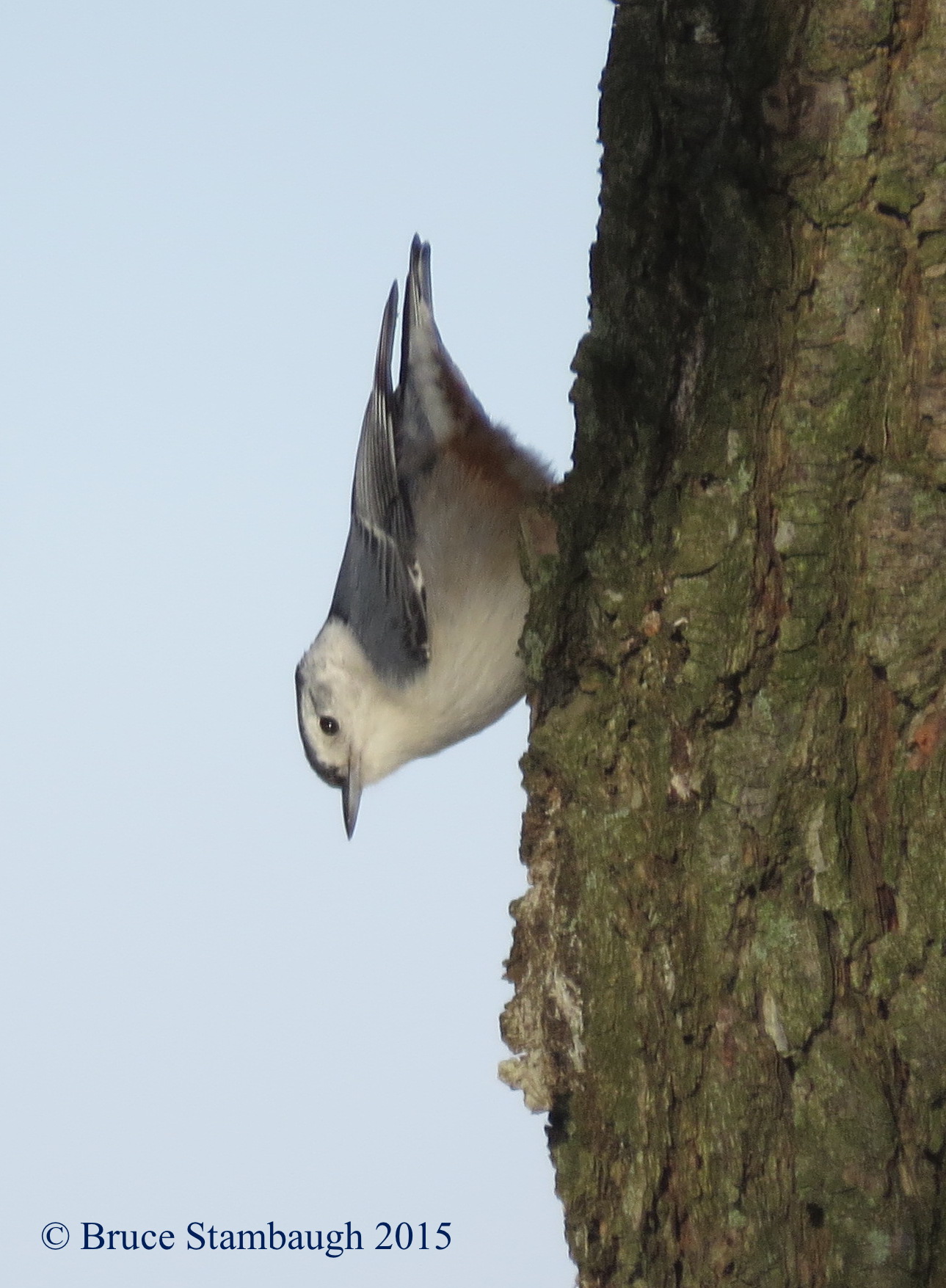
White-breasted Nuthatch. © Bruce Stambaugh 2015
For the last couple of years, a pair of these incredible birds has regularly visited our backyard suet feeders. We live in the country. Nearly 200 trees and shrubs populate our little slice of land. The small grove apparently is enough to satisfy the Pileateds.

The desire to dine at our free buffet must overcome their instinct to be reclusive. Often we know when they are coming. Their harsh call warns all other birds that the big boy and girl have arrived, and to make way. The others regularly oblige.

As big as they are, the Pileated Woodpeckers don’t seem that aggressive toward the other birds. Surprisingly, it’s the opposite. The smaller woodpeckers, Black-capped Chickadees, Tufted Titmice, and White-breasted Nuthatches play it safe until the Pileateds retreat.

I’m pleased that the big birds feel safe coming to our feeder every season. With the maple tree dense with leaves, the birds can easily hide. The huge woodpeckers even bring their fledglings to the feeder in the summer.

Without the leaves in the winter, the Pileateds are much easier to see. They always arrive from the south, usually landing on the same limb. They shinny down the big branch and flop over to the heavy-duty feeder.

Both the male and female are striking in their size, shape and coloration, a vivid red and contrasting white and black. Their thick, chisel-like bills taper to narrow, blunt points.

My wife and I are grateful for all of the beautiful birds that visit us, whether it’s once or daily. The Pileateds, however, are a most revered treasure.

Ohio's smallest and largest woodpeckers feeding together, female Downy and female Pileated. © Bruce Stambaugh 2015
Ohio’s smallest and largest woodpeckers feeding together, female Downy and female Pileated. © Bruce Stambaugh 2015

© Bruce Stambaugh 2015

Enjoying the cold from the inside out

Bluebirds on maple limb by Bruce Stambaugh
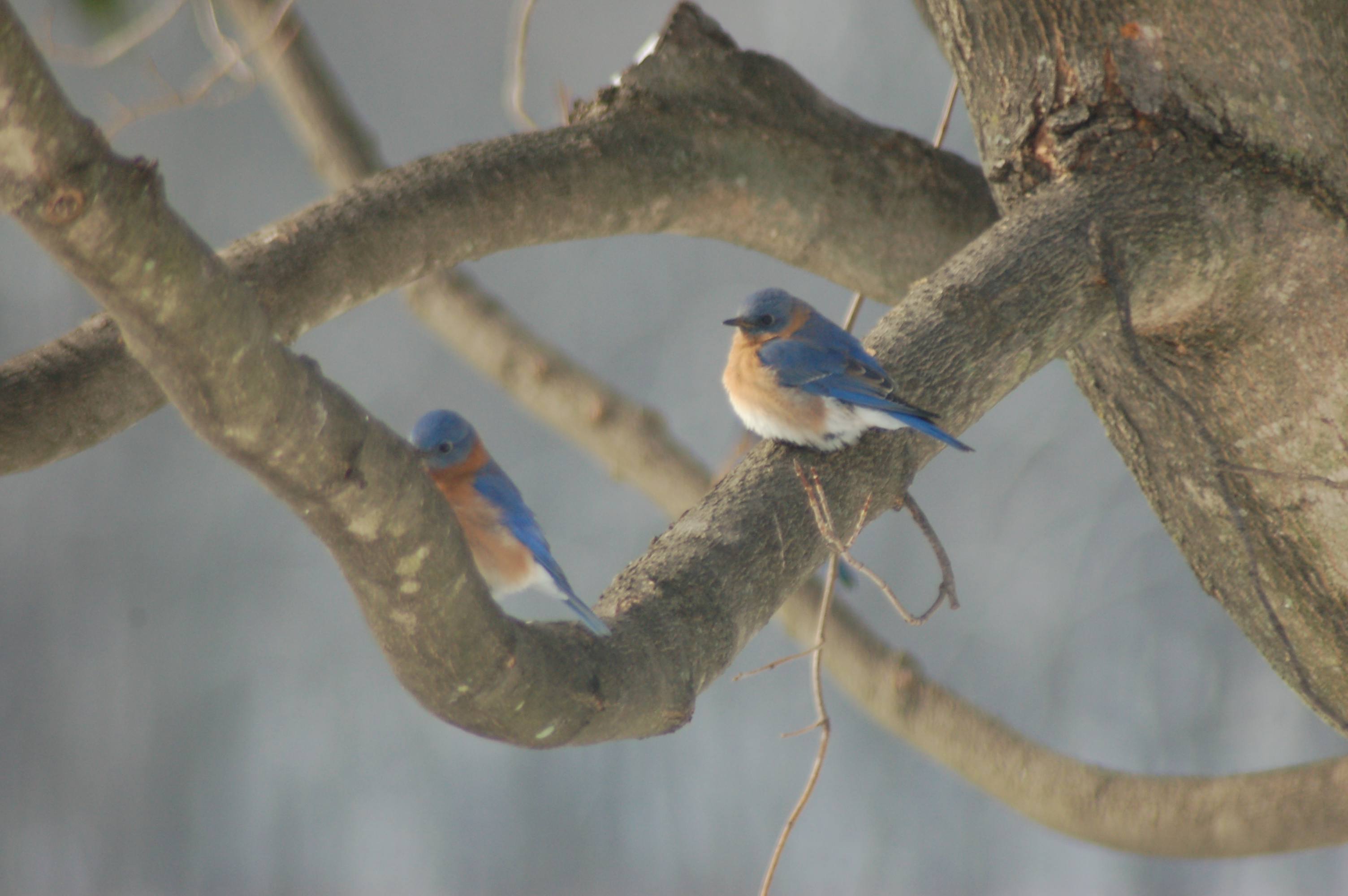
Male Eastern Bluebirds perched on the crooked limbs of the backyard sugar maple.

By Bruce Stambaugh

It was a good day to stay inside. Though the partly cloudy sky revealed a gorgeous sunrise, the thermometer read six below zero, the coldest temperature of the season so far in Ohio’s Amish Country. That alone told me this day would be best enjoyed from the inside out.

Given the fact that I was in the midst of a battle with the annual wintertime crud, I wasn’t about to argue with that logic. The frigid air would do me no good.

Having spent five long hours in the local emergency room the previous morning, I knew I needed to take it easy. Stuck inside, I resigned myself to two main activities. I checked the birdfeeders for visitors and I rested.

Compared to previous winters, it had been a disappointing season at the birdfeeders. I had kept them well stocked and cleaned of any old feed, mold or other potentially noxious particles that would harm or discourage the birds.

Despite my efforts, the usual nice variety and numbers of birds had failed to materialize. Before the snow flew, I had a pair of Red-breasted Nuthatches. But they must have been passing through because they haven’t been back.

Just before the holidays, Pine Siskins chased the American Goldfinches away from the feeder that contained sunflower chips. The siskins never came back either. After one of the series of Alberta Clippers came through, I had a Rusty Blackbird for a couple of days.

Goldfinch by Bruce Stambaugh
An American Goldfinch perched on a porch post.

The usual birds, other than the pesky House Sparrows, seemed fewer in number. A pair of Cardinals made infrequent appearances. The Dark-eyed Juncos, a given at winter feeders, were scarce. A few White-breasted Nuthatches and Black-capped Chickadees came and went irregularly.

A pair of bully Blue Jays could be counted to show up from time to time. A Downy Woodpecker pretty much had the suet feeder all to himself. The Red-bellied Woodpecker that had been a regular seemed to have disappeared since the snowfall.

The goldfinches and the congregation of house sparrows were the only feeder faithfuls. My winter’s entertainment wasn’t as entertaining as I would have liked.

As the temperature of this frigid day climbed into positive single digits, the bird feeders suddenly came alive. Colors flashed in the bright morning sunshine, and I grabbed my camera.

Two sparrows by Bruce Stambaugh
A Tree Sparrow and a Song Sparrow searched for food.

I spent a majority of the morning snapping one shot after the other. Tree sparrows picked at the corn my wife had put out since I was on the disabled list. The secretive song sparrow found a spot in the sun where it could simultaneously feed and warm itself.

The show really picked up at the shelled peanut feeder, which was a section of hollowed out log hanging from a hook on the back porch. The red-bellied returned, and brought along a hairy woodpecker as a sidekick. Tufted titmice and even chickadees grabbed some protein.

Bluebird with peanut by Bruce Stambaugh
A male Eastern Bluebird enjoyed a raw, shelled peanut.

A family of eastern bluebirds stole the show, however. They tried out every feeder. Males and females alike ate peanuts, chipped sunflower
seeds, black oil sunflower seeds and even pecked at the peanut butter-laden suet.

Despite the cold, both in the air and in my body, I had hit the trifecta. I enjoyed the extreme winter weather without having to bundle up, was treated to some wonderful birding, and captured much of it through the lens of my camera. I was beginning to feel better already.

Getting ready for winter

Martins Creek by Bruce Stambaugh
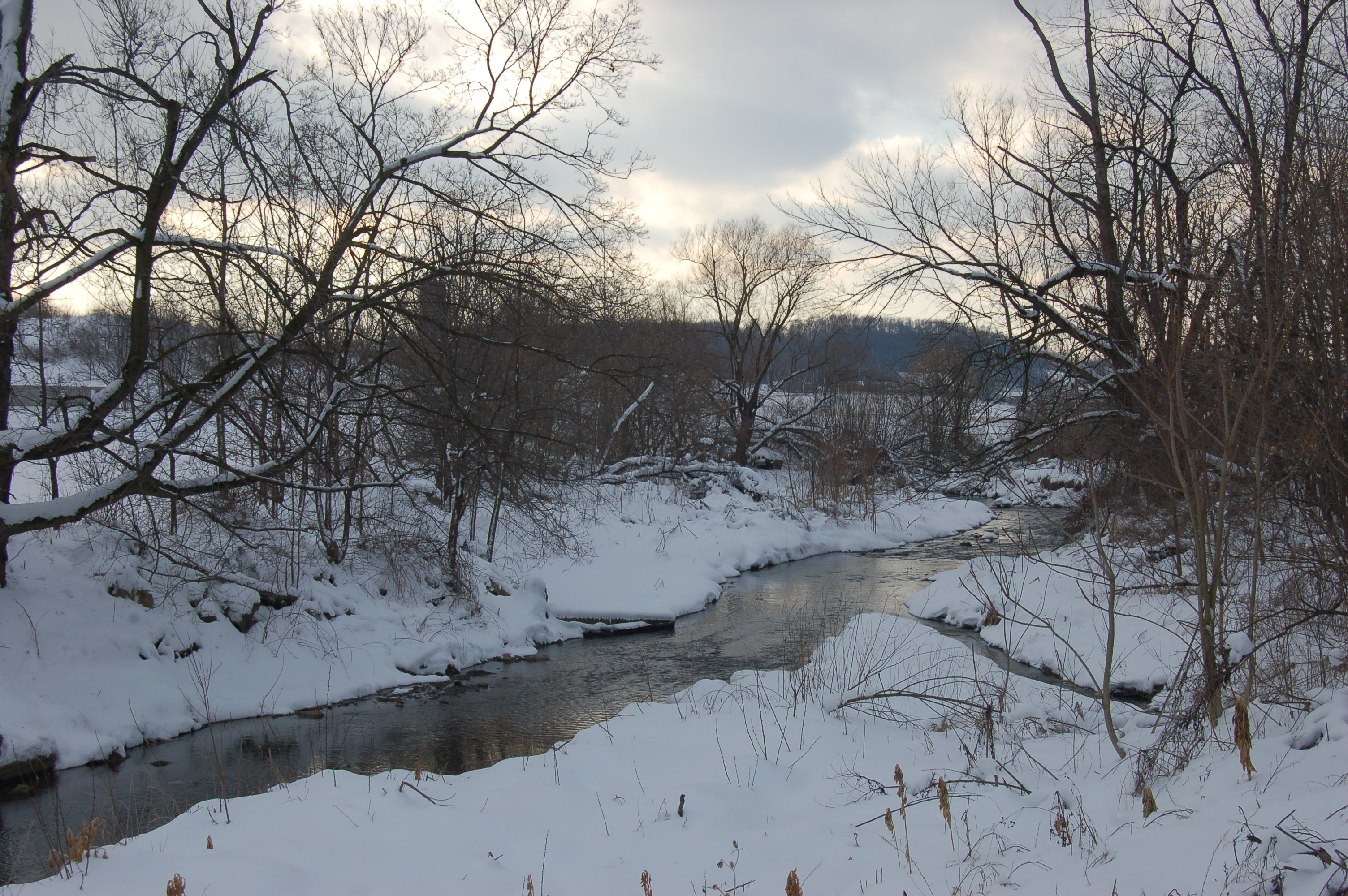
A series of heavy snowfalls hit Ohio's Amish country last winter.

By Bruce Stambaugh

Like it or not, winter is right around the corner. We have already tasted some of winter’s appetizers, snow, temperatures in the teens, and, of course, shortened daylight.

Fortunately here in Ohio’s Amish Country, the snow didn’t amount to much, and the skinny temperatures quickly moderated. Once winter arrives officially next week, that could change. We could have a snow-filled winter like last year, or worse yet, one like 1977 and 1978 when snowdrifts reached 20 feet or more.

Living in Ohio all my life, I have found it helpful to mentally and physically prepare myself for the inevitable. Whether it is prolonged or only stays awhile, the weather will get cold, and it will snow from time to time.

Snowbirds arrive in Pinecraft, FL by Bruce Stambaugh
Snowbirds arrive via bus in Pinecraft, FL.

Those who dislike that harsh reality and who are in a position to do so flee south or southwest to warmer climes. At least the snowbirds hope they will be warmer. Last year proved otherwise. It frosted in Florida and snowed deep in the heart of Texas.

Snow deep in the heart of Texas by Bruce Stambaugh
It even snowed in Austin, TX last winter.

All of us can’t escape the onslaught of winter’s harshness. Some of us don’t want to. Others are involuntarily stuck here to fend for themselves.

I have fond childhood memories of the benefits of winter, like ice skating, sledding, flinging snowballs and digging snow tunnels. Most of them likely were indeed in the throes of winter. But I do remember delivering newspapers in a glorious Christmas Eve snow.

I also recall hustling our young son and daughter into my in-laws’ farmhouse amid stinging, sideways snow, howling winds, and frigid wind chills. There are times when Ohio winters are at their absolute worst in December.

We then anticipate January and February to be utterly horrible. And low and behold they might turn out to be meek and mild, not to mention mucky.

Whether we stay or whether we go, winter, regardless of the weather, will arrive. We might as well get ready for it.

Snow covered cornshalks by Bruce Stambaugh
A typical snowy scene in Ohio's Amish country.

In many ways, we already have. The tomato trellises we erected last spring have long been coaxed out of the ground and stored in the garden shed, thanks mostly to one of our kind, strong young neighbors.

The birdfeeders have been cleaned, filled and hung, and the backyard birds, and a couple of mooching fox squirrels, have already been taking advantage of the freebies. Actually, I am the one that is grateful. Watching the birds, and squirrels, rabbits and occasional deer, enjoy the cracked corn, oil sunflower seeds and suet mixes is my winter’s entertainment.

White breasted nuthatch by Bruce Stambaugh
A white-breasted nuthatch at my kitchen window feeder.

In truth, I feed the birds year-round. With winter’s approach, I merely increase the number and style of feeders to accommodate the various feeding habits of my feathered friends.

Of course, I can’t neglect the vehicles that transport us from place to place during the winter weather. I make sure each is winterized and ready to endure whatever winter has to throw at us.

The woodpile is stacked high and wide, ready to feed the hungry fireplace. I’d rather be shunning the cold elements in front of a warm fire than on the outside shoveling them. Who wouldn’t?

Winter is nigh. Are you ready?

Bay Photos by Donna

Wildlife photos from the Chesapeake Bay region

ROAD TO NARA

Culture and Communities at the Heart Of India

K Hertzler Art

Artist and nature journalist in the Shenandoah Valley of Virginia.

Maria Vincent Robinson

Photographer Of Life and moments

Gabriele Romano

Personal Blog

Jennifer Murch

Art is the only way to run away without leaving home. -Twyla Tharp

Roadkill Crossing

Writing generated from the rural life

ANJOLI ROY

writer. teacher. podcast cohost.

Casa Alterna

El amor cruza fronteras / Love crosses borders