Five easy steps to attract birds

Amish country by Bruce Stambaugh
By Bruce Stambaugh

Feeding birds is easy, and fall is a great time to start. In fact, if you follow some simple but basic birding steps, you can attract returning migrants and hungry year-round residents to any backyard environment.

Keep in mind that different birds have different feeding habits and nutritional needs. Varying the style of the feeders, the kind of bird food used in each, and the feeders’ placement can greatly determine the popularity of your feeders.

1.            Identify your habitat

Once you decide to feed birds, it’s important to know what habitat you are in and establish the right feeders with the appropriate feed. Hanging out suet on a balcony in the city most likely won’t attract the desired birds. Doing so in the country or a loosely wooded backyard can yield great rewards.

Feeders placed in grassy suburban backyards or rural settings have the chance to attract the biggest variety of birds. Feeders should be placed where they can be easily observed through a window in your home, and stocked and maintained with the appropriate feed.

2.            Select your feeders

The key to successful feeding is to pick the correct feeder or feeders for your situation. A backyard that has even a small grassy opening surrounded by hedges, shrubs fields or trees may be perfect for every kind of bird feeding style. Feeders don’t have to be complicated or expensive either.

Birds feeding by Bruce Stambaugh
Even the top of an old stump can serve as an excellent feeding station for birds.

A simple piece of plywood placed on some bricks or small cement blocks would serve as a nice platform feeder for birds that prefer to feed at ground level. A hopper feeder could be hung from a porch overhang or a firmly planted shepherd’s hook. A hanging feeder, such as an empty mesh citrus sack, could hold high protein suet for birds that can cling to what they are eating.

Place the feeders where they will attract the most birds and are easily observed from the safety and warmth of your home. Placing a hanging feeder or a shelf feeder on your windowsill will bring the birds right to you.

3.            Keep the feeders filled

Once you start to feed the birds, keep at it, even if it takes the birds awhile to find your offerings. The feeders need to be kept filled, too. The ground feeder could be mixed wild birdseed or simply cracked corn spread out.
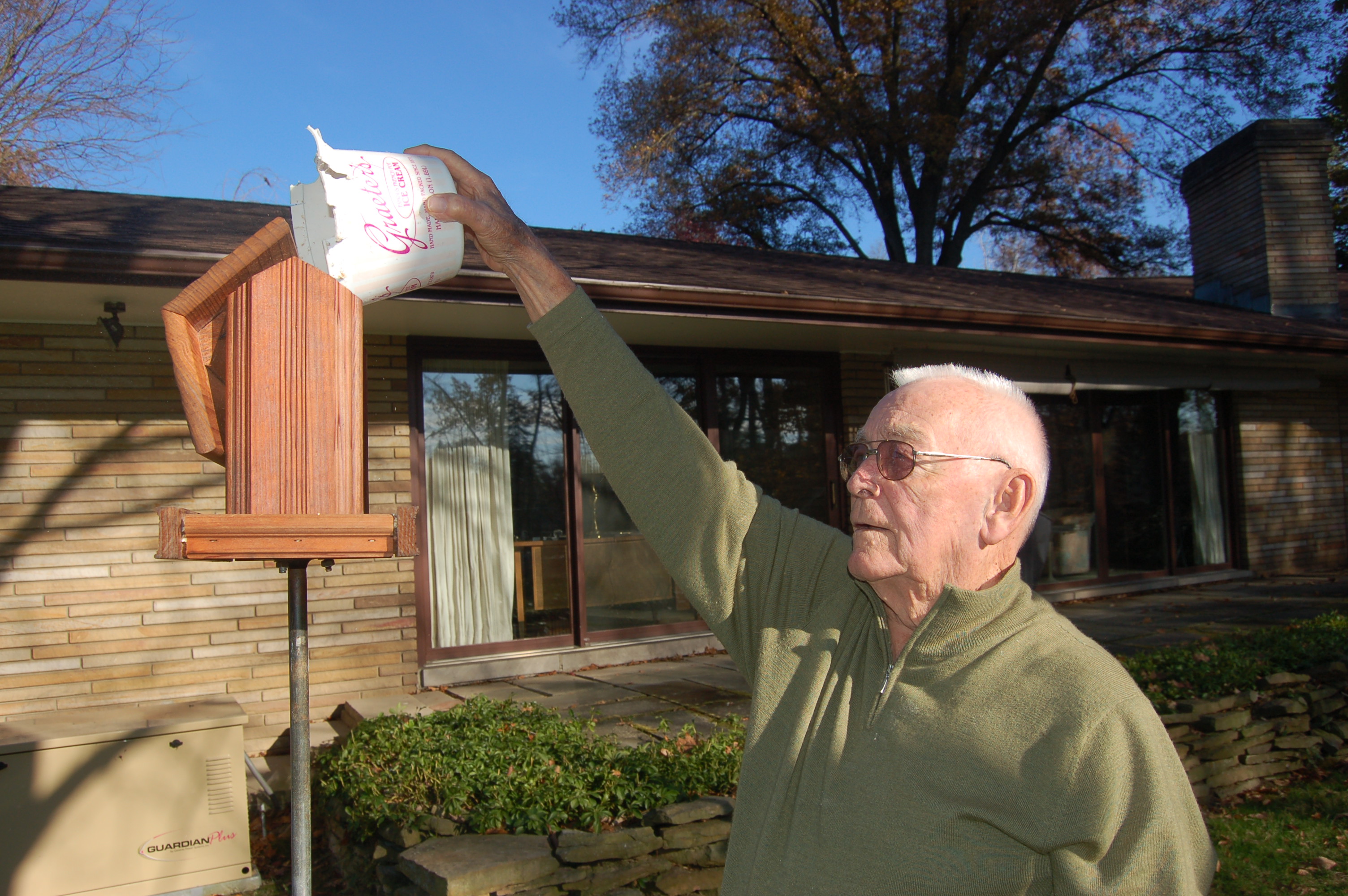
Filling the feeder by Bruce Stambaugh
Keeping feeders filled with seeds the birds like is critical to consistently attracting birds.
Stock hopper and hanging feeders with black oil sunflower seeds which many bird species enjoy. Thistle feeders are also popular with many species of birds in northern Ohio.

Suet feeders can be fat from the butcher, or you can either make or purchase cakes of suet that are loaded with peanuts and seeds. Those fit well into square wire feeders.

4.            Keep them cleaned

In addition to keeping the feeders full, it is critical that the feeders be attended to at least weekly. Even in cold weather, mold and disease can spread from uncared for feeders. Moisture can cause seed residue to crust, creating a potentially unhealthy situation for the birds.

Clean out any clogged holes in hanging or hopper feeders and make sure the seeds appear properly. Clear away any accumulated material. Tray feeders and even the bare ground should be raked periodically to remove spent seed hulls and bird droppings. Suet feeders should be checked for any signs of decay or mold.
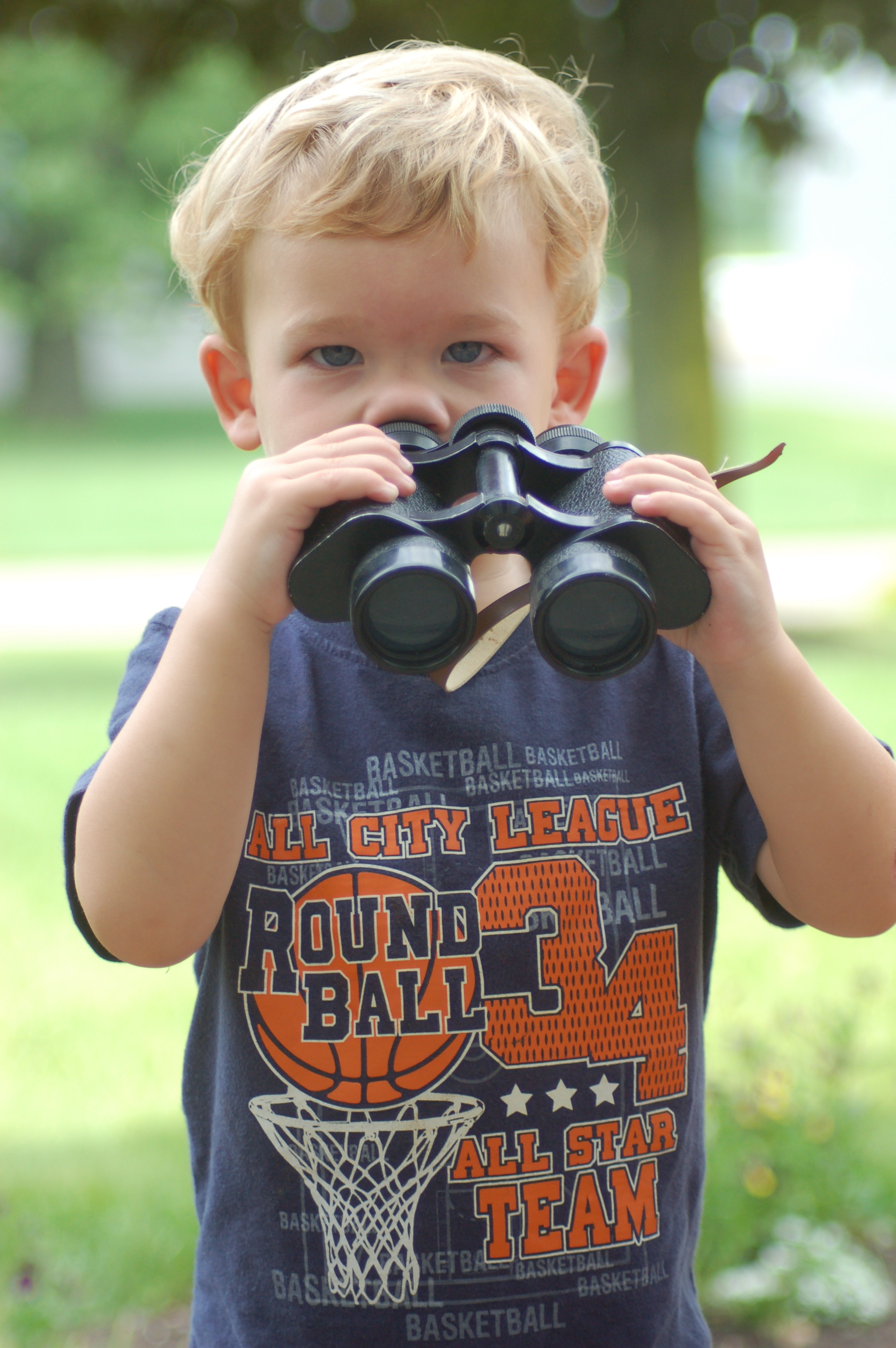
Binoculars by Bruce Stambaugh
A good pair of binoculars, when used properly, can enhance birdwatching.

5.              Keep a record

For most birders, keeping track of what is seen is half the fun. Again, this is not a difficult or time-consuming task. Keep a notebook and pencil handy and record the day, time, weather, and type of bird you saw. You will be surprised how quickly the number of species adds up on your yard list. Do this annually and you will have an accurate and personal record of what birds you saw, when and under what conditions.

A good bird guide is also an essential tool. Easy to use bird books are available at area shops and bookstores. Having a good pair of binoculars can enhance your bird viewing, too. After all, watching the birds eat is the main objective.

Putting up feeders, keeping them filled and cleaned, and keeping track of what you saw is a wonderful way to pleasantly pass the time when the weather outside is frightful. The birds need the food, and with a front row seat you will be glad for the variety of aviary entertainment without having to go out into the elements yourself.

Bluebird by Bruce Stambaugh
Feeding birds sometimes brings pretty surprises, like a hungry Eastern Bluebird.

This story first appeared in Around the House.

Song Sparrow Haiku

Song Sparrow by Bruce Stambaugh
A Song Sparrow briefly welcomed the warming sun with an unexpected chorus.


On the coldest day
of the year the song sparrow
earned its moniker.

Bruce Stambaugh
Jan. 23, 2011

Getting ready for winter

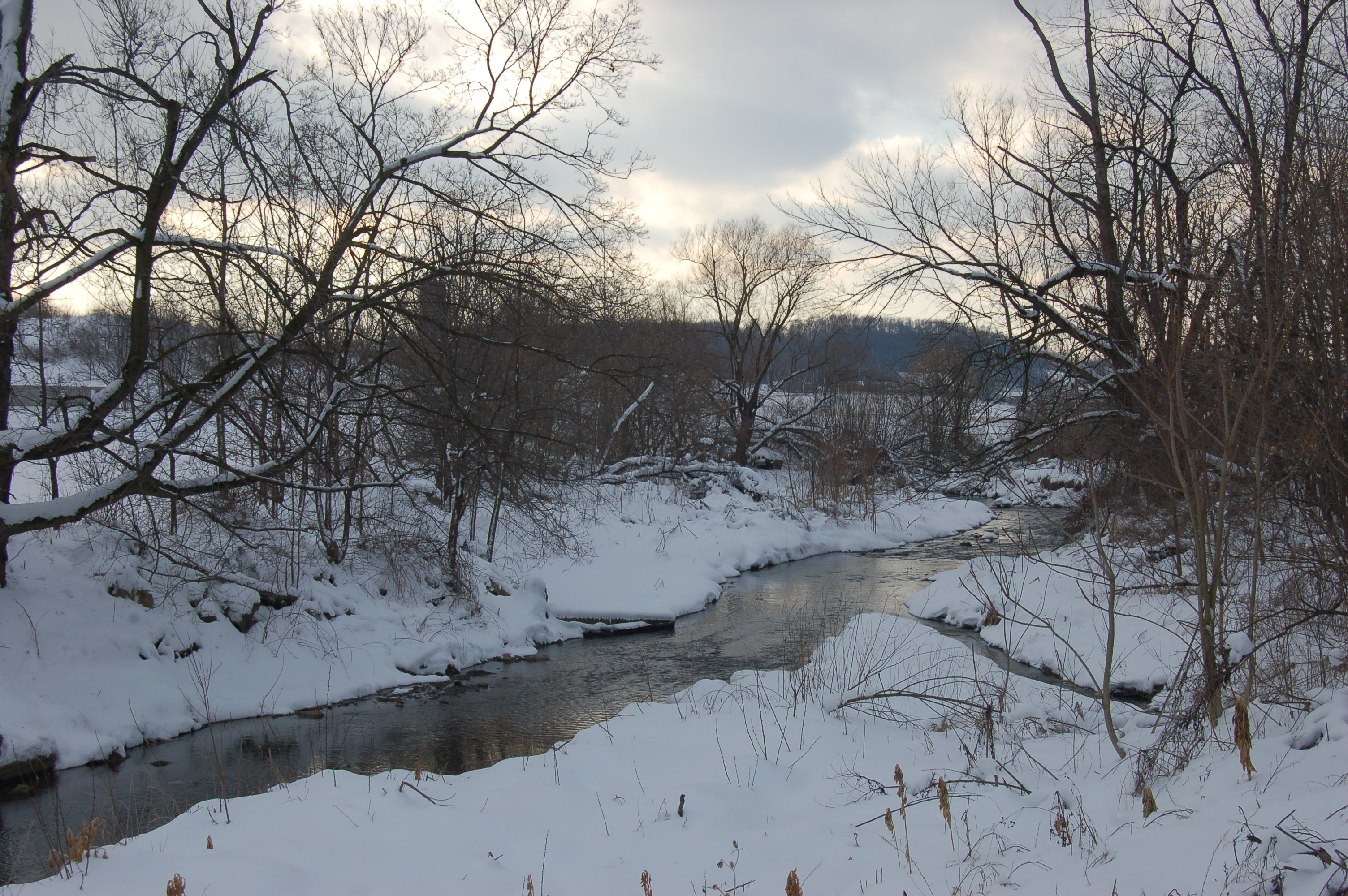
Martins Creek by Bruce Stambaugh
A series of heavy snowfalls hit Ohio's Amish country last winter.

By Bruce Stambaugh

Like it or not, winter is right around the corner. We have already tasted some of winter’s appetizers, snow, temperatures in the teens, and, of course, shortened daylight.

Fortunately here in Ohio’s Amish Country, the snow didn’t amount to much, and the skinny temperatures quickly moderated. Once winter arrives officially next week, that could change. We could have a snow-filled winter like last year, or worse yet, one like 1977 and 1978 when snowdrifts reached 20 feet or more.

Living in Ohio all my life, I have found it helpful to mentally and physically prepare myself for the inevitable. Whether it is prolonged or only stays awhile, the weather will get cold, and it will snow from time to time.

Snowbirds arrive in Pinecraft, FL by Bruce Stambaugh
Snowbirds arrive via bus in Pinecraft, FL.

Those who dislike that harsh reality and who are in a position to do so flee south or southwest to warmer climes. At least the snowbirds hope they will be warmer. Last year proved otherwise. It frosted in Florida and snowed deep in the heart of Texas.

Snow deep in the heart of Texas by Bruce Stambaugh
It even snowed in Austin, TX last winter.

All of us can’t escape the onslaught of winter’s harshness. Some of us don’t want to. Others are involuntarily stuck here to fend for themselves.

I have fond childhood memories of the benefits of winter, like ice skating, sledding, flinging snowballs and digging snow tunnels. Most of them likely were indeed in the throes of winter. But I do remember delivering newspapers in a glorious Christmas Eve snow.

I also recall hustling our young son and daughter into my in-laws’ farmhouse amid stinging, sideways snow, howling winds, and frigid wind chills. There are times when Ohio winters are at their absolute worst in December.

We then anticipate January and February to be utterly horrible. And low and behold they might turn out to be meek and mild, not to mention mucky.

Whether we stay or whether we go, winter, regardless of the weather, will arrive. We might as well get ready for it.

Snow covered cornshalks by Bruce Stambaugh
A typical snowy scene in Ohio's Amish country.

In many ways, we already have. The tomato trellises we erected last spring have long been coaxed out of the ground and stored in the garden shed, thanks mostly to one of our kind, strong young neighbors.

The birdfeeders have been cleaned, filled and hung, and the backyard birds, and a couple of mooching fox squirrels, have already been taking advantage of the freebies. Actually, I am the one that is grateful. Watching the birds, and squirrels, rabbits and occasional deer, enjoy the cracked corn, oil sunflower seeds and suet mixes is my winter’s entertainment.

White breasted nuthatch by Bruce Stambaugh
A white-breasted nuthatch at my kitchen window feeder.

In truth, I feed the birds year-round. With winter’s approach, I merely increase the number and style of feeders to accommodate the various feeding habits of my feathered friends.

Of course, I can’t neglect the vehicles that transport us from place to place during the winter weather. I make sure each is winterized and ready to endure whatever winter has to throw at us.

The woodpile is stacked high and wide, ready to feed the hungry fireplace. I’d rather be shunning the cold elements in front of a warm fire than on the outside shoveling them. Who wouldn’t?

Winter is nigh. Are you ready?

Signs of fall are everywhere

Fall in West Virginia by Bruce Stambaugh
Fall had arrived along US 33 in the mountains of West Virginia.

By Bruce Stambaugh

Even before we left to visit our daughter’s family in Virginia’s lovely Shenandoah Valley, signs of fall were abundant.

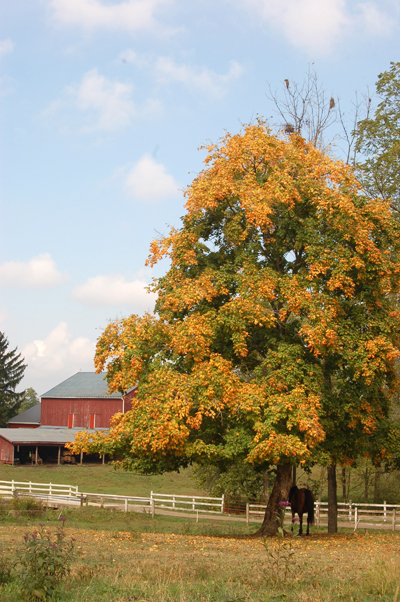
Fall in Ohio's Amish country by Bruce Stambaugh
A lone horse sought shade beneath a changing sugar maple tree near Benton in Ohio's Amish country

A casual drive around the Holmes County countryside provided enough evidence to
convince even an inattentive jury. Autumn had no choice but to plead guilty as charged.

Fall’s natural arrival was indisputable. Leaves had begun their annual transformation from green to some color of the rainbow. Others, due to the late summer dryness, simply fell off the trees altogether.

The regular purr of leaf blowers had replaced the regular whine of lawnmowers, further proof that summer had succumbed to fall. Occasional columns of white smoke signaled smoldering leaf piles.

Fall weather arrived just before we left for our Virginia visit. A strong cold front pushed the warm, muggy air out, and replaced it with cloudy, rainy, cooler days and nights. The annual fall fogs had already begun making morning commutes temporarily treacherous.

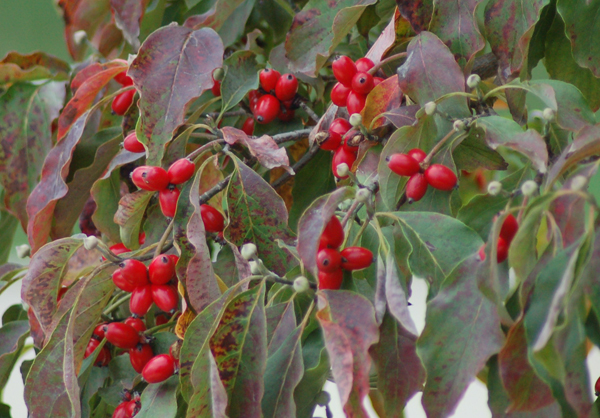
Dogwood tree in the fall by Bruce Stambaugh
The subtle greens and purples of the dogwood leaves highlighted the tree's bright red berries.

In my own yard, silky green to purplish dogwood leaves accentuated the trees’ bold, bright red berries. The backyard birds weren’t too pleased with me for disturbing their feasting.

My neighbor was just beginning an early harvest of his field corn, and we had yet to have a frost. Elsewhere, other farmers still resorted to the old-fashioned and nostalgic way of picking corn. They filled their fields with row upon row of shocks, mimicking an encampment of teepees.

Picking corn in Amish country by Bruce Stambaugh
Horse-drawn corn pickers began an early harvest of the field corn.

A month ago already football had replaced baseball as the primary pastime, whether viewed from the bleachers or the couch. Back outside, squirrels scurried across the road. Some of them didn’t make it, casualty to road kill or a hunter’s sharp aim.

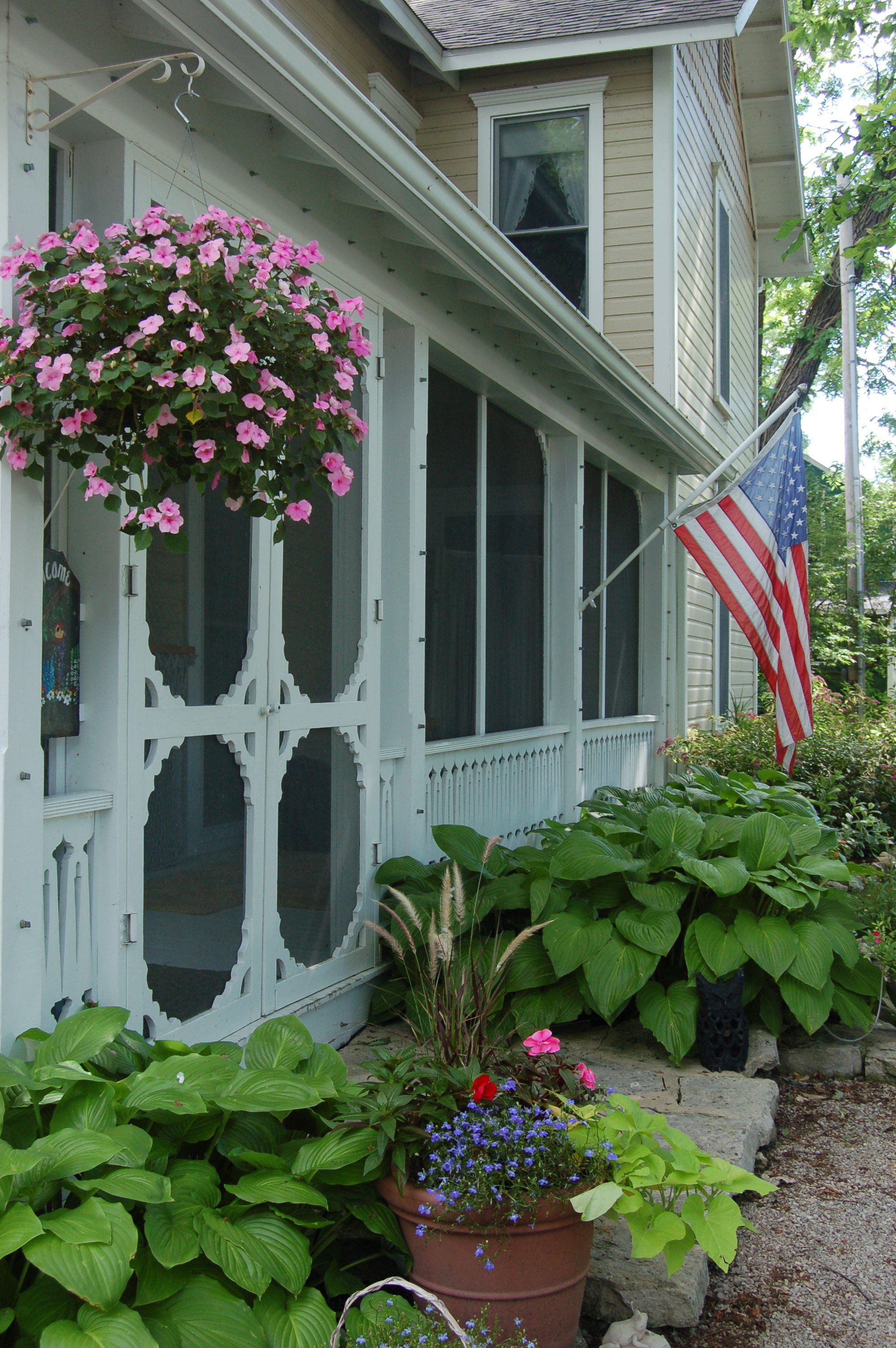
Long before the leaves began to change colors, autumn was being ushered in with human flare. Front porches once home to pots of impatiens, petunias and begonias were now decorated with all sizes of orange pumpkins, gold, white and crimson chrysanthemums and multi-colored and curiously shaped gourds.

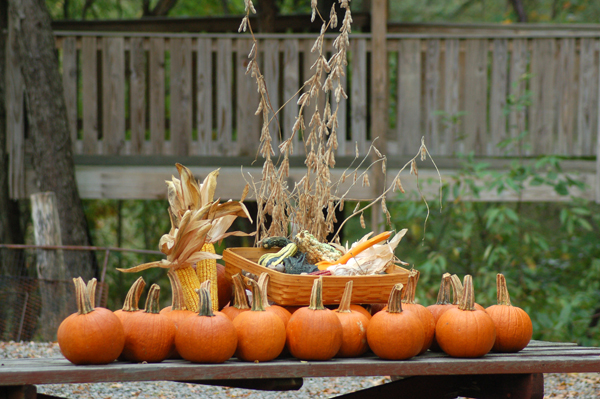
Fall display of pumpkins by Bruce Stambaugh
A typical fall display found in Ohio's Amish country.

For those desiring more man-made symbols, giant ghouls and inflated spiders hanging on webs big enough to catch a bus popped up almost overnight. The business industry had also begun their annual capitalization of fall with seasonal displays and multi-media commercials.

Inventory at roadside produce stands had changed accordingly. Bound bundles of cornstalks and the aforementioned flowers and squash replaced zucchini and tomatoes.

One place banked on a narrow market share. The good folks only offered the scarce bittersweet. By the number of cars in their tiny lot, they seemed to have found their niche.

Fall festivals, often historically annual events, began to celebrate nearly every conceivable aspect of autumn. A town picked a theme, say pumpkins, apple butter, antiques, wooly worms, quilting, or just good old-fashioned fun, and the festival was on.

These endeavors were not unique to Amish country either. Large banners across the main drags of many a town on our drive from Ohio to Virginia announced their particular local event.

Fall even showed its face on menus with fresh pumpkin pie, locally grown apples sliced and dipped in yummy caramel, and of course the seasonal snack mix of candy corn and salted peanuts.

Fall sunset with geese by Bruce Stambaugh
A flock of Canada Geese cut across a fall sunset in Ohio's Amish country.

Given all these obvious signs of fall, there can be no doubt. From gardens to town squares, fall is in full force everywhere we look.

It’s beginning to look a lot like fall already

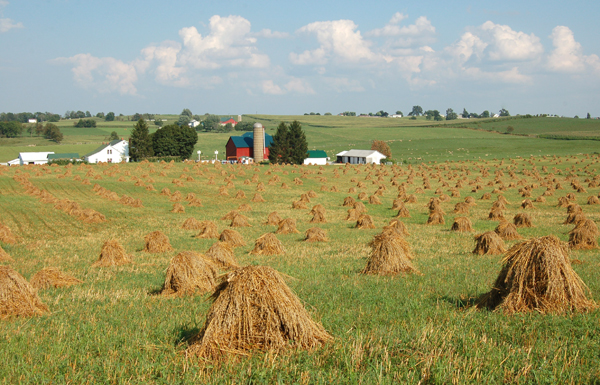
Oats shocks by Bruce Stambaugh
A field full of oats shocks before being gathered for the thrasher near Berlin, Ohio.

By Bruce Stambaugh

With Labor Day upon us, autumn will be right around the corner. In fact, if you look closely, signs of fall are already evident.

Some of the indicators are obvious, others more subtle. Some are predictable with still others seemingly a bit premature.

The days, often the nicest of the summer, have a sly, natural flaw. Day by day, minutes of daylight are silently subtracted from the previous day’s total. By month’s end, daily darkness will outnumber daylight once again.

The sun itself is moving more towards the center of the horizons at sunrise and sunset. Those driving true east and west running roads have already begun to frequently use their sun visors. The fall fogs, too, have clouded crisp mornings, the consequence of cool nights following warm days.

In the fields, the harvesting has begun. My Amish neighbors have long since gathered up the standing army of oats shocks and wheeled them off wagon load after wagon load to the thrasher.

Now it’s the corn’s turn. The field corn seems to have taken on drought status, drying up almost overnight. Brown has overtaken green as the predominant color in the standing sea. Smart farmers have already begun to cut their supply of silage to replenish the silos.

Fall webworms by Bruce Stambaugh
The homes of fall webworms shine in the sun.

In the woods and along highways, once glossy, emerald leaves have dulled and drooped. Some have already begun to drop without even changing color. Now and again a black walnut can be found standing stark naked, save for the cache of fall webworm nests it has involuntarily collected.

In the gardens, the picking of produce is a daily chore. Cucumbers, onions and tomatoes have hit their peek. Kitchens are cluttered with utensils for canning and freezing. The ripened fruits and vegetables that aren’t consumed at the dinner table find their way into jars and containers.

Even the sounds of the season have changed. Only a few American Robins continue to sing, and most likely they are sophomores practicing for next year’s prom. Instead of gathering nesting materials and snagging worms and insects, parent birds lead their fledglings to watering holes for liquid refreshment and necessary bathing.

Well-worn butterfly by Bruce Stambaugh
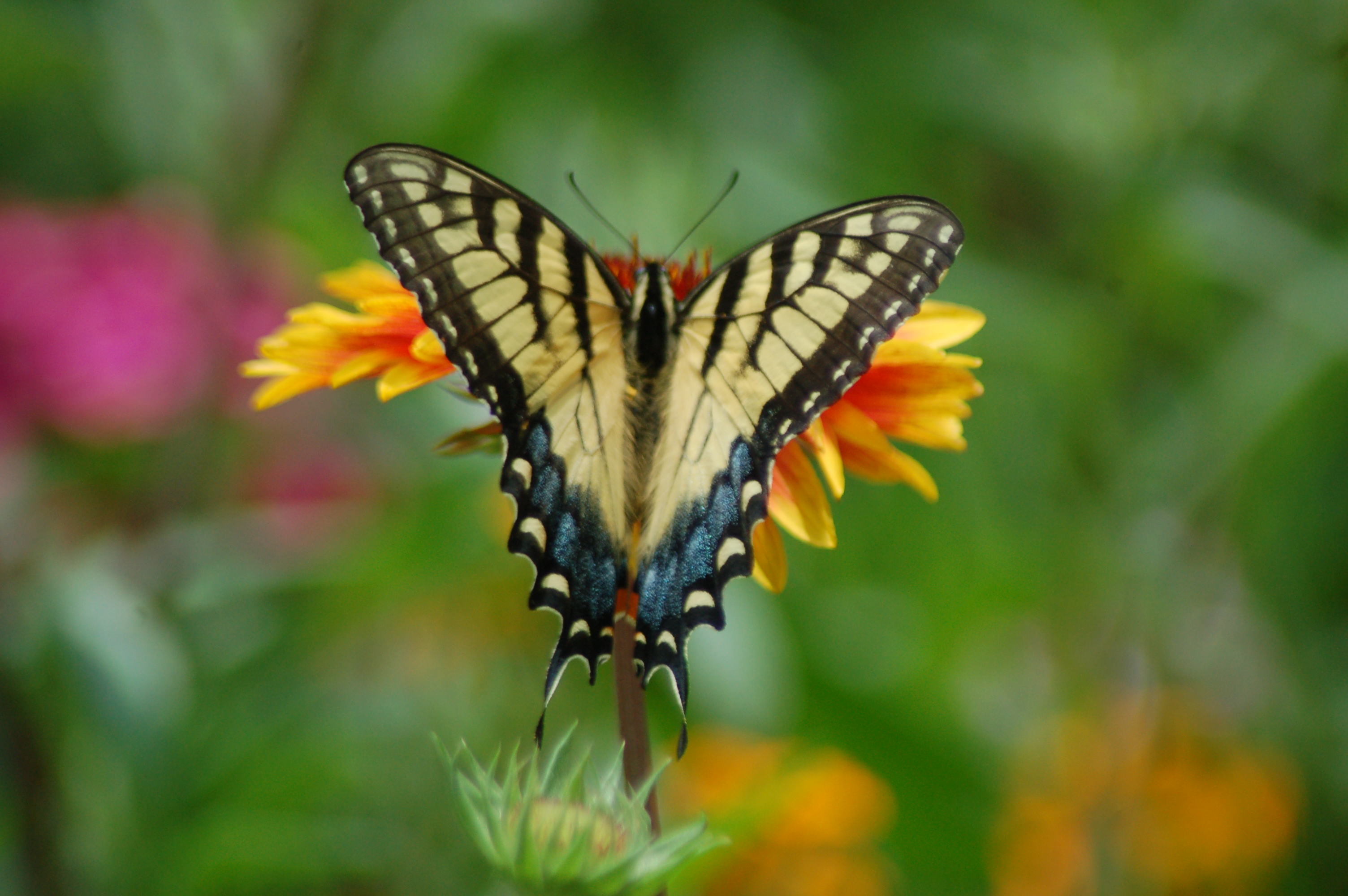
A well-worn tiger swallowtail butterfly took advantage of some wildflowers.

The volume and frequency of the cicada and katydid songs have lessoned considerably. Even the crickets have quieted down.

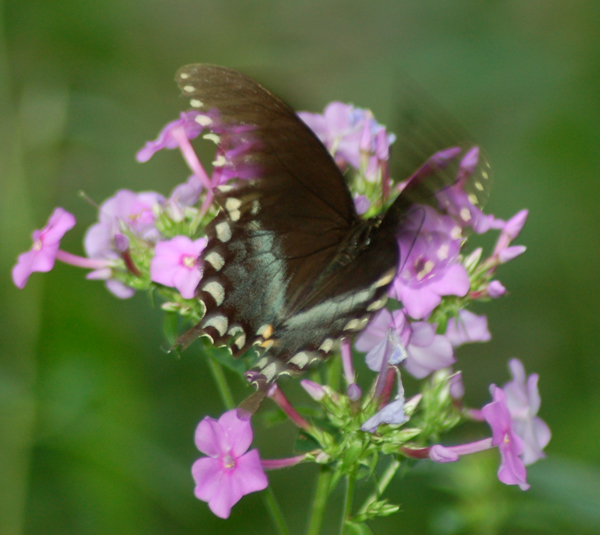
Butterfly on phlox by Bruce Stambaugh
A butterfly enjoys late blooming phlox.

Butterflies of all sizes and colors squeeze whatever nutrients they can out of the fading cornflowers and black-eyed susans. The humming birds, too, seem to sense an urgency to store up extra energy for their upcoming southern vacation travel.

Squirrels are in their glory, cutting as many beechnuts, hickory nuts and walnuts as they can. Thrifty creatures that they are, they also bury future meals for harder times ahead. Only they can’t always remember where they put their stash.

Next spring, when the saplings begin to appear, we will learn just how forgetful the squirrels were. But between now and then, many pleasant days lay ahead, and probably some less than desirable ones, too.

There is yet one more indicator that fall is knocking on our door. Campaign signs have already begun to litter urban, suburban and rural roadsides. They are as prolific and unsightly as the ugly webbed homes of the worms.

The obnoxious yet gaudy campaign posters are a human-induced reminder of what nature is about to bring. Autumn will be here before we know it, and there is little we can do about it except to enjoy the ever-changing colorful show.

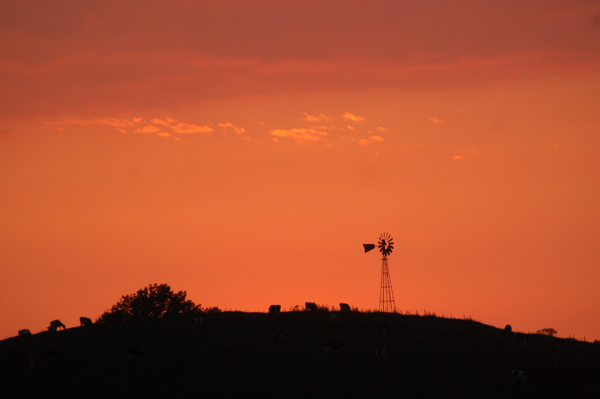
Cows grazed at sunset by Bruce Stambaugh
Cows grazed on a hillside at sunset.

Directions of a different sort

Buggies at Mt. Hope by Bruce Stambaugh
Buggies tied at a hitching rail in Mt. Hope in the heart of Ohio's Amish country.

By Bruce Stambaugh

Word to the wise. If you ask for directions in Holmes County, Ohio, you just might want to get a second or even third opinion. Better yet, use a map, atlas, a GPS or a combination of those geographical aides.

Here’s why. With three to four million visitors to our fine county every year, some of them get lost, or at least do not know exactly where they are. Shoot. Some might not even know where they want to go.

Coming and going by Bruce Stambaugh
Wagons come and go during the oats harvest in Holmes County, Ohio.

But given what I have observed and heard over the years, that’s not a problem either. The genial folks who live here will gladly offer some directional advice if asked.

Generally, the directions given answer the directions sought. But not always. Holmes County has its fair share of ornery characters.

Of course, I wouldn’t be one of them, though living where I do I certainly have had plenty of chances. While working outside, it is not uncommon for a car to slow on our busy highway and have either a passenger or the driver ask how to get to Berlin or Millersburg, or a specific business.

I try to be as succinct as possible, using landmarks and road numbers and the appropriate “turn right” or “turn left.” I like to end with what I have heard countless other locals finish their directional spiel. “Like we say in Holmes County, you can’t miss it.”

Goldfinch by Bruce Stambaugh
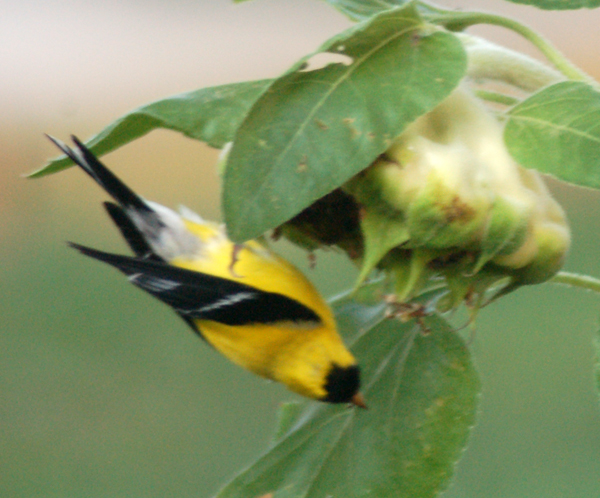
An American Goldfinch enjoys the fresh seeds of a volunteer sunflower. With its many habitats, birds are among the tourists who flock to Holmes County every year.

Meant as affable words of encouragement, too often I fear they are the deathblow to everything that preceded that comment. Since I never see the persons again, I can’t testify whether the colloquialism is true or not. But it could be worse, and sometimes is. The following antidotal incidents are completely true.

After a tourist inquired of a local where a certain person lived, the native immediately asked in all seriousness, “Do you know where the eight-sided barn used to be?” The point of reference had burned to the ground several years previous.

Here’s another. A tourist asked for directions to little unincorporated Saltillo, a cluster of homes at the diagonal crossroads of two county highways. These were the instructions. “You go up a long hill, over a small hump in the road, then it’s just a hop, skip and a jump from there.”

They get better. The state superintendent of public instruction, driving a state car with state license plates, stopped and asked for directions. Seeing the distinguished gentleman’s suit and tie and glancing at the plates, the unsuspecting superintendent got directions that took him far out of his way. Fortunately, he had a good sense of humor and understood the county’s suspicions towards state and federal officials.

A friend of mine was standing on the square in Millersburg when someone in a car going west asked directions to Berlin, five miles to the east. My friend sent them north to Wooster, east to Canton, south to Dover and west to Berlin, a distance of 96 miles.

Baling hay by Bruce Stambaugh
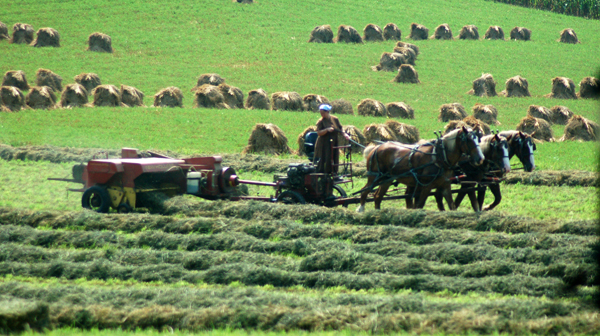
Millions of tourist visit Holmes County's Amish country annually to see the Amish work in the fields.

The same friend was once asked for directions from Millersburg to Mohawk Dam in Coshocton County from someone from out of the area. The vehicle was pulling a fishing boat.

My friend figured someone was sending this poor fellow on a wild goose chase. Since the guy had driven this far, my friend figured he might as well complete the ruse. The proper directions were given and the man and his boat were on their way.

Mohawk Dam is a flood-control, dry dam. I’m sure they couldn’t have missed it.

August sunset by Bruce Stambaugh
A glowing August sunset in Holmes County's Amish country.

Revitalization weekend at the cottage

By Bruce Stambaugh

It had been an unusually stressful week for me. You would think that in semi-retirement, stress wouldn’t even be in my vocabulary. But it is.

Without going into the sordid details, here is a sampling of the week’s chain of events that had sent me over the top by Friday’s end. My six-year old grandson got whacked in the face with a metal baseball bat. The next evening, his daddy severely injured his right knee rounding first base in a softball game.

Maren by Bruce Stambaugh
Our 10-month old granddaughter, Maren.

The following day our daughter reported that our 10-month old granddaughter’s first tooth finally had broken through. In and of itself, that was a good thing. However, Miss Maren was still pretty cranky, with other teeth ready to make their appearance.

Other nerve-racking events oozed into our normally quiet lives in Ohio’s Amish country, too. For confidential reasons, I won’t reveal the nasty details, other than to say one of the logjams required a plunger.

Clearly you can see that the weekend getaway to our cottage was just what the plumber needed. It was the necessary salve to my pent up emotional sores.

First of all, my wife and I feel fortunate to have the cottage my parents built in 1975. We purchased it from them a couple of years ago and finished it the way my mother had always envisioned it would be.

The cottage’s location alone has several advantages. Its rural hillside setting on the natural shoreline lake is the most obvious. Having good neighbors who own other nearby cabins is another.

The cottage by Bruce Stambaugh
Our cottage retreat in southeast Ohio.

But the cottage makes for an ideal sanctuary for other reasons. We have no landline. Cell phone reception is marginal at best. There is no television, no email, no Internet. Other than electricity, the cottage is the epitome of electronic reclusiveness.

Right after we arrived Saturday morning, we went to work cleaning up inside and out. Though the cottage was locked up tight and unused for a couple of weeks, insects not surprisingly managed to make themselves at home. My wife soon took care of that.

Meanwhile, I donned gloves and pruners and attacked the weeds with a mission. That’s no easy task on a steep slope that falls away quickly to the graveled lane below. But just being out in the fresh air was invigorating, and the exercise personally beneficial.

The real blessings came at the marvelous supper my wife prepared. We ate the tasty meal on the open-air deck.

For dessert, we simply sat on the porch and watched and listened. Cicadas intermittently sang their monotonous song. Colorful butterflies enjoyed the sweet fragrance of various wildflower blossoms.

Butterfly by Bruce Stambaugh
A tiger swallowtail butterfly enjoyed a variety of wildflowers.

A Carolina wren serenaded us with its luscious calls. Chickadees and tufted titmice played and fed in the surrounding mixed hardwoods. Cardinals sounded their evening songs. A great blue heron grunted from water’s edge, hidden by the forest curtain.

A gentle breeze rustled the nervous leaves of a quaking aspen. Human induced sounds intruded, too. We have accepted the fact that lawnmowers, weed eaters, shouting children, dogs barking in the distance are all part of the cottage life at times.

Altogether this harmonic mishmash of sights and sounds must have worked its magic. I slept 11 hours that night.

With those revitalizing results, we should embrace the cottage’s graciousness more often.

Morning watch

The young red-tailed hawk
perched upon the shocked sheaves
in the morning mist preying for breakfast.

Bruce Stambaugh
July 30, 2010

That’s what friends are for

By Bruce Stambaugh

The sky was clear blue, the morning’s puffy cumulous clouds having moved on. The north wind discouraged any humidity, and helped keep the temperatures tolerable.

Earlier my Amish neighbor had tethered the hay he had mown the evening before, fluffing it up for the breeze to blow away any remnant moisture. The barn swallows that had circled his horse drawn machine still skimmed the ocean of cut hay for insects.

I imagined the next day my neighbor, his family and his circle of friends would follow their given routine of making hay. I have marveled at their consistency each and every harvest of hay, oats and wheat. Their combined labor is as affable as it is proficient.

But isn’t that what friends are for? Like the classic Dionne Warwick/Stevie Wonder song belted out, “For good times, for bad times, I’ll be on your side forever more, that’s what friends are for.”

That pretty well sums it up. Friends want the best for you no matter what. They sympathize with you, empathize with you, are honest with you and you them. That friendly formula leads to trust, understanding and compassion.

As humans, we all need that. We are social beings, and unless you are Ted Kaczynski or Lizzie Borden, friends mean the world to you.

Sitting on the porch alone, I had to think about my circle of friends. I was humbled and honored to recall how many times others had come to my rescue or reassured me or celebrated with me or mourned with me or just took time for a visit.

These may seem like ordinary occurrences. But to me, they are extraordinary events, given that they all involved friends.

Food seems to be an important ingredient in friendship. We have enjoyed many a meal around a table with friends, meaning family, neighbors and acquaintances. No matter how tasty the entrées, the fellowship is always the dessert.

A home in Lakeside, OH by Bruce Stambaugh
A home in Lakeside, Ohio. - Bruce Stambaugh

Years ago when we moved from the home we built in the western part of the county to our current home in the east end, friends clamored to help us. Thanks to them, the difficult task was made simple.

Each time we visit our beloved Lakeside, Ohio we are greeted with hugs and kisses from people we may only see there. They are our vacation friends, but from the reactions you would never know it.

When I pushed my grandsons on side-by-side swings so high they bounced out of their seats, they giggled and laughed like little girls. The bright sun wasn’t the only thing warming me that morning.

Reading the blog by the parents of a special newborn child helped me better understand their critical situation. I marveled at how calm and objective their writings were, especially given their uncertain situation.

A birder friend called to tell me about a very rare bird in the neighborhood. Without his kind gesture, I would have missed the Vermilion Flycatcher.

Butterfy on cornflower by Bruce Stambaugh
A butterfly enjoyed the wildflowers in our backyard. - Bruce Stambaugh

Which reminds me that friends are not confined to human beings either. Pets, sunsets, thousands of blinking fireflies rising from the flowering alfalfa and ripening oats, robins chirping their contentment with the day all qualify as friends by my definition.

All these people and creatures and natural events have abundantly blessed me. Isn’t that what friends are for?

Holmes County sunset by Bruce Stambaugh
A recent sunset taken from our back porch. - Bruce Stambaugh

A beautiful morning well spent

By Bruce Stambaugh

It was a gorgeous morning for what my son and my wife had conspired to do. The project itself was both practical and uncomplicated.

Of course, they needed me as the gopher, as in go for this and go for that. As it turned out, I will remember that beautiful morning for a long, long time.

Our son came to help build a pair of tomato trellises, since we will share the eventual bounty with him and his wife. My wife had found a magazine picture of just what was needed for our heirloom tomatoes.

Last year, the heirlooms flourished. But as the blossoms turned into baby tomatoes then plump fruit, the plants gave way to gravity even though they had been staked. If we didn’t get the tomatoes before they hit the ground, the dry rot did.

The main problem was that the tomato patch quickly became a vegetative jungle. It was difficult finding the ripe ones that hung hidden in the leafy overlap. That problem needed to be remedied if our two families were to fully enjoy the fruits of our labors.

readying the site
My son and my wife readied the site for the tomato trellises.

The proactive plan seemed simple enough. The growing tomato plants would be safely tied to the wooden trellises, which would better distribute the weight than the previous individual supports had. We had the perfect place to erect them, the south-facing plot next to our bricked garage wall, the scene of last year’s prolific patch.

The needed materials as shown in the picture were easy enough to come by. My wife had already obtained the sturdy oak stakes. I retreated to the neighbor’s farm for baling twine.

Using a measuring tape and a container of flour, the experts measured and marked where the supporting sets of three stakes each would go. Our energetic son climbed the stepladder with sledgehammer in hand, and the seven-foot posts were pounded into the fertile ground at an angle so they crossed near the top. Not wanting to look too professional, we just eyeballed the angles.

After each set of stakes was thumped into place, we attached the crossbars, again three on each side. We secured them to the stakes by crisscrossing lengths of twine around and around and tying them off. I think I can tie square knots in my sleep now.

tying twine around the stakes
Baling twine was used to secure the horizontal and vertical stakes.

Each bar was leveled in place. A top bar, which according to our son was purely for looks, was laid in the cradle of where the angled stakes intersected.

pounding in the trellis stakes
Our son pounded in the stakes that formed the trellises.

Once the first trellis was completed, one would think the second would go easier. Somehow that didn’t really happen. Still, it turned out all right, just a little off skew. The tomatoes won’t care.

In the process of all this measuring, climbing, pounding, angling, leveling and tying, we threw in a little kibitzing as well. You know how mother, father and son, and husband and wife can be. Personal, profound, picky, sarcastic, vulnerable, venerable, loved.

This constructing trio was all that and then some on this lovely morning. While we worked beneath a cerulean sky, robins, nuthatches, house wrens and blue birds called and fed and gathered nesting materials all around us.

Building anything isn’t exactly my strong suit, unless it’s memories. Indeed, this morning well spent fit that definition like a gardener’s glove. In truth, we had built more than tomato trellises.

Creating productive, valued, lasting recollections with family seemed a most appropriate way to prepare for Memorial Day. Come late summer, when the heirlooms are heavy laden but securely ripening, memories of a different flavor will be made.

the tomato trellises
The completed tomato trellises stand against the garage wall.