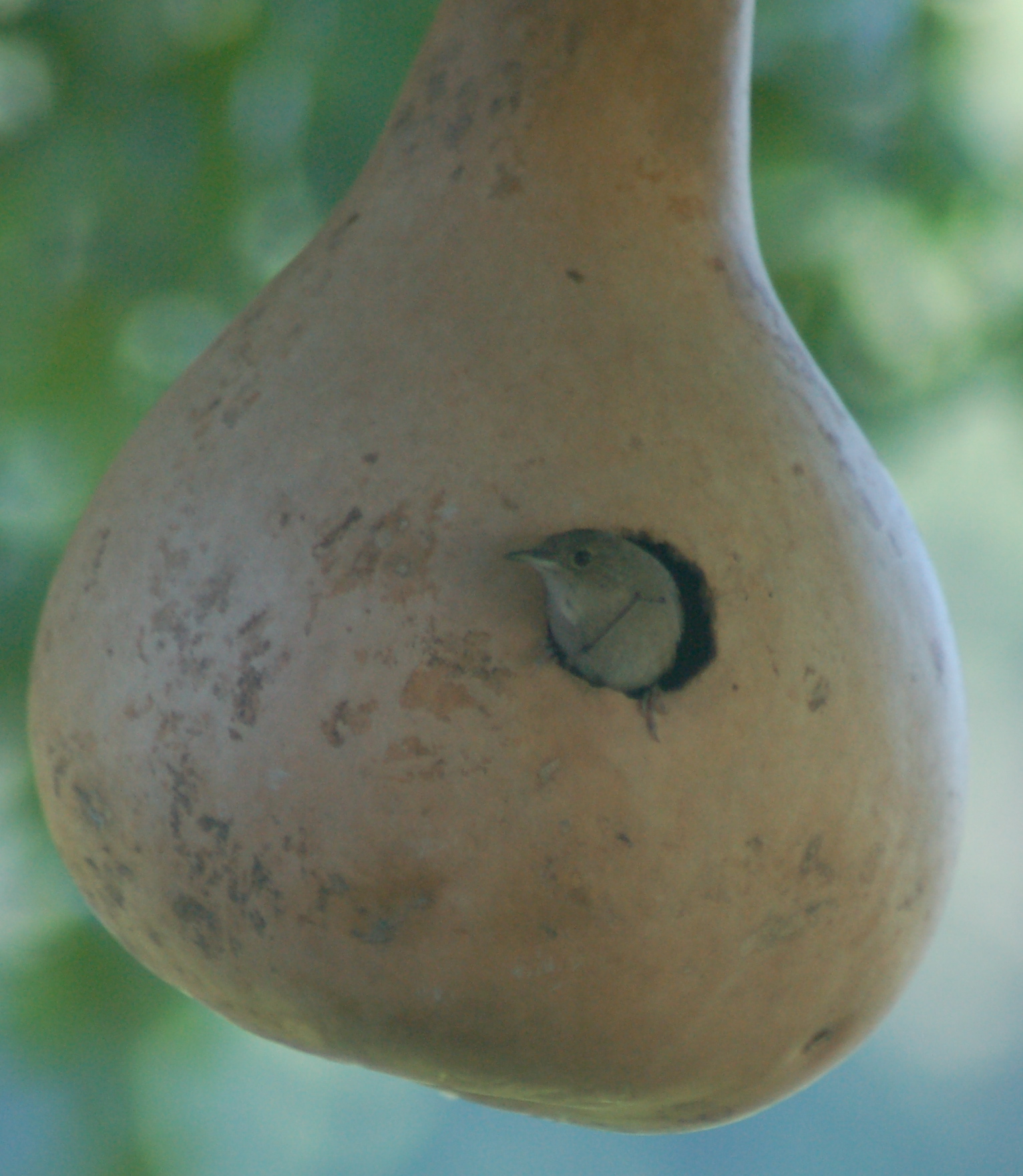
Warbling mother wren,
fledglings rattle from gourd house.
Satisfaction reigns.
Bruce Stambaugh
July 29, 2011
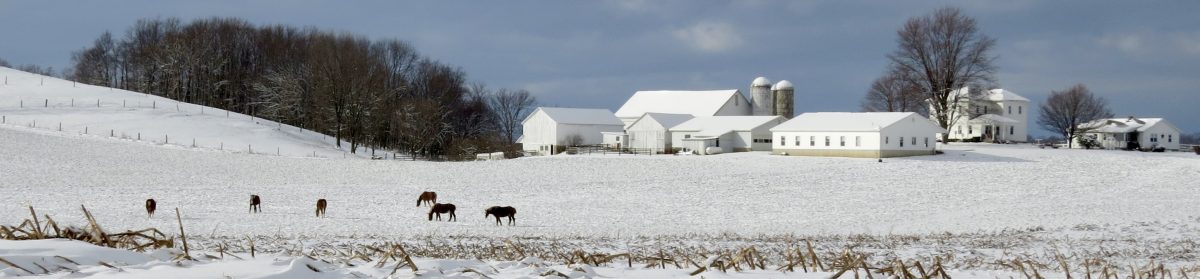
Warbling mother wren,
fledglings rattle from gourd house.
Satisfaction reigns.
Bruce Stambaugh
July 29, 2011
By Bruce Stambaugh
I’m glad I have a window with a view in my home office. That view is forever changing, sometimes subtly, sometimes dramatically.
When our daughter flew the coop 13 years ago to marry the love of her life, her mother and I converted her bedroom into our home office. The room was just the right size to meet our workplace needs. The cheery double window to the outside world was an added bonus.
My work area occupies the space right beside the window on the east side of our east-facing home. My wife’s computer desk is to my right. The window affords me some periodic and necessary breaks from the long-term sitting I do at the computer.
I’ve seen a lot over all the years peeking out that office window. Keep in mind our house is built on an Amish farm on a very busy county road that cuts through the heart of the world’s largest Amish population.

The surface of County Road 201 routinely carries an amazing array of cargo. If I were to create a catalog of the movements north and south along the road, I would have a pretty thick document.
The booklet’s index would include several categories. A random representation of the locomotion I’ve witnessed would include canoes atop buggies, bicyclists, strings of antique cars, wagon trains, tractor-trailer parades, tractors pulling wagon loads of people sitting on lawn chairs, speeding motorcycles and dedicated joggers.
Of course, not everything I have seen has buzzed by on the highway. We rejoice when we see our neighbors readying their equipment to head out for their work away from home jobs. Given the economy, that surely is a happy sight.
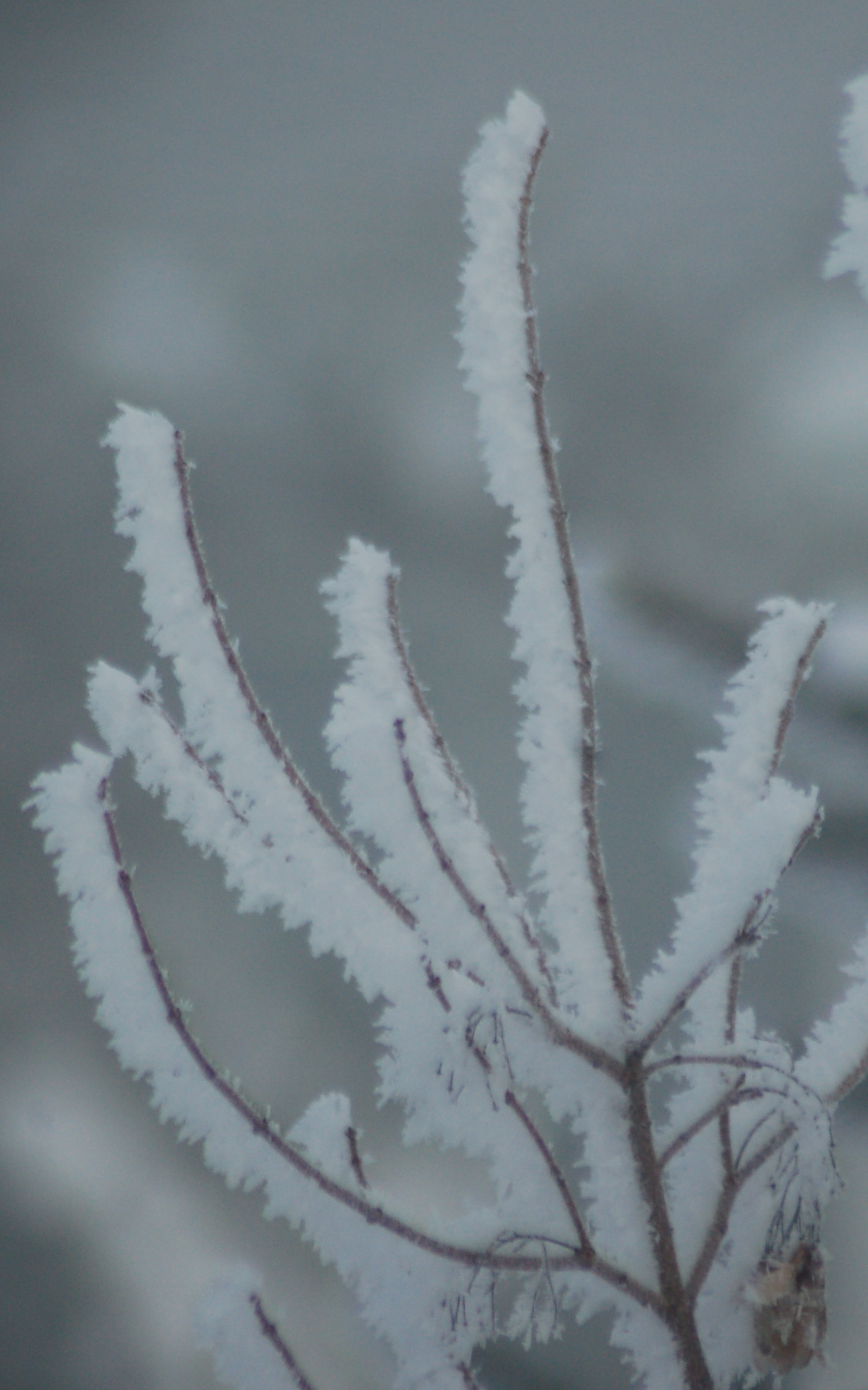
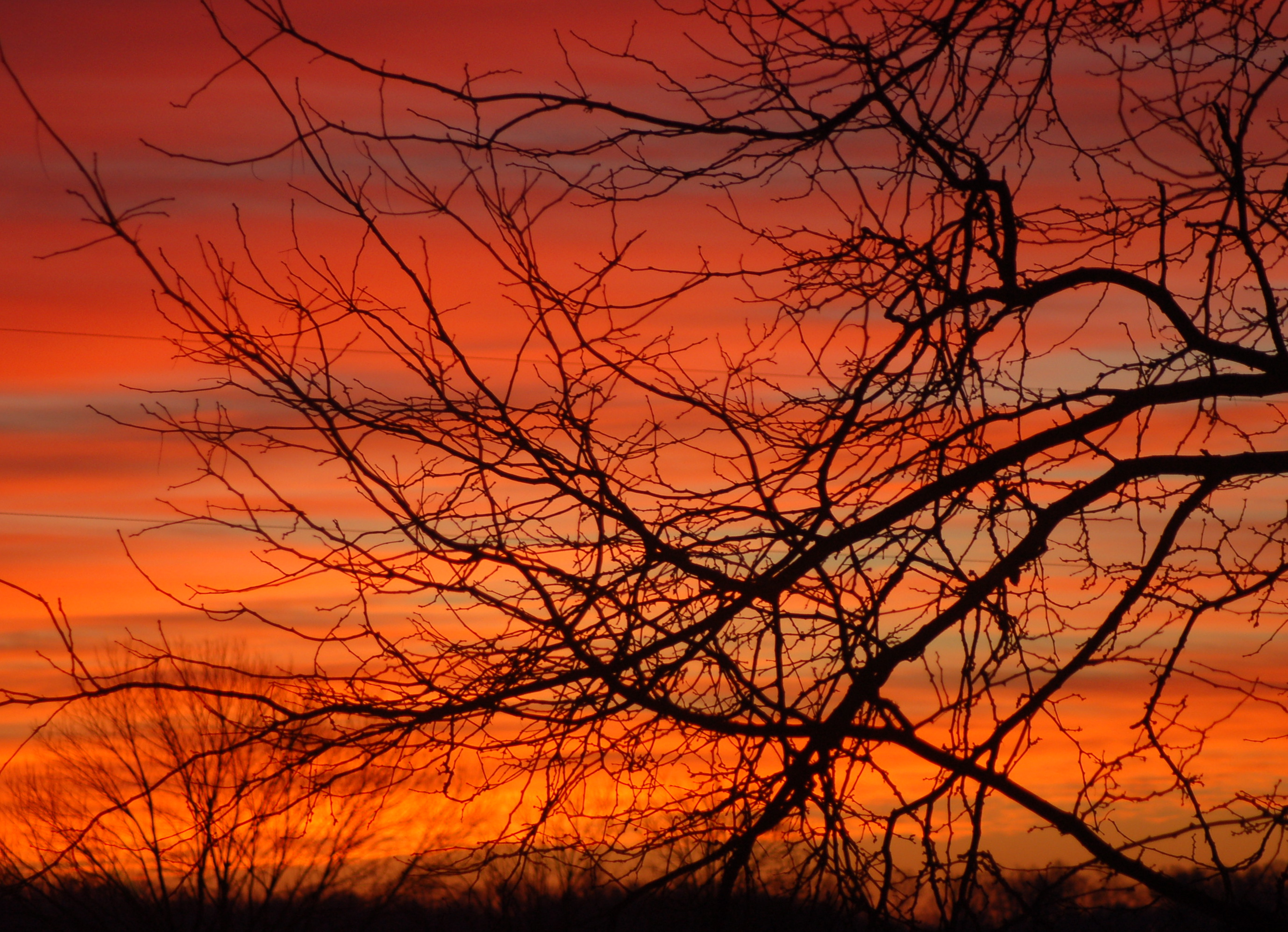
Some of the prettier things we’ve observed through the window include incredible sunrises, spiny hoar frost stuck to everything it touched, and triple rainbows. I have watched as golf ball sized hail covered the ground. Blinding snow squalls prevented me from seeing the roadside mailbox.
I have seen some rather ugly images out that window, too. Auto accidents and insensitive people pitching litter from passing vehicles make that unpleasant list.
My favorite observations, however, are the animals I see. And just like the highway bill of lading, I have watched a variety of wildlife engaged in assorted activities in every season. Eastern Bluebirds have perched atop the lamppost positioned along the front sidewalk. Deer scurried for cover by taking a shortcut through the front yard.
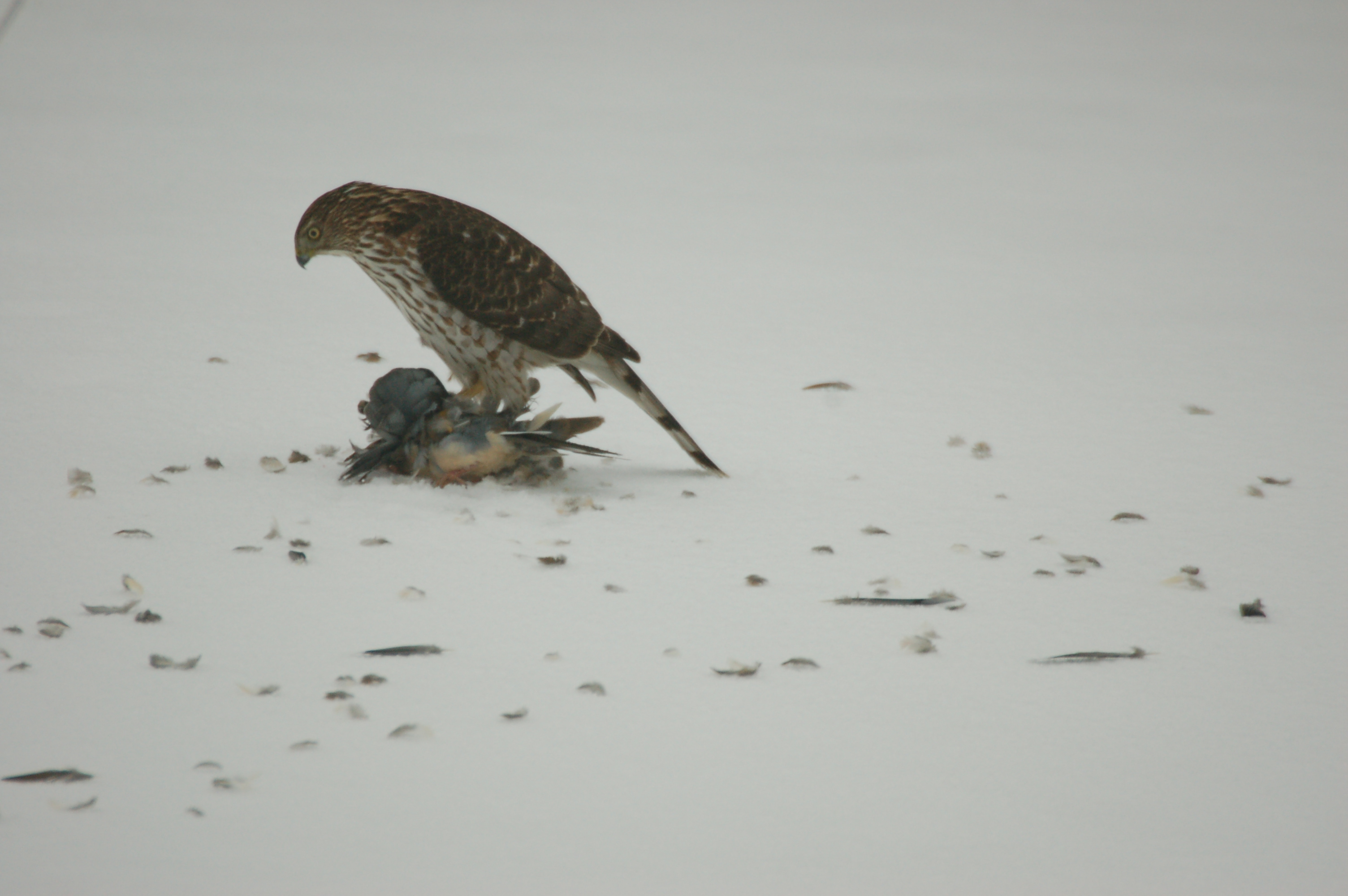
After one of last winter’s heavy snows, I spied a Cooper’s Hawk pinning its Mourning Dove breakfast to the ground, feathers scattered in a broad oval around the crime scene. I shot lots of pictures through the window for evidence just in case the assault ever got called into court.
Recently, a curious flash drew my attention away from the computer, through the window to the greening yard. A Red-tailed Hawk had swooped down to claim a fox squirrel that had been run over on the road earlier that day.
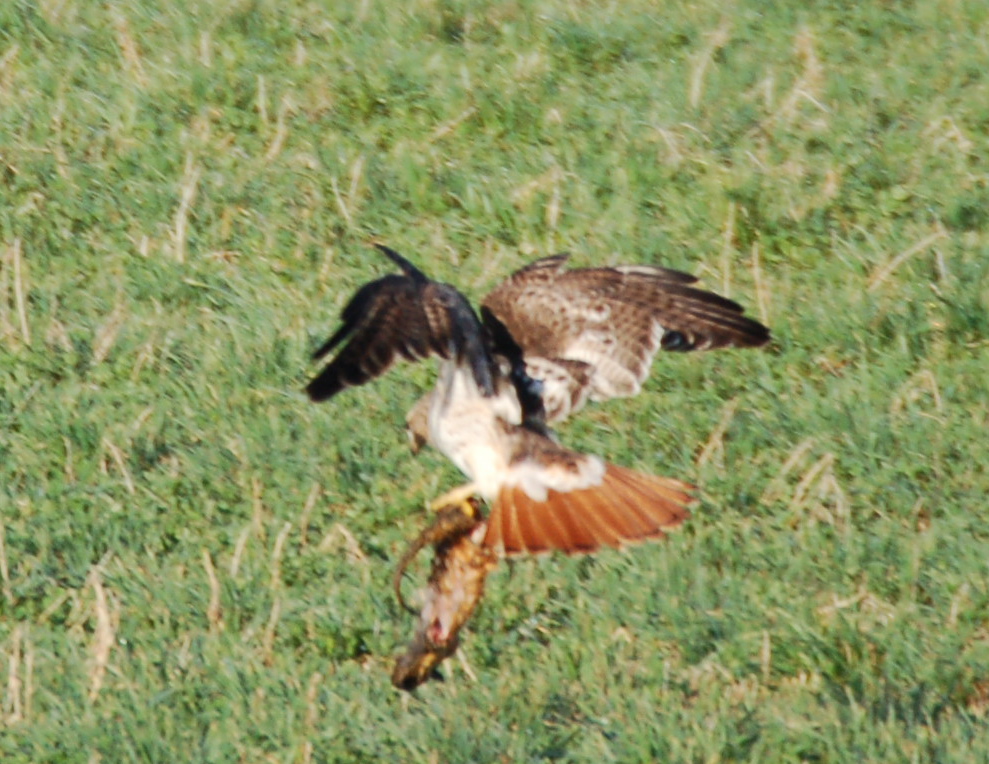
As the hawk tried to roost in one of our Norway maple trees, it dropped the flattened rodent. Try as it might, the hawk could not fly away with its fortunate find.
Finally, the frustrated hawk left still hungry. I took pity on the poor dead squirrel, went outside and placed the mutilated carcass at the base of the tree trunk.
The next morning I discovered the squirrel was gone. Though curious as to what had happened to it, I was really thankful that was one incident I didn’t have to view out my window.
By Bruce Stambaugh
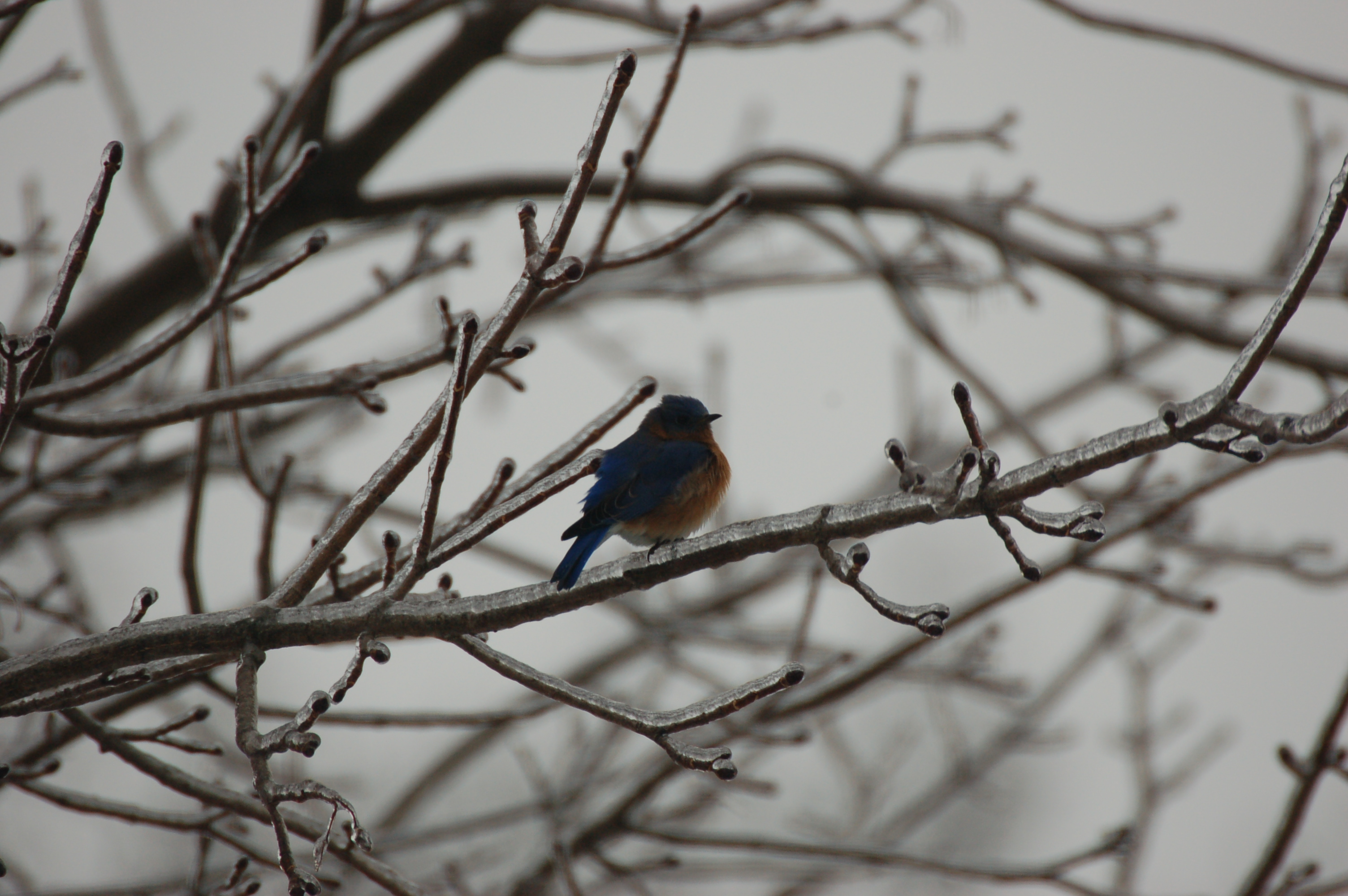
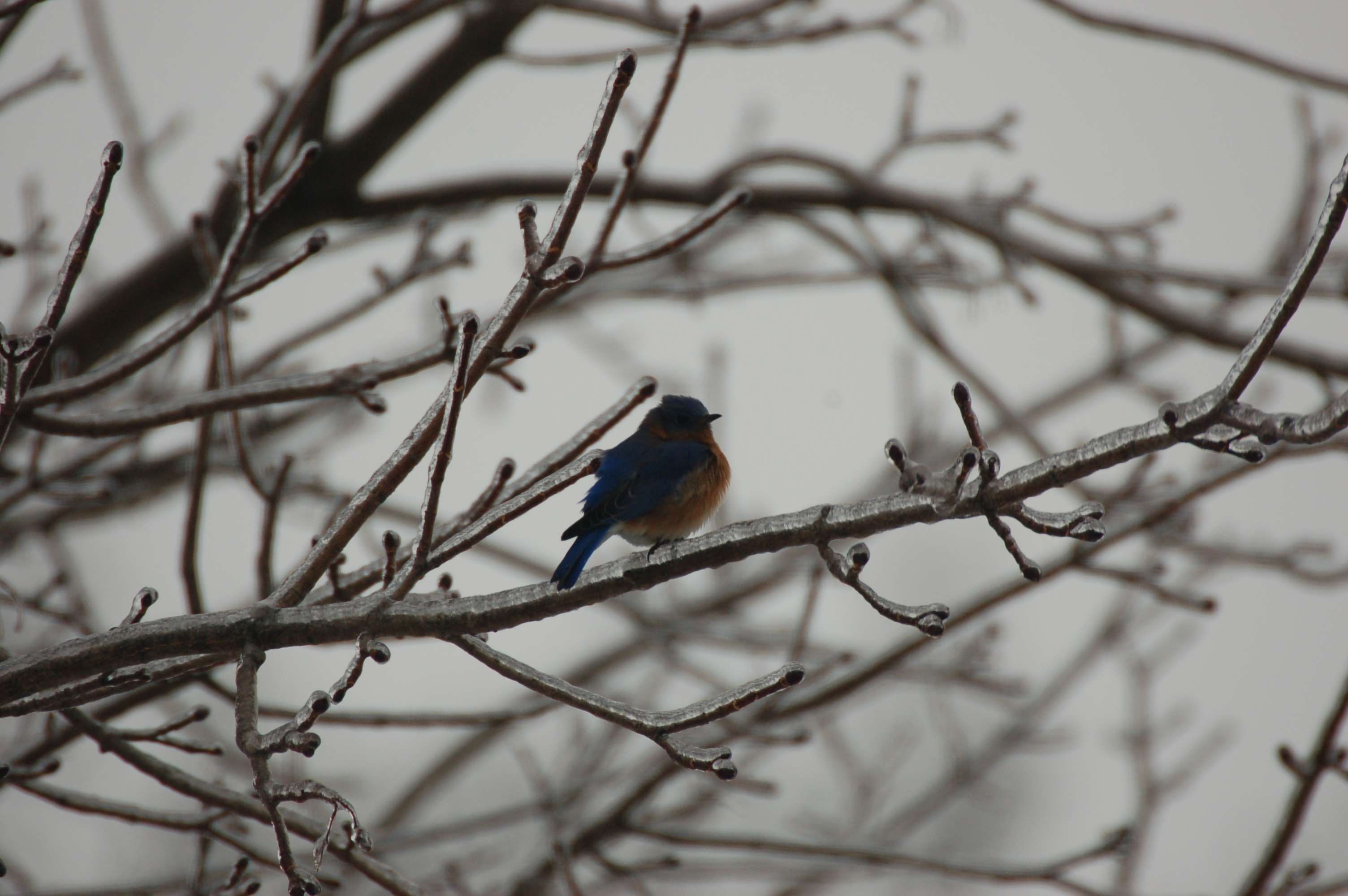
As I write this, I’m looking out the ice-splattered window watching it snow an inch an hour. The trees are once again encrusted with a layer

of crystal clear, weighty ice. The poor boughs of the evergreens are again bowed to the ground.
The rest of the landscape is covered with inches of yet more snow. Fierce, brisk northwest winds stymied the snowplow operators and sent them back to the garage in disgust and for safety’s sake.
I am always glad when the calendar flips to March. To me, March is a Jekyll and Hyde month, the last of winter, and the first of spring.
In truth, March in northeast Ohio is the month with the potential for all four seasons. It doesn’t always work out that way of course.
When the calendar reads March, I know winter’s icy grip is loosening, if only by time. If we are patient, though, spring will eventually win out.
Tired of winter and ready for spring, I opened my digital photo files and reviewed recent March memories. The visual variety brought a smile to my face even as noisy gusts whipped the snow outside harder still.

The first pictures showed exactly what the day at hand already had. Snow blanketed the landscape, but the sky was clear. The next few days revealed similar scenes. The snow remained, but so did the sunny skies. Horses romped in the snow and the days ended with picturesque sunsets.
By the middle of the month the deep snow cover gradually melted down, and green, grassy patches peeked through. People went jacketless and our first crocus bloomed on St. Patrick’s Day. The lovely lavender petals contrasted nicely with the spiky green leaves and the rich, brown ground of the flowerbed.
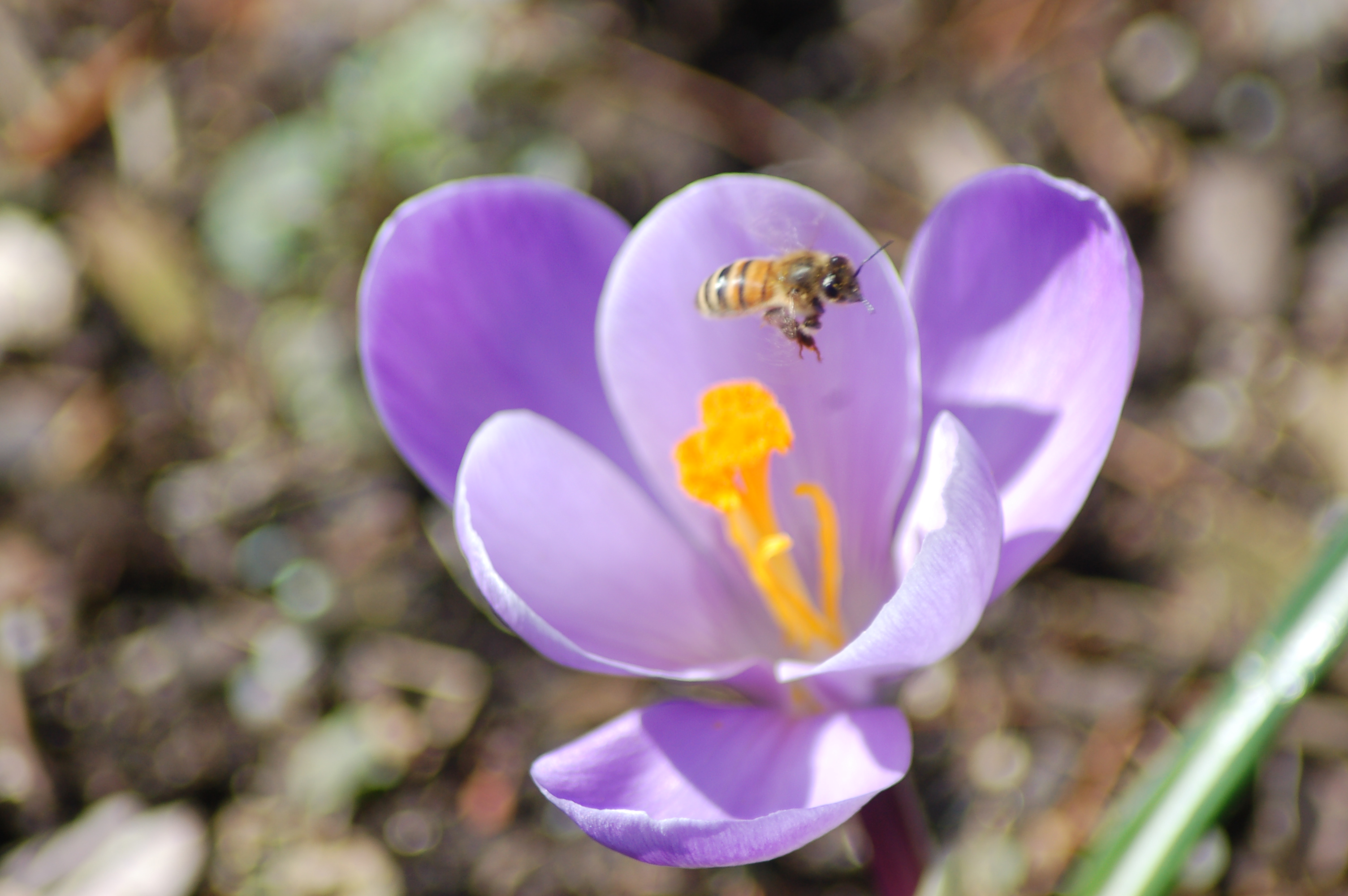
The next day, I photographed a honeybee gorging pollen. This scene really instilled hope.
There were more flashy sunsets and a picture of a thin crescent moon that looked just like a smiley face grinning at us in the early evening sky. We had one like that last month, too, but it was too cold to enjoy from the out of doors.
A couple of days later the frogs from my little garden pond emerged to bask in the warmth of the bright sunshine. And more flowers bloomed equally vibrant.
Just when you begin to fall in love with March, she can deliver some nasty punches. Tornado season begins in earnest and in the past we have had some powerful thunderstorms in March. They often are followed by cold and snow. A friend used to say that it always snowed during regional basketball tournament time.
Sure enough, five days after the frogs contentedly sunned themselves, our first daffodils showed their pretty yellow faces. The next day they drooped sadly, covered in heavy wet snow.

If there is an upside to such an early spring snow, it’s in the comfort that it won’t last long. As proof, my Amish neighbor was plowing his long field one row at a time at month’s end.

A sudden windy gust awakened me from my vernal dreaming. It was then that I noticed a familiar but long absent resonance. In the middle of this latest blizzard, a Song Sparrow sang as if the daffodils and crocuses already were blooming.
That subtle sound of music renewed fervent hope that winter and spring would soon change places.

By Bruce Stambaugh
Some people might think that breakfast is for the birds. I’m not one of them. I never miss breakfast.
Breakfast is one of my necessary routines. I’m not much of a cook, but, despite the fact that I am a man, I can certainly pour cereal into a bowl and juice into a glass. Along with some fruit, that is my usual morning feast, day in and day out.
I seldom dine alone. If the backyard birds are feeding, I often stand at the kitchen window and enjoy my morning meal as my feathered friends peck at theirs. This particular morning, I was seated at the breakfast bar, where I can still view the hanging feeders.
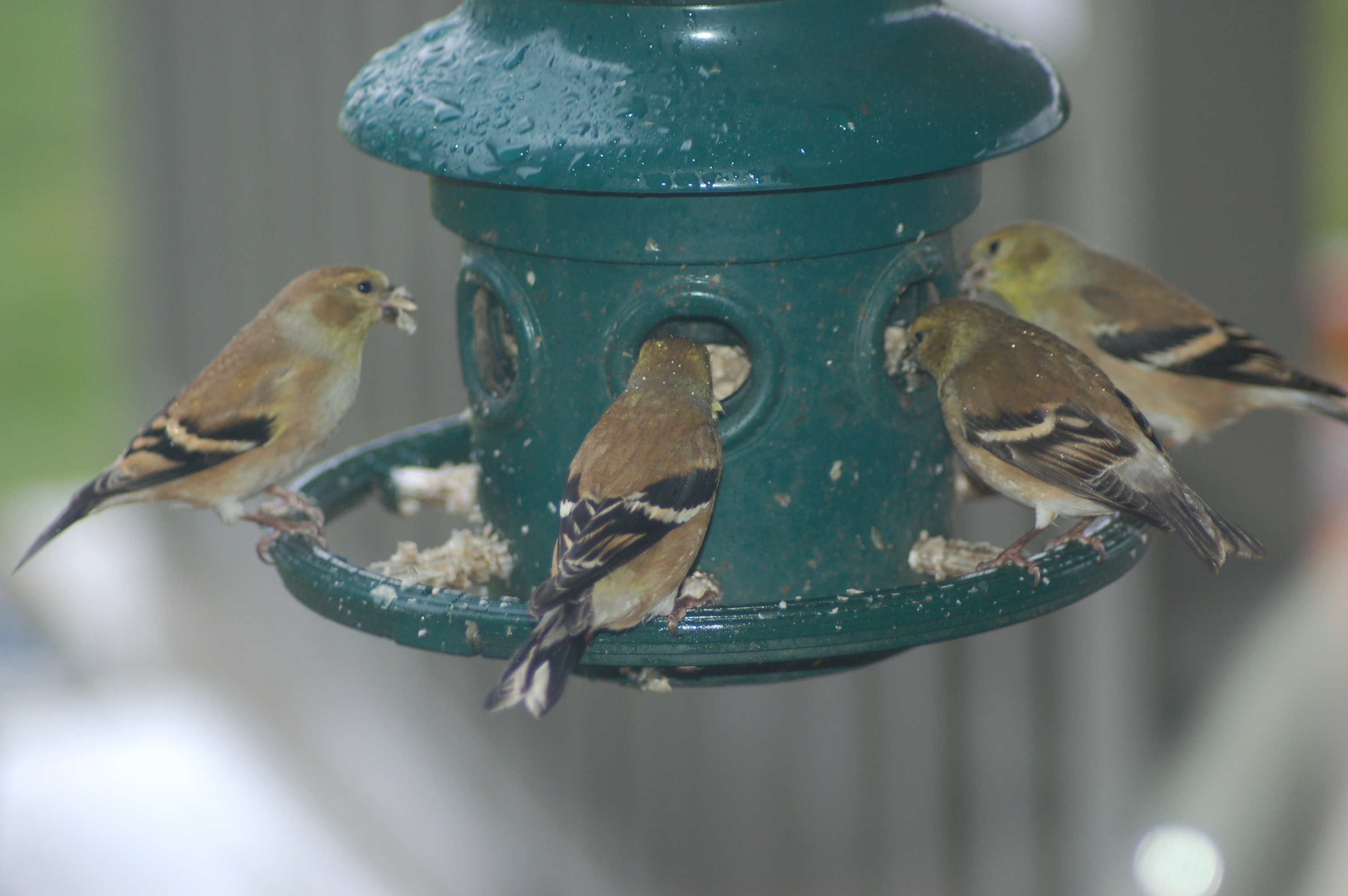
I had just begun to crunch my mini-wheats when I heard the flock of birds outside the window take flight. The Mourning Doves were especially noticeable, with their thrashing wings and eerie, frightened call.
Clearly they had been startled. My first inclination was to blame the local Cooper’s Hawk. The feisty bird of prey makes frequent surprise raids on neighborhood feeders.
I suspected that the small hawk was after its breakfast as well. I checked the ground around the feeders. The ice-covered snow was void of any birds. A lone Mourning Dove sat frozen in fear next to the hopper feeder on the old porcelain-topped table beside the back porch. That told me to keep searching for the hawk.
I scoured the stately sugar maple where the hawk had been known to perch, waiting for any unsuspecting songbird. The dormant tree branches were bare.
I quickly scanned the row of white pines. No hawk visible there either. I headed to the front window, thinking the Cooper’s Hawk may have tried the feeders in the front yard. There it was.
The Cooper’s Hawk sat on the snow about 20 yards beyond the Colorado blue spruce that shelters the feeders. Beneath the hawk was what looked to be a Mourning Dove. Feathers from the hawk’s victim were scattered in a broad circle around the hunter and the hunted.
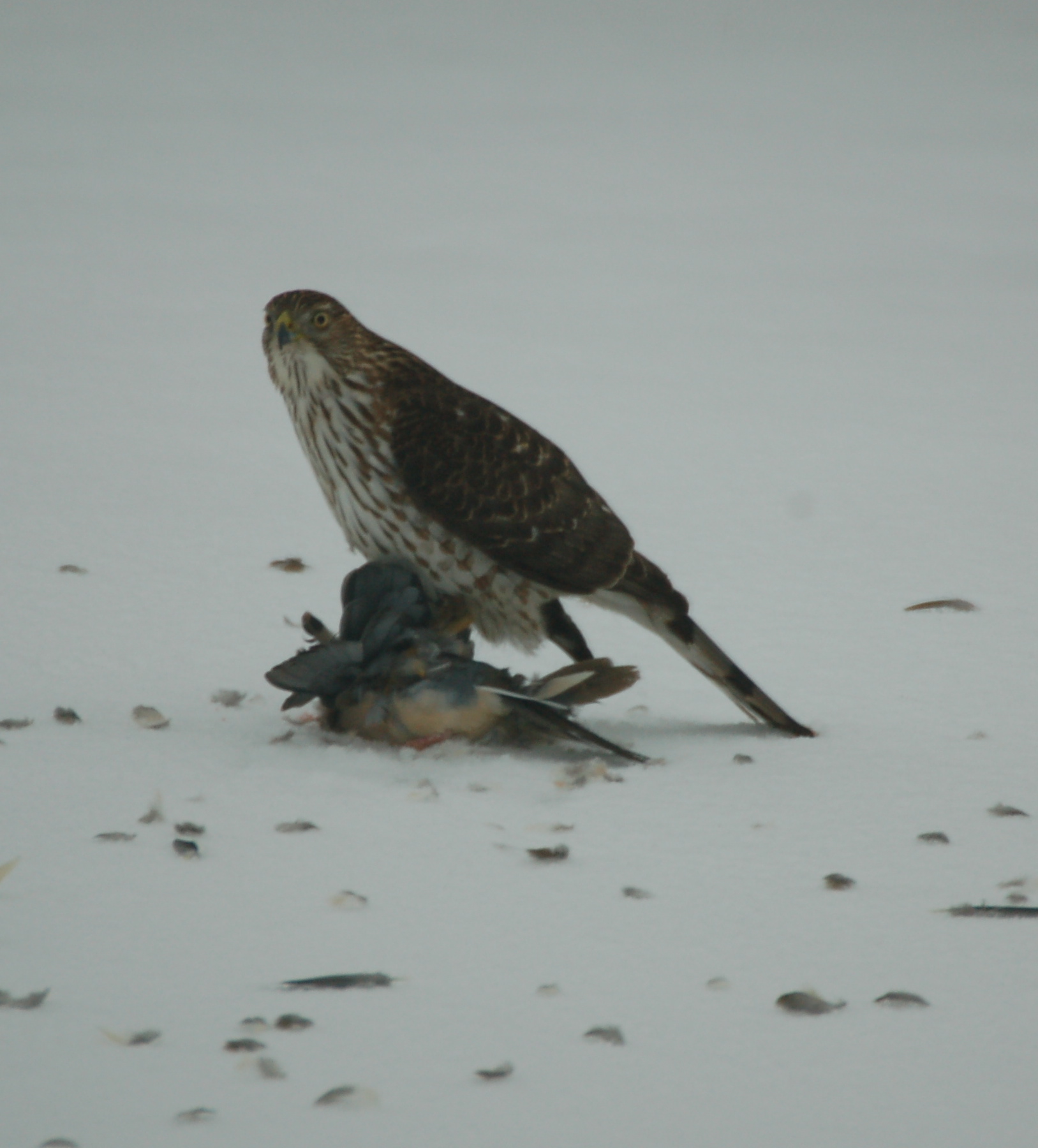
The Cooper’s Hawk kept looking around, wary of any predators that might try to steal its avian granola. I put the long lens on my camera as rapidly as I could, and shot several pictures.
All the while, the hawk squeezed its prey with its sharp talons. At one point, it shook loose some feathers that had stuck in its equally sharp bill. From time to time, the wounded Mourning Dove would wiggle its tail in a futile attempt to escape.
Between camera clicks, the hawk flew west with its catch. I rushed to the sliding glass door that leads to the back porch. There, beneath one of the pines at the edge of our property, the hawk sat with the dove still tightly clenched and pressed to the cold ground.
Before I could raise my camera, the accipiter launched low to the south with its catch and was instantly out of sight. I wondered if it had sought refuge in the pines or continued into the small deciduous woods on the other side of the neighbor’s.
Either way, the crafty hawk was likely enjoying its fresh, nourishing breakfast. I returned to mine, sorry for the dove, but glad I had been witness to the way the biological world really works.
By Bruce Stambaugh
Weather is one of my favorite hobbies. Living in Ohio’s Amish Country affords me plenty of climatological variety to enjoy.
That is especially true in the winter. We never know what winter will bring here when it comes to weather. It could be mild. It could be cold. It could be dry. We could be buried in snow. And all of those scenarios could happen in the same winter season.
I especially like an occasional heavy snow. I love the beauty, the peacefulness, the serenity an abundant snowfall brings. The landscape comes alive, green pine boughs heavy laden with a snowy burden, fire engine red Cardinals searching for seeds, chestnut horses romping in the white, fluffy playground, children bundled up to build snowmen.
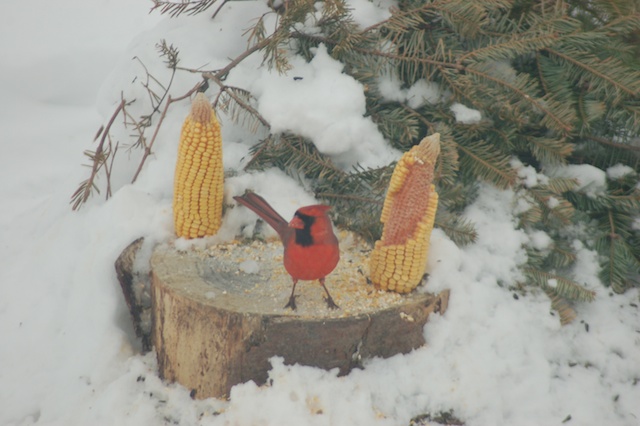
Of course, such a snow causes headaches for travel and unwanted expenses for municipalities expected to clean every last flake from the roadways. Tow truck drivers, on the other hand, revel in the bounty of pulling vehicle after vehicle out of ditches.
For my part, the good far outweighs the bad when it comes to snow. I can’t say the same thing about an ice storm, however.
Our most recent experience with a widespread ice event is example enough. Ice-coated trees crashed onto power lines and highways. I both pitied and admired the road and utility workers who braved the dangerous elements trying to restore order out of the icy chaos.
Stores lost valuable business. Schools altered schedules, academic and extracurricular alike. People who lost power and didn’t have access to a generator had to wait it out, sometimes for days.

Eventually, though, some good managed to find its way through the gloom and dismay of the ubiquitous ice. Ice-coated branches sparkled, even from nighttime’s artificial light.
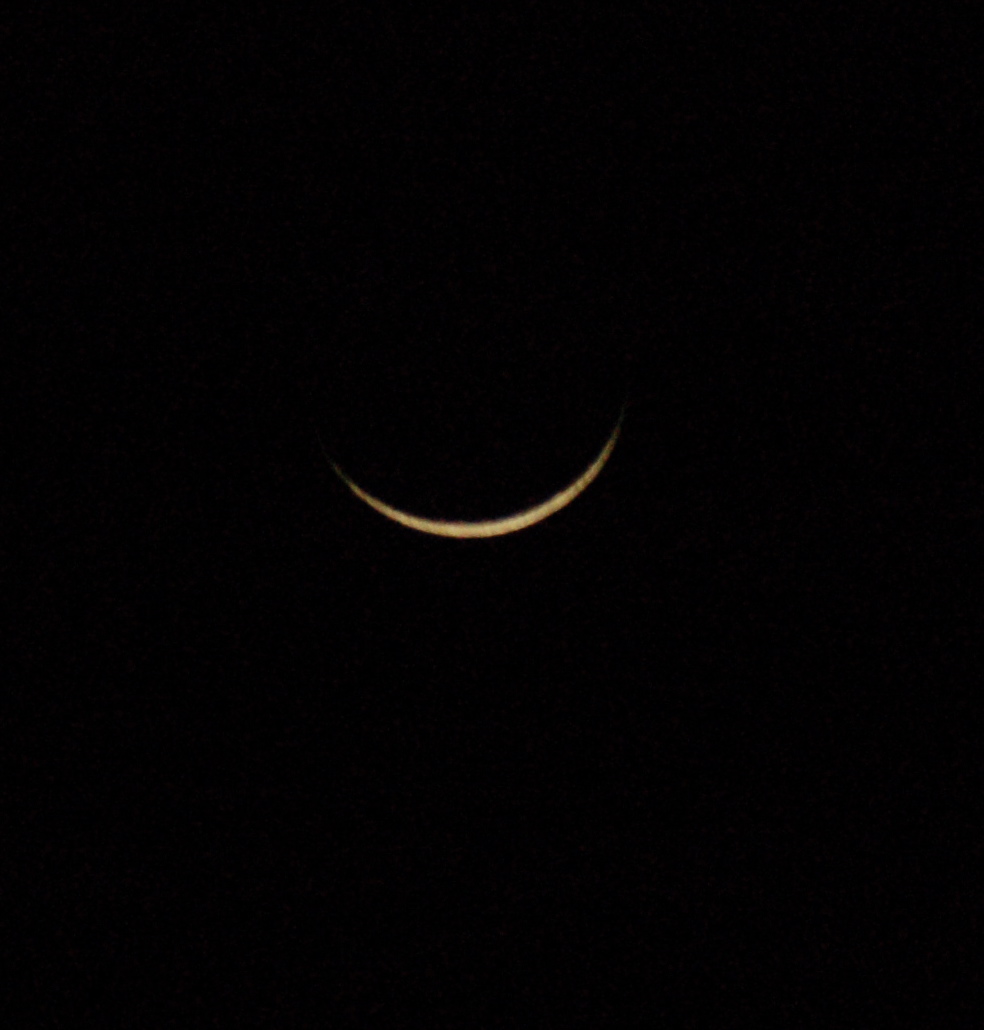
But often it takes us awhile to see the glimmering light of an ice storm. The most obvious benefits came in the first light of day. Once the clouds diminished, the low angled rays of sunrise and later sunsets ricocheted across the icy landscape. Even the light of a thin crescent moon slid its tiny light across the shiny, slippery iced-over acres of fallow fields.
The light came in other natural forms, too. A kind neighbor sauntered over to sprinkle calcium on the inch thick, hard blanket of ice that covered the walk and parking pad. After a few minutes, he began chipping the icy glaze just because it needed to be done. I joined him, and a congenial conversation brightened the otherwise dull day.
A township resident called to say that he and his neighbors had cleaned up the downed tree limbs save the one they couldn’t reach that still dangled above the roadway. The lone highway worker would not have to clear that section of the road of debris thanks to their thoughtfulness and commitment to doing the obvious for safety sake. Why wait on paid personnel when a volunteer effort gets the job done just as well?
As we saw again last week, an ice storm can be devastating. Urban and rural commerce and individual residents alike suffer the cold consequences.
Conversely, an ice storm can also be a bright ray of sunshine in an otherwise dismal winter. I enjoyed the enhanced scenery and the visit of the friendly neighbor.
However, having experienced this most recent icy incident and the one in late 2004, the next one can wait awhile as far as I’m concerned. That weather is a bit too extreme, even for me.

From the tallest trees
of the interfacing woods,
the red-tailed hawk gleans
the pasture, grain and hay fields,
fallow, fertile, emerging, golden,
winter, spring, summer and fall.
Bruce Stambaugh
Feb. 6, 2011

By Bruce Stambaugh
It was a good day to stay inside. Though the partly cloudy sky revealed a gorgeous sunrise, the thermometer read six below zero, the coldest temperature of the season so far in Ohio’s Amish Country. That alone told me this day would be best enjoyed from the inside out.
Given the fact that I was in the midst of a battle with the annual wintertime crud, I wasn’t about to argue with that logic. The frigid air would do me no good.
Having spent five long hours in the local emergency room the previous morning, I knew I needed to take it easy. Stuck inside, I resigned myself to two main activities. I checked the birdfeeders for visitors and I rested.
Compared to previous winters, it had been a disappointing season at the birdfeeders. I had kept them well stocked and cleaned of any old feed, mold or other potentially noxious particles that would harm or discourage the birds.
Despite my efforts, the usual nice variety and numbers of birds had failed to materialize. Before the snow flew, I had a pair of Red-breasted Nuthatches. But they must have been passing through because they haven’t been back.
Just before the holidays, Pine Siskins chased the American Goldfinches away from the feeder that contained sunflower chips. The siskins never came back either. After one of the series of Alberta Clippers came through, I had a Rusty Blackbird for a couple of days.

The usual birds, other than the pesky House Sparrows, seemed fewer in number. A pair of Cardinals made infrequent appearances. The Dark-eyed Juncos, a given at winter feeders, were scarce. A few White-breasted Nuthatches and Black-capped Chickadees came and went irregularly.
A pair of bully Blue Jays could be counted to show up from time to time. A Downy Woodpecker pretty much had the suet feeder all to himself. The Red-bellied Woodpecker that had been a regular seemed to have disappeared since the snowfall.
The goldfinches and the congregation of house sparrows were the only feeder faithfuls. My winter’s entertainment wasn’t as entertaining as I would have liked.
As the temperature of this frigid day climbed into positive single digits, the bird feeders suddenly came alive. Colors flashed in the bright morning sunshine, and I grabbed my camera.

I spent a majority of the morning snapping one shot after the other. Tree sparrows picked at the corn my wife had put out since I was on the disabled list. The secretive song sparrow found a spot in the sun where it could simultaneously feed and warm itself.
The show really picked up at the shelled peanut feeder, which was a section of hollowed out log hanging from a hook on the back porch. The red-bellied returned, and brought along a hairy woodpecker as a sidekick. Tufted titmice and even chickadees grabbed some protein.

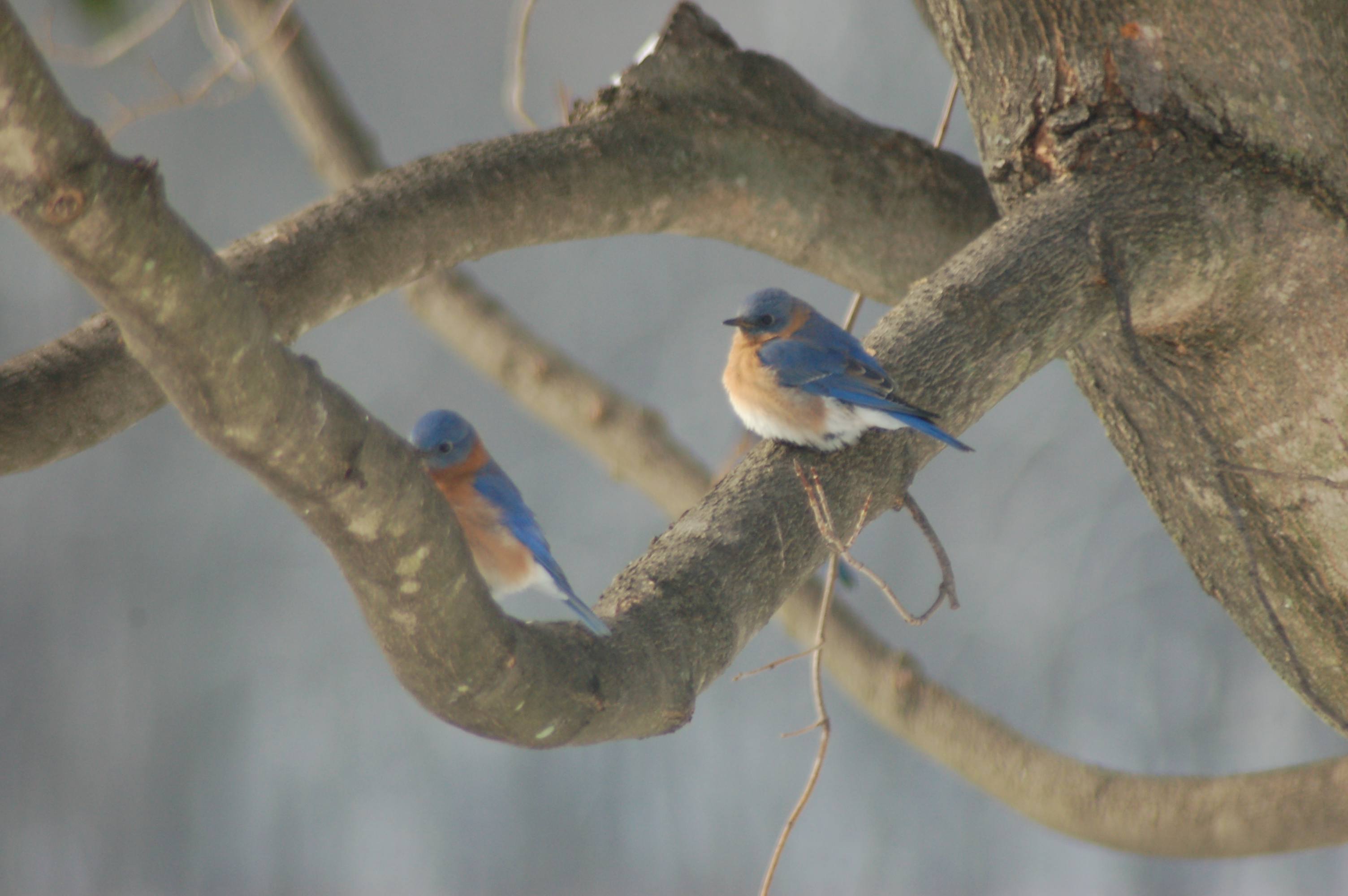
A family of eastern bluebirds stole the show, however. They tried out every feeder. Males and females alike ate peanuts, chipped sunflower
seeds, black oil sunflower seeds and even pecked at the peanut butter-laden suet.
Despite the cold, both in the air and in my body, I had hit the trifecta. I enjoyed the extreme winter weather without having to bundle up, was treated to some wonderful birding, and captured much of it through the lens of my camera. I was beginning to feel better already.

By Bruce Stambaugh
The day after my favorite resort town, Lakeside, Ohio, ended its gated season, which was Labor Day, I began to see the place in a different light.
Like Cinderella’s carriage, the town had transformed into its natural state overnight. Streets that had bustled for weeks with pedestrians, bicycles, golf carts and motorized vehicles suddenly became quiet. Lakeside’s population had dropped faster than the stock market.
Cottages that had housed happy families all summer were now boarded up for the winter. Businesses once crowded with customers were also shuttered for the season.
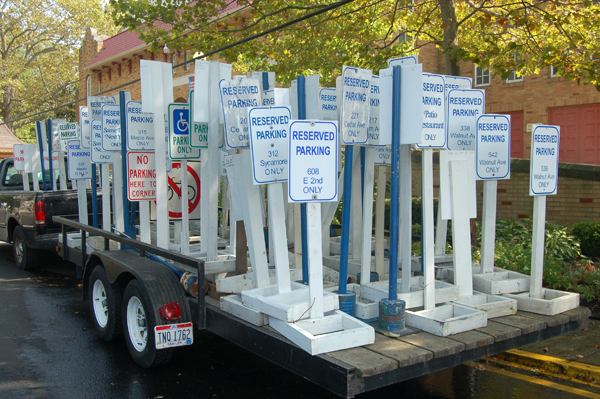
Maintenance crews made their rounds undoing what they had worked so hard to ready three short months ago. They picked up the traffic and parking signs needed to control the passage on the narrow streets with limited parking.
The workers seemed to be in no hurry whatsoever. Perhaps sensing the newfound quietness themselves, they soberly went about their business, the crackling of their portable radios occasionally breaking the hushed spell.
Their pace could have been from the day’s extraordinary heat as much as it was lack of ambition. The land wind wasn’t much help, blocked by the combination of the southerly rise of the peninsula itself, the town’s closely packed cottages and buildings and the giant hardwoods that overshadowed everything.
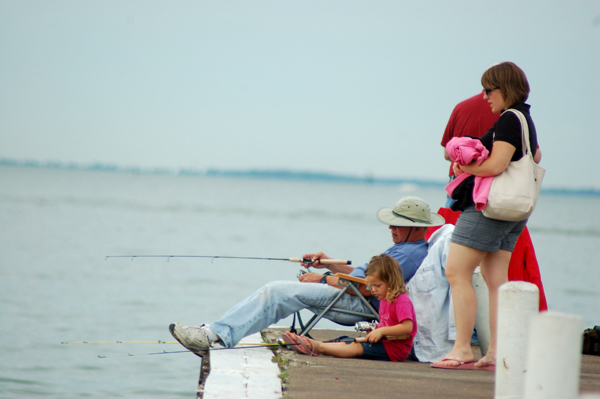
The only relief, if there was any to be had, could be on the dock, which protrudes a football field length into Lake Erie. Normally crowded with sun worshippers, fishermen, and people just wanting to soak in the scene, I nearly had the cement pier to myself.
The afternoon sun blazed away, and the wind was fierce, but cooler than in town thanks to the lake. I faced my folding chair east away from the wind. I was glad I had.

I had taken both camera and binoculars to while away the time. I enjoyed just scanning the broad horizon that stretched from the islands to Marblehead, where a huge freighter was moored at the stone quarry.
The strong westerly wind whipped the waves furiously. Anchored fishing boats bobbed like fishing line bobbers.
Ring-billed seagulls found security from the wind in the lee of the dock. One played King on the Hill. It had landed on a slightly submerged rock, and lorded it over all the other gulls that floated in the choppy water.

High above, another bird caught my eye. An osprey sailed with the wind, searching the shallow waters near the shore for unsuspecting fish. Its mate soon joined the hunt. They circled and hovered but always wind-driven east were soon out of view even with binoculars.
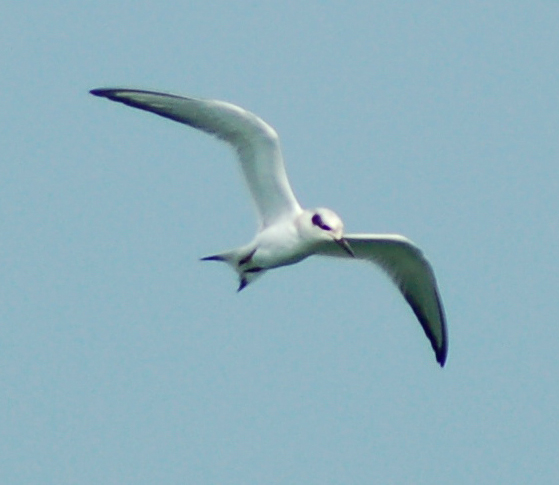
I put the glasses down and quickly noticed smaller, streamlined birds dive-bombing the water. They zigged-zagged and glided, then rose up and hurled themselves into the lake like rocks, but only for a few seconds. The small flock of migrating Common and Forster’s Terns put on quite a show in filling up for the long journey south.
Suddenly the stack of the freighter let loose sooty puffs of diesel smoke. It had taken on its load and was ready to sail. Even though I was upwind and a mile away, I could hear the huge, powerful props churn the water as the massive boat slipped away.
In less than 20 minutes, it had turned northeast for deeper water, destination unknown to me. I, however, knew mine. I returned to our hospitality house for dinner, glad I had taken the time to observe Lakeside in a slower, even more peaceful mode than usual.

By Bruce Stambaugh
Word to the wise. If you ask for directions in Holmes County, Ohio, you just might want to get a second or even third opinion. Better yet, use a map, atlas, a GPS or a combination of those geographical aides.
Here’s why. With three to four million visitors to our fine county every year, some of them get lost, or at least do not know exactly where they are. Shoot. Some might not even know where they want to go.

But given what I have observed and heard over the years, that’s not a problem either. The genial folks who live here will gladly offer some directional advice if asked.
Generally, the directions given answer the directions sought. But not always. Holmes County has its fair share of ornery characters.
Of course, I wouldn’t be one of them, though living where I do I certainly have had plenty of chances. While working outside, it is not uncommon for a car to slow on our busy highway and have either a passenger or the driver ask how to get to Berlin or Millersburg, or a specific business.
I try to be as succinct as possible, using landmarks and road numbers and the appropriate “turn right” or “turn left.” I like to end with what I have heard countless other locals finish their directional spiel. “Like we say in Holmes County, you can’t miss it.”
Meant as affable words of encouragement, too often I fear they are the deathblow to everything that preceded that comment. Since I never see the persons again, I can’t testify whether the colloquialism is true or not. But it could be worse, and sometimes is. The following antidotal incidents are completely true.
After a tourist inquired of a local where a certain person lived, the native immediately asked in all seriousness, “Do you know where the eight-sided barn used to be?” The point of reference had burned to the ground several years previous.
Here’s another. A tourist asked for directions to little unincorporated Saltillo, a cluster of homes at the diagonal crossroads of two county highways. These were the instructions. “You go up a long hill, over a small hump in the road, then it’s just a hop, skip and a jump from there.”
They get better. The state superintendent of public instruction, driving a state car with state license plates, stopped and asked for directions. Seeing the distinguished gentleman’s suit and tie and glancing at the plates, the unsuspecting superintendent got directions that took him far out of his way. Fortunately, he had a good sense of humor and understood the county’s suspicions towards state and federal officials.
A friend of mine was standing on the square in Millersburg when someone in a car going west asked directions to Berlin, five miles to the east. My friend sent them north to Wooster, east to Canton, south to Dover and west to Berlin, a distance of 96 miles.
The same friend was once asked for directions from Millersburg to Mohawk Dam in Coshocton County from someone from out of the area. The vehicle was pulling a fishing boat.
My friend figured someone was sending this poor fellow on a wild goose chase. Since the guy had driven this far, my friend figured he might as well complete the ruse. The proper directions were given and the man and his boat were on their way.
Mohawk Dam is a flood-control, dry dam. I’m sure they couldn’t have missed it.

By Bruce Stambaugh
It had been an unusually stressful week for me. You would think that in semi-retirement, stress wouldn’t even be in my vocabulary. But it is.
Without going into the sordid details, here is a sampling of the week’s chain of events that had sent me over the top by Friday’s end. My six-year old grandson got whacked in the face with a metal baseball bat. The next evening, his daddy severely injured his right knee rounding first base in a softball game.

The following day our daughter reported that our 10-month old granddaughter’s first tooth finally had broken through. In and of itself, that was a good thing. However, Miss Maren was still pretty cranky, with other teeth ready to make their appearance.
Other nerve-racking events oozed into our normally quiet lives in Ohio’s Amish country, too. For confidential reasons, I won’t reveal the nasty details, other than to say one of the logjams required a plunger.
Clearly you can see that the weekend getaway to our cottage was just what the plumber needed. It was the necessary salve to my pent up emotional sores.
First of all, my wife and I feel fortunate to have the cottage my parents built in 1975. We purchased it from them a couple of years ago and finished it the way my mother had always envisioned it would be.
The cottage’s location alone has several advantages. Its rural hillside setting on the natural shoreline lake is the most obvious. Having good neighbors who own other nearby cabins is another.
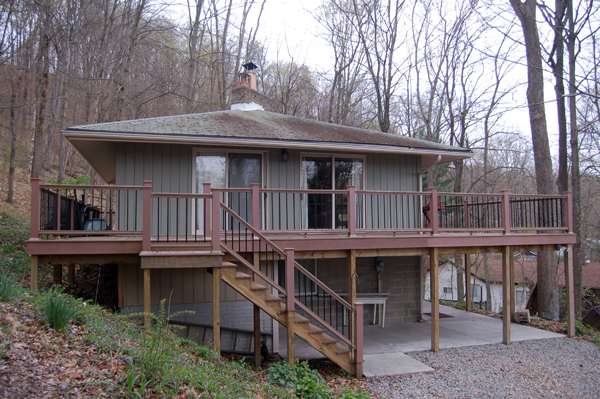
But the cottage makes for an ideal sanctuary for other reasons. We have no landline. Cell phone reception is marginal at best. There is no television, no email, no Internet. Other than electricity, the cottage is the epitome of electronic reclusiveness.
Right after we arrived Saturday morning, we went to work cleaning up inside and out. Though the cottage was locked up tight and unused for a couple of weeks, insects not surprisingly managed to make themselves at home. My wife soon took care of that.
Meanwhile, I donned gloves and pruners and attacked the weeds with a mission. That’s no easy task on a steep slope that falls away quickly to the graveled lane below. But just being out in the fresh air was invigorating, and the exercise personally beneficial.
The real blessings came at the marvelous supper my wife prepared. We ate the tasty meal on the open-air deck.
For dessert, we simply sat on the porch and watched and listened. Cicadas intermittently sang their monotonous song. Colorful butterflies enjoyed the sweet fragrance of various wildflower blossoms.

A Carolina wren serenaded us with its luscious calls. Chickadees and tufted titmice played and fed in the surrounding mixed hardwoods. Cardinals sounded their evening songs. A great blue heron grunted from water’s edge, hidden by the forest curtain.
A gentle breeze rustled the nervous leaves of a quaking aspen. Human induced sounds intruded, too. We have accepted the fact that lawnmowers, weed eaters, shouting children, dogs barking in the distance are all part of the cottage life at times.
Altogether this harmonic mishmash of sights and sounds must have worked its magic. I slept 11 hours that night.
With those revitalizing results, we should embrace the cottage’s graciousness more often.
Wildlife Photos From The Chesapeake Bay Region
Culture and Communities at the Heart Of India
Artist and nature journalist in the Shenandoah Valley of Virginia.
Photographer Of Life and moments
Personal Blog
Art is the only way to run away without leaving home. -Twyla Tharp
Writing generated from the rural life
writer. teacher. podcast cohost.
El amor cruza fronteras / Love crosses borders
 Roadkill Crossing
You must be logged in to post a comment.