A Big Day with big, renewing results

prothonotary warbler, warblers
Male Prothonotary Warbler at Magee Marsh. © Bruce Stambaugh 2015

By Bruce Stambaugh

Even in my semi-retirement, I’m a busy person. Keeping active and involved in the community has been a priority and passion my entire life.

That lifestyle takes a personal toll, however. From time to time, I need to recharge my body, mind, and spirit. I step away from my daily routine and spend some time just enjoying life.

I have found that immersing myself into nature is the salve that soothes the soul. I love the outdoors and all the beauty that she offers.

A Big Day does that for me. In the birding world, a Big Day is an entire day devoted to nothing more than counting all the species of birds that you can identify by sight or sound.

Folks do Big Days in groups that cover a given territory. Or they are done by simply staying put in one spot and counting all creatures avian seen or heard. That is appropriately called a Big Sit.

My Big Day, however, wasn’t either one of those. Instead, with the warbler migration in full swing, I knew the various locations I wanted to visit in northwest Ohio to view the returning and transient birds.

Traveling alone to different birding hot spots allowed me to go at my own pace, and to absorb fully all that I experienced.

Spring birding near Lake Erie means dressing for all seasons. I was glad I had.

This slideshow requires JavaScript.

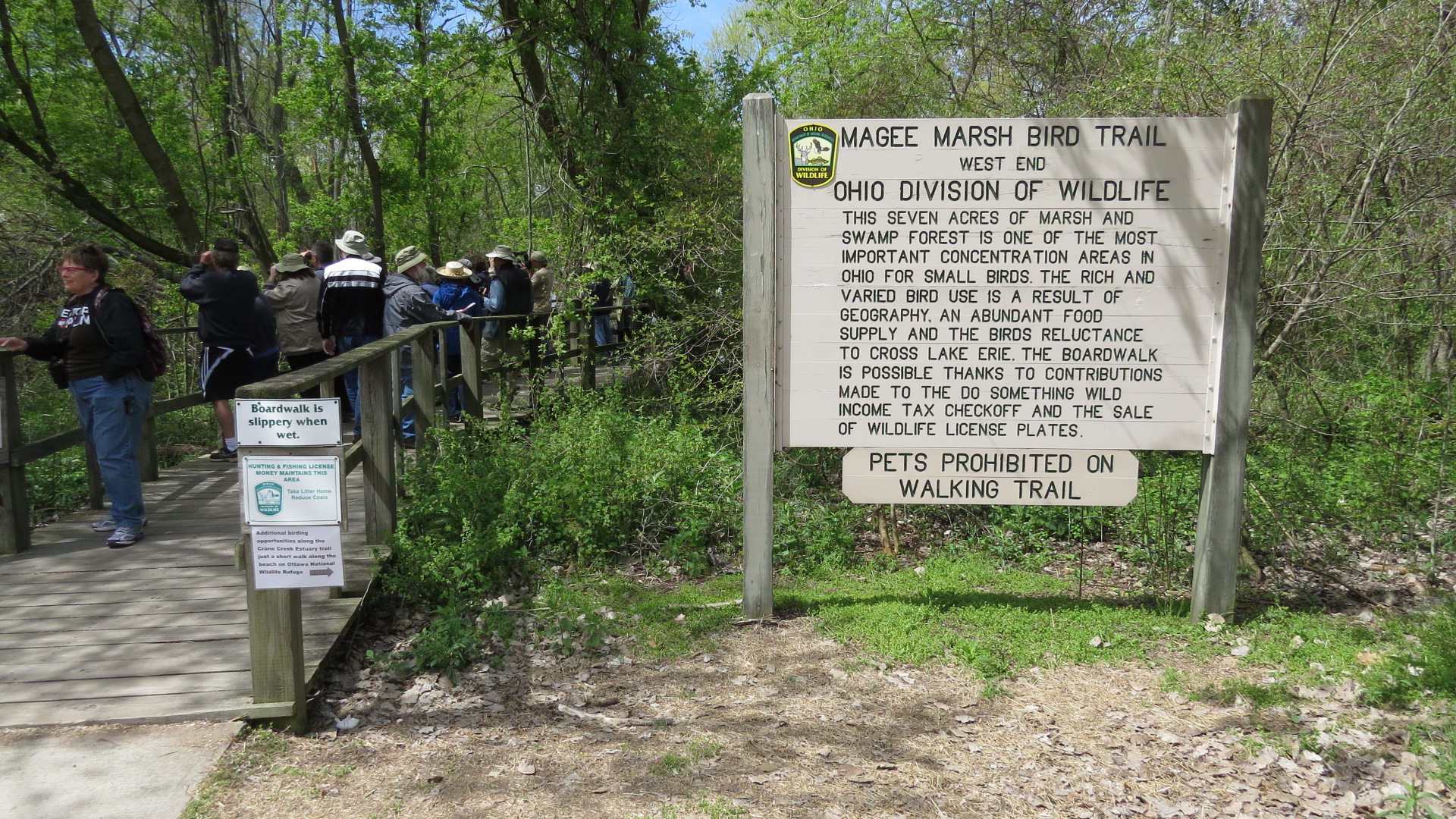
The steady, stiff northeast wind off of the lake brought out the winter duds in most birders on the boardwalk at Magee Marsh, my first destination. Being bundled up didn’t deter either the active bird observations or the usual universal geniality of most birders.

The boardwalk was packed with birders young, old and in between from around the world. Warblers and other birds flitted everywhere.

Even though I had gone by myself, I clearly wasn’t alone. Among the hundreds of birders at Magee, I only knew one, my friend and expert birder, Greg Miller, of ‘The Big Year” fame. The rest weren’t strangers though, helping me to locate and identify 23 warbler species. Their kindness meant more than the day’s species numbers.

Later, when I drove the Ottawa National Wildlife Refuge road and then hurried to see some other rare birds, I found the same excited congeniality. Sullen grumpiness isn’t part of birding ethics. Beautiful birds and friendly birders cohabited.

(Click on the photos to enlarge them)

With the day quickly waning, I headed east to the Marblehead Peninsula. I wanted to enhance my day with a brief visit to the Lakeside Daisy Nature Preserve to view the flowers in their prime. Though the day was mostly cloudy and cool, the little buttery daisies warmed my soul with their lusciousness.

After a quick supper, I hustled to my favorite spot in Ohio, Marblehead Lighthouse. The setting sun cast long shadows of trees onto the historic white lighthouse. Its red top, where the beacon blinked for sailors, was bathed in creamy, warm light.

A handful of other photographers celebrated with me. I can’t speak for them. But with each click of the camera’s shutter, my soul felt lighter, cleansed, fulfilled.

I hurried to nearby Lakeside to watch the sunset’s golden evolution. The day was complete.

Such are the positive consequences of observing, listening, contemplating, reflecting and sharing with humankind amid the earthly creation for which we all are charged to preserve. My Big Day finished bigger than I could have ever imagined.

Joy abounded all around in regeneration. Isn’t that the real reason for spring?

Lakeside sunset, sunset
Lakeside sunset. © Bruce Stambaugh 2015

© Bruce Stambaugh 2015

Camouflaged

Camouflaged. © Bruce Stambaugh 2015
Camouflaged. © Bruce Stambaugh 2015.

I recently went in search of migrating warblers and other bird species at Magee Marsh Wildlife Area near Oak Harbor, OH. It was the peak of the Biggest Week in American Birding, sponsored by the Black Swamp Birding Observatory. Thousands of folks from around the world came to the annual event.

Magee Marsh has a well-maintained boardwalk for birders to observe up close the many beautiful birds that flit around. The boardwalk meanders through the various favorable habitats, woods, marsh, water. At times, the walkway is packed. People clump up to get a view of a showy or rare species, with birders helping birders to find the bird. That’s just how birders are. Well, most of them at least.

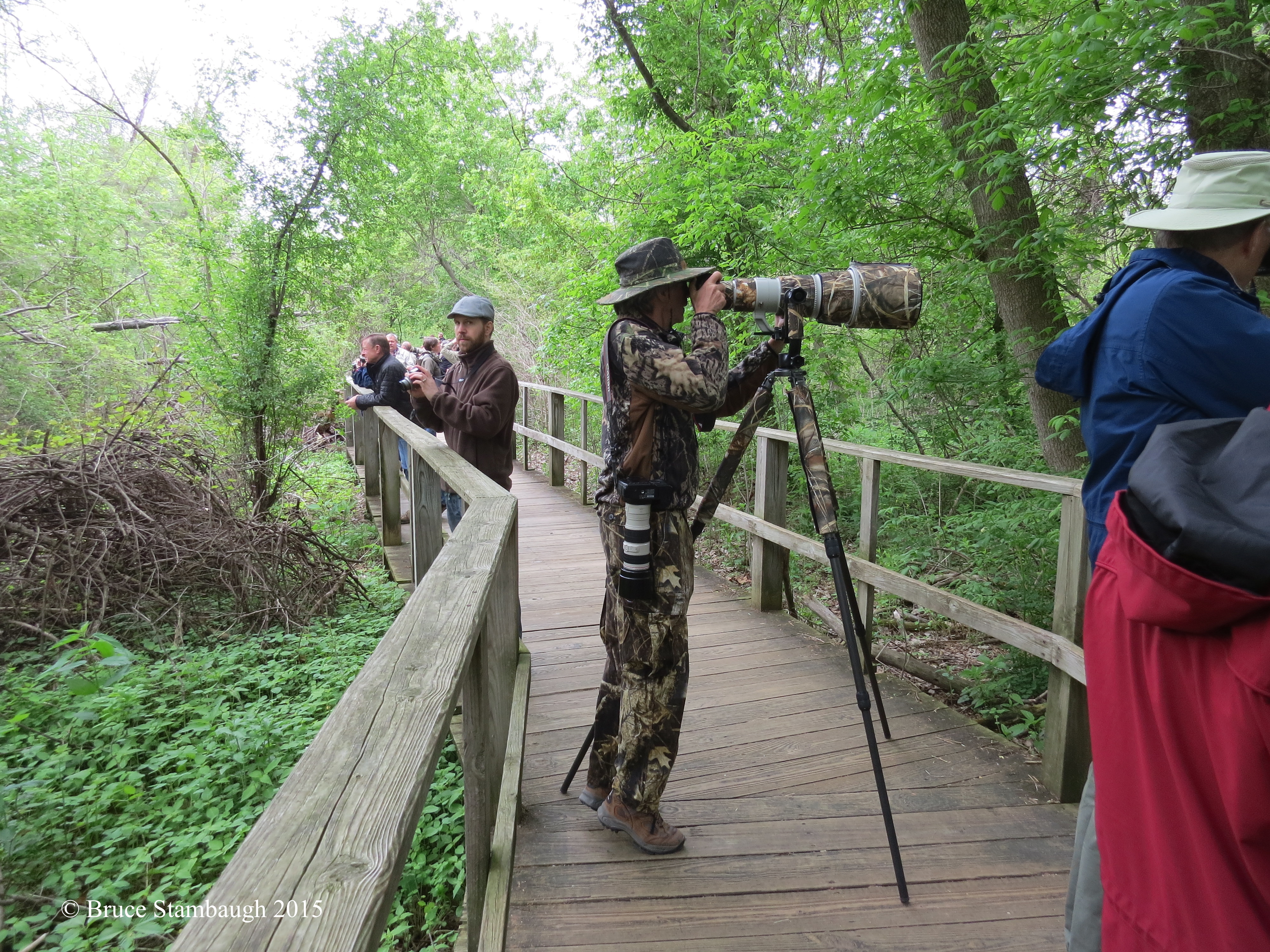
When I came upon this photographer aiming his huge camera at something, I had to take his photo. He was the only person I saw all day that totally blocked the boardwalk. This individual wore all the right clothes and used the best photography equipment.

He clearly only had one thing in mind, and courtesy wasn’t one of them. His camouflage outfit and camera said it all. He was there to shoot photos of birds. He seemed totally oblivious to the fact that thousands of others wanted to do the same and were unable to pass the way he was set up. Also, the boardwalk rules, both written and understood, clearly state, “No tripods.”

I’m glad this photographer was the exception, not the rule at Magee Marsh. “Camouflaged” is my Photo of the Week.

© Bruce Stambaugh 2015

For birders, migration is like Christmas in springtime

Bay-breasted Warbler, migratiing birds, locating birds
Migrating warblers, like this Bay-breasted Warbler, are often easy to hear but hard to locate since they usually stay high in trees and are constantly on the move feeding. © Bruce Stambaugh 2015

By Bruce Stambaugh

Like children dreaming of Old St. Nick on Christmas Eve, this is the time of year birders have yearned for, longed for, relished.

For hardcore birders, spring migration is a Christmas morning that spans several weeks from mid-March to mid-May. Avid birders are especially on the alert now to find the many species they seek, and some they couldn’t even imagine.

Rock Wren, rare birds, spring migration
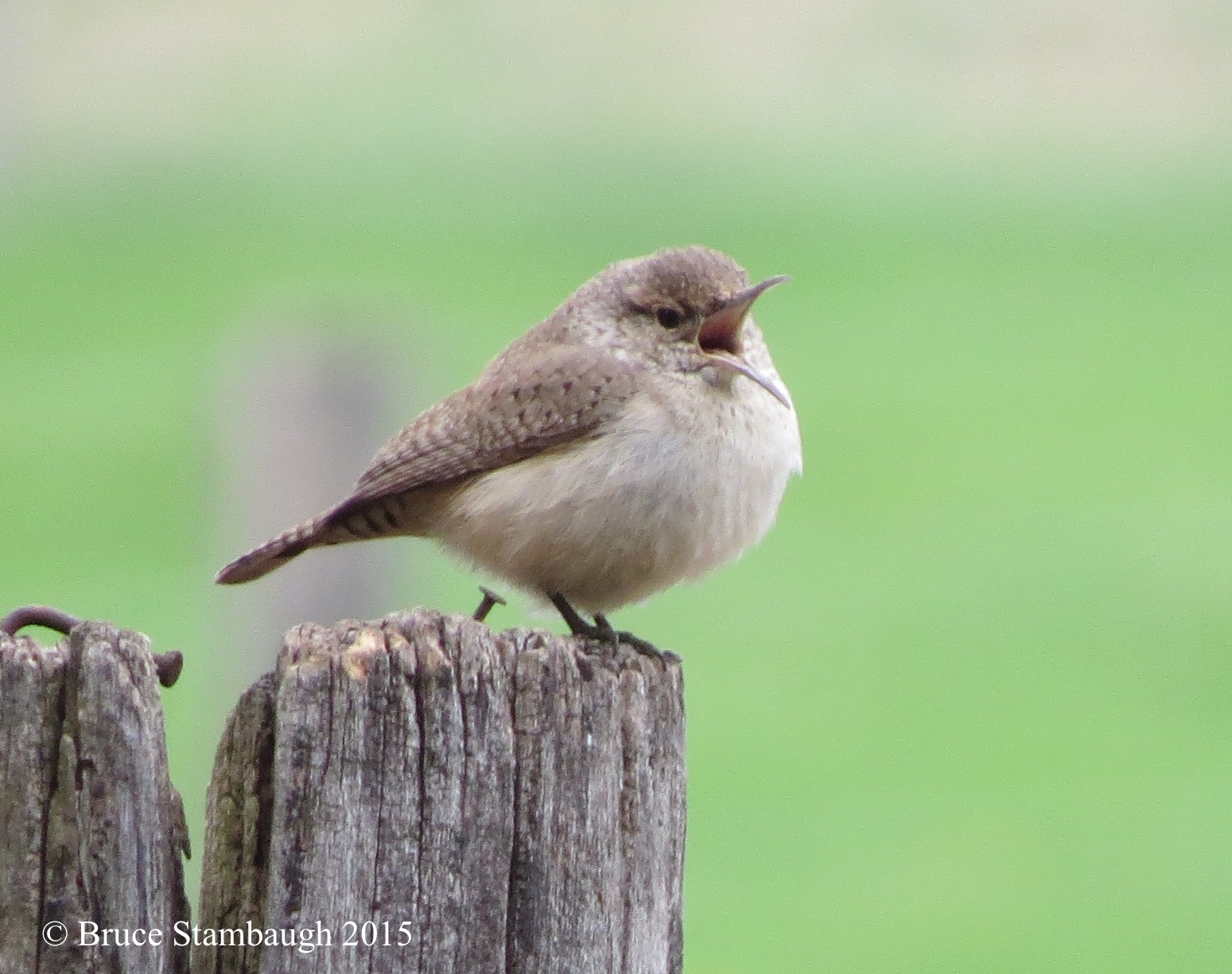
Rock Wren. © Bruce Stambaugh 2015
When a rarity shows up like the Rock Wren did last spring, it’s a birding bonanza. The Rock Wren became a rock star. For several days, the bird from America’s southwest was a magnet, attracting folks from far and wide to Holmes County.

Such birds are the exception. The spring migratory norm is to view birds that either return here to nest or to catch a glimpse of those that are just passing through. Depending on the weather, the transients might stay a day or two, or just make a short pit stop to rest and refuel.

The challenge is to be at the right place at the right time to see and hear the birds.

For me, I’m just as happy to note the return of my backyard birds. The Chimney Swifts rattled the fireplace doors as they swooped into our chimney the evening of April 18, the same date as last year.

How do I know? Like most birders, I keep a list of when I see a species for the first time each year. In the birding world, that’s known as the FOY, first of year. For instance, the Red-headed Woodpecker was a day later than last year, arriving April 21.

This slideshow requires JavaScript.

Today’s birders use social networking sources to track the movement and appearance of the various species. That gives the flocks of birders a heads up on finding and photographing particular birds.

We are fortunate in Ohio to have one of the best locations in the country to observe and hear a wide variety of transitory and returning birds, especially warblers. This time of year both birds and birders pack Magee Marsh Wildlife Area.

A conservation group, the Black Swamp Bird Observatory, located at the entrance to Magee Marsh in northwest Ohio, sponsors “America’s Biggest Week in Birding.” In fact, it’s going on right now.

These folks welcome thousands of birders, amateur to professional, in hosting this attractive annual festival. Magee Marsh, a state park, is billed as “the warbler capital of the world.” Having been there on many occasions, I can attest to that.

Birders from around the world converge on Magee Marsh just to watch the warblers and shorebirds come and go. It’s not unusual to observe 20 or more kinds of warblers in just a few hours. Magee Marsh and the surrounding acreage are protected habitat that ensures safe harbor for migrating and nesting birds of all sizes, colors and species.

My first visit to Magee Marsh years ago was indeed like Christmas. A few steps onto the wooden boardwalk and I spotted a variety of colorful warblers decked out in their impressive breeding plumage. The brightly colored little birds looked like Christmas tree ornaments perched on low-hanging tree branches.

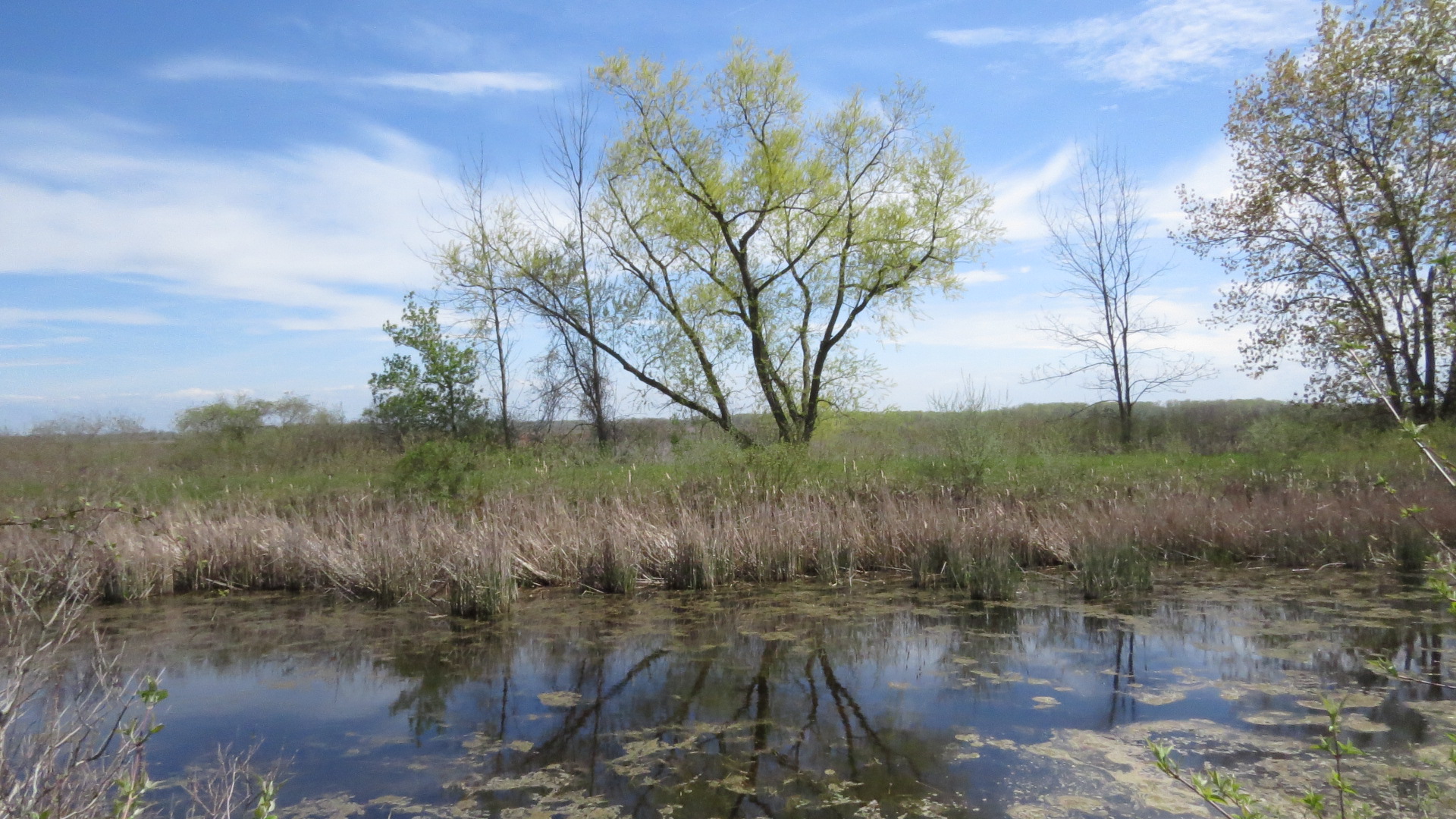
Where I live here in Ohio’s Amish country, we don’t necessarily have to drive that far to enjoy the migrating birds. The Killbuck Marsh Wildlife Area, the Holmes County Trail, The Wilderness Center, and the many ponds and lakes in our area provide excellent habitat for a variety of birds.

Or you can just step outside and watch and listen. You just might think it’s Christmas in springtime.

overlapping birds in spring migration
Winter and summer residents, like this White-crowned Sparrow, and male Rose-breasted Grosbeack, oftern overlap during spring migration. © Bruce Stambaugh 2015

© Bruce Stambaugh 2015

Farewell to the backyard garden pond

backyard garden pond
In its prime. © Bruce Stambaugh 2015

By Bruce Stambaugh

Our backyard looks and sounds a little different than it has in a long time.

We recently bid a fond farewell to our little backyard garden pond. She served us well all these years. It was time to let her go, and allow others to embrace her captivating charm.

I didn’t relish removing the little pond and all its accessories. The artificial pond brought us many genuine joys, far beyond any expectations we could have imagined.

When I retired as elementary principal in 1999, my faithful staff, amiable students and supportive parents presented me with a very special gift. They gave me a hand-hewn birdbath and a gift certificate for a garden pond, something I had wanted for a long time.

I brought the weighty birdbath home and plopped it where the sidewalk curves to the front porch. Surrounded by luscious bubblegum petunias, it enticed many a bird to sip and bathe in the summer sunshine.

I located the pond just steps away from our back porch. It was also easily visible from the windows at the rear of our home.

I’ve had two different ponds over the years. The first was a rubber lining placed in a shallow hole that I had dug out. I added a miniature waterfall constructed out of an assortment of rocks I collected from farm fields and local creeks.

I added goldfish, oxygenating plants, water lilies, snails and non-toxic chemicals to kill the algae and keep the water as clean as possible. Of course, I had to feed the fish and regularly clean the pond pump filters.

Unfortunately, destructive varmints also were drawn to the water feature. Several years ago, I awoke to find that the pond had been nearly drained.

I discovered that some ground moles had created shortcuts to quench their thirst. To prevent a reoccurrence, I switched to a hard plastic pond. In the end, it turned out to be a better option for everybody, pond critters included.

The waterfalls provided practical and esthetic pleasures. The birds loved it, bathing and drinking the refreshing water. The sound of water falling mesmerized anyone who graced our porch.

I enjoyed watching American Goldfinches bringing young to the pond for the first time. I added a heater to keep the falls going in the wintertime. A variety of birds took advantage of the much-needed water when their normal sources froze.

Birds weren’t the only animals attracted to the little pond. Over the years, raccoons, garter snakes, groundhogs, squirrels and even deer came to the pond.

The grandchildren loved the pond, too. They couldn’t wait to feed the fish and count the frogs hiding among the lily pads and their pure white blossoms each time the grandkids visited. My wife and I will always cherish those fine memories.

As much as we loved the pond and its amenities, we needed to give it up. Given our situation, we simply couldn’t maintain the pond properly. A friend’s family is already enjoying its alluring magical sounds. It’s nice to know that another generation will continue the gratification that we received from the little water feature.

To keep a water source for the animals and birds, I relocated the sandstone birdbath from the front to the back and added a couple of others to keep it company. We transplanted hostas and placed several of the rocks leftover from the falls for some natural texture.

The birds have already discovered the water. I only hope the snakes and groundhogs don’t find it as desirable.

garden pond, birth baths
The new “pond.” © Bruce Stambaugh 2015

© Bruce Stambaugh 2015

Pair of Pileateds

Pileated Woodpeckers, Bruce Stambaugh, birding,
Pair of Pileateds. © Bruce Stambaugh 2014.

When I hear that distinctive, penetrating squawk outside, I usually grab my camera and head to a window at the rear of our home in Ohio’s Amish country. A Pileated Woodpecker, or maybe two, is brashly announcing its arrival. As a birder, I have been fortunate to have Ohio’s largest woodpeckers coming to the feeder regularly year-round. They especially frequent the feeder in the summer when the parents bring a juvenile to the peanut butter suet feeder that hangs from the backyard sugar maple tree.

I have had all three birds near the feeder at the same time, but never on the feeder simultaneously. As you can see, I can no longer say that.

When I glanced out a window recently after hearing that call, I was pleasantly surprised to see both the male and the female on the feeder opposite one another. Even as an average birder, I knew this was a very rare event. Most birders long to even see a Pileated Woodpecker, much less have them as a yard bird. Pileateds are normally shy birds that keep to the deep woods. Why this pair feels safe in visiting my backyard, I don’t know. I’m just glad they do. I know I was extremely fortunate to have both the male and the female together in the same photo.

“Pair of Pileateds” is my photo of the week.

© Bruce Stambaugh 2014

Birds and birders: Two of a kind

boardwalkentrancebybrucestambaugh
The west entrance to the Magee Marsh boardwalk is a great place to begin the birding.

By Bruce Stambaugh

Birds and birders have a lot in common. This thought struck me on my latest trip to northwest Ohio’s birding mecca, Magee Marsh Wildlife Area.

Billed as the Greatest Week in American Birding, the event coincided with the peak of the spring warbler migration. Warblers, and other migrating birds, use Ohio’s airspace as their launching pad to their northern breeding grounds.

Before the birds cross Lake Erie, they tend to rest along its shores. There they replenish their strength by devouring insects that flit around the budding and blooming deciduous trees, shrubs and wildflowers. Shorebirds scour the marshes and shores for their nourishment.

woodcockbybrucestambaugh
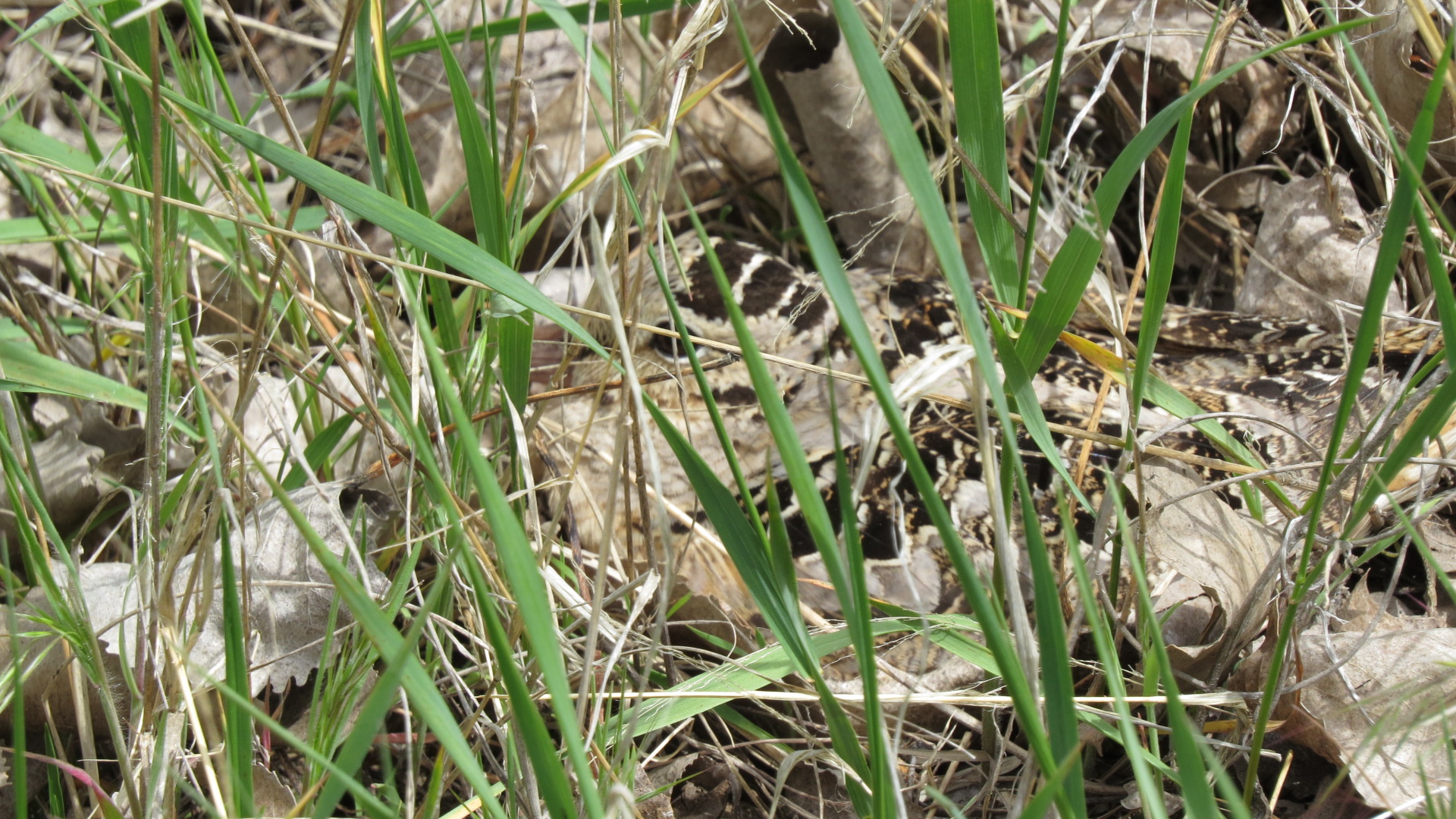
This American Woodcock chose the median of the parking lot to make her nest.

As an amateur birder, I enjoy watching backyard birds and observing passers through with equal zeal. But if I want to see a multitude of colorful migrating birds packed into one location, Magee Marsh is the place to go.

The marsh and its 2,200 surrounding acres serve as a sprawling wildlife sanctuary with varied habitat types, including estuaries, marshes, scrub lands, woodlots, rocky areas, beaches and of course the lake itself. The area also provides sportsmen with seasonal controlled hunting and fishing.

birdhabitatsbybrucestambaugh
Magee Marsh has many habitats that attract several species of migrating birds.

During bird migration season, the only shooting of birds permitted is with cameras. Believe me, plenty of shots are fired in search of the perfect picture of the incredible songbirds, shorebirds, and birds of prey.

In my meandering around the boardwalk, trails and beach, I discovered something that should have been obvious. Birders have a lot in common with the birds they watch.

boardwalkbirdersbybrucestambaugh
Birders checked out warbler on the boardwalk at Magee Marsh

Like their feathered friends, birders come in all shapes, sizes and ages. Just like the birds, birders sport different hues and clothe themselves in a variety of colors, including camouflage, worn more to soothe the birds than hide from predators.

There are other comparisons, too. Some birders maneuver and forage in solitude for their targets. Others travel in organized groups. Most birders are quiet, but some let loose with an effusive chatter when a flashy warbler or rare bird is spotted.

When a shorebird captures a fish, it often finds itself quickly surrounded by others hoping to also steal a bite. When a birder discovers a coveted find, others gather around hoping to capture the image through their spotting scopes, binoculars, or cameras. Those without scopes are graciously invited to better view the often-concealed bird. Birders are genuinely kind people.

youngbirdersbybrucestambaugh
A young family took a break from their birding at Magee.
When a bird is located along the boardwalk at Magee, birders bob and weave, stretch and stoop to get just the right viewing angle. Birds do the same in search of food or checking out habitat. Most birders go in search of birds, like the many warblers that flit from limb to limb decreasing the insect population. Others sit and wait for the birds to come to them, like a Great Blue Heron patiently waiting for a fish to spear.

Camaraderie and sharing are normal in the sport of birding. Staunch birders make life lists, month lists, day lists, yard lists,

capemaywarblerbybrucestambaugh
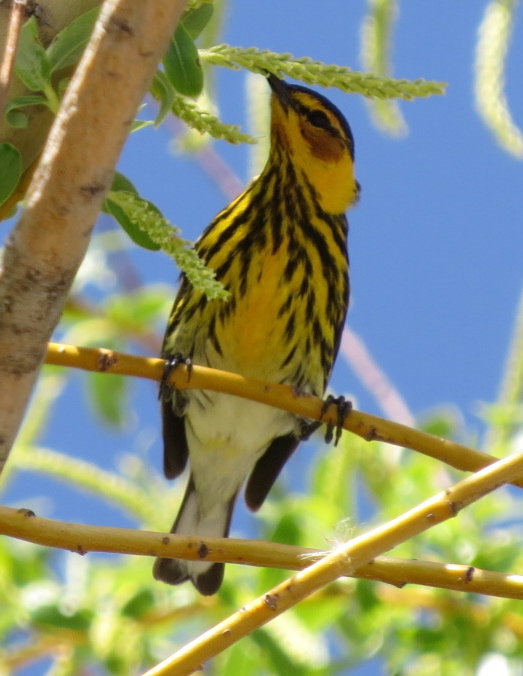
This Cape May Warbler dined on insects before heading across the lake.
state lists, annual lists, and just about any other kind of list you might imagine. That’s how serious they take this popular sport.

If someone finds a bird they can’t identify, a more expert birder gladly assists in teaching how to properly confirm just what species it is. Teaching and learning are just as important as appreciating the birds and their habitats.

Perhaps that is why birding is one of the most popular sports in the world. During the Biggest Week in American Birding, global citizens flock to northwest Ohio in hopes of seeing a special species.

To hear the various lyrical birdsongs and behold the flashy mating plumages first hand is truly a treat. To see the smiles and satisfaction on the faces of the elated birders is equally rewarding.

happybirdersbybrucestambaugh
Birders tend to be pleasant, engaging people.

© Bruce Stambaugh 2013

Bluebirds make me anything but blue

bluebirdsandfishbybrucestambaugh
Eastern Bluebirds take turns getting a drink at the little waterfalls of the backyard garden pond with an orange audience.

By Bruce Stambaugh

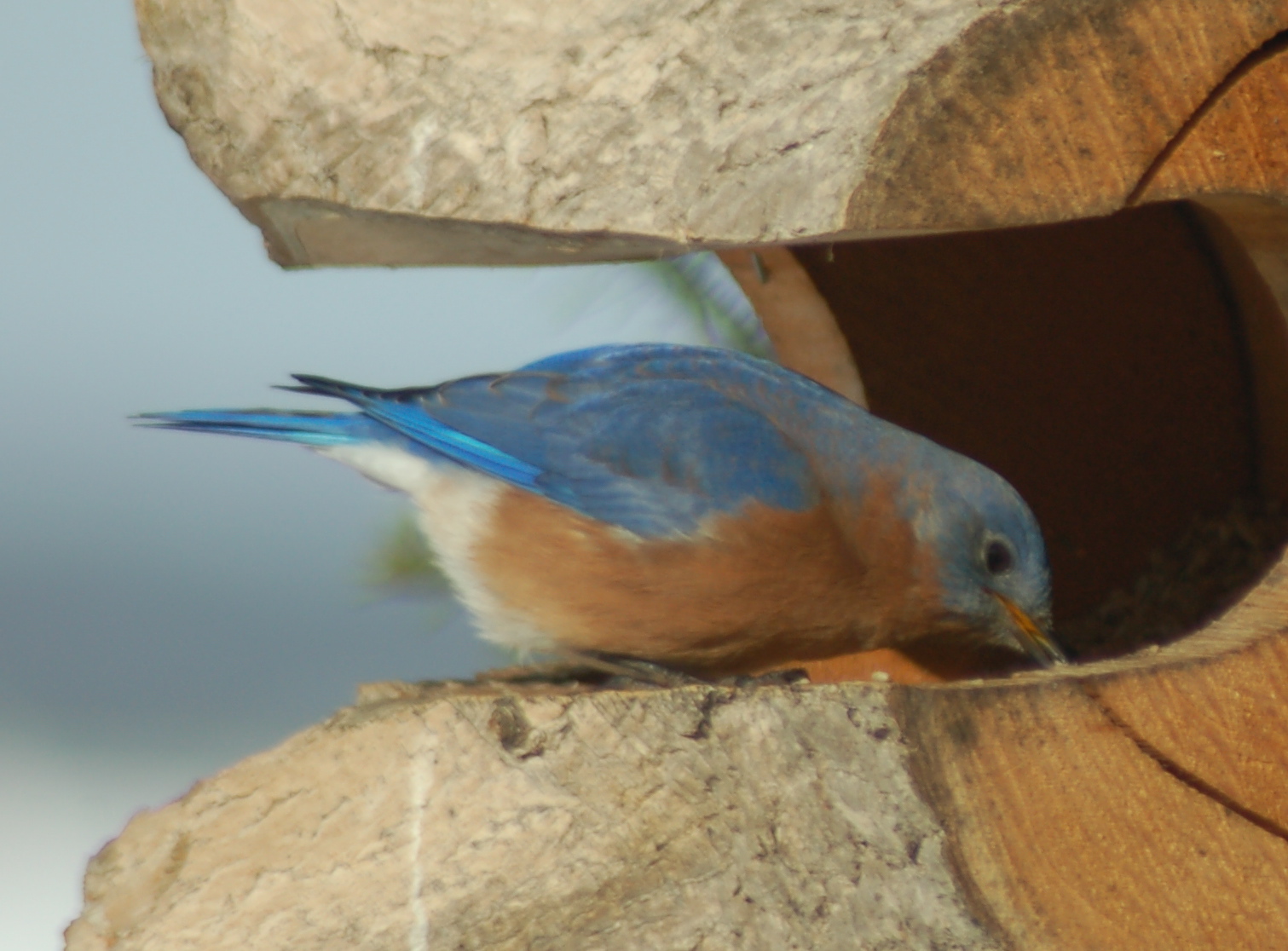
Out of the corner of my eye, I caught a familiar blue flash. A male Eastern Bluebird had landed awkwardly on the wooden framed feeder that held peanut butter suet cakes.

That same scene had been repeated in my backyard many times over the years. Intended for woodpeckers, chickadees, nuthatches and titmice, Eastern Bluebirds and other avian species have also enjoyed the rich protein offerings.

The first time I observed the bluebirds attack the suet, I took special notice. Eastern Bluebirds dine on protein-rich insects and their larvae. Suet apparently helped fill the void when insects, or berries for that matter, were unavailable in Ohio’s cold season, which this year has lasted much too long.

maleeasternbluebirdsbybrucestambaugh
Even in the winter, the colors of male Eastern Bluebirds radiate.

In the springtime, the male bluebirds burst into an iridescent, radiant blue that glows in the morning sun. They are in their flamboyant mating plumage, brilliant on head, back, wings and tail feathers. Their orange breasts contrast nicely with the showy blue. A splash of white on their wing shoulders and a snowy fringe along the birds’ bottom feathers nicely accent the flashy ensemble.

femaleeasternbluebirdbybrucestambaugh
The female Eastern Bluebirds have a beauty all their own.
Even the more subdued and shyer females could hold their own in a bird beauty contest. Their dullness, of course, is for natural protection from predators. Bluebirds are beautiful to say the least, and their cheery chatter and lyrical calls only enhance their artistry.

Bluebirds are not designed to cling to a typical suet feeder the way woodpeckers do by bracing themselves with their firm tail feathers. I marvel every time I see the bluebirds lunching at the suet.

The bluebirds often land atop the wood-framed feeder with wire mesh sides designed for easy access to the nutritious food. They

bluebirdonsuetbybrucestambaugh
The bluebirds perch as best they can to steal a bit of peanut butter suet.
perilously cling to the sides or bottom brace of the feeder, flapping their wings wildly as they peck at the soft suet. Since they keep returning over and over, day after day, to the suet, I have to assume that they aren’t expending more energy than is gained in the tricky process.

As their main course, the bluebirds and other songbirds regularly down chipped sunflower hearts that are offered at other feeders. They apparently use the peanut butter suet as dessert, and then wash it all down with occasional visits to the little waterfalls of the garden pond.

A half dozen pairs of Eastern Bluebirds frequent my feeders, shrubs and trees in the yard. If they choose to inhabit some of the bluebird houses erected around the property, I rejoice and stay vigilant. It’s a never-ending battle with the pesky House Sparrows to keep the bluebirds nesting.

bluebirdnestbybrucestambaugh
The nests built by Eastern Bluebirds are usually made of soft grasses or pine straw, like this nest in progress.
In the spring, I check the boxes regularly. If I find a finely structured nest of soft grasses and pine needles, I know the bluebirds have won the battle. If the nest is disheveled and constructed with a junkyard of materials, I pitch it in hopes of discouraging the House Sparrows.

Often the bluebirds will perch in the large sugar maple in our backyard above the dangling suet feeder. After just a few bites of suet on this chilly April morn, this male bluebird instead took wing and swooped low across the wide stretch of open, freshly plowed farm fields, making a beeline for my Amish neighbors.

Were they using a different feed? Was the bluebird nesting in one of their boxes? The answers were really insignificant. What did matter was that the bluebirds were thriving for all to enjoy.

Watching that bluebird arch across those fields in the morning sunshine couldn’t have made me happier.

© Bruce Stambaugh 2013

Birding through the bathroom window

fallsunsetbybrucestambaugh
Sunsets through the bathroom window are pretty anytime of the year. This was taken in early Nov. Photo by Bruce Stambaugh

By Bruce Stambaugh

This time of year, especially when inches of snow cover the ground, birds flock to my backyard feeders. Please excuse the pun.

I hope you won’t mind me telling you that I get the best view of the various and sundry species of birds through the bathroom window of our modest country home. The kitchen window is good for observing birds, too, but it can’t match the wider view from the bathroom.

cardinalbybrucestambaugh
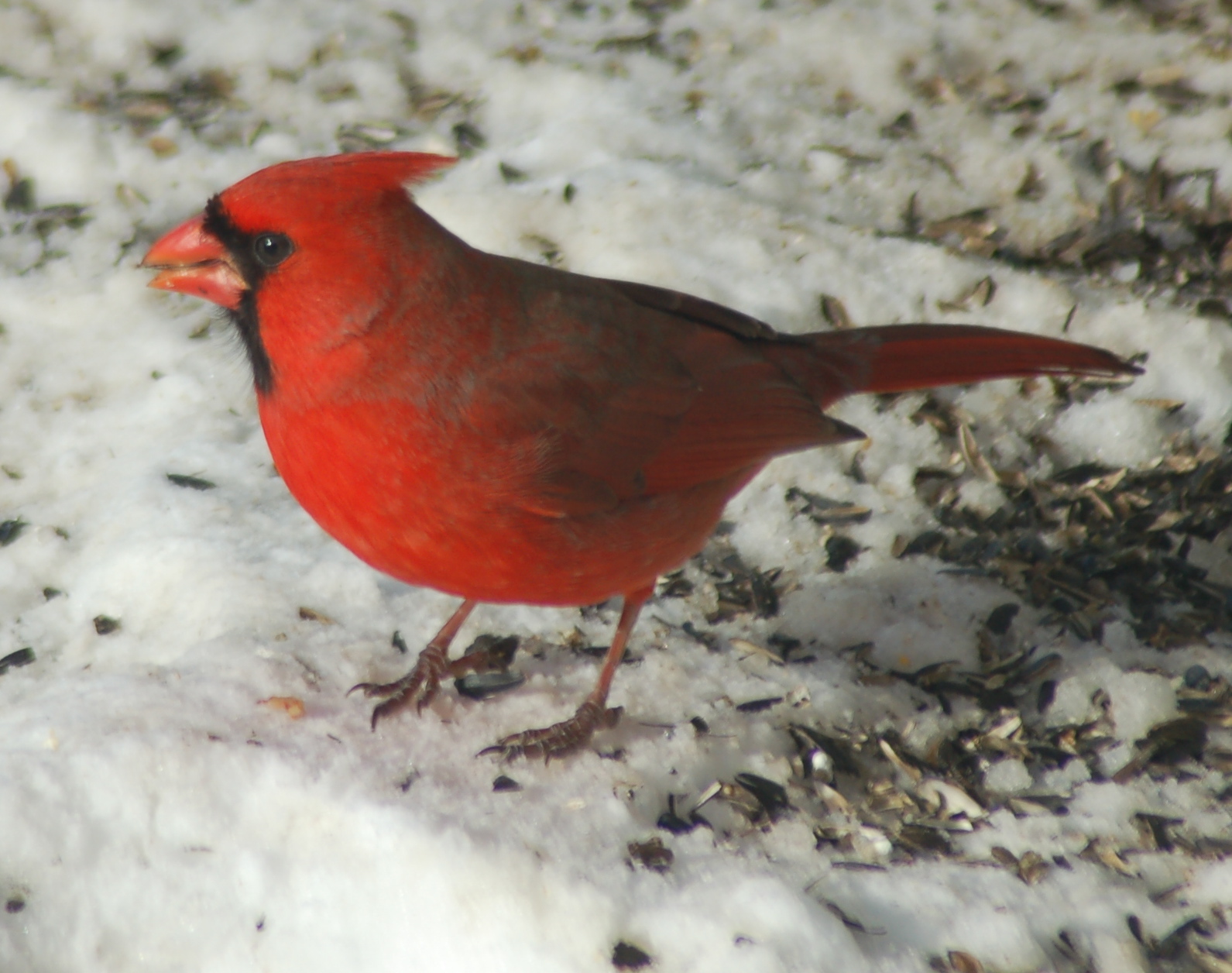
A male Cardinal ate oil sunflower seeds on a recent snowy day. Photo by Bruce Stambaugh
I wouldn’t blame you if you thought this a bit odd. It’s not really. From the bathroom window, I get the best look at the several feeders stationed around the backyard.

The bathroom is on the main floor of the house and faces to the west, which is particularly advantageous on rare sunny winter days. The afternoon sun shines brightly on the birds, adding enhanced brilliance to their winter plumage.

From the restroom vantage point I can see most of the backyard, from the perennial wildflower patch at the south to the back porch at the north. In between and straight out from the window are the little garden pond and the mature sugar maple tree. Birds are attracted to both for different reasons, water and cover, respectively.

takingadrinkbybrucestambaugh
A pair of Eastern Bluebirds sip water at the garden pond. Photo by Bruce Stambaugh
An electric heater keeps the pond from freezing. The pump that creates the miniature waterfall runs year-round, serving as both an avian drinking and bathing station.

The maple tree, with its impressive crown, is king of the backyard. I can see all but the very top of the tree through the window. Songbirds and birds of prey perch on its welcoming outstretched branches. Its crinkled, exfoliating bark serves as a helpful tool for woodpeckers and nuthatches. They wedge sunflower seeds into the cracks and use their pointy beaks to hammer open the shiny black shells to reach the prized protein hearts.

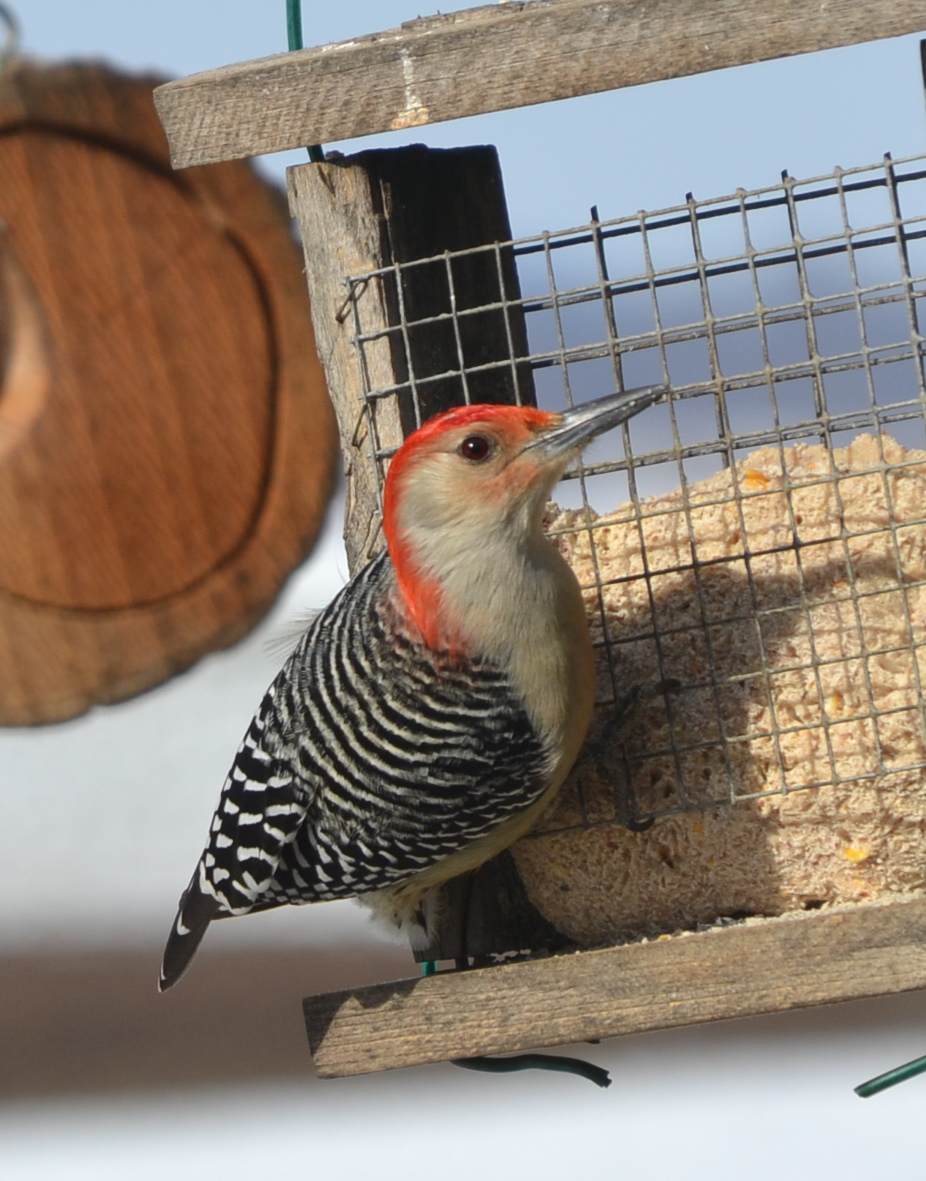
A male Red-bellied Woodpecker frequents the suet feeder. Photo by Bruce Stambaugh
The platform feeder and hanging feeders are also visible from my unusual viewing spot. Like most birders, I keep a camera handy to record the antics of the many aviary visitors. I capture other critters, fox squirrels, opossums and groundhogs, at the pond and feeders, too. Please know that the ironic humor of keeping a camera in the bathroom doesn’t escape me.

The digital photos help me record the comings and goings of these valued visitors all year long. Wintertime is my favorite, however, especially when a good snowfall blankets the ground. I fill the feeders, and await the action, camera in hand. The birds seldom disappoint.

Occasionally I witness a special happening. A Sharp-shinned Hawk makes a sneak attack hoping for an afternoon snack. It zips by

sharpshinnedhawkbybrucestambaugh
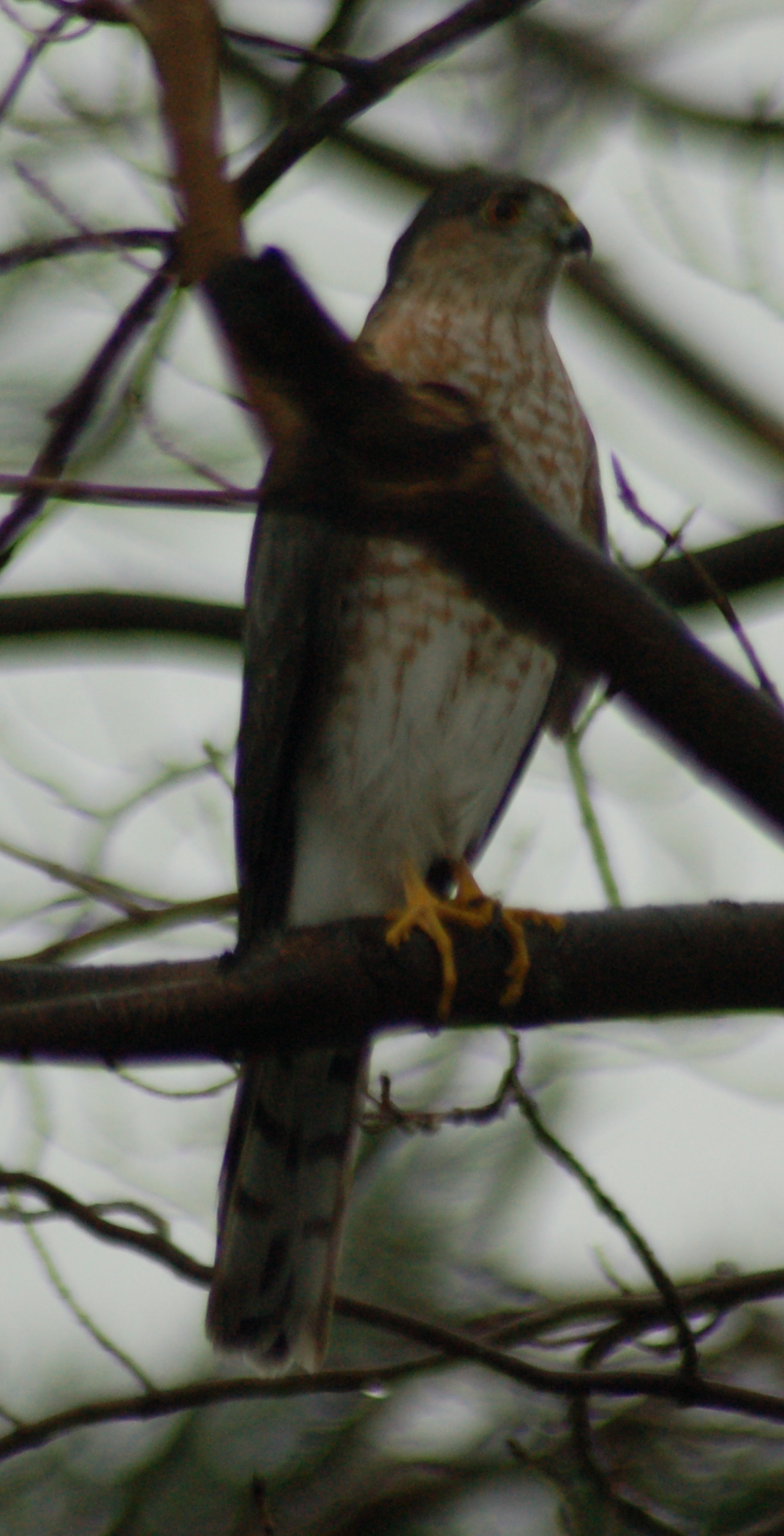
A Sharp-shinned Hawk landed in the sugar maple in search of an afternoon snack.
Photo by Bruce Stambaugh
the kitchen window and lands in the maple. I rush to the bathroom window in time to click away at the red-eyed accipiter.

Timing is often everything in bird watching. I have been able to photograph Red-headed Woodpeckers and Baltimore Orioles feeding simultaneously from the same suet feeder. From the bathroom window, I have had the perfect angle to catch brilliant Eastern Bluebirds chowing down on chipped sunflower hearts.

I have also seen a dozen or more deer munching in the shaded meadow far beyond our yard. I’ve been fortunate to see the neighbor’s horses romp on hillside pastures beneath the old windmill. I have snapped inspiring sunsets in every season. The list could go on and on.

Birding is a sport that can be enjoyed anytime, anyplace, even from the bathroom. For those who know me really, really well, that shouldn’t come as a real surprise.

honeywagonbybrucestambaugh
The honey wagon cometh. Photo by Bruce Stambaugh

© Bruce Stambaugh 2013

A valuable, universal gift for all to enjoy

onthetrailbybrucestambaugh

By Bruce Stambaugh

Smack in the center of our bucolic county is a gift that can be enjoyed by all. The Holmes County Trail is a golden thread that symbolically intertwines the east and the west as one.

lovelyscenerybybrucestambaughNow December may seem like a strange time to be writing about hiking and biking. When we have a gem of a trail in our midst it isn’t. Despite living in northeast Ohio where the weather is as fickle as its politicians, township trustees excluded, the trail is a year-round treasure for hikers, bikers and birders alike.

The trail ties Holmes County’s two cultural and geographic regions together through more than its central location. This multipurpose ribbon of assimilation serves as outdoor gym, nature center, photographic paradise and transportation route all in one. Many people, local residents and visitors alike, utilize those undeniable attributes.

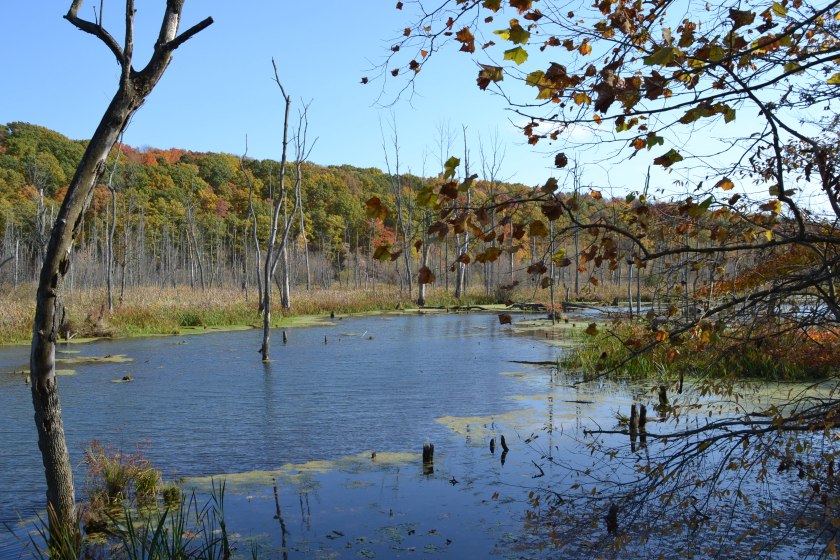
Though the trail has been open for awhile, it has only been in the last couple of years that I have begun to fully appreciate its value. I bike and hike the trail for the obvious reasons. I need and enjoy the exercise. The trail, however, provides so much more than physical workouts. For 15 miles from Fredericksburg to Killbuck, enigmatic landscapes of steep wooded hills and low marshlands with grasses, reeds, wildflowers, wildlife, ponds and estuaries abound.

killbuckmarshbybrucestambaugh
The Holmes Co. Trail runs through the Killbuck Marsh, an important wildlife area and fly way for migrating birds

Whether cycling or walking, memories flood my old brain much like the murky waters of the streams overwhelm the old-age valley after a summer deluge. Traversing where locomotives once chugged and whistled through the heart of the county invigorates the body, mind and soul. Truly its worth spans far beyond any personal physical or mental gains.

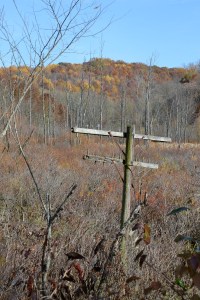
telegraphpolebybrucestambaughHistoric and aesthetic reminders of railroad days appear occasionally along the way. The weathered, wooden arms of long-abandoned telegraph poles still stand. Girders of old iron bridges that once ferried locomotives pulling passenger and freight cars continue as supports for the trail to cross the many tributaries that feed the mother stream.

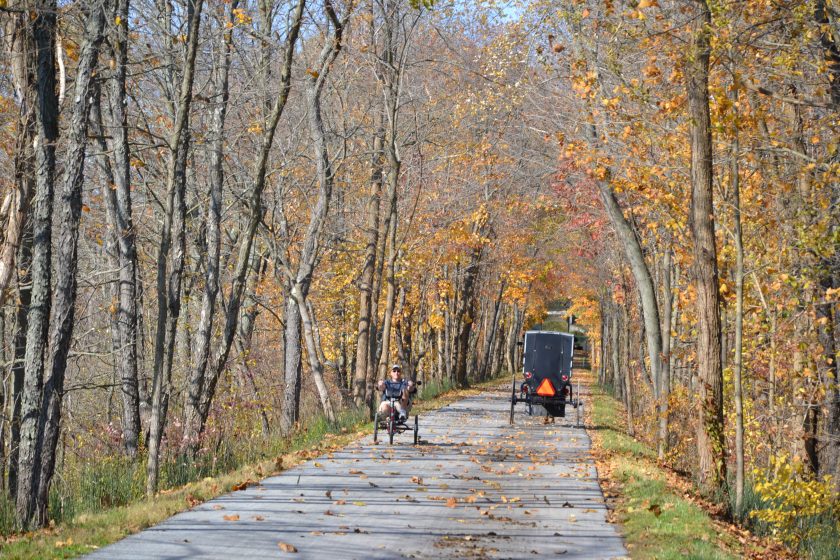
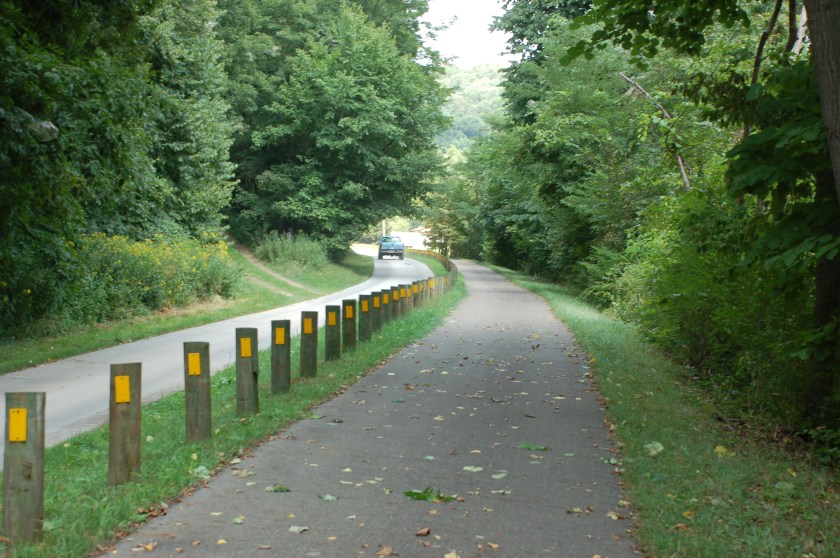
The old railroad bed that once conveyed products between Ohio cities has a renewed and appreciated purpose. Families leisurely stroll the paved path on a sunny Sunday afternoon. Casual and serious bikers alike zoom along the trail’s smooth, gentle gradient at preferred paces. Horses and buggies pass safely from home to store with no motorized hindrance.

strollingandridingbybrucestambaugh
Horses keep to one lane and bikers and hikers the other on the Holmes Co. Trail.

I am never surprised but always pleased by what I discover on my encounters along the trail. In the spring, pleasing pastels of plants, flowers and trees unfurl, and lyrical sounds of migrating songbirds, shorebirds, waterfowl and birds of prey fill the precious marshy flyway. In the shaded tree tunnels along the route, summer’s highlights include meeting fellow bikers from near and far who have come to enjoy the beauty of this special pearl.

youngredtailedhawkbybrucestambaugh
A young Red-tailed Hawk took flight along the Holmes Co. Trail near Fredericksburg.
Besides its rich, changing colors, the fall brings the joy of discovering a clamorous gang of crows spooking a bald eagle from its comfortable roost. Just down the way, gnawing beaver have encircled a cottonwood to the point of marveling that the tree still stands.

I have yet to experience winter on the trail. With the first fluffy snowfall, that will likely change.

As seasons come and seasons go, old friends meet and new friendships form along the blissful trail. Of all its intrinsic qualities, perhaps this virtue is the trail’s greatest gift to those who choose to unwrap it.

mothergooseandgoslingbybrucestambaugh
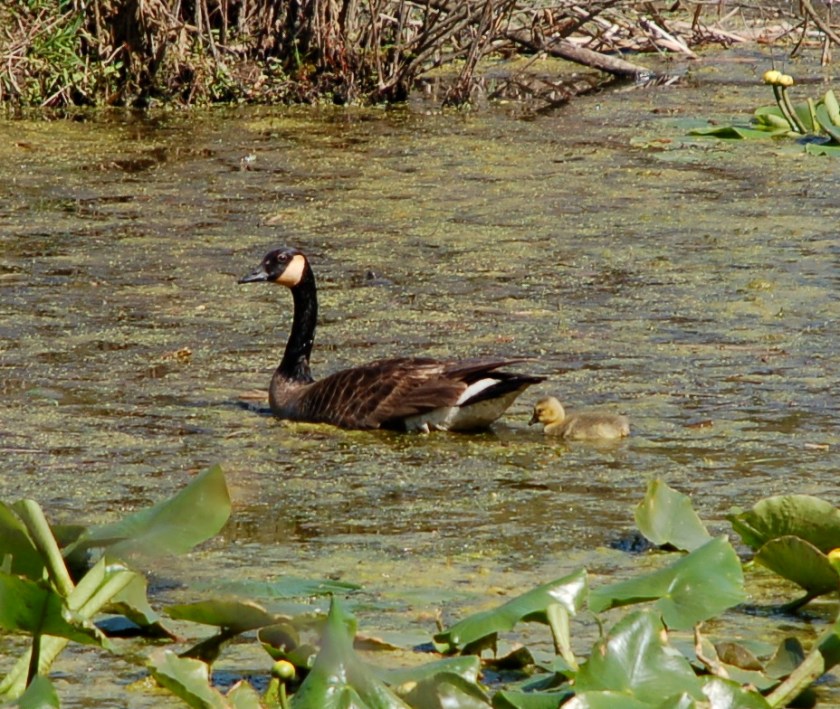
A Canada Goose gosling follows its mother through the marshy water along the Holmes Co. Trail.
familyonthetrailbybrucestambaugh
Families enjoy all the Holmes Co. Trail has to offer.
summeronthetrailbybrucestambaugh
North of Holmesville, a road parallels the trail.
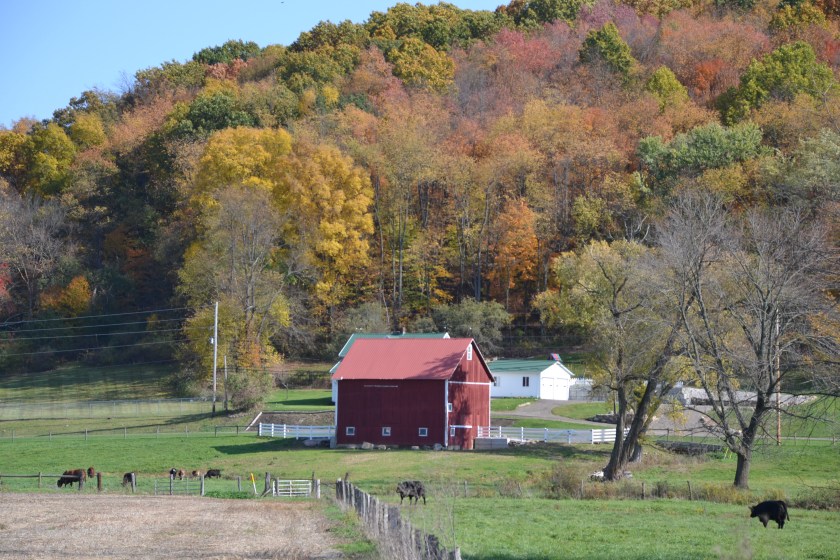
redbarnbybrucestambaugh
The views from the Holmes Co. Trail are beautiful and ever-changing.
fallalongthetrailbybrucestambaugh
Fall is especially nice along the Holmes Co. Trail.
goldenthreadbybrucestambaugh
In the fall, the Holmes Co. Trial really is a golden thread.
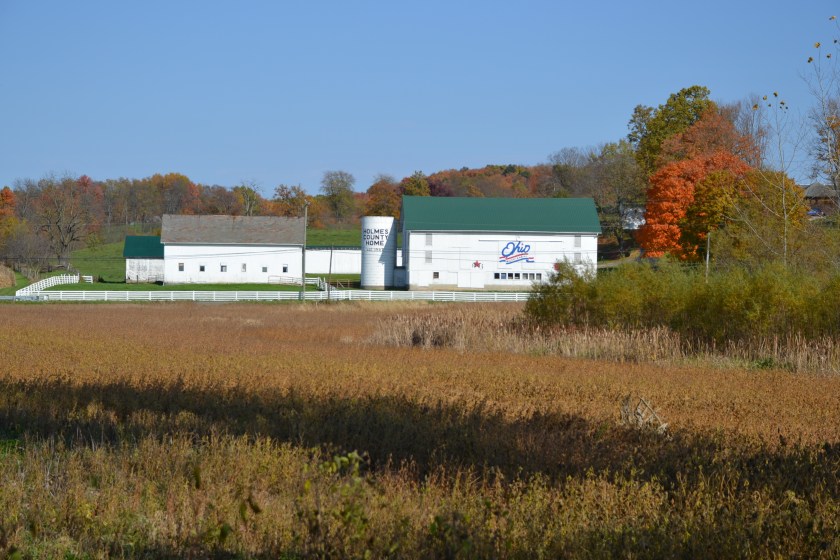
holmescohomebybrucestambaugh
The Holmes Co. Home is visible from the trail.
fieldcornbybrucestambaugh
Crops like field corn and soybeans also add to the variety along the trail.
killbuckcreekbybrucestambaugh
The trail follows the Killbuck Creek most of the way from Holmesville to Killbuck.
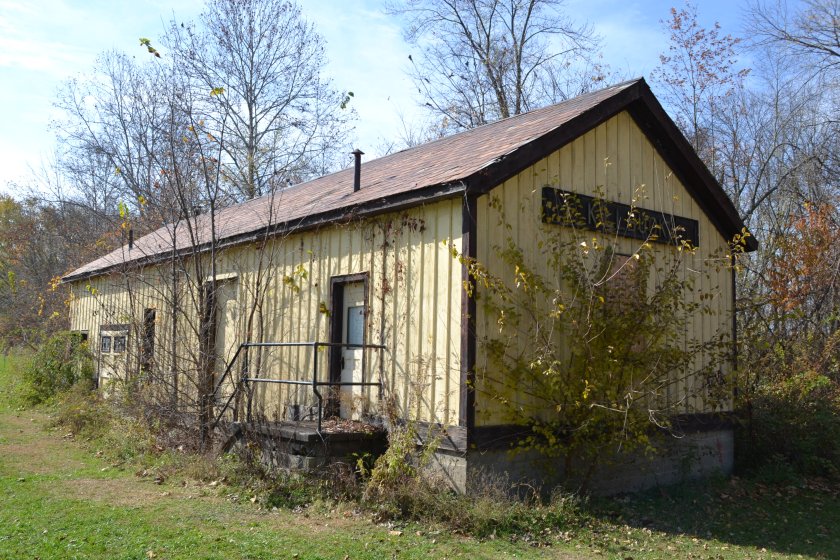
olddepotbybrucestambaugh
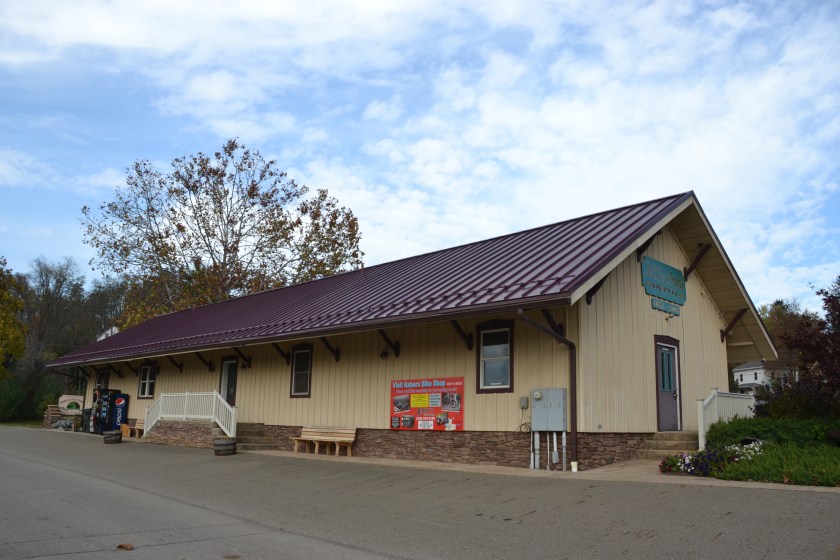
The old depot in Killbuck marks the southern-most part of the Holmes Co. Trail.
markedtrailbybrucestambaugh
Horses are required to stay on one side of the trail for obvious reasons.
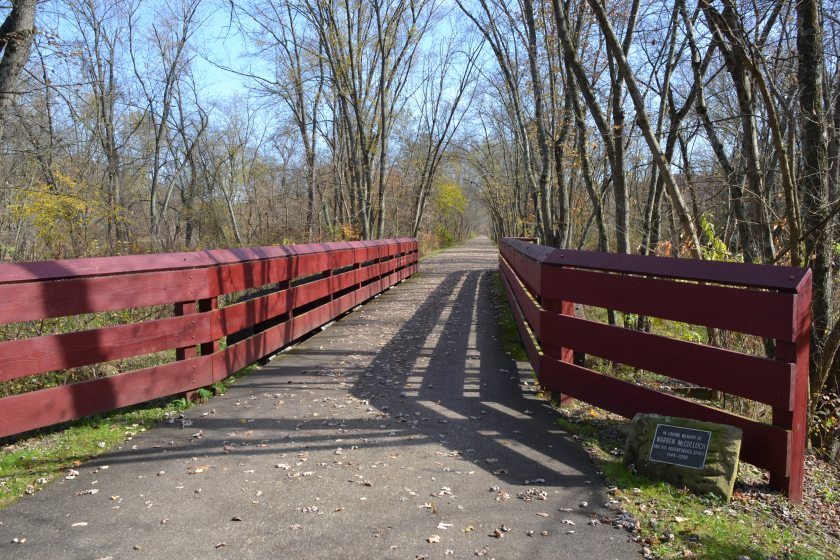
trailbridgesbybrucestambaugh
The old railroad bridges still serve their purposes along the trail.
levelridebybrucestambaugh
The trail cuts through a variety of topography while maintaining a level ride.
millersburgdepotbybrucestambaugh
Though not in its original location, the Millersburg depot serves as the hub for the trail.
killbuckmarshsunsetbybrucestambaugh
The Killbuck Marsh is both a valuable wildlife habitat and a photographer’s haven.

The Holmes Co. Trail has several access points. They include from north to south Fredericksburg, Holmesville, Millersburg and Killbuck.

This column appeared in The Bargain Hunter, Millersburg, OH.

© Bruce Stambaugh 2012

Frogs or birds? The choice was easy

Garden pond by Bruce Stambaugh
By Bruce Stambaugh

Well it happened. I finally had to remove the giant green frogs from my little garden pond. The reason? I found another dead songbird by the pond. The perpetrator left the evidence in plain sight and never bothered to leave the scene.

After what had happened this summer, I had no choice in the matter.

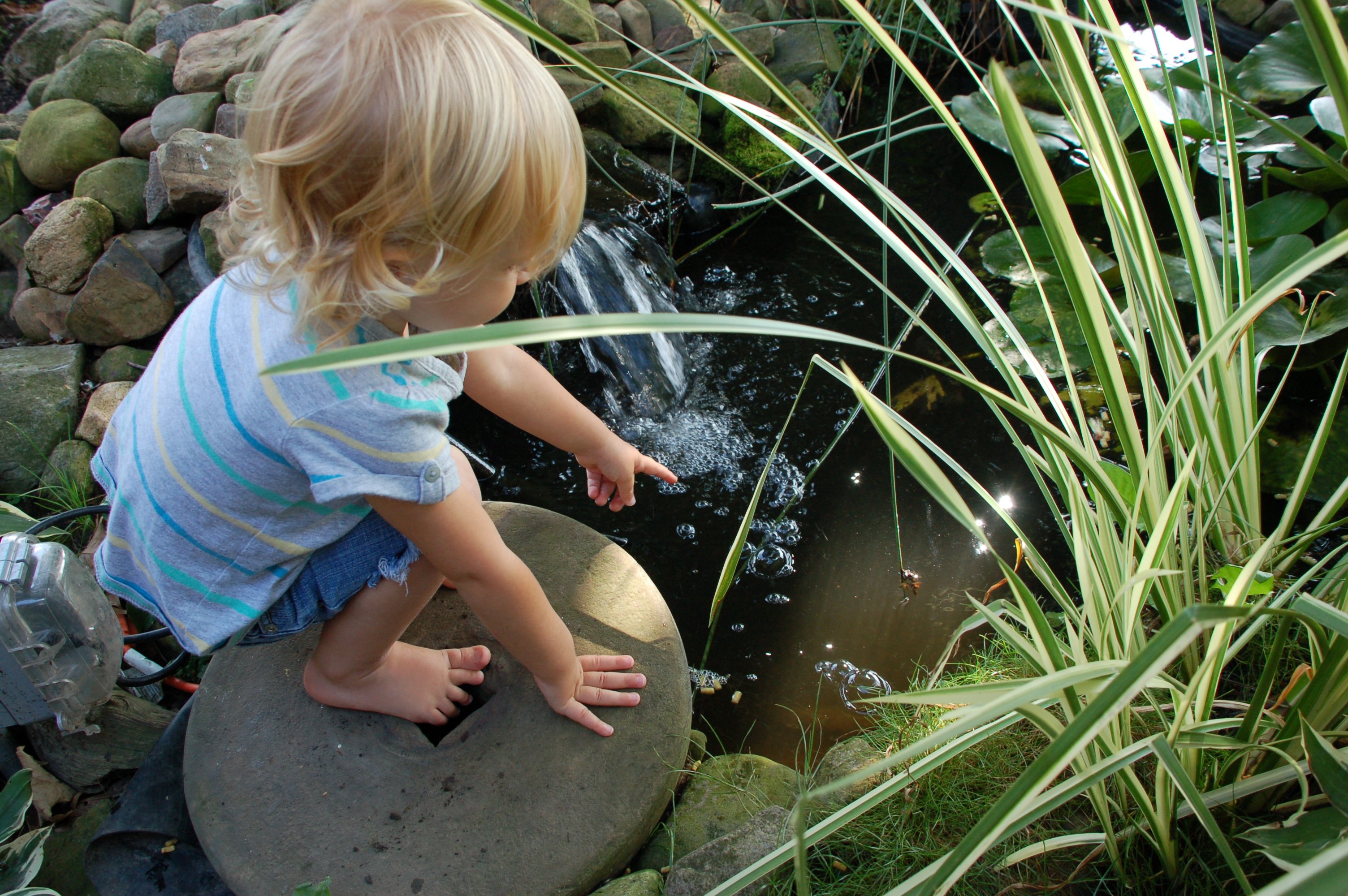
In July amid the hottest, driest weather of the summer, the grandchildren were here visiting from Virginia. They always ask to feed the goldfish in our garden pond.

Girl on grindstone by Bruce Stambaugh

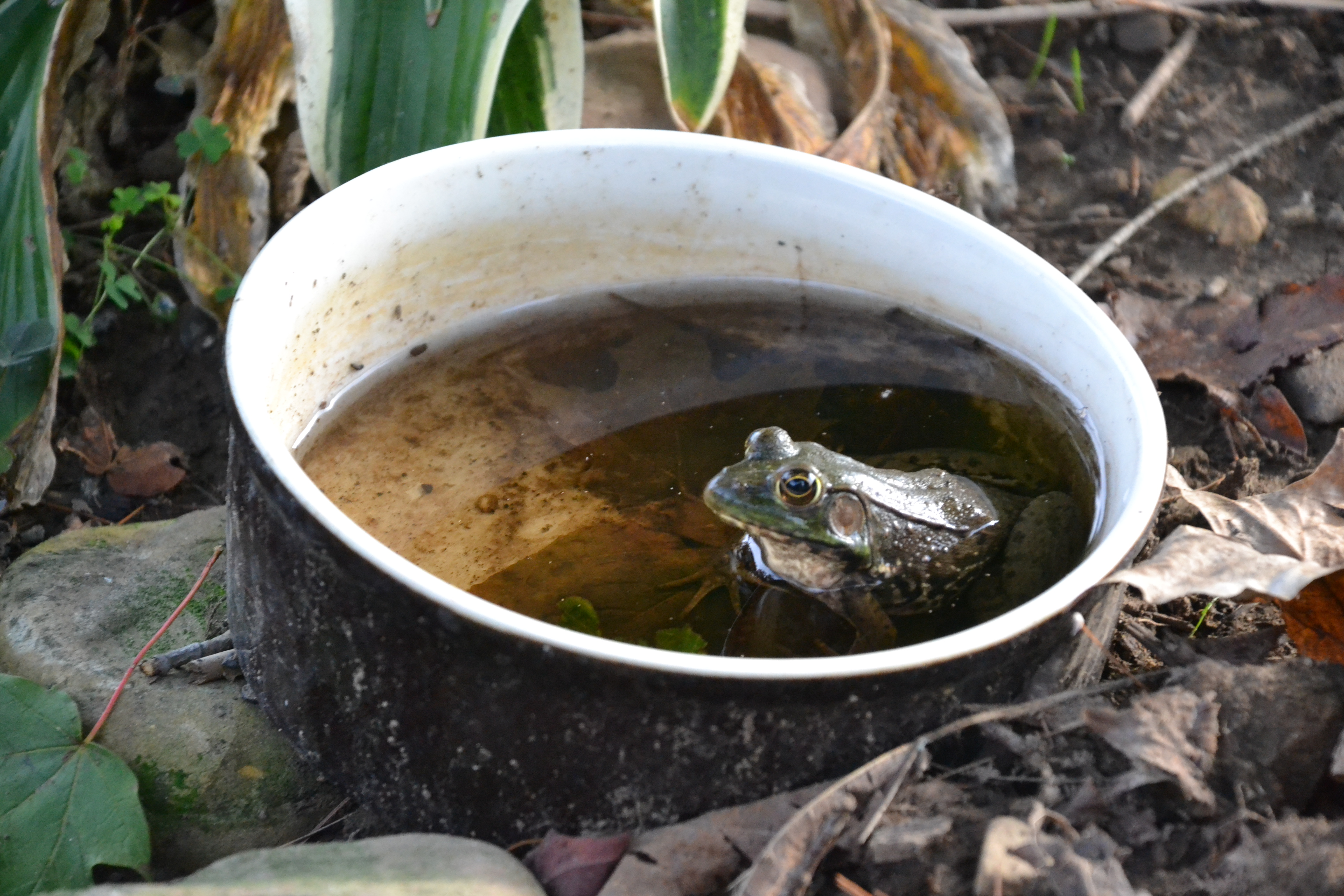
As we approached the pond with fish food in hand, I spotted something rather suspicious. The largest of the green frogs that inhabit our pond was resting atop a balled up, wet and obviously dead House Finch on the rock pile near the little waterfalls.

The frog must have felt guilty because it jumped into the pond as soon as it spotted us. I let the kids feed the always-hungry fish while I investigated the crime scene. Of course, Davis, the inquisitive six-year old, wanted to see what I was looking at, too.

Cooling off by Bruce StambaughOnce I realized we had a killer frog on our hands, I diverted the kids’ attention by playing ball in the side yard. When I went to get the dead bird, it was gone. Had the frog come back for its dinner?

A few weeks later, I found a second House Finch floating in the pond. I contacted a naturalist friend about my discovery. She had heard of bullfrogs catching birds, but not green frogs. Either way, her conclusion was the same as mine. The big green frog was trouble.

Since the grandkids loved looking for the frogs as much as they did feeding the fish, I hated to transplant the amphibian. I decided to keep a close eye out for more evidence. I found it on September 25.

Bird and frog by Bruce Stambaugh
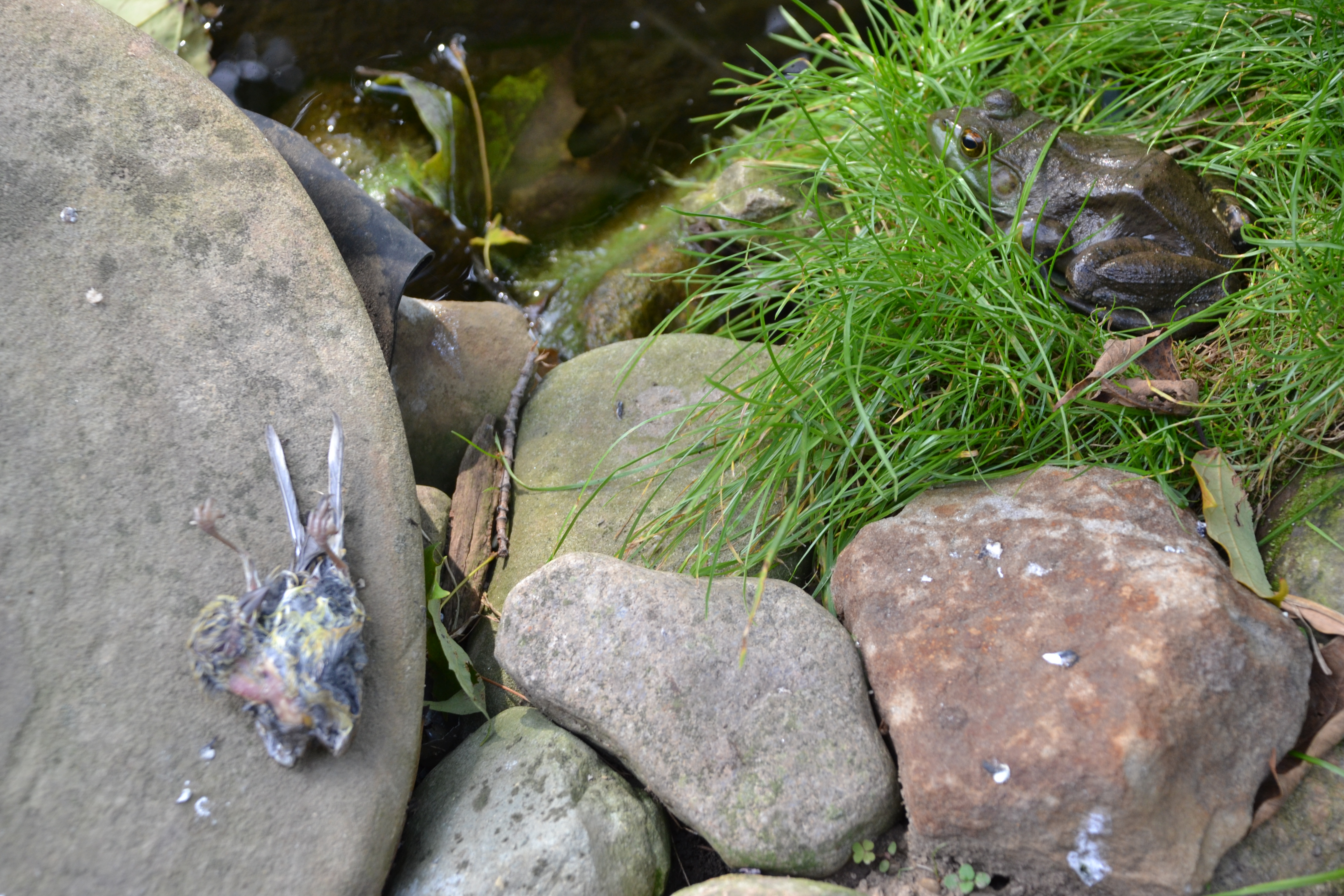
The dead American Goldfinch told me I needed to remove the largest frogs from the pond.

This time I discovered an American Goldfinch left on the sandstone grindstone where the grandkids stand to feed the fish. Just like the others, the Goldfinch had clearly been drowned with evidence of attempts to swallow it. Just inches away, minding its own business, the green frog sat unsympathetically on a soft patch of grass. At least I thought it was a green frog.

That was the last straw. I watched for an opportunity to catch the two largest green frogs and relocate them to a neighbor’s farm pond. I caught the docile female right away. The bigger male was a bit trickier. You know how men are.

Finally, I saw my opportunity. The wily frog was hiding beneath the floppy leaves of one of the hosta plants that border the pond. In a sneak attack, I captured the frog and quickly placed it in the minnow bucket with the other frog.

Mute Swan by Bruce Stambaugh

As I prepared to release the pair of frogs at my neighbor’s pond, a rather large Mute Swan swam straight for me, hissing all the way. The larger of the two frogs was more than happy to hide in shallow water. The female was content to enjoy the grassy shoreline.

I didn’t bother to say my farewells. I was patient catching the frogs. The agitated swan was another story. I didn’t want to painfully pay for my efforts with a nip by the aggressive and territorial waterfowl.

If this greedy green frog attempts to swallow one of these big birds, I think it will be in for an enormous surprise. And I think I’ll write a book.

Upon further investigation, others more knowledgable on frogs than me identified the culprit that I had photographed as a bullfrog, not a green frog. My mystery was solved, and my frog facts greatly improved. The book’s plot just took a turn.

This column appeared in The Bargain Hunter, Millersburg, OH.

© Bruce Stambaugh 2012

Bay Photos by Donna

Wildlife photos from the Chesapeake Bay region

ROAD TO NARA

Culture and Communities at the Heart Of India

K Hertzler Art

Artist and nature journalist in the Shenandoah Valley of Virginia.

Maria Vincent Robinson

Photographer Of Life and moments

Gabriele Romano

Personal Blog

Jennifer Murch

Art is the only way to run away without leaving home. -Twyla Tharp

Roadkill Crossing

Writing generated from the rural life

ANJOLI ROY

writer. teacher. podcast cohost.

Casa Alterna

El amor cruza fronteras / Love crosses borders