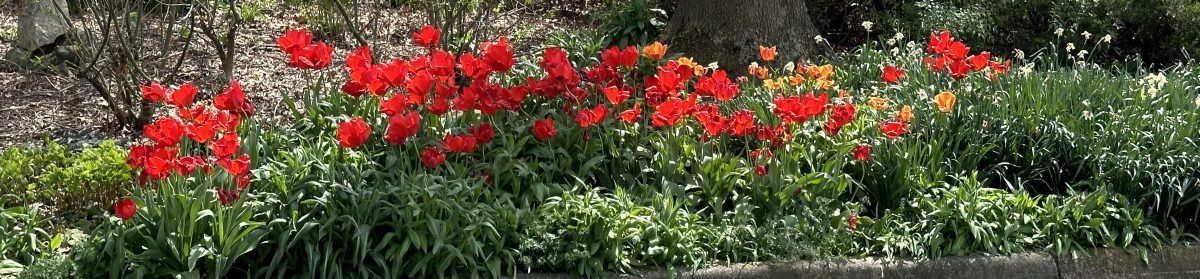

Feeding the birds is one of our favorite winter pastimes. My wife and I enjoy watching college sports, but the colorful birds take precedence over the TV.
Feeding the birds provides us with plenty of entertainment from fall to spring, and we only have to look out our windows. We have done so for all of our nearly 55 years of marriage. We fed birds for the 48 years we lived in Holmes County, Ohio.
Our bird-feeding habit continued when we retired to Virginia’s Shenandoah Valley eight years ago to be close to our daughter’s family. But things were a little different. In Ohio, we lived in the country where natural bird habitats surrounded our property.
Here in Virginia, we live in a suburban setting, just outside the city limits of Harrisonburg. The habitat for birds is much different.
Like many housing developments, homes are close together. Fortunately, our backyard neighbors have mature stands of Colorado Blue Spruce and other evergreens. Plus, we have trees and shrubs around our home that provide cover for the birds.
Besides food and shelter, our avian friends need water, too. So, I added three birdbaths to provide drinking and bathing for the birds. Of course, it’s fun to watch them bathe and drink. It’s amazing how the different species drink.
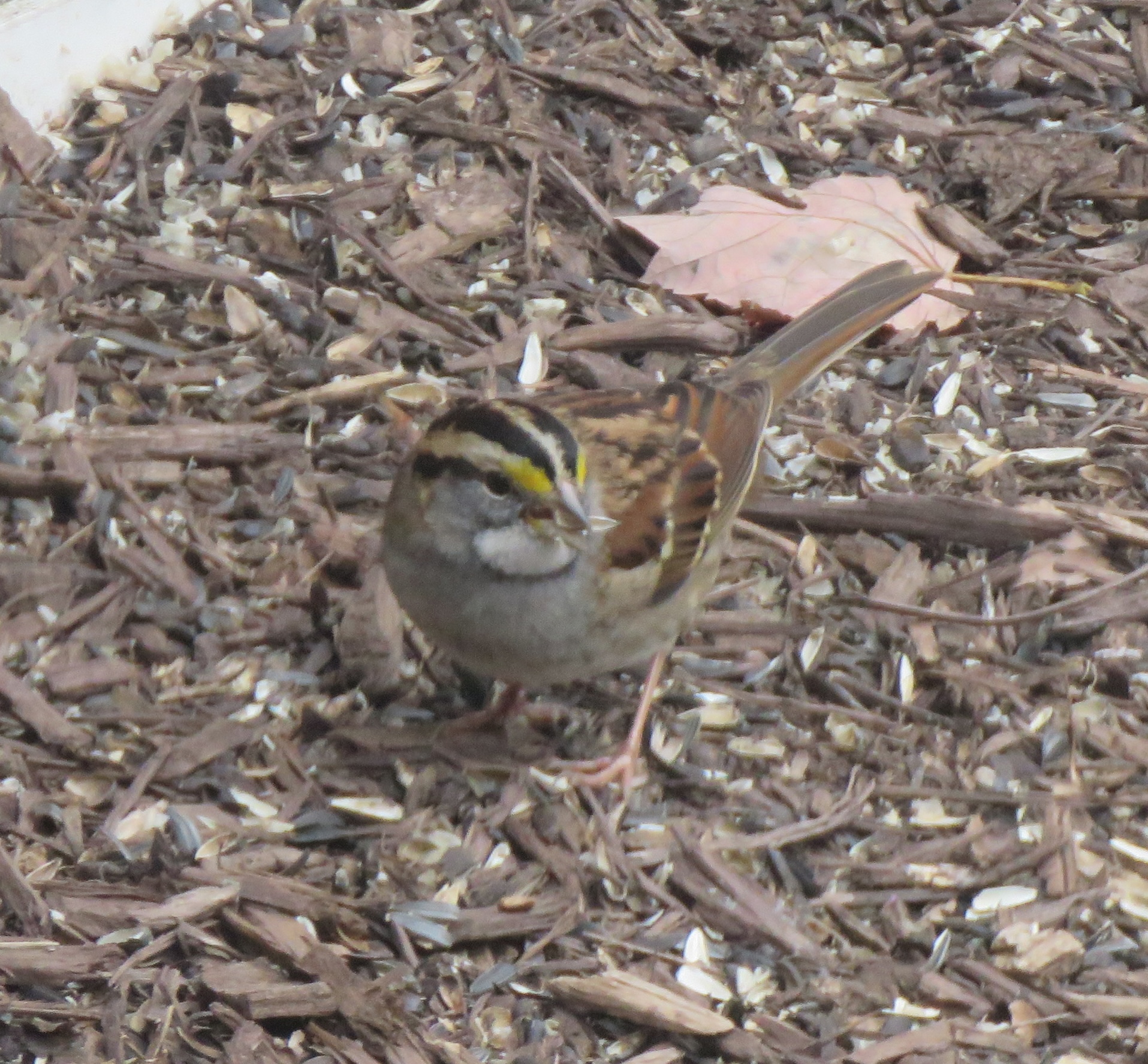

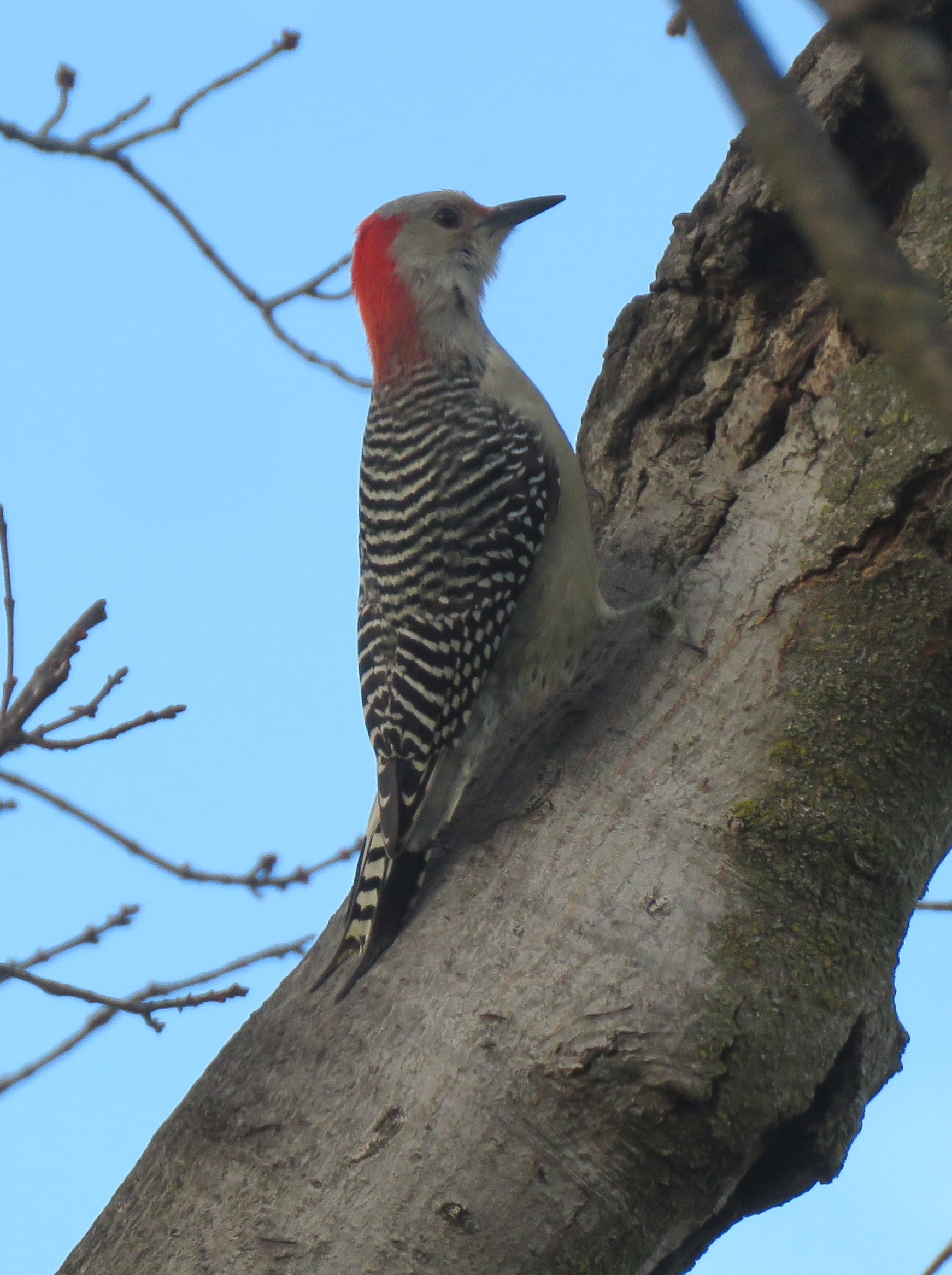
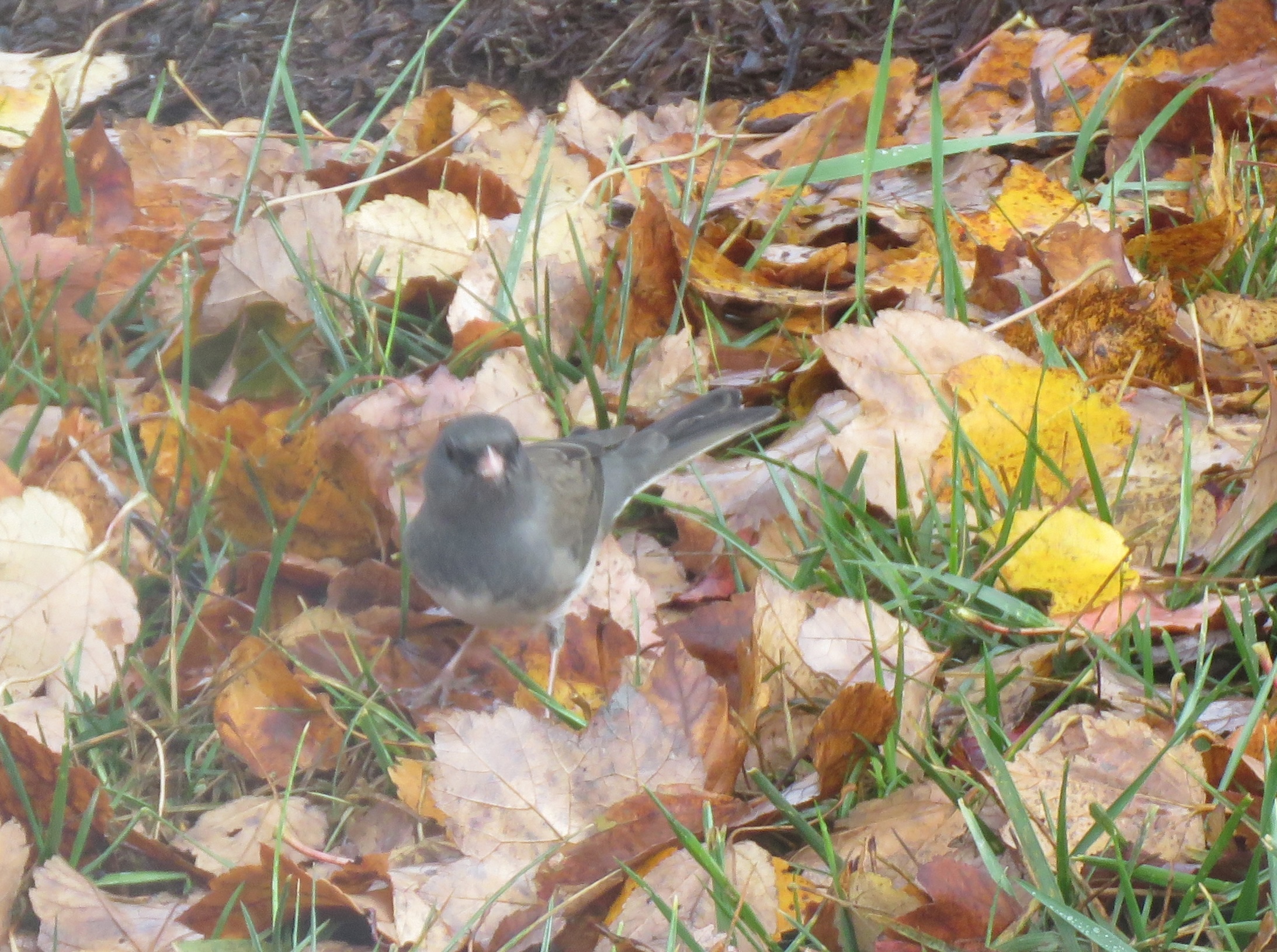


Please click on the photos to enlarge them.
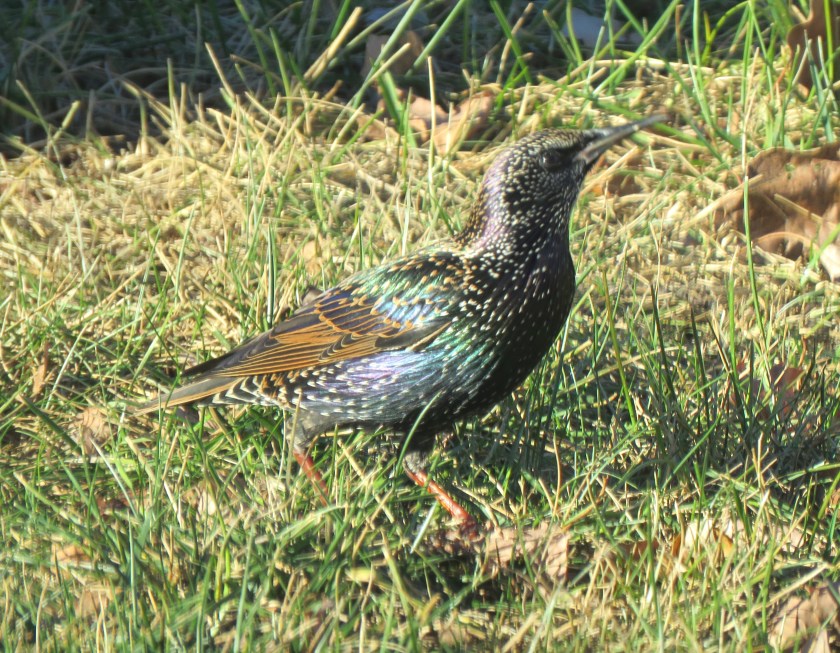
The number of bird species has increased over the eight years that we have lived near Harrisonburg. However, the number of birds has decreased, except for the dreaded European Starlings and the Brown-headed Cowbirds.
Still, I’ve been pleased with the birds that have frequented our feeders. I have four in the front yard, and four in the back. The feed and types of feeders are selected based on the diets and habits of the various species that have frequented our property.
Some bird species are solely ground feeders, so I make sure I spread the feed they eat on the surface near the other feeders. Tube-type feeders allow perching birds to access seeds through holes along the sides. The suet feeder contains cakes of peanut butter suet, encased in a wooden frame with wire-mesh facings on each side.
I place the feeders where the birds feel safe from predators, such as Sharp-shinned and Cooper’s Hawks, which occasionally strafe the neighborhood feeders in hopes of catching a songbird lunch. It’s the way nature works. The feeders and birdbaths are located where we can conveniently view the birds and where they can be easily refilled.
A tube feeder that holds a pound of black-oil sunflower seeds hangs from a limb on the west side of the front yard red maple tree. A suet feeder filled with peanut butter suet dangles from a limb on the east side of the tree. I scatter clean, cracked corn and safflower seeds below them.
The fourth feeder is suctioned to the window in front of my desk. It’s filled with safflower seeds, which only a few birds will eat. Fortunately, safflower seeds are a second-choice food for Northern Cardinals, which seem to have no fear if I’m at my computer on the inside of the window. If I move too quickly, however, they quickly scatter.
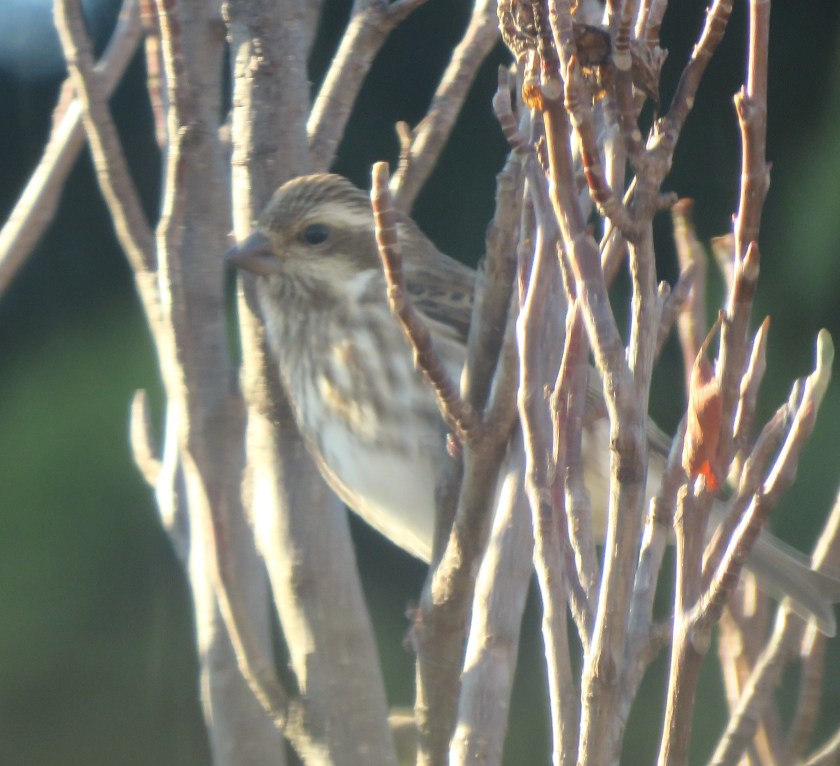
Why do I use these feeds? Black-oil sunflower seeds and hearts attract many species of birds. Northern Cardinals, House Finches, American Goldfinches, Purple Finches, Blue Jays, Dark-eyed Juncos, Downy Woodpeckers, Carolina Wrens, and Carolina Chickadees all choose this seed as a staple to their diet during the winter months.
So far this year, Downy, Hairy, and Red-bellied Woodpeckers and Northern Flickers have come to the suet feeder. So have the Carolina Wrens, Carolina Chickadees, and small flocks of European Starlings and Brown-headed Cowbirds.
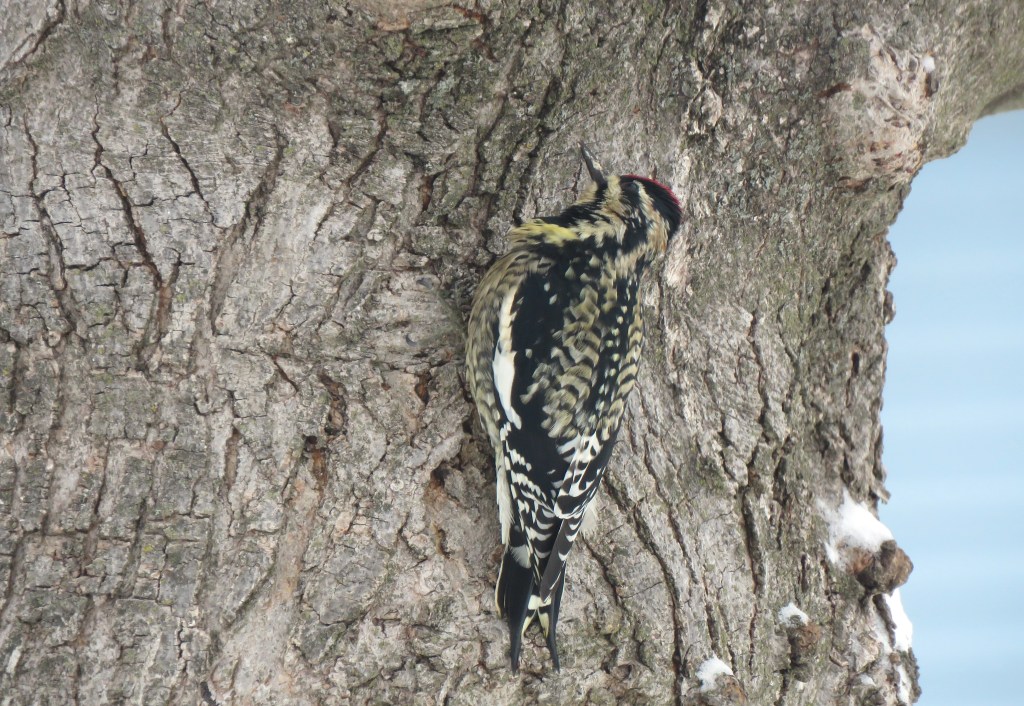
The star of the show, however, has been a Yellow-bellied Sapsucker. Its feeding pattern has been once in the morning and once in the afternoon. I stop what I’m doing and watch the sapsucker, knowing I’m fortunate to have it appear.
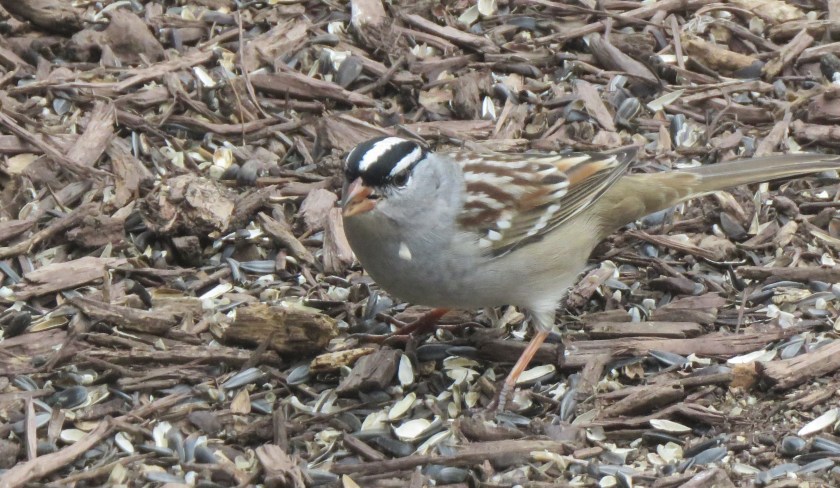
I spread corn to pacify the starlings and cowbirds. Unfortunately, their taste buds prefer the suet. The cardinals, White-throated Sparrows, White-crowned Sparrows, Song Sparrows, House Finches, and Blue Jays ensure the corn doesn’t go to waste.
Our home’s rear windows provide the best view of the feeders and heated birdbaths in the backyard, where most of the cover grows along the property lines. A tubed feeder hangs from the spouting of our screened-in porch, which serves as a shield from strong winds and the strafing hawks.
The hanging feeder holds a mix of black oil sunflower seeds and medium cracked sunflower hearts, which most of the seed-eating songbirds prefer. It’s also the most expensive feed. So, I mix the two seeds to make the precious offerings last longer.


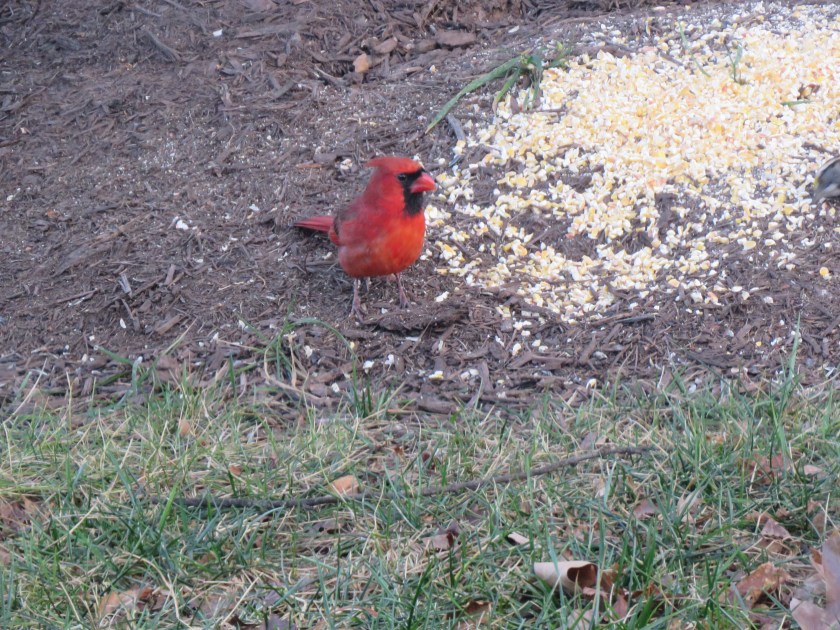

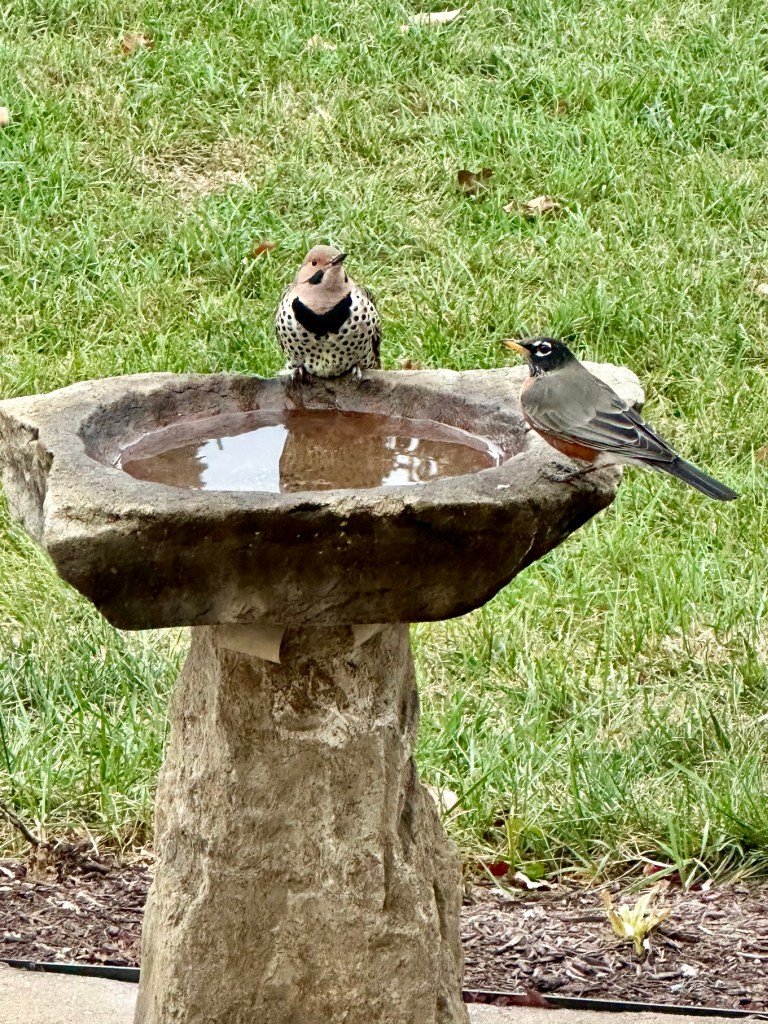

I spread cracked corn on the ground between the feeder and the birdbath. Beyond that, in the yard, I placed a porcelain-topped table and set a homemade wooden feeder on top. More cracked corn goes in that feeder. I also spread some on the ground underneath the table.
Part of the beauty of feeding the birds is the surprises that happen. You never know what will show up at the feeders minute by minute. Like the time I happened to see a Pileated Woodpecker at the nearly empty suet feeder. In a flash, it was gone. But the joy was simply in its appearance, no matter how long it stayed.
In previous years, small flocks of Purple Finches and Pine Siskins have graced the feeders. What a joy it was to see them.
However, I am content with the regular visitors who shelter in the trees, shrubs, and bushes on or near our property. Who wouldn’t love to view a bright red male Northern Cardinal perched in a snow-laden evergreen branch or watch the regal White-crowned Sparrow scratch in the seed only a few feet away?
Of course, I realize that I miss birds when I’m not home or doing other things. I can’t be gazing out of the windows all of the time. Nevertheless, I am thrilled with the ones I do see, and am happy to share them with you.

© Bruce Stambaugh 2025



 Roadkill Crossing
You must be logged in to post a comment.