
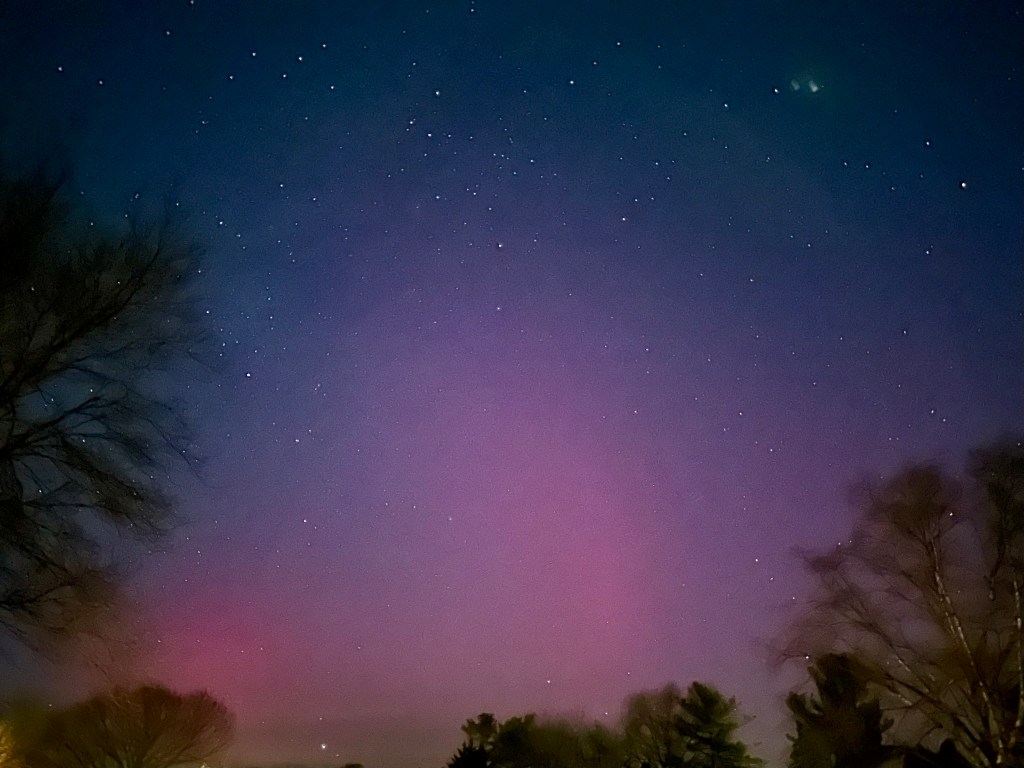
I get excited when there’s a chance to see the northern lights or aurora borealis. I suspect I’m not alone. Why shouldn’t we be excited?
After all, the colorful lights are dancing in the sky over the polar north. That’s a long way from the Shenandoah Valley in western Virginia.
I follow social media posts closely for sun flares and alerts on possible northern light events. But being this far south, I keep my expectations in check.
History has shown, however, that seeing these beautiful phenomena is indeed possible in Virginia and points south. In fact, on October 10, 2024, at 10:30 p.m., I walked out the front door, and greens, reds, and pinks danced in the sky over my neighbors’ houses. Of course, the light display was much farther north than that.
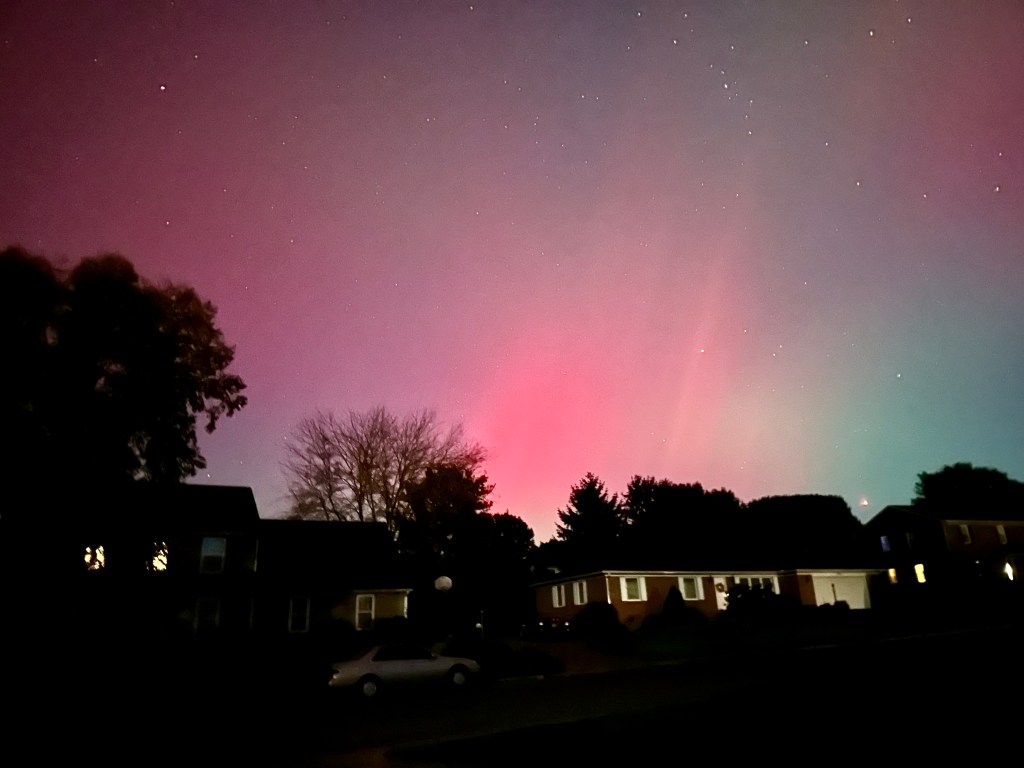
I snapped a couple of photos and went back to bed. The app on my cell phone had alerted me to the possibility of seeing the aurora borealis. And there it was.
Looking back on that experience, I wish I had chosen a better viewing location for more photos instead of going back to sleep. Still, I was happy with the pictures I got. They clearly showed the northern lights.
So, when the alert came out for Monday and Tuesday, January 19 and 20, this week, I was ready. However, being a man, and an aging one at that, I easily got distracted.
The NCAA National Championship football game between Indiana University and Miami University was on TV at 7:30. Because the IU coach had led James Madison University’s football team to exciting winning seasons, my wife and I were glued to the TV. JMU is located in Harrisonburg, Virginia.
However, my attention shifted when I saw a photo of the aurora borealis posted on Facebook by a friend who lives a few miles away. I walked outside, took a few pictures, and could see a little red in the sky.
So, I diverted my attention from football to photography and went in search of a decent view of the northern sky. It was harder than I thought. Rockingham County, where I live, may be in the Shenandoah Valley, but it certainly is not flat.
The landscape, predominantly agricultural west of the city, is rolling, dotted with high hills, and full of powerlines running every which way. With no moonlight, the night was dark, so even though I was familiar with the roadways, I had difficulty finding a place with a good view, free of light from security lights or buildings.
It didn’t take me long, however, to realize that the colors had faded since my friend took her photo two hours earlier. I headed home with fairly dull images of the night sky.
I was determined to make the aurora my priority after dark on Tuesday night. I again stepped into the darkness of our neighborhood and immediately saw reds and pinks in the sky, especially to the northwest. It is one advantage of having no street lights in our housing development. Of course, the colors I saw can’t compare to the amazing shots of curtains of colors dancing in the sky in the northernmost latitudes.
With temperatures below normal in our area, I bundled up and headed out, this time more certain about where I needed to go. But again, once I got out into the open countryside, the aurora colors seemed to dim.
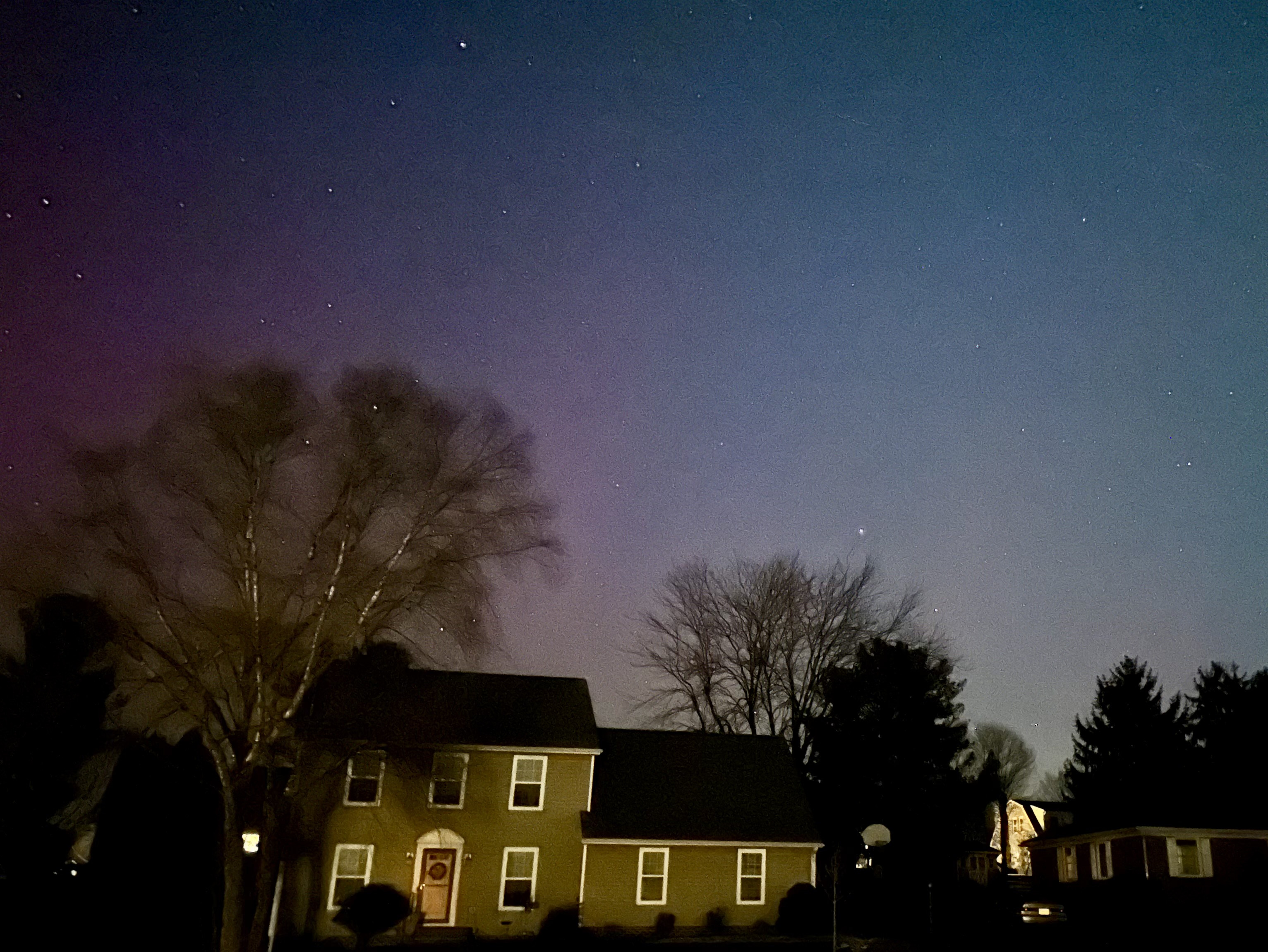
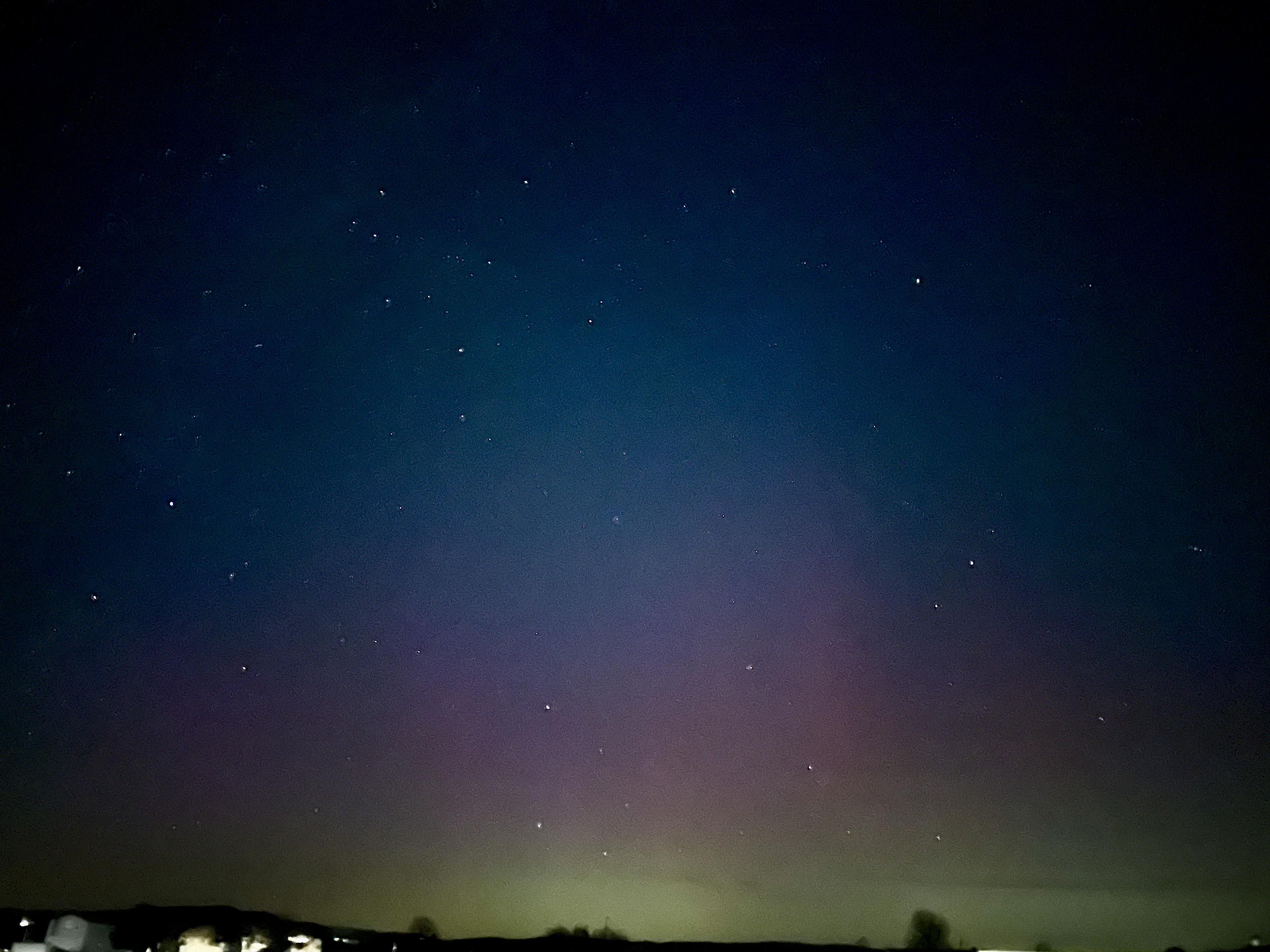
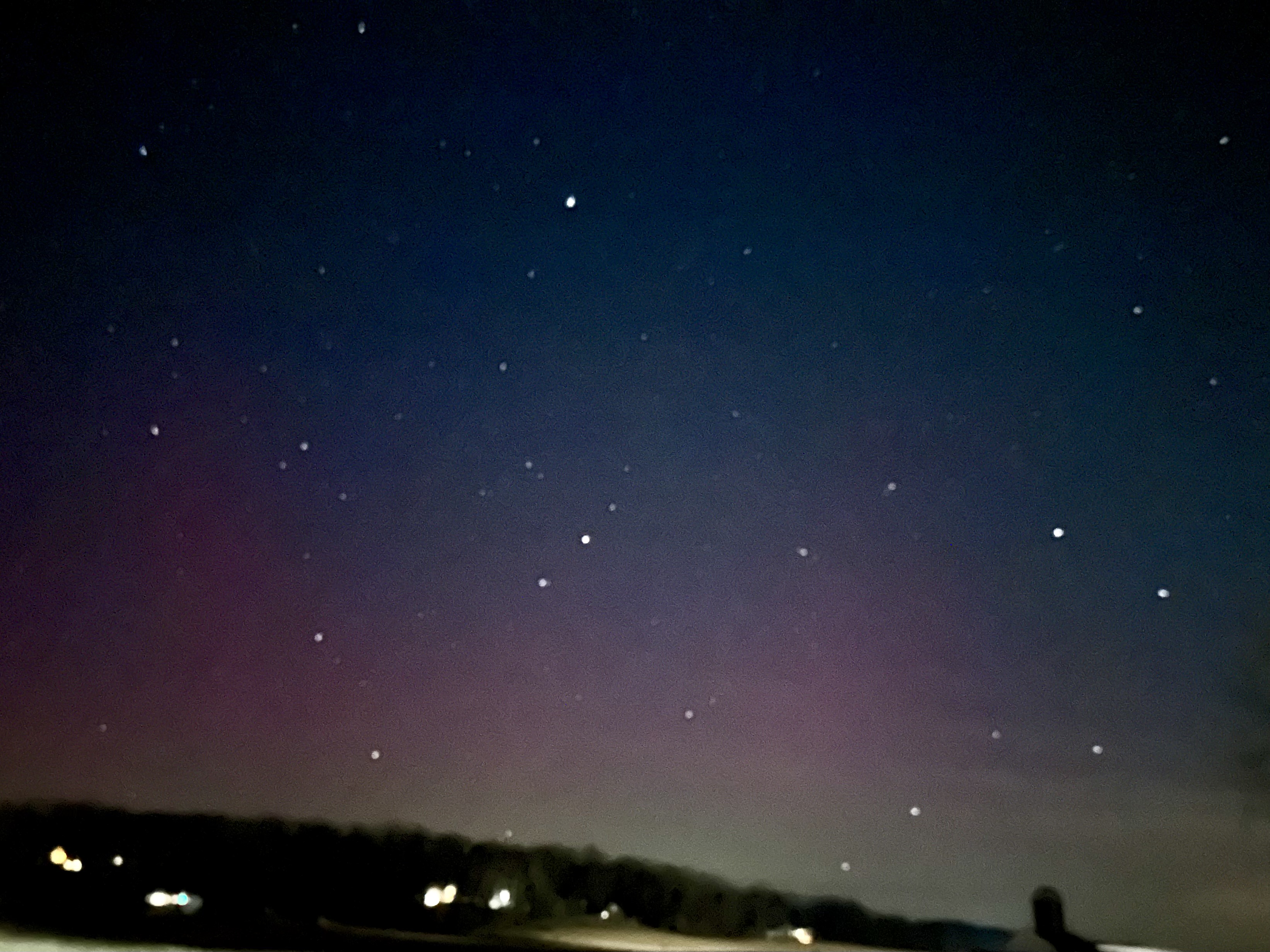
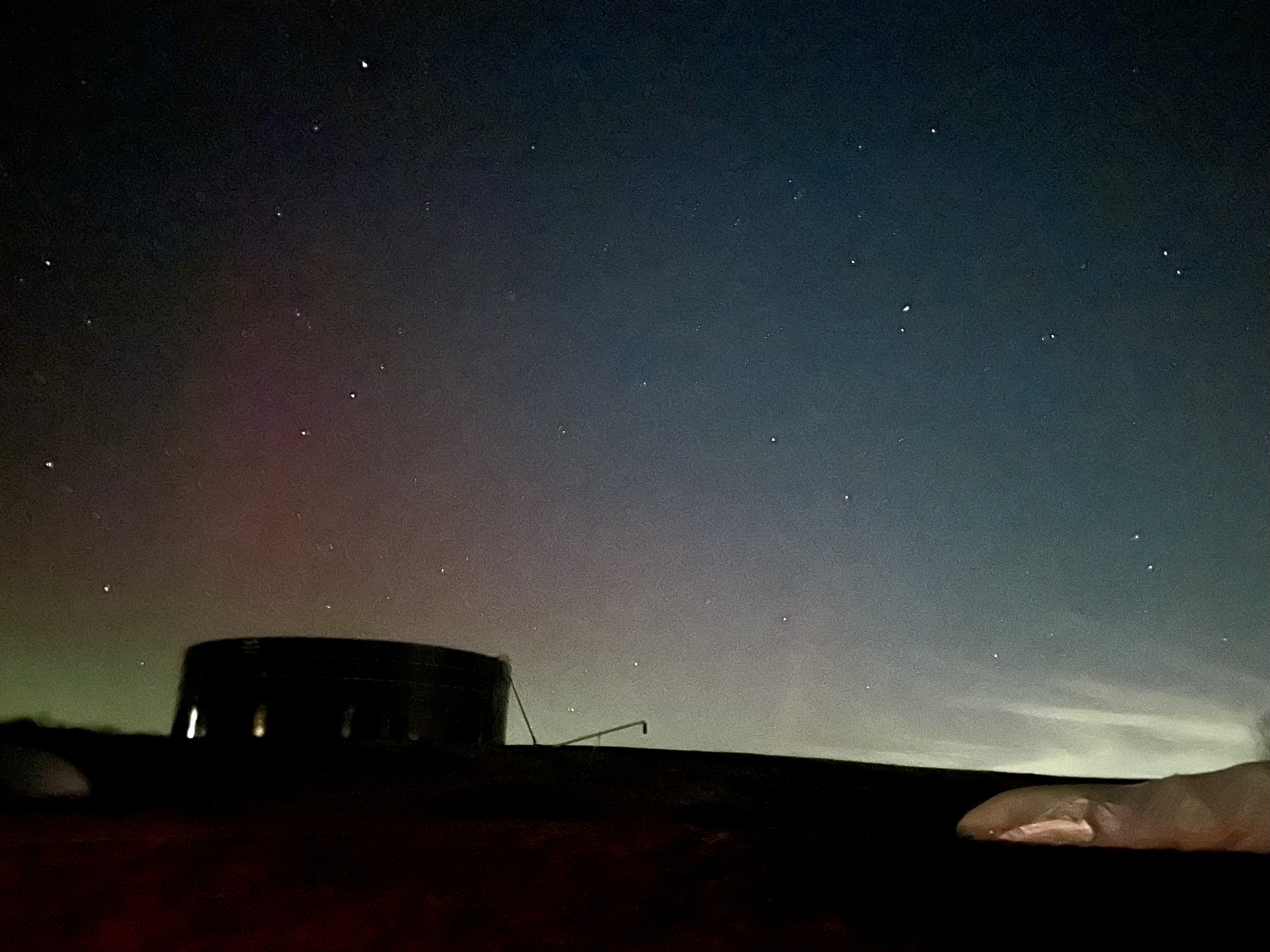
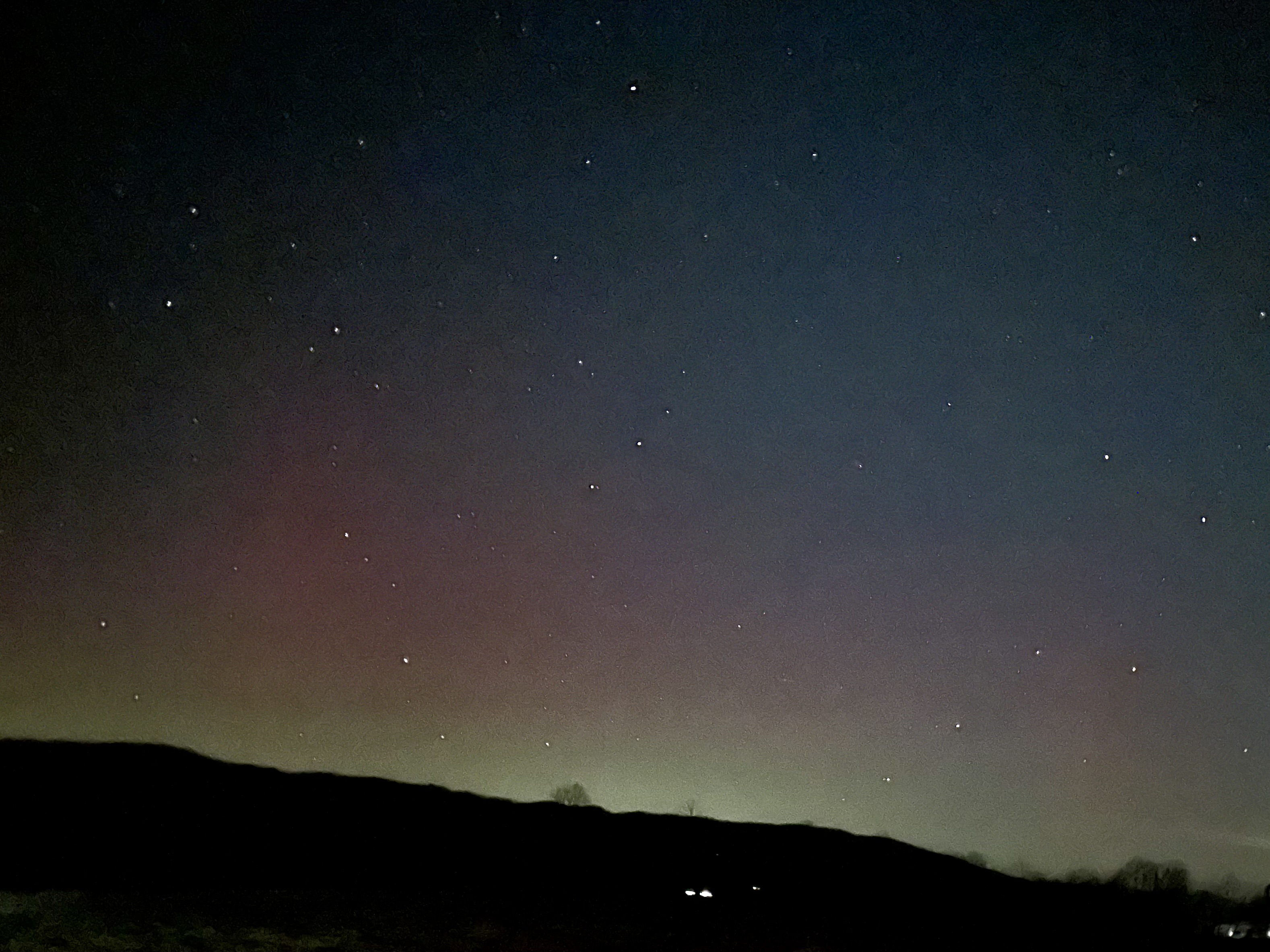
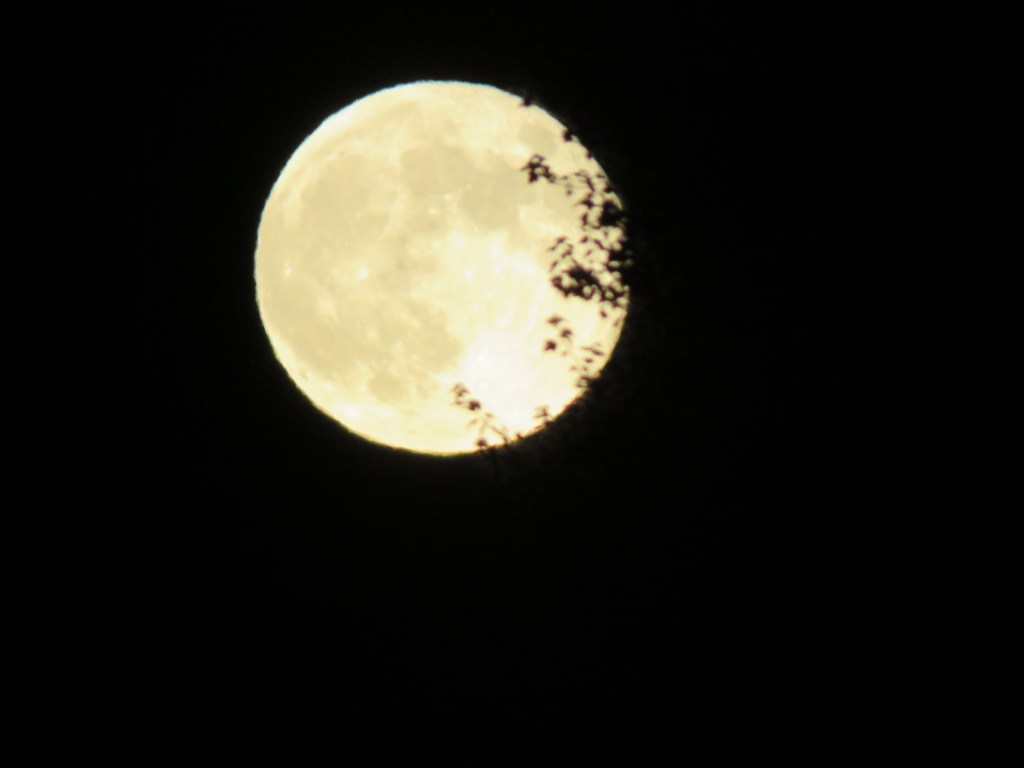
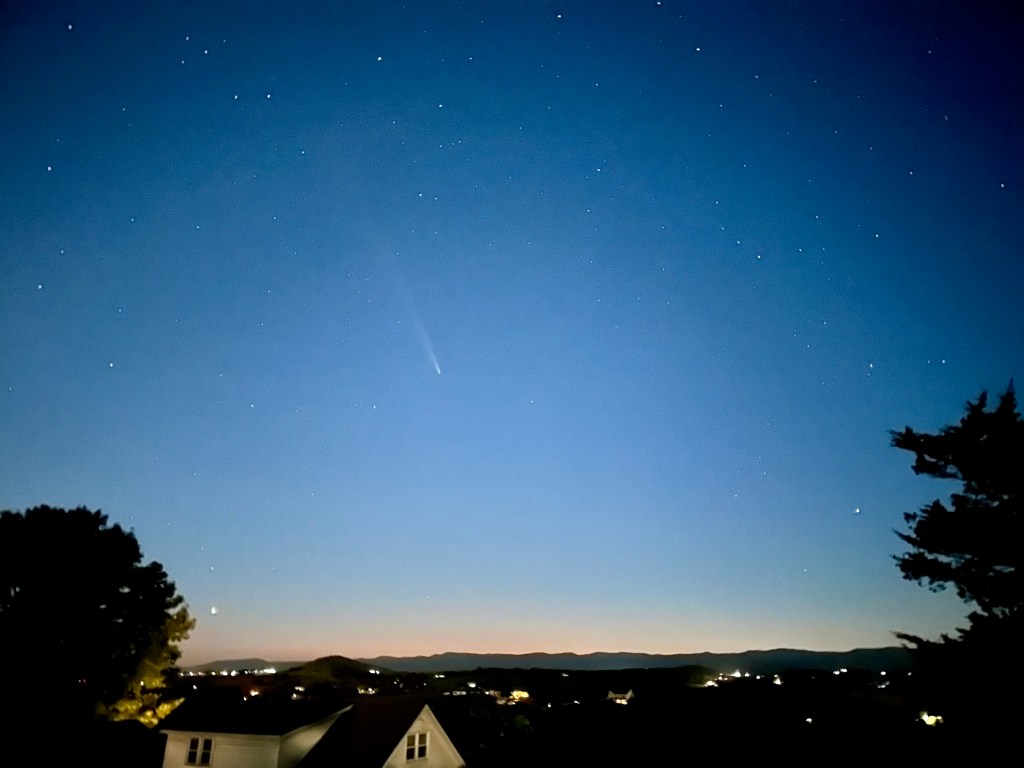
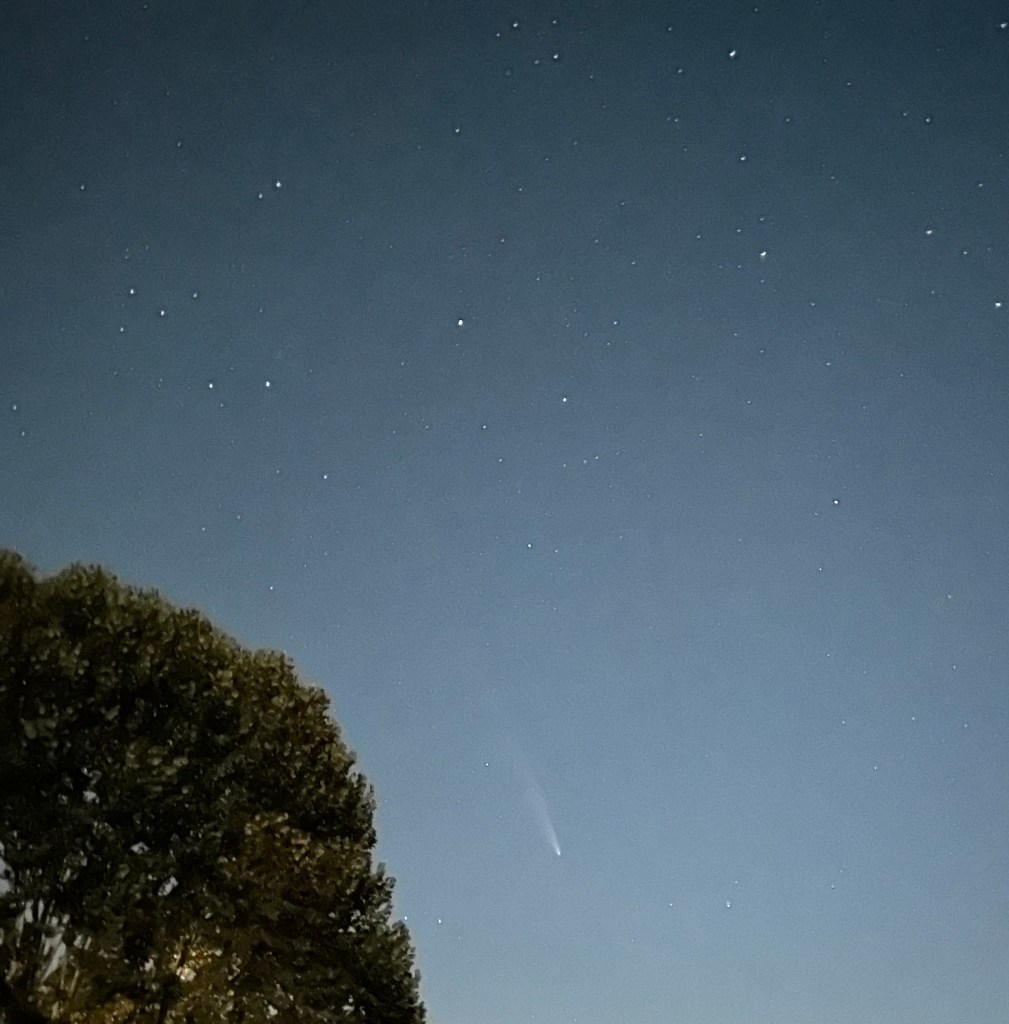
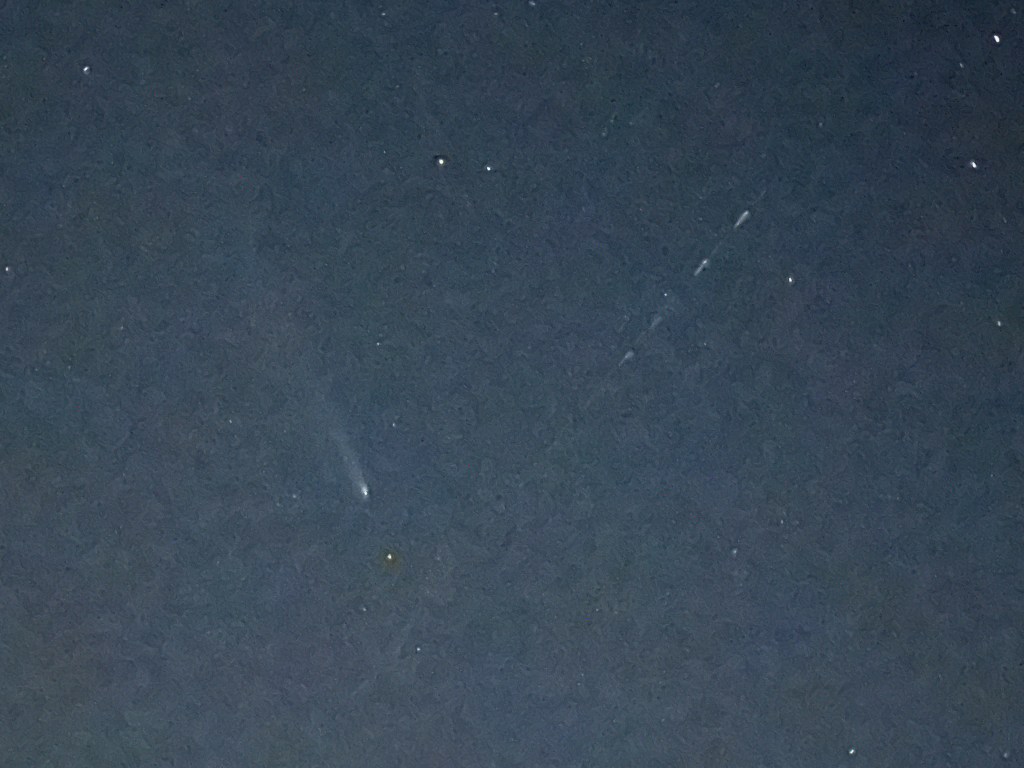
The photo with the house was my first hint of the northern lights. The rest are from my excursion in the county. Please click on the images to enlarge them.
They were brighter than the previous night, but not like I had seen in October 2024 or when I saw my first northern light in Ohio’s Amish country decades ago.
In that case, I was walking out to retrieve the evening paper from its roadside box when I first heard and then saw the northern lights. I stopped in my tracks when I heard a loud crackling sound, like a zap of electrical current.
I looked toward the sound, and in the southern sky, bright green zigzagging flashes danced low in the night sky. They lasted only seconds, but I realized what they were even though they appeared on the wrong horizon.
Soon, bulletins appeared on TV screens across northern Ohio about strange objects appearing in the sky. Witnesses who saw what I saw called the police and TV and radio stations to report the weird noises and lights.
There were all kinds of speculations, aliens included. Even the local weather service put out a special statement. When I saw that, I called the weather office at the Akron-Canton Airport to share what I observed.
I felt obligated to set the record straight, and since I was a trained severe weather spotter for the National Weather Service, they were familiar with where I lived.
Because of that experience, I longed to see the aurora borealis in its proper setting, the northern sky. Consequently, I was very pleased to be able to view them in Virginia, not once, but twice.
You can be assured I’ll remain on the lookout whenever the next aurora alert is issued, regardless of what time of night it is or what’s on TV.
© Bruce Stambaugh 2026

 Roadkill Crossing
You must be logged in to post a comment.