Illuminating? I am not sure that term has ever been applied to me until now, unless you count the glare off of my baldhead. To me, sunrises and sunsets are illuminating. That said, I am both humbled and honored that this blog has been nominated for the Illuminating Blogger Award.
I am also a bit surprised, mostly because the nomination came from a food blog, Food Stories. Kindly check out that blog and you will discover that it is more than about food. I am not a foodie, and but I do enjoy food, although I do have to follow a special diet. I have written about that on this blog, too.
As part of the condition of acceptance of the award, I have to reveal one random fact about myself. You may find this hard to believe, but when I was young I had long, blond, curly hair. Look at me now.
I also need to nominate five other worthy bloggers. With so many excellent bloggers in the blogging world, that is a daunting task. I recommend these five bloggers:
If you want to be personally illuminated, visit Carrie Craig’s blog. Without a doubt, her words will inspire you.
Even at her young age, Hannah Karena Jones sheds some light on the art of writing at her blog. Waiting is important for writers.
Niki Fulton illuminates life with artsy photography and to the point descriptors. You can find her blog here.
For serious writers, Anita Nolan has the inside track on both information and inspiration. If you write, her blog is a must.
Finally, I thought it only appropriate to nominate a well-written and illustrated food blog. The Gourmet Wino does both.
I’m sure you’ll find these bloggers even more worthy of this nice award than me. Nevertheless, I do appreciate the kind gesture. It’s nice to know others appreciate your creativity, whether it’s revealed through writing or photography.
Kids of all ages inspire me. I guess that had something to do with honing 30 years in public education.
It also motivates me to help award scholarships at the end of each school year for the Holmes County Education Foundation if I can. This year my schedule was free. Once again I found myself seated with several other presenters facing the 2012 graduating class of West Holmes High School, Millersburg, Ohio.
Like the others who announced scholarship winners, my job was a simple one. I merely had to read off the names of the recipients of two different memorial scholarships of two of my very best friends in life. Prior to their deaths, Paul Sauerbrey and Helen Youngs had established the scholarships so that youngsters from future generations would be encouraged to further their education beyond high school. Over the years, the financial assistance has helped dozens and dozens of area students attend college or trade school.
I’m always impressed with how well behaved the graduating seniors are. For them, high school is over. They could be off celebrating. But on a beautiful late spring evening, most of the 179 seniors were on hand to accept a simple certificate awarding them their grant. In some cases, students earned more than one scholarship.
Unlike the caricatures too often portrayed about teens in the mainstream media, these young people are polite, thankful and eager to move forward with their lives wherever that may be. Sure, some of them wear flip-flops while others clop to the stage in high heels.
More creative, free-spirited graduates don expressive attire. One kid once came dressed in pajamas. Nevertheless, the students understand the significance of the situation. In many cases, like my two friends, the money is given in the memory of someone. Several are memorial scholarships named for loved ones who died tragically or unexpectedly.
Prior to announcing the scholarship recipients, I take the opportunity to inform the students about Mr. Sauerbrey and Ms. Youngs. Perhaps this is my teacher instinct still coming out.
Mr. Sauerbrey and Ms. Youngs each were persons who made a huge difference in life, not just for me, but also for the entire the community. I wanted to put some flesh and bones and spirit with the names of the scholarships. The students listened attentively.
Both Mr. Sauerbrey and Ms. Youngs were instrumental in the daily activity of Killbuck, Ohio, the village in which they lived most of their lives. Mr. Sauerbrey taught at the elementary school for most of his 43-year teaching career.
Ms. Youngs worked at Killbuck Savings Bank for 55 years. She also served as the town treasurer for 43 years, and loved to play the organ and sing in the choir at Killbuck Church of Christ.
Previous scholarship recipients have made a difference through their chosen careers. Some have become teachers, doctors, lawyers, bankers and mechanics while others operate their own businesses. Given the grace, respect and appreciation the 2012 graduates showed in accepting their scholarship awards, I expect they will succeed as well.
What really caught my attention though was the support and geniality that the graduating students showed to each other. They truly seemed to care for one another.
If that positive attitude persists in life, these graduates will likely make a difference whatever they do and wherever they land. Mr. Sauerbrey and Ms. Youngs would be very pleased indeed.
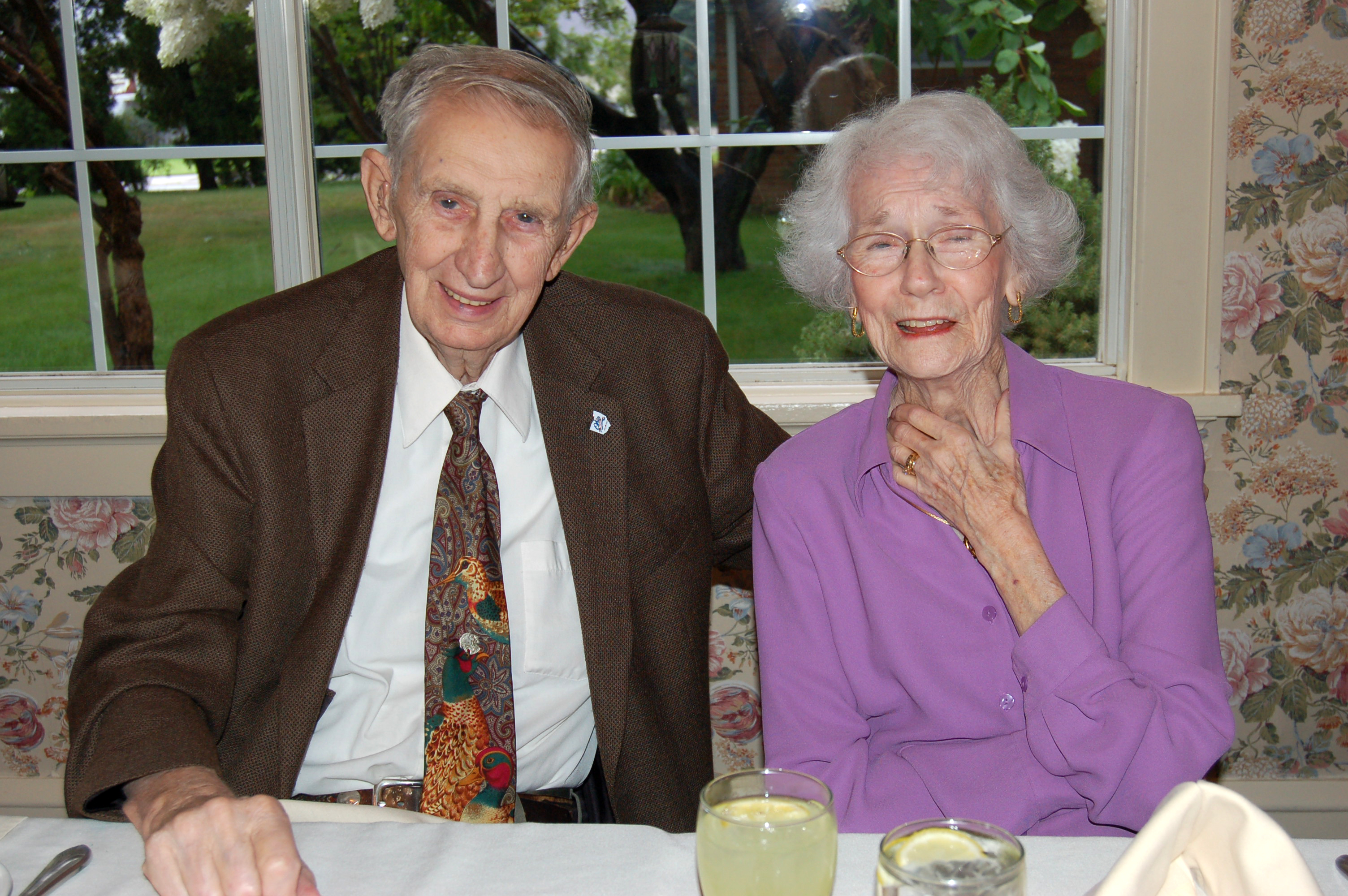
Our parents, the late Richard H. and Marian Stambaugh, at their 65th wedding anniversary celebration. By Bruce Stambaugh
This Memorial Day will hold special significance for my four siblings and me. It will be the first that we will decorate both our father’s and mother’s gravesite.
Mom died April 23 at age 90. Dad passed away Dec. 21, 2009. He was 89.
The simple act of placing flowers at their graves will make it memorable. No matter their age, losing your parents is never easy, especially when they were parents that you loved a lifetime. Not everyone has that precious opportunity.
My brothers, sisters and I were very fortunate. Both Mom and Dad lived long, full and fulfilling lives. Through both their graciousness and their imperfections, they gave us many marvelous memories.
At the pinnacle of his professional engineering career, Dad’s life took an unexpected turn when my younger brother brought home an arrowhead that he had found on the school playground. Dad grew inquisitive. His desire to learn, something he instilled in all five of his children, grew intense. Just one of the many mounts of artifacts that Dad collected over the years. Most of these are rare triangular points. Dad labeled where and when each was found.
From that initial find, Dad went on to develop an extensive artifact collection. He read, went to lectures, lead an archeology club, surface hunted, and dug his way to being a well-renowned amateur specialist on Native American culture. Of course, he dragged along several of his children to many of these events, especially walking field after field looking for the flinty points and stone tools.
Along with hunting and fishing, Dad’s archeological adventures consumed much of his retirement years. He gave lectures and was always a hit with school children. Our father, Dick Stambaugh, continued sharing about Native American culture as long as he was able and as long as he had an audience. Here he gave a talk at Walnut Hills Retirement Home in Walnut Creek, Ohio, where he and our mother lived until their deaths.
Mom would often accompany Dad on his excursions. She would hunt for artifacts. Mostly though Mom would take along her easel, paints and brushes, find a nice scenic spot and sketch out the basics for what would become a vibrant watercolor.
Now and then, it would be the other way around. Dad would accompany Mom to an artists’ workshop, even to other states. While the instructor led his troupe in an all day art class, Dad would wander the countryside looking for likely spots to hunt arrowheads.
One time near Burnsville, N.C., Dad stopped at a farmhouse and asked permission to walk the farmer’s fields. Being the affable guy that he was, Dad quickly made friends. Before he could even set foot in the cornfield, the farmer brought out a box of artifacts he had collected over the years. Dad identified and classified each of the items for the grateful farmer.
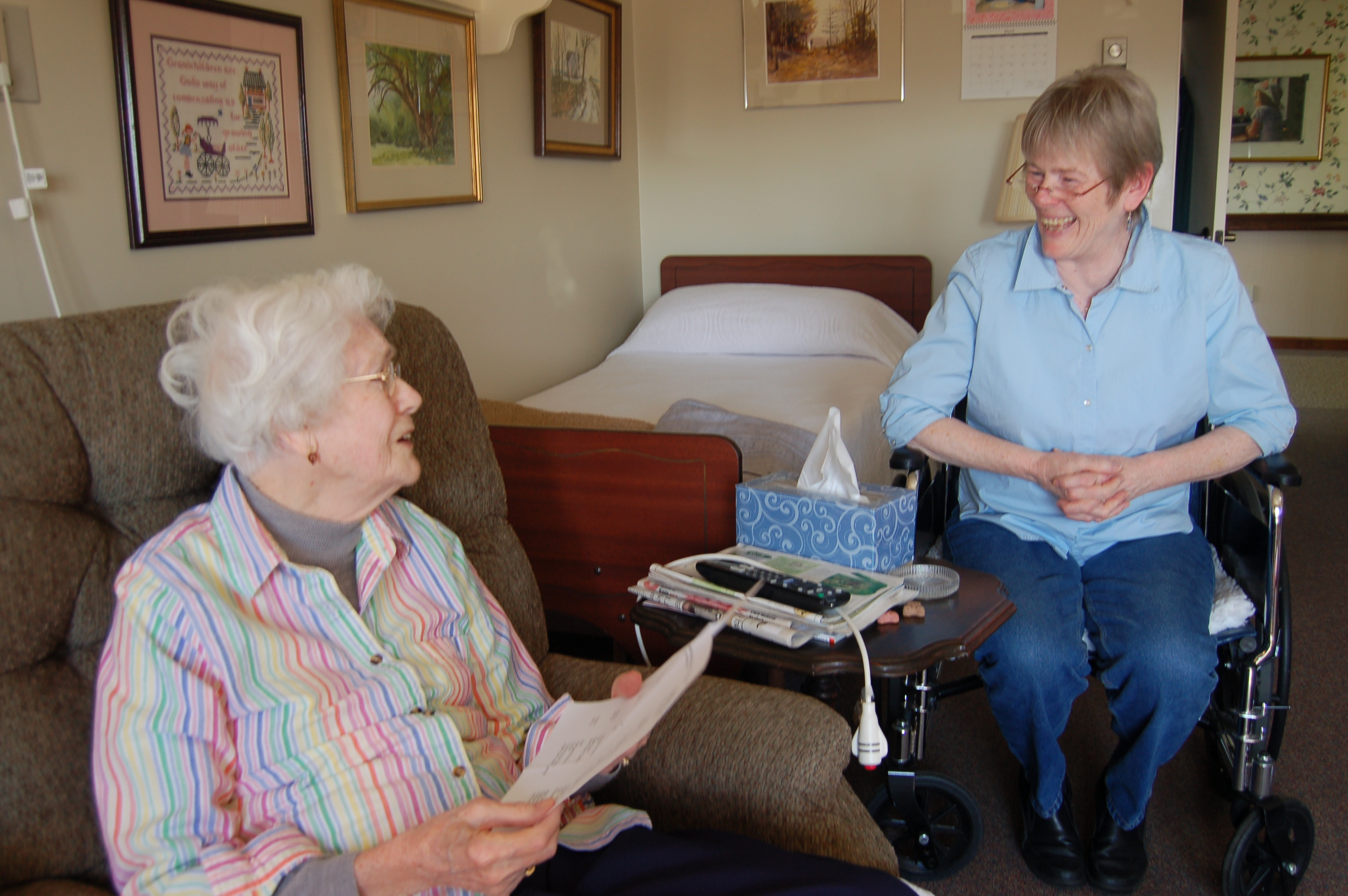
In return, Dad was permitted to keep whatever he found. That evening, as the artists gathered to share what they had painted, the leader asked Dad to show what he had found. Though neither was certified, Mom and Dad were model teachers simply by how they lived their unpretentious, generous lives. Our mother, Marian Stambaugh, shared a laugh with one of her nieces at the retirement home.
Typical for their generation, Mom and Dad were careful about showing affection to one another, especially when us kids were around. I never quite understood that. Yet, despite their differences and occasional arguments, I knew deep down that Mom and Dad loved one another.
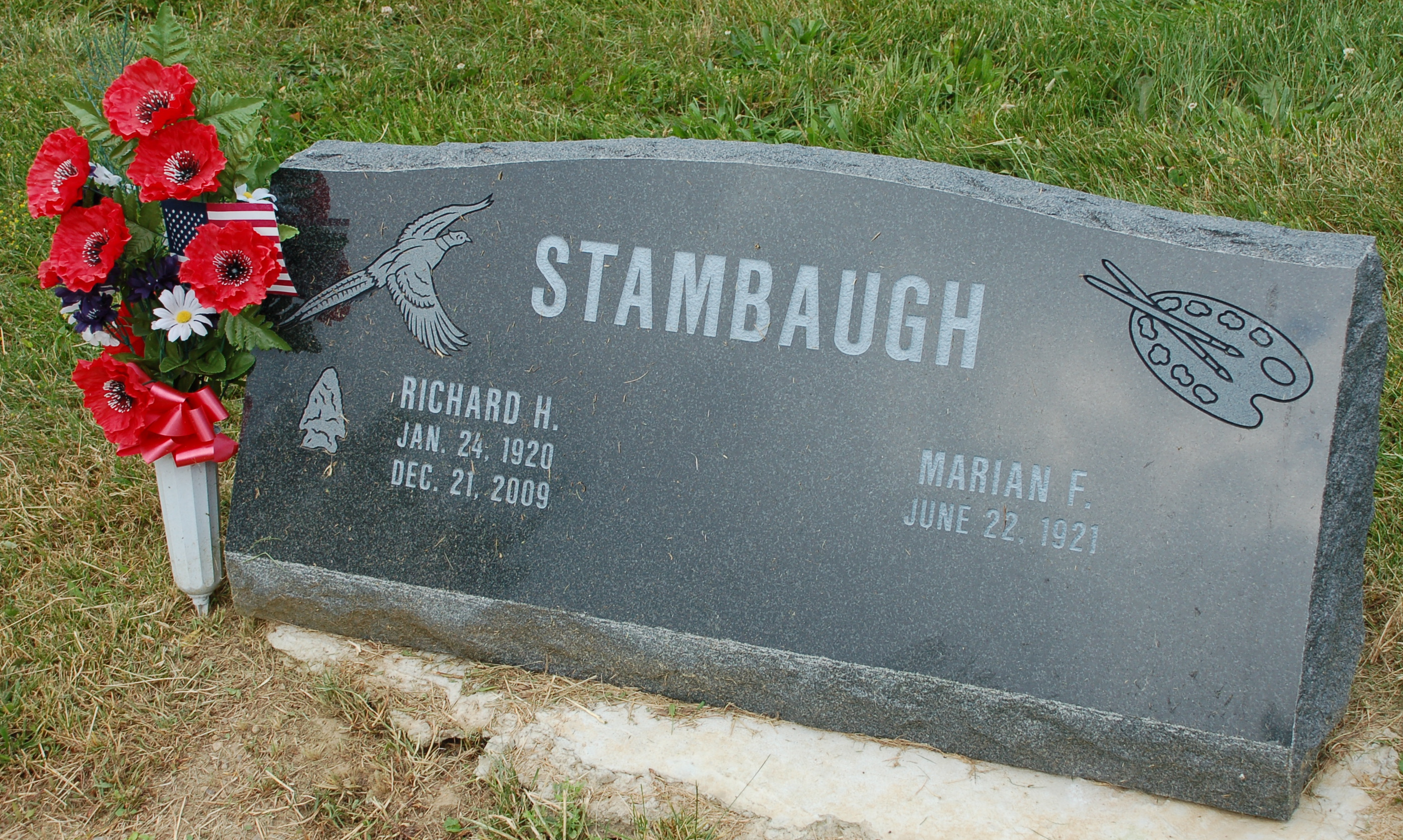
Accordingly, their black granite headstone is engraved with symbols that most appropriately represented their lives. A pheasant and an arrowhead show Dad’s commitment to conservation and archeology. An artist’s paint palette symbolizes Mom’s talent for sharing the beauty she saw.
Mom and Dad were wonderful parents. It’s only appropriate to honor them on Memorial Day to show our continued affection and appreciation for the charitable, instructive lives they lived as a couple and as individuals.
A typical springtime scene in the heart of Ohio’s Amish country near Mt. Hope, OH. By Bruce Stambaugh
We are fortunate to live where we do here in northern Ohio, especially in the Holmes County area. Our manicured farmlands, brushy fencerows, dense woodlots, numerous lakes and the wetlands of the Killbuck Valley provide an abundant variety of habitats that attract an equal abundance and variety of birds.
In our busyness, we should stop, look and listen to the free show that is all around us. The many birds, some just passing through, others that will make their summer home here, can fill our senses with amazing music, incredible color, and entertaining activity. No admission charge is needed. A Canada Goose and a lone gosling glide in the marshy Killbuck Valley north of Millersburg, OH.
Even before sunrise, the chorus of songbirds begins to warm up like a pre-concert symphony. Usually the American Robins are first to welcome the new dawn with their varying songs. Soon others like the Northern Cardinals and Song Sparrows join in. By first light, a cacophony of warbling fills the morning air. Everyday brings a new chorus.
Once the morning brightens, the birds mix a paint palette of colors into the recital. Now at their height of intensity for procreation purposes, the colors of the birds are positively stunning. Their appointed markings are a pleasure to behold.
A White-crowned Sparrow stopped for fuel on its way north.The male White-crowned Sparrow, with its alternating bold black and white stripes atop its head, could serve as a referee amid all the commotion and scramble for seeds at the backyard feeders. Instead, it is intent on fueling up for its long flight deep into the Canadian northlands.
Pairs of Cardinals forage for their breakfast of cracked corn and oil sunflower seeds. Like two teenagers in love, the bright red male feeds his adoring but duller mate in their courting ritual.
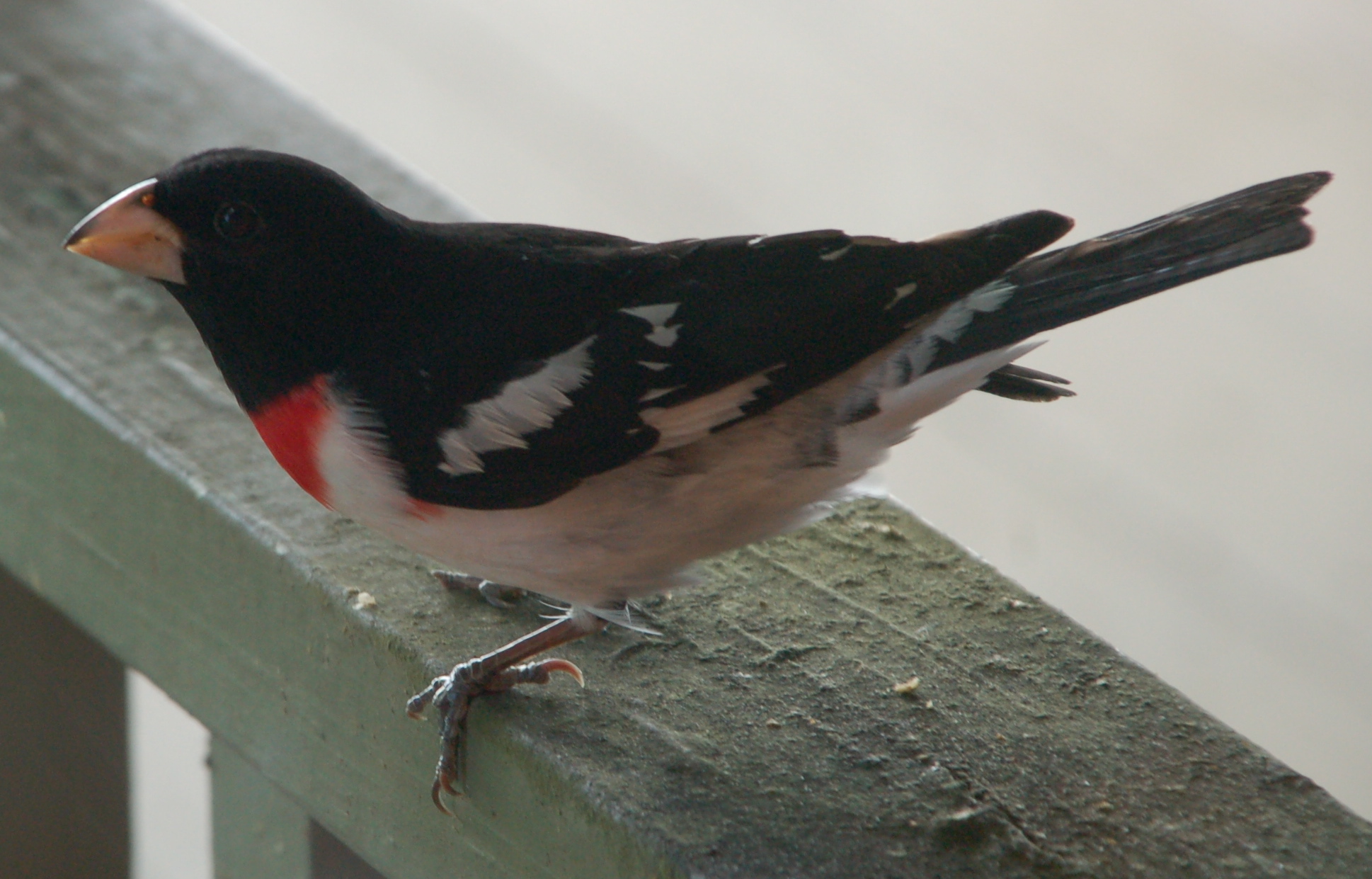
Rose-breasted Grosbeaks are regular visitors to backyard feeders.Without hesitation, the impressive Rose-breasted Grosbeak sallies onto the feeder hanging only inches from the kitchen window. Even in a brief glimpse it is easy to see how this bird got its name, its rosy breastplate all too obvious. The female, on the other hand, is awash in rich creams and browns, all for protection against hungry predators.
A female Baltimore Oriole enjoys frequent visits to the bird grape jelly feeder.The Baltimore and Orchard Orioles enjoy quick snatches of a grape jelly concoction housed in upside down bottle caps on the porch railing. A couple of quick gulps and they are gone, but never far away. Their liquid warbling says they’ll be back later for more.
The regal Red-headed Woodpeckers command attention from humans and aviary audiences alike. Without being bossy, they clear the feeders all to themselves. No doubt their brilliant red, white and black attire and their size have a lot to do with that. A male Red-headed Woodpecker visits the peanut butter suet feeder several times per day.
The Red-bellied Woodpeckers are bolder, both in sound and behavior, their iridescent red head stripes as flashy as strobe lights on patrol cars. Their noisy chatter serves as a warning siren announcing their arrival.
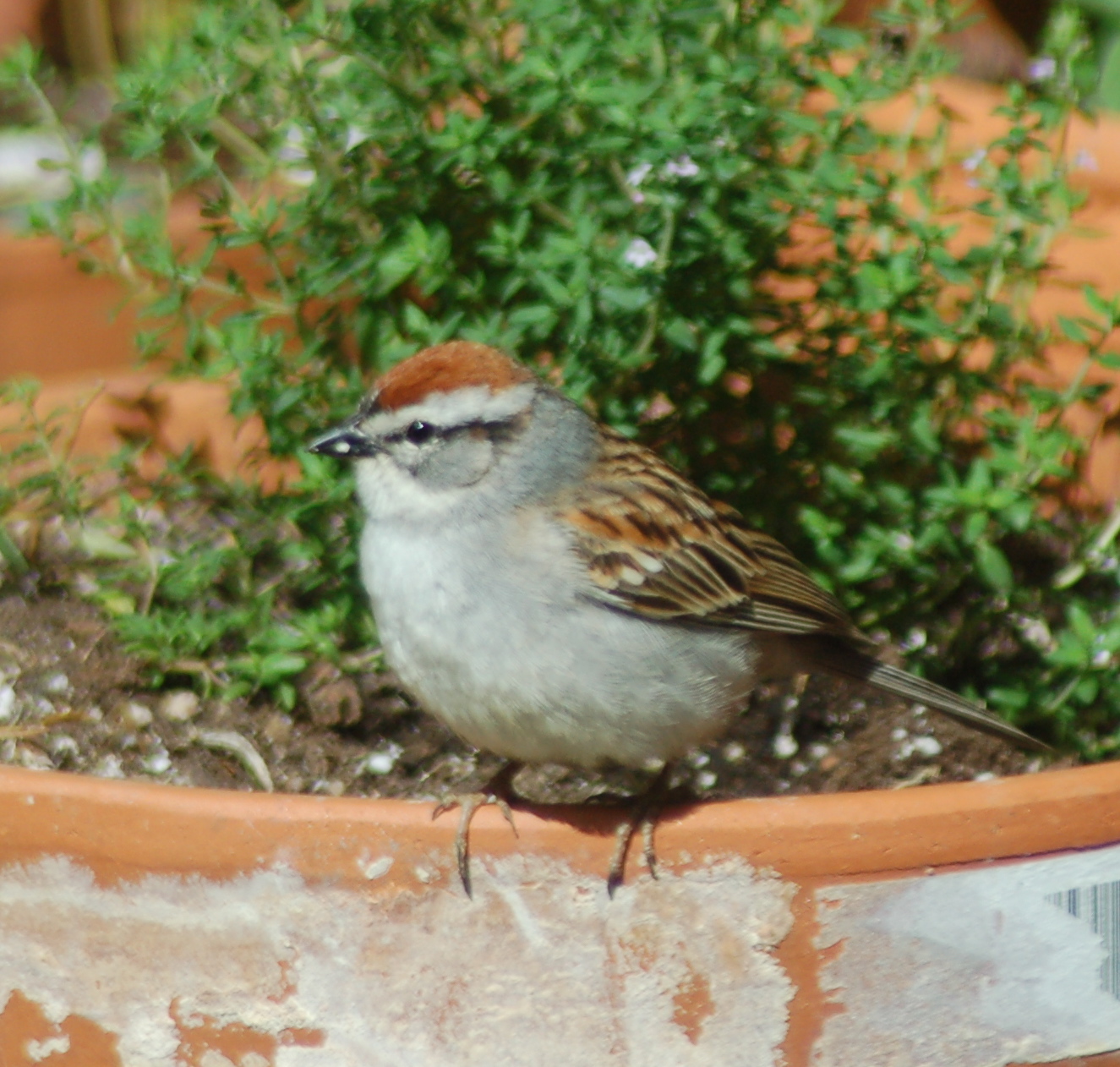
Even the little Black-capped Chickadees come dressed for the dinner party. Their tuxedo-like coloration is fresh and ready for the spring prom. They zip back and forth from tree branch to feeder, neatly holding the seed with their feet, while their tiny beak chisels for the main course, the sunflower heart. Even the little Chipping Sparrow is a joy to observe.
One hates to turn away from the aviary activity to see what might be passing overhead. An American Eagle, a Great Blue Heron, flocks of Mallards? It’s springtime in Ohio. All options are open in this intermingled habitat.
It is amazing what we can observe, especially when our feathered friends enter our life space. We just need to stop, look and listen.
Pine car racers were placed at the starting line for each heat of the pine car derby held at Homestead Furniture in Mt. Hope, OH. By Bruce Stambaugh
The employees at Homestead Furniture in Mt. Hope, Ohio don’t just build incredible furniture. They know how to have fun together, too.
Their latest entertaining venture threw in a little competition. A pine car derby was held recently in the manufacturing building across the road from the retail store. Of course, they invited their families and had plenty of good food.
The congenial group enjoys the camaraderie of one another, along with some good, fun competition. When warehouse manager Dave Hostetler suggested a pine car derby, the race was on.
Dave Hostetler stands at the head of the pine car race track that he built for the event.The contest was announced, and rules were distributed to whoever wanted to participate. In all, 22 employees bought a pine car kit and built their racer to the required specifications.
Each race car had to weigh no more than five ounces. The maximum length was seven inches and the rear width of the car was two and three-fourths inches. Contestants were encouraged to be creative with their car designs. Given the creativity of the staff at Homestead Furniture, that turned out to be a given.
The cars varied in style and color. One entrant, Noah Shetler, even entered two pink cars in honor of his wife’s battle with breast cancer. One car was numbered 08 for 2008 when his wife was diagnosed. Number 11 was for 2011 when his wife was declared cancer free after several rounds of chemotherapy treatments. One of the more original racer designs was a racer built in the shape of an outhouse.
Ada Marie Troyer dedicated her car, and her eventual winnings, to her niece who was recovering from critical injuries sustained in an automobile accident. Her car was named Best of Show.
Hostetler built the track 31 feet long, five feet high at the start. It was a two-slot track with a steep slope that the cars raced down to the finish line. Two cars raced per heat, with the winner going to the winner’s bracket, and the loser to the loser’s bracket. Once a racer lost twice, they were eliminated from the competition.
While the race went on, family members enjoyed homemade snacks that each family brought. Owners Ernest and Barbara Hershberger provided the hot dogs and beverages.
Todd Reese, Sales Manager at Homestead Furniture, closely watched the finish line at the pine care derby.With the audience gathered around the black and yellow painted racetrack, judge Daniel Troyer watched over the finish line to declare the winner of each heat. In several races, only the nose of a race car determined the winner.
In the end, none of the other racers could match the sleek racer built by LaVern Hershberger. In fact, his car never lost a race.
Asked what his secret to winning was, LaVern said he baked his car prior to the race. Baking it reduced the moisture content, thus reducing the weight, he said. This allowed him to place weights where they were critical to making the car run smoothly.
LaVern Hershberger, the eventual winner of the pine car derby, tweaked his racer before the first heat.LaVern also said he waited until the last minute to lubricate the car’s tires with powdered graphite. He declined, however, to say how long he baked his car, citing proprietary secrets.
LaVern won $100. Shetler finished second, winning $75, which he donated to Sisterhood of Hope, a support group for breast cancer victims. Krissy Yoder finished third and won $50.
Ada Marie Troyer donated her $33 winnings to her niece to help cover medical expenses.
It was a fun evening overall, mingling teamwork with fellowship, always a winning combination.
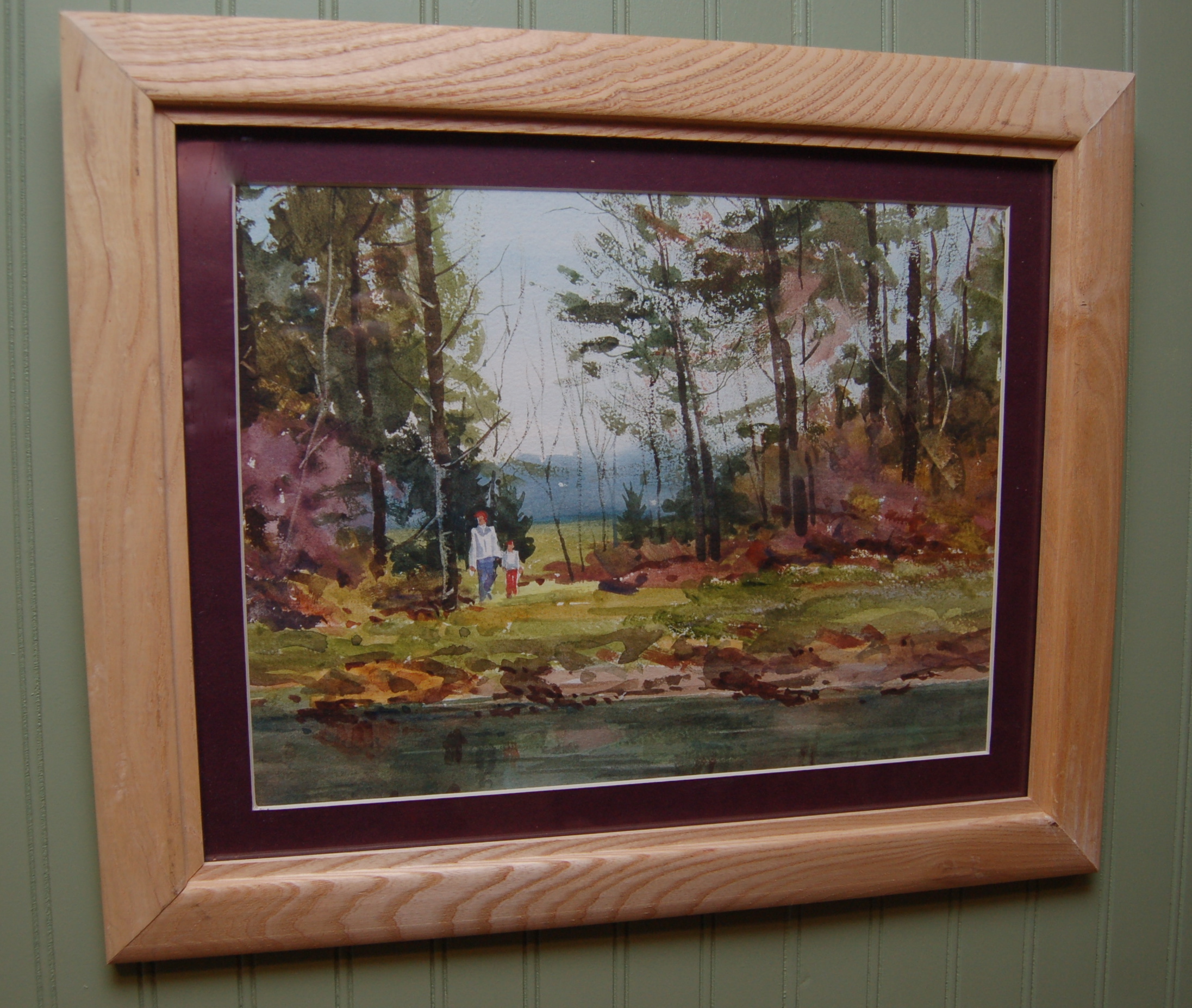
My mother, Marian Stambaugh, with her award-winning painting with the mauve matting, “River Run.” It was painted from a scene near Burnsville, NC. By Bruce Stambaugh
My mother was a beautiful woman in so many ways.
Mom was a pretty woman to be sure. Yet her graciousness and her colorful paintings revealed her artistic inner beauty. She also modestly disclosed her creativity through her color-coordinated attire.
Marian Stambaugh just after she turned 90 in June 2011.Mom died peacefully in her sleep on April 23 after a lengthy trial with Alzheimer’s disease. She was 90.
Though she had lost much of her recall of all things past, Mom still knew who her five children were. She couldn’t always call us by name, but she recognized us. She also lit up when old friends stopped for a visit. Conversation for her, however, was difficult.
My brothers, sisters and I found it intriguing that Mom maintained her pleasant personality throughout her journey with Alzheimer’s. The staff all loved her at both the retirement home, where she lived with Dad before he died in December 2009, and at the nursing home where Mom spent her last year.
Mom was a model resident. She was polite, gracious, kind and asked for little. She didn’t wander, was not a bother to anyone, and maintained her politeness despite her dementia.
In her last days, she had pain, but because of her diminished language skills, was unable to articulate where she hurt. The staff and family could only guess.
At the calling hours and during the funeral, the same descriptive word kept being repeated to define our mother. Beauty. Mom radiated beauty not only in her looks, but in the humble and generous way she lived her life. She was the kind of mother everyone wished for. We were very, very fortunate to have her for so long.
Dad was always very proud of Mom, perhaps even to the point of being a bit overprotective. Early in their marriage, Dad took Mom to a company party. When his male coworkers saw her for the first time, they feigned shock that Dad had such a beautiful wife. They even teased Dad that his wife must have been mad at herself the day they married.
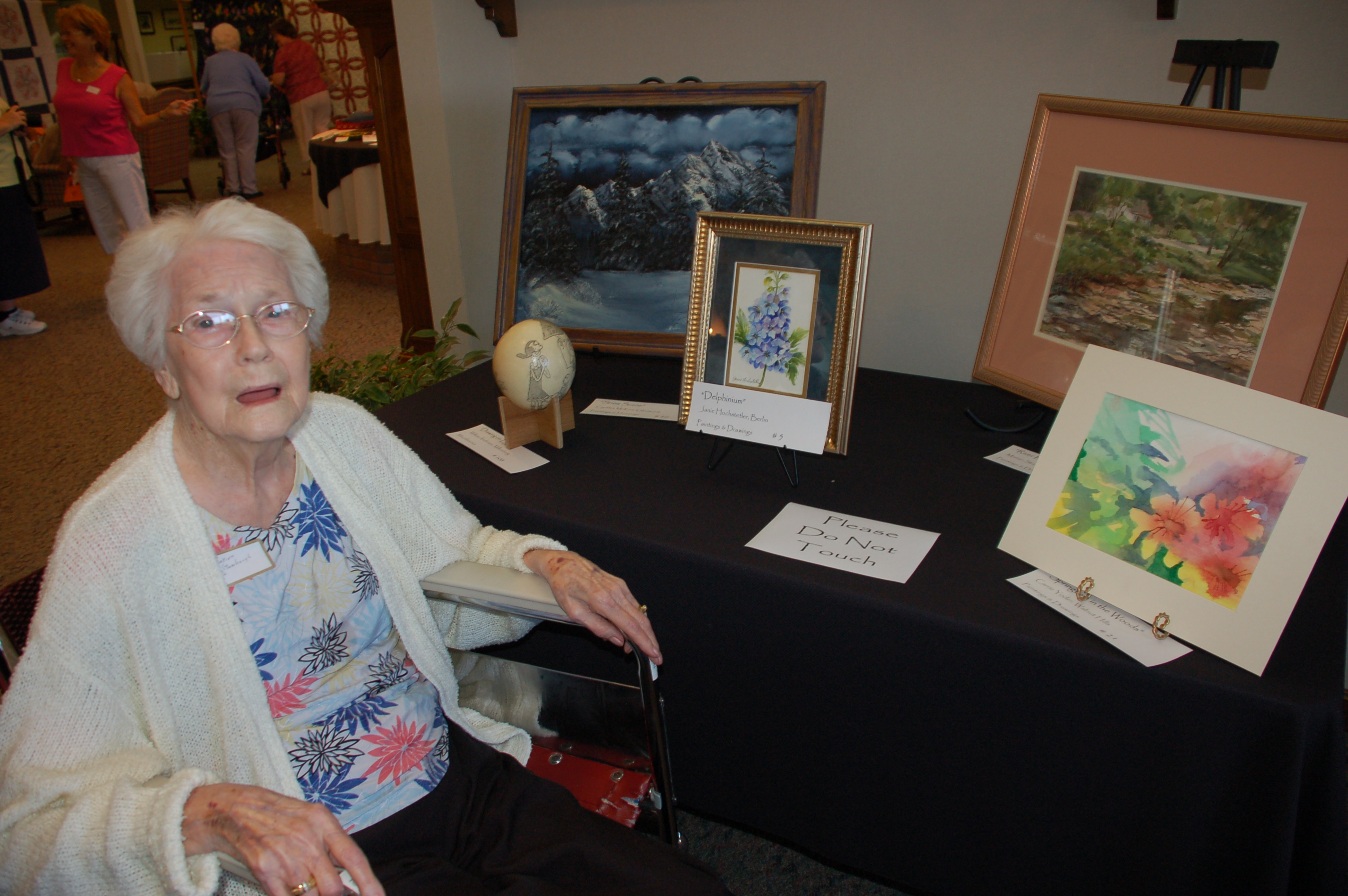
As the preacher at her funeral said, Mom never drew attention to herself. She just drew, and painted. Even when she won awards for her lovely landscapes, Mom would respectfully accept the award, and often declare that some other artist should have won.
Mom also showed her beauty in how she raised her five children in the tumultuous post-World War II era. We had rules to follow, simple household chores to do, and if we didn’t quite respect what should have been done, she judiciously administered a discipline that was appropriate for our age and the offense. She was as fair as she was attractive.
It wasn’t easy to rear five energetic and individualistic children. Since she was a stay-at-home mother, Mom carried the primary responsibility of keeping us clothed, fed, nurtured and behaved. She could have written a book on parenting. Given the beauty of her personality, she probably would have used a pseudonym if she had.
Mom was a wonderful woman, and we will never forget her kindness, gentleness and most of all the exquisiteness she naturally shared in this world through her paintings and her authentic living.
At the funeral, I felt an overwhelming sense of peace about our wonderful mother. It was as if Mom’s gracious, artistic spirit had permeated the service in one last beautiful brush stroke for all to behold.
A year after prostate cancer surgery, I am enjoying regular activities like biking with my family. By Bruce Stambaugh
A year following my prostate cancer surgery, all is well. It’s hasn’t been a totally uneventful recovery. It certainly could have been worse.
I am extremely glad to be able to say “cancer free.” And yet, I do so with humility, appreciation and the realization that too many people never get to utter those precious words.
Men tend to be pretty squeamish even just thinking about prostate issues, much less talking or writing about them. That’s mainly due to the two unspeakable potential side effects, incontinency and impotency. Because of those two potential consequences, some men unfortunately never return to their doctor once they have been diagnosed with prostate cancer.
My older brother, Craig, my late father, Richard, and I all had prostate cancer.I wasn’t surprised at all when I received the word that I likely had prostate cancer. My older brother had had robotic prostate cancer surgery 18 months before my own diagnosis. Our father had died of the consequences of prostate cancer after a 17-year battle.
It was this family history and the marked vigilance of my good doctors via annual, then semi-annual prostate-specific antigen (PSA) testing that kept the possibility of having prostate cancer at the forefront of my medical exams. I am forever grateful for that watchfulness.
In the months before and after the surgery to remove my cancerous prostate, I received invaluable advice from friends and strangers alike regarding their personal experiences. I also read and researched as much as I could.
A healthy diet is essential to good health, especially if you have or had cancer. This homemade veggie pizza is both colorful and healthy to eat.Months after my surgery, a government sponsored panel recommended that regular PSA tests be discontinued as a way to monitor for prostate cancer. That conclusion was based on what was determined to be an overuse of the test and subsequently a high rate of prostate biopsies.
Without either the PSA tests or the conclusive biopsy, I could only guess today whether I had prostate cancer or not. I exhibited no symptoms. When my PSA steadily rose over the course of nearly two years to beyond the danger threshold, I was given a relatively new medical test, called PCA3, that was 90 percent accurate whether it returned negative or positive.
I remember exactly when and where I was when I received the call that my test was positive. It’s the kind of news that one never forgets, like where you were on the morning of September 11, 2001 or December 7, 1941. This was my personal 9/11.
Yet here I am today, alive and well and steadily overcoming the after effects of the surgery. Last November, I had a non-prostate related second surgery that dramatically impeded my recovery. True, left untreated the prostate cancer would not have killed me by now, perhaps never.
This picture was taken just three months after my da Vinci surgery. My wife and I were already traveling with and enjoying the grandchildren.The biopsy determined that my cancer was the same moderately aggressive type that my brother and father both had. I leaned heavily on my older brother for advice, especially once I decided to move ahead with the robotic surgery, called da Vinci. It’s a surgery that is less invasive, less painful, causes less blood loss, has a quicker recovery than regular radical surgery, and focuses on nerve sparing to lessen the manly issues of being impotent and incontinent. Implanted radioactive seeding or direct radiation were my other options, both with similar long-term side effects that I deemed undesirable.
Through marvelous treatment and care by my doctors, and proper diet and exercise, I have survived. At this point in time, I am ahead of the curve on the two “big” side effects. They are only occasional and manageable inconveniencies. With the cancer out of my body, I don’t ever have to worry about prostate cancer again. No medical test can measure that satisfaction.
Daisies in full bloom at the Lakeside Daisy Nature Preserve near Marblehead, OH. By Bruce Stambaugh
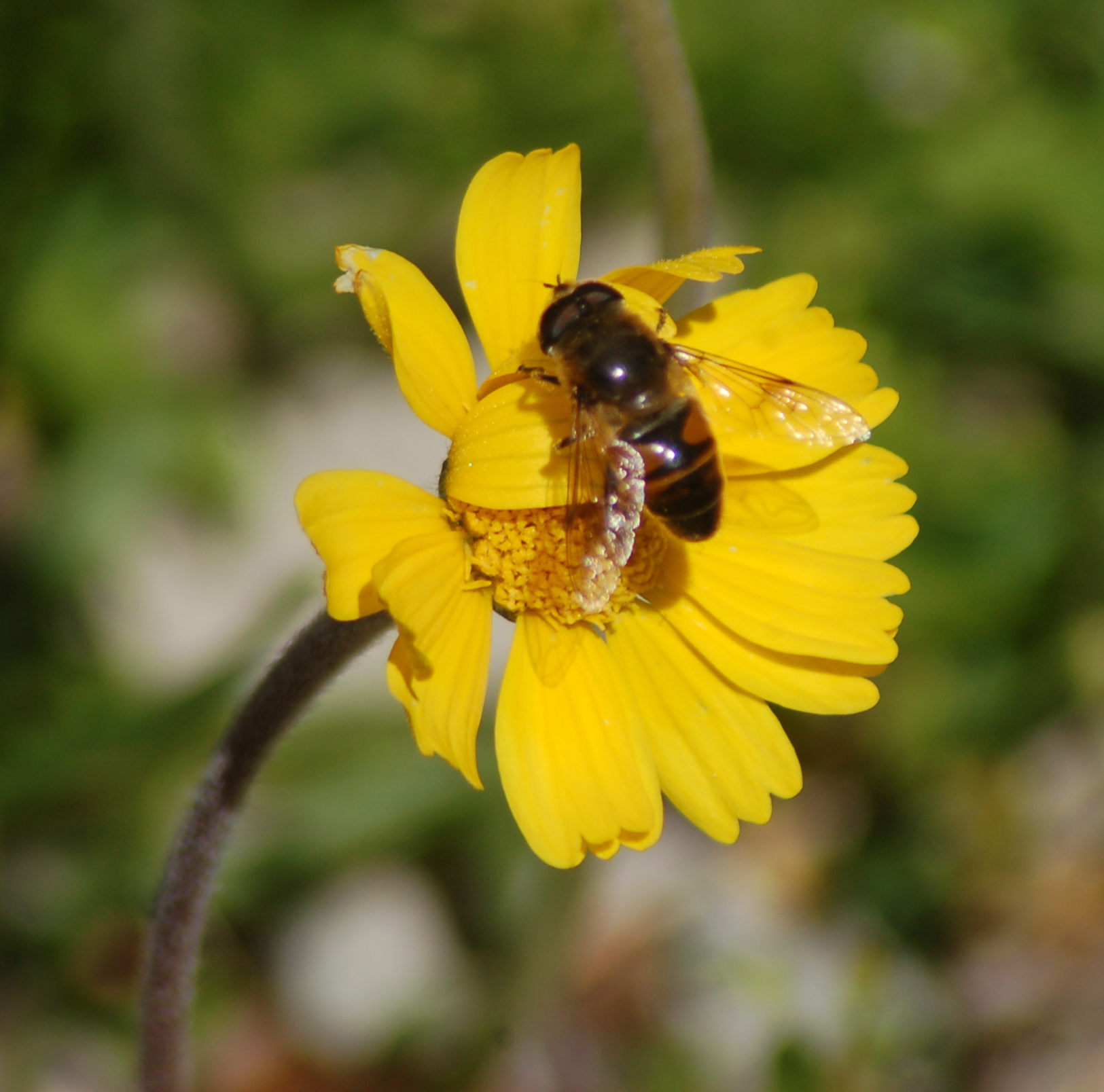
The Lakeside daisies are in full bloom. That may not sound like earth-shattering news. But apparently due to the unusually warm winter here in Ohio, the daisies, like most other flowers, plants and trees, are blooming early. Plus, if you are a lover of all things nature, and especially wildflowers, you don’t want to miss this yellowy exhibition.
The Lakeside daisies are particularly special. They only bloom in a limited number of locations on or near the Marblehead Peninsula in northwest Ohio. In addition, their buttery blooms only last a week before they begin to fade. If you want to see them in person, you had better make tracks to the Lakeside Daisy Nature Preserve near Marblehead. My wife and I were there Sunday, and the preserve was a splash of yellow against the dull limestone gray ground.
The daisies growing in a small patch inside Lakeside were beautiful, too. They’re located right along the Lake Erie shore at the east end of Lakeside near Perry Park. A bee enjoys one of the daisies in a clump of Lakeside daisies in a small preserve in flower’s namesake, Lakeside, OH.
Unfortunately it looks like the blooms will be gone before Marblehead’s annual Daisy Days scheduled for Mother’s Day weekend. Naturalists will lead walks through the preserve, so you can still learn a lot about the lovely little flower even if they aren’t blooming.
The Lakeside daisy (Hymenoxys herbacea) has been listed as an endangered species by Ohio since 1980. If you can’t make it to see this beautiful flower in person, enjoy the photos I took Sunday. If you look closely, you’ll notice some of the petals on the flowers are already starting to wilt.
The Jeanty family: Fritz, Mamie, Benjamin, Samuel and Glory By Bruce Stambaugh
For the second time in two years, Fritz Jeanty and his family are back in Millersburg, Ohio. They are refugees from the devastating earthquake that hit Port-au-Prince, Haiti, January 12, 2010.
Fritz remembers the exact time the huge earthquake hit, 4:45 p.m. He was there among all the horror and destruction, desperately trying to return to his family. He eventually made it home all right, and his wife, Mamie, and two sons were badly shaken but otherwise fine. Other family members weren’t as fortunate.
Using his basic survival instincts and his canny astuteness to save phone numbers, Fritz was able to make connections to come to the United States. After a harrowing trip to Florida, Fritz and his family eventually ended up in Millersburg.
With the help of many people and local organizations, the Jeantys settled in to life here. Fritz, unable to legally work under the terms of his visa, spent his time volunteering at Save and Serve Thrift Shop in Millersburg.
Fritz was antsy to return to his home country, however. After much planning, he and his family returned to the impoverished island country January 26, 2011. He was full of hope. Fritz wanted to rebuild their home, start a new business based on his Save and Serve experience, and rejoin friends and family.
What the Jeanty family found upon return was excruciatingly familiar. The devastation that Fritz saw initially was still there.
“Nothing had changed,” Fritz said, his brown eyes in deep reflection.
The rubble was everywhere. He said only the non-governmental organizations (NGO) were making any progress, and that there weren’t enough of them.
“People still live in tents,” Fritz said. In fact, the city was even more populated than after the earthquake that killed 300,000.
“People from the country heard there was food and housing in the city,” Fritz said. Neither was true, but the people remained, complicating an already problematic situation.
Fritz’ dream was to establish a used clothing store similar to Save and Serve. That proved unfeasible. He sold two loads of clothes he had obtained, but had little to show for his efforts.
“There were no jobs,” Fritz said. “People didn’t have money.”
The first three weeks Fritz and his family stayed with friends until they could get their heavily damaged home temporarily livable. The goal was to reconstruct their home adjacent to their destroyed one.
A retaining wall had been previously constructed. Fritz built one room in which the entire family lived. A few months later, he added a kitchen. Christian Aid Ministries, headquartered in Berlin, Ohio, helped with the cleanup of the house. Other Holmes County churches, organizations and individuals assisted the family financially.
They still didn’t have running water. Electrical power was erratic at best, being available only on an average of eight hours a day.
Besides the lack of jobs and housing, there were other social problems that permeated Haitian society, too, according to Fritz.
The crime was the worst. The Jeanty family fell victim to that like so many others had there. During the night, hoodlums locked the Jeanty family in their own house, and stole the battery out of Fritz’ vehicle, and vandalized it.
Their house was burglarized after they left for Millersburg in January, too. Fritz said robberies and murders had increased exponentially.
“There were about 100 murders every three months,” Fritz said forlornly.
Another problem in Haiti has been the ongoing cholera outbreak. With Mamie pregnant with their third child, and proper medical care scarce, Fritz realized he had to do something. With another visa, he returned his family to the familiar and much safer surroundings of Millersburg January 18.
Because Mamie had had difficulties in previous pregnancies, Fritz didn’t want to take any chances. Happily, their first daughter, Glory Jeanty, was born healthy and well March 23 at Aultman Orrville Hospital.
The Jeanty family is again being supported by donations from local groups and individuals. They live in a home owned by the church they attend, Millersburg Mennonite. Their six-month visa expires July 17 with their future uncertain after that date.
I couldn’t help but sense the irony and wonder in it all. My wife and I were visiting my older brother and his wife near Williamsburg, Virginia.
We all were enjoying a pleasant spring evening on the back porch of their lovely home. My wife was using her iPhone. My sister-in-law toyed with her iPad. My brother and I each were surfing around on our MacBook Pro laptops.
The evening was dark and still, except for the occasional distant rumble of thunder. The only light on the porch was the glow from the screens of our electronic gizmos.
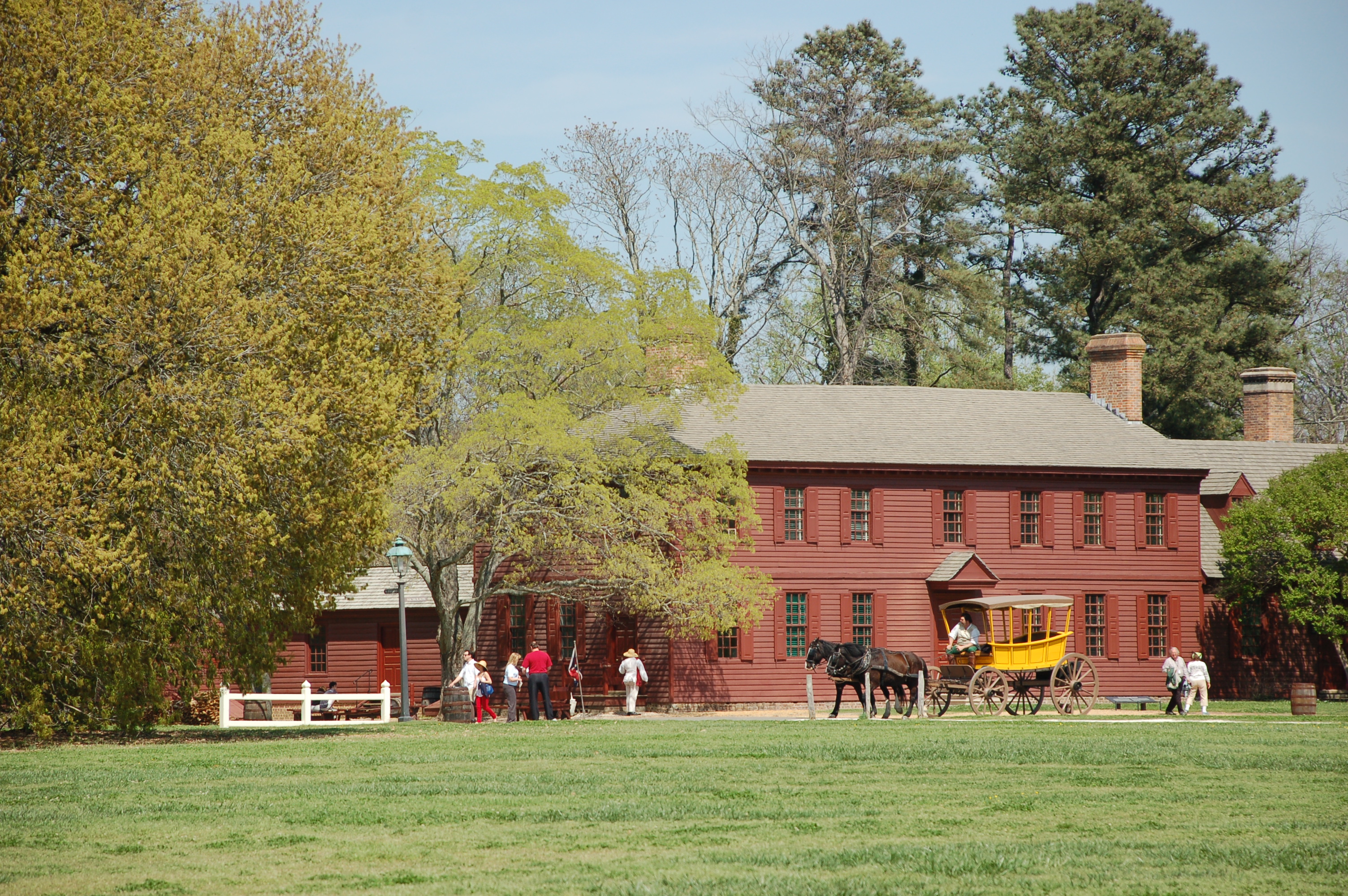
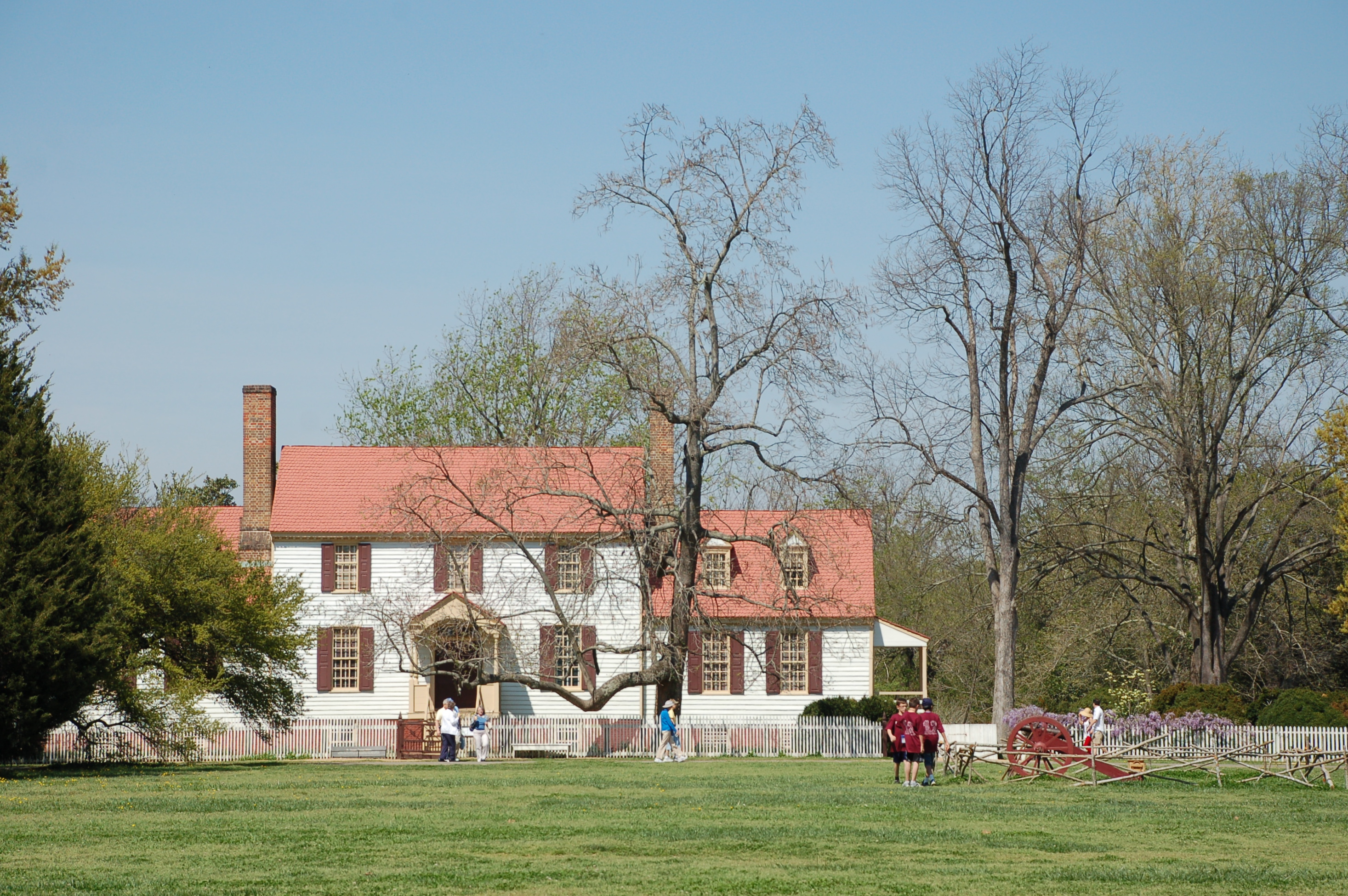
My brother and sister-in-law own a lovely home just minutes away from Colonial Williamsburg. Founded in 1654, Williamsburg played a significant role in the development of our country to say the least.
We had spent the heart of the day walking the streets of the historic town. If you have never been there, it’s a bucket list kind of place, beautifully restored and maintained with lots to do for children and adults alike.
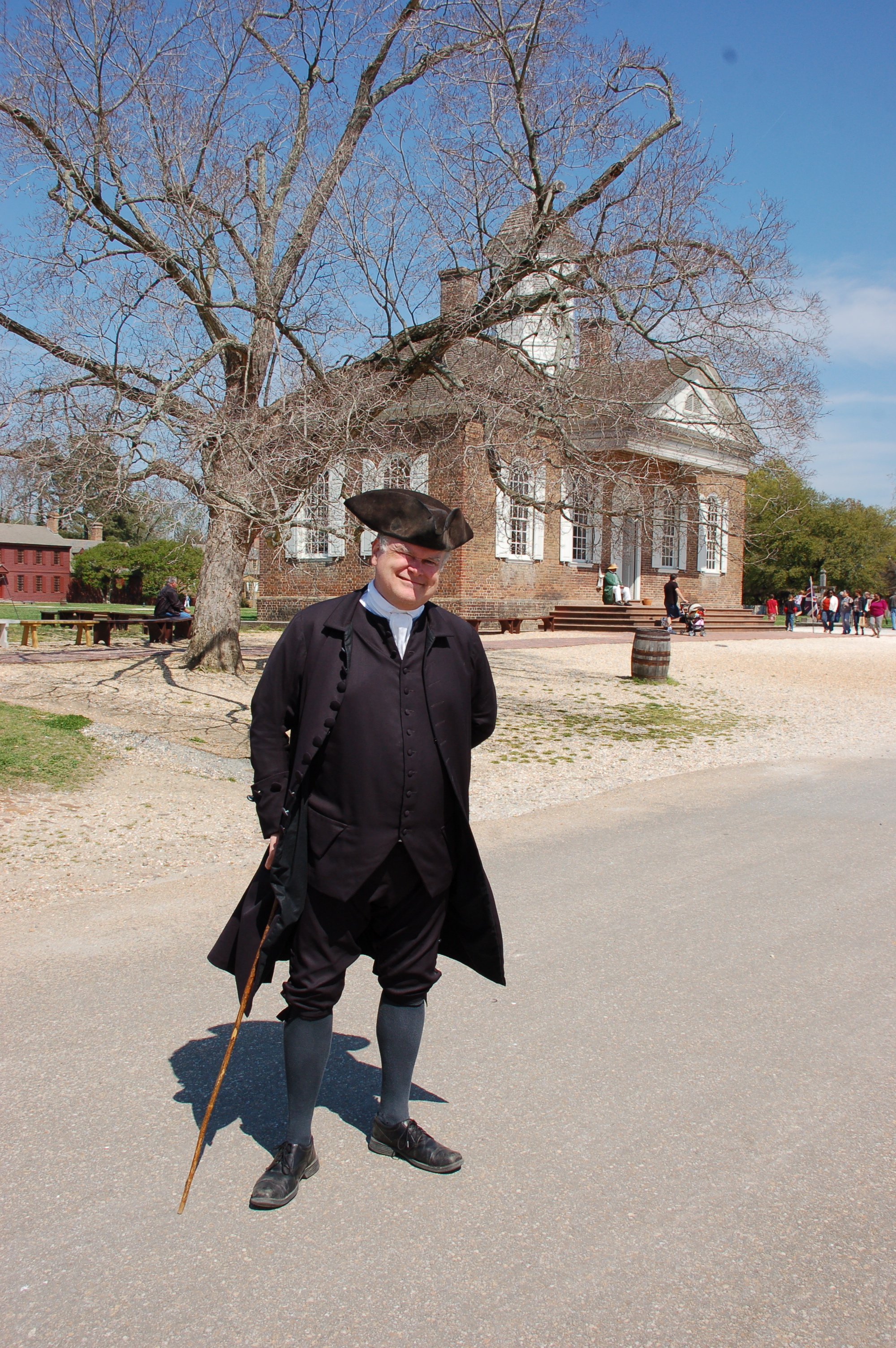
Even though I had visited Williamsburg before, I again thrilled at just the thought of strolling the same streets that a young Thomas Jefferson once did. With so many guides and actors dressed in period attire, it was easy to imagine being back in time.
Plush carriages pulled along by noble teams of horses plied the once muddy streets, now paved for the comfort of the tourists and the convenience of the staff. The night before we had enjoyed a delicious meal in Shields Tavern, where we were careful to mind our Ps and Qs.
That old saying, still heard today, could very well have had Williamsburg roots. In those days, a tavern’s bartender simply kept a chalkboard ledger of what customers consumed. If they drank a pint, a P was lettered under their name. If a quart, then a Q was marked. At evening’s end, the bill was tabulated and the customers properly minded their Ps and Qs by paying their bill. Today it simply means to take care of your own business.
As the four of us sat quietly on the darkened porch, we could have been minding our own Ps and Qs by paying our bills online. With the rumbling thunderstorms growing closer, it seemed a bit surreal using our 21st century technology to check in with the world while sitting in the shadow of a bygone era. The town crier was definitely no longer needed to announce the time.
I thought about other familiar sayings we utter without knowing their origin. We derisively chatter about big wigs without contemplating the phrase’s original meaning. For the record, “big wigs” came from the 17th century society custom of wealthy people wearing expensive wigs made of human hair. The taller the wig, the more aristocratic you were.
You could say we went the whole nine yards at Williamsburg. That reference was attributed to a bolt of fabric, which equaled nine yards. Clearly I enjoy linking the past with the present.
As the line of storms hit our area, it rained cats and dogs, but not long. Even well before colonial times, superstitious persons believed cats symbolized the rain and dogs the wind; thus, the saying.
Back on the porch, we powered down for the night, thankful for both the generous hospitality and the opportunity to reconnect with the origins of our democracy. I wondered if somewhere, someplace Thomas Jefferson and Steve Jobs were both smiling.


 I am also a bit surprised, mostly because the nomination came from a food blog, Food Stories. Kindly check out that blog and you will discover that it is more than about food. I am not a foodie, and but I do enjoy food, although I do have to follow a special diet. I have written about that on this blog, too.



























 Roadkill Crossing
You must be logged in to post a comment.