Christmastime is gathering time

christmastreebybrucestambaugh

By Bruce Stambaugh

Christmastime is gathering time. The very origins of the holiday make it so.

Though we may not think about it, those who gather in celebration replicate the inexplicable cast of characters that assembled for the first Christmas. Paying homage for this special birth, their lot represented a cross-section of social, political and religious backgrounds, not unlike today.

nativityscenebybrucestambaughTo be sure, they were a motley bunch, unassuming, even unaware of the tradition being created. Of course, we have no way of knowing the exact date or even time of year for the birth of the Christ child. We can only follow the story as it has been transcribed and translated for us.

Over time, the traditions of Christmas have been handed down and culturally adjusted to fit the changing times. There’s no documentation for tinseled evergreen trees or a jolly St. Nick in Bethlehem that ancient night.

An angelic troupe serenaded stunned shepherds huddled in a field, watching over their flocks. Astute individuals, long on the lookout for a messiah, offered praise and prayer. A ruler trembled. Later, wise kings traveled from afar to worship the boy, and offered precious gifts.

Mary and Joseph themselves were among the throngs reassembling in their hometowns on governmental orders of the day. Harsh as their journey may have been, they complied. History wouldn’t be the same if they had not.

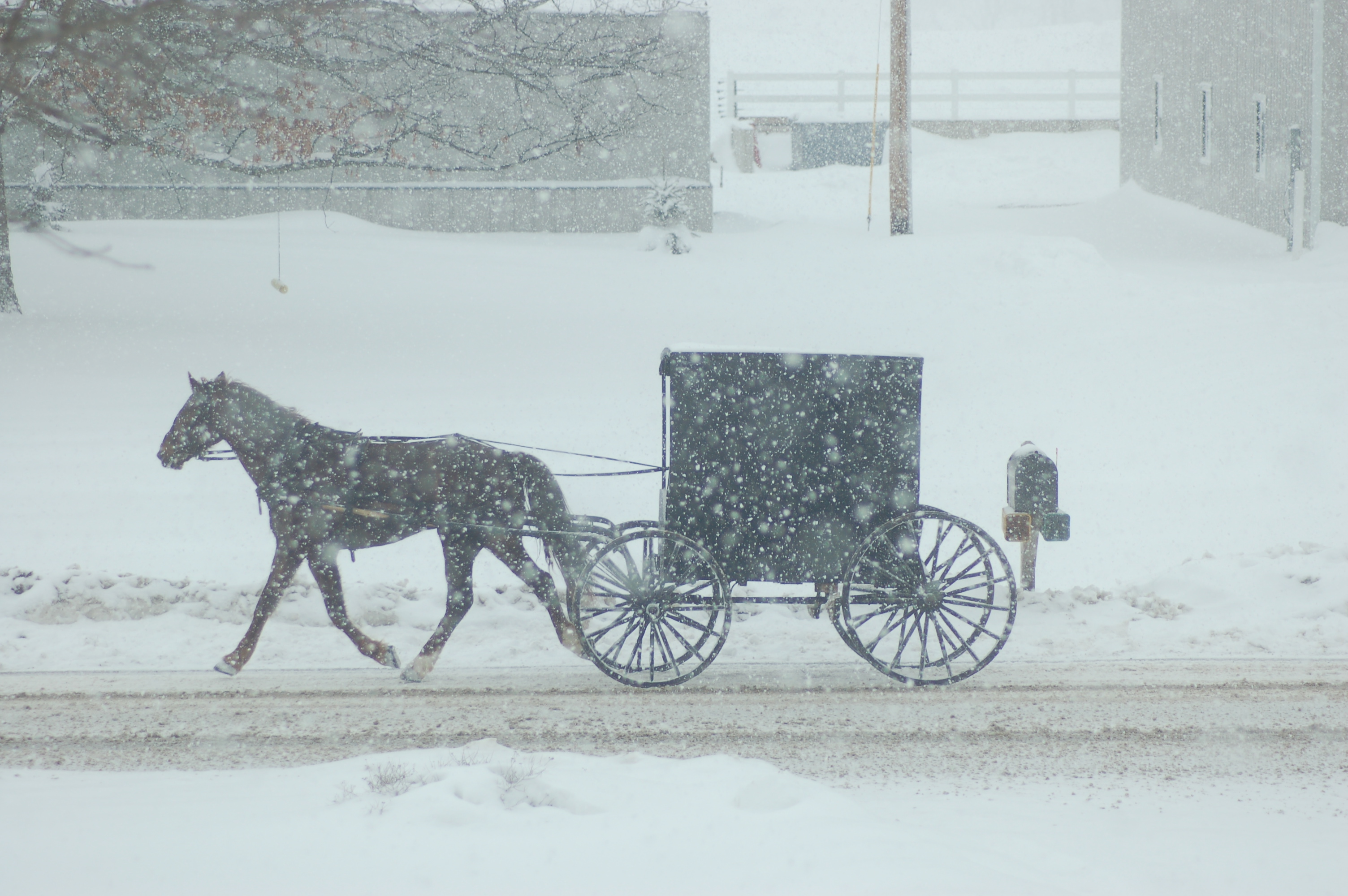
snowbuggybybrucestambaughCenturies later millions travel by modern means to celebrate Christmas, and not always on Dec. 25th either. That fits the Advent model as well. Perhaps, because of schedules or availability, you have already gathered for the holidays.

Here in the largest Amish population in the world, both traditional Christmas Day and the more reverent Old Christmas, always Jan. 6, will find families and friends gathering and sharing food, fellowship, and gifts. You might know Old Christmas as Epiphany or Three Kings Day.

Our own families will make merry on several occasions. Christmas Eve morning two kinships are blended into one for a festive breakfast, a holiday custom spanning three decades.

On Christmas Day, we’ll repeat the family ritual of enjoying a tasty holiday meal, and opening gifts. Those traditions have been toned down a bit from my childhood days when my good parents splurged beyond their means to make Christmas merry.

This slideshow requires JavaScript.


Some of us will eat tofu instead of turkey or ham, and the gift giving has been reigned in as well. We set a reasonable spending limit, pick a name out of a hat, and that’s that. Of course Santa still fills the stockings hanging from the fireplace mantel.

Later, the five Stambaugh siblings and any available family members will met at our little sister’s home to honor the season and our folks. After all, Mom and Dad instilled in us a fervent love for Christmas.

Myriads of global families will mirror my own, each in their own traditions and styles. Others have already gathered to bake cookies, or attended school programs, or a holiday concert. Still others packed food and clothing for the needy or served meals to too many homeless peoples around the world.

A curious collection of peoples was drawn to that original anointed Nativity scene. Once the event’s date was arbitrarily fixed as Dec. 25, families have been assembling ever since.

Centuries later, Christmas is still for gathering. The modes and means of doing so may have changed, but the reason has not.
In that, let us all rejoice and be glad that we can gather together indeed.

friendsgatherbybrucestambaugh

© Bruce Stambaugh 2013

Appreciating the daily gifts we are given

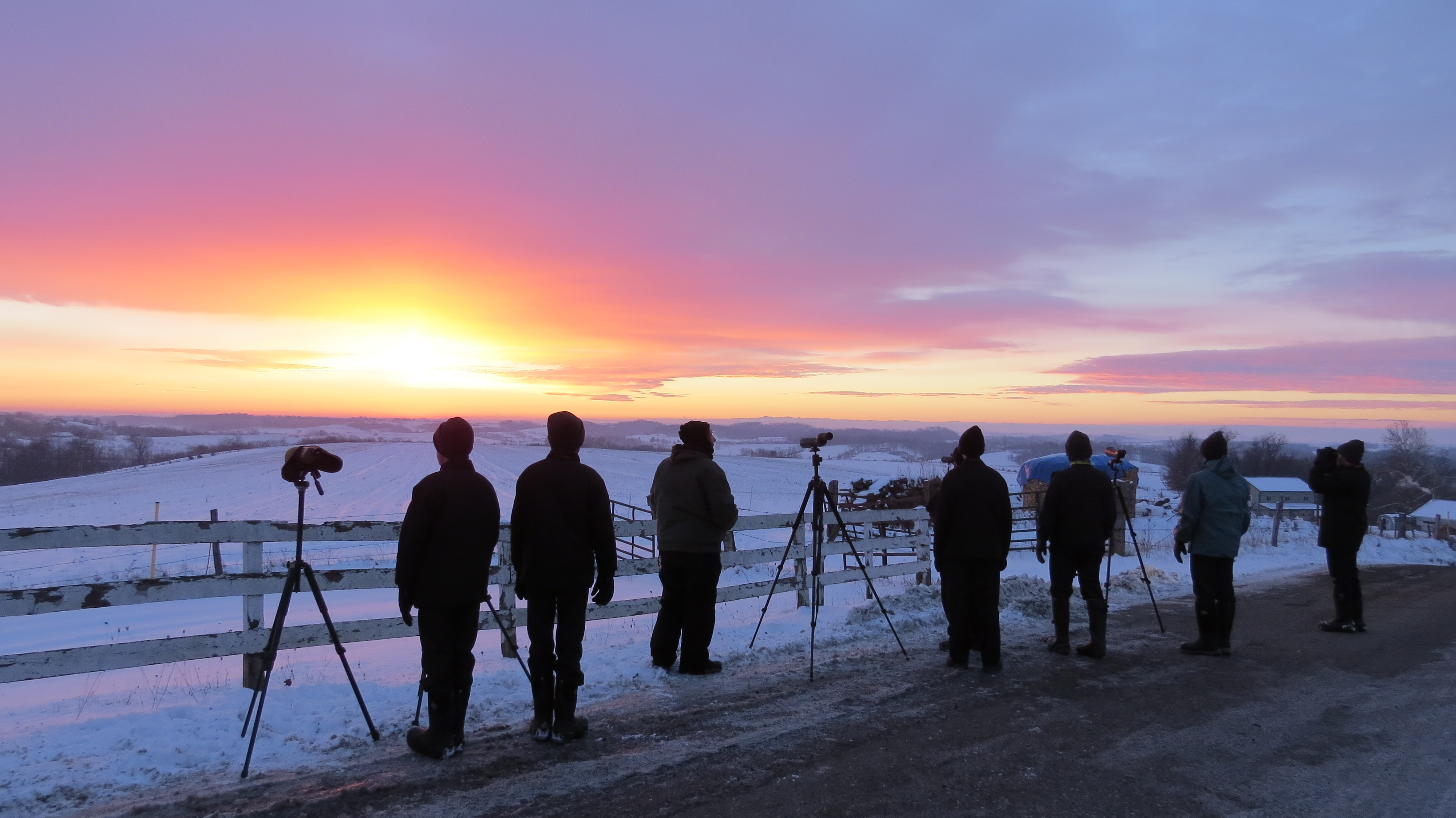
birdersatsunrisebybrucestambaugh
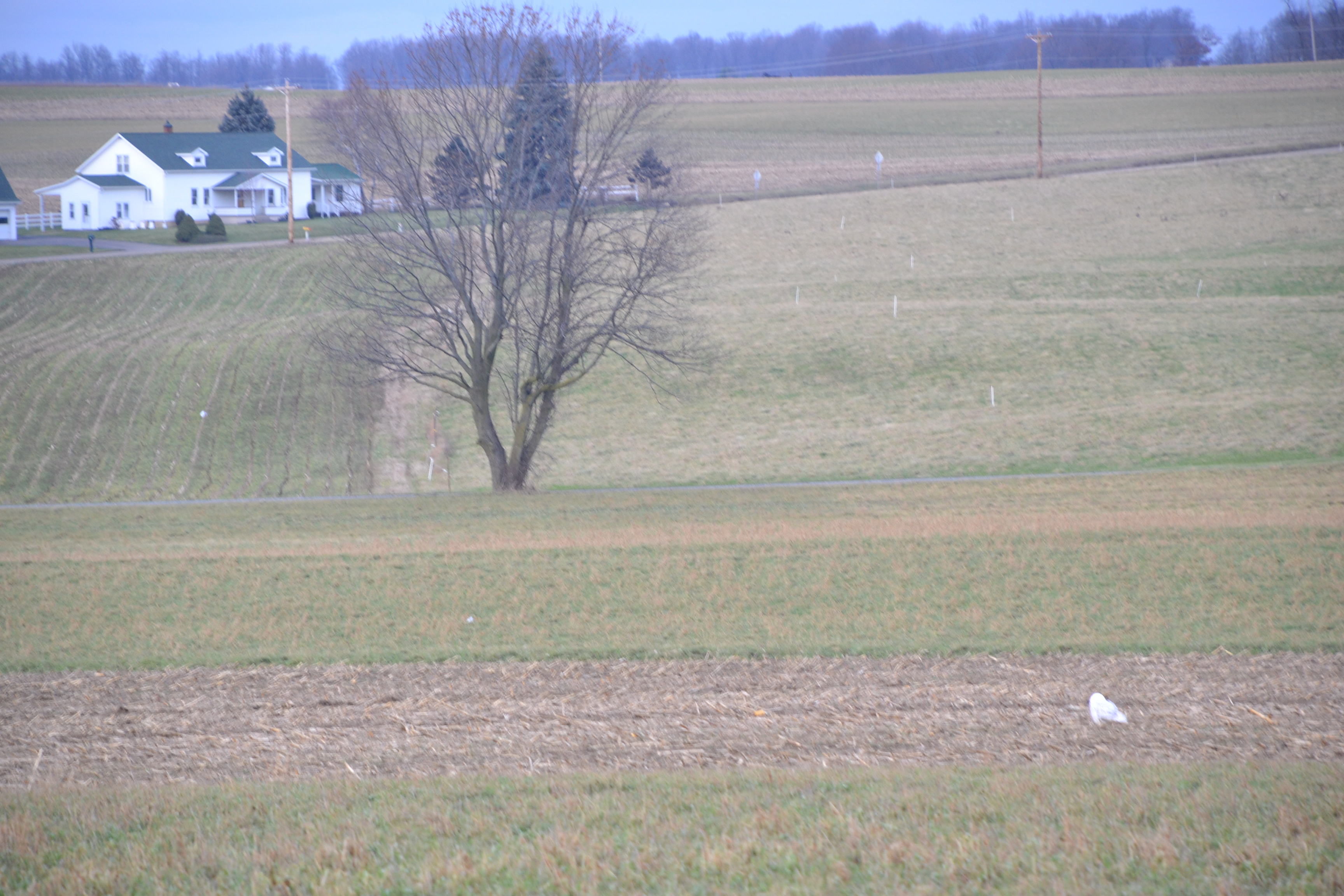
A beautiful sunrise greeted these birders in search of a Snowy Owl.

By Bruce Stambaugh

For much too long already we’ve been enduring an avalanche of cutesy commercials and gimmicky advertisements foisting an assortment of products from A to Z on us. Each one is pitched as the perfect Christmas gift to give.

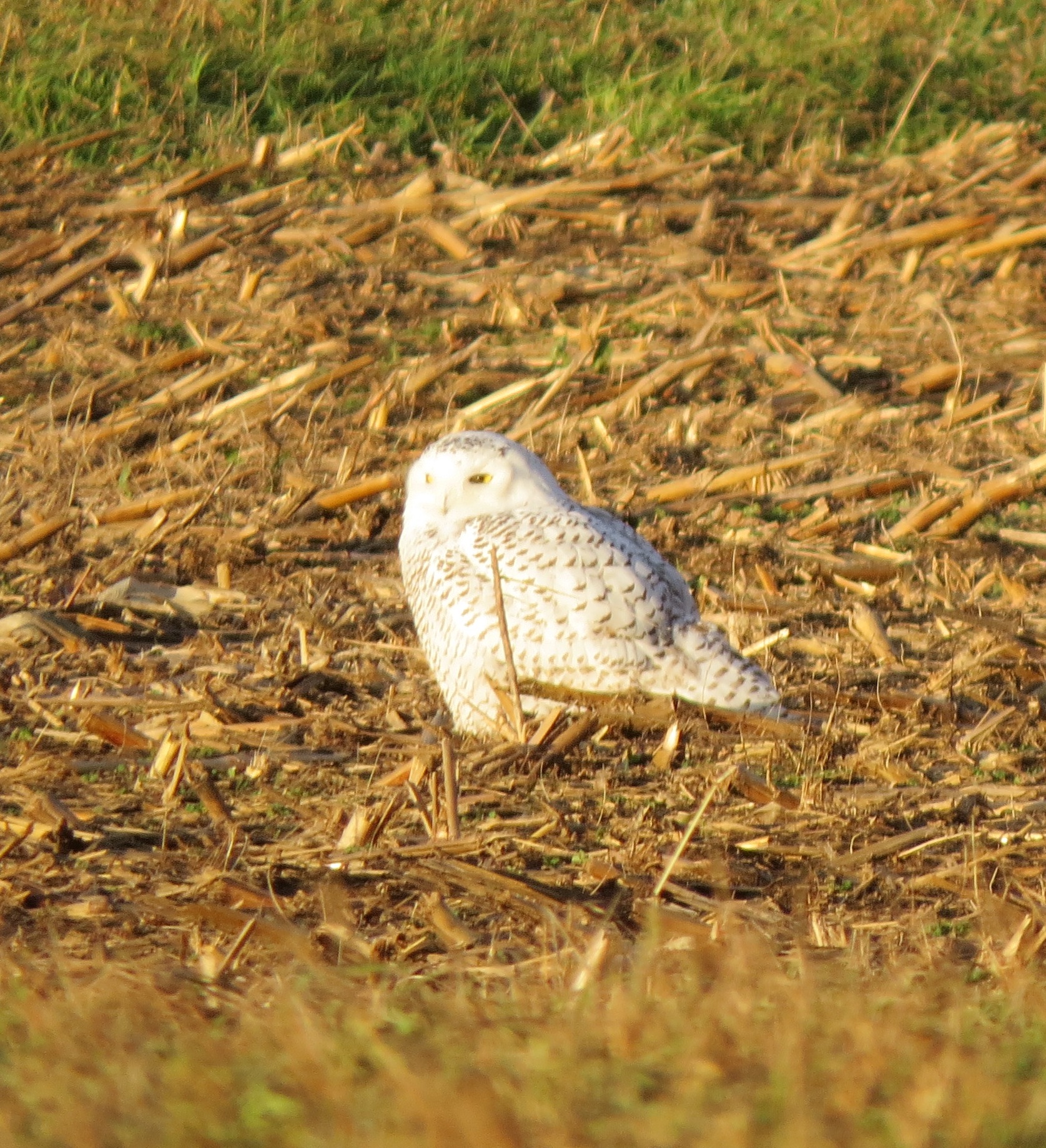
snowyowlbybrucestambaugh
Snowy Owl.
Catalogues, newspapers, magazines, radio, television, the Internet, even emails push various products for us to purchase for our loved ones. I do my best to ignore them. It’s a bold statement from someone who spent part of his career in marketing.

I understand why all the product promotions are done. Retailers often need productive holiday sales to ensure a profit for the year. I certainly don’t begrudge them for trying.

At my stage in life, I find greater joy in a brilliant but brief sunrise than a glitzy ad. Sometimes on the coldest rural Ohio mornings, the pinks and blues that quickly morph into warm oranges, reds and yellows stir me more than any new car wrapped in a big red bow could.

Joy comes in many packages if we just take the time to notice them, even on the grayest of days. Amid this entire holiday hullabaloo, I have to remind myself to stop and take a deep breath.

Advent is the perfect time to slow down our lives, not speed them up, rushing around trying to find just the proper gift. It might already be right in front of us.

I speak from experience.

When our daughter, now a mother with young children of her own, was two-years old, she would stand on the kitchen counter at our home in Killbuck, Ohio. Together we would watch the birds devour the birdseed we had put out for them. Young as she was, Carrie could correctly identify each species.

Teetering on the rim of the Grand Canyon is an awesome feeling. Sharing that incredible vista with a person who is viewing it for the first time is even better. When it’s your son, seeing his smile is priceless.

When my wife and I braved a frigid winter’s night with a dear couple to search the dark sky for a rare comet, I was cold but hopeful. We rejoiced when we found it, quietly celebrating the event together. No words were needed.

When you go in search of a Snowy Owl, a rare avian visitor to our area, your hopes are high. Even when the bird can’t be located, the camaraderie of other birders on the same search makes up for the whiff. There are no wild goose chases in birding.

When you receive a hand-made card that includes drawings of a cardinal, an eagle and a blue jay, all appropriately colored by your grandchild, you know you are loved. You keep and display that precious gift where you can see it daily.

lookingupbybrucestambaugh
The gifts of life are all around us. We just have to look for them.
When a long-lost relative unexpectedly contacts you, you rejoice and reconnect with someone you may have only ever met once or maybe never. Surprise gifts rule.

When you stand in line for an hour or more to offer your condolences to the family of someone you have never met, you are blessed by the grace and appreciation shown to you by the mourners. Even in grief, great gifts are exchanged.

Advent is a time for reflection, renewing, remembering. It is a holy gift, freely given, gladly embraced.

The din of commercials not withstanding, Christmastime models what it means to give and to receive. I wonder what gifts will unwrap themselves for you and me today.

© Bruce Stambaugh 2013

Writing the dreaded annual Christmas letter, then and now

By Bruce Stambaugh

My wife and I gave up sending Christmas cards en masse several years ago. To keep up with the times, we transitioned into doing an annual Christmas letter instead.

We thought a personal synopsis more appropriate to keep friends apprized of what was happening in our family, and those of our adult children. Plus we saved the expense of the store-bought cards.

marianstambaughbybrucestambaugh
The late Marian Stambaugh.
With electronic communication now socially acceptable, most of our letters are sent via email to the chagrin of the U.S. Postal Service. Whenever I begin our annual letter, nostalgia appears like Marley’s ghost. Advent days long-passed flash before me.

I have fond memories of the Christmas cards our family received from friends and relatives, some near, some far. After she had opened the cards and read them, our kind mother would allow us kids to tape them to the inside of the wooden front door of the home where I grew up in suburban Canton, Ohio.

Some years Mom would cover the door with colorful paper wrapping, creating a festive background to the many season’s greetings we had posted. Mom taught us to apply the various sized and beautifully illustrated cards in an attractive, creative pattern.
Both hand-written and typed letters of greetings from friends and relatives who lived hundreds, even thousands of miles away were tucked into some of the cards. It was the way to communicate back then.

I think Mom had a higher purpose for the festooned door beyond being a welcoming holiday decoration. For our modest middle-class family, the patchwork of cards served as a symbol of how rich we really were, not in monetary wealth, but in valued, enduring relationships.

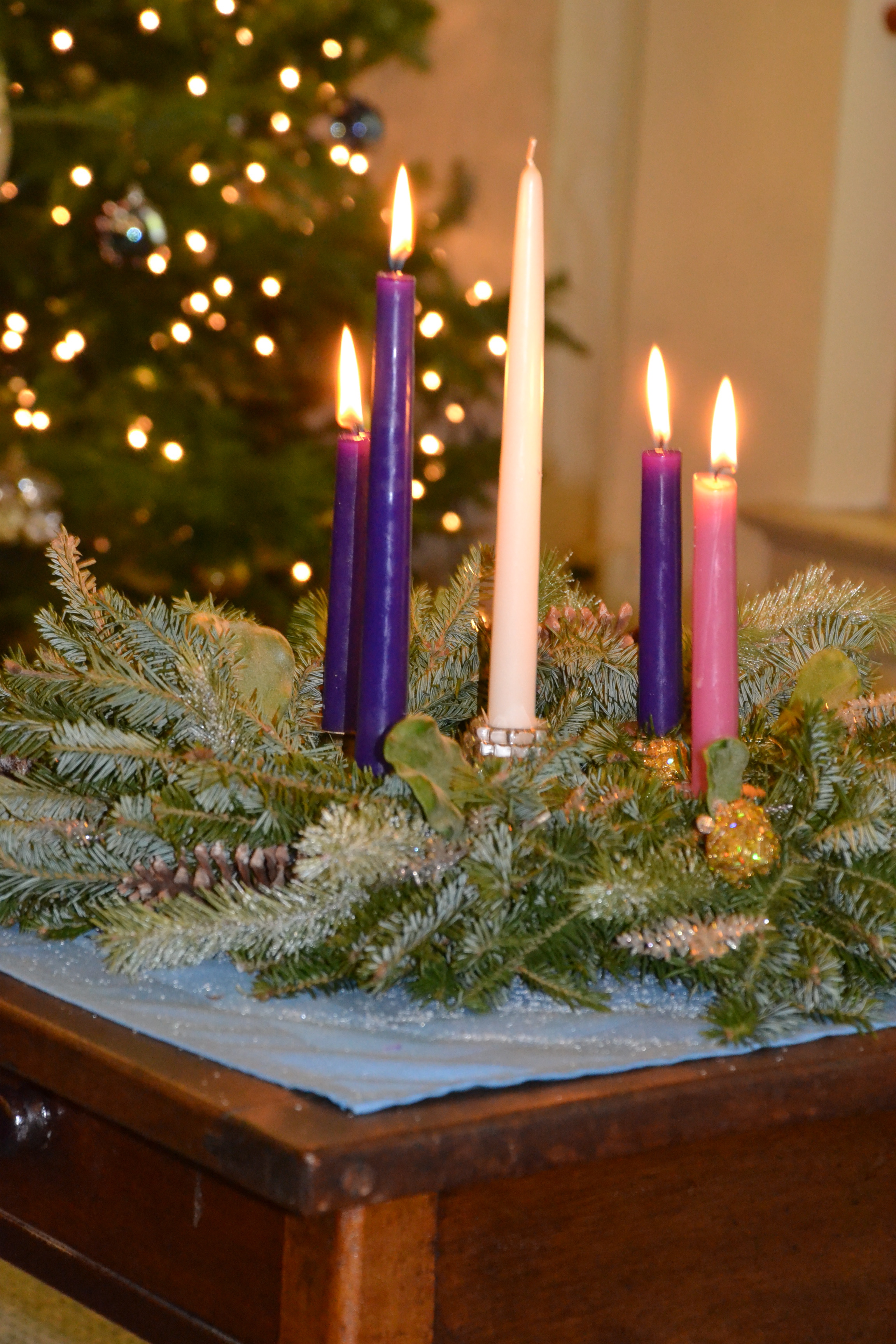
adventcandlesbybrucestambaugh
Advent candles.
Typical of many post-World War II families, Dad worked, first a blue-collar job, then a white-collar one. Mom efficiently ran the household on Dad’s meager income, and nurtured her five energetic darlings.

Our family sent out a host of our own Christmas cards. Our ever-thrifty mother would purchase the greeting cards during the post-Christmas sales of the previous year.

Mom addressed the envelopes with her easy, flowing handwriting while some of us kids helped seal and stamp the cards. I sweet-talked my younger siblings into licking that horrible tasting glue on the back of the postage stamps. I hope they’ve forgotten that.

That was a long time ago. Technology and progress, always a subjective word, have changed our lives forever.

Each year I enjoy authoring the one-page summary of the year’s top family happenings, though a couple of years ago I forgot to mention our 40th wedding anniversary. My wife is the letter’s chief editor, so all was forgiven.

I try to make the annual accounting as lighthearted and informative as possible. In recent years, when the aged bodies of parents, aunts and uncles have breathed their last, the letters tended to be more subdued.

I used to simply sit down and write the highlights from memory. Afterwards, I would double-check the calendar that chronicled

christmaswreathbybrucestambaugh
Christmas wreath.
all of our appointments, meetings, anniversaries, birthdays, vacations and other notable events.

Given my previous major omission, I now scour the calendar before I begin to write. Only instead of the daily ledger with scenic pictures, I click on my laptop’s calendar icon to scroll through the year month by month.

It’s time to write our family’s annual letter. It might make people laugh. It might make them cry. But I sincerely doubt it will end up on anyone’s front door.

© Bruce Stambaugh 2013

Heading down Route 66

grandcanyonbybrucestambaugh
The Grand Canyon, one of the many destinations made more accessible by U.S. Route 66.

By Bruce Stambaugh

U.S. Route 66 is legendary. Built in 1926, the highway that connected Chicago with Los Angeles helped to open up the western United States, especially after World War II.

Officially tabbed “The Will Rogers Highway,” the concreted, two-lane road became so popular that it quickly took on another moniker, “the Mother Road.” The highway enabled many Americans to access locales they had only heard of or dreamed about.

Many took to the famous road to visit historic sites, national parks, or tickle their toes in the southern California surf. Hundreds of service oriented businesses, restaurants, gas stations, motels and the like, grew once sleepy towns into expanding cities.

After Bobby Troup took a trip from Pennsylvania to the west coast on the road, he penned a now iconic song about his experience. “Route 66” is still a familiar song.

Today tourists from around the world travel as much of the original route that remains, too. They want to relive what life was like before the road was decommissioned as a U.S. highway in 1985. The establishment of the Interstate Highway System spelled doom for the romanticized route and the cities and businesses through which U.S. 66 traversed. Radiator Springs, the fictional town in the movie “Cars,” is used as an example of how the Interstate Highway System affected so many small towns across the southwest.

I have traveled on only a few sections of the famous route. My late father, however, had a very personal and memorable connection to U.S. 66. It was the road he and two other sailors drove home following their discharge from the Navy at the close of World War II.

I remember Dad telling me about a restaurant owner in Texas who helped them out. As they drove east along U.S. 66, Dad and his traveling companions kept seeing billboards for a restaurant that advertised serving “the largest steak in Texas.”

Of course the trio decided to check out the claim. Still dressed in their Navy whites, they had little money. Glad for their service to country, business owners often gave them discounts or even free food at places where they stopped.

This restaurateur was no exception. Never one to be bashful, my father approached the restaurant’s owner, and told him they had seen his many billboards along the road. Dad point blank asked him if his largest steak claim was true.

Impressed with their enthusiasm and their military service, the owner gave all three men a free steak dinner. Dad said it was indeed the largest steak he had ever eaten.

So why am I telling you all this about a road that doesn’t exist anymore? I blatantly used this nostalgia to make a simple, metaphoric point. I’m beginning my own journey on 66. I’ll soon be that age. Our birthdays are important after all. We only have them once a year.

Since I was a kid, I have wistfully declared that I would live to be 100. I had no way of knowing that of course. It was just my way of saying I enjoy life, and want to live it as vibrantly, as long, as well, and as purposefully as possible.

I feel very fortunate indeed to have completed nearly two-thirds of the way to that century mark along life’s bumpy highway. I don’t know if I’ll reach that lofty milestone or not, but I am going to give it my all trying. I still have a lot of living to do.

This year I’ll travel down my own personal Route 66. For in the masterful words of the beloved American poet Robert Frost, “I have miles to go before I sleep.”

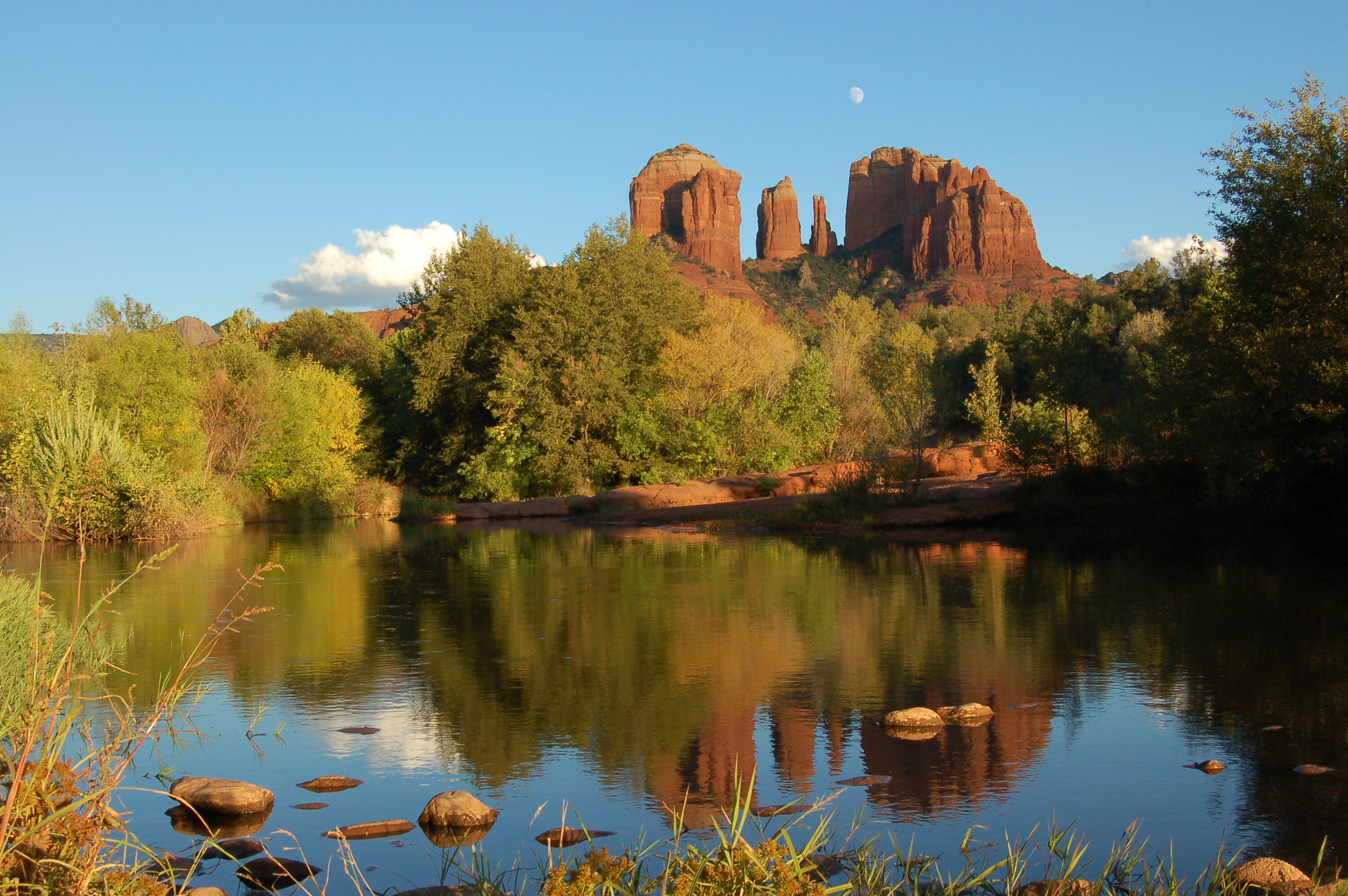
cathedralrockbybrucestambaugh
Cathedral Rock from Oak Creek Crossing, Sedona, AZ.

© Bruce Stambaugh 2013

Finding gratitude from on high

fromjeffersonrockbybrucestambaugh
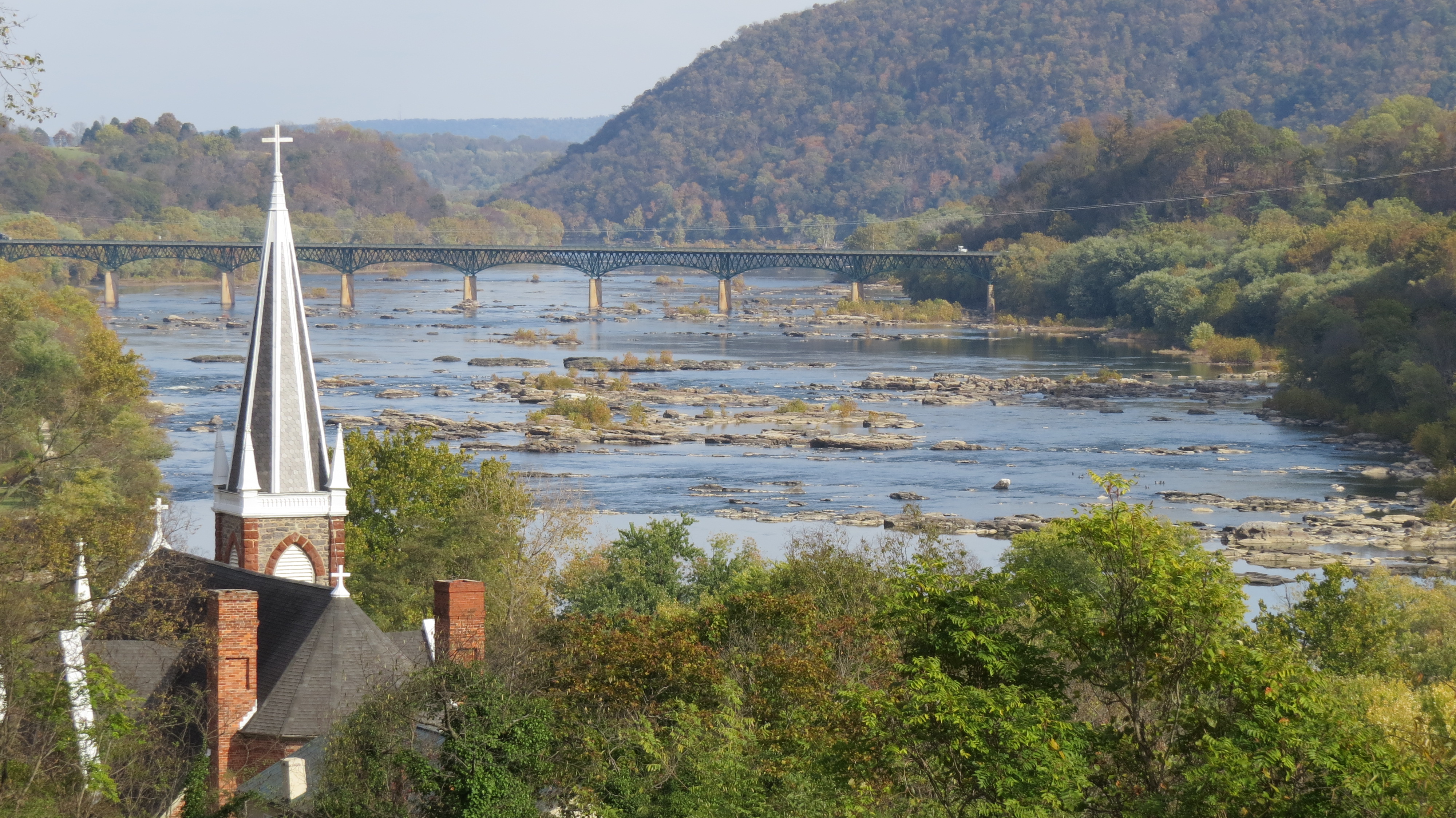
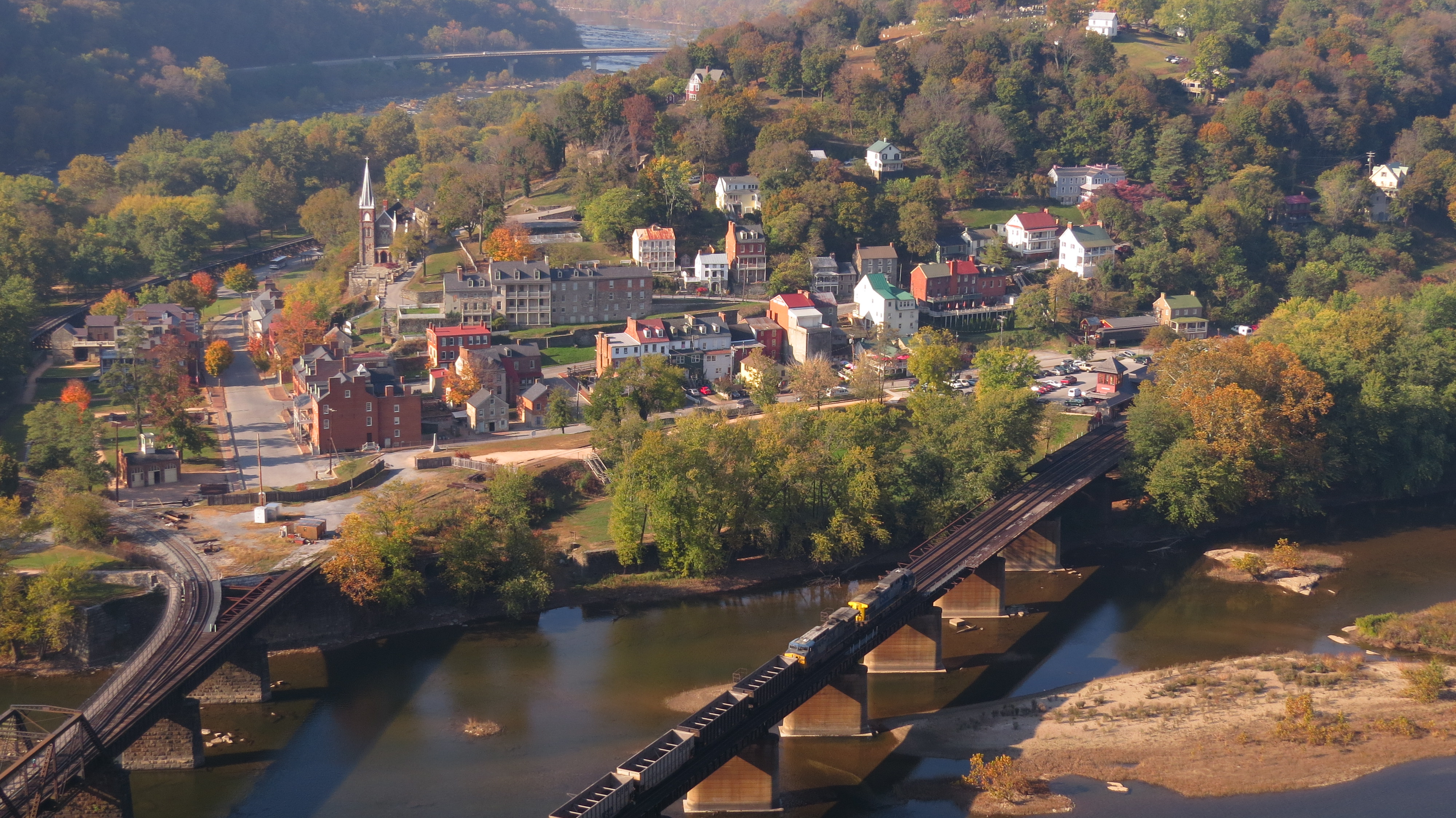
The view from Jefferson Rock of the confluence of the Shenandoah and Potomac rivers.

By Bruce Stambaugh

There are times when a life experience far exceeds our expectations.

I had just such an encounter recently on a junket my wife and I made to Harpers Ferry National Historic Park in extreme eastern West Virginia. This tiny, old town had played a small but important part in our country’s big history.

On a precipice 800 feet above the confluence of the Potomac and Shenandoah rivers, more flowed together for me than two charming waterways. I had previously seen scenic shots of historic Harpers Ferry from this vantage point in Maryland, and had fancied a few of my own. I departed with more than picturesque photos.

The beauty of the bright morning itself was stunning. I basked in the warmth of the morning sunshine looking down on history. The strengthening sun drenched the charming village in a golden wash. It was a map come alive where famous Americans had all made important imprints on our country’s checkered history.

confluencebybrucestambaugh
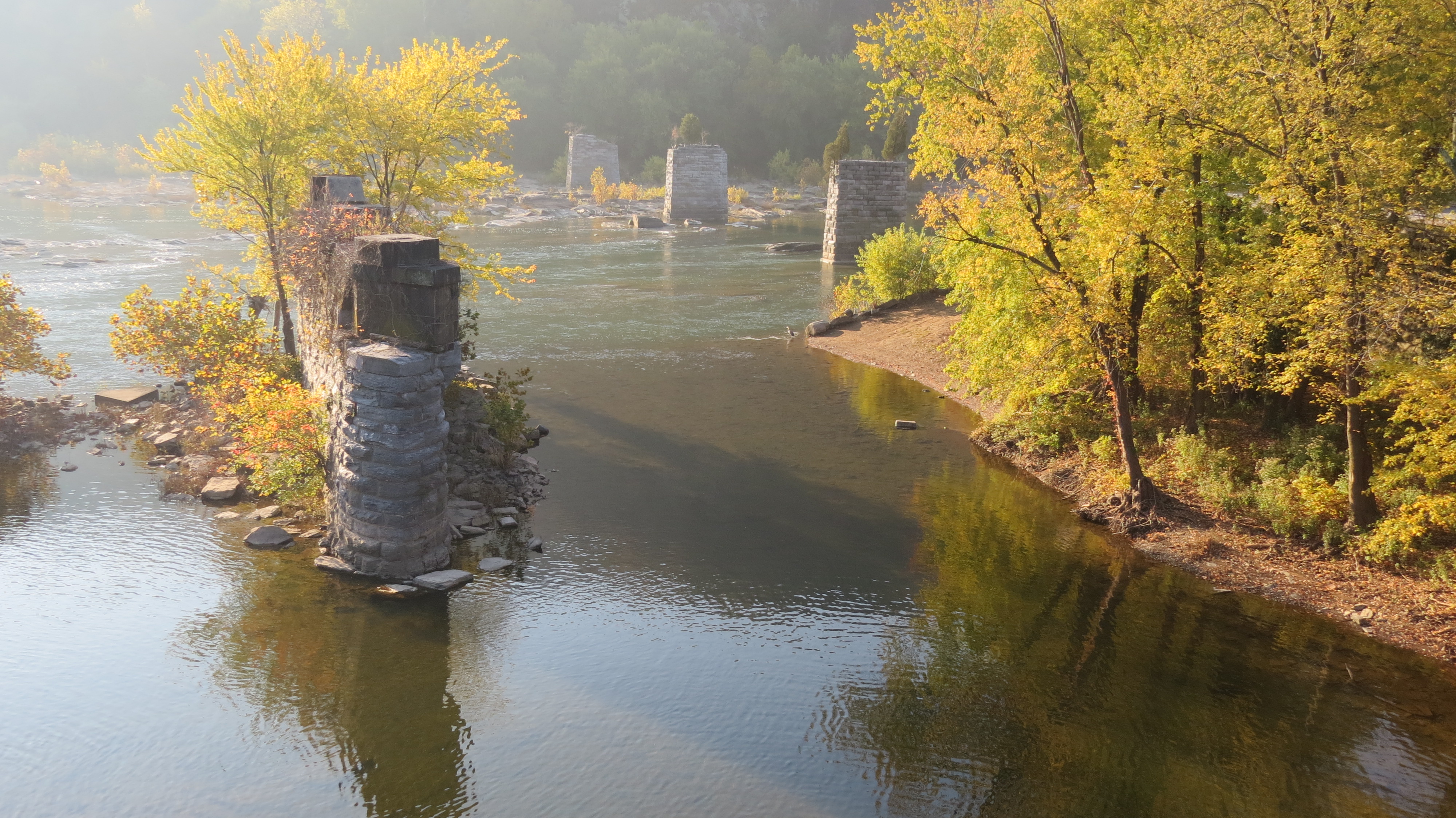
A Great Blue Heron preened in the morning light at the confluence of the Potomac and Shenandoah rivers.

The three-mile hike from Harpers Ferry to the overlook was exhilarating. A hint of haze hung above the surface of the churning rivers on the cool morning.

My goal was to arrive at the scenic overlook opposite the town as the day’s sun rose above the Appalachian foothills. I crossed the footbridge, a part of the Appalachian Trail, which paralleled the bridge of the railroad tracks. The tracks split at the town and followed the two majestic rivers, one south, the other west.

Once across the Potomac, its melodious rapids singing all the while, the Appalachian Trail followed the river and the old C & O Canal east. I walked west along the towpath to the trailhead that led up the rocky, forested hillside.

I couldn’t imagine how soldiers, Confederate and Union alike, had muscled heavy artillery up these steep slopes. Massive rock outcroppings protruded everywhere beneath the hardwood forest. The rich greens of mountain laurel and cedars complemented the coloring leaves of the mixed deciduous trees.

I arrived at the overlook in less than an hour. The view, as Thomas Jefferson once declared, “was perhaps one of the most stupendous scenes in Nature.”

As I sat on the cool rocks I looked down on the spot where John Brown had made his ill-fated raid in 1859. I envisioned Jefferson, George Washington, Robert E. Lee, Thomas “Stonewall” Jackson and all the others who had made their lasting marks there striding along the slanting, narrow streets.

Harpers Ferry was a strategic town in the Civil War since it housed the federal arsenal. Both armies occupied the town intermittently during the war. It was the sight of the largest surrender of United States troops in the Civil War.

Behind me birds of the forest searched for breakfast amid golden, backlit leaves. Carolina Wrens, chickadees, cardinals, robins, Tufted Titmice, White-breasted Nuthatches and Brown Creepers scavenged the forest floor and trees.

A Black Vulture sailed west above the Potomac just off of the cliff. A Red-shouldered Hawk, its black and white striped tail fanned out, glided east. Beneath me a freight train rumbled through the tunnel, across the bridge and whistled past the old station.

I had gone up to the sheer cliff for some pictures. I came down with a renewed spirit of gratitude for all that has transpired and will transpire in my life, in our lives.

Together we have a lot for which to be grateful this Thanksgiving.

harpersferrywvbybrucestambaugh
Harpers Ferry, WV from the Maryland Heights overlook.

© Bruce Stambaugh

The Kennedy assassination: Recollections of a 15-year old 50 years later

I was in junior English class in the early afternoon of November 22, 1963. Jean Wood Giltz, our teacher, was in the midst of projecting one of her mesmerizing English lessons when, without any announcement, the room’s loudspeaker came on. She stopped her lecture and stared at the brown box high on the wall by the classroom door.

The class, 30 or so pimpled pupils, sat attentively in straight rows of desks and chairs so common in that educational era. We seemed as mystified as our astute instructor, who had the largest vocabulary of anyone I had ever met.

It was clear that the voice coming across the public address system was being piped through a radio. The announcer was describing details of a scene that made no sense. The students looked around in dismay, not that we were irritated that the lesson had been interrupted. But this noise was annoying, not only to us, but to Mrs. Giltz as well.

After less than a minute of this rattling on by the reporter, Mrs. Giltz asked Jimmy, a student who usually slept through her class, to go to the office to have the speaker system turned off. She figured that someone in the principal’s office had hit the wrong switch.

As Jimmy reached the door, the announcer said, “And repeating, the president has been shot.” The class immediately went silent. Without being told, Jimmy made a slow U-turn, and returned to his seat. He listened to the report trying to piece the fragments of information together like the rest of us. Mrs. Giltz slumped to her chair behind her big wooden desk.

The announcer went on reporting this breaking news from Dallas. Someone had shot the president and that he had been taken to a hospital. Little else was known.

As abruptly as the broadcast had been turned on to every classroom in the school of 1,200 students, the live feed was suddenly stopped after about 20 minutes. The principal’s voice replaced the reporter’s.

I don’t remember his exact words, only the message. Because of the national tragedy, school was being dismissed early. We went to our lockers, and filed out quietly to our buses. No one said a word.

When I left the school, all I knew was that President Kennedy was critically injured. We boarded the buses and headed out. Because I lived less than a mile from the school, my stop was the first. I rushed into the house, a small brick bungalow in Canton, Ohio, and turned on the black and white television. I tuned to Channel 3 to watch Chet Huntley and David Brinkley. Our family watched them faithfully as if they were relatives to be respected.

In that short timespan from school to home, the announcement had been made that John Fitzgerald Kennedy, the 35th president of the United States of America, had died. Huntley and Brinkley were visibly moved, and I cried, too. I couldn’t fathom why anyone would want to kill the president. He had projected so much youth and hope for the future. He loved the press, and held frequent press conferences, which were more like classroom discussions. He laughed and smiled, and tossed the football with family members. He had two small children and a beautiful wife who was shyly gregarious, unassuming, but confident and classy in her demeanor and dress.

I was crushed. We all were, even my father, who didn’t vote for Kennedy because he was a Catholic. Our cousins were Catholic and we would gather with them for Thanksgiving the very next Thursday. Yet Dad didn’t like the president because he was Catholic. I never understood his thinking in that regard. Never.

Initially, I was home alone. The rest of the family filtered in, my younger brother and two sisters from school and Mom and finally Dad came home from work. My older brother was at college. We were glued to the TV for any breaking news, just the way we had been a year earlier. We had watched together as the young president described the Cuban Missile Crisis to the country.

As scary as that event was, this was much worse. With the death of the president, it was as if the life had been sucked out of all of us.

We watched as Air Force One landed in Washington, D.C. later that evening. The casket was awkwardly lowered from the plane to a waiting hearse. I remember how Jackie had to literally jump down to the tarmac from the truck lift that carried the body of her husband. I thought that so thoughtless of those who were responsible for watching over such a graceful and gracious woman.

The shock of the assassination wore on us all. Without the instant communication of today’s world, we were dependent on the trusted news people of the time to keep us informed. Details of the shooting, the capture of Lee Harvey Oswald, the accused assassin, and the funeral arrangements kept us in front of the TV. Commentators openly discussed how it was possible that Oswald could have done such a thing. Eyewitnesses declared there was a second shooter from the infamous grassy knoll. Everything was confusion.

The events of the next few days unfolded on the screen before us. A balm seemed to settle over the entire nation. Things got really complicated, confusing, suspicious, surreal, even though I didn’t know that word at the time. We watched live as Jack Ruby stepped right in front of the TV cameras and shot Oswald in the stomach as if it were a Hollywood movie. How did that happen? Why did that happen? How did Ruby get into the police station? Why did the police make Oswald so public, having him walk that gauntlet in the open?

The entire affair got more and more murky. What was going to happen next? I don’t remember being so much afraid as numbed by this ugly chain of events. Indeed, the lingering question was, “Were they connected?” I was a sad and confused young man.

Monday was a national day of mourning, with the funeral services, the walk to Arlington National Cemetery and the burial. Two images are forever fixed in my mind. One was little John-John, the president’s son, stepping forth and saluting the passing flag-draped casket pulled on a horse drawn caisson. The other was the line of world leaders walking along, heading the parade of mourners. I particularly remember Charles de Gaulle, the President of France, towering above the others.

Finally, it all got to me as an immature, naïve teenager. I couldn’t take the emotion of it all anymore. I called a few neighborhood friends, and soon we had a pickup game of touch football going in a neighbor’s field. It felt good to again feel good, to forget the troubles and trials of the world, and just play with kids your own age. The game meant nothing, and yet it meant everything. I don’t recall who won or what the score was. I just remember the relief of being young again with no cares in the world. And for the record, none of the dozen or so guys on the field with me even mentioned the events of the last few days.

Once the game was over, however, I dreaded going home. I knew it would be back to reality. The days of Camelot were over. It was a hard reality for a teenager to accept, and one I have endured but never forgotten for half a century.

Bruce Stambaugh
© 2013
Making an all too obvious discovery

germanvalleybybrucestambaugh
The overlook on U.S. 33 near Gap, WV, is one of our usual stretch stops on the way to VA from OH.

By Bruce Stambaugh

I don’t know why my wife and I couldn’t see it. It took the wisdom of our daughter to realize what was happening with her trio of kids, our three grandchildren.

My wife and I live in Ohio. Our grandchildren live in Virginia. We visit them when we can, and they return the favor when their schedule allows, which isn’t nearly often enough from Nana and Poppy’s point of view.

We understand their situation. At ages nine, seven and four, Evan, Davis and Maren are busy, busy, busy. This time of year, of course, their days are mostly filled with attending school.

Their summers are nearly as clogged, only with Little League baseball for the boys. The season seems to last and last, especially when it is extended with tournaments.

Along with their other grandmother, we did do a beach vacation with them in June, which we greatly enjoyed. But that’s not quite the same as being at their home or they being at ours.

Let’s just say that the ability to pile into the van with their parents and head northeast to visit us is rather limited. Which leaves us with one option. If we want to see our grandchildren other than in summer and at Christmas, we have to go visit them.

It only makes sense after all. Our schedules are much more flexible than theirs are. So we go when we can or when we are needed. Lately, it’s been more of the latter than the former.

newhomebybrucestambaugh
The grandkids’ home in VA.
What a year it has been for our daughter and her family, too. After a three-year search for a new home, they finally found a lovely place that mostly suited their family’s needs. It is located in the same general area of town as where they had rented.

What a plus that was for them, too. The boys didn’t have to change schools, and there was no major adjustment to a new neighborhood. The new neighbors might have to adjust to them, however. They are one of the few families with young children in their stable neighborhood.

The problem was that our arriving always seemed to signal a red flag for the grandkids. The sign was plain as day to them. When Nana and Poppy, or one or the other arrived, a new wind blew. Mom or Dad or both were about to exit the scene.

The kids saw the consequences and reacted as children do. For whatever reasons, we didn’t get it. We do now.

watchingthegamebybrucestambaugh
Our grandkids watch most home volleyball games and few away games like this one at nearby Bridgewater College, Bridgewater, VA.
Our daughter and her husband are as busy as their children. Our son-in-law has his professional career with the nearby university, and our daughter helped coach the university women’s volleyball team, not to mention her many duties at church.

On top of all of that was the unexpected purchase and remodel of the house. Throw in the transition of the youngsters, and the arrival of the senior division of the Ohio cavalry for babysitting appearances, and you get the picture.

So there it was. When Nana and Poppy arrived, something drastic was in the works in the lives of our three grandchildren. Kids being kids, they each showed their youthful angst through various bold behaviors. Nothing serious, mind you, just disconcerting.

The solution is straightforward. Nana and Poppy simply need to visit and enjoy time with the entire family, no babysitting, no rule changing, just plain family fun.

That’s the ideal role for Nana and Poppy for which all can be thankful.

helpingnanabybrucestambaugh
Granddaughter Maren helped Nana make baked oatmeal for the volleyball team.

© Bruce Stambaugh 2013
How did we get to November already?

harvestingcornbybrucestambaugh
Many Amish now use a gasoline engine to power a horse drawn corn picker.

By Bruce Stambaugh

It’s November, the eleventh month of the year. How did we get here already?

Only yesterday we were putting away our holiday trappings, thankful for the fun times with family. With the winter full upon us, we wistfully anticipated warmer days ahead.

And now it’s November again. How did that happen?

Our house is built on an Amish farm, and we have an excellent view of the sweeping farm fields between the farmhouse and our own. After the year’s first significant snowfall, out came the manure spreader creating a Currier and Ives brown on white painting, horses snorting steam as they pulled the spewing wagon through the cold air.

The backyard birds raided the many feeders deployed in strategic locations for them and me. They eat in the cold. I photographed through the windows from the warmth of our home. That was yesterday, right?

The snows came, melted, and came again. The cycle of freezing and thawing and freezing again took a toll on the roads. The orange barrels are still up, and yet snowplows are already being prepared for another go-round. Can it be already?

It seems like just the other day horses pulling the one-bottom plows retraced their manure spreading steps. Dark, rich soil turned one row at a time. They went, and they went until the upturned richness embraced the sun and the rain, sometimes both in the same day. Didn’t that just happen, too?

As a fundraiser, the youth group from our church picked up winter’s debris deposited by gale after gale. I’m glad we didn’t have to pay them per pinecone. I thought we just wrote that check.

I remember distinctly how long, chilly and wet the spring was. It seemed like it hung around until last week. Obviously it didn’t. We haven’t had summer yet. Or did we?

A pair of Pileated Woodpeckers began to raid the peanut butter suet feeders in the backyard. I was astonished the huge, shy birds would even come that close to a home. But they did. A few weeks later, mother and dad led their youngster to the free food. I’m positive it was just the other day that happened.

Maybe not.

This slideshow requires JavaScript.

Once the field corn sprouted, it shot up, the tallest corn I can remember. The ears were long and full, and now they are being picked. Did I miss something?

I know our energetic granddaughter spent a few glorious days with us just before her preschool started. We had loads of fun together before I returned Maren to her Virginia home. Was that really at the end of August?

How is it that I distinctly remember sitting on our favorite porch in Lakeside, Ohio, playing dominoes with our usual gang, and yet, the calendar says it is November? Something is not right here.

I can still taste those amazing homemade glazed donuts at the customer appreciation day at the produce stand we frequented time and again during growing season. Yet, checking my records, that was at September’s end. That can’t be right.

I do remember October was filled with meetings and appointments and celebrations, all intertwined around a little travel. In fact, without looking it up, I can tell you exactly the time and date of my last doctor’s appointment. I didn’t have to wait long, and I recall it went really well. But that was a month ago.

Someone please tell me, how did we get to November already? Anybody?

novembersunrisebybrucestambaugh
A November sunrise in Ohio’s Amish country.

© Bruce Stambaugh 2013

Cozying up to that time of year

cottagelanebybrucestambaugh
The lane to the cottage.

By Bruce Stambaugh

It’s that time of year again, and I’m not referring to the general election. A dutiful citizenry casting ballots is critical to maintaining our democracy, dysfunctional as it sometimes is. I relish a more personal season now.

The Chimney Swifts are gone, and I can once again stoke up a roaring fire in the family room fireplace. It’s my favorite leisurely pursuit of the colder months, and one that I eagerly share with family and friends.

This year I had to wait longer than usual to build my first fire. After the resident nesting Chimney Swifts flew south a week after Labor Day, another family of migrating swifts promptly moved in and basked in our fine early fall weather.

I didn’t mind at all. The affable little birds daily devour scores of insects.

I enjoy hearing the flying cigars, as birders affectionately refer to them, chatter as they dive bomb into the stubby brick chimney. I find it fascinating that these birds seem to never sleep. Their powerful swooshing into the chimney rattles the hearth’s damper day and night.

cottagefireplacebybrucestambaugh
The cottage fireplace.
After the chattering subsides, I usually wait a while before building a fire just to be certain no slackers are bringing up the rear of the annual southerly trek. I need not have worried. They all had gone before the first hard frost.

That said, my first fireplace fire this fall wasn’t at home. That honor went to the main fireplace at our getaway cottage in southeast Ohio. Since the fireplace is faced with Briar Hill sandstone, I didn’t feel far from home, however. The stone is mined in the county where I live.

Like my folks who built the cottage, my wife and I embrace autumn there. Set on the north slope of a steep hillside that runs down to a peaceful flood control lake, a forest of mature hardwoods surrounds the family cottage.

The day we arrived was overcast and damp. A cold front was forecast to push rain through Ohio and gradually cool the temperatures enough to warrant a fire.

The soothing warmth of a fireplace fire adds to the cottage ambiance. I gathered the kindling and well-seasoned logs and with one match, my fireplace season began.

The dancing and laughter of the consuming flames, the invigorating pungency of the burning logs, and penetrating heat mesmerized and inspired me. In an hour the inside temperature of the cottage had increased seven degrees.

There is a satisfying routine in my fireplace ritual. Kindling and logs are assembled on the grate. A match is struck, and a transformation from mostly smoke to flames ensues. The fiery hardwood fuel spontaneously hisses, pops, and showers sparks. It’s a fireplace Fourth of July.

I like to let the fire die down to where the glowing embers throw out more heat than the small blue, orange and yellow flares themselves. That’s when marshmallows toast golden brown.

rainingleavesbybrucestambaugh
As the wind picked up, a golden shower of leaves rained down.
After a few nudges of the shrinking logs with the poker, more cordwood is added, and the process begins all over again. Over time, the accumulation of the glowing coals means less wood to keep the room comfy.

The conditions for this year’s first fireplace fire couldn’t have been better. Just as the flames reached their peak inside, outside the wind gusted, and golden leaves and a drenching cloudburst rained down together.

It’s that time of year again. Home or cottage, I’ll rejoice and be glad in cozying up to the captivating charisma of a fireplace fire.

© Bruce Stambaugh 2013

A special Halloween pie, and it’s not pumpkin!

jackolanternapplepiebybrucestambaugh
A Jack-O-Lantern apple pie that my wife baked was absolutely delicious.

My wife, Neva, loves to cook, plain and simple. However, she likes to spice things up a little from time to time, and that doesn’t necessarily mean adding a lot of zing to the food she creates.

Neva baked up a special treat for the grandchildren while we were visiting them recently at their home in Harrisonburg, VA. Using her usual recipe, Neva made a wonderful apple pie especially for the Halloween holiday. She added a Halloween theme to it by cutting a Jack-O-Lantern face into the top crust. The revealed slices of apples added a spooky look to the delicious pie.

I thought you might like to have the recipe. The pie is too good not to share. Once you taste it, you’ll discover that this Halloween will be all treat and no trick.

Bruce Stambaugh

Neva’s Apple Pie

Ingredients:
4 large cooking apples, about 2 lbs., which equals 6 cups of sliced apples
1 tablespoon of lemon juice
2/3 cup of granulated sugar
1/2 cup of light brown sugar, firmly packed
3 tablespoons of flour
1 teaspoon of ground cinnamon
A dash of nutmeg
A dash of allspice or ground cloves
Pastry for a 2-crust, 9 inch pie
2 tablespoons of butter

Preparation:
Peel, quarter, and core apples. Cut into 1/4 inch slices to equal 6 cups. Toss with the lemon juice in a bowl.

In a separate bowl, combine granulated sugar, brown sugar, flour, cinnamon, nutmeg, and ground cloves. Pour over the apples and toss to coat the apples.

Place one pie pastry into a 9 inch tin or pan. Pour in the mixed ingredients, and place the second pie pastry over the top. Crimp the two crusts together, and cut out the Jack-O-Lantern face to suit.

Preheat oven to 425 degrees. Place the pie in the oven and bake for 40 minutes.

Enjoy!

© Bruce Stambaugh 2013
Bay Photos by Donna

Wildlife Photos From The Chesapeake Bay Region

ROAD TO NARA

Culture and Communities at the Heart Of India

K Hertzler Art

Artist and nature journalist in the Shenandoah Valley of Virginia.

Maria Vincent Robinson

Photographer Of Life and moments

Gabriele Romano

Personal Blog

Jennifer Murch

Art is the only way to run away without leaving home. -Twyla Tharp

Roadkill Crossing

Writing generated from the rural life

ANJOLI ROY

writer. teacher. podcast cohost.

Casa Alterna

El amor cruza fronteras / Love crosses borders