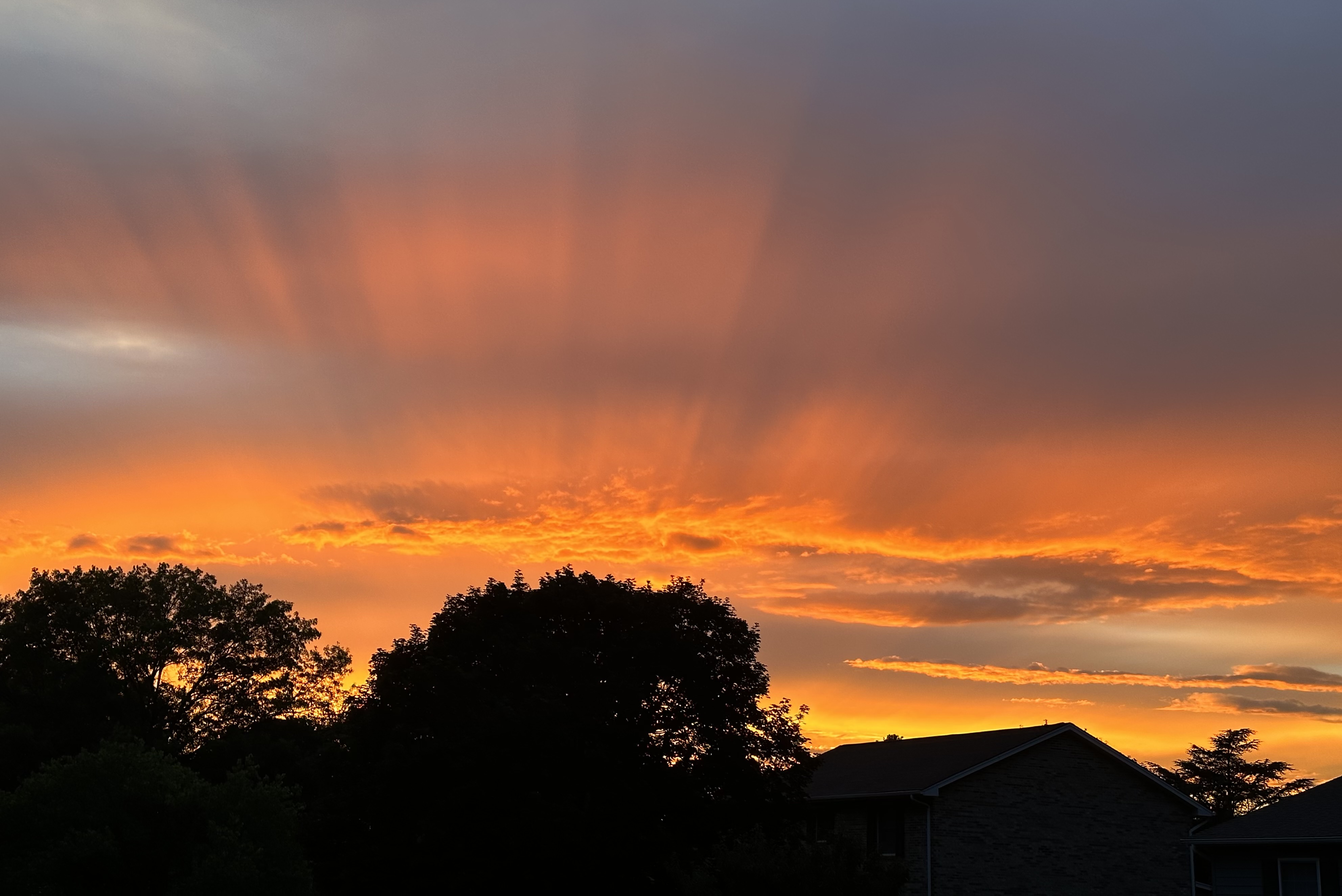
Soon after a severe thunderstorm blew through last evening, I noticed some pinkish clouds in the east. That usually is a sign of a beautiful sunset. I hustled out to the street and was treated to this beautiful scene.
Crepuscular rays radiated through the clouds as the sun sank behind the Allegheny Mountains to our west. I knew I wouldn’t have time to drive to higher ground, so I settled for this image from our front yard.
We live in a noisy world. It’s hard to find pure silence to simply listen, ignore the busyness of your mind, and relax without interruption.
When I saw an invitation to participate in a Contemplative Sit at the end of the daily devotion I received via email from Richard Rohr, I clicked on it. I instinctively knew I needed the 12-minute exercise to calm my mind, body, and soul. I didn’t realize how hard it would be.
The Reverand Dr. Barbara Holmes led the video presentation. The screen was a lifeless gray, with the title “Contemplative Sit” half grayed out. Once the single chime of a small bell rang to begin the exercise, I closed my eyes, thinking I could better concentrate on breathing in and out. It wasn’t to be.
I thought about last night’s sunset, the high gray clouds reflecting the sun’s warm glow. Our mother star had long since sunk below the Allegheny Mountains. I waited then for the warm beauty of the sky and now for a fulfilling silence.
I heard a crash from the video I knew wasn’t part of the meditation. I opened my eyes and saw the countdown to skipping another YouTube ad. I immediately clicked it away. Then I noticed the words, “We focus on the breath going in and out of the body.” I realized I needed to keep my eyes open to be fully engaged.
At that moment, however, I became acutely aware of all the noise around me. My neighbors across the street were mowing their yard in their usual father-and-son tandem. The sound of the two mowers competed with the tinnitus in my ears. I had buzzing external and internal competition to distract me.
Ironically, only then did I hear the video’s faint ebbing and flowing of wind rustling over a prairie, a desert, through tree limbs. I couldn’t tell, and it didn’t matter. I concentrated on my breathing. I unconsciously rubbed my hands on my thigh bones down to the knees and back to the hem of my kaiki shorts.
A single-engine plane flew a few hundred feet over the house, probably from the local private airport eight miles away. Its sturdy engine soon carried it out of earshot.
Was I failing this intentional time of contemplation? I let go of that judgment and refocused on my breathing. I spied a mother robin bobbing in the grass beneath the red maple tree in our front yard. She had speared an insect, likely to help feed her second brood of the summer.
My cell phone dinged. Another person in the group text commented on my friend Mike’s release from the hospital. I breathed a breath-prayer of thanks and gratitude.
A morning breeze rustled the leaves and bounced the smaller limbs of the maple outside my window. Still, I heard the wind’s faint rhythm coming and going from the video. Two Goldendoodles from the neighbors down the street barked, a regular occurrence. I continued breathing, letting go, and focusing on silence without self-criticism.
A pair of Northern Cardinals flew into the maple tree, and the video bell sounded the meditation’s end. I felt free, rooted, and ready to face the rest of the day.
I hadn’t planned on doing this meditation. But I have always enjoyed spontaneous activities that arouse my senses of the world around me. This morning’s experience was an unexpected but necessary infusion into another day of joyful living.
(I have included the link to the meditation if you are interested.)
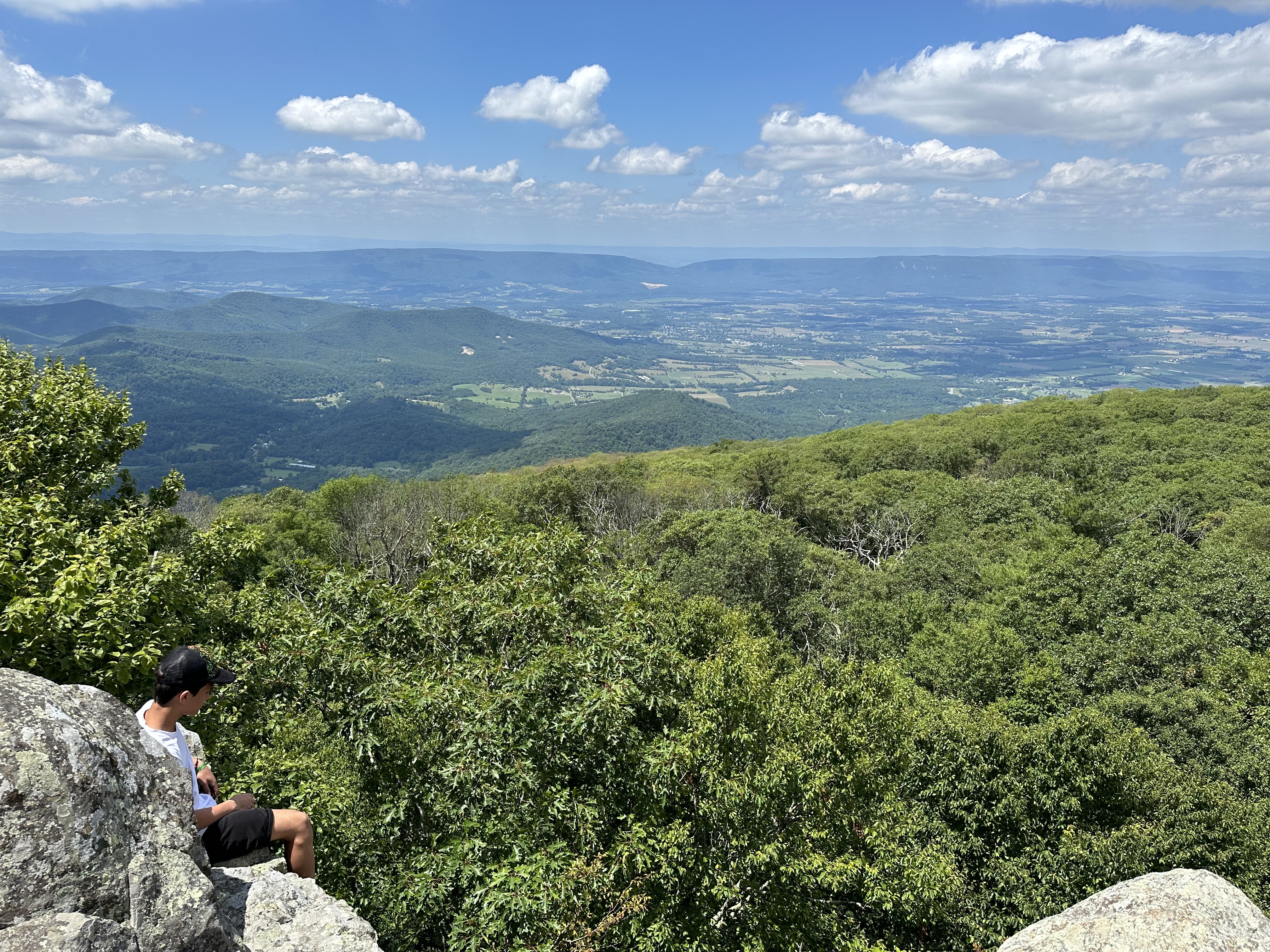
Viewing the Shenandoah Valley from an overlook in Shenandoah National Park.
Several recent studies have proved the obvious. Regularly spending time in and with nature dramatically enhances people’s mental health and appreciation for life.
That wasn’t news to me. Fortunately, I grew up in a family that spent time hunting, fishing, and vacationing in the great outdoors. I continued that pattern with my own family, minus the hunting. I prefer to shoot animals and everything else with cameras. It saves on taxidermy costs.
We moved to Virginia’s lovely Shenandoah Valley six years ago to be close to our grandchildren. Besides spoiling them, I also make regular trips to the nearby mountains. I multitask. On my hikes, I bird and photograph what I encounter.
Every outing, I discover new birds, wildflowers, and paths to explore. I often go alone, but I also enjoy sharing the fun with others. A group trip into the wild affords opportunities to explore nature together.
A recent outing to Shenandoah National Park with another senior friend and our teenage mentees from church allowed us to reengage with all the benefits of nature. I don’t know why the boys picked us, but we immediately hit it off. We all enjoy hiking and exploring, so the park was a natural destination for a day trip.
Once in the park, we veered off the famous Skyline Drive to Lewis Mountain Campground. I wanted to show the boys the only location in the park where Blacks were permitted during segregation. Even then, a few Whites complained that they should have access to the entire park.
At Big Meadows, we toured the exhibit of the park’s contentious founding at the Byrd Visitors Center. Not surprisingly, the youngsters showed more interest in the gift shop.
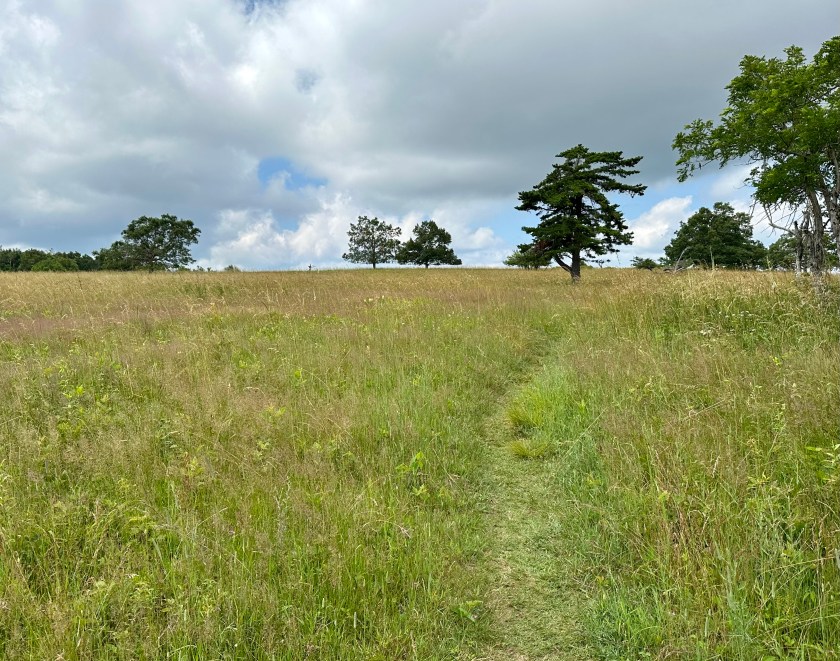
Then we got serious. We walked the southern parameter of the meadow. Its variety of habitats piqued their interest, from stands of trees to prairie grasses to artistic cairns. On the southernmost trail, the view of the Shenandoah Valley was spectacular.
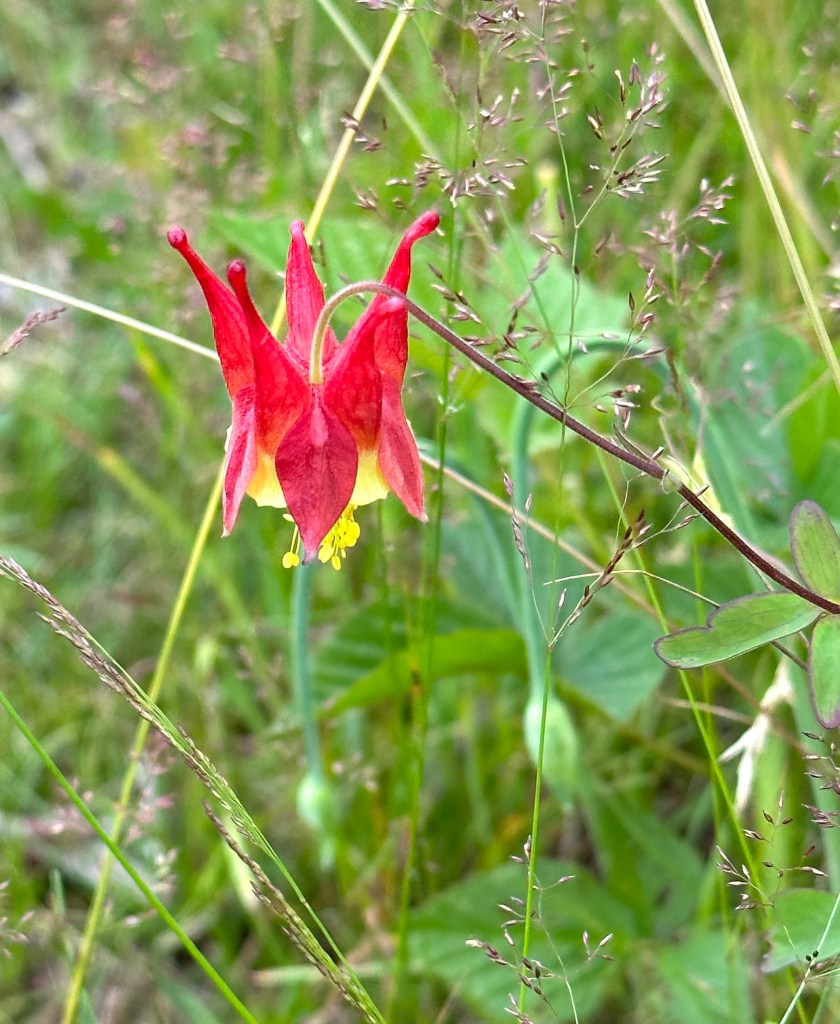
As we walked the cowpath-like trails, we encountered several bird species by sight and song and saw several butterflies that visited the wildflowers growing everywhere. Bright red wild columbines, vibrant woodland sunflowers, and common milkweed showed their colors and aired their fragrances.
Where the meadow met the forest, we spooked twin fawns. They only ran a short distance since they were foraging on shrub leaves. They seemed as intrigued with us as we were with them.
After a picnic lunch, we chose a short but magnificent trail. The Shenandoah Valley glimmered in the afternoon sunshine as we reached the summit and a massive rock outcropping. We basked in the comfortable, crisp 73 degrees of the Blue Ridge Mountains while the valley baked in the humid 80s.
It was good to commune with nature again, especially while sharing it with friends across generations. We breathed in cool, fresh air, were lulled by birdsong, enchanted by colorful flora and fauna, humbled by history, and energized by the needed exercise.
I was also glad we could personally verify the legitimacy of those extensive studies.
A memorial to those displaced when Shenandoah National Park was formed.
Summer days are full of light. From the early hours of predawn until the last glimmer of sunset, the warm days of summer brighten our world. That’s true even when thunderstorms darken the sky. They seldom last long and often offer a rainbow as they pass. Gray cloudy skies that bring all-day rains are few and far between here in Virginia’s Shenandoah Valley.
I enjoy the morning birdsong wake-up calls and their evening serenades. But it’s the glorious sunrises and sunsets that spellbind me. Their ever-changing color scheme spawns a breath prayer of gratitude.
As the lower dark clouds sailed north, the evening’s mist began to rise out of the valley at the foot of Shenandoah Mountain. Each curl of cornstalk captured a glint of the day’s last light. I was filled with wonder, awe, joy, and peace. Those are the everlasting gifts of sunsets.
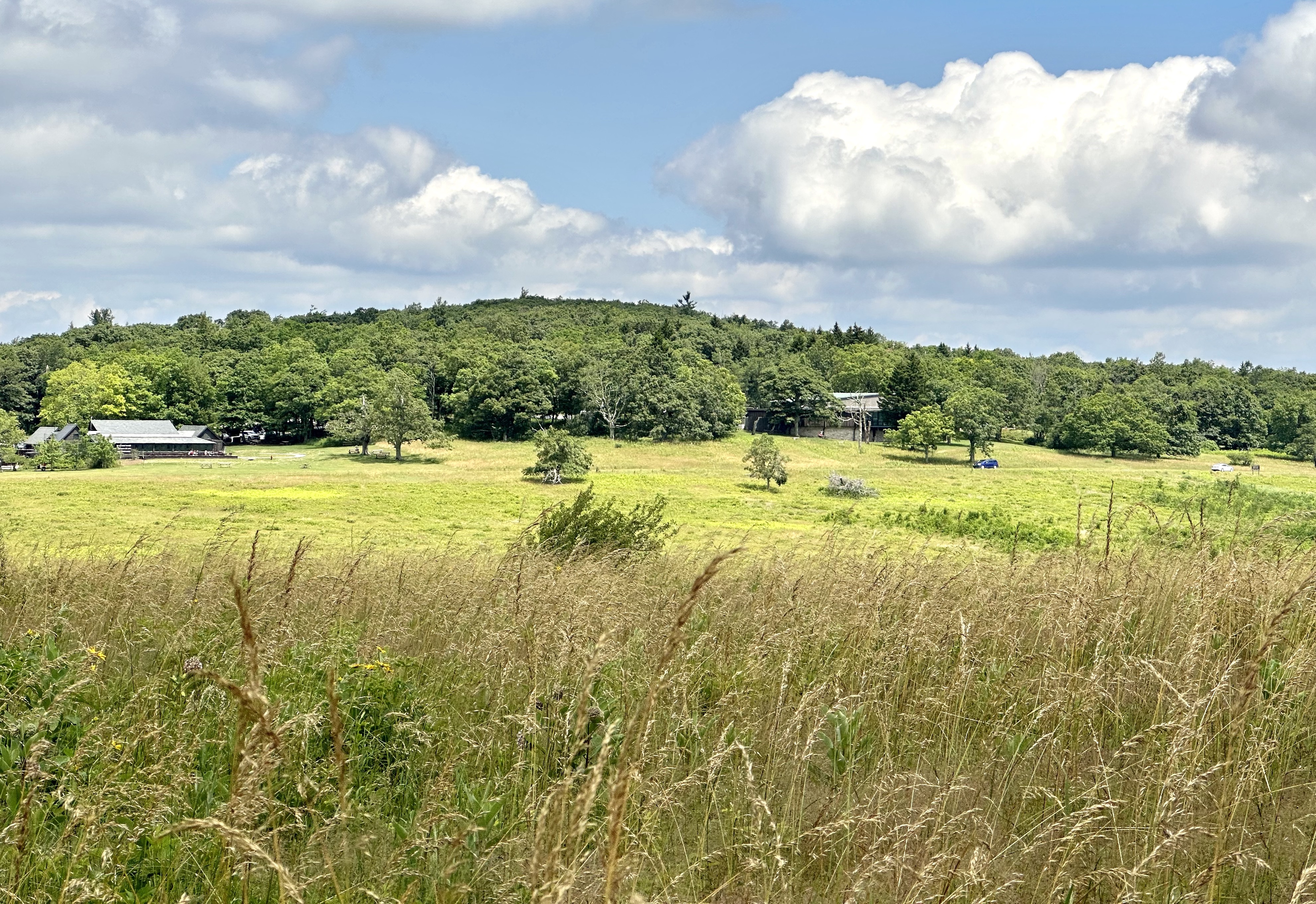
Big Meadows Wayside on the left and the Byrd Visitors Center on the right.
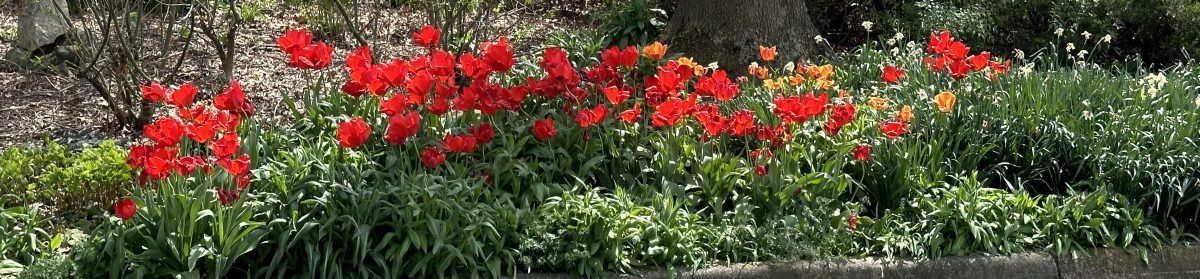
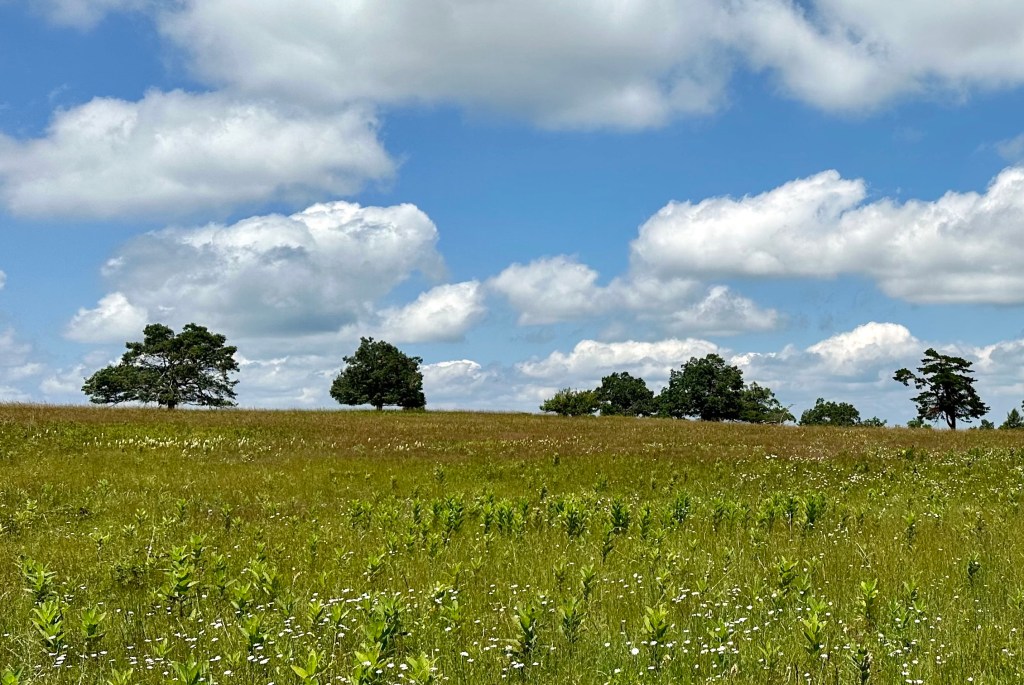
Big Meadows, an open, rolling, bowl-shaped landscape, features diverse plant, tree, and wildlife species. I consider it one of the most beautiful locations in Virginia’s Shenandoah National Park.
As evidence of its wonders, these photos from a recent visit exemplify its natural splendors.
Fawn at the meadow’s edge.Wild Columbine. Male Indigo Bunting.Woodland Sunflower.The land meets the sky.A ladybug on Fly Poison.
It’s celebration time for both Canada and the United States of America.
July 1 celebrates the anniversary of the Canadian Confederation, which occurred on this date in 1867. Next Tuesday, July 4, the U.S. celebrates the Declaration of Independence, adopted and signed in 1776.
In both countries, picnics, fireworks, parades, barbeques, carnivals, and concerts punctuate each national holiday. So, Happy Canada Day and Happy Fourth of July.
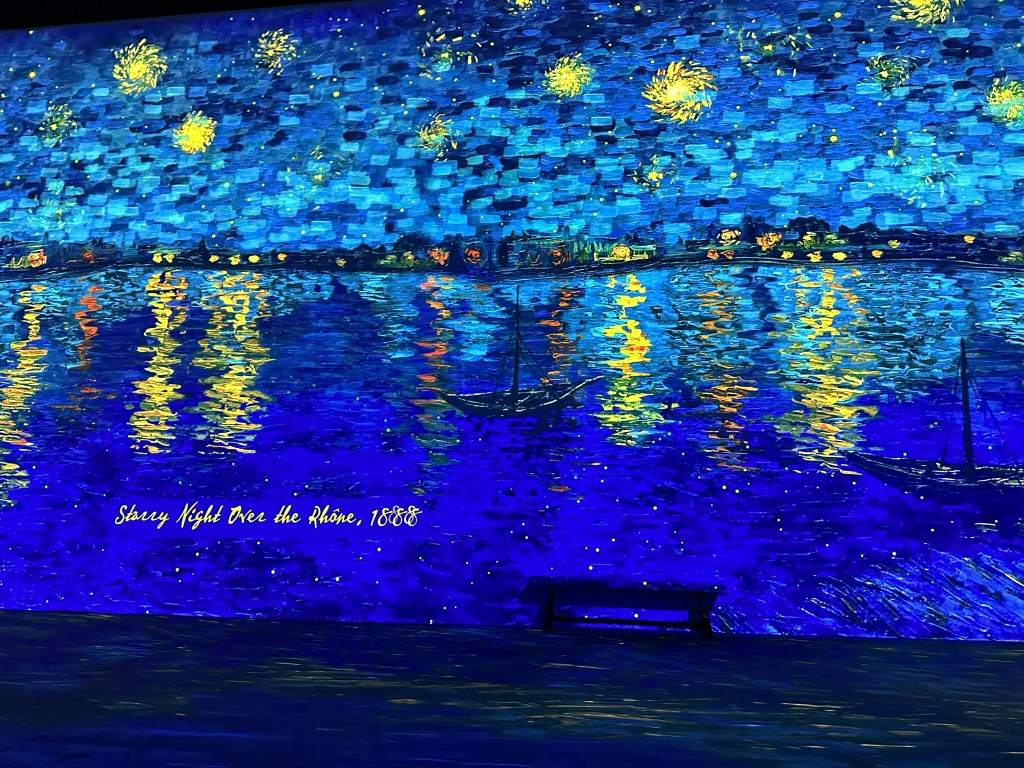
I gladly handed over my iPhone to the ticket-taker at the Van Gogh Immersive Experience in Washington, D.C. We had only just gathered everyone together at the entrance when she had offered to take our family photo, an image I dearly wanted.
It had been four years since the three families had all been together, and in that time, another grandchild had joined our ranks. Our two oldest grandsons had never met the youngest. I wanted this precious moment to be documented for perpetuity. As mobile as today’s societies are, especially the younger generations, I wasn’t taking any chances. I considered the family photograph as my personalized Father’s Day present.
As it turned out, this was the only photo of all of us together at the same place at the same time we got in the three-day gathering in our nation’s capital. The comings and goings of our active crew mirrored the busy lives of our adult children, their spouses, and teenagers. I certainly wasn’t disappointed.
I had my shot and could now relax into the follow-the-crowd mode. The other adults, our daughter, son, son-in-law, and daughter-in-law, would share the responsibility of setting the agenda for the Sunday through Tuesday reunion. I’m usually the one to suggest and plan trips. However, this time I silently relished my grandfatherly role. Though not surprised, I marveled at their skills in managing offspring, arranging transportation, and finding restaurants to suit everyone.
Of course, they consulted Nana and Poppy about places we wanted to go, do, visit, and tour. I was more than happy to go with the flow. Shoot. I would have been pleased if we had stayed in the hotel. A certain familial satisfaction overcame me.
The pandemic played a significant role in keeping us apart all this while. Our son, his wife, and the newest grandson, Teddy, live in upstate New York, a seven-hour drive from the lovely Shenandoah Valley, where my wife and I live. We moved there six years ago from our home of 38 years in Ohio’s Amish country to be close to our daughter and her family.
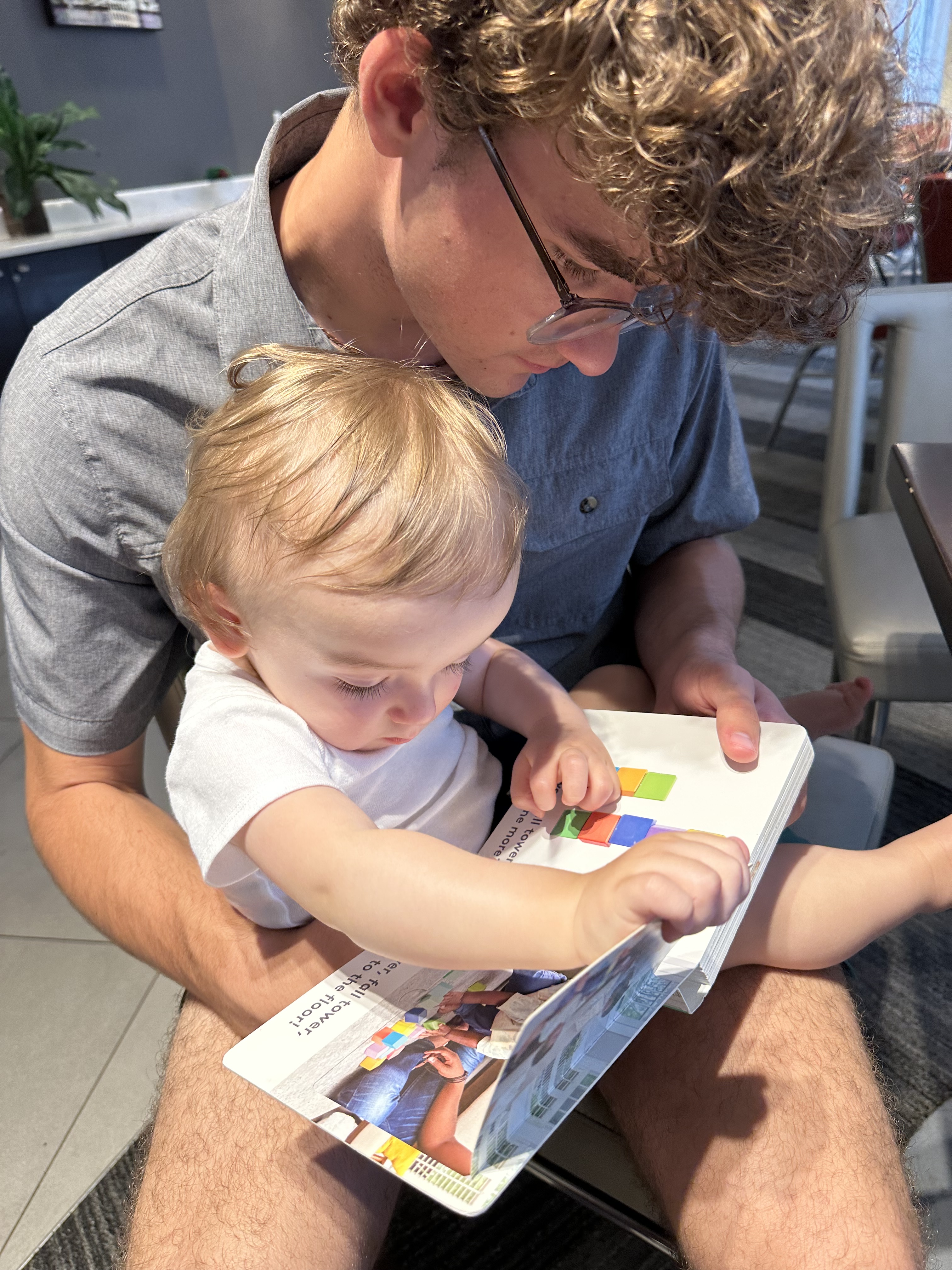
Teddy arrived over a year ago, complicating our Nana and Poppy roles. Our son and his wife have done an exceptional job keeping us informed of Teddy’s progress, and we travel north as we can.
But here we all were, assembled together. Everyone agreed to make the Van Gogh experience our initial group event. The New Yorkers intended to take the Metro from Dulles International Airport to the hotel. Due to track maintenance, that plan got derailed. It took them longer to get from the airport to the hotel than from Rochester to Dulles.
With air temperatures heating up, the Van Gogh Immersion became the perfect place to chill and smother Teddy with plenty of attention. To enhance the experience, lounge chairs, bean bags, small ottomans, and blankets were scattered around the gymnasium-sized, carpeted room. We all found our relaxation niche and enjoyed the show. Teddy loved showing off his newly found walking and running skills. The rest of us merely basked in the moments as they unfolded.
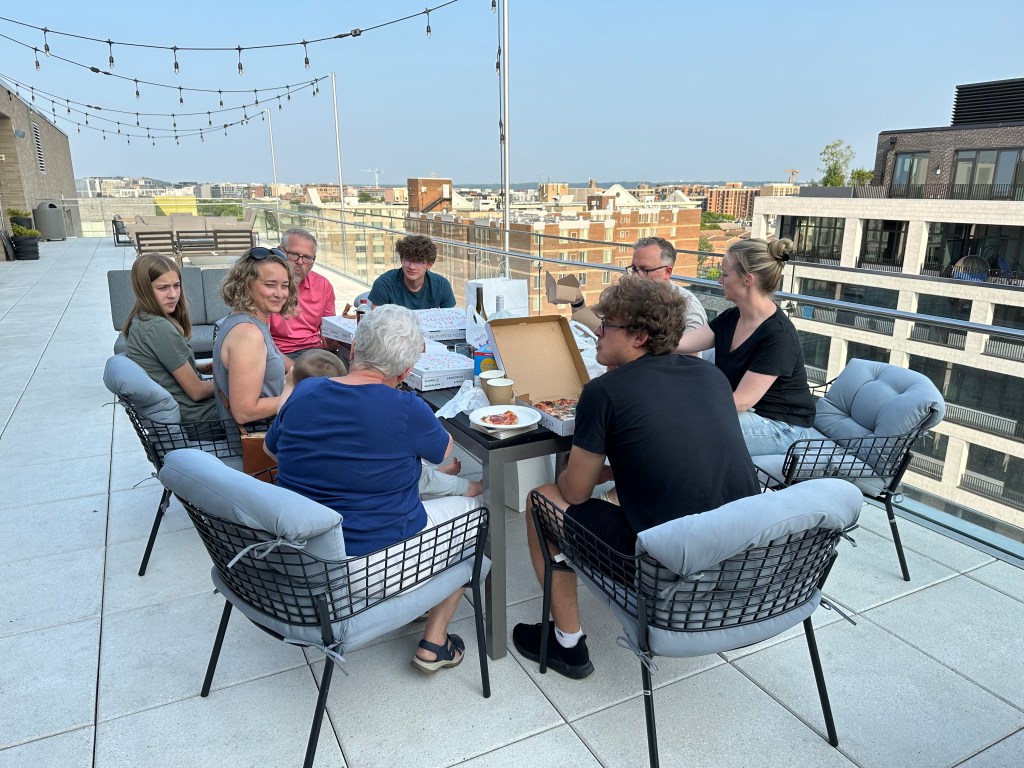
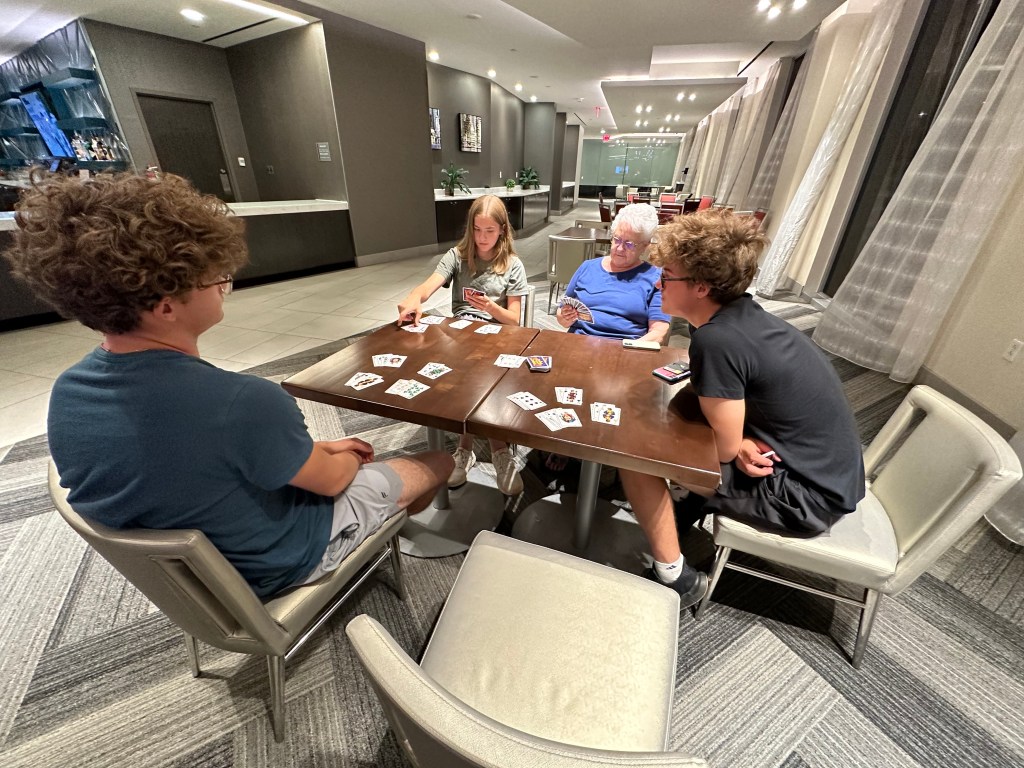
That was plenty for the first day. Returning to the hotel, we ordered dinner from a local pizzeria. We found the perfect place to hold a pizza party and enjoy each other’s company, the building’s rooftop. I relished the lively chatter, the food, and the cityscape views. We finished the day with gelato and a rousing game of cards with the teens. It was a balance we all needed to complete the day.
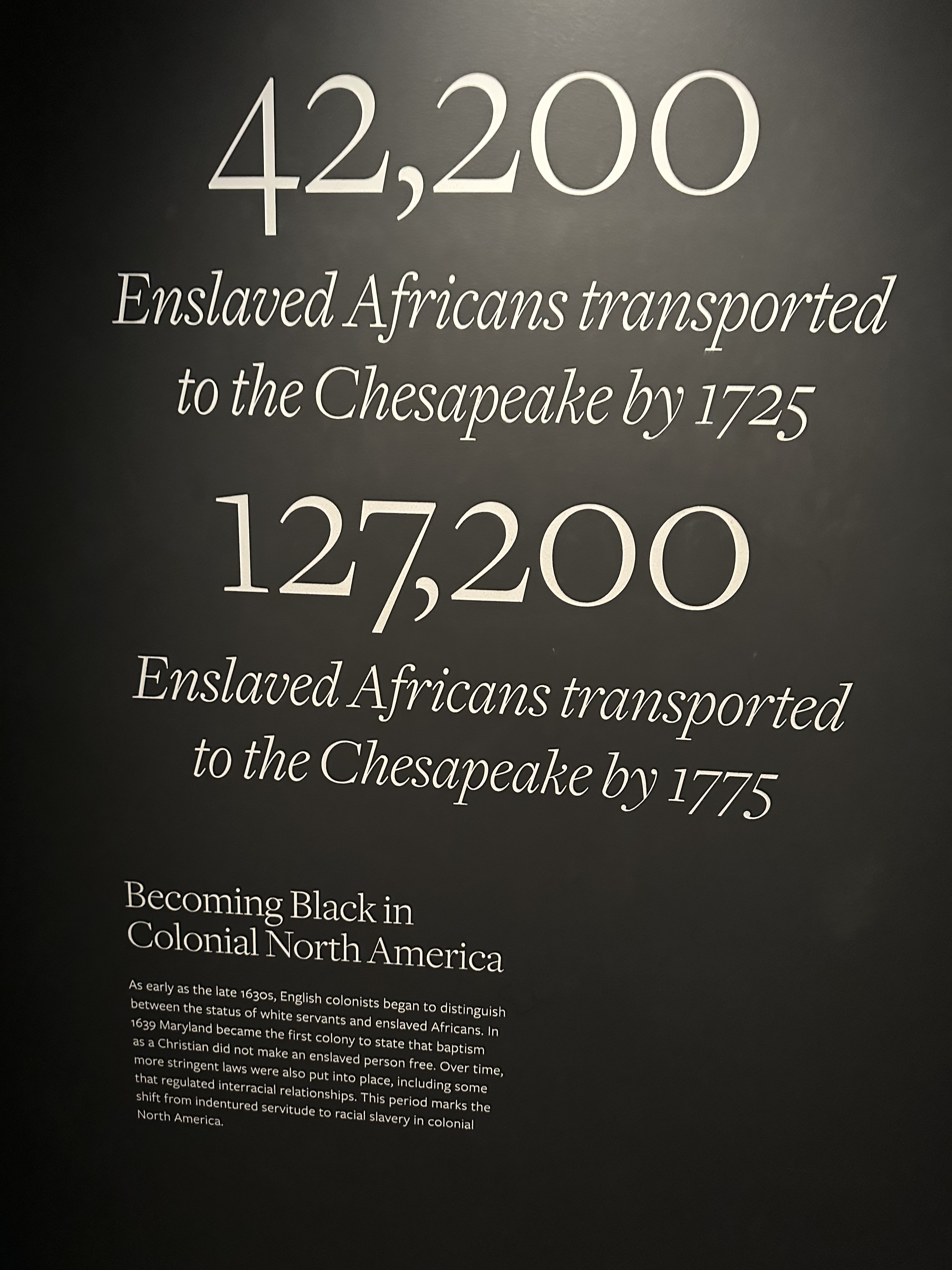
We walked a mile in the morning’s coolness the next day for a delicious breakfast spread. The portions were so large that only the teens cleaned their plates. We stayed so long that the day’s heat had already begun as we worked our way toward the National Mall. It was Juneteenth, and we had tickets for the National Museum of African American History and Culture. We wanted the youngsters to see first-hand the sad history of how African Americans arrived in this country and what they endured in slavery, the Jim Crow era, and the present. The chronology began on the lower floors, and we worked our way up in small groups. Is there another choice when you have a toddler and septuagenarians in the same family? We didn’t have time to do the outstanding museum justice.
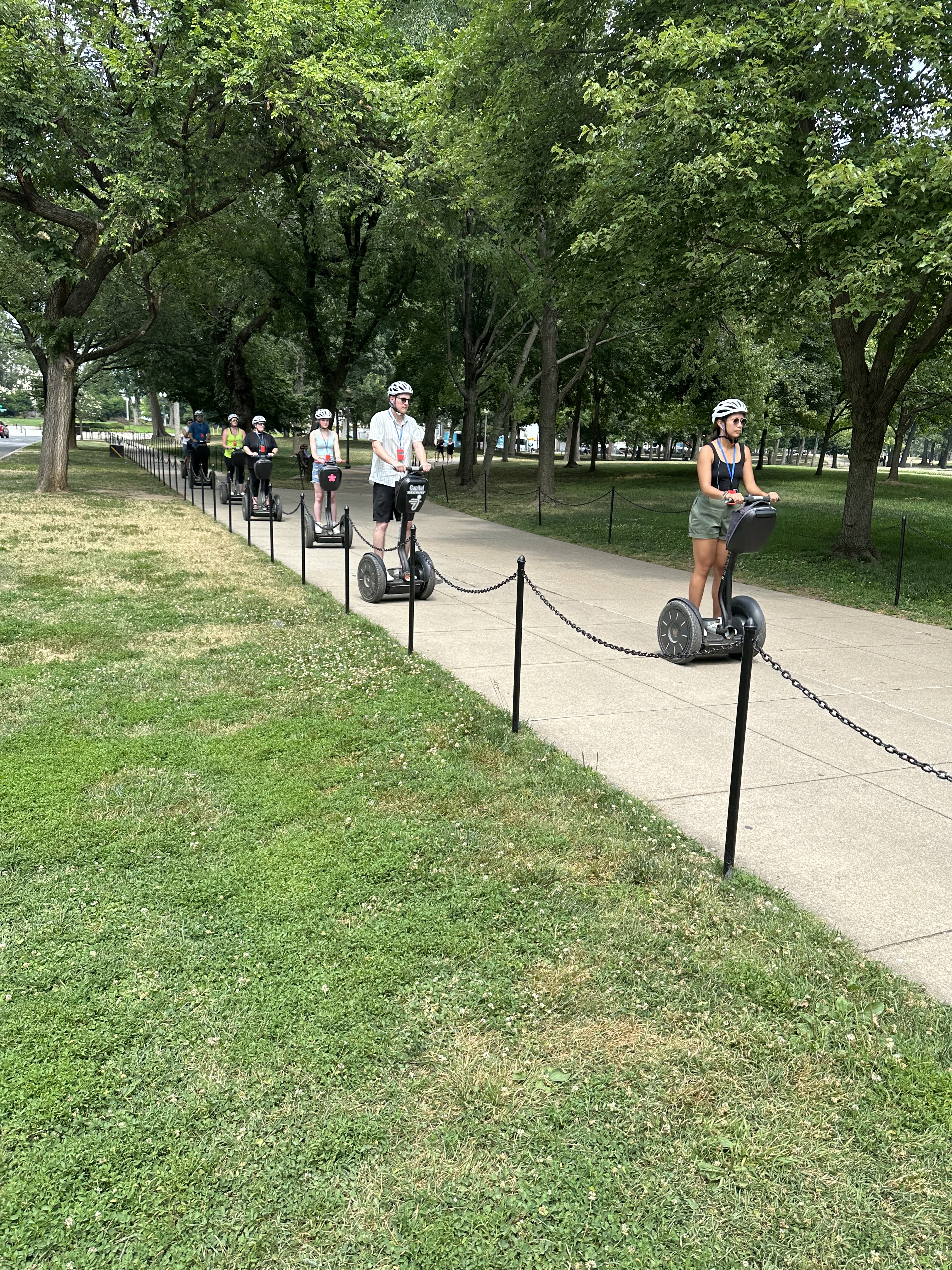
We exited into the early afternoon heat and humidity commonplace for D.C. summer days. Teddy’s parents found a refreshment truck parked near some massive shade trees, and the rest of us soon joined them for some shaved ice and smoothies. Nana was in her glory feeding Teddy some of her cool mango drink. Teddy’s eager reaction showed his gratitude.
Colorful murals were abundant.
Mural.
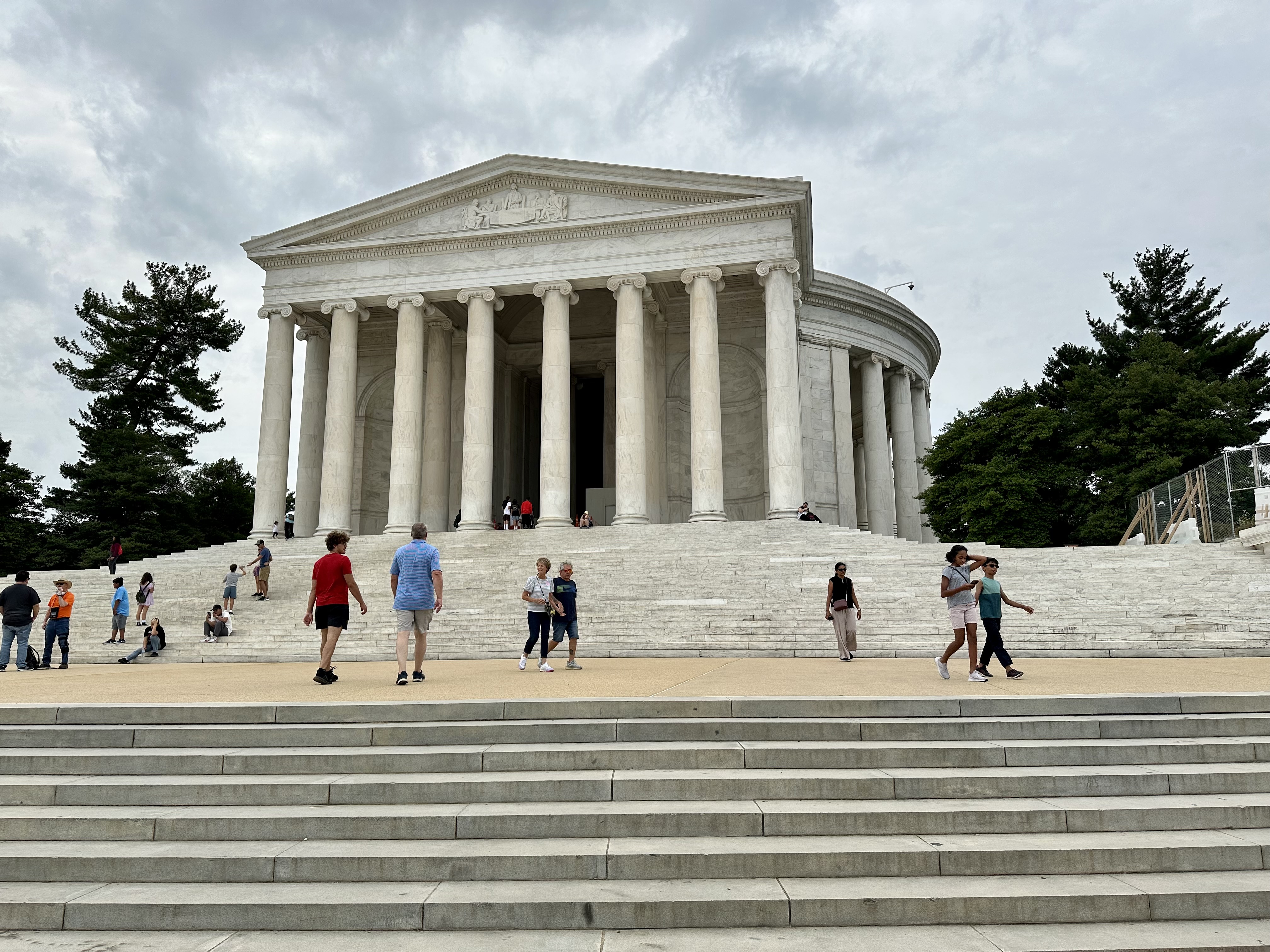
The Washington Monument from the Jefferson Memorial.
At the FDR Memorial.
Colorful canopy.
A short walk brought us to the World War II Memorial in the shadow of the Washington Monument and at the reflecting pool’s eastern end. I spied a group of Amish circling the memorial’s parameter and recognized the older leader. Unfortunately, I was too far away to say hello.
We continued walking west to the Lincoln Memorial for the older grandkids to experience. Before we left the area, we pointed out the impressive yet solemn Vietnam War Memorial from a distance.
By now, everyone was tired, and we headed back to the hotel via three modes of transportation. Some of us took an Uber, while two adventurous teens followed their father to the Metro. Since Teddy needed a nap, his parents chose to push the stroller three miles.
With the day’s heat and humidity, we were glad for the hotel’s air conditioning in which to rest. However, the teenagers all wanted to play cards, a vacation tradition since they were young. We ordered burgers from a local restaurant and reclaimed the hotel’s rooftop. The banter and passing around Teddy put a punctuation mark on a fulfilling day. The games played on, but we seniors called it a night, our hearts full.
As I settled in for the night, I reflected on the day’s interactions. Everyone we met, hotel, restaurant, museum staff, and Uber drivers, were engaging and courteous. They made this country boy feel right at home in the city.
The adults headed for a lighter breakfast than the previous day while the teens slept in. Afterward, they had to be awakened to say goodbye to Teddy and his parents, who had to leave for their return flight. We hugged and kissed and thanked them for making the trip, and then they were gone.
Those that remained returned to the monument area. Our first stop was the Jefferson Memorial. The day was warm again, but a steady east wind made it bearable.
Please click on the photos to enlarge them.
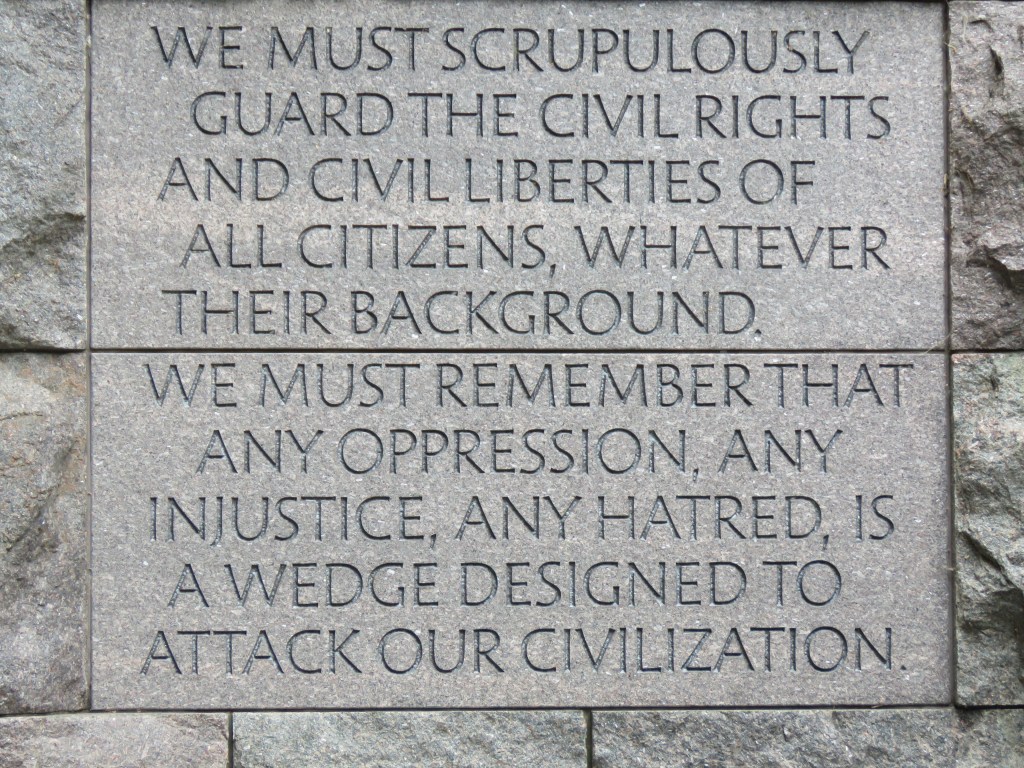
We walked to the Franklin Delano Roosevelt Memorial, which my late father truly enjoyed when I first visited it with him as part of an Honor Flight for World War II veterans. I told the grandkids how their great-grandfather, who used a wheelchair, nearly rose to his feet when he saw the statues of the longest-serving president. Dad even knew the name of Roosevelt’s dog, which also had an oversized bronze.
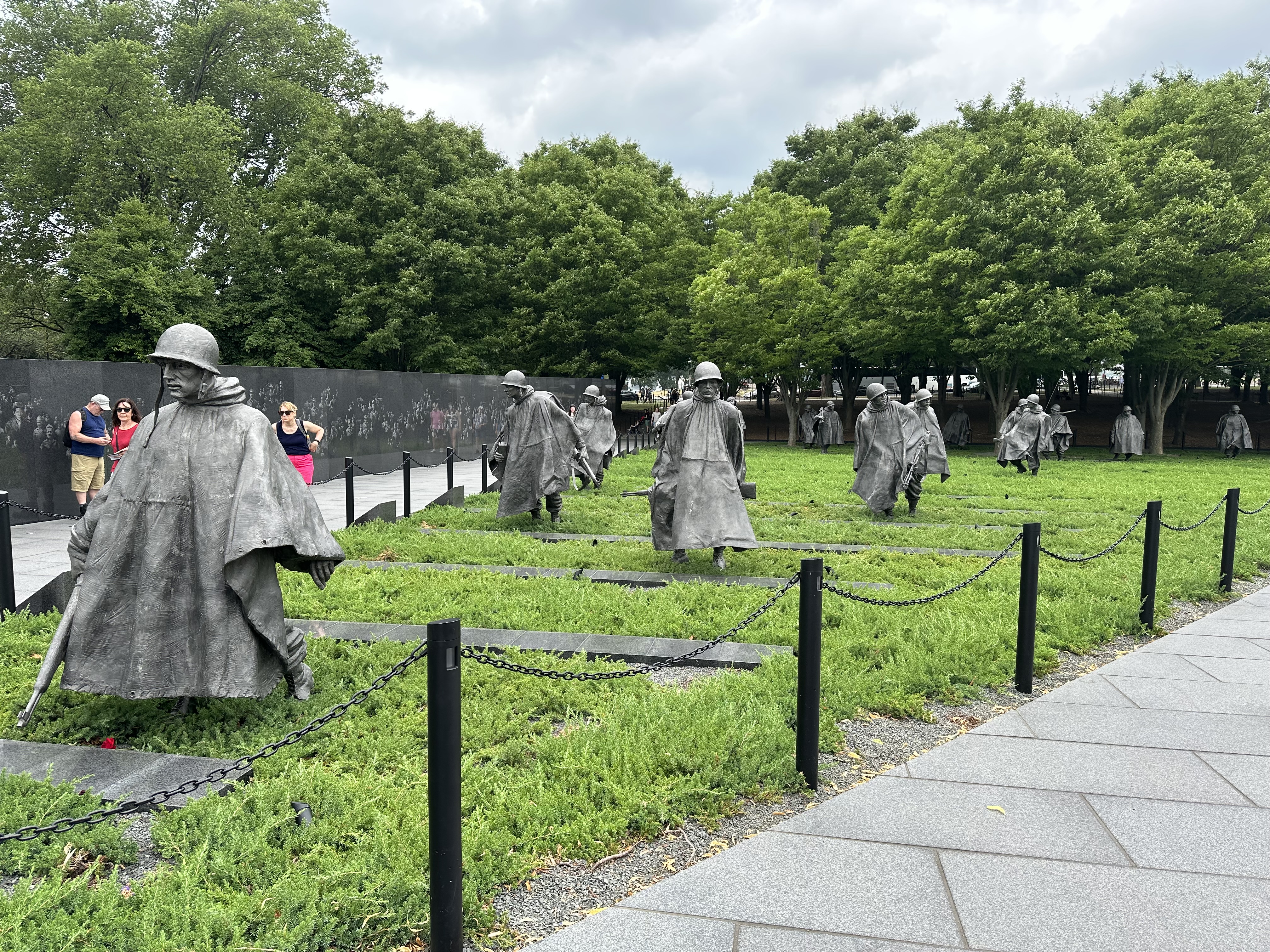
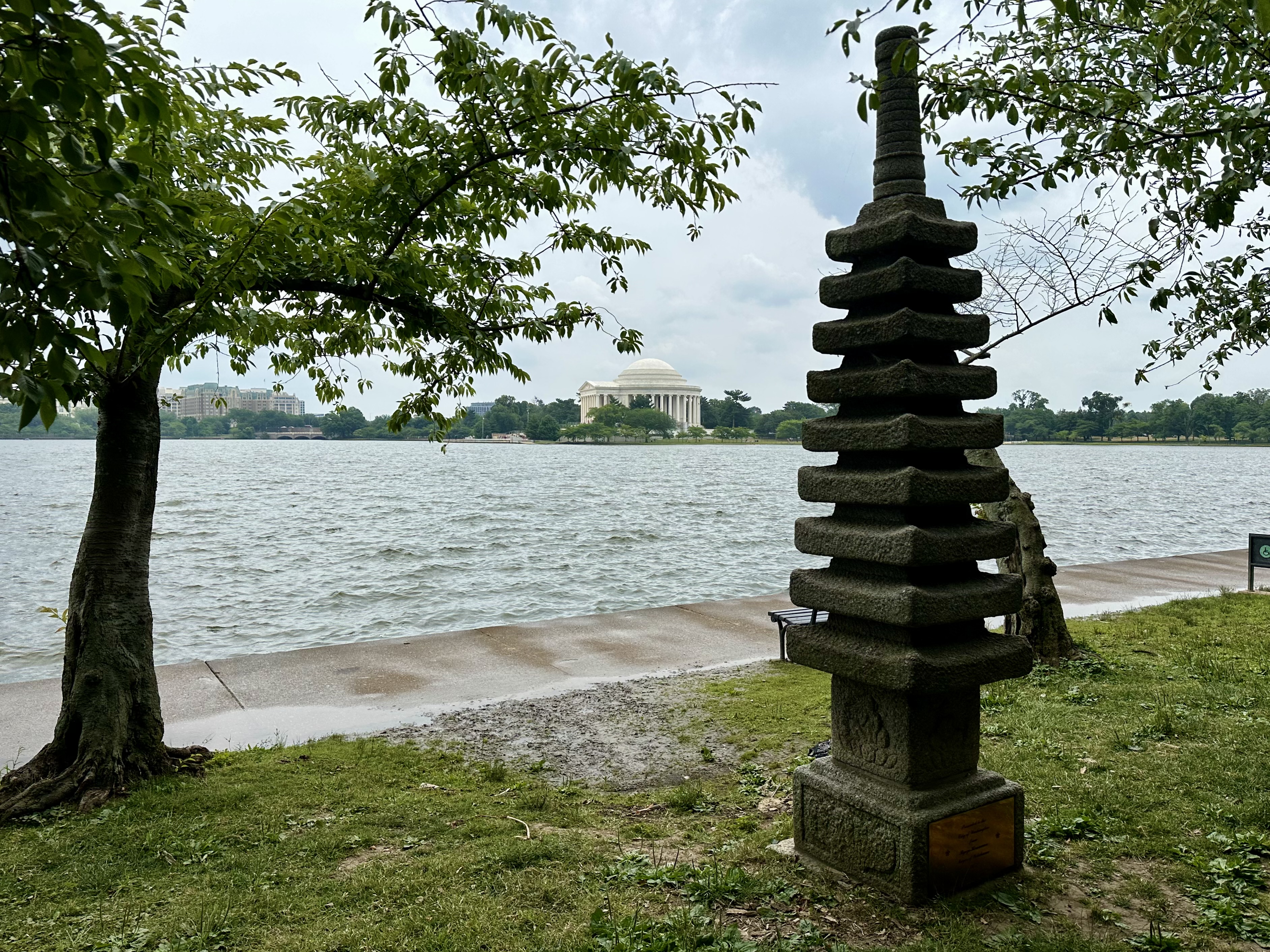
The Martin Luther King, Jr. Memorial stood a short walk away. We were a few months late for the blooming of the famous cherry trees along the path. The impressive King Memorial faced the Jefferson Memorial across the choppy basin. From there, we strolled to the Korean War Memorial. With its platoon of soldier statues, the setting gives you pause about the futility of war.
It was time to head home. We retraced our steps through the FDR Memorial and back to the van. As we rolled south down the interstate, I enjoyed the commotion of the card games with Nana and teenage grandchildren in the back seats. I was happy to have my son-in-law drive and most grateful for our joyous times together.
We had so much fun that we had already made tentative plans for next year’s get-together. In the meantime, I’ll bask in the joyous afterglow of our little family’s reunion.
Friendships mean a lot to me. I suppose most people feel that way. But as I edge into the last quarter of my life, relationships increase in value. One of the first things I do in the morning is check the obituaries. I see people much younger than me have passed away. Consequently, I sense the urgency of each remaining moment.
As a septuagenarian, I want my friendships to grow more meaningful as I age. That’s especially true for friends separated by geographic distance and borders. The global pandemic and the necessary travel restrictions delayed any notion of crossing into Canada.
Since my wife and I are well into retirement, we visit as many friends as time and money permit. Our time is only constrained by our commitments to gatherings with and transporting our grandchildren as needed and volunteering in church and community activities. We set aside funds for traveling near and far, whether for vacations or visiting friends. We often combine the two.
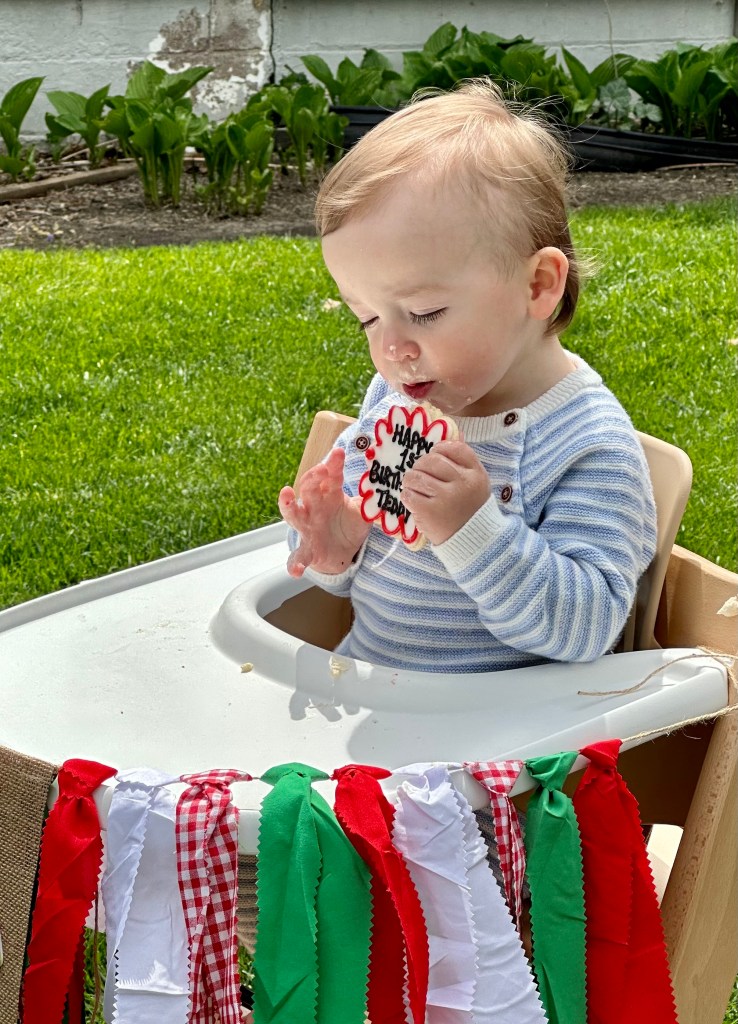
Grandson Teddy tastes sugar cookies for his first birthday.
Such was the case when our newest grandchild had his first birthday. Knowing we would be in upstate New York for that celebration, I checked the distances to friends in Kitchener/Waterloo, Ontario, Canada. I was happily surprised to learn that it was only three hours of travel time from Rochester, New York. If your friends can’t come to you, you go to them. So, we contacted the three families we know in those twin Ontario cities, and they were all available during the times we proposed.
I chose to drive west along the southern shore of Lake Ontario for multiple reasons. The first was less traffic. The second was opportunities to bird along the drive, and thirdly, my wife and I enjoy driving back roads and passing through small towns and communities. We even drove through a small Amish settlement in northwest New York.
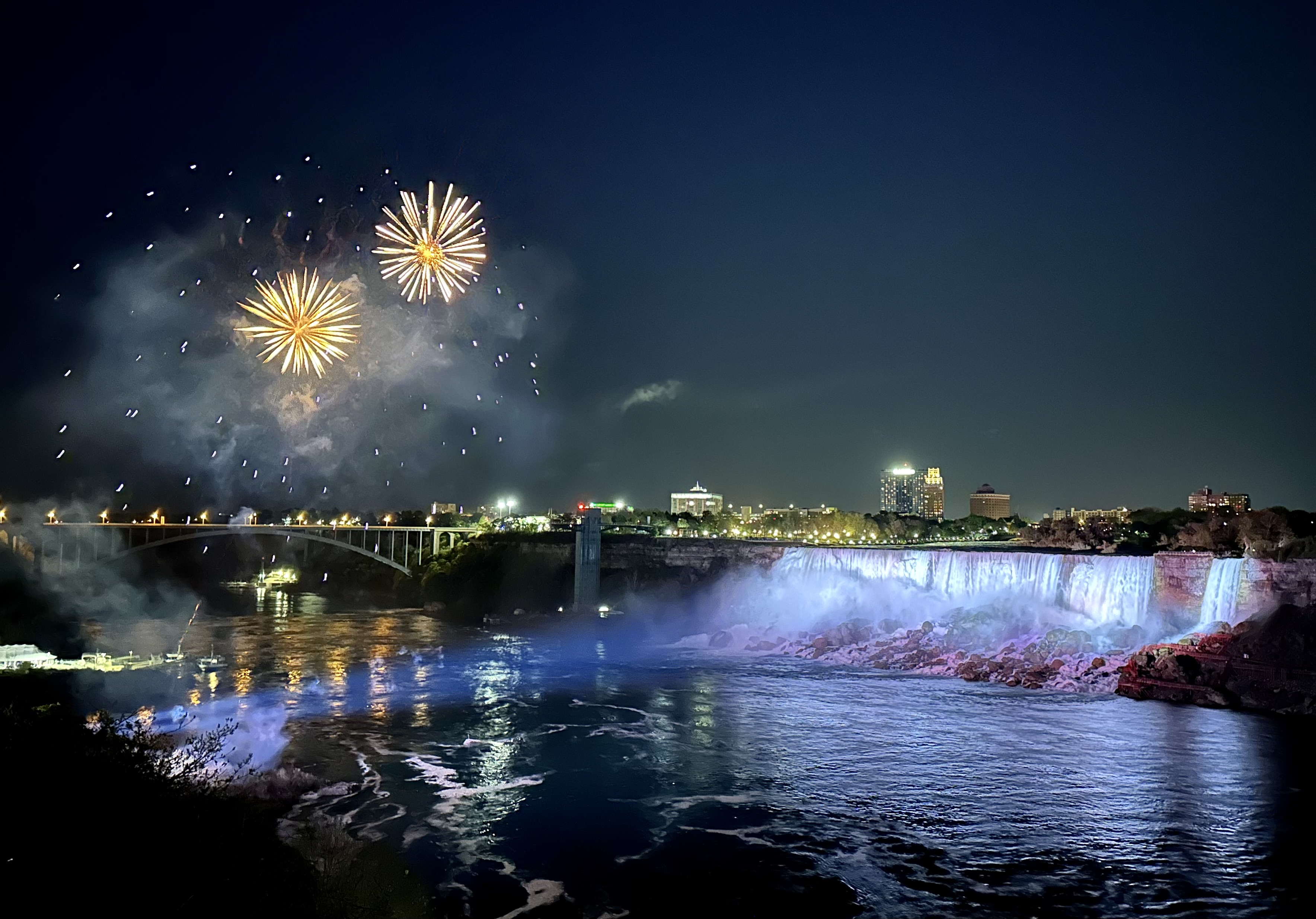
With nice weather, we did our birding, toured Old Fort Niagara, and spent a lovely evening in Niagara Falls, Ontario. The following day it was on to see our friends. We easily found our host’s home thanks to GPS. It was less than a mile from one of our other friends.
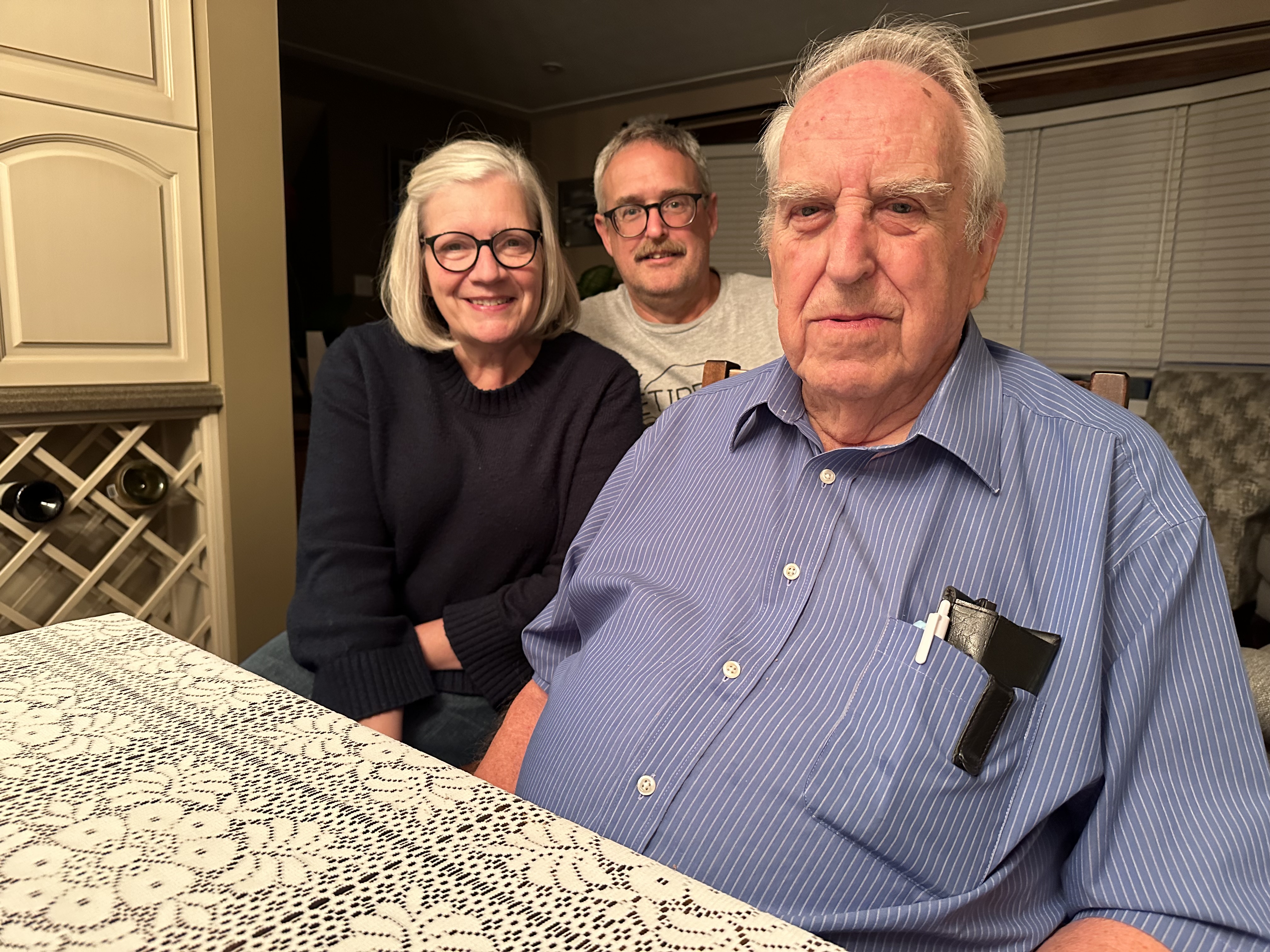
Eleanor, Mike, and Dave.
We accepted the invitation to stay with Mike and Eleanor, both retired from medical careers. We knew Mike as a teenager. He was in the church youth group where Neva and I were sponsors, though we were not much older than some of the teens. Mike’s father was our pastor for nearly a dozen years. Mike and Eleanor moved to Kitchener to be close to their only grandchild, daughter, and husband.
Our former pastor, Dave, also moved to an assisted living facility in that area. Dave came for supper that first night. He looked much the same as when he was pastor 45 years ago. Dave is now 93 and still has his dry humor. It was clear, though, that he dearly missed his late wife. We enjoyed our meal of shepherd’s pie and the brief visit with Dave. He and I served as co-editors of the church conference bi-monthly magazine all those years ago when “cut and paste” meant scissors and glue.
Dave and I would meet on a Friday afternoon after I finished my day job to assemble the magazine. We made a good team. He was a respected pastor, and I had a degree in journalism, even though I switched to being a teacher and then a school administrator.
We always took a break for dinner at his home. Dave’s gregarious wife, Mary, always fixed a simple but delicious meal. I enjoyed the lively conversations, too, when Mike and his brothers were there. After the meal, we’d head back to the church and work late into the night to finish laying out the magazine. Dave usually mailed it to the publisher the next day. Those were joyous memories.
The next day we went to the home of our long-time friends, Ken and Ruth. Neva had known Ruth in her youth. She stayed with Ruth and her family while attending a church youth conference in Kitchener when they were both teens. They have kept in touch ever since.
We had much in common, values, hobbies, friends, and travel. We visited them when our children were small. They visited us both in Ohio and Virginia. We even vacationed together in Arizona and Florida.
Ken and Ruth invited us over for lunch with the other couple we know in Waterloo, Don and Gail. They were neighbors across the street, and we joined the triangular friendship when we discovered Don and Gail wintered on the same Florida island we did. We’ve had some beautiful times together. Don and I especially hit it off since we were both volunteer firefighters. We’d swapped crazy fire stories while the wiser women went shopping. We all loved sunrises and sunsets. Those, too, are precious memories.
At the restaurant with Don, Ruth, Ken, and Gail.
None of us are getting younger, and we all have our individual medical issues to deal with and talk about. But most of all, it was pure joy to be together again, even for only a day. As it goes with old friends, the time ticked away too quickly. We toured Don and Gail’s modern condo in uptown Waterloo, then walked around the corner and raised a ruckus around a restaurant table.
All too soon, it was time to go. The combination of the goodbye hugs, kisses, and well wishes made the trip more than worthwhile.
A surprise beneath the bridge. Photo by Bruce Stambaugh
You never know when you’ll find unexpected color. I was birding on the James River Heritage Rail Trail in Lynchburg, Virginia. After crossing the river, you enter Percival’s Island Nature Area.
Wanting closer to the water, I followed a path that led under the bridge. I stopped short when I saw this vivid street graffiti art painted on one of the bridge’s cement supports. It was the dinosaur that caught my eye.
Though I was searching for bird species, this unexpected splash of color was a pleasant surprise.
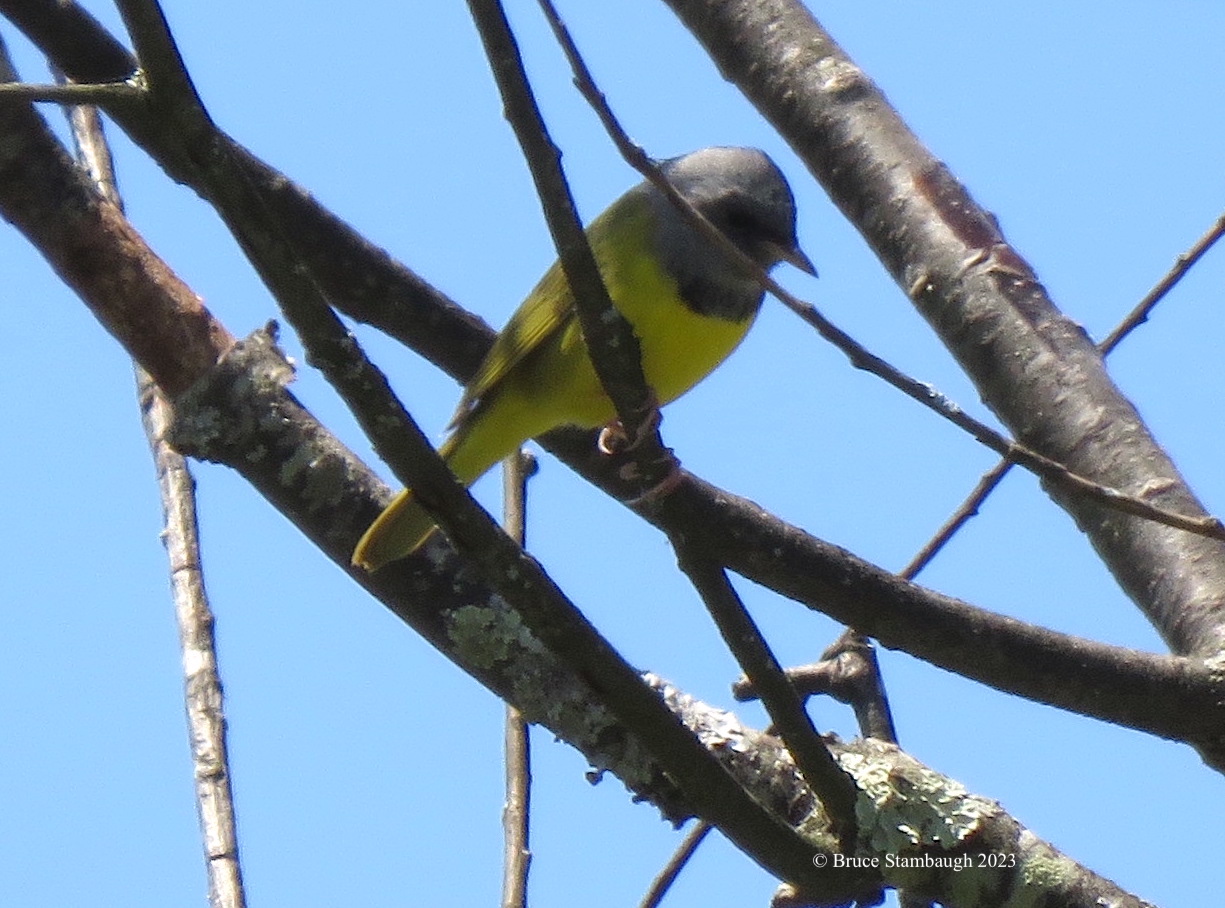
I couldn’t believe my eyes. I had heard a Mourning Warbler singing before, but I had never seen one. I always attributed that to their habitat and skulking behavior. It could have been my poor eyesight, however.
Mourning Warblers tend to stay closer to the ground than the one I spied 15 feet high in a dead wild cherry tree. They favor low brushy habitats, not bare tree limbs. Yet, here it was, and I was pretty happy to be able to capture a few photos before this beautiful bird with a lovely song dropped into the underbrush and out of sight.
Most Mourning Warblers nest in boreal forests in states and Canadian provinces well north of Virginia. However, there is a small area in the Allegheny Mountains along the boundaries of Virginia and West Virginia, where they also breed.
When I learned that other birders had spotted Mourning Warblers near Reddish Knob, a mountain summit on the Virginia/West Virginia border, I decided to go for the bird. The drive to that area is less than an hour from my home in the Shenandoah Valley.
Other birders had the same idea. The bird was easily heard, and with six pairs of eyes, the target bird was soon spotted. However, I didn’t expect it to be so out in the open. But I had to act fast. Mourning Warblers seldom sit still. As you can see, this bird was already looking down and dropped out of sight right after I snapped this photo.
I was grateful for the help of the other birders, who were equally happy that I was able to get the photographs I desired. The Mourning Warbler was only one of several bird species I saw that day, but it was the best.




























 Roadkill Crossing
You must be logged in to post a comment.