Humbly and gladly joining the snowbird migration

snowrollersbybrucestambaugh
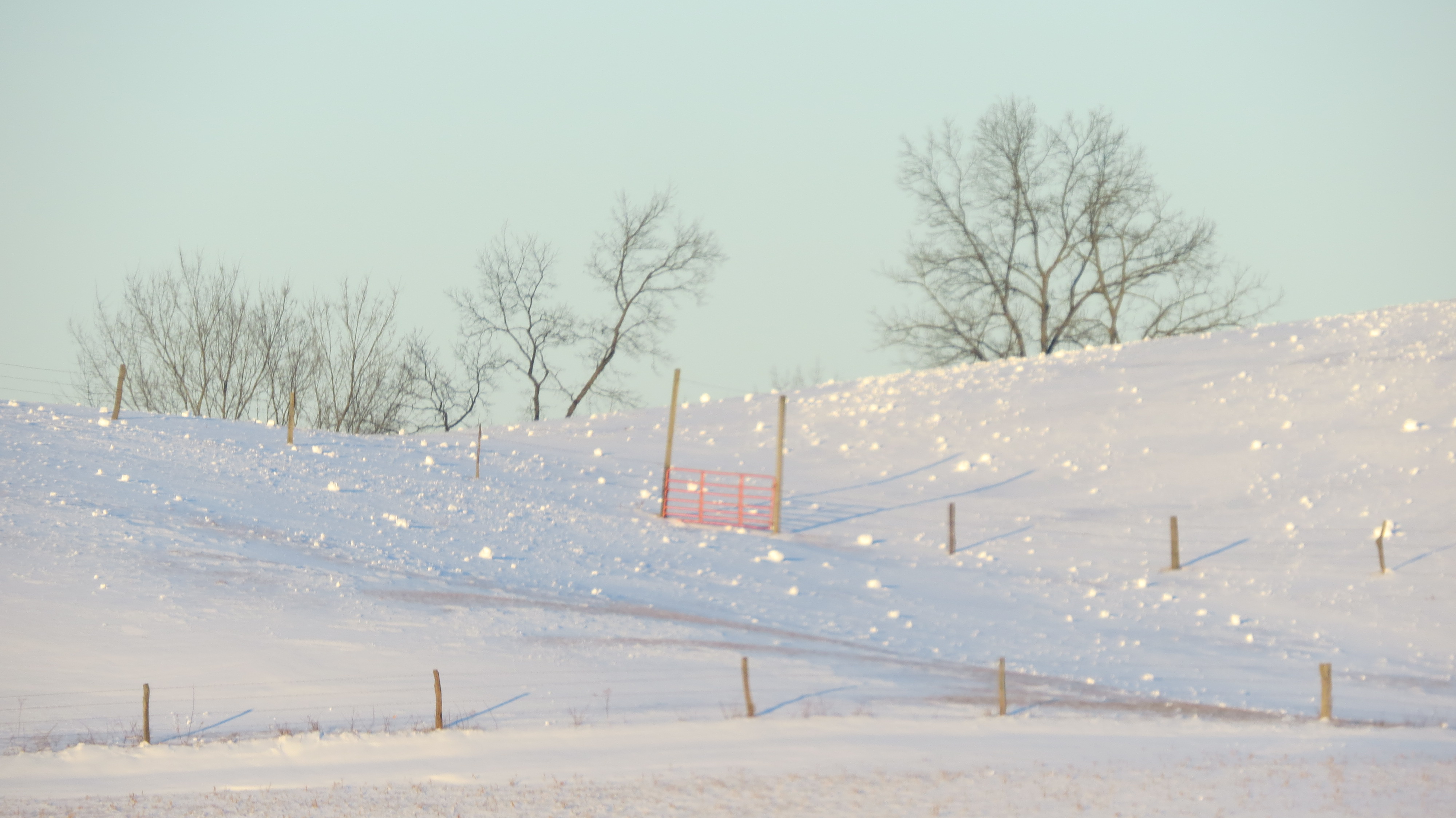
The day we left Ohio it was 15 degrees below zero, and the snow rollers, a rare weather phenomenon, still graced open fields surrounding our home.

By Bruce Stambaugh

I never thought I would ever be a snowbird. Snowbirds are old people that head south to Florida or southwest to southern Texas or to Phoenix for the winter to avoid the chilling temperatures and the harsh weather of northern latitudes.

I wasn’t going to be “one of those people.” I liked winter’s Jekyll and Hyde fickleness. In Ohio, a dull, dirty brunet landscape can be magically transformed overnight into a fluffy, frosted wonderland.

Really, I cherish the change of all the seasons. I never tire of seeing the verdant transition from winter’s dormancy, whether brown or white, to spring’s greening and glorious floral colors. Splashes of vivid feathers of our aviary friends enhance spring’s sparkle.

Of course after spring, summer’s cottony clouds come sailing over maturing crops and rainbow gardens full of nascent flowers and luscious vegetables. Then there is fall’s full blaze of glory amid the many stands of hardwoods to behold, too.

We are fortunate that our area offers diverse landscapes, from steep wooded hills to vital marshy habitats for an array of wildlife. I marvel at the hilly farmlands, with their multihued, flowing ribbons of contoured crops, and smart fields of grazing livestock. Contrasting brushy fencerows stitch the agrarian patchwork quilt together.

At middle age, I began to view winter differently. No longer was it the snowy playground of my youth, but a season to appreciate the beauty of white against earthy sepia browns and blacks, and breathtaking sunrises and sunsets.

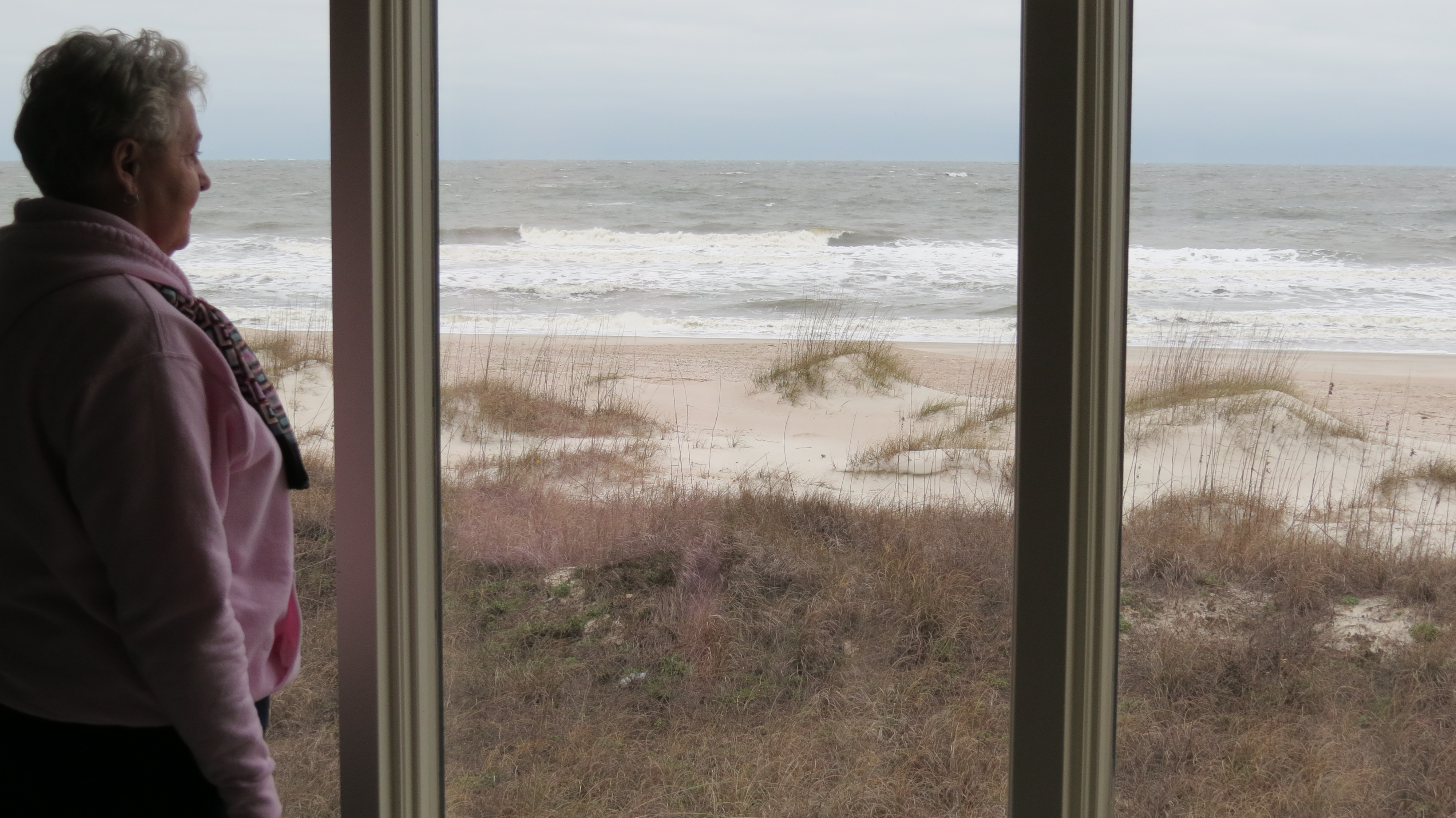
Even so, I have to confess that my fondness for winter has waned. During February, my wife and I overlooked a sandy beach that gently sloped down to the ever-rolling Atlantic Ocean.

roomwithaviewbybrucestambaugh
The view from our condo.

Traveling the interstates to the Sunshine State, we saw many other gray-tinged peers migrating, too. Like us, they fled from Indiana, Ohio, Pennsylvania, New York, New England and Canadian provinces alike.

Some drove vehicles like ours, stuffed to the gills with clothes, food, bikes and any other paraphernalia deemed necessary for their extended winter’s stay. Others steered huge recreational vehicles, towing equally crammed cars.

It’s the fourth consecutive year we’ve made the journey to Florida. Our stays have evolved from the original few pleasing days to several weeks in order to maximize the obvious.

I never thought I would ever say that. If I had my preference, I’m a mountain man. But the mountains are cold in the winter, and the cold makes my arthritis ache, and my bones groan. The modest warmth of northern Florida minimizes those maladies.

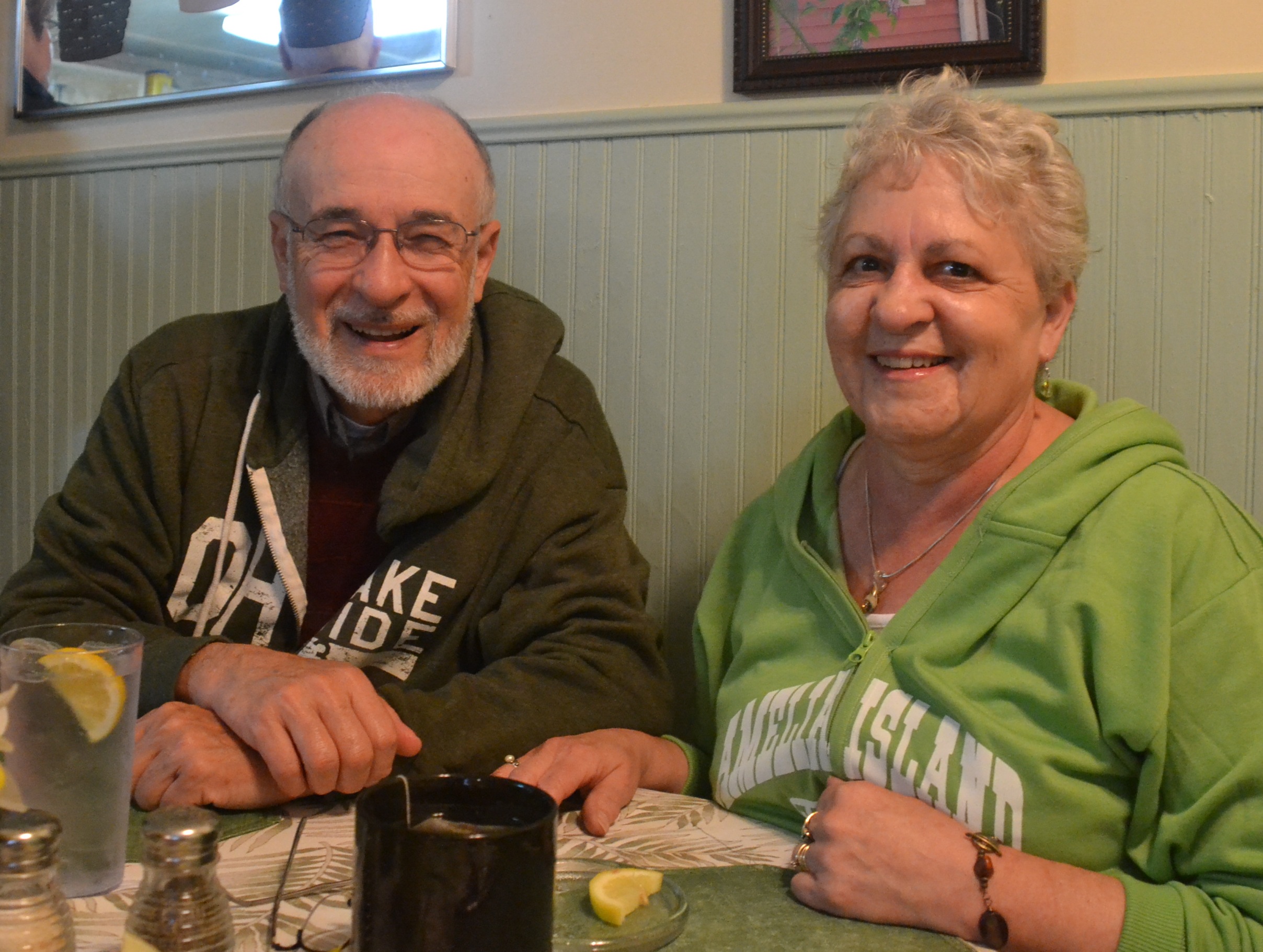
So there I was, a snowbird, partaking in the many amenities that Amelia Island, Florida had to offer. And believe me, it’s a lot.

This slideshow requires JavaScript.

There I birded without crawling into my insulated coveralls and donning a stocking cap. There we read, wrote, explored, met new friends. There we could stroll the beach for a dozen miles if we wanted. We didn’t.

We were content to walk up and down the same sections of sand, embracing the sounds of the sea crashing the beach, the shorebirds probing for food or skimming the rolling surface for sustenance.

We gathered seashells simply because they were pretty. We embraced sunrises and moon rises shimmering at the ocean’s horizon. A mile west, the harbor sunsets were spectacular.

Our consecutive trips south for part of the winter serve as evidence enough. I readily and happily admit that we are officially now snowbirds.

enjoyinglunchbybrucestambaugh
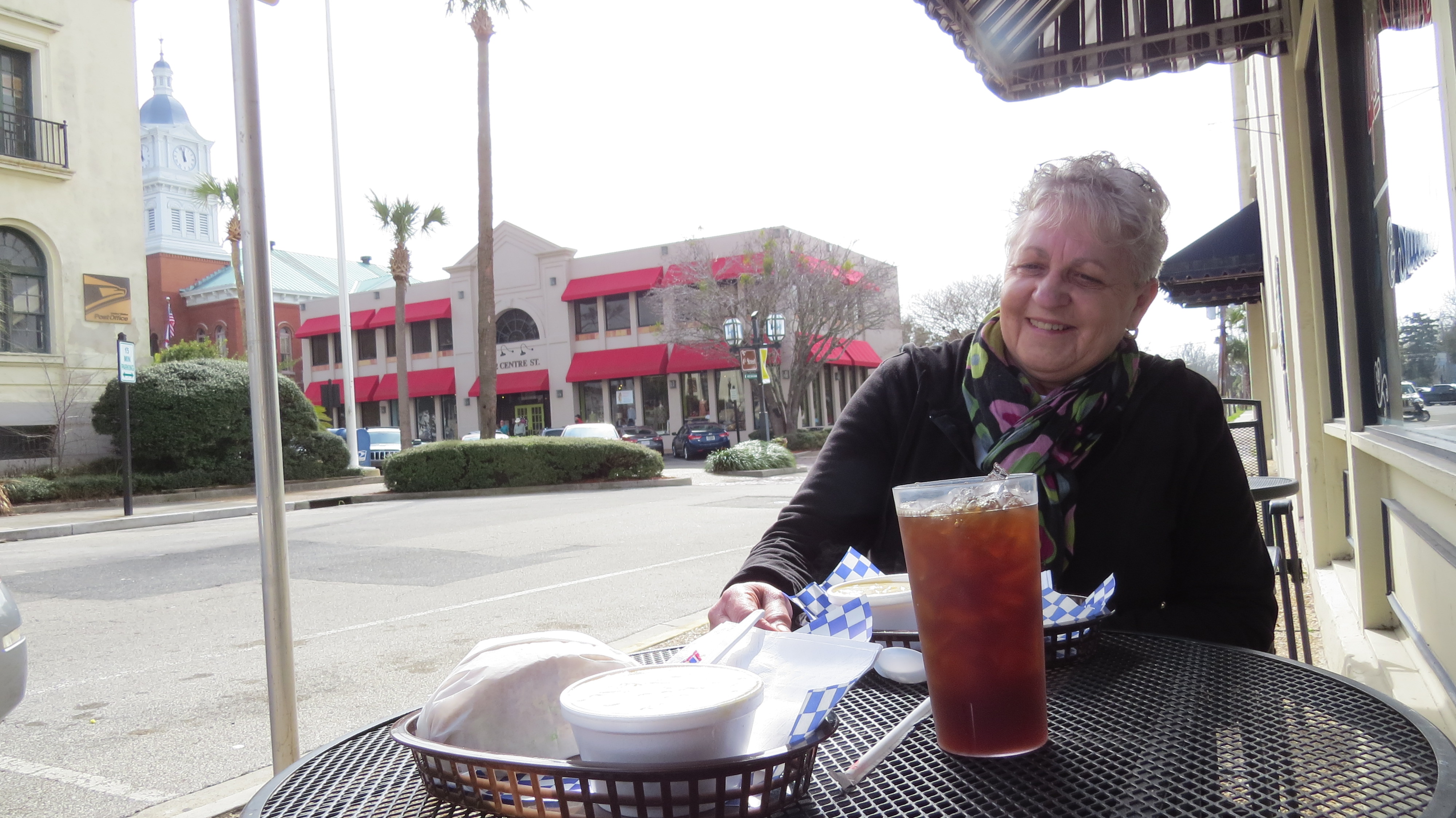
My wife and I enjoyed our first lunch at Fernandina Beach, Florida outside, and it was Feb. 1.

© Bruce Stambaugh 2014

The winter of our youth has returned

thepushbybrucestambaugh

By Bruce Stambaugh

When it comes to winter weather, the younger generations now have something to brag about. They have finally experienced a good old-fashioned winter.

It’s been a long time coming, too. Sure, we’ve had bitter cold snaps, and heavy snows in the past few decades. But nothing has resembled the winters of my youth or those older then me for that matter.

The worst back-to-back winters that I can recall were those of 1976-77 and 1977-78. They were record breaking, unforgettable winters. Once we went from tornado warnings to blizzard warnings in a matter of minutes. Extreme cold followed the blizzard. Those storms brought wide-ranging effects with no exaggeration needed.

amishsleddingbybrucestambaugh
Amish children sled riding.
We had 22 foot snow drifts behind our house. A front-end loader shoveled the snow out of our driveway. The driver of a semi-tractor trailer truck was buried for days in the cab of his truck. The tip of his radio antenna sticking out of the snow enabled rescuers to find him. Given today’s digital gizmos, do I need to explain what a radio antenna was?

The severe weather closed school for 17 days. Those of you who lived through those fateful winter storms have your own amazing stories.

Of course, I was a young man then, not a youngster. Youth tend to remember the upsides of harsh winters. They leave the negatives for the adults to unravel. I was no different.

When heavy snows hit and extended cold spells settled in when I was a kid, the outdoors was our playground. I’m sure mothers everywhere were grateful for that.

We would bundle up as best we could, layered with jackets, stocking caps, scarves and fur-lined gloves. Off we would go, sledding, ice skating, making snow angels and snowmen, snow forts, and firing volley after volley of snowballs. We never had to worry about running out of ammunition.

We played until we got too cold or too wet or both. We went home, and hung the soaked clothing as close to the furnace as possible where it was likely to dry the quickest. At school, kids’ clothing covered the old steam radiators until the next recess.


These memories weren’t from one-time storms either. This was the way winter went. It was extremely unusual if snow didn’t cover the ground for a majority of the winter.

This wasn’t true for just my youth. I remember seeing pictures and hearing stories from my parents and grandparents about how difficult their winters had persistently been. I recall seeing pictures of gangs of volunteers clearing the state route in Mt. Hope, Ohio by hand with shovels, not plows. The snow was piled well above their heads.

That hasn’t happened in recent years. In fact, records show that nine out of the last 10 years global records have been set for above average annual temperatures. That did not bode well for a sustained winter anywhere.

For a multitude of climatological reasons, that has all changed this winter. Storm after storm, often following similar tracks, have pelted most of North America, especially areas east of the Rocky Mountains.
Snowplows have worked overtime clearing the roads. Road salt has become a precious commodity.

This winter certainly has been a doozy. My guess is it will leave the kind of lasting impressions on the younger generations like it did for my generation and those previous.

There is one minor problem that I hate to even mention. Winter isn’t over yet. More memories may yet be made.

onthetrailbybrucestambaugh
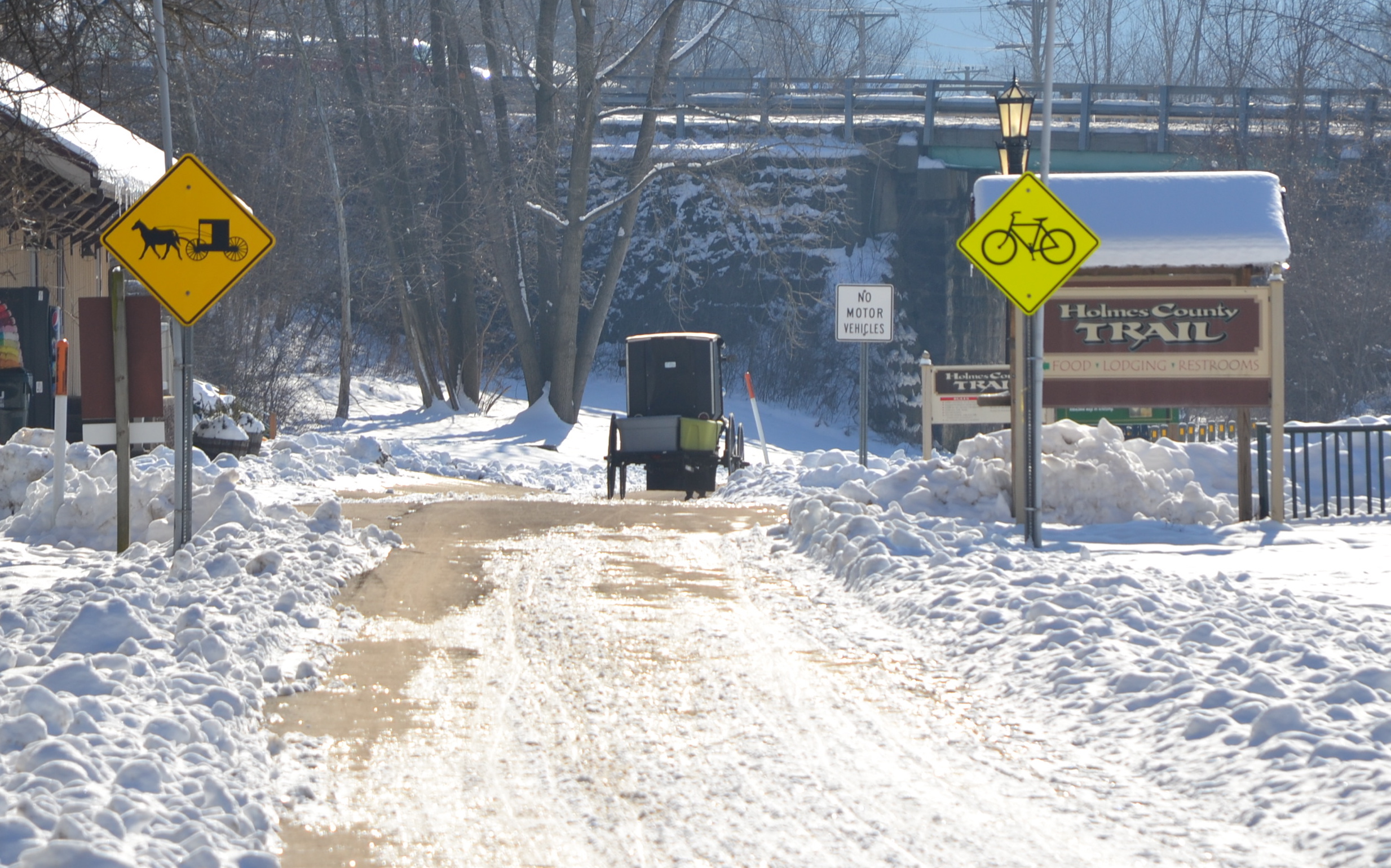
Amish buggies regularly use the Holmes Co. Trail, even in winter.

© Bruce Stambaugh 2014

A happy ending for a confused waterfowl

amishbarnbybrucestambaugh
The Horned Grebe landed on the wet lane behind the barn on the Amish farm in Wayne Co., Ohio.

By Bruce Stambaugh

My good friend Robert phoned again recently. When Robert calls me, I listen.

Known as the go to bird guy, Robert gets all kinds of calls regarding birds, especially rare species since he hosts the rare bird phone alert for Holmes and surrounding counties in Ohio’s Amish Country. Sometimes he even serves as a conduit for rescuing birds.

That was the nature of this call. A bird had landed on a gleaming, long farm lane, obviously mistaking it for a stream or water-filled ditch. The young mother of the family that found the floundering bird had called Robert out of desperation.

The family had easily captured the bird and, recognizing it as a waterfowl species, placed it in a basement utility tub half filled with water. That’s where it still was when Robert, his son and I arrived the next morning.

redbuttonedeyesbybrucestambaughRobert immediately identified the bird as a Horned Grebe all decked out in its spiffy winter plumage. It’s red eyes looked like bright buttons against its clean, white cheeks and charcoal head.

Not only was this an unusual situation, it was an unusual bird for this area for this time of year. Horned Grebes need long stretches of water to get airborne. The shiny, wet driveway had apparently confused the poor bird.

Fortunately, the grebe appeared to be fine. But with the extreme cold of early January, large, open water spaces were scarce. I called another noted area birder who told us she had seen a good section of the Killbuck Creek free of ice near Holmesville in northern Holmes County.

Robert donned his gloves, and carefully lifted the Horned Grebe out of its watery confinement and wrapped the bird in towels to protect it from any human contaminants. Off we went with the grebe perched patiently on Robert’s lap. We’ll discount the several attempts to drill Robert with its thick, pointed bill.

When we arrived at the creek, we found a couple of good release points. We chose a large ice-free spot 100-yards south of the bridge that crosses the Killbuck. It appeared to be the best place to release the bird back to its proper habitat.

Robert slowly approached the creek bank, and gently tossed the grebe toward the stream. The Horned Grebe flapped its way to the murky water. It swam a short distance, pecked the surface as if in disbelief, and made a quick dive to the bottom. Even though the Amish family had dropped bits of frozen fish into the tub’s water, the Horned Grebe was naturally hungry.

This slideshow requires JavaScript.

After a few seconds, the natty bird resurfaced, leaned back, shook its wings and head simultaneously. If birds can express emotions, this fortunate fellow was down right ecstatic.

The Horned Grebe swam and dove, swam and dove. The three of us headed back to the car satisfied that the bird was uninjured and would be just fine.

Once it had gained its strength, the Horned Grebe would likely take its long, running start across the water’s surface and lift into the air. Hopefully, when and wherever it landed, it would pick a real pond or stream this time.

On land, the Horned Grebe was simply helpless, completely out of its element. On water, it was a graceful and stately wonder. As proof, the grebe was placidly floating in the center of the stream as we left.

We took one last glance as we crossed back over the bridge in the car. The grebe was gone. Either it was down for another food forage or it had taken off for another locale.

There is great satisfaction in helping the helpless, confused birds included.

lastlookbybrucestambaugh
This was the last time we saw the Horned Grebe as we walked back to my vehicle.

© Bruce Stambaugh 2014

Chasing the elusive but beautiful Snowy Owls

fromadistancebybrucestambaugh
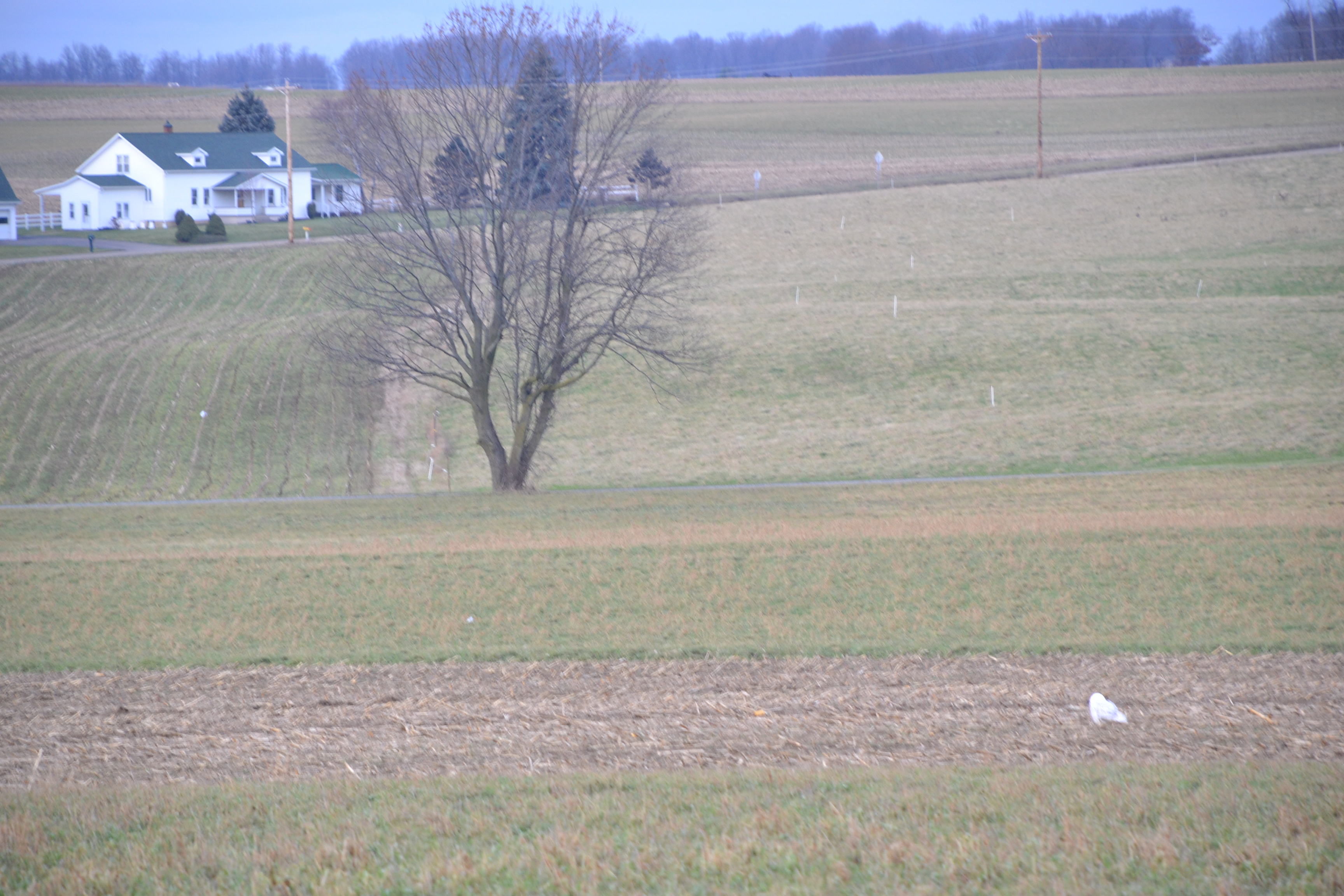
The Snowy Owl as viewed from the lane north of Mt. Hope, OH.

By Bruce Stambaugh

Birding is one of my many hobbies. I’m not the best birder by any stretch of the imagination. But I consider it a compliment to be called a birder.

I’m not alone. Believe it or not, birding is one of the most popular sports in the world. Birding is an international activity that can be enjoyed by anyone, any age at anytime. All you need are birds and an awareness to see and hear what is flitting right around you.

Birders have long been interconnected. That’s because it’s equally fun witnessing the enthusiasm and excitement of others experiencing the same bird you got to see. Ask my wife. I’ve called her to the kitchen window many a time to view the beauty and antics of our backyard birds.

Today birders connect in many ways. Bird alerts via phone, texts, email and Internet posts keep avid and amateur birders alike apprized of any rarity that arrives. Organizations and clubs also promote birds and birding.

spottedtowheebybrucestambaugh
A Spotted Towhee recently spent several weeks at a feeder at an Amish home west of Holmesville , OH.
Over the years, we’ve had our fair share of rare birds appear in Ohio’s Amish Country. They get noticed here more than other places perhaps because we have so many good birders who live here. Many of them are young Amish folks.

We’ve had Wood Storks, Rufous Hummingbirds, Northern Wheatears, Spotted Towhees and Swallow-tailed Kites. The latest rarity influx has been Snowy Owls.

When my friend, Robert, called just before Christmas and asked if I wanted to see a Snowy Owl that was reported near Mt. Hope, I was elated. I stopped what I was doing, gathered my binoculars and cameras, and picked him up.

Snowy Owls normally winter in southern Canada. Once in a great while, the impressive white birds will wander farther south into Ohio and other states.

sunpillarbybrucestambaugh
The Thanksgiving Day sunrise produced a marvelous sun pillar.

Robert had also called about a Snowy Owl the day before Thanksgiving. It had been seen between Berlin and Walnut Creek. When we arrived at the location given for the bird, it was gone. We drove around scouting for it without success.

As soon as we arrived back home, Robert received another call that the Snowy Owl had returned to its original spot. It was close to dusk, and we both decided not to retrace our tracks, thinking we could see it the next day.

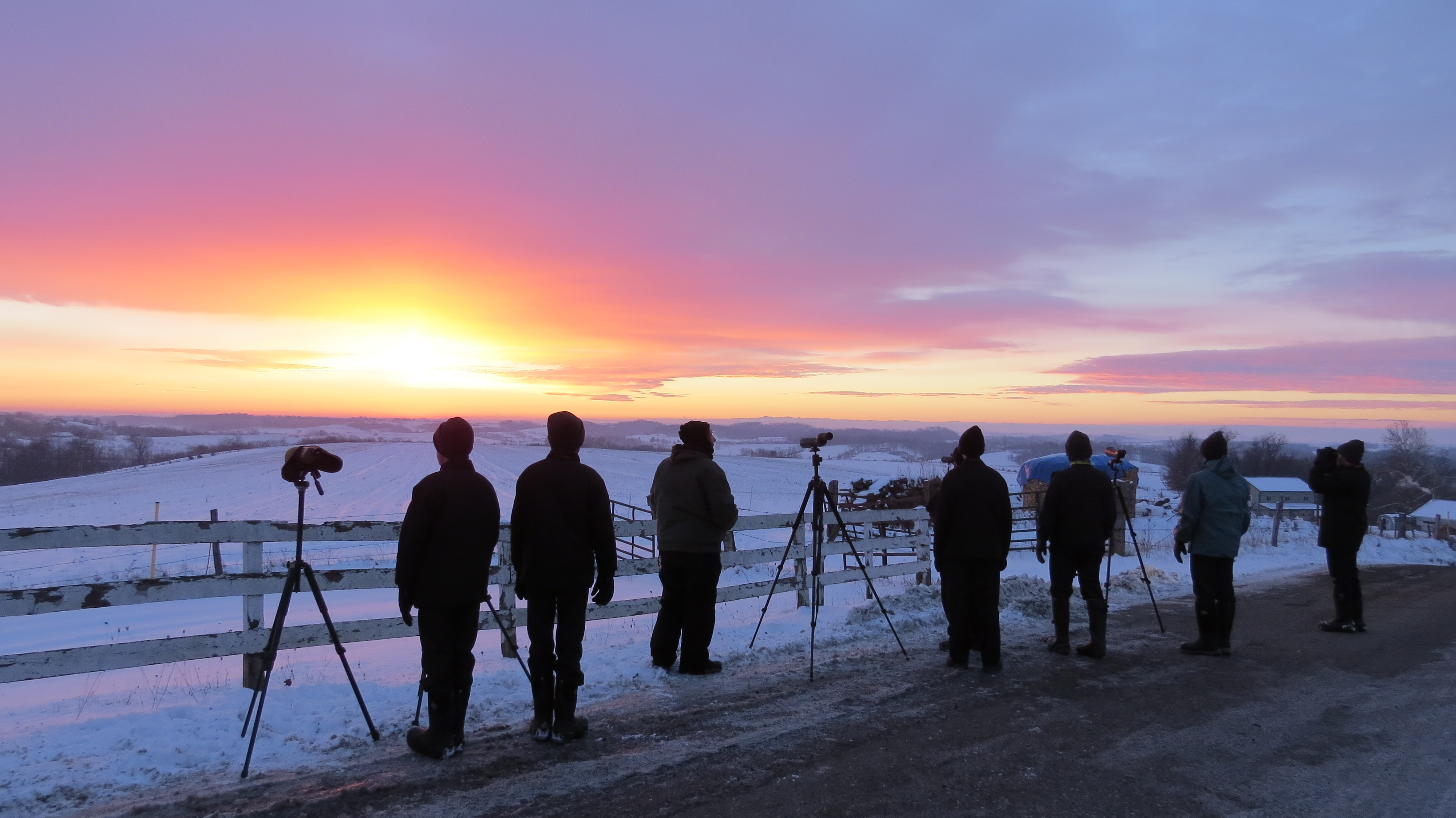
We were wrong. We were up early Thanksgiving morning. It was frigid, but a beautiful sunrise brightened the horizon with a spectacular sun pillar thrown in for good measure. But no Snowy Owl.

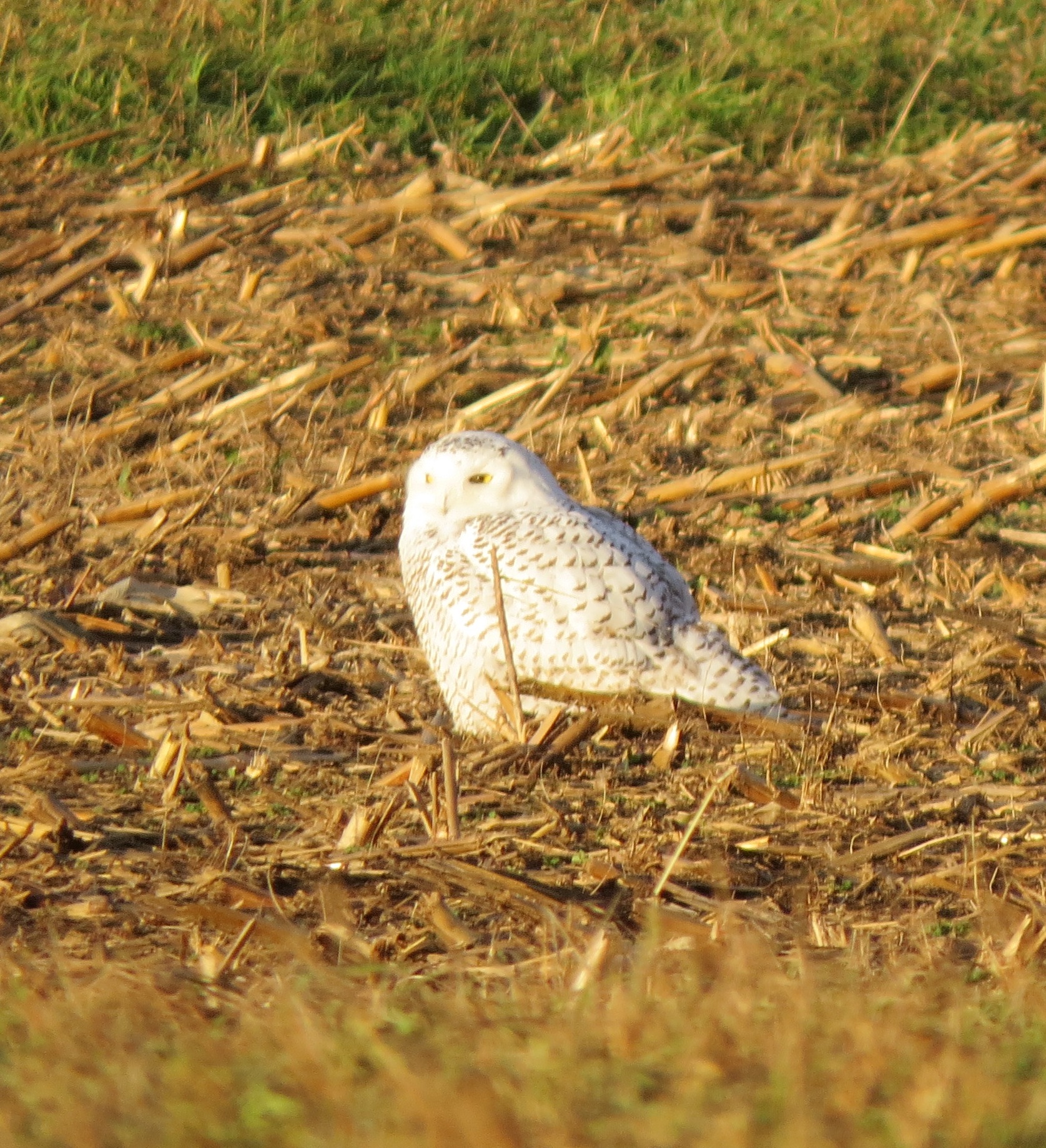
I wasn’t about to miss this latest opportunity. When we arrived at the reported location north of Mt. Hope, the Snowy Owl was right where it was supposed to be. The large white bird with gray speckles sat unconcerned in the middle of a corn stubble field. I took several pictures of the astonishing bird while Robert used my cell phone to call others to confirm the bird’s sighting.

snowyowlbybrucestambaugh
The Snowy Owl seen Dec. 23, 2013 near Mt. Hope, OH.
After soaking in the beautiful bird and quietly celebrating our success, we returned to our respective homes. I alerted other birders about the Snowy Owl. Half the fun in birding is sharing what is found.

Since November, several other Snowy Owls have appeared in more than half of Ohio’s 88 counties. Such an invasion of rare birds is called an irruption. People were reporting and photographing Snowy Owls all around Ohio, and even in other states, including Florida.

I’m glad Robert and I got a second chance at the Snowy Owl. I hope you get to see one, too.

© Bruce Stambaugh 2014

Lean into the wind in 2014

Damage left by an EF2 tornado that hit Wooster, Ohio on Sept. 16, 2010.

By Bruce Stambaugh

I never believed much in New Year’s resolutions. I prefer to view the big picture. Besides, by now, I may have already broken half my resolves.

This year, rather than aim to lose five pounds in a month, I want to lean into the wind. That should be easy for me. I’m known to be a little windy from time to time.

You can blame my young pastor for this idea. He’s young because he’s half my age. Pastor Patrick recently preached a sermon about making yourself available and vulnerable to lean into life’s daily situations, good and bad, the way you would brace yourself against a good gale.

bluebirdbybrucestambaughI liked that image a lot. I’ll share a few ways I plan to apply the concept. I want to challenge myself to embrace all that swirls around me, positive or negative, this year. We learn from either perspective.

Despite my loss of dexterity, I will lean into the wind and hold a child’s hand, steadying her wobbling stroll across a room. Though my hearing is diminished, I will listen attentively to what others have to say, even though I may vehemently disagree with their opinion or decision.

Though my eyesight is aided with bifocal glasses, I will look for the simplest pleasure nature has to offer. A breathtaking sunrise, a singular drop of water hanging perilously at the end a leaf, a brilliant wood warbler migrating north will all be part of my leaning into the wind.

doubletrunkbybrucestambaughEven though my cranky knees limit my mobility, I will do my absolute best to bend low to pick up trash thoughtlessly discarded by others. If someone else is leaning into the wind nearby, maybe they’ll help me back to my feet.

Leaning is an active verb, not passive. Life is a series of winds of various velocities that shift daily. We can only feel the wind. We measure it by the effects on everything the wind touches, whether it does so fiercely or persistently.

Regardless of the velocity, life’s winds affect us all. Leaning in enables us to practice gratitude and joy, the byproducts of vulnerability.

Life offers no guarantees. It is full of pitfalls and mistakes as well as abundant joy and beauty. I want to discard the rose-colored glasses, and recognize the good from the bad. I want to accept them for what they are, and lean into 2014 accordingly.

The blizzard winds of January will eventually subside. Before we know it, invigorating breezes of May, with their warm, sweet fragrances and life-giving rains, will arrive as a blessed balance for us all.

A friend of mine shared a picture of an old apple tree, trunk bent from age and time, some limbs broken and sagging. The caption beneath the old tree defined what I mean by leaning into the wind.

It read, “A little bent by time, shaped by the wind and the seasons, a few branches broken. Today I feel like that old apple tree. But I’m still reaching for the sky, and doing my best to take in what the world gives me and turn it into something good and useful.”

By leaning into the wind, I can anticipate enduring, absorbing and embracing all of the various breezes that life blows my way in 2014.

Who knows? I might even lose five pounds in a month.

brownongoldbybrucestambaugh

© Bruce Stambaugh 2014

Christmastime is gathering time

christmastreebybrucestambaugh

By Bruce Stambaugh

Christmastime is gathering time. The very origins of the holiday make it so.

Though we may not think about it, those who gather in celebration replicate the inexplicable cast of characters that assembled for the first Christmas. Paying homage for this special birth, their lot represented a cross-section of social, political and religious backgrounds, not unlike today.

nativityscenebybrucestambaughTo be sure, they were a motley bunch, unassuming, even unaware of the tradition being created. Of course, we have no way of knowing the exact date or even time of year for the birth of the Christ child. We can only follow the story as it has been transcribed and translated for us.

Over time, the traditions of Christmas have been handed down and culturally adjusted to fit the changing times. There’s no documentation for tinseled evergreen trees or a jolly St. Nick in Bethlehem that ancient night.

An angelic troupe serenaded stunned shepherds huddled in a field, watching over their flocks. Astute individuals, long on the lookout for a messiah, offered praise and prayer. A ruler trembled. Later, wise kings traveled from afar to worship the boy, and offered precious gifts.

Mary and Joseph themselves were among the throngs reassembling in their hometowns on governmental orders of the day. Harsh as their journey may have been, they complied. History wouldn’t be the same if they had not.

snowbuggybybrucestambaughCenturies later millions travel by modern means to celebrate Christmas, and not always on Dec. 25th either. That fits the Advent model as well. Perhaps, because of schedules or availability, you have already gathered for the holidays.

Here in the largest Amish population in the world, both traditional Christmas Day and the more reverent Old Christmas, always Jan. 6, will find families and friends gathering and sharing food, fellowship, and gifts. You might know Old Christmas as Epiphany or Three Kings Day.

Our own families will make merry on several occasions. Christmas Eve morning two kinships are blended into one for a festive breakfast, a holiday custom spanning three decades.

On Christmas Day, we’ll repeat the family ritual of enjoying a tasty holiday meal, and opening gifts. Those traditions have been toned down a bit from my childhood days when my good parents splurged beyond their means to make Christmas merry.

This slideshow requires JavaScript.


Some of us will eat tofu instead of turkey or ham, and the gift giving has been reigned in as well. We set a reasonable spending limit, pick a name out of a hat, and that’s that. Of course Santa still fills the stockings hanging from the fireplace mantel.

Later, the five Stambaugh siblings and any available family members will met at our little sister’s home to honor the season and our folks. After all, Mom and Dad instilled in us a fervent love for Christmas.

Myriads of global families will mirror my own, each in their own traditions and styles. Others have already gathered to bake cookies, or attended school programs, or a holiday concert. Still others packed food and clothing for the needy or served meals to too many homeless peoples around the world.

A curious collection of peoples was drawn to that original anointed Nativity scene. Once the event’s date was arbitrarily fixed as Dec. 25, families have been assembling ever since.

Centuries later, Christmas is still for gathering. The modes and means of doing so may have changed, but the reason has not.
In that, let us all rejoice and be glad that we can gather together indeed.

friendsgatherbybrucestambaugh

© Bruce Stambaugh 2013

Appreciating the daily gifts we are given

birdersatsunrisebybrucestambaugh
A beautiful sunrise greeted these birders in search of a Snowy Owl.

By Bruce Stambaugh

For much too long already we’ve been enduring an avalanche of cutesy commercials and gimmicky advertisements foisting an assortment of products from A to Z on us. Each one is pitched as the perfect Christmas gift to give.

snowyowlbybrucestambaugh
Snowy Owl.
Catalogues, newspapers, magazines, radio, television, the Internet, even emails push various products for us to purchase for our loved ones. I do my best to ignore them. It’s a bold statement from someone who spent part of his career in marketing.

I understand why all the product promotions are done. Retailers often need productive holiday sales to ensure a profit for the year. I certainly don’t begrudge them for trying.

At my stage in life, I find greater joy in a brilliant but brief sunrise than a glitzy ad. Sometimes on the coldest rural Ohio mornings, the pinks and blues that quickly morph into warm oranges, reds and yellows stir me more than any new car wrapped in a big red bow could.

Joy comes in many packages if we just take the time to notice them, even on the grayest of days. Amid this entire holiday hullabaloo, I have to remind myself to stop and take a deep breath.

Advent is the perfect time to slow down our lives, not speed them up, rushing around trying to find just the proper gift. It might already be right in front of us.

I speak from experience.

When our daughter, now a mother with young children of her own, was two-years old, she would stand on the kitchen counter at our home in Killbuck, Ohio. Together we would watch the birds devour the birdseed we had put out for them. Young as she was, Carrie could correctly identify each species.

Teetering on the rim of the Grand Canyon is an awesome feeling. Sharing that incredible vista with a person who is viewing it for the first time is even better. When it’s your son, seeing his smile is priceless.

When my wife and I braved a frigid winter’s night with a dear couple to search the dark sky for a rare comet, I was cold but hopeful. We rejoiced when we found it, quietly celebrating the event together. No words were needed.

When you go in search of a Snowy Owl, a rare avian visitor to our area, your hopes are high. Even when the bird can’t be located, the camaraderie of other birders on the same search makes up for the whiff. There are no wild goose chases in birding.

When you receive a hand-made card that includes drawings of a cardinal, an eagle and a blue jay, all appropriately colored by your grandchild, you know you are loved. You keep and display that precious gift where you can see it daily.

lookingupbybrucestambaugh
The gifts of life are all around us. We just have to look for them.
When a long-lost relative unexpectedly contacts you, you rejoice and reconnect with someone you may have only ever met once or maybe never. Surprise gifts rule.

When you stand in line for an hour or more to offer your condolences to the family of someone you have never met, you are blessed by the grace and appreciation shown to you by the mourners. Even in grief, great gifts are exchanged.

Advent is a time for reflection, renewing, remembering. It is a holy gift, freely given, gladly embraced.

The din of commercials not withstanding, Christmastime models what it means to give and to receive. I wonder what gifts will unwrap themselves for you and me today.

© Bruce Stambaugh 2013

Finding gratitude from on high

fromjeffersonrockbybrucestambaugh
The view from Jefferson Rock of the confluence of the Shenandoah and Potomac rivers.

By Bruce Stambaugh

There are times when a life experience far exceeds our expectations.

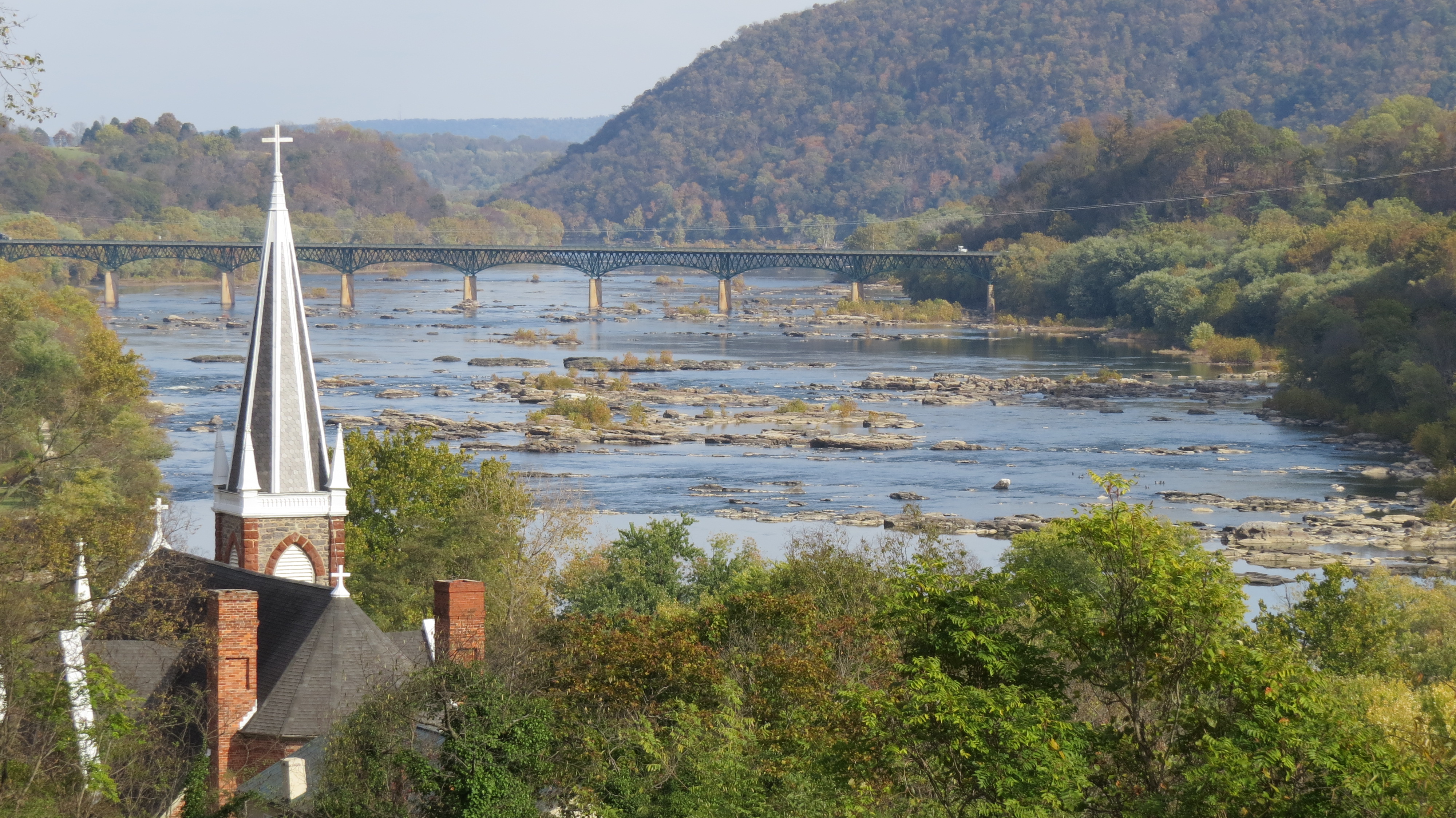
I had just such an encounter recently on a junket my wife and I made to Harpers Ferry National Historic Park in extreme eastern West Virginia. This tiny, old town had played a small but important part in our country’s big history.

On a precipice 800 feet above the confluence of the Potomac and Shenandoah rivers, more flowed together for me than two charming waterways. I had previously seen scenic shots of historic Harpers Ferry from this vantage point in Maryland, and had fancied a few of my own. I departed with more than picturesque photos.

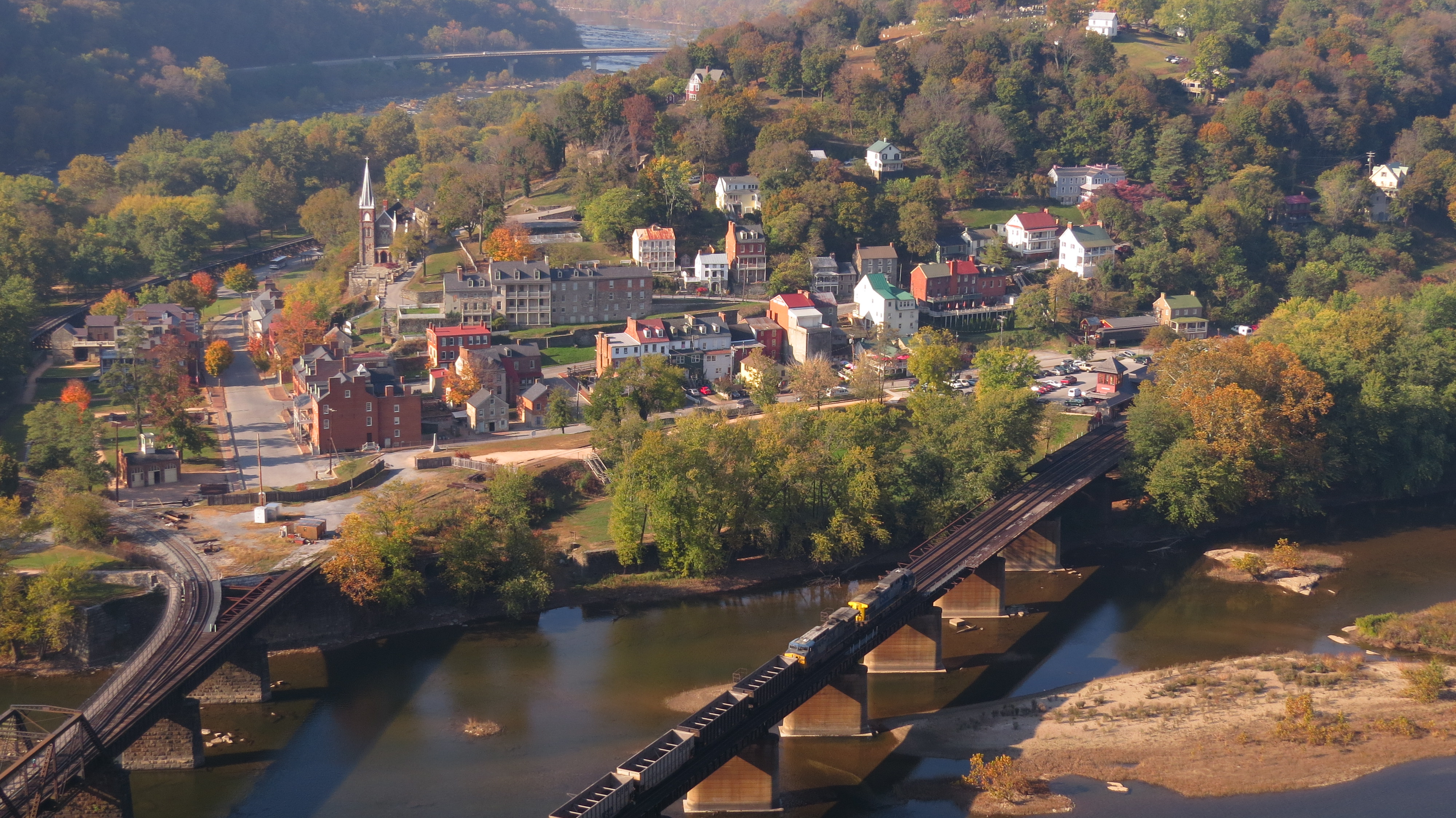
The beauty of the bright morning itself was stunning. I basked in the warmth of the morning sunshine looking down on history. The strengthening sun drenched the charming village in a golden wash. It was a map come alive where famous Americans had all made important imprints on our country’s checkered history.

confluencebybrucestambaugh
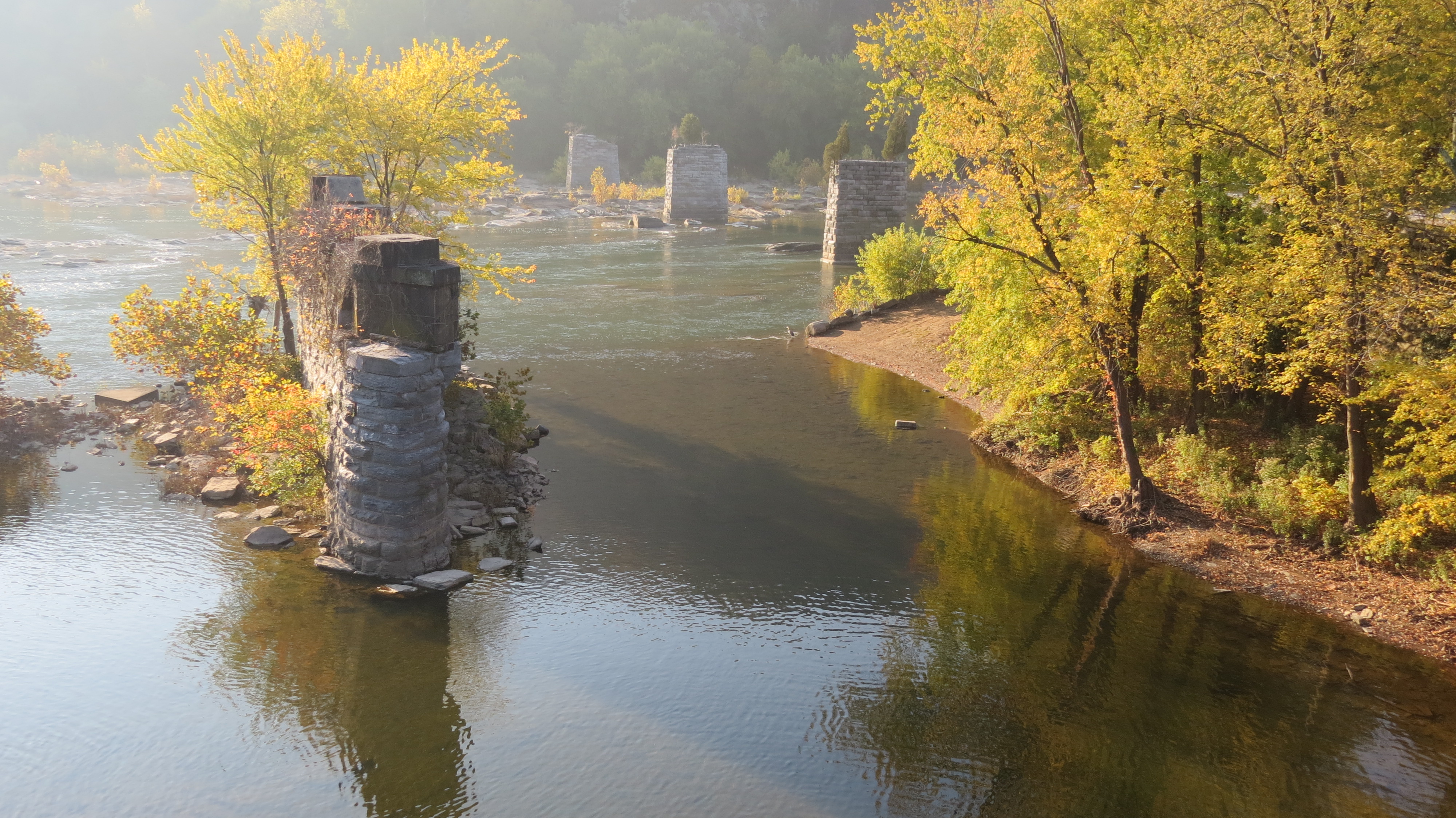
A Great Blue Heron preened in the morning light at the confluence of the Potomac and Shenandoah rivers.

The three-mile hike from Harpers Ferry to the overlook was exhilarating. A hint of haze hung above the surface of the churning rivers on the cool morning.

My goal was to arrive at the scenic overlook opposite the town as the day’s sun rose above the Appalachian foothills. I crossed the footbridge, a part of the Appalachian Trail, which paralleled the bridge of the railroad tracks. The tracks split at the town and followed the two majestic rivers, one south, the other west.

Once across the Potomac, its melodious rapids singing all the while, the Appalachian Trail followed the river and the old C & O Canal east. I walked west along the towpath to the trailhead that led up the rocky, forested hillside.

I couldn’t imagine how soldiers, Confederate and Union alike, had muscled heavy artillery up these steep slopes. Massive rock outcroppings protruded everywhere beneath the hardwood forest. The rich greens of mountain laurel and cedars complemented the coloring leaves of the mixed deciduous trees.

I arrived at the overlook in less than an hour. The view, as Thomas Jefferson once declared, “was perhaps one of the most stupendous scenes in Nature.”

As I sat on the cool rocks I looked down on the spot where John Brown had made his ill-fated raid in 1859. I envisioned Jefferson, George Washington, Robert E. Lee, Thomas “Stonewall” Jackson and all the others who had made their lasting marks there striding along the slanting, narrow streets.

Harpers Ferry was a strategic town in the Civil War since it housed the federal arsenal. Both armies occupied the town intermittently during the war. It was the sight of the largest surrender of United States troops in the Civil War.

Behind me birds of the forest searched for breakfast amid golden, backlit leaves. Carolina Wrens, chickadees, cardinals, robins, Tufted Titmice, White-breasted Nuthatches and Brown Creepers scavenged the forest floor and trees.

A Black Vulture sailed west above the Potomac just off of the cliff. A Red-shouldered Hawk, its black and white striped tail fanned out, glided east. Beneath me a freight train rumbled through the tunnel, across the bridge and whistled past the old station.

I had gone up to the sheer cliff for some pictures. I came down with a renewed spirit of gratitude for all that has transpired and will transpire in my life, in our lives.

Together we have a lot for which to be grateful this Thanksgiving.

harpersferrywvbybrucestambaugh
Harpers Ferry, WV from the Maryland Heights overlook.

© Bruce Stambaugh

How did we get to November already?

harvestingcornbybrucestambaugh
Many Amish now use a gasoline engine to power a horse drawn corn picker.

By Bruce Stambaugh

It’s November, the eleventh month of the year. How did we get here already?

Only yesterday we were putting away our holiday trappings, thankful for the fun times with family. With the winter full upon us, we wistfully anticipated warmer days ahead.

And now it’s November again. How did that happen?

Our house is built on an Amish farm, and we have an excellent view of the sweeping farm fields between the farmhouse and our own. After the year’s first significant snowfall, out came the manure spreader creating a Currier and Ives brown on white painting, horses snorting steam as they pulled the spewing wagon through the cold air.

The backyard birds raided the many feeders deployed in strategic locations for them and me. They eat in the cold. I photographed through the windows from the warmth of our home. That was yesterday, right?

The snows came, melted, and came again. The cycle of freezing and thawing and freezing again took a toll on the roads. The orange barrels are still up, and yet snowplows are already being prepared for another go-round. Can it be already?

It seems like just the other day horses pulling the one-bottom plows retraced their manure spreading steps. Dark, rich soil turned one row at a time. They went, and they went until the upturned richness embraced the sun and the rain, sometimes both in the same day. Didn’t that just happen, too?

As a fundraiser, the youth group from our church picked up winter’s debris deposited by gale after gale. I’m glad we didn’t have to pay them per pinecone. I thought we just wrote that check.

I remember distinctly how long, chilly and wet the spring was. It seemed like it hung around until last week. Obviously it didn’t. We haven’t had summer yet. Or did we?

A pair of Pileated Woodpeckers began to raid the peanut butter suet feeders in the backyard. I was astonished the huge, shy birds would even come that close to a home. But they did. A few weeks later, mother and dad led their youngster to the free food. I’m positive it was just the other day that happened.

Maybe not.

This slideshow requires JavaScript.

Once the field corn sprouted, it shot up, the tallest corn I can remember. The ears were long and full, and now they are being picked. Did I miss something?

I know our energetic granddaughter spent a few glorious days with us just before her preschool started. We had loads of fun together before I returned Maren to her Virginia home. Was that really at the end of August?

How is it that I distinctly remember sitting on our favorite porch in Lakeside, Ohio, playing dominoes with our usual gang, and yet, the calendar says it is November? Something is not right here.

I can still taste those amazing homemade glazed donuts at the customer appreciation day at the produce stand we frequented time and again during growing season. Yet, checking my records, that was at September’s end. That can’t be right.

I do remember October was filled with meetings and appointments and celebrations, all intertwined around a little travel. In fact, without looking it up, I can tell you exactly the time and date of my last doctor’s appointment. I didn’t have to wait long, and I recall it went really well. But that was a month ago.

Someone please tell me, how did we get to November already? Anybody?

novembersunrisebybrucestambaugh
A November sunrise in Ohio’s Amish country.

© Bruce Stambaugh 2013

Cozying up to that time of year

cottagelanebybrucestambaugh
The lane to the cottage.

By Bruce Stambaugh

It’s that time of year again, and I’m not referring to the general election. A dutiful citizenry casting ballots is critical to maintaining our democracy, dysfunctional as it sometimes is. I relish a more personal season now.

The Chimney Swifts are gone, and I can once again stoke up a roaring fire in the family room fireplace. It’s my favorite leisurely pursuit of the colder months, and one that I eagerly share with family and friends.

This year I had to wait longer than usual to build my first fire. After the resident nesting Chimney Swifts flew south a week after Labor Day, another family of migrating swifts promptly moved in and basked in our fine early fall weather.

I didn’t mind at all. The affable little birds daily devour scores of insects.

I enjoy hearing the flying cigars, as birders affectionately refer to them, chatter as they dive bomb into the stubby brick chimney. I find it fascinating that these birds seem to never sleep. Their powerful swooshing into the chimney rattles the hearth’s damper day and night.

cottagefireplacebybrucestambaugh
The cottage fireplace.
After the chattering subsides, I usually wait a while before building a fire just to be certain no slackers are bringing up the rear of the annual southerly trek. I need not have worried. They all had gone before the first hard frost.

That said, my first fireplace fire this fall wasn’t at home. That honor went to the main fireplace at our getaway cottage in southeast Ohio. Since the fireplace is faced with Briar Hill sandstone, I didn’t feel far from home, however. The stone is mined in the county where I live.

Like my folks who built the cottage, my wife and I embrace autumn there. Set on the north slope of a steep hillside that runs down to a peaceful flood control lake, a forest of mature hardwoods surrounds the family cottage.

The day we arrived was overcast and damp. A cold front was forecast to push rain through Ohio and gradually cool the temperatures enough to warrant a fire.

The soothing warmth of a fireplace fire adds to the cottage ambiance. I gathered the kindling and well-seasoned logs and with one match, my fireplace season began.

The dancing and laughter of the consuming flames, the invigorating pungency of the burning logs, and penetrating heat mesmerized and inspired me. In an hour the inside temperature of the cottage had increased seven degrees.

There is a satisfying routine in my fireplace ritual. Kindling and logs are assembled on the grate. A match is struck, and a transformation from mostly smoke to flames ensues. The fiery hardwood fuel spontaneously hisses, pops, and showers sparks. It’s a fireplace Fourth of July.

I like to let the fire die down to where the glowing embers throw out more heat than the small blue, orange and yellow flares themselves. That’s when marshmallows toast golden brown.

rainingleavesbybrucestambaugh
As the wind picked up, a golden shower of leaves rained down.
After a few nudges of the shrinking logs with the poker, more cordwood is added, and the process begins all over again. Over time, the accumulation of the glowing coals means less wood to keep the room comfy.

The conditions for this year’s first fireplace fire couldn’t have been better. Just as the flames reached their peak inside, outside the wind gusted, and golden leaves and a drenching cloudburst rained down together.

It’s that time of year again. Home or cottage, I’ll rejoice and be glad in cozying up to the captivating charisma of a fireplace fire.

© Bruce Stambaugh 2013

Bay Photos by Donna

Wildlife Photos From The Chesapeake Bay Region

ROAD TO NARA

Culture and Communities at the Heart Of India

K Hertzler Art

Artist and nature journalist in the Shenandoah Valley of Virginia.

Maria Vincent Robinson

Photographer Of Life and moments

Gabriele Romano

Personal Blog

Jennifer Murch

Art is the only way to run away without leaving home. -Twyla Tharp

Roadkill Crossing

Writing generated from the rural life

ANJOLI ROY

writer. teacher. podcast cohost.

Casa Alterna

El amor cruza fronteras / Love crosses borders