I spotted a female Monarch butterfly in the woods of a park near my home the other day. Actually, the Monarch saw me first, and flitted from a lower limb with dried leaves to this one higher up. It likely was resting up for the next day’s flight south.
Because of the darkness under the canopy of trees and the distance the butterfly was from me, I was amazed that the camera was able to focus on the subject I wanted. I had to lighten the photo slightly so that the beautiful butterfly stood out.
It must have been a good omen because I soon began to find several species of birds feeding on bugs high and low in the trees. All this took place in a well-maintained city park in Harrisonburg, Virginia.
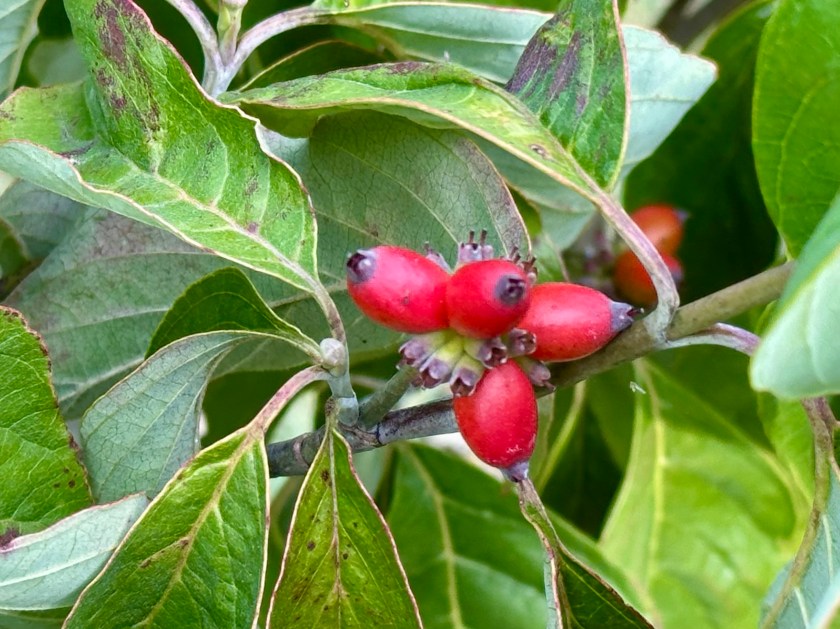
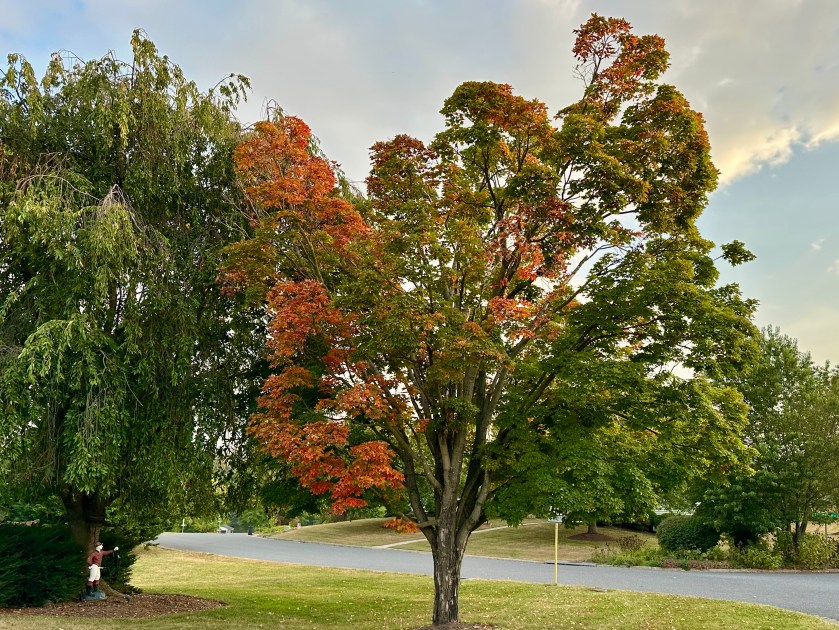
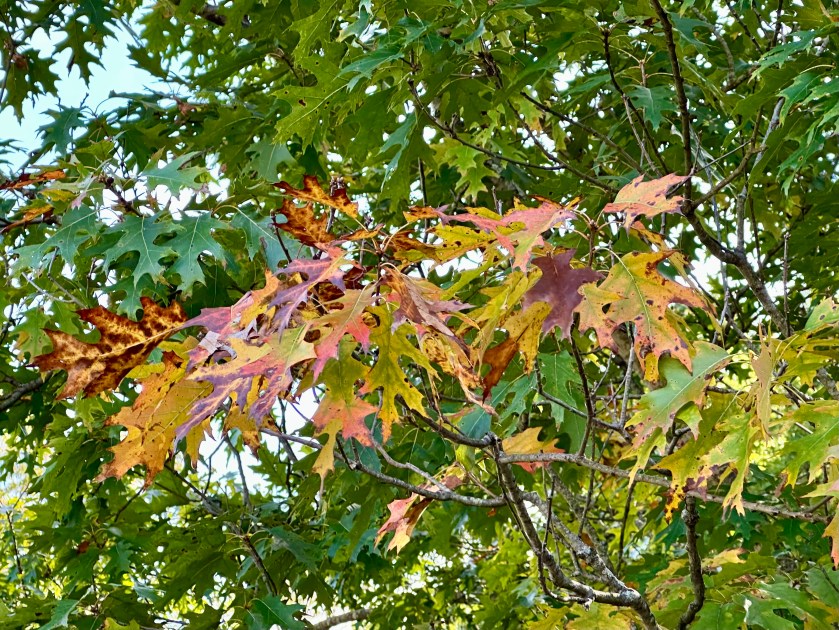
After a wet spring and an unusually damp June and July, the last half of summer was arid here in Virginia’s Shenandoah Valley. Still, the final weeks of summer produced vibrant colors in all things nature.
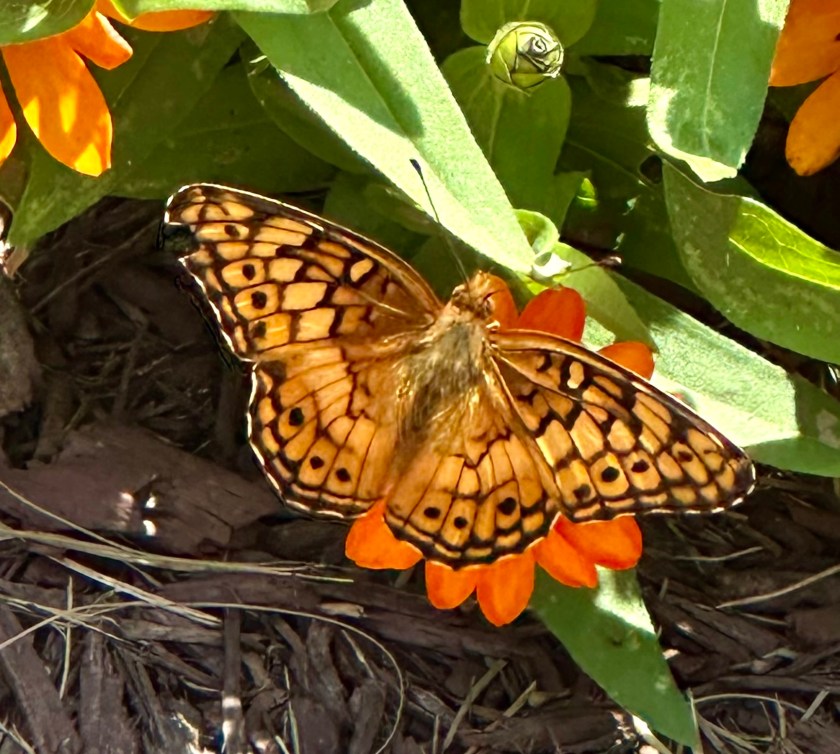
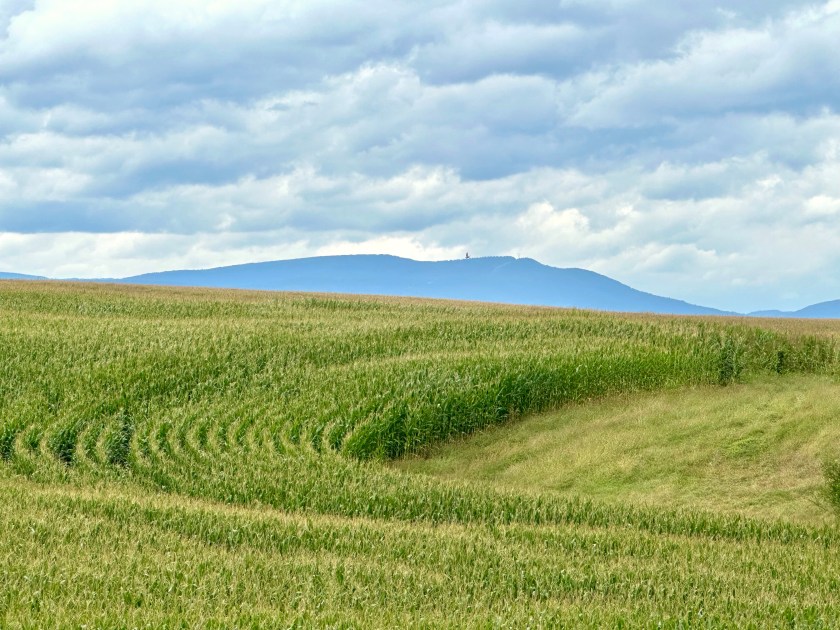
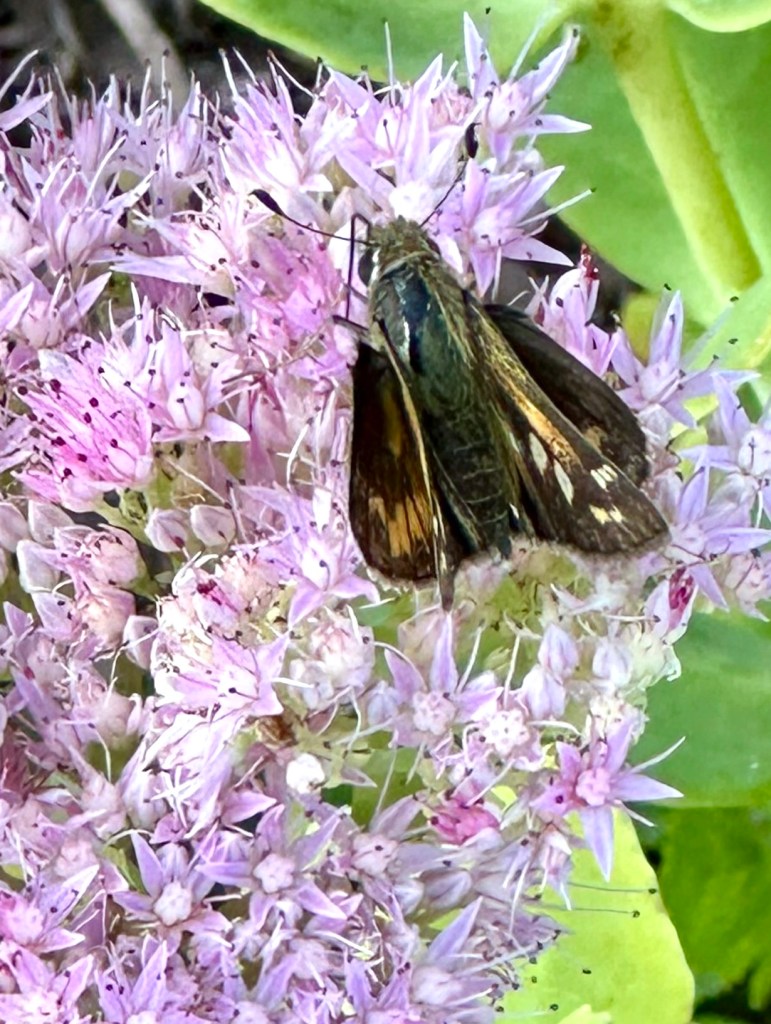
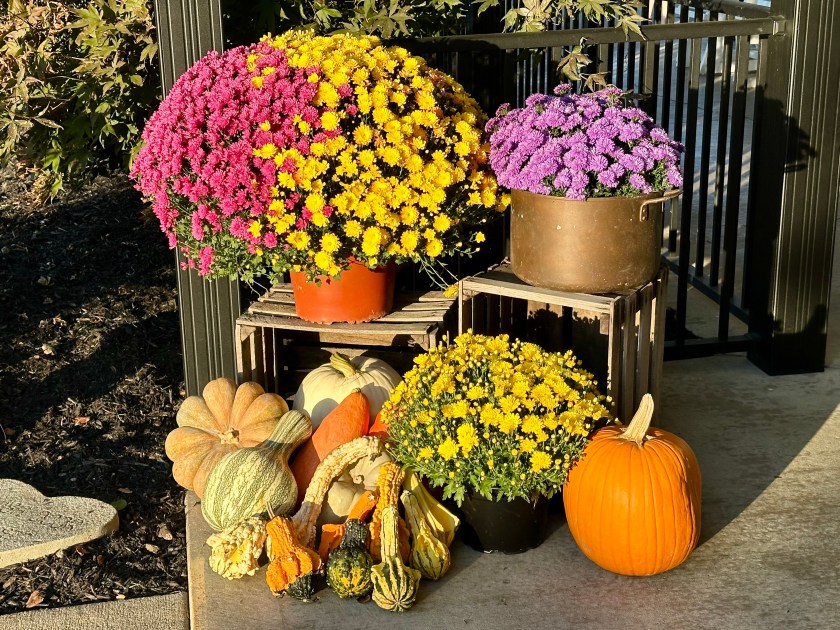
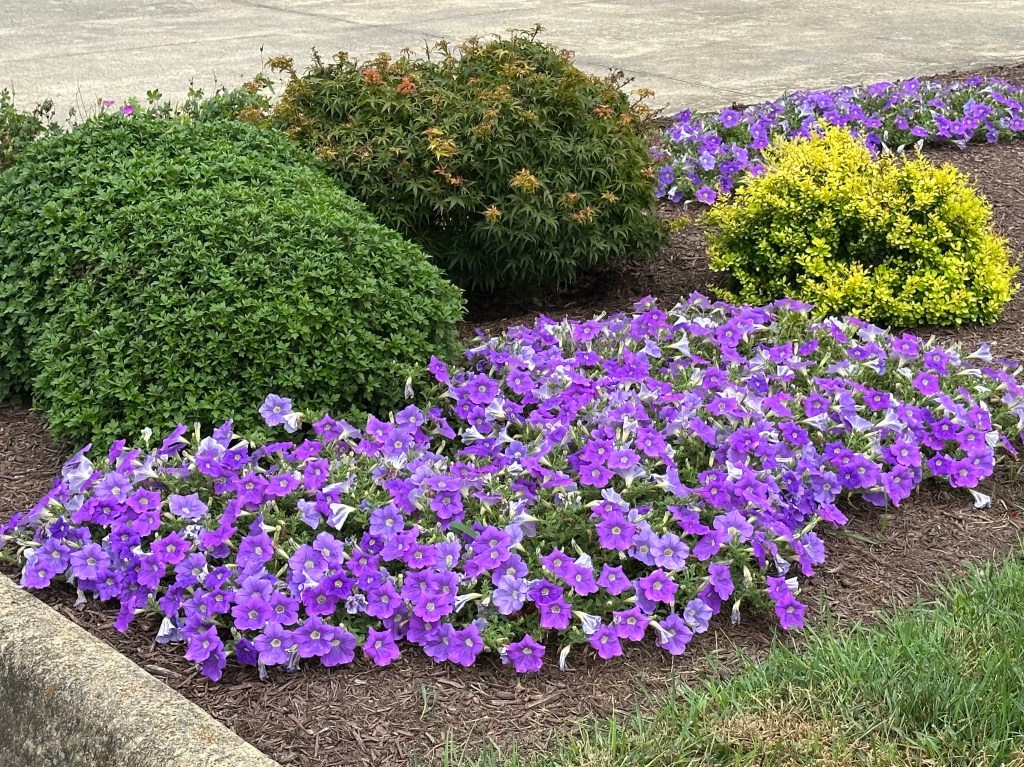
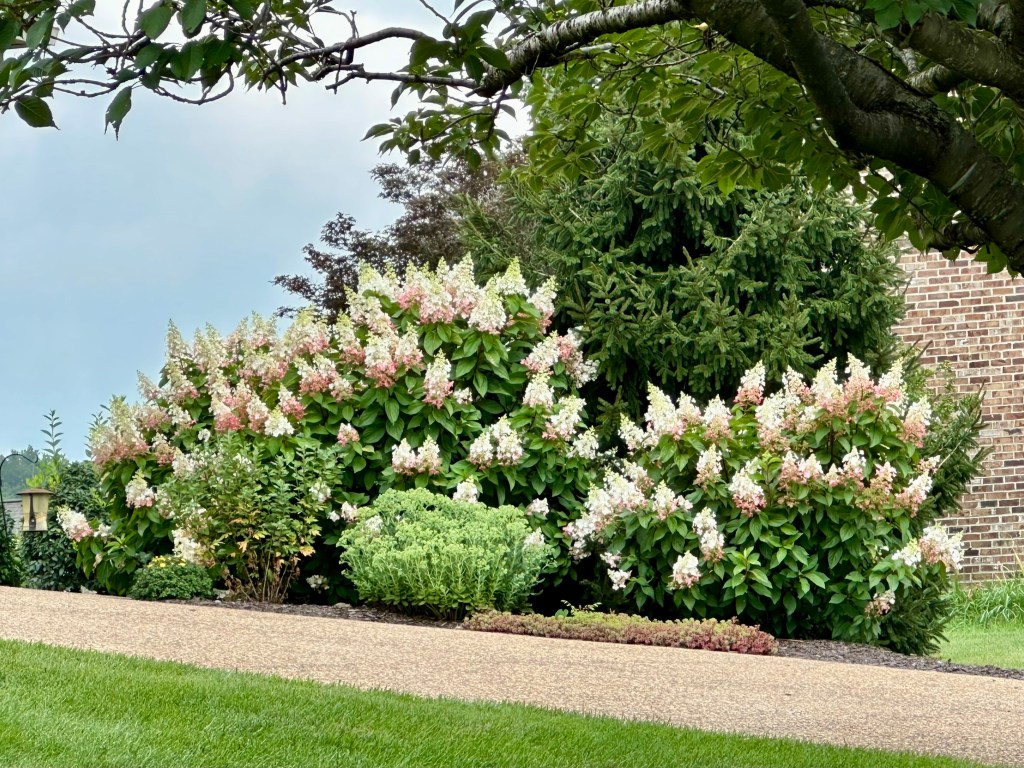
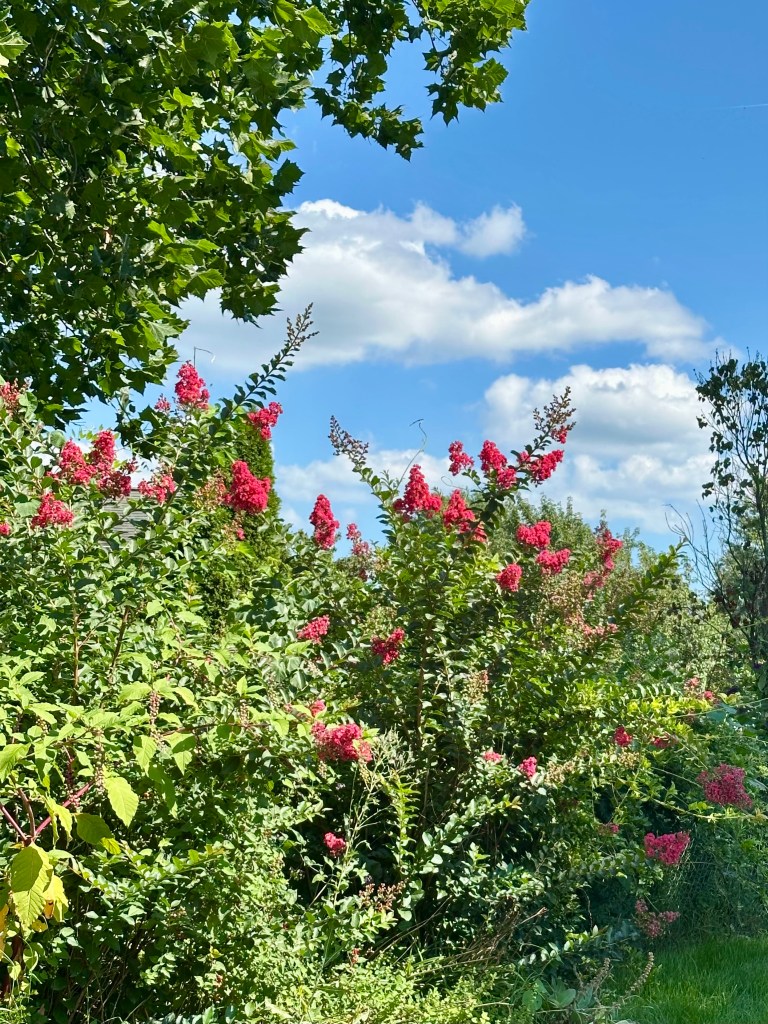
From flowers to butterflies to birds to bugs to early-turning leaves, it was colors galore all around the valley. Farm fields, fall displays, and forests all contributed to the subtle transition from August’s dog days to September’s cooler evening temperatures.
Everywhere one turned, colors caught the eye. Landscapes, mountain views, produce stands, and backyard gardens all had their own versions of summer’s transition to autumn.
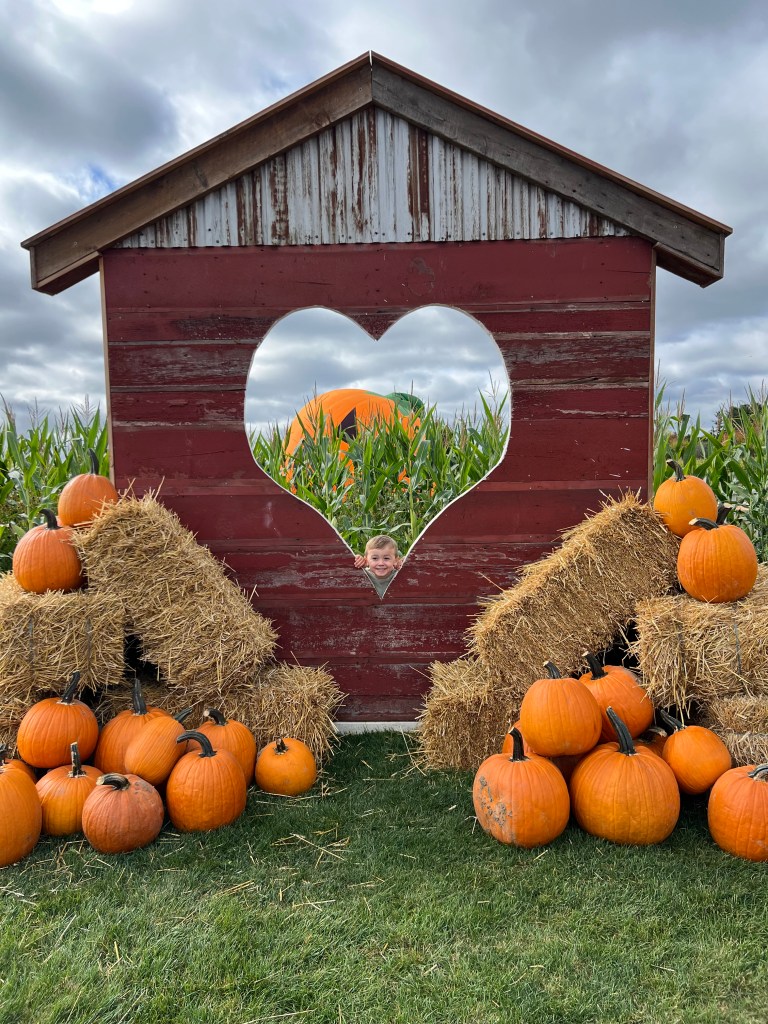
All the photos presented were taken between August 15 and September 22, 2025.
Our three-year-old grandson, Teddy, invites you to welcome in the Fall season, or if you live in the Southern Hemisphere, Spring. The Autumnal Equinox occurs at 2:19 p.m. EDT on Monday.
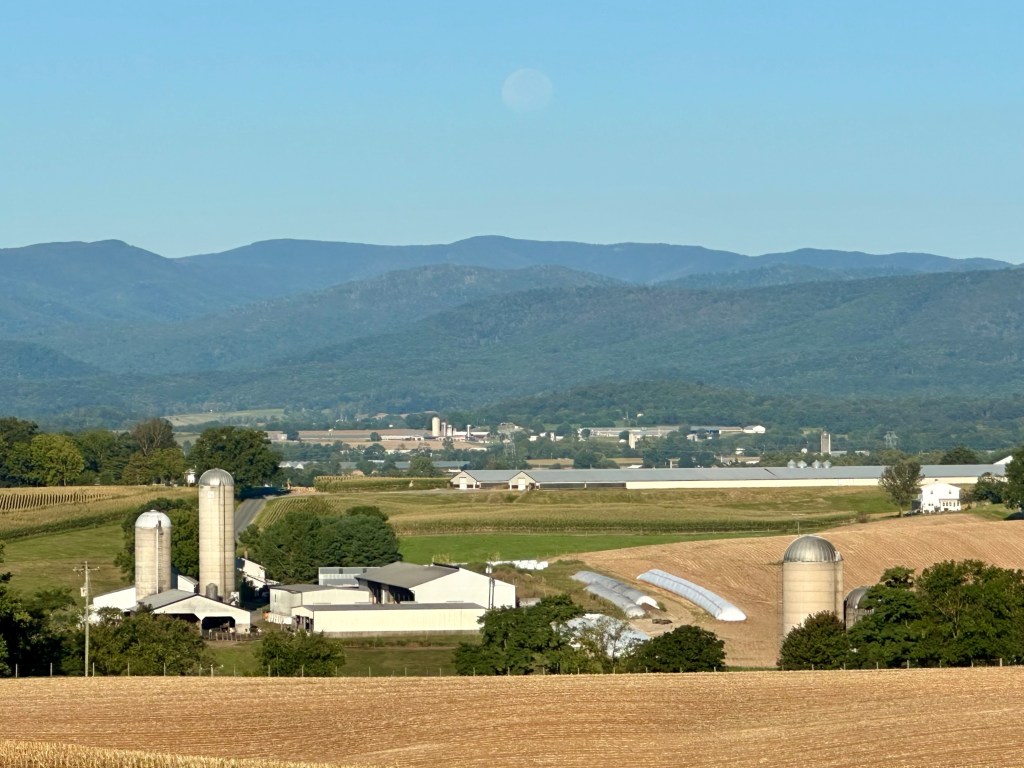
The Full Corn Moon over the Allegheny Mountains. Photo by Bruce Stambaugh
I had hoped to capture the Full Corn Moon setting over the Allegheny Mountains on the morning of September 7. However, the early morning’s sunrays blanched out the moon before it reached the western horizon.
Consequently, this is the best I could do. I hope you can find faint moon in the photo’s top center.
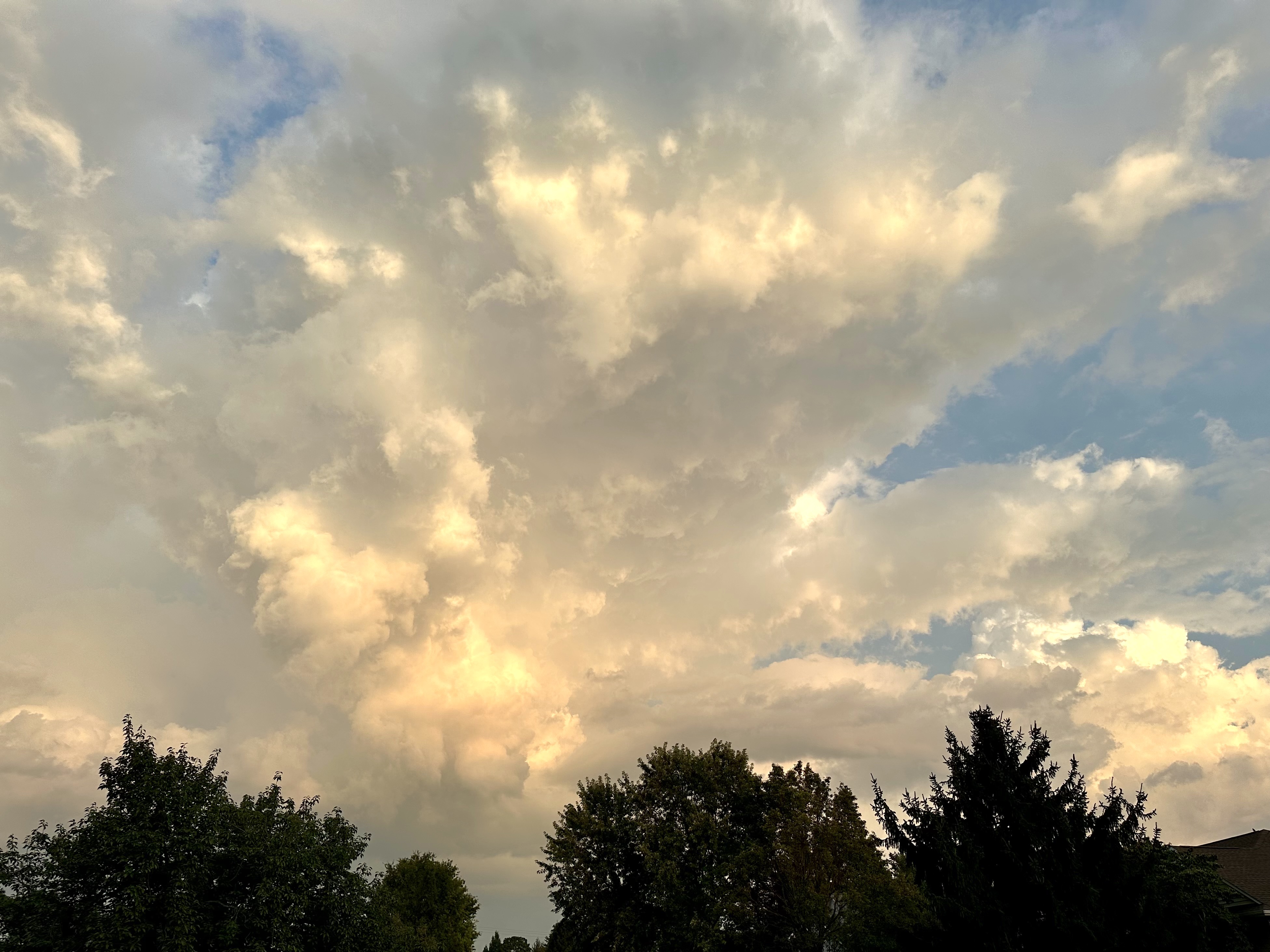
Driving home recently, a haze covered the late evening sun. It looked like a perfect orange ball.
By the time I arrived at a spot with a clear view to the west, the clouds had thickened, creating a surreal, shimmering scene. A minute later, the sun disappeared altogether.
Consequently, I felt fortunate to capture this shot.
Occasional rains and warm temperatures continue to be the norm in Virginia’s Shenandoah Valley. That combination has led to a continuation of summer’s bright colors.
From landscapes to sky to insects, to animals to flowers, wild and cultivated, a rainbow of colors has filled each day.
Portland, Maine, harbor at twilight. Photo by Bruce Stambaugh
We neared Portland, Maine, our last stop on the cruise itinerary, at mid-morning. Our landing in Boston the next day was simply to disembark.
I was able to take several shots of the shoreline and the many inlets as we approached docking in Portland. I spotted the Ram Island Ledge Light Station, and was able to capture some acceptable shots of it. However, I forgot that it was directly across the water from the Portland Head Lighthouse. I could easily have photographed both, but my head was a bit fuzzy from the strong pain medication I was given. I rationalized that I already had some decent shots of that iconic lighthouse from a previous visit years ago.
The day began just like yesterday, in the ship’s medical center for another pain shot. The good doctor wanted me to go ashore to a hospital for CT scans of my ribs and head, since I had hit my skull in the fall. If we did that, it would be the end of our trip.
Cracked ribs weren’t a life-threatening condition, and Neva had checked my eye responses every two hours during the night, and I showed no signs of a head injury. Besides, we had already paid for transportation from the dock to the airport to catch our flight home. So we kindly declined.
Upon docking, we had to disembark for customs in Portland anyway. For some reason, we docked on the starboard side, so we had a perfect view of the harbor and downtown Portland. I took several photos while we waited for our group to be called to pass through customs. I heard and then saw an Osprey sitting on its nest that was built on the tallest one of the old wooden dock pilings.
The weather was perfect, and I felt well enough to walk through security and head to Commercial Street along the waterfront. We found a cafe, bought our decaf mocha lattes, and enjoyed the sights and sounds of a busy port.
From our sidewalk seats, we watched people board a narrow-gauge railroad and enjoyed the sounds of the whistle and the little steam engine chugging the train along the shoreline. A few minutes later, it backed its way into its parking location and waited for the next group of passengers.
We returned to the ship and, after dinner, enjoyed the evening activity of this special day. It was the Fourth of July, and a flotilla of boats big and small had anchored in the preferred spots offshore to watch the fireworks show.
We had the perfect view as the fireworks exploded just after dark. The booming sound echoed, and sparkling colors reflected off the harbor’s quiet waters. It was the most fitting conclusion to our land and sea cruise.
The next day was a hurry-up-and-wait kind of day as we rode the bus to the airport, made our way through TSA, walked to our gate, and sat for six hours. Fortunately, one of Boston’s best seafood restaurants was near our gate, and we had a yummy seafood lunch for our flight back to Virginia.
Thanks for traveling along with us, bumps and all.
I was really looking forward to visiting the Halifax, Nova Scotia area. We had booked an excursion to the famous Peggy’s Cove. We never made it.
After another good night’s sleep on the Zuiderdam, I rose early to meet the bus for our tour. When I stepped with my left foot into the shower mat, the ship suddenly made a quick pitch in the opposite direction. Instantly, for a split second, I was Superman, until I wasn’t. I hit the sink, and then smacked the floor with a shocking thud.
At first, I lay there stunned, no pain, my only thoughts reserved for my chronic back issues. But the back felt fine. I tried unsuccessfully to get up, and that’s when the pain shot through the right side of my body.
My wife helped me to my feet, checked me over, and assured me I wasn’t bleeding anywhere. Now thinking about the lovely day ahead, I dismissed the pain and got ready for the day.
We headed to breakfast on the Lido deck. To be safe, I had an old man’s breakfast, hot oatmeal and four prunes on the side. As I stood up to leave, I could hardly walk. The rest of the boring details are in a separate, previous post here.
Our plans for the day were cancelled, and I received excellent treatment in the ship’s medical center. The staff was terrific. So, were the pain meds.
Fortunately, our comfortable cabin served as an excellent resting place. The only problem was that I couldn’t lie down. A month later, I still can’t. The ship’s X-ray machine showed one cracked rib. The CT scans at our local hospital, when we returned home three days later, revealed three.
I felt better standing, so I spent an inordinate amount of time on our veranda, which faced the harbor side. I watched the morning marine fog layer evaporate into a warm, sunny day.
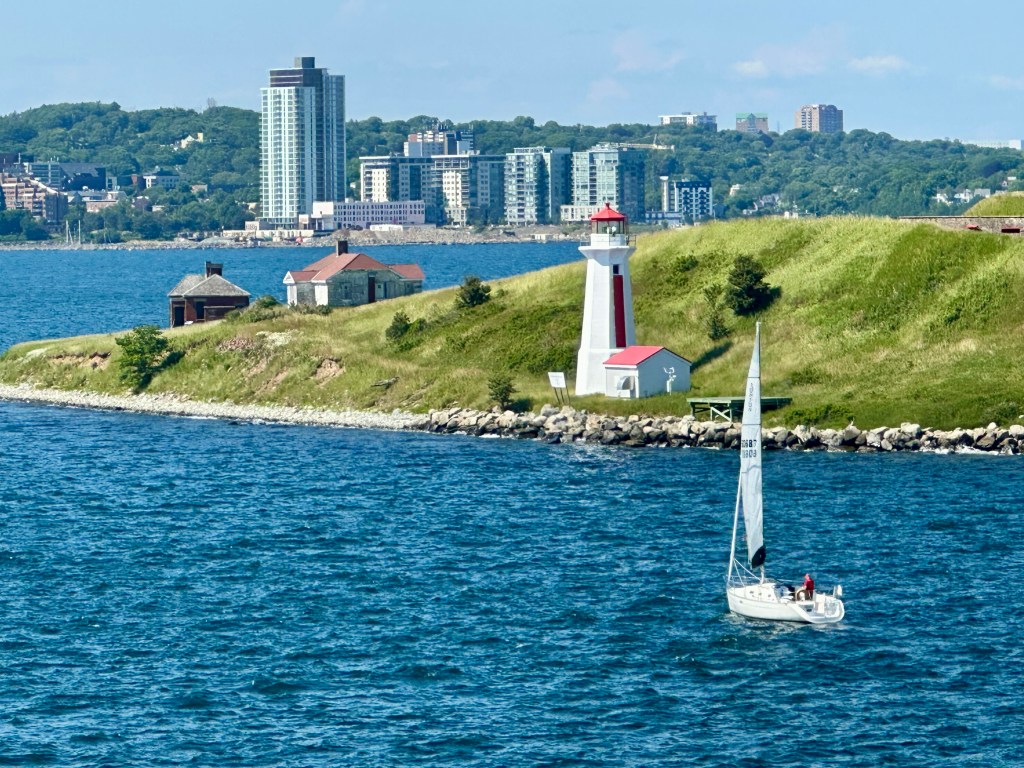
Rest assured, I snapped too many photos of the same scene, only with different ships. A harbor lighthouse stood directly opposite us, and its bright while paint glowed in the afternoon sun. It made a perfect background. But how many times can you photograph ships with the same setting?
All categories of boats passed by. Fishing, ferries, sailboats, a Canadian Coast Guard cutter, trollers, a stately tall ship, and even tugboats escorting a huge freighter made time pass and filled my phone with hundreds of unnecessary photos.
The doctor told me to move around as much as I could without causing excessive pain. So, we went to lunch and dinner, sitting on padded chairs.
It wasn’t the way we had planned to see Halifax. But it was the best we could do.
The House of Green Gables. Photo by Bruce Stambaugh
I wasn’t sure what to expect from Prince Edward Island. Consequently, what the island offered surprised me.
We rose as the sun peeked over the eastern horizon into a cloudless sky. That correctly portended a fair weather day for our afternoon excursion to the Green Gables House and Museum.
Based on the comments of others who had been to PEI, I expected Charlottetown to be dotted with quaint, lovely houses. If they were there, we didn’t see them.
Our bus trip to the Green Gables Heritage Place included a sightseeing tour of the island. However, because the house is located on the other side of the island from the port, it was basically an hour’s drive out and another one back on the same roads.
We saw the fertile red soil that produces a variety of crops grown in many other locations. Prince Edward Island is the potato capital of Canada. I thought that, impressive as big as Canada is, and given that PEI is Canada’s smallest province, with 2,185 square miles.
On the way to our destination, we passed Lucy Maud Montgomery’s gravesite, located not far from the beloved homestead that inspired her writing. Here, too, I wished the bus would have stopped for photo opportunities. But we were on a three-hour tour, and I wanted to make sure we arrived back at the ship before the 4:30 p.m. departure.
We enjoyed the self-guided trek through the old house, all decked out with appropriate period furniture. However, the only piece of furniture that was original to the home was the halltree.
Those familiar with “Anne of Green Gables” likely could imagine reading about Anne’s escapades as we ventured from room to room, upstairs and down. I was particularly impressed with the meticulously manicured grounds.
Lovely flowers were in full bloom. Not a weed could be found in the modest vegetable garden. A variety of songbirds sang among the trees and flower gardens around the sloping property.
I spied a path that led to the woods where Anne frolicked, and I took it more for birding purposes than curiosity. I crossed the footbridge over the creek and up into the woods, only to stop short.
The woods soon gave way to a different kind of green. The Green Gables Gold Course surrounded the historic homestead. I sucked the breath right out of me. I pondered what L. M. Montgery might think about that.
Returning to the museum to meet my wife, I asked our step-on guide about the irony of a golf course encapsulating this historic site. The kindly lady merely informed me that PEI was the golf capital of Canada.
I was taken aback by that, since we had only seen rolling agricultural fields with occasional crossroad towns since we left Charlottetown. My wife and I found a shady spot and enjoyed our snack lunch before boarding the bus for our next stop.
A short drive brought us to Prince Edward Island National Park. The park was a narrow but expansive area that included long stretches of red rock cliffs with white sand beaches below. The Gulf of St. Lawrence stretched out deep and wide before us.
Too soon, we were back on the bus retracing our tracks to Port Charlottetown. We made it back to the Zuiderdam with little time to spare.
The aft of the ship was moored to a cement platform in the harbor. A local longshoreman and his female crew piloted out to untie the giant rope that steadied the docked cruiseliner. On the way, two young females entertained us by pretending to be those human-like wind socks that many car dealerships use to get your attention. Their imitation was a fun send-off for us.
As our ship pulled out into the Hillsborough River, we could see more of Charlottetown. With its church spires, busy harbor, shoreline parks, and colorful cottages and homes, it was indeed a charming town.
Sailboats, pleasure boats, and fishing boats escorted us back to the Gulf of St. Lawrence. A pair of red-roofed, white lighthouses accented by lush evergreens and patches of PEI’s famous red soil bid us farewell.
The seas turned a deep, stunning blue as nighttime approached. That meant dinnertime and more cruise ship entertainment. The day of surprises had tired me out, and sleep came easily.
Evening entertainment on the Zuiderdam. Photo by Bruce Stambaugh
The foul weather followed us along the St. Lawrence Seaway. Fog settled in and thickened during the nighttime hours. The ship’s foghorn blew every two minutes all night. So, the first full day and night of sailing wasn’t the best for viewing off our cabin’s verhanda.
So we enjoyed the array of food offerings, explored the ship, and met the Zuiderdam’s captain and leading crew members at a toast to the captian. I enjoyed the champagne.
The second day of sailing was just the opposite. The air was clear, the sky blue, and the sailing smooth. It should have been since that section has a maximum speed limit of 10 knots. It was a wake-free cruise, not counting the annoying but necessary foghorn.
We found an inside lounge area overlooking the Zuiderdam’s bow. We spent quality time sipping our decaf mocha lattes, reading, nodding, and simply enjoying the easy pace of life while we had it.
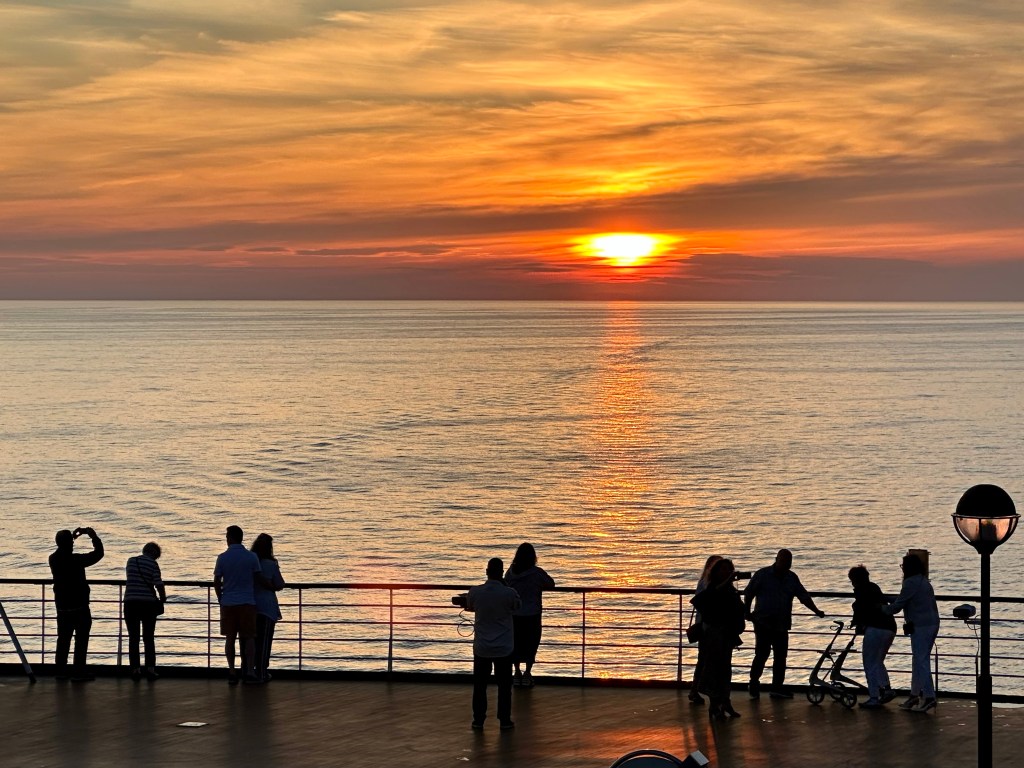
After dinner, we took in the sunset as we sailed east before enjoying the musical and dance entertainment of the evening. Being septuganarians, we took in the first show, and called it a day.
We greatly anticipated the next day’s port, Charlottetown, Prince Edward Island.
The iconic sunset shot at sea, only we were in the Gulf of St. Lawrence. Photo by Bruce Stambaugh
























 Roadkill Crossing
You must be logged in to post a comment.