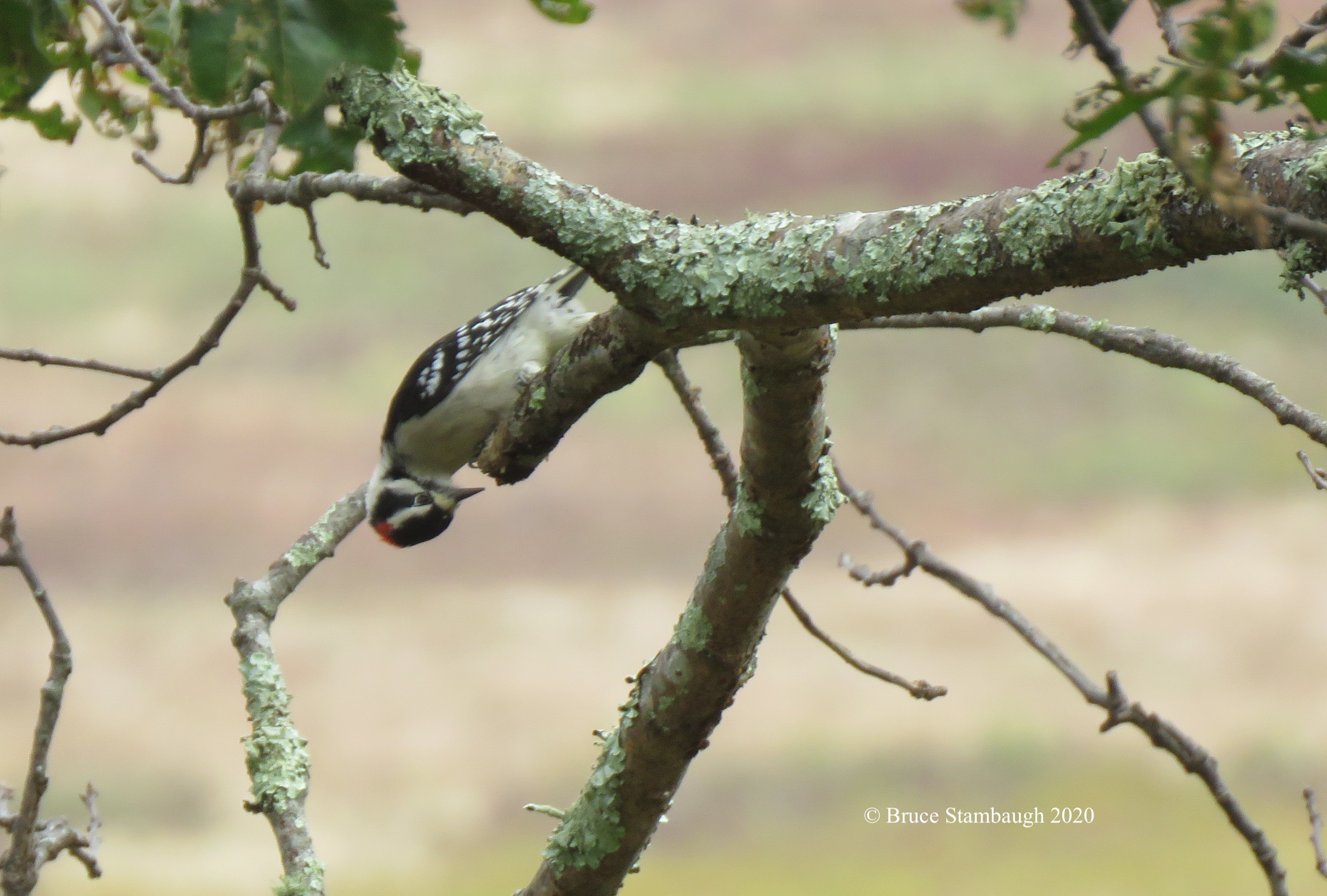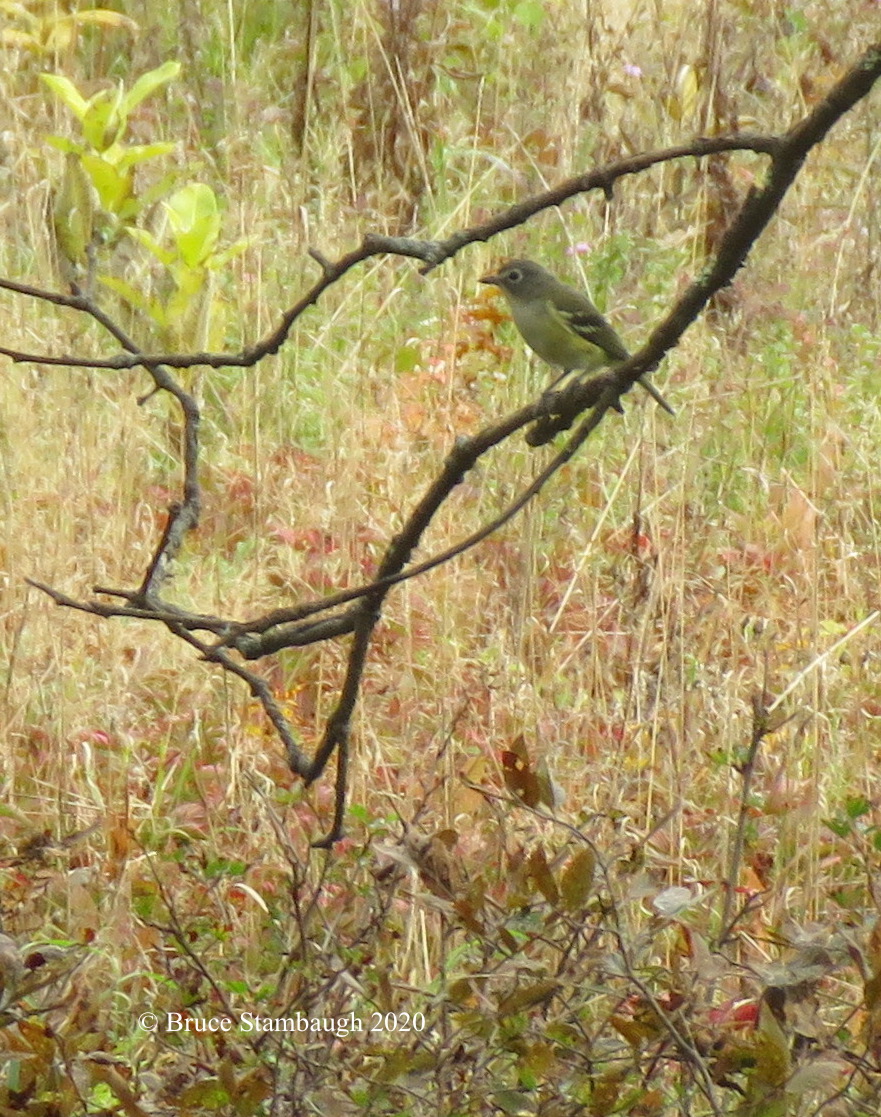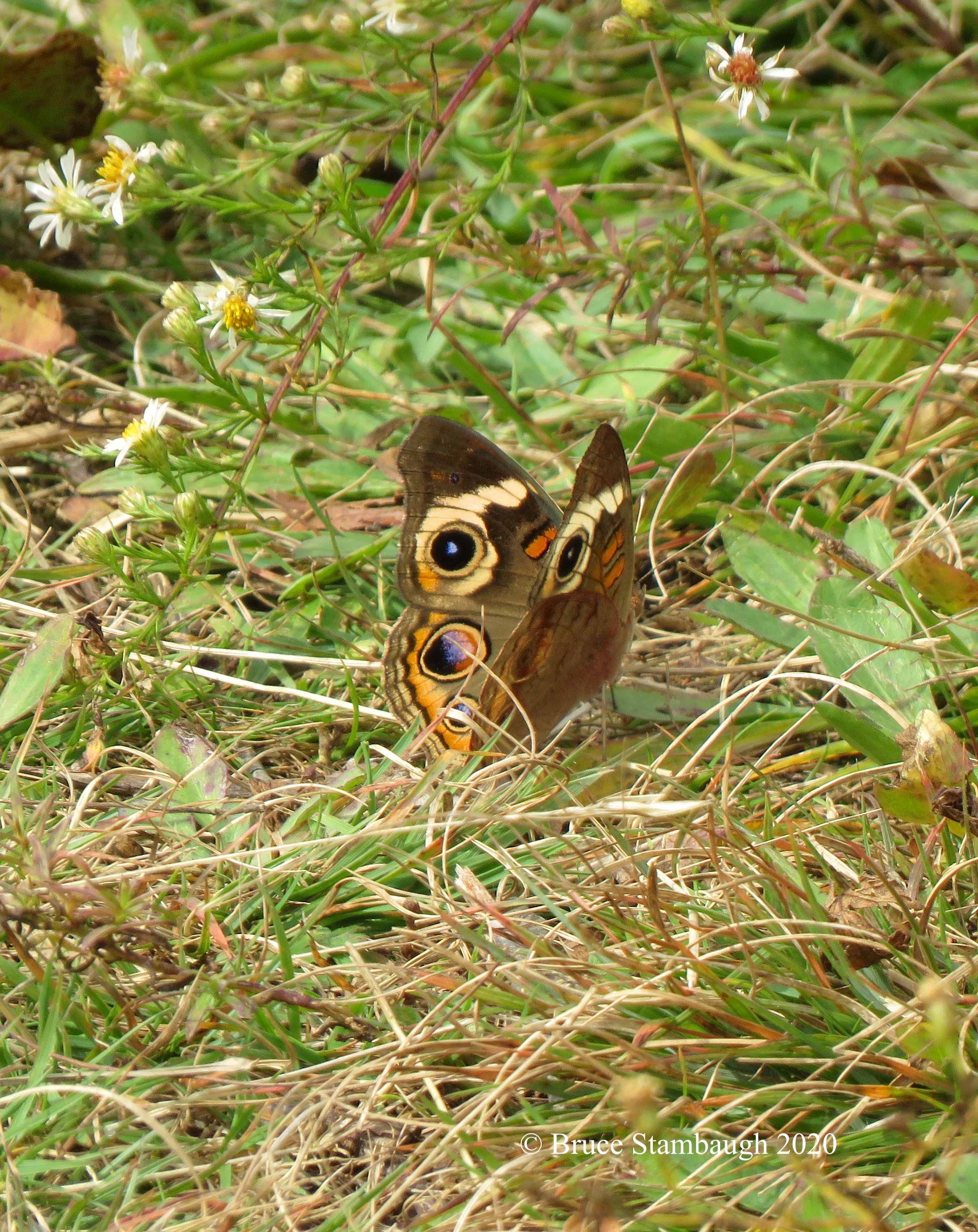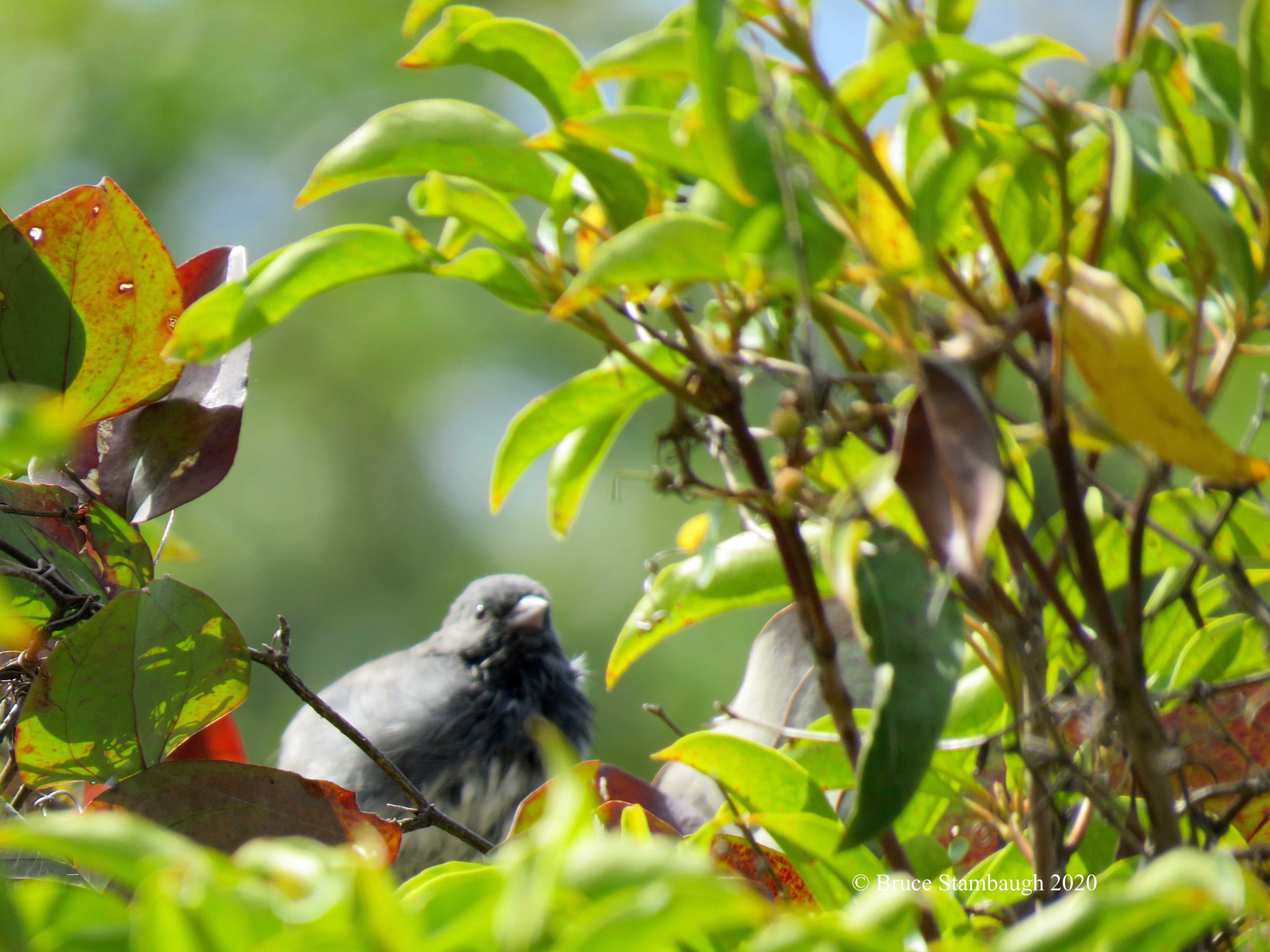
I’m a person that is usually on the go. However, I know first-hand the benefits of standing still.
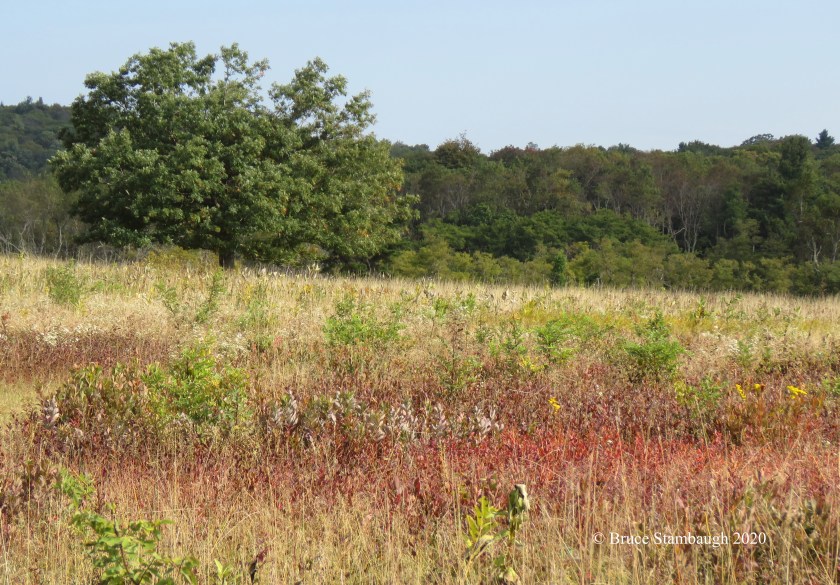
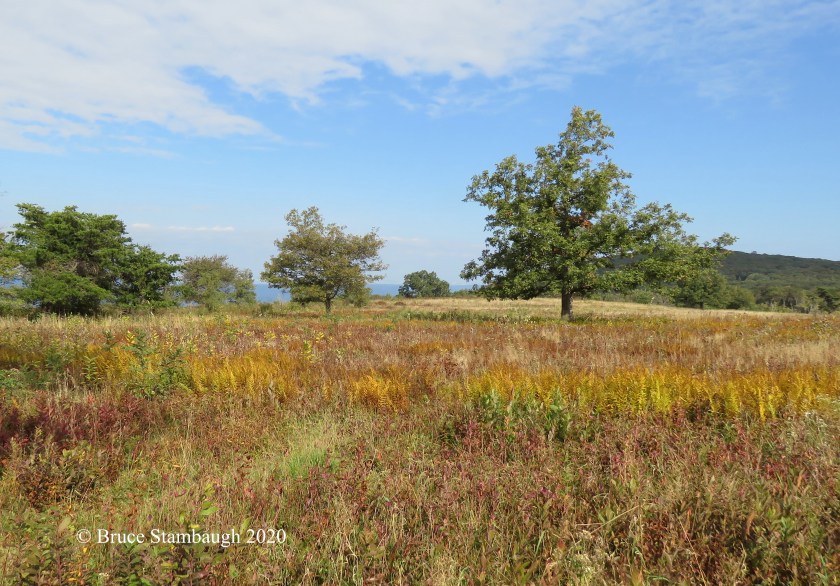
I recently went to the Big Meadows area of Shenandoah National Park in Virginia to do some birding. I have learned that the open spaces along and near parking lots are favored by certain bird species. Wildflowers and dense brush grow there beneath mature deciduous trees. That combination provides both cover and food for my avian friends.
It didn’t take me long to be rewarded. Though it was windy, the birds were active. Due to the wind, however, most kept low and in the thicket, making it harder to photograph them or even find them with binoculars.
On this overcast morning, the sun suddenly peeked through, and just as suddenly, this lone Cedar Waxwing landed on a pokeweed bush right in front of me. I slowly raised my camera and clicked away.
I couldn’t believe my good fortune. Cedar Waxings are some of my favorite birds due to their posture, coloration, and behavior make them regal birds. I snapped off four quick shots of this beauty as it checked its surroundings, and then just as quickly as it had arrived, the bird flew off.
Other than the slow raising of my camera and the ear-to-ear smile, I hadn’t moved. I was graciously rewarded for standing still. For the record, cropping and adding my watermark were the only “alterations” done to the photo.
“The benefits of standing still” is my Photo of the Week.
A balmy day in the Shenandoah Valley.
When I drive alone, I often meditate.
It’s not what you might think. I don’t close my eyes, of course. I just enjoy the peace and the time alone to think. I don’t forget about driving. It would be both foolish and dangerous to do so.
I try to allow extra time for a more leisurely drive. I avoid superhighways. Backroads are my preference because I never know when I might need to stop to take a few photos of the fantastic scenery that Virginia’s Shenandoah Valley affords.
Unlike my younger years, I drive silently. No radio, no CDs playing. I enjoy the quiet unless the road surface is too rough. Then I take in the music that my tires sing to the tune over the various macadam surface textures. The octaves change by the mile.
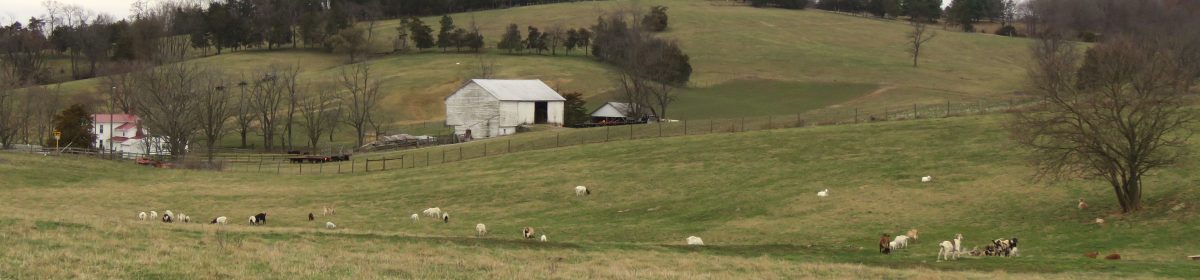
I’ll use the GPS when I have to. Once I know the way, however, I am on my own, like the other day when I had a doctor’s appointment 35 miles away. A typical farm in the Shenandoah Valley.
I left nearly two hours before my 2 p.m. appointment. Besides a couple of brief planned stops, I knew there would be photo opportunities along the way. I had been that route before.
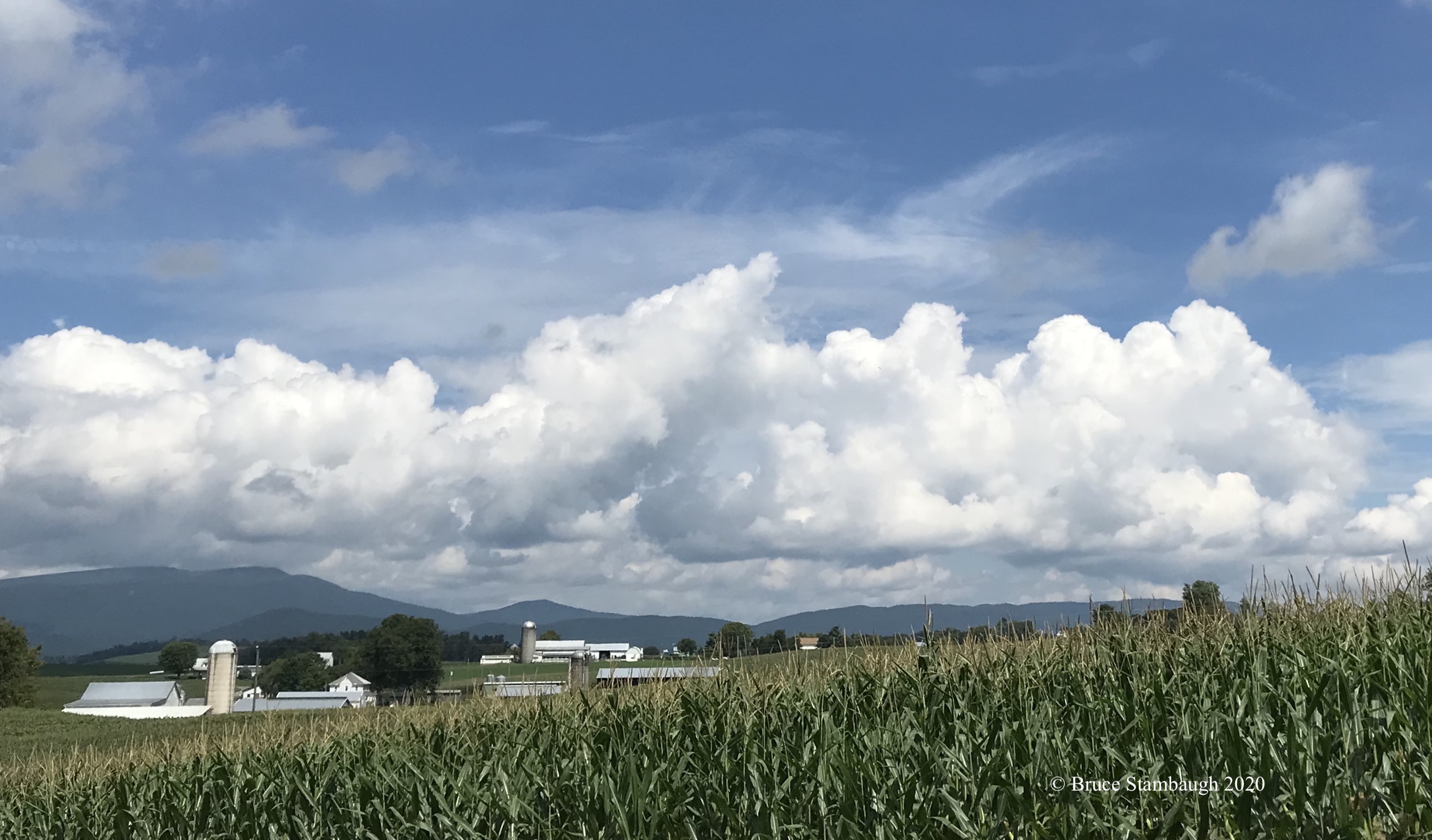
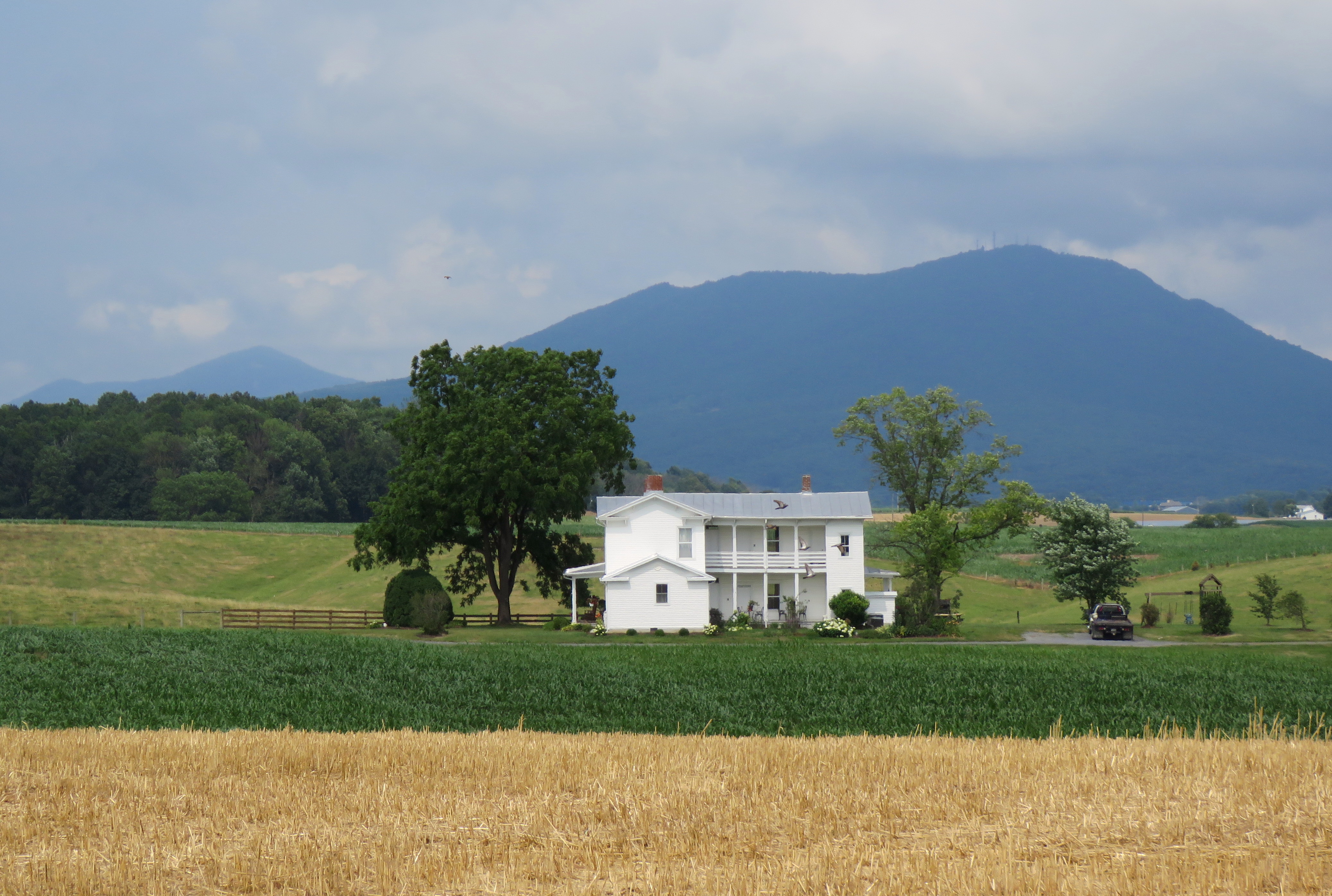
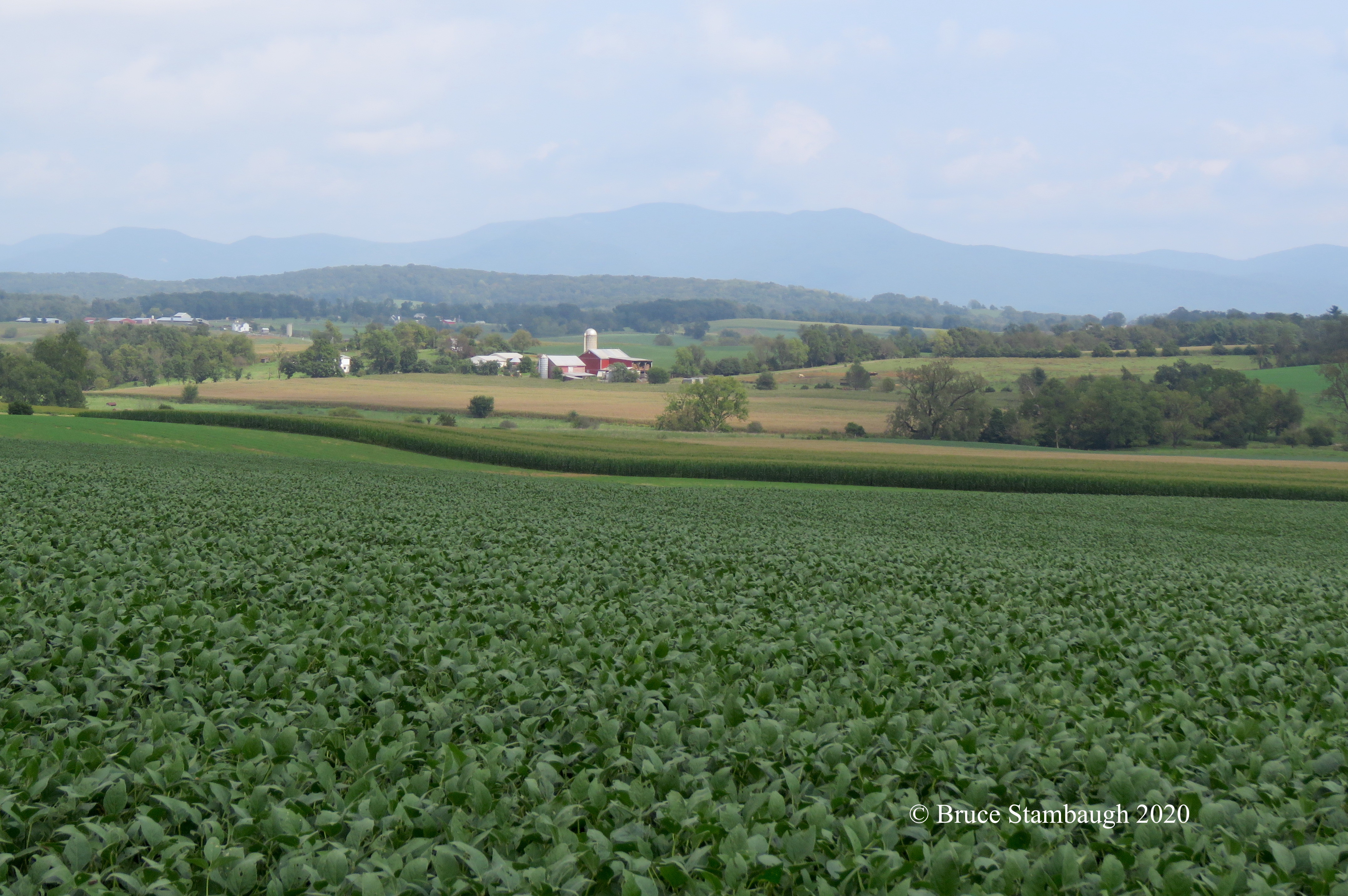
Driving in that contemplative state helps to clear my mind from all of life’s noisiness. Plus, I get to enjoy the mountains to my left and mountains to my right. In between, there is nothing but gently rolling countryside dotted by farms, fields, forests, and more gigantic chicken houses than I care to count.
Weather permitting, I ride with the windows down and the sunroof open. I sometimes pay the price if I pass a freshly manured field.
This trip turned extra-special. Once I passed Sulphur Pump Road, I turned south on the narrowest windy way with no ditches and farmers’ fences hard against the blacktop.
The paved path twisted and turned, rolled up, down, and around until I made a slight right onto Battlefield Road. In less than a half a mile, I crossed a short narrow bridge in the curve of the road. Ahead, an old plantation sat high on a ridge behind a grove of mature pines. The spot where young men died in the Civil War Battle of Bonnie Doon.
At this exact spot at the bottom of the hill, Americans fought Americans in a Civil War skirmish. Hand-to-hand combat ensued, with heavy casualties on both sides. Today, fruit trees and fence line trees waved in the wind.
No historical marker identified the bloody spot. I knew it from a Civil War class that I am taking remotely. It was this week’s lesson.
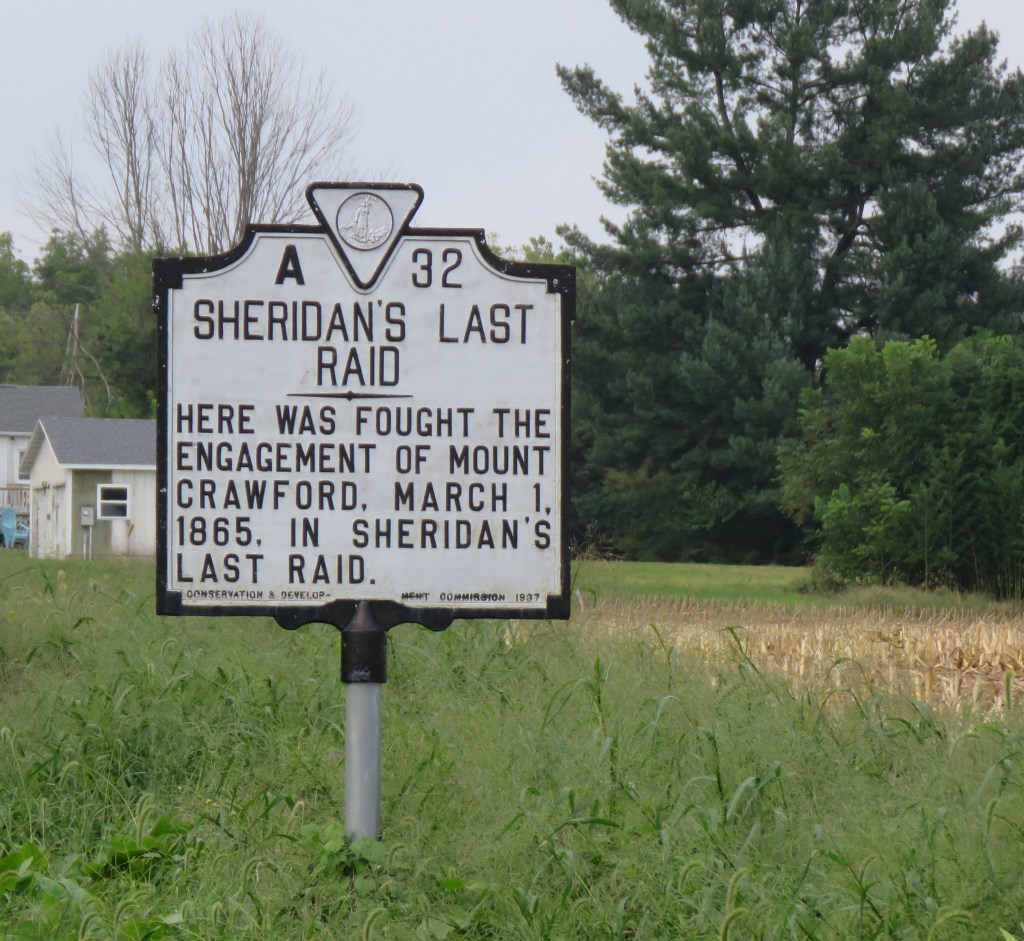
Farther south, a couple of miles, two different historical markers on opposite sides of the road defined the facts and sight of a deadlier clash, the Battle of Piedmont. Field corn and an impressive planting of soybeans nearly hid both plaques, while the Blue Ridge Mountains and Shenandoah National Park created an enchanting backdrop.
I wondered if people knew what had taken place here, the massive loss of life, the many casualties, and prisoners of war, the consequence of the Union victory. If they knew, did they still hold a grudge or even care?
Did they appear only as fields of corn and beans to them? Were people merely on their way from point A to point B in their daily lives as they passed?
I pondered all of this as I arrived at the impressive multi-storied medical office building. I donned my mask, had my temperature taken, responded in the negative to all of the required COVID-19 questions, and waited my turn for my 21st-century exam.
Residents of the Northern Hemisphere are on the eve of yet another autumnal equinox. Autumn officially begins at 9:30 a.m. EDT on Tuesday, September 22.
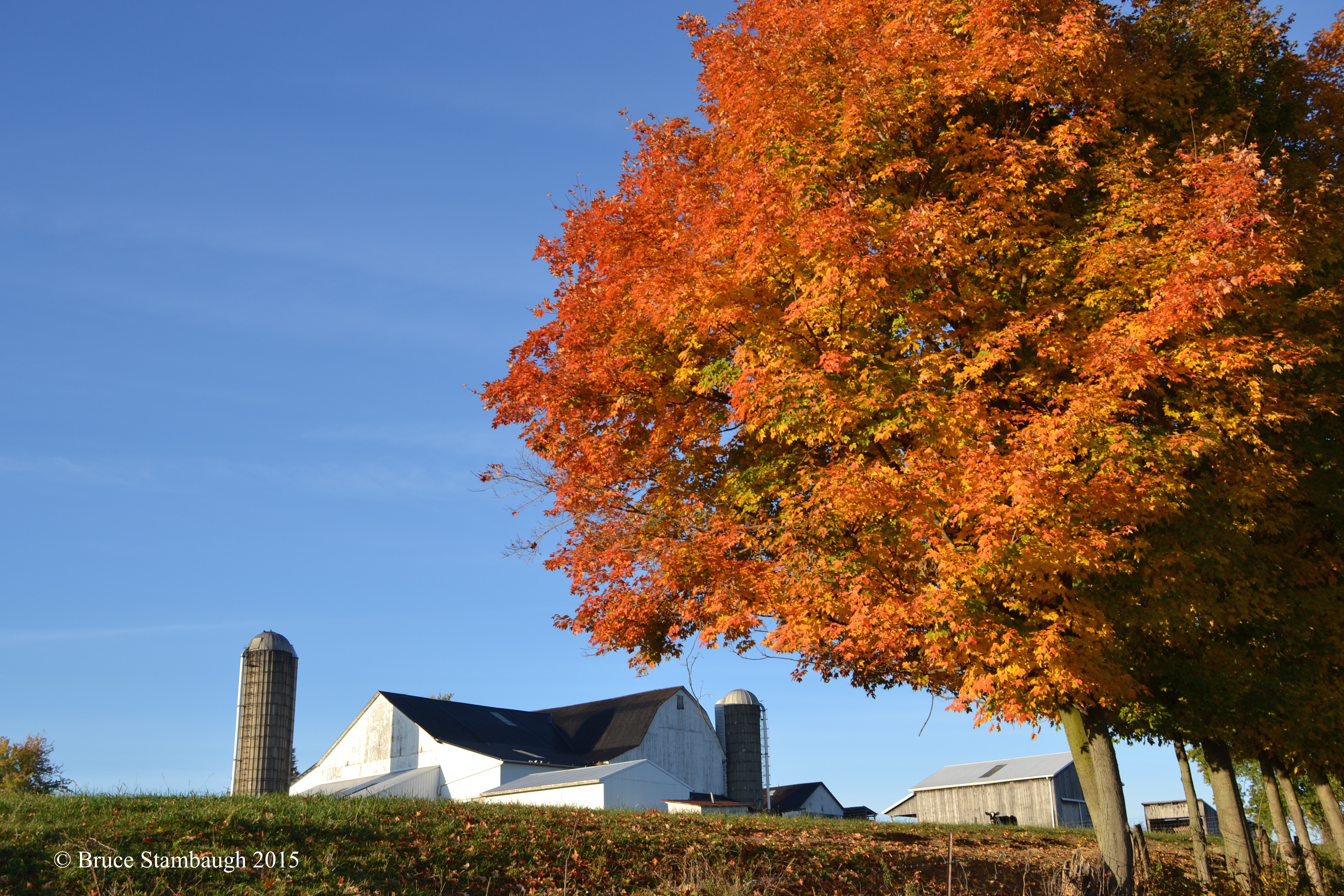
Autumn has given us plenty of warnings even before her arrival. Instead of turning red, many of the leaves on our backyard maple have simply been falling off one-by-one for weeks. We can thank the leafcutters for much of that.
The crazy weather of this insane year has also played a role in the dying leaves, along with other climatological irregularities. Let’s count the ways.
In late spring, an extended spell of chilly, wet March-like days did their damage. The steady damp weather kept farmers out of fields over much of the U.S. east of the Rocky Mountains.
Some bird species even delayed nesting because the weather was so foul. If birds did nest, naturalists found hatchlings dead because their parents couldn’t find enough insects to feed them.
Then just like that, it got hot and dry. Here in western Virginia, the furnace was on one day, and the air conditioner the next. Vegetation flourished in such conditions, causing the humid, hot wind to carry various pollens far and wide. According to my allergist, I wasn’t the only one sneezing.
The day the rains started in mid-July.About the time Major League Baseball finally began in July, the heavens opened up. The rains canceled games, and so did COVID-19 because too many players tested positive.
Record rains pelted the full length of the Shenandoah Valley. August usually is a hot and dry month here. Not this year. The weather was more like June should have been. We mowed our lush lawn twice a week for several consecutive weeks.
All the while, fall kept creeping upon us. Butterflies, relatively scarce during June and July, began to arrive. So did the ruby-throated hummingbirds. Now they are all filling up their tanks for their annual southern migration.
Juvenile male Ruby-throated Hummingbird.
The yellow, green, and black Monarch caterpillars have morphed their way into magnificent orange and black butterflies. Predators have learned to avoid dining on them since the Monarch’s appetite for milkweed renders them bitter, according to lepidopterists.
That dreaded F word, F-R-O-S-T, has already made appearances across the northern reaches of the U.S. Can the rest of us be far behind?
If you listen to the jingles and jargon on TV, this is pumpkin spice everything season. Despite the marketing ploys, I’ll gladly stick to my decaf mocha lattes. They’ll taste just as robust when the first freeze hits.
Of course, hurricane season peaks in the first few weeks of fall. The National Hurricane Center has already increased its predictions for both the numbers and intensities of those tropical storms.
Out west, you can’t breathe the air. It’s so oppressively hot and thick with smoke from record-breaking fires that have caused death, destruction, and devastation to humans, wildlife, and entire towns. More than 10 percent of Oregon’s population has been evacuated as of this writing.
Unfortunately for those millions of west coast folks, the sky has glowed an apocalyptic orange for all the wrong reasons. A good frost or even a lovely blanket of snow would greatly help those tired firefighters slow the infernos.
Autumn, of course, abounds with fiery colors, orange included. In addition to the winged creatures, mums, maples, pumpkins, and gourds are but few of the things that warmly usher in fall.
Climate change has undoubtedly played a part in stirring up 2020’s weird and wild weather. It’s been a universally strange enough year already all the way around.
Let’s welcome fall with a blissful hope for more normal global weather patterns. The right kind of orange.
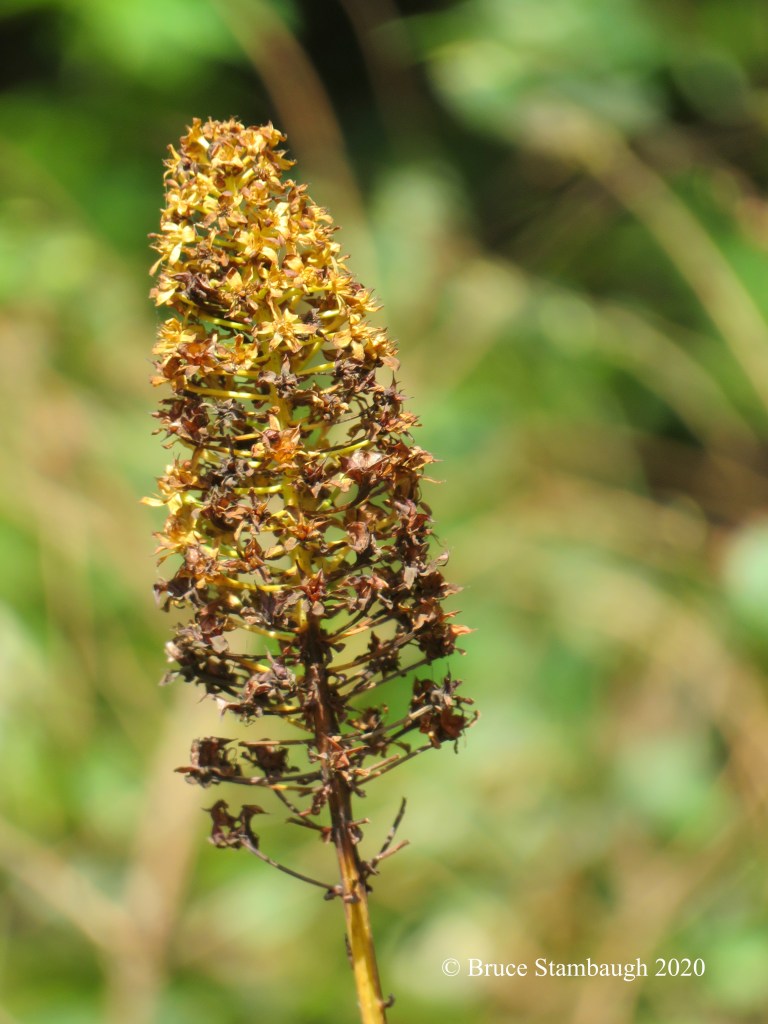
I loved how the afternoon light highlighted the prickly details of this dense stand of spent teasel heads. Likely, several varieties of birds thrived on the seeds of these thorny remains.
I was happy that the farmer had let these beauties stand for all to enjoy. “Teasel” is my Photo of the Week.
Touring around the Shenandoah Valley, we stopped at a local orchard and vineyard. Noted for both their apples and cider, both hard and regular, Showalter’s Orchard and Greenhouse has the perfect spot to while away a late summer afternoon.
It wasn’t hard to miss these two young girls as they stepped along the river’s shoreline in search of just the right spot to fish. A few minutes earlier, their father gave them instructions and stepped back to let them do their thing.
Initially, the girl with the net had a fishing pole. However, she traded it in for the oversized net in anticipation that her fishing buddy would catch a whopper. The scene reminded me of Tom Sawyer and Huck Finn on one of their adventures. The afternoon sun beamed down on the girls with their floppy hats, clunky boots, matching red shorts, and colorful T-shirts.
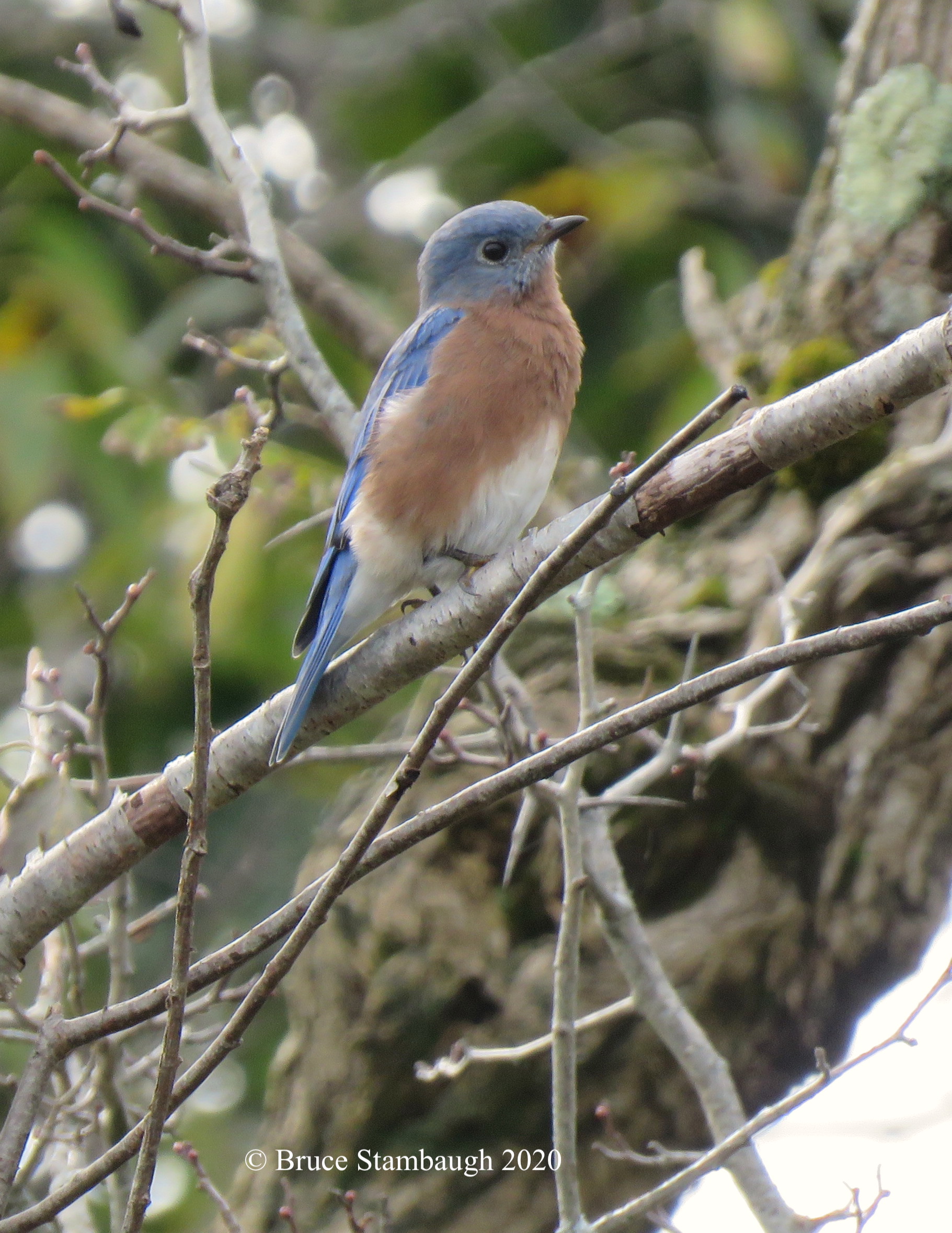
I spied this female Eastern Bluebird peering over the top of the leaves of this tree early one morning. I heard her plaintiff call, and then another from a slightly different location. A quick glance around revealed this juvenile basking in the morning sunshine.
Apparently, mom just wanted to make sure her baby was alright, or perhaps they were searching for breakfast in the wild cherry tree. “The Doting Mother” is my Photo of the Week.
The colors of summer are as pretty as they are delicious and nutritious.
Just as I began to write about the colors of summer, a friend posted on social media about her visit to a local farmers market. In one digital photo, she succinctly summarized what I intended to say.
A cornucopia of vibrant colors from gardening harvests filled her photo. The variety of tomatoes alone captured nearly every hue of an artist’s paint pallet.
Ruby reds, luscious purples, warm yellows, and lime greens took center stage of their kitchen table. The light yellow of summer squash and the ribbed texture of a muskmelon represented the earthen tones.
A perfect emerald cucumber, the variegated rind of a watermelon, and a cluster of fresh basil leaves provided a generous sampling of the locally grown greens. The haul from your gardens, nearby produce stands, and farmers’ markets likely create similar still-life artistry.
Our house is no different, despite not having a garden. My wife does pamper a half dozen potted herb plants sitting on the white enamel top of an inherited old table on our patio.
Our daughter supplies us with all the plump, juicy, and tasty tomatoes that we can use from her garden. Her blackberry plants have produced an abundance of delicious tartness, too.
The half-box of organic fruits and vegetables we get each Monday from our Community Supporting Agriculture program assures that we maintain a healthy, flavorful diet. We also frequent several local produce businesses, mostly operated by the Shenandoah Valley’s Old Order Mennonites.
It that regard, we are reminded of our Ohio home, where we knew many of the Amish and Mennonite vendors personally. Somehow that seemed to make their homegrown offerings all the tastier.
My energetic wife ensures that we celebrate the summer’s colorful bounty all year long. Canning and freezing are in her farmer genes.
When it comes to preserving the downhome goodness of food, we have noticed a difference between living in Ohio versus residing in Virginia. Instead of in spurts, everything seems to come ripe at once in the valley.
One day we are canning peaches and the next day tomatoes. Those jars have barely stopped popping their lids when the sweet corn comes ready, tender, tasty, and delicious. The varieties here are as delicious as our Ohio favorite, Incredible.
We’ve also learned a few new tricks living in a new culture in a new state. We husk the sweet corn, clean it, and cut the kernels straight from the cobs. Neva fills the plastic containers, and when we want fresh corn at Thanksgiving, that’s when it gets cooked and not before.
Apples are next on the list. The sweet tartness of the ginger golds more than satisfy our family’s taste buds. Neva freezes enough for the grandkids, who usually finish off their supply long before Nana can do another batch.
Of course, canning and freezing are a lot of hard work. Sterilizing the jars and lids, cleaning the fruit and veggies, and peeling when required, all take time and effort. Then there is enduring the sauna-like heat at the height of the canning process in our tiny galley kitchen.
The vent fan works overtime, expelling the heat and steam to help cool the temporary cannery. But in the long run, it’s all well-worth every drop of sweat.
The summit of Hawksbill Mountain is one of the most popular spots in Shenandoah National Park. There are many good reasons for that.
Hawksbill is the highest point in the park at 4,050 ft. above sea level. You have a 270-degree view from the summit. Hikers love it since two trails lead to the peak, and a covered shelter is available. Plus, the view is incredible.
I chose the Upper Hawksbill Trail for several reasons to do my second hike in the park this year. The trail has less elevation, is shorter, and I had never hiked it before. I wasn’t disappointed. Birds and butterflies were abundant, and most hikers donned face masks as we passed on the trail.
As you can see, the rock outcropping of the peak is rugged and angular. The Appalachian Trail is 500 ft. below. The drop into Timber Hollow, however, is 2,500 ft., which is the most significant elevation change in the park. Unlike others, I stayed well away from the edge.
The misty morning view from the Skyline Drive.
Awash with news and information about COVID-19, it’s easy to feel tense, confused, irritable, fearful, or even bored. Due to the global pandemic, millions of people of all colors, religions, cultures, and languages are experiencing similar trepidations.
A sense of hopelessness can be emotionally overwhelming. There’s a way to help overcome that despair. Head outside!
Studies have shown that connecting with nature calms fears, and uplifts spirits. I embrace those findings as often as I can. I recently headed to my favorite get-away place, Shenandoah National Park.
Mine was a twofold mission. Besides going into the wild, this was my first hiking experience since my knee replacement surgery last September.
I started early to beat the heat and humidity. The sun hadn’t yet risen over the Blue Ridge Mountains as I approached the park on U.S. 33. I exit that road into the park at Swift Run Gap.
This slideshow requires JavaScript.
Rounding a slight curve on a typically hazy summer morning, I noticed a large dark object in the opposite lanes of the divided highway. I slowed and rolled past a massive black bear standing beyond the grassy medium.
The magnificent creature looked both ways and then bolted across the roadway. It promptly disappeared into the steep, wooded hillside before I could even grab my camera.
Buoyed by that encounter, I arrived at the trailhead in high spirits. Surely, anything that I would experience the rest of the day would be anti-climactic, unless I saw another bear on the hike. I didn’t.
I walked a few yards on the Appalachian Trail to where it intersected with the trail I wanted, the Mill Prong. It was all downhill from there until the return trip.
The forest was amazingly still. No birds sang, and no vehicles hummed along the nearby Skyline Drive. I took in every moment, the wildflowers, the ferns, brightly colored fungus conspicuously growing on dead trees. The distant sound of water gurgling its way down the mountainside lured me onward.
I heard or saw no one else. A gray catbird burst from a bush beside the trail. A feisty squirrel angrily scurried away, flapping its tail in disgust of the human disruption.
I rested at the shallow stream. The morning sun filtered through the forest canopy, sparkling the gently rippling water. I felt exalted.
Farther downstream, I sat on a large rock and just enjoyed the sound of water trickling over ancient boulders. On my return trip, I passed a few other hikers. Each one donned face masks as we passed on the trail. More gratitude and thoughtfulness mutually expressed.
Mountain stream
Turk’s cap lily.
Wildflowers.
Common Wood Nymph.
Young Dark-eyed Junco.
Thistle blossoms.
Covered in pollen.
Click on the photos to enlarge them.
When I reached the parking lot, the strengthening morning sun spotlighted some bright orange Turk’s cap lilies just off the trail. Their beauty drew me like a magnet. I snapped my camera’s shutter over and over, trying to preserve the glory I beheld perfectly.
Suddenly, a female tiger swallowtail butterfly alighted on the same flower that I was photographing. Again, delight and gratitude filled me to the full.
In the rest of the world, the pandemic raged. But in the wild, only the big black bear, the forest’s serenity, the kindness of other hikers, and this tango of floral and fauna mattered.
I was thankful for each magical moment, and for the skillful surgeon who had replaced my knee. Gratitude is appropriate anytime, but especially during this pandemic.
Connecting with nature does indeed do wonders for your soul. You can find peace and gratitude in a local park or even your backyard.
You must be logged in to post a comment.