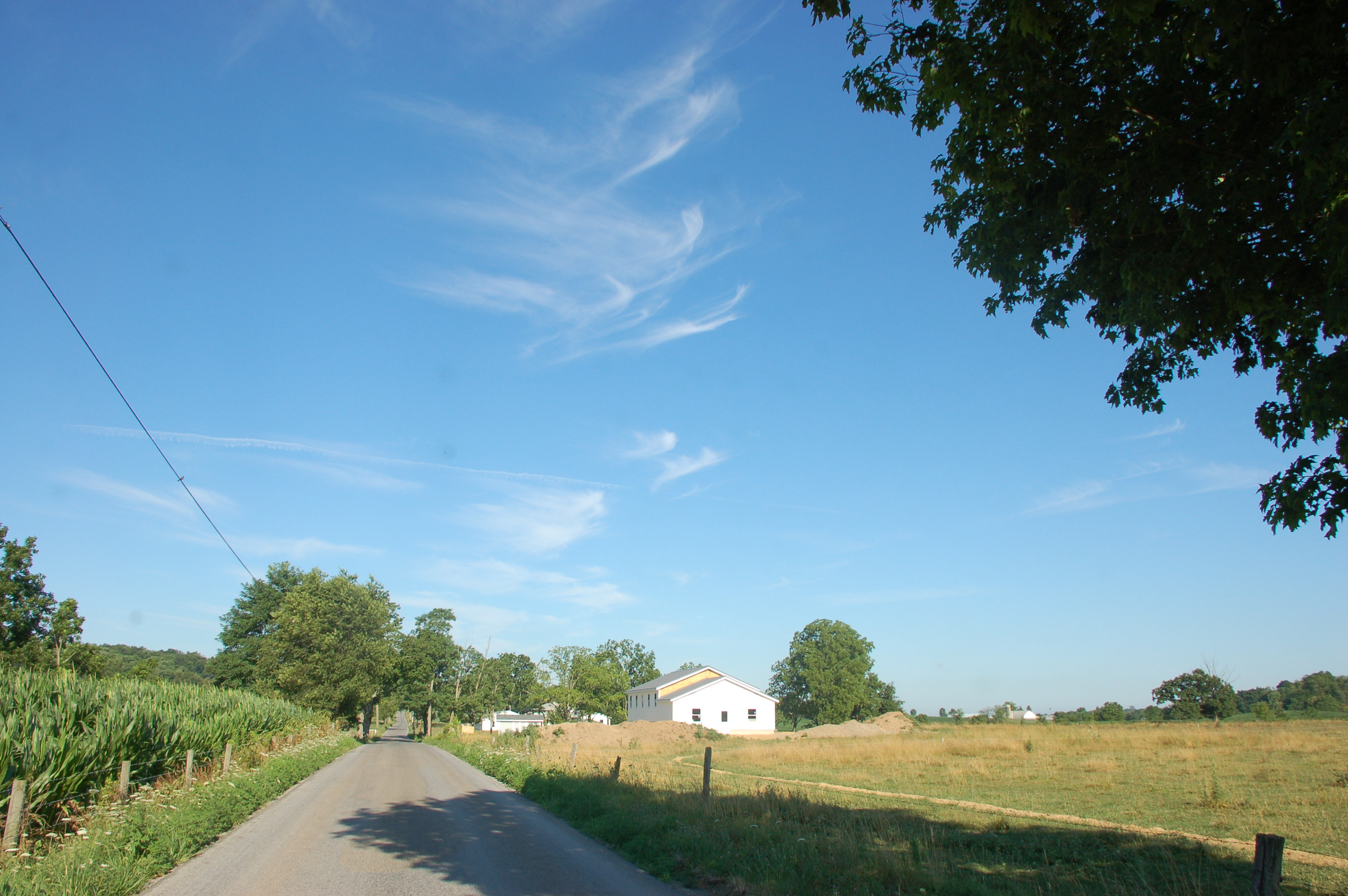
Blowing in the wind

spider webs blowing in the wind partial solar eclipse
Blowing in the wind. © Bruce Stambaugh 2014.

Photography keeps you on your toes. It enables you to always be on the lookout for that unexpected moment in time that will change in an instant. It forces you to focus on what’s right in front of you when you really intended to capture something else.

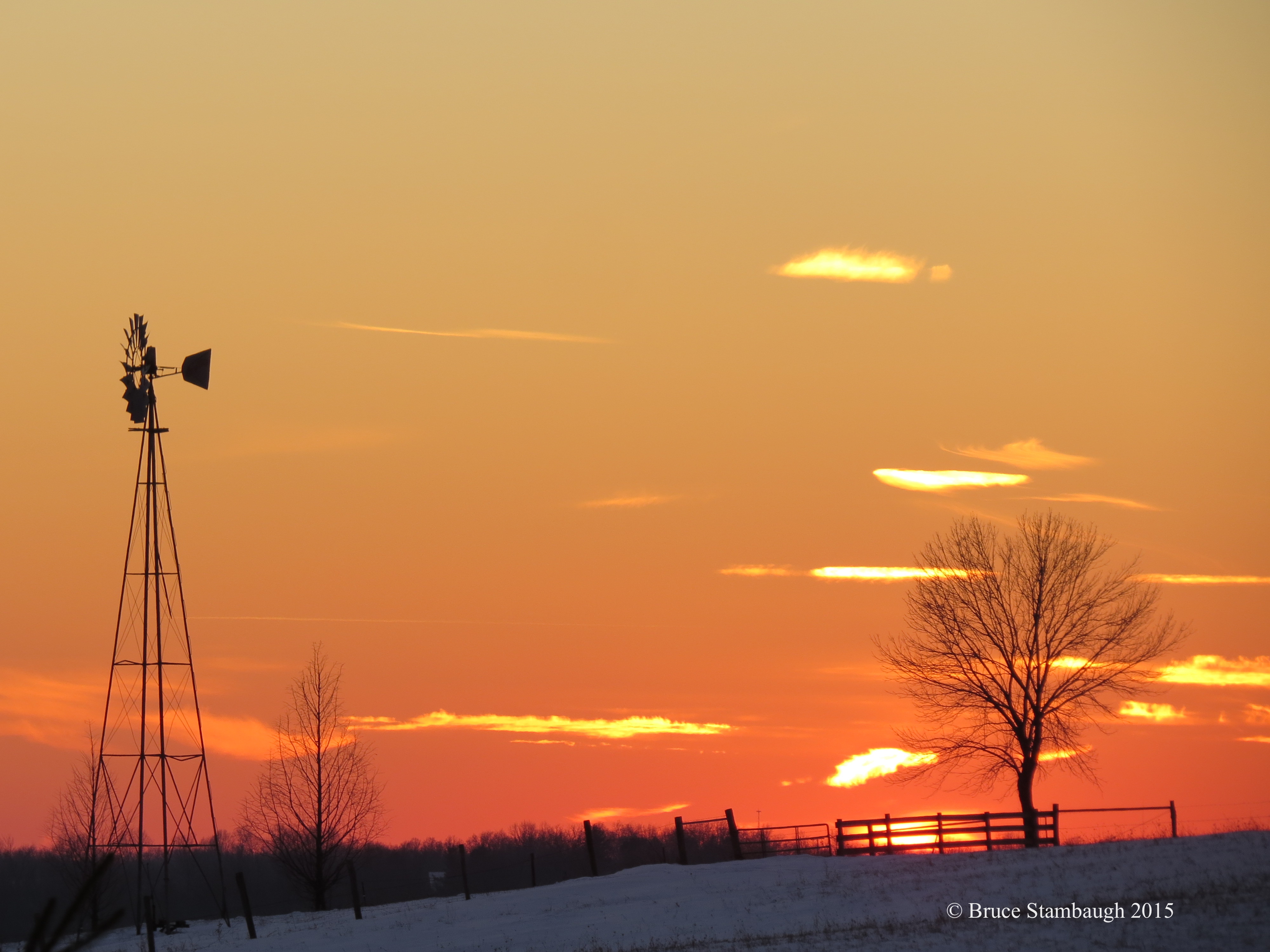
Such was my situation on the evening of Oct. 23, when we could view the beginning of a partial solar eclipse just before sunset. An Amish friend of mine, who is a real stargazer, invited me to watch the partial eclipse with him. I picked him up at his home near Charm, Ohio, and we drove a half mile up to the top of a ridge where a long limestone driveway wound down to an Amish farm. Three strands of barbed wire fence kept the livestock in the pasture west of the drive.

While we waited for the eclipse to begin, we tried to stay warm even though the sun shone brightly. Our ridge top viewing spot also exposed us to a persistent and chilly northwest wind. It was the combination of the sun’s slanting rays and the invisible wind that illuminated an amazing phenomenon. The sun exposed hundreds, if not thousands, of spider web strings that blew horizontally away from the barbed wire. Stitched to their barbed wire anchors, the strings glowed like silver thread in the setting sun.

I began clicking away. However, my first few shots were too close to the fence. The webs stretched out so far that they looked like scratches across the digital photo. I stepped to the left, and lowered the camera to capture my Photo of the Week, “Blowing in the wind.”

© Bruce Stambaugh 2014.

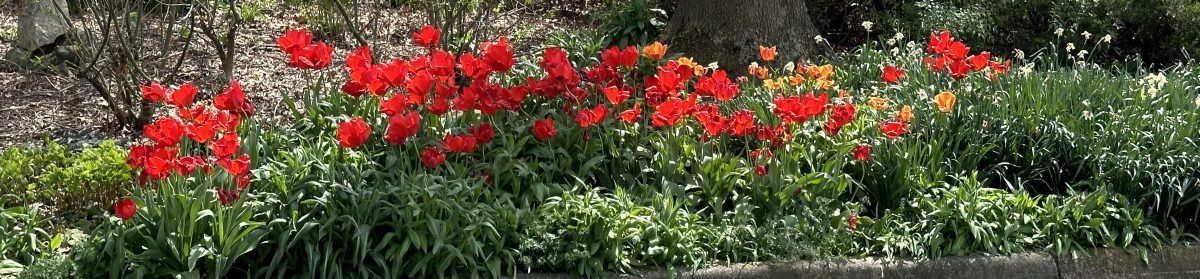
Plumbago

ground cover by Bruce Stambaugh
Plumbago. © Bruce Stambaugh 2014.

In the fall, we are often mesmerised by the colorful leaves of the changing deciduous trees all around us. In our observations, we sometimes forget to look down. I recently spied this lovely groundcover, Plumbago, on the campus of Eastern Mennonite University in Harrisonburg, VA. In the spring and summer, the dainty emerald leaves highlight the petite indigo flowers.

As you can see, as I did, the leaves have turned russet, red and burgundy, while the little flowers continue to bloom. Wouldn’t this make a great jigsaw puzzle?

“Plumbago” is my Photo of the Week.

© Bruce Stambaugh 2014.

Morning reflections

morningreflectionsbybrucestambaugh
Morning reflections. © Bruce Stambaugh 2014.

I usually carry my camera with me wherever I go. Yesterday was no exception. I was on my way to a meeting when I passed through Walnut Creek, one of the oldest settlements in Holmes County, Ohio. The morning sun was straining to filter through on-rushing clouds, part of a cold front bringing in some welcomed rain.

When I stopped to take a photo of one scene, I saw this one, the mirror reflection of this nicely kept farm, known as the Jonas Stutzman farm. An official historical marker notes that Stutzman was the first white settler in the eastern section of the county, arriving from Somerset County, Pennsylvania in 1809.

The details in this photo, coupled with the farmstead’s history, made “Morning reflections” my Photo of the Week.

© Bruce Stambaugh

In honor of Father’s Day and catalpa trees

bloomingcatalpabybrucestambaugh
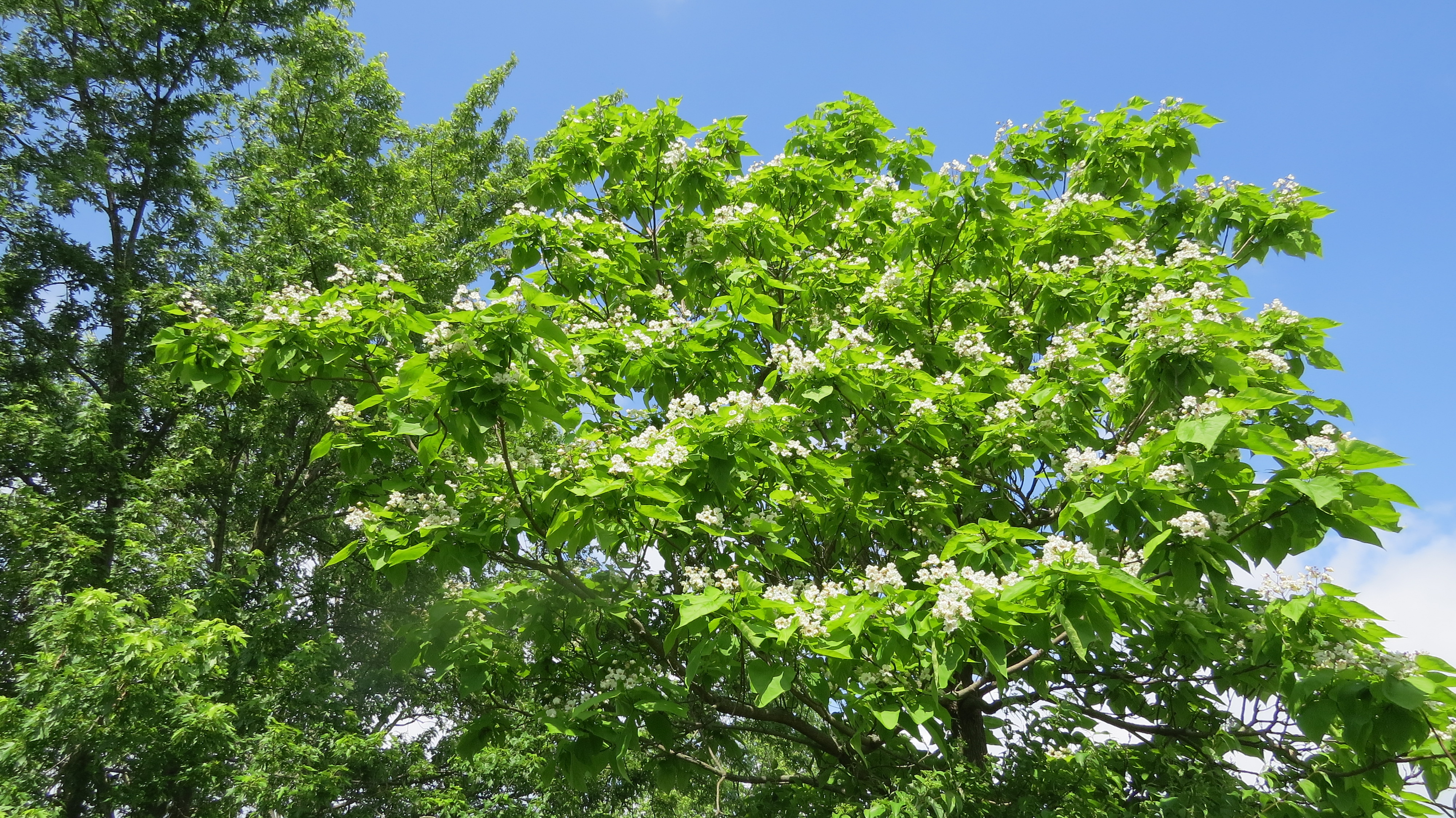
Blooming Catalpa Tree. © Bruce Stambaugh

By Bruce Stambaugh

I made a very revealing, personal discovery today. The 2014 calendar is identical to the 1947 calendar.

I know that’s not earth-shattering news. But it was for me. And it all started with me taking a photo of a blooming catalpa tree yesterday. I remember a story my late father once told me, one I have written about before, and will never forget.

Whenever the catalpa trees bloom in northern Ohio, Father’s Day is near. I had never paid much attention to that until Dad related his moving story.

On Sunday afternoons, my mother’s parents took turns visiting their three married daughters, all whom lived in Canton, Ohio. But on Father’s Day in 1947, Grandma and Grandpa Frith went to each of their daughter’s homes to visit. While sitting on our my parents’ front porch, Dad eyed a blooming tree down the street, and asked my grandfather if he knew what kind of tree it was. Grandpa Frith told Dad that it was a catalpa tree. Some people refer to it as the cigar tree, in reference to the tree’s long, green fruit pods.

The next day Grandpa Frith went to a job site where he was working as an electrician. He had turned off the power to do his electrical repairs when someone came along and turned the power back on. Grandpa Frith was killed instantly.

In retrospect, Dad said Mom, Aunt Gerry and Aunt Vivian were ever so grateful for that last visit they had with their father. They even wondered if it wasn’t simply meant to be.

I was born that December, never having met my grandfather.

Knowing that this Sunday, June 15 is Father’s Day, the exact same day as 67 years ago, seeing that blooming catalpa tree had even more meaning for me than ever before.

© Bruce Stambaugh 2014.

Chasing the elusive but beautiful Snowy Owls

fromadistancebybrucestambaugh
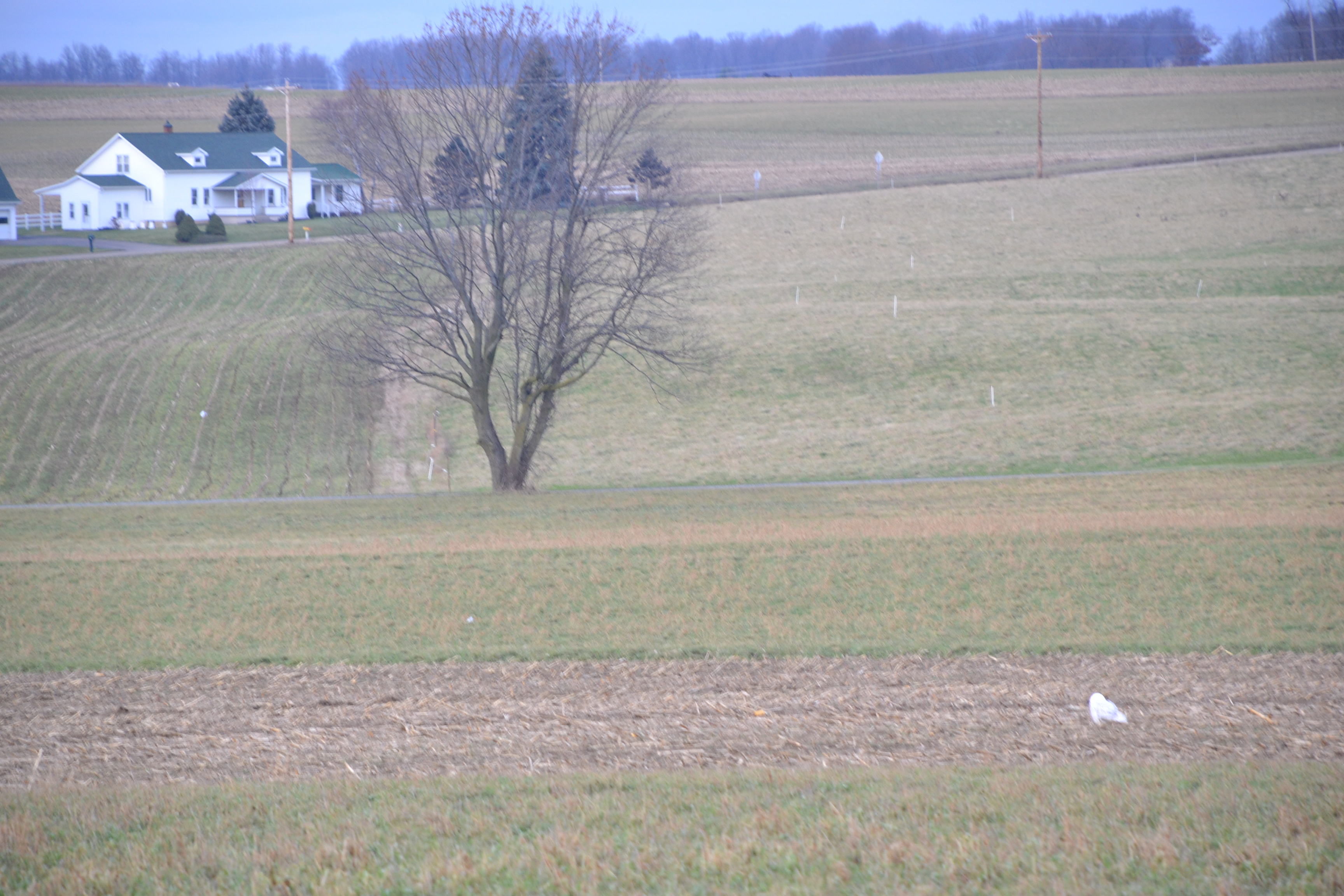
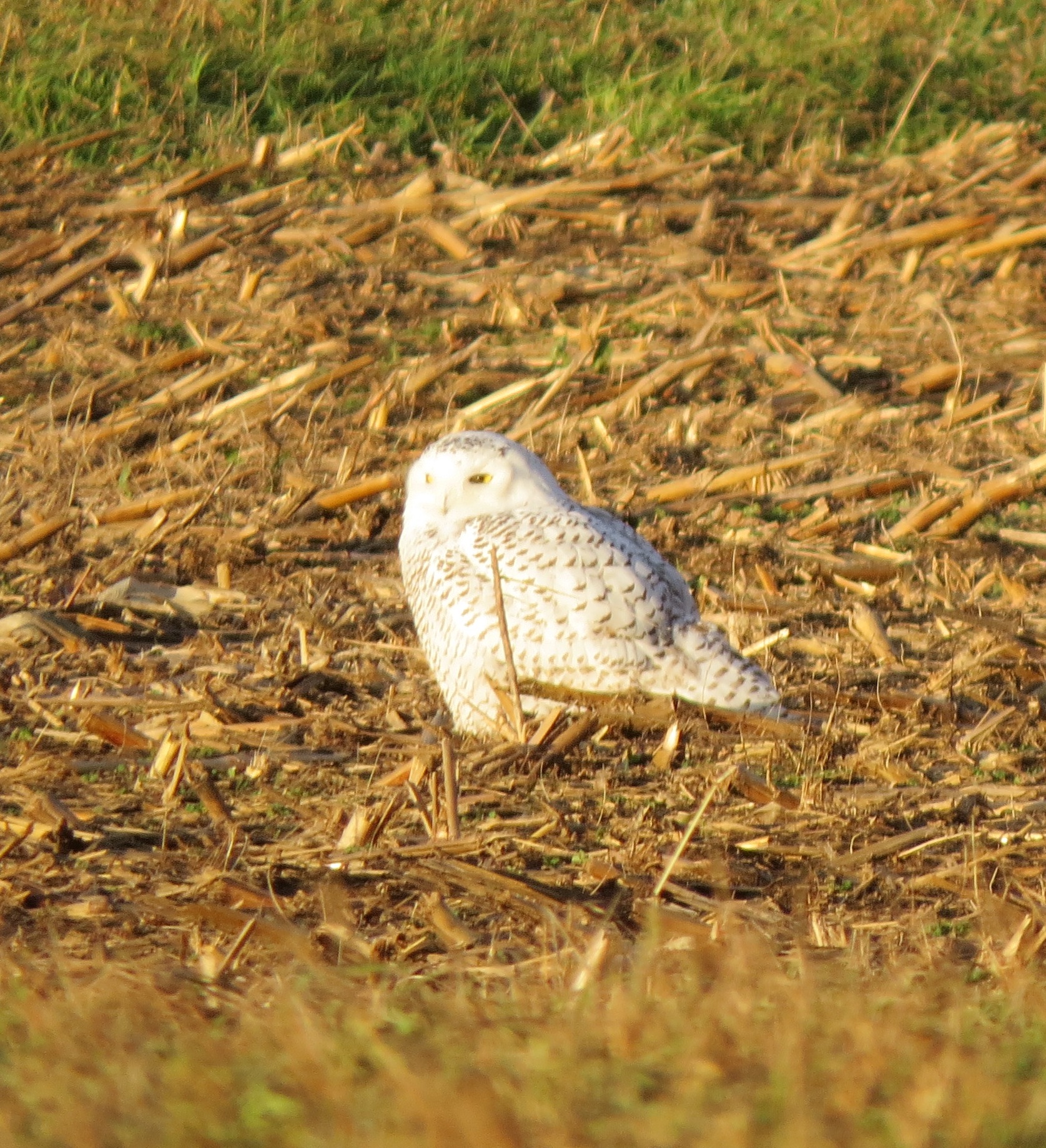
The Snowy Owl as viewed from the lane north of Mt. Hope, OH.

By Bruce Stambaugh

Birding is one of my many hobbies. I’m not the best birder by any stretch of the imagination. But I consider it a compliment to be called a birder.

I’m not alone. Believe it or not, birding is one of the most popular sports in the world. Birding is an international activity that can be enjoyed by anyone, any age at anytime. All you need are birds and an awareness to see and hear what is flitting right around you.

Birders have long been interconnected. That’s because it’s equally fun witnessing the enthusiasm and excitement of others experiencing the same bird you got to see. Ask my wife. I’ve called her to the kitchen window many a time to view the beauty and antics of our backyard birds.

Today birders connect in many ways. Bird alerts via phone, texts, email and Internet posts keep avid and amateur birders alike apprized of any rarity that arrives. Organizations and clubs also promote birds and birding.

spottedtowheebybrucestambaugh
A Spotted Towhee recently spent several weeks at a feeder at an Amish home west of Holmesville , OH.
Over the years, we’ve had our fair share of rare birds appear in Ohio’s Amish Country. They get noticed here more than other places perhaps because we have so many good birders who live here. Many of them are young Amish folks.

We’ve had Wood Storks, Rufous Hummingbirds, Northern Wheatears, Spotted Towhees and Swallow-tailed Kites. The latest rarity influx has been Snowy Owls.

When my friend, Robert, called just before Christmas and asked if I wanted to see a Snowy Owl that was reported near Mt. Hope, I was elated. I stopped what I was doing, gathered my binoculars and cameras, and picked him up.

Snowy Owls normally winter in southern Canada. Once in a great while, the impressive white birds will wander farther south into Ohio and other states.

sunpillarbybrucestambaugh
The Thanksgiving Day sunrise produced a marvelous sun pillar.

Robert had also called about a Snowy Owl the day before Thanksgiving. It had been seen between Berlin and Walnut Creek. When we arrived at the location given for the bird, it was gone. We drove around scouting for it without success.

As soon as we arrived back home, Robert received another call that the Snowy Owl had returned to its original spot. It was close to dusk, and we both decided not to retrace our tracks, thinking we could see it the next day.

We were wrong. We were up early Thanksgiving morning. It was frigid, but a beautiful sunrise brightened the horizon with a spectacular sun pillar thrown in for good measure. But no Snowy Owl.

I wasn’t about to miss this latest opportunity. When we arrived at the reported location north of Mt. Hope, the Snowy Owl was right where it was supposed to be. The large white bird with gray speckles sat unconcerned in the middle of a corn stubble field. I took several pictures of the astonishing bird while Robert used my cell phone to call others to confirm the bird’s sighting.

snowyowlbybrucestambaugh
The Snowy Owl seen Dec. 23, 2013 near Mt. Hope, OH.
After soaking in the beautiful bird and quietly celebrating our success, we returned to our respective homes. I alerted other birders about the Snowy Owl. Half the fun in birding is sharing what is found.

Since November, several other Snowy Owls have appeared in more than half of Ohio’s 88 counties. Such an invasion of rare birds is called an irruption. People were reporting and photographing Snowy Owls all around Ohio, and even in other states, including Florida.

I’m glad Robert and I got a second chance at the Snowy Owl. I hope you get to see one, too.

© Bruce Stambaugh 2014

…maybe Christmas means a little bit more

Carrie's avatarCarrie's Bench

 
ChristChildandMaryIcon
(shared from pen and palette)
 

“It came without ribbons!  It came without tags!  It came without packages, boxes or bags!”…
Then the Grinch thought of something he hadn’t before!  “Maybe Christmas,” he thought, “doesn’t come from a store.
Maybe Christmas… perhaps… means a little bit more!”
(Dr. Seuss, How the Grinch Stole Christmas!)

With all the distractions and details that precede this day, it is easy to wonder if the meaning of Christmas has been lost. Not one more sale nor sour-faced Grinch can change the gift brought to all on this daybreak. Hope is renewed in the birth of baby. Faith is rekindled in the bright morning star. Hearts soften as God’s love comes among us in the gentle care of a parent’s touch.

Yes, the meaning of Christmas is beyond all the chaos leading up to this moment. In the quiet of this early morning, may the spirit…

View original post 7 more words

Walking by myself, but never alone

Countryside by Bruce Stambaugh

By Bruce Stambaugh

Even though I am usually alone, I always have plenty of company on my regular morning walk on the township road near our home.

I walk for the exercise of course, but the benefits far exceed staying physically fit. On these hot and humid summer days, I like to get an early start if my schedule permits.

If I can survive the tricky first tenth of a mile on our busy county highway to get to the road less traveled, I can relish the rest of the walk. Common sense tells me to stay alert for oncoming traffic and dodge the fleet of various vehicles by stepping to the side.

Sunny walk by Bruce Stambaugh

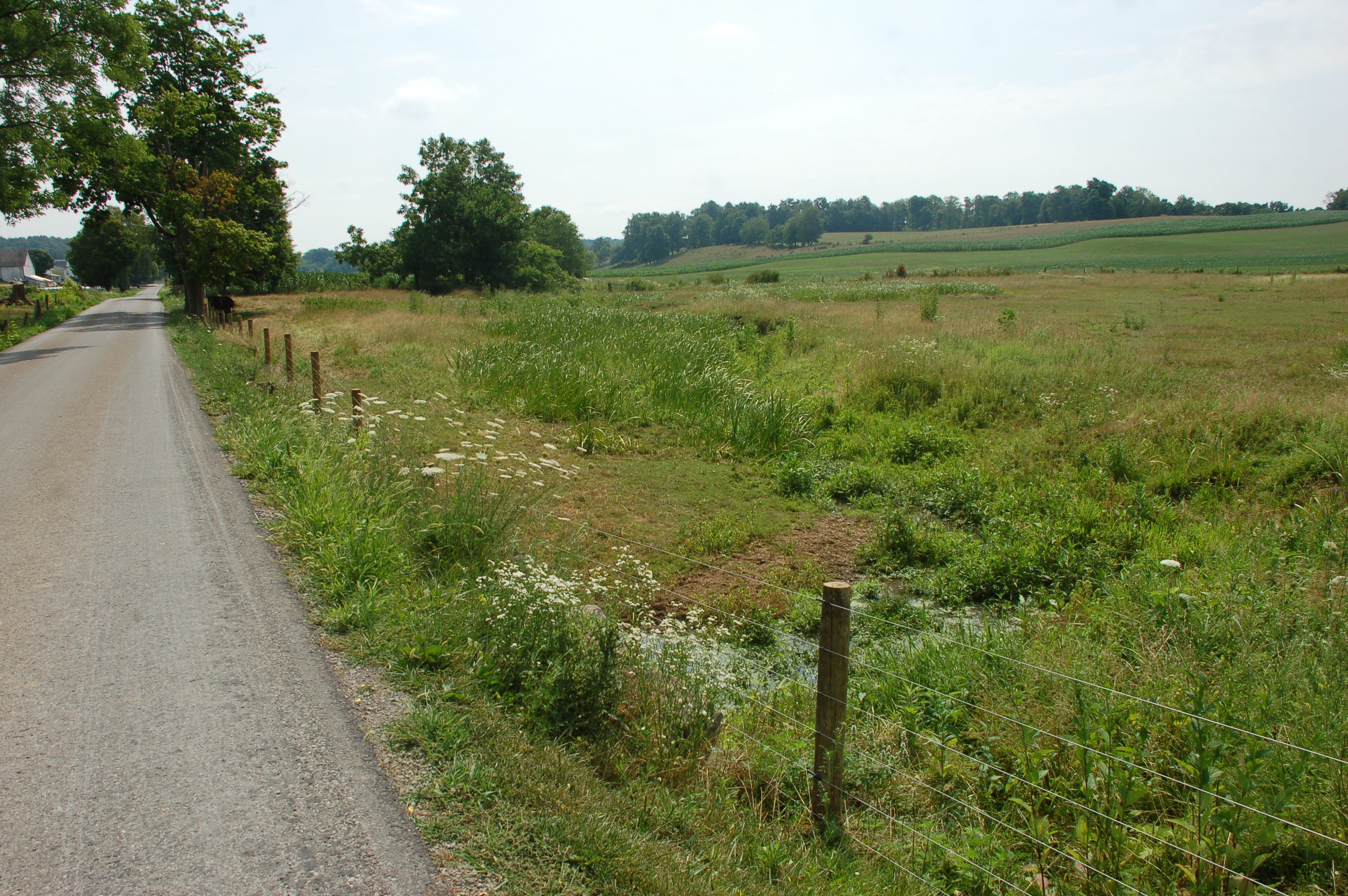
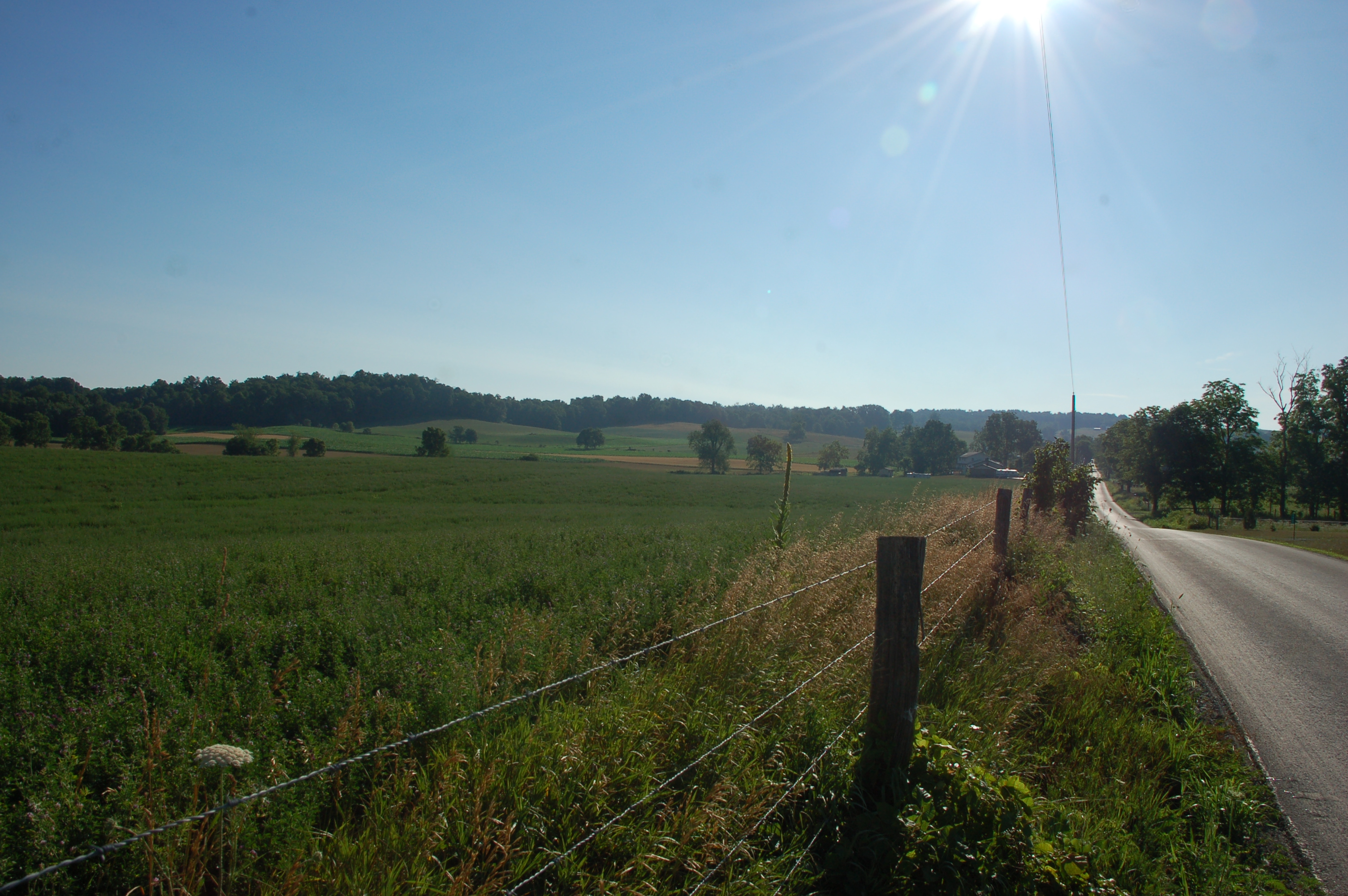
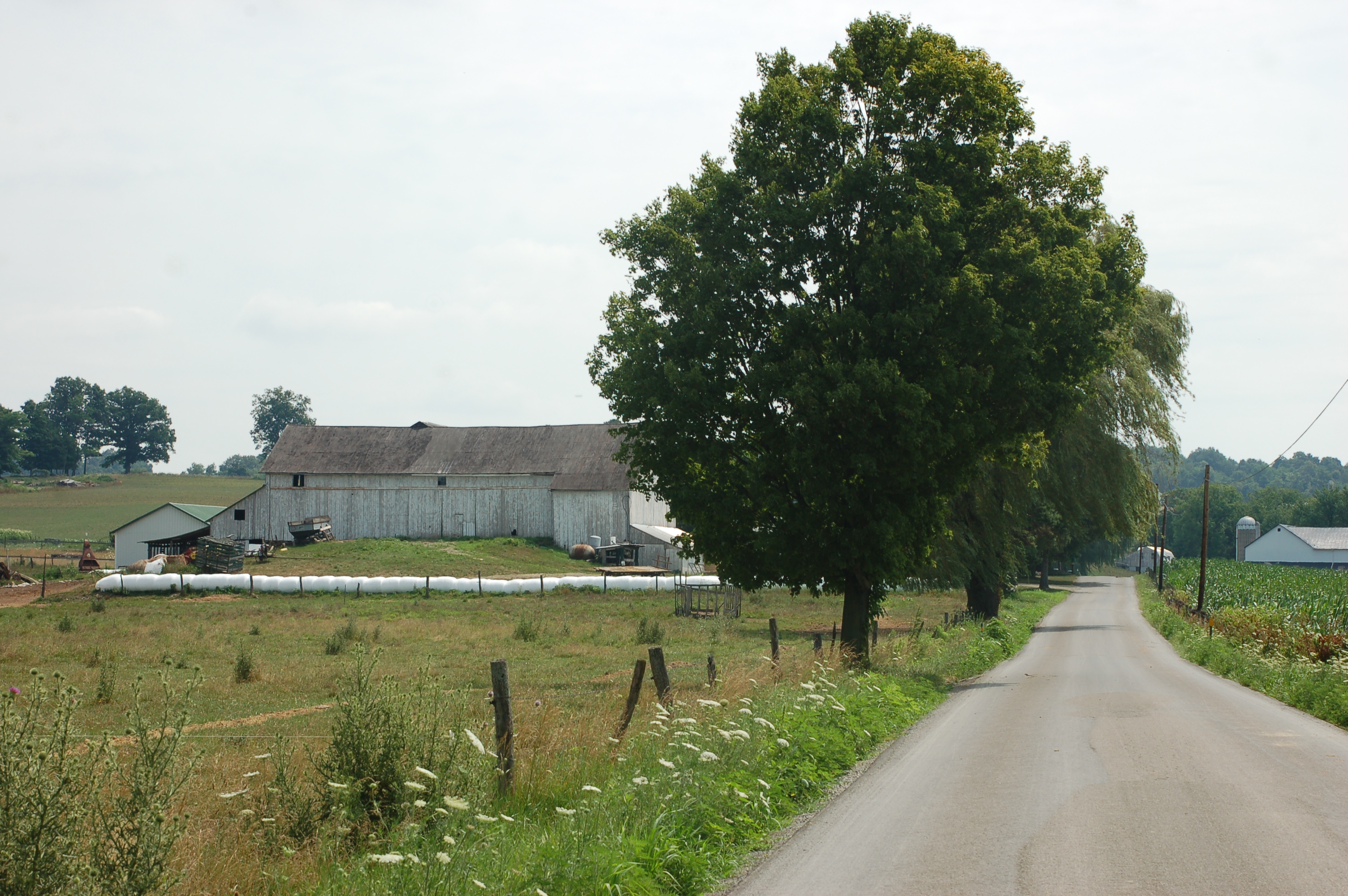
Once I’ve completed the macadam gauntlet to the safety of the township road, I turn east into the morning sun. After a few steps uphill, the road unfolds before me, rolling gradually down into a low, sweeping valley formed by the Wisconsin Glacier 10,000 years ago. Farm fences on both sides squeeze against the chip and seal roadway, making it seem even narrower than it already is.

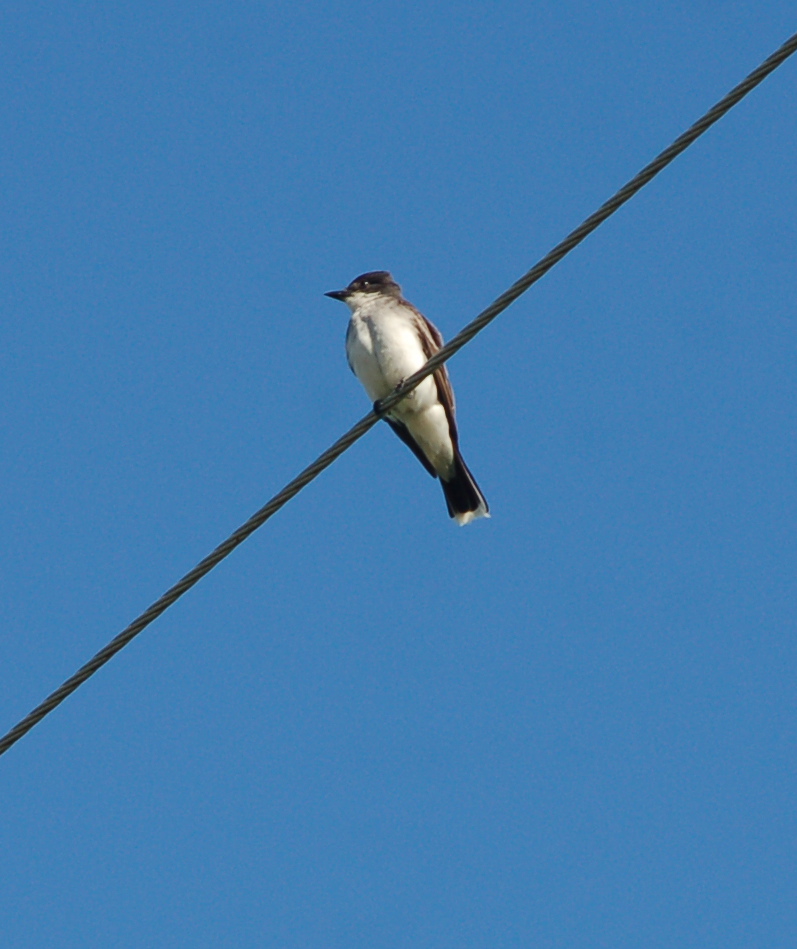
Eastern Kingbird by Bruce Stambaugh
This Eastern Kingbird and it’s mate often greet me as I walk along the township road.
I fondly anticipate these next moments. It’s the same road, but never the same walk. My audience waits, and every crowd is different. It’s not the Olympics by any means. In fact, it more closely resembles a circus.

I especially enjoy the high wire acts. The Eastern Bluebirds, including the juveniles still testing their wings, play their own version of leapfrog with me from the roadside power lines. Greeting me with melodious songs, the furtive birds wait until I nearly reach them before they flutter a few yards down the lines and land again.

I walk some more. They fly some more. The pattern is repeated a quarter-mile until the power lines run out. At that point, the beautiful birds make an arch over the hayfield and light upon the wires behind me to await my return trip.

Heifers by Bruce Stambaugh

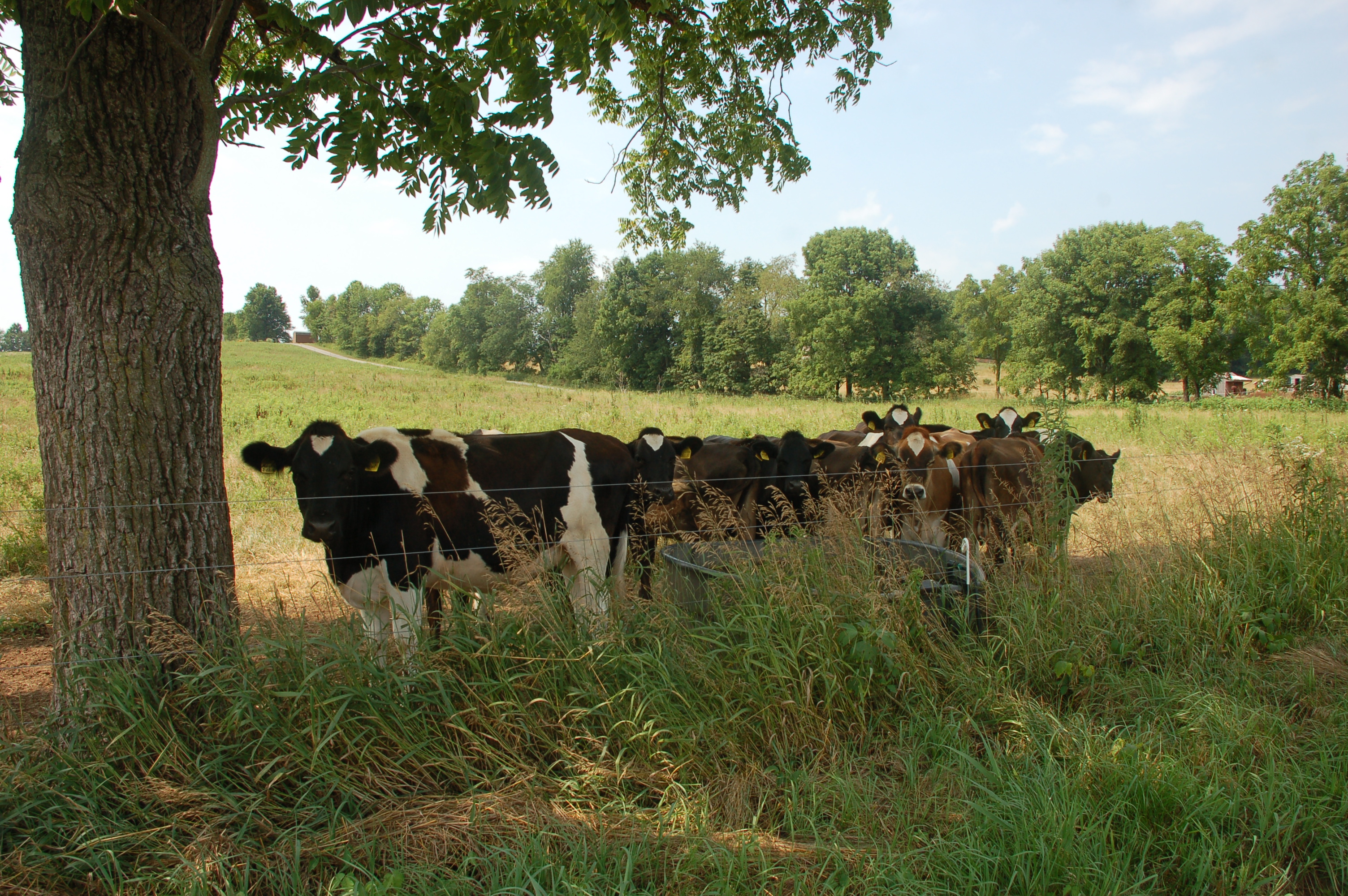
Once the road flattens out, a congregation of Holstein heifers crowded head to tail beneath a black walnut tree suspiciously eye me. As I stroll, their heads turn as one, ears twitching, tails swatting pesky flies. Sensing a potentially easier prey, a few of the flies follow me.

Thankfully, a flashy yellow ball cap saved my baldhead. Still, I flail away at the persistent insects. I’m glad no other humans are around to witness my comical machinations. By the time I reach the valley’s shallow brook, the flies relent.

Jonas Yoder farm by Bruce Stambaugh
I usually turn around and head back home at the Jonas Yoder farm a mile east of my home.

Continuing east past the newly built Amish schoolhouse, the Barn Swallows, Tree Swallows and Purple Martins all start chattering to me at once, circling overhead as if they were asking me to follow.

Buggy by Bruce Stambaugh

At Jonas Yoder’s farm, I break the law. A U-turn begins my return trip. I usually walk down the center of the road until I hear a vehicle or buggy. On average, only one or the other passes me on the township road.

Song Sparrow by Bruce Stambaugh
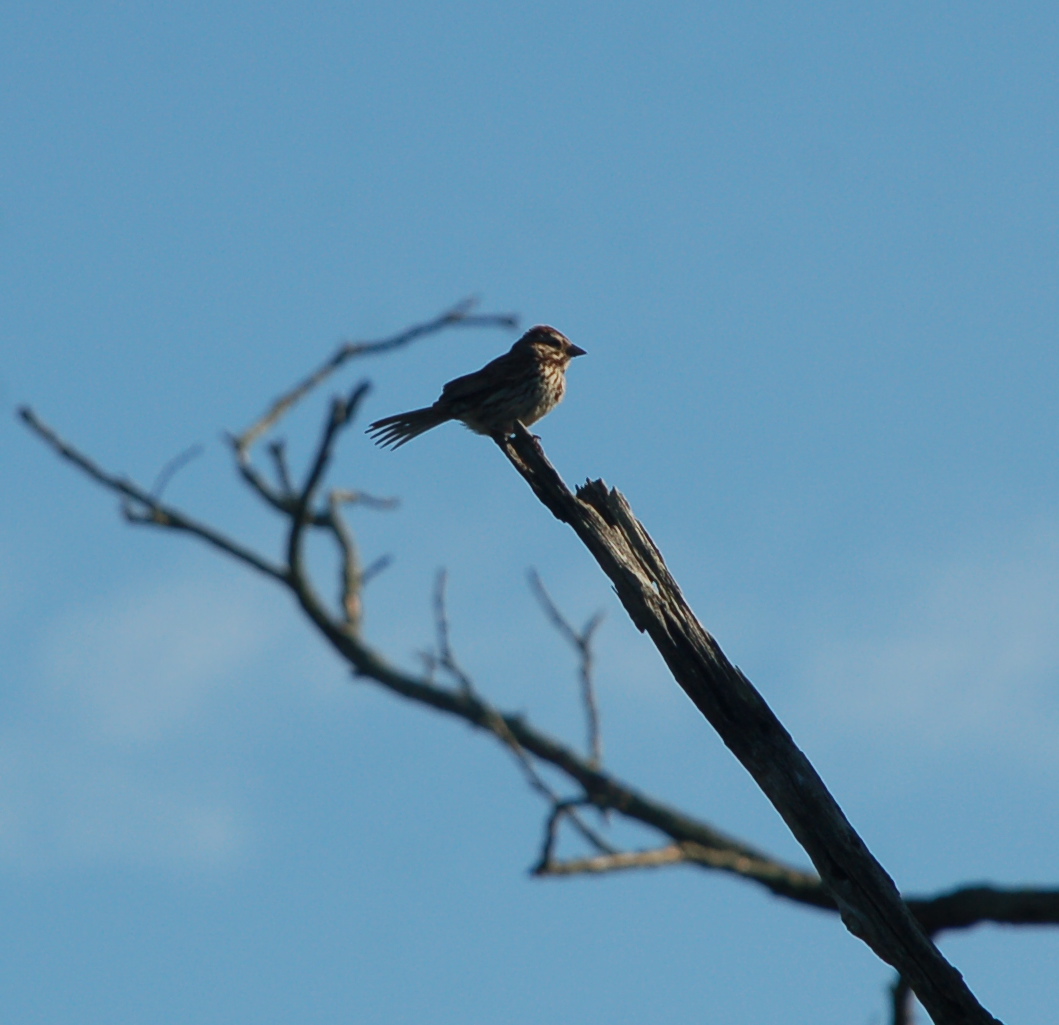
One of several Song Sparrows that I see on my walk.
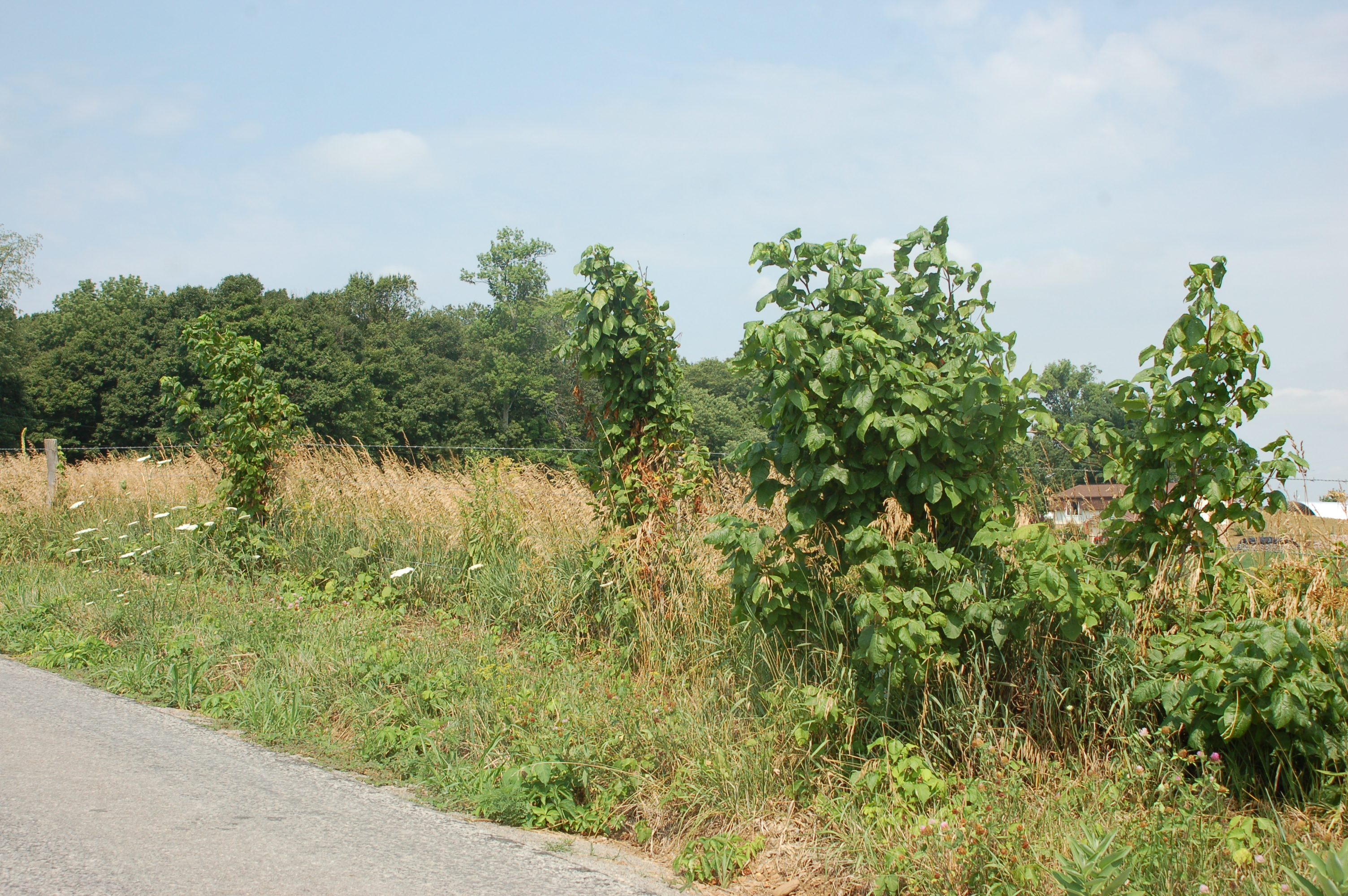
The American Robins and Song Sparrows are all used to me by now, and keep on singing in place. A young flicker, still with no brilliant red on the back of its head, flits from fence post to tree to utility pole. Poison ivy vines, leaves shiny as Christmas holly, have nearly over grown every locust post. A Green Heron escorts me back up the incline until it settles atop the tallest tree in a dense woodlot.

Down the arduous homestretch again, my next-door neighbor’s dogs unceremoniously announce my arrival. I hit the trifecta. I feel welcomed, renewed and refreshed.

Purple Martins by Bruce Stambaugh
Young Purple Martins wait patiently on a dead tree limb while being fed.
Poison ivy by Bruce Stambaugh
Poison ivy vines have over run many of the locust fence posts along the roadway.
Female Mallard by Bruce Stambaugh
This female Mallard, and sometimes its male mate, is often swimming in a pool of the small stream when I walk by.

Amish school by Bruce Stambaugh
An Amish school is being built in the pasture of Jonas Yoder’s farm.

This column appeared in The Bargain Hunter, Millersburg, OH.

© Bruce Stambaugh 2012

The reality of being a forlorn Cleveland Indians fan

Field box seats by Bruce Stambaugh
The view from our seats keeps you in the game.

By Bruce Stambaugh

I have always been a fan of the Cleveland Indians. It must be the masochist in me.

Cleveland was and remains geographically the closest city with a major league baseball team. It was only logical that I follow them. Loyalist that I am, I have remained a true fan through thick and thin. Believe me, there have been a lot of lean years in my lifetime.

In part, that’s why I was a bit taken aback by the recent remarks of Indians’ closer Chris Perez. The young relief pitcher, not one to be shy with his words, vehemently chastised the Cleveland fan base for not supporting the team. At the time, the Tribe, as they are affectionately known, was in first place in the standings and last in attendance in the major leagues. That displeased Perez.

Roommates by Bruce Stambaugh
One of my college roommates met me at Progressive Field for an Indians game.

In a sport where clichés are the standard, it’s not how well you start the season, but where you end it. After winning 30 of their first 45 games last year, the Indians finished the season with a losing record. Like so many seasons before, their fast start melted with the summer heat.

Although I understood Perez’ point, I don’t think he comprehended the perspective of lifetime Indians fans. We have seen it all before. I doubt Perez knows about Max Alvis tripping over third base, turning a routine popup into a double. Or watching Tony Horton crawl back to the dugout on his knees after striking out on a blooper pitch. Or the embarrassing fiasco of “Ten Cent Beer Night.” More to his point, the Indians have been in this position time and time again.

Pick off by Bruce Stambaugh
Over the years, the Cleveland Indians have done about as much diving out of first place as they have diving back to first base.
Take 1961. On Father’s Day weekend, the perennial powerhouse New York Yankees were in town for a four game series. I watched the first two games on black and white television, and had tickets for the doubleheader on Father’s Day.

Cleveland won Friday’s game and then came back in dramatic fashion to beat the hated Yankees on Saturday 10-9. This was in the old Municipal Stadium, a cavern of a place that held 80,000 people. The Sunday games were standing room only. In those days, you could see two games for the price of one, which made doubleheaders so popular.

Fans stood five and six people deep behind the chain-linked fence, which arched the parameters of the outfield from foul pole to foul pole. The meshed fence then was not padded, which allowed the fans to see the action. Cleveland handily won both games, sweeping the series from the mighty Yankees.

Choo at bat by Bruce Stambaugh
Over the years, the Indians have had many good players like Shin-Soo Choo, only to lose them to free agency or trade them.

In the traffic jam outside the stadium, people were nearly delirious with joy. They were already celebrating as if the Indians had won the American League pennant. That proved slightly premature. By season’s end, the Yankees had won the league with the Indians far down in the standings.

In the off-season, the manager was fired. Players were traded, and that pattern was repeated for the next 30 years with no better results. Try as they might, the Indians always fell flat. The reality for the Indians fans was first place at the 4th of July, last place by September 30.

Verlander by Bruce Stambaugh
Late in a recent game vs. Detroit, Justin Verlander was still throwing 102 m.p.h., possibly out of frustration. The Indians won 2-1.
Of course that all changed in the 1990s when the Indians built a new stadium, spent big bucks acquiring free agent stars and grooming outstanding players in the farm system. Tribe fans were hysterical when the Indians went to the World Series in 1995 and 1997, only to lose both times.

The Indians haven’t won a World Series since 1948. Only the beloved Chicago Cubs have had a longer dry spell. And yet, there is no stigma to being a Cubs fan like there is cheering for the Indians.

I won’t let that deter me, however. It’s not yet July 4th. There’s always hope, and of course, if this season goes as previous ones, always next year.

© Bruce Stambaugh 2012

Inspired to make a difference

Living Acts group by Bruce Stambaugh
By Bruce Stambaugh

Kids of all ages inspire me. I guess that had something to do with honing 30 years in public education.

It also motivates me to help award scholarships at the end of each school year for the Holmes County Education Foundation if I can. This year my schedule was free. Once again I found myself seated with several other presenters facing the 2012 graduating class of West Holmes High School, Millersburg, Ohio.

The look by Bruce StambaughLike the others who announced scholarship winners, my job was a simple one. I merely had to read off the names of the recipients of two different memorial scholarships of two of my very best friends in life. Prior to their deaths, Paul Sauerbrey and Helen Youngs had established the scholarships so that youngsters from future generations would be encouraged to further their education beyond high school. Over the years, the financial assistance has helped dozens and dozens of area students attend college or trade school.

I’m always impressed with how well behaved the graduating seniors are. For them, high school is over. They could be off celebrating. But on a beautiful late spring evening, most of the 179 seniors were on hand to accept a simple certificate awarding them their grant. In some cases, students earned more than one scholarship.

Unlike the caricatures too often portrayed about teens in the mainstream media, these young people are polite, thankful and eager to move forward with their lives wherever that may be. Sure, some of them wear flip-flops while others clop to the stage in high heels.

Flip flops by Bruce StambaughMore creative, free-spirited graduates don expressive attire. One kid once came dressed in pajamas. Nevertheless, the students understand the significance of the situation. In many cases, like my two friends, the money is given in the memory of someone. Several are memorial scholarships named for loved ones who died tragically or unexpectedly.

Prior to announcing the scholarship recipients, I take the opportunity to inform the students about Mr. Sauerbrey and Ms. Youngs. Perhaps this is my teacher instinct still coming out.

Mr. Sauerbrey and Ms. Youngs each were persons who made a huge difference in life, not just for me, but also for the entire the community. I wanted to put some flesh and bones and spirit with the names of the scholarships. The students listened attentively.

Both Mr. Sauerbrey and Ms. Youngs were instrumental in the daily activity of Killbuck, Ohio, the village in which they lived most of their lives. Mr. Sauerbrey taught at the elementary school for most of his 43-year teaching career.

Ms. Youngs worked at Killbuck Savings Bank for 55 years. She also served as the town treasurer for 43 years, and loved to play the organ and sing in the choir at Killbuck Church of Christ.
Youth volleyball by Bruce Stambaugh

Previous scholarship recipients have made a difference through their chosen careers. Some have become teachers, doctors, lawyers, bankers and mechanics while others operate their own businesses. Given the grace, respect and appreciation the 2012 graduates showed in accepting their scholarship awards, I expect they will succeed as well.

What really caught my attention though was the support and geniality that the graduating students showed to each other. They truly seemed to care for one another.

If that positive attitude persists in life, these graduates will likely make a difference whatever they do and wherever they land. Mr. Sauerbrey and Ms. Youngs would be very pleased indeed.

Baptism by Bruce Stambaugh
© Bruce Stambaugh 2012

Bay Photos by Donna

Wildlife photos from the Chesapeake Bay region

ROAD TO NARA

Culture and Communities at the Heart Of India

K Hertzler Art

Artist and nature journalist in the Shenandoah Valley of Virginia.

Maria Vincent Robinson

Photographer Of Life and moments

Gabriele Romano

Personal Blog

Jennifer Murch

Art is the only way to run away without leaving home. -Twyla Tharp

Roadkill Crossing

Writing generated from the rural life

ANJOLI ROY

writer. teacher. podcast cohost.

Casa Alterna

El amor cruza fronteras / Love crosses borders