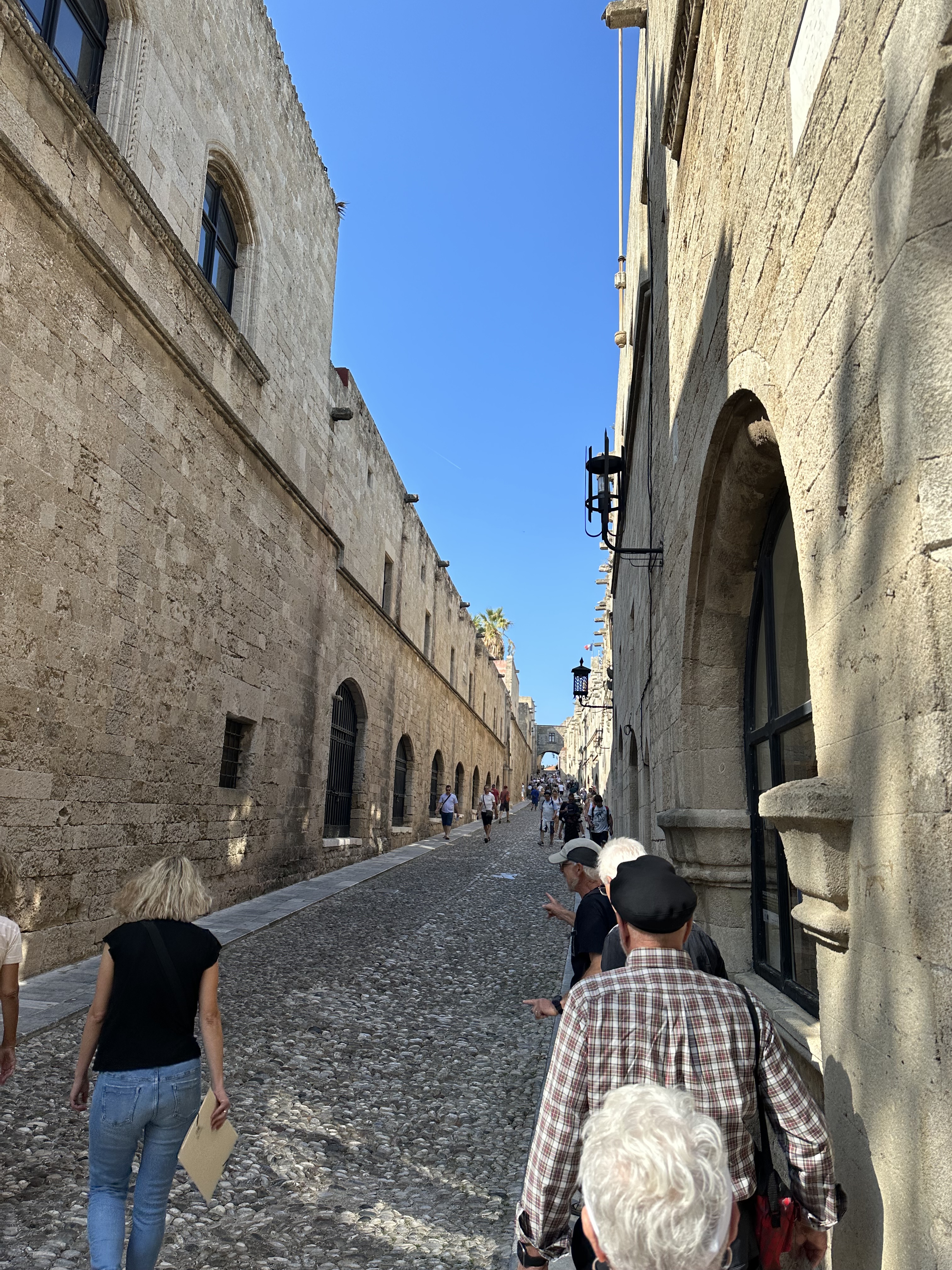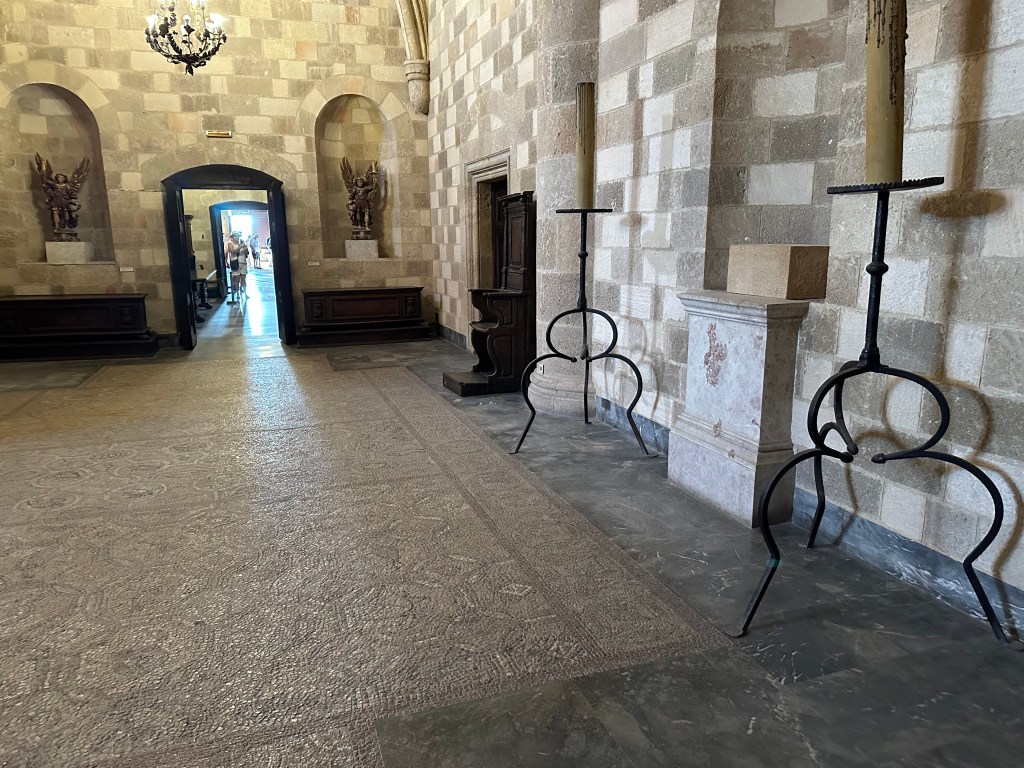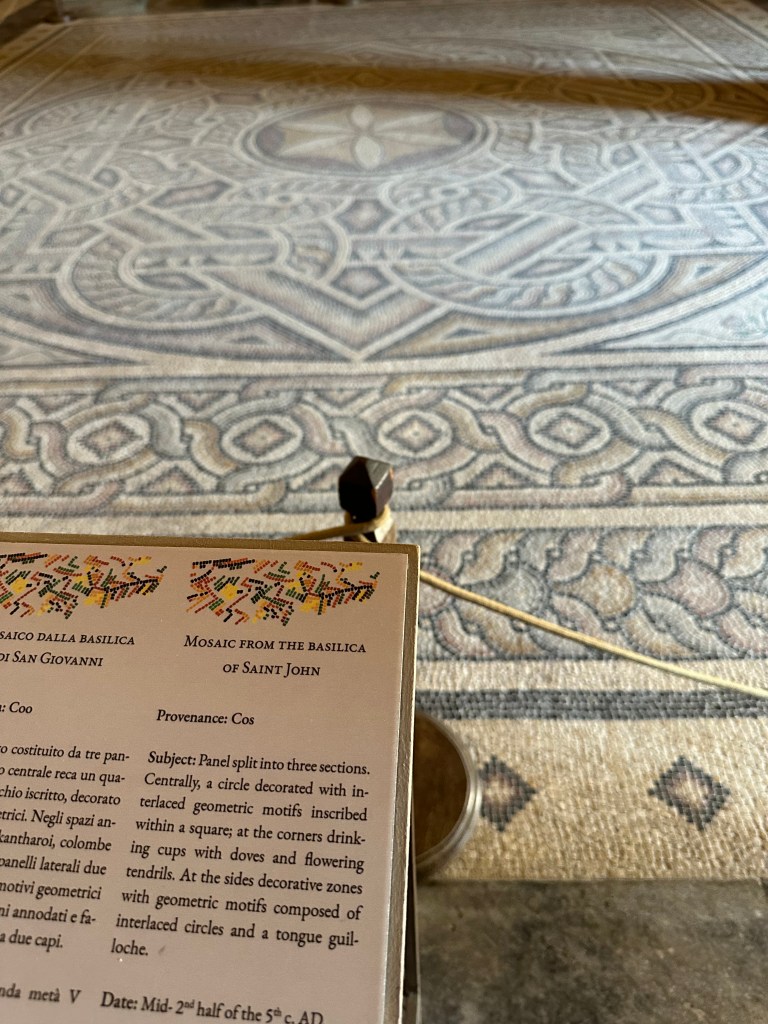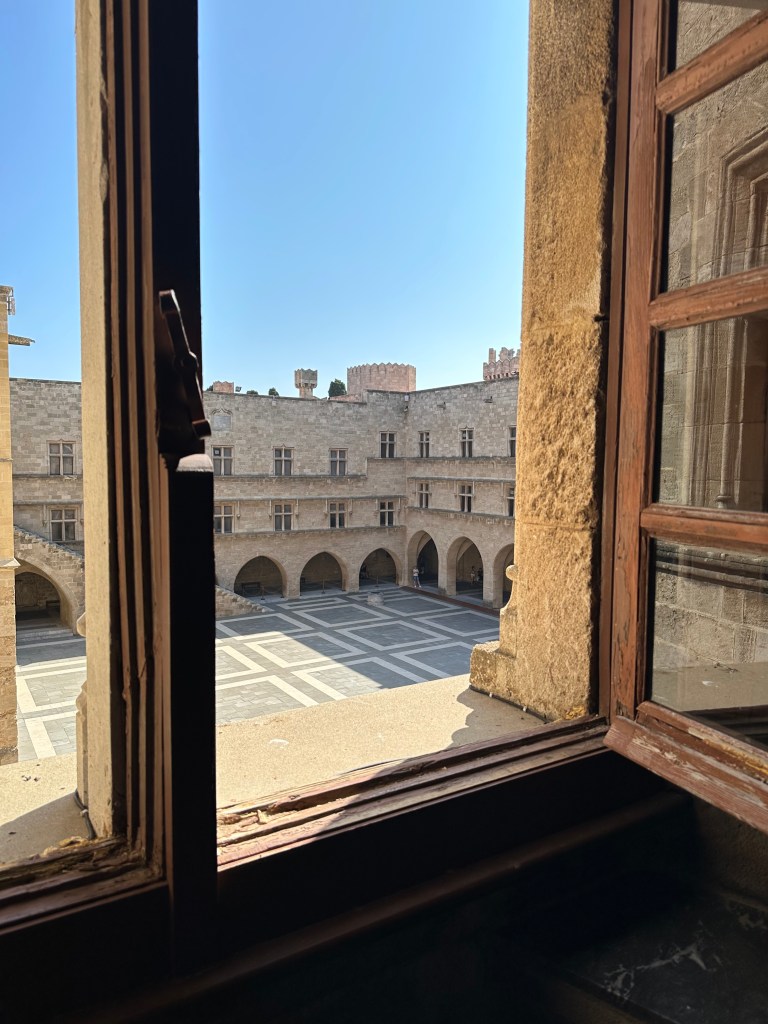
A Photo Essay: Following the Path of Apostle Paul – Days 7 & 8

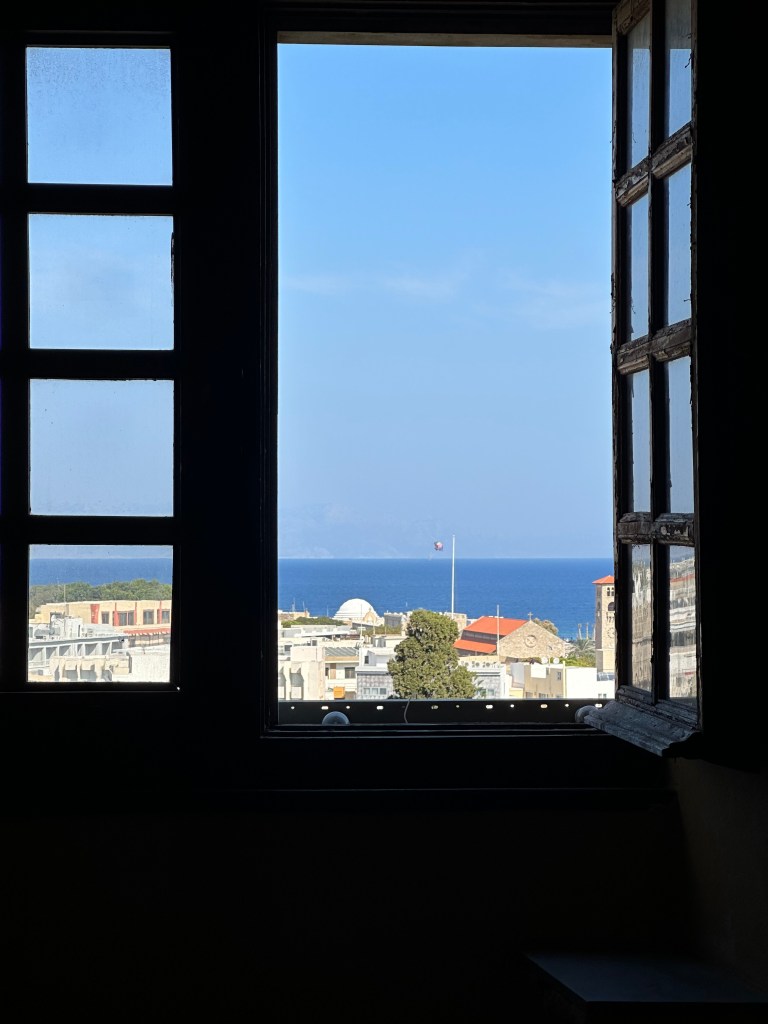
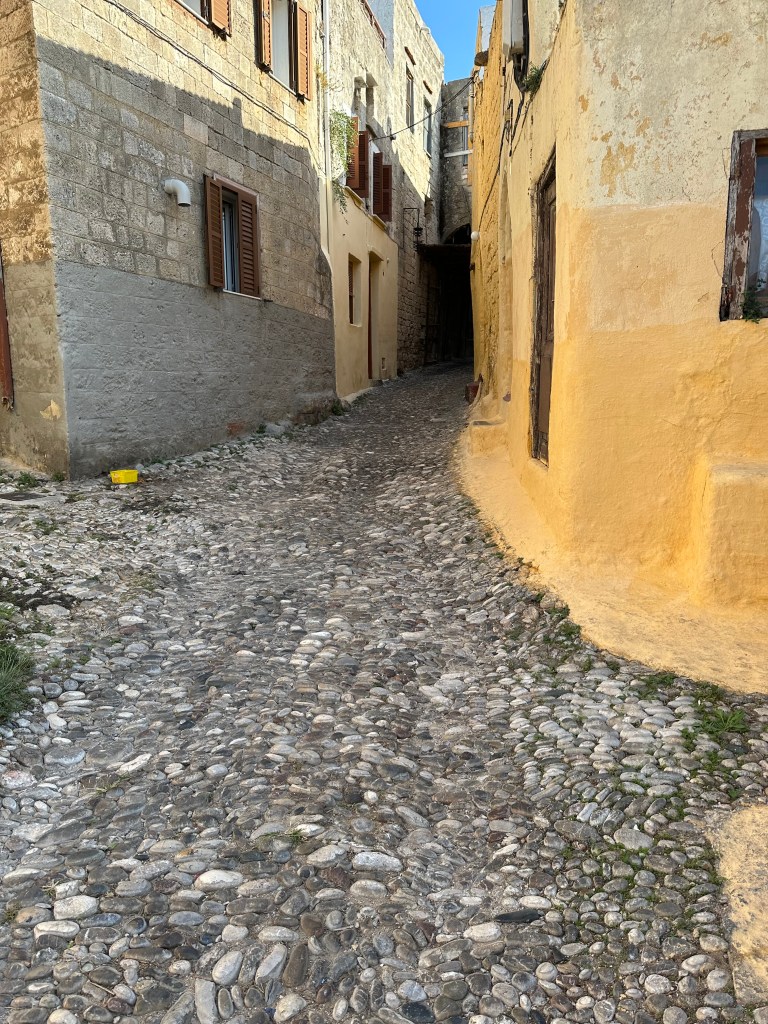
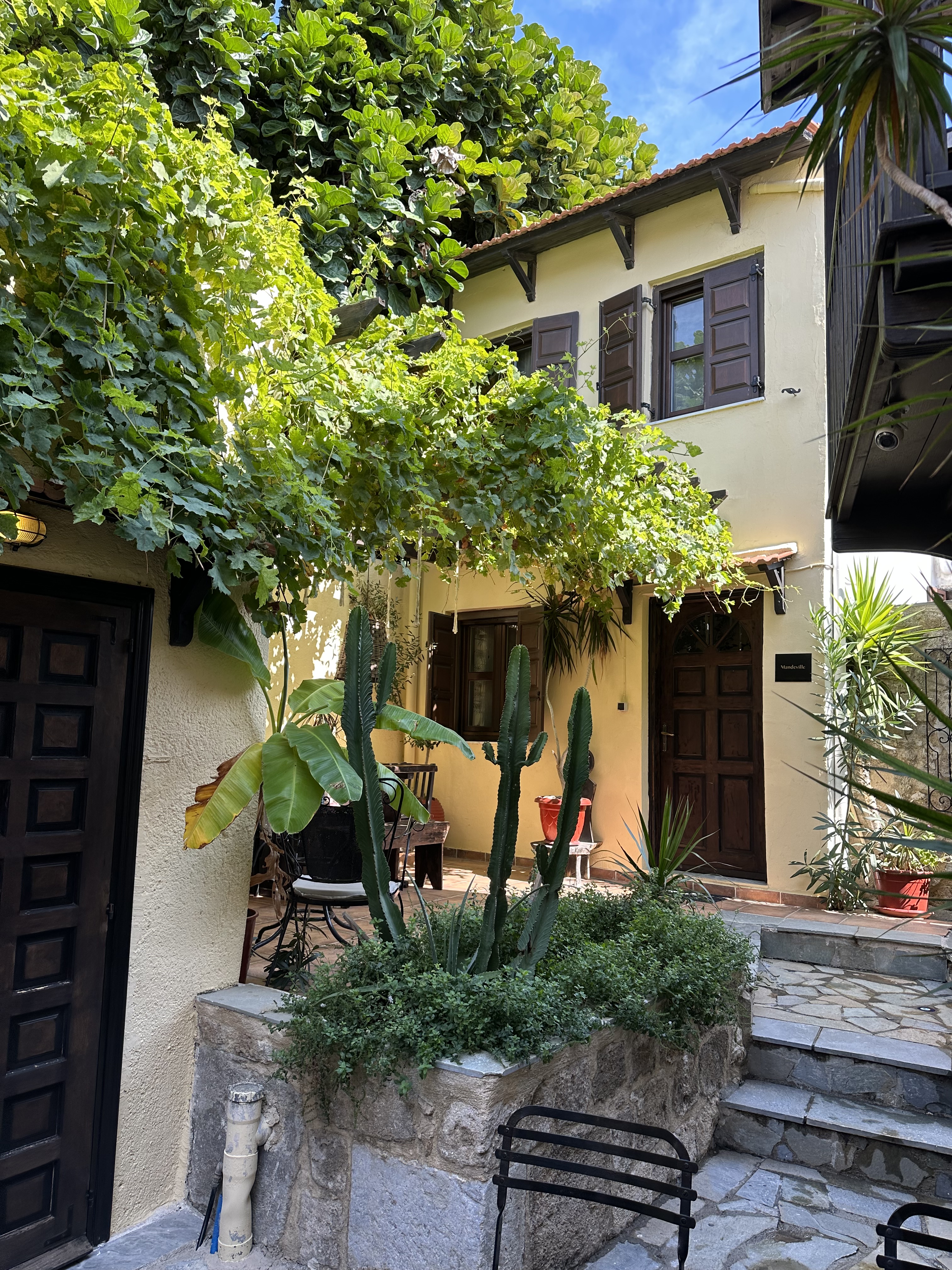
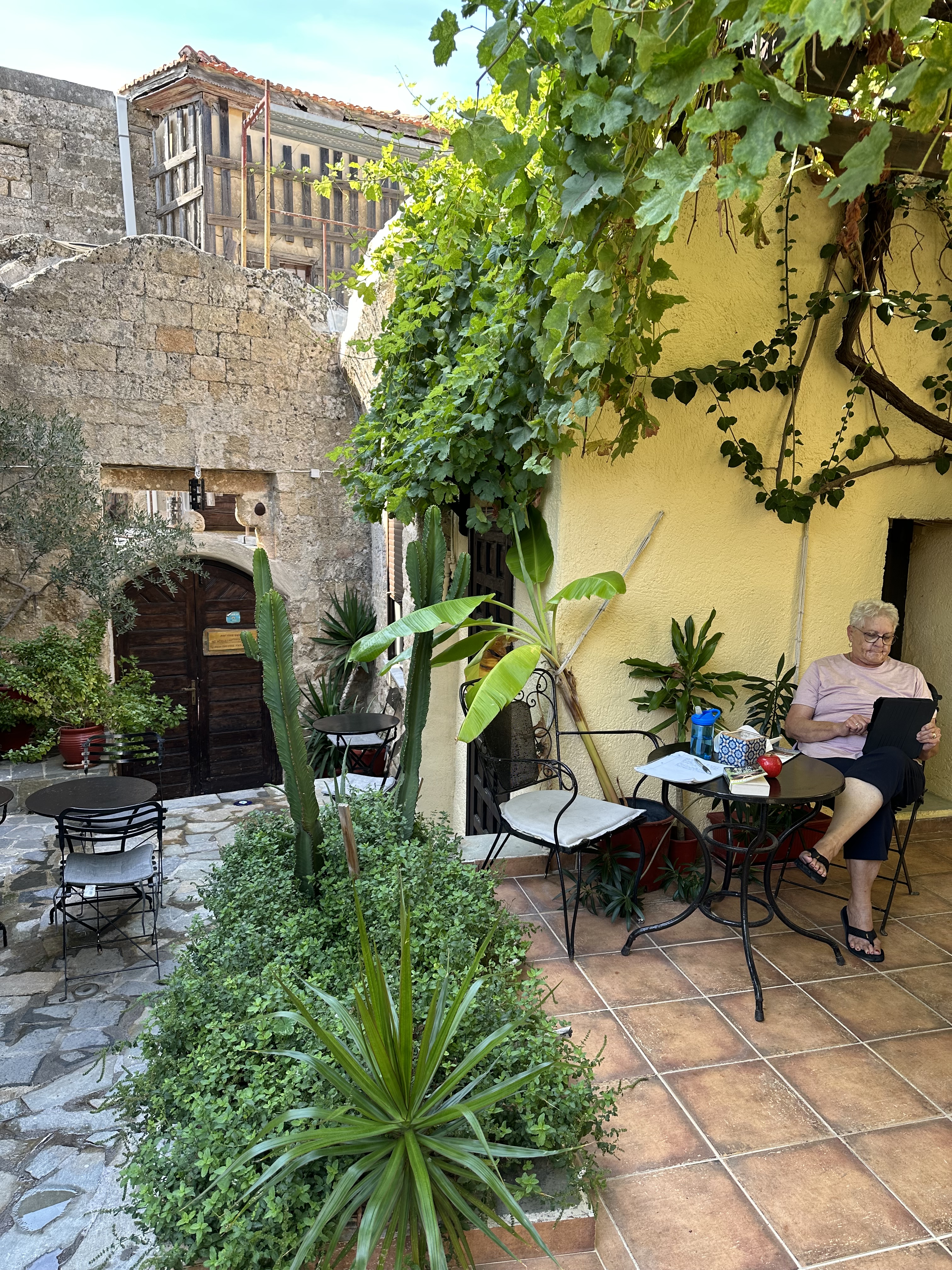
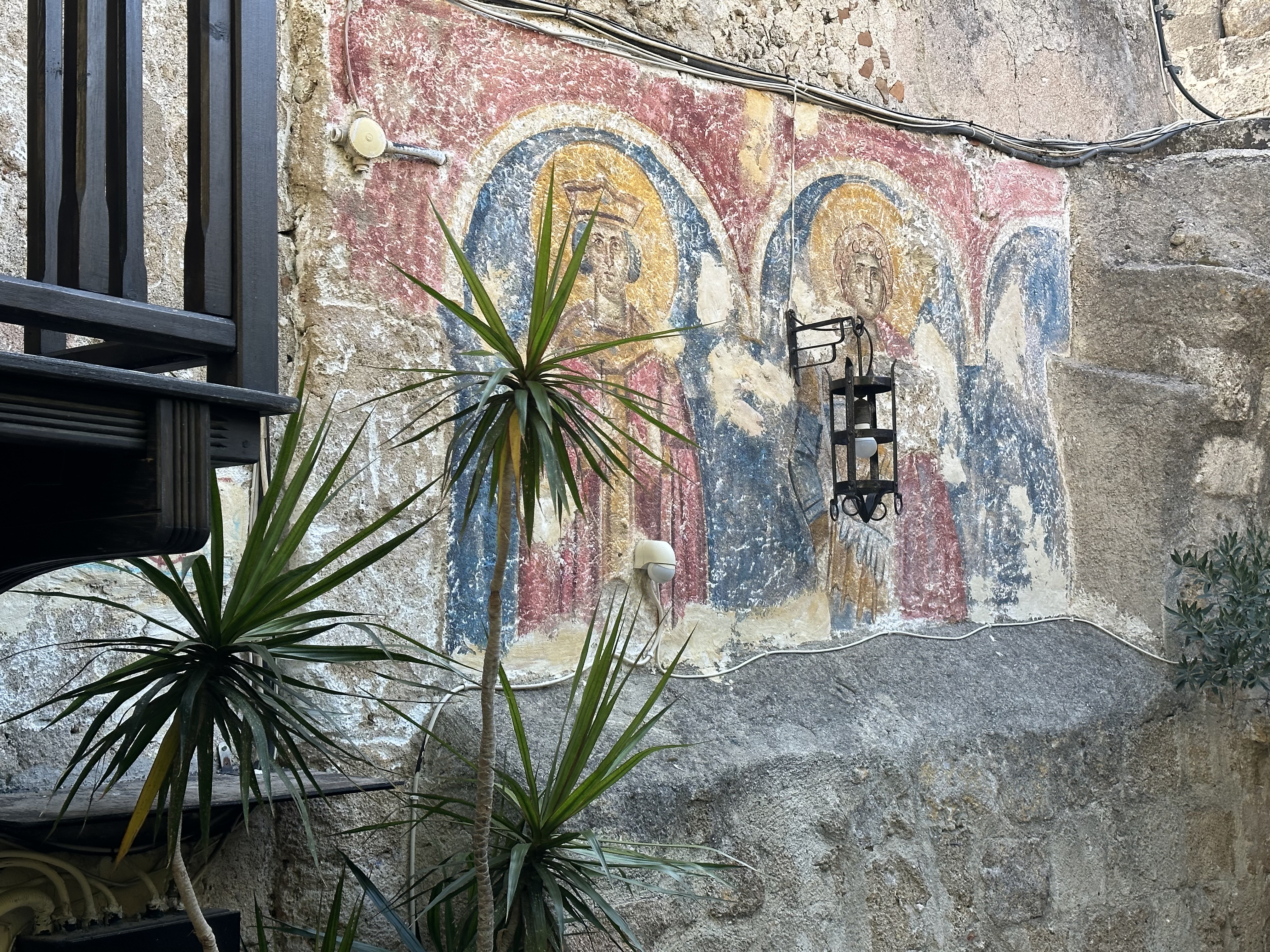
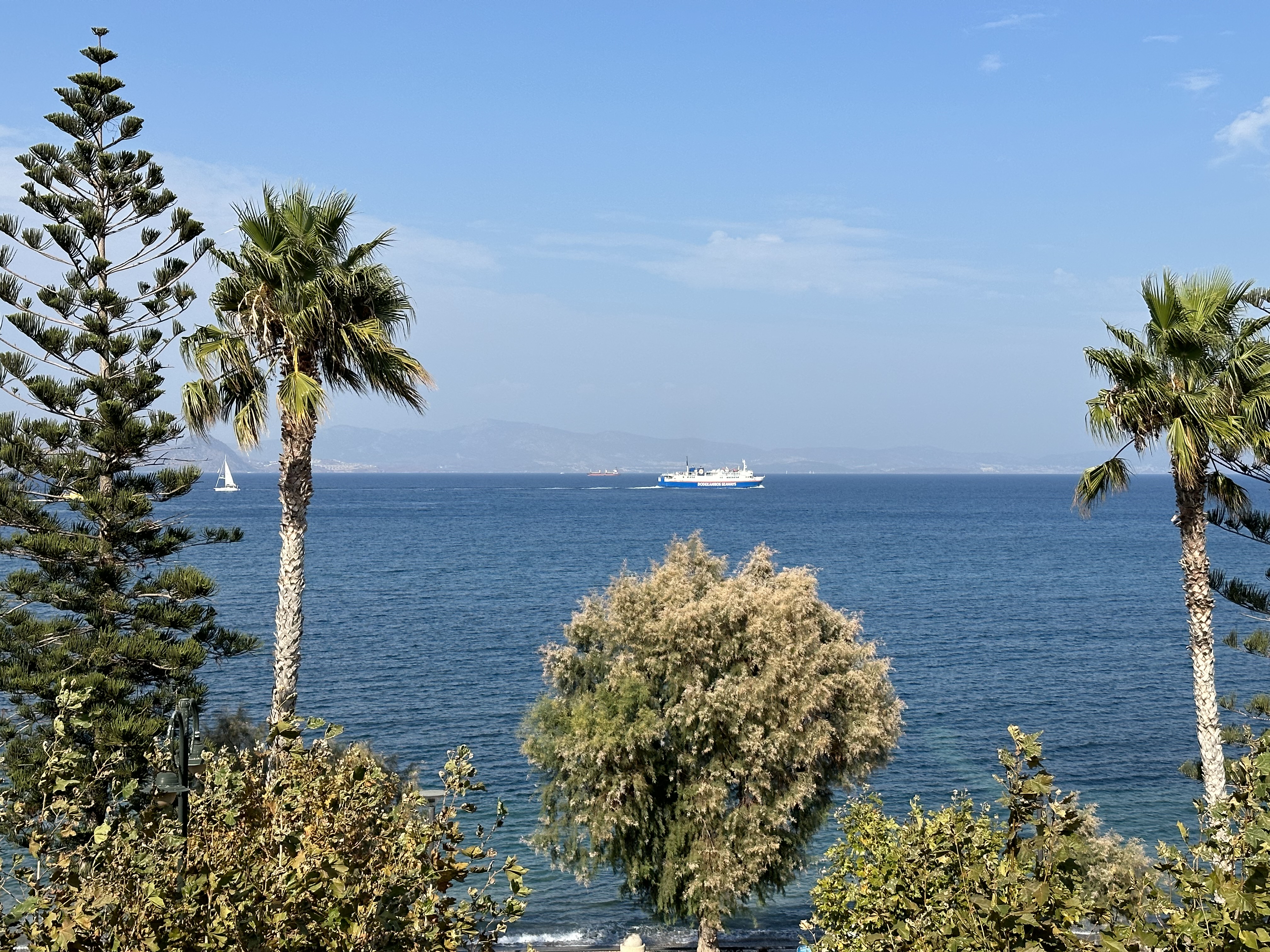
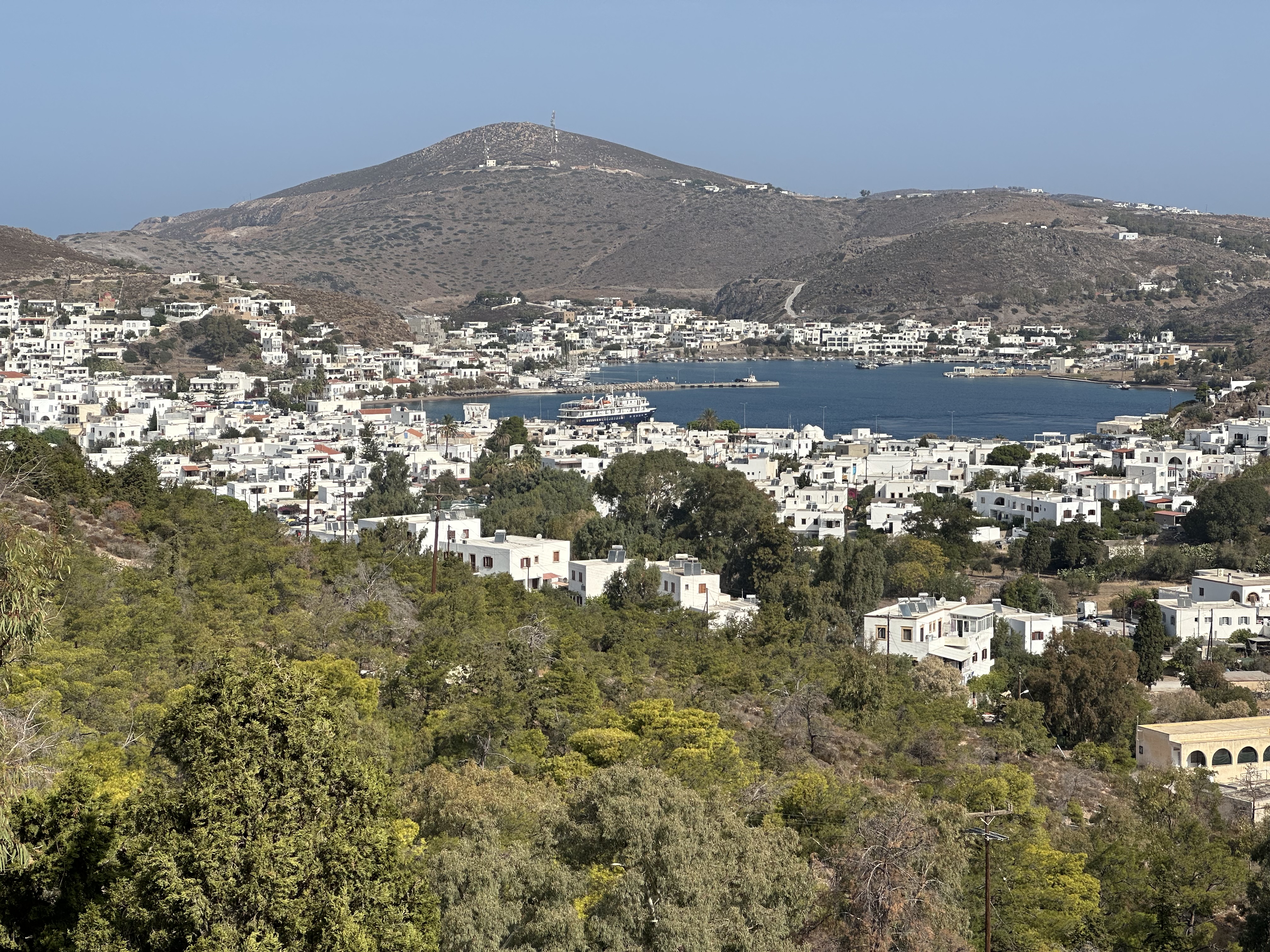
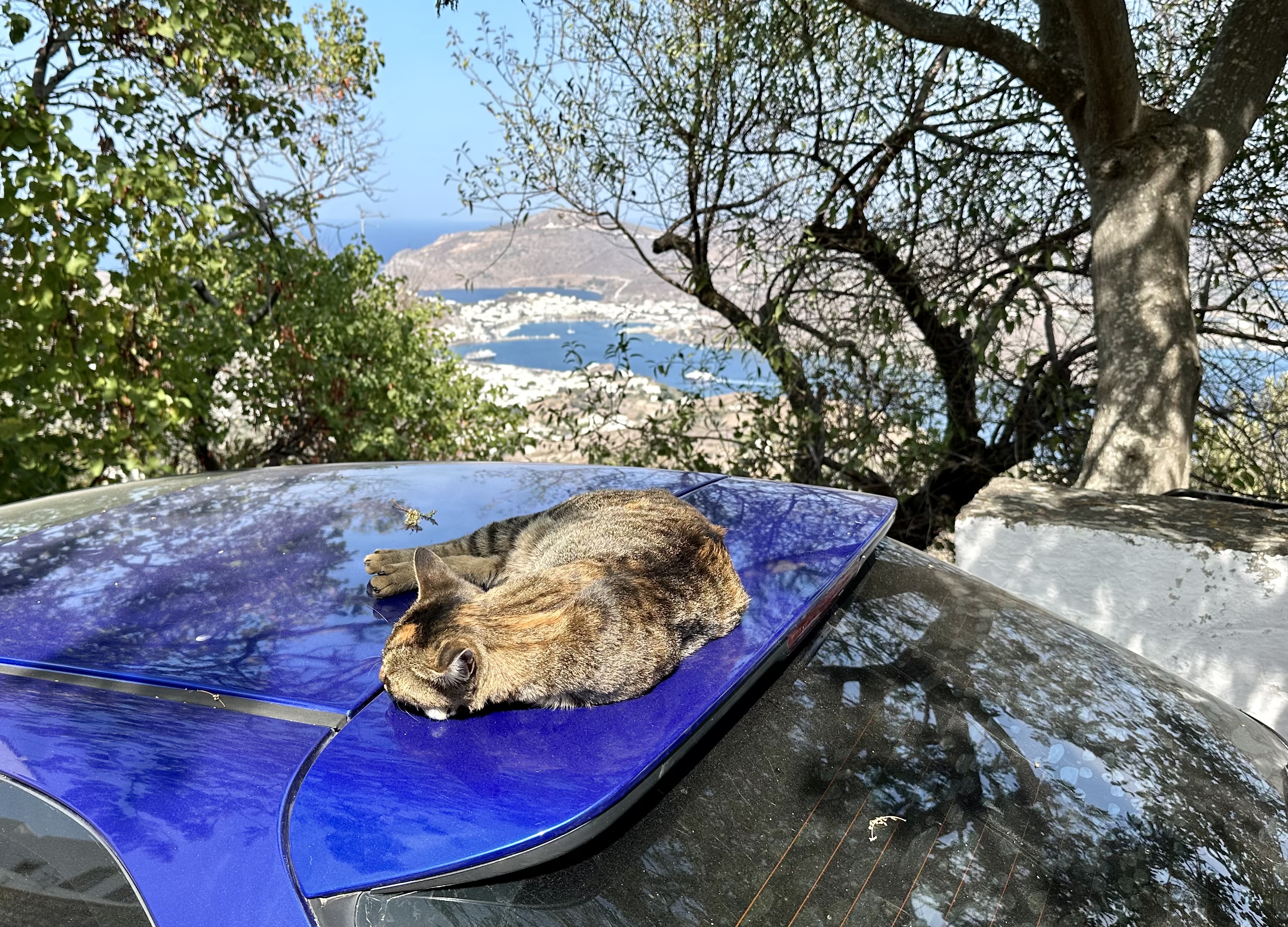
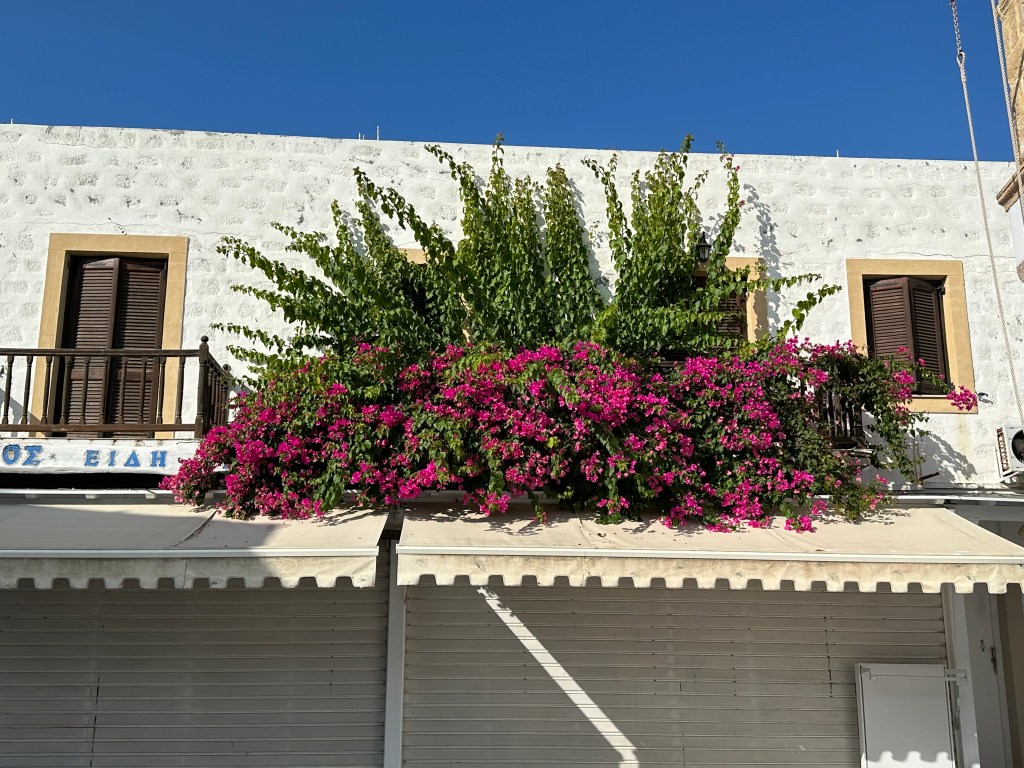
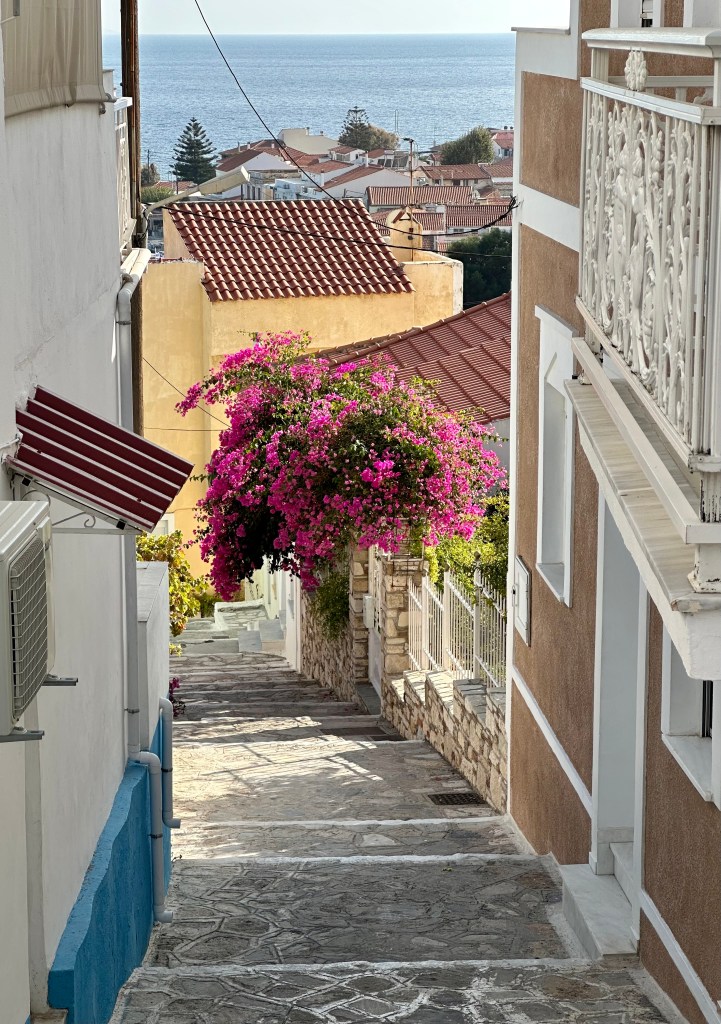
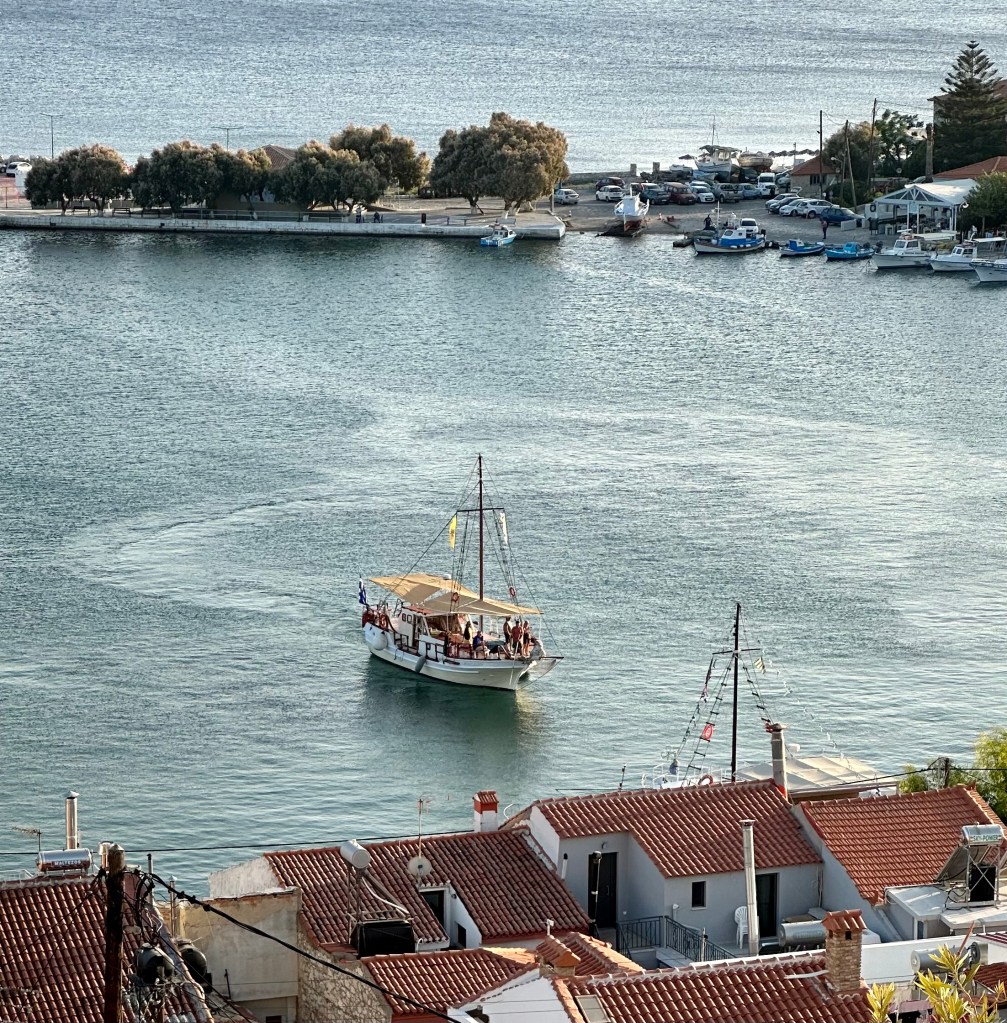
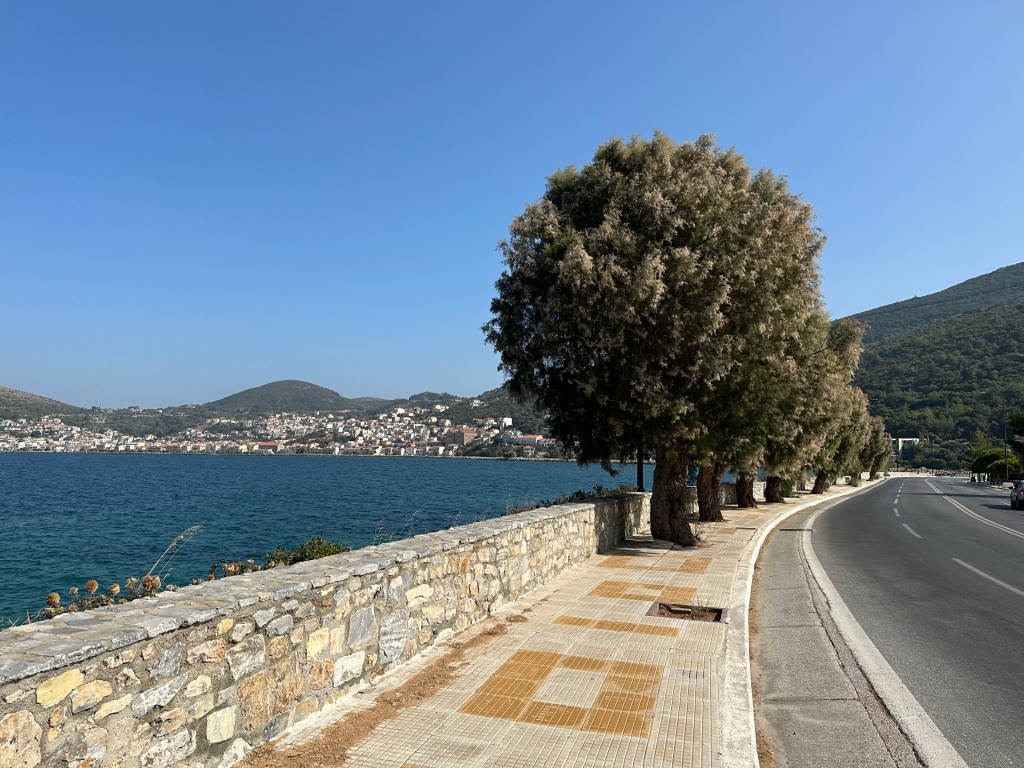
The lovely view from our hotel.

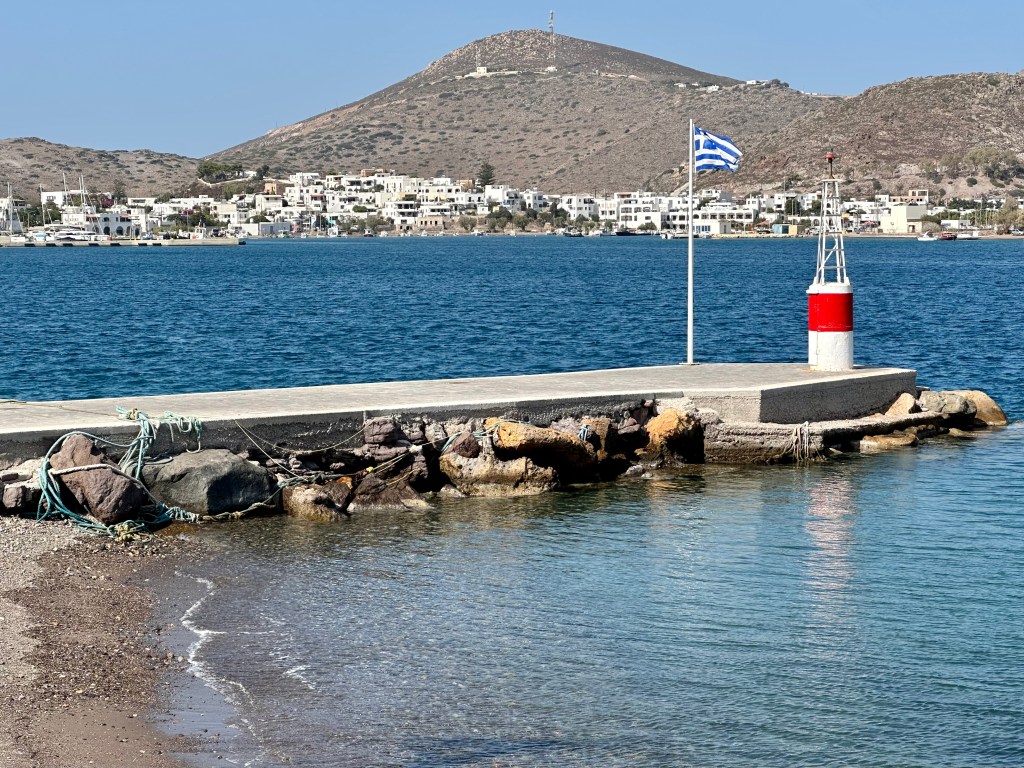
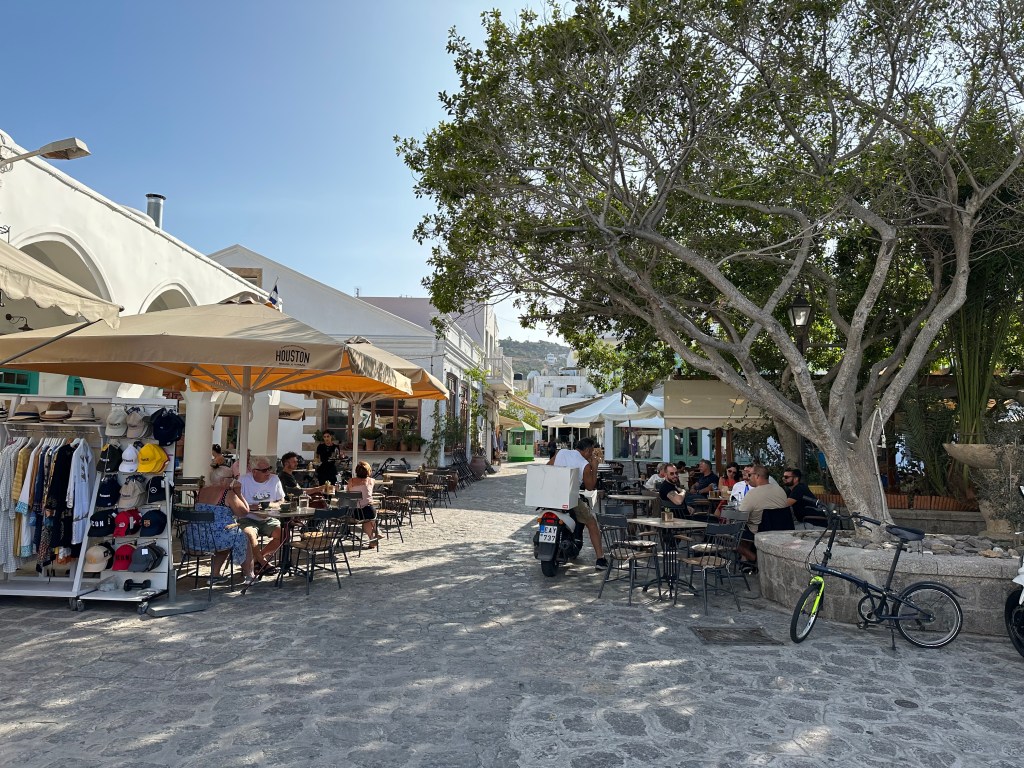
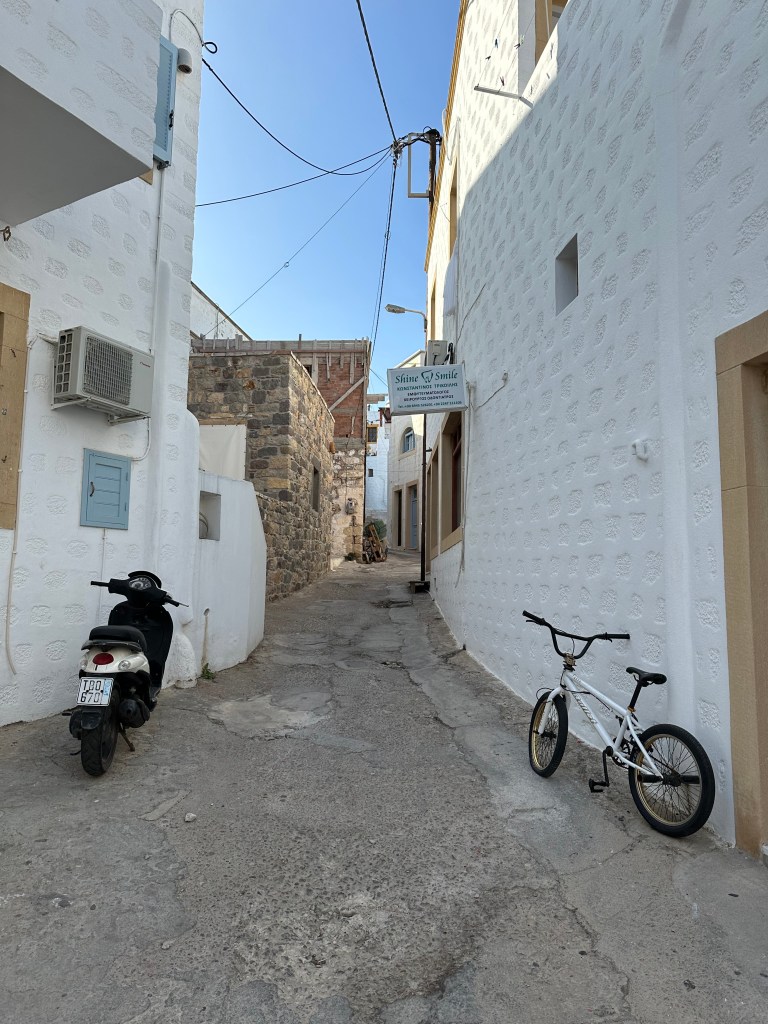
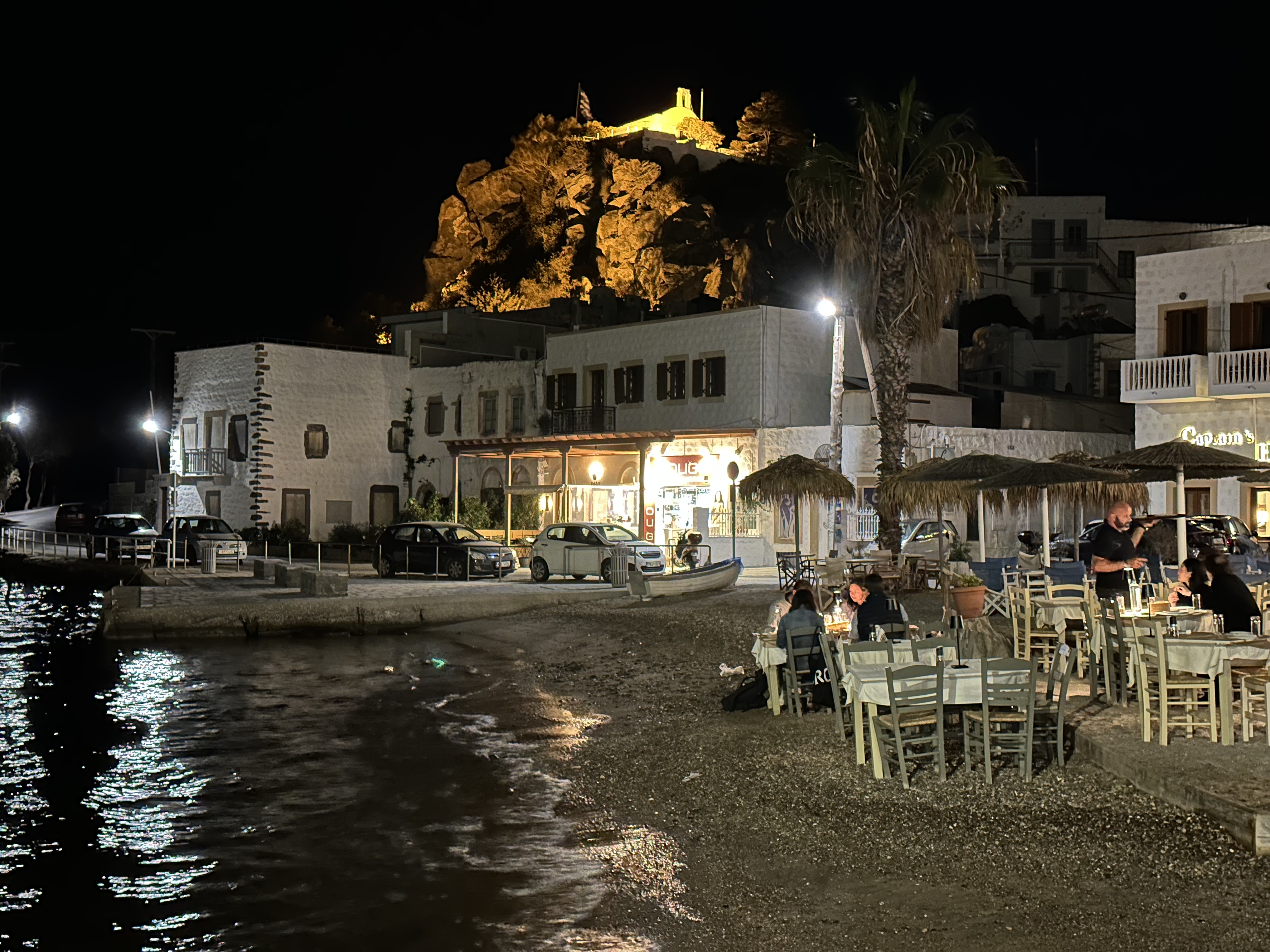
Patmos won over my heart, even though we were only there for a day. I hated leaving its clean, white-washed buildings, friendly residents, and beautiful waterfront.

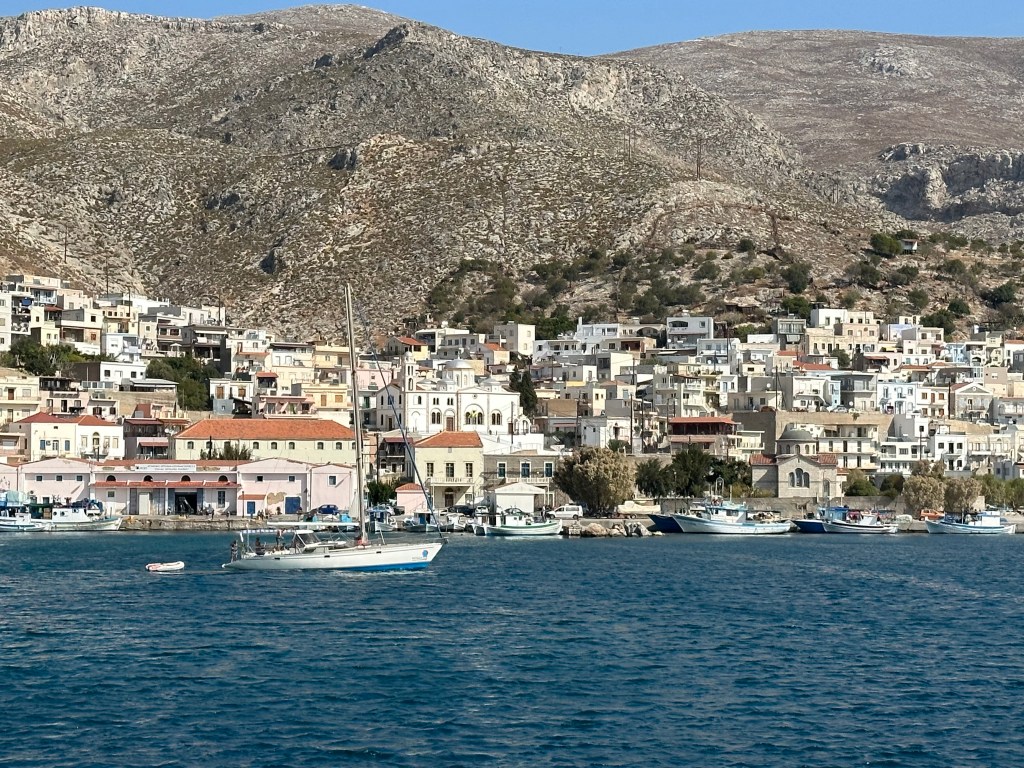
But our island hopping continued. We boarded the ferry for Kos just after sunrise. I stood on the top deck at the stern of the boat as we bid farewell to Skala and Patmos. The three-hour trip to Kos included several quick stops at quaint village ports to take on new passengers and drop off others.

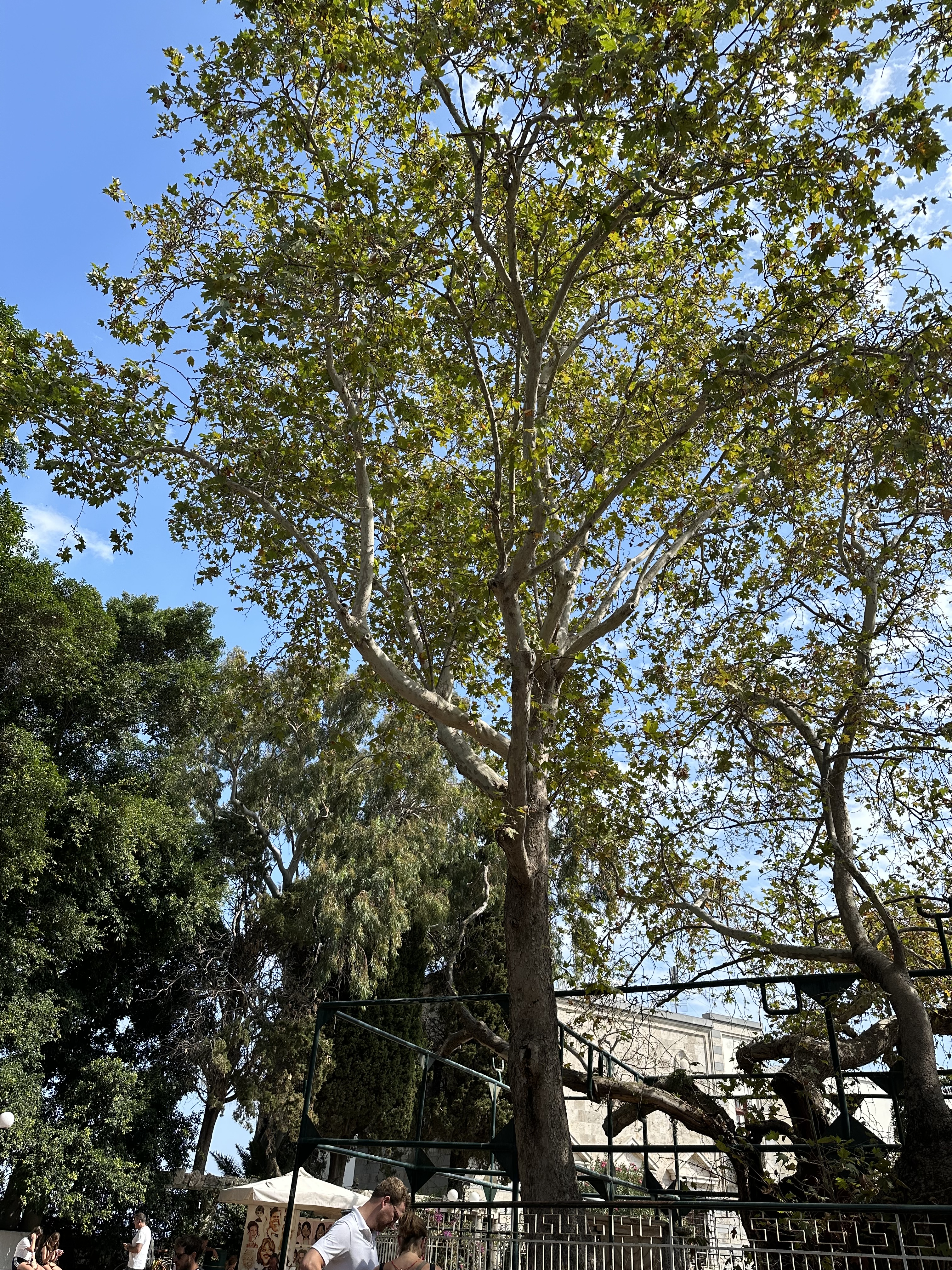
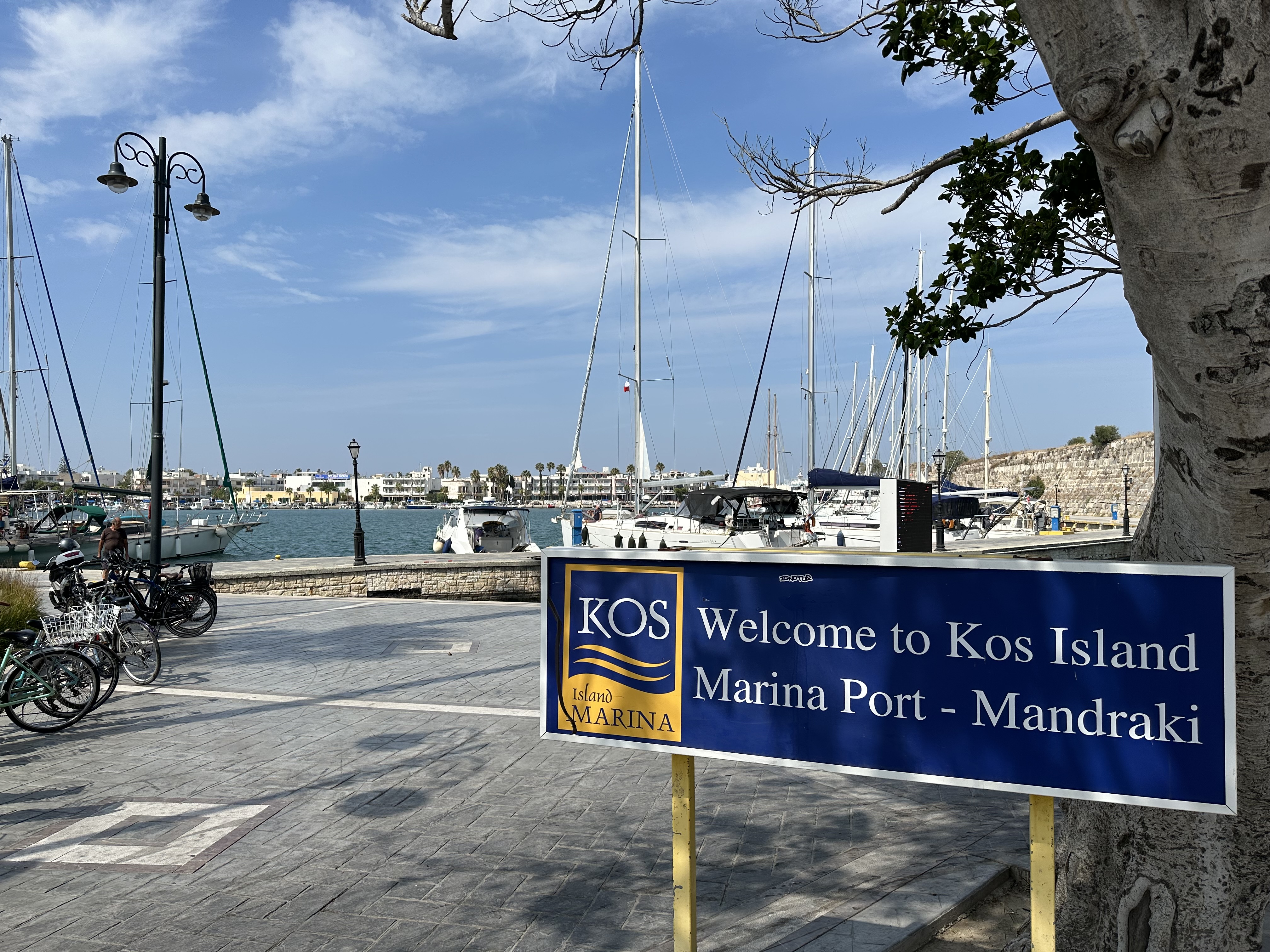
We arrived at Kos’ more modern port, not the ancient one where the Apostle Paul’s ship had moored. We hauled our luggage along cobblestone walkways between the Aegean Sea and an old fortress wall to our hotel. We dropped off our suitcases and gathered in a nearby park at the Plane Tree of Hippocrates.

Legend has it that Hippocrates taught his students about medicine beneath the shade of this old tree. Today, this vernal icon, a close relative of the sycamore, is struggling. The Apostle Paul purportedly taught here as well.

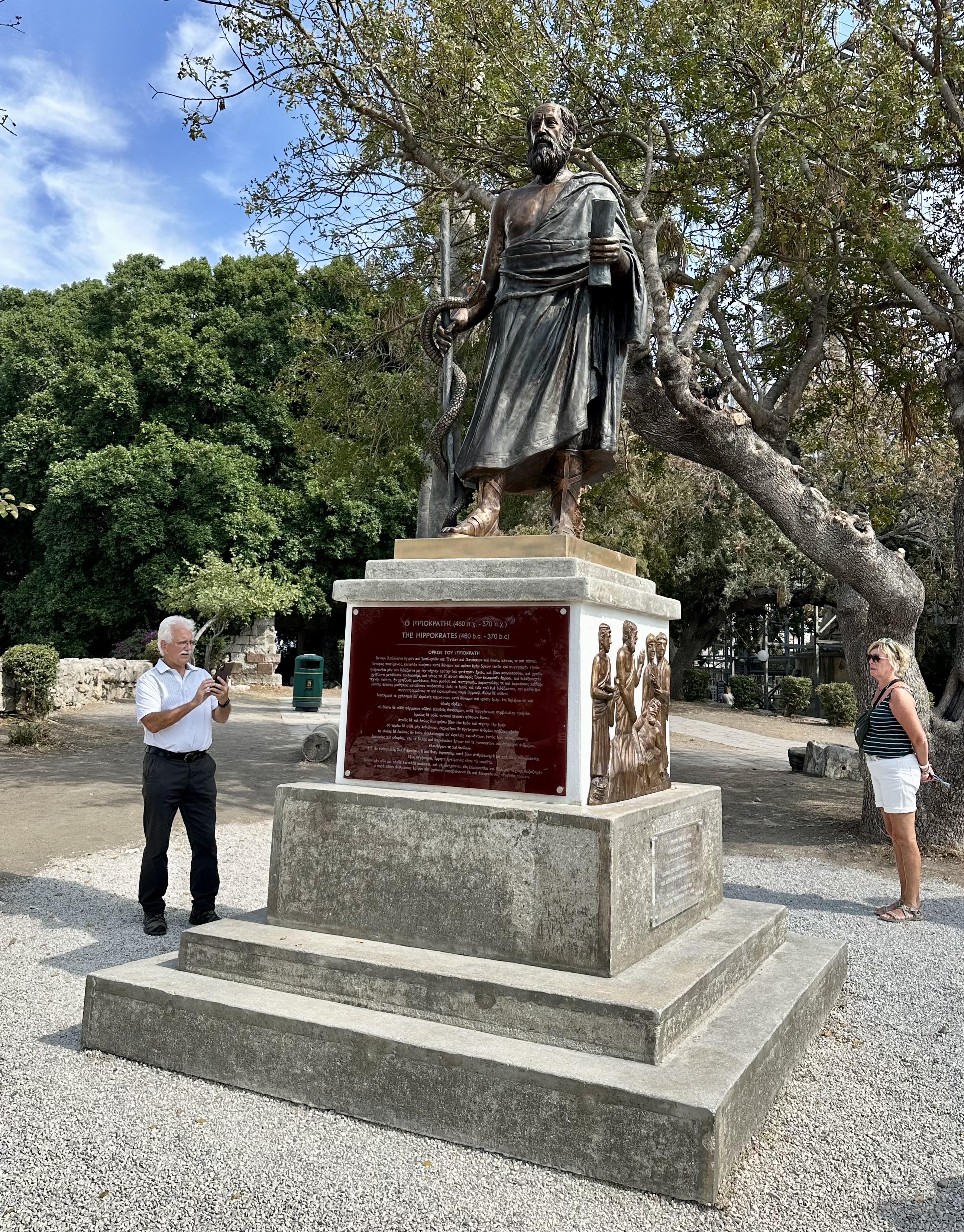
Nearby is the newly unveiled statue of Hippocrates. It stands on a knoll overlooking the old harbor of Kos, where Paul’s ship would have put in. On this, Paul’s third and final trip back to Jerusalem, Luke accompanied Paul.

Please click on the photos to enlarge them.

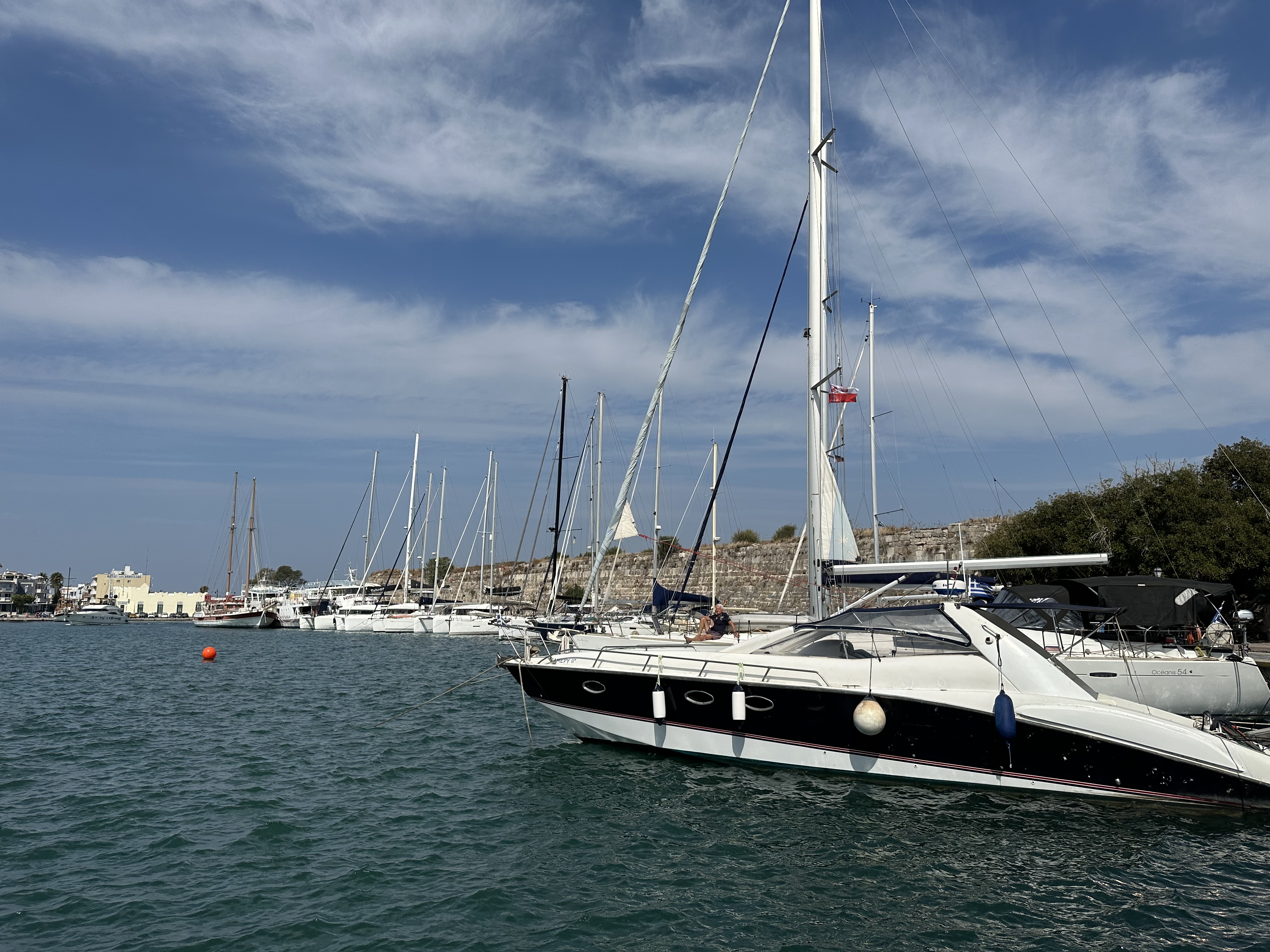
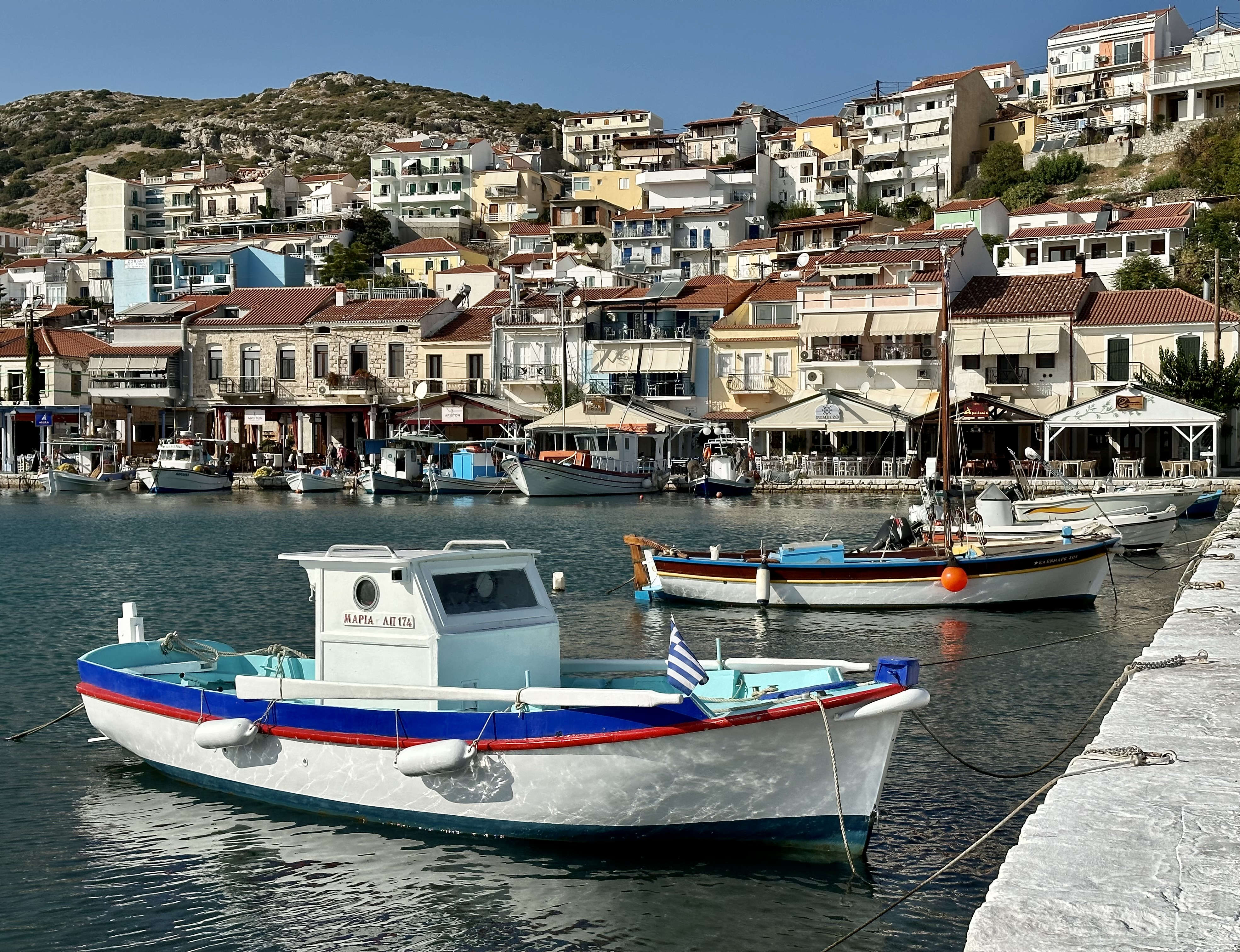
My wife and I found a bench and enjoyed the refreshing ocean breeze across the little harbor filled with sailing and local fishing boats. We watched with interest as a sailing boat carefully backed into an open berth while folks on other ships eyed their maneuvering.

We had a light lunch at one of the many open-air restaurants. I walked the harbor parameters while Neva rested on a bench in the cool breeze.

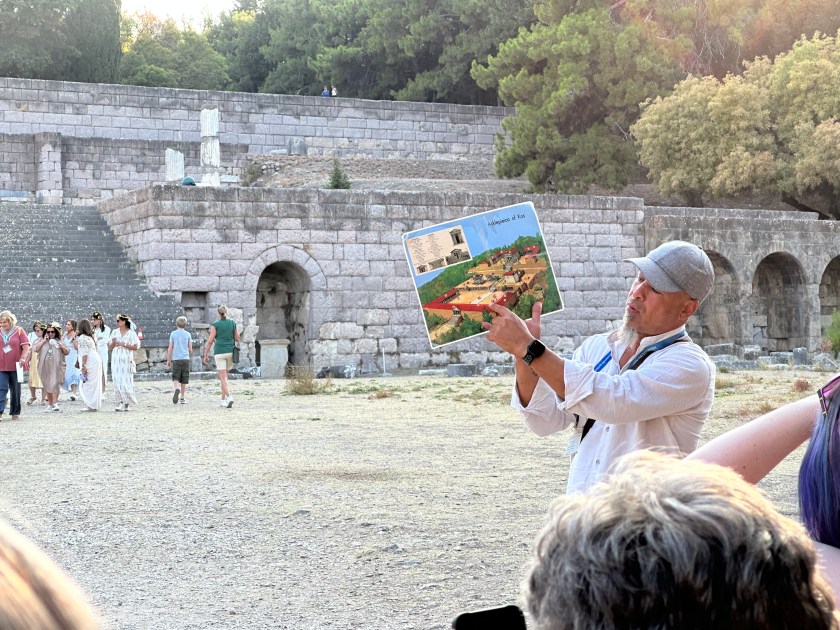
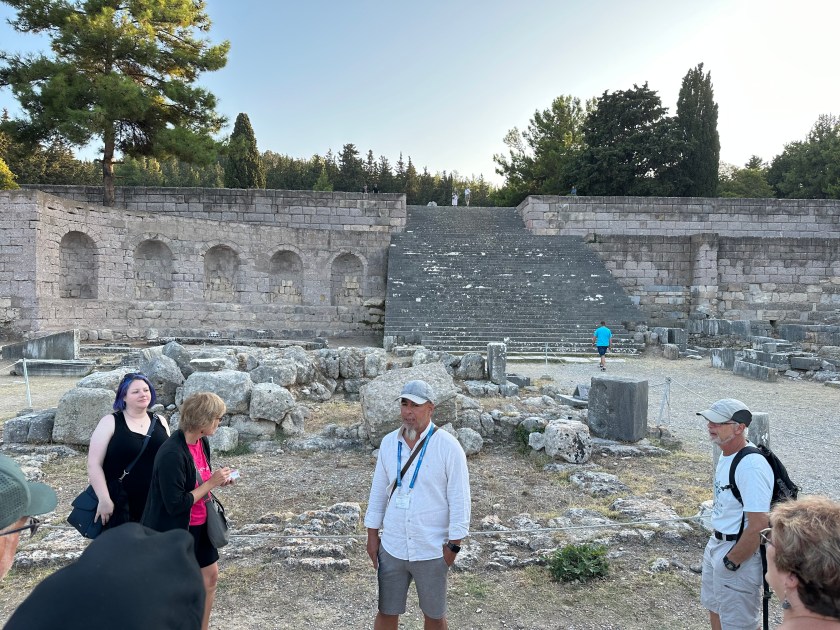
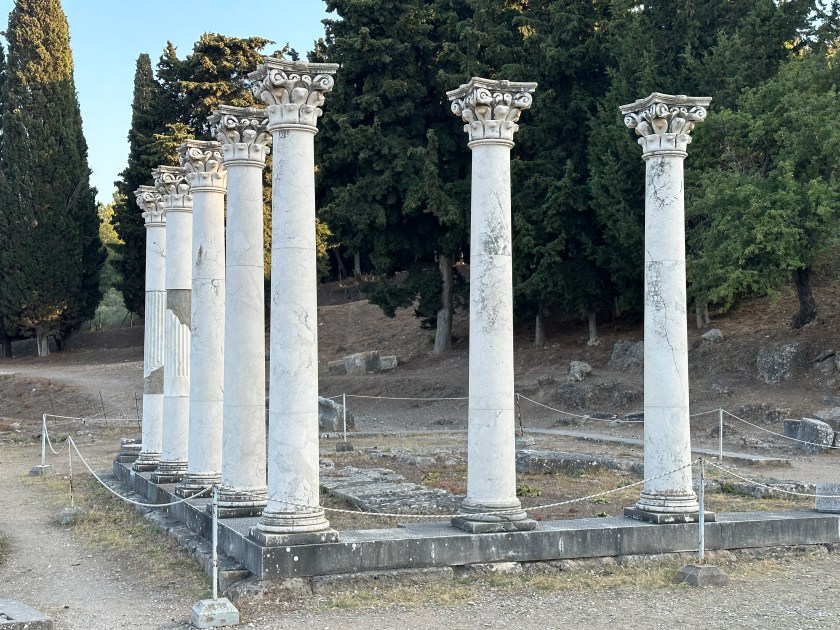
In the late afternoon, our group met a local tour guide at Asclepion, Hippocrates’ healing center of the Hellenistic world. It was a fantastic place with an equally impressive history.

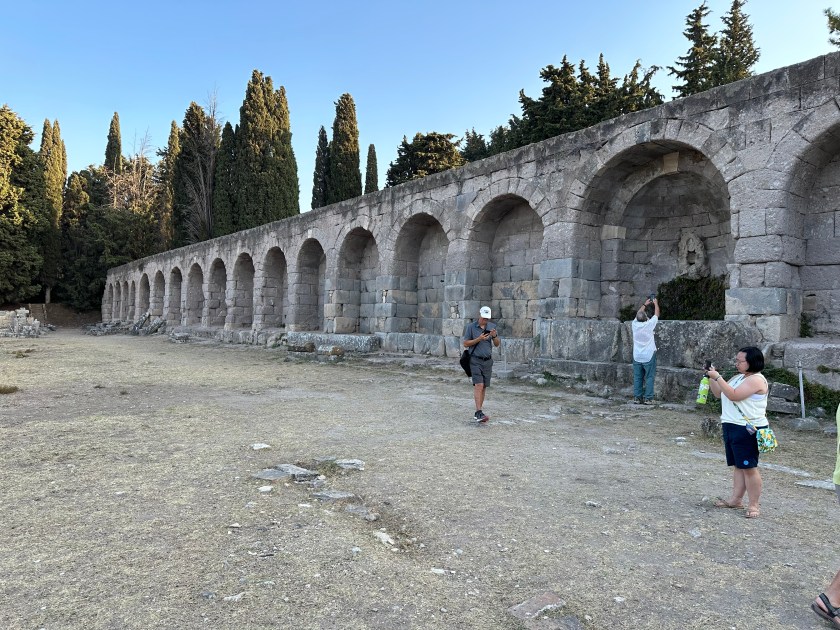
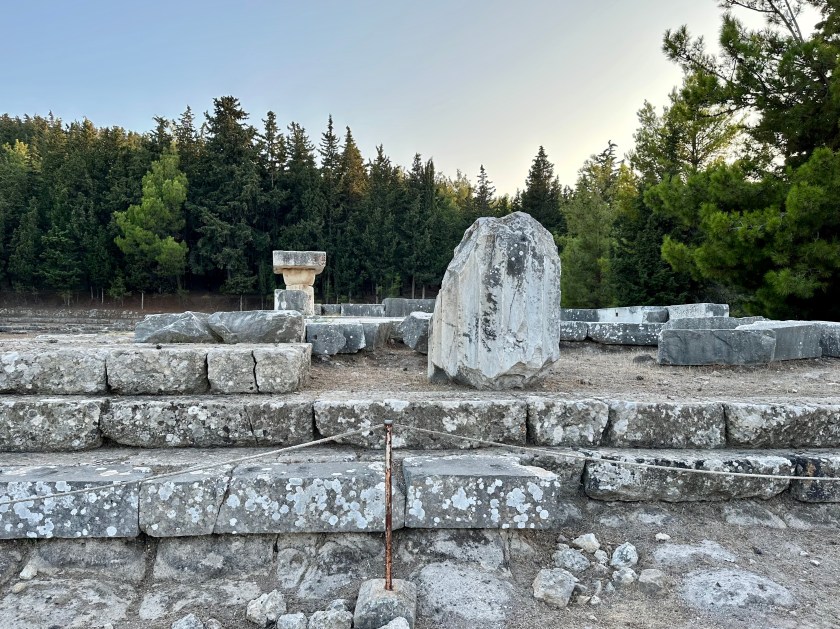
People throughout the Mediterranean region came to Asclepion to be healed of all sorts of ailments. The ancient hospital was built high on a hill sloping away from the Aegean Sea. The three-tiered grounds enabled patients to be evaluated and prioritized by need and ailment.

A series of steps connected the terraced levels of Asclepion. Walls once held statues of gods and flowing fountains. There was even an area beyond the terraces for patients who needed quarantined.

A few of the marble steps at each level were original. The view from the top level made it worth the climb.

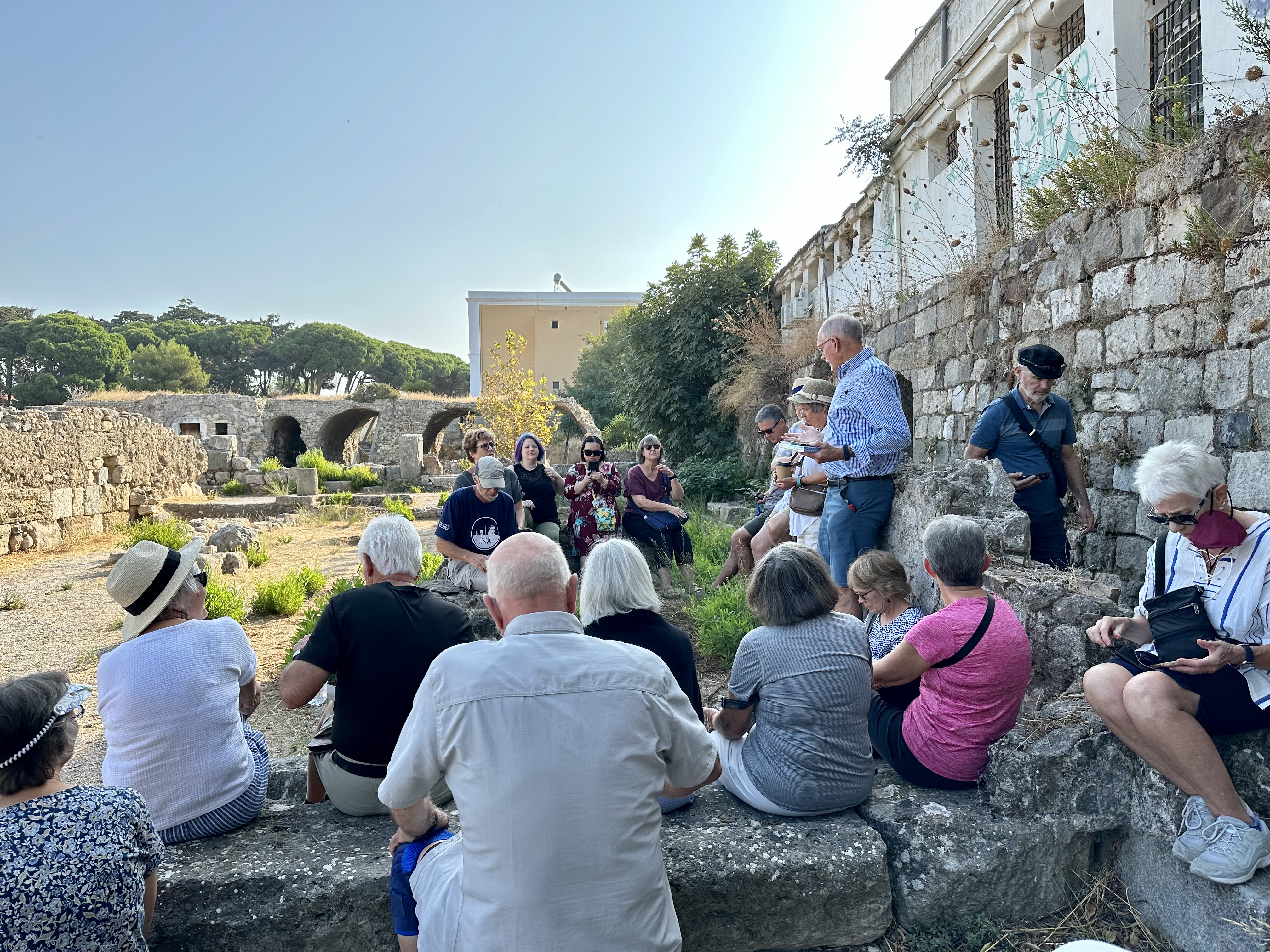
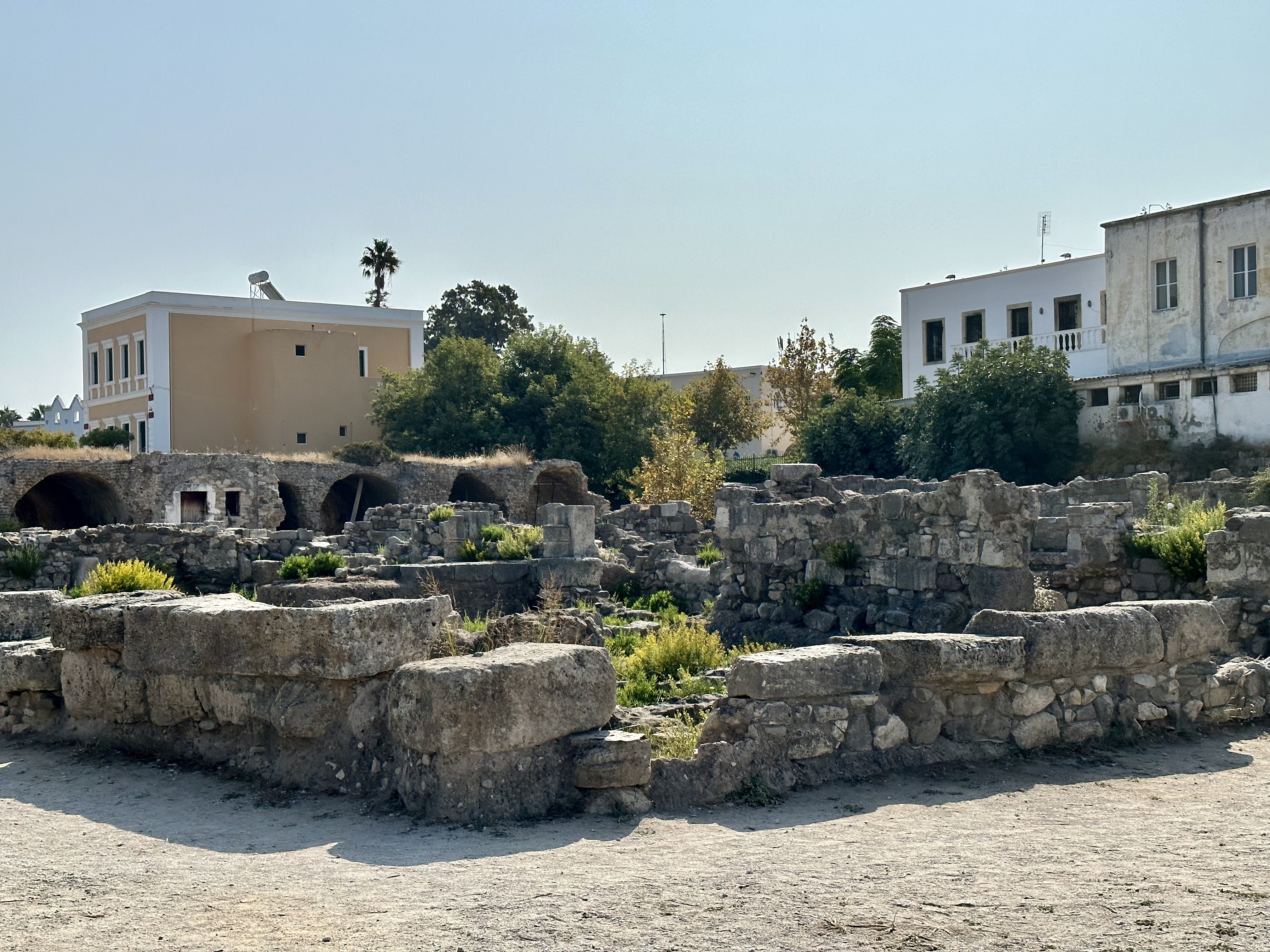
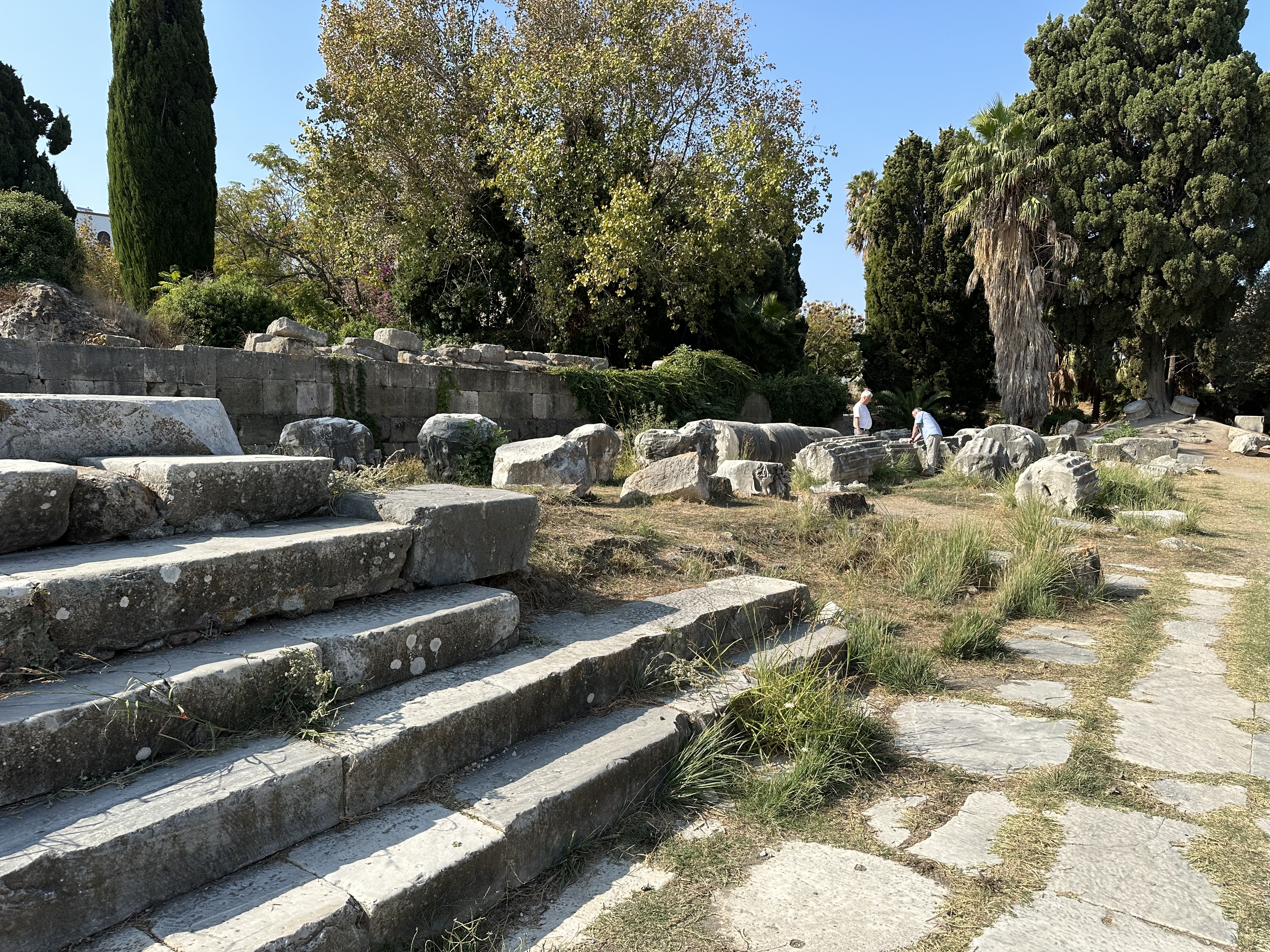
We had a brief worship service in the Roman Agora in Kos in the morning. I pondered the setting and the centuries of history that haunted this place. Massive marble columns lay askew everywhere, like giant pick-up sticks. The remains of old buildings, including apartments, filled the once bustling gathering place. All of these thoughts seasoned the talk by a chaplain in our group.

Please click on the photos to enlarge them.

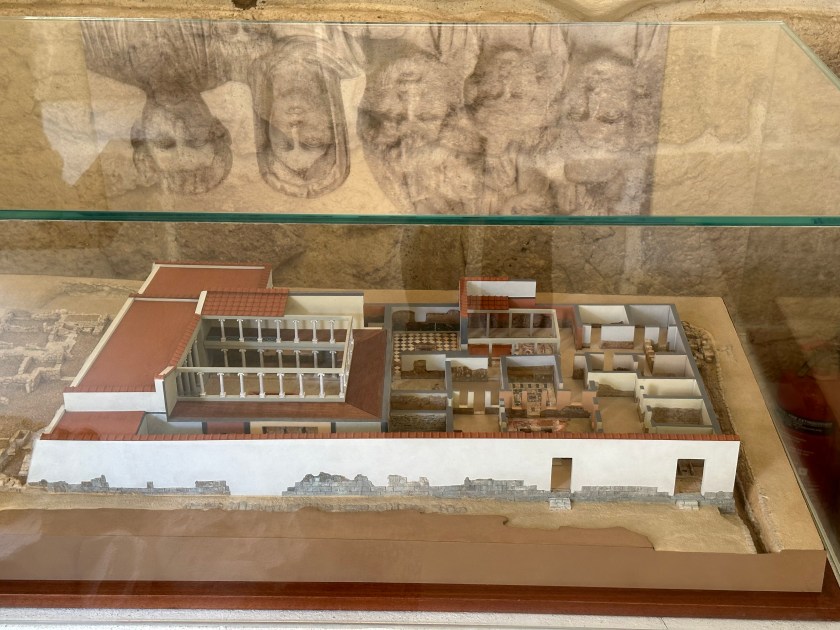
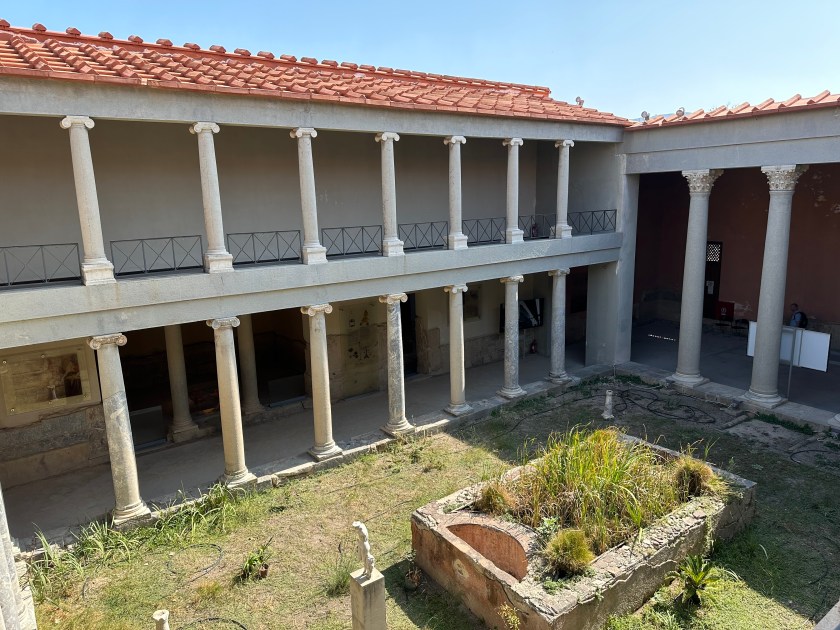
Since the ferry departure time to Rhodes had been changed to early evening, we had the rest of the day to explore Kos on our own. My wife and I chose to tour a reconstructed Roman villa, which was large even by today’s standard for McMansions.

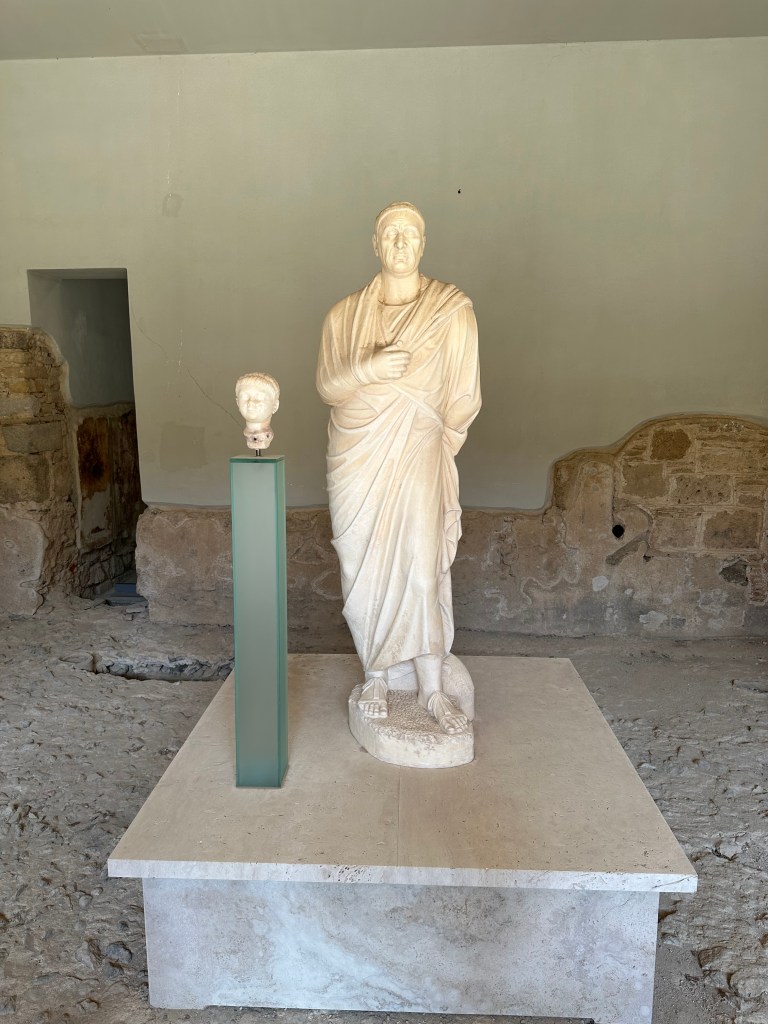
The villa was filled with artifacts from the period it would have been lived in. Mosaics, typical of the Greek and Roman cultures, adorned several rooms.

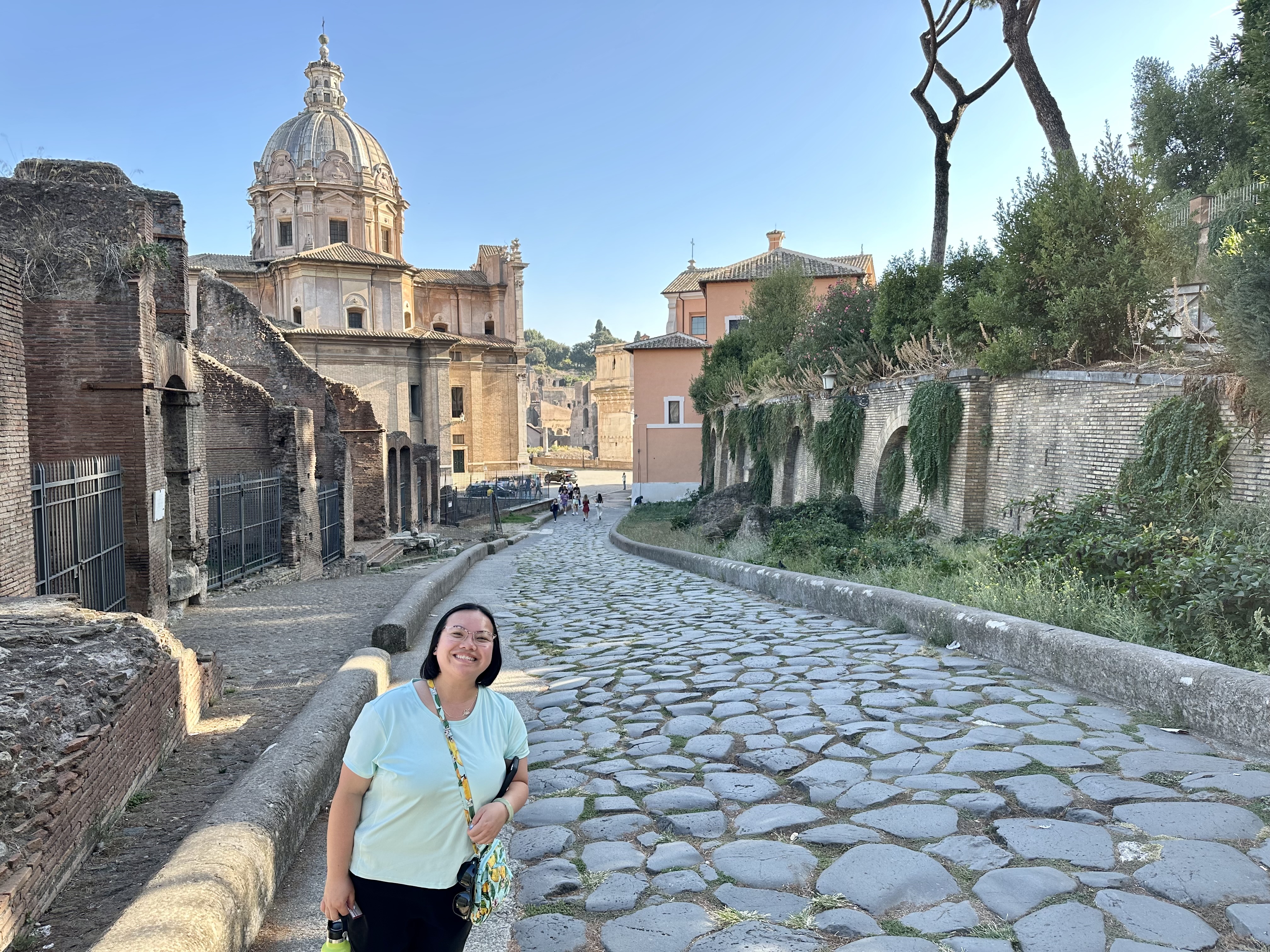
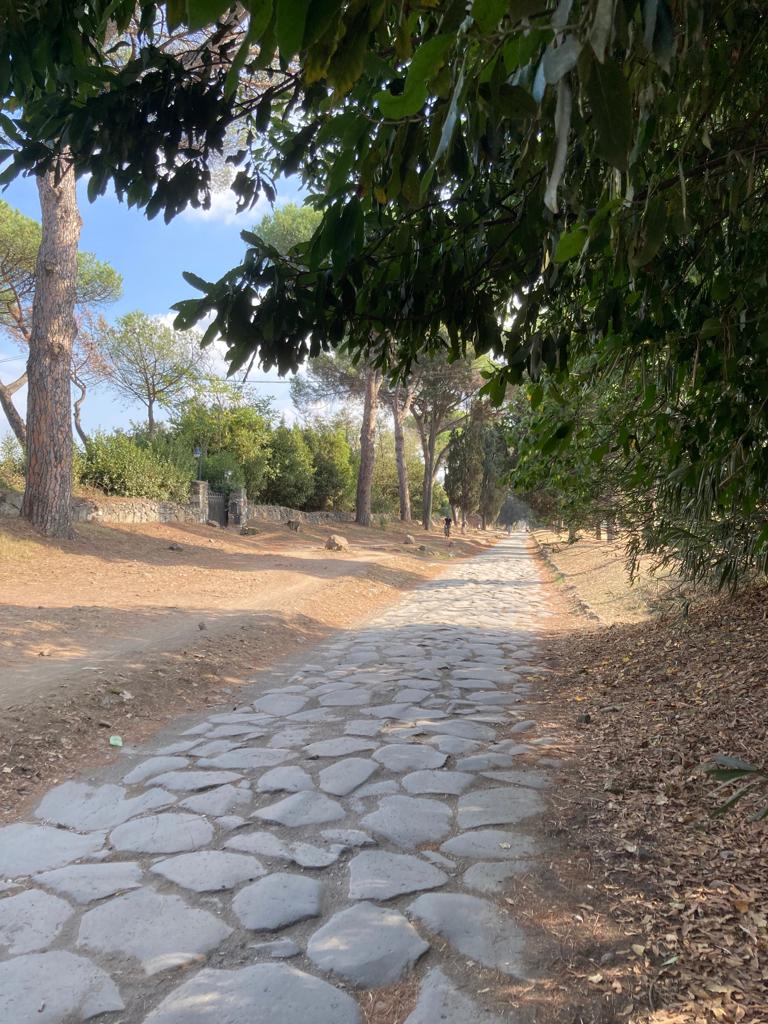
We walked a short distance from there to view an old Roman road. The stones looked as if you could drive on them today.

With the heat of the afternoon building, we headed back to the hotel to rest and for refreshments before boarding the ferry. Some in our group, including my wife and me, had picked up a bug. With our persistent coughing, we took a cab to the pier.

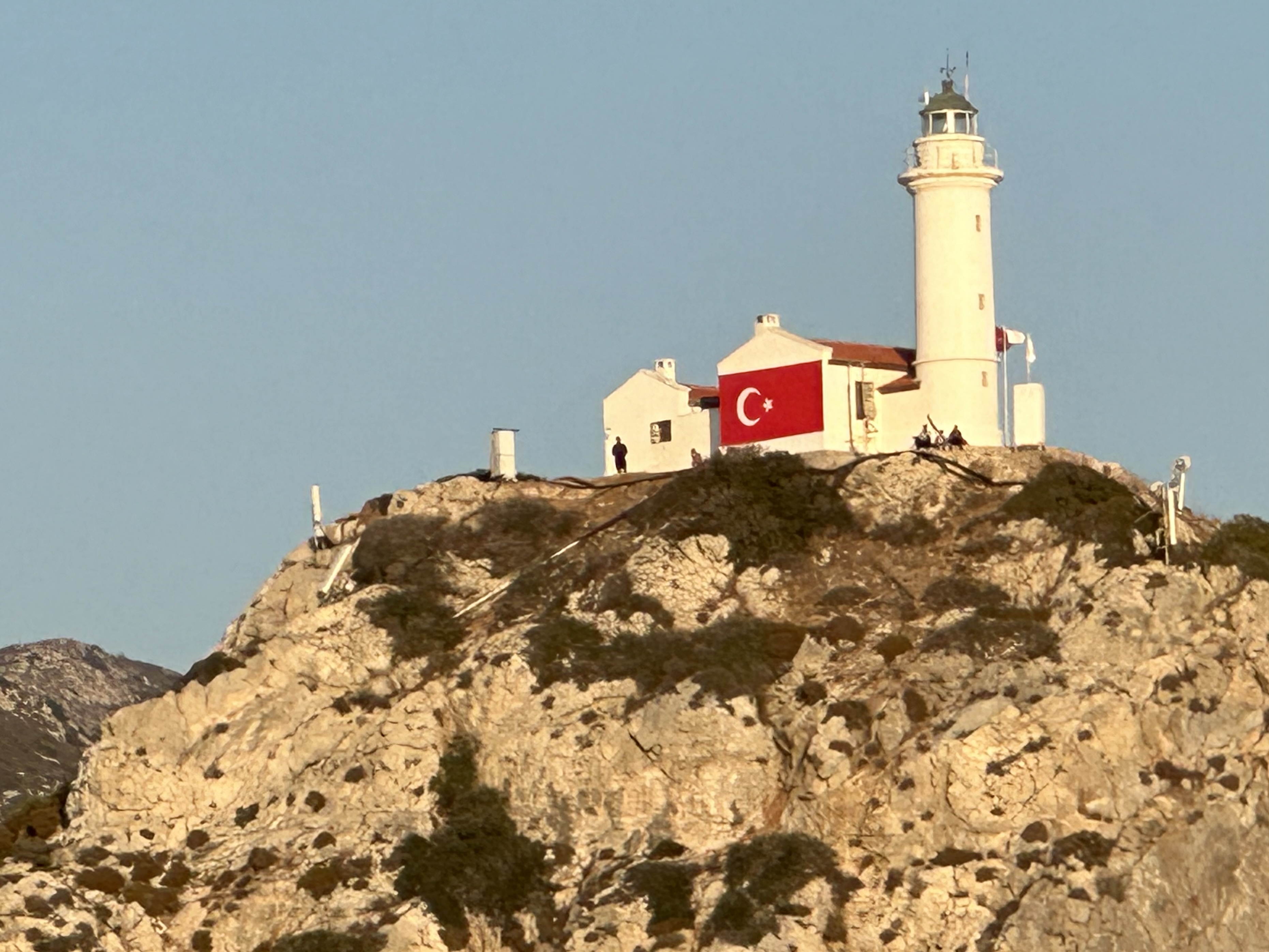
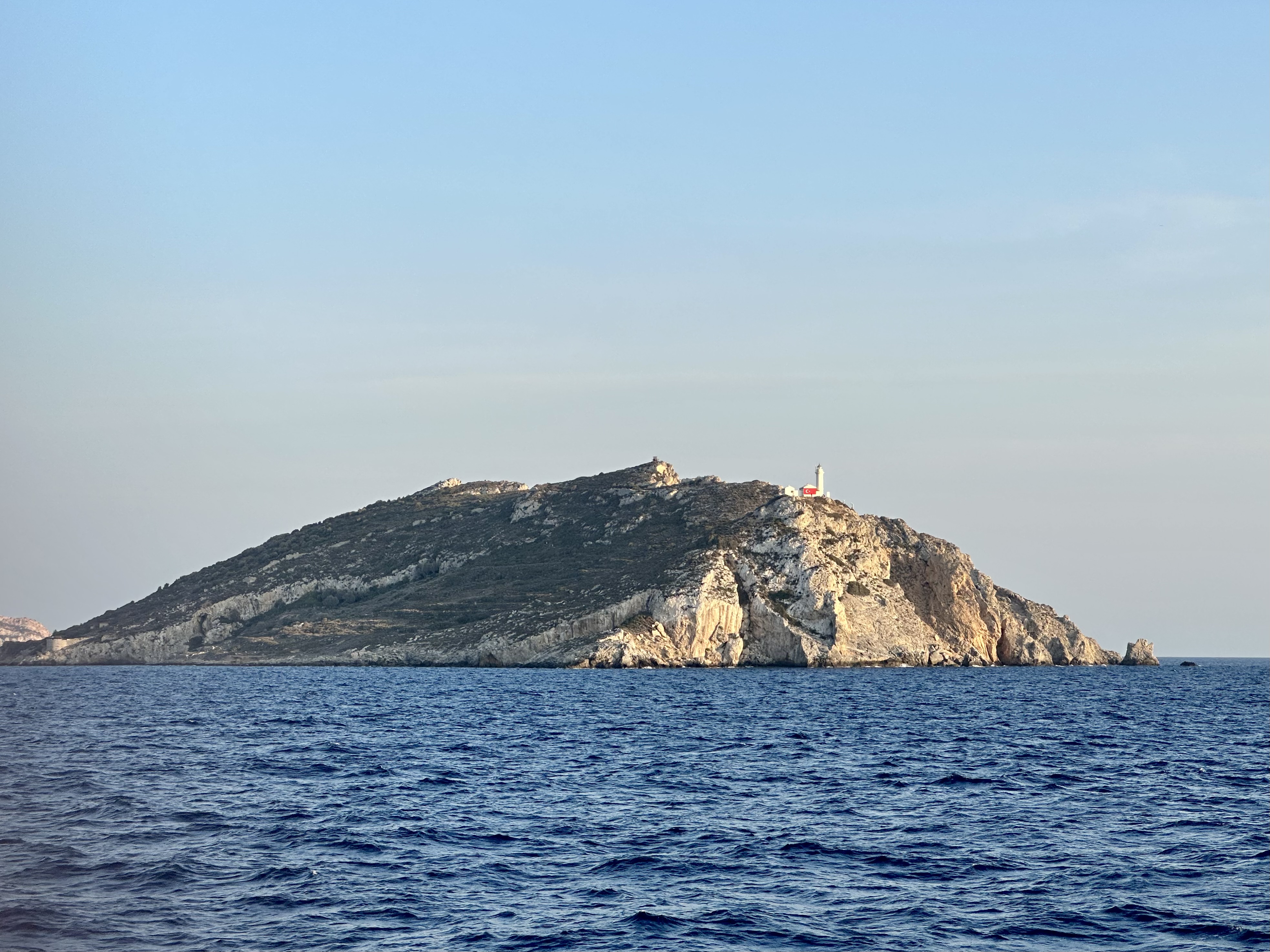
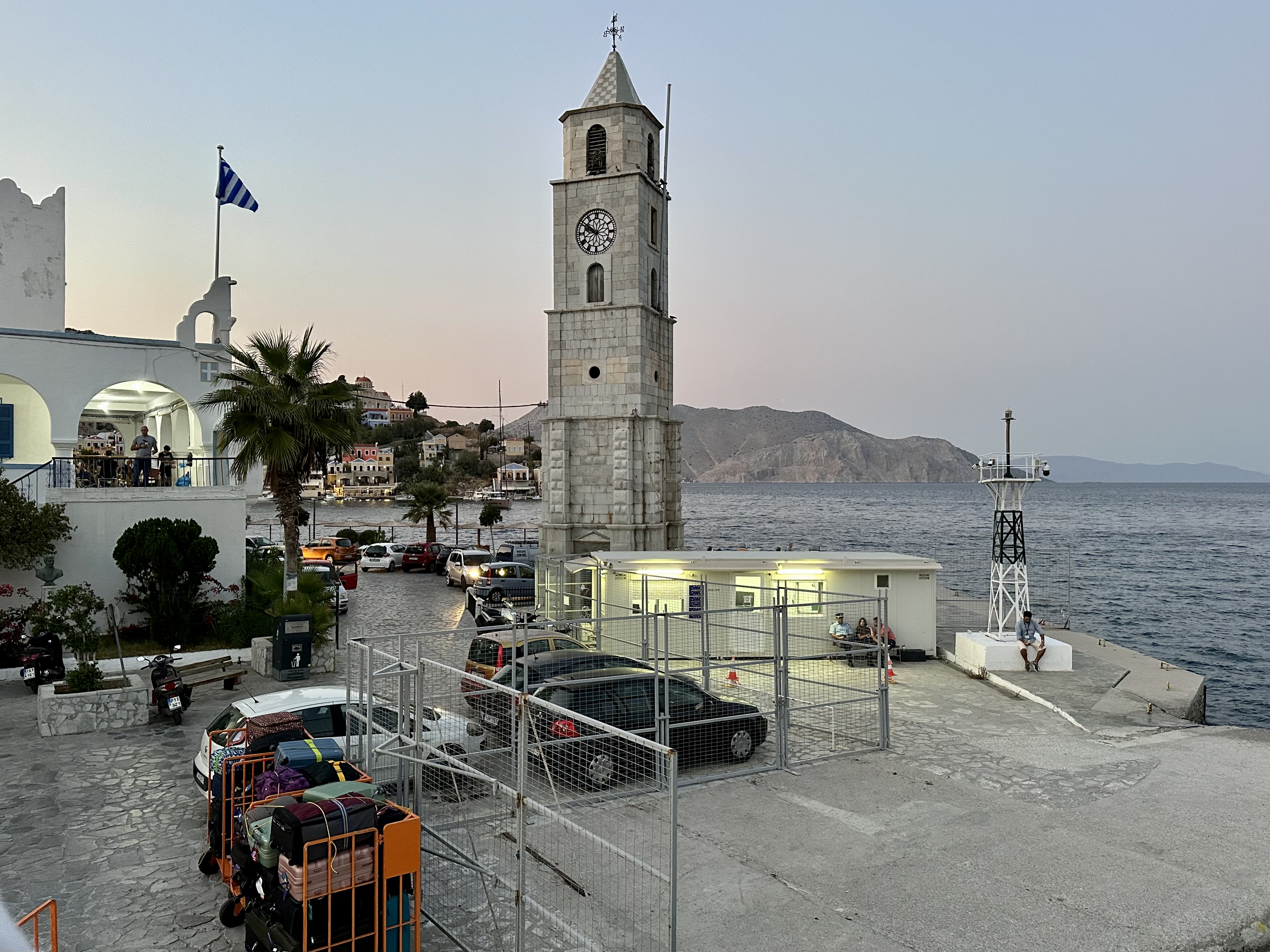
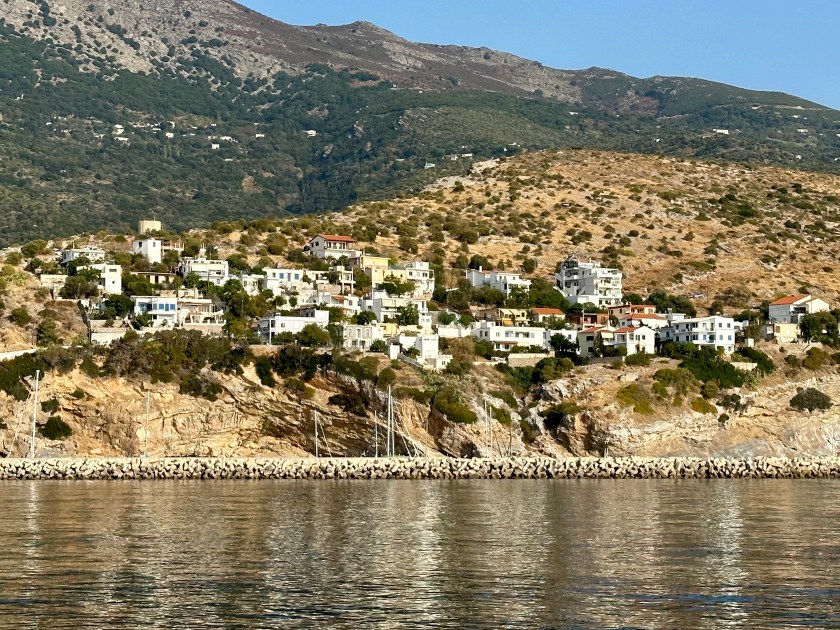
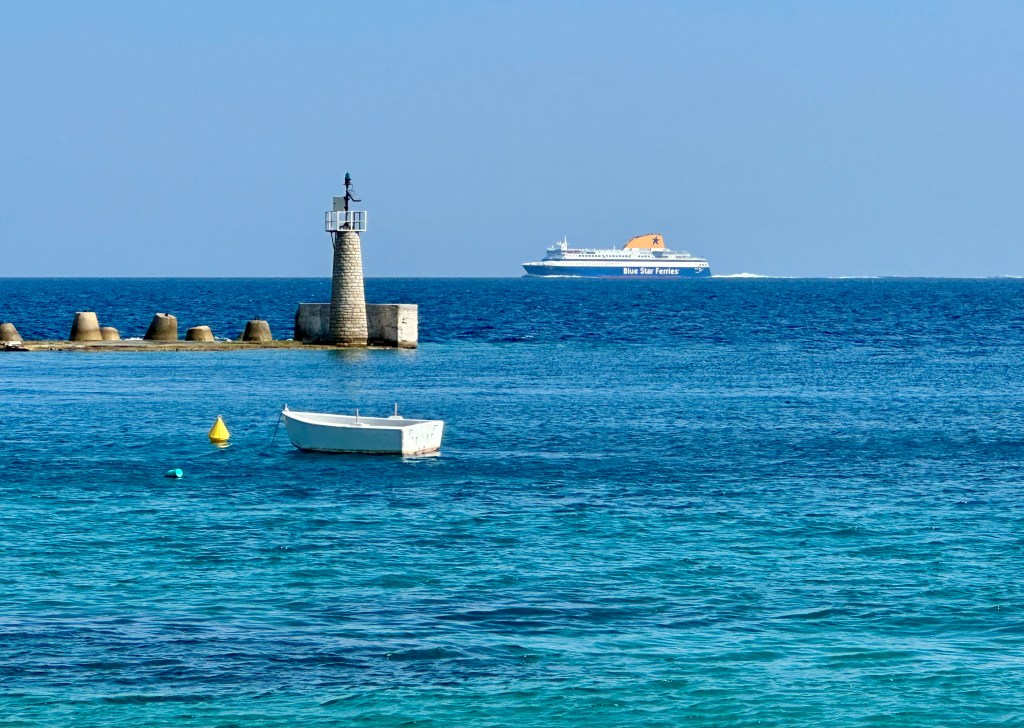
The ferry was on time, and we prepared for an extended cruise to Rhodes. Of course, we had several stops in picturesque seaside towns. On the way to Symi, we passed a lighthouse high on a steep ledge in Turkey. Later, a stunning sunset sunk behind a mountainous island.

Tomorrow: The island of Rhodes.

The sun sank behind a mountainous island on the way to Rhodes.

© Bruce Stambaugh 2023

A Photo Essay: Following the Path of Apostle Paul – Day 6

Skala on the island of Patmos, Greece.

We hated to leave Samos. We enjoyed it so much.

Nevertheless, we were up early again to catch the ferry to our next adventure, the island of Patmos. The island hopping via ferry began in earnest.

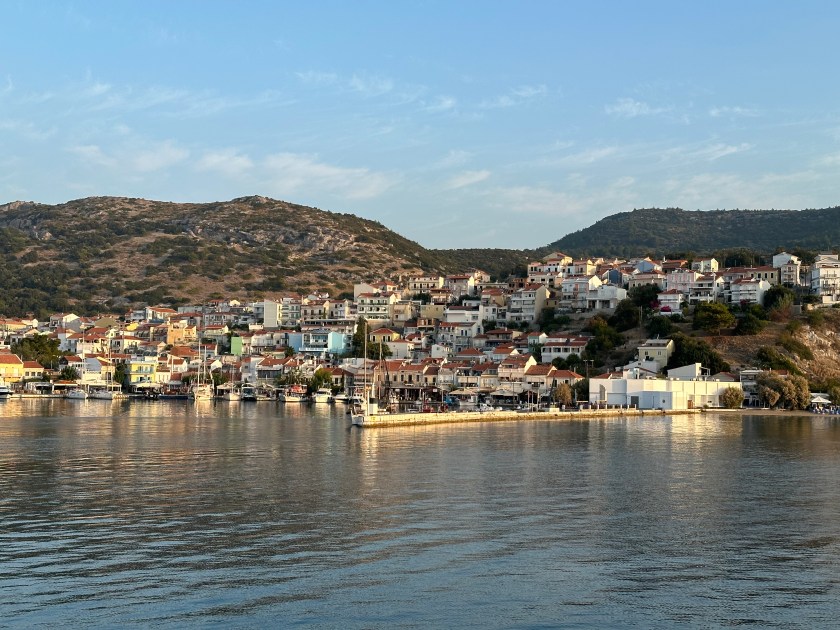
I took a few photos of Pythagereio as the ferry sped away. We stopped at a few small island villages to pick up and drop off passengers. The island ferries have their routine down pat. Some passengers deboarded while we welcomed others on board and were off at one stop in just over a minute. We arrived in Skala harbor, Patmos, Greece, right on time. The ferry operators clearly run a tight ship.

As soon as Skala came into view, Samos became a pleasant memory, and I focused on new, unknown adventures on Patmos. We walked briefly from the port’s pier to our lovely Blue Bay hotel.

The entrance to the cave.
The view John had from the cave.

It wasn’t long before we boarded a bus and rode halfway up the mountain to the Cave of the Apocalypse. Here, the Apostle John saw his vision that became the book of Revelation in the Bible. We entered the room leading to the cave with awe and reverence. No photos of the cave itself were permitted.

John had been banished to Patmos from Ephesus by the Romans. Patmos was considered a barren island, where prisoners were often sent. On a clear day, John could just about see his beloved Ephesus from his cave. Ironically, John later returned to Ephesus, where he died naturally, the only disciple to do so.

We retreated to a shaded area in bleachers above the building built around the sacred cave. Our leader, Linford, had a message for us. He couldn’t speak very loud since another group was holding a mass just below us. Rather than summarize the talk, please watch the informative video below. Please turn your sound up all the way to hear the talk.

After Linford finished his fun sea shanty, we went to the mountain’s top via bus and visited the Greek Orthodox Monastery of St. John the Theologian. Both the monastery and the cave are UNESCO World Heritage Sites. The town of Chora is built around the monastery.

After a light lunch, we rode back down the mountain and checked in at our hotel. We had the rest of the day to tour Skala, a town as beautiful and quaint as Pythagereio on Samos.

Please click on the photos to enlarge them.

Neva and I found a recommended family-owned seafood restaurant away from the harbor area. We were the only customers at 6:30 p.m., but by 7, every table was filled. The restaurant’s owner doubled as our waiter. I ordered sea bass, which he caught in the morning.

Once the sun went down, the little town came alive. A political rally near the harbor may have contributed to that crowd and excitement. It was a very fulfilling day we’ll remember for a long time.

Tomorrow: On to the island of Kos

Nightlife in Skala, Patmos, Greece.

© Bruce Stambaugh 2023

A Photo Essay: Following the Path of Apostle Paul – Days 4 & 5

The town of Pythagoreio, Samos, Greece.

We were up early to catch a short flight to the island of Samos. In fact, the trip to the airport took longer than the flight.

Morning traffic on the way to the Athens airport.

We went to Samos because it was one of the ports where a ship carrying the Apostle Paul stopped. From Acts 20, verse 15, it appears it was simply an overnight stay. The island was the birthplace of two influential men, Pythagoras and Epicurus.

The town where Paul stayed is called Pythagoreio in honor of the famous mathematician. A statue honoring Pythagoras is situated midway on one of the town’s harbor piers.

It wasn’t just his math abilities that garnered great respect for Pythagoras. A giant underground aqueduct was dug through the mountainside in the 6th century B.C. to gain a regular fresh water supply. The Eupalinian Tunnel ran nearly 3,400 feet through Mount Kastro to bring potable water from the island’s west side.

The Cup of Justice.

Conditions for digging the tunnel were horrible, and workers argued about the fairness of their wages, paid in wine and bread. Workers claimed they had slaved harder than others. To solve this dilemma, Pythagoras invented the Cup of Justice, also called the Pythagorean Cup, so that all workers received their fair share.

The cup has a protrusion in its middle and a line around the inside to show how much wine should be poured into it. Should a worker fill the cup beyond the line, the cup would rapidly drain its contents via a siphon system. That ingenious device halted the arguing and greed of some of the workers. Artisans produce the cups and decorate them to be sold to tourists. Of course, we bought one.

Our time in Samos was joyous and relaxing. We had lots of free time to explore the town with its cobblestone streets and sidewalks, find our own restaurants, and enjoy the quiet and beauty.

As we explored Pythagereio, we discovered many wonderful alleys and buildings. An old castle and the adjacent church were still closed due to damage from an earthquake a few years ago.

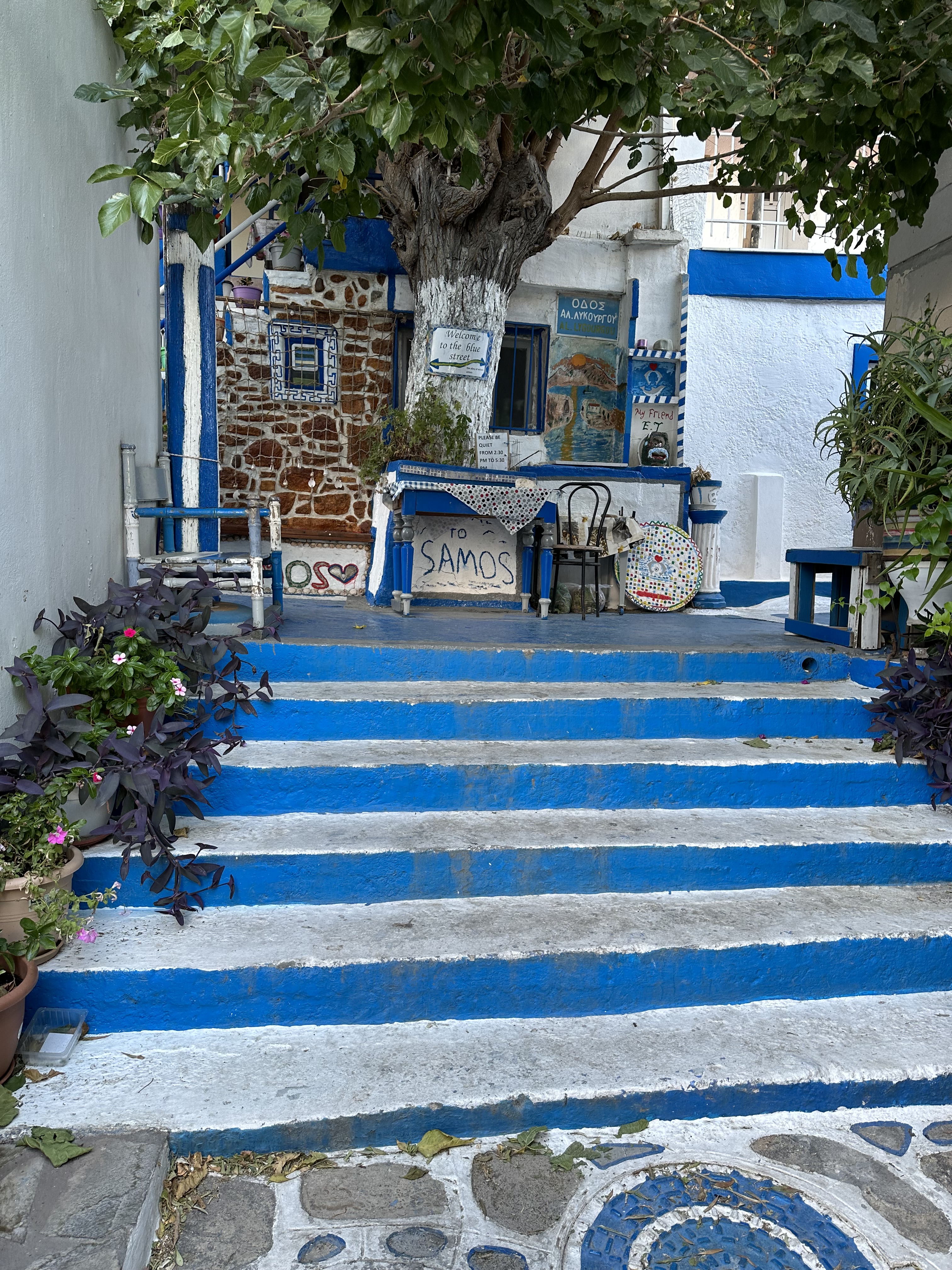
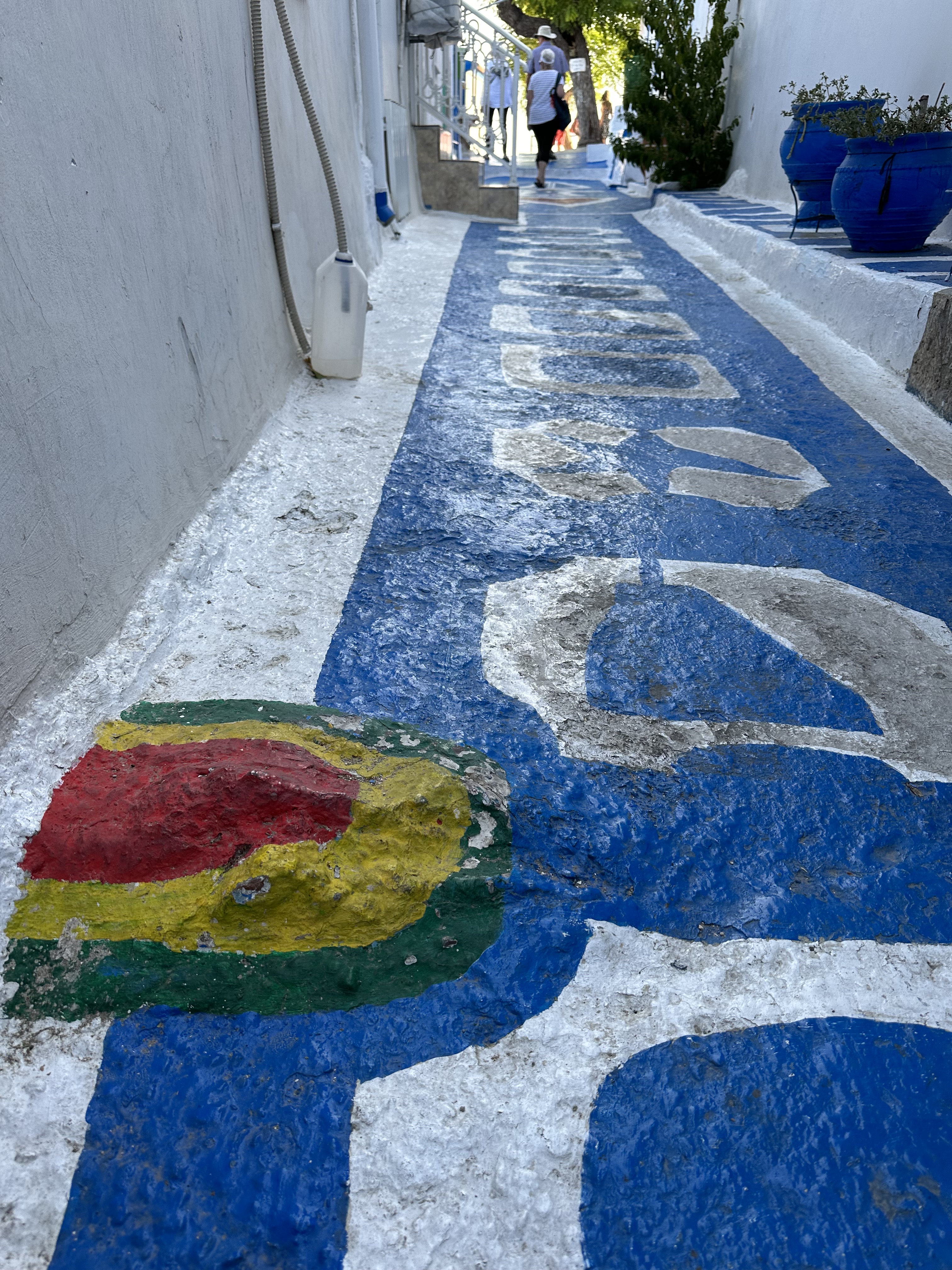
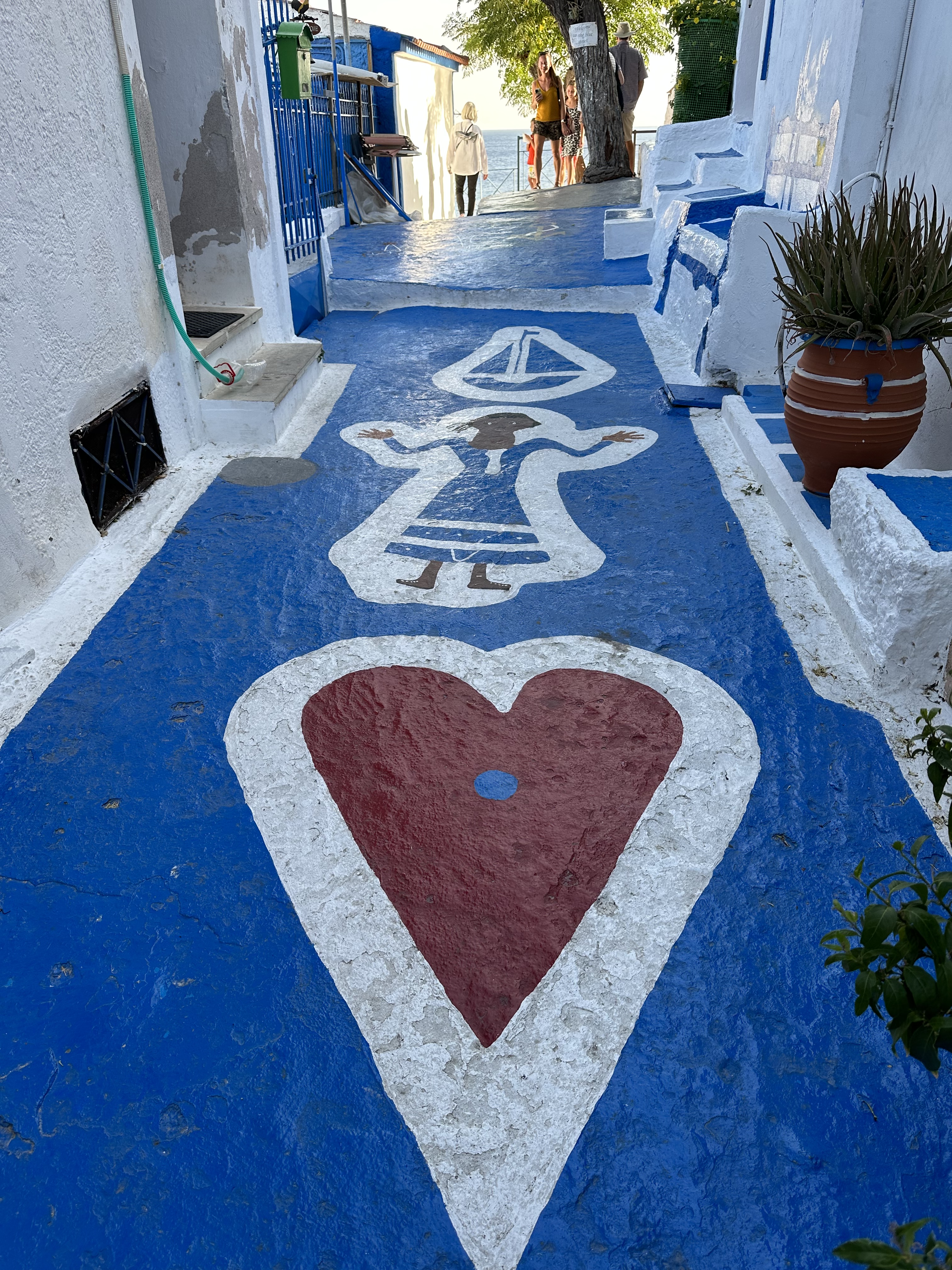
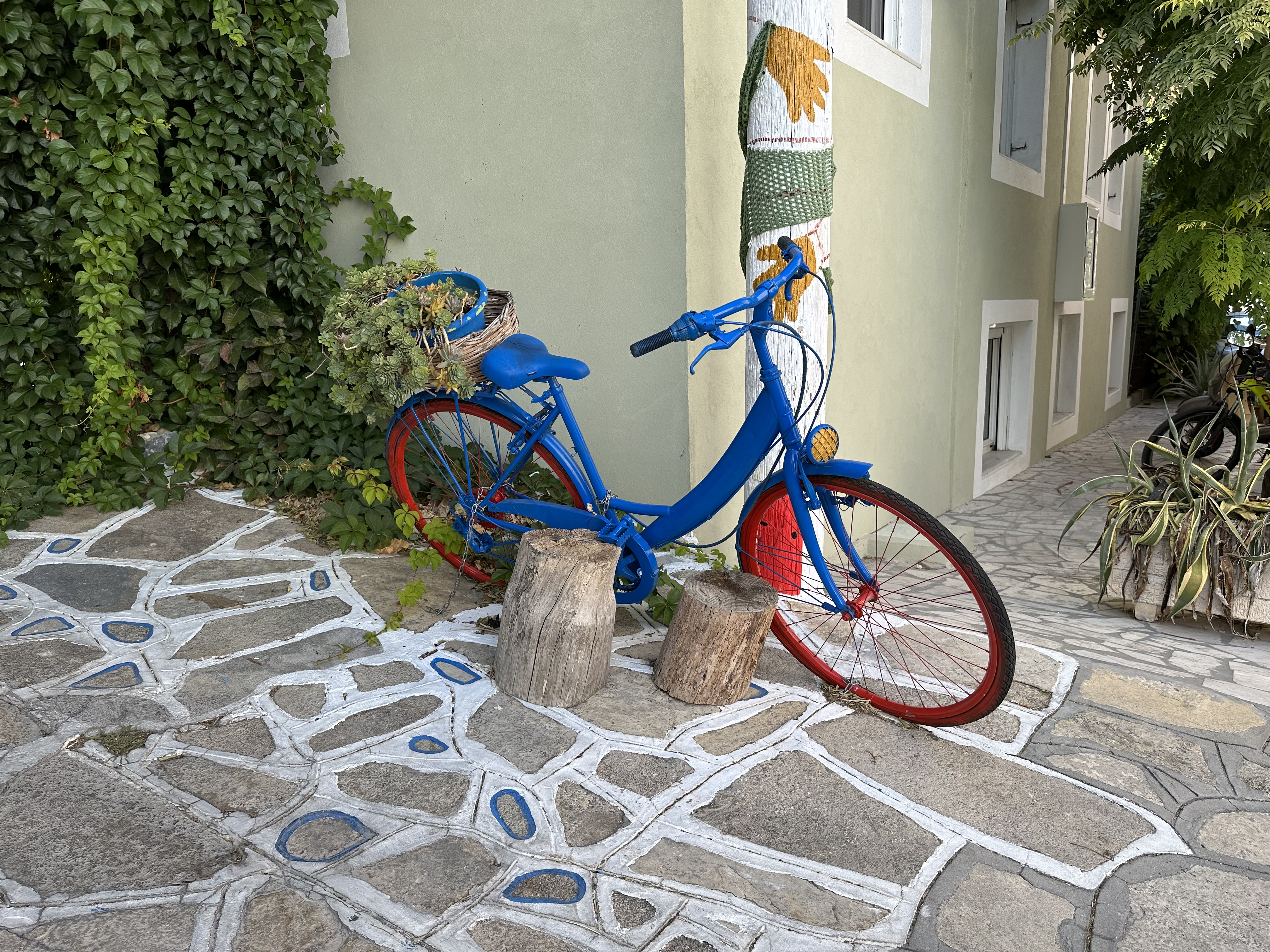
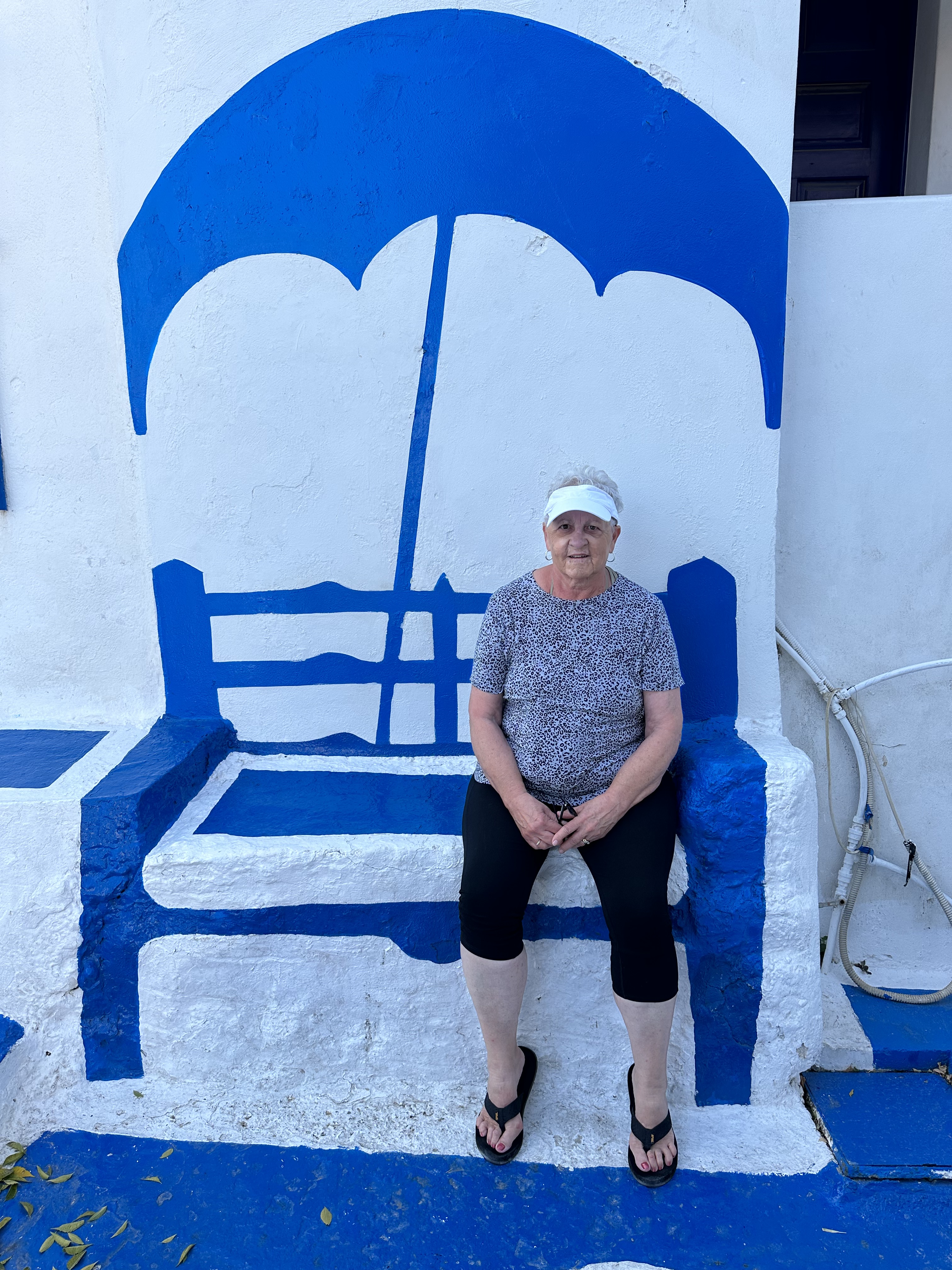
Just down the hill was Blue Street, not much more than a sidewalk with most everything painted blue by the local retired artists who lived there. We found their creations fun and attractive. They painted everything from manhole covers to doorways.

Most of all, though, my wife and I simply enjoyed sitting on a bench near the customs station on the harbor. We viewed the quaint town from our seats and enjoyed watching a few boats come and go.

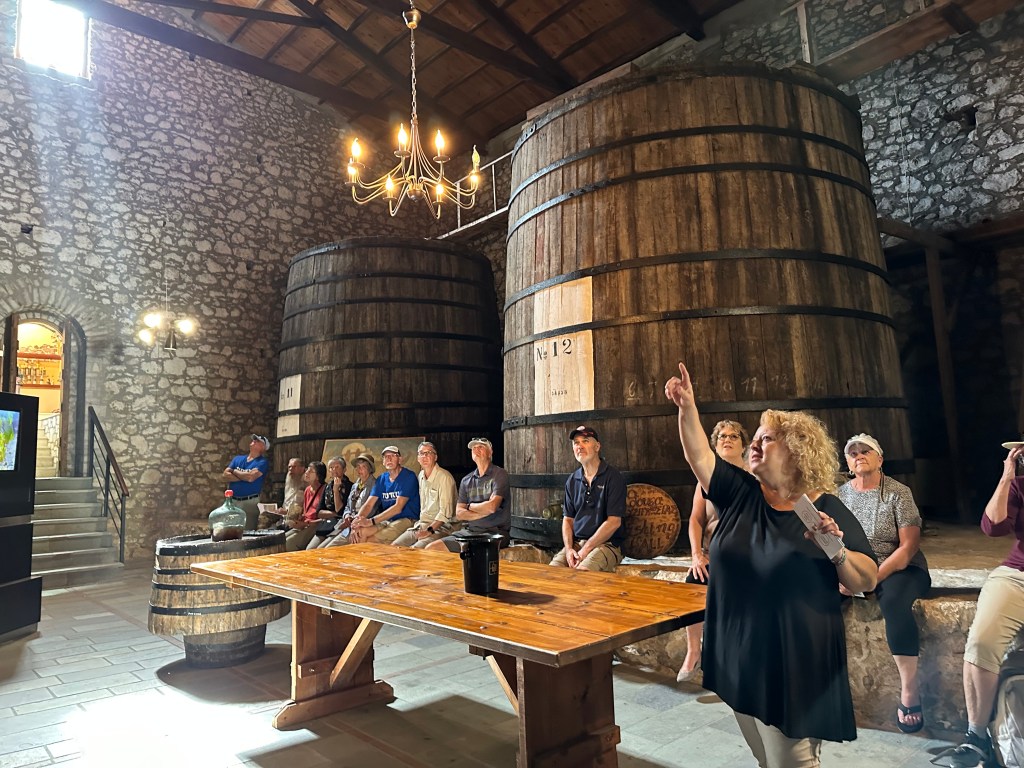
On the second day, we rode a bus to the western part of the island and toured a wine museum. Samos is famous for its sweet Muscot wine. The island’s western side is much more lush than the leeward side since it rains more.

Once we started downhill toward the town of Vathy, the greenery of trees, shrubs, and grasses stood in stark contrast to the arid brushy topography on the eastern side. We also visited a monastery above Pythagereio containing a cave and a chapel. It wasn’t far from the aqueduct tunnel.

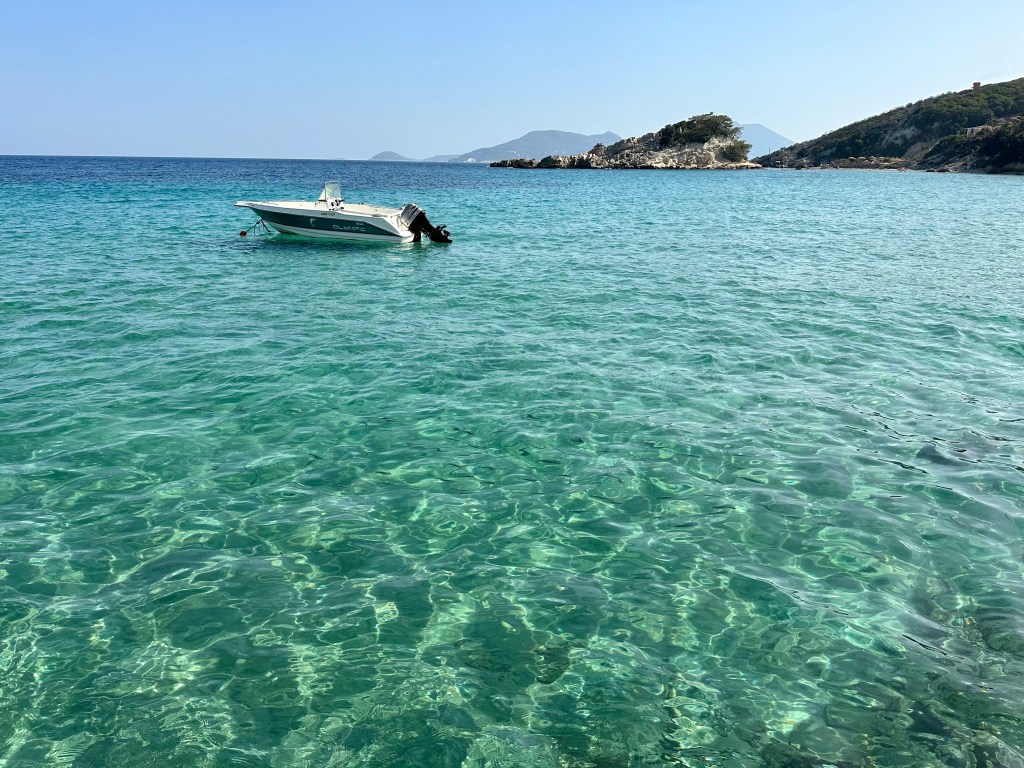
Samos is separated from Turkey by the mile-wide Mycale Strait in the eastern Aegean Sea. The Greek navy maintains a station on Samos with several boats moored in the harbor. We enjoyed the sunrises over the mountains in Turkey.

Tomorrow: The island of Patmos

Sunrise over the mountains in Turkey.

© Bruce Stambaugh 2023

A Photo Essay: Following the Path of the Apostle Paul – Day 3

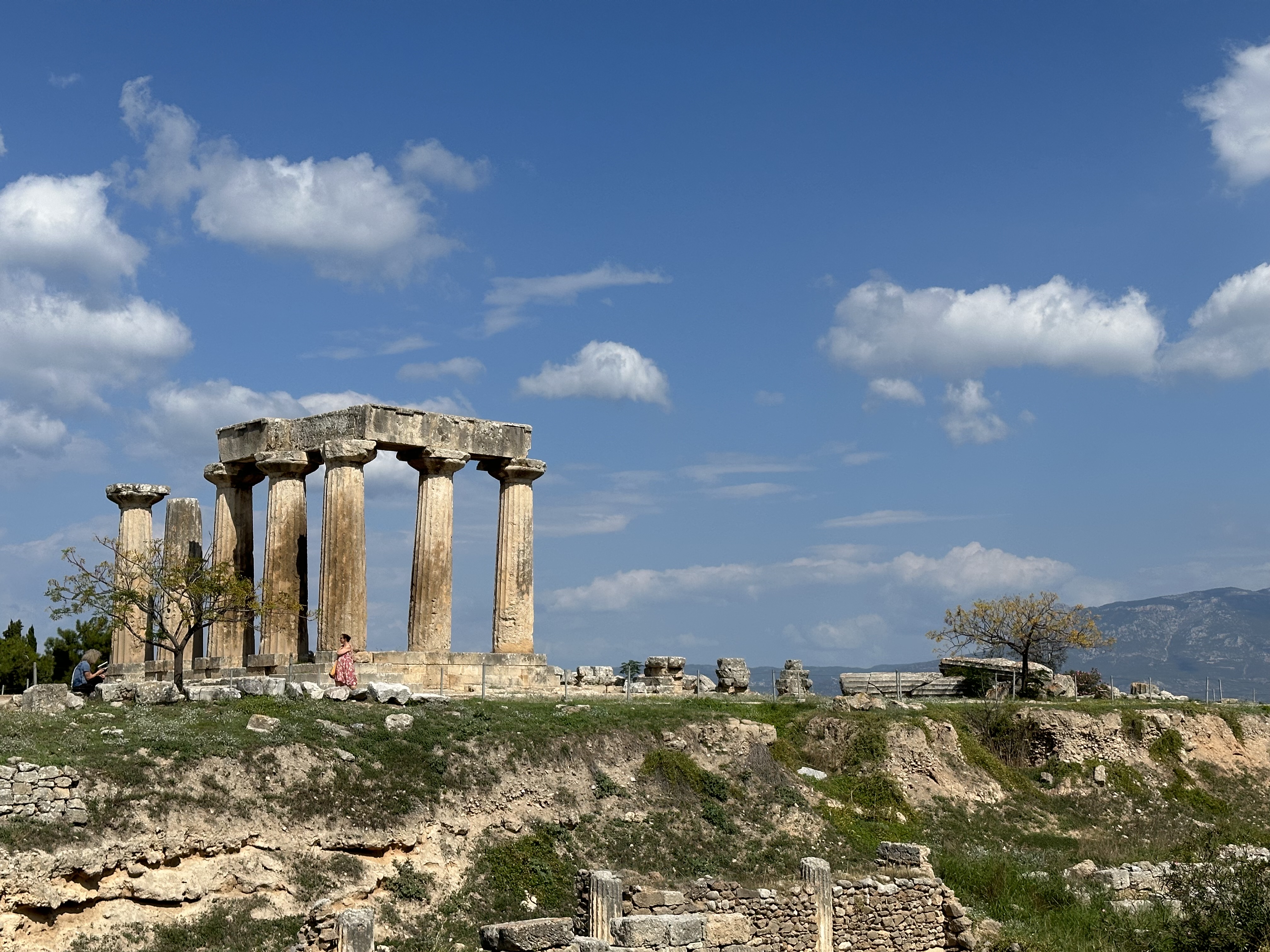
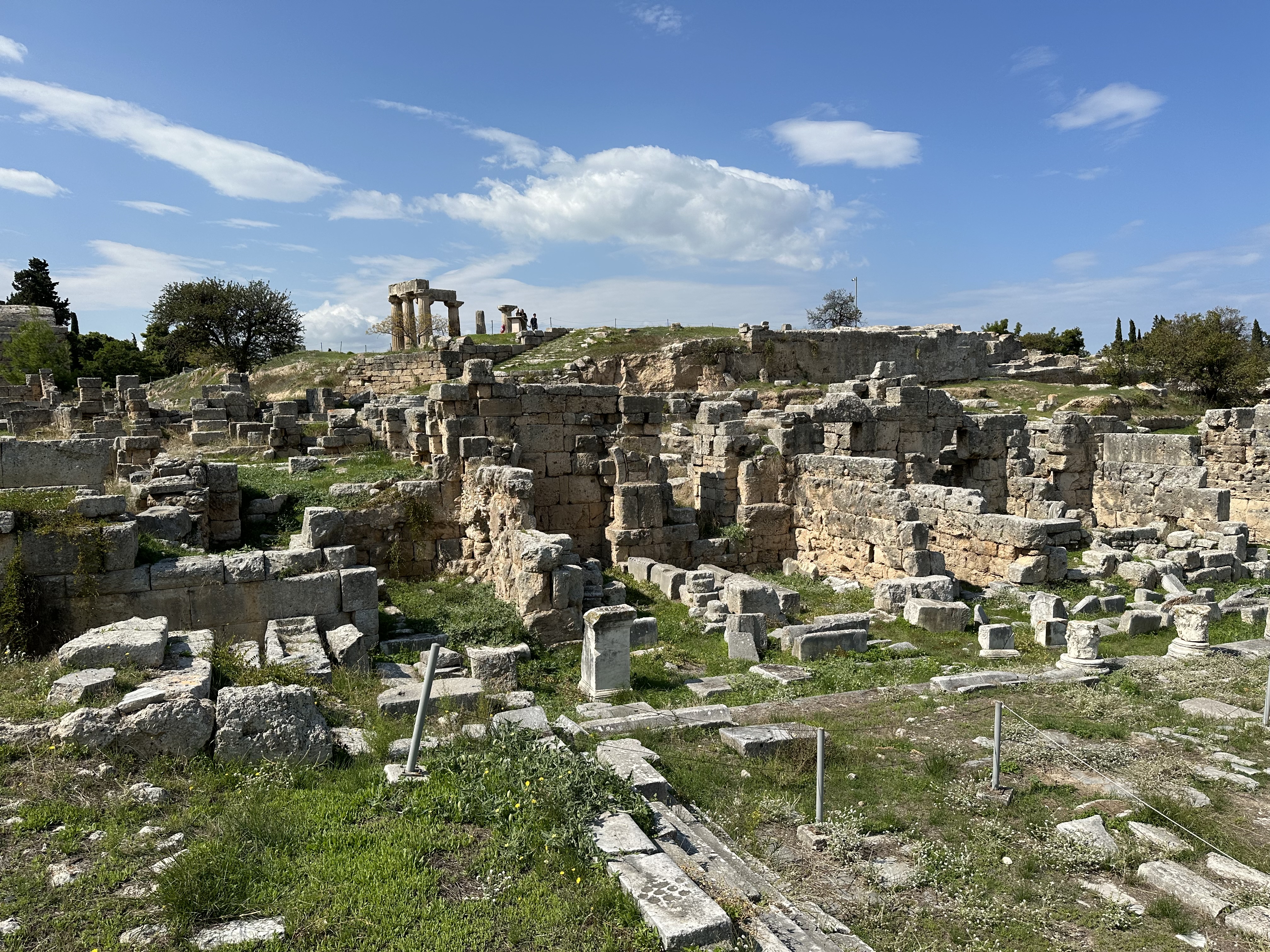
Temple of Apollo, Ancient Corinth, Greece.

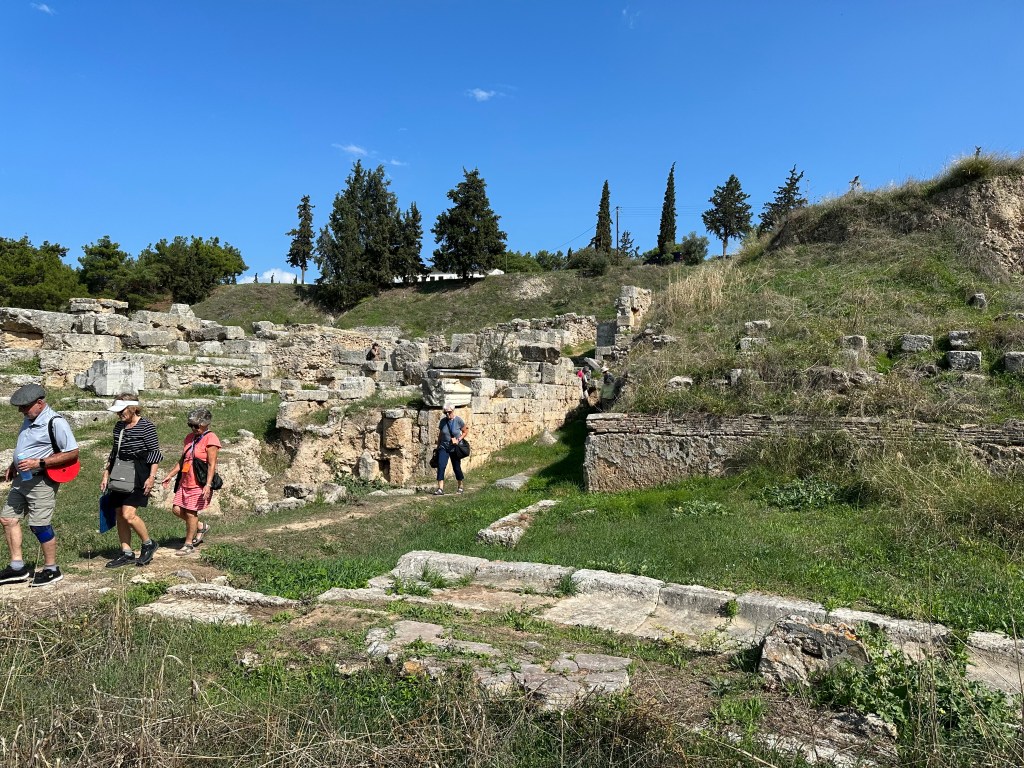
On the third day, we boarded a bus and drove to Ancient Corinth, where the Apostle Paul spent at least a year and a half. He joined Aquila and Priscilla, who were also tentmakers. Emperor Claudius had banned them and all other Jews from Rome, so they fled to Corinth.

In its time, Corinth was a prominent trading port for goods going east and west. Consequently, Corinth buzzed with the wide assortment of folks, many sailors happy to have their feet back on the ground. Paul took note of the various cultures, ethnic groups, and religions represented in this mass of people coming and going.

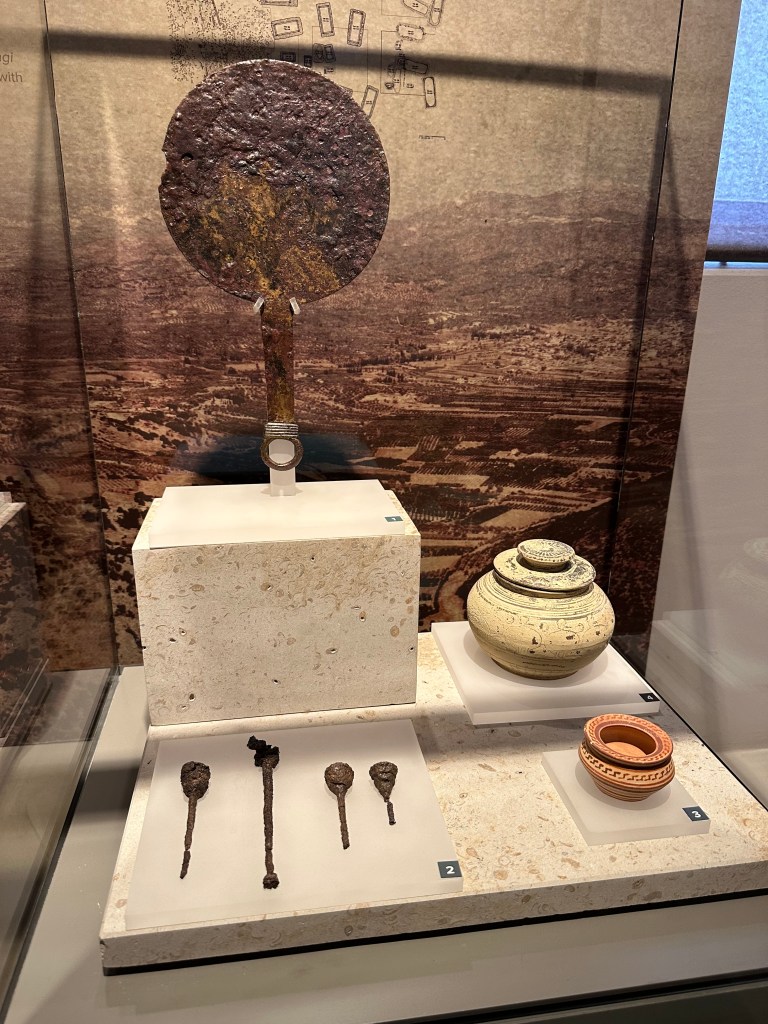
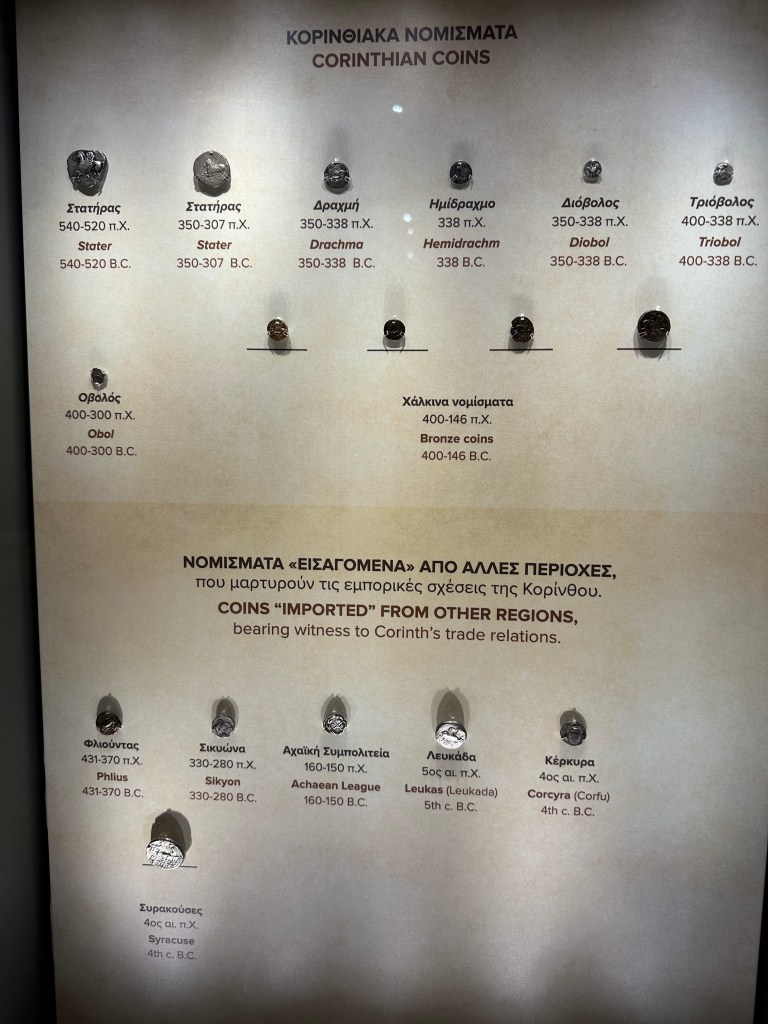
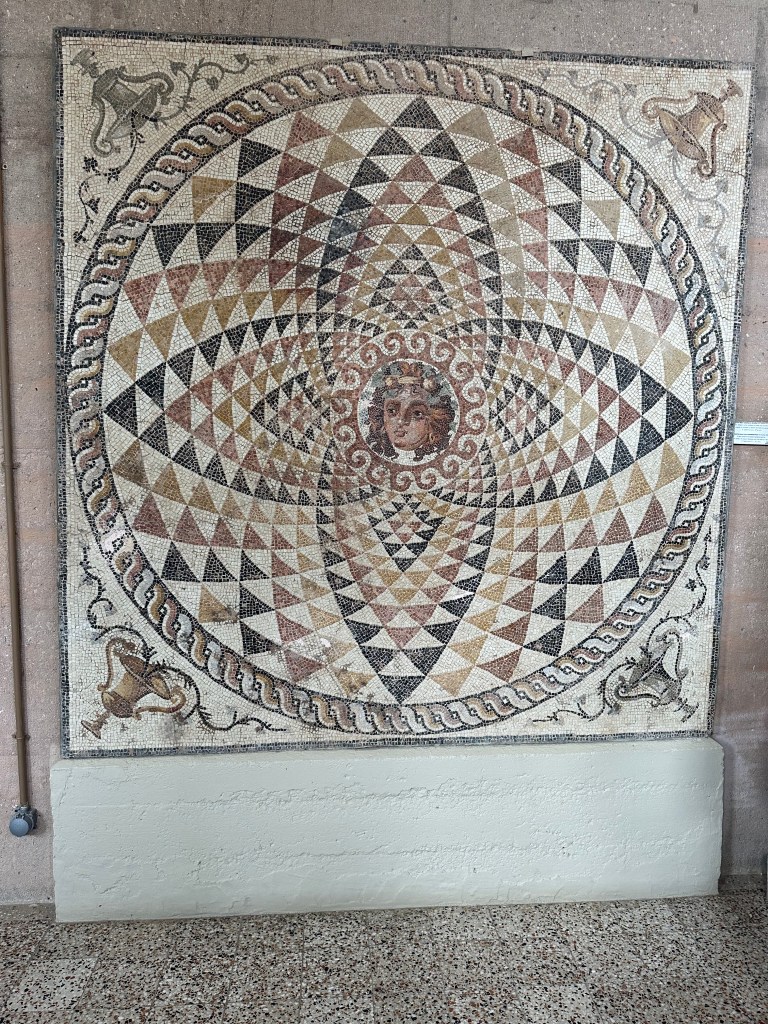
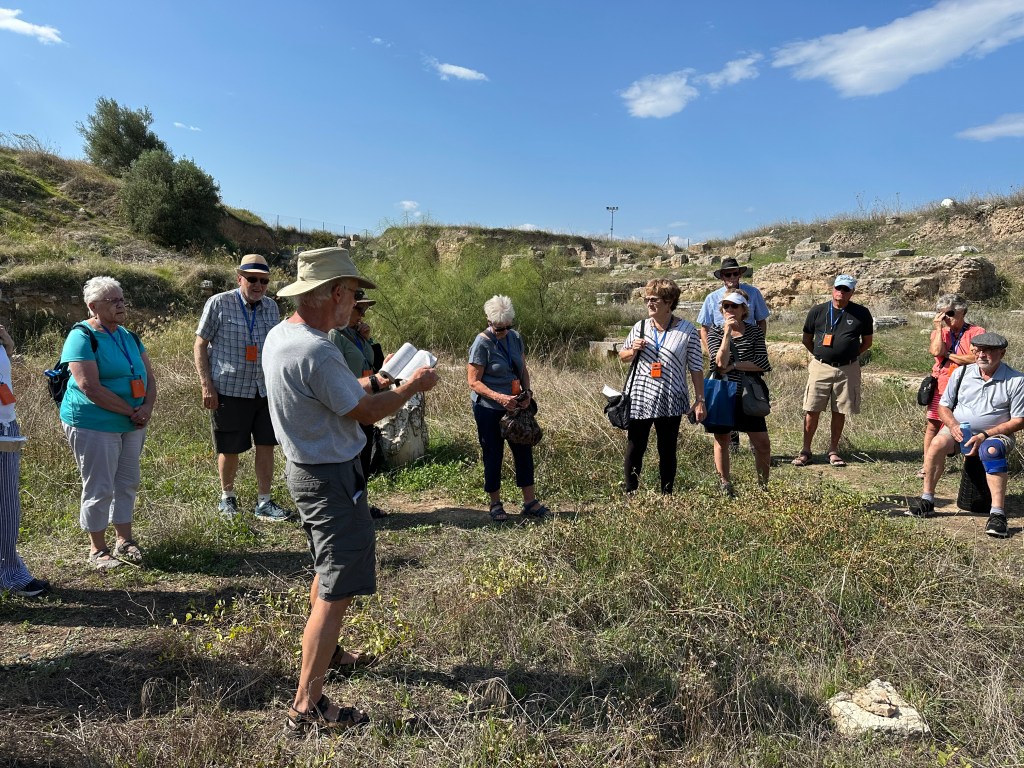
Our local guide gave us a tour of the Corinthian Museum, which displayed many curious artifacts. We sat under the shade of a large tree as our tour guide, Linford, gave us the biblical background and scriptures of Paul’s time in Corinth.

We were then free to roam the ruins under a beautiful blue sky. It was clear that Corinth was booming when Paul lived there in the first century.

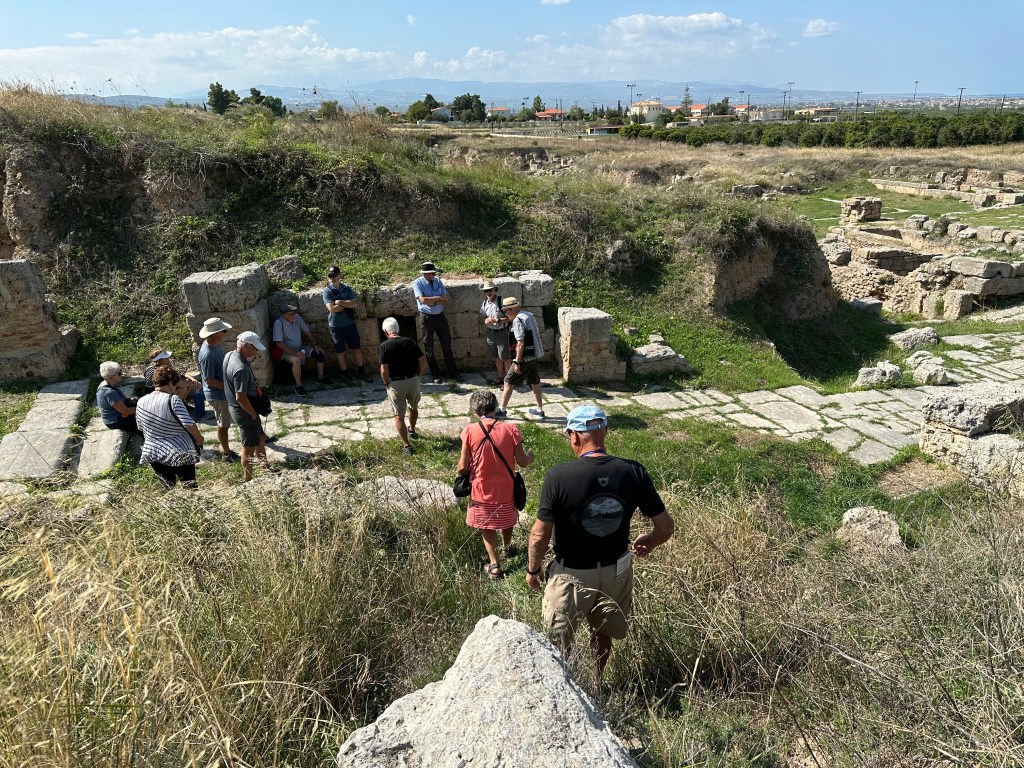
After a light lunch in a family-owned cafe outside the gates of Corinth, Linford led us down a hill towards the Gulf of Corinth. He had a couple surprises for us. We walked across an ancient Roman road into the ruins of an old theater, where the sailors, merchants, and residents were entertained.

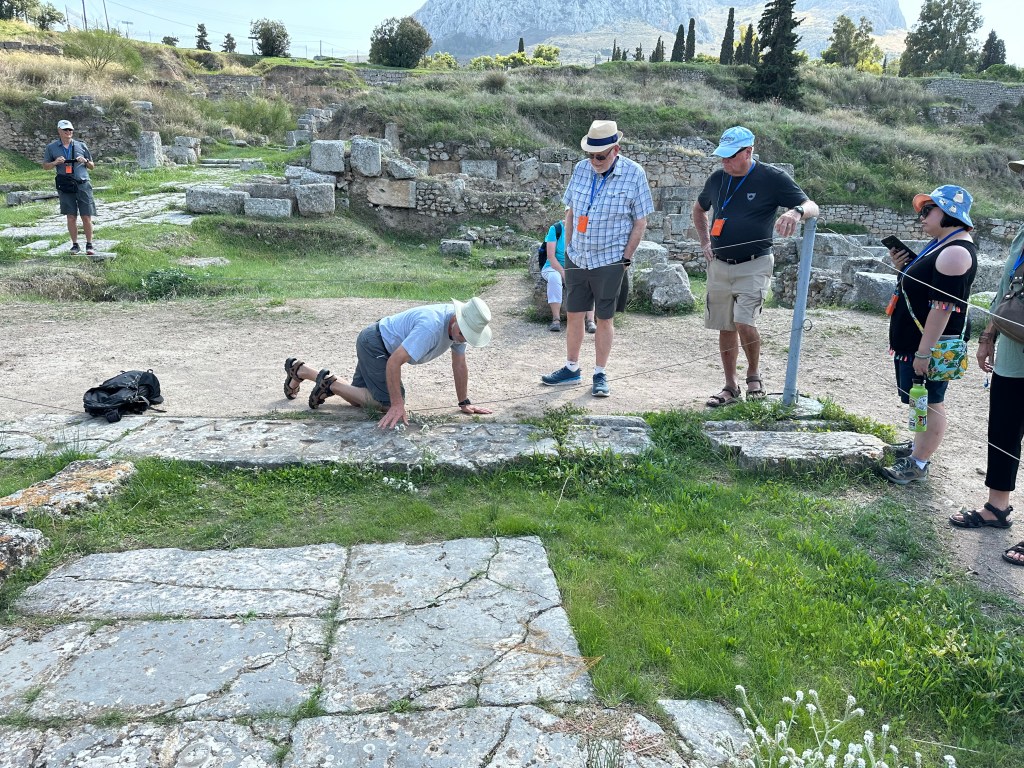
The first surprise was that this theater could be flooded to allow for seafaring-themed performances with which the sailors in the audience could connect. The second surprise was an etching on a large stone that bordered the road just outside the theater.

The engraving honored Erastus, the city’s director of public works. Paul mentioned Erastus in Romans 16:23, giving unequivocal evidence that Paul was indeed in Corinth.

Please click on the photos to enlarge them.

Before leaving the area, the bus took us to the Acrocorinth, a fortification on the mountain beyond Old Corinth. We had a beautiful view of the sea below. On the way to Cornith, we had stopped at the Cornith Canal, a four-mile-long channel cut through solid rock designed to shorten the route for sailing boats.

Tomorrow: On to the islands.

The Corinth Canal.

© Bruce Stambaugh 2023
A Photo Essay: Following the Path of Apostle Paul – Day 2

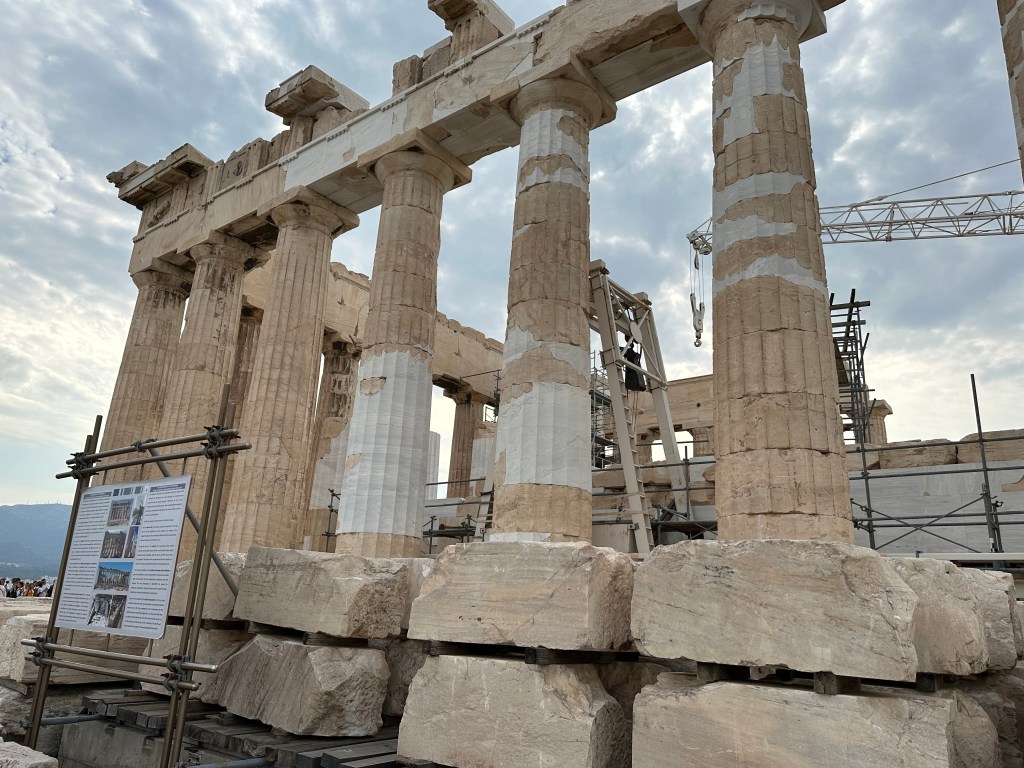
The Parthenon.

This was a day I had long anticipated. Neither my wife nor I had ever been to Greece, and I especially looked forward to visiting the Acropolis. Our tour group of two dozen people saw some of the locations the Apostle Paul did on his multiple trips around the Mediterranean Sea. Linford Stutzman, a retired professor from Eastern Mennonite University in Harrisonburg, Virginia, and his wife, Janet, led the trip.

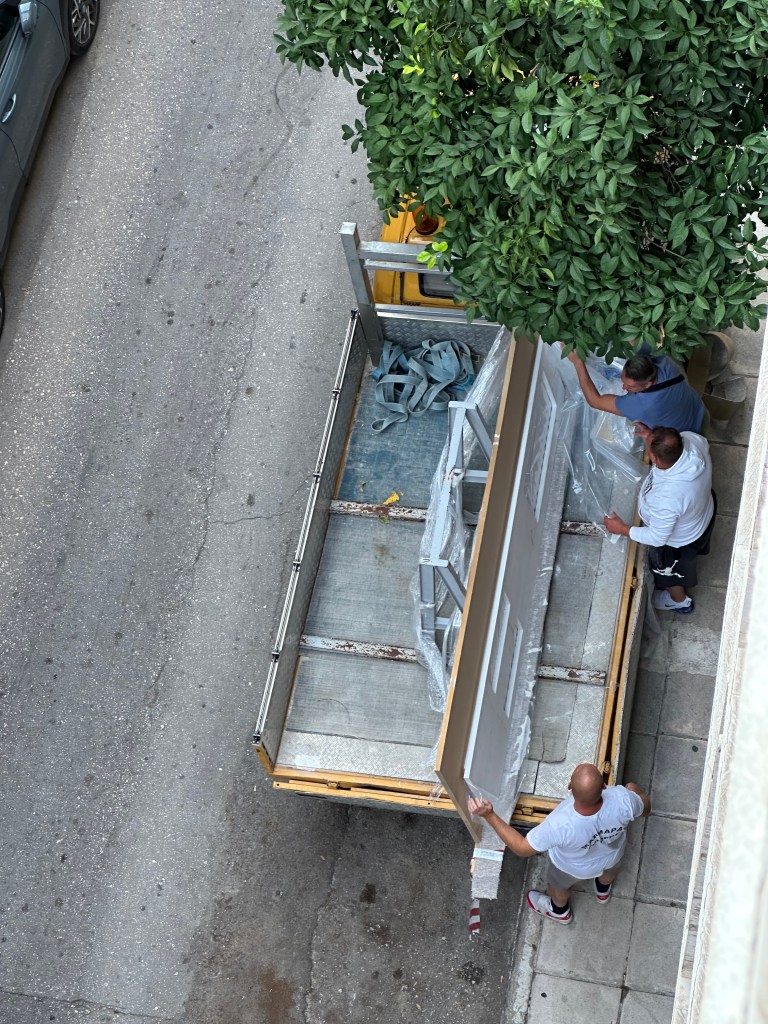
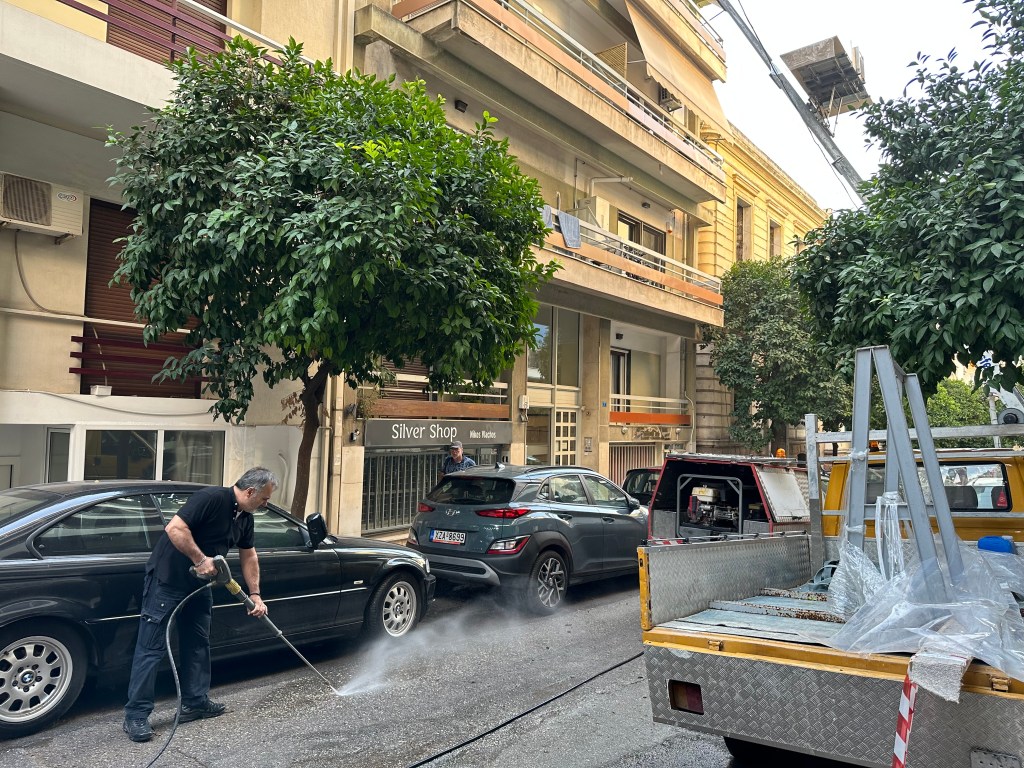
The Acropolis was an easy walk from our hotel in Athens. Before we gathered on the narrow street in front of the hotel, I noticed a large crane extending from our side of the street to the top floor of the apartment building across the way. It was set up to deliver some heavy marble countertops for the kitchen that was being remodeled.

Walking down to street level, I noticed a young woman photographing every step. I asked her if that was her apartment, and she said she was a civil engineer in charge of the project. She was documenting how the crane would get the heavy pieces up to the apartment for another client in London, England, who would do the same thing.

About that time, city workers came down the alley, pressure washing the sidewalks and the street. No construction crew would stop them. They merely worked around them and kept going.

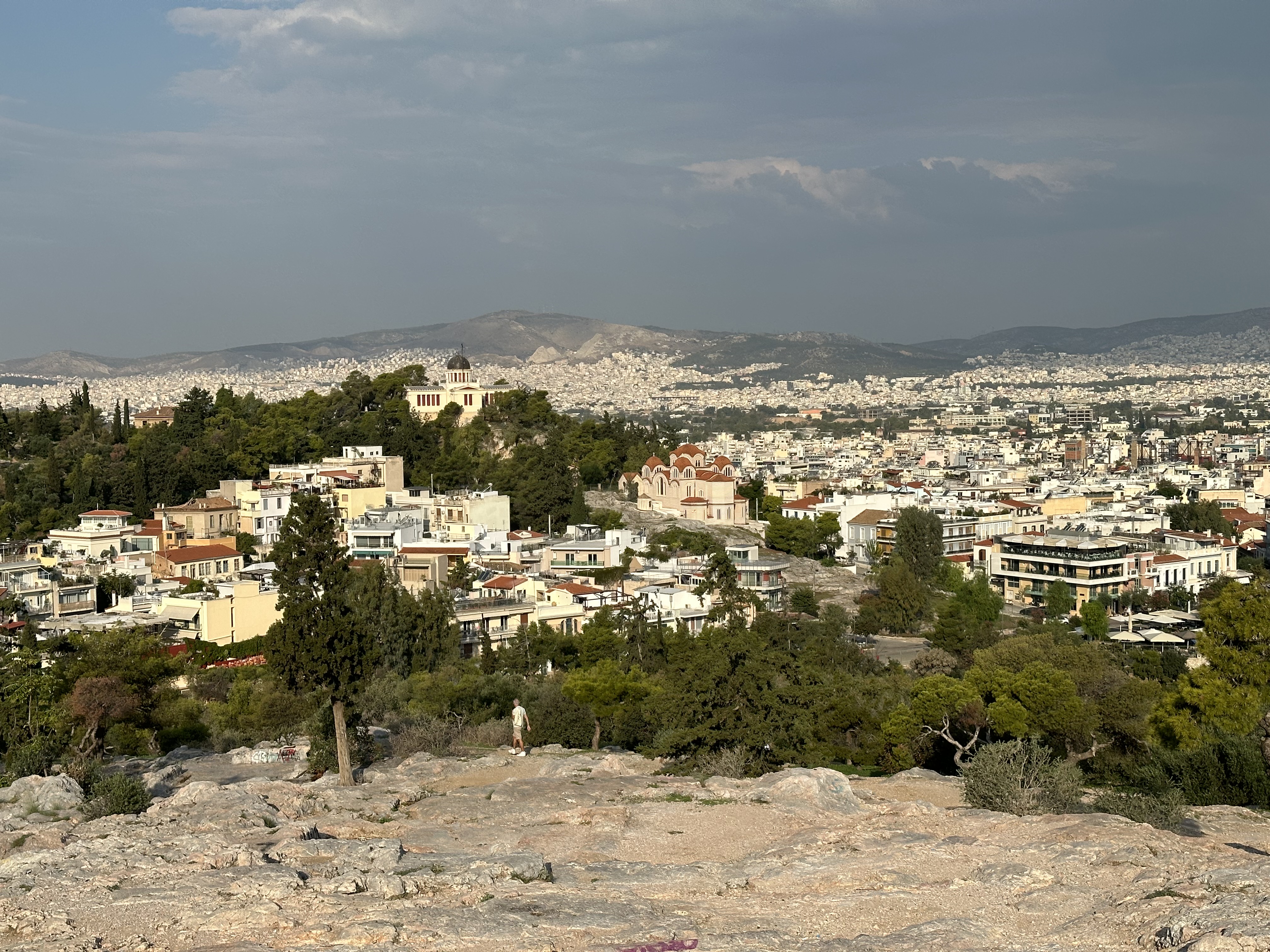
The rest of the group arrived, and we were off for the Acropolis. However, before entering the historic grounds, Linford wanted to give us some background on Paul and the sermon he delivered on Aropagus Hill, sometimes referred to as Mars Hill, as outlined in Acts 17:22–31.

From the hill, we could see the reconstructed Stoa of Attalos next to the Ancient Agora of Athens, where Paul spent time observing and conversing. Beyond was the sprawling city of modern Athens.

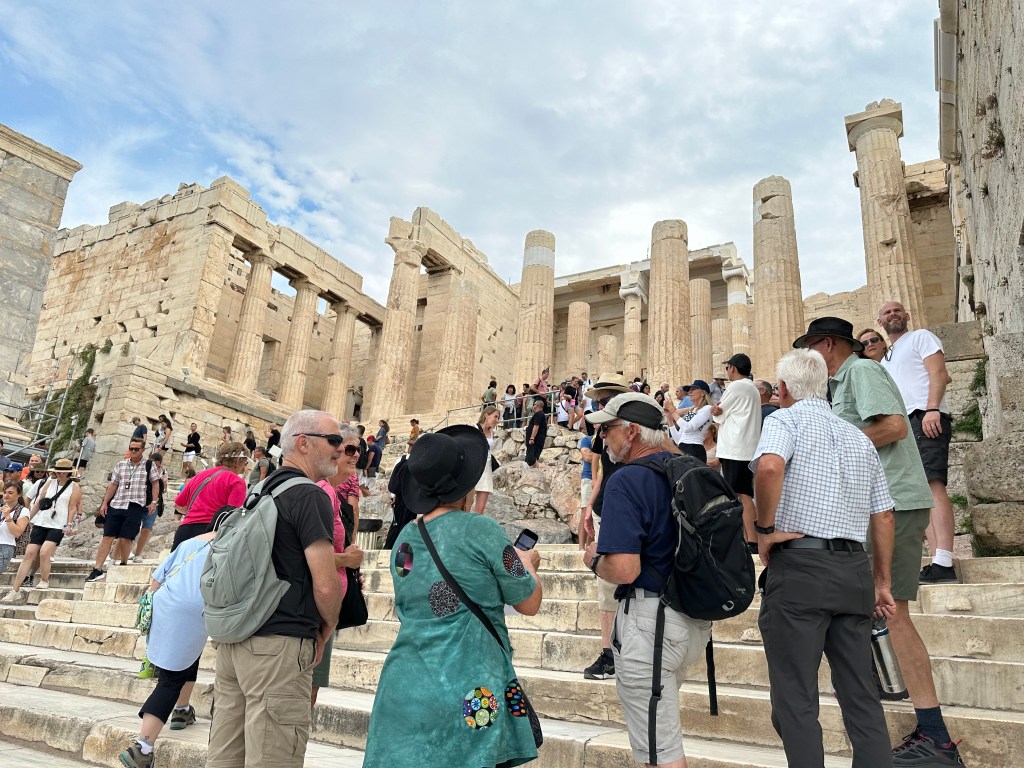
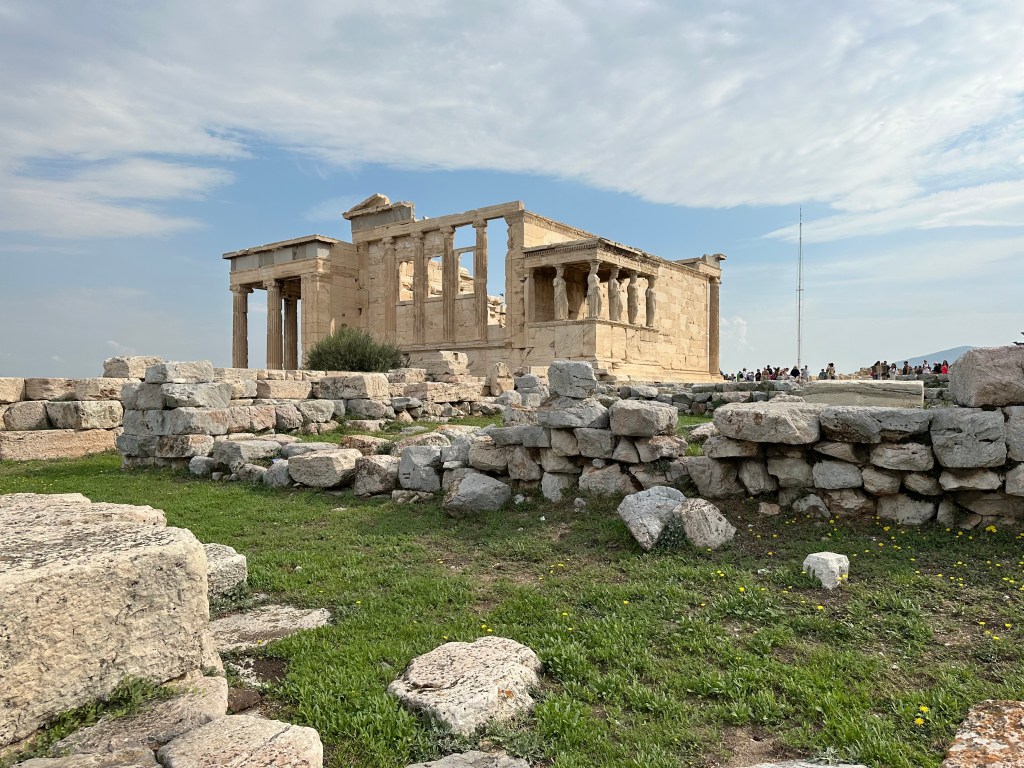
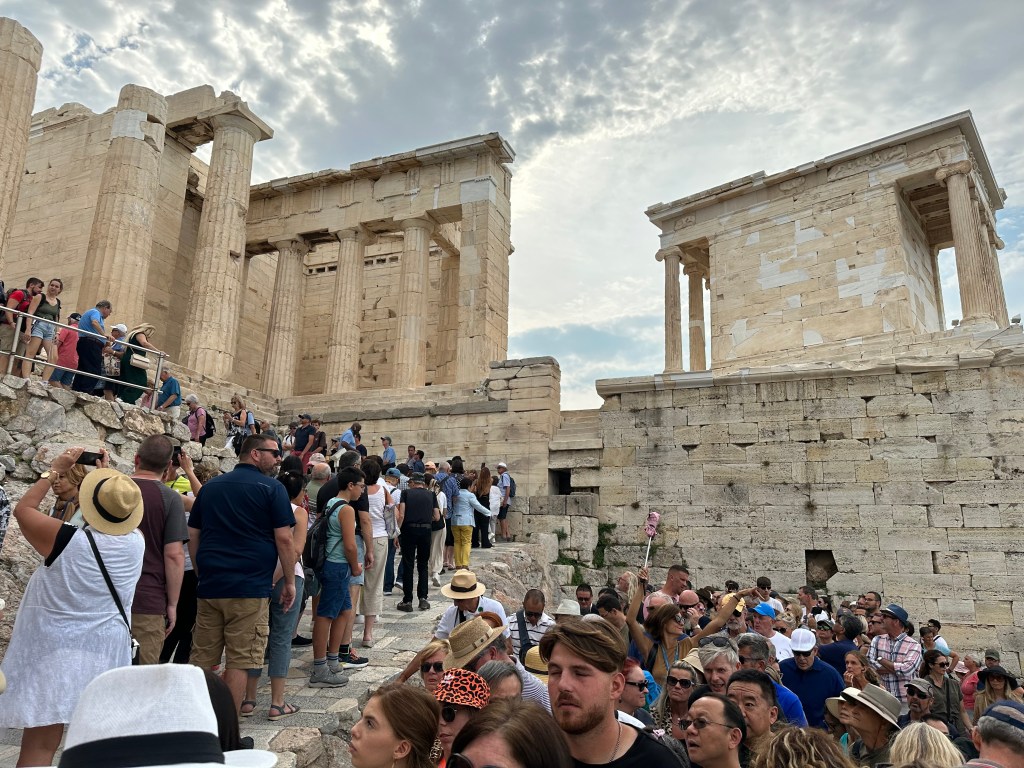
After Linford’s talk, we were free to explore the Acropolis independently. The lines for tickets were long, but since we had tickets for mid-morning, we walked right in. Climbing the steps through and around those ancient columns was thrilling. When we reached the top, the Parthenon dominated the view.

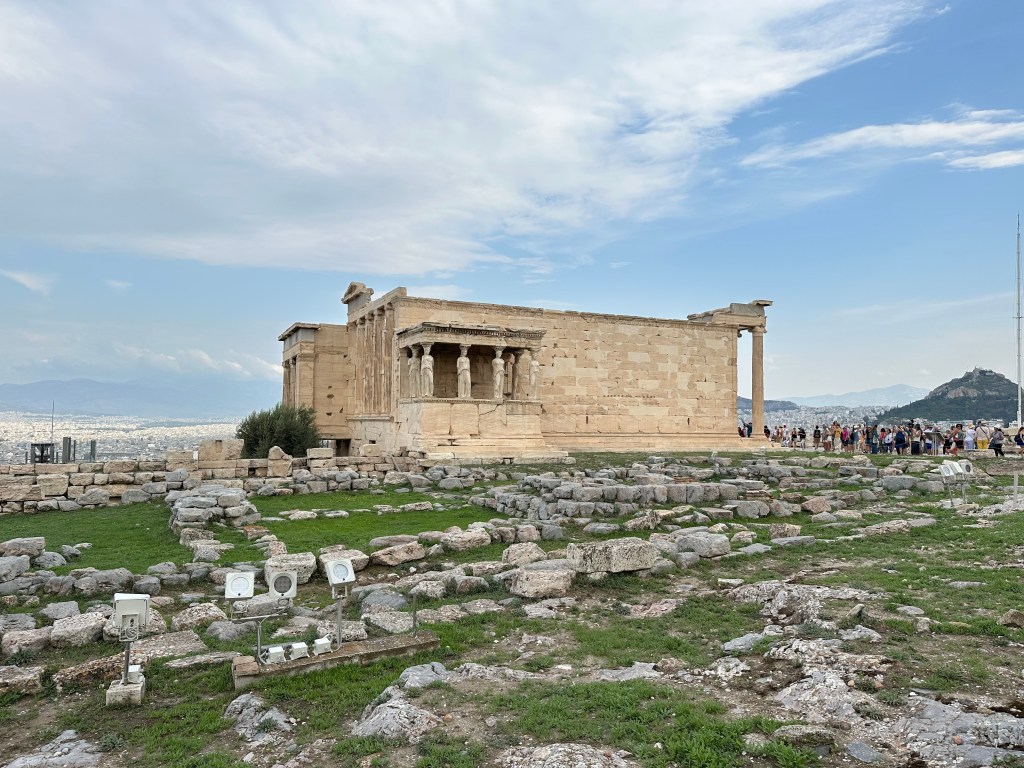
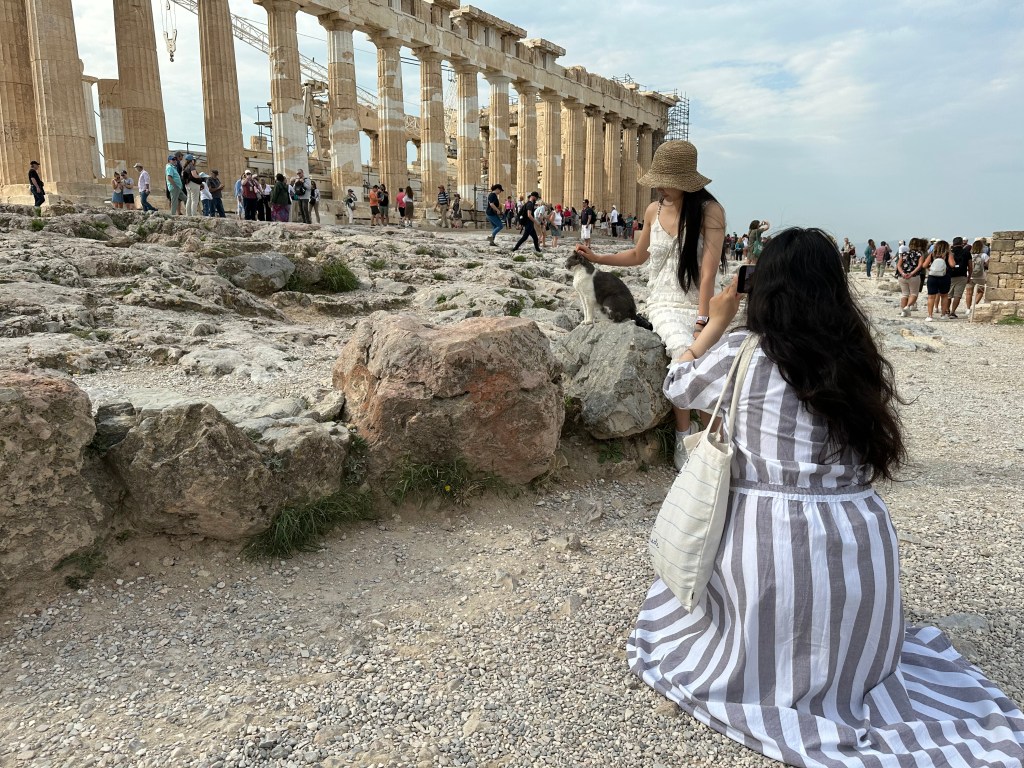
Like many old structures, the Parthenon is being repaired and stabilized for future generations. We had to watch our steps as we went. Old and worn rocks protruded from the walkways or were sunken into them. On the far side of the Parthenon, one elderly lady had fallen because of the uneven footing. Trained emergency personnel were working with her.

I was amazed at all the broken columns and cornices lying around. Most were roped off so visitors wouldn’t bother them. Many were piled up and cataloged in other areas atop the Acropolis.

As the sun rose higher in the sky, the temperature heated up. We decided to head back down the way we came. I was shocked at the number of people working their way up, making our exit difficult.

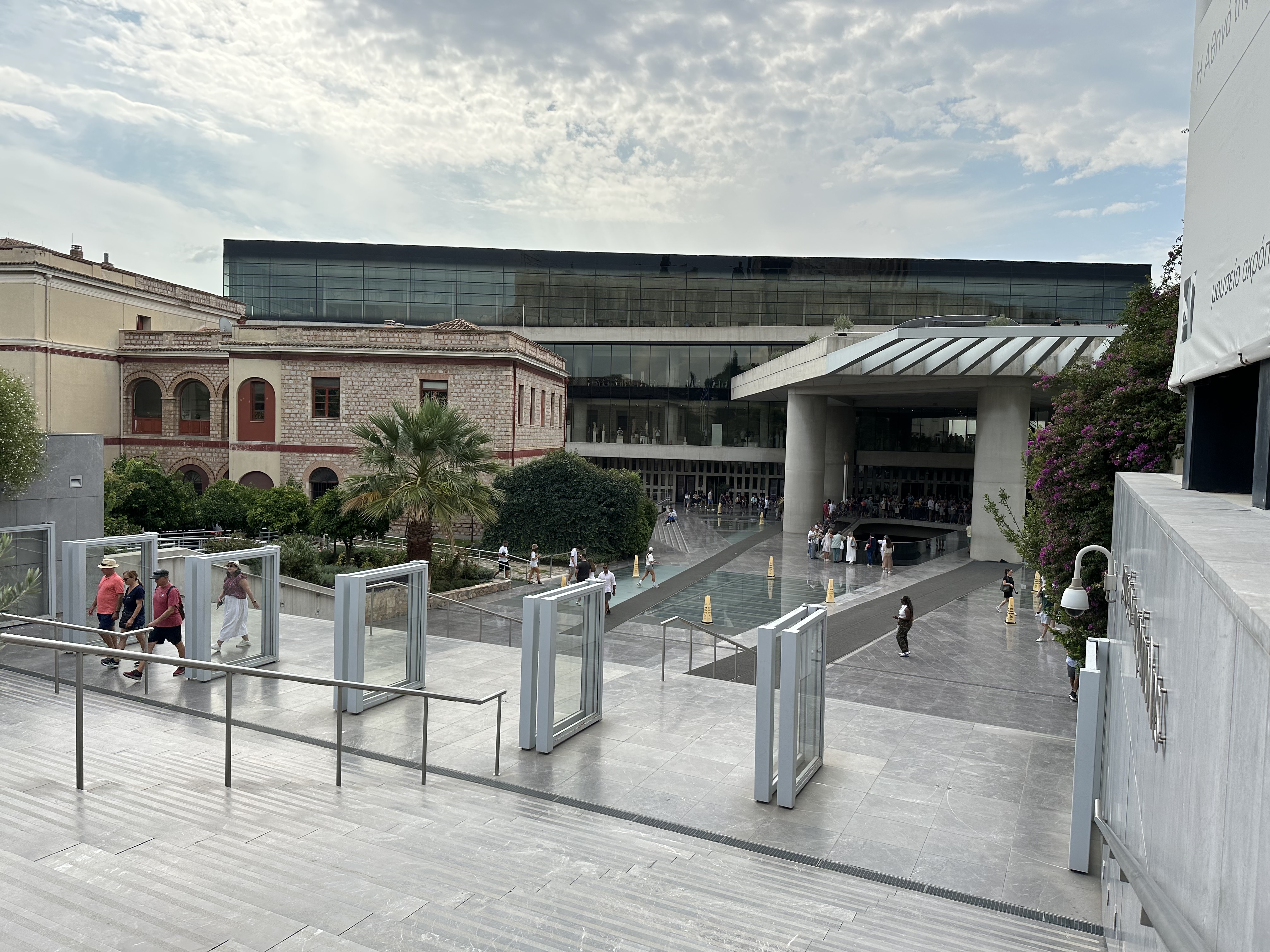
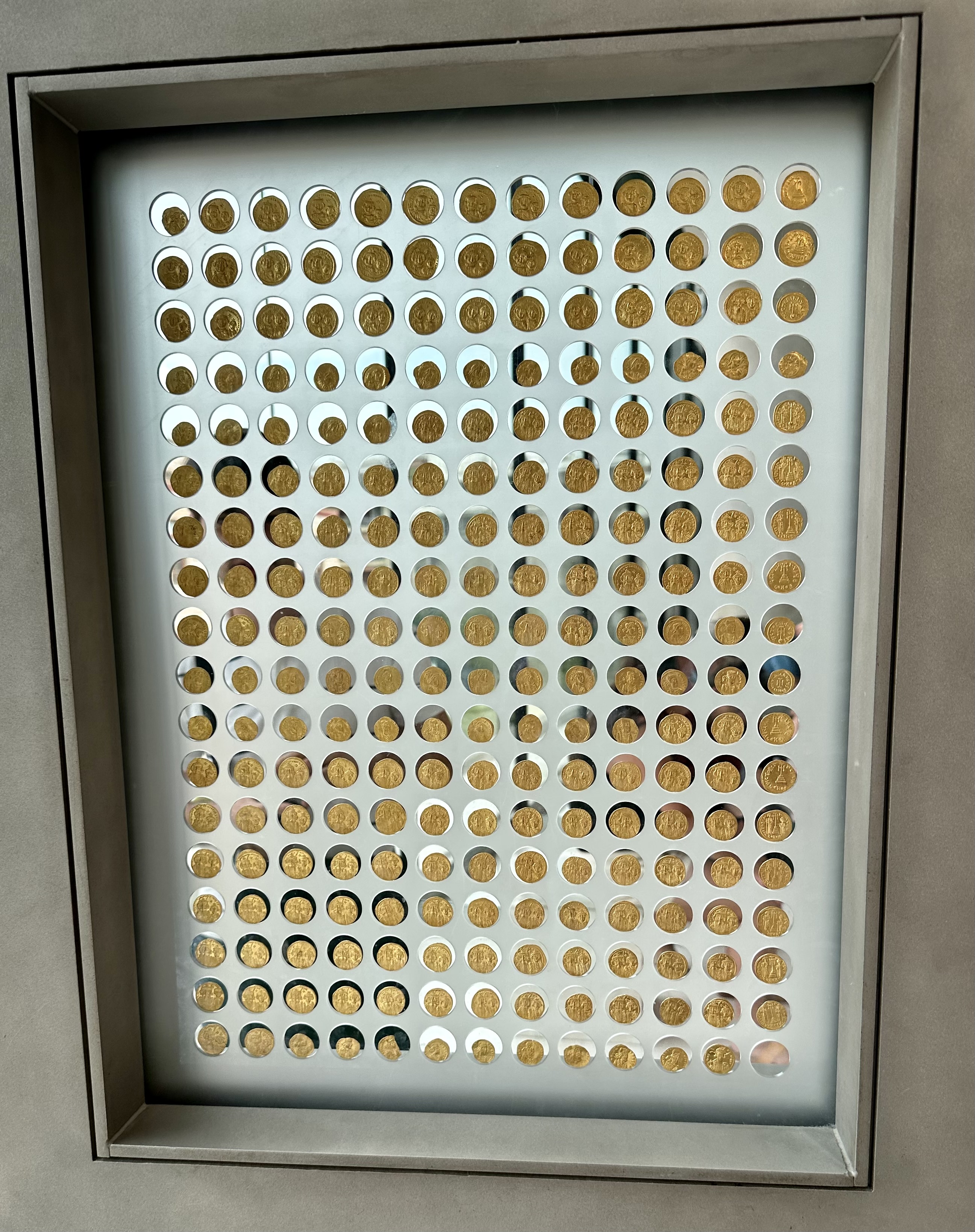
We headed for the Museum of the Acropolis just down the hill. Our first stop was the cafe for a light lunch and to cool off. The museum was huge and had thousands of artifacts from the Acropolis and explanations of their meaning and importance.

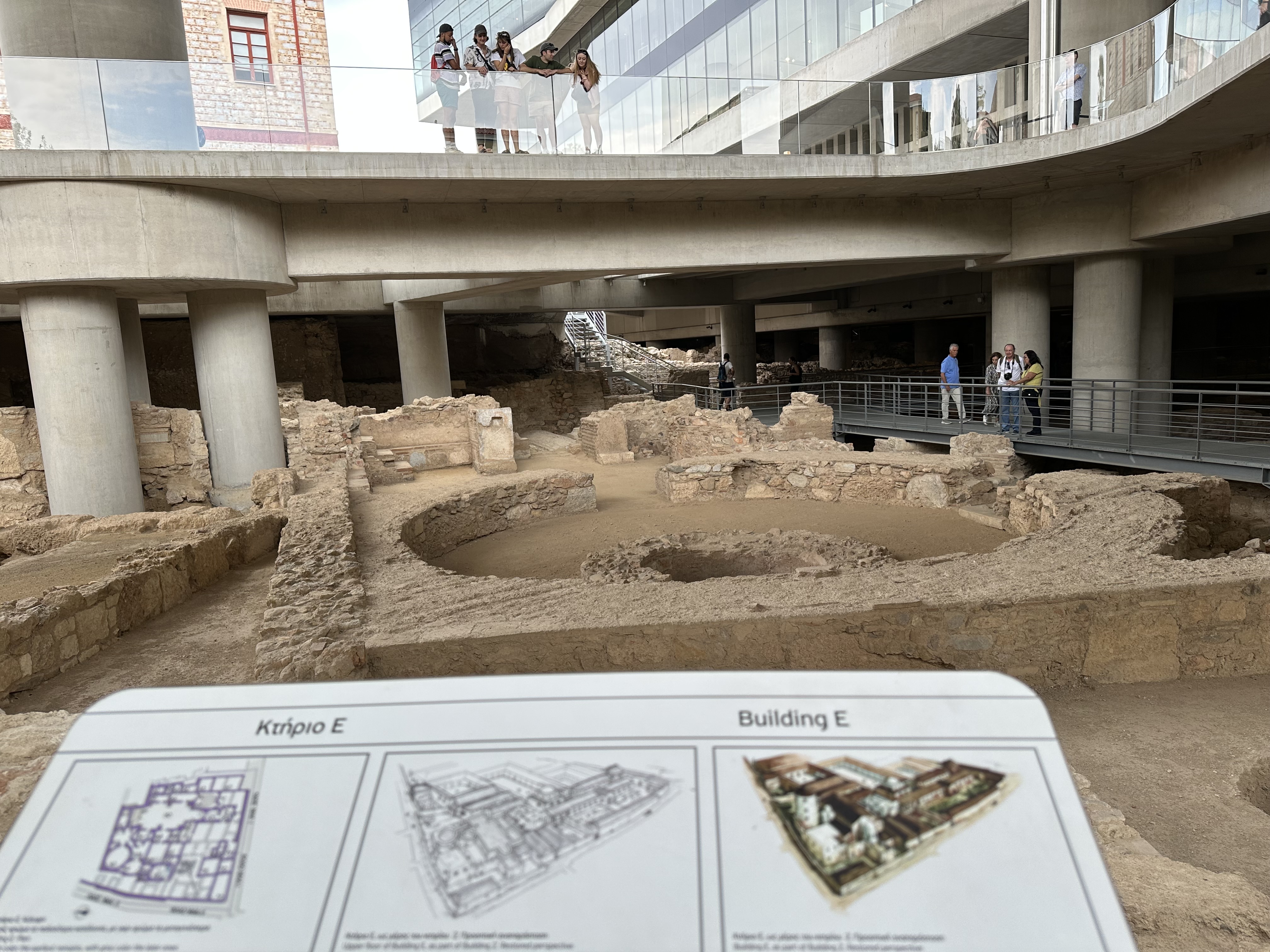
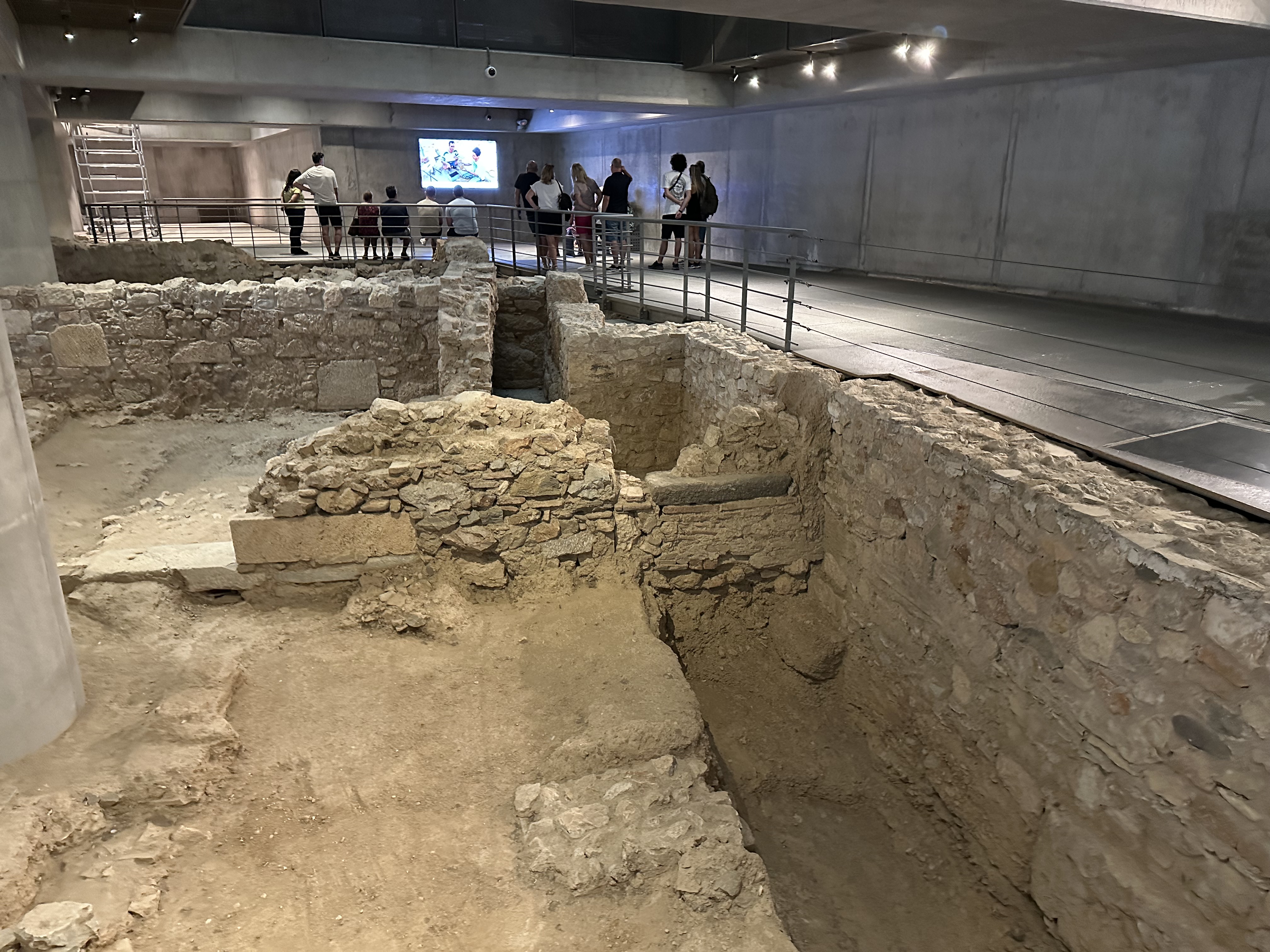
Another interesting feature was that the museum was built over an active archeological dig. I found that fascinating and enjoyed seeing the various rooms of the homes being excavated. The water and sewer systems were equally interesting.

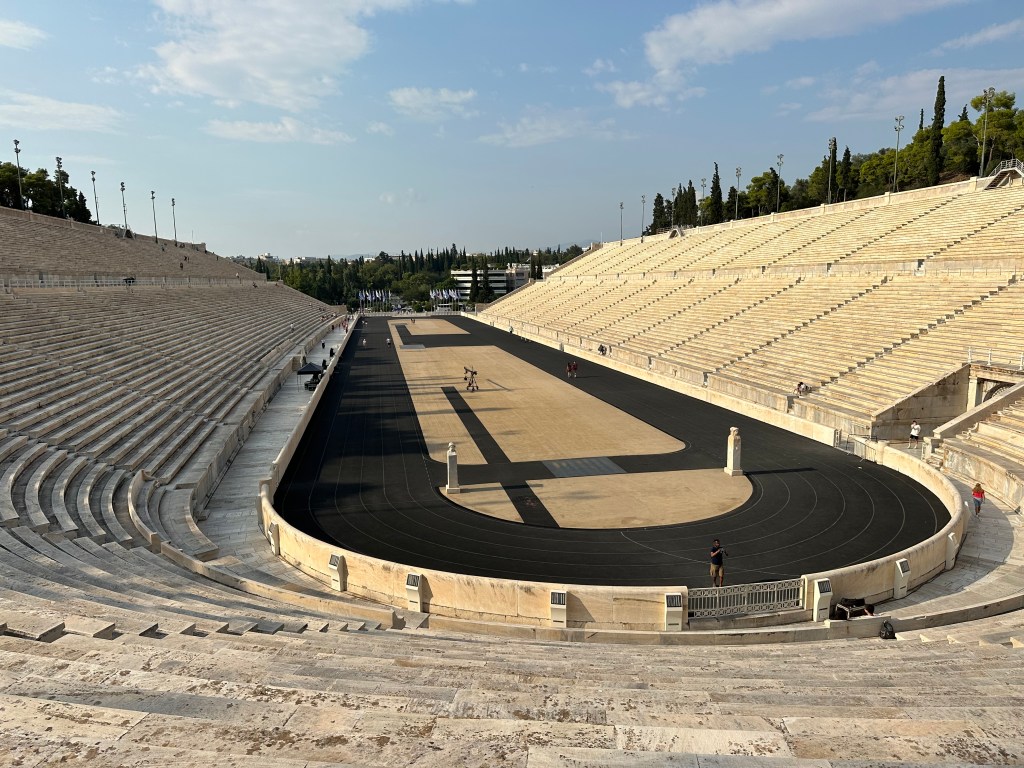
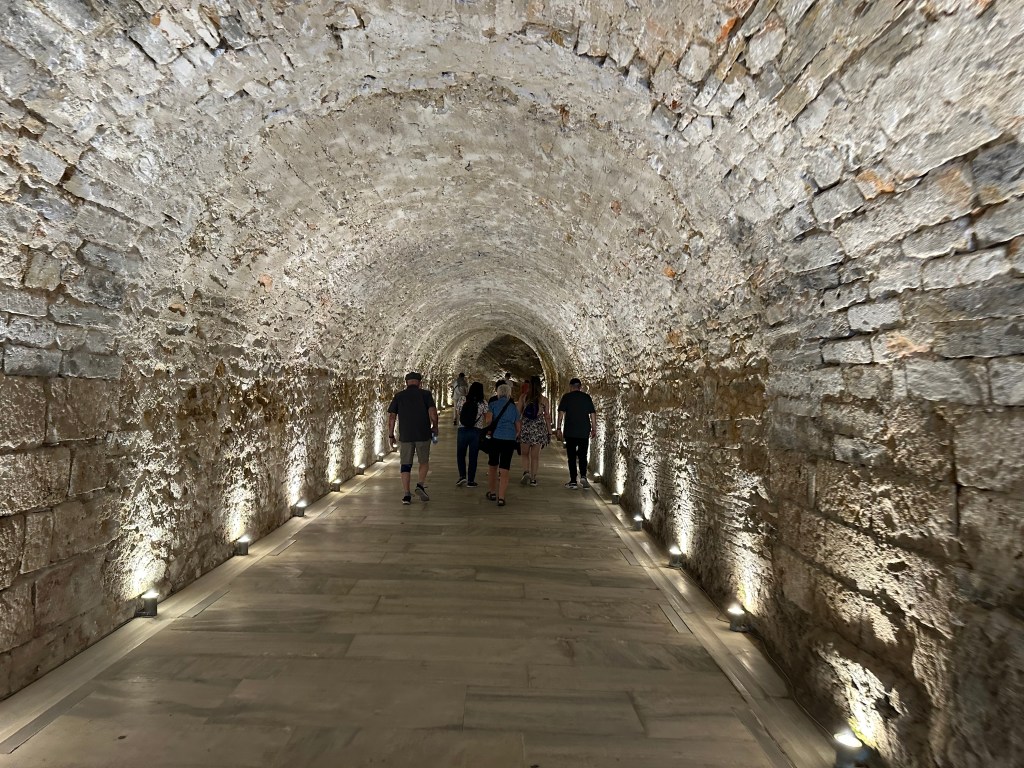
After resting a while, the group hiked to the site of the original modern-day Olympics, which began in 1896. The stadium is now reconstructed but does contain a few pieces of masonry from the original Olympic stadium. Of course, we visited the museum and gift shop. Our group ended the day with a nice meal together.

Tomorrow: On to Corinth.

© Bruce Stambaugh 2023
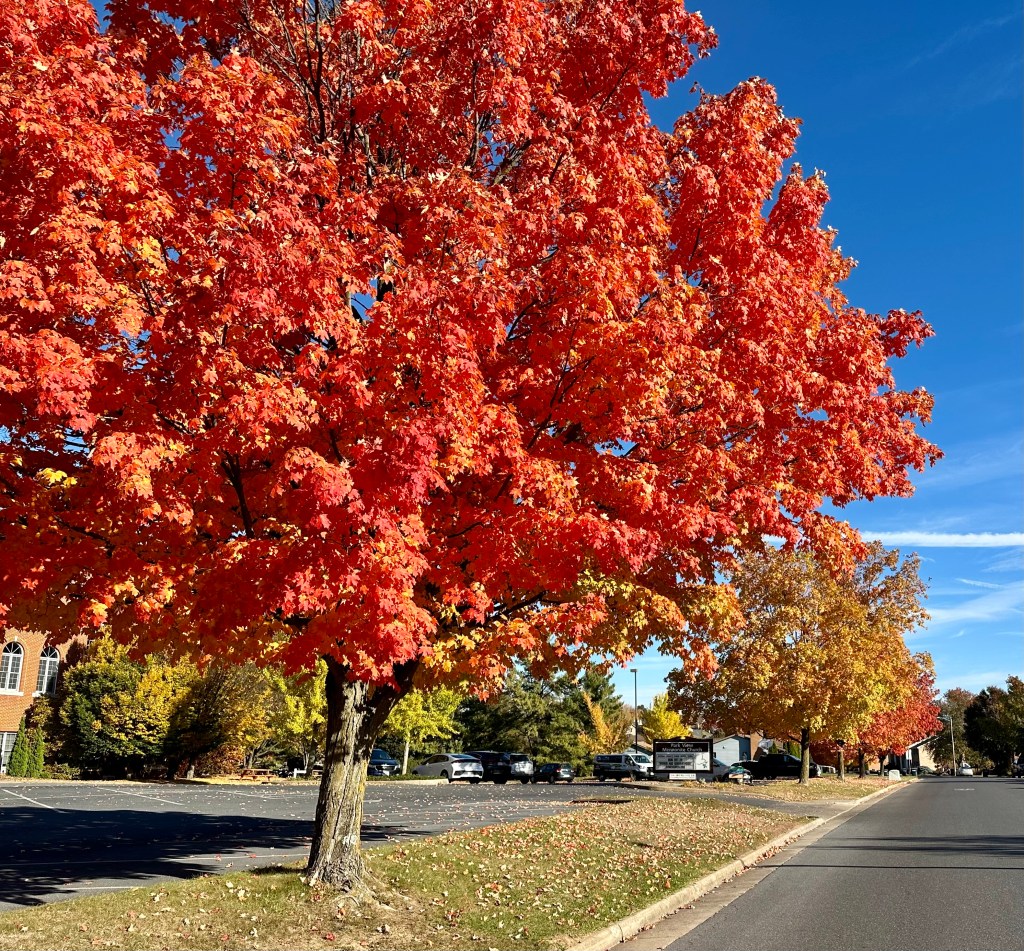
A Photo Essay: Following the Path of the Apostle Paul – Day 1

Our first glimpse of the Acropolis.

My wife and I recently returned from a two-week trip to Greece and Rome. I will share our experiences through a series of photo essays beginning today.

The trip’s theme was to follow parts of the Apostle Paul’s three trips between Jerusalem and Rome. Our guides were Linford and Janet Stutzman.

My wife spent part of the nearly 10-hour flight reading.

In 2004, Linford and Janet bought an old sailboat in Greece, fixed it up, and sailed the paths and ports of Paul while on sabbatical from Eastern Mennonite University, where Linford was a professor of religion. Their epic trip led to Linford writing an excellent book about their adventures, SailingActs.

Our itinerary began in Athens, where Paul preached a sermon on Aropagus Hill, just south of the Acropolis and the Parthenon. But first, we had to wait for all 24 group members to arrive, which they did by nightfall.

Consequently, our first day of the trip was spent traveling by air from Washington/Dulles International Airport to Athens. Once on the ground in Greece, our taxi took a circuitous route from the airport to the hotel due to a race for a cancer cure near the Acropolis. Many streets were blocked off for the 40,000 race participants.

We spent the evening familiarizing ourselves with the area and shopped in the Plaka, a market/restaurant area between the Acropolis and our hotel. On our stroll around the area, we did get our first glimpse of the Acropolis.

I was surprised to see so many cats running loose in the city. Apparently, felines are revered in Athens and likely help keep the critter population down. Many cats roamed the narrow streets, businesses, apartment buildings, and restaurants.

Tomorrow: The Acropolis.

© Bruce Stambaugh 2023

American Flamingos in Pennsylvania

One of two American Flamingos near Chambersburg, Pennsylvania. Photo by Bruce Stambaugh.

This is how birding works. Just before my wife and I left to visit our 16-month-old grandson and his parents in Rochester, NY, a friend in Florida posted on social media about American Flamingos being spotted in a farm pond in south-central Pennsylvania.

I knew we couldn’t stop on the way up, but I hoped beyond hope that the birds would still be there when we left for our home in the Shenandoah Valley on Monday. I checked the American Birding Association’s rare bird alert daily as we enjoyed visiting with our son and his young family.

On Monday morning, the birds were still there and reportedly very easy to see. In all my years of birding, I’ve heard that before, only to arrive five minutes after the birds flew off into the sunset. In the birding world, that’s called “dipping.”

It was a six-hour drive from Rochester to St. Thomas Township, Franklin County, Pennsylvania. When we left Rochester, the day was partly sunny. By the time we reached the state line of the Keystone State, it started to rain. I kept my mind on my driving. I wanted to see those birds, but we had to get there first. So, I drove carefully.

The ABA rare bird alert included the GPS coordinates, so I figured we would drive right to the farm pond, which we almost did. We had Waze plugged into the car’s GPS system while I used my Google Maps for backup. I wasn’t taking any chances.

I am so glad I did because Waze said we had arrived when all we had were fields on the right and a line of houses on the left. My Google Maps saved the day, and we circled around and found Pond Lane.

The countryside was gorgeous. Puffy white clouds floated by in a bright blue sky. The large, rolling fields of soybeans served as a two-tone yellow and green carpet below. Fieldstone farmhouses and red barns dotted the landscape.

As we approached from the west, I smiled because I could see a string of cars parked along the road and birders on the opposite side looking through spotting scopes and binoculars. As I slowly approached the scene, my wife shouted, “I see one!” I parked the car in the first space on the north side of the road and raced to the spot where my wife saw the flamingo.

Sure enough, there it was. The beautiful pink bird was standing on one leg in the middle of the shallow pond. It had its head tucked under its left wing, sleeping. I got a quick photo between two trees and then walked up to where most birders stood with an unobstructed view. It was a little farther away, but we could see it clearly through the binoculars and my camera’s viewfinder.

My wife helped steady me in the warm wind rushing over and down the nearby Appalachian Mountains to the west. Once the bird awoke, it waded, fed, and preened in the afternoon sun. I asked another birder where the second flamingo was. I didn’t like the answer.

Please click on the photos to enlarge them.

In the early morning hours after sunrise, a snapping turtle bit the other flamingo in the leg, injuring it. A wildlife rehab center was notified, and personnel arrived and captured the injured bird. Surgery was performed to fix the broken leg. It still remains in their care.

The other flamingo continued to thrill birders who arrived from near and far. How did birds that should be in the Bahama Islands and the Florida Keys get to Pennsylvania? The most plausible answer is that Hurricane Idalia blew them north.

That is the accepted answer because American Flamingos were located in 10 states, some well inland like these birds. Birders from other states were chiming in on the social media conversations, wishing for the flamingos to be found in their states, too.

Why such fuss over the flamingos? Well, in every state except Florida, the sighting of the flamingos was a record first for each of those states. Birders take their hobby seriously. Consequently, they keep many lists and records by recording the bird species, where it was seen, the date(s), and times. The Cornell Laboratory in Ithaca, New York, is the official state and national records compiler.

I had seen flamingos in Florida and Texas before, but seeing this beautiful bird so far inland was extra special. And it was all thanks to a hurricane.

The farm pond in Pennsylvania where the American Flamingo was observed. The bird is just right of the willow tree in the foreground. Photo by Bruce Stambaugh.

© Bruce Stambaugh 2023
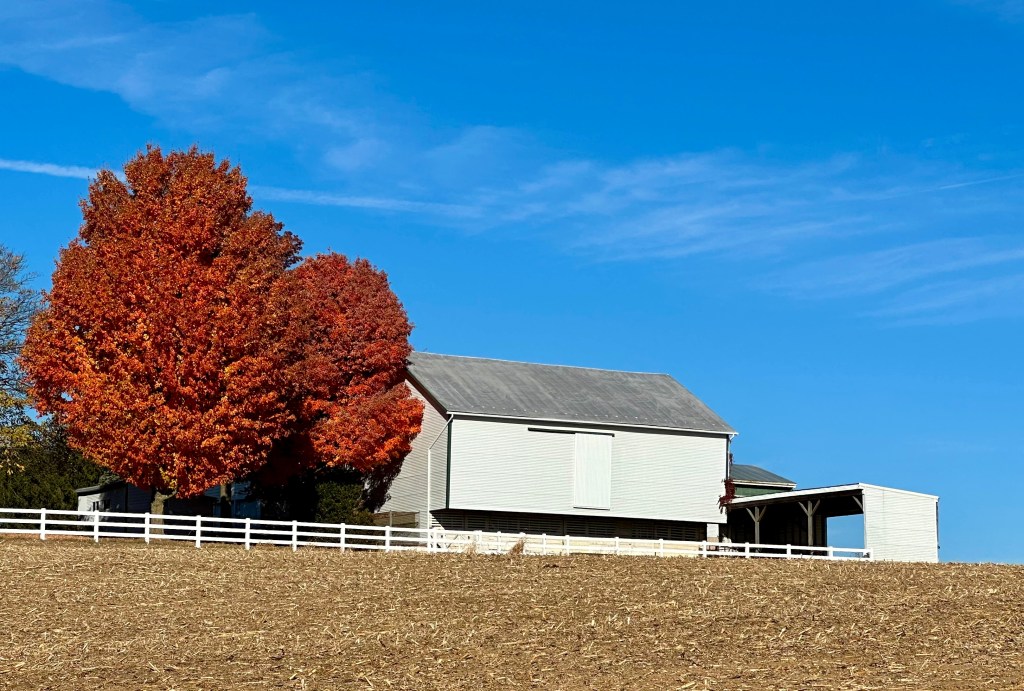
Exploring the Newest National Park

The view from Grandview Point. Photo by Bruce Stambaugh.

Located east of Beckley, West Virginia, New River Gorge National Park and Preserve is a gem of a place. My wife and I recently visited there for two days. Our goal was to see the New River Gorge Bridge. We experienced much more than that. Also, I finally learned an important life lesson.

Because we usually avoid driving on I-81, we took Virginia 42 southwest through the Allegheny Highlands’ beautiful hills, valleys, small towns, and mountain gaps. We stopped at Augusta Springs Wetlands to bird along the boardwalk. We saw a number of lovely wildflowers and 21 species of birds. The next stop was the Humpback Covered Bridge west of Covington, Virginia.

Humpback Bridge.
Interior of the Humpback Bridge.
Humpback Bridge

But it was the national park we wanted to see most. The park has four visitor centers because of its mountainous terrain and steep gorge. Sandstone Visitor Center was our first stop just off I-64. The helpful ranger gave us excellent advice on the roads to travel and what to expect.

Our first stop was the observation area of Sandstone Falls. They were as beautiful as advertised, but the falls weren’t running at full force with so little rain this summer. We drove along the railroad tracks to the quaint town of Hinton, where we crossed to the west side of the New River. We drove north a few miles to reach the boardwalk that took us near the river’s main flow.

I wanted to get a closer shot, so I headed across an island of ancient debris of huge boulders smoothed by years of flowing water. Scattered among the rocks were large trunks of trees, their bark long scoured away. It finally hit me that I shouldn’t have attempted this trek. I eased my way over rocks and rivulets to the shore of the river’s main course. I got the shots I wanted and returned to the boardwalk via an easier route.

Our next stop was Grandview, and what a view it was. We looked down 1,000 feet to see one of the horseshoe bends of the New River. The sun bathed the hillside forests and illuminated the riverside train tracks.

On the second day, we headed to the nearly abandoned town of Thurmond, a boomtown in the coal mining heydays. Today, only five folks live there. They all serve on the town council. One is the mayor, one is the secretary and the other three serve as council members. It was fascinating to walk the town of the once thriving businesses. Fortunately, the daily Amtrak train stopped to pick up a lone passenger while we were there. As the train pulled away, I realized a freight train had stopped on the mainline, allowing the Amtrak train to pass. It was a double treat for this train enthusiast.

On the way out of Thurmond, the road snaked along Dunlop Creek and a train track. Because of the steep descent of the topography, the creek had many rapids and small waterfalls. The sun broke through the thick tree canopy to highlight one of the falls.

Finally, we took in the magnificence of the historic New River Gorge Bridge. The bridge carries U.S. 19. Consequently, the visitor center and the observation boardwalks were much more crowded than the other locales.

I wanted to get a photo of the bridge from the river view. The only way to do that was to wind our way down narrow roadways with several sharp switchbacks. There were a few places to stop along the way, including one right under the famous bridge.

We continued down the twisting road, the river’s rapids on the right, bearing their white teeth. Soon we made a sharp, right-hand turn and drove across the old bridge to the designated parking lot. I told my wife I was heading to the bridge we had just crossed to photograph the New River Gorge Bridge, which spans 3,030 feet across the New River Gorge and is 876 feet above the river. The bridge is the longest single-span arch bridge in the world.

However, I got distracted. I first heard and then saw whitewater rafters running the rapids with others waiting their turn. So, I hustled toward the water’s edge only to discover even bigger boulders than I had at Sandstone Falls. Wanting close-up shots, I scrambled across the rocks as carefully as I could. But the rafters were faster than this 75-year-old grandfather with a bad back and weak knees. Though only 50 feet from the water, I knew I should stop for safety’s sake. I got a few photos, including one lone kayaker who got turned around and bounced through the whitewater backward, just missing a giant rock. As soon as he hit calm water, he headed to the eastern shoreline to compose himself. I was doing the same in preparation for meeting my wife since I had been gone long enough to take the bridge photos and be back already.

After 52 years of marriage, I knew that look when I told her what I had done. I confessed that I should not have gone down there alone on those large slippery rocks. I hustled to get the coveted New River bridge photos. We drove back under the bridge on the switchback narrow roadway until we reached US 19.

The thrills I got from these two days easily could not block out my aches and pains. We learned a lot about the newest national park. And finally, after seven and a half decades, I realized I wasn’t 25 anymore.

A small waterfall on Thurmond Road.

© Bruce Stambaugh 2023

Amish Farm Reflection

Rippled by a light breeze, this large pond proved the perfect foreground for this Amish farm near Walnut Creek in Holmes County, Ohio.

© Bruce Stambaugh 2023
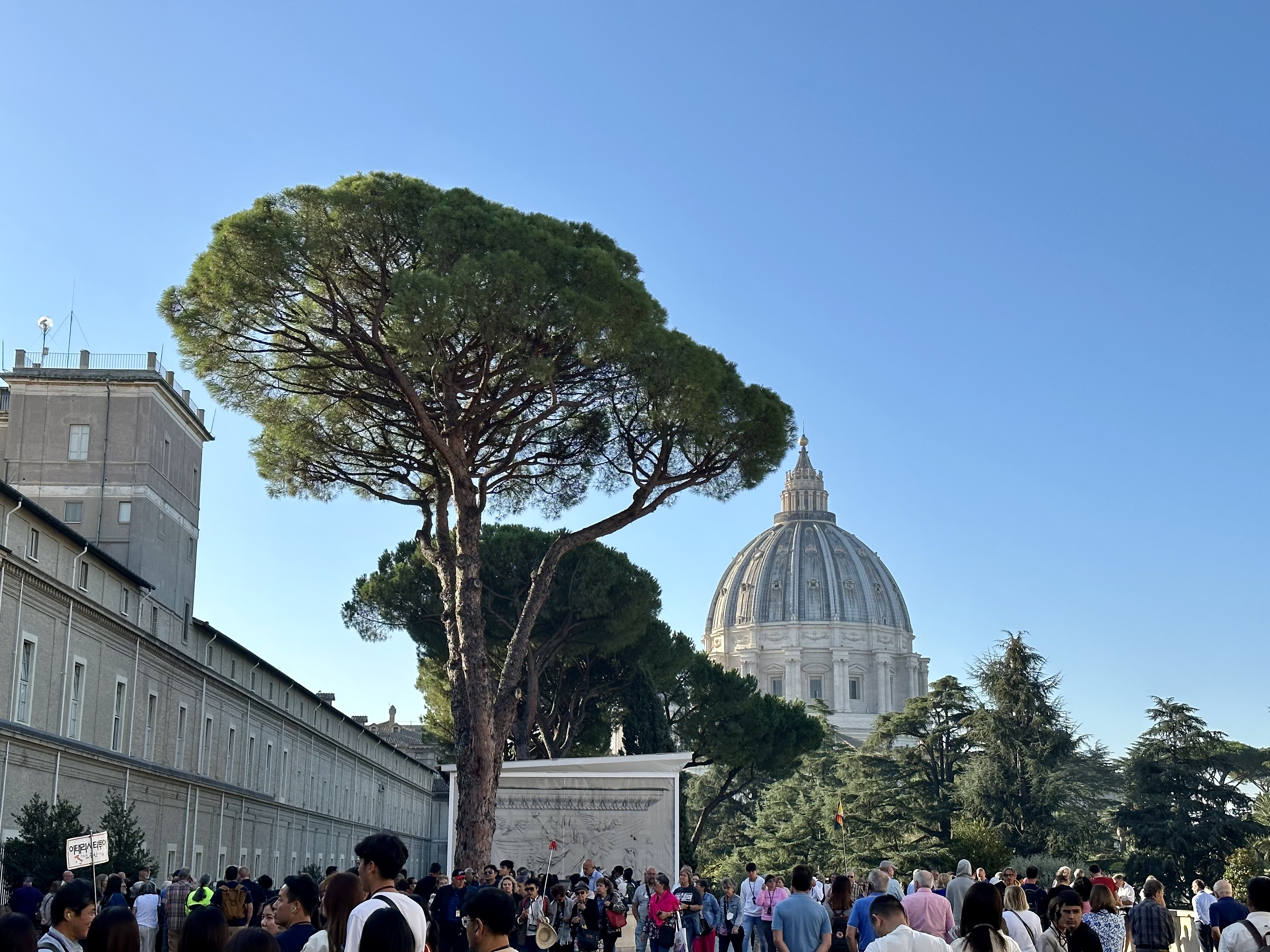
It’s a Subaru Thing

This is not a commercial.

In recent years, I have noticed many Subaru vehicles plastered with stickers of all kinds, mostly on their back windows. Some of the decals promote conservation, some politics, and some are head-scratchers.

I figured I would document my observations when I came upon this one.

Please click on the photos to enlarge them.

What do you think? Have you seen Subarus covered with multiple decals like these? And for full disclosure, my Forester only has two such stickers. And yes, they are on the rear window.

© Bruce Stambaugh 2023
Bay Photos by Donna

Wildlife photos from the Chesapeake Bay region

ROAD TO NARA

Culture and Communities at the Heart Of India

K Hertzler Art

Artist and nature journalist in the Shenandoah Valley of Virginia.

Maria Vincent Robinson

Photographer Of Life and moments

Gabriele Romano

Personal Blog

Jennifer Murch

Art is the only way to run away without leaving home. -Twyla Tharp

Roadkill Crossing

Writing generated from the rural life

ANJOLI ROY

writer. teacher. podcast cohost.

Casa Alterna

El amor cruza fronteras / Love crosses borders