In the spring and summer when you’re out birding in a woods, with every tree fully leafed out, you have to stay alert for any movement at all if you want to see birds. Sometimes you get to view other creatures, like this lovely Ebony Jewelwing damselfly. It landed about 10 feet from me in a patch of light that illuminated a few leaves. Fortunately, I was already standing still. I used my zoom lens to get this up close view of this beauty.
I saw and heard some wonderful birds. But this beauty earned the title of Photo of the Week.
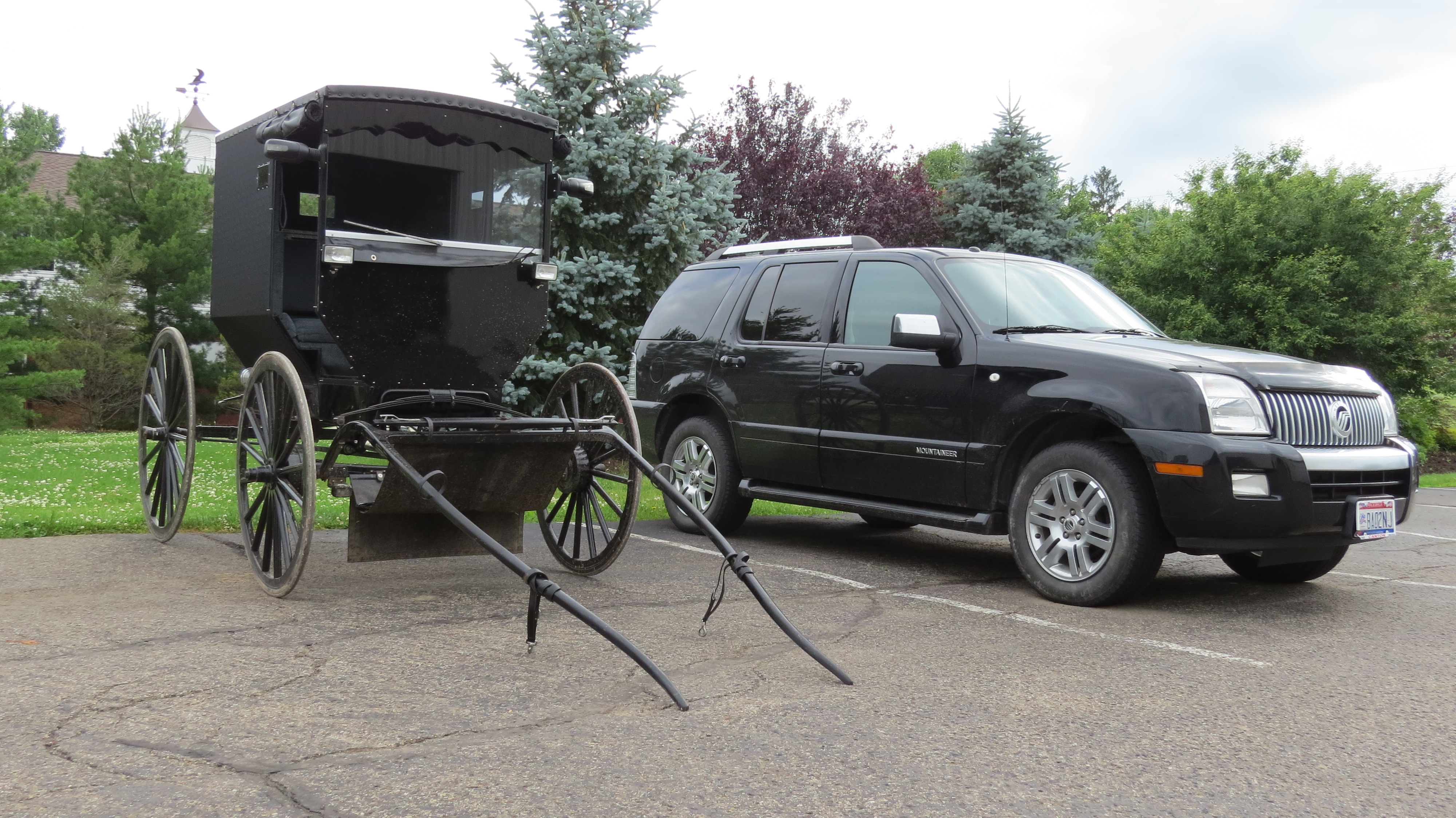
Living among the world’s largest Amish population, it’s not too difficult to find contrasting images in everyday life. When I pulled into a local furniture store’s parking lot, I thought this captured that contrast perfectly. The image of this Old Order Amish buggy parked beside the SUV spoke for itself. The fact that they both happened to be black enhanced the comparison that we who live here too often take for granted.
Erik Kratz, right, when he played for the Philadelphia Phillies in 2013.
By Bruce Stambaugh
Erik Kratz is a catcher for the Toronto Blue Jays. My wife and I like to watch him play whenever we can.
We cheer for the Cleveland Indians of course. We follow Erik for a selfish reason. He and his family are friends with our daughter and her family. Our grandson and Erik’s son were in preschool together, and they played on the same baseball team.
We have spoken with Erik a few times while visiting our grandkids in Virginia’s Shenandoah Valley, where both families live. Like our daughter and son-in-law, Erik is a graduate of Eastern Mennonite University.
The only time we got to see Erik in action was when he came out to warm up the pitcher between innings.It would be a stretch for me to say that I know Erik. We know who he is, and watched his son and our grandson play. But because of the close connection to our daughter and her family, we like to watch when the Blue Jays are on television and Erik is playing, which isn’t all that often. It’s the price of being a backup player.
Recently, a game between the Blue Jays and the Twins was broadcast nationally. Erik got to start the game. On his first at bat, he popped the ball high in the air behind second base.
Both the shortstop and second baseman sprinted to catch the ball while the centerfielder, who was playing deep, ran in, too. The infielders arrived at the ball at the same time, and collided. The ball dropped, and Erik was safe at second, credited with a double.
Before the game with the Indians, Erik spoke with a friend of mine who just happened to go to high school with Erik’s father.My wife, who really knows the game of baseball, said enthusiastically, “That just goes to show that you never give up running.” Neva was right on.
Too many times I’ve seen Major League players hit a sure double-play grounder, or a pop-up like Erik’s, and the batter assumes the fielder will cleanly make the play. He gives up running hard, only to discover that the ball was bobbled or thrown away or, like in Erik’s case, dropped.
But because the runner assumed the ball would be caught, the fielders had a second chance. Many times the batter was thrown out despite the miscue because he had quit running.
I thought a lot about what Neva said. Never quit running, not in baseball, not in any sport, not in a business, not in relationships, not in life. Regardless of the odds, keep on running.
My brother-in-law, who is my age, has gone through some traumatic physical issues in his lifetime, some even life threatening. But Bob has never given up. He always, always has kept a positive attitude no matter how serious the situation.
His determination, along with excellent medical care and a strong support group of wife, family and friends, have kept him running, metaphorically speaking. If he had given up, he likely wouldn’t still be with us. But he is.
Erik Kratz.I admire that in people. No matter the odds, they keep plugging on. Determination, goals, grit, desire, love, moxie, patience, encouragement all are ingredients in living a fulfilling, meaningful, useful life.
I’m glad my brother-in-law has survived another medical episode. His faith and determination surely helped him through, and will continue to do so during his rehab sessions.
I’m glad Erik kept running, too. As it turned out, he didn’t score a run. But that really wasn’t the point. He put himself in position to score. It was up to his teammates to bring him home.
So keep on running, just like Bob and Erik. Isn’t that what life is really all about anyhow?
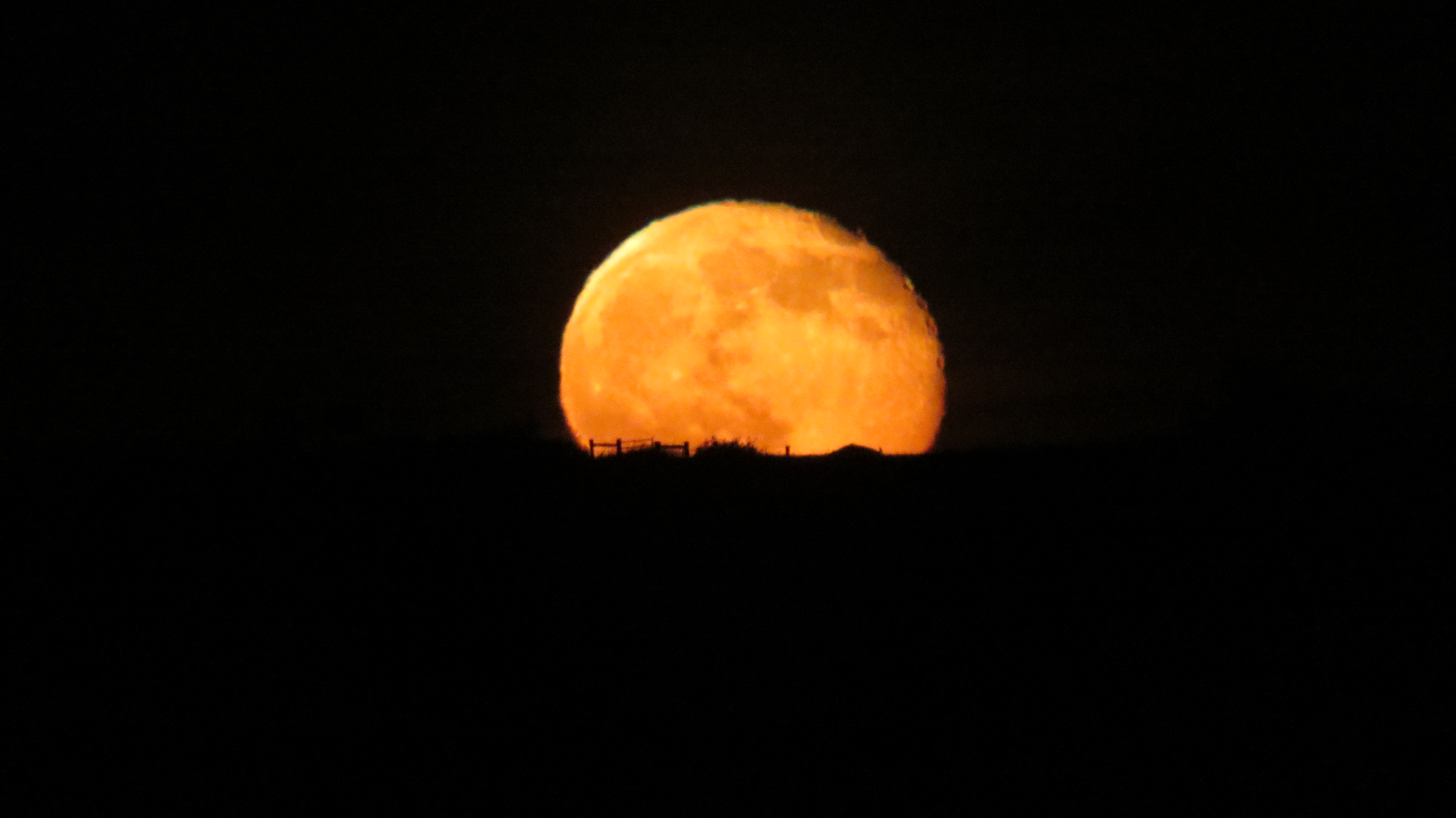
Because of the sun’s high location in the Northern Hemisphere’s sky, and the moon’s southeastern proximity, reports had indicated that June’s Hot Full Moon would be orange. When the moon slipped above the horizon at 10:24 p.m. on June 14, it was even more orange than I had anticipated.
With the dark sky and the pumpkin colored hue, the moon favored more Halloween than almost summer. I captured this hand-held shot as it rose above an Amish farmstead east of Berlin, Ohio in Holmes County. It is my photo of the week.
I made a very revealing, personal discovery today. The 2014 calendar is identical to the 1947 calendar.
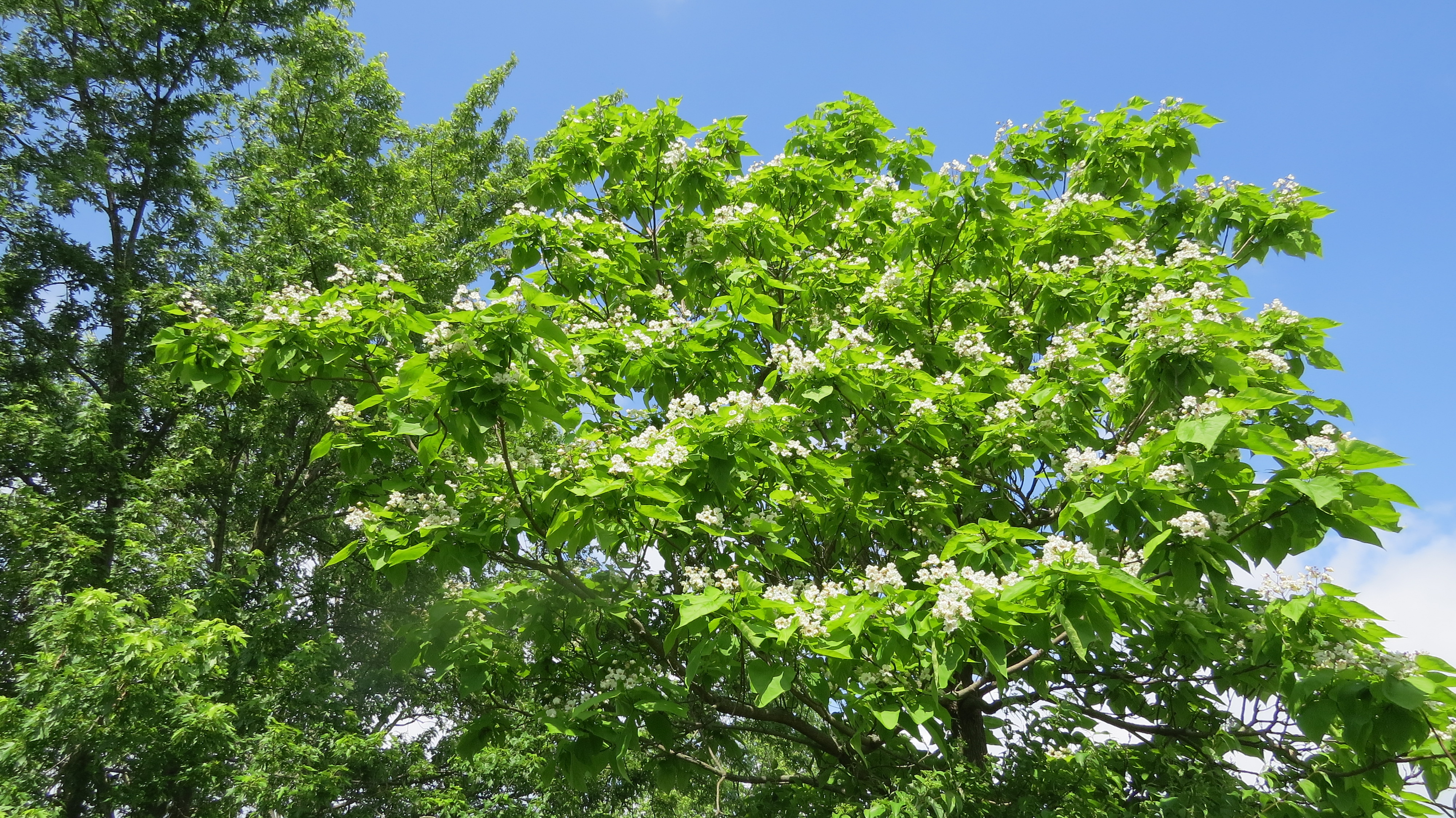
I know that’s not earth-shattering news. But it was for me. And it all started with me taking a photo of a blooming catalpa tree yesterday. I remember a story my late father once told me, one I have written about before, and will never forget.
Whenever the catalpa trees bloom in northern Ohio, Father’s Day is near. I had never paid much attention to that until Dad related his moving story.
On Sunday afternoons, my mother’s parents took turns visiting their three married daughters, all whom lived in Canton, Ohio. But on Father’s Day in 1947, Grandma and Grandpa Frith went to each of their daughter’s homes to visit. While sitting on our my parents’ front porch, Dad eyed a blooming tree down the street, and asked my grandfather if he knew what kind of tree it was. Grandpa Frith told Dad that it was a catalpa tree. Some people refer to it as the cigar tree, in reference to the tree’s long, green fruit pods.
The next day Grandpa Frith went to a job site where he was working as an electrician. He had turned off the power to do his electrical repairs when someone came along and turned the power back on. Grandpa Frith was killed instantly.
In retrospect, Dad said Mom, Aunt Gerry and Aunt Vivian were ever so grateful for that last visit they had with their father. They even wondered if it wasn’t simply meant to be.
I was born that December, never having met my grandfather.
Knowing that this Sunday, June 15 is Father’s Day, the exact same day as 67 years ago, seeing that blooming catalpa tree had even more meaning for me than ever before.
I recently served as a guide to a local Amish farm that had an active Barn Owl nest. It was one of several in the Holmes County, Ohio area. For the most part, the Amish are very respectful towards wildlife, especially birds. They fully understand what a gift it is to have Barn Owls around. The owls help control the rodent population.
Certified naturalist and speaker, Chuck Jakubchak, accompanied me on the field trip. After everyone had viewed the trio of young Barn Owls in their nesting box through a peephole, Chuck suggested I get a picture of the owls. I certainly didn’t want to stress the young birds, so he lifted the top of the box just enough for me to take this photograph. Of course, the owls hissed and bobbed, their natural defense mechanisms, for the few seconds that it took me to snap the shutter. We left the young owls in peace.
The morning sun streamed through the entrance to the nesting box, and an east breeze fluffed up their downy feathers. This was the only picture that I took, and I wanted to share it with all of you.
I pass by this Amish farm on my regular morning walk. The arrangement and angle of each piece, farm implement, tractor wheel, corncribs, barn, lean-to, outbuilding, caught my attention individually and as a group. The soft morning light illuminated the barnyard setting, especially the corncobs.
With all of the various shapes, lines and angles, the photo titled itself: Amish Geometrics.
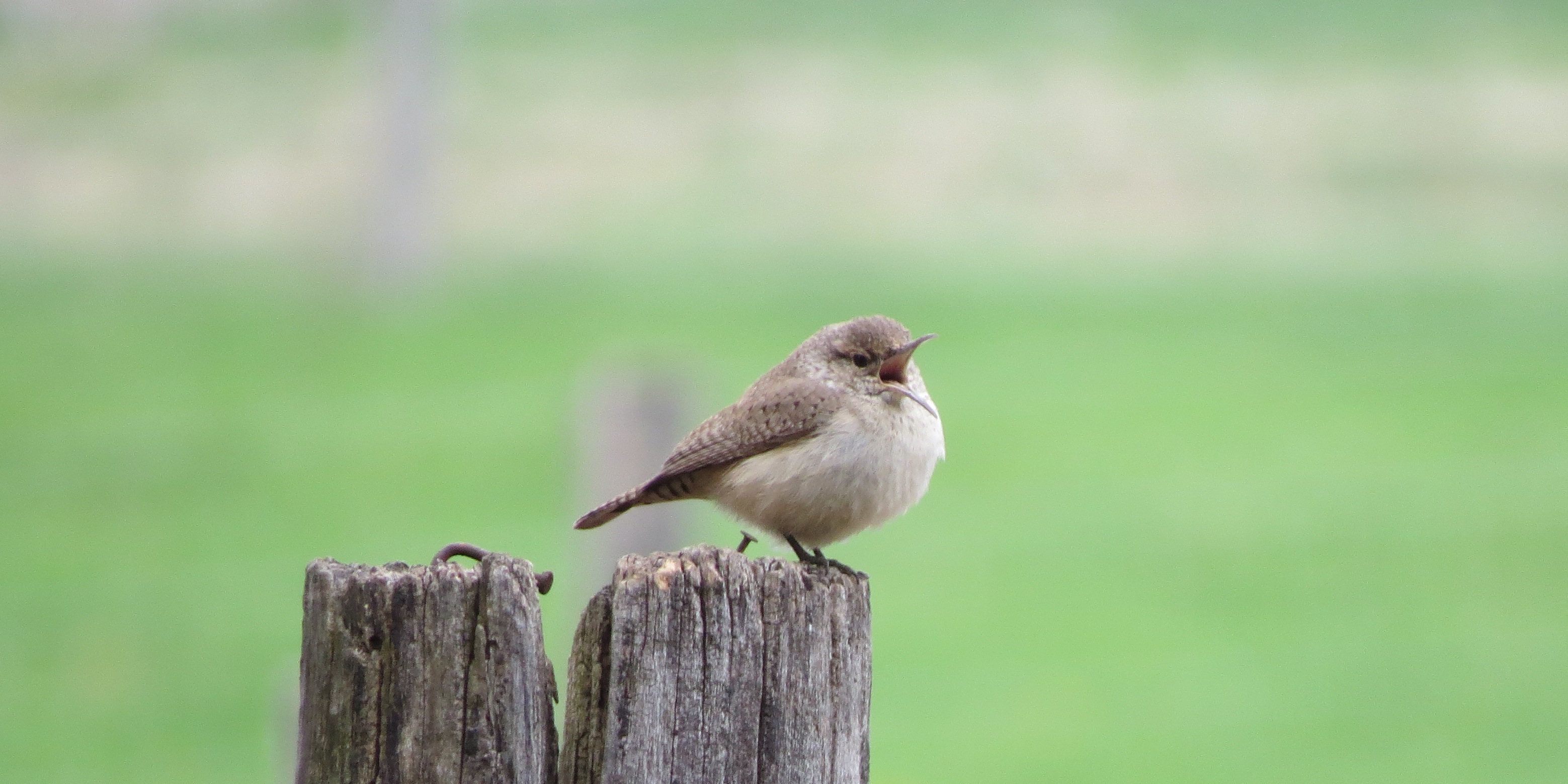
A month ago, a wayward little bird, a Rock Wren, ended up far from home smack in the middle of Ohio’s Amish country. Its arrival caused quite a stir. Over and over again, the wren flitted from a farm to a residence to a barnyard to a business and back.
Here it was two miles east of my home at a crossroads colloquially dubbed Bowman’s Corners. The buildings, the pastures, the animals, hardly resembled the wren’s native habitat in the American southwest. Nevertheless, the wren made itself at home for 10 days, and then just disappeared.
Word of the rarity quickly spread, and birders from near and far came with binoculars and cameras with long lenses to catch a glimpse of the dusty-colored wren if they could. Since the only other Ohio sighting of this bird had been in December 1963, I wasn’t surprised at all the commotion.
By the end of its short visit to the world’s largest Amish population, the pallid bird had taken on rock star status. It was a Rock Wren after all.
People from all stages of life came from miles around hoping to catch even a glance of the vagabond bird. Young, old, women, men, boys and girls, novice and internationally known birders flocked to view the Rock Wren. In total, more than 500 birders came in search of this special appearance. Many got to see the fickle little bird while others did not despite their patient waiting.
Hopping.
On a leaf pile.
Danger.
On the gate.
Spotted.
Beautiful setting.
Looking.
The Rock Wren earned the title of the “Junkyard Bird” because it often feed and perched among discarded farming materials.
Hard to find.
Birders.
Looking down.
Posing.
On the stump.
Jailbird.
The bird was the great equalizer. World-class birders stood side-by-side with youngsters gawking to see what all the fuss was about. When the secretive bird reappeared, a birder’s hand went up, excitedly waving. Other birders hustled to the spot to get a peek or to take a photo.
There was no class system, no pecking order, and no discrimination among these birders. If a birder saw it, he or she made sure others got to as well, even if it meant lending their own binoculars for others to spot the wren.
Fancy, expensive automobiles sat beside plain black buggies. Boys with suspendered denim pants, and straw hats stood alongside strangers old enough to be their grandparents. They were there for the same reason, and nothing else mattered than to catch a glimpse of the Rock Wren.
Those who were kind enough to host the posse of birders during the wren’s Amish country vacation seemed to enjoy the people as much as the bird. Of particular note was an older couple from the Cleveland area. Their story earned the respect and admiration of several, and served as an example of the dedication of birders.
The elderly gentleman was 95, and his wife was 90. Avid birders, they were undecided about making the two-hour drive form their home. Finally, they committed to coming, and they were not disappointed. Their zeal for birding brought smiles all around.
In its happenstance landing at Bowman’s Corners, the Rock Wren helped make new friends of those who sought to see it. More importantly, despite gender, age, wealth, education, birding experience or life’s station, they gathered as one through a common interest, a genuine love of all things created. The Rock Wren had woven its magic, innocently converting strangers into friends.
The Rock Wren was a splendid surprise. The gracious hospitality availed by the property owners of Bowman’s Corners that enabled so many folks to see this precious bird was no surprise at all.
Today is Ascension Day, the 40th day after the resurrection of Christ. For the Amish in the Holmes County, Ohio area, Ascension Day is a holiday. Families gather to reflect, visit, share, relax, and just enjoy each others company. Youngsters may go fishing, hiking, biking or play games like volleyball and softball.
Of all the holidays that the Amish celebrate, Ascension Day is the most informal, with no worship service or fasting. It simply is to honor the day that Christ ascended into heaven. Perhaps it’s a lesson from which all of us can learn.
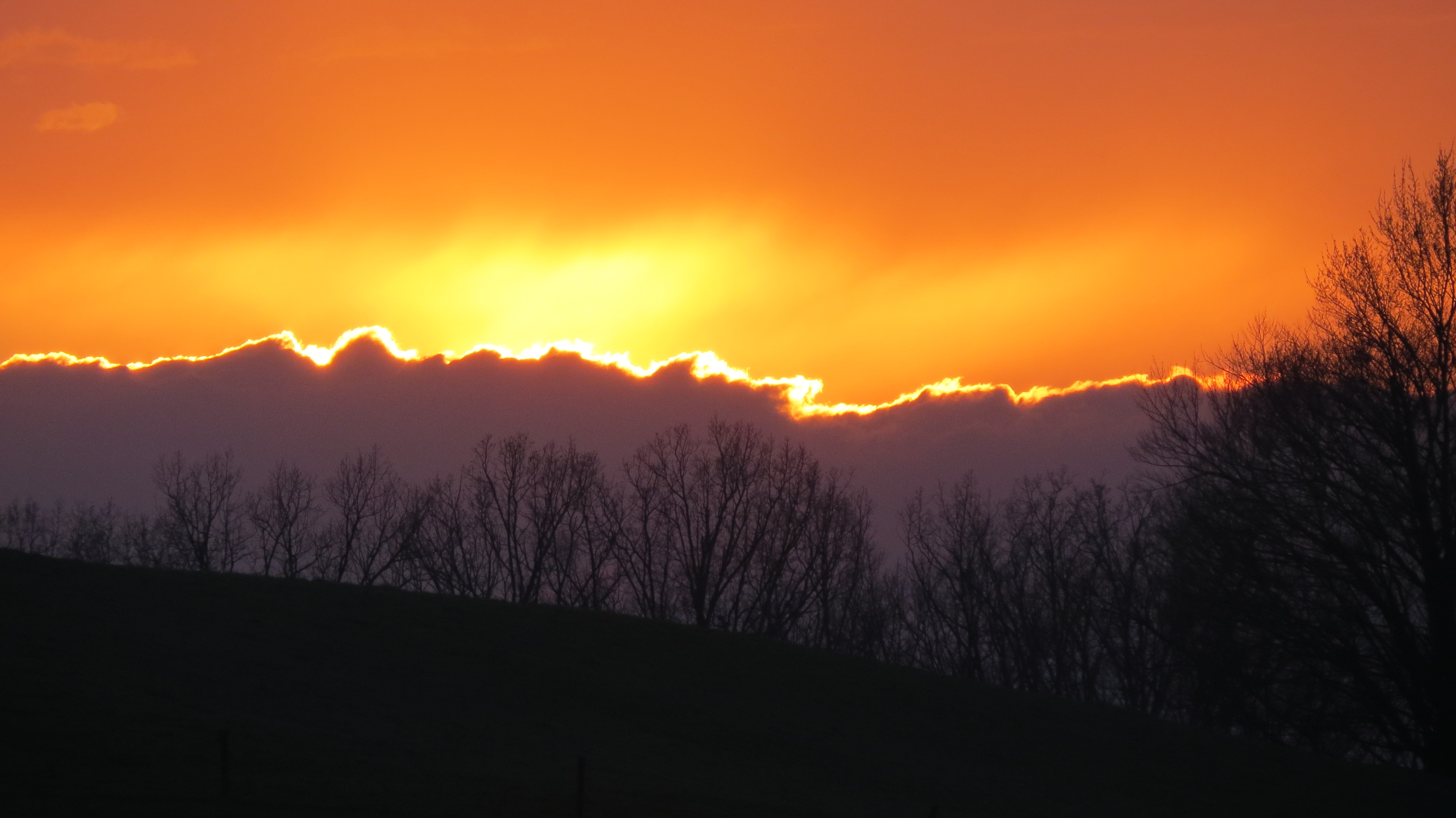
A recent setting sun highlighted dandelions gone to seed.
By Bruce Stambaugh
Most times, when I look out the windows of our home or silently gaze across the landscape from our back porch, it seems like a dream come true.
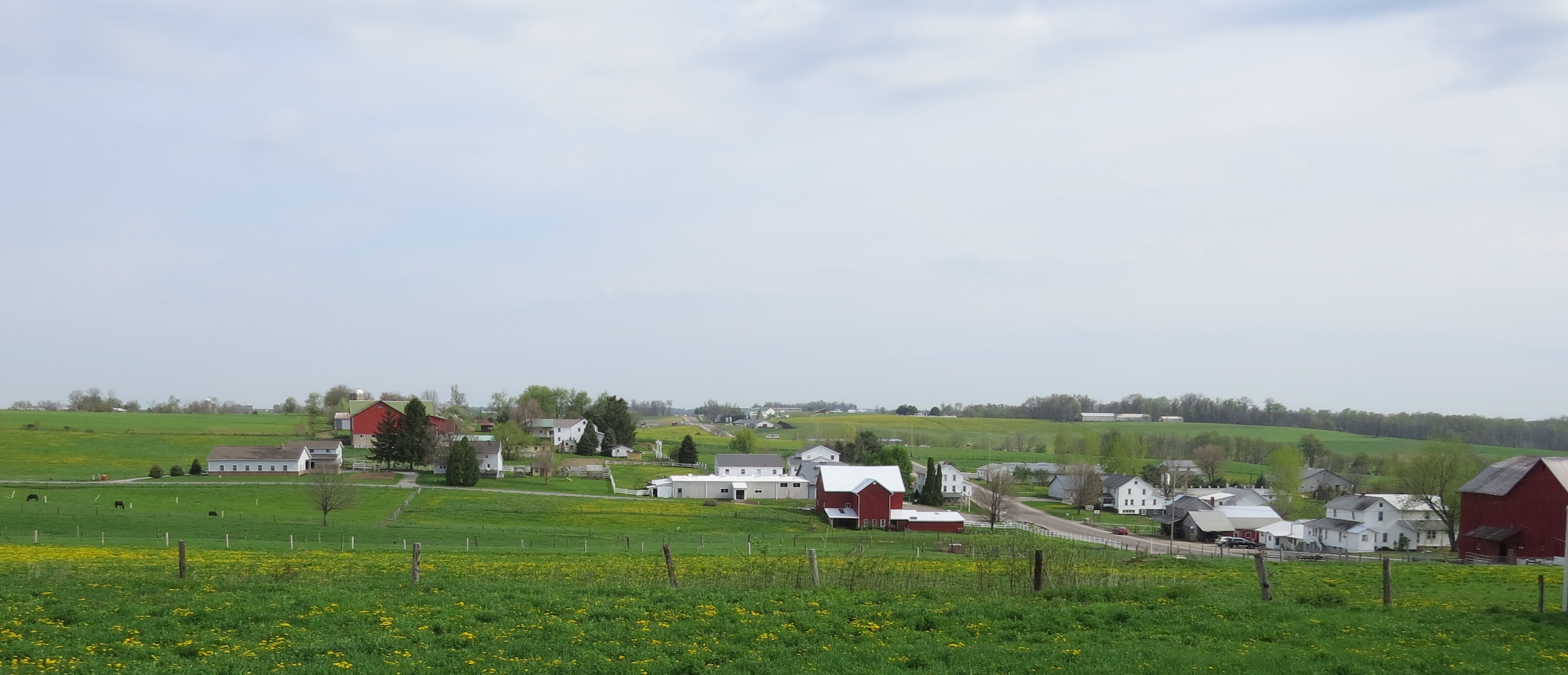
A typical Amish buggy seen in Holmes County, Ohio.When I was a child, my father occasionally would pile his family into the car and head to Holmes County. He loved the rolling hills, the tidy farms, the stands of hardwoods interspersed with patches of multi-hued green and golden crops. The winding, hilly roads stitched together these living quilt blocks.
We wound our way on two lane highways through towns like Navarre, Wilmot, Winesburg, Berlin and on into Millersburg. For us impatient kids, the drive from our blue-collar suburb 40 miles away seemed an eternity.
Dad made the day trip even longer. We stopped to buy eatable souvenirs at the cheese houses, built with shiny, glazed tile blocks that mimicked the yellow chunks of Swiss. We couldn’t wait to unwrap the brown, waxed paper parcels secured with sturdy, white string. They perfectly represented the productivity of the land and its practical people.
Workhorses.Dad loved the slower pace of life in Holmes County, best modeled by the buggies drawn by satiny chestnut horses, and the afternoon sun highlighting the blond manes of giant workhorses pulling hay wagons through waves of emerald alfalfa. Neat white clapboard farmhouses, sometimes two abreast, and carmine bank barns brought focus to this dreamy world.
Dad would also stop along the way to photograph colorful landscapes, or just to enjoy the view. Sometime later, Mom would produce a watercolor that vividly depicted the same scene.
This slideshow requires JavaScript.
I often ponder those excursions with Dad, noting how ironic it is that my wife and I settled in Holmes County. We made it our home, raised our children here, began and ended our careers here.
In the summer, I sit on the back porch eating heirloom tomatoes and drinking fresh mint iced tea while our neighbor and his circle of family and friends gather wheat shocks on a hot, sticky afternoon. Undeterred by my presence, hummingbirds zoom over my head to the feeder.
In the winter, American Goldfinches, Northern Cardinals, Red-bellied Woodpeckers, Eastern Bluebirds and White-crowned Sparrows consume the seeds provided for them. A whoosh of wings announces a sneak attack by the resident Cooper’s Hawk, attempting to snag a snack, too.
Ground fog.
In the spring, I watch with wonder as maple leaves unfurl ever so slowly. Yet it seems one week the trees are bare, and the next I’m under their shade.
I’ve never been to New Hampshire or Vermont to behold their fine fall colors of picture postcard scenes where hardwoods surround pristine, quaint villages. I intend to go someday. This fall, however, I’ll enjoy the equally colorful pallets around Charm, Beck’s Mills, Killbuck, Glenmont, Trail and Beechvale.
As pretty as our area is, its hardy people, though humanly and humbly imperfect, make it even more attractive. My wife and I are grateful for friends and neighbors who reside and work in and about our bucolic habitat. It’s a privilege to be among them.
Holmes County wasn’t the only enticing rural area our family visited on those trips long ago. But it was a favorite. I never dreamed I would end up living all of my adult life here, rooted to its rich, productive soils, and intertwined with its industrious, ardent inhabitants.
I tell people that I was born and raised in Canton, Ohio, but I grew up in Holmes County. Now you know why.











 Roadkill Crossing
You must be logged in to post a comment.