Jackie Robinson Wasn’t the First African-American MLB Player

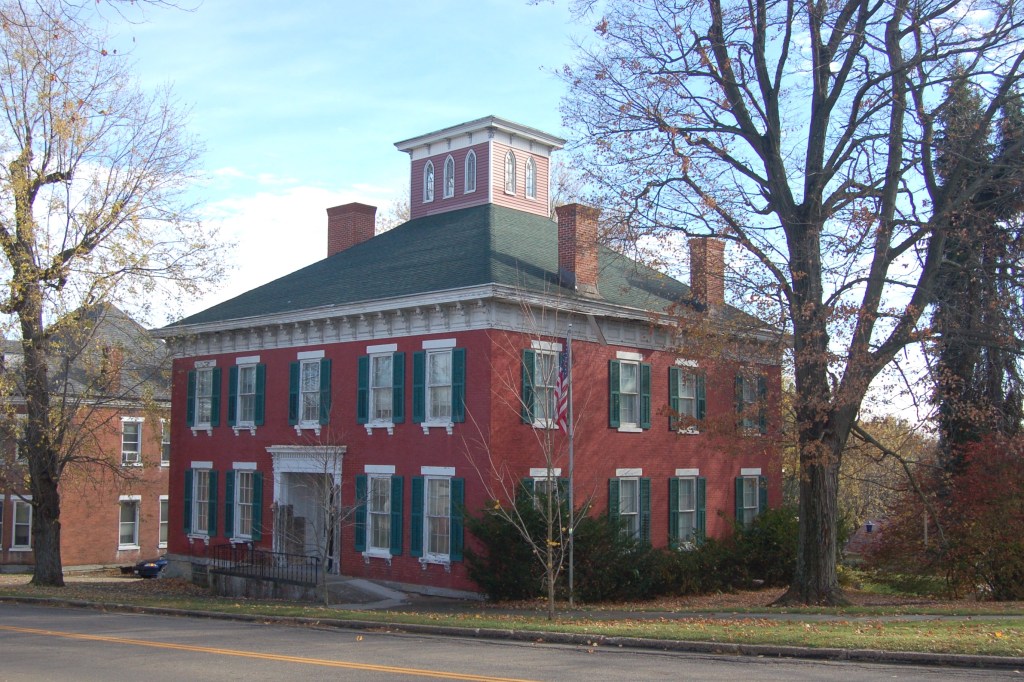
Lanterns lit in the cupula of this home led people on the underground railway to safety. Photo by Bruce Stambaugh

Would you be surprised if I told you that the great Jackie Robinson wasn’t the first African American person to play in Major League Baseball? Would you be even more surprised if I said he wasn’t even the second black player?

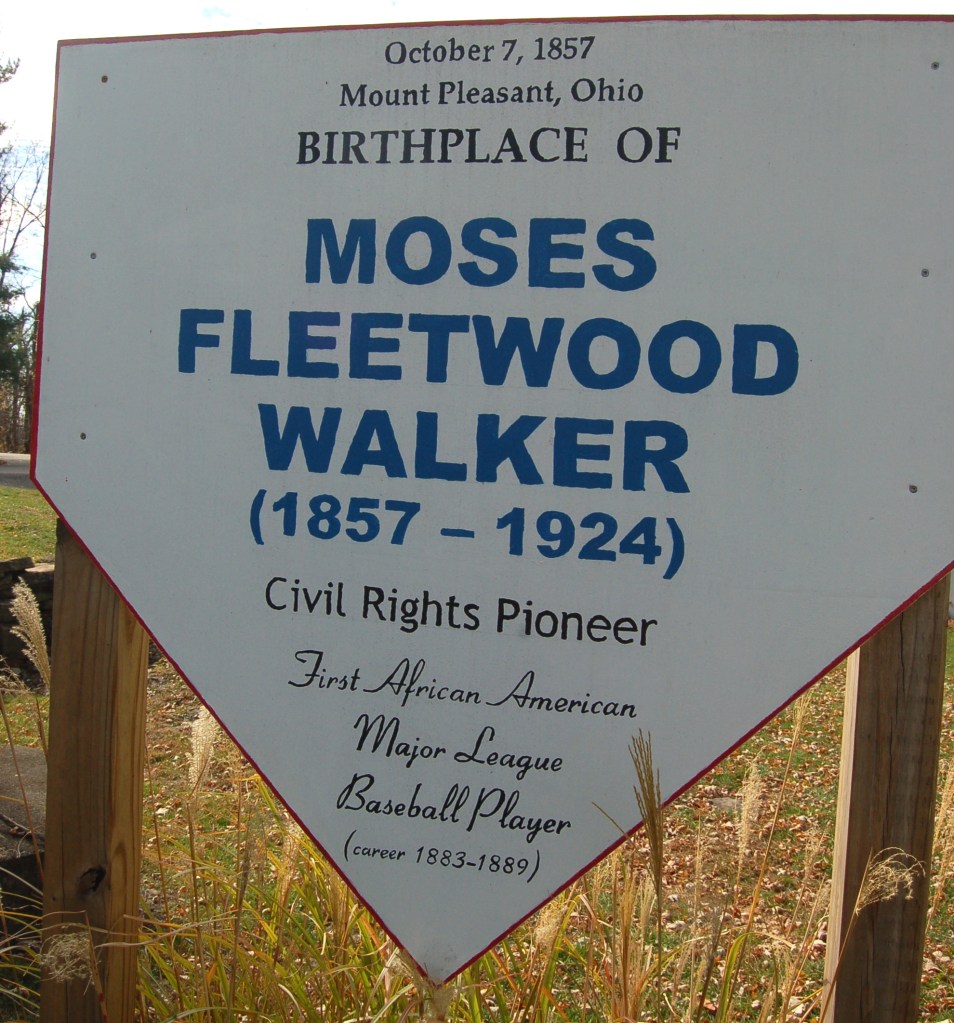
Hard to believe as it is, both comments are fact. Moses Fleetwood Walker, better known as Fleet, was the first Black player in the major leagues. He played catcher for the Toledo Blue Stockings in 1884. He signed with the team in 1883 after playing on the baseball teams of Oberlin College and the University of Michigan. Fleet’s brother Welday played a few games that same year, becoming the second Black player. That was 63 years before Jackie Robinson debuted with the Brooklyn Dodgers.

In the post-Civil War era, signing and playing Fleet and his brother was a bold move for the Toledo club, a member of the American Association, now the American League. In the Jim Crow era, it met with great hostility from Whites and, in an odd way, led to Fleet’s short career.

The plaque honoring Fleet Walker in the baseball Hall of Fame. Photo by Bruce Stambaugh

Hall of Famer Cap Anson, the star player and emboldened racist for the Chicago White Stockings, now the Chicago Cubs, refused to play with a Negro on the field. Toledo’s manager called his bluff, however. Knowing he wouldn’t get paid unless his team played, Anson relented. However, Fleet was injured and wasn’t scheduled to play that game. But because of the tense situation, his manager had Fleet play anyhow.

So, why isn’t Fleet recognized as the first Black Major League Baseball player? John Husman, a leading baseball historian, cites two reasons. Records in that era of baseball were not well kept. But more importantly, Jackie Robinson was a star player who played 10 seasons for the Dodgers, plus years in the Negro Leagues before that. The Negro Leagues didn’t exist when Walker and his brother played. Consequently, history forgot them.

Of course, Hall of Famer Jackie Robinson is rightly credited with being the first Black player in baseball. He broke the color barrier with his amazing baseball skills and longevity as a major league player. He earned his Hall of Fame enshrinement in Cooperstown, New York, and the annual recognition of Jackie Robinson Day every April 15th. It was the day he joined the Dodgers in 1947.

Moses Fleetwood Walker has a plaque in the Hall of Fame with a photo of him and his wife, recognizing his pioneer playing days. The plague also includes part of a threatening letter from the Richmond, Virginia, team. It is only one example of what he, his brother, and the teams he played for endured.

Part of one of the threatening letters Fleet Walker’s team received. Photo by Bruce Stambaugh

Despite the progress made by Robinson’s historic breakthrough, injustices to people and athletes of color continue. Only recently, a bronze statue of Jackie Robinson was stolen from a park in Wichita, Kansas. The perpetrators cut off the life-sized statue at the ankles, leaving only his shoes. The statue, valued at $75,000, was later found mutilated and burned at another area park. Clearly, the racist hatred expressed in the Richmond letter toward Fleet Walker so long ago still flares its ugly head too often today.

Ironically, Moses Fleetwood Walker was born in 1856 in the then-Quaker town of Mt. Pleasant, Ohio, a noted station on the underground railroad. Lantern-lite signals from the glass windows of a cupula atop a large brick home on the main street of the small village led travelers on the underground railroad to safety from the nearby Ohio River. Could his parents have been among them? It’s a query likely never to be answered.

At least their oldest son has a touch of recognition with a plague in the National Baseball Hall of Fame. It’s a footnote of baseball history, but at least he isn’t forgotten.

Photo by Bruce Stambaugh

© Bruce Stambaugh 2024

Happy New Year!

As the sun rises into 2024, I hope this new year is a safe, happy, and generous year for you and your family.

Sunrise on January 17, 2023, Fernandina Beach, FL. Photo by Bruce Stambaugh.

Happy 2024!

© Bruce Stambaugh 2024

Blessed or Grateful?

A Thanksgiving Day turkey. Photo by Bruce Stambaugh

I’ve always felt uneasy when someone says, “I am so blessed,” or “I feel blessed.” The statements seem off somehow. The context infers divine intervention or anointment.

Maybe it’s just me, but after hearing those comments all my life, they seem increasingly used in today’s selfish society. Then it hit this septuagenarian. That was my answer to the dilemma.

To utter the words “I am blessed” focuses on the person, not on the blessing the individual received. I understand they are happy, but it’s not about you, them, or me.

I know people are expressing praise and joy for something positive in their life that has happened. Take an automobile accident, for example.

A person posts on social media a photo of their totaled vehicle, but they were able to walk away with only minor or even no injuries. Yet, they espouse being blessed. What about the person or persons in the other car who were critically injured or didn’t make it? They, indeed, weren’t blessed, regardless of who caused the crash.

So, if people are glad they survived, were healed, or have a dozen grandchildren, why don’t they express gratitude instead of their blessedness? Doing so keeps the focus on the action, not the human.

I know it seems like I’m splitting hairs on this one. But given that I’m bald, I don’t think so. I want to hear an individual, group, or corporation keep the light on the goodness, joy, or success they experienced, not on themselves.

After all, too many others in the same situation have adverse outcomes. A mother celebrates the birth of twins on social media with the “I am so blessed” mantra while another silently mourns her stillborn child. Both deserve appropriate compassion.

In the U.S., the holiday season starts with Thanksgiving. It would be marvelous if we all expressed our gratitude for all we have and were willing to share some of it with the least, the last, and the lost.

Doing so would wonderfully bless those without the same opportunities as the givers. That way, we can collectively express our elation through our gratitude instead of through our ego.

Happy Thanksgiving, everyone!

© Bruce Stambaugh 2023

Photographing a Dream

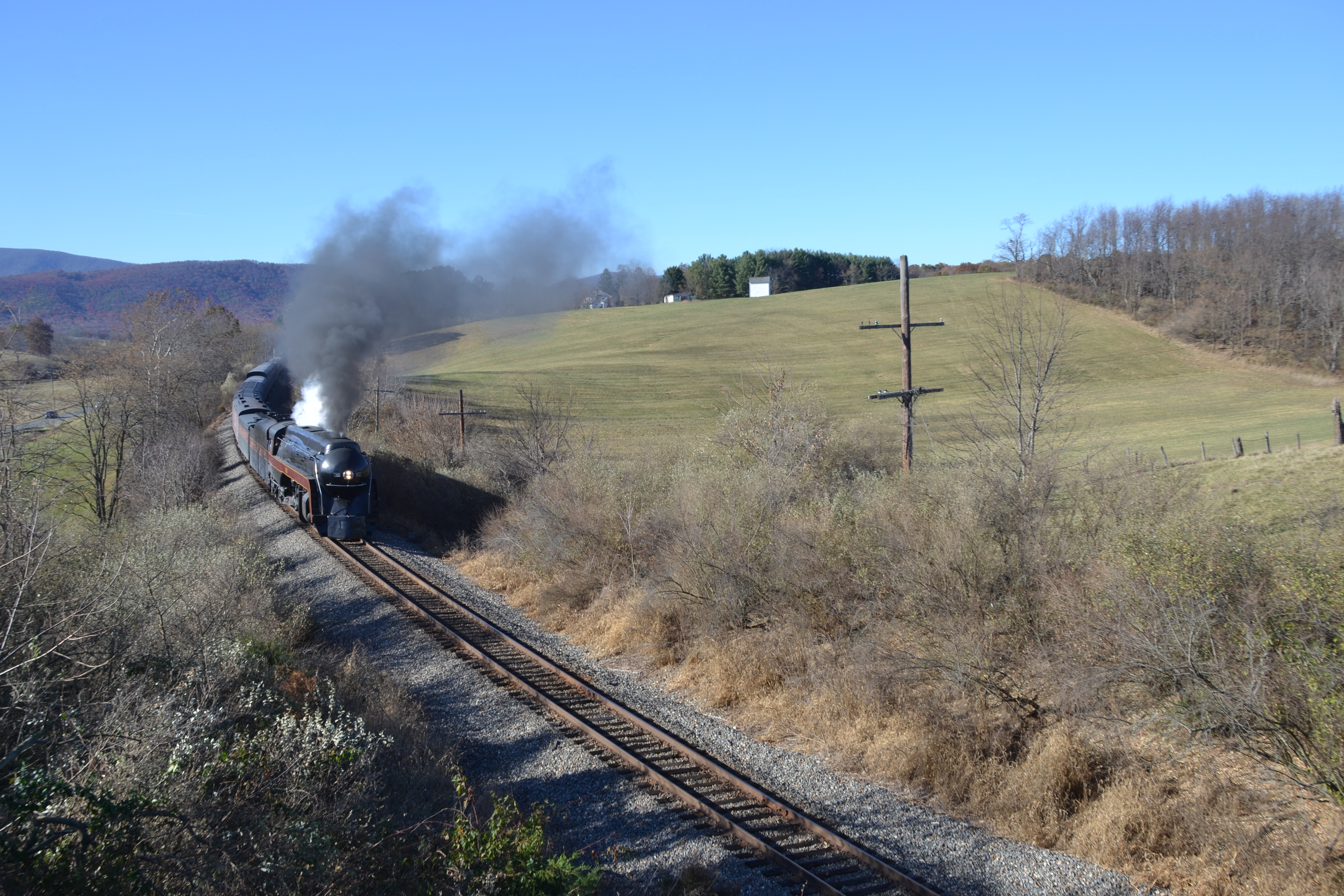
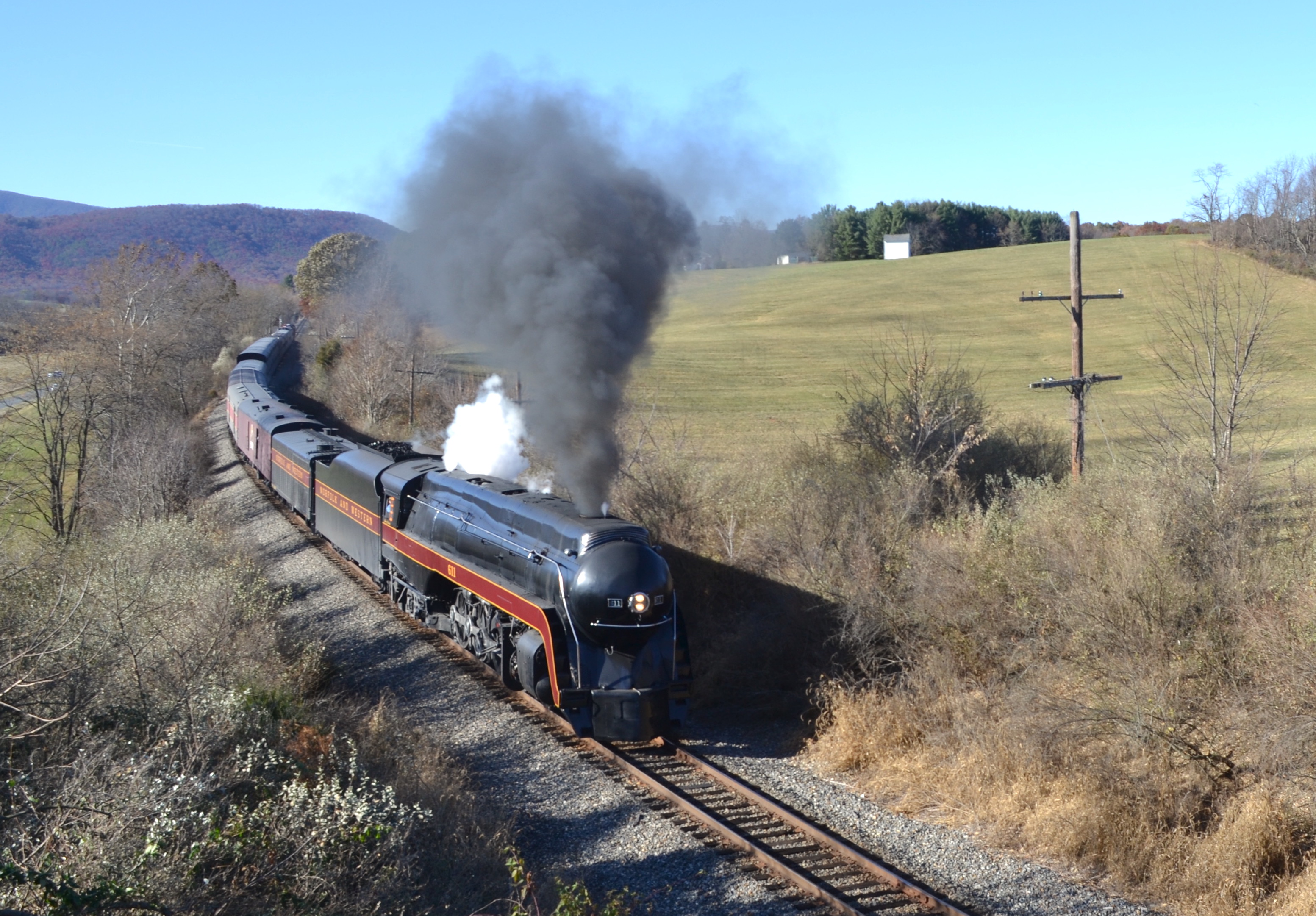
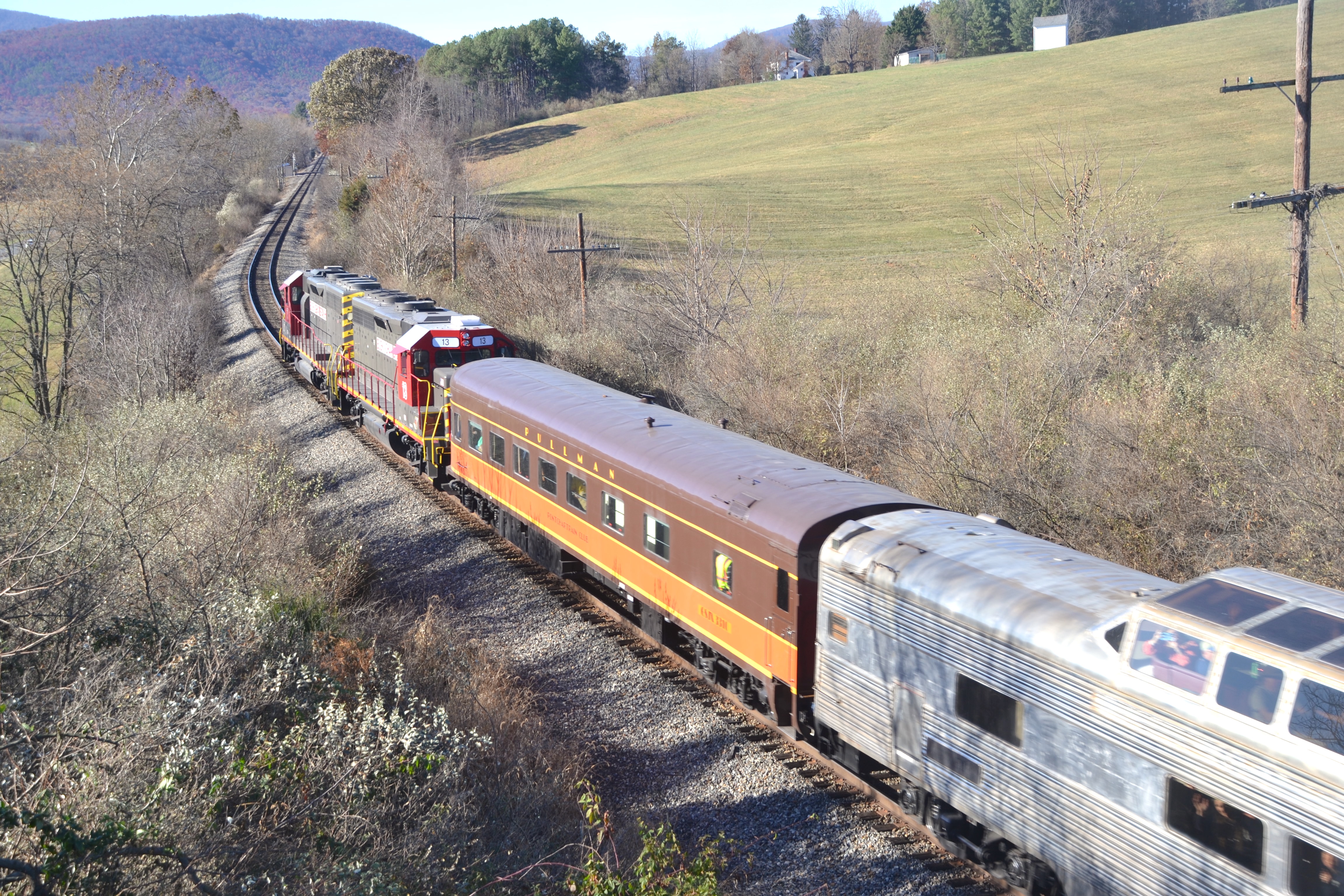
Old Engine 611 blew its whistle as it passed below us.

As a young child, I loved trains. I remember running outside seven decades ago to watch the steam locomotives roar past my grandfather’s home.

The combination of the thick black smoke boiling out of the engine’s stack, the pure white steam issuing like little clouds at each tug of the train’s whistle, and the chug, chug, chug of the wheels that drive the train onward thrilled me.

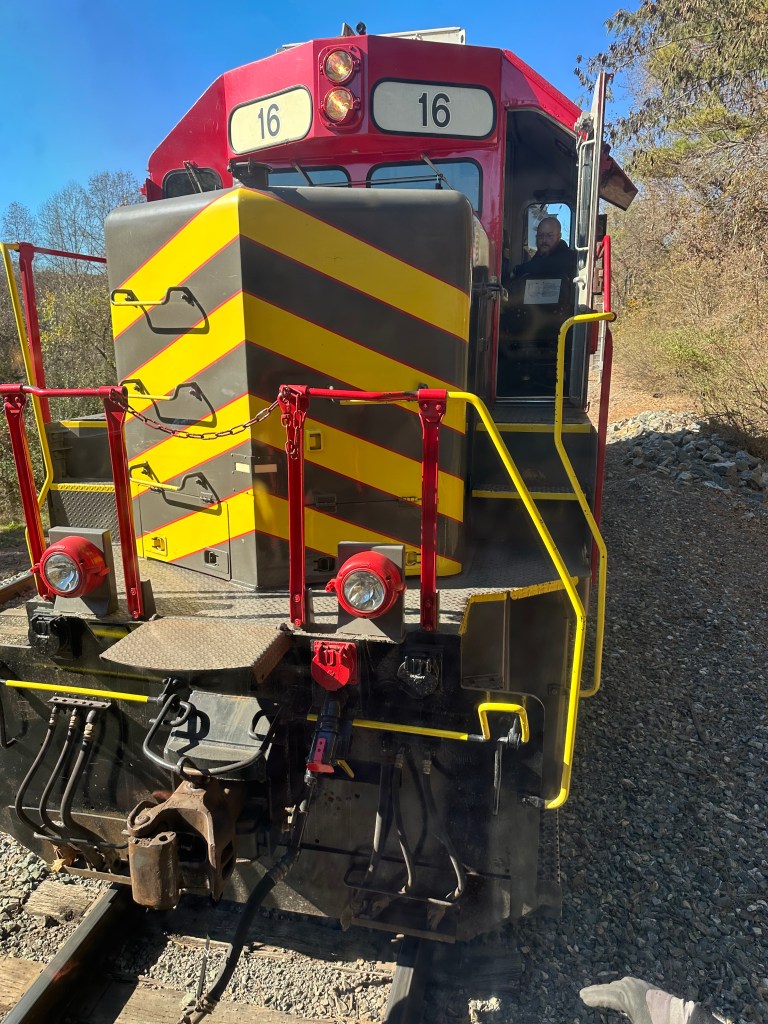
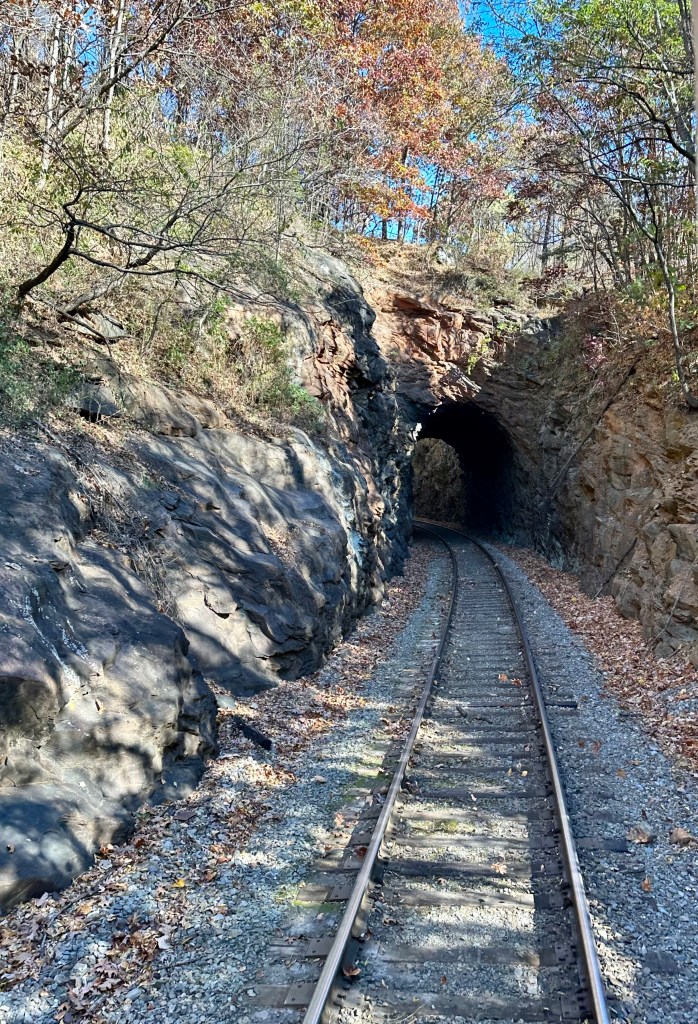
When I had a chance to relive that experience recently, I couldn’t pass it up. Our son and daughter and their spouses and children gave us a gift certificate for our anniversary to ride on an excursion train. A diesel engine pulled this one, however.

As it happened, a famous steam locomotive, “Old 611,” “Spirit of Roanoke,” or the “Queen of Steam,” was pulling another excursion the same day as our ride through Virginia’s lovely Shenandoah Valley, where we live.

The timing was perfect. After returning to the station, we could drive to the beautiful countryside and watch the 611 power along the tracks below a highway overpass. We had checked out the location beforehand to ensure we could see the train and still be out of the way of traffic.

We need not worry about the traffic. The seldom-used country road afforded a great view of the train and the mountains beyond.

So, after our relaxing ride with a delicious lunch from a local restaurant, we drove west 20 minutes to our selected spot. A couple of other train enthusiasts were already there. They knew as we did that many train chasers would arrive and crowd in to photograph the train, too.

Why all the excitement about a steam engine? The 611 is the only remaining member of Norfolk and Western’s class J-4-8-4 streamlined steam locomotives. Having been built in May 1950, it is one of the last mainline passenger steam locomotives fabricated in the U.S. Rail fans consider the 611 the climax of steam locomotive technology. Diesel engines soon replaced this gem of an engine.

We chatted with these gregarious men, one from Pennsylvania, the other from Tennessee. They taught my wife and me a great deal about the train we were waiting on. Just as expected, others soon joined us.

The eastbound Amtrak.
The westbound Amtrak.

First, we had unexpected treats. An eastbound Amtrak Cardinal train zoomed by, followed by a westbound one an hour later. They were opening acts for the main event, the 611.

We could hear the shrill whistle of the steam engine as it crossed roadways far in the distance. It was time for the show. We all got ready to be thrilled.

Please click on the photos to enlarge them.

Soon, the train neared our chosen spot. My wife started the video on my phone, and I aimed my camera to capture stills of this icon steaming by. The day had warmed into the 60s, but I still had goosebumps. I felt like a kid again.

The train roared along beneath us as I snapped photo after photo. In less than a minute, my throwback to childhood had ended.

Still, it was a dream come true. The memories from yesterday and yesteryear remain fresh in my soul.

Enjoy the sights and sounds of Old 611.

© Bruce Stambaugh 2023

A Photo Essay: Following the Path of Apostle Paul – Days 10 & 11

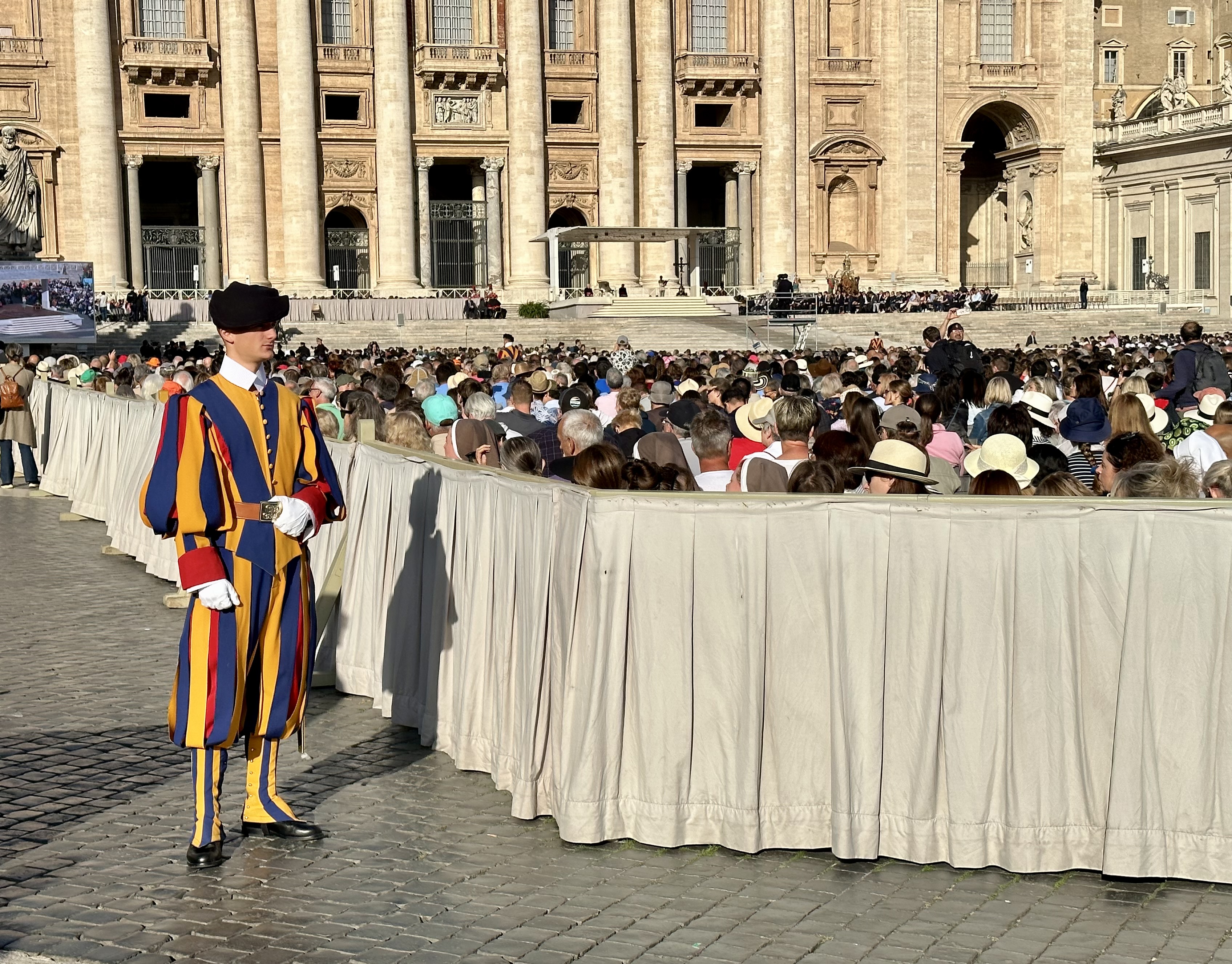
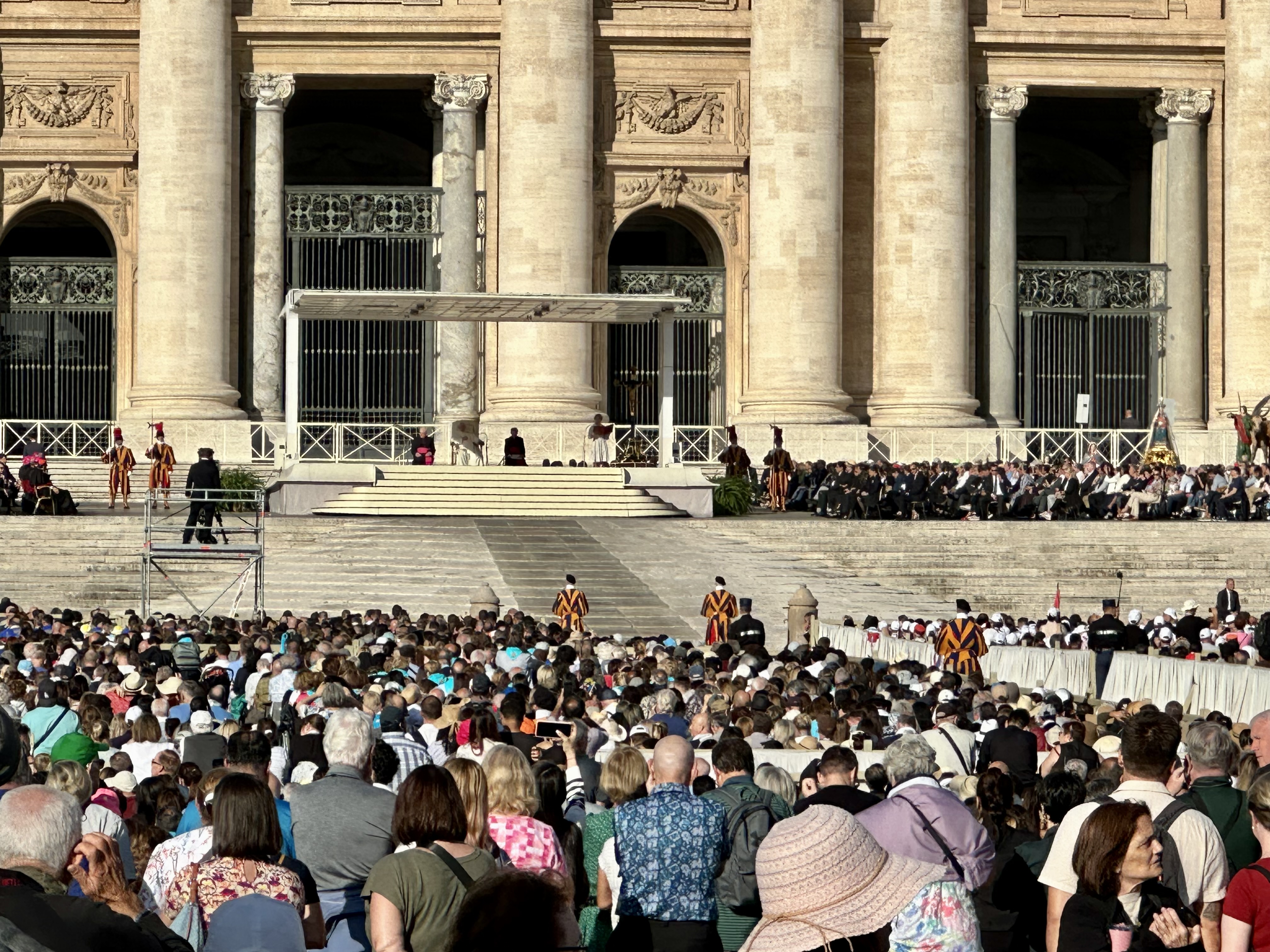
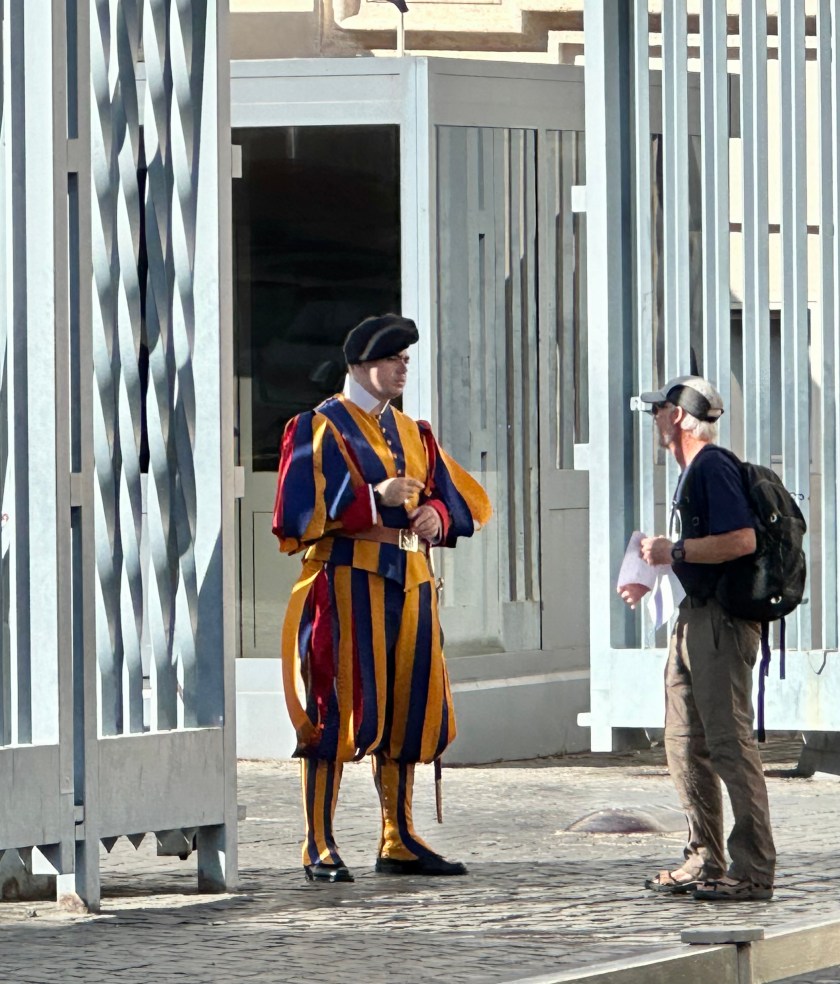
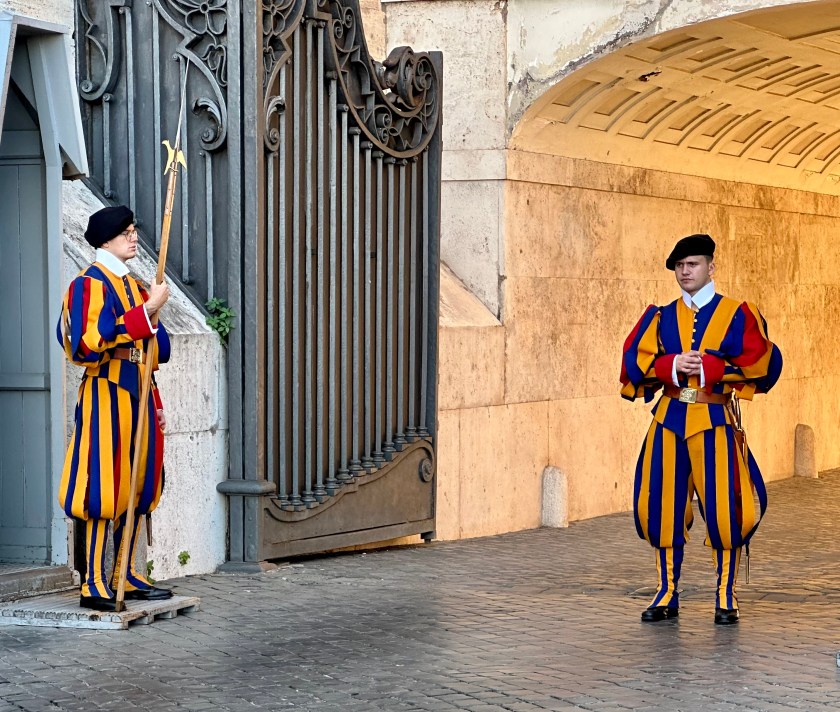
A Swiss Guard stands by as Pope Francis addresses the audience at St. Peter’s Square, the Vatican.

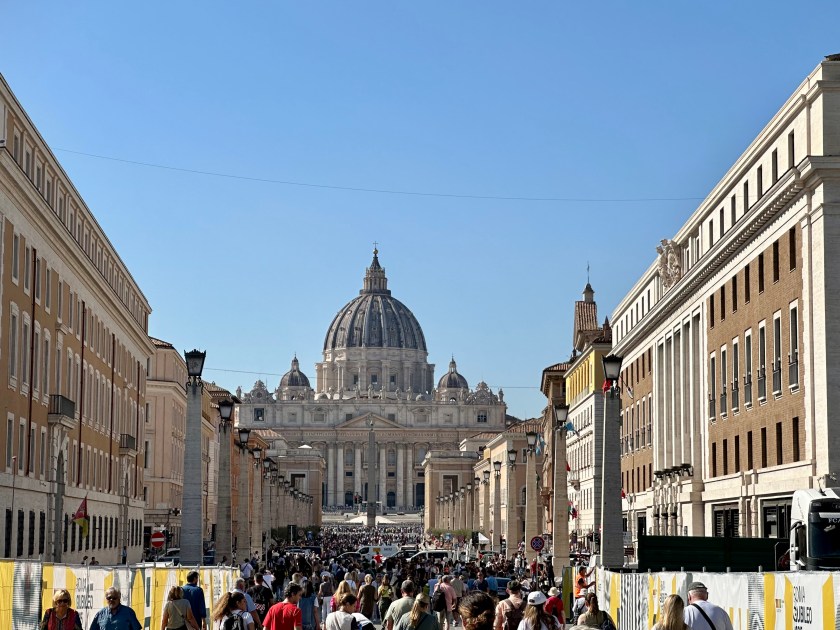
I was excited to see Rome and its many iconic sites. After all, all roads lead to and from Rome.

After landing at Rome’s expansive and bustling airport, we took the bullet train to the Metro terminal. Our hotel was less than a block away, and I was most thankful for that. Whatever bug I had was hitting me hard.

Riding the bullet train from the airport to the terminal.

Our group stored its luggage at the hotel since none of the rooms were ready. Another couple and my wife and I walked back to the terminal, which also serves as a shopping center with multiple restaurants, retail stores, and pharmacies.

I was glad to see the pharmacy because my cough worsened. After getting something to eat, we bought medicine for a dry cough and returned to the hotel. Fortunately, our room was ready. We settled in, and I hit the bed and was out.

Our leaders handed out the Roma Pass, a must for getting around in Rome. It’s a 72-hour pass that gives you access to the Metro, buses, and several museums and places of interest. So, the rest of the group rode the Metro to The Forum while I slept.

I hated to miss Linford’s opening talk that gave an overview of The Forum and told about Rome being the final destination for Apostles Peter and Paul. But I was much better off in bed. Consequently, I missed the initial exploration of this historically famous city that dramatically influenced Western cultures.

I had to be content with getting my strength back to experience the next three days’ events. It was the right decision. By evening, I felt better, but the cough persisted.

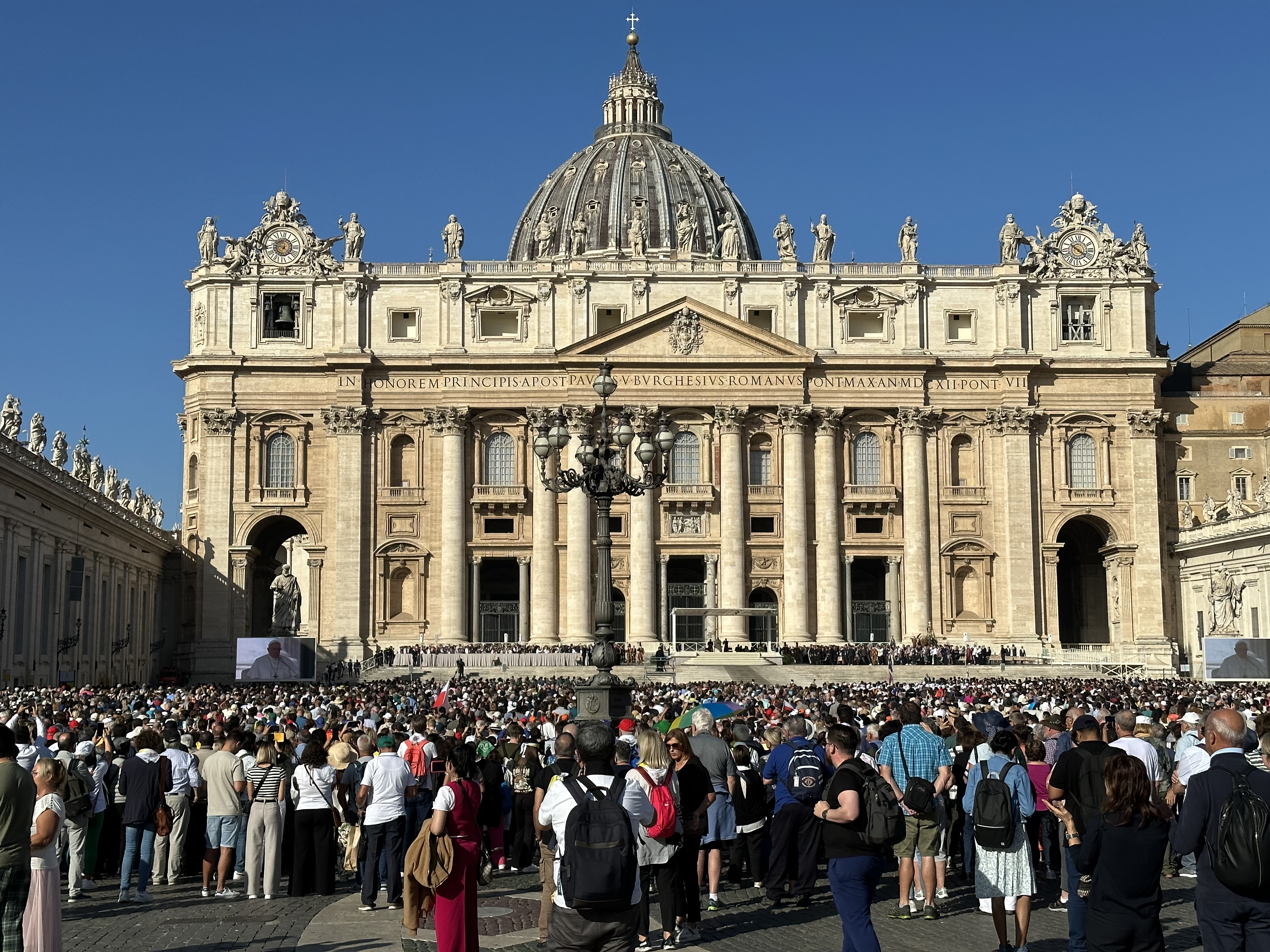
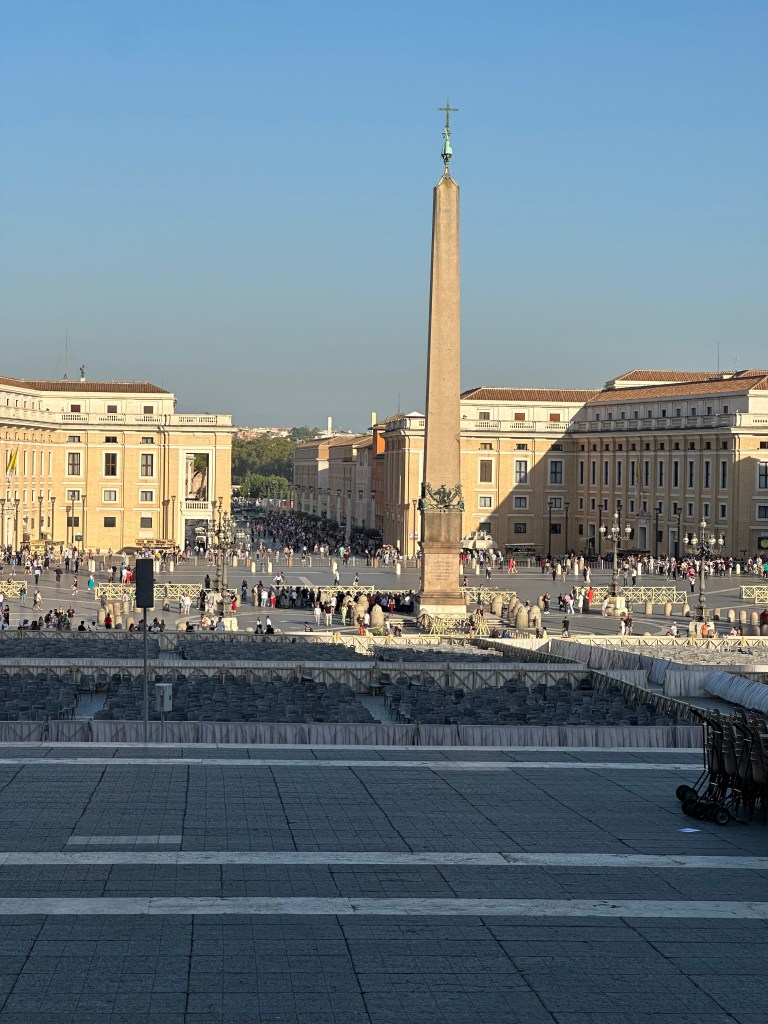
The next day turned out to be a once-in-a-lifetime experience for us. With the Pope’s Synod on Synodality happening all of October, the usual Wednesday appearance and address by the Pope had been canceled, except this day. Our leaders secured tickets to St. Peter’s Square in Vatican City, and I definitely didn’t want to miss seeing and hearing Pope Francis.

Hustle was the word of the day. We hustled to the train station and jammed into the Metro cars. We were squeezed in like sardines, and I don’t like sardines. We were reminded to be careful of pickpockets in such close quarters. Those admonitions turned out to be more than accurate. During our four days in Rome, pickpockets hit a quarter of our group of 24, with five people losing wallets.

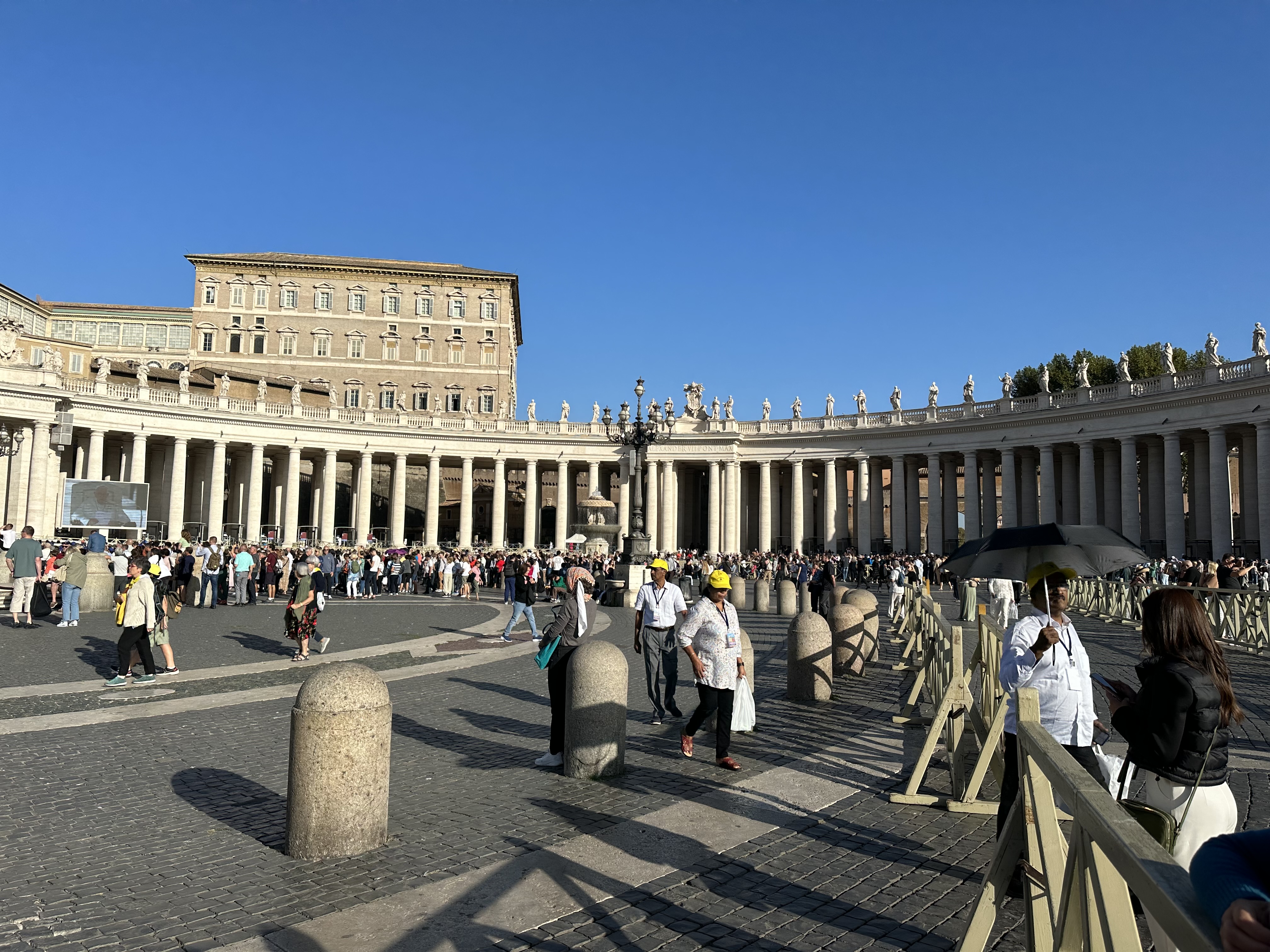
We tumbled out of the Metro and hurried to a particular entrance, hoping to see the Popemobile. We passed long lines of people waiting to enter St. Peter’s Square. However, the Pope’s route was different than our guides had anticipated, so we only saw him ride in via giant screens erected around the famous square.

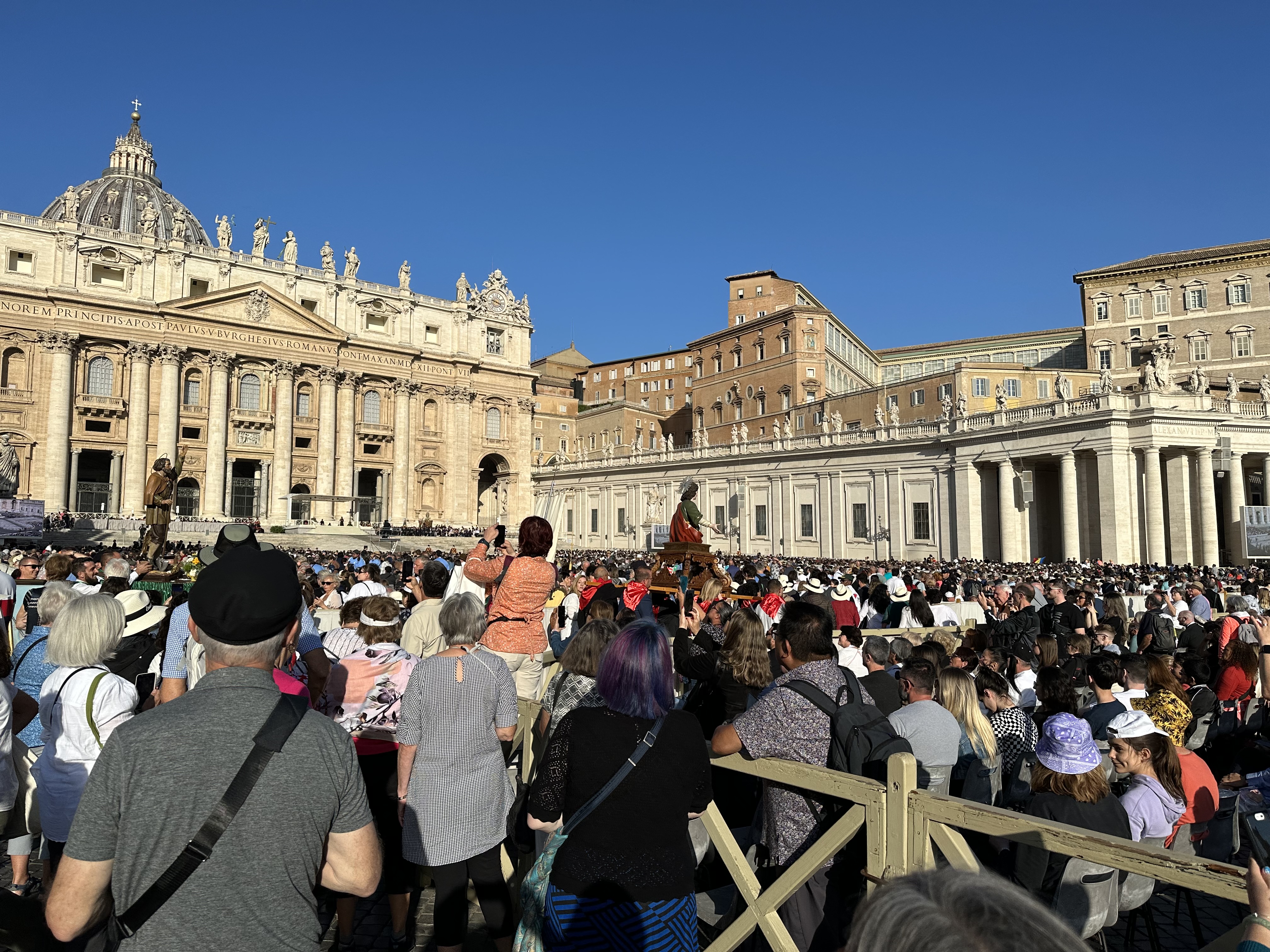
We joined thousands of others in listening to the Pope. He sat beneath a canopy on the steps of St. Peter’s Basilica. I used my binoculars to see him up close. Police and members of the Swiss Guard in their striking uniforms watched over the assembled masses.

Breaks occasionally interrupted the Pope’s Address, as individuals spoke different languages, expressing their best wishes and blessings for other global peoples and countries.

After the Pope’s address ended, various Cardinals brought Pope Francis gifts and blessings. With that finished, the crowd began to disperse in every direction.

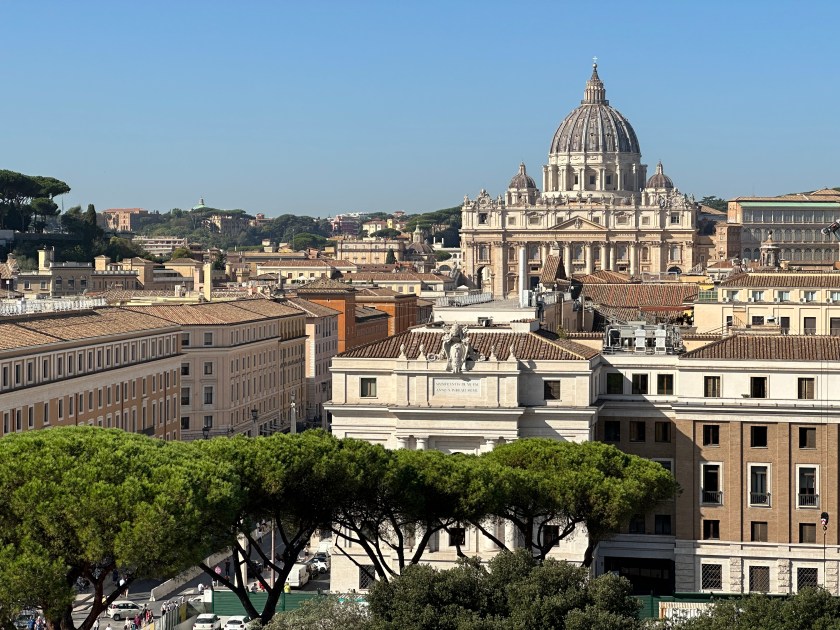
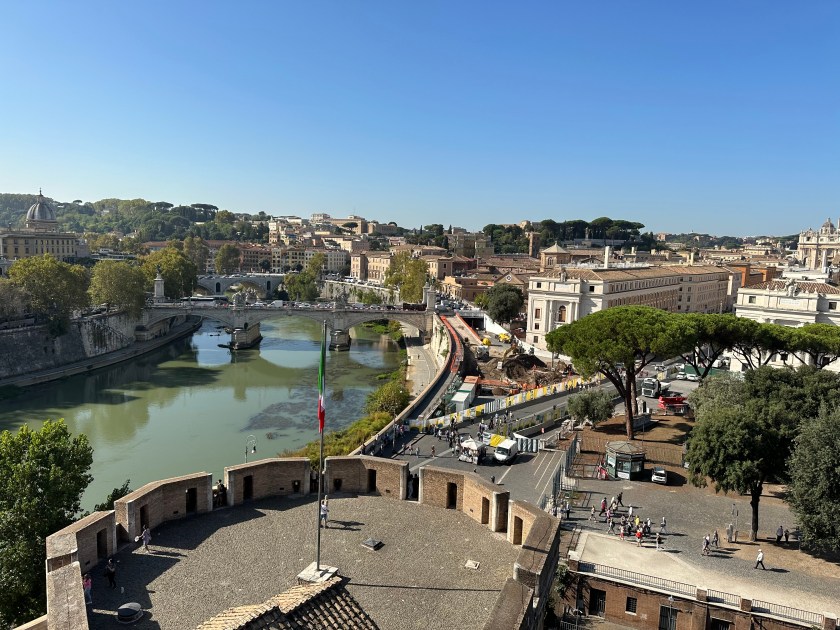
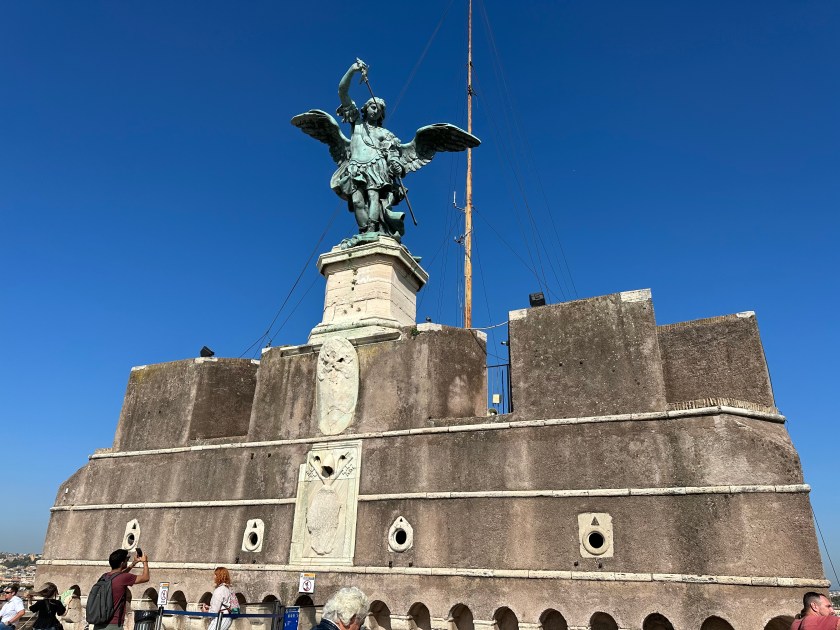
We headed to the Castle of St. Angelo, an easy walk from the Vatican, with a few others from our group.

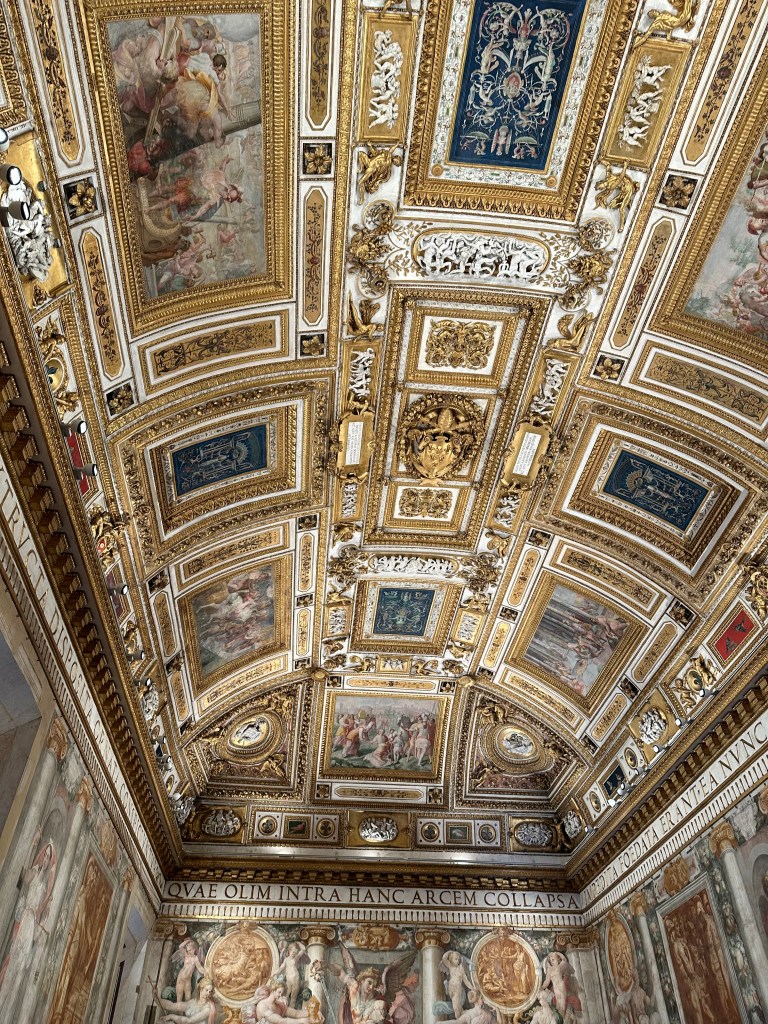
Here is the castle’s history.

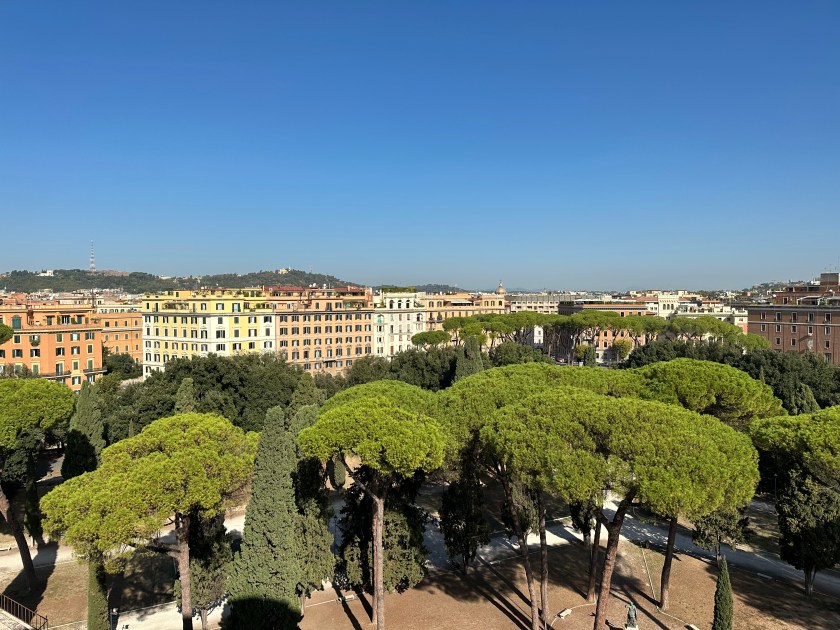
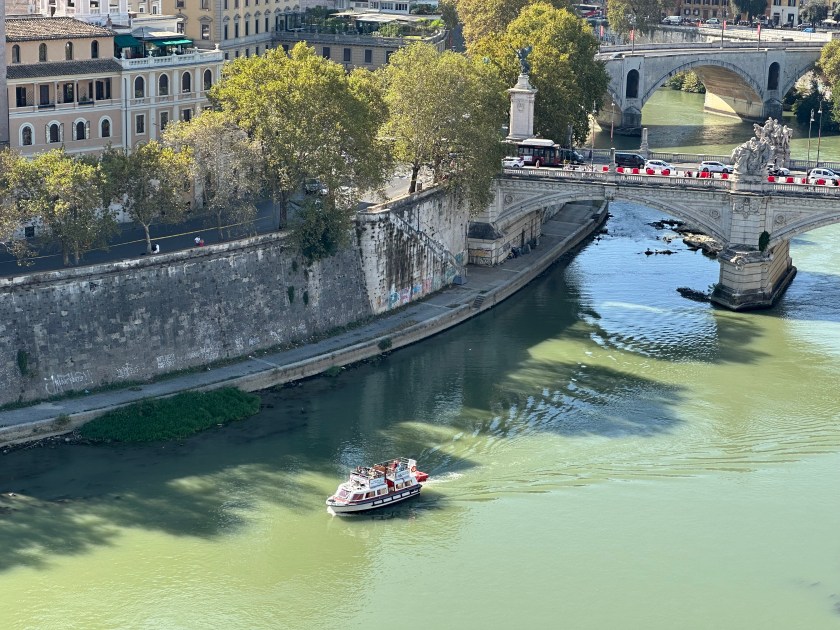
The castle was a great place to explore and provided excellent views of the old city. Boats cruised on the Tiber River, which ran in front of the castle. Vatican City was easy to see.

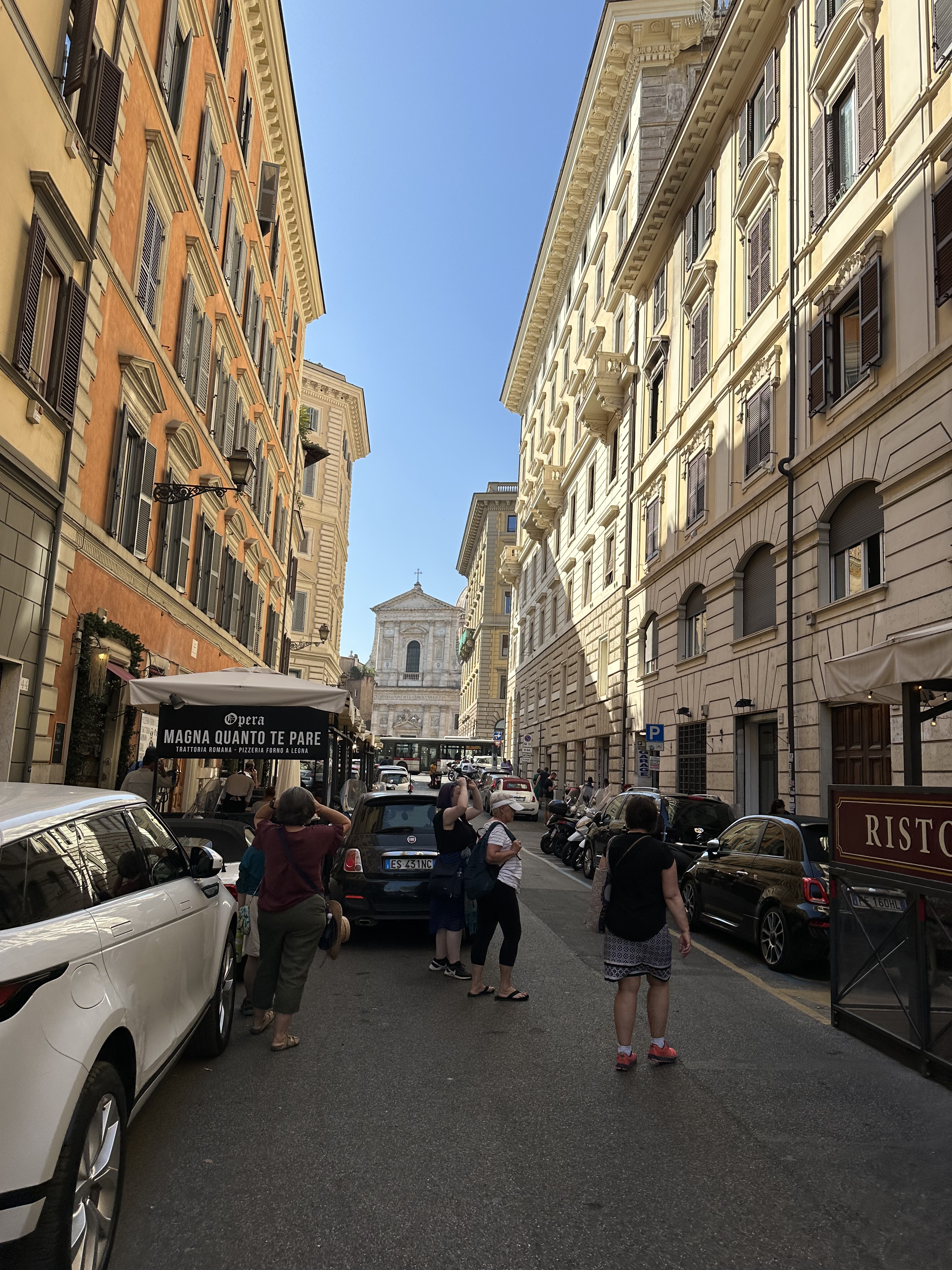
Tired and hungry, we exited the castle and walked across the ancient St. Angelo Bridge built by Emporer Hadrian. Restauranteers are not shy about recruiting customers, and one soon lured us into his outside seating area right on the street. After lunch, one of the younger members of our group had pinned a gelato place not far away. It was a great choice.

We had lunch on the left.
The gelato place.

We needed to return to The Vatican for the next treat of the day. Our guides had secured tickets for the underground tour of the catacombs. No photos were allowed. It was a fantastic tour, though, with no air movement, the close quarters became humid and hot.

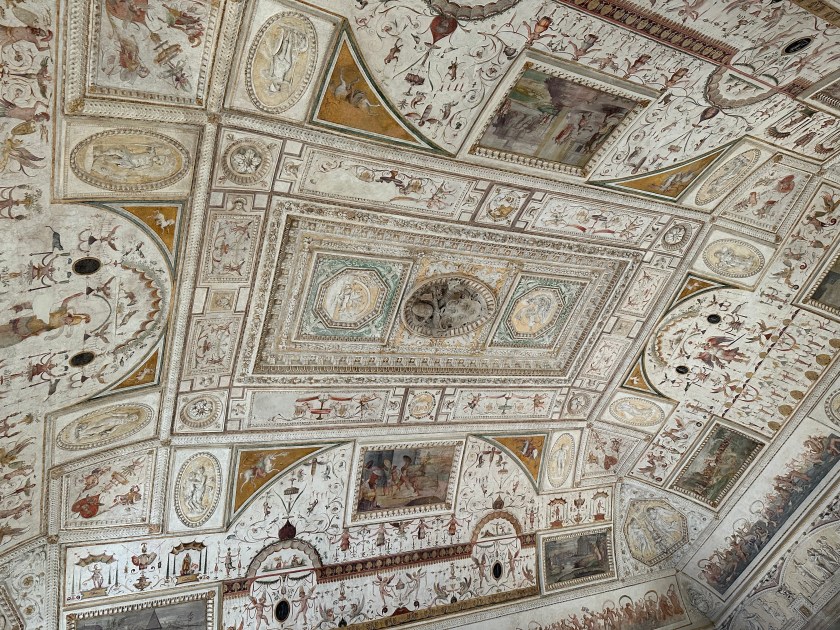
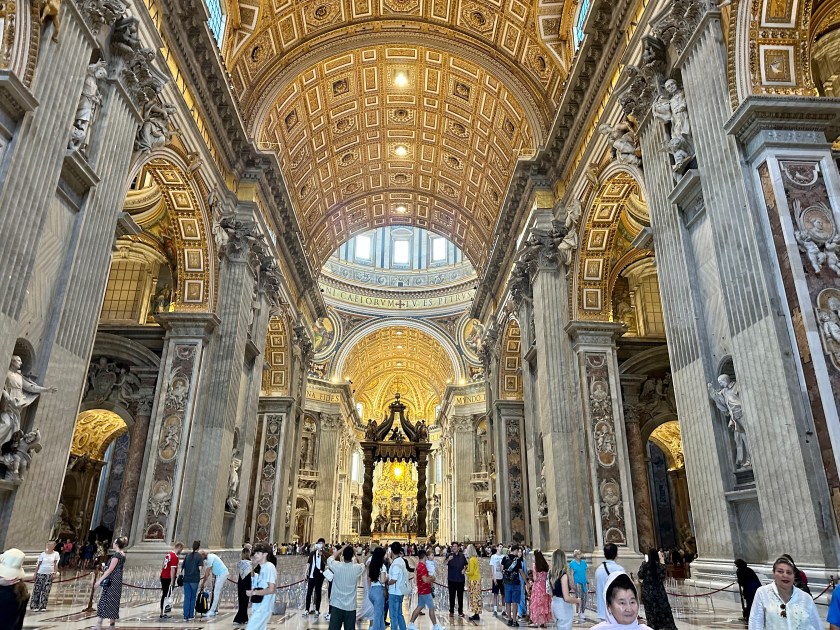
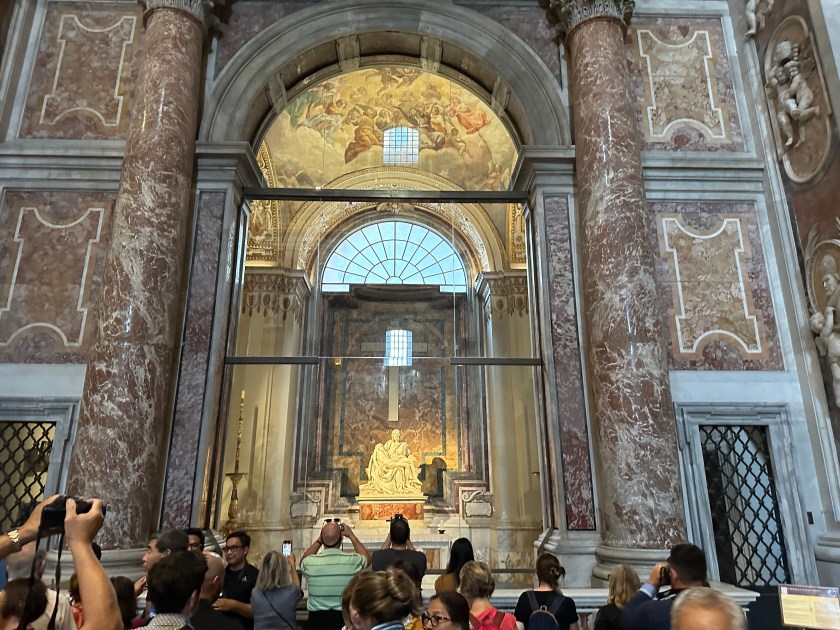
The tour ended in St. Peter’s Basilica, a magnificent cathedral. Its ornate columns, arches, and ceiling dazzled the eye. Michaelangelo’s Pieta was the highlight.

We exited to St. Peter’s Square and were met by more Swiss Guards in the fine regallia. It was time to find the Metro stop and return to the hotel.

I was tired, but this was a day I will remember for a long, long time.

Tomorrow: Our final days in Rome.

Roman Centurians (AKA actors) guard the St. Angelo Bridge.

© Bruce Stambaugh 2023

September’s Super Harvest Moon

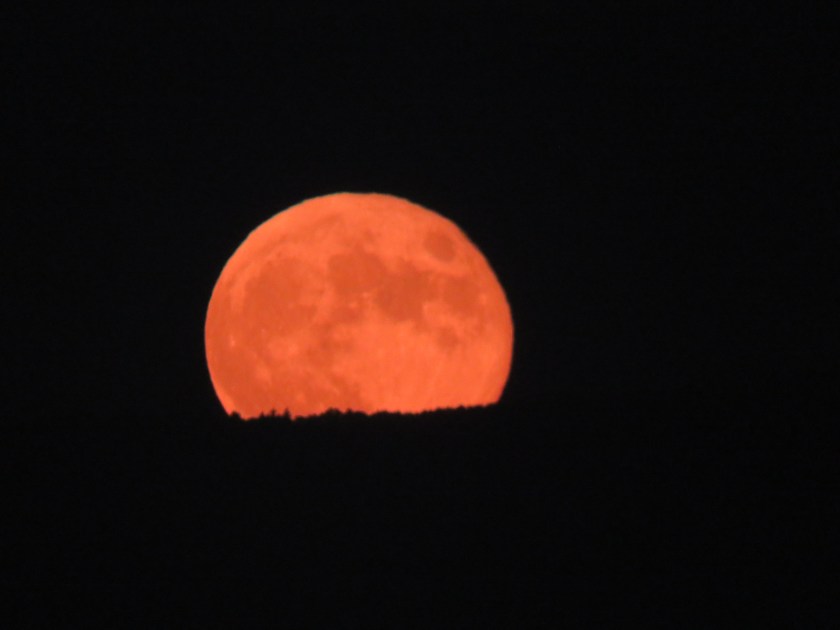
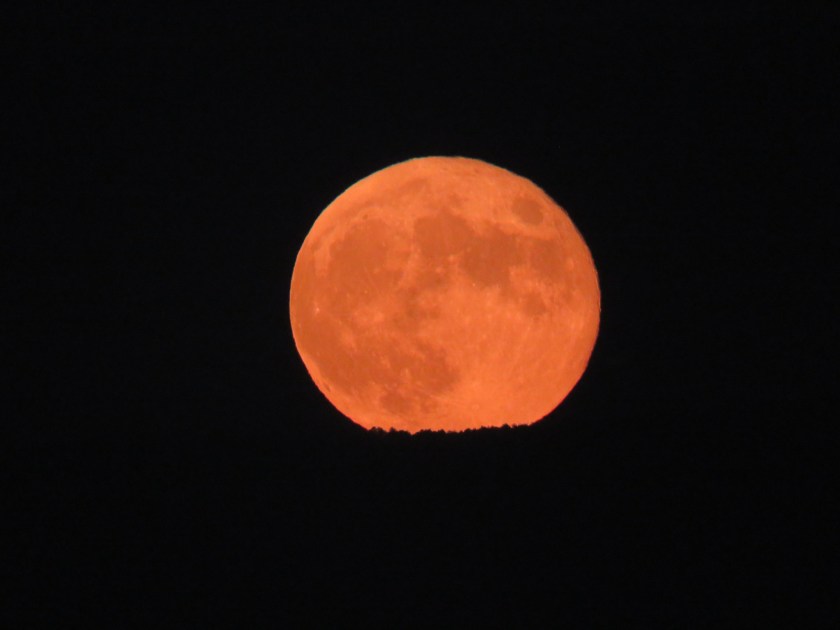
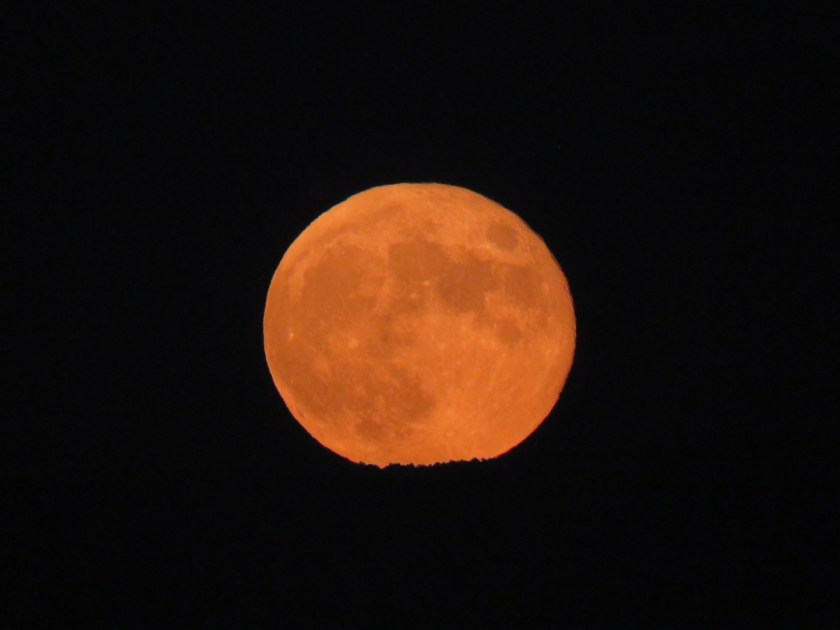
September’s Super Full Moon watched while the band played on.

My wife and I had a triple treat last evening. We went to a football game to watch our grandson and granddaughter march in the marching band at their homecoming football game.

Besides playing the mellophone, Davis is also the assistant drum major for the band. Maren is an eighth grader and was invited along with 59 other eighth graders to play with the high school band.

Those were the evening’s first two treasures.

The third put the icing on the cake. We watched September’s Super Harvest Moon slink over the Massennutten Mountain and into a broken cloud deck. The moon played peek-a-boo with us for several minutes until it finally broke through to the higher, clear skies.

It was an enjoyable evening all around.

© Bruce Stambaugh 2023

American Flamingos in Pennsylvania

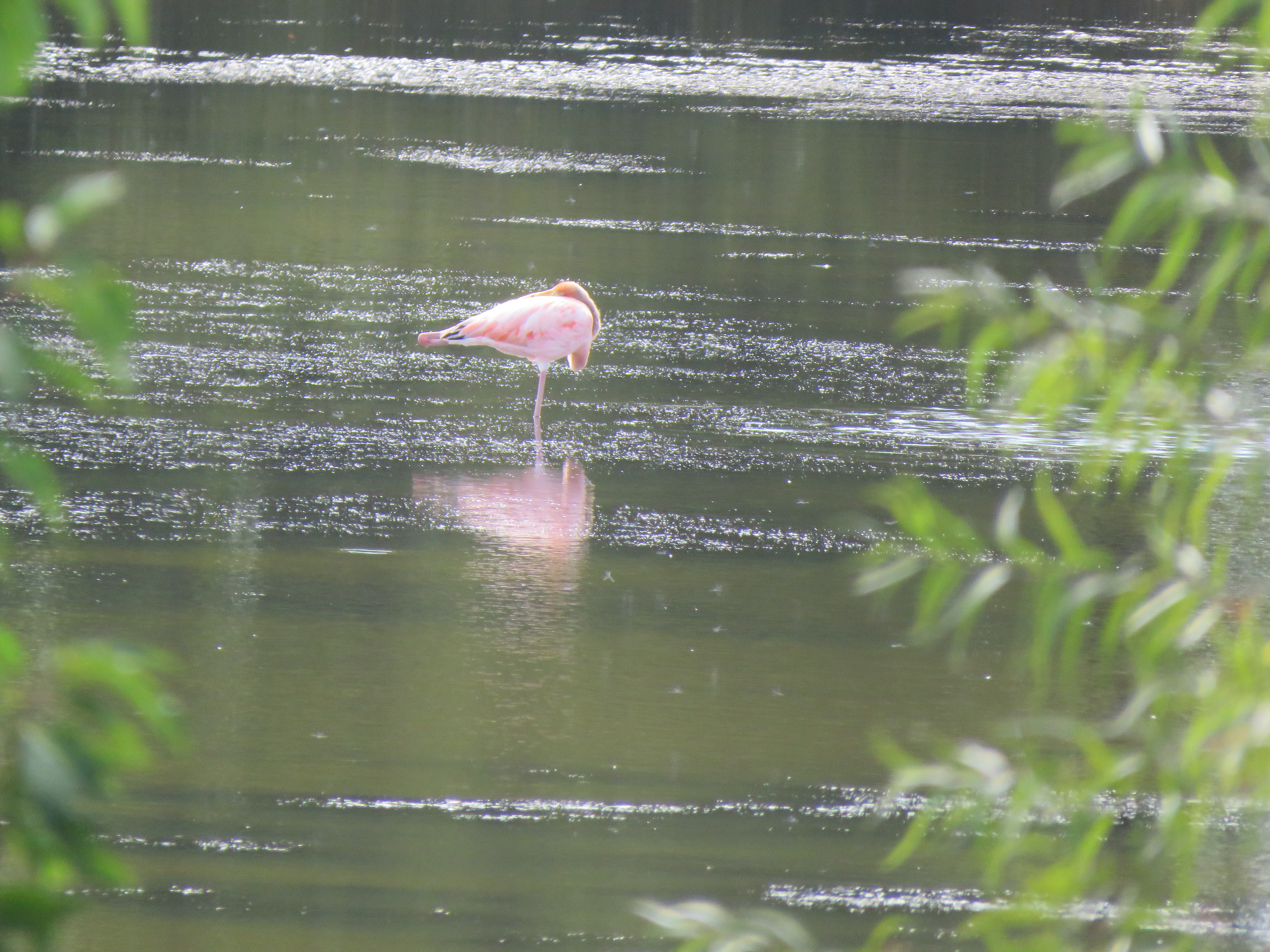
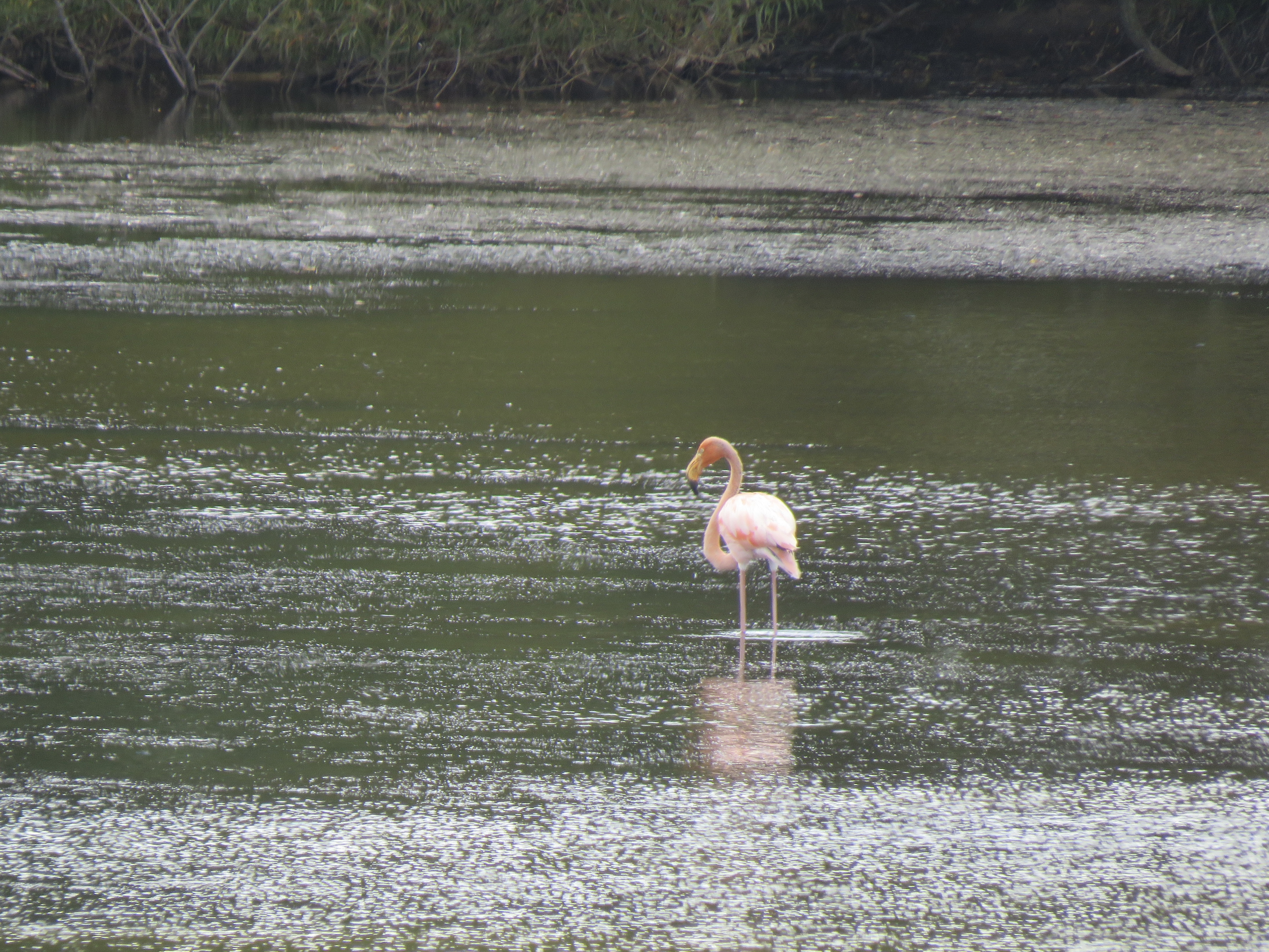
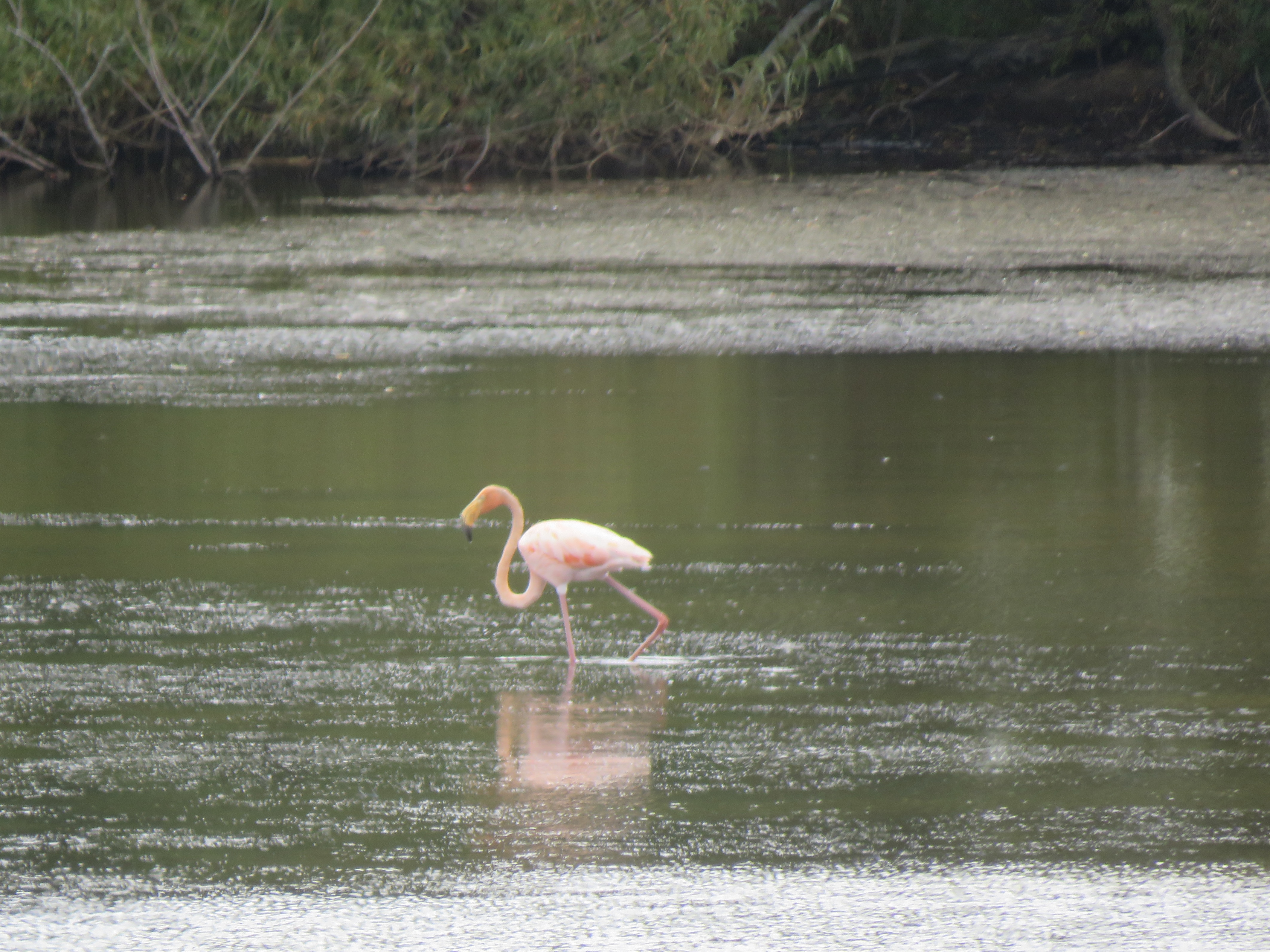
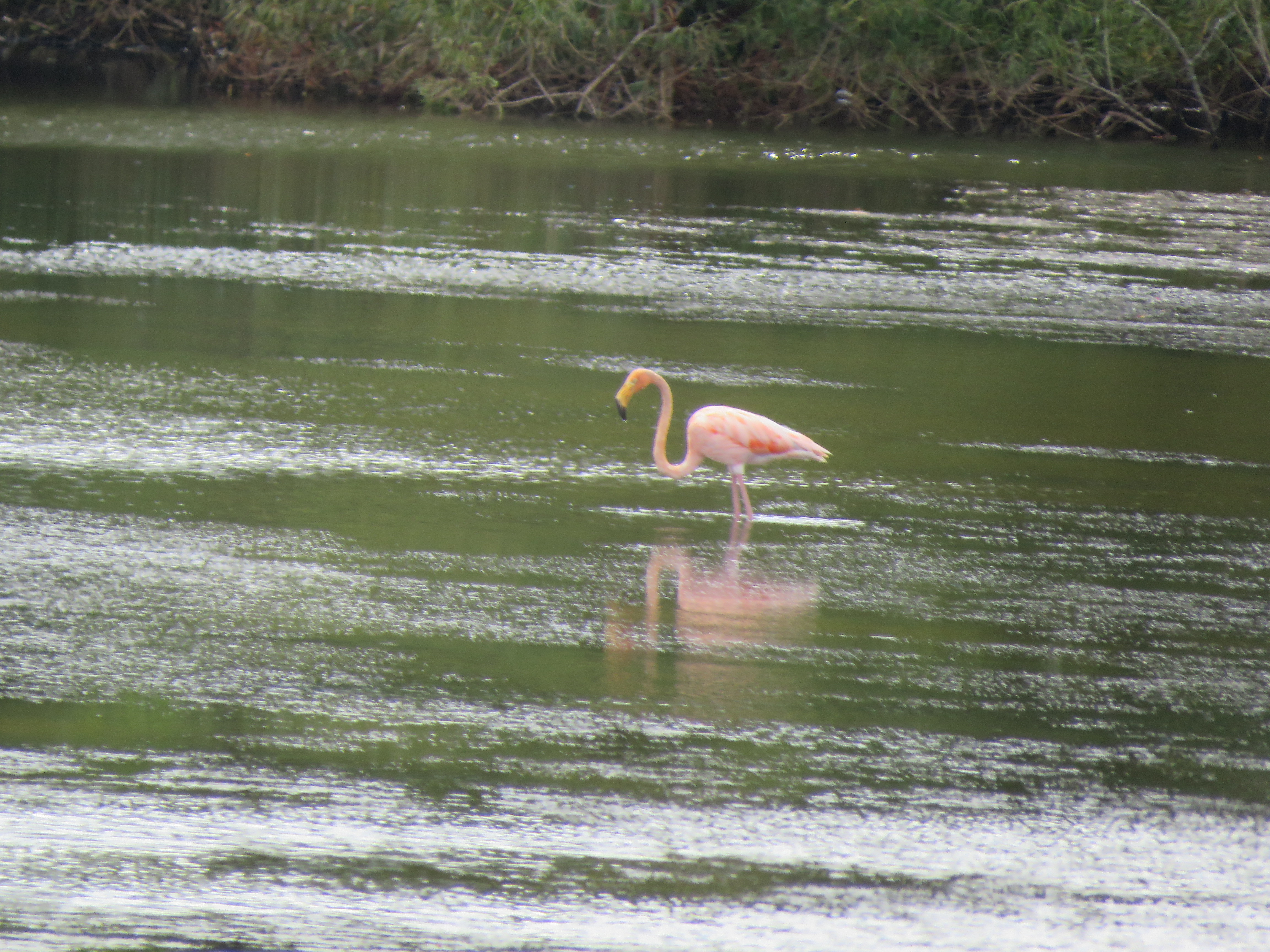
One of two American Flamingos near Chambersburg, Pennsylvania. Photo by Bruce Stambaugh.

This is how birding works. Just before my wife and I left to visit our 16-month-old grandson and his parents in Rochester, NY, a friend in Florida posted on social media about American Flamingos being spotted in a farm pond in south-central Pennsylvania.

I knew we couldn’t stop on the way up, but I hoped beyond hope that the birds would still be there when we left for our home in the Shenandoah Valley on Monday. I checked the American Birding Association’s rare bird alert daily as we enjoyed visiting with our son and his young family.

On Monday morning, the birds were still there and reportedly very easy to see. In all my years of birding, I’ve heard that before, only to arrive five minutes after the birds flew off into the sunset. In the birding world, that’s called “dipping.”

It was a six-hour drive from Rochester to St. Thomas Township, Franklin County, Pennsylvania. When we left Rochester, the day was partly sunny. By the time we reached the state line of the Keystone State, it started to rain. I kept my mind on my driving. I wanted to see those birds, but we had to get there first. So, I drove carefully.

The ABA rare bird alert included the GPS coordinates, so I figured we would drive right to the farm pond, which we almost did. We had Waze plugged into the car’s GPS system while I used my Google Maps for backup. I wasn’t taking any chances.

I am so glad I did because Waze said we had arrived when all we had were fields on the right and a line of houses on the left. My Google Maps saved the day, and we circled around and found Pond Lane.

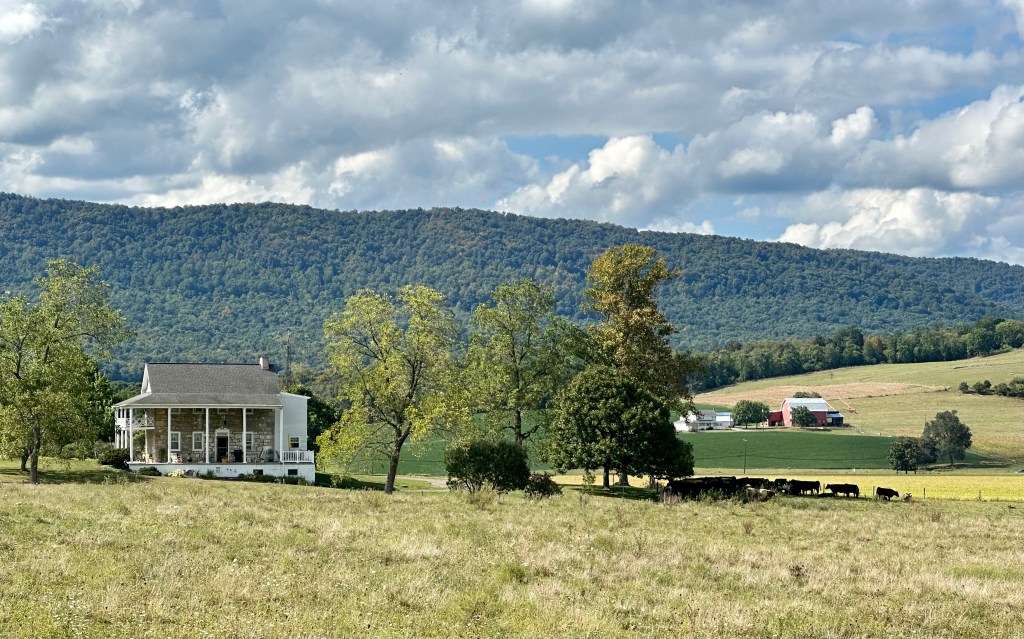
The countryside was gorgeous. Puffy white clouds floated by in a bright blue sky. The large, rolling fields of soybeans served as a two-tone yellow and green carpet below. Fieldstone farmhouses and red barns dotted the landscape.

As we approached from the west, I smiled because I could see a string of cars parked along the road and birders on the opposite side looking through spotting scopes and binoculars. As I slowly approached the scene, my wife shouted, “I see one!” I parked the car in the first space on the north side of the road and raced to the spot where my wife saw the flamingo.

Sure enough, there it was. The beautiful pink bird was standing on one leg in the middle of the shallow pond. It had its head tucked under its left wing, sleeping. I got a quick photo between two trees and then walked up to where most birders stood with an unobstructed view. It was a little farther away, but we could see it clearly through the binoculars and my camera’s viewfinder.

My wife helped steady me in the warm wind rushing over and down the nearby Appalachian Mountains to the west. Once the bird awoke, it waded, fed, and preened in the afternoon sun. I asked another birder where the second flamingo was. I didn’t like the answer.

Please click on the photos to enlarge them.

In the early morning hours after sunrise, a snapping turtle bit the other flamingo in the leg, injuring it. A wildlife rehab center was notified, and personnel arrived and captured the injured bird. Surgery was performed to fix the broken leg. It still remains in their care.

The other flamingo continued to thrill birders who arrived from near and far. How did birds that should be in the Bahama Islands and the Florida Keys get to Pennsylvania? The most plausible answer is that Hurricane Idalia blew them north.

That is the accepted answer because American Flamingos were located in 10 states, some well inland like these birds. Birders from other states were chiming in on the social media conversations, wishing for the flamingos to be found in their states, too.

Why such fuss over the flamingos? Well, in every state except Florida, the sighting of the flamingos was a record first for each of those states. Birders take their hobby seriously. Consequently, they keep many lists and records by recording the bird species, where it was seen, the date(s), and times. The Cornell Laboratory in Ithaca, New York, is the official state and national records compiler.

I had seen flamingos in Florida and Texas before, but seeing this beautiful bird so far inland was extra special. And it was all thanks to a hurricane.

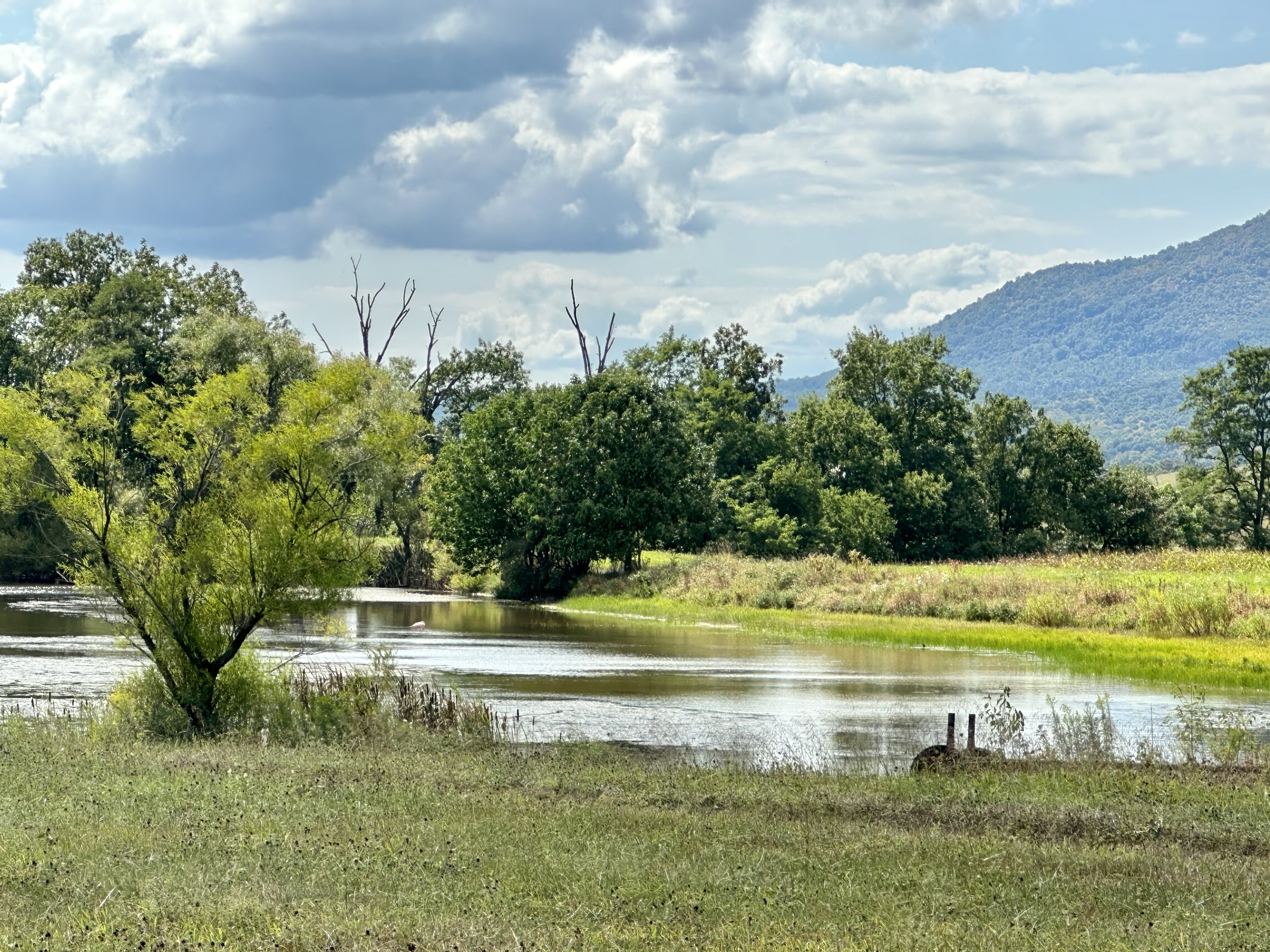
The farm pond in Pennsylvania where the American Flamingo was observed. The bird is just right of the willow tree in the foreground. Photo by Bruce Stambaugh.

© Bruce Stambaugh 2023

Earth Day!

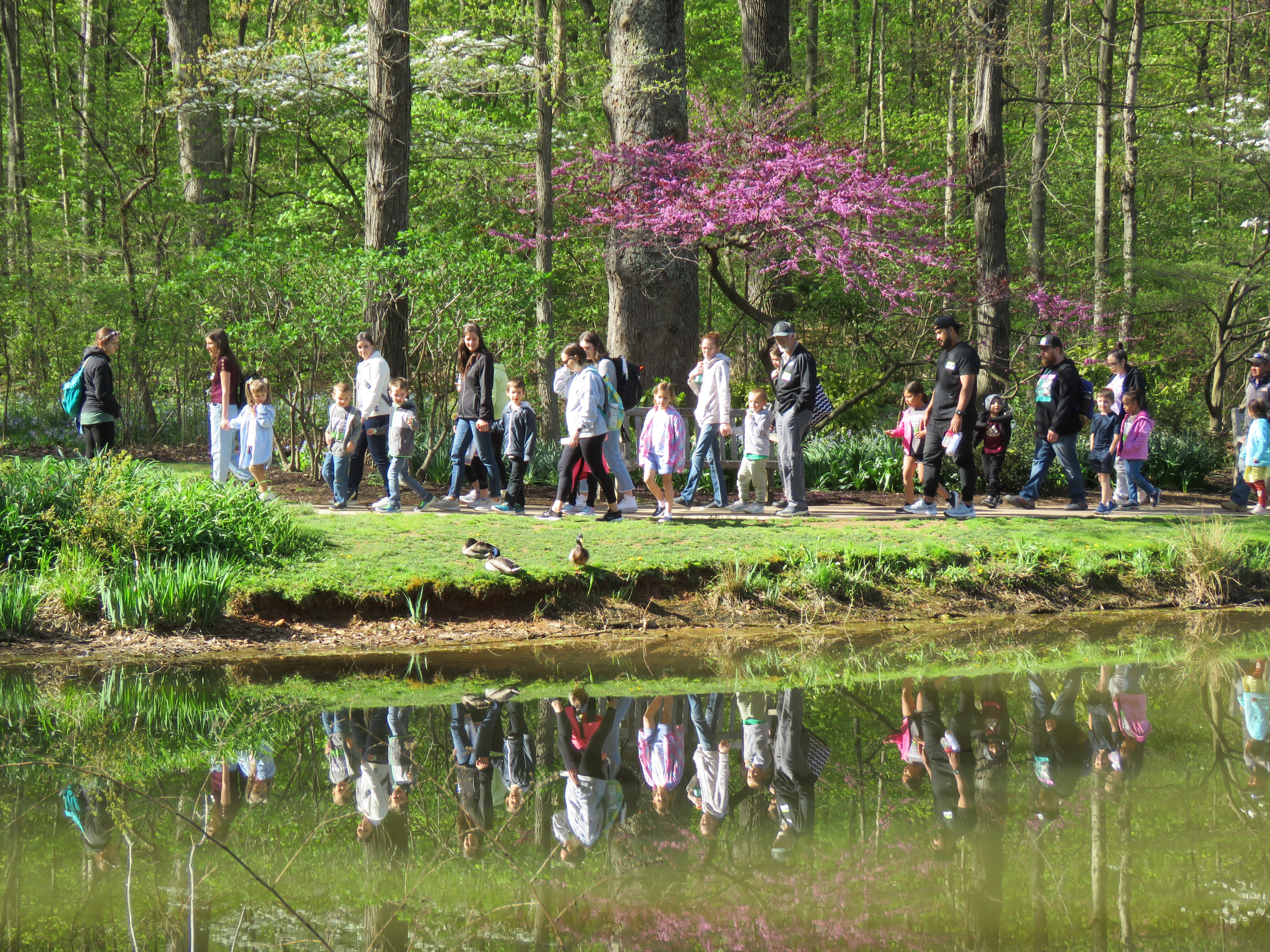
Students, parents, and teachers visited a local arboretum.

Every year since 1970, April 22 has been observed as Earth Day. It’s a day to recognize humankind’s responsibility to respect the planet on which we all live.

The marking of this day found 20 million Americans striving for cleaner air, water and conservation of the land and its natural resources. The movement eventually led to the creation of the Environmental Protection Agency and the passage of several U.S. environmental laws.

In 1990, Earth Day went global, with 200 million people in 141 countries coordinating to improve the environment in their various locales. It lifted environmental issues onto the world stage.

So, here we are 53 years later, still striving to care for our precious planet. What plans do you have to commemorate Earth Day?

© Bruce Stambaugh 2023.

For Sale: Free-range Grackles!

Just a few of the free-range Common Grackles in my front yard.

I don’t know about you, but the Common Grackles have taken over my birdfeeders and birdbaths. If you are interested, I’d gladly sell you a few or all of them.

Of course, you know I’m kidding. I couldn’t resist since April 1 is better known in the U.S. as April Fools Day. When I was a principal, the students loved to fool me on April 1 with all means of shenanigans. I was always glad when April 1 came on the weekend, like today.

So, April Fools Day! And in case you are interested in the grackles, please contact me a.s.a.p.

© Bruce Stambaugh 2023

Covid-19 Finally Caught Me

We laughed at a Covid-looking Christmas ornament. I am not laughing anymore.

I finally got it. I’m no longer a Covid-19 virgin. Since its known arrival in the U.S. in early 2020, I have fought the good fight to avoid getting this dreaded disease.

I followed the latest developments and the daily charts on cases and deaths. The grim statistics gave me pause and determination not to get this novel contagion. I was elated when Covid-19 vaccines became available. I got all the shots, including the latest boosters.

My wife and I were cautious in every way. We masked whenever we went into public indoor places and avoided crowds. We washed our hands thoroughly and frequently. Last year, we traveled in several states and Europe, flew on airplanes, rode buses, attended outdoor concerts, and made it through unscathed. While others succumbed, we persevered. I thought I was staying ahead of the Covid game.

Before our annual wintering in Florida, we enjoyed the holidays with family and friends, always careful about masking and following the other suggested guidelines. We were excited about spending nearly six weeks in the sunshine state until we weren’t.

Without boring you with the ugly details, here’s an outline of the sequence of events that spoiled our Florida island winter stay:

  • On January 19, I woke with severe lower back pain after sleeping on a too-soft mattress in our rented condo.
  • Four days later, I visited an express care facility and received a shot and pain meds.
  • With no noticeable relief, I returned to express care days later. My meds were changed, and I had an MRI the next day.
  • The MRI showed multiple issues with my spine and discs, and an epidural was scheduled.
  • On the morning I was to receive the epidural, I had a gastrointestinal (GI) bleed. That led to another two days in a hospital.
  • Three days later, a fellow snowbird friend from Ohio was struck and killed by a motorcycle going 75 mph in a 35 mph zone. All alone, his poor wife called us. She was hysterical with grief. We were the only people she knew on the island. We comforted her as best we could until her two adult sons arrived via air later that night. We were all heartbroken.

Of course, they had to make all the complex arrangements and fill out legal forms for the authorities before returning to Ohio. The sons packed up their parents’ things so they could leave in a couple of days.

The day after they left, I finally got my epidural. I had immediate relief from the intense pain. However, I still had to make the 12-hour drive home to Virginia, with an overnight stop in North Carolina.

We arrived home and unpacked, and by the weekend, I was feeling much better, but I continued to grieve the loss of my friend. I couldn’t erase the horror of the accident from my mind.

Little did I know that with my mental and physical reserves at rock bottom, Covid-19 would sneak its ugly symptoms into my body. But that is precisely what happened.

After a meeting with a friend over coffee to talk about all that had happened to me, I returned home not feeling the best. I was stuffy and had a sore throat.

I took a home Covid-19 test. It was positive, but I wondered if I had done it correctly. So, I took another with the same results. Now I could physically identify with the millions of global people who had it. But it would get worse before it got better.

Just when I thought my emotions couldn’t sink any lower, they did. I called my friend and told him I had Covid-19. He agreed to call another friend we had seen at the cafe, and I notified others with whom I had had recent contact.

I texted my wife, who was volunteering at a local thrift store. I was very discouraged but knew we needed to make a plan to keep her from getting the virus. I claimed our bedroom with a bath, and my wife functioned in the rest of the house. I knew how much she cared when she dragged my recliner to the bedroom door. It was much more relaxing to sit in than the bed.

I called my primary care provider to see about getting Paxlovid, given to seniors testing positive for Covid-19 and who have compromised immune systems. After all that I had been through, mine certainly was.

A telemed conference was arranged with my doctor the next day. She told me to isolate for five days and then mask and social distance for another five. My wife picked up the Paxlovid and a nasal spray the pharmacist recommended.

By that time, most of the noted symptoms of this pandemic disease had introduced themselves to my body. I was exhausted and achy, and yet chilled. I had an unproductive cough, which soon gave me a headache. Plus, my blood pressure was high again. In short, I was miserable.

I took the Paxlovid as directed, and I could feel it begin to work its slow magic in my weakened state. I slept a lot and had very vivid dreams.

I texted my wife if I needed anything, and she texted me when she needed to leave the house. She brought me food, drink, and snacks. I married an angel.

I kept drinking fluids to stay hydrated and ate lots of fresh and dried fruits, eggs, and nuts for protein. But the virus hung on, and I adjusted my intake accordingly as my symptoms changed daily. As much as I had read and heard about Covid-19, that aspect caught me off-guard.

Listening to other Covid victims, I knew the cough and stuffiness would linger. I didn’t expect, however, that the virus would attack my already quixotic intestinal tract. I have difficulty keeping that in line without invisible pandemic infestations complicating my regularity. That’s all the details I’ll offer.

Consequently, I’m still working on recovering. The five-and-five formula offered by my doctor didn’t fit my situation. I isolated myself for a week and still tested positive.

I don’t know how long it will take for me to get back to my established daily routine. Given all I’ve been through, I’m unsure what that is anymore.

This 75-year-old body now knows the depths of the effects of this inconvenient, indiscriminate, horrible disease. Those effects can’t be shown on any medical chart.

© Bruce Stambaugh 2023

Bay Photos by Donna

Wildlife Photos From The Chesapeake Bay Region

ROAD TO NARA

Culture and Communities at the Heart Of India

K Hertzler Art

Artist and nature journalist in the Shenandoah Valley of Virginia.

Maria Vincent Robinson

Photographer Of Life and moments

Gabriele Romano

Personal Blog

Jennifer Murch

Art is the only way to run away without leaving home. -Twyla Tharp

Roadkill Crossing

Writing generated from the rural life

ANJOLI ROY

writer. teacher. podcast cohost.

Casa Alterna

El amor cruza fronteras / Love crosses borders