Memorial Day is for remembering

Dad and Mom by Bruce Stambaugh
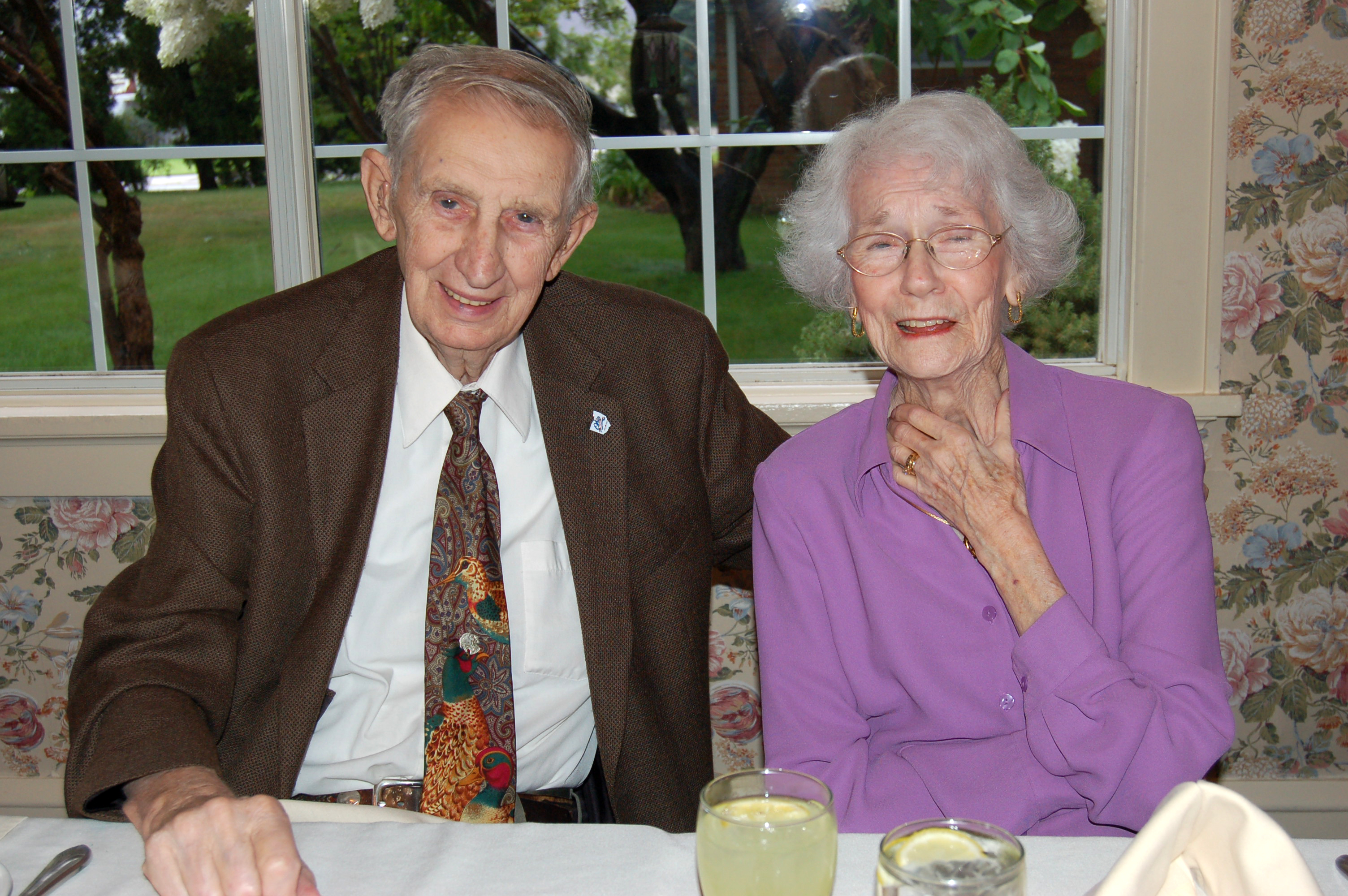
Our parents, the late Richard H. and Marian Stambaugh, at their 65th wedding anniversary celebration.

By Bruce Stambaugh

This Memorial Day will hold special significance for my four siblings and me. It will be the first that we will decorate both our father’s and mother’s gravesite.

Mom died April 23 at age 90. Dad passed away Dec. 21, 2009. He was 89.

The simple act of placing flowers at their graves will make it memorable. No matter their age, losing your parents is never easy, especially when they were parents that you loved a lifetime. Not everyone has that precious opportunity.

My brothers, sisters and I were very fortunate. Both Mom and Dad lived long, full and fulfilling lives. Through both their graciousness and their imperfections, they gave us many marvelous memories.

At the pinnacle of his professional engineering career, Dad’s life took an unexpected turn when my younger brother brought home an arrowhead that he had found on the school playground. Dad grew inquisitive. His desire to learn, something he instilled in all five of his children, grew intense.

Arrowheads by Bruce Stambaugh
Just one of the many mounts of artifacts that Dad collected over the years. Most of these are rare triangular points. Dad labeled where and when each was found.

From that initial find, Dad went on to develop an extensive artifact collection. He read, went to lectures, lead an archeology club, surface hunted, and dug his way to being a well-renowned amateur specialist on Native American culture. Of course, he dragged along several of his children to many of these events, especially walking field after field looking for the flinty points and stone tools.

Along with hunting and fishing, Dad’s archeological adventures consumed much of his retirement years. He gave lectures and was always a hit with school children.

Presentation by Bruce Stambaugh
Our father, Dick Stambaugh, continued sharing about Native American culture as long as he was able and as long as he had an audience. Here he gave a talk at Walnut Hills Retirement Home in Walnut Creek, Ohio, where he and our mother lived until their deaths.

Mom would often accompany Dad on his excursions. She would hunt for artifacts. Mostly though Mom would take along her easel, paints and brushes, find a nice scenic spot and sketch out the basics for what would become a vibrant watercolor.

Now and then, it would be the other way around. Dad would accompany Mom to an artists’ workshop, even to other states. While the instructor led his troupe in an all day art class, Dad would wander the countryside looking for likely spots to hunt arrowheads.

One time near Burnsville, N.C., Dad stopped at a farmhouse and asked permission to walk the farmer’s fields. Being the affable guy that he was, Dad quickly made friends. Before he could even set foot in the cornfield, the farmer brought out a box of artifacts he had collected over the years. Dad identified and classified each of the items for the grateful farmer.

In return, Dad was permitted to keep whatever he found. That evening, as the artists gathered to share what they had painted, the leader asked Dad to show what he had found. Though neither was certified, Mom and Dad were model teachers simply by how they lived their unpretentious, generous lives.

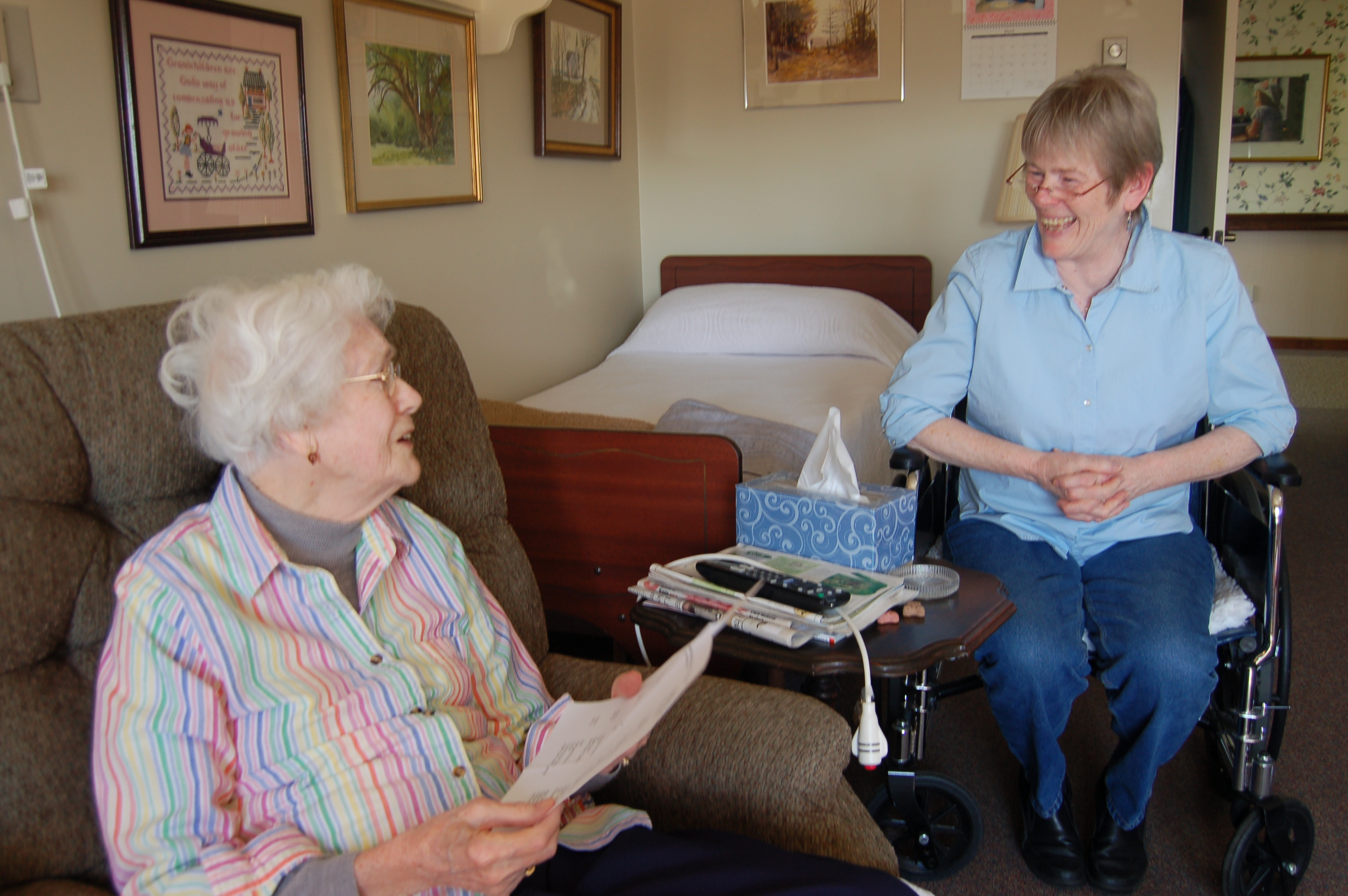
Laughing by Bruce Stambaugh
Our mother, Marian Stambaugh, shared a laugh with one of her nieces at the retirement home.

Typical for their generation, Mom and Dad were careful about showing affection to one another, especially when us kids were around. I never quite understood that. Yet, despite their differences and occasional arguments, I knew deep down that Mom and Dad loved one another.

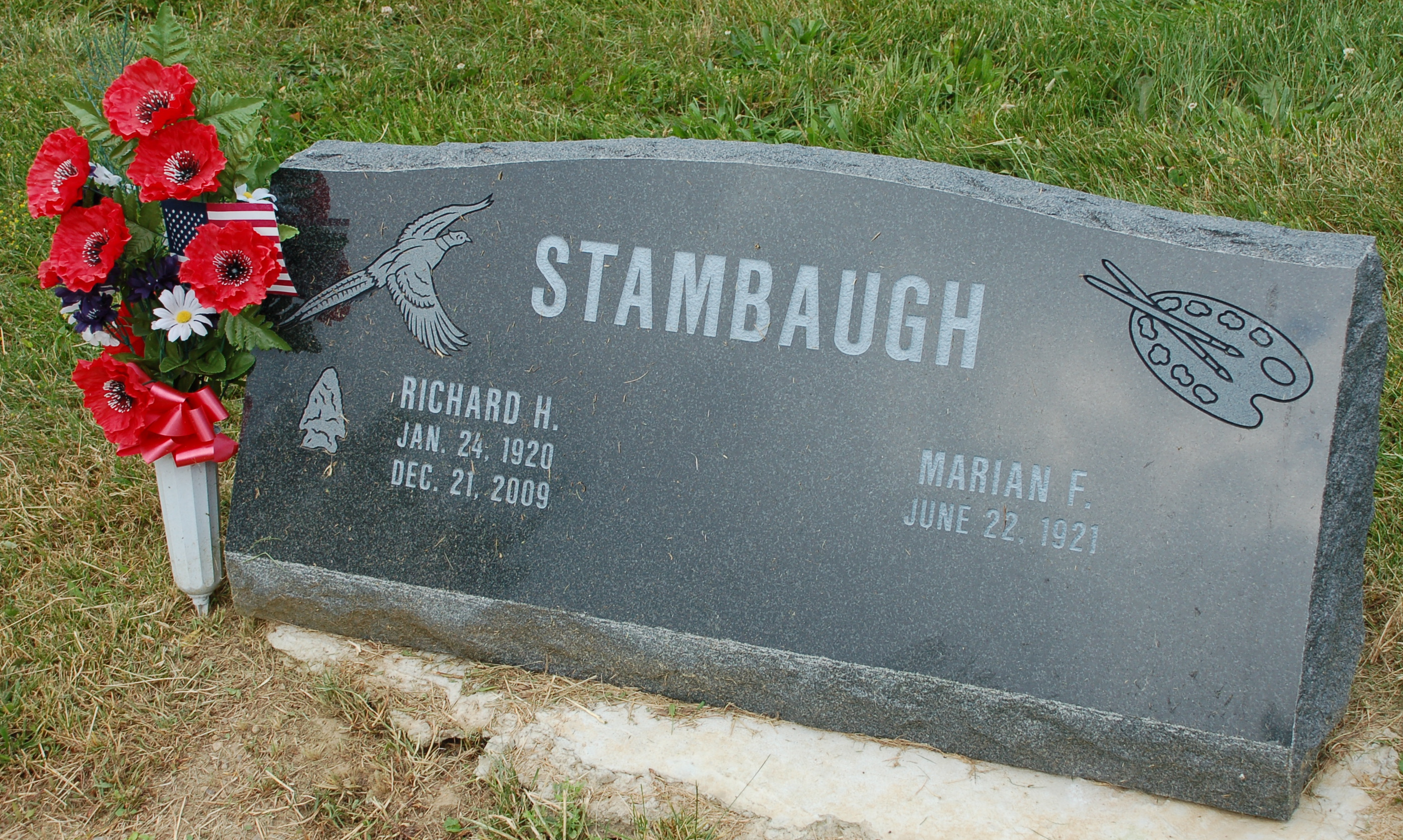
Accordingly, their black granite headstone is engraved with symbols that most appropriately represented their lives. A pheasant and an arrowhead show Dad’s commitment to conservation and archeology. An artist’s paint palette symbolizes Mom’s talent for sharing the beauty she saw.

Gravestone by Bruce StambaughMom and Dad were wonderful parents. It’s only appropriate to honor them on Memorial Day to show our continued affection and appreciation for the charitable, instructive lives they lived as a couple and as individuals.

Memorial Day is for remembering.

© Bruce Stambaugh 2012
Employees gather for an evening of fun

Starting line by Bruce Stambaugh
Pine car racers were placed at the starting line for each heat of the pine car derby held at Homestead Furniture in Mt. Hope, OH.

By Bruce Stambaugh

The employees at Homestead Furniture in Mt. Hope, Ohio don’t just build incredible furniture. They know how to have fun together, too.

Their latest entertaining venture threw in a little competition. A pine car derby was held recently in the manufacturing building across the road from the retail store. Of course, they invited their families and had plenty of good food.

The congenial group enjoys the camaraderie of one another, along with some good, fun competition. When warehouse manager Dave Hostetler suggested a pine car derby, the race was on.

The track by Bruce Stambaugh
Dave Hostetler stands at the head of the pine car race track that he built for the event.
The contest was announced, and rules were distributed to whoever wanted to participate. In all, 22 employees bought a pine car kit and built their racer to the required specifications.

Each race car had to weigh no more than five ounces. The maximum length was seven inches and the rear width of the car was two and three-fourths inches. Contestants were encouraged to be creative with their car designs. Given the creativity of the staff at Homestead Furniture, that turned out to be a given.

The cars varied in style and color. One entrant, Noah Shetler, even entered two pink cars in honor of his wife’s battle with breast cancer. One car was numbered 08 for 2008 when his wife was diagnosed. Number 11 was for 2011 when his wife was declared cancer free after several rounds of chemotherapy treatments. One of the more original racer designs was a racer built in the shape of an outhouse.

Ada Marie Troyer dedicated her car, and her eventual winnings, to her niece who was recovering from critical injuries sustained in an automobile accident. Her car was named Best of Show.

Hostetler built the track 31 feet long, five feet high at the start. It was a two-slot track with a steep slope that the cars raced down to the finish line. Two cars raced per heat, with the winner going to the winner’s bracket, and the loser to the loser’s bracket. Once a racer lost twice, they were eliminated from the competition.

While the race went on, family members enjoyed homemade snacks that each family brought. Owners Ernest and Barbara Hershberger provided the hot dogs and beverages.

Finish line by Bruce Stambaugh
Todd Reese, Sales Manager at Homestead Furniture, closely watched the finish line at the pine care derby.
With the audience gathered around the black and yellow painted racetrack, judge Daniel Troyer watched over the finish line to declare the winner of each heat. In several races, only the nose of a race car determined the winner.

In the end, none of the other racers could match the sleek racer built by LaVern Hershberger. In fact, his car never lost a race.

Asked what his secret to winning was, LaVern said he baked his car prior to the race. Baking it reduced the moisture content, thus reducing the weight, he said. This allowed him to place weights where they were critical to making the car run smoothly.

winnerbybrucestambaugh
LaVern Hershberger, the eventual winner of the pine car derby, tweaked his racer before the first heat.
LaVern also said he waited until the last minute to lubricate the car’s tires with powdered graphite. He declined, however, to say how long he baked his car, citing proprietary secrets.

LaVern won $100. Shetler finished second, winning $75, which he donated to Sisterhood of Hope, a support group for breast cancer victims. Krissy Yoder finished third and won $50.

Ada Marie Troyer donated her $33 winnings to her niece to help cover medical expenses.

It was a fun evening overall, mingling teamwork with fellowship, always a winning combination.

Homestead Furniture is located in the heart of the world’s largest Amish population at 8233 State Route 241, Mt. Hope.

Pine car racers by Bruce Stambaugh
Just some of the original designed cars that participated in the pine car derby at Homestead Furniture in Mt. Hope, OH.

© Bruce Stambaugh 2012
In memory of a beautiful mother

Mom with painting by Bruce Stambaugh
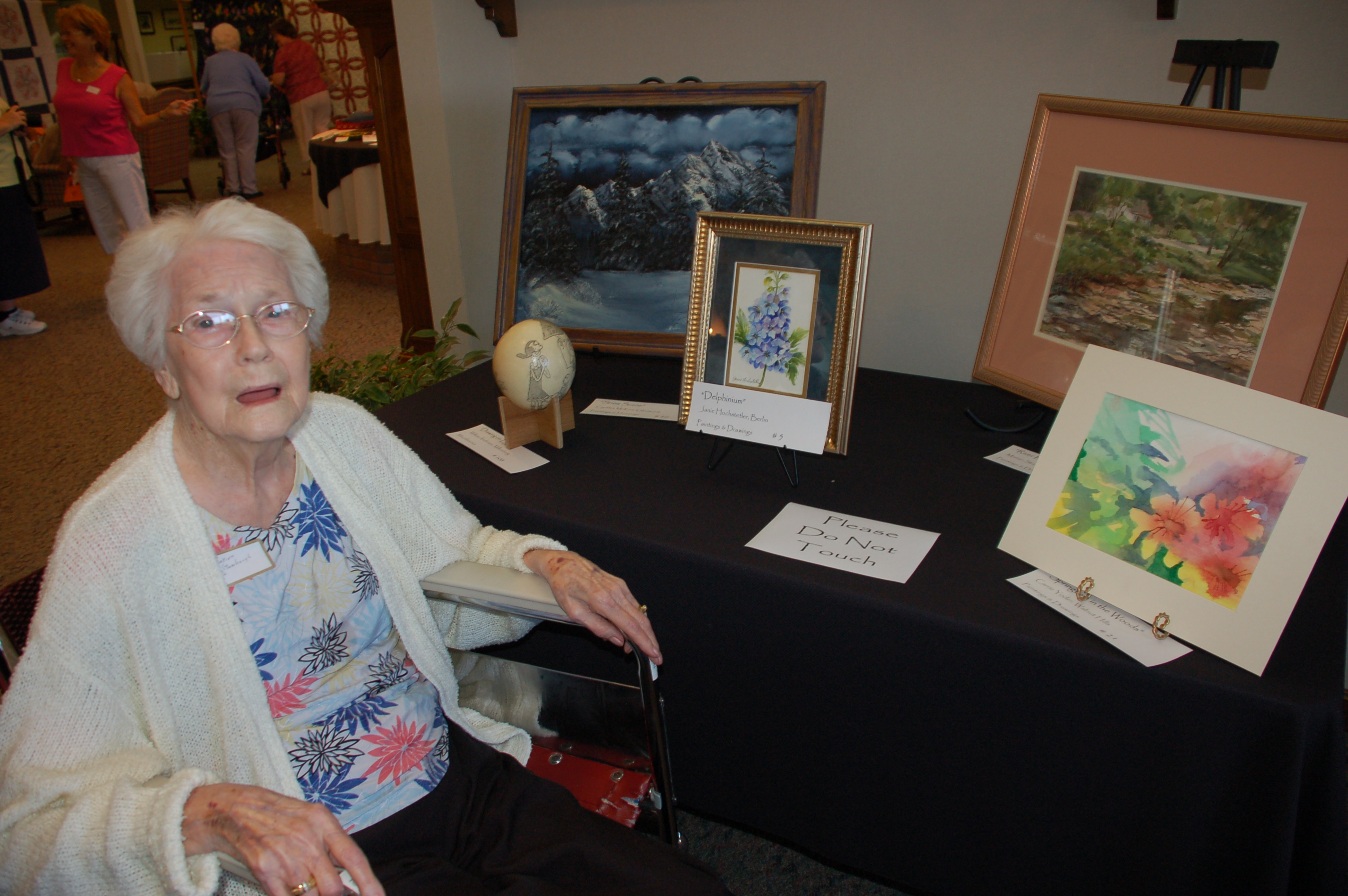
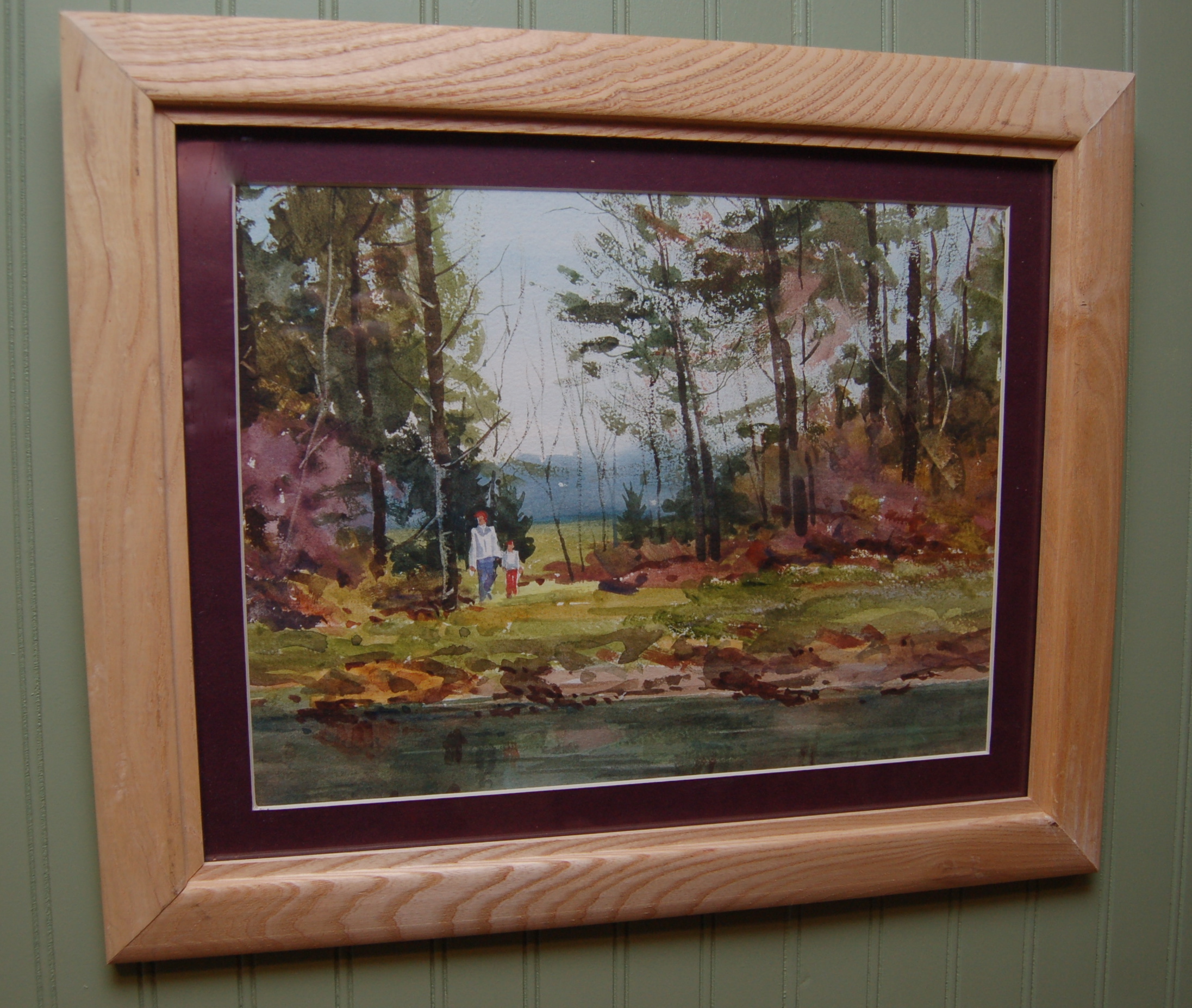
My mother, Marian Stambaugh, with her award-winning painting with the mauve matting, “River Run.” It was painted from a scene near Burnsville, NC.

By Bruce Stambaugh

My mother was a beautiful woman in so many ways.

Mom was a pretty woman to be sure. Yet her graciousness and her colorful paintings revealed her artistic inner beauty. She also modestly disclosed her creativity through her color-coordinated attire.

Mom at 90 by Bruce Stambaugh
Marian Stambaugh just after she turned 90 in June 2011.
Mom died peacefully in her sleep on April 23 after a lengthy trial with Alzheimer’s disease. She was 90.

Though she had lost much of her recall of all things past, Mom still knew who her five children were. She couldn’t always call us by name, but she recognized us. She also lit up when old friends stopped for a visit. Conversation for her, however, was difficult.

My brothers, sisters and I found it intriguing that Mom maintained her pleasant personality throughout her journey with Alzheimer’s. The staff all loved her at both the retirement home, where she lived with Dad before he died in December 2009, and at the nursing home where Mom spent her last year.

Mom was a model resident. She was polite, gracious, kind and asked for little. She didn’t wander, was not a bother to anyone, and maintained her politeness despite her dementia.

In her last days, she had pain, but because of her diminished language skills, was unable to articulate where she hurt. The staff and family could only guess.

At the calling hours and during the funeral, the same descriptive word kept being repeated to define our mother. Beauty. Mom radiated beauty not only in her looks, but in the humble and generous way she lived her life. She was the kind of mother everyone wished for. We were very, very fortunate to have her for so long.

Dad was always very proud of Mom, perhaps even to the point of being a bit overprotective. Early in their marriage, Dad took Mom to a company party. When his male coworkers saw her for the first time, they feigned shock that Dad had such a beautiful wife. They even teased Dad that his wife must have been mad at herself the day they married.
Painting 1 by Bruce Stambaugh
As the preacher at her funeral said, Mom never drew attention to herself. She just drew, and painted. Even when she won awards for her lovely landscapes, Mom would respectfully accept the award, and often declare that some other artist should have won.

Mom also showed her beauty in how she raised her five children in the tumultuous post-World War II era. We had rules to follow, simple household chores to do, and if we didn’t quite respect what should have been done, she judiciously administered a discipline that was appropriate for our age and the offense. She was as fair as she was attractive.

It wasn’t easy to rear five energetic and individualistic children. Since she was a stay-at-home mother, Mom carried the primary responsibility of keeping us clothed, fed, nurtured and behaved. She could have written a book on parenting. Given the beauty of her personality, she probably would have used a pseudonym if she had.
Painting 2 by Bruce Stambaugh
Mom was a wonderful woman, and we will never forget her kindness, gentleness and most of all the exquisiteness she naturally shared in this world through her paintings and her authentic living.

At the funeral, I felt an overwhelming sense of peace about our wonderful mother. It was as if Mom’s gracious, artistic spirit had permeated the service in one last beautiful brush stroke for all to behold.
Painting 3 by Bruce Stambaugh

Painting 4 by Bruce Stambaugh

Painting 5 by Bruce Stambaugh
© Bruce Stambaugh 2012

One year later, all is well

Biking by Bruce Stambaugh
A year after prostate cancer surgery, I am enjoying regular activities like biking with my family.

By Bruce Stambaugh

A year following my prostate cancer surgery, all is well. It’s hasn’t been a totally uneventful recovery. It certainly could have been worse.

I am extremely glad to be able to say “cancer free.” And yet, I do so with humility, appreciation and the realization that too many people never get to utter those precious words.

Men tend to be pretty squeamish even just thinking about prostate issues, much less talking or writing about them. That’s mainly due to the two unspeakable potential side effects, incontinency and impotency. Because of those two potential consequences, some men unfortunately never return to their doctor once they have been diagnosed with prostate cancer.

Father and sons by Bruce Stambaugh
My older brother, Craig, my late father, Richard, and I all had prostate cancer.
I wasn’t surprised at all when I received the word that I likely had prostate cancer. My older brother had had robotic prostate cancer surgery 18 months before my own diagnosis. Our father had died of the consequences of prostate cancer after a 17-year battle.

It was this family history and the marked vigilance of my good doctors via annual, then semi-annual prostate-specific antigen (PSA) testing that kept the possibility of having prostate cancer at the forefront of my medical exams. I am forever grateful for that watchfulness.

In the months before and after the surgery to remove my cancerous prostate, I received invaluable advice from friends and strangers alike regarding their personal experiences. I also read and researched as much as I could.

Veggie pizza by Bruce Stambaugh
A healthy diet is essential to good health, especially if you have or had cancer. This homemade veggie pizza is both colorful and healthy to eat.
Months after my surgery, a government sponsored panel recommended that regular PSA tests be discontinued as a way to monitor for prostate cancer. That conclusion was based on what was determined to be an overuse of the test and subsequently a high rate of prostate biopsies.

Without either the PSA tests or the conclusive biopsy, I could only guess today whether I had prostate cancer or not. I exhibited no symptoms. When my PSA steadily rose over the course of nearly two years to beyond the danger threshold, I was given a relatively new medical test, called PCA3, that was 90 percent accurate whether it returned negative or positive.

I remember exactly when and where I was when I received the call that my test was positive. It’s the kind of news that one never forgets, like where you were on the morning of September 11, 2001 or December 7, 1941. This was my personal 9/11.

Yet here I am today, alive and well and steadily overcoming the after effects of the surgery. Last November, I had a non-prostate related second surgery that dramatically impeded my recovery. True, left untreated the prostate cancer would not have killed me by now, perhaps never.

Grandchildren by Bruce Stambaugh
This picture was taken just three months after my da Vinci surgery. My wife and I were already traveling with and enjoying the grandchildren.
The biopsy determined that my cancer was the same moderately aggressive type that my brother and father both had. I leaned heavily on my older brother for advice, especially once I decided to move ahead with the robotic surgery, called da Vinci. It’s a surgery that is less invasive, less painful, causes less blood loss, has a quicker recovery than regular radical surgery, and focuses on nerve sparing to lessen the manly issues of being impotent and incontinent. Implanted radioactive seeding or direct radiation were my other options, both with similar long-term side effects that I deemed undesirable.

Through marvelous treatment and care by my doctors, and proper diet and exercise, I have survived. At this point in time, I am ahead of the curve on the two “big” side effects. They are only occasional and manageable inconveniencies. With the cancer out of my body, I don’t ever have to worry about prostate cancer again. No medical test can measure that satisfaction.

I cherish the words “cancer free.” I only wish every cancer victim could say them. Until then, I’ll keep telling my story to whoever will listen. If doing so helps save just one life, it all will have been well worth it no matter what the experts say.

Dewy web by Bruce Stambaugh
Being cancer free, I try to cherish whatever each day brings, even the dew on a spider’s web.

© Bruce Stambaugh 2012

Lakeside daisies are in early bloom

Lakeside Daisy Nature Preserve by Bruce Stambaugh
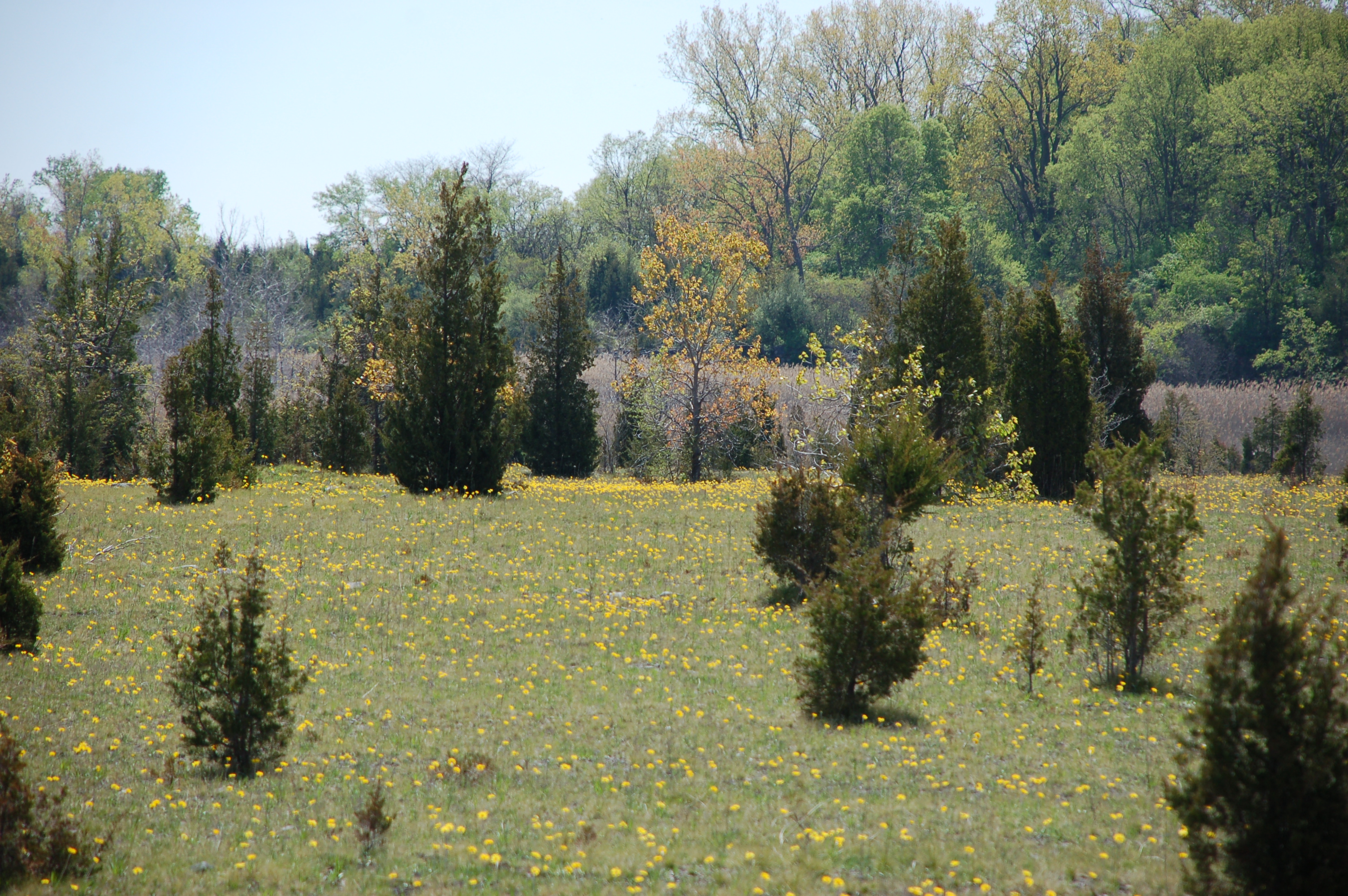
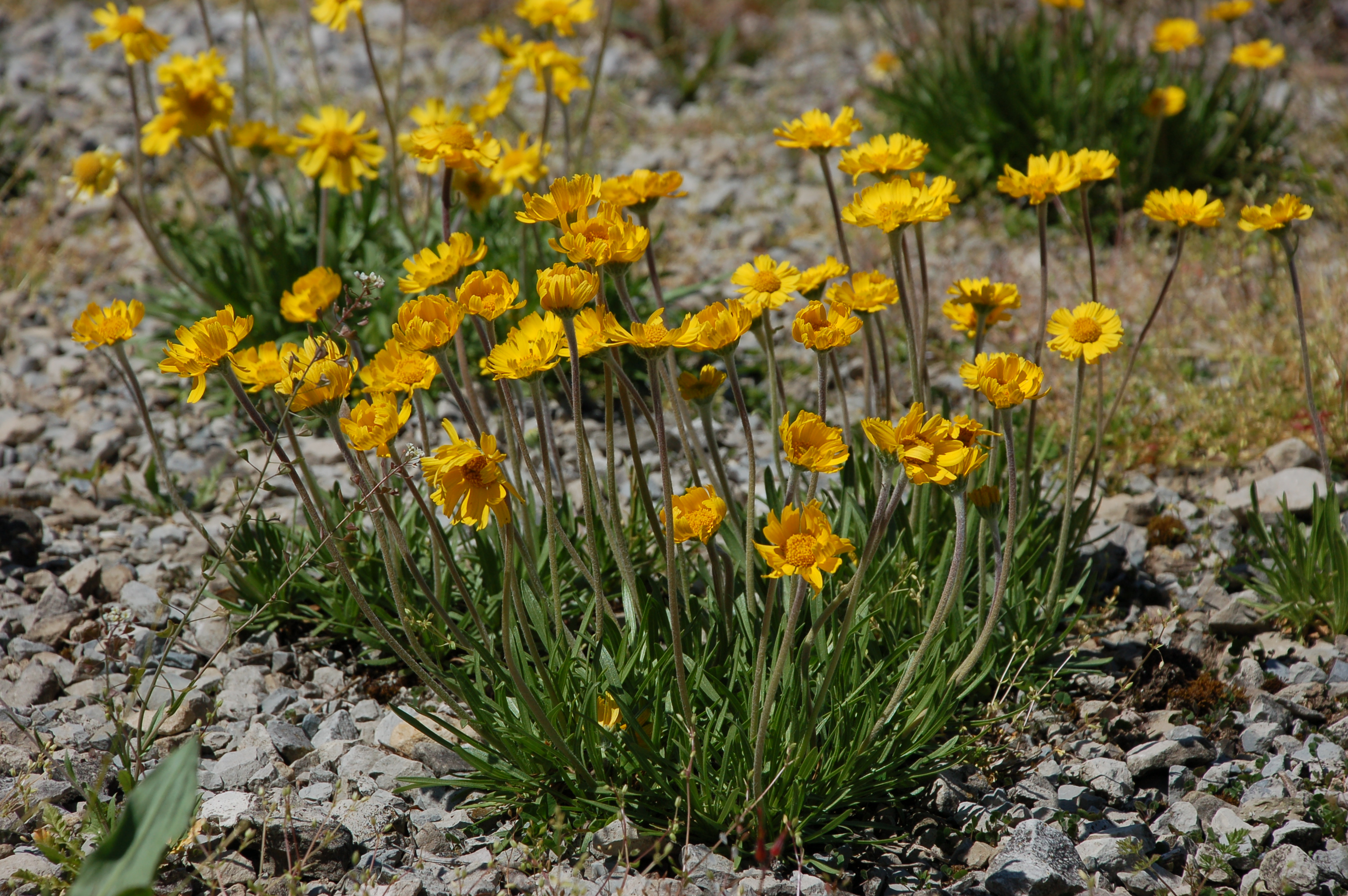
Daisies in full bloom at the Lakeside Daisy Nature Preserve near Marblehead, OH.

By Bruce Stambaugh

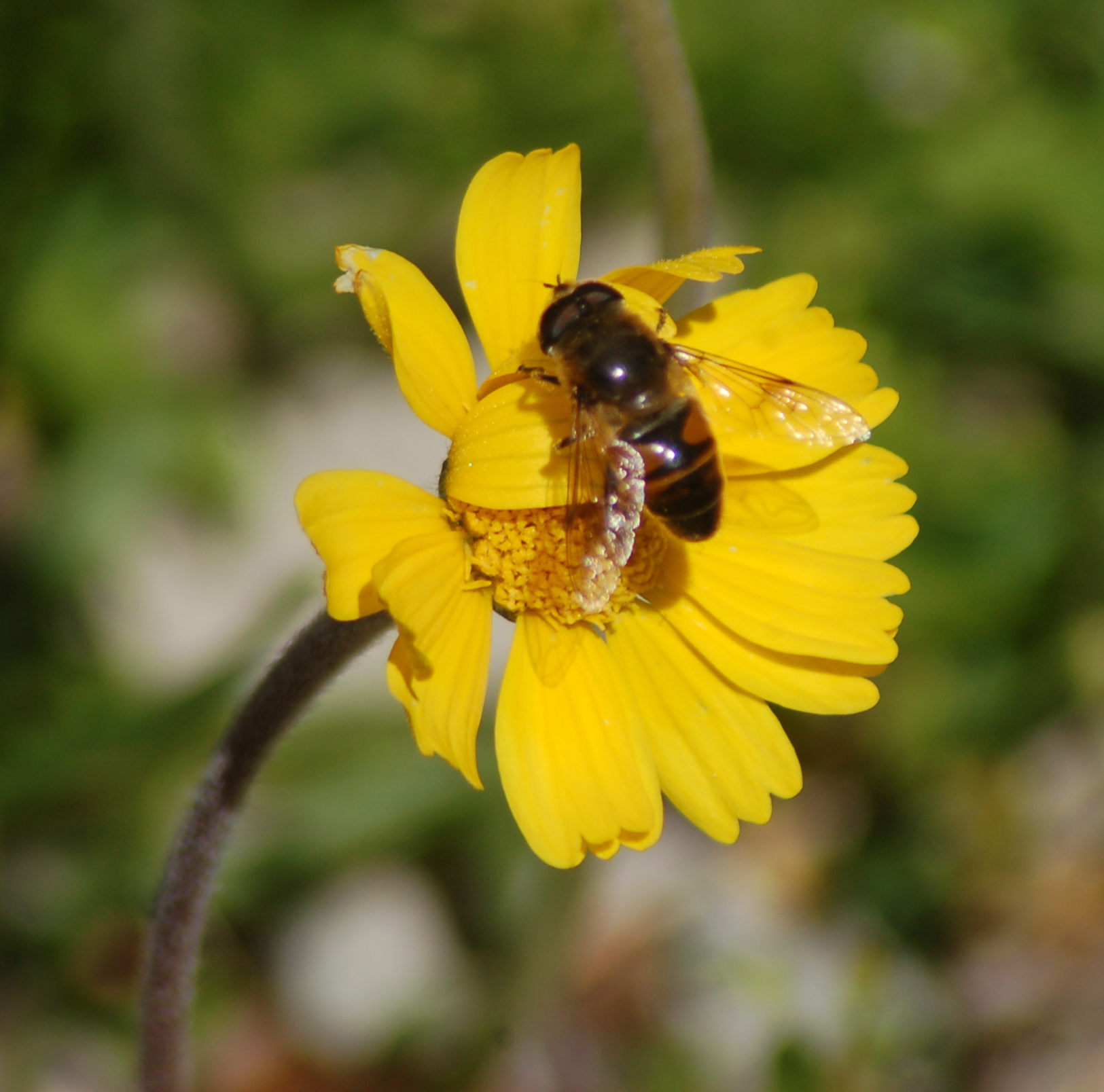
Bee and daisy by Bruce StambaughThe Lakeside daisies are in full bloom. That may not sound like earth-shattering news. But apparently due to the unusually warm winter here in Ohio, the daisies, like most other flowers, plants and trees, are blooming early. Plus, if you are a lover of all things nature, and especially wildflowers, you don’t want to miss this yellowy exhibition.

The Lakeside daisies are particularly special. They only bloom in a limited number of locations on or near the Marblehead Peninsula in northwest Ohio. In addition, their buttery blooms only last a week before they begin to fade. If you want to see them in person, you had better make tracks to the Lakeside Daisy Nature Preserve near Marblehead. My wife and I were there Sunday, and the preserve was a splash of yellow against the dull limestone gray ground.

The daisies growing in a small patch inside Lakeside were beautiful, too. They’re located right along the Lake Erie shore at the east end of Lakeside near Perry Park.

Lakeside daisies by Bruce Stambaugh
A bee enjoys one of the daisies in a clump of Lakeside daisies in a small preserve in flower’s namesake, Lakeside, OH.

Unfortunately it looks like the blooms will be gone before Marblehead’s annual Daisy Days scheduled for Mother’s Day weekend. Naturalists will lead walks through the preserve, so you can still learn a lot about the lovely little flower even if they aren’t blooming.

The Lakeside daisy (Hymenoxys herbacea) has been listed as an endangered species by Ohio since 1980. If you can’t make it to see this beautiful flower in person, enjoy the photos I took Sunday. If you look closely, you’ll notice some of the petals on the flowers are already starting to wilt.
Nature Preserve sign by Bruce Stambaugh

Lakeside Nature Preserve blooms by Bruce Stambaugh

Clump at Lakeside by Bruce Stambaugh

Daisies at Lakeside by Bruce Stambaugh

Daisies at Lakeside, OH by Bruce Stambaugh
© Bruce Stambaugh 2012
Jeanty reflects on Haiti two years later

Jeanty family by Bruce Stambaugh
The Jeanty family: Fritz, Mamie, Benjamin, Samuel and Glory

By Bruce Stambaugh

For the second time in two years, Fritz Jeanty and his family are back in Millersburg, Ohio. They are refugees from the devastating earthquake that hit Port-au-Prince, Haiti, January 12, 2010.

Fritz remembers the exact time the huge earthquake hit, 4:45 p.m. He was there among all the horror and destruction, desperately trying to return to his family. He eventually made it home all right, and his wife, Mamie, and two sons were badly shaken but otherwise fine. Other family members weren’t as fortunate.

Using his basic survival instincts and his canny astuteness to save phone numbers, Fritz was able to make connections to come to the United States. After a harrowing trip to Florida, Fritz and his family eventually ended up in Millersburg.

With the help of many people and local organizations, the Jeantys settled in to life here. Fritz, unable to legally work under the terms of his visa, spent his time volunteering at Save and Serve Thrift Shop in Millersburg.

Fritz was antsy to return to his home country, however. After much planning, he and his family returned to the impoverished island country January 26, 2011. He was full of hope. Fritz wanted to rebuild their home, start a new business based on his Save and Serve experience, and rejoin friends and family.

What the Jeanty family found upon return was excruciatingly familiar. The devastation that Fritz saw initially was still there.

“Nothing had changed,” Fritz said, his brown eyes in deep reflection.

The rubble was everywhere. He said only the non-governmental organizations (NGO) were making any progress, and that there weren’t enough of them.

“People still live in tents,” Fritz said. In fact, the city was even more populated than after the earthquake that killed 300,000.

“People from the country heard there was food and housing in the city,” Fritz said. Neither was true, but the people remained, complicating an already problematic situation.

Fritz’ dream was to establish a used clothing store similar to Save and Serve. That proved unfeasible. He sold two loads of clothes he had obtained, but had little to show for his efforts.

“There were no jobs,” Fritz said. “People didn’t have money.”

The first three weeks Fritz and his family stayed with friends until they could get their heavily damaged home temporarily livable. The goal was to reconstruct their home adjacent to their destroyed one.

A retaining wall had been previously constructed. Fritz built one room in which the entire family lived. A few months later, he added a kitchen. Christian Aid Ministries, headquartered in Berlin, Ohio, helped with the cleanup of the house. Other Holmes County churches, organizations and individuals assisted the family financially.

They still didn’t have running water. Electrical power was erratic at best, being available only on an average of eight hours a day.

Besides the lack of jobs and housing, there were other social problems that permeated Haitian society, too, according to Fritz.

The crime was the worst. The Jeanty family fell victim to that like so many others had there. During the night, hoodlums locked the Jeanty family in their own house, and stole the battery out of Fritz’ vehicle, and vandalized it.

Their house was burglarized after they left for Millersburg in January, too. Fritz said robberies and murders had increased exponentially.

“There were about 100 murders every three months,” Fritz said forlornly.

Another problem in Haiti has been the ongoing cholera outbreak. With Mamie pregnant with their third child, and proper medical care scarce, Fritz realized he had to do something. With another visa, he returned his family to the familiar and much safer surroundings of Millersburg January 18.

Because Mamie had had difficulties in previous pregnancies, Fritz didn’t want to take any chances. Happily, their first daughter, Glory Jeanty, was born healthy and well March 23 at Aultman Orrville Hospital.

The Jeanty family is again being supported by donations from local groups and individuals. They live in a home owned by the church they attend, Millersburg Mennonite. Their six-month visa expires July 17 with their future uncertain after that date.

© 2012 Bruce Stambaugh
This story appears on http://www.holmesbargainhunter.com/.

The Very Inspiring Blogger Award bestowed and humbly accepted

By Bruce Stambaugh

One of the primary reasons I write is to inspire others. I enjoy writing about the everyday experiences of life, weather, history, human interaction, nature, and genuine kindness. I also enjoy illustrating my blog posts with appropriate pictures that I have taken, and am glad when comments are made about those as well.
Very Inspiring Blogger Award
When Sandra Madeira nominated me for the Very Inspiring Blogger Award, I was greatly honored. Thank you, Sandra. Nearly a year ago, Sandra embarked on a mission of her own, posting a daily writing tip. I have been following her writings from the other side of the big pond in London all year. Other than the crazy English spellings, like colour, realise and practise, I have found her offerings insightful, and inspiring, especially since she works fulltime and has a family to care for. She definitely deserved the award.

In addition to thanking the giver of the Very Inspiring Blogger Award, I also have to tell you seven random facts about me. This must be the bureaucratic part of the award. In no particular order, they are:

1. I always wanted to play third base for the Cleveland Indians.
2. Failing at that, the best I could do is buy tickets on the third base side of Progressive Field.
3. I do the severe weather spotting for the National Weather Service for where I live, which is in the middle of the world’s largest Amish population in Holmes County, Ohio.
4. Our house is built on an Amish farm.
5. I’m Mennonite, not Amish. They’re the ones with the beards. Oh, wait. I have a beard. Never mind.
6. I was a volunteer firefighter and emergency medical technician for 27 years in our rural county.
7. When I was young, I had long, blonde, curly hair. Look at me now.

The other element in accepting this fine award is that I get to nominate seven other bloggers for the same award. Again, in no particular order, they are:

Claire inspires through her amazing urban photography, spontaneous, real and truly inspiring.

Check out her blog, and you’ll see just how inspiring Carley Evans is.

I’ll put the disclaimer right up front. Mic Miller is a friend of mine. Nevertheless, I think you’ll find his insightful comments and photography very inspiring.

Inspiring pretty well states the purpose of Karen Chandler’s blog.

Kerry Leibowtiz’s photographs will take your breath away.

If Matt Posky’s commentary and drawings don’t inspire you, they’ll at least make you think.

Babak is a student studying in Amsterdam. Given his interests shared on his posts, you’ll find inspiration in many forms. To make that point, he was recently Freshly Pressed by WordPress.com, and that certainly is a good thing.

Check them all out, and thanks, again, to Sandra for thinking of me.

Rejuvenated in a familiar and changed place

Flowering shrubs by Bruce Stambaugh
By Bruce Stambaugh

I hadn’t been to Secrest Arboretum in Wooster, Ohio since a tornado literally blew it apart September 16, 2010. In the midst of our recent summer-like weather, I decided it was time to reconnect.

Woodlots by Bruce StambaughLike so many others, I always had found the arboretum to be a place of blissful escape and rejuvenation. Its lovely woodlots, pristine gardens and peaceful settings have long served as a place of inspiration and retreat for many.

I knew why it had taken me so long to return to this little paradise. I didn’t want to relive those ugly memories, so opposite of what Secrest was meant to be.

Just an hour after the tornado hit late that summer evening, I had maneuvered in and around the devastation of the Ohio Agriculture and Research Development Center campus, where the arboretum is located. As a volunteer severe weather spotter, the Cleveland office of the National Weather Service had sent me there to photograph the damage as best I could.

I only had about a half an hour before sunset. Rescue crews were still combing buildings for possible victims who may have stayed late for work or study. Sporadic jerky flashes from searchlights sent eerie light beams through holes of broken buildings.

Focusing on my duty, I snapped as many pictures in the dim light as I could. That purposeful concentration was the only thing that stilled my emotions.

OARDC tornado damage by Bruce Stambaugh
Tornado damage near the Barnhardt Rice House on the Ohio Agricultural and Research Development Center in Wooster, Ohio on the evening of Sept. 16, 2010.

Historic buildings were ripped apart. Vehicles had been smashed and tossed like toys. Giant, beloved trees were snapped, toppled and twisted. It was overwhelming to see this peaceful place resemble a war zone.

It was nearly dark by the time I had circled back to the famous and popular gardens. Trees that had stood as sentinels over the flora and fauna had been sheared off or completely twisted out of the ground.

I thought of the many good times past when we toured the gardens with family and friends, admiring the marvelous variety of plants, flowers and trees. Those memories made it all so heart wrenching.

Like thousands of others, researchers and visitors alike, I loved the place. The EF2 tornado stole that, too. I knew that restoration had begun almost immediately. But I wondered if Secrest would ever be the same.

Flowers and stump by Bruce StambaughBuoyed by the unusually warm weather, I laid aside my fears and drove in. As soon as I exited my vehicle, familiar sights and sounds were instantaneous. Young trees had been planted, some adjacent to the sawed-off stumps, testimonial tombstones to those once towering trees.

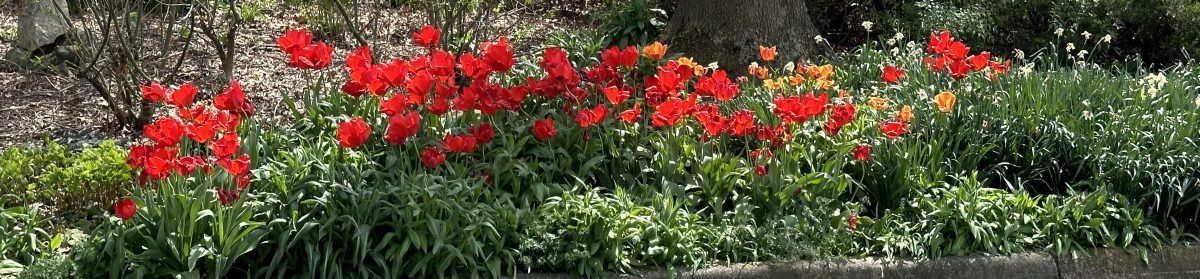
Exotic tulips by Bruce StambaughThe early onslaught of warm weather had coaxed the blossoming of many flowers and flowering trees. Crocuses, daffodils, hydrangea, forsythia, magnolia and even an exotic tulip were all blooming, some well ahead of schedule. Workers were busy trimming out last year’s dead growth while construction crews continued to repair, replace and expand the lovely gardens.

ricehousebybrucestambaugh
The Barnhardt Rice House is repaired and back in use.
It was a pleasure to walk the paved pathways to explore the remake. I wasn’t the only one to notice the fragrant flowers. Huge bumblebees and honeybees gorged on the nectar of the new blossoms. Mocking birds flushed from one bush to the next, staking out nesting preferences.

It was also nice to see some of the campus building restored, refurbished and back in use. Others, however, remained much as the tornado had left them.

Damaged silos by Bruce Stambaugh
Silos on the OARDC campus stand as they were after being hit by a tornado Sept. 16, 2010.

The restoration of Secrest Arboretum is a work in progress to be sure. In some sections, tornado twisted and toppled trees remain within eyeshot of the ongoing transformations.

The contrasts of nature’s stark fury and inspiring revival filled my soul. In the midst of this resurrection season, Secrest and I were both healing.

Restored and damaged by Bruce Stambaugh
While many areas of the arboretum have been restored, sections of large trees downed by the tornado remain.

Unwanted attention: Amish and the media

Wheat and corn by Bruce Stambaugh
Picturesque rural scenes like this one attract millions of people every year to Ohio's Amish country.

By Bruce Stambaugh

The Amish in the Holmes County, Ohio area have been in the news in recent months, and the news hasn’t always been good. The bizarre hair-cutting incidents, murders, financial fraud and accidental shootings all had the bright lights of media coverage shining on the normally peaceful and private Amish folks.

By faith and by lifestyle, the Amish wanted none of the attention. Yet, Amish are humans, and subject the same extremes and circumstances as any other individual, family or group of people. When something disturbing and uncanny happens among the world’s largest Amish population, the media swoop in to tell the world about it.

Certainly, the media has its right and responsibility to report stories it deems important. When it comes to radical events concerning the Amish, like the renegade group led by Sam Mullet of Bergholz, Ohio, it seems the world can’t get enough information.

Indeed, that desire to know is understandable, especially when it involves the normally reserved Amish. Violence in a usually peaceful and peace-loving community is an anomaly, and definitely incongruous with the Amish lifestyle.
Spring plowing by Bruce Stambaugh
The problem is, of course, that the Amish really want nothing to do with publicity, whether positive or negative. Humility is a main premise to their way of life. They believe that no member should be the center of attention, whether for doing good or doing ill. The Amish culture is centered on community, not individuality.

It is when the extraordinary in the community occurs, like the recent hostile beard cutting incidences, that that norm is broken. The unusual acts are extensively reported, and the world responds with questions and fascination. Again, the Amish prefer not to be featured as a general rule. But they also want the world to know that these extreme human behaviors are exceptions, not the rule, in the regular work-a-day-world.
Open buggy by Bruce Stambaugh
Just their choice of slower living lifestyles alone actually brings about media attention to Amish country. Many film and TV documentaries have been recorded and broadcast depicting the Amish and their less hectic lifestyle. Unfortunately, many of these productions often misinterpret or misrepresent the Amish and their values. When that unusual lifestyle is interrupted by extreme circumstances, the reporters from around the world flock in to get the scoop.

The Amish deplore any violence, whether it is done to them or others. In the case of the accidental killing of a 15-year old girl riding in a buggy, the shooter himself was Amish. Within days, the two families reconciled privately, saddened by the unfortunate and unexplainable one in a million chance that took a young life. The families forgave, and worked at getting on with life as best they could. That precious act of communing drew no media attention, which was just fine with all involved.

The Amish understand society’s need to know. They just don’t want to have their beliefs violated in gathering the sordid facts. If they do agree to a rare journalistic interview, Amish do not want their faces shown on television or in the newspaper.

Volleyball by Bruce Stambaugh
Amish youth meet regularly for hymn sings, bible study and good old-fashioned fun, like a volleyball tournament. No trophies are awarded, and there are no losers.

That bit of advice certainly should be followed by anyone visiting Amish country. Knowing that Amish prefer not to be photographed, it is best to take pictures of them from the back and from afar. In other words, take a picture of a field being plowed with the horses and farmer going away from the camera.
Serving by Bruce Stambaugh
Out of respect for their beliefs, facial pictures of Amish adults should be avoided.

When in a large crowd with mostly Amish folks like at one of the area’s numerous benefit auctions, be sensitive to the setting. Photographs of individuals would be discouraged.

The global media infrequently descends upon Amish country to report unusual stories. When they do, the Amish prefer to steer clear of any of the attention. They understand that the story needs to be told. They just don’t want to be a part of it.

This article appears in the current edition of Ohio’s Amish Country.

At winter’s end, it wasn’t much of one

Cold creek by Bruce Stambaugh
By Bruce Stambaugh

Here we are at winter’s end. Spring officially arrives March 20.

In reality, winter here in our area has hardly been winter at all, especially when compared to the past two. In case this mild winter has dulled your memory, the winters of 2009-2010 and 2010-2011 were bears, both fit more for polar bears than humans.

All of Ohio, and much of the Midwest for that matter, got dumped on. We measured snow by the foot instead of inches. Schools were closed, factories shut, roads declared impassable.
Patriotic snow by Bruce Stambaugh
Several snowfall records were set all across the Great Lakes region. They were winters of which children can only dream, and adults refer to, accurately or imaginatively, as snows like “when I was growing up.”

The snows were relentless. Once the snow from one big storm was cleaned up, another and sometimes bigger snow buried us again. Those winters never seemed to end. They began in November with below normal temperatures and above average precipitation and lasted into April.

Frozen crocus by Bruce StambaughEven the springs that followed were damp and cold. It really wasn’t until we had reached June in northeastern Ohio that spring’s fair weather had begun in earnest.

This winter, on the other hand, was indeed a different story. Old man winter never really showed his face. Yes, we had snow, but only a few times did it deposit enough to measure in inches, and even then, it was often a half an inch here and a quarter of an inch there.

Records were broken for precipitation this winter. The moisture was mostly rain, driven along by strong winds.

Those who cherish the winters of the previous two years had to hate this one. Snow skiing, ice skating, sled riding were all shelved for the most part. In Wisconsin, the vehicles of desperate ice fishermen sunk into a lake because the ice was so thin.
Birds galore by Bruce Stambaugh
The previous two winters brought birds galore to backyard feeders. This year, the birds were far and few between, preferring their natural foraging to human offerings. Sure the usual faithfuls appeared, but not in the numbers or frequency of harsher winters.

earlycrocusesbybrucestambaughThis winter was so mild that the first crocuses bloomed in February instead of March. The long slender stems of the weeping willow trees showed their pencil yellow early too. I even heard of one woman who planted sweet potatoes in February.

All the rain kept the dull, ugly brown of dormant yards at bay. Instead, lawns stayed some shade of vibrancy all winter long. From the looks of things, moles may have enjoyed the winter most of all. Their unsightly mounds dotted the prettiest of landscapes indiscriminately throughout the area.

Busy bee by Bruce StambaughAt my age, I was ready for an easygoing winter, although a weeklong cold snap would have been nice to help keep the insects in check. I’m fearful of the buggy consequences of not having a sustained cold spell. Perhaps the flycatchers, swifts and swallows will thrive if such an outbreak does occur.

I hear people saying that we may pay for the mild winter with a cold and snowy spring. That could happen, although the National Weather Service has forecast a warmer and wetter than normal March through May.

We’ll have to wait and see. In the meantime, we can rejoice that winter’s end is near, and that spring, whatever she may bring, is at hand.

Bay Photos by Donna

Wildlife photos from the Chesapeake Bay region

ROAD TO NARA

Culture and Communities at the Heart Of India

K Hertzler Art

Artist and nature journalist in the Shenandoah Valley of Virginia.

Maria Vincent Robinson

Photographer Of Life and moments

Gabriele Romano

Personal Blog

Jennifer Murch

Art is the only way to run away without leaving home. -Twyla Tharp

Roadkill Crossing

Writing generated from the rural life

ANJOLI ROY

writer. teacher. podcast cohost.

Casa Alterna

El amor cruza fronteras / Love crosses borders