Leaves may change, but appreciation for them does not

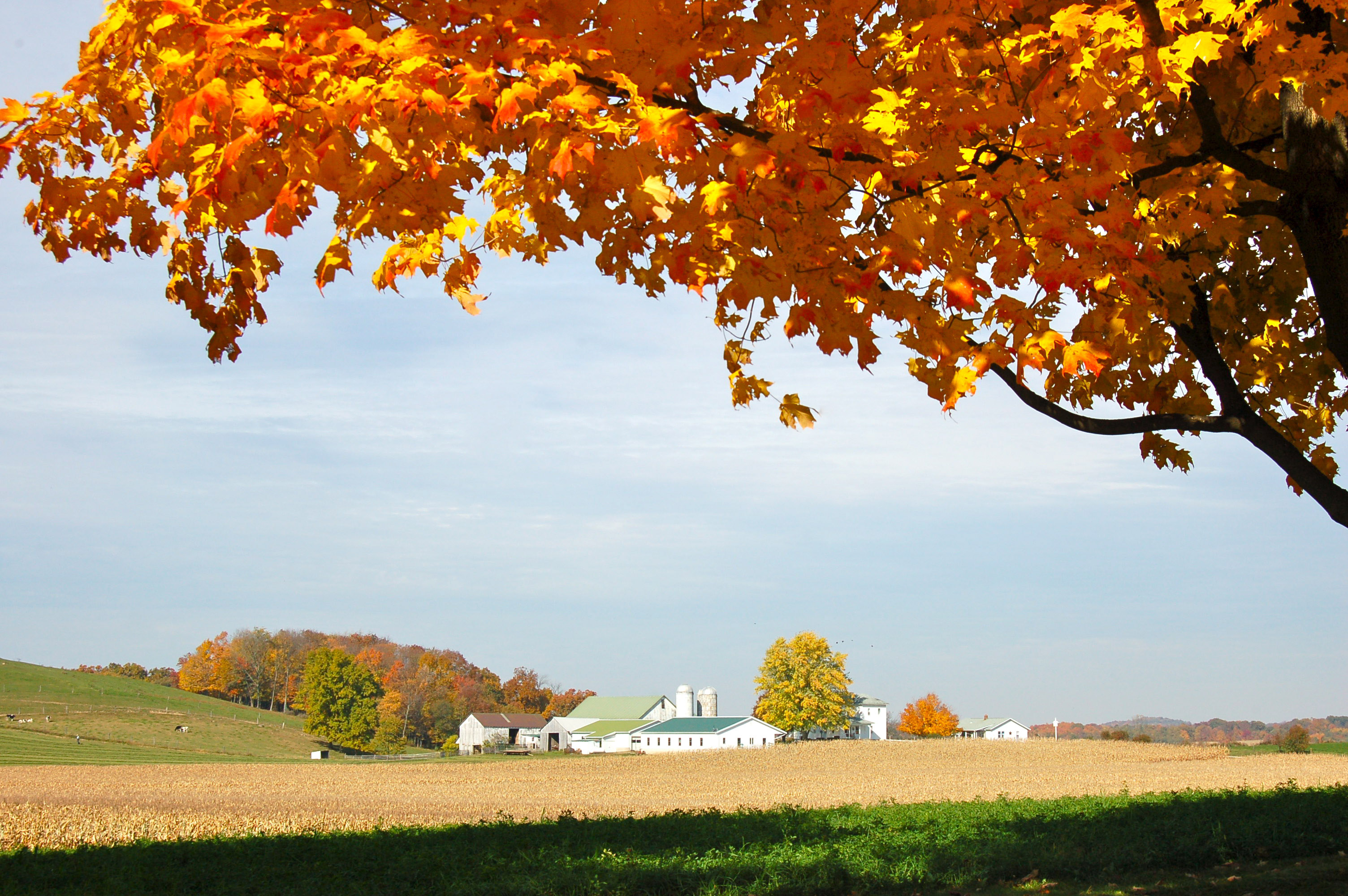
Rural leaves by Bruce Stambaugh

By Bruce Stambaugh

When I was a youngster, each fall my father would pack the family into the old jalopy and head to Holmes County, Ohio from Canton to view the leaves.

The trees were gorgeous, the pastoral vistas delightful. It was like stepping back in time once we crossed the county line. I suppose some people still feel that way today.

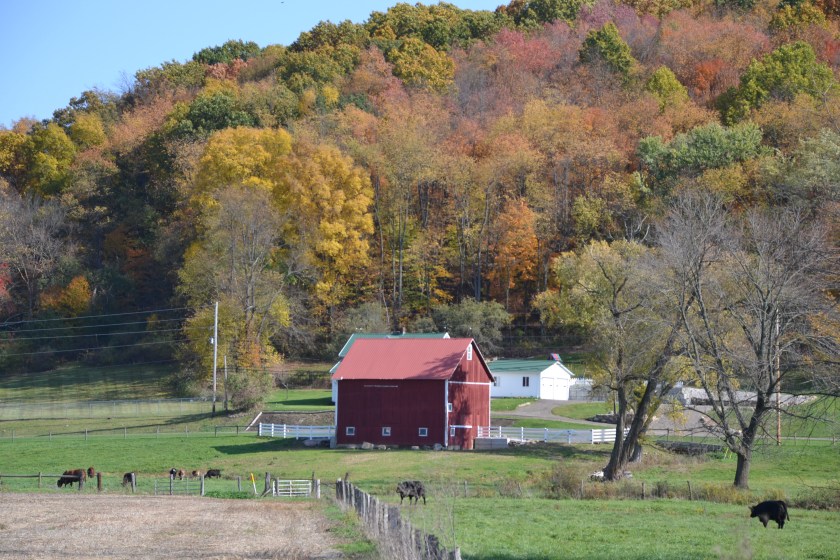
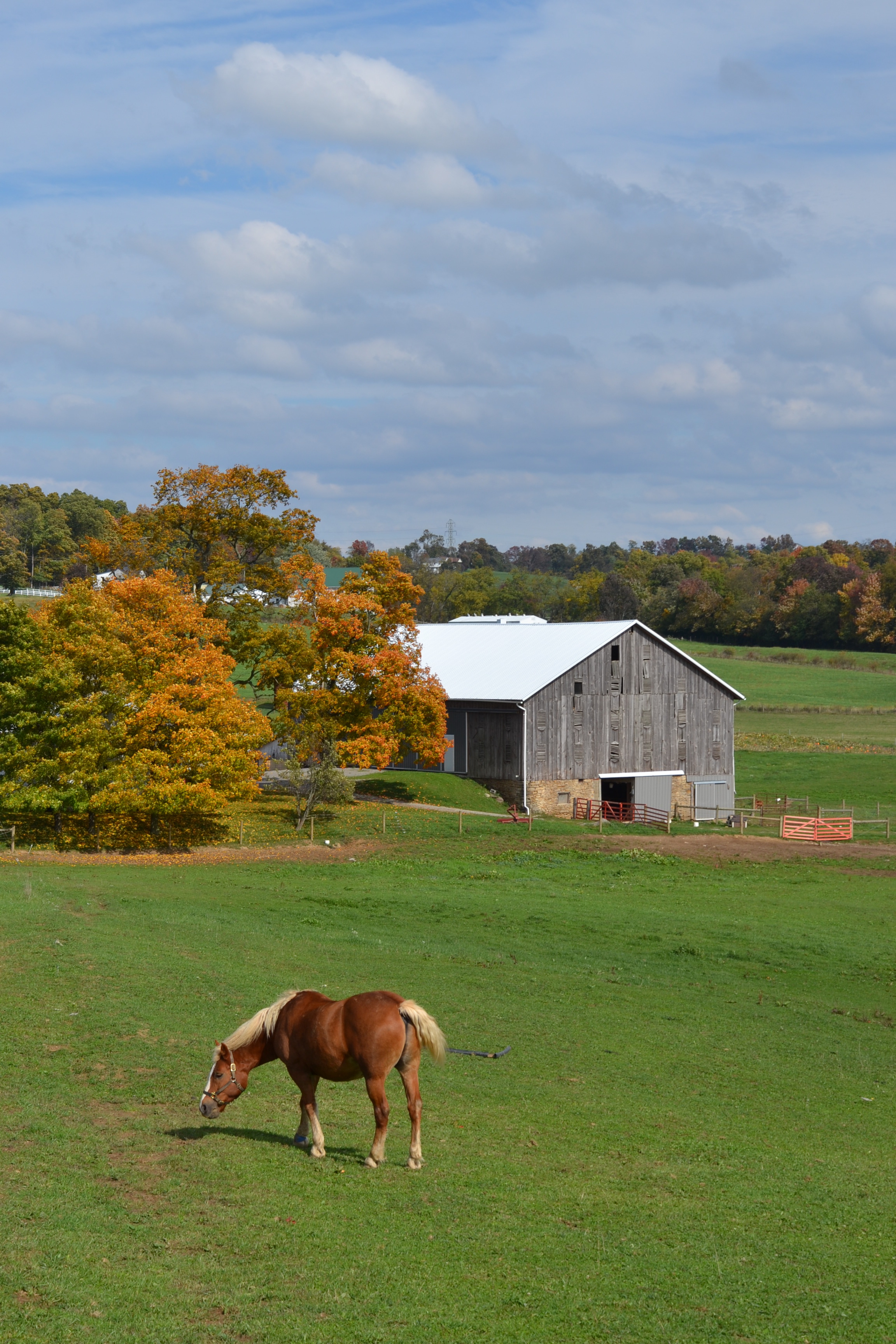
Amish country by Bruce StambaughLike my father, I loved coming to Holmes County. The colorful leaves, the tangy Swiss cheese, the horse and buggies, and the images of a simpler life left a lasting impression on me, even as a juvenile.

The air was crisp and clean, the views splendid, the people quaint. With Mom a landscape artist, Dad kept pointing out scenes she could paint, as if Mom needed any help noticing.

Before entering the county seat, Millersburg, we always stopped at the same place. Dad would pull off to the side of the road by the golf course so we could all admire the giant, vibrant sugar maple tree that stood on the course near the highway. It was a stately fixture to be sure, aglow with yellow, orange and red leaves. Against the manicured green fairways, it was a picture of beauty.
Bucolic by Bruce Stambaugh
Dad would pull out his pride and joy eight-millimeter movie camera and film away. He loved to show the home movies over and over again at family gatherings. I don’t need to view the old footage to recall the moment. The memories are as vivid as the leaves on that old maple.

Perhaps that’s because irony of irony I ended up spending my adult life here. I pass by the memorable spot frequently. The natural beauty is a nice reminder, especially in autumn.

I don’t have to pile in the car and drive 35 miles to see the living artistry. I just have to look out the window. With the leaves at their peak, the real life painting outside our door is ever changing.

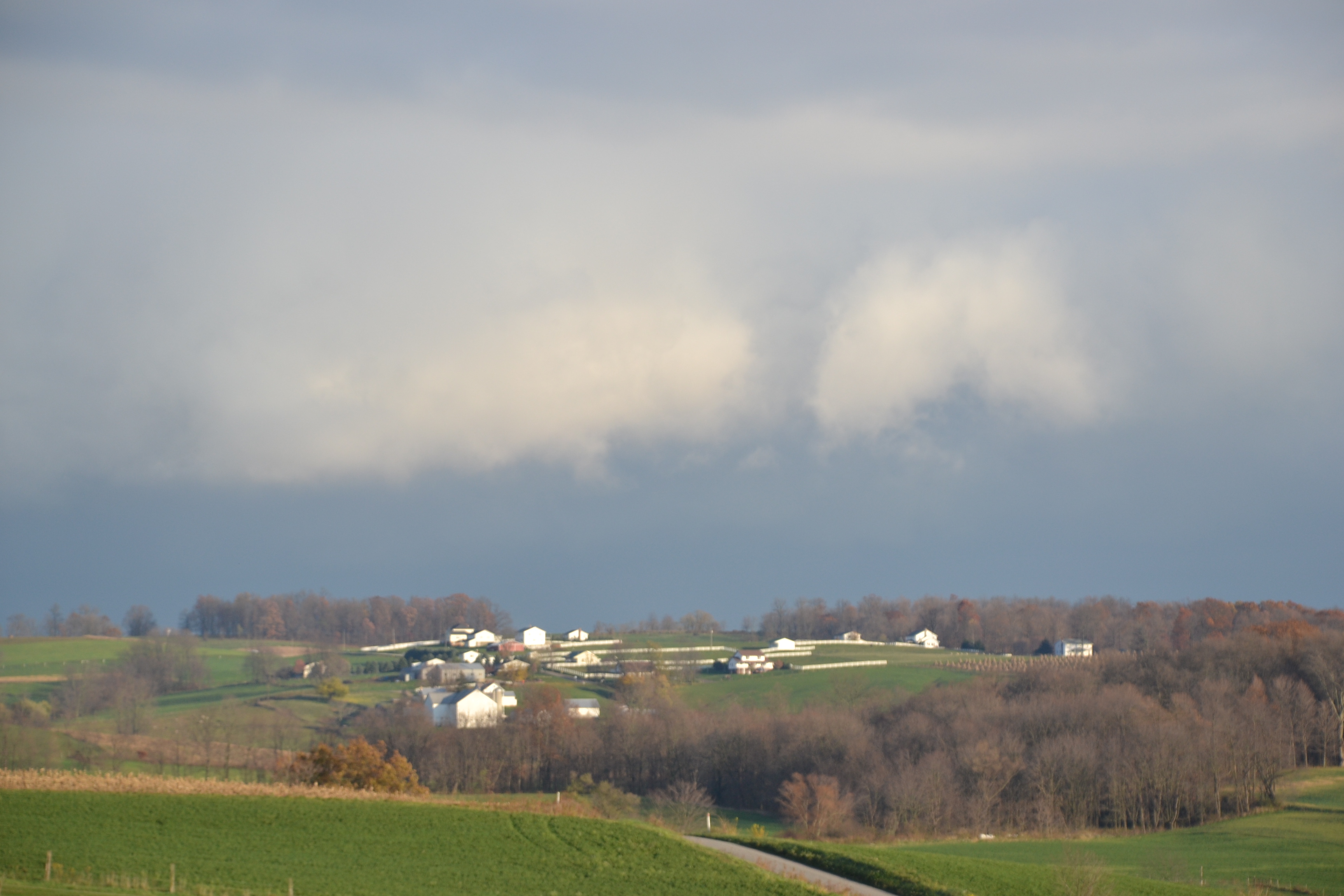
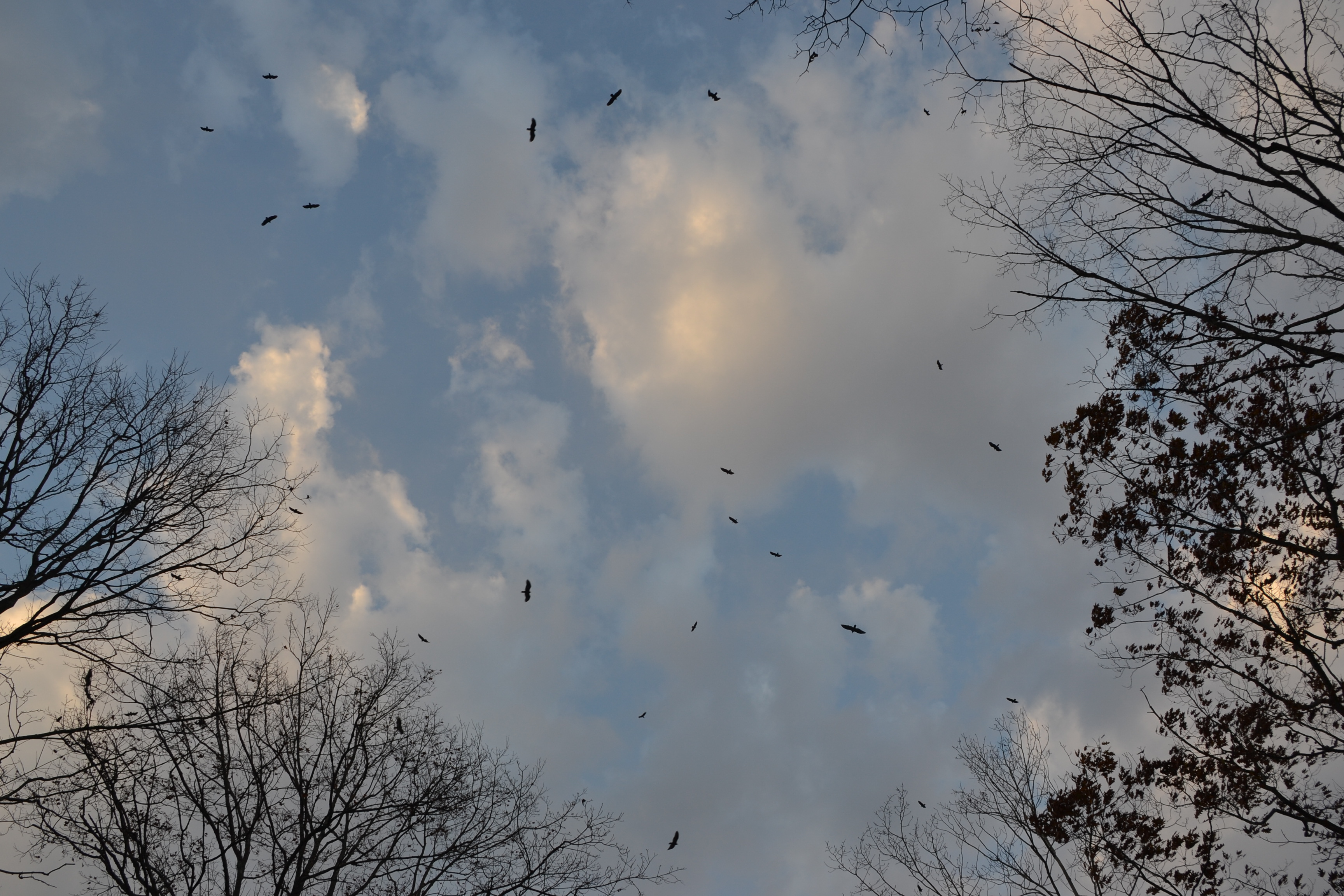
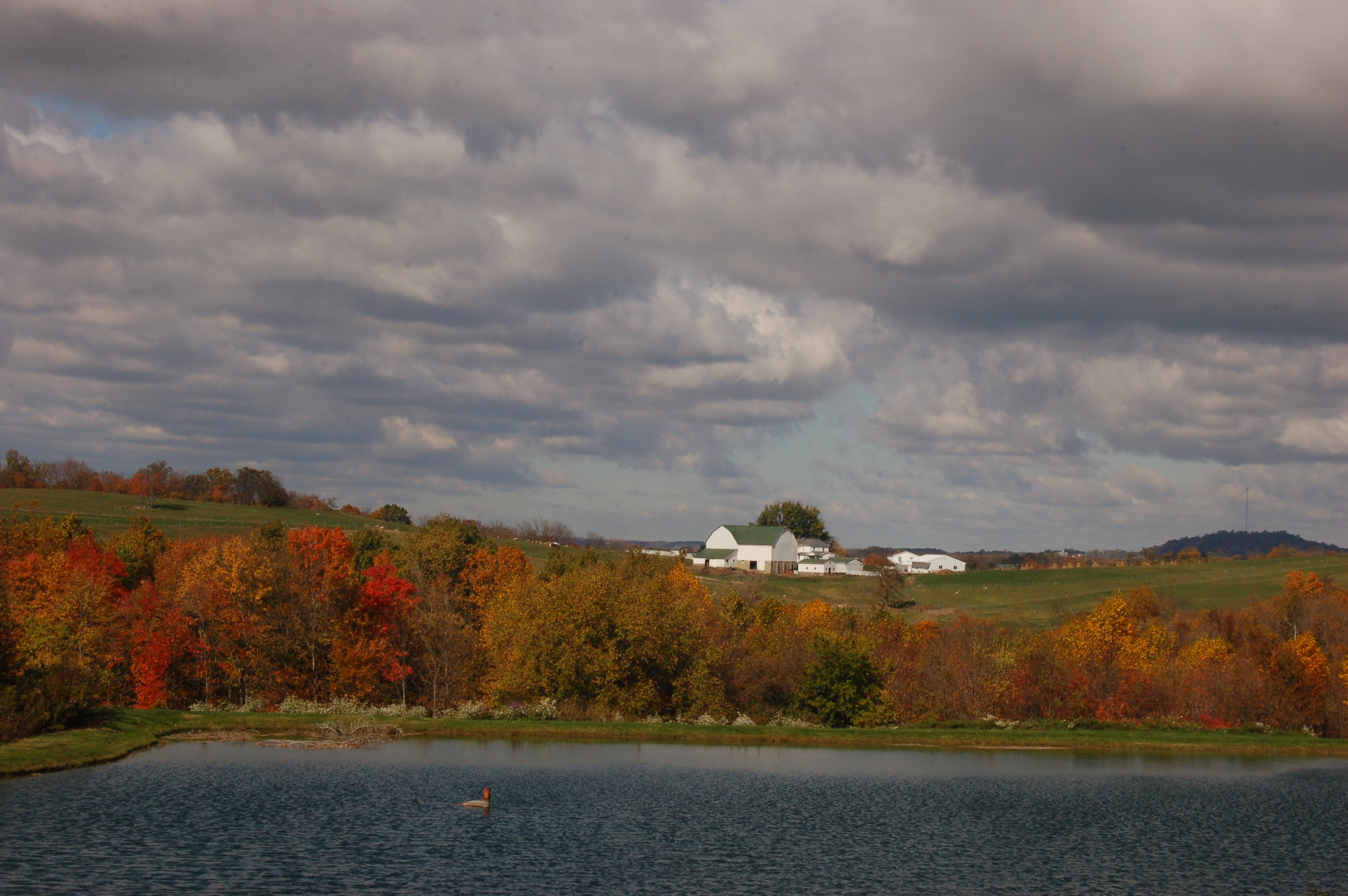
Fall sky by Bruce Stambaugh

Of course, I do like to tour the hills and valleys of our county to take in the complete show. I have my favorite routes.

I especially enjoy traveling around taking digital photographs on partly cloudy days. One minute everything seems dull, then the sun breaks through, and I can’t snap the camera shutter fast enough. My father would probably tell me to get a camcorder.

I love the brilliant fencerows dotted with burgundy ash, yellowy white oak, crimson red oak, sunny sassafras, and red, green, yellow and tangerine sugar maples. The hardwood rainbows highlight emerald hayfields and stands of brittle corn shocks.

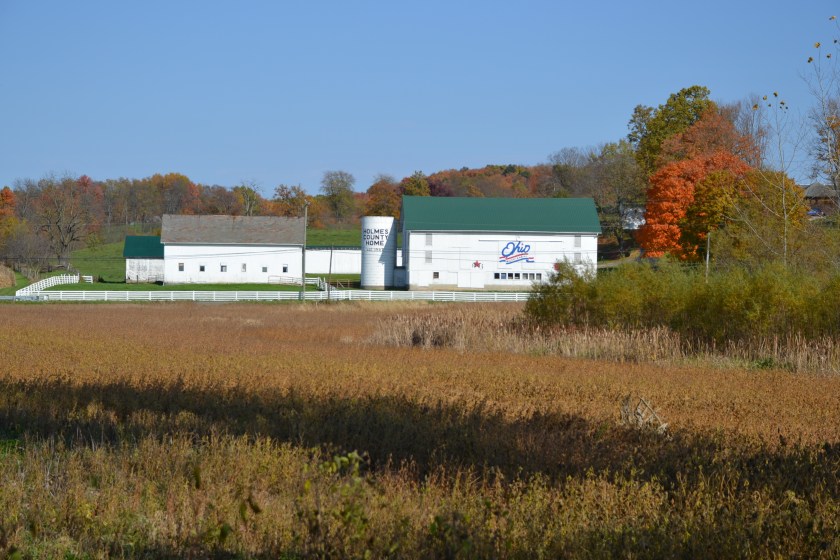
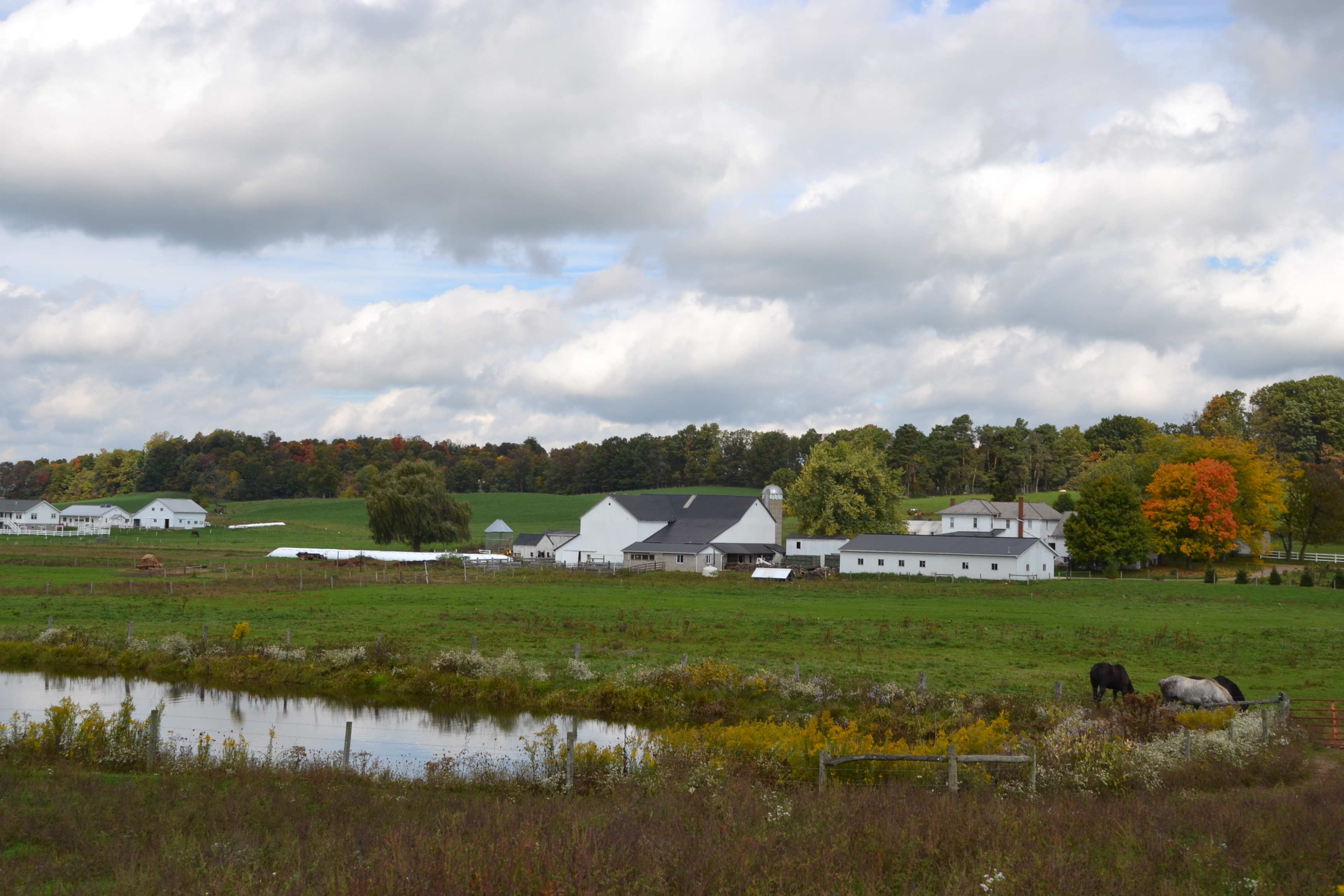
White farm by Bruce Stambaugh

I also enjoy occasional drives through the heavily forested Killbuck and Black Creek valleys. The steep hillsides are loaded with the same mixed hardwoods as in the eastern end of the county.

White clapboard farmhouses and weathered barns, surrounded by lush green lawns, lay at the feet of the dappled hills. More often than not chocolate soybean fields fill in the narrow bottoms.

By Millersburg by Bruce StambaughEven with that much splendor, I still return to the side of the road by the golf course. Though the old tree my father loved is gone, time has matured others nearby.

Buoyed by the beauty and the memories, I snap a few shots of the delightful scenery. I am keenly aware of being in both the present and the past. Like the changing seasons, the ebbs and flows of life’s ironies have that everlasting effect.

The column appeared in The Bargain Hunter, Millersburg, OH.

© Bruce Stambaugh 2012
Adoptions bring joy and miracles

Yoder family by Bruce Stambaugh
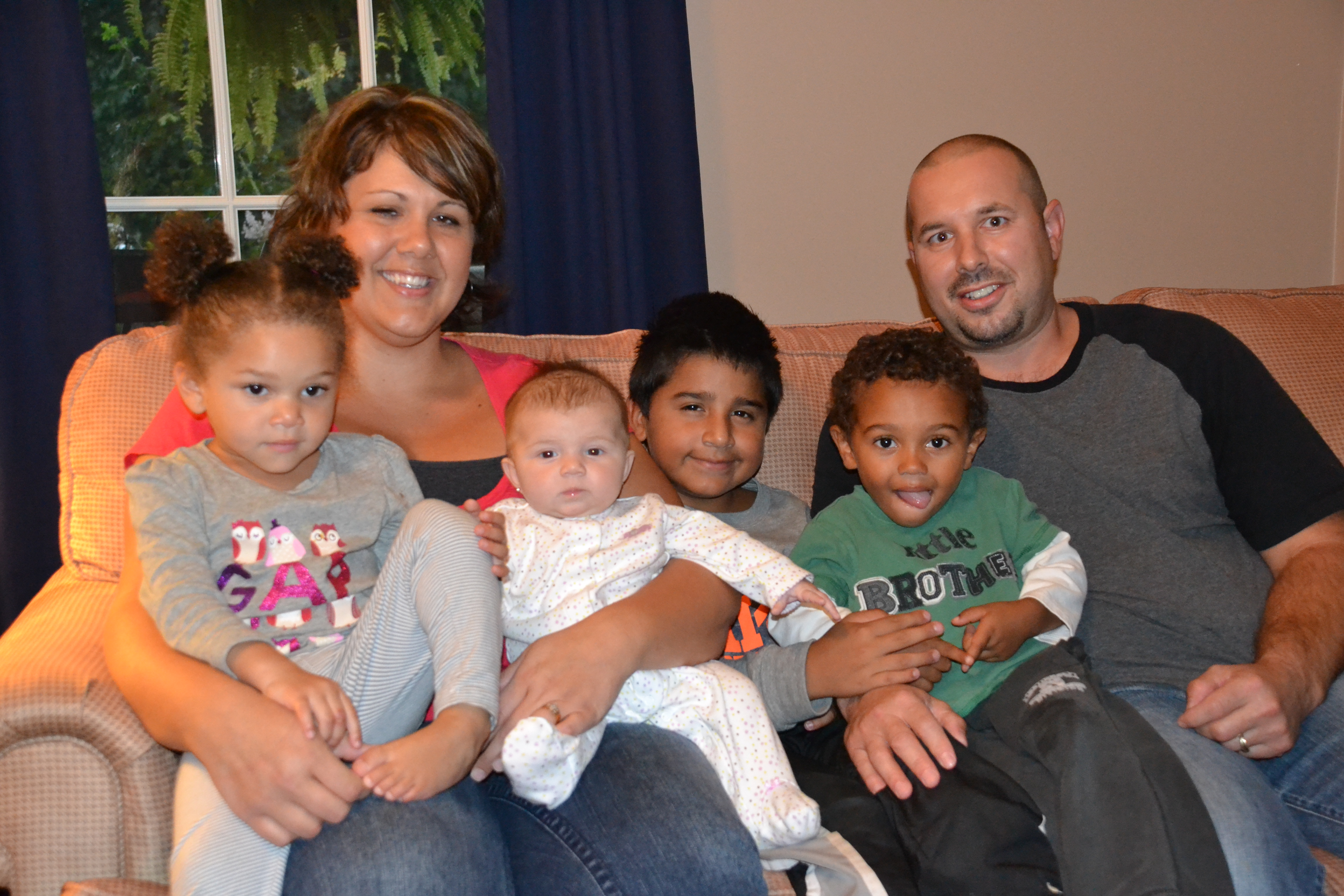
Amy and Joe Yoder with their four adopted children, Hayley, Sophia, Matthew and Cameron.

By Bruce Stambaugh

Joe and Amy Yoder of rural Sugarcreek, Ohio wanted to start a family. When they were advised that pregnancy might be a questionable option for them, they had a lot to think about.

In the fall of 2003, they chose adoption. They could not know how much that decision would positively impact their lives and the lives of others. All the way, they sensed God’s leading.

Joe and Amy had decided on an international adoption. Only two months later, little Matthew in Guatemala entered their lives.

“The entire process was tedious,” Amy said. “There was major paperwork, and lots of bureaucracy to work through there.”

They applied in January and were approved in April. But they still couldn’t get custody of Matthew until October.

“We couldn’t have done it without the support of Millersburg Mennonite Church,” Amy said of the church they attended then. “They really chipped in and helped us raise funds to defer expensive adoption.”

That was eight years ago. Matthew is a growing boy and enjoying being in third grade. He also watches over his brother and sisters.

That’s right. The Yoders have adopted three other children, all from Ohio, in the last three years.

Cameron is three. Hayley is two, and the latest addition to their family, Sophia, is 3 months old. If there is such a thing, she was a surprise adoption.

When Matthew was three, Joe and Amy decided to move ahead with adopting another child, only this time doing a domestic adoption. After interviewing several adoption agencies, Just three months after applying they received a call to adopt Cameron. That was 2009. A little more than 10 months later, the adoption agency called about Hayley.

Even after the first three adoptions, Joe and Amy said they felt like God was leading them to being foster parents. On June 28, that changed. Their social worker called. Amy said she thought the call was for an Amish neighbor couple that they were helping with the adoption process.

But no, the social worker told them they had another baby if they wanted it.

“Sophia was ready to leave the hospital,” Amy said, “and they didn’t have a placement for her yet.”

Knowing that each adoption, whether foreign or domestic, is costly, the Yoders hesitated, too.

“I asked the social worker how much money and how soon they needed it?” Amy shared. Having already adopted through the agency, Amy really knew the answer to the money question.

“She told us we needed $20,000 by Saturday,” Amy said, “and this was Friday afternoon.”

The Yoders said that they prayed about it all night. By morning they had their answer.

“For some reason, we had a real peace about the decision,” Amy said, although they had no idea how they would come up with that much money on such short notice.

Yoder children by Bruce Stambaugh
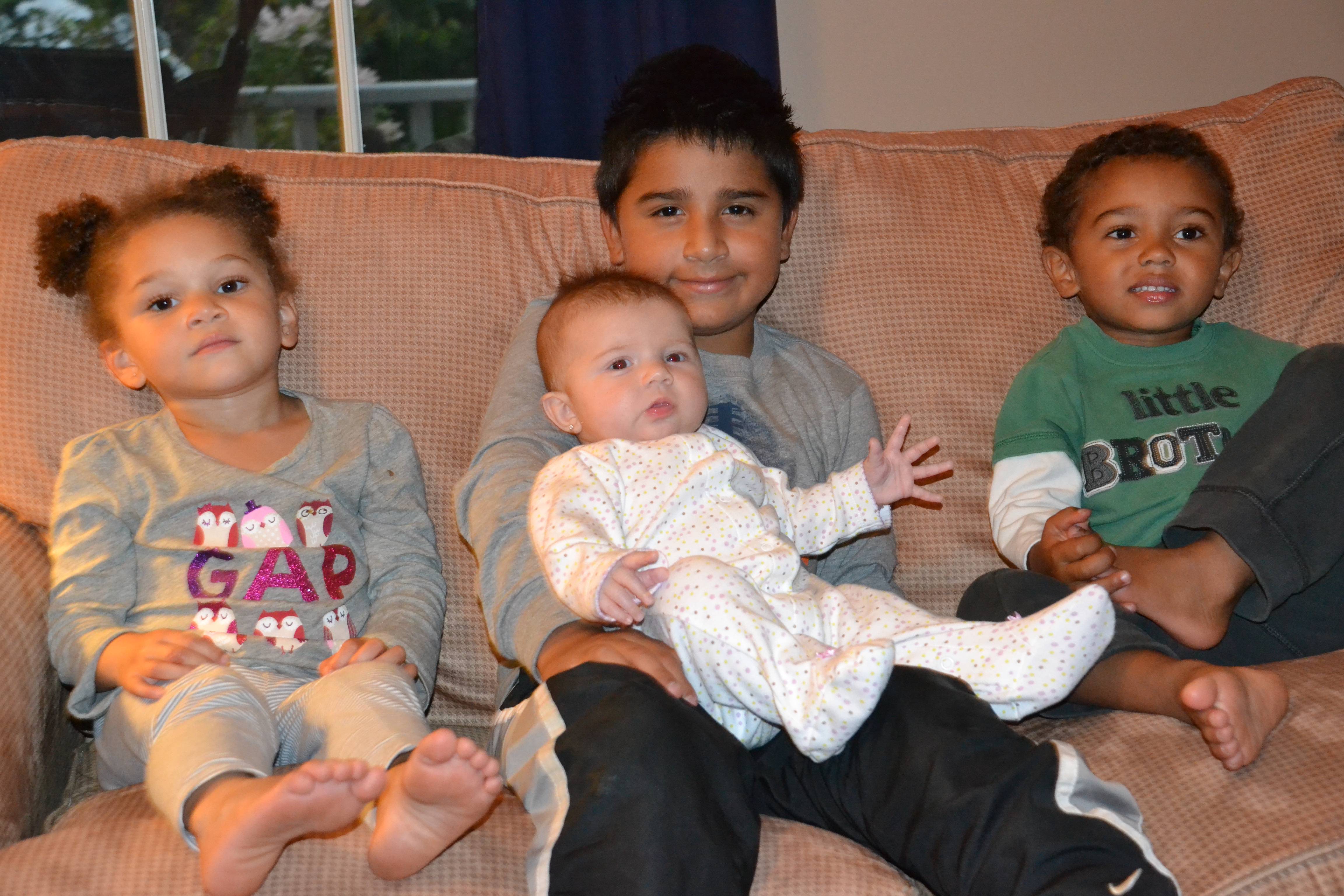
Hayley, 2, Sophia, 3 months, Matthew, 8, and Cameron, 3, gathered on the living room couch long enough for a photograph before running off to play.
They agreed to take Sophia on the condition that they would pay half of the money up front, and the other half in a week. The social worker agreed.

On Monday Amy was sitting on the front porch with the four children when she received another call from the social worker. It was more good news. But Amy couldn’t believe the message.

“Don’t send us anymore money,” the social worker said. “It’s all taken care of.”

Joe and Amy had no idea what had happened. The agency wouldn’t say. The Yoders simply consider it all a miracle, the process, the money, and of course Sophia.

But wait. There is yet one more miracle, according to Amy. The final adoption always takes place exactly six months after receiving the baby, which would be Dec. 31, when the courthouse in Columbus would be closed.

“Somehow,” Amy said, “we were told that the courthouse would be open for us.”

Their appointment to officially adopt Sophia is 3 p.m., New Year’s Eve. It will likely be one more joyous celebration in the Yoder household.

This article appeared in The Bargain Hunter, Millersburg, OH.

© Bruce Stambaugh 2012

Politeness among 100,000 people

By Bruce Stambaugh

Living in rural Holmes County, Ohio, I normally am not part of a group that tops 100,000 people. A recent Saturday afternoon, however, found my son, Nathan, and I in just such a crowd.

For both of us, it was only our second time watching an Ohio State University football game in storied Ohio Stadium. We had gone to our first contest 25 years ago. We considered it an honor to be able to go again. For what we observed, so did everyone else.

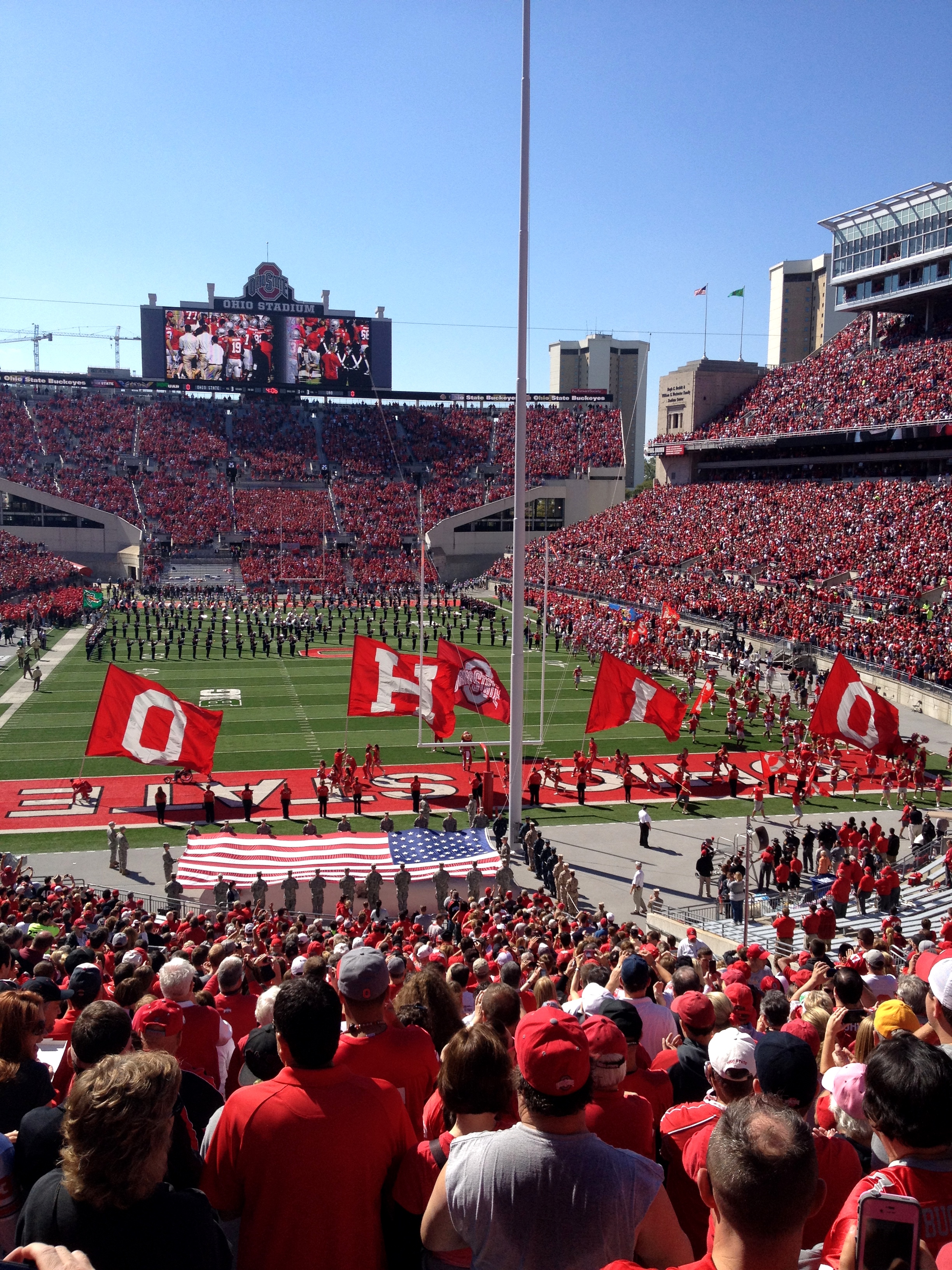
Ohio Stadium by Nathan StambaughThough the forecast wasn’t the most promising, I expected we’d see a decent game and enjoy a lively half-time show. By kick off, the skies had cleared to a pure blue with only a few puffy white clouds zooming overhead at game’s end. The weather wasn’t the only pleasant surprise.

Given all the focus on Buckeye football in Ohio, I was expecting a rousing if not a raucous crowd decked out in scarlet and gray in the fabled horseshoe stadium. They indeed were colorful, but mostly because of their home team garb.

Something else impressed us besides the sea of scarlet. Although they won, what caught our attention certainly wasn’t the lackluster play of the Buckeye team, though their overmatched opponent gave a spirited effort.

My son and I were both amazed at the demeanor of the packed house. The crowd was exceedingly polite. From our seats in the first level near the middle of the north end zone, we had a very good view of most of the proceedings.

These were loyal Buckeye fans to be sure. We had walked through parking lot after parking lot of tailgating parties prior to the game. People were having a genuinely good time. Youngsters tossed footballs. Young adults huddled together laughing and talking. Older generations watched over the grilling of brats and burgers.

The throngs of people funneling to the entrances were equally congenial. People patiently lined up. Ushers were courteous and helpful.

Prior to finding our seats, we watched the boisterous student cheering section clamor down the sloping ramp to the field. The famous OSU marching band closely followed them. The students were painted and dressed for victory, the band energetic to the point of periodic chest thumping. They were pumped.

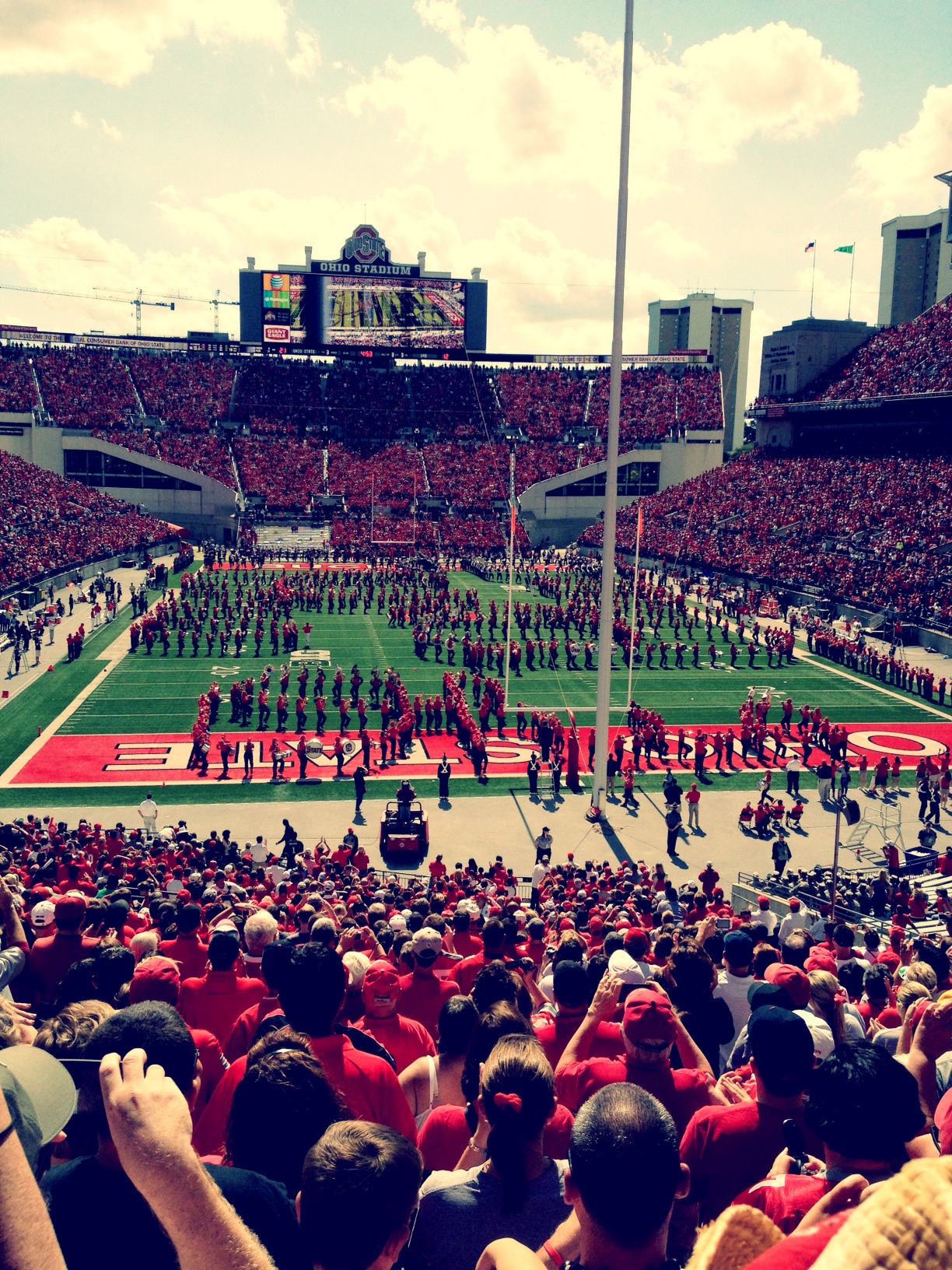
Script Ohio by Bruce Stambaugh
The Ohio State Marching Band and the Alumni Band played out four script Ohios simultaneously on the field.
Save for one couple that sat a few rows in front of us, no one seemed to have partied too hard or too long. Fans were there to watch their team and the band. And that’s exactly what they did.

Sure there were a few boos at the officials when a call or two went against Ohio State. For the most part, people were just plain mannerly. When the lady sitting beside me accidentally bumped my arm, she kindly apologized. I did the same when I bumped her, too. With that many people squeezed into bleacher seats, a little unintentional elbowing could be expected.

Throughout the game, most everyone was well behaved. People urged on the team by yelling, “Come on boys,” as if they knew them personally. Foul language was non-existent.

The crowd reverently sat for most of the game and enthusiastically stood for the entire halftime show. With more than 400 alumni band members present, it was a special treat to watch four different script Ohio’s simultaneously unfold on the field.

I could readily see why OSU tickets are so hard to come by. Attendance there just isn’t solely for football. It’s a time-honored, refined tradition.

The column appeared in The Bargain Hunter, Millersburg, OH.

Photos courtesy of Nathan Stambaugh.

© Bruce Stambaugh 2012
Viewing the leaves in Ohio’s Amish country

Fall from my backyard by Bruce Stambaugh

By Bruce Stambaugh

Ohio’s Amish Country, particularly Holmes County, is a great place to be when the autumn leaves are at their finest. With its many stands of mixed hardwoods throughout the area, the colors can be spectacular if all the conditions are right.

The leaves are usually at their colorful peak by mid-October. Though the summer’s drought may have caused some trees to already change, they seem to be on a normal timetable for coloration. Now through the next two weeks will provide marvelous viewing.

Several great routes can be driven to see the rainbow of leaves. Just consider the rolling hills, rows of corn shocks, grazing cows, romping horses, Amish buggies and silvery streams as backdrops to the main event.

Fall farm by Bruce Stambaugh

Simply traveling the main highways that lead into the Holmes County area and crisscross the county will guarantee beautiful scenery. That’s especially true in the fall.

Trees and shocks by Bruce StambaughState Route 39 cuts Holmes County in half east to west. In many places, the road roughly follows the terminal moraine of the Wisconsin Glacier. To the south, hillsides loaded with maple, oak, walnut, beech and hickory trees are steeper than their counterparts on the opposite side of the road. The glacier filled in the valleys on the north side 10,000 years ago, leaving a gently undulating geography, with rich soil that farmers pamper for excellent crops and lush pasturelands. Stands of woodlots and tree-studded fence lines create magnificent leaf viewing.

Yellow and red by Bruce StambaughState Route 83 bisects Holmes County in half north to south. You will be dazzled by the vistas that change seemingly at every curve. Both north and south of Millersburg, the county seat, the route hugs the eastern edge of the Killbuck Valley. Impressive slopes with ample forests east and west nestle golden marshlands teeming with wildlife in between.

U.S. 62 runs diagonally across the county. From the northeast, pastoral views are aplenty, meandering through Amish farmland on each side. Because the wood industry surpassed agriculture as the number one employer in Holmes County a few years ago, trees are treasured and properly cared for.

Fall scene by Bruce Stambaugh

Follow U.S. 62 from Millersburg southwest toward Killbuck and on to Danville in Knox County and you might think you are in the foothills of the Appalachian Mountains. In truth, you are. The road follows the area’s main waterway, Killbuck Creek, and then climbs the hills into the Mohican River watershed.

Woods and hills by Bruce Stambaugh

The lesser traveled state, county and township roads provide equal opportunity viewing when it comes to autumn leaves. State Route 520 from Killbuck through Glenmont’s seven hills and on to State Route 514 especially provides a pretty show if the timing is right.

In the east, State Routes 241, 515, 557 and 643 all are winding, hilly and gorgeous in the fall. Farmsteads with white houses and coffin red barns are the norm in any direction on these roads.

Red barn red tree by Bruce Stamaugh

For those who desire more than just riding and looking, the area has plenty to offer. At the Wilderness Center off of U.S. 250 west of Wilmot, you can hike through prairie grass and virgin forests, and explore an education center, where there is fun for all ages.

Mohican State Park near Loudonville affords numerous trails with incredible overlooks to the steep Mohican River gorge. The greens of the thousands of white pines nicely compliment the colorful mixed hardwood forest.

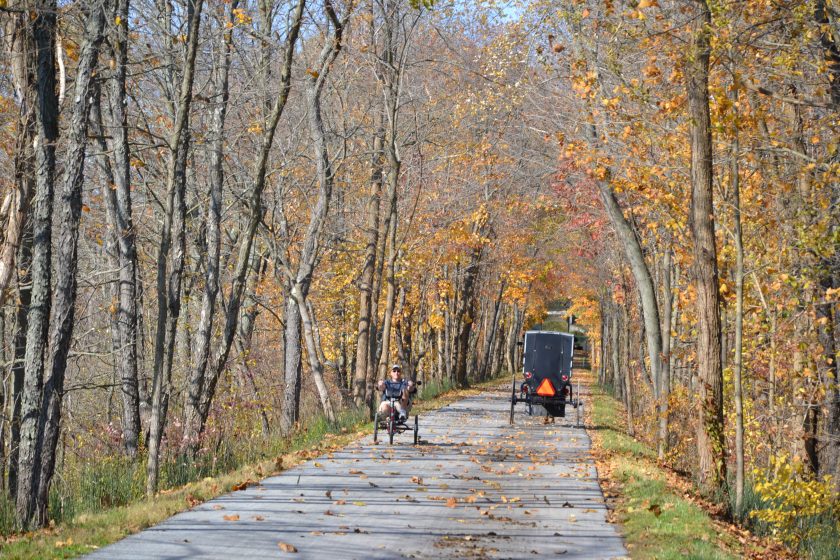
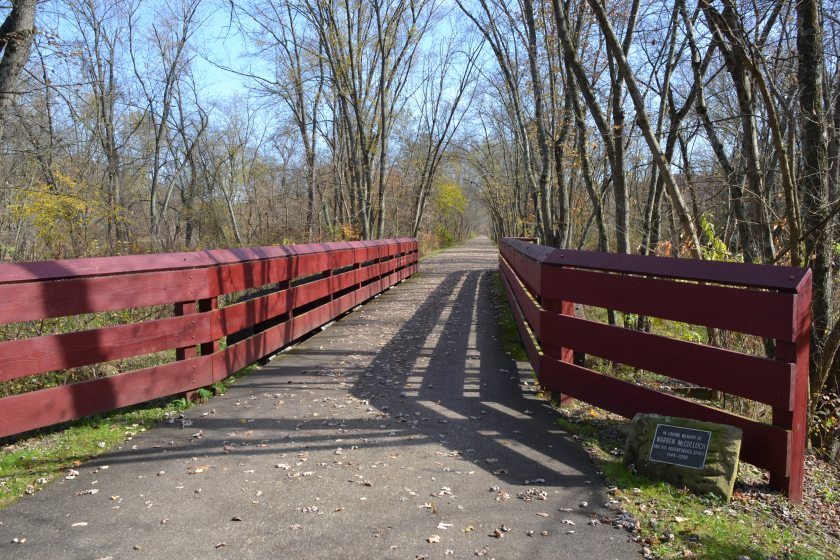
For bicyclists, the Holmes County Trail offers 16 miles of lovely trials from Fredericksburg to Killbuck. Hikers are welcome, too. The trail runs along the Killbuck through the center of the county until it turns southwest toward Killbuck. The wildlife, birding and leaf viewing can all be consumed simultaneously. A note of caution, however. Horse and buggies also use the trail on one side while bikers and hikers are on the other.

Everyone has their favorite spot to view the changing leaves. You’ll enjoy finding yours.

Fall in Amish country by Bruce Stambaugh

This article appeared in Ohio’s Amish Country magazine.

© Bruce Stambaugh 2012

Bible antiquities on display

By Bruce Stambaugh

Antiquities by Bruce Stambaugh
Dr. Rev. Kenneth Walther showed some of the antiquities that will be on display at his church near Millersburg, OH.
During October, Holmes County, Ohio area residents have a unique opportunity to view firsthand biblical antiquity items dating back to 2,000 B.C.

The church’s pastor for the past 15 years, the Rev. Dr. Kenneth Walther has arranged for multiple items representative of the first five books of the Bible to be viewed by the public and members of his congregation. All of the items are on loan from Ashland Theological Seminary in Ashland.

How was a church of 100 parishioners in Millersburg able to acquire such a collection, even on a loan basis? The answer is easy. In addition to serving as the pastor of the church, Walther is also an adjunct professor at the Ashland Seminary. He had taught Bible courses there for 33 years prior to his retirement in 2009.

“Really, the reason the artifacts are here is in conjunction with The Story Bible study project we are holding in the church through April,” Walther said. “The entire church, youth through adults, is studying the same scriptural passages each week.”

Walther said the antiquity items, which range from samples of parchment writing to clay vessels, are part of a 1,500-item collection at the seminary. He said he gives tours on a regular basis there.

“This was really a spontaneous idea,” he explained, “to give people a firsthand look at what some of the Old Testament Bible characters would have used in their everyday life.”

Items will be on display each Sunday in October at the church from 9 a.m. until 1 p.m. On Oct. 28, a special open house will be held where additional artifacts can be viewed between noon and 5 p.m. Walther will be available from 3-5 p.m. that same day to take questions.

Walther said the items span the lives of Abraham, Joshua, David and Solomon. He said the items represent three specific cultural areas, Cuneiform tablets from Mesopotamia, pieces from Egypt and artifacts from the land of Canaan.

“Mesopotamia is the land from where Abraham originated,” Walther said. “We have pieces of colored mummy wrapping from Egypt, and various practical items like jugs from Canaan.”

Specifically, Walther said, the display includes clay tablets from Ancient Mesopotamia, scribe boxes, stone inscriptions in hieroglyphics, and fragments of pottery from Egypt. Items from Canaan include water jugs, lamps, bowls, pilgrim flasks and a variety of cosmetic items that were used thousands of years ago.

Walther said the church decided to share both the study and the artifacts with the general public. He said people could participate in The Story, which is an international study, each Sunday.

“We will discuss the lessons including some of the objects during Sunday school, which begins at 9 a.m.,” he said. His sermon will expand on the themes presented each Sunday.

Walther said the seminary purchased all of the items from private collections and antiquities dealers. All items were obtained by those sources prior to the 1967 six-day war in Israel. Since then, he said, such items are prohibited from being taken from the country.

Walther said The Story is an attempt to introduce people to the Bible, history, and background and interpretation of the cultures of biblical times. He said study materials are available for entire families. The Story was written by scholars from various denominations and published by Zondervan Press.

“We even have a special New International Version Bible to accompany The Story materials that focus on particular events of the Bible,” Walther said.

He said the sampling of items on display at St. John’s Church provides a physical handle on the picture of the Bible. The church is located at 8670 state Route 39 west of Millersburg.

Church by Bruce Stambaugh
St. John’s Church of Millersburg, OH.

The story appeared in The Bargain Hunter, Millersburg, OH.

© Bruce Stambaugh 2012
Inspired at the produce auction

Colorful lineup by Bruce Stambaugh
The lineup of produce waiting to be auctioned was colorful in more than one way.

By Bruce Stambaugh

For inspiration this time of year, I love to frequent the local produce auction located just two miles north of my home. It’s a carnival, traffic jam, town hall meeting, commerce hub and art museum all rolled into one.

I like to arrive midmorning just as the auction is about to begin. When it’s peak harvest time, the place is abuzz. Men, women and children seem to have caught the same exciting spirit.

Produce trucks by Bruce Stambaugh
Trucks of all sizes back up to the loading docks to both deliver for the auction and to load produce purchased.

Vehicles of all sorts line up to empty and to load the produce and associated items. Box trucks, pickup trucks, and pickups with flatbed trailers, tractor-trailer trucks, tractors with loaded wagons, horse drawn wagons, vans, cars, carts and bicycles all congregate at the Farmers Produce Auction west of Mt. Hope, Ohio.

Their drivers are there for one of two reasons. They arrive to sell their fruits, vegetables and flowers or to buy them. A few of us, of course, show up to simply admire the proceeding. The exuberant energy and shining beauty are both contagious.

Lining up by Bruce Stambaugh
The drive through auction creates an unusual traffic jam.

Amish men and teenagers steady their team of horses, standing patiently in line under the strengthening sun. Most have traveled miles with their cargos of colorful produce, neatly packaged and ready for the sale.

The assortment of trucks carries interesting payloads, too. The season’s last sweet corn and melon, huge boxes of the season’s first pumpkins, bright red and yellow peppers, and flat after flat of budding burgundy, gold and crimson mums are just some of the offerings.

Produce auctioning by Bruce Stambaugh
Buyers and sellers alike gathered around the auctioneer as bids were taken.

The syncopated rhythm of the auctioneer echoes from the open-sided building, announcing the sale’s start. Buyers quickly abandon the food stand and squeeze in to catch any bargain they can. The pace is quick, and if you snooze you lose. People pay attention.

The buyers themselves are a joy to watch. Young and old, male and female, they represent their own produce stand, local restaurants or a supermarket chain. This is their livelihood. They are daily regulars, and the astute auctioneer knows them well. A wink, a nod, a twitch and particular hand gestures signal bids and it’s on to the next lot.

Two auctions by Bruce Stambaugh
So much produce arrives each day that two auctions, one inside, one outside, are held at the same time.

Soon the drive through auction simultaneously begins outside. Double rows of boxed and packaged produce or flats of hundreds of flowers are sold straight from the wagon or truck on which they arrived. They pass by the canvas-covered auctioneer’s stand two-by-two until the last one is through.

Sellers know they have to be on time. Despite the disjointed configuration of vehicles, the sale runs efficiently, making buyers and producers both happy. To be first in line, one driver arrived at 6:15 a.m. for the 10:15 a.m. sale. That’s the dedication of effective and productive commerce in action.

Sold produce by Bruce Stambaugh
Amish teens help move the sold produce to staging areas until the buyers claim their purchases.
Hand-printed tags on the purchased commodities tell the tale. The number in black indicates the producer. The red number is the buyer. As soon as the lot is sold, young men and boys transport the goods with tow motors to designated stations where the merchandise is parked until claimed. Once the buyer is all in, the purchased containers are loaded into his or her vehicle.

By lunchtime, teamsters mull their successes on the slow, rattling ride home. Truck drivers secure their load, and head to their predetermined destinations where the fresh goodies will be sorted, washed and prepared for consumption.

The fascinating organization, the polished production, the gregarious people and the artsy produce combine to create one rousing show. What an inspiring performance to start the fall.

Loads of produce by Bruce Stambaugh
Growers are taught how to package their produce to ensure both quality and higher prices.
Rows of produce by Bruce Stambaugh
The produce is neatly lined up in rows as it arrives to be sold at the auction.
Double rows by Bruce Stambaugh
The outside auction is done by selling the produce in double rows that slowly pass by the auctioneer’s stand.
Decorative produce by Bruce Stambaugh
Seasonal decorative produce like these gourds and pumpkins add to the auction’s peak season success.
Amish worker by Bruce Stambaugh
Besides the Amish farmers, the auction employs several Amish men and women to help with the sale.

This column appeared in The Bargain Hunter, Millersburg, OH.

© Bruce Stambaugh 2012

A most unusual birthday gift

The donkey by Bruce Stambaugh
Robert Troyer, Millersburg, OH, received this unusual birthday gift from friends.

By Bruce Stambaugh

Out of town friends of Robert and Edna Troyer of rural Millersburg, Ohio kept promising him a donkey. When his birthday arrived this summer, he finally got it, sort of.

Around the time of his July 25th birthday, a group of friends from Ottawa, Ohio came to visit. Robert, 67, and Edna, 66, were sitting with about a dozen people in a circle on their concrete driveway when some of the visitors excused themselves to check on the “donkey.”

Robert and Edna are Amish, and their “English” friends thought they could use a donkey even though the couple owns a business, not a farm.

“I was a little suspicious,” Robert said. “I got curious when people started to disappear.” In fact when Robert went to see what was going on, he was politely told to sit back down.

Cement pad by Bruce Stambaugh
The “donkey” was delivered to Robert Troyer on the cement driveway in front of his home.

Soon, the oldest in the group, Leo Schroeder, came riding down the drive on the “donkey.” In truth, the contraption was a jerry-rigged bicycle and hand push lawn mower. To add to the joke, Schroeder wore Robert’s straw hat for effect.

And what an effect it had, too. Everyone burst out laughing.

“You can actually ride the thing,” Robert said, “but it doesn’t turn very well.”

A rotary blade mower head serves as the front wheel with its handle attached to where the front bicycle wheel should be. The rest of the “donkey” is a regular push pedal bike.

About 20 years ago, the group was looking for a harness shop. One of the group members needed harness items for some ponies.

Originally the group consisted of seven couples. In their search, they stopped at a home near Walnut Creek and asked about a harness shop. They were told to keep driving north on state Route 515 to Indian Hill Harness, just north of Trail. They found what they were looking for at Robert’s shop, and they have been friends ever since.

“Robert was a work,” Edna said. “I waited on them and they later told me that they took to us because I was handicapped.”

Edna suffered a spinal cord injury when she was 18.

“I fell through a hole in a barn and onto concrete,” she said. “I was paralyzed at first, but later could walk.” Edna said that as she aged and after an unsuccessful knee surgery, she needed a wheelchair full time.

“They are all members of the Farm Bureau,” Edna said of the group of friends. “They meet here in February, July and August.” Edna said that none of the group farms anymore, but they stay interested in farming.

Harnesses by Bruce Stambaugh
The harnesses are just a sample of some of the custom horse harnesses Robert Troyer makes.

Robert and Edna, who have been married for 46 years, have become such close friends with the group that they go on overnight outings with them, including to other states.

“One of the members even bought a big van so I would be able to accompany them,” Edna said. “It is just he and his wife, so he didn’t really need a van.”

With their gregarious and easy-going personalities, it is easy to like both Robert and Edna. They said they enjoy sharing their hospitality with others.

When she learned that one of the group members likes pineapple pie, Edna baked one for him.

“He liked it so much,” she said, “he ate the whole pie in one day.”

Edna said that the group has even hosted them in Ottawa, located in western Ohio. She and one of their friends, Sharon Lammers, even share the same birthday, August 16.

Edna keeps busy painting scenes and decorating cups, glasses and wooden plaques with flowers and birds. She said she taught herself to paint, and her paintings are available to purchase at Behalt!, on County Road 77 near Berlin.

Robert said most of his business is supplying the Walsh Company in Brookfield, Wis. with fine show harnesses. He had worked for Mast Leather in Walnut Creek, Ohio until Walsh bought the business in 1990, the same year he started his harness shop.

Edna appropriately summed up why their friendship with the group has lasted so long.

“Despite your situation,” she said, “you have to keep going. Life is too short.”

Paintings by Bruce Stambaugh
Edna Troyer’s paintings are available at Behalt! near Berlin, OH.

This article appeared in The Bargain Hunter, Millersburg, OH.

© Bruce Stambaugh 2012
Fall is upon us in every way

Pumpkins and buggies by Bruce Stambaugh

By Bruce Stambaugh

Officially it’s still summer for a few more days. Reality says otherwise.

Fall is upon us. The signs are everywhere. They have been for sometime now.

Warm, pleasant days give way to cooler, quiet evenings. Only a few remaining crickets and an occasional Screech Owl break the night’s silence.

The morning wake up call suddenly switched from a chorus of American Robins to cheery Carolina Wrens. The effect is still the same.

Morning fog by Bruce Stambaugh

Dense fog quickly lifts from valleys, giving way to white cottony clouds highlighted pink, peach, gold and gray by the strengthening sun. Morning mists betray the garden spiders’ artsy trap. The miniature droplets soon yield to the day’s brightening warmth.

While most show a slight tinge, some entire trees have already had their leaves turn a dull orange or dirty yellow. No doubt the stress of this summer’s oppressive heat and extreme dryness forced this premature metamorphosis. Some leaves seemed to go green to brown overnight. The deepening blue sky offsets these anomalies, making them almost acceptable.

Tinted tree by Bruce Stambaugh

Fall is not a time to quibble. It’s a time to appreciate, to work and to reorient yourself and the world as we have come to know it.

Dewy web by Bruce StambaughScholars head to school, each in their own way. Young boys, red and white lunch buckets swaying by their sides, walk in groups, tan straw hats bobbing rhythmically. Smart girls wearing pastel dresses glide by on mute bicycles. They left home later than yet arrived simultaneously with the boys.

Bumblebee painted buses inch past the pedestrians until the next stop. Somewhere behind sheer curtains, home-schooled children take it all in.

The hum of school seems to settle society, put it back in sync. Family vacations end. The students, though not likely to admit it, enjoy the familiar routine, save for a handful of frequent flyers who already know the path to the principal’s office.

At the produce market, giant pumpkins now outnumber the red, plump tomatoes and the ubiquitous zucchini. Despite the protests of the regal morning glories, crimson and gilded mums are the flowers of choice and the season.

Field corn by Bruce Stambaugh

Despite the drought, farmers are smiling, assuming they indeed have crops to gather. They live for the harvest. It’s their bread and butter, their paycheck, their livelihood. They relish the work and consider comparing their bushels per acre numbers as an exercise in status. If their neighbor needs help, however, they’ll be the first to respond.

Kitchens fill with the aromas of snappy salsa, and pickles and vinegar. Canning shelves are replenished with jars of winking peaches and cherries, sandwiched by rows of golden corn and tart applesauce.
Peach salsa by Bruce Stambaugh
Life in the fall in the rural Midwest in mid-September is as fulfilling as it gets. Pride and gratitude are the human harvest for rural folks. No blue ribbons, even if bestowed, can provide the same satisfaction. Those ancillary awards politely confirm what we already believe.

Where coloring stands of hardwoods mingle with fencerows and cornrows, life is good. We acknowledge our connection to creation and to one another. We also sense the real and urgent necessity to care for mother earth as we prepare for whatever winter brings our way.

Fall is upon us. Stop, look, listen, inhale and enjoy. The rest of life will take care of itself. It is an equal opportunity seasonal transition we all need whether we know it or not. I humbly thank autumn for the abundant and timely cues.

Amish scholars by Bruce Stambaugh

This column appeared in The Bargain Hunter, Millersburg, OH.

© Bruce Stambaugh 2012
Celebrating something good out of something bad

Blue men by Bruce Stambaugh
Kim Kellogg, Randy Murray and I meet monthly as a support group following our treatments for prostate cancer.

By Bruce Stambaugh

We were rowdy without realizing it. What would you expect from three baby boomer couples?

About every month I meet with two other long-time friends for breakfast. Besides our age bracket, we all have something very special in common. All three of us are prostate cancer survivors.

Randy is a pastor. Kim co-owns his own business with his wife. Through a crisscrossing, intertwined past, we have known each other for most of our adult lives. It was the cancer, however, that brought us even closer together.

Blue light by Bruce StambaughWe jokingly call ourselves the Blue Men’s group. Blue is the official color for prostate cancer, juxtaposed to pink for breast cancer in women. There’s no joking about either.

We meet at a local restaurant to share. Finding others who have gone through the cancer experience is critical to full recovery, especially emotionally. We are our own support group.

We were all diagnosed within a year of one another. Like so many other cancer patients, we had the same disease in the same location. However, we all had our differences, and each chose, to use the term loosely, a different route for treatment.

Randy had radiation treatments and has stayed cancer-free. Because his cancer had escaped his prostate, Kim’s options were not as simple. He had chemotherapy, radiation and Lupron shots. He has just recently been given better news regarding his long-term recovery, and has good reason for a much more optimistic outlook than he did only a few months ago.

Based on my situation and diagnosis, I chose robotic prostate surgery. I was in the hospital one day and out the next. My PSA tests continue to be immeasurable, just like my compatriots.

We meet to share our progress, and to encourage one another. All three of us are in long-term marriages, and cancer, no matter which kind, affects the spouses, too.

We have been meeting for two years now. Because our spouses are such an integral part of our recovery, we annually do a nice dinner out with the wives. We did so recently, and this time we had even more than our trio of good reports to celebrate.

Happy couple by Bruce Stambaugh
Mr. and Mrs. Stambaugh.
On this particular occasion, we were exulting with Randy’s wife, Amy. Like too many other women, Amy has breast cancer. She just recently completed a lengthy series of challenging radiation treatments. Amy said she was really rejoicing because she now had more hair than I do. That wouldn’t take much.

Her journey isn’t over. But it was a joy to sit around a table and laugh and share instead of worry and dread the unknown. By communing together, we lifted each other’s spirits in a way that none of us could have alone.

My wife and Kim’s needed support, too. As faithful wives, they have had to endure the consequences of both treatment and recovery. They also cared greatly for Amy, with whom they could easily identify.

There is nothing good about cancer. There is no good cancer. There is only cancer.

This night, in this restaurant, gathered with comrades in loving arms and warm hearts, we were as one. Around that dinner table an unspoken common spirit of celebrative unity reigned. Gratitude overcame dread. Communal relief replaced disquieting uncertainty. Laughter was our dessert.

Finally, something good had transformed out of something really bad. We only hoped the restaurant staff and other patrons understood our irrepressible joy.

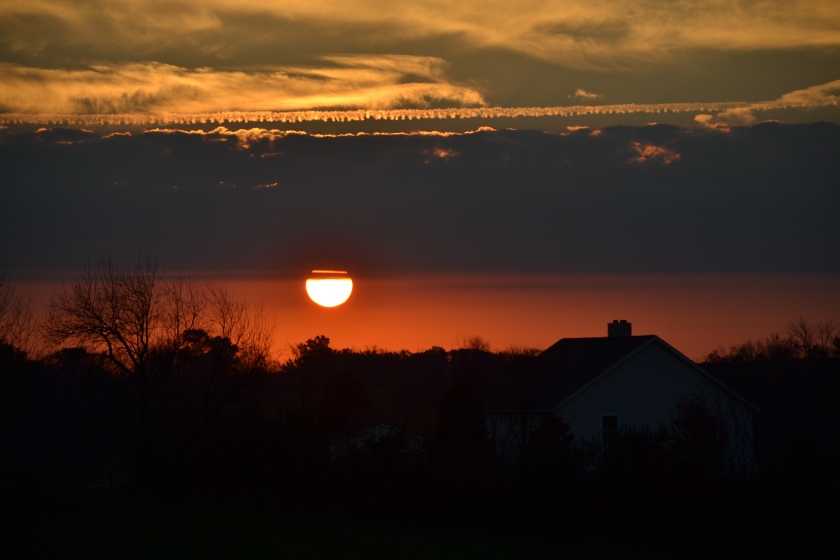
Amish sunrise by Bruce Stambaugh

This column appeared in The Bargain Hunter, Millersburg, OH.

© Bruce Stambaugh 2012
Writing is my labor of love

By Bruce Stambaugh

I like to write. For me, it is a labor of love.

Writing takes time. It’s not physical labor, but it can be just as exhausting.

Sunflower at Marblehead Light House by Bruce StambaughTo report an accurate story, concentration and absorbing details and the setting are essential. Even more difficult is deciphering my scraggly handwriting afterwards. Trying to properly tell the story in an assigned number of words against a deadline adds to the creative challenge.

The good people of many of the events and stories I chronicle don’t necessarily crave the publicity. But they do appreciate the consideration, especially when they have put so much effort into their own work or hobby or community service. Those are stories worth telling.

Stambaugh family by Bruce StambaughOf course, when I write about my family, all bets are off. So far, though, I haven’t been barred from any family gatherings.

For the longest time, I thought everyone could write. I eventually discovered that most people don’t have my passion for writing.

I’m not bragging. I have much to learn in the writing field. In fact, I strive to improve my style, approach and content. This spring I attended three very different writing workshops in the space of six weeks. I was bombarded with helpful and practical information. The poets, columnists, scriptwriters and authors offered invaluable personal and professional tips.

The Erma Bombeck Writers’ Workshop held at the University of Dayton was incredible. Perhaps that’s because a huge majority of the hundreds of participants were women. They didn’t hold anything back, and we didn’t lack for laughter or levity. It truly was inspirational.

Batter up by Bruce Stambaugh
I realize I have several people to thank for teaching and encouraging me in my writing. Some were high school and college teachers. Most, like Hymie Williams, were practitioners.

Hymie was a sports writer for The Plain Dealer, Cleveland, Ohio. He and two news reporters anchored the paper’s Canton bureau. Out of the blue, Hymie called me one day to ask if I would be willing to fill in for him while he was on vacation. I was 16 years old then. Of course I jumped at the chance.

I had been sending Hymie and other local papers summaries of the Stark County Hot Stove League baseball games. Coaches called in the scores to our home since my father was the league’s secretary. I usually answered the phone and quizzed the callers for any significant details about the games.

I wrote up the results and next day looked for the story in the newspaper. I was heartened to see that the articles were consistently published with only minor changes.

I enjoyed my little stint as a sports reporter, especially since it was at the start of the high school football season. I had lots on which to report.

Light rays by Bruce StambaughThis opportunity heavily influenced my choice of a college major. I graduated with a degree in journalism, but quickly made a left-hand turn for a 30-year career in public education. When I retired, a newspaper came calling and the ink in my veins started flowing once again.

It is an honor and a privilege to be able to write a weekly newspaper column, this blog and other feature stories that shine the spotlight on deserving subjects. Their stories are refreshing, especially given all the negative news that dominates the national media. I enjoy sharing my photographs, too. But that’s a story for another time.

My goal is to continue spreading as much good news as I can, and there is still plenty to tell. After all, writing is my labor of love.

This column appeared in The Bargain Hunter, Millersburg, OH.
© Bruce Stambaugh 2012
Bay Photos by Donna

Wildlife photos from the Chesapeake Bay region

ROAD TO NARA

Culture and Communities at the Heart Of India

K Hertzler Art

Artist and nature journalist in the Shenandoah Valley of Virginia.

Maria Vincent Robinson

Photographer Of Life and moments

Gabriele Romano

Personal Blog

Jennifer Murch

Art is the only way to run away without leaving home. -Twyla Tharp

Roadkill Crossing

Writing generated from the rural life

ANJOLI ROY

writer. teacher. podcast cohost.

Casa Alterna

El amor cruza fronteras / Love crosses borders