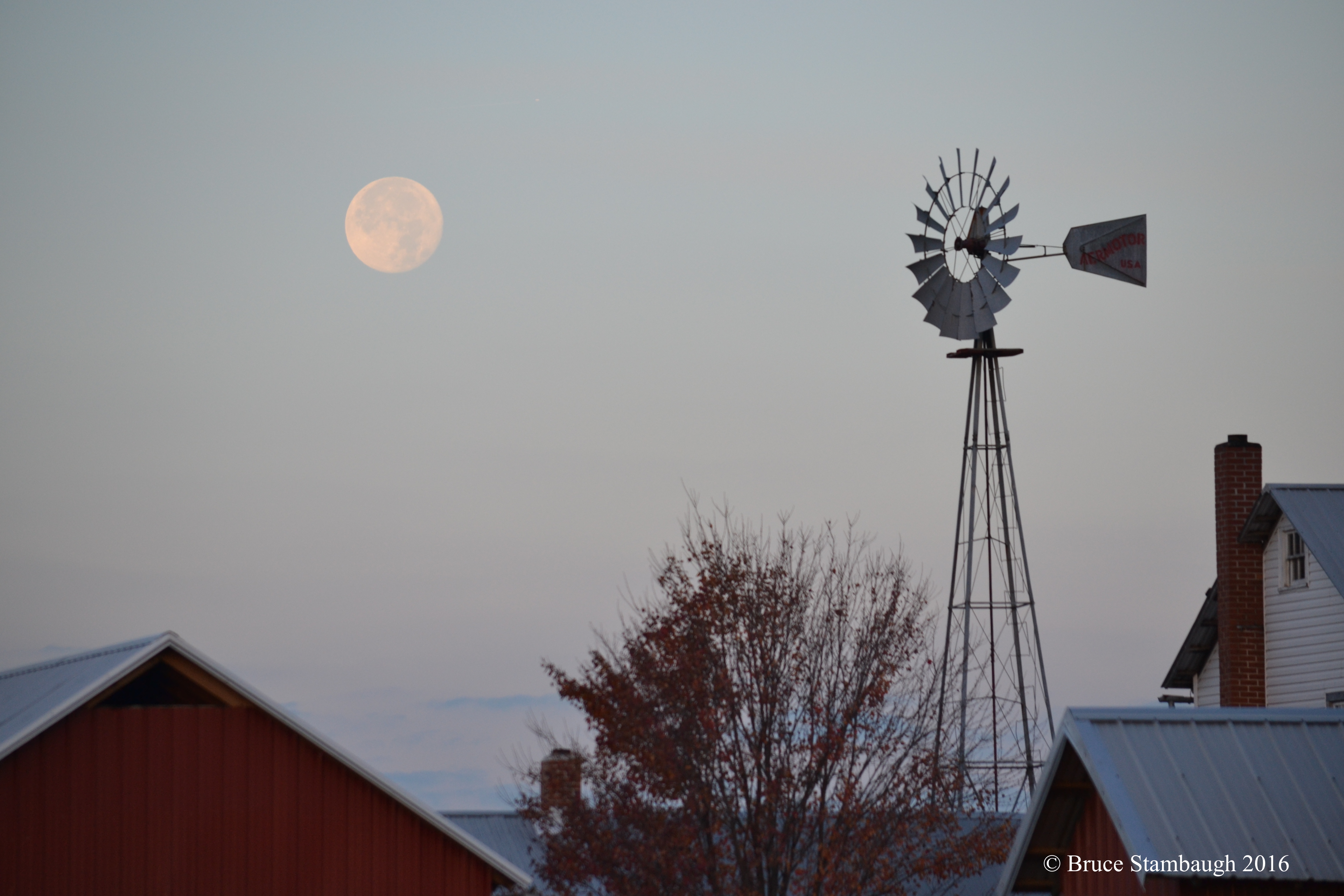
November’s Super Full Moon had a lot going for it. It was the biggest, closest, and brightest super full moon since January 26, 1948. I don’t remember that of course since I was a little more than a month old then. Besides, I doubt my mother bothered to take me outside to look at it on a cold, Ohio January night.
When this moon was exactly full, it was already below the horizon in Ohio. I decided to shoot the super full moon before it sank below the western horizon. I’m glad I did because as you can see in this photo, clouds and fog lingered in the west.
“November’s Super Full Moon” is my Photo of the Week.
There we were, my four friends and I, fortunate to be among the thousands in attendance at Game 1 of the 2016 World Series between the Chicago Cubs and the Cleveland Indians.
I wish you could have seen us. I wish you all could have been there, too.
It was a dream World Series to be sure. The Cubs played the Indians in a battle between the two most title deficient teams in Major League Baseball. And we got to witness it. Well, mostly we did.
Joe and his son Jesse saw the game just fine from the mezzanine high in right field. Even though we had better seats than them, it was a different story for Kurt, Tim, and me. I was ever so grateful to be able to secure prime seats a dozen rows up from the Indians dugout. Don’t ask how. Just know I didn’t steal them.
Despite our excellent seats, much of the time we had trouble seeing what was happening on the field. Two guys three rows in front of us insisted on standing for most of the game.
This slideshow requires JavaScript.
I felt like I was at the old cavernous Municipal Stadium with obstructed view seats, looking around old steel girders trying to see. Instead, these two middle-aged men stood. It’s the World Series they said. You’re supposed to stand.
Several fans and Indians staff members tried numerous times to persuade these two men to sit down. Still, the men stood. One person even kindly pointed out to the two human pillars that most of the folks sitting behind them were older, and didn’t have the stamina to stand that long.
The men were unfazed. It’s the World Series they reiterated. Between innings, they even taunted the people immediately around them. My friends and I just looked at one another in bewilderment. Kurt thought these men needed a lot of attention, and I had to agree.
On the way up to the game, our vanload of Tribe testosterone relished this glorious opportunity. Avid baseball fans all, we each agreed that is was a once-in-a-lifetime experience.
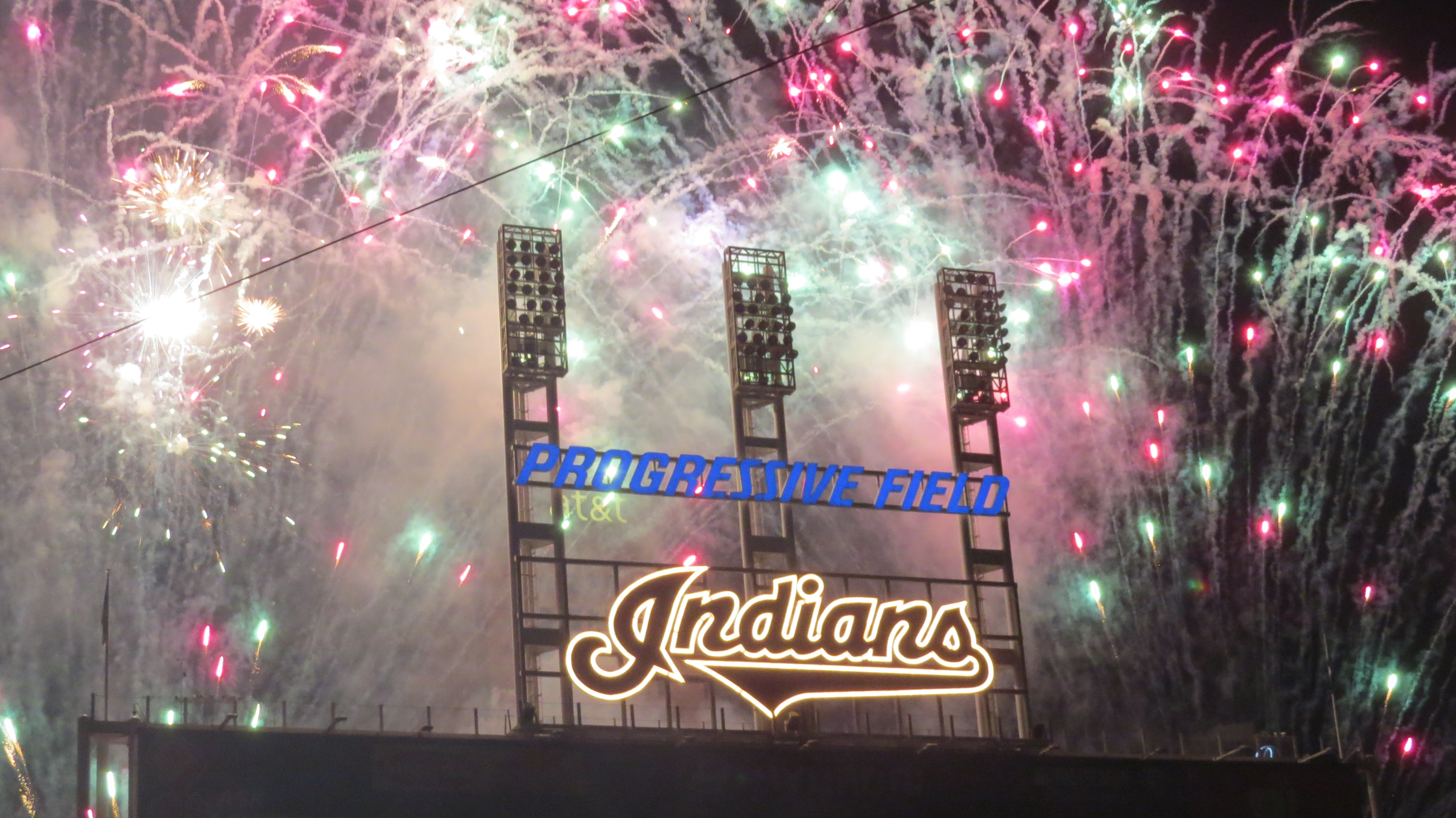
As we neared the stadium, the excitement increased. Fans crowded the sidewalks. Between the Quicken Loans Arena, where the Cavaliers were getting their championship rings, and the Indians Progressive Field, thousands of revelers milled around on the Gateway Plaza. The excitement was electric.
The Indians gave its standing room only crowd much to cheer about, winning 6 – 0. My friends and I indeed had a marvelous time that neither us may have again. The misbehavior of the pair of baseball statues couldn’t deter our enjoyment.
Happy to be on the train.In this childish behavior of two adult men, there was a universal lesson to be learned. Be considerate of others wherever you are. Apparently, these two bullies hadn’t yet taken that class.
I thought about how others had shown kindness to us in the crush of the crowd. Police officers, passengers on the commuter train, other drivers in snarled traffic, and the ushers at the game all were considerate to us in giving directions, assistance when needed, and simply being courteous.
In a way, I was sad for these two men who couldn’t see the negative consequences of their selfish actions. Still, far greater injustices exist all around us that deserve our utmost consideration and attention.
In our coming and going in everyday life, we each have multiple opportunities to be considerate and compassionate to others. Sometimes we just need to sit down to see them.
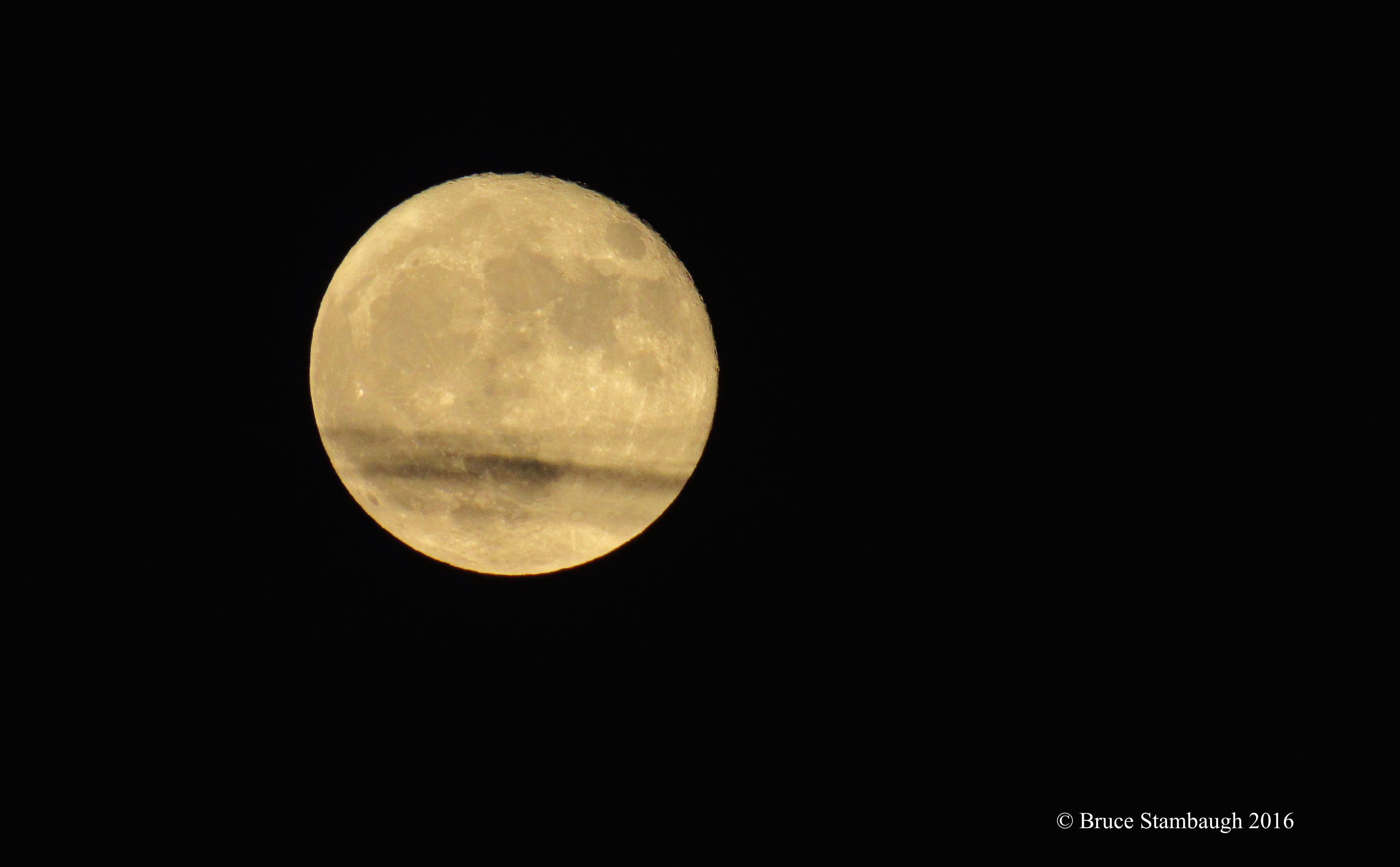
I enjoy viewing photos of full moons from around the world posted on various websites. It’s always amazing to me how different the same object appears based on one’s geographic location, weather conditions, and opportunity to shoot the moon so to speak. I try to join in the global photographic session whenever possible.
The latest opportunity came this past Sunday evening. The sky was dark and clear, save for a wisp of a cloud passing before October’s Super Hunter Moon. I always love it when an unexpected object, a jetliner or a flock of geese, for example, passes in front of the moon and you have the chance to capture it.
This hand-held photo was taken at 8:11 p.m. EDT in Harrisonburg, VA. The next Super Moons will be November 14 and December 14, 2016.
“October’s Super Hunter Moon” is my Photo of the Week.
History is important. I’m forever grateful for folks who emblazoned that maxim upon me way back when. Parents, teachers, professors all collaborated to ensure that I appreciated the value of knowing times past.
My father was instrumental in getting his children involved in amateur archeology. That was in part thanks to my younger brother, who found an arrowhead on the school playground.
As teens, my brother and I assisted Dad and others at various digs like Ohio’s only Revolutionary War site, Fort Laurens in Bolivar. Dad also helped retrace Colonel Bouquet’s Trail into Ohio, which included Holmes Co. Hands-on learning was Dad’s tool of choice when it came to our indigenous tribes and the pioneers who interacted with them in the settling of Ohio.
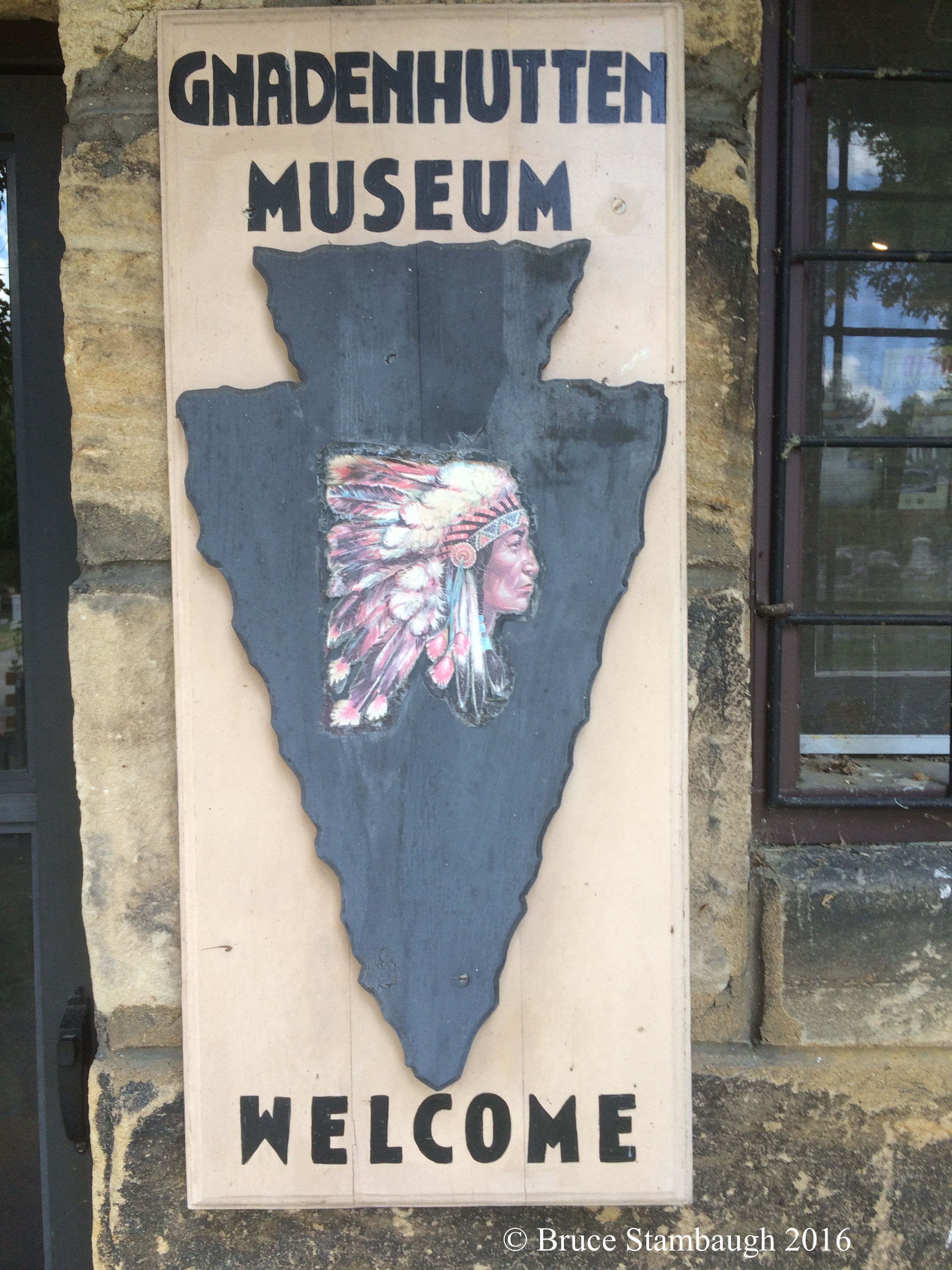
Worth the visit.In college, passionate geography and geology instructors explained how various topographic features came to be. In a college Ohio History lecture hall with hundred of other students, I think I got a passing grade because I was the only one who could correctly pronounce Gnadenhutten in neighboring Tuscarawas Co. Again, I have Dad to thank for that as one. We often explored the areas around the tiny historical town.
It was also helpful to live my entire life in geographic regions that played important roles in the development of Ohio. From Flint Ridge to Schoenbrunn to Fort Fizzle, Native Americans, pioneers, soldiers, rebels all forged their presence upon the land on which I lived. That love of what once was still drives me today.
I’m also fortunate to have a wife who appreciates the place history plays in our life today and the future. In other words, Neva enjoys an excellent museum as much as me.
It’s even nicer when you can weave family, vacation, and history into one outing. It helps to have family members who happen to live in prime historical places. We get to visit and explore together.
Woodrow Wilson’s limo.
Church foundation.
Modern history.
Old made new.
Back in time.
Duke of Gloucester St.
Williamsburg patriot.
Williamsburg, Virginia, where my older brother and his wife live, is such a place. We never tire of living history locales like Williamsburg, Yorktown, and Jamestown.
That’s the thing about history. As discoveries continue and new information compiled, history is always changing. I’m not talking about those who would deny the facts and try to twist them to suit their personal beliefs.
History becomes clearer, more defined, better understood the more we explore, the more we learn, the more we know, the more we want to know. Thanks to ongoing research and continued exploration we form new understandings based on new evidence.
At both Colonial Williamsburg and Monticello, for example, tour guides now state clearly the plight of slaves, something conspicuously omitted on previous visits. At Jamestown, archeologists have proved that the original settlement wasn’t washed away after all.
Given the history that is right around us, one doesn’t have to travel far to dig up the past. Novels have been written, movies made, history books published about the history that is all around us. Likely that applies to most anywhere you live. Only the facts, circumstances, and characters change.
Despite what many good books and movies have shown, we really can’t travel back in time. Scientists know that is physically impossible. There is only the present to study history and plan for the future.
We have valued alternatives, however. We can read, explore, study, and visit museums, parks, and historical monuments that help us understand our personal and collective history.
In case you’ve been too busy to notice, surprise! It’s October!
October is famous for its surprises, especially political ones like in the current presidential campaigns. Both natural and human-generated events are said to sway the election’s outcome. Given the tone of this election, nothing will shock me.
That aside, this year has seemed to have just melted away for me. That’s certainly been no surprise at all given the record-breaking heat and the significant changes that cropped up in my life.
Globally, we’ve had 11 straight months of record warmth. When it comes to climate change, misery loves company. No one was exempt.
The transition process of going from living in Ohio to moving to Virginia has been both exciting and fatiguing, especially mentally. After residing in the same house for nearly four decades, a lot of decisions have had to be made, sometimes rather quickly.
We can opine about those situations all we want. That still won’t change the fact that October is here. For me, that’s a good thing. October has always been one of my favorite months.
Our granddaughter would likely agree. Maren turns seven soon.
Mums the word.As we begin the year’s 10th month, we know in general what to anticipate. We won’t know the particular details, of course, until they unfold.
In the Northern Hemisphere, harvest season is peaking. Field corn is drying on the stalks or in shocks on some Amish farms. Apples, pears, pumpkins, squash, gourds, fall flowers and the last of the vegetable garden crops brighten kitchens and spirits alike.
In the Southern Hemisphere, the anticipation of spring is over. Our October is their April. That seems only fair. As life ends in one locale, it begins anew in another.
As their leaves unfurl, ours start to drop. The central question reoccurs from New England to the southern Appalachian Mountains and far to the west. What will the persistent dryness do to the leafy colors?
Fall colors and textures.Produce farmers earnestly watch the weather forecasts for any hint of first frosts. October is often the scene of that crime. Most folks relish the finer, more favorable weather. It should come as no surprise that I’d be leading that pack.
Start to finish October often is a handsome month. Golden leaves against cerulean skies dotted with patches of cottony clouds create a natural beauty that even the most sullen person can’t ignore. If they do, it’s surely their loss.
Sports enthusiasts are in their glory, too. Football is in full swing. Basketball is about to begin. Golfers revel in the perfect days but curse the cold in the next breath.
For me, October baseball still rules. The Cleveland Indians are playing once again in the playoffs. It’s the first time in three years, and even then that joy only lasted until the mighty Casey struck out in a one-and-done event.
That won’t happen this year. The Indians are Major League Baseball’s American League Central Division champions. I know for many, many folks, that was indeed an October surprise. Not to me, faithful, perpetual, loyal fan that I am. I’m ready for some post-season baseball.
Remember back in June when I sort of tongue in cheek suggested the Chicago Cubs would play the Cleveland Indians in the World Series? Well, wouldn’t that be a magnificent October surprise, the kind that any red-blooded American baseball fanatic could only dream of, except me?
I won’t be surprised at all. But if that does happen, it definitely will be an October for many to remember.
If ever there was a road trip, our day outing down history’s lane was it.
We knew we would encounter historical remnants as we drove the length of Port Washington Road, Ohio’s first state highway. We didn’t anticipate the surprises we found.
Port Washington Road was created to connect Millersburg, Ohio with Port Washington, Ohio. That seems logical enough. Nearly 180 years ago, an accessible route was critical to local farmers who wanted to get their goods to market.
Back then travel was tough. The dirt roads that existed were rutted, dusty, and dangerous. Carrying your product to market was extremely problematic.
The opening of the Ohio and Erie Canal to Port Washington in southern Tuscarawas Co. was designed to improve that process. The canal system, hand dug in the 1820s and 1830s, speeded Ohio’s development. In turn, goods were shipped to New Orleans and New York City, enhancing the local economy.
Another couple joined my wife and me on the excursion. I had driven parts of the road many times, but never the full length. With directions secured from literature about the road, we began our trek across from Millersburg Elementary School on a diagonal street, Port Washington Road.
The beginning.
Trail marker.
The route.
Abandoned school
Serenity.
Wash day.
Under the pines.
Baltic.
Signs marked the way we should go. It was a good thing, too, because there were more twists and turns, curves and hills than on any of Cedar Point’s many roller coasters.
Our air-conditioned van took us up, down, and around steep grades. I gasped at the thought of driving a team of horses pulling a fully loaded wagon with a season’s harvest aboard. It was hard enough for me to maneuver.
How in the world did they negotiate those hills safely? No wonder it was a two-day trip from Millersburg to the canal. The halfway mark was a layover in Baltic. That’s where we had lunch, in more comfortable accommodations than those early travelers.
We traversed village, township, county, and state highways. We visited curious crossroads romantically named Saltillo, Becks Mills, Meadow Valley, and Fiat.
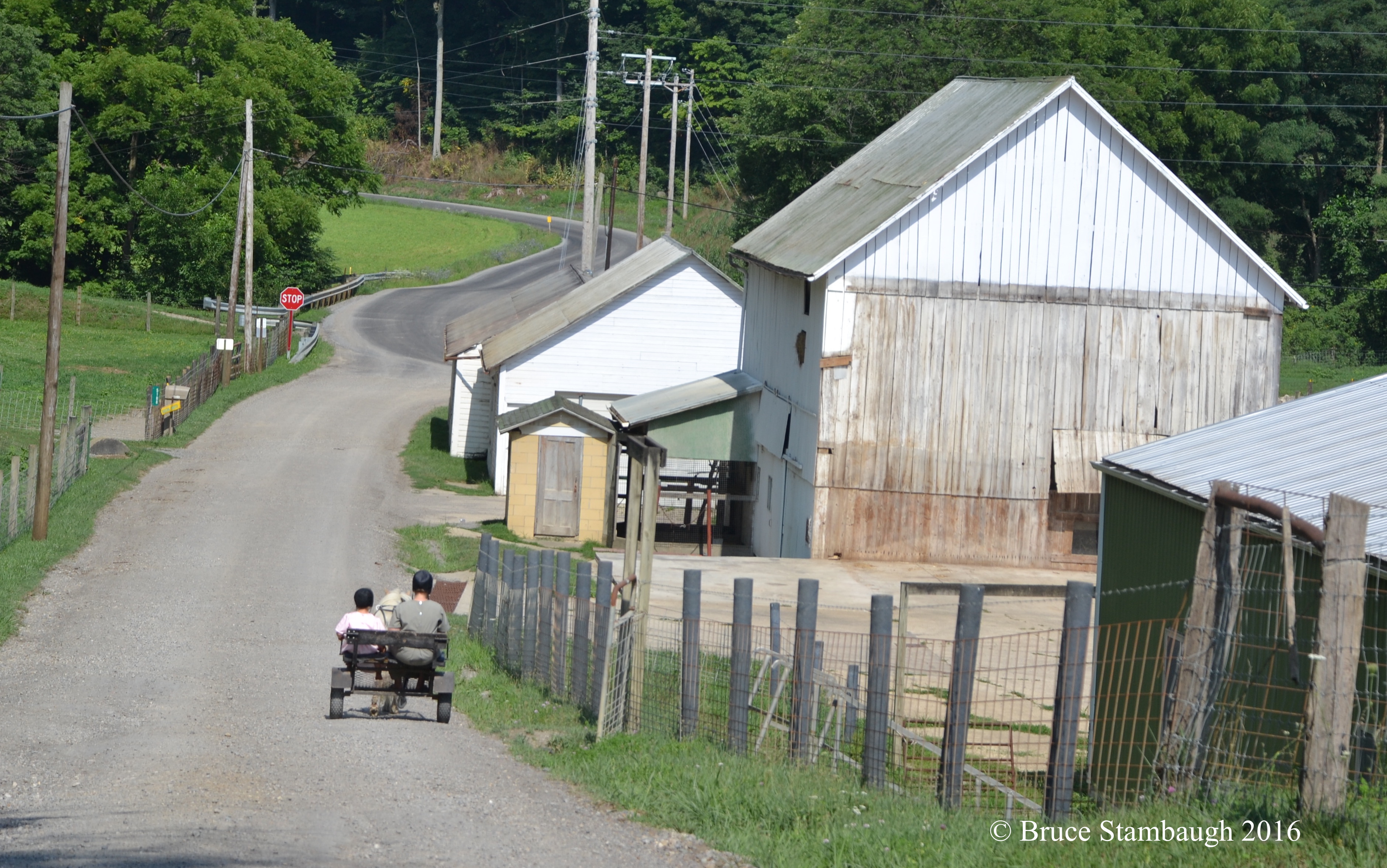
Most of the roads were hard-surfaced in Holmes Co. But once we headed southeast out of Baltic, gravel roads became the norm.
Not long after leaving Baltic, we came upon a bald eagle foraging on a carcass in freshly cut oats stubble. I imagined sitting on a hard bench seat glad for the beautiful distraction from the dusty, bumpy road. The magnificent bird flew in sweeping loops over the field until we left.
This slideshow requires JavaScript.
The scenery alone was worth the trip. Other than the open areas on high ridges, the landscape likely compared to what those wagon masters must have encountered. We passed through tree tunnels, and by old homesteads long abandoned, well-weathered clapboard siding showing more patina than paint.
We found several cemeteries along the route, too. We couldn’t help but wonder if some of the hopeful farmers didn’t end up deathly disappointed from the ruggedness, and maybe even being waylaid by bandits.
In the middle of nowhere, we discovered a church with a golden dome. The names on cemetery’s tombstones revealed former parishioners. Farther down the road, a sign marked another church cemetery. The structure was long gone.
In the meandering 37 miles we trekked, we had to have traveled in every direction of the compass. The roads were that convoluted. Nevertheless, we made it to our destination, now a sleepy, residential hamlet.
With the actual canal filled in long ago, the only hint of the waterway was a slight depression that paralleled Canal St. Between there, and the Tuscarawas River laid the railroad tracks, the steel trail of the invention that killed the canal.
The steel tracks left the canal to history and the curious to rediscover.
I’m grateful to have been born in the United States. I realize that’s an easy statement for me to make given my lineage and geographic life space.
It’s taken me a while to recognize my absolute privilege as a natural born Caucasian American male citizen. Coming of age in the turbulent civil rights era of the 1960s, I should have caught on much earlier.
I couldn’t help but follow the progress of those volatile days. All earned headlines in newspapers, and plenty of airtime on the evening news. Long before the Internet or smartphones, that’s how we kept up to date with ongoing daily events.
There was plenty to absorb. Times were tense. The Cuban missile crisis, persistent protests for civil and equal rights for minorities and women, anti-war protests, urban riots, and assassinations are all indelibly etched in my psyche.
Given today’s political rancor, I’m appalled at the actions and comments of others toward the poor, minorities of every kind, and the down-and-out of today’s global society. It’s like everything is coming undone. I struggle with what to do, what to say, how to act.
My parents instilled in their children a sense of fairness, justice, and equality for all. I think that came from their knowledge of previous generations of hard work, personal experience with injustice, and an absolute desire to ensure their offspring had a better life than they did.
Work ethic in action.In that, my good folks more than succeeded. They instilled in us a strong work ethic, a desire to serve, the importance of community, and the need to connect with others.
I think my devoted wife can say the same about her upbringing on her family farm. Those core values have been the foundation of our 45 years together, cemented by a love that has survived and evolved through the joys and heartaches that life lays out for each and every one of us.
Unfortunately, others in this diverse nation are not so fortunate, if only because of their race, religion, economic situation, or demographic roots. For a variety of legitimate reasons, they rest uneasily in our society.
I yearn for the day when I can erase those words. In the meantime, I see the anniversary of the independence of our great nation as a reminder to continue to help wherever and whenever I can.
As a thankful American, I see that goal as my continued responsibility. Whether through words or actions or donations or genuinely associating with others beyond my comfort zone, I must do what I can to help within my grasp and power however limited that may be.
I must linger with the poor, the destitute, and the powerless. I must listen to their cries, their calls for justice, and their desire to fulfill their basic needs.
I must learn from those who have so much less than me. They have much to teach me, to help me grow, to help me understand, to help me live.
As Americans on this pinnacle national holiday, we need to linger with one another, listen to one another, and learn from one another. Doing so is for the common good of us all.
Shouldn’t it be the goal for all of us to improve responsibly the country we all love so much? After all, the Pledge of Allegiance ends, “…with liberty and justice for all.” Can’t we all help make it so?
A local pizza shop in Fredericksburg, Ohio stayed open late so young Amish boys could watch the deciding game seven of the NBA playoffs. This photo posted on social media shows the boys cheering as the Cavs beat the Warriors.
By Bruce Stambaugh
Maybe this is the end of the strangling fatalism that sports fans of Cleveland’s three professional teams have endured for far too long.
“This” references the recent, glorious victory by the Cleveland Cavaliers over the Golden State Warriors that made the Cavs the National Basketball Association (NBA) Champions for 2016.
I know. In today’s fast-paced era of instant information, this fact is old news. But without that introduction, the rest of what I have to say wouldn’t make much sense.
First of all, I couldn’t bear to watch the game. I don’t follow the NBA much anyhow. I wasn’t about to jinx the Cavs by watching the deciding game.
However, when the alert on my wife’s smartphone reported that the Cavs had won, we bolted out of bed and turned on the TV to watch the post-game celebration. It was worth the missed minutes of sleep.
I was impressed with the genuine tears of joy and relief shed by all the players and the head coach. They clearly understood what that precious moment meant to all Cleveland sports fans everywhere. I teared up, too.
MiraCLEs do happen.
It meant the world to us. It said that after 52 years of hope, frustration, disappointment, and despair that Cleveland had finally broken the infamous, self-induced curse of losing. Of course, such a thing never existed. It just seemed so.
The Cleveland Browns were the last of the three professional sports teams to win a world championship. That was in January 1964. I remember it well because I was at that game as an excited 16-year-old, having had my name drawn in a lottery to purchase tickets.
The Browns won the National Football League Championship with a 27 – 0 win over the Baltimore Colts. They played the game in old, cavernous Municipal Stadium in sub-zero conditions. It was pro football’s super bowl before pro football officially had a Super Bowl.
I couldn’t have imagined then that that victory would be the last championship for a Cleveland sports team until the Cavs’ Father’s Day win. Since 1964, followers of Cleveland’s pro sports have had to endure a lot of disappointments to the point of being fatalistic.
No matter how good any of the three teams were, something silly, even unimaginable, was sure to happen as if the sports Gods had it in for the poor city whose river once caught on fire. I was there for that, too.
During that depressing stretch, fans of the Cavs, the Browns, and the Indians had seen it all. For the Cavs, it was Michael Jordan on far too many occasions.
For the Browns, it was The Drive, The Fumble, and The Move, when Art Model secretly transported the team to Baltimore. The Colts had previously shuffled off to Indianapolis.
For the Indians, it was Jose Mesa in the ninth inning of game seven of the 1997 World Series. They haven’t been close to a championship since.
But the Cavs have permanently corked that bottle of bad luck. Since I froze my nose in 1964, Cleveland finally has another world champion. Thanks to fatalism’s firm grip, I still can’t believe it.
Has this great victory killed the Cleveland sports jinx? Will folks simply get on with life without this fatalistic outlook about never being able to win? I sure hope so.
I do know this. When the Cleveland Indians defeat the Chicago Cubs for the World Series win this fall, I’ll be entirely, positively, wonderfully convinced.
My friend innocently reminded me of something I had said to her that I had forgotten. Her timing couldn’t haven been better in repeating my words of advice.
She said I had told her always to keep looking up. That comment referenced finding birds and bird nests in her yard. When I heard my words played back to me, I realized their application ranged far beyond bird watching.
My mind flashed back to our snowbird weeks in northeastern Florida in the winter. We had rented a condo right on the Atlantic Ocean for a few weeks.
I often greeted the days from the balcony of our condo. One particular day stood out.
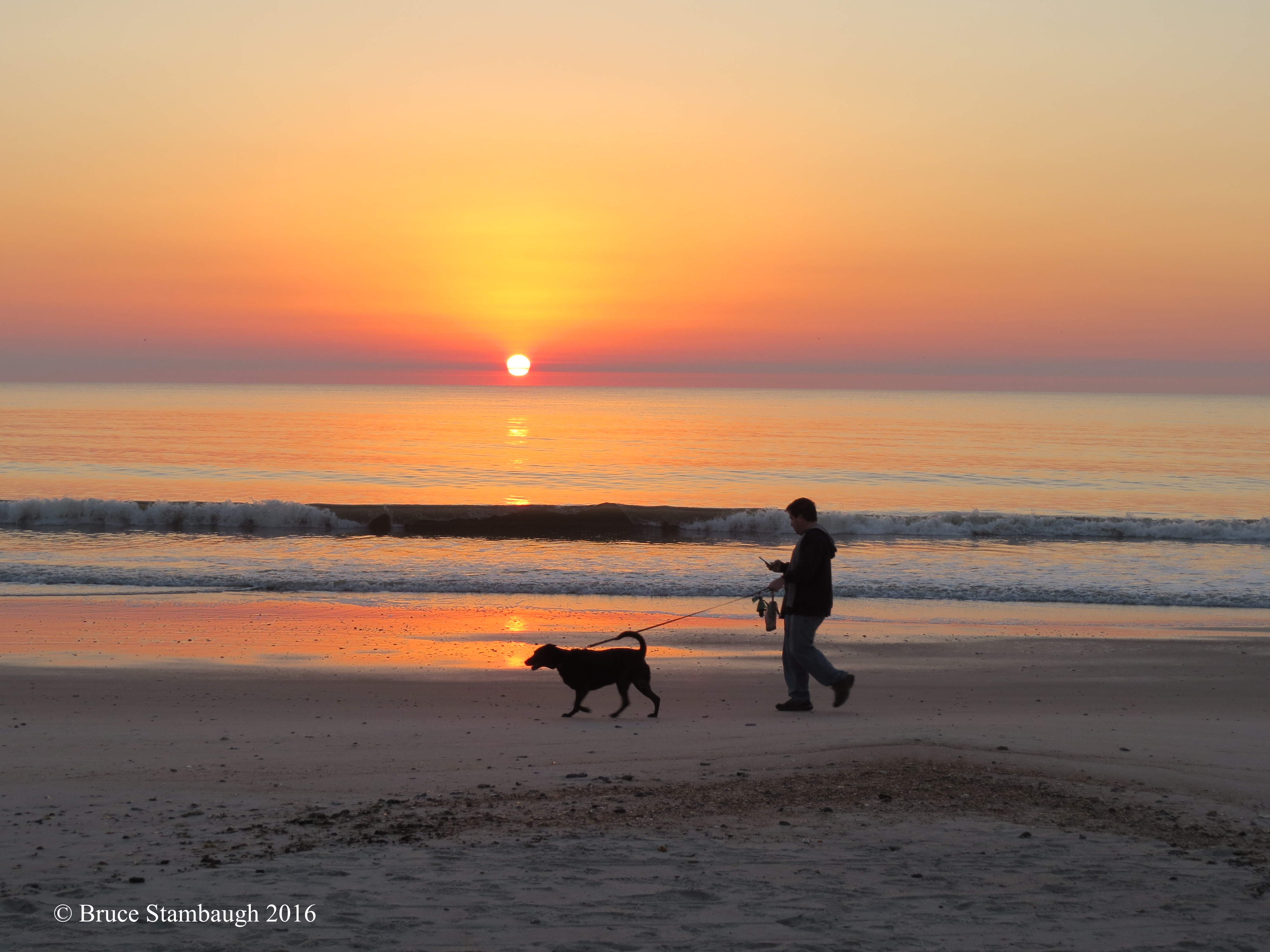
The sunrise was spectacular. The waves were gentle, peacefully hypnotic in their rhythmic rolling. Where the waves lapped at the gritty sand, shorebirds busily foraged for sustenance.
Dolphins playing.An orange sun danced on the ocean’s horizon, reflecting glorious beauty across the rolling waters and brilliantly painting the sky. Dolphins played and fed in the morning surf before it broke upon the beach.
A few folks were out and about, too. But many of them seemed disengaged from all the natural beauty around them. Their heads fixated down to their hand-held smartphones, unmindful of the golden sunrise, the unfolding nature, or the inspiring sea.
During our weeks-long stay, I saw this same scene repeated over and over again. You don’t have to be on the beach to see it either. In today’s technologically driven society, I’m sure you have encountered the same situations in your daily routines.
Even a view of a lighthouse couldn’t keep this gentleman from checking his phone.It’s easy to see this faulty waywardness in others. For me, it’s much harder to recognize my personal, self-absorbed participation in this 21st-century phenomenon.
If we’re honest with ourselves, all too often we fall into the same ill-mannered habit. We become so infatuated with our gizmos that we disregard all that’s happening around us, including those we love.
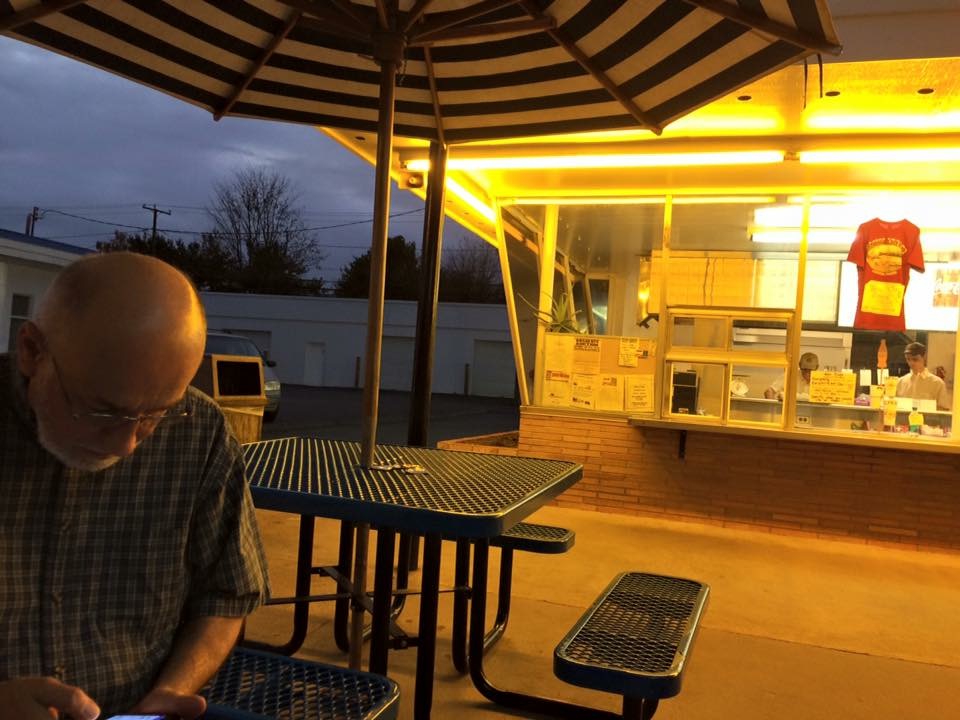
I know. My daughter took a photo of me with her phone, of course, sitting on a bench in front of an ice cream stand on a balmy summer evening. My baldness is prominent in the photo because I had my head down looking at the smartphone I held.
I felt guilty when I saw that photo. For the record, my daughter took it for the setting and color, not for my embarrassment. That was on my shoulders.
Caught on camera.It’s a bit ironic, isn’t it? Sophisticated electronics designed to help us communicate much better and faster actually keep us from real interaction, like a casual conversation.
With constant, instantaneous access to information, much of it negative and harsh, it’s easy to become overwhelmed, disenchanted. We shouldn’t. No matter our individual situations, we each need to keep looking up, whether it’s for finding birds or keeping a positive attitude or noticing the events unfolding around us.
A restaurant’s entryway sign perfectly summed up the current social situation with a hand-printed message on their welcoming chalkboard. It read, “We do not have Wi-Fi. Talk to each other. Pretend it’s 1995.”
I immensely enjoyed that evening with my daughter visiting people in small towns where I had never been. We talked as we traveled, and I learned a lot, more than I did by scrolling my phone while we waited for our food.
Being a weekly newspaper columnist, I pay attention to the calendar. I have to if I want my columns to appear in print. If I miss a deadline, well you know.
I only just recently noticed the quirkiness of the 2016 calendar. For instance, February, the shortest month, had five Mondays. If you are reading this on Feb. 29, it’s “Leap Day.” Within its 31 days, January only had four Mondays. Go figure.
That got me delving into the rest of the year. My research revealed several interesting tidbits of facts and silliness. Every month has at lease one cause, and many weeks have more than one reason to celebrate.
Digging further, I discovered a wide diversity of day designations that I never heard of. I guess I need to get out more.
January and February are history. Here’s a sampling of what’s in store for the rest of 2016. For the sake of space, I picked the most notable ones, minus the standard holidays.
Crocuses.March brings its share of quirkiness. March 3 is “If Pets had Thumbs Day.” March 9 is “Panic Day.” Besides the “Ides of March,” March 15 is “Dumbstruck Day.” I couldn’t make this stuff up.
April is no better. By starting off with “April Fools Day,” it follows that April is “National Humor Month.” Appropriately, it’s also “Stress Awareness Month.” The first week of April is “Read a Road Map Week.” I wonder when “GPS Week” is? April 4 is “Tell a Lie Day,” followed by “Go for Broke Day” on April 5.
May is “National Bike Month” and “National Photograph Month.” Designated days include May 3, “Lumpy Rug Day;” May 11, “Eat What You Want Day,” and the only Friday the 13th of the year.
Though I love June, I’m a little confused about its designations. It is “Aquarium Month” and the first week is “Fishing Week.” Maybe I can figure that out on June 1, “Flip a Coin Day.”
The sign says it all.Surprisingly, July has only one week dedicated to a cause. Week two is “Nude Recreation Week,” which I am not advocating. I will, however, promote July as “Blueberry Month.” Besides being “Independence Day,” July 4 is “Sidewalk Egg Frying Day.”
I like August. It’s “Admit You’re Happy Month,” which goes nicely with the second week, “National Smile Week.” Appropriately, Aug. 16 is “National Tell a Joke Day.”
Just in time for football season, September is “Little League Month” as in baseball. The ninth month starts off with “Emma M. Nutt Day.” She was the very first telephone operator. You’re on your own until October.
With 18 endorsements, October is a highly regarded month. Did I mention October is “Sarcastic Month?” That must explain why Oct. 3 is “Virus Appreciation Day.”
Hold your ears in November when it’s “National Drum Month.” And is it ironic that Nov. 8 is both the “U.S. General Election” and “Dunce Day?”
That brings us to December. It seems like 2016 will end goofy, too. Take Dec. 21, the winter solstice. Besides being the year’s day with the least daylight, Dec. 21 is “Humbug Day,” “Look on the Bright Side Day,” and “National Flashlight Day.”
Say what you will, the calendar is used to promote a variety of legitimate to questionable causes and remembrances. I’m not endorsing this practice, just reporting it.
I’ll simply stick to writing my columns as the literary spirit moves, quirky days or no quirky days. Enjoy this “Leap Day.” Tomorrow is “National Pig Day.”
You must be logged in to post a comment.