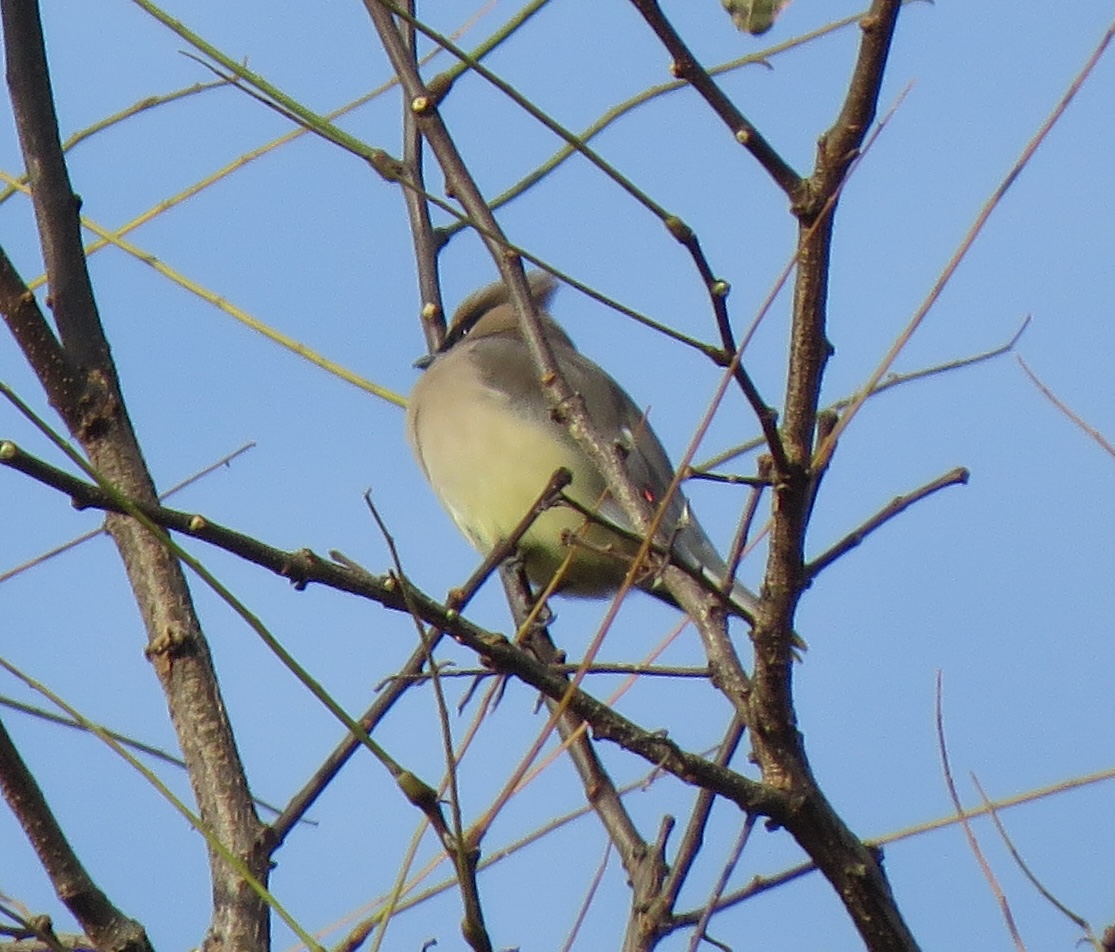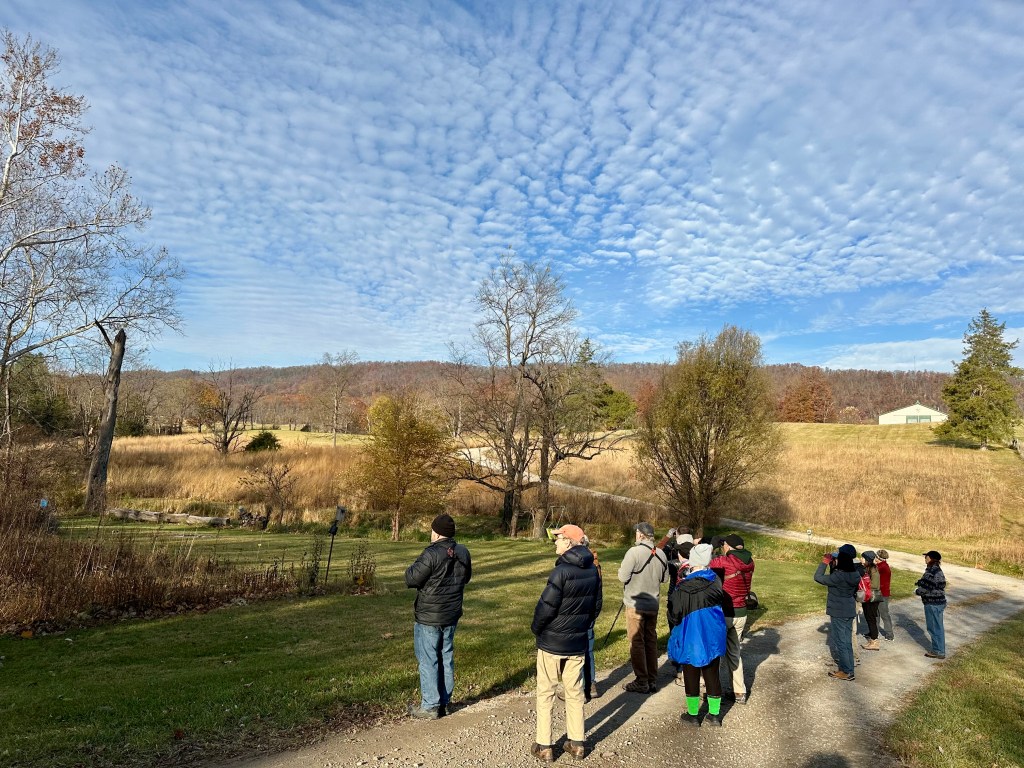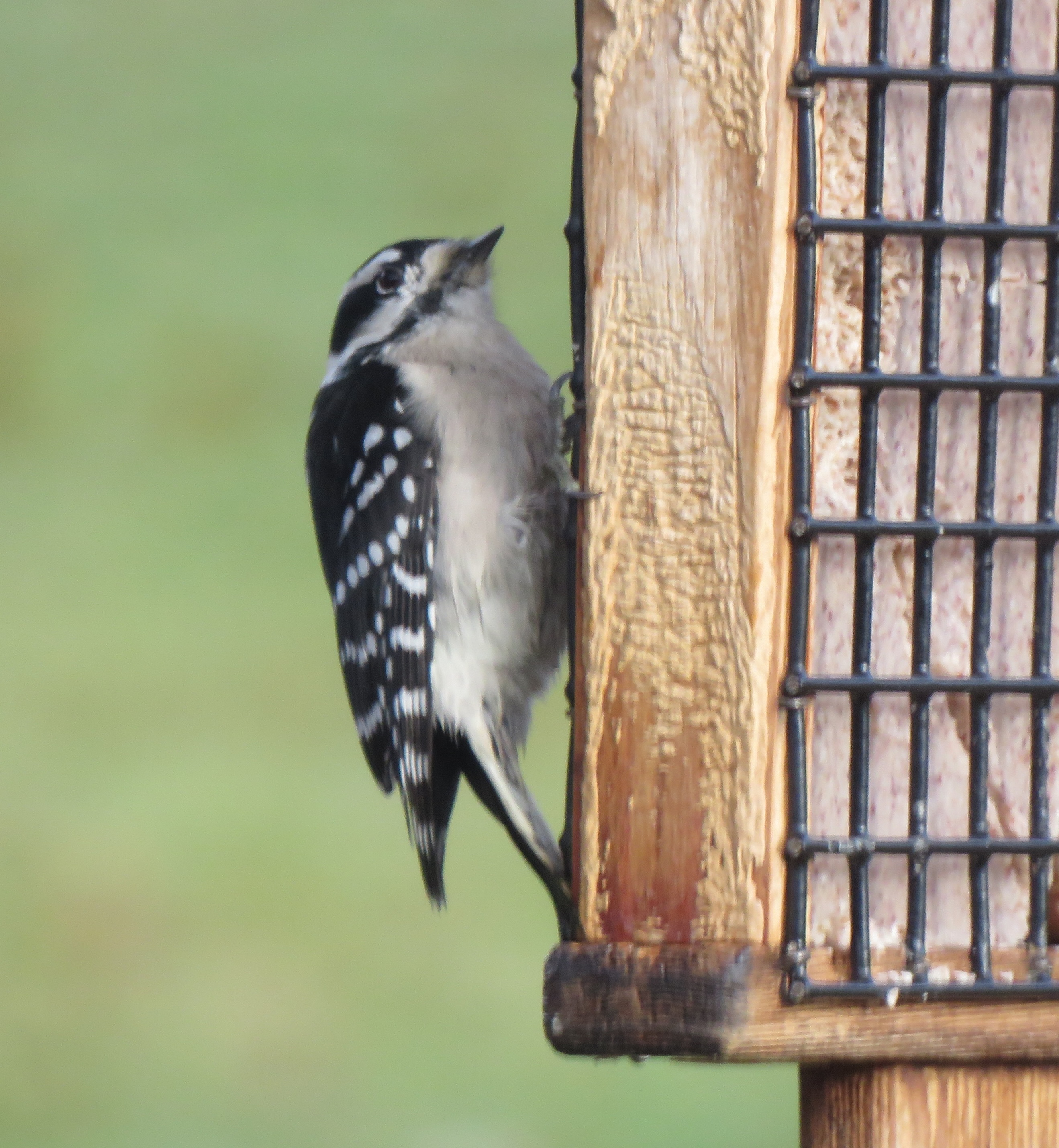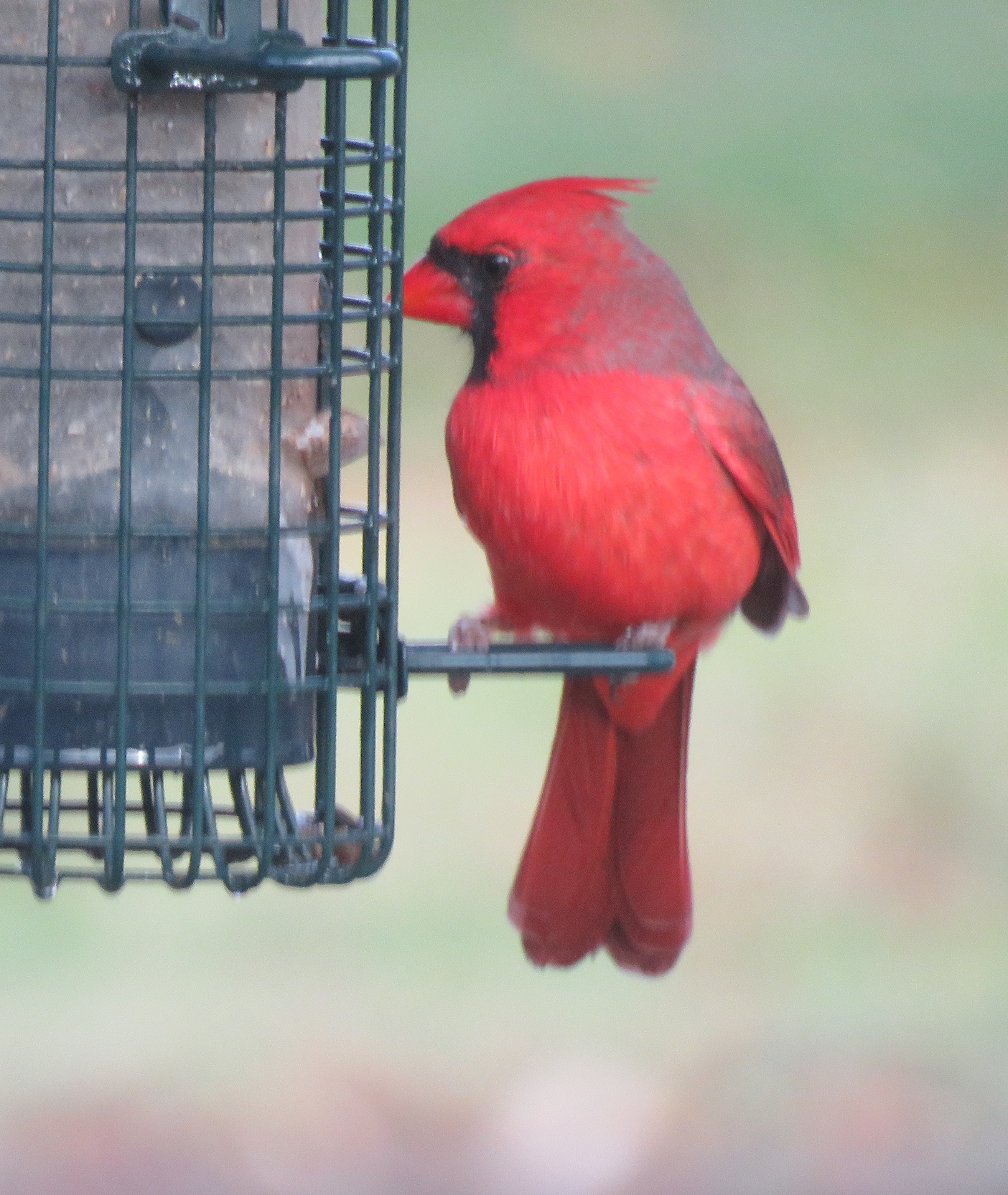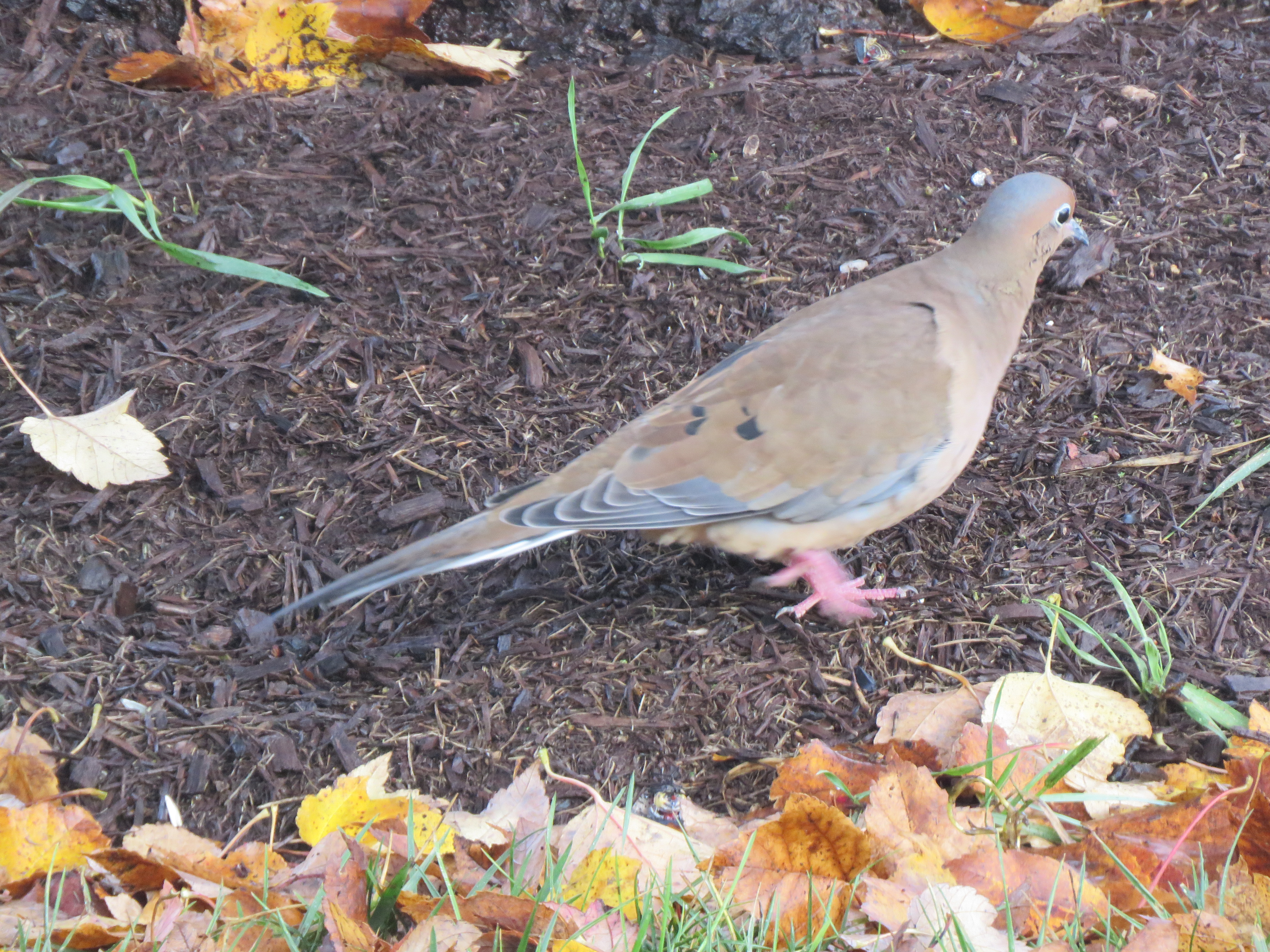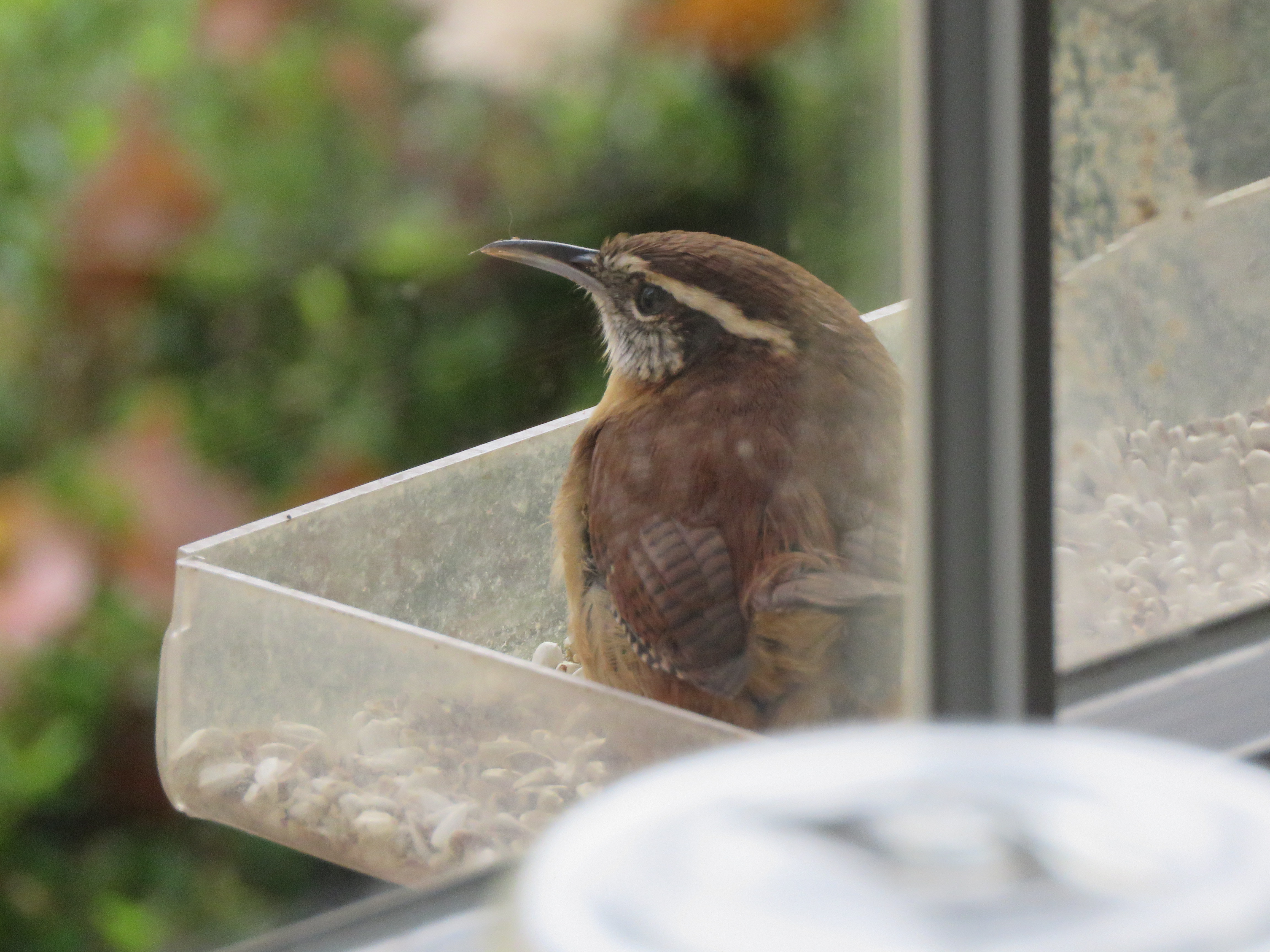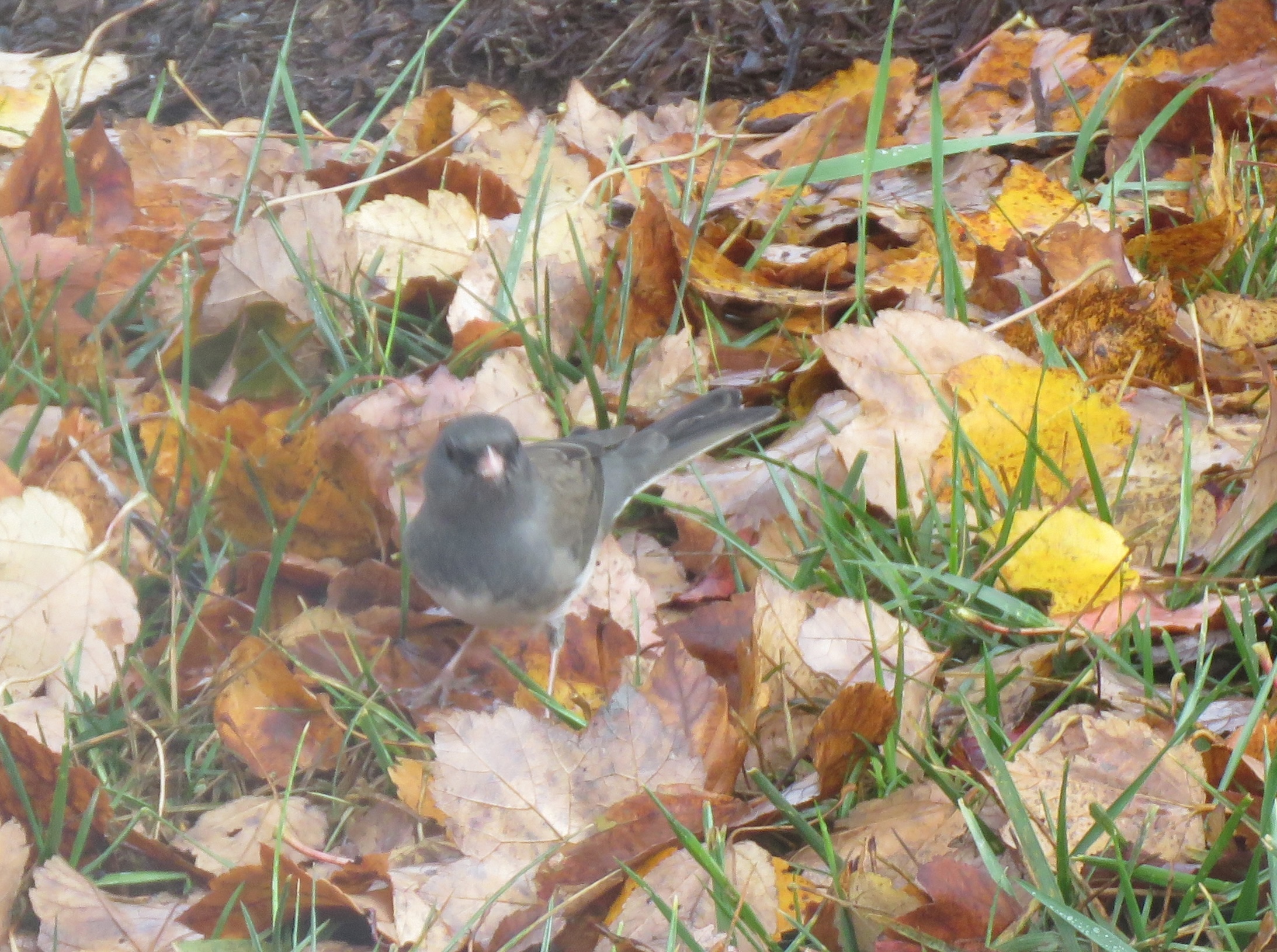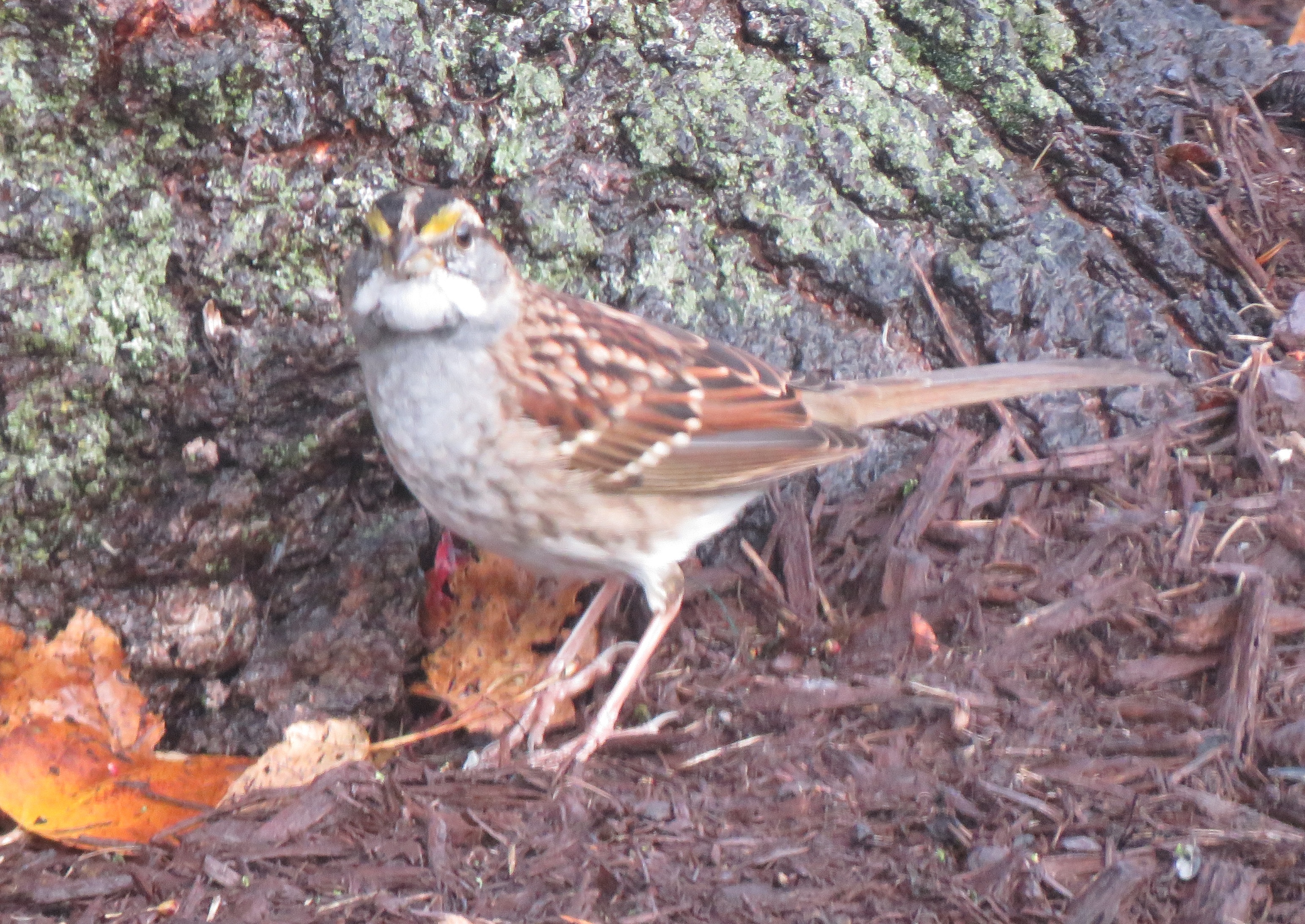
That famous line, improvised by Humphrey Bogart for Ingrid Bergman in the movie classic “Casablanca,” seemed most appropriate for this shot.
My wife and I attended our granddaughter’s high school volleyball team’s game last night. However, this cute toddler paid little attention to the action on the court. Instead, she entertained herself as any babe would do, wiggling around from her father’s lap to his shoulder and back again.
When she grabbed her father’s sunglasses off his hat, he helped her put them on, and she loved it. She was so proud, she just had to show me. Consequently, I had to share my joy as well.
I spotted a female Monarch butterfly in the woods of a park near my home the other day. Actually, the Monarch saw me first, and flitted from a lower limb with dried leaves to this one higher up. It likely was resting up for the next day’s flight south.
Because of the darkness under the canopy of trees and the distance the butterfly was from me, I was amazed that the camera was able to focus on the subject I wanted. I had to lighten the photo slightly so that the beautiful butterfly stood out.
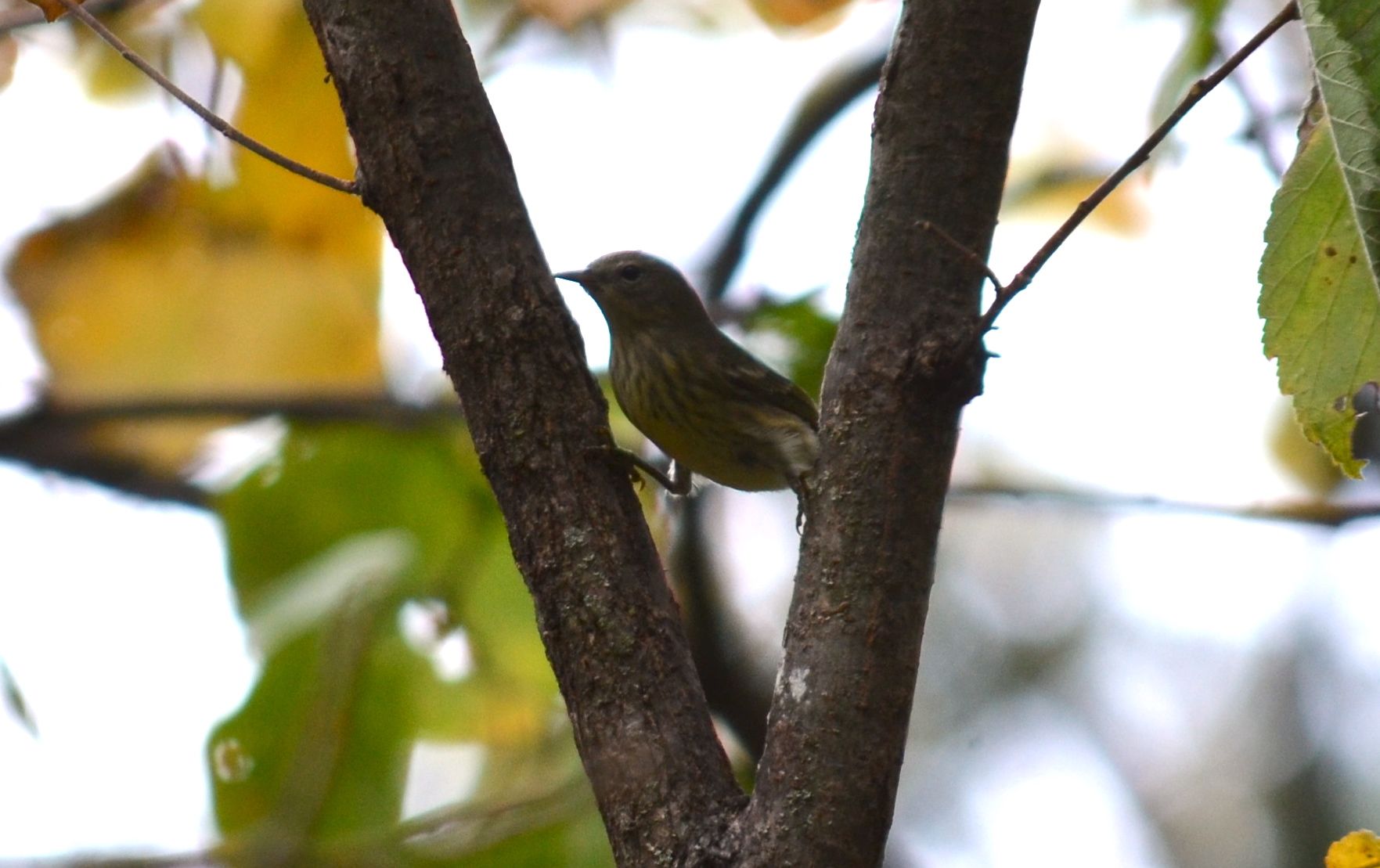
It must have been a good omen because I soon began to find several species of birds feeding on bugs high and low in the trees. All this took place in a well-maintained city park in Harrisonburg, Virginia.
After a wet spring and an unusually damp June and July, the last half of summer was arid here in Virginia’s Shenandoah Valley. Still, the final weeks of summer produced vibrant colors in all things nature.
From flowers to butterflies to birds to bugs to early-turning leaves, it was colors galore all around the valley. Farm fields, fall displays, and forests all contributed to the subtle transition from August’s dog days to September’s cooler evening temperatures.
Everywhere one turned, colors caught the eye. Landscapes, mountain views, produce stands, and backyard gardens all had their own versions of summer’s transition to autumn.
All the photos presented were taken between August 15 and September 22, 2025.
Our three-year-old grandson, Teddy, invites you to welcome in the Fall season, or if you live in the Southern Hemisphere, Spring. The Autumnal Equinox occurs at 2:19 p.m. EDT on Monday.
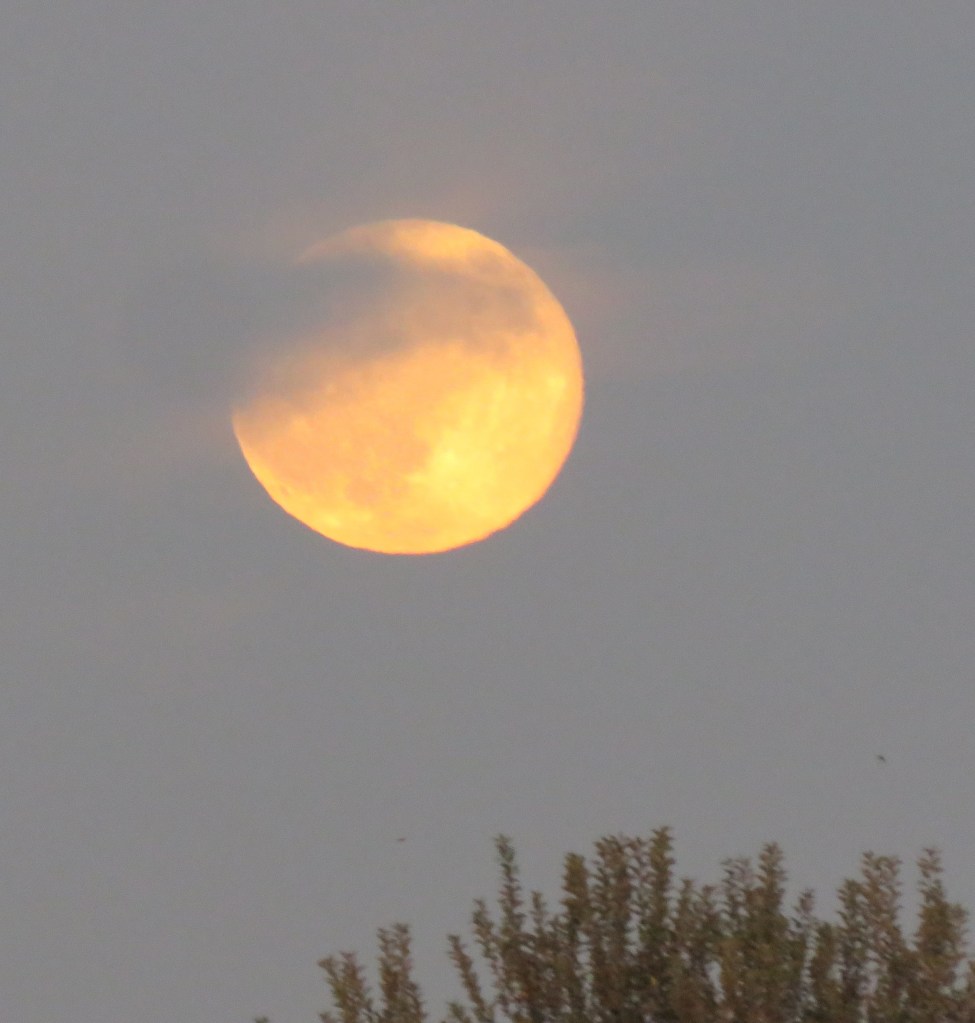
The Full Corn Moon over the Allegheny Mountains. Photo by Bruce Stambaugh
I had hoped to capture the Full Corn Moon setting over the Allegheny Mountains on the morning of September 7. However, the early morning’s sunrays blanched out the moon before it reached the western horizon.
Consequently, this is the best I could do. I hope you can find faint moon in the photo’s top center.
Tolstoy had it right when he penned, “It is amazing how complete the delusion that beauty is goodness.”
After a day of driving and a lengthy doctor’s appointment, the evening was beautiful. My wife and I anticipated an enjoyable dinner at a sidewalk table of a recommended restaurant.
We didn’t stay seated long. Pesky but attractive Spotted Lanternflies chased us inside. Even then, lanternfly after lanternfly landed near the bottom of the floor-to-ceiling plate-glass window and slowly climbed their way to the top. Several lay dead on the sidewalk below.
These lovely-looking, invasive insects have invaded Virginia’s agricultural breadbasket, the Shenandoah Valley, and are now moving into the Virginia Piedmont region. They likely hitched a ride on unsuspecting vehicles traveling south on I-81. According to hikers, entire sections of forest along the Appalachian Trail in Shenandoah National Park are stripped of leaves and likely dead due to these bugs, which resemble wolves in sheep’s clothing.
A recent email report from a hawk watcher’s group deployed in the same national park confirmed the mass invasion of the Spotted Lanternflies. The group had to move away from a building into a parking lot because these pesky insects swarmed around them so much that they couldn’t view the sky to count the migrating raptors.
Lanterflies don’t bite, but in swarms, they are a nuisance to humans.
Spotted Lanternflies are native to China and Vietnam. So, how did they get here? Human activity, of course. The Spotted Lanternflies first arrived in the U.S. in 2012, on a shipment of stone from Asia. The first infestation occurred two years later in eastern Pennsylvania.
Spotted Lanterflies feed on a wide range of plants, including flowers, grapevines, hops, stone fruit trees, and hardwood trees. Thus, the damage in Shenandoah National Park.
The Spotted Lanterflies excrete a sticky, sugary substance that promotes the growth of sooty mold, which can further damage the plants. The Tree of Heaven, also invasive to the U.S., is the lanterfly’s host plant.
So far, 14 states and the District of Columbia have officially verified reports of the Spotted Lanternfly’s existence. They hitchhike from state to state by laying their masses of eggs on hard surfaces, such as rocks, pallets, vehicles, trailers, and even children’s toys left outside. The lanternfly nymphs, small, black, spider-like creatures with white spots, are just as destructive as the adults.
Fortunately, North America has natural predators of these unwanted insects. They include other insects, such as praying mantises, wheel bugs, and spiders. Some bug-eating birds will also take care of them. However, the Spotted Lanternflies are so prolific that natural predators won’t eliminate them.
Consequently, humans must compensate for their collective error by spraying for them or hiring an exterminator. Homemade concoctions work against the lanternflies. A list of formulas is here.
Below is a map of the states where Spotted Lanternflies have been verified. However, if you encounter these beautiful but harmful bugs in a state with no official report, please notify the state’s wildlife or natural resources division as soon as possible.
In the case of the Spotted Lanterfly, Leo Tolstoy nailed it.
Map of the Spotted Lanterfly spread provided by Maps.com.
Driving home recently, a haze covered the late evening sun. It looked like a perfect orange ball.
By the time I arrived at a spot with a clear view to the west, the clouds had thickened, creating a surreal, shimmering scene. A minute later, the sun disappeared altogether.
Consequently, I felt fortunate to capture this shot.
My wife and I were enjoying lunch on the back porch the other day when I spotted this lovely butterfly flit by. I had to get a photo, of course.
Variegated Fritillary butterflies fly low and love flowers. So, I stepped onto the patio and waited for this hyper little insect to alight on a blossom. It soon found one of the zinnias that bordered the patio to its liking, near where I was standing. It pumped its wings as it nourished on the flower.
According to Kenn Kaufman’s butterfly guide, the Variegated Fritillary butterfly is widespread over much of the United States. Their common zone for thriving spreads from Arizona to Florida, and as far north as Nebraska and Virginia. Some may find their way as far north as the central Canadian provinces.
It’s migration season, so be on the lookout for these flower-loving beauties.
Swamp Milkweed blooms in June. Photo by Bruce Stambaugh
Finding fruition takes effort and patience. The latter is often the harder of the two.
Four years ago, I planted four swamp milkweed plants in our backyard, hoping to attract Monarch butterflies. In the first year, the seedlings sprouted tender, green shoots. Then, to my surprise, they disappeared.
It didn’t take me long to discover why. No sooner than the greenery emerged, a pair of neighborhood rabbits nibbled the fresh green leaves and stems. A three-foot wire-mesh cage around each plant promptly put a halt to that.
In the second year, the two biggest plants bloomed beautiful and fragrant blooms that only honeybees, bumblebees, and other insects enjoyed. I never saw a single butterfly, including Monarchs, even approach the flowers.
As fall arrived, I let the dried-up stalks stand. In February, I trimmed them back, hoping new branches would appear with spring’s arrival. I also learned that some birds used the thread-like insides of the old stalks for nest building. I smiled when American Robins tugged and tore long pieces and flew off.
The next two springs brought the same results. Beautiful flowers bloomed in June, but no Monarchs arrived. I enjoyed the flowers and insect pollinators, but grew mildly frustrated that none of my favorite butterflies came to the flowers.
This summer, I realized my blindness. The swamp milkweed was more useful to the orange and black-viened butterflies during fall migration.
The mature plants produced flowers, which developed into pods and yielded seeds covered in silvery silk. Large and small milkweed bugs outnumbered the many different insects on the plants.
Two at a time.
Chomping
Climbing
Milkweed bugs and eggs.
Large and small Milkweed bugs
The gang’s all here
A Monarch egg
In mid-August, migrating Monarchs began flitting around the milkweed plants. They landed on the plants just long enough to deposit eggs on the leaves’ undersides. Joy filled my soul.
In a matter of days, small greenish-yellow, white, and black striped caterpillars appeared and began munching on the leaves. More Monarchs repeated the process, and more and more caterpillars emerged. It didn’t take long for them to grow, inches long, in preparation for forming a mint green chrysalis. I counted 14 on the plants one afternoon.
Other insects on the Swamp Milkweed
Soon, a new generation of Monarchs would continue their journey south, overwinter in the central Mexico mountains, and fly back north, stopping along the way when it was time to lay the eggs on more milkweed plants.
In my desire to see Monarchs on the milkweed flowers, I had only envisioned one aspect of the amazing life cycle of these beautiful, useful butterflies. I was ecstatic to find a dozen caterpillars chomping on the milkweed leaves. When ready, they would then crawl off somewhere to form a chrysalis, ensuring the next generation.
Patience proved critical to fulfill my desire to help propagate the Monarch butterflies.
A Monarch butterfly prepares to lay eggs on a Swamp Milkweed leaf. Photo by Bruce Stambaugh
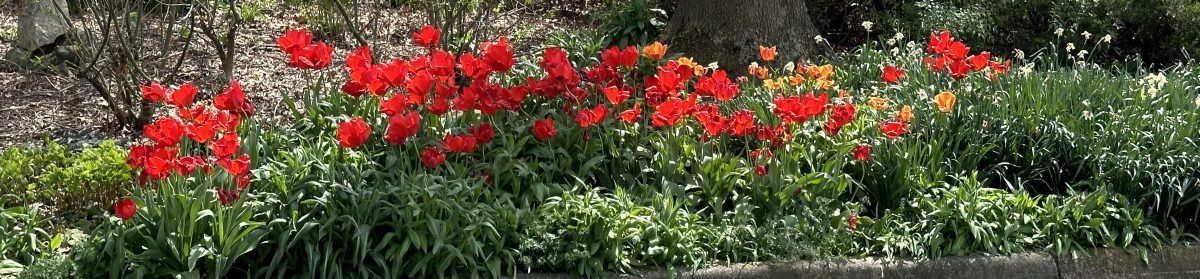
The phrase, “Variety is the spice of life,” is attributed to William Cowper. He included it in a poem he wrote in 1785. However, that phrase was only the first part of the line.
You must be logged in to post a comment.