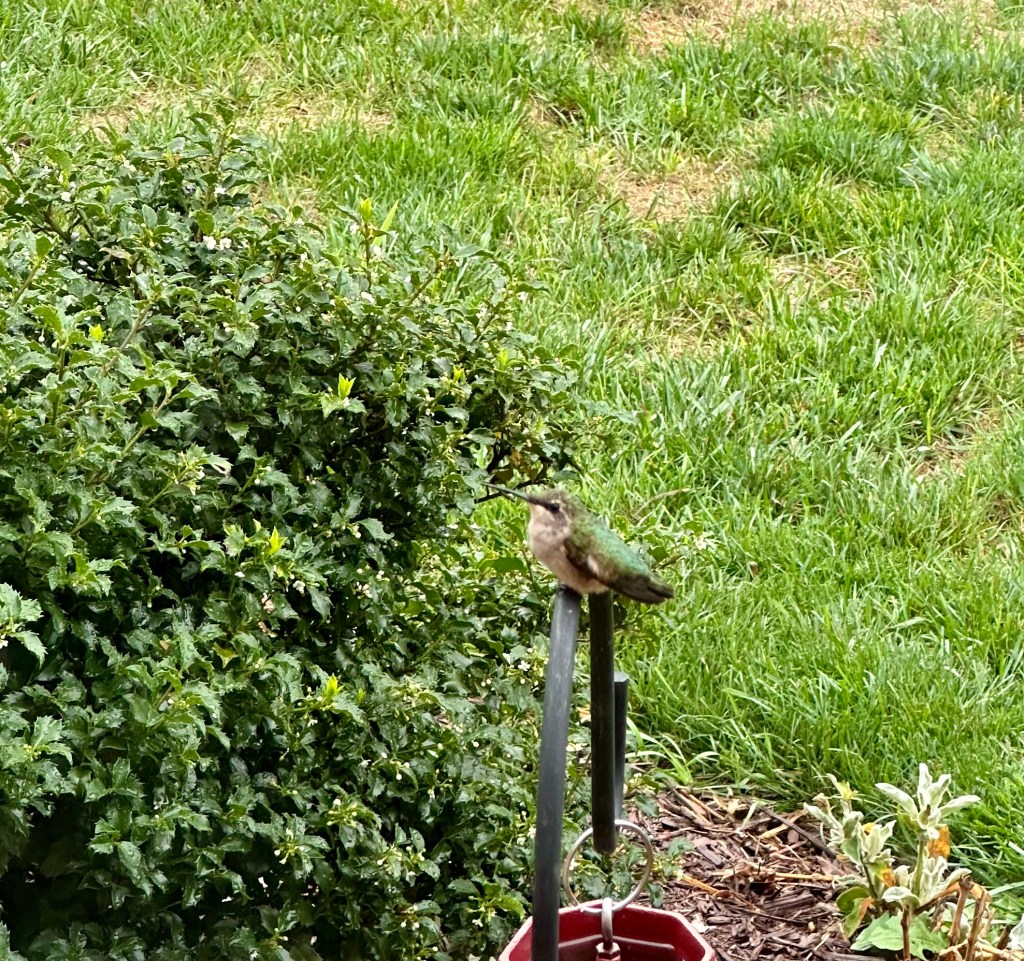
A female Ruby-throated Hummingbird. Photo by Bruce Stambaugh
We had a lovely and much-needed inch of rain yesterday and overnight. Much of the lawn greened up right away.
This morning, I was fortunate to catch this female Ruby-throated Hummingbird resting on a shepherd’s hook. The hook holds the hummingbird feeder below the ant mote at the center bottom of the photo.
As I cropped the photo, I realized all the various greens helped hide the little hummingbird. It was like the bird was hiding in plain sight. That’s the way nature works!
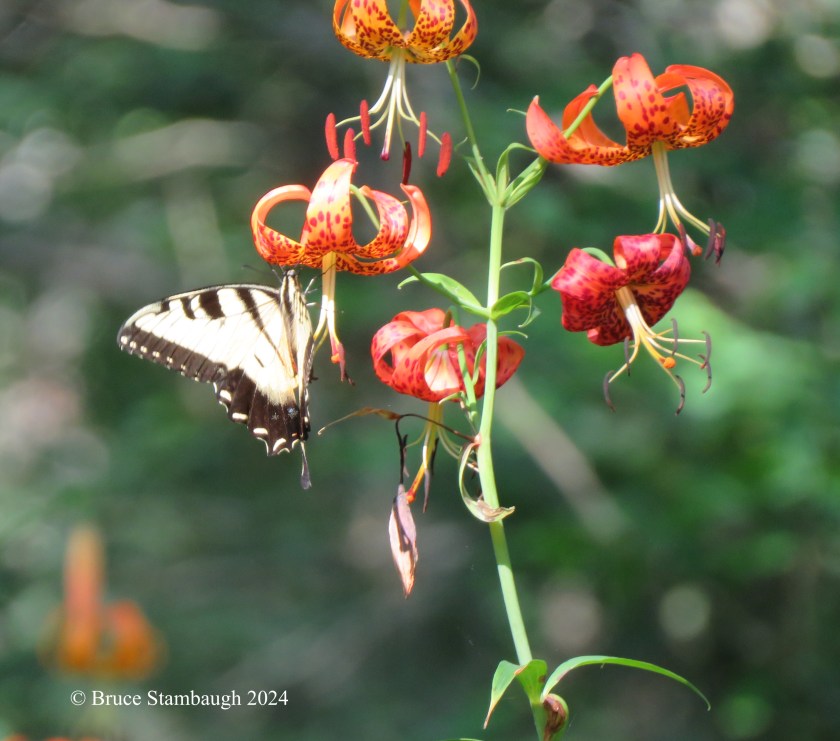
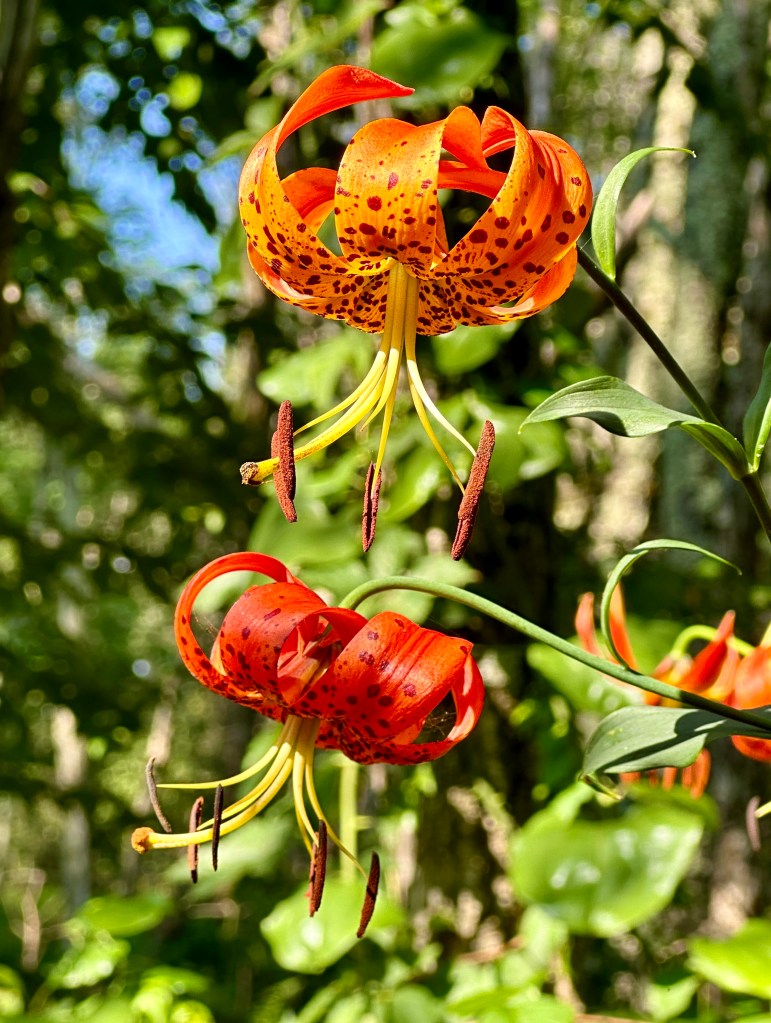
Like this Tiger Swallowtail, butterflies are drawn to Turk’s Cap lilies. Photo by Bruce Stambaugh
I visit Shenandoah National Park whenever I can. Being retired has its advantages. I usually go to the park with a purpose in mind.
Recently, I drove the 45 miles from my home in Virginia’s Shenandoah Valley to the Big Meadows area of the popular national park for several reasons. I like to capture butterflies on the impressive Turk’s Cap lilies. Secondly, the temperature in the Blue Ridge Mountains, where the park is located, is usually cooler than the oppressive heat the valley has experienced lately.
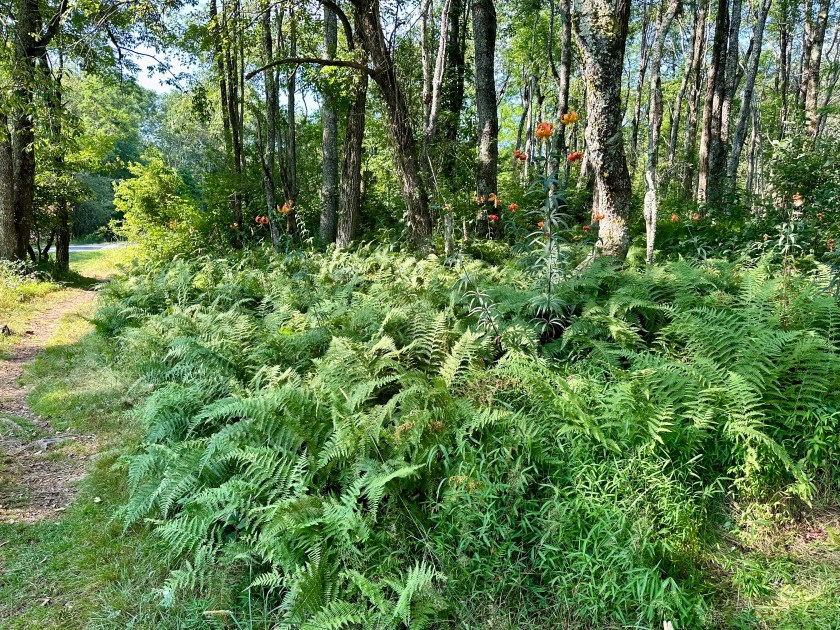
July is when the impressive summer flowers are in full bloom. Butterflies, bees, and other flying insects can’t resist their lure, and alert humans can’t miss the spotted, bright reddish-orange blossoms either.
These photos were all taken along Skyline Drive south of Big Meadows.
It didn’t take me long to spot a few butterflies flitting around. I usually find a group of flowers and wait for the butterflies to arrive. There was a problem with being a stationary human, however. I forgot to take my bug spray along, and between the gnats and the mosquitoes, I spent as much time swatting as I did taking photos. It was a minor sacrifice just to observe nature’s glorious beauty.
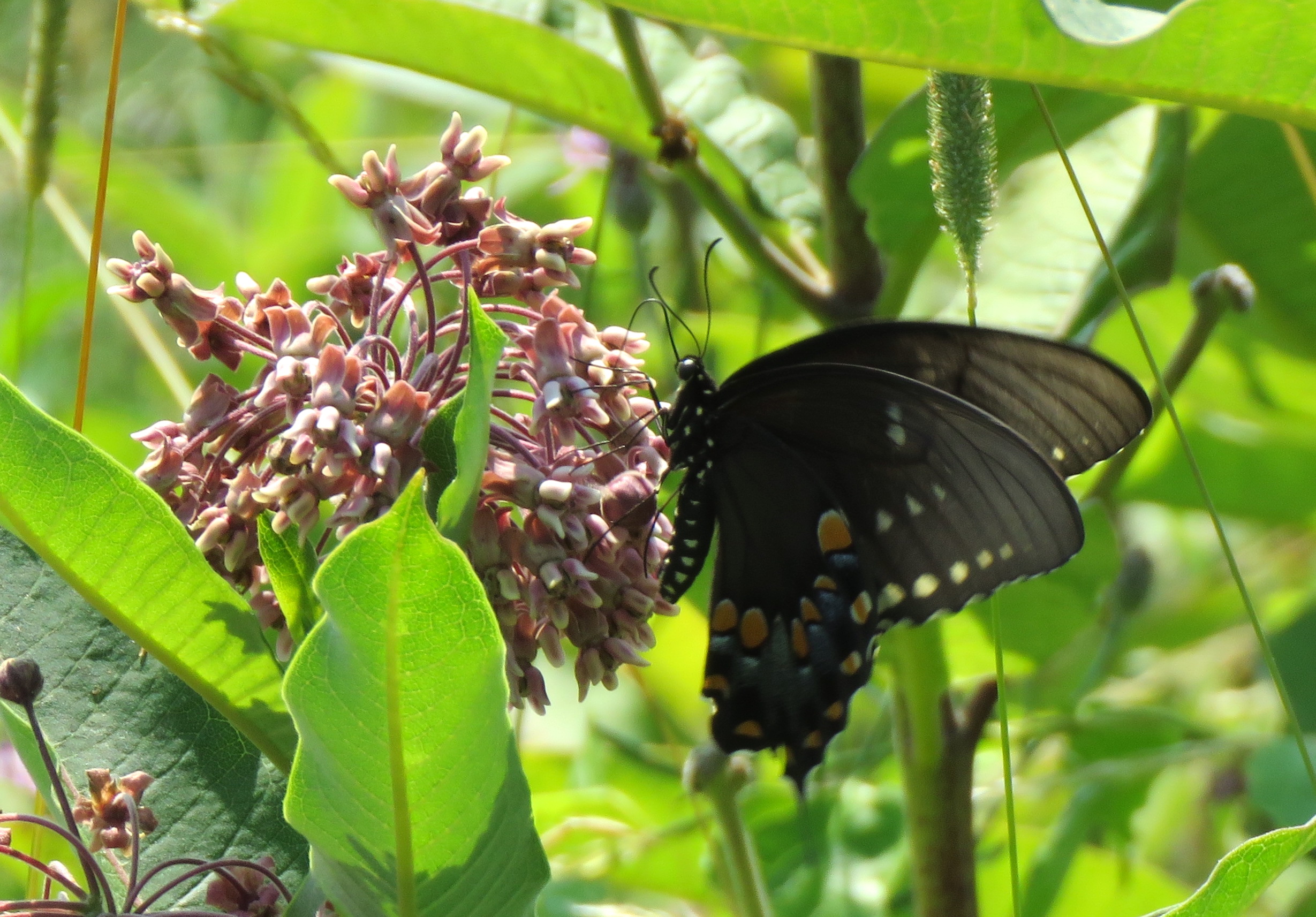
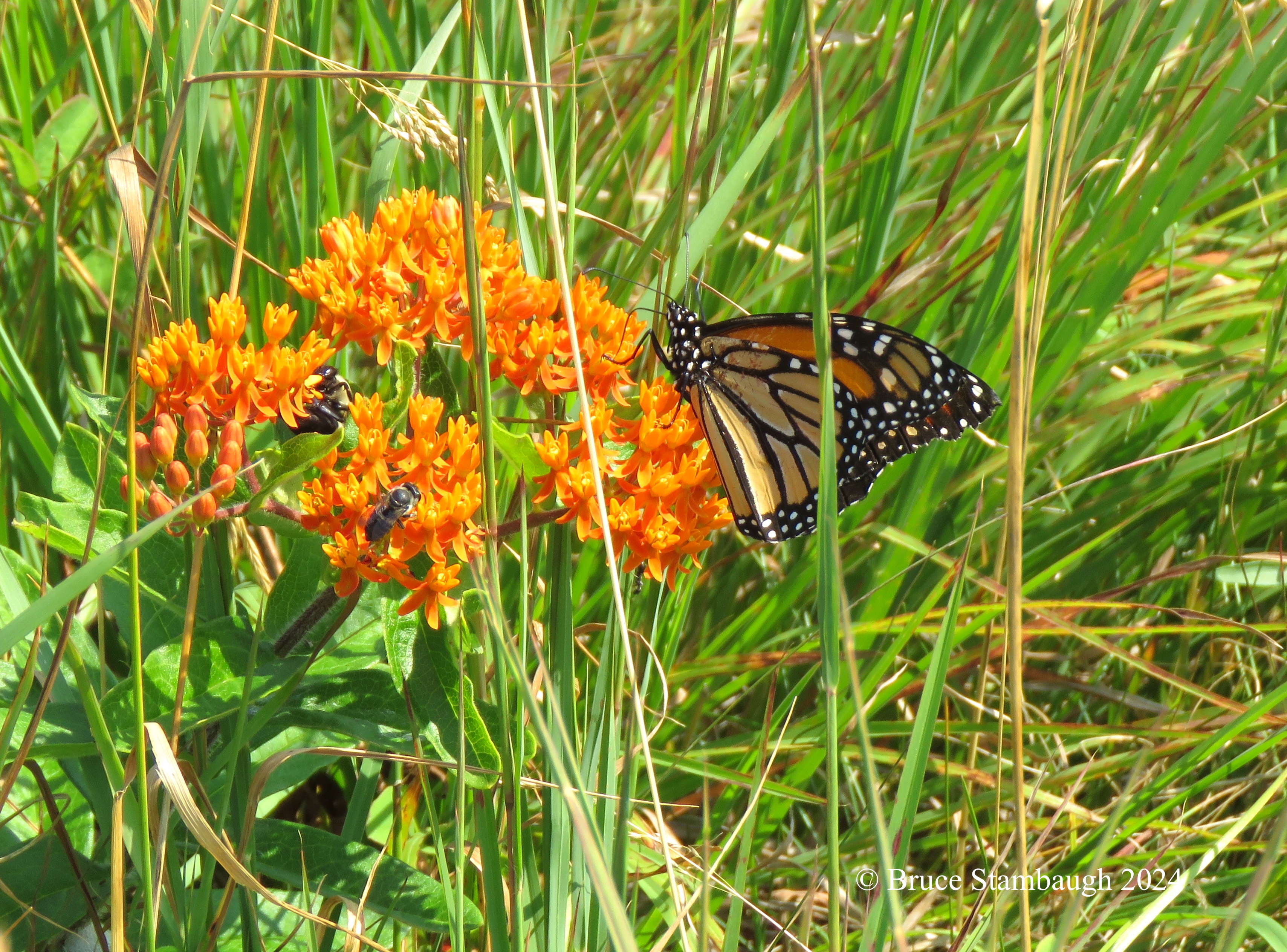
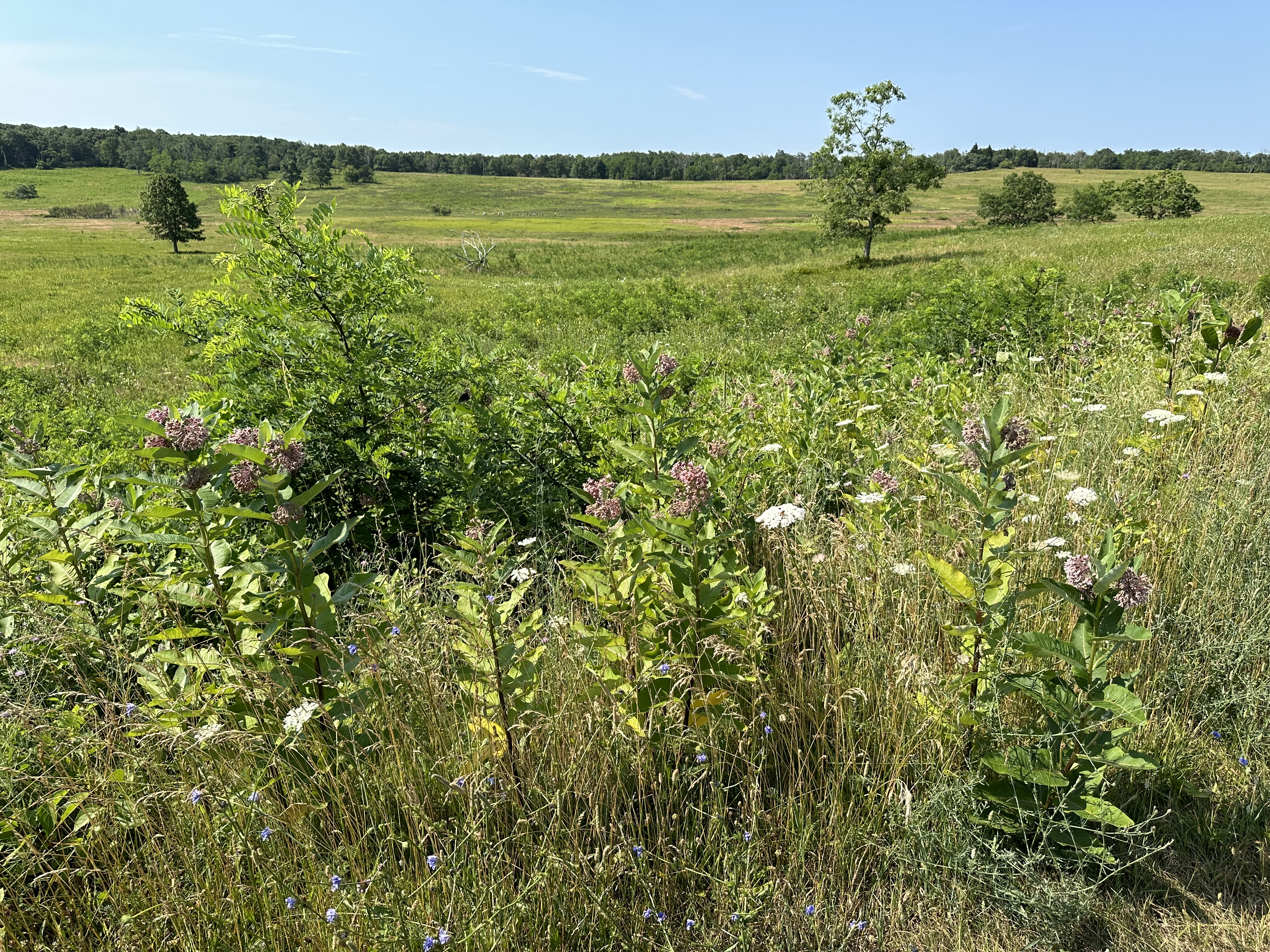
At Big Meadows, a ranger guided a small group of tourists on a nature walk. I moved around the sweeping, prairie-type basin. Due to the ongoing severe drought that Virginia is experiencing, the usual array of wildflowers is not as abundant as in previous years. However, as did the Monarchs and other butterflies, I found a few bright Orange Butterfly Weeds and the aromatic Common Milkweed blooming.
Please click on the photos to enlarge them.
I was also impressed with the thousands of honey bees and bumblebees that buzzed and hummed around the area. The Sweet White Clover got most of their attention.
Of course, I can’t go to Shenandoah National Park without taking my binoculars. Songbirds were everywhere, but the dense foliage of the trees made them hard to spot. Did I mention that mosquitoes and gnats were ubiquitous?
By noontime, the heat and humidity sent me back into the valley to the comfort of my air-conditioned home. Still, I felt mentally refreshed and renewed, ready for the rest of the day.
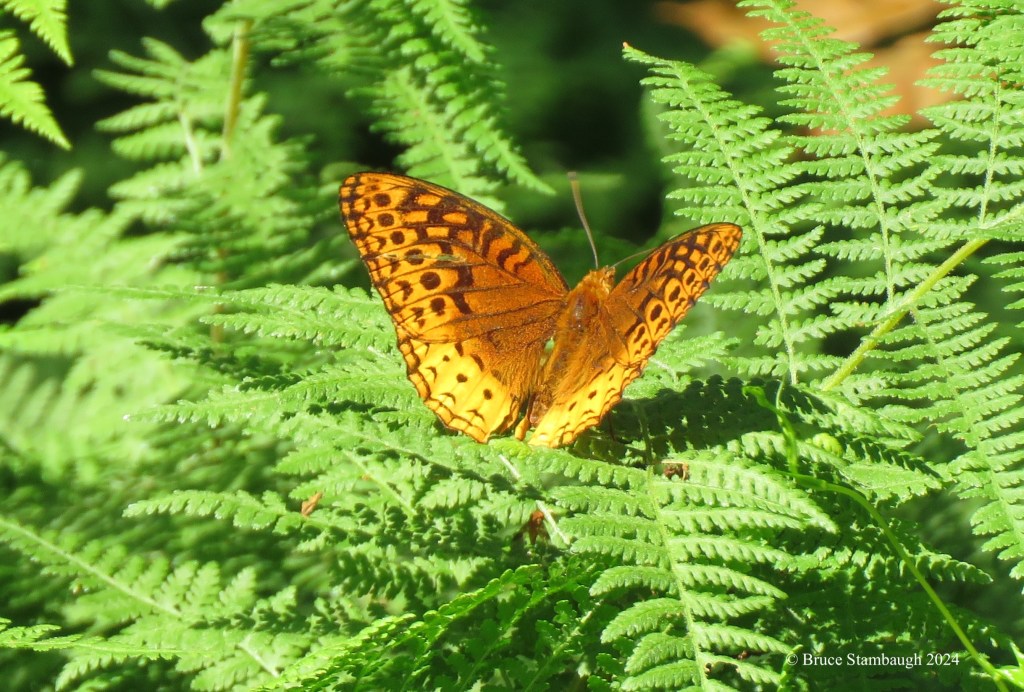
A Great Spangled Fritillary basked in the morning sunlight on a Rattlesnake Fern.
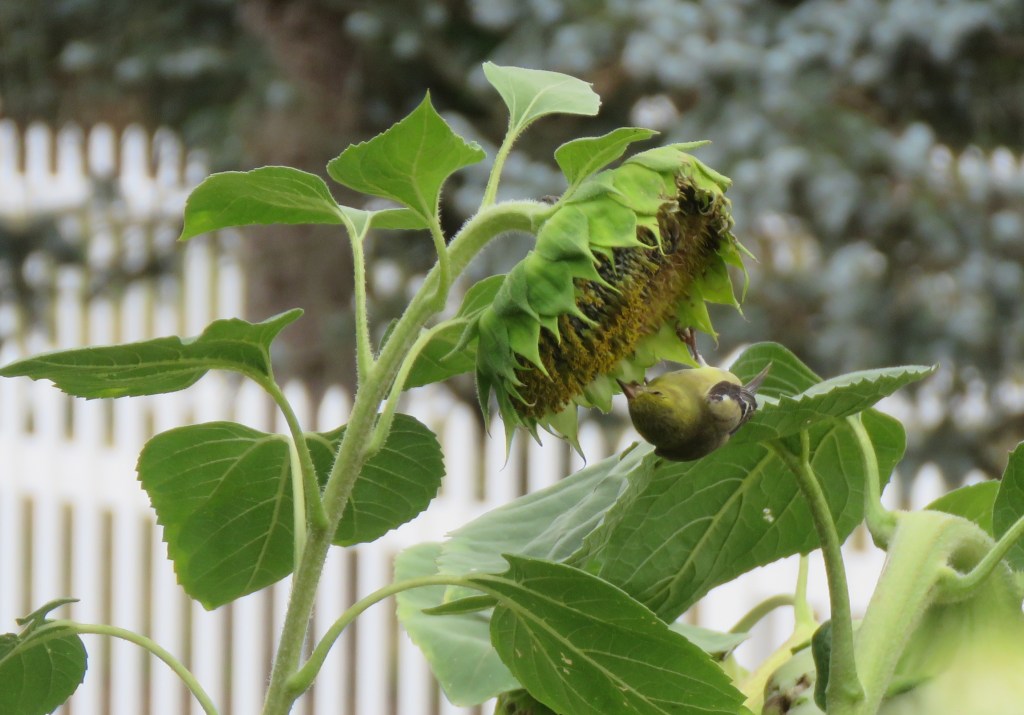
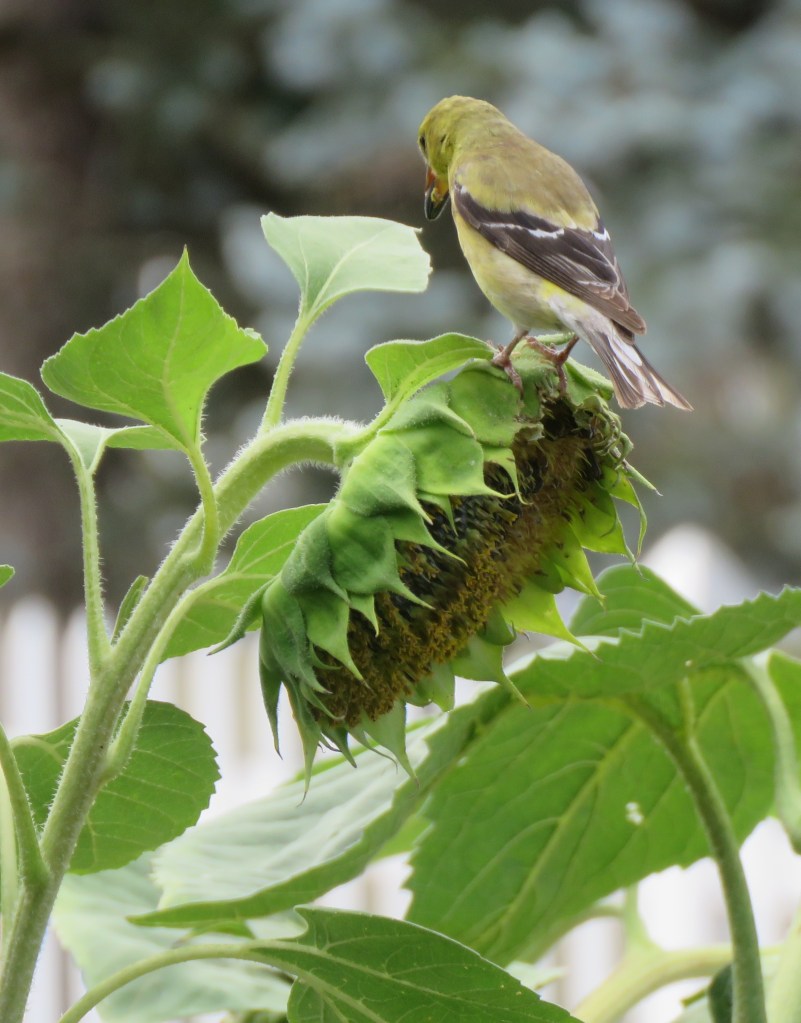
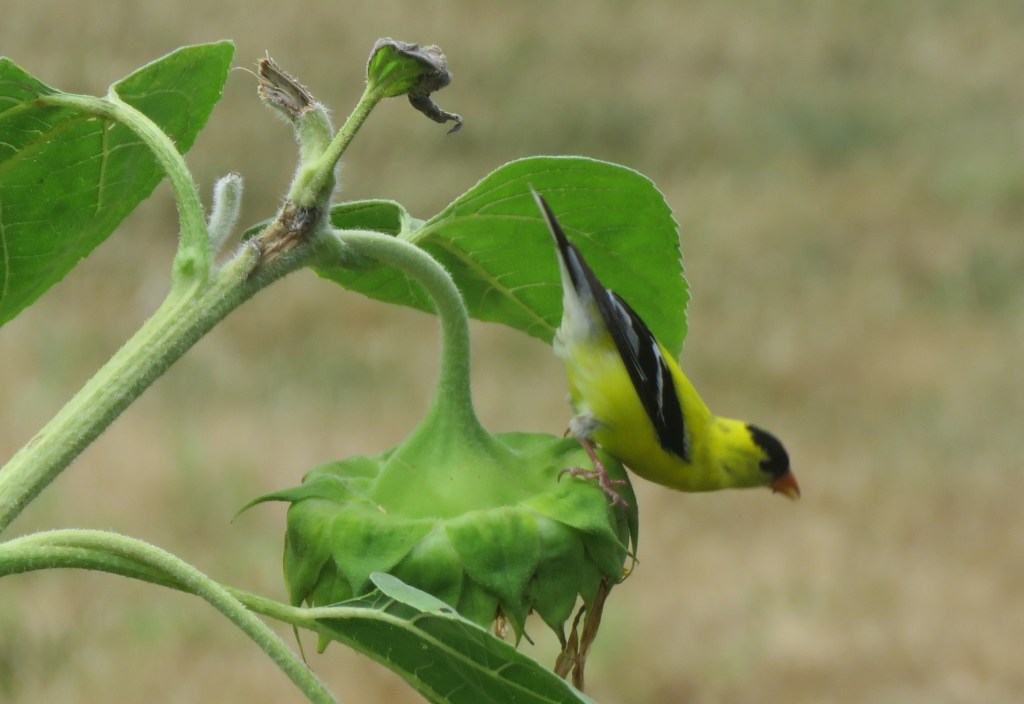
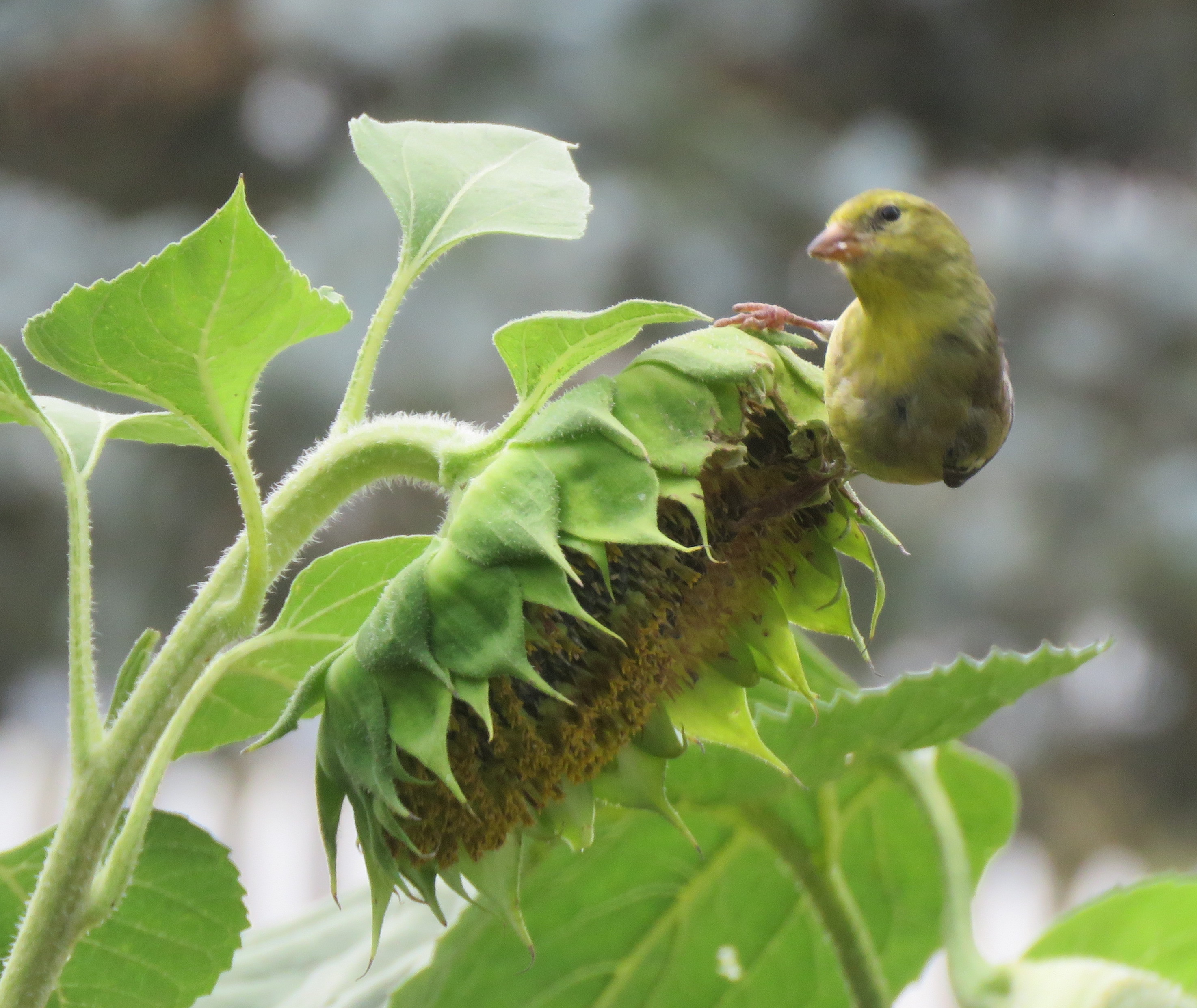
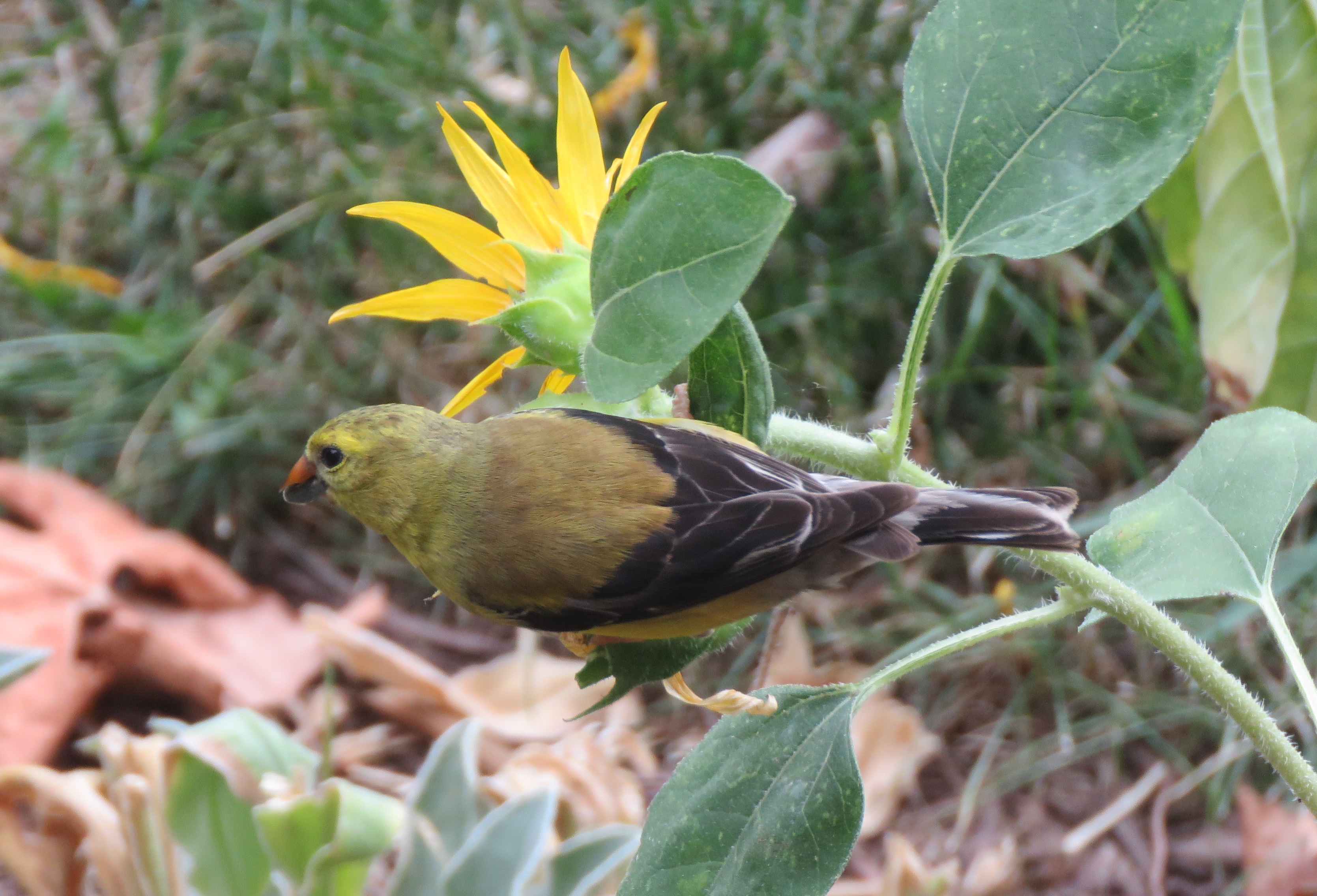
A female American Goldfinch plucks a seed from a sunflower head. Photo by Bruce Stambaugh
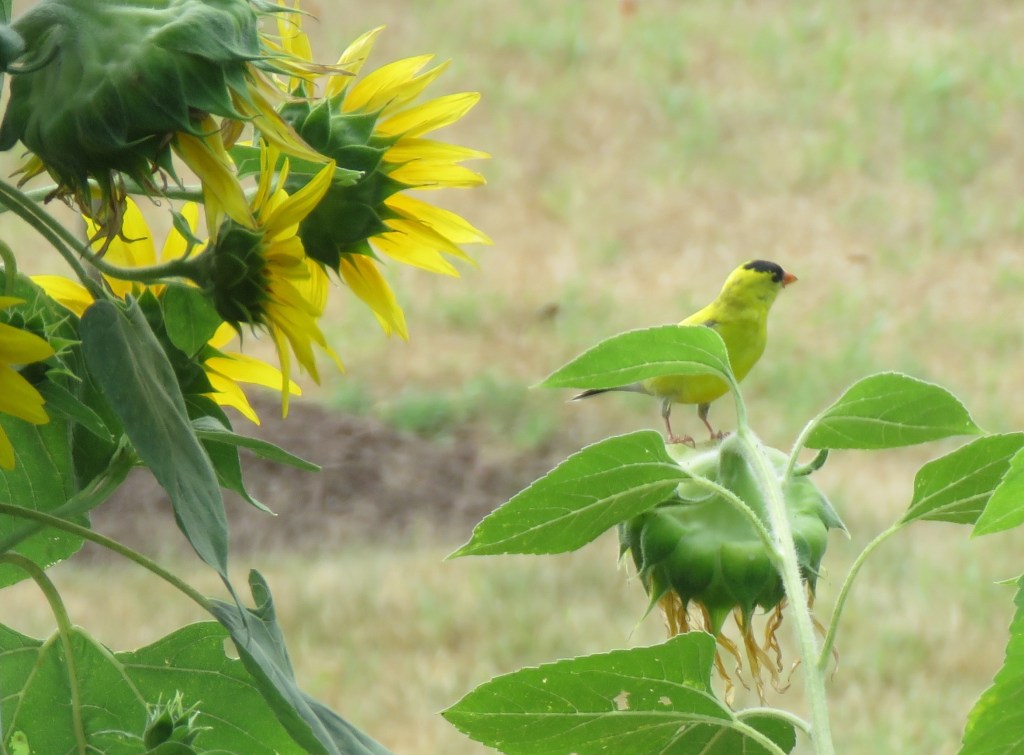
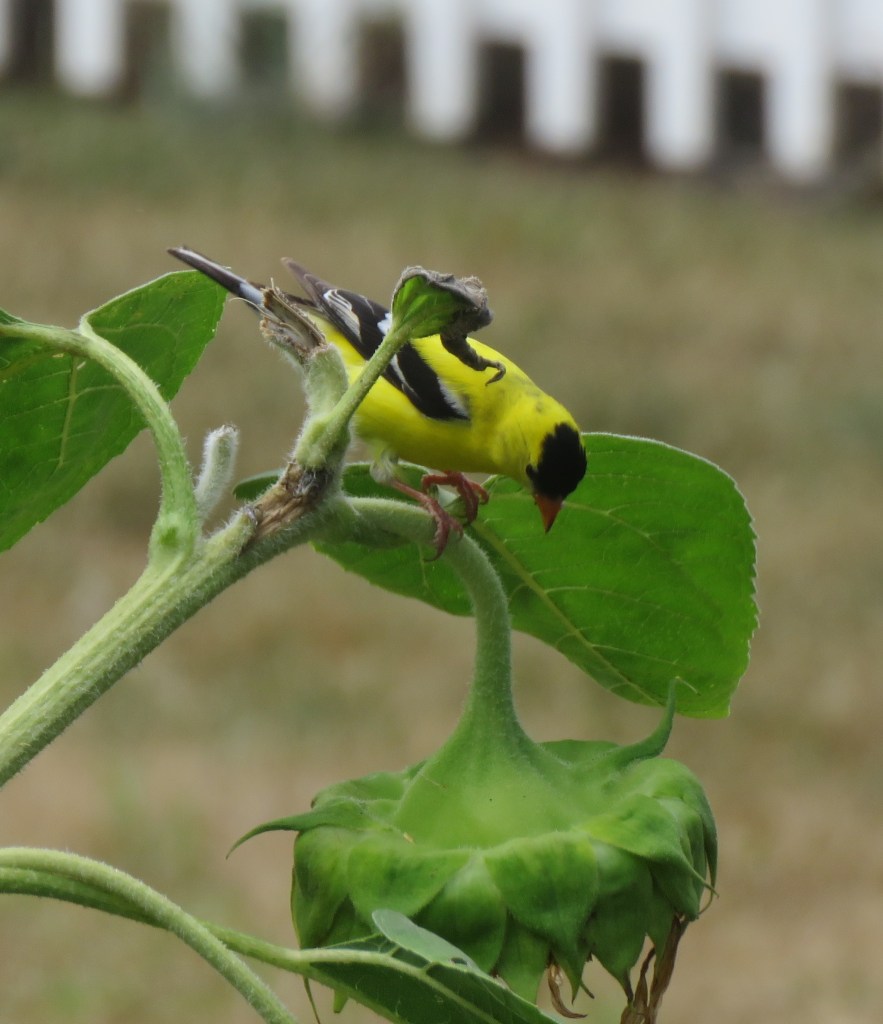
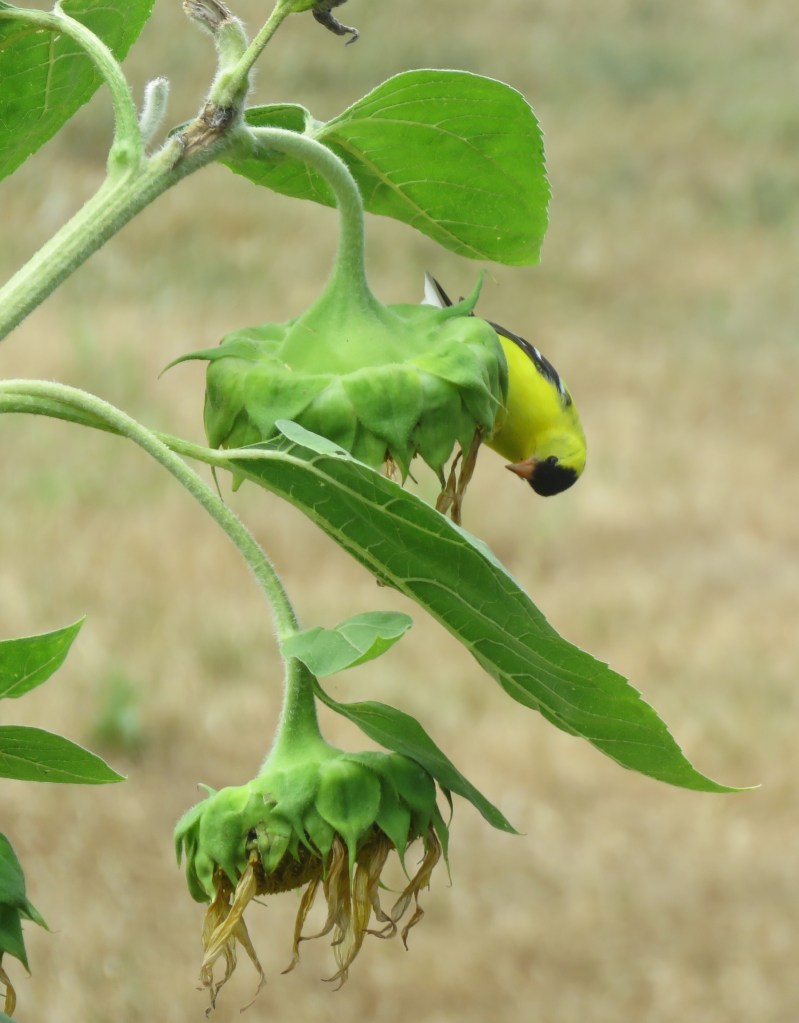
Can you eat upside down? American Goldfinches sure can!
In the summertime, the acrobatic little birds put on a show around sunflowers. Often, they hint at their arrival at a sunflower patch with a distinctive, cheery call. Soon, they land atop a flower and begin their feeding.
The lively and colorful birds use their short, sharp beaks to pry the juicy new seeds from the flower head. Their sturdy pinkish bill effortlessly cracks open the seed, and the birds devour their reward.
The American Goldfinches seem able to eat in any position: upside down, sideways, or at any angle. Since the laden flower heads bend toward the ground as their seeds mature, the birds have no choice but to attack their target in any way they can. The birds gain needed nutrition and moisture from the fresh seeds.
The male looks regal in its summer mating plumage of bright yellow with jet-black wings, tail, and forehead. A white wing-bar adorns each wing. The female is duller in color year-round. She is feathered more for camouflage than fashion. Her pale yellow-green is much duller to help blend in with the greenery she inhabits. The female’s coloration helps conceal the eggs during incubation and the young when they hatch.
In the winter, both sexes turn dull to protect themselves by blending in with their weedy surroundings. Black oil sunflower seeds draw them to feeders, though the pulp center has to be much drier than the fresh-off-the-flower summer offerings.
Of course, goldfinches aren’t the only species with this feeding trait. Nevertheless, it’s a joy to watch their antics in any season.
Birds aren’t the only animals that prefer fresh sunflower seeds. Photo by Bruce Stambaugh
The gang of volunteer sunflowers. Photo by Bruce Stambaugh
What better way to celebrate the Summer Solstice than to feature sunflowers?
We were fortunate to have volunteer sunflowers sprout up in our backyard flower garden this year. Seeds dropped by birds or buried by squirrels from one of my birdfeeders created these wonders.
At first, the gang of neighborhood rabbits nibbled the tender leaves. But apparently, there were so many sunflower shoots that the bunnies couldn’t keep up. Consequently, for the first time in the seven years we have lived in Virginia’s Shenandoah Valley, we have a helter-skelter stand of sunflowers.
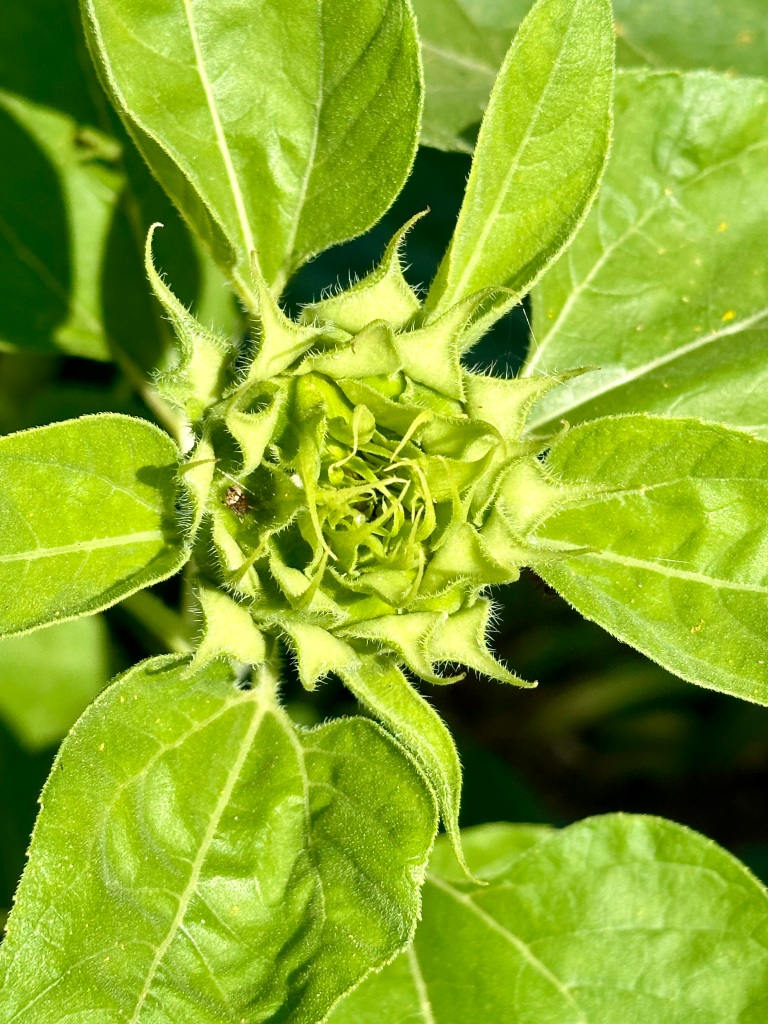
I have enjoyed watching them grow so quickly in the string of warm days and nights we have experienced. As the flowerheads began to form, their various shapes, textures, and swirling patterns intrigued me. At the corner of our back porch, pure art in nature flourishes.
Ants, bees, butterflies, flies, wasps, and other insects depend on sunflowers for nourishment. See how many different creatures you can spot in this series of photos.
Please click on the photos to enlarge them.
How long will it be before the American Goldfinches and other seed-eating birds begin to dismantle these living sculptures in the quest for fresh, tasty seeds?
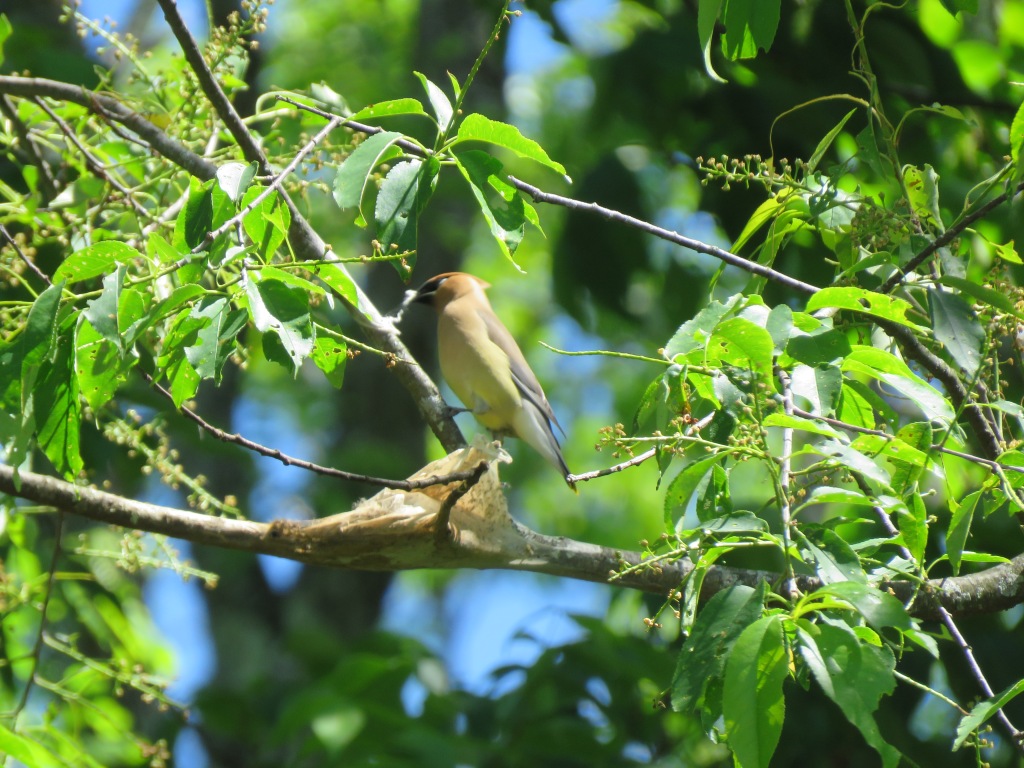
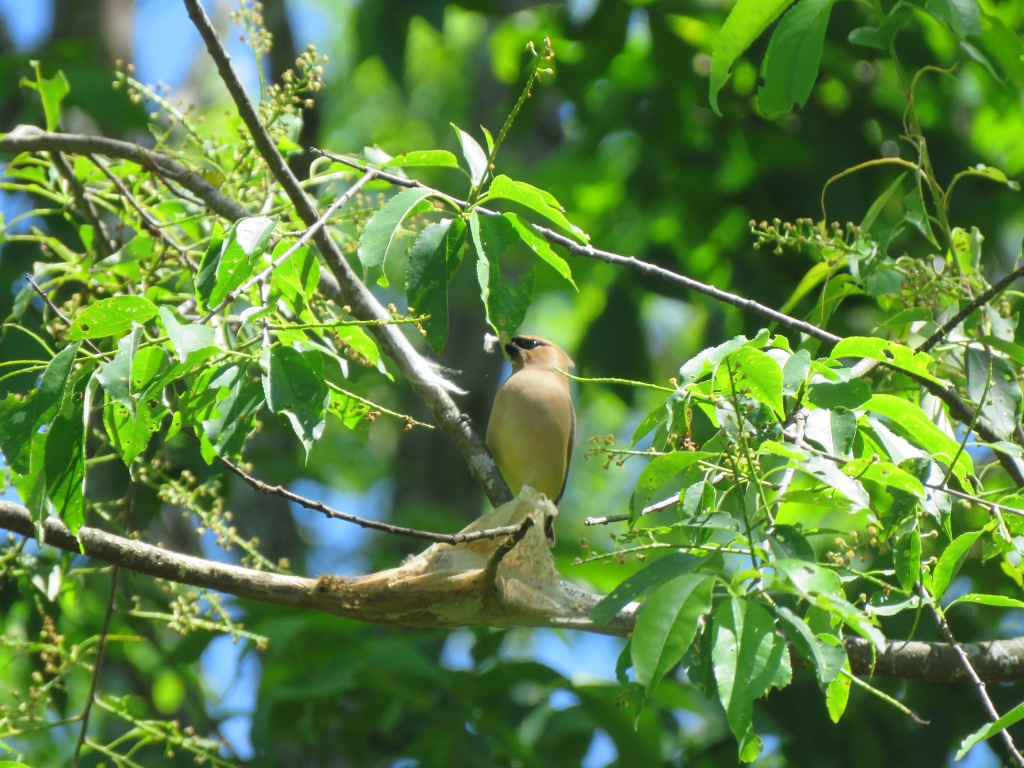
A Cedar Waxwing collects nesting material. Photo by Bruce Stambaugh
Birds always teach something new.
While mainly looking for warblers on Reddish Knob on the Virginia/West Virginia boundary, I spotted a Cedar Waxwing light into a wild cherry tree. I aimed my camera to capture a shot or two of the always lovely and entertaining waxwings.
At first, I thought the bird might be after the Eastern Tent Caterpillars in their silken nest. Waxwings supplement their spring and summer diets with insects when berries aren’t available.
Since the bird stayed in the same spot, I kept clicking away. It wasn’t until I loaded the photos onto my laptop that I realized that the Cedar Waxwing was after nesting material, not food. According to the Cornell Lab of Ornithology, the female Cedar Waxwing usually gathers the nesting material for the first brood.
In this case, the waxwing collected the tent’s silk support strands and ignored the rest. Perhaps those connecting threads are stronger than the silk that forms the tent.
The process took less than a minute, and she was off to add her precious cargo to construct her own nest. The female waxwing weaves grasses, twigs, cattails, and pine needles to form her cup-like nest. Now, tent caterpillar silk threads can be added to the list.
The sequence of the Cedar Waxwing gathering silk from the Eastern Tent Caterpillar tent. Please click on the photos to enlarge them.Photos by Bruce Stambaugh.
Not only did I see a beautiful bird at work, but I also learned about Cedar Waxwing nest building. And, yes, I heard and saw a few colorful warblers, too.
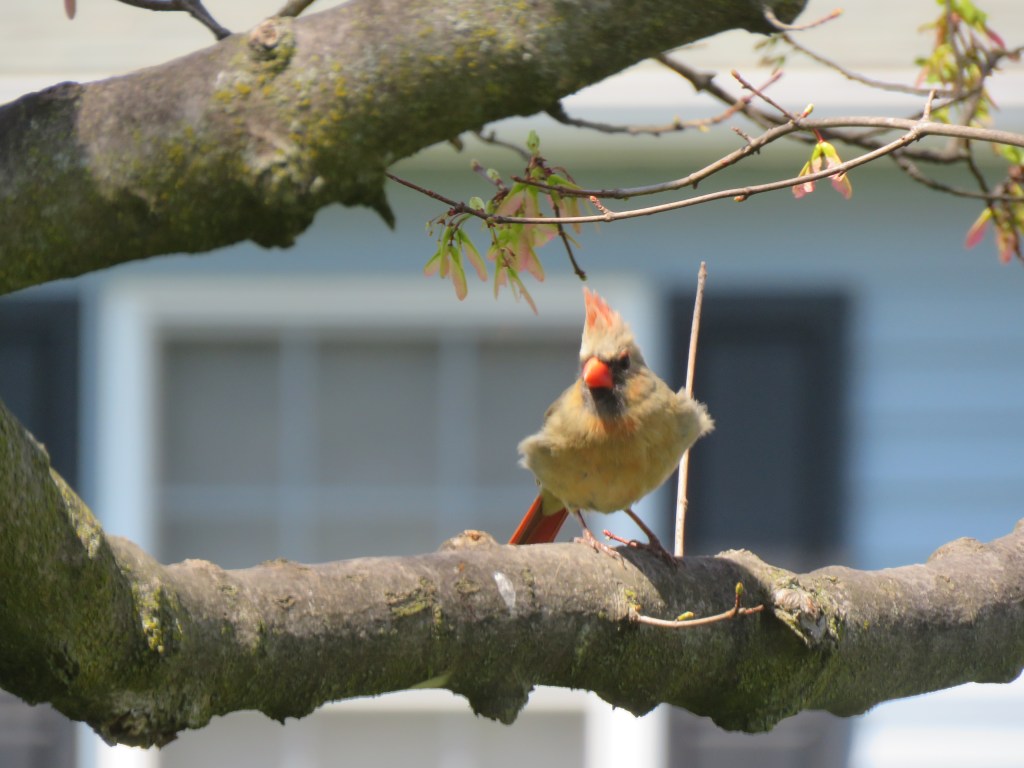
A wind-blown female Northern Cardinal perched in our red maple. Photo by Bruce Stambaugh
I took my lunch outside the other day. The temperatures were more summerlike for the first of May.
I enjoy sitting in the sun for short periods, absorbing the free vitamin D and the natural springtime circus performing around me. Nature sprinkles my light fare with seasonings no human can buy or sell.
I sat on the cultured stone patio in my late mother-in-law’s red and white painted metal rocking chair. A light wind played with my napkin until my cell phone secured it.
I enjoyed the Swiss cheese and crackers and the birds flitting back and forth, singing their luxurious songs until the bully common grackles chased them away.
That gave me an idea. I opened an app on my phone that records birdsong. Soon, I discovered more birds in the immediate area than I realized. My old ears, with their diminished hearing, could not detect them.
A Chimney Swift. Photo by Bruce Stambaugh
The “flying cigars” called Chimney Swifts chitter-chatter high overhead, zooming in wide arching loops, capturing as many insects as possible. The dark, stubby birds that flap their wings faster than the eye can see were hungrier than me.
A clutch of American Goldfinches landed on the thistle sock hung in the tulip poplar tree, its greenish flowers just now blooming. Unfortunately, the grackles heard their gregarious interaction and quickly chased them away.
My app told me a Yellow Warbler was nearby, but I neither heard nor saw it. It might have been a flyover going farther north than Virginia’s Shenandoah Valley.
A female Northern Cardinal. Photo by Bruce Stambaugh
The ubiquitous House Sparrows jabbered atop the bluebird house attached to an old metal fence stake my congenial father-in-law gave me years ago. I made a mental note to check the box to see if the sparrows had built a nest.
Mourning Doves cooed from the neighbor’s rooftop while I finished my potato salad. Though their song is monotonous, I found it pleasantly reassuring.
American Robins bobbed in the grass, searching for their own lunches. Soon, one chased another to the neighbor’s.
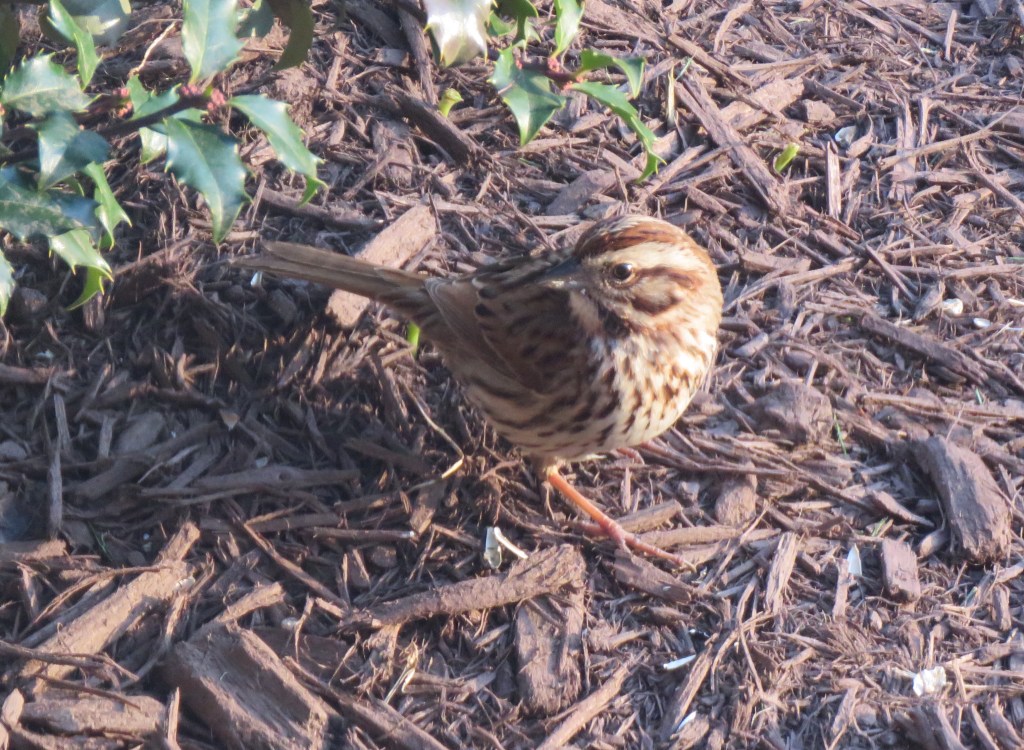
A Song Sparrow. Photo by Bruce Stambaugh
A pair of Northern Cardinals zipped from the Colorado blue spruce along our back property line to the fountain-fed birdbath by the screened-in back porch. Birds get thirsty, too.
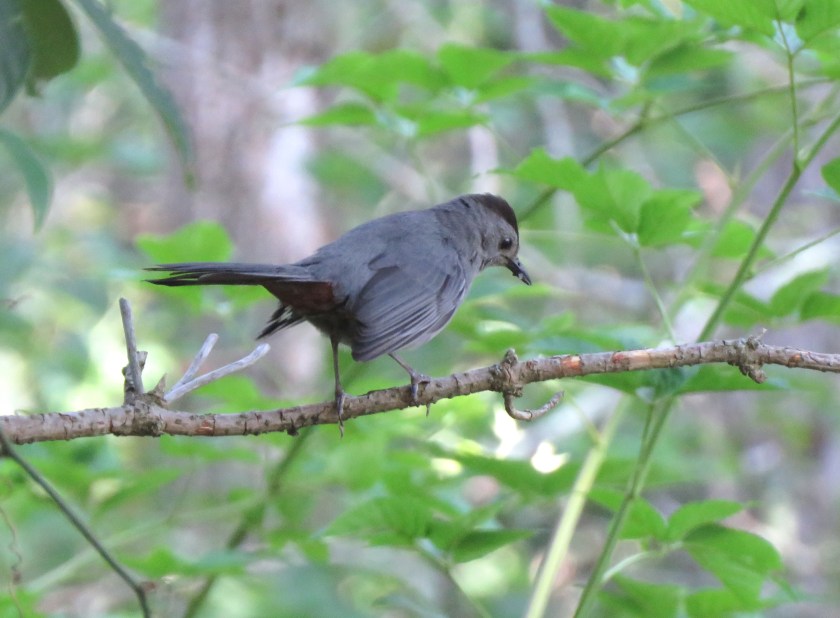
For the first time since last fall, I detected a familiar chorus. The Gray Catbird’s liquid warbling gave it away. Its feline mimicking completed the hearty song. The variegated sound proved as joyous as the catbird’s return.
A Carolina Wren and a recently returned House Wren each called from opposite corners of the property. The Carolina adjusted its vocalization according to need while the house wren’s noisy melody beckoned a mate.
I washed down the last bit of ham salad and crackers with sweet tea, the only kind to drink in Virginia. As I reentered our home, the resident Song Sparrow skittered low along the ground and disappeared beneath my wife’s peonies.
That was all the dessert I needed.
A Gray Catbird preens after a dip in the birdbath. Photo by Bruce Stambaugh
I chuckled when this Carolina Chickadee landed on the rim of my window feeder and briefly struck this pose.
It looked like the little bird was trying to decide which black oil sunflower seed to choose. Of course, that’s a biased human observation. In reality, the bird likely was looking for a good seed amid the litter of spent seed shells left by other birds.
It soon found one and flew away to crack the shell open to get to the sunflower meat.
A reflective sunset in the eastern sky in Rockingham Co., Virginia. Photo by Bruce Stambaugh
No two sunsets are alike. That should be no startling revelation. Each sunset has its unique evolution, however. Some last just seconds with only a hint of orange, while others splash the western sky with a painter’s palette’s worth of colors.
Sometimes, a sunset defies both stereotypes and logic. That’s when a photographer’s fun begins.
Our home in Virginia’s verdant Shenandoah Valley faces north. Consequently, I need to check the western sky well before dusk for the ingredients for a decent sunset. If I spot puffy clouds hovering over the Allegheny Mountains, I get ready to head west.
I often gather my camera gear and drive a few miles southwest to a ridge overlooking a fertile valley dotted with Old Order Mennonite farms. Only the Dry River splits the gently rolling farm fields. Its tree-lined banks make its southward path easy to spot.
A favorite photo location for a mountain view is the aptly named Pleasant View Old Order Mennonite Church. Look west from its grounds, and the aged, rolling ridgeline of the Allegheny Mountains endlessly fills the horizon. Look east, and Massanutten Mountain dominates the landscape, with the Blue Ridge Mountains 40 miles beyond.
The western view.The view north.Massanutten Mountain to the east.
Please click the photos from the church to enlarge them.
There are no guarantees with sunsets, of course. Atmospheric conditions play good cop bad cop with the sunsets’ outcomes. I’ve been fooled and disappointed too many times to have high expectations. I set out with the joy of simply being able to witness whatever develops.
As a septuagenarian, I have learned to be patient with sunsets. I have headed home long after sunset’s time had expired, only to see a blooming garden of pastels fill the western horizon in the rearview mirror. So, even if the initial stages of the evening glow are less than spectacular, I persevere. Too often, I leave disappointed. Still, my time wasn’t wasted. I enjoyed the fresh air and American Robins and Eastern Bluebirds singing as they settled into their nighttime roosting positions.
Such was the case recently when I spied a patchwork of clouds hovering over the Alleghenies. When I arrived at the old church, the sun was nearly hidden behind those old, weathered peaks. Still, I snapped a few shots and then moved lower into the valley to hopefully catch a colorful reflection in a roadside farm pond or the Dry River, which had plenty of running water from recent rains.
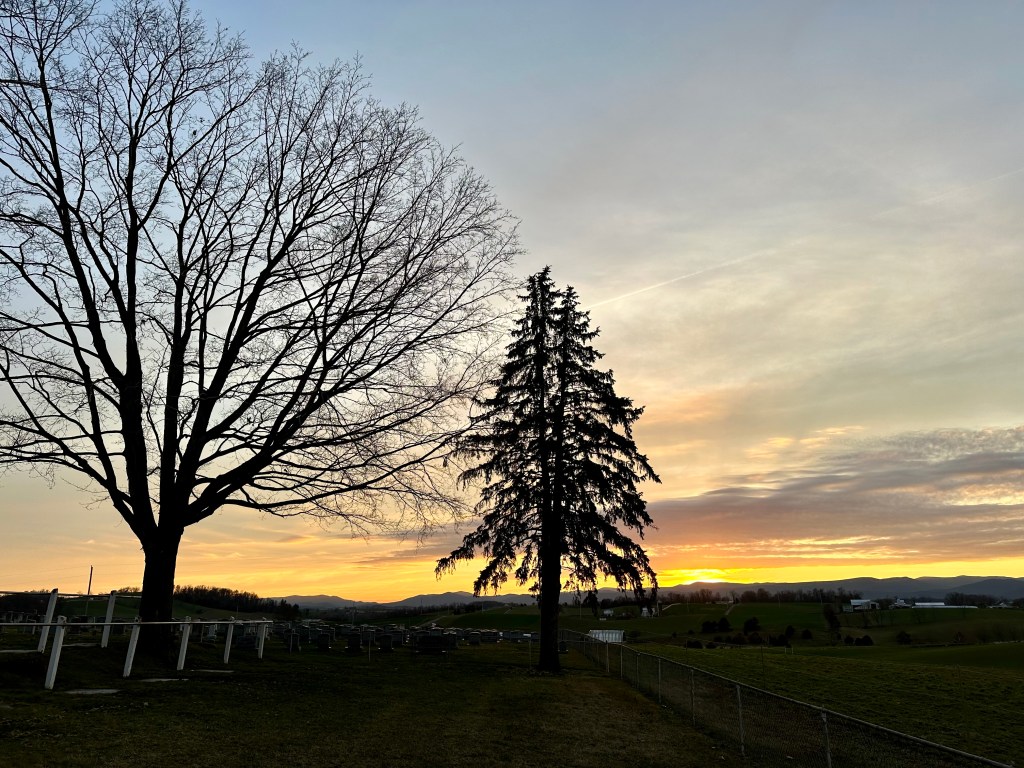
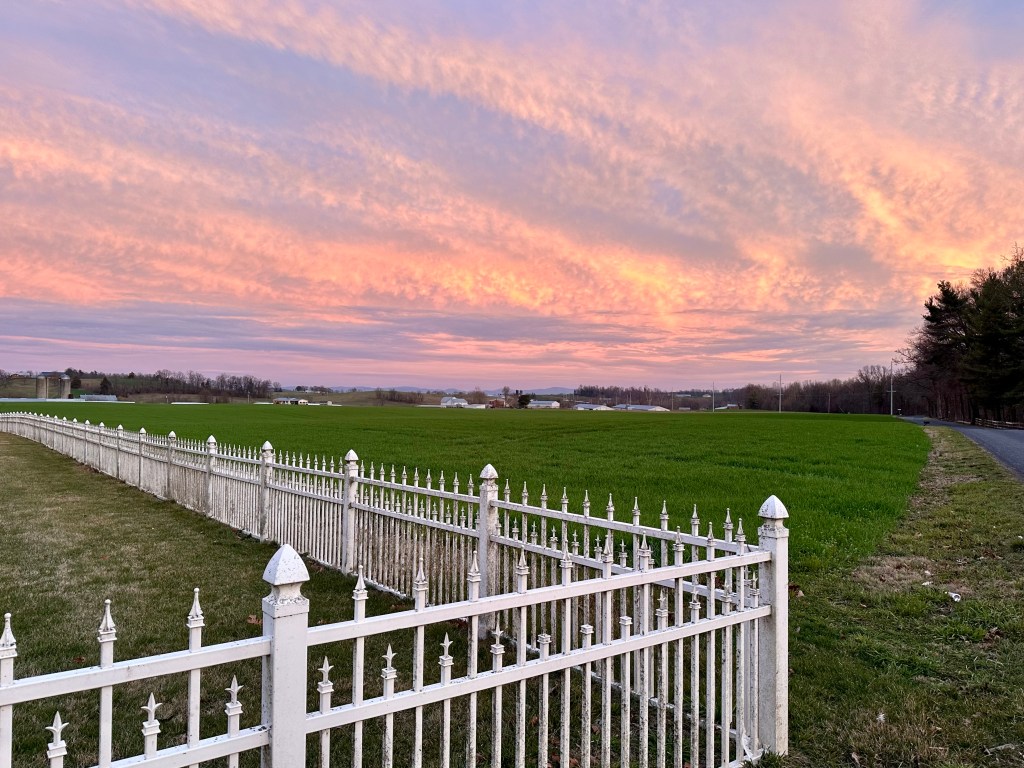
The western glow perfectly silhouetted the lines of trees along the river banks. I stopped my vehicle by the cemetery of a historic country church. As I exited my car, my eyes were drawn southeast. I was stunned. The beautiful blues and pinks of a prized sunset flooded the eastern sky. I snapped away from different angles as quickly as possible, knowing the colorful array before me wouldn’t last long.
My first view of the reflective sunset in the east. Photo by Bruce Stambaugh
I couldn’t believe my good fortune. Had I not stopped for a photo looking west, I would have missed the glorious beauty as far as I could see north to south. As a photographer, it always pays to look over your shoulder before putting away your camera. Satisfied with the many eastern-facing shots, I turned to the tree line and got my intended but less colorful photos.
The view southeast.The view east.The view northeastAn Old Order Mennonite school south of the church.
Then, I remembered Slab Road, a quarter of a mile away. Rural road names in Virginia are about as practical as they come. Instead of a bridge over the Dry River, the highway department poured a narrow two-lane cement surface over the riverbed since the river was indeed dry more often than wet.
I stopped short of the river and quickly exited to catch the last light of the day reflecting on the water dammed up by the slab. The scene was breathtaking but not nearly as dramatic as the sunset reflected against the eastern clouds over Shenandoah National Park.
The Dry River flows over Slab Road. Photo by Bruce Stambaugh
A milk truck with a shiny, 3,000-gallon stainless steel tank forged through the running water over the slab. I followed, hoping to capture one more decent landscape shot. But my prime time was up, and I came away with a bland photo of a farmstead with powerlines running through the sky.
Nevertheless, the evolution of this sunset couldn’t have played out better. My heart overflowed with joy and gratitude for a beautiful ending to another precious day on earth.
The tree line that marks the Dry River. Photo by Bruce Stambaugh
A male Canvasback escorts two female Buffleheads on a local lake. Photo by Bruce Stambaugh
With the calendar turning from February to March, bird migration has officially begun. True, several bird species had already started the arduous task of returning north from their southerly winter habits.
To account for that, birders divide the seasonal calendar in the Northern Hemisphere much differently than humans do. Bird spring runs in March, April, and May when most migrating birds return to the nesting homelands in the northern United States and Canada.
Surprisingly, summer is the shortest season for birds. It lasts just two months, June and July. It’s prime mating, nesting, egg laying, and hatching time. Once the young are self-sufficient, the first migrating birds begin their long trips south.
The fall season for birds runs from August through November. Different species have more than one brood and migrate on a different schedule based on habitat, food supplies, and other factors. For birds, December, January, and February comprise the winter months.
So, now that March has arrived, birders scout their favorite ponds, lakes, rivers, streams, wetlands, and fields for any early arrivals on their way north. Birders especially prize waterfowl and songbirds to spot and photograph.
Locations where migrating birds frequent are called hot spots. I checked a few on March 1. Though I didn’t find many bird species, I enjoyed seeing and photographing new migrants.
An American Pipit poked its head above the grass just to the left of the Northern Cardinal.
My first stop was one of my favorite locations for birds and sunsets, Silver Lake in Dayton, Virginia. It’s a 12-acre lake built in 1822 for a mill. The shallow lake is perfect for diving and dabbling ducks. I saw only a trio of female Buffleheads and one muskrat this time.
A few miles away is the Cooks Creek Arboretum, tucked away at the end of a cul-de-sac. I spotted three birders with binoculars aimed at a hillside farm field. Birders tend to be pleasant people, so I didn’t hesitate to ask what they were seeing.
“About 150 American Pipits are flying and landing in the field,” one of them said. “Unfortunately, they seem to land over the crest of the hill.”
We walked together down the path to get a better look, but with a heavy cloud cover in the late afternoon, the birds were only visible during their short, rapid flights. However, I followed the birds to the flatter, more southern part of the field.
I captured a relatively poor photo of a few of the pipits flying. Patience, though, is a venture for birders. I saw a few birds foraging in the green vegetation of the field. I captured one of the small brown pipits as it began to fly. After wintering in the extreme southern U.S. and Mexico, the pipits were on their way to the far north Arctic tundra.
Please click the photos to enlarge them. Photos by Bruce Stambaugh
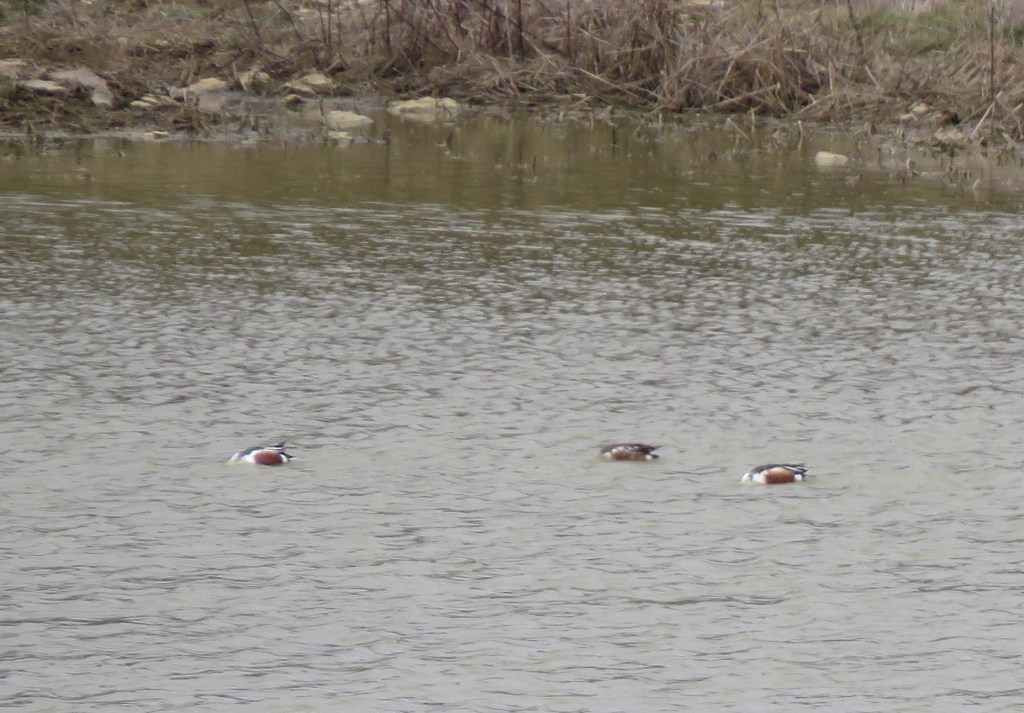
Happy seeing these fascinating visitors, I was pleased at my next stop just a few miles east. A local hot spot farm pond held dozens of Green-winged Teals and a handful of Northern Shovelers. Since the pond is on private property, I stood on a knoll across the road from the pond. With the distance of the pond, the chilly wind, and my inability to hold the camera steady, I felt fortunate to get some shots of these lovely birds.
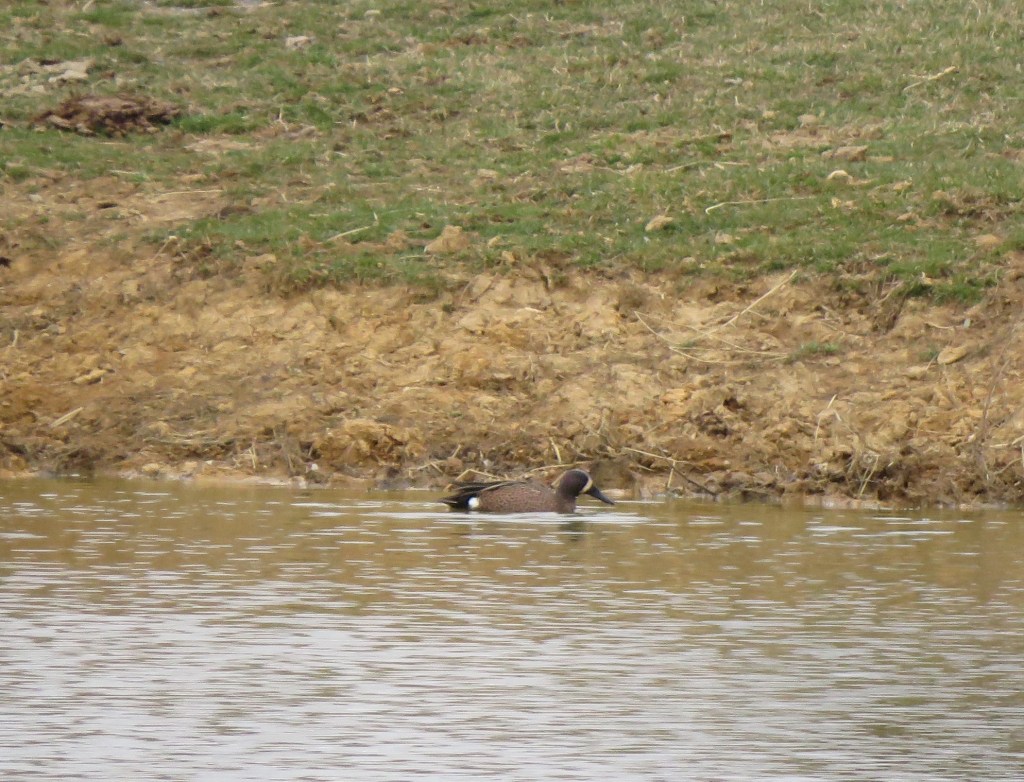
I drove several miles to another farm pond much closer to the road. A lone Blue-winged Teal swam with a pair of Mallards while two Canada Geese watched from the shoreline.
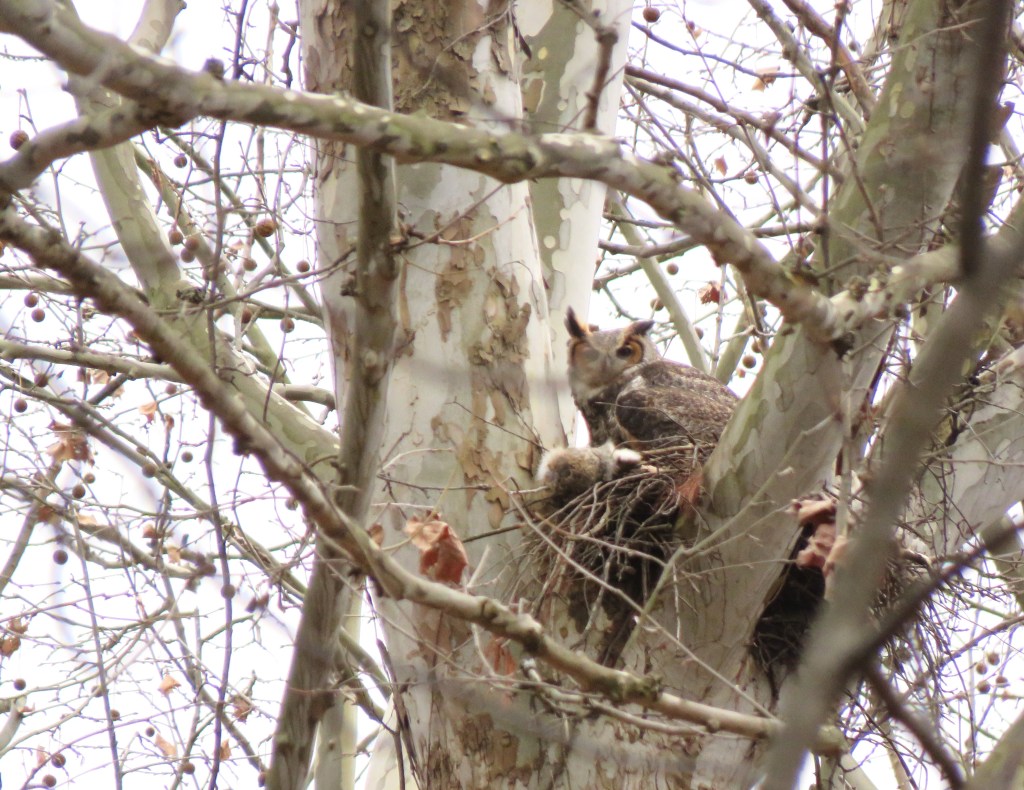
On the way home, I detoured to a local arboretum and quickly found a nesting Great Horned Owl with two owlets in the fork of a sycamore tree. Friends had told me about it the day before.
Though spring doesn’t officially arrive until March 19, the birds are on the wing for spring migration. I intend to catch as much of the birding splendor as I can.
A Great-horned Owl with owlets. Photo by Bruce Stambaugh
A male Red-bellied Woodpecker at the suet feeder. Photo by Bruce Stambaugh
It’s been a slow winter for feeding birds. Both the number of birds and the kind of species coming to my birdfeeders are down.
I have my suspicions, but I’m not exactly sure why. It could be the two roaming black cats that wait stealthily for lunch. Or, it could be the loss of cover. My neighbor cut down two mature trees on our property line. Or, it could be the inconsistent weather of cold and warming here in the Shenandoah Valley. Or, more likely, there are simply fewer birds. In a recent report, Cornell University estimated three billion birds have been lost in North America since 1970.
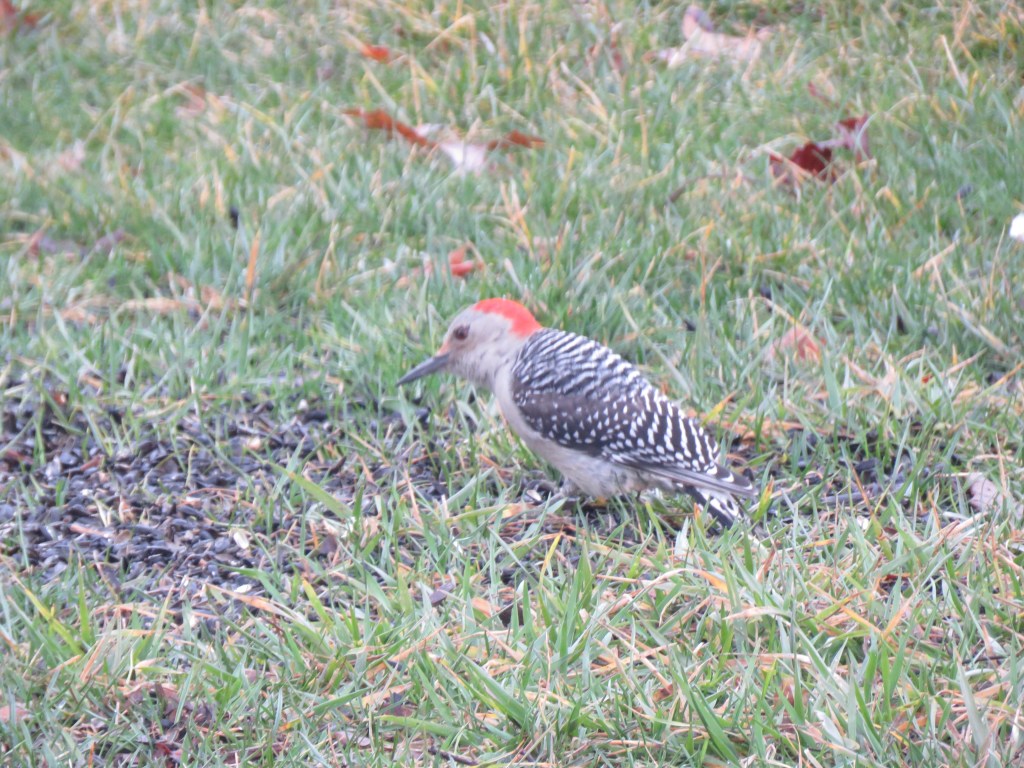
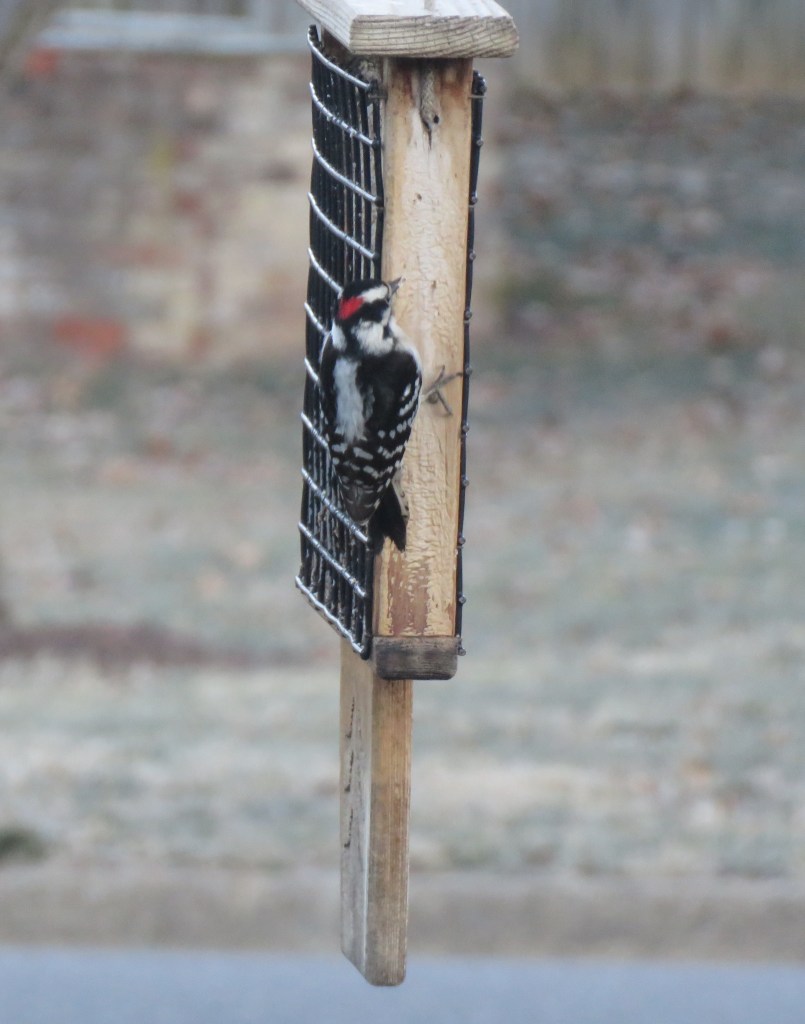
However, I am happy with the variety of woodpeckers that have made a regular appearance at our feeders. They have especially frequented the peanut butter suet feeder in the front yard. The feeder hangs from the large red maple, only 30 feet from the street. Others prefer the black oil sunflower seeds, while some peck at the cracked corn I spread on the ground.
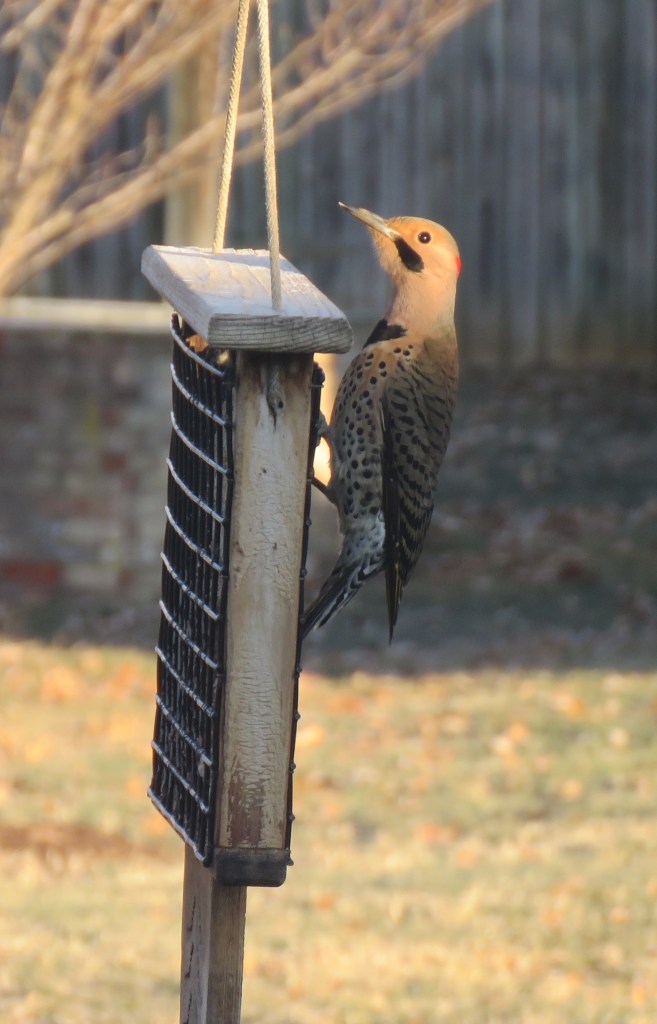
All the woodpeckers announce their arrival in one manner or another. The Red-bellies and the Flickers want the bird world to know that they are arriving, so their harsh, loud screeches warn other birds to get out of their way. I have not seen the two species at the feeders together.
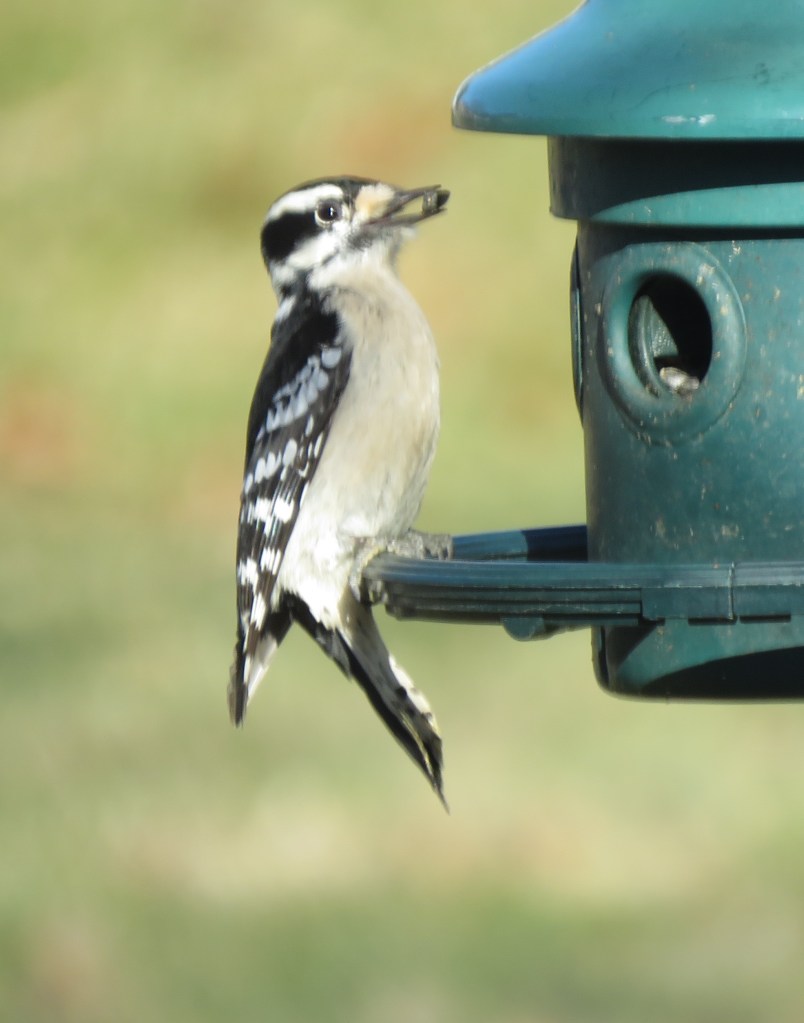
The Downy Woodpeckers are the most discrete. Their soft squeak or rapid-fire drumming on a tree limb gets my attention. Other times they just show up.
Here are a few of my favorite shots of the various woodpeckers at my feeders.
A female Red-bellied Woodpecker searches for black oil sunflower seeds on the ground. Photo by Bruce StambaughA female Downy Woodpecker snatches a sunflower seed. Photo by Bruce StambaughThe morning sunshine highlighted a male Northern Flicker at the suet feeder. Photo by Bruce StambaughA male Downy Woodpecker at the suet feeder. Photo by Bruce Stambaugh

























 Roadkill Crossing
You must be logged in to post a comment.