All abuzz about beekeeping

Bee hives by Bruce Stambaugh
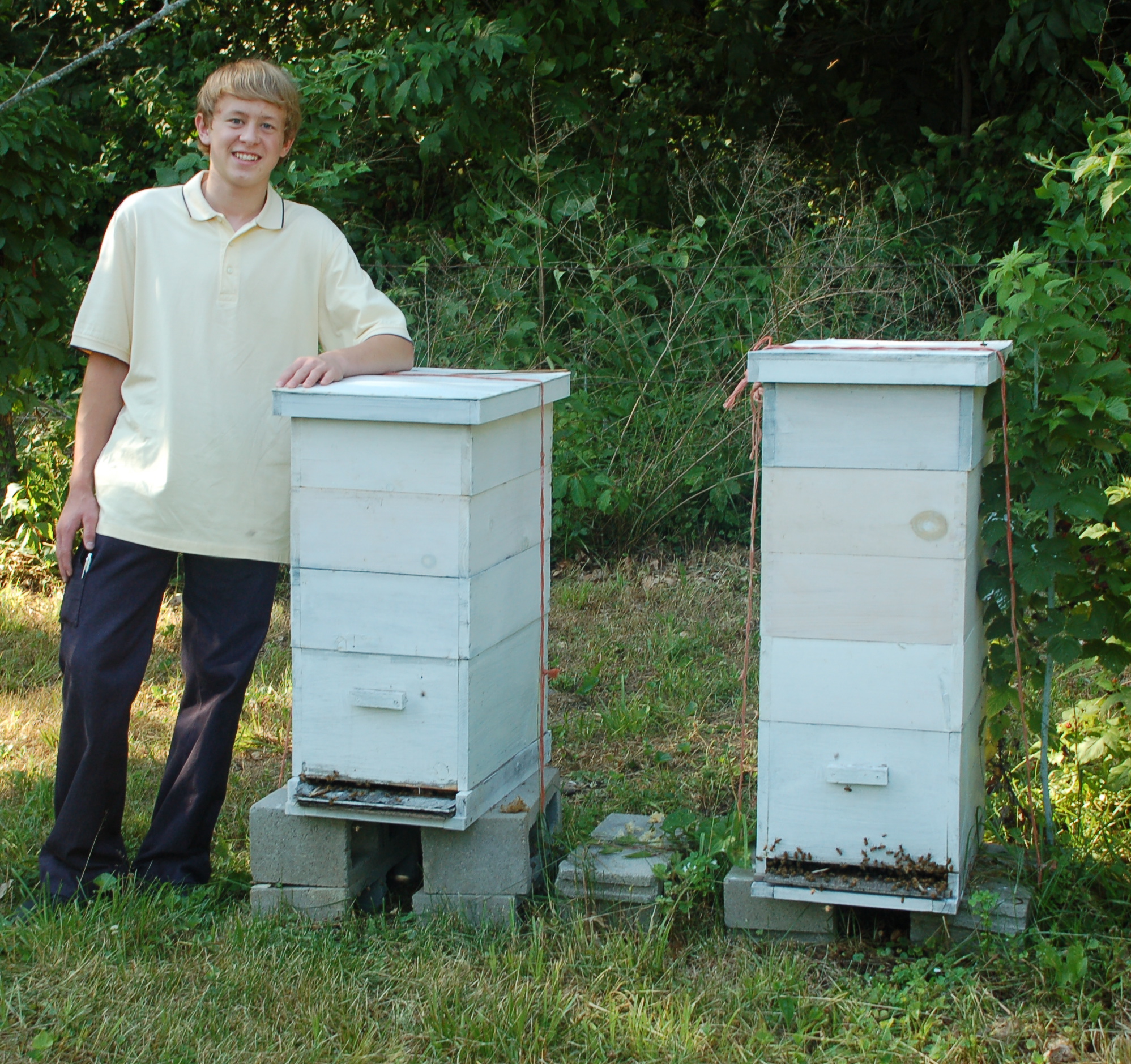
Brian Miller, 17, of Apple Creek, OH checked out some bee hives before a recent meeting on beekeeping held near Mt. Hope, OH.

By Bruce Stambaugh

Beekeeping is on the rise, according to Dr. Jim Tew, recently retired bee specialist at The Ohio State University Extension Services in Wooster, Ohio. He just doesn’t know why.

A meeting held recently at the residence of Mark Miller near Mt. Hope, Ohio seemed to be proof of that. Men, women and children, many of them Amish, nearly filled the several rows of church benches set up in Miller’s spacious outbuilding where the beekeeping meeting was held.

Miller said beekeepers’ meetings like this one are held three times per year. He said there are two such groups in Holmes County, Ohio. They are geographically split into northern and southern groups, with U.S. 62 being the dividing line.

The meetings are held to keep area beekeepers informed about the latest information on beehive maintenance and keeping the bees healthy. They also lean on the informal approach to allow for extensive question and answer times.

Bee keepers meeting by Bruce Stambaugh
Dr. Jim Tew shared his expertise on beekeeping to a group of beekeepers in Holmes County, Ohio. Many of those in attendance were Amish.

Tew was asked to share his expertise on beekeeping. The gregarious and modest Tew kept the group relaxed with personal stories of his more than 40 years of beekeeping. He retired from the OSU Extension after 35 years.

The Alabama native told the group that beekeeping is extremely popular right now.

“But I don’t know why,” he said. He suggested one explanation could be that honeybee husbandry fits into the popular universal interest in providing a dependable, wholesome food supply.

Busy bees by Bruce Stambaugh
Honeybees scurried in and out of a hive across from Mark Miller’s residence near Mt. Hope, OH.

Related to that sustainability idea, Miller told the group, “I like the concept of producing our own bees here in Ohio.” Normally, purchasing commercial kits and commercially raised queen bees, which are essential for hives to thrive, starts bee colonies.

“Having meetings like this,” Miller said, “will help us toward that goal.”

Indeed, Tew indicated that when the Varroa destructor mites began to invade honey beehives in 1987, the industry took a huge hit. The killer bee scare followed that, and bee husbandry began to wane.

Mite zapper by Bruce Stambaugh
Dr. Jim Tew showed the group a mite zapper that could help control destructive Varroa mites.

“It’s unnerving,” Tew said of the disease, officially called colony collapse syndrome. “Happily those initial dark days have gone away, and I no longer have any fear of all of my hives dying.”

He shared various ways beekeepers could help deter the mites and how to properly inspect hives for any possible problems. He said the most recent die off of bees made headlines because information spread rapidly on the Internet.

“This die off was not new,” Tew said, “though it may have a different cause.” He explained that there could be many causes for hives not thriving.

“Too many of us want to find one reason for a die off,” he said. “Each of you who keeps bees will have to talk amongst yourselves to determine what system to stop the mites works best.”

Miller said the meeting was not limited to those who live north of U.S. 62. In fact, 17-year-old Brian Miller came from Apple Creek to learn about bees. He just began keeping bees last year, and said his hives are thriving.
Bee on daisy by Bruce Stambaugh
The Tri-County Beekeepers Association in Wooster awarded Brian Miller a $500 scholarship for an essay he wrote on “Why I love beekeeping.” He said the money enabled him to purchase needed beekeeping supplies and equipment to maintain and expand his hives.

Mark Miller, who began beekeeping in 2009, said he also received an award to help him get started.

“I was honored to receive the Don Meyers East Ohio Apiculture Project prize of $75,” he said. That amount helped him buy two hives and equipment to operate them.

Though he retired from his OSU Extension position, Tew continues in the bee business both personally and professionally. Besides keeping bees himself, he also serves as a state beekeeping specialist for his home state of Alabama.

He kidded the crowd by saying that he now has a 900-mile commute to work. In actuality, he travels to Alabama five times a year to complete his beekeeping responsibilities.

© Bruce Stambaugh 2012

More delicious reasons to visit Ohio’s Amish country

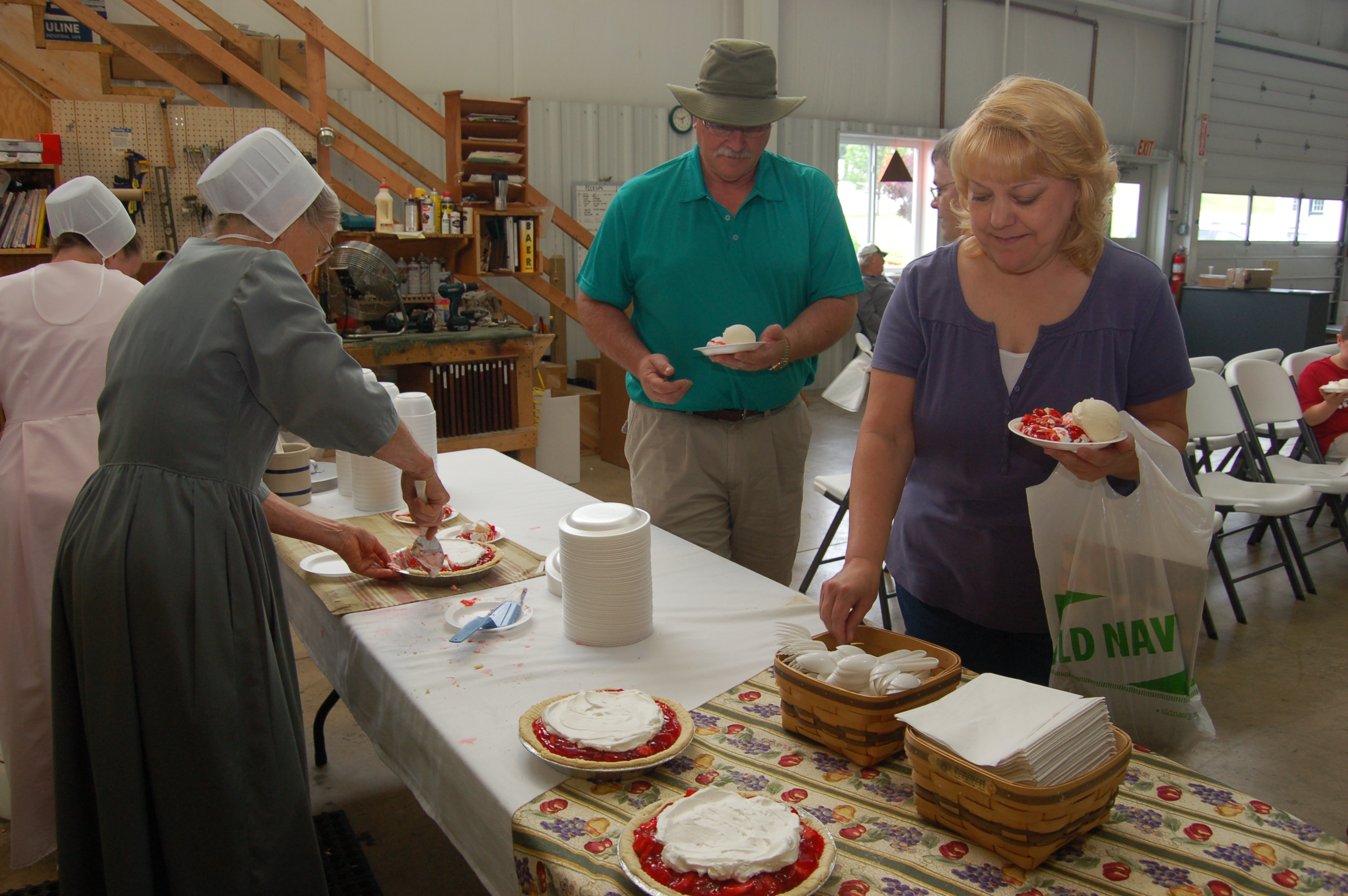
Strawberry pie and ice cream by Bruce Stambaugh
The delicious homemade strawberry pie and ice cream will again be offered free to all those who attend Homestead Furniture’s Strawberry Summer Fest, June 14-16 at Mt. Hope, OH.

By Bruce Stambaugh

People visit the world’s largest Amish population for many reasons. Nostalgia for the way things used to be, the friendly, plain folks, the delicious, affordable food, and the neat, quilt-patch farm fields often top the list.

Free pie and ice cream by Bruce Stambaugh
This youngster was pretty pleased with his free homemade strawberry pie and ice cream.

On June 14, 15, and 16, two more reasons will emerge. Visitors can enjoy free homemade strawberry pie and ice cream made on the spot at Homestead Furniture in Mt. Hope, Ohio.

The expansive furniture store, which specializes in customizing hardwood and upholstered furniture, will hold its 12th annual Strawberry Summer Fest on those three days. On average, the store serves up 350 pies and 150 gallons of machine-cranked ice cream over the three-day gathering, which draws hundreds of people from several states.
Strawberry pie by Bruce Stambaugh
The Strawberry Summer Fest is held each year to help welcome in summer. According to Homestead Furniture’s sales manager Todd Reese, the store chose strawberry pie and ice cream as symbols of the season to share with customers old and new.

Cortona dining table by Bruce Stambaugh
The Cortona dining room table is just one example the exquisite furniture design and built by the craftsmen at Homestead Furniture.
Besides the free food, Homestead Furniture will also hold a drawing for gift cards to the store. Prizes total $1,750. Of course, Homestead Furniture will offer special sales prices on all of its hardwood, upholstered, and leather furniture, excluding custom orders. Their only other sale is in October.

In fact, the Mt. Hope merchant’s annual Sundown Sale will be held on Friday, June 15. Most businesses in town, from the hardware store to the fabric store, will be open until 8 p.m. The merchants also have a special drawing.

Homestead Furniture by Bruce Stambaugh
Homestead Furniture, Mt. Hope, OH is a busy place during its annual Strawberry Summer Fest.

Homestead Furniture will be open from 8:30 a.m. to 8 p.m. on June 14 and 15, and 8:30 a.m. to 5 p.m. on June 16. The store is located at 8233 SR 241, just north of Mt. Hope.

Mt. Hope is located 35 miles southwest of Canton, 50 miles south of Akron, and 75 miles south of Cleveland in the heart of Ohio’s Amish country.

Ice cream by Bruce Stambaugh
Employees at Homestead Furniture in Mt. Hope, OH make homemade ice cream five gallons at a time over the three day event.

© Bruce Stambaugh 2012

Humbly accepting the Illuminating Blogger Award

Sunset by Bruce Stambaugh
By Bruce Stambaugh

Illuminating? I am not sure that term has ever been applied to me until now, unless you count the glare off of my baldhead. To me, sunrises and sunsets are illuminating. That said, I am both humbled and honored that this blog has been nominated for the Illuminating Blogger Award.

Illuminating Blogger AwardI am also a bit surprised, mostly because the nomination came from a food blog, Food Stories. Kindly check out that blog and you will discover that it is more than about food. I am not a foodie, and but I do enjoy food, although I do have to follow a special diet. I have written about that on this blog, too.

As part of the condition of acceptance of the award, I have to reveal one random fact about myself. You may find this hard to believe, but when I was young I had long, blond, curly hair. Look at me now.

I also need to nominate five other worthy bloggers. With so many excellent bloggers in the blogging world, that is a daunting task. I recommend these five bloggers:

If you want to be personally illuminated, visit Carrie Craig’s blog. Without a doubt, her words will inspire you.

Even at her young age, Hannah Karena Jones sheds some light on the art of writing at her blog. Waiting is important for writers.

Niki Fulton illuminates life with artsy photography and to the point descriptors. You can find her blog here.

For serious writers, Anita Nolan has the inside track on both information and inspiration. If you write, her blog is a must.

Finally, I thought it only appropriate to nominate a well-written and illustrated food blog. The Gourmet Wino does both.

I’m sure you’ll find these bloggers even more worthy of this nice award than me. Nevertheless, I do appreciate the kind gesture. It’s nice to know others appreciate your creativity, whether it’s revealed through writing or photography.

Thanks, again, to the kind folks at Food Stories.
Foggy sunrise by Bruce Stambaugh
© Bruce Stambaugh 2012

Employees gather for an evening of fun

Starting line by Bruce Stambaugh
Pine car racers were placed at the starting line for each heat of the pine car derby held at Homestead Furniture in Mt. Hope, OH.

By Bruce Stambaugh

The employees at Homestead Furniture in Mt. Hope, Ohio don’t just build incredible furniture. They know how to have fun together, too.

Their latest entertaining venture threw in a little competition. A pine car derby was held recently in the manufacturing building across the road from the retail store. Of course, they invited their families and had plenty of good food.

The congenial group enjoys the camaraderie of one another, along with some good, fun competition. When warehouse manager Dave Hostetler suggested a pine car derby, the race was on.

The track by Bruce Stambaugh
Dave Hostetler stands at the head of the pine car race track that he built for the event.
The contest was announced, and rules were distributed to whoever wanted to participate. In all, 22 employees bought a pine car kit and built their racer to the required specifications.

Each race car had to weigh no more than five ounces. The maximum length was seven inches and the rear width of the car was two and three-fourths inches. Contestants were encouraged to be creative with their car designs. Given the creativity of the staff at Homestead Furniture, that turned out to be a given.

The cars varied in style and color. One entrant, Noah Shetler, even entered two pink cars in honor of his wife’s battle with breast cancer. One car was numbered 08 for 2008 when his wife was diagnosed. Number 11 was for 2011 when his wife was declared cancer free after several rounds of chemotherapy treatments. One of the more original racer designs was a racer built in the shape of an outhouse.

Ada Marie Troyer dedicated her car, and her eventual winnings, to her niece who was recovering from critical injuries sustained in an automobile accident. Her car was named Best of Show.

Hostetler built the track 31 feet long, five feet high at the start. It was a two-slot track with a steep slope that the cars raced down to the finish line. Two cars raced per heat, with the winner going to the winner’s bracket, and the loser to the loser’s bracket. Once a racer lost twice, they were eliminated from the competition.

While the race went on, family members enjoyed homemade snacks that each family brought. Owners Ernest and Barbara Hershberger provided the hot dogs and beverages.

Finish line by Bruce Stambaugh
Todd Reese, Sales Manager at Homestead Furniture, closely watched the finish line at the pine care derby.
With the audience gathered around the black and yellow painted racetrack, judge Daniel Troyer watched over the finish line to declare the winner of each heat. In several races, only the nose of a race car determined the winner.

In the end, none of the other racers could match the sleek racer built by LaVern Hershberger. In fact, his car never lost a race.

Asked what his secret to winning was, LaVern said he baked his car prior to the race. Baking it reduced the moisture content, thus reducing the weight, he said. This allowed him to place weights where they were critical to making the car run smoothly.

winnerbybrucestambaugh
LaVern Hershberger, the eventual winner of the pine car derby, tweaked his racer before the first heat.
LaVern also said he waited until the last minute to lubricate the car’s tires with powdered graphite. He declined, however, to say how long he baked his car, citing proprietary secrets.

LaVern won $100. Shetler finished second, winning $75, which he donated to Sisterhood of Hope, a support group for breast cancer victims. Krissy Yoder finished third and won $50.

Ada Marie Troyer donated her $33 winnings to her niece to help cover medical expenses.

It was a fun evening overall, mingling teamwork with fellowship, always a winning combination.

Homestead Furniture is located in the heart of the world’s largest Amish population at 8233 State Route 241, Mt. Hope.

Pine car racers by Bruce Stambaugh
Just some of the original designed cars that participated in the pine car derby at Homestead Furniture in Mt. Hope, OH.

© Bruce Stambaugh 2012

Lakeside daisies are in early bloom

Lakeside Daisy Nature Preserve by Bruce Stambaugh
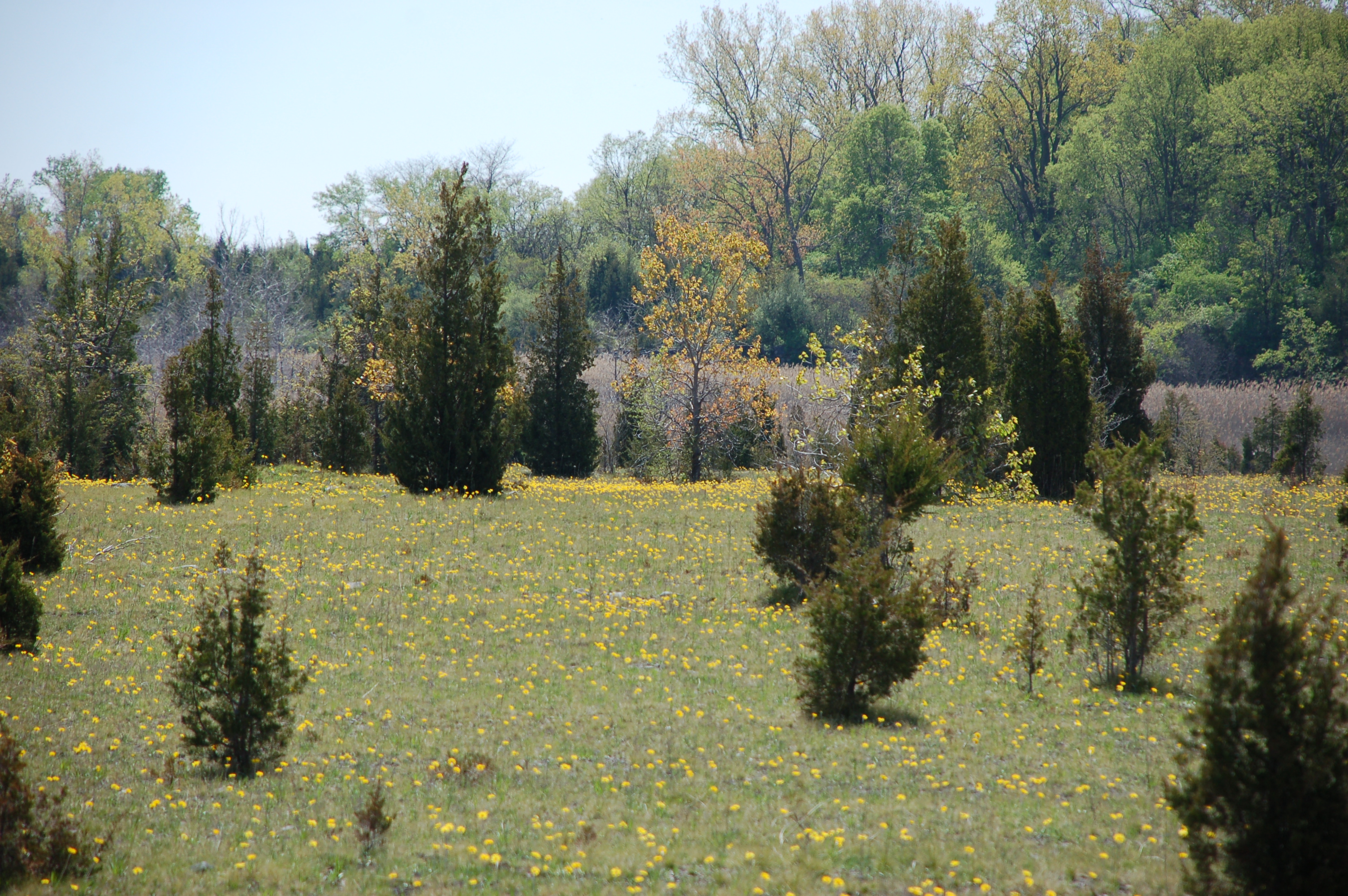
Daisies in full bloom at the Lakeside Daisy Nature Preserve near Marblehead, OH.

By Bruce Stambaugh

Bee and daisy by Bruce StambaughThe Lakeside daisies are in full bloom. That may not sound like earth-shattering news. But apparently due to the unusually warm winter here in Ohio, the daisies, like most other flowers, plants and trees, are blooming early. Plus, if you are a lover of all things nature, and especially wildflowers, you don’t want to miss this yellowy exhibition.

The Lakeside daisies are particularly special. They only bloom in a limited number of locations on or near the Marblehead Peninsula in northwest Ohio. In addition, their buttery blooms only last a week before they begin to fade. If you want to see them in person, you had better make tracks to the Lakeside Daisy Nature Preserve near Marblehead. My wife and I were there Sunday, and the preserve was a splash of yellow against the dull limestone gray ground.

The daisies growing in a small patch inside Lakeside were beautiful, too. They’re located right along the Lake Erie shore at the east end of Lakeside near Perry Park.

Lakeside daisies by Bruce Stambaugh
A bee enjoys one of the daisies in a clump of Lakeside daisies in a small preserve in flower’s namesake, Lakeside, OH.

Unfortunately it looks like the blooms will be gone before Marblehead’s annual Daisy Days scheduled for Mother’s Day weekend. Naturalists will lead walks through the preserve, so you can still learn a lot about the lovely little flower even if they aren’t blooming.

The Lakeside daisy (Hymenoxys herbacea) has been listed as an endangered species by Ohio since 1980. If you can’t make it to see this beautiful flower in person, enjoy the photos I took Sunday. If you look closely, you’ll notice some of the petals on the flowers are already starting to wilt.
Nature Preserve sign by Bruce Stambaugh

Lakeside Nature Preserve blooms by Bruce Stambaugh

Clump at Lakeside by Bruce Stambaugh

Daisies at Lakeside by Bruce Stambaugh

Daisies at Lakeside, OH by Bruce Stambaugh
© Bruce Stambaugh 2012

Jeanty reflects on Haiti two years later

Jeanty family by Bruce Stambaugh
The Jeanty family: Fritz, Mamie, Benjamin, Samuel and Glory

By Bruce Stambaugh

For the second time in two years, Fritz Jeanty and his family are back in Millersburg, Ohio. They are refugees from the devastating earthquake that hit Port-au-Prince, Haiti, January 12, 2010.

Fritz remembers the exact time the huge earthquake hit, 4:45 p.m. He was there among all the horror and destruction, desperately trying to return to his family. He eventually made it home all right, and his wife, Mamie, and two sons were badly shaken but otherwise fine. Other family members weren’t as fortunate.

Using his basic survival instincts and his canny astuteness to save phone numbers, Fritz was able to make connections to come to the United States. After a harrowing trip to Florida, Fritz and his family eventually ended up in Millersburg.

With the help of many people and local organizations, the Jeantys settled in to life here. Fritz, unable to legally work under the terms of his visa, spent his time volunteering at Save and Serve Thrift Shop in Millersburg.

Fritz was antsy to return to his home country, however. After much planning, he and his family returned to the impoverished island country January 26, 2011. He was full of hope. Fritz wanted to rebuild their home, start a new business based on his Save and Serve experience, and rejoin friends and family.

What the Jeanty family found upon return was excruciatingly familiar. The devastation that Fritz saw initially was still there.

“Nothing had changed,” Fritz said, his brown eyes in deep reflection.

The rubble was everywhere. He said only the non-governmental organizations (NGO) were making any progress, and that there weren’t enough of them.

“People still live in tents,” Fritz said. In fact, the city was even more populated than after the earthquake that killed 300,000.

“People from the country heard there was food and housing in the city,” Fritz said. Neither was true, but the people remained, complicating an already problematic situation.

Fritz’ dream was to establish a used clothing store similar to Save and Serve. That proved unfeasible. He sold two loads of clothes he had obtained, but had little to show for his efforts.

“There were no jobs,” Fritz said. “People didn’t have money.”

The first three weeks Fritz and his family stayed with friends until they could get their heavily damaged home temporarily livable. The goal was to reconstruct their home adjacent to their destroyed one.

A retaining wall had been previously constructed. Fritz built one room in which the entire family lived. A few months later, he added a kitchen. Christian Aid Ministries, headquartered in Berlin, Ohio, helped with the cleanup of the house. Other Holmes County churches, organizations and individuals assisted the family financially.

They still didn’t have running water. Electrical power was erratic at best, being available only on an average of eight hours a day.

Besides the lack of jobs and housing, there were other social problems that permeated Haitian society, too, according to Fritz.

The crime was the worst. The Jeanty family fell victim to that like so many others had there. During the night, hoodlums locked the Jeanty family in their own house, and stole the battery out of Fritz’ vehicle, and vandalized it.

Their house was burglarized after they left for Millersburg in January, too. Fritz said robberies and murders had increased exponentially.

“There were about 100 murders every three months,” Fritz said forlornly.

Another problem in Haiti has been the ongoing cholera outbreak. With Mamie pregnant with their third child, and proper medical care scarce, Fritz realized he had to do something. With another visa, he returned his family to the familiar and much safer surroundings of Millersburg January 18.

Because Mamie had had difficulties in previous pregnancies, Fritz didn’t want to take any chances. Happily, their first daughter, Glory Jeanty, was born healthy and well March 23 at Aultman Orrville Hospital.

The Jeanty family is again being supported by donations from local groups and individuals. They live in a home owned by the church they attend, Millersburg Mennonite. Their six-month visa expires July 17 with their future uncertain after that date.

© 2012 Bruce Stambaugh
This story appears on http://www.holmesbargainhunter.com/.

The Very Inspiring Blogger Award bestowed and humbly accepted

By Bruce Stambaugh

One of the primary reasons I write is to inspire others. I enjoy writing about the everyday experiences of life, weather, history, human interaction, nature, and genuine kindness. I also enjoy illustrating my blog posts with appropriate pictures that I have taken, and am glad when comments are made about those as well.
Very Inspiring Blogger Award
When Sandra Madeira nominated me for the Very Inspiring Blogger Award, I was greatly honored. Thank you, Sandra. Nearly a year ago, Sandra embarked on a mission of her own, posting a daily writing tip. I have been following her writings from the other side of the big pond in London all year. Other than the crazy English spellings, like colour, realise and practise, I have found her offerings insightful, and inspiring, especially since she works fulltime and has a family to care for. She definitely deserved the award.

In addition to thanking the giver of the Very Inspiring Blogger Award, I also have to tell you seven random facts about me. This must be the bureaucratic part of the award. In no particular order, they are:

1. I always wanted to play third base for the Cleveland Indians.
2. Failing at that, the best I could do is buy tickets on the third base side of Progressive Field.
3. I do the severe weather spotting for the National Weather Service for where I live, which is in the middle of the world’s largest Amish population in Holmes County, Ohio.
4. Our house is built on an Amish farm.
5. I’m Mennonite, not Amish. They’re the ones with the beards. Oh, wait. I have a beard. Never mind.
6. I was a volunteer firefighter and emergency medical technician for 27 years in our rural county.
7. When I was young, I had long, blonde, curly hair. Look at me now.

The other element in accepting this fine award is that I get to nominate seven other bloggers for the same award. Again, in no particular order, they are:

Claire inspires through her amazing urban photography, spontaneous, real and truly inspiring.

Check out her blog, and you’ll see just how inspiring Carley Evans is.

I’ll put the disclaimer right up front. Mic Miller is a friend of mine. Nevertheless, I think you’ll find his insightful comments and photography very inspiring.

Inspiring pretty well states the purpose of Karen Chandler’s blog.

Kerry Leibowtiz’s photographs will take your breath away.

If Matt Posky’s commentary and drawings don’t inspire you, they’ll at least make you think.

Babak is a student studying in Amsterdam. Given his interests shared on his posts, you’ll find inspiration in many forms. To make that point, he was recently Freshly Pressed by WordPress.com, and that certainly is a good thing.

Check them all out, and thanks, again, to Sandra for thinking of me.

Unwanted attention: Amish and the media

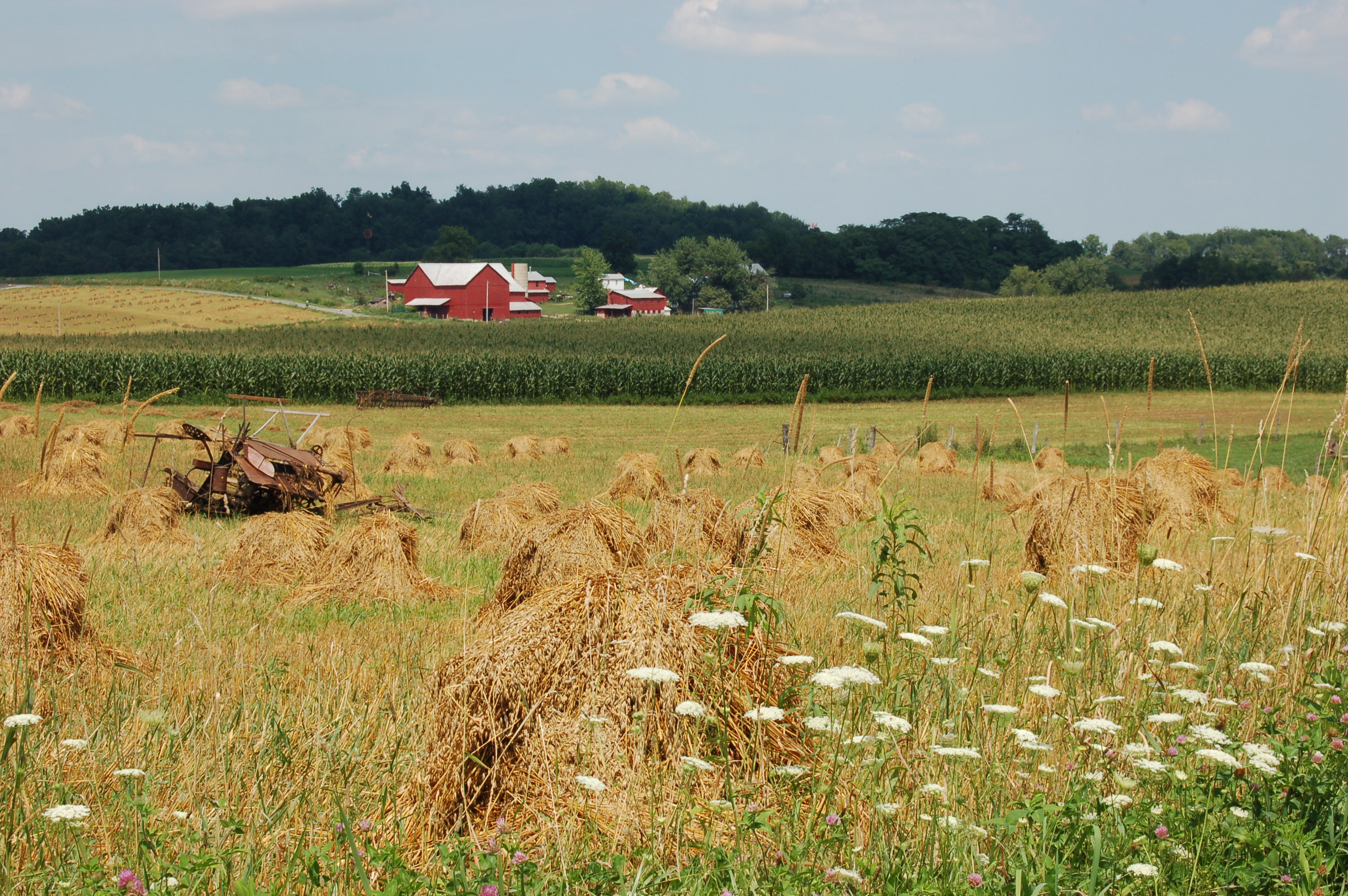
Wheat and corn by Bruce Stambaugh
Picturesque rural scenes like this one attract millions of people every year to Ohio's Amish country.

By Bruce Stambaugh

The Amish in the Holmes County, Ohio area have been in the news in recent months, and the news hasn’t always been good. The bizarre hair-cutting incidents, murders, financial fraud and accidental shootings all had the bright lights of media coverage shining on the normally peaceful and private Amish folks.

By faith and by lifestyle, the Amish wanted none of the attention. Yet, Amish are humans, and subject the same extremes and circumstances as any other individual, family or group of people. When something disturbing and uncanny happens among the world’s largest Amish population, the media swoop in to tell the world about it.

Certainly, the media has its right and responsibility to report stories it deems important. When it comes to radical events concerning the Amish, like the renegade group led by Sam Mullet of Bergholz, Ohio, it seems the world can’t get enough information.

Indeed, that desire to know is understandable, especially when it involves the normally reserved Amish. Violence in a usually peaceful and peace-loving community is an anomaly, and definitely incongruous with the Amish lifestyle.
Spring plowing by Bruce Stambaugh
The problem is, of course, that the Amish really want nothing to do with publicity, whether positive or negative. Humility is a main premise to their way of life. They believe that no member should be the center of attention, whether for doing good or doing ill. The Amish culture is centered on community, not individuality.

It is when the extraordinary in the community occurs, like the recent hostile beard cutting incidences, that that norm is broken. The unusual acts are extensively reported, and the world responds with questions and fascination. Again, the Amish prefer not to be featured as a general rule. But they also want the world to know that these extreme human behaviors are exceptions, not the rule, in the regular work-a-day-world.
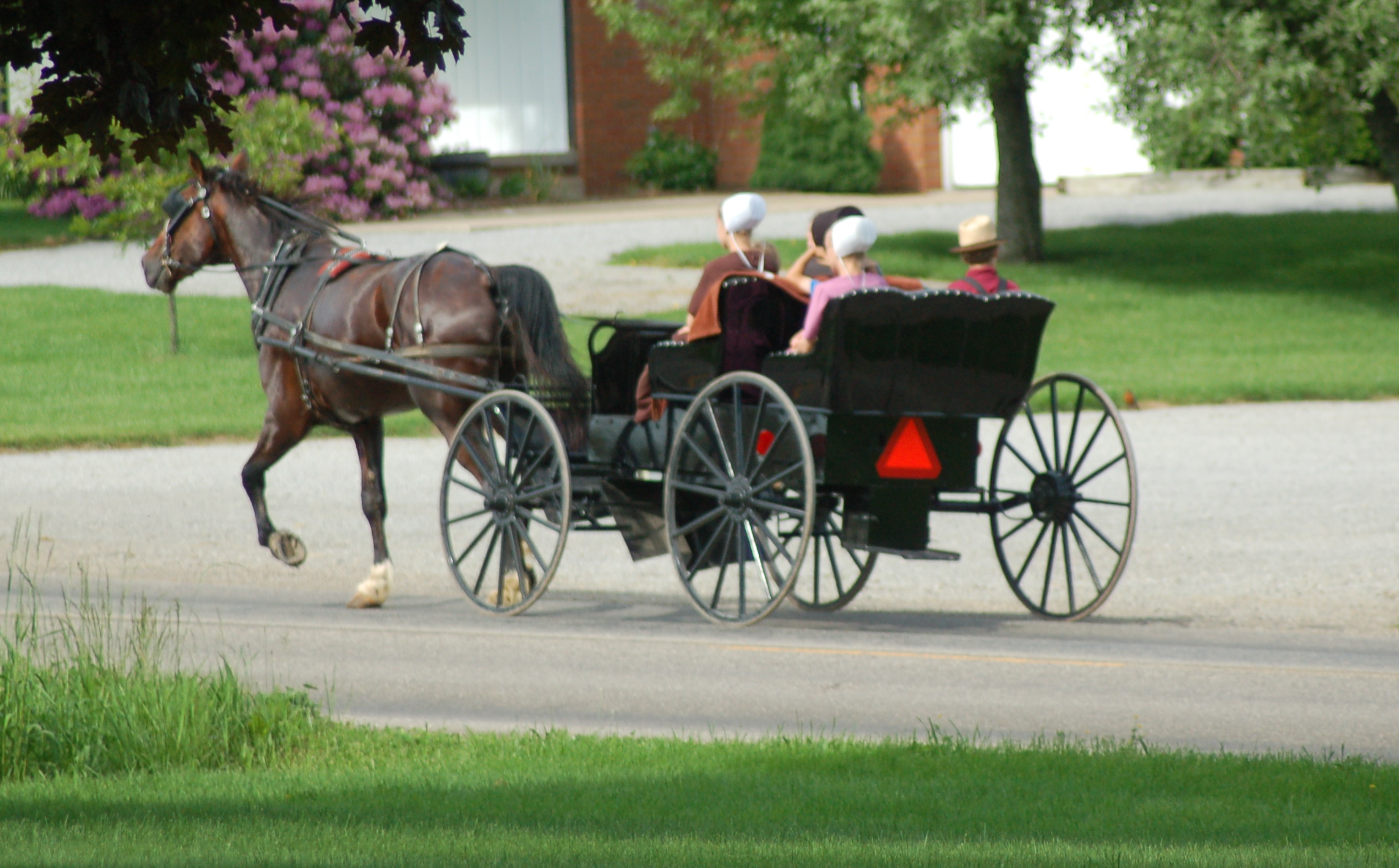
Open buggy by Bruce Stambaugh
Just their choice of slower living lifestyles alone actually brings about media attention to Amish country. Many film and TV documentaries have been recorded and broadcast depicting the Amish and their less hectic lifestyle. Unfortunately, many of these productions often misinterpret or misrepresent the Amish and their values. When that unusual lifestyle is interrupted by extreme circumstances, the reporters from around the world flock in to get the scoop.

The Amish deplore any violence, whether it is done to them or others. In the case of the accidental killing of a 15-year old girl riding in a buggy, the shooter himself was Amish. Within days, the two families reconciled privately, saddened by the unfortunate and unexplainable one in a million chance that took a young life. The families forgave, and worked at getting on with life as best they could. That precious act of communing drew no media attention, which was just fine with all involved.

The Amish understand society’s need to know. They just don’t want to have their beliefs violated in gathering the sordid facts. If they do agree to a rare journalistic interview, Amish do not want their faces shown on television or in the newspaper.

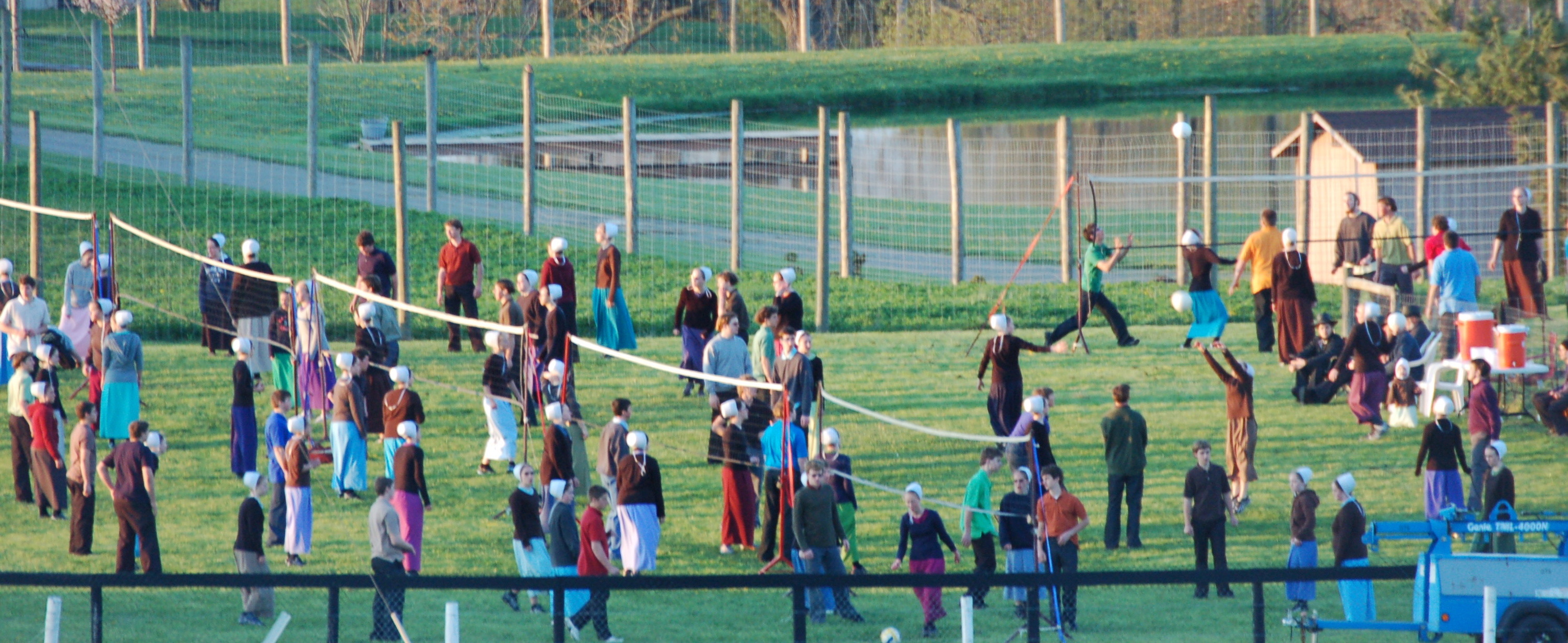
Volleyball by Bruce Stambaugh
Amish youth meet regularly for hymn sings, bible study and good old-fashioned fun, like a volleyball tournament. No trophies are awarded, and there are no losers.

That bit of advice certainly should be followed by anyone visiting Amish country. Knowing that Amish prefer not to be photographed, it is best to take pictures of them from the back and from afar. In other words, take a picture of a field being plowed with the horses and farmer going away from the camera.
Serving by Bruce Stambaugh
Out of respect for their beliefs, facial pictures of Amish adults should be avoided.

When in a large crowd with mostly Amish folks like at one of the area’s numerous benefit auctions, be sensitive to the setting. Photographs of individuals would be discouraged.

The global media infrequently descends upon Amish country to report unusual stories. When they do, the Amish prefer to steer clear of any of the attention. They understand that the story needs to be told. They just don’t want to be a part of it.

This article appears in the current edition of Ohio’s Amish Country.

Being more visible is no accident

By Bruce Stambaugh

It’s no accident that buggies, pedestrians and bicyclists are easier to see when traveling the hilly and curvy roads of the area.

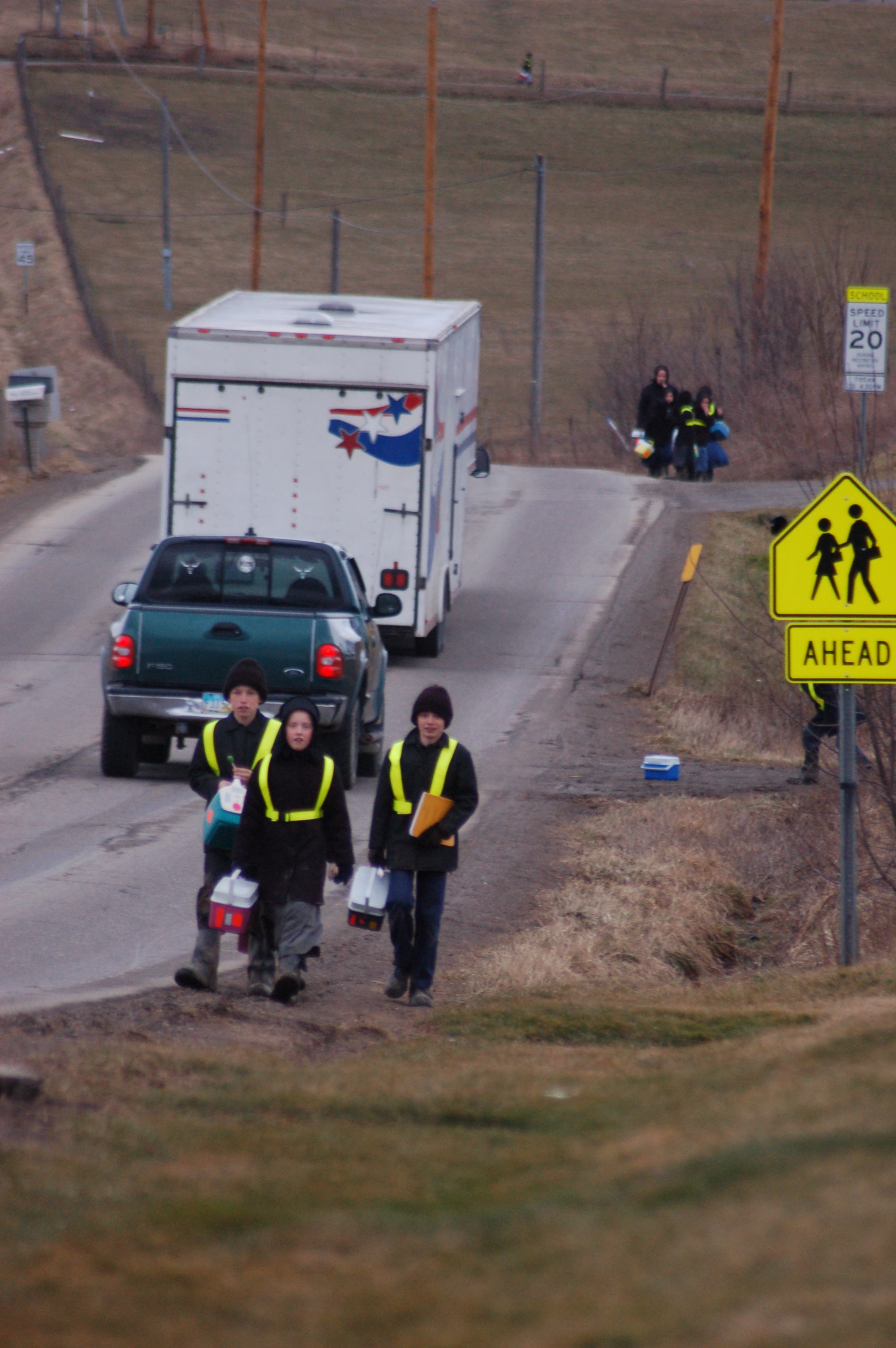
Visible walkers by Bruce Stambaugh
Pedestrians, like these Amish school children, are much more visible since they started wearing day glow vests.
The Amish Safety Committee, made up of three Amish men, has been working for 18 years to educate their constituency on road safety. The most recent focus has been on improving visibility.

Drivers who frequent the Amish areas of Holmes, Wayne and Tuscarawas counties can literally see the impact the committee has made. Recognizing the importance of being seen, lighting has been the biggest improvement. In addition to the required slow moving vehicle orange triangle on the rear of the buggy or cart, most horse-drawn vehicles are now well lighted.

“The biggest factor in most car/buggy accidents is speed,” said Wayne Hochstetler, of rural Millersburg, and a member of the safety committee. “Drivers just can’t judge how fast they come upon a dark colored buggy.” Church rules stipulate that buggies be black in Ohio.

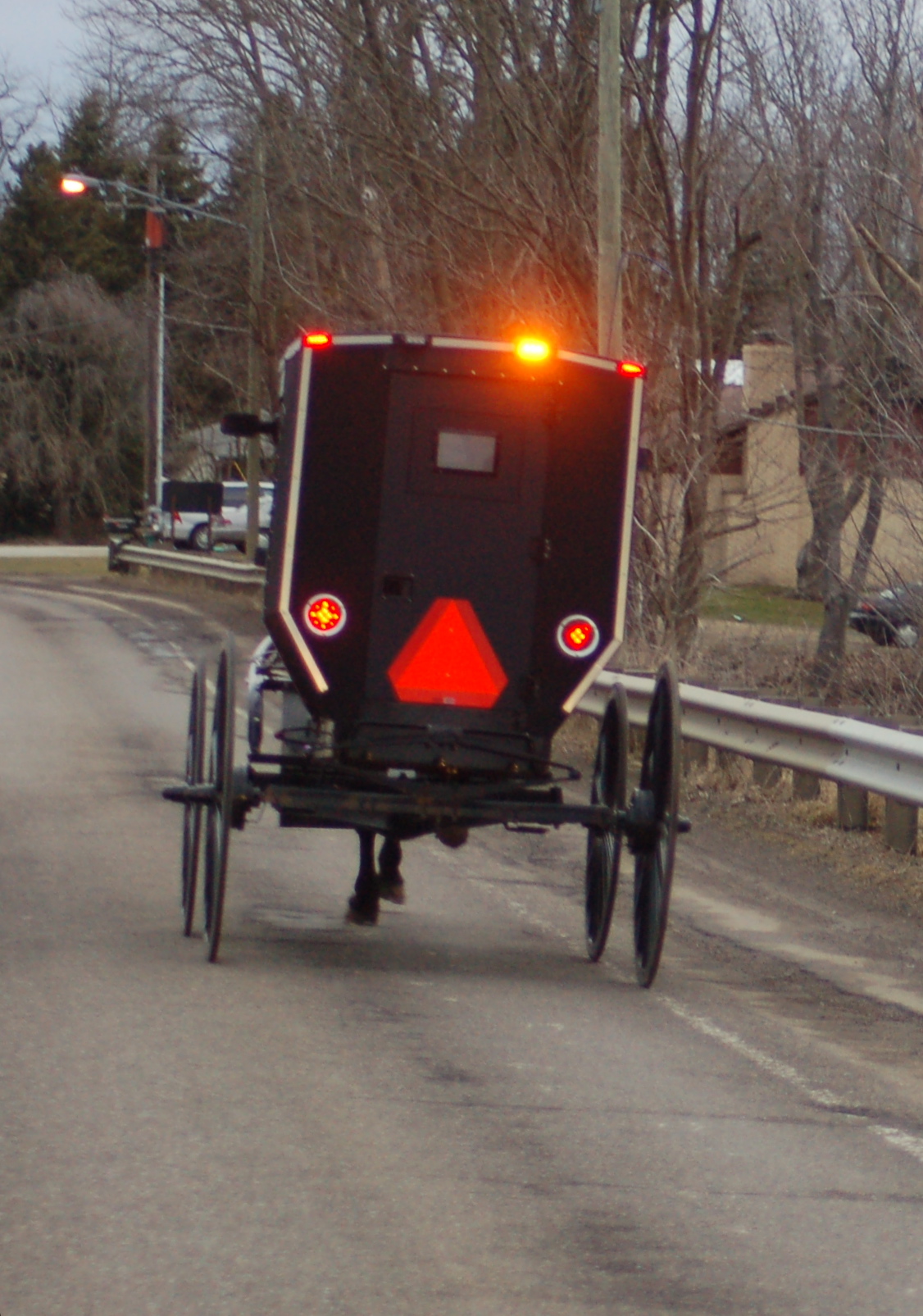
Visible buggy by Bruce Stambaugh
Amish buggies, like this one in Holmes Co., OH, are much easier to see thanks to improved marking and lighting.
“The biggest help has been the blinking amber light,” Hochstetler said. The light is usually centered at the top of the back of the buggy. It operates on batteries, and some models even provide varying blinking patterns.

“The blinking light tells the driver that a buggy is ahead sooner than the triangle does,” Hochstetler said. The committee has suggested other lighting for buggies as well.

“We encourage people to use taillights and running lights for both the front and back,” Hochstetler said. Rear lights are imbedded in the body of the buggy, while running lights are on both sides of the buggy.

The rear lights are red, just as they would be on a motorized vehicle. The running lights serve as a form of headlight, although, according to Hochstetler, they are used more to be seen than afford light for the buggy operator to see.

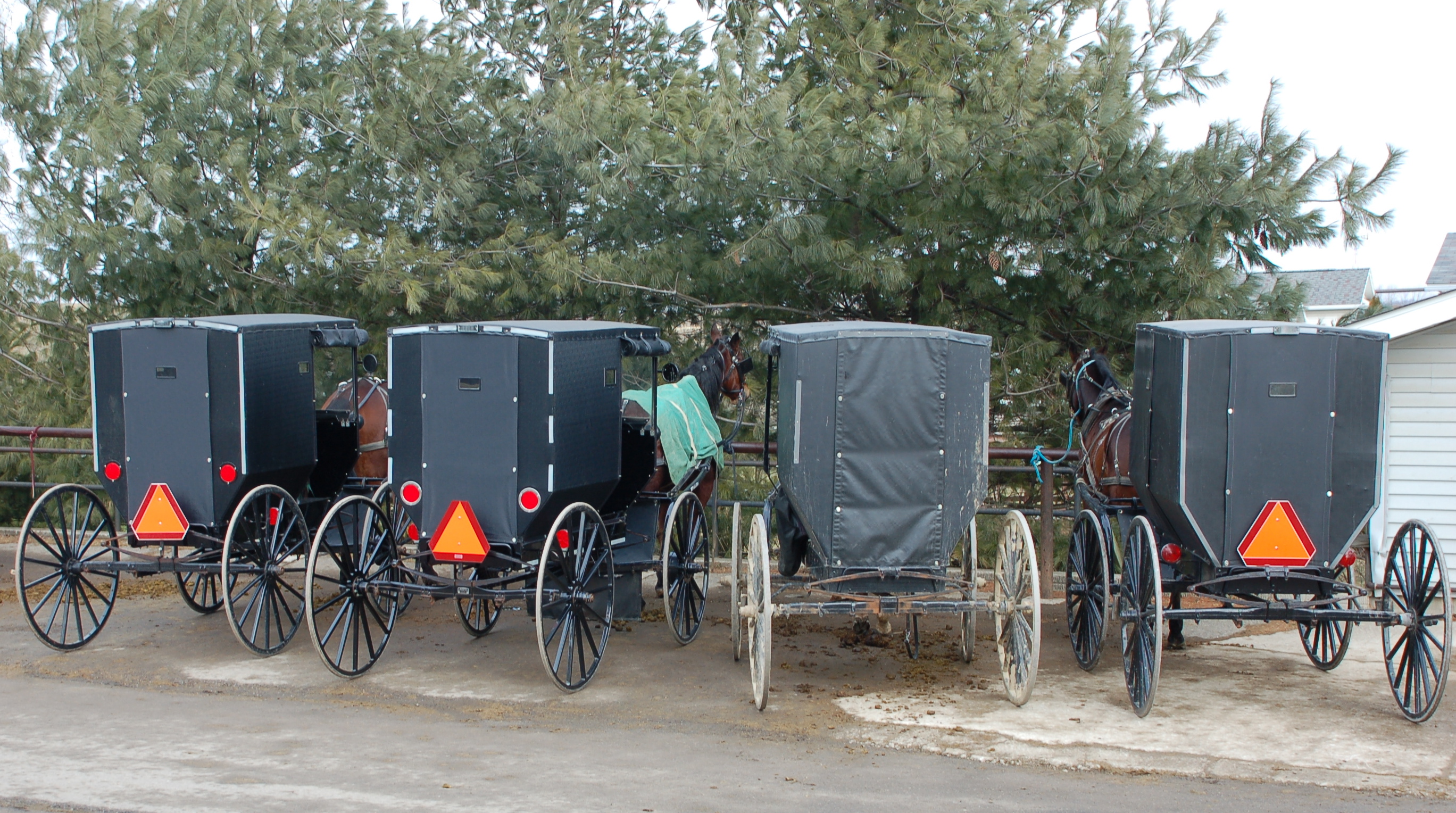
Tied buggies by Bruce Stambaugh
Amish buggies are marked with Slow Moving Vehicle orange triangles, reflective tape, and lights. How they are marked is determined by the church district to which they belong, or which sect of Amish, like the Swartzentruber buggy with no SMV.

In addition, smaller lights are often used on the top front of the buggies, too. These are white, amber or sometimes blue, though law enforcement discourages the latter. Most of the new lighting is LED lamps, which create a brighter, easier to see light. Most buggies also have white reflective tape that outlines the back of the buggy.

The illumination improvements haven’t been confined to horse-drawn vehicles either. Many pedestrians and bicyclists now wear reflective and lighted vests for easier visibility. Like the buggy lights, the lighted vests blink at night. Some walkers use LED lamps attached to their hats in order to be seen by oncoming traffic.

Bicycles also use red blinking taillights and bright white headlights. Reflective straps are also used around horses’ ankles and on the shafts of the buggies to which they are hitched. This permits reflectivity from traffic approaching from the side.

Safety sign by Bruce Stambaugh
Drivers of all kinds are reminded to drive safely in Amish country.

Besides Hochstetler, other committee members are Gid Yoder and Rueben Schlabach. Detective Joe Mullet, of the Holmes County Sheriff’s Office, and Lt. Chad Enderby, of the Wooster Post of the Ohio State Highway Patrol, serve as ad hoc advisory members.

Hochstetler said that the grassroots efforts of the committee have been so well embraced by the Amish in Holmes, Tuscarawas and Wayne counties that they have been invited to help form other safety committees in other Ohio Amish communities.

“We have even been asked to share in other states like Indiana, Michigan and New York,” Hochstetler said.

Mullet said that even the Swartzentruber Amish, the lowest order of the sect, are now using two lighted lanterns with front and rear lens. They formerly used only one.

Mullet said that he spends several days a year visiting Amish parochial schools to teach the students practical safety measures. They include the proper way to walk and ride bikes to and from school, and encouraging wearing the day glow vests.

Mullet said he often tells personal stories to make it more meaningful for the students. Mullet also has an advantage in keeping the students’ attention since he can speak Pennsylvania Dutch with the students.

In addition to being proactive on safety, the Amish for several years have paid a self-imposed donation to the Ohio Department of Transportation to help improve area roadways. Hochstetler said each church district has a person designated to annually collect donations for each horse-drawn road vehicle owned by the household.

ODOT shares the money with county and township officials for local road improvement in areas where Amish live. The money is intended to be a monetary substitution for road improvements in lieu of paying gasoline taxes, which owners of motorized vehicles pay each time they buy fuel.

Buggy lane by Bruce Stambaugh
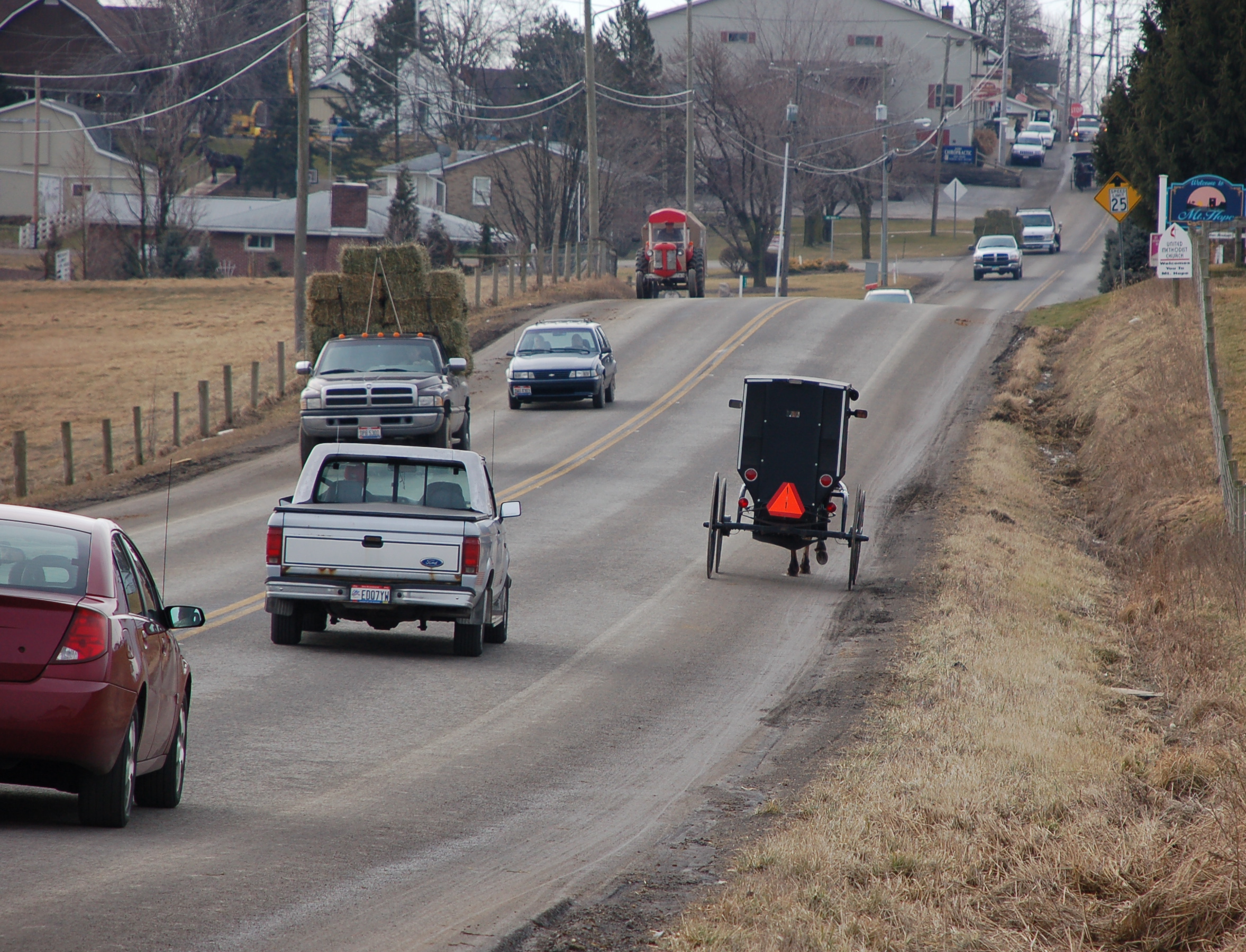
Donations by Amish families to the Ohio Dept. of Transportation help construct and maintain buggy lanes for safer traffic flow. This buggy was traveling near Mt. Hope, OH.

This sugar shack produces more than maple syrup

Sugar shack by Bruce Stambaugh
The sugar shack sits adjacent to the woods on Gary Miller’s farm west of Millersburg, Ohio.

By Bruce Stambaugh

I had often heard about the sugar shack. A group of guys I knew, mostly from our church, had formed an informal co-op. The goal was to make and offer maple syrup, with the donated proceeds going to a scholarship program for students in rural Honduras.

My journalistic nosiness finally got the best of me, and I ventured out one chilly day when the sap was running strong. My intent was to write a story for a local weekly newspaper. What I discovered went far beyond what any feature story could represent. Here were a few good men who through sheer determination made this sweet enterprise work. They worked cooperatively out of a common desire to succeed, not out of individual or corporate profit. Indeed, there were no profits. The money collected through donations went to the scholarship program.

Stoking the fire by Bruce Stambaugh
Tim Roth, left, and Paul Conrad stoke the fire of the sugaring evaporator system.
This endeavor was borne of commitment, desire, effort, camaraderie, purpose, joy, ingenuity, and sacrifice, all with rewarding results. And to think that it all started with the landowner, Gary Miller, standing in the rain dreaming of making maple syrup. Miller never envisioned how far his idea would go.

“Three years ago,” Miller said, “I was standing in the rain under an umbrella boiling sap in an assortment of old used pans on my grill.” Miller lives on a small farm west of Millersburg, Ohio.

Miller shared his idea with his friends, and the sugar shack quickly became a reality. The structure itself was donated to Miller. A friend, Paul Conrad, had an old shed he told Miller he could have, and Miller’s sons moved it in seven different sections for him. Once on site, the building was reassembled, reusing the old lumber. Since then, its design and size has been tweaked and expanded.

That process set the tone for what was to come. Much of the equipment used by Miller and his friends has been refurbished as some part and purpose of the maple syrup operation.

Tree taps by Bruce Stambaugh
Paul Conrad, left, and Bobby Miller check one of the 400 taps in Gary Miller’s woods.

Indeed, when the sap is moving like it is now, so does this voluntary collection of Miller’s friends and family who assist with the project. They placed 400 taps in sugar, red and black maple trees.

“We are careful about how many taps we place in a tree,” Miller said. “We don’t want to stress them.”

Like most farming efforts, preparing for the sap harvest takes a lot of preparation, and can be an ongoing project. Recently a shed was built to store the chords of firewood needed to heat the boiling process. Of course the friends also helped split and stack the wood that fuels the fire that boils the sap on a homemade evaporator. True to form, the gregarious crew also put that together. Much of that ingenious system consists of recycled metal and other repurposed materials.

The wood stove that holds the fire that boils the sap belonged to Scott Sponsler, another friend. The stove was extended with metal from old toolboxes from a pick up truck that Miller owned. Miller had a fan rebuilt and some ductwork manufactured locally. Together they help distribute the heat generated by the wood stove. The heat evaporates the sap into syrup.

The sap enters the sugar shack from another recycled item, an old bulk tank rescued from an unused milking parlor. It is held up by a repurposed metal stand so the sap flows by gravity into a smaller holding tank inside the old wooden shed.

Gary Miller by Bruce Stambaugh
Gary Miller explained how the sap is heated by running through a maze of troughs in order for it to become maple syrup.

From there, the sap runs into a customized sheet metal maze that allows the sap to be evaporated as it circulates up and down the four parallel troughs. After entering a second connected metal maze, the sap begins to change color. It is closer to the firebox and the pre-heated sap really begins to boil. Its darker color indicates that the moisture is being bubbled away.

Miller said that the sap isn’t officially maple syrup until its consistency is at least 66.9 degrees brix, as measured by a hydrometer. Miller said with this set up, it takes 51 gallons of sap to produce a gallon of syrup.

Miller and his friends make the syrup when the sap is running. He said warmer days and cooler nights are the best conditions to make the sap run. When the sap runs, so does this gang of close friends and family members. When the sap is running, his shack and the surrounding woods are very busy places indeed.

Pouring sap by Bruce Stambaugh
Scott Sponsler poured sap from the collection bucket into a 15-gallon container, which was hauled back with several others to the sugar shack via tractor.
Before it is pumped into the elevated holding tank, the sap is gathered into 15-gallon containers from each tap bucket. The containers are carried on the back of a small tractor. In keeping with the pattern, the tractor was loaned, too.

All the free equipment and labor is only appropriate. Miller said the maple syrup that is produced is not for sale, although it does have a name, Smoke Pit Maple Syrup.

“This is not a commercial operation,” Miller emphasized.

Instead customers get to donate whatever they feel the syrup is worth. The money is used for an educational scholarship program in Honduras. Miller’s Sunday school class at Millersburg Mennonite Church is financially sponsoring the schooling of several children there.

Roy Miller, a retired Holmes County family physician, serves as the unofficial coordinator of activities. He even travels to Honduras several times a year and meets with the students, their parents and the local church leaders who oversee the scholarship program there.

With all that said, Gary Miller revealed the secret ingredient in the maple syrup production as far as he is concerned.
“It’s not about the syrup,” Miller said. “It’s about the fellowship.”

Indeed, laughter and kibitzing among the friends intermingle with the steam from the cooking sap in the cold, small shack. The steam and merriment waft together out into the cold air through the open doorways. The good-natured ribbing helps make the labor-intensive sugaring efforts all the sweeter.

In that initial visit, I was impressed with the care given to producing a quality product, and with the interpersonal interaction that makes this particular micro business the all around success that it is.

It was clear to me that two pure products are produced at the sugar shack. High quality maple syrup created for a great cause is the tasty finished product. Genuine, committed friendship that knows no bounds and has no earthly measure is the dividend.
Persons interested in obtaining some of the Smoke Pit Maple Syrup should contact Gary Miller at 330-763-0364.

Hydrometer by Bruce Stambaugh
Gary Miller demonstrated how he checks the sugar content of the maple syrup using a hydrometer.

This story appears in the current edition of Farming Magazine.