

Knowing the times for high and low tides is critical when you live or vacation on the coast. That was especially true in our case.
The cottage was located on a hillside overlooking a cove. When it was low tide, we had a beach. When high tide occurred, we had all the water between the cottage and the state park, a mile across.
Low tide exposed an extended sand bank on both sides of the Little River that trickled into the Atlantic. East of the river was a state park that drew lots of people seeking relief from the warm summer days.
The biggest crowds occurred when the tide was low. Young and old people alike could romp in the sand or play in the low water of the small river that ran in front of the cottage.
It was tempting to wade through the stream’s inches of water and check out what was on the other side. But getting distracted in such play and losing track of time might mean a long walk around to return to the park. Though the state park was only a mile away, the way the gulls flew, it would be a seven-mile hike if you ignored the rush of the incoming tide.

With no intention of wading across the water, I used the morning low tides for another reason. Songbirds and shore birds were the most active before the heat of the day. I ventured out before breakfast to see what I could find.
I donned long pants, a long-sleeved shirt, and applied bug spray to protect myself from the biting flies and stinging mosquitoes. Just north of the cottage, a beach access led to a small marsh.
I hadn’t even reached the marsh when I discovered the mosquitoes seemed more attracted than discouraged by the insect repellent. Consequently, I did a lot of swatting as I birded.
It wasn’t long, however, before I got a surprise I couldn’t have imagined. A fledging shorebird fresh out of the nest wobbled on unsteady legs in a dry depression among the marsh grasses.
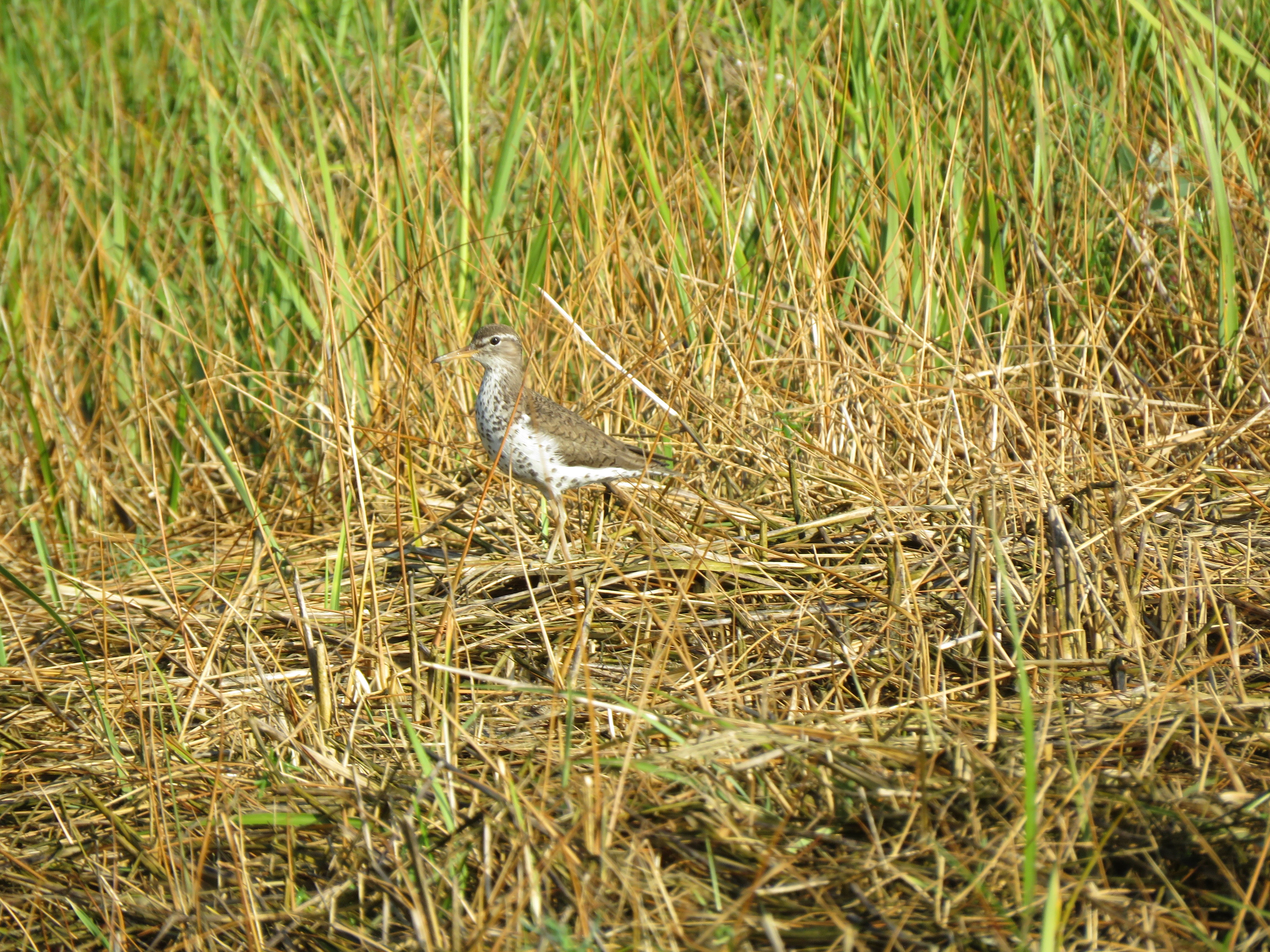
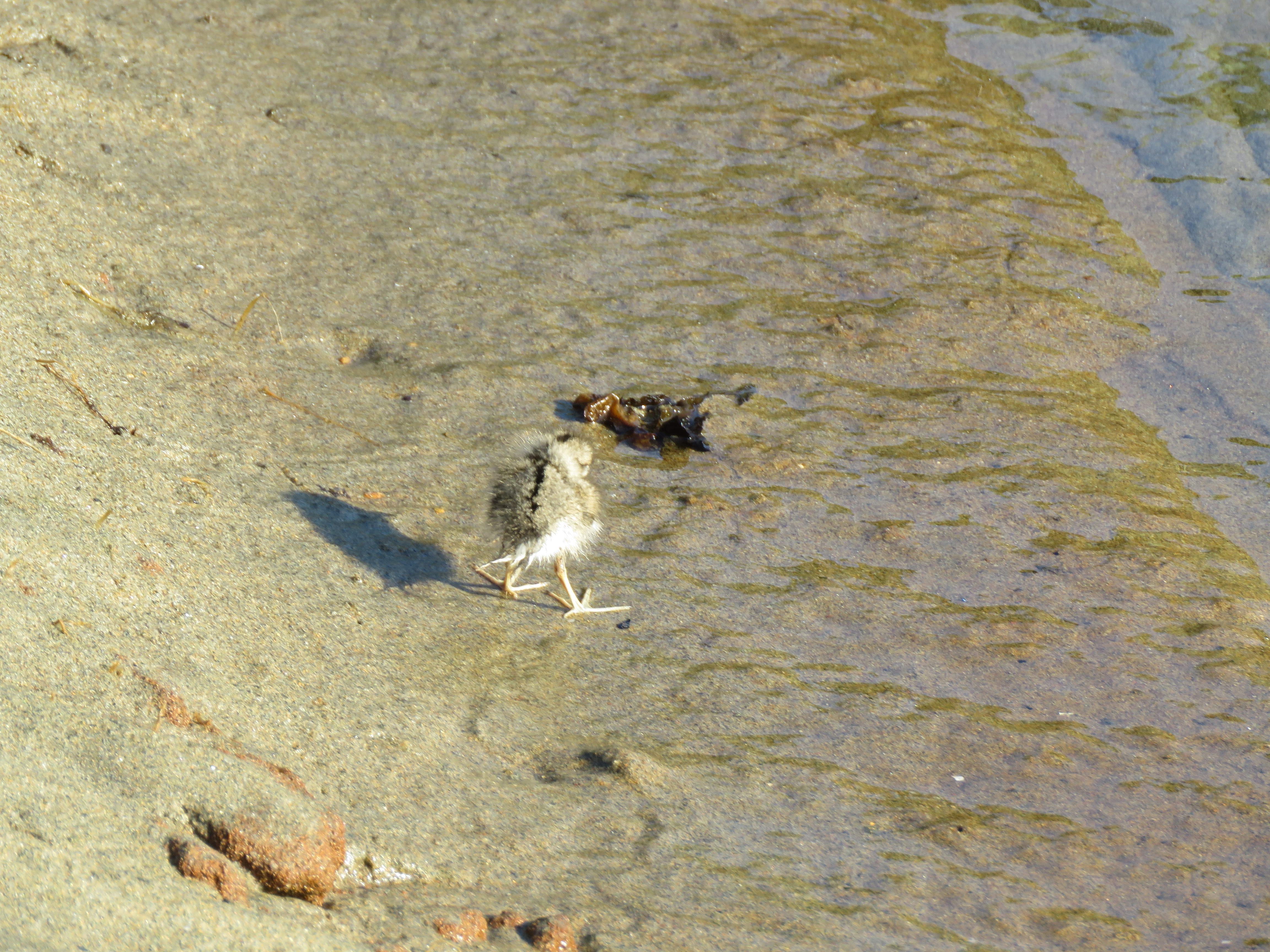
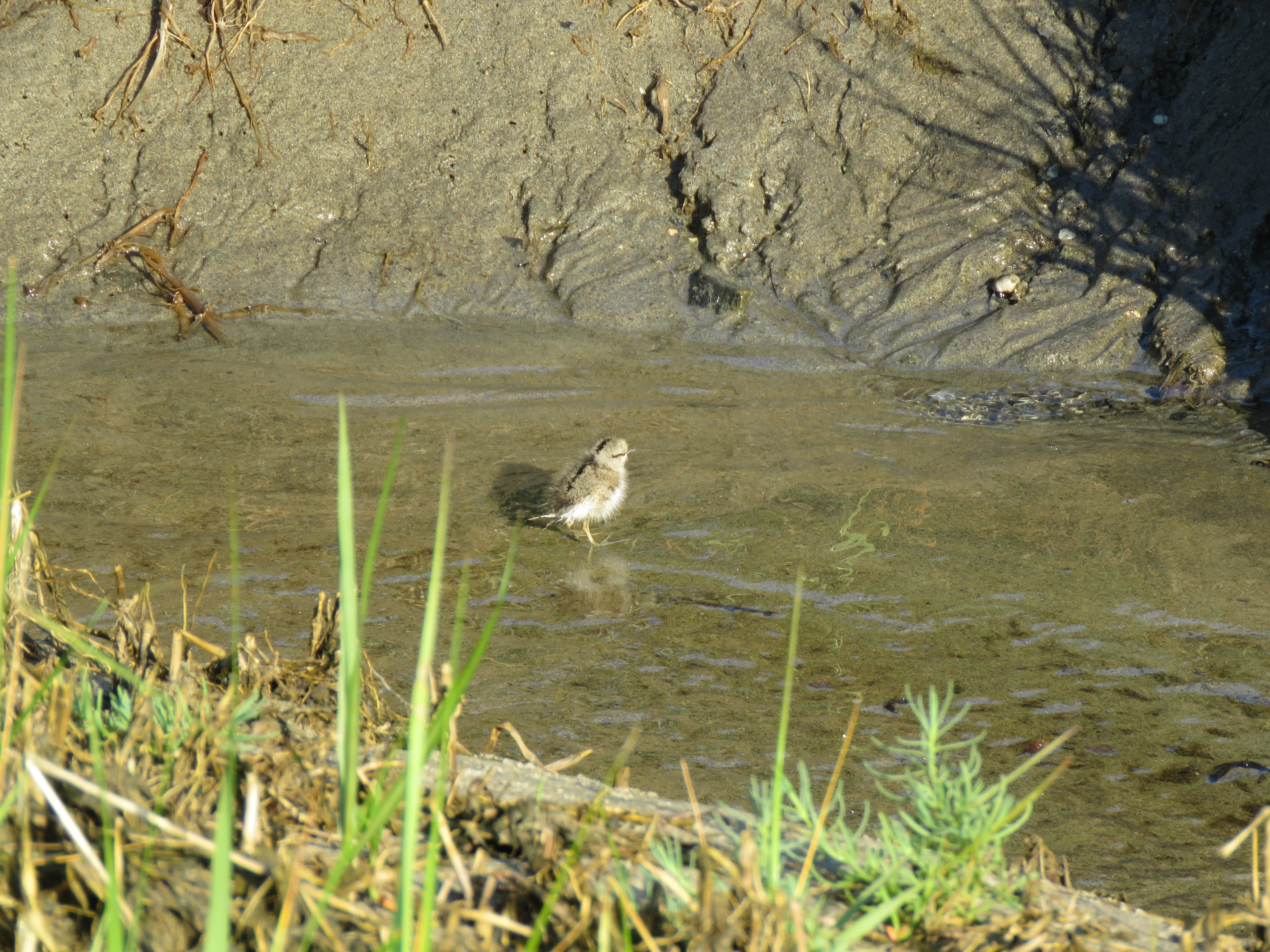
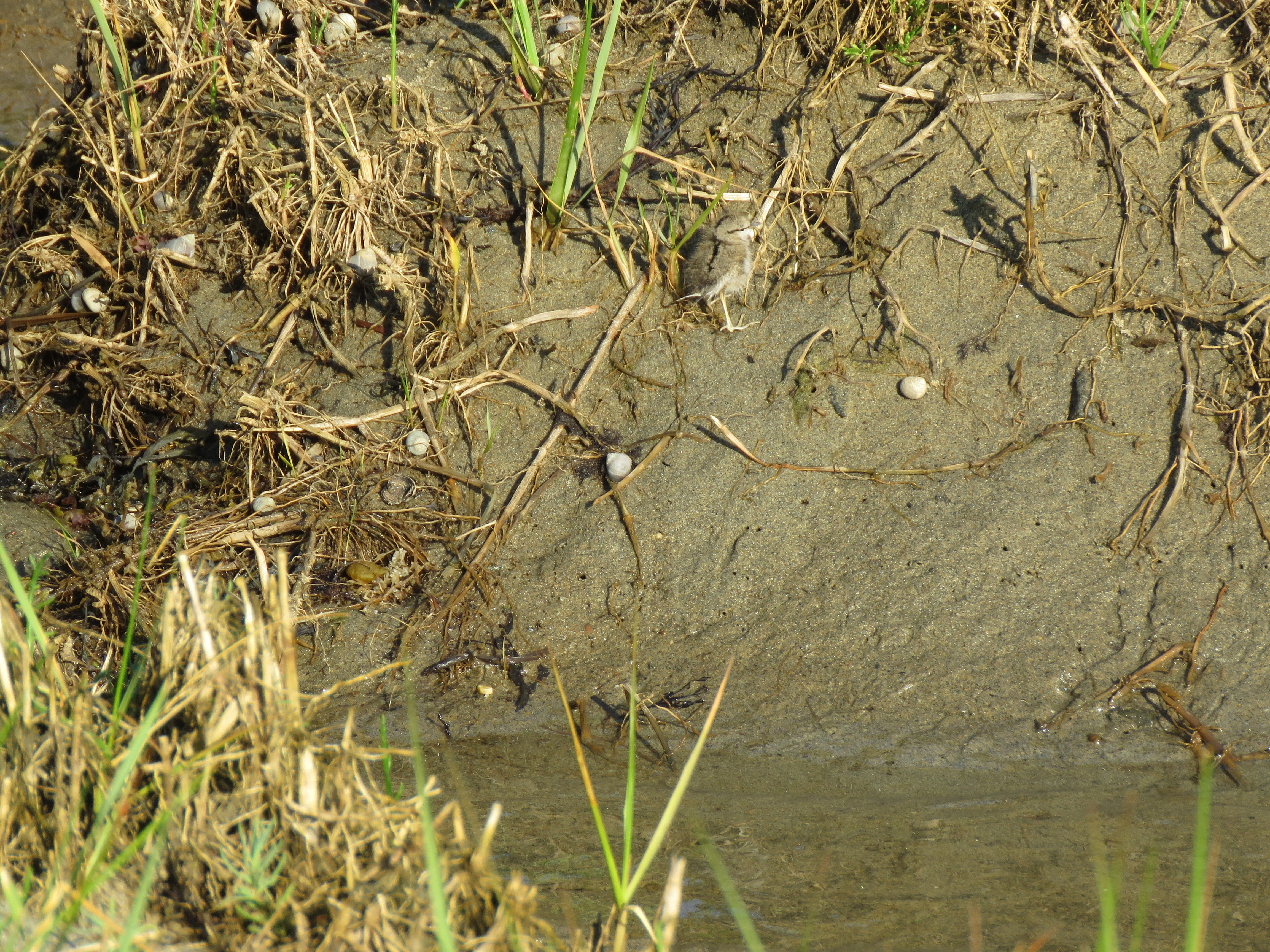
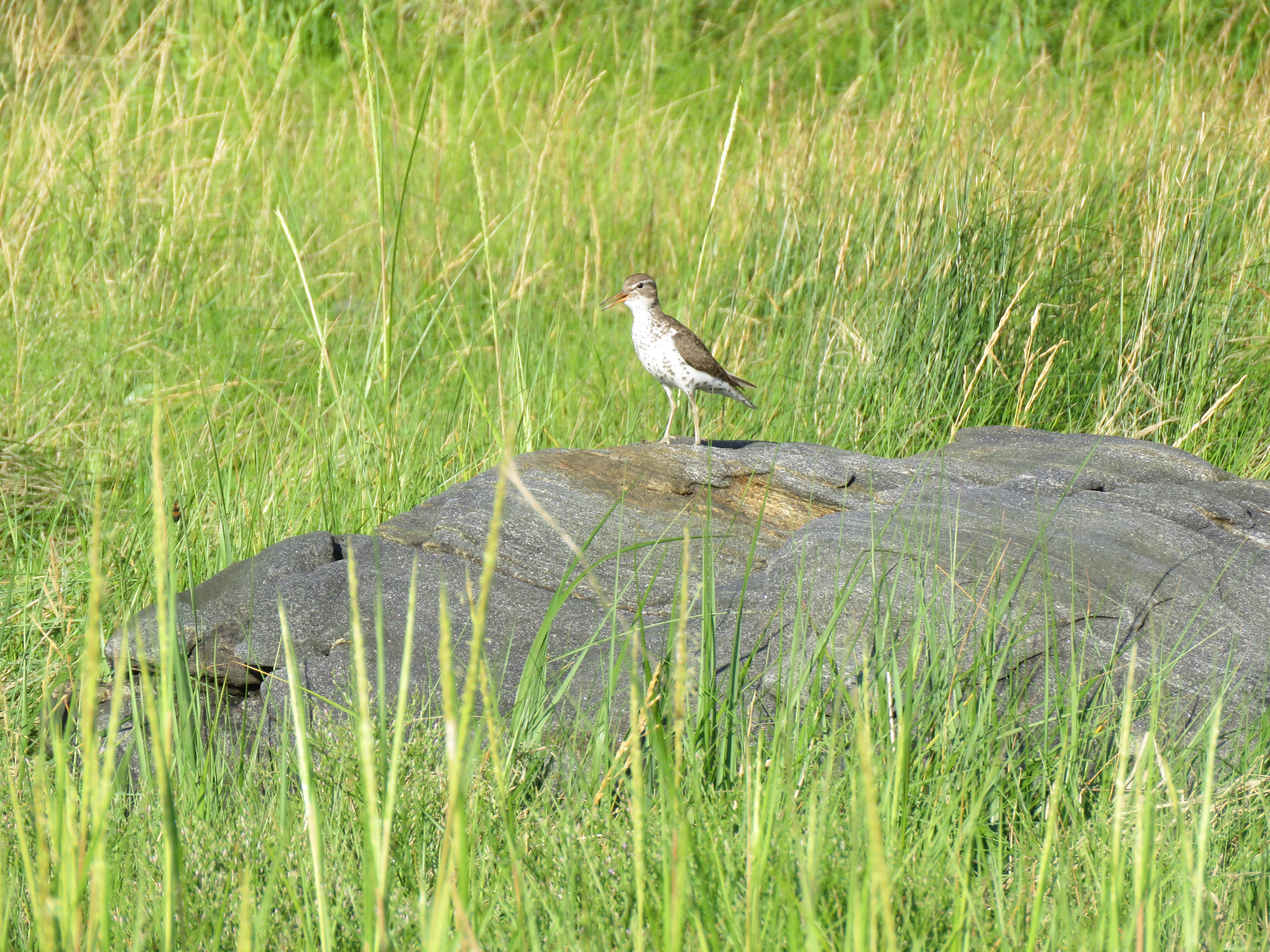
I wondered what kind of bird it was. I soon found out. A pair of Spotted Sandpipers flitted a few yards away, one on either side of me. Even if you’re not familiar with shorebirds, the Spotted Sandpipers have an easy giveaway. They bob their tails as they search on the sand and among the shoreline vegetation for food.
One sandpiper landed in the low brush in front of me, while the other landed on a large rock in the marsh. The spots on their breasts and flanks were clearly visible as their tails twitched rapidly up and down.
I took a few photos of the youngster and left that area so the parents and their baby could reunite. There were other birds to be seen. But because of the pesky insects, I didn’t stay long.
We spent the rest of the morning relaxing, enjoying the pleasant onshore breezes, the sunshine, and nature’s glory all around us. In the afternoon, our host had some errands to run in Bath, so we rode along to take in the old town.

As is typical of historic waterfront towns, the original storefronts and restaurants face the shoreline, in this case the Kennebec River. We browsed a bookstore that only sold books the library no longer wanted to carry. The librarian charmed us.
Up the street, we stopped in an old-fashioned candy and ice cream shop. The delicious ice cream hit the spot.
After dinner at the cottage, our host got word of some black birds in a marsh not far away. We all wanted to check it out.
I stopped on the berm at a wetland in the curve in the road. A flock of 30 Glossy Ibis probed the marshland with their long curved bills, designed to capture unsuspecting crustaceans hiding deep in the muck.
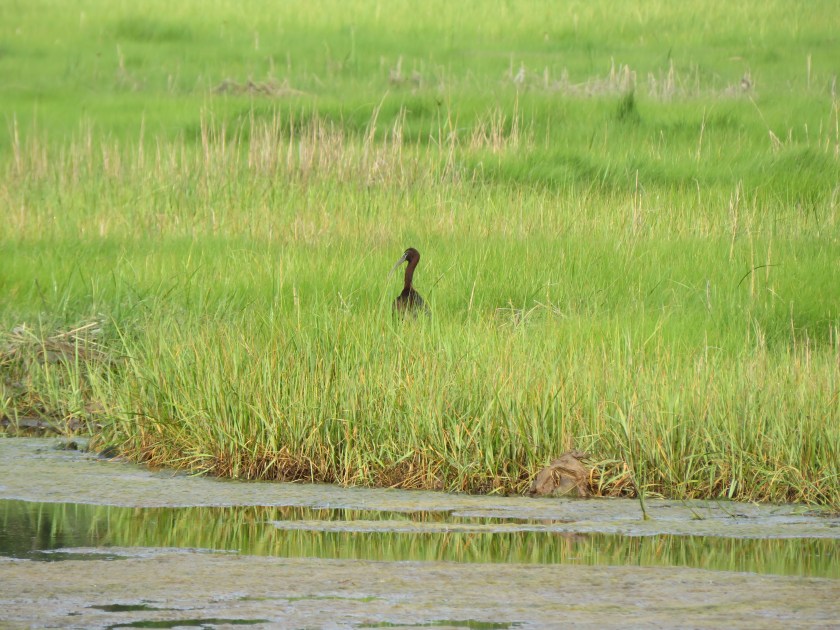
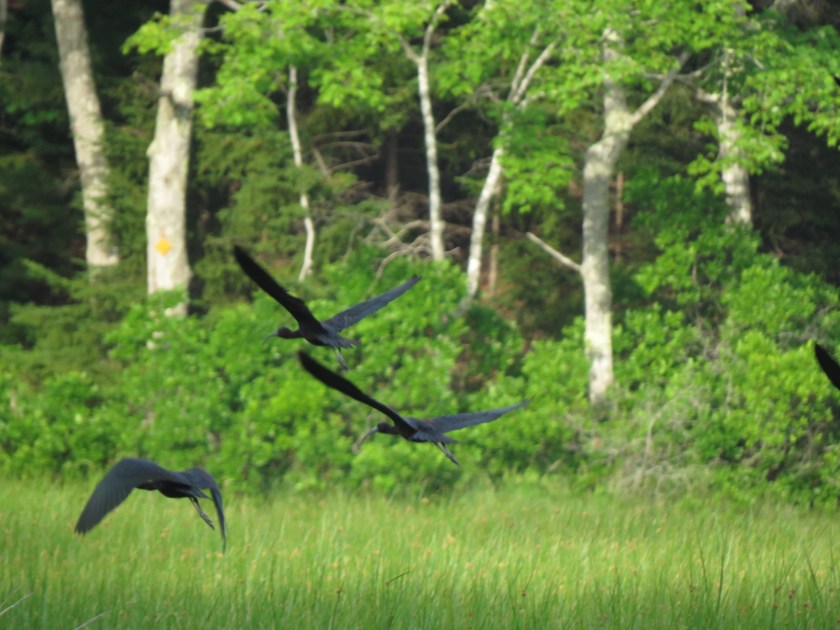
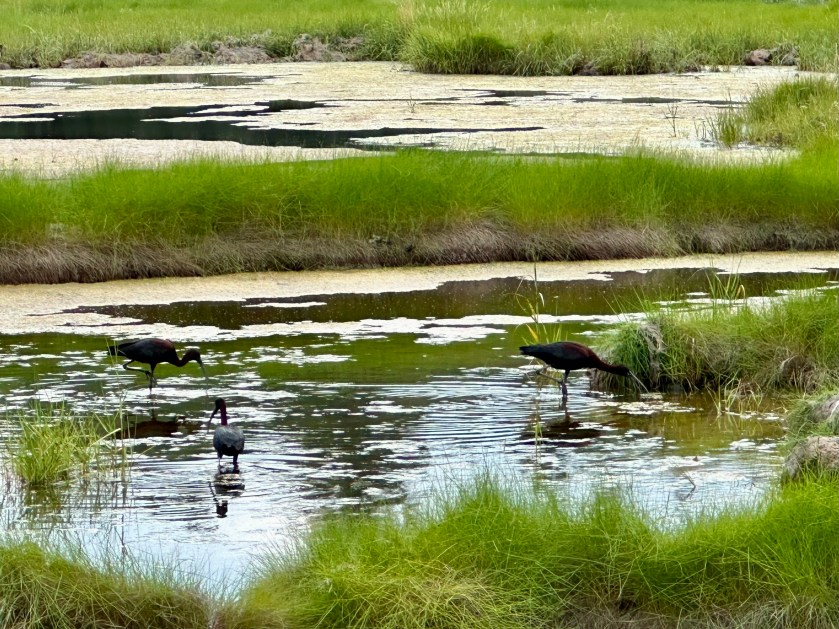
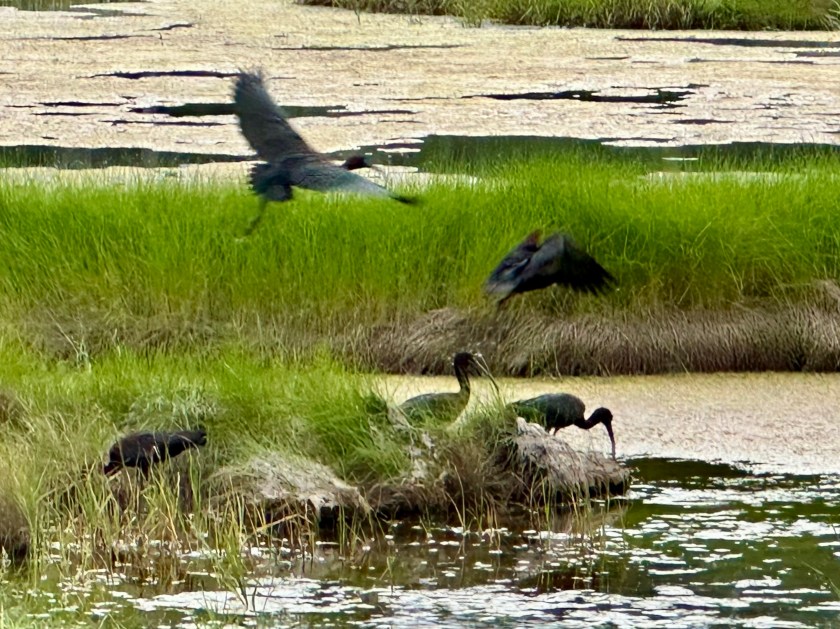
Seeing these birds this far north on the East Coast was the second surprise of the day. This had to be the northernmost point of their summer range. They winter in Florida and along the shores of the Carolinas, Georgia, and the Gulf Coast.
To happen upon the young Spotted Sandpiper in the morning, and then the Glossy Ibis in the evening was a birder’s dream. The relaxing, moment-by-moment in-between time of enjoying the company of my wife and our host made for an astonishing day.
© Bruce Stambaugh 2026


Cool! You make the most of your birding! I was charmed today by one of the birdies opening her eye at me on our porch. The mother had chosen a geranium pot to keep her birdies. I still don’t know what their type is. She had one eye wide open, looking at me. 🙂
A little dumb there, I’ll admit. But I enjoy your info.
LikeLiked by 1 person
Sounds like a House Finch. They often make their nests in flower pots. It could also be a Carolina Wren.
LikeLike
Thanks, I would say it looks like a Carolina Wren. Thanks for the help!
LikeLiked by 1 person