Only a skiff of snow dusted the central Shenandoah Valley in Virginia, while the coastal cities and communities got hammered with blizzard-blown feet of snow.
The mountains surrounding the valley, however, received their fair share of snow. The snow highlighted the forest-covered slopes.
The Massanutten Range, which splits the valley from Front Royal at the north to Harrisonburg at the south terminus, especially stood out with its fresh snowpack.
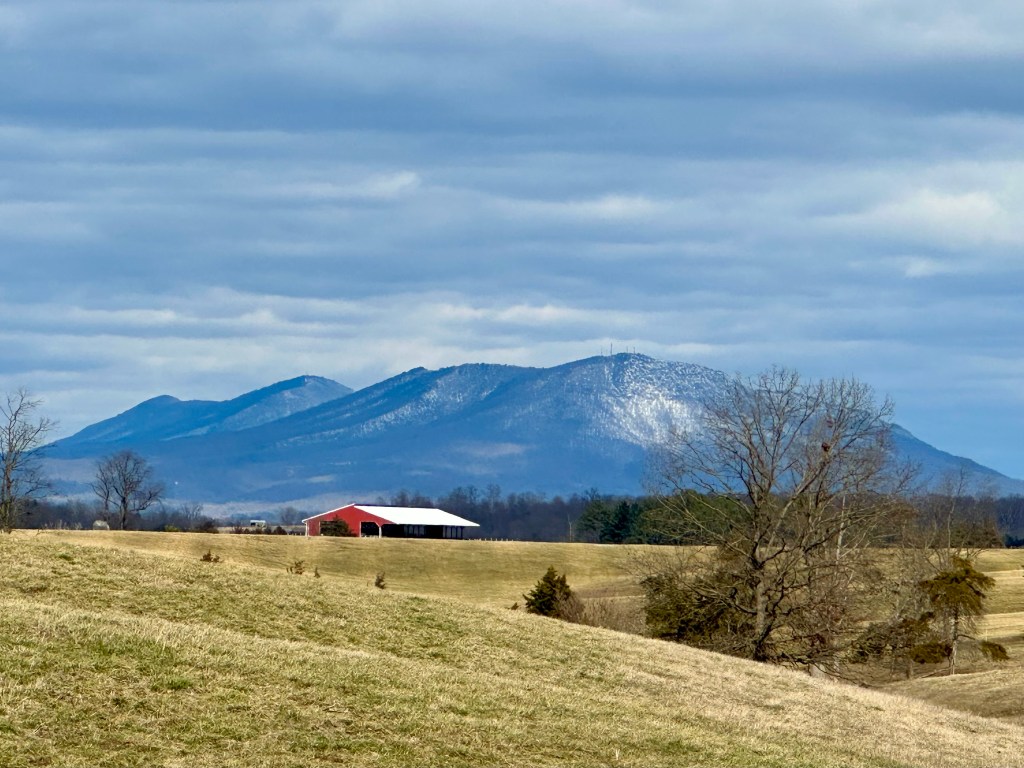
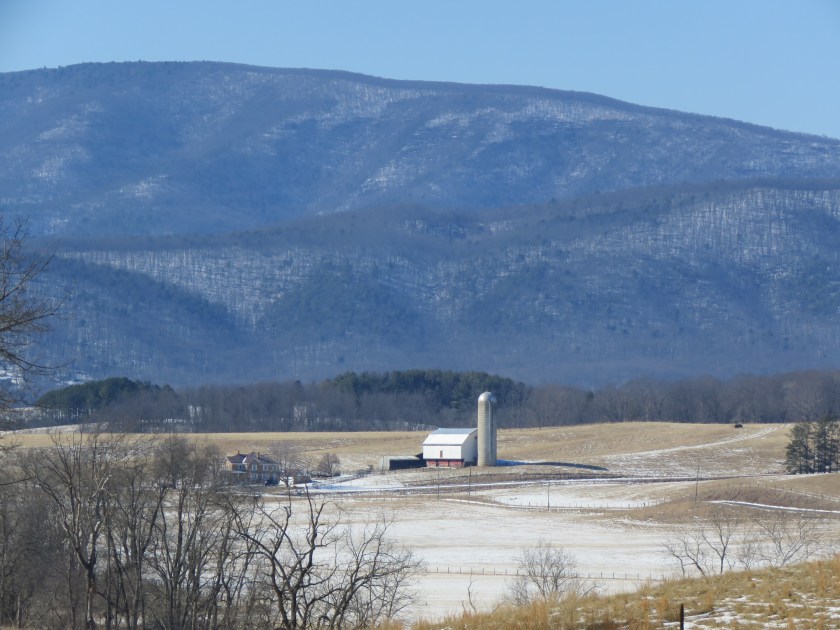
By the next afternoon, the dusting of snow in the valley had melted. Massanutten Mountain, however, showed its snow. The difference between the valley and the forest-studded mountain was not only obvious but also stunning.
This photo was taken near Weyers Cave, Virginia, looking north to Massanutten.
The daytime temperatures in Virginia’s Shenandoah Valley have been above freezing for the last few days. Consequently, the melting of several inches of snow that fell three weeks ago has begun.
I ventured out in the late morning recently to do some birding. However, I ended up taking more landscape photos because the birds weren’t as active as I’d expected.
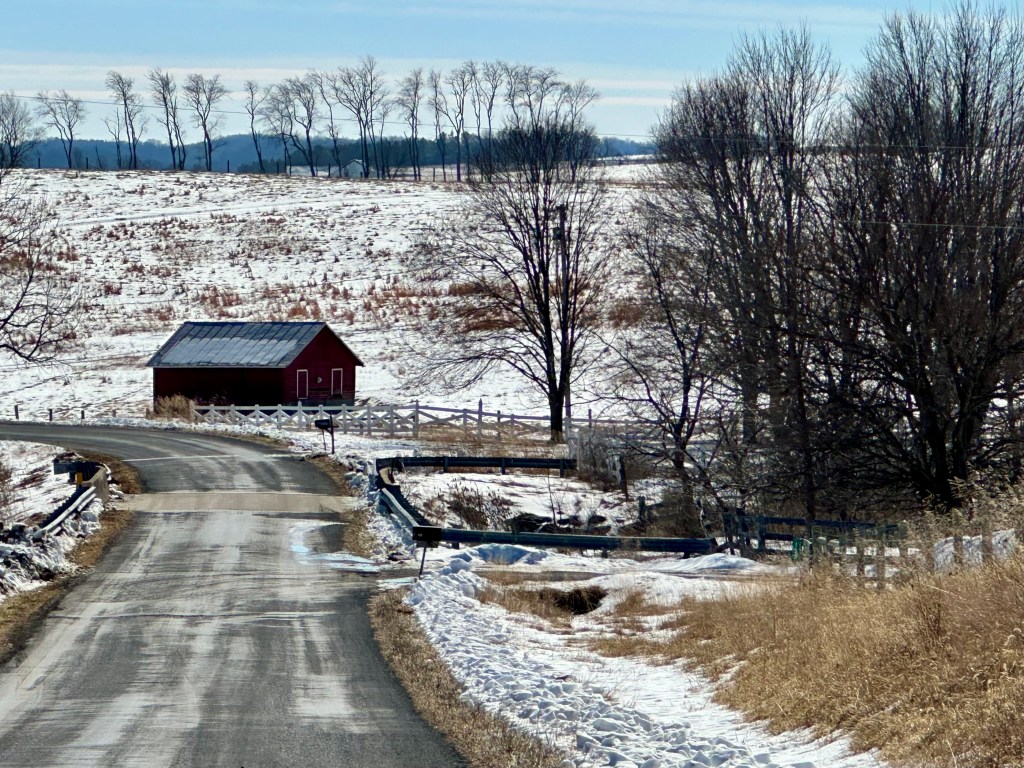
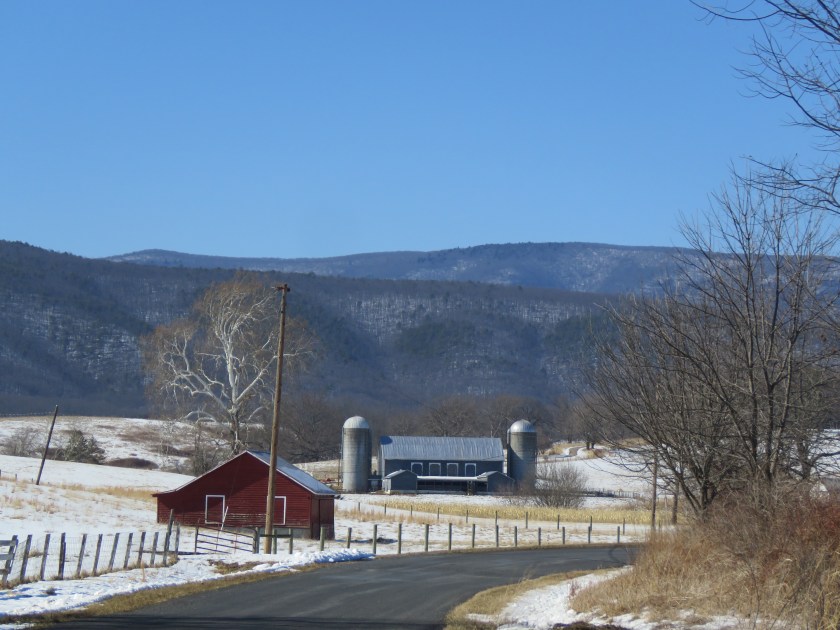
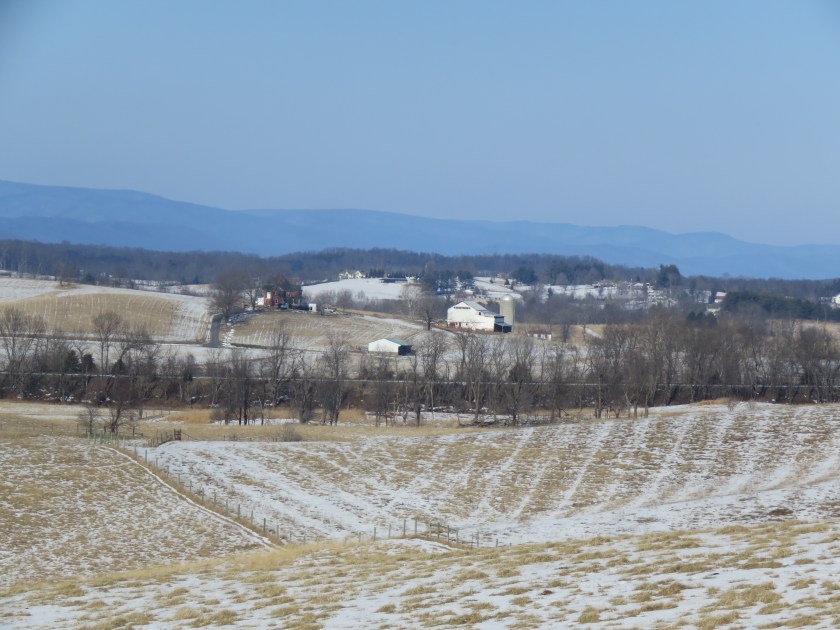
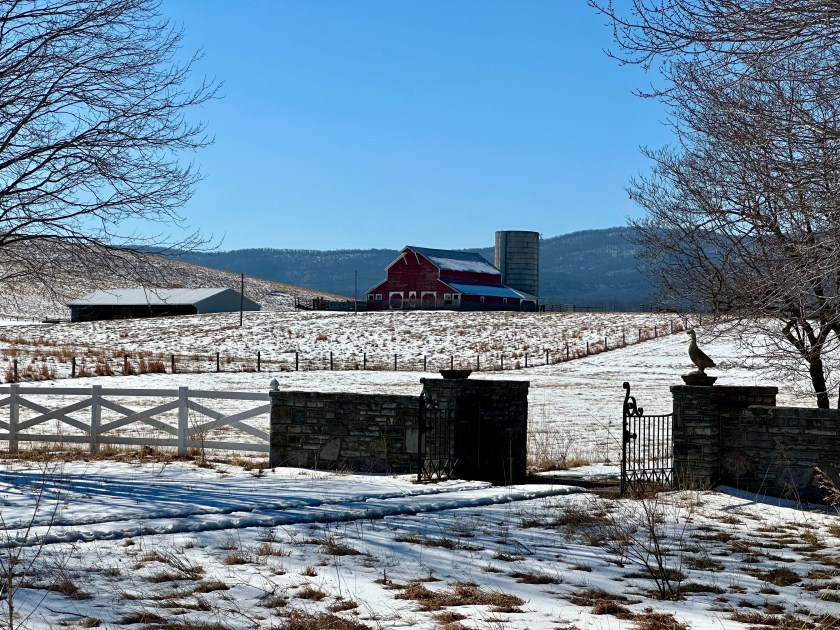
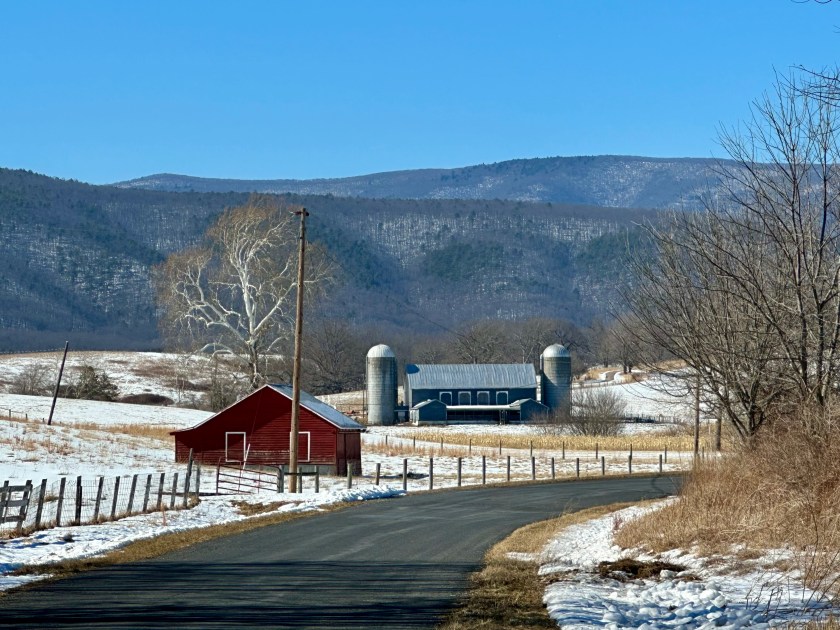
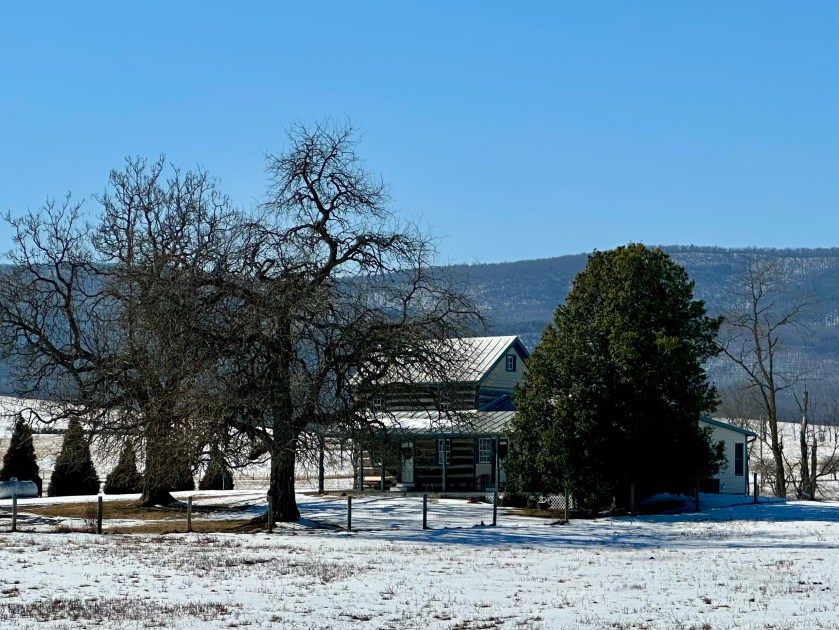
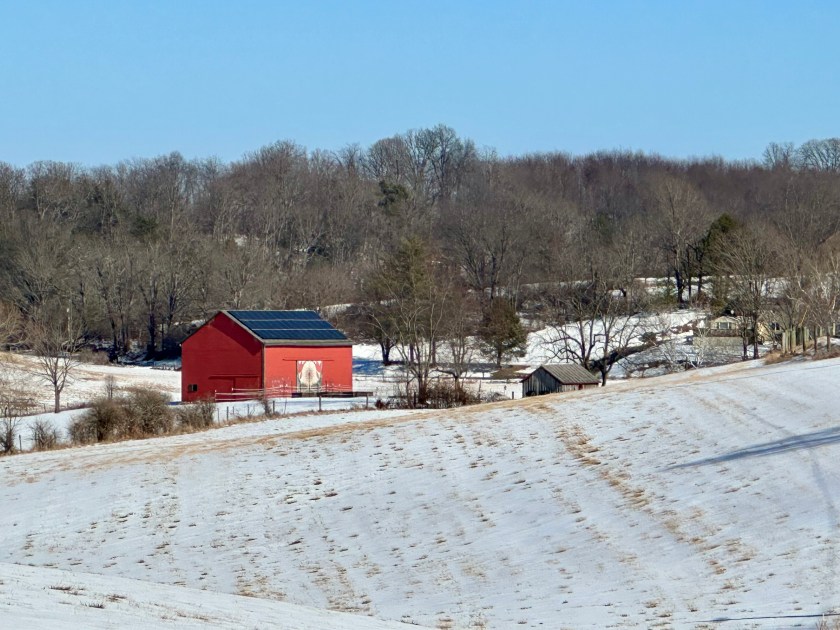
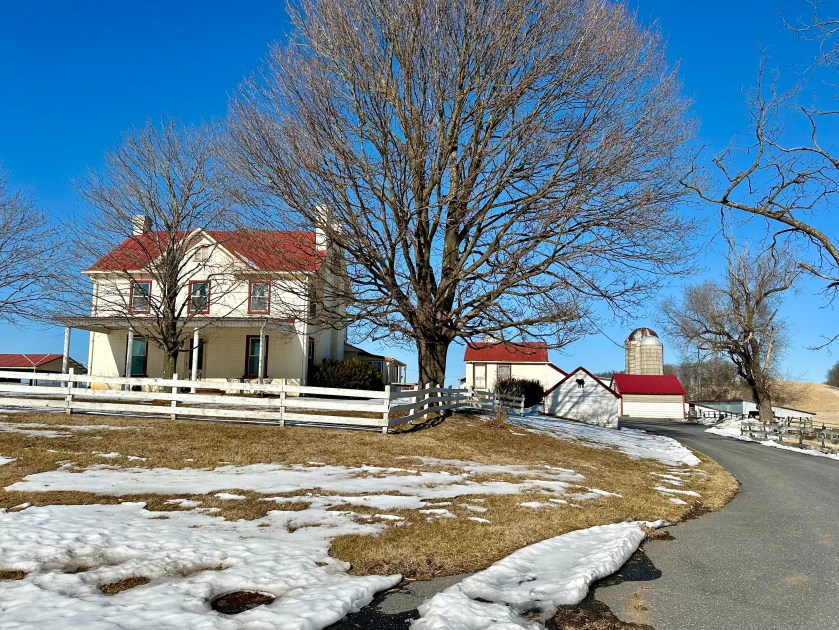
I found the topography southwest of Staunton especially captivating, with its rolling landscape, country estates along winding, narrow roads, and the snow-covered North Mountain range as a backdrop to the west. Beauty surrounded me in every direction.
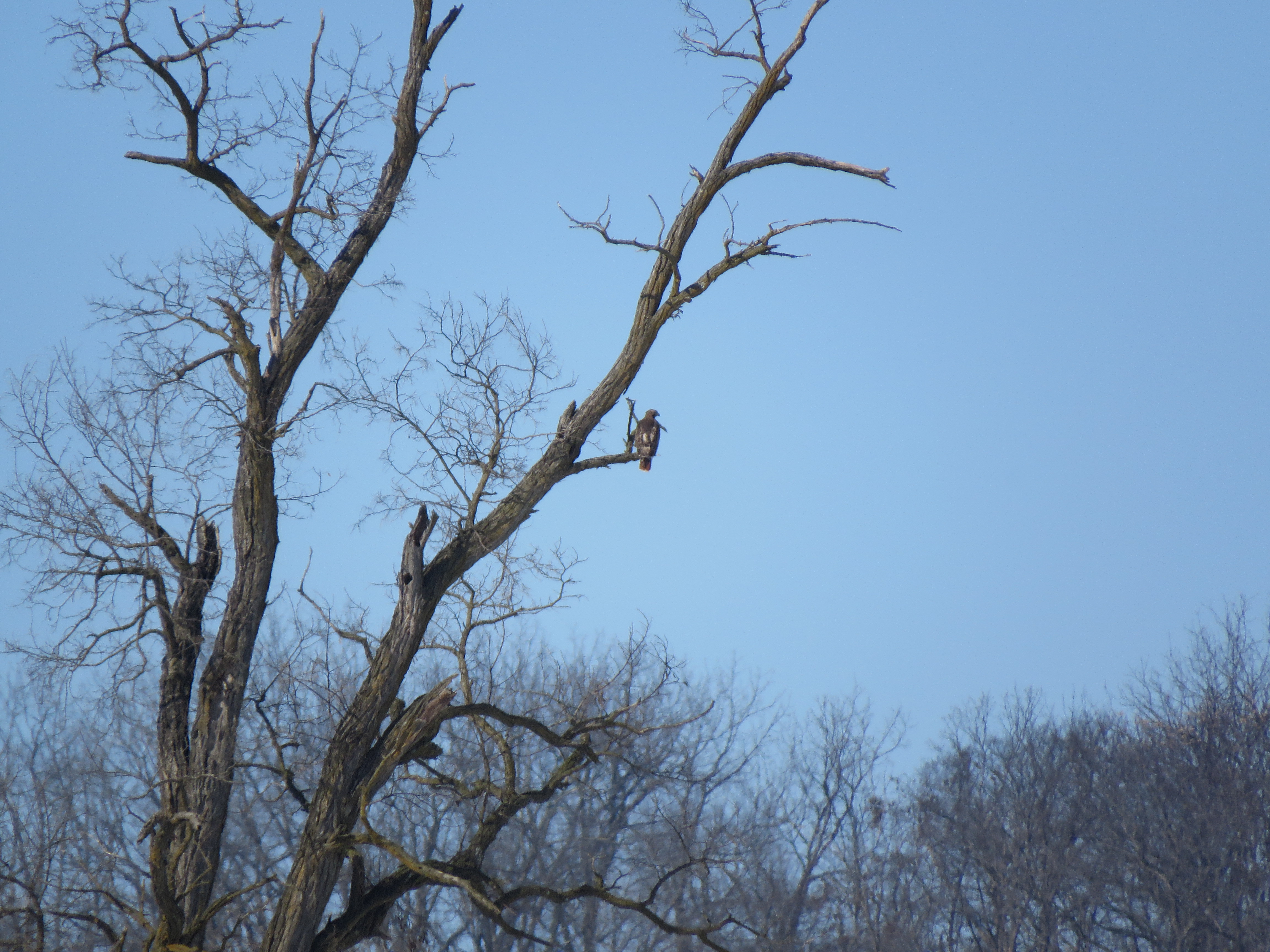
In one location, a Red-tailed Hawk perched on a limb, posture focused downward in hopes of spotting an unsuspecting rabbit, squirrel, or field mouse. In another, a light-phase Red-tailed Hawk soared in the afternoon sunshine, sailing on thermals rising from the warming farm fields below.
White-throated Sparrows and Song Sparrows fed along the exposed roadside grasses and road grit, but scurried for fencerow brambles as my SUV rolled by at pedestrian speed. In the rural areas, traffic was scarce, allowing me to take my time and enjoy the scenery all around me. I stopped several times in the space of a quarter mile to inhale the fresh air, absorb the warm sunshine, and scout for any birds.
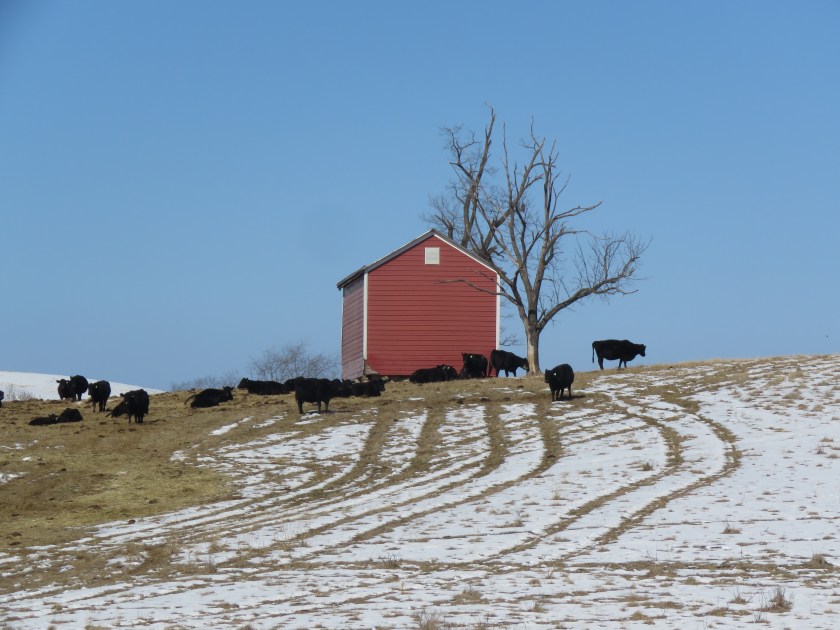
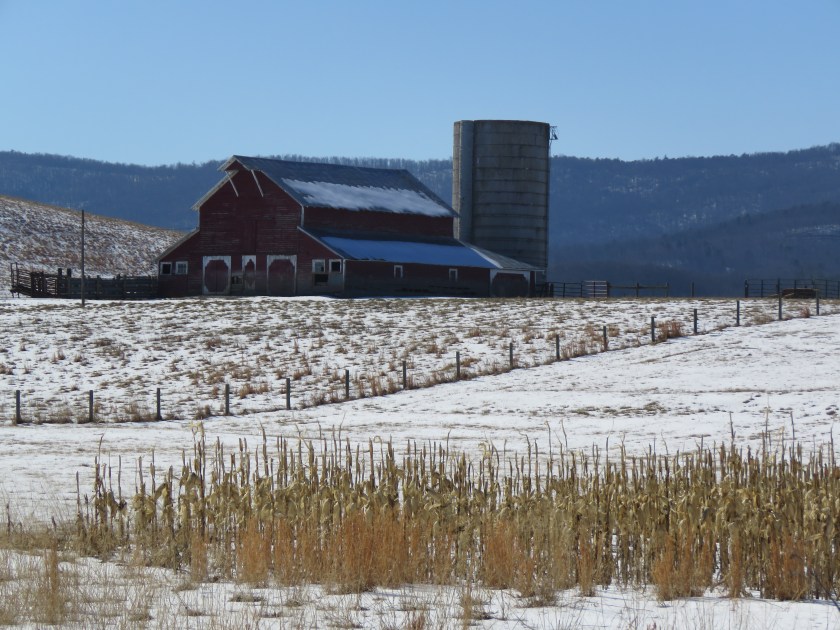
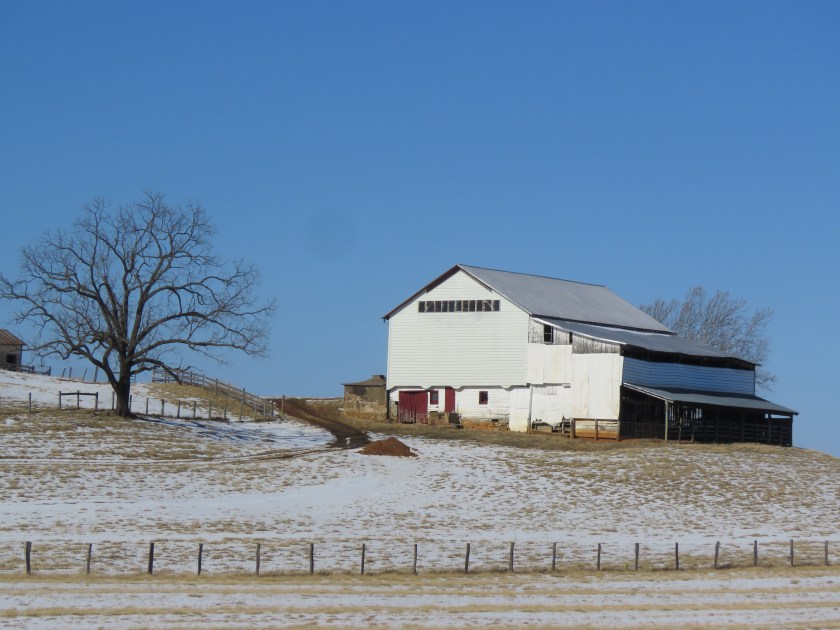
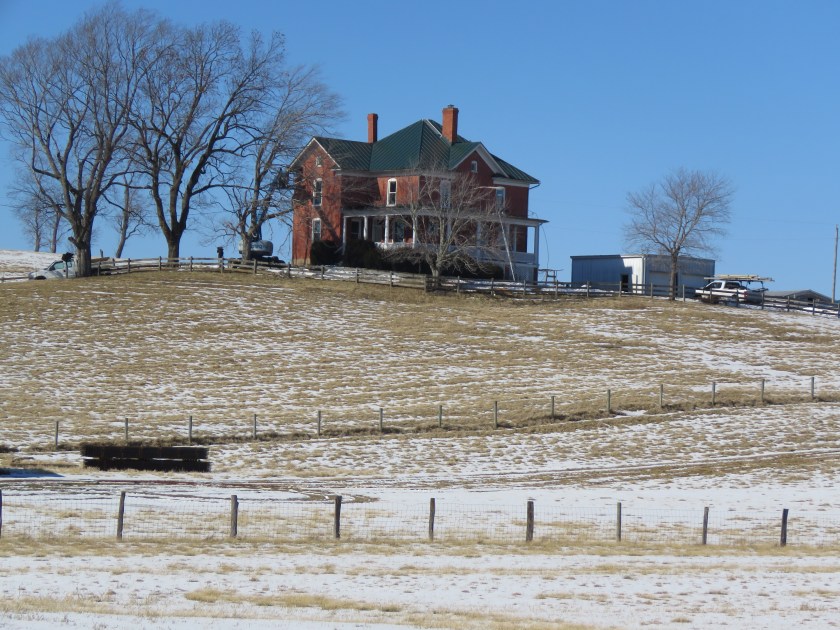
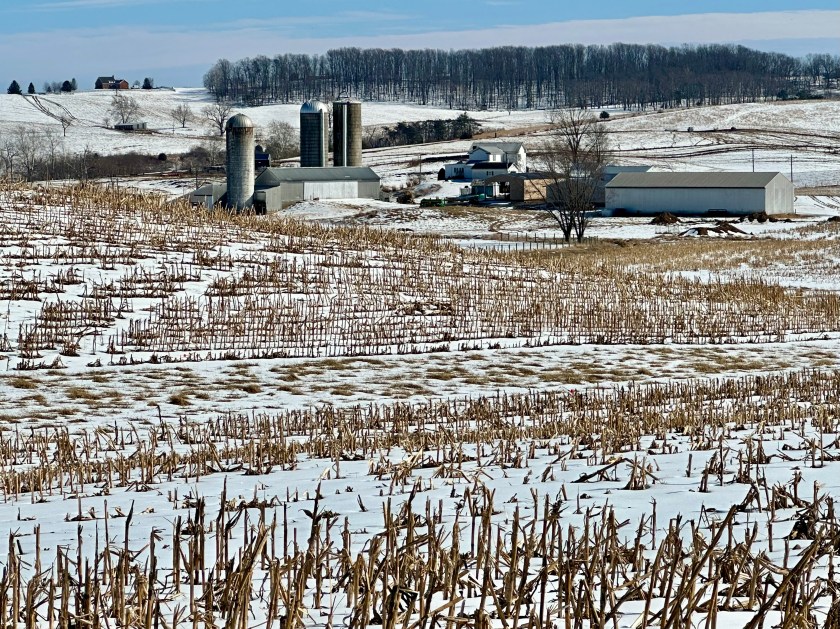
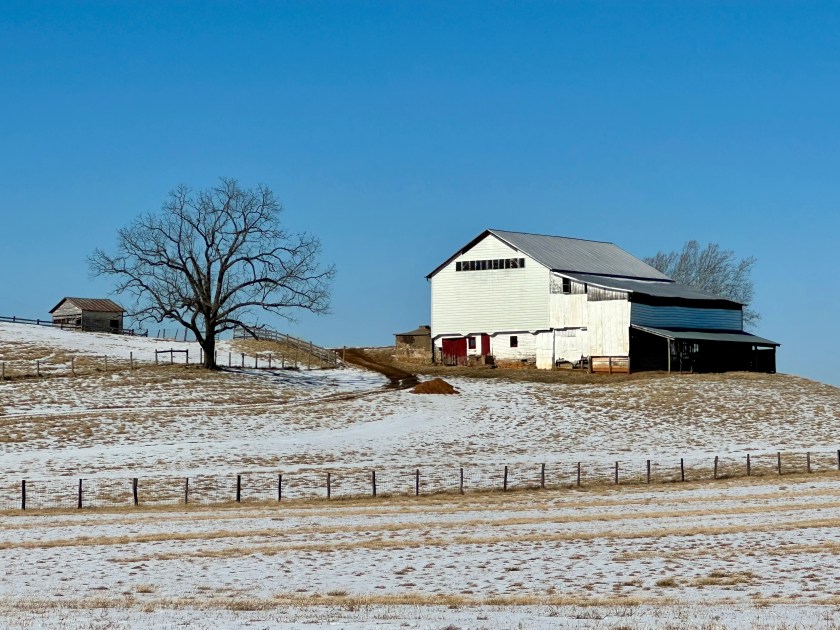
I marveled at the patterns in the diminishing snow. Polka dots of grasses surrounded by inches of snowy white speckled south-facing hillsides. Tractor tracks among corn stubble created abstract paintings. Farmsteads stood silent, as if in awe of the February thaw, painting their own Currier and Ives.
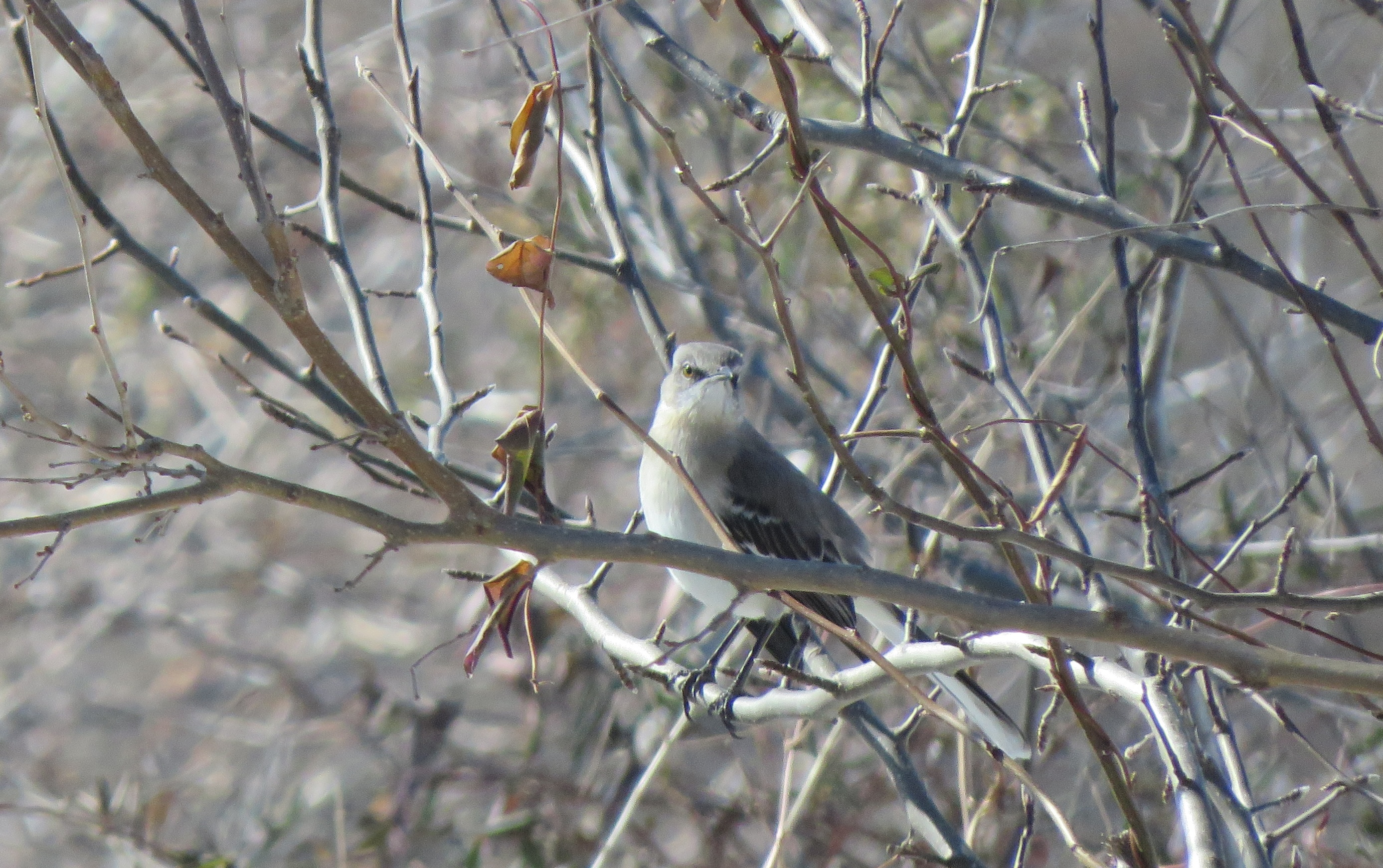
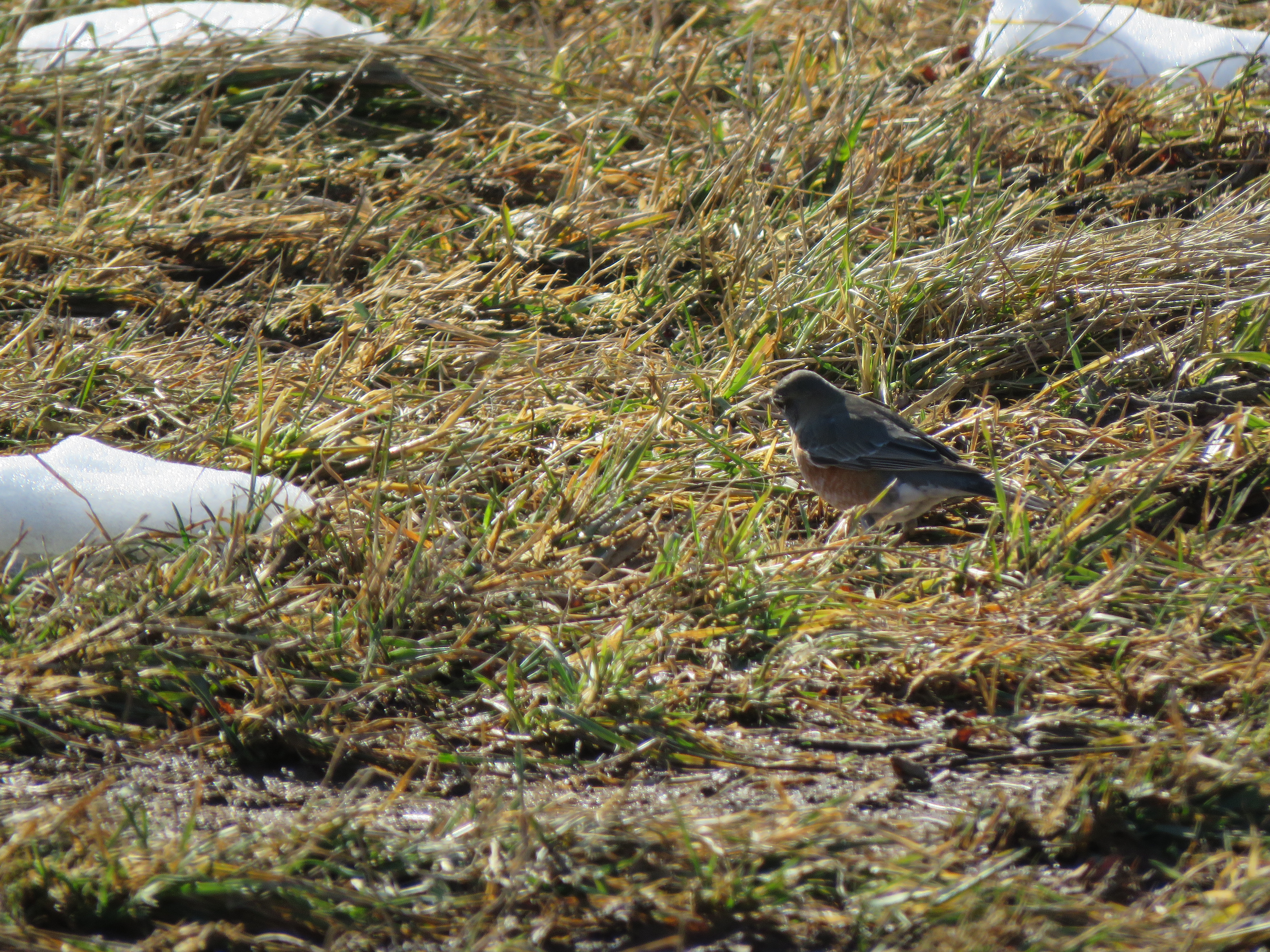
A Northern Mockingbird played hide and seek with me, playing hard to get. Darting in and out of roadside thickets, I managed a few photos of the tricky bird. American Robins launched from treelines to forage in the high grasses of pastures still dotted with snow.
Canada Geese gleaned for food in a wide-open pasture as the ice on a bordering creek gave way to the welcome warmth. I spooked a pair of Mallards enjoying pockets of open water when I stepped out of my vehicle. The geese ignored their quacking.
On the way home, I stopped at a city park along the North River where Long-tailed ducks had been reported. Instead, I found a few humans less interested in patterns in snow or waterfowl than me.
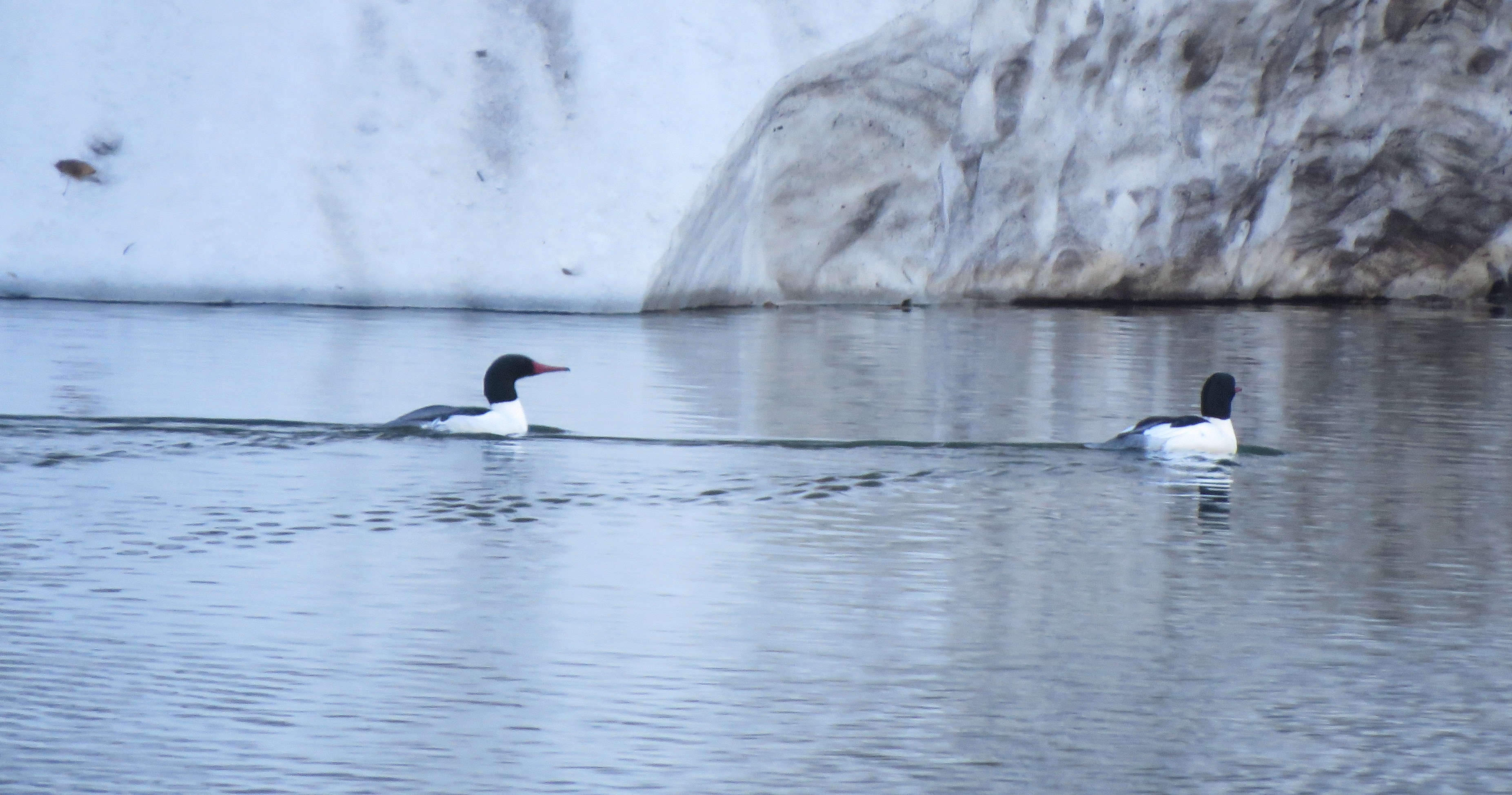
I walked across a footbridge to approach the riverside. At the other end, three seniors my age laughed and shrieked with one another, ignorant of the flock of Common Merganzers floating nearby. The birds quickly took flight.
On the way to my SUV, a trio of young boys threw sticks and pinecones at a small flock of Mallards foraging in the river’s shallows. I advised the youngsters that it’s wrong to disturb wildlife. They hung their heads until I passed by, and then continued their barrage. However, they fled when I turned around and stared at them.
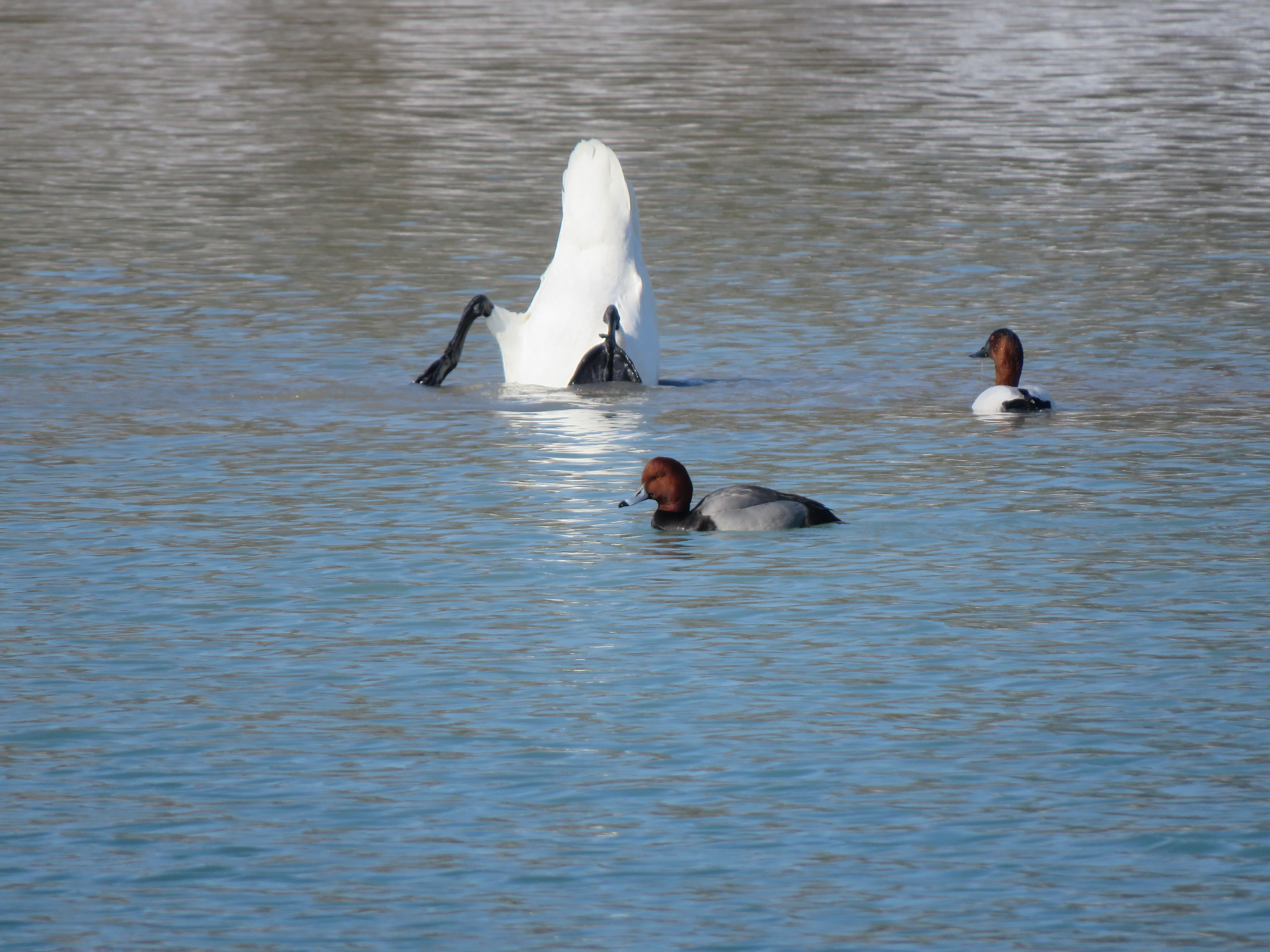
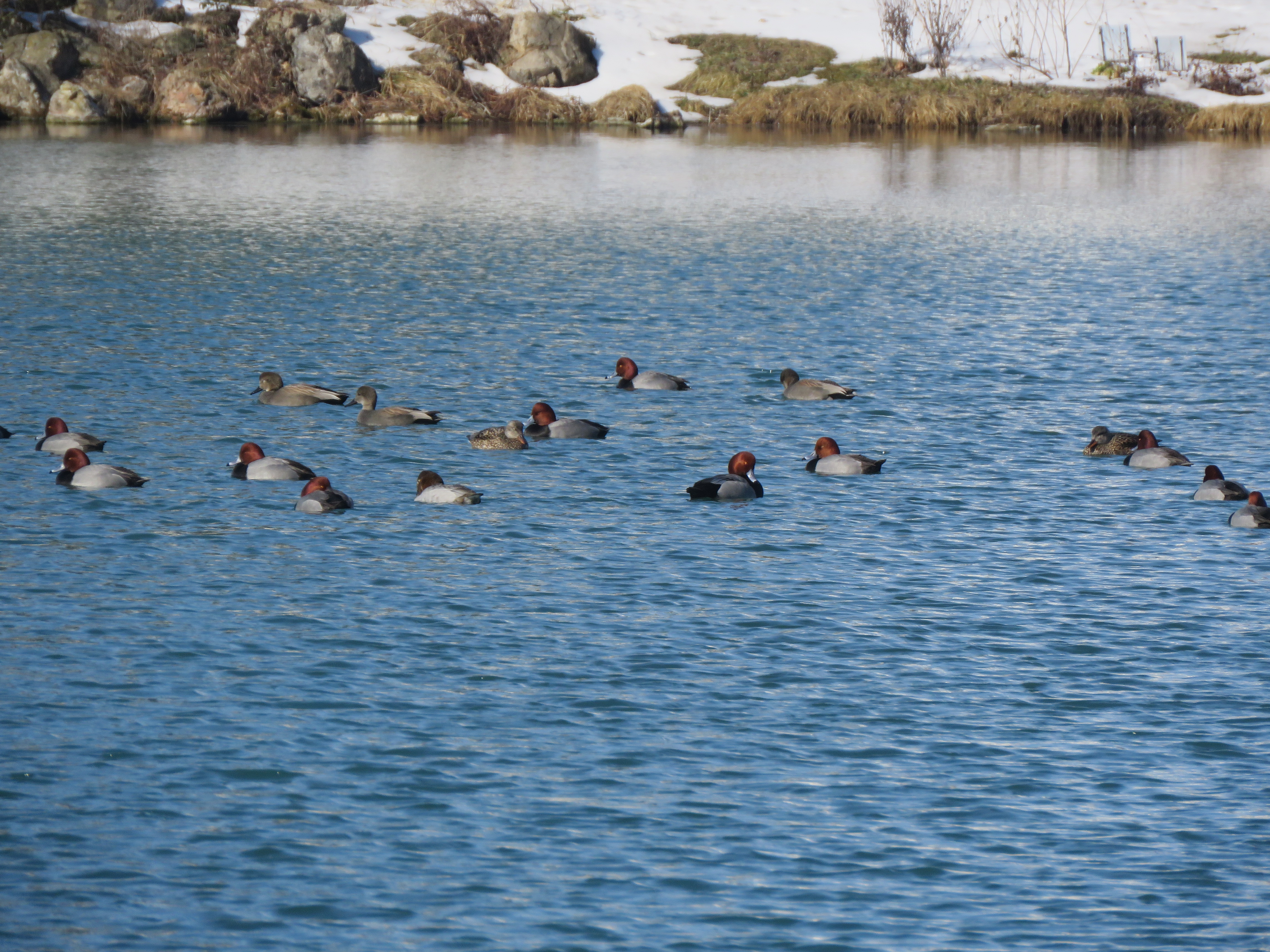
Ironically, the best birds were the closest to home. The thaw substantially diminished the ice on Silver Lake, and the waterfowl basked in the afternoon sunshine. Redheads, Canvasbacks, Buffleheads, and Pied-billed Grebes swam and dove for food.
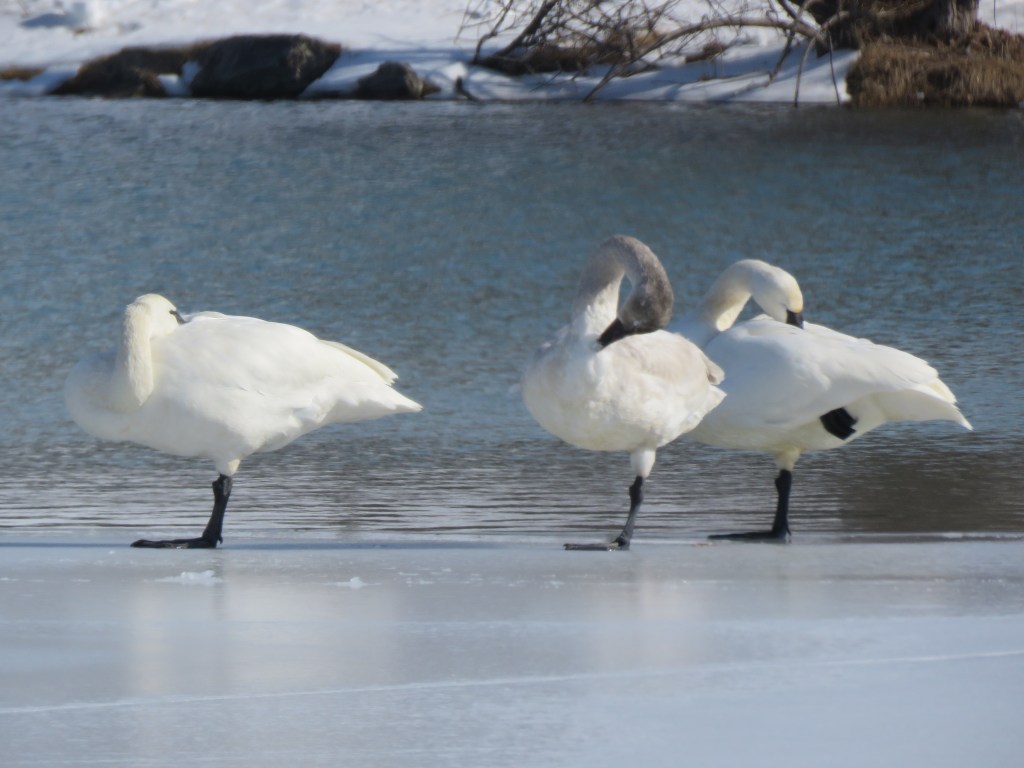
Best of all, six Tundra Swans stood on the thinning ice, preening in the sun’s warmth. It was a glorious six hours spent in communion with Nature and all her blessings.
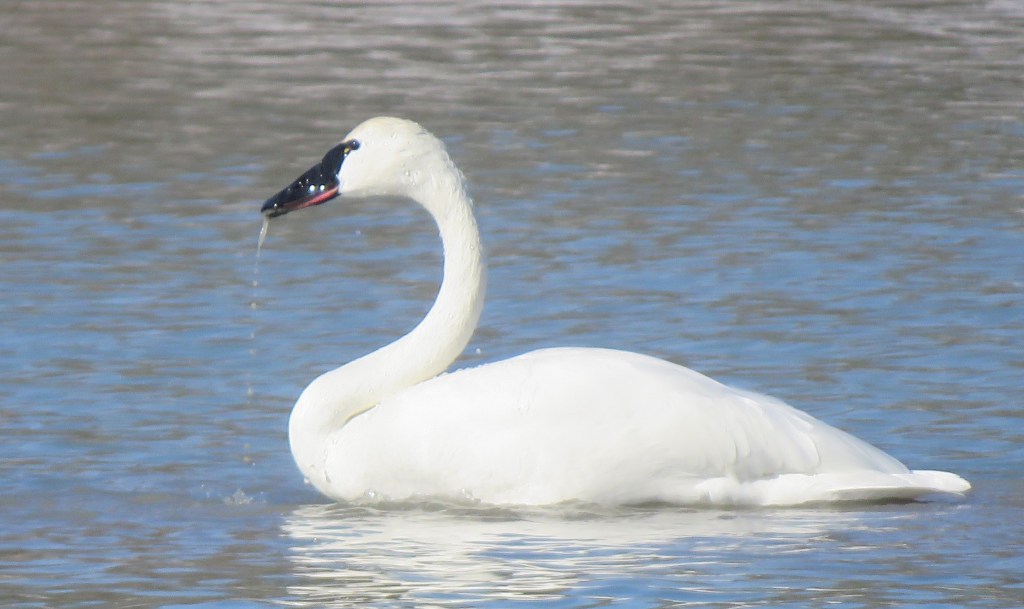
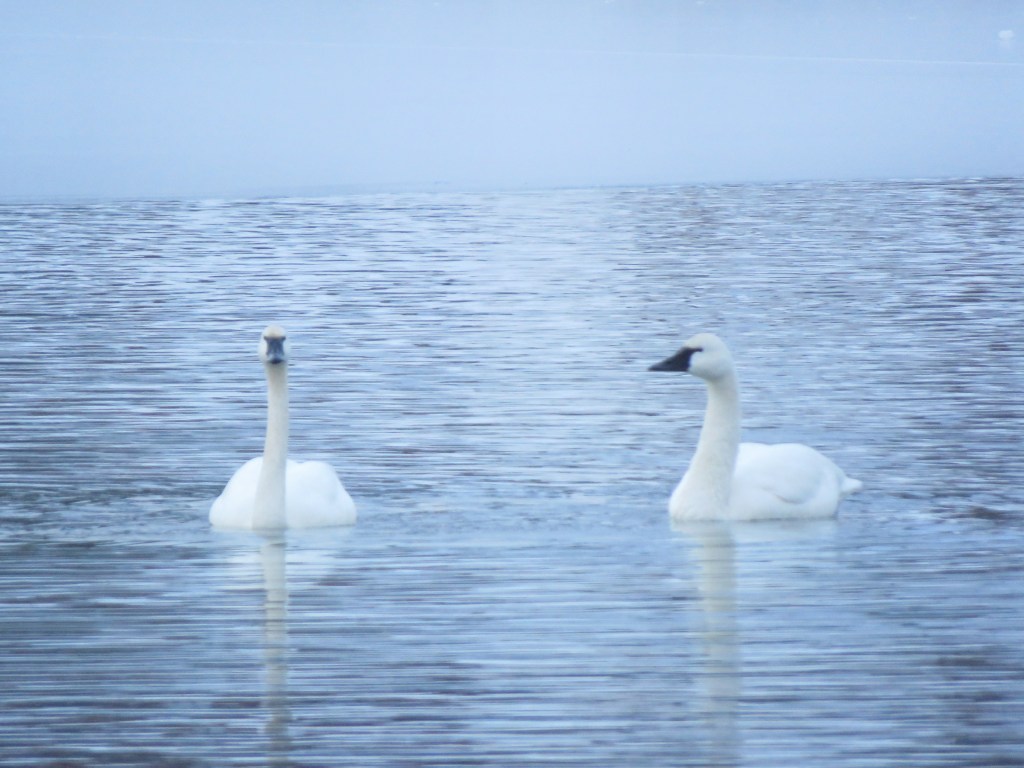
This is an adult Tundra Swan. Tundra Swans can easily be confused with the larger Trumpeter Swans, especially since they often overlap in the winter migration locations.
Unless the two species appear together, it is hard to tell them apart. Adult birds are both white and have black bills. However, the bills of Trumpeter Swans are much larger, as are their bodies. Trumpeter Swans are the heaviest native North American bird.
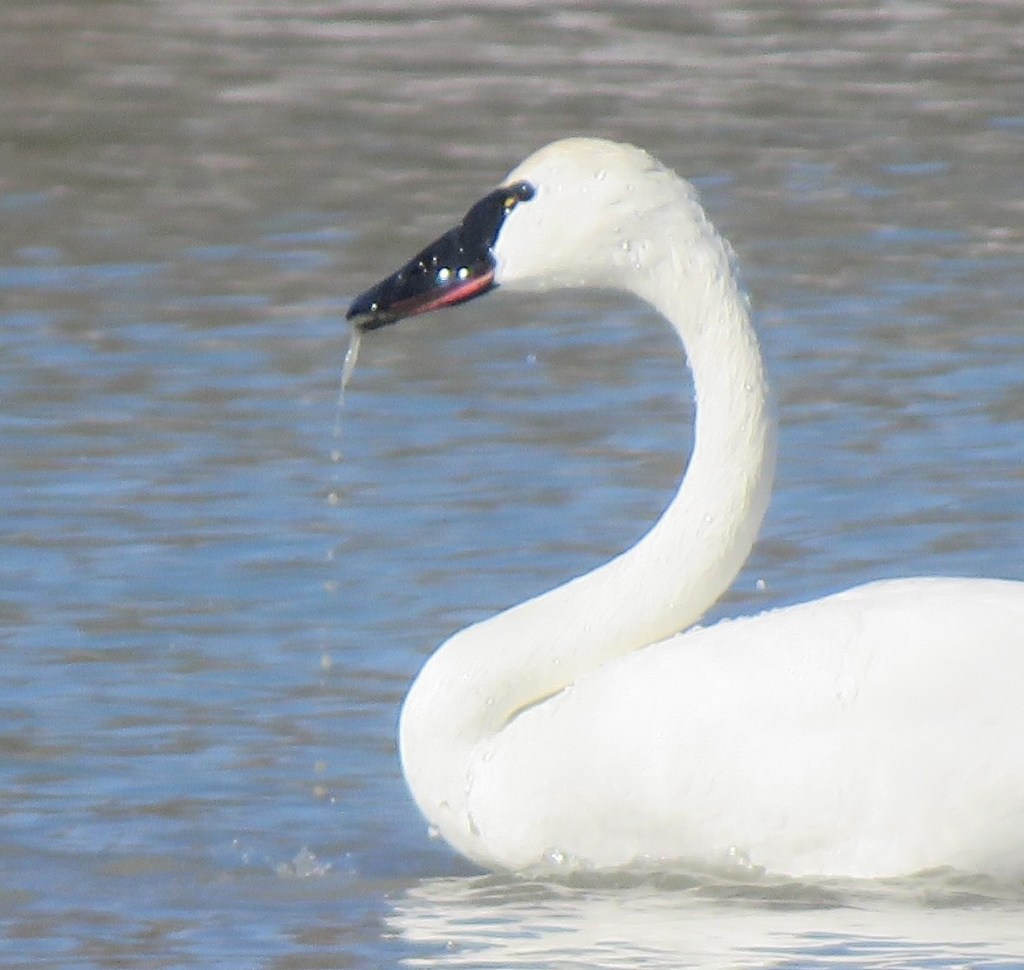
There is one distinctive way to tell the difference between the two impressive birds. Tundra Swans sometimes have a small yellow spot at the base of the bill below the eye.
Note the small yellow spot just below the swan’s eye.
The problem is that not all Tundra Swans have this identifying mark. So, relying on expert birders to help make a defining identification is recommended. Using a reliable birding field guide should also help.
I hope you get to see both Tundra and Trumpeter Swans. If you do, I also hope they are together so you can tell them apart more easily.
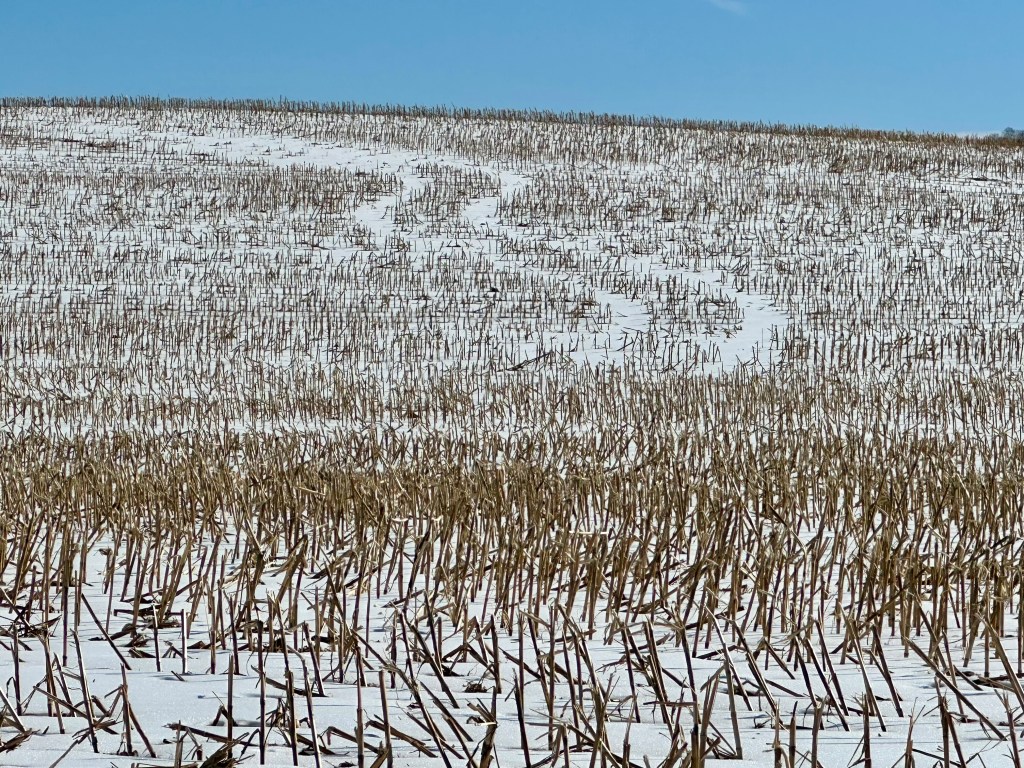
The lingering snow revealed the path of ancient tracks of a farm truck as it climbed through last fall’s corn stubble. The scene reminded me of an abstract painting.
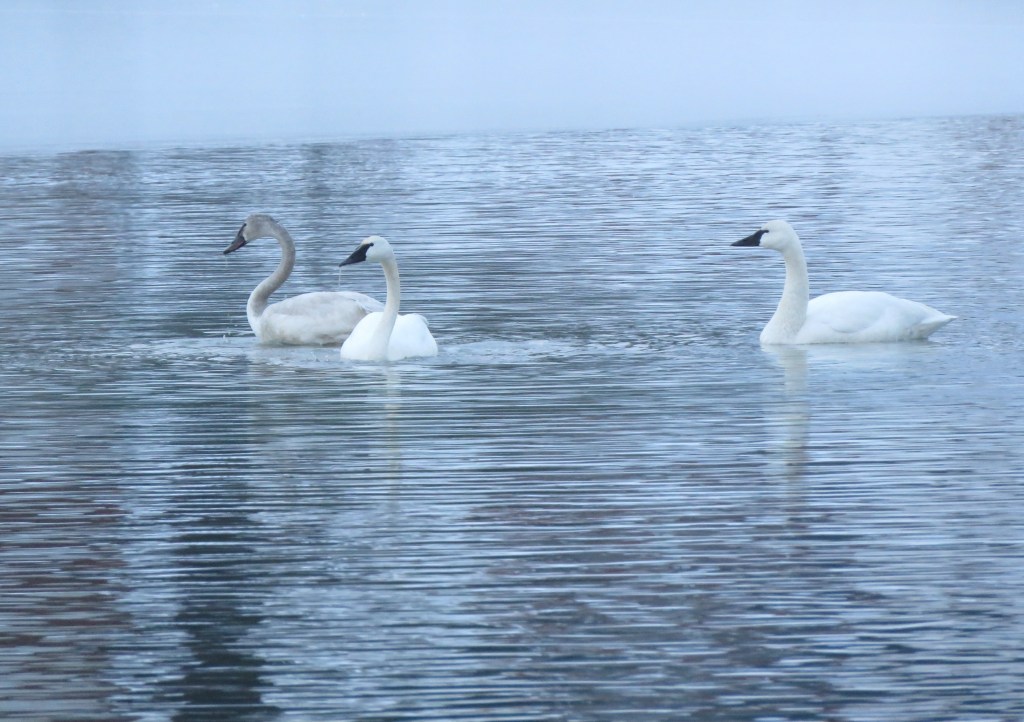
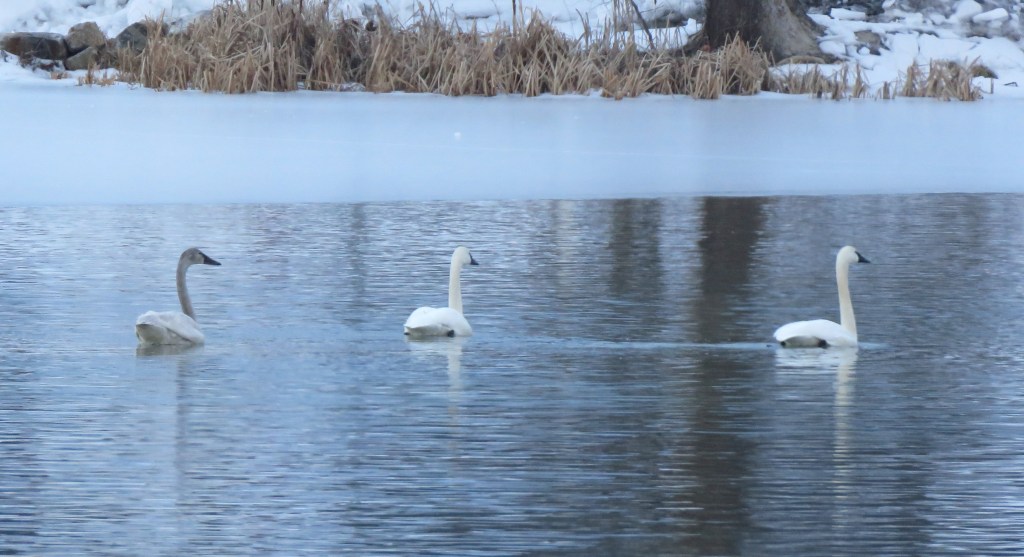
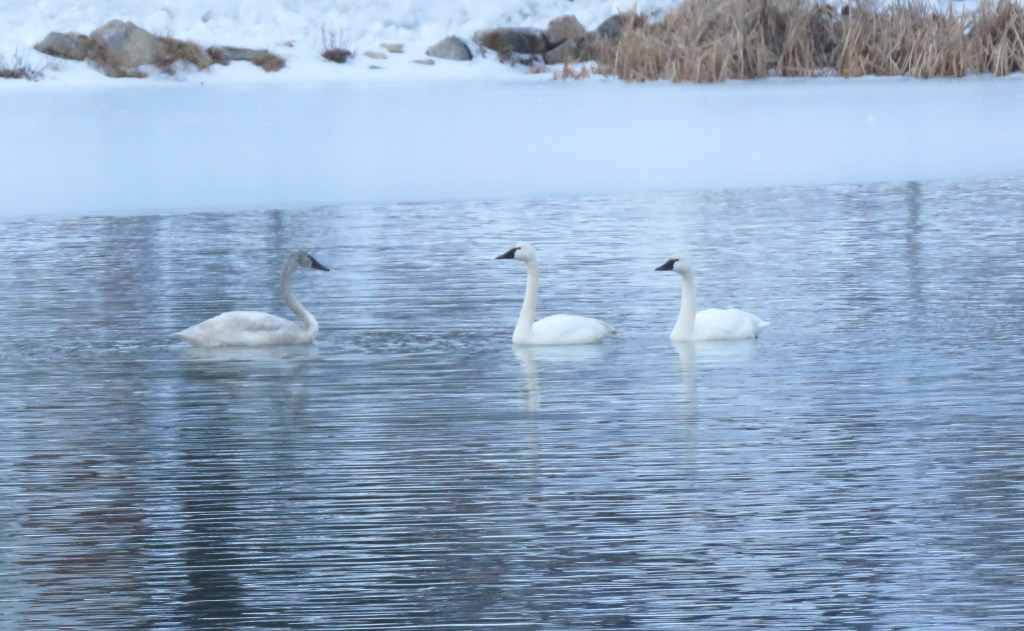
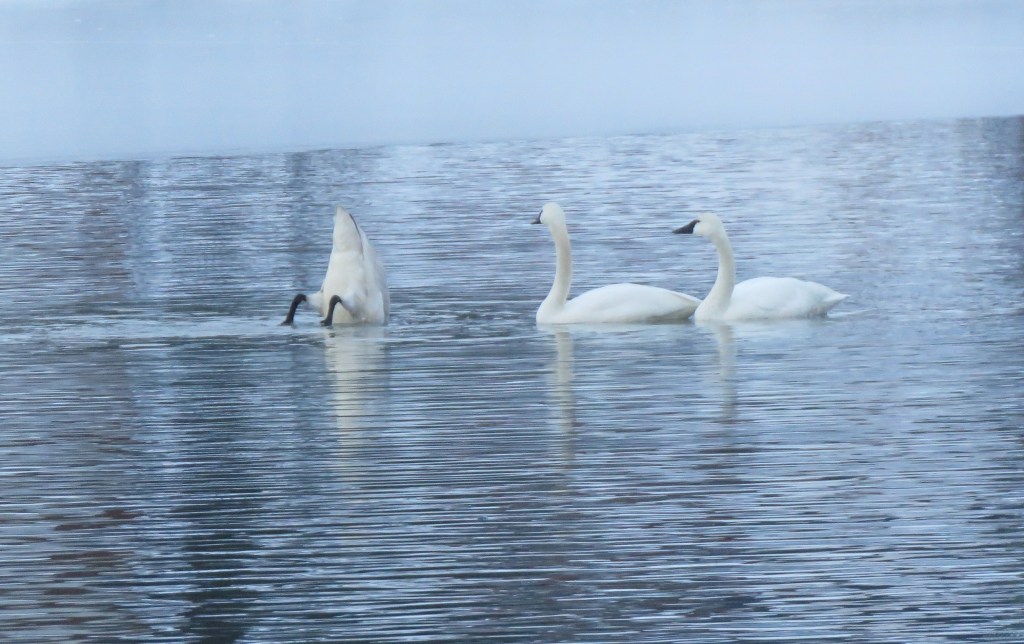
The trio of graceful Tundra Swans on Silver Lake. Photo by Bruce Stambaugh
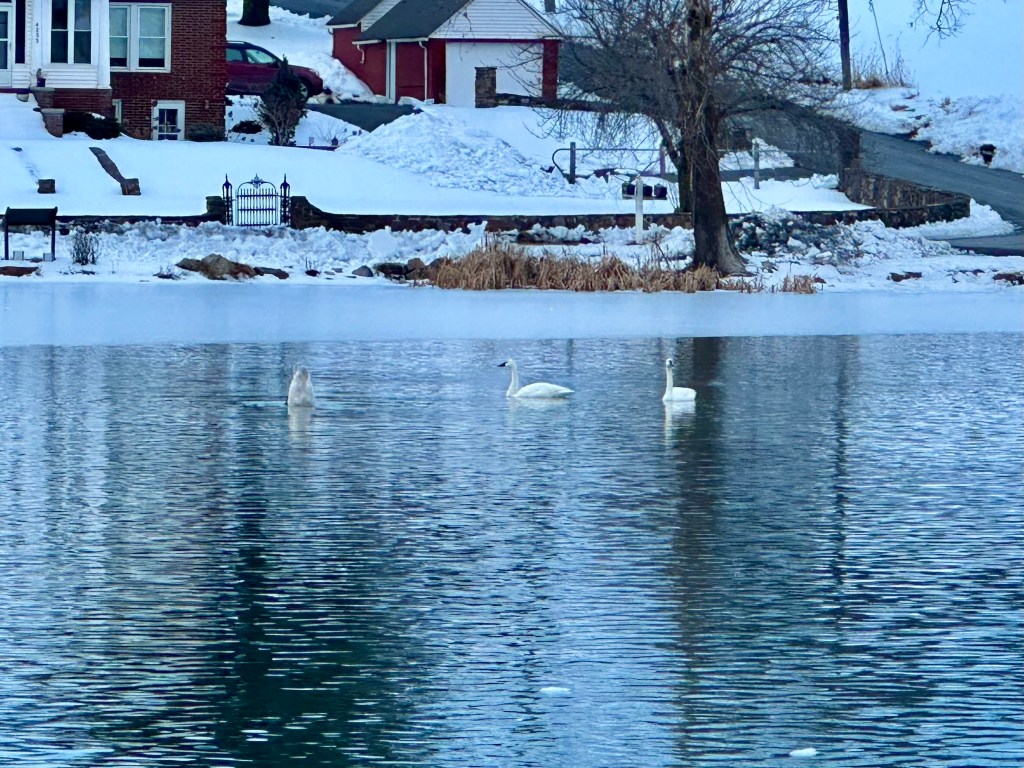
We were about ready for dinner when a text from a birding group reported three Tundra Swans at Silver Lake. My wife turned off the stove burner, we dressed for the super cold weather, and out the door we went.
Located on the north edge of the small town of Dayton, Virginia, Silver Lake is a few minutes’ drive from our home. I approached the drive from the north, which afforded a full view of the lake.
A flock of dark colored ducks floated near the lake’s shallow north end. Fortunately, no vehicles approached from either direction. I slowed and soon spotted the large white swans in the middle of the lake.
Because it has been so cold for so long after the six inches of snow and sleet, there was little room to pull over for photos. However, I managed to pull on the ridge of plowed snow along the road so I wasn’t blocking the southbound lane.
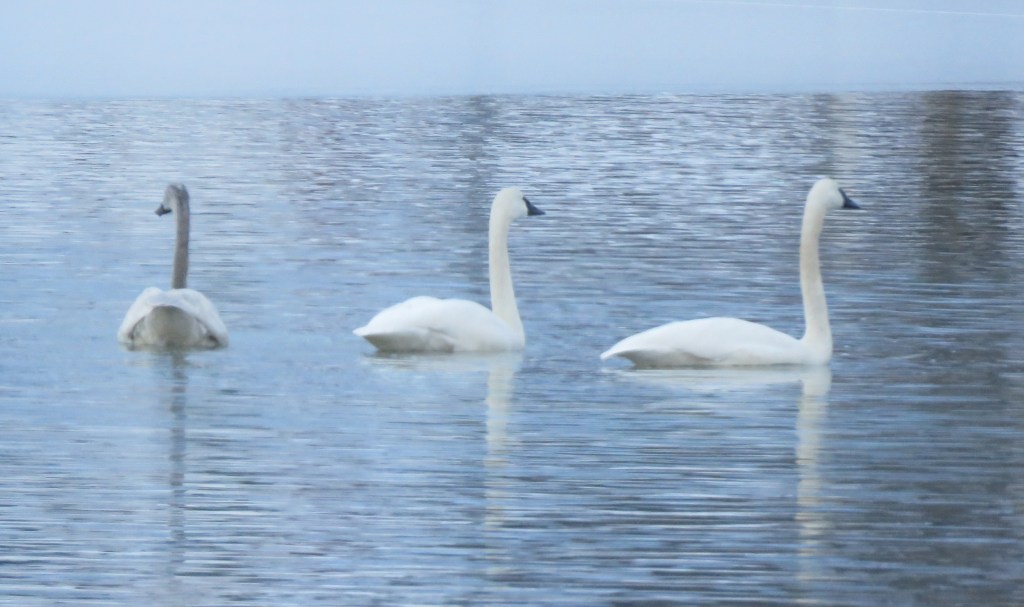
The Tundra Swans were about 30 yards away. The two adults and one juvenile swam gracefully on the placid water. The young one kept feeding by tipping its head into the water and foraging on the underwater vegetation.
Their closeness let me capture a few decent photos with both my camera and my iPhone before the light faded further. Given the precarious position of my SUV, I didn’t want to linger long.
Satisfied with the photos, we headed home, turned on the stove’s burner, and enjoyed a steaming bowl of soup. It completed a satisfying evening.
The juvenile Tundra Swan dipped into the water to feed several times. Photo by Bruce Stambaugh
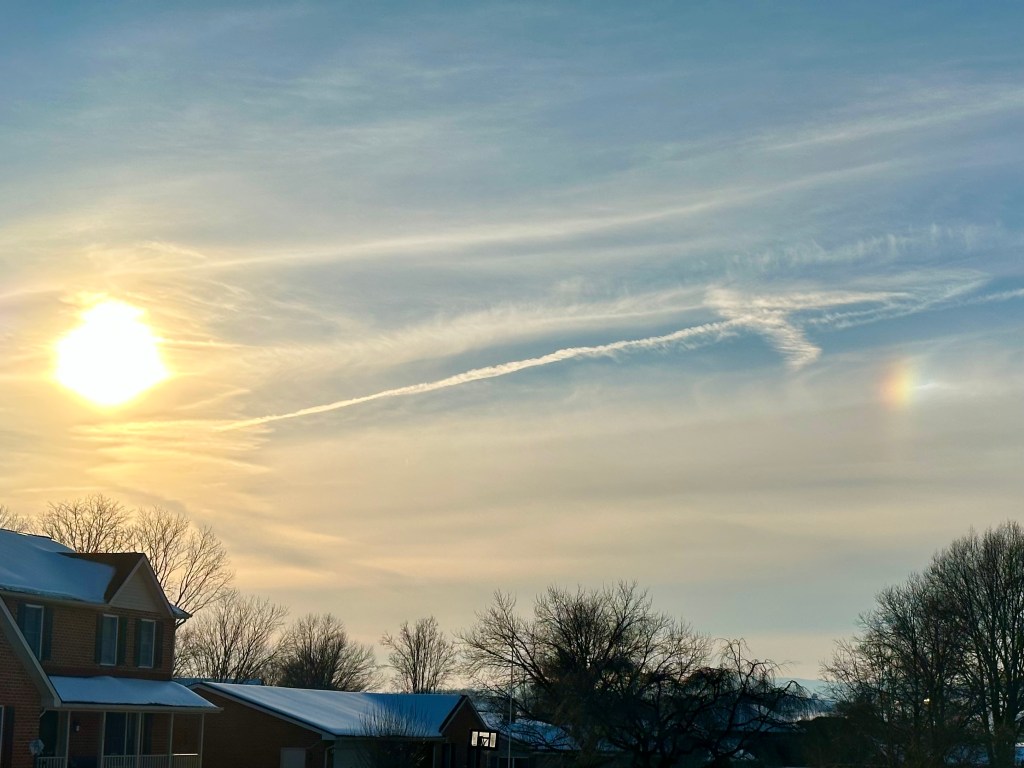
Sundogs, or parhelia, are among the many marvels of the sky. They are caused by the refraction of sunlight through millions of ice crystals high in the atmosphere.
The plate-like crystals are suspended in cold cirrus or cirrostratus clouds. The crystals align horizontally as they drift down and bend the sun’s light at 22-degree angles.
That is what creates the bright spots, often in rainbow colors on either side of the sun, and sometimes on both sides. On rare occasions, the crystals create a full arch over the sun. The spots can also be simply bright white.
Sundogs are most frequently observed in the winter, when the atmosphere is cold. They most often appear at sunrise or near sunset, as in this recently taken photo.
Parhelia is the Greek word for “beside the sun.” Sundogs are members of the halo family that occasionally form around the sun and moon.
 Roadkill Crossing
You must be logged in to post a comment.