From the turkey capital of Virginia, Happy Thanksgiving!
Today is Thanksgiving Day in the United States. Families and friends will gather for food, fun, and fellowship. Simply, it’s a day to show gratitude for what life has offered.
My wife and I did our fall cleanup around our house before the colder weather set in. The one item we left in place was a dried-up sunflower stalk near a hanging birdfeeder in our backyard flowerbed.
I hoped that the stalk would serve as a perch for the birds wanting to approach the birdfeeder. That’s precisely what has happened.
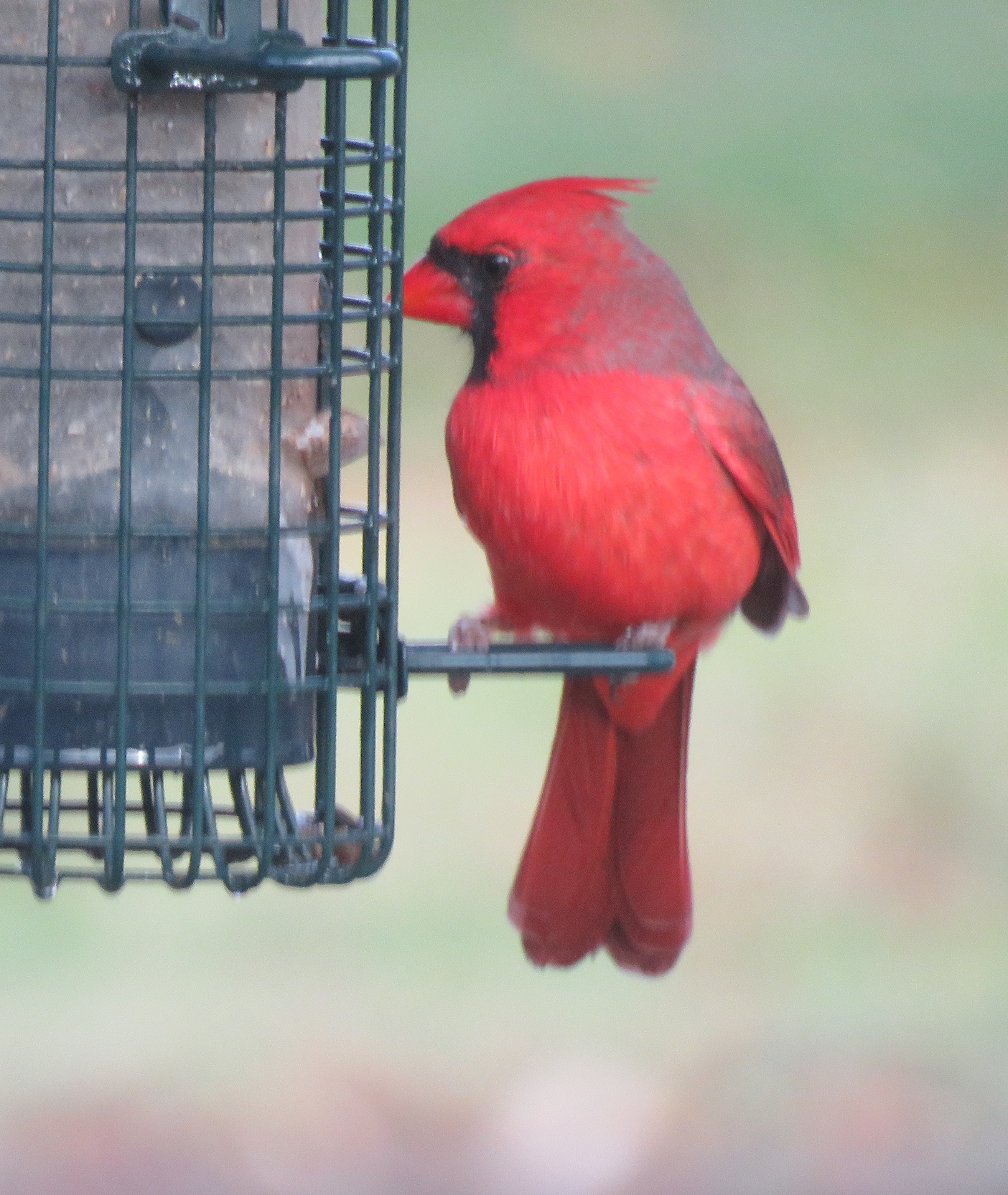
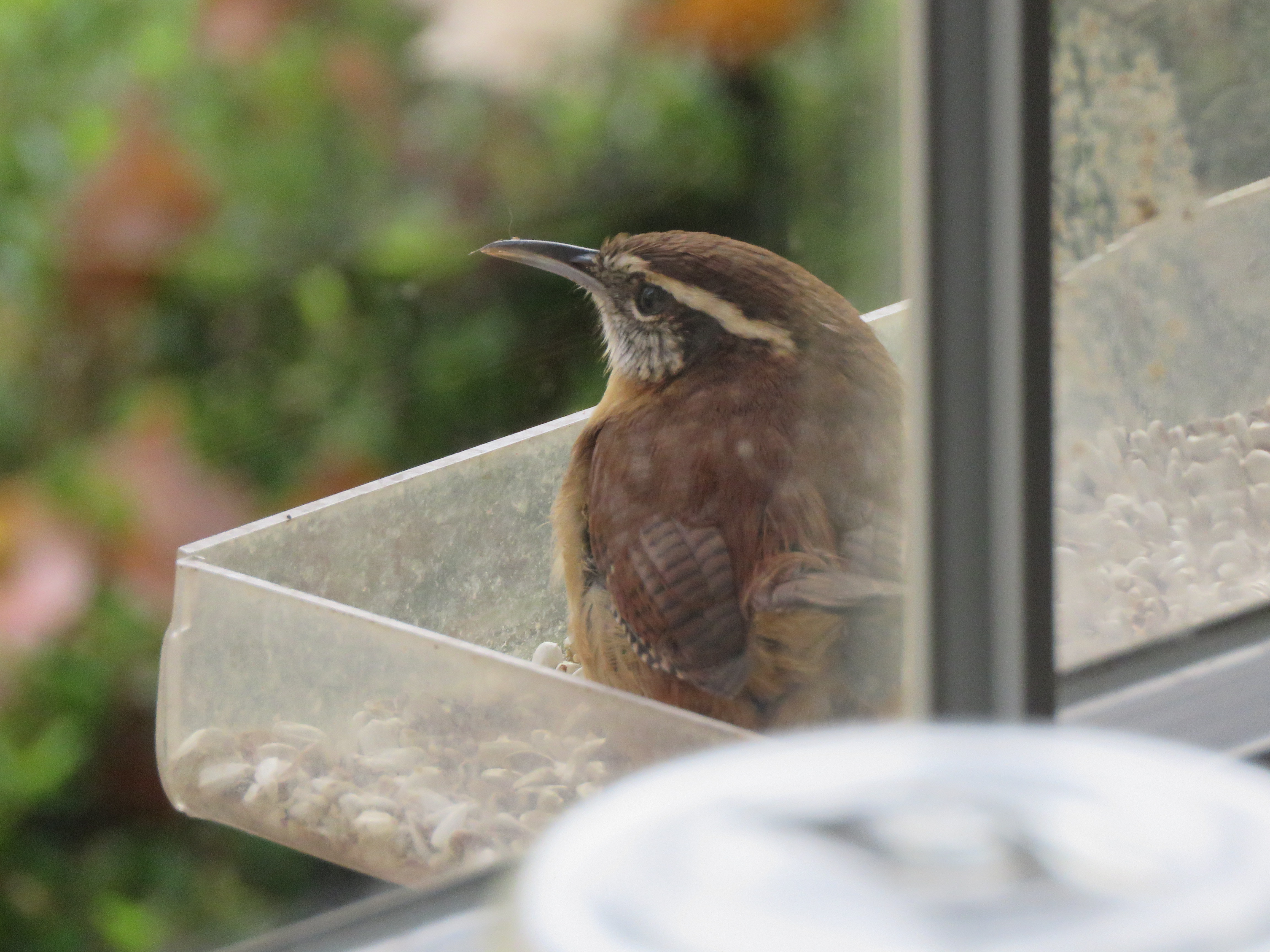
Several species of birds use the stalk either before or after going to the feeder filled with chipped and whole black oil sunflower seeds. So far, Northern Cardinals, House Finches, American Goldfinches, Blue Jays, and Carolina Wrens are some of the birds that use the withered stalk to perch.
The stalk is only a few feet from the house and near a window, giving me an excellent view of the stalk. The only drawback is that I have to photograph through the double-paned window with white grids. So, I have to get the right angle to avoid reflections from inside or from the white panes.
I happened to have my camera at the ready when this handsome American Goldfinch in winter plumage landed on the curve of the stalk and posed for several minutes. When the bird looked back at the feeder, I captured its perfect pose..
A peanut butter suet feeder hangs from the limb of the red maple tree in our front yard. I have a perfect view of it from my desk in the study.
Since the feeder is midway between our home and the street, the birds that visit the feeder are often cautious. People walking dogs, runners, and passing vehicles frighten the birds.
The neighborhood Cooper’s Hawk and Sharp-shinned Hawk also pose threats with stealth-like swoops at unsuspecting birds at the other nearby feeders. So, all the avian species remain on high alert.
On one recent afternoon, a striking male Northern Flicker was the lone bird at the suet feeder. First, however, it approached carefully. Male flickers have a prominent black mustache on both sides of their bills. It landed on a limb near the feeder and sat perched before it shimmied down the shady side of the tree trunk.
Soon, it moved closer, with part of its lovely, patterned body in the sun. It turned its head toward the feeder and quickly flitted onto it. The magnificent bird only took a few pecks of the suet before a car spooked it, and off it flew.
There’s a certain intangible satisfaction in birdwatching. That’s especially true when I venture out into the hills and valleys of Rockingham County, Virginia, the third-largest county in the Commonwealth.
That contentment only escalates when I have the opportunity to bird with others. My experience with birding in small groups has consistently found a friendly camaraderie.
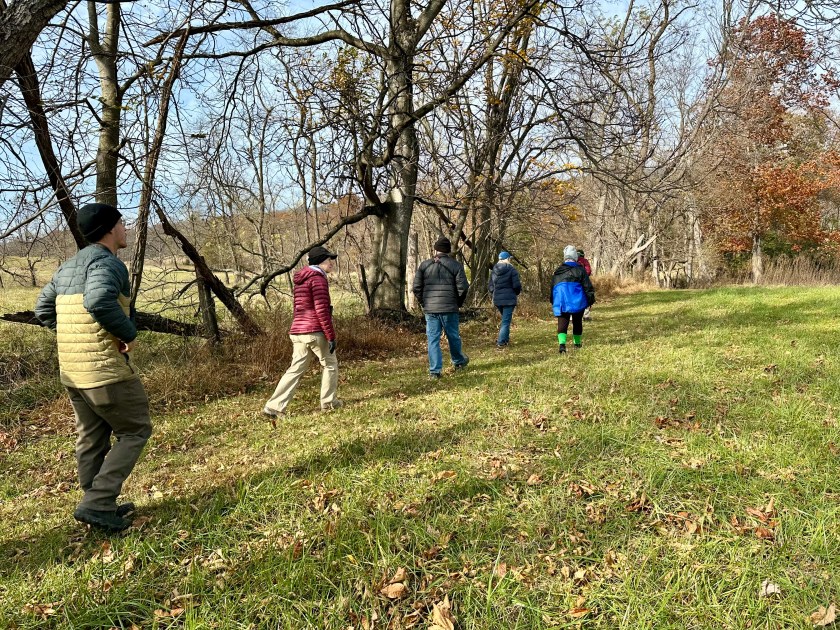
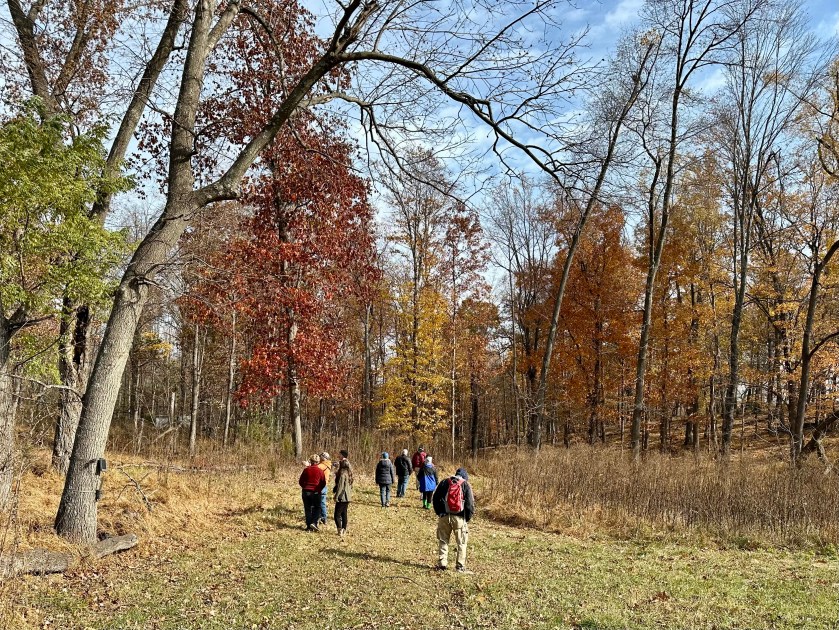
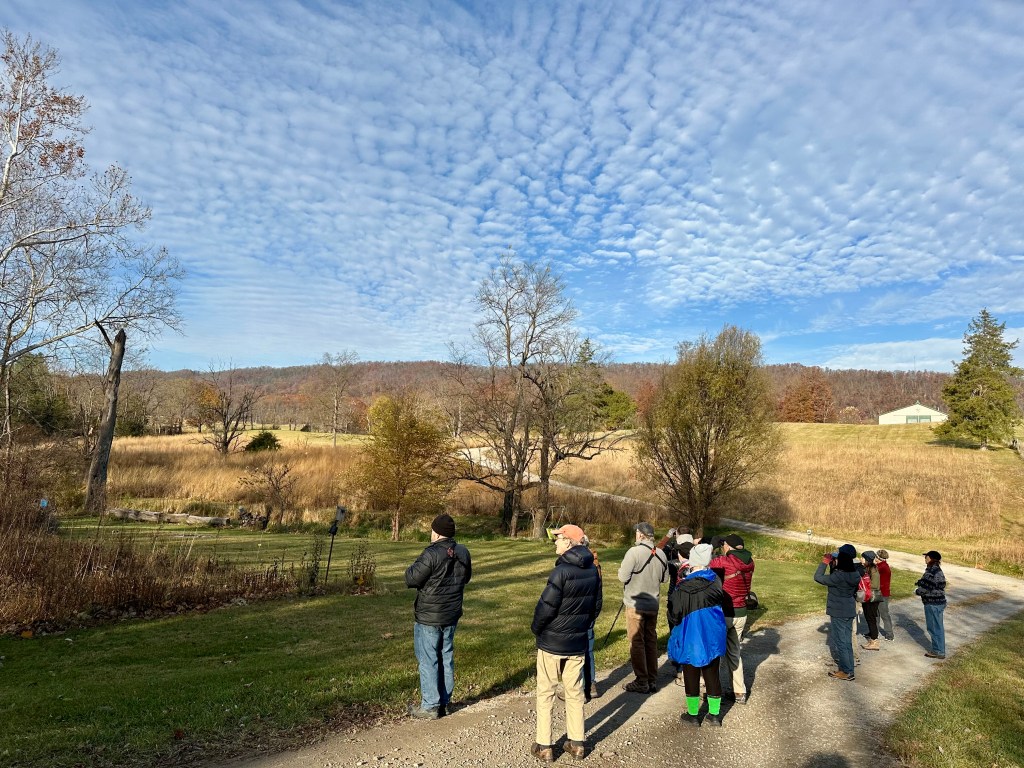
I recently participated in an outing on a certified wildflower farm in the western part of the county. The ages of the 16 members in the bird walk ranged from teenage to octogenarian. Among them were both novice and expert birders, which always enhances the quality of the field trip.
Most birders are patient and obey the unwritten rules of the sport. Conversations, usually about birds, are hushed so the chatting doesn’t interfere with the overall birding experience.
Birders help others find the bird. That is not always easy, so patience and communication are essential.
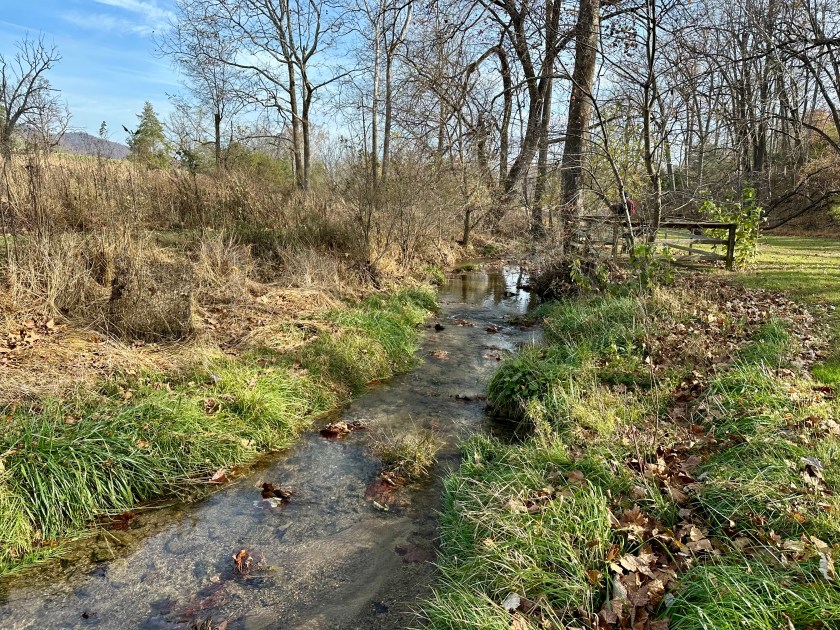
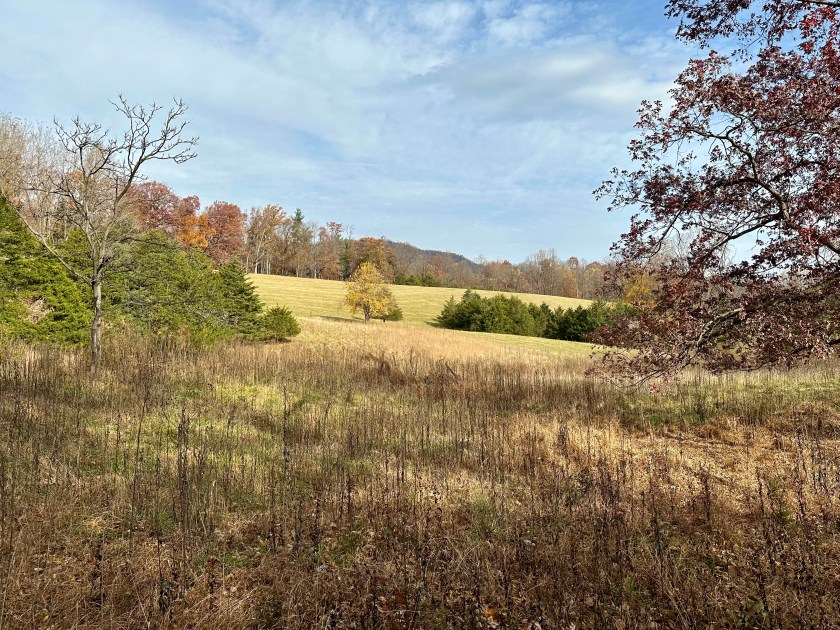
The day started in the 30s as we walked down the farmer’s recently graded half-mile lane towards the creek that splits his acreage. With two consecutive dry seasons, the native Indian grass had overtaken the native seeded wildflowers.
The farm entrance
Birding at the creek
Up the drive we go
Beautiful sky
Through the tree line
Looking to the meadow
The creek
North Mountain
Along the property line
Varied habitat
Atop the ridge
Into the woods
The meadow
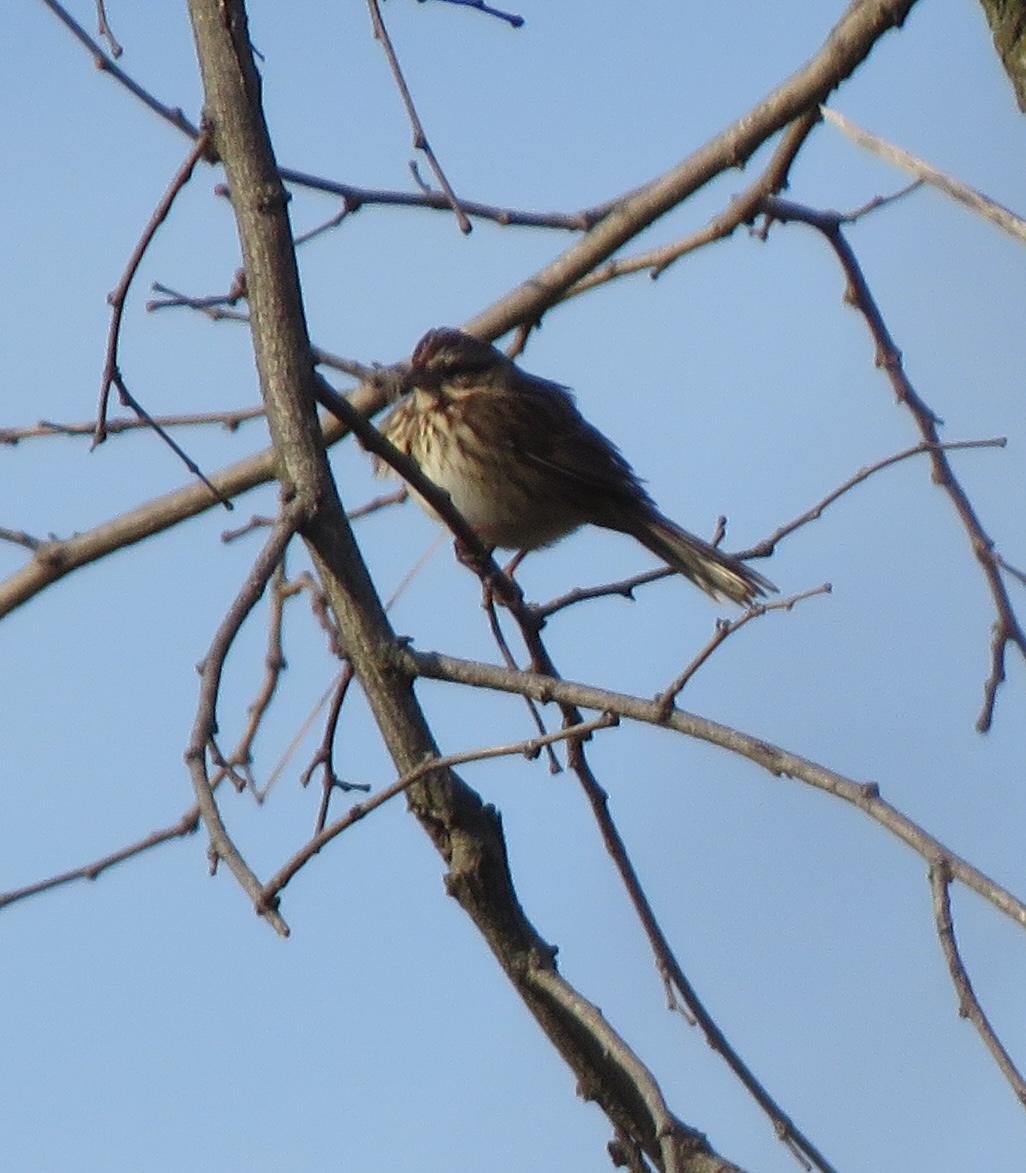
However, the grass provided excellent cover for the birds who use the dense grassy clumps for habitat. I was the last one to spot a field sparrow perched high on the six-foot-tall perennial. The birds feed on the rich seeds that form at the top of the grass’s yellow blades.
I only saw the bird that blended in with the tall prairie grass with the help of another birder, who was younger and had better eyes than I did. Using a tree in the far background, he lined me up and told me to follow the trunk down to just below the crest of the grass. Bingo. The bird was still there, posing.
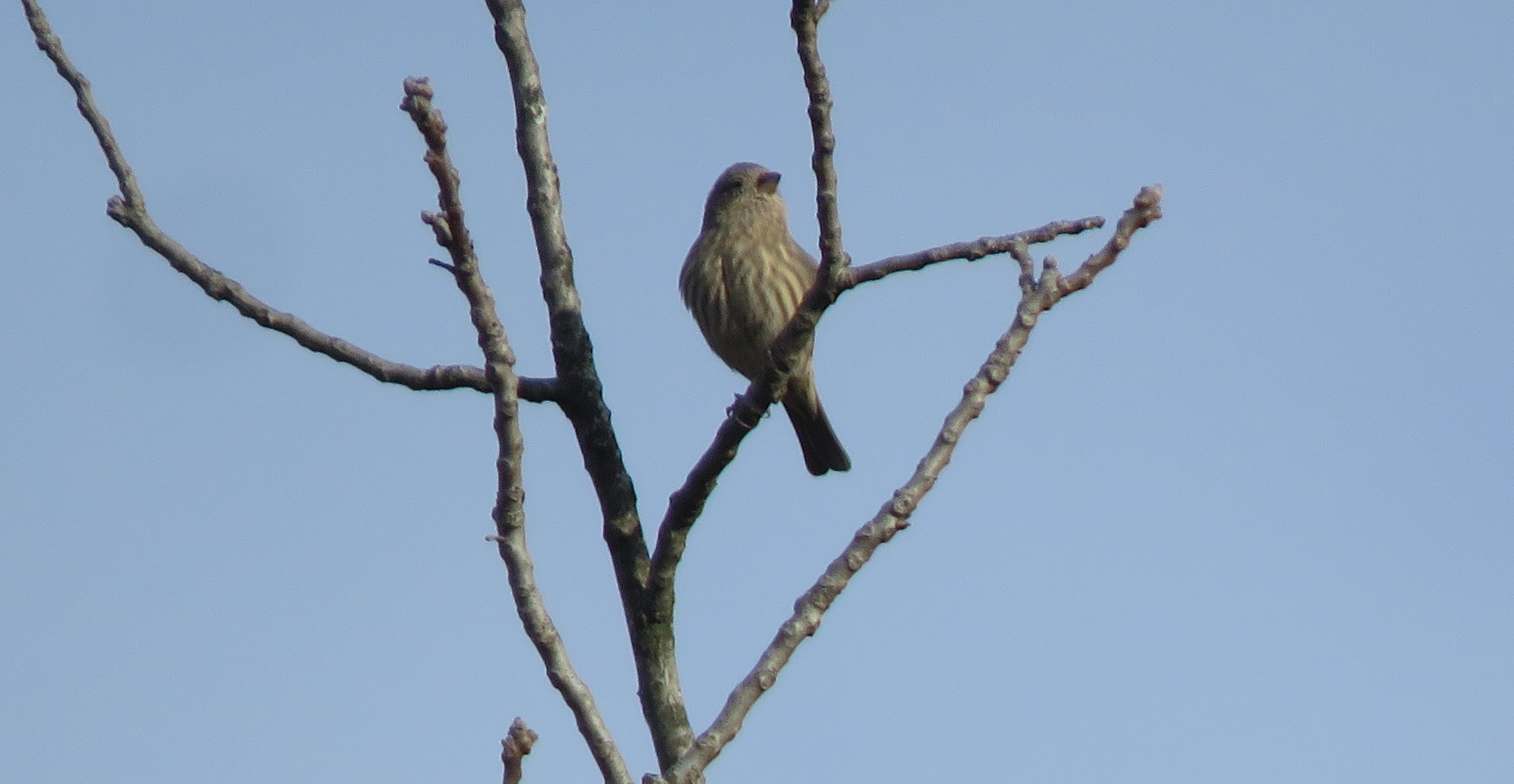
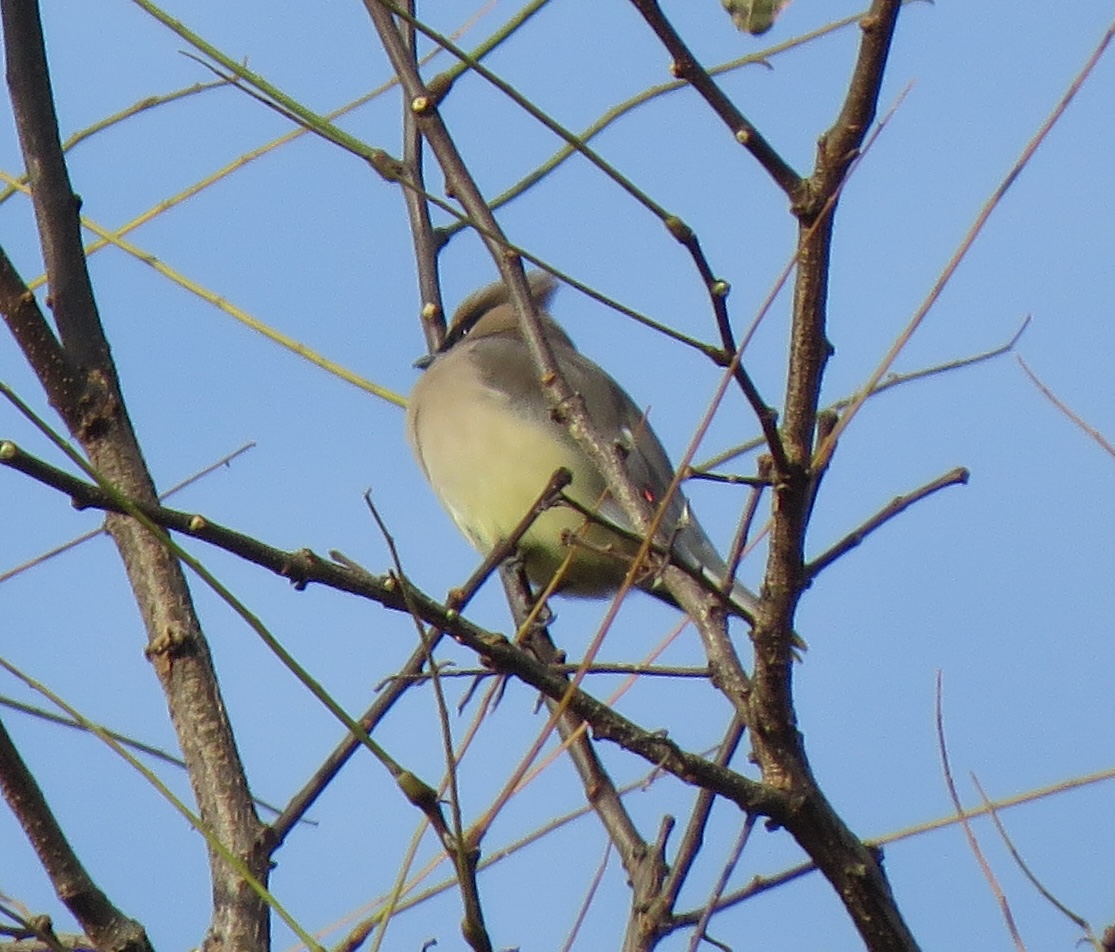
We continued down to the creek, where small flocks of Cedar Waxwings, Eastern Bluebirds, and several sparrow species gathered nervously in the large creek-side sycamore trees. Another birder speculated that the waxwings must be thirsty from devouring all of the cedar tree berries.
Nearby, a Red-headed Woodpecker, one of the birds I had hoped to see, flew to an old standing dead snag punctuated with multiple holes. It was clear that the Red-headed Woodpeckers preferred this tree for nesting.
The bird landed in the morning sun on the east side of the snag and quickly disappeared. Good birders are patient. In a matter of seconds, the regal bird appeared at the very top of the dead tree, and just like the Field Sparrow, posed for a photo op. I couldn’t have been happier.
I turned around and a pair of Purple Finches perched on branches of the forested slope west of the Indian grass. They didn’t sit long enough for a photo, however.
Please click on the photographs to view them in full size.
We crossed the footbridge over the creek and trudged up hill and down, along the southern property fenceline. The wind had picked up, and the strong southerly flow kept the birds low and out of sight.
A few vultures, both Black and Turkey, took advantage of the strong winds and sailed overhead. A pair of Red-tailed Hawks joined them in the kettling, the gliding on the thermals around and around like an avian tornado.
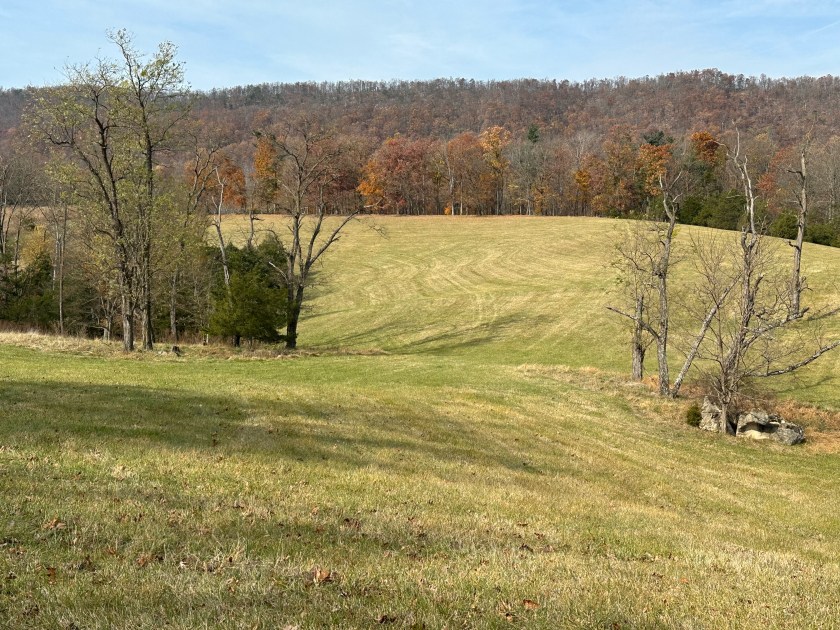
At the top of the ridge, some of the birders broke off to return home or head to their workplace. The rest of us walked on, admiring the varying landscape, vegetation, and mix of deciduous and evergreen trees.
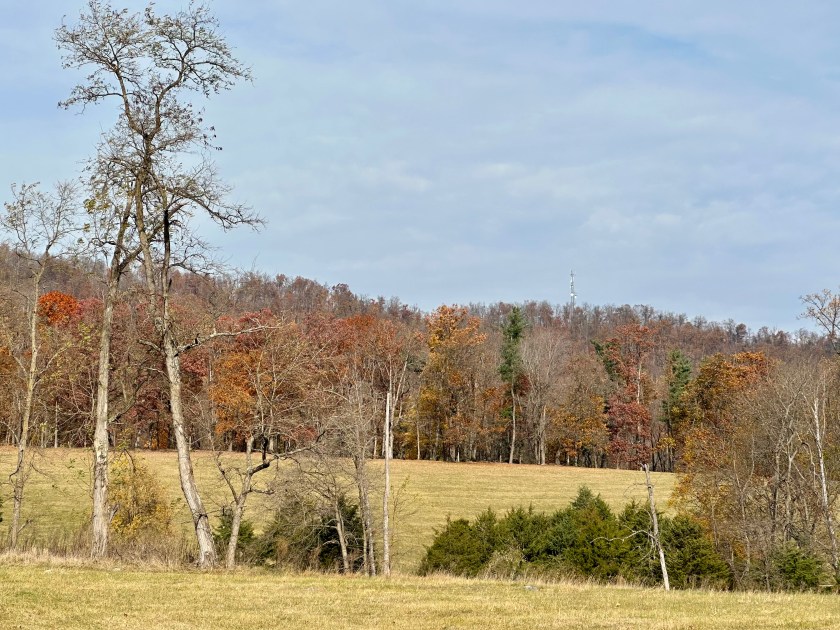
In less than a quarter of a mile, we had traversed through prairie grass, a few late-blooming flowers, grassy fields, and then into a second-growth woods. A Pileated Woodpecker’s deep-throated call echoed against the base of North Mountain.
After nearly three hours, we arrived back at the meeting place, tired but thrilled to be in the outdoors with gracious hosts and an excellent guide. In that time, we had seen or heard 33 species.
We were all pleased with that number for a chilly, windy day in Virginia’s Shenandoah Valley. Additionally, it was an excellent way to connect with nature and get some much-needed exercise, especially for those of us who are older.
Our birder group and the landscape we explored. Photo by Bruce Stambaugh
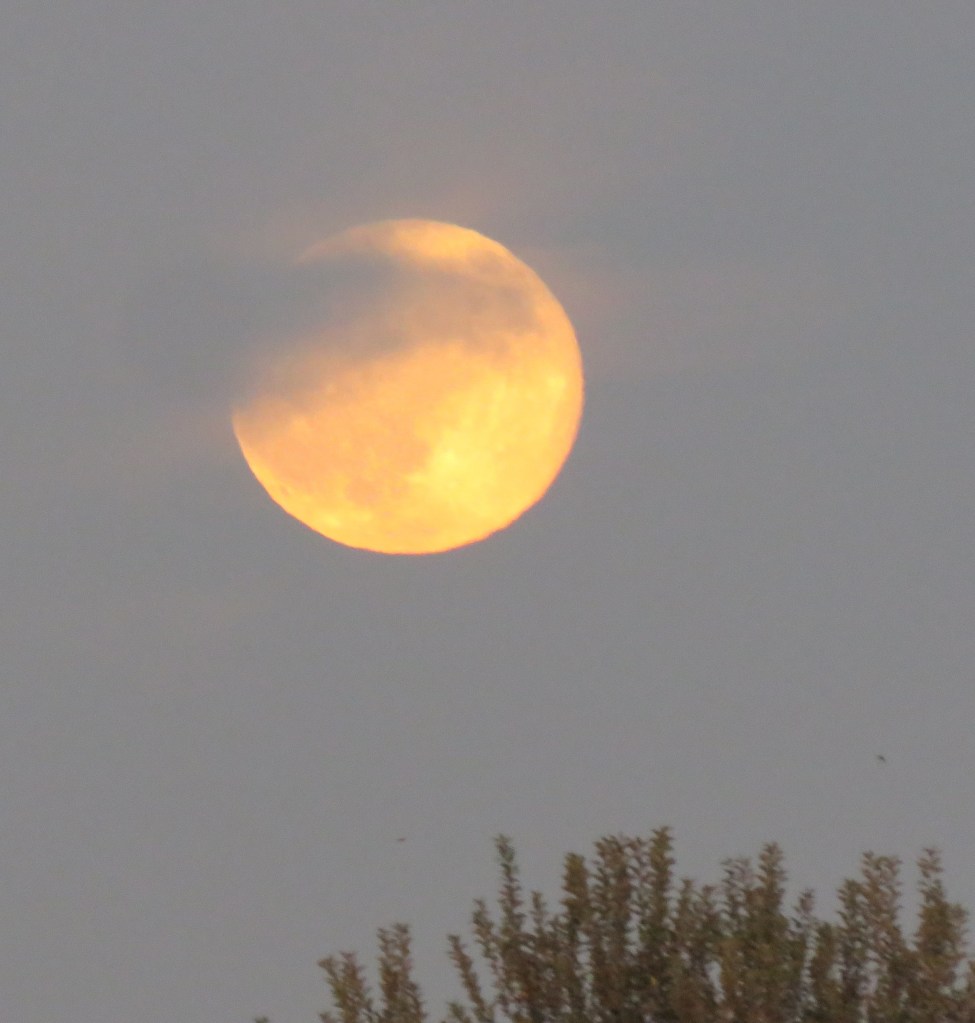
The Super Full Hunter Moon rose over Harrisonburg, Virginia. Photo by Bruce Stambaugh
Capturing the rising full moons each month is a challenge for me. I enjoy doing so, but it’s not always easy. Too often, the evening is cloudy, and sometimes it even rains on that particular evening after days without precipitation.
But when the weather is clear, I check a reliable website that provides the degree and direction the moon will appear. I have to be smart enough to interpret the chart.
I was ready for the latest moonrise, or so I thought. I found a location behind the athletic fields of Harrisonburg High School where I anticipated the moon to appear. Seeing the moon peak above the Massanutten Mountain east of the city is always a joy.
Unfortunately, my understanding of the calculations was too narrow. It was past time for the moon to appear, and I still couldn’t see it. So, I walked to where I could see the entire mountainous horizon, and immediately spotted November’s Super Full Hunter Moon. It hung just above the horizon, as the above photo shows.
I switched to my long lens and snapped a few photos as the low clouds, reflecting the setting sun, began to cover the moon. I was satisfied with those shots and headed home.
I was up early a couple of days later to participate in a bird walk on a local private homestead that abuts the North Mountain in the western section of Rockingham County.
As we gathered the small group at the starting spot, the leader pointed out the waning gibbous moon above the forested mountain. The early morning light nearly obscured the moon, making it hard to see between the clouds and the rising morning haze.
Dim as it was, the moonset was a pleasant surprise that made up for my confusion about the moonrise.













 Roadkill Crossing
You must be logged in to post a comment.