Our suburban home near Harrisonburg, Virginia, faces north. That requires me to constantly check east and west around dawn and dusk for any hint of a colorful sunrise or sunset.
My chances of catching a lovely sunrise have to be more intentional. The older I get, the easier it is for me to sleep past the sun’s morning appearance. Seniors seem to have a sleep cycle similar to that of newborns. I fall asleep fine, but staying asleep is another matter. Consequently, my awakenings in the middle of the night contribute to my sleeping pattern. I toss and turn and then sleep soundly until sun up.
So, I have many more Virginia sunset photos than sunrises. I walk in the neighborhood as often as I can, and I especially like doing so in the morning.

The other day, my wife and I were about to begin our morning stroll when I noticed the sun shining on a farmstead on the eastern slope of Mole Hill, a local landmark. Mole Hill is the remnant of a volcanic core from millions of years ago. Over millennia, nature’s elements have weathered and withered the basalt down into a gently sloping geographic feature resembling a molehill, thus its name.
With my camera at the ready, I captured the sun highlighting this old homestead. I didn’t think much of it then, but that changed the following evening.
I wasn’t too hopeful for a glowing sunset, yet when I looked out, the sky radiated orange across the western sky. I knew my only chance for a photo was from the middle of the street in front of our home. So, I did that, standing at nearly the same spot as the morning photo of Mole Hill.
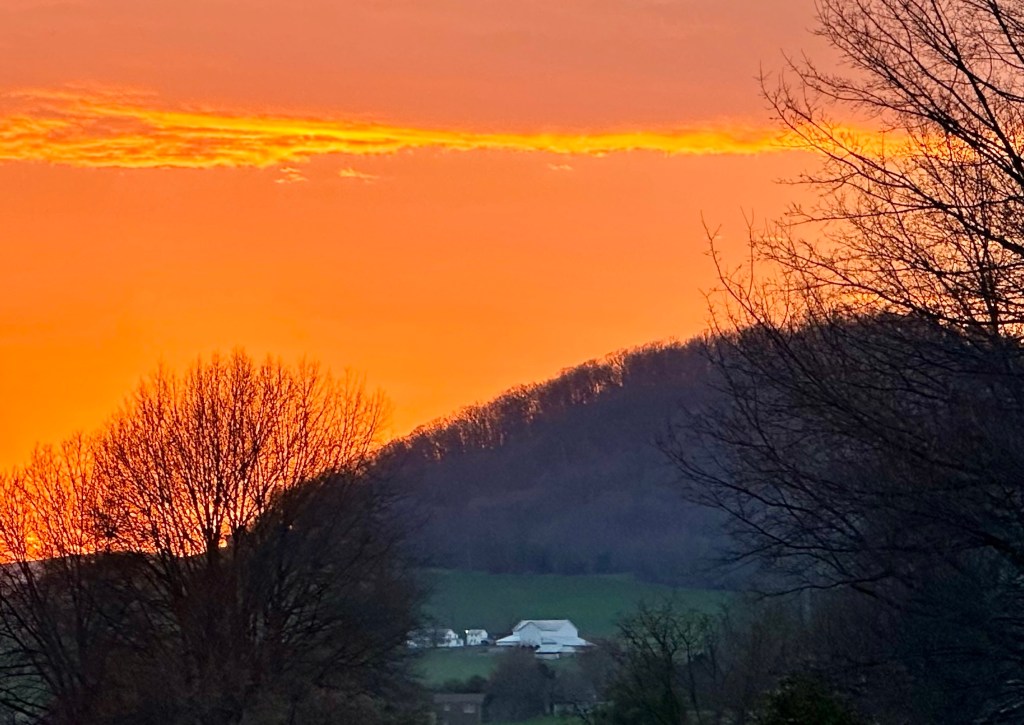
In one of the photos, the same farmstead stood out, even on the shaded side of the historic hill. I don’t tinker with my photos, so this eerie highlight simultaneously puzzled and intrigued me.
Call it what you will. I’m glad the sun shines on Mole Hill morning and evening.
© Bruce Stambaugh 2024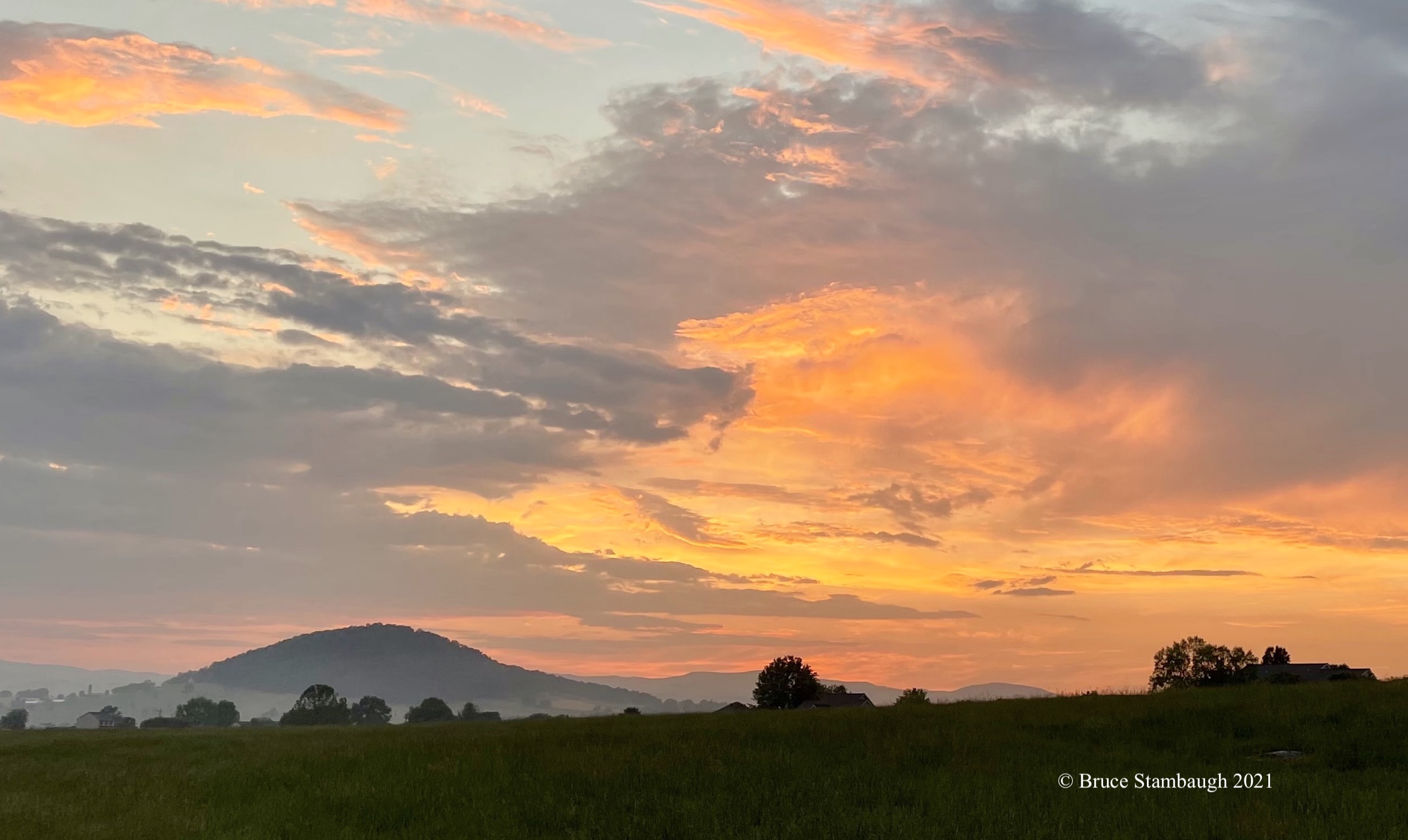
 Roadkill Crossing
You must be logged in to post a comment.