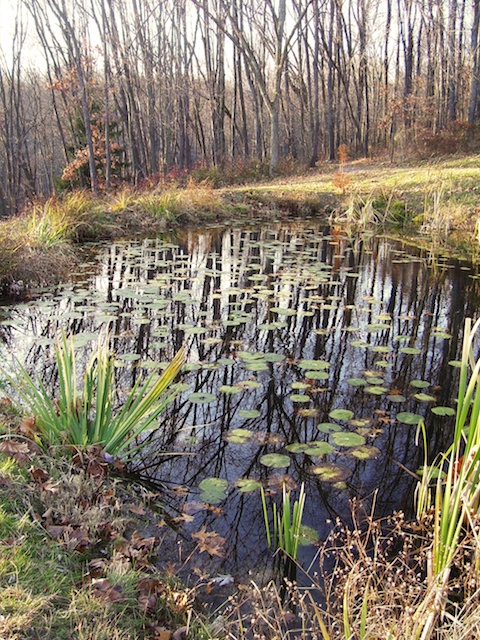
Fallen leaves, brown reeds,
Floating on the black water,
lilly pads yet green.
Bruce Stambaugh
Dec. 3, 2010

Fallen leaves, brown reeds,
Floating on the black water,
lilly pads yet green.
Bruce Stambaugh
Dec. 3, 2010
By Bruce Stambaugh
It was only appropriate that for a full week after the first snow of the year that we experienced a perfect Indian summer here in Ohio.
The extended summer-like days, which seemed to actually improve chronologically until the rains came, served as a picturesque bridge between a superb fall and an inexplicit winter yet to come.
We can only wonder what winter will be like. Will it be as harsh and record breaking as the last? We hope not. Clearly we have no say in the matter.
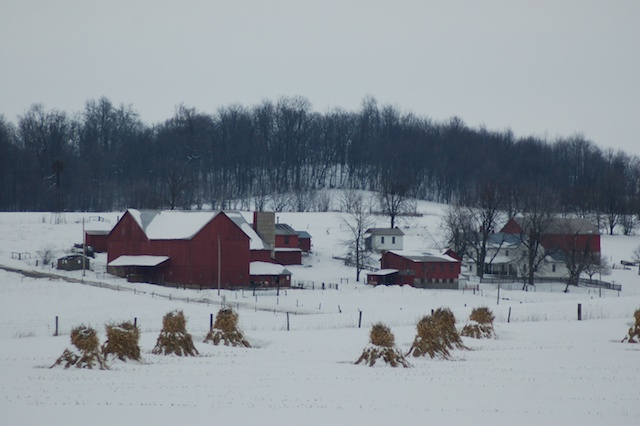
Every fall the National Weather Service issues a long-term guesstimation of what winter will bring. But even the scientists hedge their prognostications on percentages, casino like.
In the end, we have no choice but to take what we get. Hushed by the holiday clamor, a certain question lingers unspoken. Will we appreciate what we receive? In truth, that question can and should be applied far beyond the realm of weather.
I remember well the winter of 2004-2005 when the infamous ice storm nailed our area. The accumulating ice snapped giant trees, brought down power lines, halted commerce, interrupted communications, and thinned traffic to emergency purposes only for days.
Those of us who were on the electrical grid were hit hard. Fortunately, an Amish friend saved my family and me with the use of a generator to at least keep the gas hot water heat on. Without the generator’s assistance, the pipes in our home would have frozen and burst, causing extensive damage. Thankfully that did not happen, due to the unconditional generosity of my friend.
All the while, with our communication to the outside world cut, thousands upon thousands of people were caught in the wake of a horrific earthquake and subsequent tidal waves that killed scores of people.
In sorting through an overflowing basket of mishmash the other day, I came upon some handwritten notes I had made about the catastrophe. Apparently, I did so while listening to a battery-operated radio. In reviewing my scribbling, I was reminded that the inconvenience of living without electricity for five days paled in comparison to the plight of millions of fellow human beings halfway around the world.
A sampling of my jottings, dated Dec. 26, 2004, relived the calamity: Banda Ache, 60-foot wave, two miles inland, 30 mph, eight-12 feet deep flood; deaths, 200,000 in Indonesia alone, 400,000 injured; no system to alert people in Indian Ocean rim; 9.3 magnitude earthquake, the world’s deadliest tsunami. Unfortunately, those initial notations proved accurate.
Once power was restored the horrible scenes unfolded on television. I was appalled for the victims, thankful for my family that we had only lost power and a few trees in the yard. Compared to the widespread wreckage and unbelievable totals of death and injuries of so many innocents, we had been fortunate.
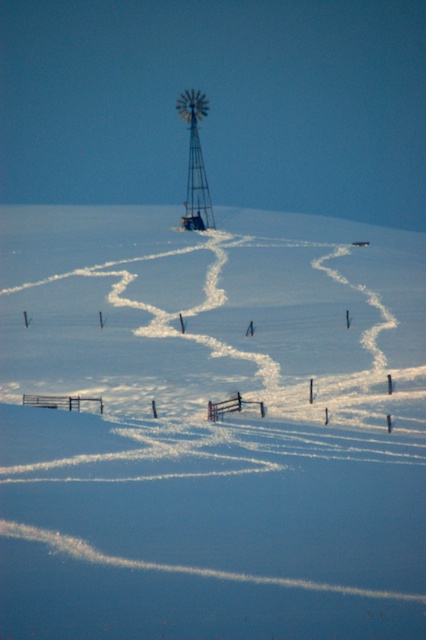
Since then, infinite natural and man-made disasters, including the sluggish global economy, have occurred. Others will likely continue to develop as time progresses. Nevertheless, as we begin this holiday season in North America, we still have so much for which we can be thankful no matter our personal situation.
This Thanksgiving perhaps we can express our gratitude by simply helping the less fortunate. We may not have to look clear to the Indian Ocean rim for those opportunities either.
Maybe, just maybe, a proactive generosity can be an Indian summer bridge to brighten someone else’s rainy day life. That would be a practical, productive and prudent Thanksgiving.
By Bruce Stambaugh
With Labor Day upon us, autumn will be right around the corner. In fact, if you look closely, signs of fall are already evident.
Some of the indicators are obvious, others more subtle. Some are predictable with still others seemingly a bit premature.
The days, often the nicest of the summer, have a sly, natural flaw. Day by day, minutes of daylight are silently subtracted from the previous day’s total. By month’s end, daily darkness will outnumber daylight once again.
The sun itself is moving more towards the center of the horizons at sunrise and sunset. Those driving true east and west running roads have already begun to frequently use their sun visors. The fall fogs, too, have clouded crisp mornings, the consequence of cool nights following warm days.
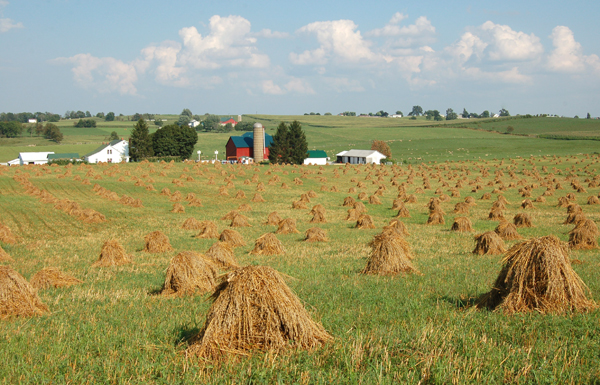
In the fields, the harvesting has begun. My Amish neighbors have long since gathered up the standing army of oats shocks and wheeled them off wagon load after wagon load to the thrasher.
Now it’s the corn’s turn. The field corn seems to have taken on drought status, drying up almost overnight. Brown has overtaken green as the predominant color in the standing sea. Smart farmers have already begun to cut their supply of silage to replenish the silos.
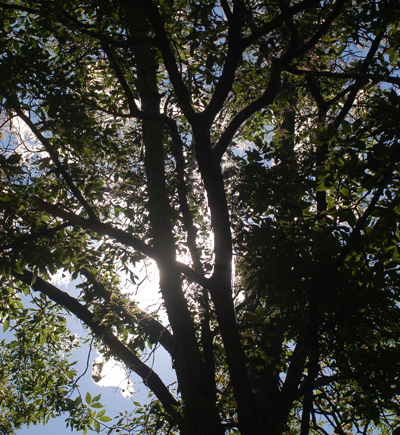
In the woods and along highways, once glossy, emerald leaves have dulled and drooped. Some have already begun to drop without even changing color. Now and again a black walnut can be found standing stark naked, save for the cache of fall webworm nests it has involuntarily collected.
In the gardens, the picking of produce is a daily chore. Cucumbers, onions and tomatoes have hit their peek. Kitchens are cluttered with utensils for canning and freezing. The ripened fruits and vegetables that aren’t consumed at the dinner table find their way into jars and containers.
Even the sounds of the season have changed. Only a few American Robins continue to sing, and most likely they are sophomores practicing for next year’s prom. Instead of gathering nesting materials and snagging worms and insects, parent birds lead their fledglings to watering holes for liquid refreshment and necessary bathing.

The volume and frequency of the cicada and katydid songs have lessoned considerably. Even the crickets have quieted down.
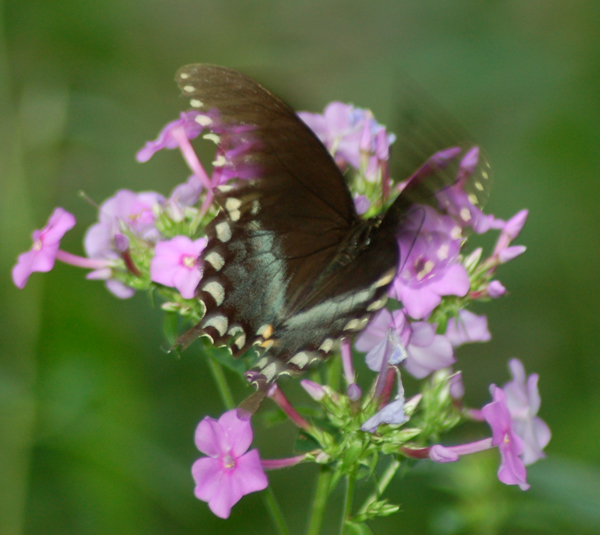
Butterflies of all sizes and colors squeeze whatever nutrients they can out of the fading cornflowers and black-eyed susans. The humming birds, too, seem to sense an urgency to store up extra energy for their upcoming southern vacation travel.
Squirrels are in their glory, cutting as many beechnuts, hickory nuts and walnuts as they can. Thrifty creatures that they are, they also bury future meals for harder times ahead. Only they can’t always remember where they put their stash.
Next spring, when the saplings begin to appear, we will learn just how forgetful the squirrels were. But between now and then, many pleasant days lay ahead, and probably some less than desirable ones, too.
There is yet one more indicator that fall is knocking on our door. Campaign signs have already begun to litter urban, suburban and rural roadsides. They are as prolific and unsightly as the ugly webbed homes of the worms.
The obnoxious yet gaudy campaign posters are a human-induced reminder of what nature is about to bring. Autumn will be here before we know it, and there is little we can do about it except to enjoy the ever-changing colorful show.
Wildlife Photos From The Chesapeake Bay Region
Culture and Communities at the Heart Of India
Artist and nature journalist in the Shenandoah Valley of Virginia.
Photographer Of Life and moments
Personal Blog
Art is the only way to run away without leaving home. -Twyla Tharp
Writing generated from the rural life
writer. teacher. podcast cohost.
El amor cruza fronteras / Love crosses borders
 Roadkill Crossing
You must be logged in to post a comment.