Evolution of a beloved sugar maple

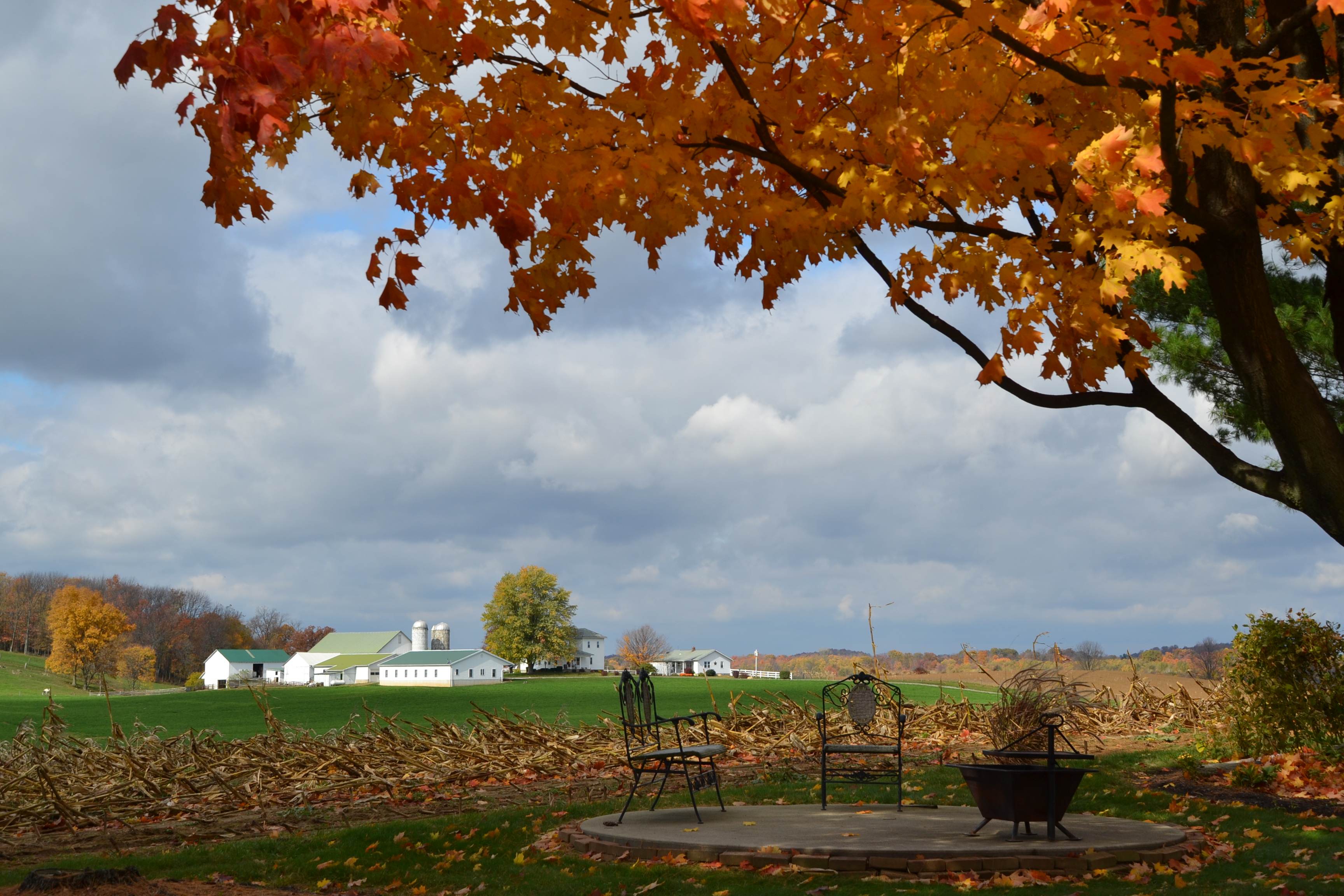
Under the tree by Bruce Stambaugh

By Bruce Stambaugh

The sugar maple in our backyard and I go way back.

When my wife and I purchased our current home 33 years ago, only three trees graced the acre and a half. That had to change for several reasons.

Trees provide so many benefits to any property, urban, suburban or rural. Trees add both an aesthetic and economic real estate value.

Close up by Bruce StambaughBesides their beauty, trees provide practical purposes, too. In summer, their shade serves as a natural air conditioner. They prove a reliable windbreak against harsh winter winds. As a bird enthusiast, I wanted a mixture of trees that would supply a nice habitat for a variety of birds year-round.

The sugar maple that now dominates the middle of our backyard was just one of several trees that I transplanted from our property near Killbuck, Ohio to our current residence near Mt. Hope. I did so in the fall, the optimal time to transplant since trees are dormant.

I dug the tree out of our hillside woods. The soil was so loose and gravely it all fell off. I wrapped the bare-rooted maple in burlap, and headed east. By the time I had reached our soon to be home, it was dark. I stabbed the ground with the pointy tree shovel, pulled the earth back, slipped the roots into the moist ground, stamped it closed and left.

Later in the light of day, I trimmed all of the limbs and the top third off the tree to let the roots take hold the first year. And did they ever. In three decades, the little sugar maple has grown into a full, mature, shapely tree. It is the jewel in the leafy crown of our modest domain.
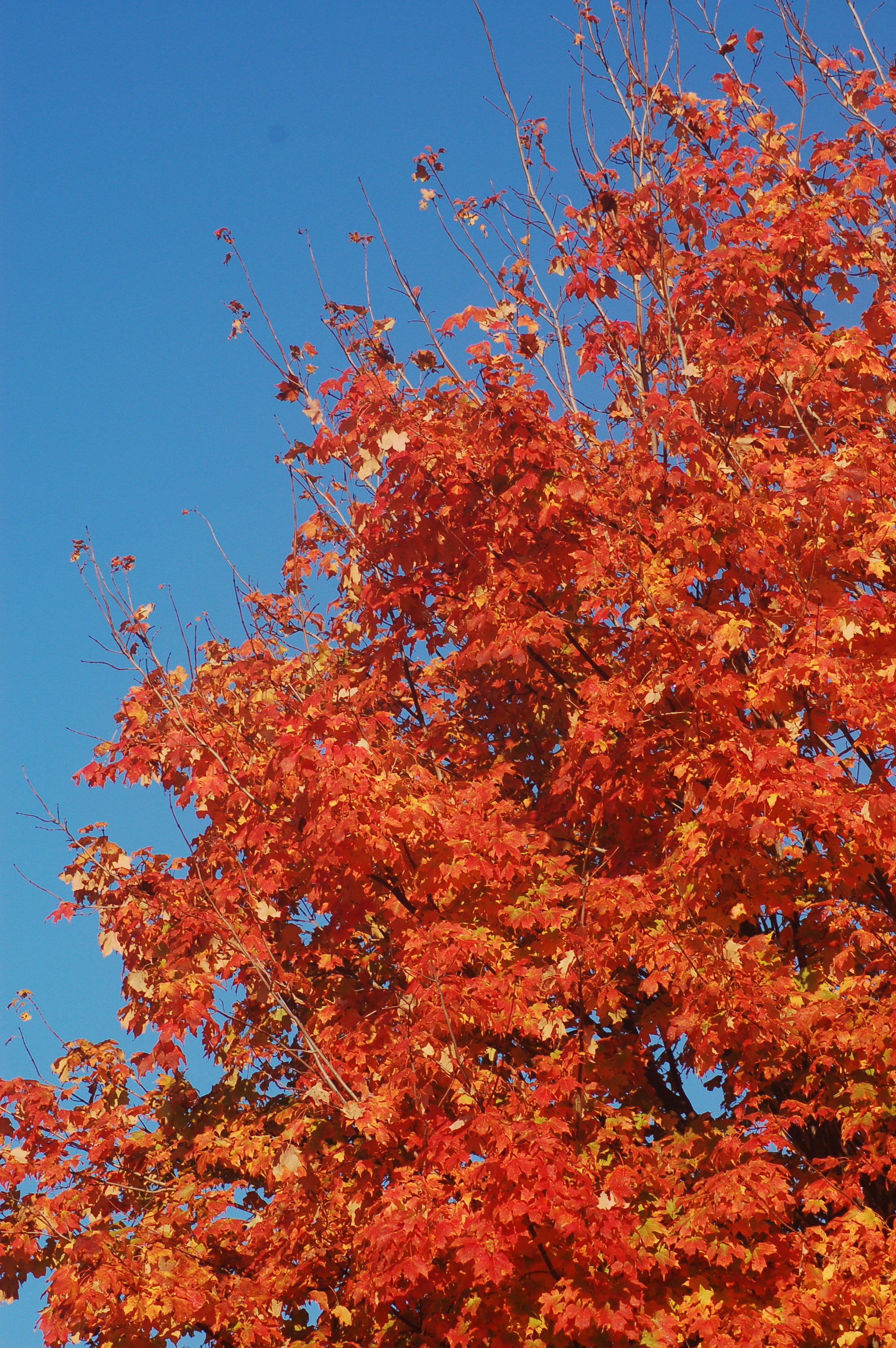
Blue and orange by Bruce Stambaugh
Over the many years it has endured a lot, including serious damage from the remnants of a hurricane, a severe thunderstorm gust and an ice storm. Each time I carefully patched the exposed flesh as if it were an injured child.

The sugar maple has hosted innumerable bird nests during its life, birthing many different songbird species. Other birds and animals big and small have sought sanctuary in its embracing arms and expansive, dense canopy. Most were wanted. Others, like the family of raccoons that raided the bird feeders, were not.

Backyard birds use the tree as a launching pad to the nearby feeders. Nuthatches and woodpeckers wedge sunflower seeds into the crackled, flaking bark to crack open the shells to get to the sunflower meat.

My verdant friend hosts free entertainment, too. Late spring to early fall Ruby-throated Hummingbirds take turns waiting in ambush on a favorite perch for other hummers coming to the sugar water feeder that hangs by our kitchen window. It’s pure joy to watch them chase and chatter after one another.
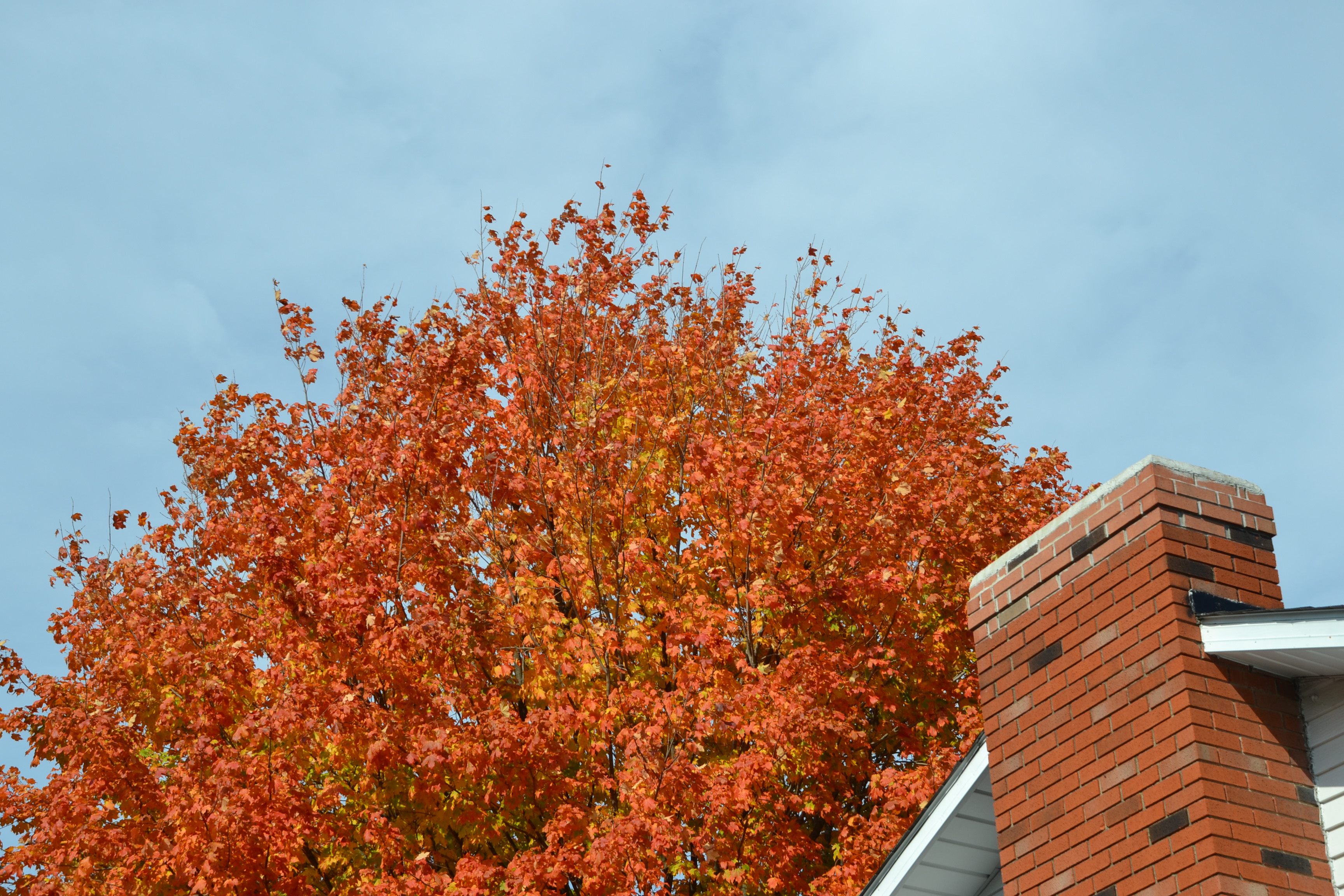
Over the top by Bruce Stambaugh

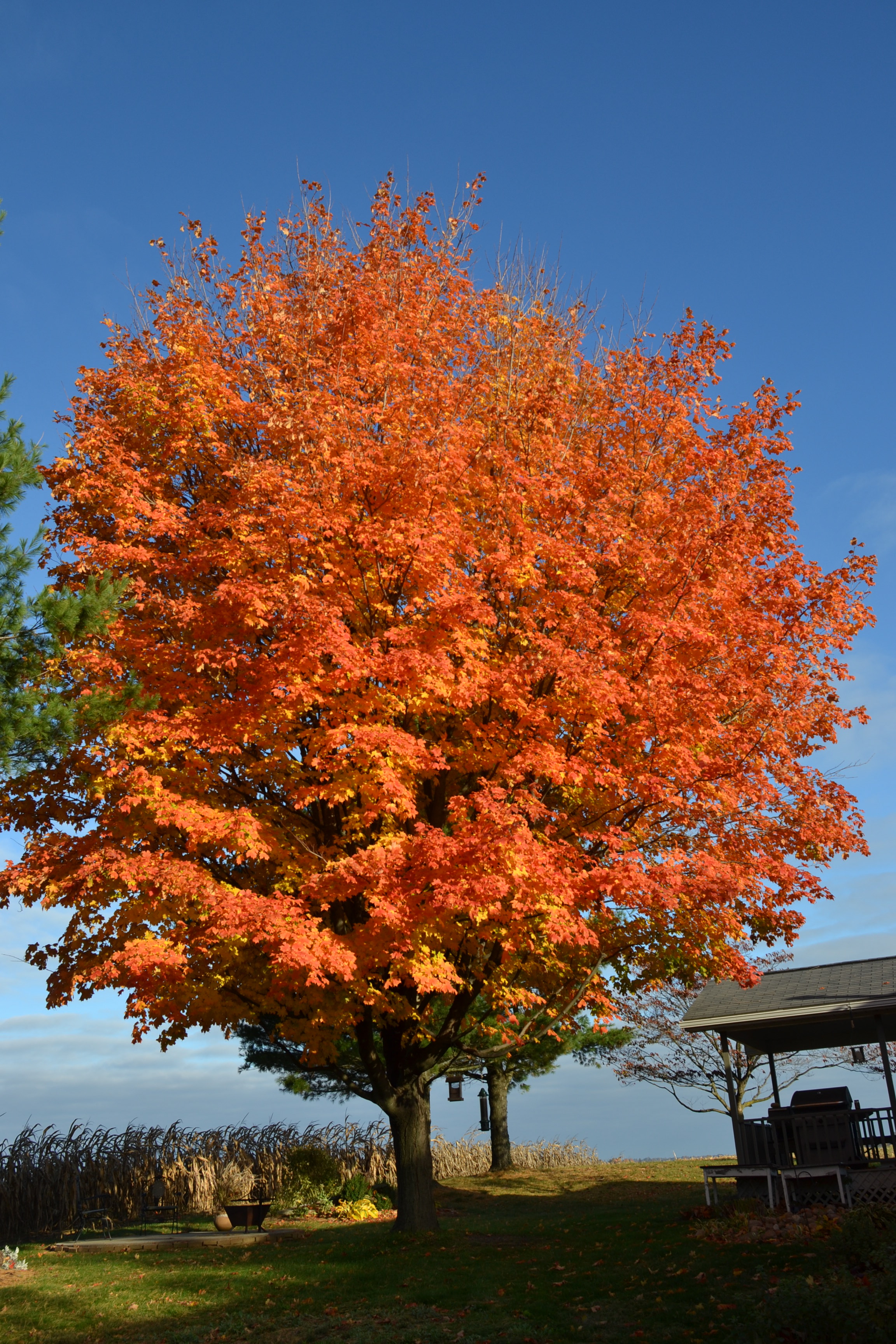
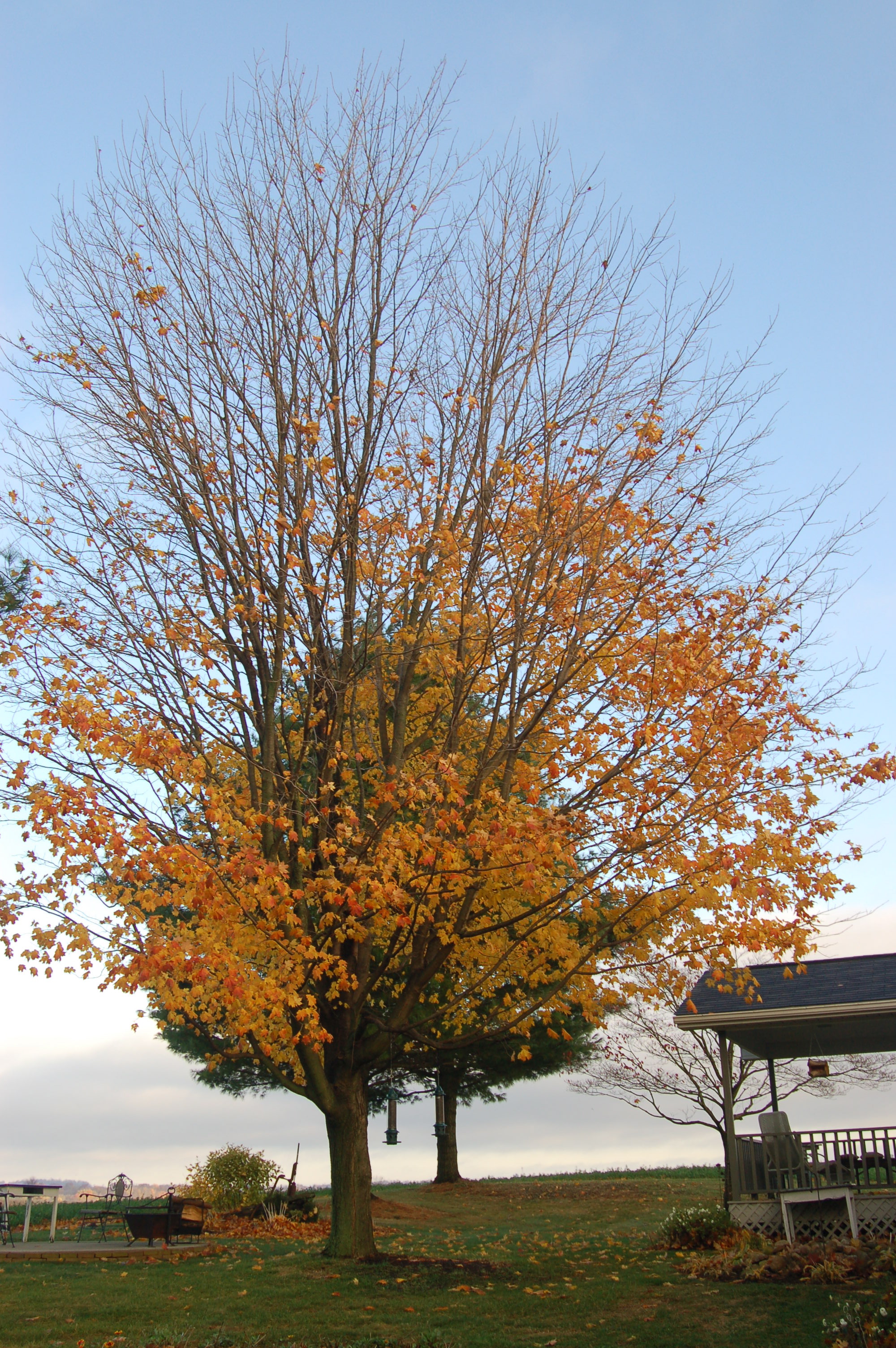
The sugar maple tree is a beauty in any season, but particularly in October. With each bright sunrise, a warm orange glow streams through the windows into the house. The tree’s crown blazes high above the rooftop, contrasting nicely with the backdrop of the evergreen of queued white pines against the stubbled cornfield.

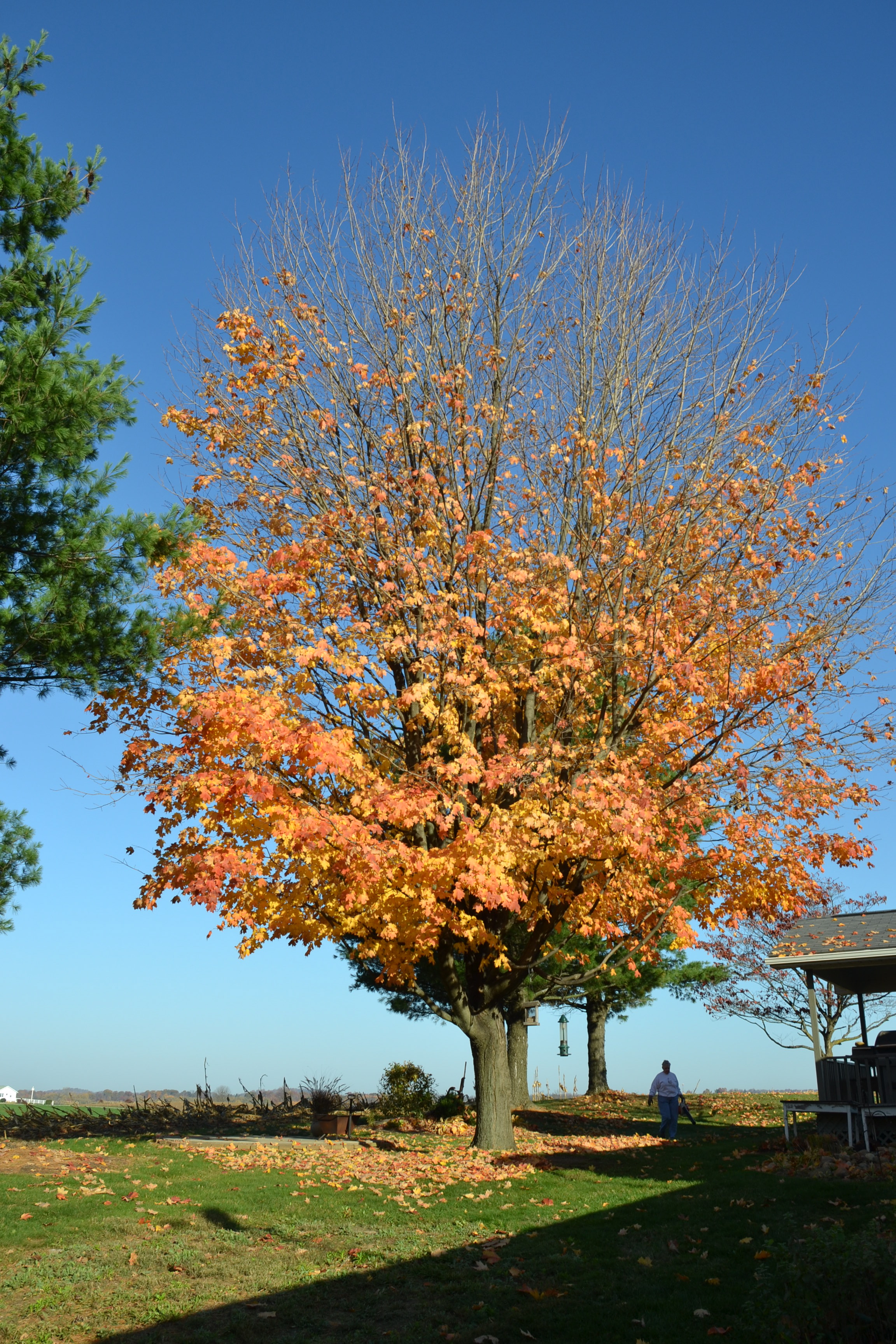
The sugar maple paints a new autumn scene each October day. In less than a month, the leaves of my stately arbor ally turn from rich emerald to glowing gold, and all too soon drop in feathery waves.

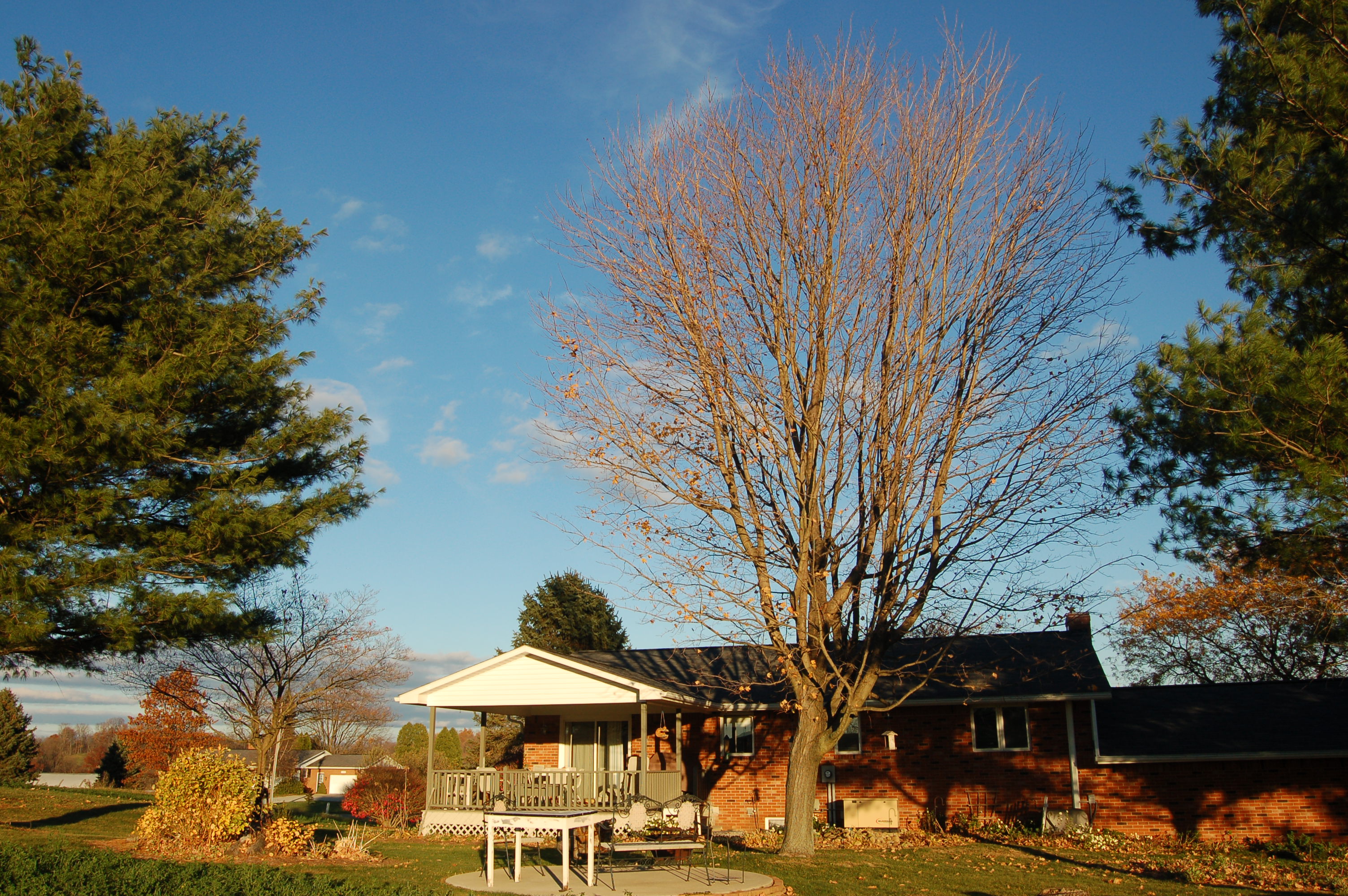
Even leafless, the sugar maple freely shares its generous hospitality, attracting birds, critters and humans. Spring, summer, fall or winter, my old friend says welcome home.

Welcome home by Bruce Stambaugh

A week by week pictorial record of the changing of the leaves on the sugar maple follows.
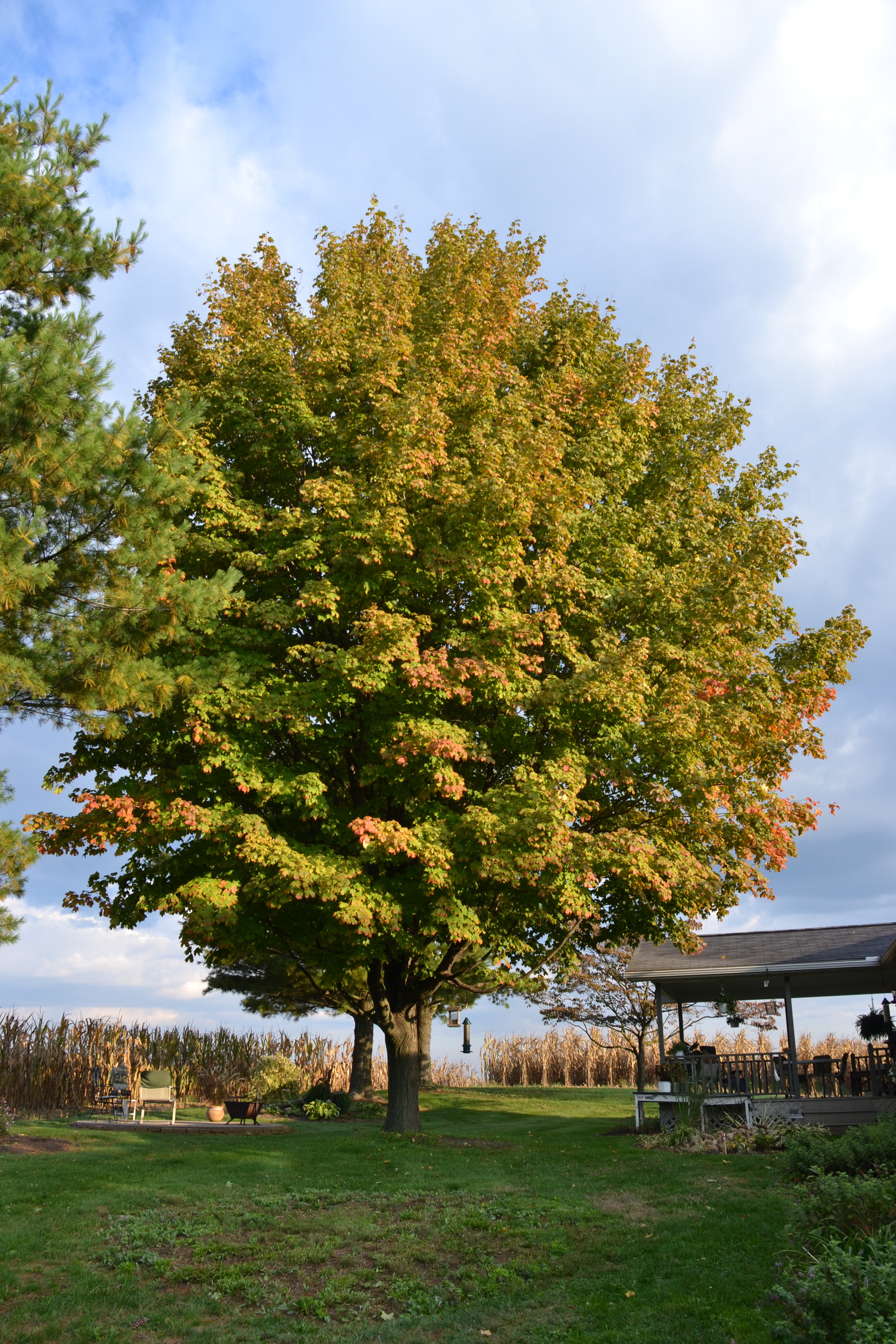
Sept. 30, 2012 by Bruce Stambaugh
Sept. 30, 2012
Oct. 9, 2012 by Bruce Stambaugh
Oct. 9, 2012
Oct. 16, 2012 by Bruce Stambaugh
Oct. 16, 2012.
Oct. 22, 2012 by Bruce Stambaugh
Oct. 22, 2012.
Month's end by Bruce Stambaugh
By October’s end, the sugar maple stood bare.

This column appeared in The Bargain Hunter, Millersburg, OH.

© Bruce Stambaugh 2012

Fall, a time to die and a time to live

Fall in Amish country Ohio by Bruce Stambaugh
By Bruce Stambaugh

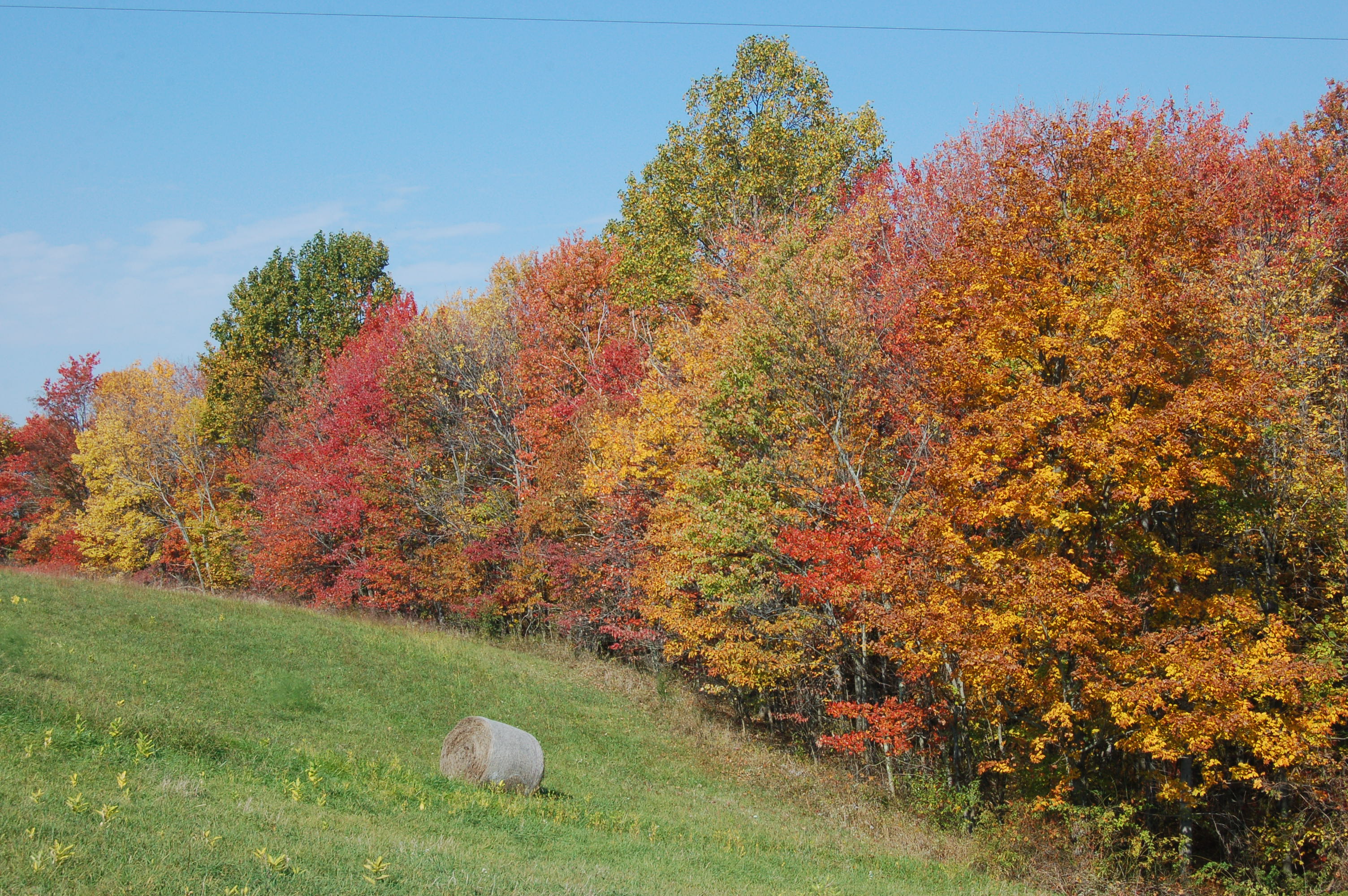
For those of us fortunate enough to live within proximity of giant stands of mixed hardwood trees, fall is a glorious time of year to observe life’s constant changes.

The annual autumn spectacular of the once lush leaves magically transforming the emerald landscape into magnificent warm rainbows carries us into nostalgic reflectivity. This year I couldn’t help but note a symbolic similarity in the recent death of the ingenious Steve Jobs, the guru who started Apple Computer.

Rainbow of colors by Bruce Stambaugh
Fall's rainbow of colors on display.

The very first computer I ever used was an Apple. Just the name of the computer endeared educators to these amazing, easy to use personal computers. School systems across the country bought them for student and teacher use. The fact that Apple was wise enough to give teachers and school districts educator discounts on their purchases made them all the more attractive.

One of the schools where I was principal acquired an Apple computer for the library in 1989. Now obsolete floppy discs were inserted to boot programs or software for students to use. I have primarily used Apple computers ever since.
Apples by Bruce Stambaugh
Shortly after hearing of Jobs’ death, the Internet was full of information about his life. I found many of the touching quotes and reflections via posts on Facebook.

One particular poignant clip greatly moved me. It was a 15-minute video of Jobs’ address at the 2005 Stanford University commencement. No one would have mistaken the pure genius that produced innovative personal electronic devises like the iPod, iPhone and iPad for Shakespeare. But his message was prophetic nevertheless.

His words were neither flowery nor convoluted. Like his multitude of popular electronic inventions, his exhortation was straightforward and concise. He had three simple points for the graduating class that day. Each was illustrated by personal stories from his humble yet incredible, creative life.

His final point was perhaps the most powerful and applicable. Just a year removed from having survived pancreatic cancer, Jobs told the sun-drenched audience “death is very likely the single best invention of life.” He told those gathered that if you live each day as if it were your last, someday you’ll be right. Jobs was as pragmatic as he was innovative.

Though he had hoped to live decades longer, Jobs emphasized that remembering that he would be dead soon was the most important motivator for him. He related that view even though he of course had no idea how long he would live. Jobs said no one wants to die, but death is the destination that we all share. Death clears out the old to make way for the new.
Maple tree by Bruce Stambaugh
That’s the way it is with the leaves. They bud in spring, unfold overnight to lush, lovely green or crimson until their predictable fate in the fall. Having done their job of helping the tree thrive and grow another year, the leaves succumb to the inevitable.

The leaves unveil their natural, vibrant colors, keep us captivated for a few precious days, and then drop and wither. Left behind is a tiny bud that will become next year’s new foliage. The old give way to the new, returning to the earth from whence they came.

Our lives follow the same cycle, though most span more than a year. The colors of some leaves are more remarkable than others. In the same way, some lives shine brighter than others for humankind.
Sugar maple leaf by Bruce Stambaugh
Steve Jobs was one of those brilliant leaves.

It’s beginning to look a lot like fall already

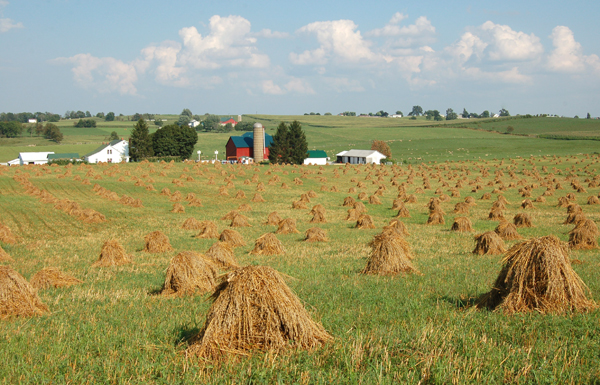
Oats shocks by Bruce Stambaugh
A field full of oats shocks before being gathered for the thrasher near Berlin, Ohio.

By Bruce Stambaugh

With Labor Day upon us, autumn will be right around the corner. In fact, if you look closely, signs of fall are already evident.

Some of the indicators are obvious, others more subtle. Some are predictable with still others seemingly a bit premature.

The days, often the nicest of the summer, have a sly, natural flaw. Day by day, minutes of daylight are silently subtracted from the previous day’s total. By month’s end, daily darkness will outnumber daylight once again.

The sun itself is moving more towards the center of the horizons at sunrise and sunset. Those driving true east and west running roads have already begun to frequently use their sun visors. The fall fogs, too, have clouded crisp mornings, the consequence of cool nights following warm days.

In the fields, the harvesting has begun. My Amish neighbors have long since gathered up the standing army of oats shocks and wheeled them off wagon load after wagon load to the thrasher.

Now it’s the corn’s turn. The field corn seems to have taken on drought status, drying up almost overnight. Brown has overtaken green as the predominant color in the standing sea. Smart farmers have already begun to cut their supply of silage to replenish the silos.

Fall webworms by Bruce Stambaugh
The homes of fall webworms shine in the sun.

In the woods and along highways, once glossy, emerald leaves have dulled and drooped. Some have already begun to drop without even changing color. Now and again a black walnut can be found standing stark naked, save for the cache of fall webworm nests it has involuntarily collected.

In the gardens, the picking of produce is a daily chore. Cucumbers, onions and tomatoes have hit their peek. Kitchens are cluttered with utensils for canning and freezing. The ripened fruits and vegetables that aren’t consumed at the dinner table find their way into jars and containers.

Even the sounds of the season have changed. Only a few American Robins continue to sing, and most likely they are sophomores practicing for next year’s prom. Instead of gathering nesting materials and snagging worms and insects, parent birds lead their fledglings to watering holes for liquid refreshment and necessary bathing.

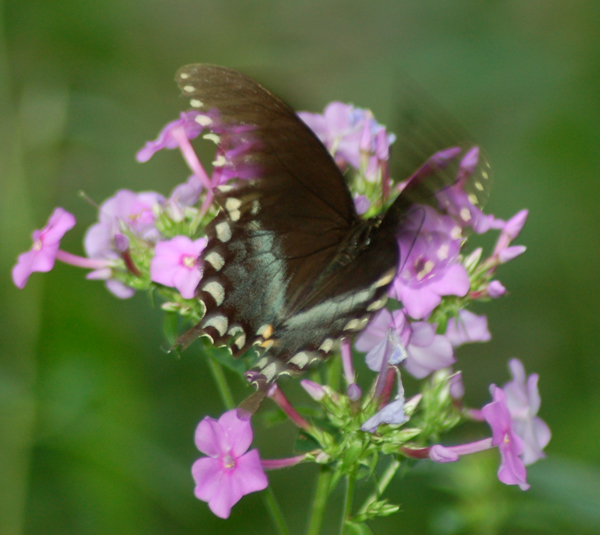
Well-worn butterfly by Bruce Stambaugh
A well-worn tiger swallowtail butterfly took advantage of some wildflowers.

The volume and frequency of the cicada and katydid songs have lessoned considerably. Even the crickets have quieted down.

Butterfly on phlox by Bruce Stambaugh
A butterfly enjoys late blooming phlox.

Butterflies of all sizes and colors squeeze whatever nutrients they can out of the fading cornflowers and black-eyed susans. The humming birds, too, seem to sense an urgency to store up extra energy for their upcoming southern vacation travel.

Squirrels are in their glory, cutting as many beechnuts, hickory nuts and walnuts as they can. Thrifty creatures that they are, they also bury future meals for harder times ahead. Only they can’t always remember where they put their stash.

Next spring, when the saplings begin to appear, we will learn just how forgetful the squirrels were. But between now and then, many pleasant days lay ahead, and probably some less than desirable ones, too.

There is yet one more indicator that fall is knocking on our door. Campaign signs have already begun to litter urban, suburban and rural roadsides. They are as prolific and unsightly as the ugly webbed homes of the worms.

The obnoxious yet gaudy campaign posters are a human-induced reminder of what nature is about to bring. Autumn will be here before we know it, and there is little we can do about it except to enjoy the ever-changing colorful show.

Cows grazed at sunset by Bruce Stambaugh
Cows grazed on a hillside at sunset.
Bay Photos by Donna

Wildlife Photos From The Chesapeake Bay Region

ROAD TO NARA

Culture and Communities at the Heart Of India

K Hertzler Art

Artist and nature journalist in the Shenandoah Valley of Virginia.

Maria Vincent Robinson

Photographer Of Life and moments

Gabriele Romano

Personal Blog

Jennifer Murch

Art is the only way to run away without leaving home. -Twyla Tharp

Roadkill Crossing

Writing generated from the rural life

ANJOLI ROY

writer. teacher. podcast cohost.

Casa Alterna

El amor cruza fronteras / Love crosses borders