Walking by myself, but never alone

Countryside by Bruce Stambaugh

By Bruce Stambaugh

Even though I am usually alone, I always have plenty of company on my regular morning walk on the township road near our home.

I walk for the exercise of course, but the benefits far exceed staying physically fit. On these hot and humid summer days, I like to get an early start if my schedule permits.

If I can survive the tricky first tenth of a mile on our busy county highway to get to the road less traveled, I can relish the rest of the walk. Common sense tells me to stay alert for oncoming traffic and dodge the fleet of various vehicles by stepping to the side.
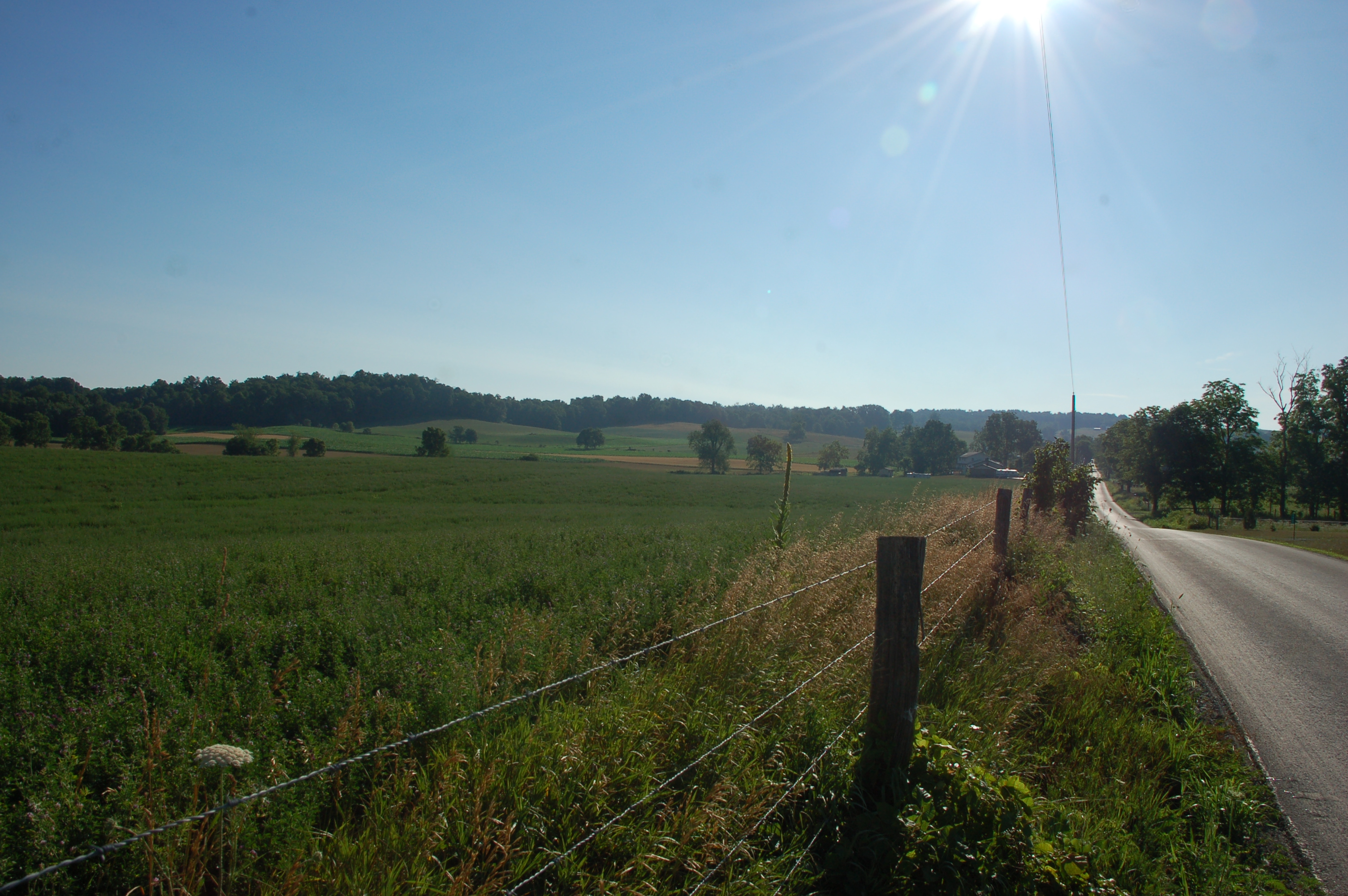
Sunny walk by Bruce Stambaugh

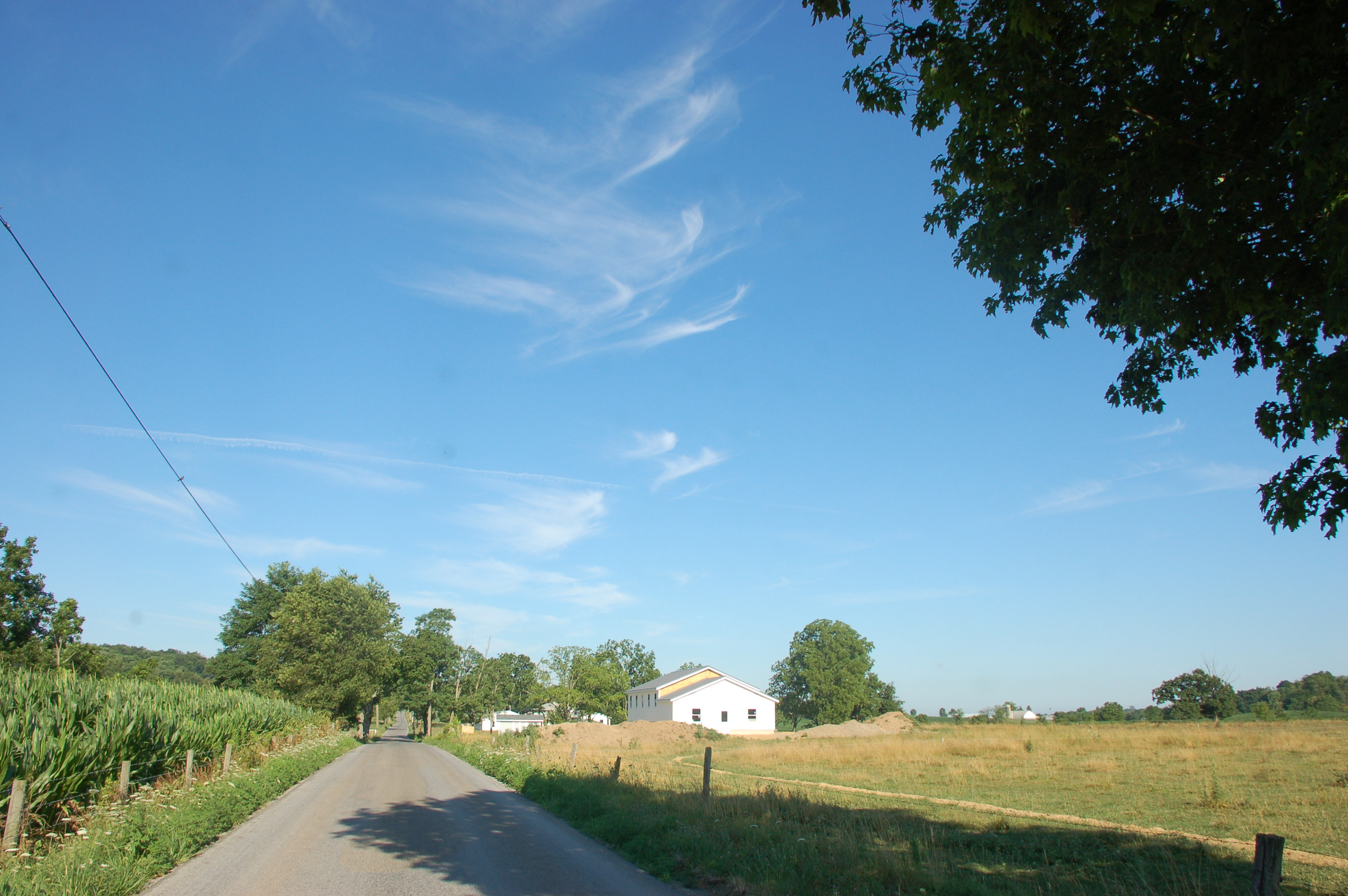
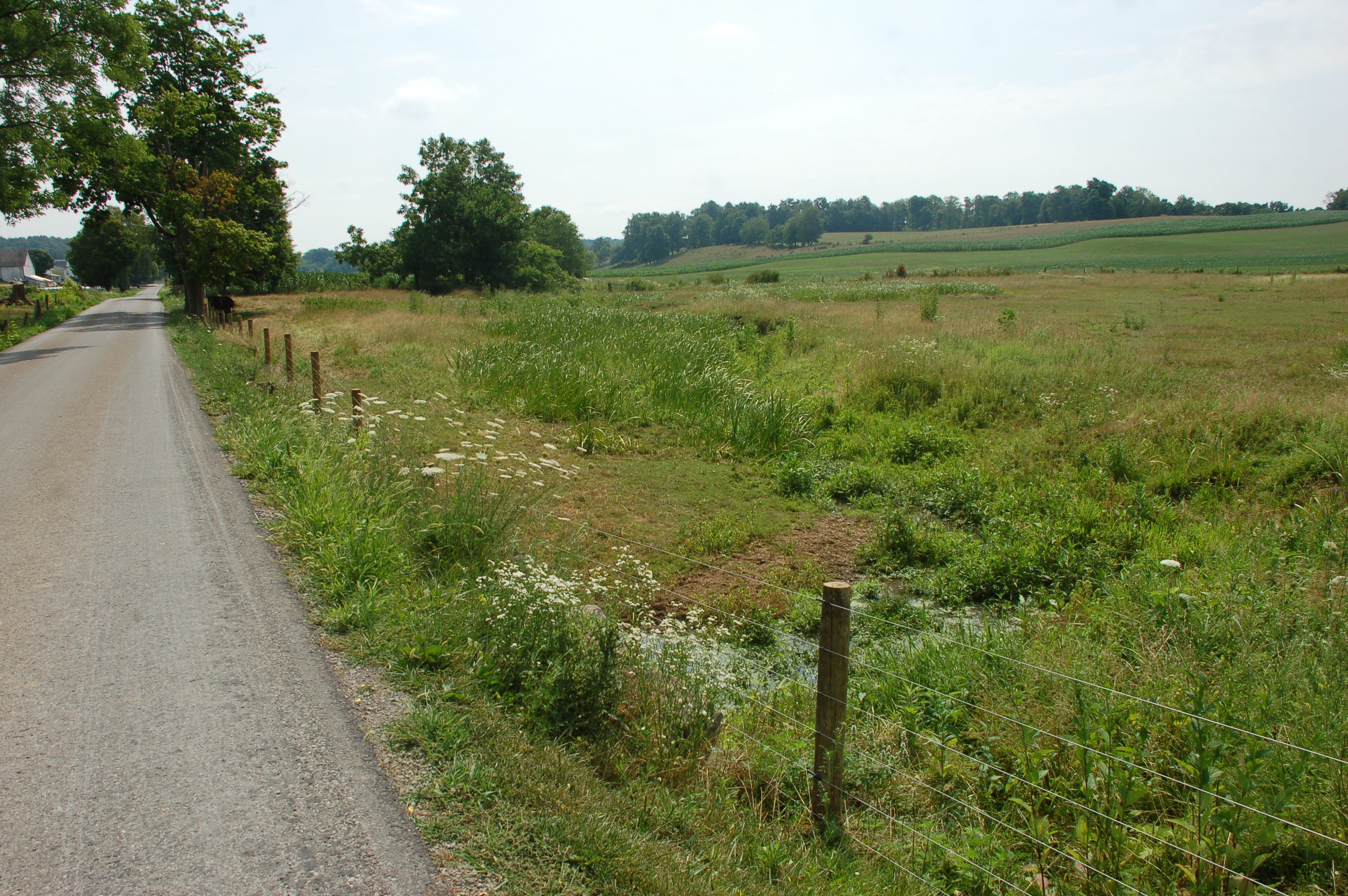
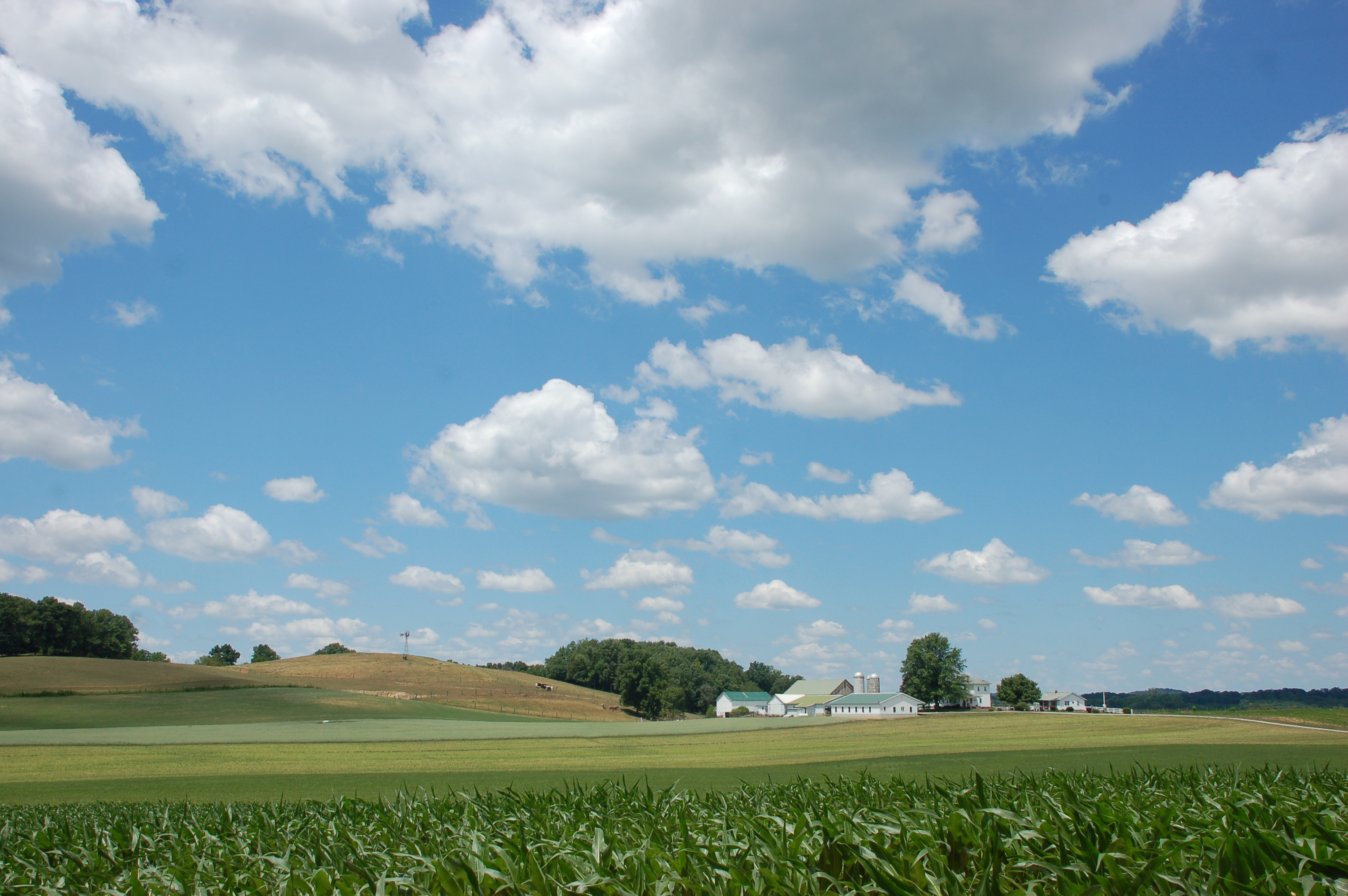
Once I’ve completed the macadam gauntlet to the safety of the township road, I turn east into the morning sun. After a few steps uphill, the road unfolds before me, rolling gradually down into a low, sweeping valley formed by the Wisconsin Glacier 10,000 years ago. Farm fences on both sides squeeze against the chip and seal roadway, making it seem even narrower than it already is.
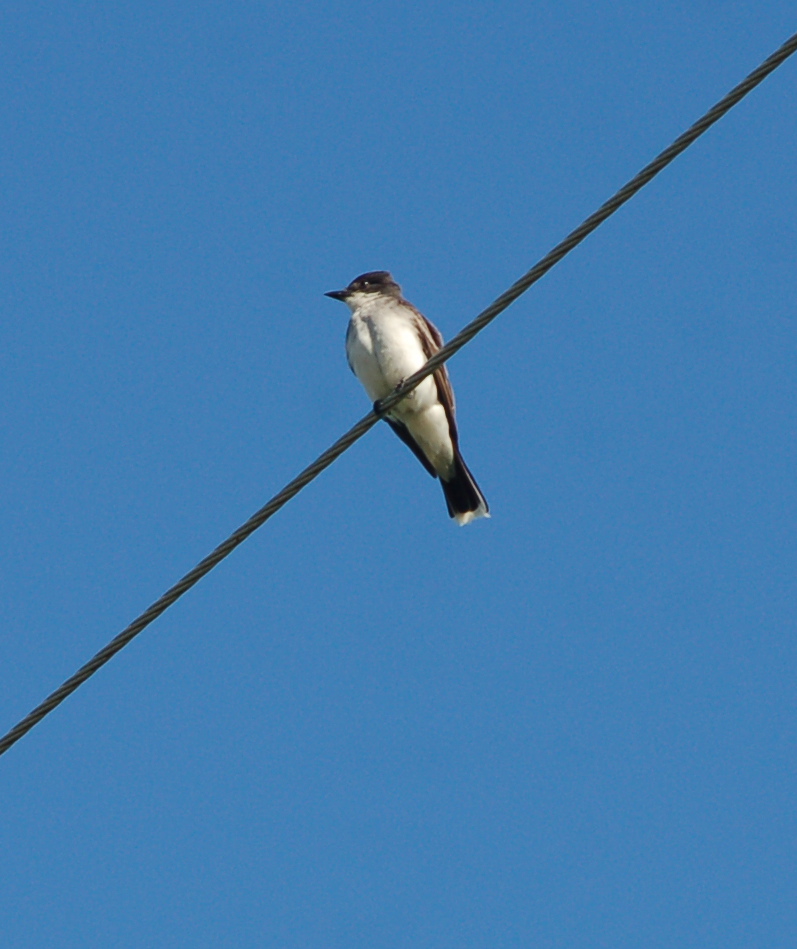
Eastern Kingbird by Bruce Stambaugh
This Eastern Kingbird and it’s mate often greet me as I walk along the township road.
I fondly anticipate these next moments. It’s the same road, but never the same walk. My audience waits, and every crowd is different. It’s not the Olympics by any means. In fact, it more closely resembles a circus.

I especially enjoy the high wire acts. The Eastern Bluebirds, including the juveniles still testing their wings, play their own version of leapfrog with me from the roadside power lines. Greeting me with melodious songs, the furtive birds wait until I nearly reach them before they flutter a few yards down the lines and land again.

I walk some more. They fly some more. The pattern is repeated a quarter-mile until the power lines run out. At that point, the beautiful birds make an arch over the hayfield and light upon the wires behind me to await my return trip.
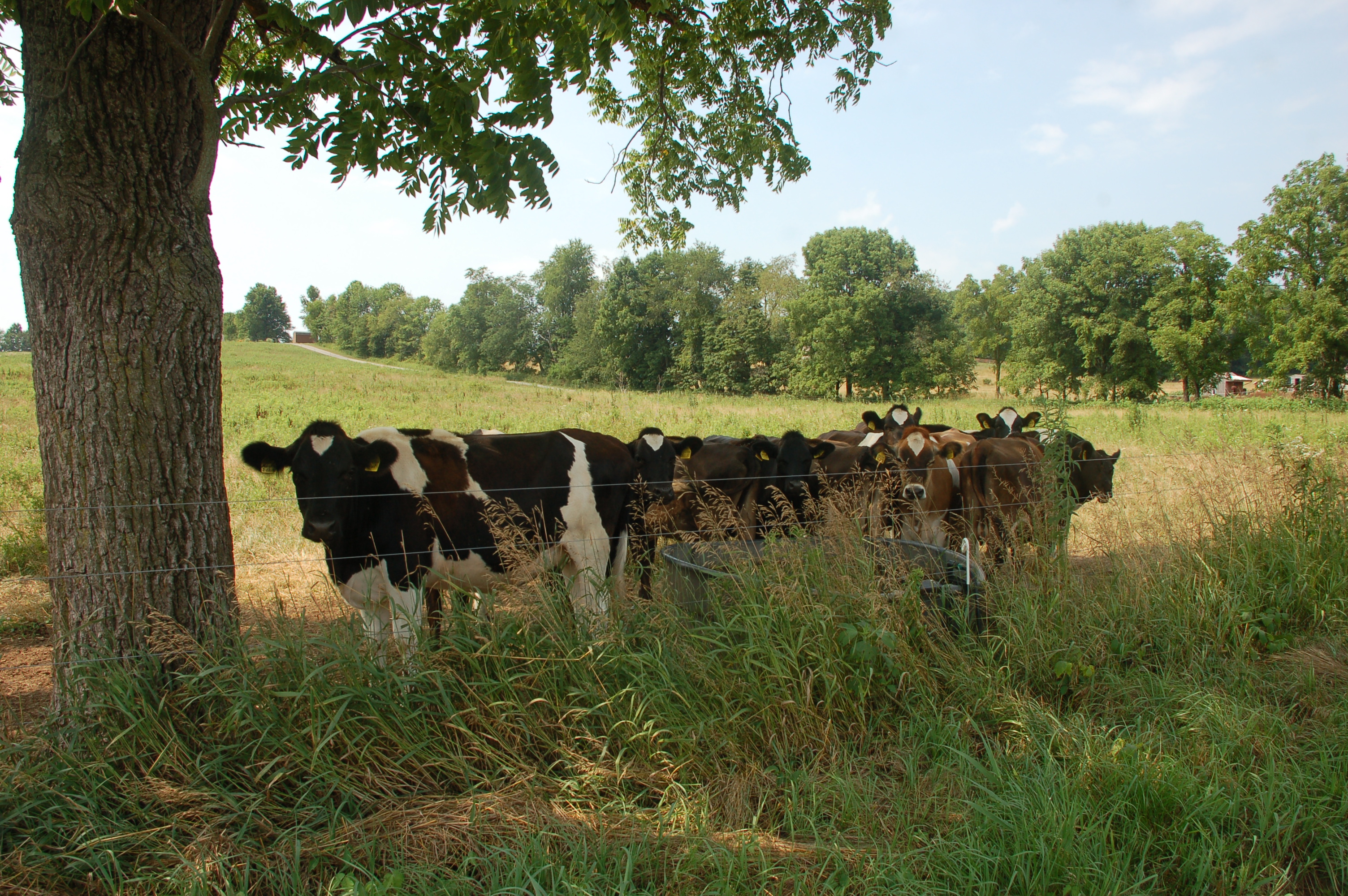
Heifers by Bruce Stambaugh

Once the road flattens out, a congregation of Holstein heifers crowded head to tail beneath a black walnut tree suspiciously eye me. As I stroll, their heads turn as one, ears twitching, tails swatting pesky flies. Sensing a potentially easier prey, a few of the flies follow me.

Thankfully, a flashy yellow ball cap saved my baldhead. Still, I flail away at the persistent insects. I’m glad no other humans are around to witness my comical machinations. By the time I reach the valley’s shallow brook, the flies relent.
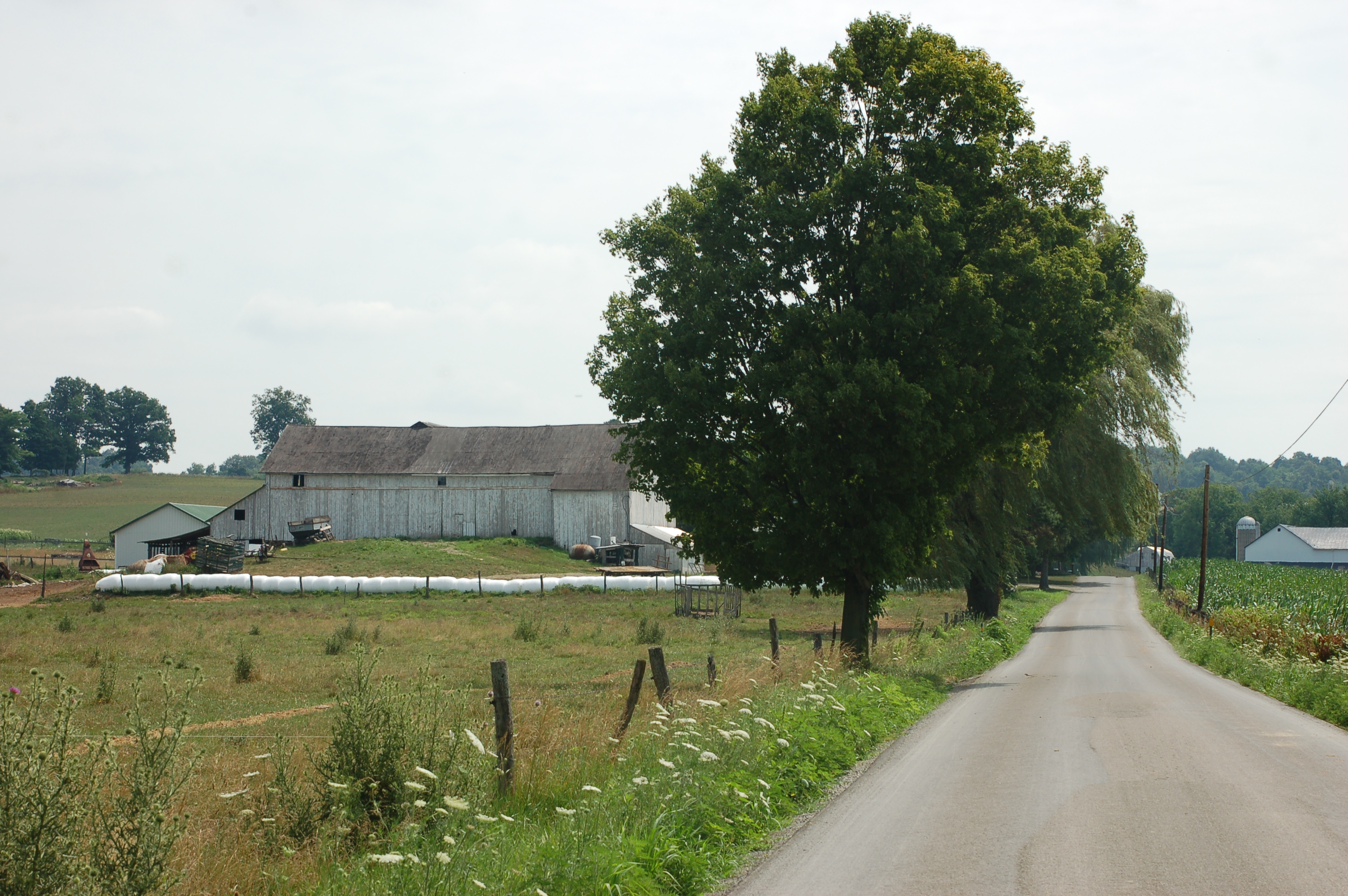
Jonas Yoder farm by Bruce Stambaugh
I usually turn around and head back home at the Jonas Yoder farm a mile east of my home.

Continuing east past the newly built Amish schoolhouse, the Barn Swallows, Tree Swallows and Purple Martins all start chattering to me at once, circling overhead as if they were asking me to follow.

Buggy by Bruce Stambaugh

At Jonas Yoder’s farm, I break the law. A U-turn begins my return trip. I usually walk down the center of the road until I hear a vehicle or buggy. On average, only one or the other passes me on the township road.
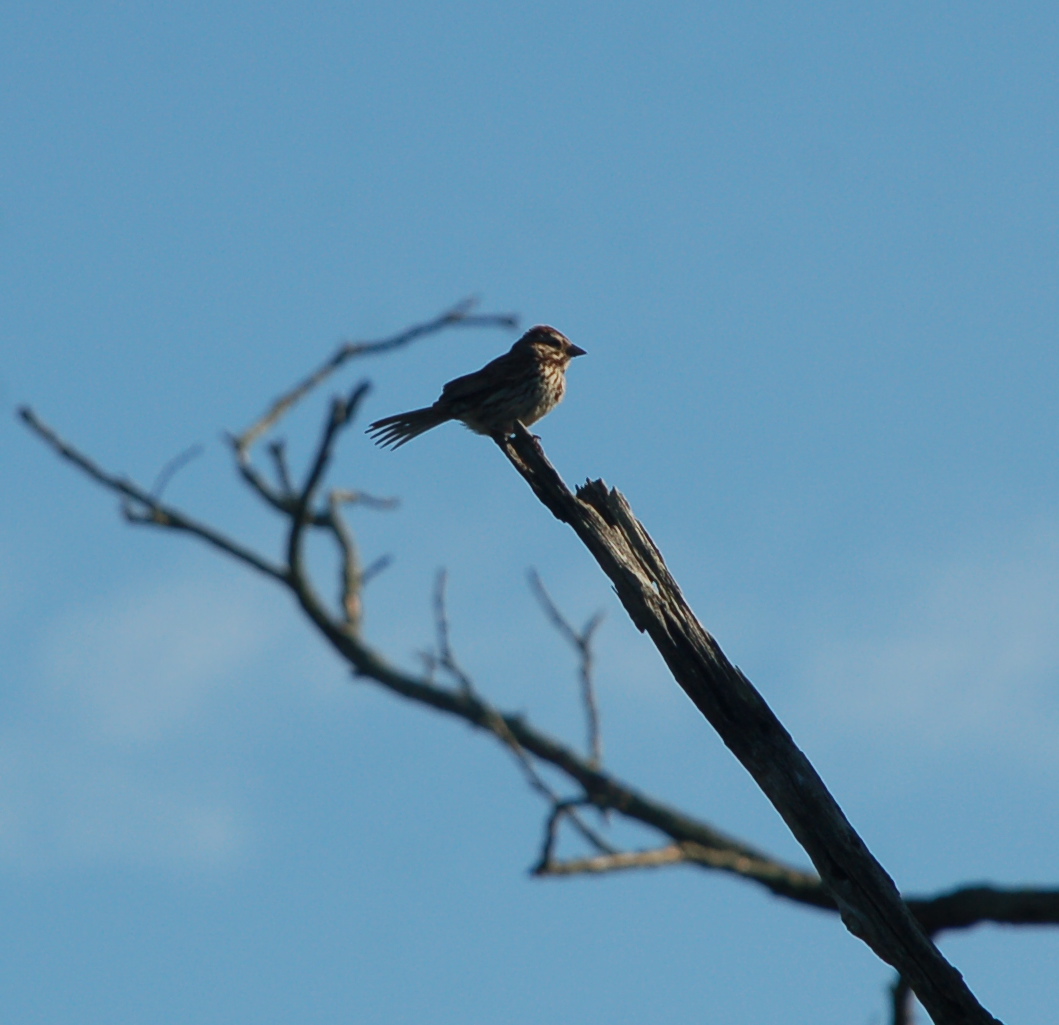
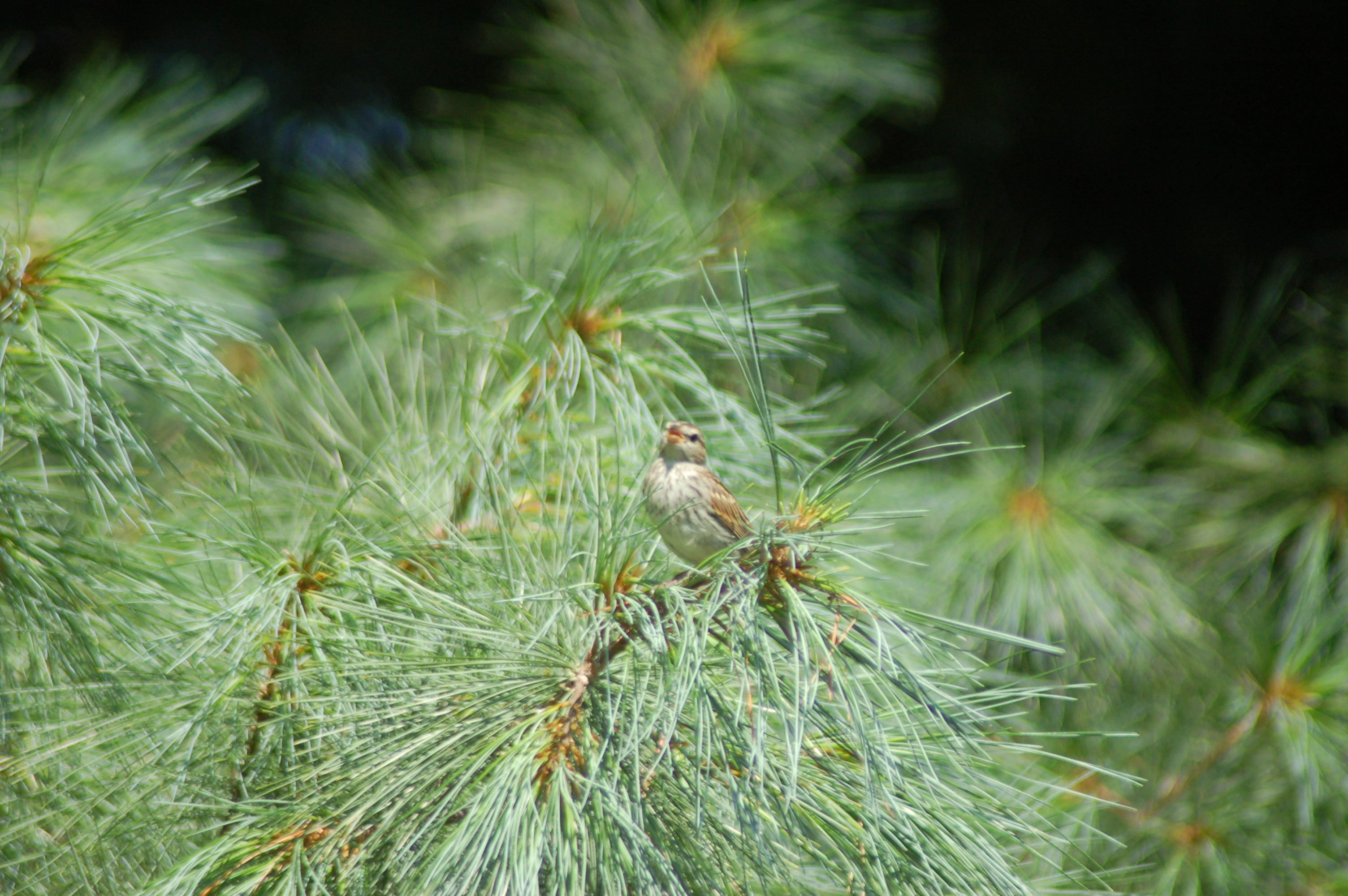
Song Sparrow by Bruce Stambaugh
One of several Song Sparrows that I see on my walk.
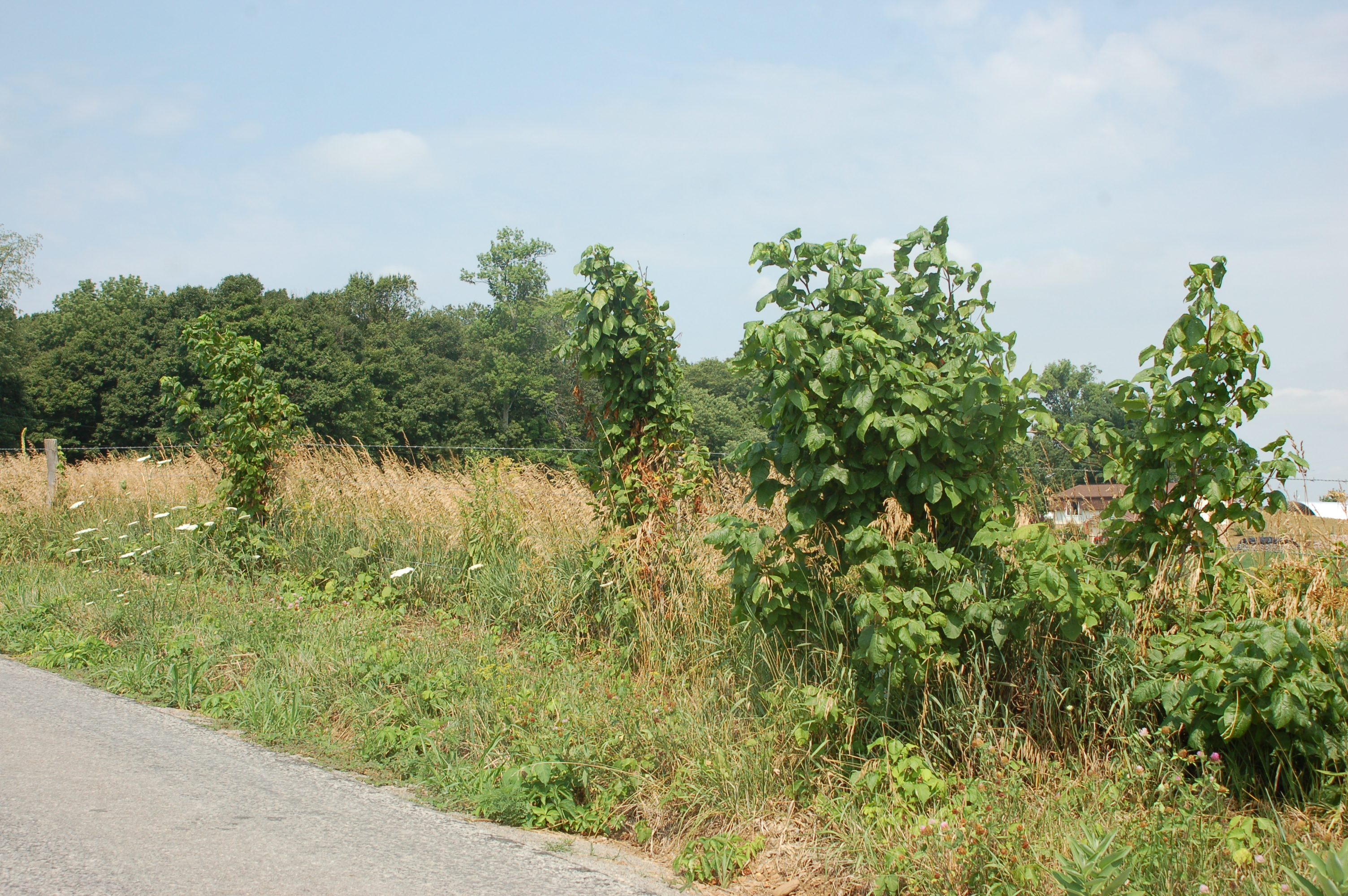
The American Robins and Song Sparrows are all used to me by now, and keep on singing in place. A young flicker, still with no brilliant red on the back of its head, flits from fence post to tree to utility pole. Poison ivy vines, leaves shiny as Christmas holly, have nearly over grown every locust post. A Green Heron escorts me back up the incline until it settles atop the tallest tree in a dense woodlot.

Down the arduous homestretch again, my next-door neighbor’s dogs unceremoniously announce my arrival. I hit the trifecta. I feel welcomed, renewed and refreshed.

Purple Martins by Bruce Stambaugh
Young Purple Martins wait patiently on a dead tree limb while being fed.
Poison ivy by Bruce Stambaugh
Poison ivy vines have over run many of the locust fence posts along the roadway.
Female Mallard by Bruce Stambaugh
This female Mallard, and sometimes its male mate, is often swimming in a pool of the small stream when I walk by.

Amish school by Bruce Stambaugh
An Amish school is being built in the pasture of Jonas Yoder’s farm.

This column appeared in The Bargain Hunter, Millersburg, OH.

© Bruce Stambaugh 2012
Lunch on the porch includes more than just good food

Porch view by Bruce Stambaugh

By Bruce Stambaugh

Everyone needs a sanctuary. For my wife and me, our back porch is our quick retreat from life’s demands. A few short steps and we are in a special place. Over the years our back porch has given us many marvelous memories.

We recognize that we are fortunate to live where we do. Our home, built three decades ago off an Amish farm, is situated between Benton, Berlin and Mt. Hope, all in Holmes County, Ohio. Our back porch provides panoramic, inspiring scenes.
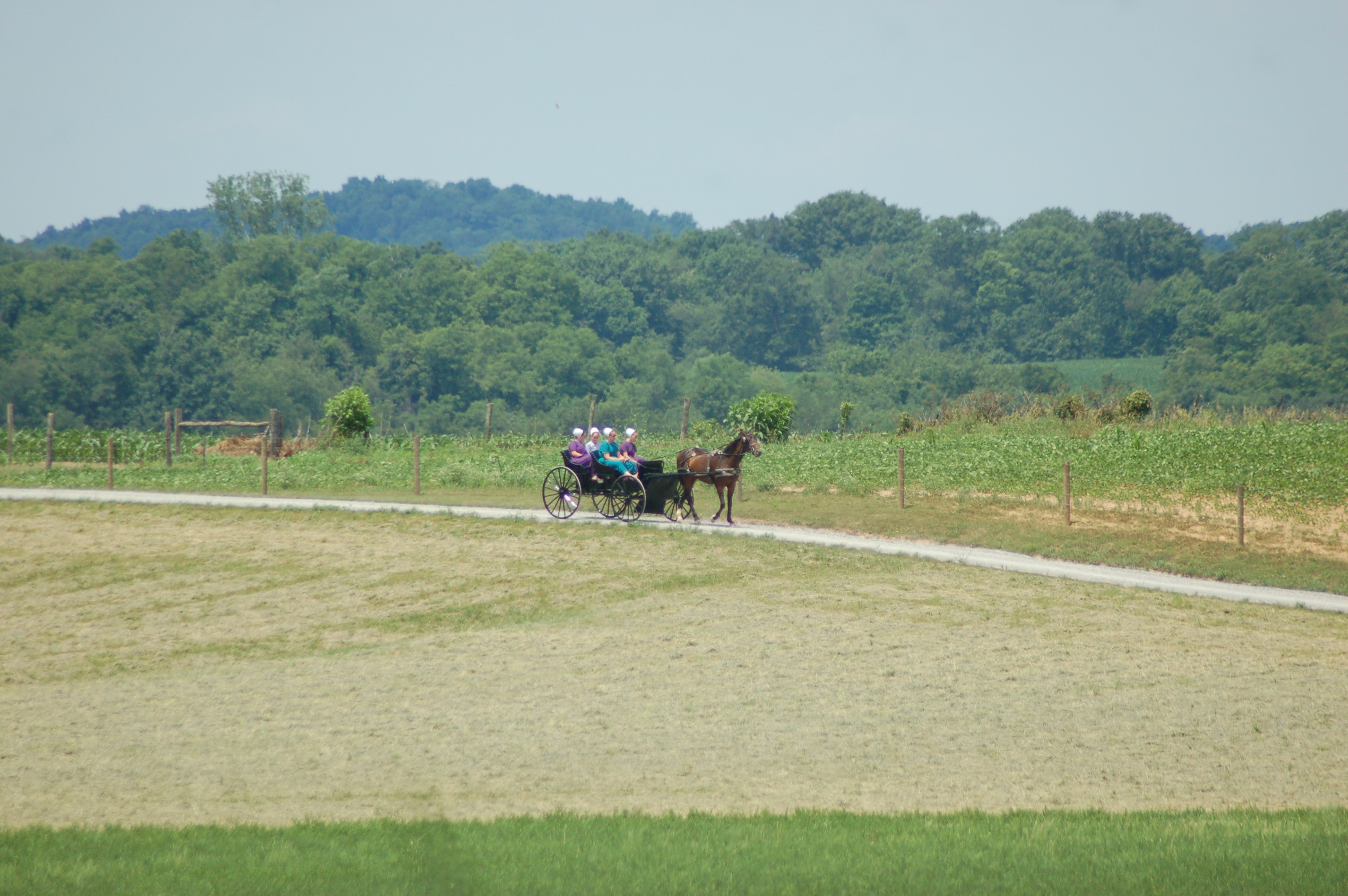
Girls in buggy by Bruce Stambaugh
The open-air porch was added to our modest home several years ago. We wanted a quiet place to relax during Ohio’s warmer climes. When the weather does cooperate, we especially enjoy lunches together there. It helps to have a wife who is a great cook. I’m no chauvinist, but I’m no chef either. Neva rules the kitchen and I reap the rewards and help clean up.

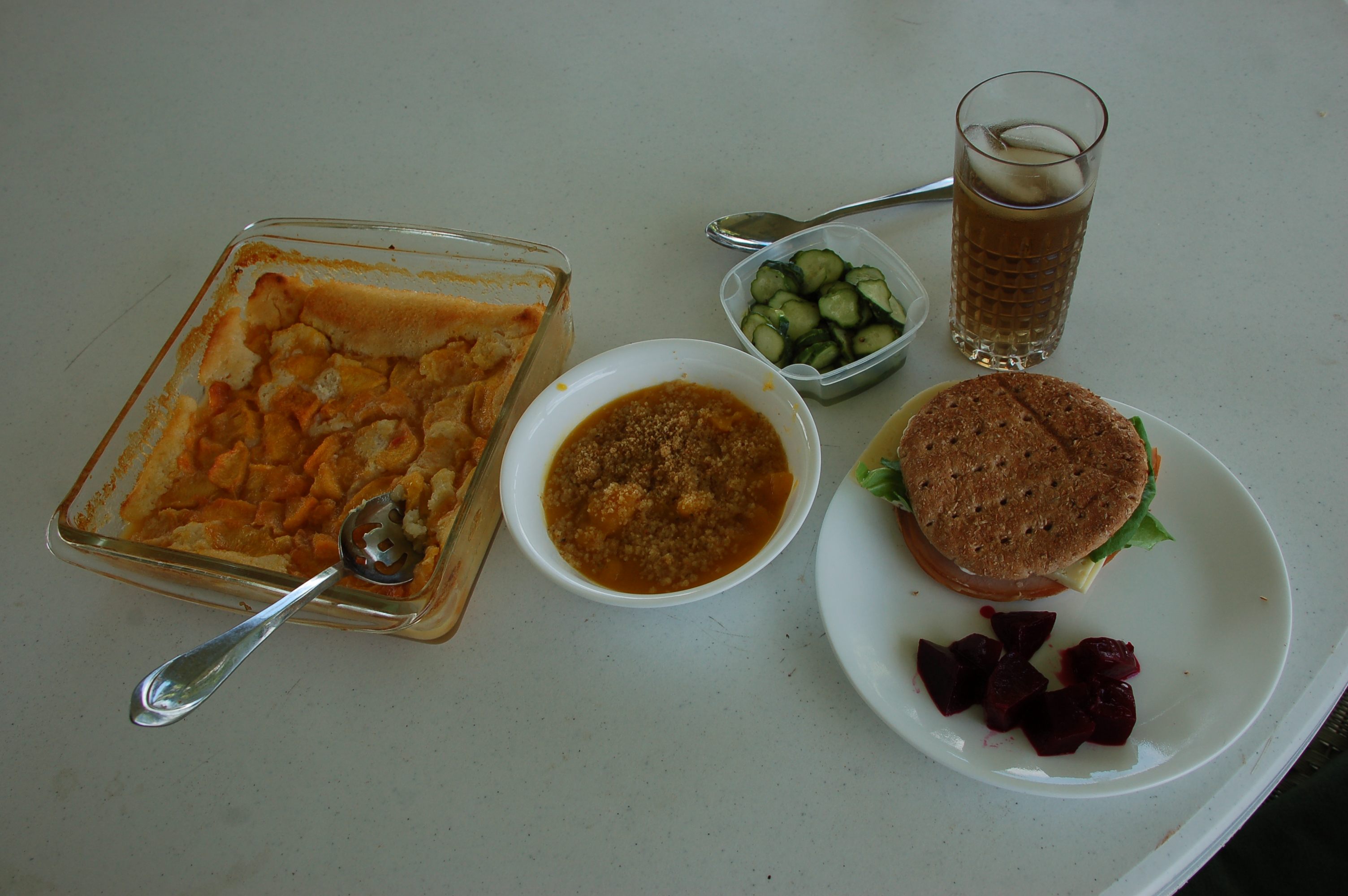
Lunch by Bruce Stambaugh
A recent lunch that we enjoyed on the porch.
Somehow the food tastes even better on the porch. One recent lunch featured her homemade butternut squash soup, sprinkled lightly with toasted bread crumbs. A fresh spinach salad with crasins and vinaigrette nicely complemented the soup.

A simple dessert of sweet cherries was washed down with fresh sweet peppermint tea, spiked with basil, giving the tea a sweet-tart taste. The mint was picked just minutes before being doused in boiling water. Other than the tea, no seconds were needed. A single course of each was plenty.
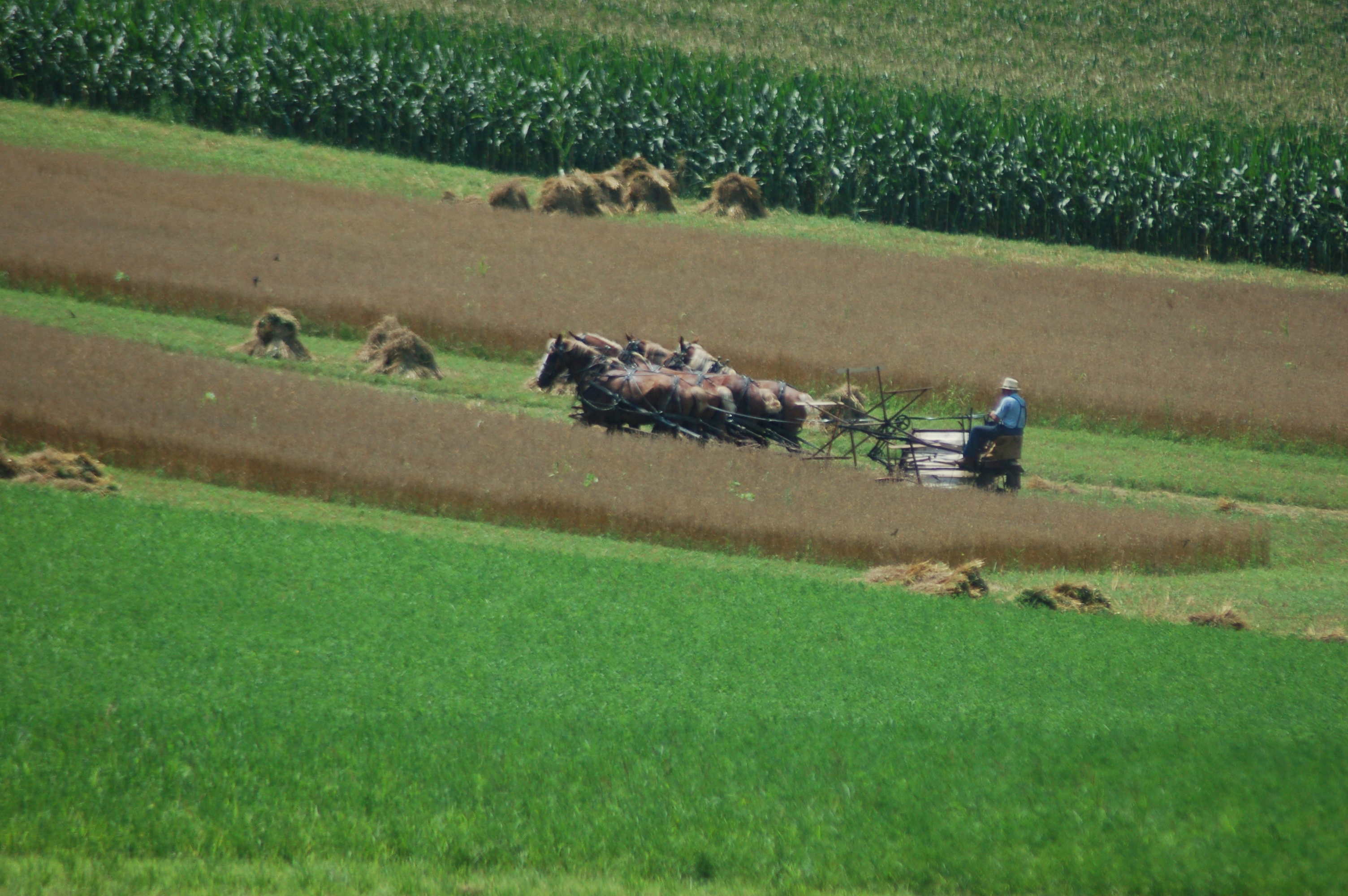
Mowing hay by Bruce Stambaugh
The house serves as a buffer between our busy highway and the backyard, minimizing the traffic noise. We love the quiet.

Well, perhaps quiet isn’t the proper word. Abundant backyard activity breaks any hint of silence. While we dined, we heard the undulating hum of a mower and the rattle of horse harnesses as our Amish neighbor completed his second cutting of hay before taking his own lunch break.

Downy by Bruce StambaughIn the meantime, the birds and wildlife kept us entertained as they also dined. With the porch open on the sides, it’s not unusual for birds to zip over our heads to the feeders. That is especially true for the acrobatic hummingbirds. Their feeder hangs from the edge of the porch near the kitchen window. It is fun to watch the territorial hummers chatter and chase each other away from their own version of lunch. They wouldn’t have to do that. There are several places to perch.

If we stay immobile, even the woodpeckers light upon the peanut butter suet feeder that dangles next to a hanging basket of flowers. The little downys, however, are the only ones that aren’t spooked off by our presence. Still, they nervously but needlessly chip and jerk their heads warily as they jab at the rich mixture, making sure we keep our distance.

Wildflowers by Bruce StambaughA green frog, one of six that inhabit our little garden pond, waits patiently for lunch to fly by. The green frogs that patrol our little garden pond adjacent to the porch patiently wait in the sun for their own lunch to fly by. When I hear a plop, I know they are as satisfied as we are.

Beyond the pond, monarch, swallowtail and red admiral butterflies partake in their own flowery buffet on the patch of ever-changing wildflowers. Along with volunteer sunflowers, the coneflowers, Black-eyed Susan’s, daisies, gaillardia and bachelor buttons paint a colorful palette in the shade of the canopy of pines and giant sugar maple.

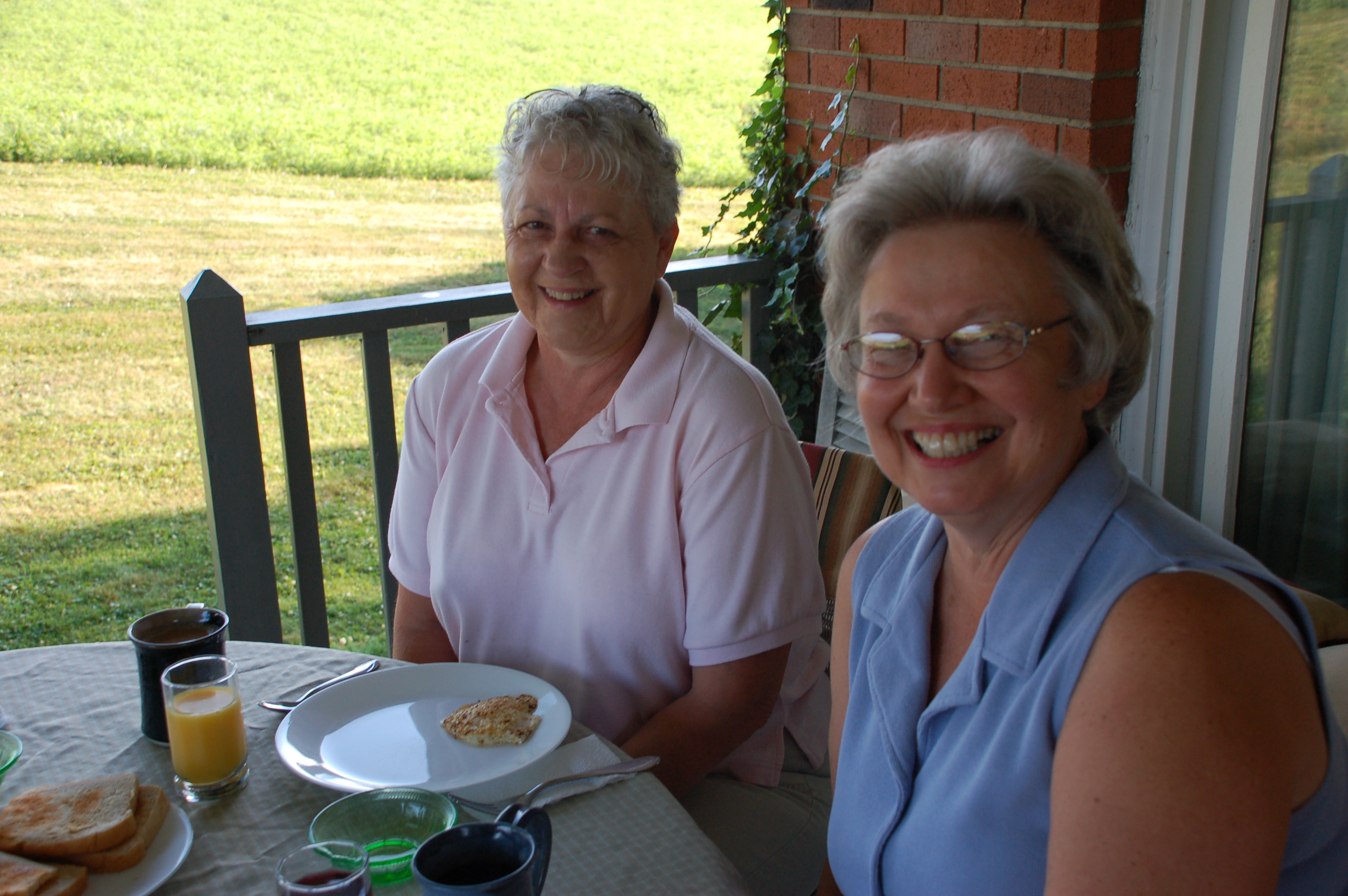
When human guests arrive, their smiles reveal their appreciation for our sanctuary. Added together these pure and pleasurable ingredients always make for enjoyable and hardy gatherings. I’m more than happy to share the recipe.

Guests by Bruce Stambaugh

© Bruce Stambaugh 2012

Enjoying spring’s aviary adventures

Amish farm by Bruce Stambaugh
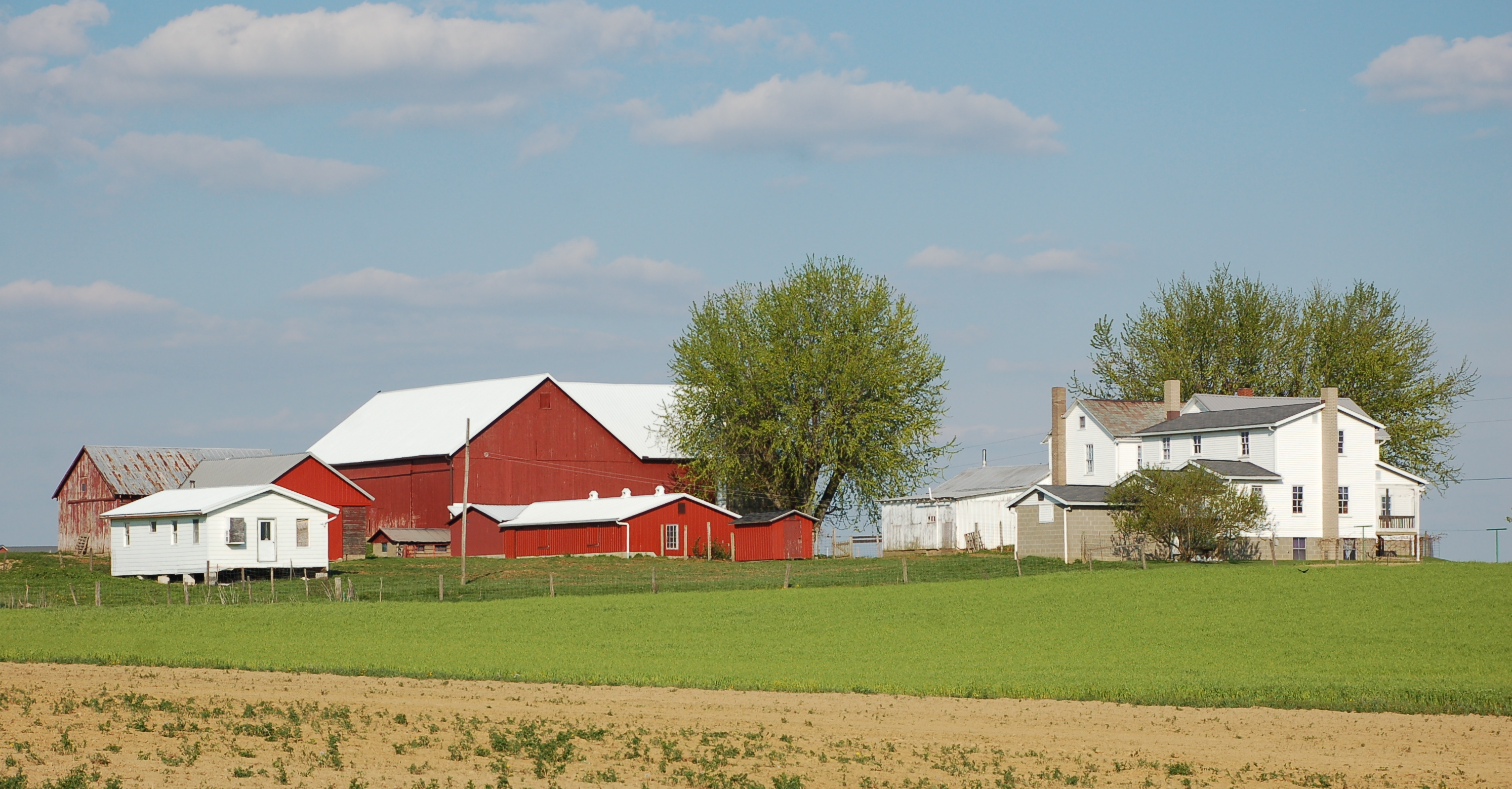
A typical springtime scene in the heart of Ohio’s Amish country near Mt. Hope, OH.

By Bruce Stambaugh

We are fortunate to live where we do here in northern Ohio, especially in the Holmes County area. Our manicured farmlands, brushy fencerows, dense woodlots, numerous lakes and the wetlands of the Killbuck Valley provide an abundant variety of habitats that attract an equal abundance and variety of birds.

In our busyness, we should stop, look and listen to the free show that is all around us. The many birds, some just passing through, others that will make their summer home here, can fill our senses with amazing music, incredible color, and entertaining activity. No admission charge is needed.

canadagoosebybrucestambaugh
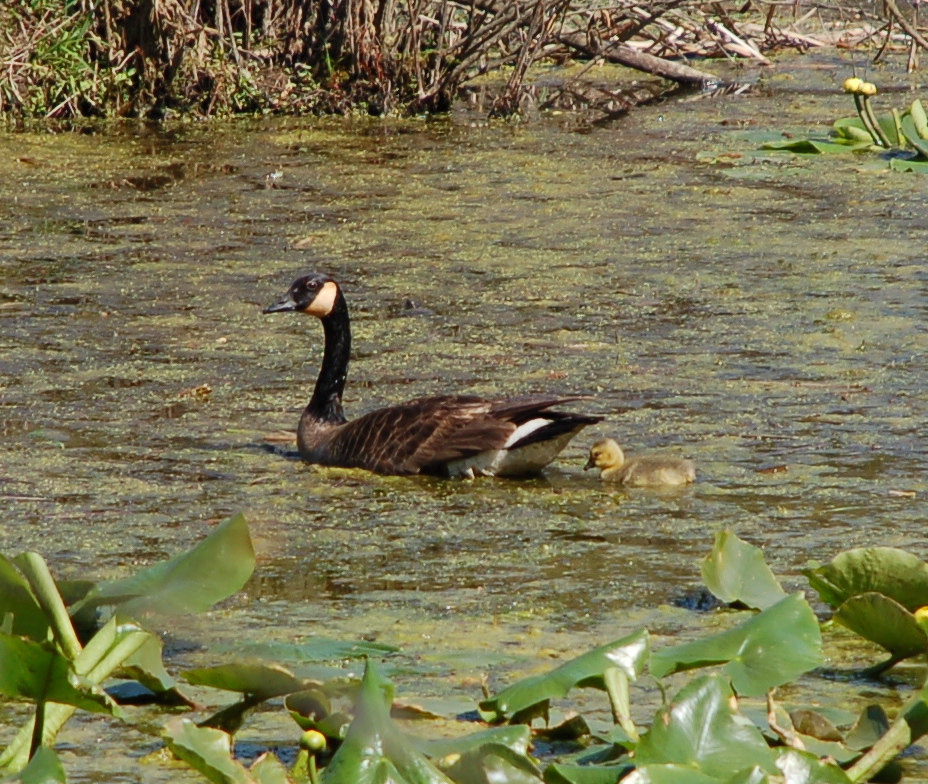
A Canada Goose and a lone gosling glide in the marshy Killbuck Valley north of Millersburg, OH.

Even before sunrise, the chorus of songbirds begins to warm up like a pre-concert symphony. Usually the American Robins are first to welcome the new dawn with their varying songs. Soon others like the Northern Cardinals and Song Sparrows join in. By first light, a cacophony of warbling fills the morning air. Everyday brings a new chorus.

Once the morning brightens, the birds mix a paint palette of colors into the recital. Now at their height of intensity for procreation purposes, the colors of the birds are positively stunning. Their appointed markings are a pleasure to behold.

White-crowned Sparrow by Bruce Stambaugh
A White-crowned Sparrow stopped for fuel on its way north.
The male White-crowned Sparrow, with its alternating bold black and white stripes atop its head, could serve as a referee amid all the commotion and scramble for seeds at the backyard feeders. Instead, it is intent on fueling up for its long flight deep into the Canadian northlands.

Pairs of Cardinals forage for their breakfast of cracked corn and oil sunflower seeds. Like two teenagers in love, the bright red male feeds his adoring but duller mate in their courting ritual.

Rose-breasted Grosbeak by Bruce Stambaugh
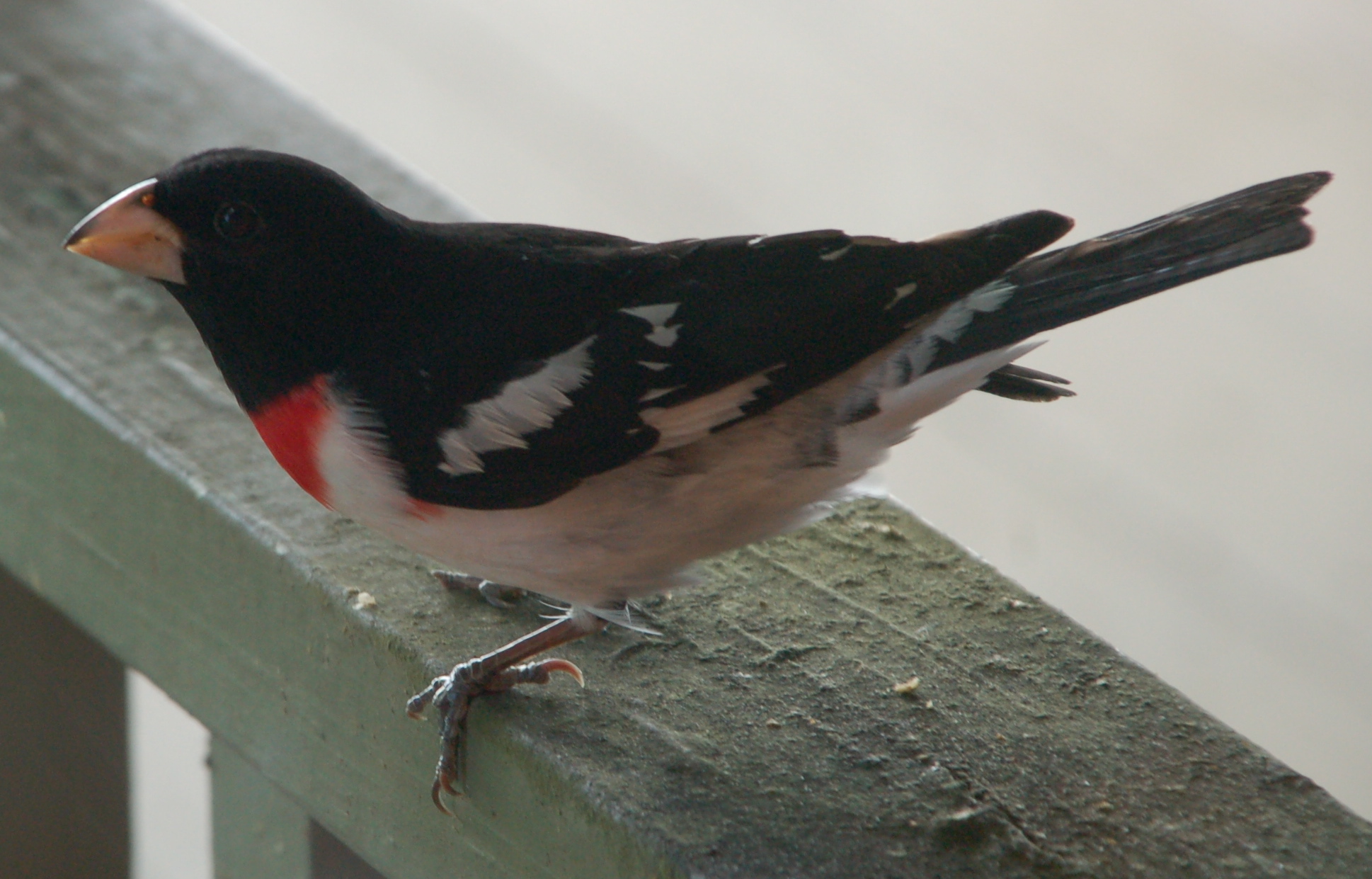
Rose-breasted Grosbeaks are regular visitors to backyard feeders.
Without hesitation, the impressive Rose-breasted Grosbeak sallies onto the feeder hanging only inches from the kitchen window. Even in a brief glimpse it is easy to see how this bird got its name, its rosy breastplate all too obvious. The female, on the other hand, is awash in rich creams and browns, all for protection against hungry predators.

Baltimore Oriole by Bruce Stambaugh
A female Baltimore Oriole enjoys frequent visits to the bird grape jelly feeder.
The Baltimore and Orchard Orioles enjoy quick snatches of a grape jelly concoction housed in upside down bottle caps on the porch railing. A couple of quick gulps and they are gone, but never far away. Their liquid warbling says they’ll be back later for more.

The regal Red-headed Woodpeckers command attention from humans and aviary audiences alike. Without being bossy, they clear the feeders all to themselves. No doubt their brilliant red, white and black attire and their size have a lot to do with that.

Red-headed Woodpecker by Bruce Stambaugh
A male Red-headed Woodpecker visits the peanut butter suet feeder several times per day.

The Red-bellied Woodpeckers are bolder, both in sound and behavior, their iridescent red head stripes as flashy as strobe lights on patrol cars. Their noisy chatter serves as a warning siren announcing their arrival.

Even the little Black-capped Chickadees come dressed for the dinner party. Their tuxedo-like coloration is fresh and ready for the spring prom. They zip back and forth from tree branch to feeder, neatly holding the seed with their feet, while their tiny beak chisels for the main course, the sunflower heart.

Chipping Sparrow by Bruce Stambaugh
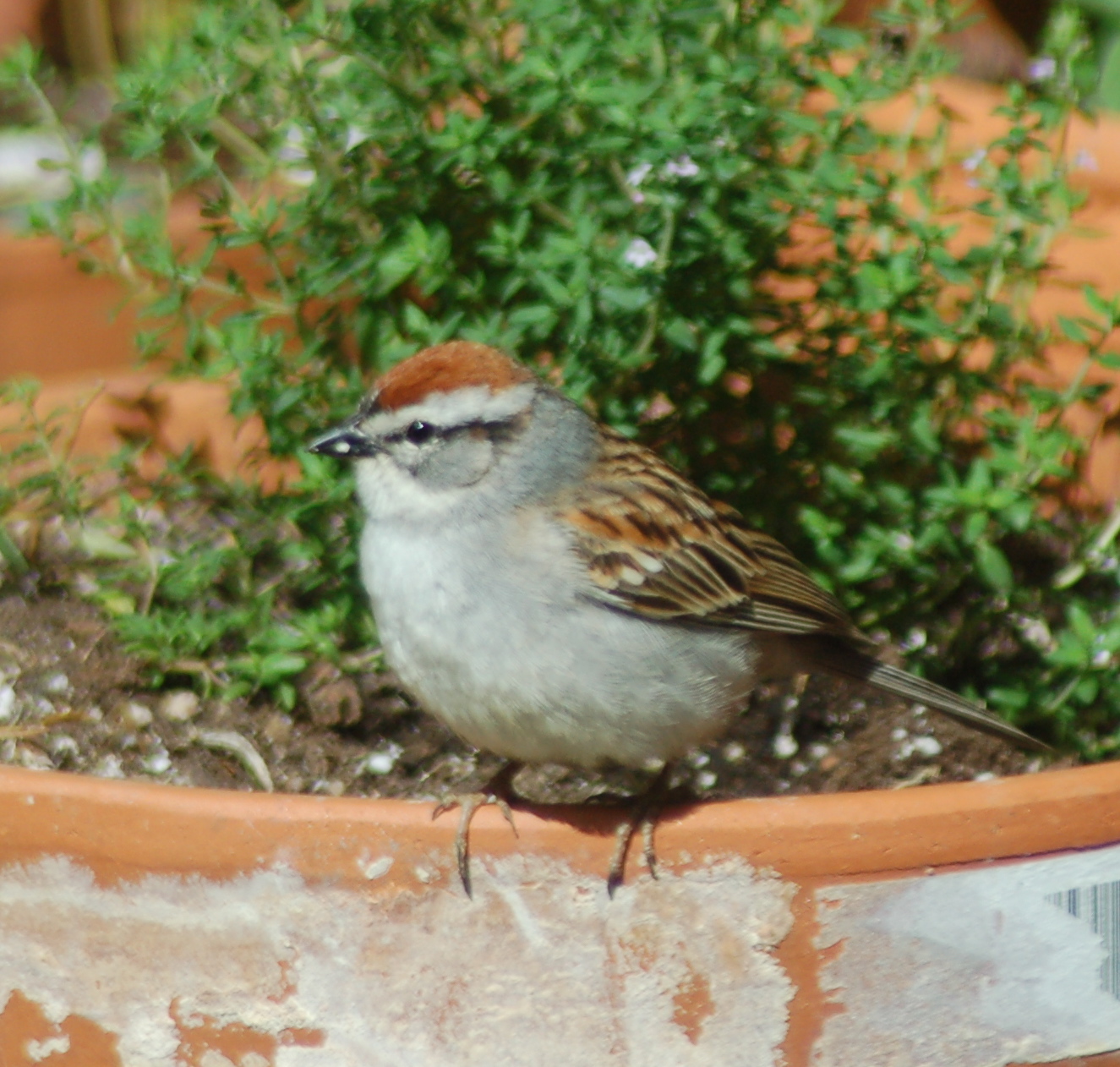
Even the little Chipping Sparrow is a joy to observe.

One hates to turn away from the aviary activity to see what might be passing overhead. An American Eagle, a Great Blue Heron, flocks of Mallards? It’s springtime in Ohio. All options are open in this intermingled habitat.

It is amazing what we can observe, especially when our feathered friends enter our life space. We just need to stop, look and listen.

© Bruce Stambaugh 2012
Timing is everything, especially when birding

Courting Egrets by Bruce Stambaugh
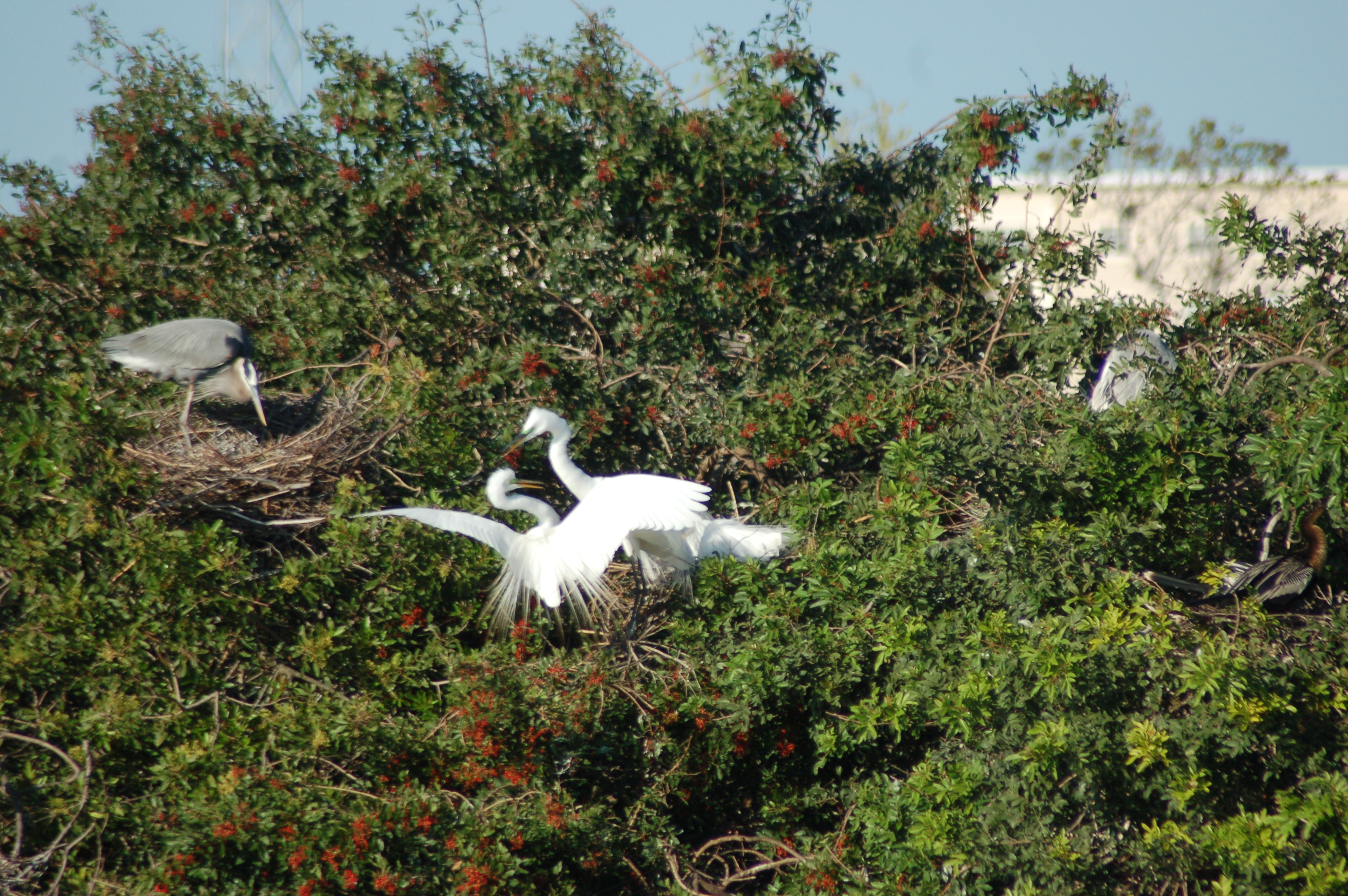
I caught this pair of Great Egrets in their courting ritual at the Venice, FL Rookery. The Great Blue Heron to the left didn't seem too impressed.

By Bruce Stambaugh

The weather was dreary and cold, with occasional snow flurries. It was just another winter’s day in Holmes County, Ohio as far as I was concerned. But it turned out to be so much more than that.

I drove the nine miles east to check on my mother, who lives in a local nursing home. I kept my visit short as usual, making sure I had refilled Mom’s bowl of jellybeans before I said goodbye.

As I was driving home a flash of white caught my attention to the right just east of Berlin, center of the world’s largest Amish population. Besides the color, the bird’s large wings, small head and short tail were all instantly noticeable.

I checked traffic and slowed my vehicle. The bird’s rapid, steady flight cut directly across my path right to left, giving me a full, close view for nearly a minute.

By its distinctive wingbeats, its size and color, I reckoned it was a Snowy Owl. Given my situation, I had no other choice. I had to keep alert driving, yet I tried to keep my eyes on this rare bird.

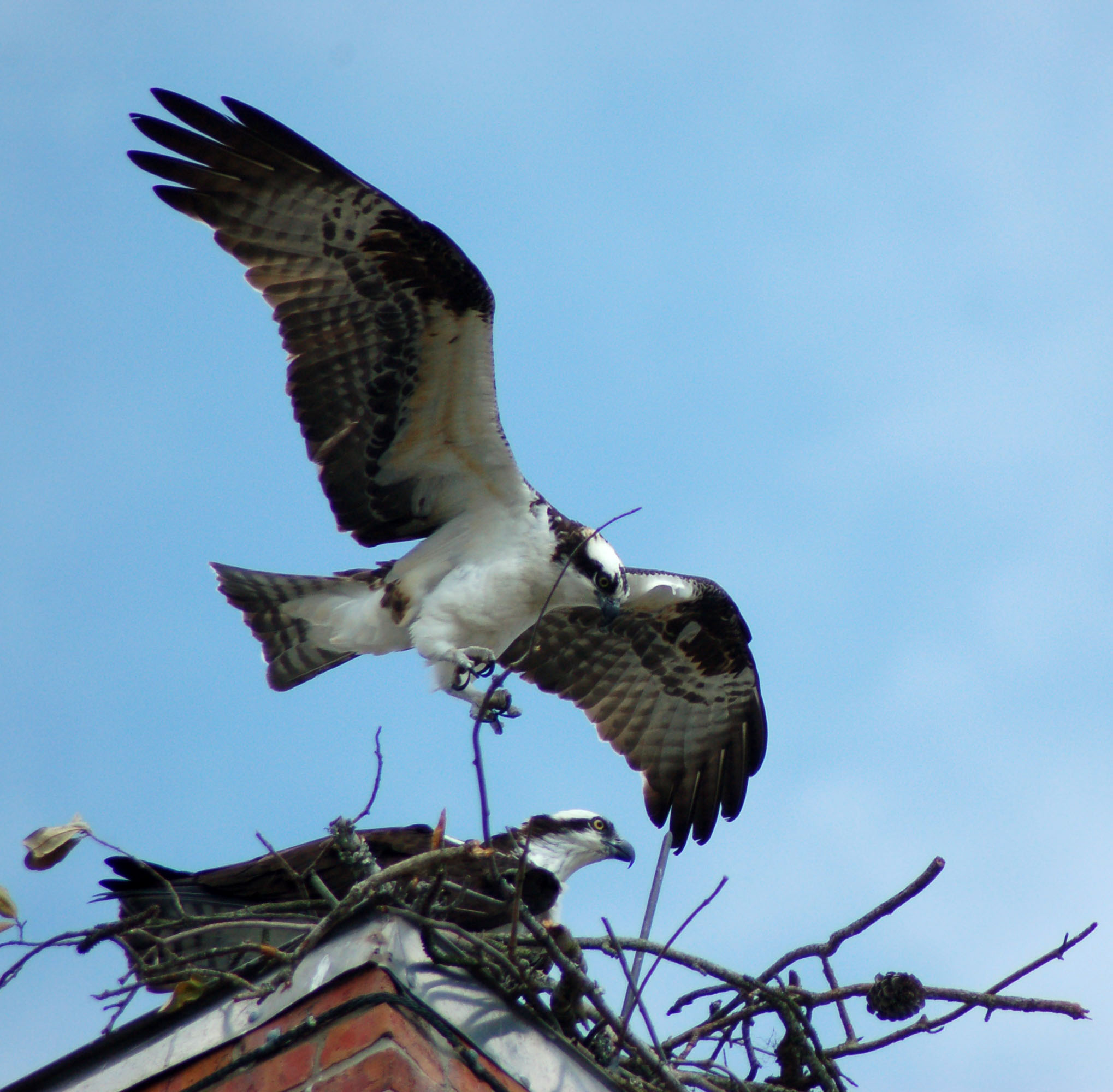
Ospreys at Corolla NC by Bruce Stambaugh
While vacationing in Corolla, NC, I happened upon this pair of Ospreys building a nest on a rooftop.
I didn’t have either my binoculars or camera along. The only thing to do was to keep driving and hope that I could spot it again as I made my way west through town.

Snowy Owls recently had been reported all across the midwestern part of the country, including Ohio. This was far south of their normal winter range. Experts speculated that the owls came in search of food. Normally nocturnal, Snowy Owls will hunt in the daytime when stressed by hunger.

As I motored through two signal lights and the usual clog of traffic in the busy unincorporated village, I kept looking south. I spotted the bird off and on, and saw it gliding as if it was going to land southwest of town.

Once I reached the open area west of Berlin, I again found the white owl, this time flapping its large wings. As I headed down the hill colloquially dubbed Joe T. hill, I lost sight of this magnificent bird. I didn’t know if it had landed or flown out of sight.

My only option had been to observe every detail of the bird that I could while driving. In the birding world, that process is called reckoning, meaning noting the birds shape, size, flight pattern, and behavior.

To be sure of my sighting, I consulted several bird books when I got home. They confirmed what I had seen. I reported the sighting to the rare bird alert. That way others in the area might see the owl, too.

That’s the way birders are. Half the joy of watching birds is sharing what is seen with others.

Amish boys biking by Bruce Stambaugh
Young Amish boys like these young men often will bike miles to go birding.
Ohio’s Amish country is blessed with an abundance of excellent birders, many of them in their early teens. It is not uncommon for them to get a group together, and bike for miles to go birding for a day.

They keep track of what they see, species, numbers and locations. And if they happen to spot an unusual bird, the word gets spread quickly so others may enjoy the opportunity as well.

In this case, I couldn’t believe my good fortune to be at just the right place at just the right time to see a Snowy Owl. I considered myself extremely fortunate to have seen this rare bird.

When birding, like so many other situations in life, timing is everything.

Greg Miller is a nice guy

By Bruce Stambaugh

Greg Miller is a nice guy. Anyone who even remotely knows Greg would easily agree with that statement.

Greg Miller by Bruce Stambaugh
Greg Miller

Though raised just a mile south of where my wife and I have lived for 32 years near Berlin, Ohio, I really never got to know him until recently. Greg had long grown up and started his own adult life before we moved here. His mother continues to live in the same house, and still meticulously adorns her property annually with a wide assortment of lovely flowers.

Others have known Greg much longer and better than I have. But just from the few conversations that I have had with him, I can attest that Greg is the kind of guy everyone would welcome as a friend.

I had heard of Greg well before I got to know him. He was one of three birders about whom Mark Obmascik wrote his 2004 book “The Big Year.” When Hollywood turned the book into a big screen movie of the same name, Greg was ecstatic, and rightly so. Not everyone has a book written or a movie made about a life accomplishment.

By his own description, Greg is a computer programming geek by trade and an avid and expert birder by desire. Greg transformed that hobby into nearly an obsession when he spent much of 1998 doing a Big Year. A Big Year is when a birder observes or hears as many North American bird species as possible.
Banner at Lakeside Ohio by Bruce Stambaugh
That year Greg surpassed the coveted 700 mark, as did two other men. The story of the extreme efforts of those three birders inspired both the book and the recently released movie.

Greg gave a touching keynote address at the Midwest Birding Symposium in Lakeside, Ohio in mid-September. He spoke to an audience of nearly 1,000 for an hour using no notes, speaking directly from his heart. Greg had the crowd spellbound relating his personal, touching story.

I was greatly moved when early in his talk Greg cited the influence of his kind parents, especially his father, in generating his interest in birding. Greg said he couldn’t remember seeing his first bird or getting his first pair of binoculars. Birding was simply a part of his heritage, thanks to the quiet, patient guidance of his late father, who himself was a man of integrity.

Kevin Cook and Greg Miller by Bruce Stambaugh
Kevin Cook and Greg Miller at the Midwest Birding Symposium held at Lakeside, Ohio in September.

Greg told the crowd how his father taught him to see the bird, and then lift his binoculars to his eyes to observe the bird’s details and to verify the species. Years later, Greg showed movie star Jack Black, who played Greg in the movie, the same birding technique.

Greg served as the birding consultant for the movie. He spent three weeks on-site with the crew. Greg couldn’t get over that the cast and crew were as enamored with him as he was in awe of them.

Greg is not perfect. He would be the first to tell you that. Greg has encountered and endured some of life’s pitfalls, like the rest of us humans. Now, however, he is basking in the glow of notoriety, racing to speaking engagements all across the country as if he were chasing after the rarest of birds.

Good for him. Through it all, Greg has remained Greg. He has not lost the sense of whom he is nor how he got to be where he is. That alone speaks volumes of just how nice a guy Greg Miller really is.

Julie Zickefoose by Bruce Stambaugh
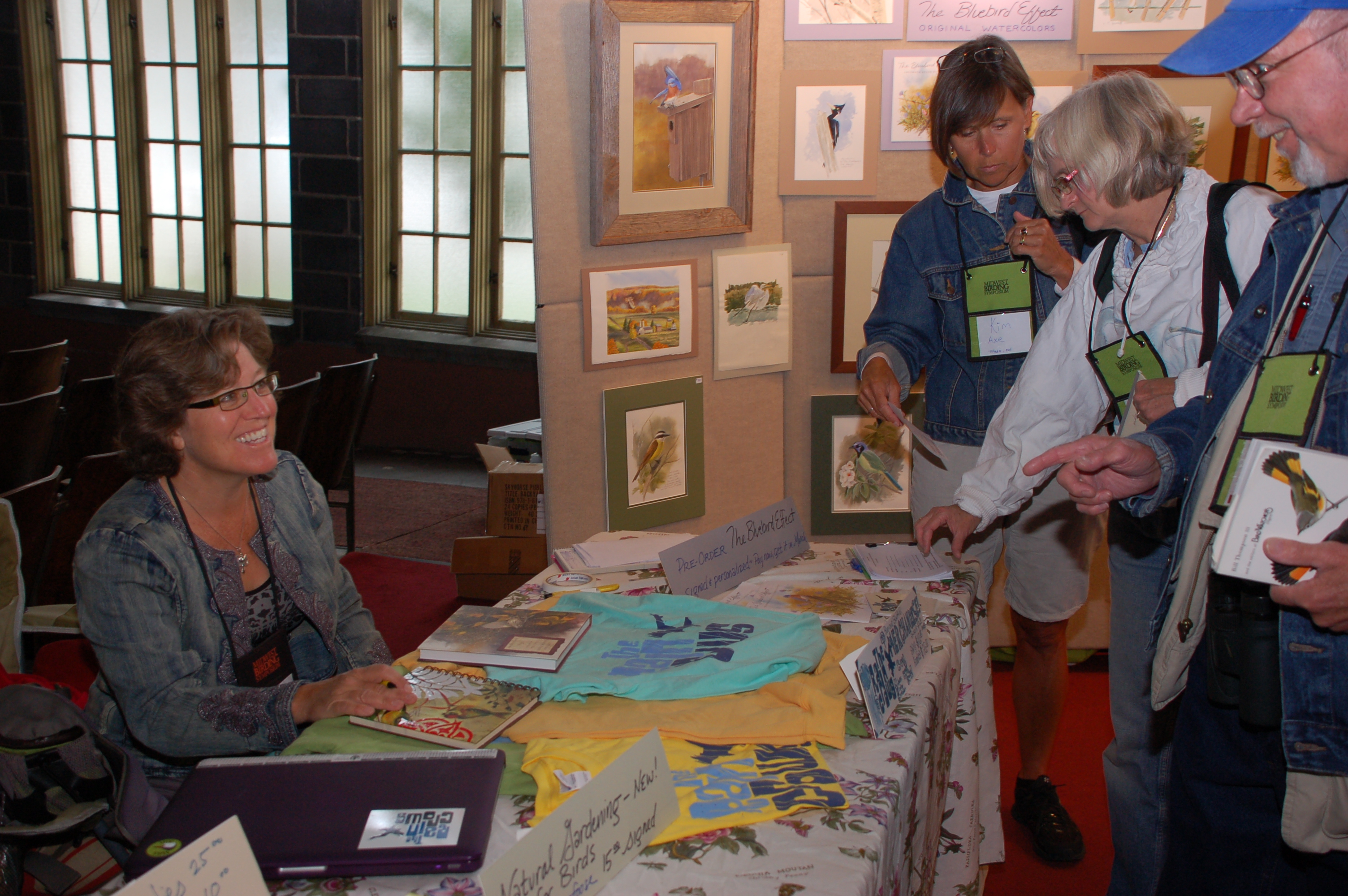
Author and illustrator Julie Zickefoose greeted some of her admirers at the Midwest Birding Symposium at Lakeside, Ohio in September.

Ornithology is for the birds

Wood Storks by Bruce Stambaugh
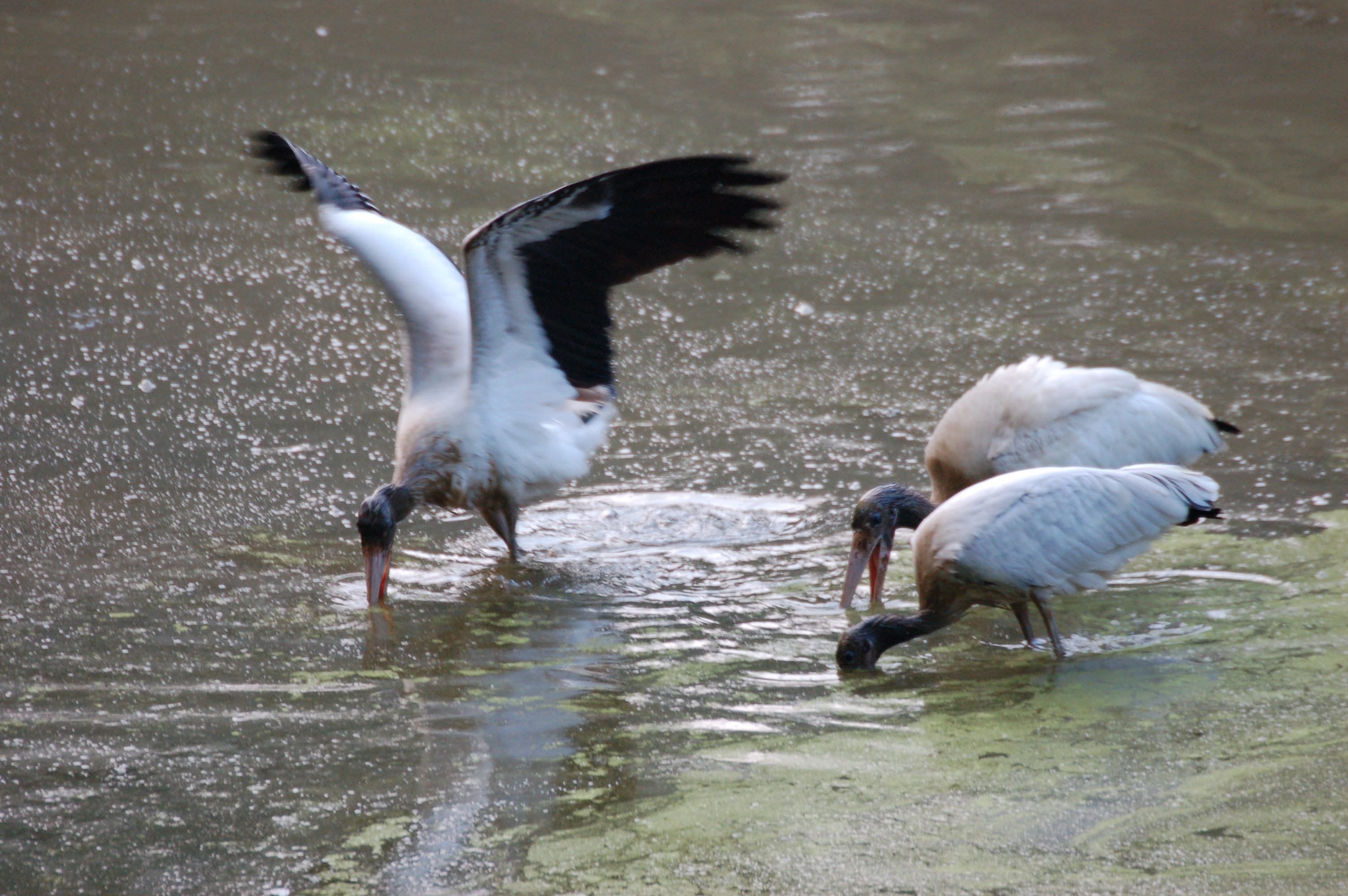
These Wood Storks appeared in a marshy area in Coshocton Co., Ohio in August 2008. They normally are coastal birds in the southern U.S.

By Bruce Stambaugh

More often than not, birders take it on the chin just for being birders. Compared to football, American or Australian, it’s not exactly a contact sport, at least in the physical sense.

Birding is, however, very popular worldwide. That might be because of the many amenities that bird watching affords, and those that it avoids, like unnecessary roughness.

Why is birding so universal? Let me count the ways.

Birding is fun. Birding can be enjoyed by all ages. Birding doesn’t require a lot of expensive equipment, though you can spend big bucks if you so choose. Birding can be free. The birds come to you.

Black Vultures by Bruce Stambaugh
The owners of this camper probably didn't expect to get this friendly with these Black Vultures.

Birding can be enjoyed year round. Birding is an inclusive activity. Birding can be enjoyed by persons of any age. In fact, it is not uncommon to find entire families enjoying the sport together.

Birding is addictive, turning that usually negative word on its head. Once you learn a little about birds, you intuitively want to know more.

Birding is interactive. Birds get to know you. You get to know the birds.

Green Herons by Bruce Stambaugh
I had the luxuary of observing this pair of young Green Herons from my back porch.

Birding can be done anytime anyplace, hiking, biking, sitting, traveling, on the beach, in the woods, on vacation, or while at work. All are good times to “bird.”

Birding not only introduces you to new species. You make new friends while enjoying an outing, too.

Birding is both personal and interpersonal. You make your own sightings, but immediately share the information with other birders to verify the identification. Others do the same for you. Birding it is both a sociable and a social sport. It is a whole lot more fun done with others than alone.

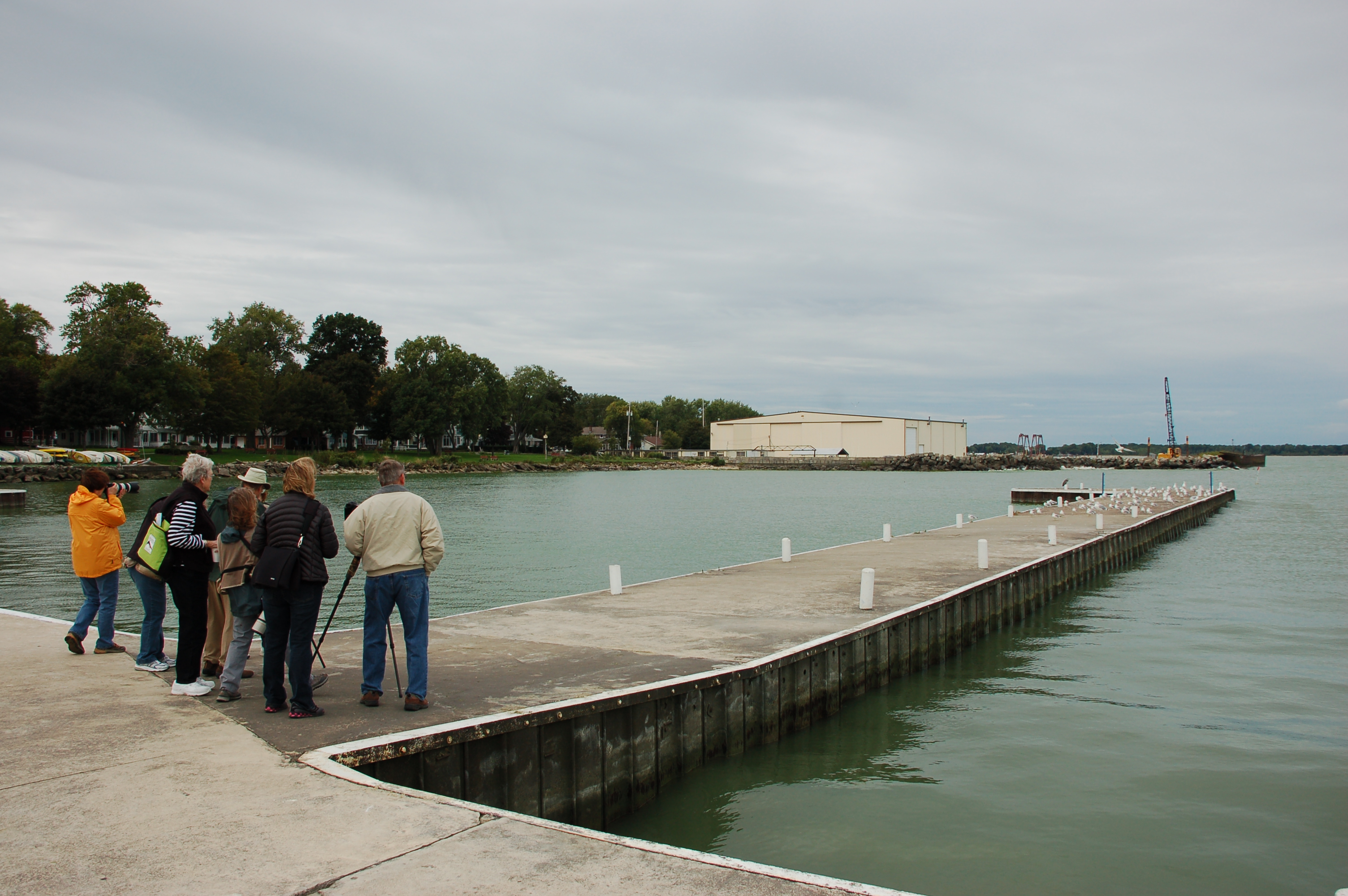
Birders by Bruce Stambaugh
Birding is a social sport, best enjoyed in the company of other birders, whether novice or experts.

Believe it or not, birding can and does get competitive, but in a good way. Many birders compile a life list, an accounting of all the bird species they have ever seen, which includes when and where.

When a rare bird is spotted, birders shun selfishness. They call other birders or have it posted on a bird alert website. Soon scores of birders show up hoping to see the rarity for themselves.

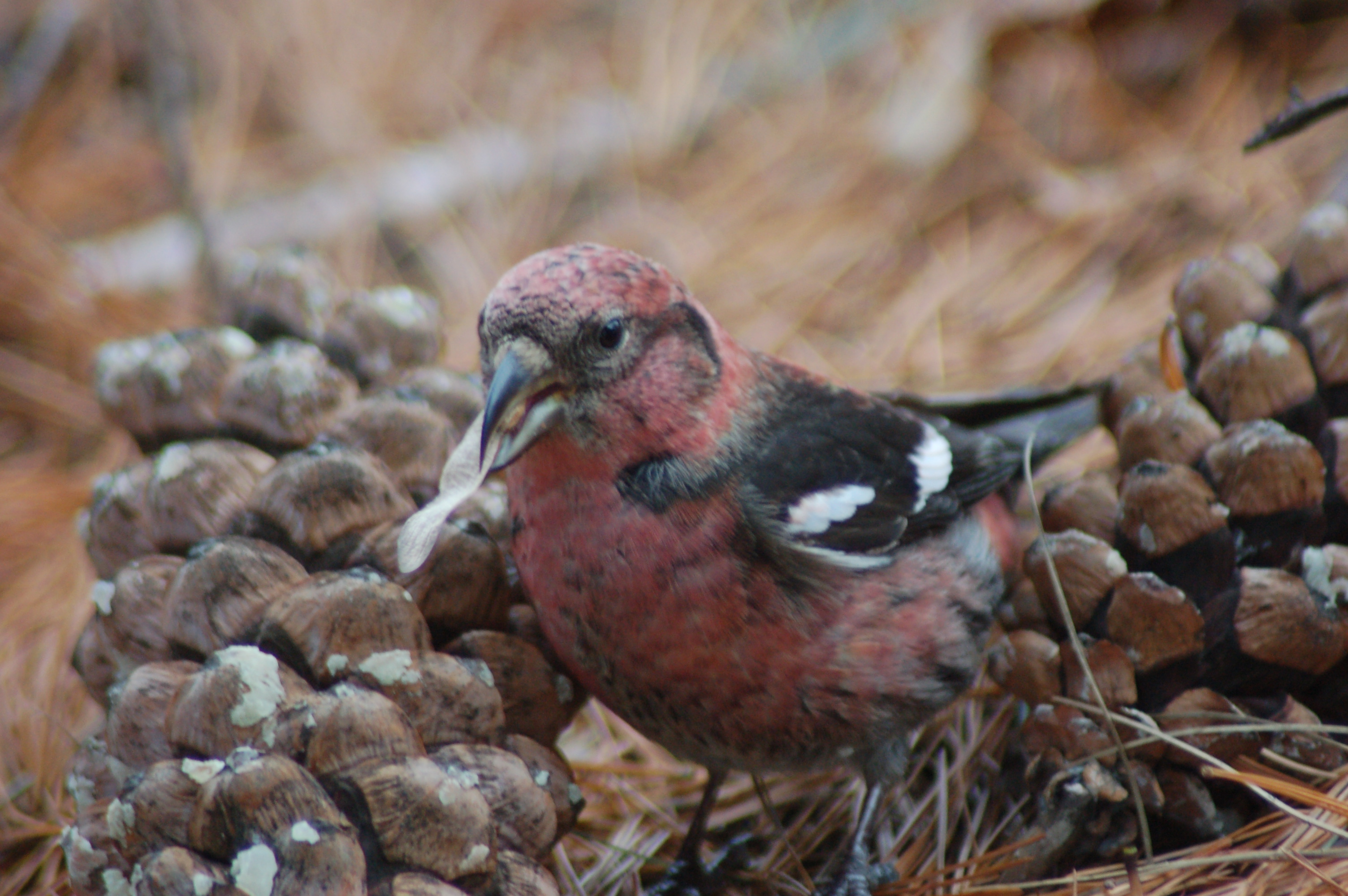
White-winged Crossbill by Bruce Stambaugh
A flock of White-winged Crossbills spent a few days in the Holmes Co., Ohio area in March 2009. They migrated from pine grove to pine grove, including the one in my own backyard.

When a quartet of Wood Storks, birds usually found in Florida, appeared in Coshocton Co., Ohio awhile back, someone asked me if I had seen them. I hadn’t. They gladly gave me directions and I was ready to go. But I didn’t go alone. I filled my van with other birders, three generations who wanted to see the storks, too.

Birding leads to hospitality. You welcome birds by feeding them. You greet and meet other birders if you have a rare bird arrive, even having them sign their names and where they are from. That’s just common etiquette among birders.

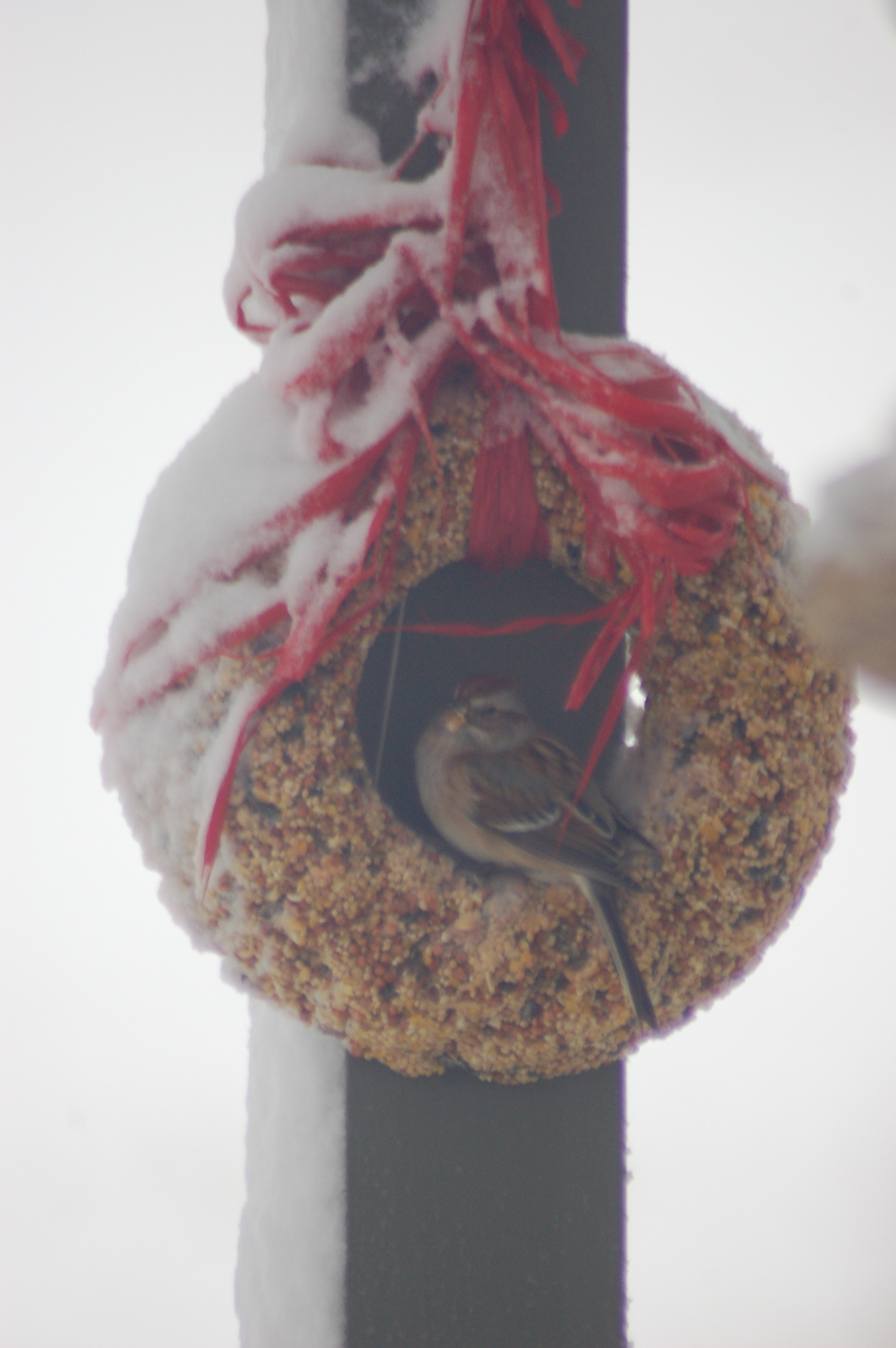
Tree Sparrow by Bruce Stambaugh
This Tree Sparrow found the perfect refuge from a harsh winter's storm.

Birding invigorates your senses. The range of songs and calls of birds are often heard before the birds are seen. The amazing array of bird plumage dazzles the imagination.

Birders are polite and follow directions. Hundreds of birders from 37 states and 10 countries attended the Midwest Birding Symposium recently in Lakeside, Ohio. A Lakeside resident was impressed that the birders actually stopped for stop signs.

Birders are clean and emphasize being green, preferring reusable water bottles to disposable plastic ones. Birders are nice to others and the environment.

Birders are teachers. They are happy to share what they know and see.

For the birds by Bruce Stambaugh
This vanity plate leaves no doubt about the hobby of this driver.

Ornithology is the scientific study of birds. Given all their positive characteristics, the study of birders could be labeled “civility.” Birders clearly are their own special flock.

Five easy steps to attract birds

Amish country by Bruce Stambaugh
By Bruce Stambaugh

Feeding birds is easy, and fall is a great time to start. In fact, if you follow some simple but basic birding steps, you can attract returning migrants and hungry year-round residents to any backyard environment.

Keep in mind that different birds have different feeding habits and nutritional needs. Varying the style of the feeders, the kind of bird food used in each, and the feeders’ placement can greatly determine the popularity of your feeders.

1.            Identify your habitat

Once you decide to feed birds, it’s important to know what habitat you are in and establish the right feeders with the appropriate feed. Hanging out suet on a balcony in the city most likely won’t attract the desired birds. Doing so in the country or a loosely wooded backyard can yield great rewards.

Feeders placed in grassy suburban backyards or rural settings have the chance to attract the biggest variety of birds. Feeders should be placed where they can be easily observed through a window in your home, and stocked and maintained with the appropriate feed.

2.            Select your feeders

The key to successful feeding is to pick the correct feeder or feeders for your situation. A backyard that has even a small grassy opening surrounded by hedges, shrubs fields or trees may be perfect for every kind of bird feeding style. Feeders don’t have to be complicated or expensive either.

Birds feeding by Bruce Stambaugh
Even the top of an old stump can serve as an excellent feeding station for birds.

A simple piece of plywood placed on some bricks or small cement blocks would serve as a nice platform feeder for birds that prefer to feed at ground level. A hopper feeder could be hung from a porch overhang or a firmly planted shepherd’s hook. A hanging feeder, such as an empty mesh citrus sack, could hold high protein suet for birds that can cling to what they are eating.

Place the feeders where they will attract the most birds and are easily observed from the safety and warmth of your home. Placing a hanging feeder or a shelf feeder on your windowsill will bring the birds right to you.

3.            Keep the feeders filled

Once you start to feed the birds, keep at it, even if it takes the birds awhile to find your offerings. The feeders need to be kept filled, too. The ground feeder could be mixed wild birdseed or simply cracked corn spread out.

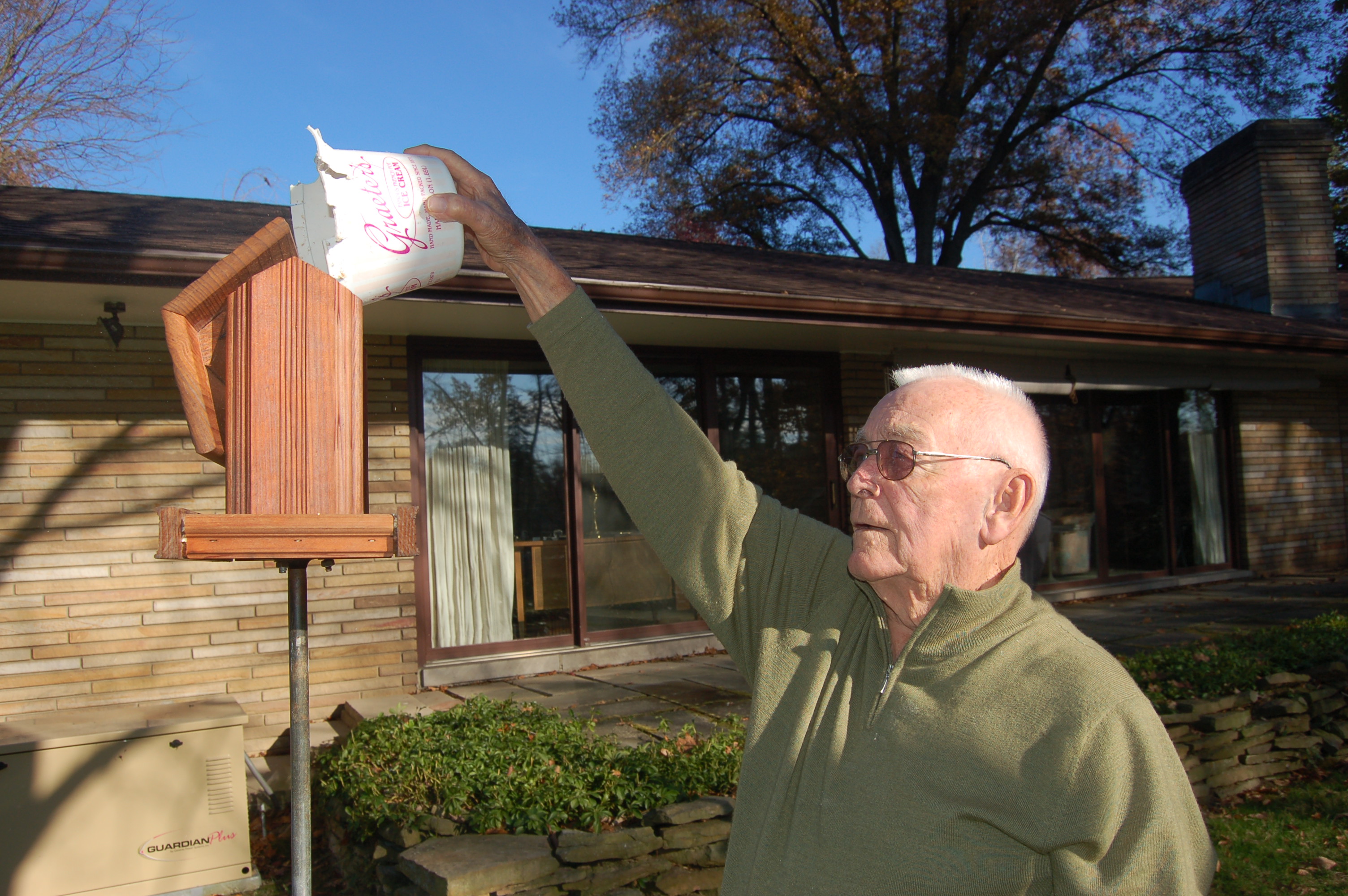
Filling the feeder by Bruce Stambaugh
Keeping feeders filled with seeds the birds like is critical to consistently attracting birds.
Stock hopper and hanging feeders with black oil sunflower seeds which many bird species enjoy. Thistle feeders are also popular with many species of birds in northern Ohio.

Suet feeders can be fat from the butcher, or you can either make or purchase cakes of suet that are loaded with peanuts and seeds. Those fit well into square wire feeders.

4.            Keep them cleaned

In addition to keeping the feeders full, it is critical that the feeders be attended to at least weekly. Even in cold weather, mold and disease can spread from uncared for feeders. Moisture can cause seed residue to crust, creating a potentially unhealthy situation for the birds.

Clean out any clogged holes in hanging or hopper feeders and make sure the seeds appear properly. Clear away any accumulated material. Tray feeders and even the bare ground should be raked periodically to remove spent seed hulls and bird droppings. Suet feeders should be checked for any signs of decay or mold.

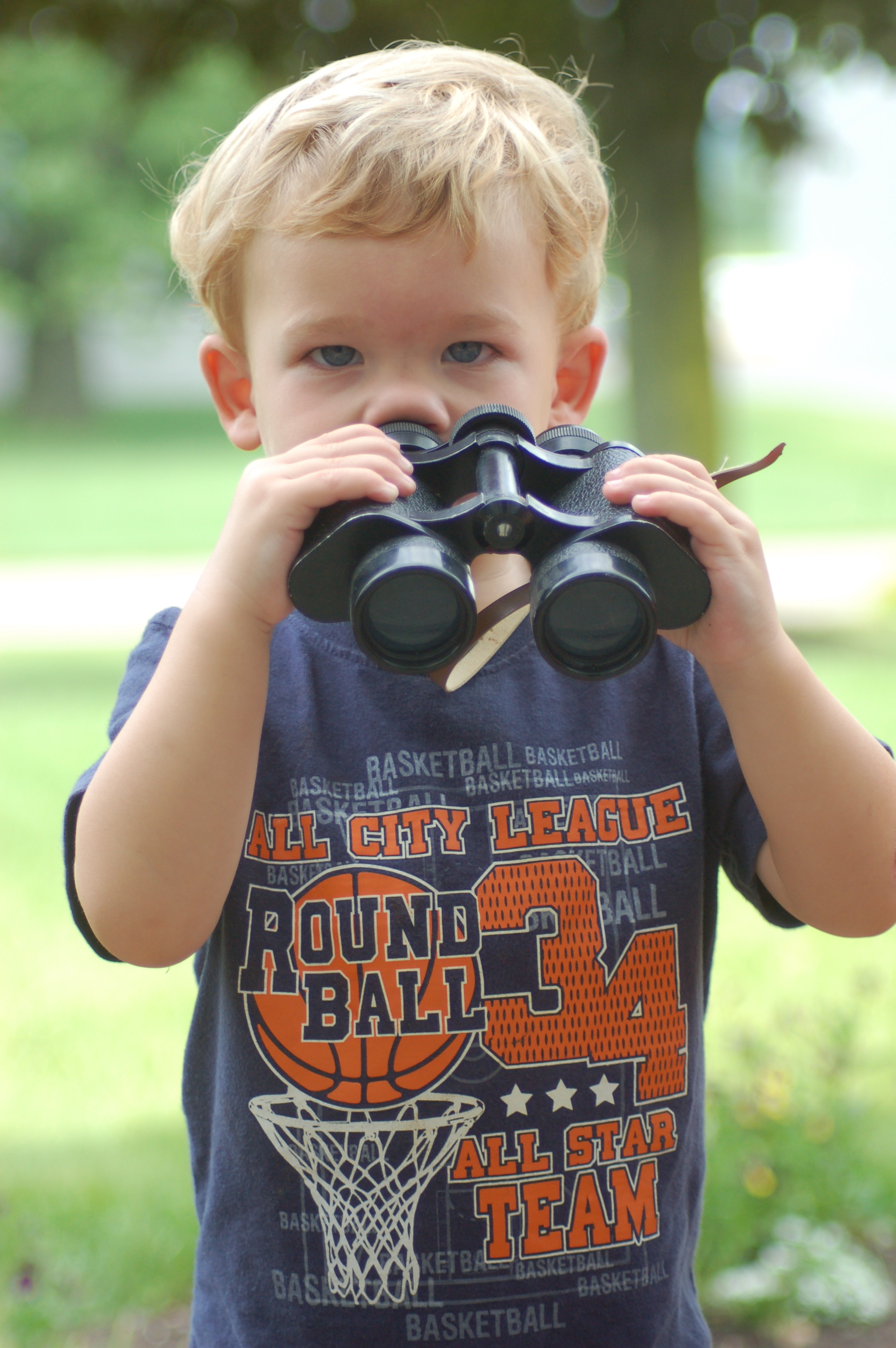
Binoculars by Bruce Stambaugh
A good pair of binoculars, when used properly, can enhance birdwatching.

5.              Keep a record

For most birders, keeping track of what is seen is half the fun. Again, this is not a difficult or time-consuming task. Keep a notebook and pencil handy and record the day, time, weather, and type of bird you saw. You will be surprised how quickly the number of species adds up on your yard list. Do this annually and you will have an accurate and personal record of what birds you saw, when and under what conditions.

A good bird guide is also an essential tool. Easy to use bird books are available at area shops and bookstores. Having a good pair of binoculars can enhance your bird viewing, too. After all, watching the birds eat is the main objective.

Putting up feeders, keeping them filled and cleaned, and keeping track of what you saw is a wonderful way to pleasantly pass the time when the weather outside is frightful. The birds need the food, and with a front row seat you will be glad for the variety of aviary entertainment without having to go out into the elements yourself.

Bluebird by Bruce Stambaugh
Feeding birds sometimes brings pretty surprises, like a hungry Eastern Bluebird.

This story first appeared in Around the House.

Kids these days

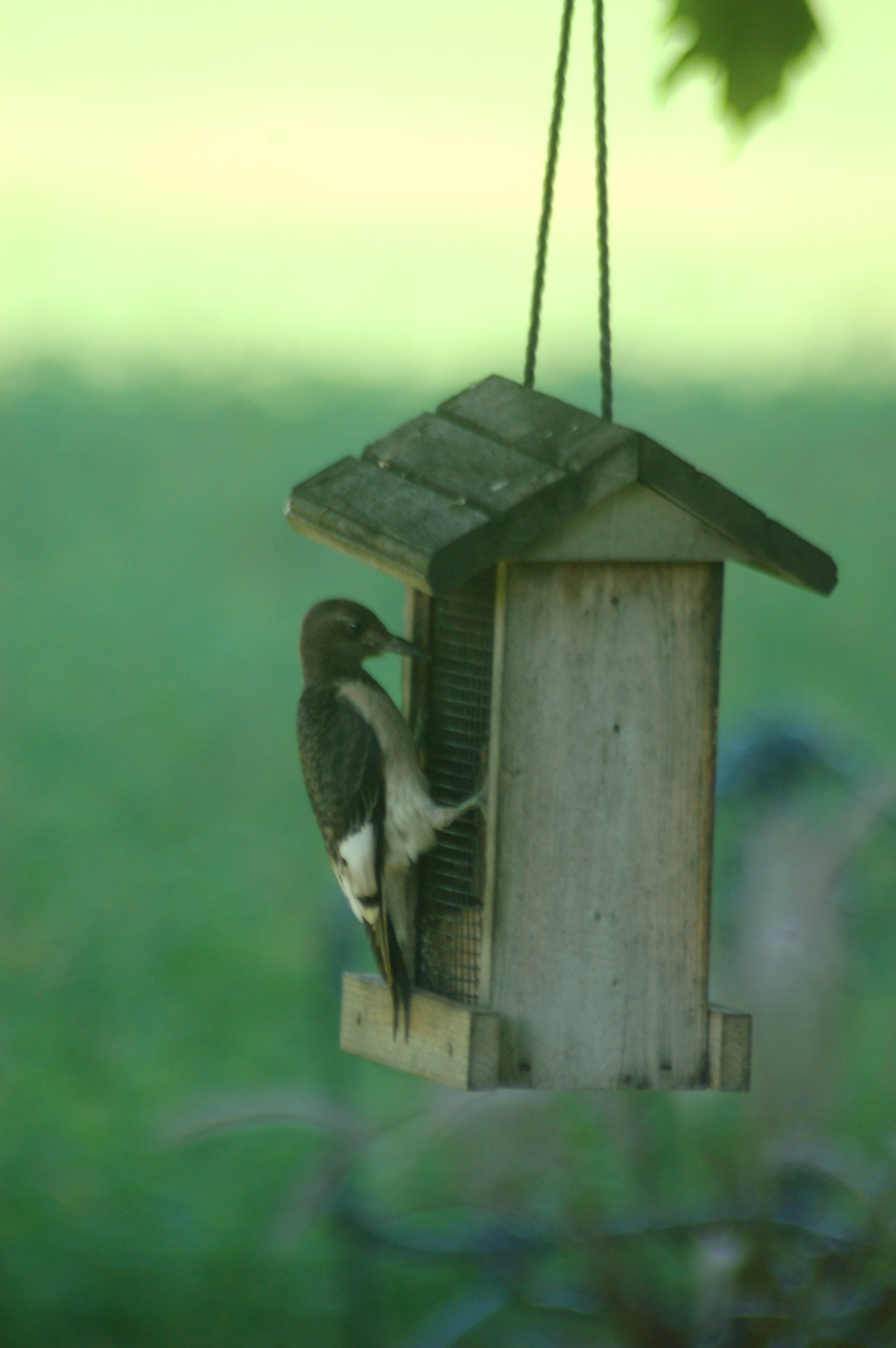
Juvenile Redheaded Woodpecker by Bruce Stambaugh

Boisterous, brassy,
young redheaded woodpecker
posed for photo op.

Bruce Stambaugh
August 30, 2011

August is the quiet month

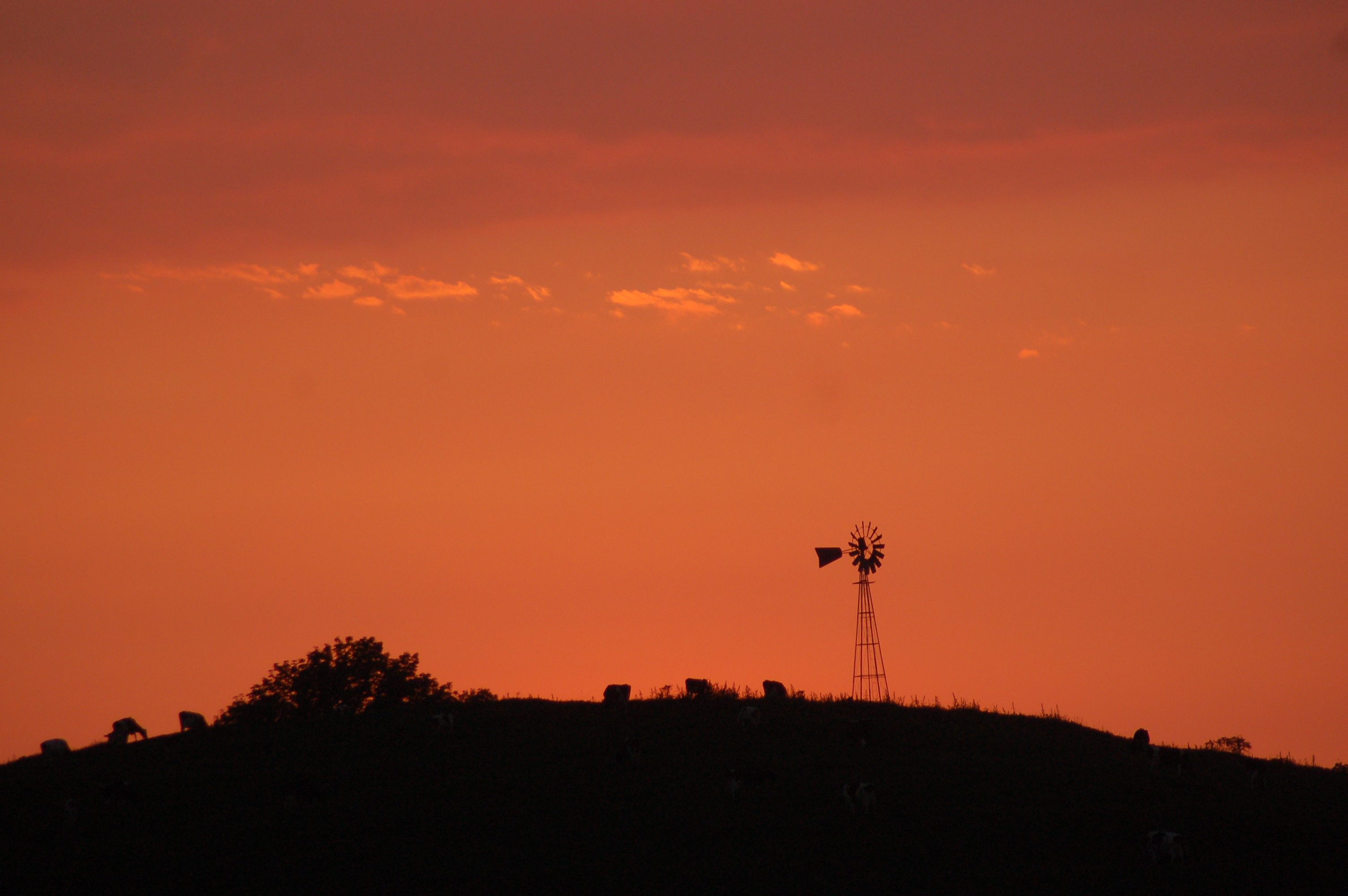
August sunset by Bruce Stambaugh
A typical August susnet in Ohio's Amish country.

By Bruce Stambaugh

I have always thought of August as a transitional month, the days between busy, boisterous July and the revitalizing September.

August is the stepping-stone from summer’s onslaught of activities into a pre-fall mentality. Vacations wind down for most people. It’s back to school and back to work.

If we take time to halt our busyness, our clamor to re-ready ourselves for the new school year at hand, we can take note of this calendar bridge from tilling to harvest, from clamor to order. In its intermediary mode, August seems to quietly take it in stride.

The songbirds no longer need to announce their territory or impress their mate. The young have flown the coop, or more properly stated, the nest, and bird life has returned to seeking daily subsistence. The American Robin precisely models the point.

From April to July, the Robins paired off, warbled their luxurious choruses almost continuously sunup to sundown. They pecked on windows, noisily flitted off their nests when disturbed and faithfully fed their young.

The Robins were ubiquitous in both presence and song. People often comment when they see their first Robin of the spring.

First Robin by Bruce Stambaugh
People often remark when they spot their first Robin of the spring.

Now, in late August, the Robins have all slyly retreated to their preferred nomenclature. They are more than content to while away the day searching for food deep in the recesses of the shade and forest.

Think about it. When was the last time you either heard or saw a robin? They simply and silently slipped away unnoticed.

If they haven’t already, other bird species will soon be disappearing from the area altogether. The Purple Martins, Barn Swallows and Common Nighthawks all heed their interior instinctive urgings and vanish unseen much like the Robin. We under-appreciate their massive consumption of insect protein until it’s too late to thank them.

Just as quietly, the multiple greens of fields and pastures have grown taller, richer. Chameleon-like, they have morphed into emeralds, tans and russets with hardly a rustle.

August harvest colors by Bruce Stambaugh
The colors of August change from day to day.

Farmers have taken in their wheat and most of their oats matter-of-factly, and now tolerantly wait the drying of the later cash crops, corn and soybeans. There is no mechanized clanking in patience.

Song Sparrow by Bruce Stambaugh
A Song Sparrow sings away.
The Song Sparrow still belts out an occasional composition, but nothing as regular as it had been earlier in the season. The House Wrens, once so noisy they approached annoyance, have taken to the underbrush, giving their last brood endurance lessons.

August’s atmosphere also has been quieter than the previous months, save for a couple of late night thunderstorms. The brilliant flashes and deep, rolling booms shattered my sleep like Civil War cannon fire might have. Midnight imaginations run wild when deafeningly jolted.

The few sounds of August we can count on are more monotonous and so commonplace we may not even notice their calls. Cicadas and crickets signal day and night. With windows thrown open to catch the unusual August twilight coolness, the insect symphony has helped humans settle in for sound sleeping.

Every now and then a ranging coyote howls from atop the neighbor’s pastured hill, if for no other reason than to drive the tethered neighborhood canines crazy. The feral call is one thing. The domesticated is another.

Now that school years in most locales begin well ahead of September, the playful echoes of children rollicking at recess again fill the air. It’s a timbre I love to hear over and over again, even if it does break August’s amazing silent spell.
Amish school by Bruce Stambaugh

Marshy field

Geese in oats by Bruce Stambaugh

Beside oat soldiers
squads of geese, ducks and shorebirds
glean the marshy field.

Bruce Stambaugh
August 16, 2011