A life of public service achieved

Lt. Richard Haun by Bruce Stambaugh
Lt. Richard Haun spends much of his time documenting cases on the computer.

By Bruce Stambaugh

Simply put, Richard Haun is living his dream.

As a teenager, Haun knew exactly what he wanted to do. With timely guidance and self-determination, he has more than achieved his goal. Not bad for someone yet to turn 40 years old.

Haun is actually Lieutenant Richard Haun of the Holmes County Sheriff’s Office. He has been with the sheriff’s office for 24 years. Do the math and the answer becomes apparent. Haun began his law enforcement career at that tender age of 15.

It really all began with some public service modeling by his mother and encouragement from a friend that got Haun thinking about life in law enforcement.

His mother served as an emergency medical technician, and a friend encouraged him to join the Boy Scouts of America troop that served as Explorers with the sheriff’s department.

“I always wanted to be a deputy,” Haun said. “That’s why I joined the Boy Scouts law enforcement Explorers Club. That’s how I got started and I’ve been here ever since.”

One assignment of the Explorers was to be a presence at the Holmes County Fair. He began making his rounds there in 1986 and hasn’t missed a fair since then.
“Once I got into the Explorers,” Haun related, “that’s when it clicked for me.”

Born in Millersburg, Haun grew up in Killbuck and graduated West Holmes High School in 1989. With his sights set on a career in law enforcement, Haun didn’t have much social life as a teen.

“I would go to school during the day,” Haun said, “then attend the police academy in Coshocton in the evening.” Haun said those classes ran from 5 p.m. to 10 p.m. Monday through Friday.

“We even had some classes on Saturday,” Haun said. “I couldn’t even attend my senior prom because I had to qualify on the firearms range.”

Haun lives in Millersburg with his wife, Susan, and two sons. The Hauns have been married for 17 years.

Haun started as a reserve officer in 1988. He went full-time in 1989 as a dispatcher in the communications division and has worked his way up the law enforcement ladder one rung at a time.

Haun has been a road patrol deputy, the supervisor of road patrol, a court bailiff and a detective. Now he is supervisor of both the civil division and the child support division.

“When I started, we didn’t even have a computer,” Haun said. “We wrote everything down on a legal pad. Now everything is done with computers and legal pads are used as scratch pads.”

Haun spends much of his day doing electronic paper work on the computer. He has to stay up on changing laws and attorney general rulings and relay that information to the rest of the sheriff’s office staff.

“That’s the toughest part of my job,” Haun said. “Keeping track of all the necessary paper work is demanding.”

During his years with the sheriff’s office, Haun has seen first-hand how crime has changed. He said the sheriff’s office deals more and more with identity theft and computer theft.

“We sock a lot of man hours into online crime,” Haun said. “Sexual predators and embezzlement are increasing.”

Haun coordinates prisoner transports, court appearances, and monitors all of Children’s Services needs when it comes to background checks for employment and those seeking employment.

The various positions he has held have required him to train in all divisions. Haun said his experience and training, including online training, enables him to be flexible in his work.

“I’ve gone where I’m needed,” Haun said. “It’s all a part of the educational process.”

“I do regret not going to college,” he shared. “But if I were to count all the hours of training I’ve done, I probably would have some kind of degree.” He said he would encourage his sons to go to college.

Still, Haun has no regrets about the career path he has chosen.

“It’s a pleasure to be of service to the public,” Haun said.

This story first appeared the Holmes Bargain Hunter.

Tornadoes hit Ohio’s Amish country again

Secrest Garden by Bruce Stambaugh
The entrance to the Secrest Garden and Arboretum after the tornado.

By Bruce Stambaugh

For the second time this summer, tornadoes caused significant damage in Ohio’s Amish country.

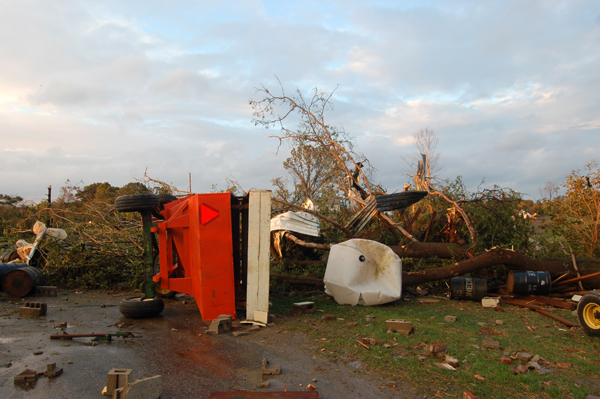
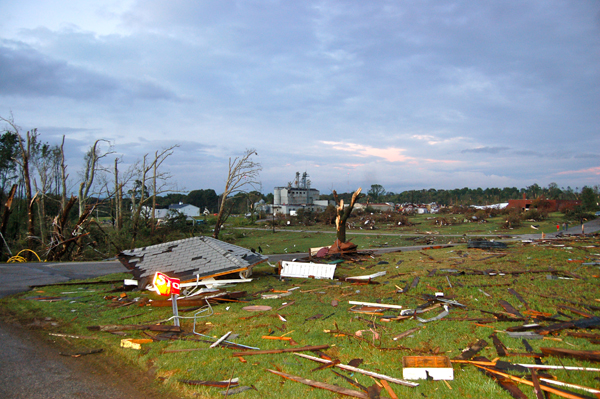
Shortly before 5:30 p.m. on Thursday, Sept. 16 a powerful tornado touched down on the south edge of Wooster, Ohio along Prairie Lane. The tornado, which the National Weather Service rated an EF2, proceeded east destroying businesses and homes, and crossed Madison Ave. onto the campus of the Ohio Agricultural Research and Development Center, a division of The Ohio State University.

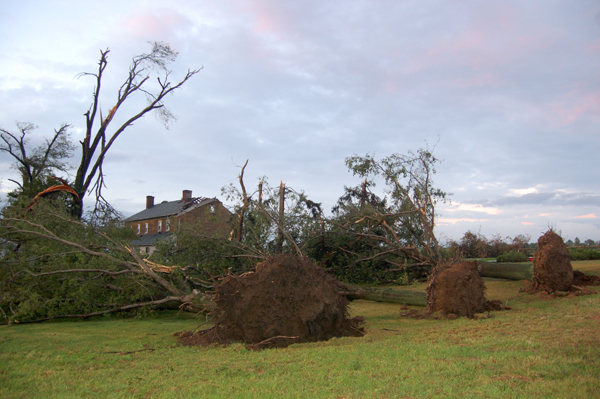
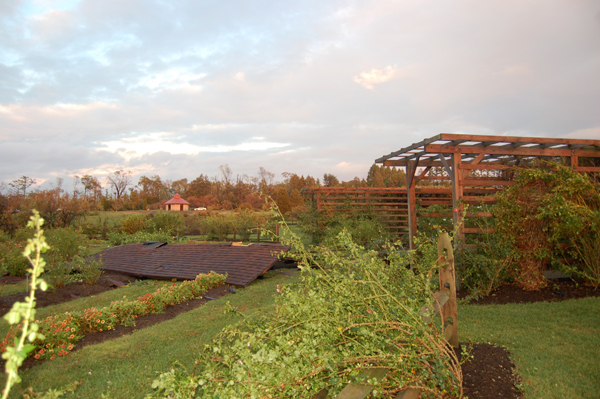
The tornado caused extensive damage to campus buildings, including some historical homes used as offices. It also destroyed the machine shop and heavily damaged parts of Secrest Garden and Arboretum, where many people love to walk and relax among the roses, ornamental shrubs and old age trees. The tornado clipped off dozens of the huge trees 20 to 30 feet above the ground.

The Wooster Twp. Fire chief reported that only one person was slightly injured. But she refused transport to the hospital.

The tornado continued on an east northeast path destroying and damaging several other homes and farm buildings. It did considerable damage to the Riceland Golf Course on U.S. 30 south of Orrville. Altogether, the NWS reported that the tornado was on the ground for 12 miles and reached wind speeds of 130 m.p.h. It left a path of destruction 200 yards wide.

Around 6 p.m., an EF1 tornado hit near the rural town of Farmerstown, Ohio in Holmes County about 25 miles south of Wooster. Several homes and barns were destroyed or damaged there. But again, no one was injured, although some farm animals had to be put down. The tornado was on the ground for three miles and reached a maximum speed of 100 m.p.h. It ranged from 50 to 75 yards wide.

As a Skywarn severe weather spotter for north central Holmes County, the Cleveland office of the National Weather Service asked me to photograph the damage at the OARDC. This was prior to knowing of the tornado in Holmes County. No tornado warning was issued for Holmes County.

I arrived at the OARDC shortly before 7 p.m., which left me a little more than a half an hour to take pictures before dark. I shot as many pictures as I could, but due to darkness, was unable to make it entirely around the campus. As I walked back to my car, parked in the arboretum a half mile east of the damaged OARDC buildings, I cut through open fields. I found several places where debris had hit the ground, leaving large gouges in the fields and grass.

The first tornado of the summer hit Holmes County and continued into Tuscarawas County on June 5. The EF1 and EF2 tornado caused extensive damage along its 10 mile path.
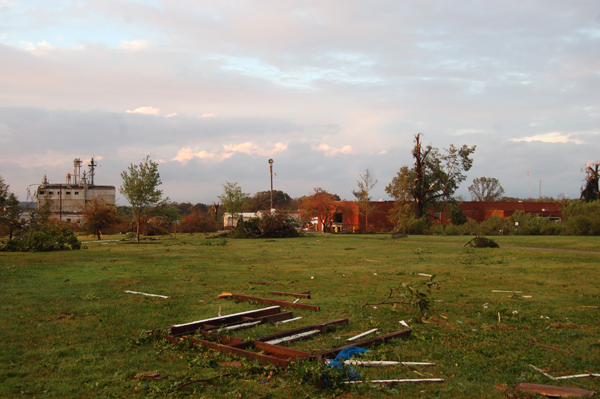
A gallery of some of my shots at the OARDC is shown below. Information about the Farmerstown tornado can be found here: http://www.holmescountyjournal.com/.

brick house by Bruce Stambaugh
Trees were snapped and the old Rice House heavily damaged at the OARDC in Wooster, Ohio.
damaged OARDC building by Bruce Stambaugh
One of the many OARDC buildings destroyed by the tornado
View of damaged OARDC building by Bruce Stambaugh
Another view of the building shown above.
Debris and stripped trees at the OARDC by Bruce Stambaugh
Debris and stripped trees at the OARDC.
Large trees down by Bruce Stambaugh
The tornado toppled large trees on the OARDC campus.
The OARDC's machine shop was heavily damaged by the tornado.
Machine shop destroyed by Bruce Stambaugh
Following the tornado's path to the machine shop at the OARDC.
Damage at the OARDC by Bruce Stambaugh
Damaged farm equipment and trees at the OARDC.
More damage around the machine shop by Bruce Stambaugh
More damage around the machine shop at the OARDC.
Another destroyed building at the OARDC by Bruce Stambaugh
Another destroyed building at the OARDC.
Destroyed machine shop by Bruce Stambaugh
The destroyed machine shop at the OARDC.
Debris littered the OARDC campus by Bruce Stambaugh
Debris from the tornado littered the OARDC campus.
OARDC police station by Bruce Stambaugh
Damage was extensive at the building that housed the campus police station.
The agricultural engineer building by Bruce Stambaugh
The agricultural engineering building was destroyed.
Rose garden by Bruce Stambaugh
The OARDC rose garden was heavily damaged.

Taking time to really see

Marblehead Lighthouse by Bruce Stambaugh
Clouds sail by the historic Marblehead Lighthouse at Marblehead, Ohio.

By Bruce Stambaugh

The day after my favorite resort town, Lakeside, Ohio, ended its gated season, which was Labor Day, I began to see the place in a different light.

Like Cinderella’s carriage, the town had transformed into its natural state overnight. Streets that had bustled for weeks with pedestrians, bicycles, golf carts and motorized vehicles suddenly became quiet. Lakeside’s population had dropped faster than the stock market.

Cottages that had housed happy families all summer were now boarded up for the winter. Businesses once crowded with customers were also shuttered for the season.

Lakeside signs by Bruce Stambaugh
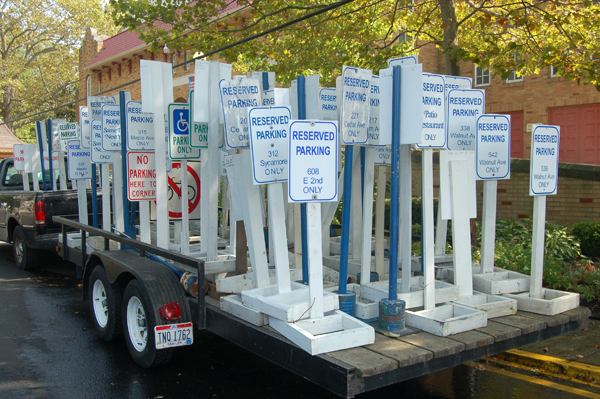
Maintenance workers gathered up traffic signs used during the gated season.

Maintenance crews made their rounds undoing what they had worked so hard to ready three short months ago. They picked up the traffic and parking signs needed to control the passage on the narrow streets with limited parking.

The workers seemed to be in no hurry whatsoever. Perhaps sensing the newfound quietness themselves, they soberly went about their business, the crackling of their portable radios occasionally breaking the hushed spell.

Their pace could have been from the day’s extraordinary heat as much as it was lack of ambition. The land wind wasn’t much help, blocked by the combination of the southerly rise of the peninsula itself, the town’s closely packed cottages and buildings and the giant hardwoods that overshadowed everything.

Fishing at Lakeside Ohio by Bruce Stambaugh
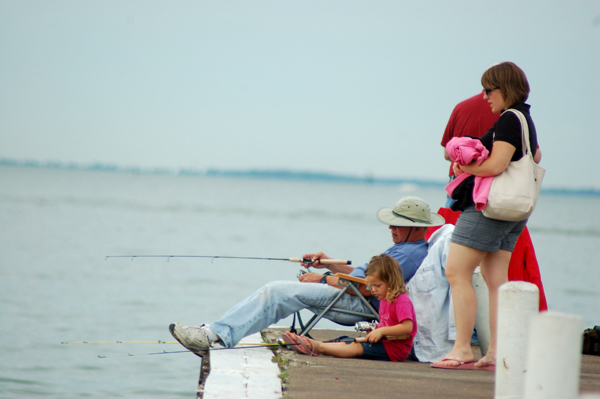
Fishing off the dock at Lakeside, Ohio is a popular pastime.

The only relief, if there was any to be had, could be on the dock, which protrudes a football field length into Lake Erie. Normally crowded with sun worshippers, fishermen, and people just wanting to soak in the scene, I nearly had the cement pier to myself.

The afternoon sun blazed away, and the wind was fierce, but cooler than in town thanks to the lake. I faced my folding chair east away from the wind. I was glad I had.

Freighter at Marblehead, Ohio by Bruce Stambaugh
A freighter took on stone at Marblehead, Ohio.

I had taken both camera and binoculars to while away the time. I enjoyed just scanning the broad horizon that stretched from the islands to Marblehead, where a huge freighter was moored at the stone quarry.

The strong westerly wind whipped the waves furiously. Anchored fishing boats bobbed like fishing line bobbers.

Ring-billed seagulls found security from the wind in the lee of the dock. One played King on the Hill. It had landed on a slightly submerged rock, and lorded it over all the other gulls that floated in the choppy water.

Osprey over Lakeside, Ohio by Bruce Stambaugh
An Osprey sailed over the dock at Lakeside, Ohio.

High above, another bird caught my eye. An osprey sailed with the wind, searching the shallow waters near the shore for unsuspecting fish. Its mate soon joined the hunt. They circled and hovered but always wind-driven east were soon out of view even with binoculars.

I put the glasses down and quickly noticed smaller, streamlined birds dive-bombing the water. They zigged-zagged and glided, then rose up and hurled themselves into the lake like rocks, but only for a few seconds. The small flock of migrating Common and Forster’s Terns put on quite a show in filling up for the long journey south.

Suddenly the stack of the freighter let loose sooty puffs of diesel smoke. It had taken on its load and was ready to sail. Even though I was upwind and a mile away, I could hear the huge, powerful props churn the water as the massive boat slipped away.

Common Tern at Lakeside, Ohio by Bruce Stambaugh
A Forster's Tern readied to plunge into the lake at Lakeside, Ohio.

In less than 20 minutes, it had turned northeast for deeper water, destination unknown to me. I, however, knew mine. I returned to our hospitality house for dinner, glad I had taken the time to observe Lakeside in a slower, even more peaceful mode than usual.

All I wanted was a new cell phone

By Bruce Stambaugh

All I really wanted was a new cell phone. The battery of the old one was about to give up the ghost.

When I say “old one,” I mean the cell phone I got just two years ago. I liked the phone because it was just what I wanted in a cell phone. It was simple, easy to use, slim, and fit snuggly in my right front pocket, where I keep my cell phone.

About a month before I was eligible to get a new, free phone, according to my contract, the battery quit holding a charge. I can’t imagine that dropping the phone onto the concrete floor of the garage had anything to do with that.

Besides the battery issue, my phone also talked to me, which I found annoying. I would bend over to tie my shoe, and a woman’s voice would spontaneously say from the inside of my pocket, “Please say a command.” She kept it up until I could find the clear button.

My wife was due for a new phone as well. Hers was much older than mine. A year in human time is an eternity by technology standards.

Leary of the national service provider retail stores, we prefer to use the local dealer. We recognize we sacrifice selection for service in doing so. But that’s just fine with us.

The young clerk at the store was friendly and helpful, and cast no disparaging comments my way when I said that all I wanted was a phone. However, she did look a little puzzled. So I thought I owed her an explanation.

Before I could begin, my wife, who has heard the pitch before, interjected that she preferred a phone that would make it easy for her to send text messages. The young sales woman quickly reached into the counter and pulled out a couple of phones, and demonstrated how they slid open.

My wife was almost giddy. Other than the color, either of the phones was just what she wanted.

The clerk returned her attention to me. I resumed my religious stance on cell phones.

“I just want a phone to make and receive calls,” I said simply. “I don’t text. I don’t want the Internet because of the additional cost. I don’t take pictures with my phone, and I don’t tweet.” My wife would have disputed the last point had we not been in a public setting.

Given my strict phone constraints, I only had two choices. I picked the one that best fit in my front pocket, even though it had a camera in it. My old phone did, too, and I never used it. I have a camera.

We arrived home with our new phones a short time later. As I walked up the front stairs, I heard a strange clicking noise like a camera going off in my front pocket. I took another step, and heard another click.

By the time I had reached the top of the steps, I already had two shots of the inside of my pocket. And I hadn’t even made a call.

I couldn’t figure out how this had happened until I discovered that the button that activates the camera was on the outside of the phone. I have no idea why the camera went off, other than to guess that the activation button was more sensitive than I was.

In short order, I figured out how to delete the pair of solid black shots. Apparently the flash comes separately.

It’s beginning to look a lot like fall already

Oats shocks by Bruce Stambaugh
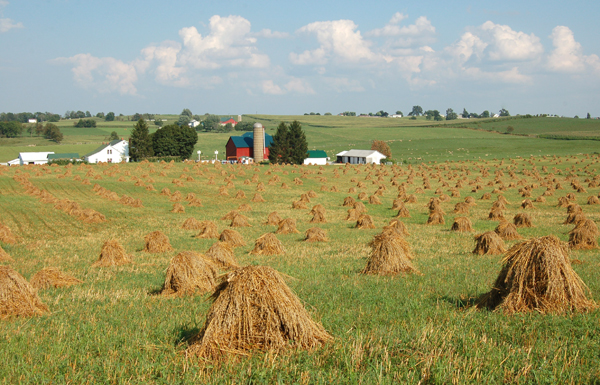
A field full of oats shocks before being gathered for the thrasher near Berlin, Ohio.

By Bruce Stambaugh

With Labor Day upon us, autumn will be right around the corner. In fact, if you look closely, signs of fall are already evident.

Some of the indicators are obvious, others more subtle. Some are predictable with still others seemingly a bit premature.

The days, often the nicest of the summer, have a sly, natural flaw. Day by day, minutes of daylight are silently subtracted from the previous day’s total. By month’s end, daily darkness will outnumber daylight once again.

The sun itself is moving more towards the center of the horizons at sunrise and sunset. Those driving true east and west running roads have already begun to frequently use their sun visors. The fall fogs, too, have clouded crisp mornings, the consequence of cool nights following warm days.

In the fields, the harvesting has begun. My Amish neighbors have long since gathered up the standing army of oats shocks and wheeled them off wagon load after wagon load to the thrasher.

Now it’s the corn’s turn. The field corn seems to have taken on drought status, drying up almost overnight. Brown has overtaken green as the predominant color in the standing sea. Smart farmers have already begun to cut their supply of silage to replenish the silos.

Fall webworms by Bruce Stambaugh
The homes of fall webworms shine in the sun.

In the woods and along highways, once glossy, emerald leaves have dulled and drooped. Some have already begun to drop without even changing color. Now and again a black walnut can be found standing stark naked, save for the cache of fall webworm nests it has involuntarily collected.

In the gardens, the picking of produce is a daily chore. Cucumbers, onions and tomatoes have hit their peek. Kitchens are cluttered with utensils for canning and freezing. The ripened fruits and vegetables that aren’t consumed at the dinner table find their way into jars and containers.

Even the sounds of the season have changed. Only a few American Robins continue to sing, and most likely they are sophomores practicing for next year’s prom. Instead of gathering nesting materials and snagging worms and insects, parent birds lead their fledglings to watering holes for liquid refreshment and necessary bathing.

Well-worn butterfly by Bruce Stambaugh
A well-worn tiger swallowtail butterfly took advantage of some wildflowers.

The volume and frequency of the cicada and katydid songs have lessoned considerably. Even the crickets have quieted down.

Butterfly on phlox by Bruce Stambaugh
A butterfly enjoys late blooming phlox.

Butterflies of all sizes and colors squeeze whatever nutrients they can out of the fading cornflowers and black-eyed susans. The humming birds, too, seem to sense an urgency to store up extra energy for their upcoming southern vacation travel.

Squirrels are in their glory, cutting as many beechnuts, hickory nuts and walnuts as they can. Thrifty creatures that they are, they also bury future meals for harder times ahead. Only they can’t always remember where they put their stash.

Next spring, when the saplings begin to appear, we will learn just how forgetful the squirrels were. But between now and then, many pleasant days lay ahead, and probably some less than desirable ones, too.

There is yet one more indicator that fall is knocking on our door. Campaign signs have already begun to litter urban, suburban and rural roadsides. They are as prolific and unsightly as the ugly webbed homes of the worms.

The obnoxious yet gaudy campaign posters are a human-induced reminder of what nature is about to bring. Autumn will be here before we know it, and there is little we can do about it except to enjoy the ever-changing colorful show.

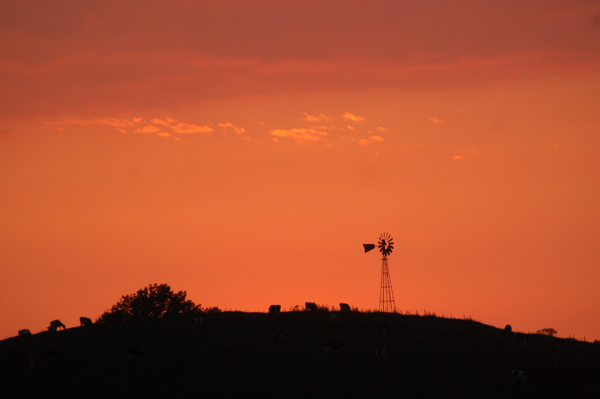
Cows grazed at sunset by Bruce Stambaugh
Cows grazed on a hillside at sunset.

A private woman has a very public life

Lucille Hastings by Bruce Stambaugh
Books have always played an integral part of Lucille Hastings' life.

By Bruce Stambaugh

For someone who relishes her privacy, Lucille Hastings of Big Prairie, Ohio has led a very public life.

Perhaps that seemingly contradictory situation is because of her love for life long learning. Hastings has had this instinctive drive to share what she learns. In short, contributing personally and professionally to the community at large has been a way of life.

That shouldn’t come as a surprise for someone who has her major life concepts down pat. Her life has revolved around her personal faith and church fellowship, service to others, which includes family, friends and the larger community.

Having lived on a farm for most of her life, she heartily reveres the land as a true gift from God. To accomplish and enjoy all that, she also believes in healthy personal lifestyles.

“I do water aerobics three times a week,” she said. “I need to watch my weight.”

Once she began her own well-researched and devised low carbohydrate diet a dozen years ago, Hastings lost 100 pounds. She has continued to be very careful about what she eats.

“Physical and emotional health are very important,” she related. Hastings said that as much for herself as for the benefit of others.

Hastings is fastidious about everything she does. But some things in life have been out of her control.

Hastings retired in 1992 from West Holmes Local Schools after serving 34 years as the library/media director in charge of the district’s libraries. Since then, she has continued as a part-time educational library/media consultant to the district.

“I retired because Jim retired,” she said, referring to her late husband. He died in 2000. “I miss Jim,” she said wistfully, “but I worked through it.” They had been married for 43 years.

She still lives on the Hastings family farm, which is rented out to an area farmer. The farm’s old barn was burned several years ago when a string of arson fires hit Holmes and surrounding counties.

Lover of the land that she is, Hastings said she marvels at how the agriculture around her has changed over the years. She has a great appreciation for her neighbors.

“The Amish have gradually moved into our area because the land was cheaper,” she said. “They are simply wonderful neighbors.”

With her background in library, it should come as no surprise that she considers herself a very organized person. She attributes that trait to enabling her to be of service to the larger community.

“Services like libraries, schools and churches happen because people make them happen,” Hastings said. “They just don’t happen by themselves.” Given her life long service to the surrounding community, Hastings clearly has done her best to improve those services for the community at large.

Here is a sampling of the many positions in which Hastings has served. She was president of the State Library Board of Ohio. She served on the Holmes County Library board for 16 years, 10 of which she was president. She was chairperson of the Ohio Reading Circle board for 16 years. That volunteer position allowed her to donate $350,000 worth of Reading Circle books to the county and local school libraries.
Hastings is a member of the Ohio Director of Agriculture’s 12-person advisory committee for administration of Ohio’s $25 million Clean Air/Clean Water Fund for Farmland Preservation.

She was the first woman president of the Holmes County Farm Bureau, and she is the only woman Sunday school teacher at her church. She has taught Sunday school for 60 years, and she is chairperson of the Mission Ministry at Ripley Church of Christ. She was a member of the Holmes County board of elections for eight years.

Hastings good works haven’t gone unnoticed. She has been dooly recognized for her many efforts. She received the Martha Holden Jennings Outstanding Teacher Award in 1974. She was inducted into the Ohio Women’s Hall of Fame in 2007. That same year Hastings received the Outstanding Alumni Award from Kent State University, where she received her Master of Arts Degree.

Hastings has two sons. Joel lives in Dallas, Texas, and Sidney resides in St. Louis, Missouri.

“I feel like I have been blessed,” she said. “I have had some unique opportunities.” And because she made the most of those chances, the community has reaped the benefits.

That’s what happens when life long learning is generously and graciously shared.

This article appeared in the Holmes Bargain Hunter, August 30, 2010.

Directions of a different sort

Buggies at Mt. Hope by Bruce Stambaugh
Buggies tied at a hitching rail in Mt. Hope in the heart of Ohio's Amish country.

By Bruce Stambaugh

Word to the wise. If you ask for directions in Holmes County, Ohio, you just might want to get a second or even third opinion. Better yet, use a map, atlas, a GPS or a combination of those geographical aides.

Here’s why. With three to four million visitors to our fine county every year, some of them get lost, or at least do not know exactly where they are. Shoot. Some might not even know where they want to go.

Coming and going by Bruce Stambaugh
Wagons come and go during the oats harvest in Holmes County, Ohio.

But given what I have observed and heard over the years, that’s not a problem either. The genial folks who live here will gladly offer some directional advice if asked.

Generally, the directions given answer the directions sought. But not always. Holmes County has its fair share of ornery characters.

Of course, I wouldn’t be one of them, though living where I do I certainly have had plenty of chances. While working outside, it is not uncommon for a car to slow on our busy highway and have either a passenger or the driver ask how to get to Berlin or Millersburg, or a specific business.

I try to be as succinct as possible, using landmarks and road numbers and the appropriate “turn right” or “turn left.” I like to end with what I have heard countless other locals finish their directional spiel. “Like we say in Holmes County, you can’t miss it.”

Goldfinch by Bruce Stambaugh
An American Goldfinch enjoys the fresh seeds of a volunteer sunflower. With its many habitats, birds are among the tourists who flock to Holmes County every year.
Meant as affable words of encouragement, too often I fear they are the deathblow to everything that preceded that comment. Since I never see the persons again, I can’t testify whether the colloquialism is true or not. But it could be worse, and sometimes is. The following antidotal incidents are completely true.

After a tourist inquired of a local where a certain person lived, the native immediately asked in all seriousness, “Do you know where the eight-sided barn used to be?” The point of reference had burned to the ground several years previous.

Here’s another. A tourist asked for directions to little unincorporated Saltillo, a cluster of homes at the diagonal crossroads of two county highways. These were the instructions. “You go up a long hill, over a small hump in the road, then it’s just a hop, skip and a jump from there.”

They get better. The state superintendent of public instruction, driving a state car with state license plates, stopped and asked for directions. Seeing the distinguished gentleman’s suit and tie and glancing at the plates, the unsuspecting superintendent got directions that took him far out of his way. Fortunately, he had a good sense of humor and understood the county’s suspicions towards state and federal officials.

A friend of mine was standing on the square in Millersburg when someone in a car going west asked directions to Berlin, five miles to the east. My friend sent them north to Wooster, east to Canton, south to Dover and west to Berlin, a distance of 96 miles.

Baling hay by Bruce Stambaugh
Millions of tourist visit Holmes County's Amish country annually to see the Amish work in the fields.

The same friend was once asked for directions from Millersburg to Mohawk Dam in Coshocton County from someone from out of the area. The vehicle was pulling a fishing boat.

My friend figured someone was sending this poor fellow on a wild goose chase. Since the guy had driven this far, my friend figured he might as well complete the ruse. The proper directions were given and the man and his boat were on their way.

Mohawk Dam is a flood-control, dry dam. I’m sure they couldn’t have missed it.

August sunset by Bruce Stambaugh
A glowing August sunset in Holmes County's Amish country.

Vivian Miller offers compassion through cards and visits

By Bruce Stambaugh

After the doctor informed Vivian Miller, 68, four years ago that she had Parkinson’s disease, he asked how she felt about the diagnosis.

Miller didn’t flinch. She mustered up her usual pluck and said, “It’s not going to put me in a corner someplace.” Indeed it hasn’t.

In the time since, Miller has spent her life quietly helping others.

“It’s not about me,” she said modestly. “God uses me as an encouragement and support for others.”

Miller, who lives in Berlin, Ohio, intentionally looks for those in need, though she clearly tries to be subtle and discreet. If she finds out about someone with health or personal problems, Miller doesn’t hesitate to help, even if it’s simply by sending a homemade card.

She uses a software program to create personally appropriate cards. Miller often incorporates a picture of the person or herself into the card’s design.

Vivian Miller by Bruce Stambaugh
Vivian Miller enjoys making personalized cards for people.

When she was unable to go on a cruise with her Sunday School class, Miller knew what to do. Instead of being envious, she made a welcome home card for each member. On the front of the card was the picture of the cruise ship on which the group had sailed.

“I wanted them to have a special memento from their trip,” Miller said.

That statement pretty well sums up Miller’s approach to life. Her doctor told her she would do well with that positive attitude, and Miller has. Miller said it really boils down to a pretty fundamental formula.

“It’s about listening to others,” she said. “Everybody has a story, and all you need to do is listen.”

Miller retired as a deputy director in the Holmes County Treasurer’s office in 2006. She had also worked in the office at Rodhe’s IGA in Millersburg for several years.
“From my vantage point in the office, I would see the same people come into the store over and over,” she said. “They usually just wanted someone to talk to.”

“I try to see the goodness in people,” Miller said, “no matter what their situation is.”

Miller credits her term as a deaconess at Walnut Creek Mennonite Church with giving her the courage and opportunities to be in a helping mode. She did hospital visits and checked in on the less mobile.

Miller looks for every possible way to help and to meet new people. She even works at the polls at times to help expand her circle of friends.

Miller especially has sought out others who have been diagnosed with Parkinson’s disease. She explained that support, no matter what the issue, is critical for quality of life.

According to the National Institute of Health, Parkinson’s disease is a motor systems disorder, which is the result of the loss of dopamine-producing brain cells. The four primary symptoms of the disease are tremor or trembling in the hands, arms, legs, jaw and face.
Often times the onset of Parkinson’s is due to surgery or a head injury. In Miller’s case, she noticed the symptoms after a series of unrelated surgeries following her retirement.

For Miller, the disease has affected her left side. She discretely calms her left arm with her right hand and continues her conversation. That in itself is a physical sign of the inner awareness that Miller has. She is determined to share her compassion no matter what.

“Sometimes people seek me out,” Miller said, “and sometimes I go to them.”

Each situation is different, and Miller tries her best to be mindful of that. Miller just takes her illness in stride.

“Now it’s my turn to help,” she said. “Some of my best friends have come as the result of just being with families in need.”

Strident comforter that she is to others, Miller recognizes that she, too, needs support to do what she does. Miller credits her husband, Duane, and adult children, Valerie Gerber of Sugarcreek, and Scott Miller of Chapel Hill, North Carolina, with providing the emotional and physical uplifting that she needs to maintain her active and involved pace.

“Duane has been wonderful,” she said, “and Valerie calls me everyday.” Her son sent her a laptop computer while she had an extended stay in the hospital. In part, that gift is what led to Miller’s practice of designing, printing and sending the personalized cards.

“I have been blessed by everyone I have met,” Miller said. Most likely, the recipients of her kindness could say the same thing about her.

This article was initially published in the Holmes Bargain Hunter.

From every angle, August is golden

Golden sunset by Bruce Stambaugh
Hazy sunsets in Amish country are the norm in August.

By Bruce Stambaugh

These are what I call August’s golden days. If I only referenced orangey sunrises and the hazy, citrus sunsets, that moniker would apply.

August is so much more than lovely solar appearances and disappearances. It is always full of golden moments that make golden memories.

I realize my reflections are provincial. In a world full of disease, disaster, dismay and hostilities, not all would share my august perspectives. However, I cannot deny what I have observed and experienced in this transitional month in Amish country.

In calling August golden, I mean to take the broadest definition possible. Everywhere you turn, deep, rich yellows and golds appear. August is golden, too, in that it is good, providing success and satisfaction as the harvesting begins.

Mowing oats by Bruce Stambaugh
Mowing and stacking the oats into shocks is the first step in the harvesting process for the Amish.

August is usually a hot month in most of the northern hemisphere. Even the poor people in Moscow, Russia, where temperatures have seemed more like Dallas, Texas, have been especially suffering.

True to form, hot and humid have been the bywords in Ohio, too. Those who have had to work out in these blazing elements would argue for sizzling and sultry as better descriptors. But no matter how we describe the daily dog days of August, the benefits surely outweigh the negatives, no matter how muggy.

Coming and going by Bruce Stamabugh
One wagon heads to the barn while the other returns to the field to be loaded again.

My Amish neighbor’s circle of friends purposefully gathers the air-dried, ripened oat shocks wagonload after wagonload. Their water thermos got a workout, too. With their cooperative efforts, the impressive stand of honey-colored sheaves had disappeared by day’s end.

I always find it a miracle that once the sea of grain is cut and shocked, a carpet of bright green immediately replaces it. The hardy clover thrives all the more once it has the ground to itself.

There are other kinds of gold in August, too. The Incredible sweet corn arrives almost simultaneously with the transparent apples. It’s husking, cutting, cooking and freezing corn one day, making tartly sweet applesauce the next.

Ripe tomatoes by Bruce Stambaugh
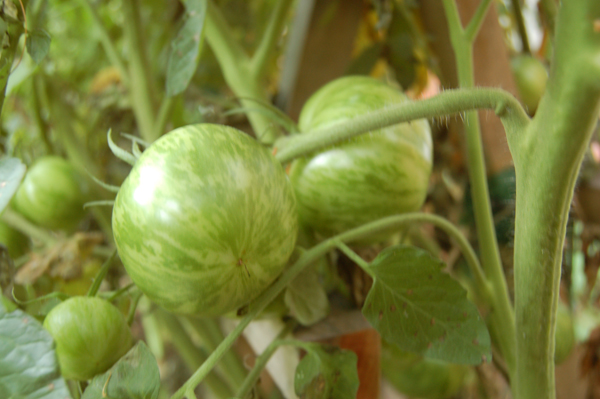
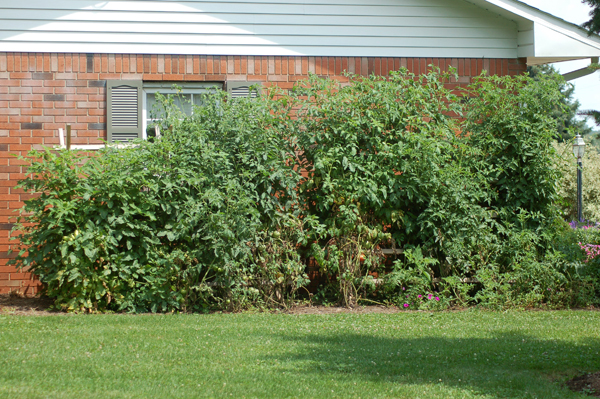
Heirloom tomatoes ripen on the vine.

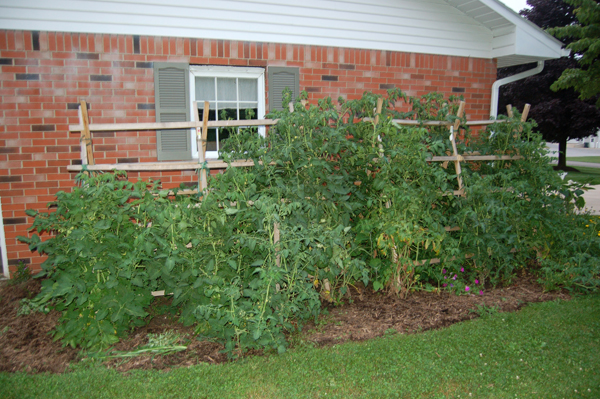
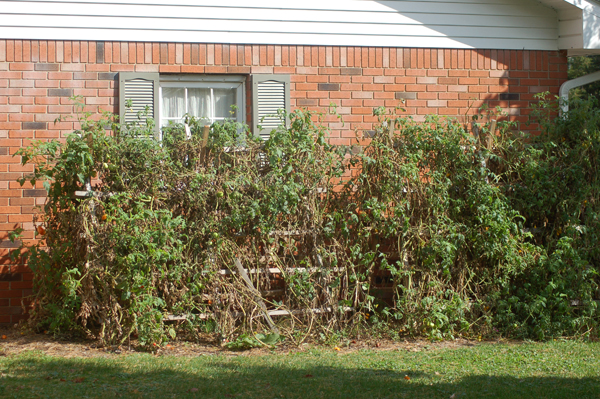
The growth of the heirloom tomato plants my wife and son planted in late May is so
prolific, the plant runners get tied daily. Their yellow, red and green-striped fruit add to the festivities.

House wren by Bruce Stambaugh
A house wren leaves the nest after feeding her brood.

The noisy tan house wrens worked frantically to satisfy their last brood of the summer. Their hungry youngsters consumed an amazing amount of worms, caterpillars and insects.

When the little ones began to greet their parents at the entrance to their birthplace, it’s nearly time for them to fly. In our case, the babies were there before church, but not when we got home. The grandsons and I found them learning to forage and hide in the brush pile under the pines near the hammock where other golden moments were made.

Monarch and swallowtail butterflies joined the goodness of the month as they enjoyed the nectar of the milkweed and wild and domestic flowers. Both the black and yellow-billed cuckoo birds announced their arrivals as the tent caterpillars hatched.

The much publicized but often under performing Perseid meteor showers still managed to send enough bright streaks though the new moon sky to extend the month’s goldenness 24/7.

Next week the full moon will strut its stuff, casting a golden glow across landscapes, rural and urban alike. Ready or not, summer vacation has yielded to elongated yellow buses and excited, golden voices of children beginning a new school year.

All things considered, August is a positively golden time of year.

Hammock fun by Bruce Stambaugh
Playing on a hammock in the cool shade serves as a diversion from the August heat and humidity.

Quaking aspen haiku

Against lazy clouds
and sapphire sky, emeralds
silently quiver.

Bruce Stambaugh
August 18, 2010

Bay Photos by Donna

Wildlife Photos From The Chesapeake Bay Region

ROAD TO NARA

Culture and Communities at the Heart Of India

K Hertzler Art

Artist and nature journalist in the Shenandoah Valley of Virginia.

Maria Vincent Robinson

Photographer Of Life and moments

Gabriele Romano

Personal Blog

Jennifer Murch

Art is the only way to run away without leaving home. -Twyla Tharp

Roadkill Crossing

Writing generated from the rural life

ANJOLI ROY

writer. teacher. podcast cohost.

Casa Alterna

El amor cruza fronteras / Love crosses borders