I feel sorry for anyone born on Feb. 29. They only get to celebrate their birthday every four years. If it is a century year like 1900, they have to wait eight years.
I haven’t known very many people in my life who were born on leap day. So it’s not like I was influenced to complain about the dubious day on their behalf.
My good wife’s grandmother, Maggie, was a leap day baby. Neva remembers turning 16 the same year her dear grandmother was 16. Indeed, Maggie had to wait eight years before she could celebrate her first birthday. She was born in 1896.
People born on Feb. 29 get cheated. Sure they have a birthday every year. But it has to be celebrated on Feb. 28 or March 1 or perhaps a day of their choosing. How would you like to consistently celebrate your birthday on a day other than the actual day?
I understand the reason for leap day. An extra day has to be added, generally every four years, to keep pace with the earth’s real speed of rotation. That fact alone reemphasizes my main point. The current calendar system is inaccurate, messed up, verhuddelt, as the Amish would say.
To make matters worse, leap days usually occur during presidential election years, except on most century years. Do we really need an additional day of negative national campaign hyperbole? The year 2000 was an exception because it was divisible by 400, which is why 1900 wasn’t a leap year.
Now that I think about it, having a leap day would be an excellent question for the candidates to debate. If you compare that suggestion to some of the idiotic comments and ideas that they have been espousing on their own, I think it fits right into the political verbal fray.
In fact, given some of the witticisms by the candidates so far, I wouldn’t be surprised if at least one of them thought leap day was a reference to a frog-jumping contest. Who could argue with that?
Officially a leap day occurs in most years that are divisible by four, like 2012. Years that are evenly divided by 100 do not contain leap day, unless they are divisible by 400, like 2000 was. See what I mean? Unless you’re a math wizard, leap day is simply confusing.
This is reason enough to eliminate leap day. If we have to follow all of these crazy exceptions to even have a Feb. 29, why bother? Why not just wait until an entire year needs to be added, and do it all at one time. It would be like an entire year of jubilee, only in reverse. I’ll be dead by then anyhow, so I wouldn’t have to deal with the ensuing consequences.
I am surprised about one thing with leap day. It hasn’t been made a national holiday. What a great way to stimulate the economy? Establish yet another card buying, gift giving holiday, especially right after the sales for Valentine’s Day and Presidents’ Day. That would put three holidays in the shortest month of the year, a marketer’s dream come true. Sorry. Ground Hog Day doesn’t count.
In all seriousness, if you were born on Feb. 29, I wish you a happy birthday. If my birthday fell on Feb. 29, which it doesn’t, I would only be 17 this year. On second thought, let’s just keep the calendar the way it is.
The sugar shack sits adjacent to the woods on Gary Miller’s farm west of Millersburg, Ohio. By Bruce Stambaugh
I had often heard about the sugar shack. A group of guys I knew, mostly from our church, had formed an informal co-op. The goal was to make and offer maple syrup, with the donated proceeds going to a scholarship program for students in rural Honduras.
My journalistic nosiness finally got the best of me, and I ventured out one chilly day when the sap was running strong. My intent was to write a story for a local weekly newspaper. What I discovered went far beyond what any feature story could represent. Here were a few good men who through sheer determination made this sweet enterprise work. They worked cooperatively out of a common desire to succeed, not out of individual or corporate profit. Indeed, there were no profits. The money collected through donations went to the scholarship program.
Tim Roth, left, and Paul Conrad stoke the fire of the sugaring evaporator system.This endeavor was borne of commitment, desire, effort, camaraderie, purpose, joy, ingenuity, and sacrifice, all with rewarding results. And to think that it all started with the landowner, Gary Miller, standing in the rain dreaming of making maple syrup. Miller never envisioned how far his idea would go.
“Three years ago,” Miller said, “I was standing in the rain under an umbrella boiling sap in an assortment of old used pans on my grill.” Miller lives on a small farm west of Millersburg, Ohio.
Miller shared his idea with his friends, and the sugar shack quickly became a reality. The structure itself was donated to Miller. A friend, Paul Conrad, had an old shed he told Miller he could have, and Miller’s sons moved it in seven different sections for him. Once on site, the building was reassembled, reusing the old lumber. Since then, its design and size has been tweaked and expanded.
That process set the tone for what was to come. Much of the equipment used by Miller and his friends has been refurbished as some part and purpose of the maple syrup operation. Paul Conrad, left, and Bobby Miller check one of the 400 taps in Gary Miller’s woods.
Indeed, when the sap is moving like it is now, so does this voluntary collection of Miller’s friends and family who assist with the project. They placed 400 taps in sugar, red and black maple trees.
“We are careful about how many taps we place in a tree,” Miller said. “We don’t want to stress them.”
Like most farming efforts, preparing for the sap harvest takes a lot of preparation, and can be an ongoing project. Recently a shed was built to store the chords of firewood needed to heat the boiling process. Of course the friends also helped split and stack the wood that fuels the fire that boils the sap on a homemade evaporator. True to form, the gregarious crew also put that together. Much of that ingenious system consists of recycled metal and other repurposed materials.
The wood stove that holds the fire that boils the sap belonged to Scott Sponsler, another friend. The stove was extended with metal from old toolboxes from a pick up truck that Miller owned. Miller had a fan rebuilt and some ductwork manufactured locally. Together they help distribute the heat generated by the wood stove. The heat evaporates the sap into syrup.
The sap enters the sugar shack from another recycled item, an old bulk tank rescued from an unused milking parlor. It is held up by a repurposed metal stand so the sap flows by gravity into a smaller holding tank inside the old wooden shed. Gary Miller explained how the sap is heated by running through a maze of troughs in order for it to become maple syrup.
From there, the sap runs into a customized sheet metal maze that allows the sap to be evaporated as it circulates up and down the four parallel troughs. After entering a second connected metal maze, the sap begins to change color. It is closer to the firebox and the pre-heated sap really begins to boil. Its darker color indicates that the moisture is being bubbled away.
Miller said that the sap isn’t officially maple syrup until its consistency is at least 66.9 degrees brix, as measured by a hydrometer. Miller said with this set up, it takes 51 gallons of sap to produce a gallon of syrup.
Miller and his friends make the syrup when the sap is running. He said warmer days and cooler nights are the best conditions to make the sap run. When the sap runs, so does this gang of close friends and family members. When the sap is running, his shack and the surrounding woods are very busy places indeed.
Scott Sponsler poured sap from the collection bucket into a 15-gallon container, which was hauled back with several others to the sugar shack via tractor.Before it is pumped into the elevated holding tank, the sap is gathered into 15-gallon containers from each tap bucket. The containers are carried on the back of a small tractor. In keeping with the pattern, the tractor was loaned, too.
All the free equipment and labor is only appropriate. Miller said the maple syrup that is produced is not for sale, although it does have a name, Smoke Pit Maple Syrup.
“This is not a commercial operation,” Miller emphasized.
Instead customers get to donate whatever they feel the syrup is worth. The money is used for an educational scholarship program in Honduras. Miller’s Sunday school class at Millersburg Mennonite Church is financially sponsoring the schooling of several children there.
Roy Miller, a retired Holmes County family physician, serves as the unofficial coordinator of activities. He even travels to Honduras several times a year and meets with the students, their parents and the local church leaders who oversee the scholarship program there.
With all that said, Gary Miller revealed the secret ingredient in the maple syrup production as far as he is concerned.
“It’s not about the syrup,” Miller said. “It’s about the fellowship.”
Indeed, laughter and kibitzing among the friends intermingle with the steam from the cooking sap in the cold, small shack. The steam and merriment waft together out into the cold air through the open doorways. The good-natured ribbing helps make the labor-intensive sugaring efforts all the sweeter.
In that initial visit, I was impressed with the care given to producing a quality product, and with the interpersonal interaction that makes this particular micro business the all around success that it is.
It was clear to me that two pure products are produced at the sugar shack. High quality maple syrup created for a great cause is the tasty finished product. Genuine, committed friendship that knows no bounds and has no earthly measure is the dividend.
Persons interested in obtaining some of the Smoke Pit Maple Syrup should contact Gary Miller at 330-763-0364. Gary Miller demonstrated how he checks the sugar content of the maple syrup using a hydrometer. This story appears in the current edition of Farming Magazine.
My wife, Neva, and I had been asked to host the dessert portion of a progressive supper for our church’s small youth group. Given her gift of hospitality, Neva quickly accepted the offer.
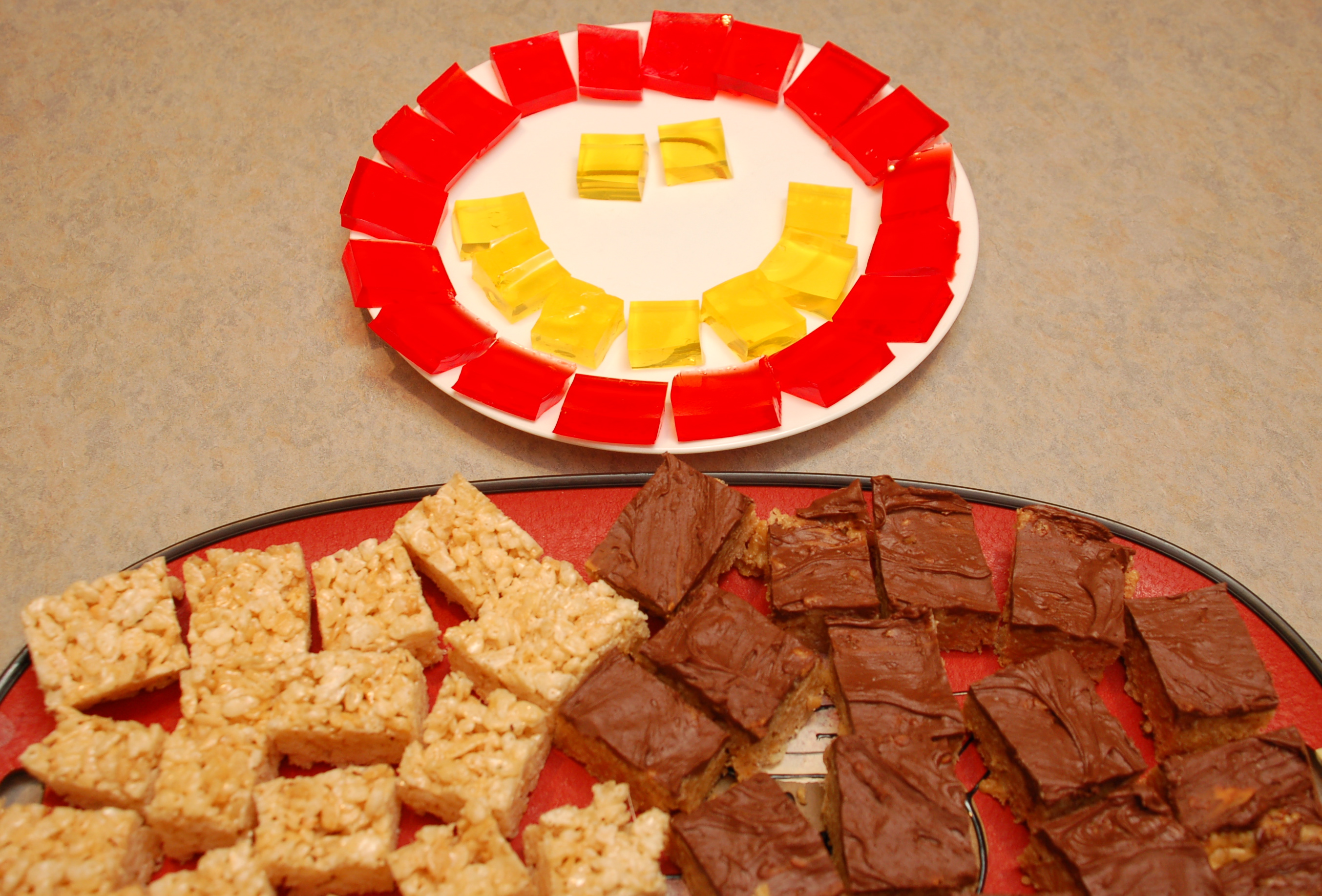
The group had been to two other homes before arriving at our place for the 1960s themed desserts. Neva made finger Jell-O, Rice Krispies bars and pistachio cake baked in an authentic bunt pan. We added some 60s era candies that I found in a local store, and had Kool Aid to drink.
We wanted to get the kids in the 60s tempo as best we could by making the house look cool, you know. Neva loves to decorate, and she did a groovy job this time. In fact, I don’t know where she came up with all the 60s stuff she displayed.
Peace signs drawn on paper plates dangled from the dining room light fixture. Party balloons, secured in a paper bag festooned with smiley faces, and a smiley face Pez dispenser adorned the dining room table.
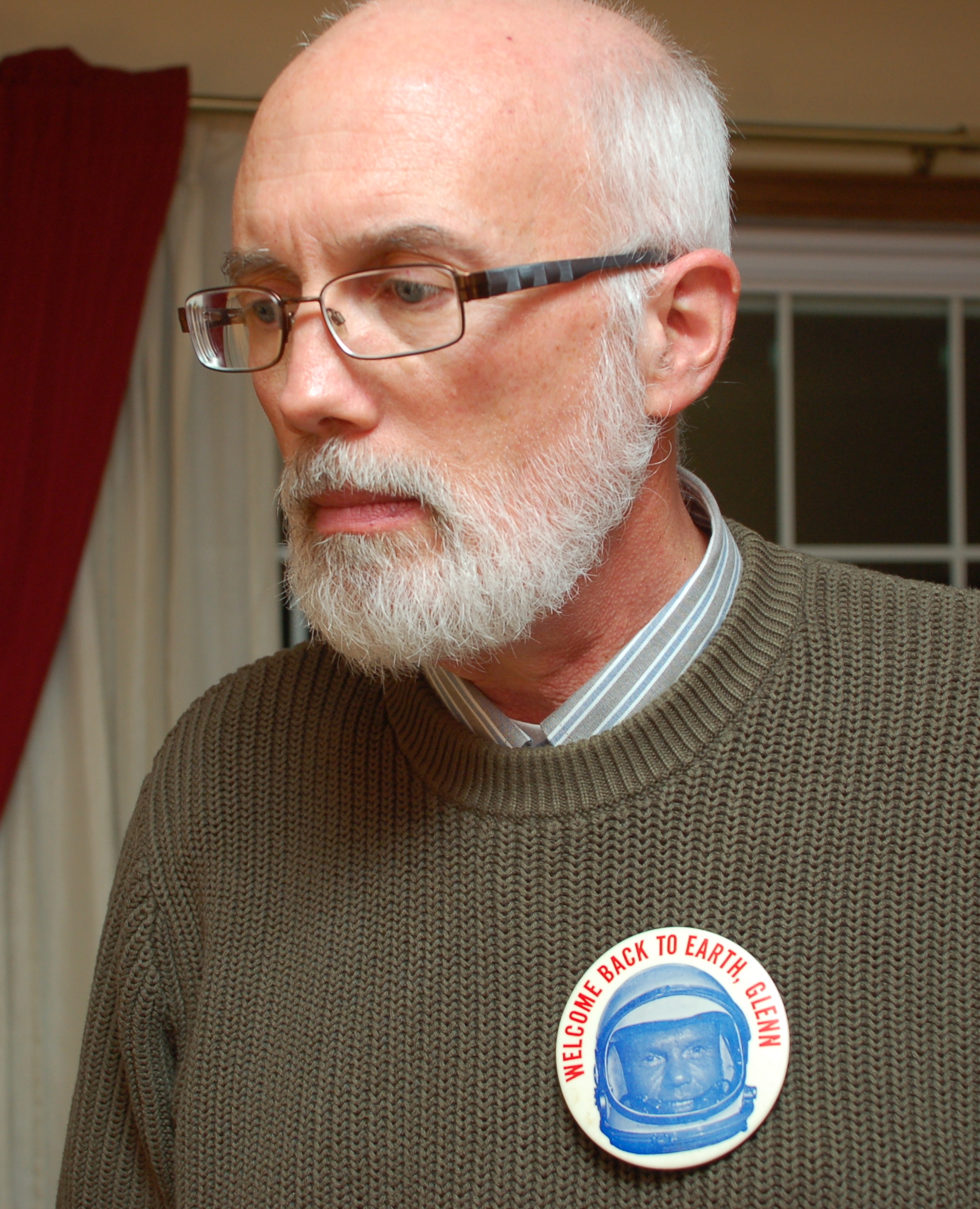
I found a magazine completely dedicated to Bobby Kennedy that I had sequestered. I also brought out an old black and white 8 x 10 photo that my late father had framed for me. It was a shot of a fellow Plain Dealer intern and myself dressed as hippies. That’s a 1969 story for another time.
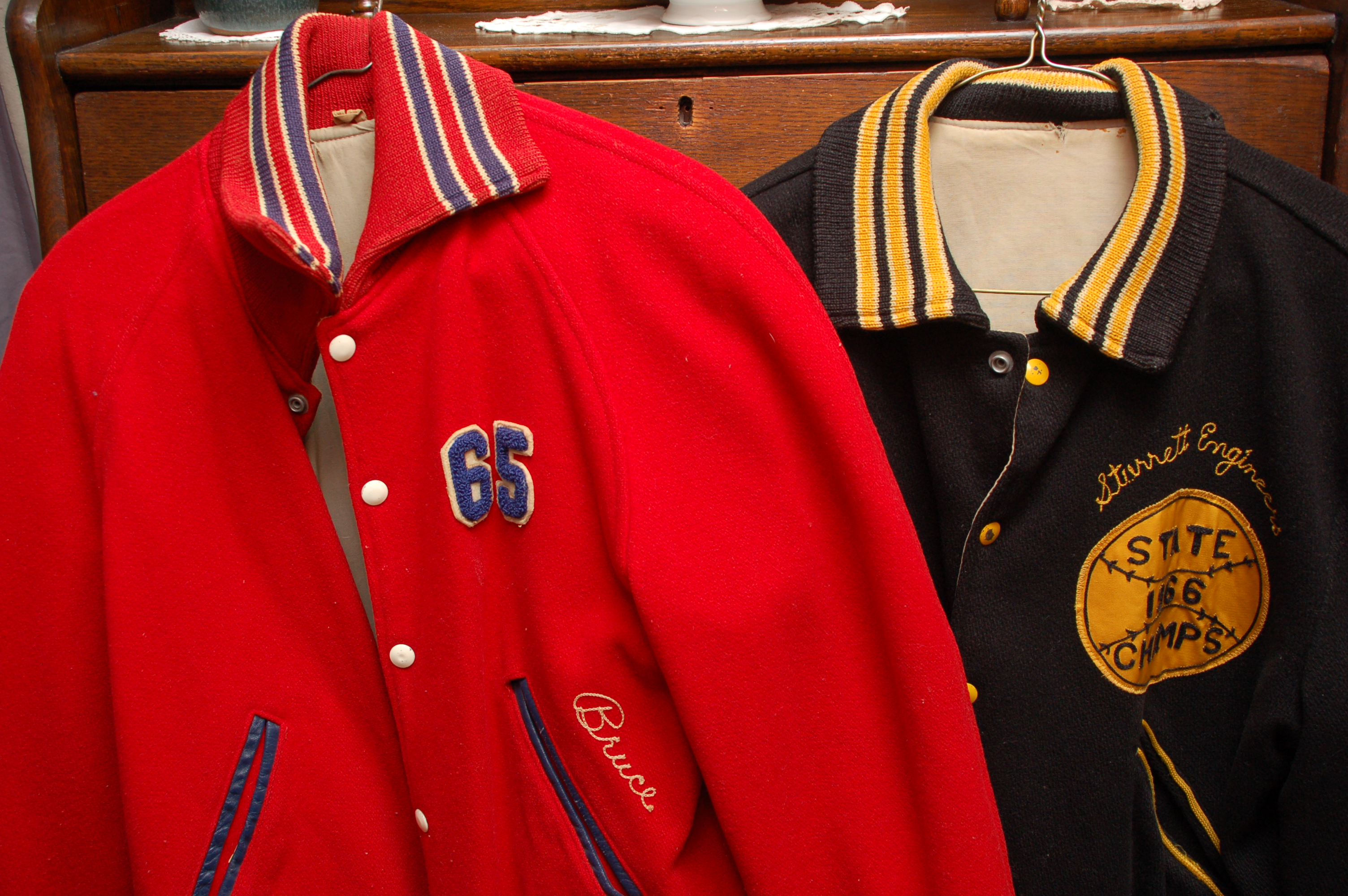
Neva hung a few clothes we had saved from the 60s, including a lacy dress and a checkered sports jacket. I also resurrected my senior year high school letter jacket. It still looked like new, while I don’t. But I can still fit into it.
Neva also exhibited a variety of purses she had from the 60s along with a few pieces of china. She also found an old dress pattern in its original package.
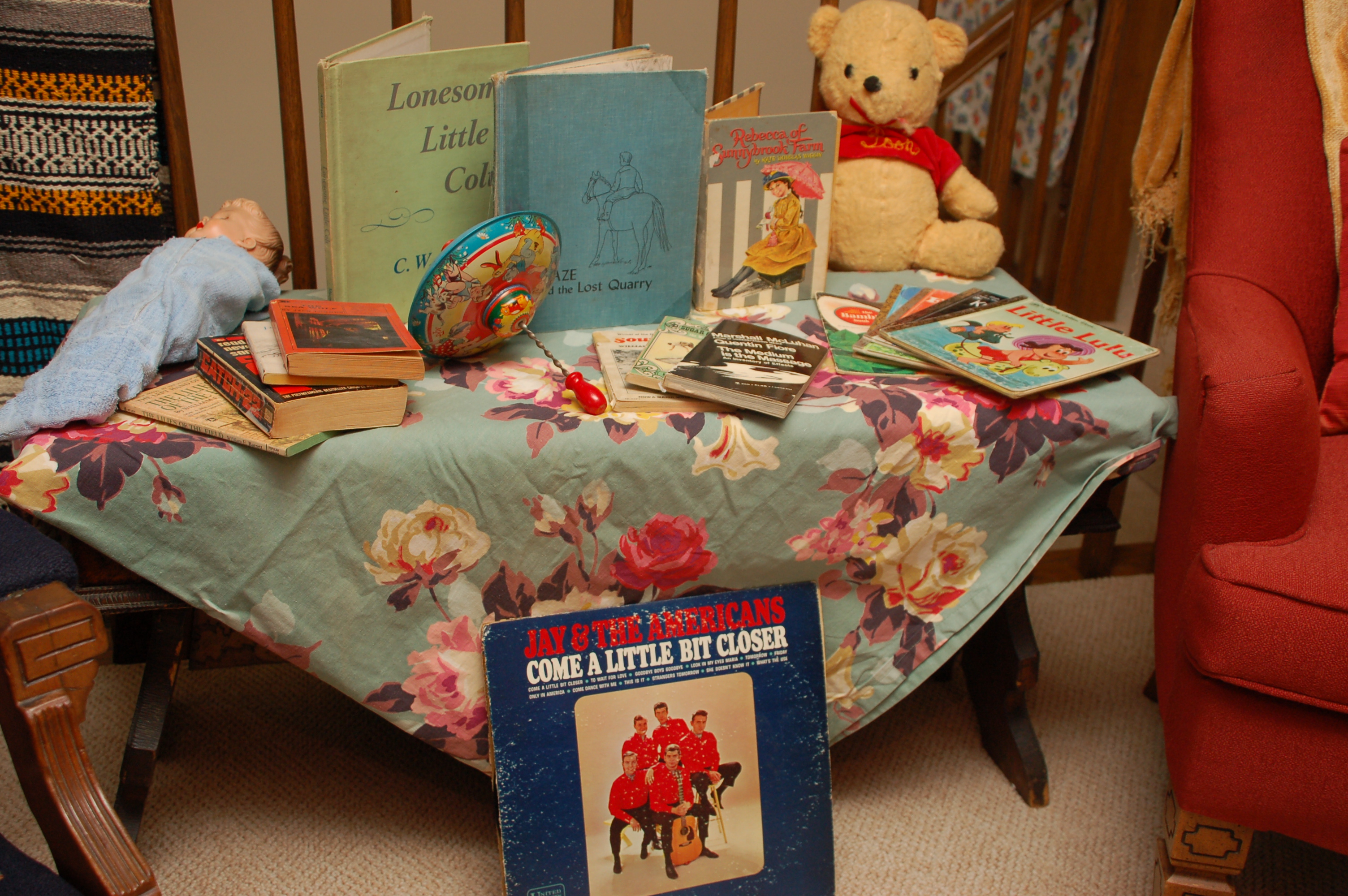
The center of attention in the living room was a treasure trove timeline of 60s items. Included were some Archie and the Gang comic books, popular children’s books from the era, a Winnie the Pooh bear, and of course a small collection of Beatles record albums. It was a shame we no longer had a record player on which to play them.
The real treat came when the 10 teenagers arrived. Most were dressed in cool clothing from the 60s obtained at thrift stores. Psychedelic T-shirts and paisley dresses and shirts were suddenly back in vogue, if only for the evening. One savvy dude somehow found a brown checked suit that perfectly fit him.
We briefly explained the reason for the dessert offerings, and the food was quickly consumed. Other Baby Boomer adults also attended to help share their growing up experiences.
It was during that time that the real spirit of the turbulent 60s was revealed. The kids seemed spellbound by the personal stories. And well they should. The 1960s were a tumultuous, passionate time of change, drama and societal conflict. Reliving those long forgotten moments seemed to energize everyone in attendance.
Of course, one of the adults, no names mentioned, went a little long. Nevertheless, the kids courteously listened to what was said, and their attire certainly helped everyone feel in the mood.
Oh, yes, I forgot to mention my skinny knit tie, white shirt, white socks, mohair sweater, and rolled up blue jeans that I wore. Other than the hippie outfit, it may have been the only other time in my life that I was considered cool. Or were they just being kind?
Peace, baby! My high school letter jacket and my late father's state championship baseball jacket. Dad coached the team.
When I asked if anyone wanted to help bring in wood for the fireplace, only one person volunteered. Our two-year old granddaughter said she wanted to help.
On went her hat, coat, mittens, and the mini-muck boots that her older brothers wore when they were her age. Maren followed me around like a miniature shadow, constantly asking questions.
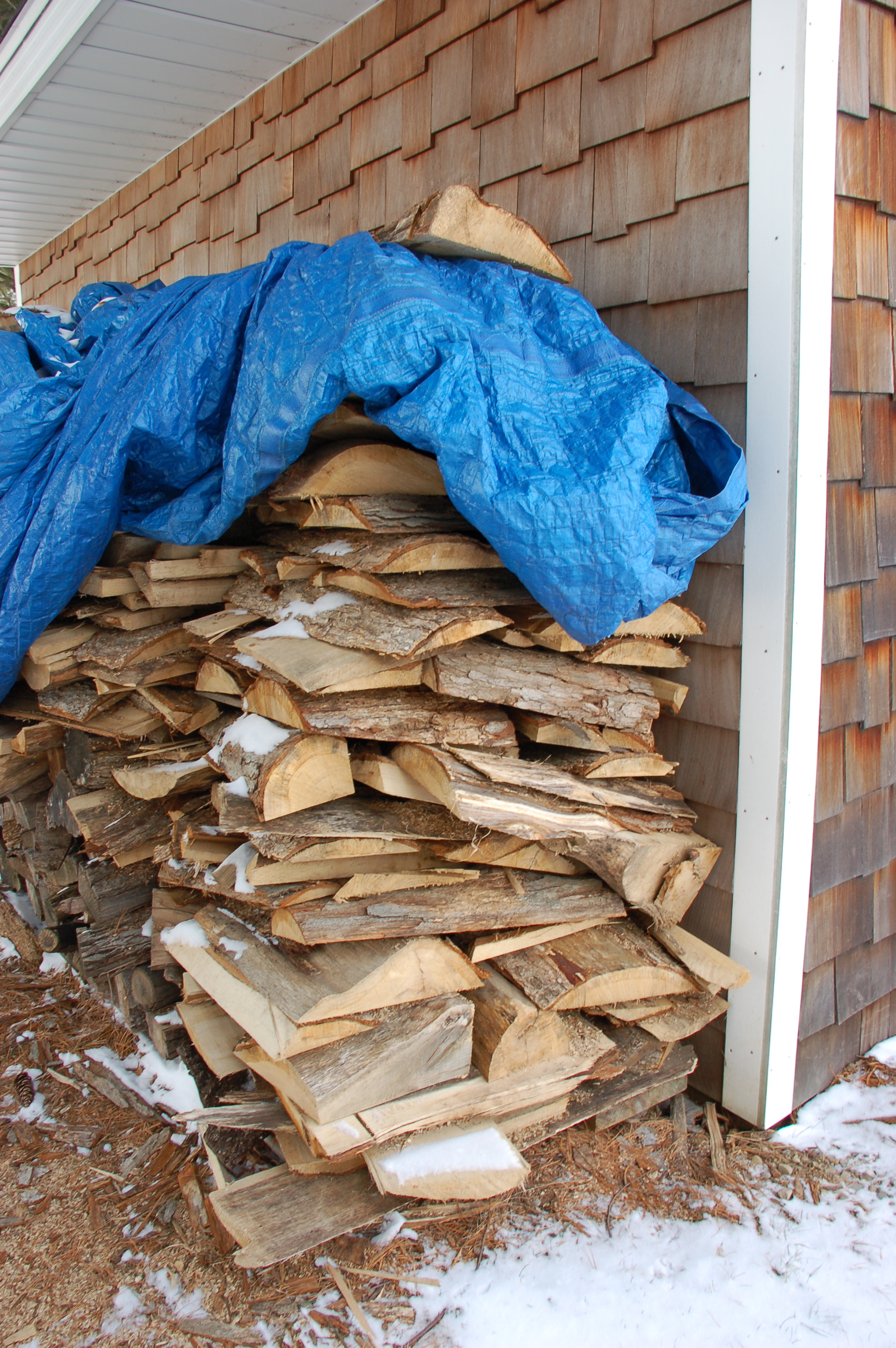
To play along, I asked questions too, like what color the blue wheelbarrow was. “Yellow,” she said without hesitation. I wheeled it behind the shed to the winter’s stacked wood supply.
I carefully tossed the split hardwood into the wheelbarrow. Of course, Maren wanted to imitate her Poppy. I handed her the kindling pieces. Now and then I gave her a weightier one, and the sharp little blonde quickly let me know that it was “too heavy.”
Maren hung in there like a trooper despite the cold. The tip of her nose turned red within minutes, quickly followed by her cheeks. She never complained, just kept helping to load and unload the wood from pile to wheelbarrow to garage. She even learned where the “little ones” went and correctly deposited them all on her own, while Poppy stacked the heavy pieces just outside the door to the family room.
Gathering wood is just one of the satisfying rituals of having a fireplace. The effort reaps more than needed wood. I enjoy the exercise, and find the aromatic discharge from the chimney invigorating as it mingles with the cold air. I even gain a certain satisfaction in watching the light smoke swirl from the top of the stubby brick chimney. Altogether it spells contentment.
Indeed, having a fireplace is really all about enjoyment. A fireplace may be inefficient. But I savor the all-inclusive ambiance of a blazing fire, its fragrance, its crackling sounds, the penetrating warmth and the simple beauty of a dancing fire.
There is nothing quite like the pure warmth of a fireplace fire to take the chill off of a frosty fall evening, to enhance the beauty of a snowbound day in Amish country, or to free you from the numbness of a damp and miserable spring day. In each situation, I sit in front of the fire until my bones are warmed.
Watching the fire flicker away in multiple colors, constantly changing shape and posture, and occasionally spraying golden sparks warms both body and soul. When family is home, like they were at the holidays, the fireplace becomes the center of activity except at mealtime, unless roasted hotdogs and toasted marshmallows are on the menu.
I think I got this affection for fireplaces from my father. On rare occasion, he would light a fire in the living room fireplace at home. When that happened, it was truly a special family time.
Each home we have owned has had a fireplace for all of the aforementioned reasons. Even our cottage, which my parents built, has two fireplaces, one on the main floor, and one in the walk out basement.
At home I buy my firewood each year, usually from a local farmer. It provides his family with extra income, and my family and me with immeasurable joy. Since the cottage is built in an expansive woods, we gather and split dead wood for our fireplace.
We often have a firewood frolic to get the job done there. The neighbor volunteers his hydraulic splitter. I round up some young, willing helper who enjoys showing off his youthful prowess to lift the heavy logs. My expertise is stacking the split wood just so.
Having a fireplace may be considered a luxury in some corners, an inefficient heating effort in others. I take a different view. Added altogether, the affable socialization, the exhilarating labor, the fire’s soothing pleasantries, yield rewarding results.
If your granddaughter helps bring in the wood, it’s all the better.
When I moved to Holmes County, Ohio more than four decades ago, one of my initial purchases was a county road map. I wanted to learn my way around the ridges, valleys and hamlets of the area.
I drove both the highways and back roads in order to get to know the topography and citizenry of this place. Geography buff that I am, landscape variations between the glaciated and the unglaciated portions of the county greatly intrigued me.
I marveled equally at the steep wooded hills that defined the broad Killbuck Valley, and the rolling farmlands and rivulets in the county’s northern section. The common elements of picturesque scenery and practical people reoccurred despite the demographic differences.
All these years later I still drive the roads, still learn, still enjoy my bucolic and human encounters. I think about that often, especially when I inspect the roads for which I am responsible as a township trustee.
My main objective is to ensure safe road conditions, and check for potential problems like plugged culverts, leaning trees and slippery roads. I do those duties, but the pastoral vistas and the genial people I encounter along the way can easily distract me. I don’t mind in the least. The diversity of the countryside and characters in my township are truly remarkable.
My regular route takes me up hill and down vale, through densely wooded ravines with sharply slanting walls that rise abruptly on both sides. In several places road and stream are pinched with just enough room to navigate side-by-side.
In minutes, I can motor from forested valley to high, rolling fertile fields that surround coffin red bank barns and white farmhouses. Various shapes and sizes of purposeful farm buildings cluster around the intentionally unadorned agrarian castles.
It was inevitable that over the years the views would be altered. With the population regularly expanding and the land not, cottage businesses and manufacturing buildings sprouted up out of necessity. Many are Amish run and involve some aspect of the lumber industry. Other shops create products specifically for the benefit of the Amish lifestyle, like buggy shops and farriers.
The commerce is nice. The views and residents are better.
Near one of my favorite hilltops, the land falls away gradually, cascading toward the Killbuck lowlands. It is a sacred place for me, and yet it is at this precise spot where a new Amish country murder mystery novel is set. When I read about the book’s release, I wondered if the writer had ever met the good folks on the homestead he had impugned.
Last winter, during a fierce snowstorm, a semi-tractor trailer truck got stuck on the slippery incline in front of this very farmstead. The kind farmer cranked up his bulldozer, puttered out the long lane in blinding snow and pushed the teamster and his rig over the hill and on his way.
When it comes to beauty, seasons are really insignificant as I traverse my lovely township. Refreshing summer breezes flap wash lines loaded with pastel clothing. Gaggles of youth skate and play on frozen ponds. A Golden Eagle roosts on a chubby fence post. Leafy rainbows of the mixed hardwoods compete with those in post-storm skies.
Then, too, rounds from paintball guns plaster stop signs, runaway streams wash away road banks, and citizens rankle at impassible roads. Fear not. Repairs can be made, relationships mended.
Peace is restored to my Camelot, at least until my next dreamy drive.
Last March, I was honored to receive an award I really didn’t know what to do with. I had only been blogging for three months, and I wasn’t sure if this was legitimate or the blogger’s version of a chain letter.
Aaron Graham was nice enough to bestow the Versatile Blogger Award on me after he read my Questions post. And for my more cynical readers, I have never met nor do I know Aaron. He adequately described the award and why I received it, along with a few others. In accepting this coveted award, all I had to do was write a post thanking Aaron. I also had to proclaim seven little known facts about myself, which would have been a piece of cake since I am so little known to start with. And I had to hand out the same award to up to 15 other bloggers. In my naiveté, I wasn’t sure I knew 15 other bloggers. Sure, I had more people than that visit my blog, and several posted comments. I could have easily gone back through those comments, clicked on their blog and christened the 15 I felt most deserving as fellow Versatile Bloggers. But I didn’t.
You see one of my many faults, and my kind wife will attest that it is only one, is that I procrastinate. I wrote about that, too, once. But that was long before I starting blogging. Still, the days turned into weeks, the weeks into months, and here we are in 2012 and I still haven’t passed on the award the way I should have. Until now.
What spurred me on? One of my blogging friends, Mikalee Byerman, was awarded the Versatile Blogger award after her hysterical Jesus is my Trash man post. When I saw that, I knew the award was valuable and for real. In fact, Mikalee was on my short list of bloggers to nominate.
So thanks to Aaron, who by now has probably forgotten me, and to the nice lady from Bellingham, Washington who crowned Mikalee, I am finally accepting this award, revealing seven startling insignificant facts about my life and naming 15 very deserving bloggers for the same award.
And the nominations are:
Bob Zeller for his persistent and informative posts about his two great loves, besides his wife, photography and birds. His shots are amazing.
Patricia Koelle, who shares some exquisite shots from her home in Germany.
Heather who shares a love of animals and words, not only with me, but also with her long list of devoted readers. http://becomingcliche.wordpress.com/.
I think you’ll find Carrie Craig a most appreciative person.
Judy at Northern Narratives beautifully chronicles the days through her lens.
Though focusing on poetry, the subjects and style of Kvenna Rad’s poems are indeed versatile and deserving of this award. http://kvennarad.wordpress.com/
A military spouse from Texas has an important and timely message to follow on http://sottmp.com/.
And last but not least, any 16-year old who titles his blog, Learning to be Wrong, has to be right. Way to go, Justin. http://learningtobewrong.wordpress.com/.
As for my seven personal revelations, they’re not nearly as revealing or as exciting as the bloggers I’ve listed. But to fulfill the award’s requirement, here there are:
1. I can’t swim.
2. I’m afraid of the water.
3. I almost drowned when I was two.
4. I only take showers (See a pattern developing?)
5. I have never water-skied.
6. I used to have long, blond, curly hair until the seventh grade.
7. I attended the Cleveland Browns’ last World Championship (now hyper-marketed as the Super Bowl) victory, a 27-0 trouncing of the highly favored Baltimore Colts in 1964. Of course since then the Colts moved to Indianapolis, and the Browns moved to Baltimore, thanks to Art Model. The good folks of Cleveland sued to get their name back and won. Unfortunately, the Ravens, really the exiled Browns, went on to win a Super Bowl so Model could be buried in his camel’s hair overcoat and a championship ring on his finger. Or was he already? I can’t remember. I haven’t followed pro football since Model moved the team. I’d rather go swimming.
Well, folks, that’s the best I can do. My procrastination has finally been overcome by guilt, and the Versatile Blogger Awards have been duly handed out. Bring on the Oscars.
I had the grandiose idea to post photos I had taken in 2011 in four categories, people, floral and fauna, scenery and weather. As I sorted through the nearly 4,000 imagines I had taken this year, I quickly realized that the task was too daunting, especially given the limited time I had.
Instead, I chose to select a picture for each month of the year. Most were taken near my home near Millersburg in Ohio’s Amish country. Others were shot while on vacation or out of our area. What I assembled turned out to be an eclectic collection that ends up serving both as a through the lens summary of my year and a representation of each of the original categories.
Here, then, are my pictures of the month for 2011.
January
Bird lover that I am, I enjoy feeding and photographing birds. This female American Goldfinch posed nicely for me on a porch post while waiting for an opening at a feeder.
February
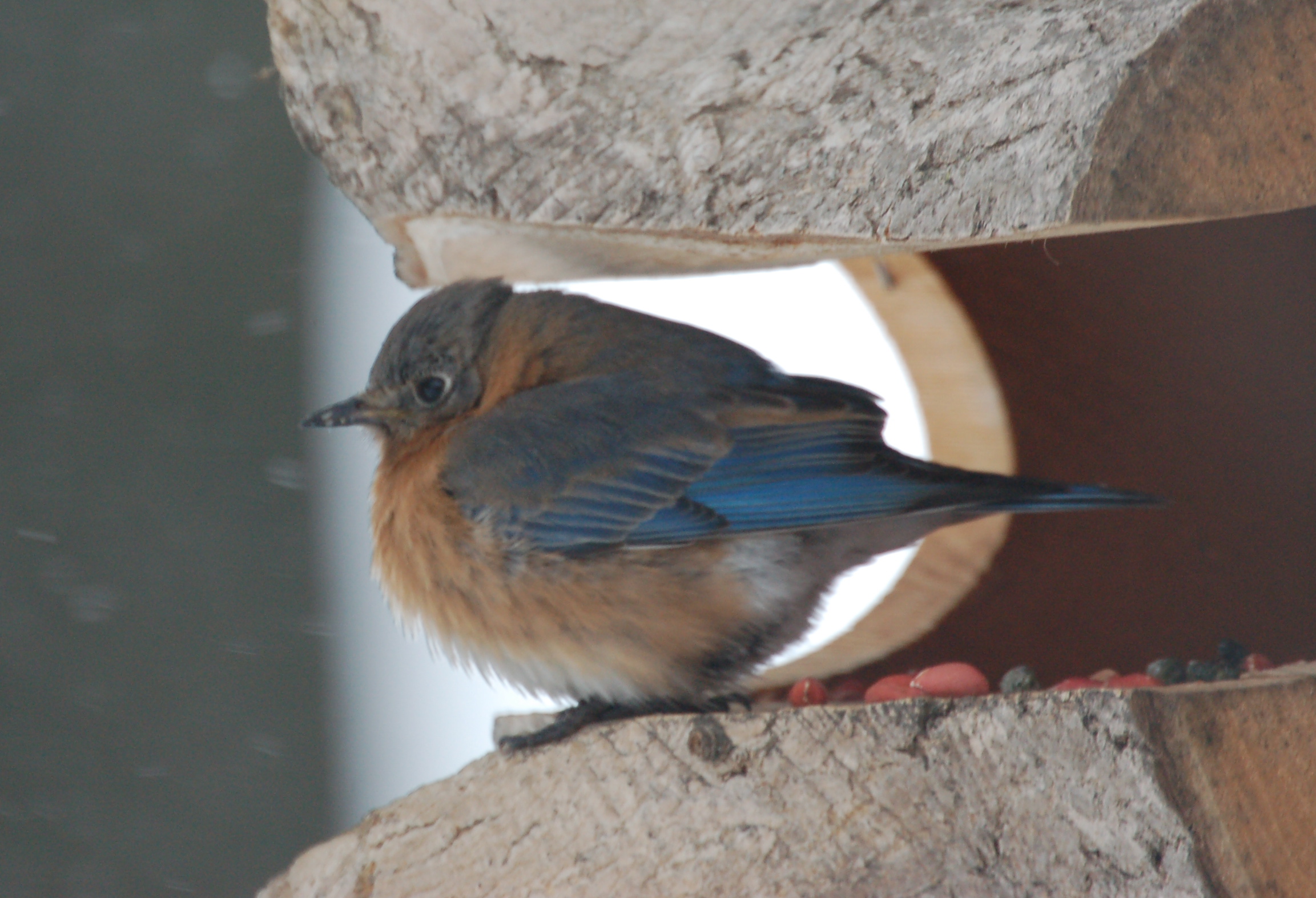
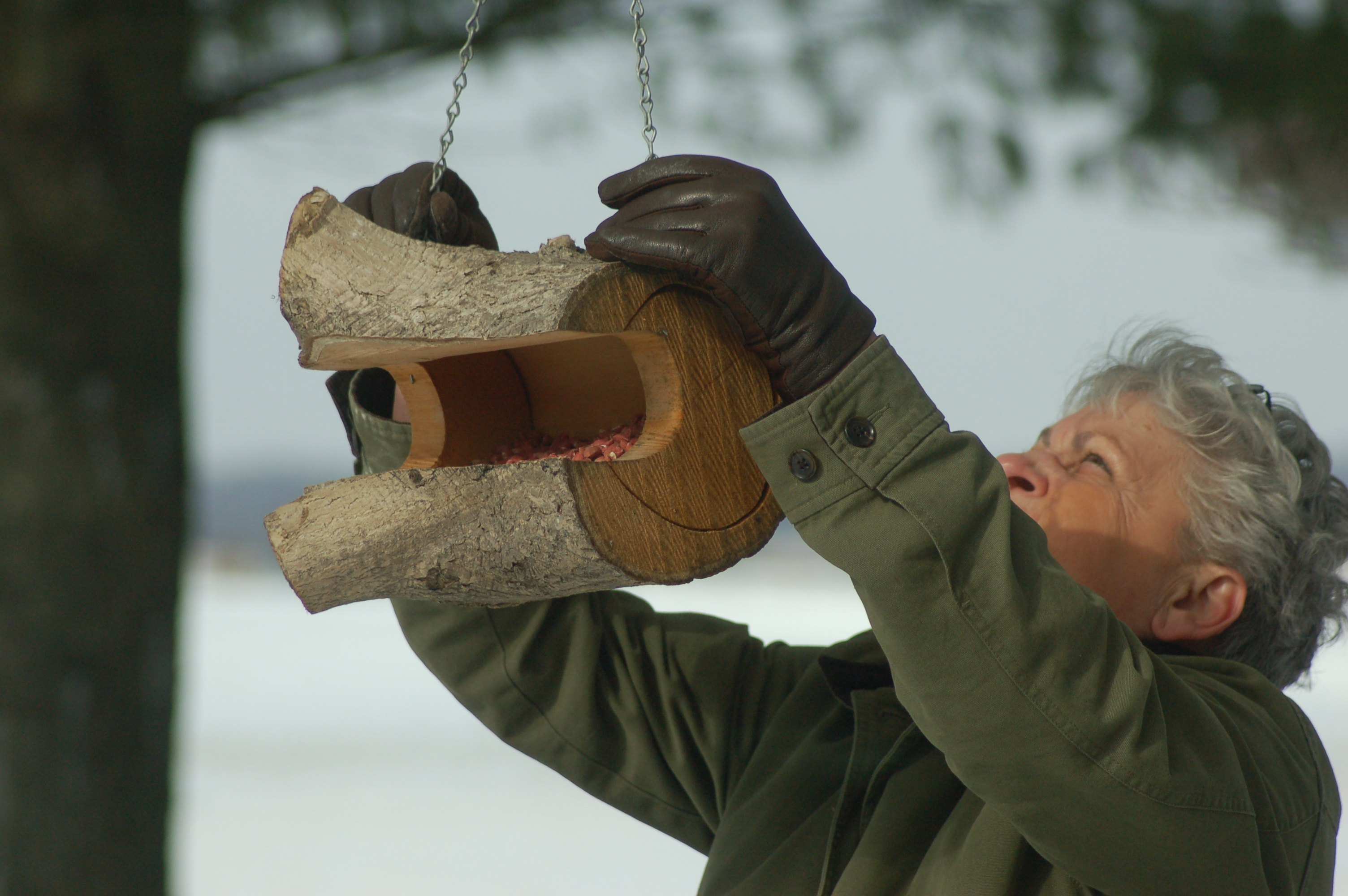
Though this shot is of another bird, this chilly female Eastern Bluebird served as model for both the birds that I love and the weather that I watch. With the stinging, horizontally blowing snow on a late February day, she sought food and shelter and found both in the hollowed out log peanut feeder that hung on our back porch.
March
I chose this shot as a symbol of how the year unfolded. Taken outside a café in downtown Charlottesville, Virginia, I couldn’t help notice the irony of the dark gray shadow of the white window lettering on the back of the chair inside the shop. The rest of the picture is busy and blurred with multiple reflections, much like my 2011 life experience.
April
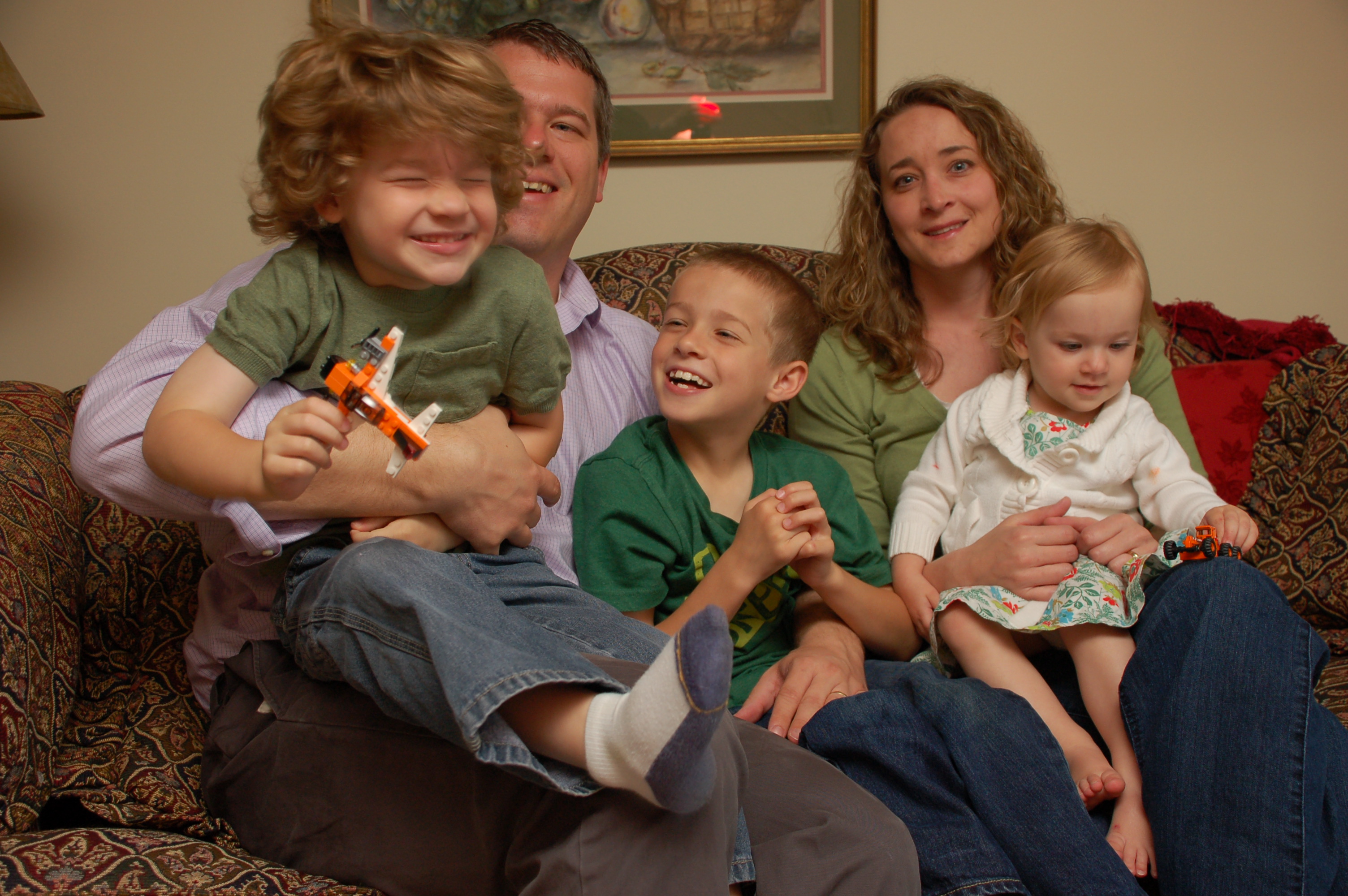
Inscribed on my grandfather Stambaugh’s tombstone is the simple yet profound phrase, “He liked people.” Well, so do I, especially family. Whenever family gathers, like my daughter’s family did at Easter with us, we try to get a family photo. But with young children, getting a perfect picture is a challenge. I thought this imperfect one to perfectly represent that point. The middle child, the long-haired lefty on the left, distains set up shots about as much as me. His older brother enjoyed Davis’ tantrum while the boys’ father tried to settle number two. The granddaughter ignored the silliness and played with a toy, while our photogenic daughter stayed focused on the camera as best she could.
May
Yep, another bird picture. It wasn’t the subject matter as much as the color that made this the May pick. Plus, it’s a rarity to have a male Baltimore Oriole and a male Red-headed Woodpecker on a suet feeder at exactly the same time. Fact is, neither seemed to mind the other since they continued to feed for several minutes.
June
June was a beautiful month, save the occasional severe weather. After a long, chilly, wet spring, June’s warmth and sun brought out beautiful flowers and insects, like these Sweet Williams and this Tiger Swallow-tail butterfly.
July
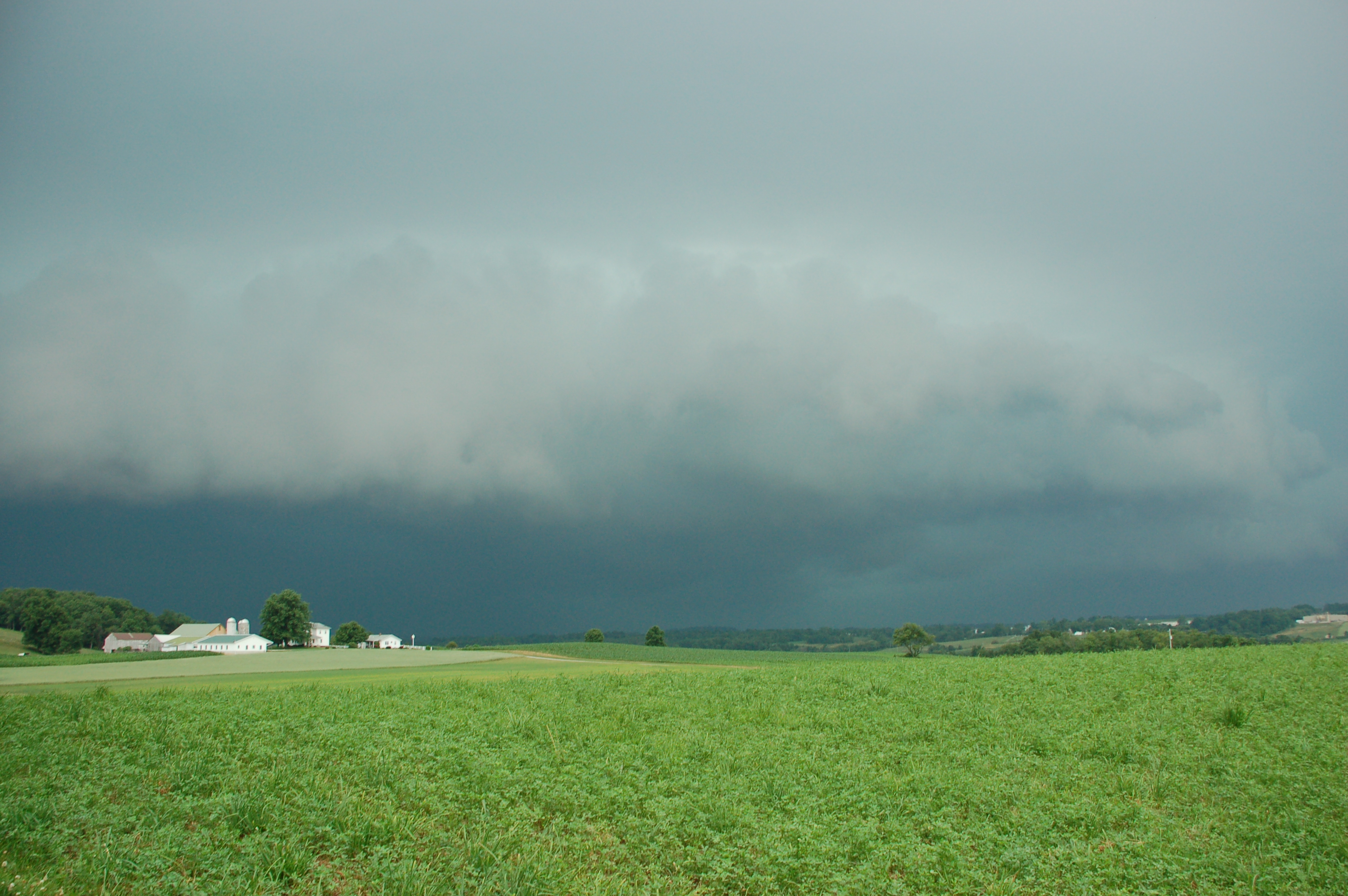
I felt this picture embodied the year we had in northeast Ohio as much as any photo I shot. Precipitation records were broken throughout the state in 2011. Severe thunderstorms, like this one with its foretelling shelf cloud, pelted northern Ohio all spring and well into the fall. Flooding, damaging tornadoes and microbursts, hail and blinding snowstorms were all a part of the year’s complex weather.
August
Notorious as a hot, humid and often dry month, August fooled us this year. As lovely as June was, August was even nicer. I thought this shot of my Amish neighbor cutting golden oats between lush alfalfa and emerald field corn best represented the month’s congeniality.
September
Like millions of other global citizens, September 11 is a special day for me. Mostly out of the desire for peace, I consider this day personally sacred. I tend to use the day for reflection and prayer. I thought the sunset on the 10th anniversary needed no words of explanation as to why it was September’s choice.
October
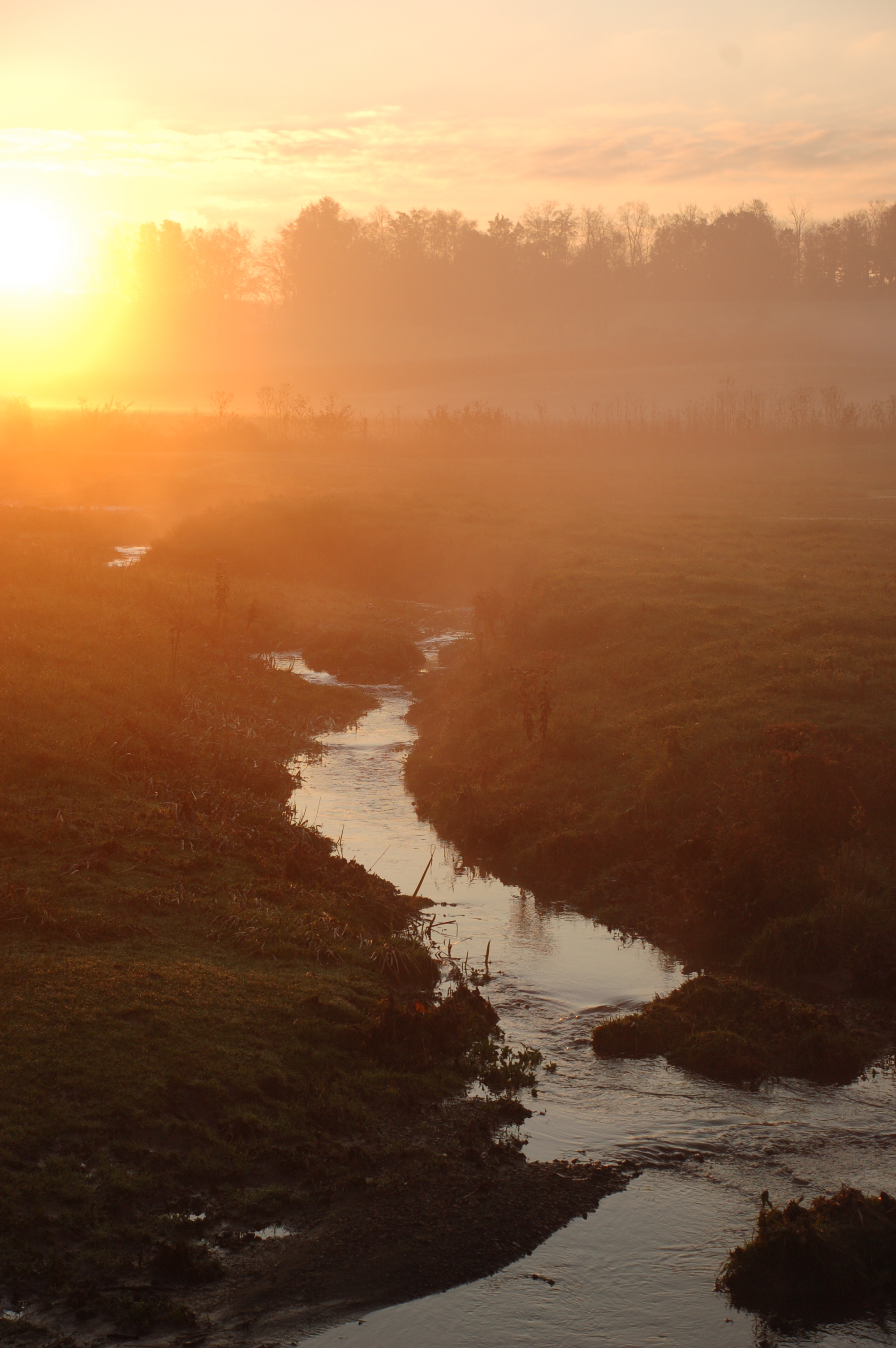
Every photographer knows when he or she has taken the shot. On a foggy fall morning, I was fortunate enough to capture this shot two miles east of our home. I still smile when I see it.
November
Our church community is an important ingredient in my life. On the first Saturday in November, Millersburg Mennonite Church held a benefit auction for two couples in our congregation who either have adopted or are in the process of adopting children. Of course, the cost of that process is high. All the items in the auction were donated. Needless to say, the auction was an all-around success.
December
We began this venture with a bird. I figured we might as well end it that way, too, especially when this male Eastern Bluebird came calling at the sunflower heart feeder and basked in the Christmas Day afternoon sun.
People, floral and fauna, scenery and weather all play important parts in my life. I feel fortunate to be able to regularly photograph shots representing each category. If I just happen to stumble upon some scene, bird, flowers, cloud or person that requires that I shoot a shot, I consider myself a happy and blessed person.
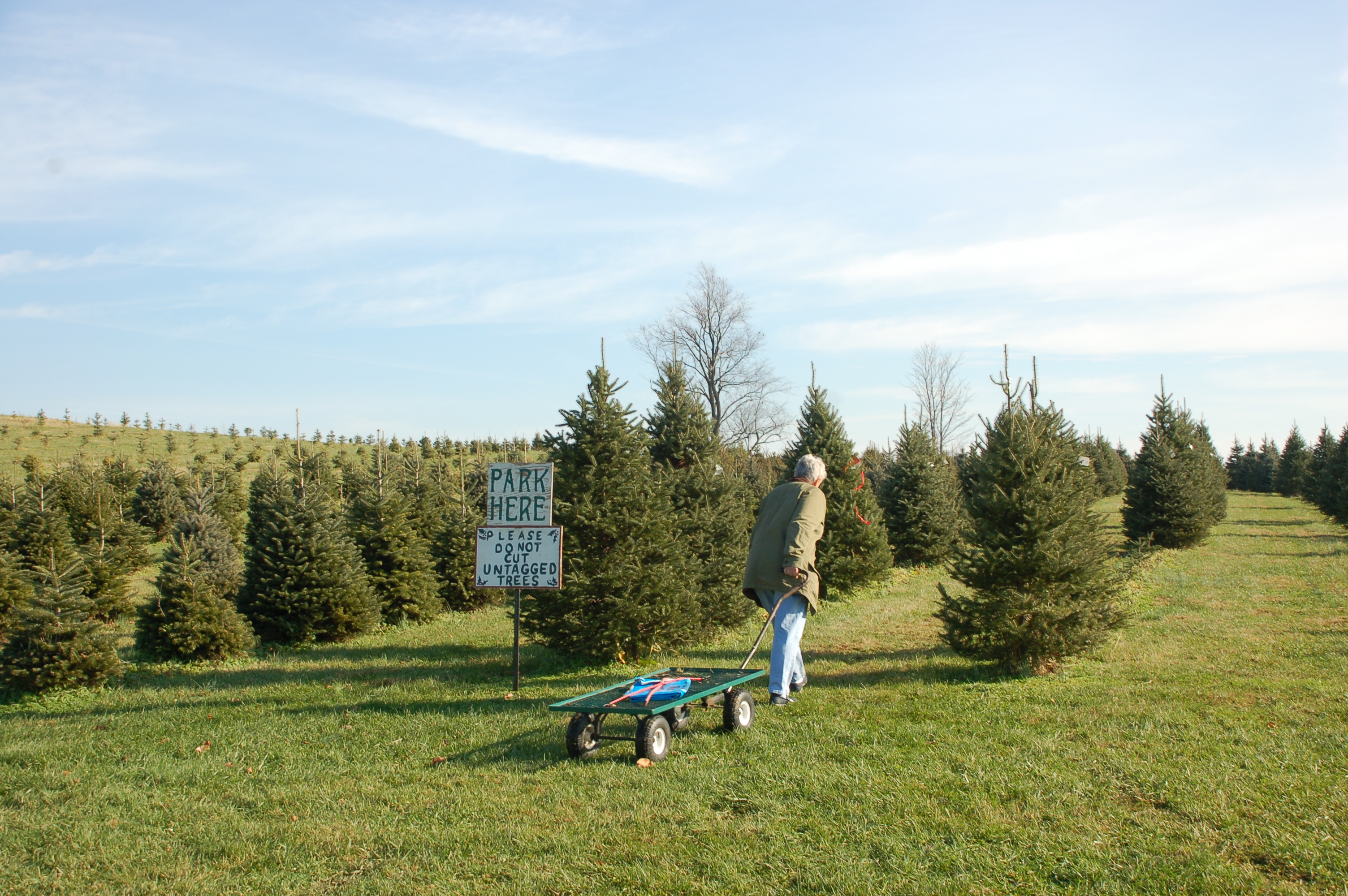
My wife, Neva, headed out in search of the perfect Christmas tree. By Bruce Stambaugh
It wouldn’t be Christmas without a Christmas tree.
I realize an evergreen wasn’t part of the original Nativity setting. Nevertheless, having a decorated tree is a must for our family Christmas.
By tree, I mean a real, live evergreen. Nothing less will do. An artificial tree is beyond the pale of consideration.
We are fortunate to live where we have easy access to purchasing trees right from a tree farm. In fact, we most often select and cut our own.
Fortunately, my good wife has an equal inherent affection for acquiring, decorating and displaying Christmas trees. Each of our families took special efforts to secure just the right tree. Our fathers were instrumental in establishing that tradition.
My father often piled his five children into the car on a holiday expedition to choose the perfect tree. Perhaps Dad thought if we helped select the tree and drag it back to the car, the fussing about the tree’s quality was greatly diminished if a bare spot or crooked trunk were discovered once we got it up.
The tree had to be proportionate to the space it would occupy, which was usually in the living room. It also had to be either fresh cut or a balled tree that could be planted after the holidays had concluded.
My wife and I repeated the holiday tree trek tradition with our own children. No tree was chosen without consensus. Certain anticipation, exuberance and satisfaction filled the collective process.
Since our home’s property is already sufficiently populated with evergreens and deciduous trees, we generally cut our tree. That’s what my wife and I did again this year.
On a sunny Saturday morning earlier this month, we meandered along the scenic drive across rolling hills and through pastoral valleys south into the next county. At the Christmas tree farm, high on an open, breezy ridge, where Native Americans once hunted and traversed through old growth forests, our search didn’t take long. We found the Frazier fir we wanted within minutes.
Neva held the beauty while I made quick order of the trunk with my trusty tree saw. Green person that I am, the tree gets recycled as temporary bird shelter near the feeders once the holidays are concluded.
It’s a joy to inhale the marvelous fragrance of the conifer as we set it up in front of the living room windows. The vibrant needles, deep green on top, blue green beneath, are supple and showy. The pleasing symmetry and the piney smell are additional benefits to having a live tree.
Decorating the tree is also family tradition for both my wife and I, though the process varies from year to year. We tend to trim the evergreen modestly, out of reverence for its natural beauty. No garland or tinsel can be found on our tree.
The strings of mini-white lights, symbolizing the stars in that Bethlehem night sky, are first to grace the tree. Colorful ornaments of various sizes and shapes are aesthetically hung, dangling on the tender branches. An unassuming cloth angel, older than our marriage and gifted to my wife by a student, traditionally tops the tree.
It is only fitting that we have a live Christmas tree. Like the timeless Yuletide story itself, the evergreen adds a vernal blessing to an already blessed season.
This hasn’t been the healthiest year of my life. It began in January with bronchitis that turned into pneumonia and has ended with recuperation from a second surgery.
In between, of course, came the confirmation of prostate cancer. I had to endure uncomfortable tests to determine both its presence and infiltration into my body. Fortunately, the cancer was caught early, and removed without major complications. My good wife braved the cold winter elements to fill the bird feeders while I was sick.
I chose the robotic or da Vinci surgery to get rid of the cancer as opposed to the regular radical surgery. The da Vinci was proven to be less intrusive, cause less pain, have less blood loss, be more exact in saving the bundle of nerves that control men’s precious plumbing, and have a quicker recovery.
I was more than glad I went that route. Of course, like anyone else facing surgery, especially surgery for cancer, I ran the full gamut of emotions that ranged from anger to fear to doubt to denial. Still, I wanted that cancer out of my body. My good doctor expertly did just that.
After the surgery, I knew I had to behave and follow the instructions religiously. With the aid of my wonderful wife, I did my best to get my life as close to being back to normal as possible.
My recovery was progressing along nicely until I had an unexpected sidetrack, which led to my second surgery. Repairing a hernia certainly isn’t life threatening, but it did set me back considerably in my initial rehabilitation from my May surgery. My grandchildren did their best to keep me smiling.
The second surgery was also successful, and once again my recovery has gone well. I still have some lifting limitations that I tried unsuccessfully to get the doctor to extend for six years.
All that being said, I tried to keep my focus on others. Clearly, many, many people in this socially connected world of ours have had or do have it much worse off than me. The last thing I wanted was to feel sorry for myself. But I did. I’m a man. What would you expect? My mother celebrated her 90th birthday in June.
My wife made sure my self-pity didn’t last long. Thankful to be alive and alert, I worked around my physical limitations as best I could by trying to focus on the circumstances of others. There are lots of hurting people out there who have it much worse than me. Friends, relatives and even friends of friends are going through unthinkable miseries.
But think of them I must. To be down and out, sick or disabled through some accident or illness is bad enough. To be that way during the approaching holidays makes it all the harder. I try to visit and pray and do whatever I can to help. They did that for me. It’s the least I can do for them. Three prostate cancer survivors, Kim Kellogg, Randy Murray and me.
I greatly appreciated the kindnesses shown to me. I feel obliged to return the favor wherever and whenever I can.
Chances to help unexpectedly present themselves. The key to being helpful is recognizing when those opportunities arise, and responding accordingly.
Being a survivor, I hope I never forget that that’s exactly what I need to do. Respond where and when I can, even if it’s just listening and holding a hand. Having company in times of personal distress is a mighty gift that needs no unwrapping.
This has been an unhealthy year for me. But I’m here. I made it, grateful to be alive and determined to help those in need, even if it is nothing more than offering a smile.
Deer season is at hand. It couldn’t come soon enough for avid deer slayers. Thousands around the state will be out in force trying their best to cull the herds of white-tails that roam all across Ohio.
I won’t be one of them. I’m not against hunting, mind you. I would just rather shoot deer with my camera instead of a gun. Besides, my family and I have bagged our share of Bambies the expensive way, with our vehicles.
As a young boy, I went hunting often with my outdoor sportsman father. Squirrel hunting was my favorite. I especially enjoyed a rolling farm far from our suburban home.
I loved the slow, quiet walk among the pastured hardwoods. An amenable creek, really the headwaters of a major river in eastern Ohio, meandered through the giant beeches, oaks, maples, walnuts and wild cherries.
Holsteins grazed the natural grasses that grew beneath the impressive stand of tall trees. It made for easy walking and great visibility. My father and I could be distantly separated and still stay in eyesight of one another.
I shot rabbits and pheasants, too. But those were found more in open, overgrown fields, thickets and fencerows than in the woods. It was among the graceful trees where I felt most comfortable. Even in a gentle breeze, their creaking limbs spoke to me. I could dream and hunt simultaneously.
Dad never invited me along to deer hunt. He probably sensed my romanticizing or lollygagging while on the prowl. Lord knows there’s no room for either when driving for deer. Dad was too antsy to occupy a deer stand.
I always said that the deer were safe as long as Dad was after them. In all the years he hunted, I think he only ever shot two, and one was a fluke. Dad told that story like a Dickens novel.
He was in southeast Ohio where the hills are high and the valleys steep, and the landscape was thickly populated with mixed, second growth hardwoods. Occasional meadows broke the tree monopoly.
A young buck in the woods.Dad had been tracking a deer for a while and finally spotted a big buck across the valley, loping up the opposite hillside. Dad took aim with his trusty 20-gauge and fired just as the buck leaped over a fence.
Dad said he saw the deer drop. He hustled down the hill, crossed a small stream and lumbered up the other slope. When he reached the fencerow at the spot where he had shot, Dad leaned over the vine-infested barrier and got a shock. There was a dead deer all right; only it was a doe, not the buck.
Of course Dad took a lot of ribbing from his hunting buddies. But he always insisted that he had shot at a buck. All he could figure was that the doe was lying out of view beyond the fence. His slug must have missed the buck and hit the doe.
Dad loved to tell the “I shot at a buck and hit a doe” story time and again. I had no reason to doubt his word whatsoever. I saw the joy that it brought him as he laughed through the details that never changed.
I don’t have to go hunting to enjoy deer season. I’m satisfied to recall my father’s true tall tale. It makes me as happy as if I had shot a 12-point buck myself. Or was it a doe in disguise?
 People born on Feb. 29 get cheated. Sure they have a birthday every year. But it has to be celebrated on Feb. 28 or March 1 or perhaps a day of their choosing. How would you like to consistently celebrate your birthday on a day other than the actual day?
  Now that I think about it, having a leap day would be an excellent question for the candidates to debate. If you compare that suggestion to some of the idiotic comments and ideas that they have been espousing on their own, I think it fits right into the political verbal fray.
 This is reason enough to eliminate leap day. If we have to follow all of these crazy exceptions to even have a Feb. 29, why bother? Why not just wait until an entire year needs to be added, and do it all at one time. It would be like an entire year of jubilee, only in reverse. I’ll be dead by then anyhow, so I wouldn’t have to deal with the ensuing consequences.




















 Roadkill Crossing
You must be logged in to post a comment.