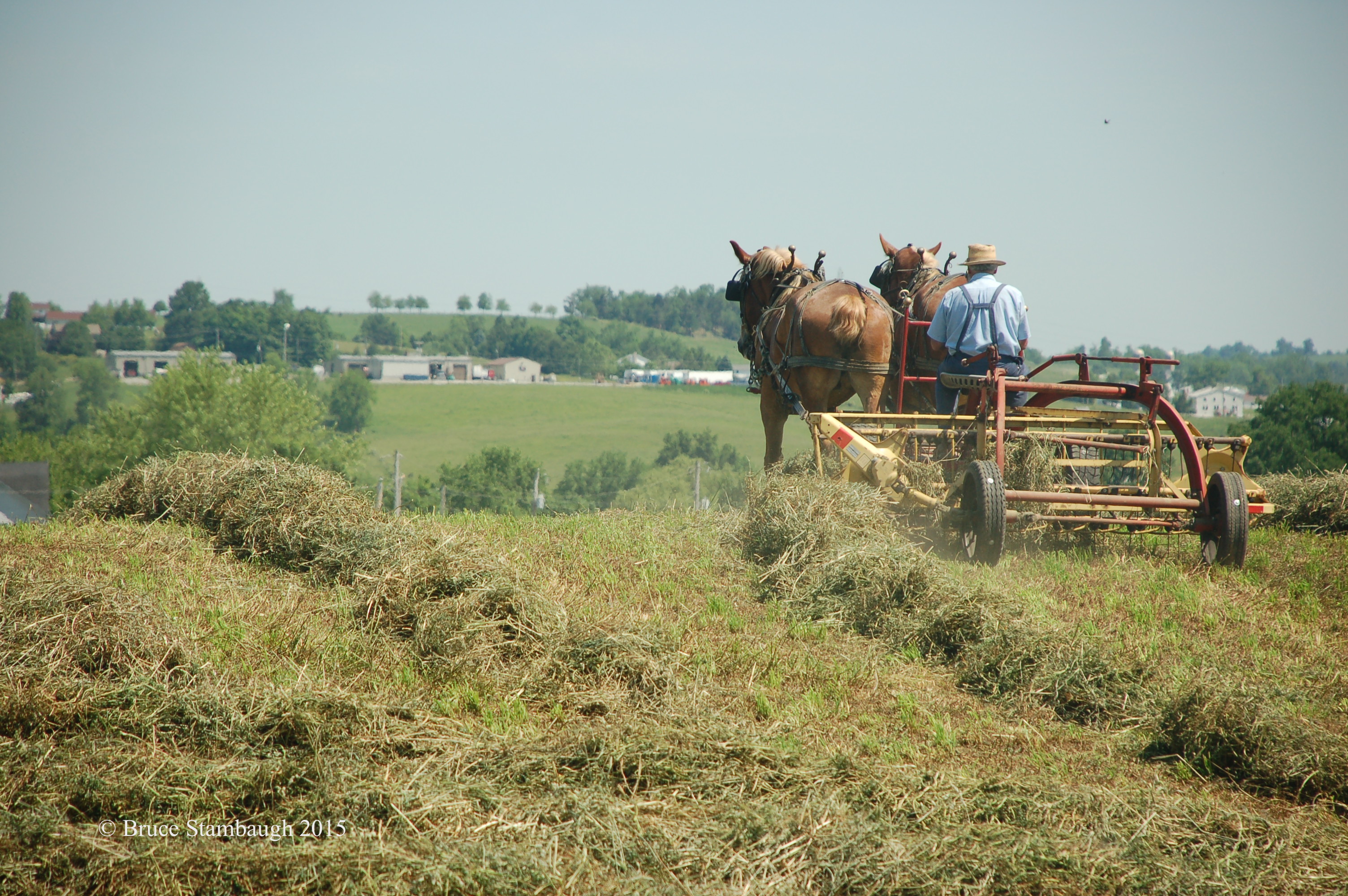
I was on another assignment when I saw this scene recently. I lowered the window of my vehicle and took the photo. It’s the iconic image of Amish gathering hay that most folks envision. The truth is, the way Amish farm has changed drastically in recent years. Most mainline Amish bale hay, either in rectangular bales or big round bales. Only the most conservative of the sect, the Swartzentrubers and those who belong to the Dan Church, continue to use the method pictured to gather hay.
I especially liked that the grandchildren were driving the team of horses while Grandpa properly balanced the huge stack of loose hay.
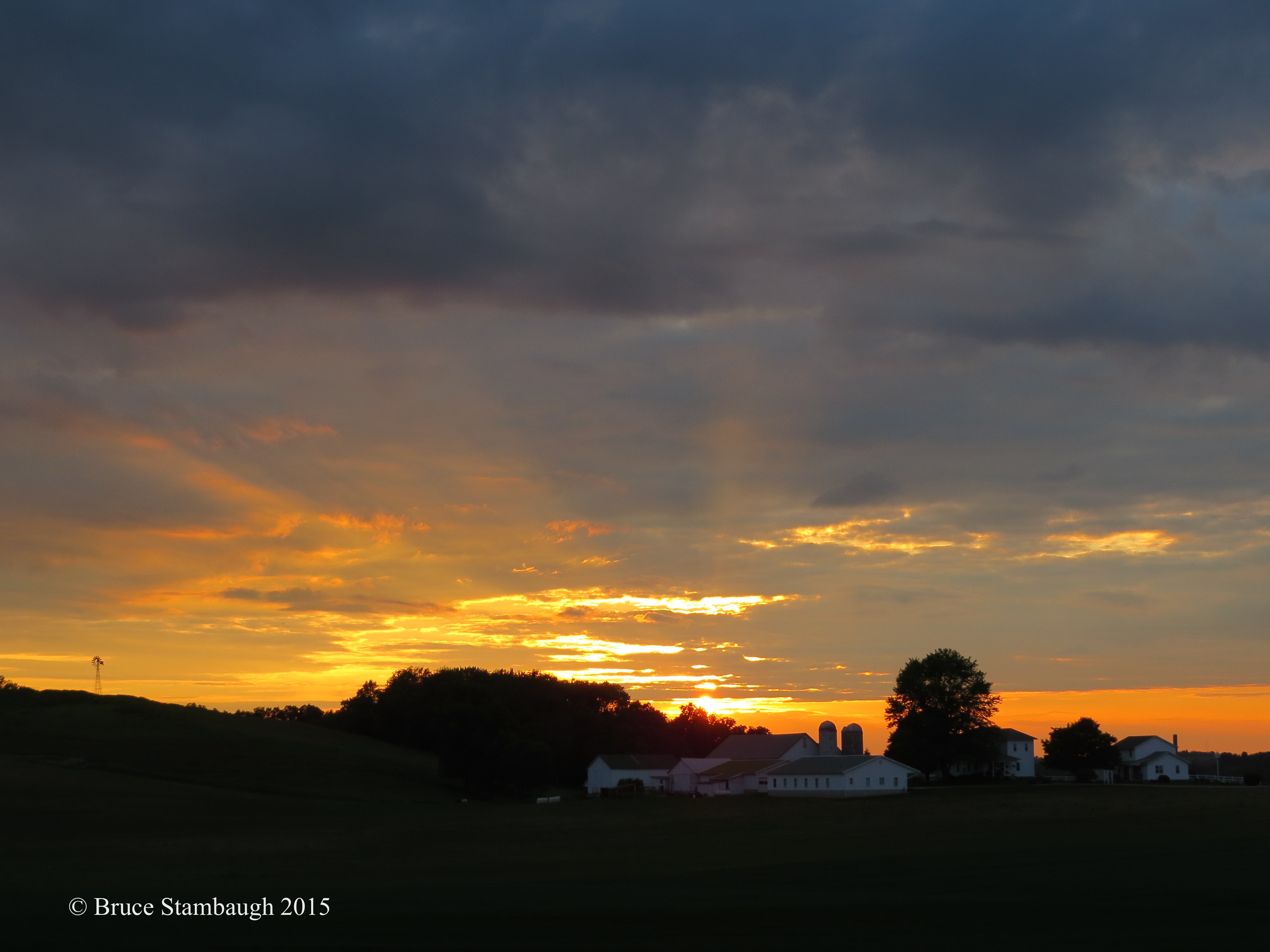
Each summer solstice, I stand at the northwestern corner of our property here in Ohio’s Amish country and watch the sun sink between the twin silos on our Amish neighbor’s farm. I guess it’s my version of Stonehenge. Normally, if the sky is clear, I often see a golden orange glow. Not this year.
I watched the sunset on the summer solstice again last Sunday evening. As sunsets will do, the colors in the evening sky seemed to change by the minute. I kept shooting and shooting photos. I thought the roses, violets and baby blues painted above the silhouetted farmstead in this shot created an amazing scene.
Recently, I had a couple of days that were exactly that. I helped out a friend by leading a few birding field trips to a local farm.
The target birds were young Barn Owls, a couple of fuzzy baby American Kestrels, and bubbly Bobolinks. In a rather rare situation, both Barn Owls and Kestrels had hatched their young in nesting boxes the farmer had erected in his old bank barn. The meadow across the road remained uncut so the tinkling Bobolinks could frolic and flourish.
The farmer and his family went out of their way to accommodate both the birds and us. Their farmstead was neat as a pin. Flower beds and gardens were nearly pristine. The three generations that called this place home welcomed us with open arms and hearts.
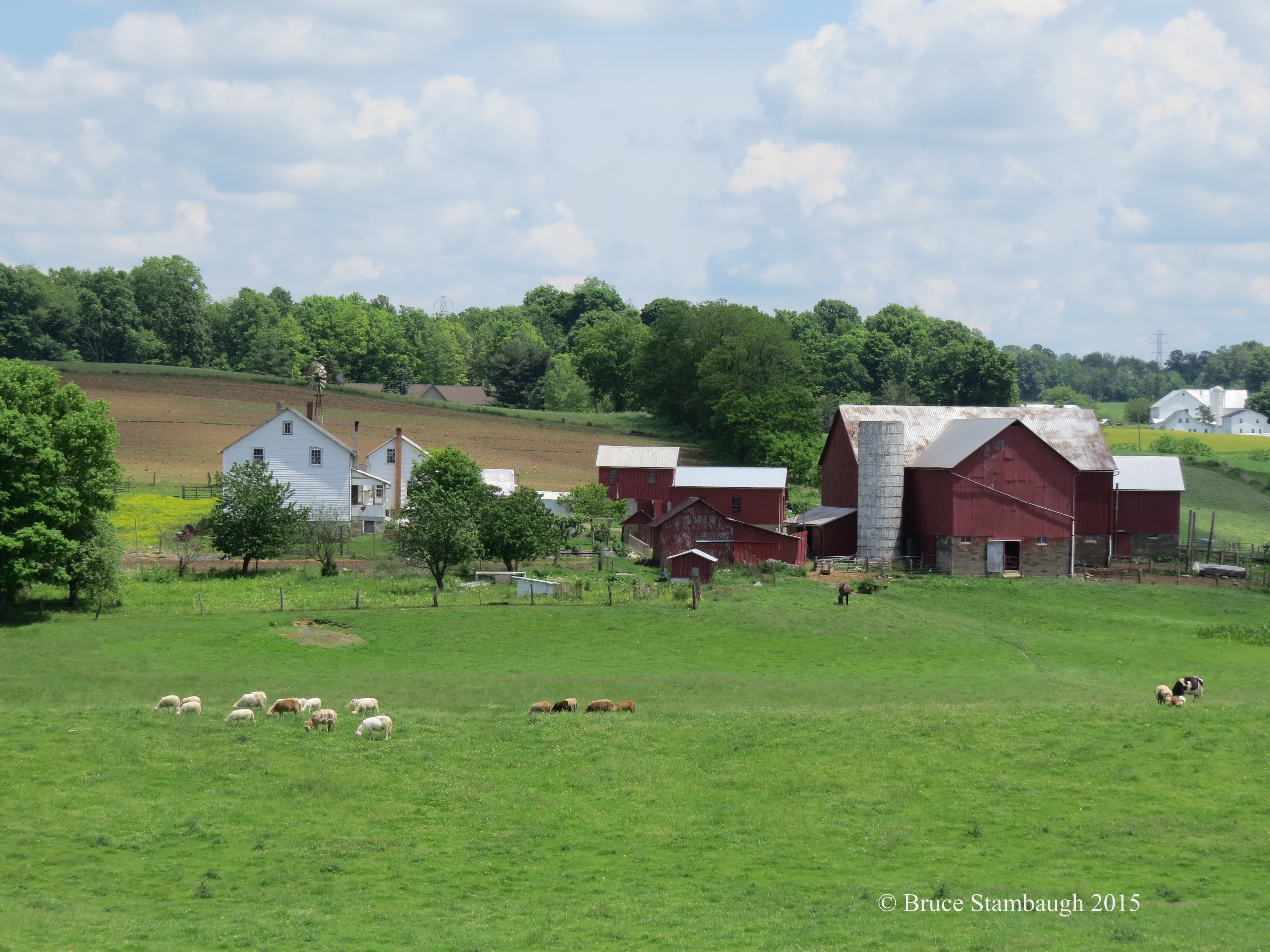
Both the farm’s setting and the intentional agricultural techniques employed accounted for the diversity of birds and other wildlife. Surrounded by rounded hills dotted with emerald woodlots, the land rolled away from the farm buildings more like waves than fields.
This slideshow requires JavaScript.
I imagined in a birdseye view a quilted panorama. Broad patches of variegated greens and tans from forested hills, alternating fields of pasture and croplands stitched together by brushy fencerows created a pastoral patterned effect.
Such a landscape also enhanced the desired habitats and food sources needed for the various avian species. It was obvious the farmer, typical of many in our area, understood the balance between conservation and productivity. Sad to say, some deem that approach as inefficient or even old-fashioned.
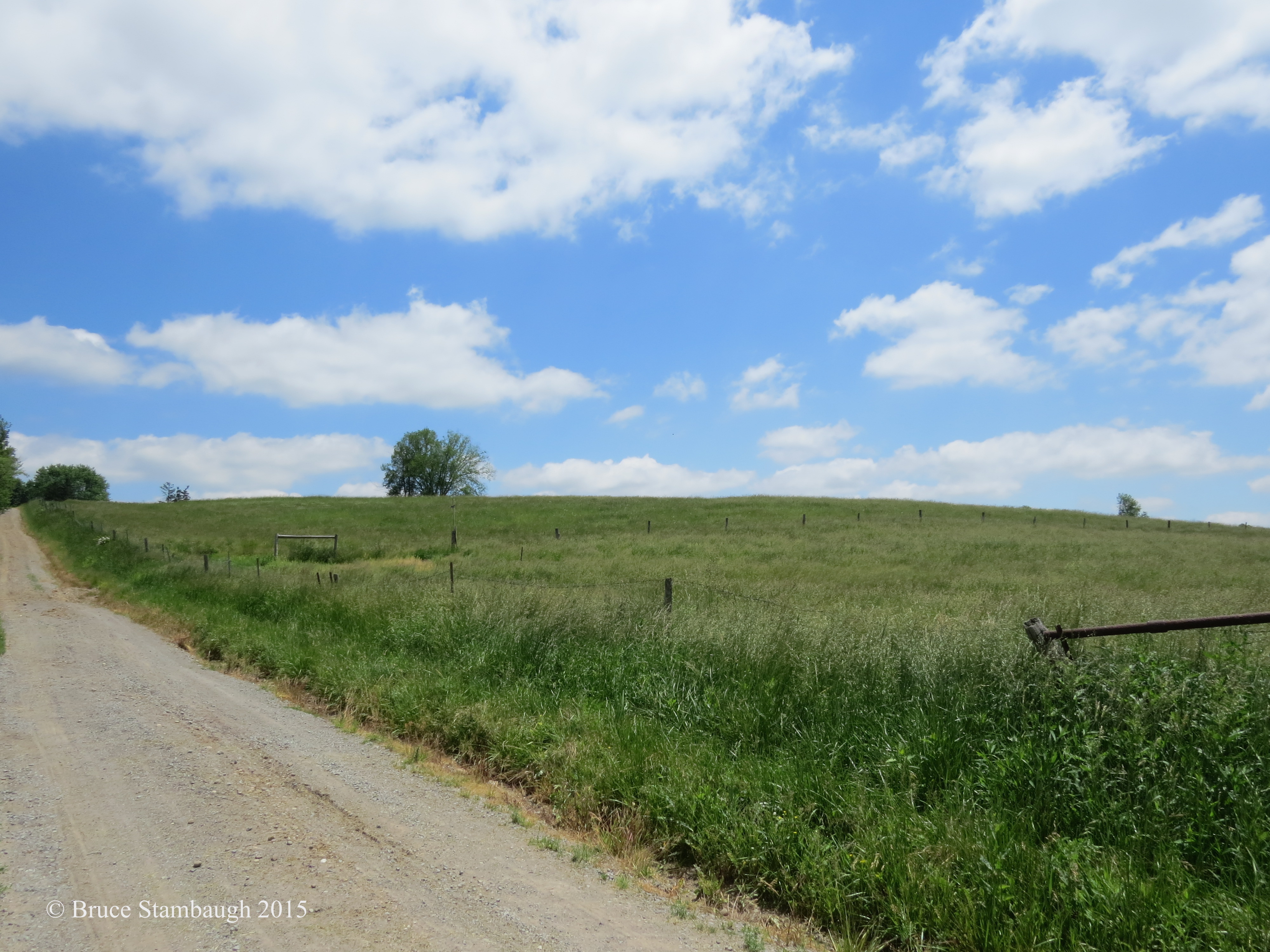
The days were precious in so many ways. Cottony clouds hung in salient skies over windswept grasses nearly as tall as the weathered wooden fence posts that delineated their boundaries.
The meadow’s high grasses mingled with seedy weeds, and wildflowers danced in the wind beneath while the Bobolinks, Eastern Meadowlarks, Song and Savannah Sparrows and Red-winged Blackbirds let loose. The birds’ melodious chorus easily drew the attention and appreciation of each group. All the birders, spanning three generations, thought the birds and their songs beautiful and luxurious.
(Click on the photos to enlarge them.)
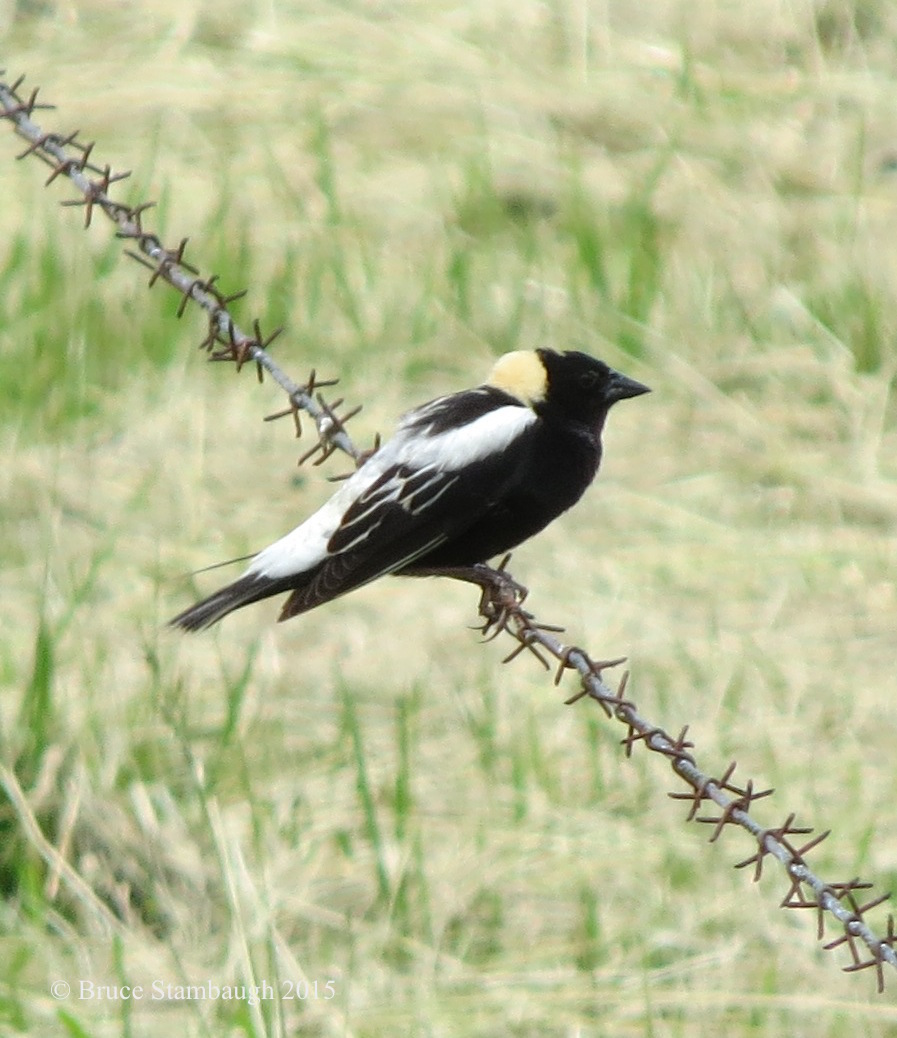
Male Bobolink.
American Kestrel.
Eastern Meadowlark.
Killdeer near nest.
Up the ladder.
Baby Barn Owls.
Baby kestrels.
Though he said he wasn’t a birder, the kind farmer had erected nesting boxes in his ancient barn for the owls. That is what attracted folks from near and far for this special chance to view the birds. It was indeed rare to have both owls and falcons nesting in the same barn.
Participants hailed from cities. Others lived nearby. Their ages ranged from preschoolers to octogenarians. A courageous woman on crutches in the midst of cancer treatments even ventured forth. I drew strength from their enthusiasm.
Atop wobbly ladders, we viewed the baby birds one by one through a pencil-sized peephole drilled in the plywood boxes made by students at a local vocational school. A small, square hole cut into the barn siding permitted the adults to enter and exit to feed their young.
Below, hushed conversations ensued in each group. Sunlight streamed through the intentional spaces between the horizontal clapboards. Still the barn was dark and steamy.
No one complained whatsoever. All realized what a privilege it was to view the birds and enjoy the genial hospitality of this marvelous family who welcomed all of God’s creatures.
These glorious days were definitely for the birds, obviously in a juxtaposed sense. The smiles on the faces of all the birders declared each visit a joyous success. None of us could have asked for more.
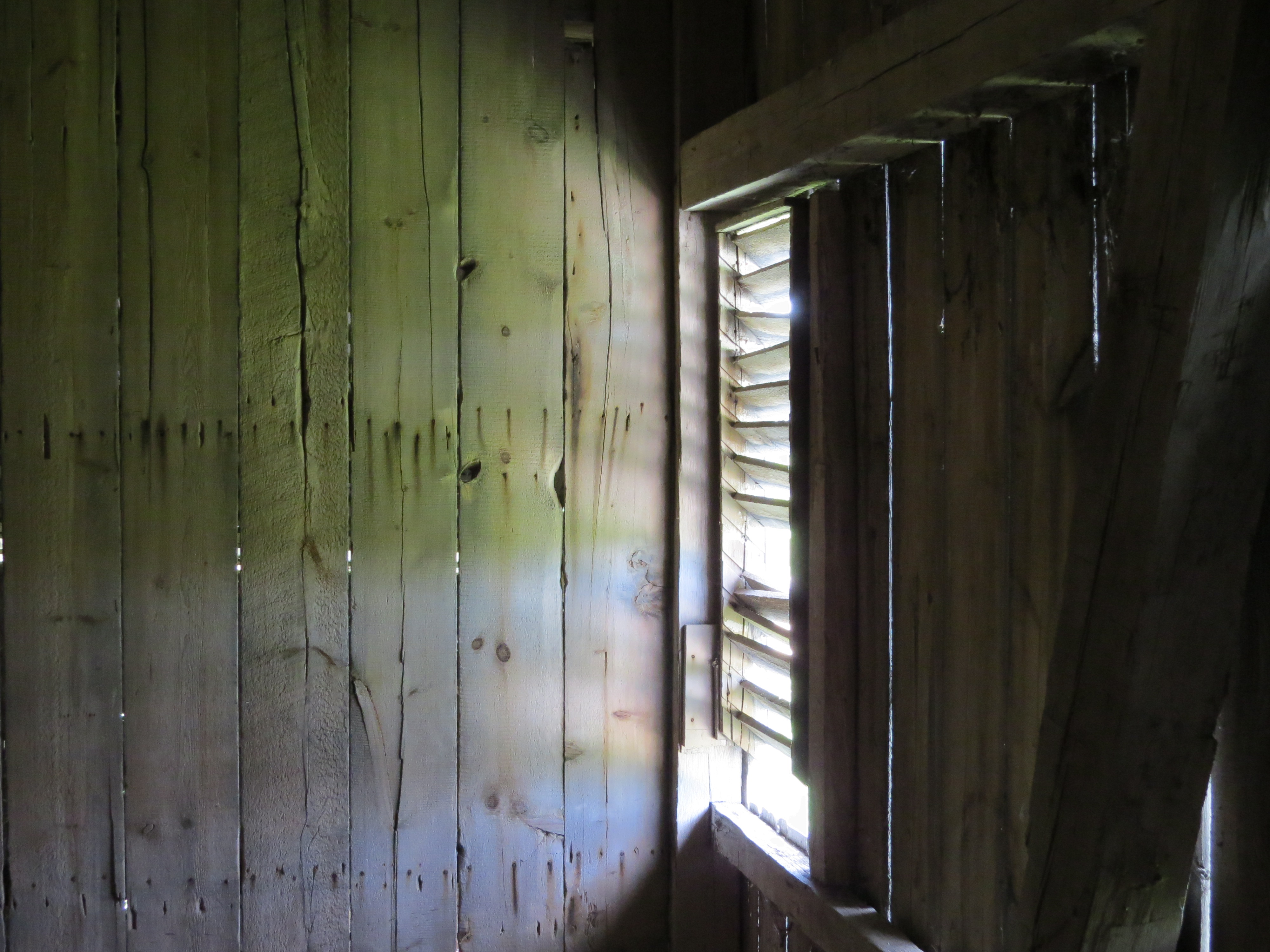
While leading some field trips to view baby barn owls, I happened to catch this scene. The light from the bright outside was streaming through the old broken shutters on a vent that helps air out the barn. Though it was rather dark inside the barn, this natural light played upon the inside wooden wall, revealing every intricate detail of the weathered barn siding.
Of all the photos I shot this day, I thought this one was the finest. With the help of Ian and his sister, Lydia, I had been leading birding field trips to their grandfather’s bank barn. Birders from near and far wanted a glimpse at some baby Barn Owls and some recently hatched Kestrel chicks.
Amish are noted for being conservationists. This family was no different. Besides the boxes for the owls and kestrels, they had several bird feeders filled with seeds for backyard birds. In addition, Ian and Lydia pointed out a Ruby-throated Hummingbird’s nest and a nest just now being constructed by Cedar Waxwings. The nests were only feet apart in the same tree in their front yard.
Across the road Bobolinks, Eastern Meadowlarks, Savannah Sparrows, Red-winged Blackbirds, Brown Thrashers and other birds of the field sang. They put on a great show for the folks on the birding tours. Some even posed for photos, which I took advantage of.
The Barn Owls and Kestrels were “lifer” birds for several of the folks on the tours. But for me, it was this shot of Ian and Lydia during a lull between groups that I cherished the most. Since they were youngsters, I was permitted to take their photo. The relaxed poses of Ian and Lydia, and the bright colors of the shirt and dress contrasting with the barn’s white-washed siding and the darkness of the barn’s opening made “Blue and pink” my Photo of the Week.
On my morning walk, my neighbor’s grandsons exited the house well before 9 a.m. They each had their necessary baseball gear in tow, gloves, bat, and ball.
I called out to them, “Baseball for breakfast, boys?”
They just smiled and ran to their imaginary Major League park, the grass groomed immaculately by their grandfather. I walked on, lifted by the sound of bat striking ball.
Because the local greenhouse was having a sale, more traffic than normal traveled the tiny rural road. Believe me, they were busy.
That’s one of the luxuries of living in the country. The sounds of life’s contrasts become all too obvious.
Young Amish girls, all three sisters that I knew, pulled an empty wagon toward the greenhouse.
“Going shopping this morning?” I asked them. A simple “Yes” and a few giggles was their retort. I silently lauded the mother for allowing the girls to pick out the desired plants.
This opportunity gave them responsibility, decision making, and experience in money exchanging, all valuable life skills. It was just one example of raising children in the way they should go.
As I reached Jonas’ farm, his wife walked down the sidewalk to the gravel driveway where her husband waited in the buggy. I waved, and Jonas returned the common greeting.
All the while I strolled and interacted with these good folks, I kept thinking of my friends far away in Syria, Iraq, Honduras, Texas, California, and other foreign countries.
How I wished they could be walking with me to experience this goodness that I take for granted far too often. Instead, some of them were just trying to stay alive, work diligently for peace, help the needy, and recover from massive flooding.
When I reached our property, my heart sang in harmony with the birds. My energetic wife was watering a variety of colorful flowers, some she had purchased at the greenhouse sale earlier that morning.
The Eastern Bluebirds flew from the birdhouse I had put up for them. My heart rejoiced all the more. I was glad they had won out over the pesky House Sparrows. A House Wren chattered atop another birdhouse nearby.
I have a lot for which I am grateful. This walk reminded me that each morning I open my eyes I need to say a joy-filled thanks.
I am fortunate to have several species of Ohio’s woodpeckers come to my feeders on a regular basis. Most prefer the peanut butter suet feeder that hangs from a branch of the large maple tree in our backyard. A few will venture up to the hopper feeder hanging right outside our kitchen window. They can’t resist the chipped sunflower seeds that many other birds also enjoy.
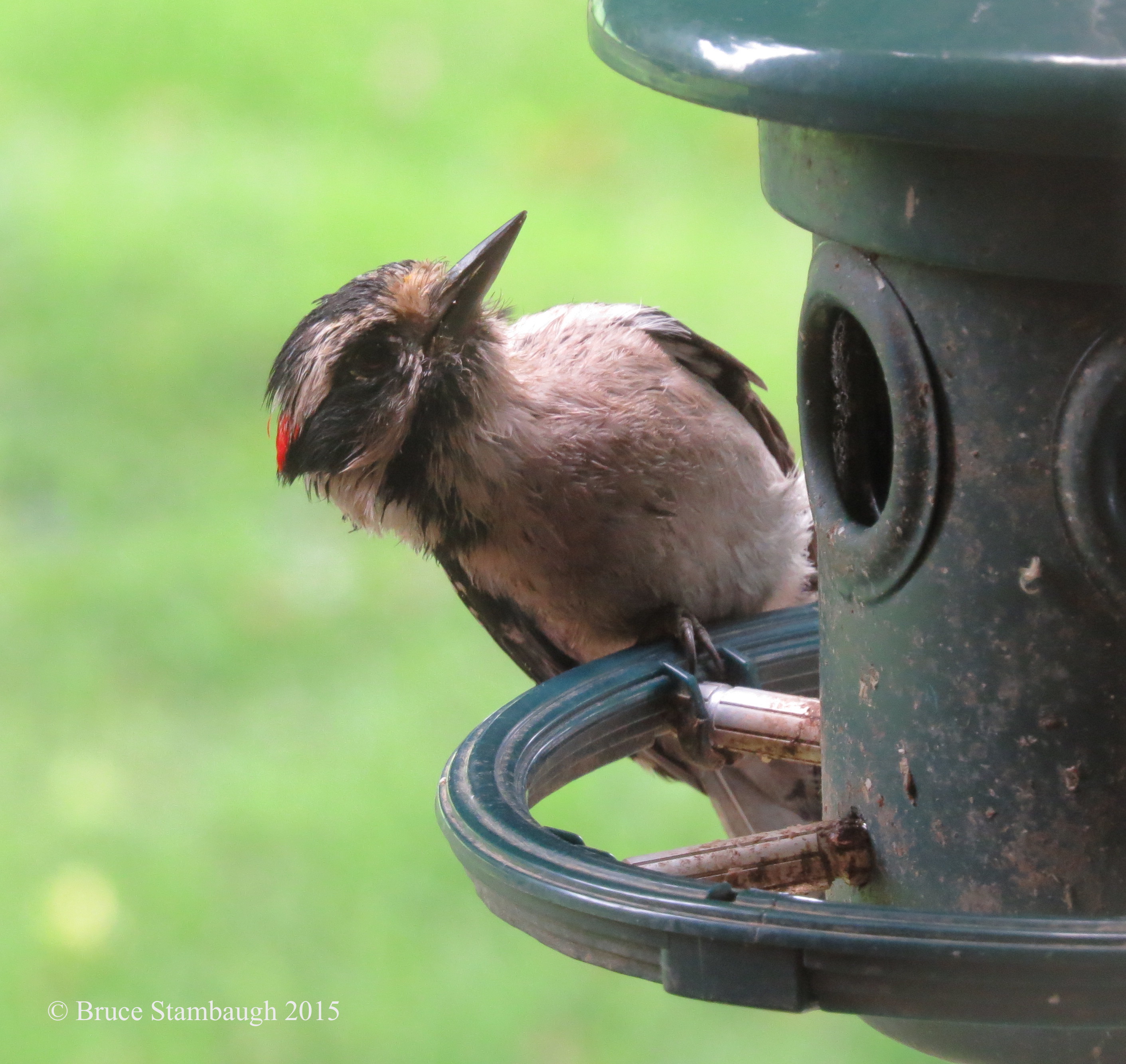
I’m glad I had my camera in hand when this juvenile male Downy Woodpecker, soaked from the day’s rain, arrived at the feeder. The young bird didn’t seem deterred either by my presence or its rather damp feathers.
Summertime. Isn’t that an absolutely gorgeous word? Let it roll off of our tongues and past our moist lips slowly, magnificently, joyfully.
Those of us who reside east of the Mississippi River and north of Disney World endured a long, hard, cold, snowy, record-setting winter. It’s truly a blessing to say that lovely word, summertime.
It’s not like we’ve earned summer either. We just have longed for the expected warmer, more pleasant weather, plus its immeasurable benefits.
Though the summer solstice doesn’t officially arrive until June 21, that’s become insignificant, even obsolete. Here in commercialized America, we’re accustomed to the definition of summer as the days between Memorial Day and Labor Day.
I know I am not the only one that is thankful that June is here. With apologies to Walt Whitman, I can indeed see and hear America singing. All I have to do is be attentive.
The early summer flowers, the irises, poppies, and petunias are or soon will be blooming. So are the weeds.
Of course as part of America has already experienced, we’ll likely have our share of hazardous weather. That, too, is within the season’s nomenclature.
The first cutting of hay, whether by horse and sickle or tractor and big round baler, has commenced. School years have ended, except for educational institutions that offer additional classes. They are appropriately called summer school.
Soon lightning bugs will be rising from fields and grasses, blinking under spacious, starry skies. It’s a scene of which I hope I never tire. If the grandkids visit, we’ll fill jars and watch the incredible insects glow, and then release them to do their thing, the bugs not the grandkids, that is.
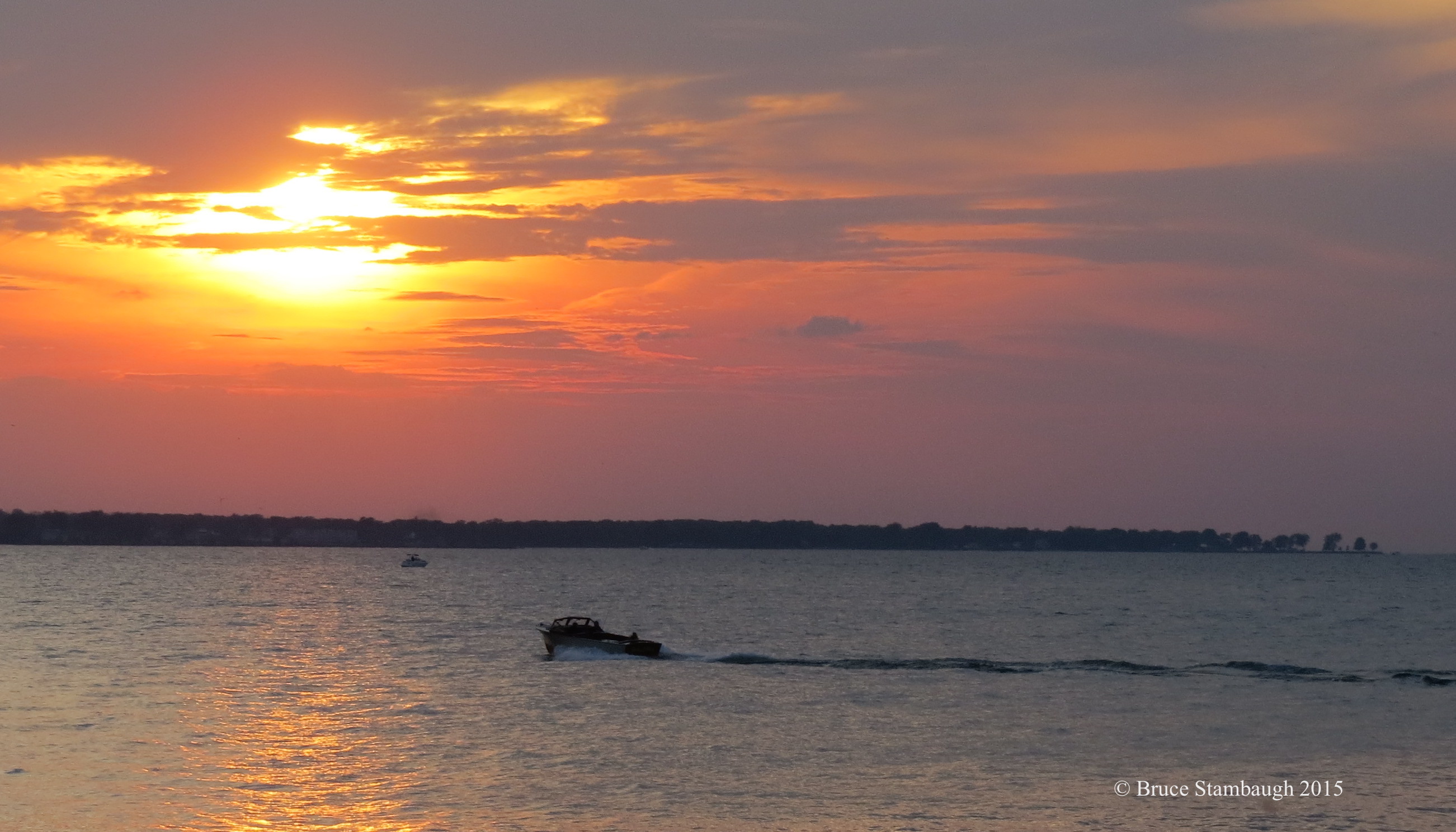
Boats big and small will cut temporary wounds into placid waters, which will heal themselves with no thought whatsoever by either the offender or the offended. The squeals of a toddler’s first catch of the year or the rich laughter of children diving into tepid water at dusk will confirm summer’s presence.
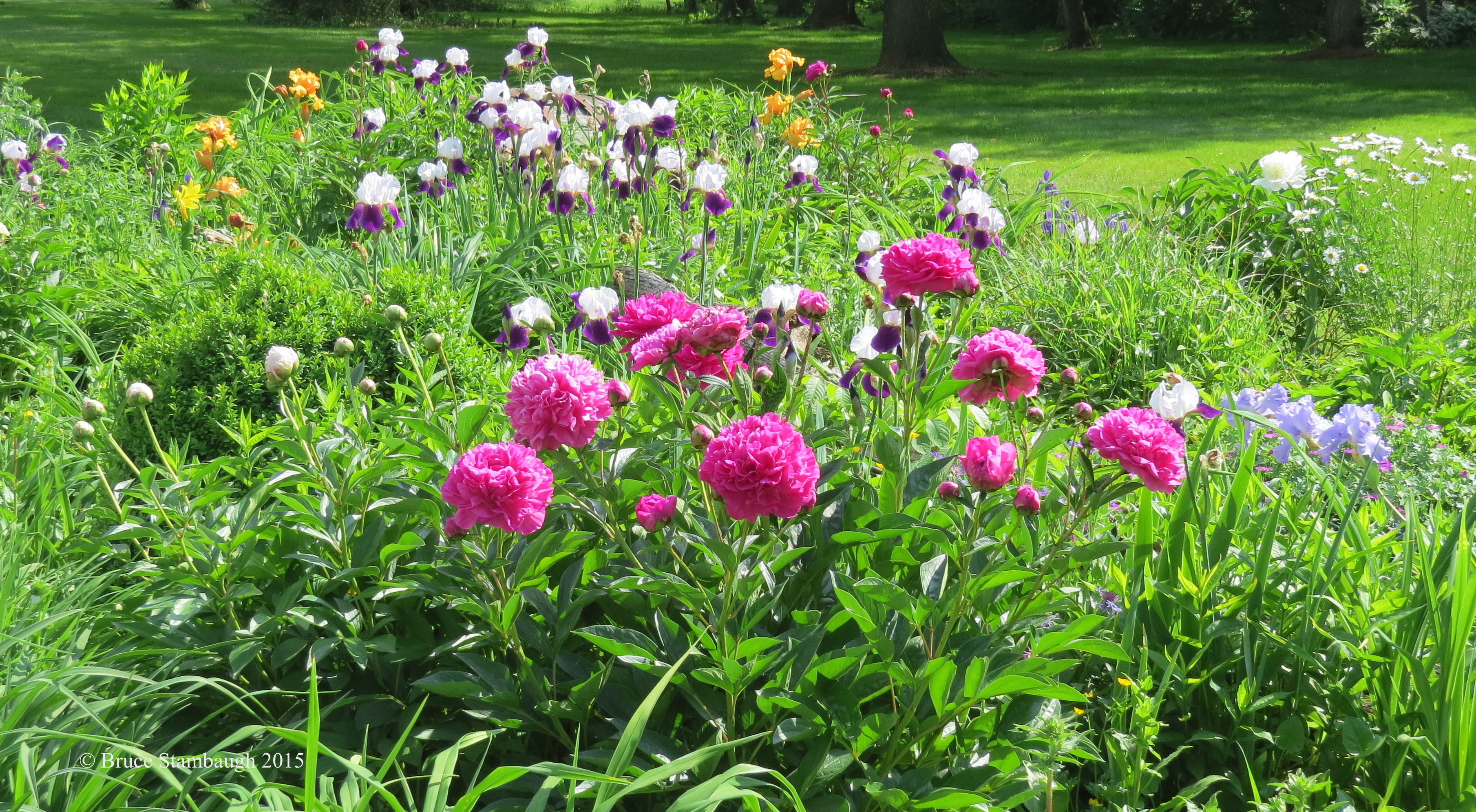
Long-delayed chores can finally be completed. Weathered house siding will be revived with fresh coats of brightness to complement immaculate gardens full of rainbows of color and busy insects and critters.
I’ll sit on my back porch on a luxurious summer’s Sunday evening and listen to the clip-clopping of the horses as they carry home families early and courting teens late. I can hear the latter coming from a half-mile away, boom boxes blaring.
Vacations will bring thousands of tourists to Ohio’s Amish country, where I live, to witness some of those native interactions. Wise locals will flee to beaches or mountains or solitude.
As I write, a framed placard on the wall of the summer home of a friend succinctly summed it up. “Miracles are as close as the heavens above and the blossoms beneath.”
Amen to that and a hardy welcome to all that summer has to offer.
Even in my semi-retirement, I’m a busy person. Keeping active and involved in the community has been a priority and passion my entire life.
That lifestyle takes a personal toll, however. From time to time, I need to recharge my body, mind, and spirit. I step away from my daily routine and spend some time just enjoying life.
I have found that immersing myself into nature is the salve that soothes the soul. I love the outdoors and all the beauty that she offers.
A Big Day does that for me. In the birding world, a Big Day is an entire day devoted to nothing more than counting all the species of birds that you can identify by sight or sound.
Folks do Big Days in groups that cover a given territory. Or they are done by simply staying put in one spot and counting all creatures avian seen or heard. That is appropriately called a Big Sit.
My Big Day, however, wasn’t either one of those. Instead, with the warbler migration in full swing, I knew the various locations I wanted to visit in northwest Ohio to view the returning and transient birds.
Traveling alone to different birding hot spots allowed me to go at my own pace, and to absorb fully all that I experienced.
Spring birding near Lake Erie means dressing for all seasons. I was glad I had.
This slideshow requires JavaScript.
The steady, stiff northeast wind off of the lake brought out the winter duds in most birders on the boardwalk at Magee Marsh, my first destination. Being bundled up didn’t deter either the active bird observations or the usual universal geniality of most birders.
The boardwalk was packed with birders young, old and in between from around the world. Warblers and other birds flitted everywhere.
Even though I had gone by myself, I clearly wasn’t alone. Among the hundreds of birders at Magee, I only knew one, my friend and expert birder, Greg Miller, of ‘The Big Year” fame. The rest weren’t strangers though, helping me to locate and identify 23 warbler species. Their kindness meant more than the day’s species numbers.
Later, when I drove the Ottawa National Wildlife Refuge road and then hurried to see some other rare birds, I found the same excited congeniality. Sullen grumpiness isn’t part of birding ethics. Beautiful birds and friendly birders cohabited.
With the day quickly waning, I headed east to the Marblehead Peninsula. I wanted to enhance my day with a brief visit to the Lakeside Daisy Nature Preserve to view the flowers in their prime. Though the day was mostly cloudy and cool, the little buttery daisies warmed my soul with their lusciousness.
After a quick supper, I hustled to my favorite spot in Ohio, Marblehead Lighthouse. The setting sun cast long shadows of trees onto the historic white lighthouse. Its red top, where the beacon blinked for sailors, was bathed in creamy, warm light.
A handful of other photographers celebrated with me. I can’t speak for them. But with each click of the camera’s shutter, my soul felt lighter, cleansed, fulfilled.
I hurried to nearby Lakeside to watch the sunset’s golden evolution. The day was complete.
Such are the positive consequences of observing, listening, contemplating, reflecting and sharing with humankind amid the earthly creation for which we all are charged to preserve. My Big Day finished bigger than I could have ever imagined.
Joy abounded all around in regeneration. Isn’t that the real reason for spring?
Magee Marsh has a well-maintained boardwalk for birders to observe up close the many beautiful birds that flit around. The boardwalk meanders through the various favorable habitats, woods, marsh, water. At times, the walkway is packed. People clump up to get a view of a showy or rare species, with birders helping birders to find the bird. That’s just how birders are. Well, most of them at least.
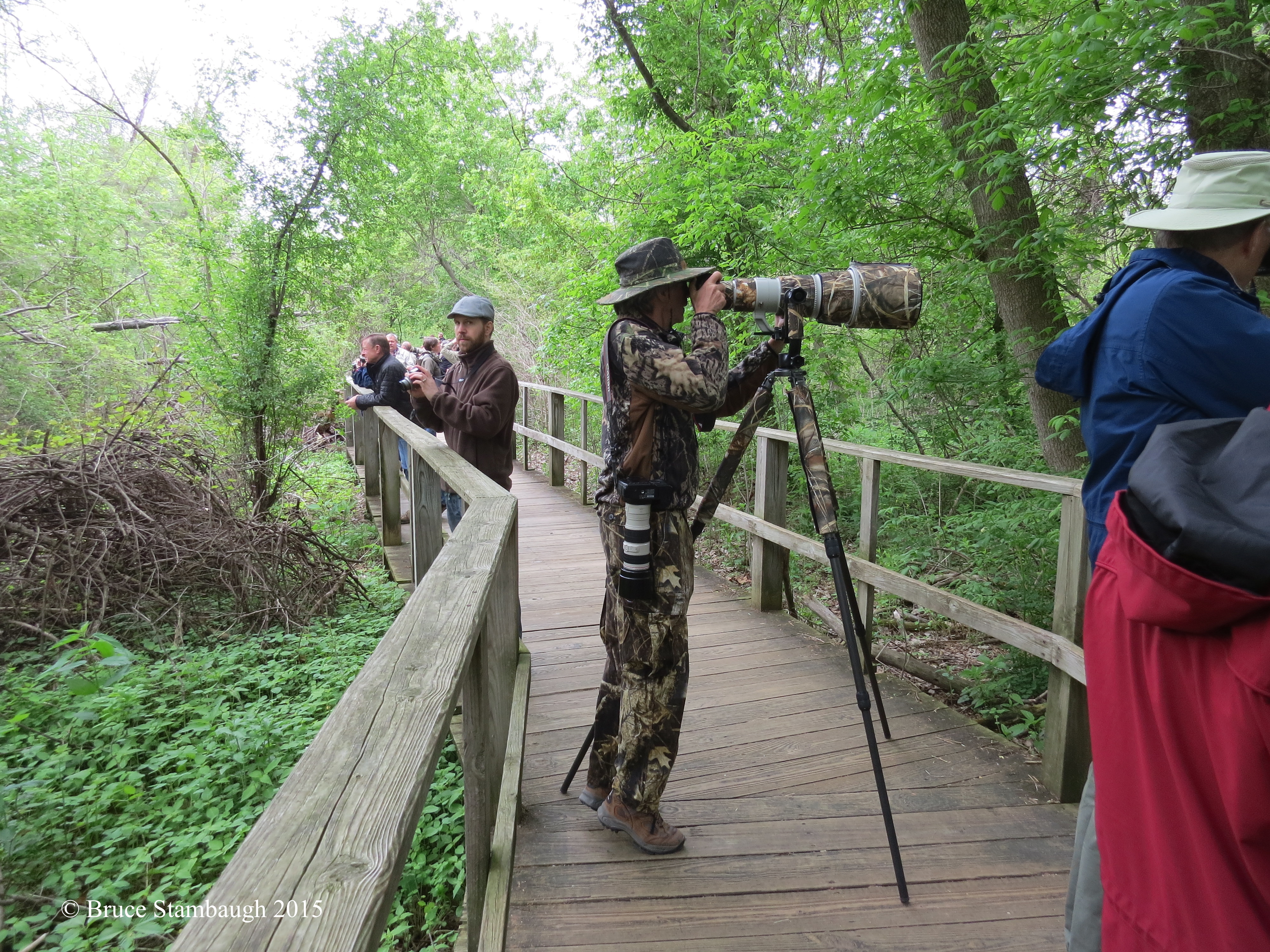
When I came upon this photographer aiming his huge camera at something, I had to take his photo. He was the only person I saw all day that totally blocked the boardwalk. This individual wore all the right clothes and used the best photography equipment.
He clearly only had one thing in mind, and courtesy wasn’t one of them. His camouflage outfit and camera said it all. He was there to shoot photos of birds. He seemed totally oblivious to the fact that thousands of others wanted to do the same and were unable to pass the way he was set up. Also, the boardwalk rules, both written and understood, clearly state, “No tripods.”
I’m glad this photographer was the exception, not the rule at Magee Marsh. “Camouflaged” is my Photo of the Week.






 Roadkill Crossing
You must be logged in to post a comment.