Look who’s talking now

Amish phone booth by Bruce Stambaugh
A phone booth on an Amish property is often placed away from the home to avoid the temptation of overusing the phone.

By Bruce Stambaugh

On a dark, chilly November night several years ago, an emergency medical technician arrived on the scene of a car verses buggy accident at a rural intersection. Unlike the car’s passengers, the older Amish man driving the lantern-lit buggy was uninjured.

As the scene cleared, the first responder asked the Amish man how far he had to go to call for help. With a toothless grin, the Amish man reached into his denim jacket and flopped opened a cell phone.

In the early days of cell phones, when even the EMT didn’t have one, that scenario might have been rare in Amish country. It isn’t any longer. As contradictory as is it may sound, Amish have and use telephones. They use them to converse, to fax, for GPS, to text, and on rare occasions, to access the Internet.

Of course, like many of other Amish lifestyle “rules,” there are many variables in the Amish – phone connection. Church leadership metes out phone use guidelines for Amish. Those rules and their application vary greatly. It all depends on which church and which order of Amish as to what the rules may allow. The rules about phone use, like other lifestyle guidelines, even differ from church to church within the same order of Amish.

Amish place by Bruce Stambaugh
The home of a young Amish family in Holmes County, Ohio.

The orders of Amish, if placed on a continuum, would range from New Order on the left to the Swartzentruber’s on the right. In other words, from the most progressive to the most conservative, with those terms being used in the religious sense, not politically. In between are the most numerous, the Old Order Amish that people describe when they refer to the sect.

The extremes of phone use by Amish would range from members of one church group permitted to have landline phones in their residence to others that are permitted no phones at all. Again, their individual church leaders determine how and where Amish use phones. This may seem strange or even unfair to those unfamiliar with the Amish, and sometimes to those who even live among them. But simply put, that’s just the way it is.

Driving down any highway in Amish country will reveal which families and businesses are not permitted to have landline phones in their buildings. Near the edge of the road, travelers will see small buildings about the size and shape of the old-fashioned phone booths with a door and usually a window for light.

They look like phone booths because that is exactly what they are. Enclosing the phone in a small structure protects the person using the phone from any inclement weather and provides privacy. The homemade phone booths are usually locked to prevent any vandalism or misuse.

Amish farmstead with phone booth by Bruce Stambaugh
Find the phone booth among all the other buildings on this farmstead near Walnut Creek, Ohio.

Such phone booths could be used by a single family or business, or by multiple families. Each family or business would have its own voicemail extension. The phones are not answered live.

Some churches require that phone booths be so many feet from the home or business. Some even require the phone to be across the road, so as not to be too convenient, thus reducing the possibility of casual use. Some Amish, especially the New Order sect, would allow a landline in their home.

In many churches, phones for calling out and faxing are permitted in the business, but not in the home. Incoming calls go directly to voice mail. This rule is economically weighted. The successes of cottage industries, which have boomed among the Amish in the last two decades, are critical to the welfare of the Amish community. Only about 10 percent of the Amish population farms today. The rest either have their own businesses or work at other local businesses.

Of course, any discussion about Amish and the use of phones would be incomplete without mentioning the ubiquitous cell phones. Cell phones are actually more widely accepted among the Amish leaders than landlines, simply because they are not literally tied to the public utility grid.

Cell phones have proven to be an efficient tool when it comes to doing business, regardless of the trade or product produce. Generally speaking, a common rule for cell phones is that they are turned off in the residence. Another rule stipulates that the phones cannot access the Internet or e-mail.

Because they are not yet church members, none of the rules apply to Amish youth, unless of course their parents say they cannot use them. Just like their non-Amish peers everywhere, texting and using cell phones to take pictures are typical for today’s Amish teenagers regardless of which church order their parents may belong.

In the 21st century, phones are one technology the Amish have embraced. Clearly though, the difference between them using the phone compared to the rest of society is in the details. For those instructions, the Amish look to their respective church leadership.
Finding the good in the bad weather

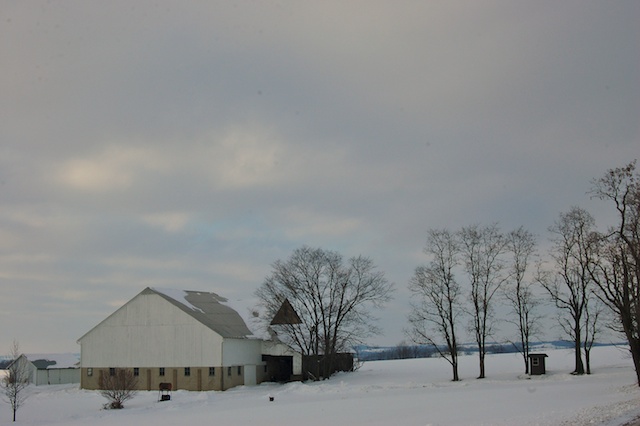
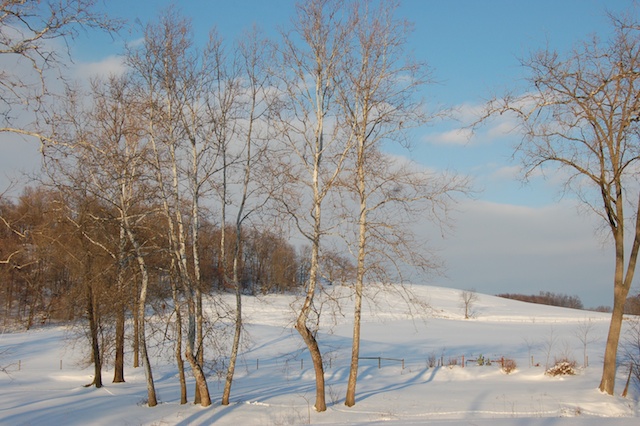
Snow scene by Bruce Stambaugh
Snowy scene in Holmes County, Ohio.

By Bruce Stambaugh

Weather is one of my favorite hobbies. Living in Ohio’s Amish Country affords me plenty of climatological variety to enjoy.

That is especially true in the winter. We never know what winter will bring here when it comes to weather. It could be mild. It could be cold. It could be dry. We could be buried in snow. And all of those scenarios could happen in the same winter season.

I especially like an occasional heavy snow. I love the beauty, the peacefulness, the serenity an abundant snowfall brings. The landscape comes alive, green pine boughs heavy laden with a snowy burden, fire engine red Cardinals searching for seeds, chestnut horses romping in the white, fluffy playground, children bundled up to build snowmen.

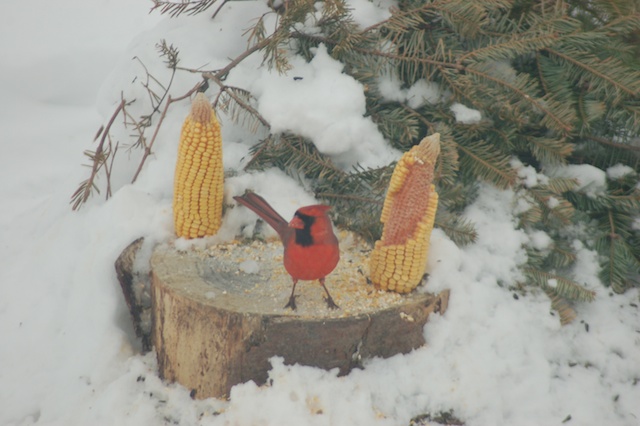
Cardinal and corn by Bruce Stambaugh
A male cardinal at an ear corn feeder.

Of course, such a snow causes headaches for travel and unwanted expenses for municipalities expected to clean every last flake from the roadways. Tow truck drivers, on the other hand, revel in the bounty of pulling vehicle after vehicle out of ditches.

For my part, the good far outweighs the bad when it comes to snow. I can’t say the same thing about an ice storm, however.

Our most recent experience with a widespread ice event is example enough. Ice-coated trees crashed onto power lines and highways. I both pitied and admired the road and utility workers who braved the dangerous elements trying to restore order out of the icy chaos.

Stores lost valuable business. Schools altered schedules, academic and extracurricular alike. People who lost power and didn’t have access to a generator had to wait it out, sometimes for days.

Ice clogged by Bruce Stambaugh
The ice storm clogged roads and gutters alike.

Eventually, though, some good managed to find its way through the gloom and dismay of the ubiquitous ice. Ice-coated branches sparkled, even from nighttime’s artificial light.

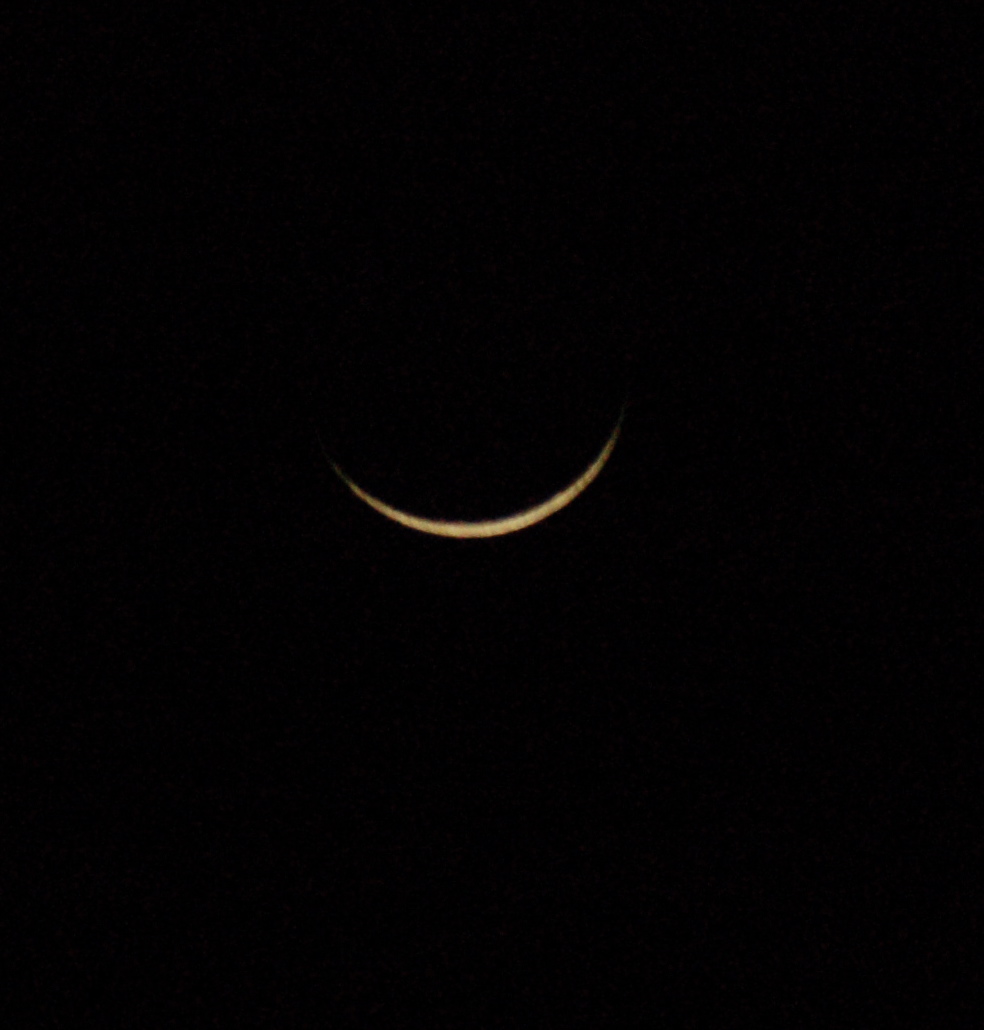
Moon crescent by Bruce Stambaugh
Even the light from a thin creasent moon reflected off of the icy landscape.

But often it takes us awhile to see the glimmering light of an ice storm. The most obvious benefits came in the first light of day. Once the clouds diminished, the low angled rays of sunrise and later sunsets ricocheted across the icy landscape. Even the light of a thin crescent moon slid its tiny light across the shiny, slippery iced-over acres of fallow fields.

The light came in other natural forms, too. A kind neighbor sauntered over to sprinkle calcium on the inch thick, hard blanket of ice that covered the walk and parking pad. After a few minutes, he began chipping the icy glaze just because it needed to be done. I joined him, and a congenial conversation brightened the otherwise dull day.

A township resident called to say that he and his neighbors had cleaned up the downed tree limbs save the one they couldn’t reach that still dangled above the roadway. The lone highway worker would not have to clear that section of the road of debris thanks to their thoughtfulness and commitment to doing the obvious for safety sake. Why wait on paid personnel when a volunteer effort gets the job done just as well?

As we saw again last week, an ice storm can be devastating. Urban and rural commerce and individual residents alike suffer the cold consequences.

Conversely, an ice storm can also be a bright ray of sunshine in an otherwise dismal winter. I enjoyed the enhanced scenery and the visit of the friendly neighbor.

However, having experienced this most recent icy incident and the one in late 2004, the next one can wait awhile as far as I’m concerned. That weather is a bit too extreme, even for me.

Amish Super Bowl Haiku

Amish head to church by Bruce Stambaugh
Amish youth gathered for a Super Bowl Sunday hymn sing.

Super Bowl Sunday
neighborhood Amish youth hold
an evening hymn sing.

Bruce Stambaugh
Feb. 6, 2011

Four season survival

Woods edge by Bruce Stambaugh
Where field and forest meet.

From the tallest trees
of the interfacing woods,
the red-tailed hawk gleans
the pasture, grain and hay fields,
fallow, fertile, emerging, golden,
winter, spring, summer and fall.

Bruce Stambaugh
Feb. 6, 2011

Red-tailed Hawk by Bruce Stambaugh
A red-tailed hawk glides over a hayfield.

Enjoying the cold from the inside out

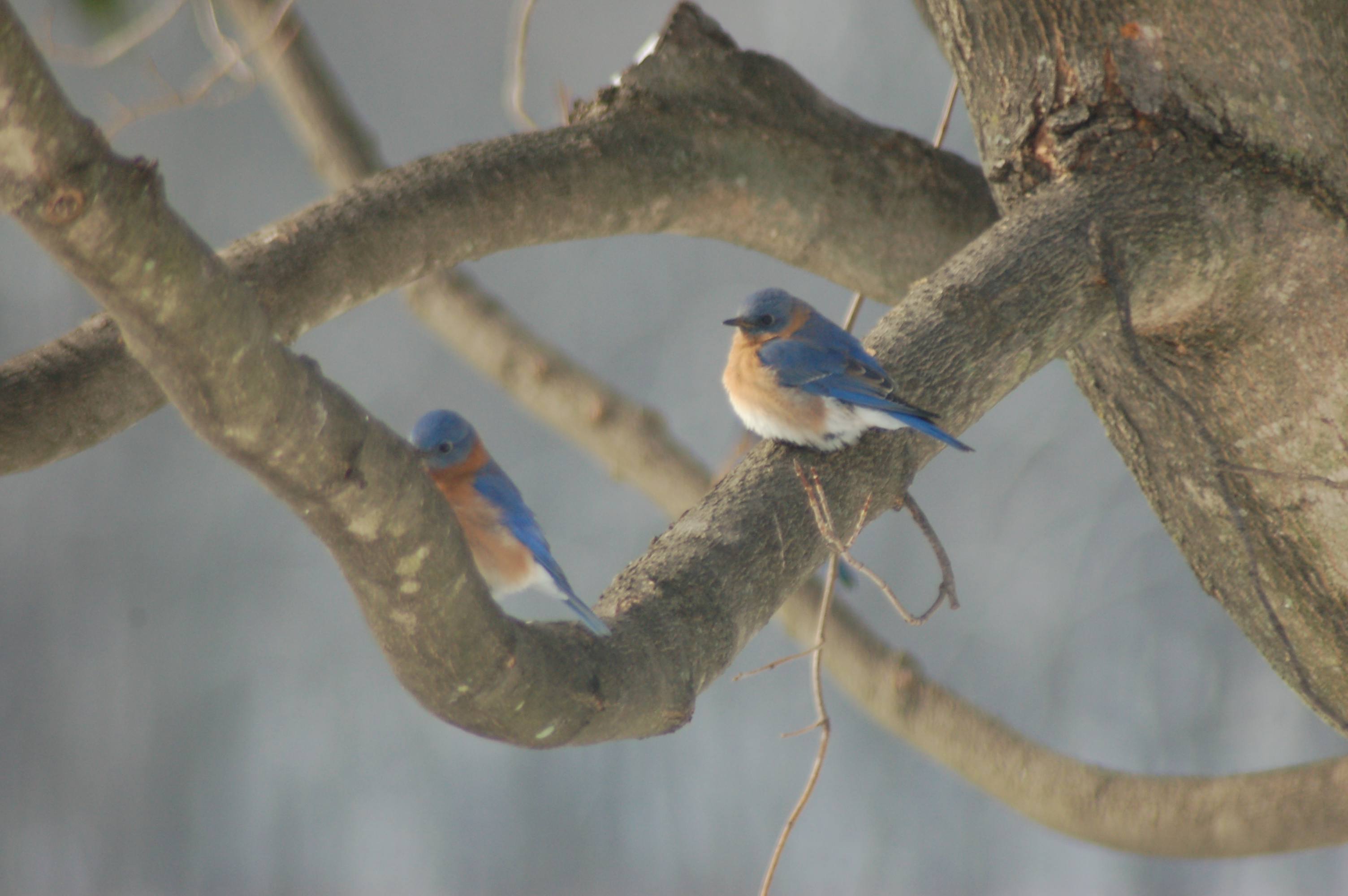
Bluebirds on maple limb by Bruce Stambaugh
Male Eastern Bluebirds perched on the crooked limbs of the backyard sugar maple.

By Bruce Stambaugh

It was a good day to stay inside. Though the partly cloudy sky revealed a gorgeous sunrise, the thermometer read six below zero, the coldest temperature of the season so far in Ohio’s Amish Country. That alone told me this day would be best enjoyed from the inside out.

Given the fact that I was in the midst of a battle with the annual wintertime crud, I wasn’t about to argue with that logic. The frigid air would do me no good.

Having spent five long hours in the local emergency room the previous morning, I knew I needed to take it easy. Stuck inside, I resigned myself to two main activities. I checked the birdfeeders for visitors and I rested.

Compared to previous winters, it had been a disappointing season at the birdfeeders. I had kept them well stocked and cleaned of any old feed, mold or other potentially noxious particles that would harm or discourage the birds.

Despite my efforts, the usual nice variety and numbers of birds had failed to materialize. Before the snow flew, I had a pair of Red-breasted Nuthatches. But they must have been passing through because they haven’t been back.

Just before the holidays, Pine Siskins chased the American Goldfinches away from the feeder that contained sunflower chips. The siskins never came back either. After one of the series of Alberta Clippers came through, I had a Rusty Blackbird for a couple of days.

Goldfinch by Bruce Stambaugh
An American Goldfinch perched on a porch post.

The usual birds, other than the pesky House Sparrows, seemed fewer in number. A pair of Cardinals made infrequent appearances. The Dark-eyed Juncos, a given at winter feeders, were scarce. A few White-breasted Nuthatches and Black-capped Chickadees came and went irregularly.

A pair of bully Blue Jays could be counted to show up from time to time. A Downy Woodpecker pretty much had the suet feeder all to himself. The Red-bellied Woodpecker that had been a regular seemed to have disappeared since the snowfall.

The goldfinches and the congregation of house sparrows were the only feeder faithfuls. My winter’s entertainment wasn’t as entertaining as I would have liked.

As the temperature of this frigid day climbed into positive single digits, the bird feeders suddenly came alive. Colors flashed in the bright morning sunshine, and I grabbed my camera.

Two sparrows by Bruce Stambaugh
A Tree Sparrow and a Song Sparrow searched for food.

I spent a majority of the morning snapping one shot after the other. Tree sparrows picked at the corn my wife had put out since I was on the disabled list. The secretive song sparrow found a spot in the sun where it could simultaneously feed and warm itself.

The show really picked up at the shelled peanut feeder, which was a section of hollowed out log hanging from a hook on the back porch. The red-bellied returned, and brought along a hairy woodpecker as a sidekick. Tufted titmice and even chickadees grabbed some protein.

Bluebird with peanut by Bruce Stambaugh
A male Eastern Bluebird enjoyed a raw, shelled peanut.

A family of eastern bluebirds stole the show, however. They tried out every feeder. Males and females alike ate peanuts, chipped sunflower
seeds, black oil sunflower seeds and even pecked at the peanut butter-laden suet.

Despite the cold, both in the air and in my body, I had hit the trifecta. I enjoyed the extreme winter weather without having to bundle up, was treated to some wonderful birding, and captured much of it through the lens of my camera. I was beginning to feel better already.

Song Sparrow Haiku

Song Sparrow by Bruce Stambaugh
A Song Sparrow briefly welcomed the warming sun with an unexpected chorus.


On the coldest day
of the year the song sparrow
earned its moniker.

Bruce Stambaugh
Jan. 23, 2011

Loathing acts and words of violence

Amish school by Bruce Stambaugh
A typical winter scene in Ohio's normally peaceful Amish country.

By Bruce Stambaugh

In the aftermath of the recent shootings in Tucson, Arizona, fierce discussion immediately followed the quick apprehension of the alleged shooter. To try to make some sense of this despicable act, heated vitriol quickly ensued, trying to focus blame on the rhetoric of popular political talking heads left and right.

I watched and listened. Mostly thanks to the ability to communicate spontaneously through the miracle of modern technology we call social networking, cable TV and talk radio, voices and anger rose simultaneously. So did the sale of guns and ammunition.

I watched and listened because I had sadly seen it all unfold before too many times in my lifetime. John F. Kennedy, Martin Luther King Jr., Bobby Kennedy, George Wallace, John Lennon, Gerald Ford, Ronald Reagan, Indira Gandhi, and Benazir Bhutto all came to mind.

These names, these famous folks were merely added to an even longer list of assassinations throughout history, the world’s and ours. Unfortunately, many of the more noted killings occurred in our own republic. Abraham Lincoln, William McKinley, James Garfield, Huey Long only begin the list.

We don’t have to stop at naming people either. Virginia Tech, Columbine, Paducah, and Nickel Mines are too easily recalled.

That’s what happens in the land of the free and the home of the brave where the first two articles of the United States Constitution create freedom of speech and freedom to arm. It is a delicate balance indeed to maintain in a free and open society. Too often, as was apparently the case in Tucson, unbalanced people upend everyday life at the price of innocents.

We cry out to make sense of it all when history has shown time and again that the reasons for shootings are often obscure and obscured. Usually, there is no clear-cut, well-reasoned reason.

Such high profile shootings demand the media’s attention because the public has a right to know and indeed needs and wants to know the details, the who, the what, the when, the why and the where of each and every act of violence. Sadly, because a crazy person chooses one freedom over the other, 9-year-old girls, federal judges, and United States representatives become the victims.

The public outcry is fast and fierce, and the rush on gun and ammo purchases shows an equal and opposite sentiment out of the desire for self-protection. Again, an ugly and unnecessary counterbalance occurs.

The unfortunate truth is, as we have learned in recent days, that these killings, usually via gunshots, happen close to home, too. A 10-year-old boy allegedly kills his mother with a gun. An adult son allegedly shoots his parents to death. An angry man blindly kills a young man hiding in a cornfield.

These last examples, of course, all occurred here in quaint, quiet and safe Amish Country. It doesn’t happen here. Those words were spoken in Tucson, Arizona, Big Prairie, Mt. Eaton and Mt. Hope, Ohio. Of course, “it” does because “it” did. “It” always catches us by surprise. It shouldn’t.

When people are free to speak their minds, to go about their normal business, and others are free to arm themselves and go about their abnormal business until the breaking point, a fateful, fatal crash between bullets and bodies results.

I mercifully dislike violence whether by guns or by vitriol, a word as ugly as its meaning. Both hurt and kill. There is simply no sense for sensible people to join the ranks of the unbalanced. The deranged already accomplish enough harmful havoc all by themselves.

Shaking the January blahs

swamp walk by Bruce Stambaugh
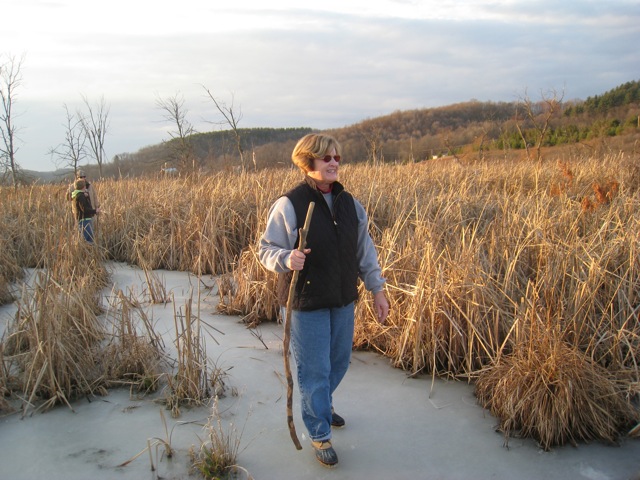
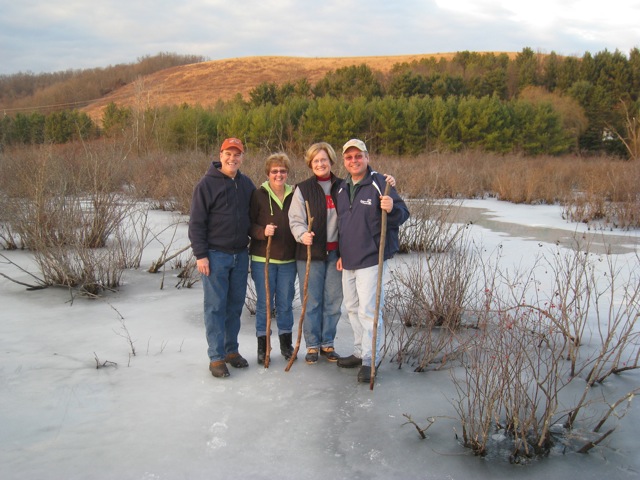
Friends walked the frozen marsh of Killbuck Creek in early January. (Photos provided by Dave and Kate Findley)

By Bruce Stambaugh

Normally, January is not one of Ohio’s more colorful months. I suppose residents all across North America could say that.

White and brown tend to be the dominant January color scheme here. It’s white if it snows, and basic brown on the bare ground if it doesn’t. Not exactly stuff of which calendar pictures are made.

With that introduction, I was going to write about how depressing it is to see the naked landscape during the winter months. I had my list of the usual suspects at the ready. The lack of color, the repetitive cloudy, dull days entombed with hard to breathe frigid air and the proverbial cabin fever all contributed to the annual epidemic of post-holiday let-down.

I had no sooner started to write when I received an email from a friend. She had attached several pictures of a swamp walk they had just taken in the backwaters of the Killbuck Creek near Killbuck, Ohio.

Most of the shots included the smiling couples that made the trek. I had a sneaky feeling their joy wasn’t just flashed for the camera. There seemed a deeper reason for their cheerfulness.

Though I did talk with my friend and her husband about their walk, the pictures really said it all. They revealed abundant beauty amid the wintry habitat of the marsh.

Buttonbush berries in varying auburn colors and stages of fermentation decorated the burnished host shrubs. By winter’s end, numerous types of wildlife, deer, turkey, robins and cedar waxwings among them, will have devoured the nutritious fruit.

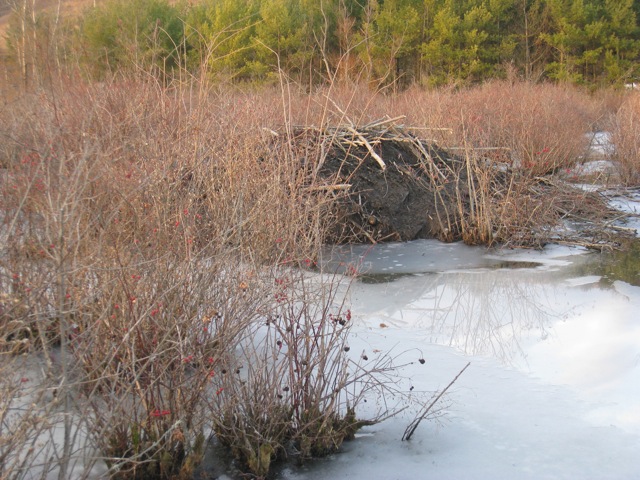
beaver den
A beaver den in the backwaters of Killbuck Creek, near Killbuck, Ohio.

Behind a stand of some of the bushes, a blackish mound covered in tan sticks rose out of the mostly frozen water. The occupants of the beaver’s den were likely deep into their season’s sleep, unaware of their human visitors.

The pictures showed my friends walking on the marsh’s frozen surface, or posing for candid memories to be shared with friends and family. A rainbow of muted colors helped create their smiles.

The ice itself varied both in texture and color, ranging from off-white to clay gray. Nature’s arsenal of elements, wind, temperature, snow, and water flow all play a role in the seemingly dormant, yet ever-changing marshy environment.

swamp walk killbuck oh
My friends were amazed at the colors they found on their frozen wetlands walk.

Behind the low lying swamp, the rounded western foothills of the Appalachian Mountains jutted up like giant loaves of fresh baked bread. Clusters of pines served as a brief but green piedmont between the two.

At that point, a familiar fragrance distracted me from the pictures. I followed my nose into the kitchen to find pan after pan of fresh out of the oven cinnamon rolls cooling on the counter tops. Beside them, tins of golden-topped potato rolls also stood patiently cooling.

In addition, rows of jelly jars filled with cobalt colored blueberry topping for homemade pancakes and waffles sparkled from the light that filtered through the kitchen window. Smaller jars of crimson apple jelly added to the colorful collection next to the stove.

While I had sat sulking listlessly at the computer, bemoaning the dull days and confined activities, my energetic wife and thoughtful friends infused me with unexpected splashes of color. My smile nearly matched those of my friends in the swamp walk photos.

Inspired by digital pictures, picture perfect baked goods and showy glass jars, I realized that the blahs of January were self-induced. If I desired color in my life during the cabin fever time of year, all I really needed to do was to open my eyes.

Start the year with a bucket list

Cathedral Rock by Bruce Stambaugh
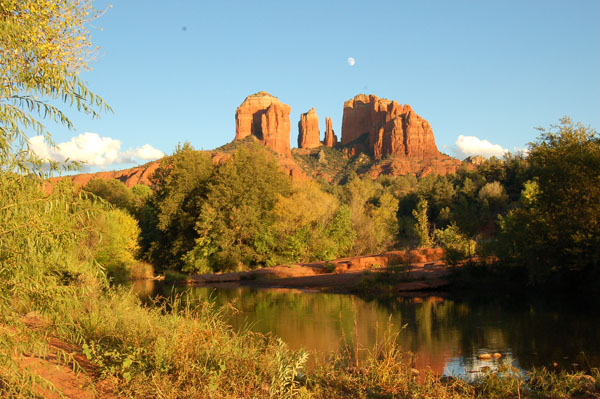
Cathedral Rock, Sedona, AZ

By Bruce Stambaugh

Instead of resolutions, I’m starting this new year by making a bucket list. As popularized by the recent movie of the same name, a bucket list is a compilation of activities you want to accomplish before you “kick the bucket.”

I’m not anticipating knocking on the pearly gates anytime soon. But then again that’s not always in our hands. I set these dreamy accomplishments to paper as a more determined effort to prioritize ambitions not yet achieved.

Obviously, a bucket list is personal, and varies according to any given individual’s interests and ambitions. The items need not be lofty, fancy, outrageous or flamboyant, just ideas and ideals unfulfilled. As one item is accomplished, another can be added.

What’s on my bucket list? Here’s a peek at some of the activities.

I want to write a book, maybe two. With my many interests, I certainly have gathered enough material. Now I need to pick a subject and get busy.

Shoshone Point, Grand Canyon, AZ by Bruce Stambaugh
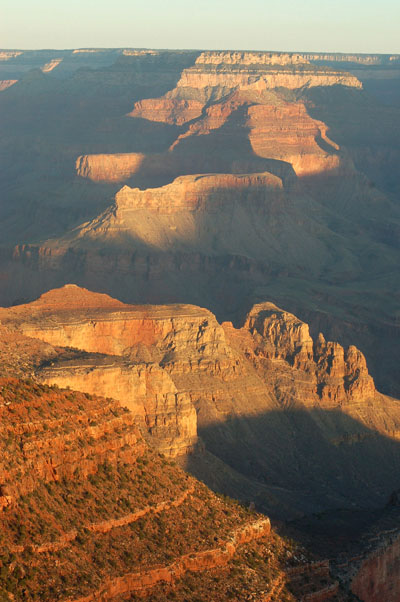
Shoshone Point, Grand Canyon, AZ.

I want to visit all 50 states. I have been working on this one all my life. I have seven states to go, Hawaii, Alaska, Washington, North Dakota, New Hampshire, Vermont and Maine.

I want to see a game in every major league baseball park. On this, too, I already have a head start. But I have dallied enough that some of the parks have long been torn down. I need to get moving before Wrigley Field and Fenway Park disappear.

I want to work with other relatives to develop a family tree. I know bits and pieces have already been compiled by extended family members. I want to help fill in some of the blank spaces if I can. Family is important to me and I enjoy history.

I would love to walk where James Herriot lived and worked in Yorkshire, England. A veterinarian by trade, Herriot made his intriguing life come alive for children and adults alike in his many books. He so eloquently intertwined the characters he met, the animals he treated, and the lovely rural Yorkshire countryside into fascinating tales.

Near San Marcos, Honduras by Bruce Stambaugh
The little church we helped build near San Marcos, Honduras.

I want to learn Spanish, at least enough to make my simplest inquiries known to those with whom I work and share when I visit Honduras. I figure it’s the least I can do.

I also want to read and reread the many good books that are gathering dust on my shelves. Like all the other items on my bucket list, they, too, have a lot to teach me. And above all else, I love to learn.

I also want to spend time hosting family and friends more than my wife and I already do. They always manage to teach me so much, especially the grandchildren. The grandkids keep me young in spirit even if they physically tire me out at times.

This laundry list of wannadoes is all well and good. But it is, like the Hollywood movie, a tad self-serving. A better bucket list should be even more inclusive and considerate of others.

Working side by side with folks, whether near or far, would be a more humanitarian item for a bucket list. Donating blood, volunteering at a hospital, serving food at a homeless shelter all would be appropriate additions to anyone’s bucket list.

You and I both might be stunningly surprised at how far such a practical, selfless implementation of service would take us. Perhaps we would go further than we ever thought we could accomplish.

That would be a bucket list worth creating.

Oceans and the weather

Gulf storm clouds by Bruce Stambaugh
Storm clouds gather at sunrise near Port Aransas, TX.

By Bruce Stambaugh

If it weren’t for the oceans of the world, the earth probably wouldn’t have weather as we know it. The landmasses then bear the brunt of nature’s bad weather and embrace her best. Considering that more than half of the world’s population lives within 60 miles of an ocean, their importance in weather making cannot be overstated.

Earth’s oceans occupy 71 percent of the world’s surface, and contain more than 97 percent of all the water contained on the globe. That huge volume of water helps create the weather that arrives on the planet’s landmasses.

Surprisingly, it is not so much the amount of water in the oceans that affects the weather as it is the temperature of the water. Just a degree or two warmer or cooler, and the oceans can have a dramatic effect on the weather experienced from season to season.

Oceans have an incredible ability to absorb, store and release heat into the atmosphere. It is this characteristic alone that affects the weather received around the world, even far inland.

Shelf cloud by Bruce Stambaugh
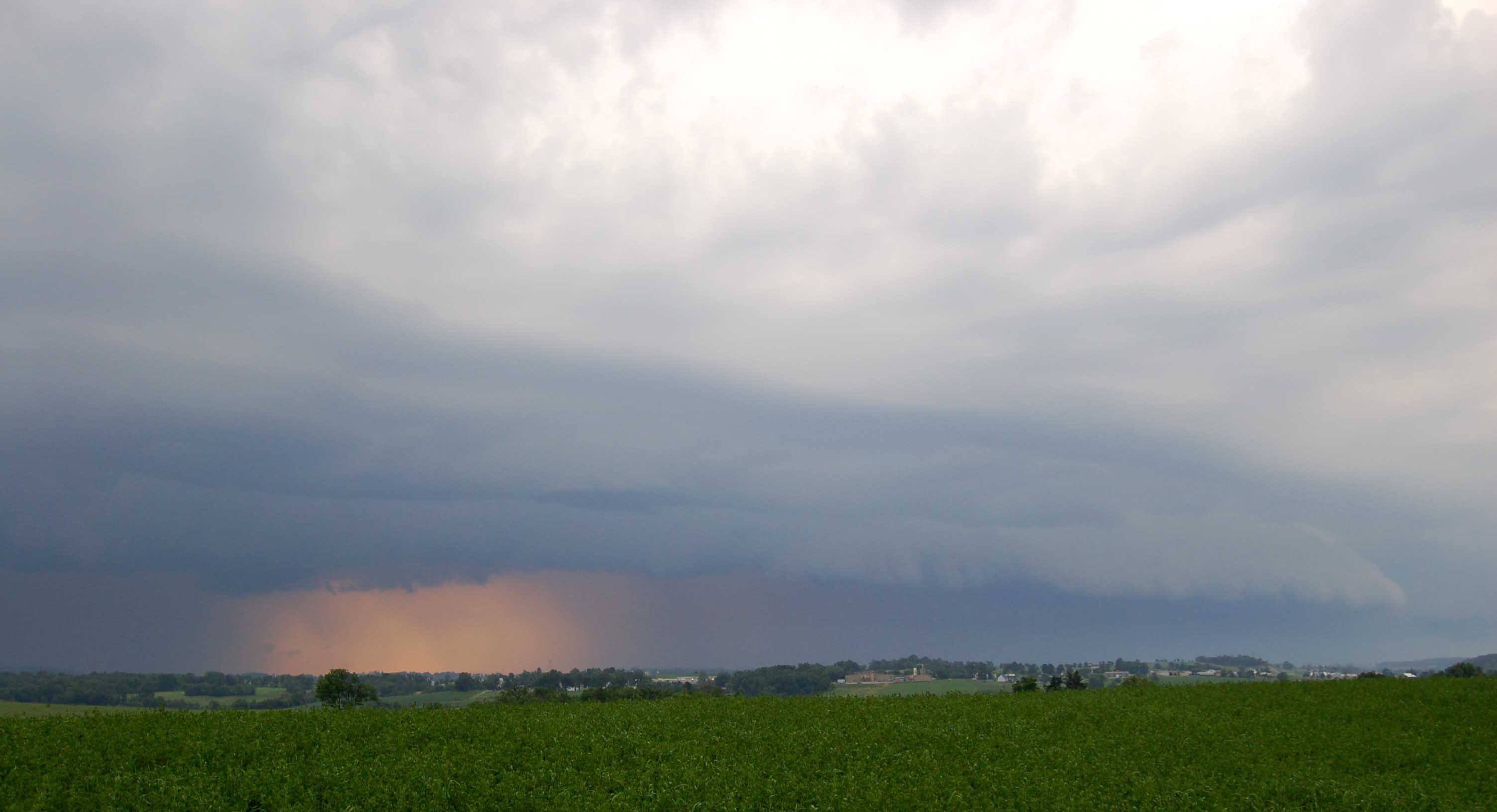
A shelf cloud of a severe thunderstorm moved over Ohio's Amish country.

This quality of ocean water also has the most dramatic affect on both climate and weather. Consider that the first 10 feet of ocean surface contains more heat than the earth’s entire atmosphere.

Major climate events, such as El Nino, result from ocean temperature changes. These temperature changes then impact weather events like hurricanes, typhoons, floods and droughts. Of course, those disasters directly relate to the success or failure of crops, and greatly affect the price of fruits, vegetables and grains, for example.

Just as the atmosphere is divided into layers, so are the oceans. The surface layer, the Epipelagic Zone, is also called the sunlight zone and extends from the surface to 660 feet deep. It is here that most of the visible light exists.

Naturally, with the light comes heating from the sun. This heating is responsible for the wide change in temperature that occurs in this zone seasonally and in latitudes. For example, surface water in the Persian Gulf can be 97 degrees Fahrenheit, while the water at the North Pole is 28 degrees.

Ocean circulations, waves, tides and sea breezes are other aspects of the ocean. Individually and collectively, they all influence the weather to some degree.

This article first appeared in the winter issue Farming Magazine.

Bay Photos by Donna

Wildlife Photos From The Chesapeake Bay Region

ROAD TO NARA

Culture and Communities at the Heart Of India

K Hertzler Art

Artist and nature journalist in the Shenandoah Valley of Virginia.

Maria Vincent Robinson

Photographer Of Life and moments

Gabriele Romano

Less Noise. More Meaning

Jennifer Murch

Art is the only way to run away without leaving home. -Twyla Tharp

Roadkill Crossing

Writing generated from the rural life

ANJOLI ROY

writer. teacher. podcast cohost.

Casa Alterna

El amor cruza fronteras / Love crosses borders