Enjoying the beauty of the first snow

Snowy lane by Bruce Stambaugh
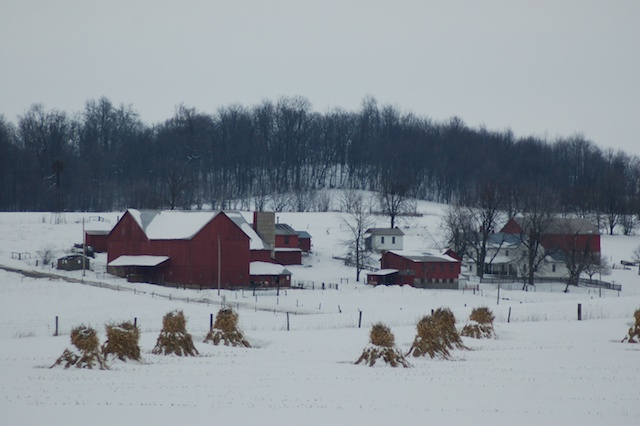
The first snow of the season decorated the long, steep lane to the cottage.

By Bruce Stambaugh

We awoke on the first Saturday of November to a skiff of snow on the roofs, grassy areas and glued to the trees. The driveway and the road in front of our house were just wet.

Since the temperature hovered right at 32 degrees Fahrenheit, I figured we probably had had more than the dusting that remained. Not one to quibble with the weather, I simply inhaled the beauty as a drab dawn broke.

My wife and I were ready to head for our cottage for a post-election weekend retreat with some friends. After the tiresome multimedia blasts of campaign negativity, we needed a quiet place, and the cottage was it.

Just a few minutes down the road, we caught up to the menacingly low clouds that were still spitting snow. During the 75-minute trip, we were amazed at just how spotty the snow was. We drove in and out of the white stuff several times.

In some places, the snow was two or three inches deep. In most, the ground was bare. The snow had fallen in various depths in a long, narrow band stretching northwest to southeast from Lake Erie to the Ohio River.

When we pulled onto the long steep lane that leads to our cottage, an inch of fresh, fluffy snow welcomed us. Initially the lane goes uphill. At the summit, the road dives into the woods, and quickly curves right, down a steep, straight slope.

Just as I began the decline, the car stopped out of respect. It couldn’t crush the beauty before us, not at least until I had taken some pictures of the virgin snow.

The limestone on the lane must have been warm enough to melt the snow on impact. Everyplace else, the snow stuck undisturbed, beautiful, mesmerizing.

Snowy woods by Bruce Stambaugh
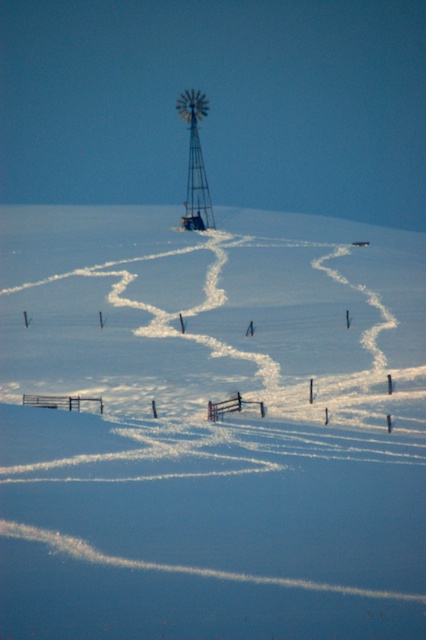
The snow cover made everything appear black and white.

With the concealed sun unable to lessen the early winter grip on the landscape, the panoramic scene seemed basic black and white. The only variation came in the clay colored clouds.

I snapped a few photos and returned to the vehicle. I guided it ever so slowly down the straight slope, around the hard left-hand curve, under slow laden white pine bows, toward the lake that reflected the steely sky.

We made the final zigzag up the lane and into the drive to the cottage. This last leg of the trip adds a faux remoteness to the location. I had brought along a leaf blower to dispense with any remaining natural litter on the cottage deck. I should have tossed in the snow shovel instead.

The combination of the snow and the cabin’s chill called for a fire in the impressive sandstone fireplace. I obediently responded.

Snowy scene by Bruce Stambaugh
The snow created picturesque scenes all around our cottage.

With the fire underway, I cranked up the chain saw and headed out into the morning sharpness. Each time I exhaled my glasses steamed up.

There is something about snow, especially the season’s first, that exhilarates me. I have to plunge headlong into it.

The chain saw, which had not run in months, must have liked the snow, too. It purred right along, and the two of us accomplished our woodcutting goal in less than an hour.

The snow was still in place when our friends arrived late morning. They wore the same smiles as my wife and I. I don’t know if it was the snow, the blazing fire, the setting or the combination there of.

No matter how long you live where it snows, there is just something extra special about that first snowfall. This one was breathtaking.

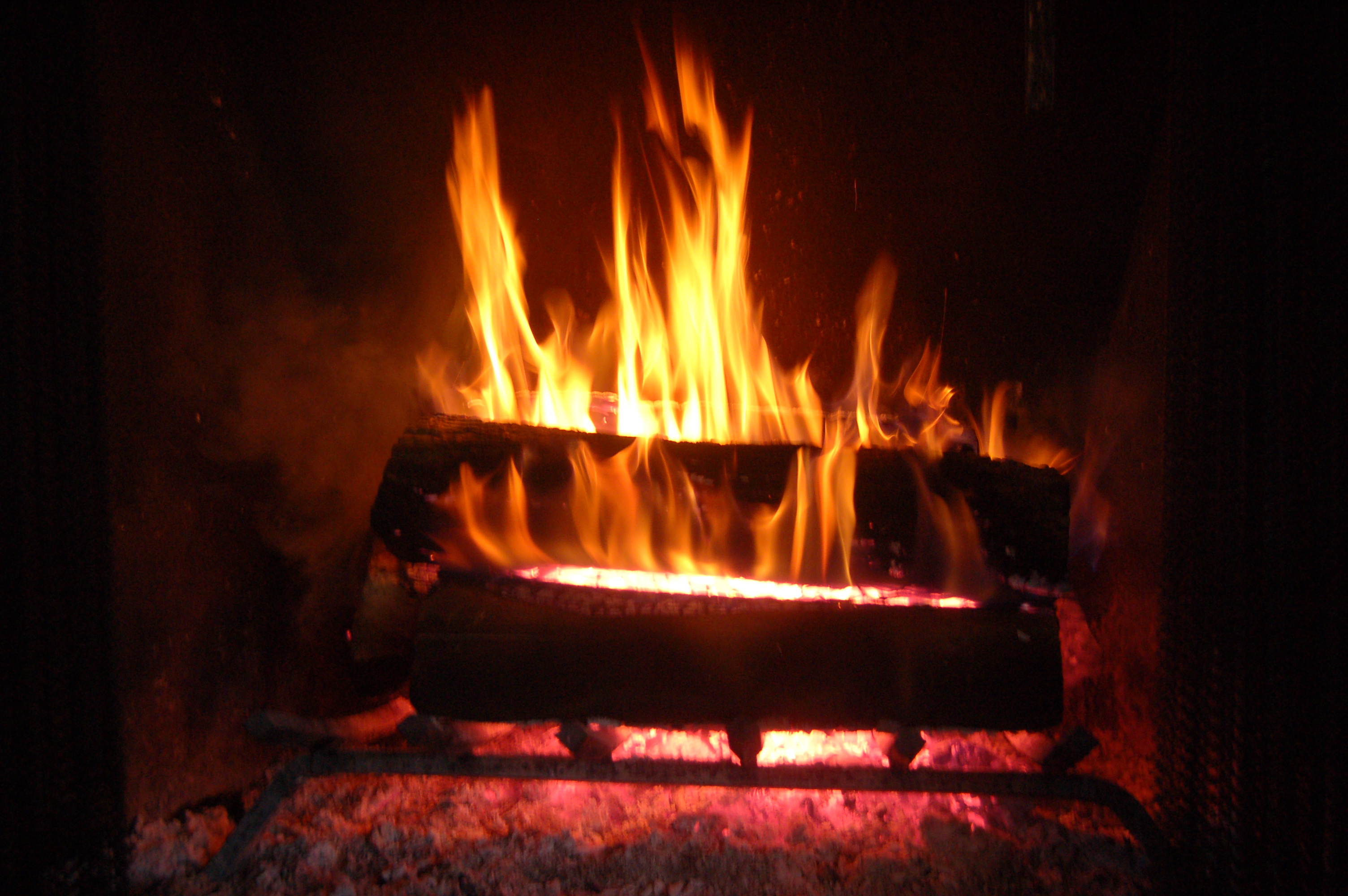
Roaring fire by Bruce Stambaugh
A warming fire is always welcome on a cold, snowy day.

Healing among the mourners

World War II Memorial by Bruce Stambaugh
My father, Richard H. Stambaugh, 89, got his only visit to the World War II Memorial in Washington, D.C. courtesy of Honor Flight. As part of a review of the first decade of the 21st century, this picture appeared on the front page of nytimes.com on Dec. 24, 2009, three days after Dad had died.

By Bruce Stambaugh

In August, I emotionally crashed and burned. I thought I had been dealing pretty well with my father’s death late last year. Truth is, I wasn’t dealing with it at all.

Like so many others who have lost loved ones, I kept myself busy, and suppressed any emotions and hurts that spontaneously tried to ooze out at serendipitous times. I denied my suffering perhaps afraid to let myself go. I needed to properly mourn, take care of myself and share with others just how much Dad meant to me.

I thought I had of course. But I was just fooling myself. I know now that what happened to me was inevitable. I was in denial and the resulting consequences finally had caught up to me. I thought I was alone in this internal battle, and had to be strong for our mother and myself.

In his final months and days, Dad had received marvelous care from Hospice of Holmes County, along with the staff at Walnut Hills, the assisted living facility in Walnut Creek, Ohio where he and Mom lived. After his death, I began receiving monthly mailings from Hospice. Most of them had articles and literature on grieving.

Thinking that I was doing just fine, I usually glanced at them and that was it. That information was for others, not me. I was wrong.

The day my emotions hit rock bottom another Hospice mailing arrived. In it was an invitation to attend a special five-week session on grieving. I wasn’t tolerating the depression medicine the doctor had prescribed for me. I decided to stop the meds and start the counseling.

The group was small, which allowed for intimate, personal, confidential sharing. We met once a week for five consecutive Thursdays. I knew most of the handful of people who attended. The lives of rural people tend to intertwine consequentially.

Dick Stambaugh and Bob Dole by Bruce Stambaugh
Seeing Bob Dole, who was instrumental in making the World War II Memorial a reality, seemed to energize my father. Dole is often at the memorial to greet Honor Flight veterens.

Participants made the two hours each week a priority. We laughed, cried, listened and comforted each other. Our common, profound grief, our tears and smiles bonded us together with measureless compassion.

By the end of the final session, I had a greater appreciation for what others go through, how much people hurt even years after losing a loved one. I was no exception. I learned, though, that hearing the varying situations of others helped see my own issues in a new and realistic perspective.

We learned that grieving is an ongoing process. It takes time and understanding.

Still, I saw healing in my fellow mourners, and I felt healing myself. The last night we met, each of us took turns sharing something significant about our loved ones. Pictures, quilts, special mementos were all passed around.

I showed a slideshow of the Honor Flight trip I took with my father and older brother to Washington, D.C. in September 2009. Honor Flight is a program begun a few years ago to transport as many World War II vets as possible to the memorial in their honor in the nation’s capital.

I served as Dad’s guardian for the day, wheeling him around in his wheelchair. My older brother assisted two more able bodied vets. When asked where that experience fit in his 89 years of living, Dad said it ranked right after his marriage.

Knowing how much the trip meant to Dad, my brother and I were blessed to have been a part of that marvelous experience. In the same way, I was honored to have participated in the bereavement small group. The unconditional love and acceptance I experienced were unforgettable and priceless.

The hugs and handshakes upon parting told me the feelings were mutual.

Stambaughs at the WW II Memorial by Bruce Stambaugh
My older brother, Craig, Dad and I posed for a picture at the Ohio pillar at the World War II Memorial in Washington, D.C. on Sept. 12, 2009.

Staying calm during a ghostly encounter

Hoover Auditorium, Lakeside, OH by Bruce Stambaugh
Hoover Auditorium, Lakeside, Ohio. This picture was taken July 3, 2010, the day I saw the ghost in the huge hall.

By Bruce Stambaugh

I wasn’t going to say anything about the ghost I saw last summer. But with the ghoulish season of Halloween upon us, and the details of the experience still fresh in my mind, I decided to share what I saw.

First and foremost, I am not a fervent believer in ghosts, especially the horror kind put forth each Halloween season. I have watched with skeptical interest the ghost hunter shows on television. Once I saw how excited they got after showing video of some supposedly spectral orb, I was more convinced than ever that such adventures bordered on silliness.

Nevertheless, I had occasionally wondered how I would respond if I had encountered a ghost first hand. Last July 3, I found out. I just sat there watching, calm and unafraid, taking in every detail.

I was hardly alone when the apparition appeared. More than 2,000 others were in their seats two-thirds of the way through a lively, if not loud, concert in Hoover Auditorium in Lakeside, Ohio.

During one of the songs, something caught my attention directly above the stage. I looked up, and I saw the bluish-white shape of a man walk across the catwalk that held the lighting and speaker systems for the performance hall.

I say “appearance of a man” because that is all I can logically conclude that it was. I watched as the man, dressed in period work clothes of the early 20th century, casually walked across the catwalk from stage left to stage right. He bent down as if to pick up something, and then simply disappeared. I glanced to the stage where the band continued to belt out its Celtic vibrations, looked back up, and saw only darkness.

I knew right then and there that it would have been impossible for a human being to actually walk across that purposed bridge. The crisscrossed steel structure had no stairs that led to it. In fact, the structure wasn’t designed for anyone to ever walk there. The horizontal frame was simply lowered by a system of ropes and pulleys.

Convinced of what I saw, the next day I headed to the Lakeside Historical Museum to see what I could discover about ghosts and the construction of Hoover Auditorium in 1928-1929. Neither the young museum curator nor the senior archivist blinked at my story. Neither did they laugh at me.

After an exhaustive search by the three of us, we had come up empty on both the report of previous ghosts in Hoover, and the report of any serious accidents or deaths during its construction. The one interesting fact I did discover from old blueprints was that the scaffolding that was used to erect the large meeting room was exactly the height of the structure that held the speakers and lighting.

Hotel Lakeside, Lakeside, Ohio by Bruce Stambaugh
The rear of Hotel Lakeside in Lakeside, Ohio. Guests have occasionally reported seeing ghosts there.

I also learned of reports of ghosts in the Hotel Lakeside and in the museum where I had begun my search. I appreciated the fact that both the curator and the archivist dived right in to help me find whatever facts we could.

Unfortunately, the facts were few, but the personal encounter was real. If anyone else in the audience saw anything, they never said so. It wasn’t like seeing the ghosts of Christmas Past, Present and Future, and it certainly wasn’t the commercial and entertainment-driven ghoulishness currently being spewed out.

I know I saw this man in clunky work boots, old-style work pants, a thick leather belt, and old-fashioned work shirt and slicked back hair. I just don’t know why.

Decorated cottage at Lakeside, Ohio by Bruce Stambaugh
Peaceful, attractive cottages like this one abound in Lakeside, Ohio, making it an attractive, fun and safe vacation destination for families.

See how they grow, the grandchildren that is

The boys and Slider by Bruce Stambaugh
Slider pounced on Evan and Davis at a Cleveland Indians game in August.

By Bruce Stambaugh

Every time I see my three grandchildren, I marvel at how much they have grown. I used to think that a lot when they lived in Texas, and we only saw them three or four times a year.

Each time we visited, whether the venue was here or there, our Texan born grandchildren showed obvious changes. One would expect that given the infrequent gatherings.

Massanutten Mountain by Bruce Stambaugh
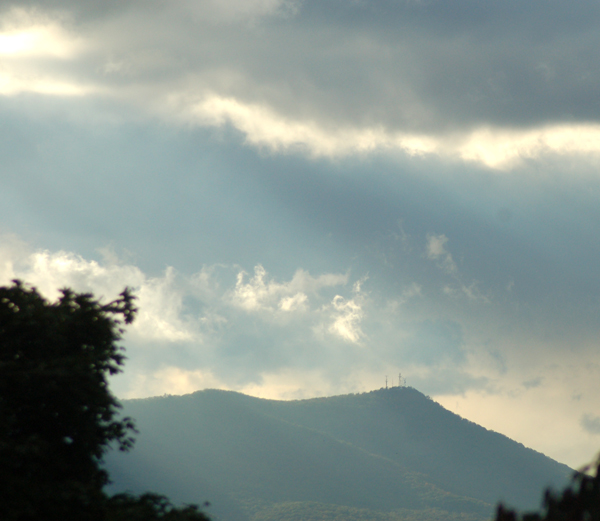
Massanutten Mountain dominates the Shenandoah Valley at Harrisonburg, VA.

But now that they live in Virginia’s lovely Shenandoah Valley, I seem to find myself saying that to them and about them each time we see them. And compared to Texas, that’s been a lot more frequent.

Since they moved from Pflugerville to Harrisonburg in mid-June, we have been together with Evan, Davis and Maren several times already. They have been in Ohio twice, and we have driven the 350 miles southeast four times.

The visits included a couple of celebrations since two of those trips marked birthdays. In July, we finally got to party with Davis on his fourth birthday. The Texas heat always discouraged us from mid-July visits, other than when he was born of course. We wouldn’t have missed that no matter how hot it got.

On our most recent trip, we celebrated Maren’s first birthday with a host of family and friends. It was quite the party. They may be living in Virginia, but their Texas roots run deep. Maren’s daddy couldn’t forget the good things about Texas. He bought a smoker and we had ourselves some swell tasting Texas brisket with homemade barbecue sauce.

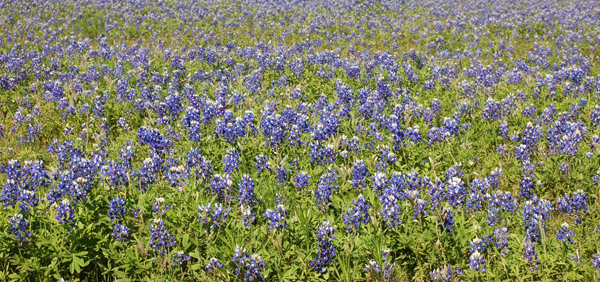
Texas Blue Bonnets by Bruce Stambaugh
A field of Texas Blue Bonnets in full bloom.

Joining in on Evan’s special day was never a problem. Flying to Texas in mid-April, when the gorgeous blue bonnets were often in full bloom, was always a pleasure.

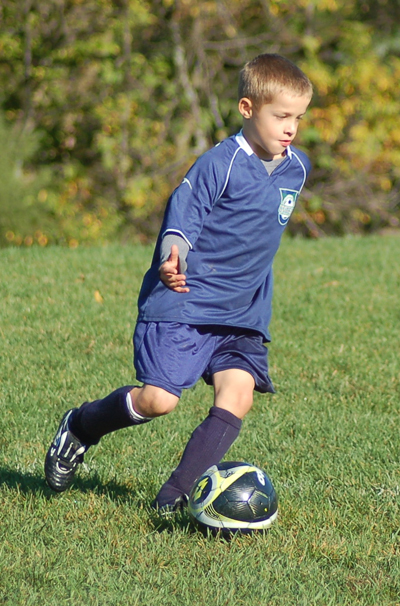
Evan by Bruce Stambaugh
Grandson Evan on the move in a soccer game.

Now all of that has changed. Evan is enjoying first grade and is growing like a weed. He is athletic, inquisitive, assertive, and definitely knows he is the oldest of the three. In other words, he is a typical six-year old.

Davis by Bruce Stambaugh
Grandson Davis was all concentration in his soccer match.

Davis enjoys his pre-school three days a week. On our last visit, his bouncy, blonde curls had been trimmed back to manageable standards. That didn’t seem to deter getting the attention of the girls at his soccer match.

A true lefty, no lines can confine his creativity. That included drawing with red permanent marker on the new tan bedroom rug. He can be a bit moody like his Nana. Nevertheless, it is a joy to be the brunt of his silly jokes. Playing along is all a part of being a grandparent.

My favorite moment with the boys came when they spent time with us here in early August. Nana and I took them to an Indians game, where Slider, the Tribe’s fuzzy mascot, jumped the boys, much to their delight.

Maren by Bruce Stambaugh
Granddaughter Maren was all dressed for the Eagles' game in her skinny jeans and jersey.

Maren is the happiest baby I have even seen, unless of course she wants her mommy and her mommy is unavailable. Modeling might be in her future. She already poses for the camera.

By definition, Maren is really a toddler now that she has passed her first birthday. Close to walking, Maren stands by herself and never tires of pushing around the toy cart Nana bought her.

With those sparkling baby blue eyes, that constant smile and gregarious demeanor, Maren is already a knock out. At the rate she is growing up, I may be called into Virginia guard duty sooner than I think.

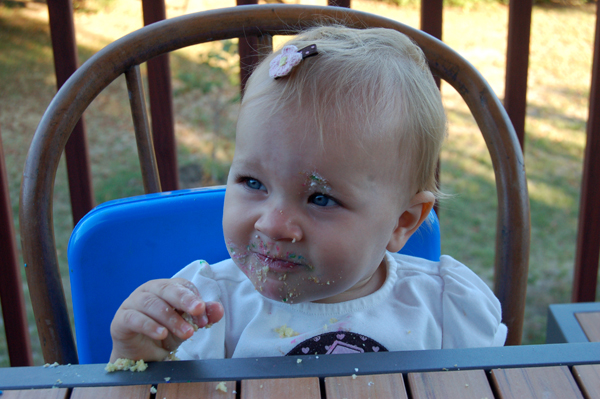
Maren and cupcake by Bruce Stambaugh
Since it was her first birthday, Maren wasn't too sure what to do with her first cupcake.
Maren figured it out by Bruce Stambaugh
In the end, Maren figured out what partying was all about.

Signs of fall are everywhere

Fall in West Virginia by Bruce Stambaugh
Fall had arrived along US 33 in the mountains of West Virginia.

By Bruce Stambaugh

Even before we left to visit our daughter’s family in Virginia’s lovely Shenandoah Valley, signs of fall were abundant.

Fall in Ohio's Amish country by Bruce Stambaugh
A lone horse sought shade beneath a changing sugar maple tree near Benton in Ohio's Amish country

A casual drive around the Holmes County countryside provided enough evidence to
convince even an inattentive jury. Autumn had no choice but to plead guilty as charged.

Fall’s natural arrival was indisputable. Leaves had begun their annual transformation from green to some color of the rainbow. Others, due to the late summer dryness, simply fell off the trees altogether.

The regular purr of leaf blowers had replaced the regular whine of lawnmowers, further proof that summer had succumbed to fall. Occasional columns of white smoke signaled smoldering leaf piles.

Fall weather arrived just before we left for our Virginia visit. A strong cold front pushed the warm, muggy air out, and replaced it with cloudy, rainy, cooler days and nights. The annual fall fogs had already begun making morning commutes temporarily treacherous.

Dogwood tree in the fall by Bruce Stambaugh
The subtle greens and purples of the dogwood leaves highlighted the tree's bright red berries.

In my own yard, silky green to purplish dogwood leaves accentuated the trees’ bold, bright red berries. The backyard birds weren’t too pleased with me for disturbing their feasting.

My neighbor was just beginning an early harvest of his field corn, and we had yet to have a frost. Elsewhere, other farmers still resorted to the old-fashioned and nostalgic way of picking corn. They filled their fields with row upon row of shocks, mimicking an encampment of teepees.

Picking corn in Amish country by Bruce Stambaugh
Horse-drawn corn pickers began an early harvest of the field corn.

A month ago already football had replaced baseball as the primary pastime, whether viewed from the bleachers or the couch. Back outside, squirrels scurried across the road. Some of them didn’t make it, casualty to road kill or a hunter’s sharp aim.

Long before the leaves began to change colors, autumn was being ushered in with human flare. Front porches once home to pots of impatiens, petunias and begonias were now decorated with all sizes of orange pumpkins, gold, white and crimson chrysanthemums and multi-colored and curiously shaped gourds.

Fall display of pumpkins by Bruce Stambaugh
A typical fall display found in Ohio's Amish country.

For those desiring more man-made symbols, giant ghouls and inflated spiders hanging on webs big enough to catch a bus popped up almost overnight. The business industry had also begun their annual capitalization of fall with seasonal displays and multi-media commercials.

Inventory at roadside produce stands had changed accordingly. Bound bundles of cornstalks and the aforementioned flowers and squash replaced zucchini and tomatoes.

One place banked on a narrow market share. The good folks only offered the scarce bittersweet. By the number of cars in their tiny lot, they seemed to have found their niche.

Fall festivals, often historically annual events, began to celebrate nearly every conceivable aspect of autumn. A town picked a theme, say pumpkins, apple butter, antiques, wooly worms, quilting, or just good old-fashioned fun, and the festival was on.

These endeavors were not unique to Amish country either. Large banners across the main drags of many a town on our drive from Ohio to Virginia announced their particular local event.

Fall even showed its face on menus with fresh pumpkin pie, locally grown apples sliced and dipped in yummy caramel, and of course the seasonal snack mix of candy corn and salted peanuts.

Fall sunset with geese by Bruce Stambaugh
A flock of Canada Geese cut across a fall sunset in Ohio's Amish country.

Given all these obvious signs of fall, there can be no doubt. From gardens to town squares, fall is in full force everywhere we look.

Tornadoes hit Ohio’s Amish country again

Secrest Garden by Bruce Stambaugh
The entrance to the Secrest Garden and Arboretum after the tornado.

By Bruce Stambaugh

For the second time this summer, tornadoes caused significant damage in Ohio’s Amish country.

Shortly before 5:30 p.m. on Thursday, Sept. 16 a powerful tornado touched down on the south edge of Wooster, Ohio along Prairie Lane. The tornado, which the National Weather Service rated an EF2, proceeded east destroying businesses and homes, and crossed Madison Ave. onto the campus of the Ohio Agricultural Research and Development Center, a division of The Ohio State University.

The tornado caused extensive damage to campus buildings, including some historical homes used as offices. It also destroyed the machine shop and heavily damaged parts of Secrest Garden and Arboretum, where many people love to walk and relax among the roses, ornamental shrubs and old age trees. The tornado clipped off dozens of the huge trees 20 to 30 feet above the ground.

The Wooster Twp. Fire chief reported that only one person was slightly injured. But she refused transport to the hospital.

The tornado continued on an east northeast path destroying and damaging several other homes and farm buildings. It did considerable damage to the Riceland Golf Course on U.S. 30 south of Orrville. Altogether, the NWS reported that the tornado was on the ground for 12 miles and reached wind speeds of 130 m.p.h. It left a path of destruction 200 yards wide.

Around 6 p.m., an EF1 tornado hit near the rural town of Farmerstown, Ohio in Holmes County about 25 miles south of Wooster. Several homes and barns were destroyed or damaged there. But again, no one was injured, although some farm animals had to be put down. The tornado was on the ground for three miles and reached a maximum speed of 100 m.p.h. It ranged from 50 to 75 yards wide.

As a Skywarn severe weather spotter for north central Holmes County, the Cleveland office of the National Weather Service asked me to photograph the damage at the OARDC. This was prior to knowing of the tornado in Holmes County. No tornado warning was issued for Holmes County.

I arrived at the OARDC shortly before 7 p.m., which left me a little more than a half an hour to take pictures before dark. I shot as many pictures as I could, but due to darkness, was unable to make it entirely around the campus. As I walked back to my car, parked in the arboretum a half mile east of the damaged OARDC buildings, I cut through open fields. I found several places where debris had hit the ground, leaving large gouges in the fields and grass.

The first tornado of the summer hit Holmes County and continued into Tuscarawas County on June 5. The EF1 and EF2 tornado caused extensive damage along its 10 mile path.

A gallery of some of my shots at the OARDC is shown below. Information about the Farmerstown tornado can be found here: http://www.holmescountyjournal.com/.

brick house by Bruce Stambaugh
Trees were snapped and the old Rice House heavily damaged at the OARDC in Wooster, Ohio.
damaged OARDC building by Bruce Stambaugh
One of the many OARDC buildings destroyed by the tornado
View of damaged OARDC building by Bruce Stambaugh
Another view of the building shown above.
Debris and stripped trees at the OARDC by Bruce Stambaugh
Debris and stripped trees at the OARDC.
Large trees down by Bruce Stambaugh
The tornado toppled large trees on the OARDC campus.
The OARDC's machine shop was heavily damaged by the tornado.
Machine shop destroyed by Bruce Stambaugh
Following the tornado's path to the machine shop at the OARDC.
Damage at the OARDC by Bruce Stambaugh
Damaged farm equipment and trees at the OARDC.
More damage around the machine shop by Bruce Stambaugh
More damage around the machine shop at the OARDC.
Another destroyed building at the OARDC by Bruce Stambaugh
Another destroyed building at the OARDC.
Destroyed machine shop by Bruce Stambaugh
The destroyed machine shop at the OARDC.
Debris littered the OARDC campus by Bruce Stambaugh
Debris from the tornado littered the OARDC campus.
OARDC police station by Bruce Stambaugh
Damage was extensive at the building that housed the campus police station.
The agricultural engineer building by Bruce Stambaugh
The agricultural engineering building was destroyed.
Rose garden by Bruce Stambaugh
The OARDC rose garden was heavily damaged.

Taking time to really see

Marblehead Lighthouse by Bruce Stambaugh
Clouds sail by the historic Marblehead Lighthouse at Marblehead, Ohio.

By Bruce Stambaugh

The day after my favorite resort town, Lakeside, Ohio, ended its gated season, which was Labor Day, I began to see the place in a different light.

Like Cinderella’s carriage, the town had transformed into its natural state overnight. Streets that had bustled for weeks with pedestrians, bicycles, golf carts and motorized vehicles suddenly became quiet. Lakeside’s population had dropped faster than the stock market.

Cottages that had housed happy families all summer were now boarded up for the winter. Businesses once crowded with customers were also shuttered for the season.

Lakeside signs by Bruce Stambaugh
Maintenance workers gathered up traffic signs used during the gated season.

Maintenance crews made their rounds undoing what they had worked so hard to ready three short months ago. They picked up the traffic and parking signs needed to control the passage on the narrow streets with limited parking.

The workers seemed to be in no hurry whatsoever. Perhaps sensing the newfound quietness themselves, they soberly went about their business, the crackling of their portable radios occasionally breaking the hushed spell.

Their pace could have been from the day’s extraordinary heat as much as it was lack of ambition. The land wind wasn’t much help, blocked by the combination of the southerly rise of the peninsula itself, the town’s closely packed cottages and buildings and the giant hardwoods that overshadowed everything.

Fishing at Lakeside Ohio by Bruce Stambaugh
Fishing off the dock at Lakeside, Ohio is a popular pastime.

The only relief, if there was any to be had, could be on the dock, which protrudes a football field length into Lake Erie. Normally crowded with sun worshippers, fishermen, and people just wanting to soak in the scene, I nearly had the cement pier to myself.

The afternoon sun blazed away, and the wind was fierce, but cooler than in town thanks to the lake. I faced my folding chair east away from the wind. I was glad I had.

Freighter at Marblehead, Ohio by Bruce Stambaugh
A freighter took on stone at Marblehead, Ohio.

I had taken both camera and binoculars to while away the time. I enjoyed just scanning the broad horizon that stretched from the islands to Marblehead, where a huge freighter was moored at the stone quarry.

The strong westerly wind whipped the waves furiously. Anchored fishing boats bobbed like fishing line bobbers.

Ring-billed seagulls found security from the wind in the lee of the dock. One played King on the Hill. It had landed on a slightly submerged rock, and lorded it over all the other gulls that floated in the choppy water.

Osprey over Lakeside, Ohio by Bruce Stambaugh
An Osprey sailed over the dock at Lakeside, Ohio.

High above, another bird caught my eye. An osprey sailed with the wind, searching the shallow waters near the shore for unsuspecting fish. Its mate soon joined the hunt. They circled and hovered but always wind-driven east were soon out of view even with binoculars.

I put the glasses down and quickly noticed smaller, streamlined birds dive-bombing the water. They zigged-zagged and glided, then rose up and hurled themselves into the lake like rocks, but only for a few seconds. The small flock of migrating Common and Forster’s Terns put on quite a show in filling up for the long journey south.

Suddenly the stack of the freighter let loose sooty puffs of diesel smoke. It had taken on its load and was ready to sail. Even though I was upwind and a mile away, I could hear the huge, powerful props churn the water as the massive boat slipped away.

Common Tern at Lakeside, Ohio by Bruce Stambaugh
A Forster's Tern readied to plunge into the lake at Lakeside, Ohio.

In less than 20 minutes, it had turned northeast for deeper water, destination unknown to me. I, however, knew mine. I returned to our hospitality house for dinner, glad I had taken the time to observe Lakeside in a slower, even more peaceful mode than usual.

From every angle, August is golden

Golden sunset by Bruce Stambaugh
Hazy sunsets in Amish country are the norm in August.

By Bruce Stambaugh

These are what I call August’s golden days. If I only referenced orangey sunrises and the hazy, citrus sunsets, that moniker would apply.

August is so much more than lovely solar appearances and disappearances. It is always full of golden moments that make golden memories.

I realize my reflections are provincial. In a world full of disease, disaster, dismay and hostilities, not all would share my august perspectives. However, I cannot deny what I have observed and experienced in this transitional month in Amish country.

In calling August golden, I mean to take the broadest definition possible. Everywhere you turn, deep, rich yellows and golds appear. August is golden, too, in that it is good, providing success and satisfaction as the harvesting begins.

Mowing oats by Bruce Stambaugh
Mowing and stacking the oats into shocks is the first step in the harvesting process for the Amish.

August is usually a hot month in most of the northern hemisphere. Even the poor people in Moscow, Russia, where temperatures have seemed more like Dallas, Texas, have been especially suffering.

True to form, hot and humid have been the bywords in Ohio, too. Those who have had to work out in these blazing elements would argue for sizzling and sultry as better descriptors. But no matter how we describe the daily dog days of August, the benefits surely outweigh the negatives, no matter how muggy.

Coming and going by Bruce Stamabugh
One wagon heads to the barn while the other returns to the field to be loaded again.

My Amish neighbor’s circle of friends purposefully gathers the air-dried, ripened oat shocks wagonload after wagonload. Their water thermos got a workout, too. With their cooperative efforts, the impressive stand of honey-colored sheaves had disappeared by day’s end.

I always find it a miracle that once the sea of grain is cut and shocked, a carpet of bright green immediately replaces it. The hardy clover thrives all the more once it has the ground to itself.

There are other kinds of gold in August, too. The Incredible sweet corn arrives almost simultaneously with the transparent apples. It’s husking, cutting, cooking and freezing corn one day, making tartly sweet applesauce the next.

Ripe tomatoes by Bruce Stambaugh
Heirloom tomatoes ripen on the vine.

The growth of the heirloom tomato plants my wife and son planted in late May is so
prolific, the plant runners get tied daily. Their yellow, red and green-striped fruit add to the festivities.

House wren by Bruce Stambaugh
A house wren leaves the nest after feeding her brood.

The noisy tan house wrens worked frantically to satisfy their last brood of the summer. Their hungry youngsters consumed an amazing amount of worms, caterpillars and insects.

When the little ones began to greet their parents at the entrance to their birthplace, it’s nearly time for them to fly. In our case, the babies were there before church, but not when we got home. The grandsons and I found them learning to forage and hide in the brush pile under the pines near the hammock where other golden moments were made.

Monarch and swallowtail butterflies joined the goodness of the month as they enjoyed the nectar of the milkweed and wild and domestic flowers. Both the black and yellow-billed cuckoo birds announced their arrivals as the tent caterpillars hatched.

The much publicized but often under performing Perseid meteor showers still managed to send enough bright streaks though the new moon sky to extend the month’s goldenness 24/7.

Next week the full moon will strut its stuff, casting a golden glow across landscapes, rural and urban alike. Ready or not, summer vacation has yielded to elongated yellow buses and excited, golden voices of children beginning a new school year.

All things considered, August is a positively golden time of year.

Hammock fun by Bruce Stambaugh
Playing on a hammock in the cool shade serves as a diversion from the August heat and humidity.

The road to a fresh start

Mixed peppers by Bruce Stambaugh
Boxes of colorful peppers looked too good to resist.

By Bruce Stambaugh

You can find them nearly everywhere in Ohio’s Amish country. Seasonal roadside produce stands are one of the area’s mainstays.

But for probably a sundry of reasons, tourists and local residents alike often ignore these unsophisticated and sometimes spontaneous mini-markets. They shouldn’t. The goods offered provide lasting and tasteful memories of Ohio’s Amish country.

The produce stands offer excellent foodstuffs and canned goods at very fair prices. A bonus is that the products peddled are green, as in locally grown green.

“Locally grown fruits and vegetable are not only good for you,” says Leah Miller, director of the Small Farm Institute based in Coshocton, Ohio. “They also provide families who live on small farms with additional and needed income.”

Blessing Acres sign by Bruce Stambaugh
The sign to Blessing Acres produce stand says it all.

Blessing Acres Produce, a produce stand located about half way between Berlin and Mt. Hope, Ohio on Township Road 362 in Holmes County, is a prime example. Anna Miller and her children operate the 25-acre produce farm. Son, Abe, serves as the manager.

Definitely off the beaten path, the Miller family still has many repeat customers who have found this little Garden of Eden. Homemade signs direct traffic off of two parallel county roads to the business. As different items like beets, cucumbers, corn and tomatoes come ripe, they are added to the bottom of the sign. At times the chain of produce names reaches clear to the ground.

Their season conveniently starts about the time schools dismiss for the summer. Strawberries are their first main crop, and are always in high demand for their flavor, sweetness and freshness.

Those are some of the key customer benefits to buying from the roadside stands, according to the online Ohio Farm Fresh directory at http://www.ohiofarmfresh.com. Freshness, taste and nutrition are all reasons why purchasing from the seasonal stands makes sense. Of course, the farmers appreciate the cash flow, too.

Marion Steiner has operated the Kidron Road Greenhouse and Produce stand for 17 years with help from her 11 children. Located on Kidron Road just south of U.S. 250 in Wayne County, Steiner said a majority of her customers are local, but a few out-of-state people also stop in.

June Hammond of Wooster, Ohio  has been a regular throughout many growing seasons.

“I come here because the people are friendly, the prices reasonable, and the products are fresh,” Hammond said.

Just down the road at Raber’s Fresh Produce similar comments are offered by long-time, repeat customers. Raber’s is located on Kidron Road just south of Harrison Road.

Dave Guthrie drives all the way from Vermillion, Ohio to buy sweet corn simply because he says it tastes better than what he can buy at stores back home. Guthrie’s seven-year-old grandson, Joshua Snyder, came along for the ride, too.

Hold on tight by Bruce Stambaugh
Joshua Snyder held on tight to the cucumbers he selected.

“It’s pretty and it’s fun out here,” Snyder said. “I like looking around, especially seeing the horses and buggies, and the nice houses and fields.”

The youngster actually hit on another benefit to buying from countryside stands. The bucolic ambiance coupled with decent prices and fresh, tasty food that is also good for you adds up to a win-win situation.

Many of the produce stands also offer fresh, homemade baked goods and what Leah Miller calls “value-added products” like home-canned fruits, vegetables and jams and jellies.

Some of the stands like the one that young sisters Anna and Neva Miller manned pop up randomly. The girls brought excess green beans from their garden and set up shop opposite a local bulk food store north of Mt. Hope. It wasn’t long until they had to return home to replenish their supply.

There is yet one other important reason for stopping at a local produce stand. You just might make friends, like Scott Thomas of Fresno, Ohio has.

Thomas has been coming to Blessing Acres for years. He knows each family member by name, and you could tell by the smiles of family members that they are always glad to see him.

“They come down to my place and help me butcher hogs,” Thomas said. In turn, he lets family members hunt deer on his property.

Fresh, tasty, nutritious food and good friends are always a healthy combination. And in Ohio’s Amish country, all that can be found right along the road.

Roadside beans by Bruce Stambaugh
Anna and Neva Miller sold beans from their garden along the highway north of Mt. Hope, Ohio.

This story was first published in Ohio Amish Country magazine, August 2010.

Confronting life’s unpredictable perils

wading in surf by Anna Bishop
Wading in the North Carolina surf. (Photo by Anna Bishop)

By Bruce Stambaugh

Within hours of one another, I received three divergent yet emotional messages about grandchildren.

The first came after I had changed my profile picture on Facebook to a shot of my middle grandchild celebrating his fourth birthday. The picture showed Davis heartily laughing in front of his makeshift birthday cake.

The four candles signifying his age burned as bright as his smile. The candles were securely stuck in a row in the thick, chocolate frosting of a cream stick that Nana and I had bought at a local Amish bakery before leaving Ohio.

Davis' fourth birthday by Bruce Stambaugh
A cream stick for a birthday cake.

It was a fun time, with the family finally gathered for his birthday. It was the first one we had celebrated with Davis. Texas was just too hot and we always seemed to be extra-busy in the middle of July.

But now that Davis and his family had moved to Virginia, we made sure we were there with and for him. The message about all this was from his mother, my daughter, asking for the pictures from the party. I had yet to share them with her. She loved the shot and wanted to see the rest.

When I checked my Facebook page in the morning, I found a disturbing and extremely sad posting by the son of a friend of mine. His sister’s newborn daughter had died right after birth.

I shared the sad news with my wife. We are close friends with the expectant grandparents. This baby would have been their first grandchild, one they had so longed for and had happily anticipated.

Now all expectation of playful days ahead had been dashed. I couldn’t imagine how devastated they must feel. I felt guilty for having three healthy grandchildren.

Their daughter lived in Indiana and I knew they would be with her. What could I do to offer my deepest sympathies, to reach out to them in their time of need?

While I struggled with this dilemma, I received an email containing the weekly column of a friend and writing peer in Virginia. He had written about his vacation with his grandchildren and included a picture of him wading in the ocean, a towheaded granddaughter tugging on one arm, a brown-haired grandson on the other as the foamy surf broke upon them.

It was clear that both grandchildren hung on to their grandfather in trust and love as the soft, warm waves crashed against them. I was happy for him, sad for my other friends, and conflicted about being able to reconcile these seemingly disconnected incidents.

Grandparents are supposed to be wise and loving and adored. My friend’s picture clearly revealed those dynamics. But we also know that there are times when life simply isn’t fair and there is absolutely nothing we can do about it.

I hope and pray that my three grandchildren will grow and prosper and live lives of service to humanity. I am deeply distraught that my friends Bruce and Helen cannot now say the same thing for their granddaughter.

I am sure many of their friends will reach out to this fine couple in their grief. When I get the chance, though, I will pretend we are at the shore, standing knee-deep in the churning surf, readying for life’s perilous waves to come crashing against us, Helen clasping one arm, Bruce the other, trusting and loving.

At this mournful moment, that is all I can offer.
Seaside sunrise by Bruce Stambaugh

Bay Photos by Donna

Wildlife Photos From The Chesapeake Bay Region

ROAD TO NARA

Culture and Communities at the Heart Of India

K Hertzler Art

Artist and nature journalist in the Shenandoah Valley of Virginia.

Maria Vincent Robinson

Photographer Of Life and moments

Gabriele Romano

Personal Blog

Jennifer Murch

Art is the only way to run away without leaving home. -Twyla Tharp

Roadkill Crossing

Writing generated from the rural life

ANJOLI ROY

writer. teacher. podcast cohost.

Casa Alterna

El amor cruza fronteras / Love crosses borders