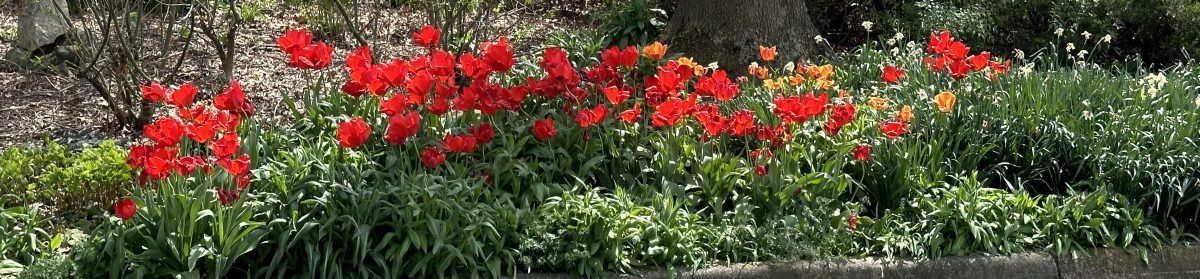
The winter of our youth has returned

thepushbybrucestambaugh

By Bruce Stambaugh

When it comes to winter weather, the younger generations now have something to brag about. They have finally experienced a good old-fashioned winter.

It’s been a long time coming, too. Sure, we’ve had bitter cold snaps, and heavy snows in the past few decades. But nothing has resembled the winters of my youth or those older then me for that matter.

The worst back-to-back winters that I can recall were those of 1976-77 and 1977-78. They were record breaking, unforgettable winters. Once we went from tornado warnings to blizzard warnings in a matter of minutes. Extreme cold followed the blizzard. Those storms brought wide-ranging effects with no exaggeration needed.

amishsleddingbybrucestambaugh
Amish children sled riding.
We had 22 foot snow drifts behind our house. A front-end loader shoveled the snow out of our driveway. The driver of a semi-tractor trailer truck was buried for days in the cab of his truck. The tip of his radio antenna sticking out of the snow enabled rescuers to find him. Given today’s digital gizmos, do I need to explain what a radio antenna was?

The severe weather closed school for 17 days. Those of you who lived through those fateful winter storms have your own amazing stories.

Of course, I was a young man then, not a youngster. Youth tend to remember the upsides of harsh winters. They leave the negatives for the adults to unravel. I was no different.

When heavy snows hit and extended cold spells settled in when I was a kid, the outdoors was our playground. I’m sure mothers everywhere were grateful for that.

We would bundle up as best we could, layered with jackets, stocking caps, scarves and fur-lined gloves. Off we would go, sledding, ice skating, making snow angels and snowmen, snow forts, and firing volley after volley of snowballs. We never had to worry about running out of ammunition.

We played until we got too cold or too wet or both. We went home, and hung the soaked clothing as close to the furnace as possible where it was likely to dry the quickest. At school, kids’ clothing covered the old steam radiators until the next recess.


These memories weren’t from one-time storms either. This was the way winter went. It was extremely unusual if snow didn’t cover the ground for a majority of the winter.

This wasn’t true for just my youth. I remember seeing pictures and hearing stories from my parents and grandparents about how difficult their winters had persistently been. I recall seeing pictures of gangs of volunteers clearing the state route in Mt. Hope, Ohio by hand with shovels, not plows. The snow was piled well above their heads.

That hasn’t happened in recent years. In fact, records show that nine out of the last 10 years global records have been set for above average annual temperatures. That did not bode well for a sustained winter anywhere.

For a multitude of climatological reasons, that has all changed this winter. Storm after storm, often following similar tracks, have pelted most of North America, especially areas east of the Rocky Mountains.
Snowplows have worked overtime clearing the roads. Road salt has become a precious commodity.

This winter certainly has been a doozy. My guess is it will leave the kind of lasting impressions on the younger generations like it did for my generation and those previous.

There is one minor problem that I hate to even mention. Winter isn’t over yet. More memories may yet be made.
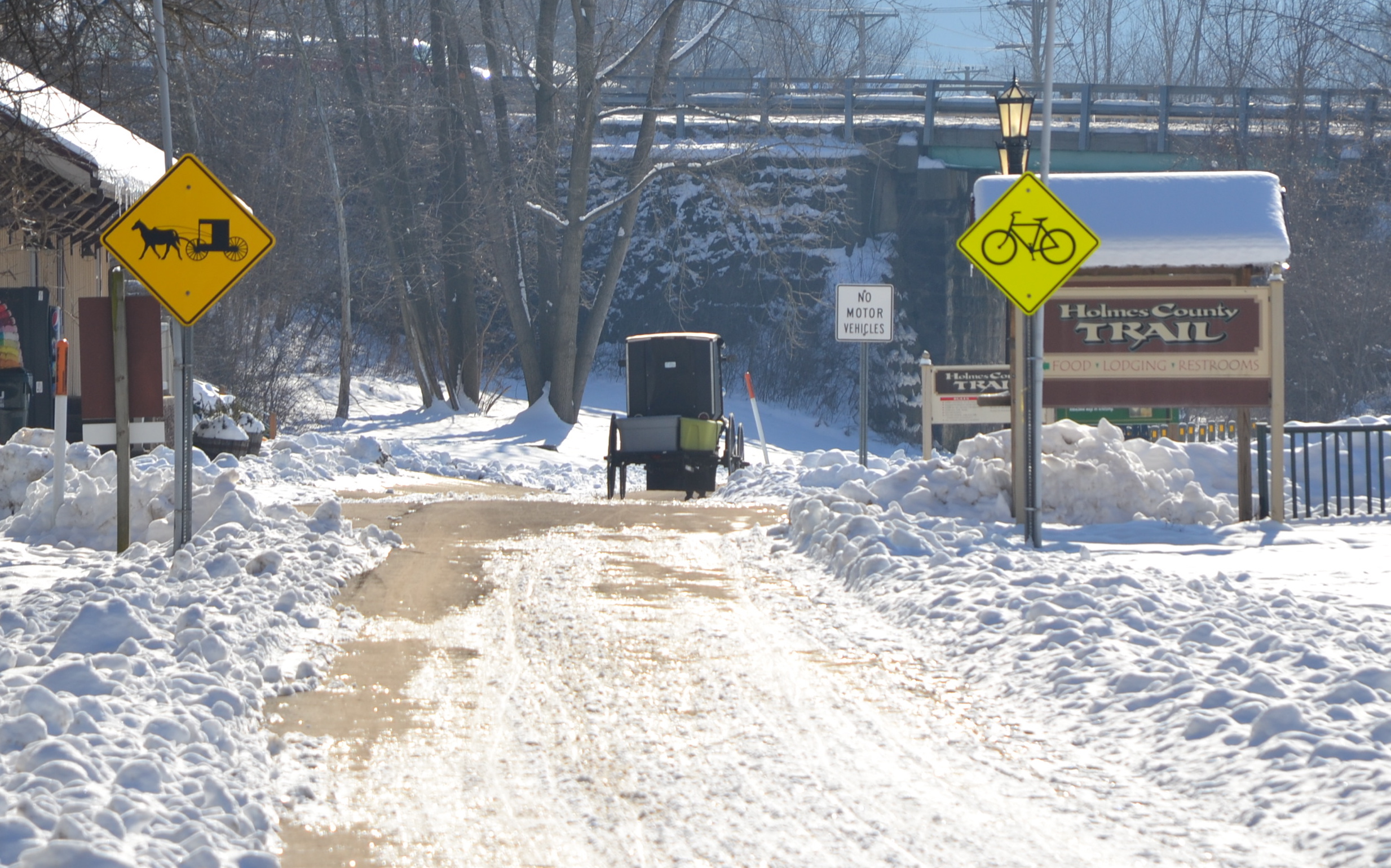
onthetrailbybrucestambaugh
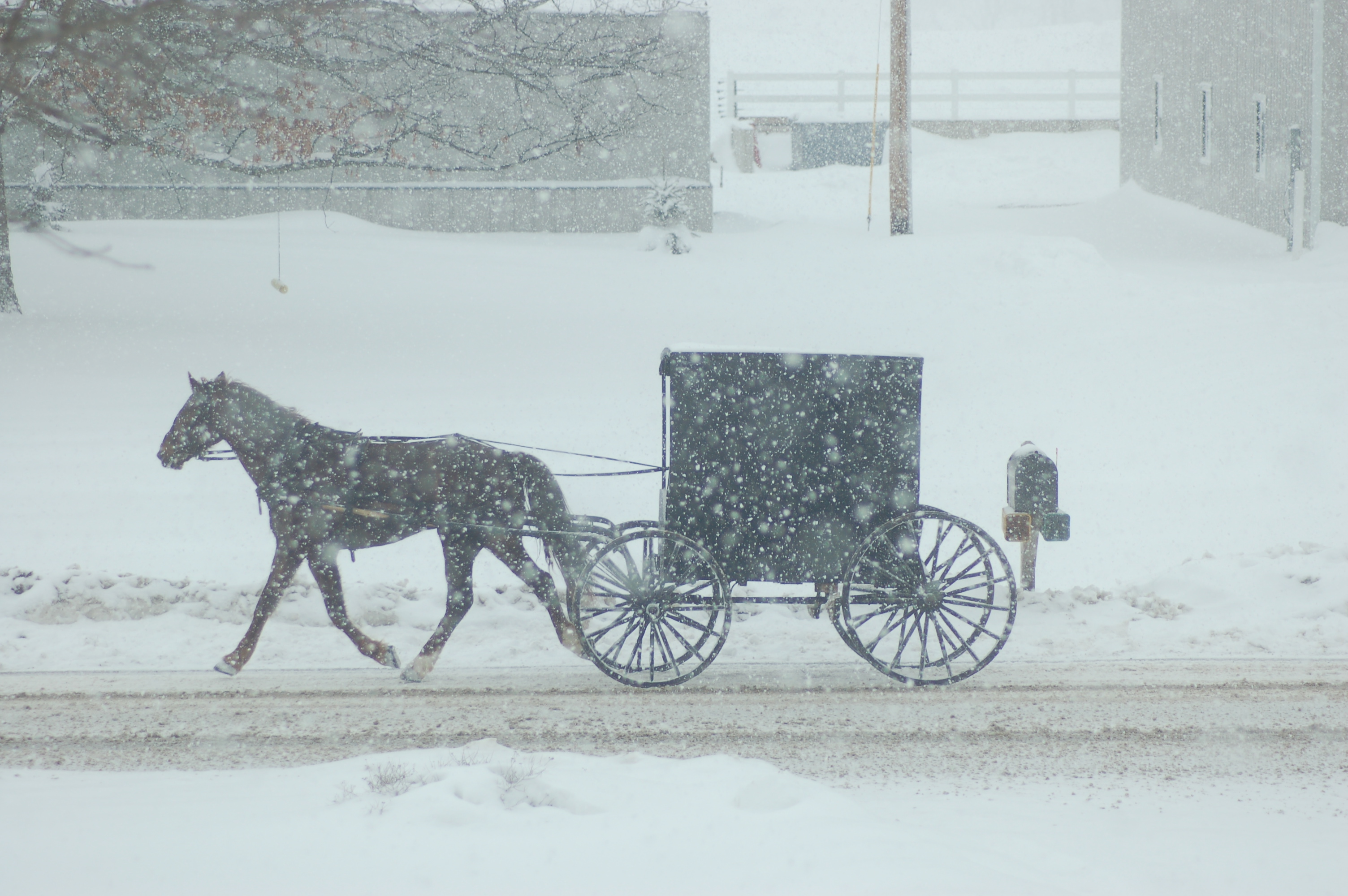
Amish buggies regularly use the Holmes Co. Trail, even in winter.

© Bruce Stambaugh 2014

Celebrating more than a birthday

siblingsbybrucestambaugh
Our birthday gathering.

By Bruce Stambaugh

There we all were. The five Stambaugh “kids” gathered around a common table, celebrating another birthday. This wasn’t any old birthday either. Wait. I better rephrase that.

We were gathered to celebrate the oldest sibling’s very special day, his 70th birthday. All but one of our spouses joined in the merrymaking, too.

We met in a nice restaurant that the birthday boy chose. It was centrally located, which made it easy for us to assemble. Given our ages, stations in life, and individual schedules, it was a rare treat to gather together.

The food was excellent. The fellowship was better.

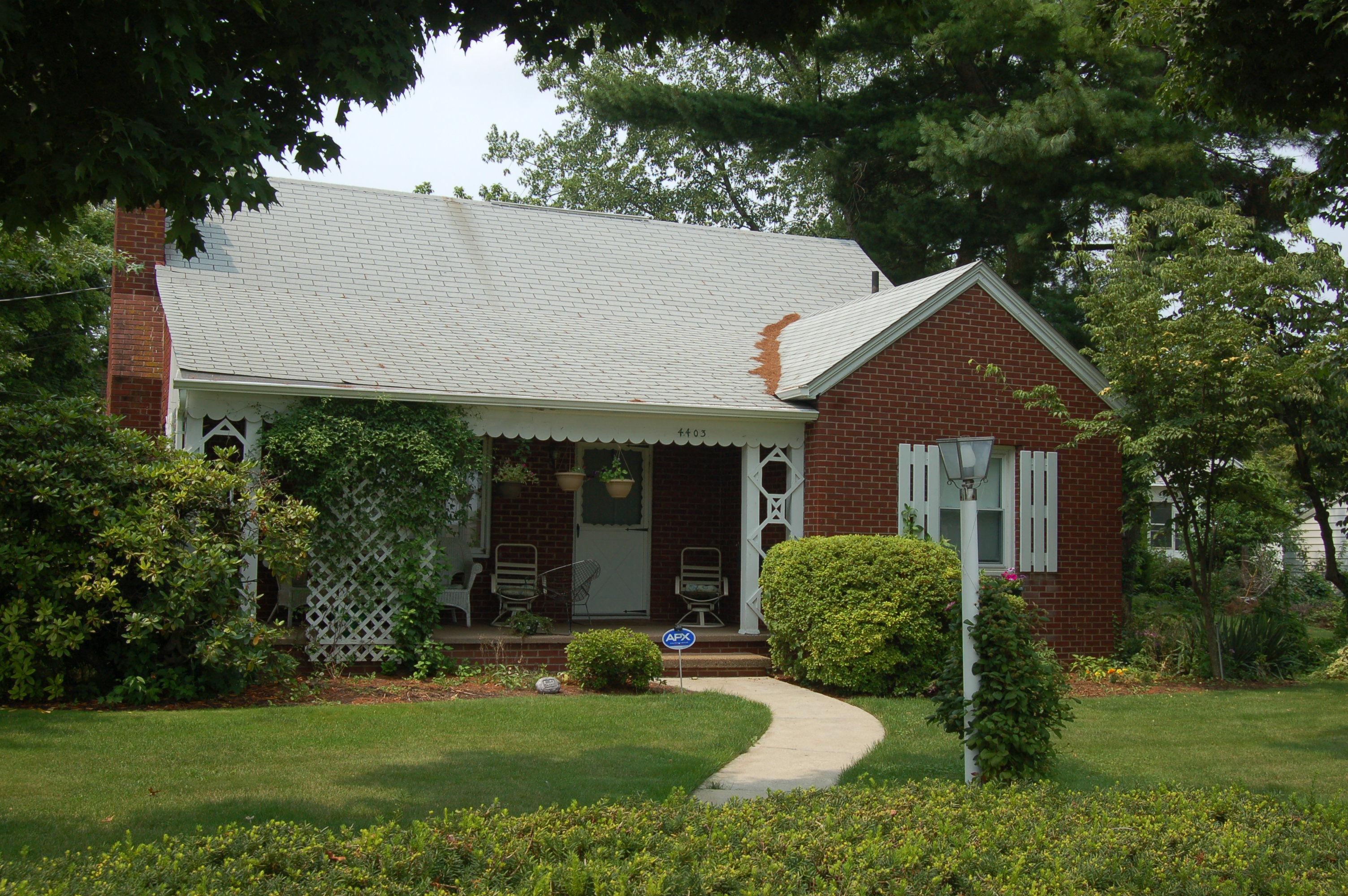
Despite the din in the open, high ceiling eatery, the conversation around the table was lively and animated. It reminded me of meals at dinnertime at the little brick bungalow where we all grew up in the suburbs of Canton, Ohio.

Craig was the only pre-World War II child in our immediate family. The rest of us were all of the Baby Boomer generation. Consequently, there was never a dull moment in the Stambaugh household. That’s what always made for lively interaction at mealtime in our younger years.

Take the time my older brother bet me a nickel that I couldn’t eat a spoonful of mustard. As I recall, I got the nickel, but Craig really won the wager.

I marveled at the table talk that evening. You would have thought we were all children again by the enthusiasm and joyous chatter. I liked that a lot. Our late parents taught us well.

There was one main difference, however. Instead of acting like children, we talked about our children and grandchildren. They are scattered from New York City to Orlando, Florida and many places in between.

brickbungalowbybrucestambaugh
The house that our father built and where all of us “kids” grew up.
Growing up, it wasn’t always so lovey dovey. We quibbled and quarreled and played together throughout our childhood. But being four years or more ahead of the rest of the clan, Craig’s recollection of times gone by enjoins a wider view of our family history. I’m trying to be kind here.

Take the time when I was a toddler, and Craig was charged with watching me while Mom focused on other agenda. Craig was specifically told to make sure that I didn’t step into our yet to be seeded front yard, which was one giant mud hole.

When our mother heard the wailing from the front yard, she rushed to my rescue. My shoes were stuck fast smack in the middle of the mud, and Craig was nowhere to be found.

I was much too young to remember that traumatic experience. Craig was not, however. To his credit, Craig is the one who told the story.

We always teased Craig that as the oldest he was the favorite in the family. In fact, I bribed the preacher at our mother’s funeral to say that Mom had had an only child and then four children. Mischief sometimes masquerades for love.

Craig may have hit 70, but the rest of us are right on his heels. Our celebrative gathering was far more than a birthday bash. It was recognition of the kinship we all share, and the unspoken affection we all have for one another.

Though it wasn’t a surprise party, I know my big brother thoroughly enjoyed the time. One of his daughters told me that being together was the best gift we could have given him.

Growing up, birthdays were always special days in the Stambaugh household. I’m glad they still are.

© Bruce Stambaugh 2014
A happy ending for a confused waterfowl

amishbarnbybrucestambaugh
The Horned Grebe landed on the wet lane behind the barn on the Amish farm in Wayne Co., Ohio.

By Bruce Stambaugh

My good friend Robert phoned again recently. When Robert calls me, I listen.

Known as the go to bird guy, Robert gets all kinds of calls regarding birds, especially rare species since he hosts the rare bird phone alert for Holmes and surrounding counties in Ohio’s Amish Country. Sometimes he even serves as a conduit for rescuing birds.

That was the nature of this call. A bird had landed on a gleaming, long farm lane, obviously mistaking it for a stream or water-filled ditch. The young mother of the family that found the floundering bird had called Robert out of desperation.

The family had easily captured the bird and, recognizing it as a waterfowl species, placed it in a basement utility tub half filled with water. That’s where it still was when Robert, his son and I arrived the next morning.

redbuttonedeyesbybrucestambaughRobert immediately identified the bird as a Horned Grebe all decked out in its spiffy winter plumage. It’s red eyes looked like bright buttons against its clean, white cheeks and charcoal head.

Not only was this an unusual situation, it was an unusual bird for this area for this time of year. Horned Grebes need long stretches of water to get airborne. The shiny, wet driveway had apparently confused the poor bird.

Fortunately, the grebe appeared to be fine. But with the extreme cold of early January, large, open water spaces were scarce. I called another noted area birder who told us she had seen a good section of the Killbuck Creek free of ice near Holmesville in northern Holmes County.

Robert donned his gloves, and carefully lifted the Horned Grebe out of its watery confinement and wrapped the bird in towels to protect it from any human contaminants. Off we went with the grebe perched patiently on Robert’s lap. We’ll discount the several attempts to drill Robert with its thick, pointed bill.

When we arrived at the creek, we found a couple of good release points. We chose a large ice-free spot 100-yards south of the bridge that crosses the Killbuck. It appeared to be the best place to release the bird back to its proper habitat.

Robert slowly approached the creek bank, and gently tossed the grebe toward the stream. The Horned Grebe flapped its way to the murky water. It swam a short distance, pecked the surface as if in disbelief, and made a quick dive to the bottom. Even though the Amish family had dropped bits of frozen fish into the tub’s water, the Horned Grebe was naturally hungry.

This slideshow requires JavaScript.

After a few seconds, the natty bird resurfaced, leaned back, shook its wings and head simultaneously. If birds can express emotions, this fortunate fellow was down right ecstatic.

The Horned Grebe swam and dove, swam and dove. The three of us headed back to the car satisfied that the bird was uninjured and would be just fine.

Once it had gained its strength, the Horned Grebe would likely take its long, running start across the water’s surface and lift into the air. Hopefully, when and wherever it landed, it would pick a real pond or stream this time.

On land, the Horned Grebe was simply helpless, completely out of its element. On water, it was a graceful and stately wonder. As proof, the grebe was placidly floating in the center of the stream as we left.

We took one last glance as we crossed back over the bridge in the car. The grebe was gone. Either it was down for another food forage or it had taken off for another locale.

There is great satisfaction in helping the helpless, confused birds included.

lastlookbybrucestambaugh
This was the last time we saw the Horned Grebe as we walked back to my vehicle.

© Bruce Stambaugh 2014

Does this mean I’m officially retired?

By Bruce Stambaugh

Last year it was Medicare. This time it’s Social Security.

When I turned 65, I had to sign up for Medicare as my primary medical insurance. It’s the way the program has successfully worked since its inception. You hit the magic number and you’re in.

hoarfrostbybrucestambaughI’ve had no problem using the insurance since I was enrolled. I did, however, have an internal issue with it. I looked in disbelief at the Medicare card on which my name was boldly printed.

Could I really be this old? When my next birthday rolled around, I was over my denial. I had accepted my age and the fact that I am definitely in the autumn of my life.

In truth, I wasn’t expecting to receive anything from Social Security. Having been a public educator as my first career, I had always been told I likely wouldn’t get much from Social Security, even if I had the required number of quarters to qualify, which I did.

I decided to check anyhow. I had worked my way through college, and after my 30 years in education, I dabbled in marketing for local businesses as my second career. All the while I had paid into the government retirement plan.

I called the local Social Security office in Wooster, Ohio and told them my situation. They asked a couple of questions, and said someone would call me back in the afternoon. I didn’t hold my breath.

A mere two hours later the person who handles calculating individual benefits called and gave me my numbers. They weren’t great, but more than I had anticipated.

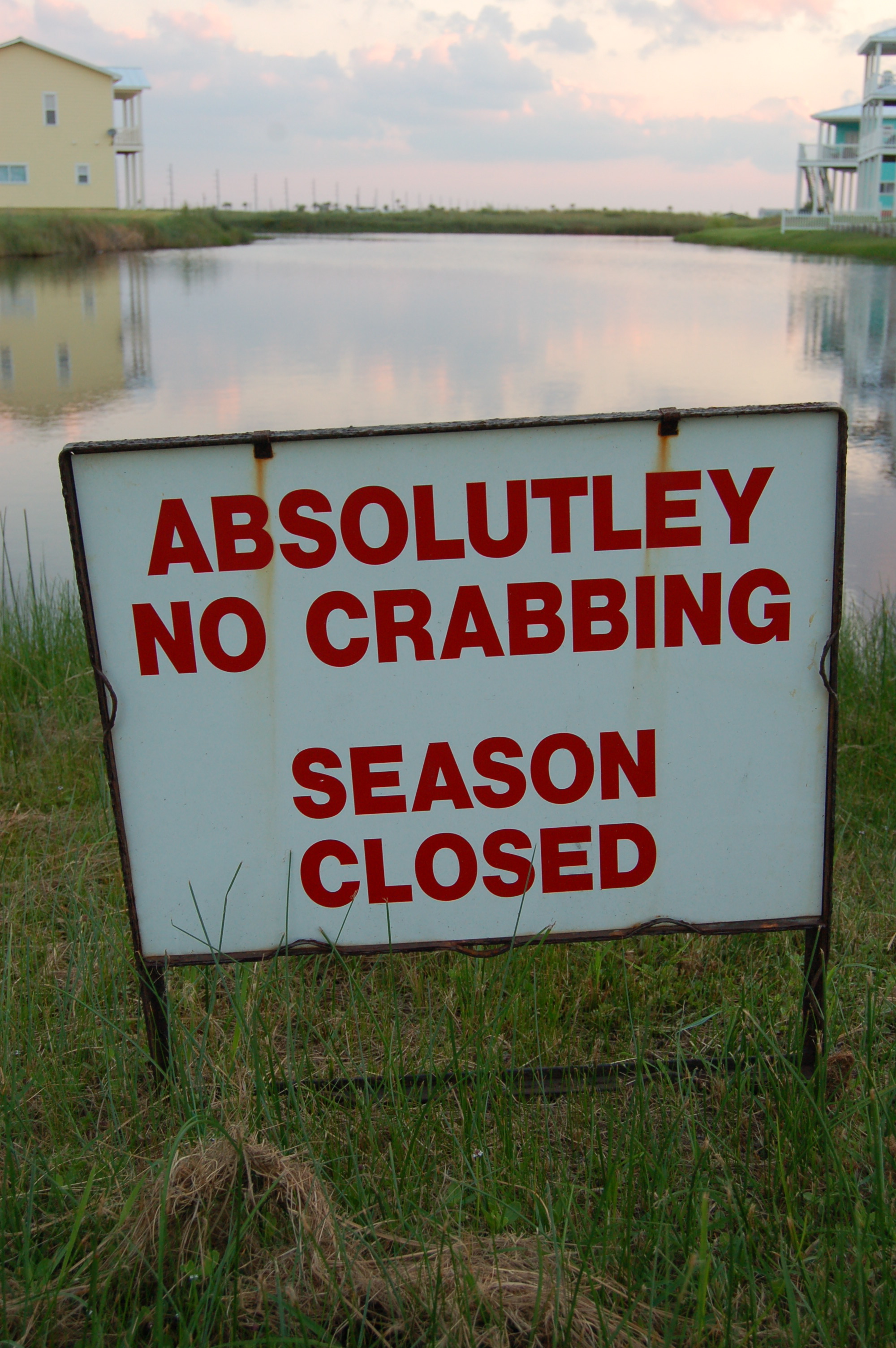
nocrabbingbybrucestambaughI weighed my options, and decided to go for it. I was told it was best to enroll online. I did, and surprisingly, the process only took 15 minutes.

A couple of Saturday mornings later, the phone rang. The caller ID showed it was the Social Security Administration. Why would they be calling on a Saturday morning? I answered the phone to find out.

The bubbly lady who was calling from Chicago first verified that she was indeed speaking to the right person. She asked me one question, did a quick calculation, and came back with the exact same information that the nice man from Wooster did.

Then she asked to speak to my wife. I put Neva on the phone, and she answered several questions for the upbeat woman. I motioned to Neva that I wanted to talk with the Social Security representative again.

When they had finished, Neva handed me the phone, and I told the lady I was surprised that she was calling on a Saturday morning. She quickly explained that so many of us Baby Boomers were signing up for Social Security that the office was swamped.

“The overtime pay is nice, too, just in time for the holidays,” she said with an honest, hearty laugh. I chuckled, too.

I thanked her for her efficiency and kindness, and wished her blessings for the holidays. She returned the same for my family and me.

When I hung up, my wife related that the kind woman noticed that Neva would be eligible for Medicare this year, which is why she wanted to speak to her. So she signed Neva up for that.

Imagine that. A government worker, who some would call a bureaucrat, went above and beyond the call of duty by being proactive on a Saturday morning. Neva and I were both pleased and impressed.

I received my first Social Security deposit right on time. I still have one question though. Does that mean I am really retired?

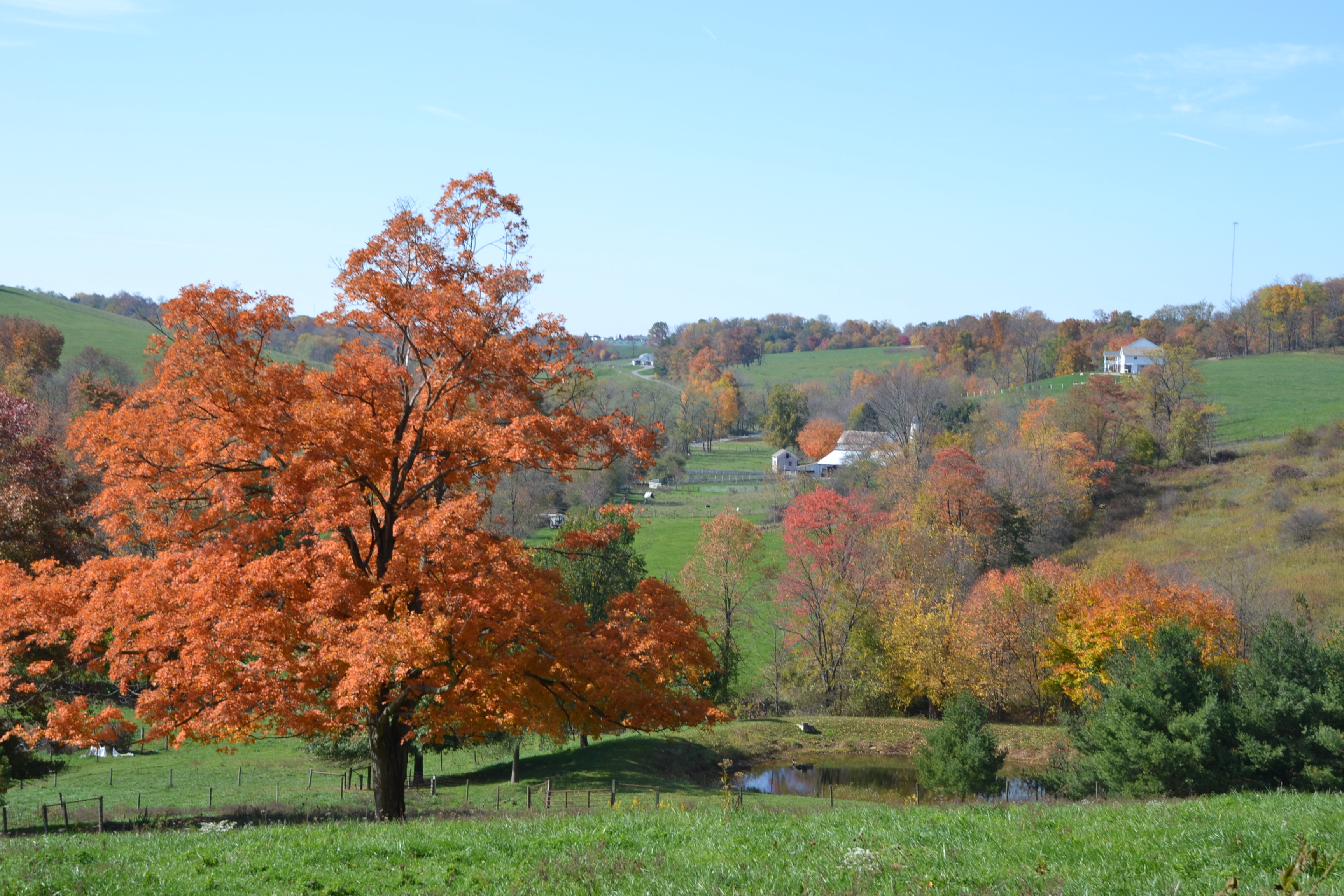
autumnofmylifebybrucestambaugh
As I enter the autumn of my life, I hope all the views are this colorful.

© Bruce Stambaugh 2014

Chasing the elusive but beautiful Snowy Owls

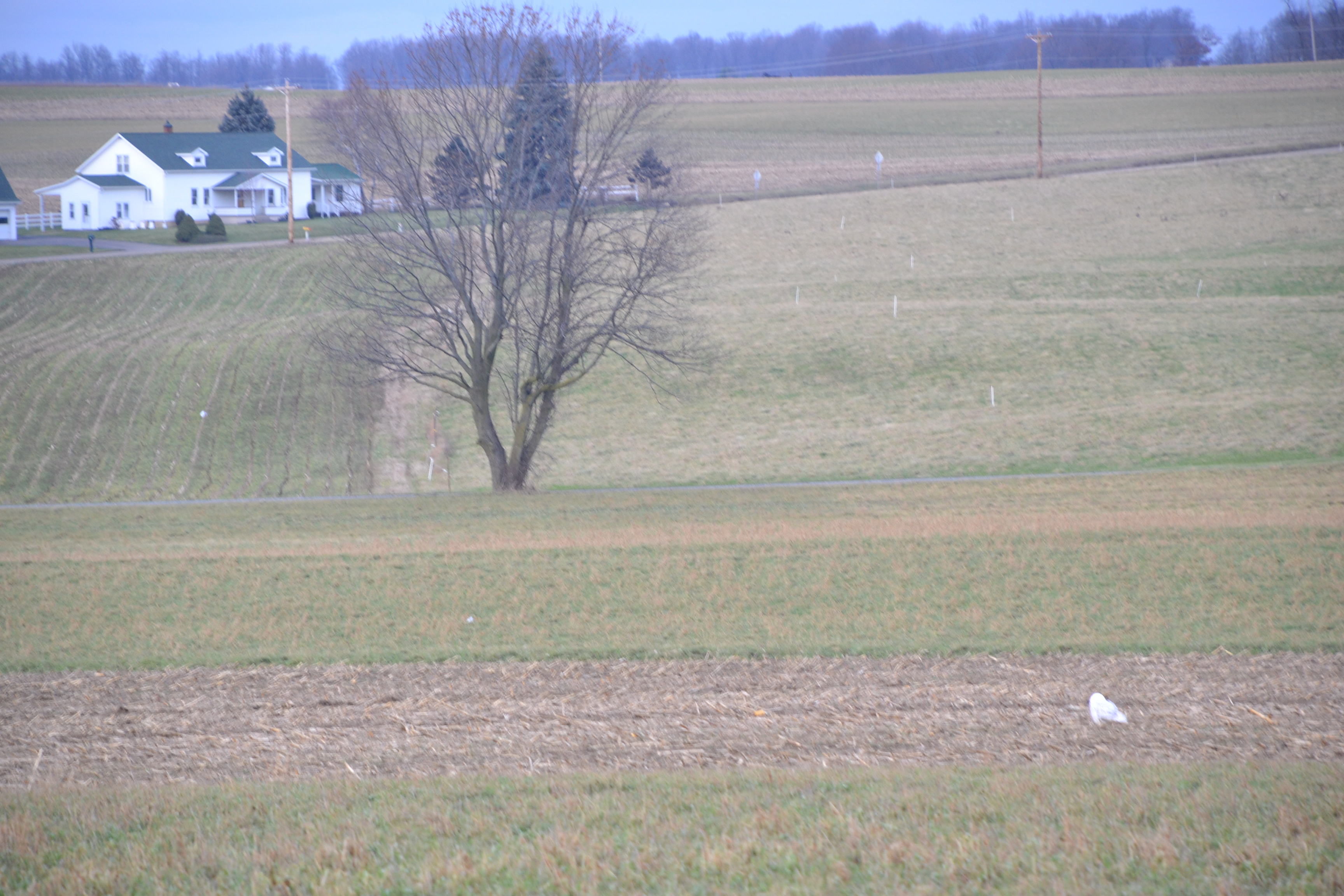
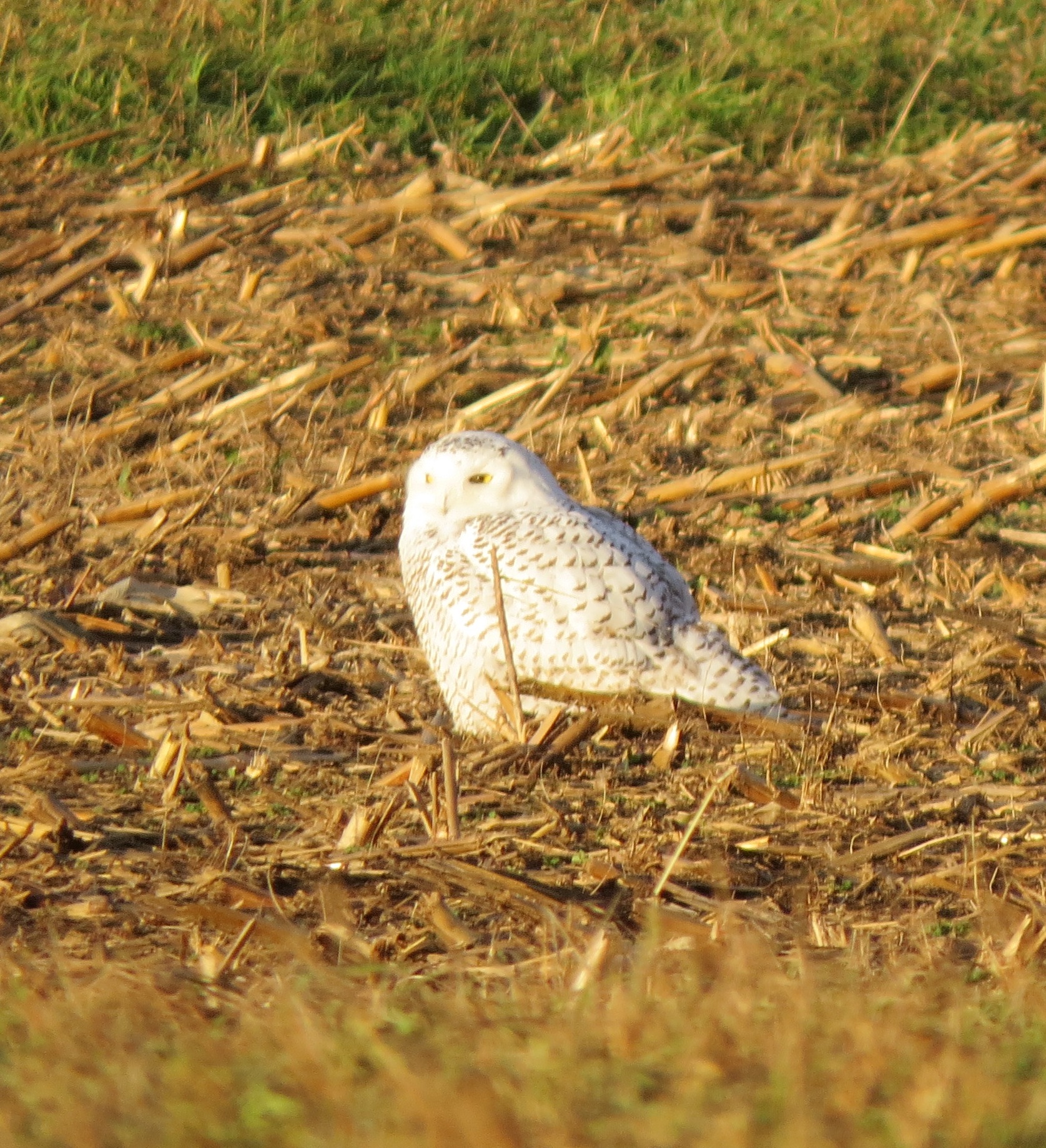
fromadistancebybrucestambaugh
The Snowy Owl as viewed from the lane north of Mt. Hope, OH.

By Bruce Stambaugh

Birding is one of my many hobbies. I’m not the best birder by any stretch of the imagination. But I consider it a compliment to be called a birder.

I’m not alone. Believe it or not, birding is one of the most popular sports in the world. Birding is an international activity that can be enjoyed by anyone, any age at anytime. All you need are birds and an awareness to see and hear what is flitting right around you.

Birders have long been interconnected. That’s because it’s equally fun witnessing the enthusiasm and excitement of others experiencing the same bird you got to see. Ask my wife. I’ve called her to the kitchen window many a time to view the beauty and antics of our backyard birds.

Today birders connect in many ways. Bird alerts via phone, texts, email and Internet posts keep avid and amateur birders alike apprized of any rarity that arrives. Organizations and clubs also promote birds and birding.

spottedtowheebybrucestambaugh
A Spotted Towhee recently spent several weeks at a feeder at an Amish home west of Holmesville , OH.
Over the years, we’ve had our fair share of rare birds appear in Ohio’s Amish Country. They get noticed here more than other places perhaps because we have so many good birders who live here. Many of them are young Amish folks.

We’ve had Wood Storks, Rufous Hummingbirds, Northern Wheatears, Spotted Towhees and Swallow-tailed Kites. The latest rarity influx has been Snowy Owls.

When my friend, Robert, called just before Christmas and asked if I wanted to see a Snowy Owl that was reported near Mt. Hope, I was elated. I stopped what I was doing, gathered my binoculars and cameras, and picked him up.

Snowy Owls normally winter in southern Canada. Once in a great while, the impressive white birds will wander farther south into Ohio and other states.

sunpillarbybrucestambaugh
The Thanksgiving Day sunrise produced a marvelous sun pillar.

Robert had also called about a Snowy Owl the day before Thanksgiving. It had been seen between Berlin and Walnut Creek. When we arrived at the location given for the bird, it was gone. We drove around scouting for it without success.

As soon as we arrived back home, Robert received another call that the Snowy Owl had returned to its original spot. It was close to dusk, and we both decided not to retrace our tracks, thinking we could see it the next day.

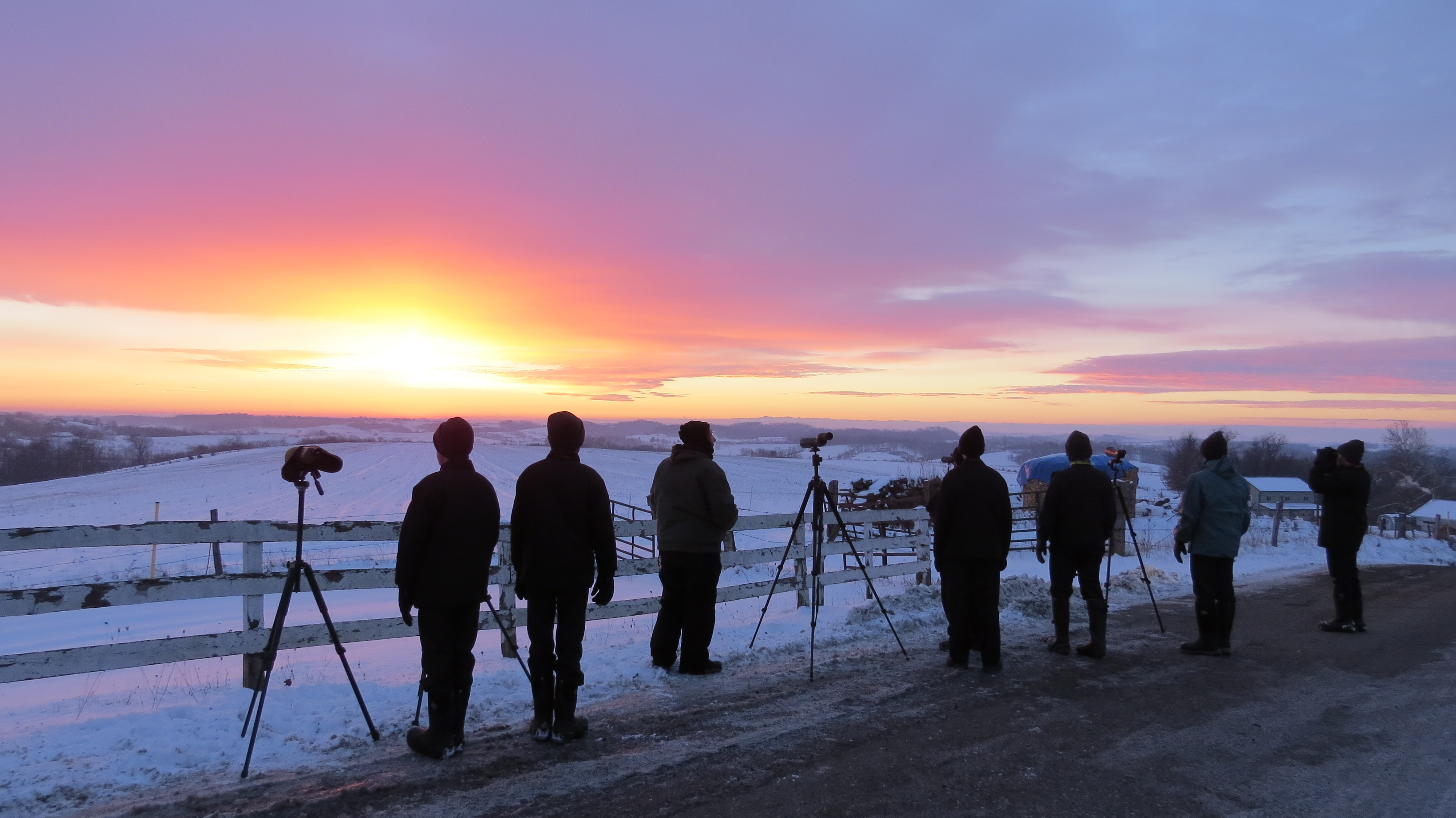
We were wrong. We were up early Thanksgiving morning. It was frigid, but a beautiful sunrise brightened the horizon with a spectacular sun pillar thrown in for good measure. But no Snowy Owl.

I wasn’t about to miss this latest opportunity. When we arrived at the reported location north of Mt. Hope, the Snowy Owl was right where it was supposed to be. The large white bird with gray speckles sat unconcerned in the middle of a corn stubble field. I took several pictures of the astonishing bird while Robert used my cell phone to call others to confirm the bird’s sighting.

snowyowlbybrucestambaugh
The Snowy Owl seen Dec. 23, 2013 near Mt. Hope, OH.
After soaking in the beautiful bird and quietly celebrating our success, we returned to our respective homes. I alerted other birders about the Snowy Owl. Half the fun in birding is sharing what is found.

Since November, several other Snowy Owls have appeared in more than half of Ohio’s 88 counties. Such an invasion of rare birds is called an irruption. People were reporting and photographing Snowy Owls all around Ohio, and even in other states, including Florida.

I’m glad Robert and I got a second chance at the Snowy Owl. I hope you get to see one, too.

© Bruce Stambaugh 2014

It’s a small world after all

conflictanalysisclassbybrucestambaugh
The SPI Conflict Analysis Class of last May at Eastern Mennonite University, Harrisonburg, VA.

By Bruce Stambaugh

Imagine the odds.

Last May I took a graduate school course on conflict analysis in the Summer Peacebuilding Institute (SPI) held at Eastern Mennonite University in Harrisonburg, Virginia.

The 16 students in the class represented several countries, ethnic backgrounds and religions from around the world. Each day we sat at tables in groups of four or five with a different mix of students. We collaborated on dissecting some aspect of human discord, usually in preparation for a class presentation.

We were all in the class for the same reason. We had a strong interest in understanding and resolving conflict by peaceful means.

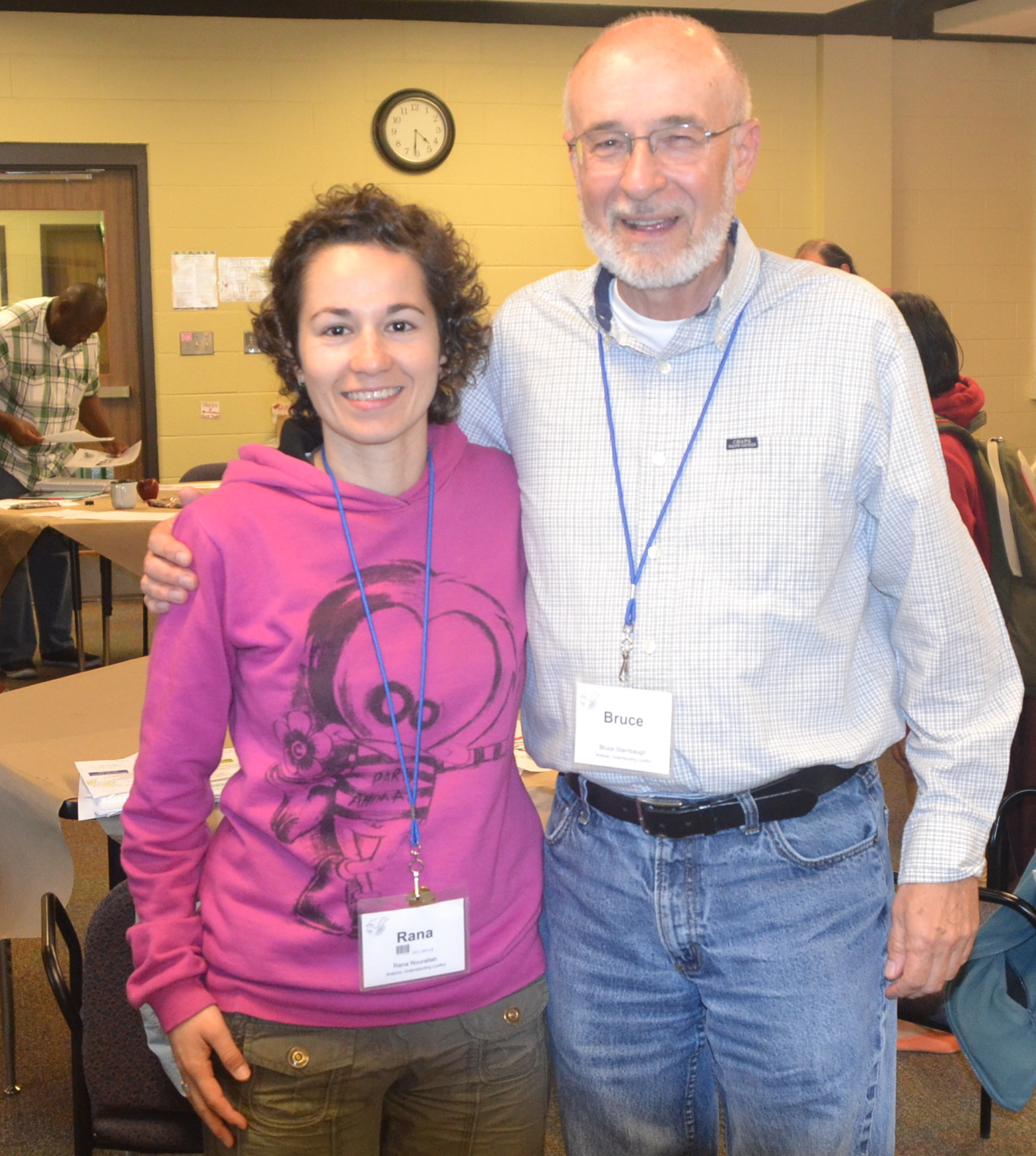
ranaandmebybrucestambaugh
Rana and me in the SPI classroom at Eastern Mennonite University.
I couldn’t have imagined how meaningful the class would be. Nor could I have anticipated the events that would unfold long after the course work was finished.

Keep in mind that most of the students were intensely involved in some aspect of peace building in their respective countries. Dangerous conflict was a daily occurrence for many of them. Azerbaijan, Iraq, Kurdistan, Somalia, Syria, Miramar, and Haiti were a few of those places.

Back home the official duties of class participants varied as much as their backgrounds. Some engaged in peace building through non-governmental agencies. Others were pastors, teachers and even politicians.

The goal was to learn how to analyze conflict, and apply appropriate peace building skills constructively. Upon returning to their home country, they would instruct others in what they had learned or directly apply peace aspects in their vocations.

Meeting with new classmates each day provided a global perspective on the too many conflicts around the world. My problems paled when compared to some of the survival stories told to me privately. Their personal, troublesome stories humbled me.

I was especially impressed with Rana, an energetic young woman from Syria. The news out of that country was not good. Aggressive conflict was wreaking havoc on her homeland. Yet she remained upbeat and actively engaged in class projects.

When the course was completed, I tried to gather any contact information that I could. I wanted to stay connected to my new friends. I knew that I would be unable to communicate with some of them simply for security reasons. I certainly didn’t want to compound the risks they already faced.

Once home I did manage to communicate with a few of the students, mostly via Facebook, a popular social media website. Even in the midst of the fighting, I was able to share periodically with Rana. But I kept the messages to mostly short well wishes.

When the fighting in Syria escalated, including the use of chemical weapons, I became rather concerned. Then the last Sunday morning of 2013, I received a message from Rana that she was fine.

I felt relieved as my wife and I headed to church. I knew we had a special speaker that morning, but I didn’t know who or from what organization.

Prior to the service, I was introduced to the guest speaker, Sarah Adams, who was the Mennonite Central Committee country representative to Lebanon and Syria. I recounted my SPI experience, and asked Sarah if she happened to know Rana.

Before I could say Rana’s last name, Sarah happily replied, “Oh, yes. I know Rana well.” She assured me that Rana was safe and still working for peace whenever and wherever she could. I was thrilled.

Imagine the odds of the three of us interconnecting via Virginia, Syria and Ohio. It really is a small world after all.

© Bruce Stambaugh 2014

Lean into the wind in 2014

Damage left by an EF2 tornado that hit Wooster, Ohio on Sept. 16, 2010.

By Bruce Stambaugh

I never believed much in New Year’s resolutions. I prefer to view the big picture. Besides, by now, I may have already broken half my resolves.

This year, rather than aim to lose five pounds in a month, I want to lean into the wind. That should be easy for me. I’m known to be a little windy from time to time.

You can blame my young pastor for this idea. He’s young because he’s half my age. Pastor Patrick recently preached a sermon about making yourself available and vulnerable to lean into life’s daily situations, good and bad, the way you would brace yourself against a good gale.

bluebirdbybrucestambaughI liked that image a lot. I’ll share a few ways I plan to apply the concept. I want to challenge myself to embrace all that swirls around me, positive or negative, this year. We learn from either perspective.

Despite my loss of dexterity, I will lean into the wind and hold a child’s hand, steadying her wobbling stroll across a room. Though my hearing is diminished, I will listen attentively to what others have to say, even though I may vehemently disagree with their opinion or decision.

Though my eyesight is aided with bifocal glasses, I will look for the simplest pleasure nature has to offer. A breathtaking sunrise, a singular drop of water hanging perilously at the end a leaf, a brilliant wood warbler migrating north will all be part of my leaning into the wind.

doubletrunkbybrucestambaughEven though my cranky knees limit my mobility, I will do my absolute best to bend low to pick up trash thoughtlessly discarded by others. If someone else is leaning into the wind nearby, maybe they’ll help me back to my feet.

Leaning is an active verb, not passive. Life is a series of winds of various velocities that shift daily. We can only feel the wind. We measure it by the effects on everything the wind touches, whether it does so fiercely or persistently.

Regardless of the velocity, life’s winds affect us all. Leaning in enables us to practice gratitude and joy, the byproducts of vulnerability.

Life offers no guarantees. It is full of pitfalls and mistakes as well as abundant joy and beauty. I want to discard the rose-colored glasses, and recognize the good from the bad. I want to accept them for what they are, and lean into 2014 accordingly.

The blizzard winds of January will eventually subside. Before we know it, invigorating breezes of May, with their warm, sweet fragrances and life-giving rains, will arrive as a blessed balance for us all.

A friend of mine shared a picture of an old apple tree, trunk bent from age and time, some limbs broken and sagging. The caption beneath the old tree defined what I mean by leaning into the wind.

It read, “A little bent by time, shaped by the wind and the seasons, a few branches broken. Today I feel like that old apple tree. But I’m still reaching for the sky, and doing my best to take in what the world gives me and turn it into something good and useful.”

By leaning into the wind, I can anticipate enduring, absorbing and embracing all of the various breezes that life blows my way in 2014.

Who knows? I might even lose five pounds in a month.

brownongoldbybrucestambaugh

© Bruce Stambaugh 2014

Christmastime is gathering time

christmastreebybrucestambaugh

By Bruce Stambaugh

Christmastime is gathering time. The very origins of the holiday make it so.

Though we may not think about it, those who gather in celebration replicate the inexplicable cast of characters that assembled for the first Christmas. Paying homage for this special birth, their lot represented a cross-section of social, political and religious backgrounds, not unlike today.

nativityscenebybrucestambaughTo be sure, they were a motley bunch, unassuming, even unaware of the tradition being created. Of course, we have no way of knowing the exact date or even time of year for the birth of the Christ child. We can only follow the story as it has been transcribed and translated for us.

Over time, the traditions of Christmas have been handed down and culturally adjusted to fit the changing times. There’s no documentation for tinseled evergreen trees or a jolly St. Nick in Bethlehem that ancient night.

An angelic troupe serenaded stunned shepherds huddled in a field, watching over their flocks. Astute individuals, long on the lookout for a messiah, offered praise and prayer. A ruler trembled. Later, wise kings traveled from afar to worship the boy, and offered precious gifts.

Mary and Joseph themselves were among the throngs reassembling in their hometowns on governmental orders of the day. Harsh as their journey may have been, they complied. History wouldn’t be the same if they had not.

snowbuggybybrucestambaughCenturies later millions travel by modern means to celebrate Christmas, and not always on Dec. 25th either. That fits the Advent model as well. Perhaps, because of schedules or availability, you have already gathered for the holidays.

Here in the largest Amish population in the world, both traditional Christmas Day and the more reverent Old Christmas, always Jan. 6, will find families and friends gathering and sharing food, fellowship, and gifts. You might know Old Christmas as Epiphany or Three Kings Day.

Our own families will make merry on several occasions. Christmas Eve morning two kinships are blended into one for a festive breakfast, a holiday custom spanning three decades.

On Christmas Day, we’ll repeat the family ritual of enjoying a tasty holiday meal, and opening gifts. Those traditions have been toned down a bit from my childhood days when my good parents splurged beyond their means to make Christmas merry.

This slideshow requires JavaScript.


Some of us will eat tofu instead of turkey or ham, and the gift giving has been reigned in as well. We set a reasonable spending limit, pick a name out of a hat, and that’s that. Of course Santa still fills the stockings hanging from the fireplace mantel.

Later, the five Stambaugh siblings and any available family members will met at our little sister’s home to honor the season and our folks. After all, Mom and Dad instilled in us a fervent love for Christmas.

Myriads of global families will mirror my own, each in their own traditions and styles. Others have already gathered to bake cookies, or attended school programs, or a holiday concert. Still others packed food and clothing for the needy or served meals to too many homeless peoples around the world.

A curious collection of peoples was drawn to that original anointed Nativity scene. Once the event’s date was arbitrarily fixed as Dec. 25, families have been assembling ever since.

Centuries later, Christmas is still for gathering. The modes and means of doing so may have changed, but the reason has not.
In that, let us all rejoice and be glad that we can gather together indeed.

friendsgatherbybrucestambaugh

© Bruce Stambaugh 2013

Appreciating the daily gifts we are given

birdersatsunrisebybrucestambaugh
A beautiful sunrise greeted these birders in search of a Snowy Owl.

By Bruce Stambaugh

For much too long already we’ve been enduring an avalanche of cutesy commercials and gimmicky advertisements foisting an assortment of products from A to Z on us. Each one is pitched as the perfect Christmas gift to give.

snowyowlbybrucestambaugh
Snowy Owl.
Catalogues, newspapers, magazines, radio, television, the Internet, even emails push various products for us to purchase for our loved ones. I do my best to ignore them. It’s a bold statement from someone who spent part of his career in marketing.

I understand why all the product promotions are done. Retailers often need productive holiday sales to ensure a profit for the year. I certainly don’t begrudge them for trying.

At my stage in life, I find greater joy in a brilliant but brief sunrise than a glitzy ad. Sometimes on the coldest rural Ohio mornings, the pinks and blues that quickly morph into warm oranges, reds and yellows stir me more than any new car wrapped in a big red bow could.

Joy comes in many packages if we just take the time to notice them, even on the grayest of days. Amid this entire holiday hullabaloo, I have to remind myself to stop and take a deep breath.

Advent is the perfect time to slow down our lives, not speed them up, rushing around trying to find just the proper gift. It might already be right in front of us.

I speak from experience.

When our daughter, now a mother with young children of her own, was two-years old, she would stand on the kitchen counter at our home in Killbuck, Ohio. Together we would watch the birds devour the birdseed we had put out for them. Young as she was, Carrie could correctly identify each species.

Teetering on the rim of the Grand Canyon is an awesome feeling. Sharing that incredible vista with a person who is viewing it for the first time is even better. When it’s your son, seeing his smile is priceless.

When my wife and I braved a frigid winter’s night with a dear couple to search the dark sky for a rare comet, I was cold but hopeful. We rejoiced when we found it, quietly celebrating the event together. No words were needed.

When you go in search of a Snowy Owl, a rare avian visitor to our area, your hopes are high. Even when the bird can’t be located, the camaraderie of other birders on the same search makes up for the whiff. There are no wild goose chases in birding.

When you receive a hand-made card that includes drawings of a cardinal, an eagle and a blue jay, all appropriately colored by your grandchild, you know you are loved. You keep and display that precious gift where you can see it daily.

lookingupbybrucestambaugh
The gifts of life are all around us. We just have to look for them.
When a long-lost relative unexpectedly contacts you, you rejoice and reconnect with someone you may have only ever met once or maybe never. Surprise gifts rule.

When you stand in line for an hour or more to offer your condolences to the family of someone you have never met, you are blessed by the grace and appreciation shown to you by the mourners. Even in grief, great gifts are exchanged.

Advent is a time for reflection, renewing, remembering. It is a holy gift, freely given, gladly embraced.

The din of commercials not withstanding, Christmastime models what it means to give and to receive. I wonder what gifts will unwrap themselves for you and me today.

© Bruce Stambaugh 2013

Writing the dreaded annual Christmas letter, then and now

By Bruce Stambaugh

My wife and I gave up sending Christmas cards en masse several years ago. To keep up with the times, we transitioned into doing an annual Christmas letter instead.

We thought a personal synopsis more appropriate to keep friends apprized of what was happening in our family, and those of our adult children. Plus we saved the expense of the store-bought cards.

marianstambaughbybrucestambaugh
The late Marian Stambaugh.
With electronic communication now socially acceptable, most of our letters are sent via email to the chagrin of the U.S. Postal Service. Whenever I begin our annual letter, nostalgia appears like Marley’s ghost. Advent days long-passed flash before me.

I have fond memories of the Christmas cards our family received from friends and relatives, some near, some far. After she had opened the cards and read them, our kind mother would allow us kids to tape them to the inside of the wooden front door of the home where I grew up in suburban Canton, Ohio.

Some years Mom would cover the door with colorful paper wrapping, creating a festive background to the many season’s greetings we had posted. Mom taught us to apply the various sized and beautifully illustrated cards in an attractive, creative pattern.
Both hand-written and typed letters of greetings from friends and relatives who lived hundreds, even thousands of miles away were tucked into some of the cards. It was the way to communicate back then.

I think Mom had a higher purpose for the festooned door beyond being a welcoming holiday decoration. For our modest middle-class family, the patchwork of cards served as a symbol of how rich we really were, not in monetary wealth, but in valued, enduring relationships.

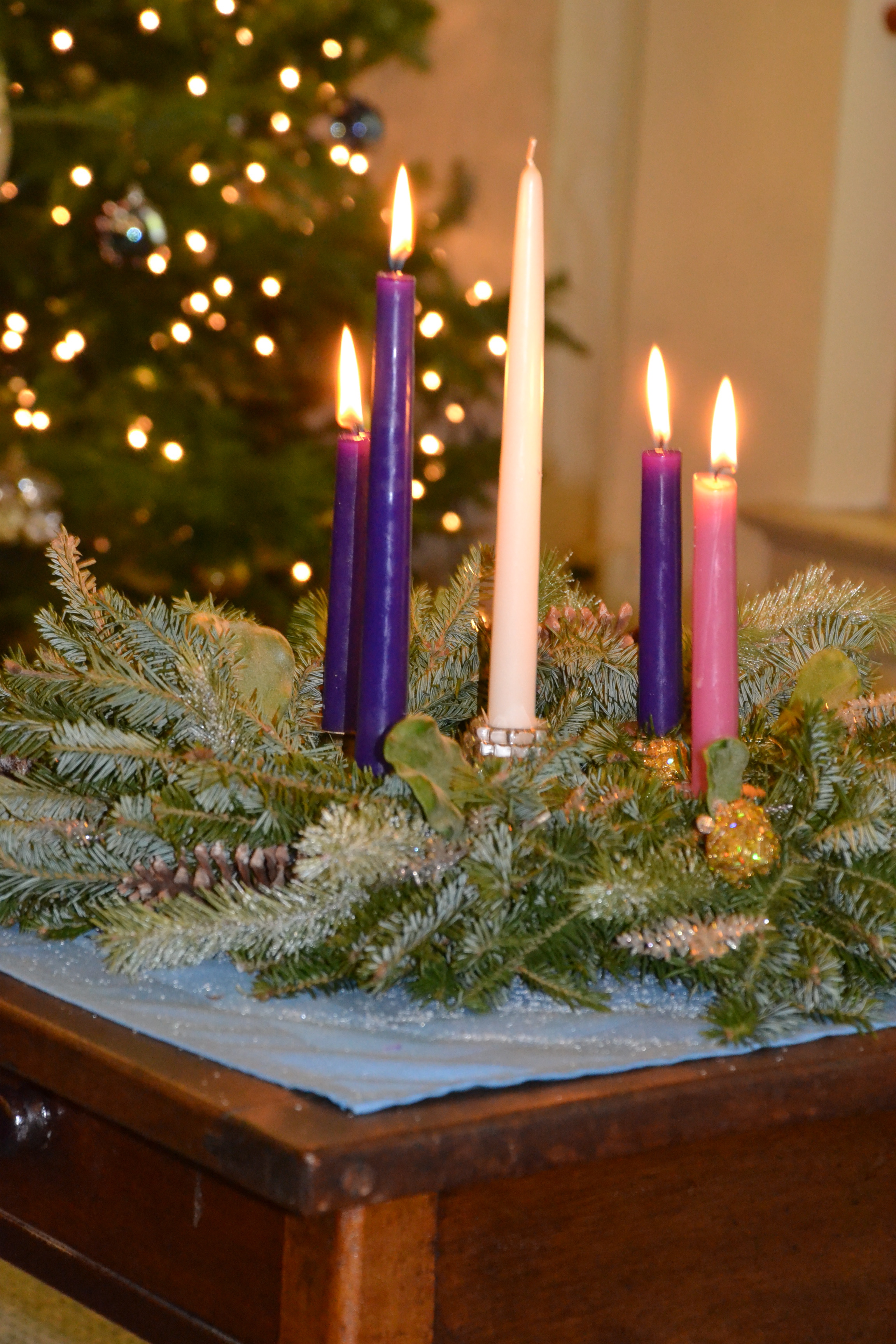
adventcandlesbybrucestambaugh
Advent candles.
Typical of many post-World War II families, Dad worked, first a blue-collar job, then a white-collar one. Mom efficiently ran the household on Dad’s meager income, and nurtured her five energetic darlings.

Our family sent out a host of our own Christmas cards. Our ever-thrifty mother would purchase the greeting cards during the post-Christmas sales of the previous year.

Mom addressed the envelopes with her easy, flowing handwriting while some of us kids helped seal and stamp the cards. I sweet-talked my younger siblings into licking that horrible tasting glue on the back of the postage stamps. I hope they’ve forgotten that.

That was a long time ago. Technology and progress, always a subjective word, have changed our lives forever.

Each year I enjoy authoring the one-page summary of the year’s top family happenings, though a couple of years ago I forgot to mention our 40th wedding anniversary. My wife is the letter’s chief editor, so all was forgiven.

I try to make the annual accounting as lighthearted and informative as possible. In recent years, when the aged bodies of parents, aunts and uncles have breathed their last, the letters tended to be more subdued.

I used to simply sit down and write the highlights from memory. Afterwards, I would double-check the calendar that chronicled

christmaswreathbybrucestambaugh
Christmas wreath.
all of our appointments, meetings, anniversaries, birthdays, vacations and other notable events.

Given my previous major omission, I now scour the calendar before I begin to write. Only instead of the daily ledger with scenic pictures, I click on my laptop’s calendar icon to scroll through the year month by month.

It’s time to write our family’s annual letter. It might make people laugh. It might make them cry. But I sincerely doubt it will end up on anyone’s front door.

© Bruce Stambaugh 2013

Bay Photos by Donna

Wildlife Photos From The Chesapeake Bay Region

ROAD TO NARA

Culture and Communities at the Heart Of India

K Hertzler Art

Artist and nature journalist in the Shenandoah Valley of Virginia.

Maria Vincent Robinson

Photographer Of Life and moments

Gabriele Romano

Personal Blog

Jennifer Murch

Art is the only way to run away without leaving home. -Twyla Tharp

Roadkill Crossing

Writing generated from the rural life

ANJOLI ROY

writer. teacher. podcast cohost.

Casa Alterna

El amor cruza fronteras / Love crosses borders