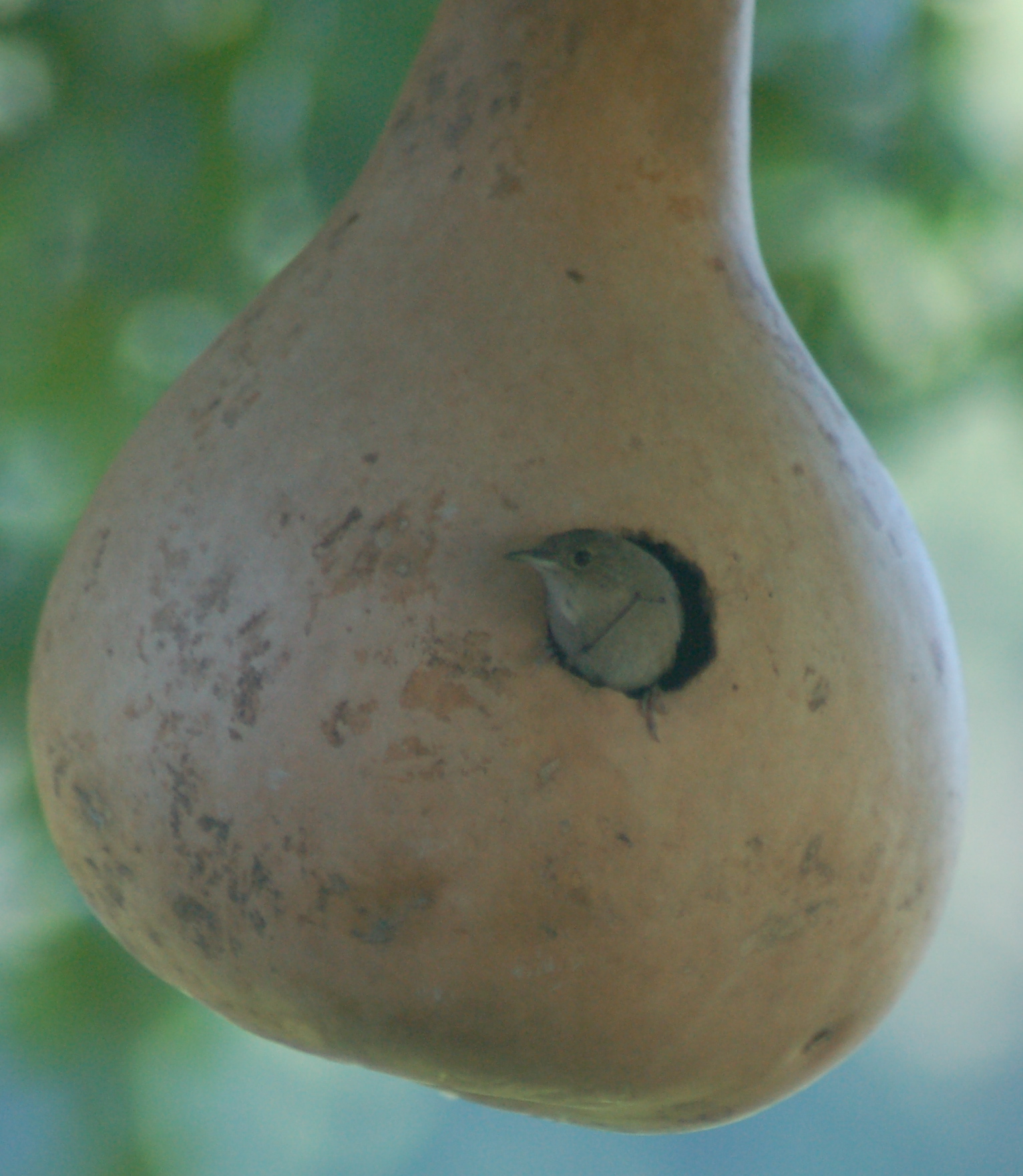
Boisterous, brassy,
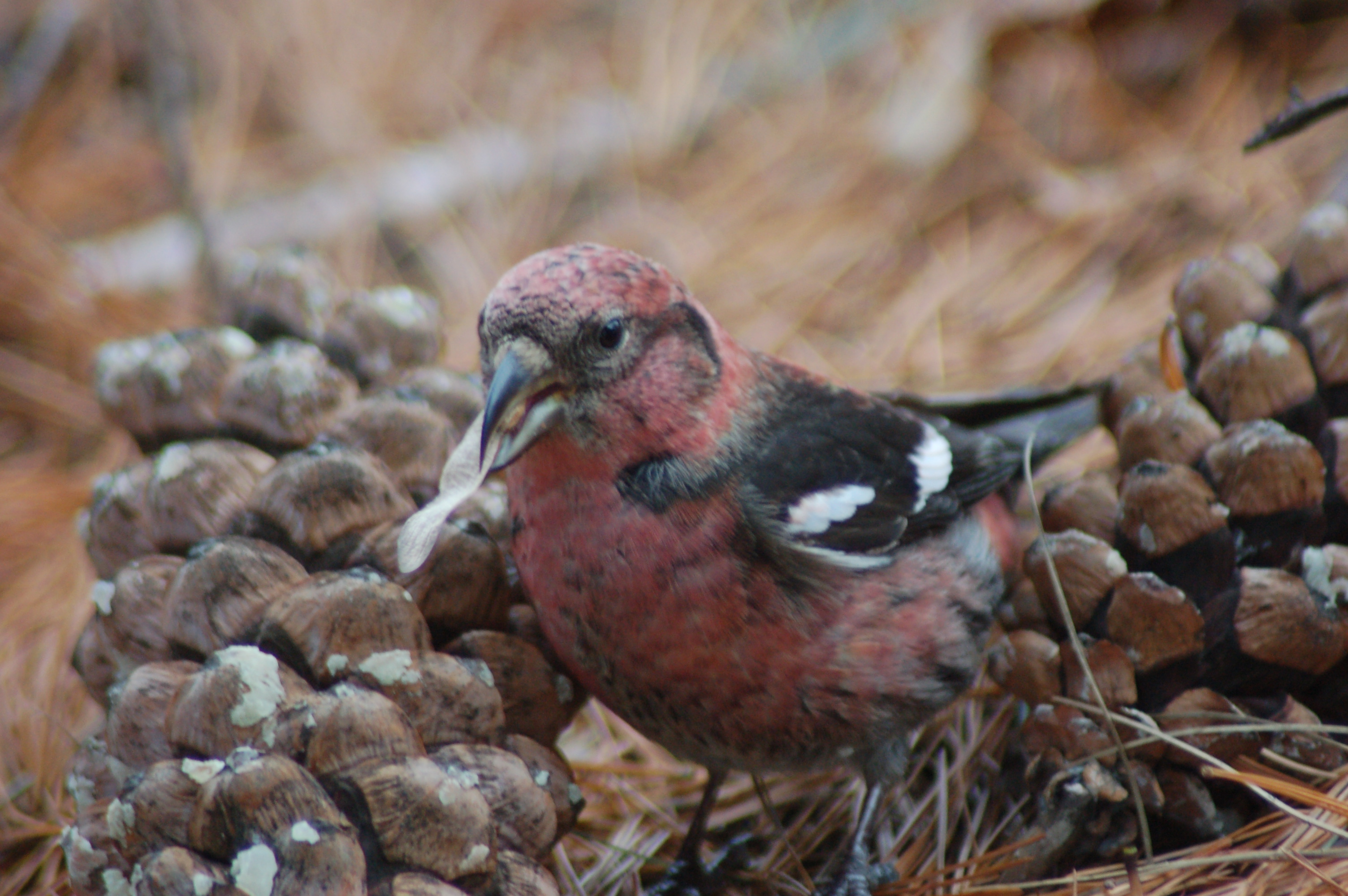
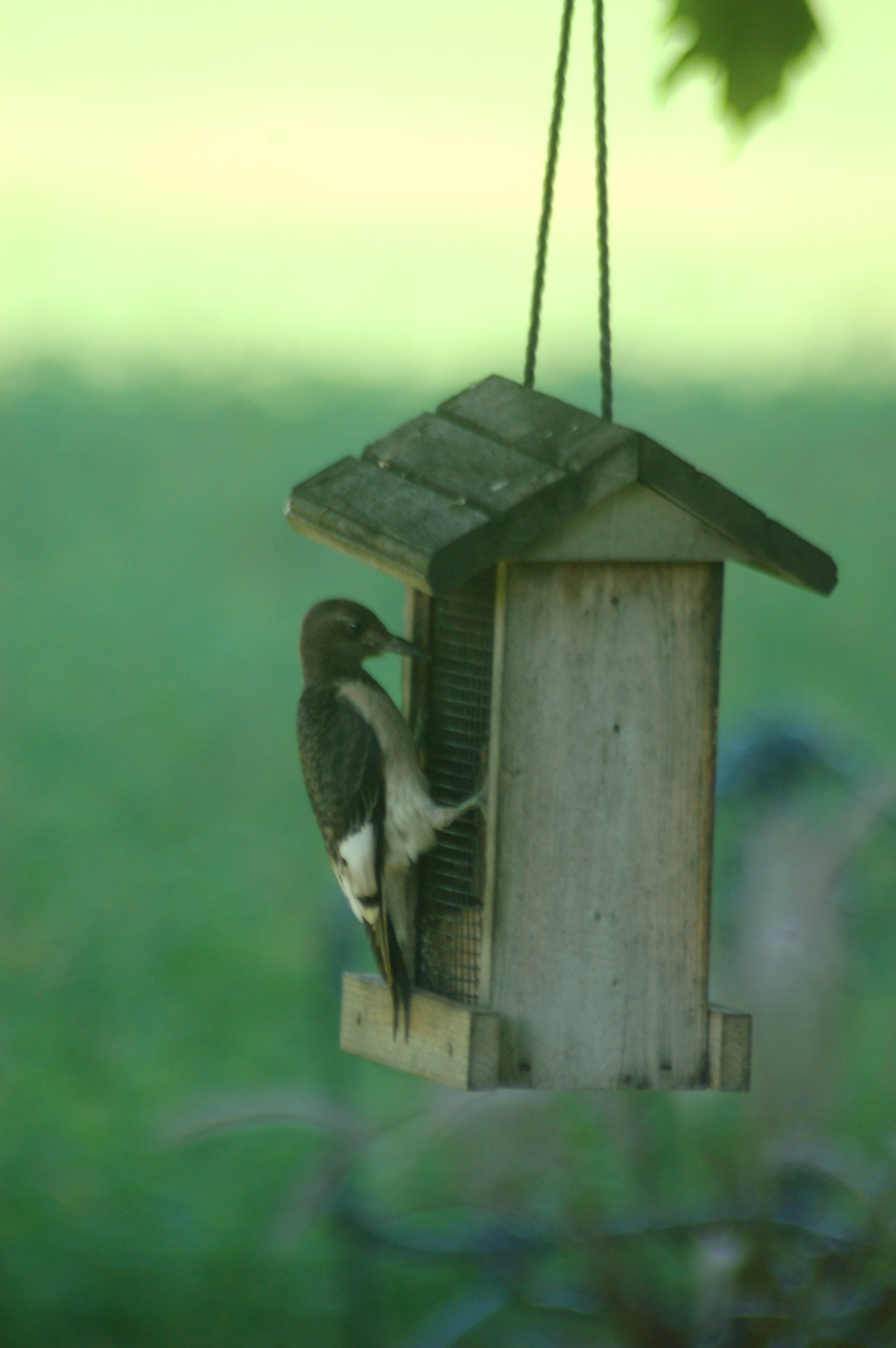
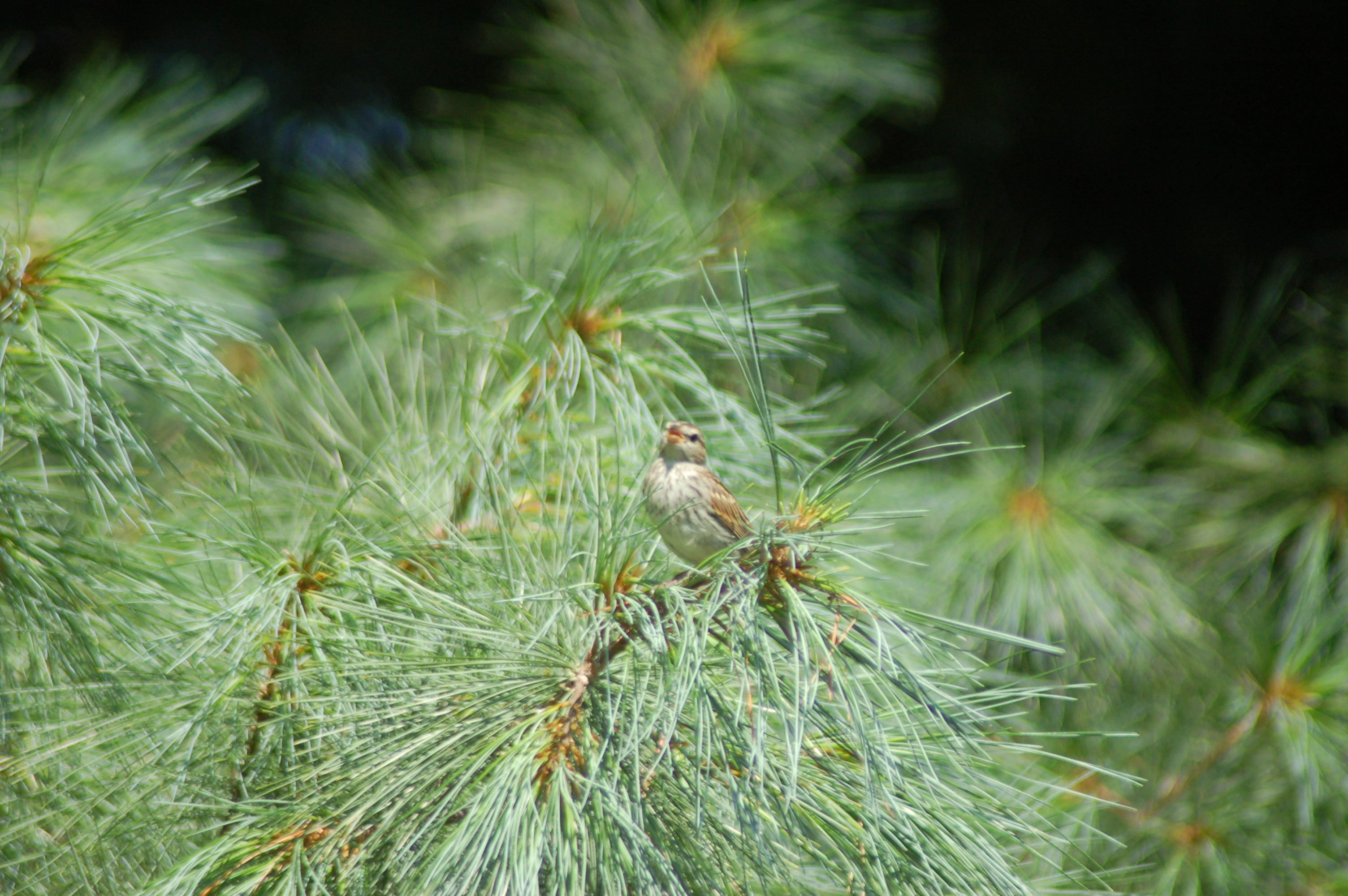
young redheaded woodpecker
posed for photo op.
Bruce Stambaugh
August 30, 2011

By Bruce Stambaugh
I have always thought of August as a transitional month, the days between busy, boisterous July and the revitalizing September.
August is the stepping-stone from summer’s onslaught of activities into a pre-fall mentality. Vacations wind down for most people. It’s back to school and back to work.
If we take time to halt our busyness, our clamor to re-ready ourselves for the new school year at hand, we can take note of this calendar bridge from tilling to harvest, from clamor to order. In its intermediary mode, August seems to quietly take it in stride.
The songbirds no longer need to announce their territory or impress their mate. The young have flown the coop, or more properly stated, the nest, and bird life has returned to seeking daily subsistence. The American Robin precisely models the point.
From April to July, the Robins paired off, warbled their luxurious choruses almost continuously sunup to sundown. They pecked on windows, noisily flitted off their nests when disturbed and faithfully fed their young.
The Robins were ubiquitous in both presence and song. People often comment when they see their first Robin of the spring.
Now, in late August, the Robins have all slyly retreated to their preferred nomenclature. They are more than content to while away the day searching for food deep in the recesses of the shade and forest.
Think about it. When was the last time you either heard or saw a robin? They simply and silently slipped away unnoticed.
If they haven’t already, other bird species will soon be disappearing from the area altogether. The Purple Martins, Barn Swallows and Common Nighthawks all heed their interior instinctive urgings and vanish unseen much like the Robin. We under-appreciate their massive consumption of insect protein until it’s too late to thank them.
Just as quietly, the multiple greens of fields and pastures have grown taller, richer. Chameleon-like, they have morphed into emeralds, tans and russets with hardly a rustle.

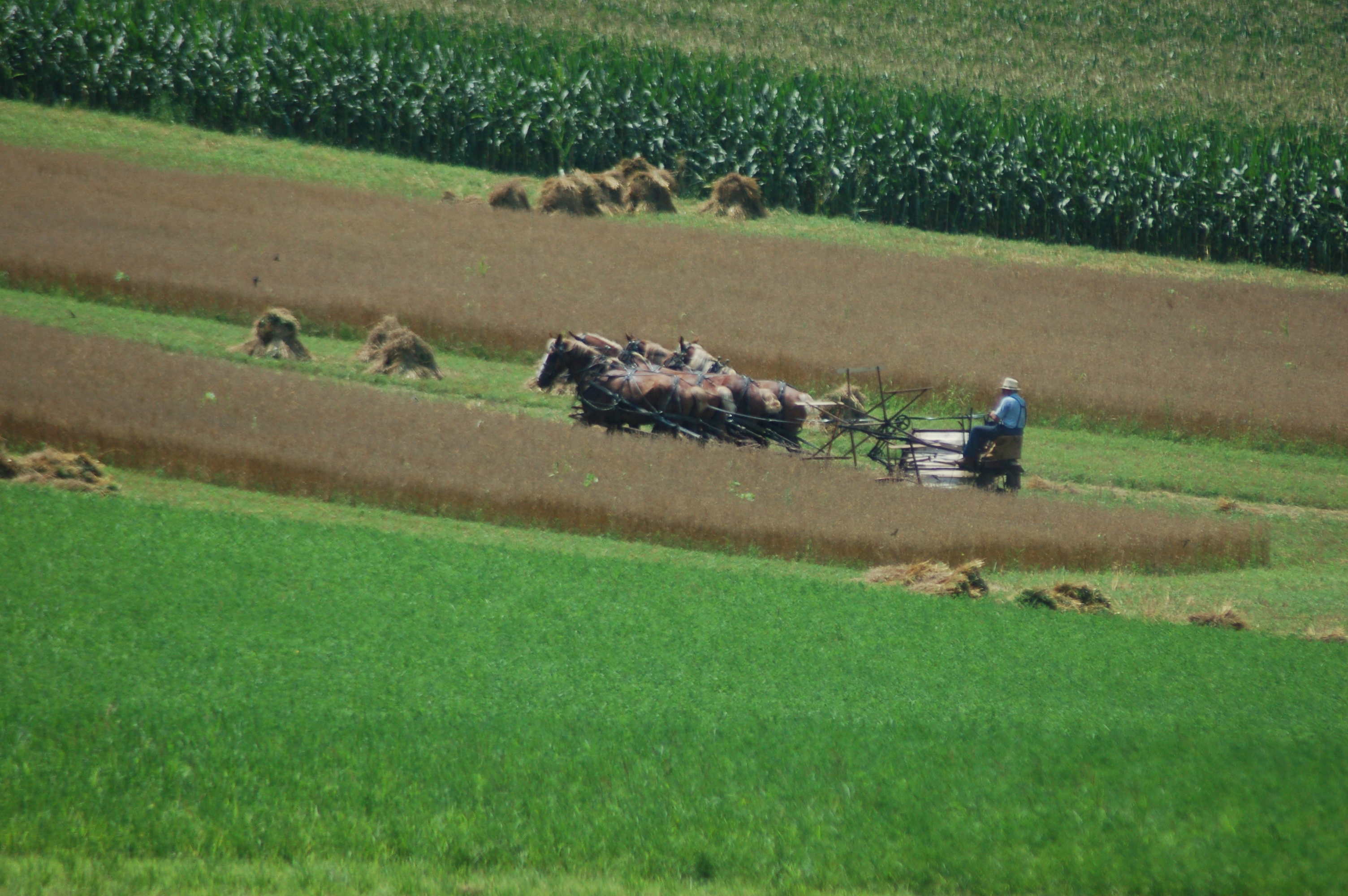
Farmers have taken in their wheat and most of their oats matter-of-factly, and now tolerantly wait the drying of the later cash crops, corn and soybeans. There is no mechanized clanking in patience.

August’s atmosphere also has been quieter than the previous months, save for a couple of late night thunderstorms. The brilliant flashes and deep, rolling booms shattered my sleep like Civil War cannon fire might have. Midnight imaginations run wild when deafeningly jolted.
The few sounds of August we can count on are more monotonous and so commonplace we may not even notice their calls. Cicadas and crickets signal day and night. With windows thrown open to catch the unusual August twilight coolness, the insect symphony has helped humans settle in for sound sleeping.
Every now and then a ranging coyote howls from atop the neighbor’s pastured hill, if for no other reason than to drive the tethered neighborhood canines crazy. The feral call is one thing. The domesticated is another.
Now that school years in most locales begin well ahead of September, the playful echoes of children rollicking at recess again fill the air. It’s a timbre I love to hear over and over again, even if it does break August’s amazing silent spell.


By Bruce Stambaugh
During his last visit to Ohio, my Virginian grandson, Davis, asked me a simple yet rather analytical question, befitting the inquisitive four-year-old, left-handed boy.
Davis and I were outside filling birdfeeders near the little garden pond positioned a few feet away from the back porch and just outside our kitchen window. Davis approached the pond’s edge, lined with mostly flat rocks scavenged from the neighbor’s farm fields.
“Poppy,” Davis queried, “Why do you have a pond?”
The bluntness of the simple question gave me pause. I straightened up, and thought long and hard before I answered him. The tone and intensity of his uncomplicated question told me that Davis really wanted to know.
As I contemplated my answer, Davis waited patiently, searching for the resident frogs and trying to count the darting goldfish. His long, strawberry blonde curls bounced with even the slightest move.
I was impressed with his youthful inquisitiveness. His question piqued my own consciousness regarding the purpose of the pond. I gave Davis the long answer.
I told him that when I retired as a principal, the staff and students at one of my schools gave me a gift certificate to build a garden pond. Apparently, I had let it slip that the pond was one thing I wanted to create once my school days were completed.
Of course, all that was probably too much information for Davis to process. Perhaps it mimicked a politician’s answer to a reporter’s intrusive direct question. Davis looked at me with his big blue eyes and repeated, “But why?”
I changed tactics. I gave him the words I figured he knew and that I loved.

I told Davis that the pond attracts life. I itemized a quick catalog of what I meant. The birds I enjoy watching, squirrels, rabbits, deer.
“Deer?” Davis quizzed long and slow, head tilted, hands thrown into the air.
I explained that although I had never actually seen deer drink there, I had found their hoof marks in the mud and snow around the oblong pool. We stepped away, and soon a chipping sparrow flitted to the gurgling little waterfall for a refreshing sip.

I could almost see Davis’ gears churning beneath those flowing locks. I knew the inquisition would continue.
“Why do you have goldfish?” Davis asked next.
I lovingly touched his curly head and simply said, “So you and your brother can feed them.” Davis looked up at me and smiled, as if he sensed the patronization.
“The fish help keep the pond clean,” I continued. “They eat things that float in the water.” I prayed he didn’t ask for their scientific names.
My grandson’s pointed question helped me step back and appreciate my little garden pond all the more. I enjoy its abundant life, the alluring sound, the attractive and useful greenery in and around the pond, along with the attraction of fur and feathered wildlife year-round.
Those intrinsic pleasures more than compensate for the necessary regular maintenance required to keep the pond in a habitable state. Now, whenever I clean the pump filters, watch birds revel in the water and hear the frogs croak late at night, I’ll remember Davis’ clear question, too.
I know why I have a little pond with a miniature waterfall, brilliant orange goldfish and complementary water plants. “Because I like it,” which is what I should have told Davis in the first place.

By Bruce Stambaugh
I’m glad I have a window with a view in my home office. That view is forever changing, sometimes subtly, sometimes dramatically.
When our daughter flew the coop 13 years ago to marry the love of her life, her mother and I converted her bedroom into our home office. The room was just the right size to meet our workplace needs. The cheery double window to the outside world was an added bonus.
My work area occupies the space right beside the window on the east side of our east-facing home. My wife’s computer desk is to my right. The window affords me some periodic and necessary breaks from the long-term sitting I do at the computer.
I’ve seen a lot over all the years peeking out that office window. Keep in mind our house is built on an Amish farm on a very busy county road that cuts through the heart of the world’s largest Amish population.

The surface of County Road 201 routinely carries an amazing array of cargo. If I were to create a catalog of the movements north and south along the road, I would have a pretty thick document.
The booklet’s index would include several categories. A random representation of the locomotion I’ve witnessed would include canoes atop buggies, bicyclists, strings of antique cars, wagon trains, tractor-trailer parades, tractors pulling wagon loads of people sitting on lawn chairs, speeding motorcycles and dedicated joggers.
Of course, not everything I have seen has buzzed by on the highway. We rejoice when we see our neighbors readying their equipment to head out for their work away from home jobs. Given the economy, that surely is a happy sight.

Some of the prettier things we’ve observed through the window include incredible sunrises, spiny hoar frost stuck to everything it touched, and triple rainbows. I have watched as golf ball sized hail covered the ground. Blinding snow squalls prevented me from seeing the roadside mailbox.
I have seen some rather ugly images out that window, too. Auto accidents and insensitive people pitching litter from passing vehicles make that unpleasant list.
My favorite observations, however, are the animals I see. And just like the highway bill of lading, I have watched a variety of wildlife engaged in assorted activities in every season. Eastern Bluebirds have perched atop the lamppost positioned along the front sidewalk. Deer scurried for cover by taking a shortcut through the front yard.

After one of last winter’s heavy snows, I spied a Cooper’s Hawk pinning its Mourning Dove breakfast to the ground, feathers scattered in a broad oval around the crime scene. I shot lots of pictures through the window for evidence just in case the assault ever got called into court.
Recently, a curious flash drew my attention away from the computer, through the window to the greening yard. A Red-tailed Hawk had swooped down to claim a fox squirrel that had been run over on the road earlier that day.

As the hawk tried to roost in one of our Norway maple trees, it dropped the flattened rodent. Try as it might, the hawk could not fly away with its fortunate find.
Finally, the frustrated hawk left still hungry. I took pity on the poor dead squirrel, went outside and placed the mutilated carcass at the base of the tree trunk.
The next morning I discovered the squirrel was gone. Though curious as to what had happened to it, I was really thankful that was one incident I didn’t have to view out my window.


By Bruce Stambaugh
Avid birders love to do Big Days. Big Days are when a group of dedicated birders sets a goal of seeing as many bird species as possible in a span of 24 hours.
I had a big day recently, too. My big day was a kaleidoscope of activities, some bright and cheery, others light and muted, and a few dark and fearsome. Knowing that this day’s lively landscape would also be an emotional roller coaster, my faithful wife held my hand all along the adventuresome path.
My shifting pattern of colors didn’t involve any feathers, however. Rather, the palette I experienced involved people and their comparative connectedness to me.
After breakfast, my wife and I headed into Berlin, Ohio considered by default the center of the largest Amish population in the world. I surprised Neva with a brief stop at the local coffee shop for mochas. She got decaf, but I needed some caffeine to get me through the day’s busy agenda.
Slurping our coffee, we headed up the stairs to our financial advisor. He wanted us to make some tweaks in some of our monetary investments. But you can only do so much with a $1.95.
From Ohio’s Amish Country, we were off to my hometown, Canton, to see my urologist for a consultation. The previous week I had had a biopsy for prostate cancer. This meeting alone would have qualified as it’s own big day.
But being the thrifty couple that we are, we packed the day with a purposeful assortment of activities and conversations. My good doctor got right to the point. He spent more than an hour with us, mostly reviewing the several choices for treating my cancer.
While the kindly doctor clearly itemized the wide range of options and their side effects for me, Neva furiously took notes. All the while my head swam. We set a follow-up date for deciding which procedure would be best for me, and we were off to our next encounter.
The timing couldn’t have been better. Neva and I each got a one-hour massage. I could actually feel the tension ooze out of my body, and my mind stopped racing about what I had just heard and anticipating what was to come for me.
I had a brief but important business appointment just down the road. With my mind clearer, the meeting went well.
From there, we delivered some furniture we no longer needed to one of Neva’s cousins, who lived just a few miles away. We made our delivery, visited a little and were off to our next rendezvous, dinner with my older brother and his wife.
The date with Craig and Shirley was well-timed, too. A year and a half earlier, Craig had had prostate surgery similar to what my doctor recommended for me. Over absolutely marvelous entrees, we casually discussed my brother’s procedure and other various maladies that seem to be dominating baby boomer lives more and more.
We skipped dessert, and walked a few hundred steps to our son and daughter-in-law’s lovely New York style loft on the square of Wooster, Ohio of all places. Craig and Shirley, whose youngest daughter lives in New York City, were mightily impressed with the stylish apartment and its accompanying minimalist furnishings.
On the 20-minute drive home, the color wheel of events of my big day flashed before me. So did the fear and uncertainty of what lies ahead. But given the loving and colorful characters who surround me, I know all will be well no matter what.


By Bruce Stambaugh
As I write this, I’m looking out the ice-splattered window watching it snow an inch an hour. The trees are once again encrusted with a layer

of crystal clear, weighty ice. The poor boughs of the evergreens are again bowed to the ground.
The rest of the landscape is covered with inches of yet more snow. Fierce, brisk northwest winds stymied the snowplow operators and sent them back to the garage in disgust and for safety’s sake.
I am always glad when the calendar flips to March. To me, March is a Jekyll and Hyde month, the last of winter, and the first of spring.
In truth, March in northeast Ohio is the month with the potential for all four seasons. It doesn’t always work out that way of course.
When the calendar reads March, I know winter’s icy grip is loosening, if only by time. If we are patient, though, spring will eventually win out.
Tired of winter and ready for spring, I opened my digital photo files and reviewed recent March memories. The visual variety brought a smile to my face even as noisy gusts whipped the snow outside harder still.

The first pictures showed exactly what the day at hand already had. Snow blanketed the landscape, but the sky was clear. The next few days revealed similar scenes. The snow remained, but so did the sunny skies. Horses romped in the snow and the days ended with picturesque sunsets.
By the middle of the month the deep snow cover gradually melted down, and green, grassy patches peeked through. People went jacketless and our first crocus bloomed on St. Patrick’s Day. The lovely lavender petals contrasted nicely with the spiky green leaves and the rich, brown ground of the flowerbed.

The next day, I photographed a honeybee gorging pollen. This scene really instilled hope.
There were more flashy sunsets and a picture of a thin crescent moon that looked just like a smiley face grinning at us in the early evening sky. We had one like that last month, too, but it was too cold to enjoy from the out of doors.
A couple of days later the frogs from my little garden pond emerged to bask in the warmth of the bright sunshine. And more flowers bloomed equally vibrant.
Just when you begin to fall in love with March, she can deliver some nasty punches. Tornado season begins in earnest and in the past we have had some powerful thunderstorms in March. They often are followed by cold and snow. A friend used to say that it always snowed during regional basketball tournament time.
Sure enough, five days after the frogs contentedly sunned themselves, our first daffodils showed their pretty yellow faces. The next day they drooped sadly, covered in heavy wet snow.

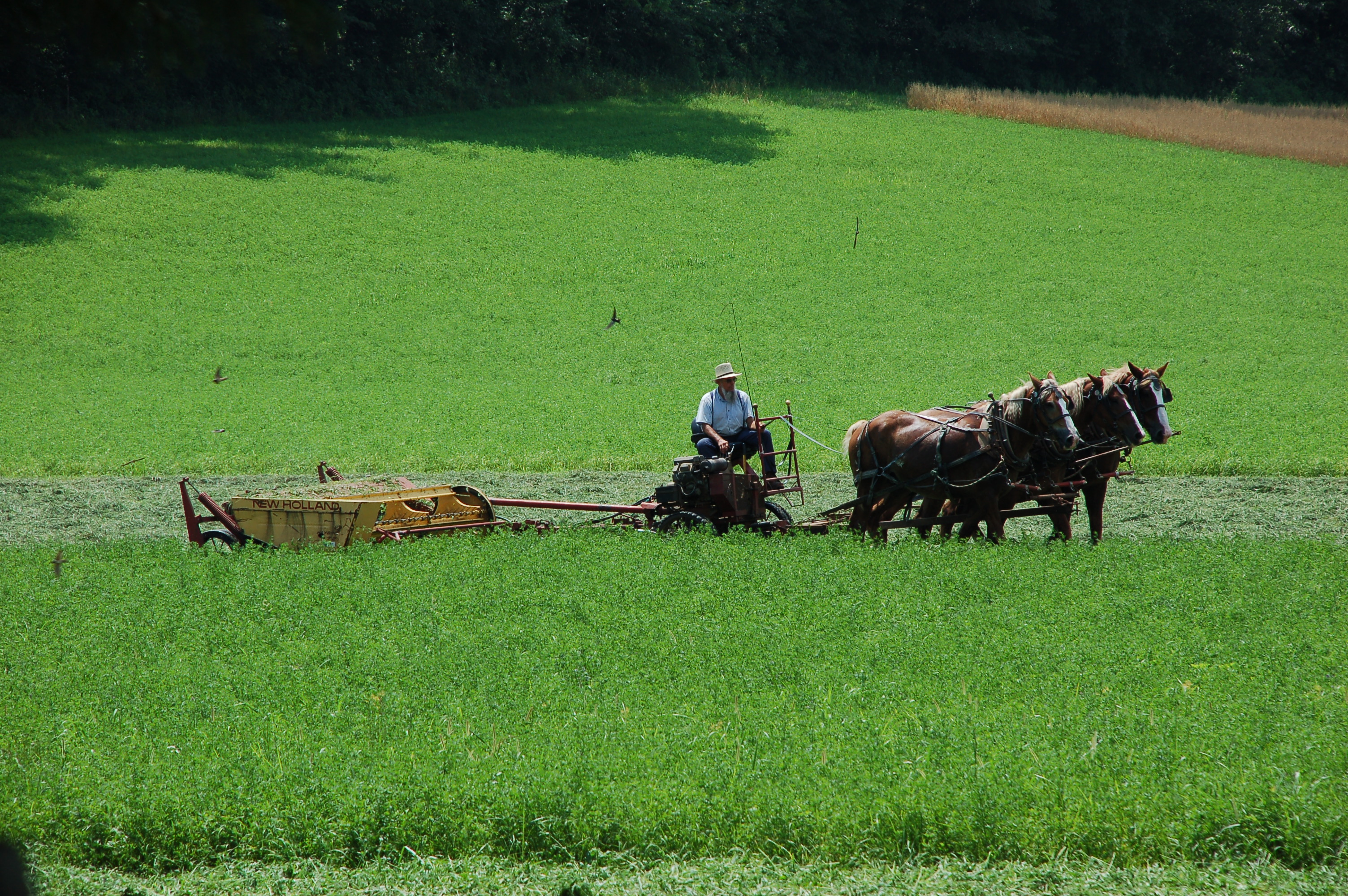
If there is an upside to such an early spring snow, it’s in the comfort that it won’t last long. As proof, my Amish neighbor was plowing his long field one row at a time at month’s end.
A sudden windy gust awakened me from my vernal dreaming. It was then that I noticed a familiar but long absent resonance. In the middle of this latest blizzard, a Song Sparrow sang as if the daffodils and crocuses already were blooming.
That subtle sound of music renewed fervent hope that winter and spring would soon change places.

By Bruce Stambaugh
Some people might think that breakfast is for the birds. I’m not one of them. I never miss breakfast.
Breakfast is one of my necessary routines. I’m not much of a cook, but, despite the fact that I am a man, I can certainly pour cereal into a bowl and juice into a glass. Along with some fruit, that is my usual morning feast, day in and day out.
I seldom dine alone. If the backyard birds are feeding, I often stand at the kitchen window and enjoy my morning meal as my feathered friends peck at theirs. This particular morning, I was seated at the breakfast bar, where I can still view the hanging feeders.

I had just begun to crunch my mini-wheats when I heard the flock of birds outside the window take flight. The Mourning Doves were especially noticeable, with their thrashing wings and eerie, frightened call.
Clearly they had been startled. My first inclination was to blame the local Cooper’s Hawk. The feisty bird of prey makes frequent surprise raids on neighborhood feeders.
I suspected that the small hawk was after its breakfast as well. I checked the ground around the feeders. The ice-covered snow was void of any birds. A lone Mourning Dove sat frozen in fear next to the hopper feeder on the old porcelain-topped table beside the back porch. That told me to keep searching for the hawk.
I scoured the stately sugar maple where the hawk had been known to perch, waiting for any unsuspecting songbird. The dormant tree branches were bare.
I quickly scanned the row of white pines. No hawk visible there either. I headed to the front window, thinking the Cooper’s Hawk may have tried the feeders in the front yard. There it was.
The Cooper’s Hawk sat on the snow about 20 yards beyond the Colorado blue spruce that shelters the feeders. Beneath the hawk was what looked to be a Mourning Dove. Feathers from the hawk’s victim were scattered in a broad circle around the hunter and the hunted.

The Cooper’s Hawk kept looking around, wary of any predators that might try to steal its avian granola. I put the long lens on my camera as rapidly as I could, and shot several pictures.
All the while, the hawk squeezed its prey with its sharp talons. At one point, it shook loose some feathers that had stuck in its equally sharp bill. From time to time, the wounded Mourning Dove would wiggle its tail in a futile attempt to escape.
Between camera clicks, the hawk flew west with its catch. I rushed to the sliding glass door that leads to the back porch. There, beneath one of the pines at the edge of our property, the hawk sat with the dove still tightly clenched and pressed to the cold ground.
Before I could raise my camera, the accipiter launched low to the south with its catch and was instantly out of sight. I wondered if it had sought refuge in the pines or continued into the small deciduous woods on the other side of the neighbor’s.
Either way, the crafty hawk was likely enjoying its fresh, nourishing breakfast. I returned to mine, sorry for the dove, but glad I had been witness to the way the biological world really works.
Wildlife Photos From The Chesapeake Bay Region
Culture and Communities at the Heart Of India
Artist and nature journalist in the Shenandoah Valley of Virginia.
Photographer Of Life and moments
Personal Blog
Art is the only way to run away without leaving home. -Twyla Tharp
Writing generated from the rural life
writer. teacher. podcast cohost.
El amor cruza fronteras / Love crosses borders
You must be logged in to post a comment.